
Archive
- Abandoned
- Alabama
- Arizona
- Bahamas
- Books
- California
- Cemetery
- Climate
- Colombia
- Connecticut
- Diner
- Egypt
- Feature
- Florida
- Friday Fun
- Georgia
- Holidays
- Illinois
- Iowa
- Italy
- Kentucky
- Louisiana
- Maryland
- Massachusetts
- Mississippi
- New Jersey
- New Mexico
- New York
- North Carolina
- Novelty Architecture
- Ohio
- Pennsylvania
- Personal
- Peru
- Project 365
- Protest
- Rhode Island
- Roadside Attraction
- South Carolina
- Tennessee
- Texas
- Travel Guide
- Virginia
- Walks
- Washington DC
- West Virginia
- Wisconsin













































Call me by my name

We all carry several names over the course of our lives—some are heavier burdens than others, but we say and hear our own names so frequently that they become inextricably linked with our identities (for better or worse). Every time I walk through cemeteries, I think that they are perfect places to brainstorm baby names. I’m pretty certain I won’t be giving birth to biological children, but I’ve always thought that naming anything is a huge responsibility—and I have several names picked out, just in case.
When I was born on August 31, 1985, my parents named me like they were Dickens getting paid by the letter: Alexandra Catherine Charitan. My middle name came from my mother’s grandmother, and I like to think my Eastern European ancestors reached through time to influence the Russian-royalty-inspired “Alexandra.” Although it was her idea, my mom says that when she looked at such a tiny baby, she found it impossible to call me “Alexandra.” She opted instead for “Allie,” with the hope that I would grow into my full name, eventually.
And maybe one day I will be the type of woman who refuses to make things easier or provide shortcuts for others at my own expense. I’m getting better at carving out a space for myself. Say all four syllables, I dare you. But I’m nearly 36 years old, and almost everyone who interacts with me in real life still calls me “Allie,” including both of my parents. It’s how I introduce myself, it’s the name that I give to baristas, and how I sign most of my thank you cards. I’ve made some progress: “Alexandra” is the name I use in all work communications, and the name I give when paying bar tabs and bail money. If I really think you know me, you might just get cards signed with a simple “A.” The more you know, the less I figure I have to say.
Despite my pack rat nature, I have very few mementos left from my actual childhood. My box of Beanie Babies moldered in my dad’s garage and mice chewed through my oversized, junior high t-shirts I stored in his attic in case the ‘90s came back (they did, unfortunately). When I was really young, my great uncle gave me a personalized cassette tape with songs about “Alexandras.” I don’t remember the specific lyrics—and I have no way to play the tape now—but it felt special enough to keep in a waterproof bin with my other “important” documents and mementos, including my birth certificate, photo booth strips, souvenir squished penny books, and COVID-19 vaccination card. The official documents all say “Alexandra,” but the people who squish pennies and crowd into photo booths with me call me “Allie.” Which one is the real me? Depends on who you ask, and when.

As an extremely shy and nerdy introverted kid, I both loved and hated the first day of school for many reasons. Introductions and first impressions are important; we don’t usually get many first chances. There’s a small window to inform teachers and anyone else I meet that, “Yes, I am Alexandra, and you may call me that—but, oh, I also go by Allie.” There were classes in college or entire jobs to which I felt so little attachment that I passively pushed back when someone would arbitrarily assign me a nickname. Emails addressed to “Alex,” “Ally,” or even “Allie,” were returned, signed stubbornly, Alexandra.
Names, and the problems and frustrations they can create, are as varied as the people who have them. But my personal pet peeves of living a life of two names come not from the two names I have, but from the several others given to me in error, or on purpose. I had a particularly clueless gym teacher in elementary school who called me “Alexandria” no matter how many times I corrected him. One “i” might not seem like much, but names have power; whether or not I had control over its creation, I’ve always felt the need to maintain tight control of mine.
As far as the internet and the government are concerned, I am Alexandra. So why do my “real” friends call me Allie? Is it for the same reason that my mom did initially? The more you get to know me, the more I must begin to resemble that tiny baby born in the summer of ‘85: Still cautiously unsure, but immensely curious about the world; navigating a name with more letters than a full Scrabble rack, but one that is mutable and unintentionally gender fluid. I’ve often felt grateful to possess a name that is rare enough to feel special, but still common enough to pop up in a display of personalized souvenir license plates. I still think that having an “x” in my full name is just objectively cool. It’s fun every time I sign a check, although I worry that my inconsistent signature will expose me as a fraud. Is it still considered “imposter syndrome” if the person you feel like you’re failing to live up to is also you?
Having several identities can sometimes complicate matters: some forms don’t have enough boxes to accommodate my full name, signing into anything on AppleTV with my email address takes way too long, and when we went to the Ocean City, Maryland boardwalk, as a kid I wondered: “Would my name actually fit on a grain of rice?” But sometimes it’s also practical to have two names and even kind of fun. I tag in “Alexandra” for the business in the front, and “Allie” for the party in the back—it’s the in-betweens that are always tricky, but I’m trying to practice patience with myself, and others, as I go through them.

For years people have been calling me Alex, both in virtual and real life encounters. Sometimes I tell them, “Actually, I go by Allie,” and other times I don’t. I’m not even sure if it’s always a conscious decision, but even as I correct them, I sometimes wish that my parents had chosen to call me “Alex” instead. I’m in no hurry to consolidate my identities or declare an entirely new one—but maybe I’ll start mixing them up more just because I can. I have no interest in ditching the miniature “Alexandra” souvenir license plate I bought on my solo honeymoon in the Poconos—but I also seriously considered buying the “Alex” one as well, if just to see how it felt to be someone else for a moment.
I still think of myself primarily as “Allie,” but I’m gaining on “Alexandra.” Maybe “Alex” is next, or maybe she has been there from the very beginning, swirling around in the alphabet soup into which my mother thrust her spoon and pulled out an A, L, L, I, and E. We may not have much choice in how things start out, but, if we’re lucky, somewhere along the line we get opportunities to direct where they are going. We are a mix of both the identities we give ourselves, and the ones that are thrust upon us by others. “Allie” was given to me, and I’m not sure I’ve fully earned “Alexandra” yet—but “Alex” could be whatever I want her to be, and blank slates are seductive.
So, if we ever meet in real life (or we’re already old friends), you have my permission to call me Allie, Alexandra, or Alex. My current pronouns are she/her, and “they” is totally fine too—lately I’ve been identifying as “a dad on vacation” (minus the pesky kids). But it’s all subject to change, so just pay attention and follow my lead; I promise I’ll try to do the same for you.
Nothing stays the same forever, but many decades from now—when I die a Collyer-brothers-style death trapped under a pile of my hoarded newspapers—official documents will most likely still bear the name with which I entered the world. Those 26 letters I’ve been given may never be able to say it all, but they try their best. I understand now that names are not immovable objects; they can evolve and ultimately add up to more than the sum of their parts—just like the people to which they belong.

My one year DC-iversary

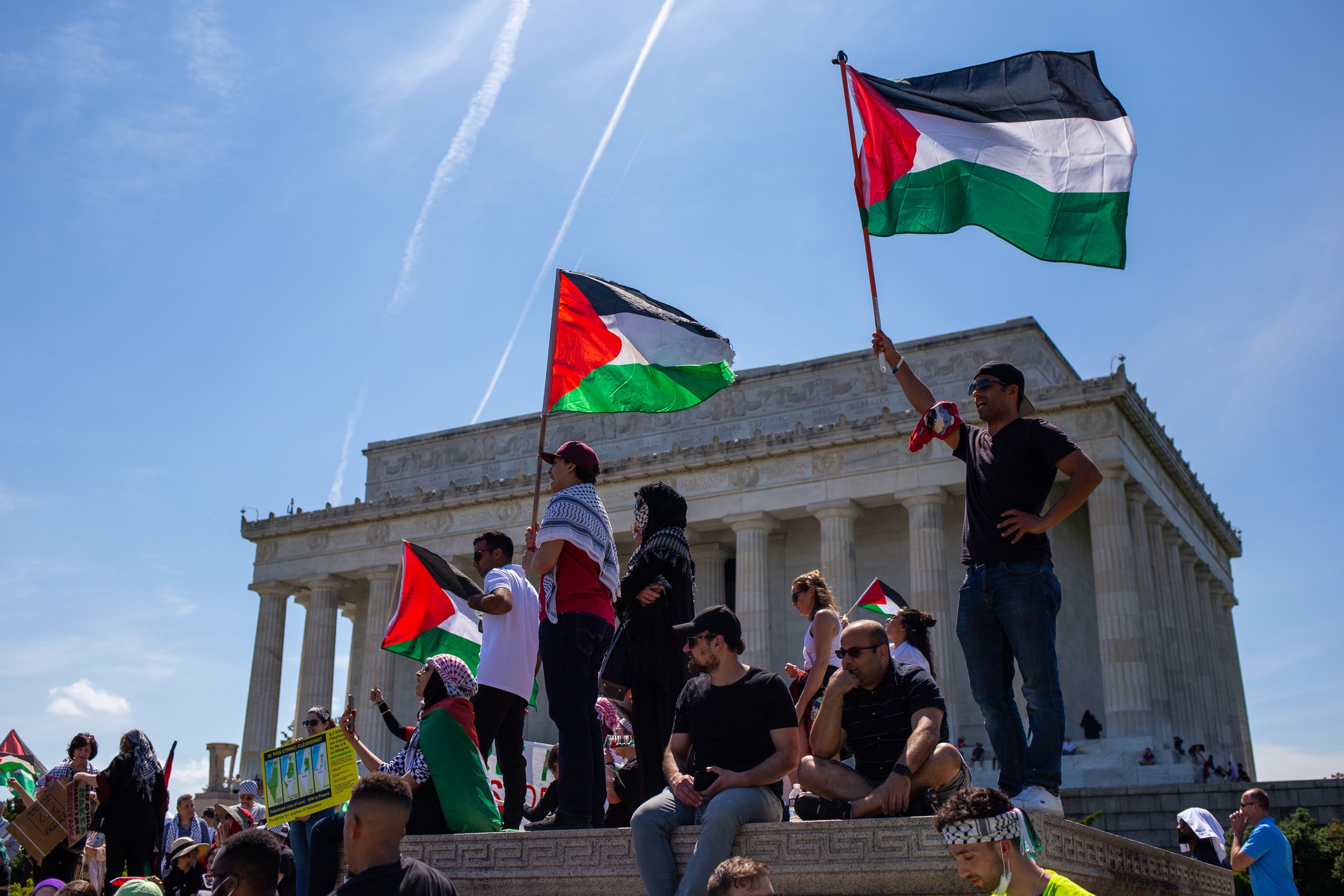
A Fathers Day march in D.C. on 6.21.2021.
In May 2020, I was living with my dad in Ohio. I had been furloughed from my job with Roadtrippers—and had no idea when it would be safe enough to truly hit the road again—but I decided to buy a car anyway. Two days later, I asked Kristine, a Fire Drill Friday acquaintance (and fellow arrestee) if I could stay at her Capitol Hill home for a few days to document the ongoing protests sparked by George Floyd’s death. She texted back immediately: “Absolutely.”
I visited Washington, D.C. exactly ten times before I moved here on June 20, 2020. The first time was with my family when I was young; the second with a college boyfriend, then for a Cat Power concert with the boyfriend after that. For the inaugural Women’s March in 2017, a friend and I took an overnight bus from New York and left before nightfall. I took five solo trips in 2019 and early 2020: the first in April to see the cherry blossoms, and four times from November to January to attend Jane Fonda’s climate justice rallies.
During my tenth visit, I joined several incredibly powerful marches and walked or biked dozens of very sweaty miles around the city; on day two, I was offered my job back. On the drive back to Ohio, I suddenly felt about Washington, D.C. the way I once did about New York, and thought: “How soon can I return?” The answer ended up being two weeks.

Mozart in June, 2020.
In the beginning of 2020, I had been living with my mom in Harlem for six months. Already working remotely for Roadtrippers for more than a year, I had began drafting plans to leave the city on an indefinite road trip around the country—following the paths (and staying on the couches) of friends who had departed before me pursuing adventures of their own. My overly-ambitious trip started to take shape at the same time as COVID-19 was secretly circulating around the city.
A mysterious virus may have traveled farther than any of us this last year—but as my Mikey Burton poster says, I “went nowhere, mentally everywhere.” That first part isn’t technically true—I’ve been to plenty of places in the Midwest and along the East Coast in the year since making the 347-mile drive from my Ohio hometown to Capitol Hill. I may not have seen the whole country (or most of my friends) as I expected to by now, but I’ve racked up just as many miles on my mental odometer as I put (or didn’t put) on my VW Golf.
I had barely settled into my sublet at the end of June when my mom told me that my cat, Mozart, was sick and I returned to New York for a week. On July 15, I signed a lease for an apartment on Capitol Hill, but a few days later, I was in New York again. Less than an hour after I made the gut-wrenching decision to end Mozart’s suffering, I drove the four hours home to my new apartment, filled with boxes but still devoid of life. Mozart had been my constant companion for more than 11 years—seven of those in New York—and it will never feel the same without her. For me (and all of my unlucky, but exceedingly patient, roommates), her signature screech and foot-sucking noises were as interwoven into the sound tapestry of the city as honking horns and bus brakes.
My D.C. soundtrack still includes bus brakes, but during the pandemic (and protests) it has been heavy on helicopters and light on horns. My kitchen window overlooks a corner with two bus stops. At night, I sit and listen to the busses arrive and depart; they’re almost always empty. I have an articulated skeleton that I refer to as my “roommate” (he doesn’t say much), but this is the first time in my life that I haven’t lived with an animal. I do not miss caring for a cat and I can’t imagine getting another; but I do miss Mozart, specifically. Quite a few pieces of me died with her but I now understand why they had to. I always joked that if I was a witch, she was my familiar; and now I would say that this past year I’ve felt like a Phoenix rising from her ashes—except that the animal hospital never sent them to me (what’s the statute of limitations on cat cremains?).

My current roommate.
Luckily, it’s hard to get lonely in my current studio apartment—which I describe as a “Funhouse of Trash”—due in part to my affinity for things that have faces (whether they’re supposed to or not). My introverted, socially anxious, and self-entertaining tendencies made me uniquely suited for pandemic life. But there’s no doubt that Washington, D.C. was a slightly more civilized place for me to ride out the rest of quarantine: by the time I moved, the infamous traffic had disappeared, and the brick sidewalks, quiet alleyways, and sweeping wide avenues felt far less oppressive than the 24-hour ambulance sirens I heard in the weeks before I left New York.
I didn’t flee New York in its time of need, I fled it in mine. I have MS and a suppressed immune system; I already had one foot over the George Washington Bridge by the time the city went into lockdown—a pre-toilet-paper-panic trip to an UWS Trader Joe’s pushed me all the way to Ohio. In D.C., I’ve been able to live by myself, easily own a car, and walk, bike, or take the Metro. From behind my handmade face mask (or two when the MAGA losers were in town), I have attended countless marches and rallies, taken more than 20,000 photos, and wrote about most of it (or have nebulous plans to, one day). I’ve filled up five journals, met a lot of extraordinary people, and turned the best acquaintances into real friends.
I admired Nicky before I officially met her—or heard her extraordinary story. But now that we’ve spent countless hours exploring the city together, I am constantly surprised at just how right I was to suspect that Nicky was someone worth knowing. Since the beginning of November, we’ve taken walking tours (following our whims or using one of her tattered Nixon-era guidebooks) of Georgetown, Anacostia, and Old Town Alexandria. We’ve explored historic districts, an abandoned hospital, and the Navy Yard. On Christmas morning, she made me waffles and we walked around a cemetery. I could write 10,000 words just about our walks (and maybe I will someday), but it’s hard to believe there was a time when I lived here and didn’t know Nicky—and I feel that way about everyone else I’ve met along the way.

RIP John Lewis, 7.17.20.
Post-vaccine, and with pandemic restrictions lifting, in some ways it feels like I’ve moved to a new city all over again. The Capitol grounds are still frustratingly off-limits, but I’m now eating inside of Pete’s diner nearby almost every weekend. Diner breakfast is the number one thing I missed from the Before Times—but I’m not sure what I dread more: the return of tourists or the traffic? (Actually, wobbly tourists on electric scooters might be the number one threat to our nation’s capital every day that isn’t January 6, 2021.)
When I visited for Fire Drill Fridays—in between dodging the scooters—I sat on a bench on the National Mall and watched people run around Capitol Hill. I had run on and off when I lived in Brooklyn and Manhattan, but infrequently, and never more than 2 or 3 miles at a time or because I really wanted to. Both Prospect and Morningside parks have significant hills that I was never confident enough to attempt, but on December 30—around the time I was also running some particularly harrowing mental miles—I successfully ran up Capitol Hill (which is very much an actual hill) for the first time; I’ve been doing it several times a week since.
Sometimes I stop on the Mall to watch the school groups and families, so many like mine when we first visited in the early ‘90s. As they walk from the Capitol toward the Lincoln Memorial, I wonder if they know that in D.C., every landmark seems way closer than it actually is—those sweeping avenues are great for political parades, protest marches, and stunning sunsets, but the grandiosity of it all can be deceiving. If I’ve learned one thing in the last year it’s that, unlike in life’s rearview mirror, the objects on your map of the future are often further (or completely different) than they appear to be.

Cutting

Twin Arrows abandoned trading post in Arizona
I started cutting when I was 16 years old. Almost exactly nineteen years later, the once-red and puffy scars have mostly faded and flattened. My memories of the moments that led to me sterilize my X-ACTO knife and drag it across my upper thighs—and the years of blood and bandages, shame and secrets that followed—have receded as well. But I’ve always been a writer and a textbook Virgo; I keep fastidious notes. So I know exactly when I chose this particularly gruesome coping mechanism, because on June 6, 2002, I wrote in my journal: “I cut myself tonight. Translated feelings for actions, trading pain for pain. I have a high tolerance for pain. I scarily enjoyed it.”
The “why” part is more complicated, but I was surprisingly cognizant of that too, at least as much as I could be as an extremely introverted, sexually confused, teenage girl. Growing up in Ohio, my life was full of love and laughter—what we didn’t have as a family were conversations. Unspoken issues aren’t as immediately alarming as physical violence or screaming fights, but over time they’re just as corrosive.
On the surface, I more or less knew why I was struggling. I was also convinced that my problems paled in comparison to others’, and voicing them would only make me appear weak and selfish. I kept a running list of all of the reasons why I shouldn’t feel the way I really did (one of many habits that I’m trying to break today) and I thought the only thing worse than disappointing my parents was to add to their respective piles of trauma.
My parents weren’t even thirty by the time they had two daughters and a dead son. They were barely out of their teens when they got married (my mom was actually 19) and nine months later, my sister was born. A baby boy followed, and Matthew was only four months old when he died of SIDS (sudden infant death syndrome). Two-and-a-half years later, I arrived and survived—conceived on purpose to replace the one who hadn’t.
Growing up, my sister used to tell me that if Matthew hadn’t died, I wouldn’t have lived. It’s probably true, but it’s weird to grow up in the shadow of a brother you’ve never met. It was never explicitly stated that expectations were high for me—and it’s entirely possible that most of the pressure I felt to be perfect was self-generated. But my parents lost a son and their consolation prize was me: a queer, boyish girl. There’s a common misconception that cutting is in some ways, suicidal; for me it was always the opposite. I longed for love and life so intensely that I grasped at anything to help me get safely through to the other side—scarred and scared, yes, but a safe life without shame or secrets was always the ultimate goal.
My sister also insists—in part thanks to our 7.5-year age difference—that we had an entirely different set of parents, and she’s probably right about that too. I was raised by two people who loved me unconditionally and told me that I could do anything. And for 16 years that had been mostly true. My parents would probably disagree about whether I was a good kid by nature or nurture (I say both), but I mostly kept to myself and didn’t go looking for trouble. So when I developed feelings for my female high school teacher—and began questioning my sexuality in general—I feared that I was changing into someone my friends and family would no longer be able to understand.

South of the Border in South Carolina
When it became impossible to deny the truth, I lashed in instead of out. I punished myself for what I thought was not only a personal failure, but one that if exposed, would rip through my small family like a wildfire. “I don’t want any parents or relatives to find out. Never,” I wrote. I was talking specifically about the cutting, but continued, “Tonight grandma asked me if I wanted a ‘big splashy wedding’ and grandpa said that I better ‘marry a rich man.’ A man. I’m gay. How the hell am I going to tell them?!” So the secrets piled up like mismatched Jenga blocks, each one with a corresponding slash in my skin and a less stable foundation than the last. But even my self-mutilation wasn’t safe from my equally damaging self-criticism.
“I could have pressed harder,” I wrote on June 6. “I ran my fingers over the ten raised slightly scared slashes, they’ve hardly broken the skin. Nothing huge, I won’t die and I don’t want to. I know my life will get better. Not easier, just better … I know it’s not normal, but I’ve tried everything. If I try to gain anymore knowledge about myself I’ll explode. A few scratches seems less harmful. It’s a nice pain. Just enough to keep me thinking about it. They say actions speak louder than words. Mine are screaming.”
For too long, I thought if I was strong enough, I could just get over it—or that my feelings were something I could, and should “get over” in the first place. No matter what your circumstances, I think everyone can agree it’s hard to be 16 (or … any other age). “I just have such deep intense longings for near-impossible things,” I wrote. I both chastise myself for wanting more out of life, “Why can’t it all be enough?” I write several times, and recognize that a friend is being frustratingly flippant after I finally come out to her.
“She has no right to dismiss my problems unless she’s actually experienced them,” I wrote on June 24, 2002. “She has no idea what it feels like to be a constant contradiction. To thrive on your dream world, never actually getting to experience anything you ache so intensely for. She doesn’t know what it’s like to incessantly pretend, to lie, to omit thoughts, make up feelings while never quite deciphering your own. And she sure as hell doesn’t know what it’s like to be in so much emotional and unidentifiable turmoil that you intentionally inflict pain upon yourself because you’re confused, hurt, depressed, and you have no clue why.”
I conclude the entry with a sentiment that has aged much better than most of my chaotic and endlessly embarrassing journal entries: “Until she has thought my thoughts, and felt my feelings, lived my life, she has absolutely no right assuming that she knows what’s right. She doesn’t understand. Why does she pretend she does?”
My mind never stopped asking questions without easy answers—or screaming, in general—but I no longer expect it to. I stopped cutting and running my fingers over the raised lines a few years after I started, but I made more than 50 of them. It’s hard to get an accurate count today; skin sags and stretches, forever mutable like the painful memories I once etched into it. A few years ago, I decided to start getting tattoos over the scars. Not in an attempt to cover them, but to turn an area of my body that had served as a macabre art gallery of my mental anguish for far too long, into something more joyful. My plan worked too well: I quickly realized that if I wanted to show off my new ink, I’d be forced to expose my old scars in the process.

Twin Arrows tattoo by Kat | Jackalope tattoo by Karen Glass
My days of wearing a swimsuit in public had abruptly ended with the first swipe of that X-ACTO blade. They’ve resumed somewhat recently, but access to my upper thighs has always come with caveats: the shorts can’t be too short, no, you can’t come in the changing room, lights off before bedtime. I’m tired of constantly flipping through my mental Rolodex of who knows what; it’s a waste of time.
When the temperatures in D.C. recently began approaching 90, I started running in shorts shorter than any I’ve worn in 19 years; it feels both freeing and terrifying. I’ve been planning my next tattoos: a Mozart memorial piece and maybe even a Brood X cicada. I can’t be the only morose millennial to identify with the iconic insect; is there anything more gay than emerging after 17 (or more) years spent underground, immediately shedding your shell, growing wings, changing colors, and loudly announcing to the whole world: I am here and I am deserving of, and ready for, love.
Nearly two decades after I first cut myself, I long for different, but still sometimes impossible things—however, my coping mechanisms have become more self-constructive than destructive. I now run several times a week, an activity that feels strangely similar to cutting: I am once again translating emotional pain into physical action, only this time I’m carving my body from the inside out. I still feel protective of my parents, but I’m trying to communicate my feelings and ask for help when I need it. Losing one child is more than anyone should have to bear. I thought I was sparing their feelings by hiding mine, but I know now that in denying them access to the most vulnerable parts of me, I was doing us all a disservice. At least I was right about one thing: it never gets easier, but it does get better.
There were huge swaths of my life in which I abandoned my journals all together, and I both understand why and still regret it. It took me a while, but I’ve finally realized just how important it is for me to work through my screaming thoughts on paper, over the phone, or in person. I’ve made (and continue to make) a lot of questionable choices, but writing it all down as never been one of them. Words have always been my lifeline, an invisible hand reaching out across generations and experiences. No longer to destroy, but to create—to say, even if I’m only ever talking to myself: “You’re not crazy, and you’re not alone. You may never get over it, but you will get through it.”
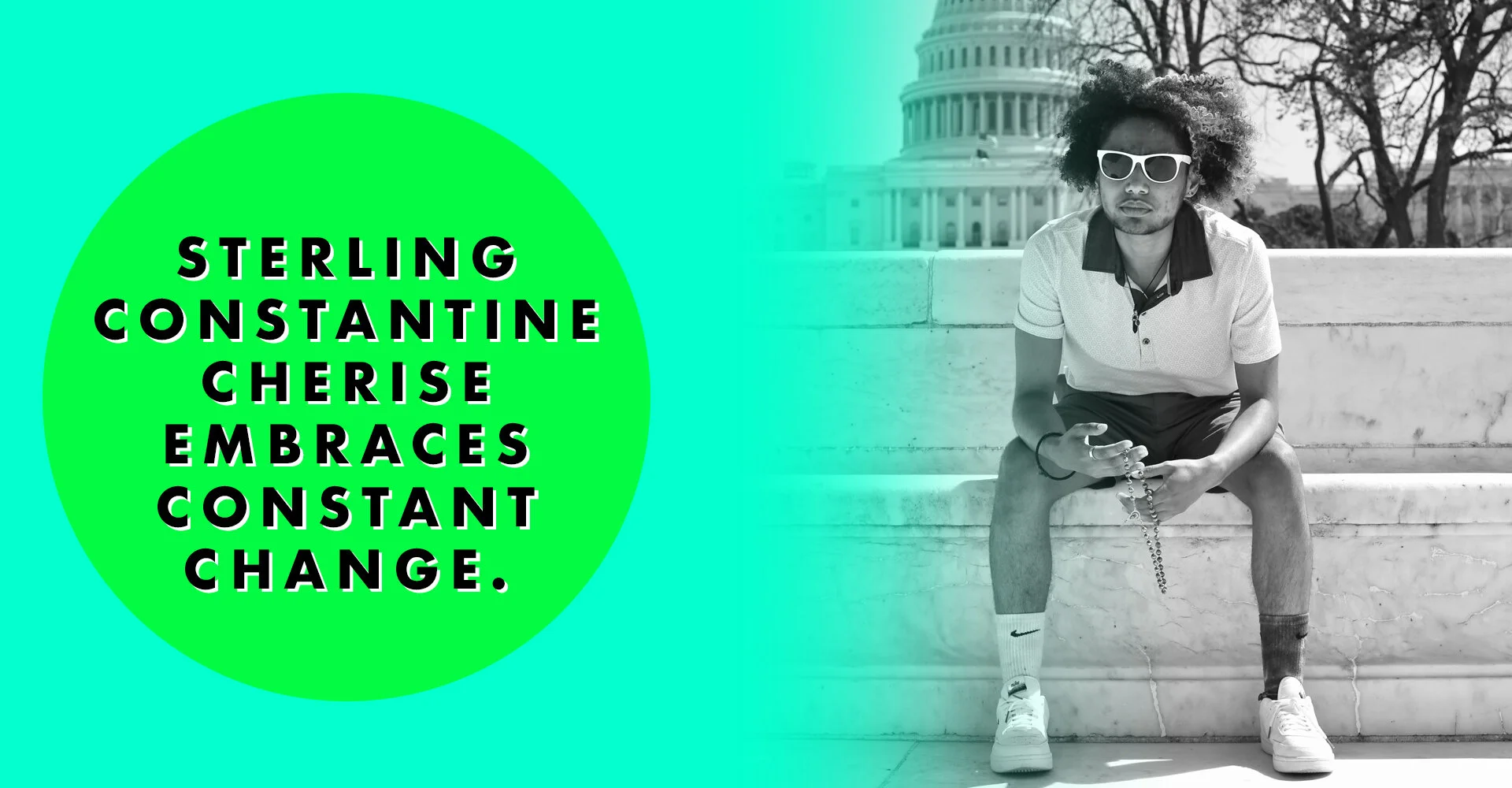
Sterling Constantine Cherise embraces constant change

Photo: Kristine Jones
On May 28, 2020, Sterling Constantine Cherise turned 21 years old. Almost no one who celebrated a birthday after mid-March did so without complications. But instead of a Zoom party or virtual Quarantinis with friends and family, Cherise, a Black trans man, received a tense text message from his parents: “You have no idea how this affects our lives,” they wrote, referring to his decision to begin transitioning earlier in the year. “You’ve been lying to us your whole life.”
One day earlier—and just two days after George Floyd’s murder—38-year-old Tony McDade was fatally shot by an officer with the Tallahassee Police Department. There are likely several reasons that McDade’s death isn’t as well-known as Floyd’s. Maybe the collective consciousness had reached a saturation point after the deaths of Breonna Taylor and Ahmaud Arbery and repeated viewings of the Floyd video. Or maybe it was because McDade, initially misgendered by police and news outlets, was a Black trans man.
Cherise was shaken by McDade’s death, but wasn’t surprised that it hadn’t inspired the same level of outrage as Floyd’s. “A trans man died close to the day that I was born—and no one was talking about it,” he says. “That could have been me. If I would have killed myself back in March, I would’ve been buried as a girl. It would have been horrible and no one would have known.”
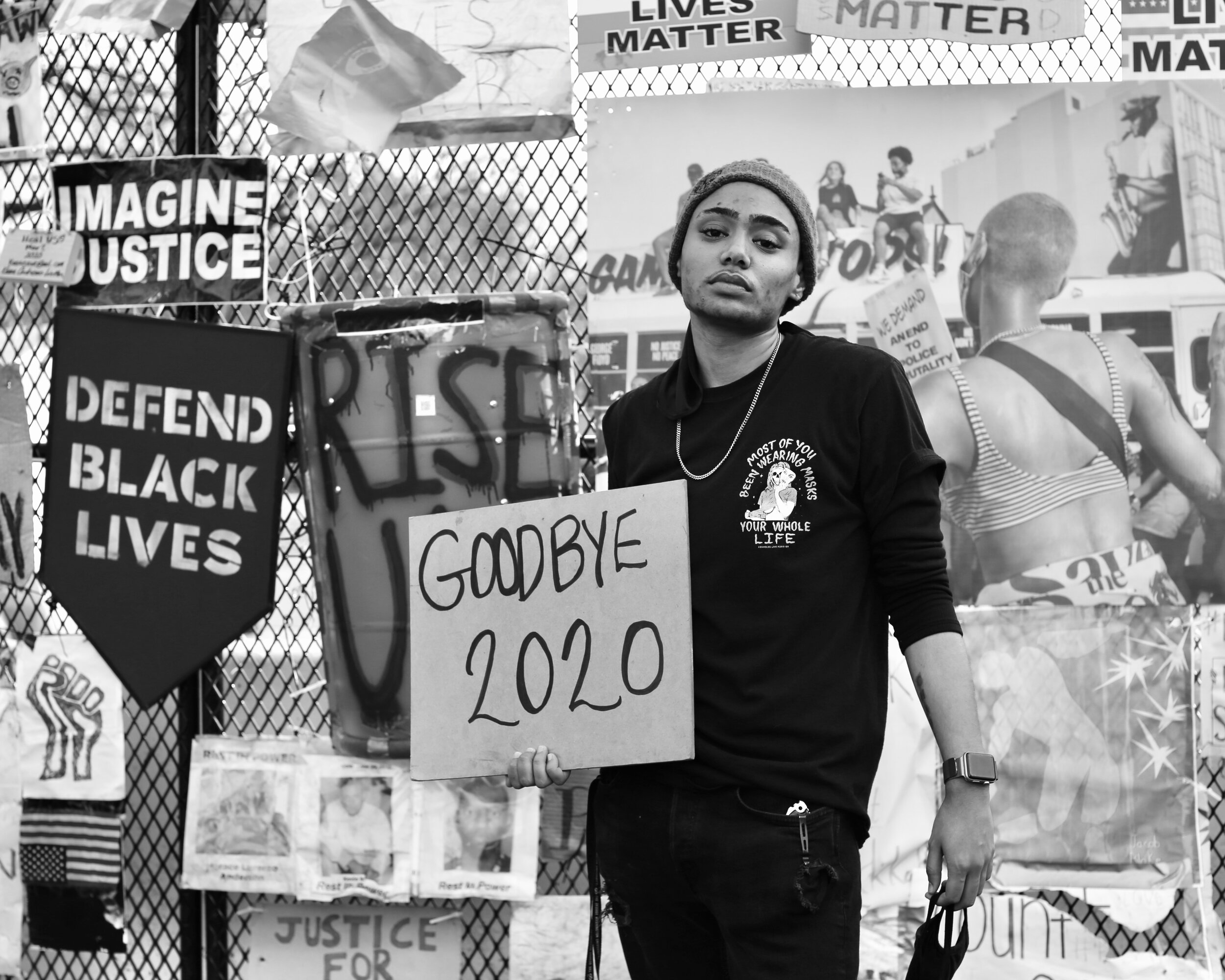
Photo: Kristine Jones
Today, Cherise refers to his mother, who is “Portuguese and white passing,” and father, who is Black, as his “biological parents.” He says that while he was growing up, it was never acknowledged that he was Black—and his mother raised him “to be like a little white girl.” Things went from bad to worse when he was outed as a lesbian and later, when he came out to them as trans. But like a reluctant Rumpelstiltskin, Cherise must’ve learned at an early age how to spin the straw he’d been given into gold.
So, instead of spending his 21st birthday getting blackout drunk and celebrating his own life, Cherise chose to honor McDade’s—by joining the protests that had sprung up in the streets of D.C. It was not only Cherise’s first time protesting, but he says he had never even been in a crowd of people that large. He made preparations to quarantine before returning to his job at George Washington University—that is, if he managed to make it home at all.
Cherise says that he is increasingly aware of the dangers that follow Black men (and even more so, Black trans men and women) in America. Every time he went out, he made sure people knew where he was, shared passwords with friends, and saved instructions on his phone (the Gen-Z version of a last will and testament).
“If I’m going to get killed out here, at least I will die as the person I am,” he says. “I’m not afraid to die for what I believe in. I will march until I can’t walk—and I did. I will do whatever it takes to make my voice heard for everyone who wants to be out here and can’t be.”
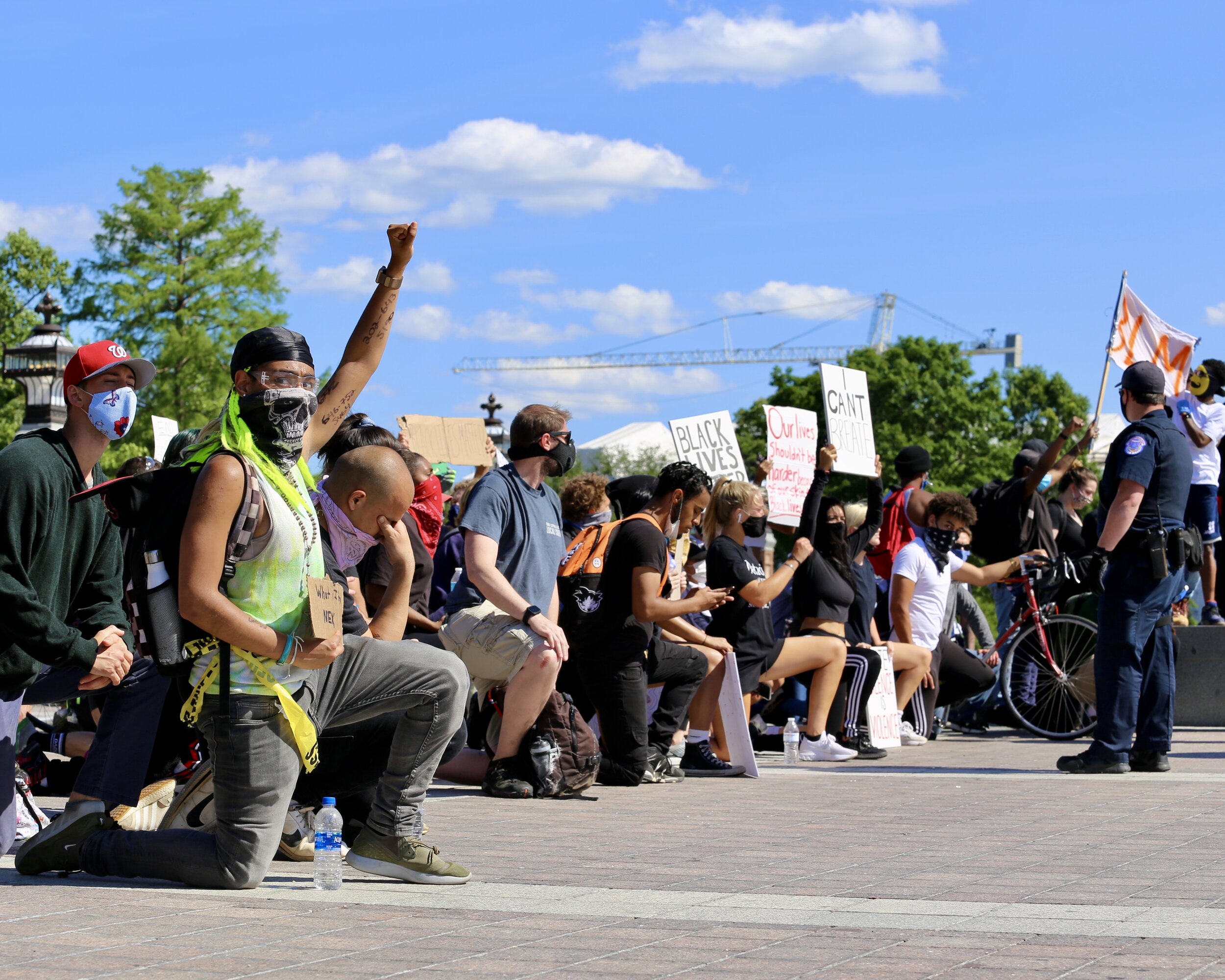
Photo: Kristine Jones
‘THE NEXT SERENA WILLIAMS’
Like many people who identify as LGBTQ+, Cherise has always had a complicated relationship with his biological parents. Growing up in south Florida, Cherise says they made sure he was too busy with school work and extracurricular activities to have any semblance of a social life. He was classically trained in violin and piano; he was a varsity athlete, competing in swimming, diving, track and field, volleyball, and gymnastics. His father had aspirations to make him “the next Serena Williams,” but Cherise never even liked tennis.
His mother never wanted children and his father “wanted a baseball team.” No child should ever be made to feel as if they’re a compromise, but that’s exactly what Cherise says he was repeatedly told. They sent him to private school, in part because Cherise says they didn’t want him to be just “another dumb Black girl.” “I was a trophy child,” he says. “It was my job to make it out and represent all the work my parents put in, their sacrifice. I was taught to give 100% in everything all the time—and even if it was close to that it still wasn’t good enough.”

Photo: Kristine Jones
It wasn’t until he came to Washington, D.C. to begin classes at GW, that Cherise realized just how much his strict, isolated upbringing had negatively affected his mental health and self-image. It was traumatic enough to be forcibly outed by his peers in middle school (he uses the word “hellscape” to describe much of his life pre-transition). But by the time he realized he was trans, Cherise says he was “probably 24- to 48-hours away” from throwing himself off a bridge.
Cherise called his mother to inform her that he had already made a doctor’s appointment and was going to start taking testosterone. “I don’t have any other options,” he recalls saying. “It is this bad. I’m going to do this because there is nothing else I can do. I’ve lost everything and I need to make this life or death decision.”
His mother suggested he return to Florida, enroll in community college, and wait at least a year. Instead, Cherise chose to stay at GW and begin hormone therapy without his biological parents’ support. He hasn’t seen them in more than 2 years; in what little communication they do have, they frequently use Cherise’s legal (or “dead”) name and intentionally misgender him. “I’m realizing that the people who were supposed to care about me, don’t—at all,” he says. “They don’t care because I’m no longer doing what they think I should.”

Photo: Kristine Jones
BLACK ENOUGH
Personal identities are as layered and nuanced as the groups of people they attempt to describe; when he came out as trans, Cherise had only just begun to unravel the biases surrounding his own racial identity. “My parents had me being afraid of being Black and afraid of other Black people,” he says. Because he is mixed, or simply “not Black enough,” he says didn’t get courted by historically Black universities.
But he is Black enough to be followed by security guards for having the audacity to shop for groceries; because he knows how it feels, he says he’s careful not to follow women too closely, especially at night. “I don’t want to scare them because I have knowledge about how that feels,” Cherise says. “But also I’m uncomfortable being a Black man on the street—always thinking, ‘Is someone going to call the cops?’”

Photo: Kristine Jones
Currently, Cherise’s official ID still bears his dead name; Daunte Wright was shot and killed for having expired tags and too many air fresheners. “I feel like I occupy a very specific space where I’m terrified for my life for different reasons all of the time,” Cherise says. “I’m actively terrified not knowing if I’m going to make it home every day.”
When Cherise graduates in a few weeks with a BA in criminal justice and a minor in English, his dead name will be on his diploma. Changing your legal name is an expensive and arduous process—and not all problems can be solved with a trip to the DMV. Even if he had the time to navigate the name change, he can’t afford a replacement diploma. Contrary to the myth of the American Dream, those who work the hardest often have the least. “I have moved from being a Black woman in the U.S. to wherever on the hierarchy being a Black trans man is,” Cherise says.
MASERATIS AND MACBOOKS
Despite saying he grew up “on the wrong side of the tracks” in Broward County, Cherise attended a private school; less than 30 of the students were people of color. “We all knew each other by name and people would ask if we were related,” he says. While other 16-year-olds were driving Maseratis and using Macbooks as umbrellas, Cherise was training to be an Olympic athlete and endlessly studying to fulfill his parents’ wishes that he become a doctor. He entered GW as a pre-med major but switched to criminal justice after deciding that he didn’t really want to go to medical school, after all.

Photo: Kristine Jones
He had also been sick for years, not realizing that he was having an allergic reaction to the estrogen in his birth control; he’s since discovered that his body had naturally high testosterone levels long before he began his transition. Still, he maintained a full class load while also working in a lab several days a week. He had no choice: “I pay my own loans because my parents said ‘If you’re going to transition, we want no part in it.”
Although he discovered that the class dynamics at GW weren’t that much different than his highschool (“kids are partying in the dorms and driving McLarens and I can’t afford to eat this week”) after graduation, Cherise says he intends to get his master’s degree and then his PhD. He has aspirations to teach forensics, become a medical examiner, or work in Quantico, Virginia. But with only a few weeks of school—and at least 60 pages of writing—to go, even a gold-star student like Cherise is tired.
“I’m exhausted,” he says. “And I have to keep working or I can’t pay for groceries. And I have to keep working or I can't pay my tuition. It never stops. I have to adjust and I don't really have the wiggle room to say ‘I'm going to take a day to not do anything.’”

Photo: Kristine Jones
A WHITE FANTASY
Cherise acknowledges his excess of privilege far more than he bemoans his lack of it. But he’s also aware that in general, white people are more likely to have access to necessary—and in many cases, life-saving—resources such as health care, secure housing, and familial support. Cherise says the fantasy of “I’m going to come out to my parents and they’re going to accept me and throw me a gender reveal party and I can continue to live my life as if nothing has changed” is just not often available to trans people of color.
He points out that gender confirmation surgery—like most procedures in the for-profit U.S. healthcare system—is expensive; since he can’t afford it, he says, “the only thing in my head that’s keeping me trans is testosterone.” But if you can’t afford the psychological therapy required before starting hormones (or the prescription drugs themselves) you’re going to turn to less regulated, and often unsafe, sources. If the dirty needles don’t get you, the body dysphoria will; too often in America, it’s dead if you do, and dead if you don’t.
Although the number is rising, only about 20% of people say they personally know an out trans person (and awareness isn’t always immediately followed with dignity and respect). As Oprah’s recent Elliot Page interview and the Netflix documentary Disclosure shows, trans representation in the media has come a long way from laughing at Bugs Bunny in a dress—but increased visibility often comes with heightened vitriol and violence. Less than half of the way through 2021, attacks on the trans community—and particularly trans youth—are only ramping up.

Photo: Kristine Jones
GRAVEL AND GRAVESTONES
Despite what certain Republican lawmakers and clergy members would like you to believe, trans people are (unsurprisingly) like everyone else: they’re just people trying to make sense out of, and live their lives in relative peace. For the first 20 minutes of our Zoom interview, Cherise and I talk about things as scandalous as hair dye and whether or not we are morning people (he is, I most definitely am not).
Struggling with your gender identity doesn’t make you a monster—but taking control of the process doesn’t make you a magician either. “Your mental health is not going to be fixed just because you’re starting testosterone,” Cherise says. “I still have an eating disorder and suicidal tendencies. I still have to go to therapy every week, I still have to address all of these things—sometimes it gets worse as it gets better.”
While everyone is different, adding testosterone (or estrogen) to the equation does change things—hopefully, but not always, for the better. Since beginning hormones last year, Cherise says, “I have to reevaluate my life every day. I don’t look the same every day, I have to readjust.” He notes the usual suspects: his empathy took a nosedive along with his impulse control and the tenor of his voice; he’s physically hotter and emotionally colder than he used to be. He takes his jacket off during a late-December photo shoot at Black Lives Matter Plaza and says without irony: “Everything is buried under a very thick layer of ice. And as hard as I want to crack through that ice—and as much as I can see and acknowledge what’s underneath it—I can’t reach it.”
The downs of transitioning may get more column inches (and movie scenes), but for every valley there’s usually a corresponding peak: “On the other side of it I think, ‘This used to send me into hysterics and I no longer care,’” Cherise says, laughing.

Photo: Kristine Jones
We speak for a second time on May 18; when the Derek Chauvin trial comes up, Cherise says the media should be focussing on how many victims of police violence never even receive a chance at justice. He says he’s not particularly interested in the outcome, while acknowledging that this willful avoidance of the televised trial is another one of his privileges.
Two days later, Chauvin is found guilty on three counts; it’s a start, but Cherise thinks there’s so much more to come before we can even begin to abolish the police. “I don’t think that this system of mass incarceration or capitalism is constructive in any sense,” he says. “But you’re asking people to build a castle out of gravel and gravestones and it just doesn’t work.”
He partly thinks it’s generational but theorizes that many people may simply be immune to change. His face mask is printed with the phrase, “Just trying not to die. Assholes live forever;” he knows that waiting for Boomers to die off may not be a practical political strategy. “If there are enough people willing to uphold a system, there will never be enough people to take it down,” he says.

Photo: Kristine Jones
FINDING THE WORDS
Cherise also knows what it’s like to feel as if your castle built of gravel has been compromised. When he was 16, he managed to sneak a girlfriend into his house exactly once before his parents found out and grounded him; he went off the grid for so long friends thought he had died. A friend suspected he might be trans when they were just 12 years old, but Cherise didn’t find out until almost a decade later. “I think people see it—whether you’re trans, gay or nonbinary—and you show and tell people before you (or they) have the words for it.”
When he finally found the words—and the courage to say them—he not only lost contact with most of his immediate family, but also several friends. “People are often unwilling to accept trans people because they’re under the assumption that they’ve known you best, or at least more than others,” Cherise says. “Not everyone understands the burden and is willing to share it with you. And take responsibility for their own transphobic or homophobic beliefs—or any other biases they may have.”
Cherise is so thoughtful and compassionate while describing the horrors he has faced—from forces both external and internal—that I wonder if he’s overstated the testosterone’s effect on his capacity for empathy. Then, as he often does during our more than 3-hour conversation, he explains a complicated issue succinctly and leaves me temporarily speechless: “The people who are repressed the most, end up feeling the most empathy towards the people who are oppressed the least.”

Photo: Kristine Jones
80% SPITE
When discussing the street protests that began at the end of May and continued well into the summer (and, in many places are still ongoing), the word privilege once again comes up. Cherise says it was a rude awakening for him to witness firsthand the raw, collective Black rage and police violence that his biological parents tried so hard to shield him from. Within a 5-minute’s walk from GW’s campus, Cherise found himself in a cloud of tear gas and rubber bullets. His friends urged him to keep his neon green braids so they could locate him on the national news and confirm he was ok.
“I made it home that night and thought, there is no chance I’m not doing this again,” he says.
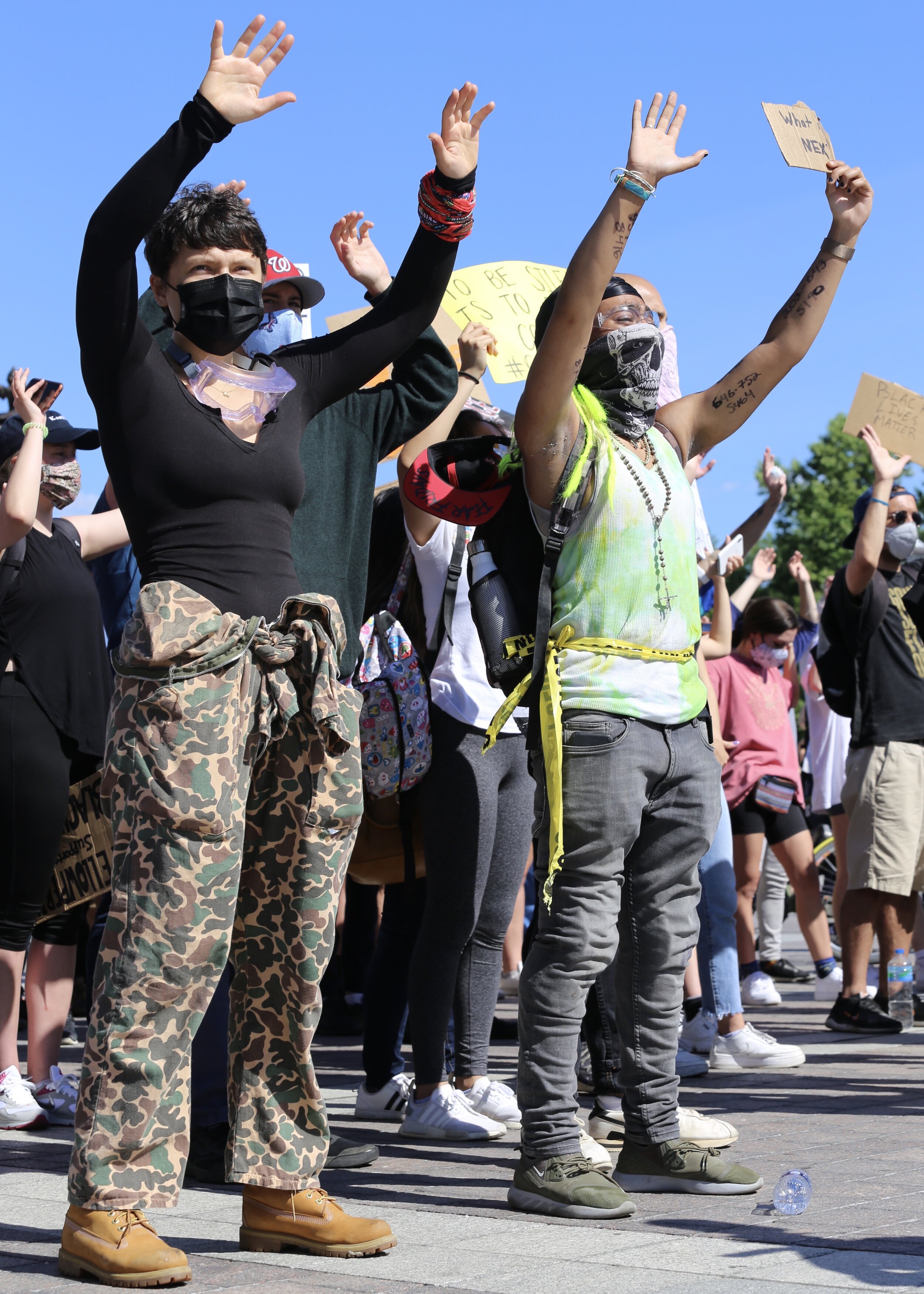
Photo: Kristine Jones
On January 6, Cherise walked outside of his apartment and came face to face with “a group of Nazis waving Trump flags.” GW campus police escorted him safely to work, but he says he still suffers from PTSD. His phone remains broken from a flash bang and a rubber bullet casing hangs on his wall—grim reminders that “no matter how good you are, the system is going to view you as every other Black man that has ever walked the face of the planet—and nothing will be good enough to save your life,” Cherise says.
Although he’s learning how to be more in control of how he channels his perfectionism, Cherise is clearly still very much the trophy child his parents dreamed of—even if they may never realize it. He’s more thoughtful, gracious, and comfortable in his skin than I am with almost a decade-and-a-half head start (not to mention additional privileges). So I’m relieved when—in an attempt to mitigate an outright gush—I ask where his strength comes from and he calculates that “80% of it is out of actual spite.”
“Yes, so much of it is wanting better for the world and wanting better for yourself,” Cherise explains. “But so much more of it is that so many people told me I couldn’t do this—that I’m not enough. It’s not willpower—it’s because you want to prove that you are not a statistic.”

Photo: Kristine Jones
‘I DESERVE TO EXIST’
Cherise may have always known that his chances of scoring Olympic gold were statistically small—and that it was basically impossible to be the “good little white girl” he says his mom wanted. He also probably never imagined himself as a trans role model, but now recognizes both the power and the danger in speaking about something so personal. No two trans people, for better or worse, have the same experience because, once again, they’re just people.
“But if someone like me would’ve met my 13-year-old self when I needed someone the most, it would have changed my life,” Cherise says. “Maybe it wouldn’t have changed everything, but it would’ve given me enough insight to know that I wasn’t alone.
Like Page, and other highly visible, out trans people, Cherise thinks that all representation matters, no matter how insignificant it may seem. “There is always a chance that someone will pass you on the street and think ‘There’s someone else who is either my skin color or who has my hair texture or has some crazy hair color,” he says. “And then think, ‘If one other person has it or feels that way, maybe it’s ok that I do, too.”

Photo: Kristine Jones
Even if someone isn’t trans or questioning their own gender or sexual identity (two distinct, but often overlapping issues), Cherise encourages them to have conversations with people who are. “If they understand a raindrop in the ocean of my perspective on something, maybe it’s enough,” he says.
I begin to think that maybe Cherise didn’t spin his share of straw into gold, so much as learn how to weave it into a life raft for himself when his parents and society set him adrift. He may not be on solid ground quite yet (he does still have to write those 60 pages before graduation), but he’s getting there. He says that all the suffering will have been worth it if just one kid is spared the same pain he felt—even if he had to find out the hard way that you have to save yourself before you’re strong enough to help search for survivors.

Photo: Kristine Jones
“I believe that I deserve to exist,” Cherise says. “And if I have to shout it from the rooftops, I’ll do it. Once you start, you never stop protesting. You’re protesting whether you’re with five thousand people or you’re walking home alone at the end of the day—but I might as well die speaking as a Black man than say nothing as a Black girl. I would rather be wiser for the better than ignorant and happy.”
This is a crucial moment in history; we have a real opportunity to rebuild and restructure our society to be more equal, more just, and more habitable for all. In an attempt to better understand what motivates and inspires fellow activists, I’m profiling people and how they’re trying (in ways both big and small) to make the world a better place. If you know someone I should profile, let me know (maybe it’s you!?). You can see all of the profiles here.

Justin Dawes gets into necessary trouble
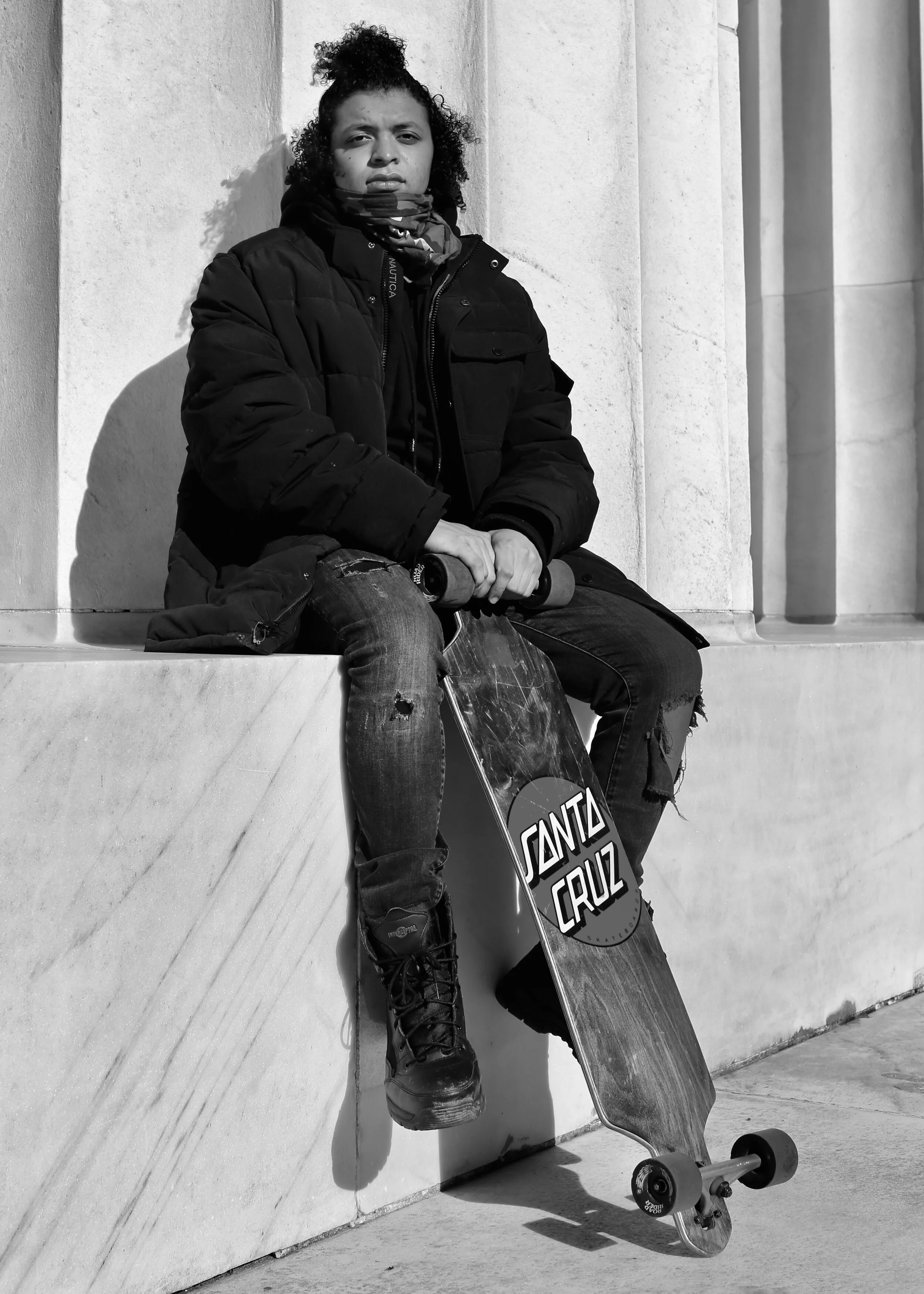
Justin Dawes and his longboard. | Photo: Kristine Jones
Justin Dawes, an activist and second-year student at New England Law | Boston (NELB), has been arrested once in the eight months since he co-founded D.C. Protests last summer. On August 14, 2020, he was taken into custody in the Adams Morgan neighborhood—but his arrest (along with most of the 40 others that night) was “no papered” the next day, meaning that the charges were dropped.
On January 8, a Boston news station erroneously reported that Dawes had also been arrested in the Capitol riots and charged with “assault on a police officer, crossing a police line, and resisting arrest.” He says he was nowhere near the Capitol on January 6; WHDH 7News issued a correction, but a few days after the siege, Dawes received a call from his school’s registrar. During a call that lasted just 53 seconds, Dawes was dismissed from his law program.
Although failing to disclose his August arrest was not the only reason cited for his dismissal, Dawes says that he was still waiting on two final grades when he was told he didn’t meet his program’s GPA requirement (which he says had been in flux due to the pandemic). Thanks to the support of a few of his teachers, Dawes is appealing the school’s decision, but as a result, he is unable to enroll in classes this spring and is looking at finishing his law degree elsewhere.
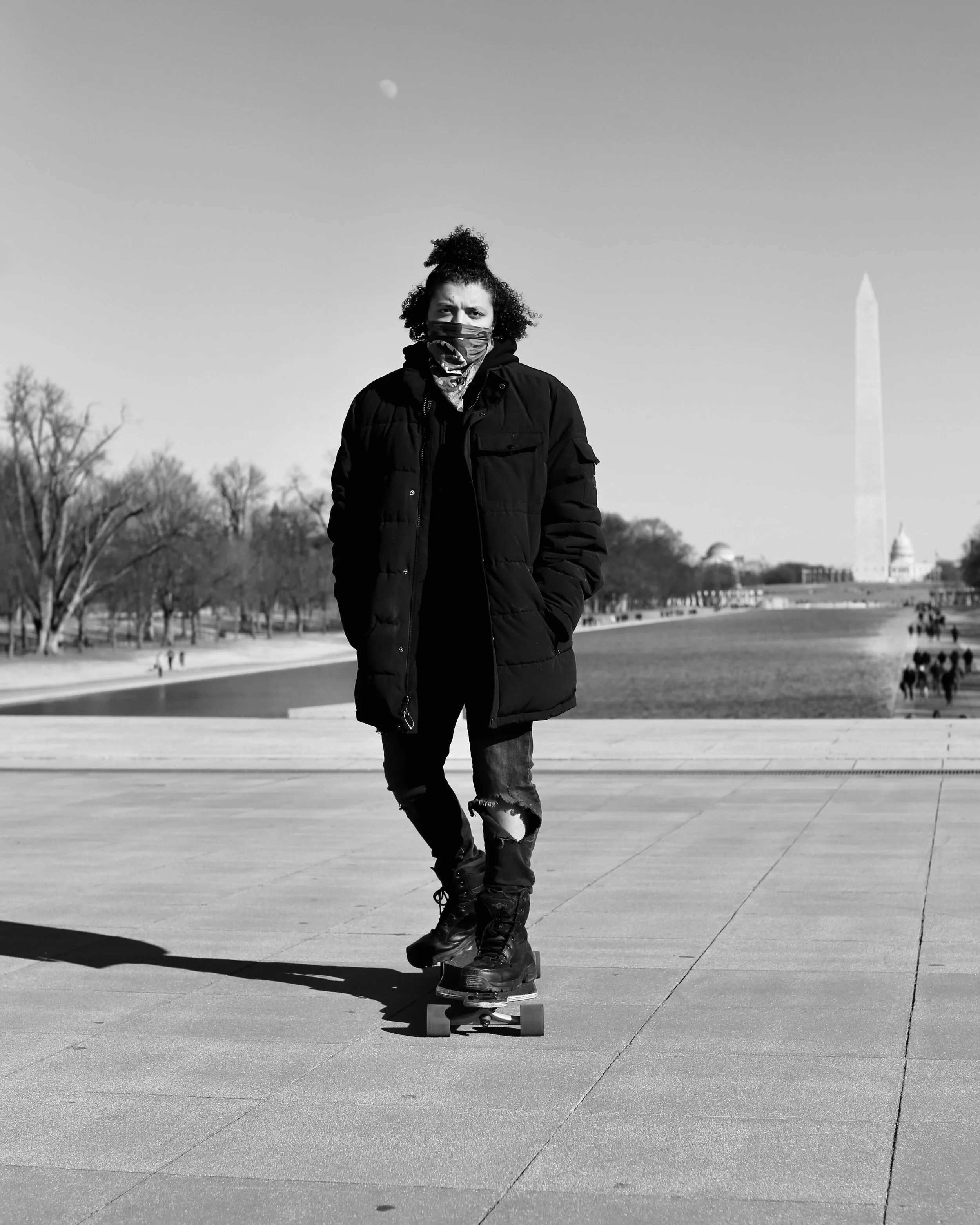
Photo: Kristine Jones
Getting arrested in the U.S. has never been a one-size-fits-all experience. It should be obvious by now to anyone paying attention that those who are white, or simply just white enough, often have drastically different encounters with law enforcement than those who are neither. The list of Black people who, by some combination of luck and skill, managed to not only survive, but to thrive after one or more arrests is painfully short.
A notable exception may be Congressman John Lewis, who was arrested at least 45 times during a long life devoted to activism. He served in the House of Representatives for decades and in the end, was admired for his rap sheet. But honors seldom make up for the horrors that precede them. Over a lifetime committed to what he called “good trouble,” Lewis was no stranger to the sting of tear gas. He nearly died when he was just 25; his skull was fractured by state troopers during what was supposed to be a peaceful march across the Edmund Pettus Bridge in Selma, Alabama. He had the photos—and lifelong scars—to prove it.
In an Instagram post, Dawes writes: “It’s become the unfortunate reality that while fighting for Black futures, my own has been jeopardized by a lack of understanding and support from my law school.”
D.C. PROTESTS
A cloud of tear gas was still lingering just north of the White House on June 1, 2020, when Dawes and a few others co-founded D.C. Protests. He says he and his friends had been sitting in Lafayette Park when U.S. Park Police and National Guard troops began violently clearing the plaza in front of St. John’s Church ahead of Trump’s now-infamous Bible photo-op.
Dawes, who lived in Virginia at the time, had been surveying the protests while skating with friends around the Capitol. When chaos broke out around them in Lafayette Park, Dawes says it was his first time joining, and somewhat accidentally, leading a protest: “I didn’t know what to do so we just started marching.”
When someone asked the nascent group, “Who are you?” they made an Instagram page that same night—and a grassroots organization dedicated to “confronting the injustices that disproportionately affect Black and Brown communities” was born. The group grew quickly; they continue to march and organize mutual aid efforts with regularity—often co-led by Dawes threading through the crowd on his ever-present longboard.
D.C. Protests may have started with a flashbang, but their marches quickly became a Saturday staple. Meeting in Malcolm X Park (also known as Meridian Hill) in northwest D.C., the group marches for miles; the route varies, but their message does not: “You can’t reform the police,” Dawes says. “We just have too many cops.”
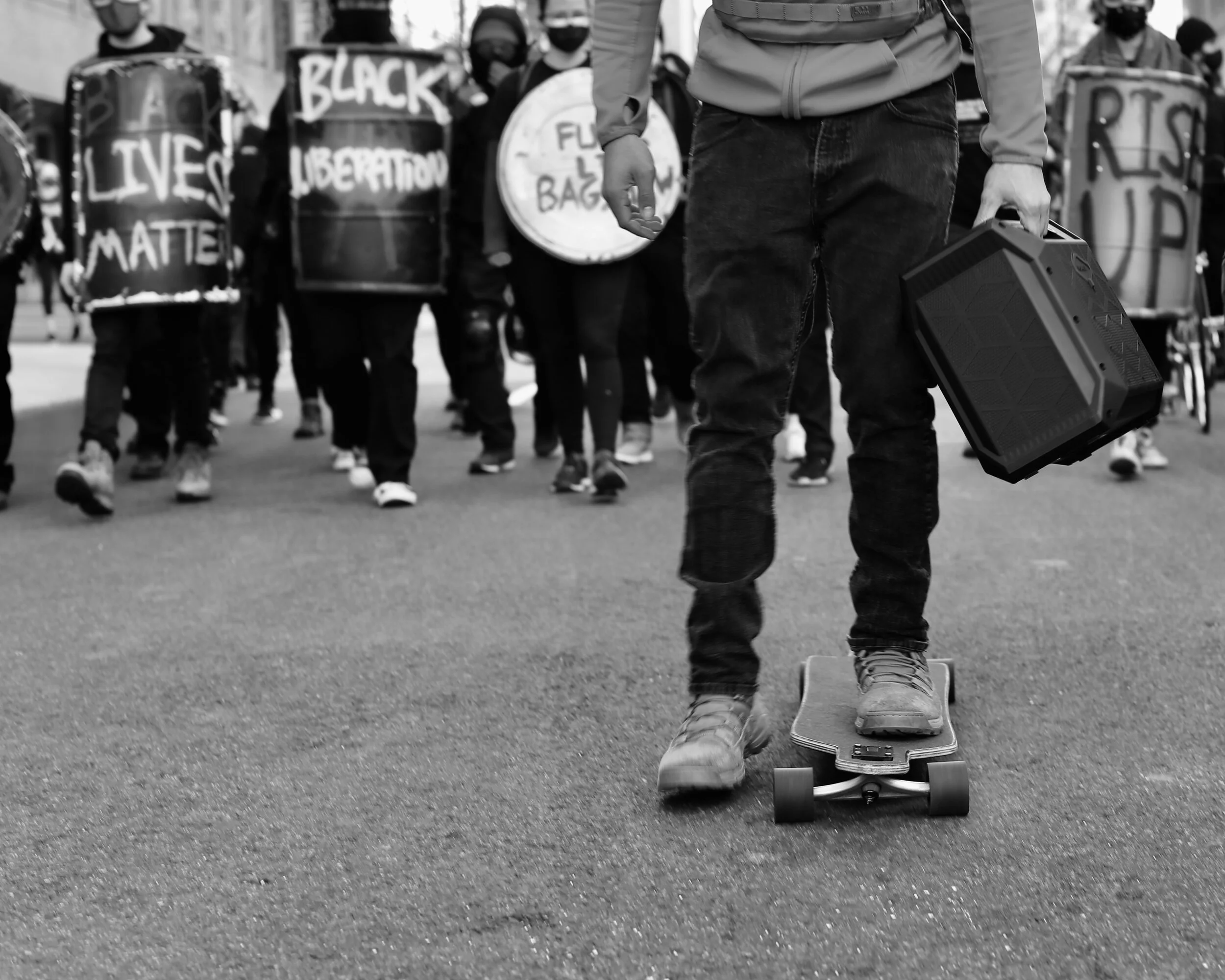
Photo: Kristine Jones
Angela Davis has said, “Prisons do not disappear social problems, they disappear human beings.” And while calling to “defund the police” has become a political hot potato, abolition is a well-researched and nuanced movement with real potential to create a more mutually beneficial society. Dawes says his group has tried to humanize the insidious evils of systematic racism while also stressing the importance of grassroots politics.
“Your mayor or city council person can do a lot more than you might think they can,” he says. “If we invest back into the community—into schools and education, where it counts—we won’t need the police.” Abolition may be a hard concept to grasp, but in theory, it would happen naturally if we properly allocated resources to the point where people can truly rely on one another—instead of on police departments that often have no real connection to the communities they serve.
Similar protests have played out in streets all across the country since last summer (and on and off for most of our country’s history). Dawes and others criss-cross through disparate communities—shutting down bridges, tunnels, and highways in the process—engaging with anyone who will listen (and perhaps, especially those who do not). Dawes says the group intentionally plans their itineraries to take them into high traffic areas. Georgetown, an affluent neighborhood popular for brunch and other weekend activities is a favorite. “We just try to get people to pay attention,” he says. “We’ve received mixed reactions—people either join the march or try to fight us.”
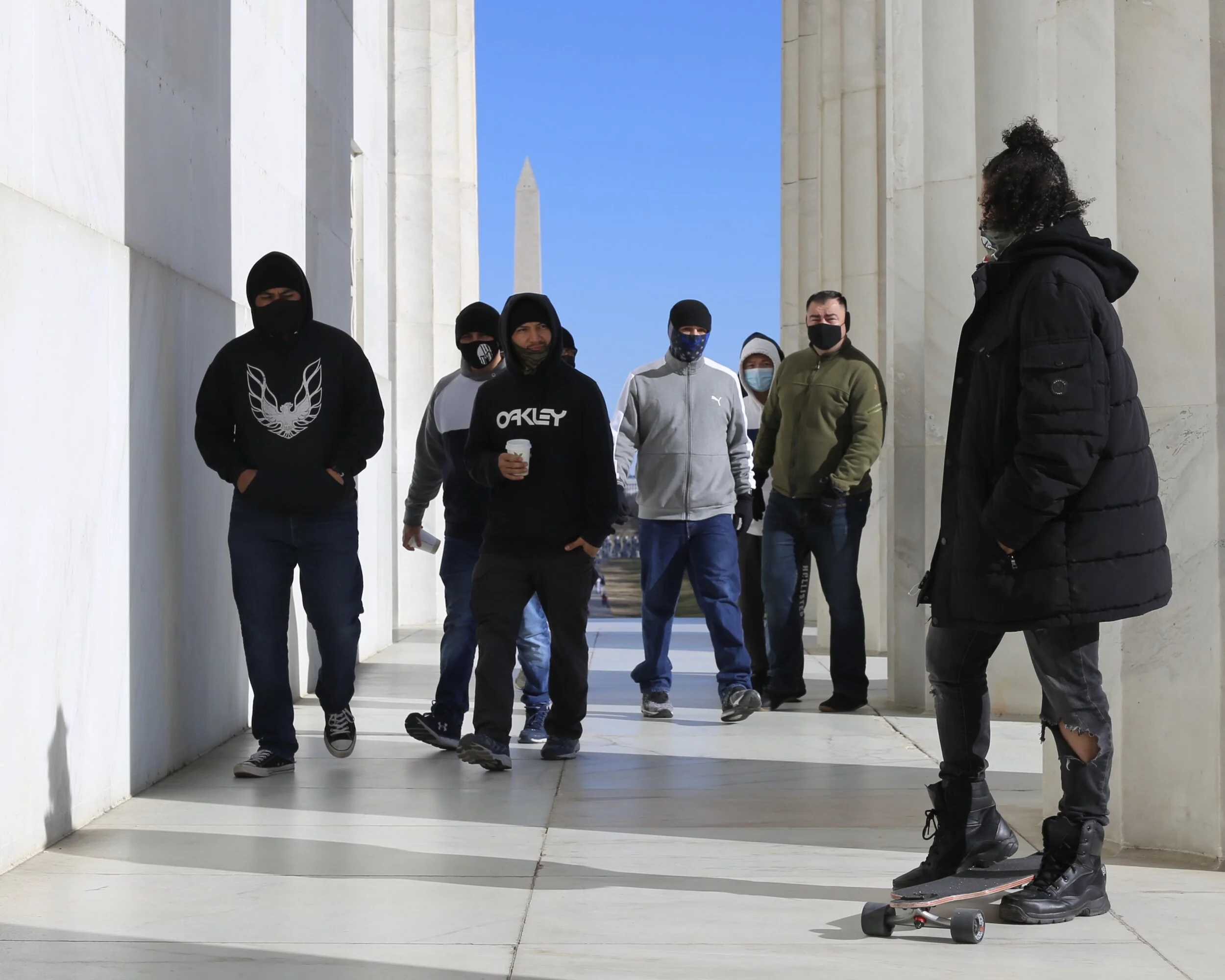
Photo: Kristine Jones
TACTICAL VESTS AND ARRESTS
The trench coat and backpack worn by Lewis on Bloody Sunday may have become iconic—but they didn’t offer much in the way of protection when he found himself on the receiving end of a nightstick. After just a few weeks of protesting, during which the police response became increasingly erratic and violent, Dawes began wearing a camouflage tactical vest.
Like most people I encounter during the countless Black Lives Matter and other protests I attend during the pandemic, Dawes’s nose and mouth is almost always covered with a grey, red, and white bandana emblazoned with jagged teeth—reminiscent of the painted nose of a WWII fighter plane. For a few weeks in the summer he wore an eye patch. And the longboard? “I’ve just always loved longboarding,” Dawes says. “Plus it’s an efficient mode of transportation.”
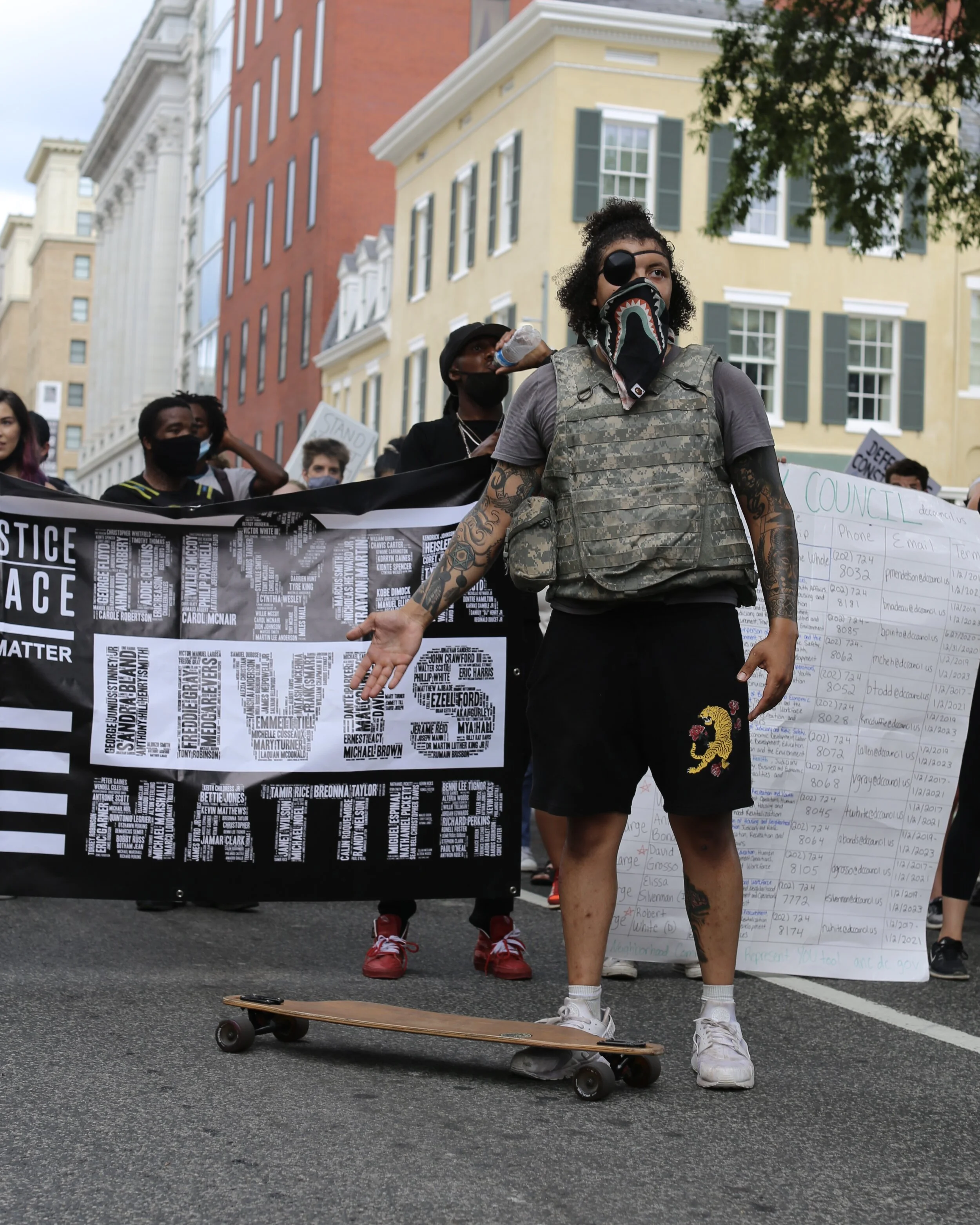
Photo: Kristine Jones
If it seems as if Dawes is dressed for war, it’s because he is: Almost immediately after forming D.C. Protests, “There were threats to our lives,” Dawes says. And Metropolitan Police Department (MPD) officers—whose slogan is “We are here to help”—seemed all too ready to deploy rubber bullets and tear gas on the non-violent protesters.
Far from helping, Dawes says, “The police have always made me feel unsafe.”
After George Floyd was killed by a police officer at the end of May—and D.C. Mayor Muriel Bowser designated the space between Lafayette Park and St. John’s Church as Black Lives Matter Plaza— “people were just always out,” Dawes says. But as interest in the protests grew, so did pushback from the city’s dozens of police departments. As time went on, the “police ramped up and got a lot more violent,” Dawes says. “You’d get shoved in the back of a protest if you weren’t moving fast enough—every month it would intensify.”
On the night of August 13 (and early into the morning of the 14th), Dawes says that tensions were particularly high. Police and protestors found themselves in a “huge cat-and-mouse game” that resulted in 41 arrests. D.C. Protests had begun to preface their weekly marches with a warning: “We told people to write the National Lawyer Guild’s number on their arm, explained how aggressive the police could be, and tried to tell people what to do and what not to do,” Dawes says.
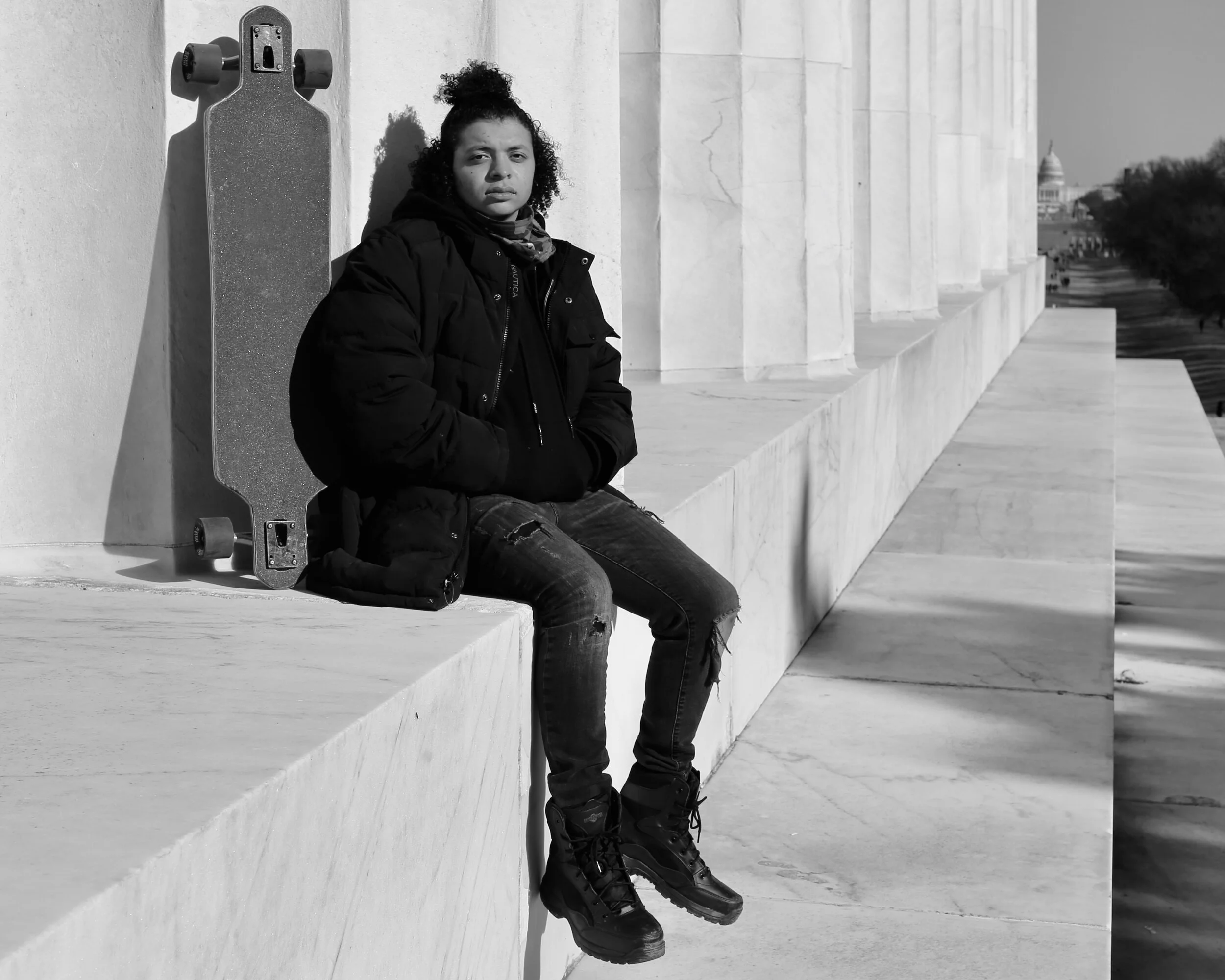
Photo: Kristine Jones
Five months later, Dawes struggles to remember the exact details of the events leading to his arrest—only that it was chaos. He does remember the police, who regularly followed protesters through the streets, rushing forward into the crowd for seemingly no reason. They pushed surprised protesters out of the way, kettled others, and began making arrests. Eventually, Dawes says, someone told the crowd they were free to disperse; as he was running away, he was tackled and handcuffed. When he asked why he was being detained, the officer said he had crossed a police line—the same one that Dawes had just been told no longer existed.
‘SUCK IT UP’
On the Saturday immediately following the arrests, I am one of a large group of protestors departing the hilly park for a late afternoon march. Cleared of all charges and clutching a portable speaker, Dawes nimbly navigates a sea of moving bodies like a cat weaving through a crowded shelf: with confidence, precision, and only the occasional minor misstep. We’ve barely started down a steep hill when the group grinds to a halt. Dawes’s longboard has gone rogue; it rolls beneath several cars before nearly disappearing into a storm drain.
Several comrades spring into collective action and Dawes’s beloved board is spared the sewer. It’s the first time I see him smile. Seeing a smile in the summer of 2020 is rare; having a reason to smile might be even more so—especially, I suspect, for someone like Dawes: politically engaged, and not white.
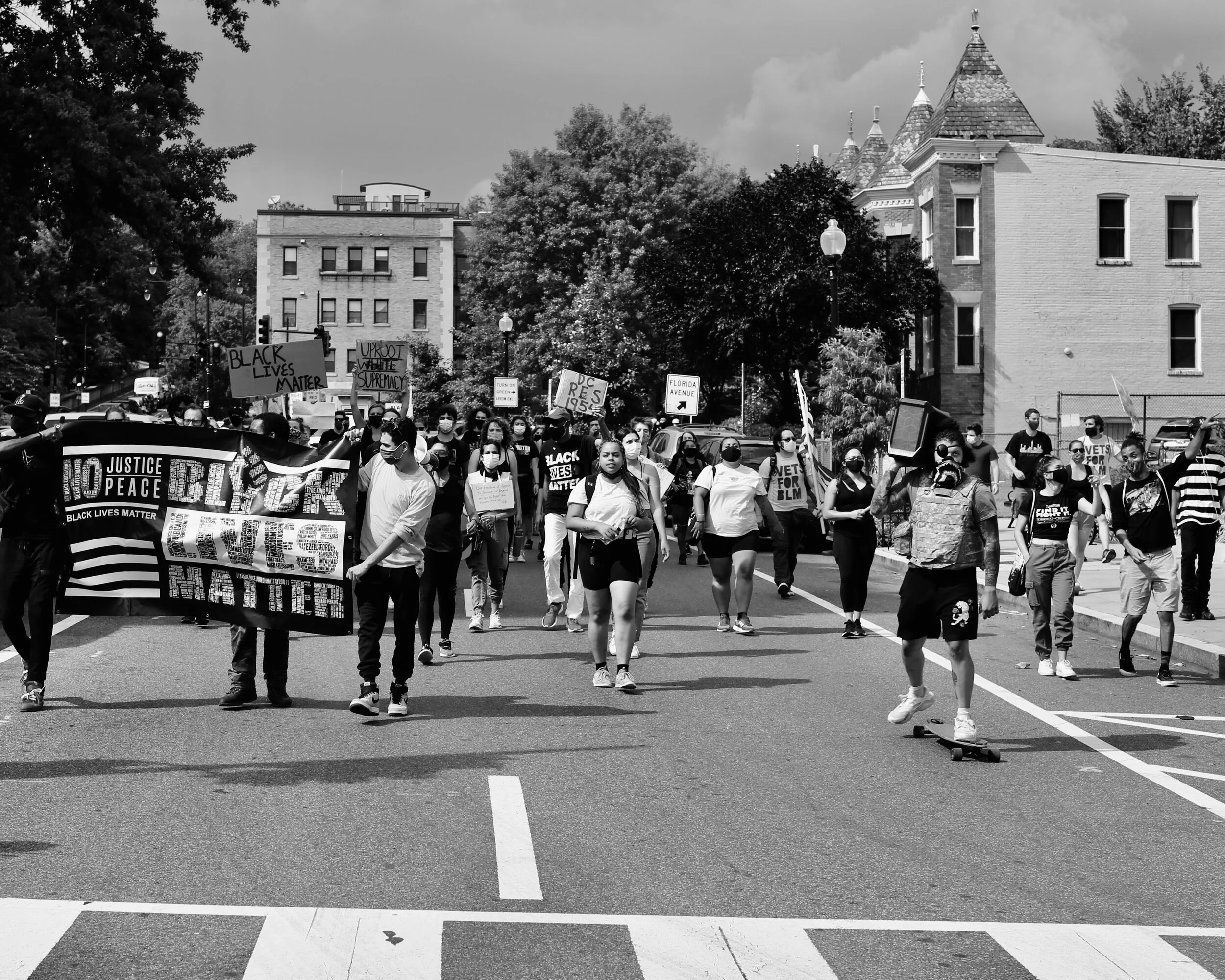
Photo: Kristine Jones
Dawes says that when he got into some not-so-good trouble as a kid, his lawyer simply told him to “suck it up.” Looking around the courtroom packed with white people in positions of power, Dawes vowed to one day be the one giving—instead of receiving—legal guidance. “White people were making decisions for me and about my life,” he says. “I just really wanted to see someone in the legal field that looked like me.”
Like many others, Dawes was horrified by the graphic video of Floyd’s grisly murder. This was one instance where he would have preferred to see less representation; it wasn’t a big leap for Dawes to imagine himself in Floyd’s position. “Seeing someone like me die in the street was really scary to see,” he says. “We needed to be out there. I don’t want the next person to be me or be someone I know.”
When his classes at NELB went virtual due to the pandemic, Dawes says he was forced to reconsider how he was using his downtime. “When I got sent home from law school, I thought “I could be doing better things with my life.’”
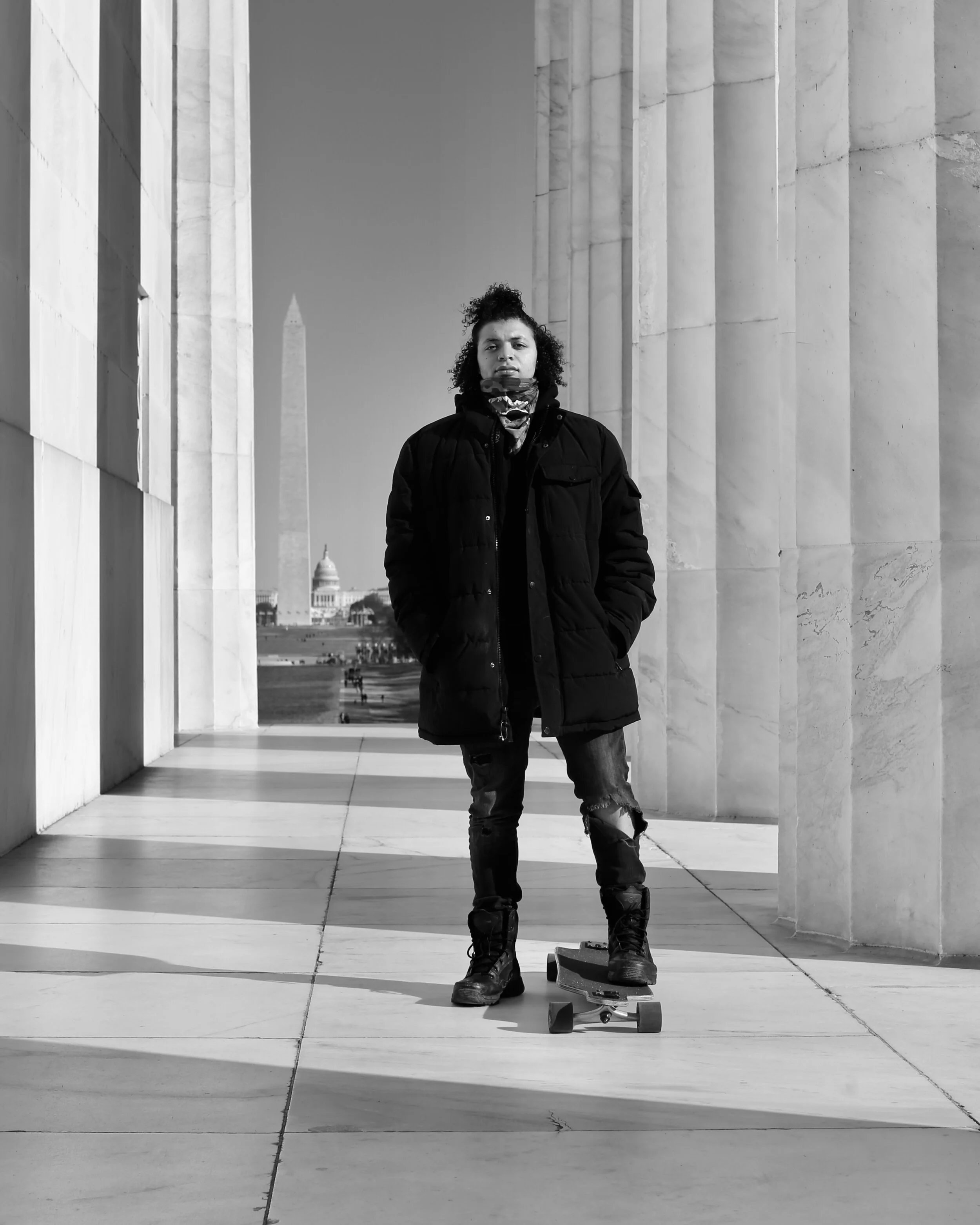
Photo: Kristine Jones
MUTUAL AID
Although they were initially motivated by tragedies that captured national attention in 2020—including the murders of Floyd, Breonna Taylor, Ahmaud Arbery, and countless others—Dawes says they started D.C. Protests primarily as a way to keep the local community safe. As the summer progressed, they began to highlight local victims of police brutality or gun violence, creating memorials and incorporating candlelight vigils into their regular marches.
Emulating similar collectives such as They/Them, D.C. Protests began to support and expand upon existing mutual aid efforts around the city. In the beginning, Dawes says that the group would collect monetary donations, stop the march at a Whole Foods, and distribute whatever they could buy to communities in need. “We wanted to show people how easy mutual aid is,” he says.
Every Saturday, groups working under the umbrella of FTP Mutual Aid build and winterize tents for unhoused communities, cook, transport, and serve hot meals, and distribute donated supplies such as clothes, diapers, and other necessities. Dawes says that the mutual aid efforts have become especially important during the winter amid an ongoing pandemic; members of “communities that are overlooked and restricted by governmental red tape” have come to rely on the weekly pop-ups in Dupont Circle.
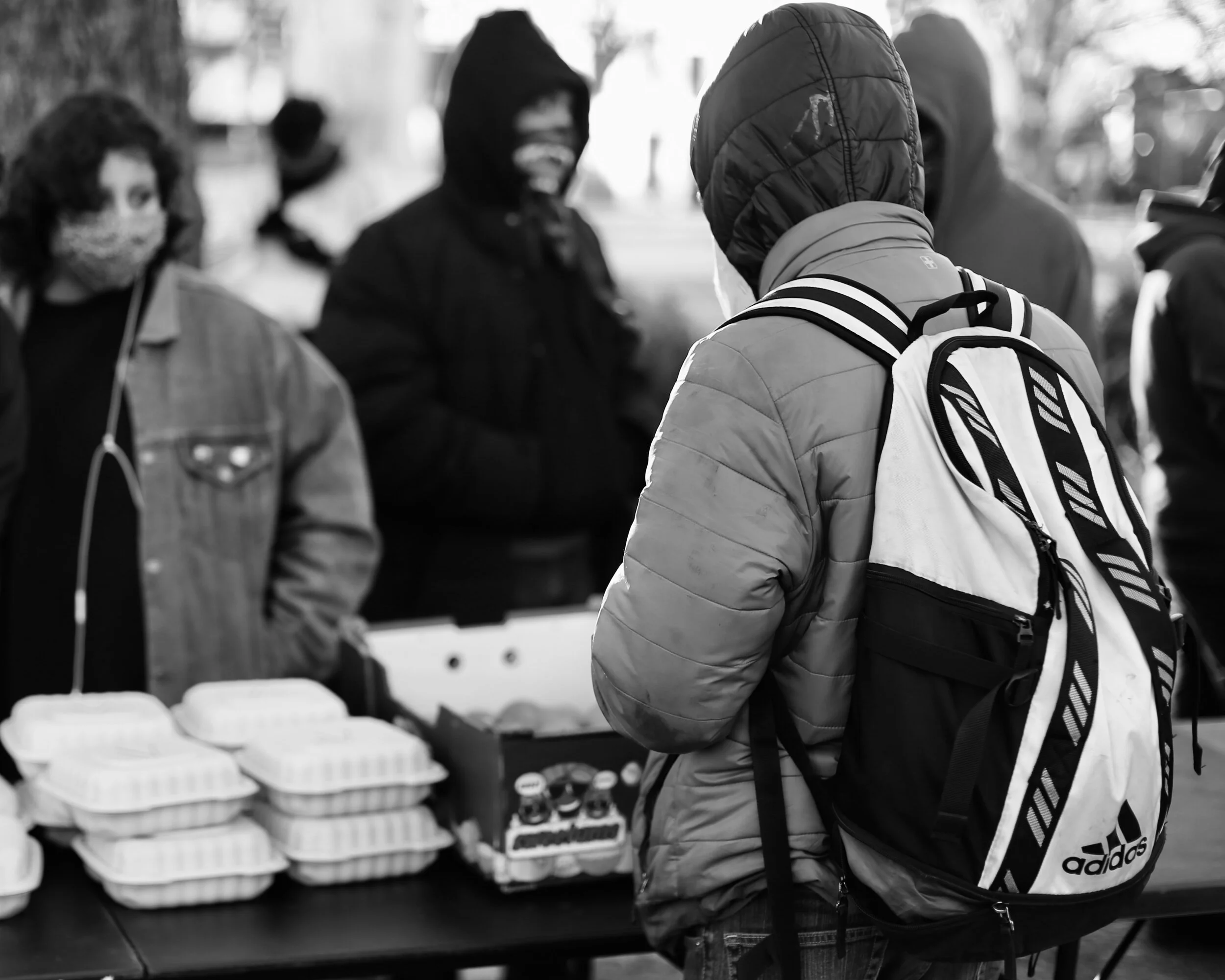

Mutual aid efforts in Dupont Circle. | Photos: Kristine Jones
In an open letter to NELB, Dawes writes that he himself “began facing housing insecurity at the onset of the fall semester. This not only altered my sense of stability, but also affected my access to stable internet connection in order to complete assignments and attend class. Despite this hardship, I remained determined and maintained a nearly perfect attendance record.”
When he reached out to the school for support, he says they “scoffed” at his problems.
“In such challenging and discouraging times, the administration’s solution should not be to turn its back on its students,” he writes. “I am of the opinion that compassion and an extension of trust and good faith would result in a prodigious class of noteworthy lawyers.”
Wherever he completes his degree, Dawes is still committed to fulfilling his childhood dream of becoming a noteworthy lawyer. Drawing upon his own experiences, Dawes says that he simply “wants to help people,” and intends to do so by practicing criminal defense law. Instead of being in conflict with each other, Dawes foresees his legal career informing his organizing work, and vice versa.
“You don’t have to know all of the ins and outs [of the system] to dismantle it, but it helps to be realistic,” he says.
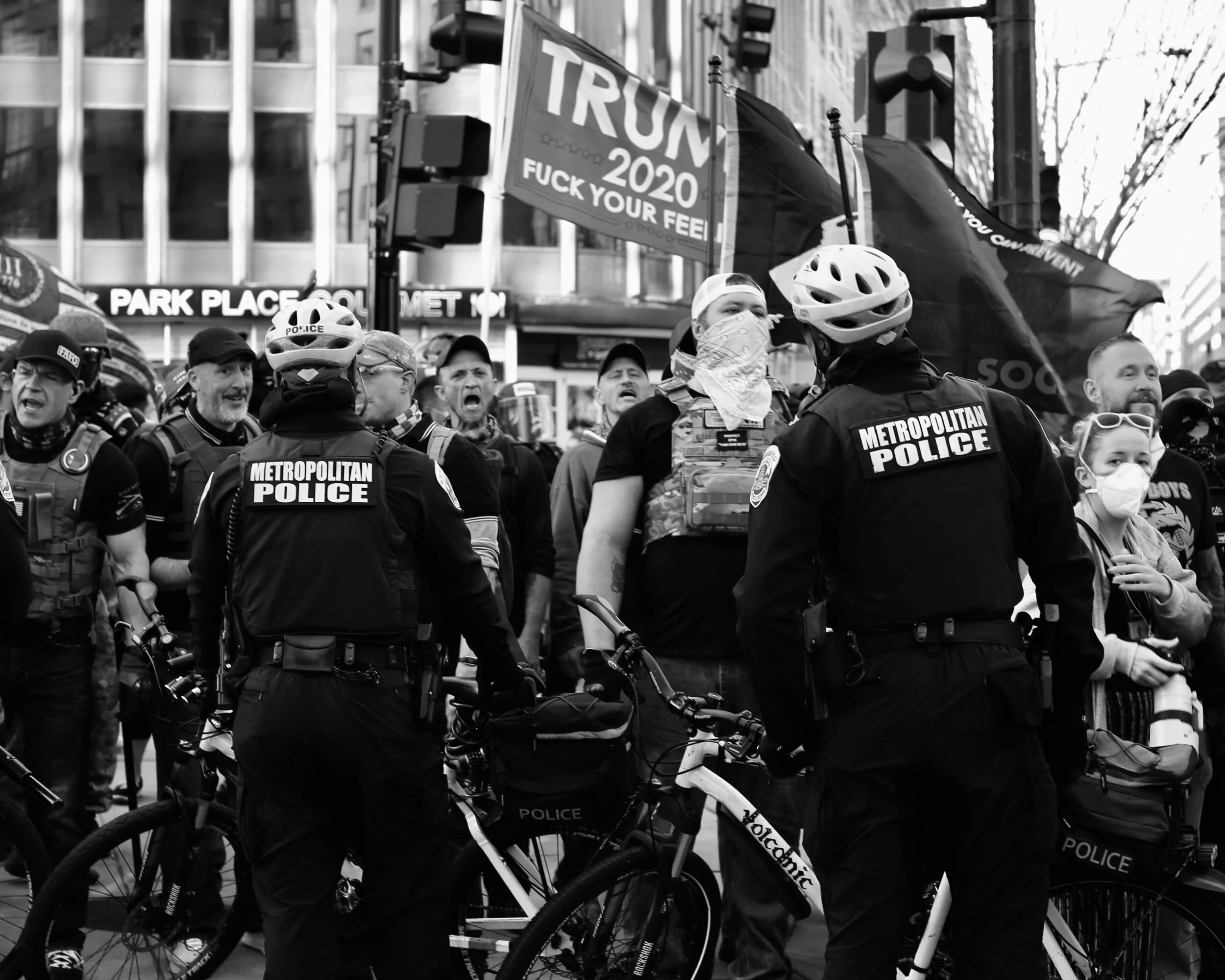
Police block alt-right groups from Black Lives Matter Plaza in December 2020. | Photo: Kristine Jones
NECESSARY TROUBLE
For activists and other targets of alt-right fascist groups like the Proud Boys, the reality on the streets of D.C. had been grim long before the rest of the country was shocked into paying attention on January 6. When thousands of people descended on the District in mid-November, encouraged by Trump’s insistence that they “stop the steal,” anti-fascist groups were quickly outnumbered. The police—decked out in riot gear—mostly kept the opposing sides separate, but it was clear they had much more tolerance (and at times outright camaraderie) for one side over the other.
Before they threatened Congress, white supremacists had been targeting local activists for months; Dawes was not interested in a repeat of the night of November 14, when he says he was stabbed by a member of the Proud Boys.
Dawes says his only goal that day was “to keep everybody safe.” But after overhearing a group of Proud Boys say they intended to “go out hunting and clean up the streets,” he knew he was in for a long and potentially dangerous night. When a cop pointed to Dawes’s tactical vest and all but challenged him to go head to head with the domestic terrorists—some of whom were not-so-covertly armed with clubs, bear mace, and other weapons—Dawes once again found himself in the middle of chaos. He narrowly avoided being seriously injured when a knife was thrust into his vest by one of the alt-right agitators—several others weren’t as lucky.
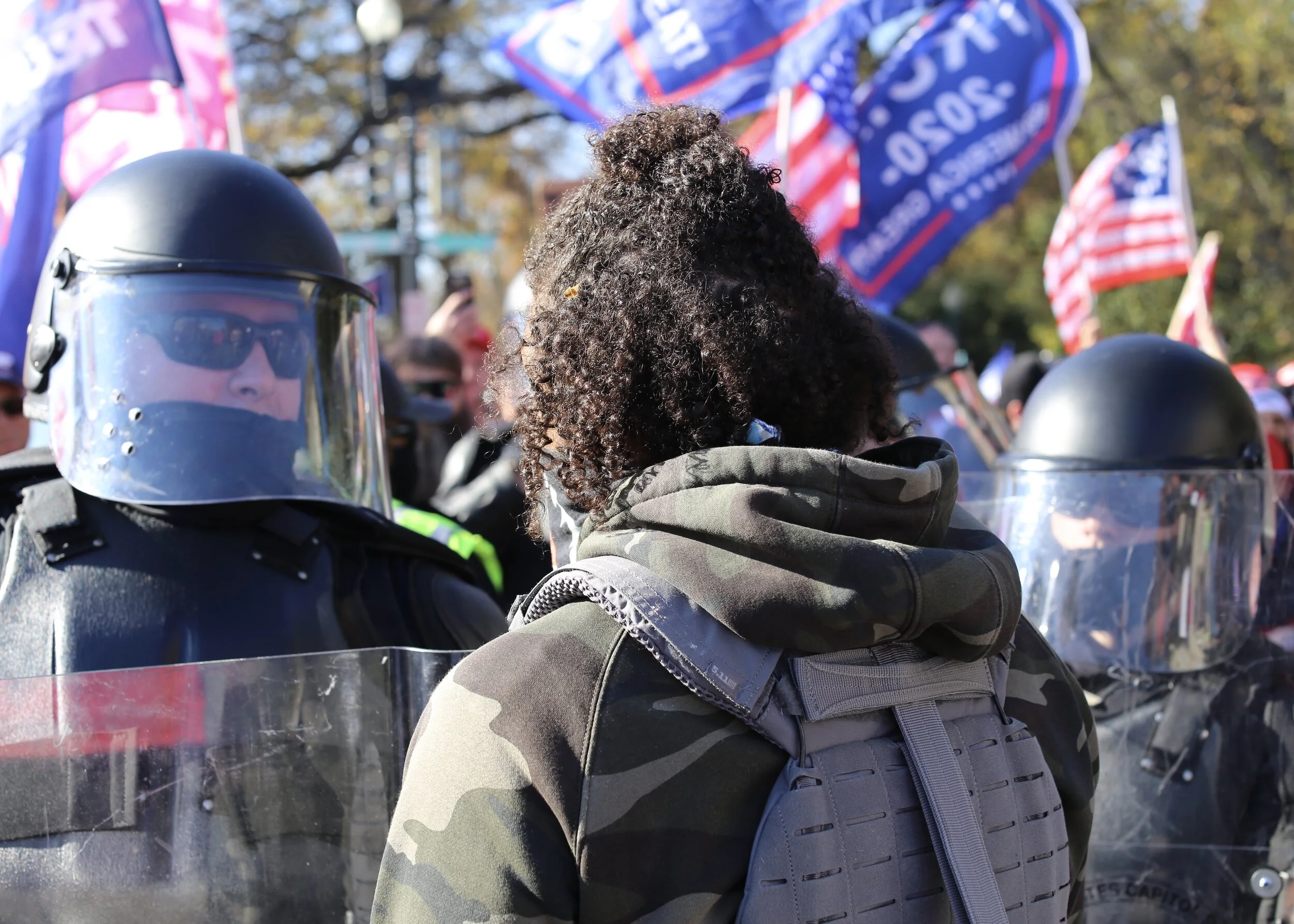
A ‘Stop the Steal’ rally outside of the Capitol in November 2020. | Photo: Kristine Jones
Dawes says he was not at the Capitol on January 6; he was helping to coordinate transportation for others concerned they wouldn’t be able to get home safely that night. But he wasn’t surprised by the lack of police presence around the mostly-white mob. “They were older white men who used their privilege to storm the Capitol,” he says. “God forbid if any of us went anywhere near the Capitol steps—we’d be shot with live ammunition. Meanwhile men with weapons and zip ties used their power to do what they wanted and [most will likely] get away with it.”
Dawes cites precedent: in 2013, Miriam Carey, a Black woman, was shot to death by the Secret Service and U. S. Capitol Police after she made a U-turn at a White House checkpoint. A car chase took Carey to the Capitol and a nearby Senate office building where officers discharged 26 bullets, killing the 34-year-old while her 13-month-old daughter was in the car. Eight years later, the list of Black lives lost too soon—or ruined long before they even got a chance to begin—is painfully long.
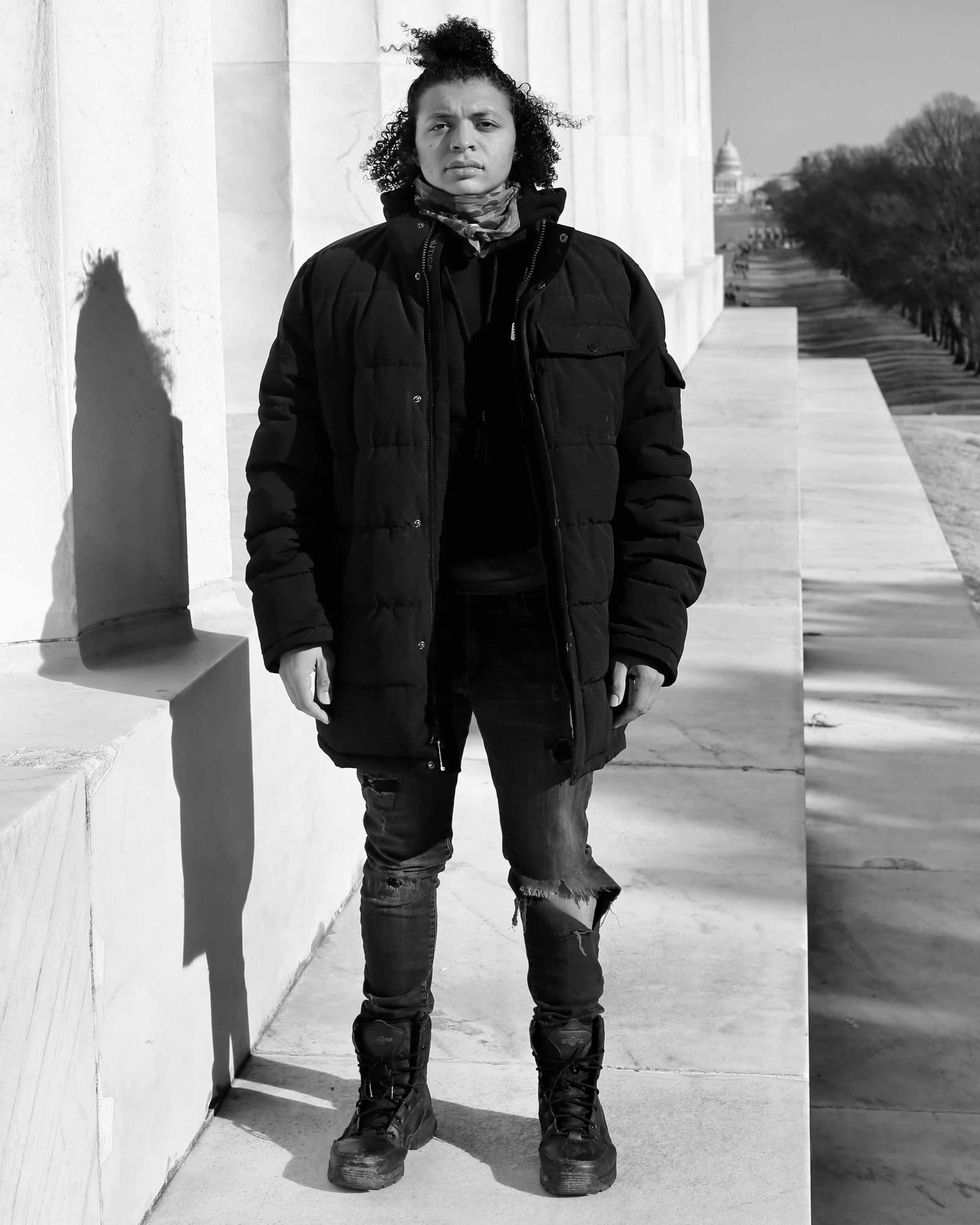
Photo: Kristine Jones
While he sifts through the fallout from months of what Lewis might not call “good,” but certainly “necessary trouble,” there’s one thing Dawes isn’t going to do: stop fighting for Black futures, including his own. “We want to show people the circumstances of how these people died and how horrific it was,” he says. “If it happened to them and it happened to someone who looks like me, or my sister, or my brother, it can happen to anyone.”
This is a crucial moment in history; we have a real opportunity to rebuild and restructure our society to be more equal, more just, and more habitable for all. In an attempt to better understand what motivates and inspires fellow activists, I’m profiling people and how they’re trying (in ways both big and small) to make the world a better place. If you know someone I should profile, let me know (maybe it’s you!?). You can see all of the profiles here.

Nicky Sundt Jumps into fires

Photo: Kristine Jones
On July 9, 1978, Nicky Sundt joined a friend—and more than a hundred thousand self-identified feminists including Gloria Steinem, Betty Friedan, and Bella Abzug—at a march in Washington, D.C., calling for an extension of the deadline for ratification of the Equal Rights Amendment (ERA).
At the rally organized by the National Organization for Women, Steinem told the crowd that “the lawful and peaceful stage of our revolution may be over. It's up to the legislators. We can become radical, if they interfere with the ratification of the ERA, they will find every form of civil disobedience possible in every state of the country. We are the women our parents warned us about, and we're proud.”
In a photo from the march—the first of many to capture Sundt protesting in the streets—she stands tall, surrounded by dozens of people clad in suffragette white. Her fist is raised and she appears to be the only one in the crowd who is aware of the camera—if not the dress code. “I didn't get the memo that I was supposed to wear white,” Sundt says, laughing. “I showed up in a striped shirt that made me look like Waldo. Can you find me?”

Sundt at the 1978 ERA march in Washington, D.C. | Photo courtesy of Nicky Sundt
Nearly four decades later, Sundt still stands out—but she’s much more savvy about how and why. On January 21, 2017, she once again joined thousands of women on the streets of D.C. for the first Women’s March, the largest single-day protest in U.S. history. People from all around the world descended upon the District—and this time Sundt, who is transgender, joined them presenting publically as female for the first time.
Although she says that transitioning in her early 60s is scary, Sundt—a former smoke jumper who fought forest fires in the western U.S. for a decade—is not one to shrink under the weight of a stressful situation. “I thought I’m going to do it now,” she says. “I'm going to be there as a trans woman at that march because it just felt like this was the time to do it. I thought I should present as who I am, as opposed to what I'm supposed to be. It was hard. I wasn’t entirely ready yet, but I’m a late bloomer.”

Photo: Kristine Jones
PERENNIAL PROTESTER
The more I find out about Sundt, the more I would argue that the appropriate plant comparison might be a perennial: one that flowers over many different seasons during its lifetime. She was born in San Francisco; when Sundt was seven years old, her family moved to the Centre-Val de Loire region of France. After their parents divorced, she and her four siblings split their time between Europe and the U.S.
Her dad worked abroad as a computer systems analyst for the U.S. government. He was a big supporter of Pete Seeger, who was blacklisted—along with his group, The Weavers—during the McCarthy era. “As soon as I was old enough to reach the record player, I was listening to The Weavers,” Sundt says.
In the ‘60s, Seeger struck out on his own to become a fixture in the folk music scene, writing and recording songs in support of civil rights, environmental issues, and disarmament. “I think I probably got some of the temperament for protest from my dad—to my knowledge, he himself never protested but that’s where his heart was.”

Photo: Kristine Jones
Sundt says the roots of her environmental activism in particular can be traced to the time she spent as a teenager in suburban Georgia. “There was garbage everywhere—people would just throw their bottles out the window,” she says.”It was such a contrast for me to see how careless people could be.” In 1972, two years after the first-ever Earth Day, Sundt organized a large protest at her high school in Germany.
When she enrolled at the University of California, Berkeley, Sundt was able to combine her interests in the environment and international policy. She wrote her senior thesis on ozone depletion, and completed her graduate degree in a new energy and resources program started by then-27-year-old professor John Holdren.
Holdren eventually served as the senior advisor to President Obama on science and technology issues, and Sundt’s career trajectory has been no less impressive. In the late ‘80s and early ‘90s, she worked as an analyst for the U.S. Congressional Office of Technology Assessment, co-authoring several of the first official reports on climate change including Changing by Degrees: Steps To Reduce Greenhouse Gases.
Sundt says people were generally receptive to the science sounding the alarm on climate change—at least in the beginning. “There were people who took me seriously,” Sundt says. “On all of these big problems there’s always someone sounding the alarm—it’s the people in powerful positions who don’t listen.”

Photo: Kristine Jones
FIRE DRILL FRIDAYS
Hoping to attract the attention of at least some of those powerful people, Jane Fonda temporarily moved to D.C. at the end of 2019 and teamed up with Greenpeace to form Fire Drill Fridays. The weekly protests took place on Capitol Hill; frontline activists spoke about environmental justice, called for an end to all new fossil fuels, and pressed for the advancement of the Green New Deal.
Sundt, who lives near Lincoln Park, joined several of the Fire Drill Friday rallies and was arrested for civil disobedience three times. She spent time in police detention with Fonda, Ted Danson, Joaquin Phoenix, Martin Sheen, Catherine Keener, Rosanna Arquette, and hundreds of others, including myself. On December 20, Sundt found herself protesting alongside Steinem once again—albeit under different circumstances than the 1978 ERA march.
“I was next to Gloria Steinem as they read her Miranda rights,” Sundt says. “I asked her if she had been arrested before and she said ‘Oh yes, but it’s been a long time.’ I asked her how she ended up here, and she said ‘Oh well, Jane [Fonda] was at my house and she made me come.’”
Fonda, a notoriously persuasive and prolific activist with a history of championing LGBTQ issues, made a positive impression on Sundt—a feeling that appears to be mutual. At a post-protest dinner with fellow climate experts, Sundt says that Fonda immediately enveloped her in a big hug and they later shared a piece of carrot cake for dessert.
Not only was Sundt surrounded (and accepted) by the revolutionary women Steinem had been warned about—but now Sundt was officially one of them too. “The women were all amazing,” she says. “It was scary, I had never been arrested before—and now I have a police record. But I’m proud of it.”

Photo: Kristine Jones
WHERE THERE’S SMOKE
Sundt’s police record may be relatively short, but her resume is not. In the late ‘70s, Sundt started firefighting for the U.S. Forest Service; she is certified as a parachute rigger, squad boss, and tree faller. “It looked like a blast,” Sundt says of smoke jumping. “But it was absolutely terrifying. The first time I jumped, I forgot to do the roll and landed on my feet. My boss said ‘You should have broken both legs.’”
After a decade—and a few more injuries—Sundt decided it was time to hang up her parachute. She stayed in the District, wrote and edited several newsletters and magazines devoted to climate change, and worked as a communications director for the U.S. Global Change Research Program Coordination Office.
The first national climate assessment came out just as the Clinton/Gore administration was departing, which Sundt calls “really bad timing.” She says there were forces within, and outside of, the Bush/Cheney administration that wanted the climate assessment buried—but that she “found all sorts of creative ways to make it really hard for them to do that.” These so-called “gatekeepers” were censoring reports, altering scientific documents, and watering down the language to make climate change seem like a minor threat.
“Suddenly the powerful people recognized that this was no longer an academic issue or a science issue—that this couldn’t be confined to perpetual research any more and it was starting to pose a threat to their bottom line,” Sundt says.

Photo: Kristine Jones
Sundt, whose ex-wife works with infectious diseases, might joke that they raised their daughter in a “disaster household,” but her bottom line is pragmatic. “My approach is rooted in my own personal experience which is, if you’re focused on preventing stuff from happening, then you’re going to feel like you’re losing,” Sundt says. “Things are not getting better—climate change is permanent, the planet is going to continue warming, we’re going to see continued disruption, and the magnitude of these disruptions is going to grow.”
Sundt understands—both in her own life and in regards to the climate crisis—that you can’t turn back time. “The question is not ‘Can we get back to where we were?’ but ‘What are the alternative futures we can have?’” she says. “And the alternative futures are very different depending on what we do now.”
But one thing is certain: “You cannot have an unfettered energy industry and an effective climate policy,” Sundt says. “It requires massive government intervention in the energy market and there’s no way around it. The people who have the power to change things aren’t suffering the consequences of their actions and they don’t have to listen. They’re not even hearing you because you’re not in their orbit—but also they are choosing not to hear you, particularly given the implications.”
It’s been almost a decade since Sundt wrote an article published in the Huffington Post calling on politicians to “Wake up, smell the smoke, and act on climate change.” With each passing year—increasingly full of super storms, devastating wildfires, and rising temperatures—the implications of government inaction become more and more clear.
“Alas, many of our elected representatives in Washington are napping on the fireline,” Sundt wrote in 2012. “They need to wake up and smell the smoke. They need to take climate change seriously. They need to help Americans cope with the impacts we’re feeling now, and prepare for the impacts that will grow more disruptive in coming decades. And they need to reduce the risk of catastrophic consequences from climate change in the longer-term through policies that help us reduce our dependence on fossil fuels.”
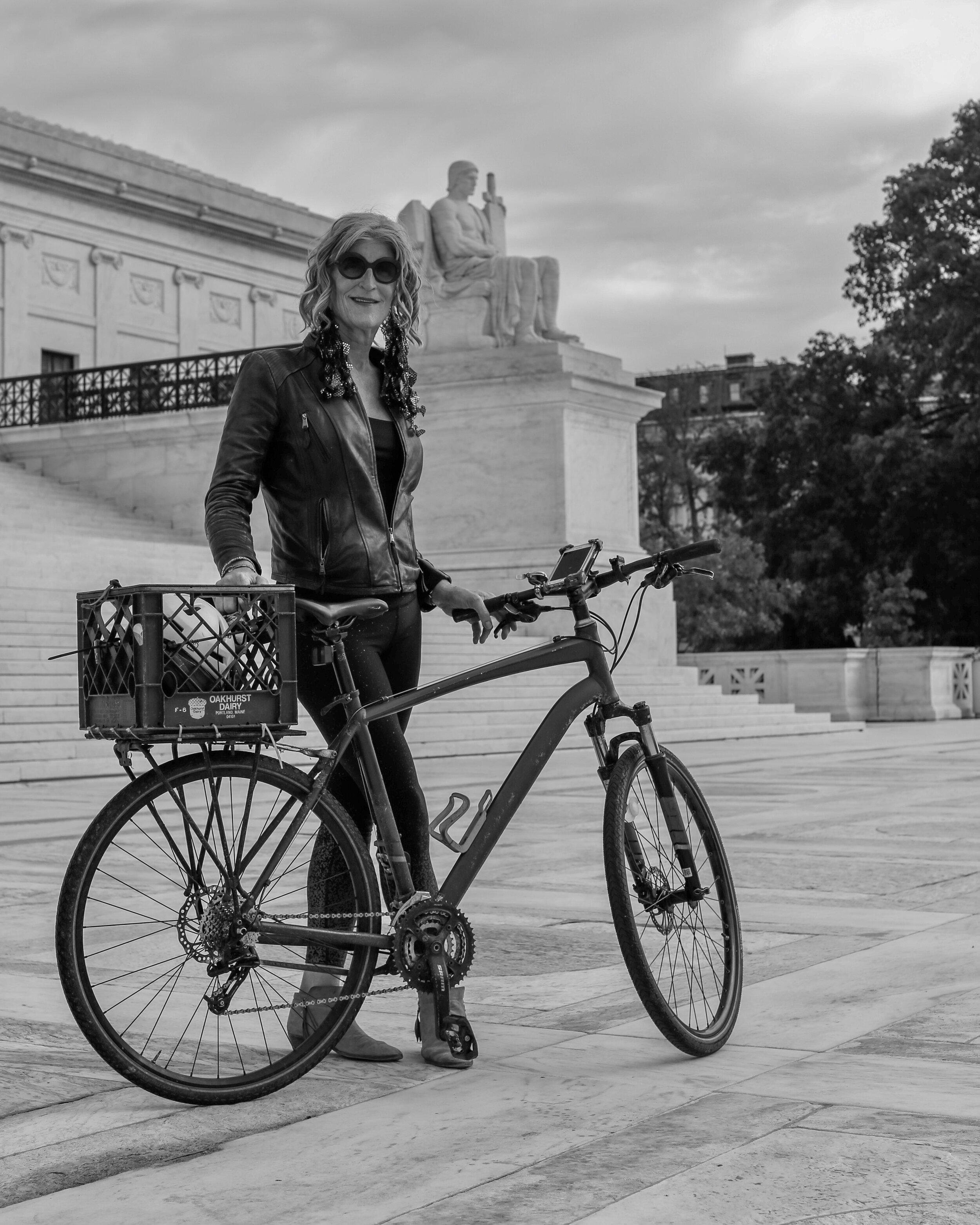
Photo: Kristine Jones
NAPPING ON THE FIRELINE
In 2016, Sundt was napping on her own fireline: while working as the Director of Climate Science and Policy Integration for the World Wildlife Fund (WWF), she woke up and smelled smoke. Thanks in part to therapy, the internet, and the popularity of trans celebrites like Laverne Cox, Sundt finally realized that she was transgender.
When she was a kid, Sundt says she begged her mom to let her wear dresses. When her mom eventually acquiesced, Sundt recalls being ridiculed by her peers: “I realized this was not an experience I wanted to go through again.” In the early ‘90s, Sundt got married and started a family; she stopped fighting physical fires and started fighting mental ones.
“So many of us are forced to spend some portion of our life trying to be something that we’re not,” she says. “It’s so hard. We just did what we thought we were supposed to do and it creates all this stress. You think, ‘What’s wrong with me? Is this normal? Why am I feeling this way?’ You just kind of keep it to yourself.”
Sundt says she didn’t even know the word “transgender” existed until fairly recently. But once she did, “it was such a relief—realizing what you are—understanding yourself and then getting other people to accept you for what you are and being able to live that life,” she says. “I just thought ‘I can’t live my life as something else.’ I mean what a pity. What a wasted life if you can never actually be who you are. I thought, ‘I can’t live this way anymore. I can’t deprive myself of my identity.’”
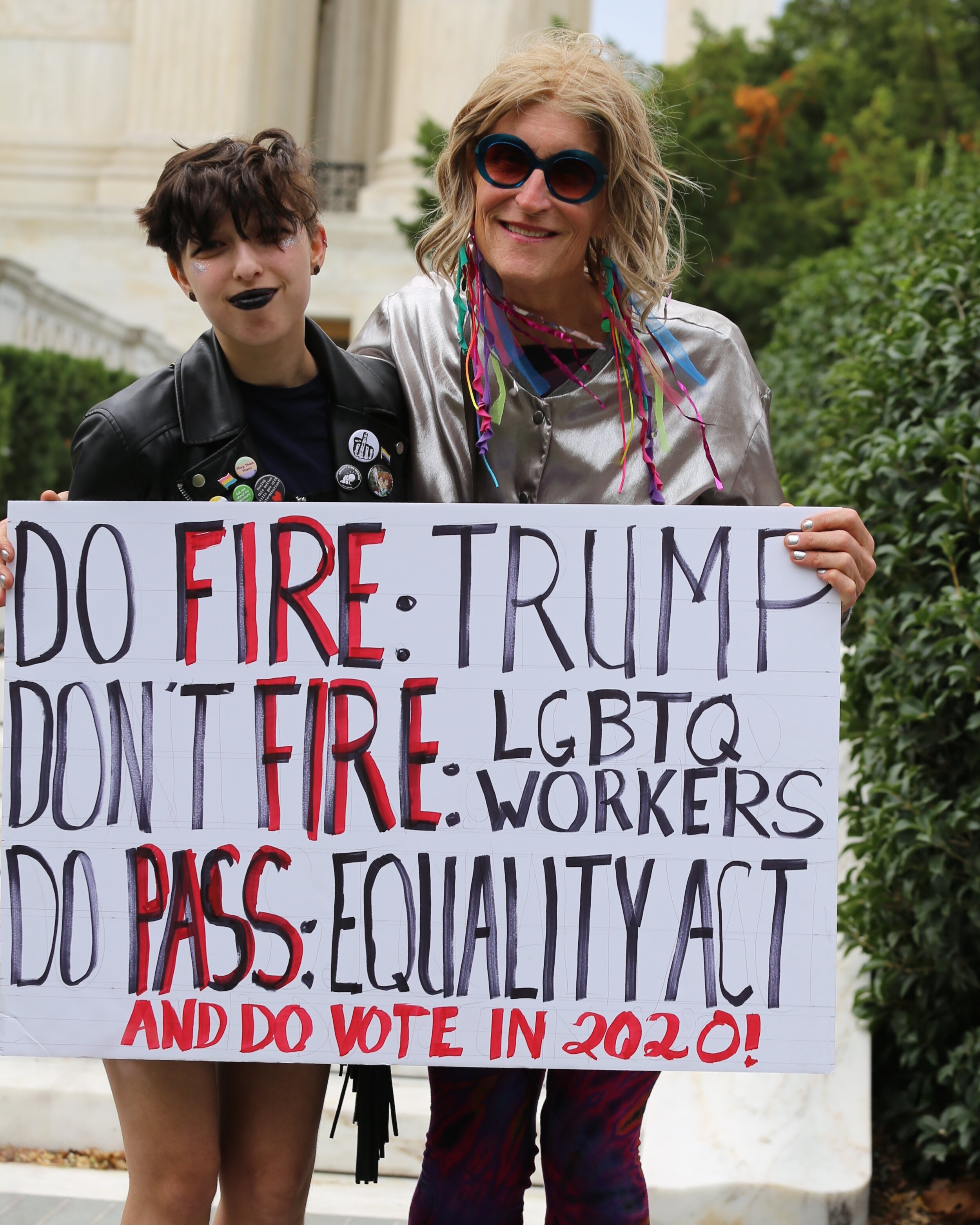
Photo: Kristine Jones
Before she had even decided what her own alternative future would look like, Sundt helped change the WWF’s discriminatory insurance policy to cover transition-related expenses. “I just knew that I wasn’t going to hide it and that I was going to be an advocate for trans people, including myself,” she says. “It’s hard if you don’t fit—you’re left to make your own road map, which makes us stronger and more resilient. But, of course, I would have preferred not to have had to go through some of it.”
Because she started her transition later in life, Sundt realizes that she “just can’t pass for a lot of people, but that’s OK,” she says. “I’m trans, and that’s what I am. I’m not trying to be anything else. I’m just a trans person. I want to present the way I feel, but I don't want to change for other people.”
THE ‘WORST POSSIBLE THING’
Sundt left the WWF in the midst of her transition, hoping that her first job presenting as female would be within the Hillary Clinton administration. Then of course on November 9, 2016, “the worst possible thing happened.” During the campaign season, trans people had become a hot button issue for Republicans. “They were using us to stir up their base,” Sundt says. “We became like flag burning or prayer in the schools or abortion—it was now ‘trans people are in your bathrooms!’”
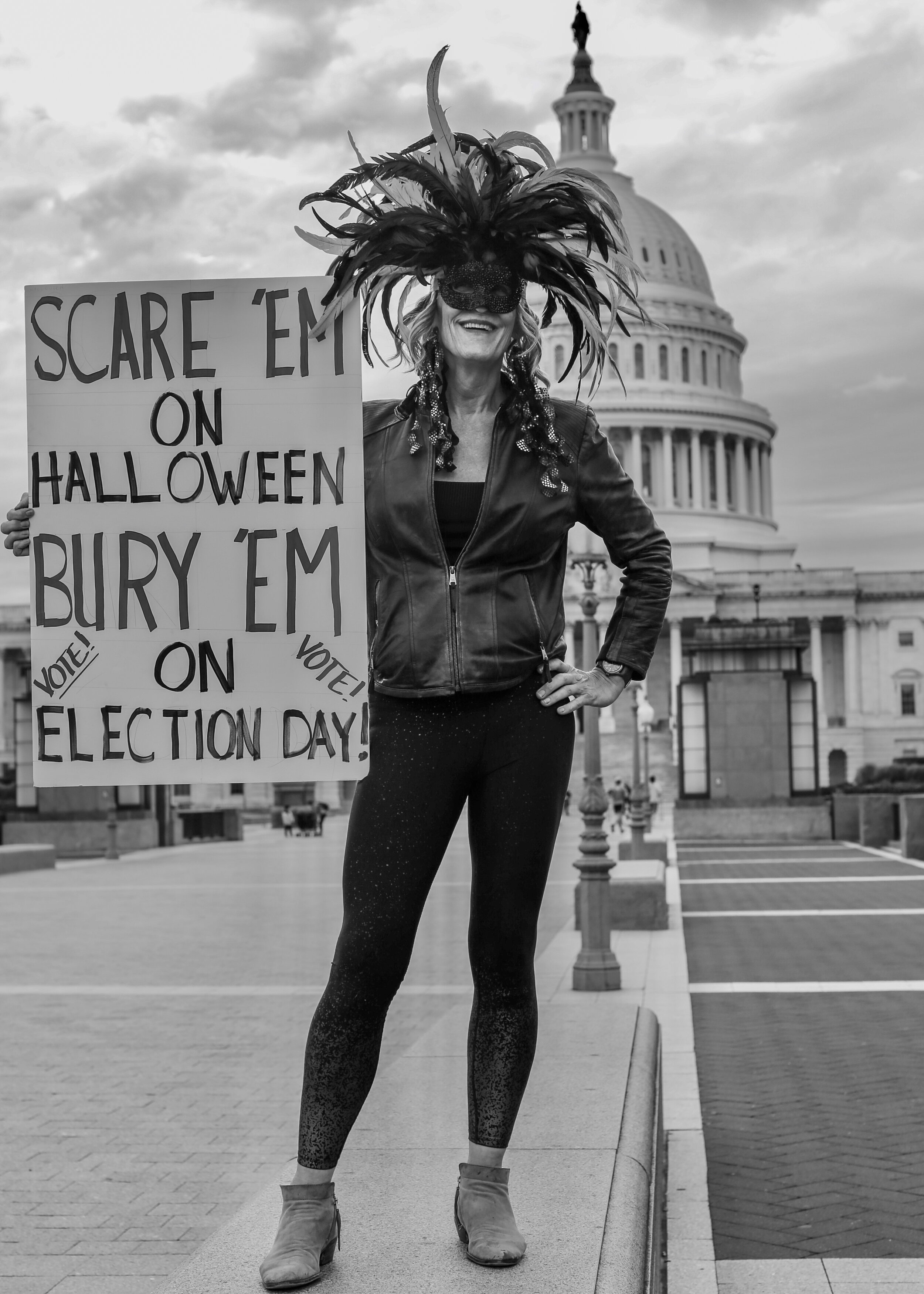
Photo: Kristine Jones
Sundt tried to channel her energy positively while working with trans groups and candidates—and into the streets. She estimates that since Trump took office she’s been to more protests in the last four years than in her previous 60. “I think that for all the negative stuff that Trump has done, he has done a lot to galvanize groups to act,” Sundt says.
Although Sundt says she was taught by her parents to care about people, she admits that “it’s so much easier to tear things apart than to build things.” As she watched the Trump administration ignoring or actively dismantling so much of the climate policy she had helped create over the years, Sundt felt largely powerless. Living in D.C. without proper representation in Congress limited her options further. “It just seemed like street protests were one of the few things we could do,” she says.
She says that doing so as a woman has been eye-opening in a lot of ways she didn’t expect. “You start seeing patterns of behavior that were invisible to you before,” Sundt says. “I’ve become more sensitive to the different perspectives that people have depending on their race, their religion, their ethnicity—all of those things can make people see the world very differently.”
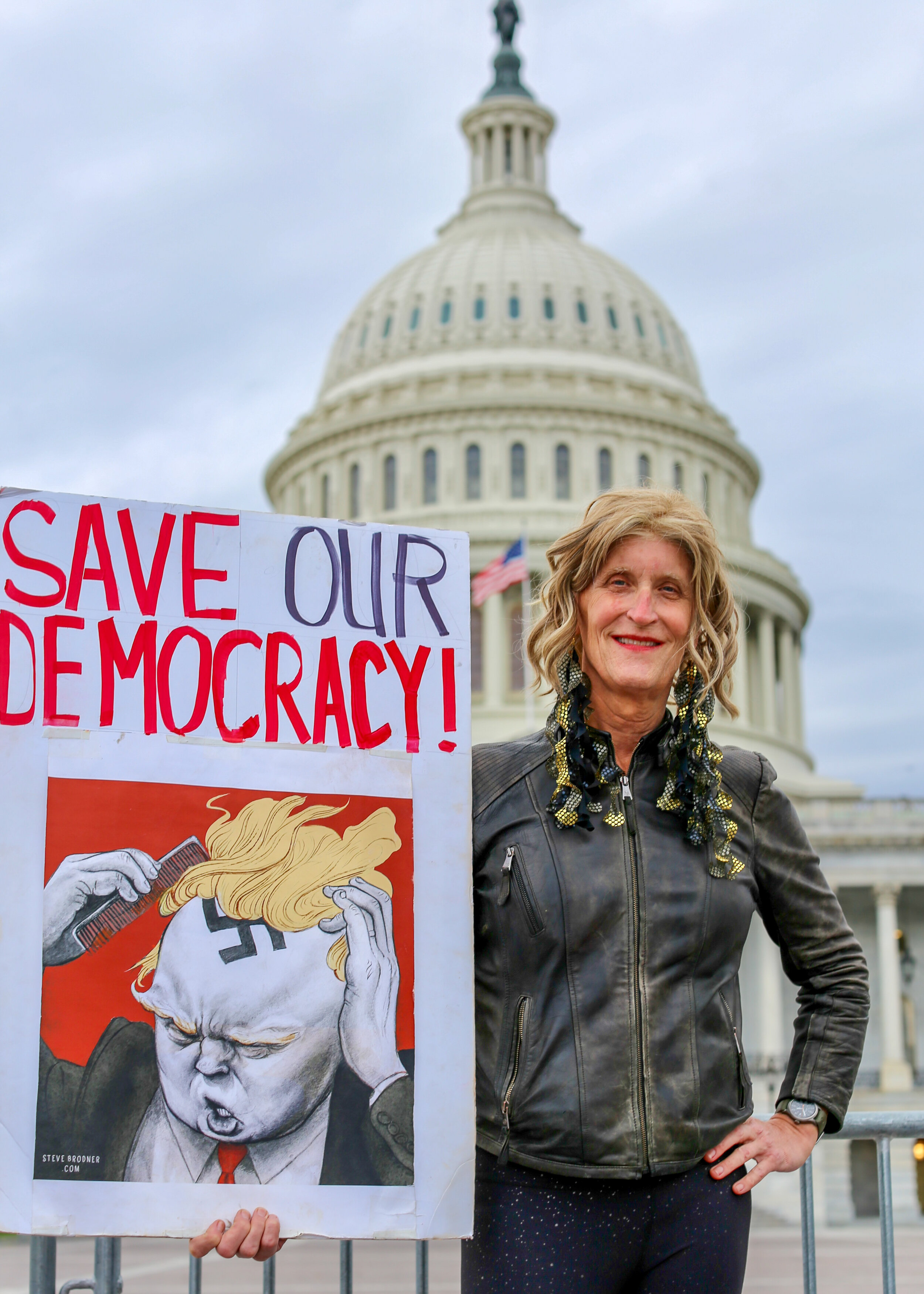
Photo: Kristine Jones
But Sundt knows instinctively that no matter how stark our differences, meaningful change can only be achieved by focusing on what connects—not divides—us. “We have to sew these different movements together into a coalition that deals with a whole range of concerns,” she says. “If we’re all pushing and pulling in different directions, we’re too easy to defeat. We need to unite, we need to focus and accept that maybe our issue is not going to the top one this time.”
In her own life, Sundt tries to practice what she preaches. She says she tries to be a “good ambassador” for the trans community and prefers not to scold people who may misgender her. She encourages people to ask her questions, and tries to be cognizant of the times when she should speak out, or step back and let others have the spotlight.
“I believe strongly in the power of example and trying to find a positive way forward, not letting fear dominate what you do, and in being generous,” she says. “When I go to a protest I try not to be angry, I try to make people laugh. You can have a good time and also change the world while you’re doing it—we can all be happy warriors.”
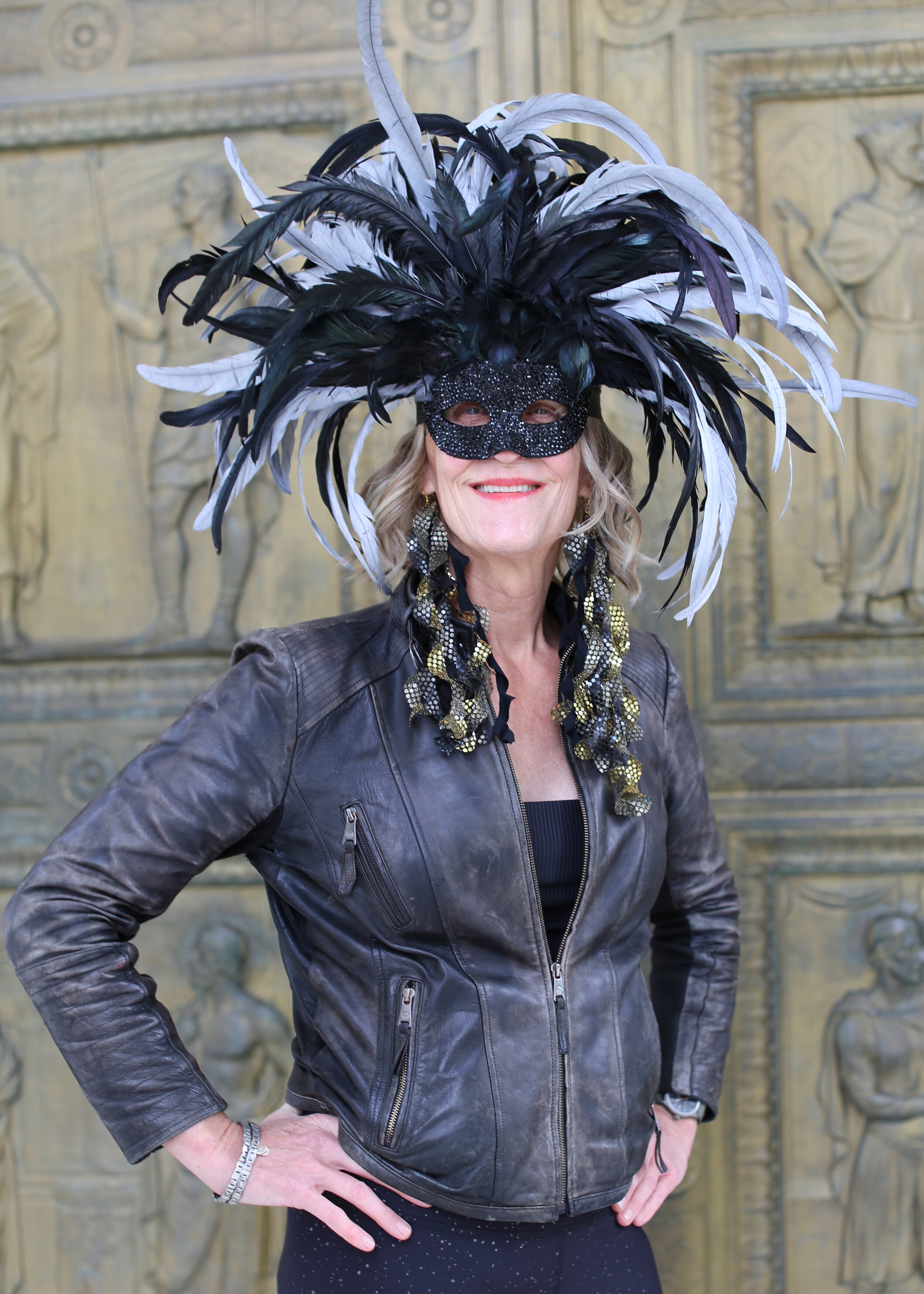
Photo: Kristine Jones
HAPPY WARRIORS
The idea of a “happy warrior” may seem contradictory, but Sundt sees no reason why social justice can’t be served with a smile. Her statement earrings and colorful leggings make her easy to spot on daily bike rides or while she’s walking her dog, Blue, around Capitol Hill. During the past few months she passed out coupons to friends, each redeemable for a free hug once the pandemic is over. When she went to the police station to post bail after her third arrest with Fire Drill Fridays, Sundt brought along a ‘Get out of jail, free” card from Monopoly. She asked the officers “Is this good here?” (they said no). At the most recent Women’s March, Sundt wore a feathered face mask and carried a sign adorned with tombstones that read “Scare ‘em on Halloween. Bury ‘em on election day.”
Whether or not she has always embraced it, Sundt knows that she wasn’t made to blend in. Drawing on her strengths as a communicator, Sundt crafts simple and evocative protest signs; she knows how to position herself in front of a camera (or climb a light pole) and knows how to provide journalists with the perfect protest visual. When Sundt got arrested with Danson and Fonda, her dad called her from France; he had seen her photo in a local paper.
“To me, there’s no point in making a sign if the only people who see it are the people at the protest,” she says. “You want to entertain people and make them laugh but ultimately what you really want is for your message to be broadcast everywhere.”
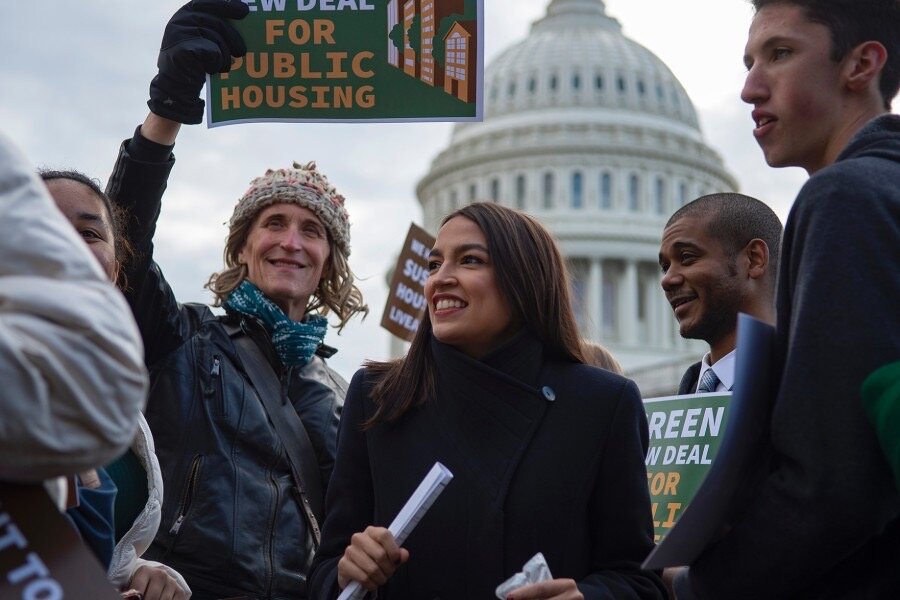

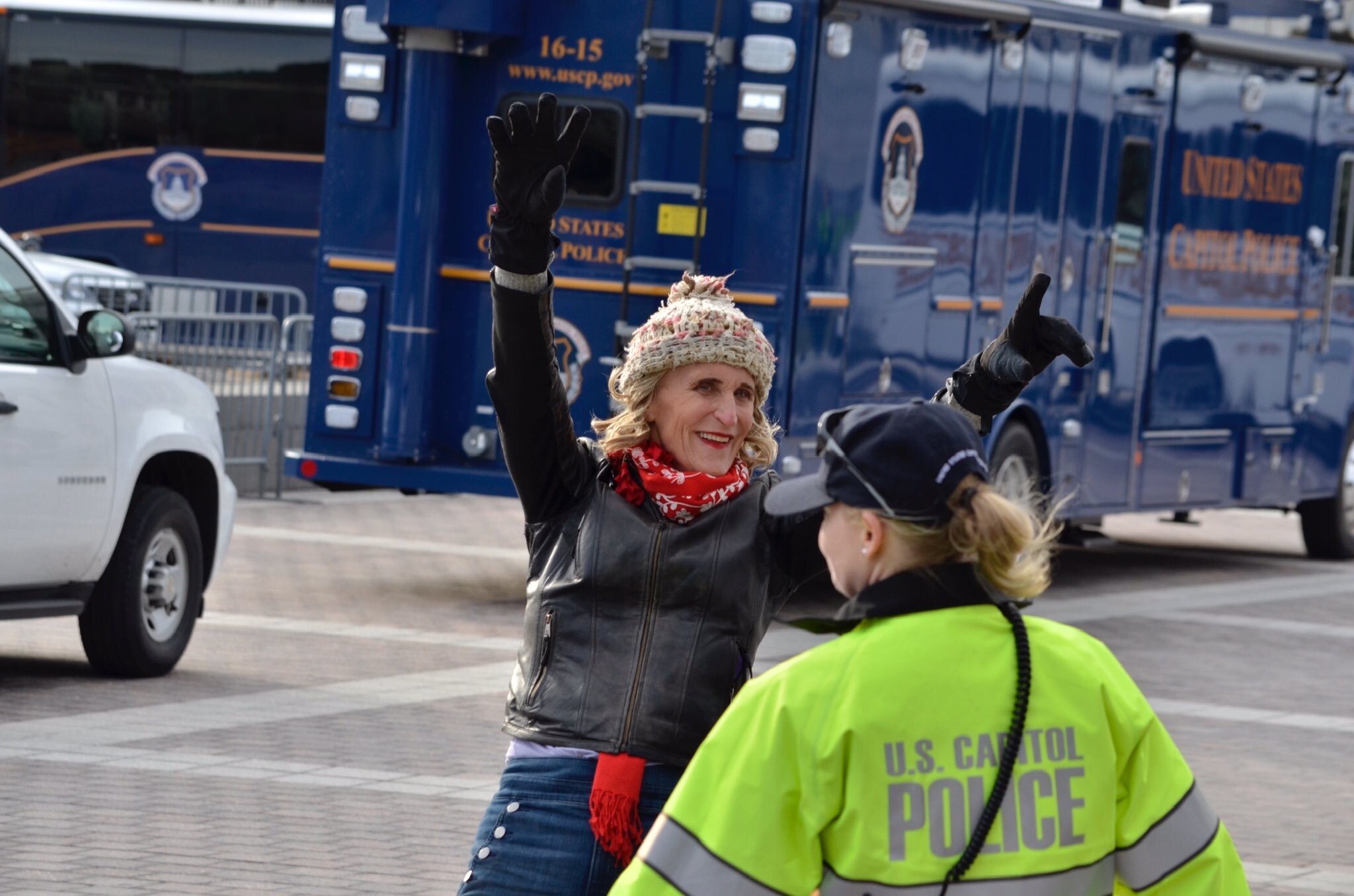
Photos courtesy of Nicky Sundt
She may smile—or even sparkle—while she says it, but Sundt has always been serious about the climate crisis: “We no longer have the luxury of time,” she warns. “We need to disempower these people who are standing in the way so the rest of us can get things done. That means voting, knowing what your representatives are doing, putting pressure on them to do what they need to do, and keeping white nationalists, climate deniers, out of our politics so we can get shit done because we’re out of time. We are fucking out of time.”
As such, she sees this election as a “framing event,” something so monumental that it shakes people to their core. “These opportunities don’t come that often and you have to be ready for them,” she says. “But if you’re ready for them—and you take advantage of them—you can get lasting change.” After taking four years off from focusing on her career, Sundt is ready to go back to work—hopefully in the Biden/Harris administration, she says.
But no matter what happens on November 3 and beyond, Sundt says she’s not yet ready to retire; there are simply too many ideological fires that need to be fought. And she knows better than anyone that whether you’re dealing with climate change—or questioning your identity—sooner or later the time comes when you have to stop napping, wake up, and jump into the fire.
“It’s never too late to start,” Sundt says. “You can make a difference. Every movement has started with a small group of people and sometimes they take off and sometimes they don’t. But you don’t want to look back on this period and say—if you’re talking to your grandkids or just to yourself—‘I didn’t do anything. I didn’t do what I could have done.’ So do what you can, when you can, and how you can. There’s always something that people can do.”
This is a crucial moment in history; we have a real opportunity to rebuild and restructure our society to be more equal, more just, and more habitable for all. In an attempt to better understand what motivates and inspires fellow activists, I’m profiling people and how they’re trying (in ways both big and small) to make the world a better place. If you know someone I should profile, let me know (maybe it’s you!?). You can see all of the profiles here.
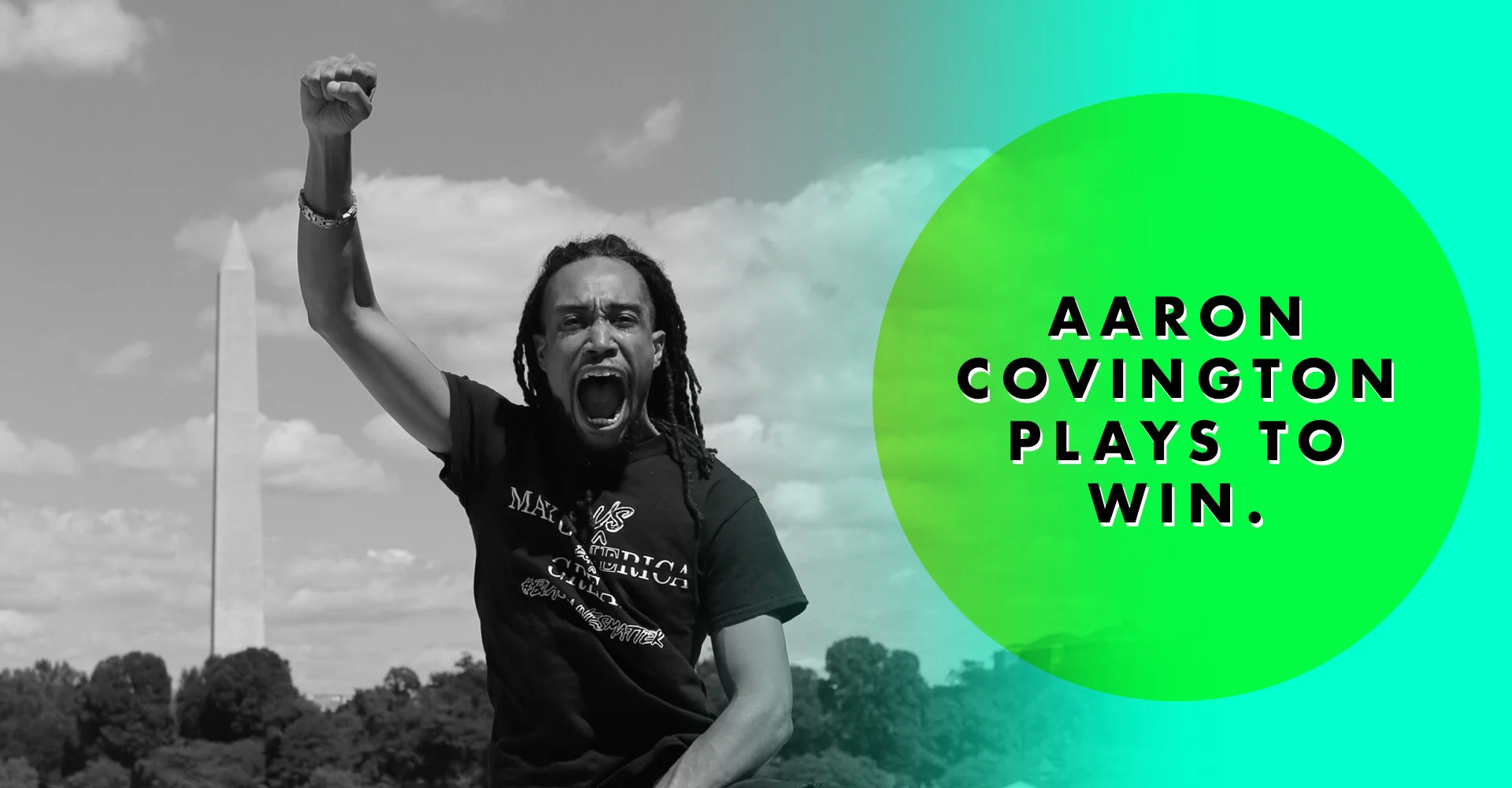
Aaron Covington plays to win

Covington at the MLK Memorial. | Photo: Kristine Jones
Aaron Covington is in it to win it. ‘It’ could refer to almost anything upon which the St. Louis native trains his technical mind, including building robots and computers, running the 400-meter dash in 45.5 seconds, or leading thousands into the streets as the co-founder of His Mission Organization. If protesting was a sport, Covington would no doubt qualify for the Olympics— something he was poised to do in track and field until he injured his leg. Covington’s injury may have ended his chances at going for the gold, but luckily it didn’t crush all of his Olympic-sized dreams.
Today, he may not be able to run as much, or as fast, as he used to, but you wouldn’t know it if you happen to catch a glimpse of him—with his fist raised and shirt off—in the streets or on the steps of the Lincoln Memorial. Covington has a runner’s physique and still looks fast, even if recently, it’s not his legs, but his mind and mouth that are running a mile a minute.
In 2015, Covington was attending Morgan State University in Baltimore on a track scholarship when Freddie Gray died of injuries sustained while in police custody. Covington says he and a friend “just wanted to find out what was going on,” and ended up joining their first-ever protest. Five years later, he took a similar approach when the streets of Washington, D.C. sprung to life in the days following George Floyd’s brutal death. On the night of May 30, Covington and four of his friends were looking for an established group to join, but found that as they marched, others began to fall in line behind them.

Covington speaking to a crowd. | Photo: Kristine Jones
“Our intentions were just to come out and be part of the crowd,” Covington says. “The five of us weren’t trying to do anything but join a march and we became a march.”
Covington admits that he was living a “party lifestyle” earlier this year, but Floyd’s death and the resulting demonstrations across the country jolted him back into fighting shape. “Everything is different now,” he says. “In the past two months my life has changed completely.”
But as any athlete knows, the road to victory is littered with both physical and spiritual hurdles—and the path to justice is much longer than the 400-meter dash. “The first time I went out and marched, I threw up 36 times,” Covington says. “I was purging my system of all the impurities. All the negativity inside me was literally coming out. But now every time I march, I can yell a little louder, I can go a little farther.”
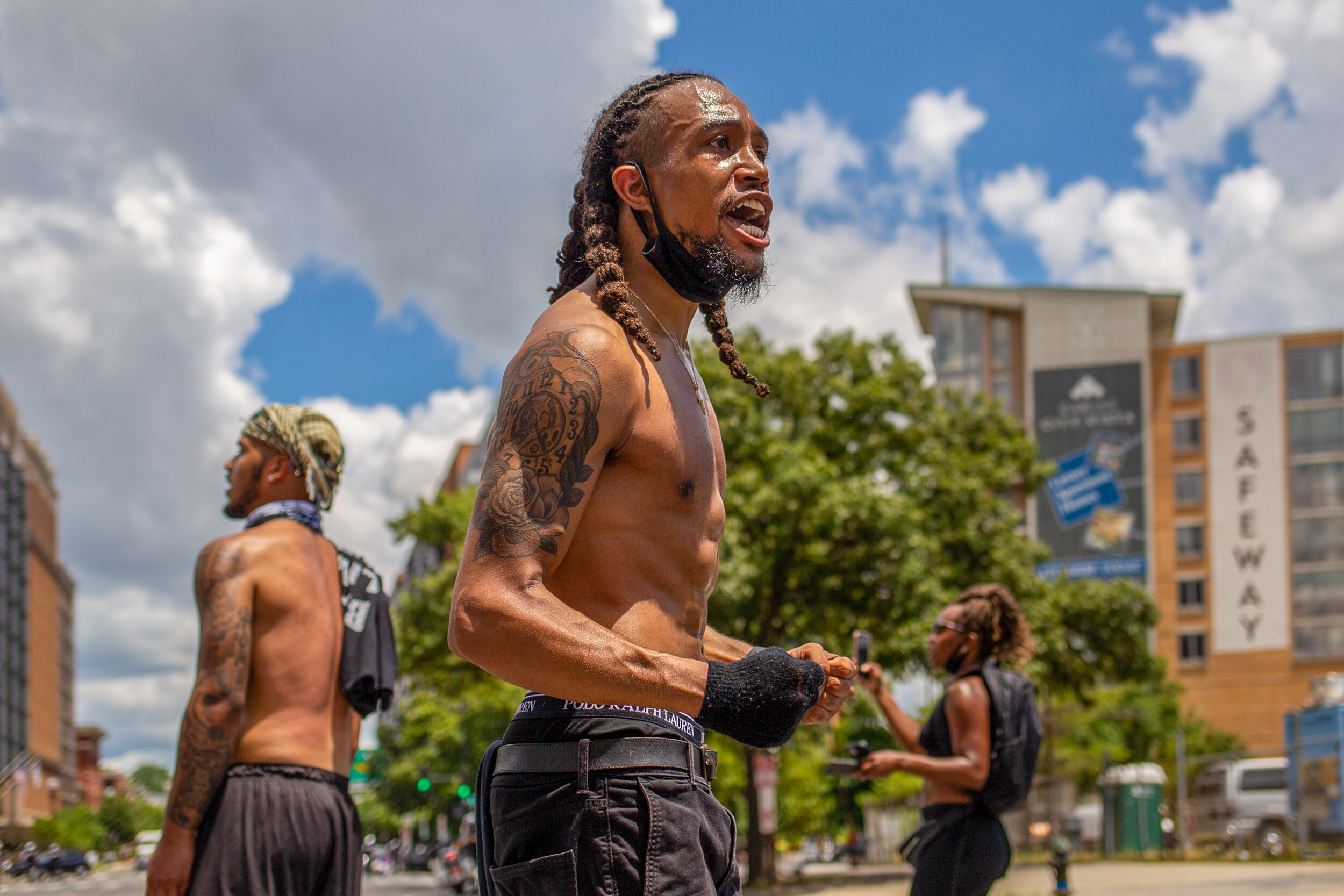
Covington leading a march.
MAKING IT WORK
Covington grew up in Missouri and North Carolina, but he just recently moved back to the D.C. area for a job, or rather he says, for three. He works in IT for an independent federal agency, is a lead commentator for all-black owned Combat Championship Wrestling (C3W), and leads protests. The last of which, despite what some may claim, is an unpaid passion project—but one that Covington takes as seriously as his full- and part-time jobs.
He recognizes that his unique CV might raise some eyebrows or appear to create a conflict of interest(s). “People say ‘You work for the government and you’re protesting?’” Covington says. “But I can do both. I’m going to fix your computer and become friends with you and then hopefully we can have a conversation.”
Covington has a way with words that goes against everything you might expect from a self-described “tech guy,” but his brain—both the creative right, and analytical left side—seems to have always fired on all cylinders. Growing up, he sang in the choir and played drums at his grandfather’s church. It was hard to hold his attention in school and he got kicked out of band after quickly mastering—and growing bored of—the three keys on his trumpet. He says he got into trouble until a prescient teacher encouraged him to learn about computers. “He said ‘If you can build a computer, I’ll let you take it home,’” Covington says. “I was sold from there. He changed my life.”

Covington wears knee pads so he can take a knee during marches. | Photo: Kristine Jones
Luckily, his hands are just as agile as his feet and Covington says he enjoys “troubleshooting and fixing things that other people don’t like to touch,” such as fragile LED screens or complicated battery swaps. “It makes me valuable,” he says. “And not many people that look like me get jobs in IT.”
Despite the contradictions, Covington slips effortlessly between his roles as both a professional and a protestor. He seems equally at ease in a collared shirt and oxfords as he does in a Black Lives Matter t-shirt and sneakers. One of his t-shirts features the phrase “Make America great” which has been altered to read “Make us equal.”
Covington may have a competitive streak, but he thinks the fight for equality is a team sport—more about the race than anyone’s particular race. “We’re all on the same team, we’re all fighting together,” he says. “I’m going to pass the baton because we have to beat these jokers to get to where we want to go. Do you want to build toward a common cause or do you want to be stuck in a rut? If you’re just thinking about yourself, you’re stuck. That’s the small picture. I tell people to look at the big picture.”

Yelling protest chants.
Although he acknowledges the importance of insisting that Black lives matter, Covington says it’s important that a lot of the people that march alongside and behind him are not Black. “We all want the same things,” Covington says. “If you ask someone who is racist ‘Why don’t you like Black people?’ They can’t even give you an answer anymore. They say, ‘We don’t even know why—it’s what we were told, it’s how we grew up.’”
Covington credits his own diverse family with showing him how equality is possible on a larger, global scale. His grandfather was Black and his grandmother is white. “If we can make it happen, everybody else can make it work,” Covington says. “We love each other equally so I know it can happen.”

Covington speaking to a crowd. | Photo: Kristine Jones
THE HEART OF THE COUNTRY
Like many Americans, Covington first came to D.C. on an eighth grade field trip. “It was the biggest deal ever,” he says. “I was the only person in my family who got a chance to go. I said ‘I’m moving to D.C. one day,’ but didn’t think I’d ever actually get a chance.”
Now that his chance has arrived, he doesn’t intend to waste it. Since the end of May, Covington, Antonio Mingo, and the other members of His Mission have led several marches through the District, drawing thousands of people—including Covington’s parents. He says his dad and stepmom had a rocky relationship but reconnected after participating in a recent protest.
“Anything can happen,” Covington says. “It’s hard to explain the feeling that you get in D.C. specifically. D.C. is the heart of our country. As soon as we stepped on the streets it was electric. With every step I took, I believed even more that we could really get change. If we change the heart, the rest of the country will follow.”

Covington bowing his head in prayer before a march.
Covington may be good at seeing the big picture, but he also recognizes the value in fostering small, individual connections. At every march, Covington and Mingo stop periodically to take a knee—both frequently wear knee pads—and Covington encourages people to exchange their name with the person to their left, and tell the person to their right that they love them. It’s a simple gesture—likely inspired by both men’s spiritual upbringings—but one that’s surprisingly effective.
“It’s one thing to hear ‘I love you’ come from a family member,” Covington says. “But if a stranger tells me and it’s genuine, that hits different. I say at the end of marches ‘Now, we’re family.’ That’s how we become brothers and sisters and protect each other.”
But after three non-stop months, Covington is looking to turn the momentum generated by marches into real, structural change. “We’re going to get away from marching,” he says. “There’s something that you’re going to get in marching that you’re not going to get in any other aspect of protesting. But we also need to be having conversations with people who are in positions of power. It might feel like you can’t access these people because of their title, but you can access these people because of their title. They’re working for you.”

President Covington. | Photo: Kristine Jones
WANTING CHANGE
If you sit anywhere near the National Mall for long enough, the conversation will inevitably turn to politics. It’s about two hours after he steps out of the reflecting pool before I ask Covington if he has aspirations to run for office in the future. His answer comes in less than two seconds: “Oh I'm going to run for president,” he says. “I don’t want to, but I’m going to run. I would seriously fight for change and want equality for everybody. I would handle things differently than any other president has. I want everybody to succeed. I would set the country up for success.”
Covington says his father never got a chance to say “I’m proud to be an American” until Barack Obama was elected in 2008—but he hopes by following his father’s advice to “keep a good name and lead by example,” that he’ll have the chance to similarly inspire other people.
“There is an American Dream that exists, it’s just not the same dream for everybody,” Covington says. “I’m not saying I’m going to be your MLK. I’m not saying I’m going to be your Malcolm X. I’m not going to say I’m an activist or a demonstrator—I’m just a person out here who wants change and I’m sick of talking about the same thing over and over again.”

Covington says he’s not trying to be the next MLK. | Photo: Kristine Jones
He may have struggled to find his footing in high school, but Covington has become a diligent student who repeatedly stresses the importance of “doing your own research.” Since assuming a leadership role, he has studied similar movements and leaders throughout history, intent to not repeat their mistakes.
While he strikes a pose under the granite gaze of MLK Jr.—whose extramarital affairs still cast a long shadow on his reputation—Covington says he’s “100% single,” and immediately produces photos of a Shiba Inu named Castiel, who he alternately calls “my handsome young man,” and “my son.”
On August 28, five days after he celebrated his 27th birthday, Covington got a chance to talk with MLK’s granddaughter Yolanda, his son, Martin Luther King III, and Reverend Al Sharpton at the Commitment March on Washington. Sharpton told Covington and his friends, “I’ve been watching you guys, keep up the good work.”

Covington and Mingo at the March on Washington. | Photo: Kristine Jones
FIST UP
I’ve joined several marches led by Covington and I can confirm that he is indeed doing good work—and it’s working. Everyone wants to join the winning team and Covington’s commitment is contagious. Although he’s used to pushing past them, Covington recognizes that there are limits to his influence.
“You can’t force someone to agree with you,” he says. “I’m going to tell you what I believe is right but I’ll never tell you what’s wrong. I want you to draw your own conclusions. I tell people ’I’m not trying to change you, I’m trying to change the way you think.’” Covington frequently shakes hands with receptive police officers and encourages them to join him in taking a knee. He understands the motivations behind so-called “riots” and “looting,” but tries to keep his protests civil. He likens aggressive, headline-grabbing moments to “bugs on a TV screen,” and once again says how important it is to focus on the big picture and remain open to new ideas.
“If you’re not teachable, you can’t teach anybody else,” Covington says. “You have to be able to sit down and learn from somebody else before you can give to anybody else. And don’t start chanting something if you can’t bring me a solution afterwards.”

Covington in the reflecting pool. | Photo: Kristine Jones
Although it was a physical setback that forced Covington to reevaluate his life goals, “It’s all about this up here,” he says, pointing to his head. “It’s a mental game. If you get this right, your legs will take you the rest of the way.” He’s talking about running track, of course, but I suspect he feels the same about protesting. When I ask him what he would say to those looking to get involved, it’s no surprise that his advice could apply to those looking for a physical transformation as well as a spiritual one.
“Just take that first step,” Covington says. “I walked outside, stuck my fist up, and started walking. And people fell in line. I didn’t come back the same way I left—I came back with power. I came back with people. I went down the street as an individual, but I came back with unity.”
This is a crucial moment in history; we have a real opportunity to rebuild and restructure our society to be more equal, more just, and more habitable for all. In an attempt to better understand what motivates and inspires fellow activists, I’m profiling people and how they’re trying (in ways both big and small) to make the world a better place. If you know someone I should profile, let me know (maybe it’s you!?). You can see all of the profiles here.

35

2020 mood. | Photo: Kristine Jones
On December 31, 2013, I was more than happy to say goodbye to a year that had, for many reasons, been both the worst and best of my 28 years thus far. As I rang in the New Year in Brooklyn, I sent a variety of tragically misspelled drunk texts to friends around the country; my words (like me) were barely coherent, but my general feelings about the previous 12 months were clear. “Fuck this fucking year,” I typed and I meant it.
I don’t believe in fresh starts necessarily—especially ones arbitrarily based on calendar pages—and when I moved to New York on July 1, 2013, I had no clue what the next seven days, seven months, or seven years would bring. But I had dreamed of living in the city for so long, that I probably would have told you that I planned to stay forever. And for almost seven years, that was mostly true. Sure, I was charmed by other cities and imagined what my life would be like within them, but every time I returned to New York I felt as if I was home.
So I was just as surprised as anyone else when, at the end of 2019, I began to think seriously about making a life for myself outside of New York. I had no idea what that meant at first, but it was impossible to ignore the feeling that my time in the city was coming to a natural end. In hindsight, I should’ve been more prepared. Today, I turn 35, and in reflecting on my “previous lives,” a pattern has begun to emerge. Every seven years (give or take), without even realizing it, I’ve experienced a year full of pivot points.
I started high school the same week I turned 14; shortly after, I developed a debilitating, years-long crush on a female teacher that made it impossible for me to ignore the complicated feelings about my developing sexuality. The seven years that followed were fraught to say the least. But there were moments of hope and signs of progress mixed in with the shame and fear that hung like clouds over so much of my life. I slowly came out to friends in high school; I was vice president of the LGBTQ organization at KSU, I found a group of friends I adored, and I kissed my first girl.
In 2006, a burgeoning Meryl Streep obsession coincided with my first serious relationship with a man. He was a typical “college boyfriend” in many ways. We met working at a record store off campus; he was the first person I slept with, the first person I smoked weed with, and the first person I took a road trip with. We were better friends than lovers and although it’s obvious to me now, at the time I was so deep in denial I simply felt broken.
This feeling only intensified over the next seven years, during which I graduated college, got a job in Akron, Ohio, and began dating my boss. I moved into his house in 2009 and until 2013 I tried desperately to live a life of ‘shoulds.’ I ‘should’ be attracted to men. I ‘should’ be content to make all of the meals, do all of the dishes, and keep a clean house. I ‘should’ be grateful that I have three jobs and ignore the fact that I can’t seem to get ahead. I ‘should’ overlook the infidelity, laugh off the daily emotional abuse, and keep my mouth shut.
No one can say I didn’t try—but no participation trophy is worth losing the best parts of yourself in pursuit of something you never really wanted in the first place. Seven years ago, it all fell apart, but I took those pieces and built a life for myself in New York that was better than I ever imagined it could be in almost every way. It was never perfect but I never expected it to be—of course it was never really about New York at all but the version of me that arrived there, feeling broken but hopeful.
When I left New York in March of this year, I no longer felt broken—and, in fact, I had begun to realize that maybe I never had been at all. Reframing the ‘shoulds’ into ‘coulds’ opened up my world in ways I never thought possible. No longer constrained by what I thought I should do, I suddenly felt the possibility of all of the things I could do. When I moved to Washington, D.C. in July, it was the first major decision I made in my life simply because I wanted to—I didn’t move for a job, for a family member, for a friend, for a relationship, or for how I thought it would look for me to do so. This is an absolute privilege, I know, but one I suspect more people have than they realize.
35 feels significant not only because it’s the beginning of my sixth ‘seven,’ but because it’s the first time I feel as if I have complete and total control of my own narrative. The life I’ve built in just a few months in D.C. feels like the one I’ve been chasing in one way or another my entire life. Anyone who knows me knows I’m not one to do something casually—if my first two months here are any indication, the next seven years won’t be any different.
I wasn’t broken because I couldn’t force an attraction to men, or be fulfilled by stacking firewood, or dig in my heels and commit to New York long after our relationship stopped being mutually beneficial. I didn’t change my mind, I evolved. I didn’t make mistakes, I made choices—each and every one of which led me to where I am now. I didn’t fail at being a woman, a girlfriend, or a New Yorker; after 35 years of trying, I’ve finally succeeded at simply being myself.

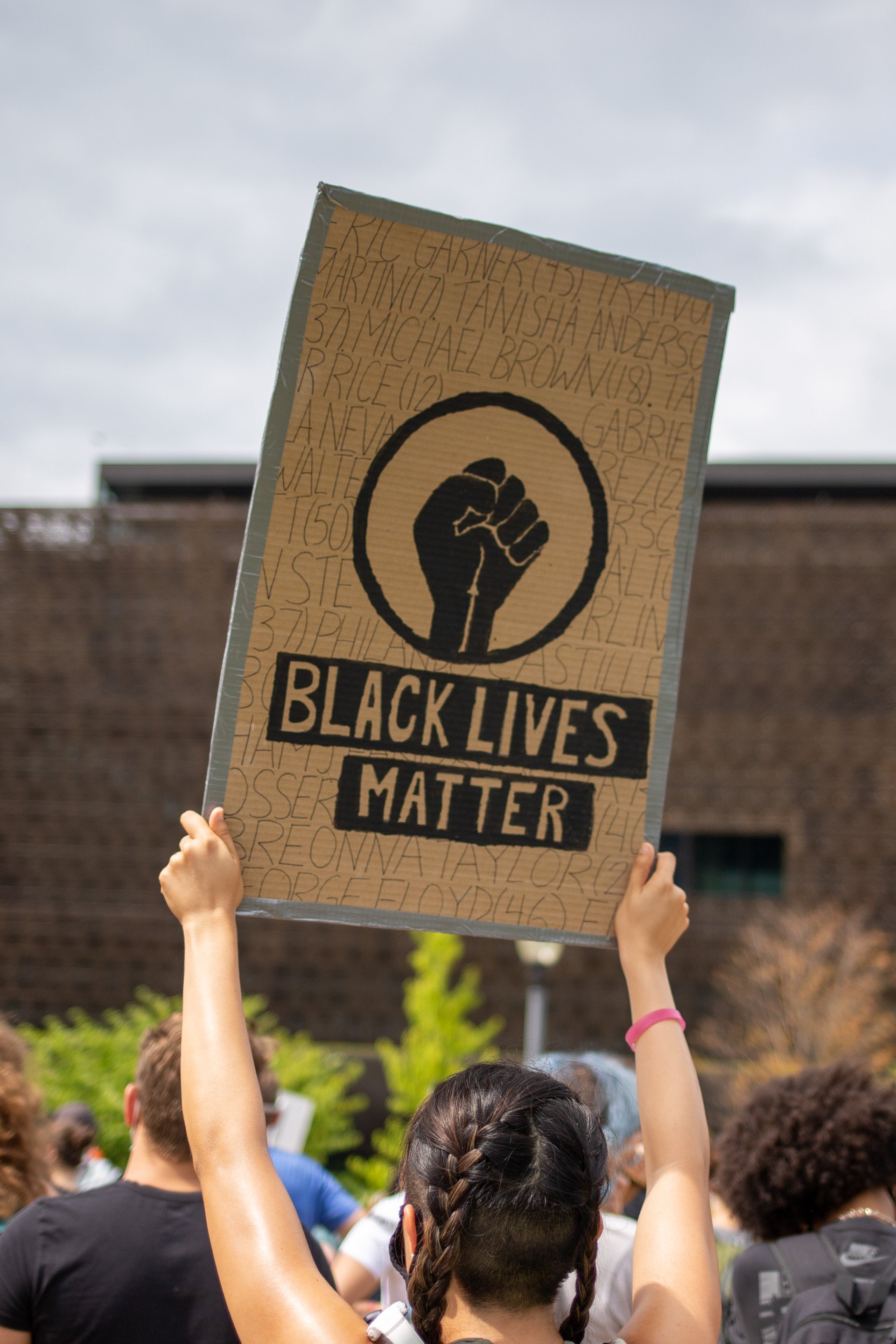
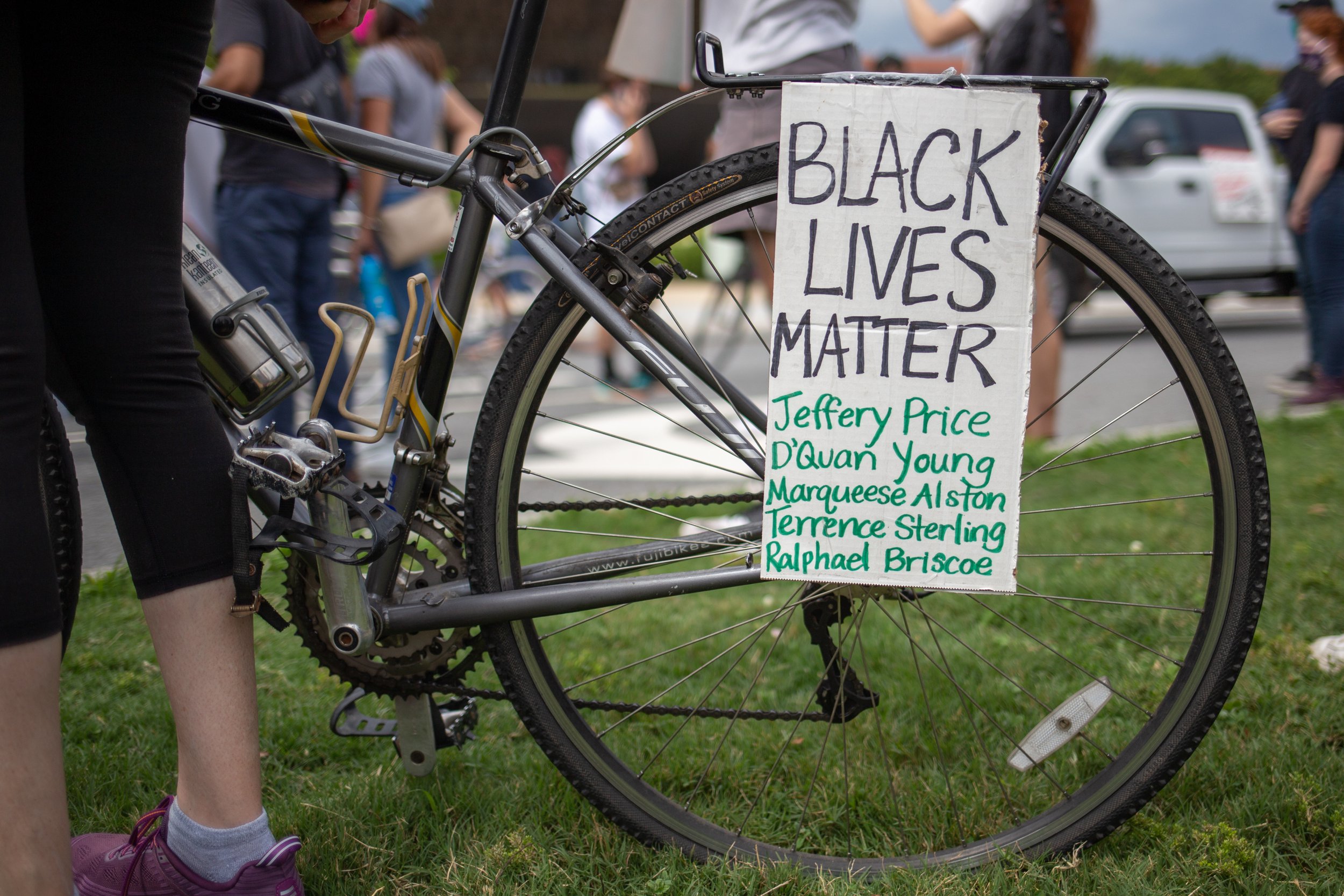


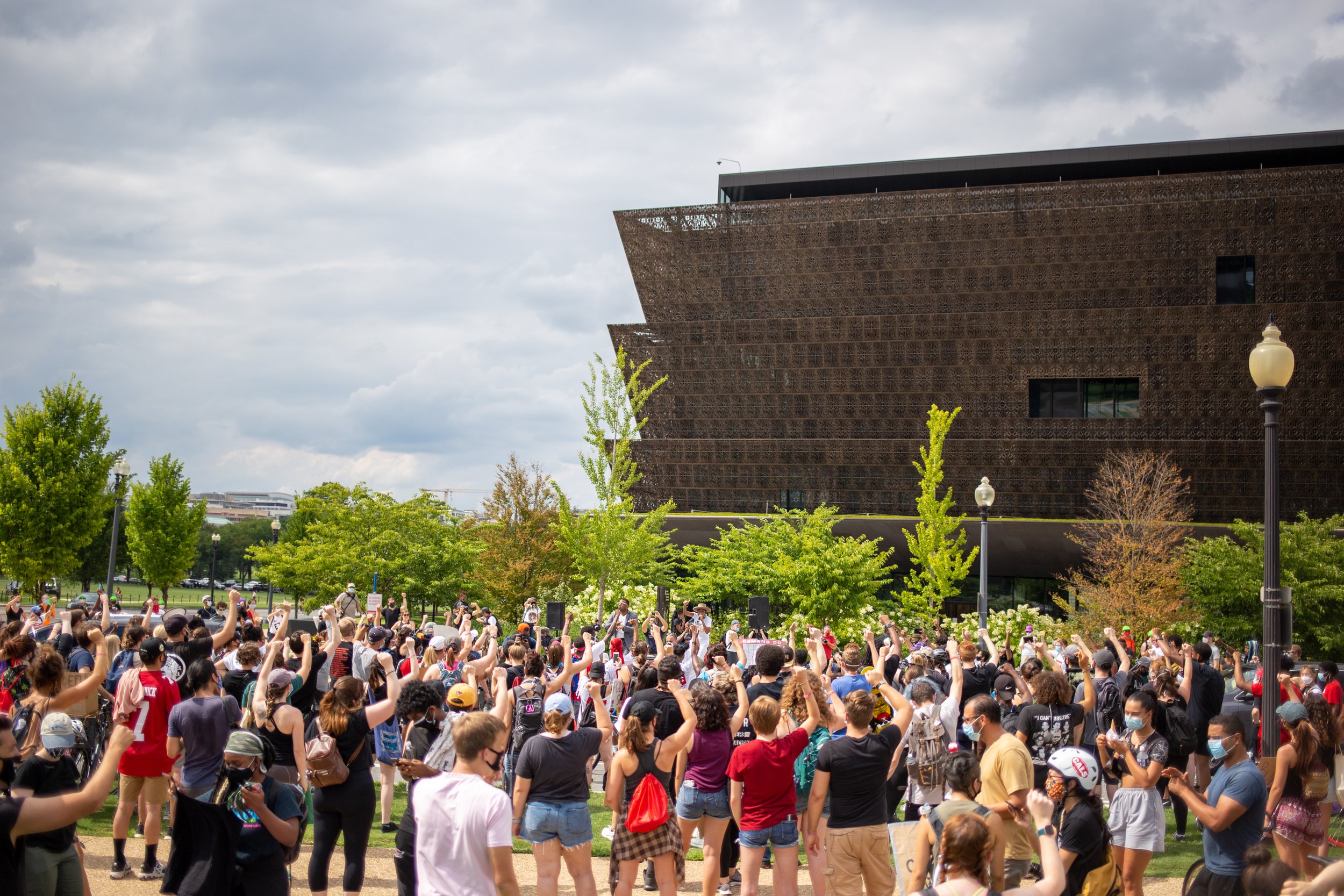


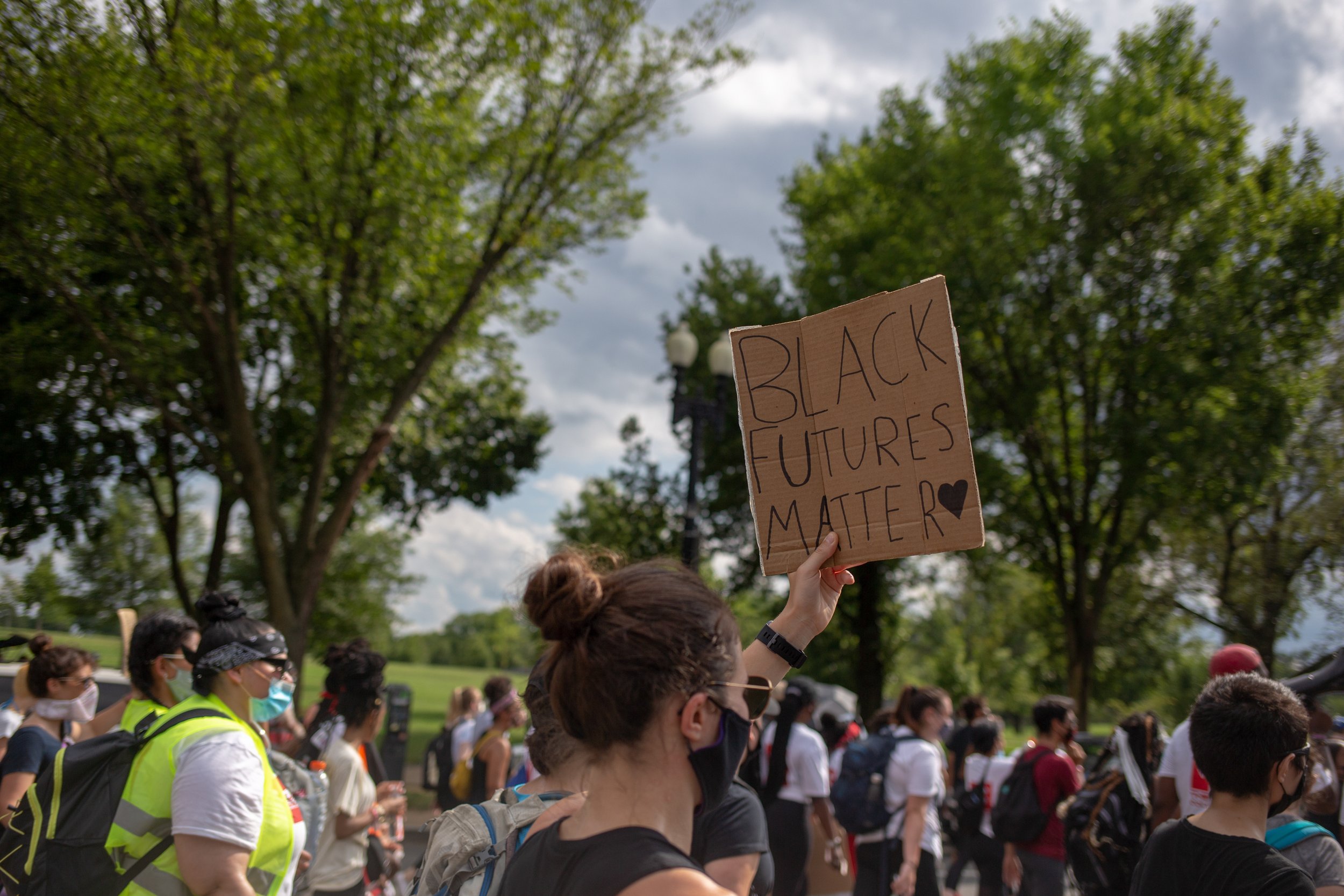


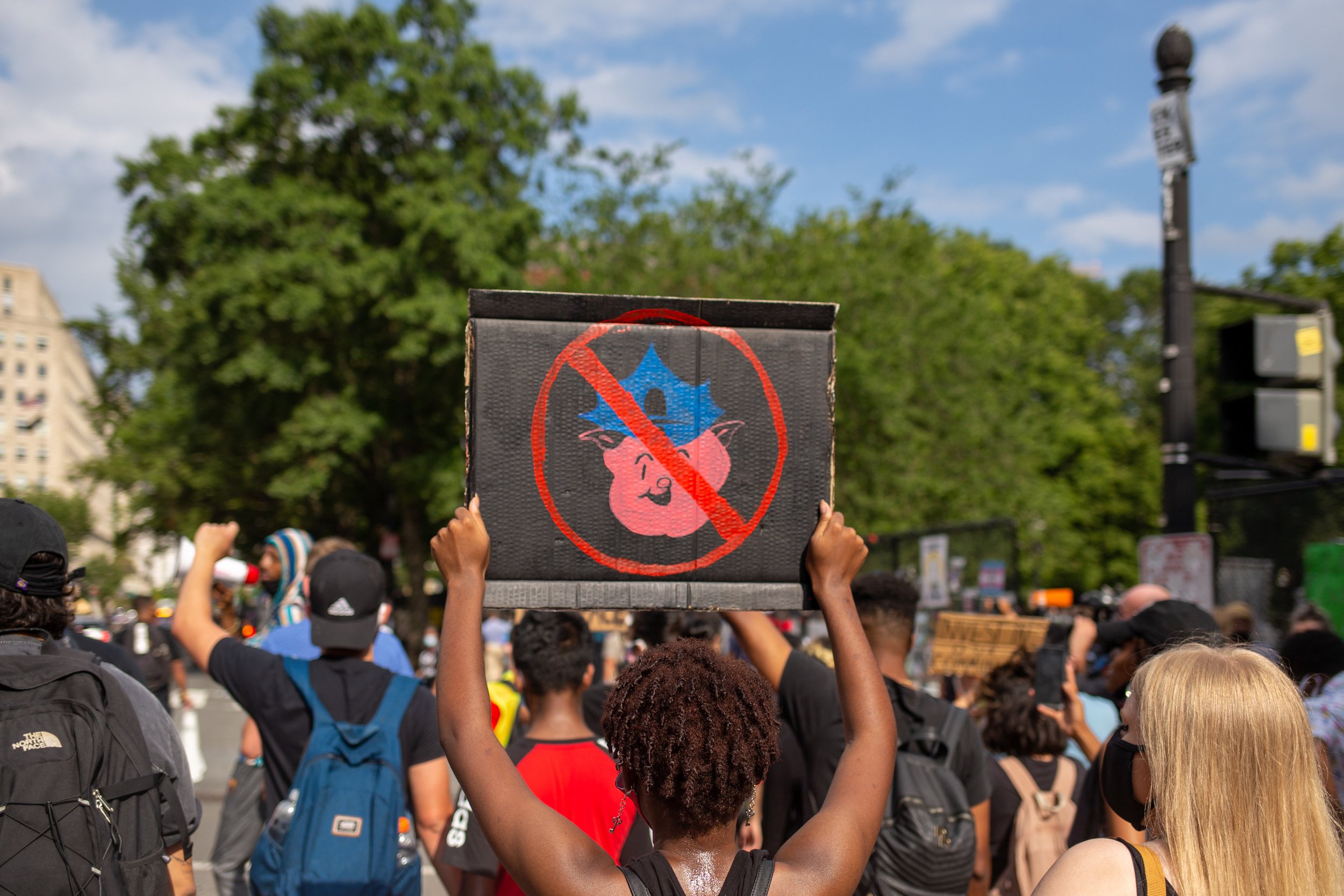


Antonio Mingo is moved by spirit
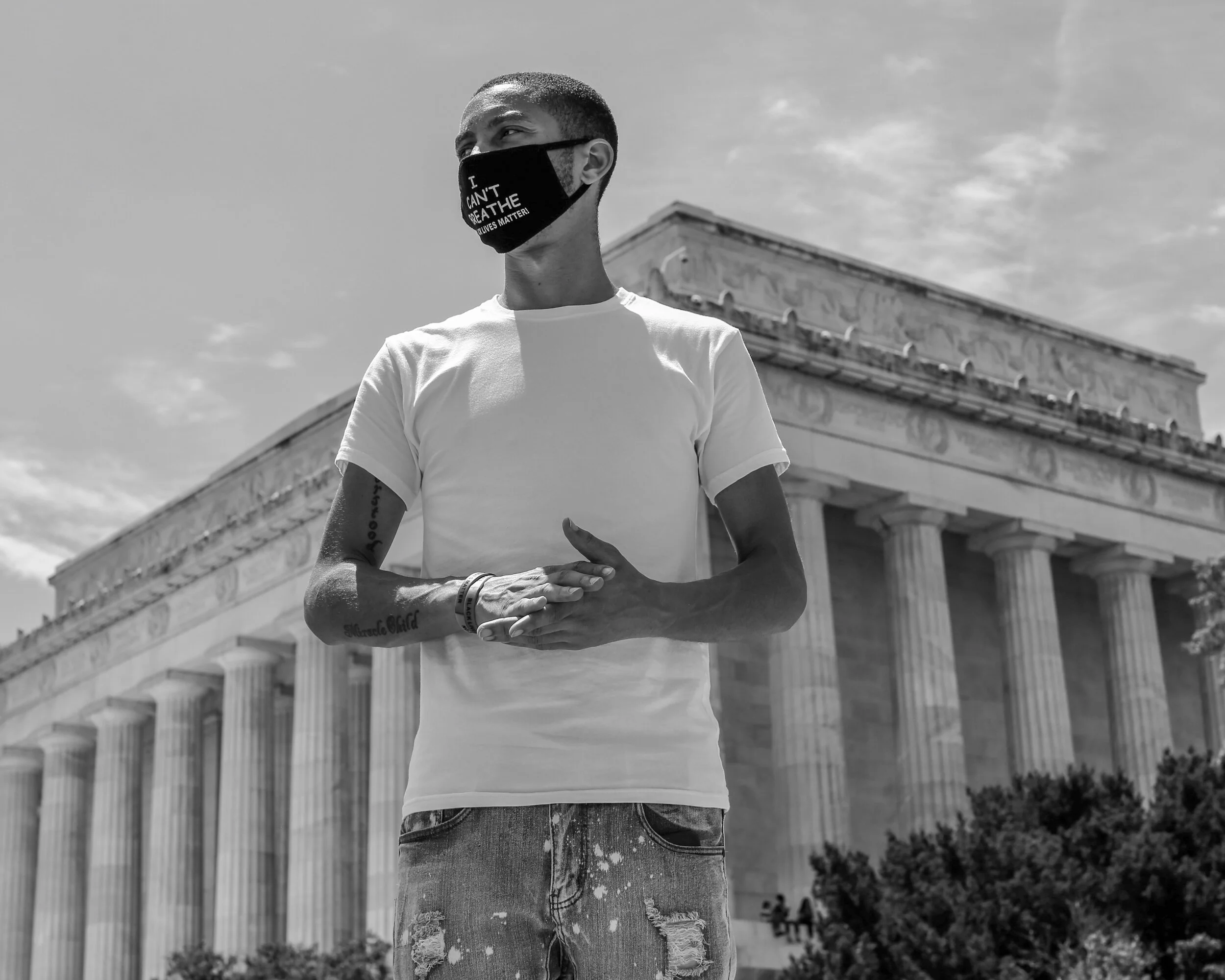
Antonio Mingo outside of the Lincoln Memorial. | Photo: Kristine Jones
In 2018, Makiyah Wilson went to buy ice cream when multiple shots were fired in the Washington, D.C. neighborhood where she lived. Wilson was struck and killed; she was just ten years old. Shortly after her tragic death, Wilson’s uncle marched more than 100 miles on foot from D.C. to Philadelphia, and in 2019 he did it again. The second time, he was joined by others who felt moved to make the pilgrimage in honor of Wilson’s too-short life, including D.C. native and co-founder of His Mission Organization, Antonio Mingo.
Mingo has two children of his own—including a daughter the same age as Wilson—but he has always felt a deep need to call out injustice no matter who it touches. When he tells me that he’s a passionate person, I believe him—not only because he repeatedly insists “I cannot tell a lie,” but because over the past two months, I have witnessed his passion, and its lasting impact, firsthand.

Mingo in front of a crowd at the Lincoln Memorial.
My first encounter with Mingo is as a spectator. Moved by the protests spreading across the country demanding justice for George Floyd, I somewhat impulsively decided to drive to D.C. for a weekend in early June. It’s blazingly hot and bright when I first catch sight of Mingo, who is speaking into a megaphone to a large crowd assembled on the steps of the Lincoln Memorial and beyond. Maybe it’s a trick of the midday sun or maybe it’s the sense of “spirit” that Mingo repeatedly claims to be compelled by—whatever it is, I swear he is almost glowing.
Mingo is wearing a black t-shirt printed with the now-ubiquitous words “Black Lives Matter.” The white letters are formed from an ever-growing list of names, each representing a Black life lost too soon. A homemade purple face mask hangs around his chin and a tattoo on his right forearm brands him as a “Miracle Child.” His speech—in which he recounts marching for Wilson until he was rushed to the hospital outside of Baltimore because of a leg injury—moves me to tears (nothing short of a small miracle in itself).
Later, when I ask him about the inspiration behind his most prominent tattoo, Mingo explains: “It’s because I’m still here—as in living life and breathing despite a lot of life obstacles—and I’m a child of God. It just let’s me know that I'm not done yet.”
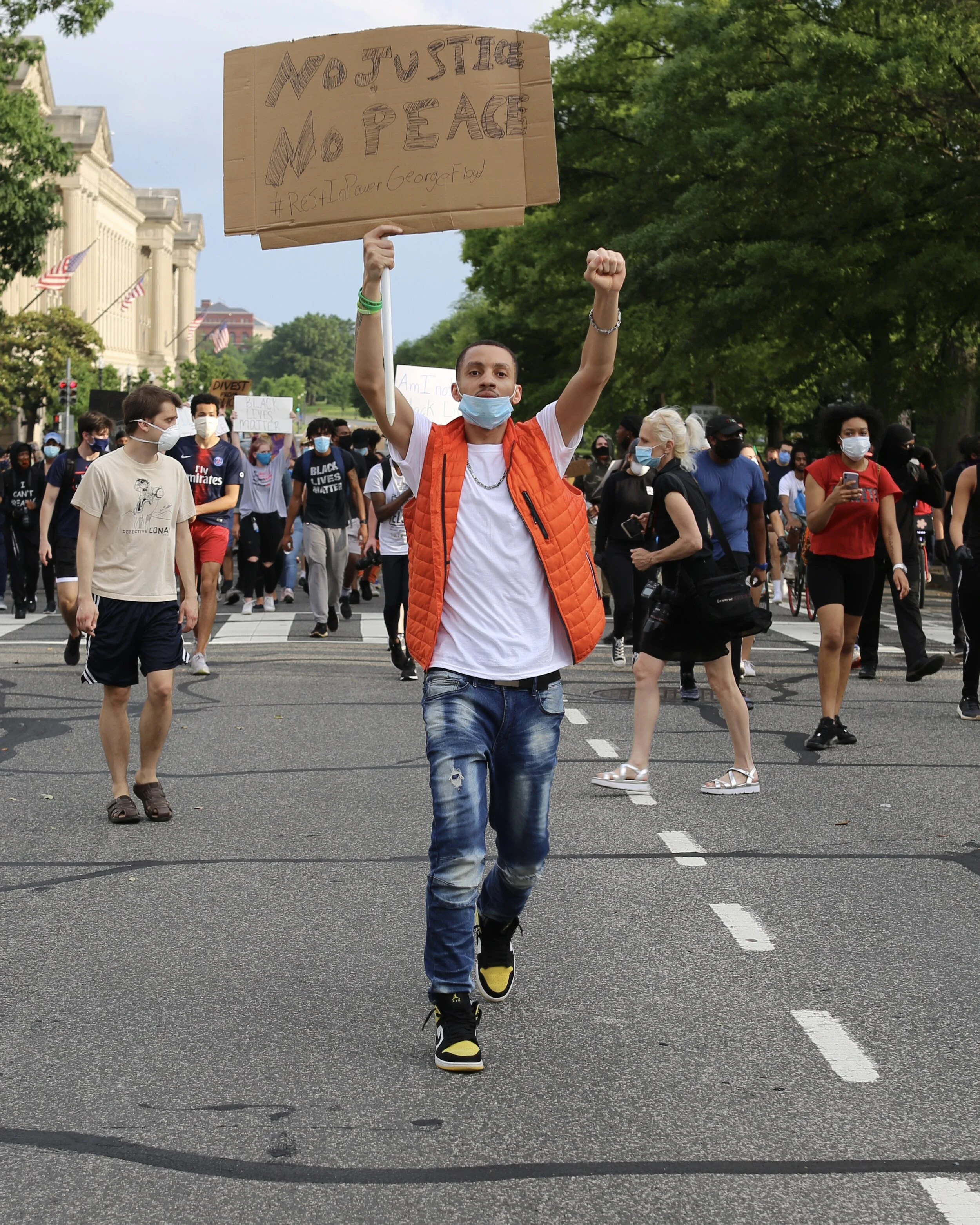
Photo: Kristine Jones
MOVED TO MARCH
Not only is he not done, but I’m surprised to learn that Mingo is just getting started. Although, despite his claim that he “doesn’t have much experience” with activism, that’s not entirely true. In addition to the Wilson march, he has always been active in community outreach programs; he works with people who are homeless, and has planned backpack drives for children. But it wasn’t until the George Floyd video sparked a wave of protests that Mingo took to the streets in the more traditional sense.
“I turned the news on and I’m seeing people with signs and it was just an impulse,” Mingo says. “I’m very obedient with God and I felt like he just told me to move.” Running on adrenaline and feeling a pull from deep within, he jumped on the Metro and headed straight to the heart of a spontaneous protest that had sprung up on U Street. “I just planned on being an observer,” Mingo says. “And then, not only am I a part of the march, but I get pushed to the front. It was shocking to me because I had never before in my life done anything like this.”

Photo: Kristine Jones
Nearly two months later, Mingo has led dozens of marches and has been out in the streets almost every day and night since. Hundreds of people, myself included, have followed him over highways, bridges, and rivers; past monuments, buildings, and neighborhoods erected (or devastated) by a system he is hoping he can help change. He has organized candlelight vigils for Davon McNeal, another D.C. child who was shot and killed recently, collected money to buy a basketball hoop for Black Lives Matter Plaza, and continued his outreach efforts with the District’s growing homeless population. The protests may be receiving less and less media attention, but Mingo is not going anywhere.
“The main thing is consistency,” he says. “With this protesting stuff, you’ve gotta be consistent. Yeah, we’ve got some hot days—but they’re still making some messed up laws. Yeah it’s hot, but the police are still killing—they don’t care about the temperature and neither should we. We should be protesting every single day if need be.”
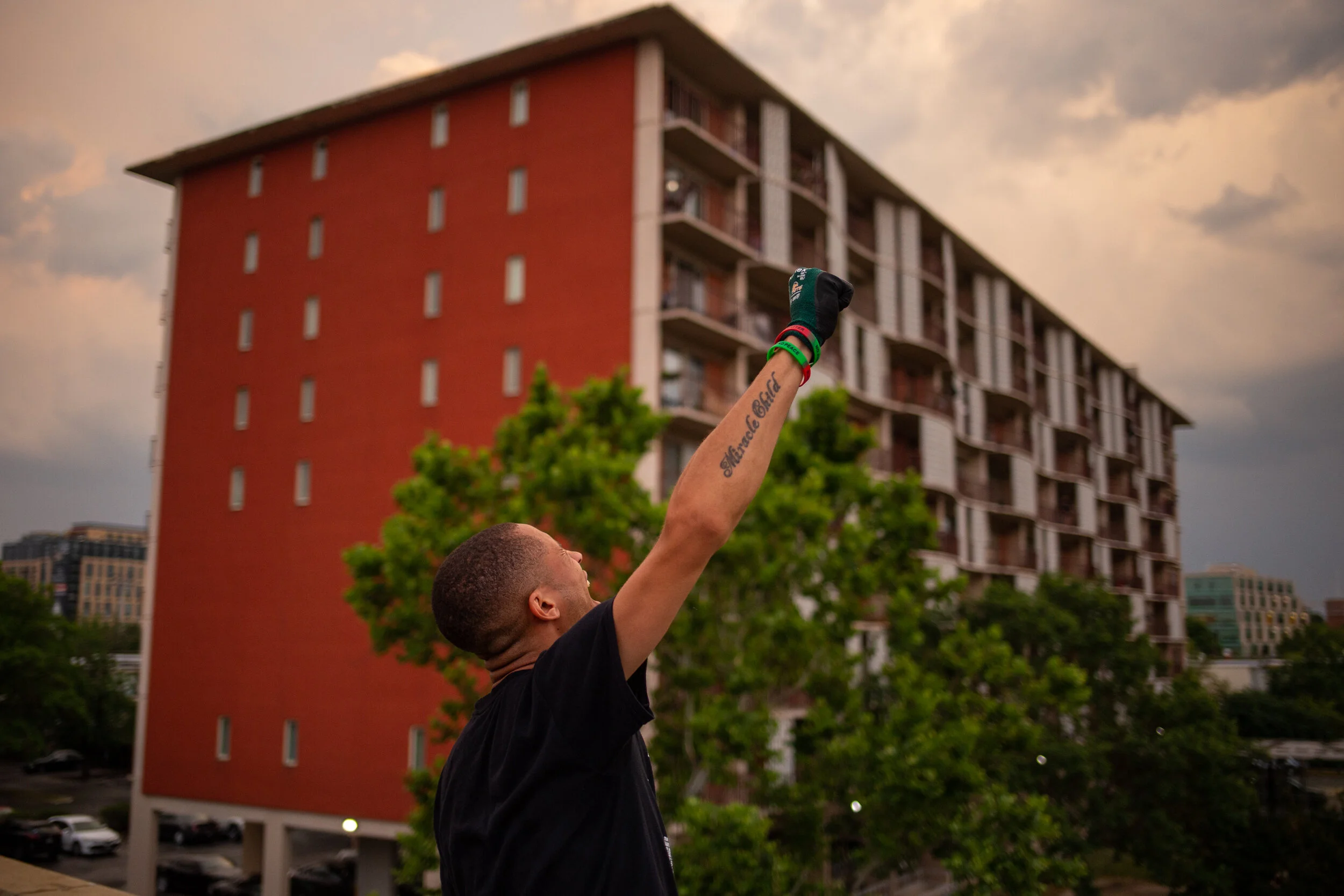
Mingo leading a march for Devon McNeal
Not everyone may be blessed with Mingo’s seemingly bottomless energy, but he repeatedly insists that there is “strength in numbers,” and he’s quick to downplay his individual contributions to the movement. “I don’t want people to get so strung up on me,” Mingo says. “I know I may motivate people but other people have it too. I’m not perfect—I have flaws, I make mistakes all the time.”
Mingo, luckily, has more than a little help from his friends. He formed His Mission Organization with St. Louis native Aaron Covington and others, all of whom he met recently while out protesting. They’ve been planning marches via conference calls, but Mingo isn’t a big fan of turning protests into ticketed or “must-do” events, preferring the type of spur-of-the-moment gatherings that first inspired him to take action. Mingo says he’s also had to be more careful about the routes or actions he suggests—because he’s still surprised to find that (to paraphrase Carole King) where he leads, others will follow. “I joked about shutting down the highway the first night,” Mingo says. “People said ‘So we’re going to do the highway? We’re following you.’”
Despite the well-deserved attention, Mingo says he’s careful not to appear as if he’s “clout chasing,” his term for the type of performative activism that results in an Instagram photo and not much else. “All those people that were here when this first started—where are they now?” he asks. “They only want to come out when there’s an event planned on a Saturday. But we’re still battling every single day.”
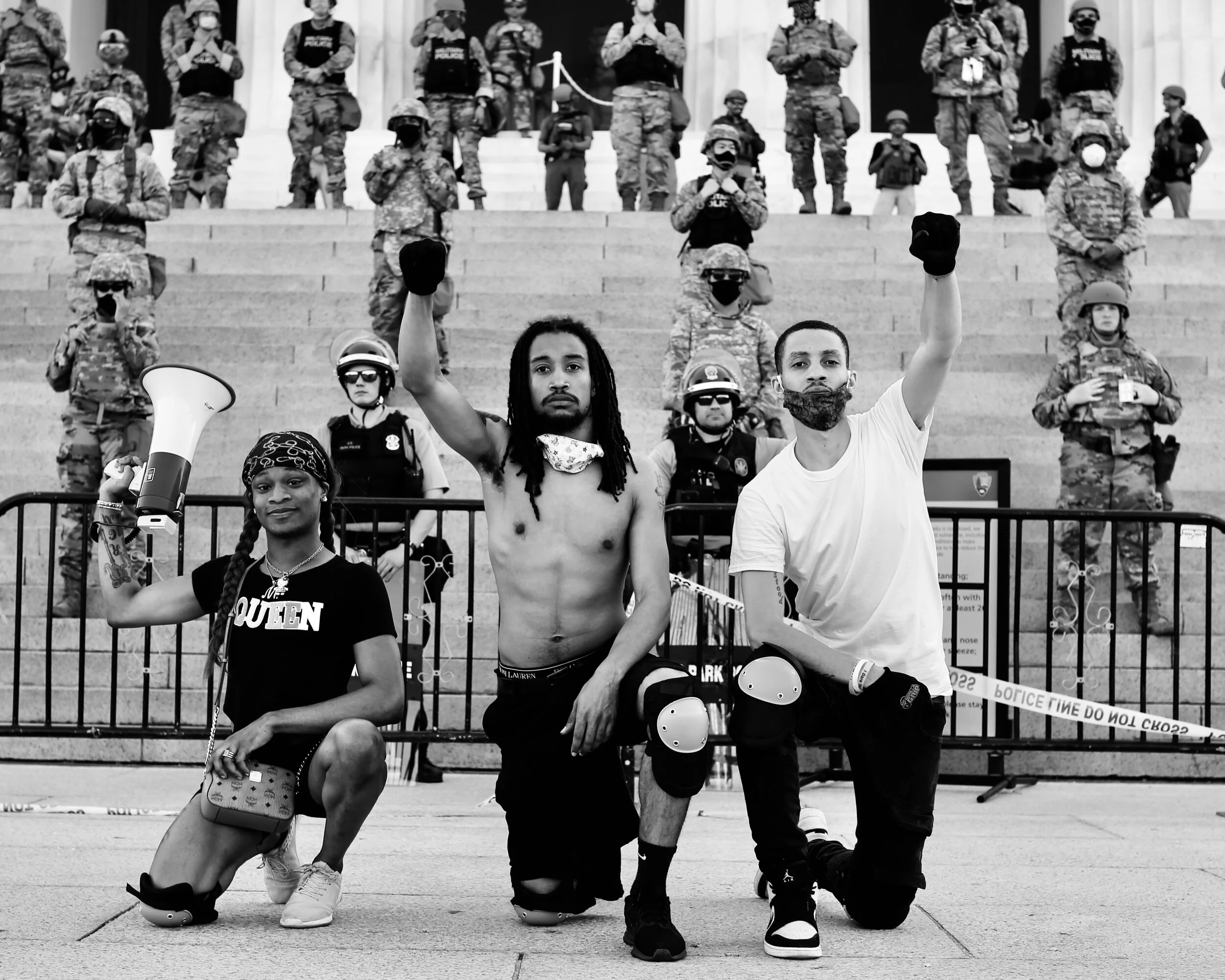
Photo: Kristine Jones
While he acknowledges that not everyone can devote themselves wholly to a cause, he views protesting as more of a relay race than a solo sprint. “If I can’t do a march today, then whoever else is a leader—or claims to be—you should be doing a march that day. Then I can pick back up—it should be a rotation. I don’t expect any organizer to do a march every single day but it should be passed on.”
But Mingo knows that it’s not easy to maintain momentum; he even likens the constant stress of protesting to “going to war.” He’s been shot at with rubber bullets, tear gassed, and watched as fellow activists struggled with the debilitating side effects of PTSD. Urged to rest by friends and family members who care deeply about him, Mingo says he’s been more mindful lately of taking time for himself. “But we’re used to working hard,” he says, referring both to his family and his Black ancestors in general. “We’re no stranger to labor. I could go home right now and turn on the news and something else has happened. I’d feel guilty, thinking I should have been out there, I probably could have stopped it. It’s like trying to be a superhero in a way.”
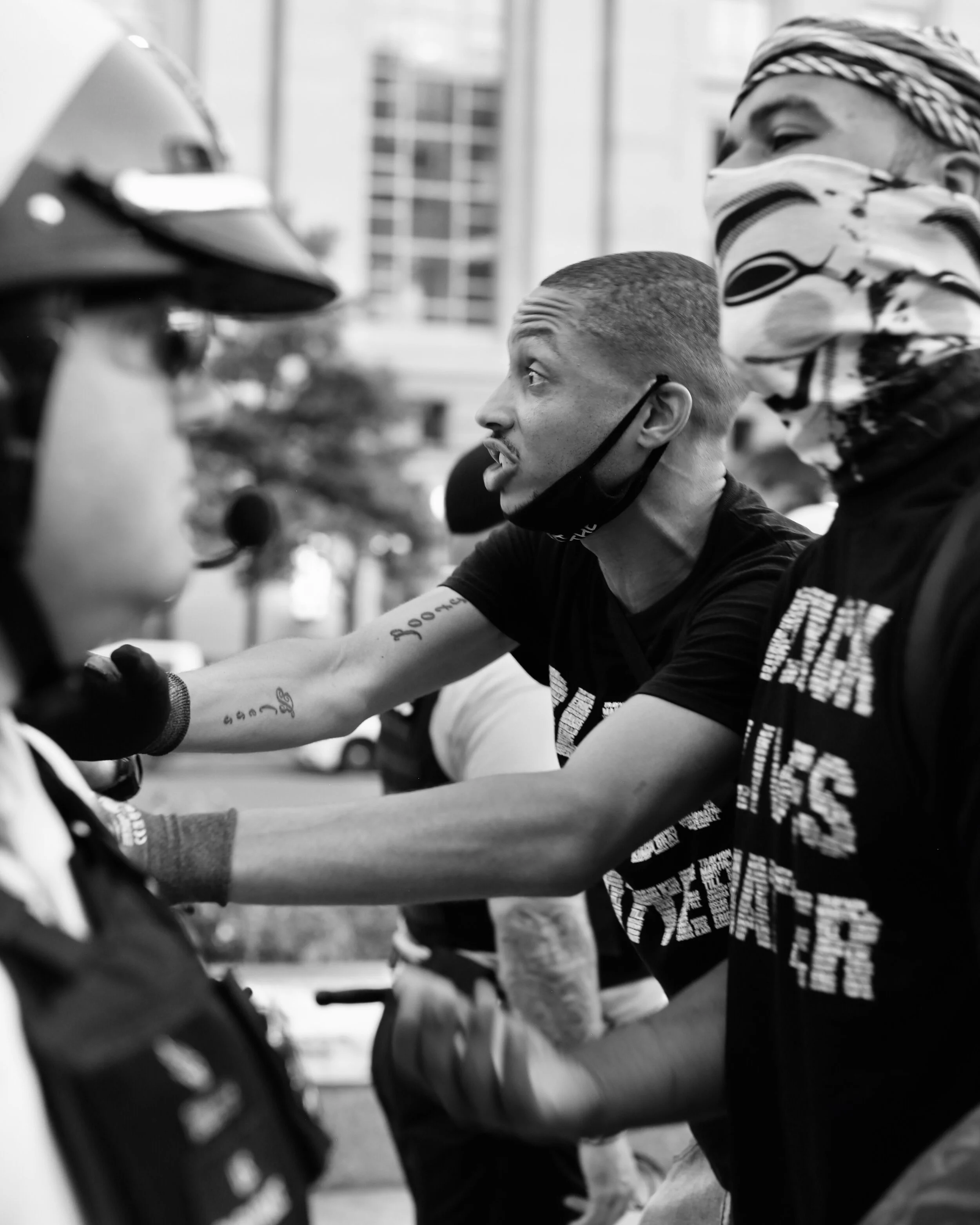
Photo: Kristine Jones
A SENSE OF HOPE
Although he spends most of his time around the two-block-long section of 16th Street NW recently renamed Black Lives Matter (BLM) Plaza, Mingo is skeptical about D.C. Mayor Muriel Bowser’s commitment to real, structural change. Just a few weeks after creating a de facto hub for the growing movement, confrontations on the plaza between largely peaceful demonstrators and the police have grown increasingly violent—and occur seemingly at random.
Medical supplies, tents, and food stations have been raided and trashed, t-shirt vendors were banished (and threatened with hefty fines), and depending on the time of day—or officers on duty—something as simple as jaywalking could suddenly be deemed an arrestable offense. “BLM brought people back a sense of hope—which is a good thing,” Mingo says. “But a lot of these people are homeless themselves and they’re still finding ways to give. Having their stuff thrown away? That’s just pure evilness. That’s not how I was raised.”
It may seem like destiny to those that believe in such a thing, but no one is as surprised at how quickly and easily he’s slipped on the proverbial superhero cape than Mingo himself. “Back in high school, I didn’t like bullies or anything that dealt with injustice,” he says. “I just like to stand for what’s right. It’s second nature to me—an impulse.” Although he says he never thought of himself as a leader, now that he’s seen that way by others, he says he’s up to the challenge. “It’s a badge of responsibility if people are putting their faith into marching with me,” Mingo says. “It’s my job to protect them as much as I can.”

Mingo at Black Lives Matter Plaza. | Photo: Kristine Jones
I don’t believe in the idea of ‘God,’ at least not in the traditional sense, but I’ve put my faith fully in Mingo during several marches since I first stood in awe of him at the Lincoln Memorial—and it’s hard to deny that the ‘miracle child’ seems to have been destined to motivate and inspire others.
Mingo’s great-grandfather was a 33rd degree Mason and his dad is a marine veteran. “I have a structured background,” Mingo says. “But I don’t agree with any of it. I’m not a fan of the government because I know that they’re not for us—from the city officials on up. You’ll catch them out here at a march trying to get a photo-op to further their campaign but they’re not really here for the people.”
The women in his family may have assumed less traditional leadership positions—his grandmother works for the Census Bureau and his mother raised Mingo and his siblings as a single mother—but they were no less influential in Mingo’s life. He says supporting women is crucial in maintaining the soul (and shear numbers) of any movement. “Women are already strong by themselves,” Mingo says. “But we have to keep building them up.”
Although he “didn’t worry much as a kid,” Mingo says that when he entered his teens, he came to expect police harassment as a simple fact of life. “We were terrified then but it wasn’t ‘Will we get shot or killed?’ it was more like ‘Ok, we might get beat with a nightstick or something.’ That doesn’t make it any better, but today it’s really out of hand.”

Leading a march through a tunnel.
On July 4th weekend, 11-year-old Devon McNeal went to fetch a phone charger from his apartment complex in Southeast D.C. when he was shot and killed by a stray bullet. A few days later, Mingo worked with McNeal’s family to organize a march from BLM to the Anacostia neighborhood where the boy lived and died. I joined that march, which stretched over several hours and continued well into the night. The group started small but grew along the way—people are drawn to Mingo like a protest Pied Piper, who is not only a compelling speaker, but a magnetic frontman. It’s nearly impossible to not feel something when you’re in his presence; at one point, our small group stopped traffic on a highway and I found myself linking arms with people I had met less than an hour before, in a tense standoff with a line of cars. Mingo, first raised high above his head, paced back and forth, weaving in and out of traffic like a lion in a cage.
When we stopped for a candlelight vigil in front of the Frederick Douglass National Historic Site, a larger group joined us and we marched through the neighborhood, shouting “Black kids lives matter,” and calling for information on McNeal’s killers. “It broke my heart,” Mingo says. “At the vigil, a mother was out there with her son. She said ‘My son was terrified because he saw the police lights’ and he told her “Mommy, I don’t want to get shot.’”

Mingo and his daughter, Jaidyn.
A few weeks earlier, Mingo brought his 10-year-old daughter, Jaidyn, to a march he planned for Father’s Day. The more than six-mile, midday march was grueling, but Jaidyn is clearly her father’s daughter. It was her first protest, and she’s already asking to do more—but Mingo is fiercely protective and reluctant to put her in a situation that might turn dangerous. “I felt the atmosphere out on that one but I’m still cautious because in a split second something can happen,” he says. Both of his children currently live in Maryland with their mother, but Mingo says they’re in near-constant contact—and the worry goes both ways. “Jaidyn watches the news—she knows what’s going on—and she’s constantly checking up on me,” he says.
Last year, Mingo himself was arrested in Maryland and spent five days in 24-hour lockdown—for something he didn’t do. Months later, he is still paying down his debt to a bail bondsman for a crime that everyone—including the judge and attorneys—agreed he never committed. Still, Mingo says, “It could be worse.” His own mom agrees. When I ask how his family views his recent foray into activism, Mingo says, “They’re proud and happy.” But his mother has mixed emotions. “She’s happy, she’s proud—but also terrified,” he says. “She always says, ‘I don’t want you to be another hashtag.’”
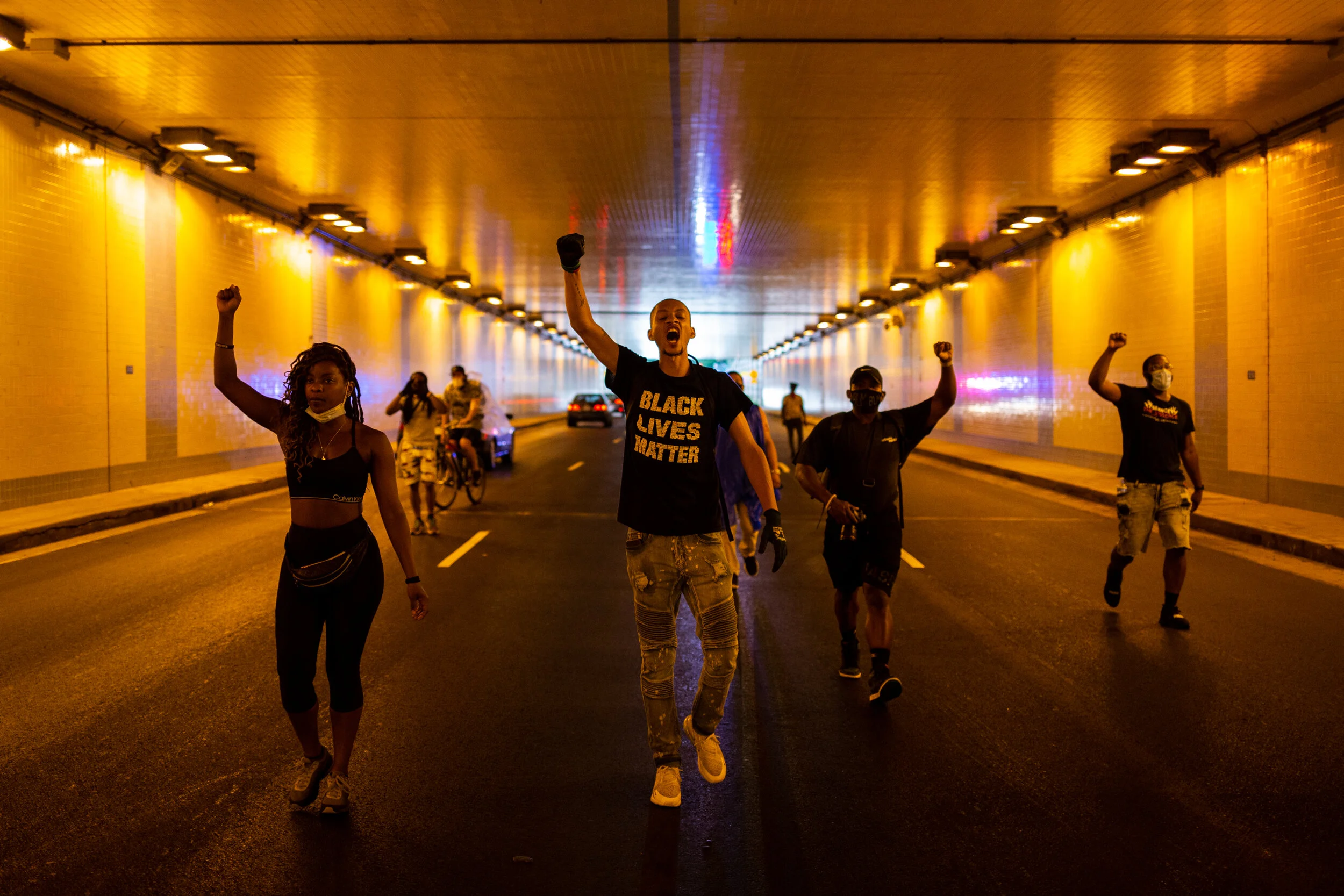
Leading a Father’s Day march through the tunnel.
PEACEFUL PROTESTS
Maybe it’s God or maybe it’s just luck, but thankfully Mingo has so far managed to avoid the grim fate of so many people like him, whose only “crime” is to be Black in America. Despite the constant awareness that comes from living within a system that is actively working against you, Mingo has shown remarkable restraint in his interactions with police officers. “I don’t have a beef with the police, personally,” he says. “In general I don’t like them, but if the officer is showing me respect, I'm going to treat him with respect back. But if that officer pulls out their gun or tear gas then yeah, we’re gonna have a problem because now you’re trying to instill fear in me. I’m unarmed. There’s no reason for you to do any of that.”
While some may argue that the act of protesting can never truly be peaceful, Mingo’s philosophy on non-violence is backed by a long history punctuated by leaders to which he has inevitably drawn comparisons. But even Mingo admits that a commitment to non-violence has its limits. “If you have a bully that keeps bothering you, keeps poking at you, you’re soon not going to be peaceful anymore,” he says. “That’s what we’re dealing with right now.”
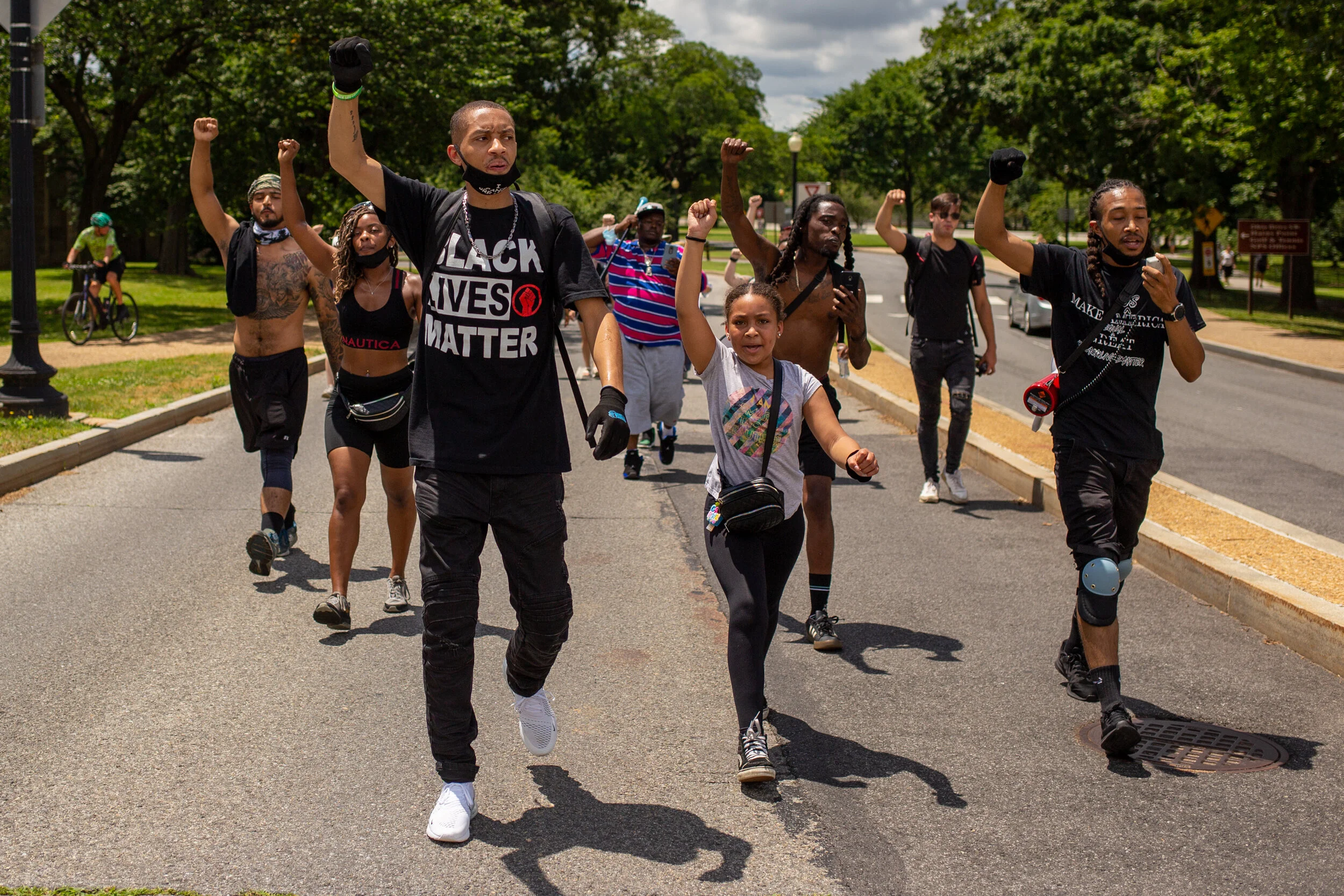
Mingo leading the Father’s Day march with his daughter Jaidyn.
The star-spangled elephant in the room—or the “bully” to which Mingo repeatedly refers—is, of course, Donald Trump. Mingo sees an obvious link between the Mayor Bowser and Trump standoff, and the so-called riots and looting that occurred early in June: “When the head is out of order, so does the body follow,” Mingo says. “People in high positions—law makers, specifically—if they’re not respecting each other or the laws that they are making, how do they expect the people to respect them? This is why you’re getting riots and looting. People are not doing it for no reason. We’re fed up.”
Mingo recently attempted to keep the peace at Lincoln Park when a rally concerning the fate of the park’s polarizing Emancipation Memorial quickly devolved into a shouting match. Although he usually finds himself behind the megaphone, Mingo tries to encourage conversations over confrontations, whenever possible: “As the saying goes, ‘God gave us two ears and one mouth so we would listen more and speak less.’” Incidentally, Mingo is on the side of those calling for the statue’s removal, but he’s wary of anyone who wants to do it in a destructive way—especially after Trump issued an Executive Order calling for the extreme punishment of anyone caught doing so. “Yes, it needs to come down,” Mingo says. “But the right way.”
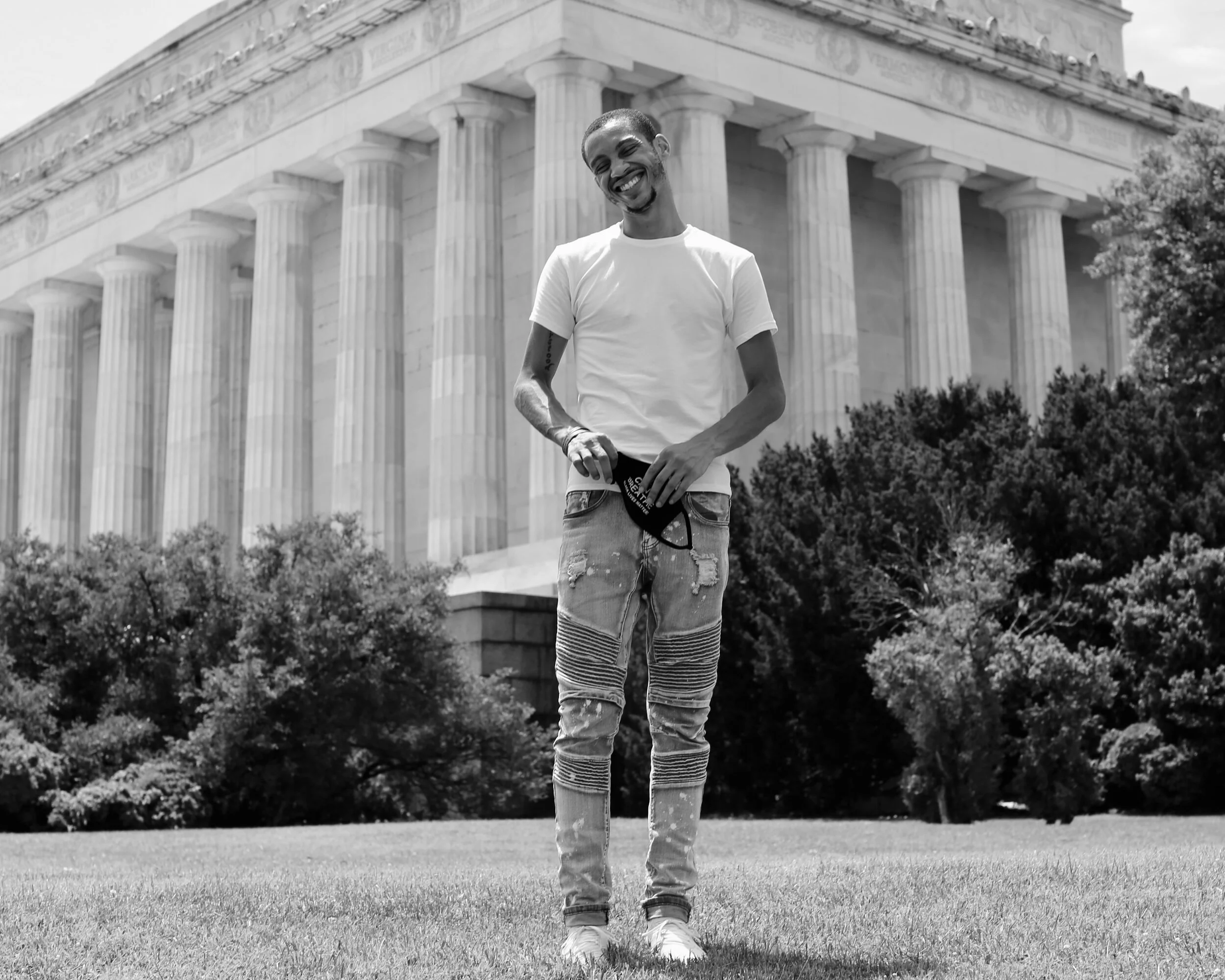
Photo: Kristine Jones
UNCONDITIONAL FAITH
A few weeks after I first hear Mingo speak, we’re once again at the Lincoln Memorial. The day is just as hot and sunny, but this time we’re sitting in the comfortable shadows of the monument’s massive marble columns—and in the figurative shadows of everyone who has stood on the historic steps nearby to give similarly stirring speeches. Martin Luther King Jr. delivered his famous “I Have a Dream” speech just a few hundred feet from where we’re sitting. But it’s another speaker from the 1963 March on Washington who is on my mind while I chat with Mingo. John Lewis, who visited BLM Plaza just a few weeks before he died on July 17, once said, “Our struggle is a struggle to redeem the soul of America. It’s not a struggle that lasts for a few days, a few weeks, a few months, or a few years. It is the struggle of a lifetime, more than one lifetime.”
Mingo—who cites Lewis, along with Malcolm X, Black Panther co-founder Huey P. Newton, and the rapper T. I. as important influences—also understands that the fight for justice has no beginning or end. “A lot of people are trying to put time limits or days on it saying ‘We’re going to end it when …’ but I say, ‘No, what we’re doing it for has not been accomplished yet. I’m 30 now and I could look up and be 50 and still be out here marching.”
If the ‘miracle child’ tattoo doesn’t make it obvious, Mingo is undeniably a man of faith. He attended a Bible college in Lancaster, Pennsylvania and studied youth pastoral ministry. He says he does a lot of writing and thinking before his speeches, but in the end, he simply let’s the spirit flow through him. “I ask God to ‘put the words in my mouth that I may not have or may not know’ and then I just face the day,” Mingo says. “He hasn’t failed me yet. I’m just a vessel that God chose to use. I don’t want him to have to take his hands off my life and say ‘You’re out here for the wrong reasons so I’m going to let the enemy have his way.’ That’s probably my only fear in life. I don’t want to face God with that.”
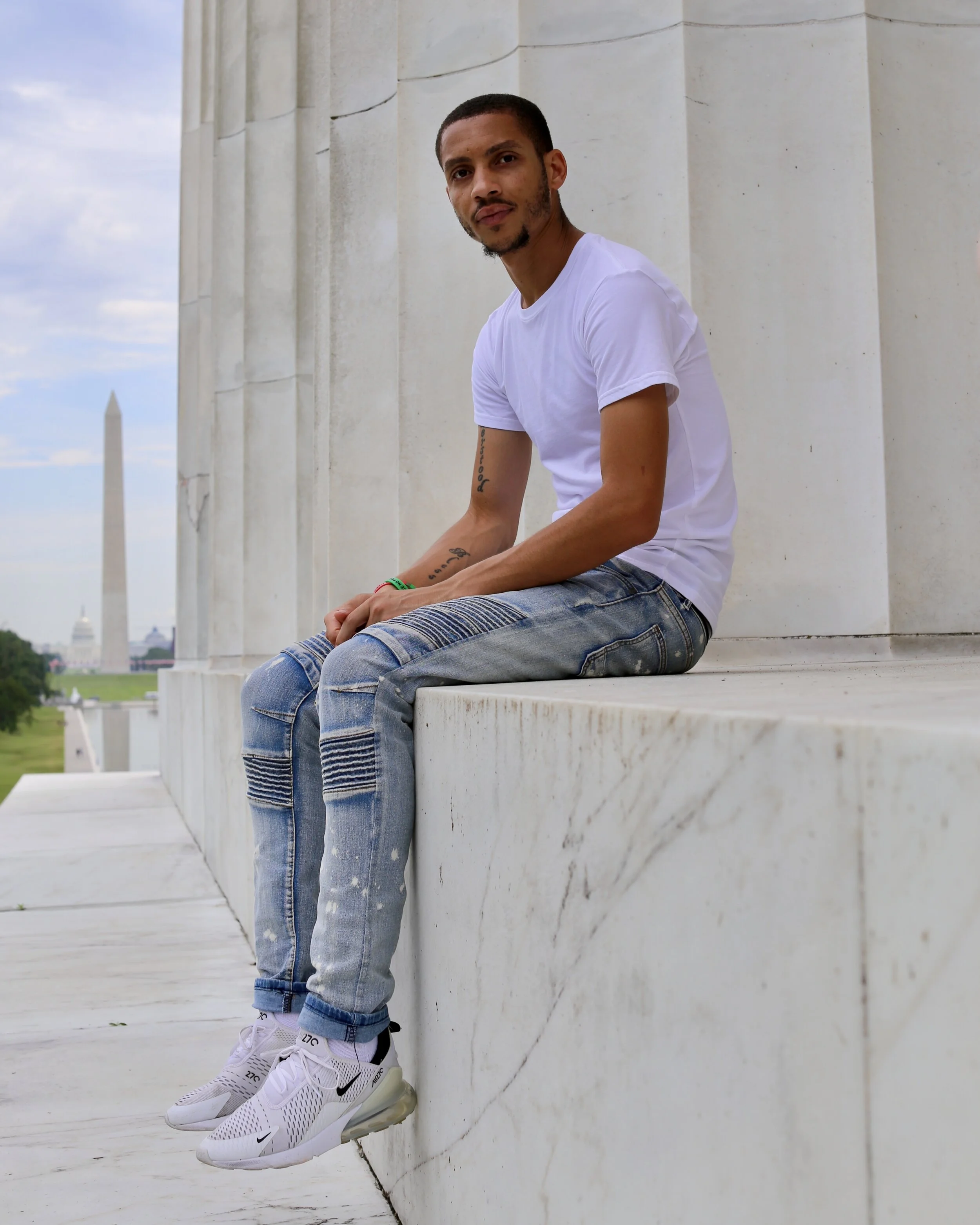
Photo: Kristine Jones
I can attest that listening to Mingo speak is nothing short of a spiritual experience, but unlike the mega-church from which he recently severed ties, all are welcome to worship beneath the powerful, perpetually-raised fist of Mingo. “I’m for any and all people who are on the right side,” Mingo says. “I don’t care about your sexuality, your race, your religious beliefs. When God looks at everybody, he looks at the intentions of the heart. That’s it. I’ve never known a heart to be black or white. A heart’s a heart.”
It can be difficult to maintain one’s faith in normal times, and no one would fault Mingo for buckling under the overlapping sorrows of 2020. But faith is more important now than ever, he says, and should never be conditional. “Faith is probably when you’re scared the most. Walk by faith, not by sight. We’re more scared of things we don’t know. We don’t know how long this will last. Evil never wins—it might feel like it is winning right now. But it never wins because God always has the last say so. God made life simple for us. Man made life complicated.”
Mingo, who usually wears a t-shirt, jeans, immaculate sneakers, and a rotating selection of statement face masks, is in many ways, a perfect representation of our current reality. He lost his job due to the pandemic, and is about to start working nights at an Amazon warehouse. Once again, Mingo has every reason to be angry and despondent; he thinks it’s no accident that people have reached a breaking point now—and he says that unfortunately, sometimes it takes a personal tragedy to light a fire under people who wouldn’t have otherwise cared. “God is exposing the truth on a lot of things that have been kicked under the rug,” Mingo says. “It’s like the rug has been lifted up now and a lot of things are coming out now. People are losing jobs, they’re out of work. The pandemic has everyone’s attention. It really exposed people’s insecurities in their own lives.”
He knows that the issues he’s fighting for are not new, but says that people do seem to be more receptive to having more meaningful conversations about them. “These are the same problems we’ve been having—police killing did not just start—but it hit differently with the pandemic,” Mingo says. “People can’t claim anymore that they’re so busy that they’re not paying attention. You’re not busy, it’s in your face, so what are you going to do? You could be next.”
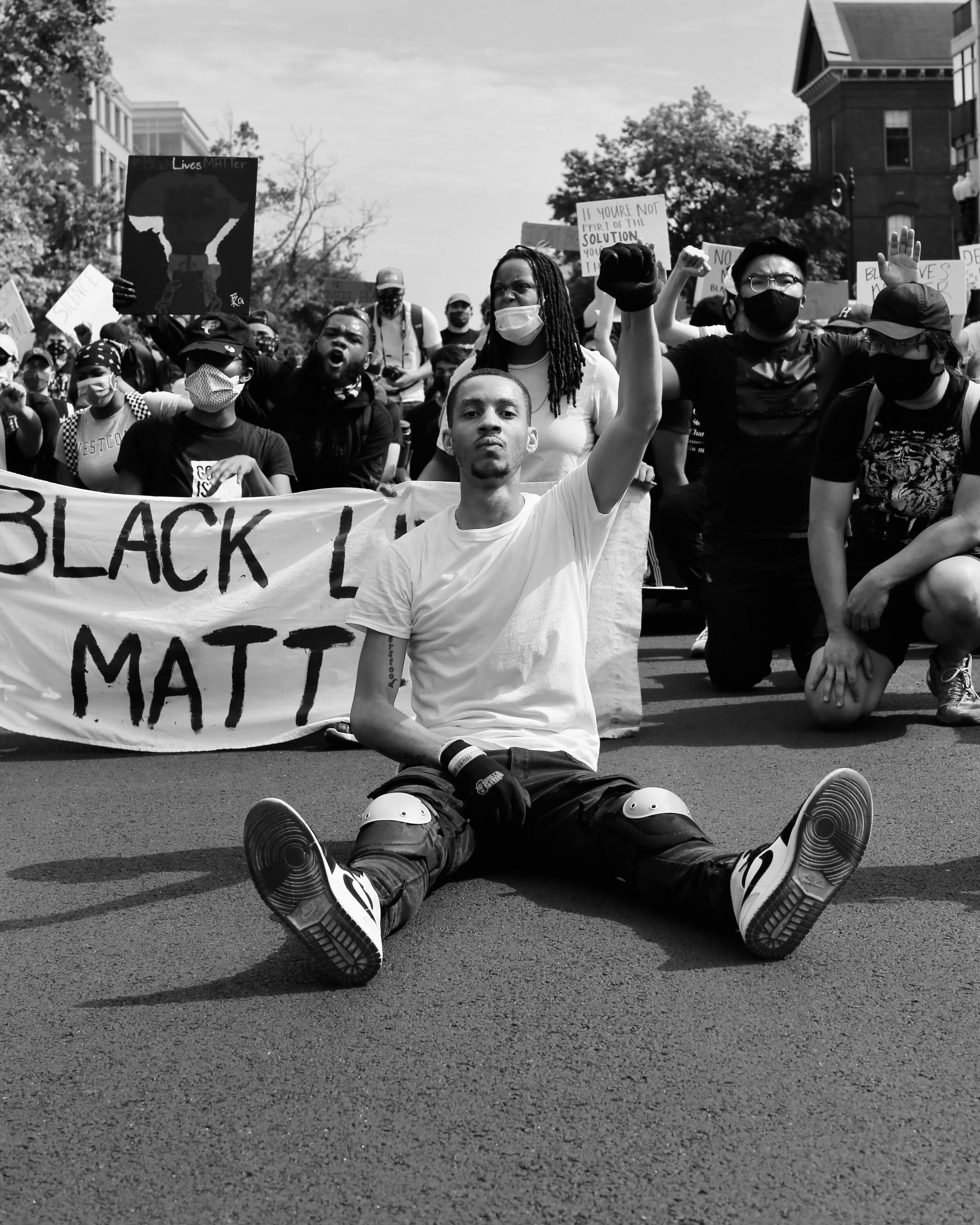
Photo: Kristine Jones
BLACK LIVES MATTER
For Mingo, simply acknowledging that Black lives matter is the starting gun—not the finish line. “It’s not even about race anymore,” he says. “It’s about what’s right and what’s wrong. I’ve seen some white people, Spanish-speaking people, LGBTQ people going hard for us—because we’re all dealing with the same thing. I feel like all people should have a voice.”
While being a Black man in the U.S. comes with its own unique set of challenges, Mingo recognizes that he has privileges as well—but, as MLK Jr. said, “Injustice anywhere is a threat to justice everywhere.”
“I don’t know how it feels to be transgender,” Mingo says. “But I think I know how it feels in general because they feel mistreated. Immigrants came over here trying to create a better life for their family and now they’re trying to send them back over the border. I don’t know how that feels but I may have an idea because they feel mistreated. Black people are being killed by the police. I don’t know how that feels because I’m not dead—thank God—but that’s the common thread. Feeling mistreated.”
Mingo stops short of using the now-incendiary phrase “All Lives Matter,” but he does insist, “I’m here for everybody. Yes Black lives do matter. But at the same time everybody matters.”
While I agree with Mingo, I also can’t help but think that not everybody can—or should—follow exactly in his sneaker-clad footsteps. But that’s the good thing about mass movements, there’s a place for everyone—and clearly Mingo belongs at the front of the crowd.
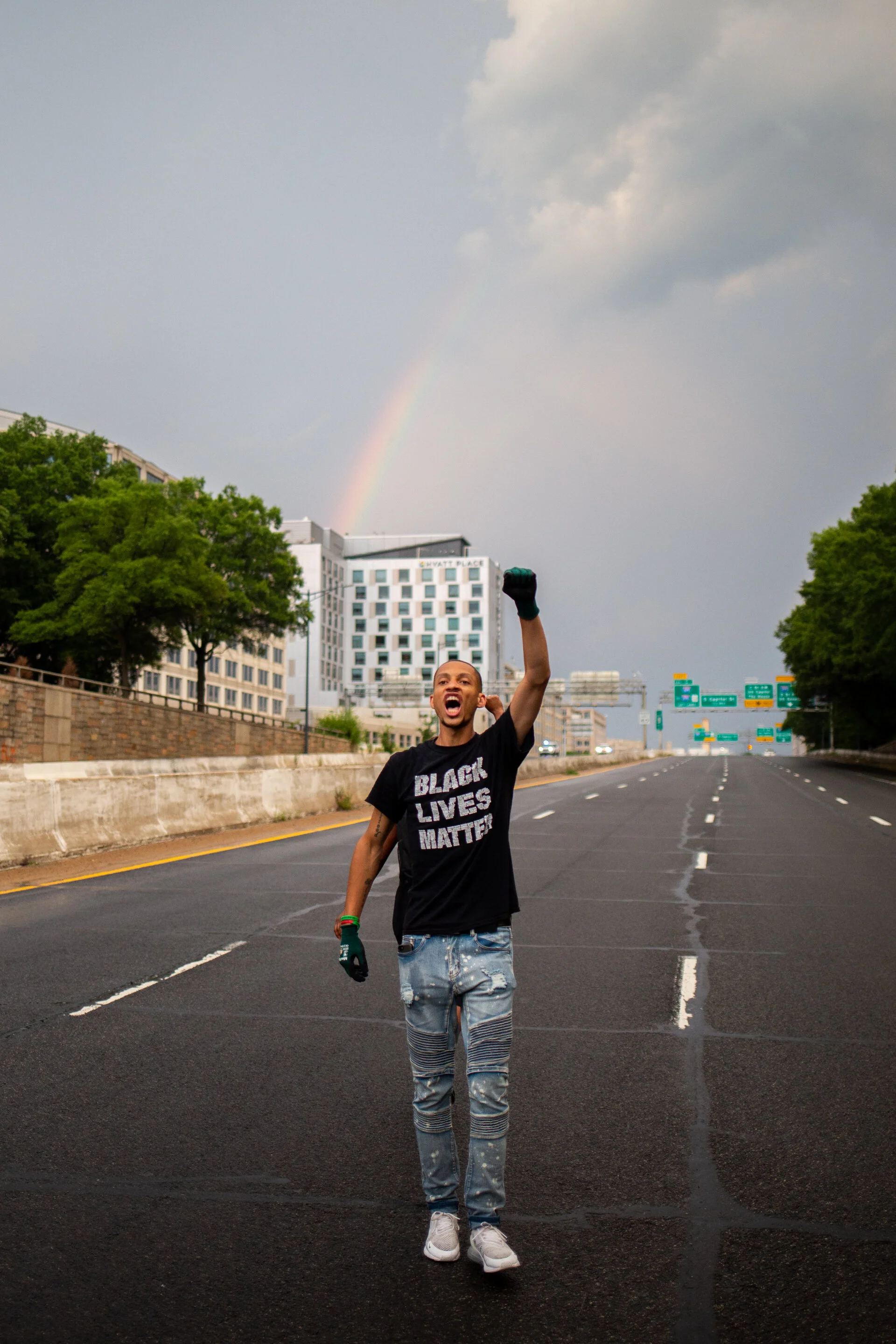
Mingo during the Devon McNeal march.
Mingo, who also has a budding music career, may always be in constant conflict with his impulse to lead and his fear that his ego may unintentionally eclipse his higher purpose. But he’s actively working to make sure he remains focused and in service of others, and, of course, God. “I don’t think I’m bigger than anybody—I don’t think I’m doing a better job than anybody,” he says. “I like coming together with others. Maybe you can give me a different outlook on something that I didn’t think about. But you gotta understand, you’re dealing with the streets and the streets are going to call your bluff. If you’re doing it for the wrong reasons, the mask eventually falls off. It may not fall off in a week or two weeks—it may take a month—but eventually people are going to see.”
What I see in the time I’ve spent marching and talking with Mingo is nothing short of complete sincerity—and I try to assure him that his fears of being seen as a “clout chaser” are more than unfounded. But he admits that his inability to properly finish the Makiyah Wilson march might still be motivating him to go extra hard for other families mourning similar losses of their own.
“Maybe it’s a self pride issue,” Mingo says. “I didn’t get to finish [the Wilson march] out the way I wanted to. So I’m looking to finish this out—however long it takes. I don’t half ass anything. If I’m going to do it, I’m going to do it all the way. I know what I signed up for. I know I can’t save the world but I’m going to try.”
This is a crucial moment in history; we have a real opportunity to rebuild and restructure our society to be more equal, more just, and more habitable for all. In an attempt to better understand what motivates and inspires fellow activists, I’m profiling people and how they’re trying (in ways both big and small) to make the world a better place. If you know someone I should profile, let me know (maybe it’s you!?). You can see all of the profiles here.
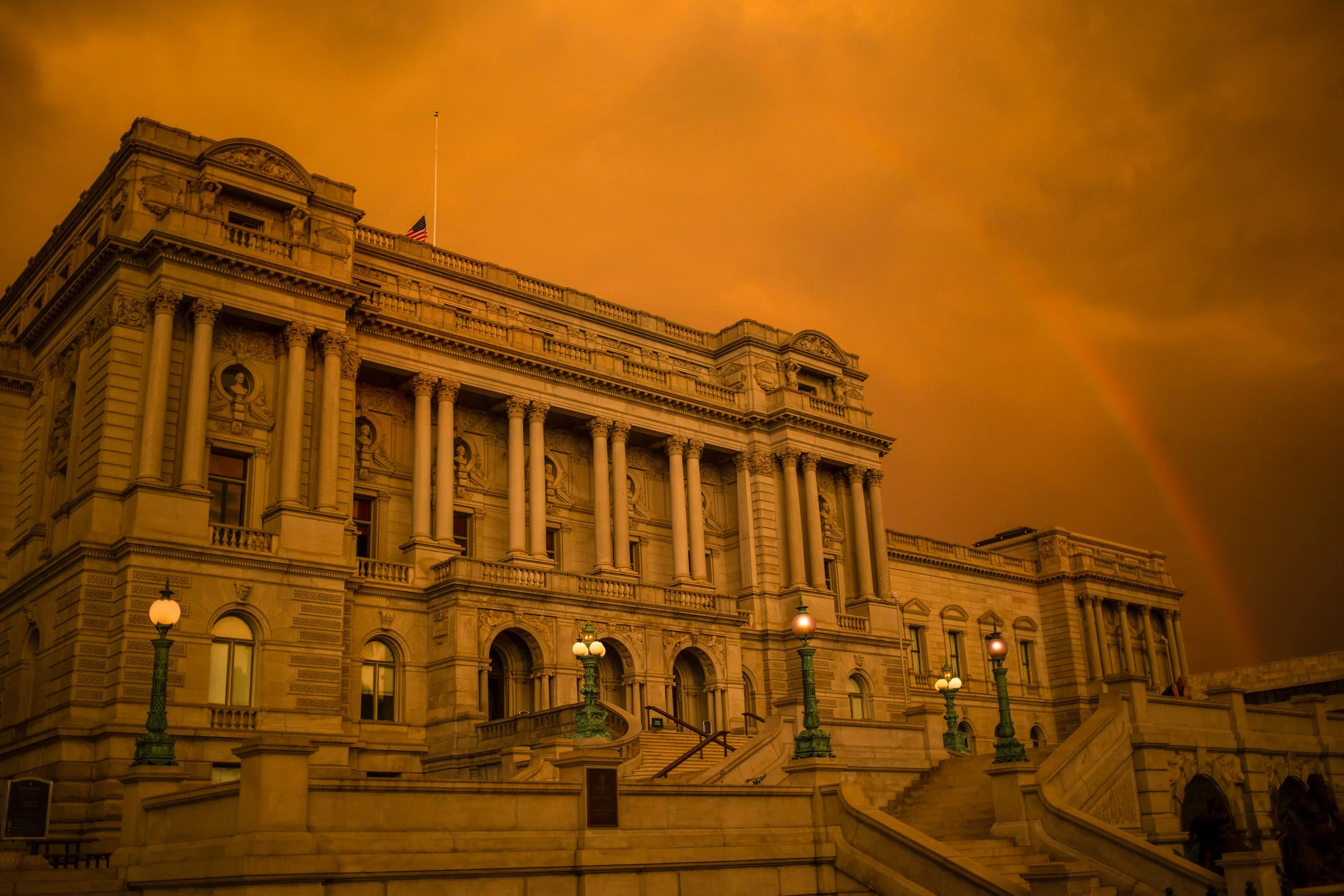


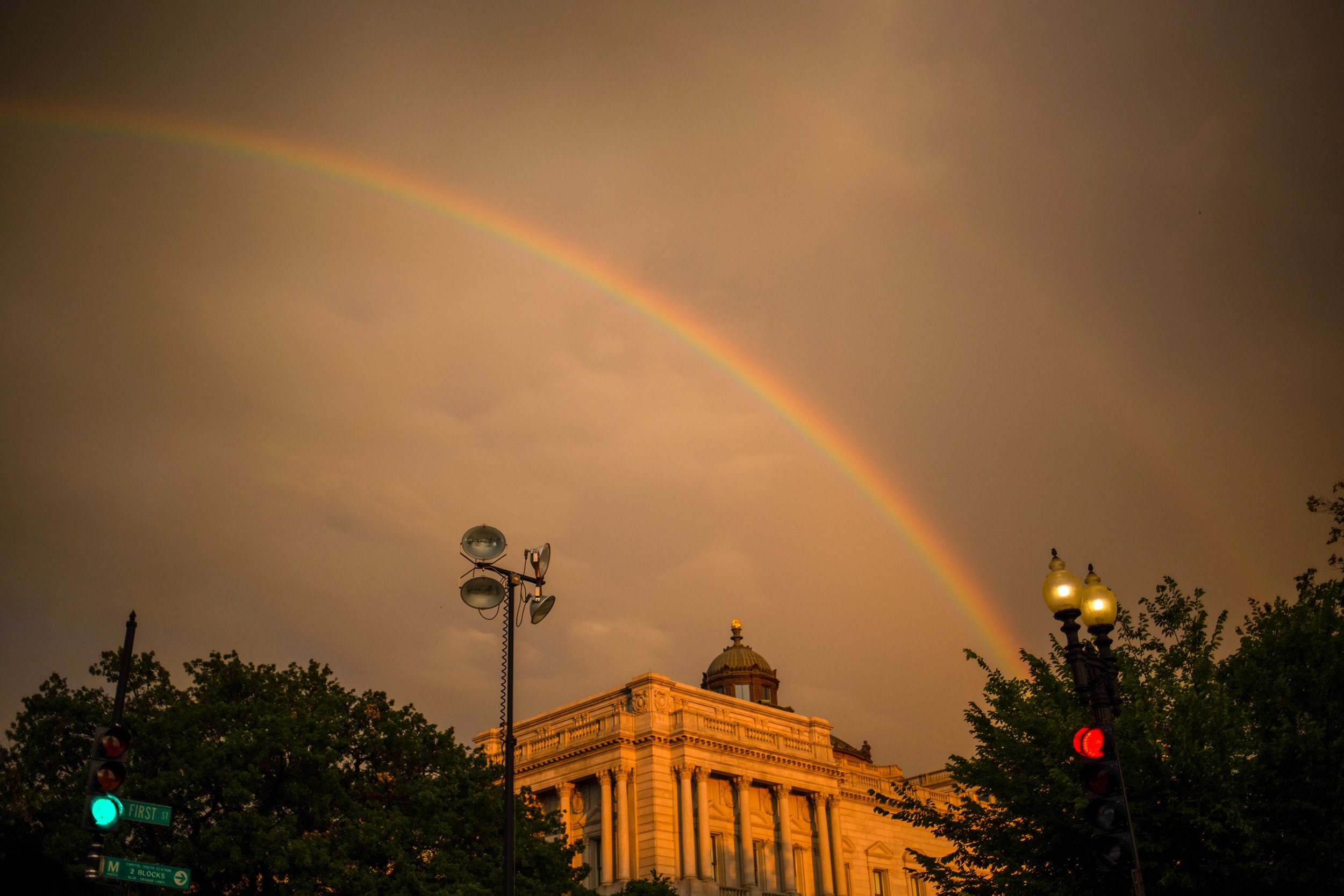


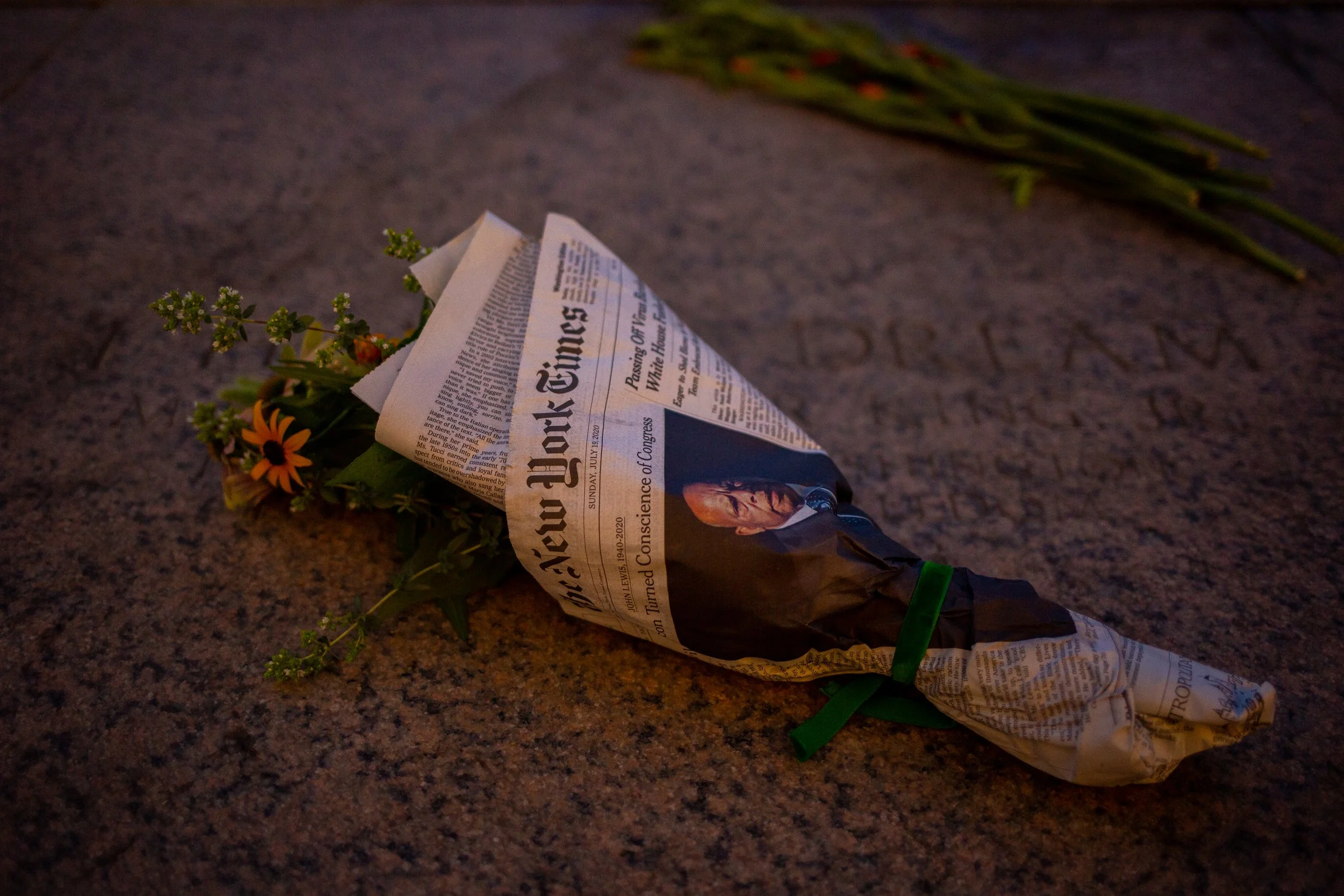


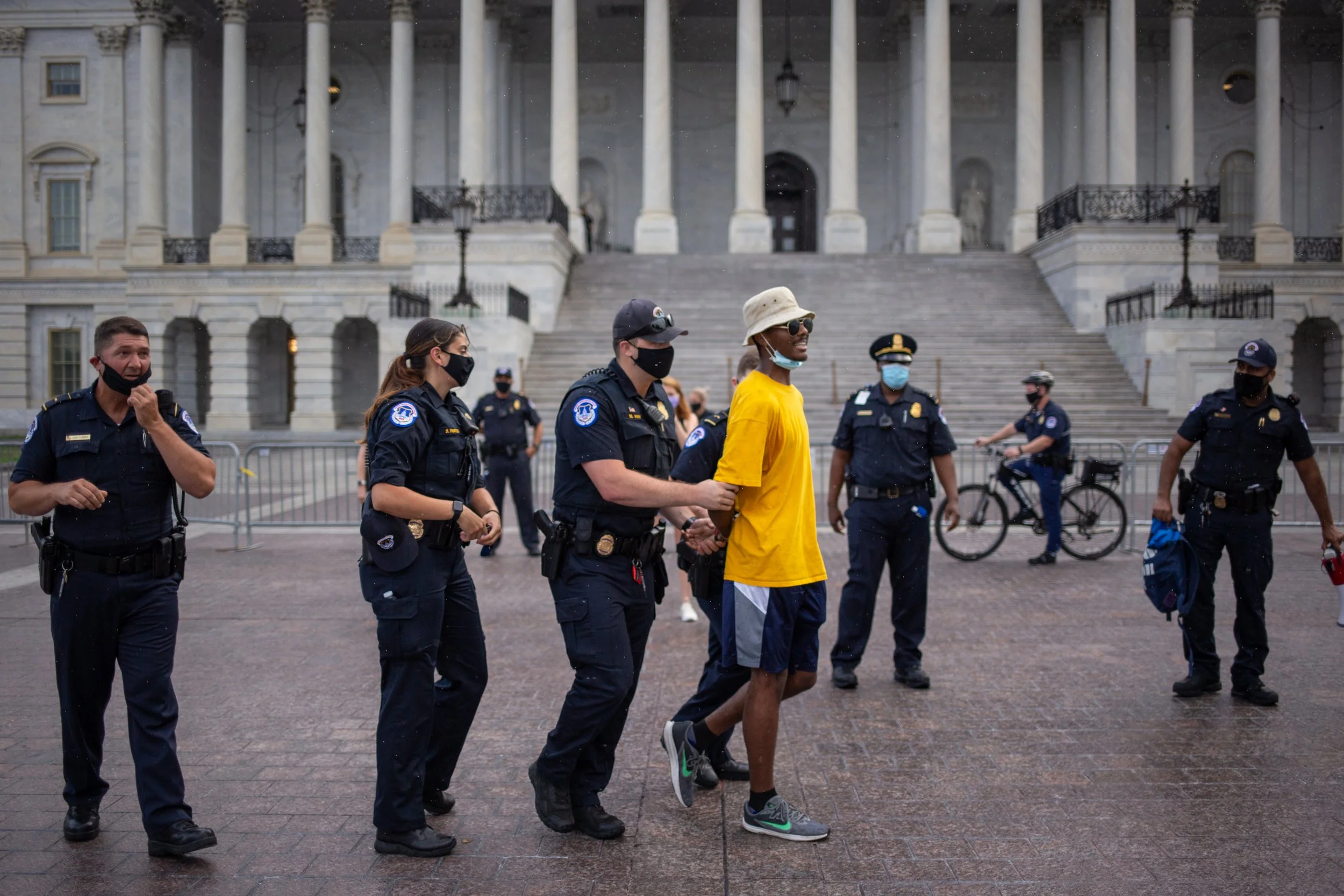

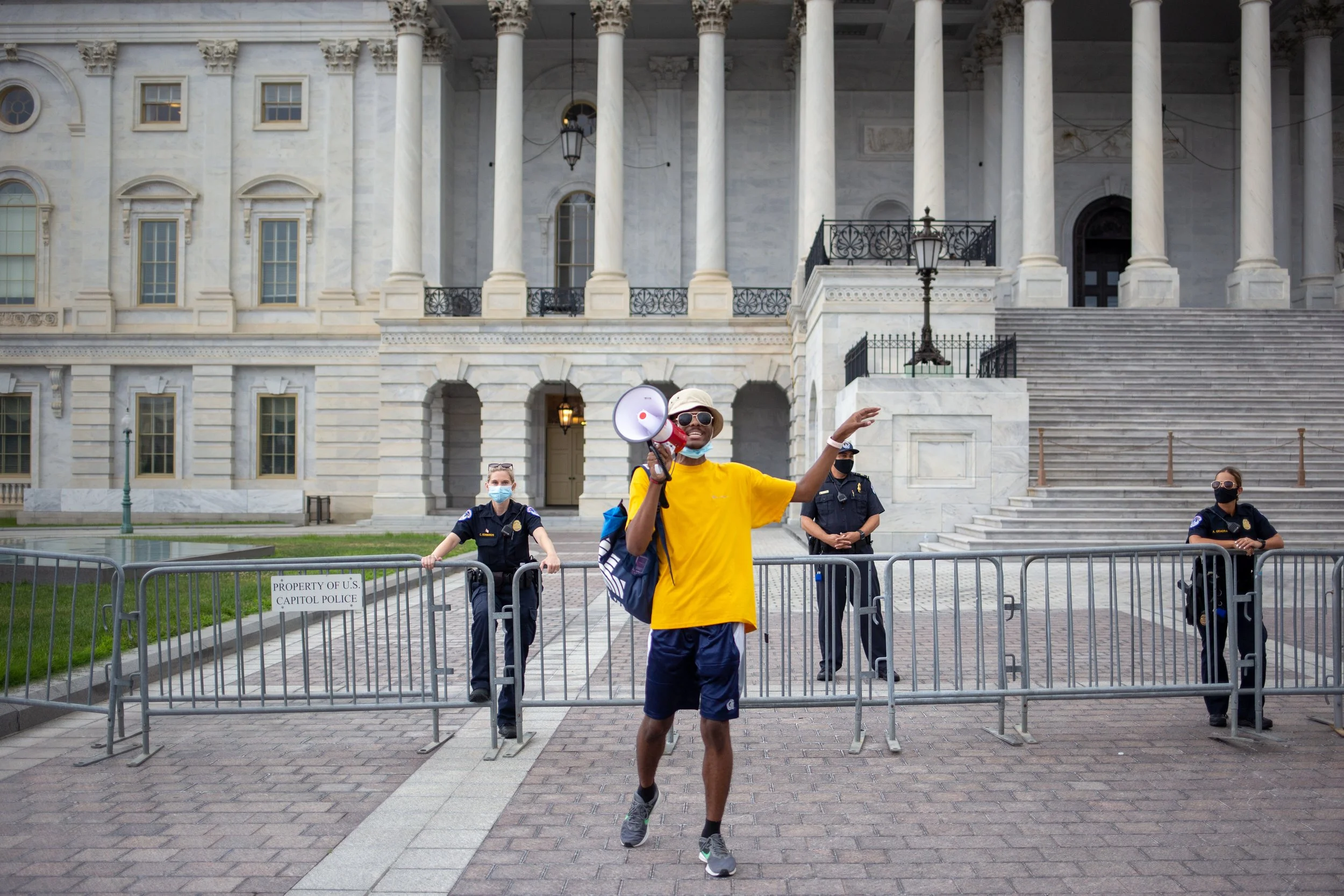
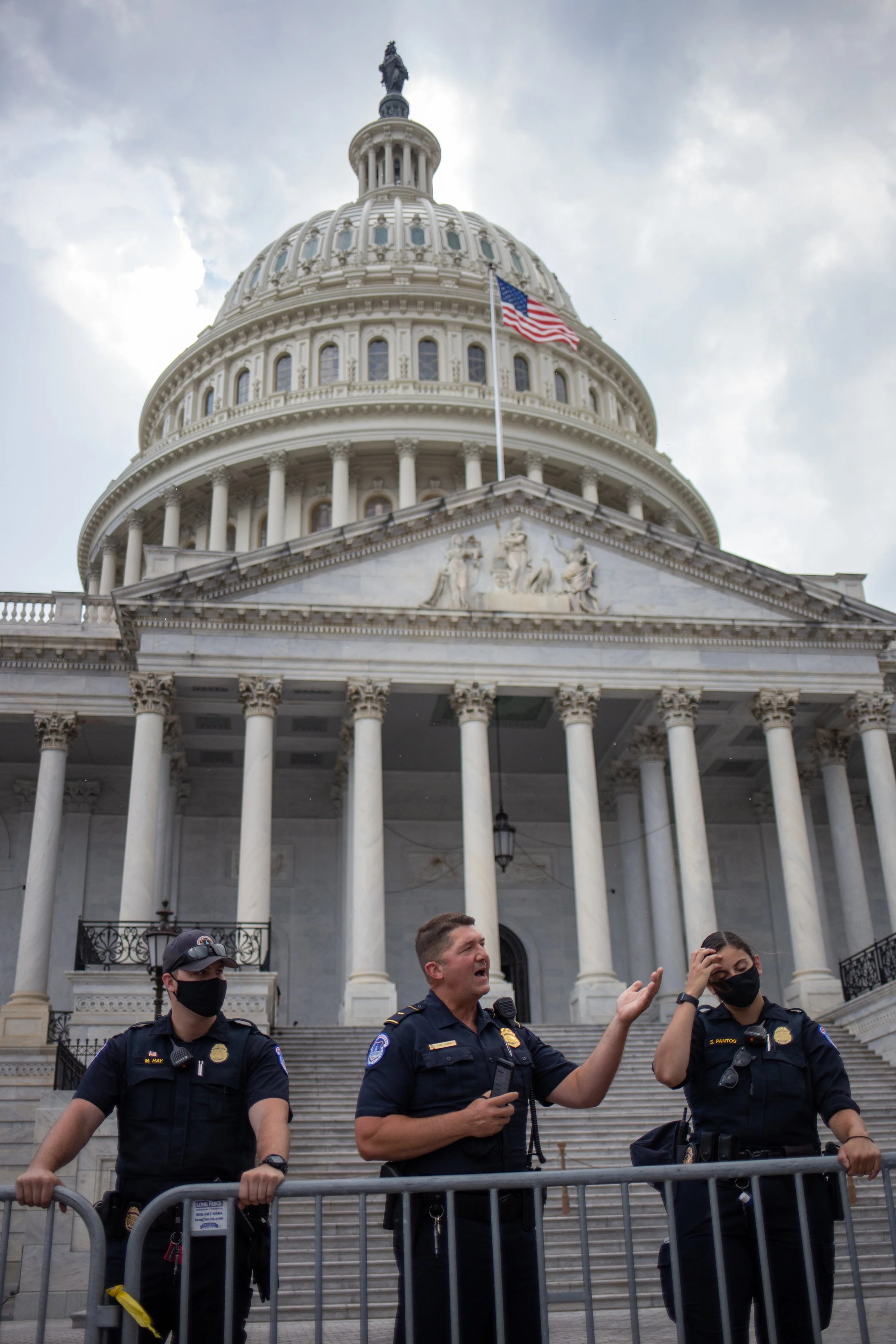
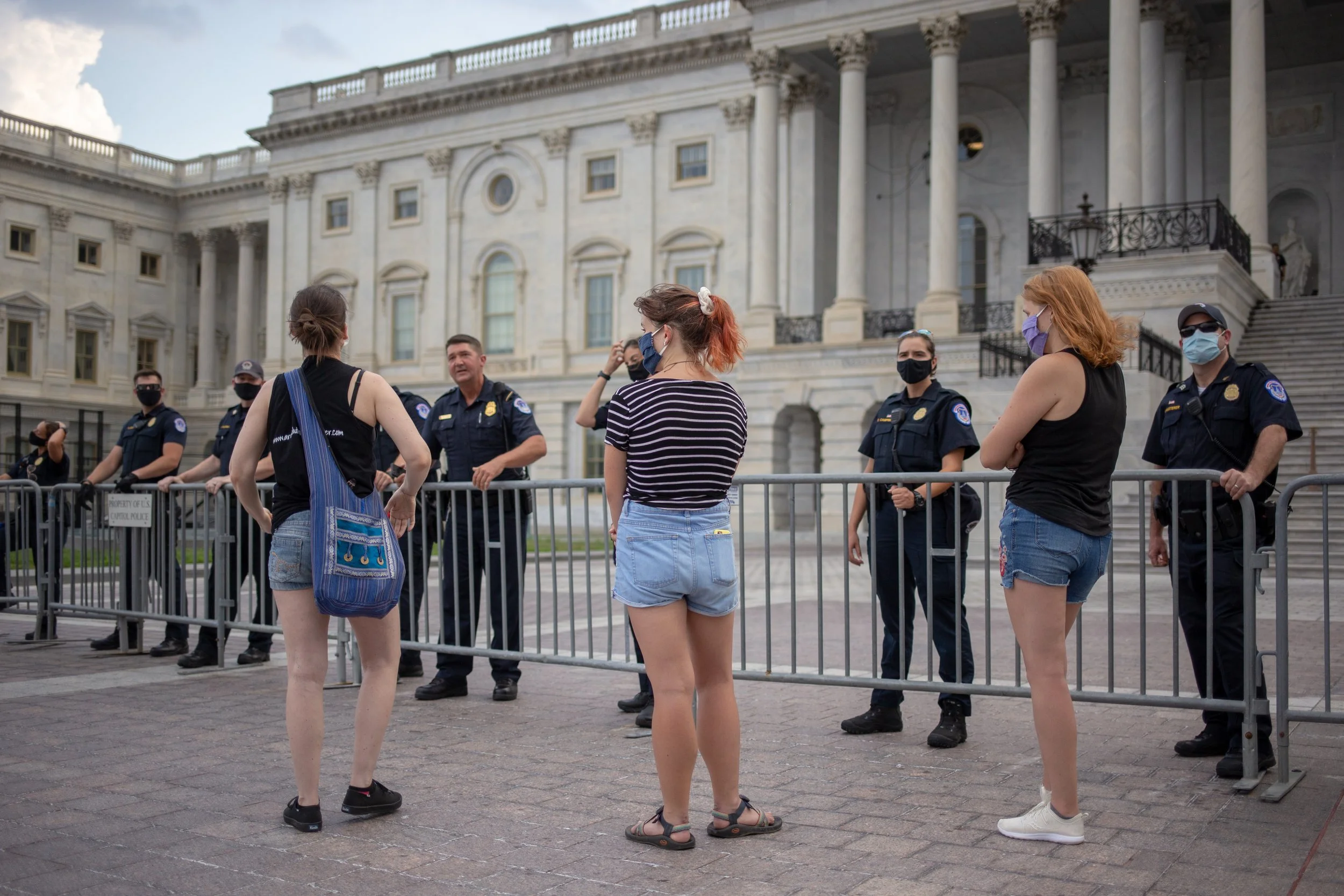

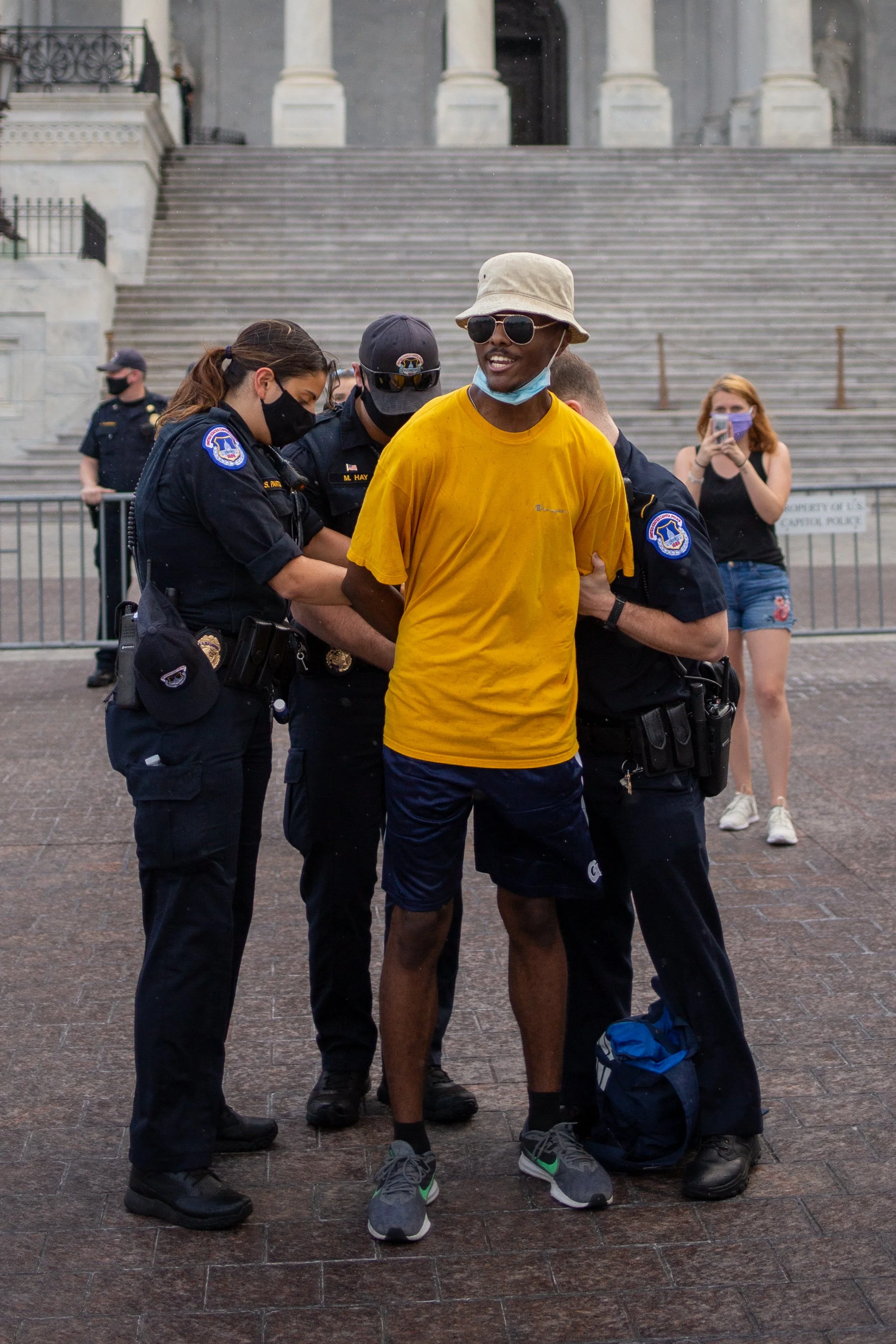
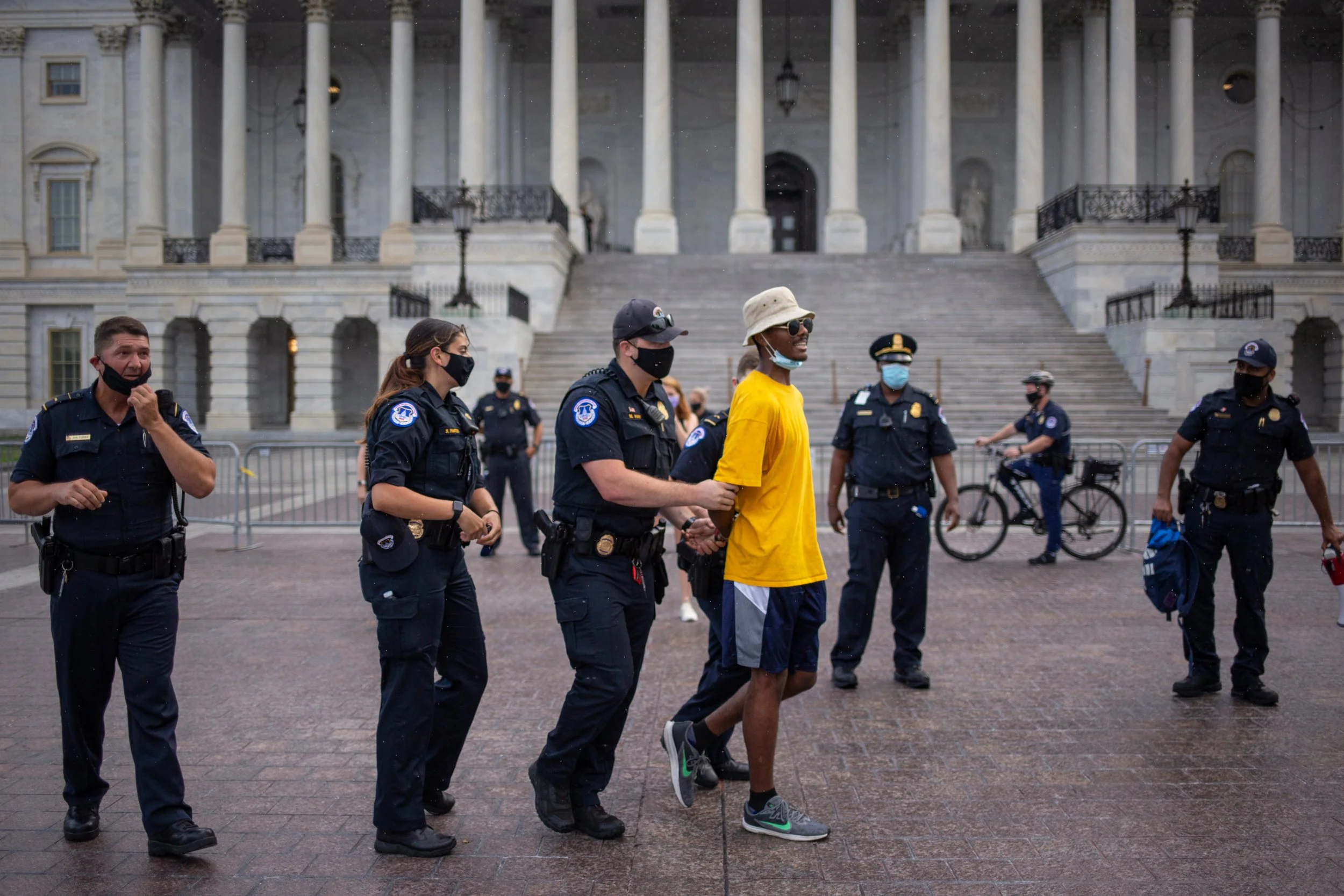
The most fantastic thing about the New York Botanical Garden’s annual Orchid Show is the orchids themselves