

Archive
- Abandoned
- Alabama
- Arizona
- Bahamas
- Books
- California
- Cemetery
- Climate
- Colombia
- Connecticut
- Diner
- Egypt
- Feature
- Florida
- Friday Fun
- Georgia
- Holidays
- Illinois
- Iowa
- Italy
- Kentucky
- Louisiana
- Maryland
- Massachusetts
- Mississippi
- New Jersey
- New Mexico
- New York
- North Carolina
- Novelty Architecture
- Ohio
- Pennsylvania
- Personal
- Peru
- Project 365
- Protest
- Rhode Island
- Roadside Attraction
- South Carolina
- Tennessee
- Texas
- Travel Guide
- Virginia
- Walks
- Washington DC
- West Virginia
- Wisconsin

Moray

Before the salt ponds and the Inca Trail hike and Machu Picchu, there was one more Inca ruin that we visited—Moray, an archaeological site about 30 miles northwest of Cusco. We went to Moray on the same tour that included the Maras salt ponds and I do recommend taking a tour (we booked ours through our hotel)—and a load of Dramamine if you get car sick on speeding, rickety buses like I definitely did.


Moray comprises several circular terraces and it has been speculated that they were used by the Incas to study crops. Their depth creates as much as a 27°F temperature difference between the top and bottom terraces, and you can definitely feel that difference as you descend. The largest depression is 98 feet deep, and the site also includes an irrigation system (the Incas were wizards with water flow).



We didn't have a ton of time to explore the Sacred Valley before we left for our hike but I think we definitely chose the right tour. It might be sacrilege to say so, but after a while Inca ruins all sort of start to look the same—so much so that by the time we got to Machu Picchu it felt a bit anti-climactic. Moray felt different though—the stone work and terrace layout are Inca signatures for sure, but the concentric circles are just so perfect and visually stunning. You can only walk around—not inside of—the circular terraces, making for some excellent people-less photo opportunities although it's impossible for photos to capture the immense scale of this place.



I remember being fascinated by crop circles as a kid, and annoyed when it was revealed that they were done by humans (allegedly!). But attributing things like this to aliens is actually just doing a disservice to the very real humans that created them—probably out of necessity and with slave labor, unfortunately, but also with ingenuity and an incredible eye for composition—thousands of years before the promise of Instagram likes even existed.
Aguas Calientes
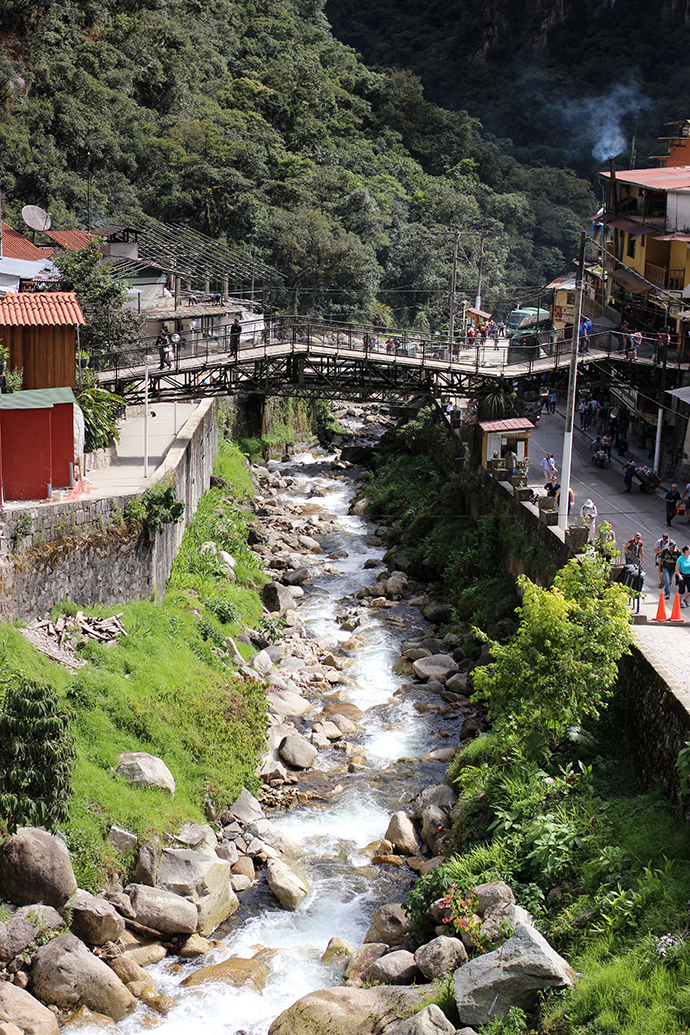
The closest access point to Machu Picchu is a village officially called Machupicchu Pueblo, but frequently referred to as Aguas Calientes due to its natural hot baths. We opted to spend the night in town after our Inca Trail hike, but the rest of our group took the evening train back to Ollantaytambo. This was something we planned when we first signed up for the hike, but it proved to be invaluable to me since I was still feeling like garbage. After spending the day exploring Machu Picchu (and three days sleeping in a tent) I've never been so grateful for a real bed, shower and toilet.


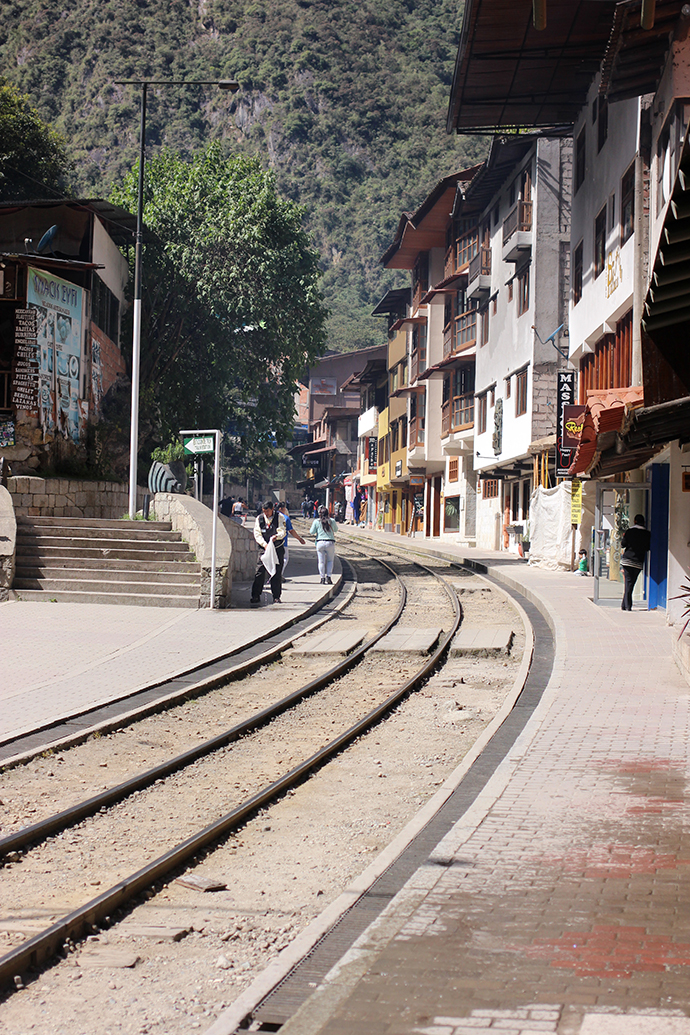
Aguas Calientes is a very tiny town and the lodging options are limited, but I highly recommend the Tierra Viva. It was close to the train station but not right on the tracks like a large portion of the town. The bed was enormous and the shower would've been impressive under normal circumstances but as it was the first one I took in four days it was downright transformative. They also had a very excellent (free!) breakfast, which was extremely helpful to me since my body had just decided that I was ready to start eating again after a few days of rather violently rejecting that idea.

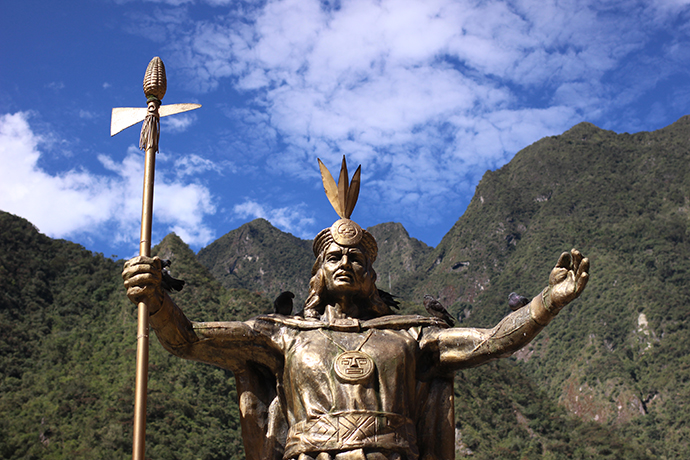
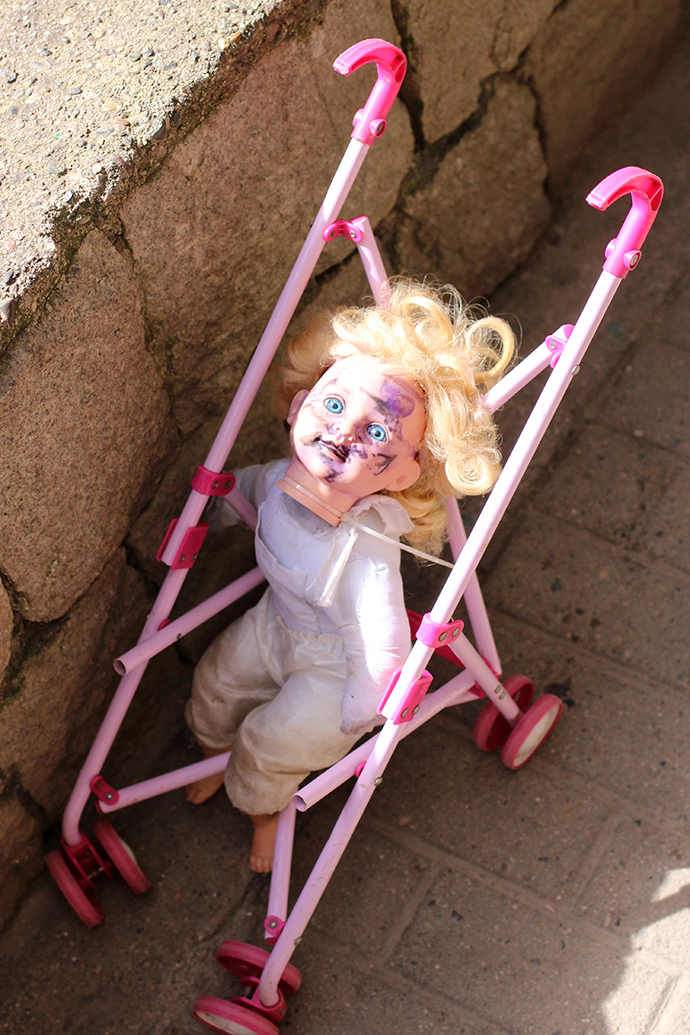
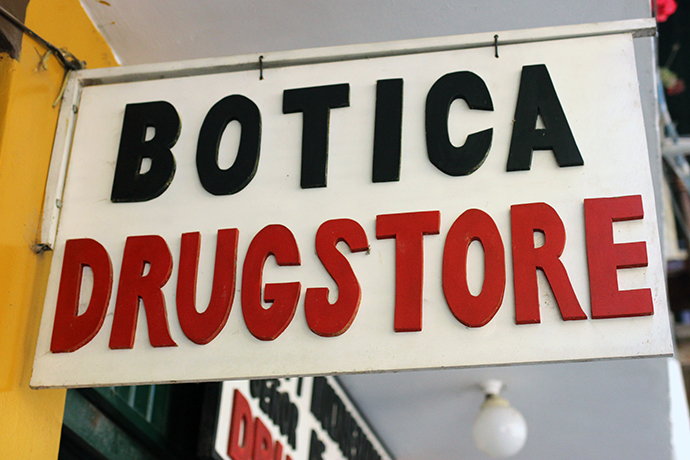
We didn't do anything at night (except watch the last half of the original Ghostbusters and the first part of a very bad Telenovela), but the next day we had some time to explore before we had to catch our train. Like I said, the town is tiny, and exists almost solely for tourists coming and going from Machu Picchu.
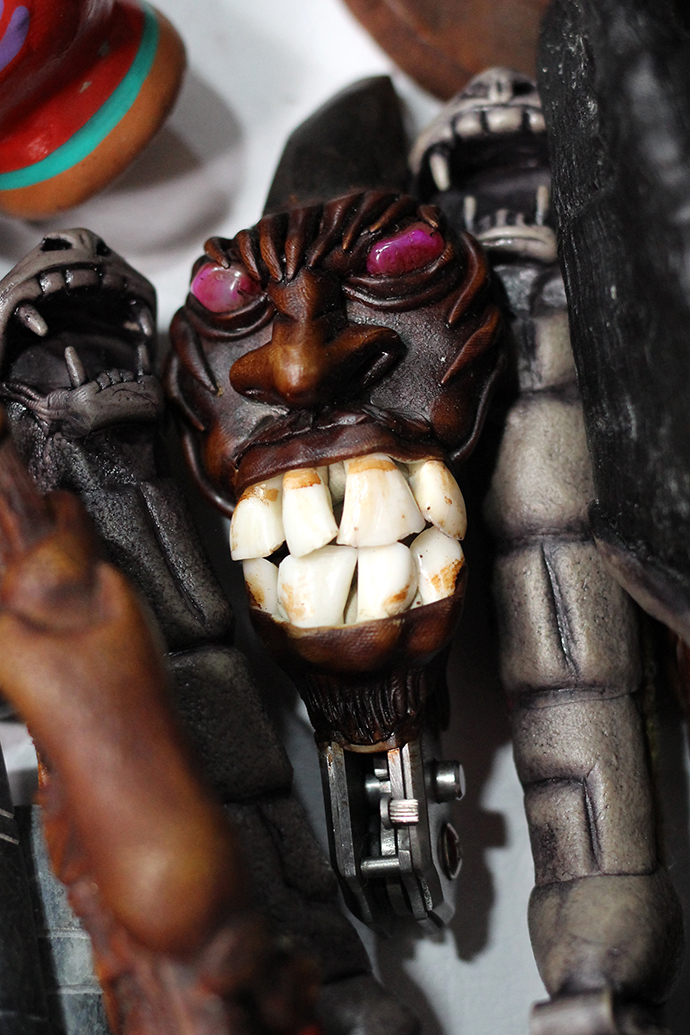
There is a large market next to the train station that is filled with every type of Peruvian souvenir you could ever want—blankets, scarves, jewelry, woven llamas, guinea pig hats, at least one pocket knife that appeared to be made with real human (?) teeth—and the merchants weren't nearly as aggressive as they were in Cusco, which was a relief. I try not to buy too many junky trinkets, but I couldn't resist buying a framed taxidermy bat. I didn't consider at the time that I might have a problem getting it through customs, but luckily I didn't because it fits seamlessly into my curiosity collection and is easily one of my favorite souvenirs ever.


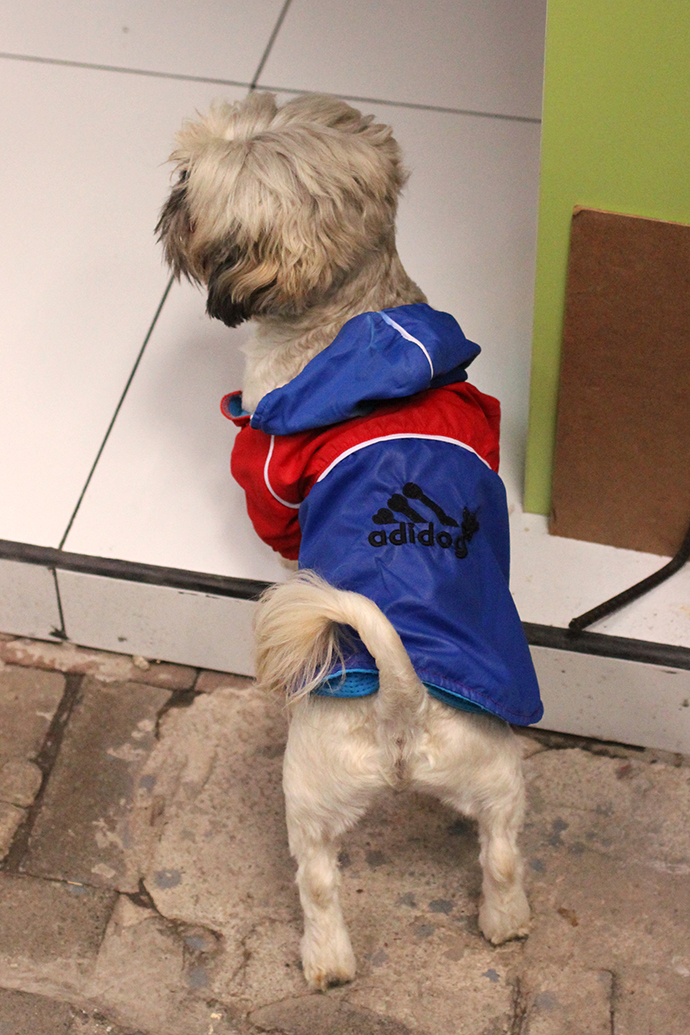

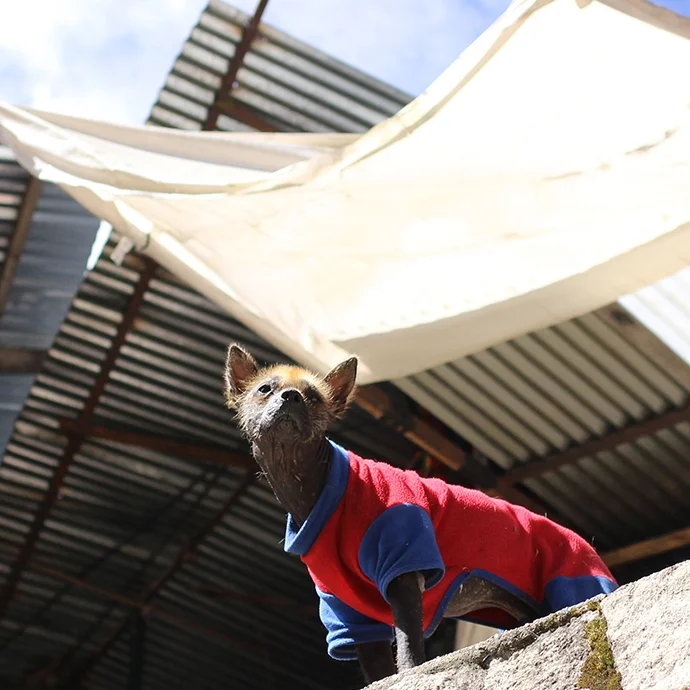
In what has quickly become a recurring theme in my South American posts, my favorite part of Aguas Calientes was the street dogs. We saw some particularly great ones, including a hairless dog in a fleece onesie, and I recently learned that these dogs are "as important as Machu Picchu" in Peru, although to me they were obviously even more so. My favorite, however, was definitely that little guy in the "Adidog" windbreaker—if I wasn't already smuggling home a bat I might have been tempted to bring him back, if only to make my dreams of owning an Instagram-famous dog finally come true.
Where we stayed:
Tierra Viva
Av. Hermanos Ayar N°401. Machu Picchu
(+51) 84-211201
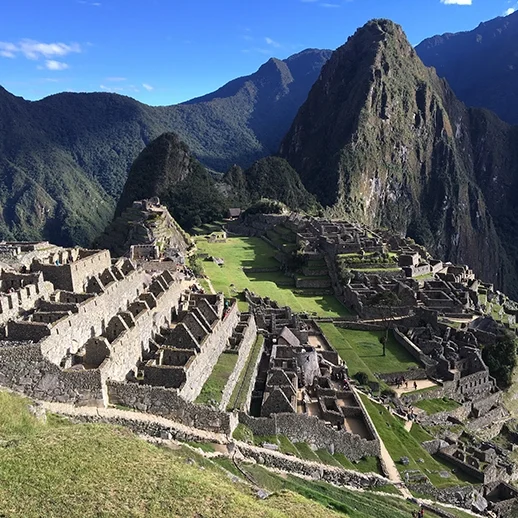
Machu Picchu
I don't wish to sound negative, but I didn't have high hopes for Machu Picchu. This was one reason why I agreed to the four-day hike of the Inca Trail—the idea of being dropped of at the gates of Machu Picchu by a bus wasn't enough to get me all the way to Peru. I had also been warned by my friend who first did the hike that Machu Picchu was kind of a tourist hell and I believed him. I tend to regard most places swarming with people as varying degrees of hell (I know, I love living in New York City—it doesn't make sense to me either), so I instantly knew that I'd probably feel similarly about one of the most popular tourist destinations in the world.
Machu Picchu is where our Inca Trail hike ended, and on the fourth day we woke at 3:45am (ugh) for a quick breakfast before we left the camp. We hiked for what seemed like ten minutes and then ... stopped for an hour to wait in line with hundreds of other bleary-eyed trekkers until the checkpoint opened at 5:30am. I'm not entirely convinced that this timing was necessary, especially after reading that the Sun Gate entrance is significant at the Solstice, not every single morning at sunrise. Regardless, after a relatively easy hike of less than two hours (punctuated by at least one incline so steep our guide held my hiking poles and instructed me to "climb with my hands like a baby"), we arrived at the Sun Gate, once the main entrance to the ancient city.


One thing we really hit the jackpot on this trip was the weather. All four days were pretty much perfect, and it only rained once—and stopped almost as soon as we put on our rain jackets. It was clear and sunny on the fourth day and the view of Machu Picchu was perfect. I had actually been hoping for at least a bit of fog since I'm always wishing for things to feel spookier, but after hiking for two days without food I was just grateful to have reached the end.
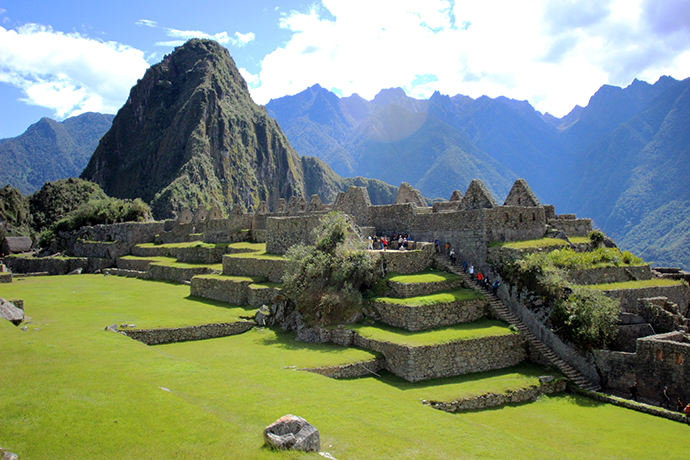
Well, the Sun Gate wasn't technically the end, but at least the hike continued downhill until we were in Machu Picchu proper. We saw several people hiking up the other way and I was so grateful to not be them. I don't want to tell you what to do with your life, but if you're already at Machu Picchu I don't think you need to hike up to the Sun Gate—it was cool to start there, but not cool enough to make a special (uphill) trip.


We stopped to take some group photos at the "postcard viewpoint" and then had some downtime until our tour started. The bathrooms are located outside of the main gates and they cost one sole, but at least they had toilet paper and proper toilet seats—a luxury in my life by this point in our trip. You can also stamp your passport, which isn't official, but is fun (I never knew this was a thing), visit the snack bar or browse the world's smallest gift shop (nary a squished penny or floaty pen in sight).


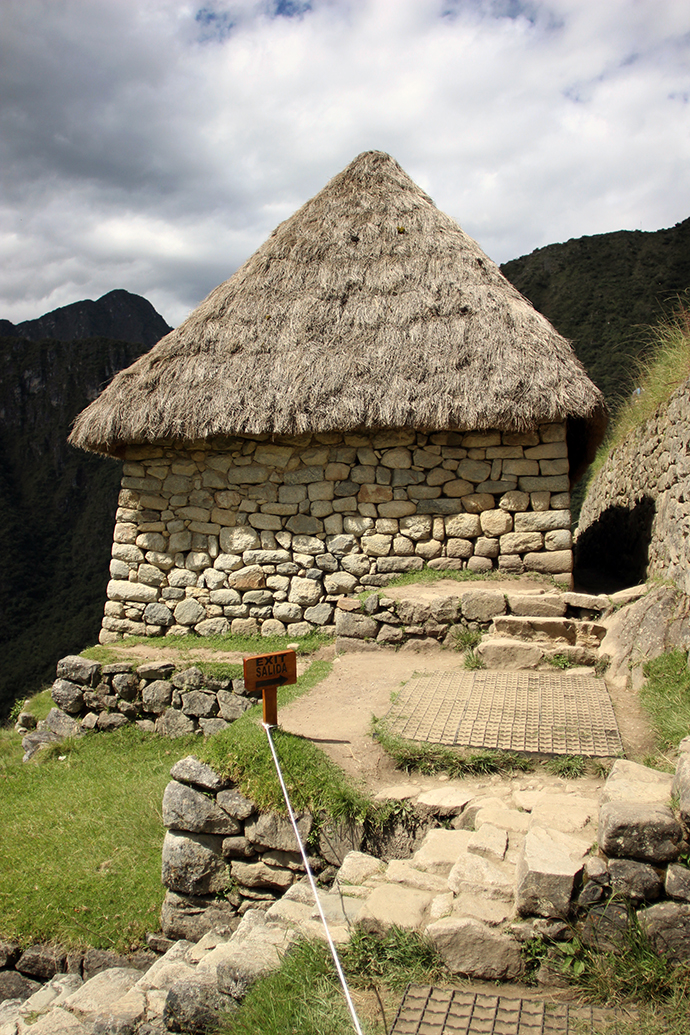
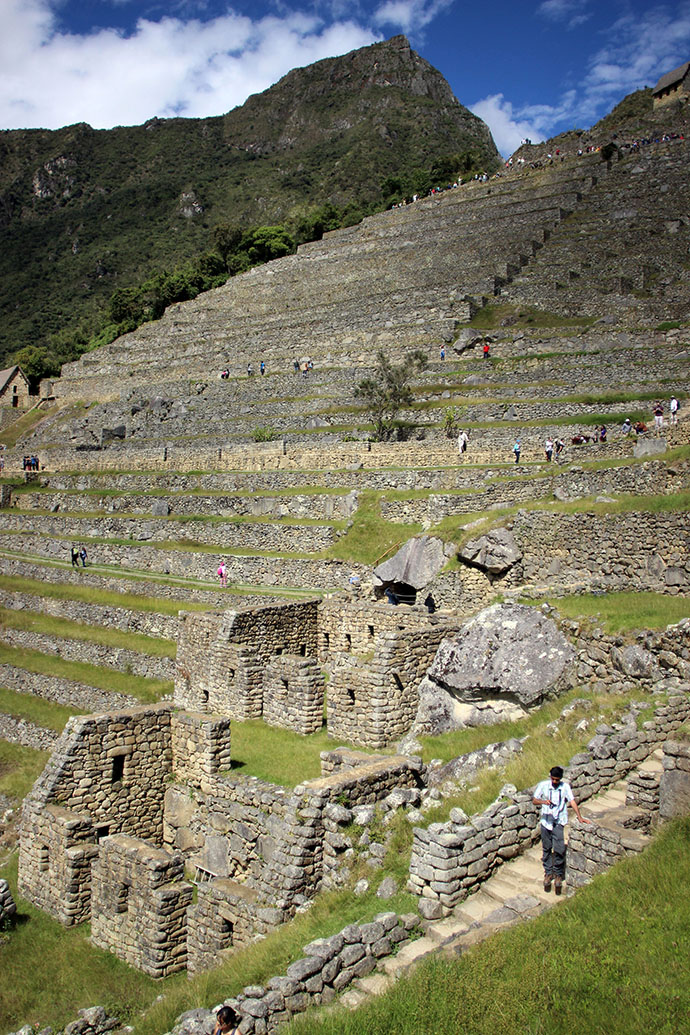
There's a lot of conflicting and just plain wrong information circulating about Machu Picchu, and I'm by no means an expert but I caution you to do your research and not believe everything you overhear. Regardless of its intended purpose, there's no denying that Machu Picchu is an impressive and intriguing ruin. The Incas built the city around 1450 and a century later it was abandoned. The Spanish never found it, but it wasn't ever really lost—at the time Hiram Bingham III "discovered" it (aided by locals), there were several families living and farming on the land.
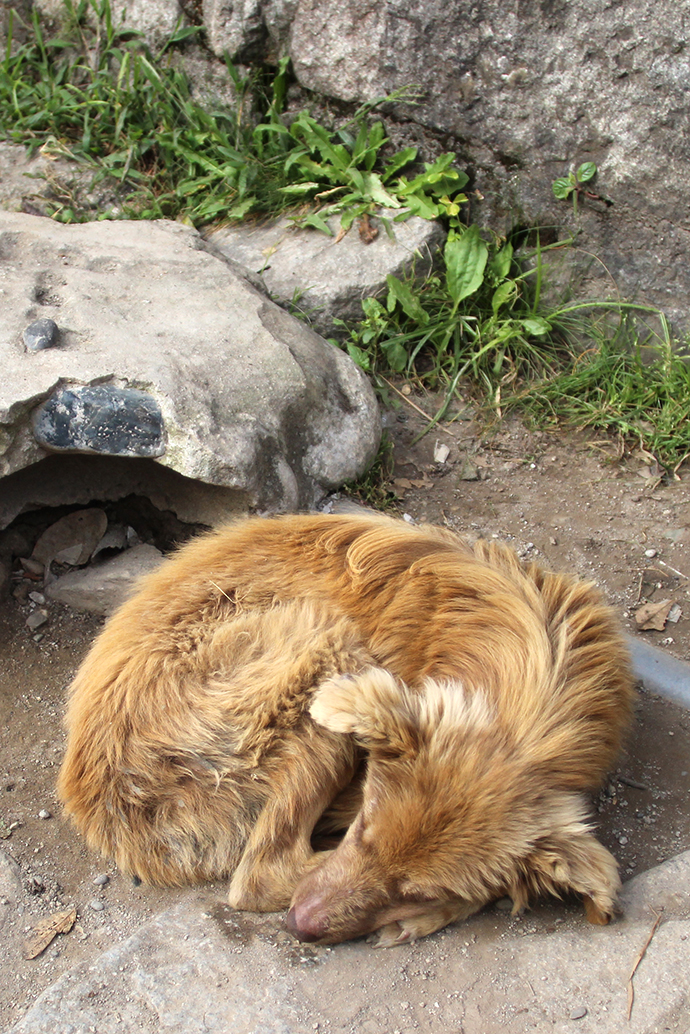
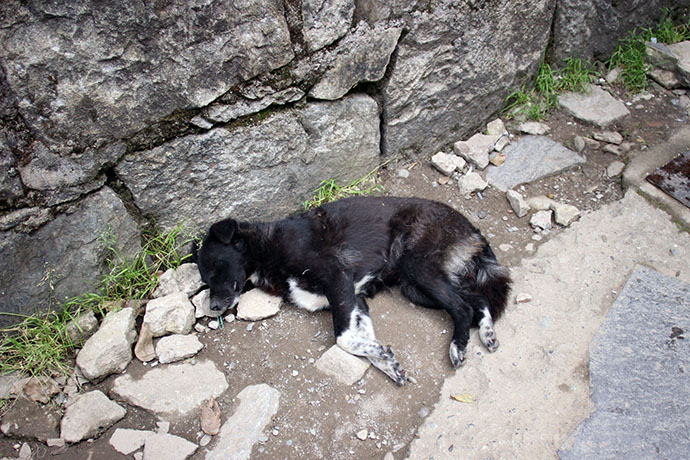
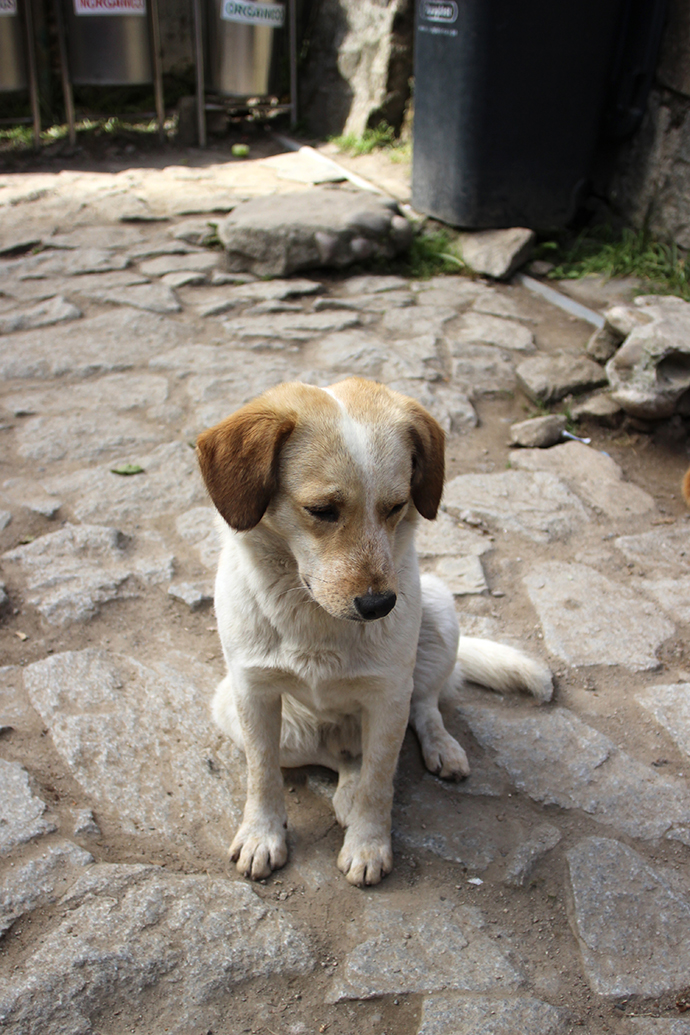
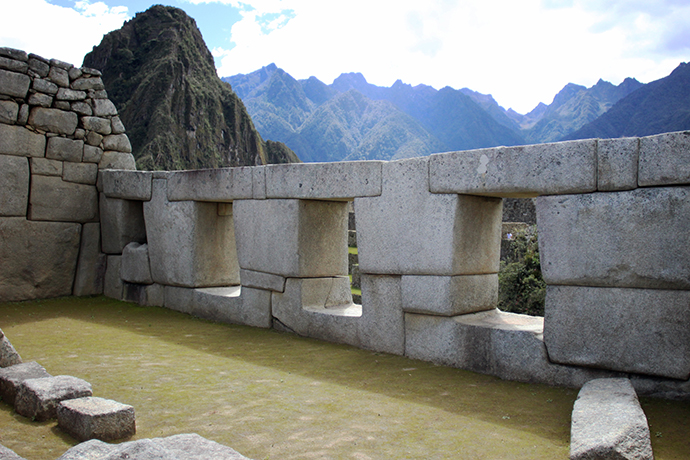
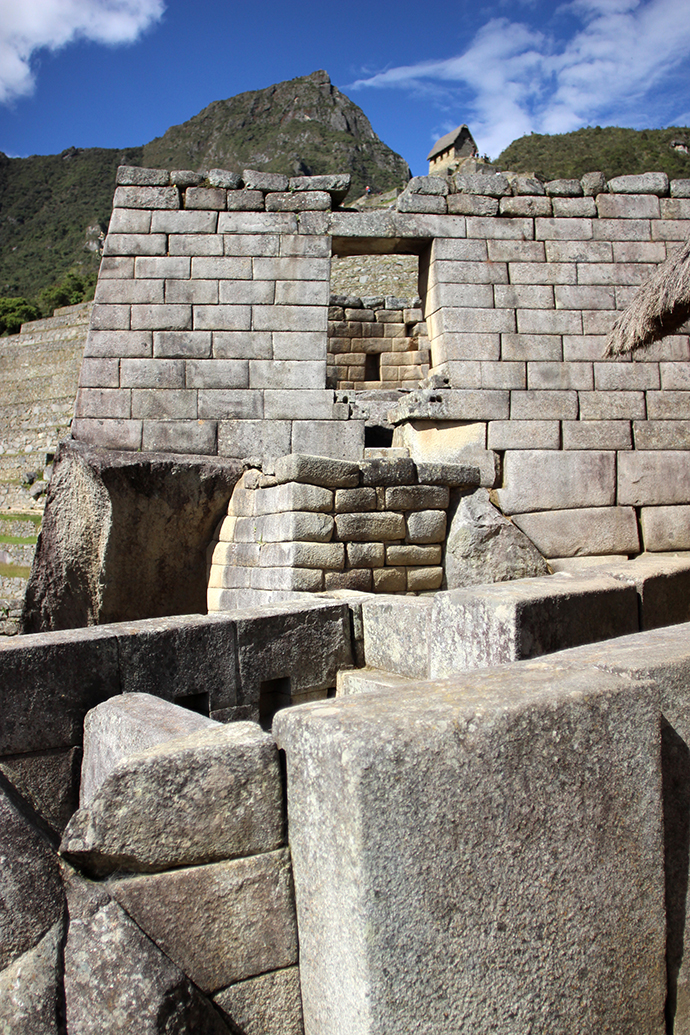
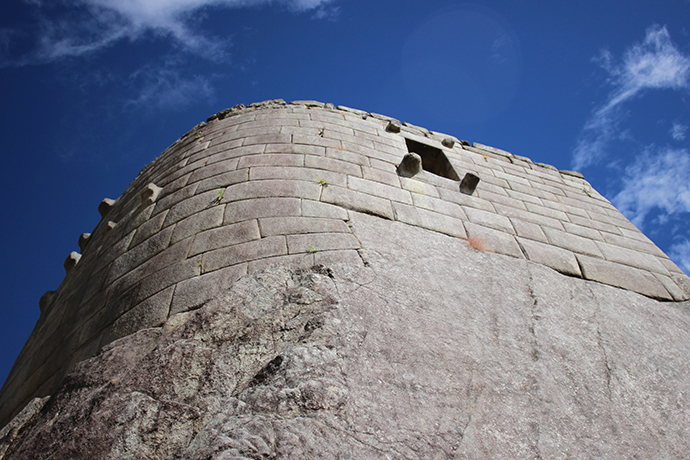
I was still not feeling anywhere close to 100% while we were there, and I spent most of our visit resting in the shade with other elderly visitors. I was able to eventually walk most of it, and we hit all of the highlights—the temples, the Room of the Three Windows, the sacred rock. We had opted to spend the night in Aguas Calientes instead of immediately returning to Cusco and had toyed with the idea of returning to Machu Picchu the next day. We had also discussed hiking Huayna Picchu but the tickets were already sold out when I looked a few weeks before our trip. There's no way we could've known I'd be sick, but I'm still grateful that we did neither. Even if I had been feeling great, a few hours at Machu Picchu was more than enough.

The Inca Trail

Our main catalyst in planning our recent South American trip was a four-day hike of the Inca Trail. I've never been especially interested in Peru or the Incas and I only ever had a vague knowledge of Machu Picchu, but it seemed like almost everyone David and I know had made the trip fairly recently. Most people travel to Machu Picchu just for the day—there's a bus that drops you right at the entrance—but we decided to basically copy the itinerary of a friend of mine who had done the proper hike.
Inca Trail permits are very limited and sell out quickly, so we signed up with Peru Treks back in December for our June hike. Our four-day, 26-mile hike began 51 miles from Cusco on the Urubamba River, routed us through the Andes and ended at the Sun Gate entrance to Machu Picchu. Only 500 people are allowed on the trail per day—hikers and porters combined. You have to go with an official guide, and there are several checkpoints where your passport and ticket will be checked. I highly recommend Peru Treks—our two guides were kind and informative and the porters were complete champs. They carry tents and all of the camping supplies for the group—food, chairs, dinnerware, etc. You also have the option to hire an extra half porter to carry 6kg (approx 13lbs) of stuff that you don't need during the day such as sleeping bags, ground pads and extra clothes (do this!).
DAY ONE: Easy Day
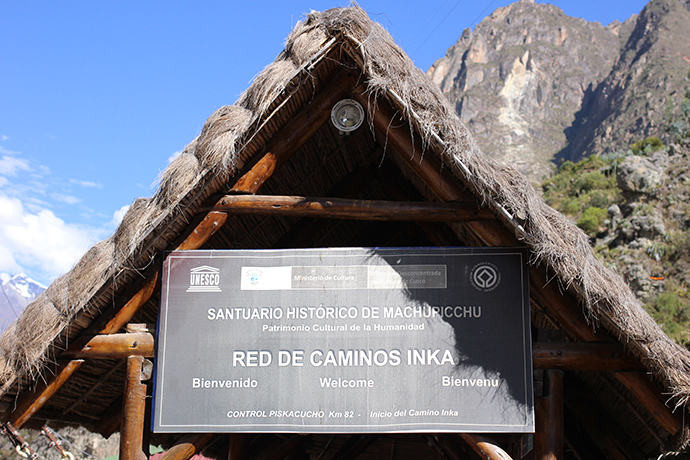


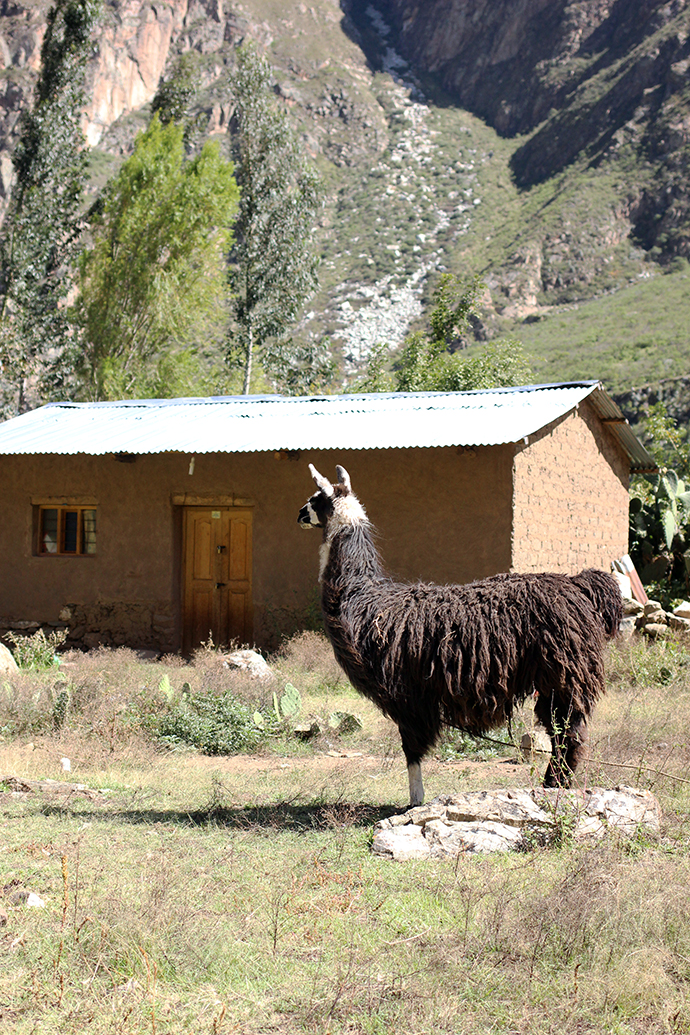
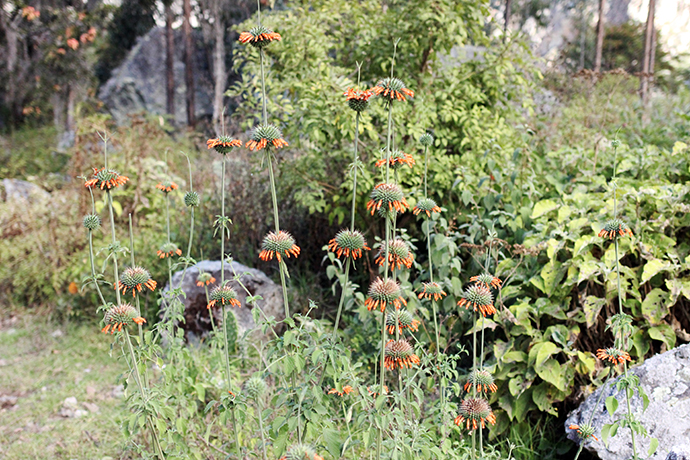
The first day was labeled the "easy" day, and for the most part that was true. The trek company picked us up from our Cusco hotel, we stopped for breakfast and last-minute supplies and then headed to the checkpoint at the entrance. Peru Treks groups number 16 at the most and ours included people from all over the world—England, Australia, New Zealand, Greece, Norway, Sweden, Seattle and San Francisco. We stopped many times during the 7.5 miles—to introduce ourselves, learn about the local plants, check out some ruins—and the terrain wasn't too challenging (however, I quickly came to distrust the term "Inca Flat").

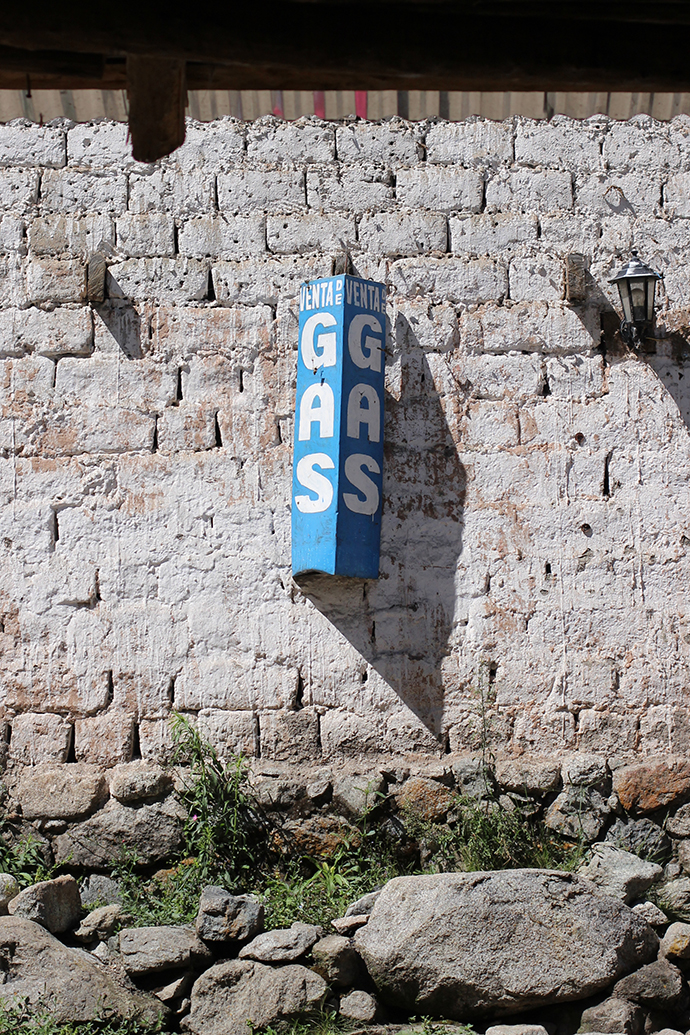
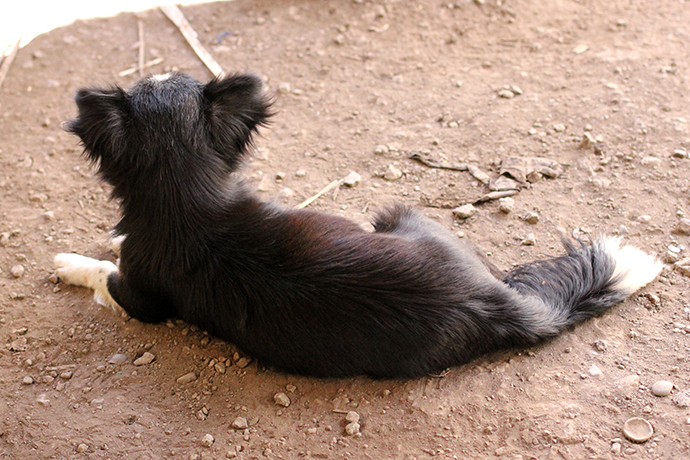
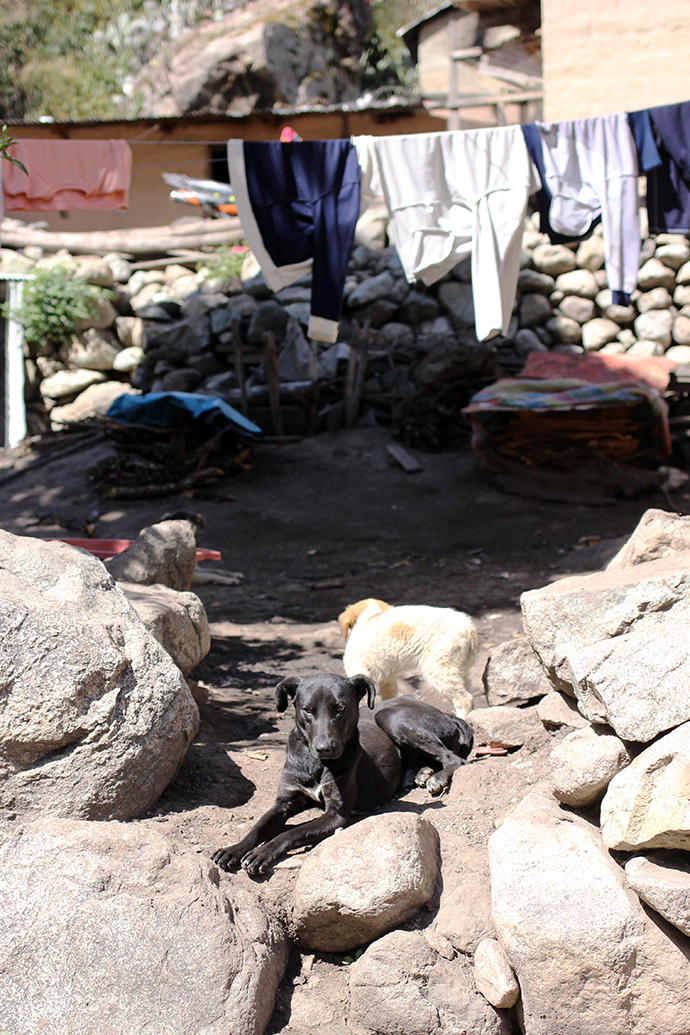

My initial impression of the Inca Trail was that it was much more populated that I expected. I knew we'd be hiking in a group, but I didn't expect so much activity on the trail itself. There are approximately 400 people (and dogs!) living in small villages along the beginning of the trail. Horses, donkeys, llamas and mules are allowed, however pack animals are no longer allowed on the latter portion of the trail because their hooves do damage. If you're using a hiking pole it must have a rubber cap to cover the metal tip.
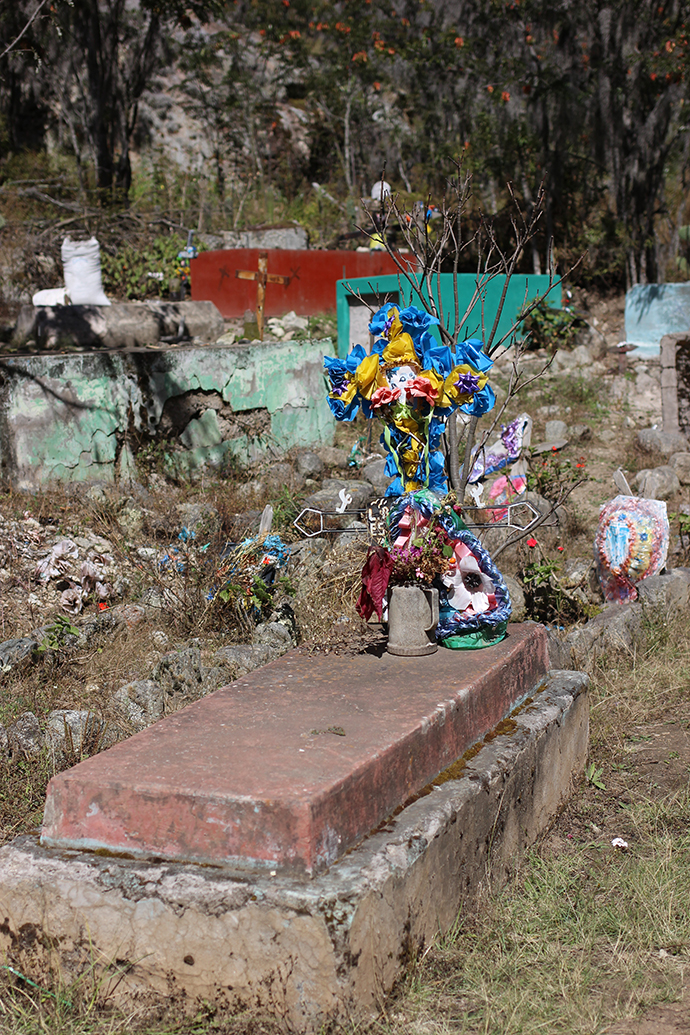
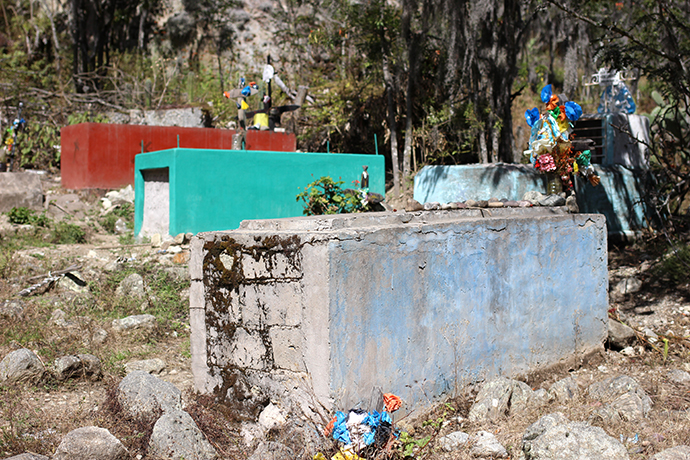

Dodging piles of llama droppings every few feet wasn't exactly picturesque, but I perked up when we passed a small cemetery. I had recently been lamenting my failure to research Cusco cemeteries before we left, so seeing one on the start of the trail was a treat. I have no idea why they're not promoting it as a trail feature—I'll happily go almost anywhere if I know there's a cemetery involved.
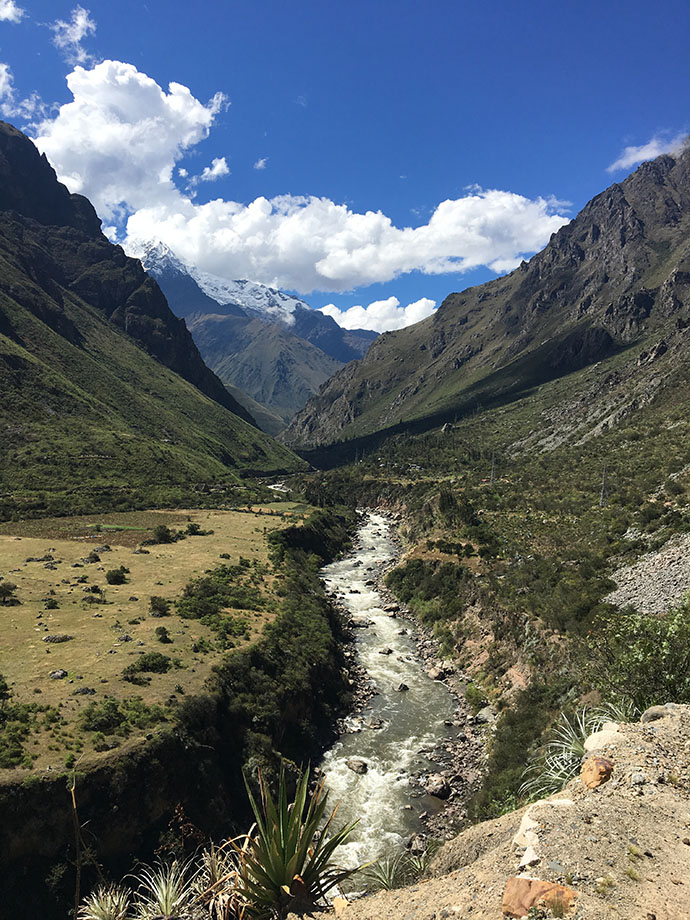
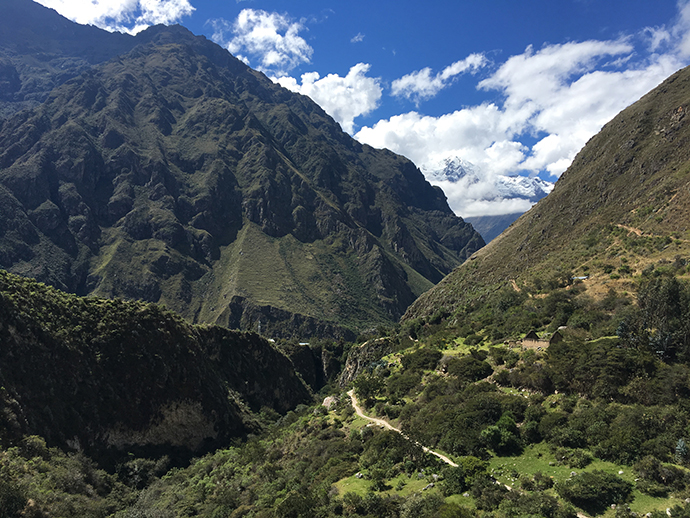
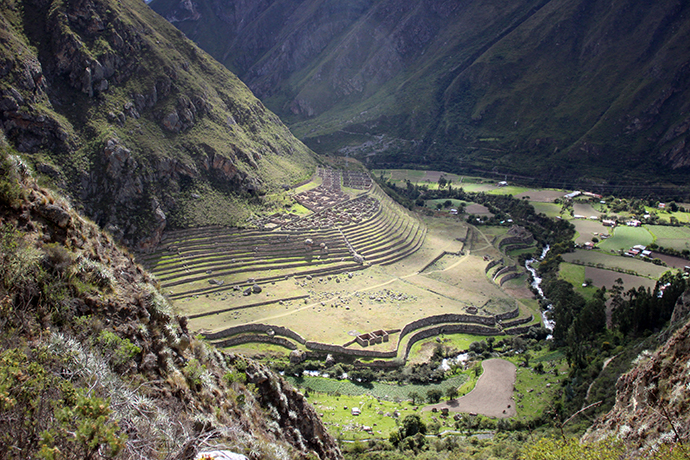
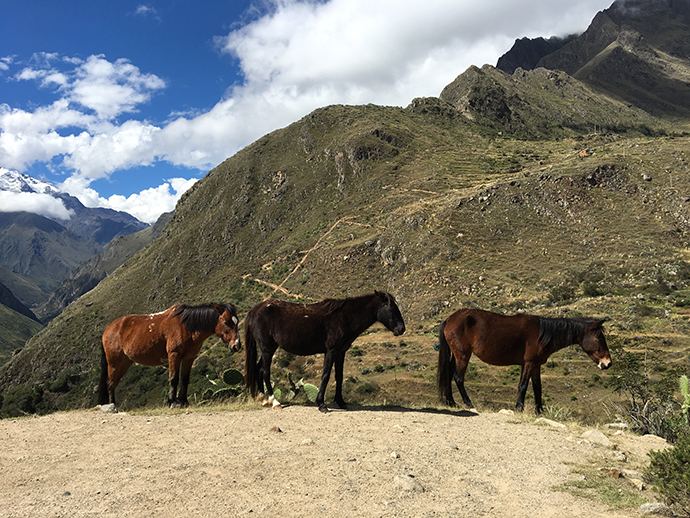

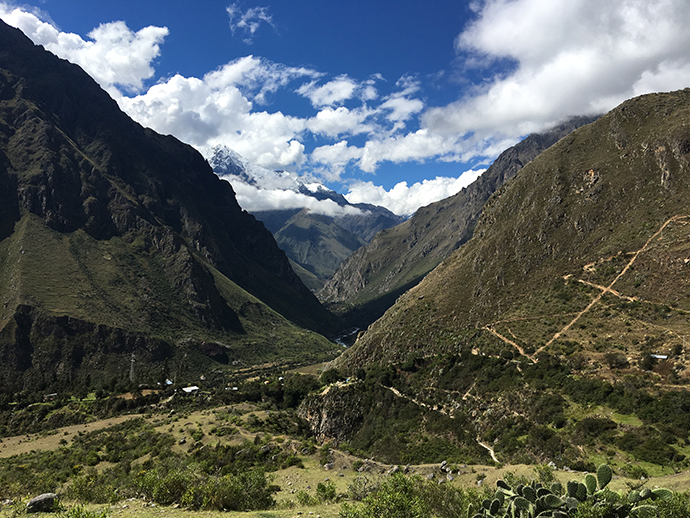
I definitely took the most photos on the first day, a result of excitement and the relative ease of the hike. The views were incredible, and although I've included loads of photos, they just can't do the scenery justice. The one thing photos do terribly is capture scale—I've lived most of my life solidly at sea-level, and the Andes are just so massive.
DAY TWO: Challenge Day

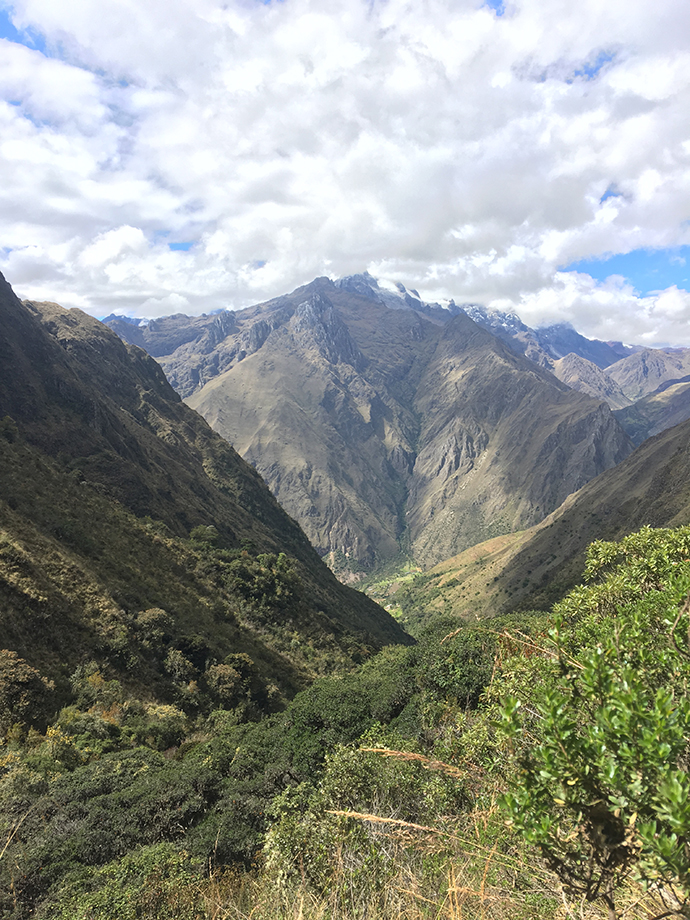
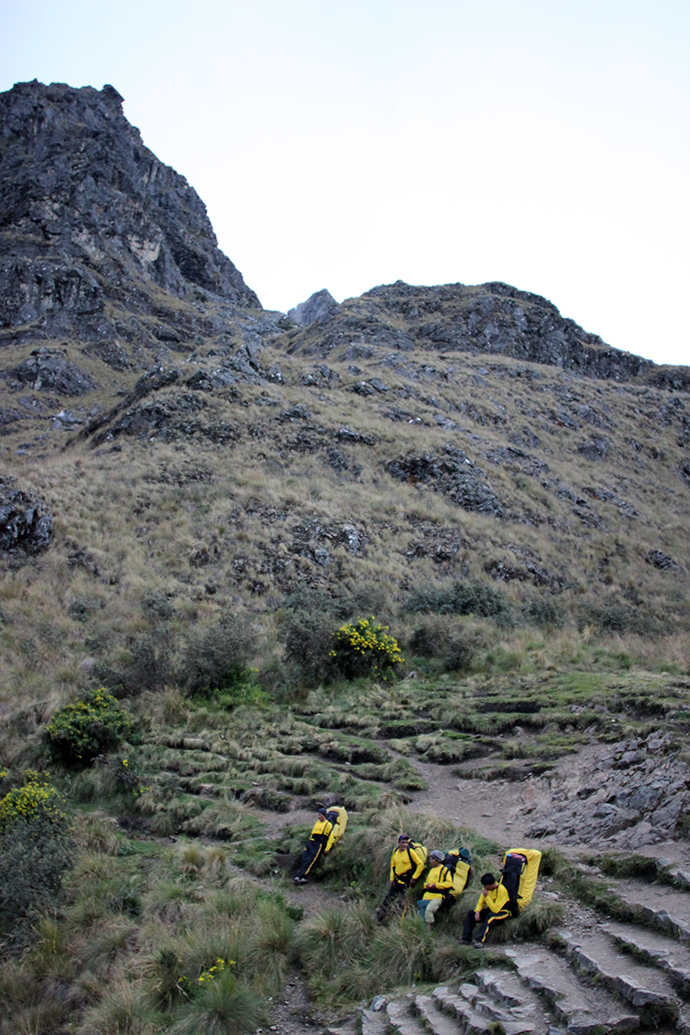

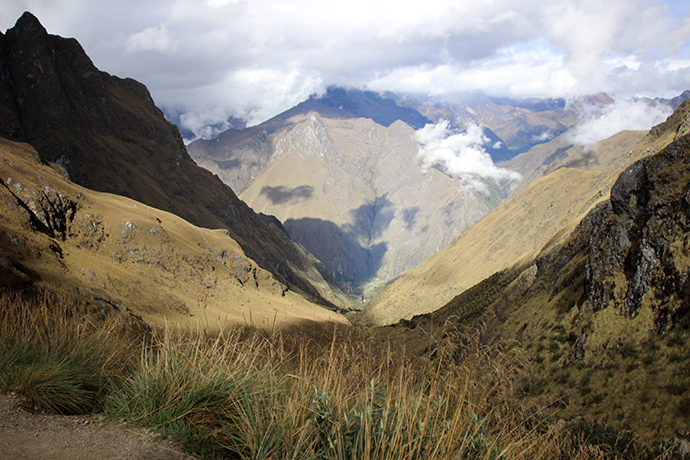
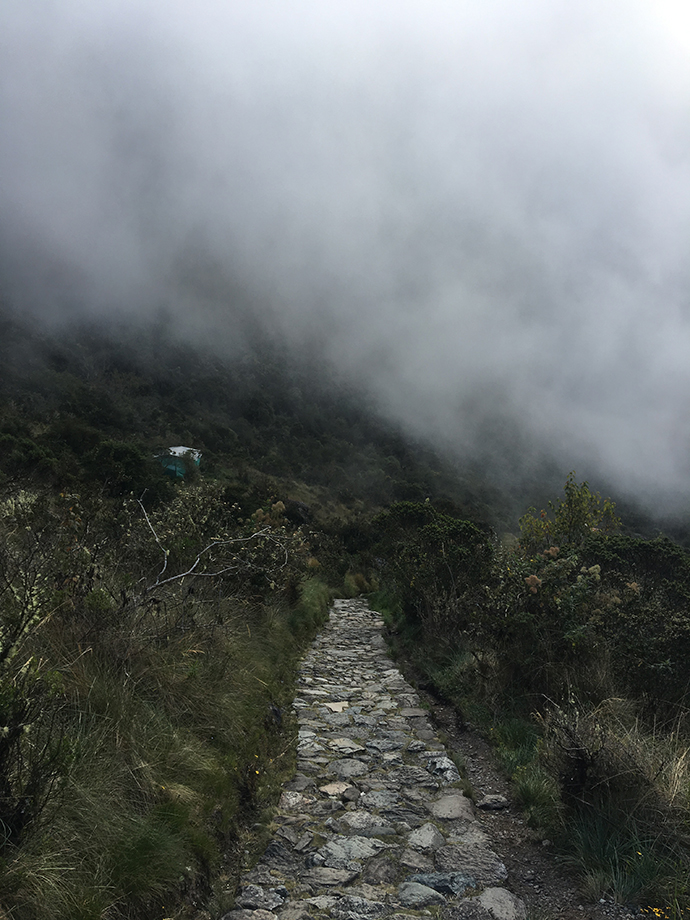

I hardly took any photos on day two, because the word "challenge" doesn't even begin to describe this incredibly difficult portion of the hike. Basically, day two is another 7.5 miles but almost entirely uphill. Or rather, upmountain. We climbed (and climbed, and climbed) approximately one billion stone steps to an elevation of 13,776 feet. If that seems high to you, it's because it is. I think I'm in pretty good physical condition—I run frequently, I walk constantly—but I still get grumpy climbing the four flights of stairs to my apartment every night.
It was hard, and horrible, but we made it to the top without incident and weren't even the last of our group to finish. Like most terrible things in life, as soon as it was over it didn't seem nearly as bad and we recovered quickly. David didn't even need to dangle a Pringles can in front of me like we joked, but they were waiting for me as a reward when we eventually got to camp. Like cemeteries, there is almost nothing I won't do for a snack.
DAY THREE: Unforgettable
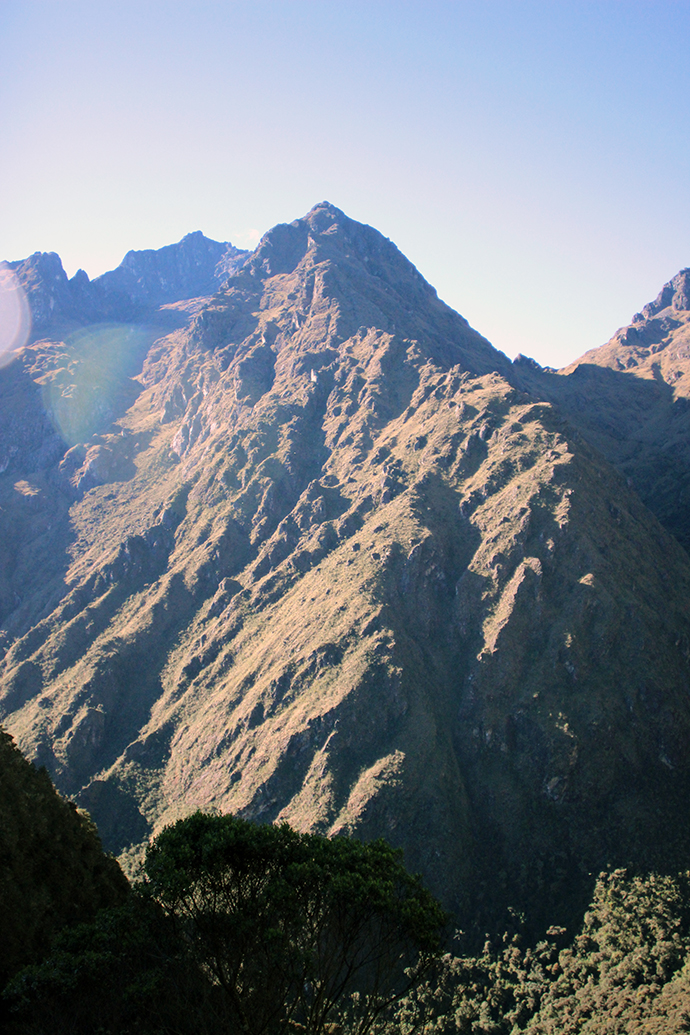


"Unforgettable" is the word chosen by our trek company to describe day three, but it has an entirely different meaning to me now since I spent all night of day two violently ill, making frequent trips to the (very primitive) bathrooms. I'm still not sure what I had/have and I'll spare you the gory details, but I woke up on day three feeling sicker than I ever have in my life. I had a raging fever, aches and chills on top of the ongoing intestinal disturbances.
After consulting with our wonderfully kind guide, Naomi—as I took loads of pills washed down with magic Inca tea—I tried to pull myself together for the hike (the longest day, nearly ten miles). I found out later that I had one other option—to be carried by a porter. I was feeling like garbage, but being carried by another human being would have made me feel even worse, so I just kept walking. I didn't eat all day, I kept taking pills (and frequent off-trail bathroom stops) and I've never been so grateful to crawl into a sleeping bag and fall asleep before dinner (which I didn't eat).
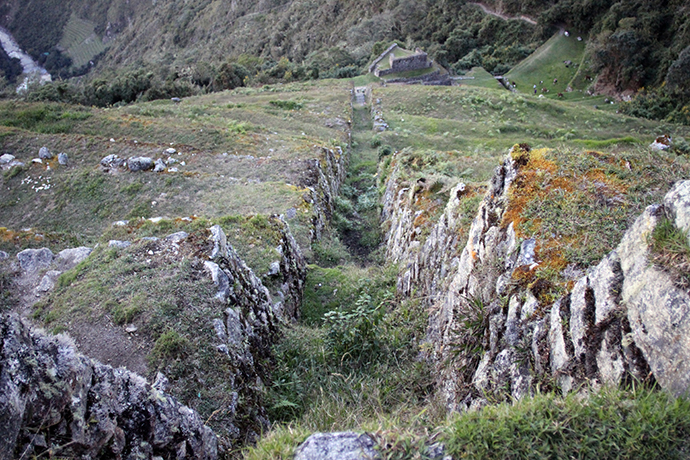
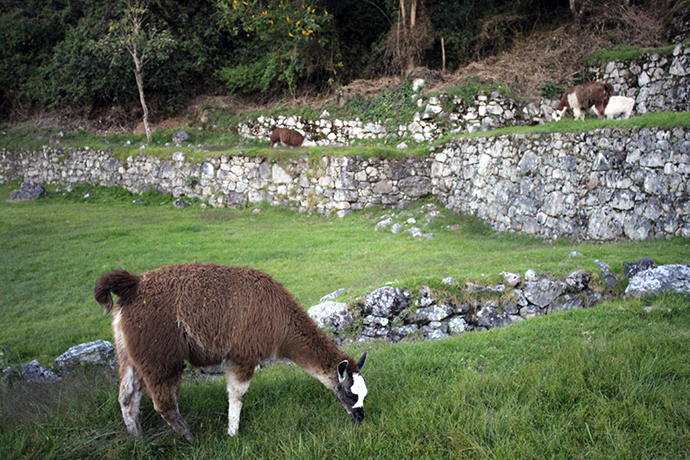
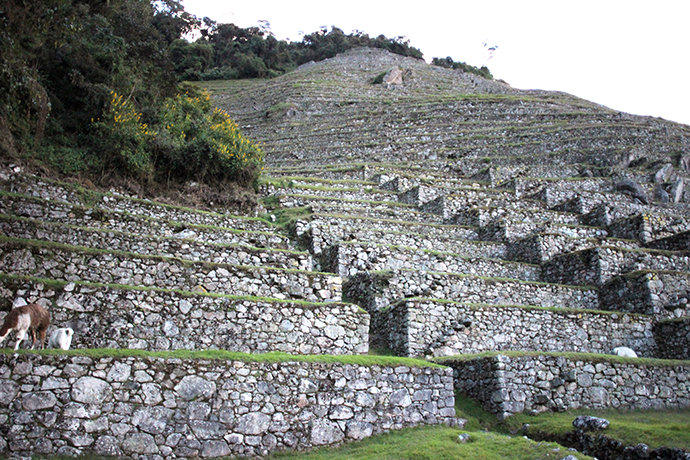
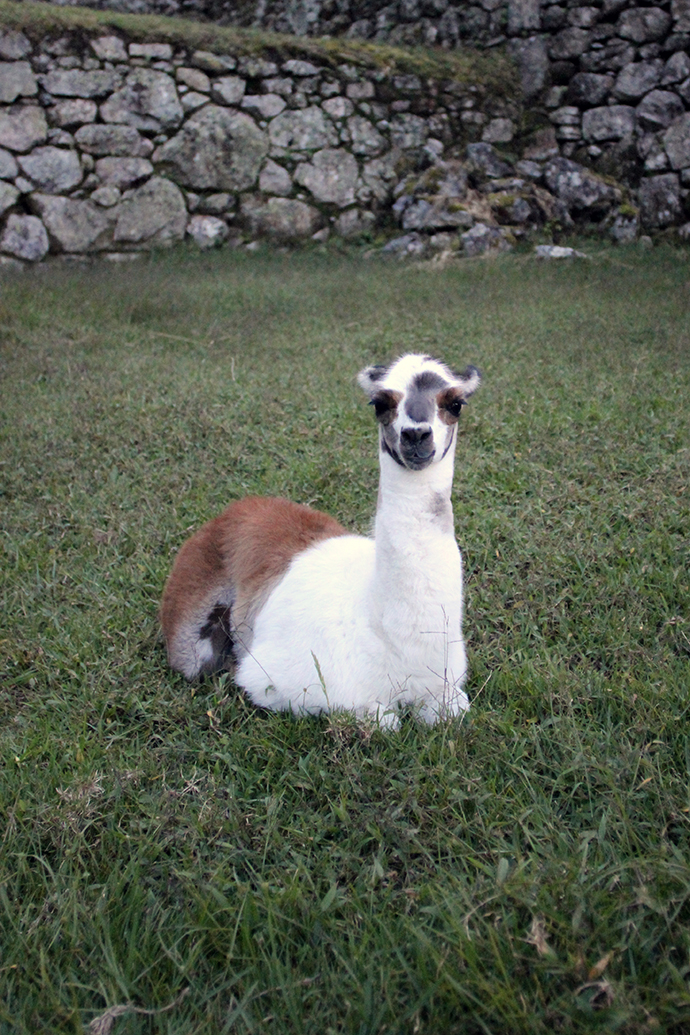
Despite the fact that I basically had no other choice, I'm glad that I rallied because the third day was my favorite of the four. It was scenic in so many different ways—cloud forests and jungle-like climates, sweeping views, ruins and one particularly cute baby llama. Unfortunately I wasn't super happy with any of my photos from our trek, and despite hiking nearly the entire trail with my "real" camera jangling around my neck, I actually think most of my iPhone photos turned out better.
I was still sick into day four, but we only had a few miles to go (after waking at 3:45 am) before we ended our hike at Machu Picchu. I'm not terribly happy with the feverish photos I took there either, but it's deserving of its own post, nonetheless.
I worried about so many things in the lead up to this trip—losing my passport, not packing the right clothes, being able to hear someone snoring in a neighboring tent—but it never crossed my mind that I would get sick during the actual hike. I'm not sure if it was the flu or a parasite or some other sinister combination—and I'm still dealing with its lingering effects—but I don't regret taking the leap outside of my comfort zone. I survived without Internet or cell service for four days, I pushed my body and it didn't give up and I now appreciate toilet seats and toilet paper more than I ever thought I would.
Our Trek Company: Peru Treks (now booking for 2018)

Maras Salt Ponds
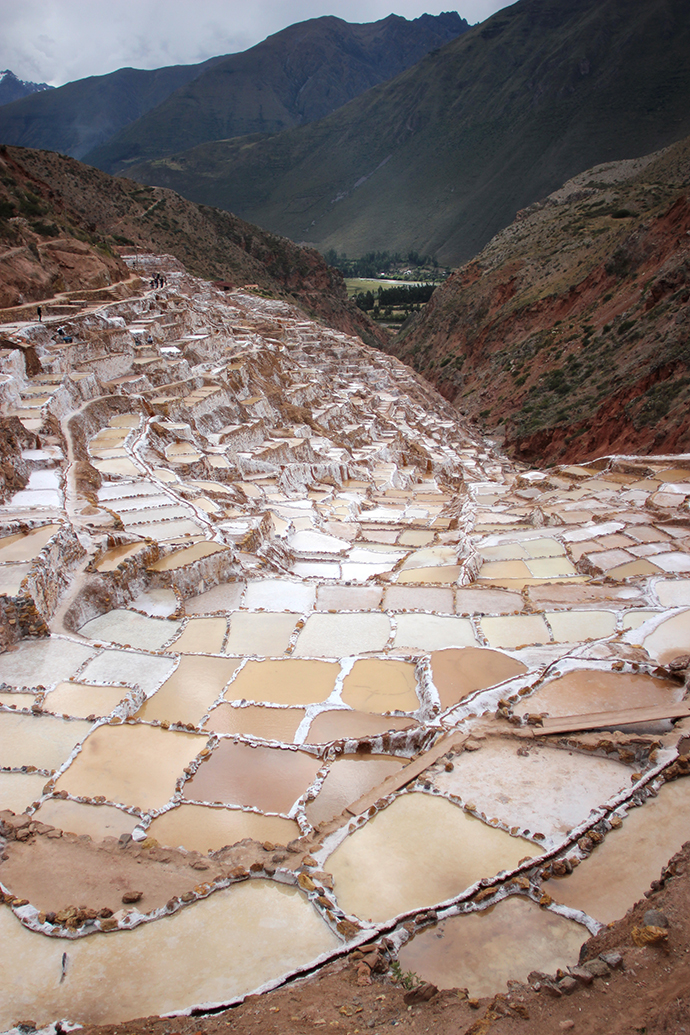
The Maras salt ponds might not be an official "wonder of the world" like Machu Picchu, but having seen both I can personally say that the salt ponds left a bigger impression on me. Maras is a town located in the Sacred Valley, about 25 miles north of Cusco in Peru and it's famous for its salt evaporation ponds, which have been in use since before the Inca Empire.
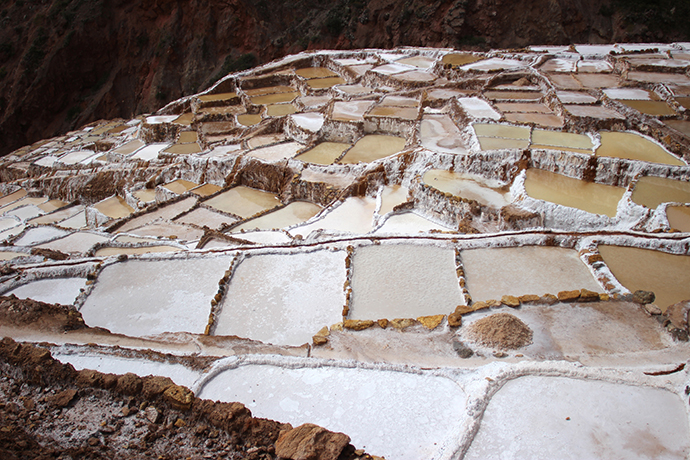


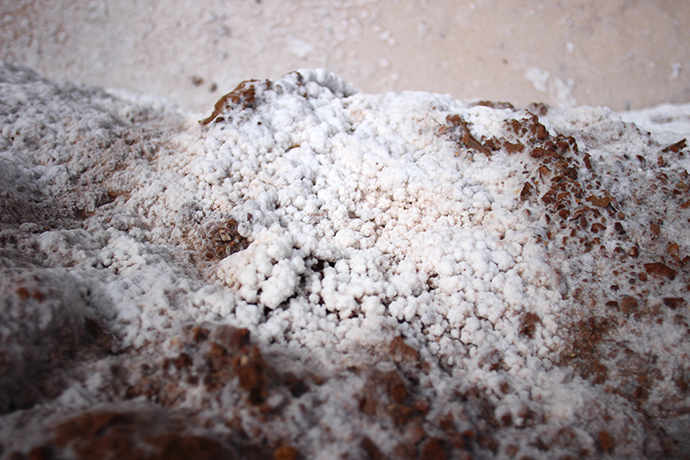
The ponds are fed by a stream of salty water that flows through a series of channels into thousands of individual ponds set on several terraces. The scale of this place is incredible, and of course impossible to capture in photos. The ponds are set in a valley and there are so many of them they just seem endless.


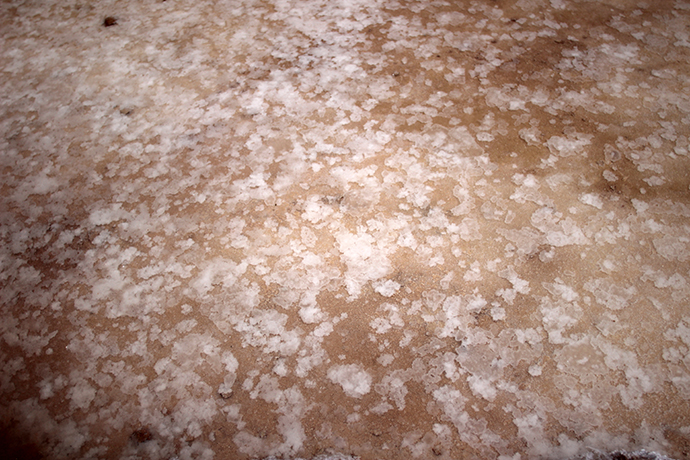
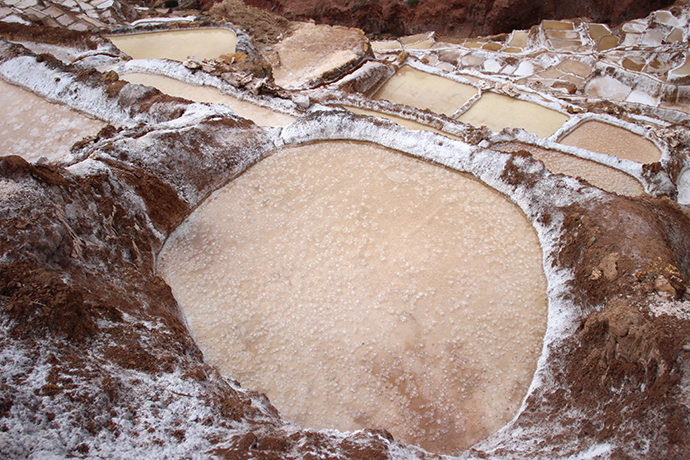

The ponds function as a collective and everyone in the town has the opportunity to own and work a number of ponds. As the water evaporates, the remaining salt is scraped off in layers. The first layer is pure and fine, the second is pink and rocky and the third has traces of soil and minerals and is used mostly for medicinal purposes.
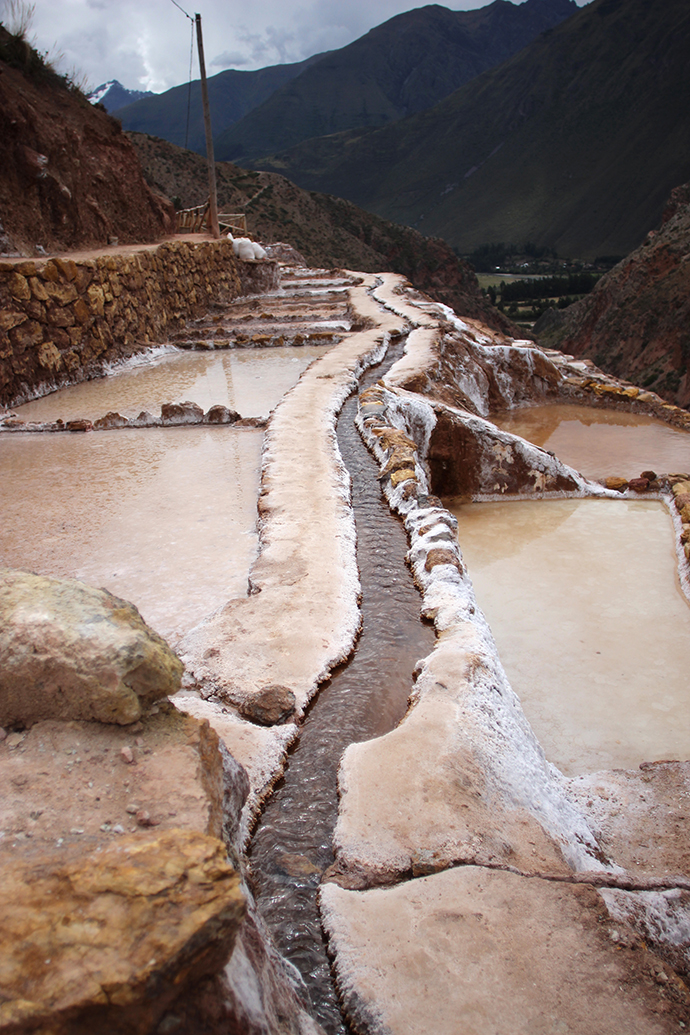

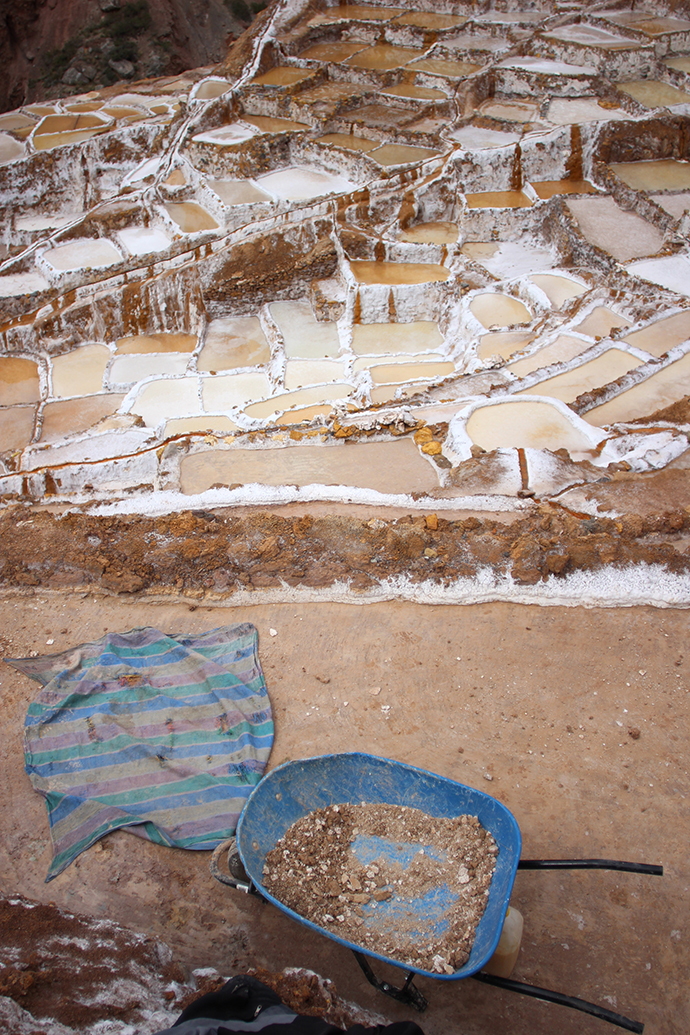
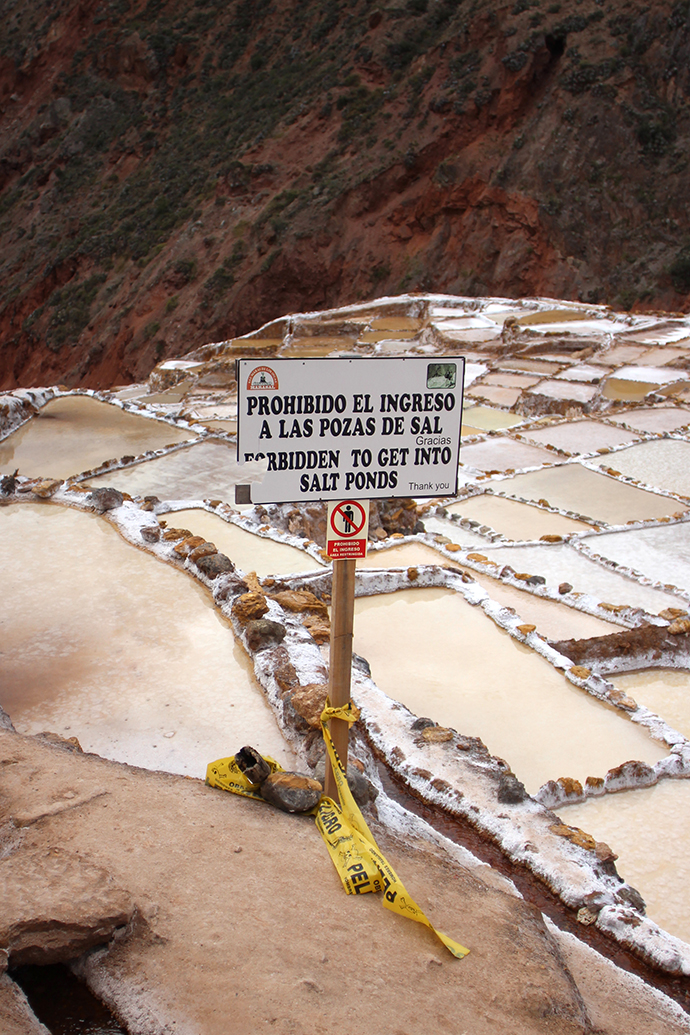
We took a half day tour booked through our hotel of the Sacred Valley that included Maras, but I think it's relatively easy to get to on your own. I'm not usually a group tour kind of person, but having an English-speaking guide was nice. I first saw Maras on Instagram—not surprising because it's infinitely photogenic—but it's definitely one of those places that has to been seen in real life to even begin to be believed.
Cusco, Peru

I knew very little about South America before our recent 14-day trip to Peru and Colombia. I had read two books to prepare for our four-day Inca Trail hike, but I basically went into the trip without expectation or much planning (by my standards, anyway). Our trek company required us to arrive in Cusco, Peru at least two nights before the start of our hike, to acclimate to the high altitude.
Cusco, once the capital of the Inca empire, is 11,152 feet above sea level and altitude sickness is no joke. Luckily we didn't get hit too hard—just a bad headache and some shortness of breath on the first day—but we had allocated three full days in Cusco just to be sure.



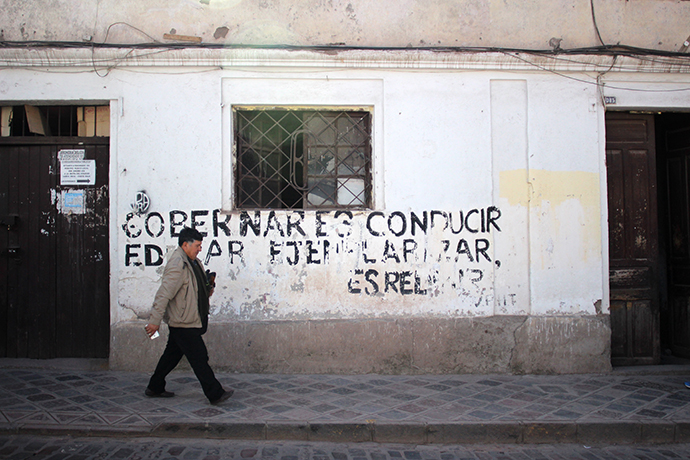


I am by no means an international traveler and if you don't count Canada, I'd only been out of the country once before this trip (to Italy in 2014). I'm not cool or adventurous enough to report that we did anything outside of the very basic tourist fare, but in a country where we couldn't drink the water or speak the language, that was exciting enough.
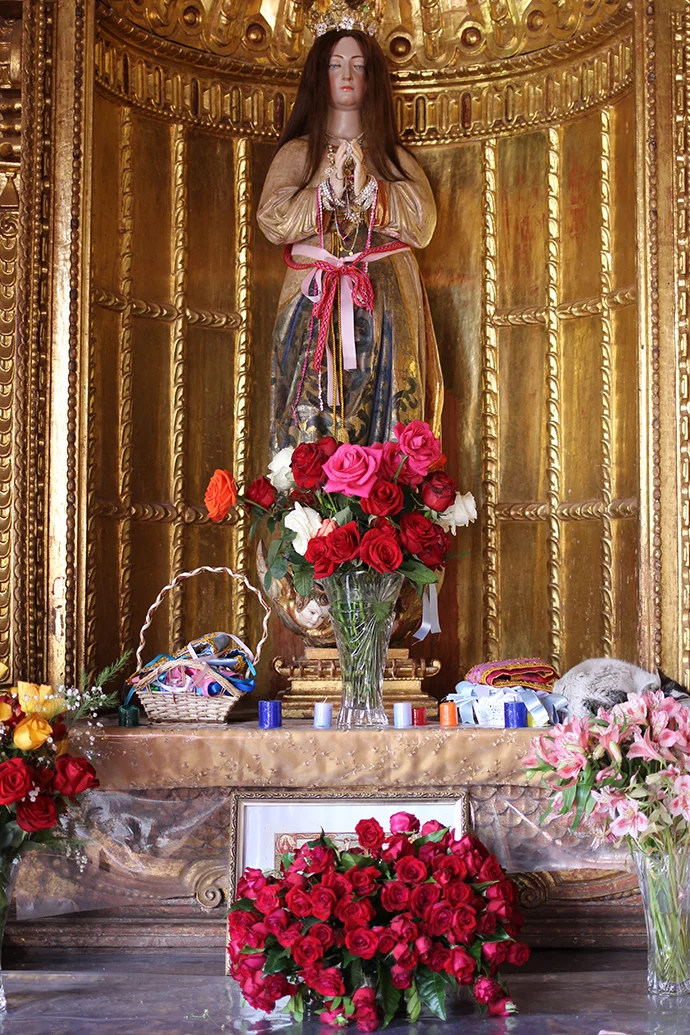


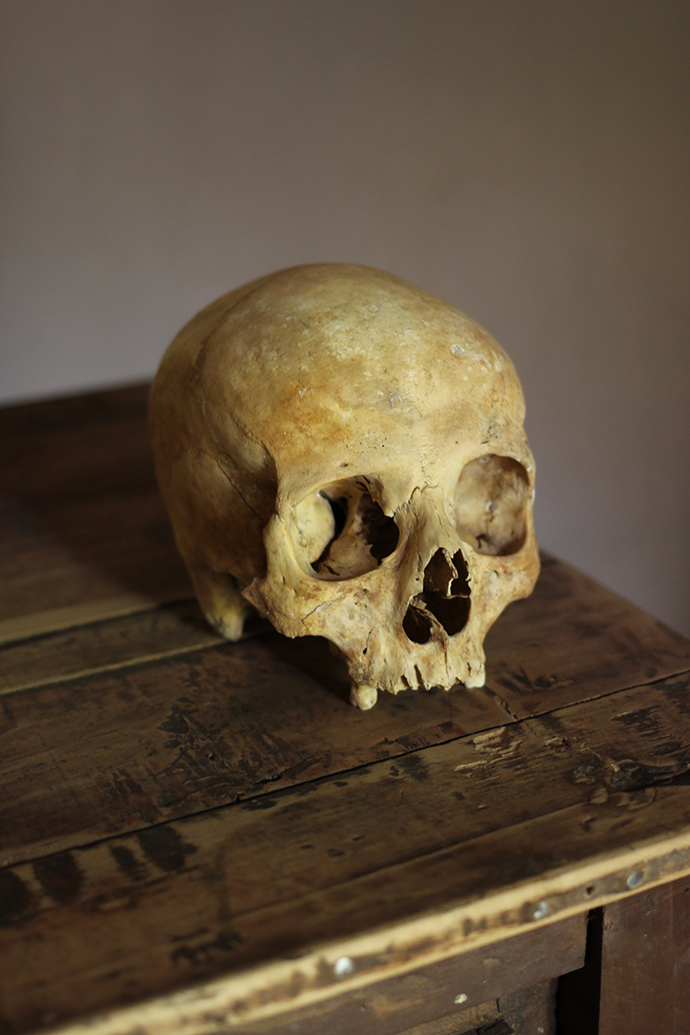

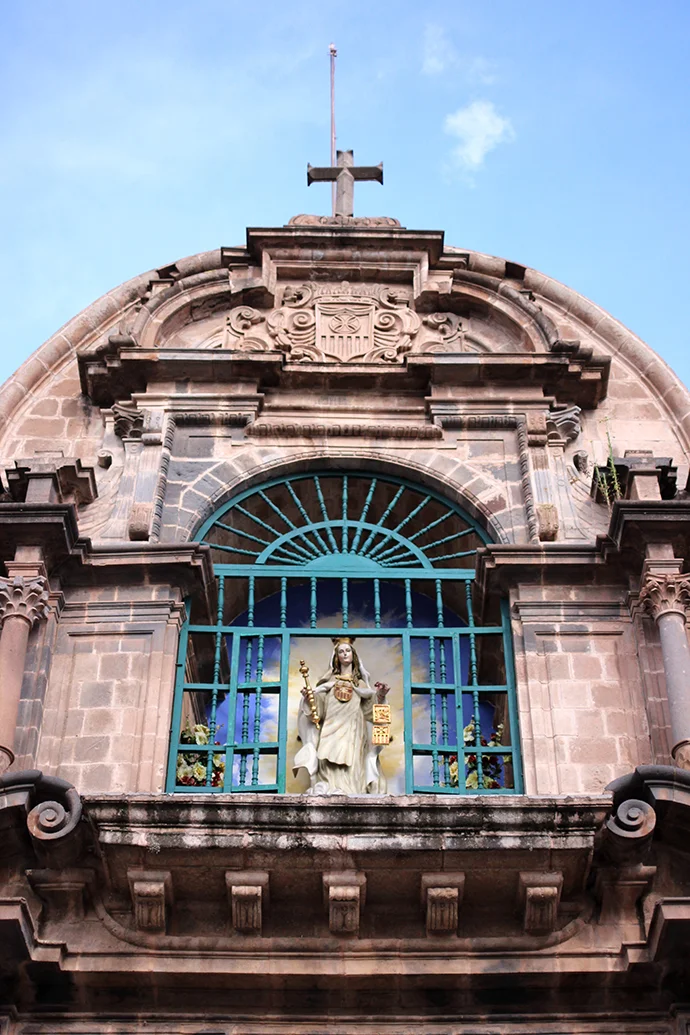
We mostly just meandered around the historic city center, observing the daily protests (there was a transit strike the day we got there), sucking on coca candies and trying to preserve our dwindling oxygen. The Cusco Cathedral, the mother church of the Roman Catholic Archdiocese of Cusco, was stunning and houses the famous Last Supper, painted by Marcos Zapata in 1753, which features a guinea pig as the main course (no photos allowed).
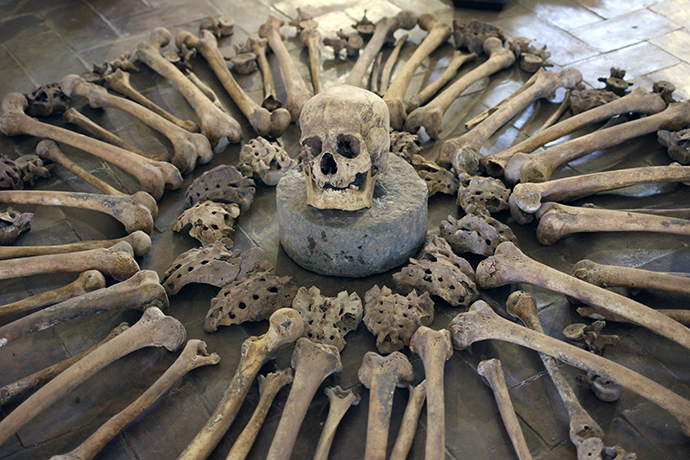
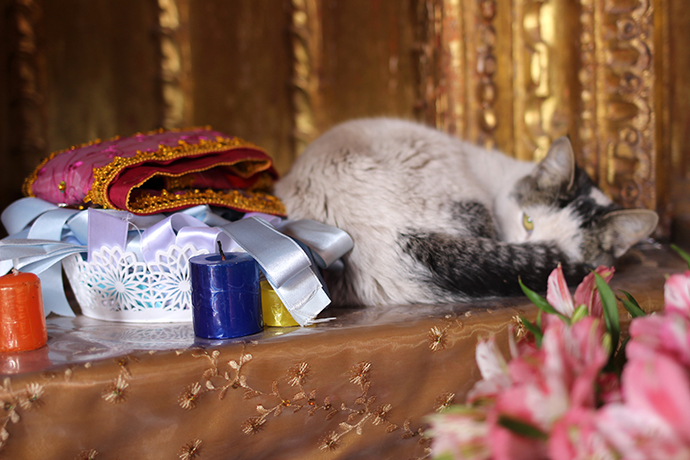
But the Iglesia San Francisco had the most wonderfully carved choir stalls, a delightfully creepy gold altar (with a live, sleeping kitten that startled me nearly to death), the strangest taxidermied cow I've ever seen and—most importantly—catacombs! There were just two small rooms filled with bones (a third was closed the day we visited), but they were so artfully arranged it was almost easy to forget you were looking at real human remains.
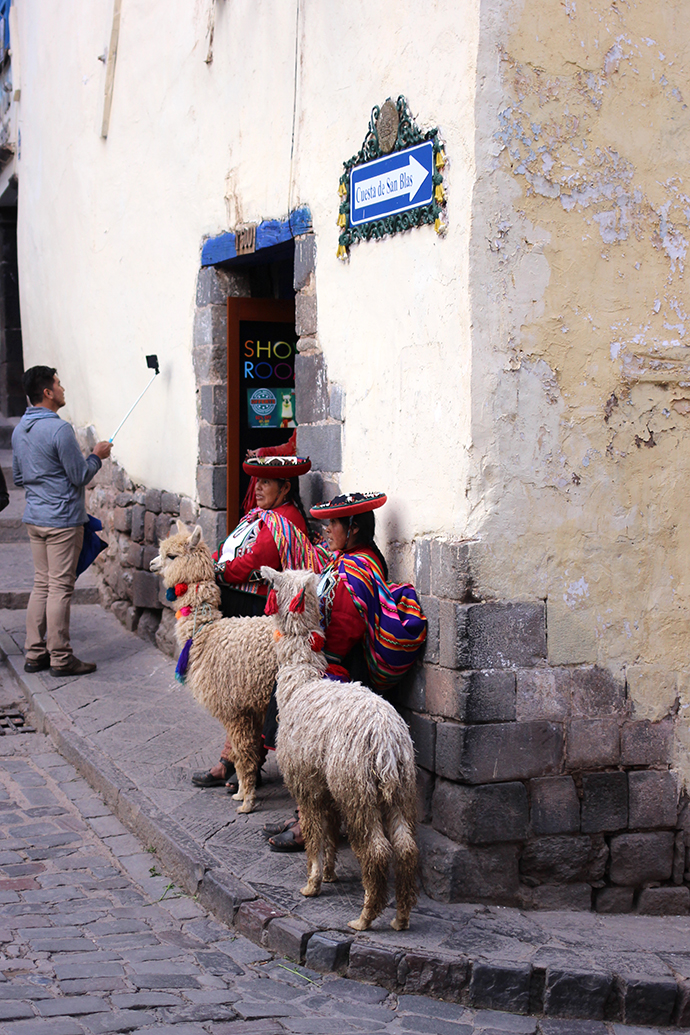

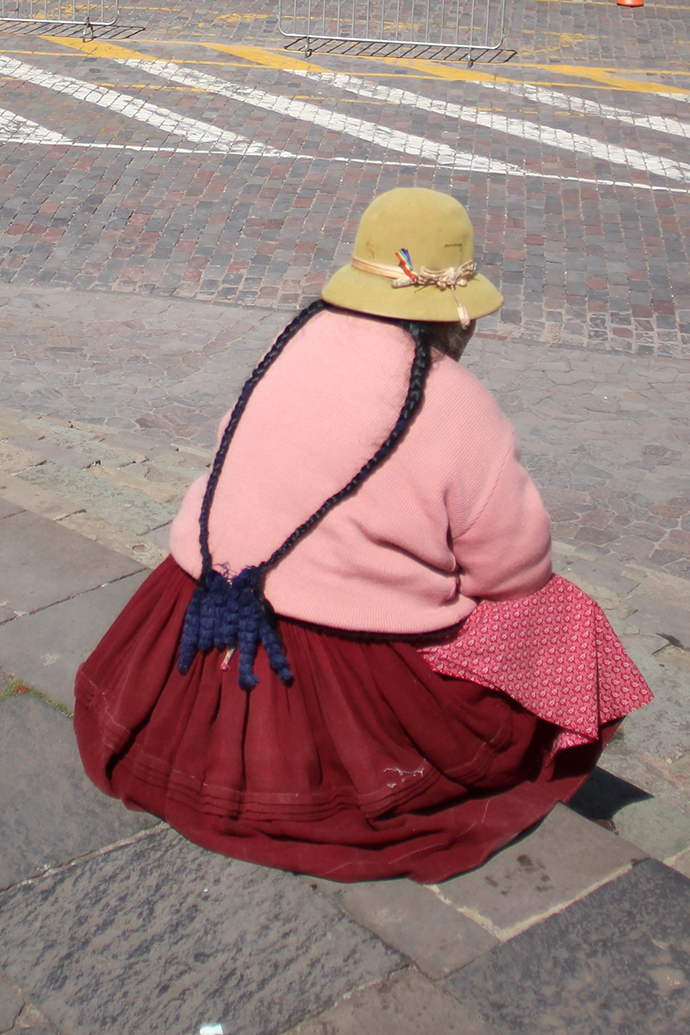


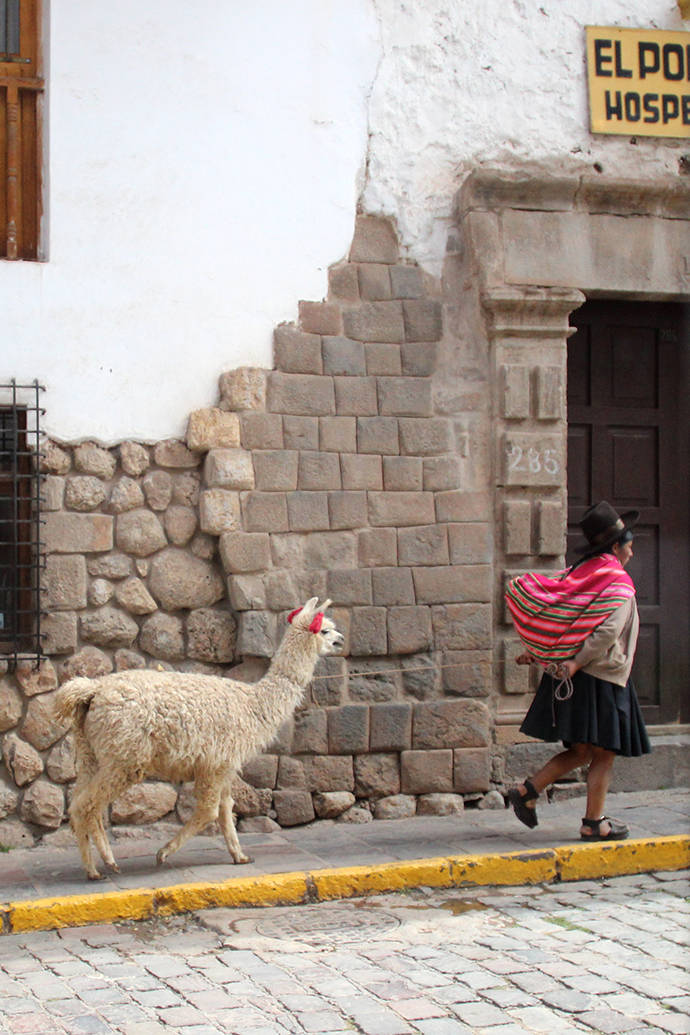

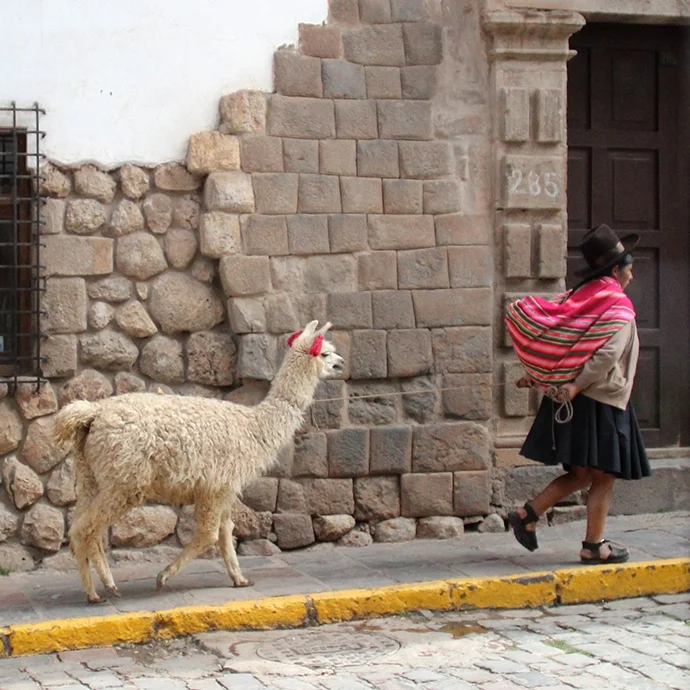
The New Yorker in me knows that all of the women walking around with alpacas in traditional garb are basically Peru's version of a Times Square Elmo, but I couldn't help but be charmed. It doesn't hurt that they were almost always carrying a baby alpaca as well, a creature so cute that it could probably help me warm up to even the most dingy of Time Square knock-off Minions.

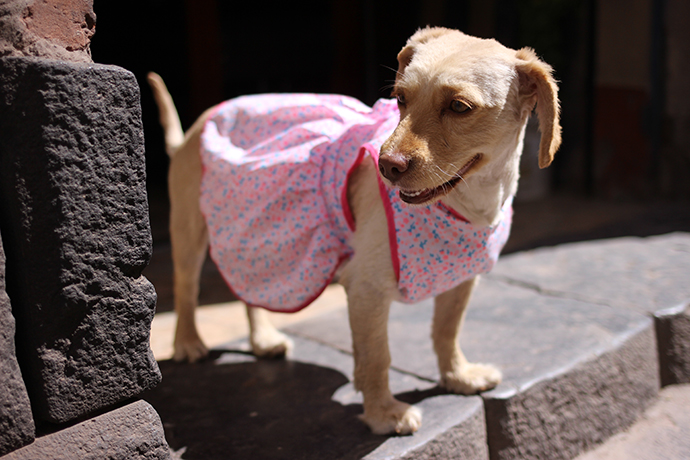

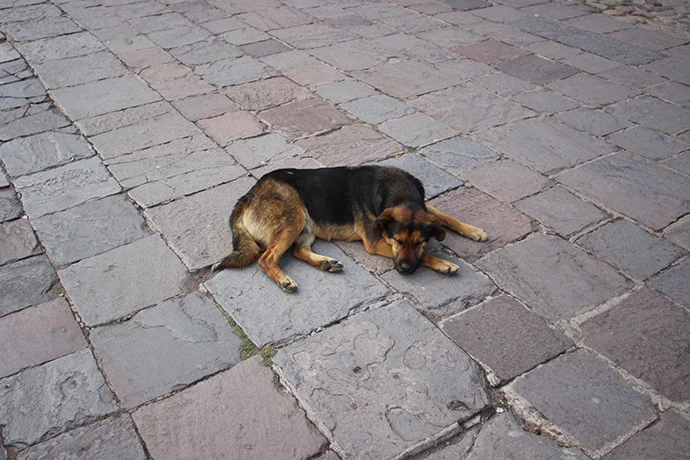
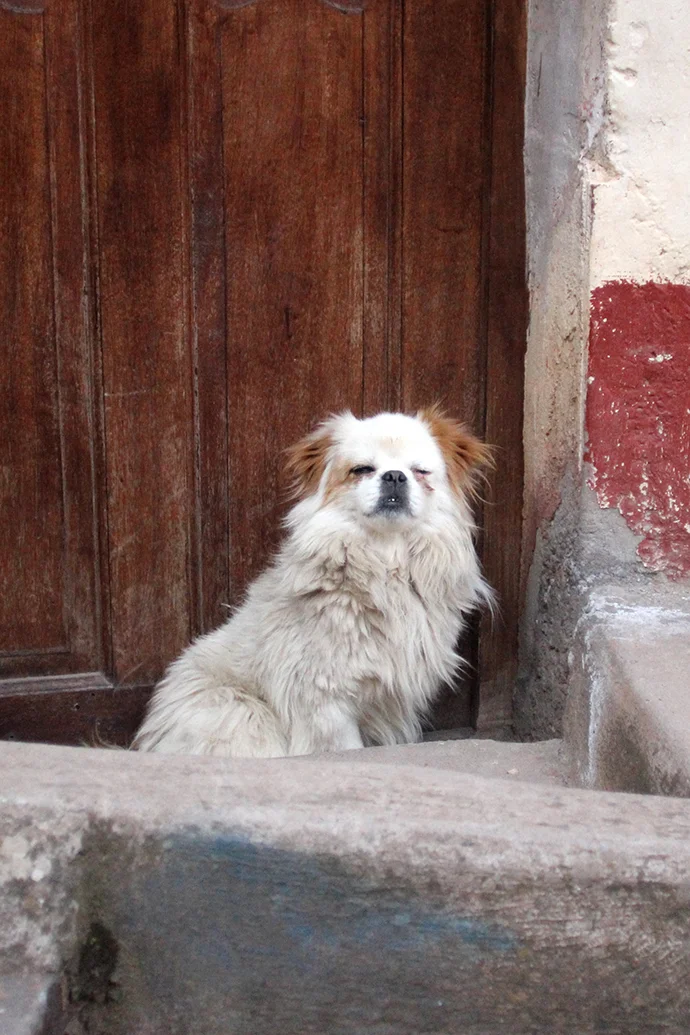
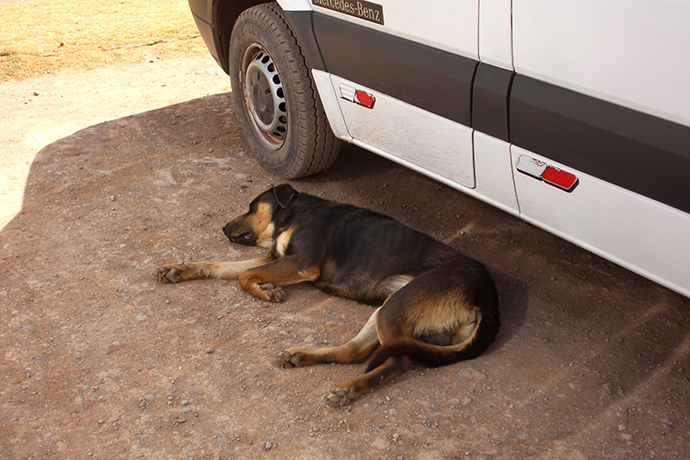
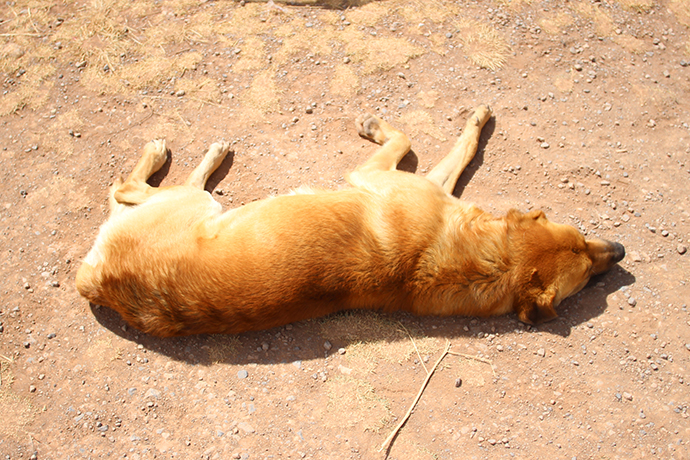
But my favorite part about Cusco was undeniably the dogs. The very first thing I noticed was the street dogs—they're everywhere—and despite being very ordinary and a little mangy, I couldn't help but turn into an excited toddler every time I saw one. Some were a bit scrappier than others, but most just looked like they were going about their daily life as busy city dogs—I swear I even saw several of them carefully crossing the street at crosswalks.
Where we stayed: Hotel Rumi Punku (great for Inca Trail hikers, free transport from the airport)
Where we ate: Marcelo Batata (all-around delicious—opt for the pisco sour table demonstration) // Restaurant Sumaqcha (excellent alpaca) // La Bodega 138 (good pasta, beer)
What we ate/drank: Alpaca (just as delicious as it is adorable) // Pisco sours // Coca candy // Inca Kola (like a sweeter cream soda :P) // Guacamole (I'm new to the guac scene, but this was so good)
What we did: Cusco Cathedral // Iglesia San Francisco