

Archive
- Abandoned
- Alabama
- Arizona
- Bahamas
- Books
- California
- Cemetery
- Climate
- Colombia
- Connecticut
- Diner
- Egypt
- Feature
- Florida
- Friday Fun
- Georgia
- Holidays
- Illinois
- Iowa
- Italy
- Kentucky
- Louisiana
- Maryland
- Massachusetts
- Mississippi
- New Jersey
- New Mexico
- New York
- North Carolina
- Novelty Architecture
- Ohio
- Pennsylvania
- Personal
- Peru
- Project 365
- Protest
- Rhode Island
- Roadside Attraction
- South Carolina
- Tennessee
- Texas
- Travel Guide
- Virginia
- Walks
- Washington DC
- West Virginia
- Wisconsin



















A Trailblazer is Riding Free
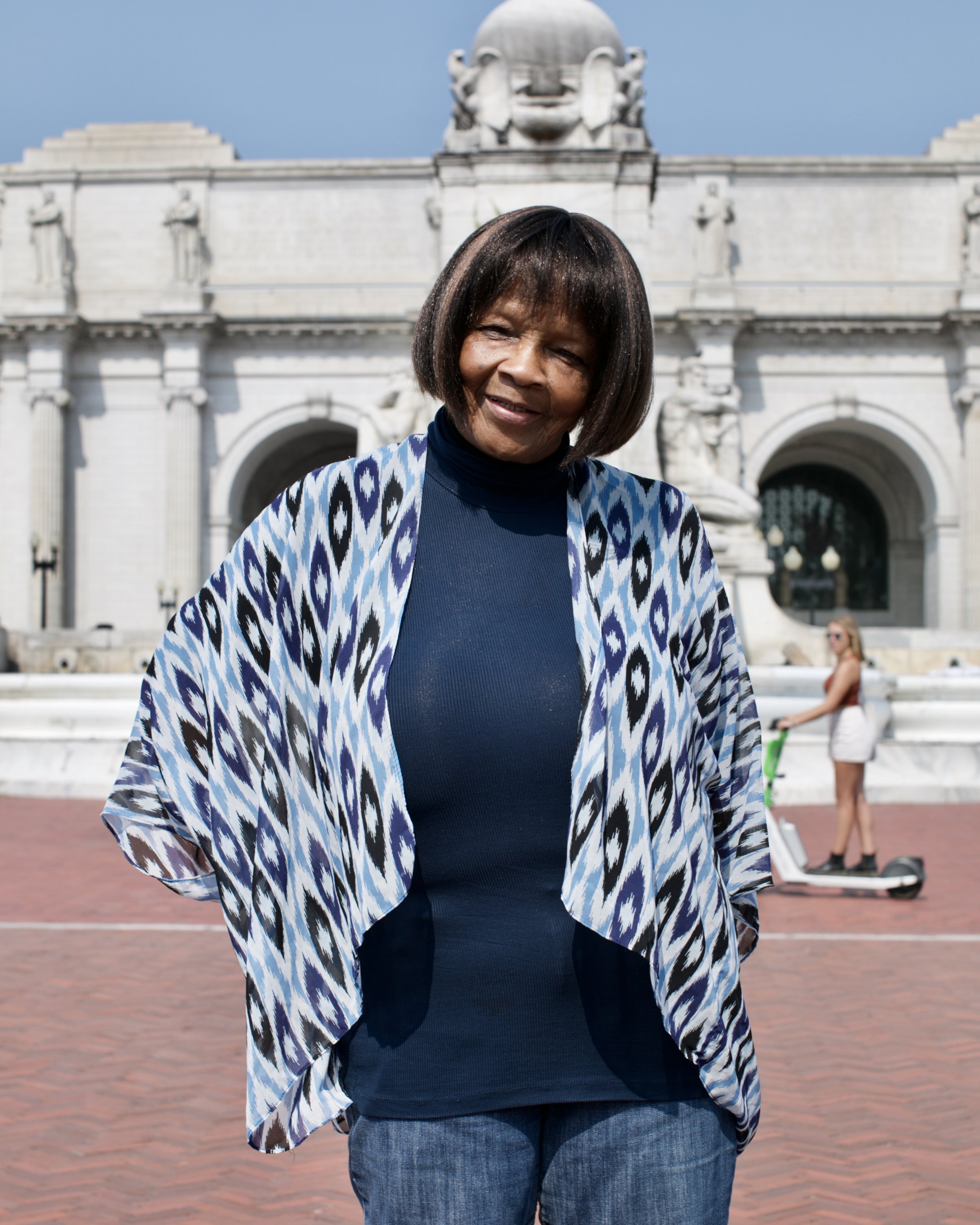
Photo: Kristine Jones
I don’t remember when I first met Kathalene Kilpatrick, or how I got to wherever in Washington, D.C., our introduction took place. The most likely location is outside of a tall, “unscalable” fence that encircled Lafayette Park and the White House in the last six months of 2020 and beginning of 2021. A few weeks after George Floyd’s late-May murder, Mayor Muriel Bowser directed city officials to paint “BLACK LIVES MATTER” in large, yellow block letters stretching from I to H streets just outside of the park. The temporarily-car-free plaza, bisected by 16th Street NW, became a gathering space for activists, trauma tourists, and anyone else who felt they had something to say or see.
The Black Lives Matter Memorial fence was an unofficial, living makeshift monument to (mostly) American lives and dreams lost too soon; it both seemed as if it would last forever and was constantly in danger of disappearing overnight. Personal experience can be painful, but it’s a surreal privilege to witness history being made in real time as old, ordinary pieces from the past are cobbled together and reimagined into something new and extraordinary. Anyone moved in any way by the messages beamed out—at a time when most people suddenly had little to do but pay attention—may not realize there is a relatively small band of very real guardian angels to thank, at least in part, for their transformation.
Members of the scrappy, unofficial chosen fence family, which almost always included Kilpatrick and other equally-impressive women, remained at the plaza through rain, snow, wind, oppressive humidity, petty political photo ops, and Stop the Steal rallies. The collective was one of the only constants in a chaotic period which included clouds of tear gas in the summer, tears of tenuous joy and champagne spritz on election day, and covid droplets spewing from MAGA mouths planning a January insurrection.
More than a year after the fence finally came down and the park reopened, it seems now that the show of force was mostly a farce; a death rattle by the flailing Trump administration meant to intimidate. Instead, the main thing it proved was that chain link could became a canvas for protest posters, artwork, and other mementos of the movement—as long as it was lovingly maintained and protected by a small, but resourceful group of passionate people with a singular purpose: to fiercely defend the promise of a country that had almost always let them down more times than it had lifted them up.

Photo: Kristine Jones
A BAD START
On August 29, 1942, Kathalene Hughes Kilpatrick was born premature and severely underweight at a 666 street address in Tallahassee, Florida. That the roots of her family tree are tangled, gnarled, and hardy shouldn’t be a surprise; in a nation stocked by waves of immigrants and built on the labor of those they enslaved (officially or otherwise), things get hard real fast. She admits that some details of her long life have blended together over the decades in a game of generational telephone. “At the age of 80, it takes a little thinking to go back that many years,” Kilpatrick says recently, and apologetically.
But other things only become more clear in the rearview: She knows for sure that at least some of her ancestors had no choice whether or not they wanted to come to America in the first place—and few good options once they arrived. Her relatives are mostly Black, but also Cherokee and Seminole, a lot of whom appear to, at least anecdotally, have possessed especially robust genes. Several lived full, healthy lives well into their 100s, and if they were anything like their still-living legacy, they no doubt made the most of their limited opportunities and chose gratitude when they had a choice. Kilpatrick mentions several times that, even into her eighth decade, she still has “a sound mind and good vision.” But even if she didn’t—and if it was possible to get one—I don’t think Kilpatrick would accept a cosmic do-over.
Some people might be hardened after a life like hers, one in a which a lot of time appears to have been spent doing the right things for the wrong people; but there is no trace of bitterness in her voice when she says, “Because I love all people, people seem to love me,” or “I am very happy because as the Bible states, my latter days are better than the beginning days.” I know the first statement is accurate because I’ve seen its truth with my own eyes—but I can only hope the second is as well. Kilpatrick never asks for anything more than her fair share of equality—and even that appreciation of self seems to have arrived only after a lifetime of karmic debt operating in the red from the very beginning.
“My life just started out in a bad way,” she says.
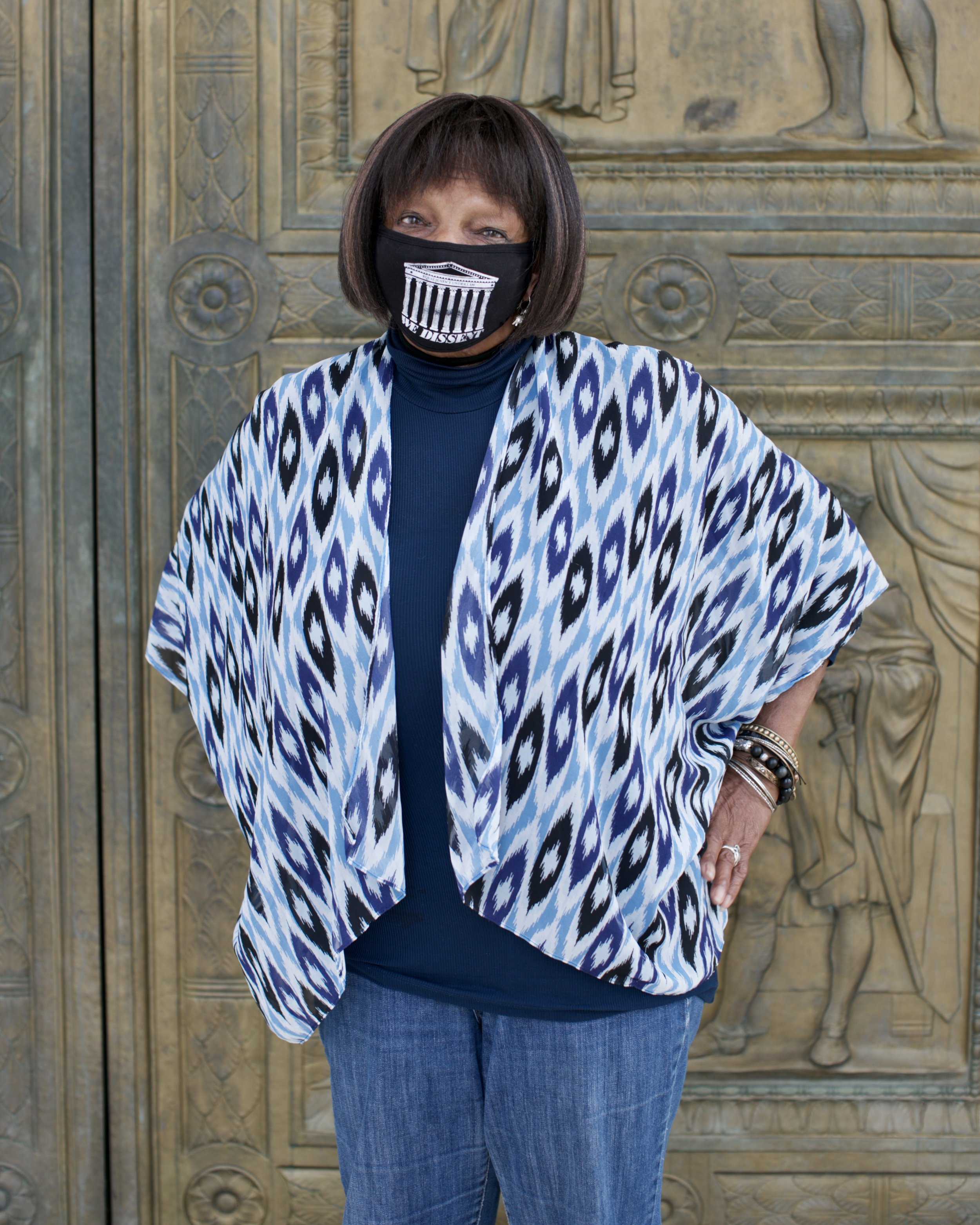
Photo: Kristine Jones
Kilpatrick’s first days—and many that followed—were by any metrics, indeed quite bad. But she is careful not to be too critical of others, including her parents, siblings, ex husbands, friends, coworkers, extended family, and even passersby. Like a lot of women, she lavishly compliments others and directs her harshest thoughts back at herself: when presented with photos of herself, she scrutinizes her appearance despite the indisputable fact that she always looks impeccable. She constantly apologizes for things that I would have never thought to consider as intrusions in the first place.
While she was growing up in the post-war Florida panhandle, Kilpatrick’s parents must have ached under the weight of juggling several kids with multiple jobs including nursing, phonograph repair, at a furniture store, and in a beauty salon. She says it was a stable, if also stressful and largely loveless, environment. But after she became a young single parent herself, Kilpatrick mostly thinks her less-than-ideal childhood was a fair price to pay for her family to achieve the American Dream: “They worked hard,” she says. “But they always had homes.”
When Kilpatrick was 16 in the late ‘50s, she was raped by a religious leader and family friend, and forced to give birth to a child she didn’t choose but loves unconditionally, nonetheless. “I had no choice because it was 1959,” she says in late September 2022, just a few months after the Supreme Court strikes down Roe v Wade. “I don’t think a man should have a say—period. It’s not about a man. It’s not about the faith. It’s a power thing. It’s about doing the right thing.”

Photo: Kristine Jones
For most of her life, Kilpatrick has followed in her family’s multitasking, hardworking footsteps, usually with at least one of her feet on the gas pedal or brake of a public transit vehicle or tour bus. Briefly, she drove a taxi cab while she was enrolled in night school and raising two children on her own. She’s been married twice, divorced and widowed; one husband was haunted by demons from his military service in Vietnam, and another inspired Kilpatrick to move from Florida to D.C. in the late ‘60s “to put as much space between us as we could,” she says.
In the early ‘90s, her son-in-law violated a restraining order, marched into a Fort Lauderdale grocery store, and shot himself and Kilpatrick’s only daughter in the head while she worked. He died at the scene, but her daughter lived in a hospital for more than 30 days, eventually dying in Kilpatrick’s arms and leaving behind a teenage son. Kilpatrick cared for her grandson too, until he enlisted in the Navy (and died young in a motorcycle accident). She credits God for guiding her through the darkest days, and says, despite it all, she tries to focus on the light and considers herself lucky.
“God has just been really good to me,” she insists.
STATE OF INJUSTICE
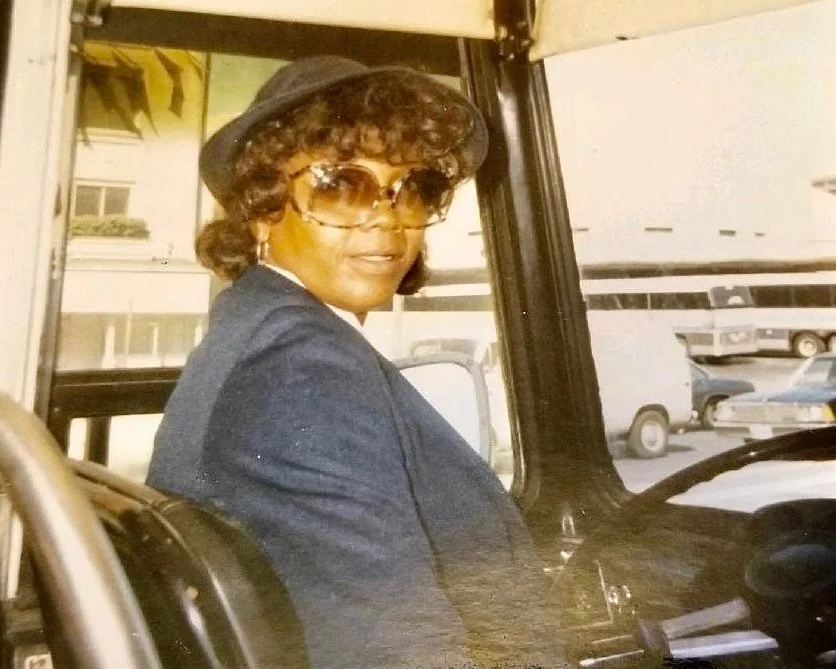
If I had boarded a D.C. Metro bus back the ‘70s, the driver most likely been male, and probably also white. Or the bus driver might have been Kilpatrick, who was the first female to operate buses in Tallahassee before also driving for Metro and other public and private transit fleets.
During the summer of 2020, I mostly walked everywhere. But even if I had taken one of the buses that stops frequently outside my apartment—and Kilpatrick was on it—she wouldn’t have been behind the wheel. Although I didn’t know it when we met, at an age when others with lesser credentials are reaping the earned rewards of retirement, Kilpatrick spent nearly her entire seventh decade living down on the same streets that she had once so nimbly navigated from above.
It’s hard to go far in the world without being confronted with marble monuments erected to, and by men who decided it was they alone who made America great. Outside of Union Station, the District’s main transit hub, stands a gleaming white statue of Christopher Columbus, erected in 1912 and looming nearly 50 feet tall over a grass-and-concrete ellipse. Today, the fountain’s basin is empty, covered in white-washed wooden boards; it’s unclear whether work on the monument has just begun, paused, or if it was a temporary fix that turned permanent by neglect.
Early in the pandemic, as planes, trains, and buses coming in and out of the city slowed to a trickle (and still haven’t reached pre-2020 levels), more tents and temporary structures sprung up in—and were inhumanely cleared from— triangle parks, underpasses, and a lot of the land surveyed by Columbus: The man who “discovered” America, sentenced in stone for all of eternity to watch what it had become. The plywood continues to be splintered by the feet of too many tourists, protestors, birdwatchers, pigeons, and people who, for one reason or many, by choice or circumstance, are dangerously close to falling through the cracks themselves. People whose backstories overlap more often than not with Kilpatrick’s: they’re Black, or Native, or a murky mix of marginalized identities, homeless on land that has been stolen from someone at least once.
Through it all, they emerge with improbable empathy and energy, but low on favorable options. Every day, in a country famous for its bottomless buffets and glut of Airbnbs, too many good people are still looking for a sturdy and safe place to spend the night. While Kilpatrick lived for a time outside of Union Station, most nights in early 2020 she spent curled up less than a mile north of the White House, on the storied steps of St. John’s Episcopal Church. Referred to as “the President’s church,” even in the times before Trump’s now-infamous upside-down Bible photo op, the yellow Greek revival house of worship was consecrated in 1816.

Photo: Kristine Jones
A more compassionate and uncontrived portrait was taken not too long before Trump’s: Made by Kristine Jones, the black-and-white shot shows Kilpatrick sitting alone on a city bench in downtown D.C. She’s looking outside of the frame, considering what, or who, we can’t know. Or maybe she’s thinking about nothing much at all, figuring she’s earned the moment of rest in a life spent on the move. Maybe she’s filled with a mix of awe and annoyance that life is somehow too full and yet falls short on both pure tragedies and comedies; maybe she’s thinking about how nothing—and no one—is ever objectively all good or all bad. Or maybe that’s just how looking directly at Kilpatrick’s indirect gaze in the photo makes me feel. Ambiguity makes it all interesting, but uncertainty is nerve-racking to navigate alone. It’s easy to lose your way or get turned around when you’re too tired to know exactly what it is, or who you are supposed to be looking for—or at.
Kilpatrick, of course, looks good as always, despite her weariness and the weather, wrapped in a nest of pristine jackets and fuzzy scarves, with a shiny, chic purse dangling from her shoulder. She holds a stark sign that succinctly sums up the state of her outside circumstances only; her inner thoughts may always largely remain a mystery. We might not be able to determine the state of her mind with vision alone, but luckily for the rest of us, when she sees something wrong, she usually says something.
A SMOOTH TRANSITION
Kilpatrick’s been dipping her toes into activist waters, at least unofficially, since the early ‘60s when a group decided it was time to integrate a Tallahassee movie theater. She says she remembers segregation, cross burnings, and student protests, but decades later, she describes her collective memory of tumultuous time periods with umbrella terms that both seem innocent (“very calm”) and slightly more insidious (“Southern hospitality”).
She was driving a public school bus, one of, if not the very first Black women in the area to do so, when Florida began to integrate. If the students had a problem with it, they never said as much to Kilpatrick—she was in the driver's seat every day and they weren’t there yet. “They found a vacant seat and that’s where they sat,” she says. “It was a smooth transition.”
I’m positive that she’s incapable of abusing whatever power she earned over the years, but I also get the sense she never felt quite right apologizing much for it either. And still, even after all that she’s experienced before and since the official end of segregation, she still thinks the solution to division in America is simple. “We should have equality,” she says. “It shouldn’t be a problem to live together and get along.”

Photo: Kristine Jones
Today, the idyllic Florida of Kilpatrick’s early years may feel as foreign as a time when women were rarely allowed—let alone trusted—to drive their own destinies (or vehicles) and make their own choices (or maybe not). But it was a place that allowed Kilpatrick to hit a lot of the milestones newly available to women of her generation: She was a Brownie, a Girl Scout, and Miss Freshman at Lincoln High School. As a teen she played softball, volleyball, and basketball. “I was a guard and we were a little hard to beat,” she says, flashing a mischievous smile in the way she handles disclosing most of her accomplishments, no matter how impressive they may be: humbly and humorously with more than her fair share of humility.
Kilpatrick has been the subject of several features over the course of her illustrious life—for both her ups, as well as her downs—but it’s not long into a conversation for this profile that she apologizes for focusing so much on herself. “If it’s too much, get the best part and leave the rest,” she says. “You surely don’t have to include everything,” she offers, as if that’s even possible with someone as prolific, selfless, beloved, and thoughtful as she is.
Maybe her wisdom comes from having been a Christian since the ‘50s, one who despite a lifetime of navigating a world built purposely to oppress her, still maintains an unshakeable faith in the goodness of humanity. Or maybe it was just learned the hard way, by a breadth of extraordinary experience that includes photos with presidents and chauffeuring a bus full of nuns who were also nurses.
DO YOUR OWN THING
Kilpatrick has been working and volunteering (officially or not) in some capacity and almost constantly since she was a teenager. Her resume lists so many inspiring entries for anyone, let alone a Black woman from the South, that it begins to feel like a frustrating question without a good answer, or a crude, unfunny joke with no payoff: What do you get when you deliver a bus full of nuns, politicians, and “the most famous band in Panama” safely to their respective destinations? Depends on who you ask and their metrics for success, but the best drivers usually aren’t afraid of the unexpected detours. And if they’re really special, like Kilpatrick, they’re able to turn their personal pain into inscrutable but inspiring photo ops, spinning their own garbage into gold for others to reap benefits historically denied to them. They bring souvenirs back for the rest of us who may not be able to get there just yet—or ever, on our own—but are willing, at the very least, to pay attention and expect nothing but gratitude in return.
Kilpatrick has volunteered in hospitals, libraries, and at the DNC headquarters; she’s been a public school tutor, an election worker, and a foster grandparent, receiving recognition from at least two sitting presidents (Clinton and Obama) for her myriad efforts. Photos fade and certificates can be damaged in a leaky storage unit—but there’s a better reason Kilpatrick doesn’t put much stock in material possessions. Despite the well-deserved accolades, she’s always known what really matters in the end: “The only real true thing is love,” she says. “You can’t live on Mother Theresa’s legacy. You’ve got to do your own thing.”

Photo: Kristine Jones
Today, Kilpatrick tries to sprinkle pleasures in between the protests, but mostly she can be found doing a combination of both. She lists her hobbies as “reading, writing, drawing, and helping (assistance).” She says she very much enjoyed driving tour groups across the country to California, and loved the Hoover Dam, the Grand Canyon, and “seeing all those lights in Las Vegas.” But no matter how much she sees or how far she goes, Kilpatrick always comes back to the state where she feels most at home: her unconditional love for others. “Driving buses was very interesting,” she says. “But ultimately it just helped me take care of my kids.”
Kilpatrick has always been busy, working hard to keep herself (and others) afloat. Even as she fights the strong currents always seemingly working against her, she still tries to make the most of her limited time down on earth. She advocates for the homeless (work she did while unhoused herself), mentors foster kids, and offers a seemingly infinite amount of smiles or encouragement to a number of people who still call her “Miss K,” or simply, “mom.” When Kilpatrick thinks she has texted me too early, she offers an explanation wrapped in another unnecessary apology: “I am so sorry,” she says. “I text a lot of homeless people early in the morning to wake them up and sent yours by mistake.”

Photo: Kristine Jones
Whether she has a history with them or not, she has a kind word to offer most people we pass inside of Union Station. Outside, in a new shadow cast by old Chris, she tells a tourist not to sit down on a step because it’s covered in bird droppings. She greets strangers as if they’re friends, and some quickly turn from the former into the latter after receiving a well-timed compliment conjured out of thin air or common interest. She talks about a North Carolina basketball team with a person sitting next to her because of their t-shirt and instantly recognizes and hugs an old friend who is making their rounds cleaning the station’s bathrooms.
Although Kilpatrick admits that, the older she gets, she may need to sit for longer than she used to—or accept help when it’s genuinely offered—eventually she always stands up tall for herself and at every turn, tries to protect others from the bad luck dump truck that has followed her too closely for much of her life. She is self-conscious about sometimes needing to rely on anything solid for support, but mostly just uses her walking stick to push cigarette butts and a pencil out of the way so no one accidentally slips on the slick stone floors.
She frequently says, “Let me tell you something,” often followed by a Bible verse: “Inasmuch as you have done it to one of the least of these my brothers, you have done it to me.” It’s clear that not only does she practice what she preaches, Kilpatrick has perfected it. She is such a local celebrity around certain D.C. landmarks that I find myself wondering if there’s any historic moment or famous person she hasn't encountered in some capacity while doing her own thing over the years.
My suspicion is confirmed when our unofficial interview officially ends. We’re eating burgers at Shake Shack when Kilpatrick queues up a video on YouTube and slides her phone across the table. It takes me a few moments after she hits play—on a music video for the early-2000 hit earworm, “Thong Song,” by R&B singer and Baltimore native, Sisqó—to get my bearings and understand not only what I’m looking at, but why.
She’s transported me back to my teenage years, but not in an attempt to make a Christian comment on the morality of a song composed of poetic phrases such as “She had dumps like a truck, truck, truck,” and “Thighs like what, what, what.” One of the ever-present bangles jangling on her wrist might feature a charm that says “Earth Angel,” but Kilpatrick is no pearl-clutching saint. She’s also not exactly a star either, at least not in a video as memorable for what it doesn’t contain (many clothes) as for its catchy chorus. She doesn’t have a recognizable cameo, per se, but as one of only a handful of people—man, woman or otherwise—with skills to drive the standard shift Baltimore bus in the shoot’s Miami beach location, Kilpatrick was integral to the final product.
Kilpatrick says she was fired from The Pharmacy Corporation of America (where she was the only Black woman among more than 50 employees) for speaking out about the need for equal pay. She stopped driving for Metro because she felt that the bus wasn't safe to drive and the agency pushed her (and other drivers) to continue past her comfort zone. She says she was following the safety guidelines outlined in official manuals and always tried to do the right thing: “I always got my proper rest and had safe equipment,” she insists.
Since she left, she’s received nothing but the runaround from governmental agencies regarding records and benefits. As a result, she’s also been engaged in an ongoing, unofficial protest of her own (Kilpatrick v Metro) that she explains to me while we’re sitting on the steps of the Supreme Court under the inscription “EQUAL JUSTICE UNDER LAW.” She carries a neatly-hand-lettered sign in her bag that formally introduces herself to city bus operators—some of whom she still knows—and explains why an otherwise respectful woman fully intends to stiff them, intentionally breaking the law every time she boards without paying the fare.
“Hello! I’m a Trailblazer for D.C. transit and Metro (Local 689),” the sign speaks on her behalf, naming union credentials and highlighting yet another type of passenger bus she’s qualified to operate. A copy of her CDL is attached to the paper, along with a picture of Obama in case anyone looking at Kilpatrick needs yet another example of a real, live trailblazer. She’s attached a valid senior Metrocard too, just to prove that yes, she understands the rules—she has always been, and still is, a woman of sound mind and vision, afterall—but sometimes, she disagrees.
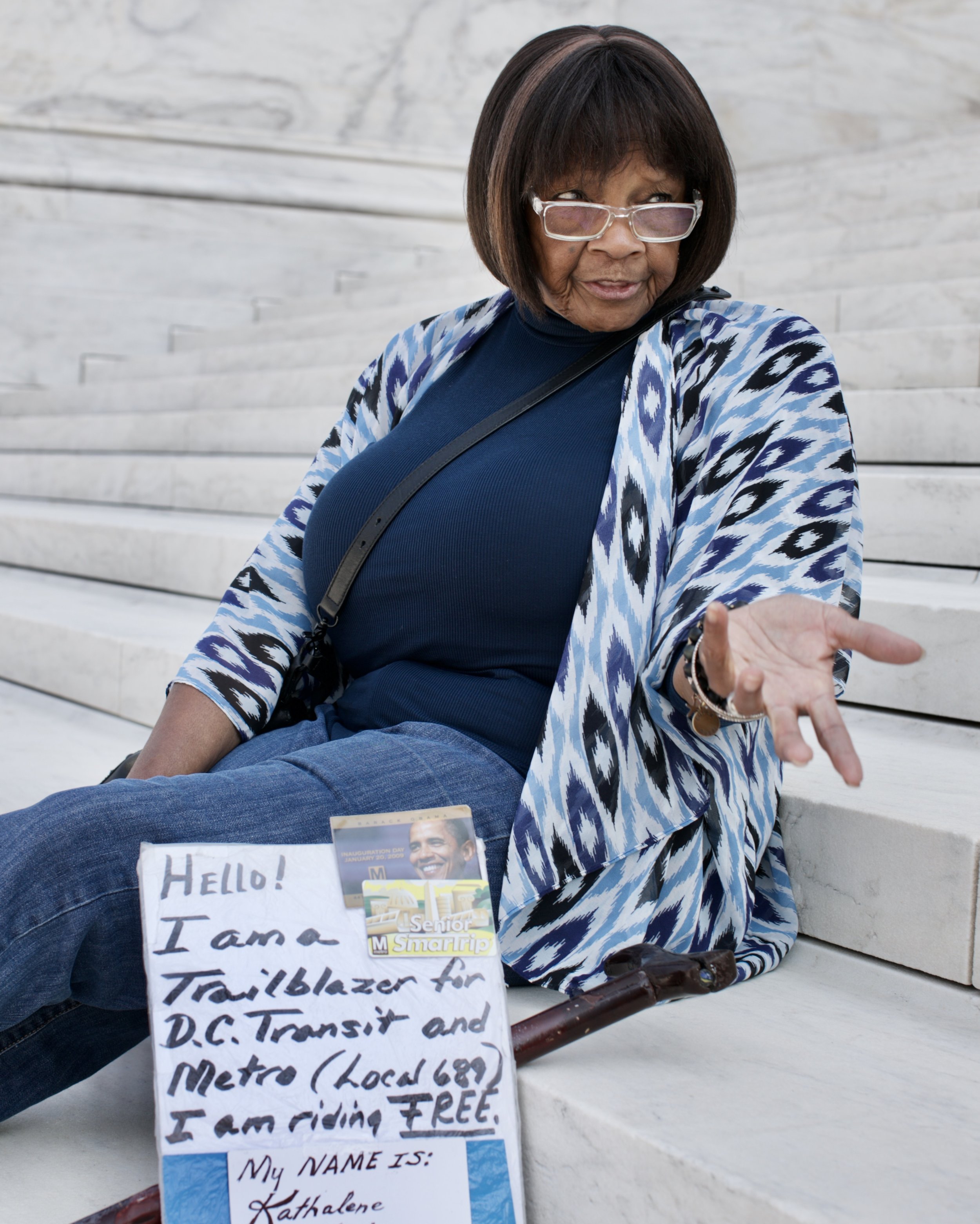
Photo: Kristine Jones
She also sees that guidelines are rarely one-size-fits-all, morality isn’t always able to be rendered sharply in black and white, and systems don’t always benefit those they are purportedly designed to help. Look no further than all of the very real guardian angels, caught in cracks everywhere on earth, for proof that it’s often easier to advocate for others than it is to stand up for ourselves. Kilpatrick’s sign ends with a reasonable, but revolutionary statement made by someone who has more than earned the right to ask for whatever she wants—even if it is to do nothing. But in doing nothing, she’s saying everything, including refusing to pay yet again for the same privileges that others receive automatically, without even a fraction of the work she’s already put in.
“I am riding FREE,” her sign simply states. And like its creator, her message may not always officially work, but it always makes a difference.
SALVATION ARMY
Kilpatrick became homeless in the summer of 2012, like most people do: due to a series of unfortunate events mostly beyond her control. She was evicted from a senior housing complex in D.C. after bogus claims that she couldn’t pay her $49-a-month rent. She says that she was bitten with bed bugs almost immediately after she moved in; when she spoke up, filing complaints and keeping her unpaid rent in an escrow account as she was advised to do, she was still evicted in what she thinks was just another cruel attempt to silence her.
She says she chose to sleep outside on the streets instead of inside of shelters because she doesn’t like to feel controlled, unsafe, or confined. Despite incidents of theft, sexual assault, and other indignities disproportionately doled out to people who share her demographic details, she insists she never really that nervous or too scared sleeping outside. She repeatedly expresses gratitude for those who have helped her out, anonymously or otherwise, including a white man who used to seek her out specifically just to give her money several times a week. She never knew his name and they lost track of each other, but she’s certain he was an angel with whom she shared a philosophy and a few moments of kindness every week, if not much else.
Kilpatrick never complains about, or romanticizes, the struggles of herself and others. “It seems as if this life is not for me—it is for me to do for others,” she says. “This is fine, but I need a little break once in a while. I pray that I will get the service that I need if it comes to that point of time in my life.” Her faith may be invisible and unstoppable, but it’s not improbable. She believes miracles happen to her all the time, and with the right perspective, it appears that they do.

Photo: Kristine Jones
While she was taking one of her rare breaks in 2020 and sitting on a bench outside of a congressional office building on Capitol Hill, Kilpatrick recognized a sister-and-law she hadn’t seen in 13 years. Thanks to the coincidence—and ongoing financial support from particularly generous members of her chosen family—Kilpatrick now lives with her sister-in-law in Maryland. “I am very grateful to all of my friends who didn't want to see me on the streets nor leave me on the streets of D.C.,” Kilpatrick says, speaking both specifically to her own experience and universally. “For a senior citizen of the U.S. to live on the streets for nearly 10 years is a disgrace.”
Though she is off the streets, Kilpatrick still admits to feeling confined, forced by circumstance to share a home with someone she had lost touch with long ago. “I am inside now, although I am still in a homeless state,” she says. Space is tight, Social Security payments are small, and she’s currently working at the Salvation Army six days a week. She has Sundays off—and clearly has earned more than just one day of rest—but she’s learned how to lean on her patience, her people, and above all else, her faith.
“I trust God with all my heart and he has brought me through many trials and tribulations,” Kilpatrick says. “Footprints are real in my life because God carried me through all the obstacles, valleys, danger, toils, and snares. He is my healer, my provider, and my evening. That is the end of my story.”
A CLASSY LADY
Like all good stories about guardian angels, Kilpatrick’s time down on earth will eventually come to an end—but that inevitability seems too far in the future to worry much about right now. I’m counting on the power of a combination of prayer, positivity, and those God-given good genes. Yes, many things start off badly, but if you put in the work and change your point of view, there can be no limit to the fulfilling middles or happy endings.
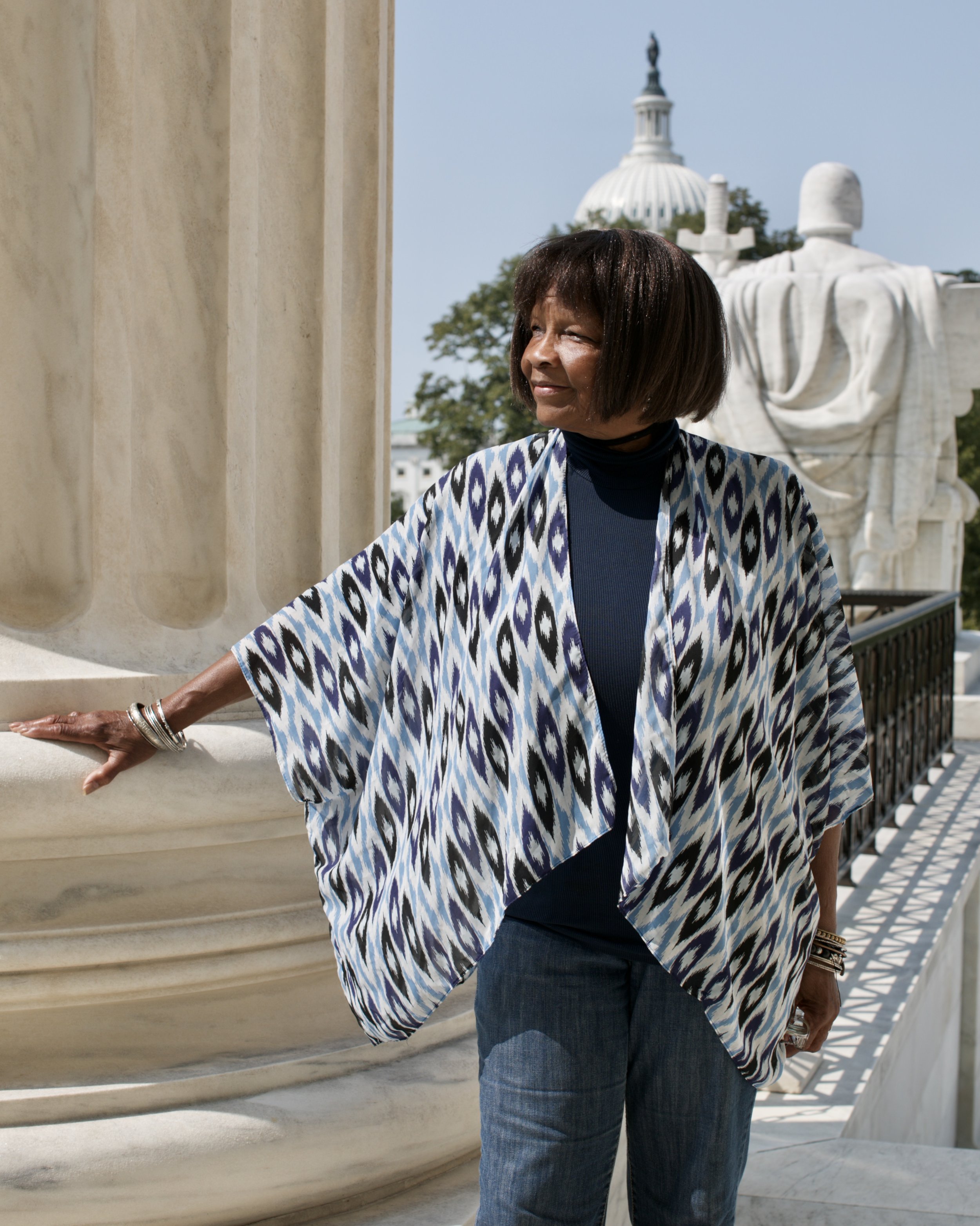
Photo: Kristine Jones
By the time we meet again outside of Union Station, a few weeks after her 80th birthday, Kathalene and I have seen each other countless times. We’ve sat together, marched, danced, and protested alongside each other for more than two years. There are a lot of chances to exercise the right to protest in our nation’s capital and a lot of really unjust reasons to take every chance and choice we’re given.
I offer to carry her purse out of generational duty, genuine kindness, and because she deserves a break, not realizing it contains another heavy bag full of Queen Elizabeth commemorative coins. Her Majesty has only been dead a day or two, but after we finish our burgers, Kilpatrick plans to catch a bus to a coin shop to see how much they’re worth. She knows their value, so she won’t let them go for less, but she’s also never been one to squander a good opportunity when she sees it. I ask her if she was a fan of the Queen, and Kilpatrick says: “Oh, yes. I liked her purses and her outfits. She was a classy lady and always looked so put together.”
“Let me tell you something,” she says. “I just love people. You never know who you can touch. They might be going through something and fellowship will give them a different feeling. When you’re nice to people and change your attitude, other people change too.”
What unfortunately can’t be seen in any photo or read in any profile, is how changed I, and others, feel after just a few minutes spent in Kilpatrick’s presence. She exudes a sense of inner peace and genuine kindness that I suspect no outside force—no matter how corrosive—can penetrate. She clearly knows where she is, a woman of sound mind and vision in every sense of both words. Yes, she got dealt a bad start, but she’s always had a good sense of direction. She knows it was sometimes very bad where we came from, but recognizes that there is always some good mixed in there too. She always acted as if she knew where we were going, even if it took more than a few, twisting detours to get there. She knows that it’s worth the extra effort to learn how to drive a standard shift; even if she could have never predicted that she would end up on a pristine beach with Sisqó, surrounded by the finer things in life.

Photo: Kristine Jones
But no matter what kind of history or personal tragedy unfolds around her, Kilpatrick seems to have always possessed a superhuman ability to focus on the task at hand and fulfill her mission (chosen or otherwise) to the highest standards possible. Whether she was driving radio legend Cathy Hughes, “Washington’s premier Go-Go band” Rare Essence, authors, students on a field trip from Florida’s Marjory Stoneman Douglas High School, groups from the CIA (allegedly), honor guards on their way to Arlington Cemetery’s Tomb of the Unknown, sports teams, members of the military to secure locations, or those nuns who were also nurses, Kilpatrick has remained steadfast in her love of all people—not despite their circumstances, but because she knows how much there is that we can never know about another person. She just starts with the good, and sees how far it can take her.
She comes from a hardy stock, so in some ways unavailable to others, she can afford to fight fiercely and patiently await positive results. No matter where she’s going or how far, she knows that we all deserve better, that progress is possible, and the finer things are always more fun if you share them. She has always deserved the right to ride free—not because of all the years she gave to a system that only takes, or the selfless acts of service she still willingly doles out, but because she’s a real human woman who deserves to be safe and feel clean.
Luckily for us, she’s determined to take as many people with her, and along for the ride, as she can. But if she needs to take a Metro bus to get there, one thing is certain: Kilpatrick won’t be paying the fare, and I think that’s more than fair. She’s paid enough already. The only shame is that she is no longer the one driving the bus—because there’s no one, not even Jesus himself, that I trust more to take the wheel than Kathalene Hughes Kilpatrick, D.C. trailblazer.
Kathalene was born into a country that has done nothing to make her feel good about herself and everything to ensure she feels as bad as possible—which she has stubbornly refused to do, anytime she had any real choice in the matter. But after all she’s done in her long life, Kathalene expresses so much gratitude for her good fortunes that she is still too modest to take credit for much of anything, or ask for help directly.
So that's why we started a fundraiser on her behalf.
So if you feel moved by her story—and whether you’ve met her in person, just through this profile or Kristine’s photos, or feel connected in spirit, mission, philosophy, style, or otherwise—I hope you’ll consider donating what you can to help lighten her load and balance the scales of injustice, if only for a moment: 100% of the funds collected will go directly to Kathalene to use where needed, specifically in this instance, but dedicated to all of those committed to doing the same, or so much more, to drive all of us forward.
❤︎ Thank you ❤︎

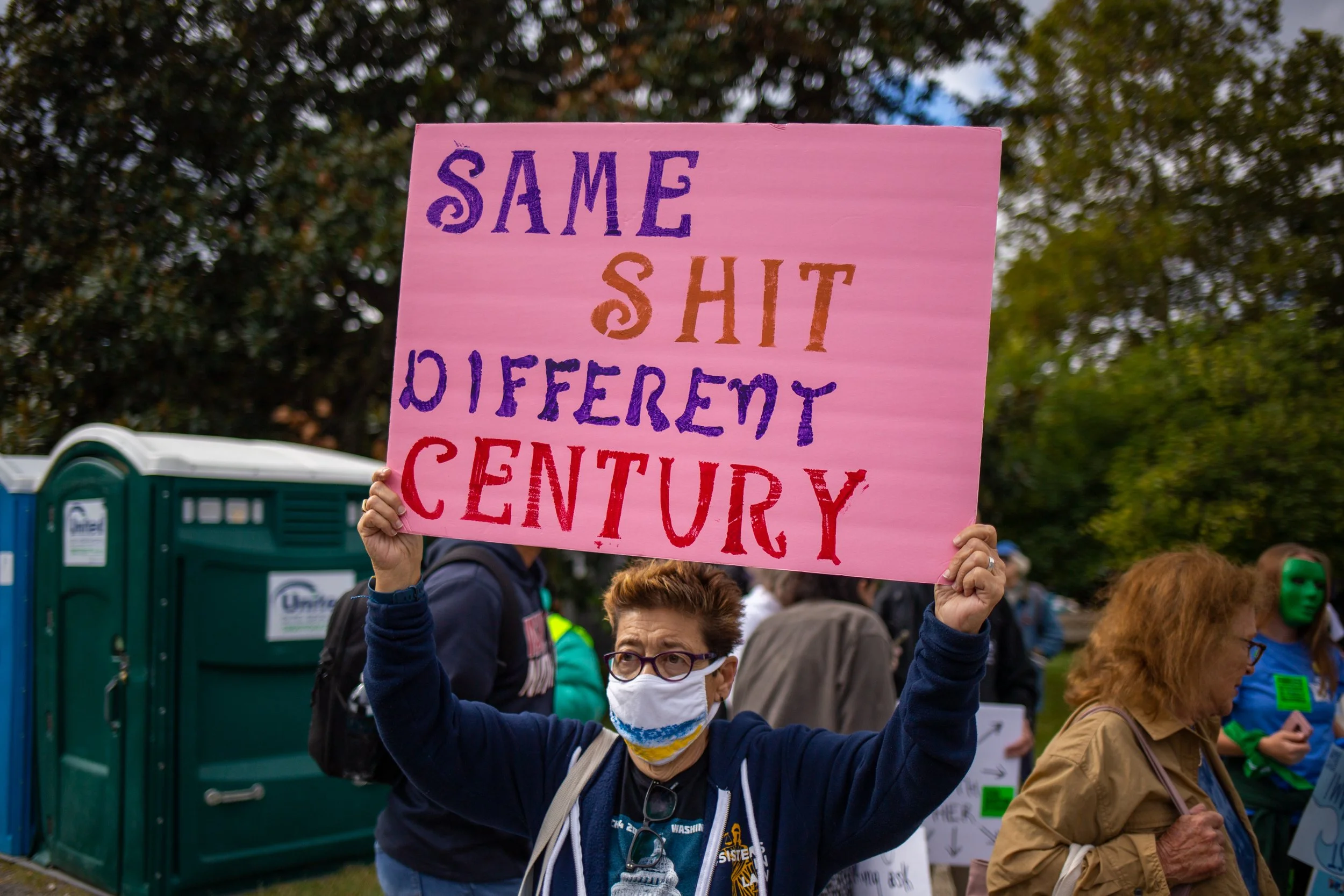
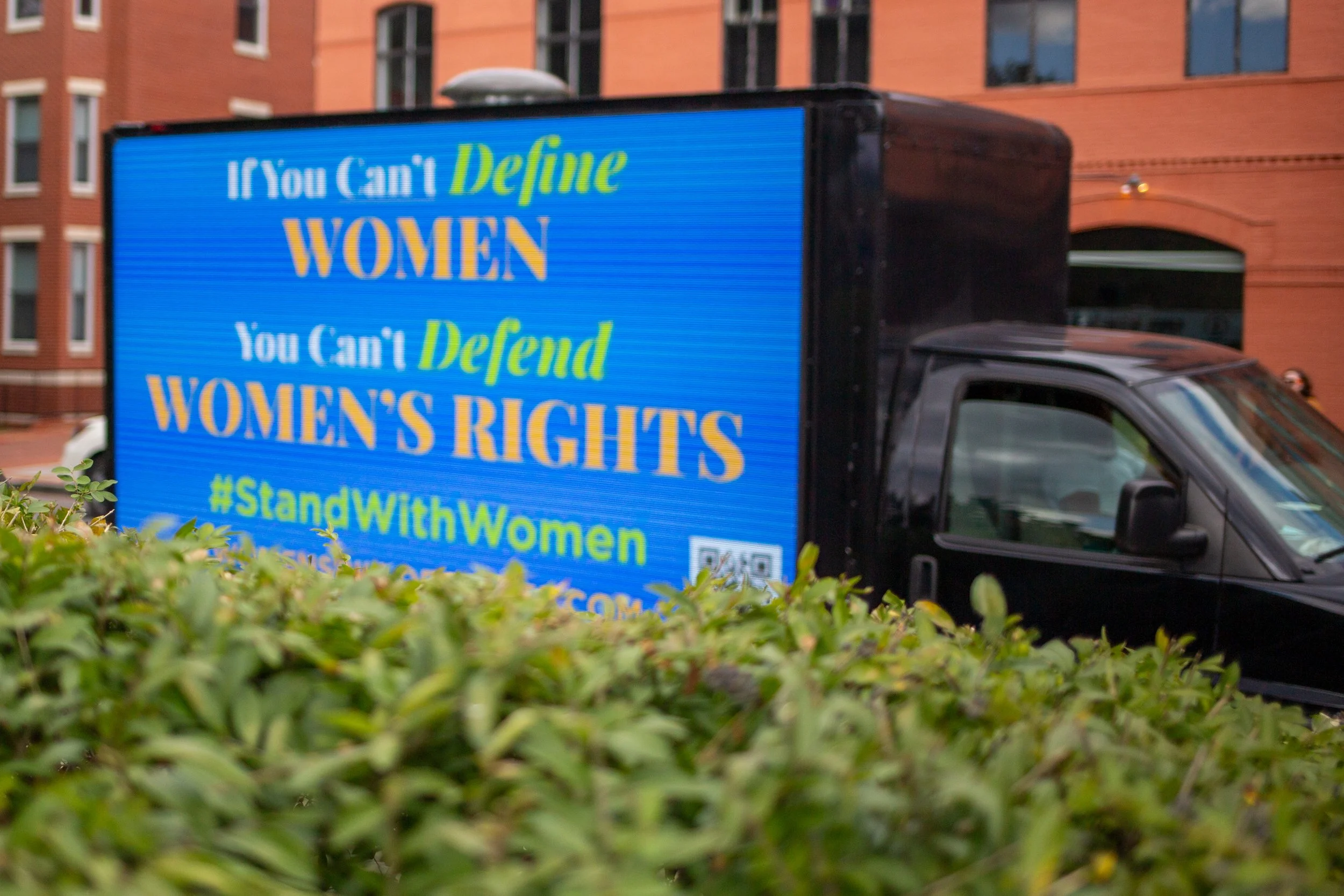
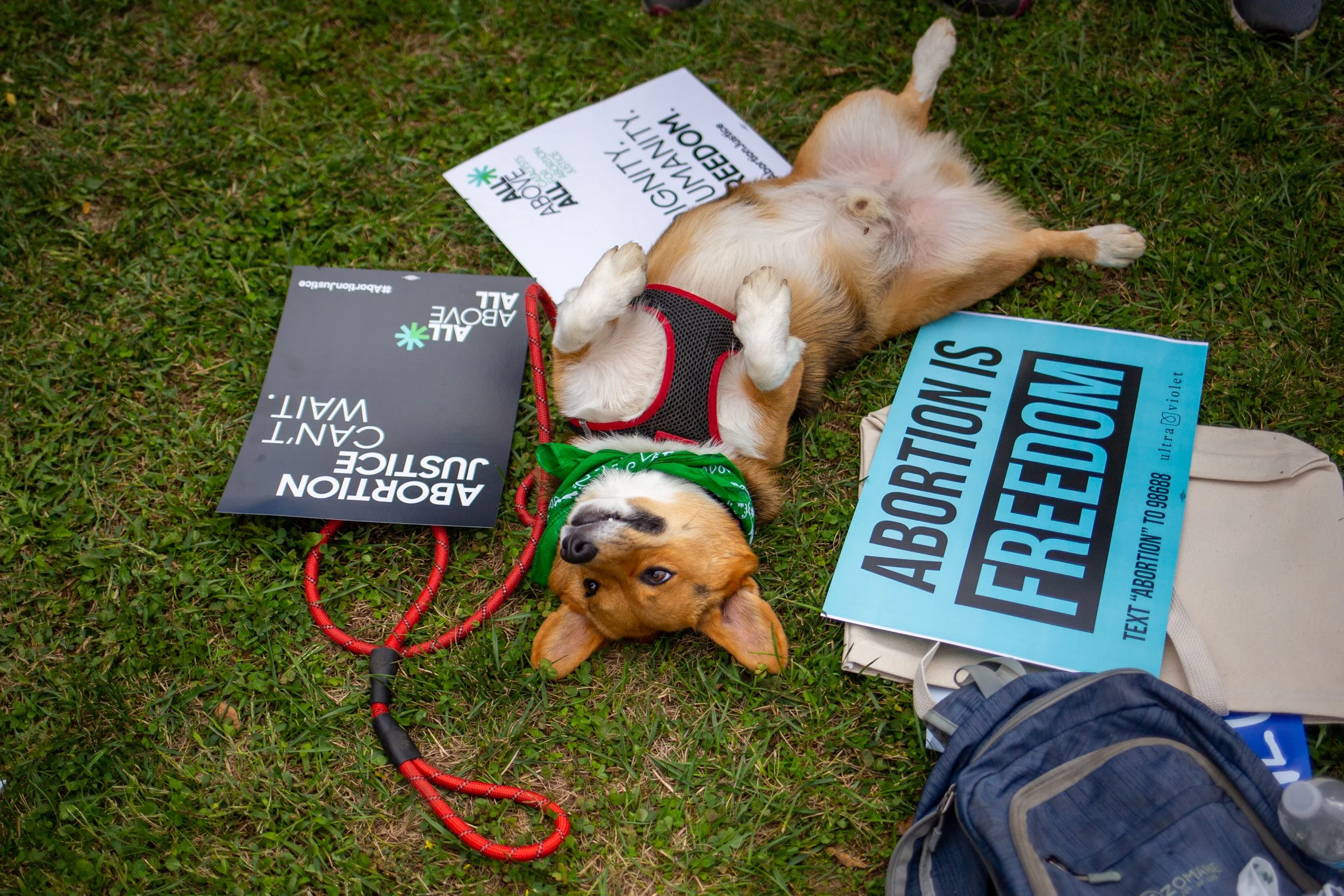
































































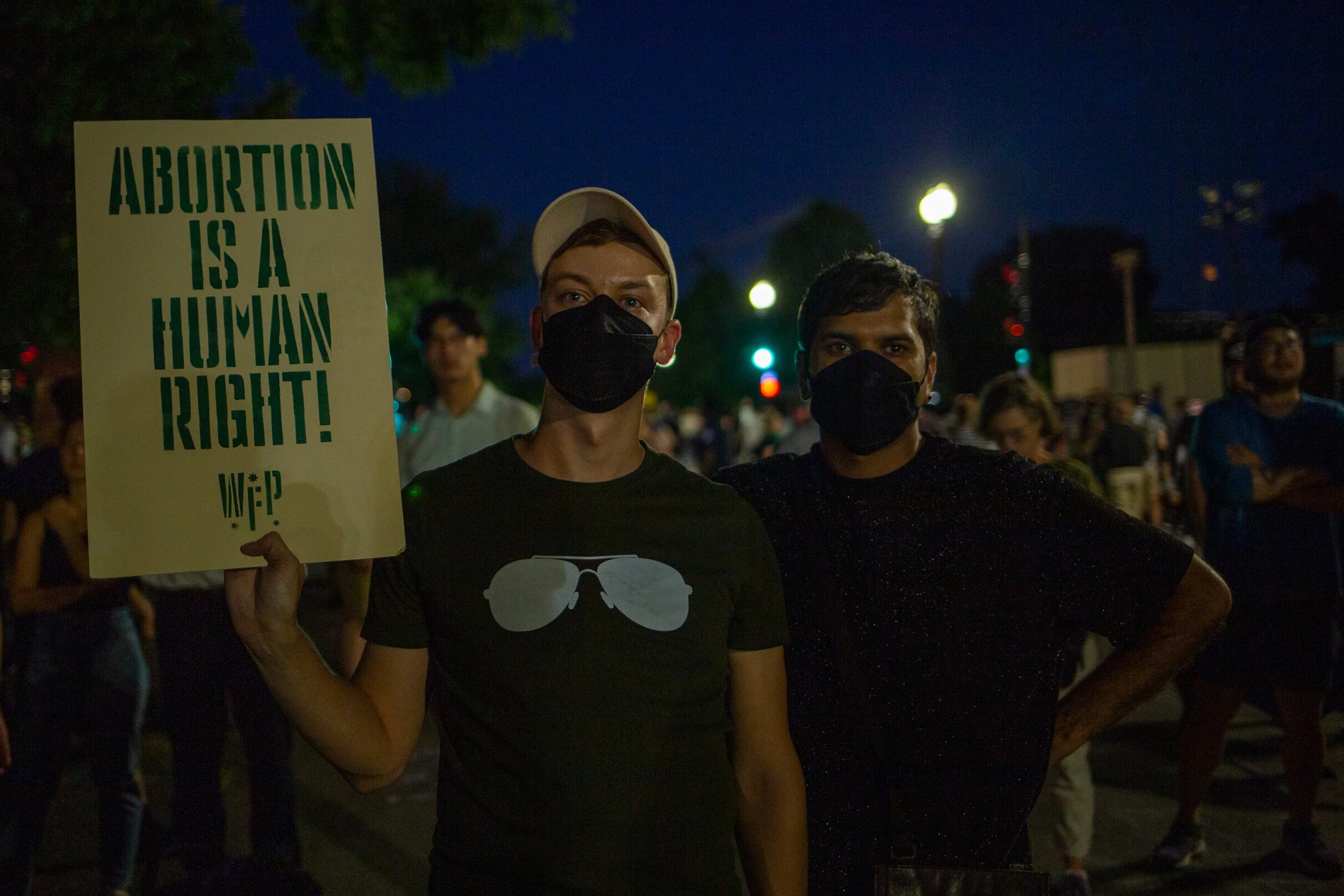






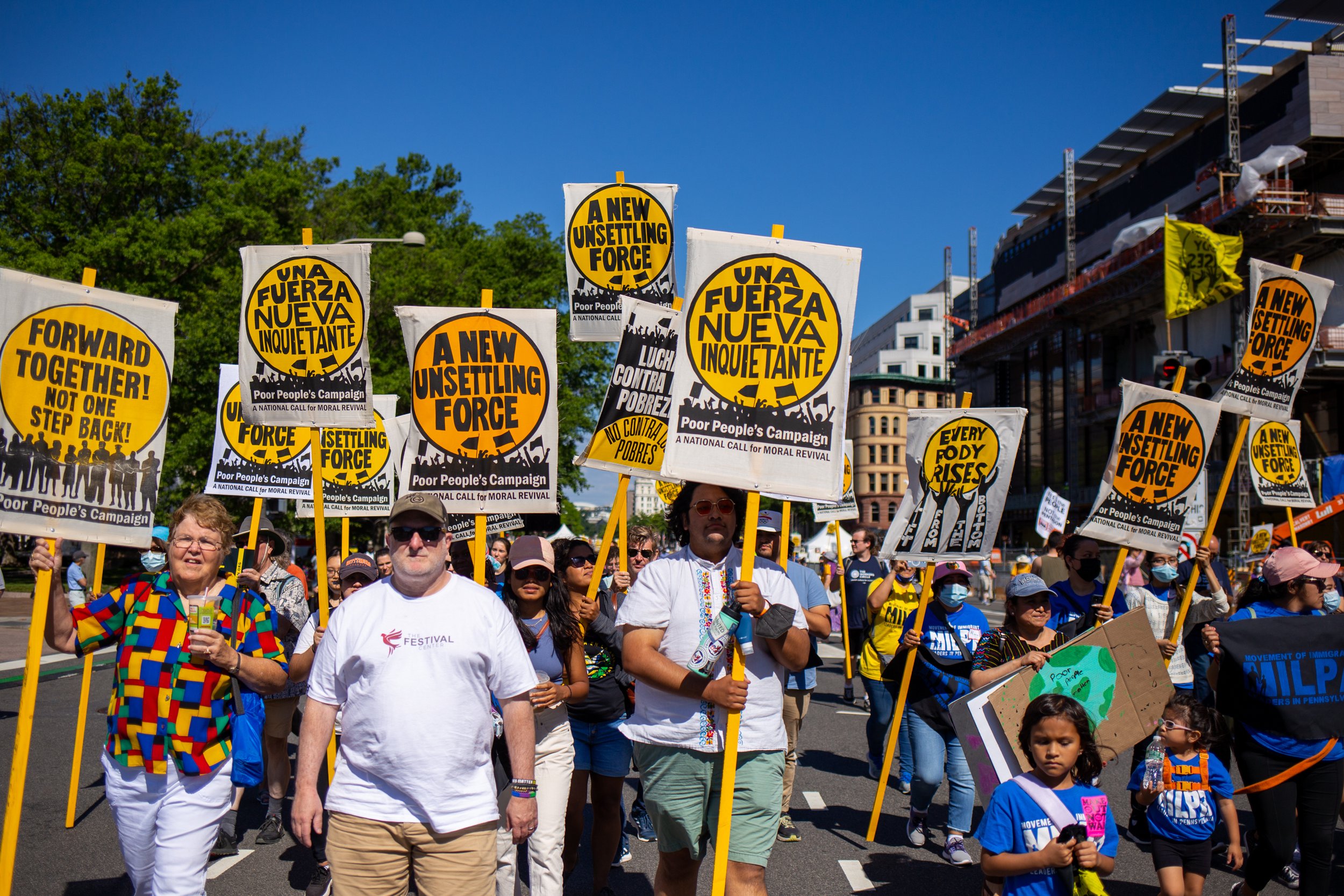









































































5.30.22: Memorial Day

Thurgood Marshall Center For Services


African American Civil War Memorial


U Street



Lower Senate Park


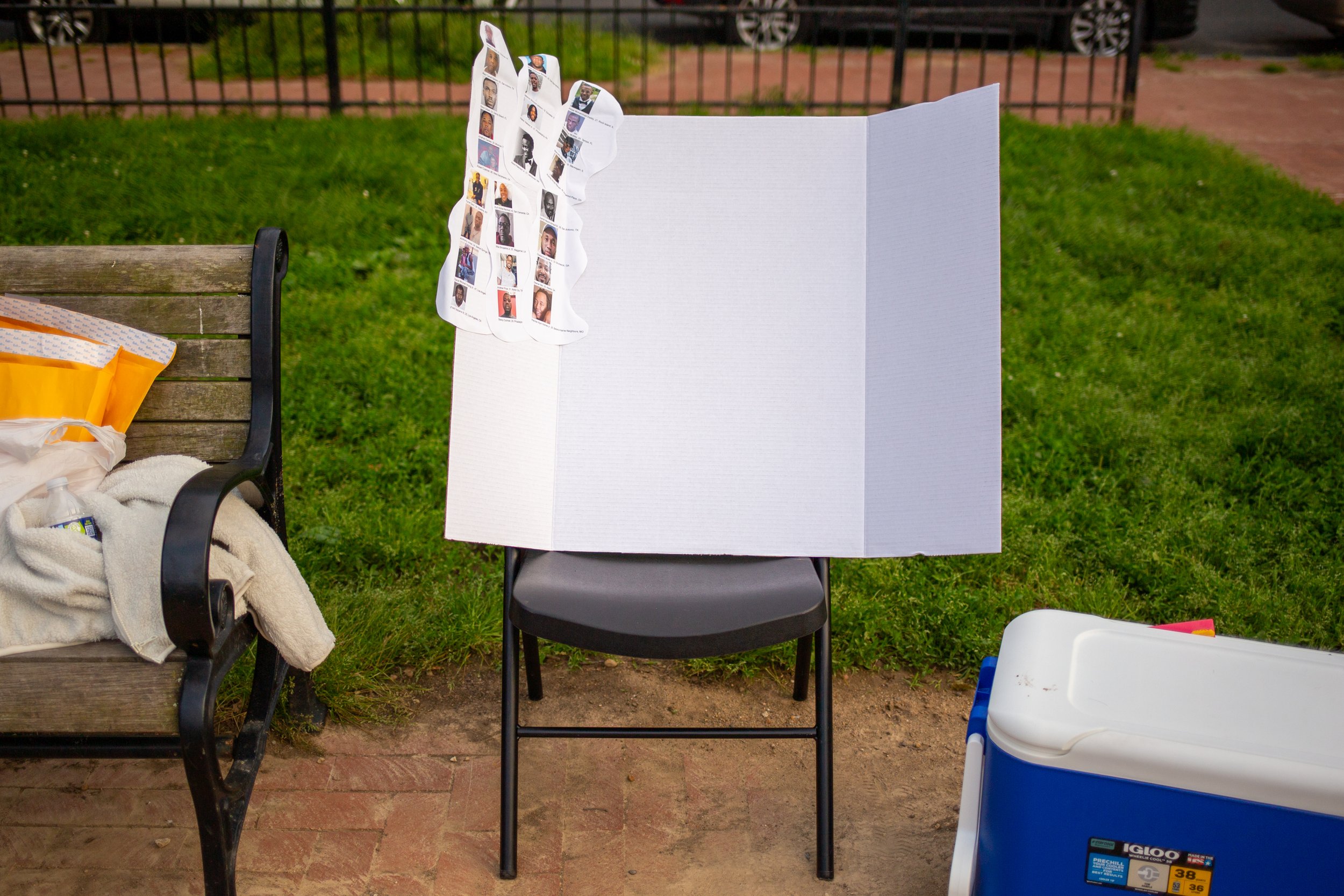


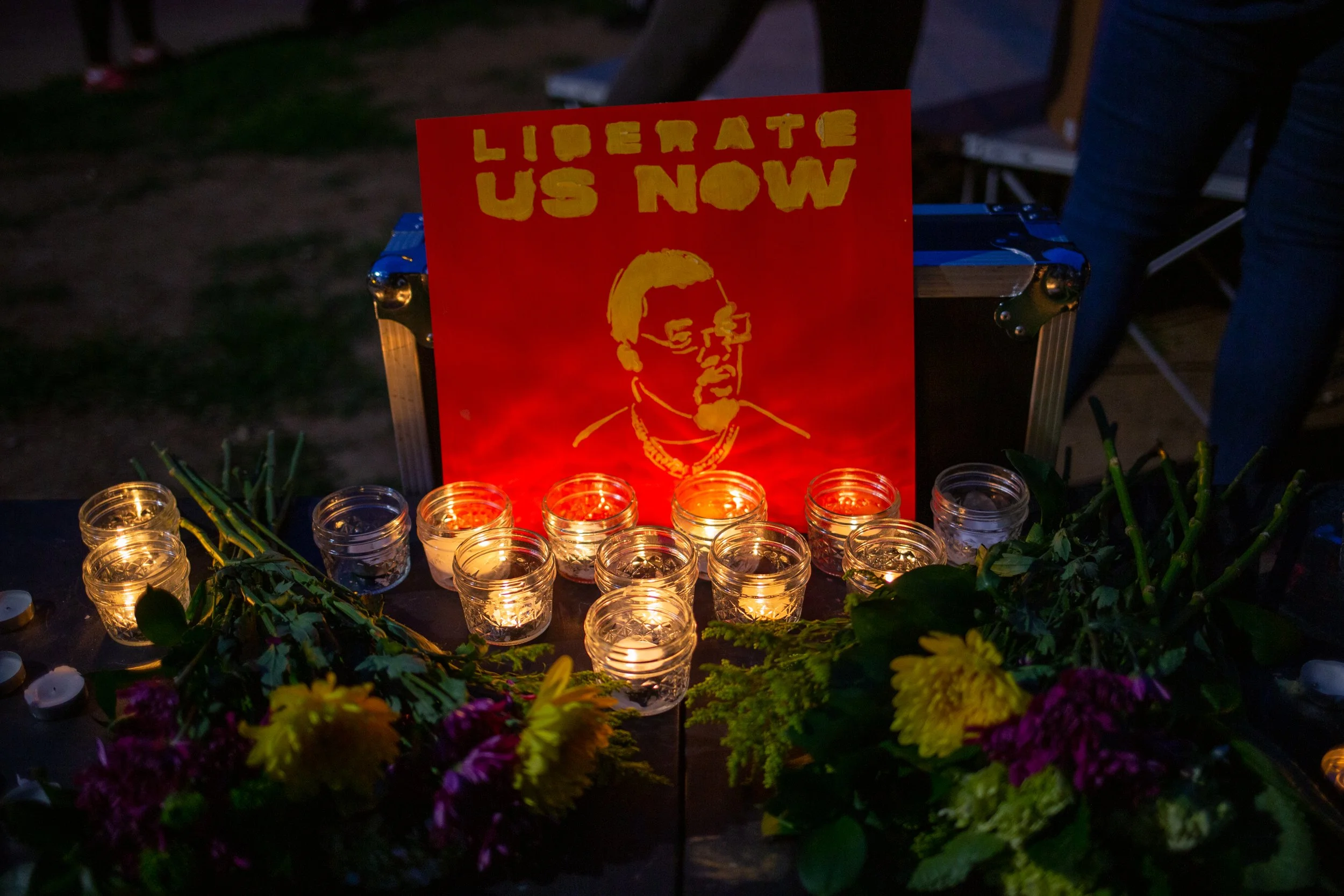















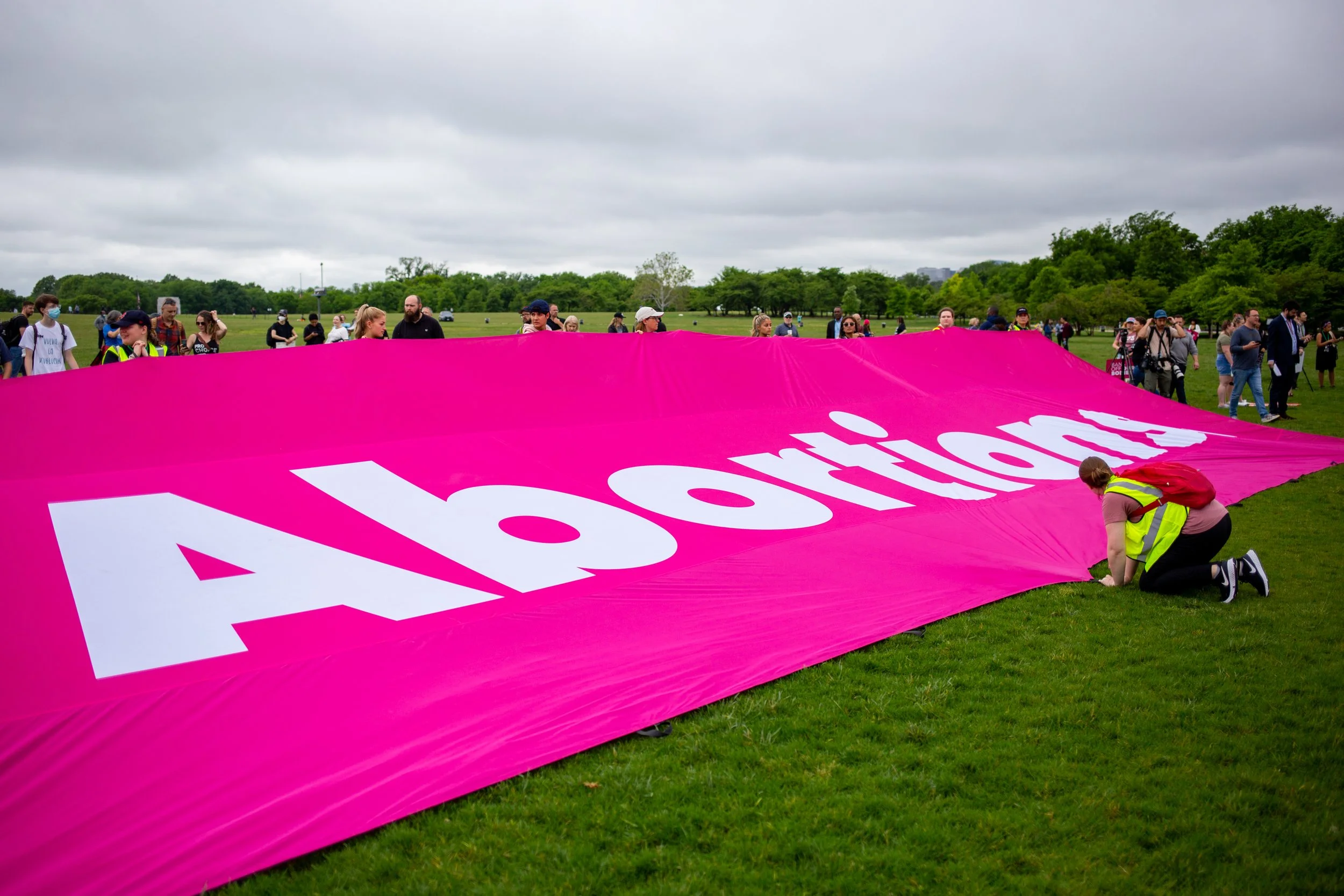














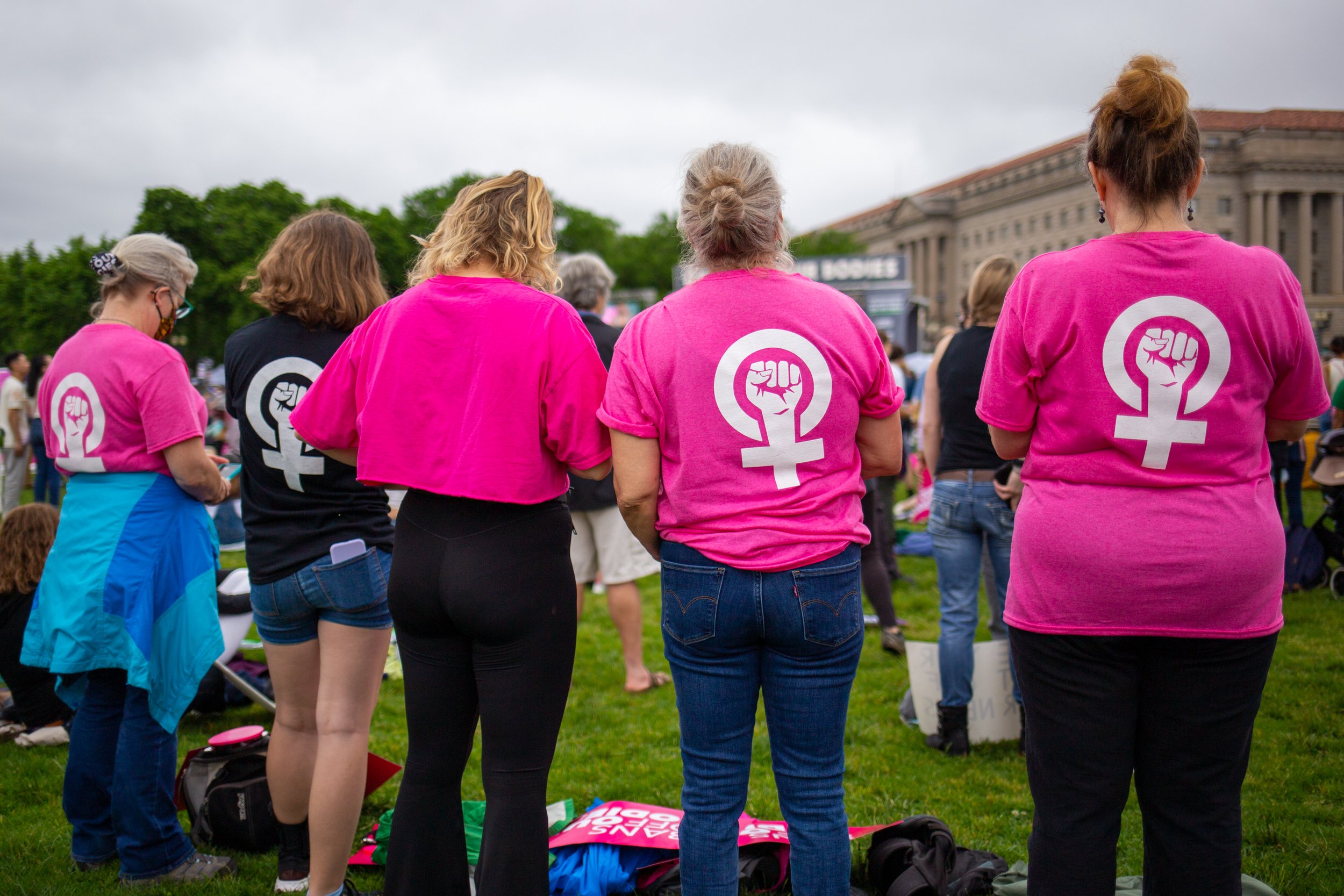











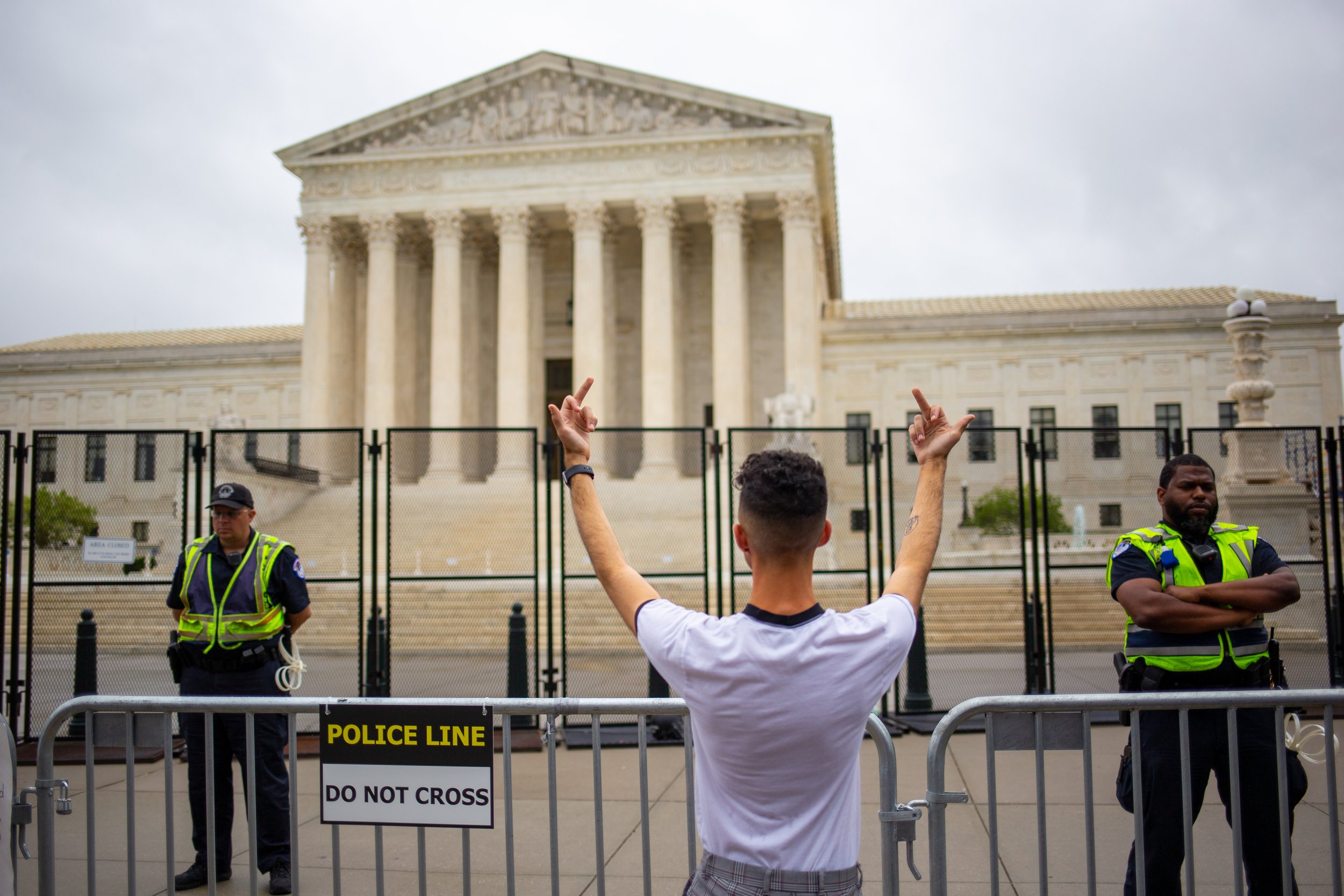


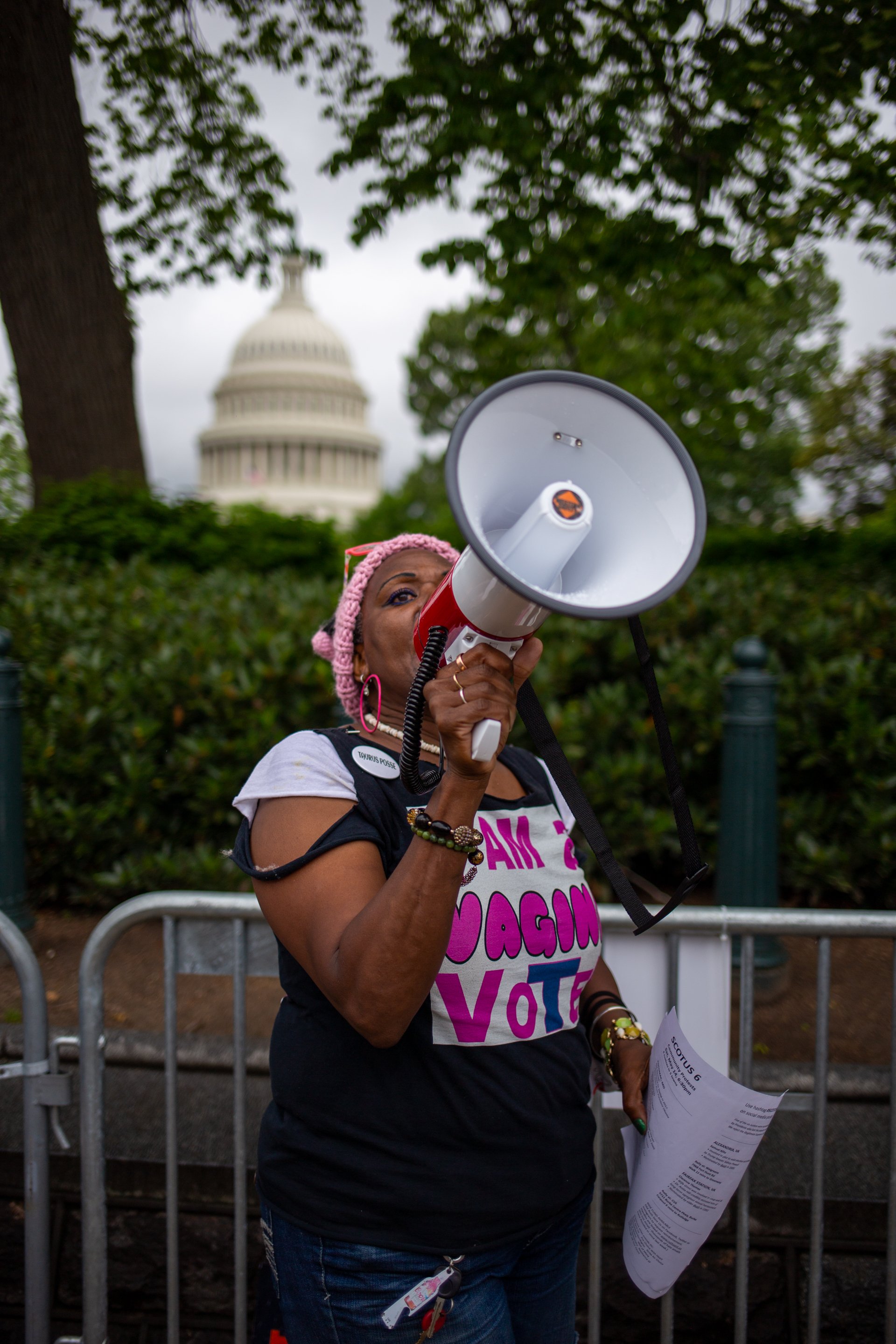
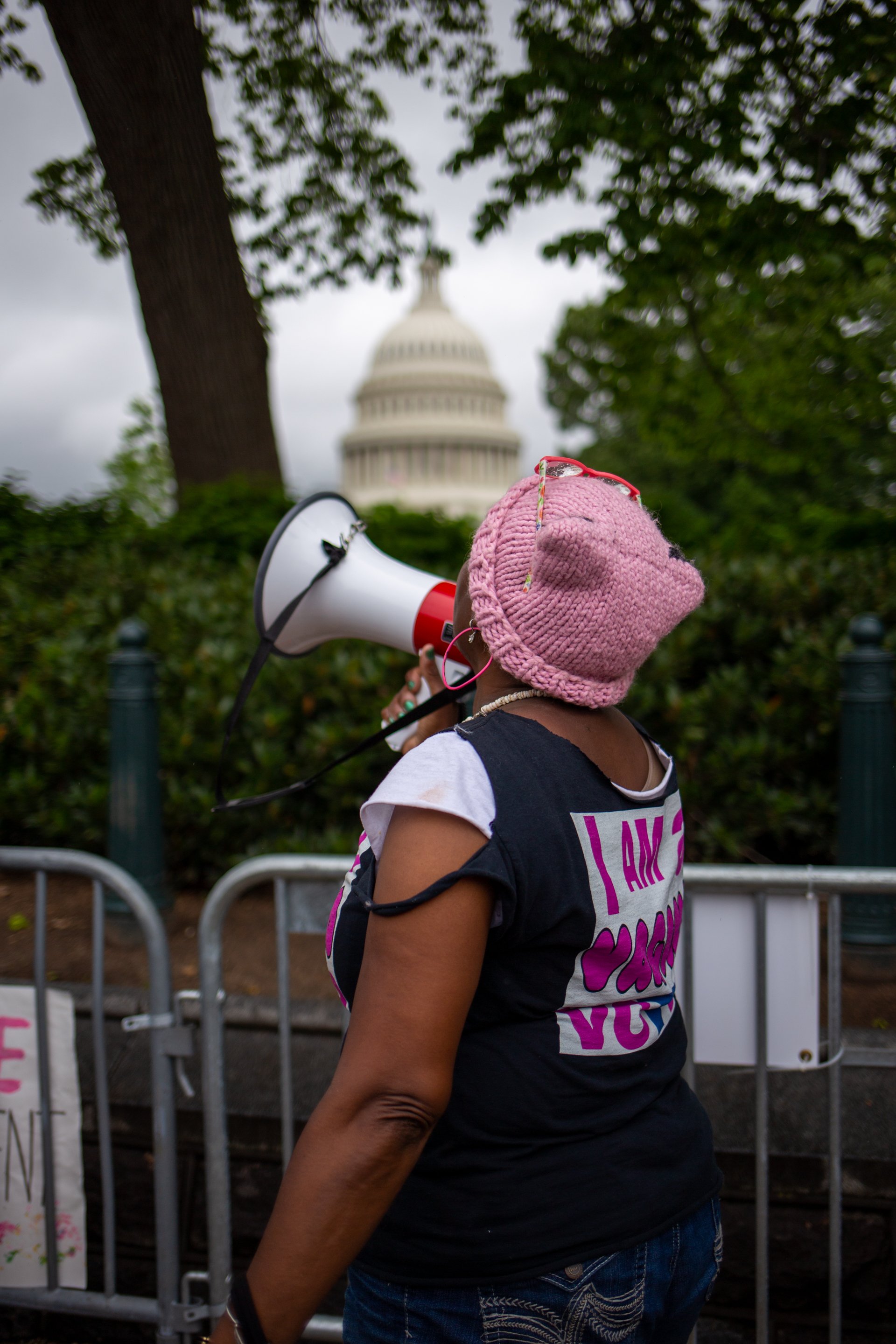
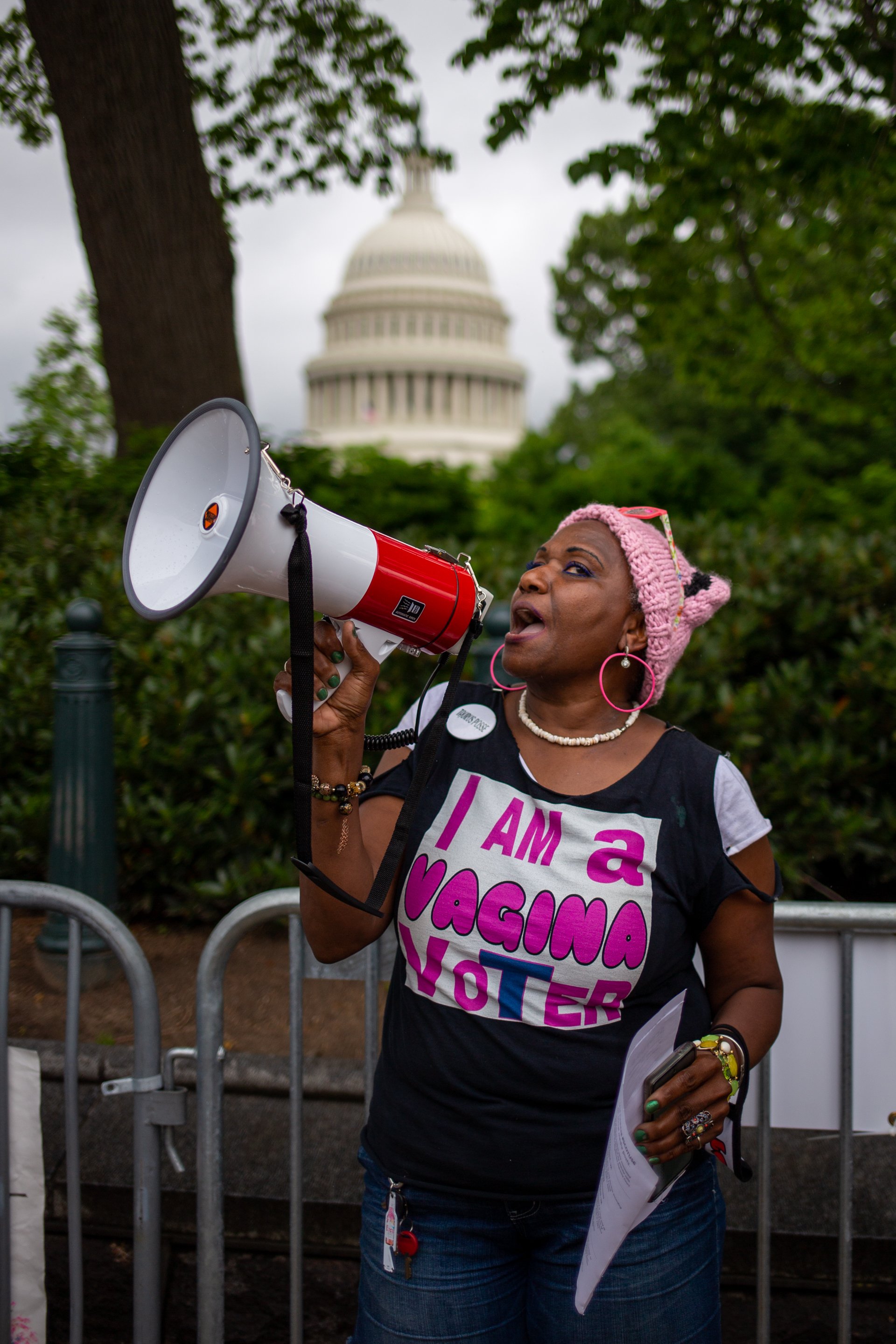






My one year DC-iversary

A Fathers Day march in D.C. on 6.21.2021.
In May 2020, I was living with my dad in Ohio. I had been furloughed from my job with Roadtrippers—and had no idea when it would be safe enough to truly hit the road again—but I decided to buy a car anyway. Two days later, I asked Kristine, a Fire Drill Friday acquaintance (and fellow arrestee) if I could stay at her Capitol Hill home for a few days to document the ongoing protests sparked by George Floyd’s death. She texted back immediately: “Absolutely.”
I visited Washington, D.C. exactly ten times before I moved here on June 20, 2020. The first time was with my family when I was young; the second with a college boyfriend, then for a Cat Power concert with the boyfriend after that. For the inaugural Women’s March in 2017, a friend and I took an overnight bus from New York and left before nightfall. I took five solo trips in 2019 and early 2020: the first in April to see the cherry blossoms, and four times from November to January to attend Jane Fonda’s climate justice rallies.
During my tenth visit, I joined several incredibly powerful marches and walked or biked dozens of very sweaty miles around the city; on day two, I was offered my job back. On the drive back to Ohio, I suddenly felt about Washington, D.C. the way I once did about New York, and thought: “How soon can I return?” The answer ended up being two weeks.

Mozart in June, 2020.
In the beginning of 2020, I had been living with my mom in Harlem for six months. Already working remotely for Roadtrippers for more than a year, I had began drafting plans to leave the city on an indefinite road trip around the country—following the paths (and staying on the couches) of friends who had departed before me pursuing adventures of their own. My overly-ambitious trip started to take shape at the same time as COVID-19 was secretly circulating around the city.
A mysterious virus may have traveled farther than any of us this last year—but as my Mikey Burton poster says, I “went nowhere, mentally everywhere.” That first part isn’t technically true—I’ve been to plenty of places in the Midwest and along the East Coast in the year since making the 347-mile drive from my Ohio hometown to Capitol Hill. I may not have seen the whole country (or most of my friends) as I expected to by now, but I’ve racked up just as many miles on my mental odometer as I put (or didn’t put) on my VW Golf.
I had barely settled into my sublet at the end of June when my mom told me that my cat, Mozart, was sick and I returned to New York for a week. On July 15, I signed a lease for an apartment on Capitol Hill, but a few days later, I was in New York again. Less than an hour after I made the gut-wrenching decision to end Mozart’s suffering, I drove the four hours home to my new apartment, filled with boxes but still devoid of life. Mozart had been my constant companion for more than 11 years—seven of those in New York—and it will never feel the same without her. For me (and all of my unlucky, but exceedingly patient, roommates), her signature screech and foot-sucking noises were as interwoven into the sound tapestry of the city as honking horns and bus brakes.
My D.C. soundtrack still includes bus brakes, but during the pandemic (and protests) it has been heavy on helicopters and light on horns. My kitchen window overlooks a corner with two bus stops. At night, I sit and listen to the busses arrive and depart; they’re almost always empty. I have an articulated skeleton that I refer to as my “roommate” (he doesn’t say much), but this is the first time in my life that I haven’t lived with an animal. I do not miss caring for a cat and I can’t imagine getting another; but I do miss Mozart, specifically. Quite a few pieces of me died with her but I now understand why they had to. I always joked that if I was a witch, she was my familiar; and now I would say that this past year I’ve felt like a Phoenix rising from her ashes—except that the animal hospital never sent them to me (what’s the statute of limitations on cat cremains?).

My current roommate.
Luckily, it’s hard to get lonely in my current studio apartment—which I describe as a “Funhouse of Trash”—due in part to my affinity for things that have faces (whether they’re supposed to or not). My introverted, socially anxious, and self-entertaining tendencies made me uniquely suited for pandemic life. But there’s no doubt that Washington, D.C. was a slightly more civilized place for me to ride out the rest of quarantine: by the time I moved, the infamous traffic had disappeared, and the brick sidewalks, quiet alleyways, and sweeping wide avenues felt far less oppressive than the 24-hour ambulance sirens I heard in the weeks before I left New York.
I didn’t flee New York in its time of need, I fled it in mine. I have MS and a suppressed immune system; I already had one foot over the George Washington Bridge by the time the city went into lockdown—a pre-toilet-paper-panic trip to an UWS Trader Joe’s pushed me all the way to Ohio. In D.C., I’ve been able to live by myself, easily own a car, and walk, bike, or take the Metro. From behind my handmade face mask (or two when the MAGA losers were in town), I have attended countless marches and rallies, taken more than 20,000 photos, and wrote about most of it (or have nebulous plans to, one day). I’ve filled up five journals, met a lot of extraordinary people, and turned the best acquaintances into real friends.
I admired Nicky before I officially met her—or heard her extraordinary story. But now that we’ve spent countless hours exploring the city together, I am constantly surprised at just how right I was to suspect that Nicky was someone worth knowing. Since the beginning of November, we’ve taken walking tours (following our whims or using one of her tattered Nixon-era guidebooks) of Georgetown, Anacostia, and Old Town Alexandria. We’ve explored historic districts, an abandoned hospital, and the Navy Yard. On Christmas morning, she made me waffles and we walked around a cemetery. I could write 10,000 words just about our walks (and maybe I will someday), but it’s hard to believe there was a time when I lived here and didn’t know Nicky—and I feel that way about everyone else I’ve met along the way.

RIP John Lewis, 7.17.20.
Post-vaccine, and with pandemic restrictions lifting, in some ways it feels like I’ve moved to a new city all over again. The Capitol grounds are still frustratingly off-limits, but I’m now eating inside of Pete’s diner nearby almost every weekend. Diner breakfast is the number one thing I missed from the Before Times—but I’m not sure what I dread more: the return of tourists or the traffic? (Actually, wobbly tourists on electric scooters might be the number one threat to our nation’s capital every day that isn’t January 6, 2021.)
When I visited for Fire Drill Fridays—in between dodging the scooters—I sat on a bench on the National Mall and watched people run around Capitol Hill. I had run on and off when I lived in Brooklyn and Manhattan, but infrequently, and never more than 2 or 3 miles at a time or because I really wanted to. Both Prospect and Morningside parks have significant hills that I was never confident enough to attempt, but on December 30—around the time I was also running some particularly harrowing mental miles—I successfully ran up Capitol Hill (which is very much an actual hill) for the first time; I’ve been doing it several times a week since.
Sometimes I stop on the Mall to watch the school groups and families, so many like mine when we first visited in the early ‘90s. As they walk from the Capitol toward the Lincoln Memorial, I wonder if they know that in D.C., every landmark seems way closer than it actually is—those sweeping avenues are great for political parades, protest marches, and stunning sunsets, but the grandiosity of it all can be deceiving. If I’ve learned one thing in the last year it’s that, unlike in life’s rearview mirror, the objects on your map of the future are often further (or completely different) than they appear to be.
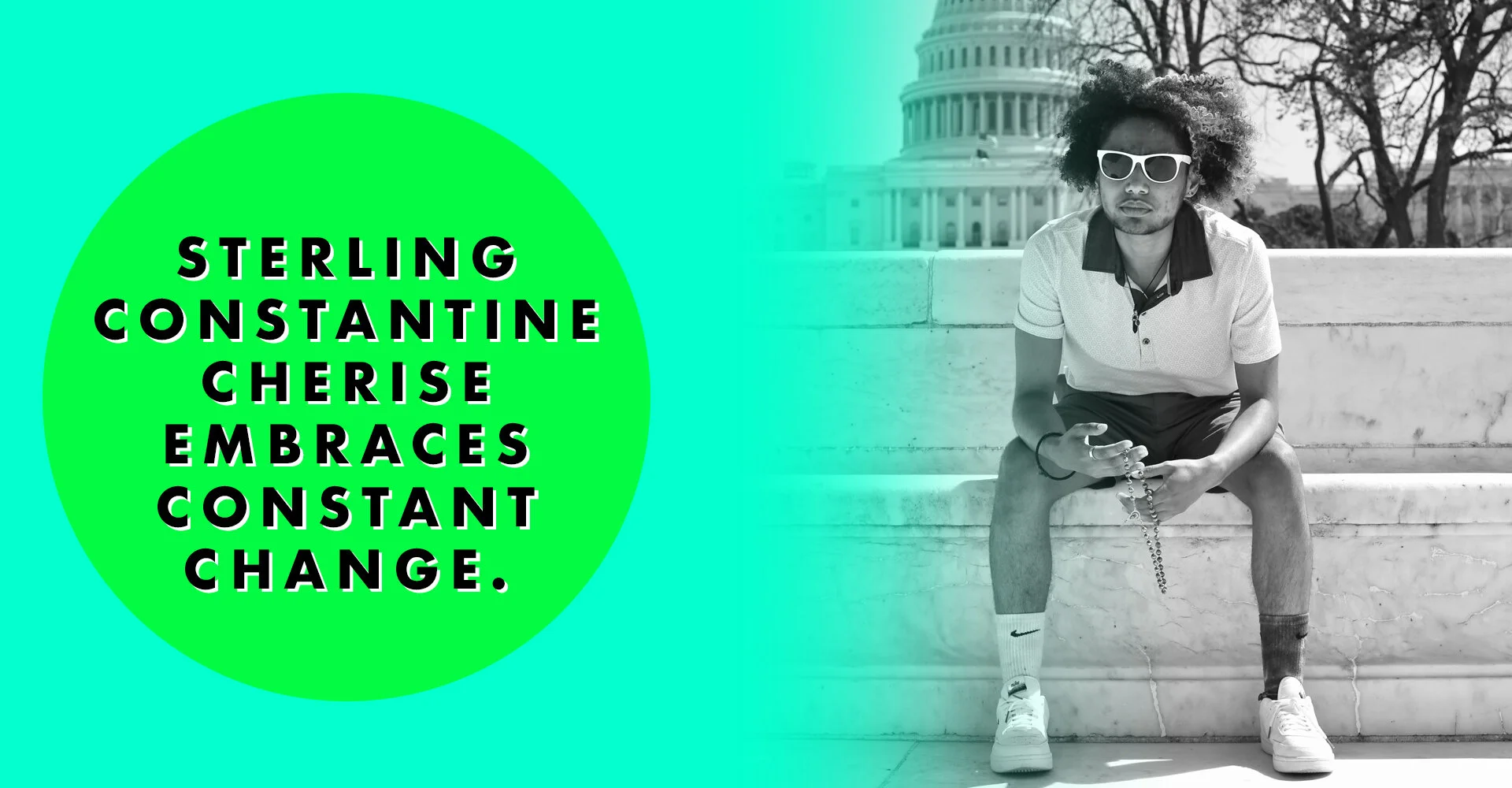
Sterling Constantine Cherise embraces constant change

Photo: Kristine Jones
On May 28, 2020, Sterling Constantine Cherise turned 21 years old. Almost no one who celebrated a birthday after mid-March did so without complications. But instead of a Zoom party or virtual Quarantinis with friends and family, Cherise, a Black trans man, received a tense text message from his parents: “You have no idea how this affects our lives,” they wrote, referring to his decision to begin transitioning earlier in the year. “You’ve been lying to us your whole life.”
One day earlier—and just two days after George Floyd’s murder—38-year-old Tony McDade was fatally shot by an officer with the Tallahassee Police Department. There are likely several reasons that McDade’s death isn’t as well-known as Floyd’s. Maybe the collective consciousness had reached a saturation point after the deaths of Breonna Taylor and Ahmaud Arbery and repeated viewings of the Floyd video. Or maybe it was because McDade, initially misgendered by police and news outlets, was a Black trans man.
Cherise was shaken by McDade’s death, but wasn’t surprised that it hadn’t inspired the same level of outrage as Floyd’s. “A trans man died close to the day that I was born—and no one was talking about it,” he says. “That could have been me. If I would have killed myself back in March, I would’ve been buried as a girl. It would have been horrible and no one would have known.”
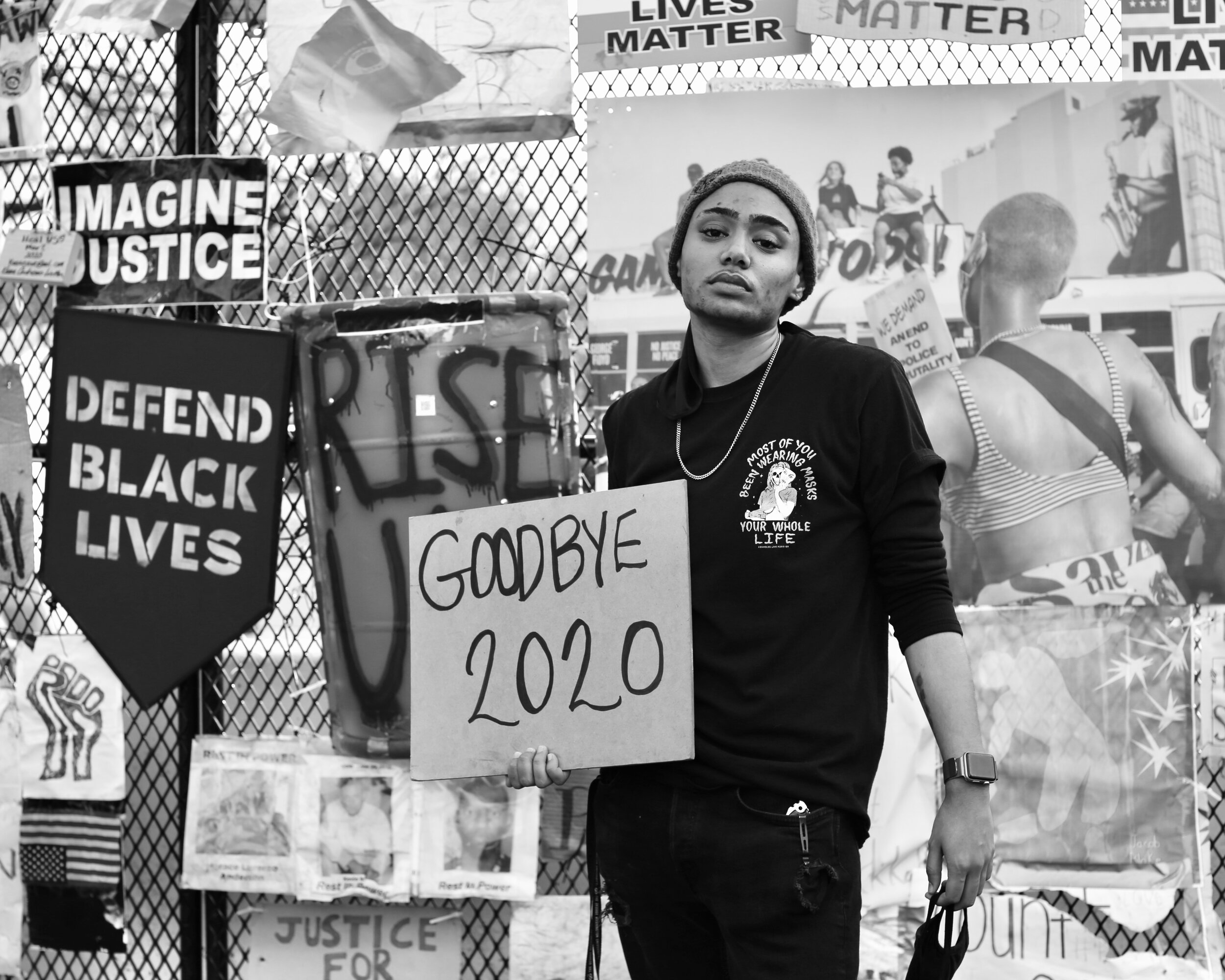
Photo: Kristine Jones
Today, Cherise refers to his mother, who is “Portuguese and white passing,” and father, who is Black, as his “biological parents.” He says that while he was growing up, it was never acknowledged that he was Black—and his mother raised him “to be like a little white girl.” Things went from bad to worse when he was outed as a lesbian and later, when he came out to them as trans. But like a reluctant Rumpelstiltskin, Cherise must’ve learned at an early age how to spin the straw he’d been given into gold.
So, instead of spending his 21st birthday getting blackout drunk and celebrating his own life, Cherise chose to honor McDade’s—by joining the protests that had sprung up in the streets of D.C. It was not only Cherise’s first time protesting, but he says he had never even been in a crowd of people that large. He made preparations to quarantine before returning to his job at George Washington University—that is, if he managed to make it home at all.
Cherise says that he is increasingly aware of the dangers that follow Black men (and even more so, Black trans men and women) in America. Every time he went out, he made sure people knew where he was, shared passwords with friends, and saved instructions on his phone (the Gen-Z version of a last will and testament).
“If I’m going to get killed out here, at least I will die as the person I am,” he says. “I’m not afraid to die for what I believe in. I will march until I can’t walk—and I did. I will do whatever it takes to make my voice heard for everyone who wants to be out here and can’t be.”
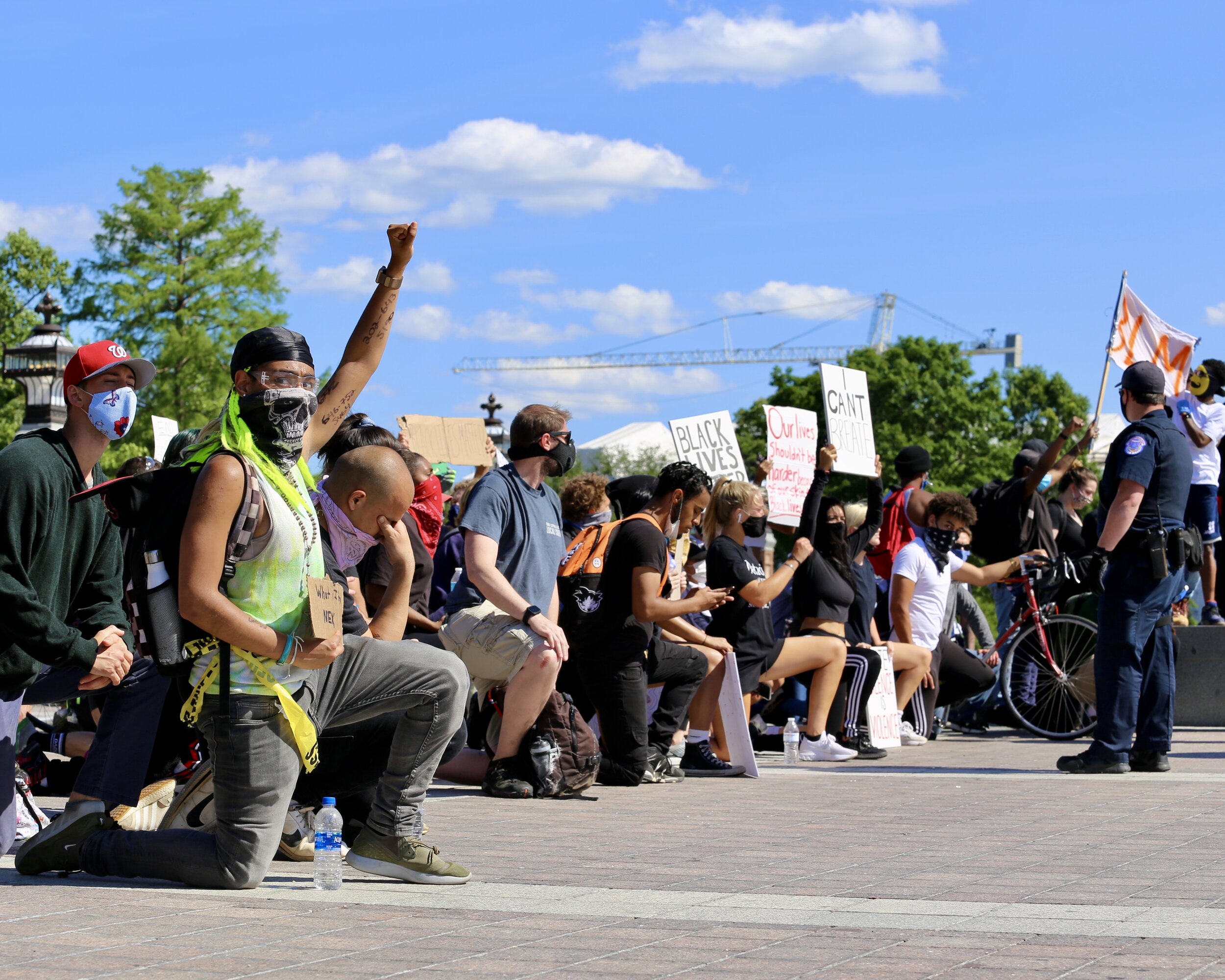
Photo: Kristine Jones
‘THE NEXT SERENA WILLIAMS’
Like many people who identify as LGBTQ+, Cherise has always had a complicated relationship with his biological parents. Growing up in south Florida, Cherise says they made sure he was too busy with school work and extracurricular activities to have any semblance of a social life. He was classically trained in violin and piano; he was a varsity athlete, competing in swimming, diving, track and field, volleyball, and gymnastics. His father had aspirations to make him “the next Serena Williams,” but Cherise never even liked tennis.
His mother never wanted children and his father “wanted a baseball team.” No child should ever be made to feel as if they’re a compromise, but that’s exactly what Cherise says he was repeatedly told. They sent him to private school, in part because Cherise says they didn’t want him to be just “another dumb Black girl.” “I was a trophy child,” he says. “It was my job to make it out and represent all the work my parents put in, their sacrifice. I was taught to give 100% in everything all the time—and even if it was close to that it still wasn’t good enough.”

Photo: Kristine Jones
It wasn’t until he came to Washington, D.C. to begin classes at GW, that Cherise realized just how much his strict, isolated upbringing had negatively affected his mental health and self-image. It was traumatic enough to be forcibly outed by his peers in middle school (he uses the word “hellscape” to describe much of his life pre-transition). But by the time he realized he was trans, Cherise says he was “probably 24- to 48-hours away” from throwing himself off a bridge.
Cherise called his mother to inform her that he had already made a doctor’s appointment and was going to start taking testosterone. “I don’t have any other options,” he recalls saying. “It is this bad. I’m going to do this because there is nothing else I can do. I’ve lost everything and I need to make this life or death decision.”
His mother suggested he return to Florida, enroll in community college, and wait at least a year. Instead, Cherise chose to stay at GW and begin hormone therapy without his biological parents’ support. He hasn’t seen them in more than 2 years; in what little communication they do have, they frequently use Cherise’s legal (or “dead”) name and intentionally misgender him. “I’m realizing that the people who were supposed to care about me, don’t—at all,” he says. “They don’t care because I’m no longer doing what they think I should.”

Photo: Kristine Jones
BLACK ENOUGH
Personal identities are as layered and nuanced as the groups of people they attempt to describe; when he came out as trans, Cherise had only just begun to unravel the biases surrounding his own racial identity. “My parents had me being afraid of being Black and afraid of other Black people,” he says. Because he is mixed, or simply “not Black enough,” he says didn’t get courted by historically Black universities.
But he is Black enough to be followed by security guards for having the audacity to shop for groceries; because he knows how it feels, he says he’s careful not to follow women too closely, especially at night. “I don’t want to scare them because I have knowledge about how that feels,” Cherise says. “But also I’m uncomfortable being a Black man on the street—always thinking, ‘Is someone going to call the cops?’”

Photo: Kristine Jones
Currently, Cherise’s official ID still bears his dead name; Daunte Wright was shot and killed for having expired tags and too many air fresheners. “I feel like I occupy a very specific space where I’m terrified for my life for different reasons all of the time,” Cherise says. “I’m actively terrified not knowing if I’m going to make it home every day.”
When Cherise graduates in a few weeks with a BA in criminal justice and a minor in English, his dead name will be on his diploma. Changing your legal name is an expensive and arduous process—and not all problems can be solved with a trip to the DMV. Even if he had the time to navigate the name change, he can’t afford a replacement diploma. Contrary to the myth of the American Dream, those who work the hardest often have the least. “I have moved from being a Black woman in the U.S. to wherever on the hierarchy being a Black trans man is,” Cherise says.
MASERATIS AND MACBOOKS
Despite saying he grew up “on the wrong side of the tracks” in Broward County, Cherise attended a private school; less than 30 of the students were people of color. “We all knew each other by name and people would ask if we were related,” he says. While other 16-year-olds were driving Maseratis and using Macbooks as umbrellas, Cherise was training to be an Olympic athlete and endlessly studying to fulfill his parents’ wishes that he become a doctor. He entered GW as a pre-med major but switched to criminal justice after deciding that he didn’t really want to go to medical school, after all.

Photo: Kristine Jones
He had also been sick for years, not realizing that he was having an allergic reaction to the estrogen in his birth control; he’s since discovered that his body had naturally high testosterone levels long before he began his transition. Still, he maintained a full class load while also working in a lab several days a week. He had no choice: “I pay my own loans because my parents said ‘If you’re going to transition, we want no part in it.”
Although he discovered that the class dynamics at GW weren’t that much different than his highschool (“kids are partying in the dorms and driving McLarens and I can’t afford to eat this week”) after graduation, Cherise says he intends to get his master’s degree and then his PhD. He has aspirations to teach forensics, become a medical examiner, or work in Quantico, Virginia. But with only a few weeks of school—and at least 60 pages of writing—to go, even a gold-star student like Cherise is tired.
“I’m exhausted,” he says. “And I have to keep working or I can’t pay for groceries. And I have to keep working or I can't pay my tuition. It never stops. I have to adjust and I don't really have the wiggle room to say ‘I'm going to take a day to not do anything.’”

Photo: Kristine Jones
A WHITE FANTASY
Cherise acknowledges his excess of privilege far more than he bemoans his lack of it. But he’s also aware that in general, white people are more likely to have access to necessary—and in many cases, life-saving—resources such as health care, secure housing, and familial support. Cherise says the fantasy of “I’m going to come out to my parents and they’re going to accept me and throw me a gender reveal party and I can continue to live my life as if nothing has changed” is just not often available to trans people of color.
He points out that gender confirmation surgery—like most procedures in the for-profit U.S. healthcare system—is expensive; since he can’t afford it, he says, “the only thing in my head that’s keeping me trans is testosterone.” But if you can’t afford the psychological therapy required before starting hormones (or the prescription drugs themselves) you’re going to turn to less regulated, and often unsafe, sources. If the dirty needles don’t get you, the body dysphoria will; too often in America, it’s dead if you do, and dead if you don’t.
Although the number is rising, only about 20% of people say they personally know an out trans person (and awareness isn’t always immediately followed with dignity and respect). As Oprah’s recent Elliot Page interview and the Netflix documentary Disclosure shows, trans representation in the media has come a long way from laughing at Bugs Bunny in a dress—but increased visibility often comes with heightened vitriol and violence. Less than half of the way through 2021, attacks on the trans community—and particularly trans youth—are only ramping up.

Photo: Kristine Jones
GRAVEL AND GRAVESTONES
Despite what certain Republican lawmakers and clergy members would like you to believe, trans people are (unsurprisingly) like everyone else: they’re just people trying to make sense out of, and live their lives in relative peace. For the first 20 minutes of our Zoom interview, Cherise and I talk about things as scandalous as hair dye and whether or not we are morning people (he is, I most definitely am not).
Struggling with your gender identity doesn’t make you a monster—but taking control of the process doesn’t make you a magician either. “Your mental health is not going to be fixed just because you’re starting testosterone,” Cherise says. “I still have an eating disorder and suicidal tendencies. I still have to go to therapy every week, I still have to address all of these things—sometimes it gets worse as it gets better.”
While everyone is different, adding testosterone (or estrogen) to the equation does change things—hopefully, but not always, for the better. Since beginning hormones last year, Cherise says, “I have to reevaluate my life every day. I don’t look the same every day, I have to readjust.” He notes the usual suspects: his empathy took a nosedive along with his impulse control and the tenor of his voice; he’s physically hotter and emotionally colder than he used to be. He takes his jacket off during a late-December photo shoot at Black Lives Matter Plaza and says without irony: “Everything is buried under a very thick layer of ice. And as hard as I want to crack through that ice—and as much as I can see and acknowledge what’s underneath it—I can’t reach it.”
The downs of transitioning may get more column inches (and movie scenes), but for every valley there’s usually a corresponding peak: “On the other side of it I think, ‘This used to send me into hysterics and I no longer care,’” Cherise says, laughing.

Photo: Kristine Jones
We speak for a second time on May 18; when the Derek Chauvin trial comes up, Cherise says the media should be focussing on how many victims of police violence never even receive a chance at justice. He says he’s not particularly interested in the outcome, while acknowledging that this willful avoidance of the televised trial is another one of his privileges.
Two days later, Chauvin is found guilty on three counts; it’s a start, but Cherise thinks there’s so much more to come before we can even begin to abolish the police. “I don’t think that this system of mass incarceration or capitalism is constructive in any sense,” he says. “But you’re asking people to build a castle out of gravel and gravestones and it just doesn’t work.”
He partly thinks it’s generational but theorizes that many people may simply be immune to change. His face mask is printed with the phrase, “Just trying not to die. Assholes live forever;” he knows that waiting for Boomers to die off may not be a practical political strategy. “If there are enough people willing to uphold a system, there will never be enough people to take it down,” he says.

Photo: Kristine Jones
FINDING THE WORDS
Cherise also knows what it’s like to feel as if your castle built of gravel has been compromised. When he was 16, he managed to sneak a girlfriend into his house exactly once before his parents found out and grounded him; he went off the grid for so long friends thought he had died. A friend suspected he might be trans when they were just 12 years old, but Cherise didn’t find out until almost a decade later. “I think people see it—whether you’re trans, gay or nonbinary—and you show and tell people before you (or they) have the words for it.”
When he finally found the words—and the courage to say them—he not only lost contact with most of his immediate family, but also several friends. “People are often unwilling to accept trans people because they’re under the assumption that they’ve known you best, or at least more than others,” Cherise says. “Not everyone understands the burden and is willing to share it with you. And take responsibility for their own transphobic or homophobic beliefs—or any other biases they may have.”
Cherise is so thoughtful and compassionate while describing the horrors he has faced—from forces both external and internal—that I wonder if he’s overstated the testosterone’s effect on his capacity for empathy. Then, as he often does during our more than 3-hour conversation, he explains a complicated issue succinctly and leaves me temporarily speechless: “The people who are repressed the most, end up feeling the most empathy towards the people who are oppressed the least.”

Photo: Kristine Jones
80% SPITE
When discussing the street protests that began at the end of May and continued well into the summer (and, in many places are still ongoing), the word privilege once again comes up. Cherise says it was a rude awakening for him to witness firsthand the raw, collective Black rage and police violence that his biological parents tried so hard to shield him from. Within a 5-minute’s walk from GW’s campus, Cherise found himself in a cloud of tear gas and rubber bullets. His friends urged him to keep his neon green braids so they could locate him on the national news and confirm he was ok.
“I made it home that night and thought, there is no chance I’m not doing this again,” he says.
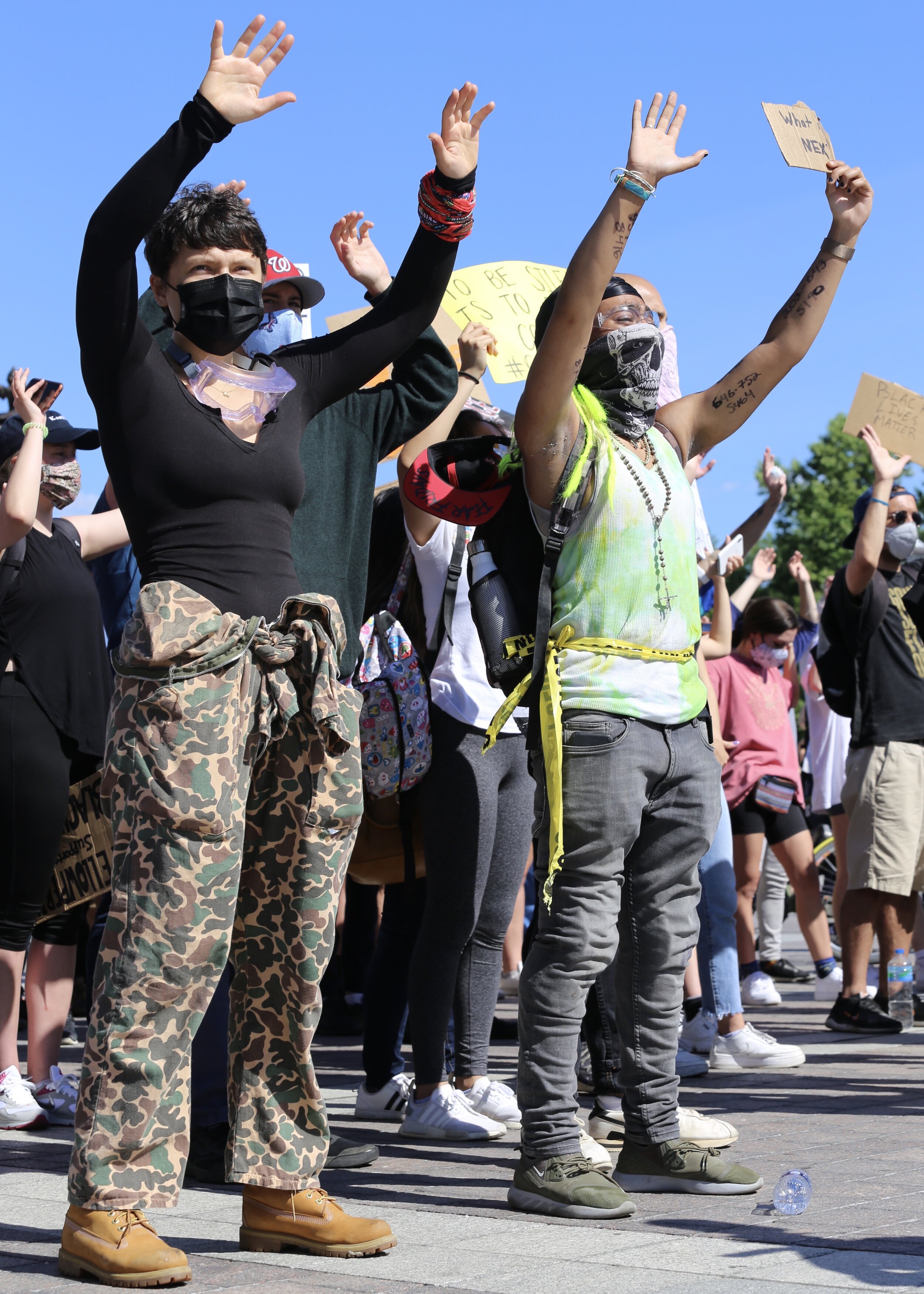
Photo: Kristine Jones
On January 6, Cherise walked outside of his apartment and came face to face with “a group of Nazis waving Trump flags.” GW campus police escorted him safely to work, but he says he still suffers from PTSD. His phone remains broken from a flash bang and a rubber bullet casing hangs on his wall—grim reminders that “no matter how good you are, the system is going to view you as every other Black man that has ever walked the face of the planet—and nothing will be good enough to save your life,” Cherise says.
Although he’s learning how to be more in control of how he channels his perfectionism, Cherise is clearly still very much the trophy child his parents dreamed of—even if they may never realize it. He’s more thoughtful, gracious, and comfortable in his skin than I am with almost a decade-and-a-half head start (not to mention additional privileges). So I’m relieved when—in an attempt to mitigate an outright gush—I ask where his strength comes from and he calculates that “80% of it is out of actual spite.”
“Yes, so much of it is wanting better for the world and wanting better for yourself,” Cherise explains. “But so much more of it is that so many people told me I couldn’t do this—that I’m not enough. It’s not willpower—it’s because you want to prove that you are not a statistic.”

Photo: Kristine Jones
‘I DESERVE TO EXIST’
Cherise may have always known that his chances of scoring Olympic gold were statistically small—and that it was basically impossible to be the “good little white girl” he says his mom wanted. He also probably never imagined himself as a trans role model, but now recognizes both the power and the danger in speaking about something so personal. No two trans people, for better or worse, have the same experience because, once again, they’re just people.
“But if someone like me would’ve met my 13-year-old self when I needed someone the most, it would have changed my life,” Cherise says. “Maybe it wouldn’t have changed everything, but it would’ve given me enough insight to know that I wasn’t alone.
Like Page, and other highly visible, out trans people, Cherise thinks that all representation matters, no matter how insignificant it may seem. “There is always a chance that someone will pass you on the street and think ‘There’s someone else who is either my skin color or who has my hair texture or has some crazy hair color,” he says. “And then think, ‘If one other person has it or feels that way, maybe it’s ok that I do, too.”

Photo: Kristine Jones
Even if someone isn’t trans or questioning their own gender or sexual identity (two distinct, but often overlapping issues), Cherise encourages them to have conversations with people who are. “If they understand a raindrop in the ocean of my perspective on something, maybe it’s enough,” he says.
I begin to think that maybe Cherise didn’t spin his share of straw into gold, so much as learn how to weave it into a life raft for himself when his parents and society set him adrift. He may not be on solid ground quite yet (he does still have to write those 60 pages before graduation), but he’s getting there. He says that all the suffering will have been worth it if just one kid is spared the same pain he felt—even if he had to find out the hard way that you have to save yourself before you’re strong enough to help search for survivors.

Photo: Kristine Jones
“I believe that I deserve to exist,” Cherise says. “And if I have to shout it from the rooftops, I’ll do it. Once you start, you never stop protesting. You’re protesting whether you’re with five thousand people or you’re walking home alone at the end of the day—but I might as well die speaking as a Black man than say nothing as a Black girl. I would rather be wiser for the better than ignorant and happy.”