
Archive
- Abandoned
- Alabama
- Arizona
- Bahamas
- Books
- California
- Cemetery
- Climate
- Colombia
- Connecticut
- Diner
- Egypt
- Feature
- Florida
- Friday Fun
- Georgia
- Holidays
- Illinois
- Iowa
- Italy
- Kentucky
- Louisiana
- Maryland
- Massachusetts
- Mississippi
- New Jersey
- New Mexico
- New York
- North Carolina
- Novelty Architecture
- Ohio
- Pennsylvania
- Personal
- Peru
- Project 365
- Protest
- Rhode Island
- Roadside Attraction
- South Carolina
- Tennessee
- Texas
- Travel Guide
- Virginia
- Walks
- Washington DC
- West Virginia
- Wisconsin

BOOzy Brunch 2016
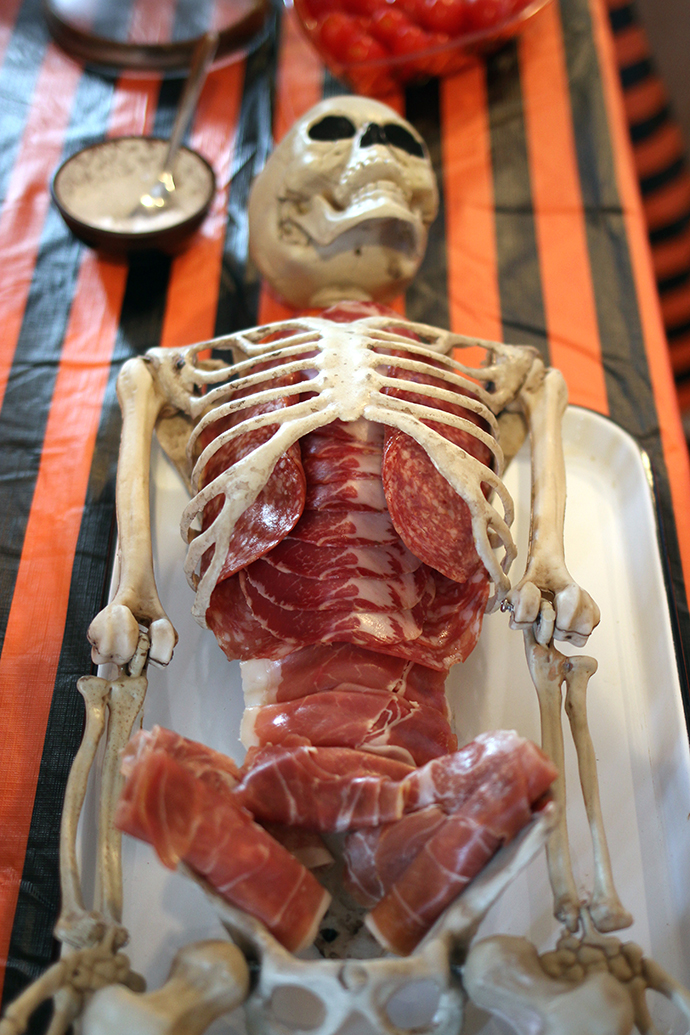
For the third year in a row, I threw a BOOzy brunch to celebrate the High Holy Day, aka Halloween. It's the only party I throw all year, for a few reasons: it's a lot of work to throw a party, I go waaaayyyy overboard on everything, and Halloween is really the only holiday worth celebrating (if I had to pick just one).
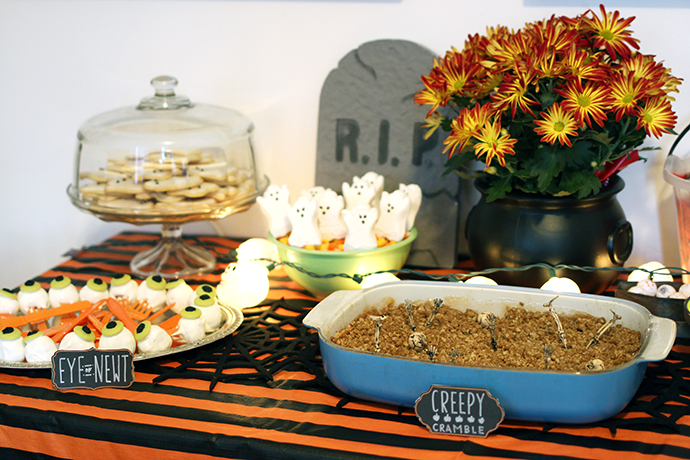



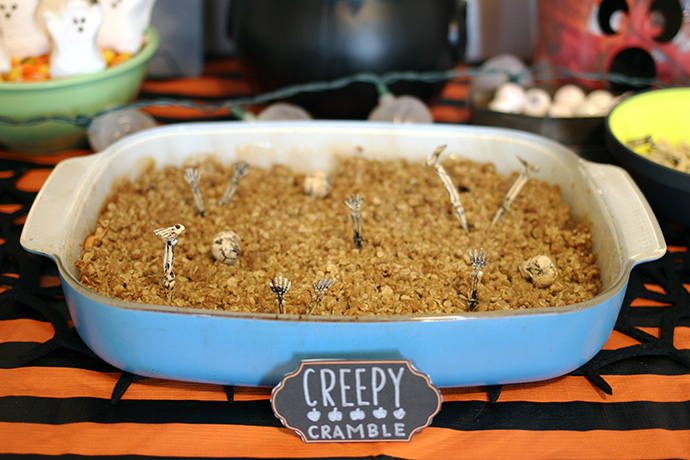
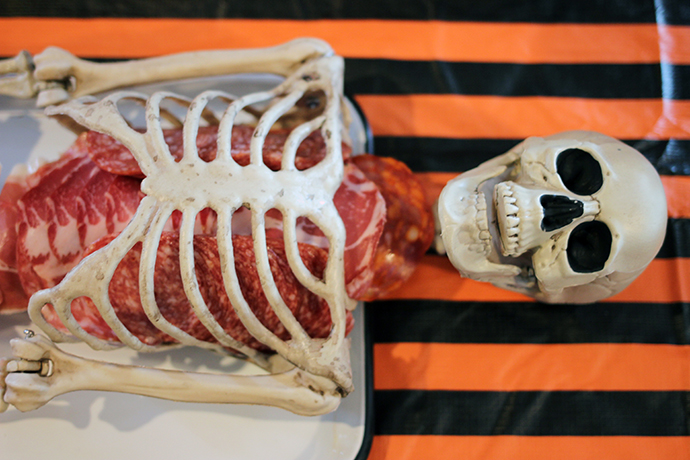
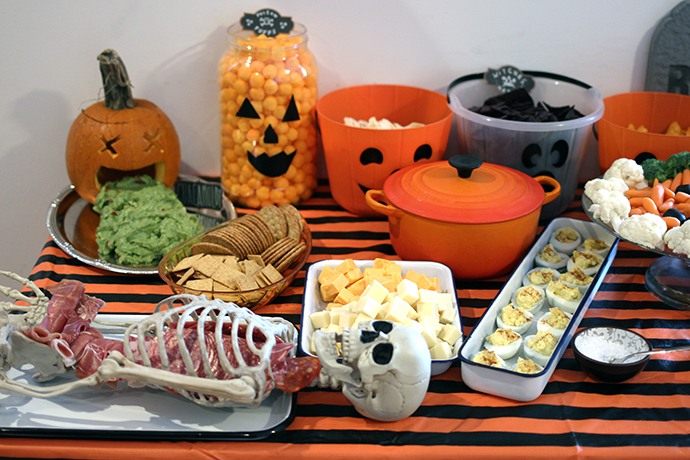
I hosted a few Halloween parties when I lived back in Ohio, and some spooky treats are staples by now—spiderweb deviled eggs, mummy hot dogs, salsa-and-cream-cheese dip that looks like puke but tastes like heaven and loads of creepy desserts. This year my showstopper was a meat skeleton, an idea that I fell in love with the minute I saw it on Pinterest. My wonderful dude found the perfect skeleton for $9.99 at Walgreens (true love!) and my partner-in-snacks, Francesca, expertly arranged the meats ("Do you have any art direction?" "Just make it gross, I trust you.")
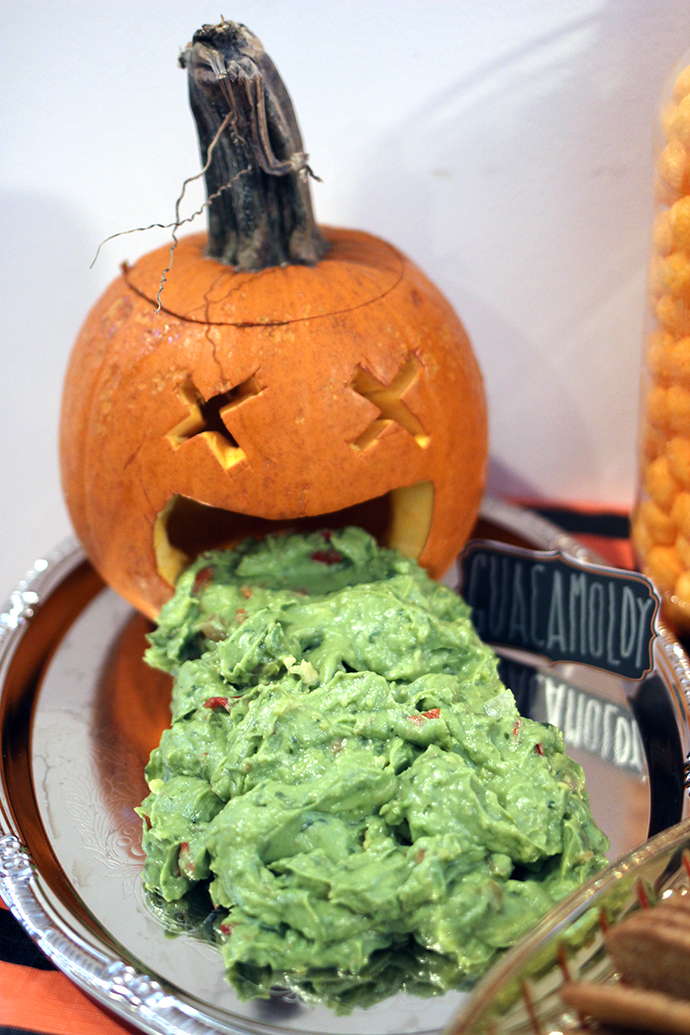







Some new additions to the repertoire this year included a (vile) veggie tray, "eye of newt" cake pops, Jell-OoOOo shots (in tiny cauldrons!) and jack (cheese and bean) o'lantern quesadillas. The only time of year when I really scour Pinterest is Halloween, but my favorite source for spooky snack ideas is still the Queen of All Things, Martha Stewart. I used to obsessively collect her magazines—the Halloween issues especially—and while Pinterest is very hit-or-miss (see the Jell-O worm debacle of '14), a Martha idea is always solid.
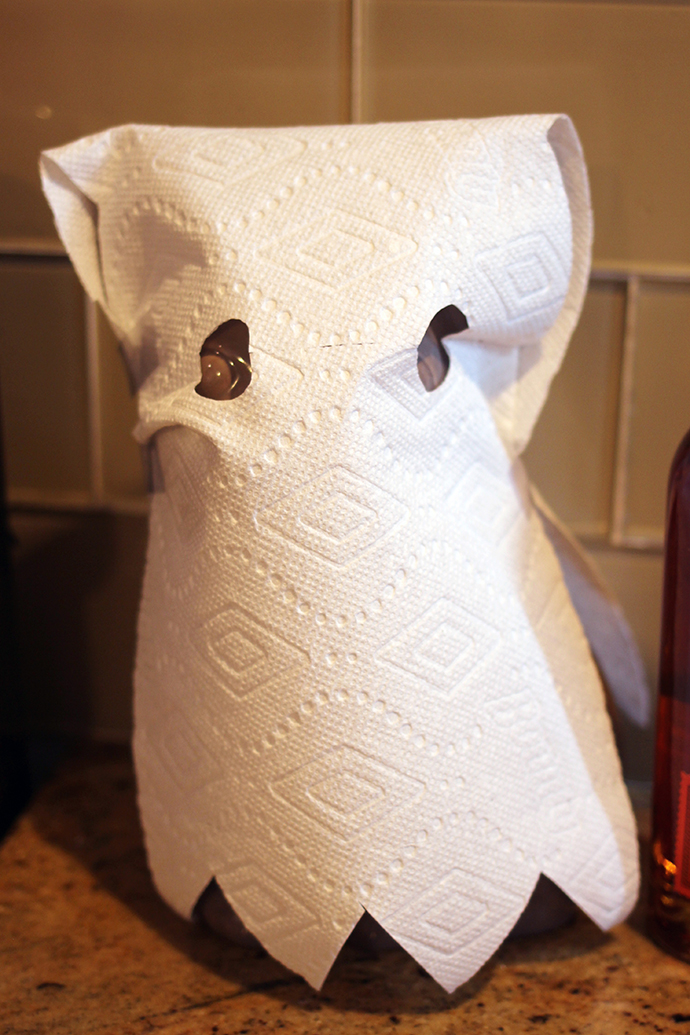


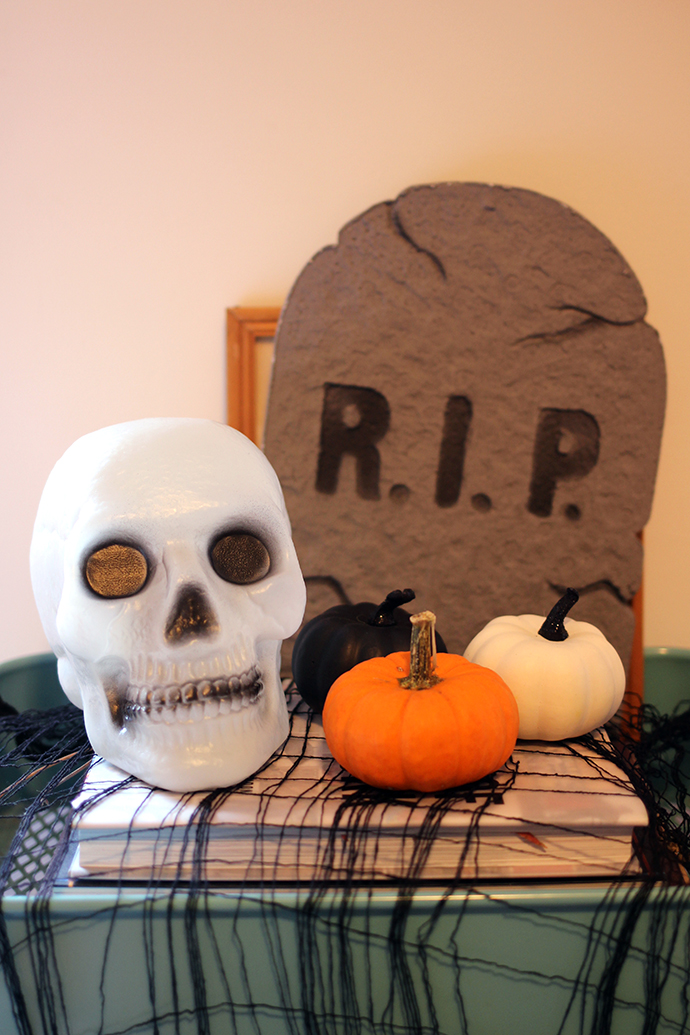
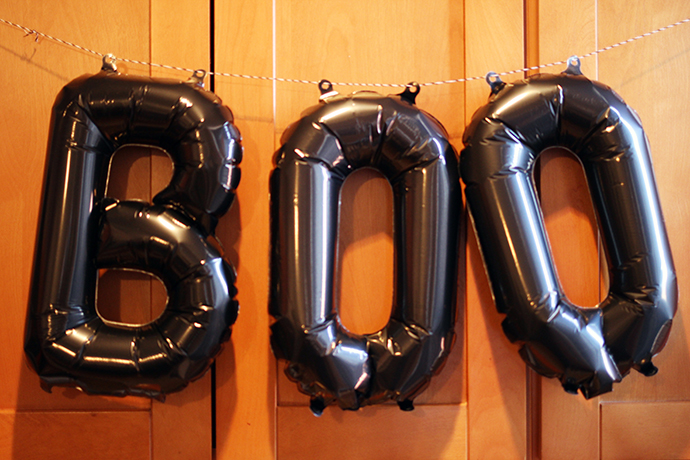
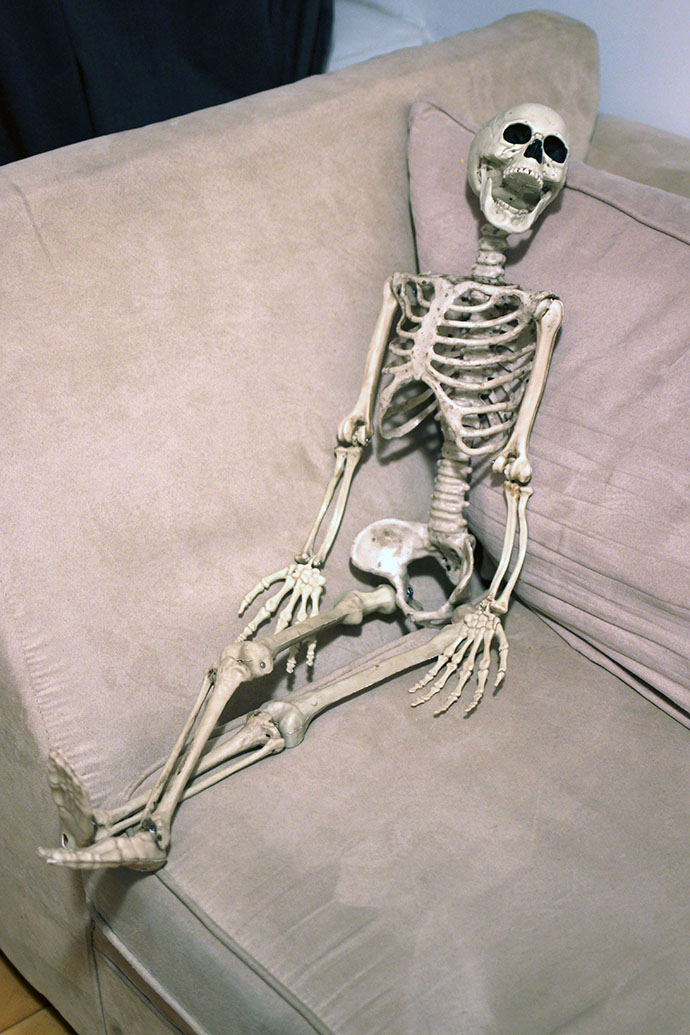
I probably own enough macabre everyday decor that I needn't buy a single Halloween decoration, but that didn't stop me from buying approximately every single thing in the Halloween department of Target this year. When I moved to New York I sold almost all of my decorations, which was heartbreaking, but rebuilding my collection has been fun.
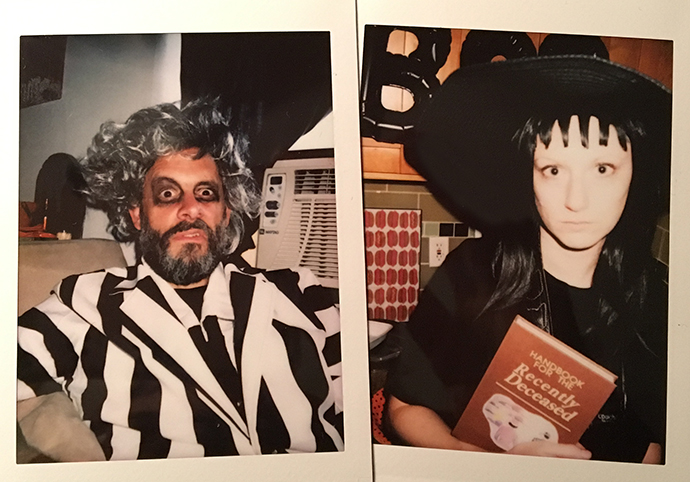
My dude and I dressed up as Beetlejuice and Lydia Deetz, which was pretty easy to pull off with my own wardrobe and allowed me to play with my long flowing locks all night long—it's funny how much difference a wig makes, especially when people are so used to seeing me with short hair. I've probably said this about every one of my Halloween parties, but I dare say this one was the best yet—there's only 365 days left 'til next Halloween!

Old Burial Hill: Skulls

It wasn't long after we had started exploring Old Burial Hill cemetery in Marblehead, Massachusetts, that I declared it to be my favorite cemetery. Of course this is a bit like choosing a favorite child—for those of you who are into the kid thing—but Old Burial Hill is that good. I initially put it on our itinerary due to its Hocus Pocus cred, and while it was fun to see for that reason, it definitely doesn't need a movie connection to be considered a destination.


Old Burial Hill was established in 1638—54 years before the Salem Witch Trials and 138 years before the US officially became a country—which makes it the one of the oldest (maybe the oldest?) cemeteries I've ever visited. Located about five miles southwest of Salem, Old Burial Hill contains an estimated 600 Revolutionary War soldiers and one victim of the Salem Witch Trials—although I'm not sure if the cemetery actually contains the remains of Wilmont Redd, or just a memorial marker.
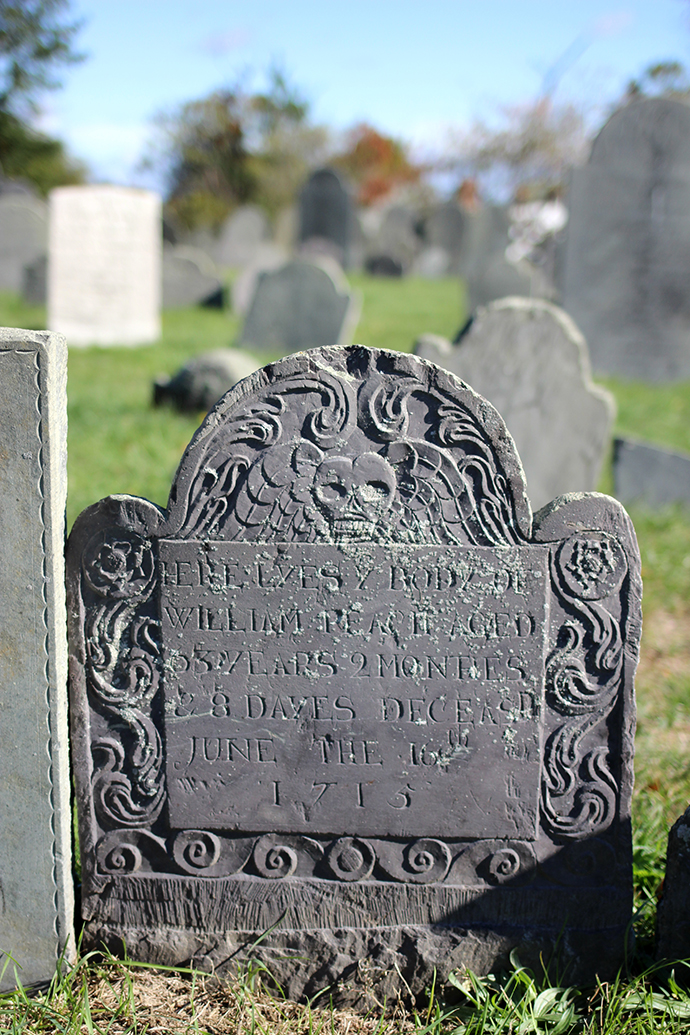
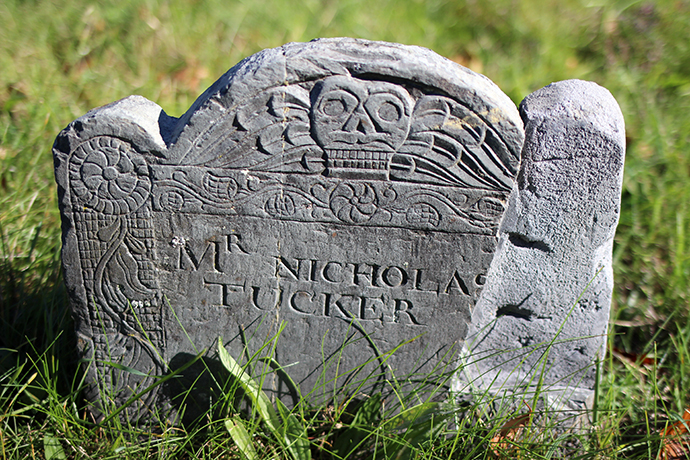
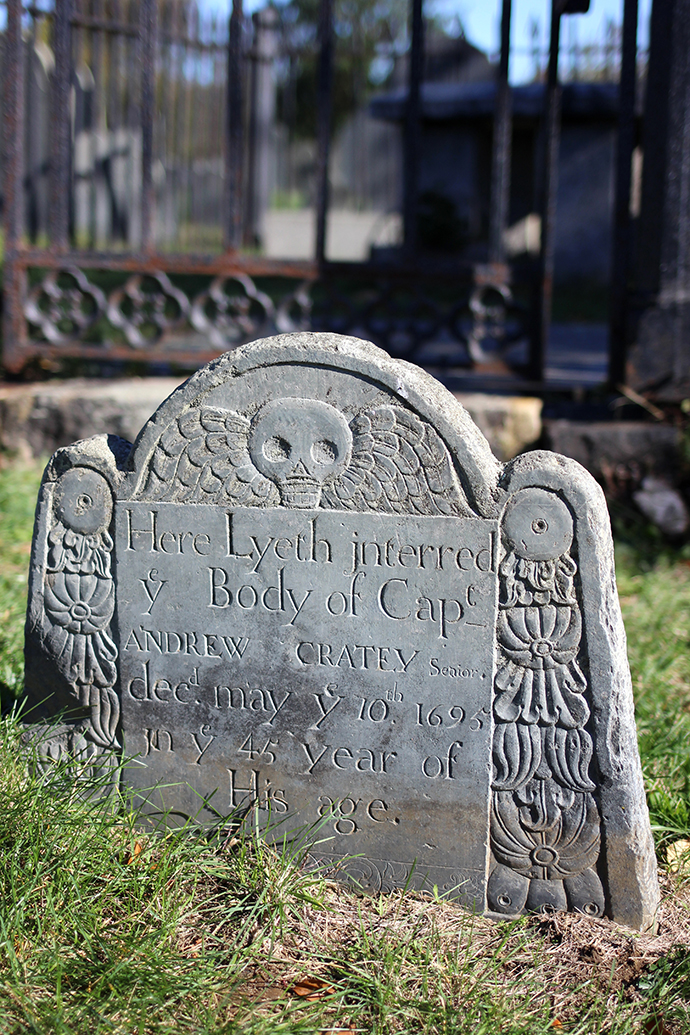


The first thing I noticed (with glee) was the high concentration of skull-and-crossbones imagery, which is my very favorite thing to see on a tombstone. This memento mori motif was popular with the Puritans, and the newer the cemetery the less likely you are to see this type of stone. Old Burial Hill was positively lousy with them and I was completely overwhelmed by all of the variations.. Usually I'll find one or two in my cemetery adventures, but every one I saw was better than the last and wejust kept finding them. Like cemeteries, it's impossible to pick a favorite stone, but Mrs. Susana Jayne's stone is pretty much perfect, containing not only a skeleton, but an hourglass, bones, winged cherubs and bats.

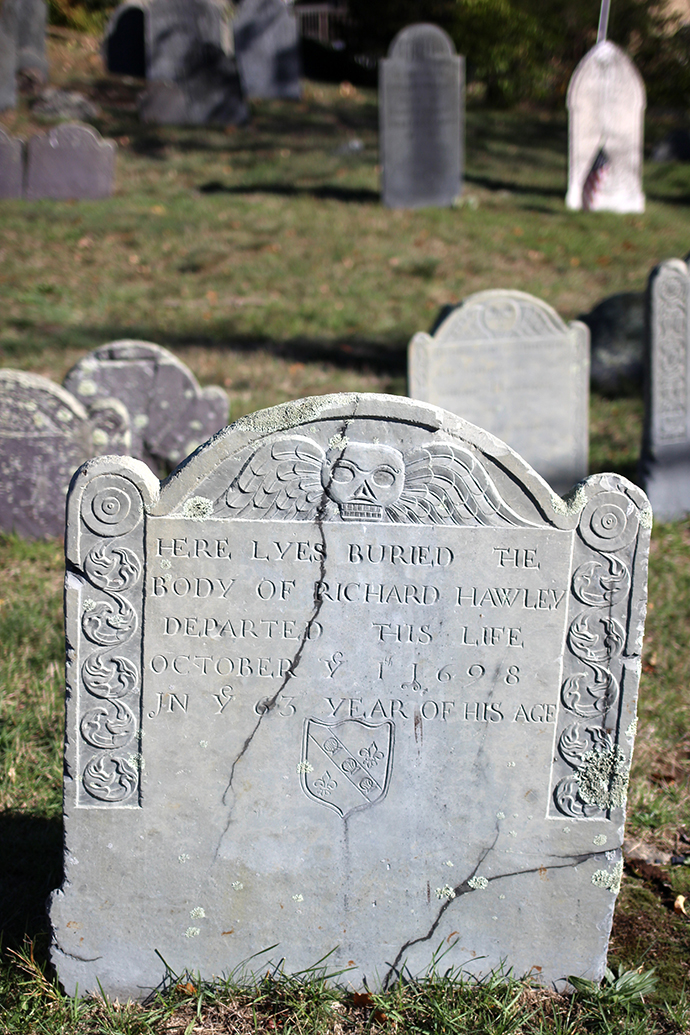


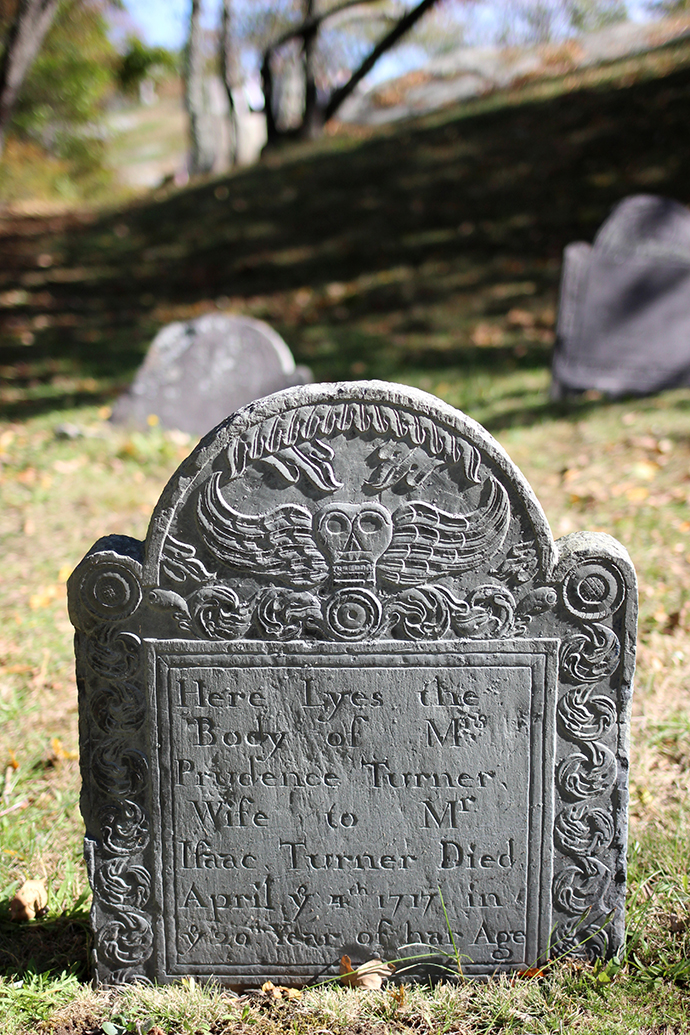

The "hill" part of Old Burial Hill offers beautiful views of Marblehead Harbor and Salem Sound and I found myself wishing that I could visit the cemetery whenever I wanted a quiet moment. Despite being so near Salem on a beautifully sunny Sunday, the cemetery was nearly empty. I knew that the Salem cemeteries were going to be packed with funnel-cake eating and selfie-taking tourists (I was right, unfortunately), so having an hour to really explore such a beautiful and historic cemetery on our own felt like the ultimate luxury.
👻 🎃 Happy Halloween!!

Salem, Massachusetts

After successfully Halloween-ing in Sleepy Hollow for the past three years, my friends and I (the Halloween All-Star Team) decided that we were ready to tackle Salem. I'd been to Salem once, in August of 2007, but I was eager to go back. We stopped along the way to pay our respects to Lizzie Borden, and visit some Hocus Pocus filming locations, and in the end we spent about one and a half days exploring Salem.


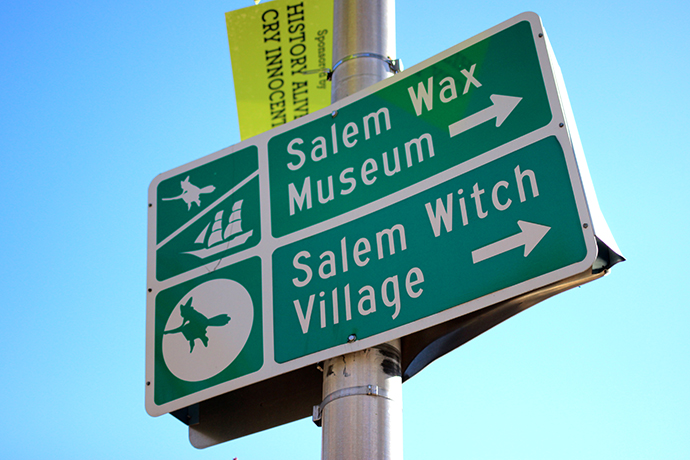


Salem is known best as "Witch City," because of the notorious happenings in Salem Village (present-day Danvers) circa 1692. 19 people were hanged after refusing to confess to charges of witchcraft, and one man—Giles Corey—was pressed to death. It's a little strange for a town to embrace a shameful past to the point of celebrating the very thing that caused the panic—witchcraft and witches—but most of the witch hoopla feels so far removed from the historical event.
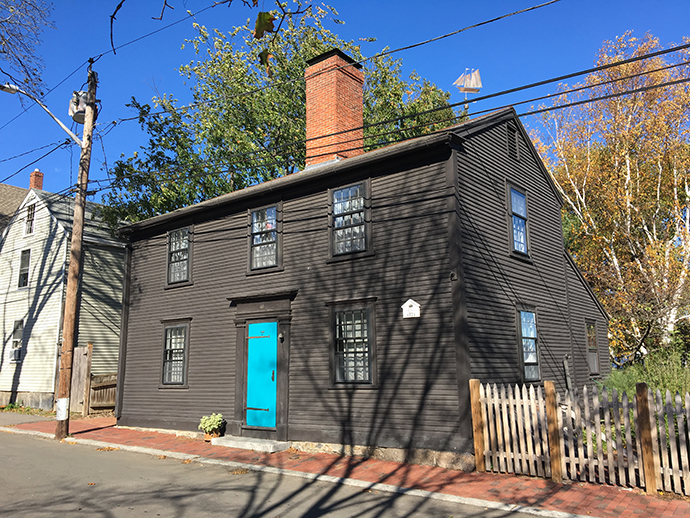
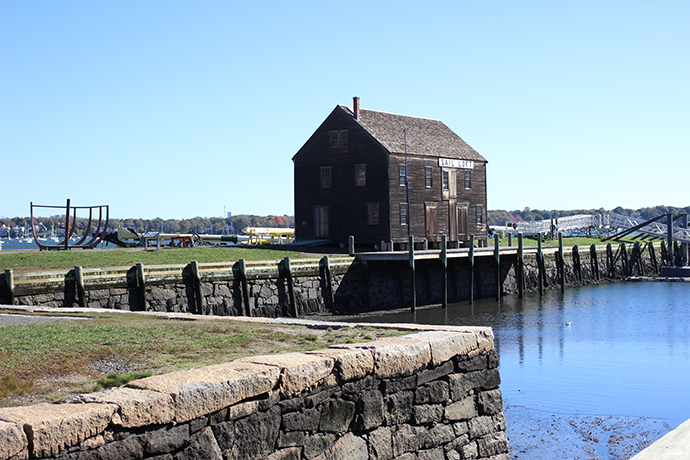


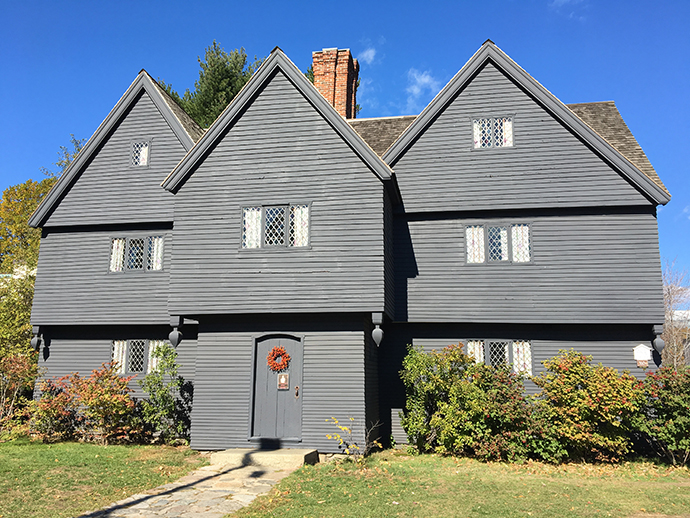
The Witch House is the only surviving structure with any real ties to the Witch Trials—Judge Corwin lived and worked out of the house—and it was definitely a solid marketing move to name it such. Even without the witch connection, I would have loved the house—I have never seen a black house that I didn't love. In fact, Salem is full of the most adorable colonial-era homes with dark siding and colorful trim, and I defy you to find a more perfectly spooky style of house.
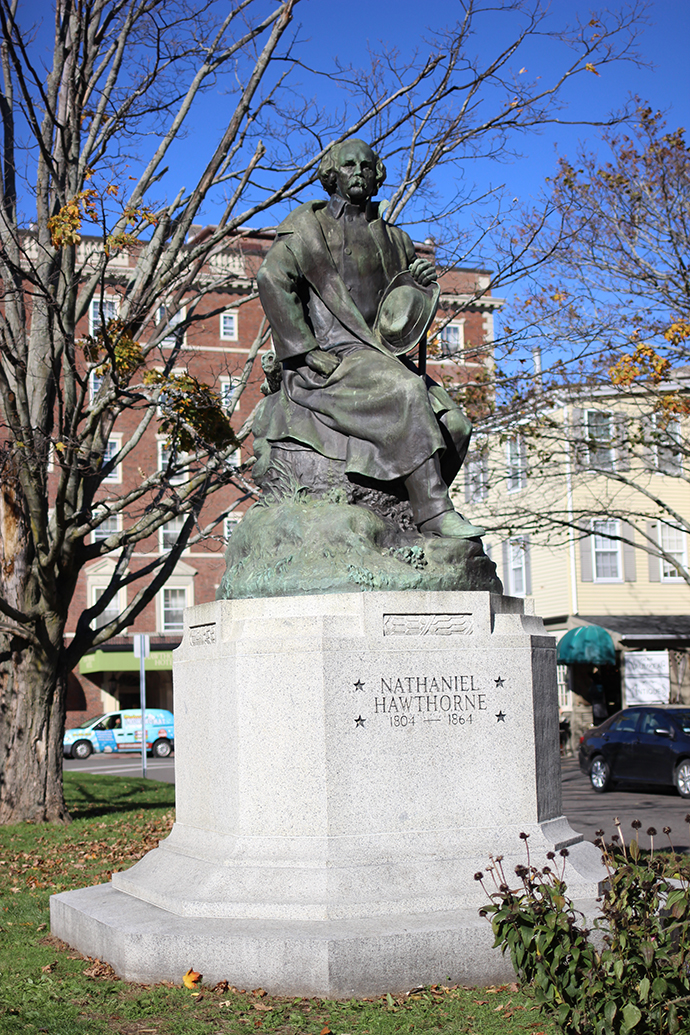

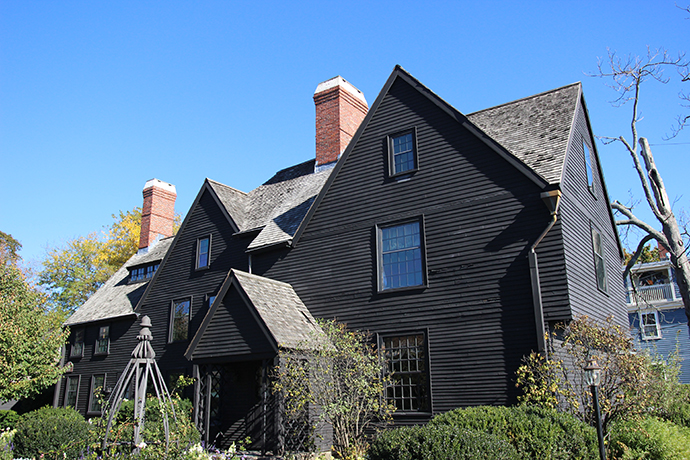


If the Salem Witch Trials had never happened or things had turned out differently, maybe Salem would be known as "Hawthorne City" after its most famous literary resident. After c
, I was excited to tour its namesake house, which also includes a tour of Hawthorne's birth house, which was moved onto the property to save it from demolition.
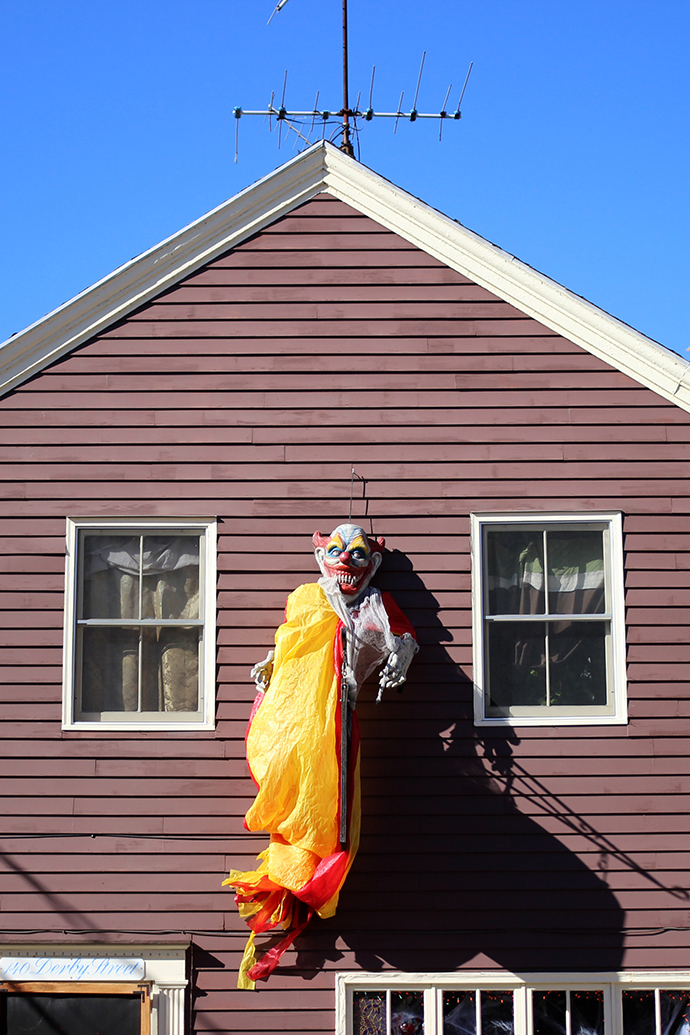

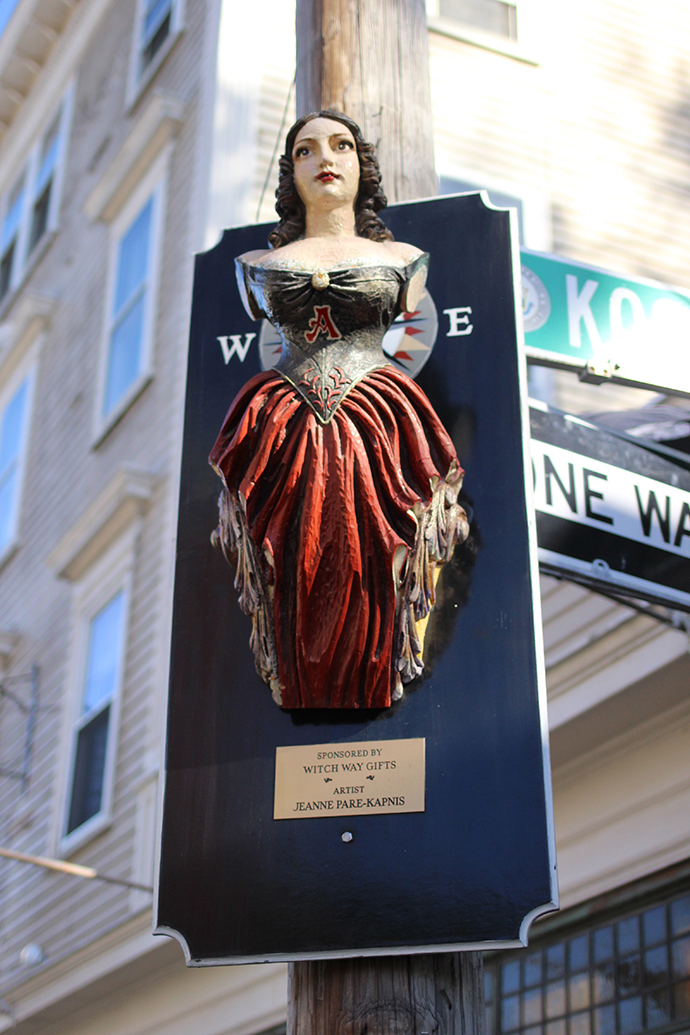
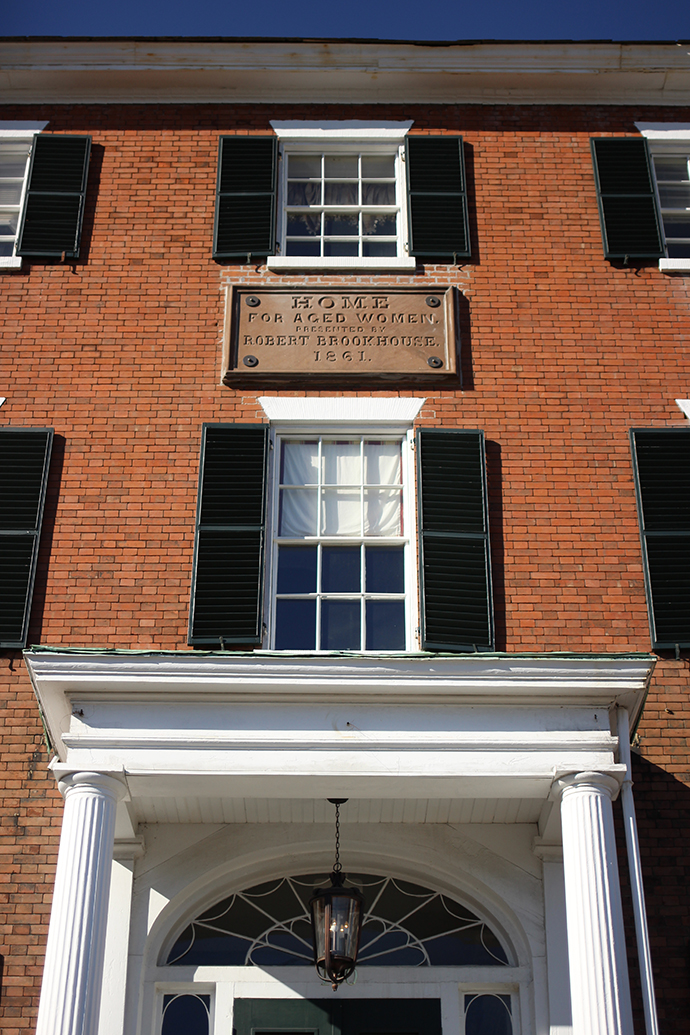


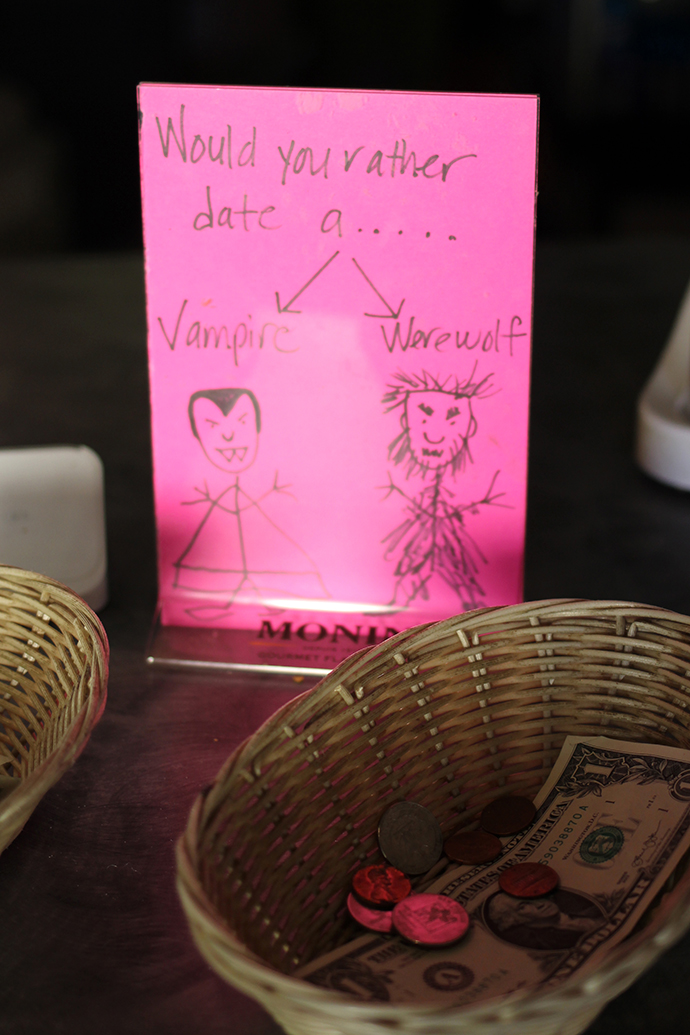

Salem on any October weekend is a bit of a madhouse, and we eschewed any ticketed tour until Monday, when things emptied out slightly. There are definitely parallels to Roswell in that both towns' identities are based around events in their pasts that have morphed over time into cheesy tourist destinations. I actually thought that Salem was a bit light on witch-themed things, even if we saw witch patches on policemen, witch emblems on firetrucks and every year the high school graduates a whole new class of "Salem Witches."

Oak Grove Cemetery + Lizzie Borden Grave
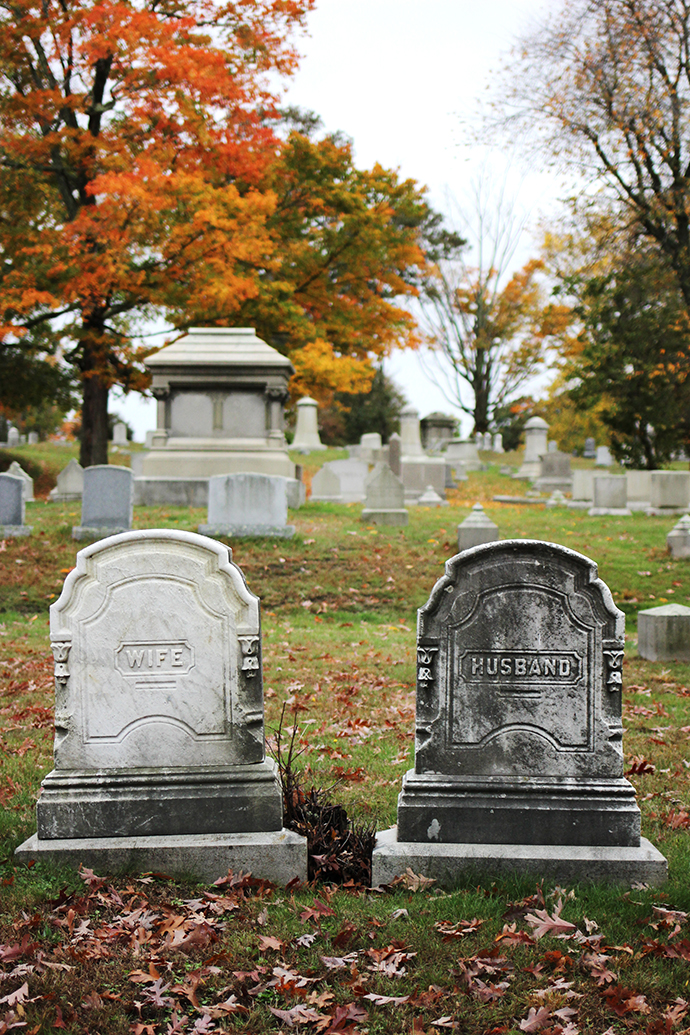
On our recent roadtrip to Salem, our first stop was the Lizzie Borden house in Fall River, Massachusetts. After touring the house we headed over to Oak Grove Cemetery to pay our respects to the entire Borden family, including, Lizbeth Andrews aka Lizzie. After being acquitted of murdering her step-mother and father, Lizzie remained in Fall River for the rest of her life and was buried at Oak Grove in June of 1927—her sister Emma died just nine days later and was buried beside her.
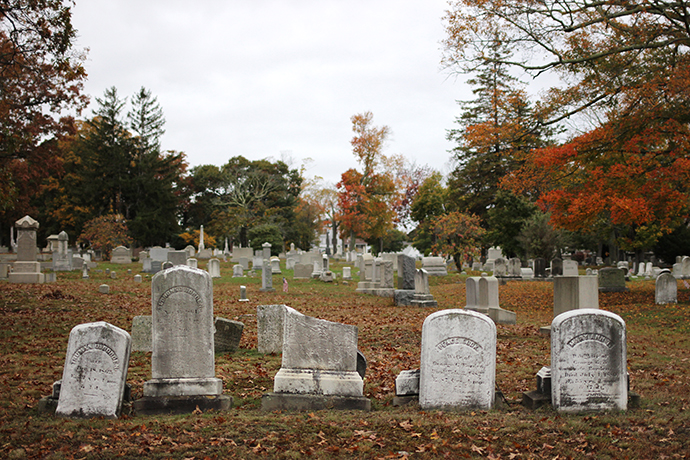
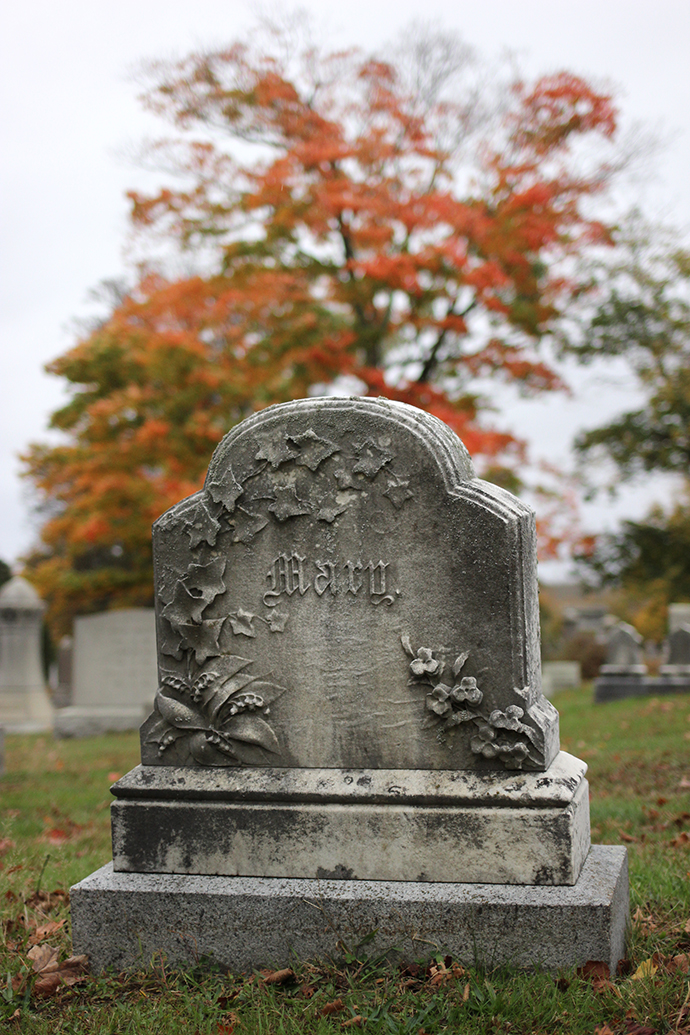
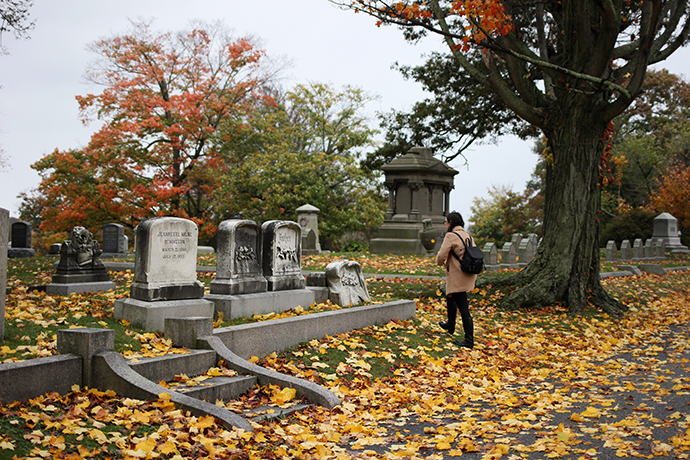
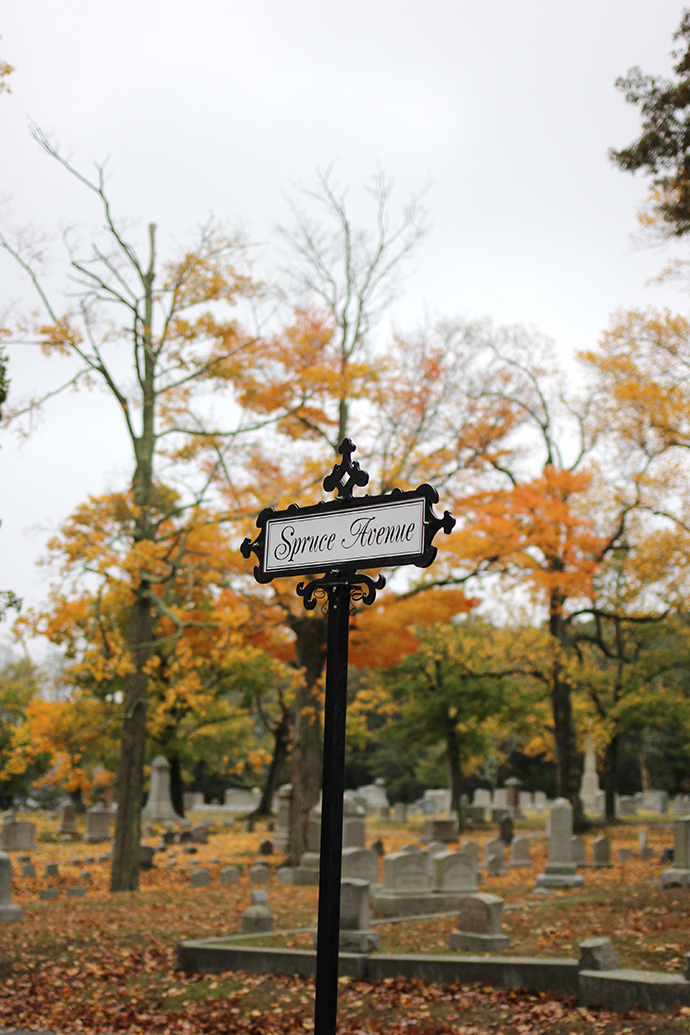
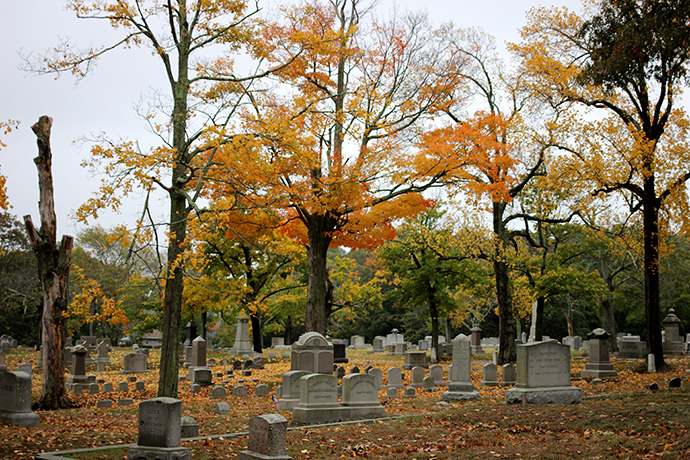
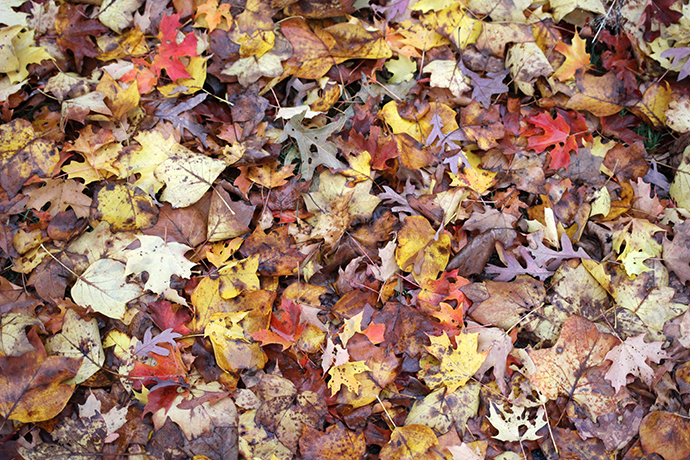
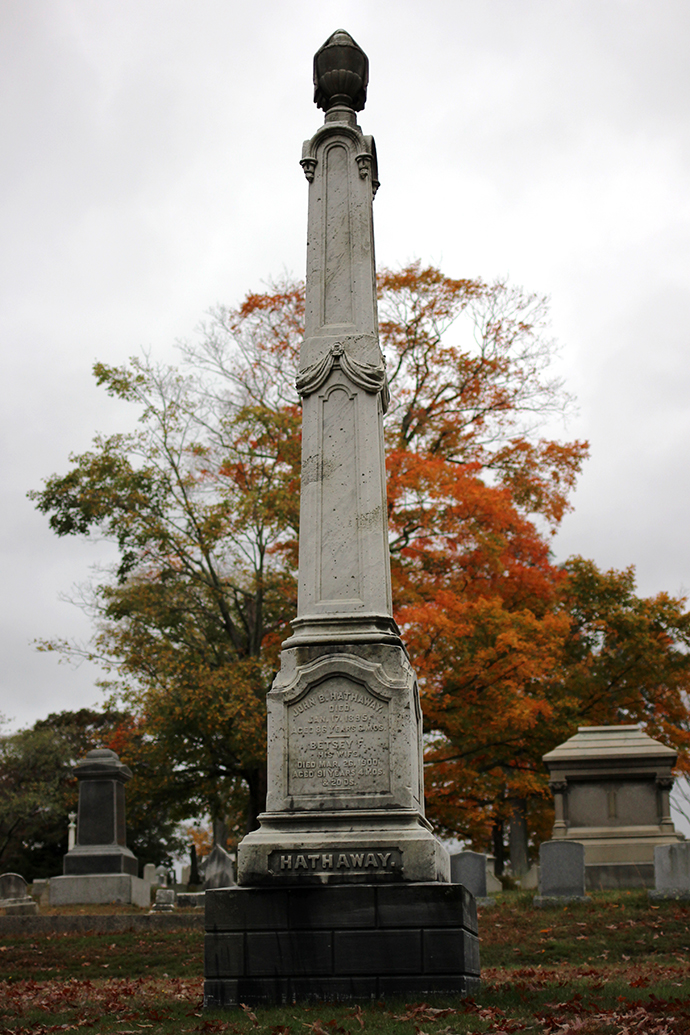
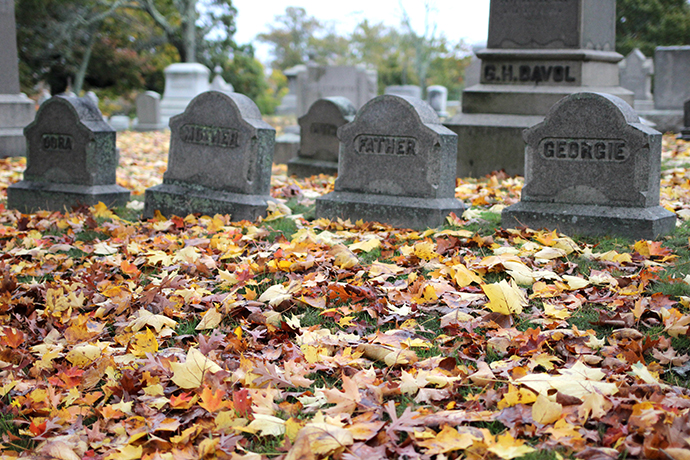
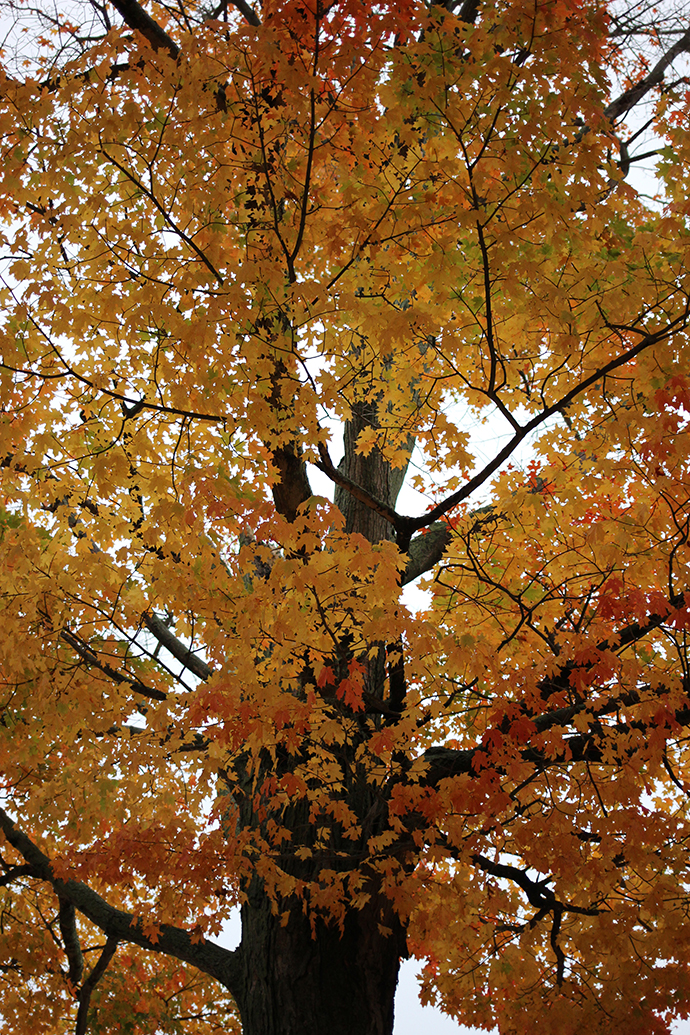
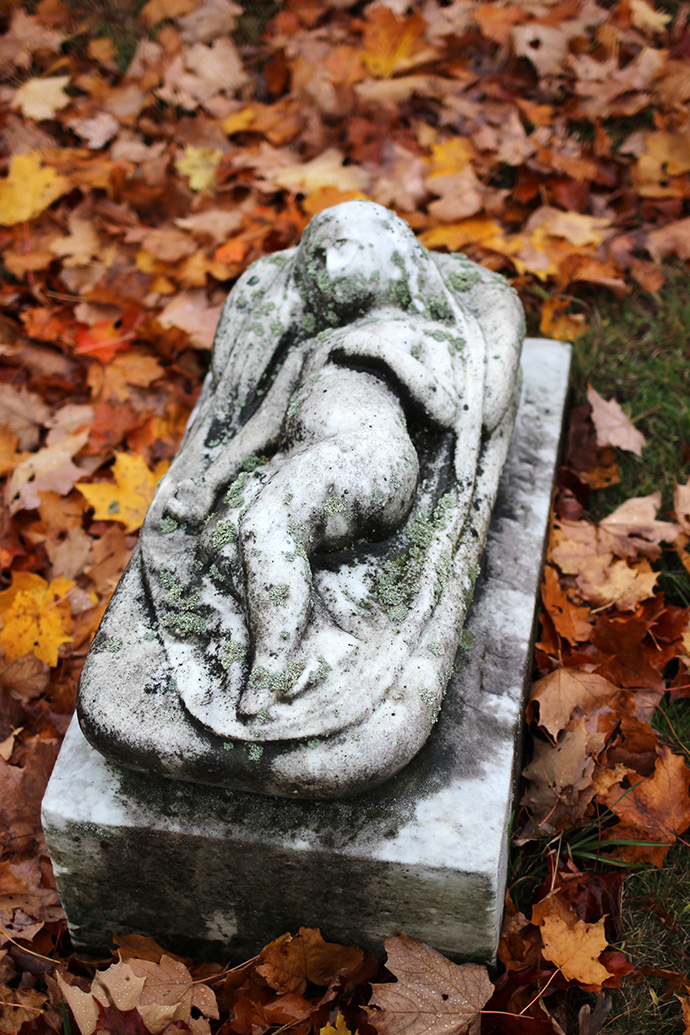
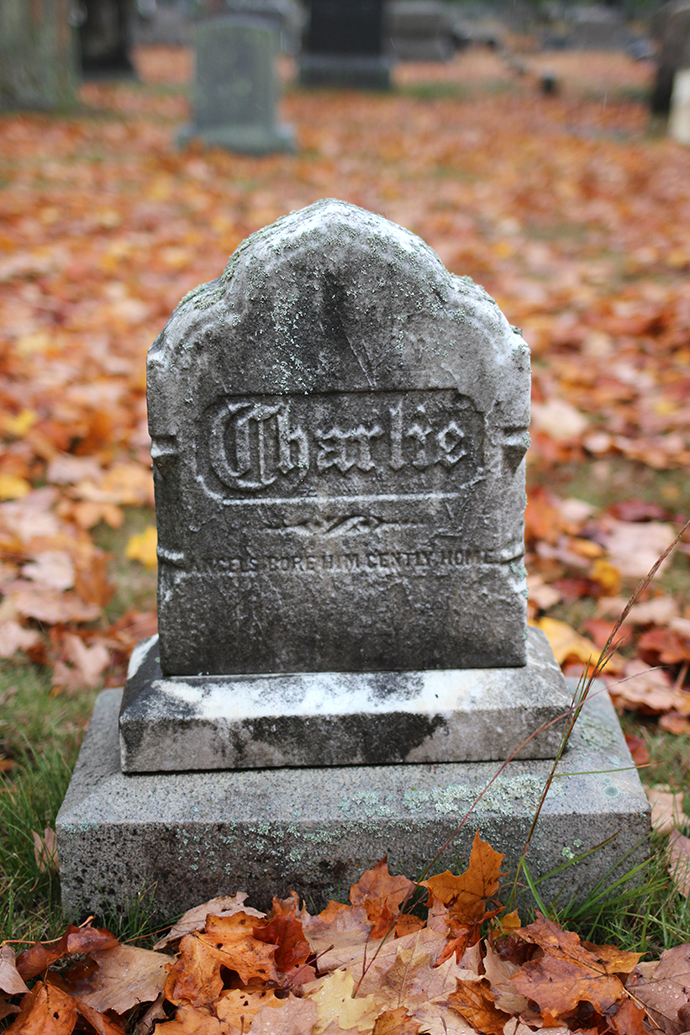
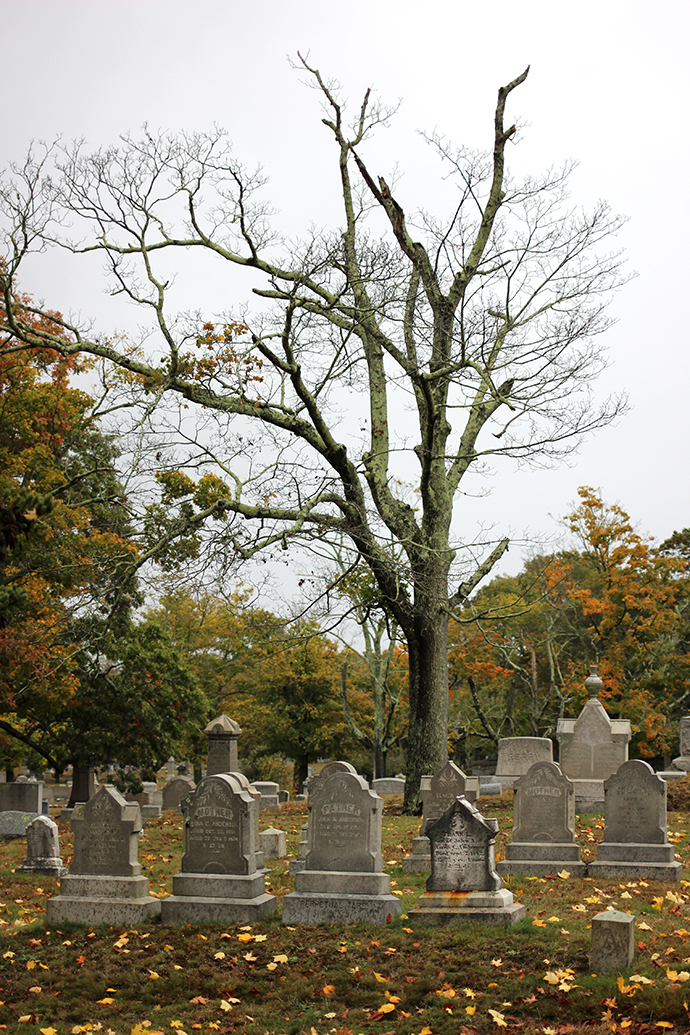
Oak Grove cemetery was established in 1855, and is a beautiful cemetery with many wonderful (and wonderfully-preserved) tombstones. The weather was full-on fall on Saturday—chilly, windy and rainy, although the rain was nice enough to hold off long enough for us to explore a little. The foliage in Massachusetts is definitely ahead of ours here in New York, and it was the perfect setting for a late October cemetery stroll.
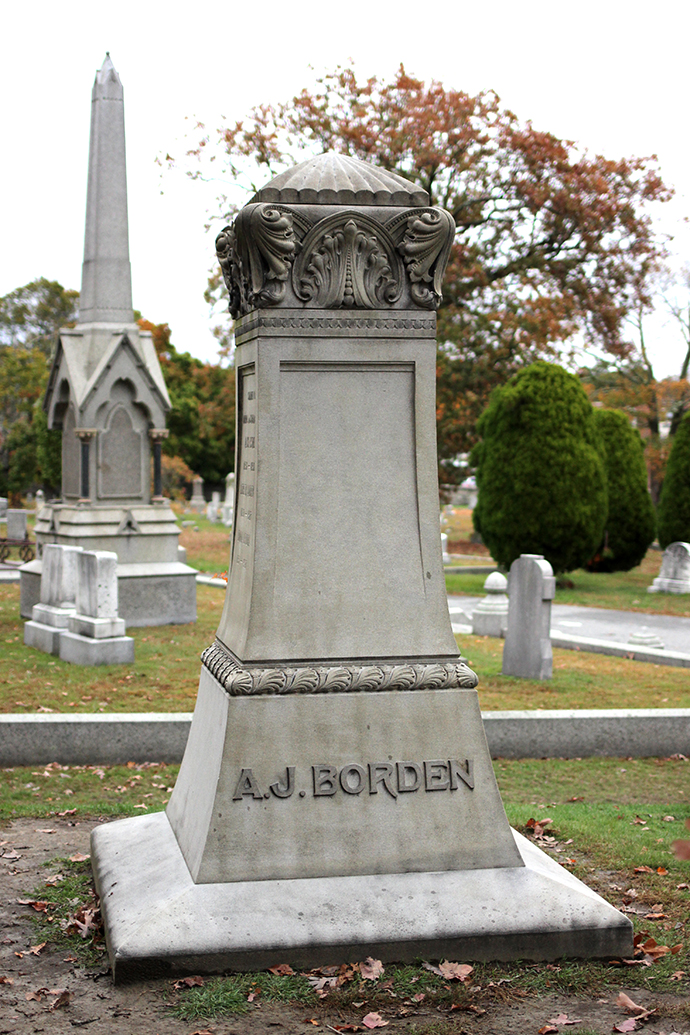
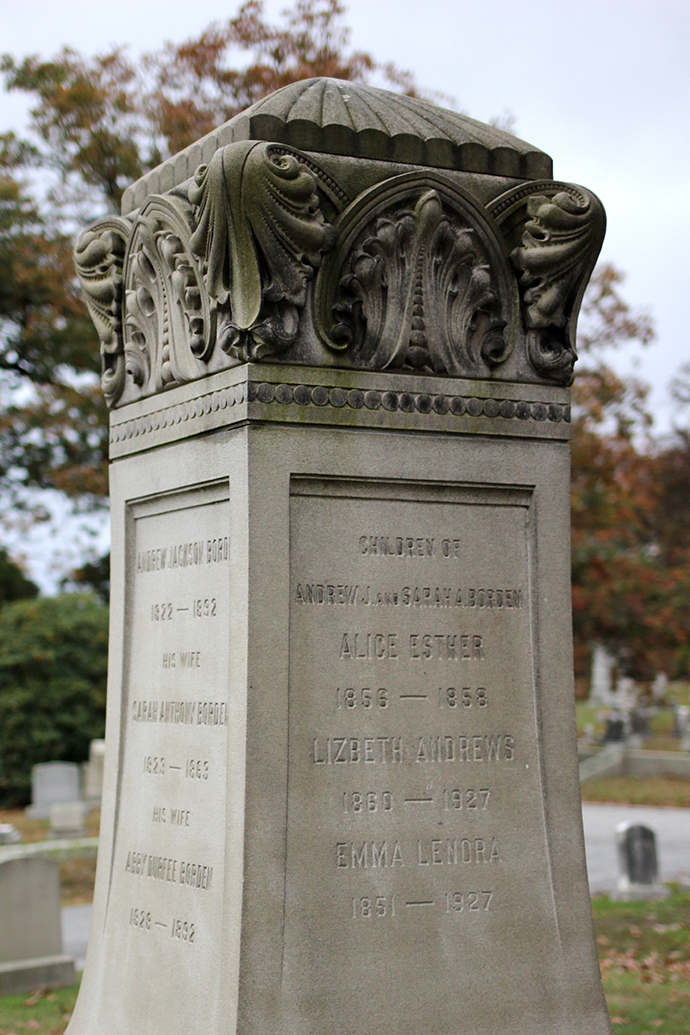
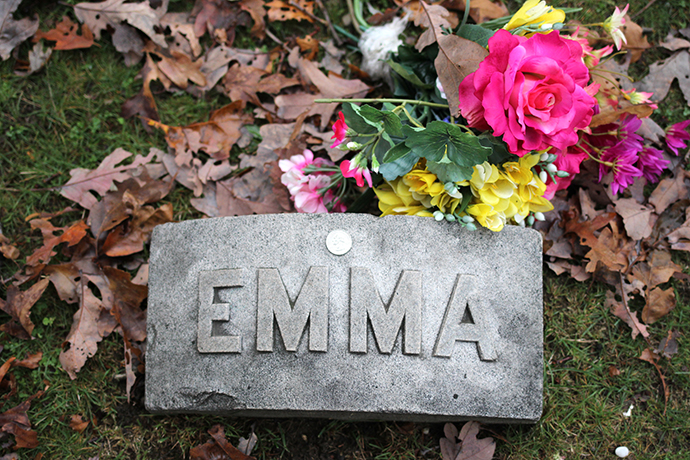
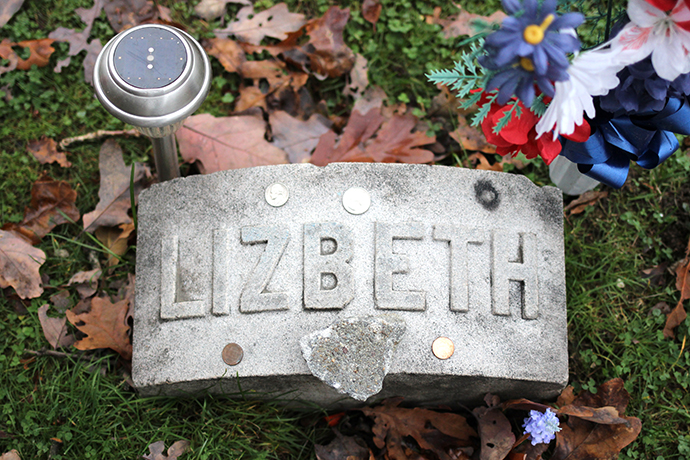
The Borden plot has a main monument surrounded by smaller stones for each person in the family. As we were walking into the cemetery, a couple was walking out. The guy saw us with our cameras and without hesitation gave us directions to the Lizzie's grave (she changed her name to Lizbeth later in life hoping to distance herself from her notorious past). It was helpful, but it's also sort of a shame that most people only visit Oak Grove for its most famous resident—of course that's why we were there, but we spent most of our time in other parts of the cemetery.
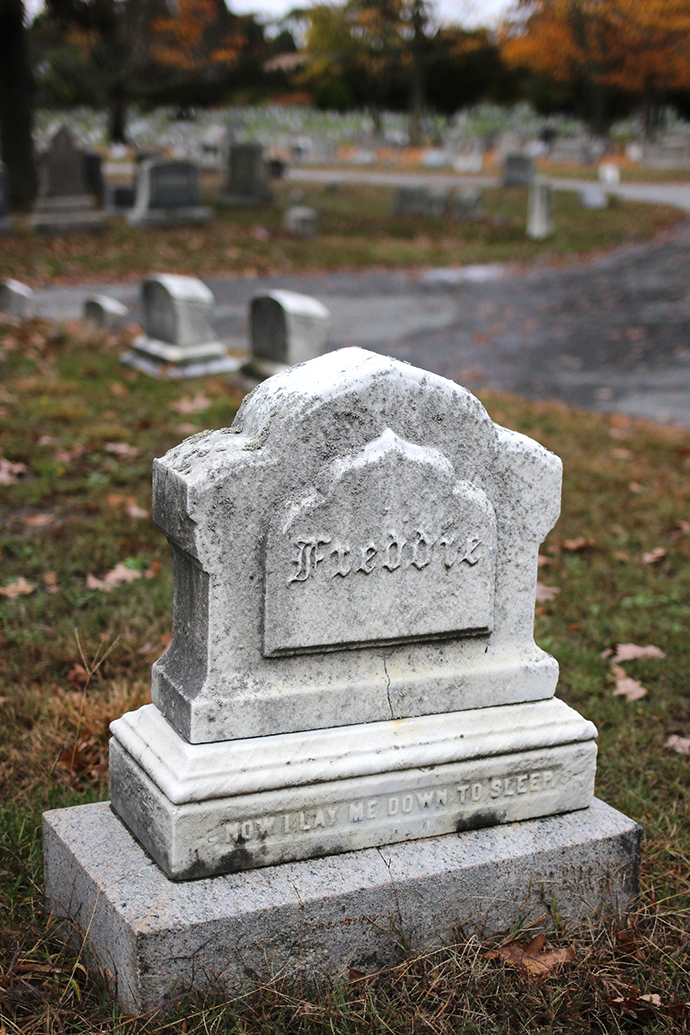
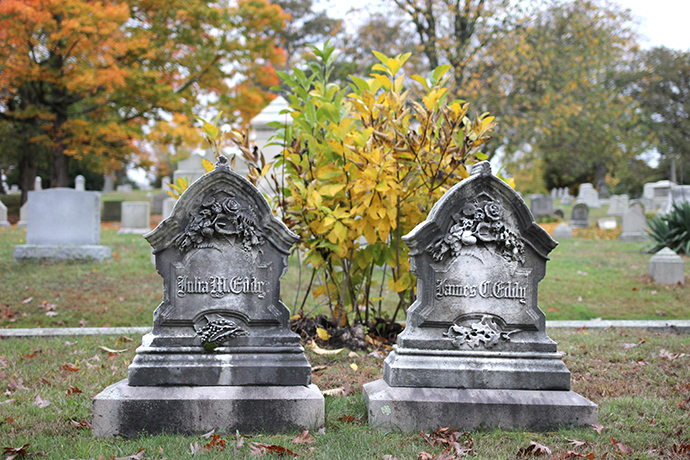
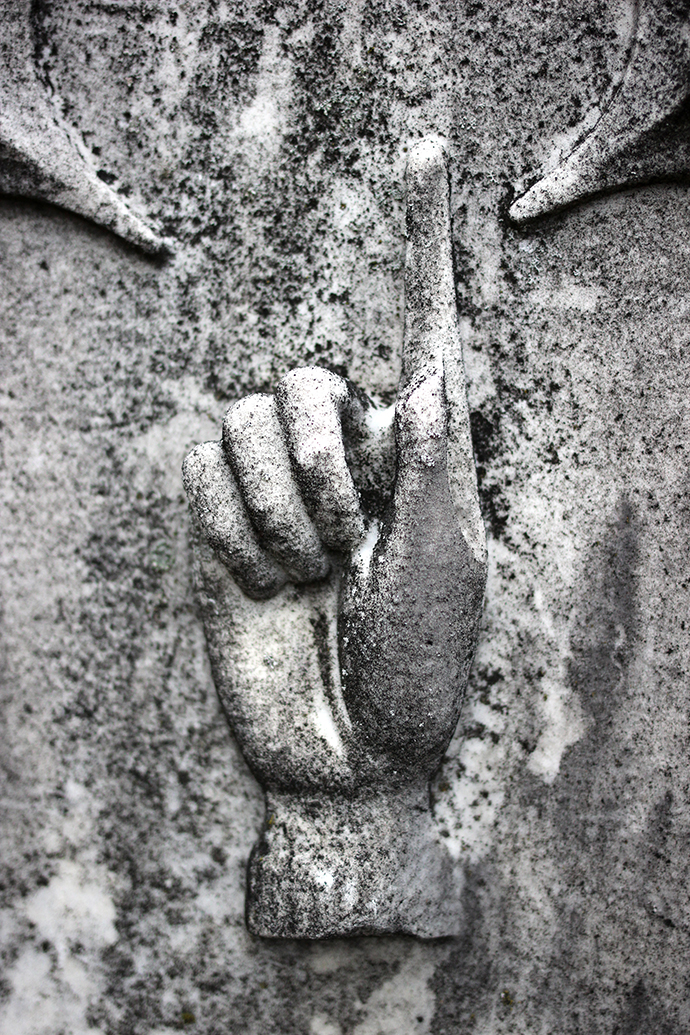
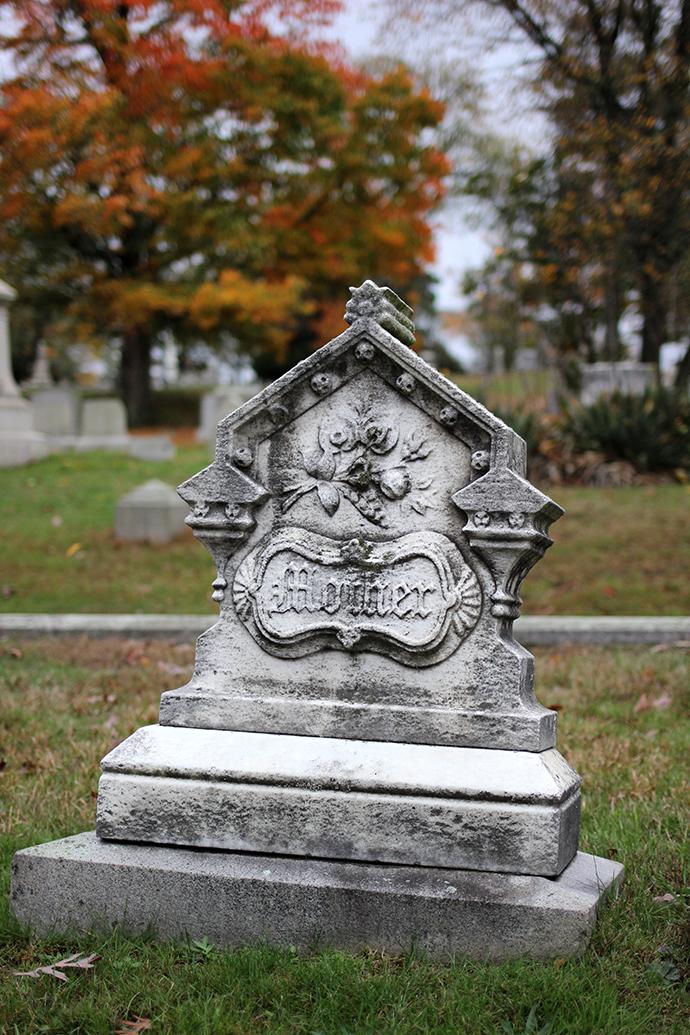
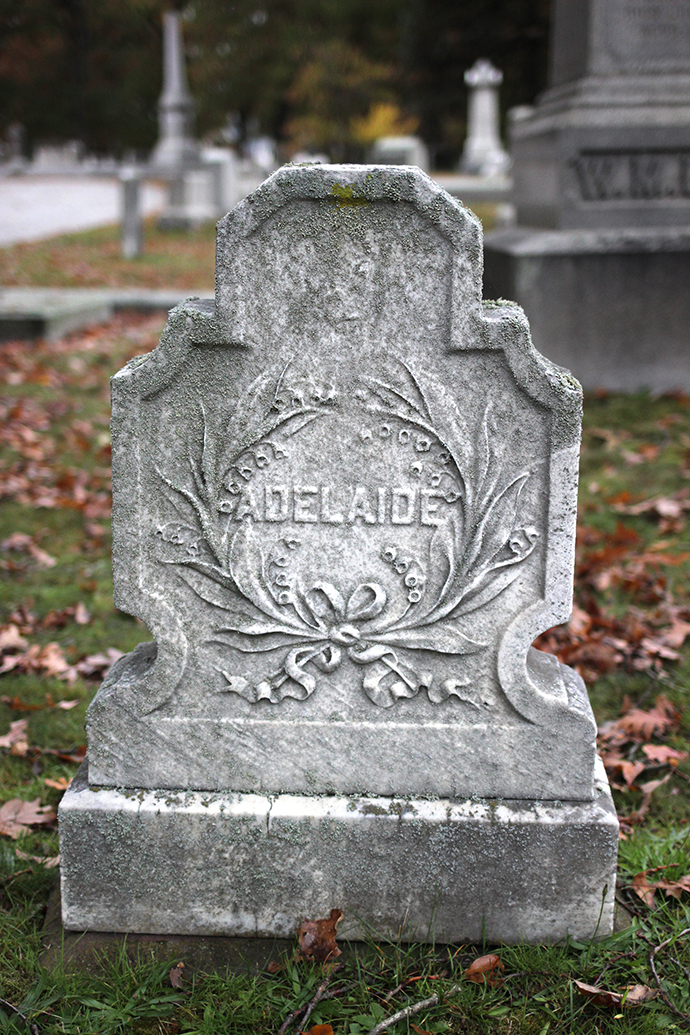
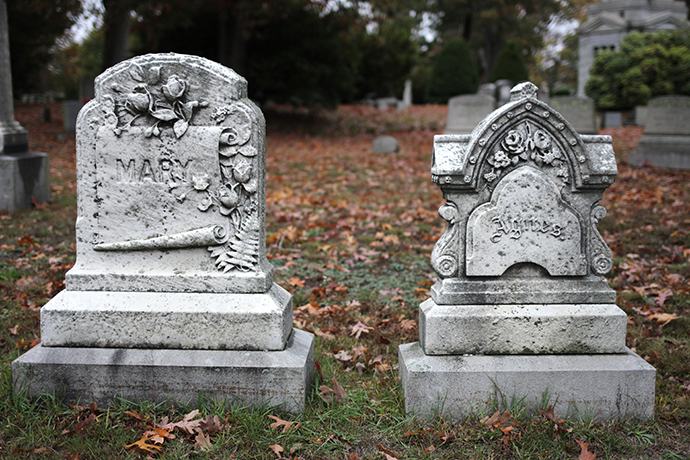
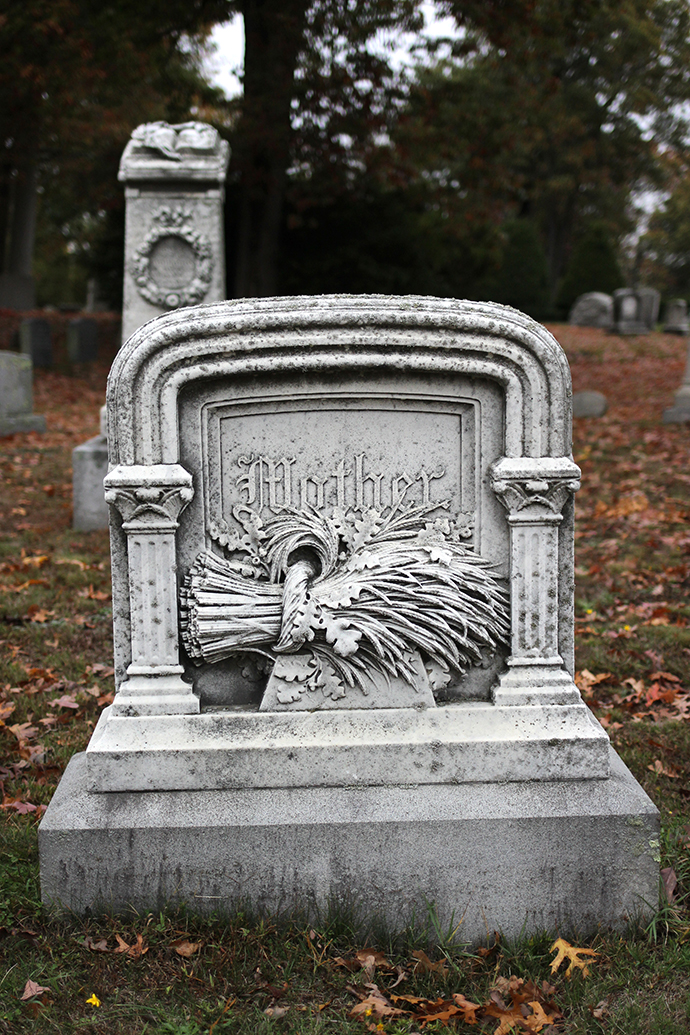
So many of the headstones that we found were so beautifully preserved, with intricate gothic lettering and symbols. Bundles of wheat, leaves, flowers, fruit, hands and other cemetery symbolism was everywhere we looked, thrust into sharp relief by the contrast of the weathering stone. There are so many different kinds of headstones in the world, and they're all fascinating to me, but this type of Victorian decoration is one of my very favorites.
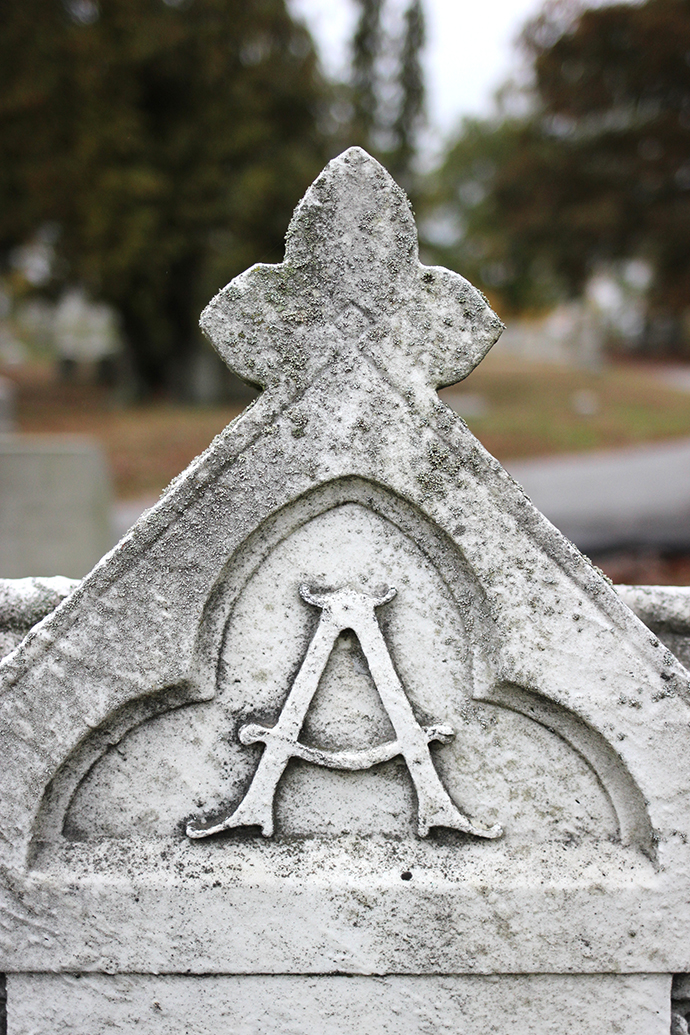
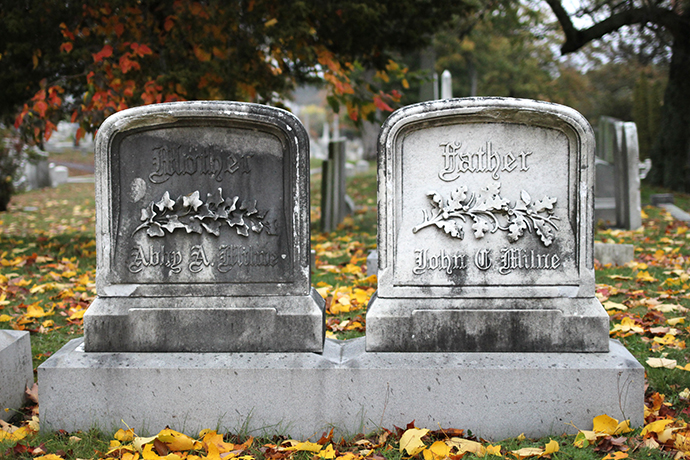
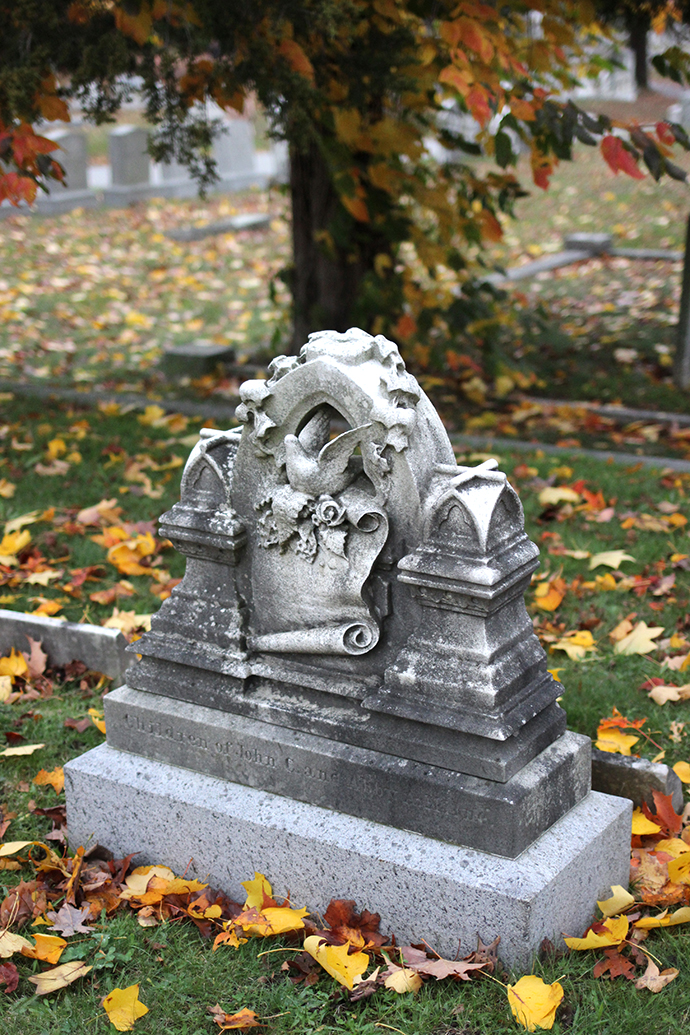
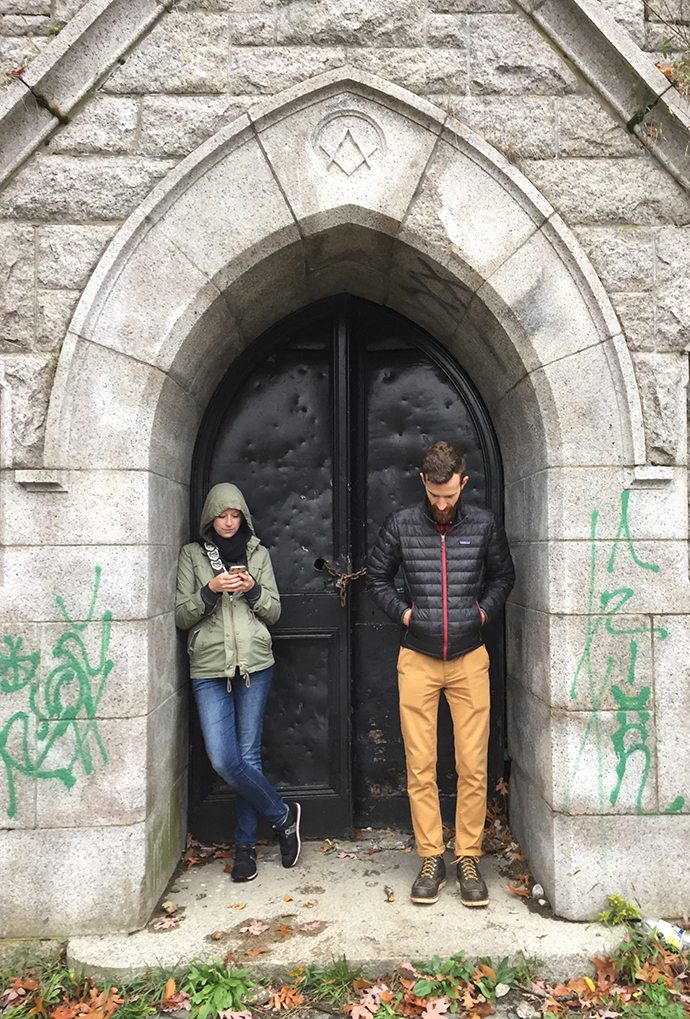
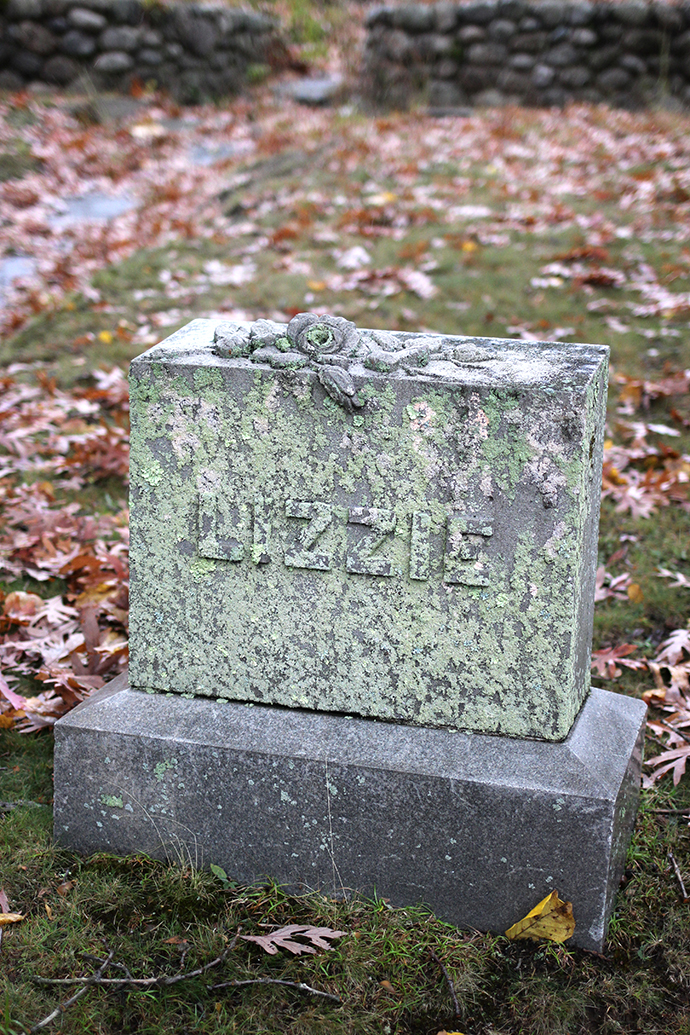
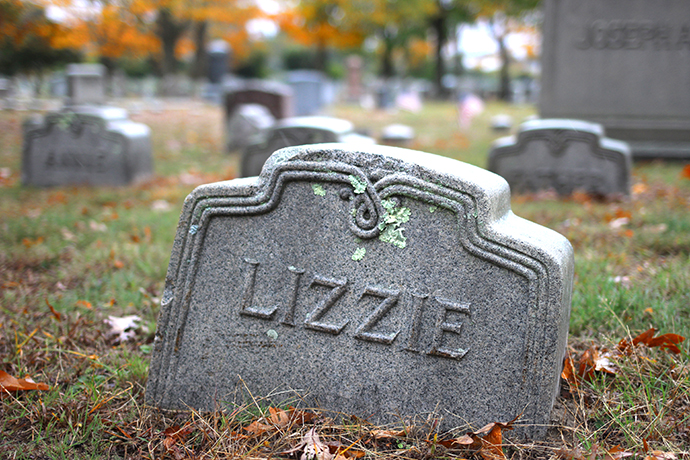
It did eventually start pouring (we briefly took refuge in the doorway of a mausoleum), otherwise I could have spent so much more time exploring Oak Grove. The cemetery is FULL of other Bordens—it must have been a popular name in Fall River—and we even found a few other Lizzies, who I'm sure have confused less-informed tourists throughout the years. I'm not against cemetery tourism for a specific grave, obviously, since that's usually how I pick specific cemeteries, but the real joy comes in discovering the things beyond the star stone.

Salem: Hocus Pocus
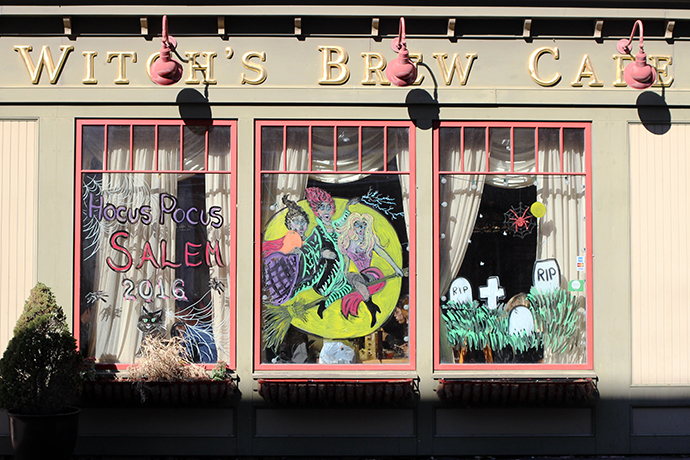
Unlike a lot of people my age, I don't recall seeing Hocus Pocus until I was solidly an adult. My childhood Halloween go-to was another 1993 classic, Double Double, Toil and Trouble starring the Olsen twins (fun fact: Nightmare Before Christmas was also released in '93, completing the Holy Trinity of Halloween films). But once I saw Hocus Pocus it immediately became a fall tradition, and I love it more and more with each viewing. A lot of movies don't actually film in the cities in which they are supposed to take place, and while not every scene was filmed on location (and certainly not in October), the major sites are easily accessible.

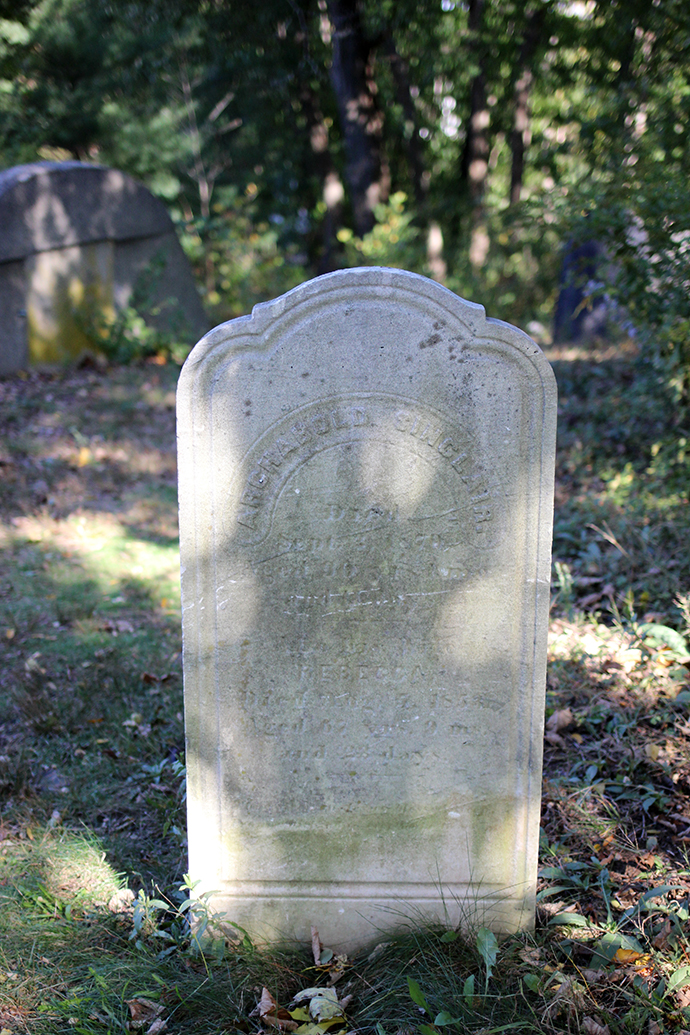


Our first stop was Old Burial Hill Cemetery, located just south of Salem in Marblehead, Massachusetts. Old Burial Hill is the location of Max's after-school run-in with the 90s personified, Jay and Ernie Ice. We found some of the tombstones glimpsed in the movie, but even if you're not a fan, Old Burial Hill is definitely worth a stop. It's one of the most beautiful cemeteries I've ever seen, and it's so full of wonderful tombstones that it deserves a full post. There are other cemetery scenes in the movie, but those took place on a soundstage, which can't possibly compete with the real beauty of Old Burial Hill.


Not far from the cemetery, just after you cross into Salem is Max and Dani's house. Located at 10 Ocean Avenue, the house is instantly recognizable by it's cupola and looks pretty much exactly the same today. It's in a good location to stop and take a quick photo, and we weren't the only millennials fans doing so. It's also pretty much my dream house—despite the tourist traffic—and I can't think of anything better than tying some cornstalks to the porch and nestling into the cupola with a good book.


Speaking of houses, Allison's house is right in Salem proper, next to the Witch House. The Ropes Mansion—the house's proper name—is currently owned by the Peabody Essex Museum. It was only a slightly less popular selfie-stick spot than Max and Dani's house, and you can tour the inside, although only the exterior was used in the movie.


The Old Town Hall is the site of the epic Halloween party in which Better Midler sings "I Put A Spell on You" while doing just that. While there were no parties happening while we were there, it has public restrooms which is a big deal when you're a tourist (and even when you're not).
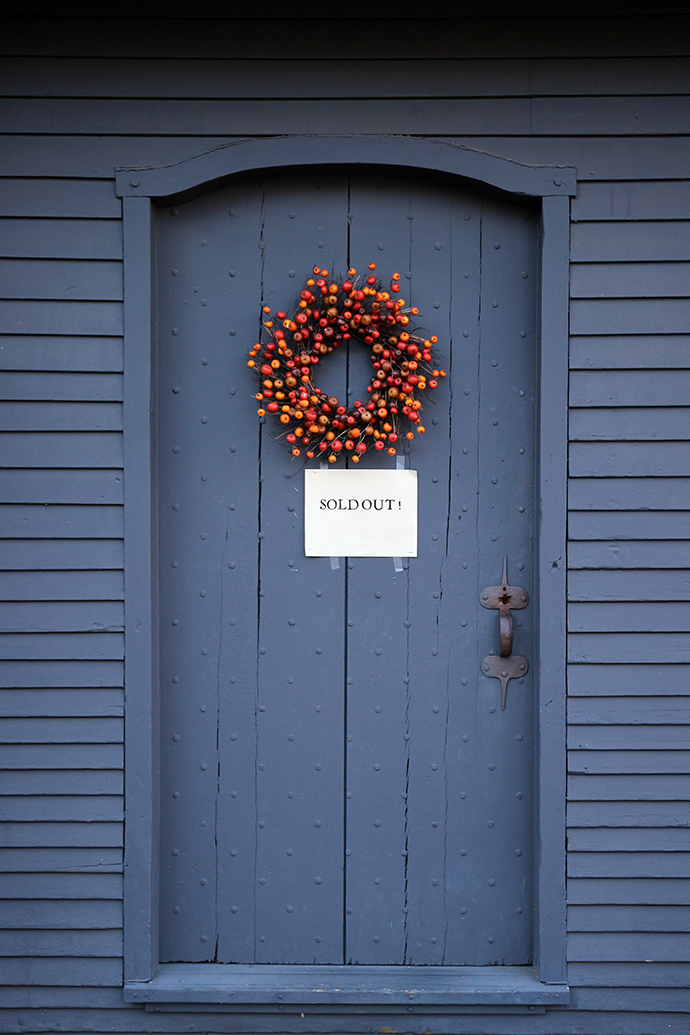
The only other major filming location that we weren't able to visit was the Sanderson's sisters' cottage, located in Salem Pioneer Village. The village doesn't hold regular hours in October, and all of their events were sold out when we checked—I suppose this means another Salem trip is in the cards.
See also: Home Alone 2: Lost in New York

Recent Reads: Halloween Edition

I haven't done a recent reads post in a long time, but I've been on a fairly consistent reading streak this year that I'm super pumped about. I used to devour books as a kid but sometime after college I just sort of stopped reading for pleasure, with a few exceptions. However, when I moved to New York I found myself with loads of time to read—on the subway, eating in diners alone, waiting to meet up with friends, etc.—and I fell hard back into old habits. I don't read as quickly as I'd like, sometimes I take breaks and some books are just too heavy to carry on a daily basis (I realize this is why e-readers exist, but I'm a slave to the printed word).
Last year I started tracking everything I read through Goodreads, and it's been so fun to have a tangible record. It's immensely satisfying to login and mark a book as "read." I've finished 35 books this year, and I probably won't hit my arbitrary goal of 52, or a book a week, but it still feels substantial. I'm a bit of a book hoarder (pictured above is just a small portion of my "to read" list), but I also love the library—it's still a thrill to me that I can walk into a library and walk out with a book, for free! I function really well on deadlines, so having a set timetable in which to read a book is really helpful too.
Anyway, that's a really nerdy lead-in, but it's the most wonderful time of the year—can you believe Halloween is only a week away??—so I thought I would skew this post toward the macabre, which isn't hard because most of the books I read year-round fall into that category. Here are some of the more recent additions to my 'read' pile:
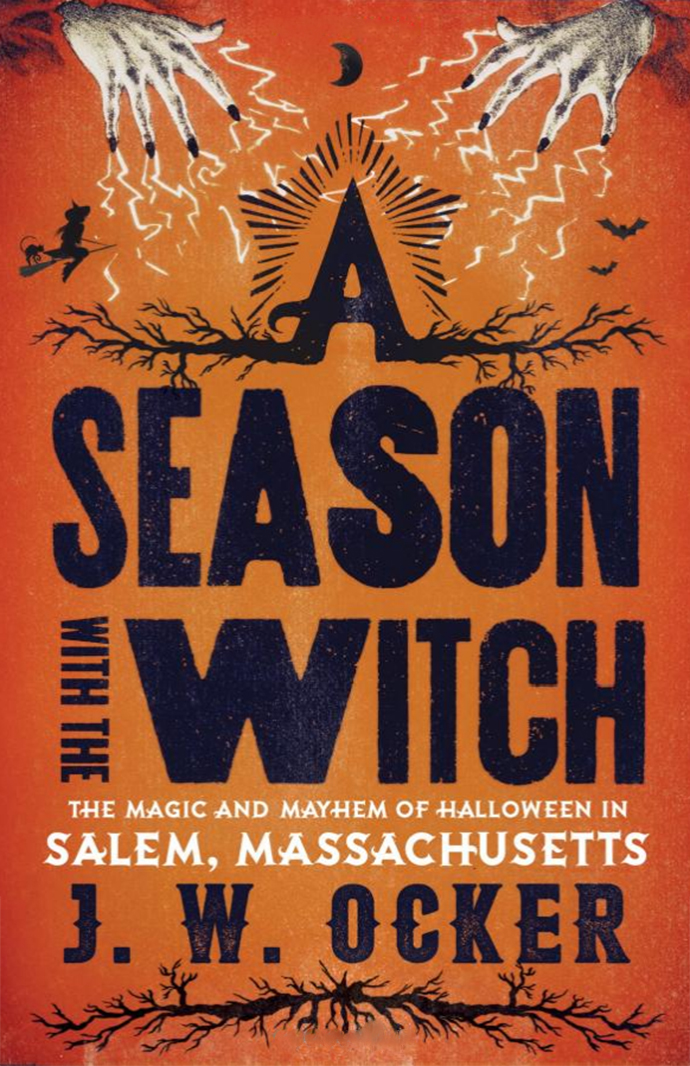
A Season with the Witch: The Magic and Mayhem of Halloween in Salem, Massachusetts, by J.W. Ocker
I'm actually in Salem as you read this (the magic of scheduled posts!), and I prepared by reading this last week. I've been to Salem once before, but ten years ago and in August.
For the past three years we went to Sleepy Hollow, but this year we decided we were ready to conquer Salem the week before Halloween. Immediately upon starting this book, I decided that my next chapter in life would be to move to Salem and finally live out my dream of owning a haunted house and living every day like it's Halloween. I may change my mind after braving the crazy crowded streets, but if you're considering a visit, I would recommend reading this book first. Ocker does a good job of looking at the history and how current-day Salem has mutated from a site of a shameful event to "Witch City."
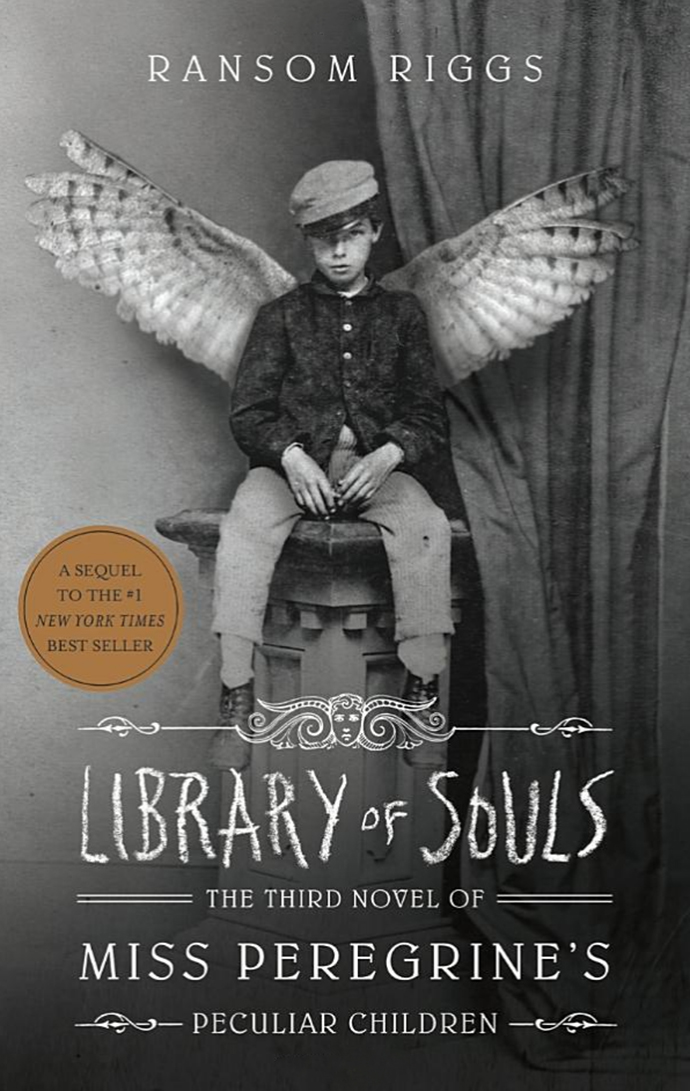
Library of Souls: The Third Novel of Miss Peregrine's Peculiar Children, by Ransom Riggs
I waited forever to read this series, but once I started I had to finish the trilogy as soon as I could. The first one is wonderful, the second one was ok, but I enjoyed this one the best. The story picks up right where the second one ends (major cliff-hanger alert), and I think that it's the most imaginative and emotional of the three. The ending is satisfying, and the photos are creepy, as always. I was somewhat disappointed with the movie (the last half, anyway) but with books this good that was probably inevitable.

Down Among the Dead Men: A Year in the Life of a Mortuary Technician, by Michelle Williams
Michelle Williams (no, not that Michelle Williams) impulsively applies for a mortuary technician job with no experience working with the dead, and details her first year on the job in this memoir. I will read anything and everything I can find about the funeral industry, and while this was an easy and entertaining read, it wasn't the best of the genre. She wrote a little too much about pubs and her boyfriend, and not enough about autopsies and dead men, but when she did get into the nitty gritty, I was entertained.
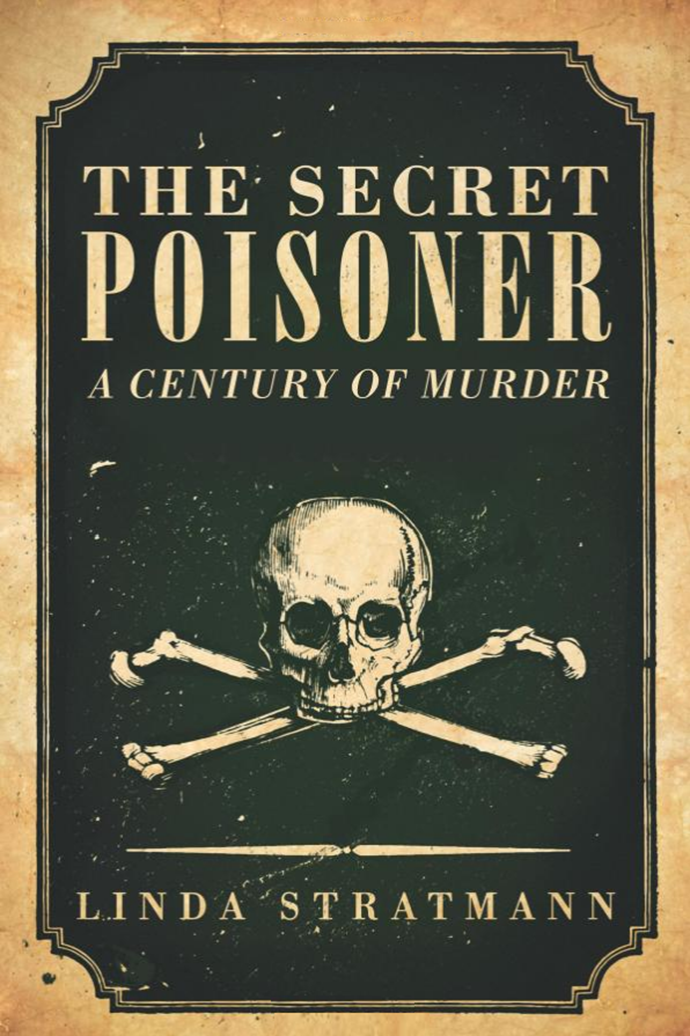
The Secret Poisoner: A Century of Murder, by Linda Stratmann
Sometimes I wonder what fellow subway passengers think about me based on my choice of reading material, but that didn't stop me from reading a 320-page book about poison with a skull-and-crossbones on the cover. Like Down Among the Dead Men, this wasn't the best of the "poison" genre—yes, I've read many and my favorite is The Poisoner's Handbook—and to be honest I sort of slogged through it but it's hard to be too dull when you're talking about secretive poisoners throughout history.
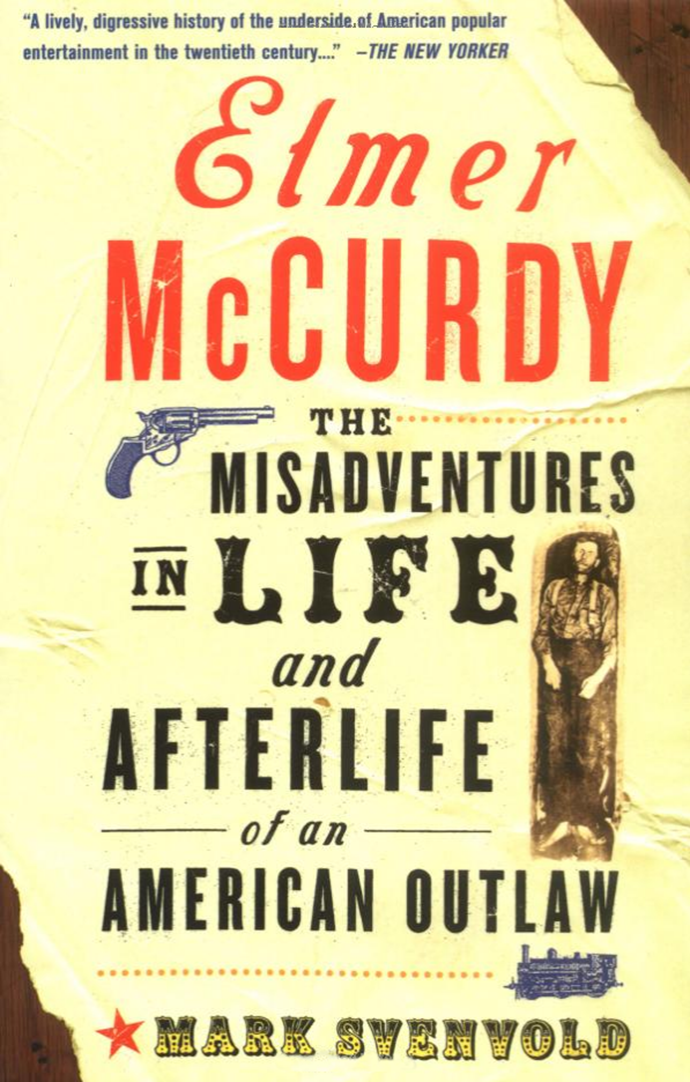
Elmer McCurdy: The Misadventures in Life and Afterlife of an American Outlaw, by Mark Svenvold
My friend Jim originally bought this book and asked if I'd be interested in borrowing it (duh). While filming the Six Million Dollar Man at an amusement park in California, a camera crew discovered that one of the funhouse "mannequins" was actually mummified remains, later identified as McCurdy. His journey from failed outlaw to the Los Angeles coroner's office is a strange one, and while the author diverges from McCurdy's life a bit too much, his story is just weird and (hopefully) unique enough to make this a worthwhile read.
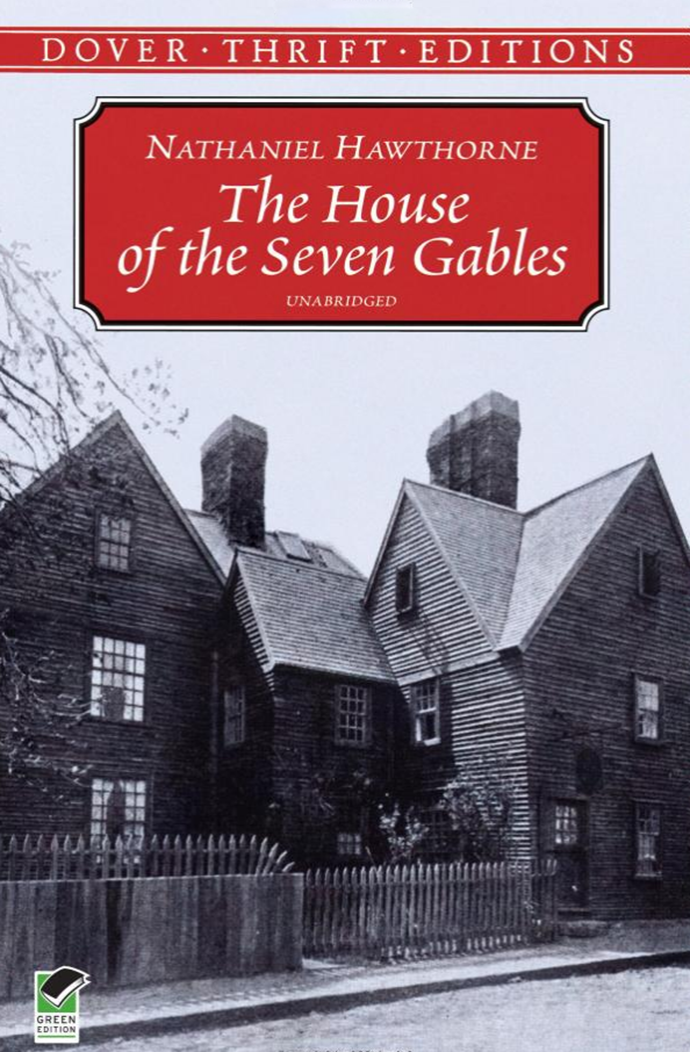
The House of the Seven Gables, by Nathaniel Hawthorne
Speaking of Salem, another thing I did in preparation for our trip was finally finish The House of the Seven Gables. I had picked up a copy at the gift shop when we visited ten years ago, and started to read it periodically since. I was never able to really get into the slow story and old-timey dialogue, but I was determined to get through it this time, and I did. I alternated between loving (and highlighting) Hawthorne's insanely wordy prose and wishing sentences, paragraphs and entire chapters would just end. It's definitely not an easy, breezy read, but it's one of those classics that I'm glad to have experienced until the bitter end. Sample sentence: "
Recognizing little Ned Higgins among them, Hepzibah put her hand into her pocket, and presented the urchin, her earliest and staunchest customer, with silver enough to people the Domdaniel cavern of his interior with as various a procession of quadrupeds as passed into the ark."
I'm currently re-reading The Westing Game (for the many-th time), but I always welcome new book suggestions—macabre or not. And if you have similar tastes, be sure to also check out Kaylah's book posts because we might accidentally be the same person.

Treasures in the Trash Collection
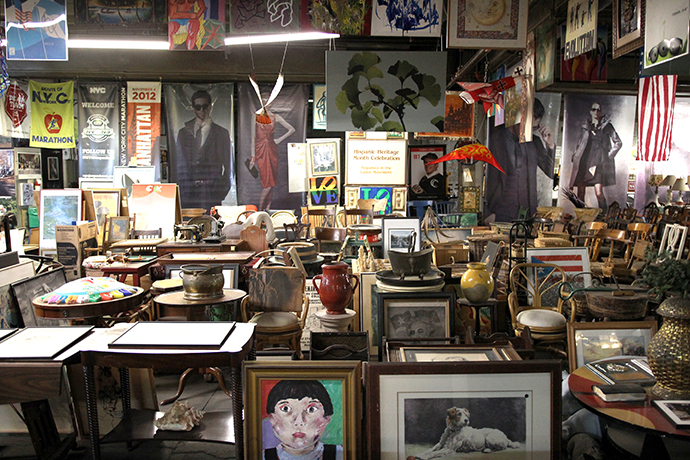
This past weekend was Open House New York Weekend. Every year for one weekend, places of architectural or historical significance around the city open their doors for tours. Some are ticketed, and some are open hours, and since I've moved here I've had a love/hate relationship with the whole event. I love it because I love touring things—I'll pretty much go anywhere, especially if it's free. I hate it, because tickets are notoriously difficult to get—the last two years we were able to get exactly zero tickets, despite being trigger-ready right at the 11am drop time. Despite our disappointment, we still saw some pretty wonderful things, including the TWA Flight Center at JFK and the (now-shuttered) Four Seasons restaurant.
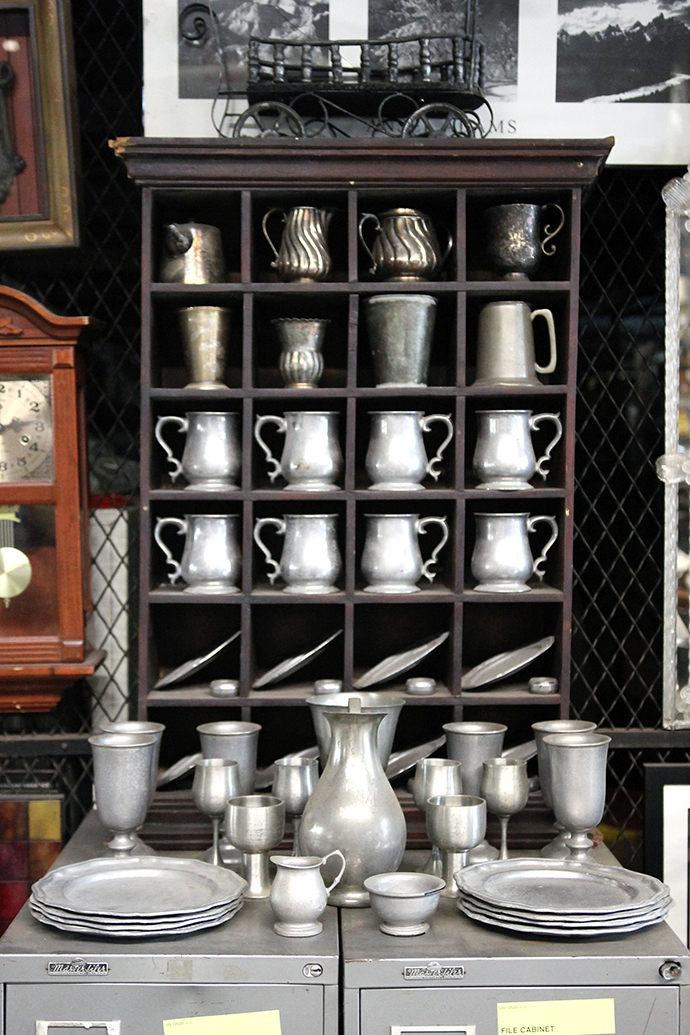
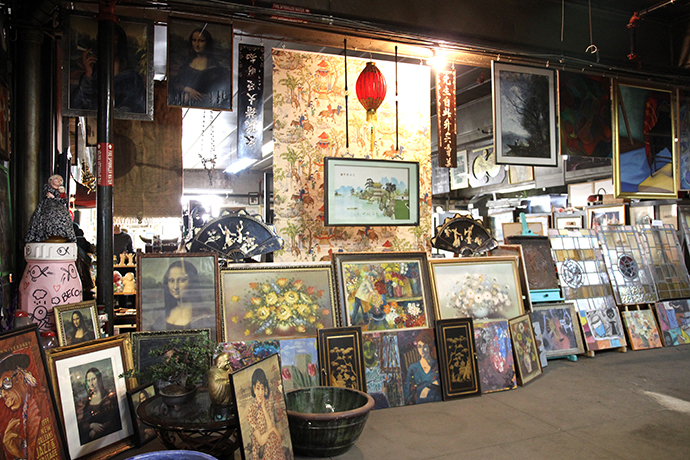
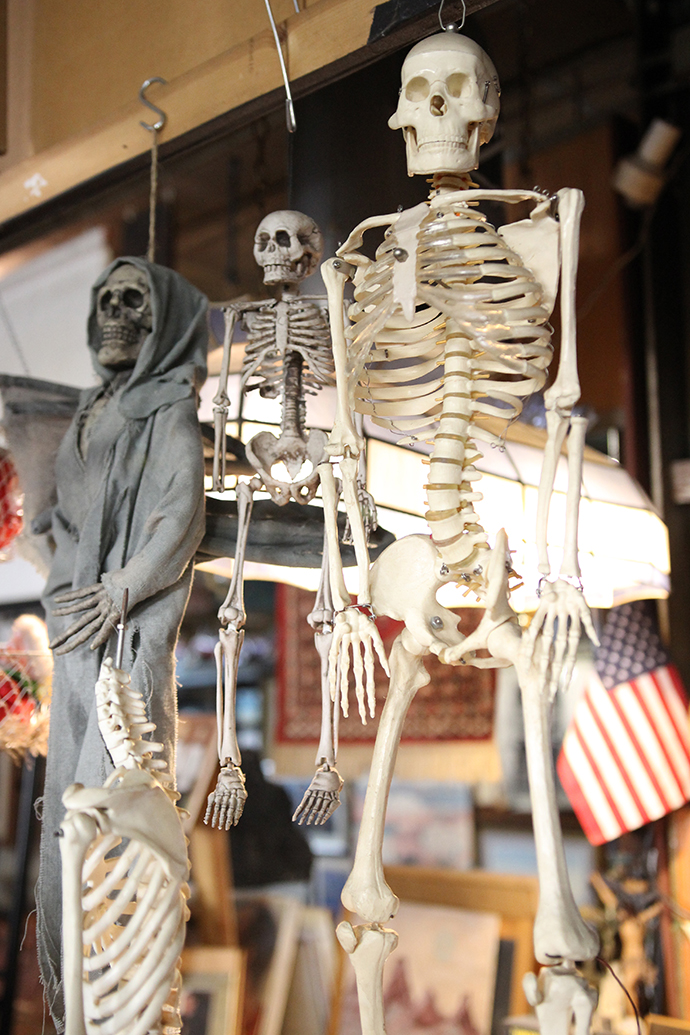
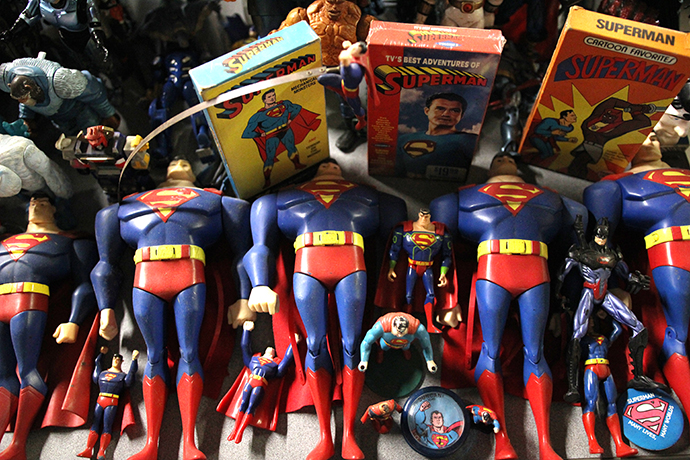
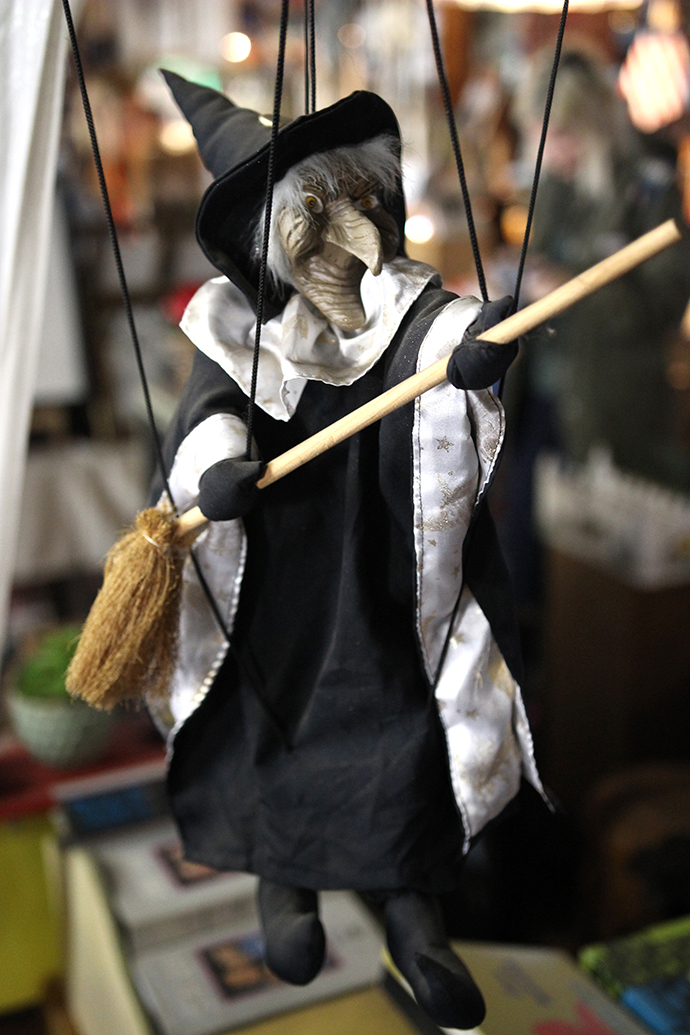
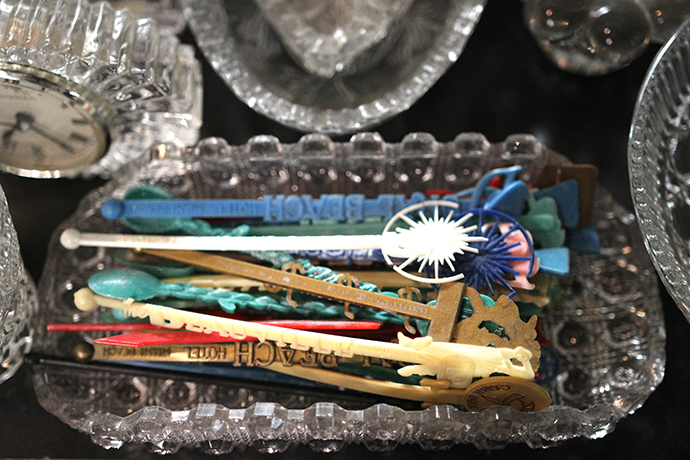
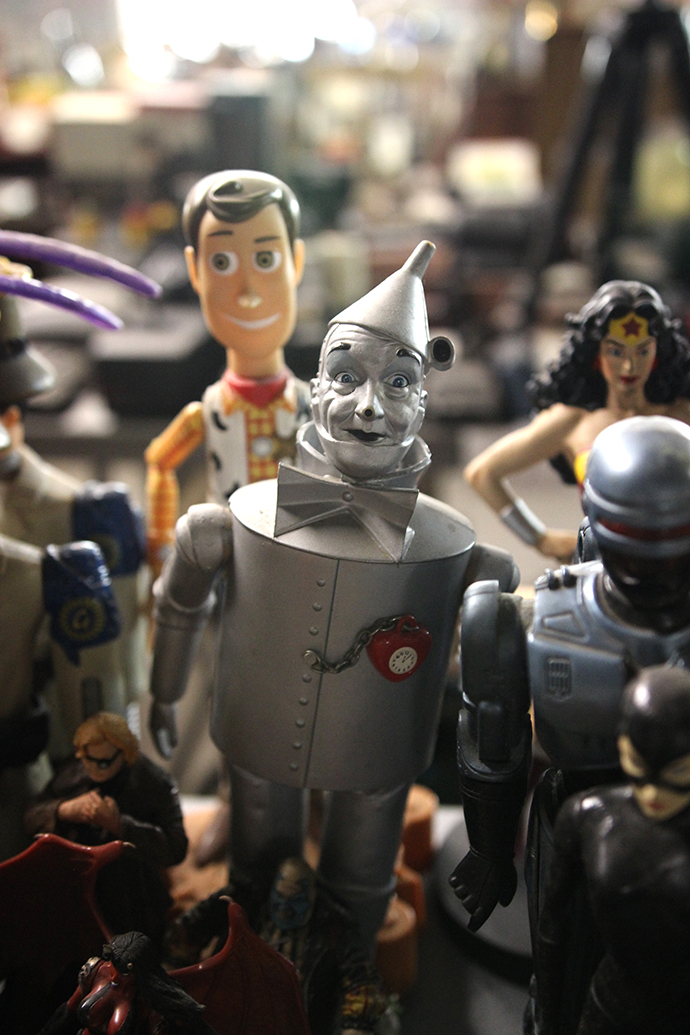


This year there was one ticketed event that I wanted above all else: a tour of the Treasures in the Trash collection. Third time must be a charm, because this year I got my tickets, and on Saturday afternoon we met at a sanitation garage in East Harlem for the tour. The collection, which occupies an entire floor of a building mostly used to house garbage trucks, is made up entirely out of stuff New Yorkers have thrown in the trash. Nelson Molina, a retired sanitation worker, has been working on the collection for more than 30 years, and it's all meticulously organized by themes. They don't hold regular hours or tours unfortunately, so getting tickets was a huge coup.
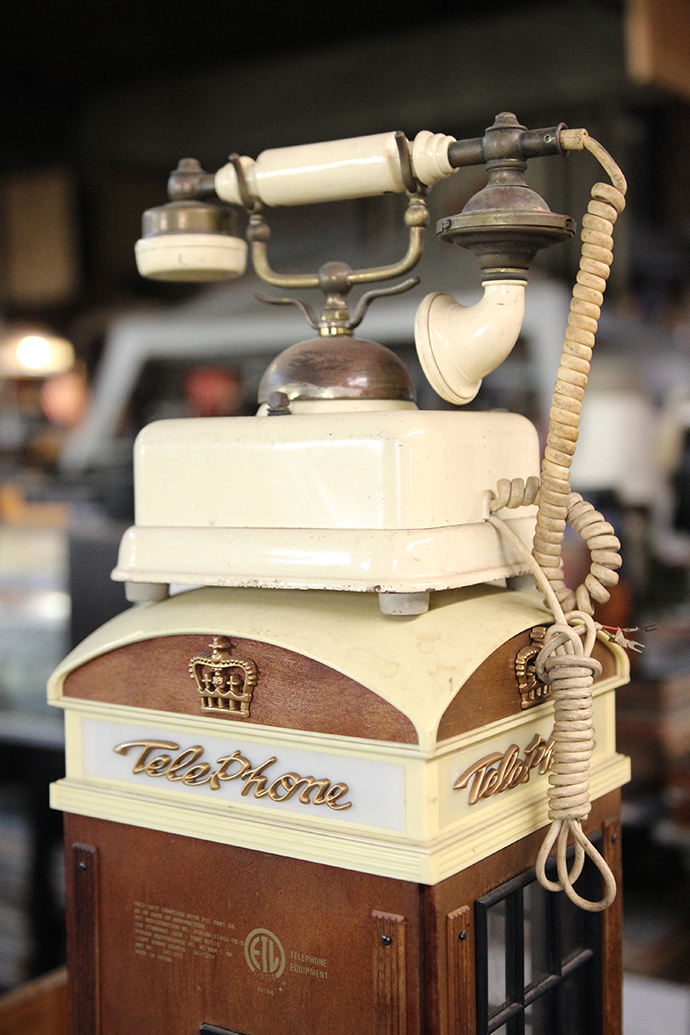
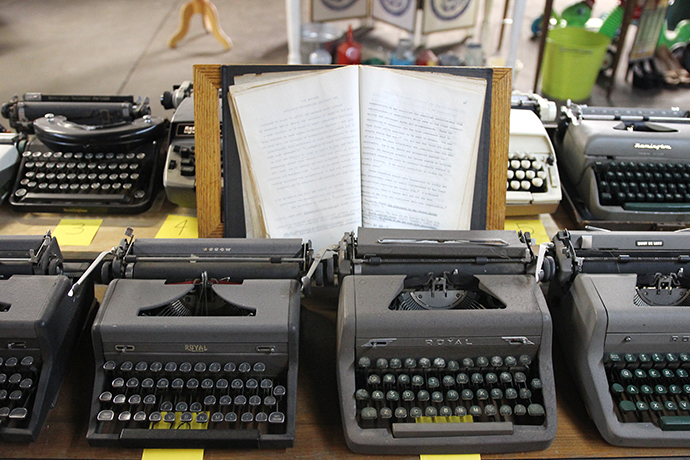

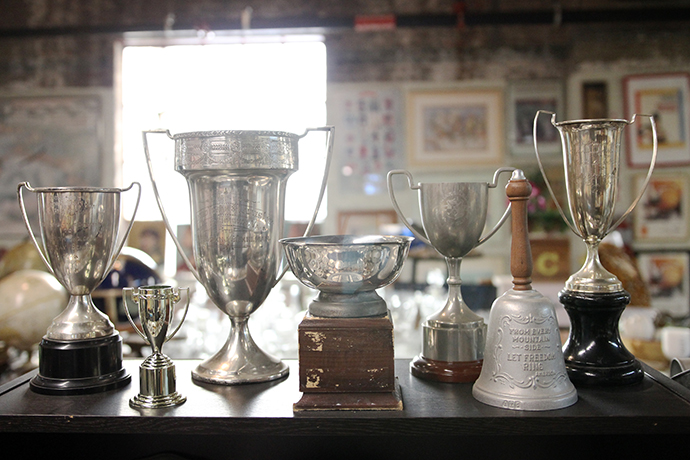
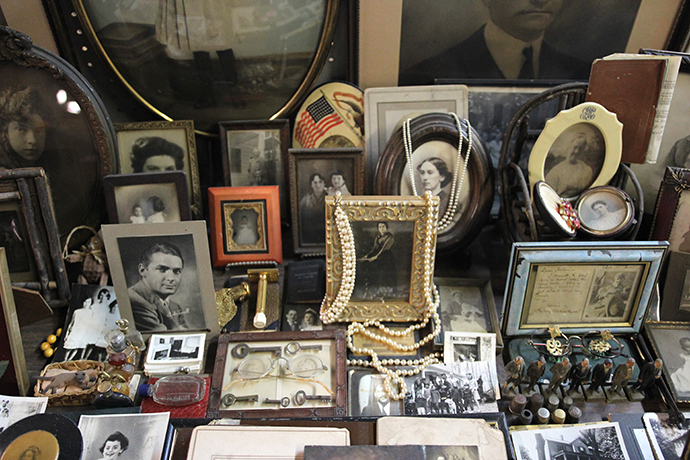
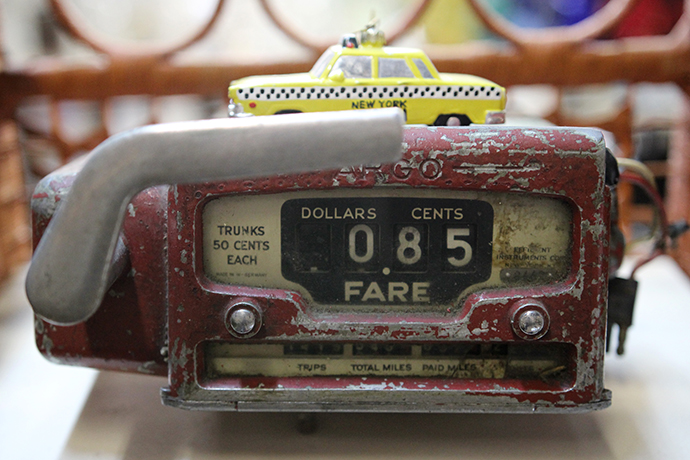
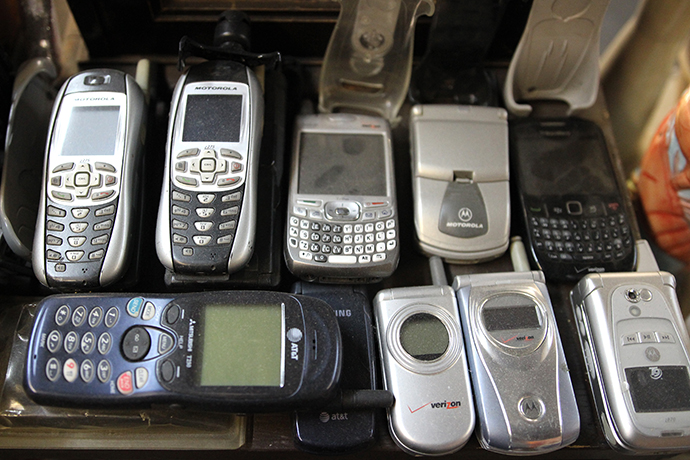
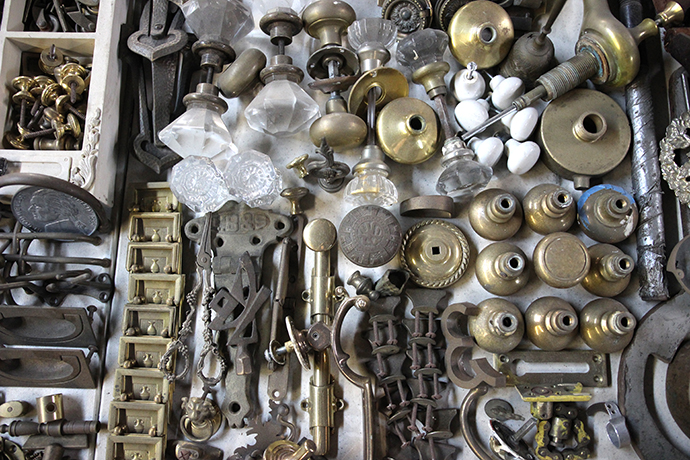

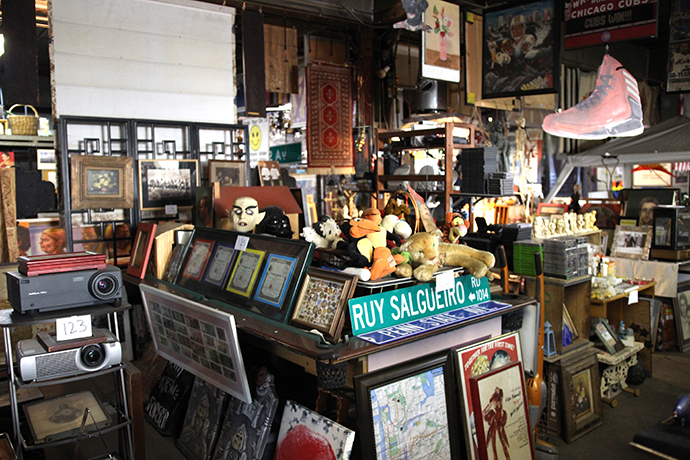
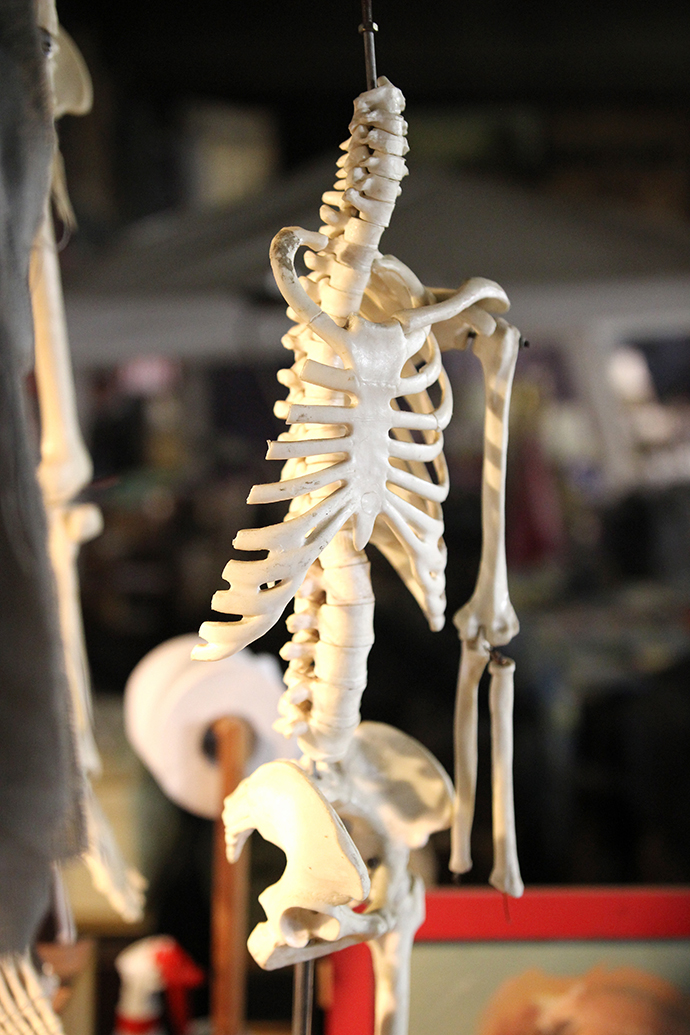
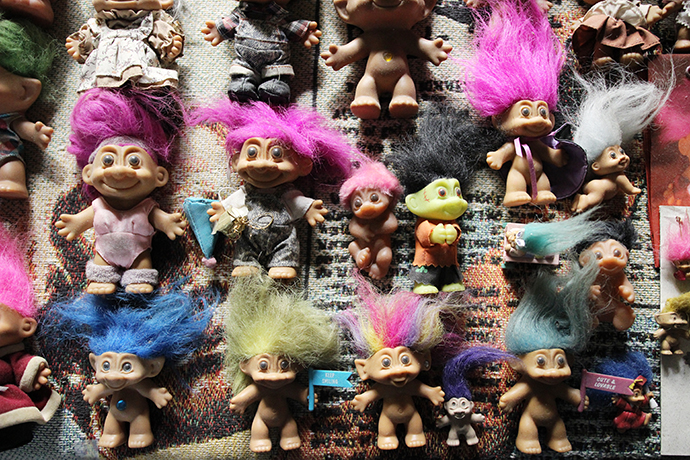
There's really everything you can think of in the collection—skeletons, political memorabilia, paintings, silver sets, action figures, swizzle sticks, troll dolls, Beanie Babies, globes, glassware, typewriters, trophies, cell phones, door knobs, Pez dispensers, Tamagotchis, taxidermy, cameras, eight-track tapes, books, skis, bikes, watches, shoes, jewelry, family photos, chairs, lamps and so many other things that I would never even dream of just throwing away. It's hard to pick a favorite thing that we saw, but top two would definitely be the three (!) women's bodybuilding trophies and the unfinished painting of OJ Simpson trying on his glove in court.

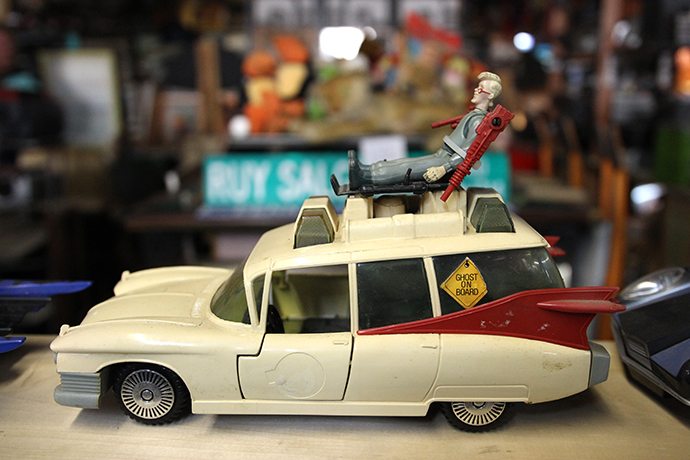
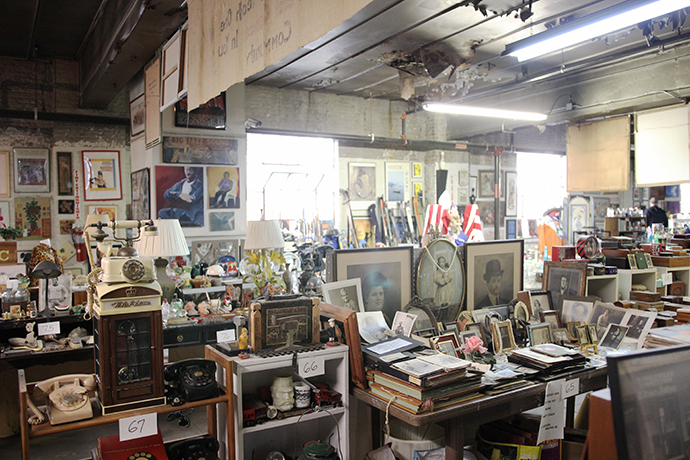
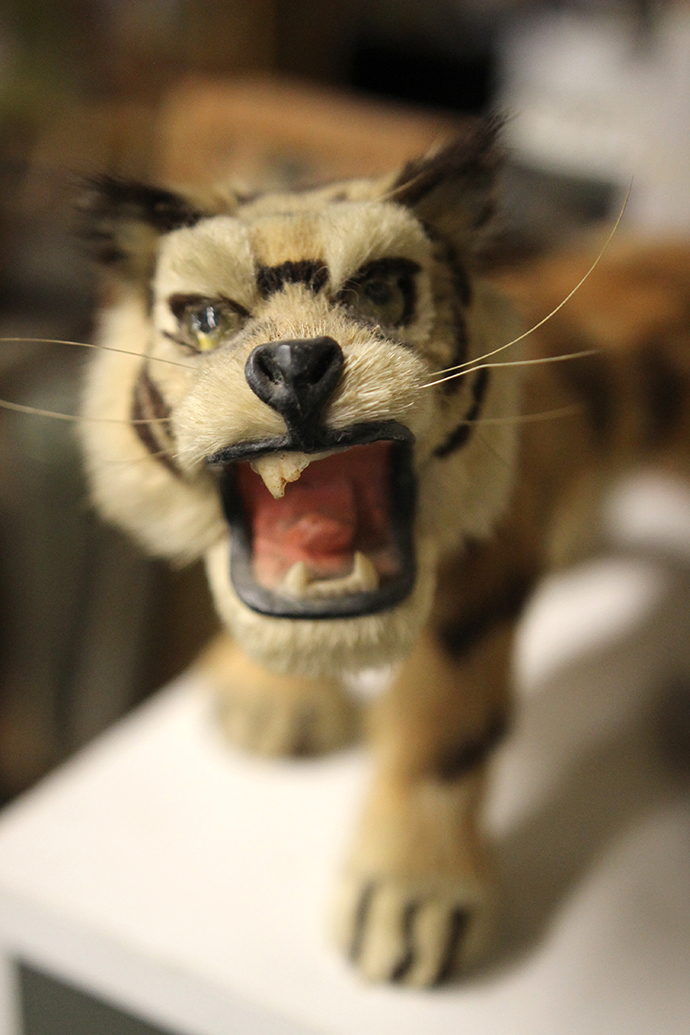

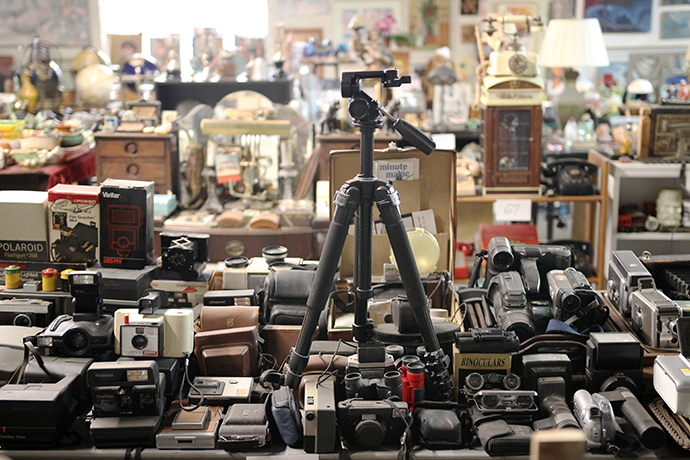
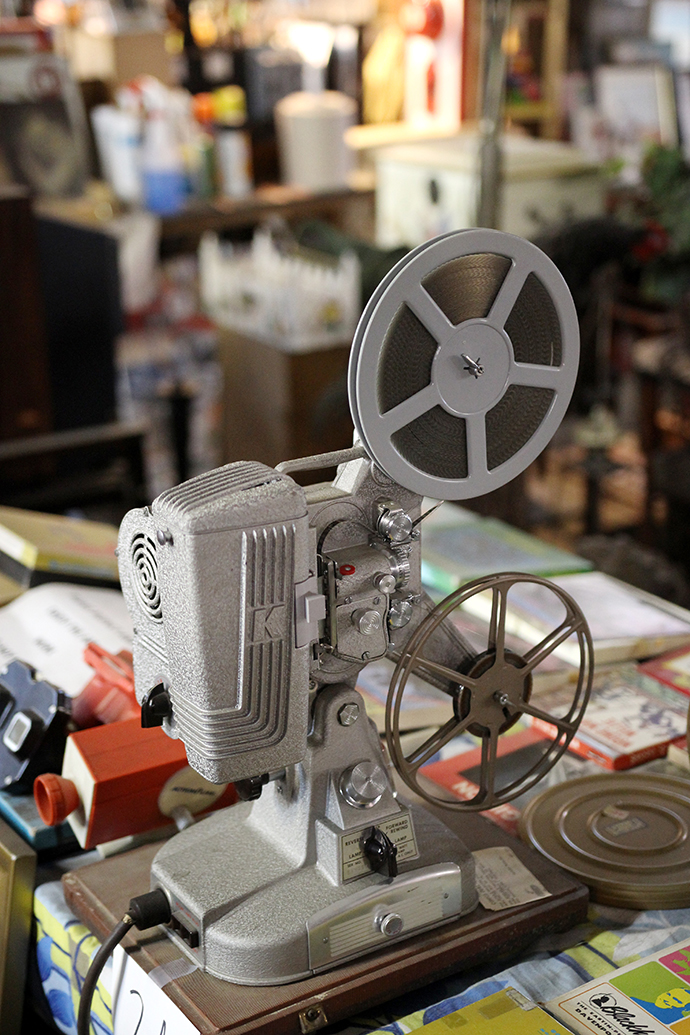
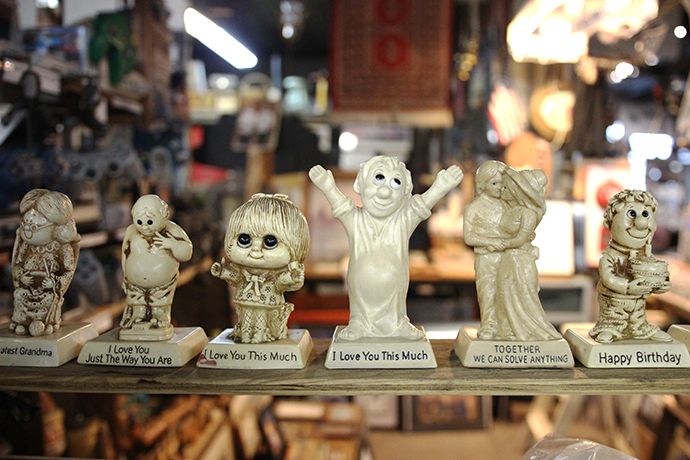



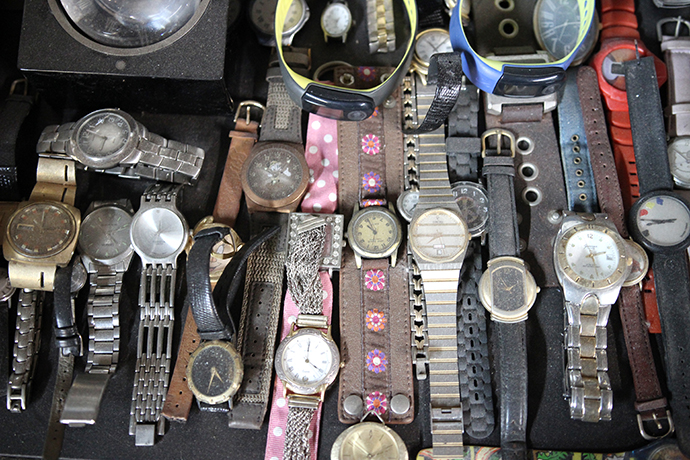
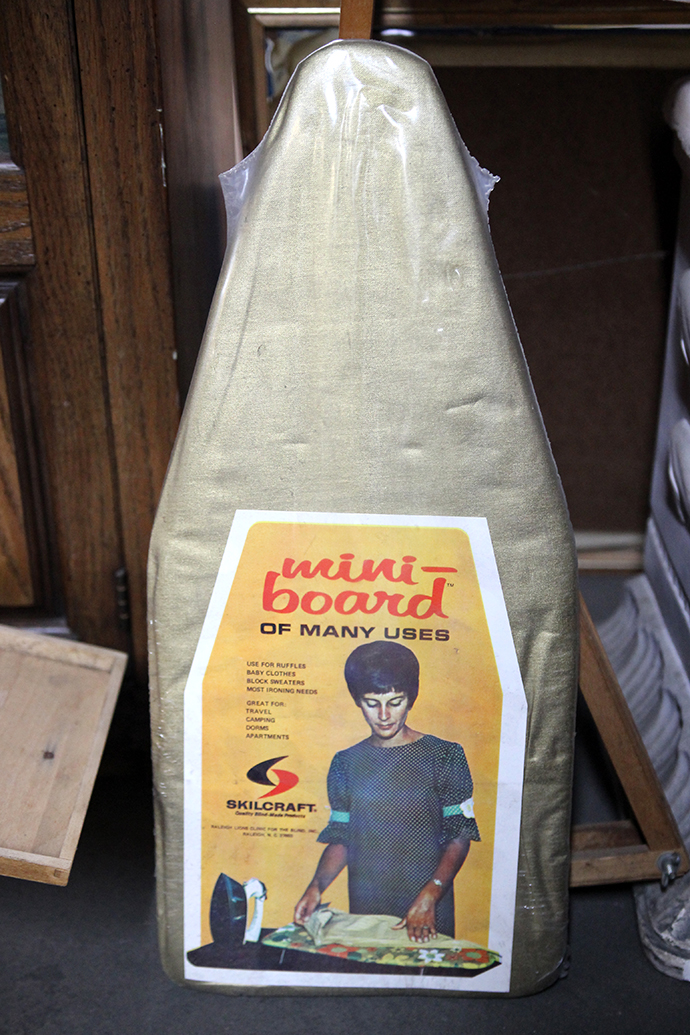


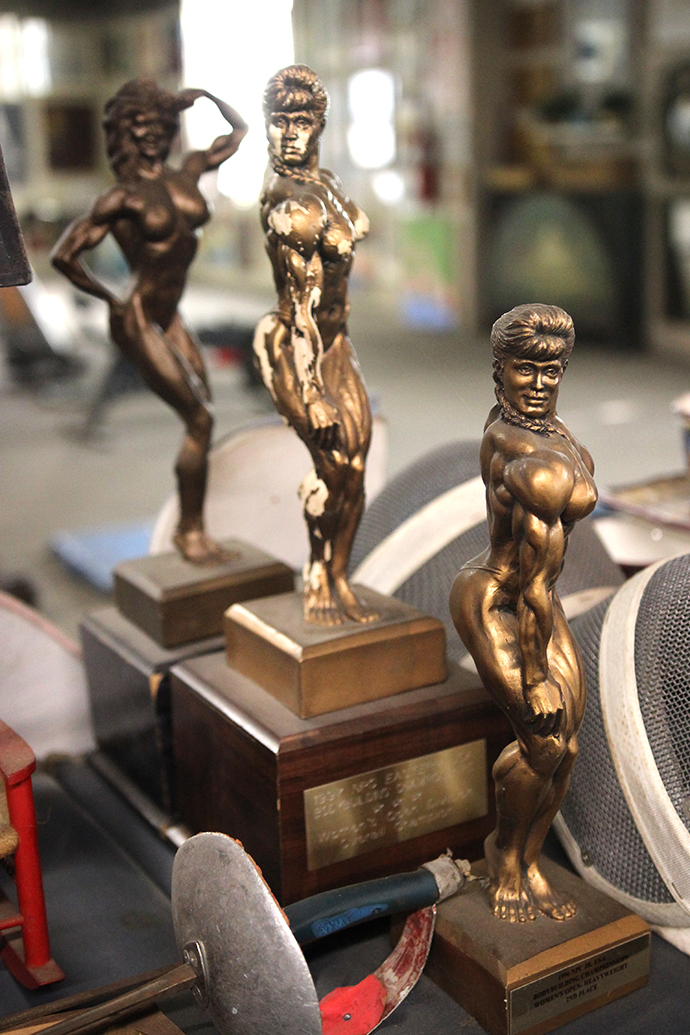
To say the collection is fascinating is a definite understatement. I consider myself a collector—not a hoarder, although some might disagree—and to see everything organized so neatly and thoughtfully really appealed to my sensibilities. I can't give Molina enough credit for having such vision, and seeing how many true treasures he's collected just makes me wonder how many more wonderful things make it all the way to the dump every single day.

Muffler Man: Mr. Bill's, Uniroyal Gal: Nitro Girl
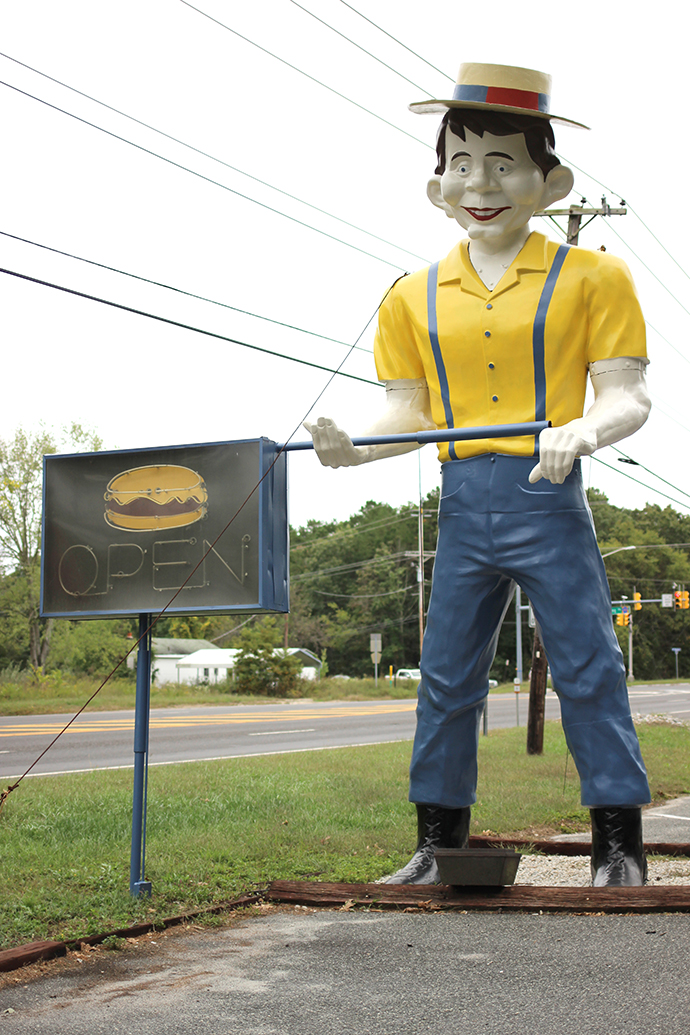
After exploring the Clara Glen Pet Cemetery on our way back from Atlantic City, we stopped at Mr. Bill's for dinner. I had taken my mom to AC for her birthday, and because she's the coolest, she was totally ok with eating her birthday dinner at a roadside diner which I picked only because they have a Muffler Man.
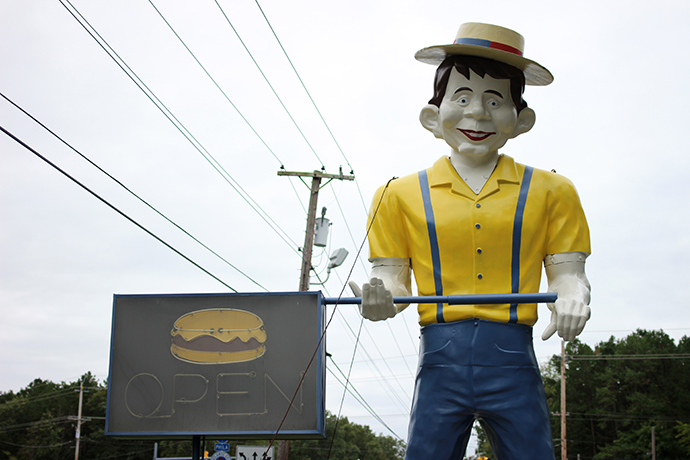
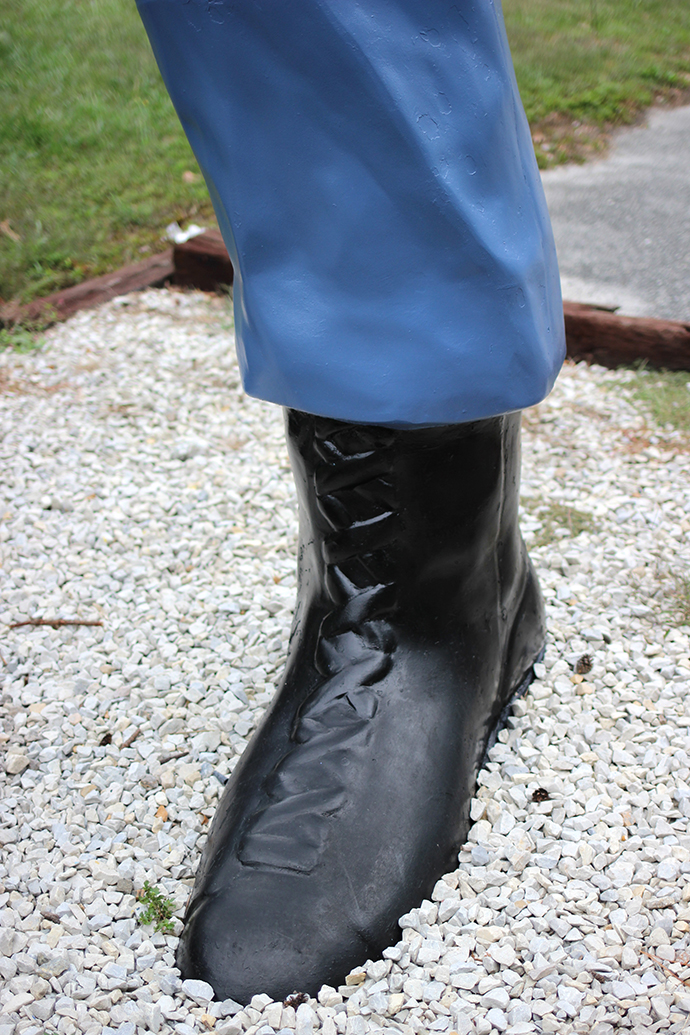
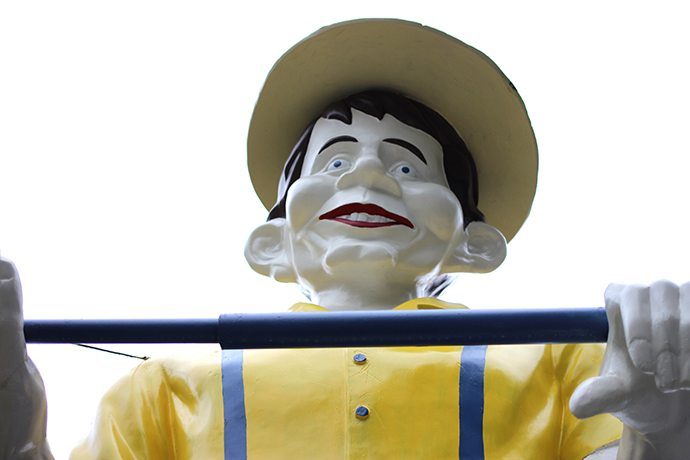
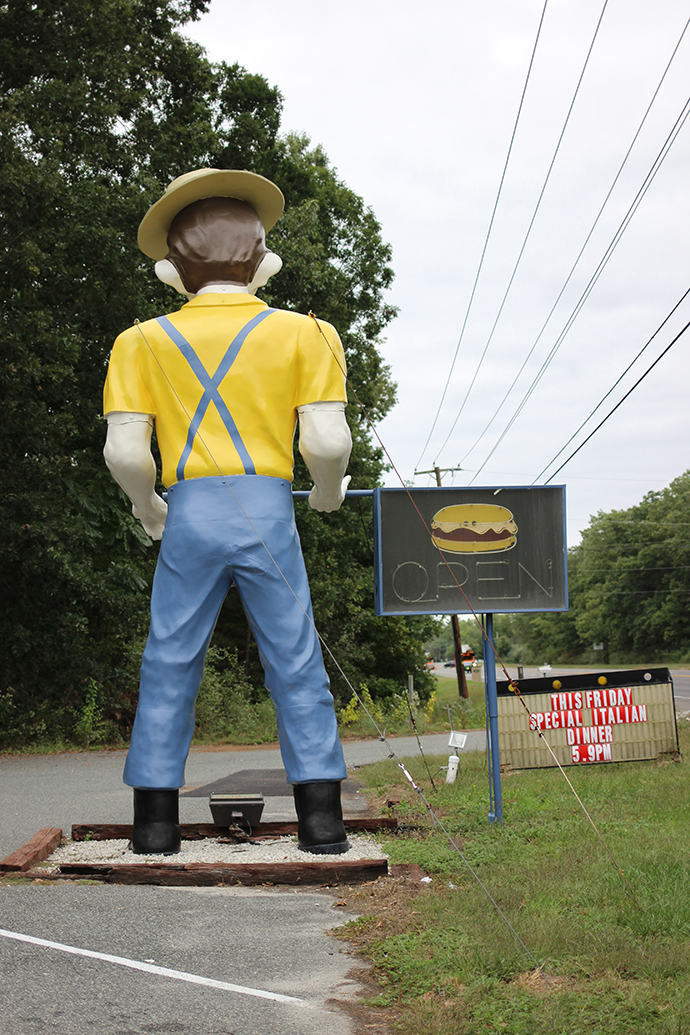
This was the tenth Muffler Man I've seen, and my second of the "happy half-wit" variety. I met my first half-wit at the Magic Forest, but aside from sharing the same basic mold, they are both styled quite differently. Mr. Bill's Muffler Man has been newly painted, although I do think some of the coloring is a bit off—the face is a bit too white and the lip color a touch too harsh but the wide variety of customizations is what makes all the Muffler Men so fun to find.

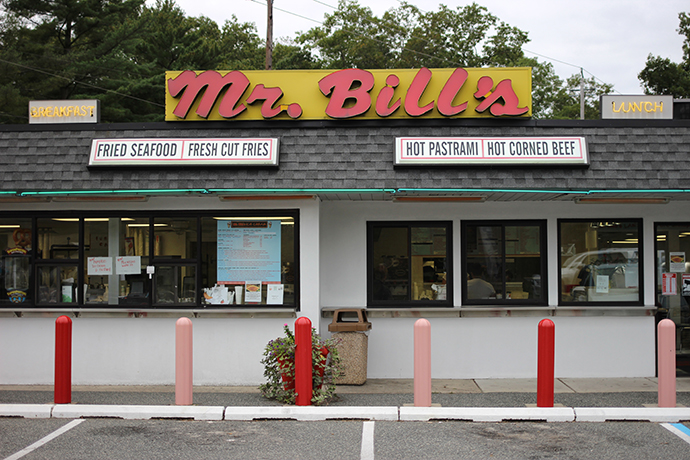
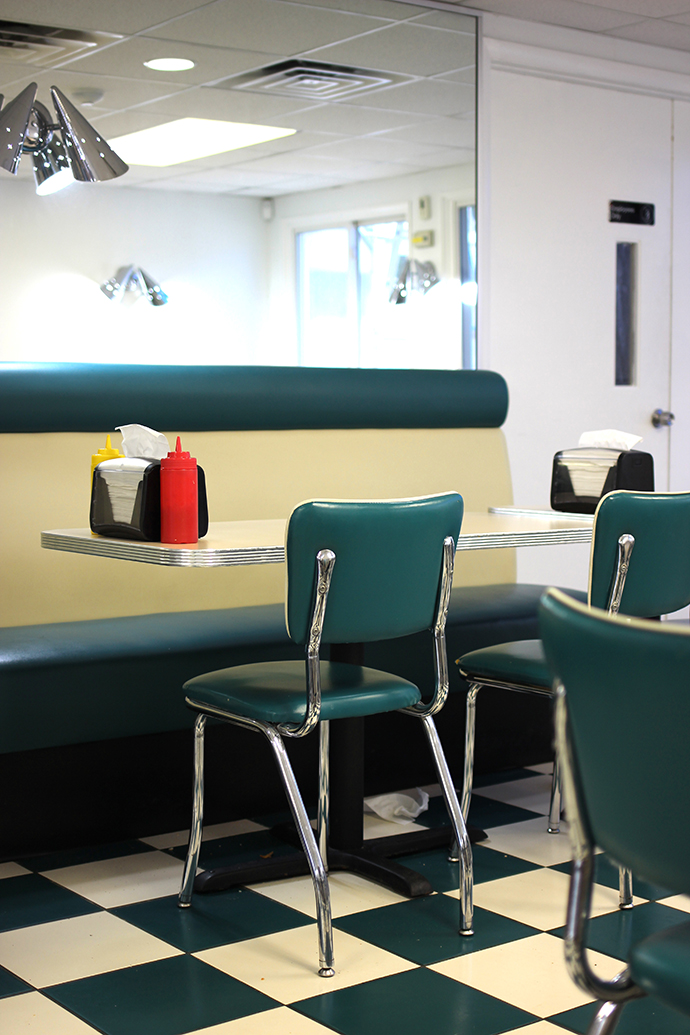


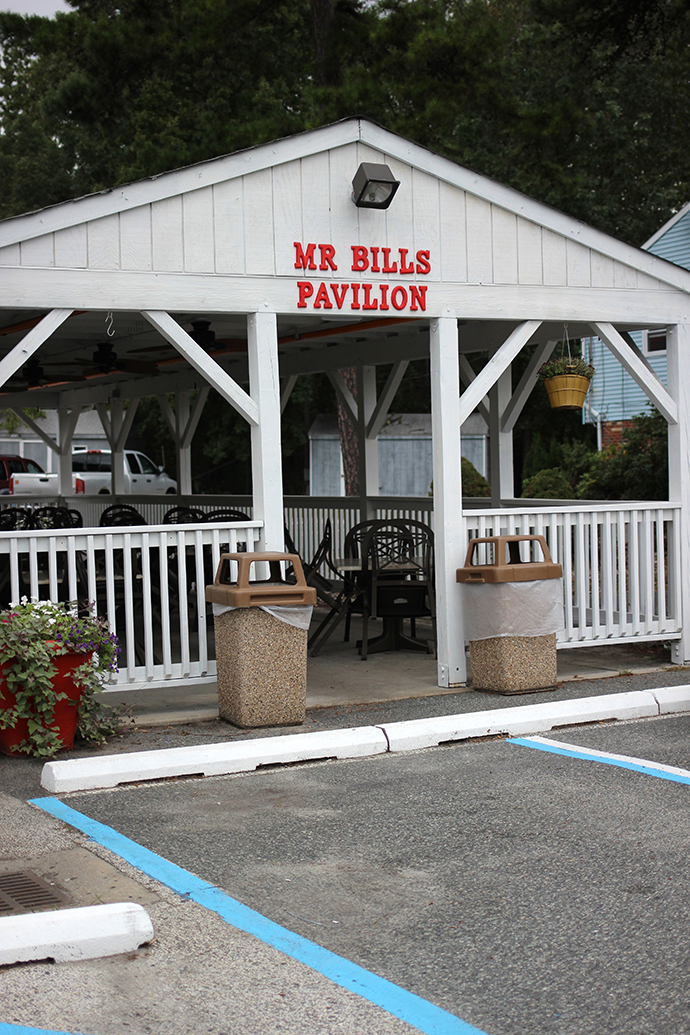
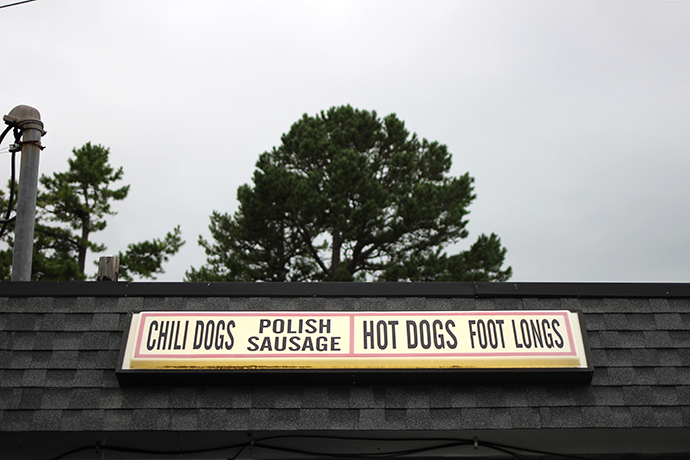
Mr. Bill's had been closed for a while, but recently reopened under new ownership. I'm so glad that the new owners are taking care of their half-wit, and even without the Muffler Man, it would be a worthy stop. I had a fried chili dog which was delicious, and if anyone ever asks if you'd like your hot dog "fried or raw" just trust me and know that fried is the correct answer.
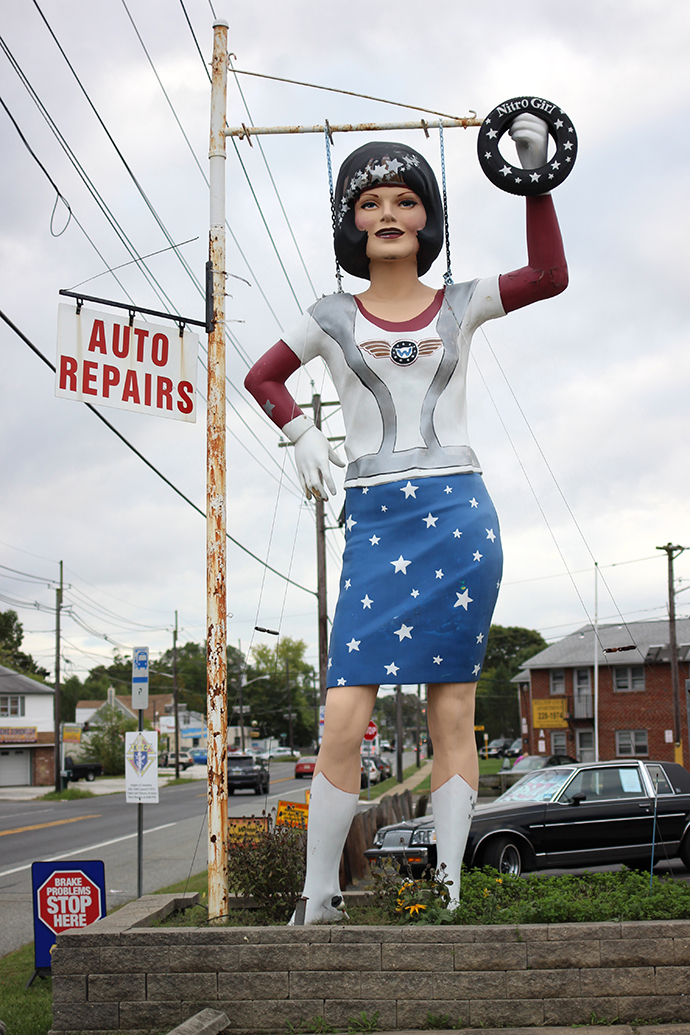
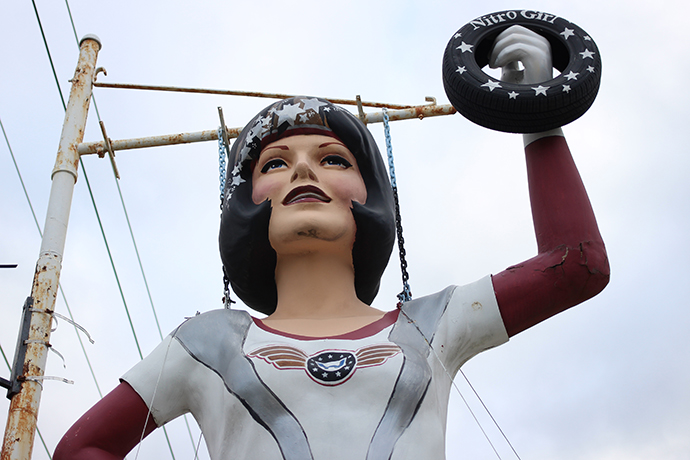

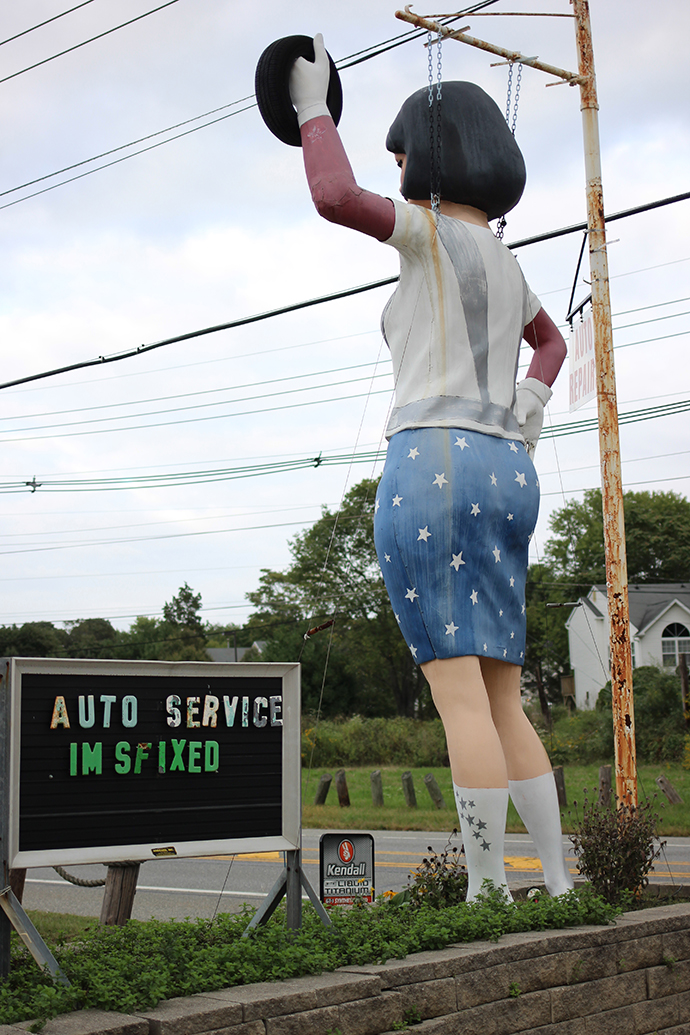
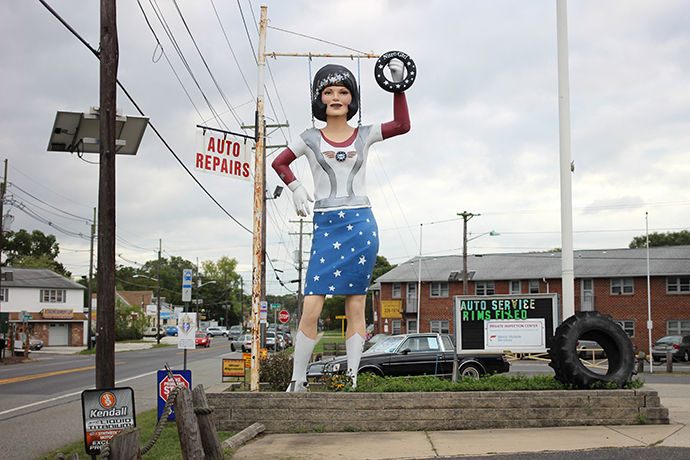
A few minutes after we left Mr. Bills, my mom looked back and said "Hey that looks like a female Muffler Man." I immediately turned the car around and realized that she had spotted a Uniroyal Gal. According to Roadside America, there are only ten known Uniroyal Gals remaining, making them much more rare than their male counterparts. They were made by an International Fiberglass sculptor who apparently had a thing for Jackie Kennedy. "Nitro Girl" stands outside of a Uniroyal Tire dealership in Gloucester Township, New Jersey and I couldn't believe our luck that our Google directions took us right past her. Thankfully my mom was being vigilant, and it was an amazing find especially for someone who had just seen her very first Muffler Man minutes before.

Clara Glen Pet Cemetery

Ever since my trip to America's first pet cemetery in Hartsdale, I've been eager to track down more pet burial grounds. I've explored more human cemeteries than I can count, but Hartsdale is the only cemetery that had me tearing up multiple times. It's not that I'm cold and heartless when it comes to human death, but pets and animals are more relatable and helpless. The epitaphs for beloved pets were so much more heartfelt and personal than ones you usually see for humans. It's also easy to put myself into other pet-owner's shoes, thinking about my own cat and her eventual demise (when I'm not mad at her for screaming in my face, that is).
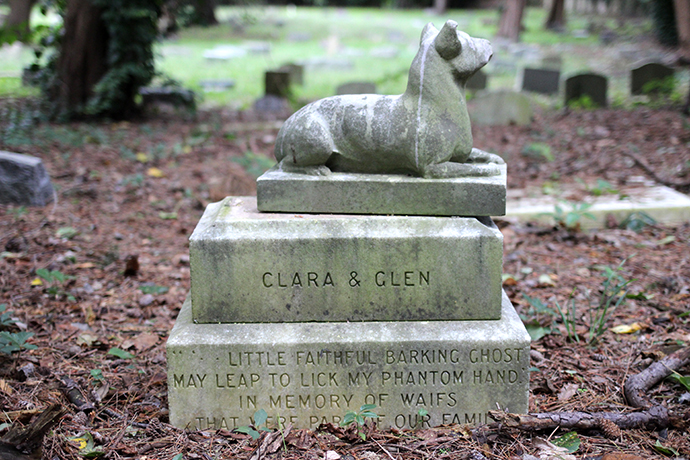
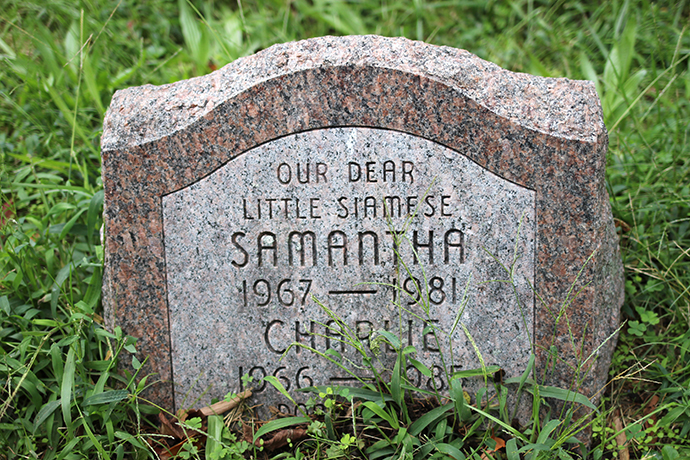

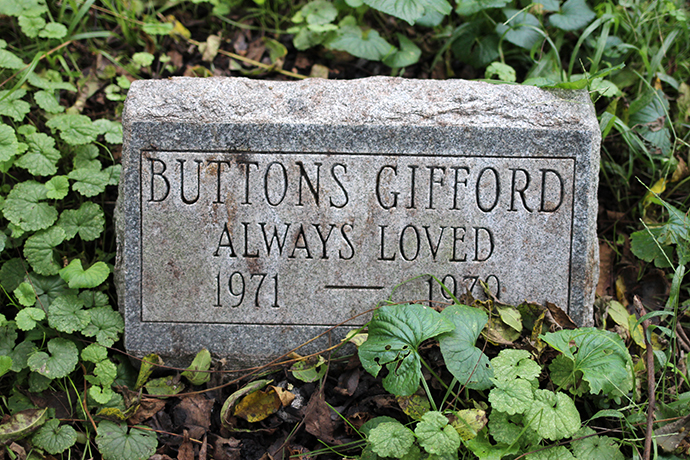
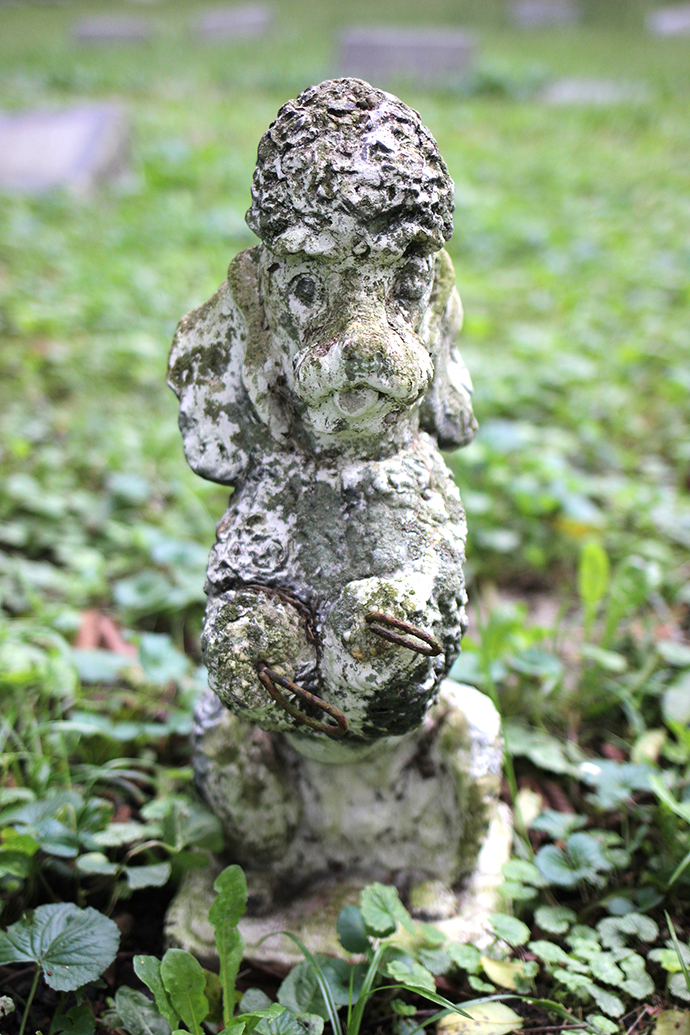
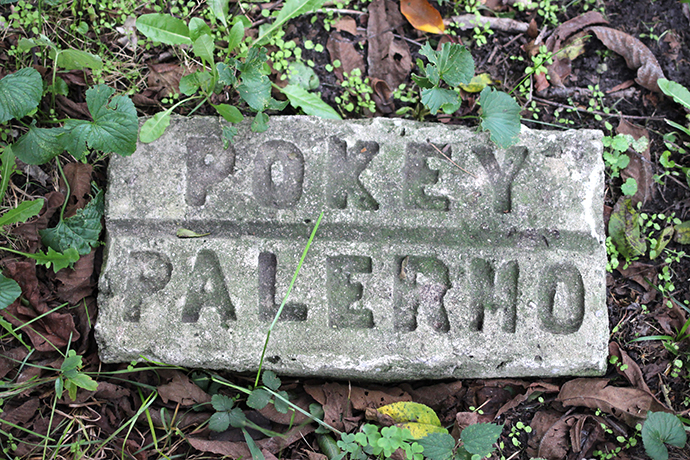
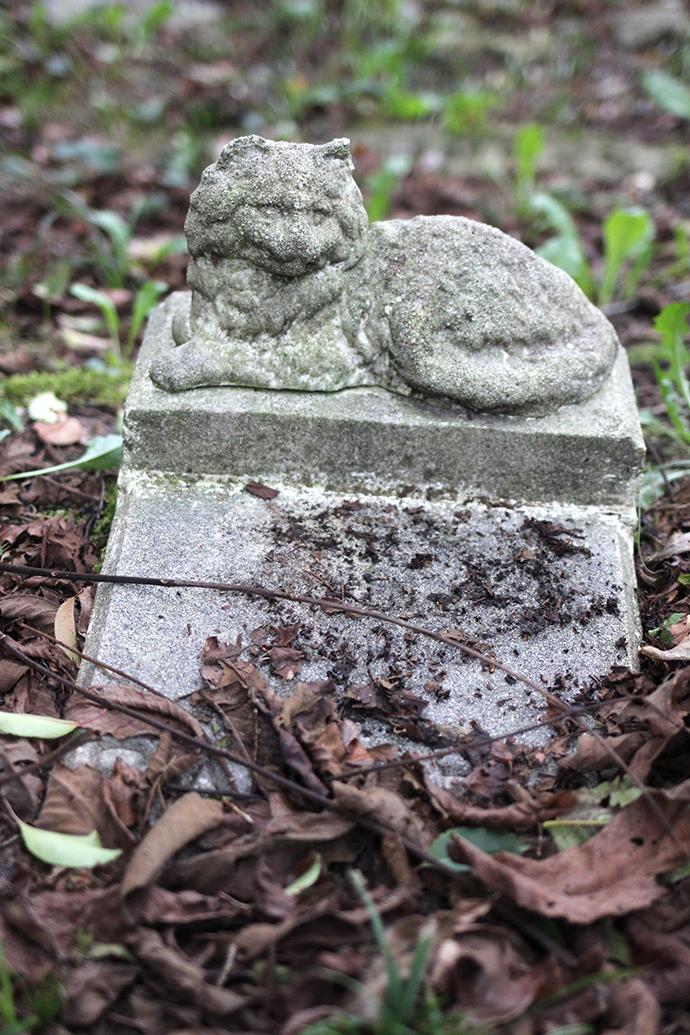
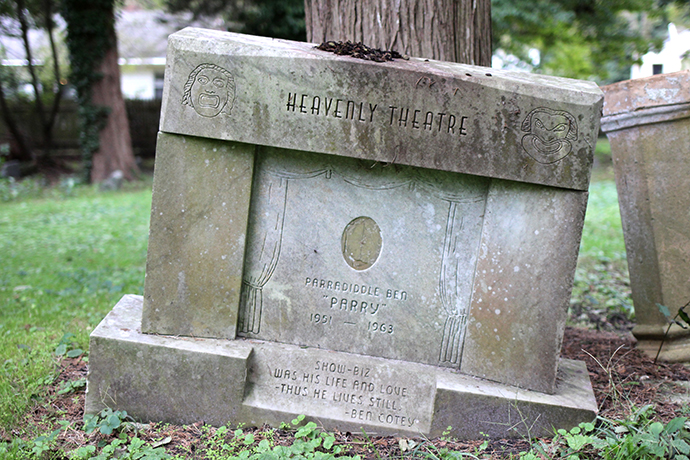
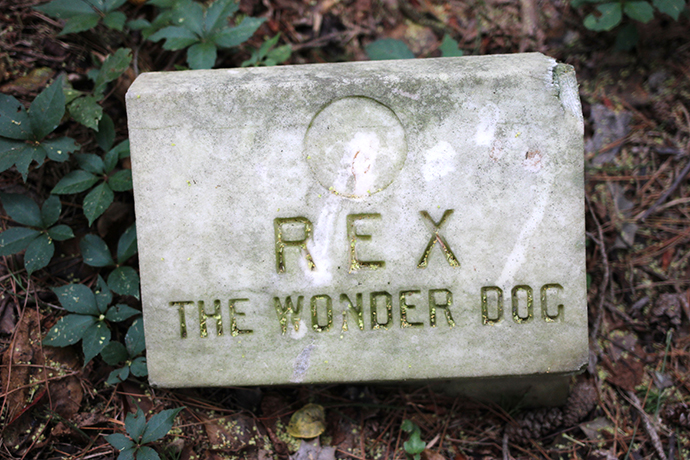
Clara Glen Pet Cemetery was founded in 1918 by Clara and Glen White, an animal-loving couple who had multiple dogs, cats and rabbits. They started the cemetery in their backyard in Linwood, NJ, and now Clara Glen is one of the oldest pet cemeteries in the country (Hartsdale was founded in 1896). Celebrities from nearby Atlantic City, like Irving Berlin and Billie Burke, have pets buried in the cemetery, alongside 3,800 other animals. Rex the Wonder Dog water-skied in Atlantic City's Steel Pier water show in the 1930s and 40s, and a diving horse (we saw at the last diving horse left in the country at the Magic Forest) is rumored to be buried here as well.
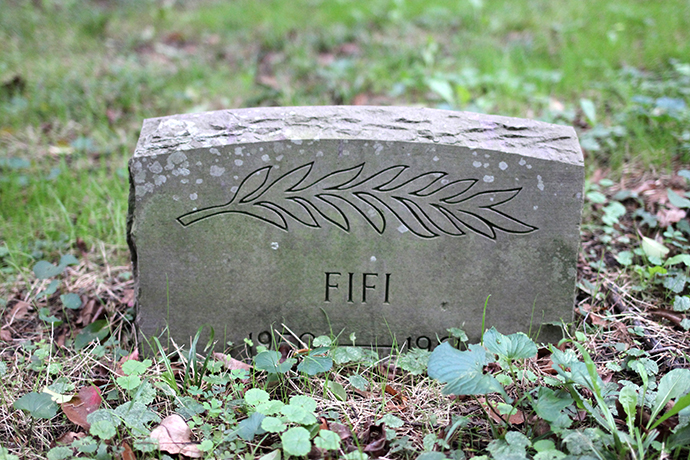
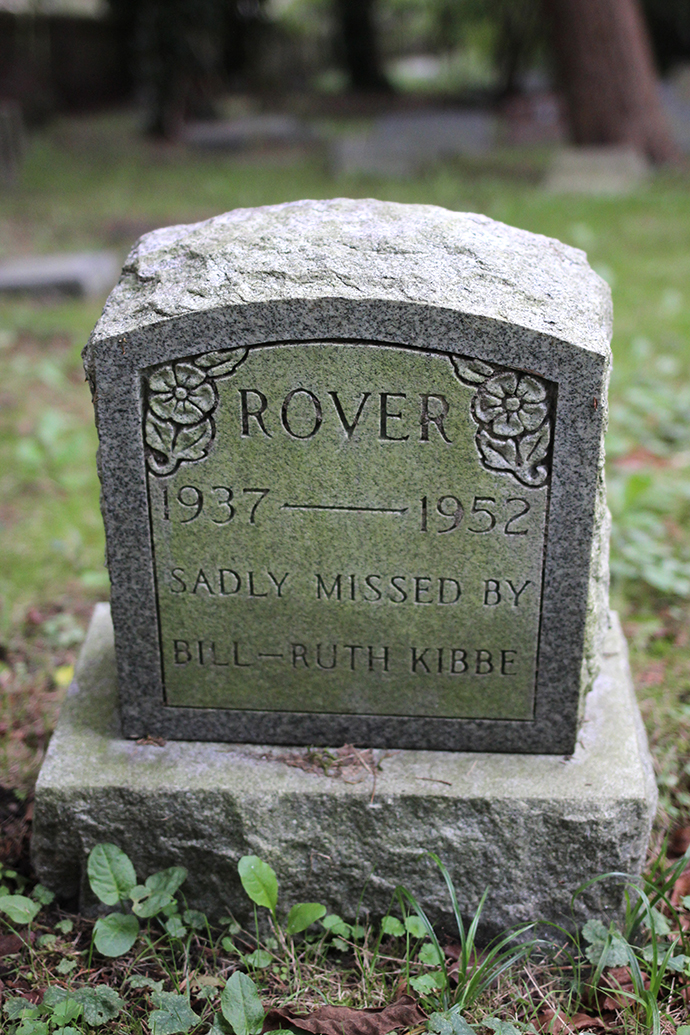
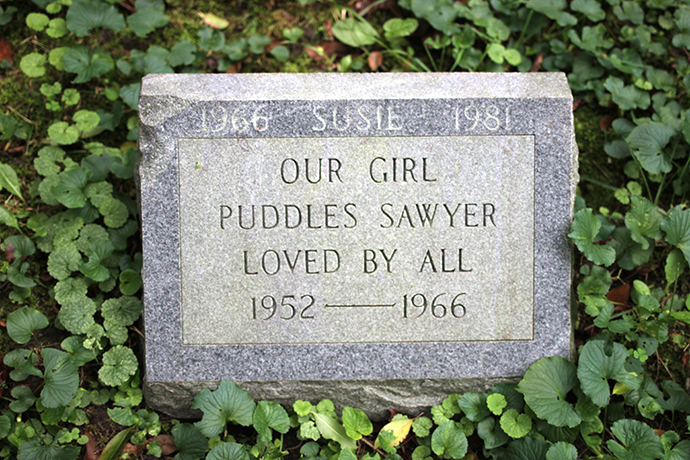
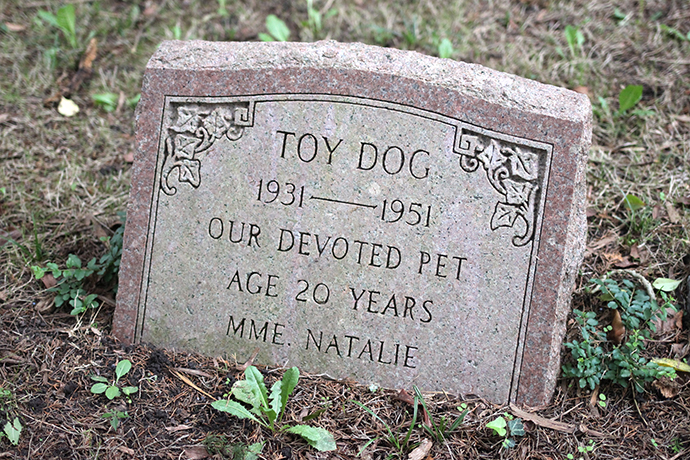
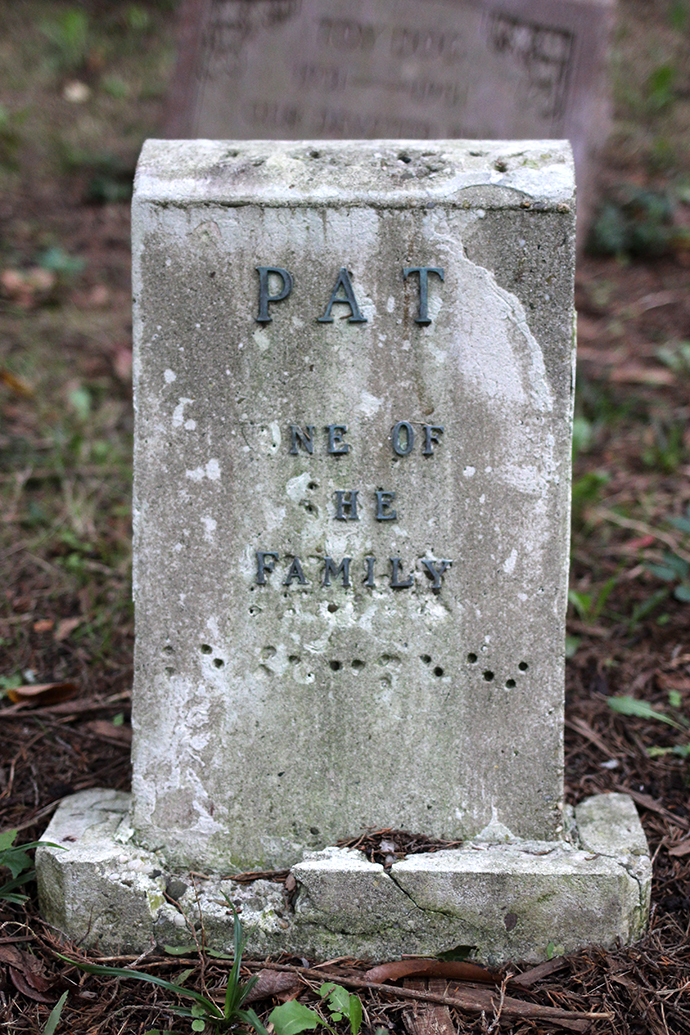
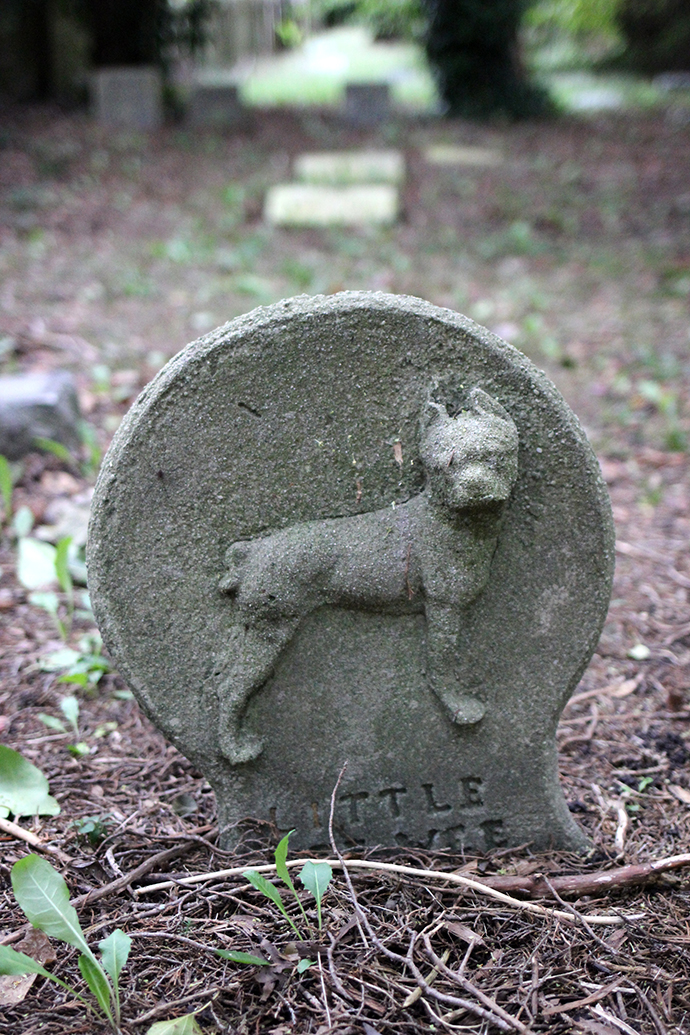
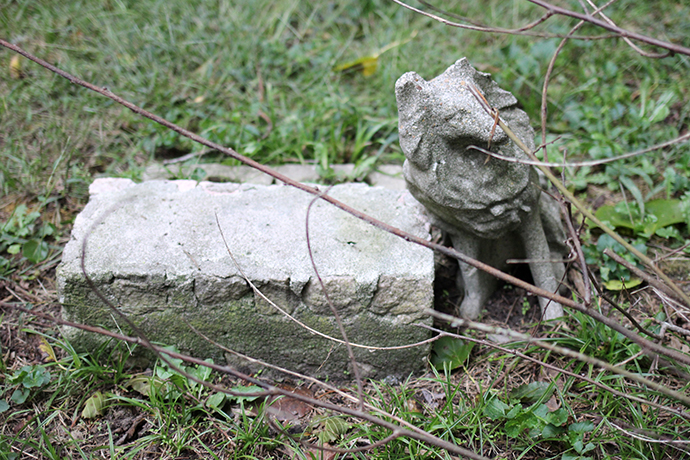
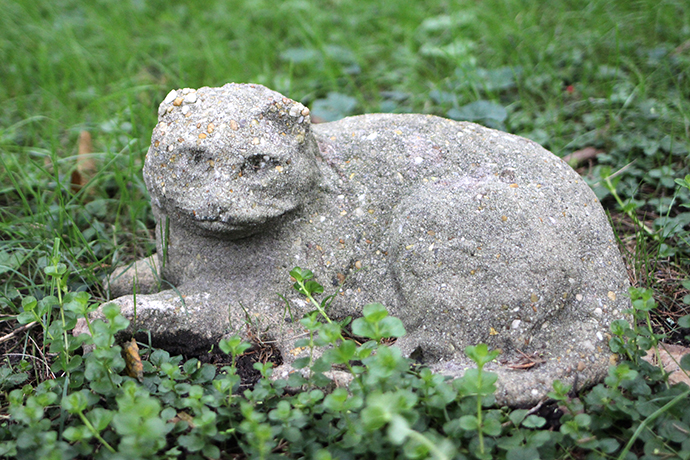
Pet cemeteries are disorienting because they're so serious on the one hand—losing a pet is devastating—and ridiculous on the other, with stones etched with names like Buttons Gifford, Fifi, Puddles Sawyer, Fluffruff, Mr. Bum, Rover and Pokey Palermo. While Clara Glen is tiny compared to Hartsdale, which contains more than 80,000 animals, I'm actually shocked that so many people opt to incur the expense of burying their pets in a public cemetery, instead of having them cremated or buried in their own backyards.
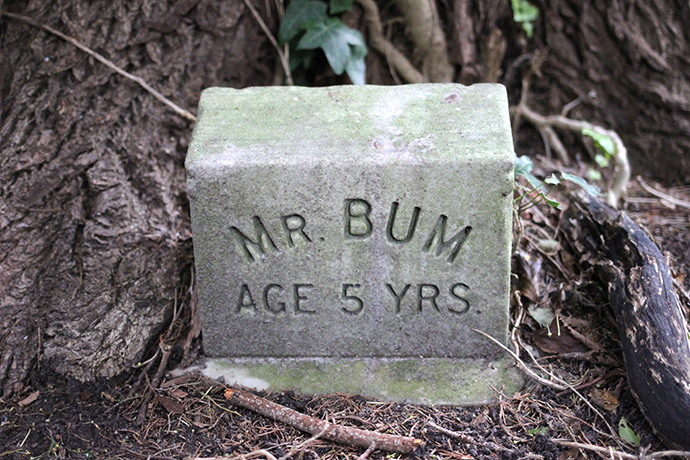
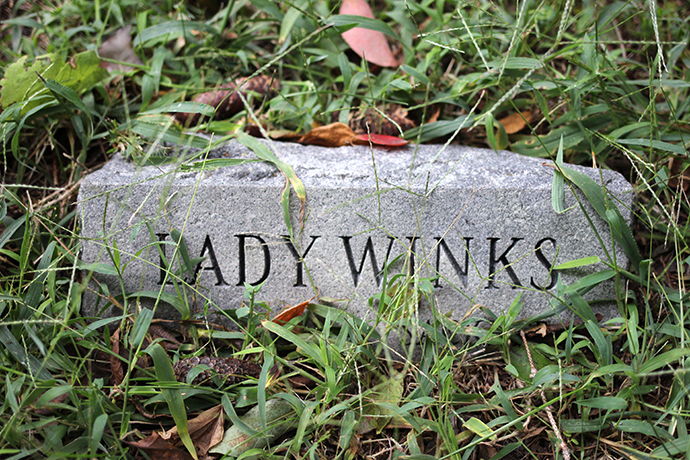
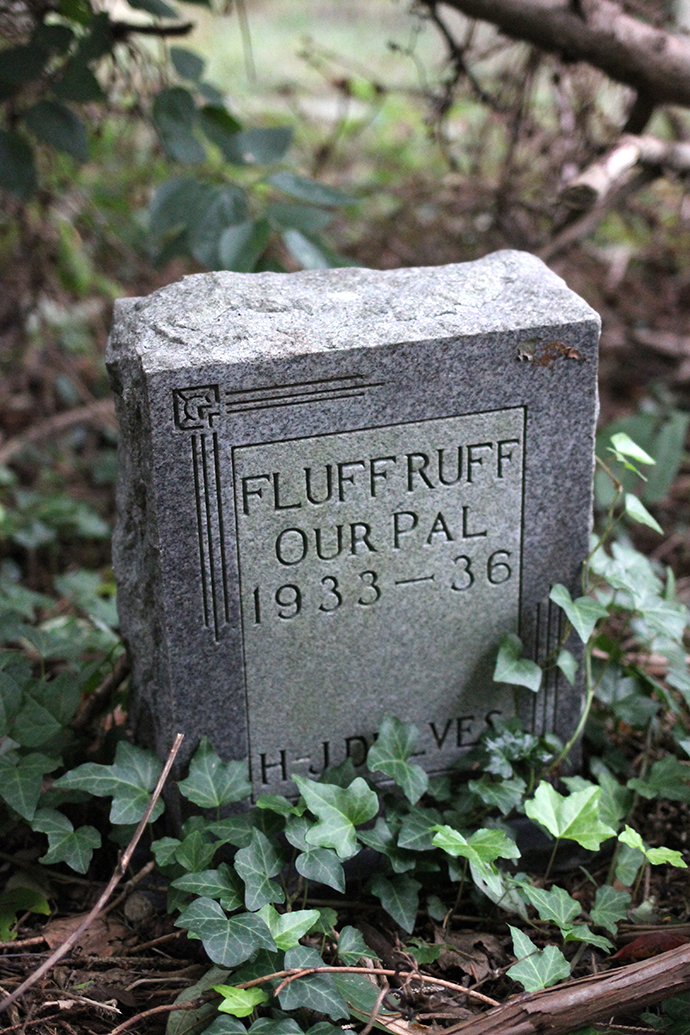
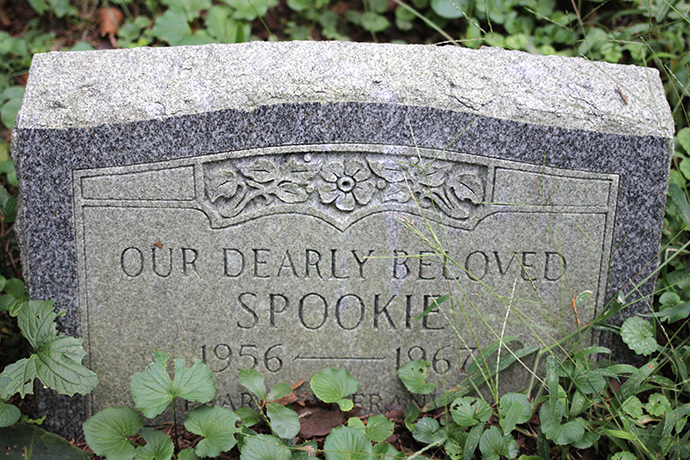


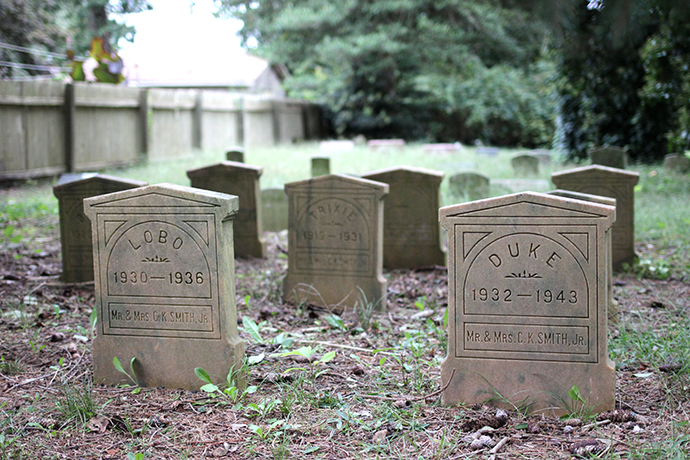
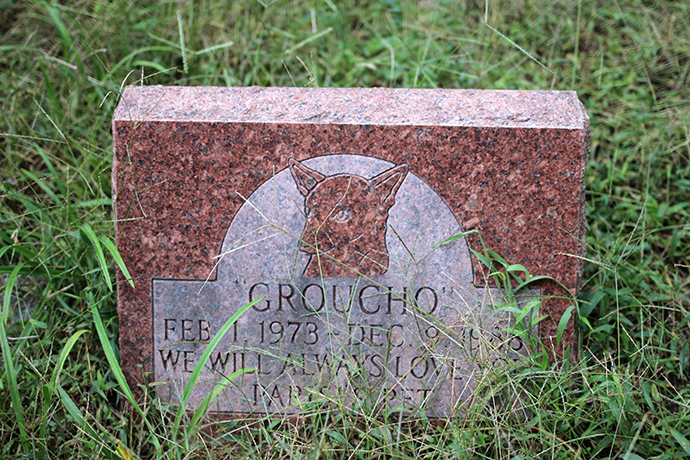
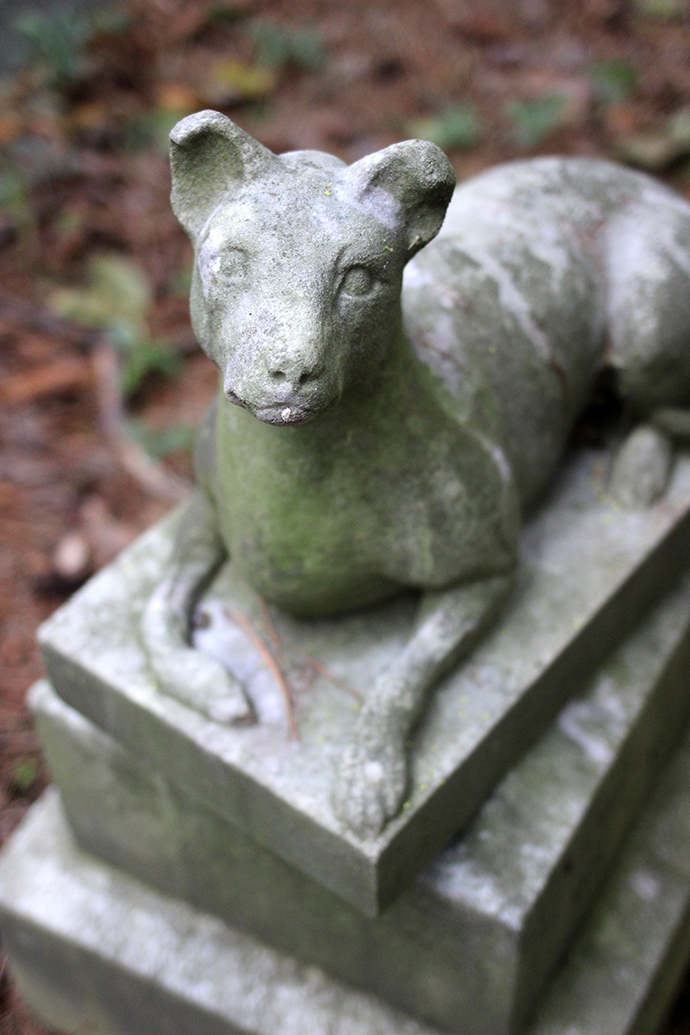
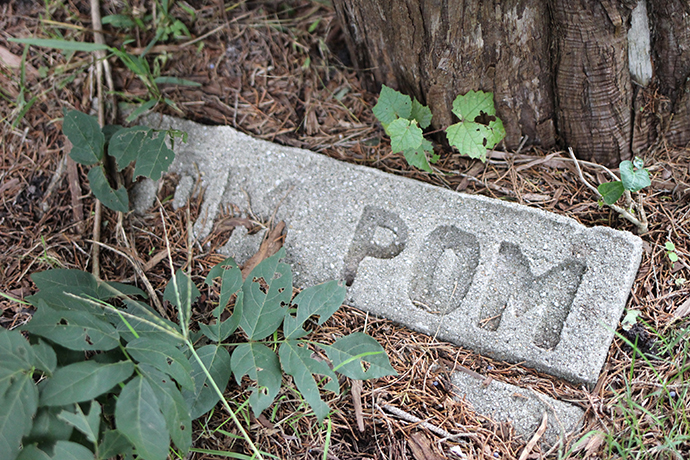
Clara Glen had fallen into disrepair over the years, and many stones have been broken or vandalized. It's now maintained by the Linwood Historical Society, and remains a bit overgrown but in fair shape. It's still basically located in someone's backyard, in a nice residential neighborhood near a cul-de-sac. We felt a little bit as if we were trespassing, but it's easy enough to slip in and out of for a quick visit.
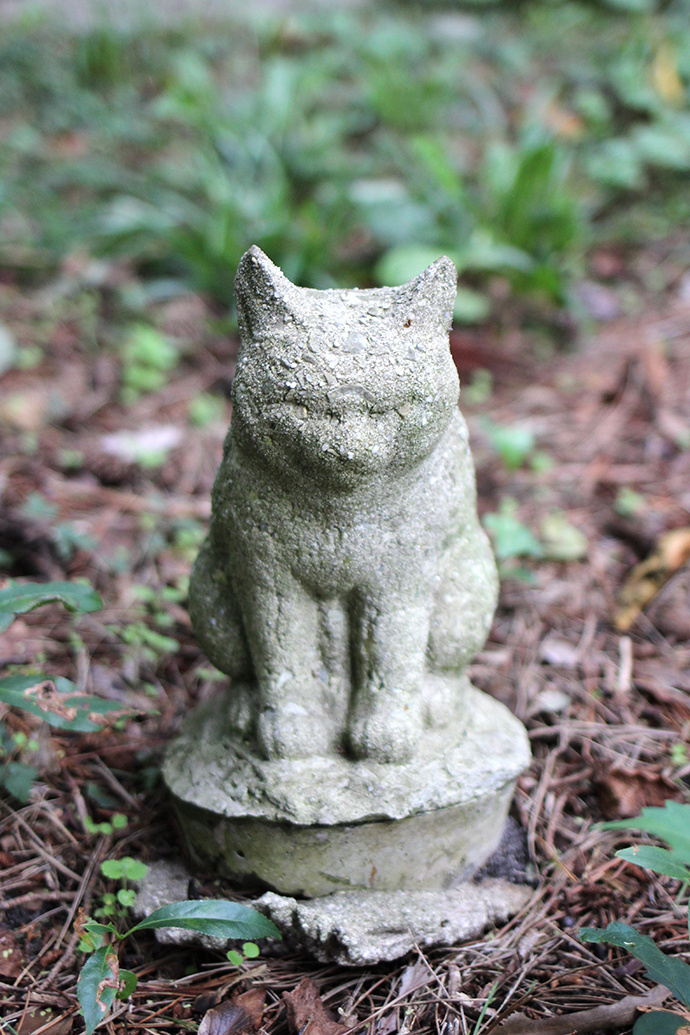
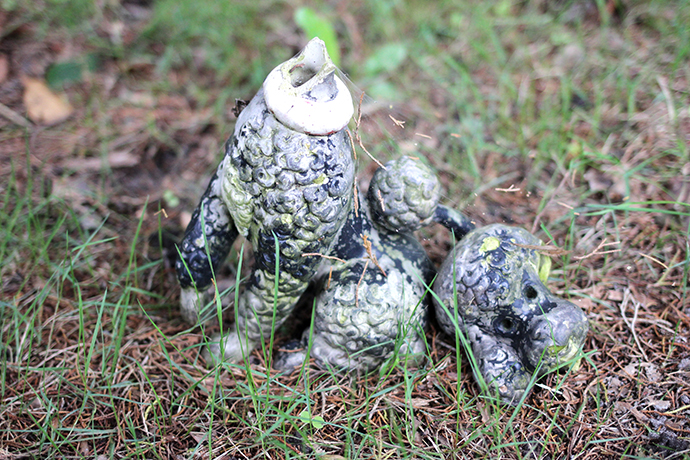
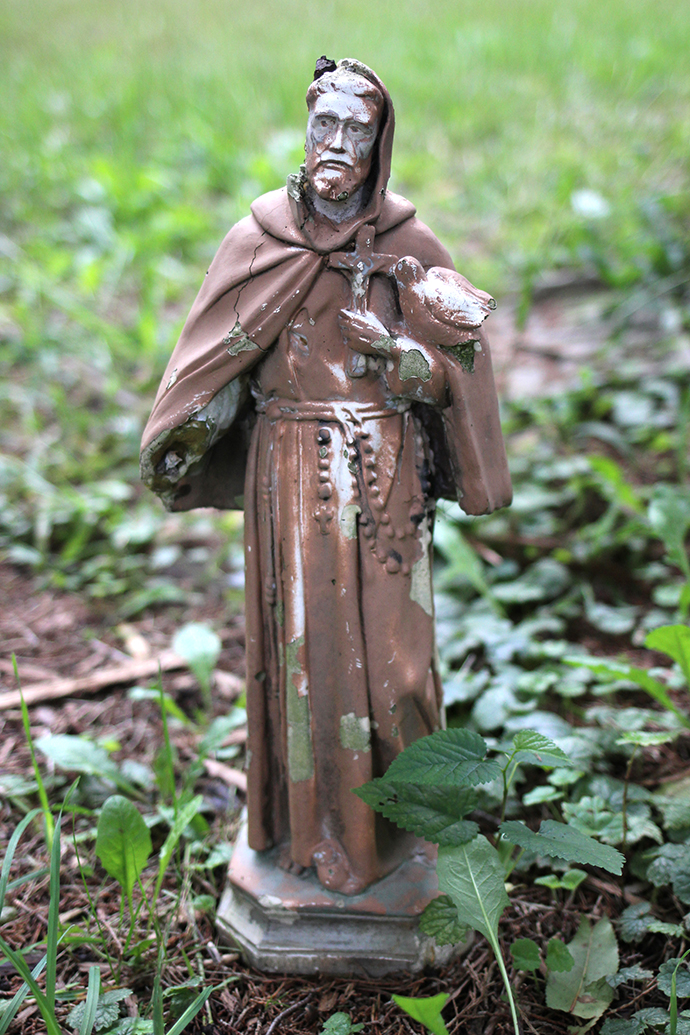
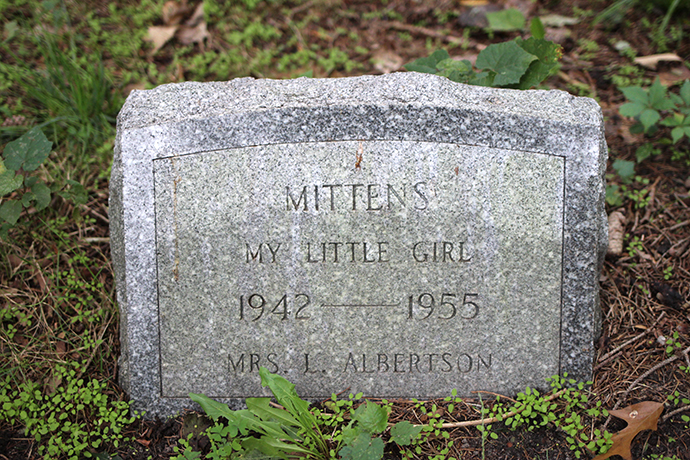
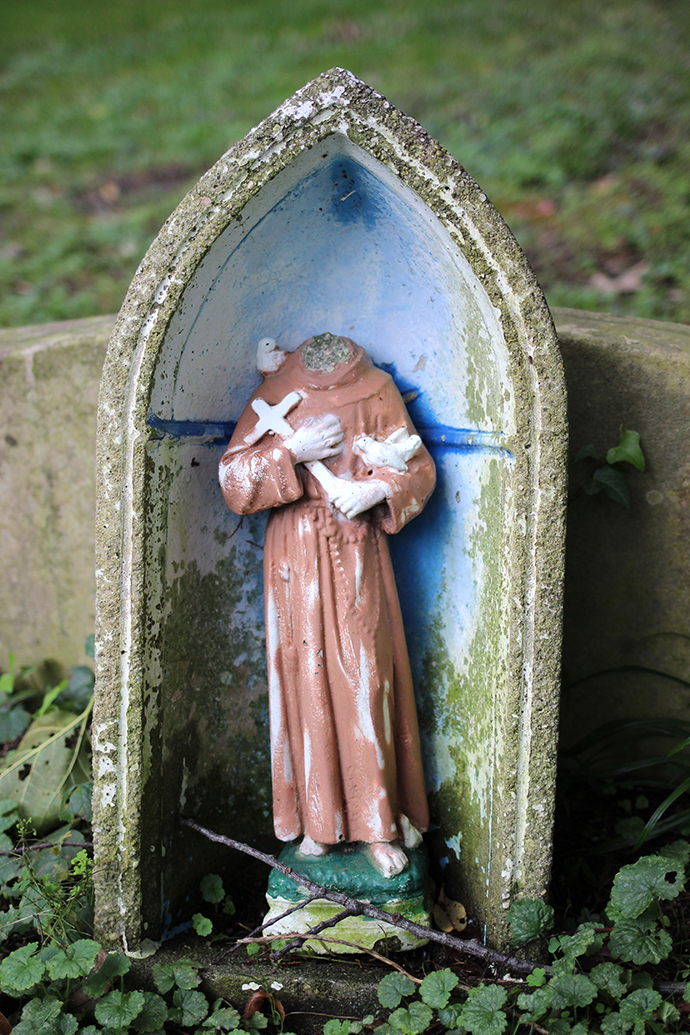
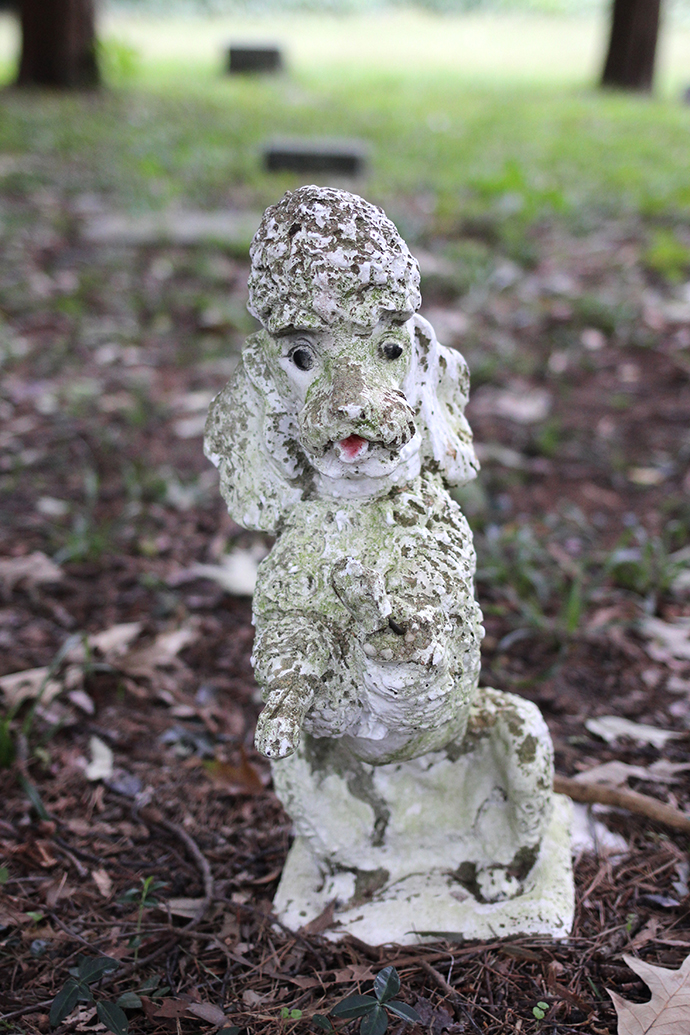

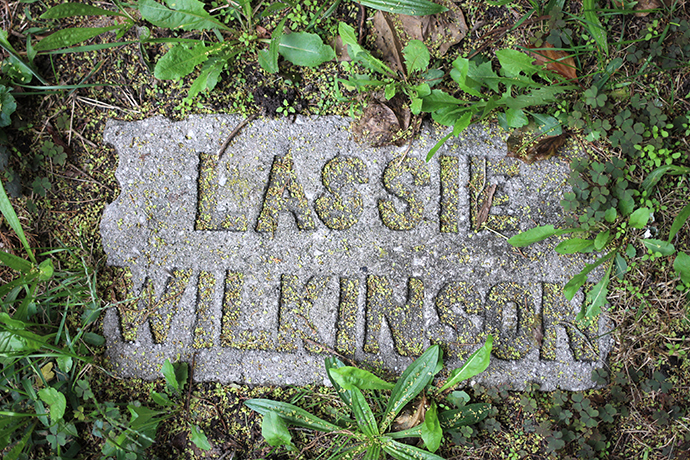
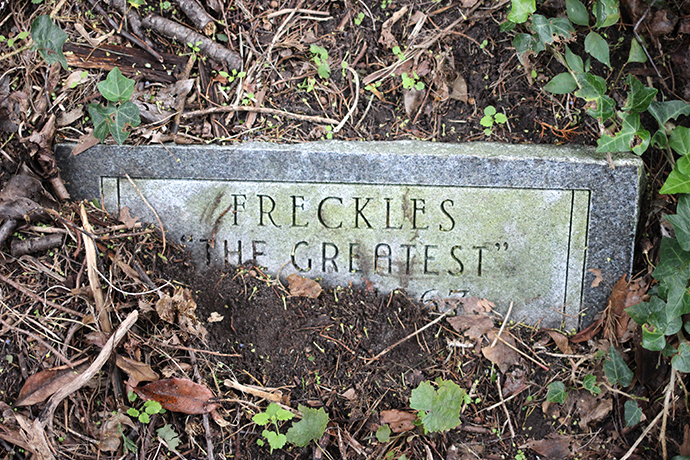
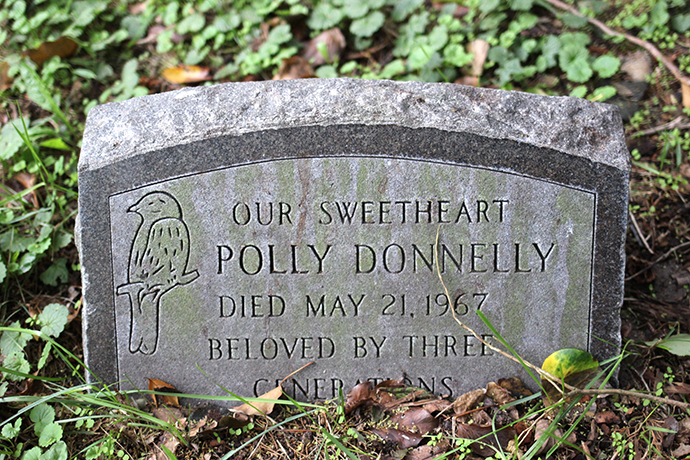
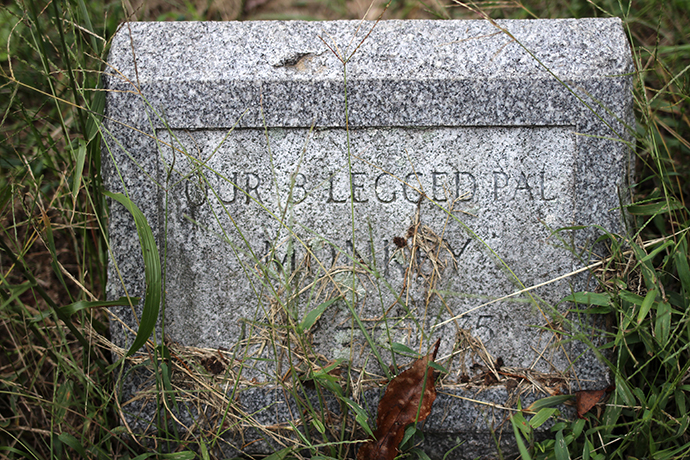
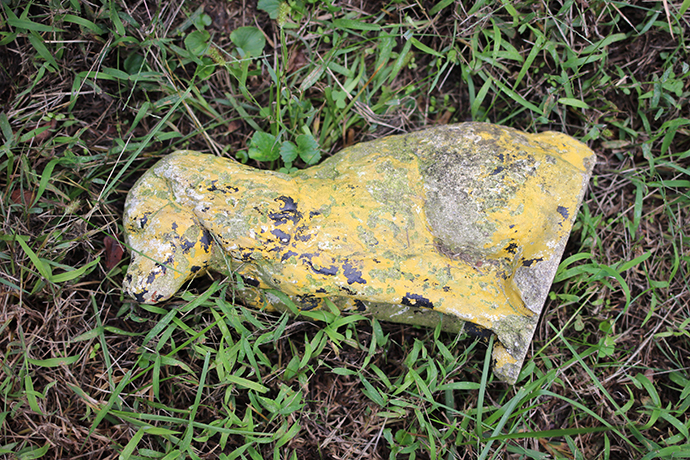
I wish more of the stones hinted at what kind of animal lies beneath—in addition to mostly dogs and cats, we saw one confirmed bird named Polly Donnelly. Poodle statues were common, along with St. Francis, the patron saint of animals. I didn't tear up at Clara Glen as much as I did in Hartsdale—the epitaphs were sweet, but short—and it was a great little detour on our way back from Atlantic City.
I mentioned recently that owning a house with a backyard cemetery is my new life goal, and after visiting Clara Glen I'm thinking I should revise that to include pet cemeteries as well.

New Mexico: Bottomless Lakes State Park

Bottomless Lakes State Park is located along the Pecos River, about 14 miles southeast of Roswell in New Mexico. It contains nine small, circular lakes, formed by collapsed limestone caves—Lazy Lagoon, Cottonwood Lake, Mirror Lake, Figure-Eight Lake (they count this as two lakes), Pasture Lake, Lost Lake, Lea Lake and my favorite, Devil's Inkwell. These natural sinkholes (called cenotes) are not fed by streams, but rather by underground water. Because the evaporation rate is greater than the rate at which they are refilled by rainwater, the lake water is brackish—with a higher salinity than freshwater, but not as high as seawater.


The nine lakes aren't really "bottomless"—they range from 17 to 90 feet deep—but appear that way due to blue-green algae and other aquatic plants. Cowboys dropped lengths of rope into the lakes, but couldn't reach the bottom and the name stuck. Legend has it that things dropped in one lake have resurfaced in others, sometimes miles away, but the park ranger insisted that this was just heresay. The area is also known for producing "Pecos diamonds," which aren't actual diamonds, but quartz crystals formed in the gypsum-rich soil.


We didn't spend much time at the park, mostly because it was crazy hot and I was getting devoured alive by mosquitoes. Since most of my life has been spent on the East Coast, desert landscapes will always fascinate me. The red rock formations, dusty soil, cacti, lizards and crazy beetles all felt so foreign to me—maybe the feeling was mutual and I was simply an exotic delicacy to the New Mexican mosquito palate.

Lucy The Elephant
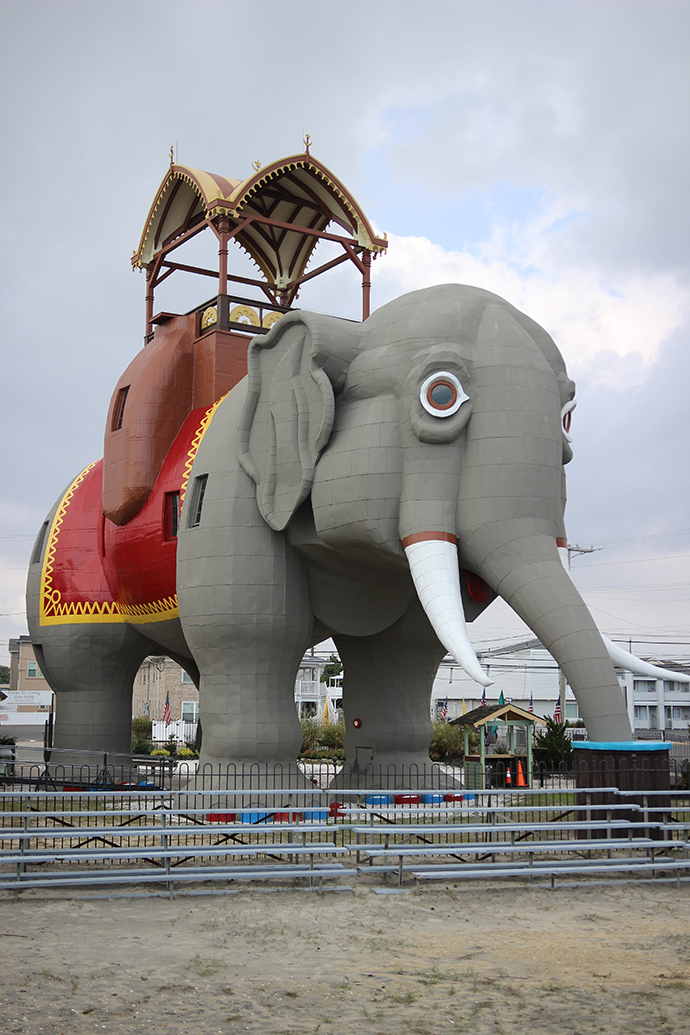
Built in 1881, Lucy the Elephant is the oldest surviving roadside attraction in the US. She was built by James Lafferty, in Margate City two miles south of Atlantic City, to help sell real estate and boost tourism. Two other elephant structures were built by Lafferty—in Coney Island and Cape May—but Lucy is the last (wo)man standing.

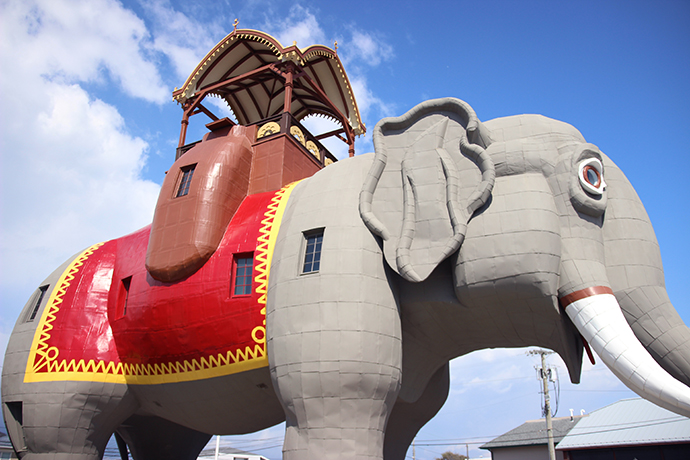
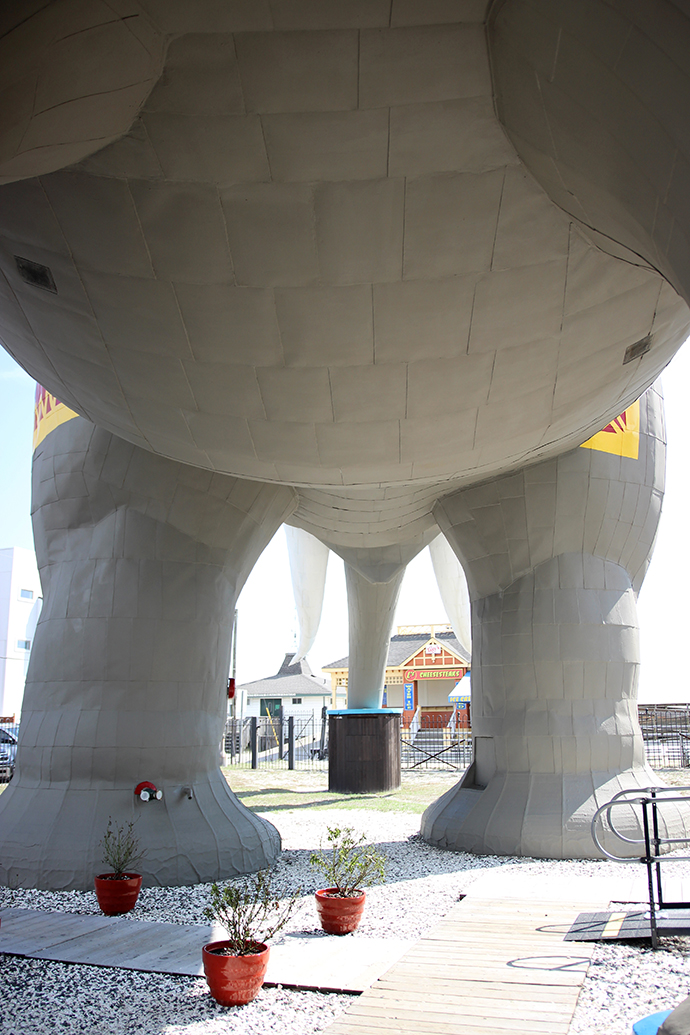
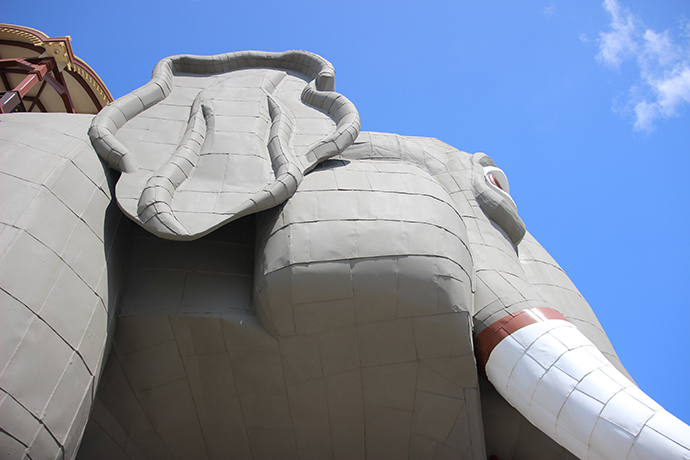
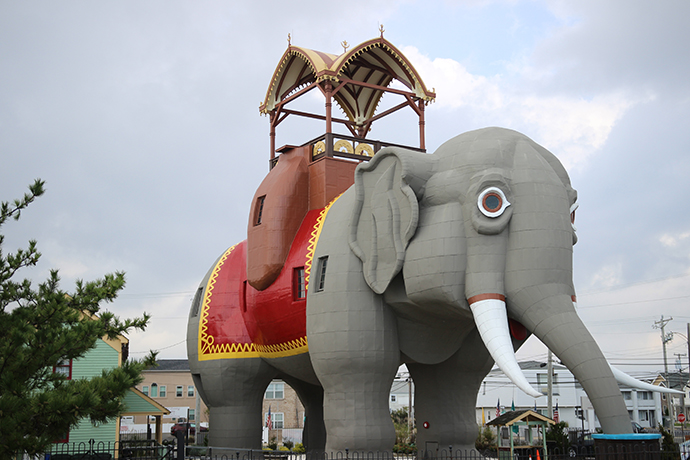

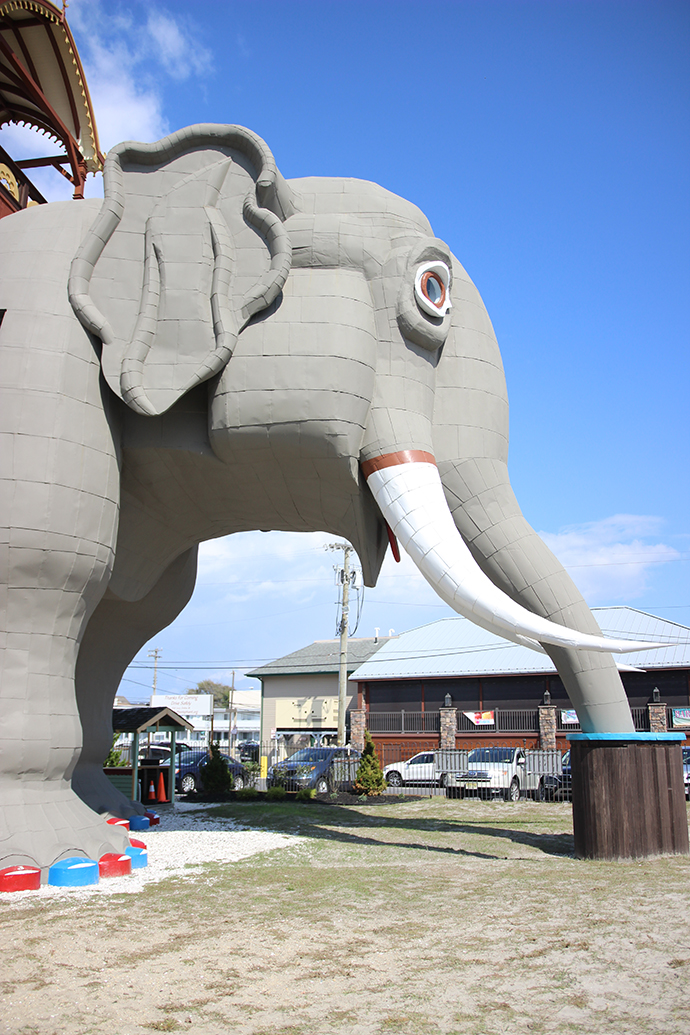

I'm very into novelty architecture, and along with The Big Duck (which I still need to get out to) Lucy might be the best example that exists. She is six-stories tall and covered in wood and tin sheeting. She fell badly into disrepair by the late 60s and was almost demolished. Thankfully, the Save Lucy Committee, founded in 1969, was able to raise the necessary funds to save her from the wrecking ball—in 1970 she was moved 100 yards inland and completely restored. When we visited, she looked as if she had just received a fresh coat of paint, and it's hard to imagine that she was ever in such dire straits.


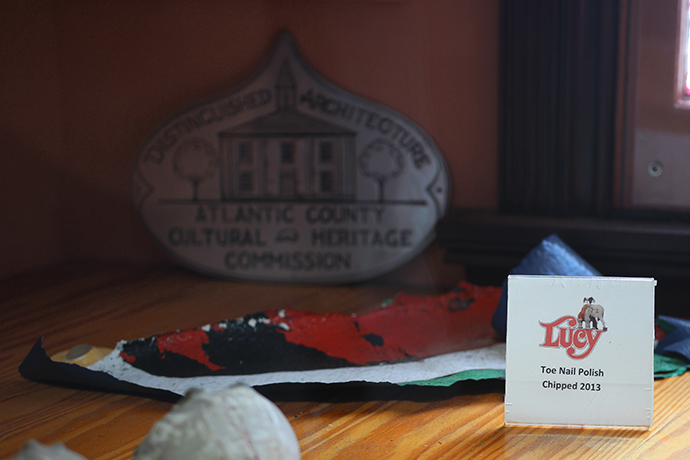
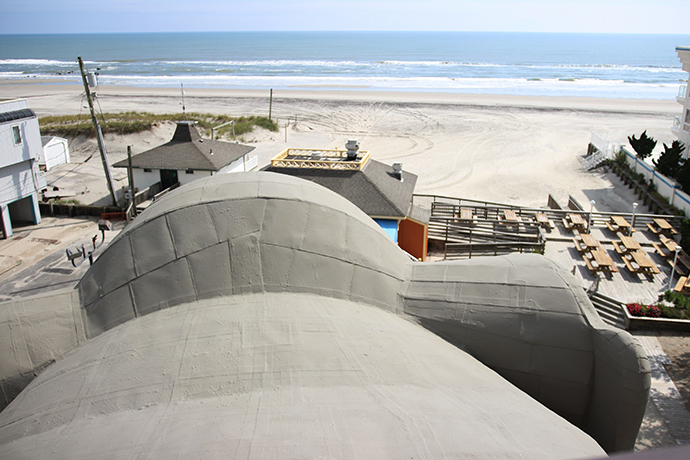


Lucy is billed as the only elephant "you can walk through and come out alive!" Visiting the grounds and gift shop is free, but to go inside you need to pay for a tour ($8 for adults). Even though I'd been virtually traveling to Lucy for months before actually planning a trip, I was surprised at how large she is (65 feet high and 60 feet long). I still have the same experience whenever I see the Unisphere in person—just totally in awe of how small I feel.
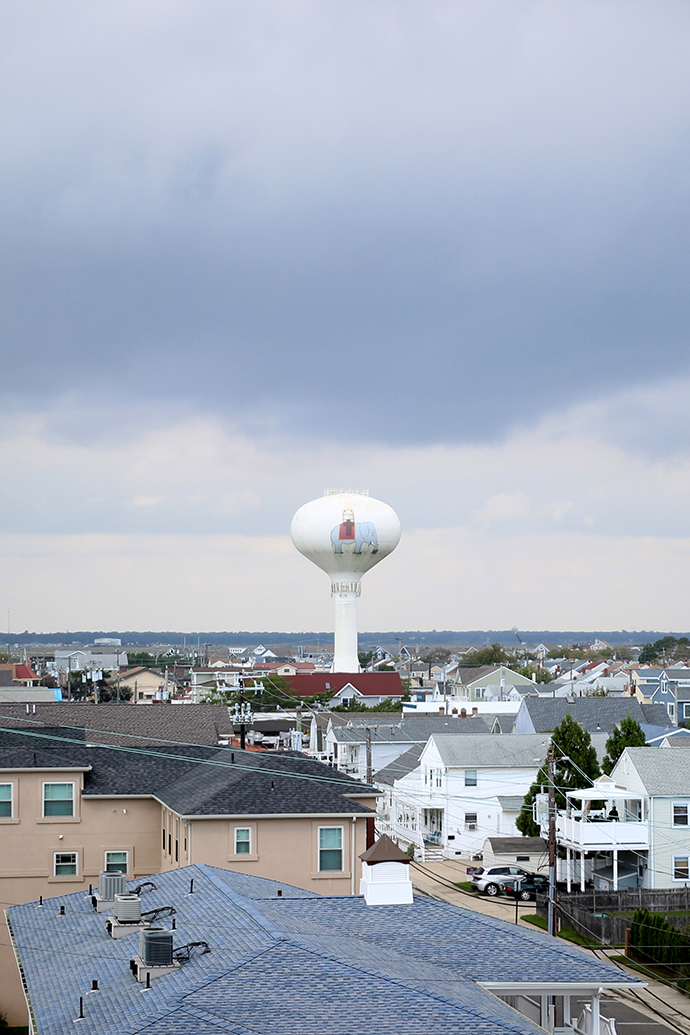
You enter Lucy through a door in her back leg, and climb a narrow spiral staircase to get into the main room. Upstairs is a tiny museum containing photos and artifacts, and you can look out both of her eyes at the Atlantic Ocean. The tour continues all the way to the top, which opens up into the howdah carriage, offering 360 degree views (the Lucy water tower kills me).
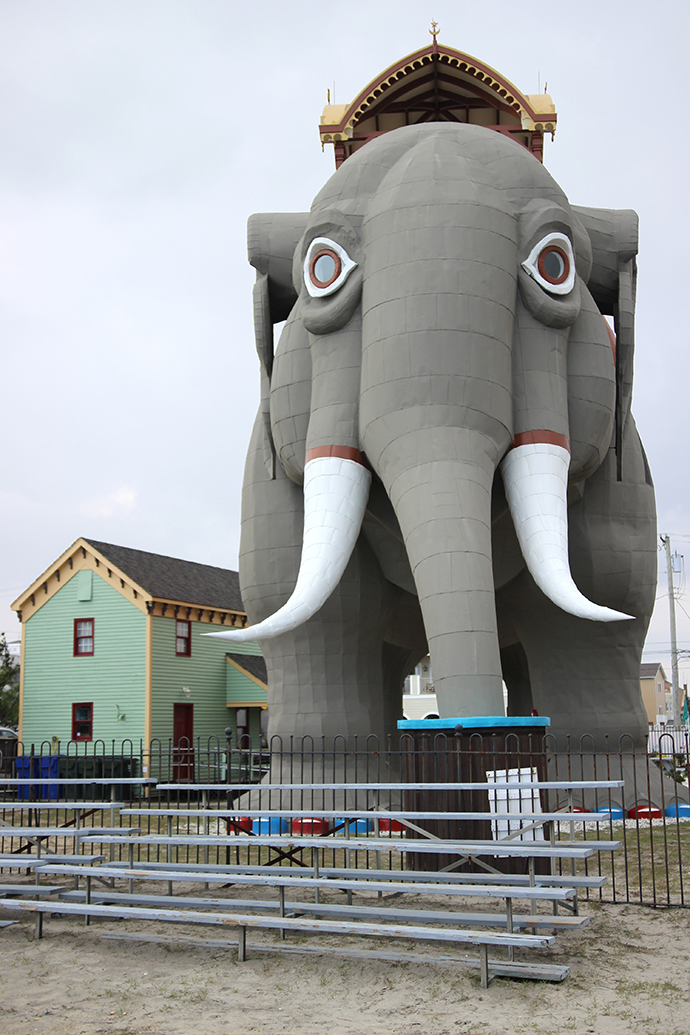

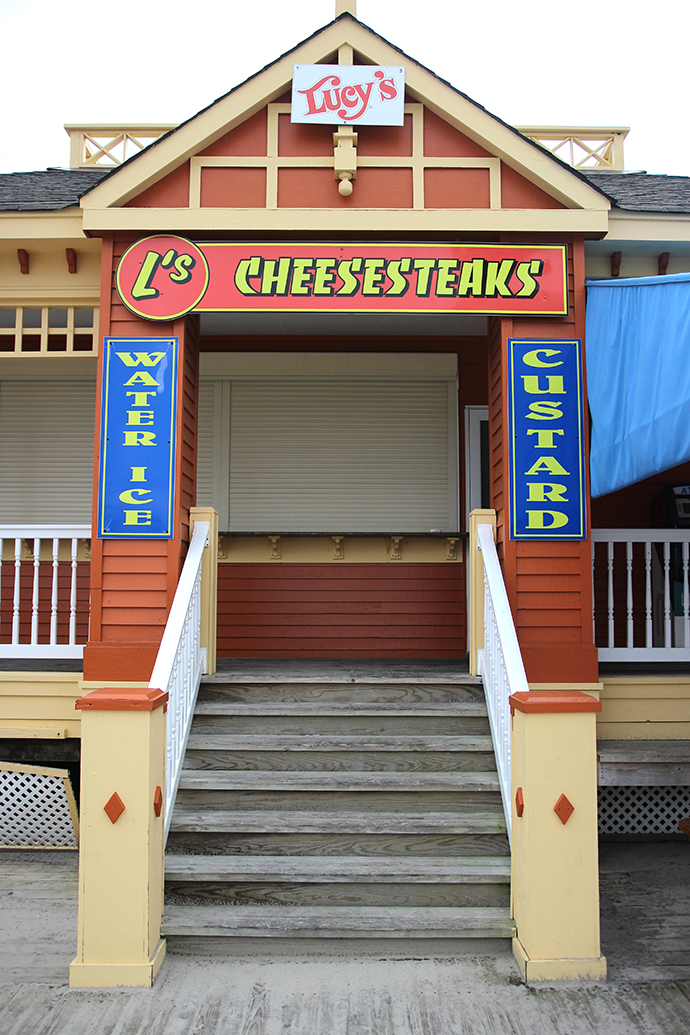
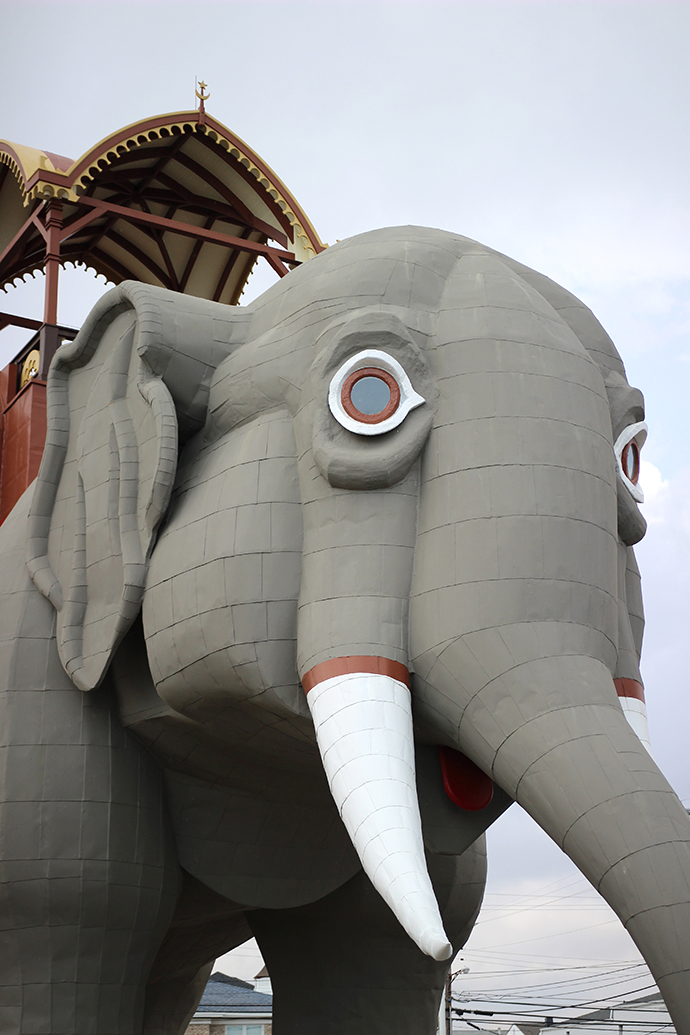
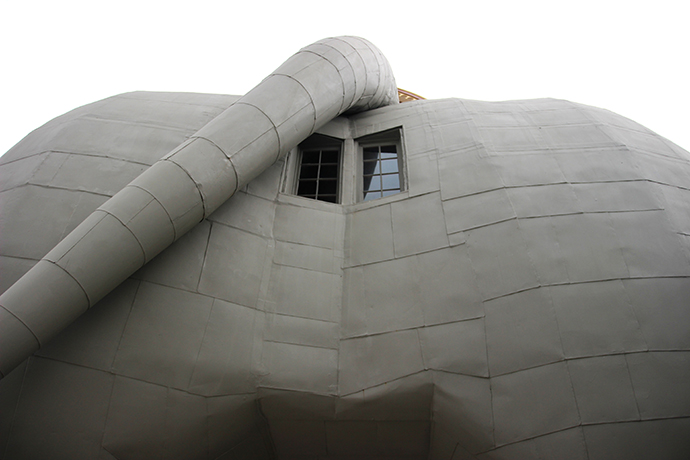
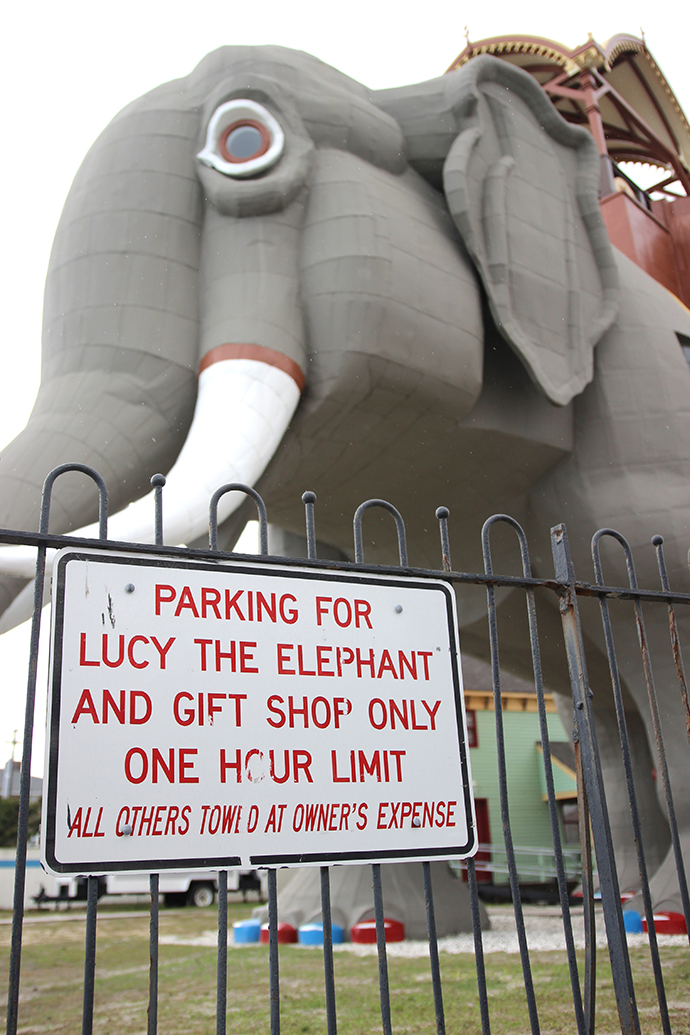
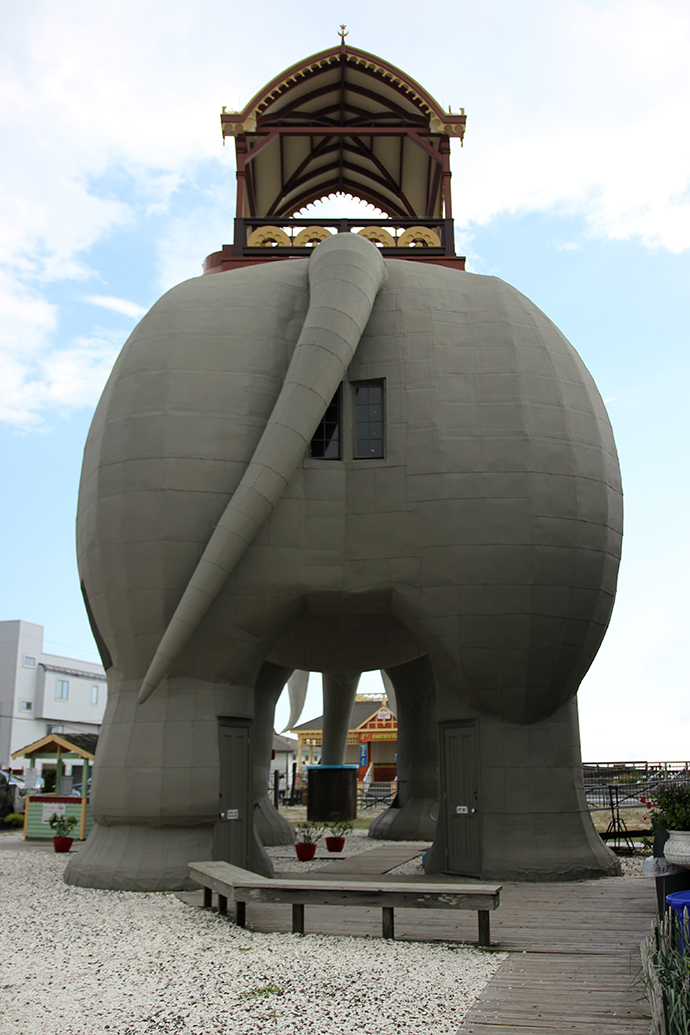
The gift shop has floaty pens, a squished penny machine and every other piece of Lucy memorabilia you could want—t-shirts, lucky Lucy trinkets, postcards, erasers, stuffed Lucys, pins, patches and even "shell"ephant figurines. We stayed long enough for the weather to change from perfect blue skies to rain shower, but it was worth it when we realized we had Lucy to ourselves for a while. Like I'm prone to do, I researched this Atlantic City trip for months, looking at Lucy on Google and devouring any information I could about her, and yet there's still nothing quite as wonderful as seeing these things in person.

Historic Richmond Town
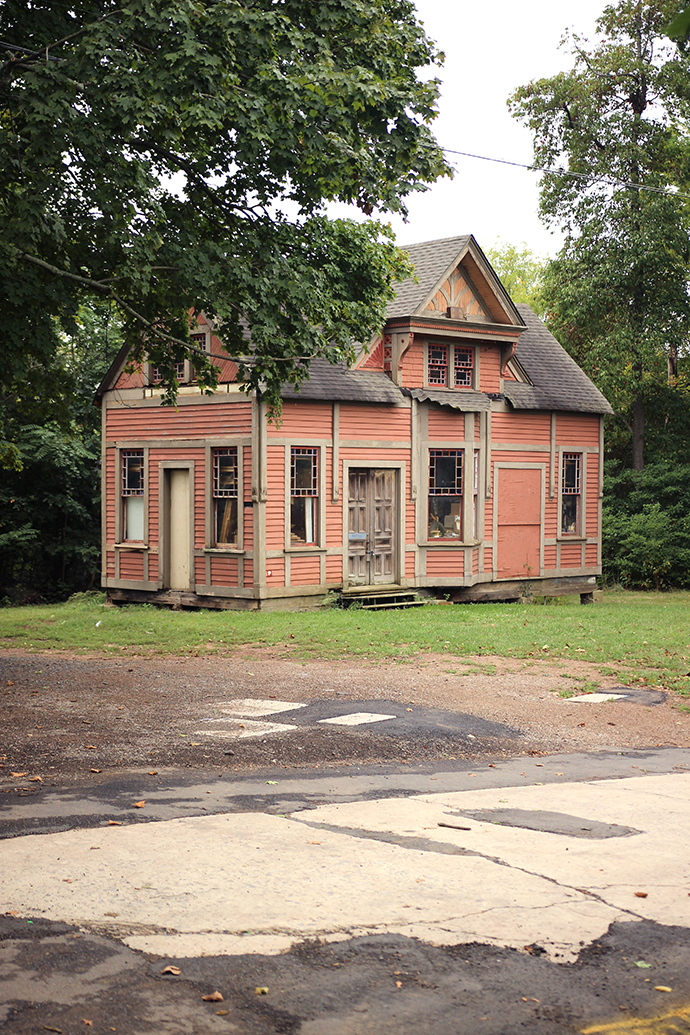
Historic Richmond Town was founded in 1856 and is alternatively known as the Staten Island Historical Society. The town of Richmond, located in central Staten Island, has been around since the 17th century. The historical society has preserved a number of buildings on the 100-acre site as a living history and museum complex. You can walk through the town for free, or pay to take a guided tour. We went on a recent Sunday and only saw a few people wandering about, but I imagine it's a popular school field trip destination during the weekdays.


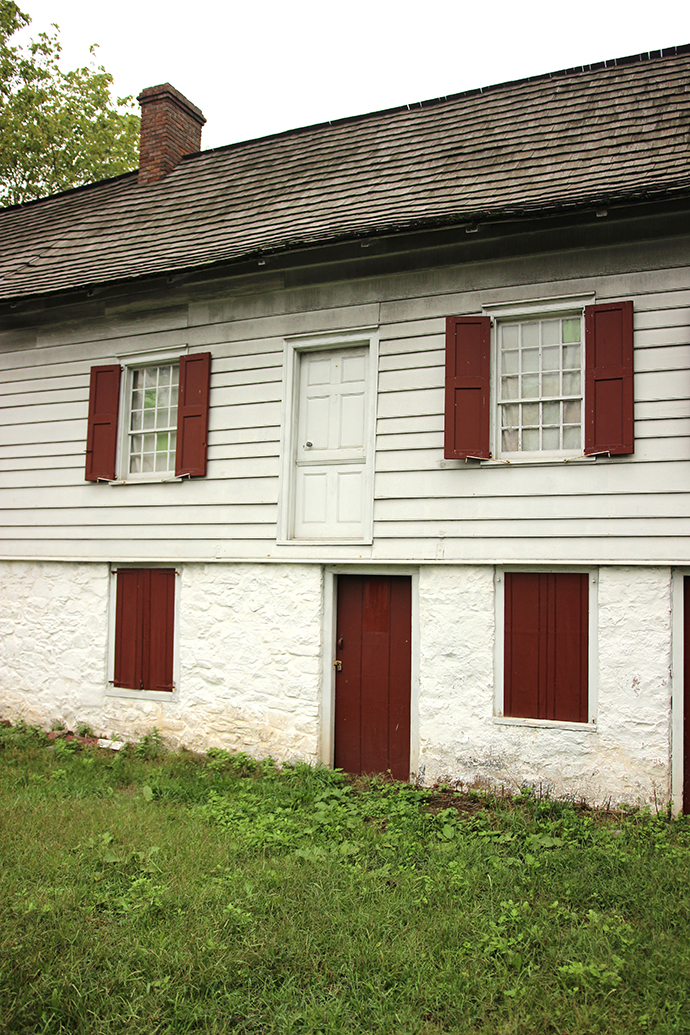

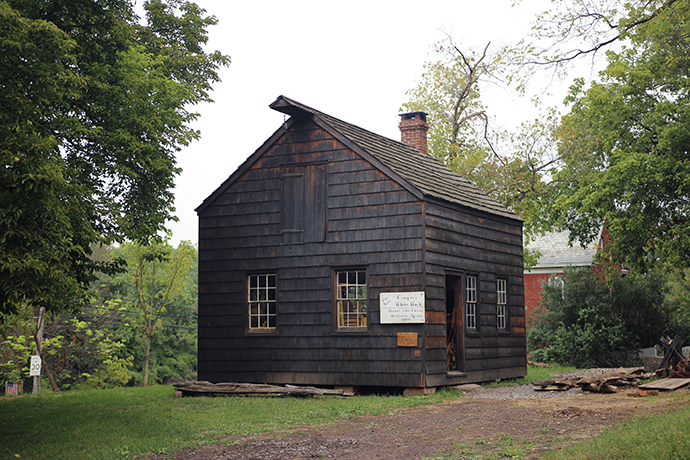
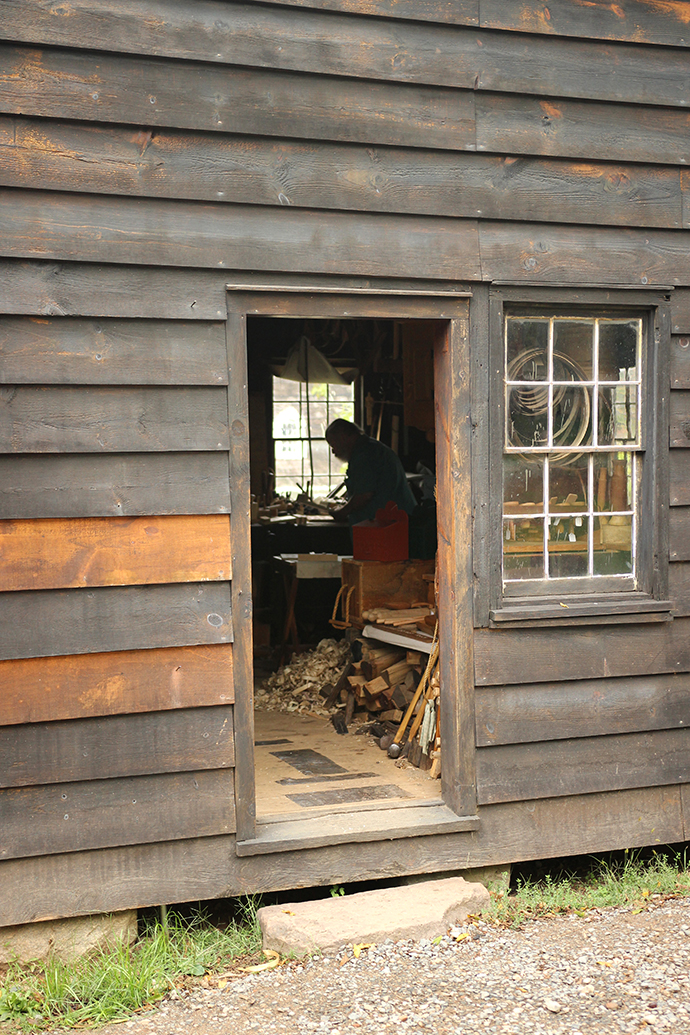
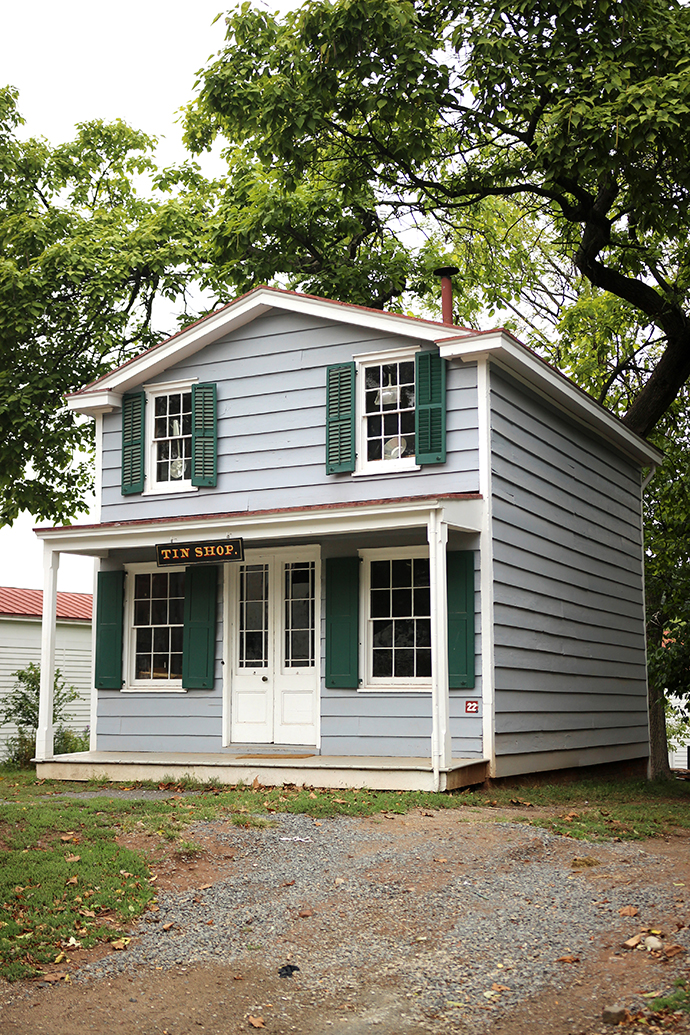
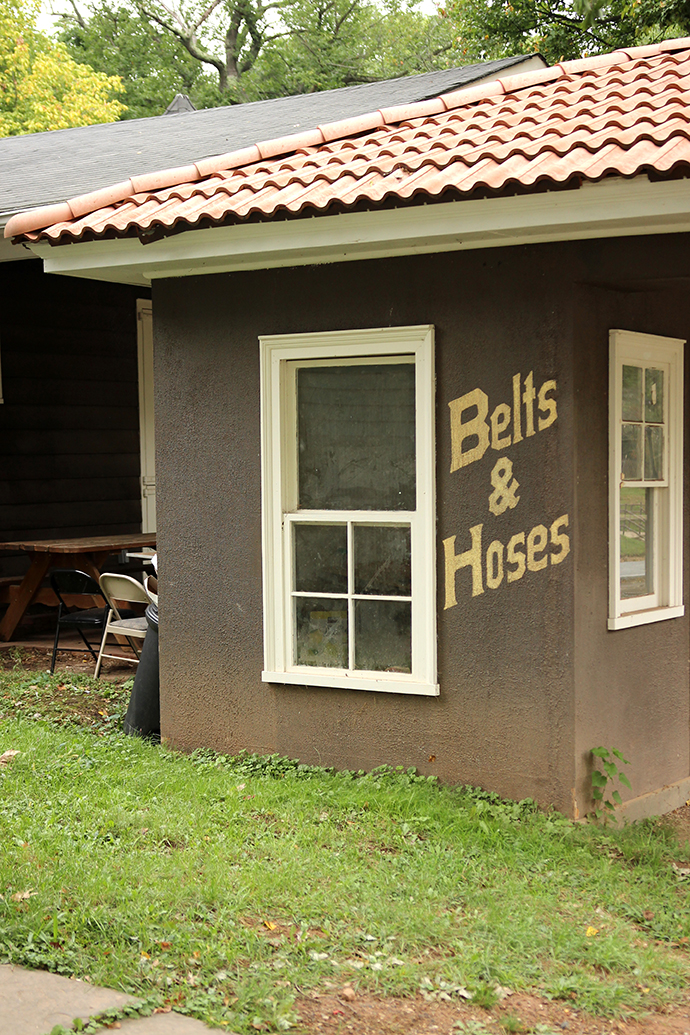
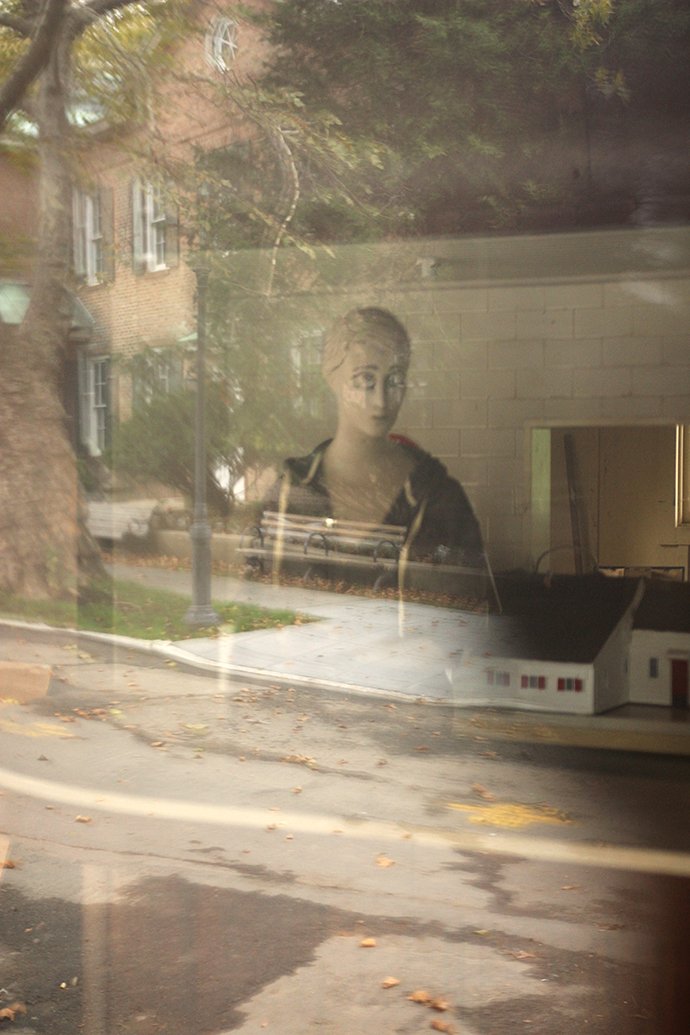
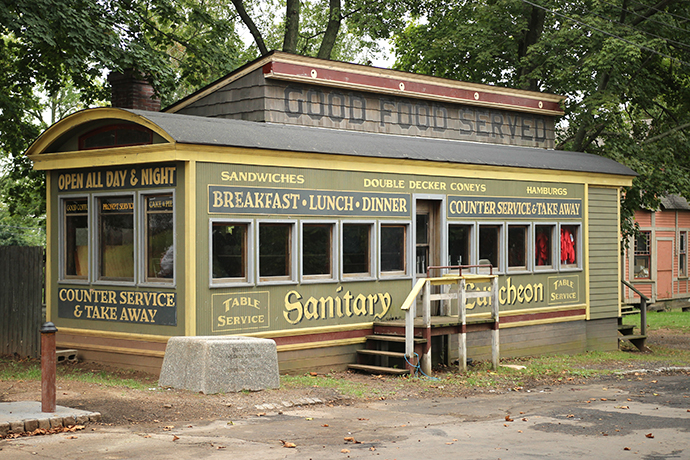
I really didn't know what to expect from the town, but Staten Island is full of strange and wonderful things (including Snug Harbor, cemeteries and my first abandoned hospital) and I'm always excited to explore more of the oft-forgotten borough. Richmond Town is full of adorable, historical structures including homes of varying styles, a print shop, wood-working shop (complete with wood-worker), tin shop, service station and a Sanitary Luncheon dining car with the most wonderful hand-painted lettering. Unfortunately the diner was not operational, but I did suffer a minor heart attack when I peeked inside the windows and found a terrifying (even to me) mannequin staring back at me with huge, drawn-on eyes.
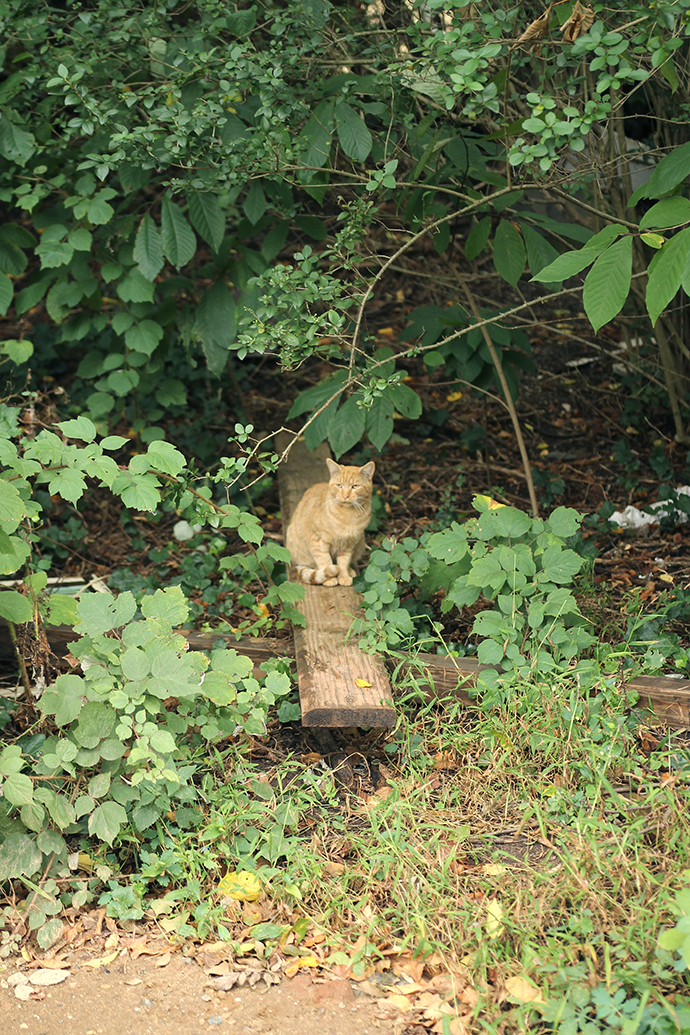
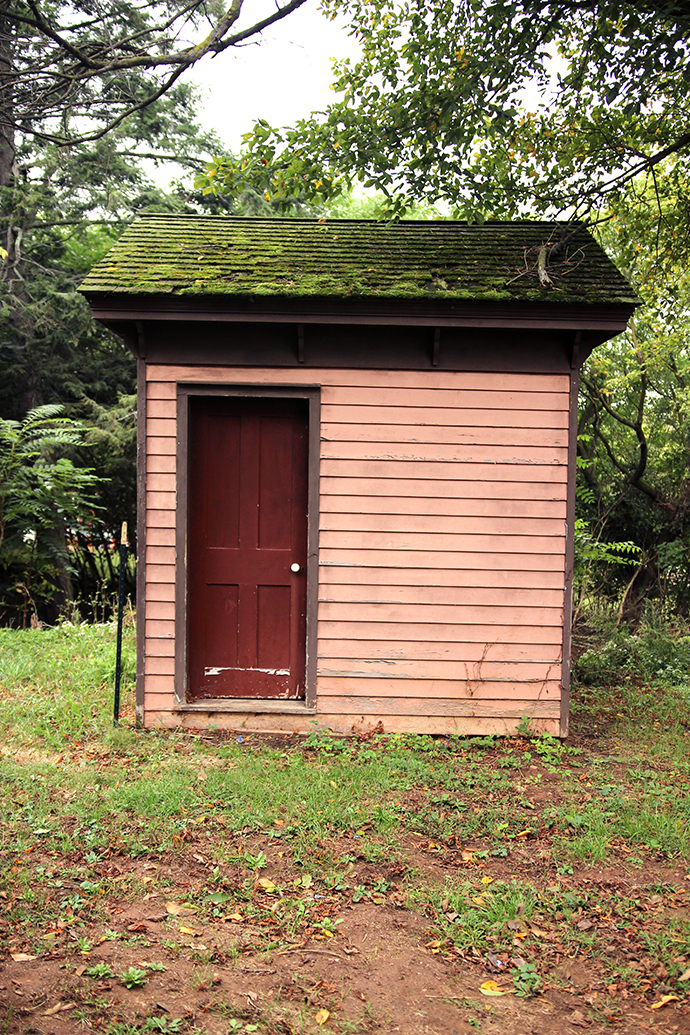
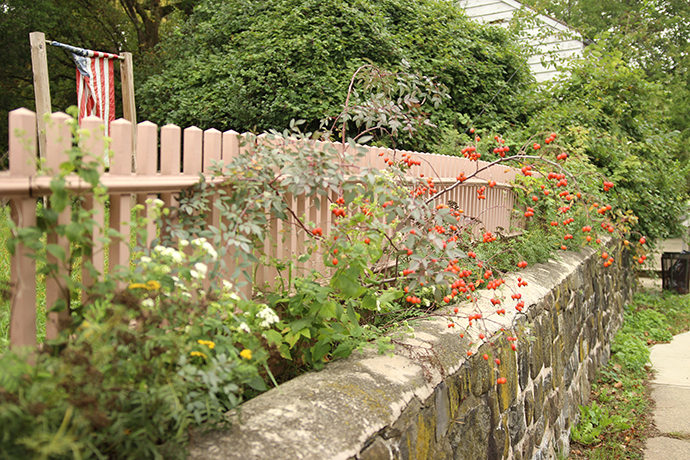


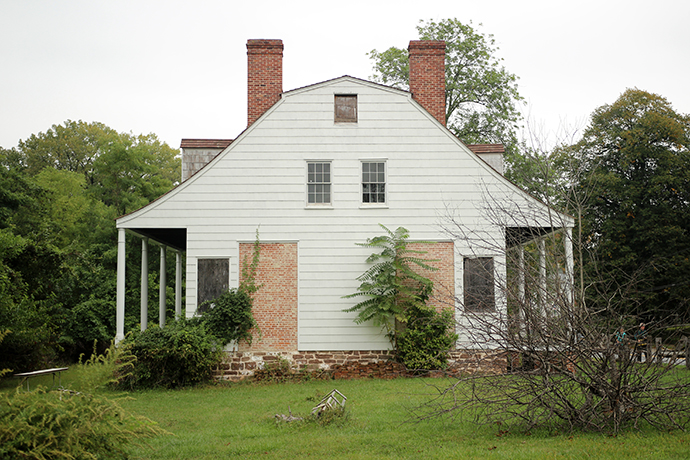
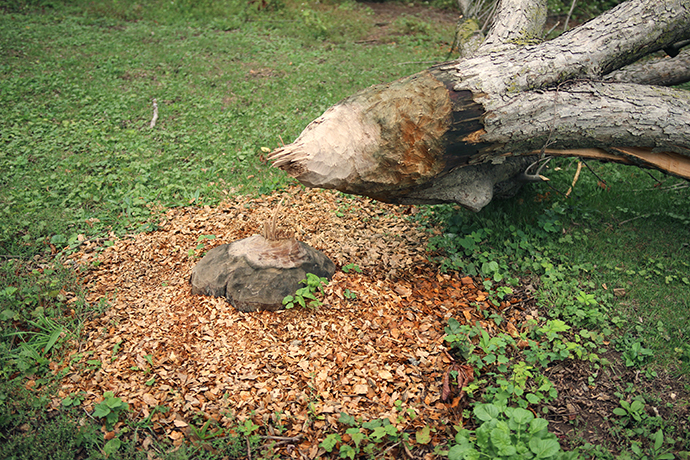
We saw some cats roaming the property—including a black cat, which I have a knack for seeing in spooky places—and a few trees felled by beavers. The town feels a bit like Colonial Williamsburg, but without all of the annoying tourists and bizarre re-enactors. It's rustic and overgrown, but well-maintained, and was the perfect lazy Sunday anecdote to crowded, hectic city life. This is the farthest I've been into Staten Island (without a car), and it's definitely a trek—we took the S74 bus from the St. George ferry terminal, a journey that Google informed me could include up to 52 stops.
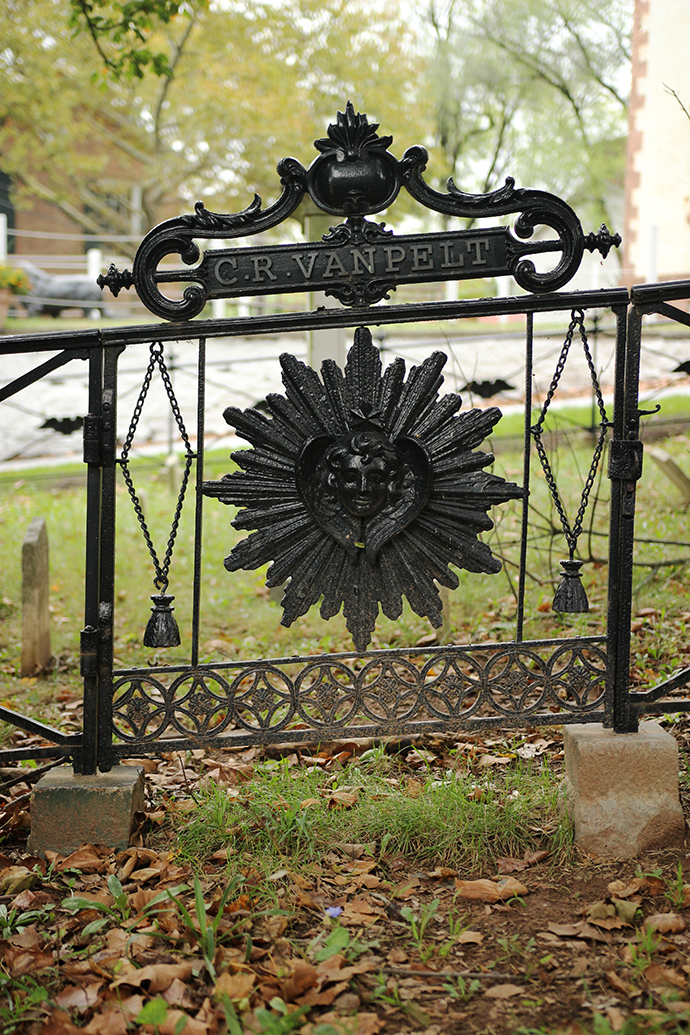
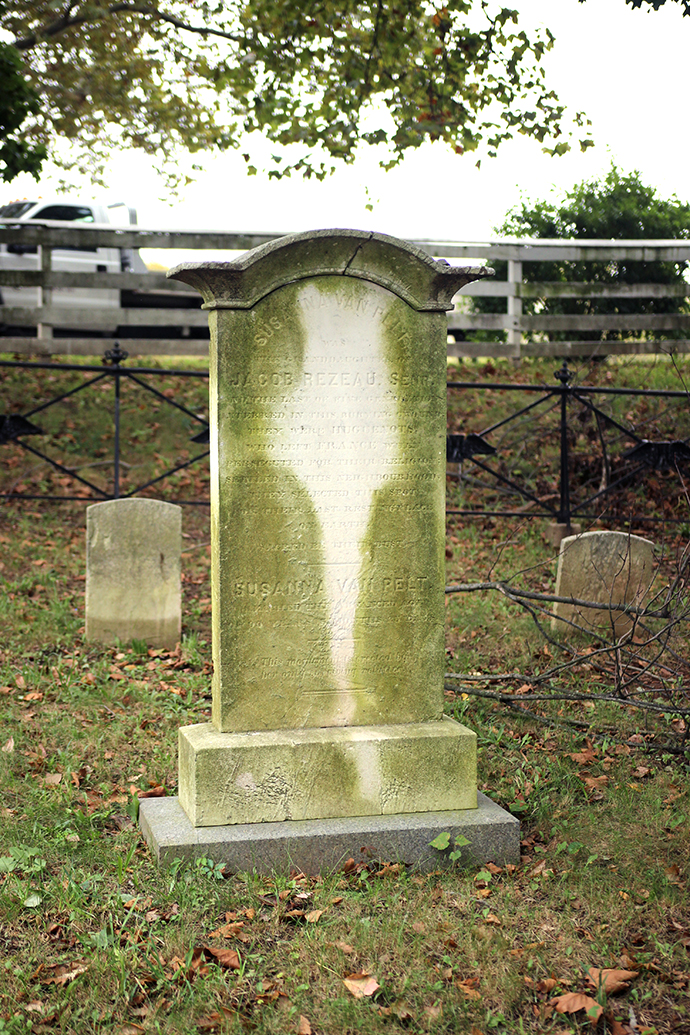
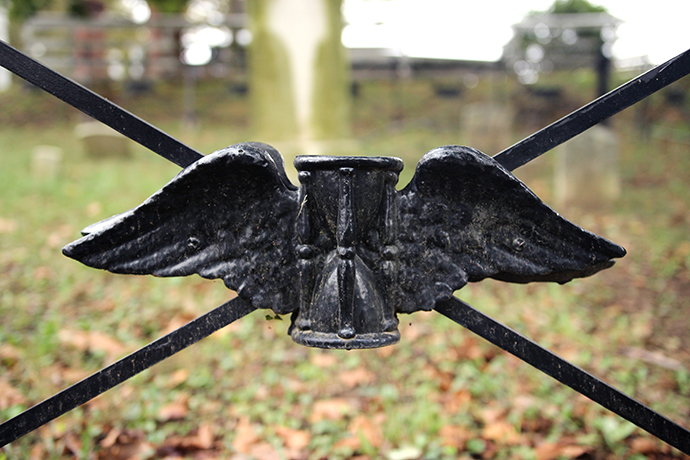
Historic Richmond Town even has a cemetery, a rare 18th-century private graveyard used by the Rezeau, Van Pelt and Wheatley families. The earliest grave in the cemetery dates from 1789, and the wrought iron fence was added in 1850. The winged hourglass is one of my favorite cemetery symbols, and I've seen it on tombstones and mausoleums but the detail on the fence really is extraordinary.
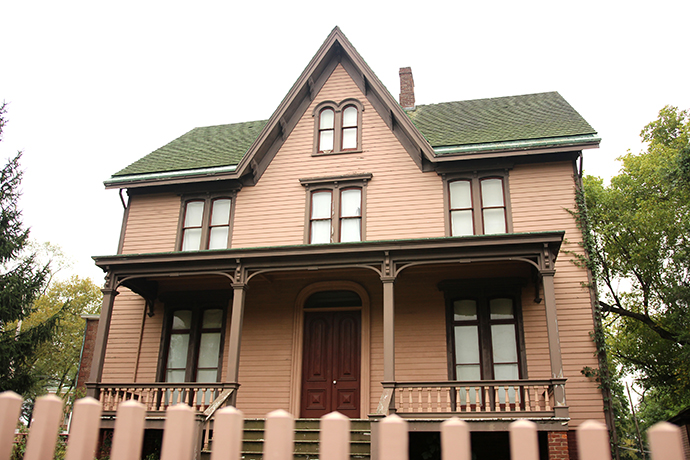
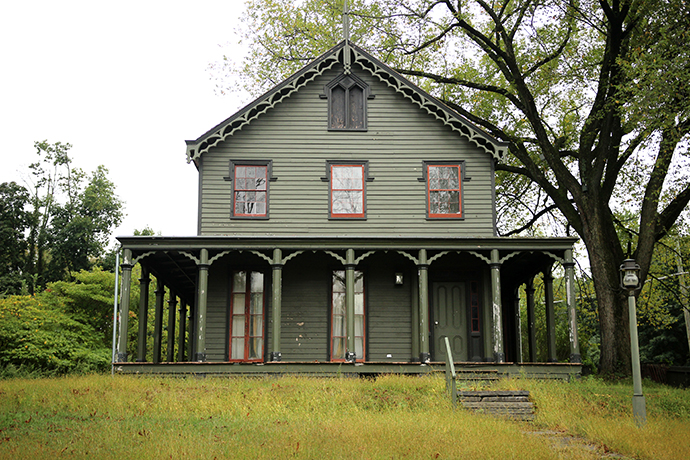
It was The Parsonage, however that really stole my heart—a gothic-revival style house, built in 1855 for the pastor of the Dutch Reformed Church. It was sold to the city in 1953 to become part of the town, and has alternatively served as a residence, administrative offices and even a restaurant. I can't stop thinking about its perfect color-palette, wonderful porch and bat-like gingerbread—I'd even consider moving to Staten Island if I could somehow take up residence in this definitely-haunted house of my dreams.

St. Michael's Cemetery: Portraits
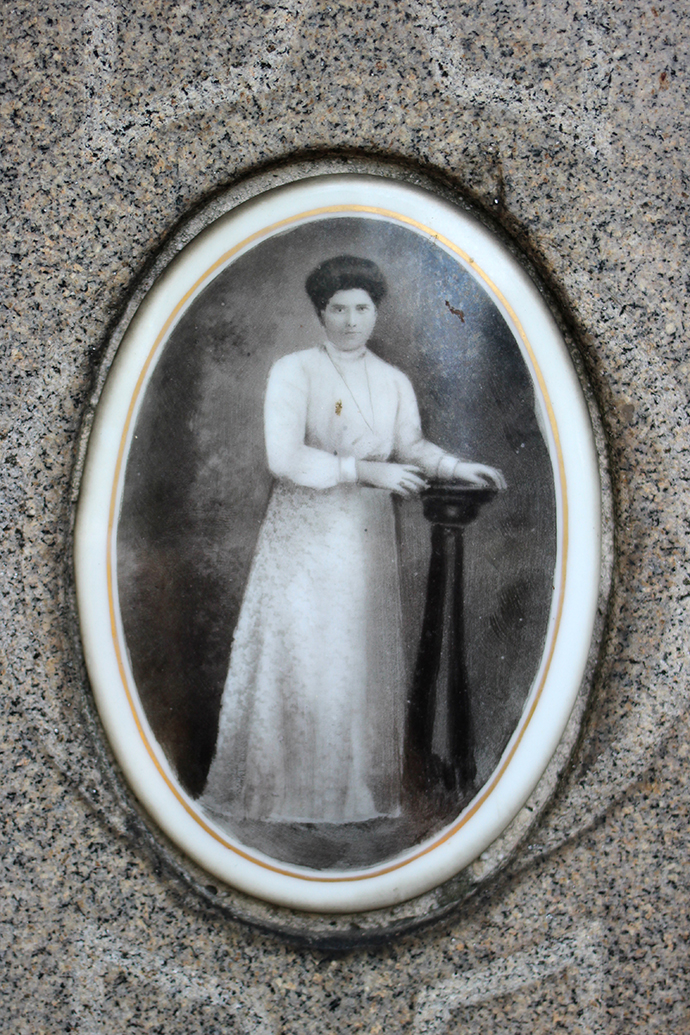
I've seen ceramic portraits on headstones before, but—in addition to its plethora of headless statues—St. Michael's Cemetery in Queens has some really wonderful ones. In 1854, two French photographers figured out a way to transfer a photograph onto porcelain or enamel and the process quickly caught on to include memorial portraiture affixed on tombstones. By the beginning of 1900, these portraits were becoming so popular that you could even buy them from the Montgomery Wards & Company Monuments catalog.


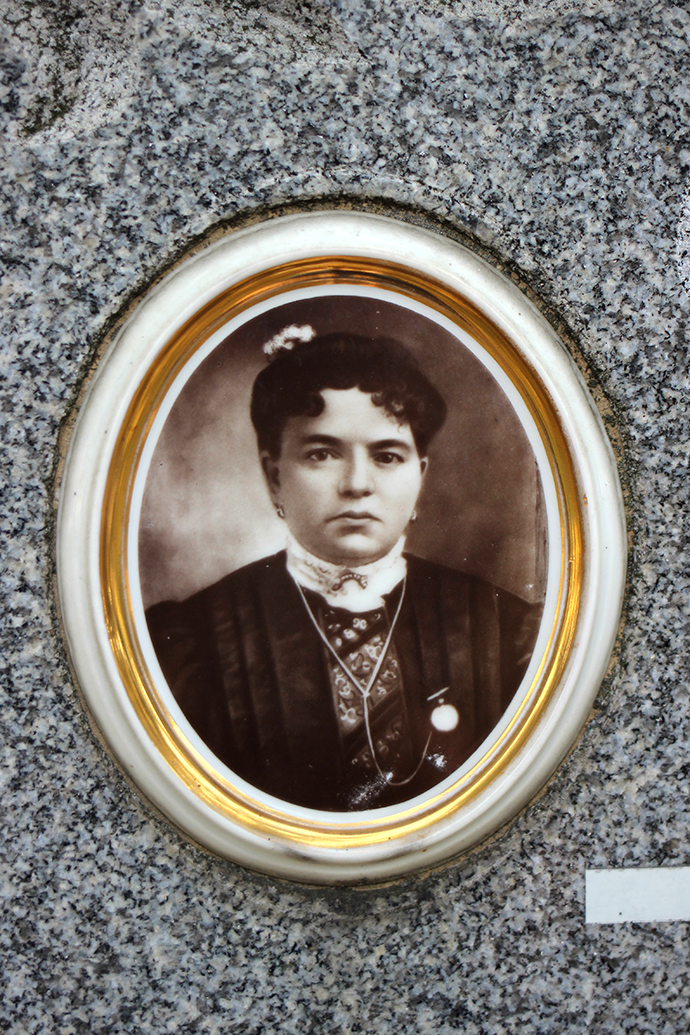

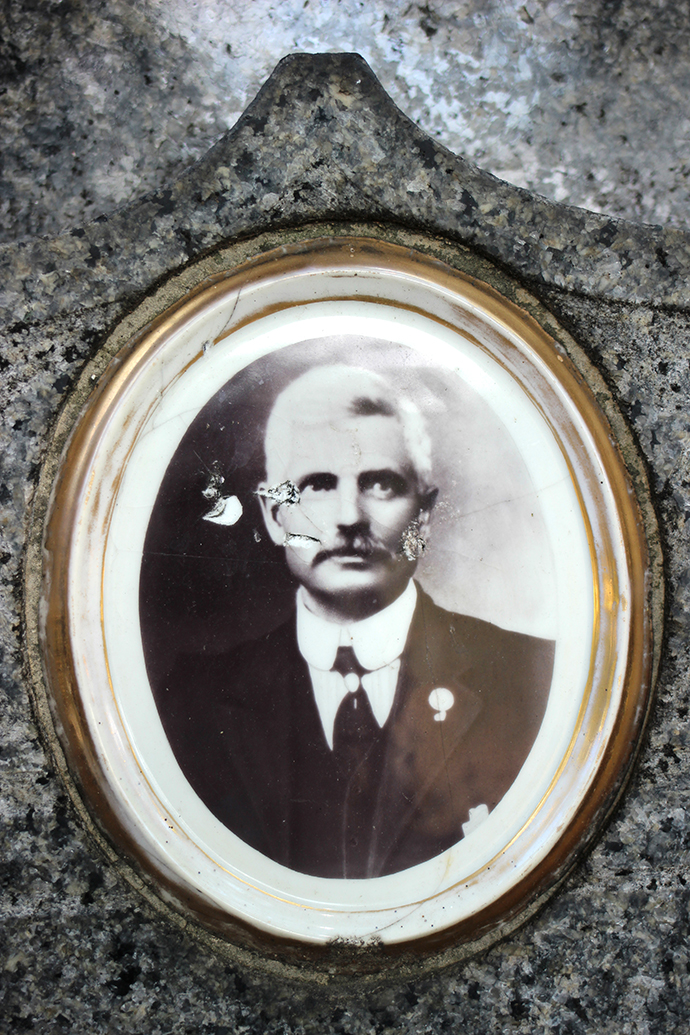


Ceramic portraits pop up in most of the cemeteries I've visited, and it's still a popular tradition on modern-day headstones. They seemed especially popular in Hartsdale, America's first pet cemetery, which makes sense and proves that long before Instagram, people were obsessed with photos of their pets. Of course it's the old, black-and-white ones that I love, and almost all of the ones I found had beautiful gold-painted detailing or a frame of some sort—the copper wreath and bow is one of my favorites.

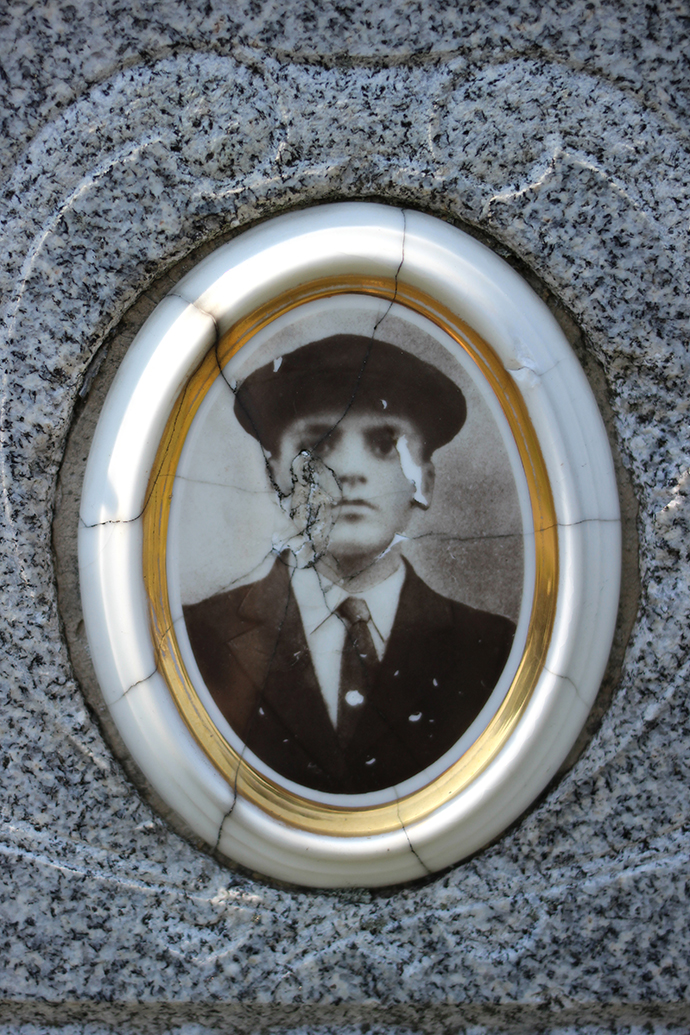
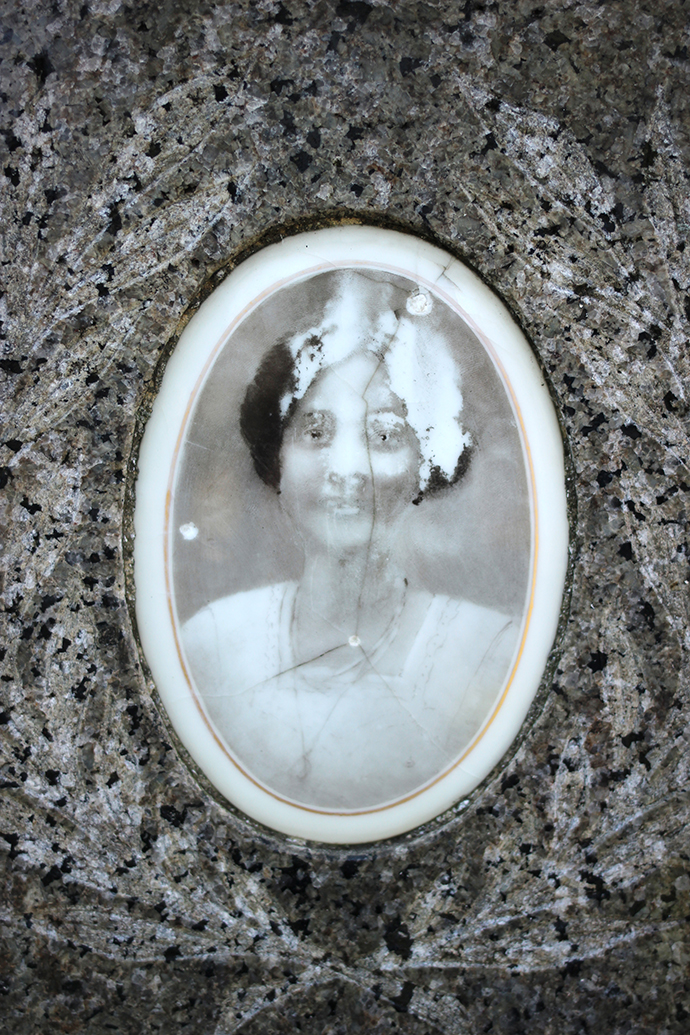
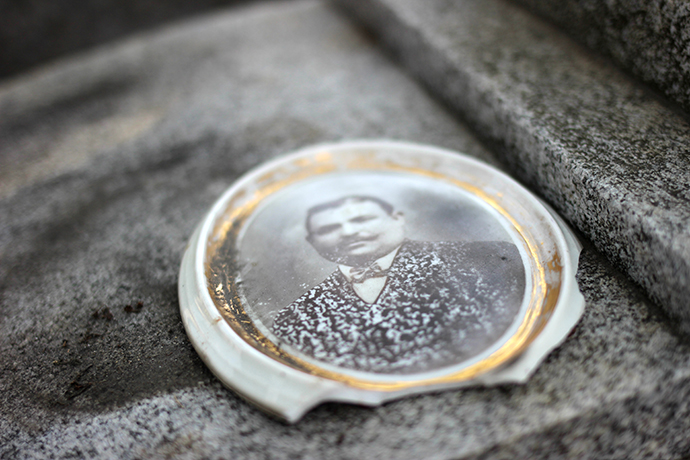
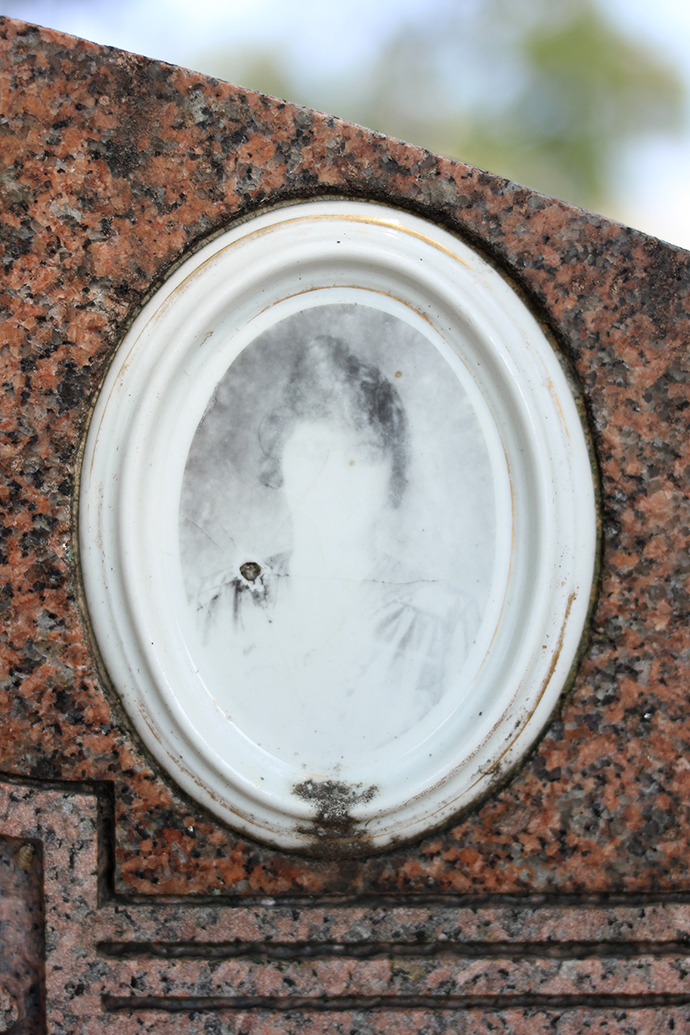
Unfortunately a lot of the early ceramic portraits that you come across are damaged—chipped, broken or faded away completely. Today's portraits are made utilizing a more fade-resistant process, and it's sad that so many of them are already lost. Sure the portraits are a bit creepy—eyes staring at you from beyond the grave for all of eternity—but I happen to think that they're also sweet. They're infinitely preferable to the modern day scourge that is laser-etched-portraiture, and they humanize what are often cold and impersonal stones. They're proof that these people once existed and lived lives as we all do, for better or worse—albeit in much fancier clothes.

Trump Taj Mahal

The Trump Taj Mahal opened on the Atlantic City Boardwalk in 1990, and it closed at 5:59 am today. The casino and hotel was built at a cost of nearly a billion dollars, and had 120,000 sq feet of gaming space, 2,010 hotel rooms, and over the years housed multiple restaurants, gift shops, show rooms and the nation's first casino strip club.


It's hard for me to think of the Taj without thinking about the Sex and the City episode filmed there, during which Carrie refers to it as the "understated Taj Mahal." This if funny, of course, because the Taj (like most things associated with Donald Trump) is the very opposite of understated.
I took my mom to Atlantic City last week for an overnight trip to celebrate her birthday, and one of the first places we went was the Taj. I'd heard that its closing was imminent, but didn't expect that we'd be among some of the last people to ever walk on on its gaudy carpeted casino floors.

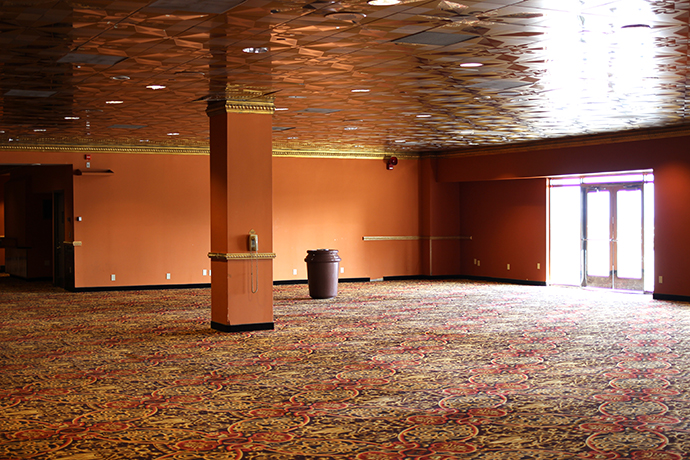






Outside of the Taj, workers have been striking since July, but the mood inside was much more subdued. If you've ever been inside of a casino, you know they're sensory overload in every way, but the Taj was almost eerily quiet. At first glance it might seem as if nothing was amiss, but then we noticed that there was only a handful of people—staff and patrons—and a lot of the machines were turned off, broken or roped off with caution tape. If we didn't already know that the end was near, it would've been pretty obvious after a few minutes.It was sad and weird to walk around the near-empty casino floor—the Sultan's Palace (for high rollers) was completely empty, all of the restaurants were closed, there was only one cashier and the huge hotel check-in counter was deserted.
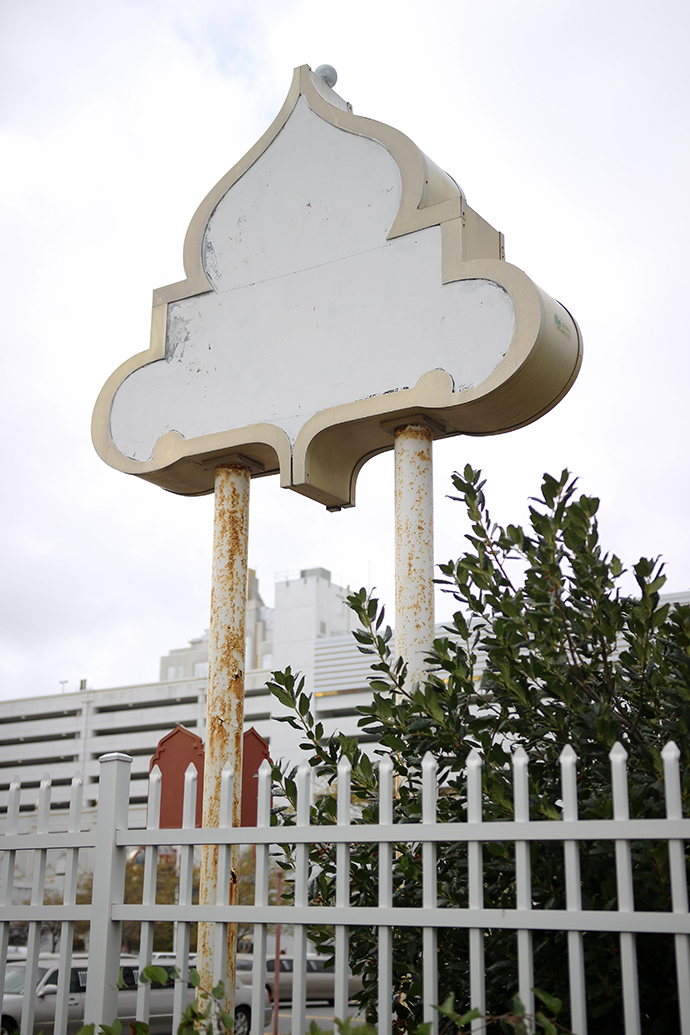



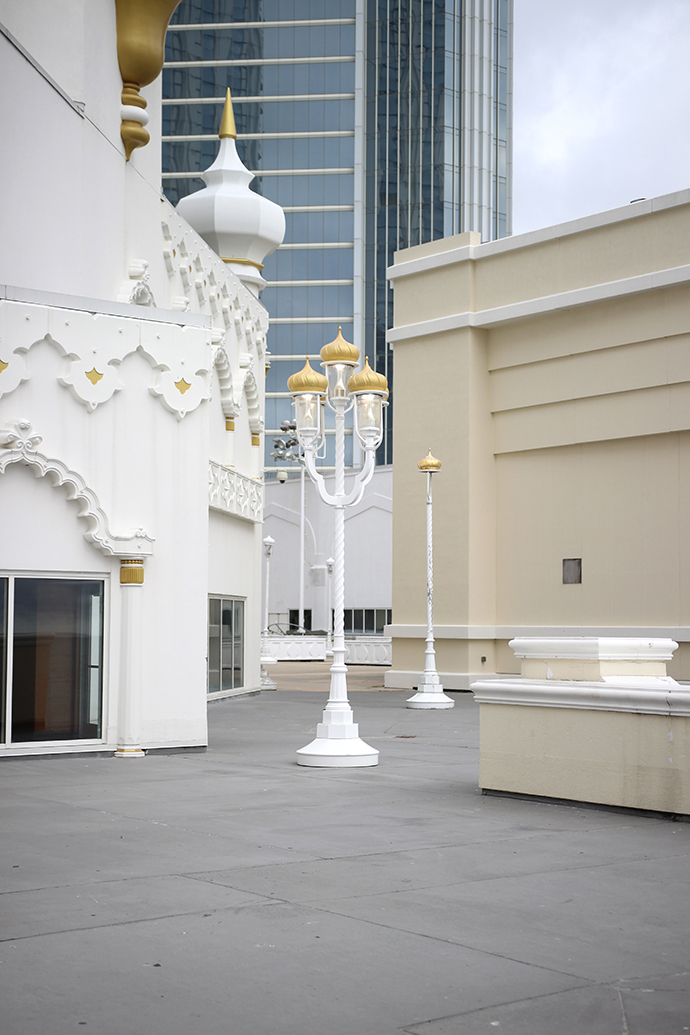


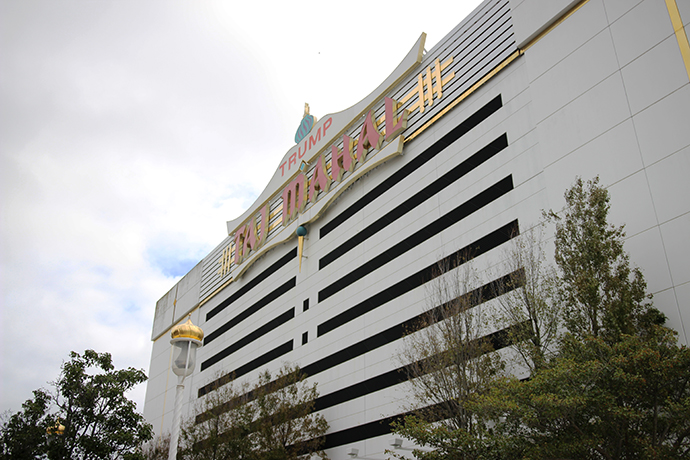

The outside looks as opulent as ever—there's still a parking lot devoted entirely to limos—but upon closer inspection, I spotted peeling paint, broken streetlights and dangling wires. Much has been said about Donald Trump the "businessman," and although he no longer owns a stake in the Taj it's hard not to consider his roll in making (and breaking) Atlantic City. It's strange to have grown up with DJT the casino magnate and reality star, and to watch as he tries to reinvent himself as DJT the presidential candidate. But like his casinos (Trump Plaza has been closed since 2014) Trump is all artifice—beneath the flashy exterior it's all dangling wires and peeling paint, and ultimately he too will fail.

Roswell: Aliens
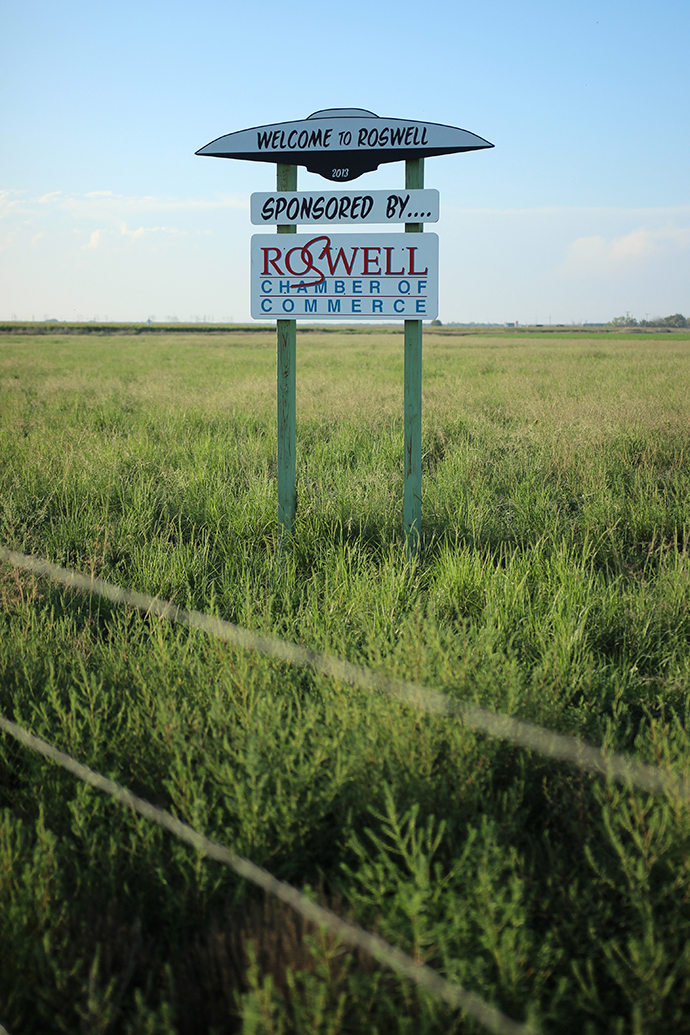
My sister and I had been planning a roadtrip to Roswell for a few years, and we finally made it happen last month. She lives in Dallas, which is a 7-hour drive from Roswell, so we made a proper roadtrip of it (shout out to my bro-in-law for doing all of the driving!). Whenever I mentioned to anyone that I was going to Roswell, those that had been there cautioned that there wasn't much to see in town. I was prepared for a small, cheesy, tourist-trap of a town—and while Roswell was all of those things it was also entirely delightful because it was all of those things.
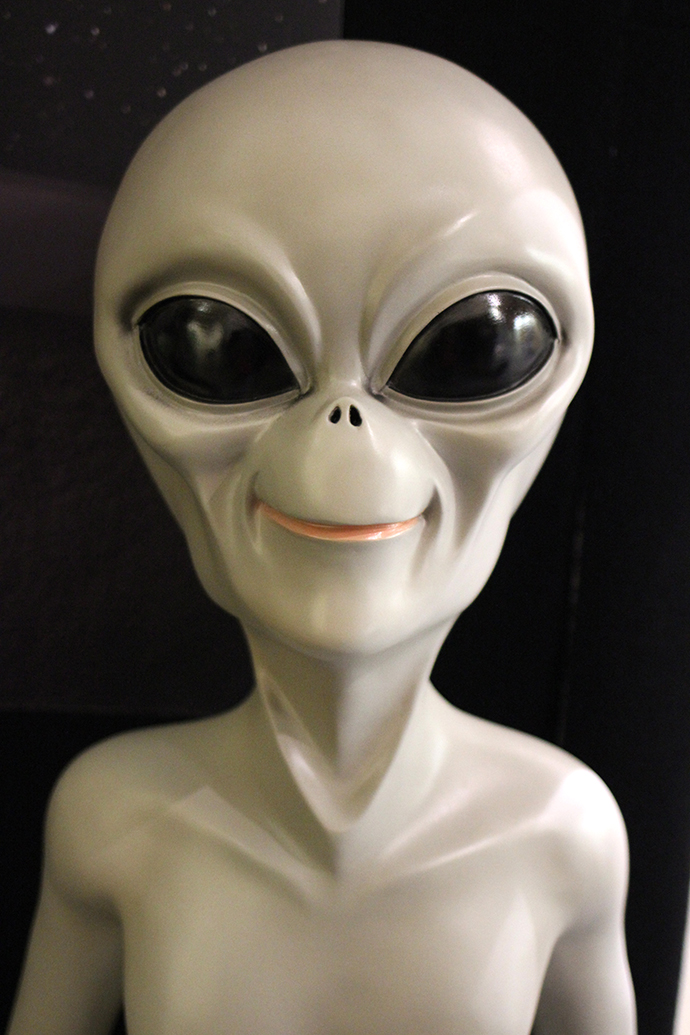
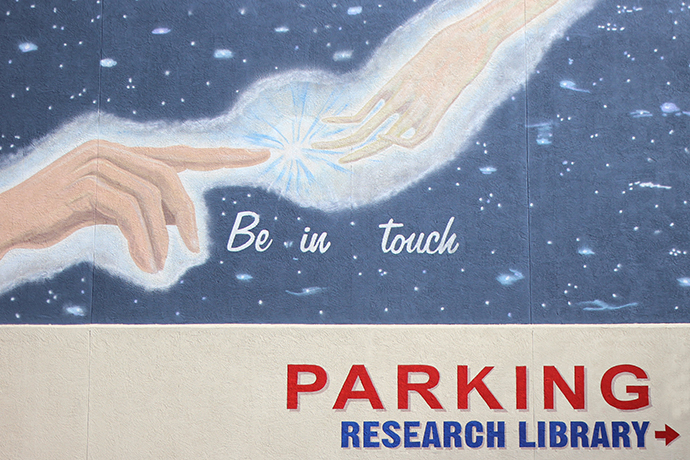
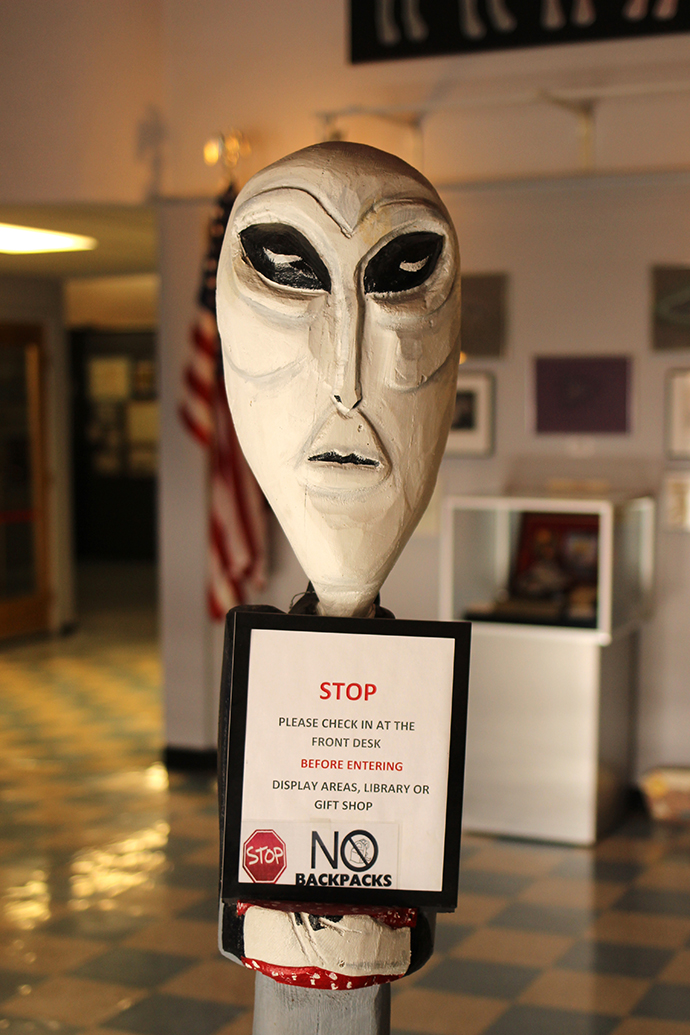
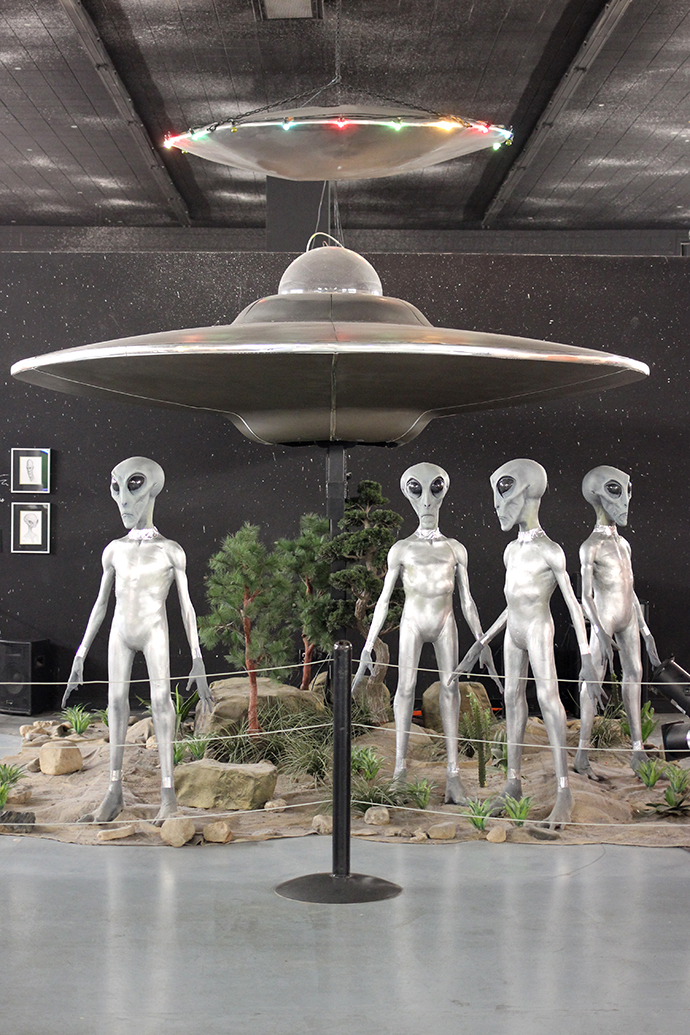
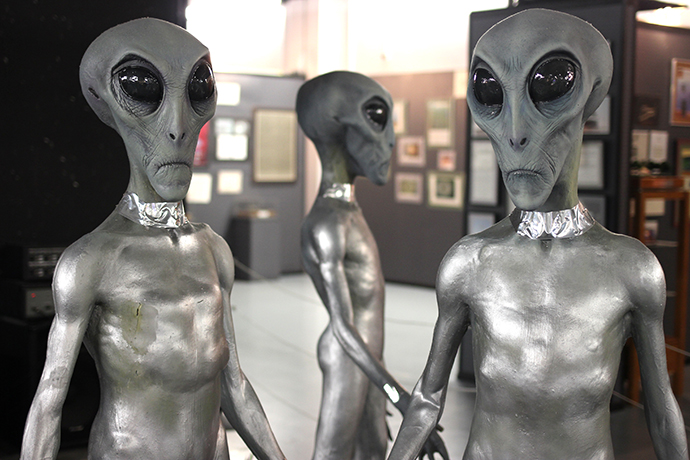
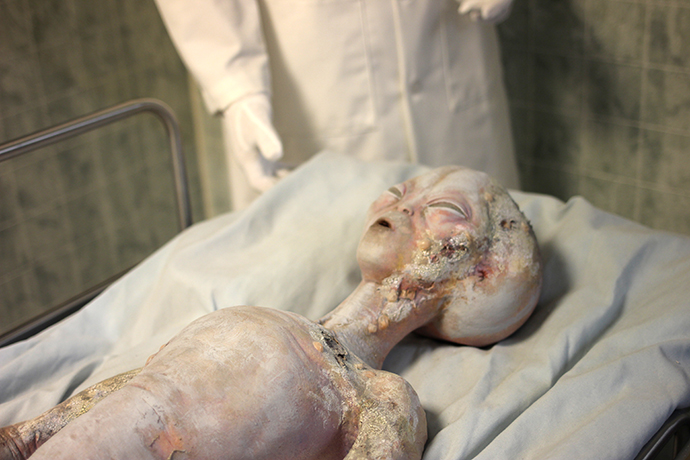
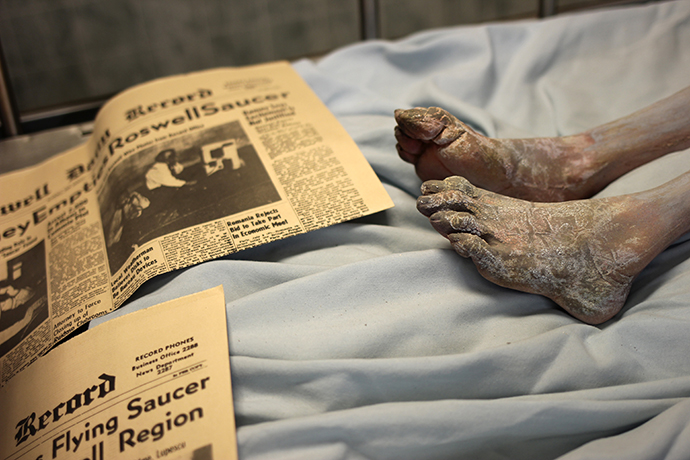
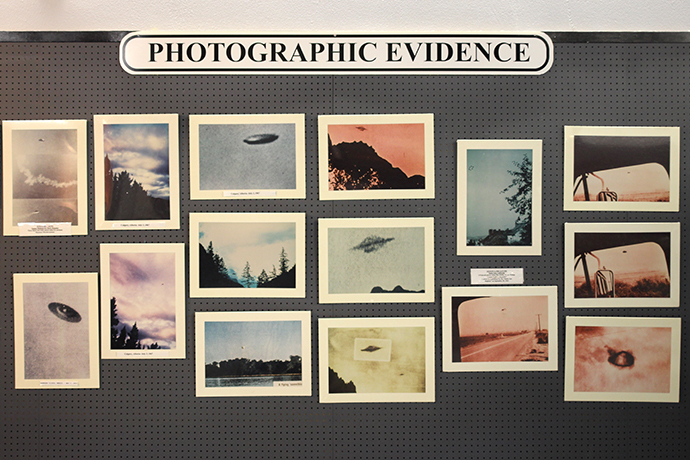
In July of 1947, debris was found on a farm about 30 miles north of Roswell, New Mexico. Whether that debris belonged to a weather balloon, secret military spy aircraft or an alien UFO is up to you to decide. The UFO Museum has some fascinating information on the crash, as well as UFO sightings throughout the years. My favorite section was on photographs that were proven to be frauds—a top hat, a hubcab and a button were just a few of the objects that people have used to produce fake UFO photographs.
I definitely believe that there are "aliens" out there—simply based on the fact that the universe is infinite, Earth can't possibly be the only planet with intelligent life. Do I believe that little green men crashed their spacecraft into the New Mexico desert in 1947? Not really. But I couldn't get enough of all of the aliens—gray and green—in Roswell, and finding them everywhere never got old.
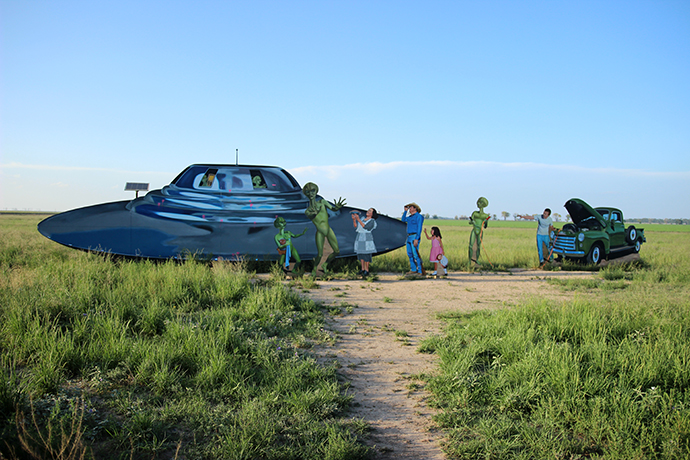
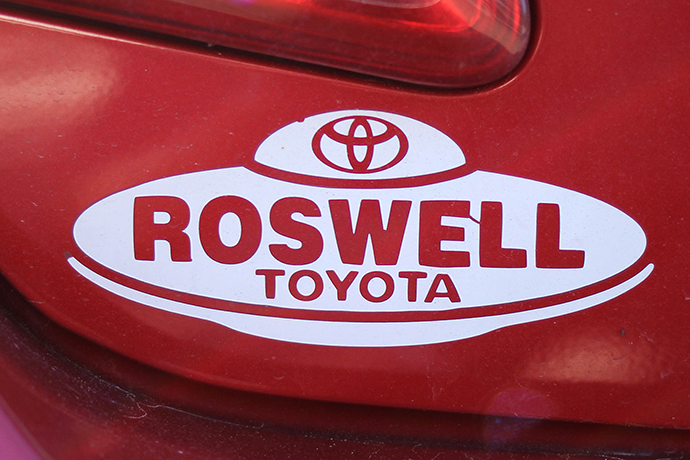
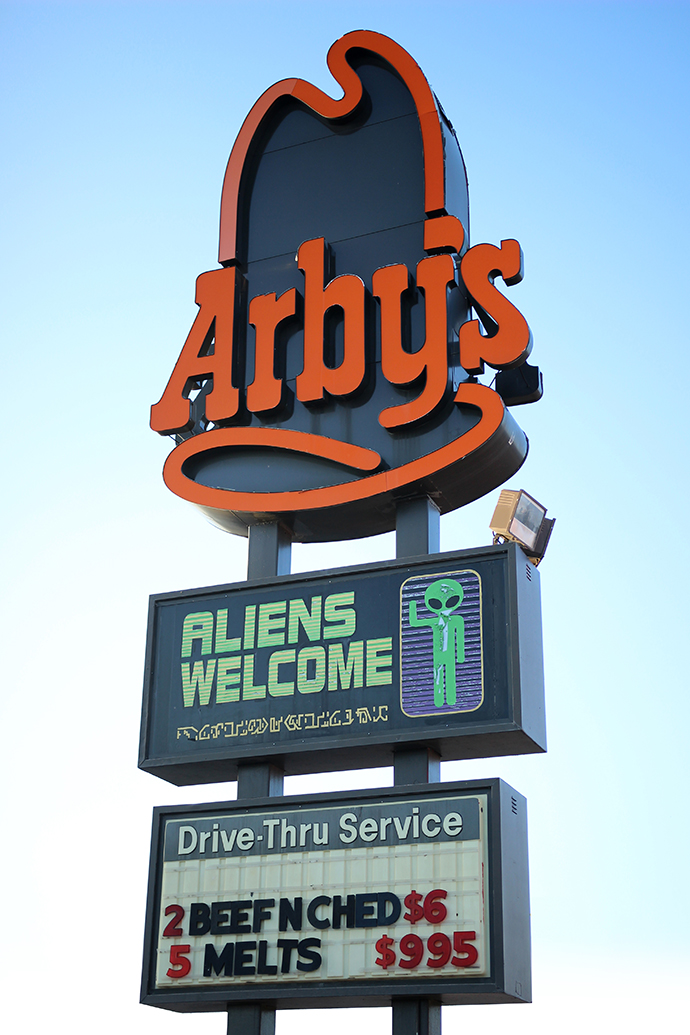
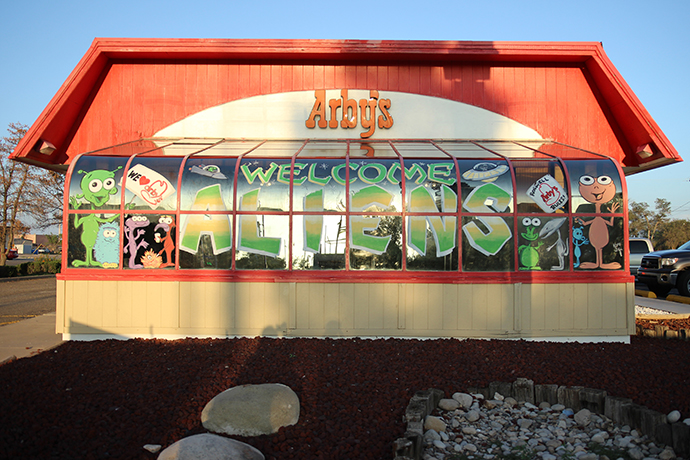
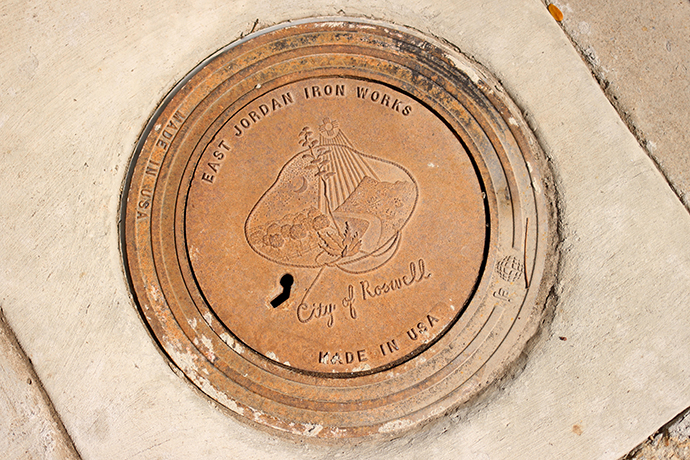
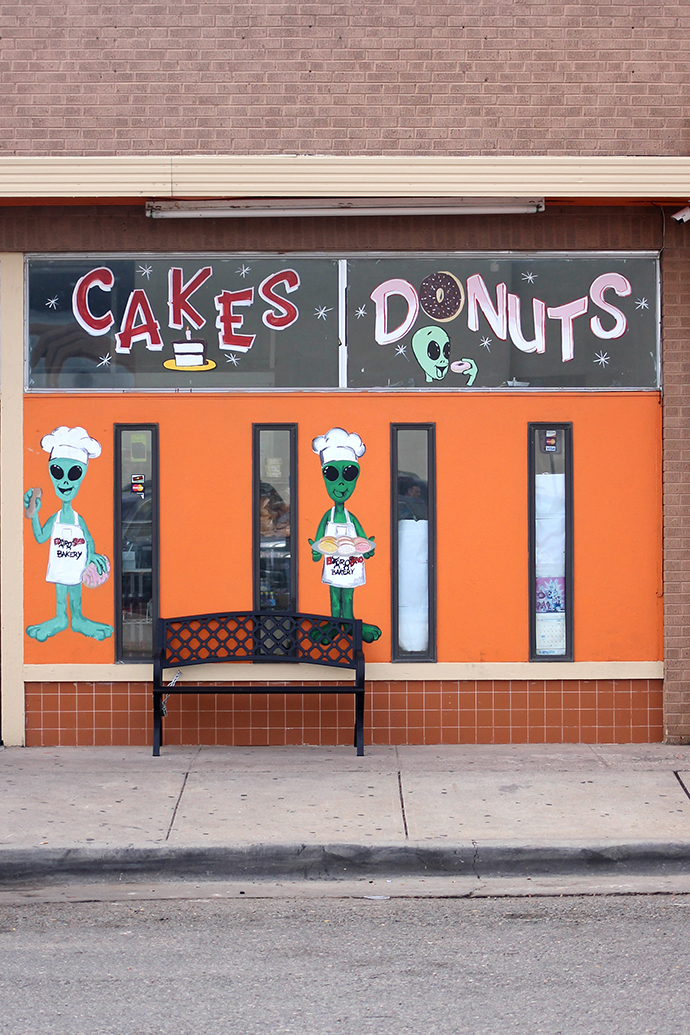
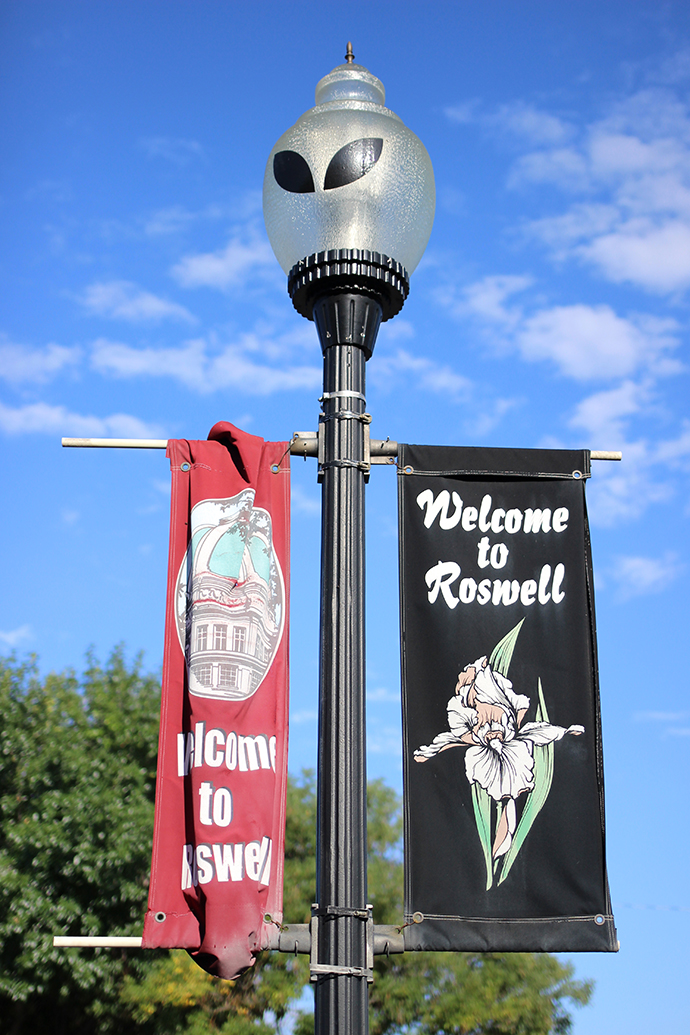
Luckily for cheesy, tourist-trap-loving people like me, Roswell definitely embraces their notoriety as the alien capital of the US. Aliens and UFOs are everywhere: on the back of cars, on the side of the highway, on restaurant signs, manhole covers and bakery windows. I was immediately
enamored with the UFO-shaped McDonald's
, and even the streetlights have been turned into aliens thanks to local artists (I do wish they were green, though).
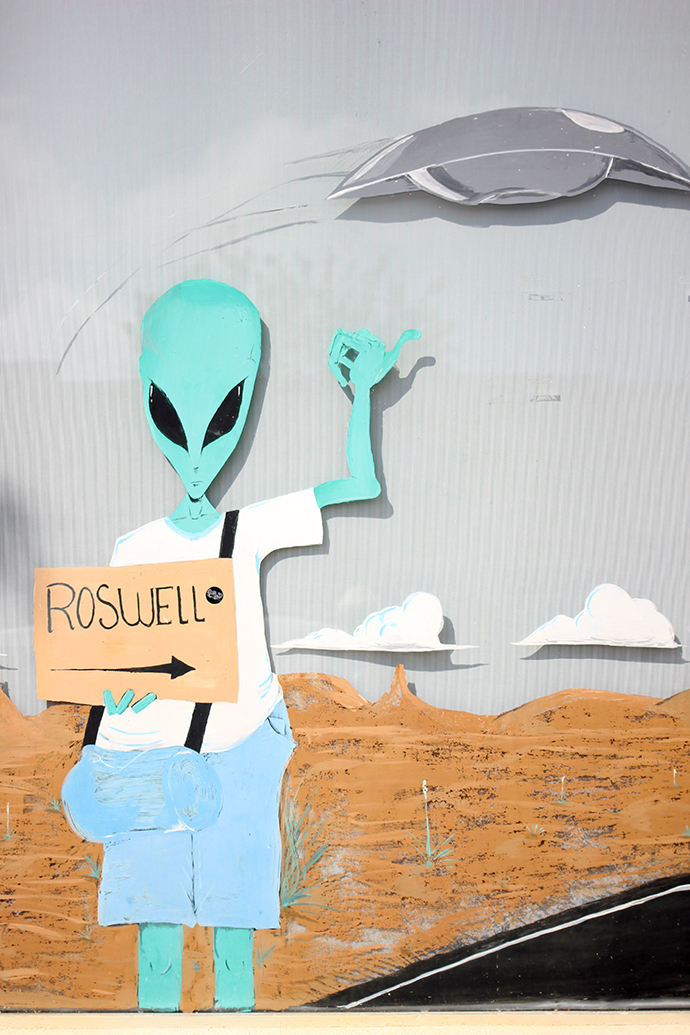
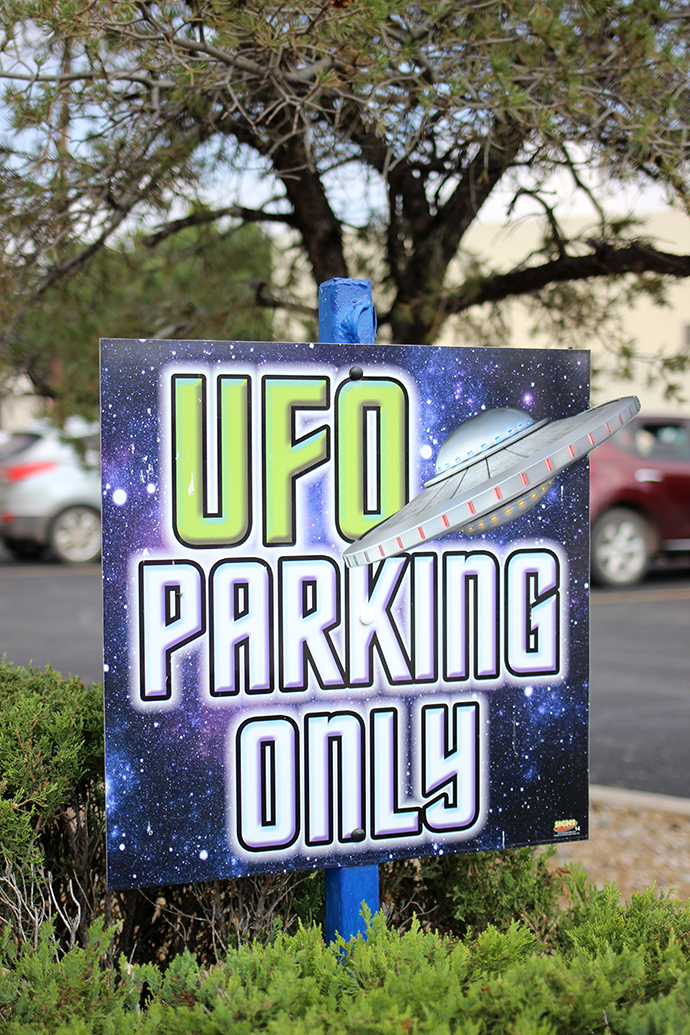
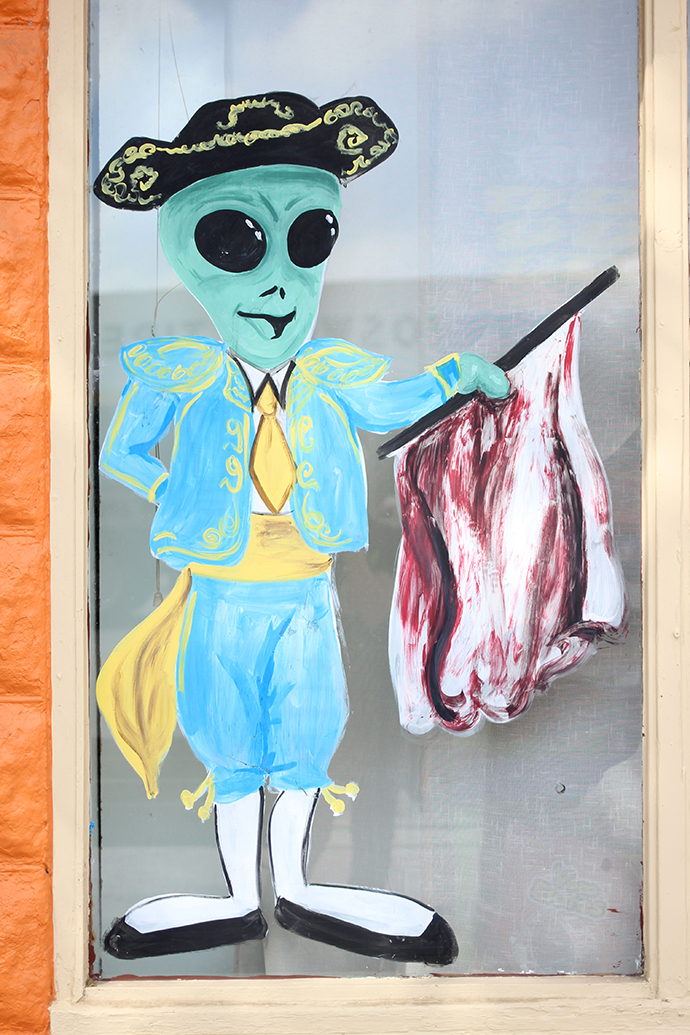
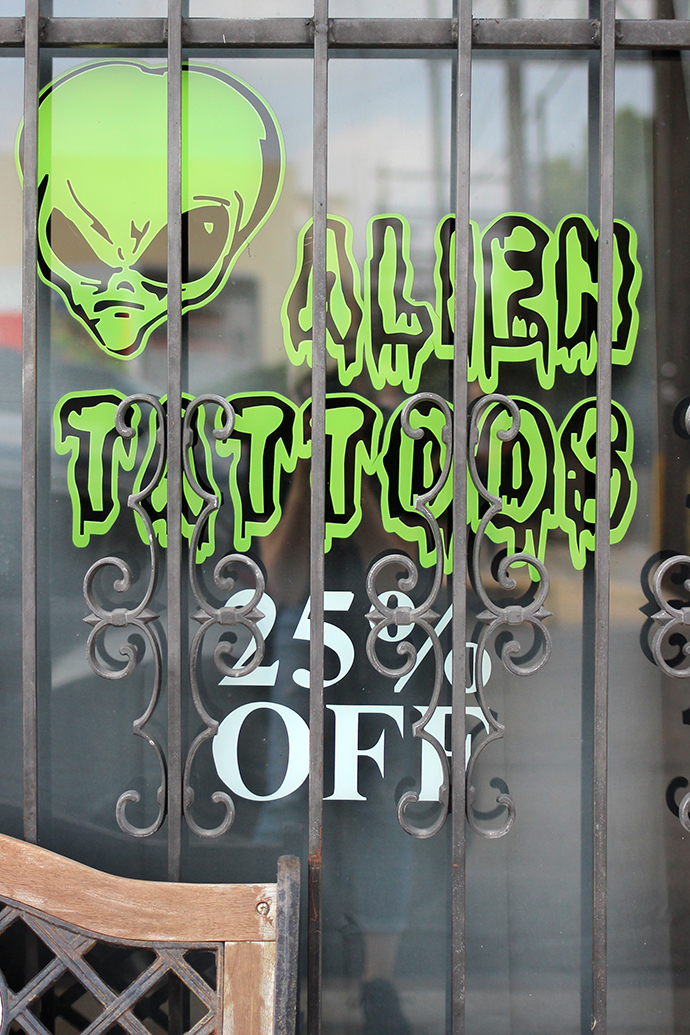
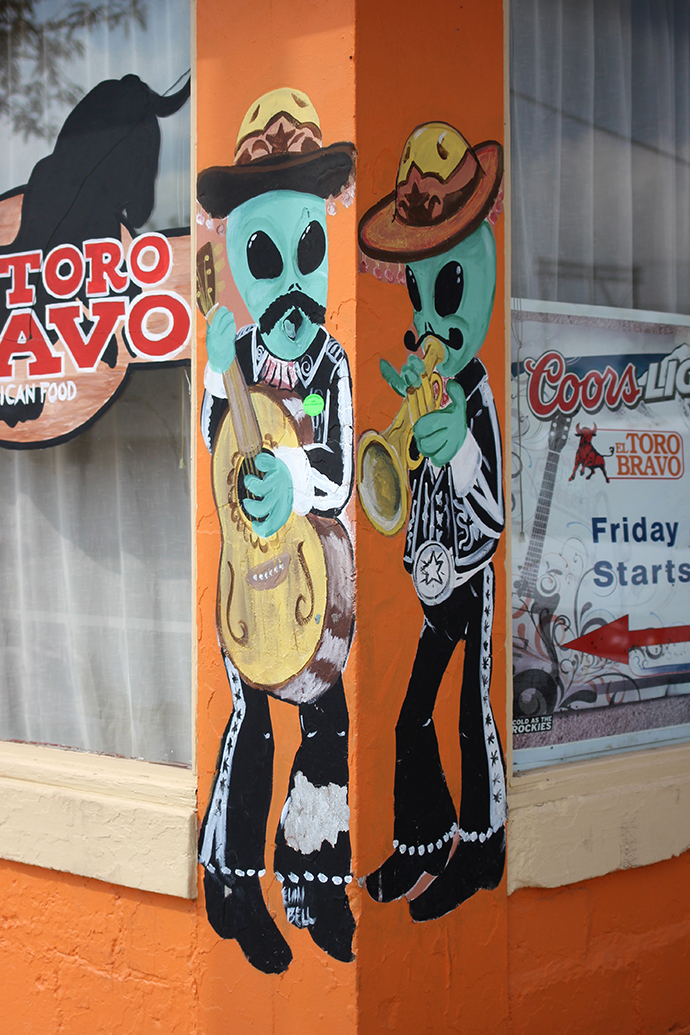
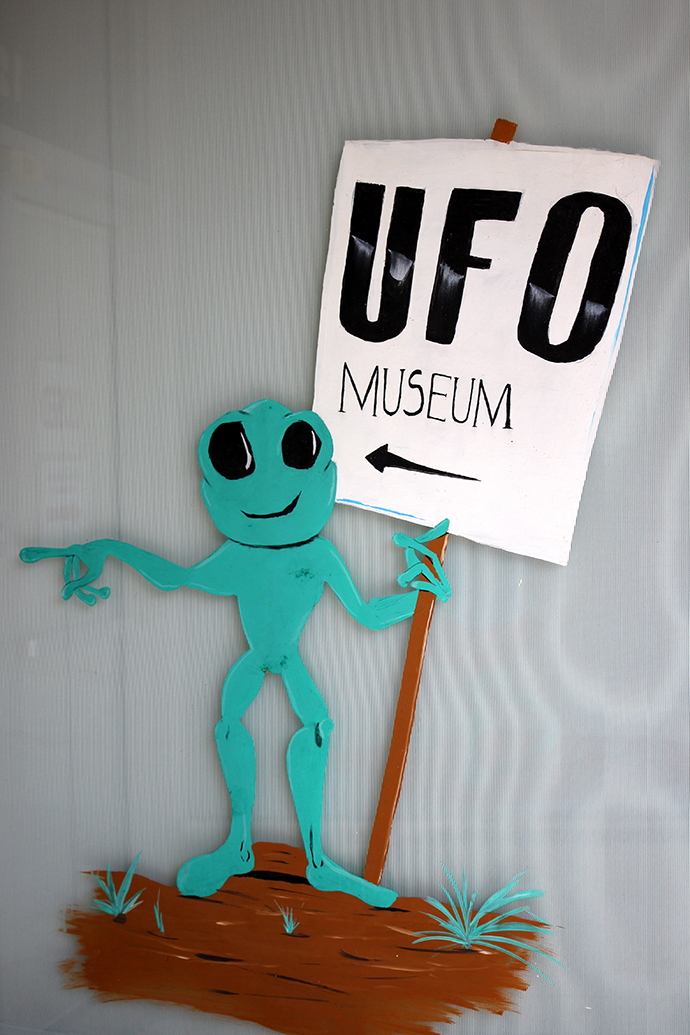
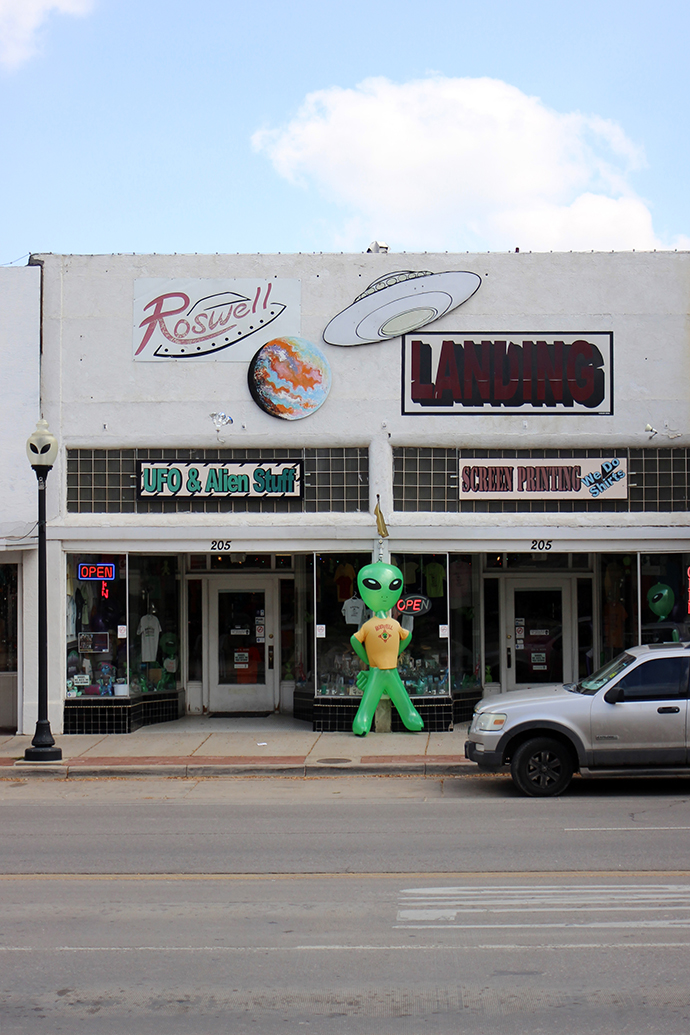
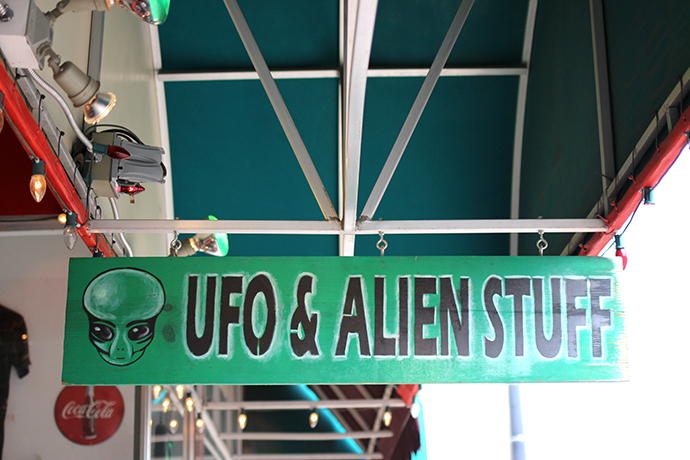

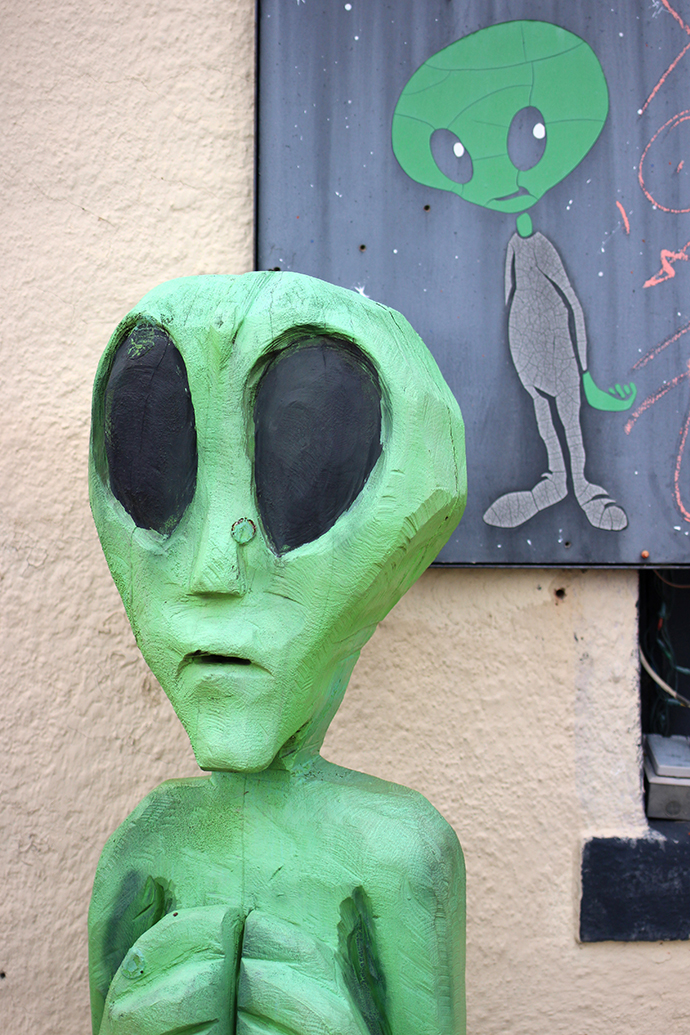
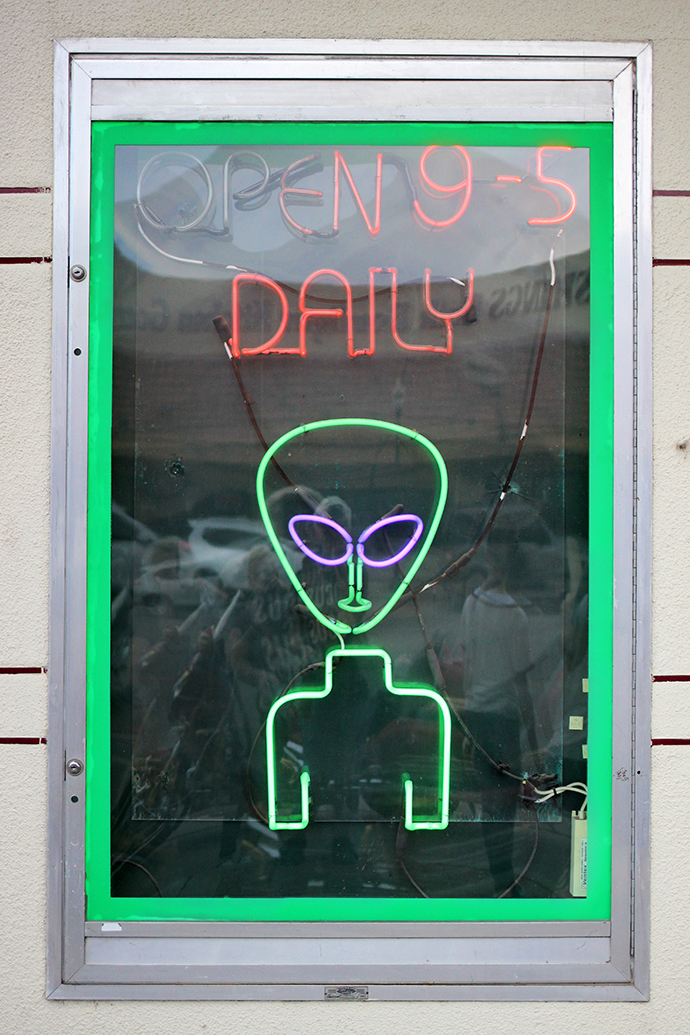
Aside from the museum and a few other attractions, the majority of downtown is filled with souvenir shops. If you can imagine an alien-themed trinket, you can probably find it in Roswell. I bought a floaty pen and made a few squished pennies, but we discovered that the best t-shirts were at a Walgreens next to our hotel (for $5.99!). I'm so glad that we finally made it to Roswell, which was—along with day trips to White Sands and Carlsbad Caverns—definitely worth the drive.

Lent-Riker-Smith Cemetery

On Monday I wrote about our recent visit to the Lent-Riker-Smith house in Queens, and I mentioned that the property came with its very own cemetery. Marion Duckworth Smith told us that she was on her second date with her future husband when he asked her if she'd "like to see his cemetery." While everyone else on the tour chuckled, I thought to myself "how romantic."


The cemetery contains 131 original residents (one of which died at Valley Forge), plus Marion's mother, brother, husband and eventually Marion herself. The oldest interments date back to 1744, and include Rikers, Lents and their descendants and spouses. Marion gave us a packet containing a 1919 survey of the plots, including most of the inscriptions that were visible at the time. Currently, there aren't many readable inscriptions, but a few of my favorites (thanks to the survey) are:
Weep not my friends all dear,
I am not dead but sleeping here;
The debt is paid, the grave you see,
Prepare for death and follow me.
- and -
An affectionate father and husband and faithful friend, beloved, honoured, and venerated! He closed an eventful and useful life in piety and peace.
- and -
This perishable marble cannot record his virtues—they are engraved in the hearts of all who knew him.


It is unfortunate that a lot of the oldest inscriptions have worn away, but that's pretty common is a cemetery this old. Marble was very expensive, granite was too hard to cut and the brownstone and limestone wears quickly and easily. It's lucky that someone had the foresight to survey the cemetery while names were still visible. Otherwise, it's remarkable that a small, family cemetery could have survived at all in New York City, and I'm grateful that it's in such loving hands.

Muffler Man: Fox Cave

On the way from Roswell, New Mexico to White Sands National Monument along East Highway 70—an hour before we came across the World's Largest Pistachio—we drove past Fox Cave. Realizing they had a Muffler Man, we made a note to stop on the way back. When we did stop, it was about ten minutes before they closed, so I frantically ran around the grounds snapping photos of all the wonderful roadside kitsch.


Fox Cave's claim to fame is that it was once used as a hideout by Billy the Kid. The primarily limestone cave was originally known as "Ice Cave," and only one large room is open to the public. The gift shop is full of Native American souvenirs, aliens and gemstones. They also have a "gem mine" which might be a scam, but 12-year-old me would have definitely been into it.


I was thrilled to meet my ninth (!) Muffler Man along with a menagerie of other roadside creatures. Fox Cave reminded me a lot of Trader's World, and their Muffler Men are very similar. I love that this Muffler Man points to the entrance with one hand and holds a gem in the other—he's also in really great condition, and looks as if he just received a fresh coat of paint.


There's a "cemetary" with a tombstone for Billy the Kid, a handful of dinosaurs and dinosaur heads, a buffalo, carved wooden aliens and a cement-mixer-spaceship. I love the random assortment of roadside animals—statues that have no real purpose and don't make sense together, but is there a better break in the monotony of the road than to glance over and see two huge fiberglass hands rising from the ground?


Fox Cave also has its share of strange mannequins, including two guys sitting outside of a jail (photo-op alert!), a miner that has seen better days and a dismembered torso resting on a tractor. Fox Cave was a quick stop, but that's part of what I love about roadside attractions. Sure White Sands was incredible, but the journey there ended up being just as memorable.

Lent-Riker-Smith House
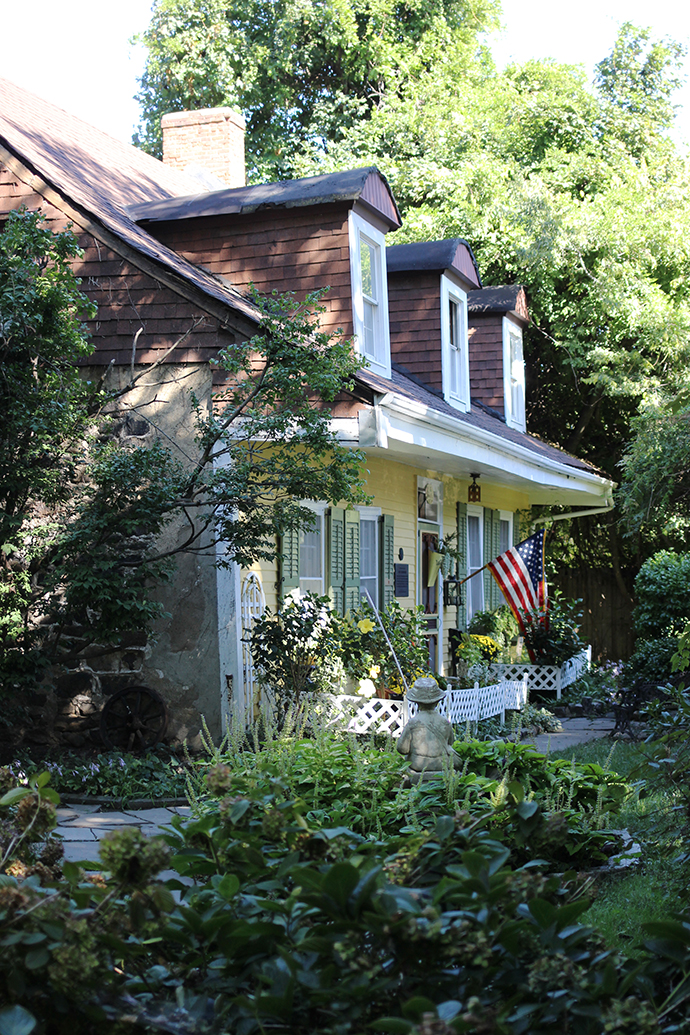
Recently we took a tour of the Lent-Riker-Smith house, located in East Elmhurst, Queens. Built by Abraham Riker in 1656, when New York was still New Amsterdam, the house was one of many farmhouses owned by the Rikers (Rikers island was part of their farmland). In 1729, Abraham Lent (a Riker descendant) made additions to the house, and it was one of the first structures to be given landmark status after the New York City Landmarks Preservation Commission was formed in the '60s.
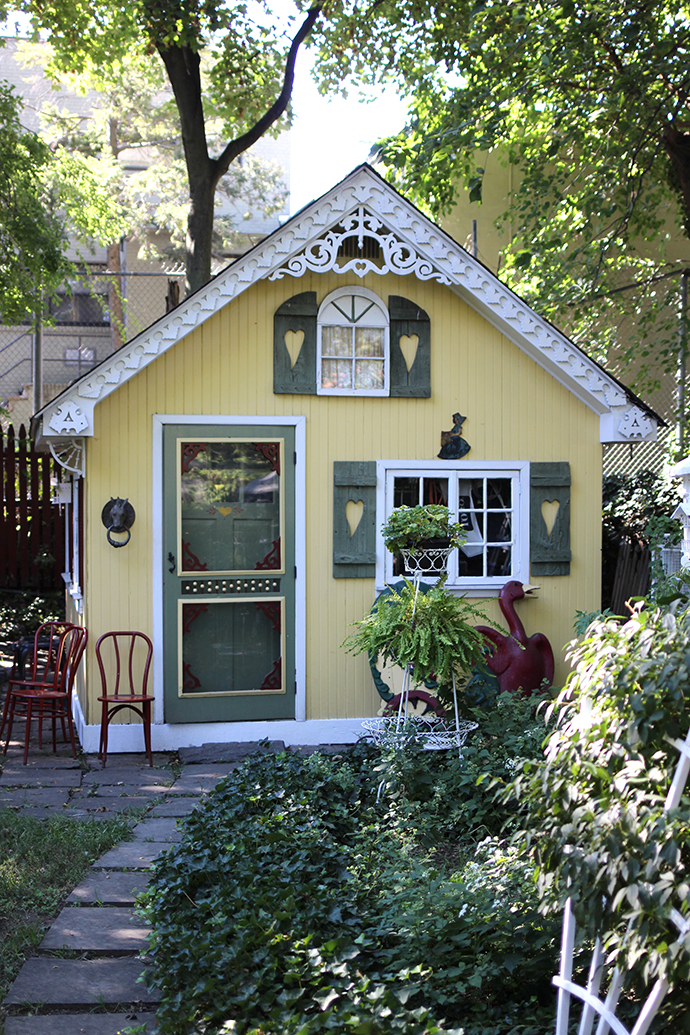
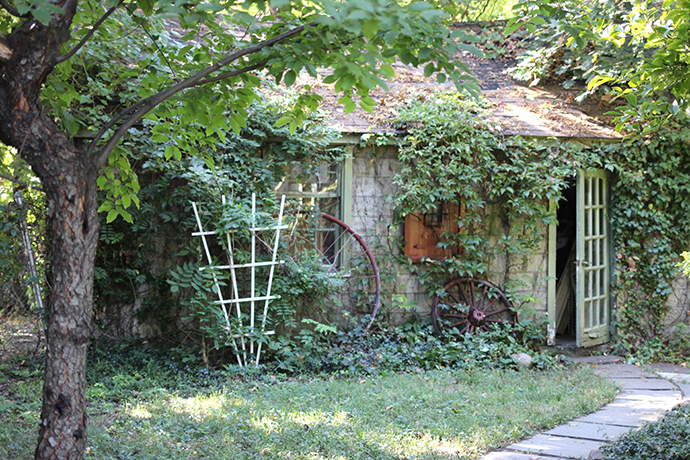
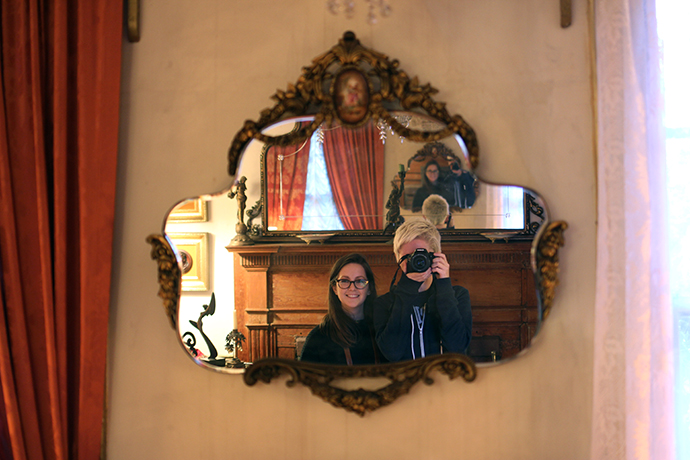
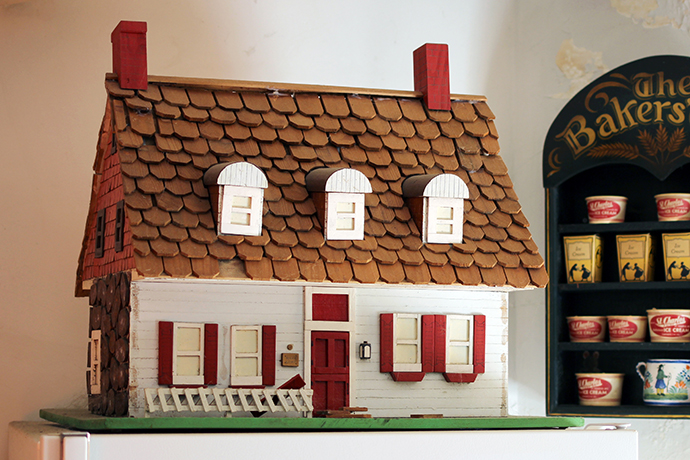
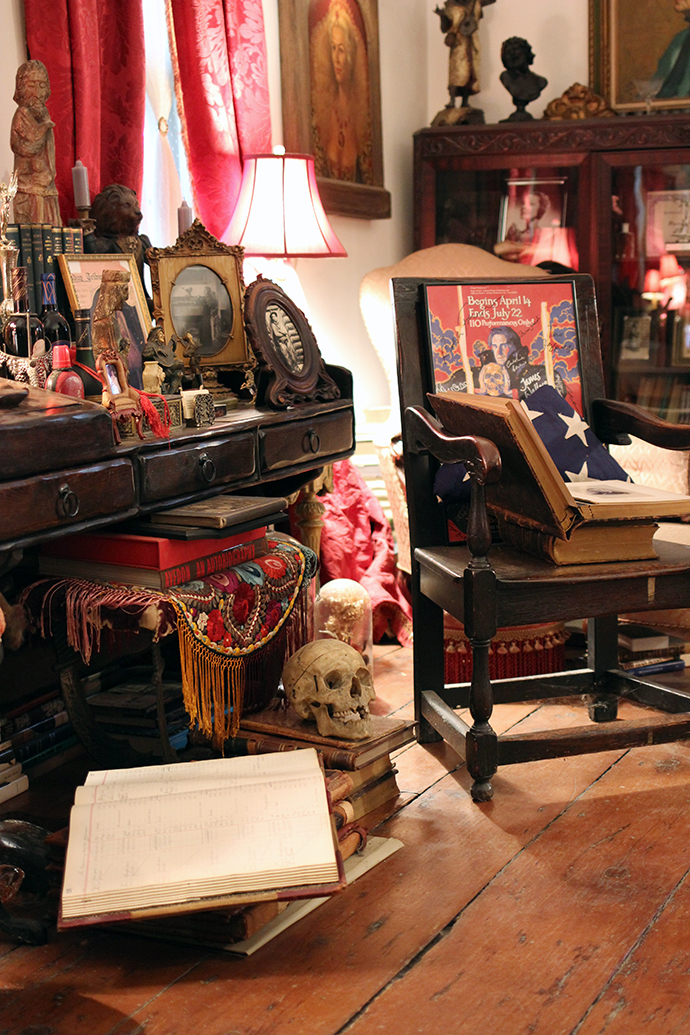
Marion Duckworth Smith moved into the house when she married Michael Smith in the 80s, and she's lived there ever since, making the property the oldest privately owned residence in the borough of Queens and maybe even the entire city. Marion opens her home occasionally for tours to offset maintenance costs, and we signed up a few months ago for a Saturday at the end of September.
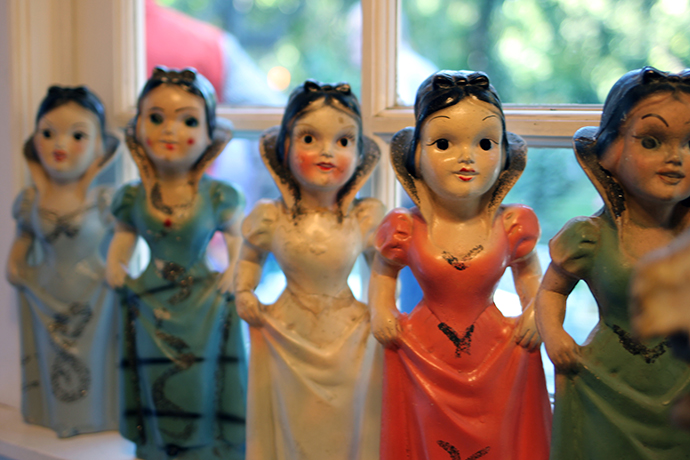
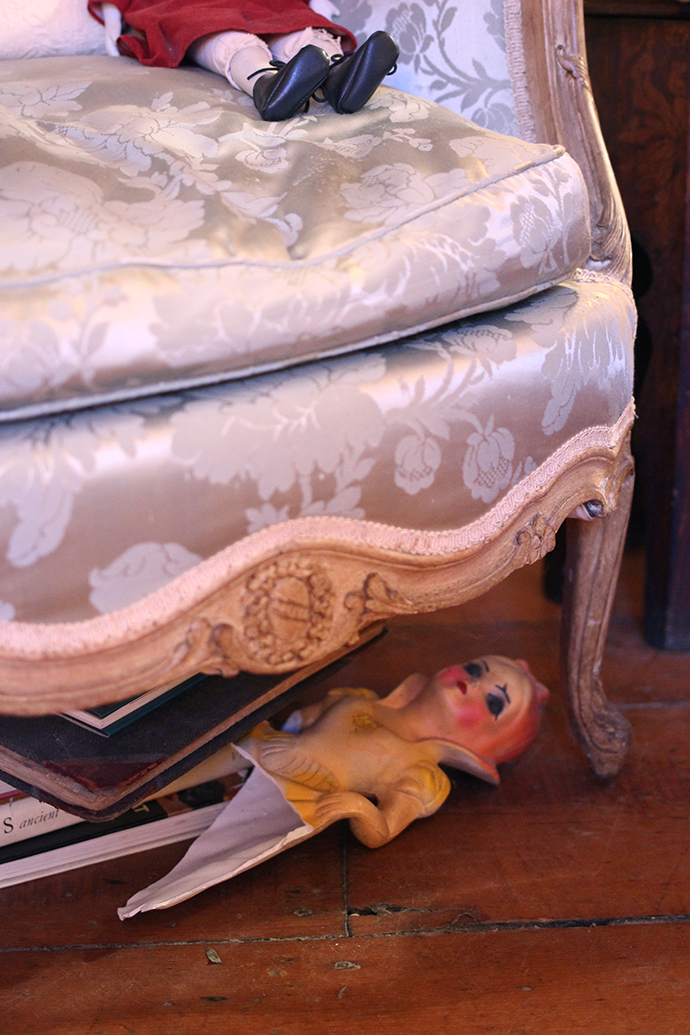
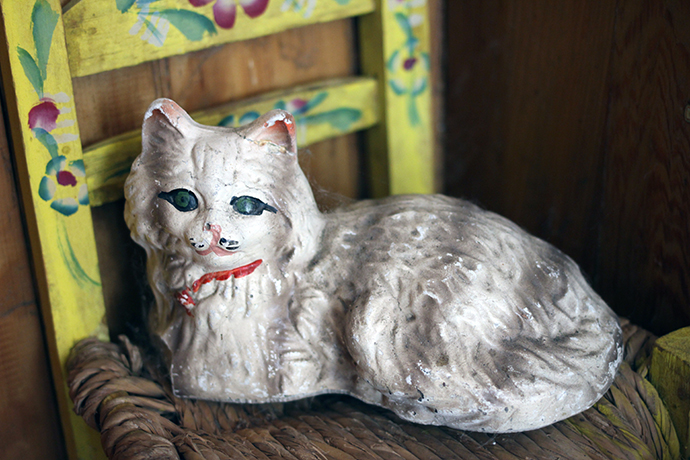
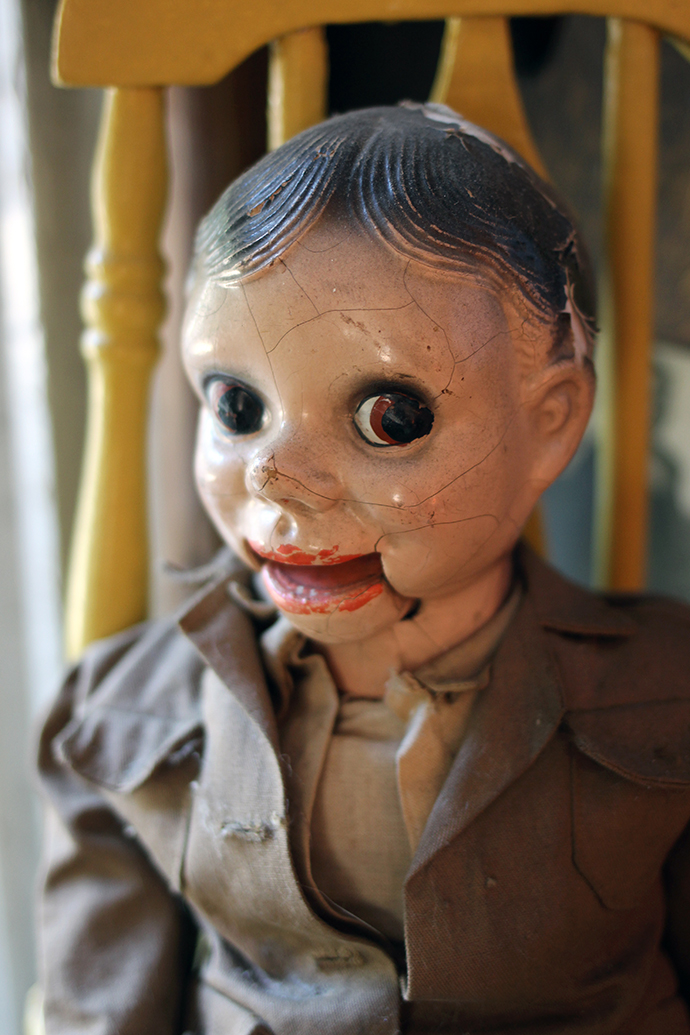
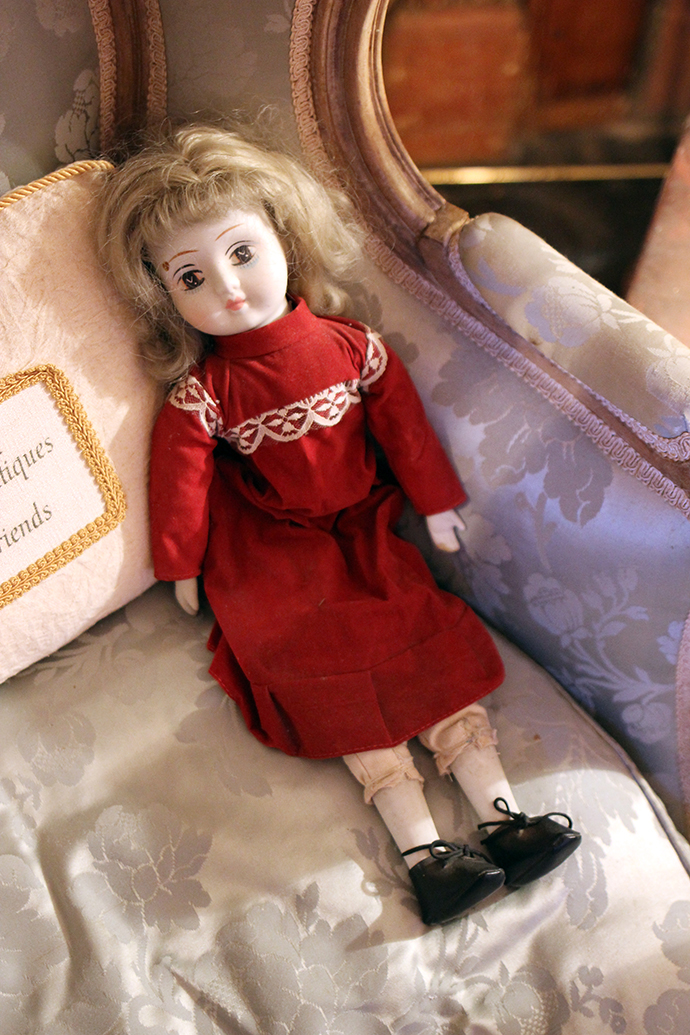
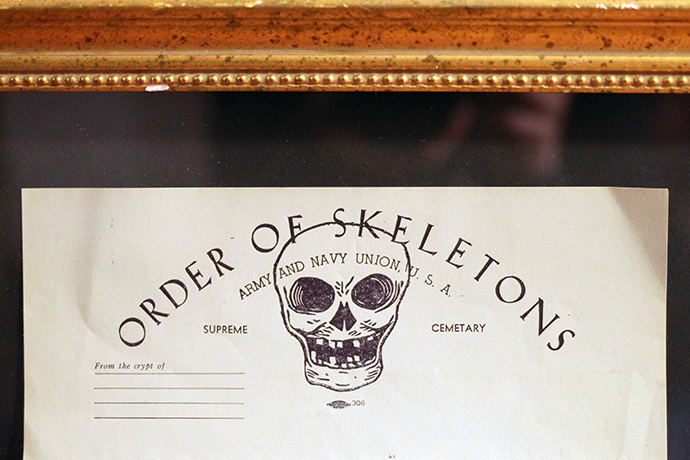
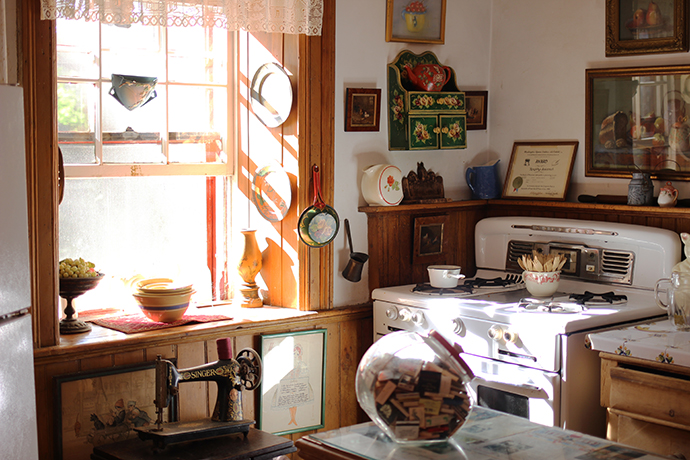
In addition to a very old, important and historical home, the tour features Marion's collections of antiques and oddities, and — most importantly — a backyard cemetery (deserving of its own post)! This was the holy trinity of things I look for in a tour, and the LRS house and Marion did NOT disappoint. Because of its location and relative obscurity, we thought we might be the only ones on the tour, but there were ten of us total, including five actual Rikers, who drove in from New Jersey.
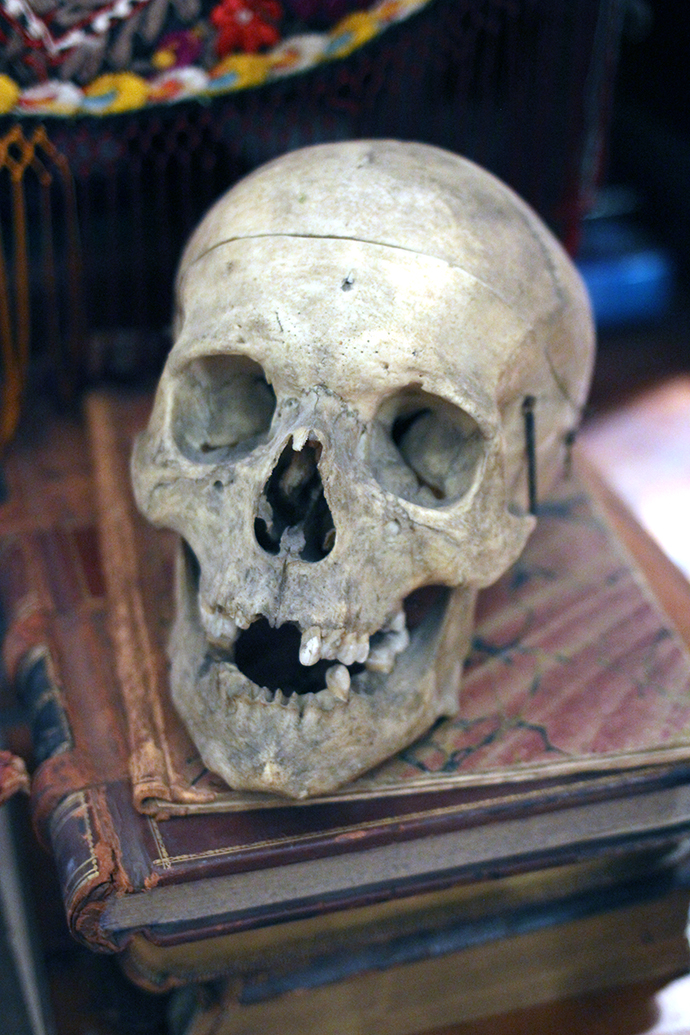
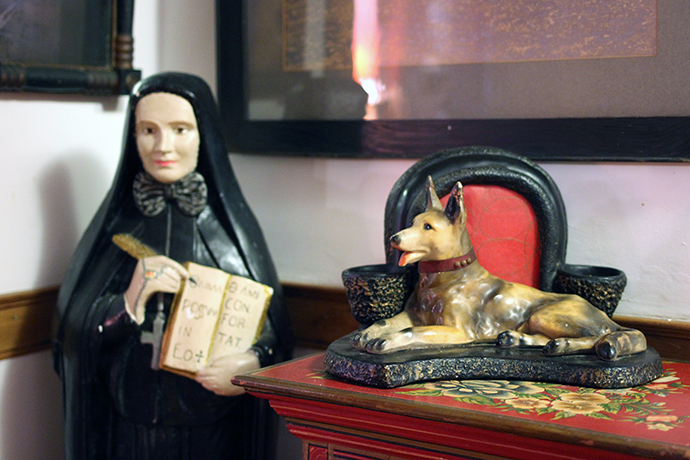
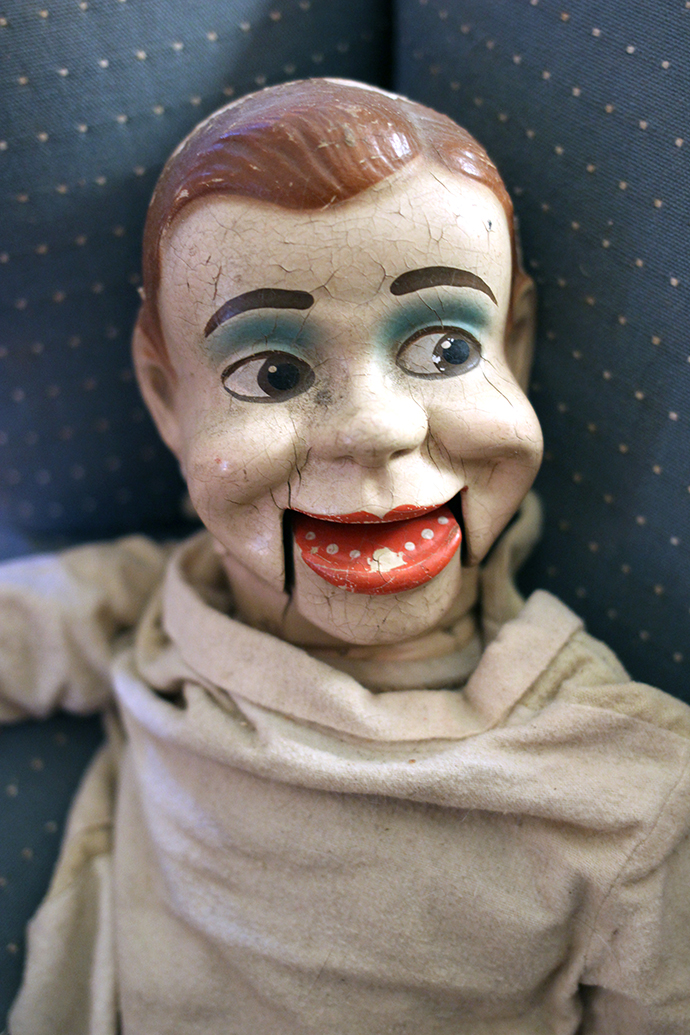
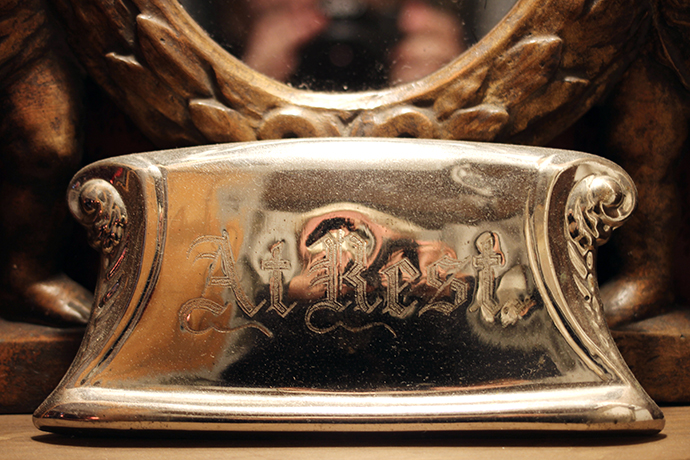
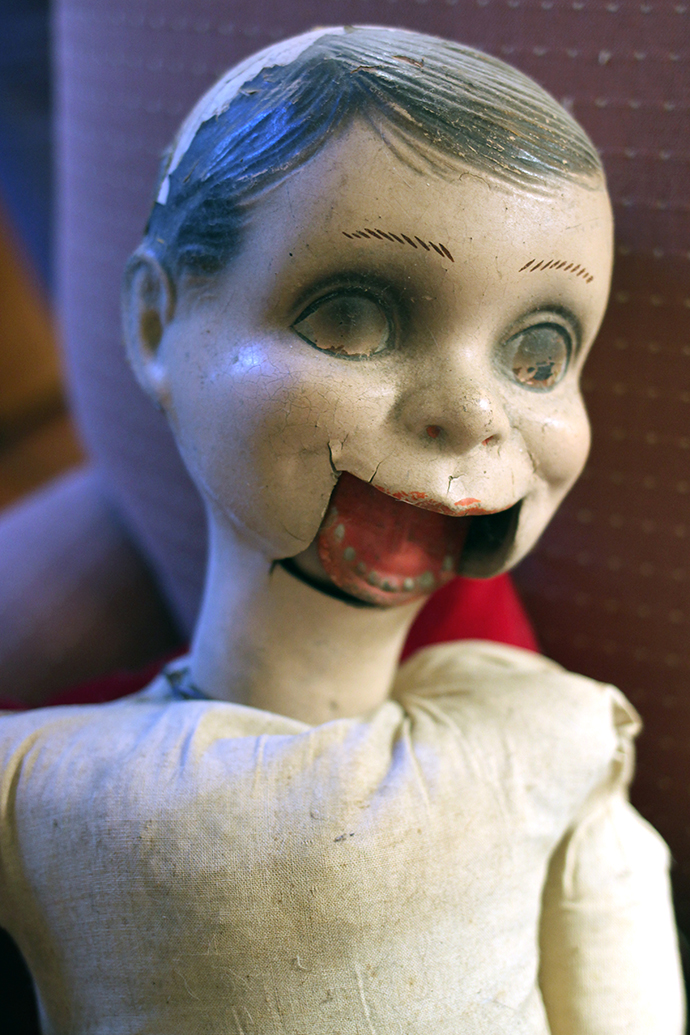
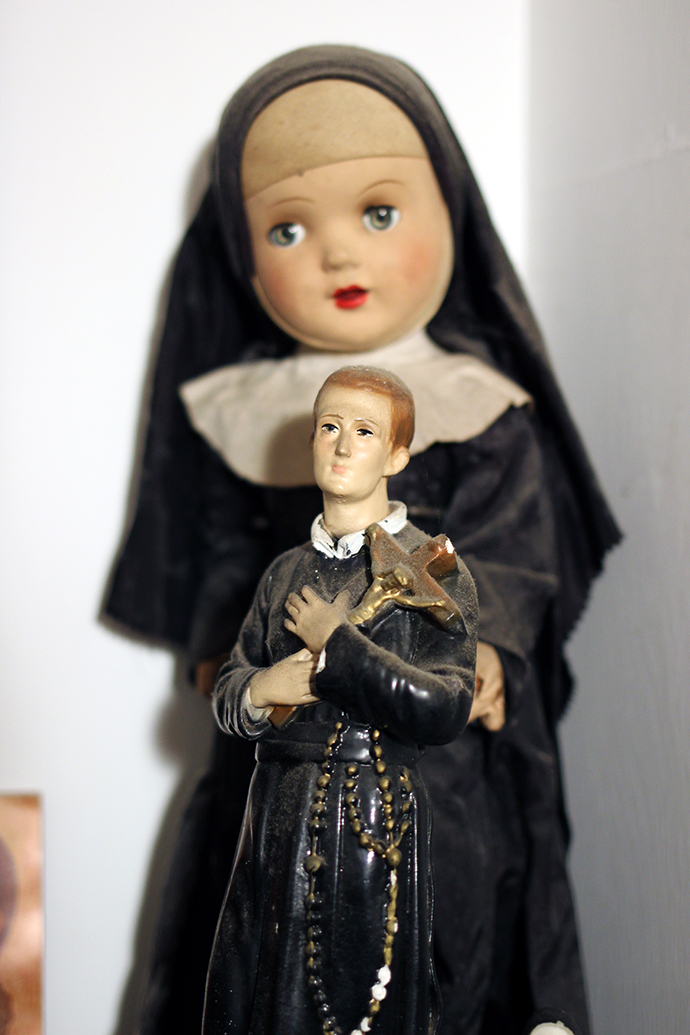
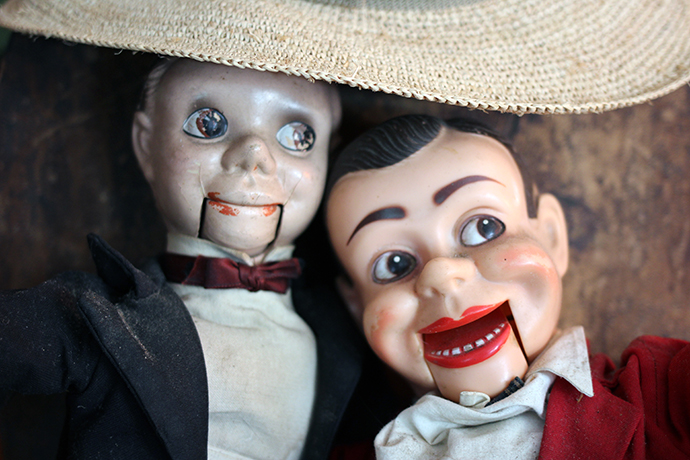
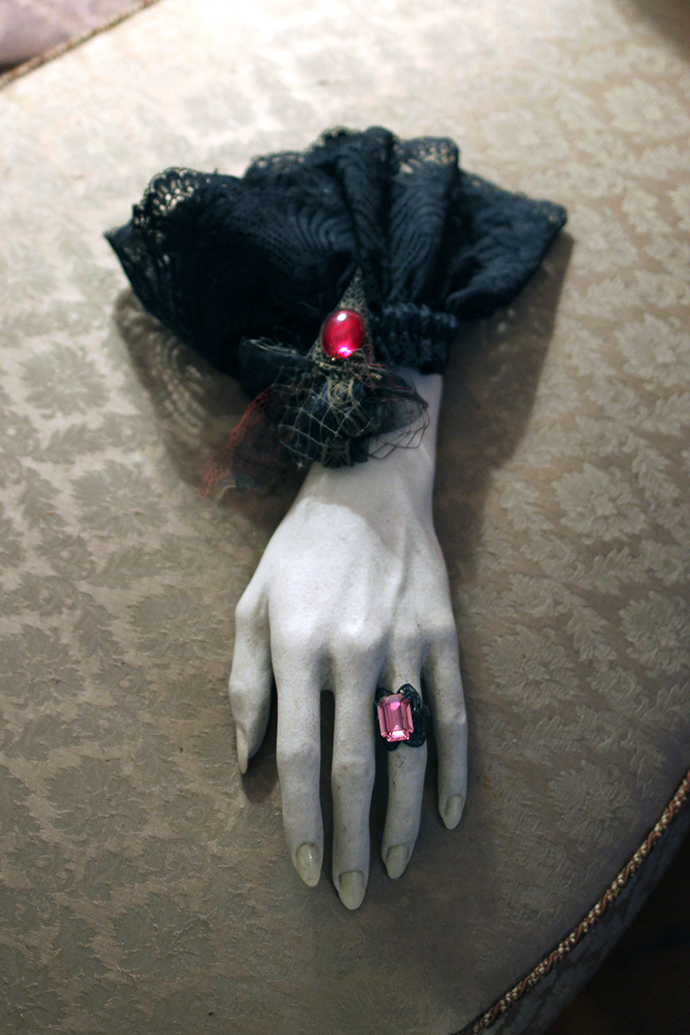
Marion is as much of a draw as the house itself—she's a true New York character, and her collections and stories made the tour one of the best I've ever taken. It wasn't long after we entered the house that I realized that we shared a similar taste for the eccentric and macabre. She said she wasn't precious about portions of the house (the original two rooms are period-specific), and has filled them with collections of chalkware Snow Whites (given out as prizes at Coney Island), ventriloquist dummies and funeral items. I also noticed at least one glass eye, a skull from her mother's artist studio, nuns, priests, bulldogs and a mannequin hand from B. Altman's on Fifth Avenue.
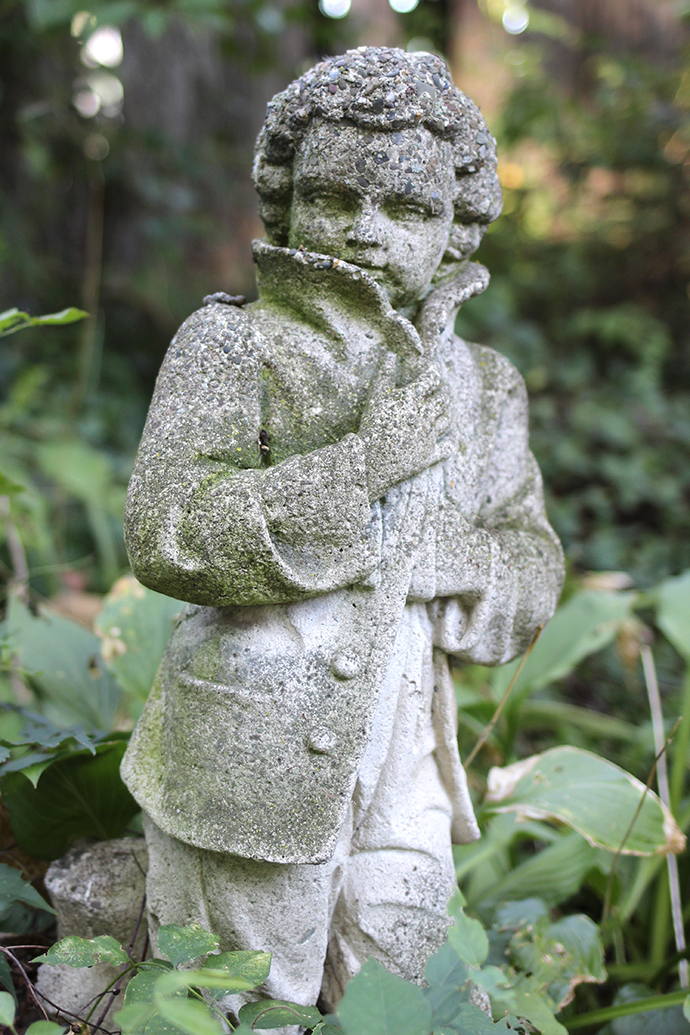
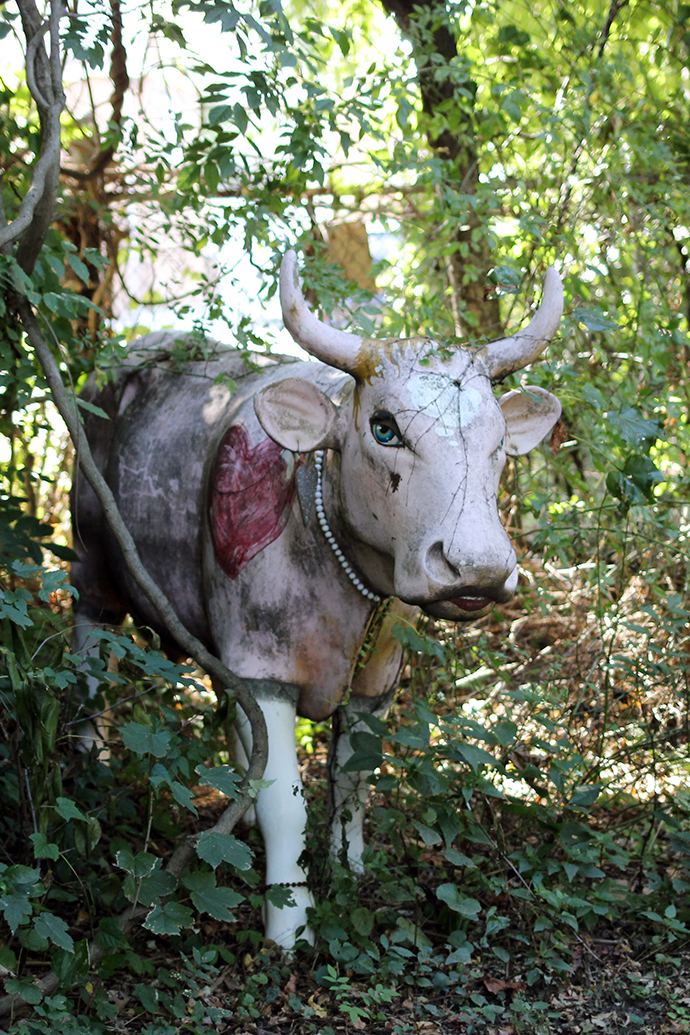
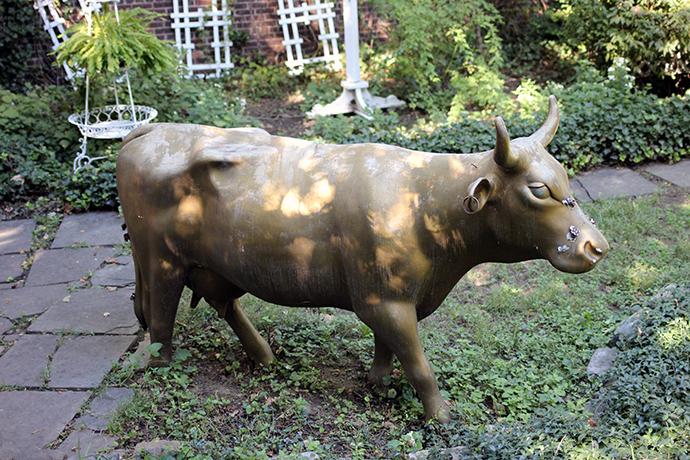
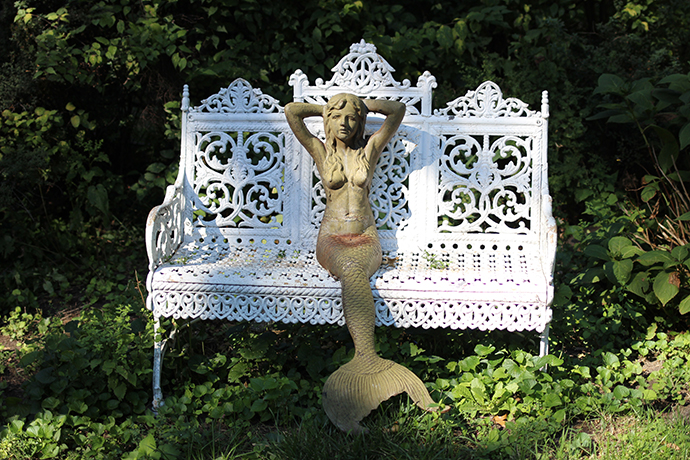
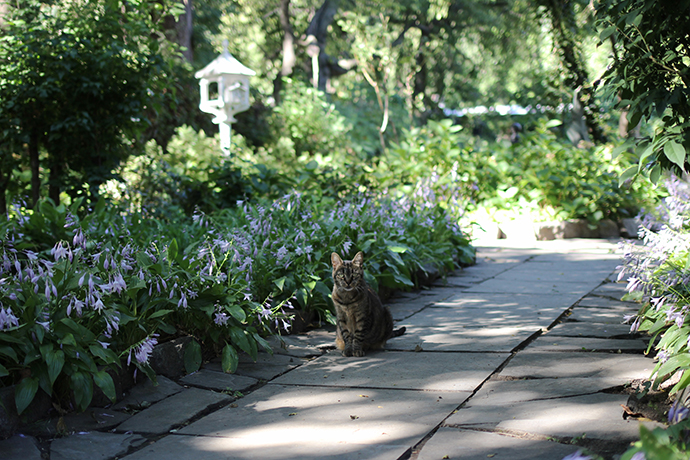
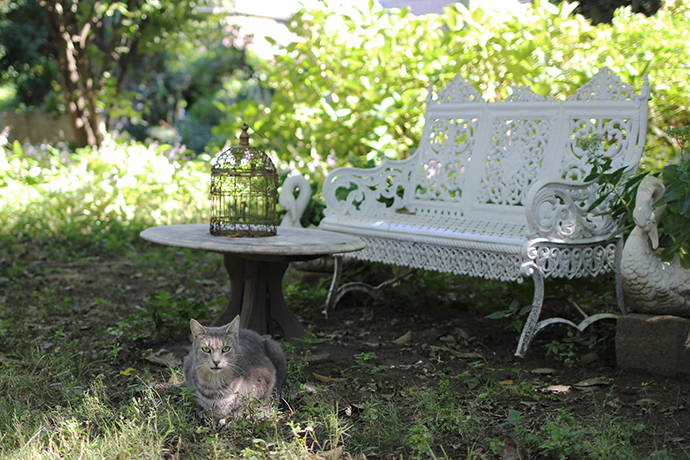
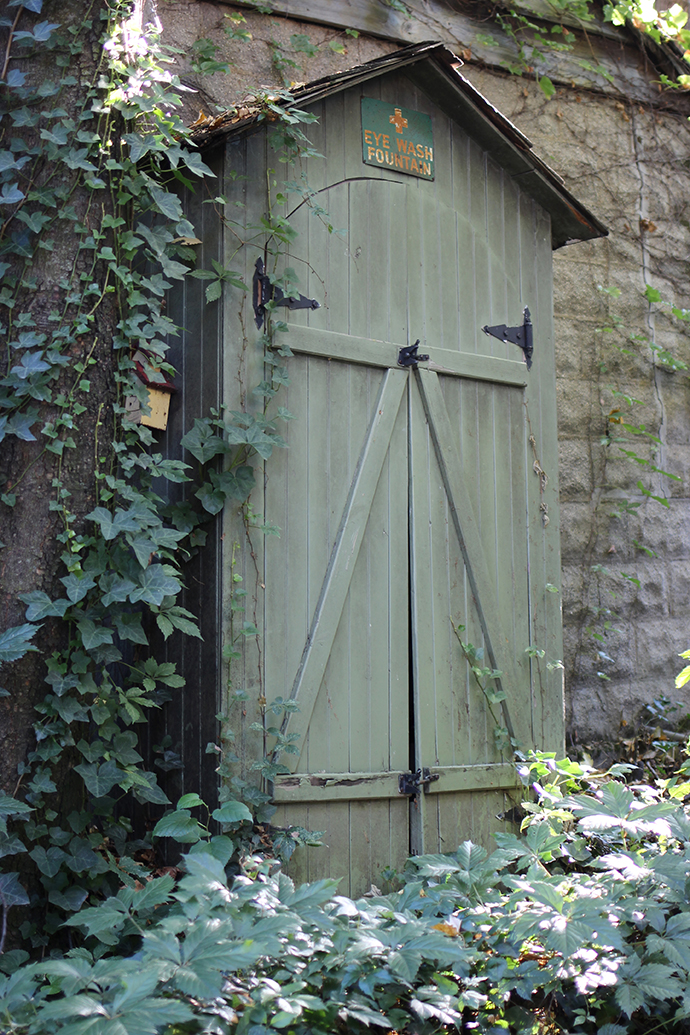
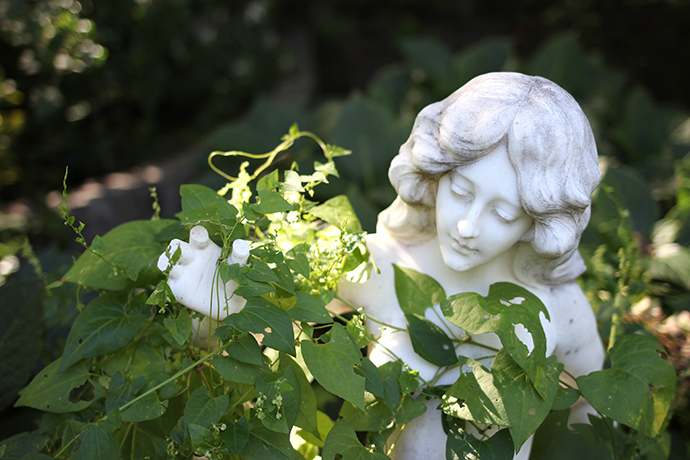
Not only did the house come with a cemetery, but the property comprises more than an acre of land which certainly is a novelty in New York. The yard is slightly overgrown but in a secret-garden, whimsical way, and is filled with garden ornaments from all over—she even has two cows from Cow Parade and multiple set pieces from the original production of Cats. She also has real cats that roam the property—I counted at least six different ones while we were there.
I can't encourage you enough to make the trek out to Queens for a tour—come for the history, stay for the stories and buy a postcard or two to help Marion stay in the house she loves until it's time for her to move into the cemetery, where her mother, brother and husband (and 131 Rikers) are waiting.
The most fantastic thing about the New York Botanical Garden’s annual Orchid Show is the orchids themselves