

Archive
- Abandoned
- Alabama
- Arizona
- Bahamas
- Books
- California
- Cemetery
- Climate
- Colombia
- Connecticut
- Diner
- Egypt
- Feature
- Florida
- Friday Fun
- Georgia
- Holidays
- Illinois
- Iowa
- Italy
- Kentucky
- Louisiana
- Maryland
- Massachusetts
- Mississippi
- New Jersey
- New Mexico
- New York
- North Carolina
- Novelty Architecture
- Ohio
- Pennsylvania
- Personal
- Peru
- Project 365
- Protest
- Rhode Island
- Roadside Attraction
- South Carolina
- Tennessee
- Texas
- Travel Guide
- Virginia
- Walks
- Washington DC
- West Virginia
- Wisconsin

Bayside Cemetery: Fall

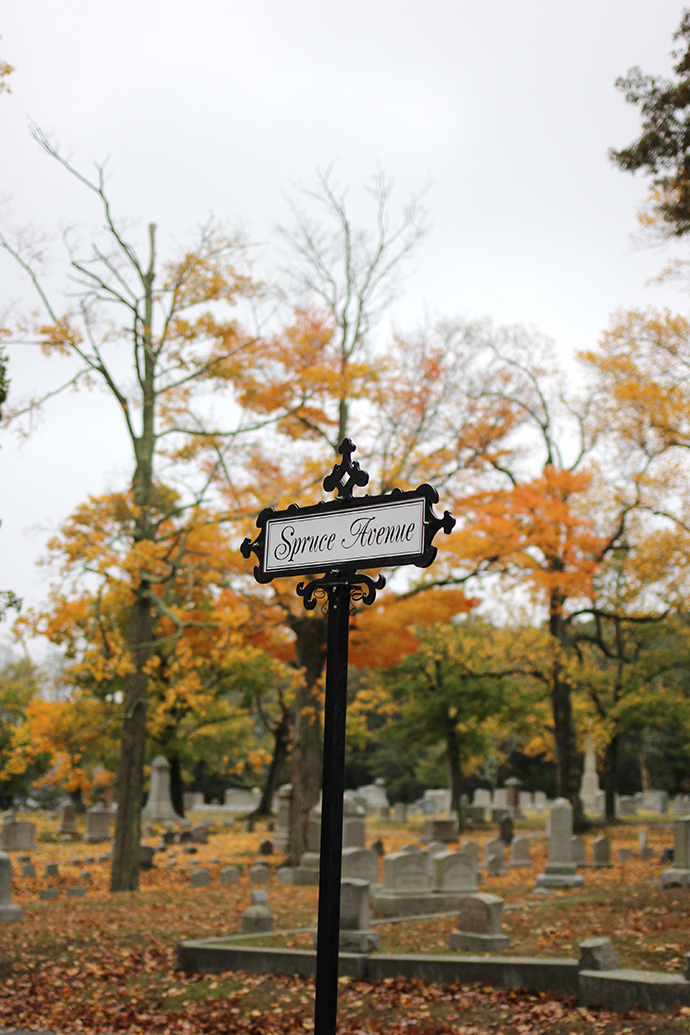
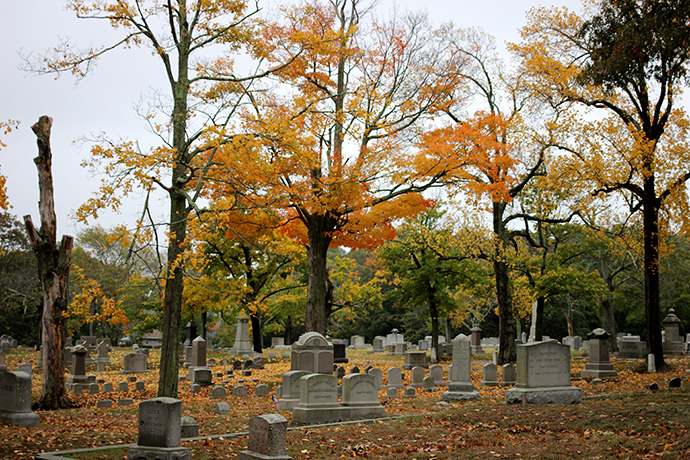
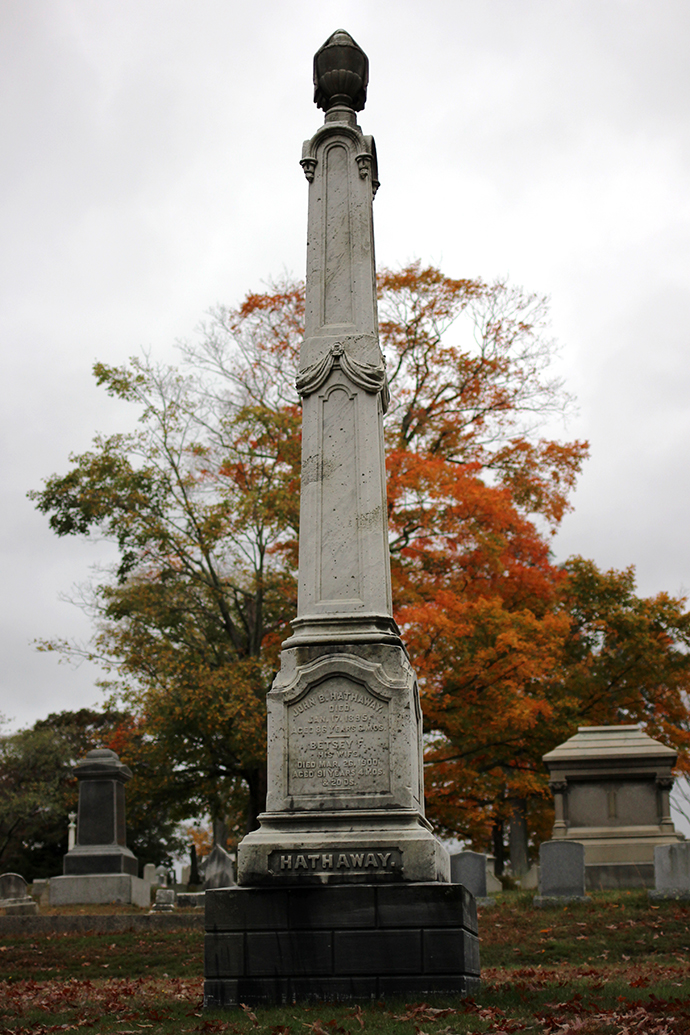
Ever since I went to Bayside Cemetery earlier this year, I've been thinking about going back. Bayside has fallen into disrepair throughout the years, and around Halloween someone actually broke into one of the mausoleums and stole remains—I promise it wasn't me. I first went in May of this year, and it was overgrown with grass and weeds. I remarked that I would love to see it in the fall, so I went on Sunday to fulfill that need.


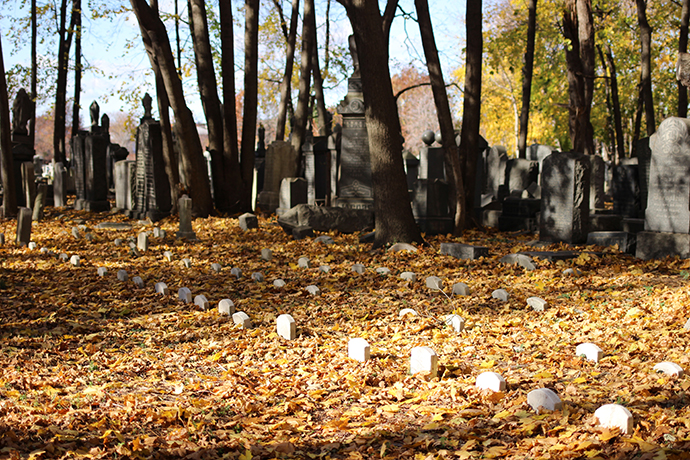
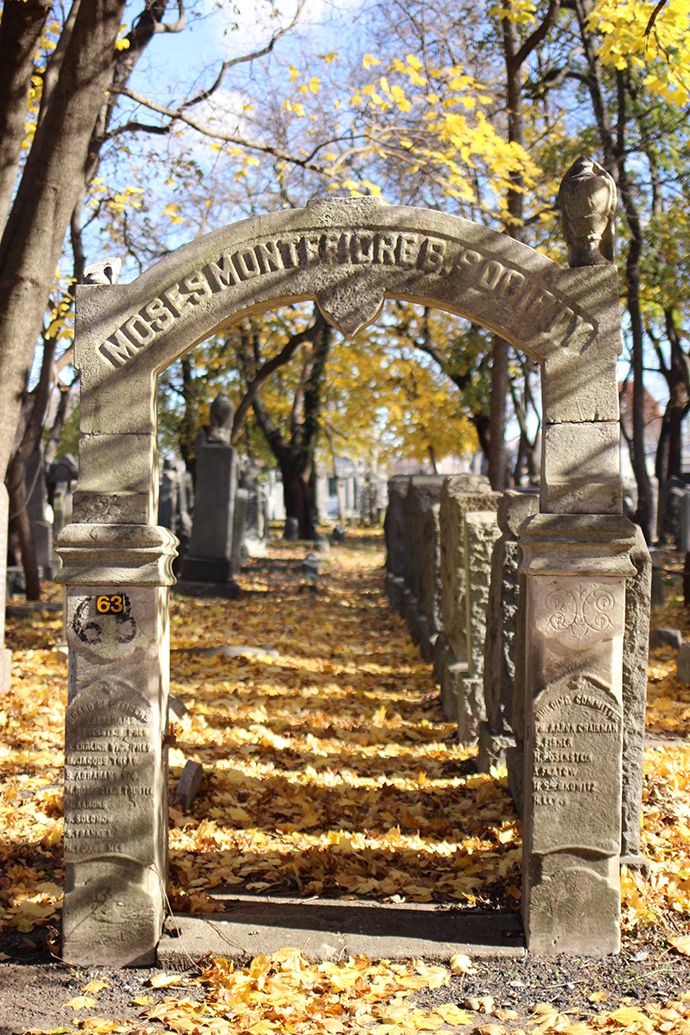

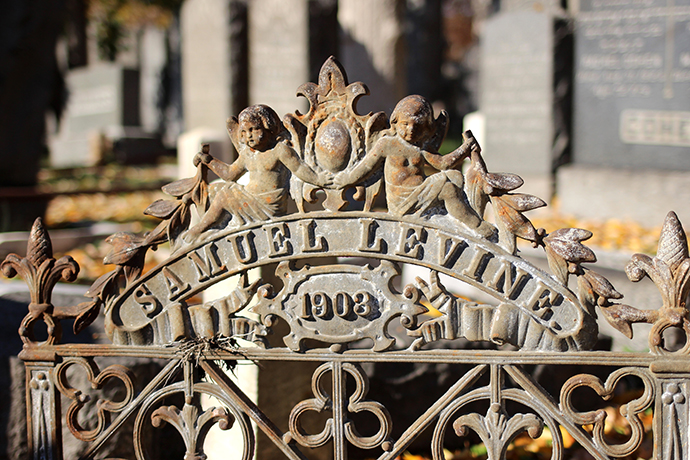
I didn't realize just how different the cemetery looked in the fall vs. in the spring, until I looked back at my photos from my first visit. Everything is covered in piles of yellow, orange and brown leaves—sometimes I found myself hopping from one fallen tombstone to another like they were paving stones. Bayside isn't totally abandoned (we saw grounds workers in May) and new security measures seem to be in place since the Halloween incident (new barbed wire along the fence and "No Trespassing" signs) but it's the closest I've seen to an "abandoned" cemetery within city limits.
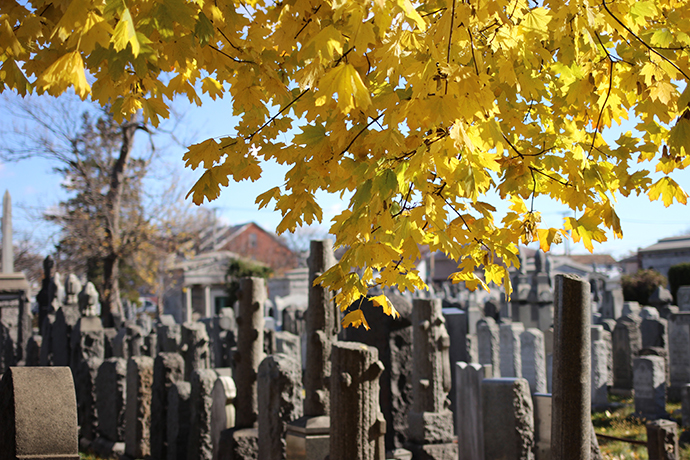


Most cemeteries I visit have noticeable decay and even the most well-kept places can't avoid crumbling stones or the effects of weather, time and vandals. The most interesting thing about the condition of Bayside is the amount of stones that have been knocked clear off their bases. Most of these stones are enormous—I can't imagine the noise they must make when they take their final fall.


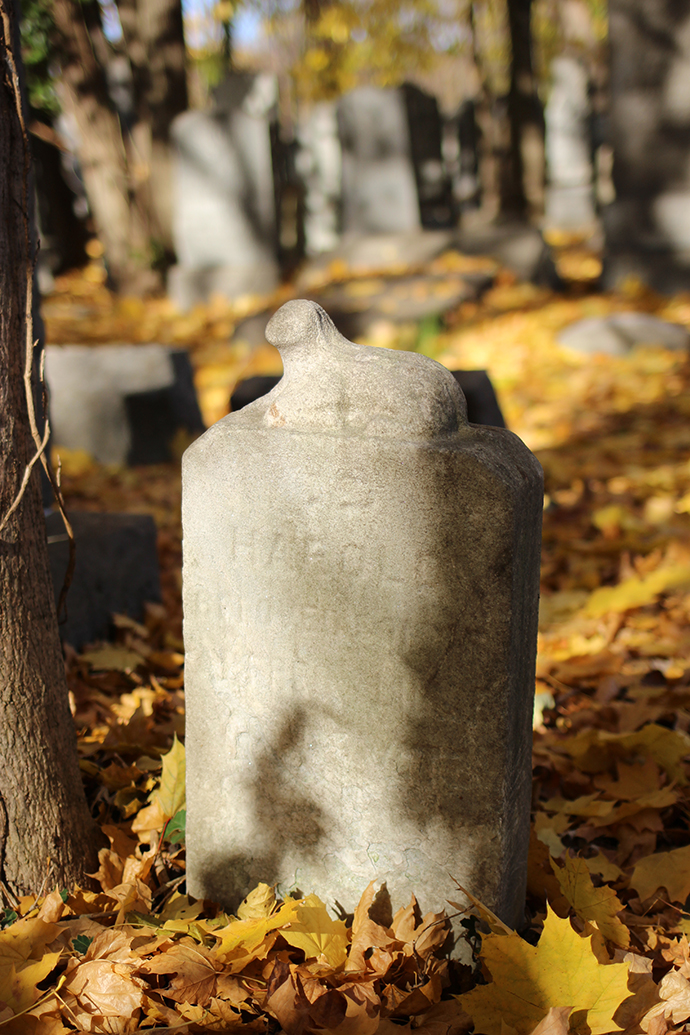


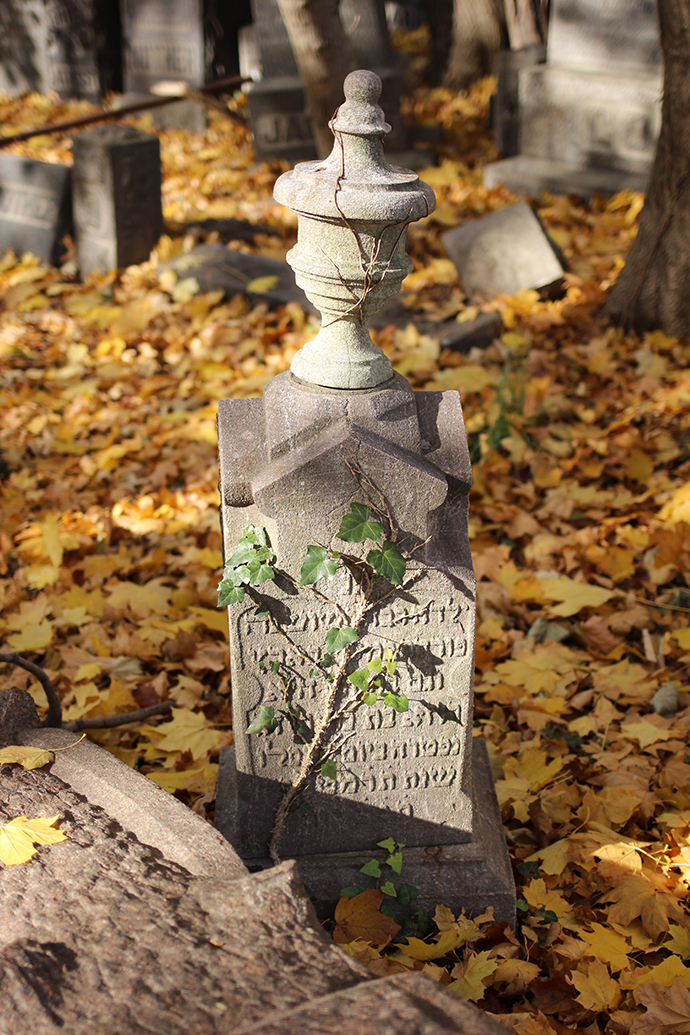
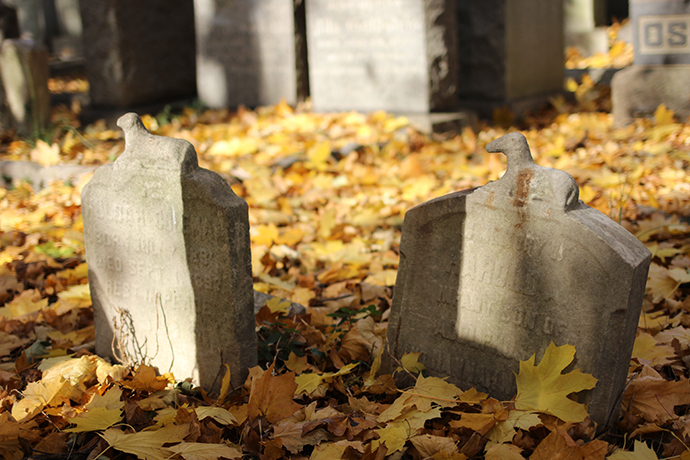

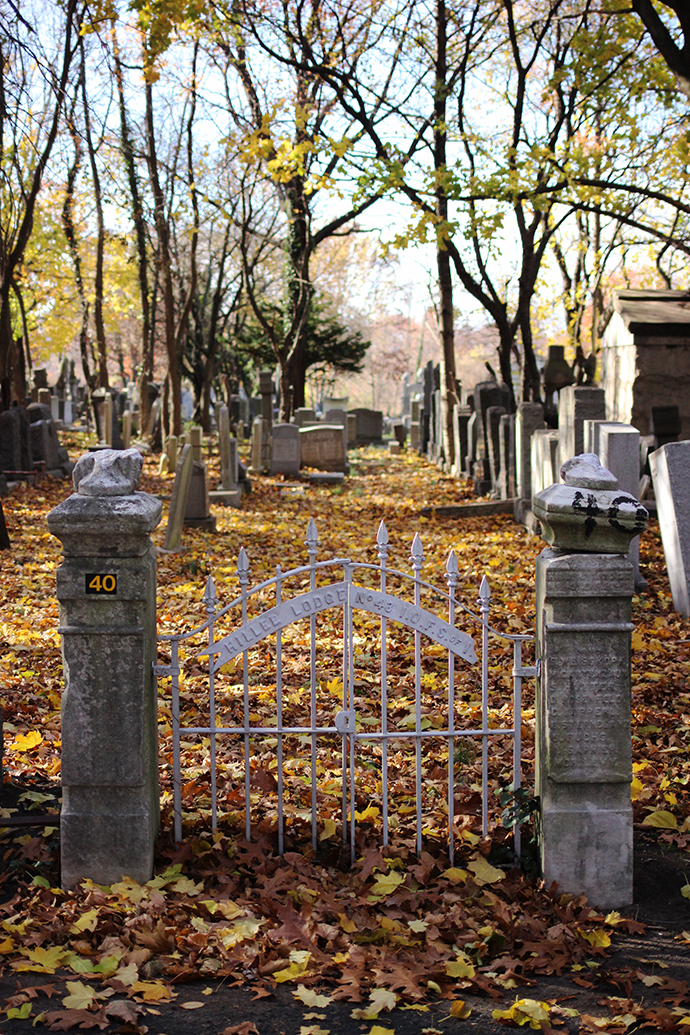


I was surprised to see at least two fresh burials from September of this year, so maybe Bayside is finally getting the attention it hasn't had in the recent past. As thrilled as I was to be traipsing through rows of tightly packed tombstones and piles of leaves, I couldn't help but already start to look forward to revisiting Bayside in the snow.

St. Michael's Cemetery

I really didn't think that I would still be thinking about St. Michaels Cemetery months after my visit. It's not a particularly old, historic or unique cemetery, and my only reason for visiting was because I'd passed it many times on my way to the airport. But in addition to the huge headless statue population and the large amount of ceramic portraiture, I found some really lovely (and creepy) things at St. Michael's.


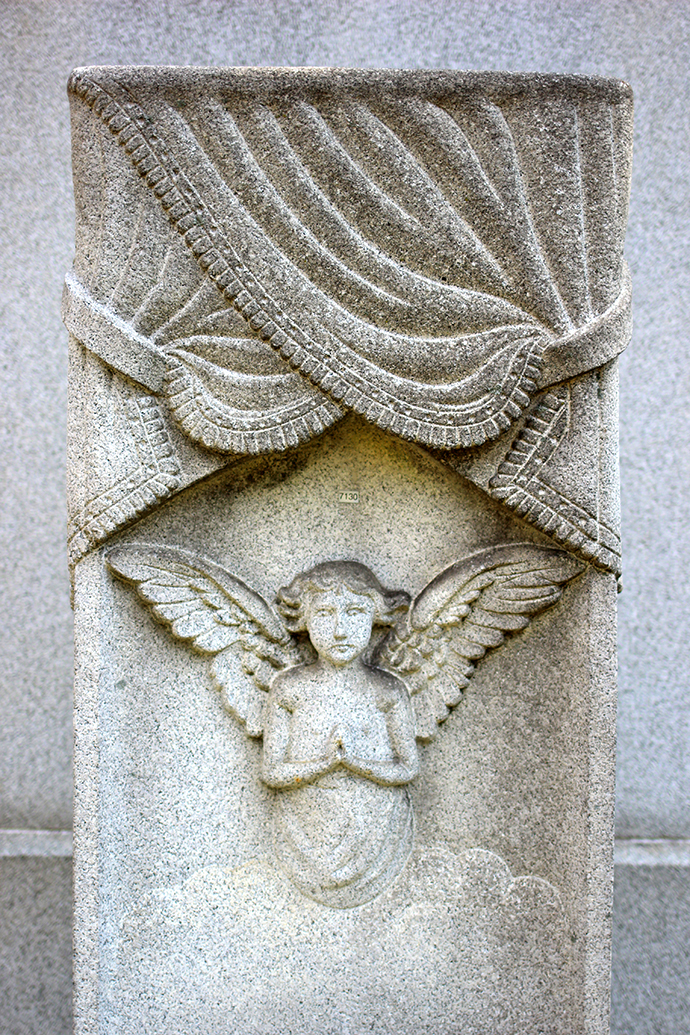
Fall is obviously prime cemetery exploring weather, but when I went to St. Michael's in September it was 90+ degrees. I always have weather amnesia when a new season starts, and find it hard to even comprehend that I was sweating or freezing so recently. It was so hot, actually that I didn't even stay as long as I would have normally, so it's especially fortunate that I found so much so quickly.
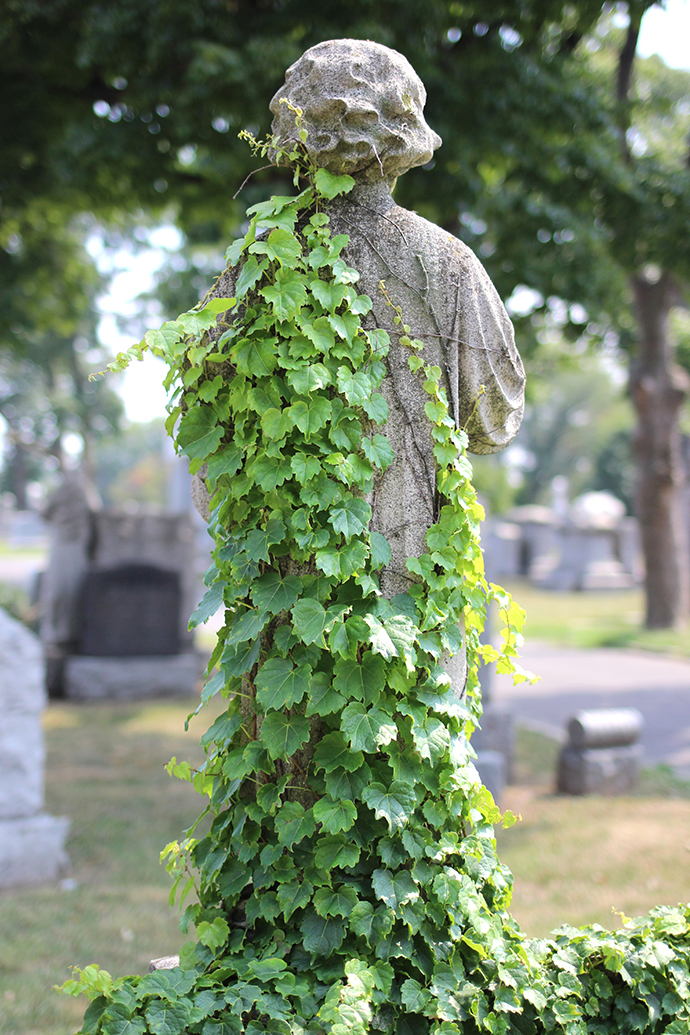
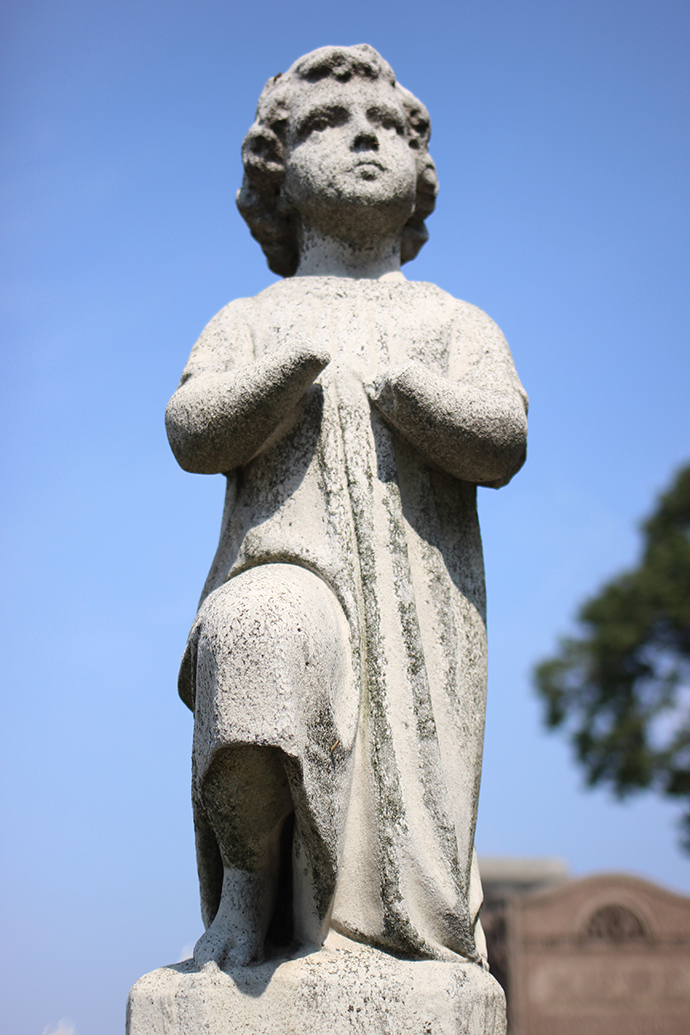


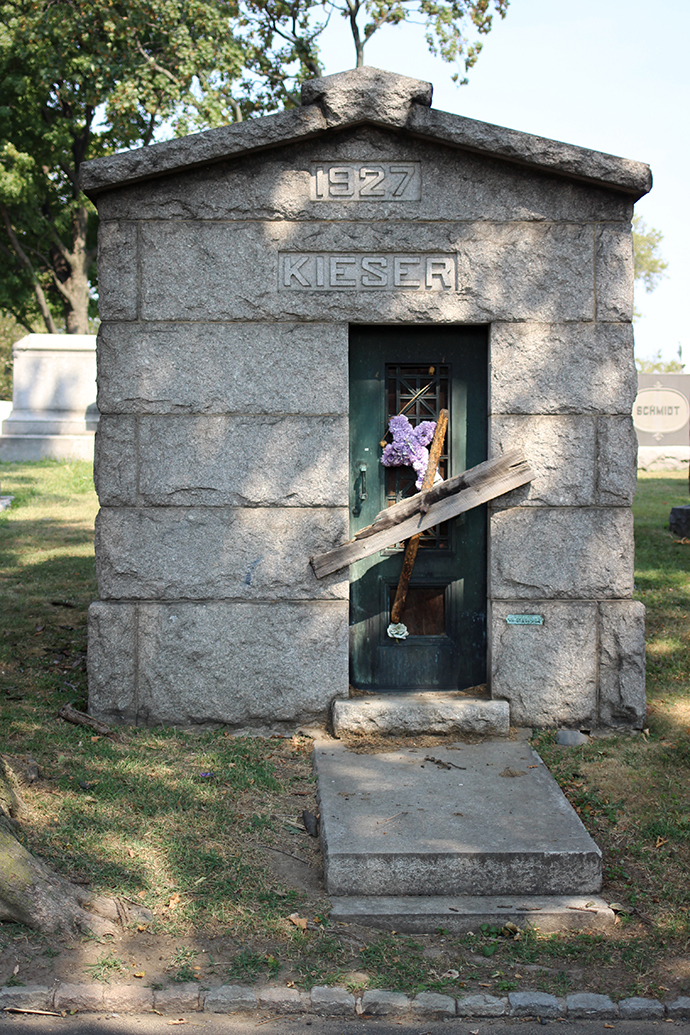


There were a few ivy-covered tombstones and statues, which will forever be my favorite. I love the crumbling and decay present in cemeteries, and I can usually spot a few things even in the most well-cared for of places. I'm still perplexed about the headless epidemic, but I also saw a few boarded-up mausoleums and even a grave that was basically wide open (yes, I peeked inside but couldn't see anything).


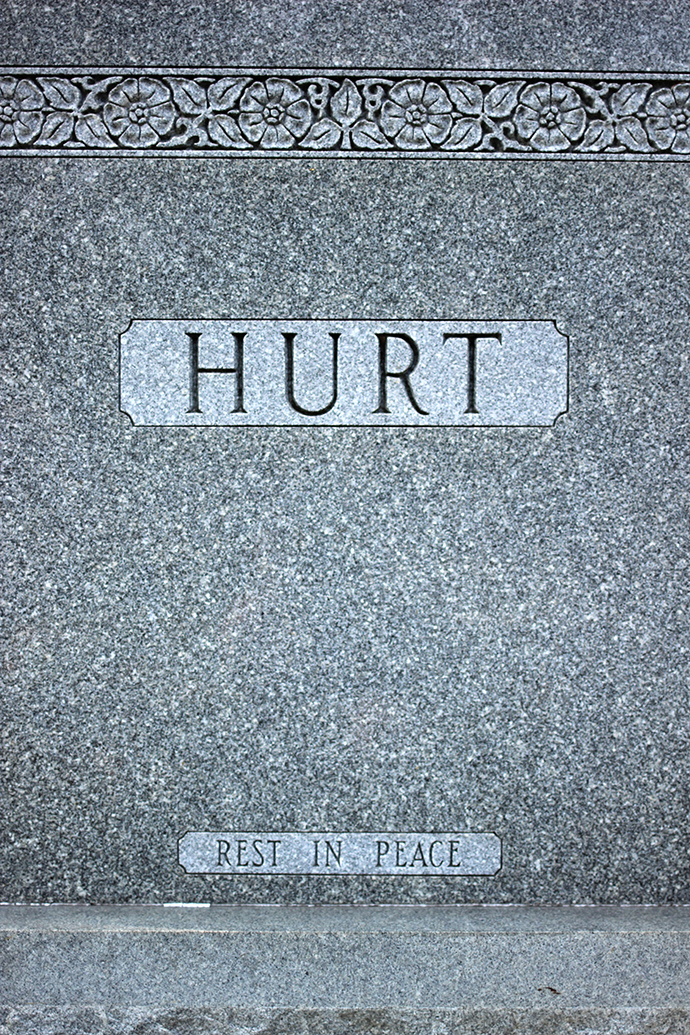
I loved the "Our Dear Debby, Daddy Dear and Darling Mama" family, and knowing nothing else about them can be pretty certain that they were wonderful people—at least whoever bought the headstone thought so. I also love that no matter which cemetery I explore, I always find something to pique my interest, whether it's a sweet epitaph, eye-catching name, interesting stone shape or beautiful typography.

Green-Wood Cemetery: Fall
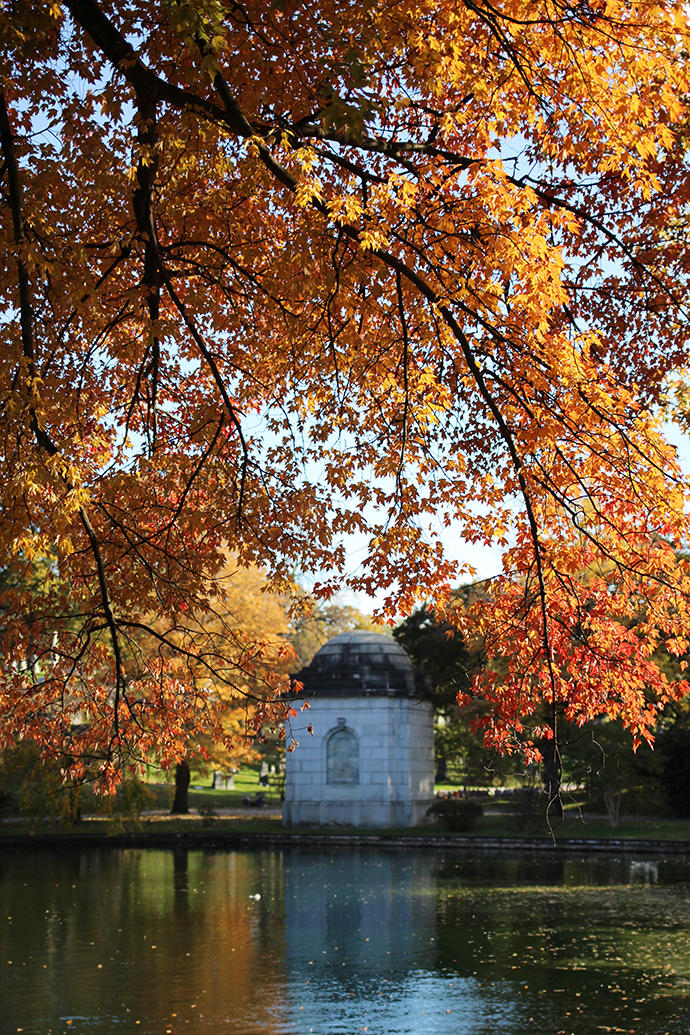
I've noticed since I moved to New York, that the fall foliage in the city is slower to turn than in other parts of the country. Even just a few miles upstate can make a huge difference in color, and while most the East Coast and Midwest is at peak or past peak, it feels as if the city leaves have just begun to change. I've recognized this in past years, and by now I've come to appreciate the delay.
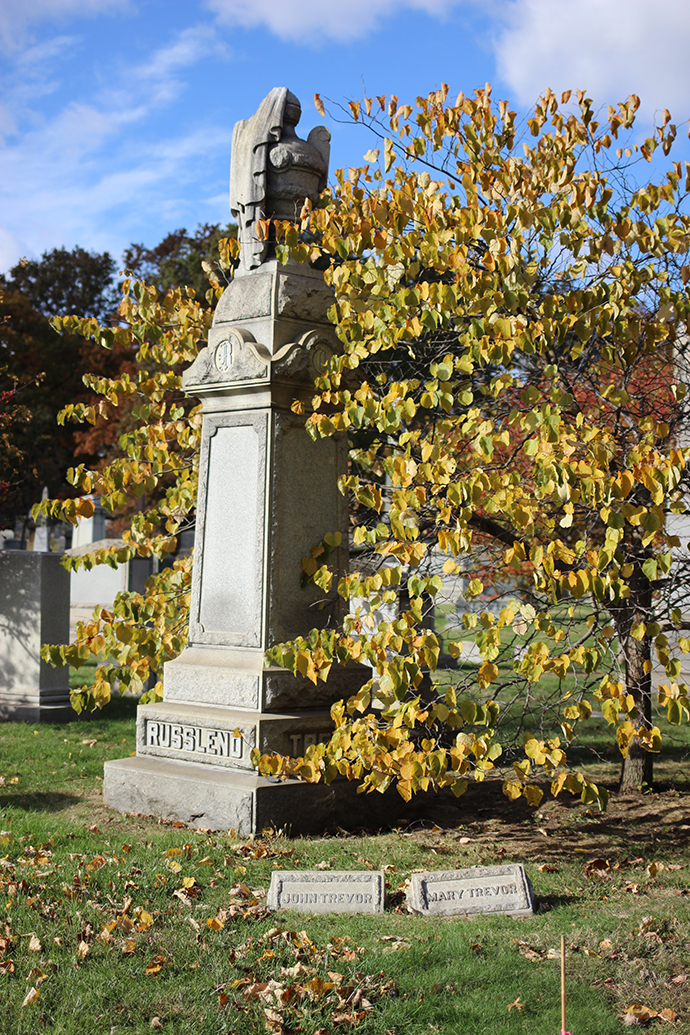
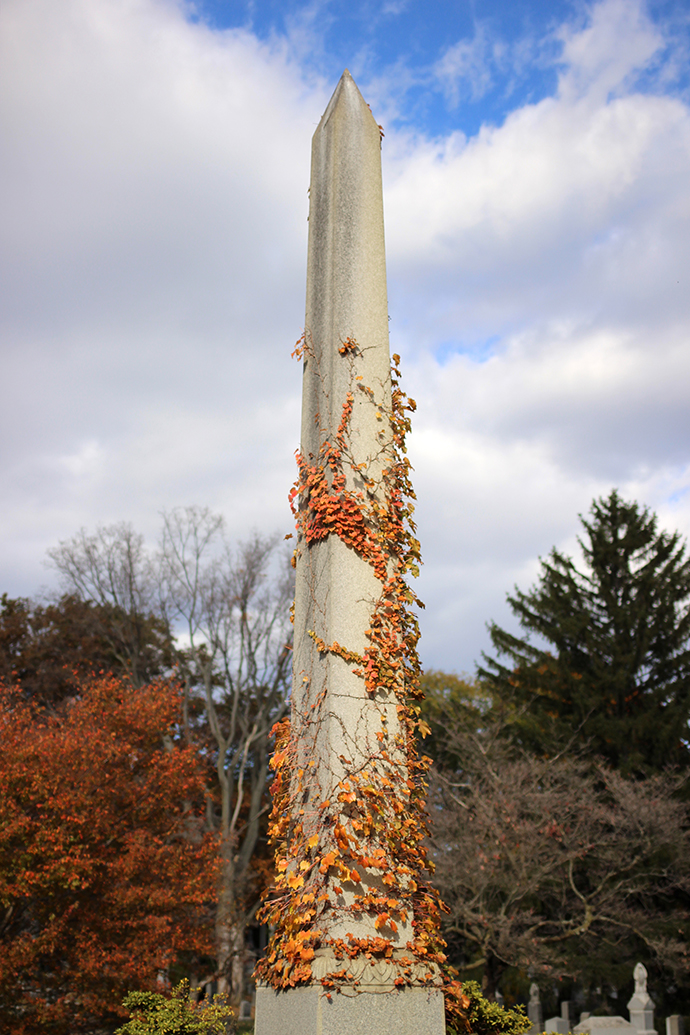
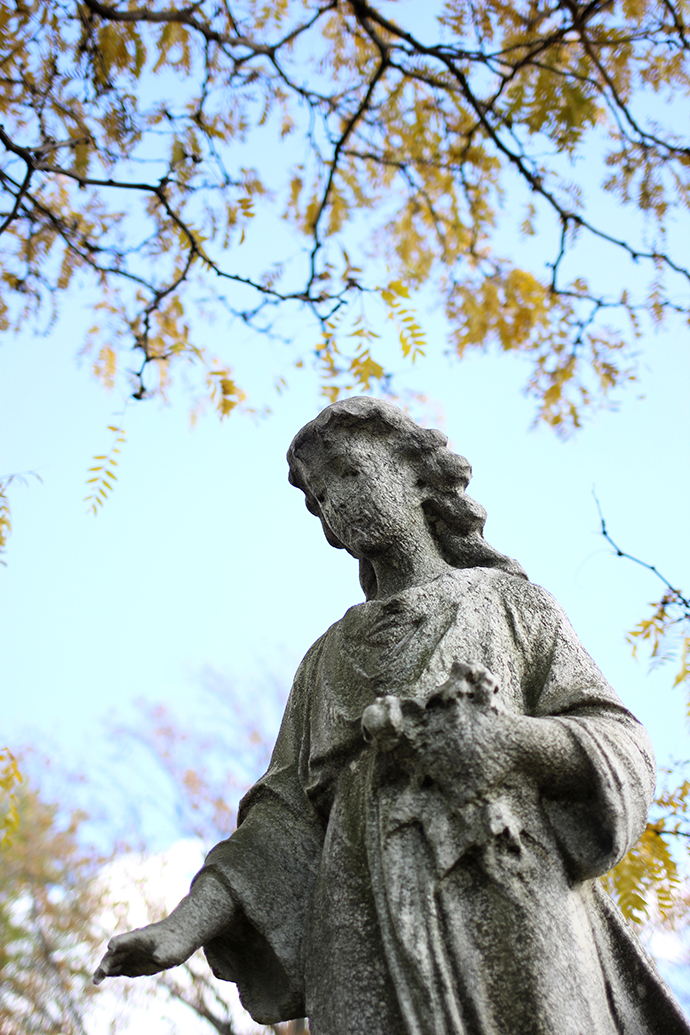
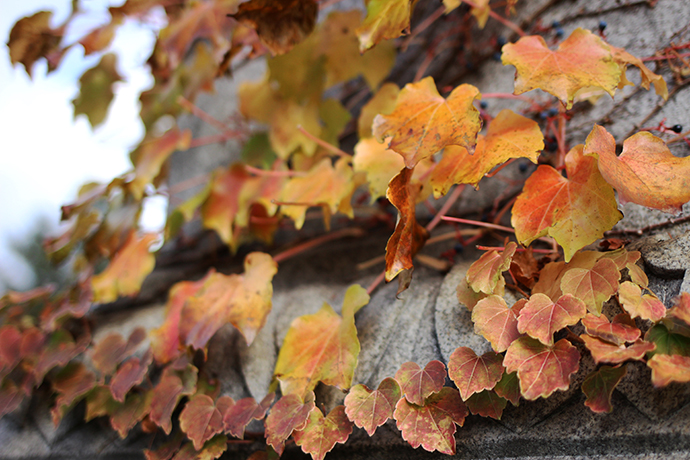
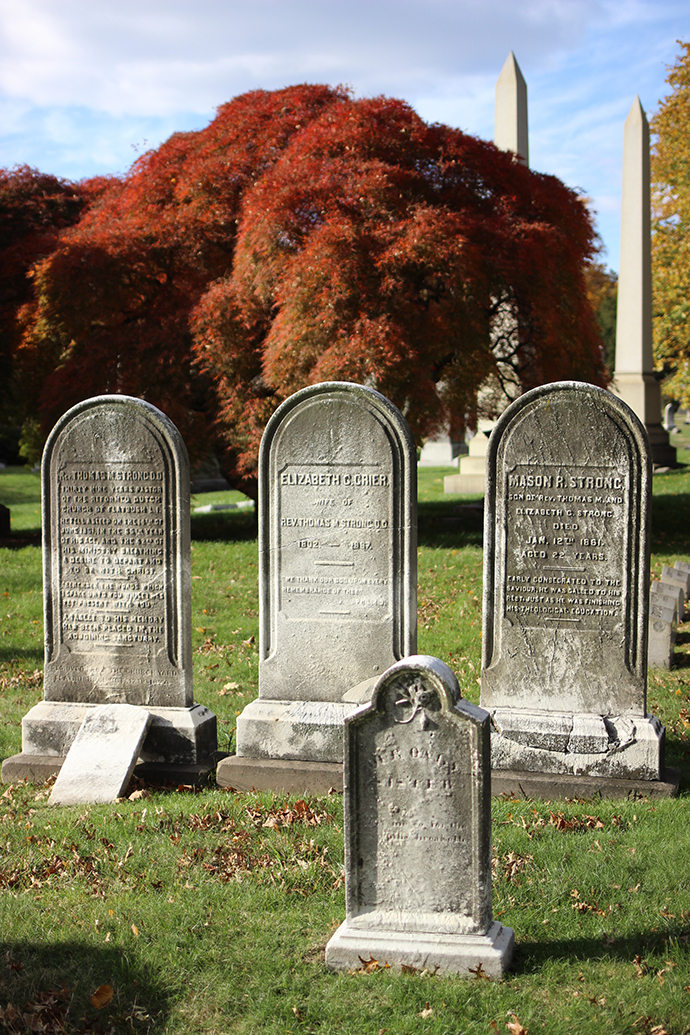
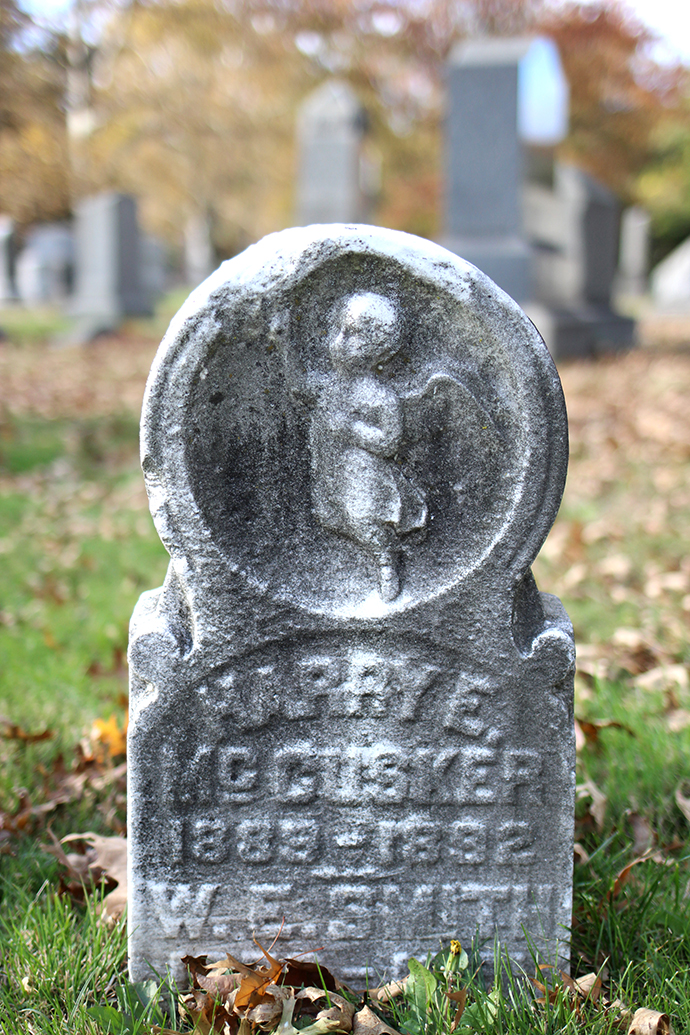
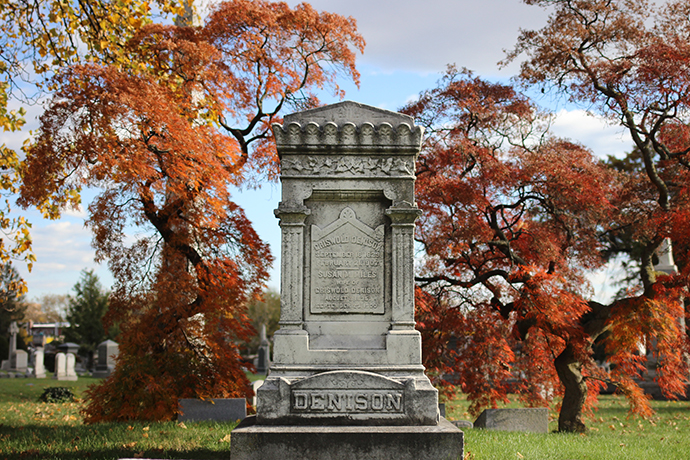
October is always my busiest month, but come November my calendar is always empty. I feel like I still have plenty of time to enjoy fall in the city, which is good since there is really no better time to explore—especially when it comes to cemetery strolls. Which is why, when my dude asked on Sunday if I'd like to walk through Green-Wood Cemetery, I said "of course."
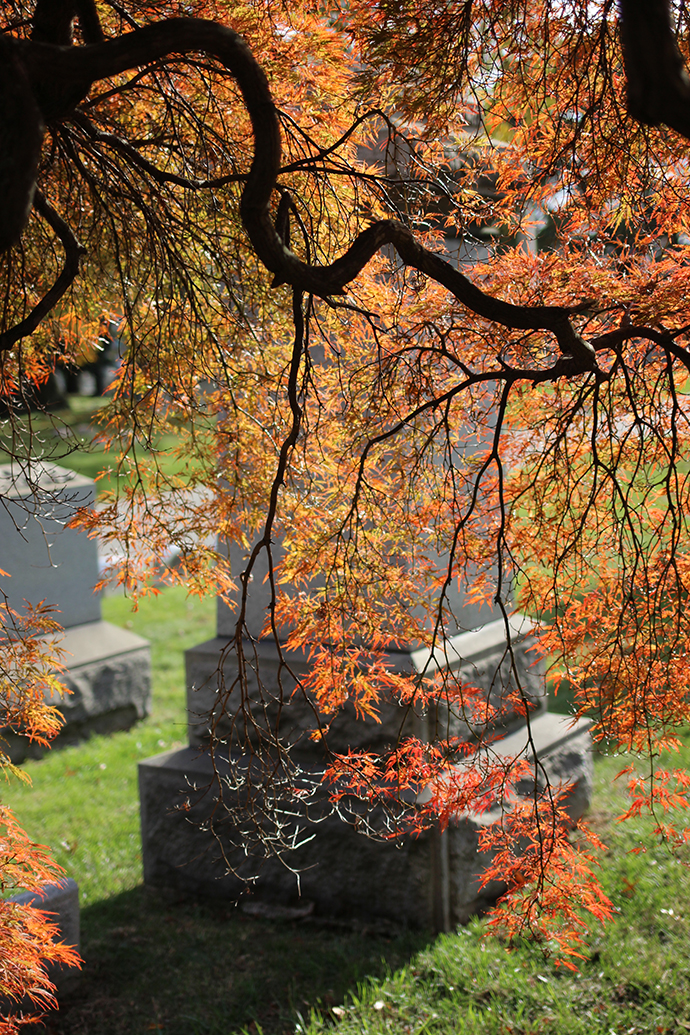
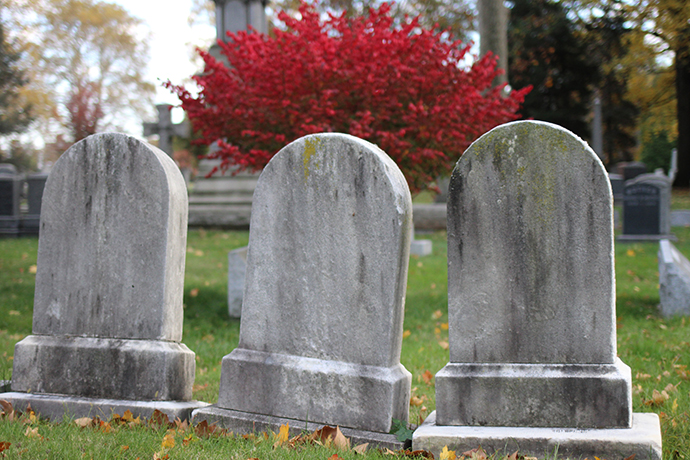
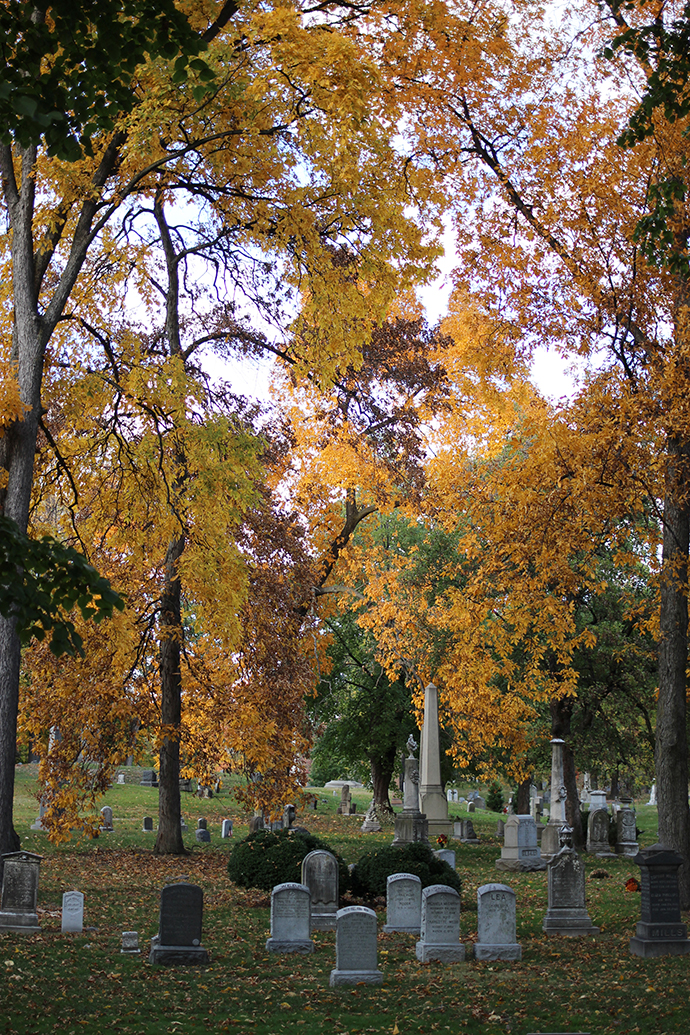
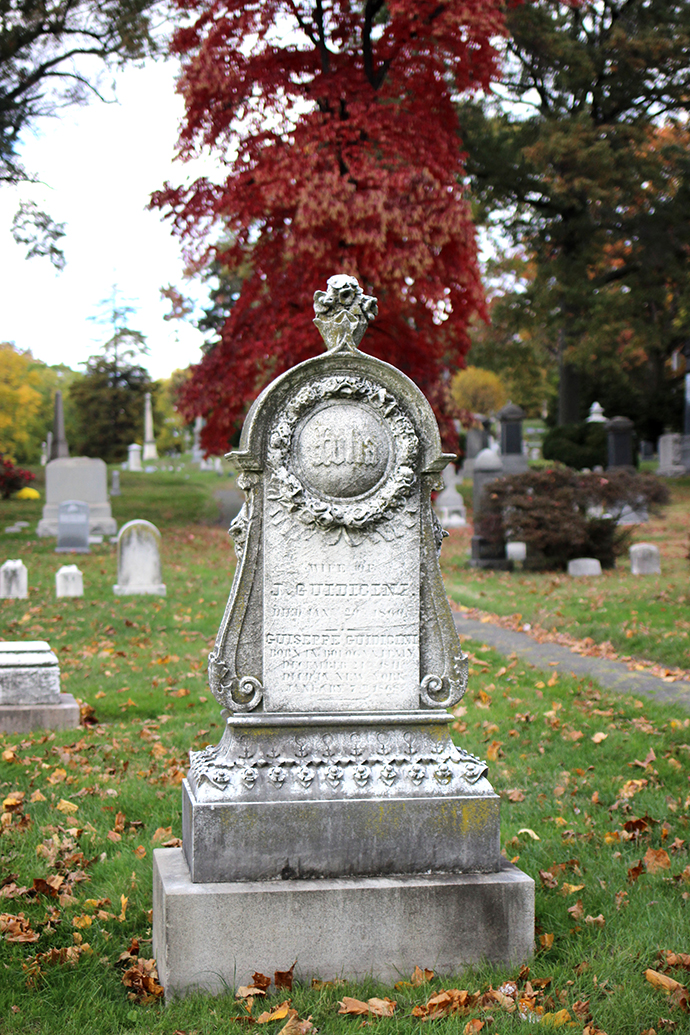
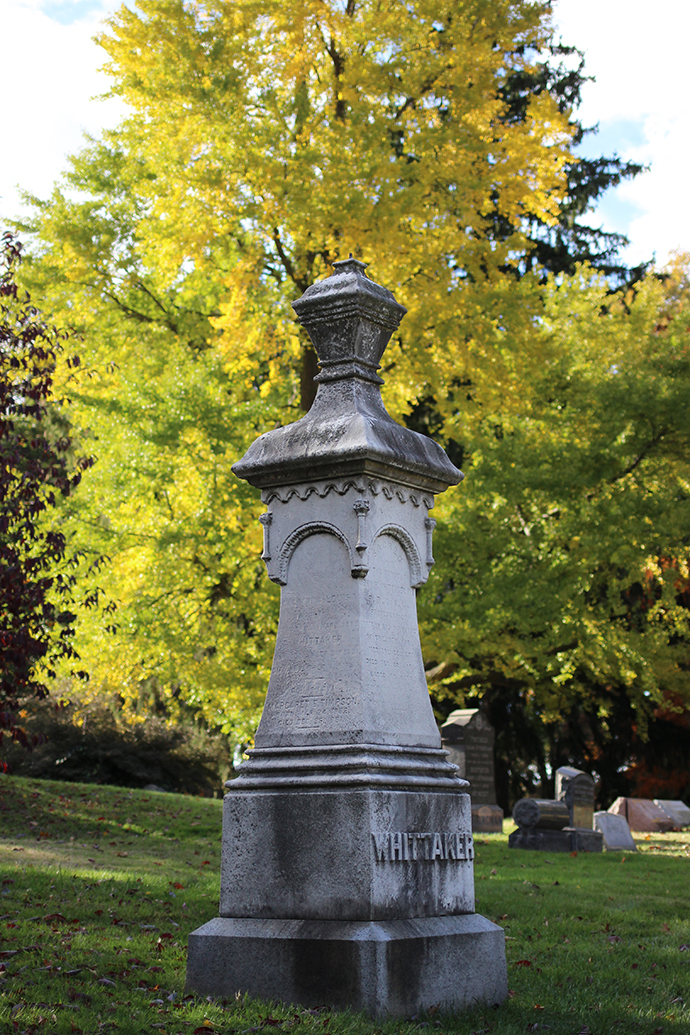
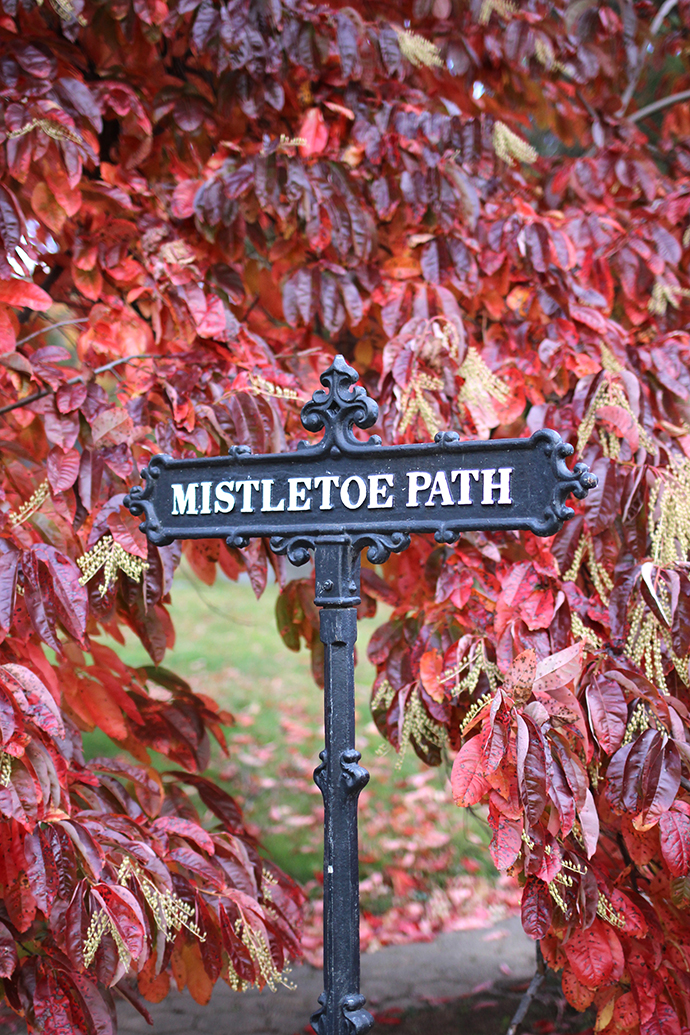
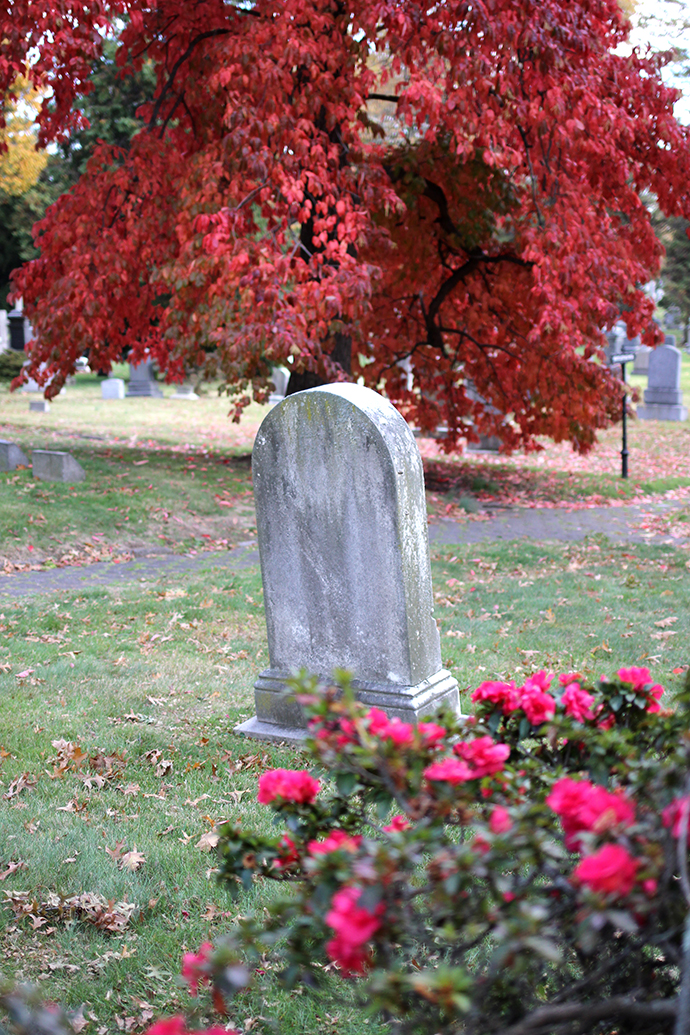
Some trees were at their peak already, but others were still mostly green (and one hardy rose bush was in full bloom!). The colorful backdrops make for some really excellent contrasts with the stark stones. I'll never tire of taking photos in cemeteries, and they're the perfect place to really practice your photography—they're usually empty and filled with beautiful and stationary (or so you hope) subjects.
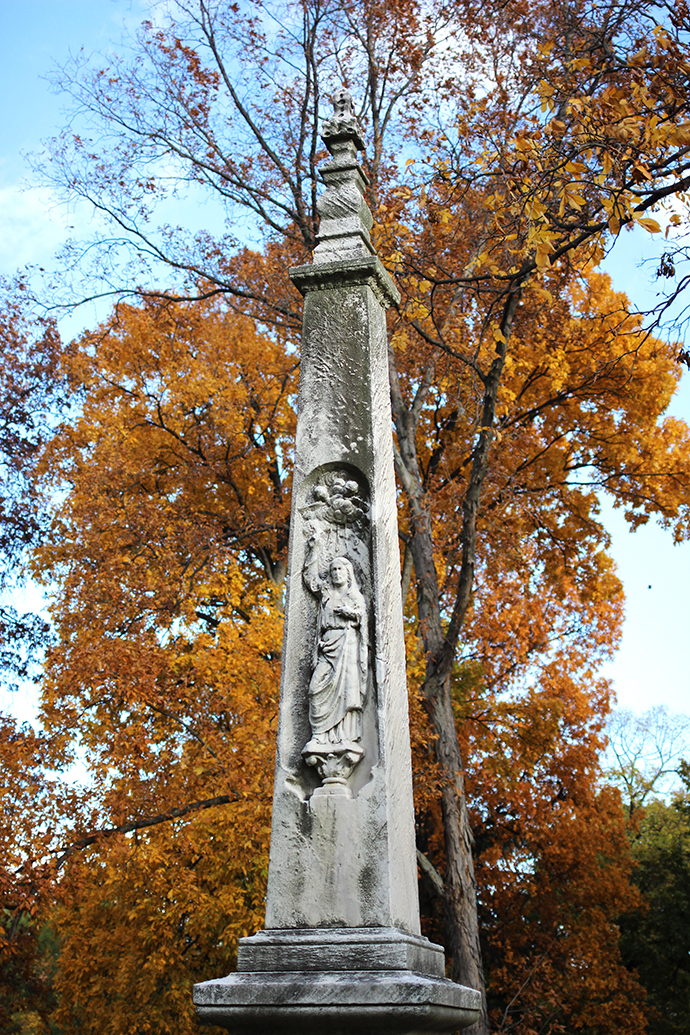
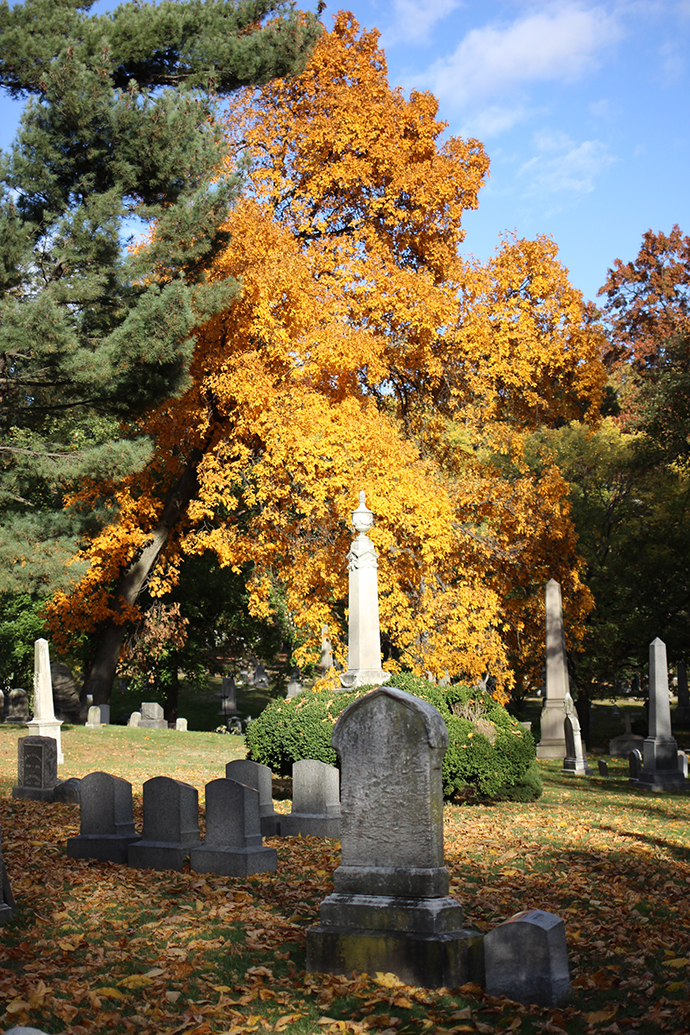
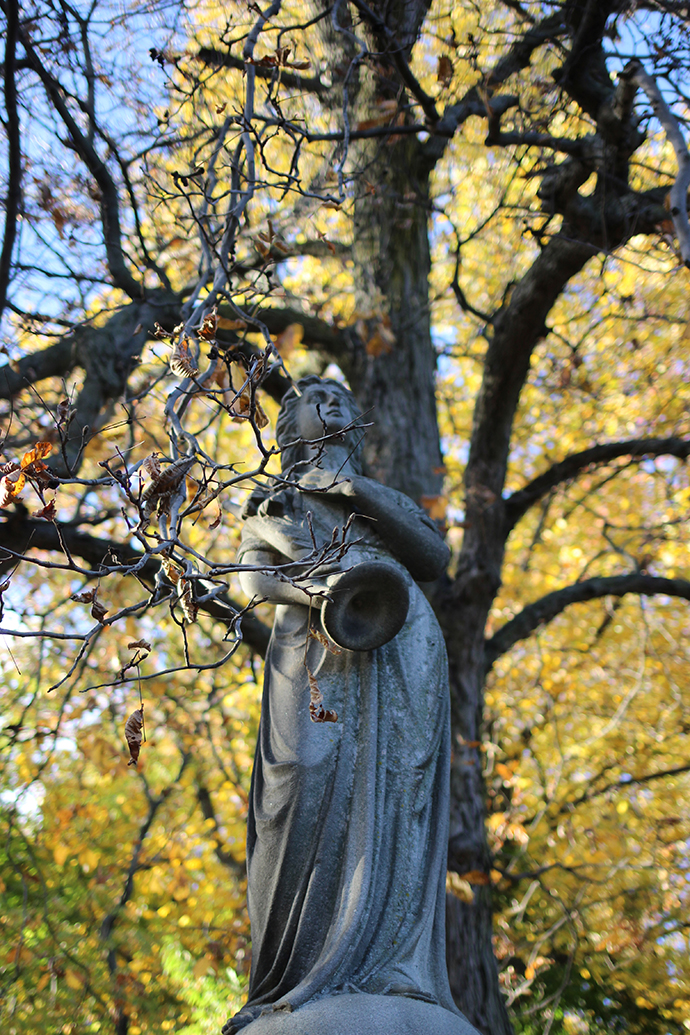
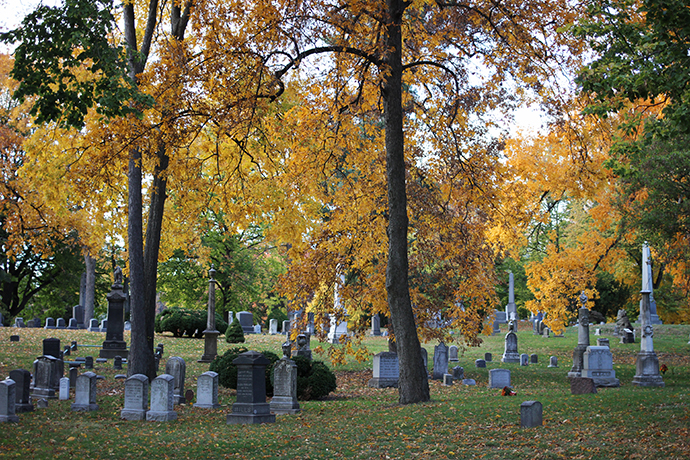
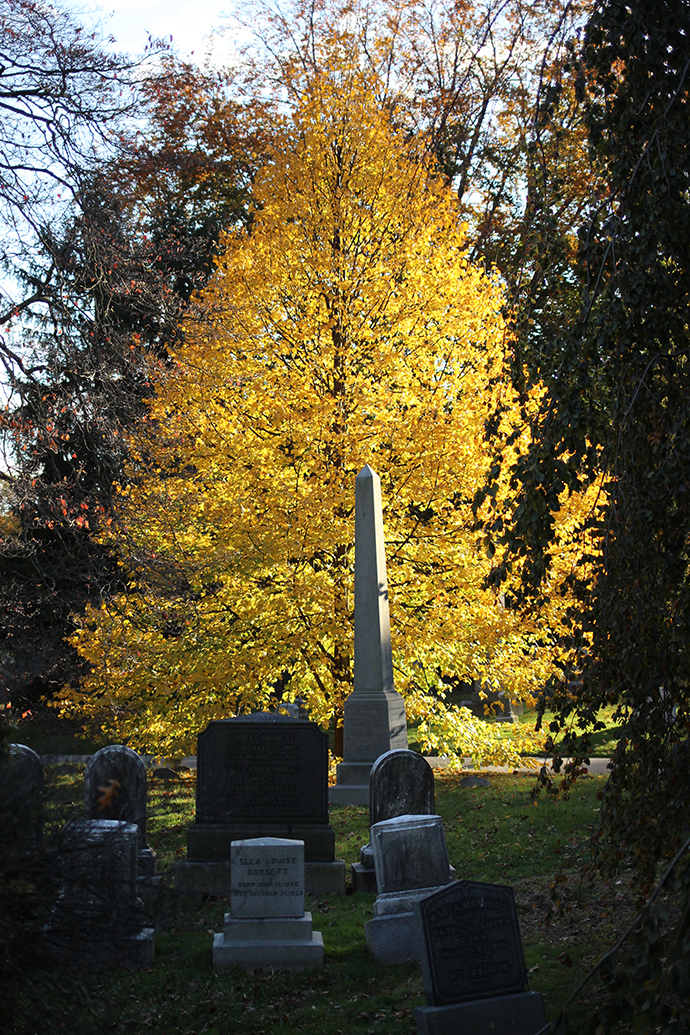
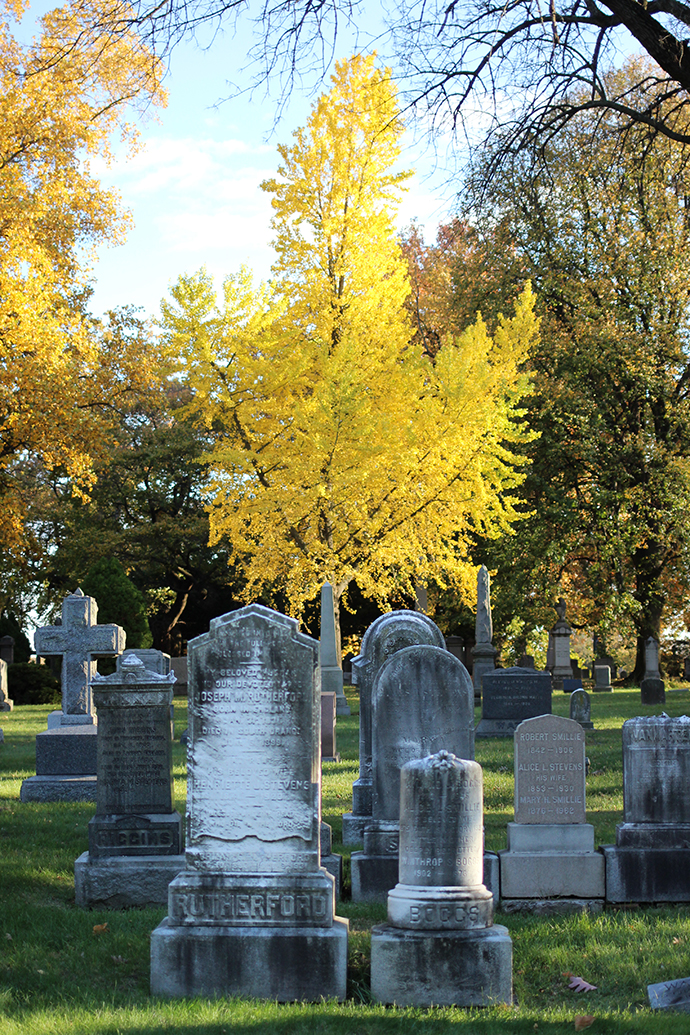
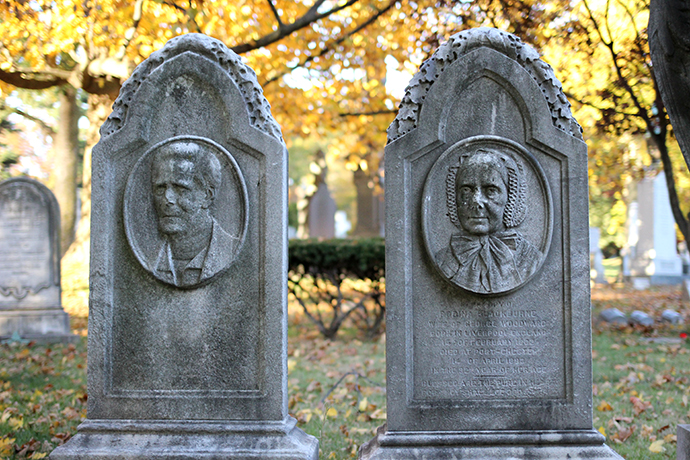
The weather recently has been fall at its finest, and it's already impossible for me to imagine that I was sweating though everything I own just a few weeks ago. I never thought I would have what I consider to be my "neighborhood" cemetery, but since moving to Brooklyn I've really come to cherish my time spent at Green-Wood. To be able to walk just a few blocks to a world-class cemetery is such a luxury, and I can't imagine every tiring of its beauty.

Old Burial Hill: Skulls

It wasn't long after we had started exploring Old Burial Hill cemetery in Marblehead, Massachusetts, that I declared it to be my favorite cemetery. Of course this is a bit like choosing a favorite child—for those of you who are into the kid thing—but Old Burial Hill is that good. I initially put it on our itinerary due to its Hocus Pocus cred, and while it was fun to see for that reason, it definitely doesn't need a movie connection to be considered a destination.


Old Burial Hill was established in 1638—54 years before the Salem Witch Trials and 138 years before the US officially became a country—which makes it the one of the oldest (maybe the oldest?) cemeteries I've ever visited. Located about five miles southwest of Salem, Old Burial Hill contains an estimated 600 Revolutionary War soldiers and one victim of the Salem Witch Trials—although I'm not sure if the cemetery actually contains the remains of Wilmont Redd, or just a memorial marker.
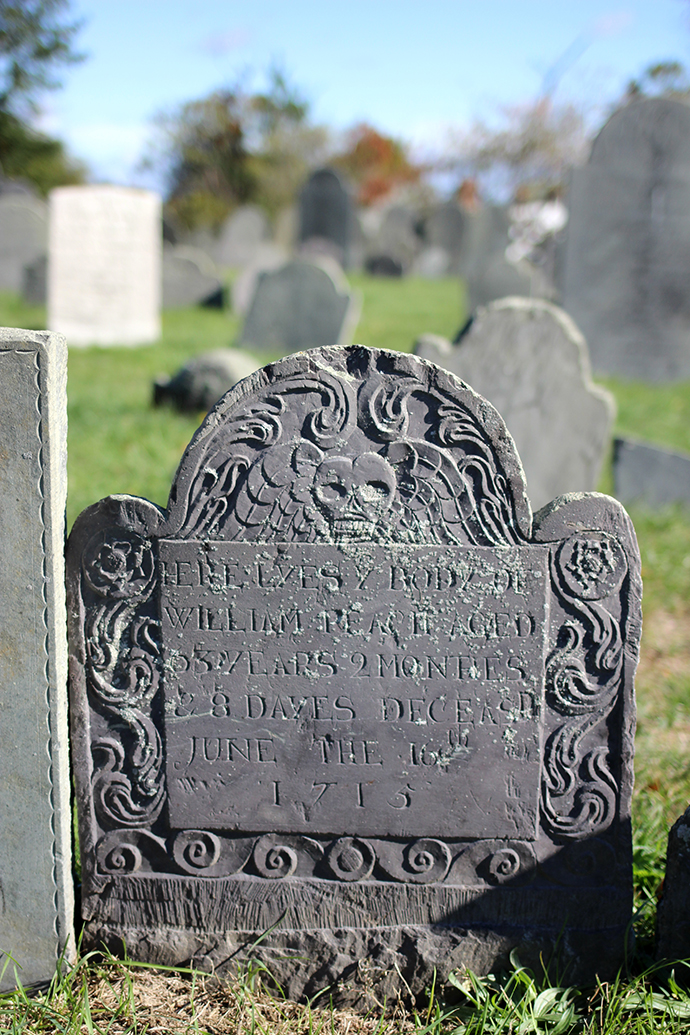
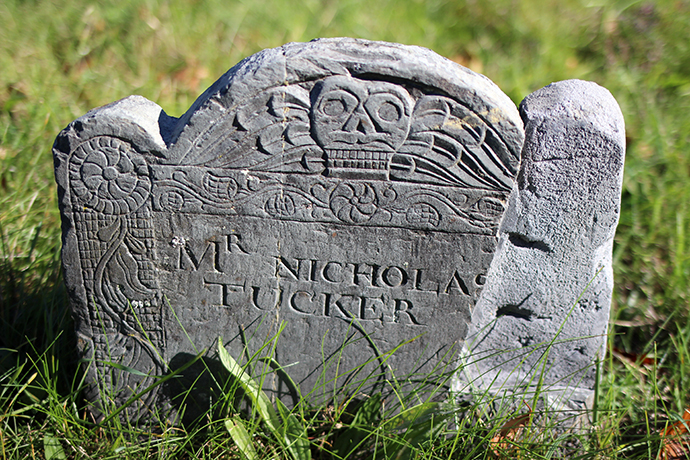
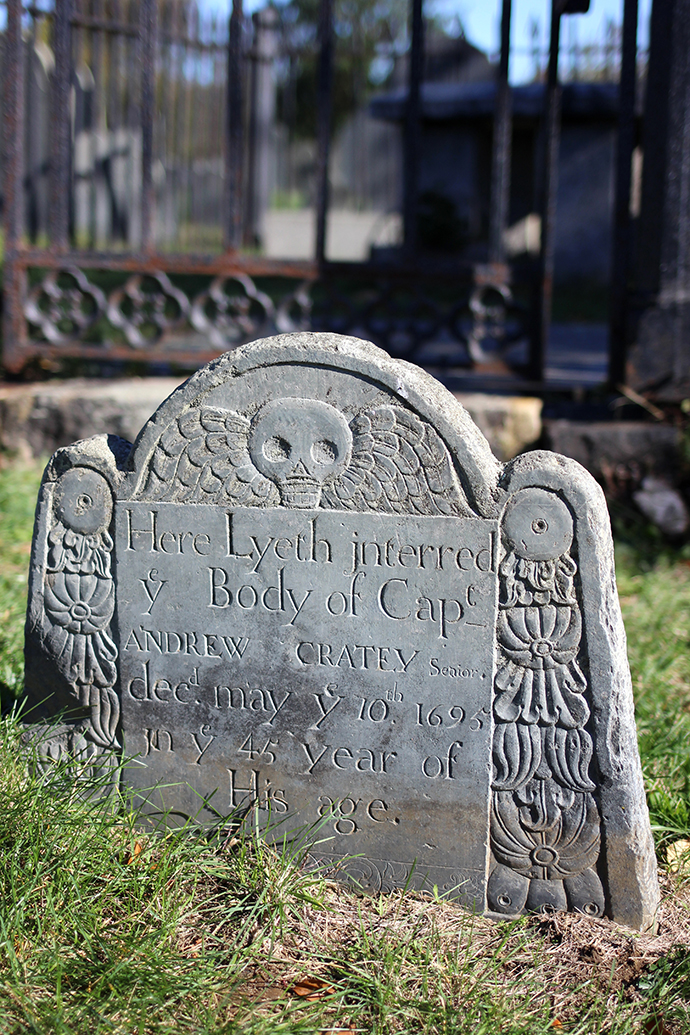


The first thing I noticed (with glee) was the high concentration of skull-and-crossbones imagery, which is my very favorite thing to see on a tombstone. This memento mori motif was popular with the Puritans, and the newer the cemetery the less likely you are to see this type of stone. Old Burial Hill was positively lousy with them and I was completely overwhelmed by all of the variations.. Usually I'll find one or two in my cemetery adventures, but every one I saw was better than the last and wejust kept finding them. Like cemeteries, it's impossible to pick a favorite stone, but Mrs. Susana Jayne's stone is pretty much perfect, containing not only a skeleton, but an hourglass, bones, winged cherubs and bats.

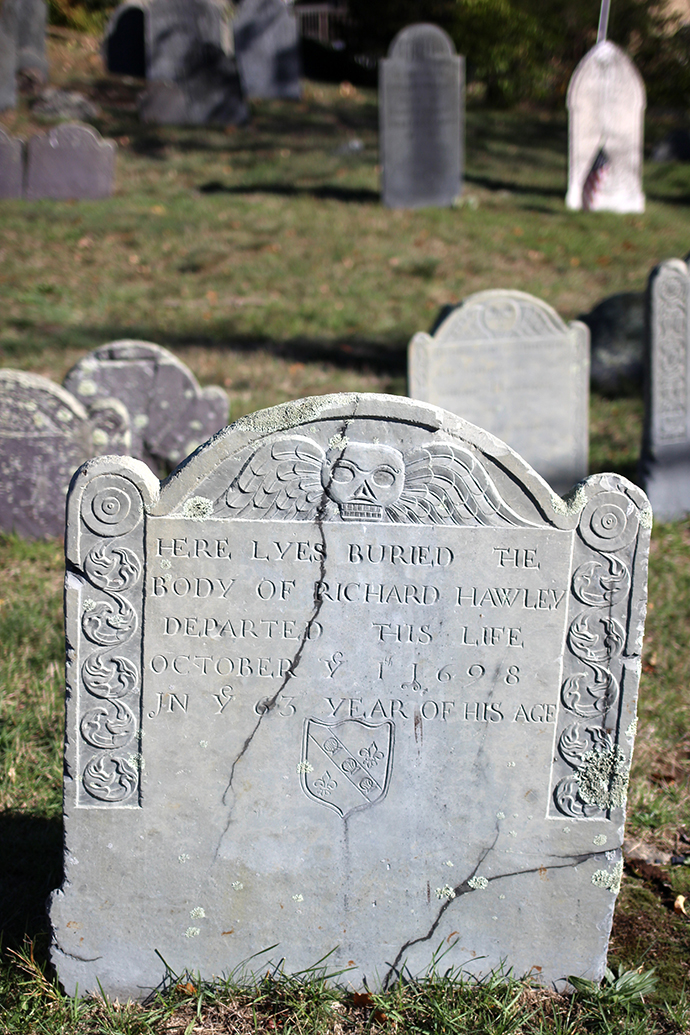


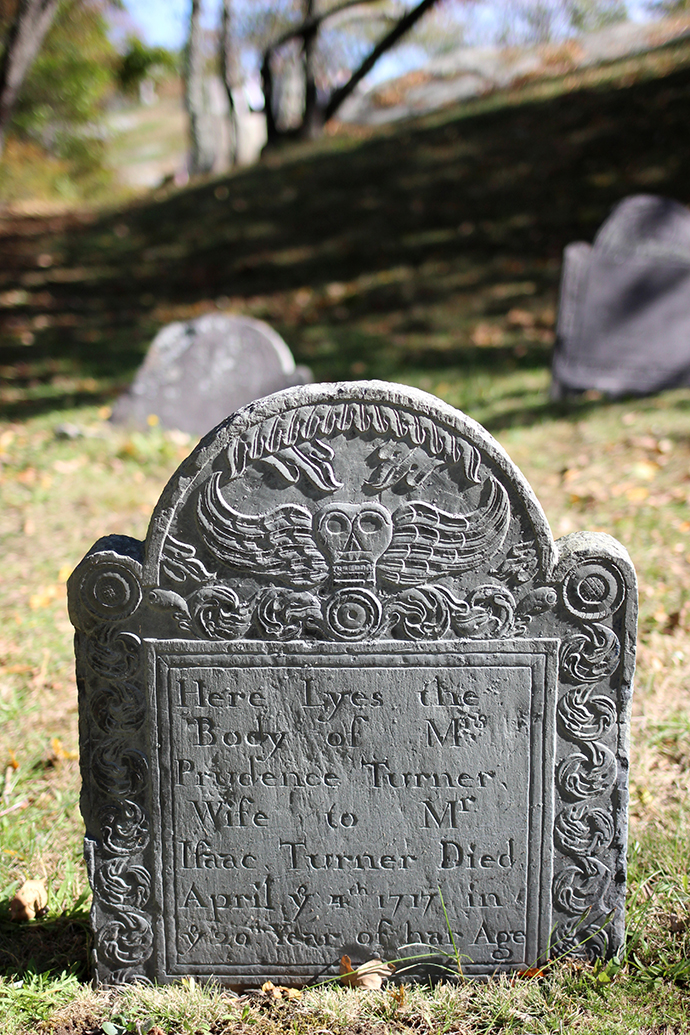

The "hill" part of Old Burial Hill offers beautiful views of Marblehead Harbor and Salem Sound and I found myself wishing that I could visit the cemetery whenever I wanted a quiet moment. Despite being so near Salem on a beautifully sunny Sunday, the cemetery was nearly empty. I knew that the Salem cemeteries were going to be packed with funnel-cake eating and selfie-taking tourists (I was right, unfortunately), so having an hour to really explore such a beautiful and historic cemetery on our own felt like the ultimate luxury.
👻 🎃 Happy Halloween!!

Oak Grove Cemetery + Lizzie Borden Grave
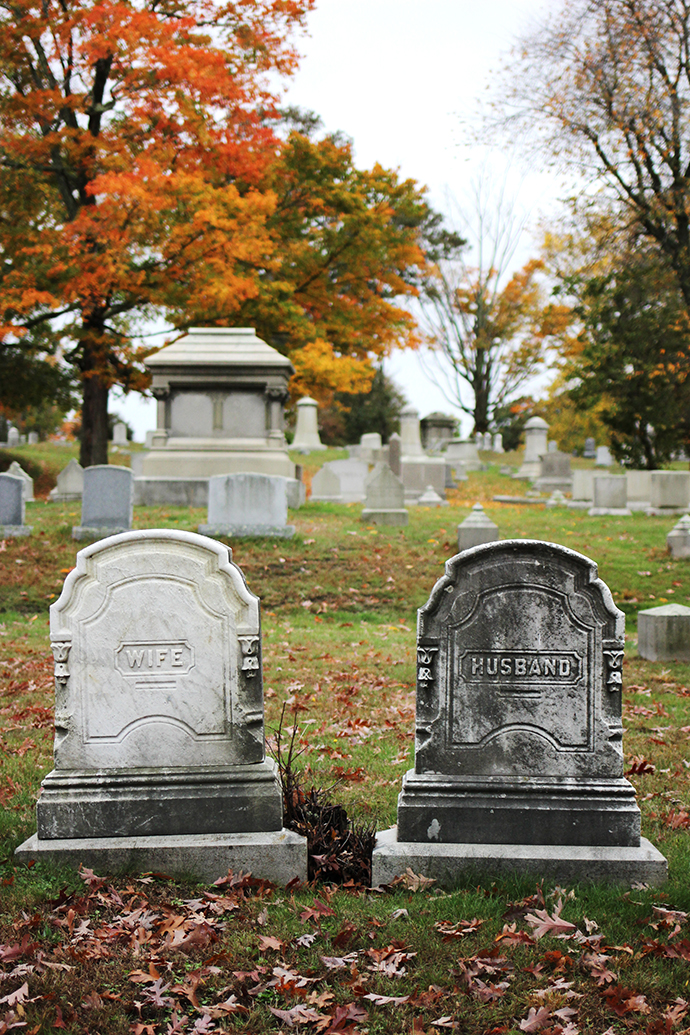
On our recent roadtrip to Salem, our first stop was the Lizzie Borden house in Fall River, Massachusetts. After touring the house we headed over to Oak Grove Cemetery to pay our respects to the entire Borden family, including, Lizbeth Andrews aka Lizzie. After being acquitted of murdering her step-mother and father, Lizzie remained in Fall River for the rest of her life and was buried at Oak Grove in June of 1927—her sister Emma died just nine days later and was buried beside her.
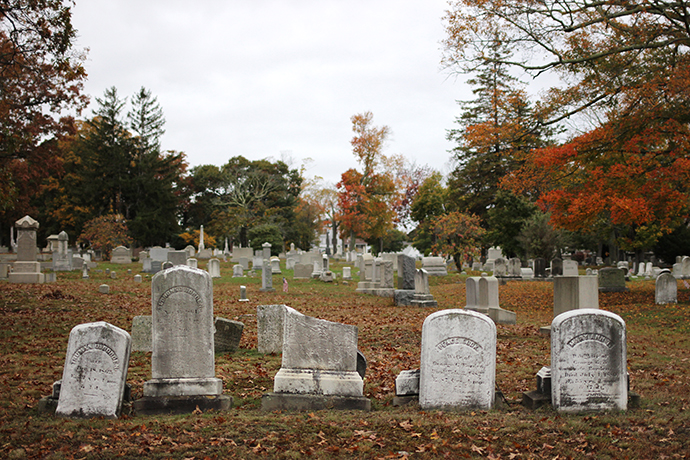
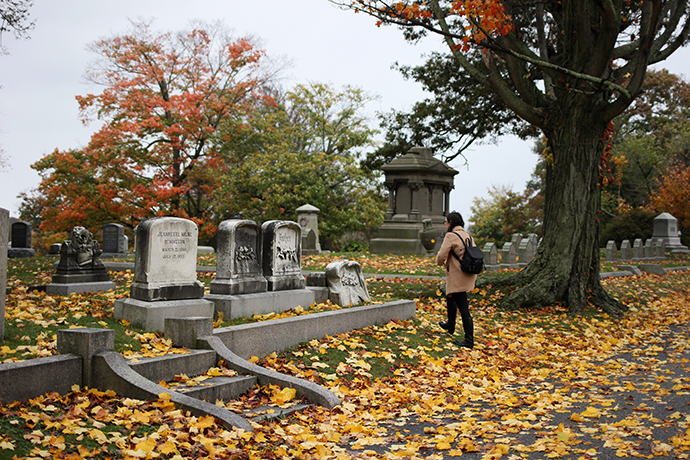
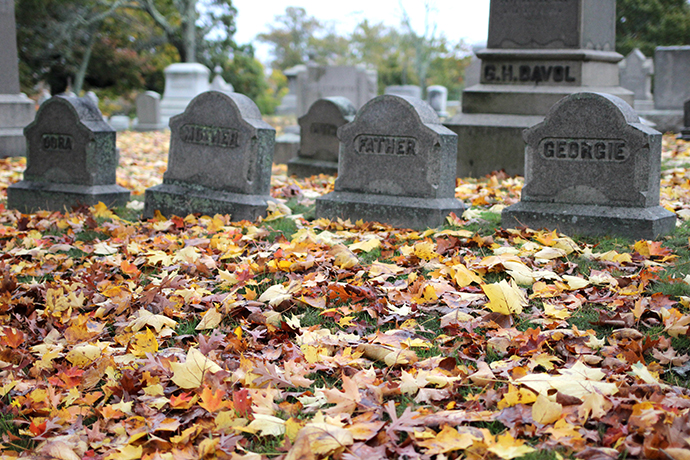
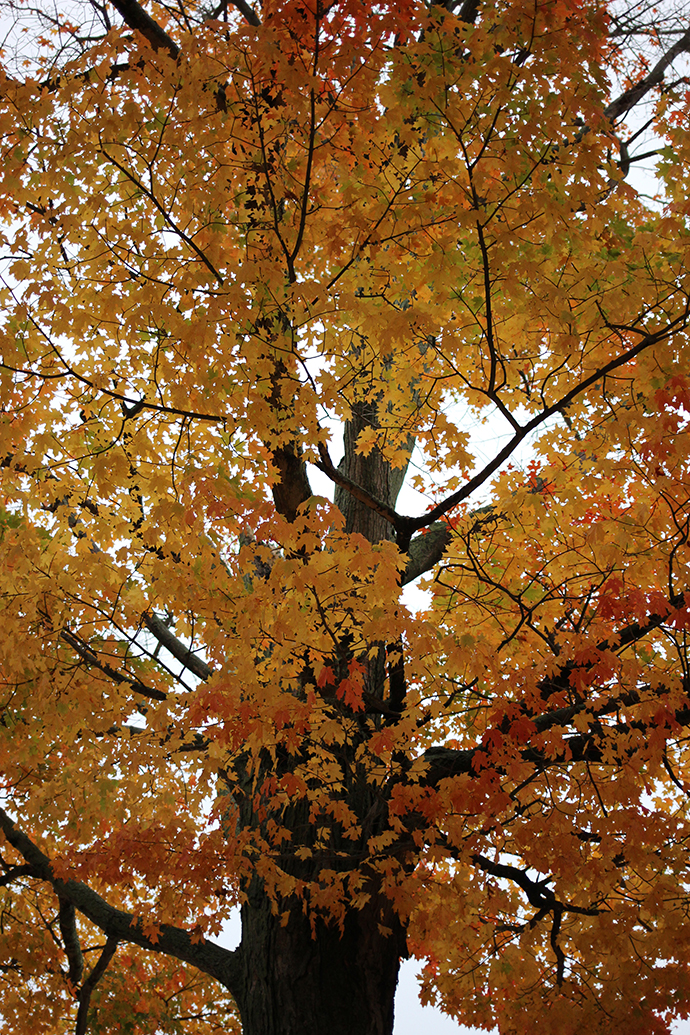
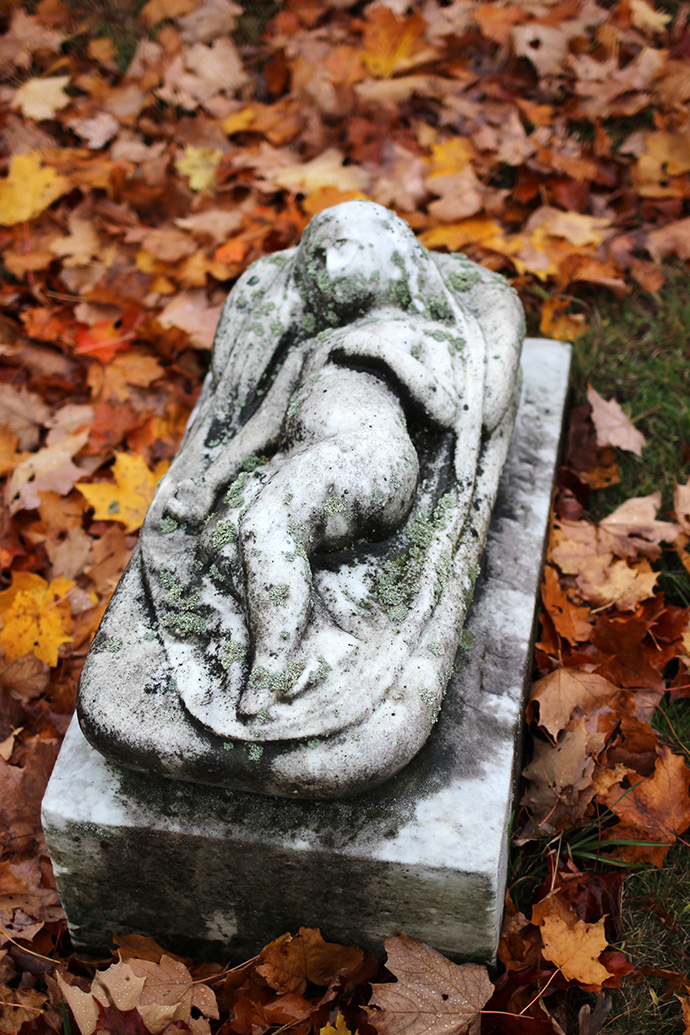
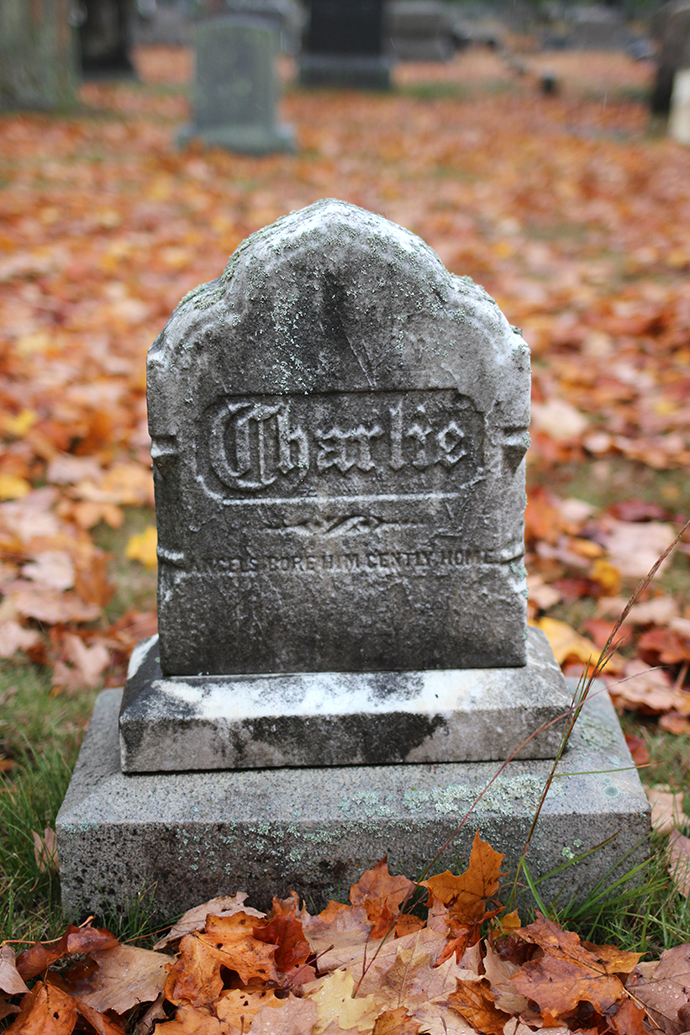
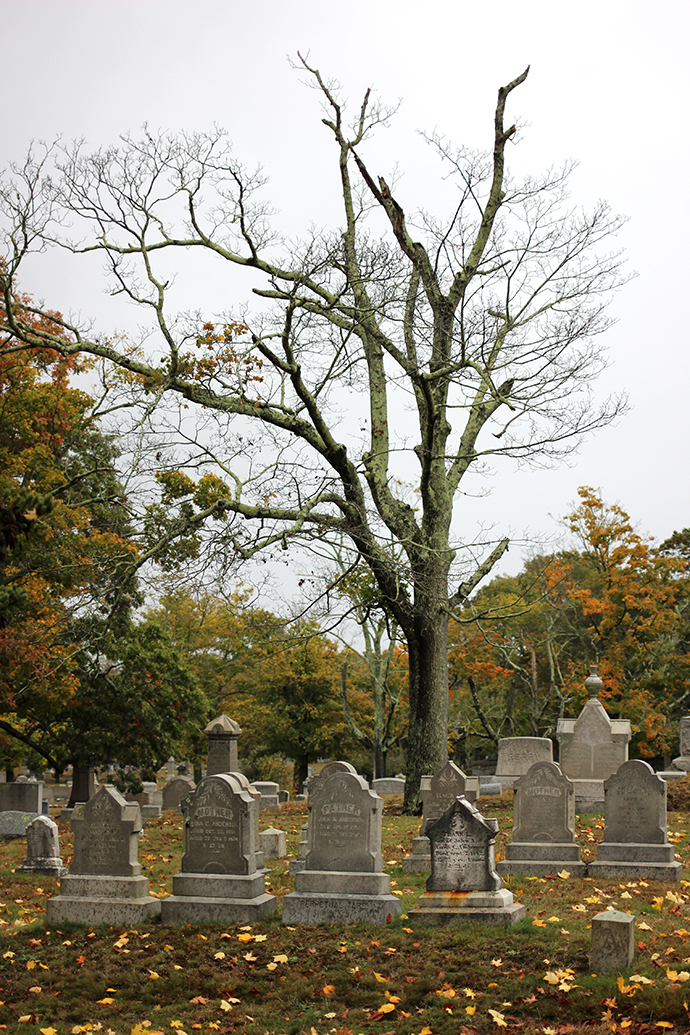
Oak Grove cemetery was established in 1855, and is a beautiful cemetery with many wonderful (and wonderfully-preserved) tombstones. The weather was full-on fall on Saturday—chilly, windy and rainy, although the rain was nice enough to hold off long enough for us to explore a little. The foliage in Massachusetts is definitely ahead of ours here in New York, and it was the perfect setting for a late October cemetery stroll.
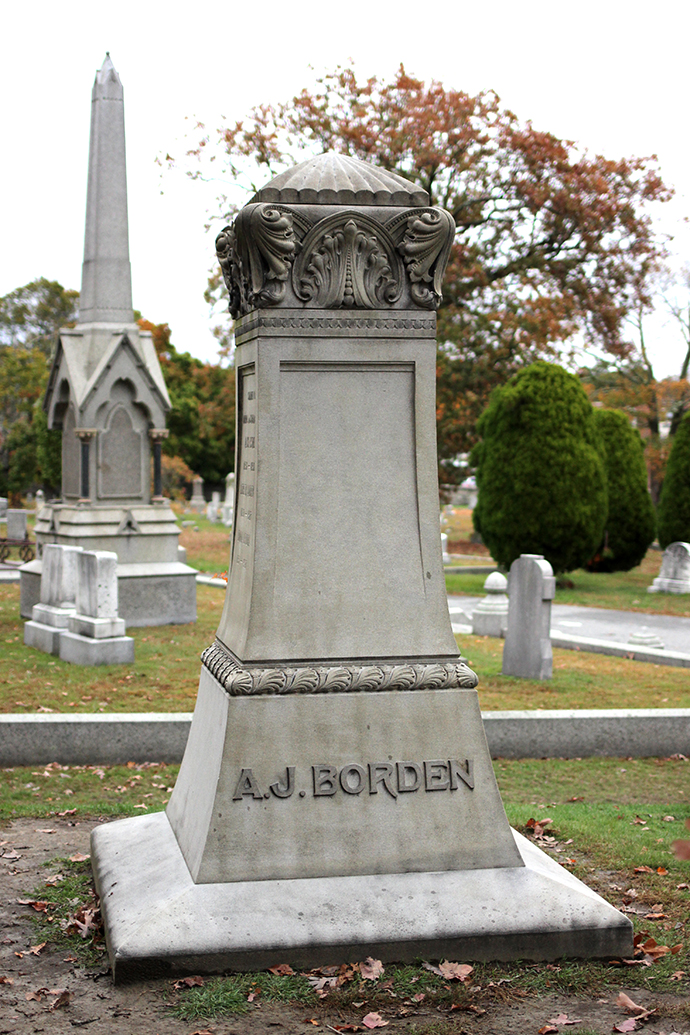
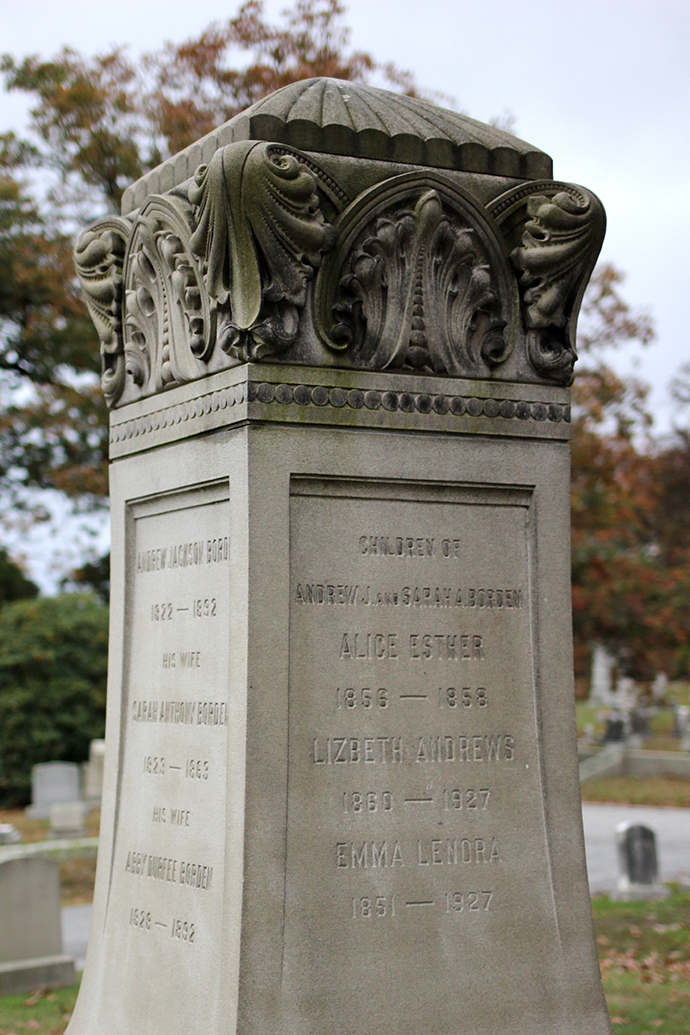
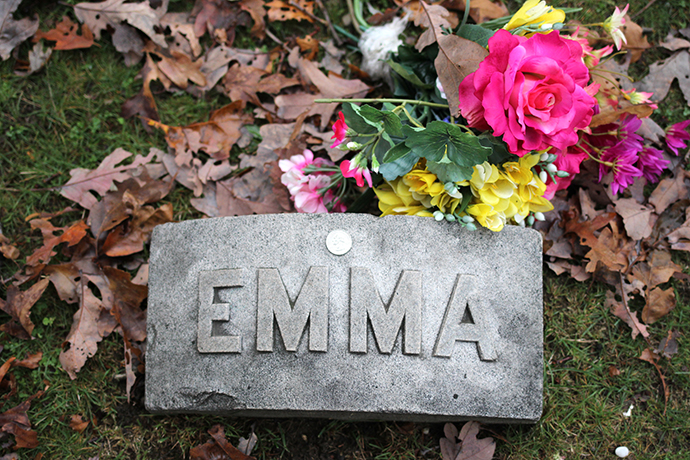
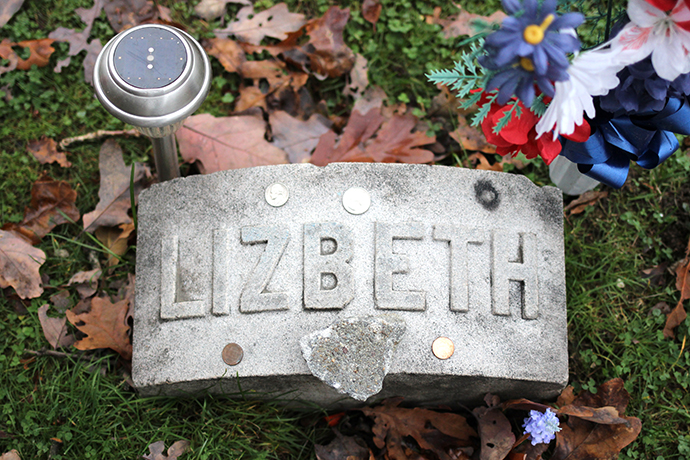
The Borden plot has a main monument surrounded by smaller stones for each person in the family. As we were walking into the cemetery, a couple was walking out. The guy saw us with our cameras and without hesitation gave us directions to the Lizzie's grave (she changed her name to Lizbeth later in life hoping to distance herself from her notorious past). It was helpful, but it's also sort of a shame that most people only visit Oak Grove for its most famous resident—of course that's why we were there, but we spent most of our time in other parts of the cemetery.
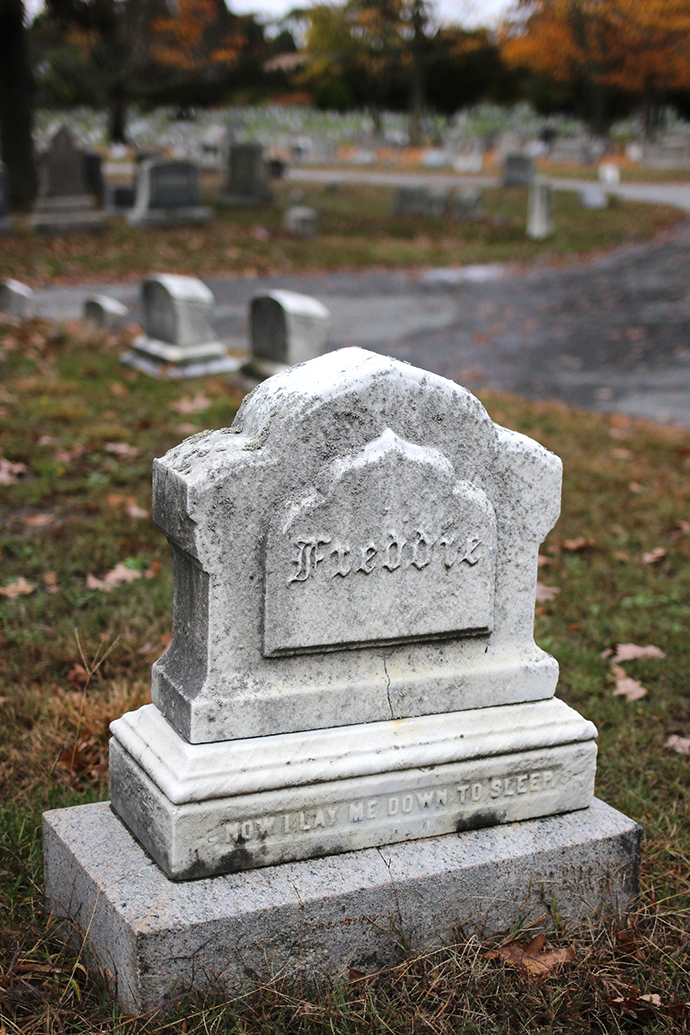
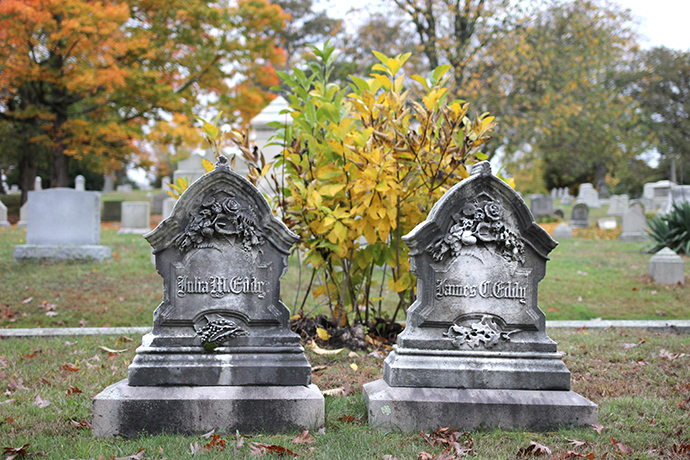
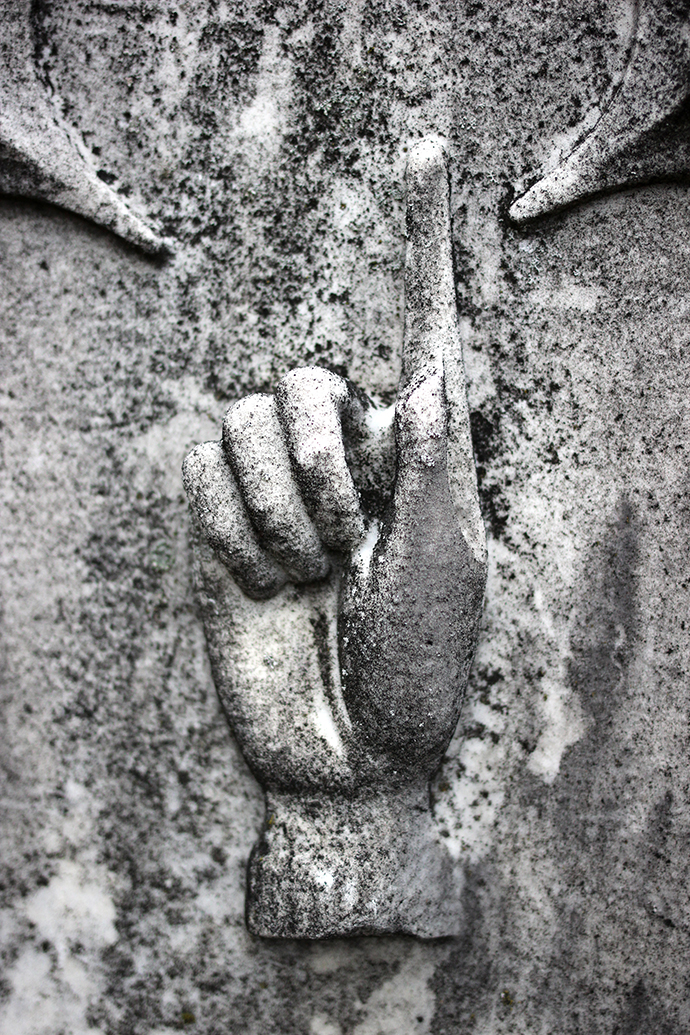
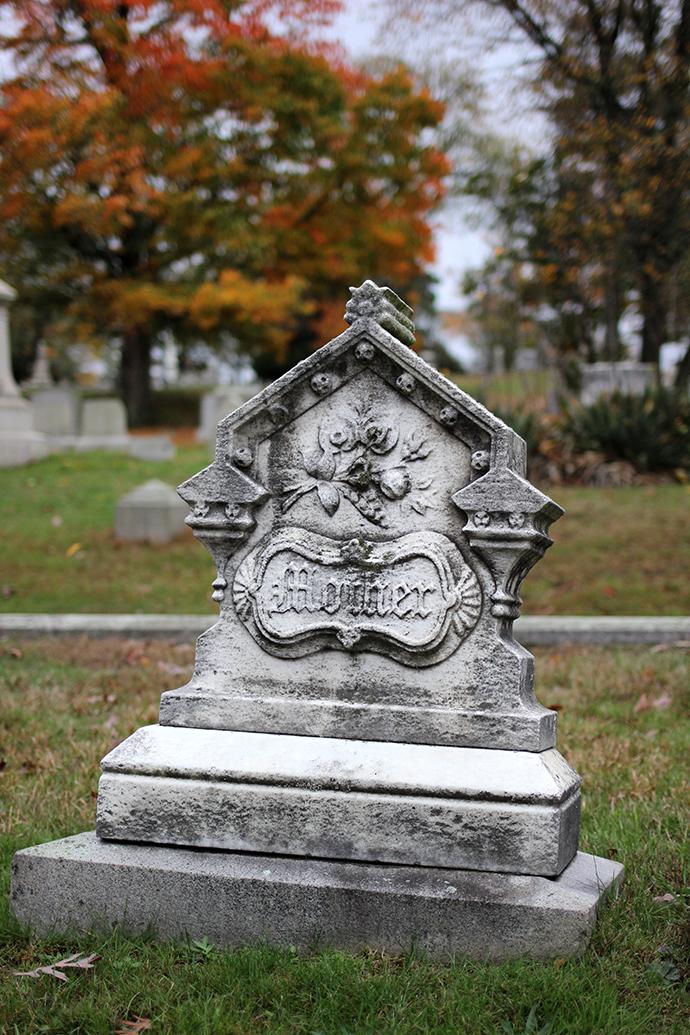
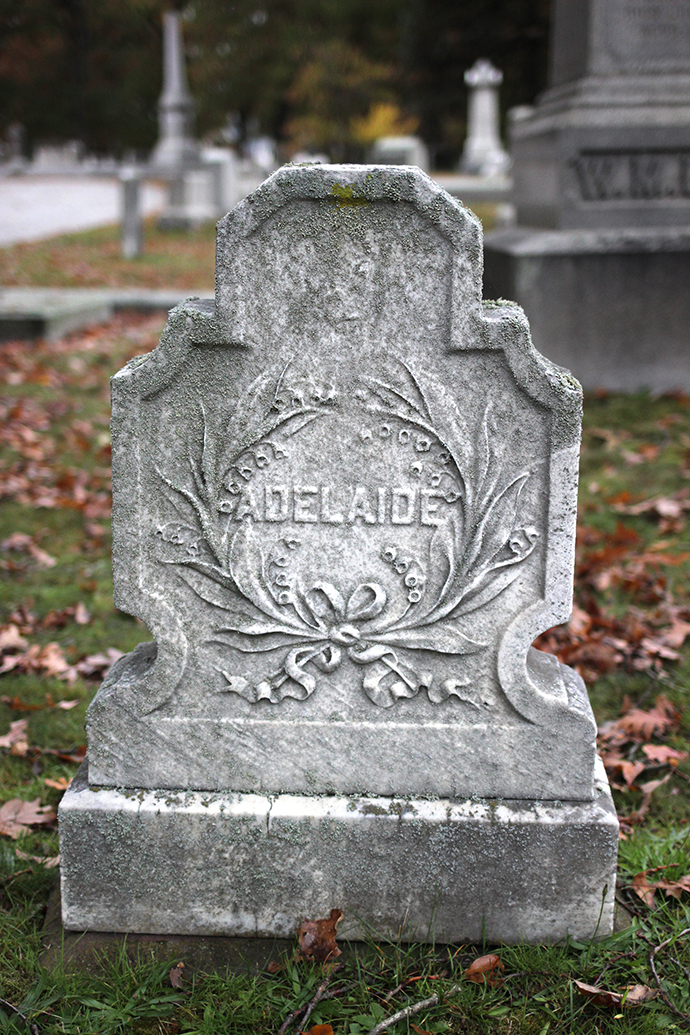
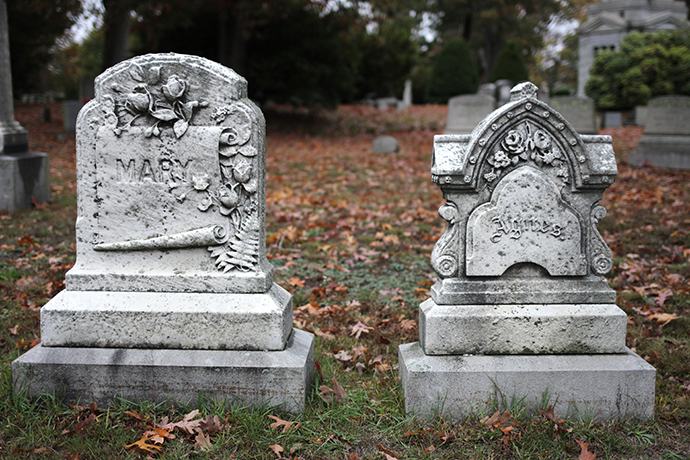
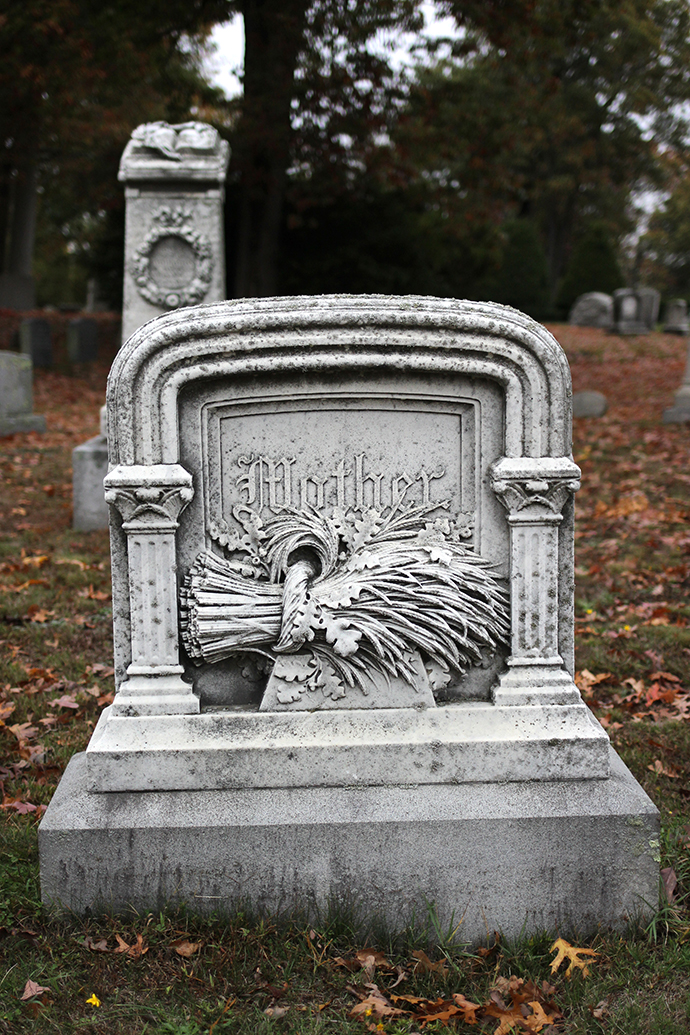
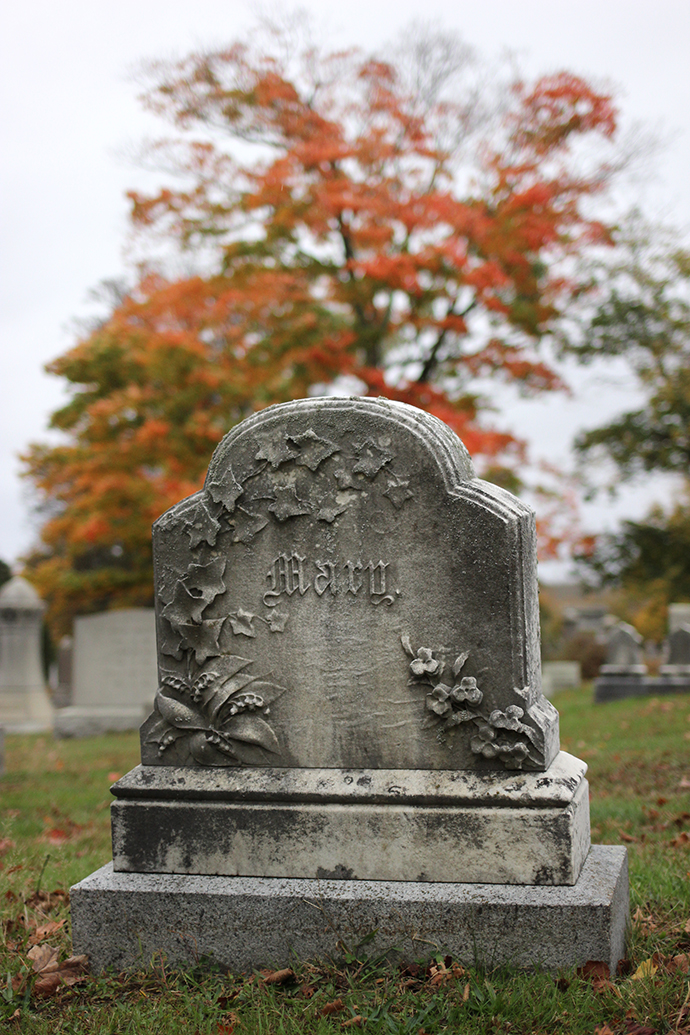
So many of the headstones that we found were so beautifully preserved, with intricate gothic lettering and symbols. Bundles of wheat, leaves, flowers, fruit, hands and other cemetery symbolism was everywhere we looked, thrust into sharp relief by the contrast of the weathering stone. There are so many different kinds of headstones in the world, and they're all fascinating to me, but this type of Victorian decoration is one of my very favorites.
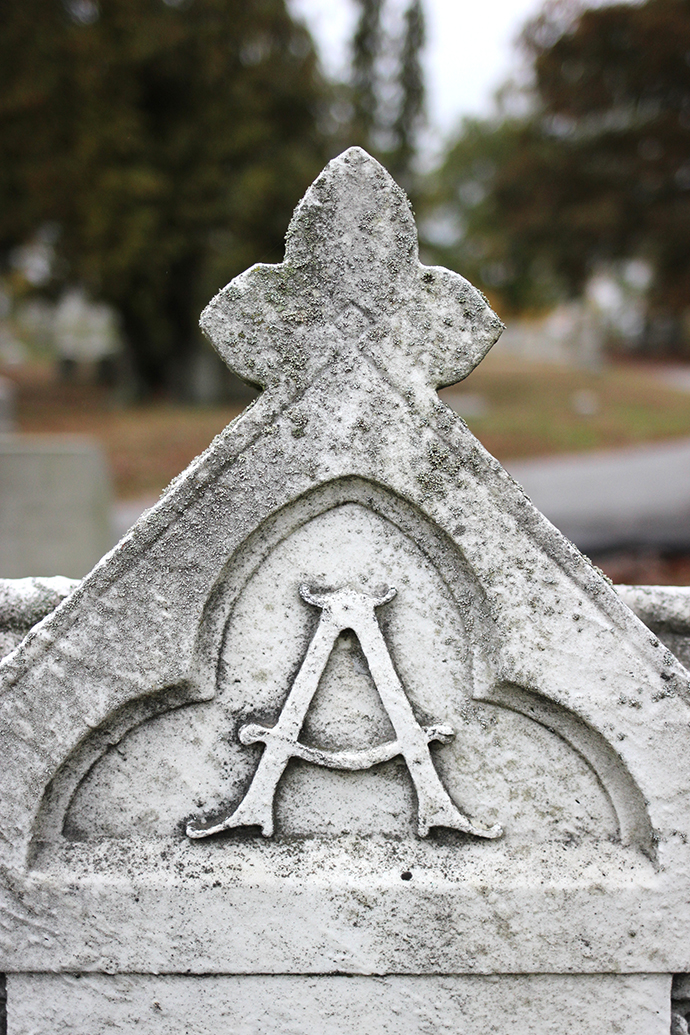
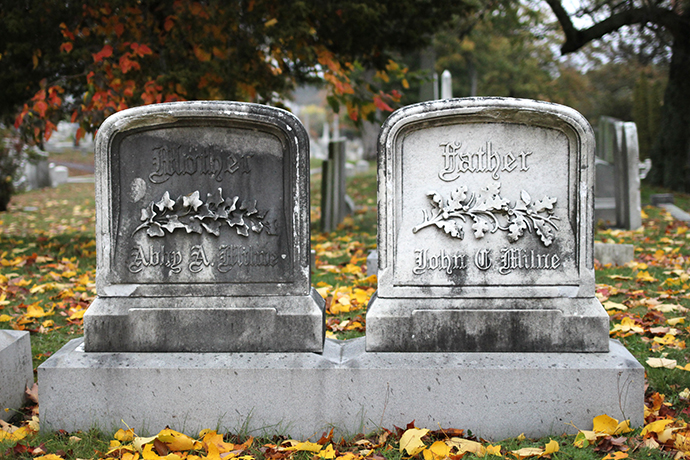
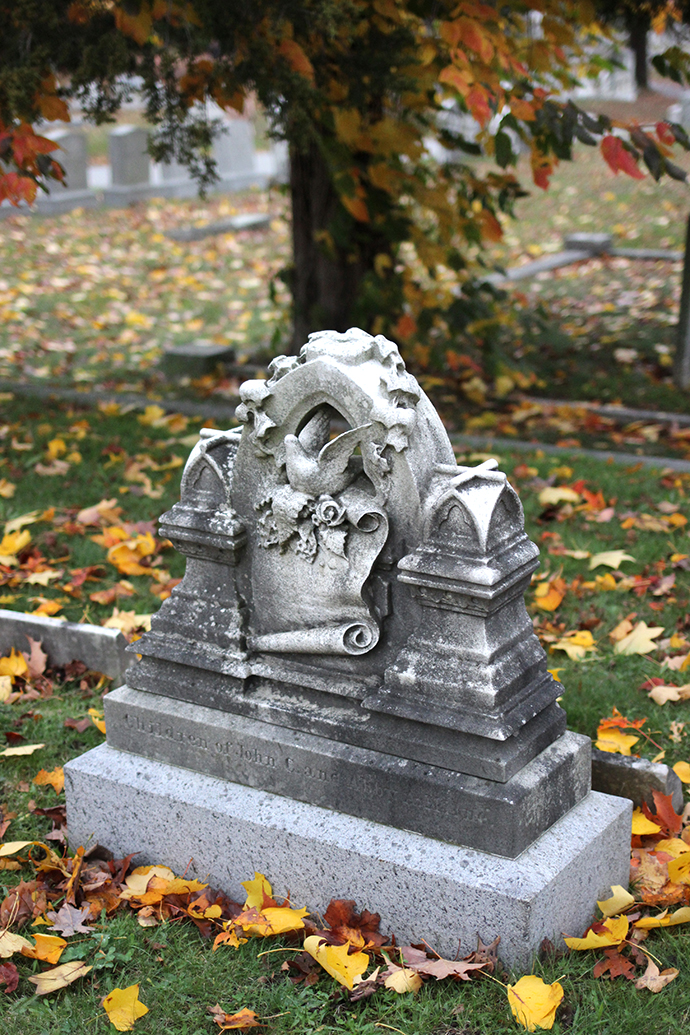
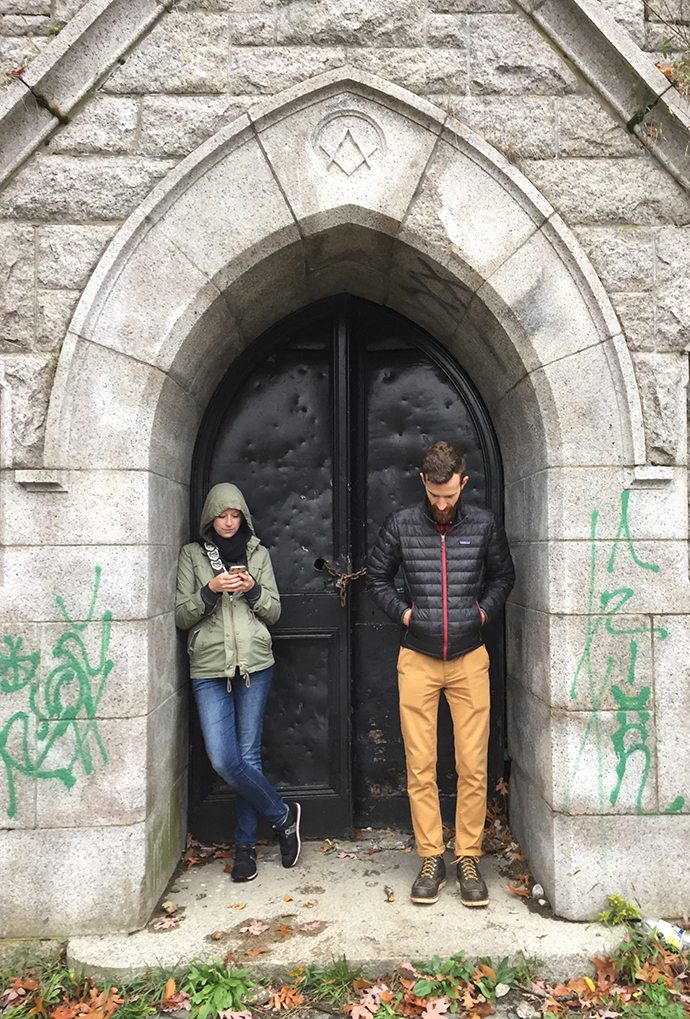
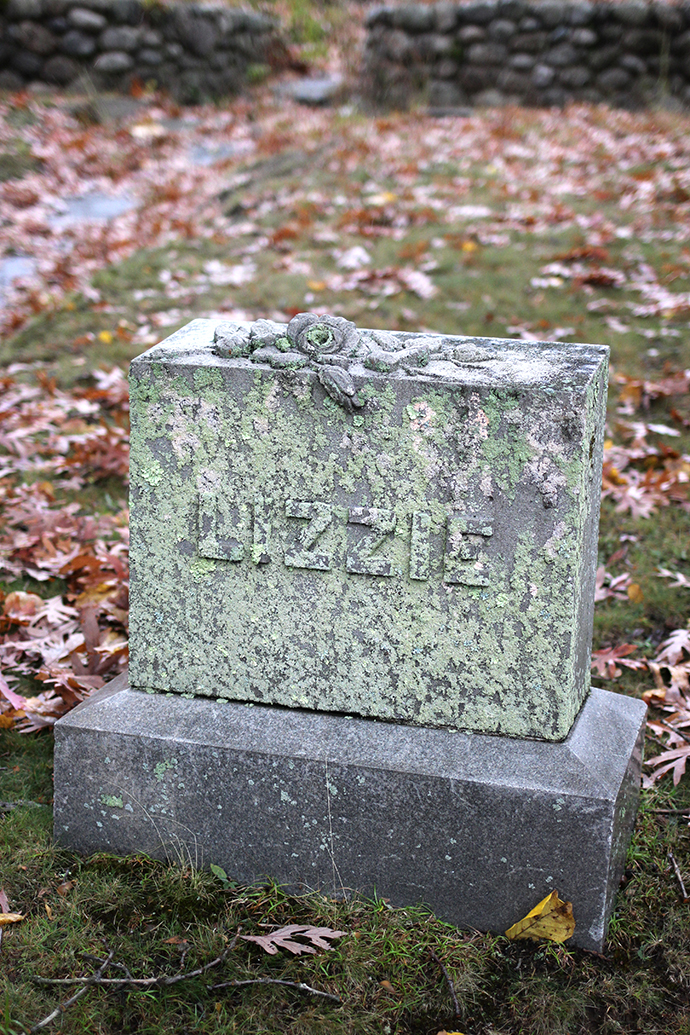
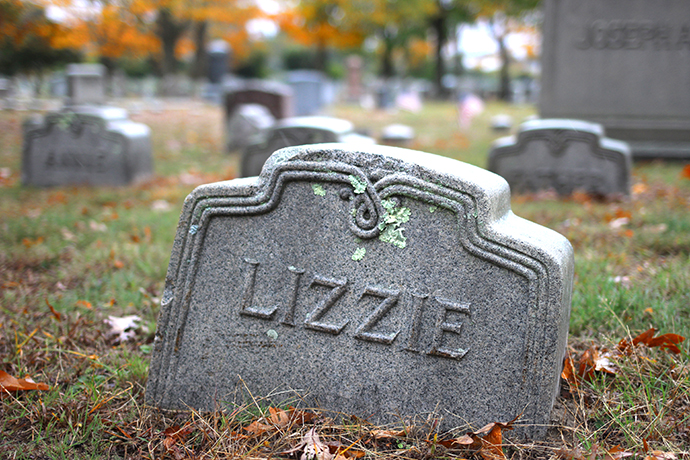
It did eventually start pouring (we briefly took refuge in the doorway of a mausoleum), otherwise I could have spent so much more time exploring Oak Grove. The cemetery is FULL of other Bordens—it must have been a popular name in Fall River—and we even found a few other Lizzies, who I'm sure have confused less-informed tourists throughout the years. I'm not against cemetery tourism for a specific grave, obviously, since that's usually how I pick specific cemeteries, but the real joy comes in discovering the things beyond the star stone.

Clara Glen Pet Cemetery

Ever since my trip to America's first pet cemetery in Hartsdale, I've been eager to track down more pet burial grounds. I've explored more human cemeteries than I can count, but Hartsdale is the only cemetery that had me tearing up multiple times. It's not that I'm cold and heartless when it comes to human death, but pets and animals are more relatable and helpless. The epitaphs for beloved pets were so much more heartfelt and personal than ones you usually see for humans. It's also easy to put myself into other pet-owner's shoes, thinking about my own cat and her eventual demise (when I'm not mad at her for screaming in my face, that is).
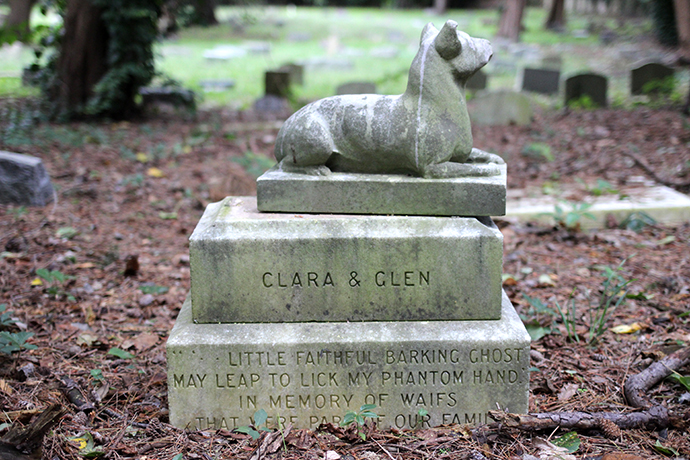
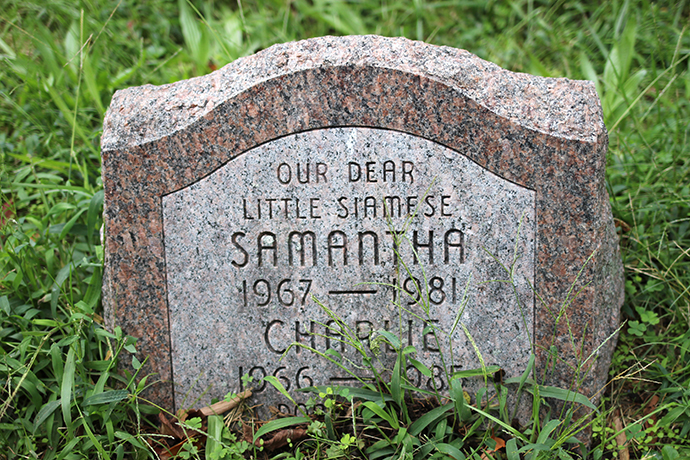

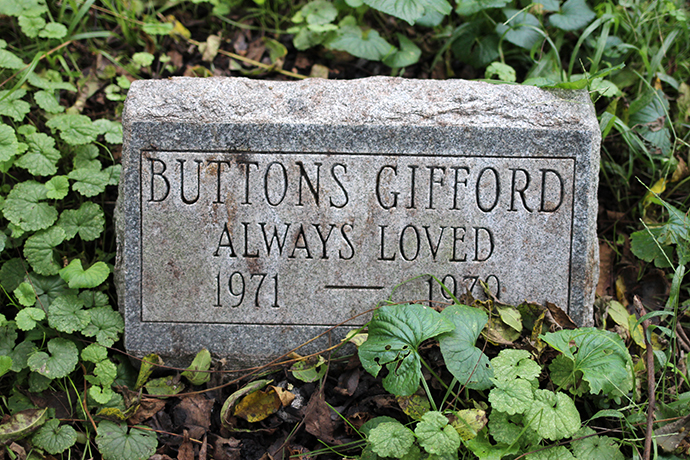
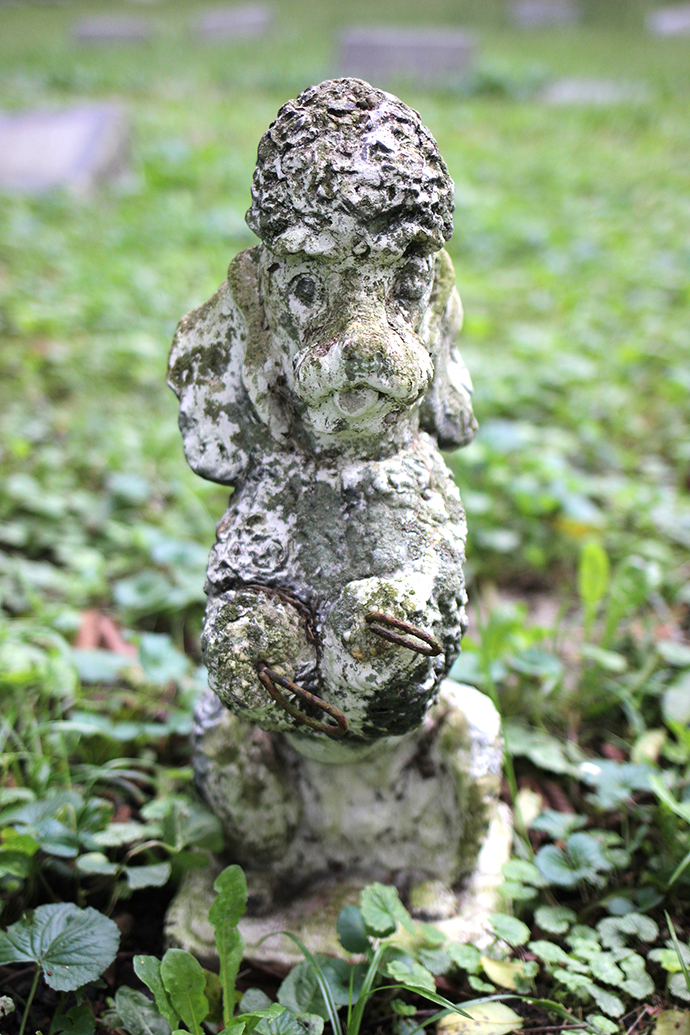
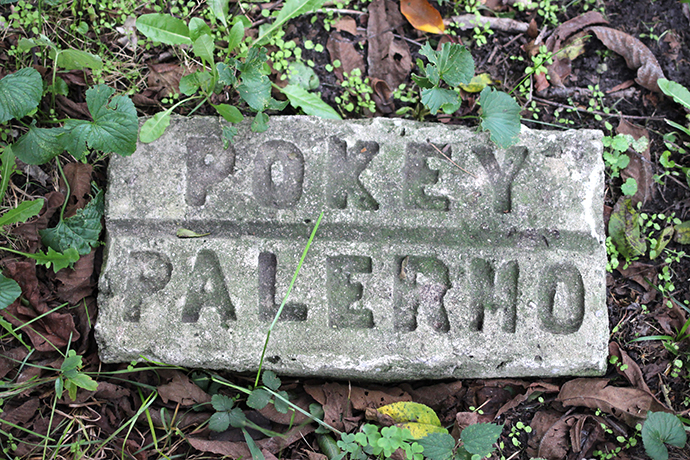
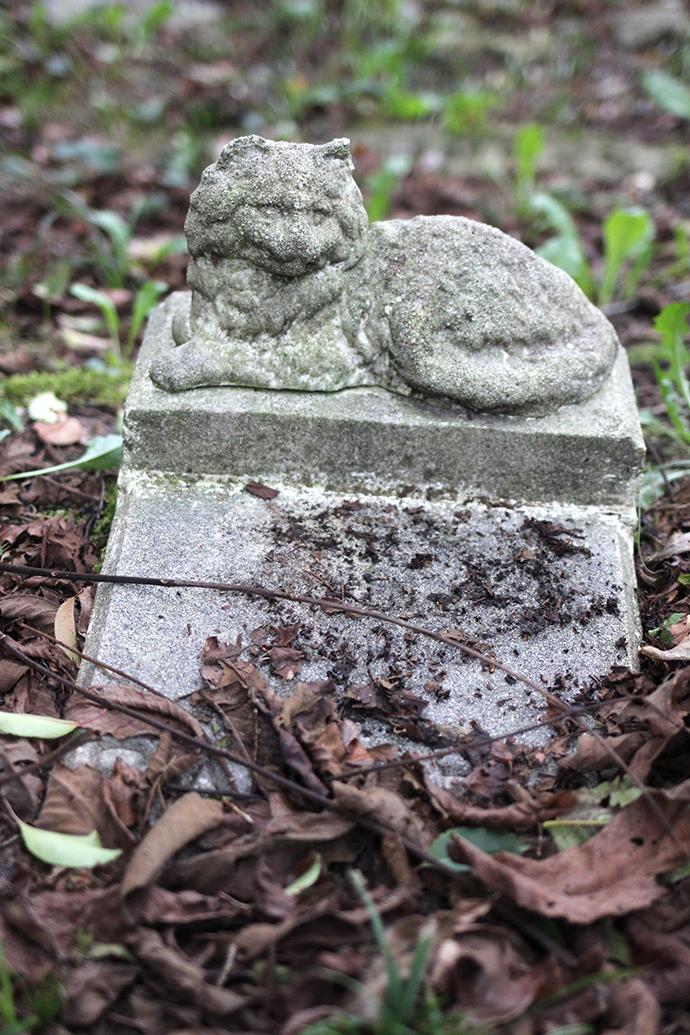
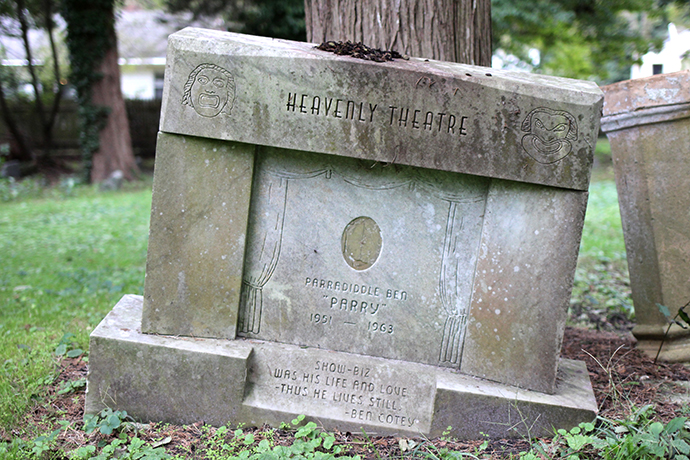
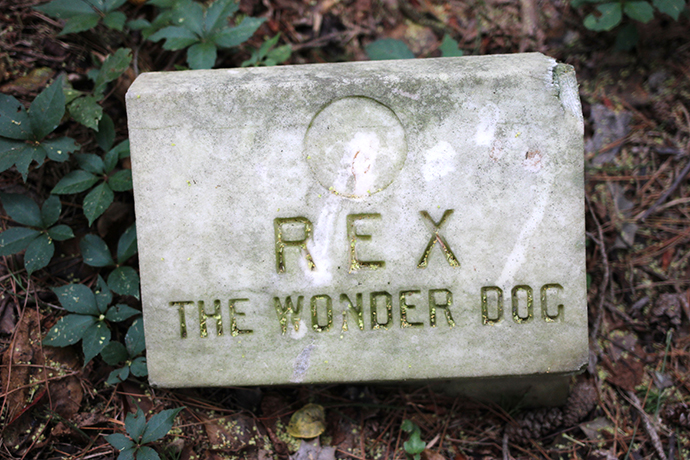
Clara Glen Pet Cemetery was founded in 1918 by Clara and Glen White, an animal-loving couple who had multiple dogs, cats and rabbits. They started the cemetery in their backyard in Linwood, NJ, and now Clara Glen is one of the oldest pet cemeteries in the country (Hartsdale was founded in 1896). Celebrities from nearby Atlantic City, like Irving Berlin and Billie Burke, have pets buried in the cemetery, alongside 3,800 other animals. Rex the Wonder Dog water-skied in Atlantic City's Steel Pier water show in the 1930s and 40s, and a diving horse (we saw at the last diving horse left in the country at the Magic Forest) is rumored to be buried here as well.
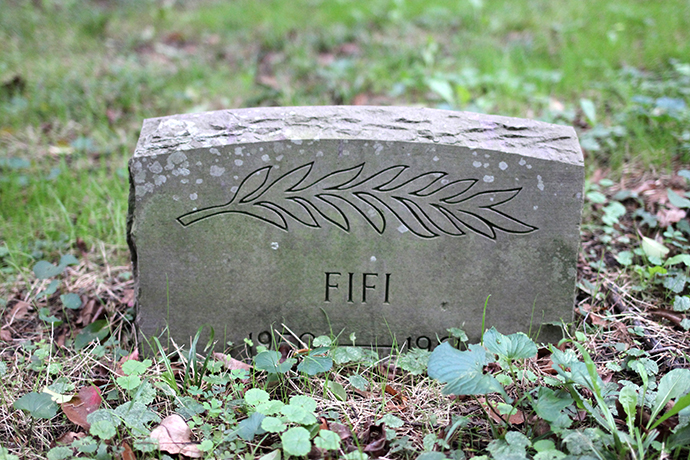
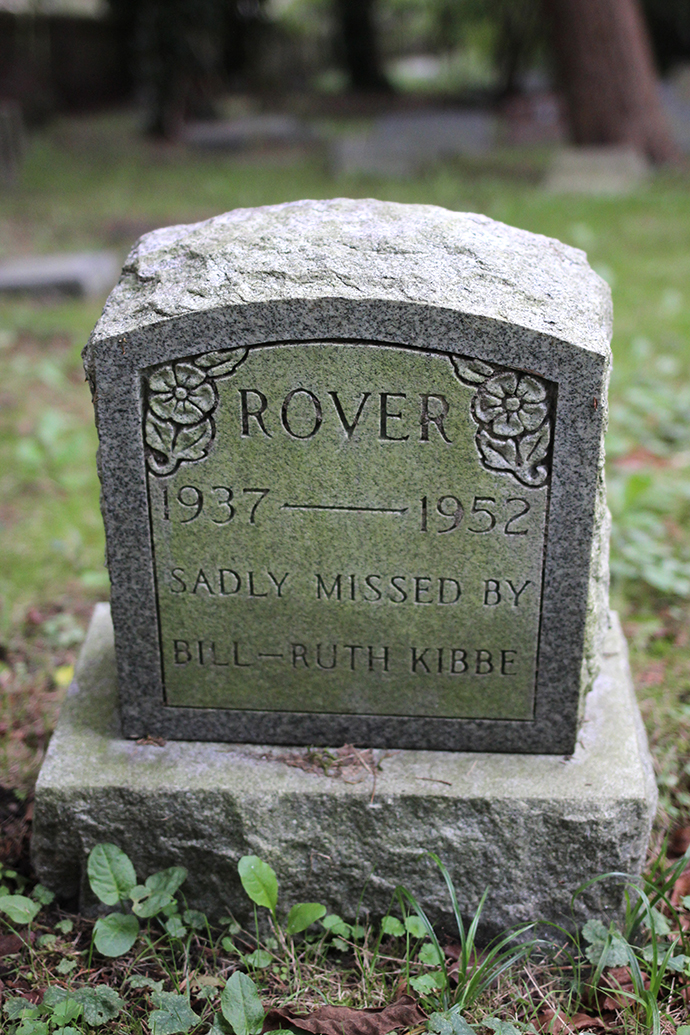
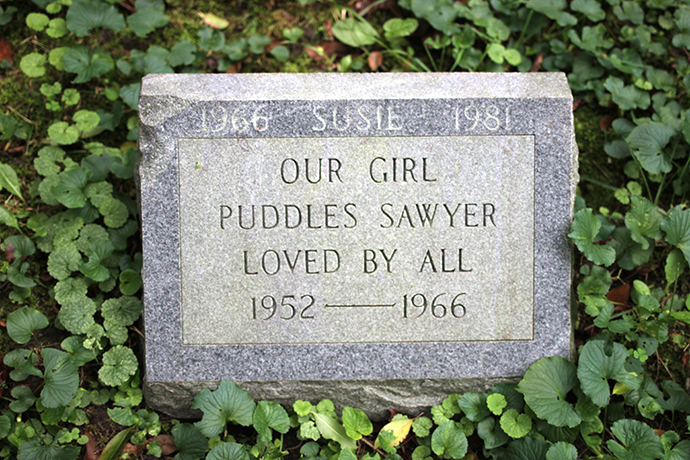
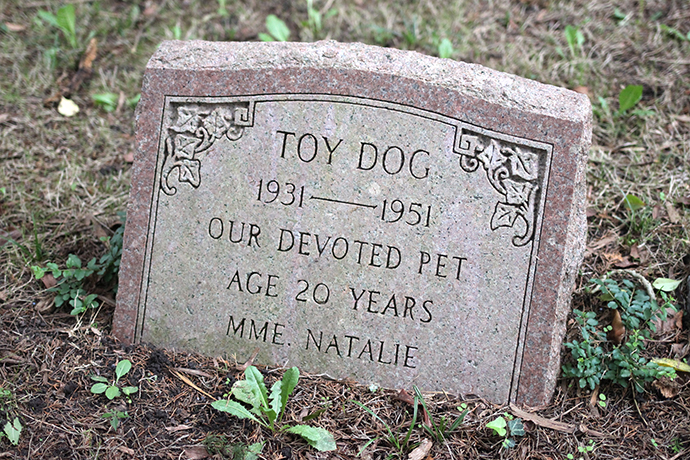
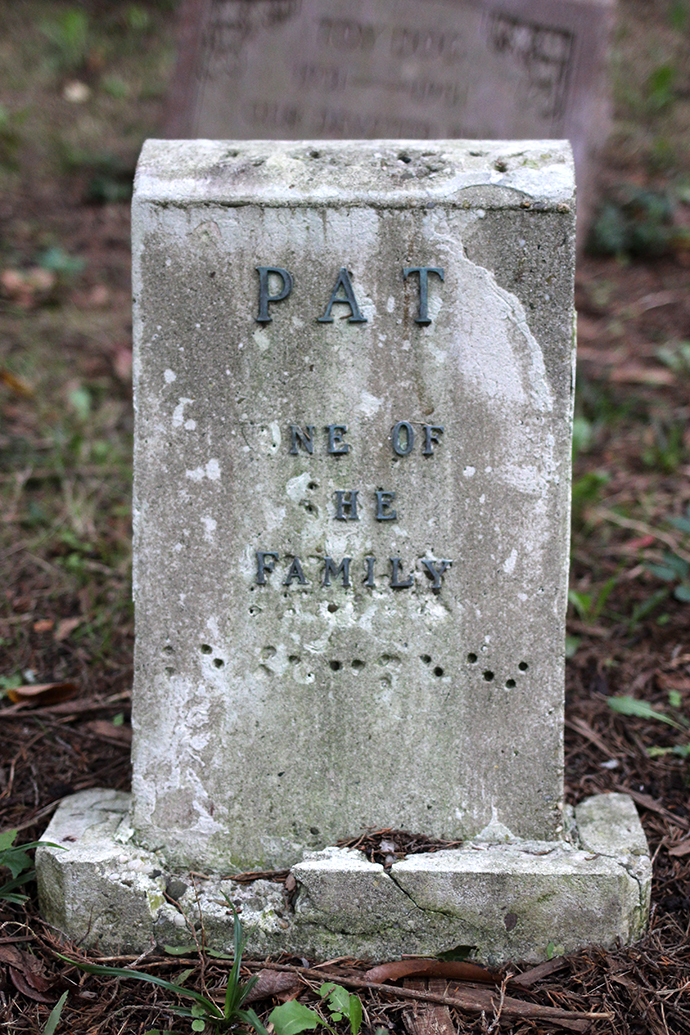
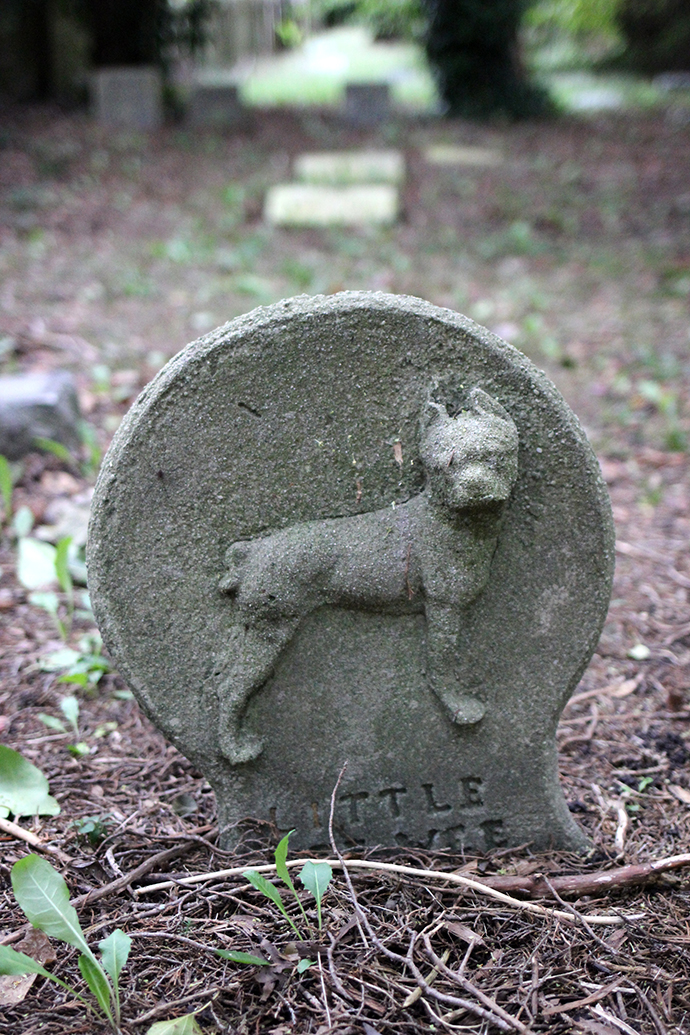
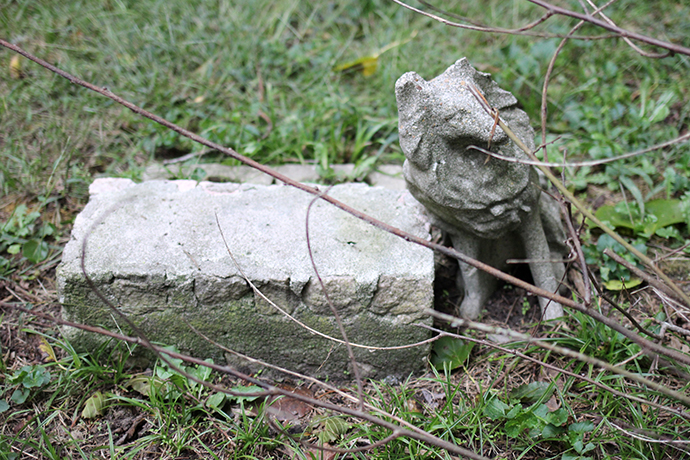
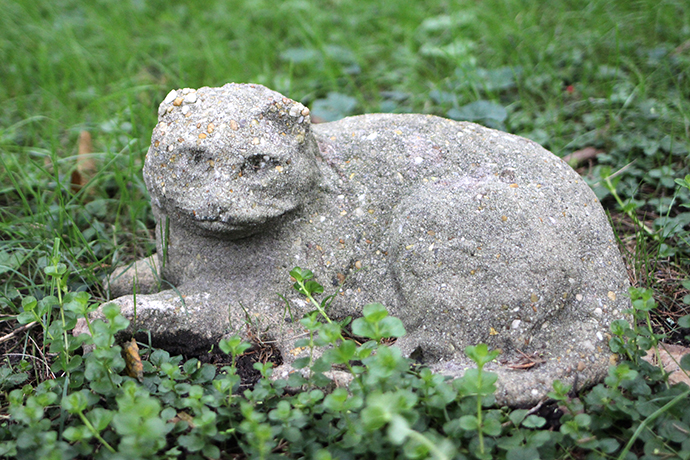
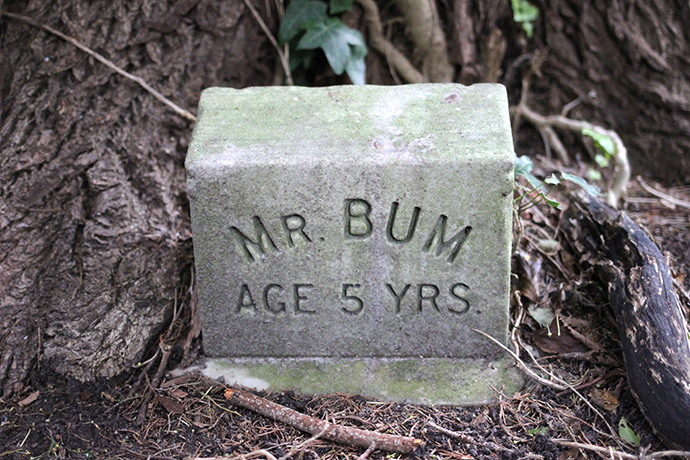
Pet cemeteries are disorienting because they're so serious on the one hand—losing a pet is devastating—and ridiculous on the other, with stones etched with names like Buttons Gifford, Fifi, Puddles Sawyer, Fluffruff, Mr. Bum, Rover and Pokey Palermo. While Clara Glen is tiny compared to Hartsdale, which contains more than 80,000 animals, I'm actually shocked that so many people opt to incur the expense of burying their pets in a public cemetery, instead of having them cremated or buried in their own backyards.
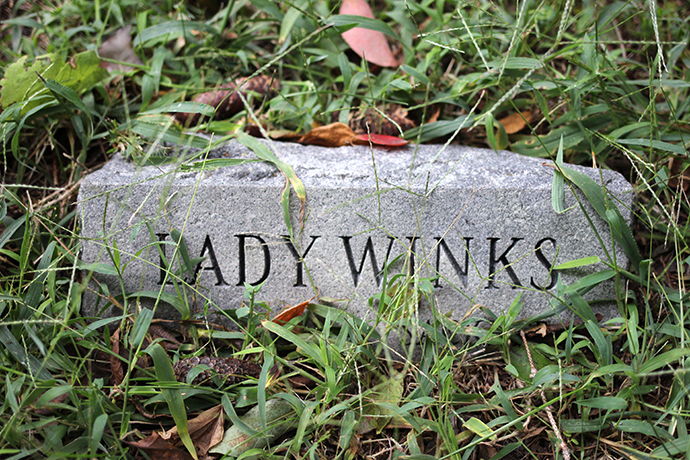
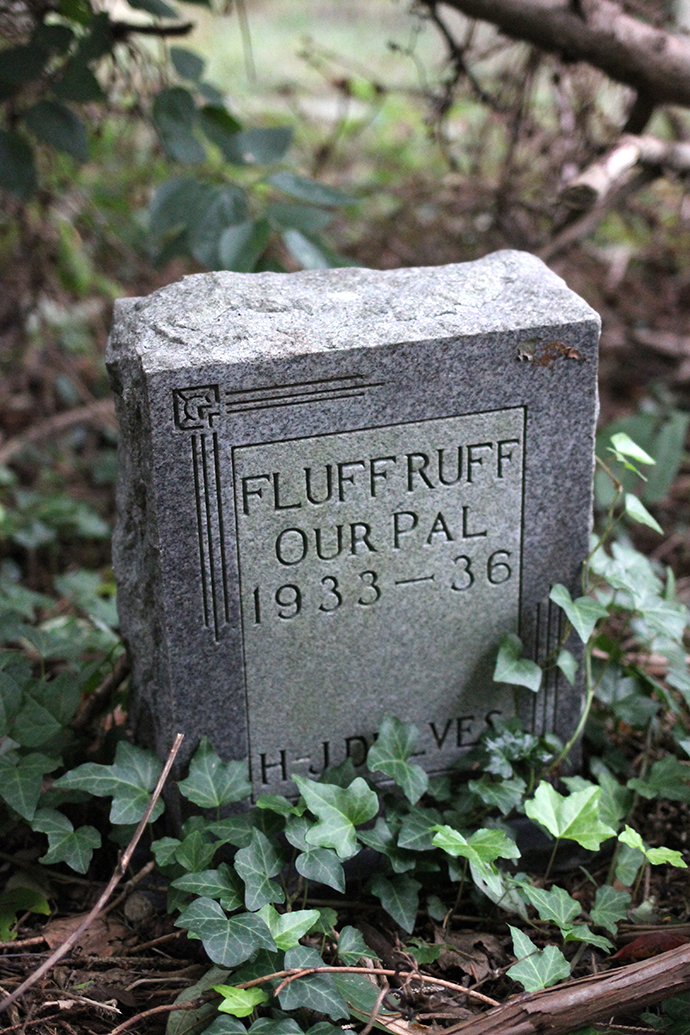
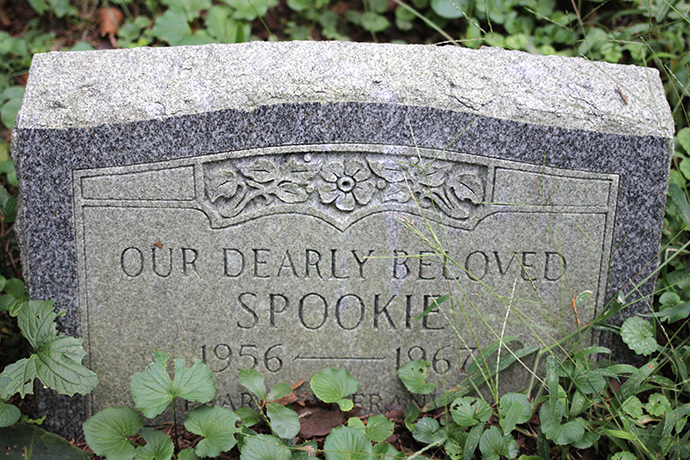


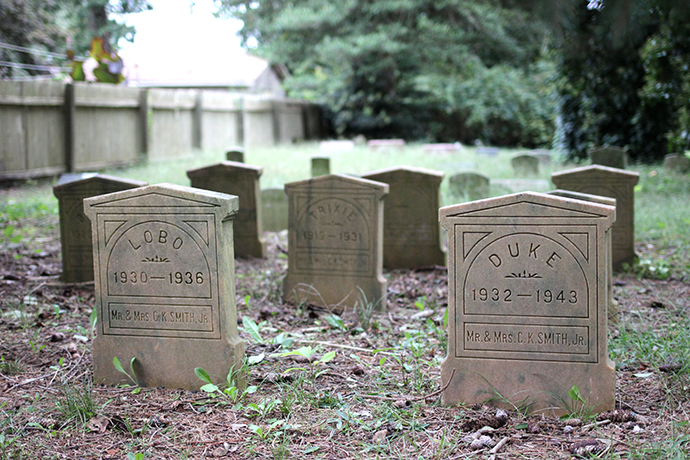
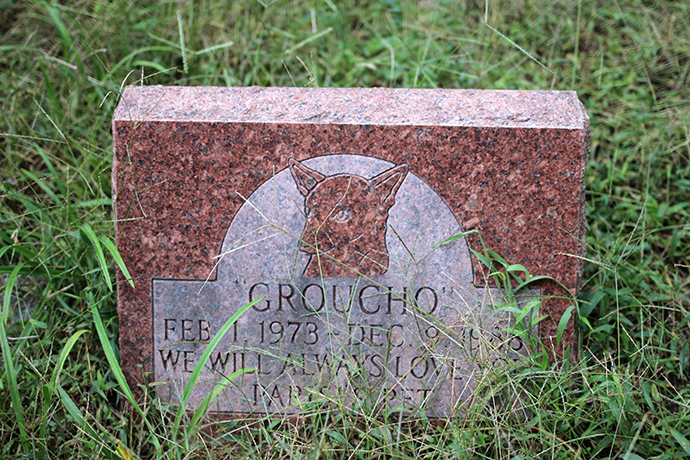
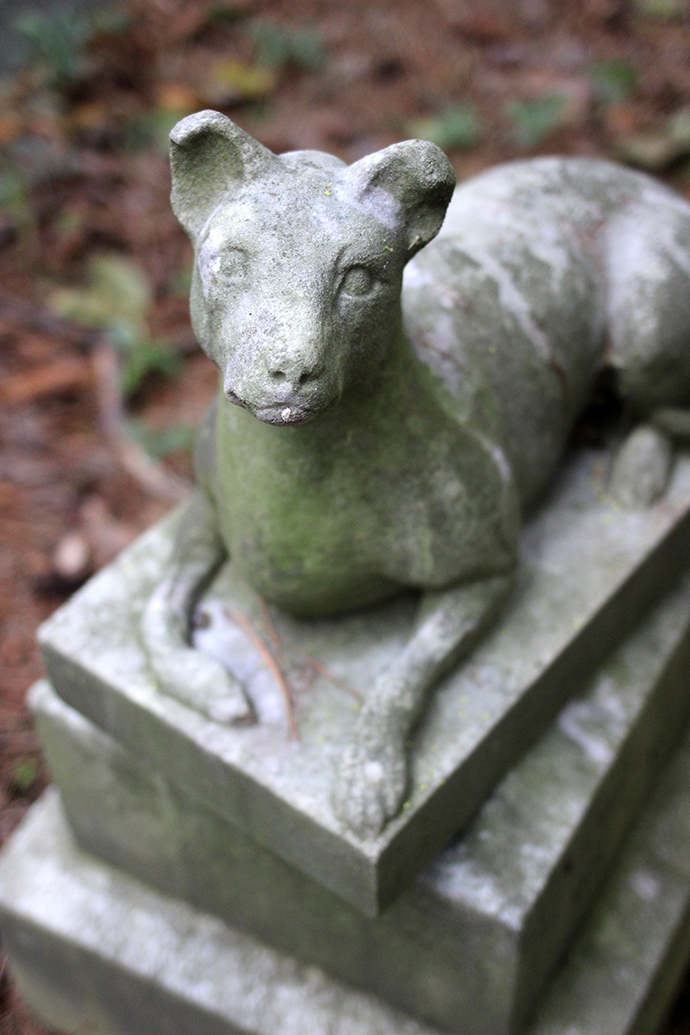
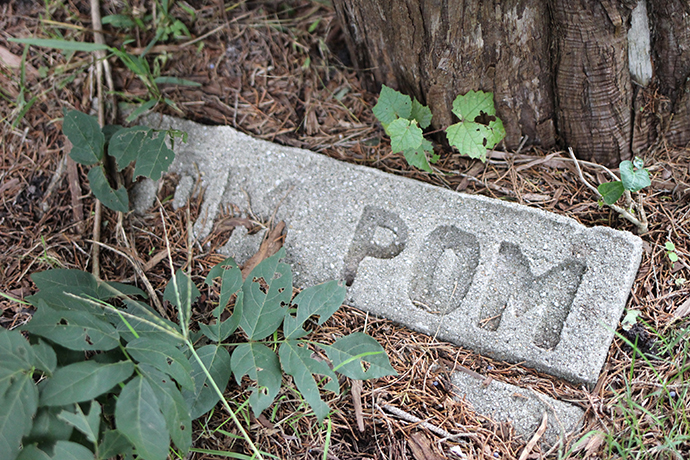
Clara Glen had fallen into disrepair over the years, and many stones have been broken or vandalized. It's now maintained by the Linwood Historical Society, and remains a bit overgrown but in fair shape. It's still basically located in someone's backyard, in a nice residential neighborhood near a cul-de-sac. We felt a little bit as if we were trespassing, but it's easy enough to slip in and out of for a quick visit.
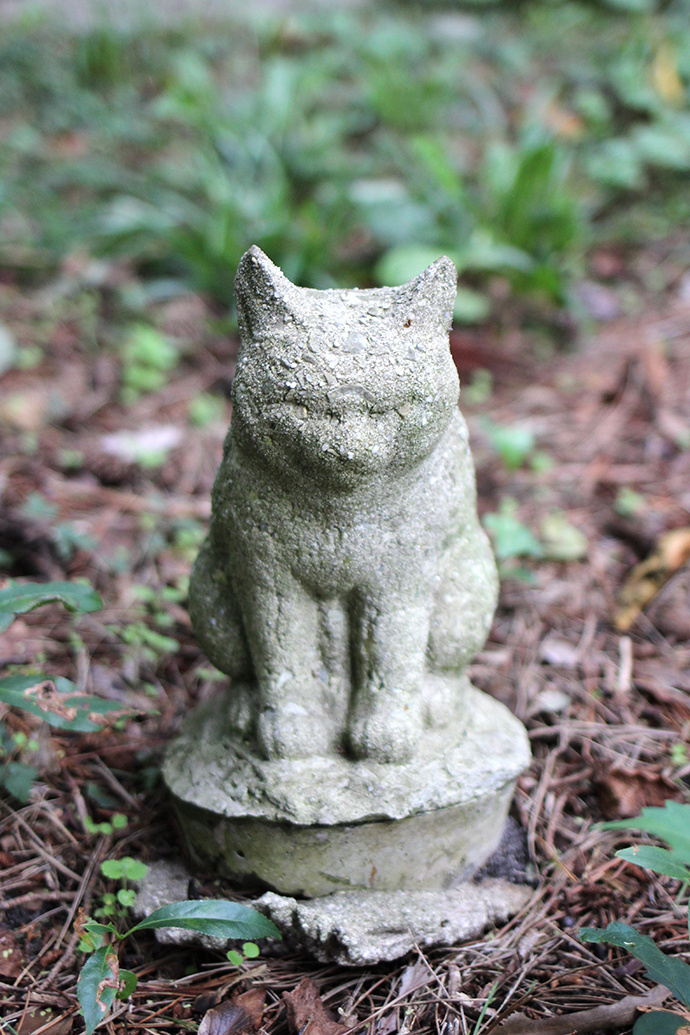
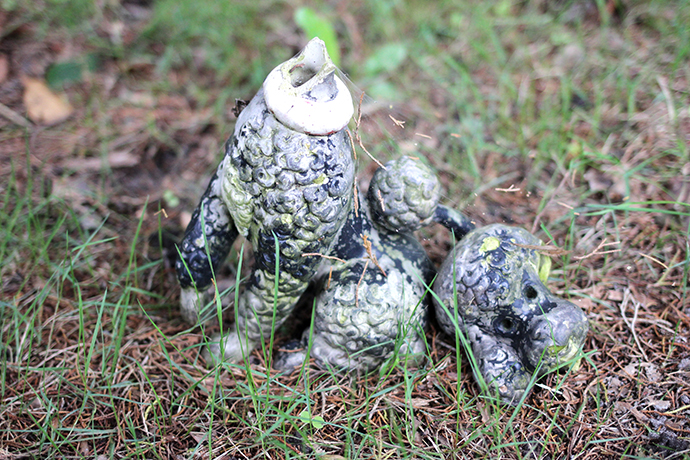
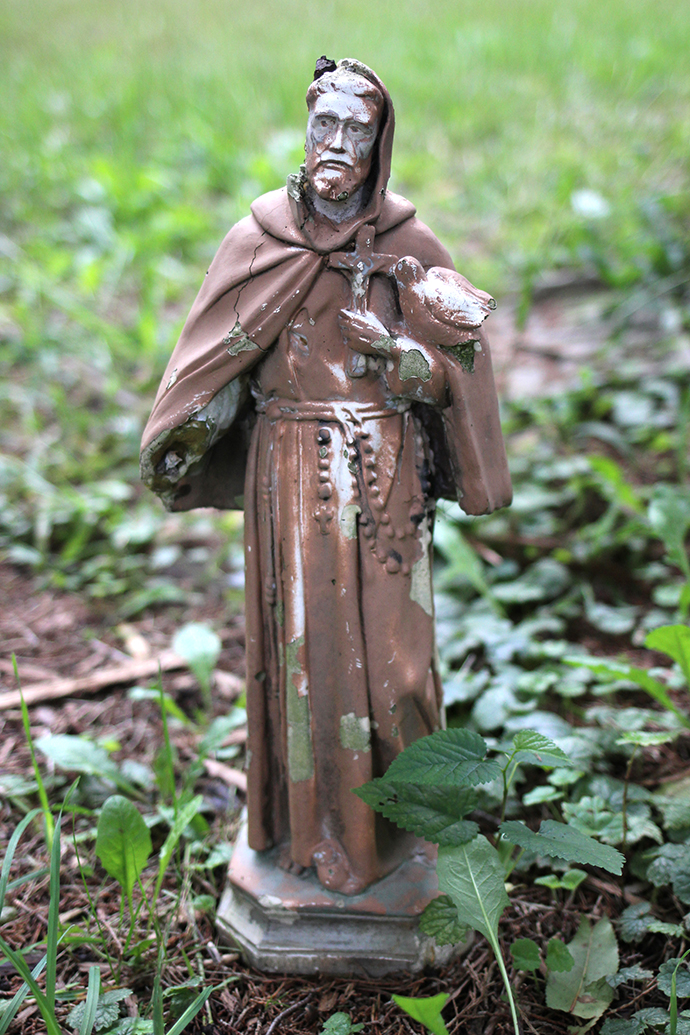
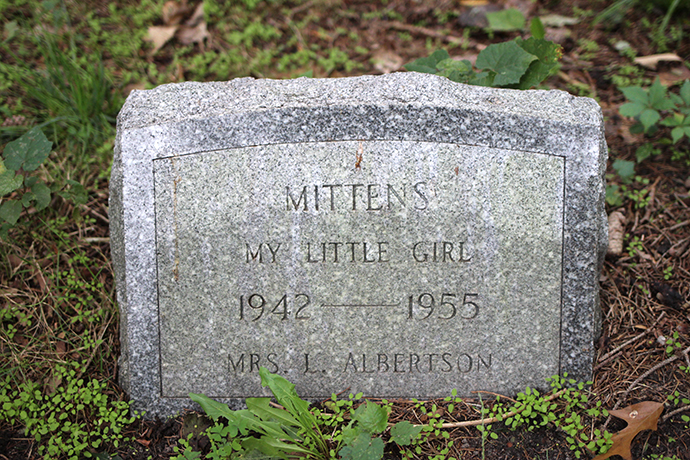
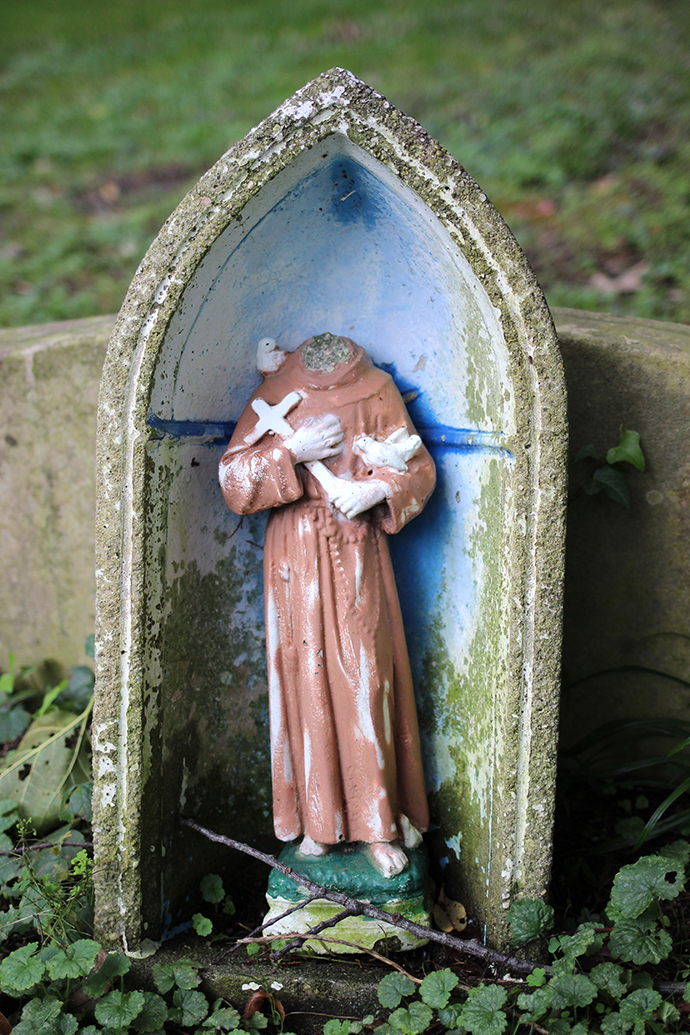
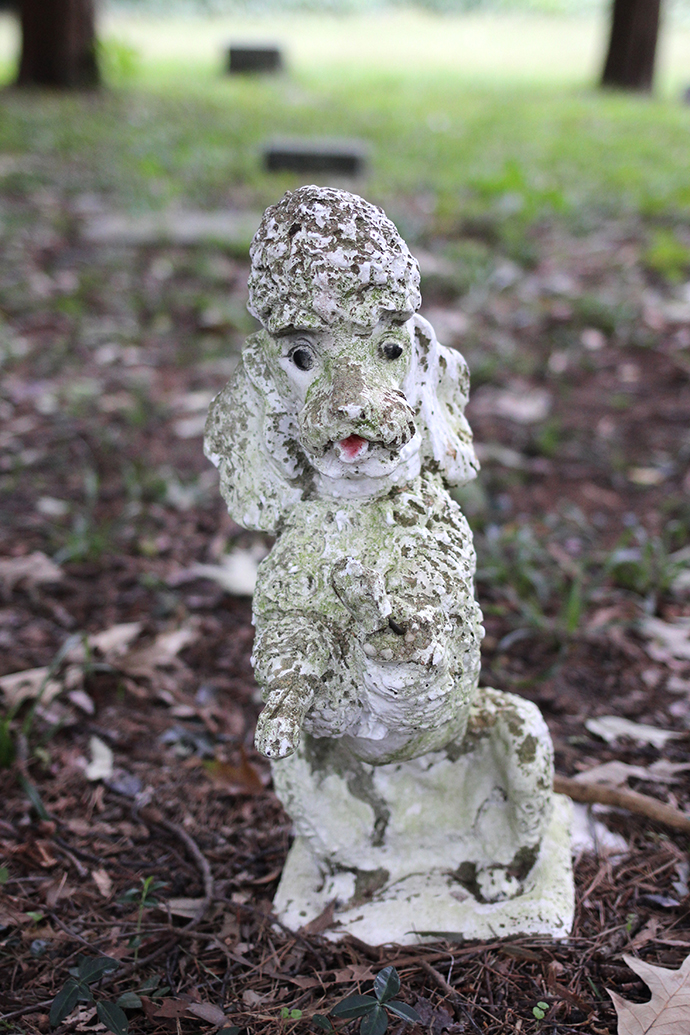

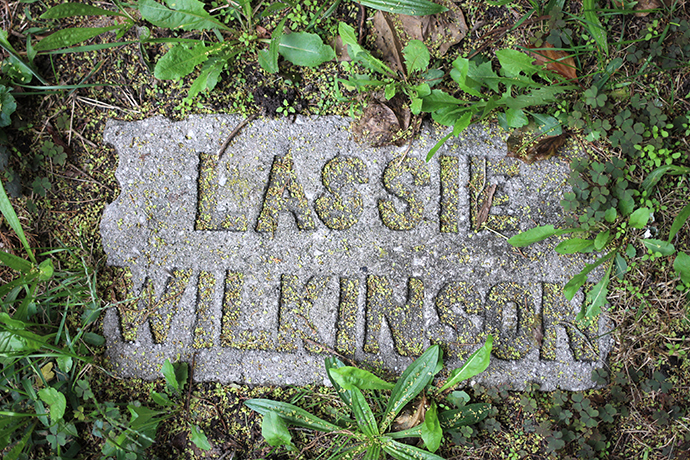
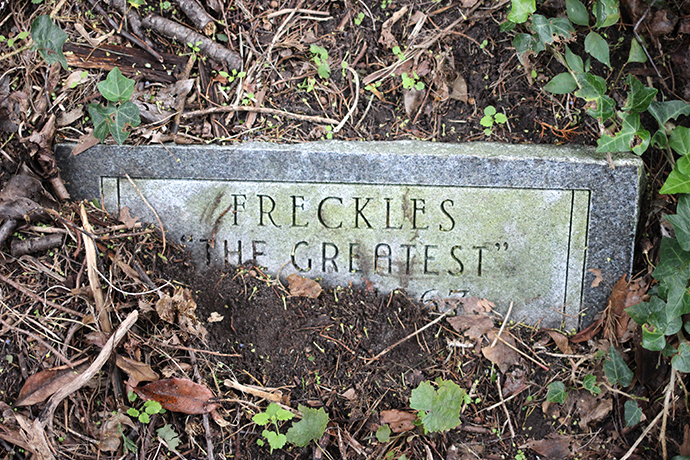
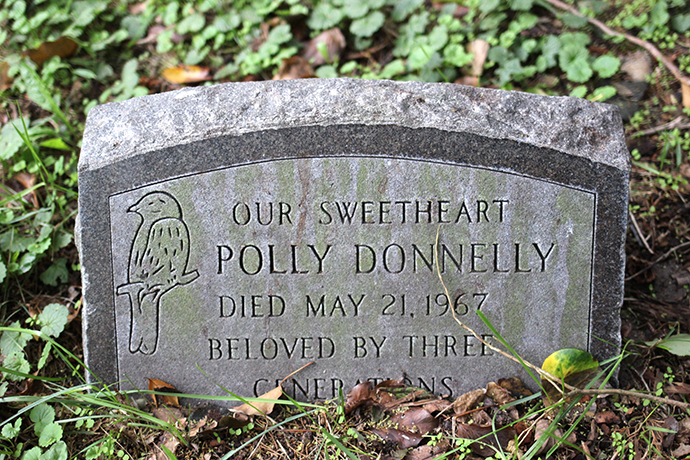
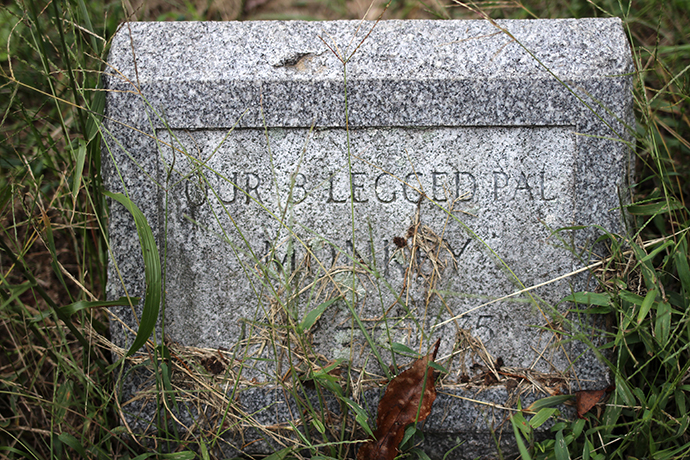
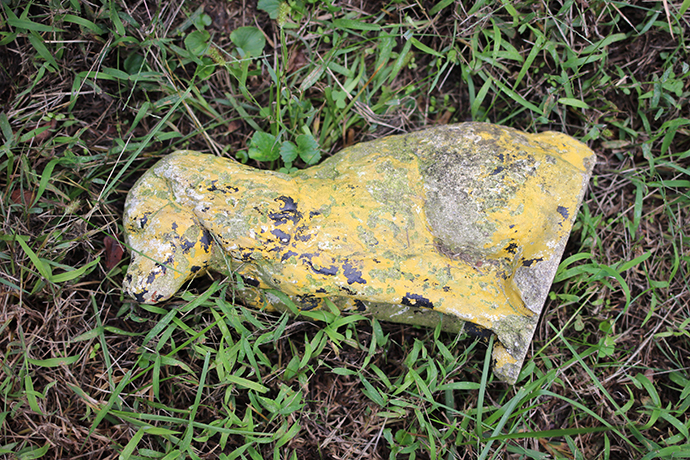
I wish more of the stones hinted at what kind of animal lies beneath—in addition to mostly dogs and cats, we saw one confirmed bird named Polly Donnelly. Poodle statues were common, along with St. Francis, the patron saint of animals. I didn't tear up at Clara Glen as much as I did in Hartsdale—the epitaphs were sweet, but short—and it was a great little detour on our way back from Atlantic City.
I mentioned recently that owning a house with a backyard cemetery is my new life goal, and after visiting Clara Glen I'm thinking I should revise that to include pet cemeteries as well.

St. Michael's Cemetery: Portraits
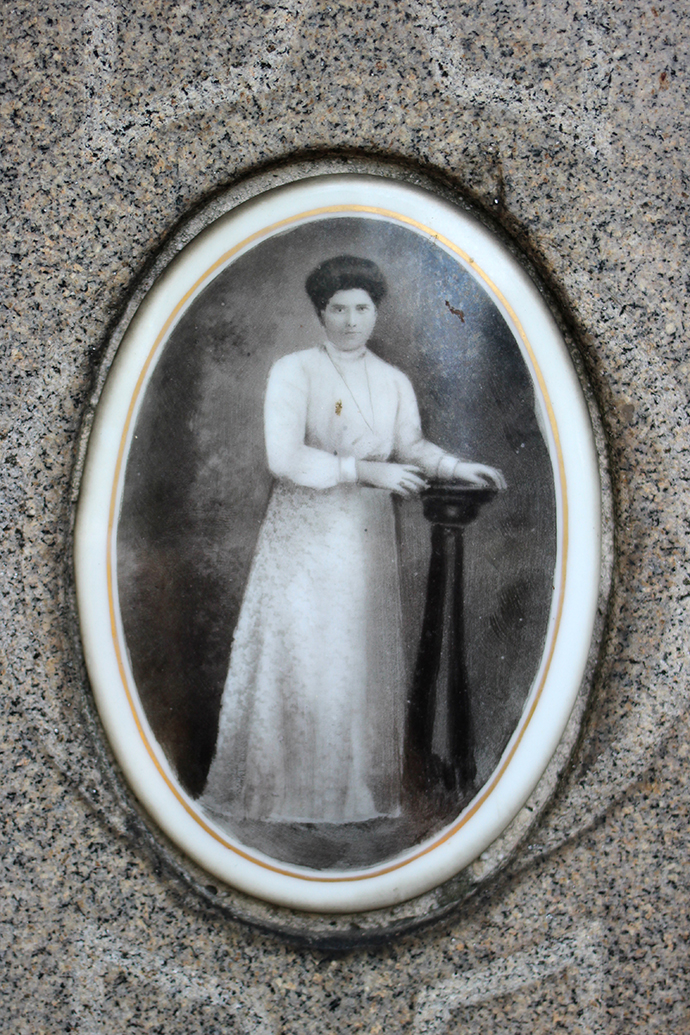
I've seen ceramic portraits on headstones before, but—in addition to its plethora of headless statues—St. Michael's Cemetery in Queens has some really wonderful ones. In 1854, two French photographers figured out a way to transfer a photograph onto porcelain or enamel and the process quickly caught on to include memorial portraiture affixed on tombstones. By the beginning of 1900, these portraits were becoming so popular that you could even buy them from the Montgomery Wards & Company Monuments catalog.


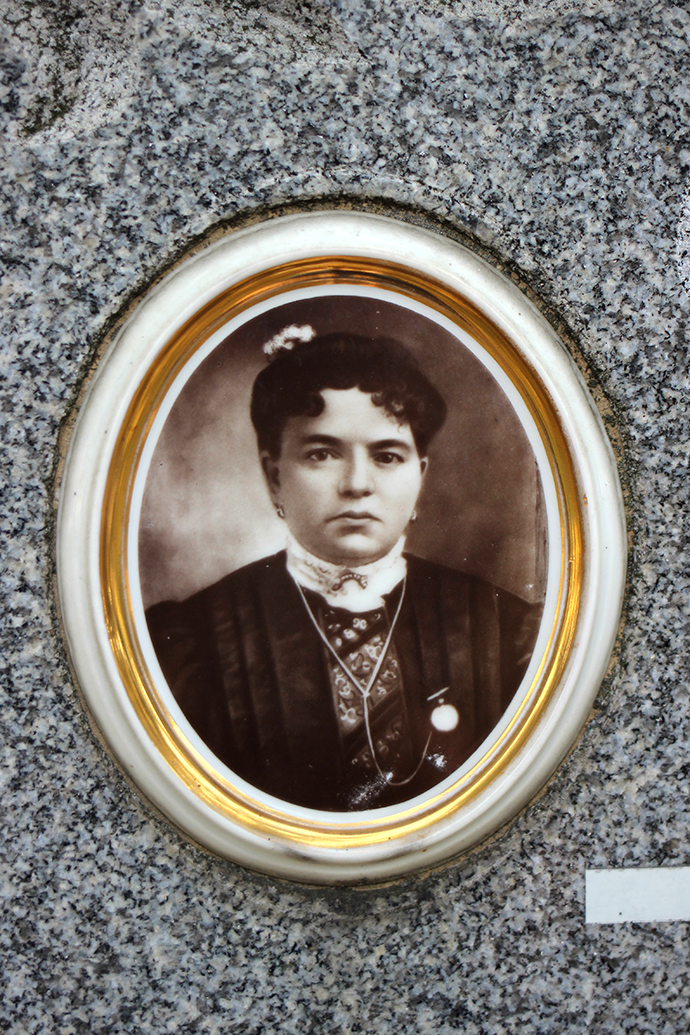

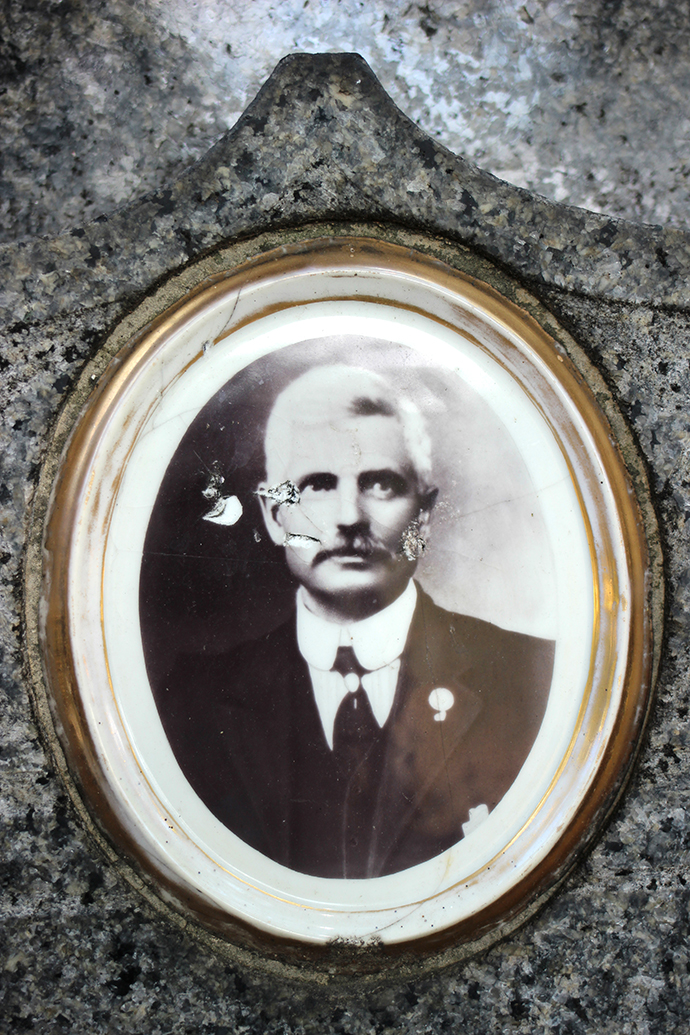


Ceramic portraits pop up in most of the cemeteries I've visited, and it's still a popular tradition on modern-day headstones. They seemed especially popular in Hartsdale, America's first pet cemetery, which makes sense and proves that long before Instagram, people were obsessed with photos of their pets. Of course it's the old, black-and-white ones that I love, and almost all of the ones I found had beautiful gold-painted detailing or a frame of some sort—the copper wreath and bow is one of my favorites.

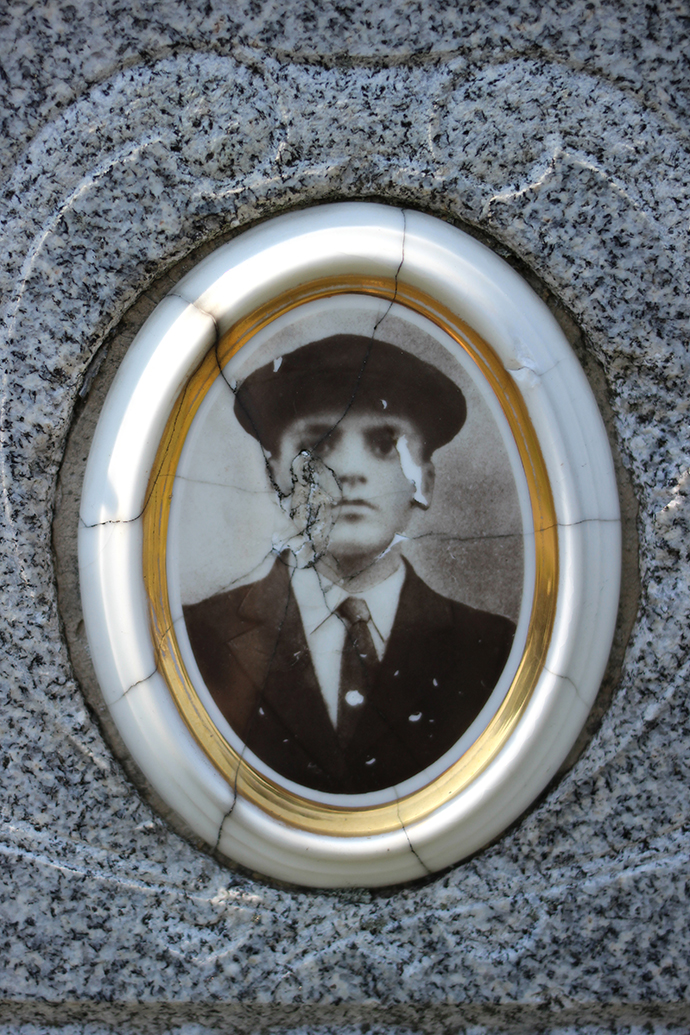
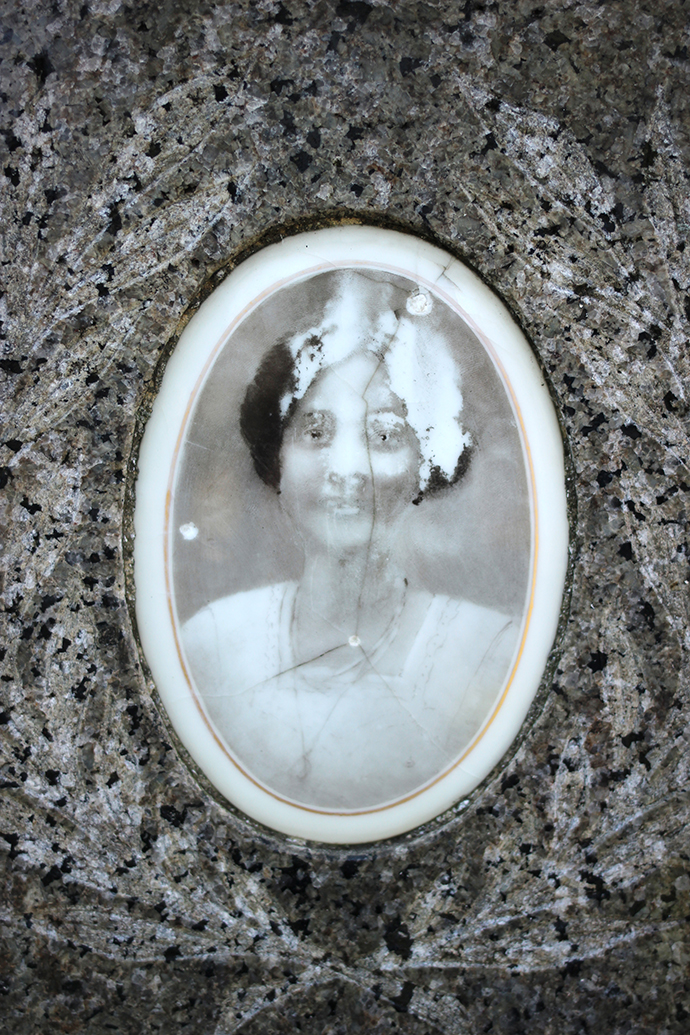
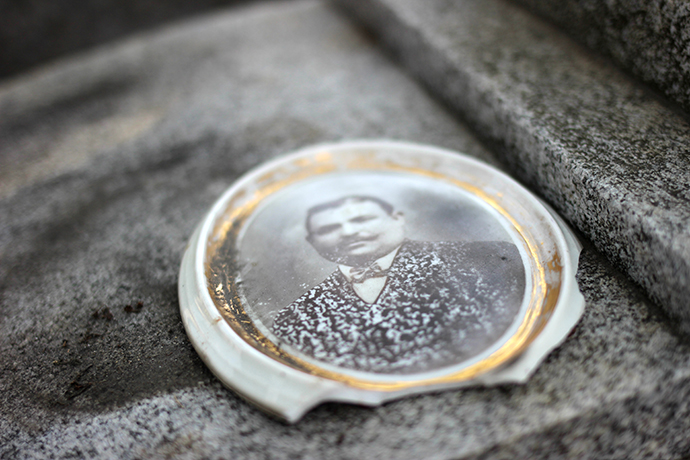
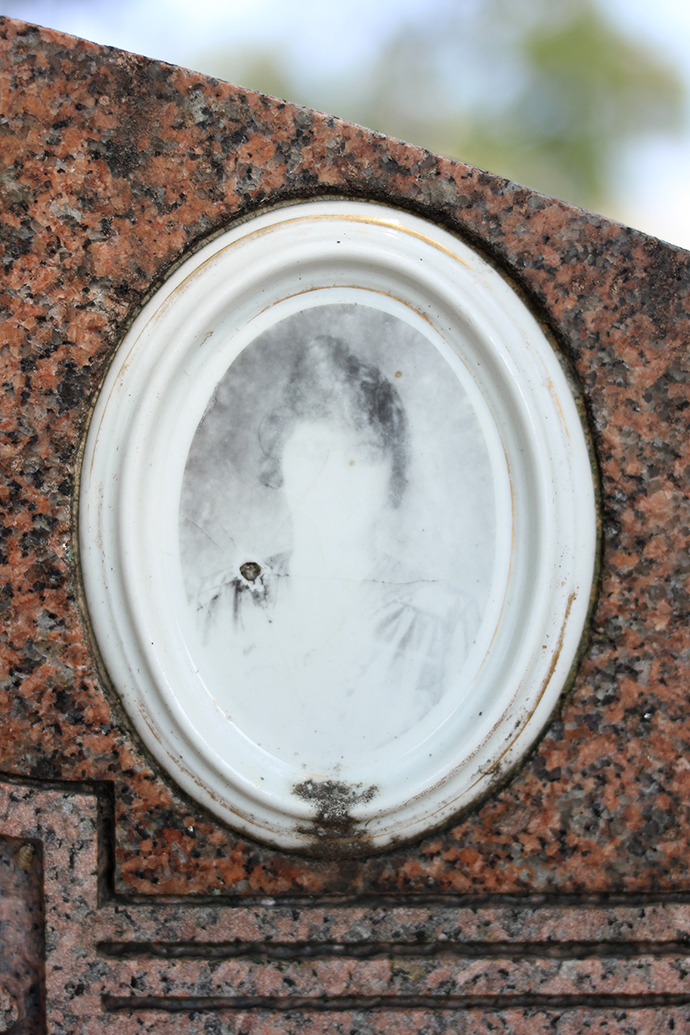
Unfortunately a lot of the early ceramic portraits that you come across are damaged—chipped, broken or faded away completely. Today's portraits are made utilizing a more fade-resistant process, and it's sad that so many of them are already lost. Sure the portraits are a bit creepy—eyes staring at you from beyond the grave for all of eternity—but I happen to think that they're also sweet. They're infinitely preferable to the modern day scourge that is laser-etched-portraiture, and they humanize what are often cold and impersonal stones. They're proof that these people once existed and lived lives as we all do, for better or worse—albeit in much fancier clothes.

Lent-Riker-Smith Cemetery

On Monday I wrote about our recent visit to the Lent-Riker-Smith house in Queens, and I mentioned that the property came with its very own cemetery. Marion Duckworth Smith told us that she was on her second date with her future husband when he asked her if she'd "like to see his cemetery." While everyone else on the tour chuckled, I thought to myself "how romantic."


The cemetery contains 131 original residents (one of which died at Valley Forge), plus Marion's mother, brother, husband and eventually Marion herself. The oldest interments date back to 1744, and include Rikers, Lents and their descendants and spouses. Marion gave us a packet containing a 1919 survey of the plots, including most of the inscriptions that were visible at the time. Currently, there aren't many readable inscriptions, but a few of my favorites (thanks to the survey) are:
Weep not my friends all dear,
I am not dead but sleeping here;
The debt is paid, the grave you see,
Prepare for death and follow me.
- and -
An affectionate father and husband and faithful friend, beloved, honoured, and venerated! He closed an eventful and useful life in piety and peace.
- and -
This perishable marble cannot record his virtues—they are engraved in the hearts of all who knew him.


It is unfortunate that a lot of the oldest inscriptions have worn away, but that's pretty common is a cemetery this old. Marble was very expensive, granite was too hard to cut and the brownstone and limestone wears quickly and easily. It's lucky that someone had the foresight to survey the cemetery while names were still visible. Otherwise, it's remarkable that a small, family cemetery could have survived at all in New York City, and I'm grateful that it's in such loving hands.

St. Michael's Cemetery: Headless

I have passed St. Michael's cemetery many times on the way to LaGuardia airport (and eaten at a diner across the street), but I finally made it inside of the grounds recently. It was established in 1852, is open to all faiths and is one of the oldest religious, nonprofit cemeteries in the city. The cemetery is boxed in by the Grand Central Parkway and the Brookln-Queens expressway, in an area of Queens that seems pretty car-centric. Walking there via Astoria Blvd was not the most relaxing of walks, but once you're inside, the grounds are surprisingly peaceful.


It's not the oldest, or largest, or smallest or most interesting cemetery that I've visited and at first glance I was underwhelmed. It's large, but the majority of the graves are fairly new and I saw several people tending to graves and at least one funeral-in-progress. No offense to the recently deceased, but new graves and headstones just don't interest me much. In fact, I try to avoid them because I cherish my alone time when I'm exploring cemeteries, and running into grieving families is just not my scene.
I'm always wary of appearing disrepectful—especially as I snap a million photos—so the older the gravesite, the better. Cemeteries interest me for their history, typography, tombstone design and symbolism, all of which I find to be lackluster with newer (1960s-now) burials.


Somewhere in between being underwhelmed and trying not to get heatstroke, I started to realize that St. Michael's has a lot of statues—more than I usually see—and I got even more interested when I noticed that a large portion of them had lost their heads. I love anything out of the ordinary and macabre, and a headless statue will always pique my interest. St. Michael's appeared to be in very good condition and well-tended otherwise, so I'm not sure what's to blame for the headless epidemic, but I kept finding new ones wherever I looked.


Some statues also had their wings or hands broken and some were laying on the ground, whole or in pieces. What was even more surprising to me was that multiple headless statues still had their heads—resting on top of the stone or on the ground, presumably undisturbed since they first left their bodies. I"m not proud to admit that I was overcome with the urge to pocket a cemetery souvenir, but ultimately decided that stealing from anyone's eternal resting place was too horrible to justify—no matter how at home one of those heads would be in my new curiosity cabinet.

Green-Wood Cemetery: Statues
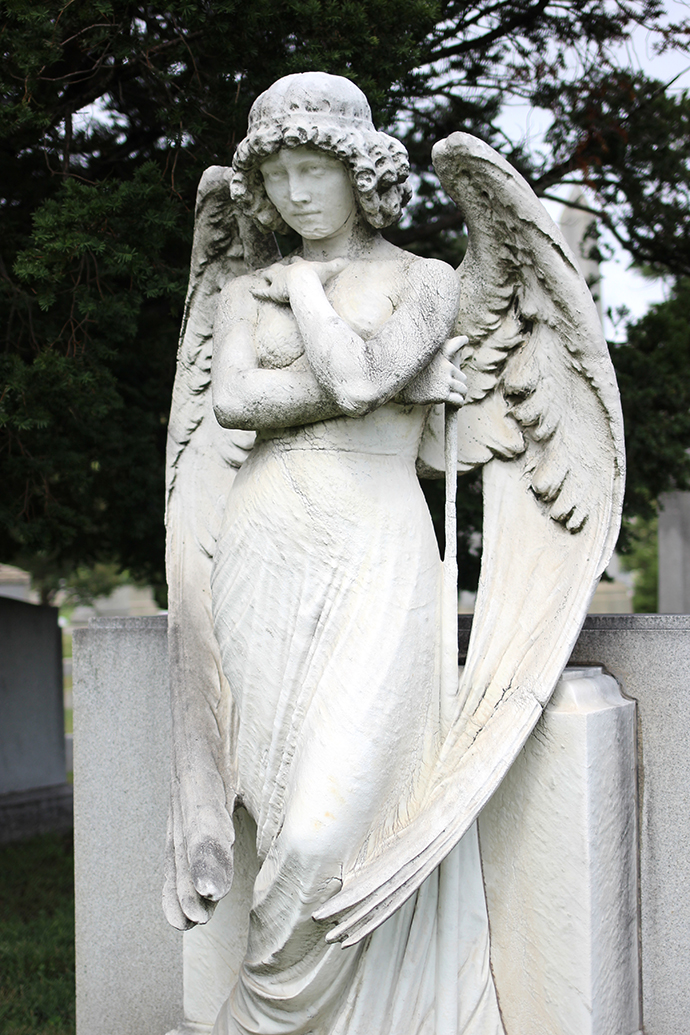
Before stumbling upon the mossy tombstone jackpot on a recent trip through Green-Wood Cemetery, I had been paying particular attention to the statues I came across. I mentioned that Green-Wood is so large that picking a specific theme makes a walk through the cemetery seem manageable and like I'm on a little scavenger hunt. I'm less likely to become overwhelmed, and more likely to see things I might not notice on a macro level.
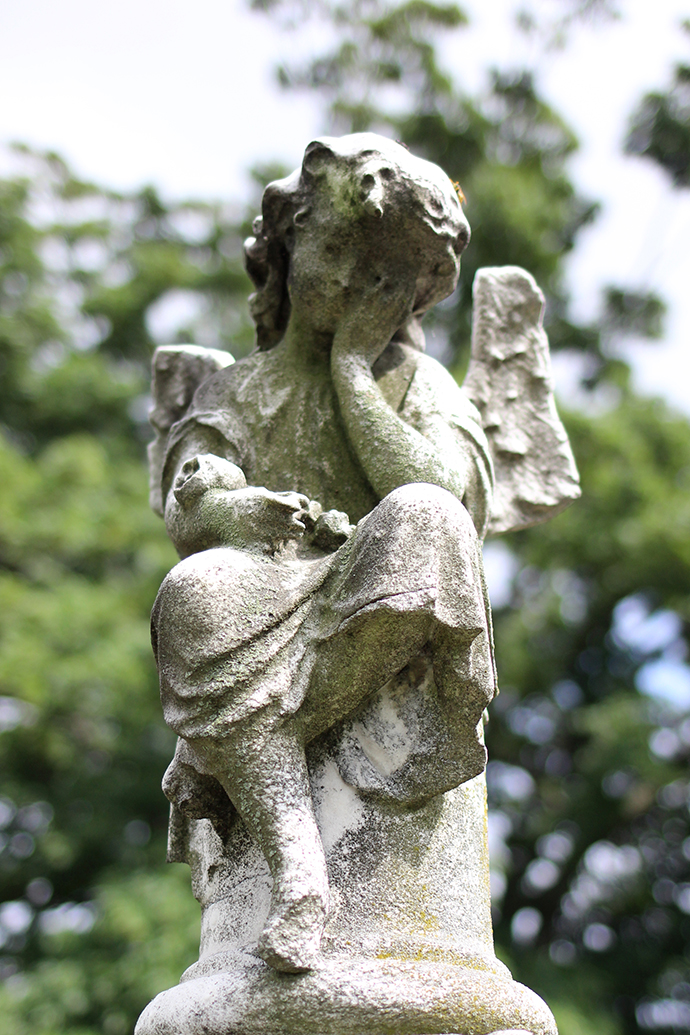
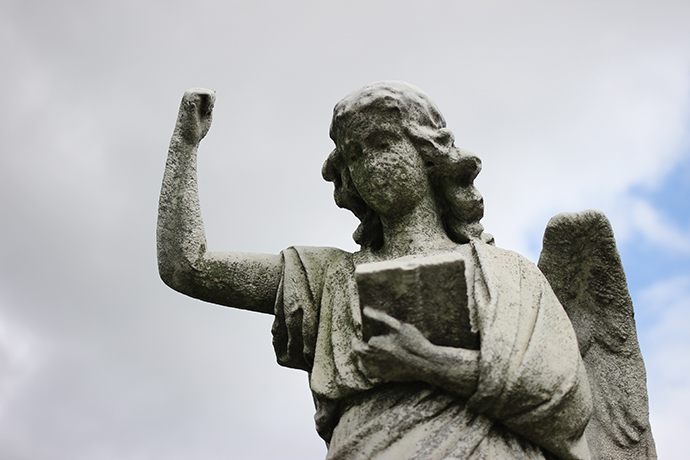
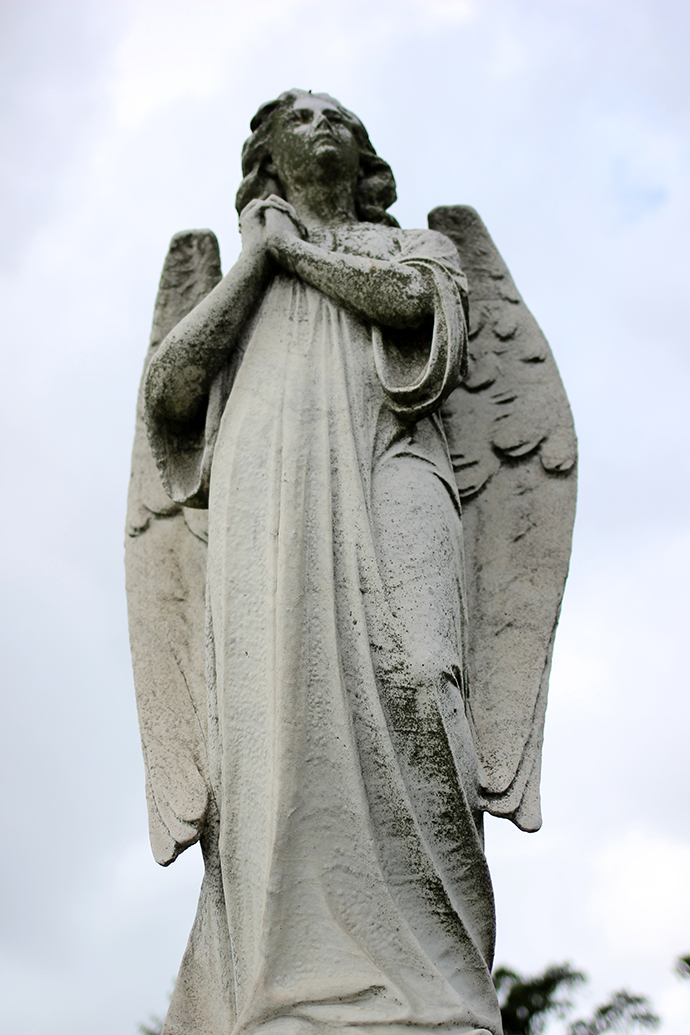
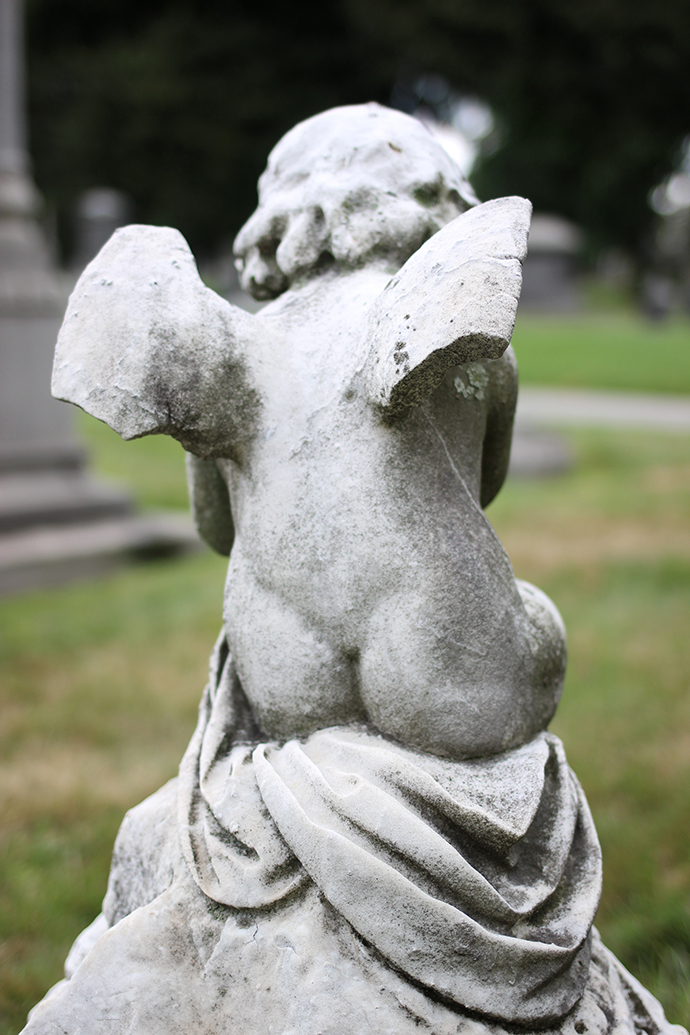
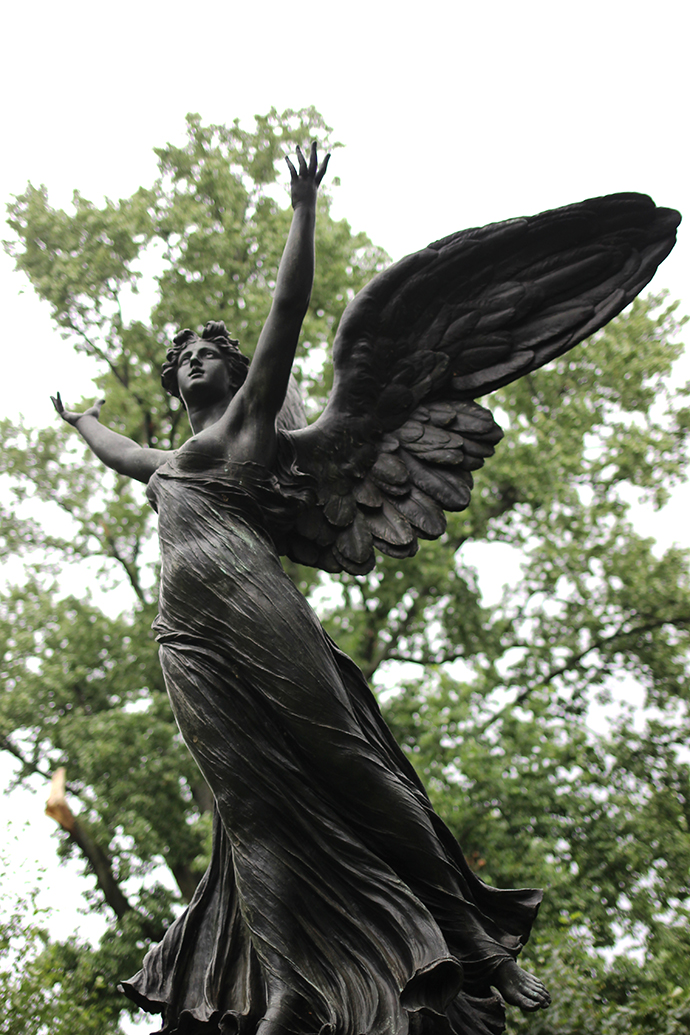
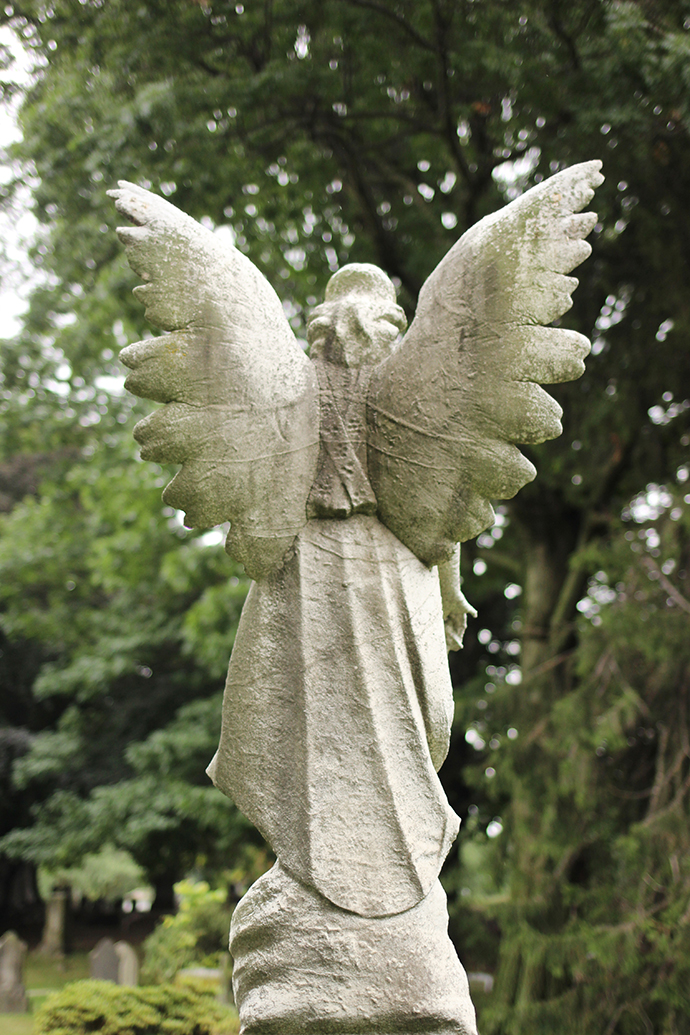
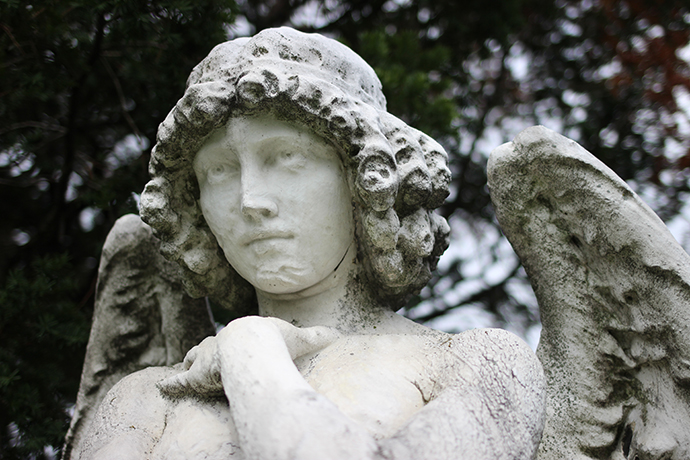
Statues really humanize a cemetery experience, much more than words on a tombstone ever could. A lot of the statues are not of the deceased exactly—although I always come across I suspect are done in a specific likeness—but represent general themes such as mourning or are a nod to the afterlife or reproduce religious imagery. Angels or cherubs are very common, and although they usually follow a prescribed look—women with wings and draped gowns—it's remarkable how many variations you can find on a simple premise.
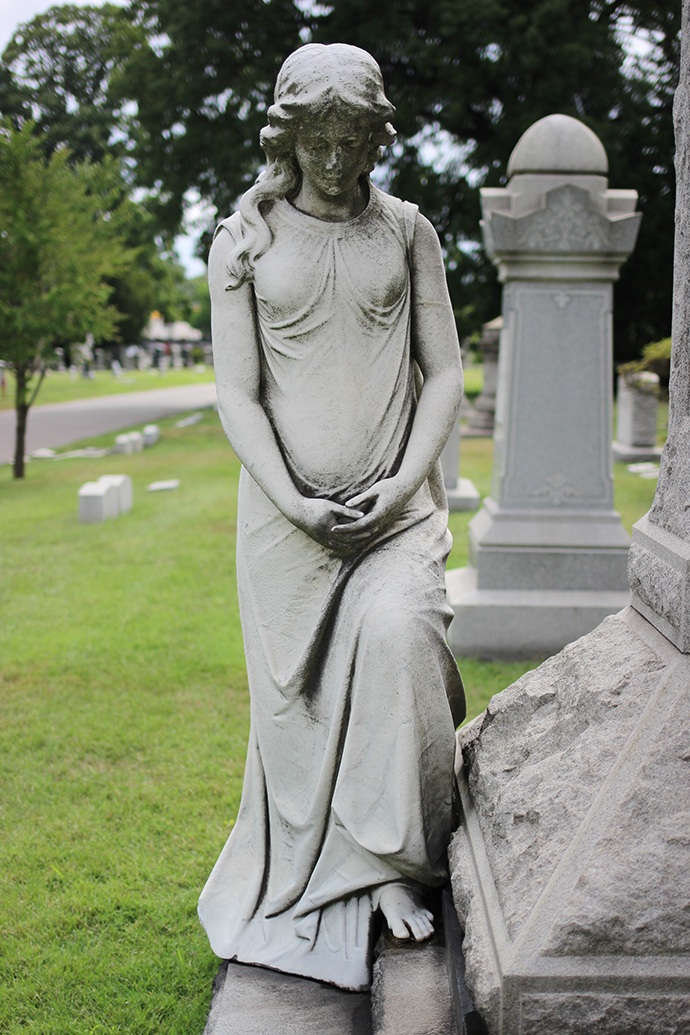
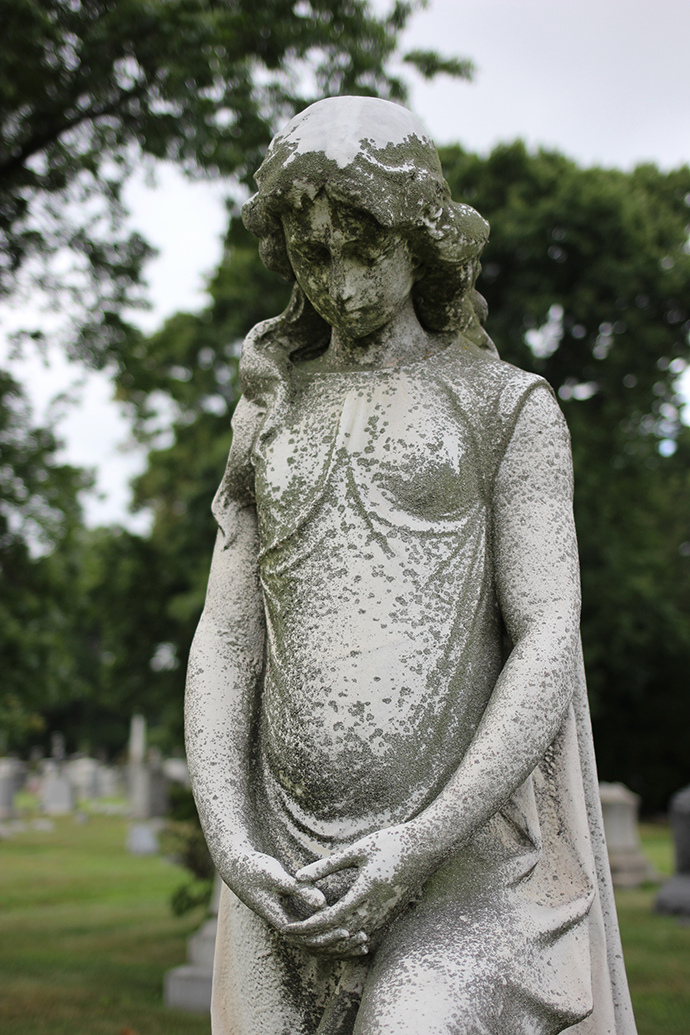
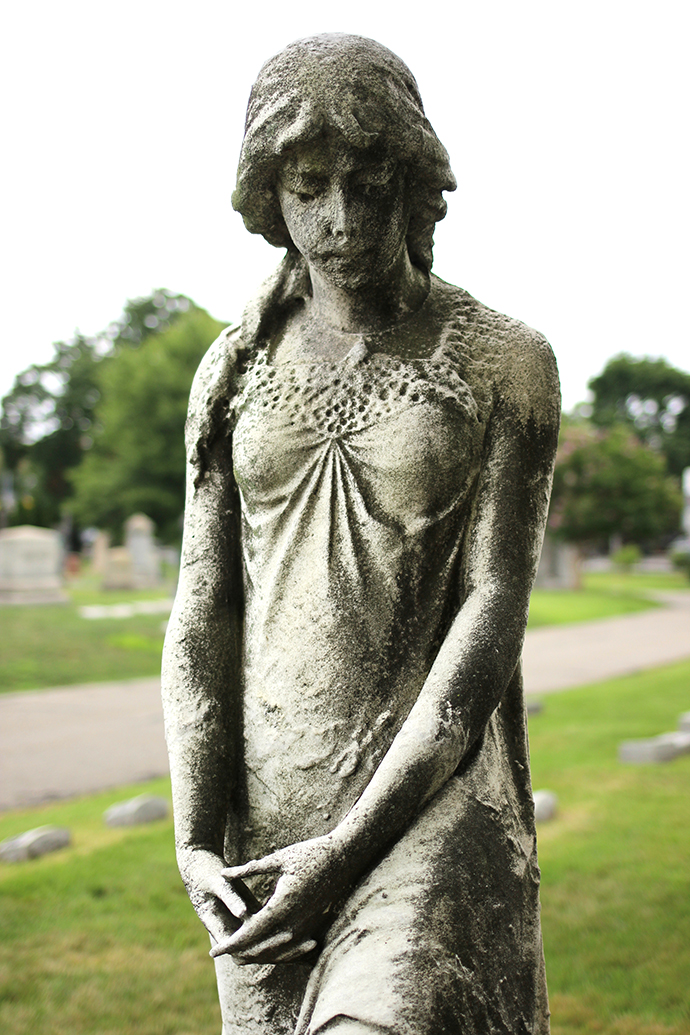
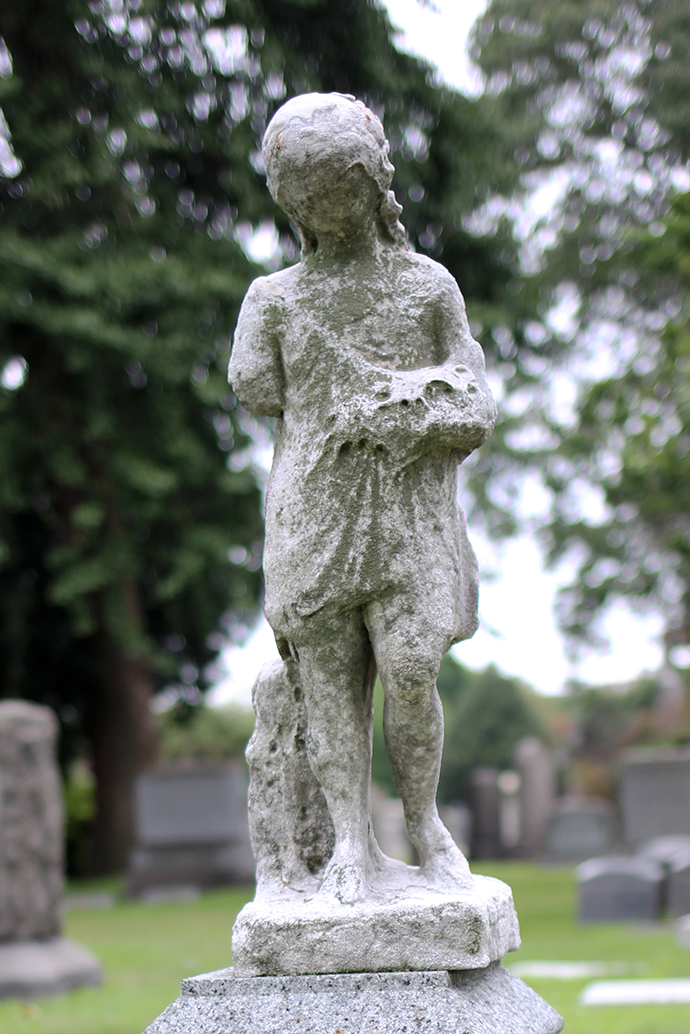
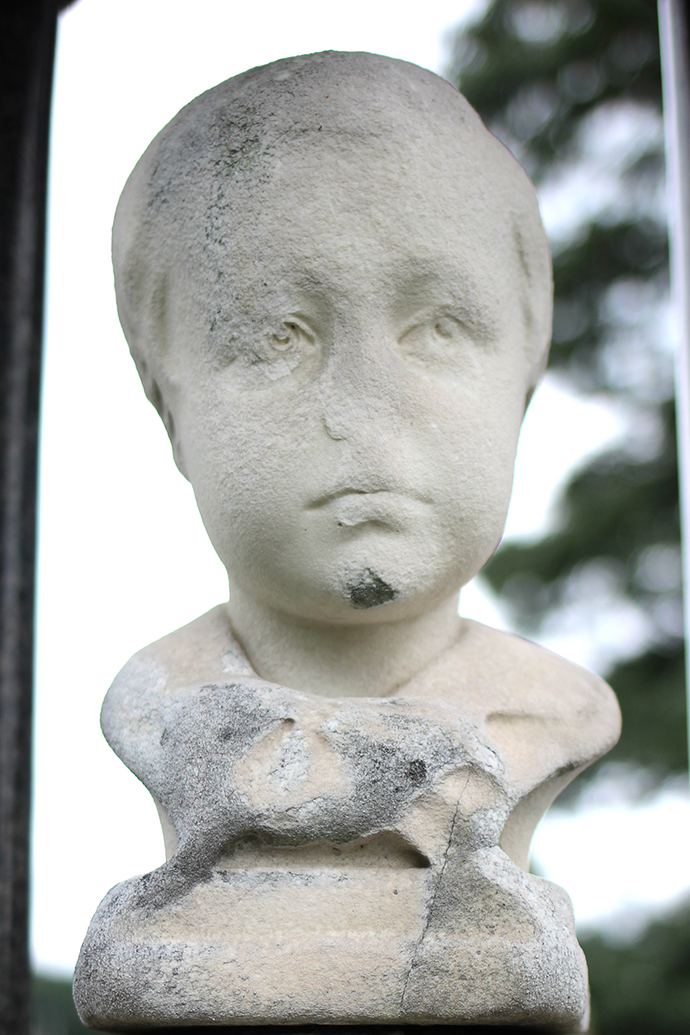
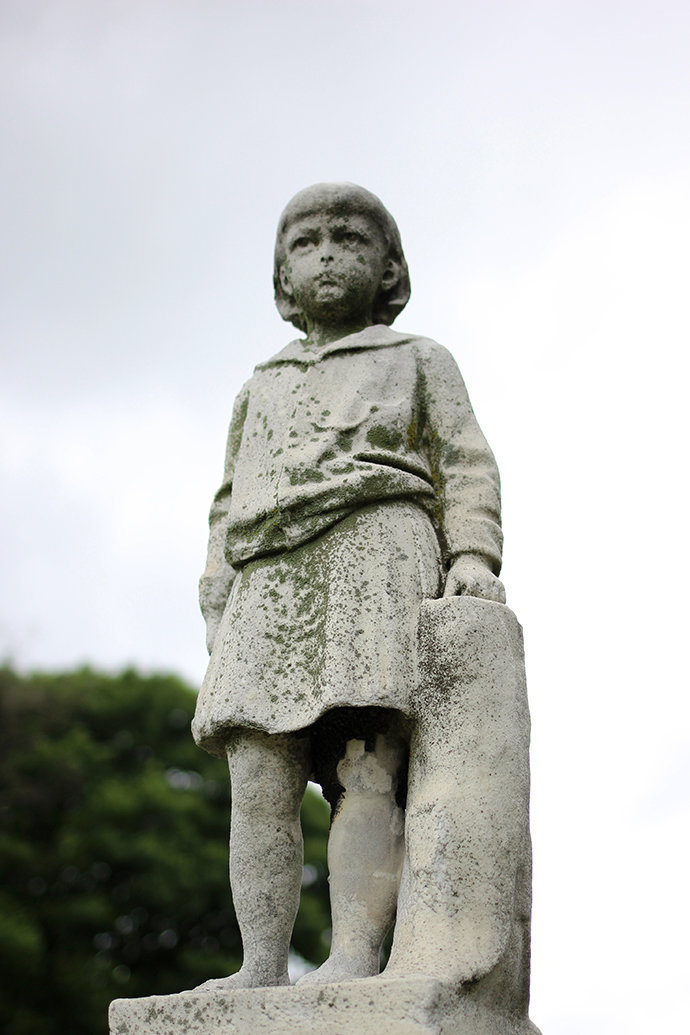
This time I noticed three separate statues of women with similar hairstyles, dresses and poses, and they appeared to be pregnant, which I've never seen before. Green-Wood also has its fair share of creepy children statues—which I assume are sculpted to actually look like the deceased—and although I have no use for living children in my life, their haunting stone counterparts are some of my favorite finds.
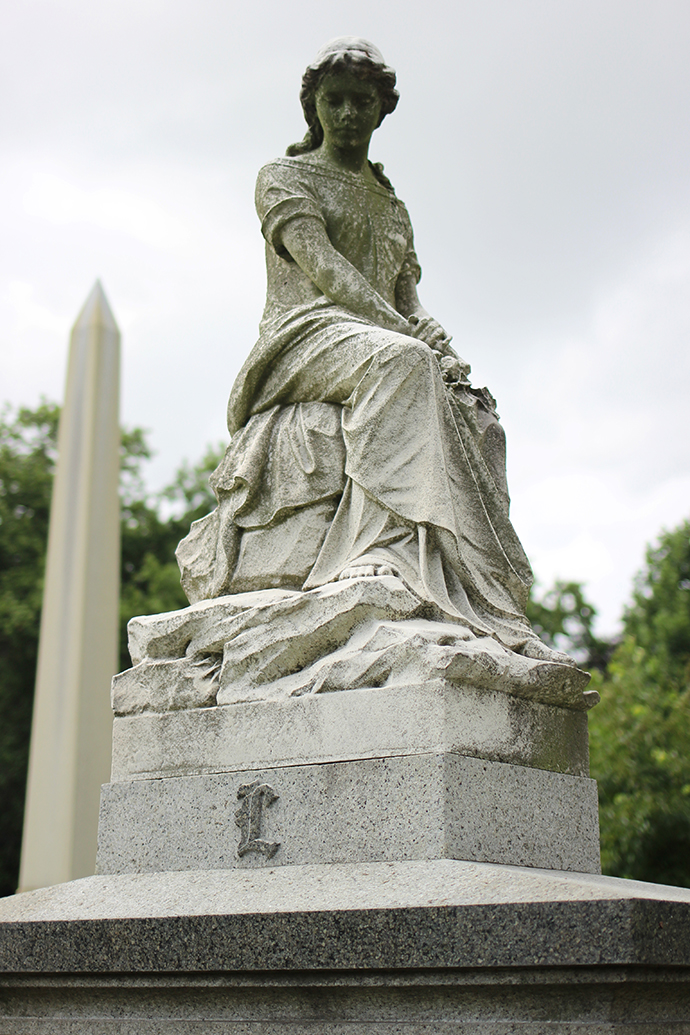
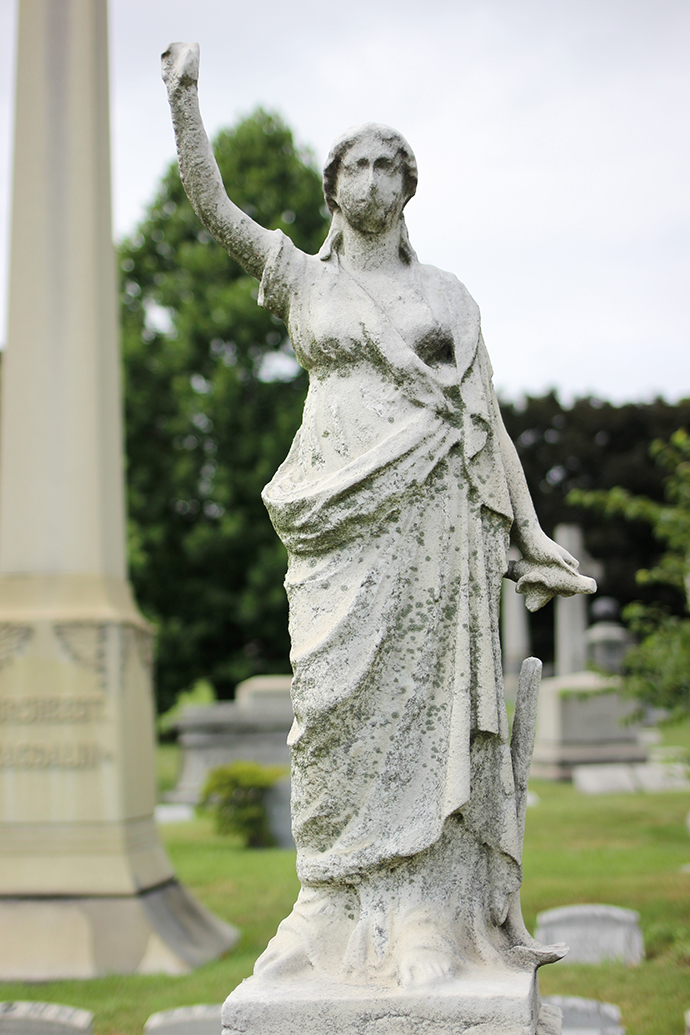
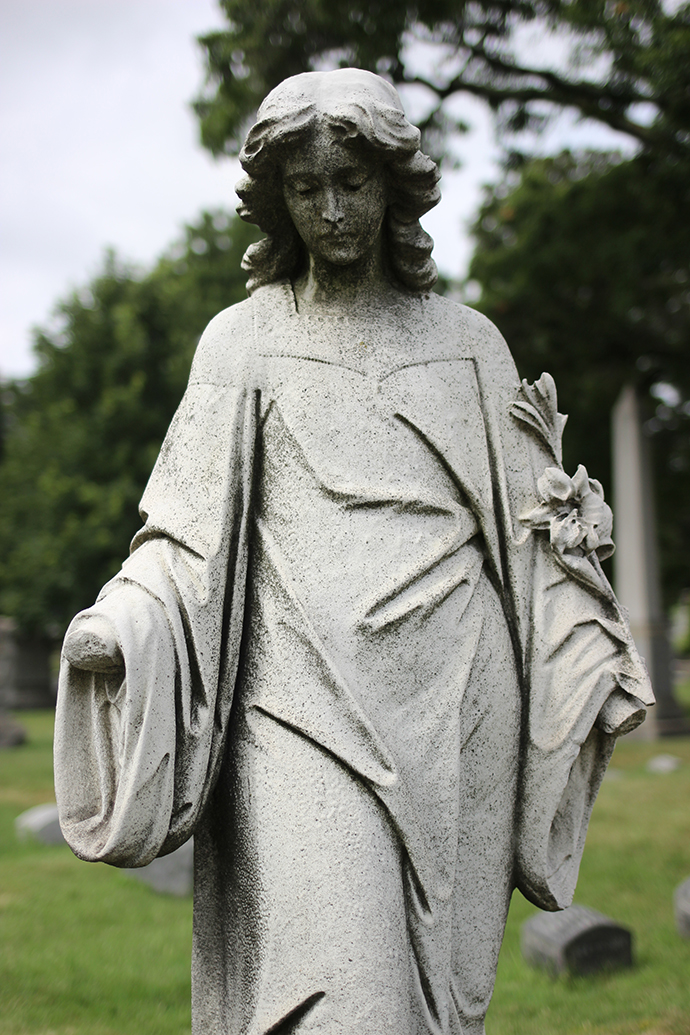
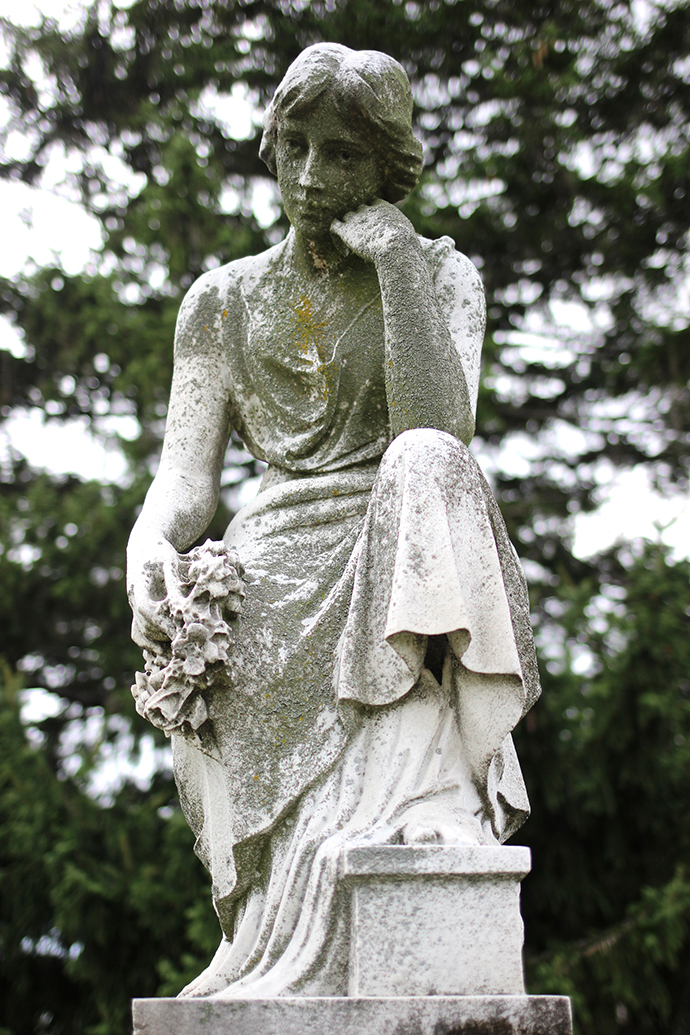
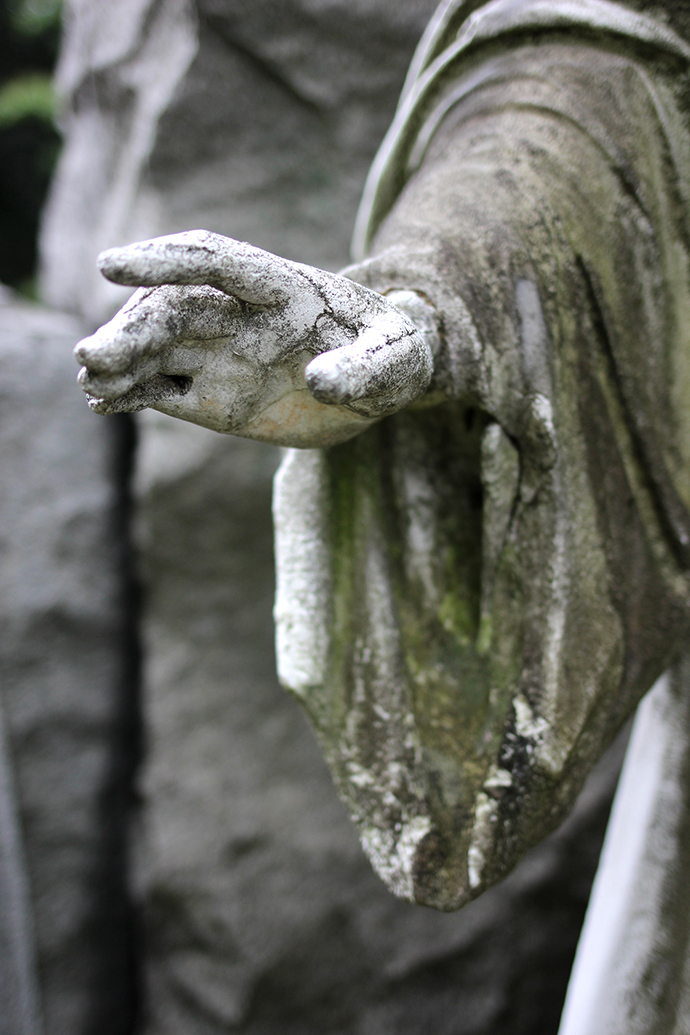
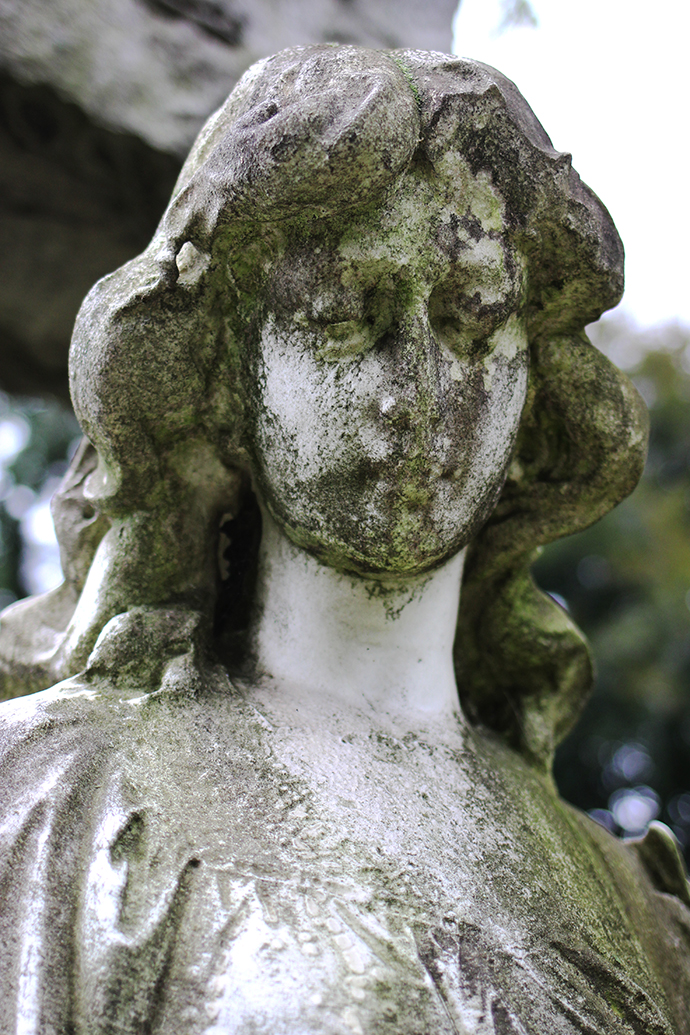
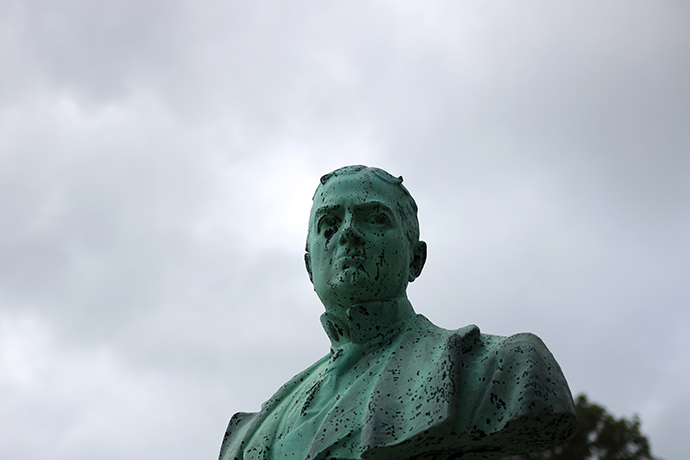
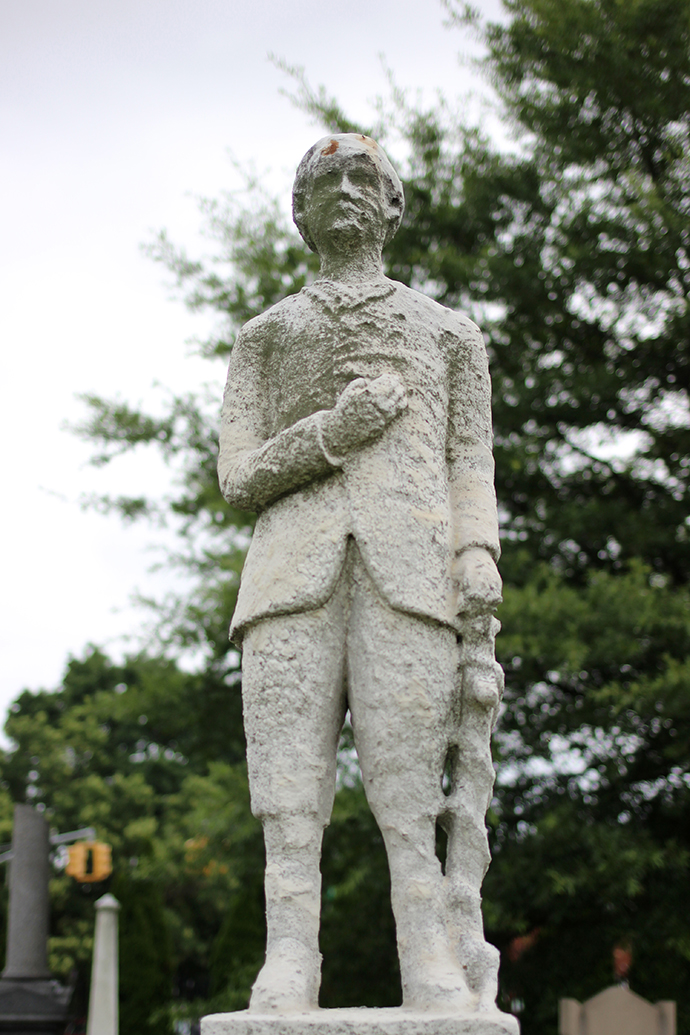
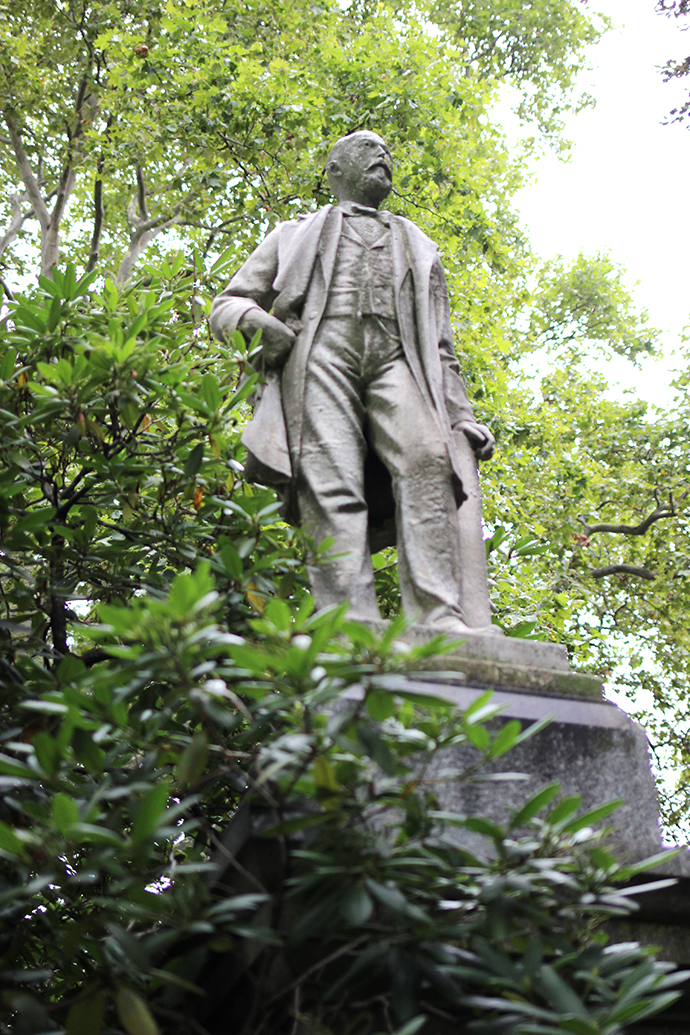
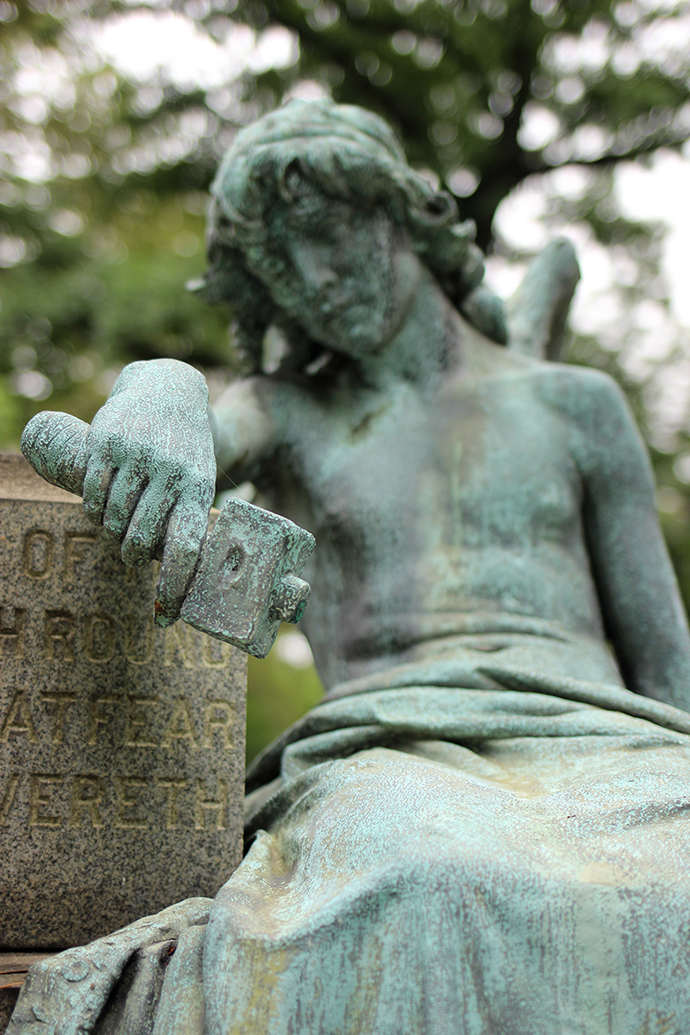
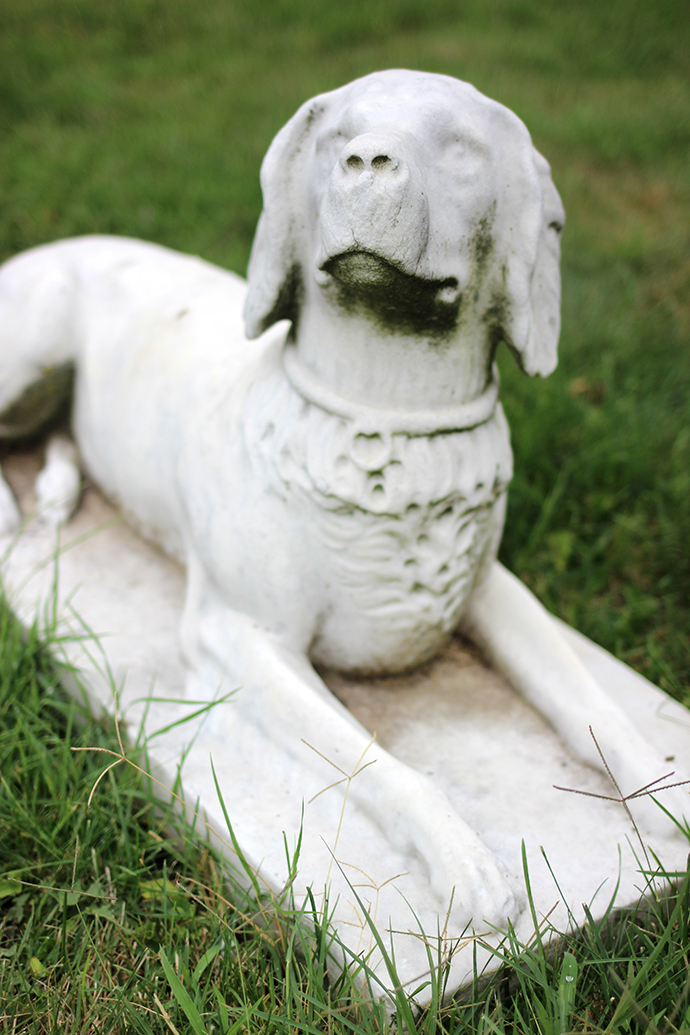
Mourning women are very common, including those that look as if they're weeping as well as those who could be mistaken for a visitor, holding flowers, wreaths or other offerings. Statues of men are less common—I once read that a high percentage of magazine covers feature women because women like to compare themselves to other women, and men like to look at women, and I wonder if the same idea applies to cemetery statues. The statues I did find of men tend to be mostly portraits, and the generic male sculptures I've seen have a very angelic, almost feminine look to them. I did also find one dog sculpture during this visit, and although I realize that each sculpture represents the loss of an actual human life, it's the thought of a faithful canine companion guarding his owner's final resting place that will always make me tear up.

Historic Jersey City & Harsimus Cemetery
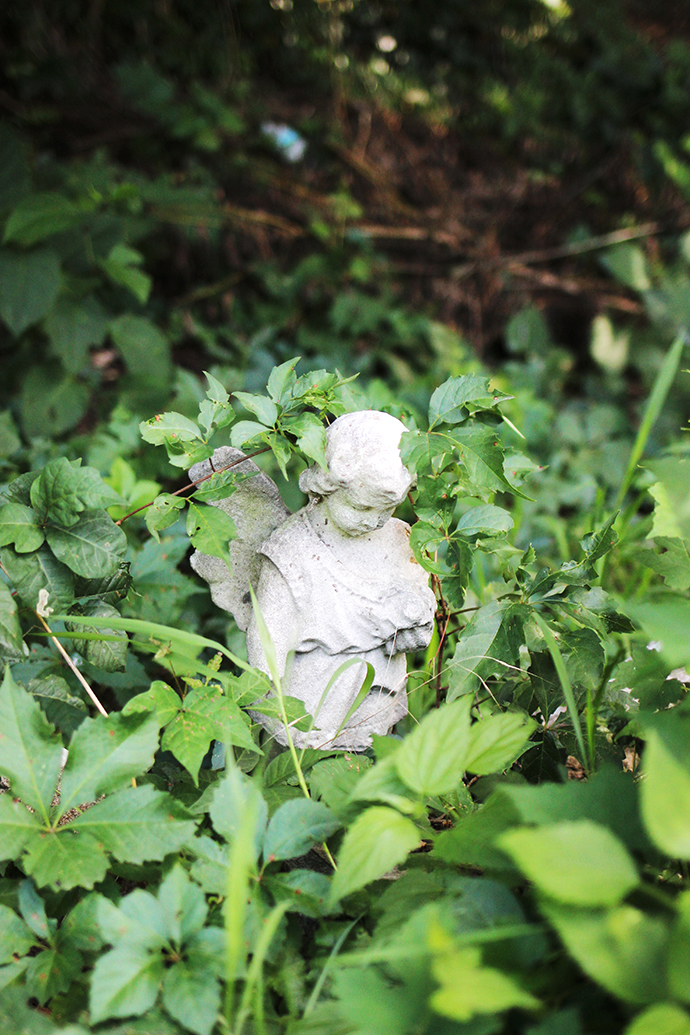
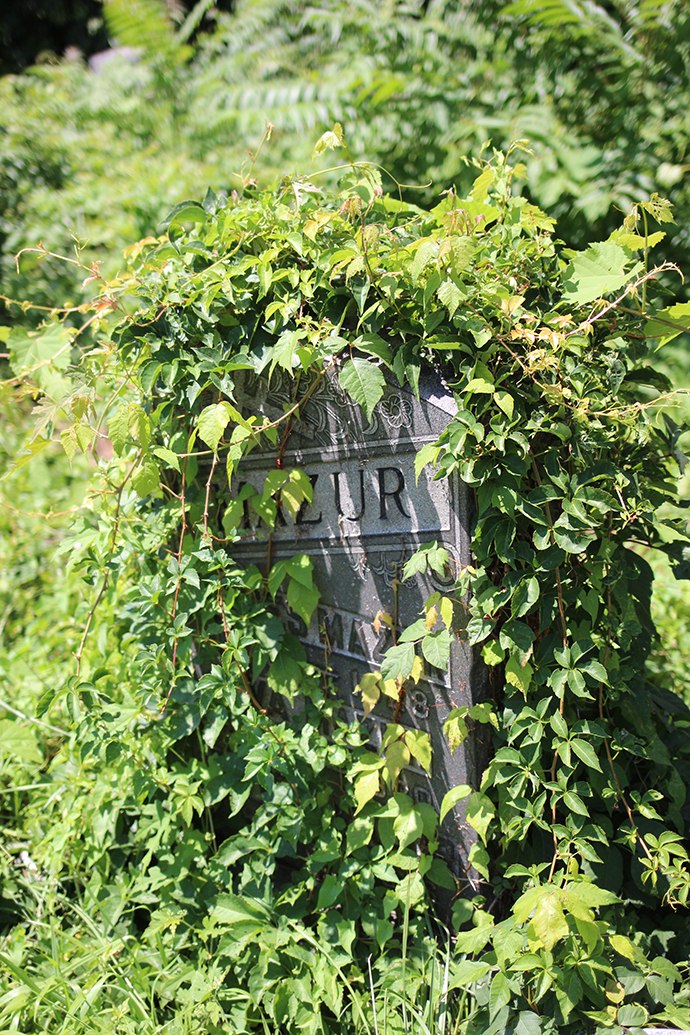
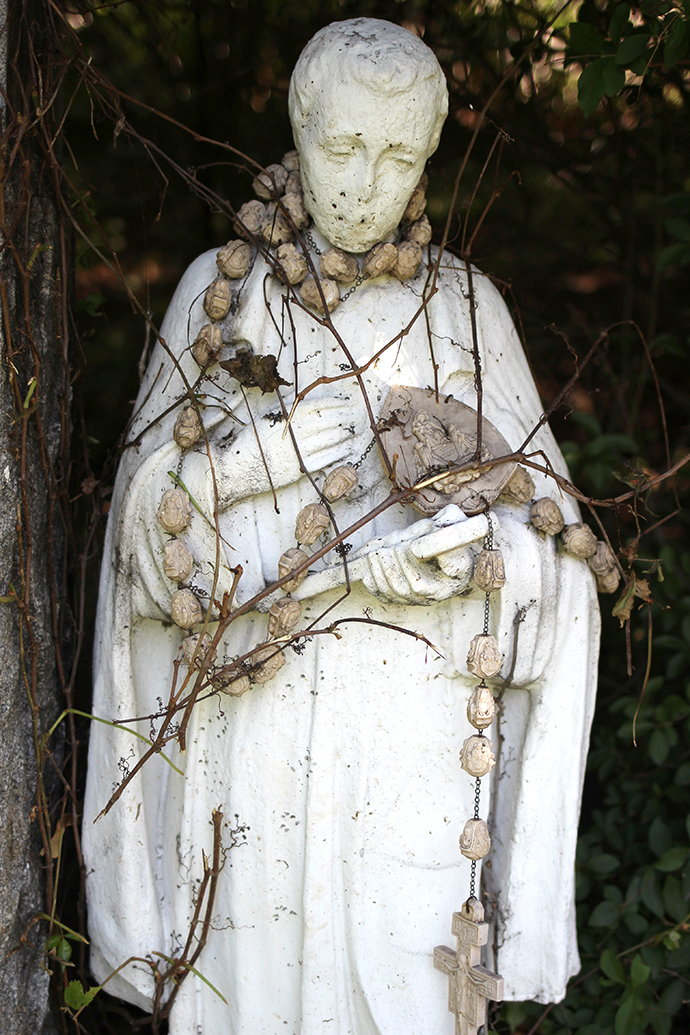
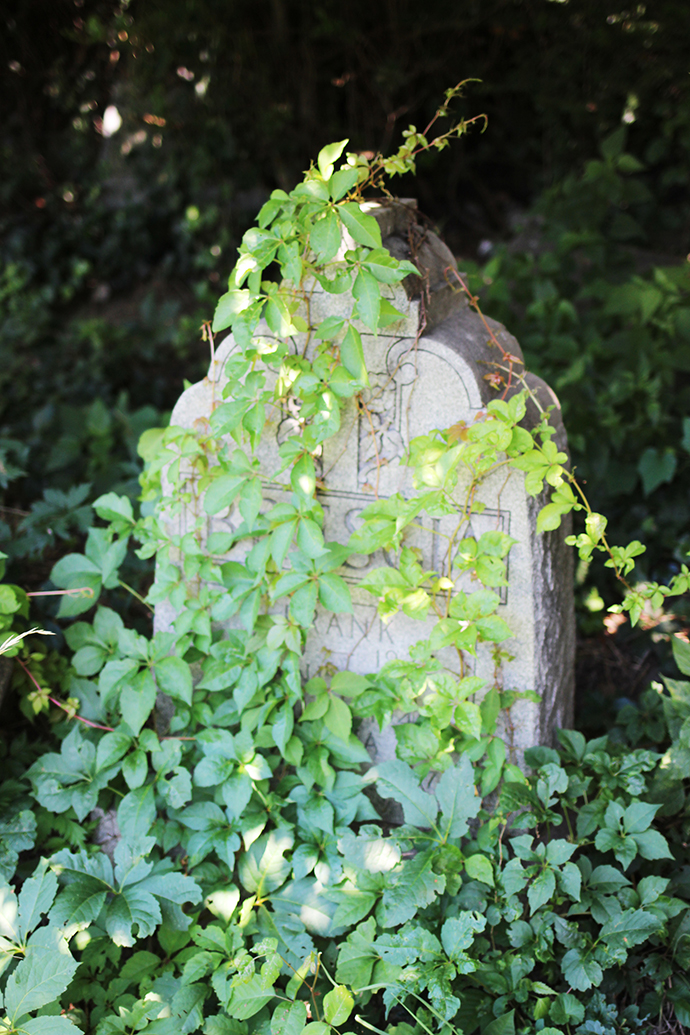
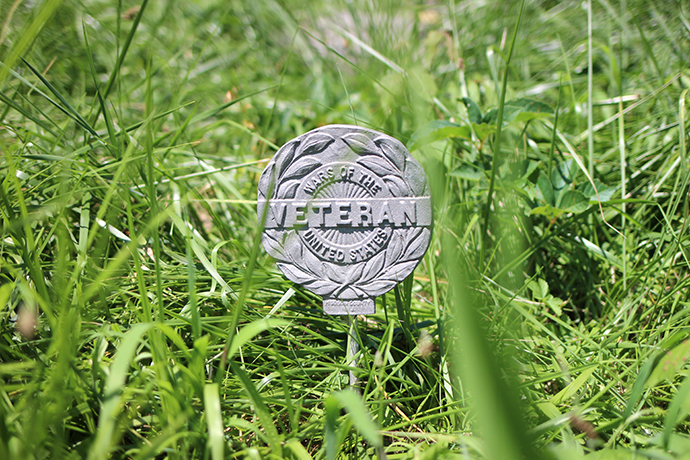
After meeting my eighth Muffer Man, I headed back east toward downtown Jersey City and stopped at the Historic Jersey City & Harsimus Cemetery. The cemetery was incorporated in 1831, after a cholera epidemic forced the city to create a larger cemetery on the outskirts of town. The site of the cemetery had previously been host to several Revolutionary War skirmishes and to an active ammunition bunker during the War of 1812.
The cemetery was badly neglected and abandoned until a volunteer group took over in 2008 and began to clean up and restore the grounds. It was during these restoration efforts that a series of tunnels and chambers were discovered through an old door set into the hillside. The tunnels were filled with bones, unburied coffins and boxes of munitions leftover from the war. Unfortunately I didn't get inside of the tunnels, and in fact, I was lucky enough to get inside of the actual cemetery.
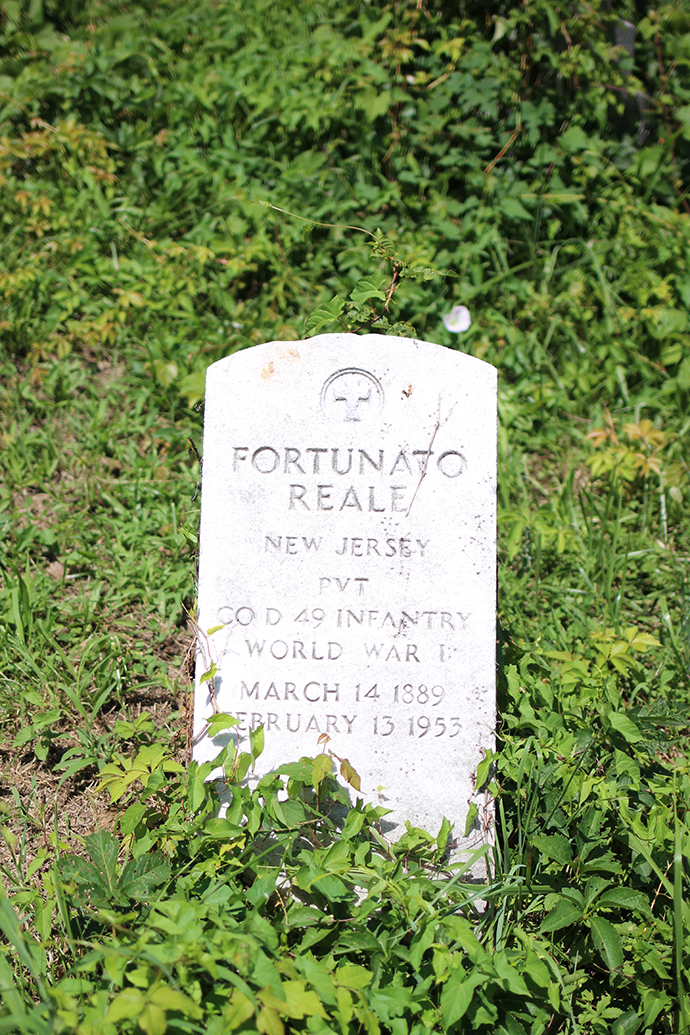
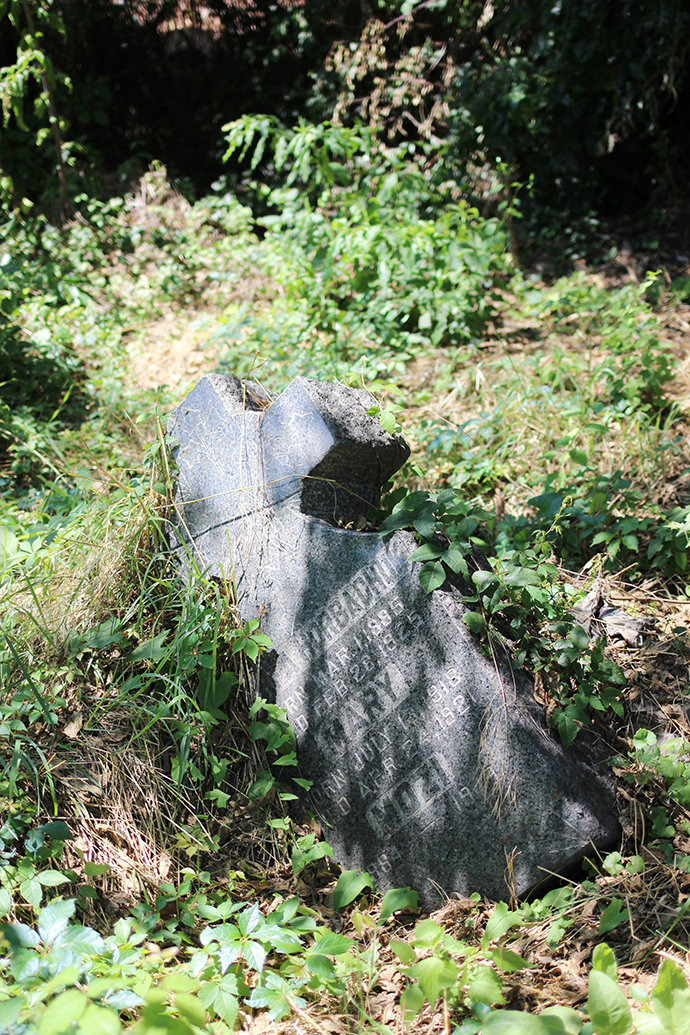
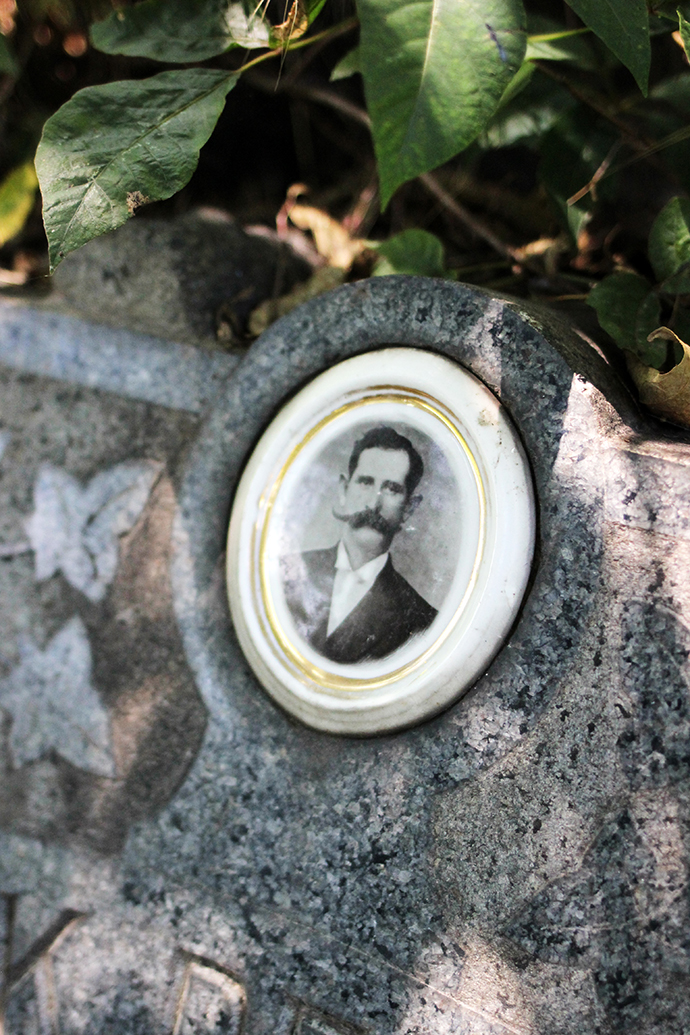
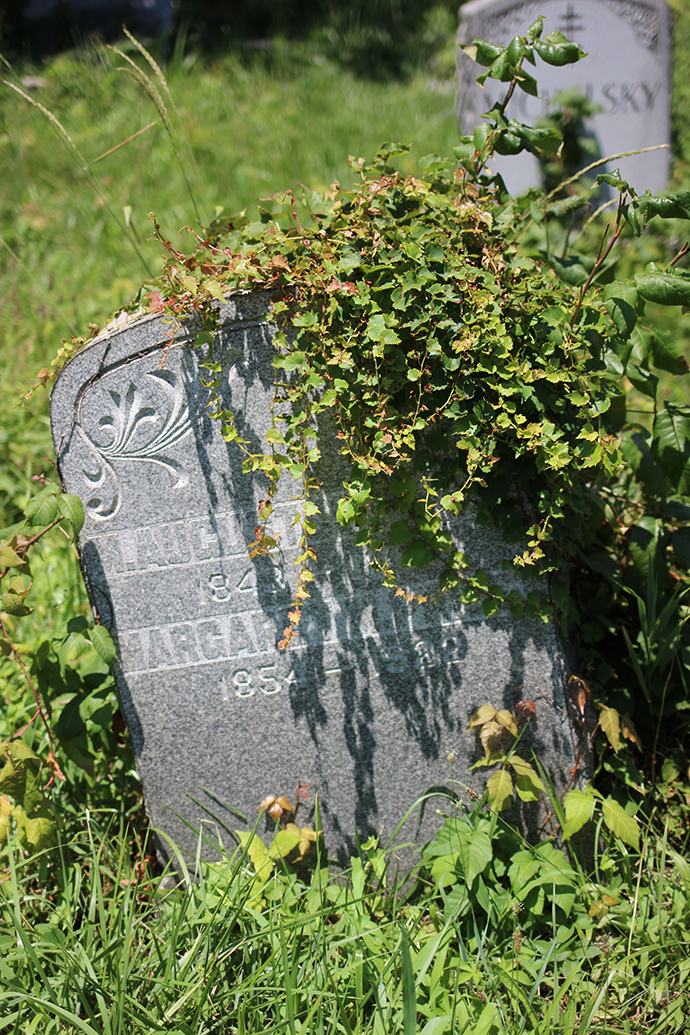
When I finally found the entrance, I discovered that the gate was locked. As I started to walk away disappointed (George Michael-style—head down, Charlie Brown theme playing), I noticed a man approaching the gate from inside of the cemetery. I went back and asked if I could "just look around," and to my surprise he unlocked the gates and waved me in. He mumbled what sounded like "the ghost got out again" as he was re-locking the gate, and I laughed until he said it again and I realized he was actually saying "the goats got out again."
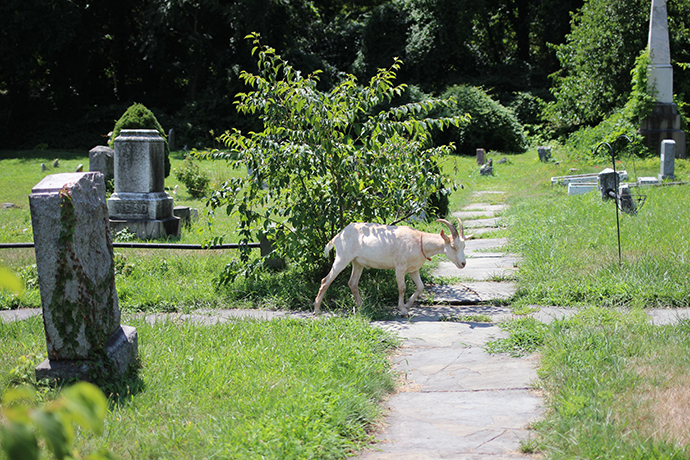
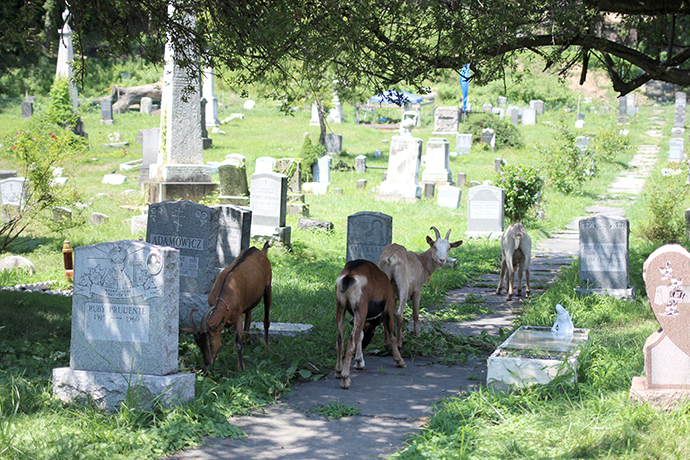
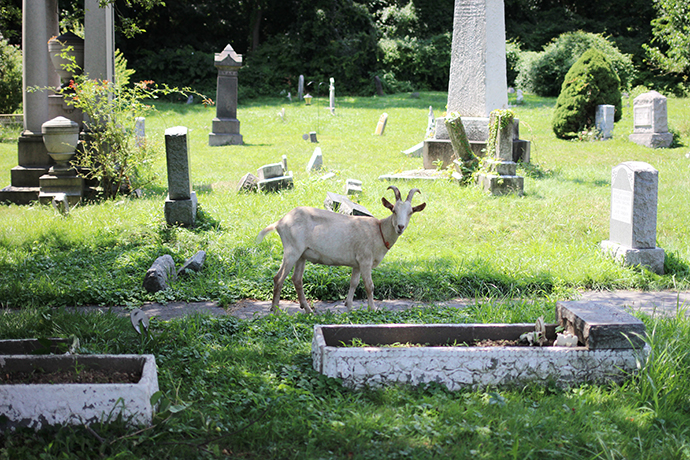
All summer long the cemetery is using goats to help clear the weeds, and they were apparently having a hard time keeping them inside of the cemetery. I'm very grateful to the man that let me in, and to the other man tending to the goats who allowed me to explore the grounds ("Get some shots of the goats," he said. "They won't bite!"). I'm assuming they were the two veterans who now live in the caretakers cottage in exchange for watching over the cemetery, which sounds a lot like my dream job that I never knew existed.
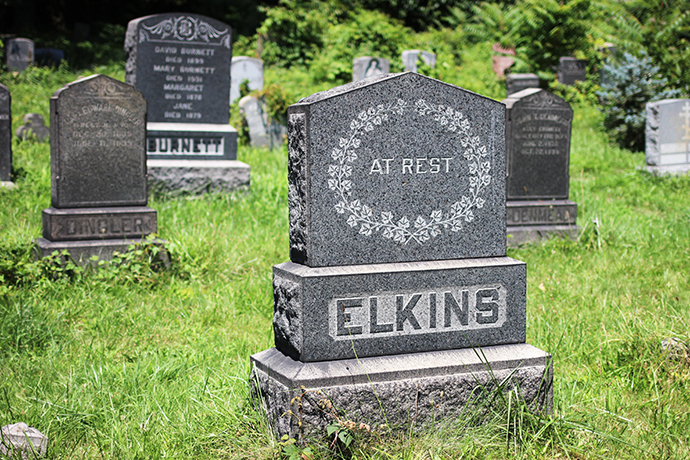
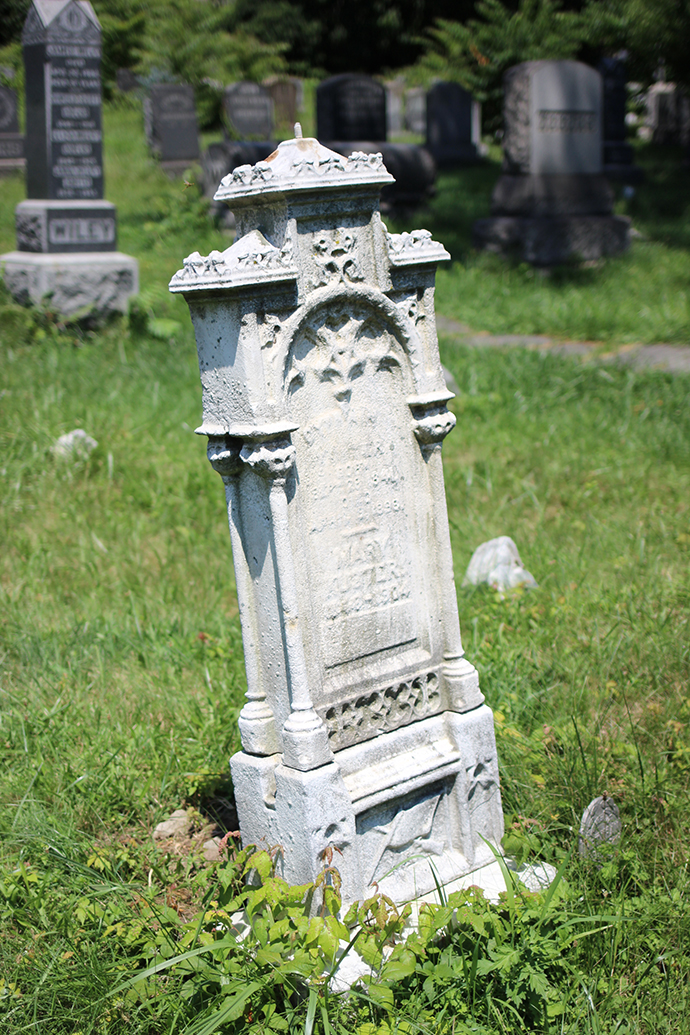
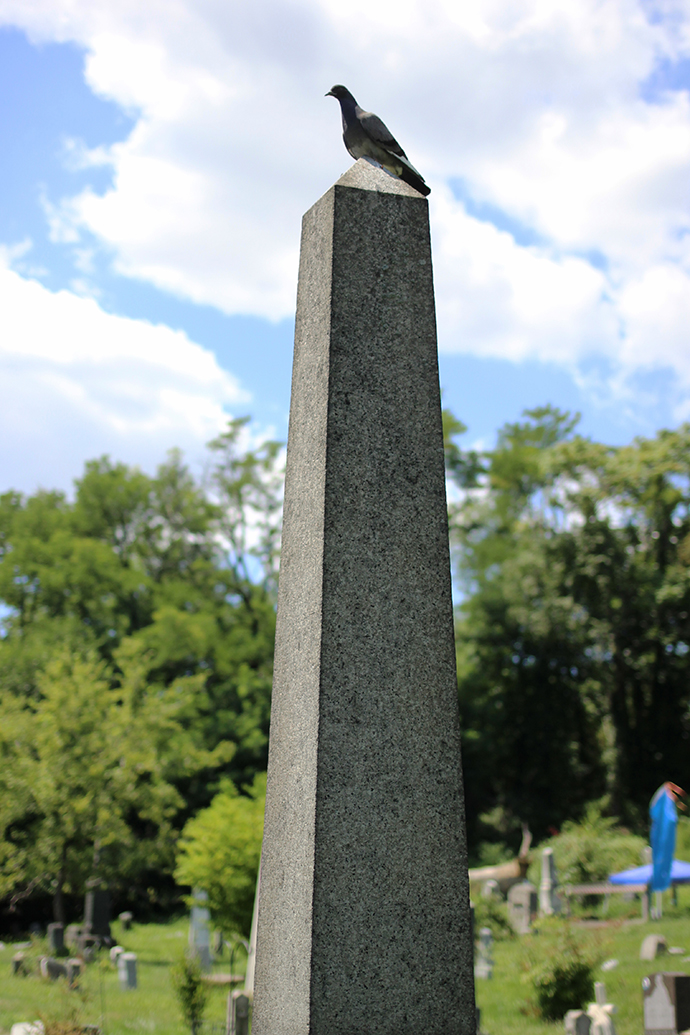
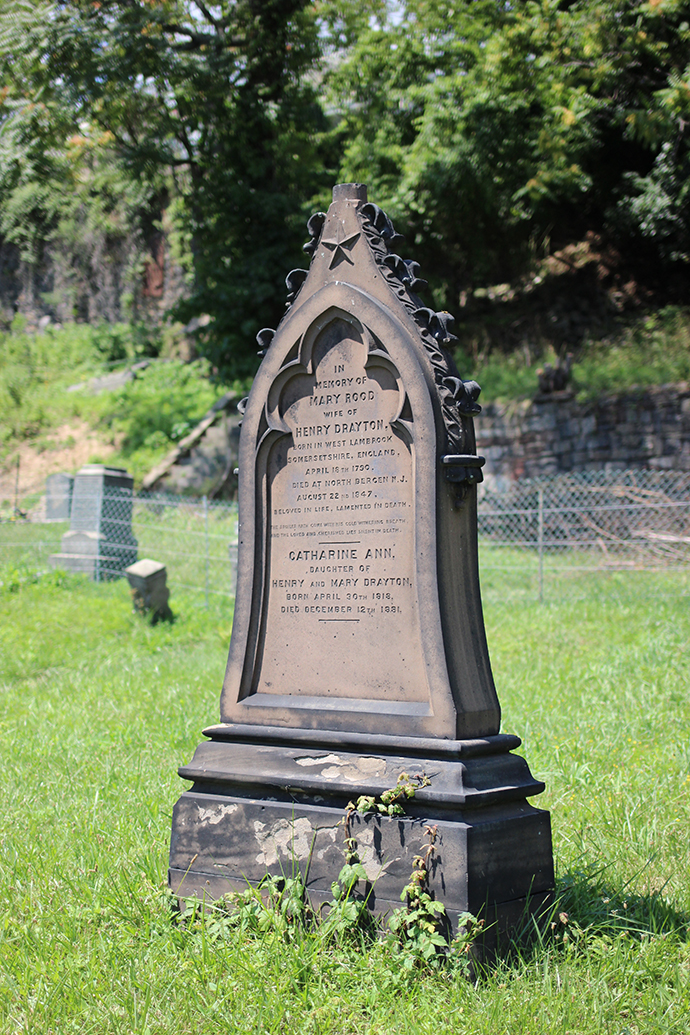
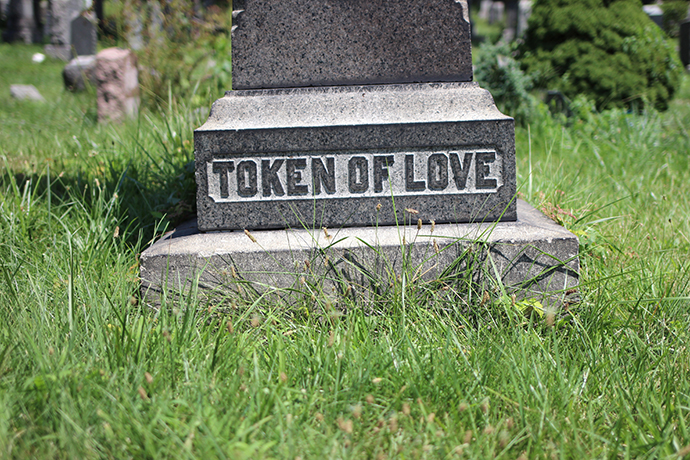
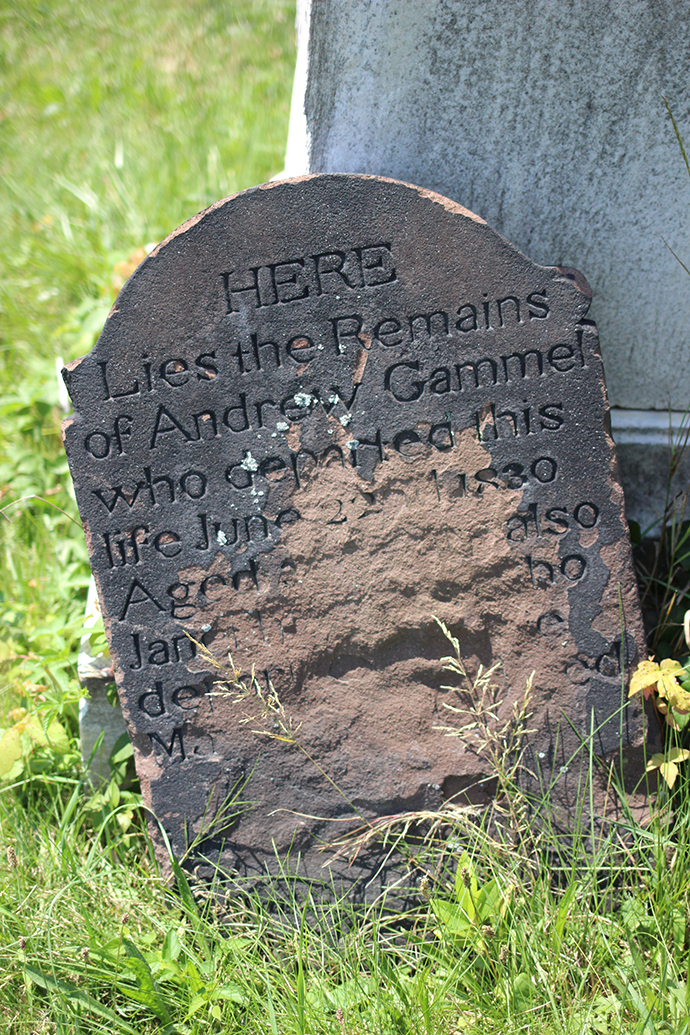
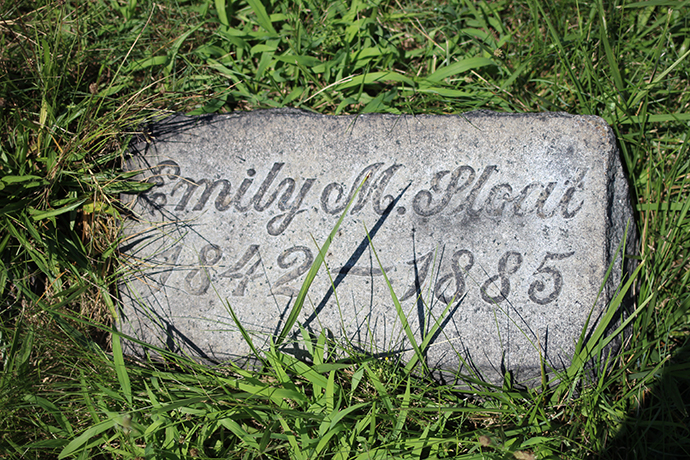
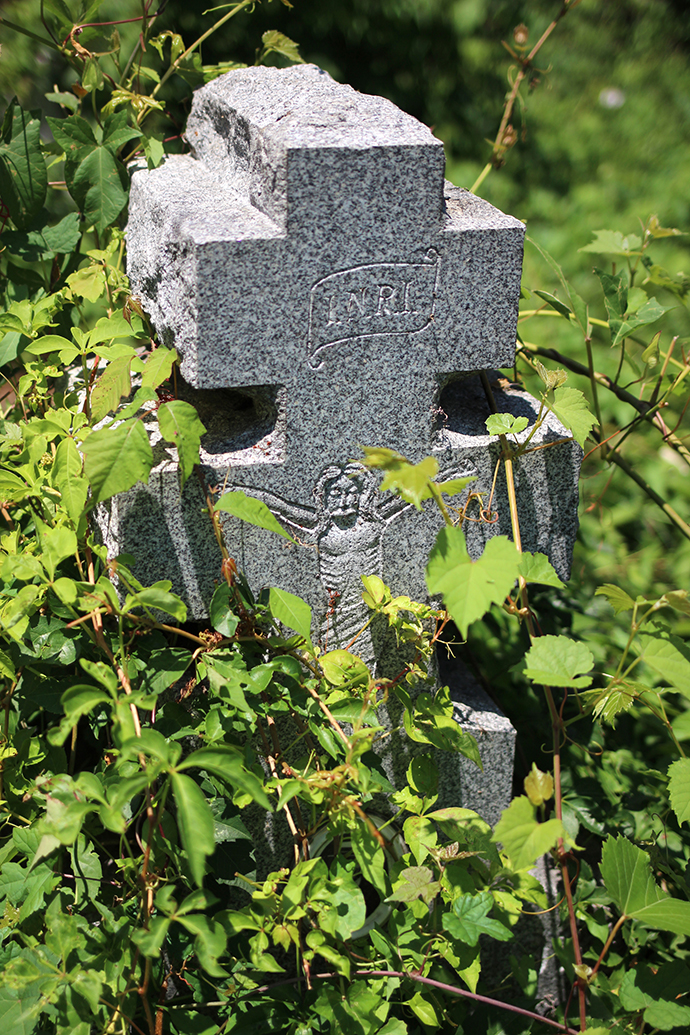
Although I would have loved to explore the tunnels, the cemetery grounds are plenty fascinating on their own. If you just wandered into the Jersey City cemetery, you would have no idea that it was abandoned or was once in such bad condition. It's only when you take a closer look do you start to notice broken stones, sunken graves and areas still covered in weeds.
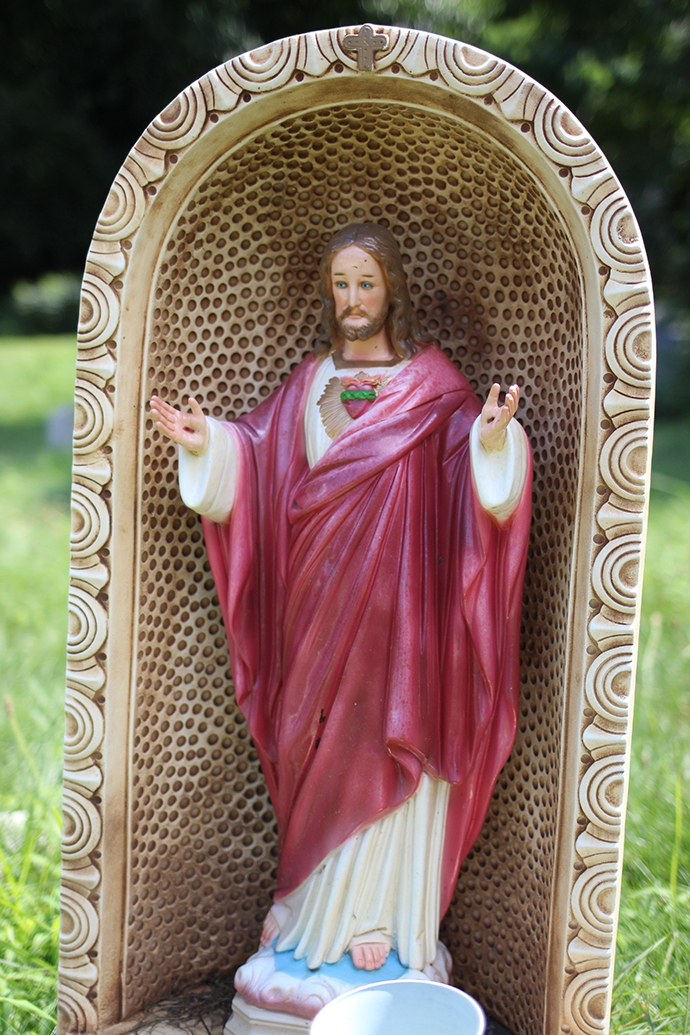
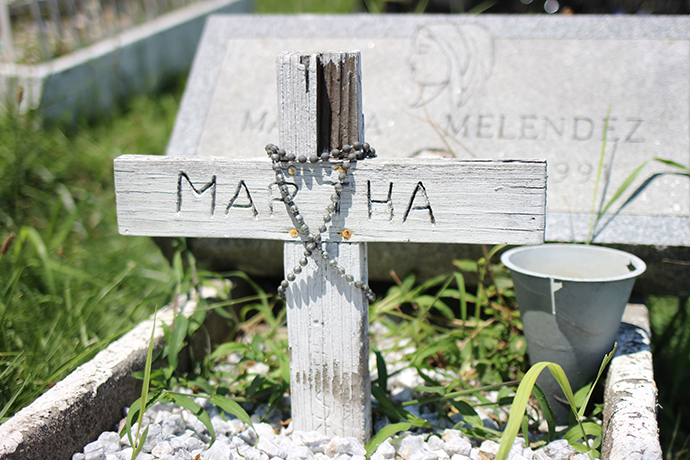
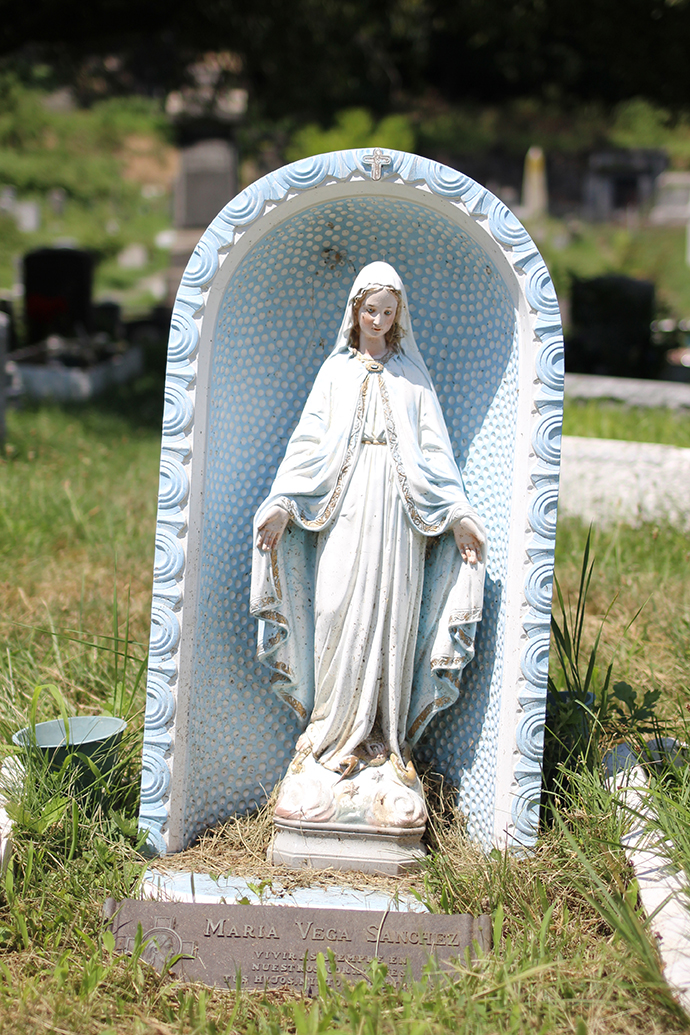

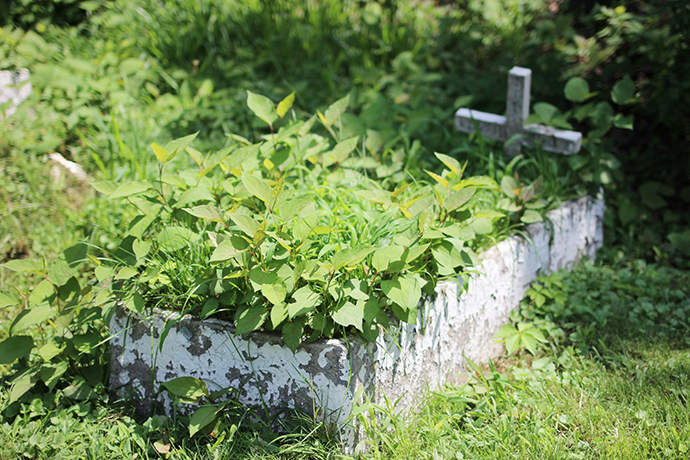
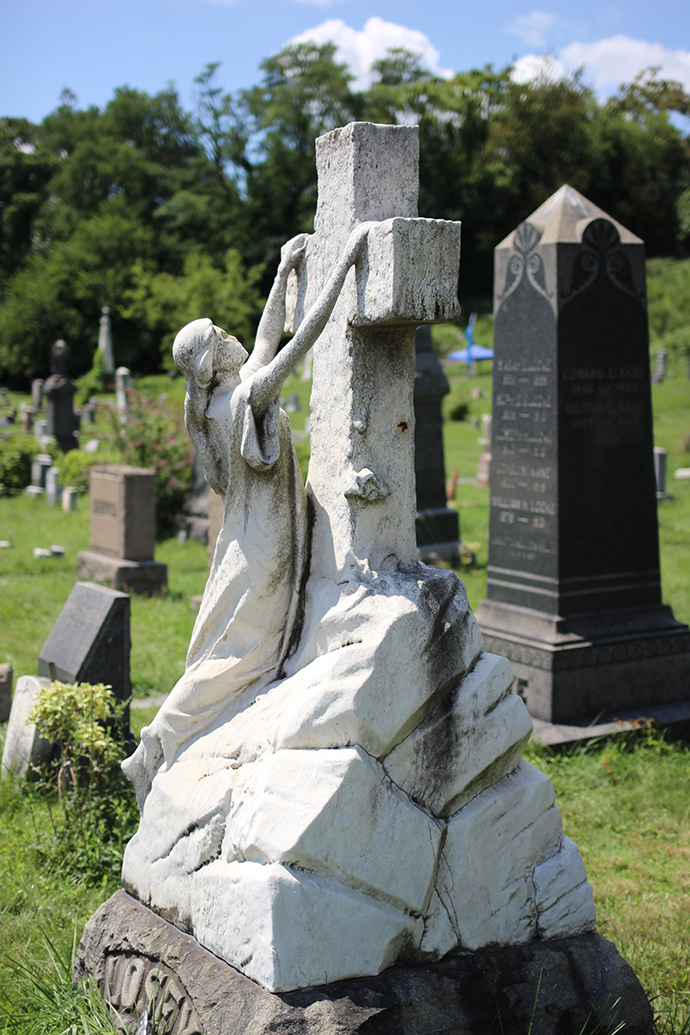
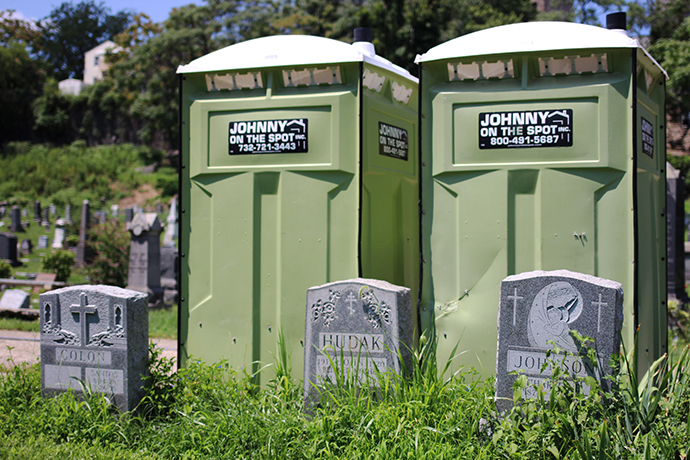
The Historic Jersey City & Harsimus Cemetery immediately reminded me of Eastern Cemetery in KY—both places were saved from years of neglect and abuse by a group of caring volunteers. Additionally, the cemetery regularly hosts fundraising events such as movies, plays and concerts, with all proceeds going toward their maintenance, upkeep and preservation efforts.

O'Brien Cemetery
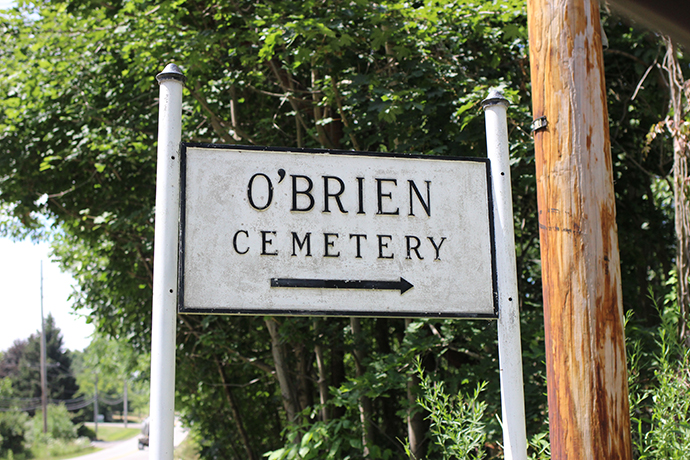
When I was back in Ohio recently, my dad asked if I'd like to go see a cemetery that he'd "been driving by for 30 years and never stopped to check out."Of course I said yes. O'Brien Cemetery is less than five miles from the house where I grew up, but I'd never heard of it before. I wasn't as diligent at seeking out cemeteries (or exploring in general) then as I am now, but my recent trip back made me realize just how little I actually know about the place where I spent the first 27 years of my life.
Fortunately, at least one Charitan has been paying attention, and it felt right that my dad and I got to see the cemetery together. The only thing my dad had seen was the tiny sign ("Get your camera ready," he said) at the end of a long driveway that disappeared into woods. We drove down the gravel road not really knowing what to expect, but it felt like the way a horror movie might start, so we were optimistic.
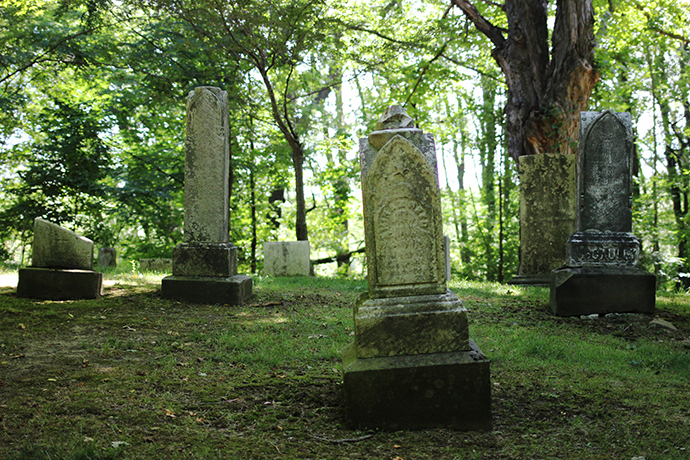
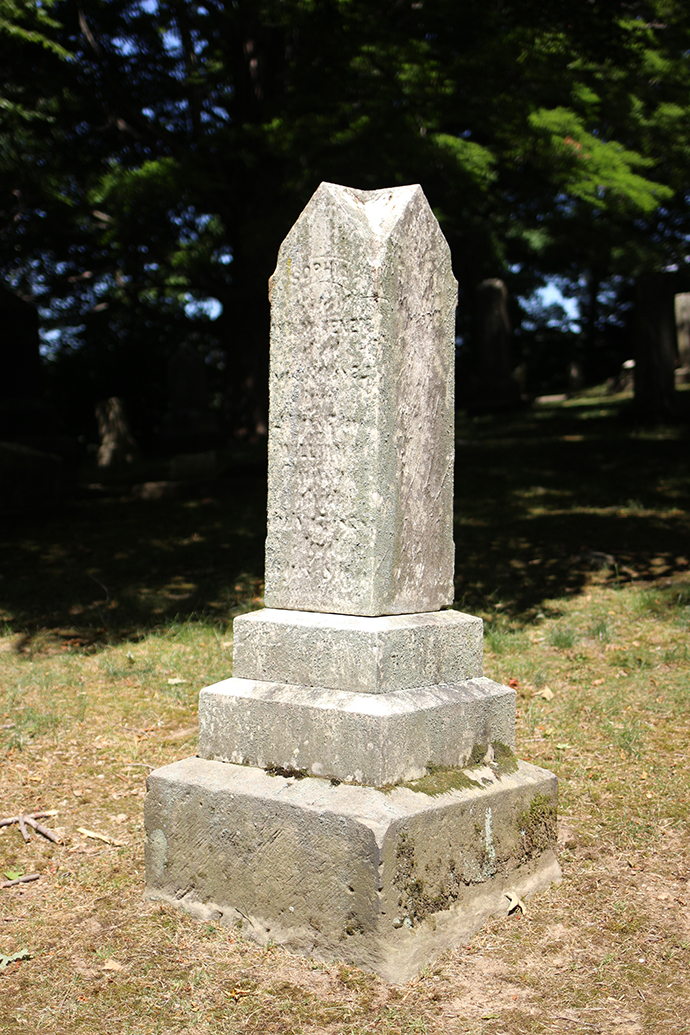
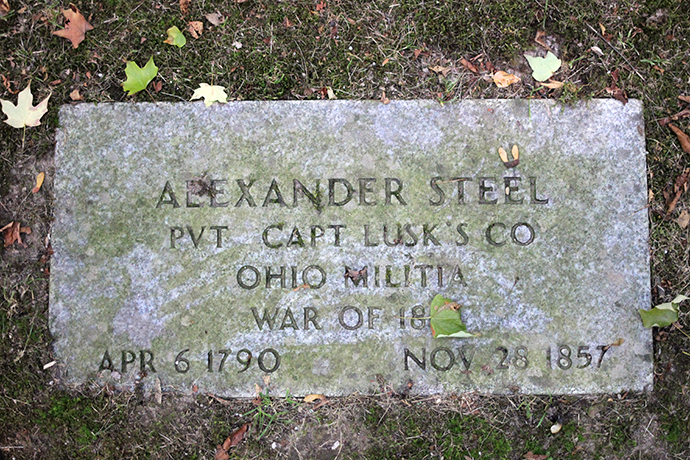
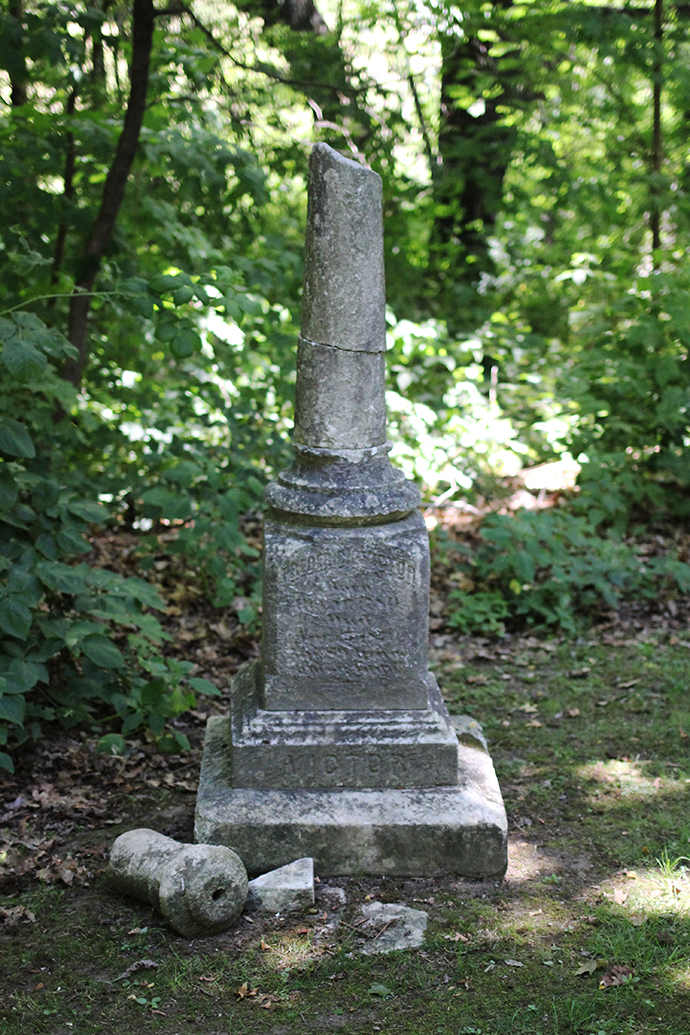
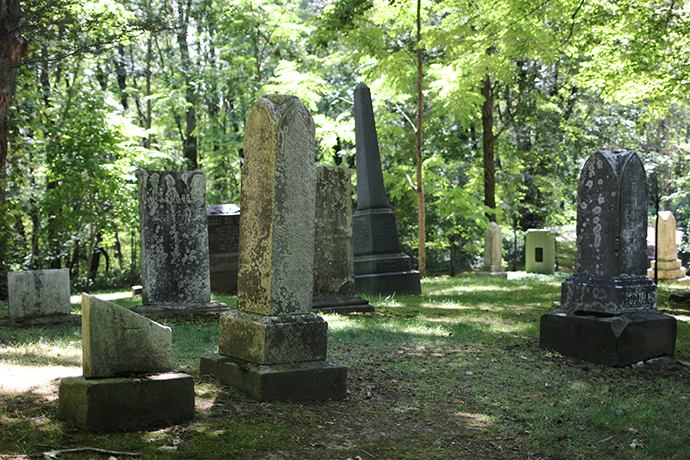
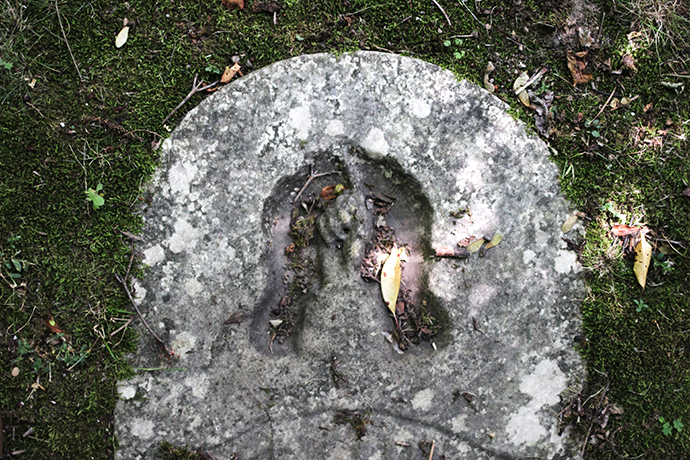
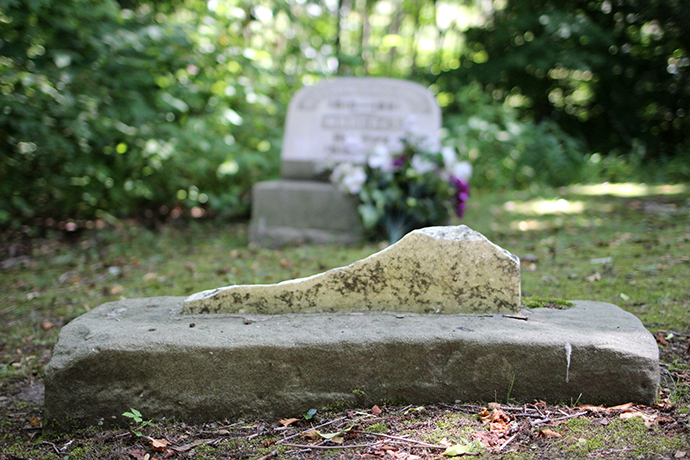
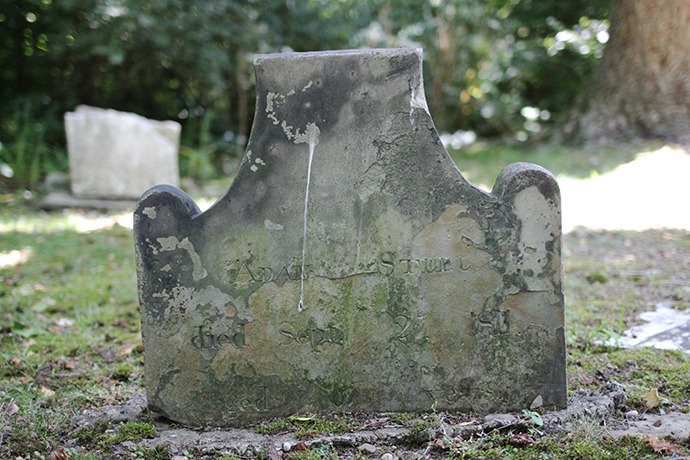
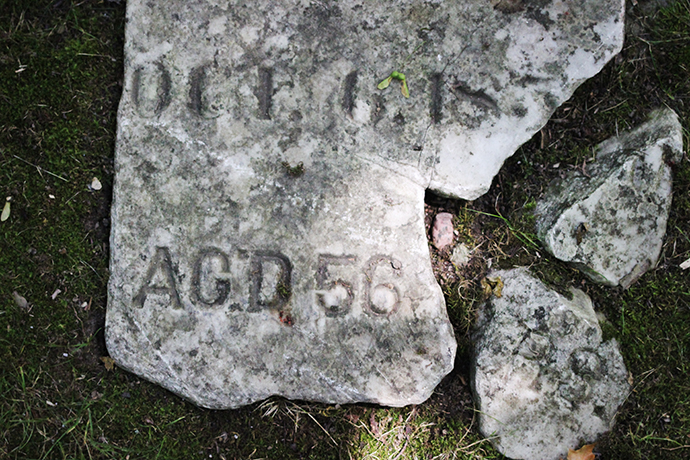
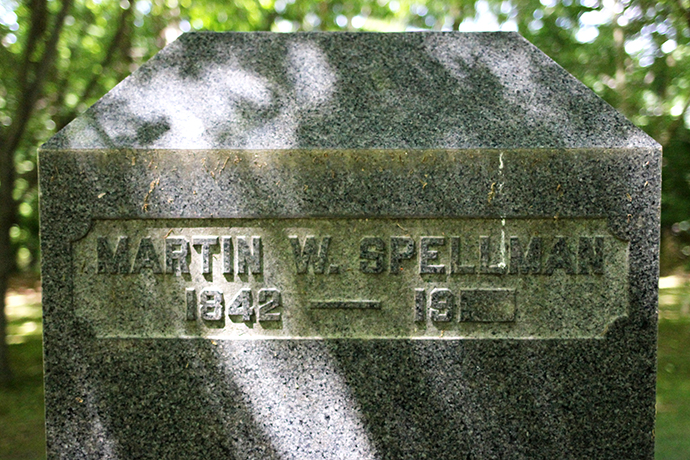
The O'Brien cemetery was established in the 1880s, however burials took place on the site as early as 1806. The area, on the west side of Hudson Drive in Hudson, Ohio, was once called "Little Ireland," and the cemetery residents are primarily of Irish descent. There is a map of plots and names, including a lot of O'Briens, McCauleys, McKenzies and Galloways, although the plaque acknowledges that since a lot of the records have been lost, "there are definitely errors in this listing."
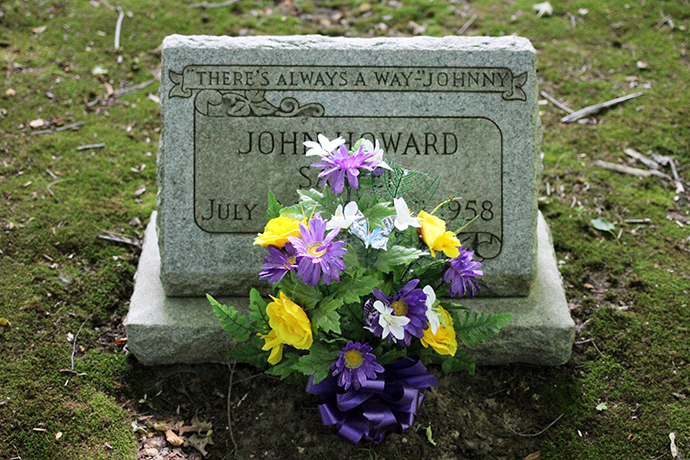
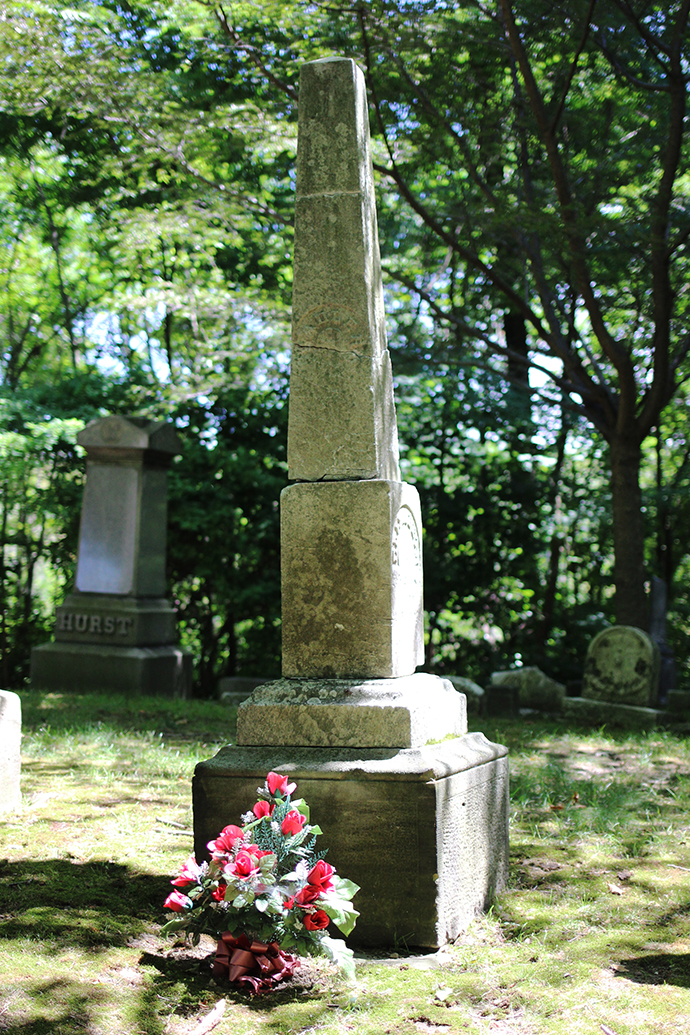
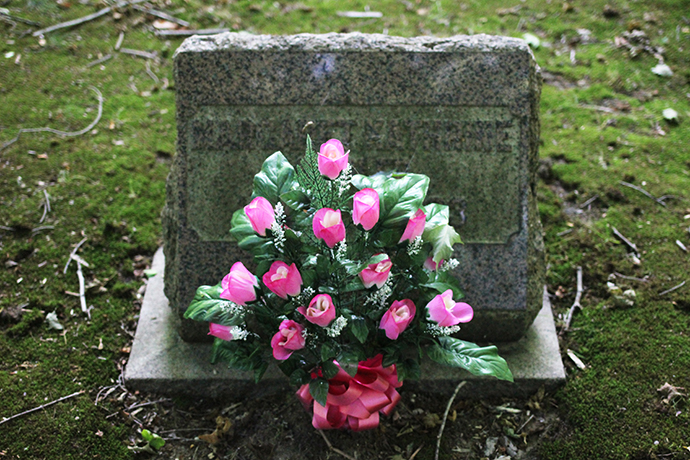
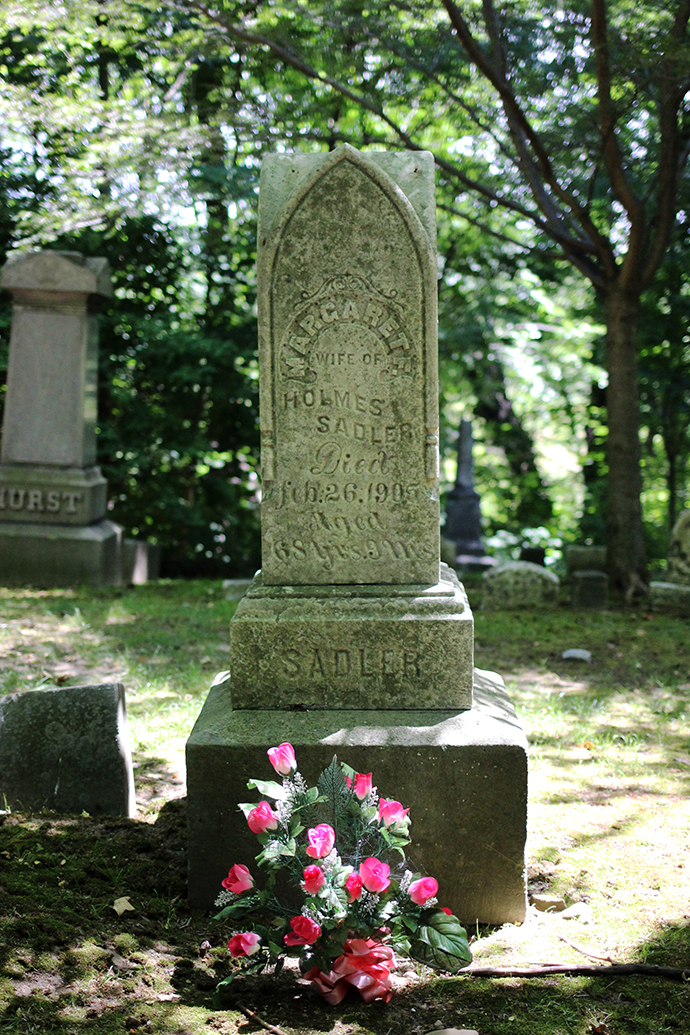
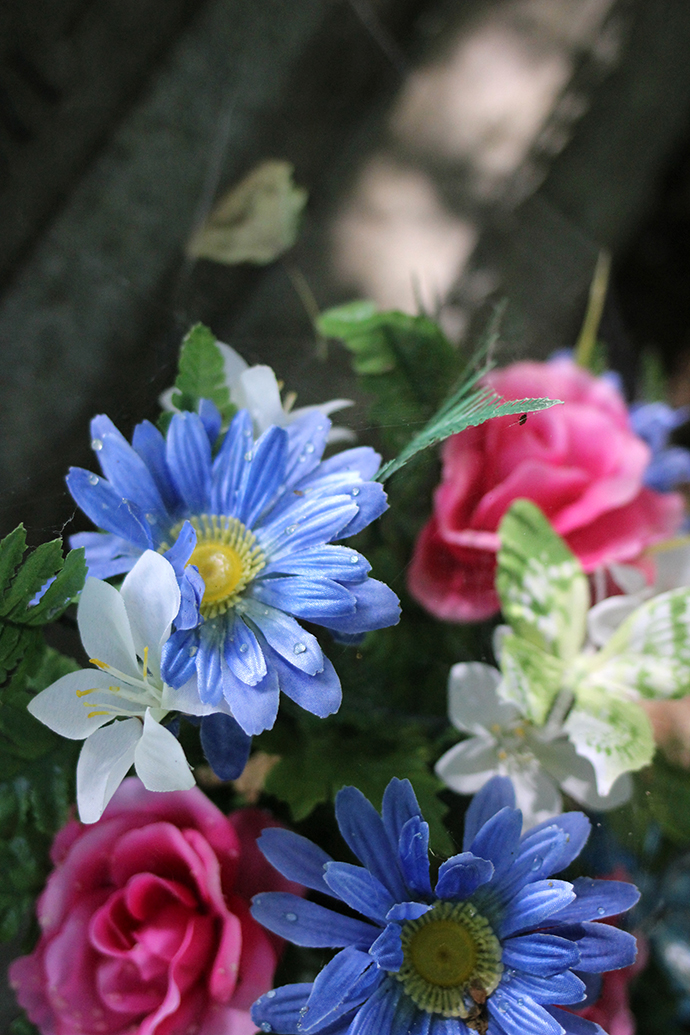
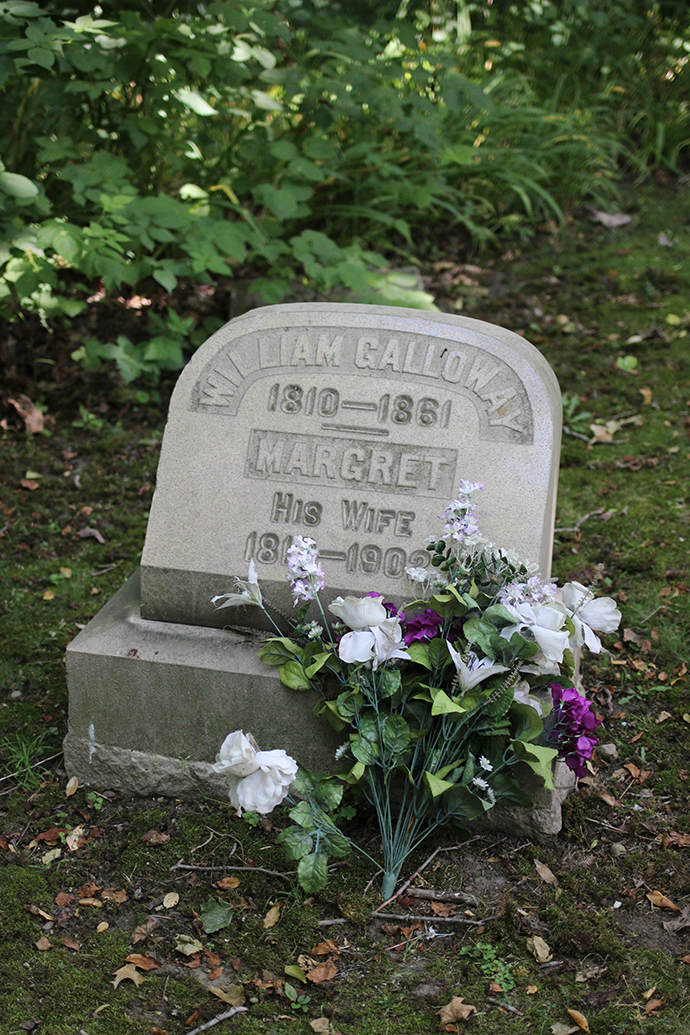
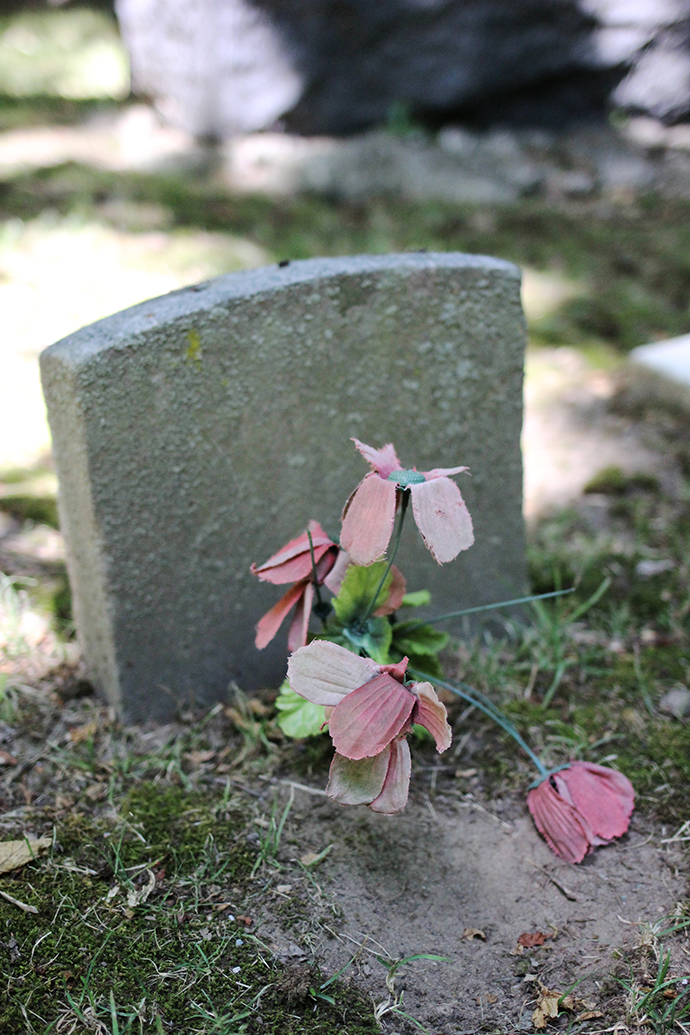
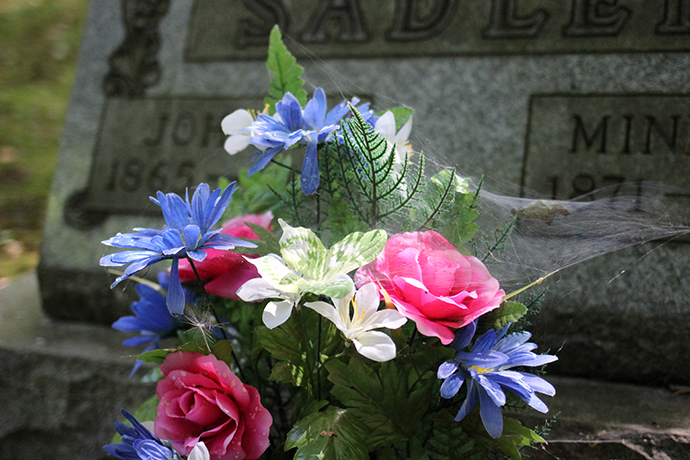
The cemetery is very small with only about 175 residents. It's definitely one of the smallest cemeteries I've ever explored, second only to the Second Cemetery of the Spanish and Portuguese Synagogue, which is the smallest cemetery here in the city. Some of the stones are broken, some are in near-perfect condition, and others are adorned with fake flowers that probably seem like a good idea (they never die!) but somehow look extra creepy when they're tattered, sun-bleached and covered in spider webs.
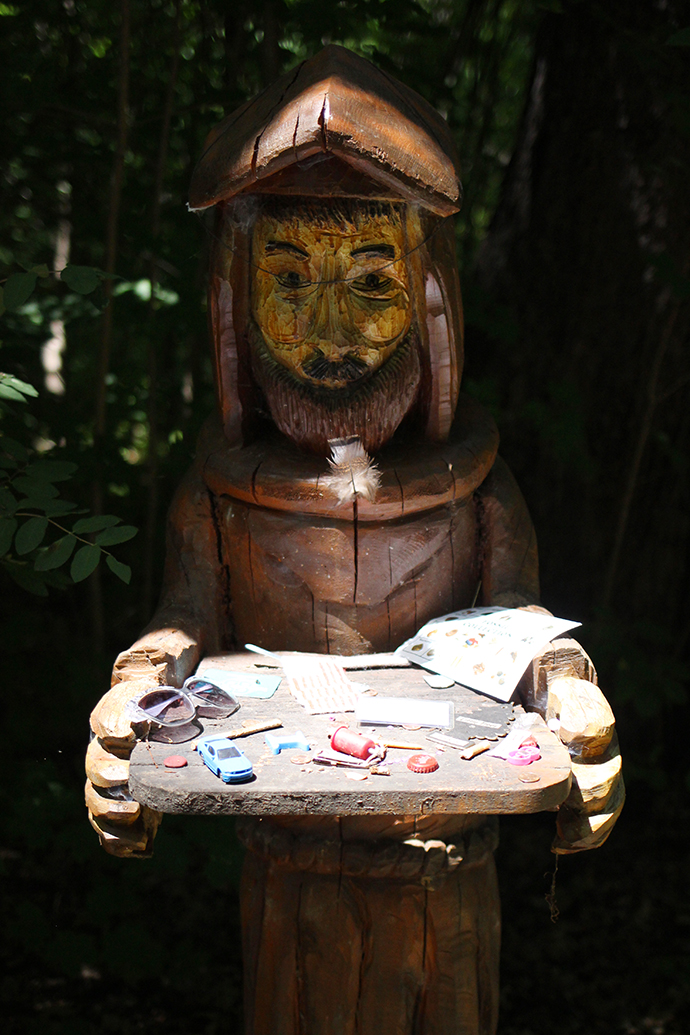
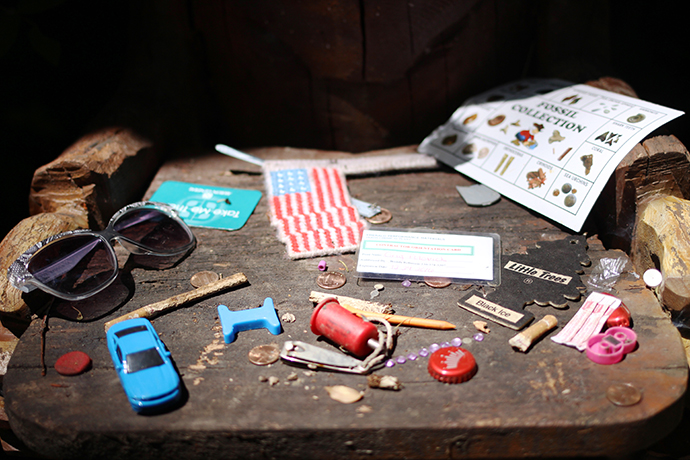
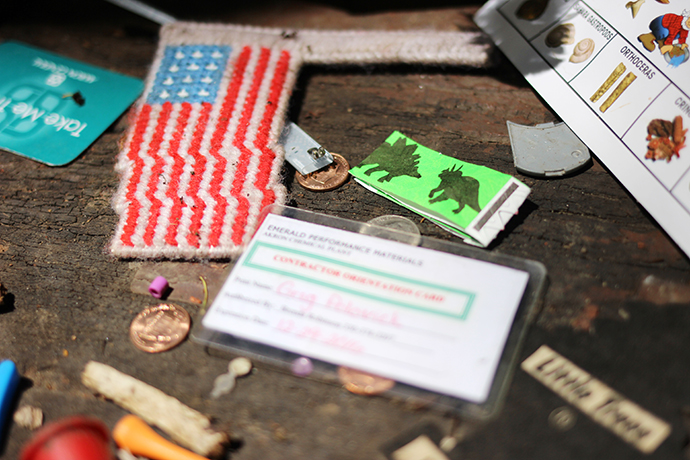
At the entrance to the cemetery is a carved wooden monk, holding a tray on which visitors had left various offerings. Some of them made sense (coins), some were obviously just hastily taken from cars (the Little Trees air freshener, a salt packet) and others just made me laugh (a fossil collection diagram). I wasn't prepared, but I still felt as if I should leave something. I defaulted to the second category, hastily grabbed my Dinosaur Land wristband and offered it to the cemetery gods as a thank you for leading us to such a wonderful spot.

Green-Wood Cemetery: Moss

On a recent walk through Green-Wood Cemetery (aka my happy place), I noticed that a lot of headstones were covered in moss, algae and/or lichen. I've already established that I know absolutely nothing about plants or greenery so I'm not entirely clear on the difference between the three, or sure that those are the only greenish things that grow on headstones. But what I am sure of is that a moss-covered tombstone is creepy and beautiful, and Green-Wood is lousy with them right now.


I happened upon a particular spot in the cemetery where almost every stone was covered, and it doesn't appear to have much to do with the composition of the stone itself—although the older and more porous a stone, I'm sure the more likely it is to be host to any and all creeping flora. Whenever I see one stone covered in ivy or any type of growth it makes me wonder how it was chosen as a host above all the others. I happen to extra-love any stone that looks overgrown and forgotten, and if I intended to have a tombstone of my own one day (I don't, despite my love of cemeteries) I would love nothing more than to have it entangled in ivy.


I've been to Green-Wood so many times now—and it's such an overwhelmingly large space—that narrowing my focus helps me to not jump around frantically feeling as if I'm missing something. Green-Wood does such a wonderful job of maintaining the stones and the space, that it's a testament to that maintenance that it's actually quite rare (in my experience) to find anything remotely crumbling or unkempt in the cemetery.
Eastern Cemetery: Abandoned
On our way to Cave Hill Cemetery in Louisville, KY to visit the final resting place of Colonel Sanders (naturally), we missed the entrance and had to turn around. JMP pulled into what looked like another entrance to the cemetery, but it turns out it was for a different cemetery, one adjacent to, and separate from Cave Hill.
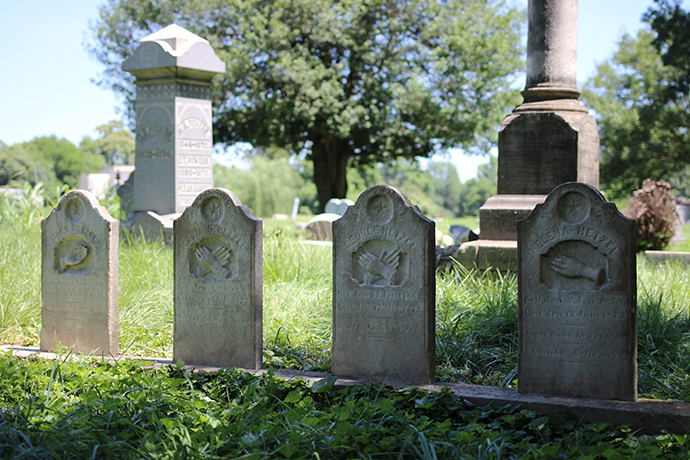
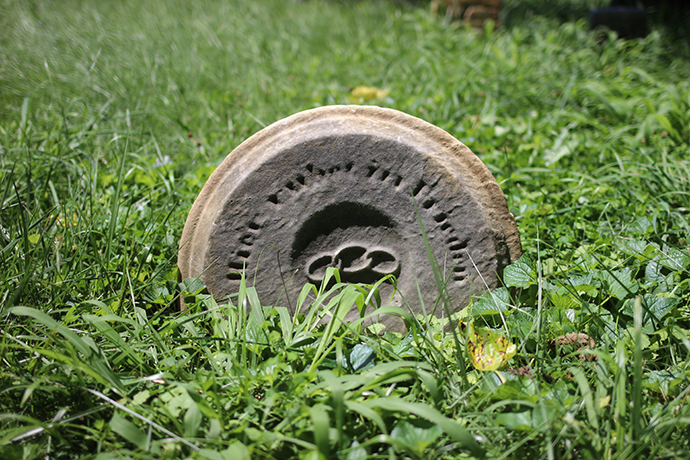
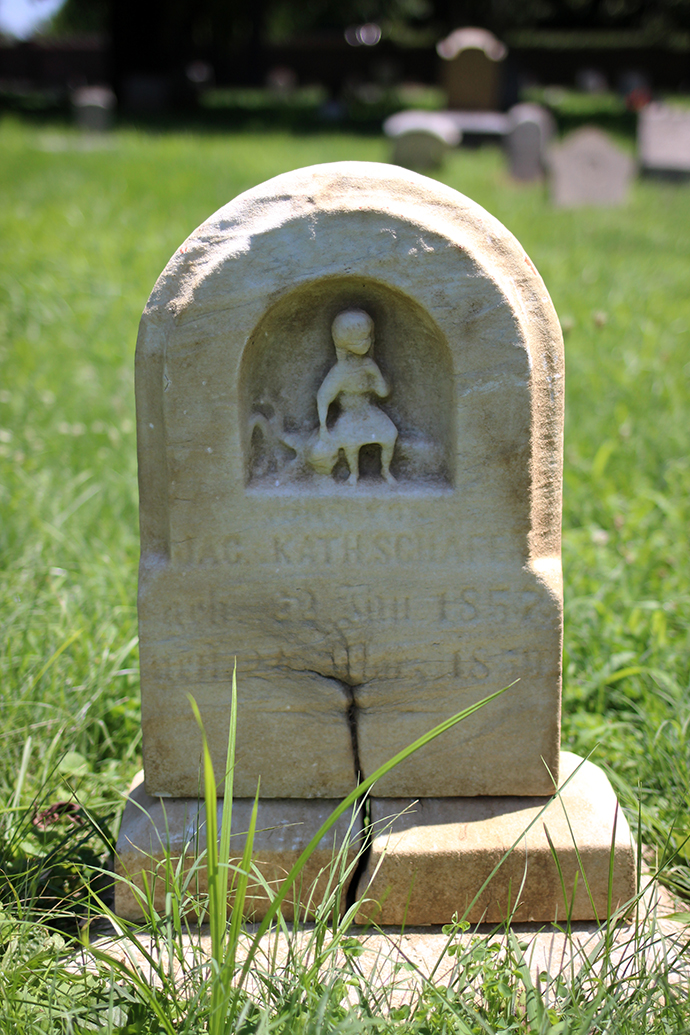

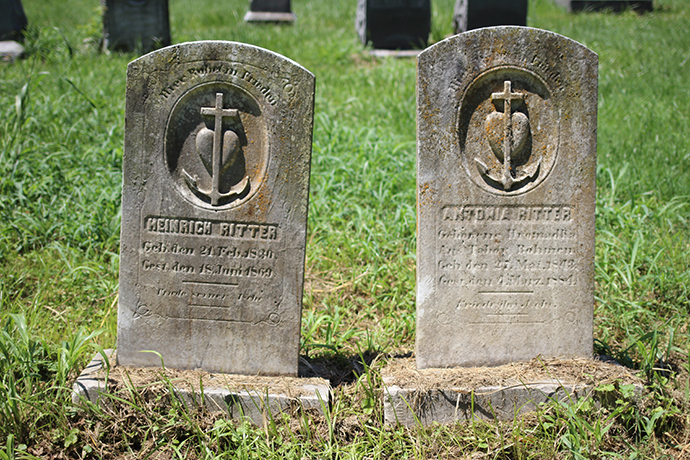
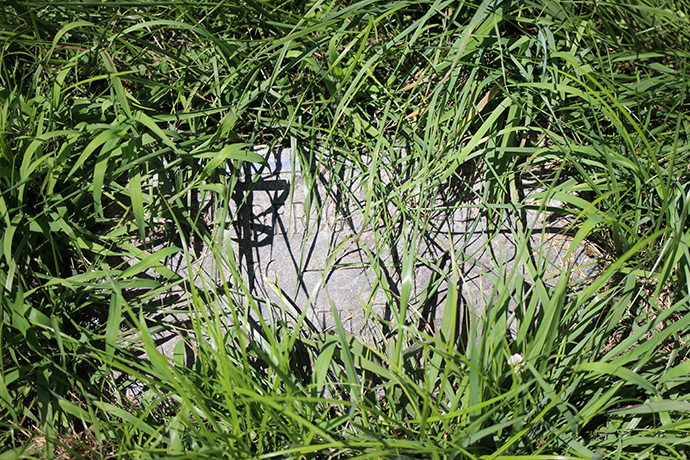


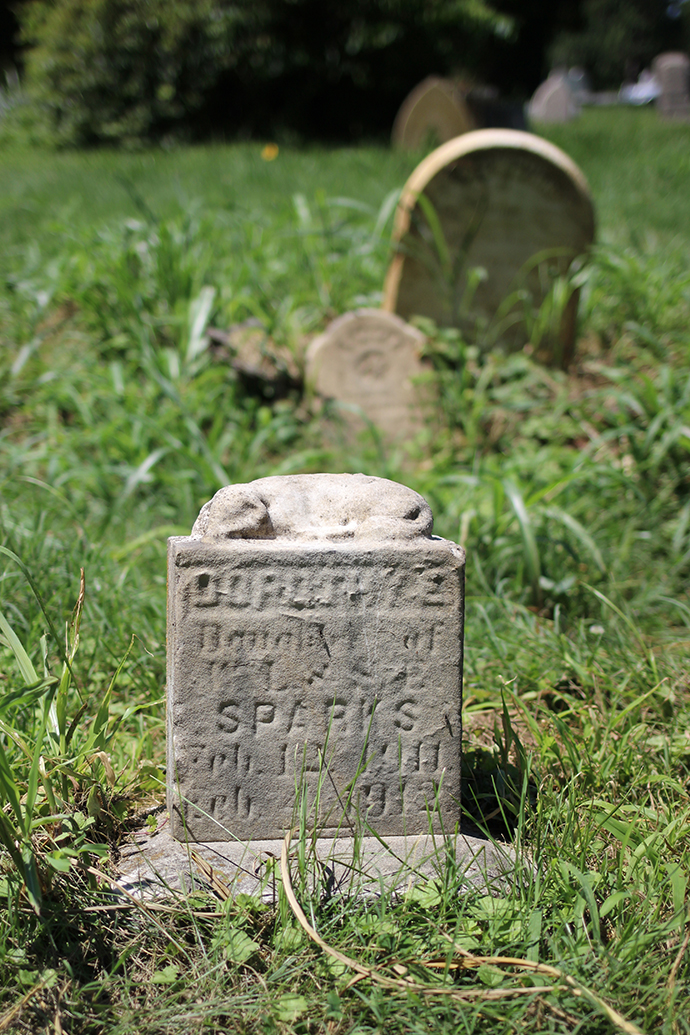
Eastern Cemetery opened in the 1840s, making it one of Louisville's oldest cemeteries. While we were exploring, we were approached by a man that had been cutting the grass. We immediately thought that we were in trouble, but we couldn't have been more wrong. He had noticed our out-of-state license plate, and just wanted to share some information about the cemetery with us. His story was incredible, and made our visit so much better than it would have been otherwise.
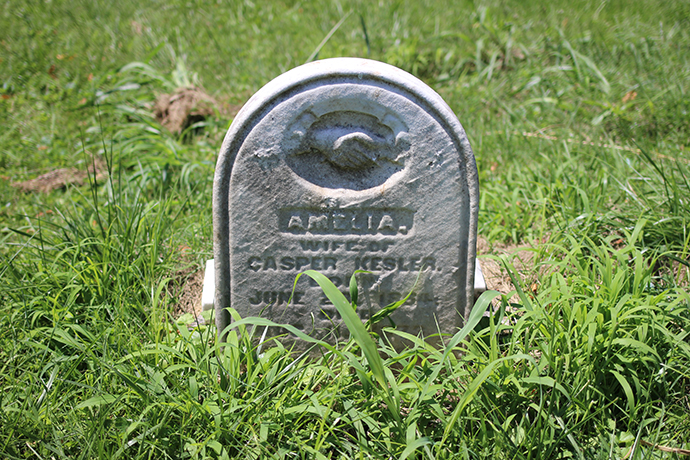
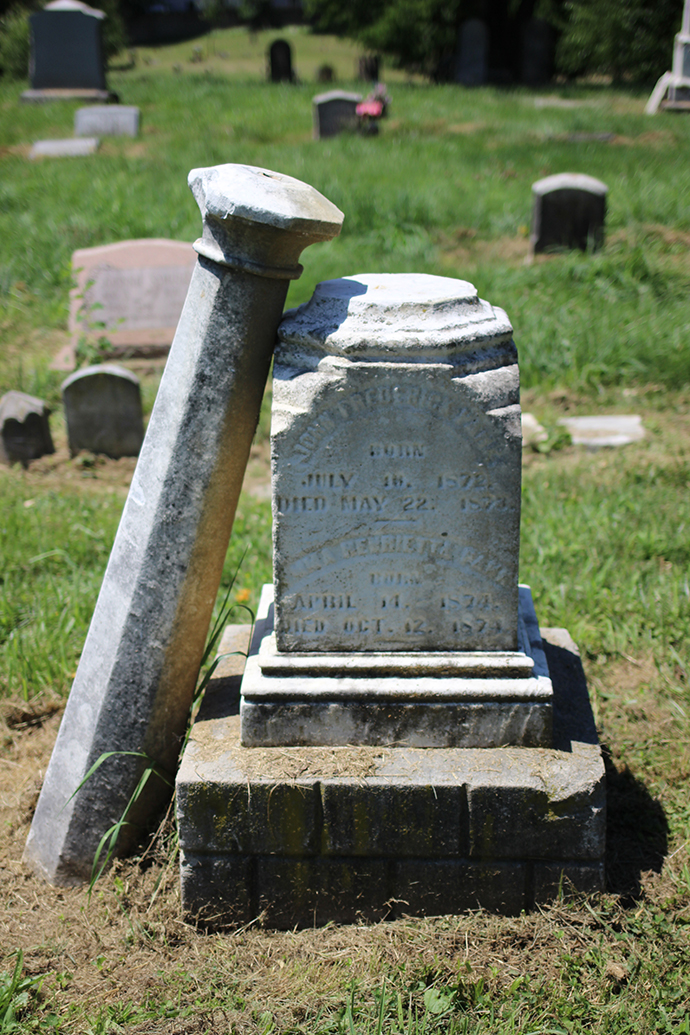
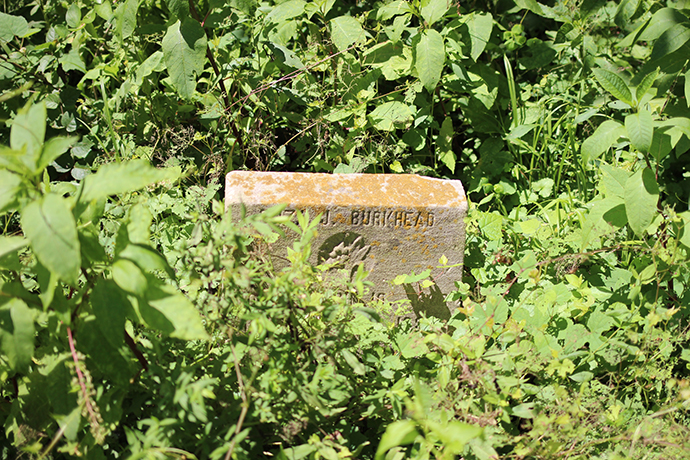
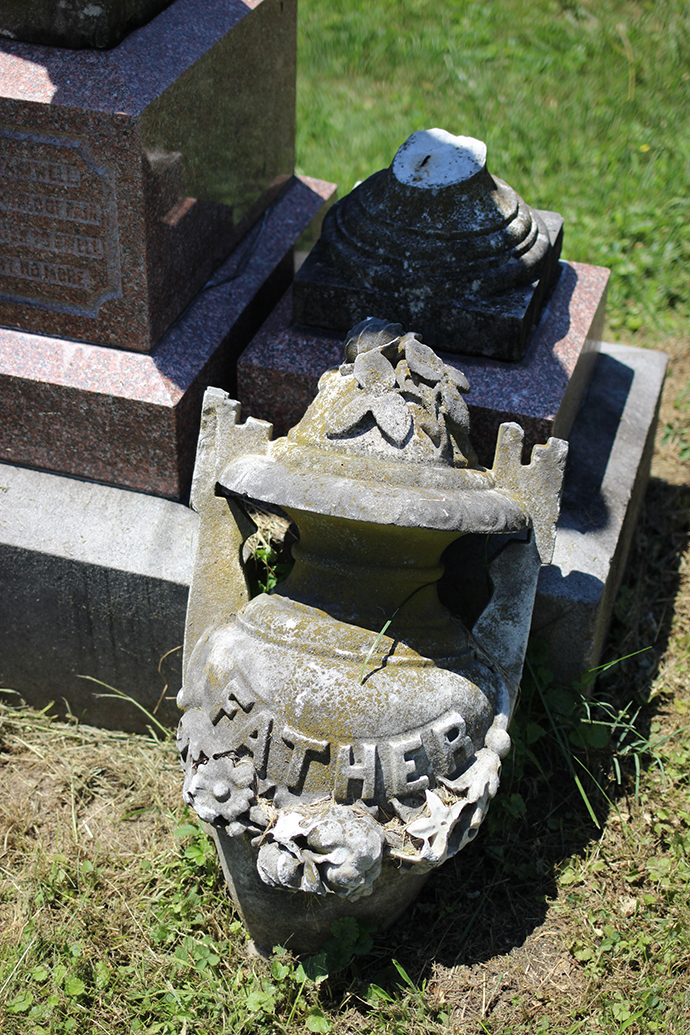
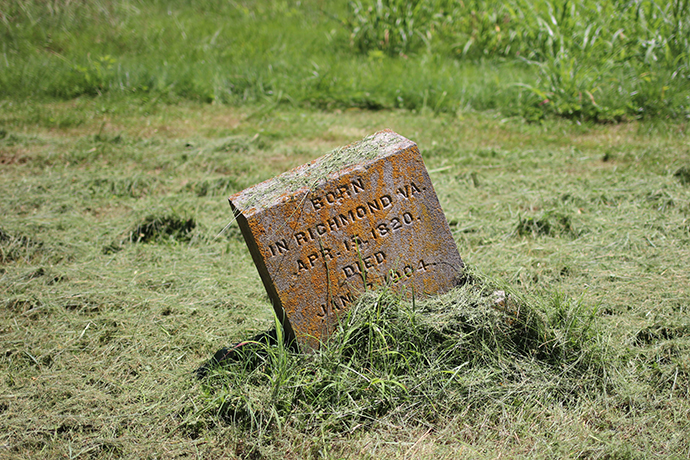
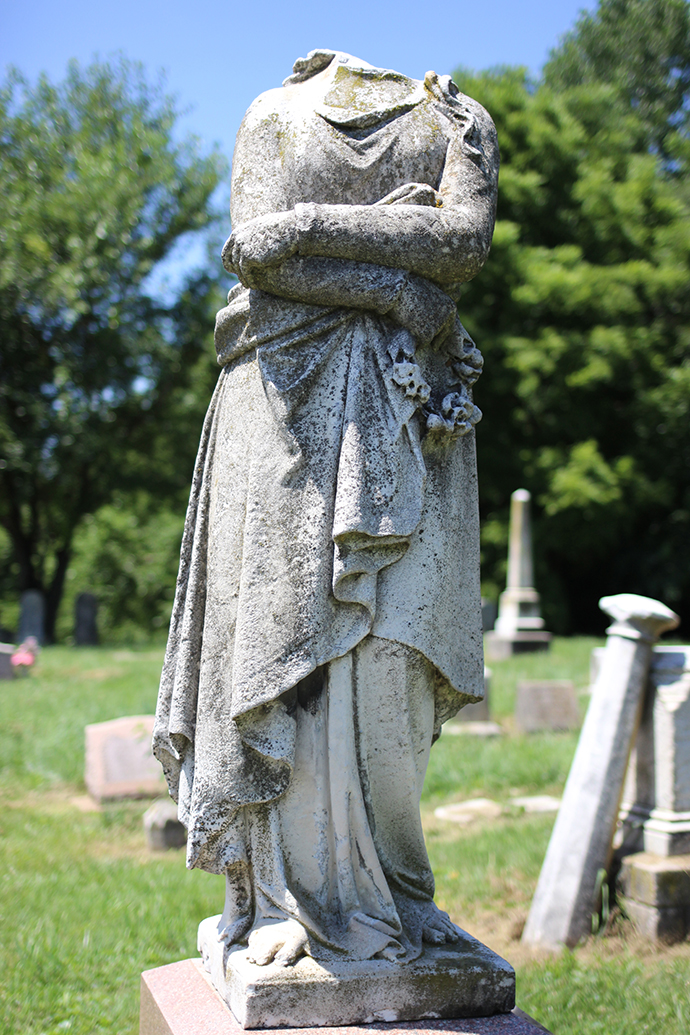
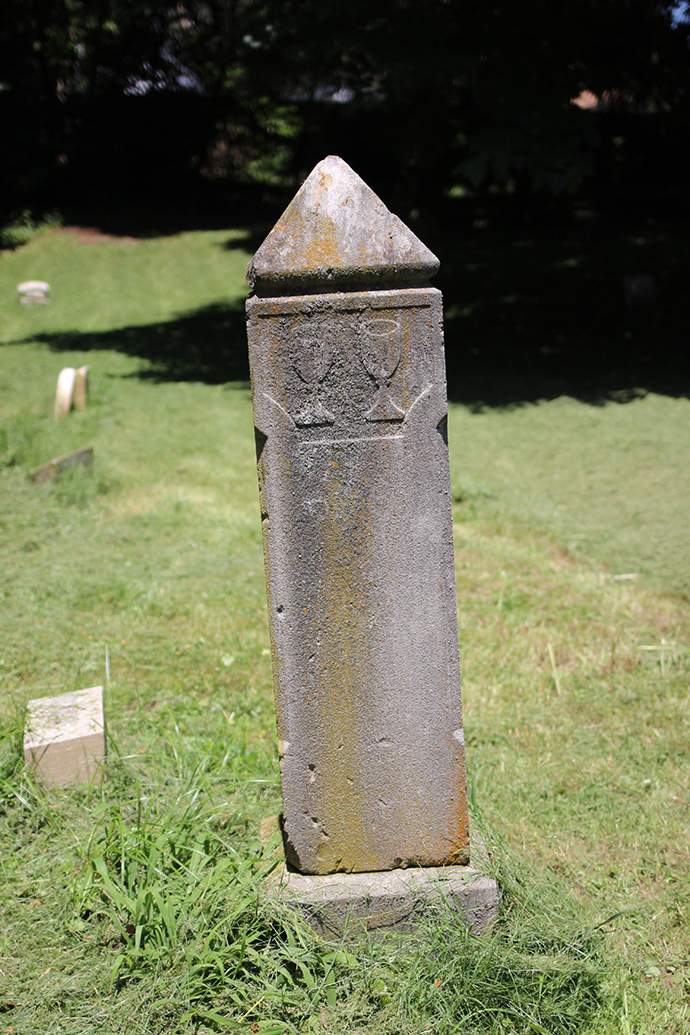
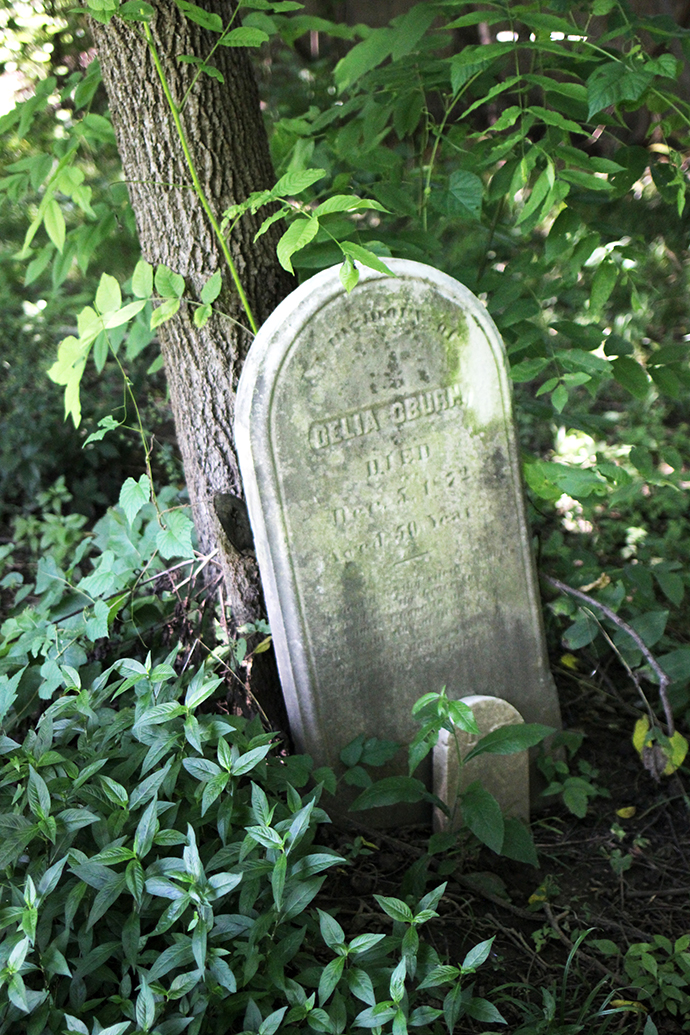
The sordid story of Eastern Cemetery goes something like this: in 1989, a disgruntled employee came forward with information that the cemetery had been reselling old graves, perhaps starting as early as 1858. Cemetery officials would keep track of which graves were frequently visited by family and friends, and ones with no visitors would be marked "OG" in the records, for "old grave." OG's would subsequently be resold, and according to a New York Times article about the scandal, "the remains of up to 48,000 people were buried in graves that were already occupied."
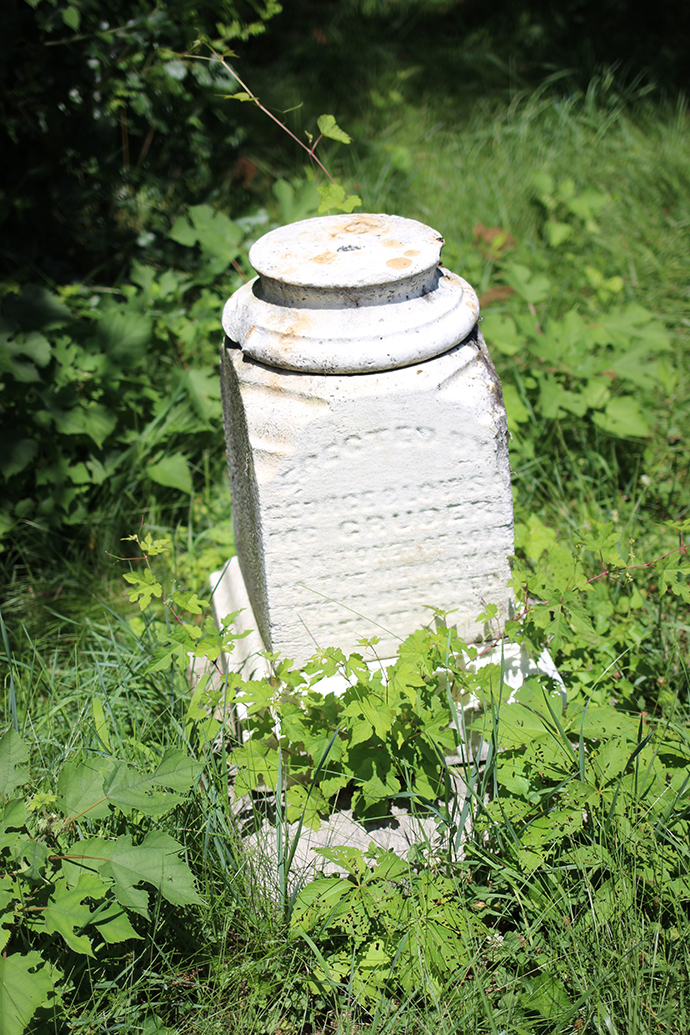
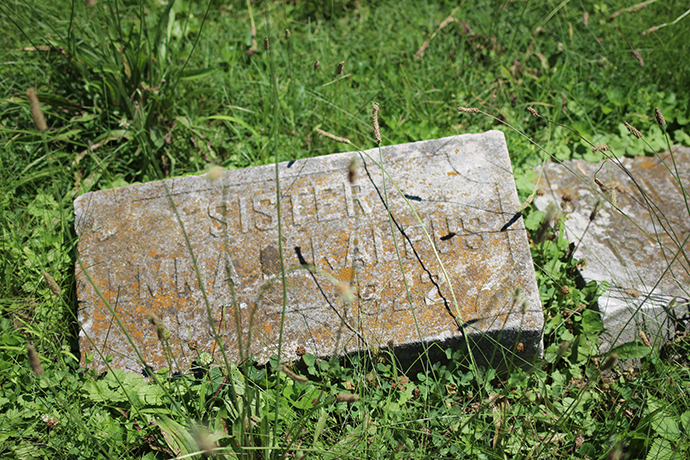
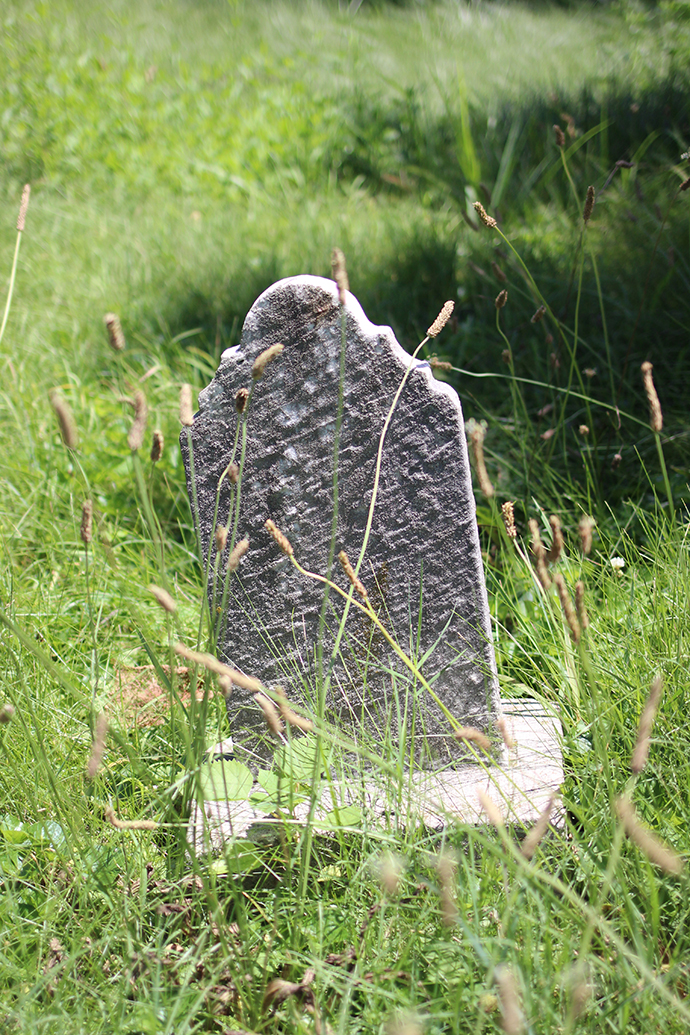
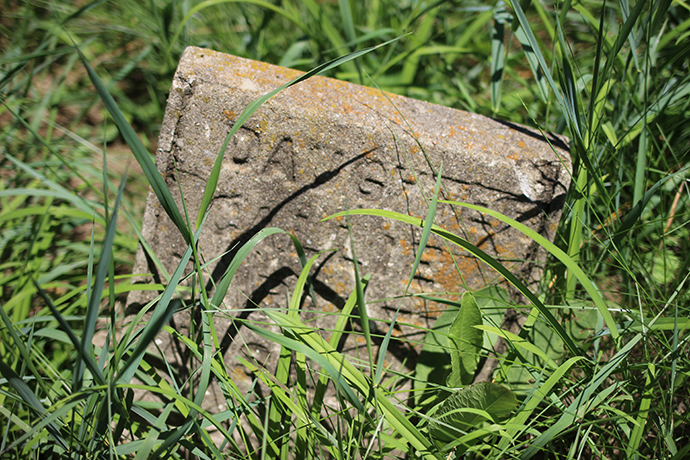

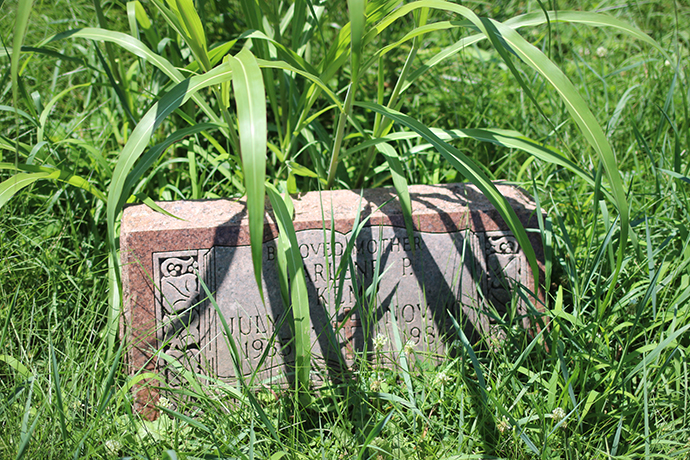
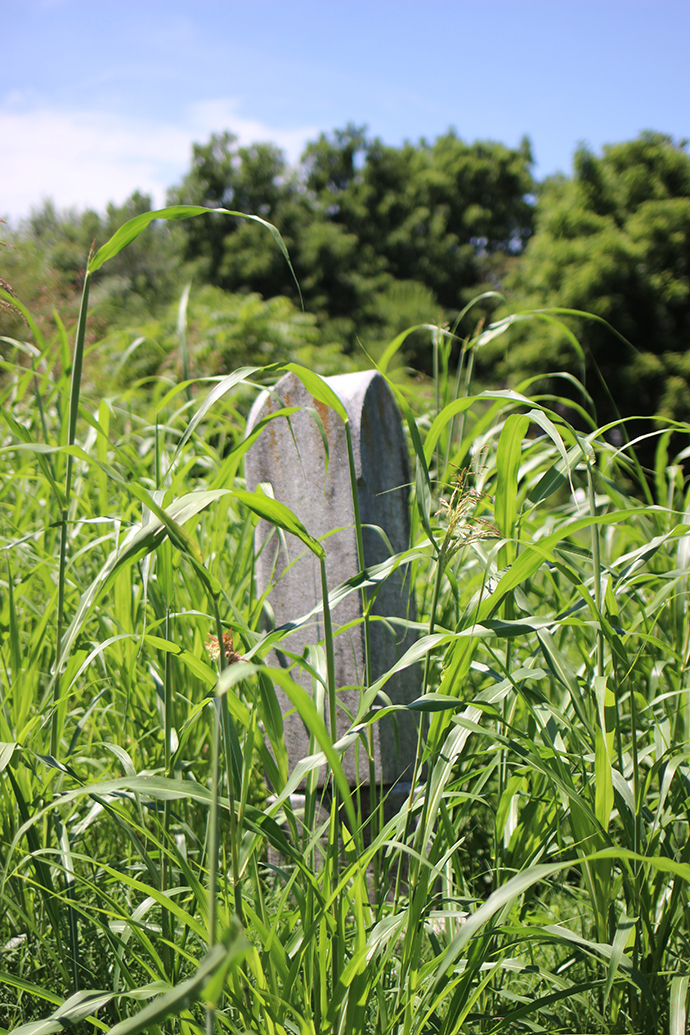
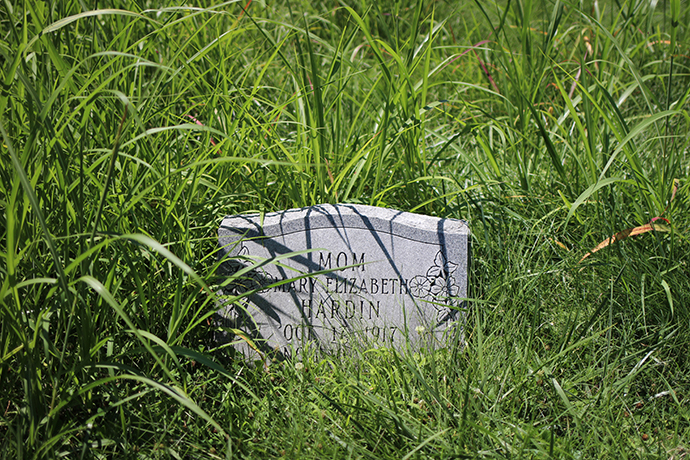
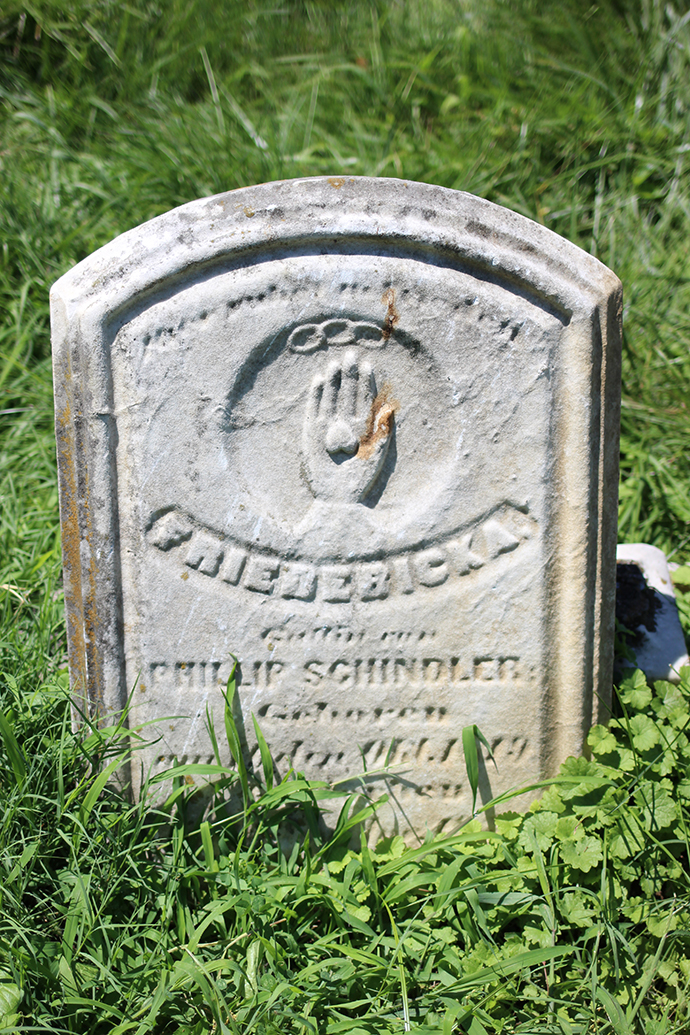
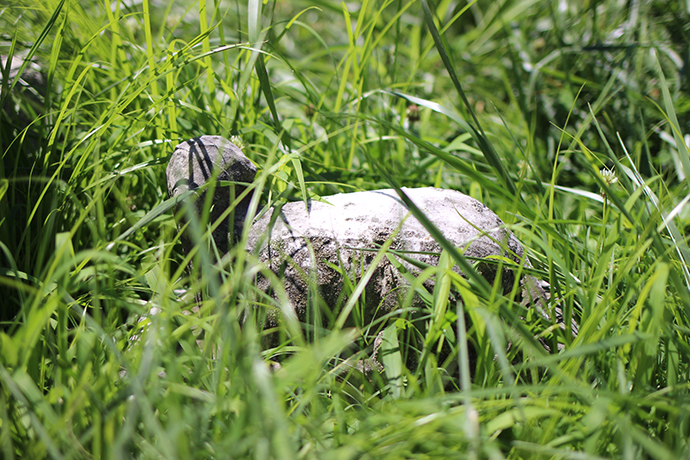

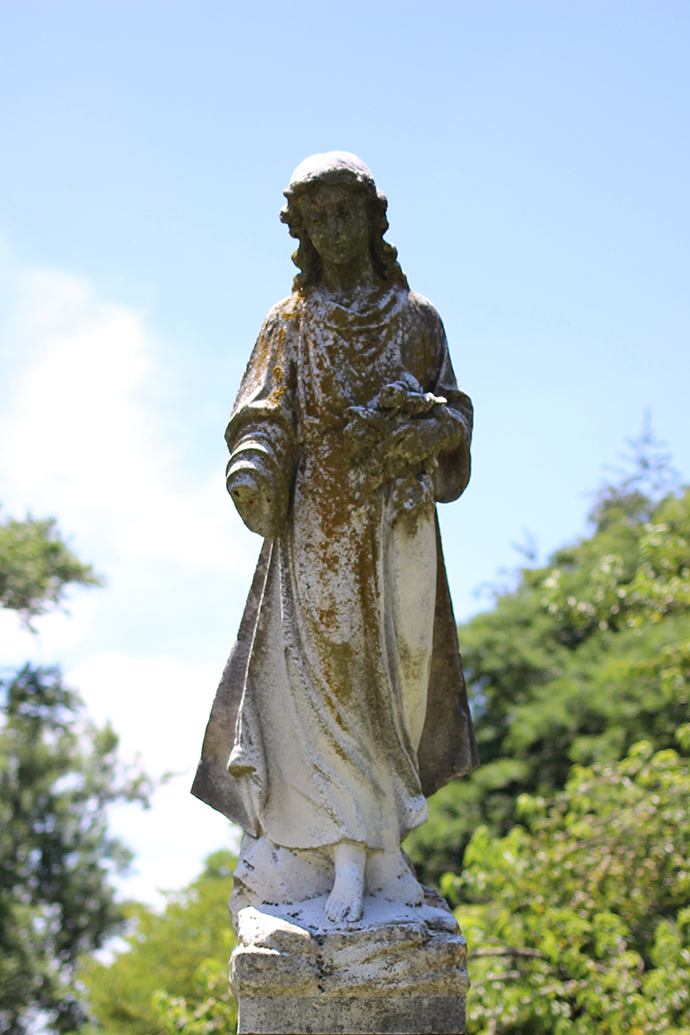
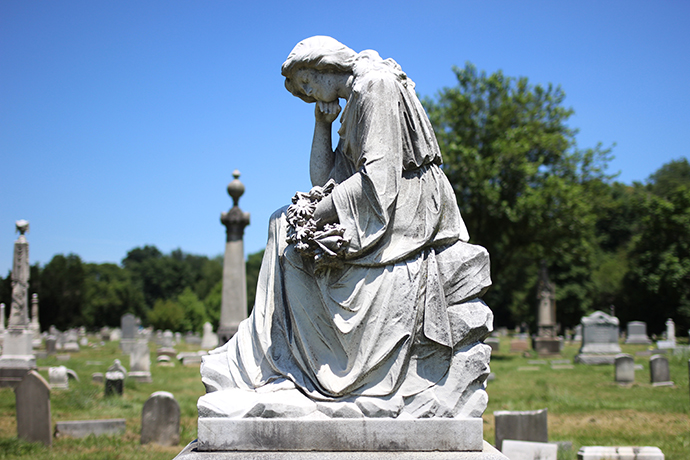
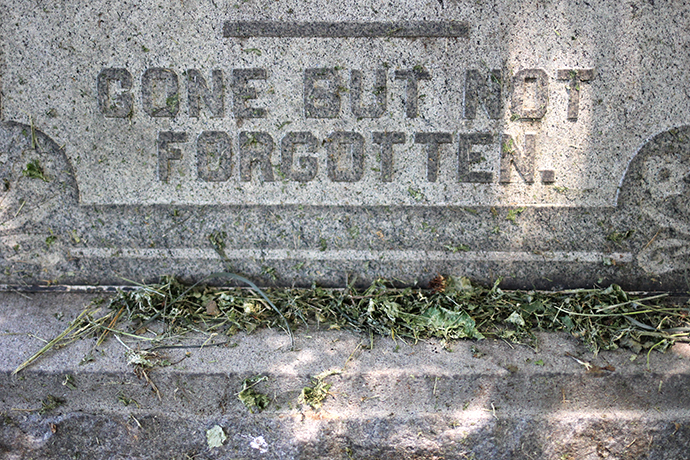
Whoever owns the cemetery assumes liability and by law must make efforts to reinter all of the mistreated remains—an astronomically expensive and exhaustive task—so the cemetery has sat abandoned since the 80s. In 2013 a volunteer group was started to help clean up the cemetery, and their efforts are very obvious—in fact, most of the cemetery no longer looks abandoned. Our de facto tour guide said that when his group started, the grass was more than 7 feet tall around the headstones.
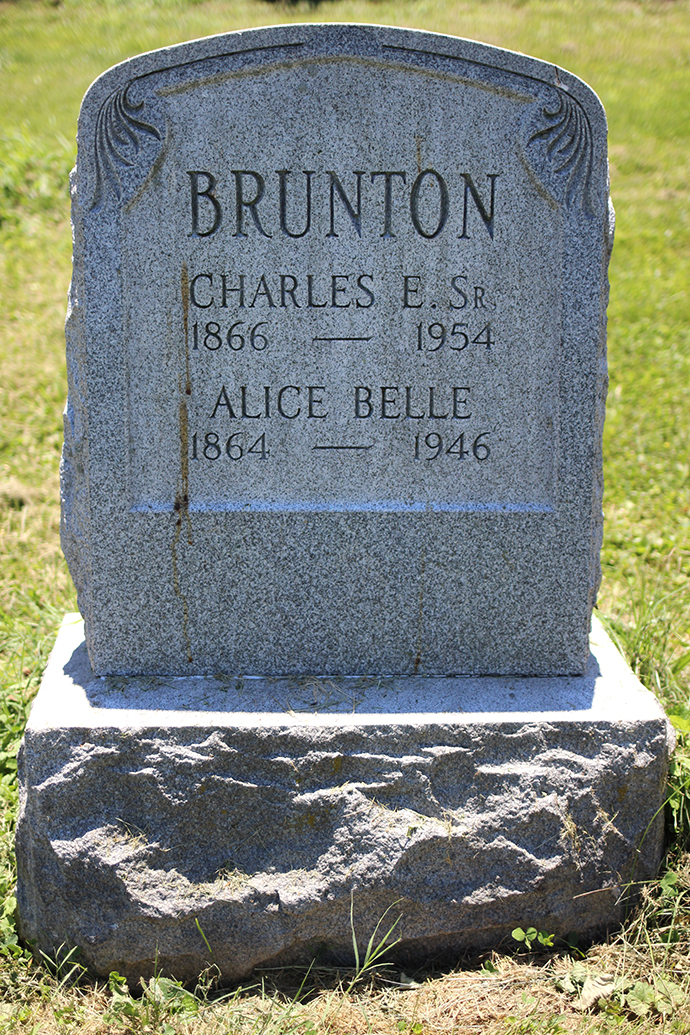
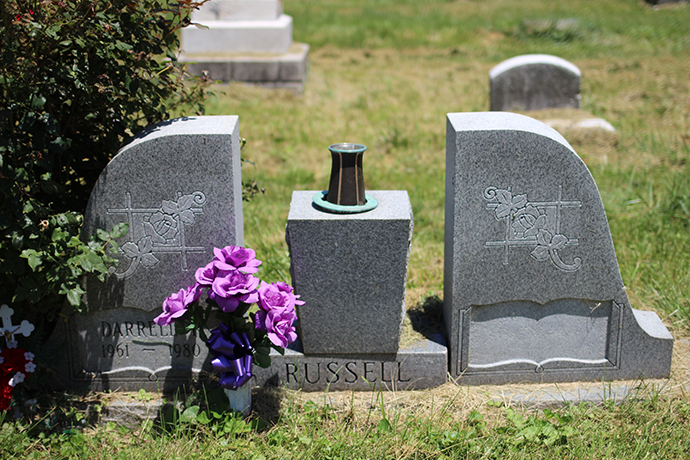
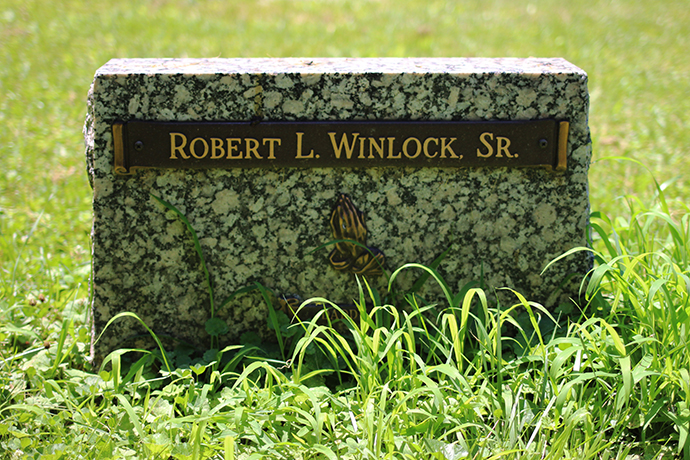

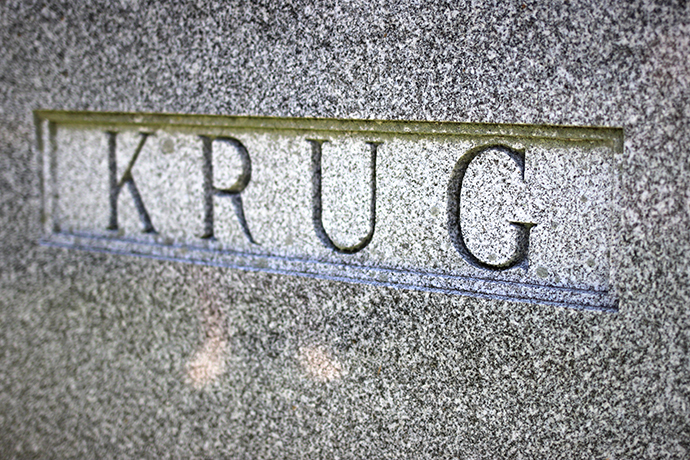
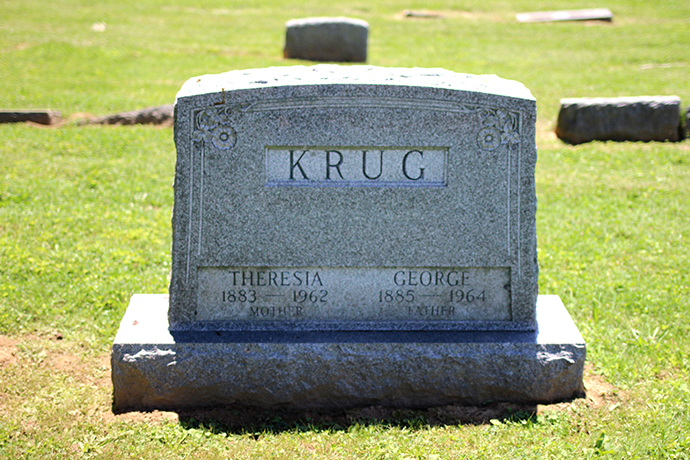
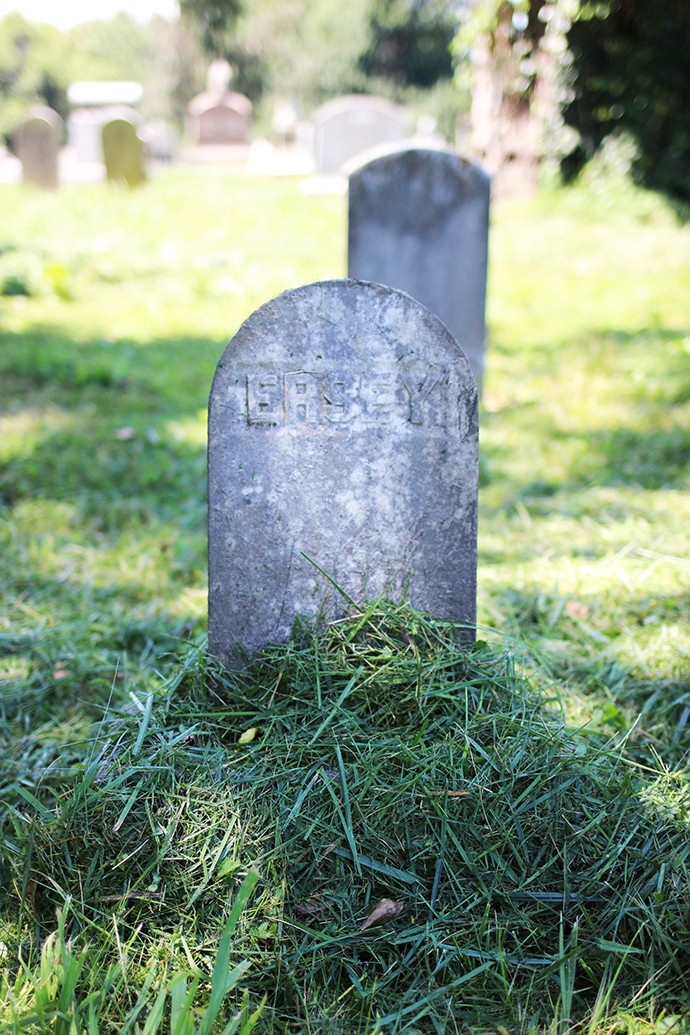
Speaking of the headstones, what did the cemetery do with the old stone when they resold the plot? Our guide said that was a mystery until recently, when a stone expert pointed to a particular grave with an unusually carved headstone. Not only was the cemetery reselling graves, but they were shaving names off of headstones and reselling them as well (!!). As if that wasn't crazy enough, Krug's stone was re-carved twice. After we saw once instance of this, I became obsessed with finding others. I think we found a few that were suspicious, including a lot of plain granite stones with plaques attached, which seems like a great way to easily change a stone.
The story of Eastern Cemetery is so crazy to me, but I can't help but wonder if its residents aren't the only ones to have suffered such indignities—the cemetery business model is not a very sustainable one, and who knows how long they would have gotten away with it if someone hadn't blown the whistle. If i lived nearby, I would love to volunteer to help maintain the grounds. I'm grateful, however, that the residents of Eastern Cemetery seem to be finally getting the care they deserve, and especially thankful for the volunteer who stopped to share his incredible story with us.
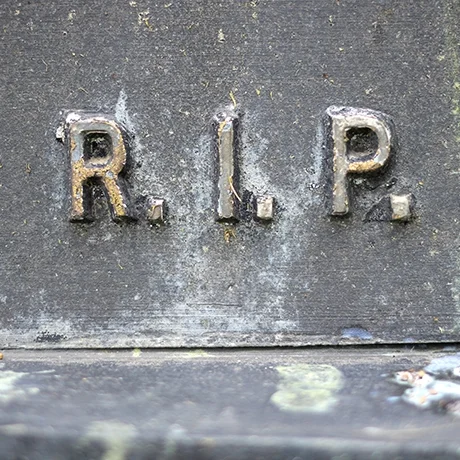
Most Holy Trinity: RIP
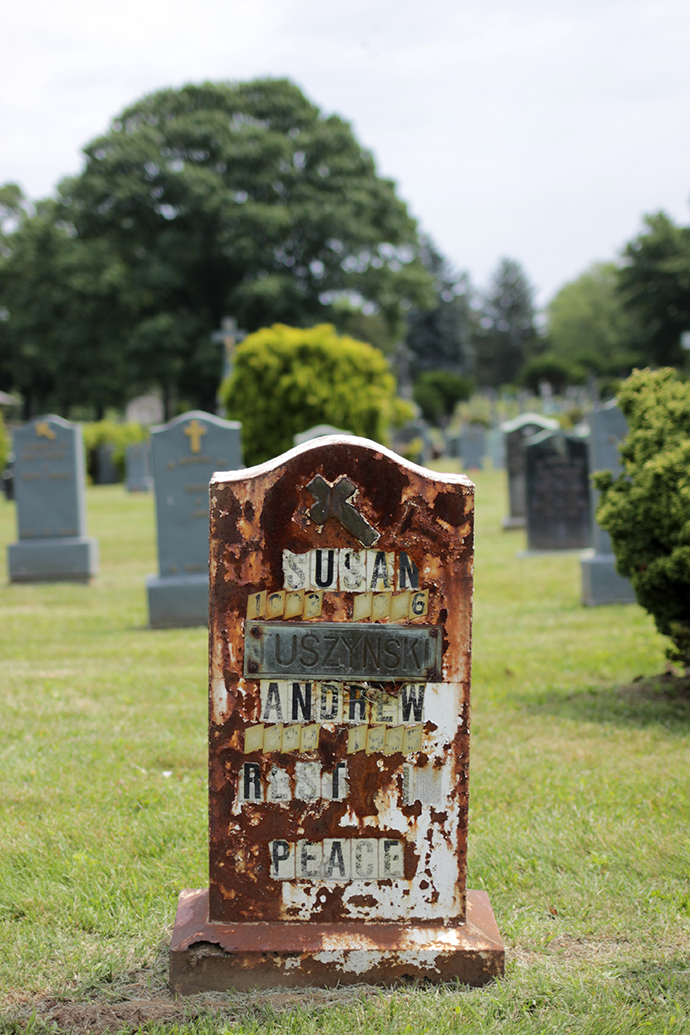
Just before I was about to leave Most Holy Trinity Cemetery on my recent visit, I became suddenly obsessed with the fact that "Rest in Peace" was on so many of the markers. Most Holy Trinity is the cemetery located in Bushwick, where most of the markers are made from metal or wood in the name of posthumous equality. I've often thought about how and why the phrase "Rest in Peace" or its abbreviation "R.I.P." has become so ubiquitous in the representation of tombstones, when I seem to see it so infrequently in actual cemeteries.
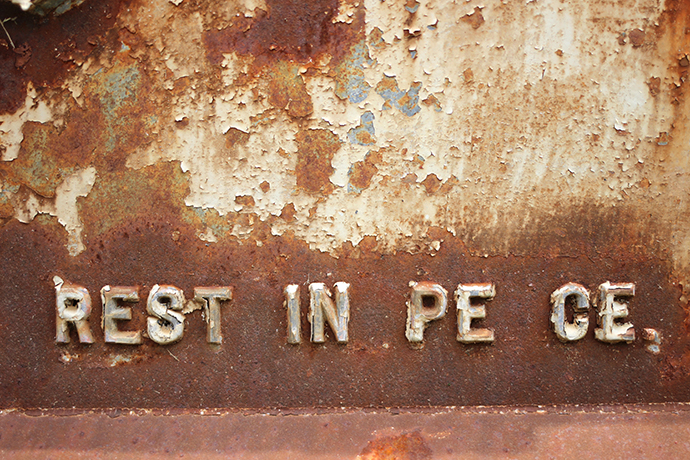
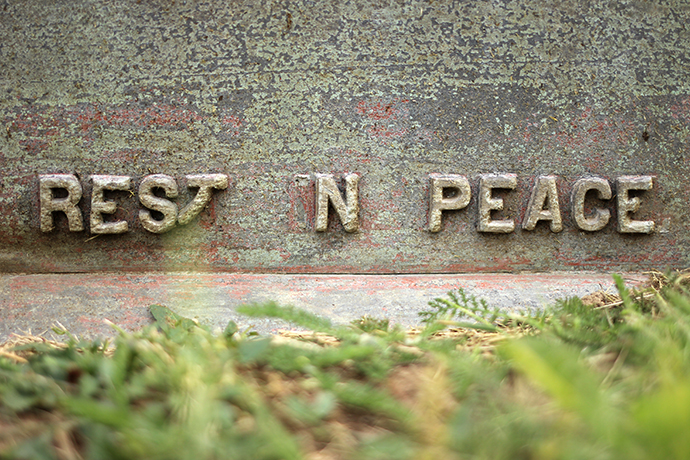
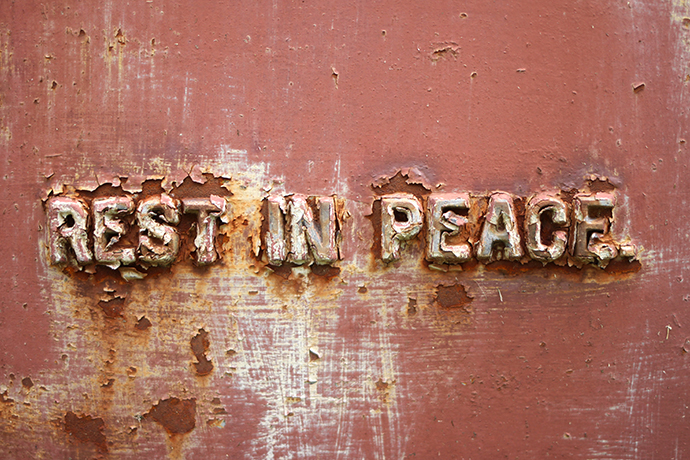
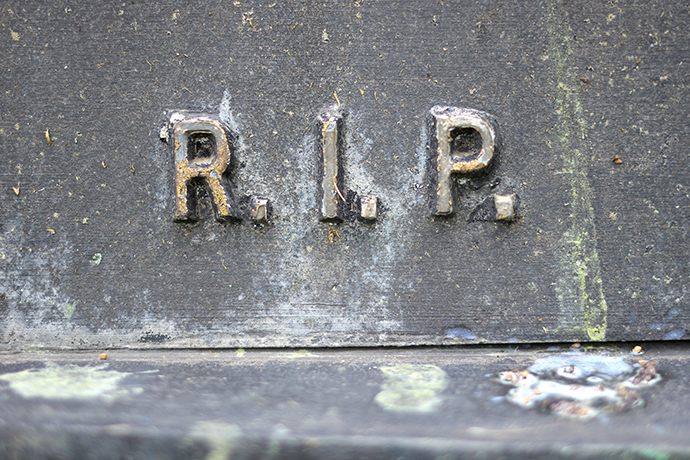
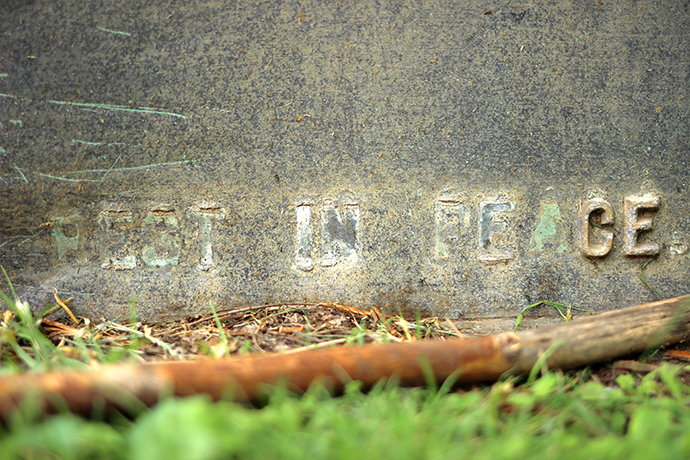

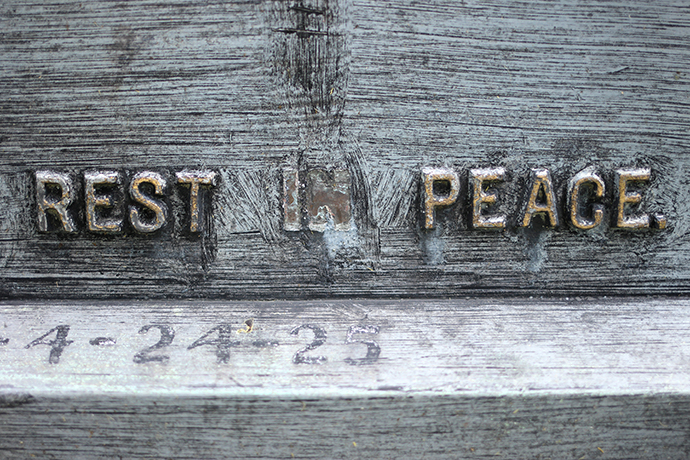
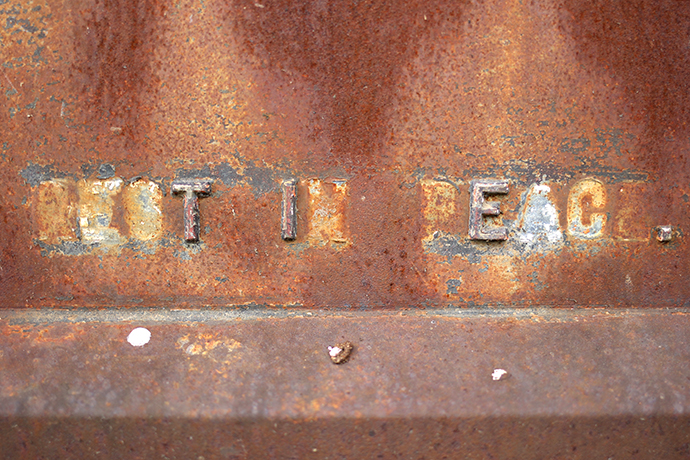
After doing some research, I think it's because most of the cemeteries I have visited have comprised religious denominations that don't frequently use the phrase. Rest in Peace is primarily a Christian (particularly Roman Catholic) phrase, and of course variations on the theme can be found in almost any culture, but that explains why it was so prevalent at Most Holy Trinity, a German-Catholic cemetery.
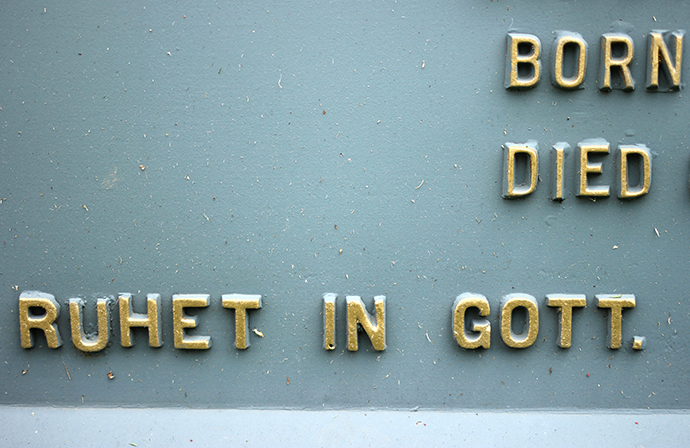
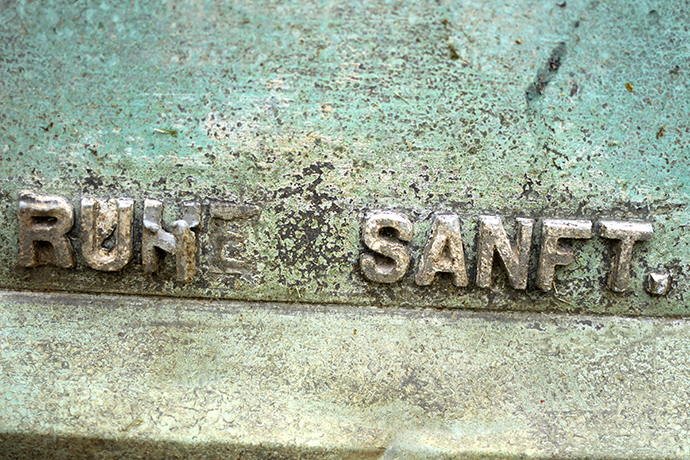
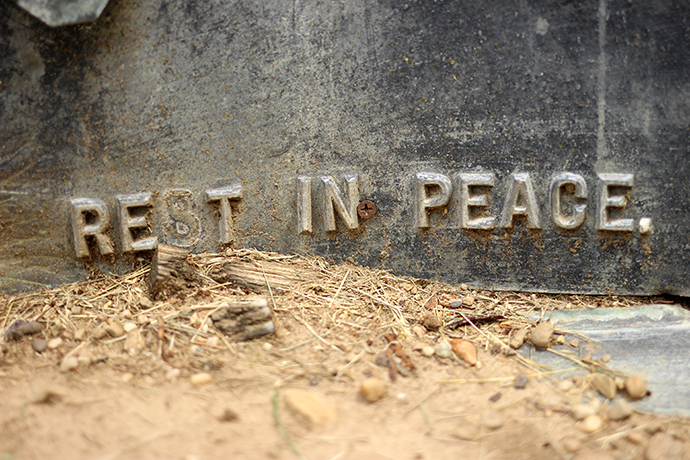
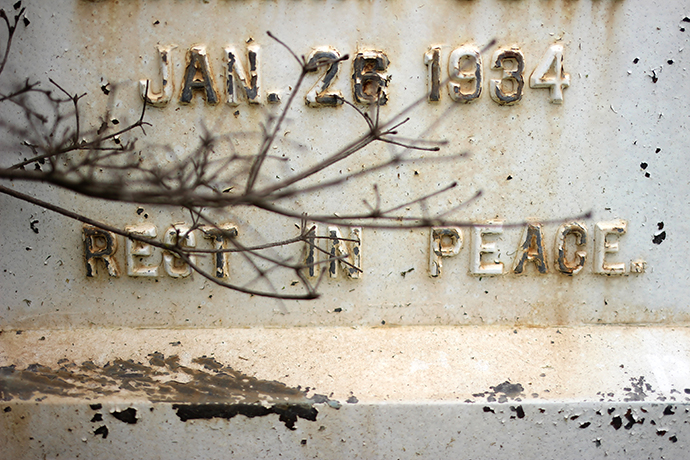
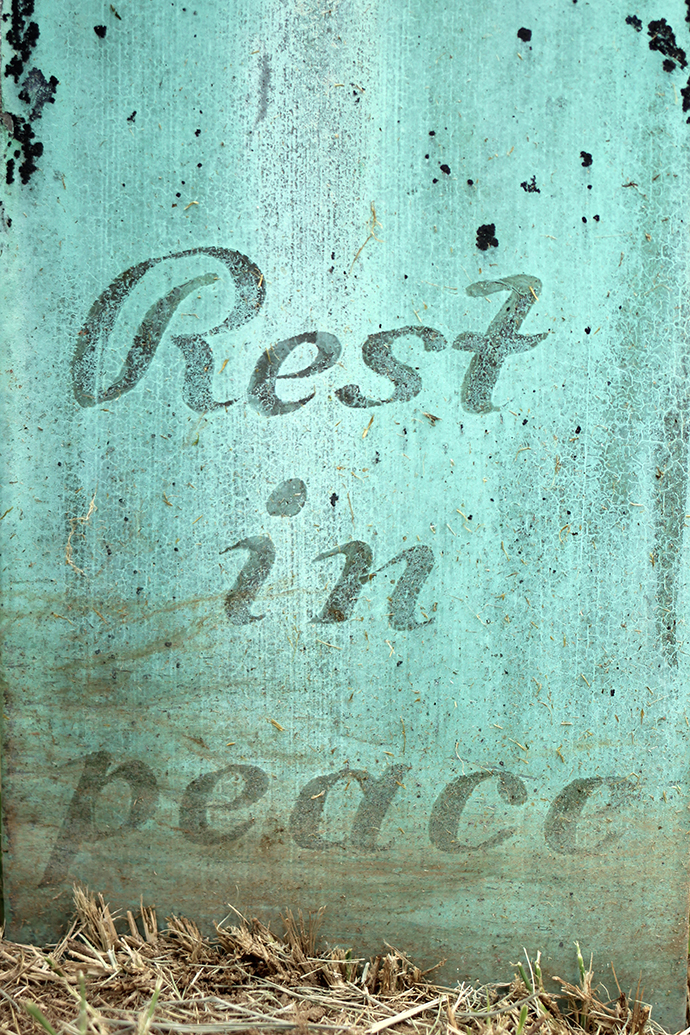
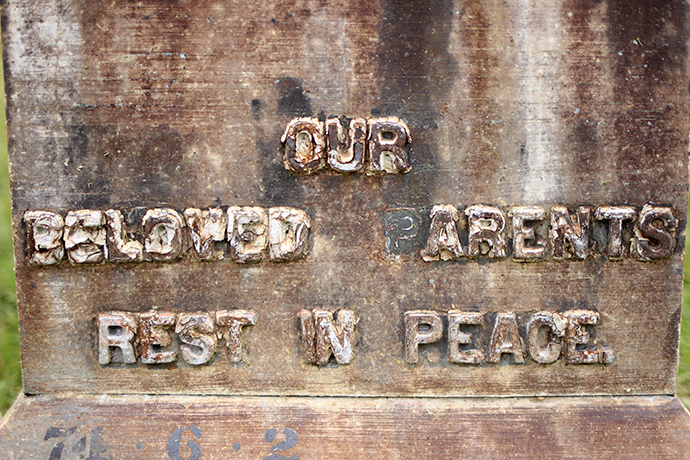
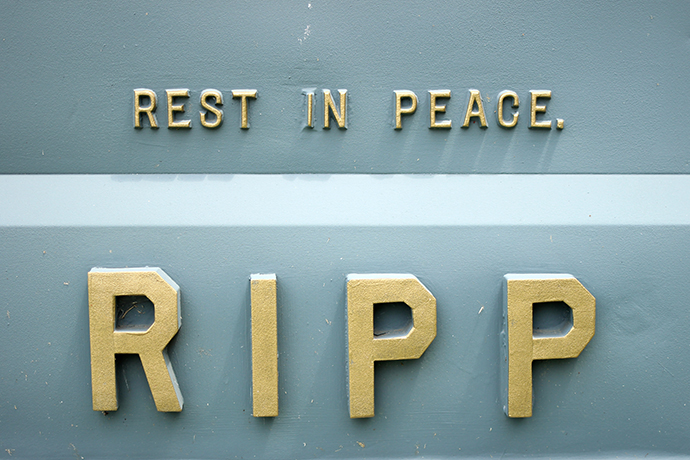
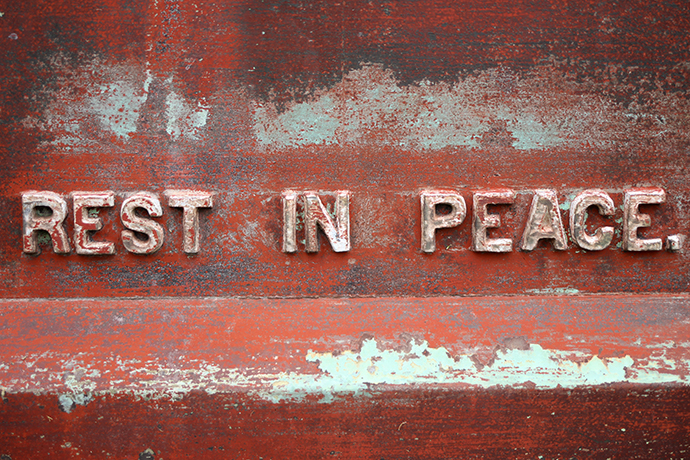
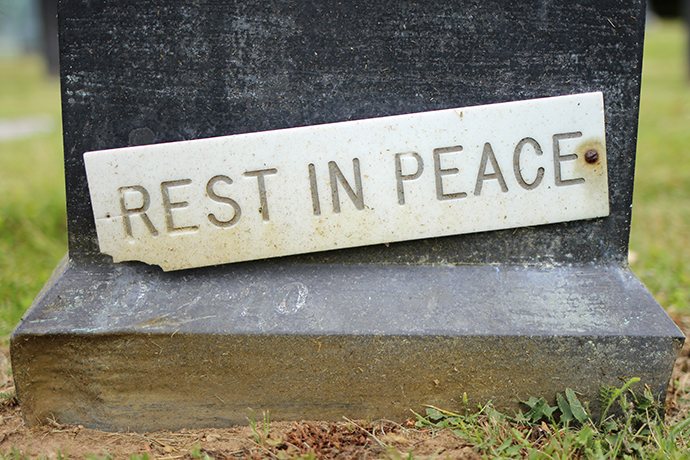
At Most Holy Trinity, I did see a few variations of the phrase, including other languages such as the German "Ruhet in Gott," which means "Rests in God" and "Ruhe Sanft," which means "Rest Gently." The phrase was mostly spelled out in metal letters adhered to the metal markers, some of which have fallen off over the years leaving ghosted outlines. I still only saw one abbreviated "R.I.P." as well as a marker for the RIPP family, with the phrase spelled out above their surname so there is no confusion.
Most Holy Trinity Cemetery: Statues
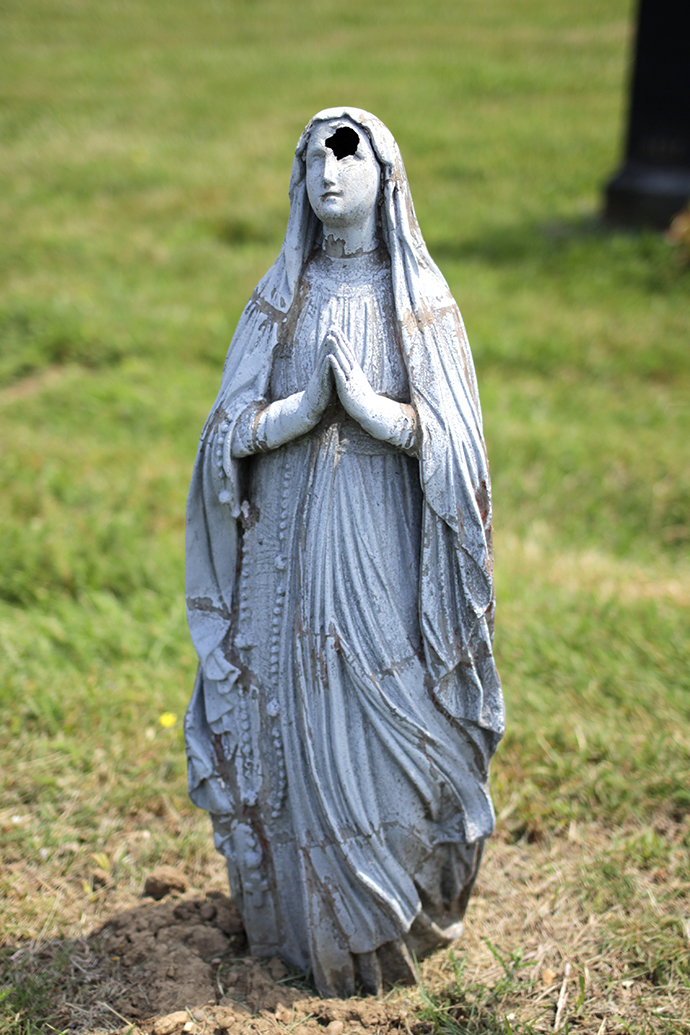
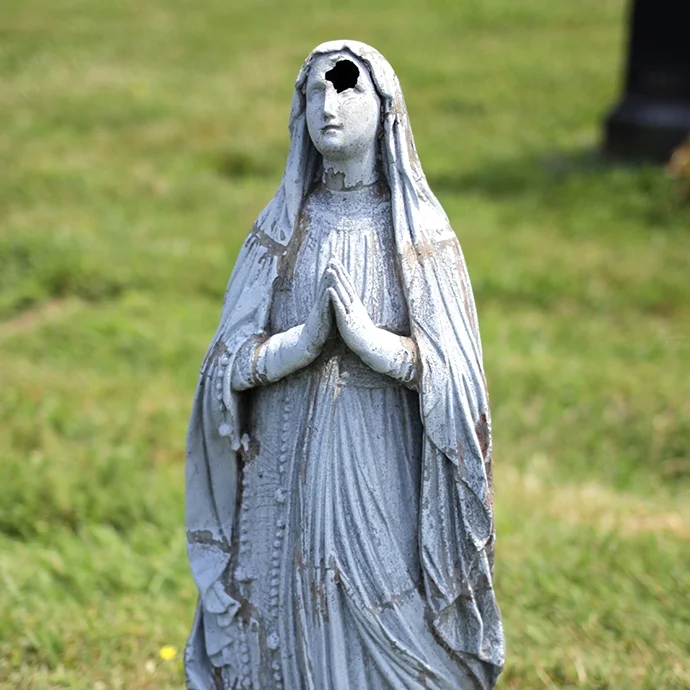
In addition to the completely wonderful tin and wood markers that fill Most Holy Trinity Cemetery in Brooklyn, there are some really excellent metal statues scattered about the grounds. It was a photo of a woman statue, half submerged in the ground that initially drew me to visit the cemetery, but I was surprised at how many I found.
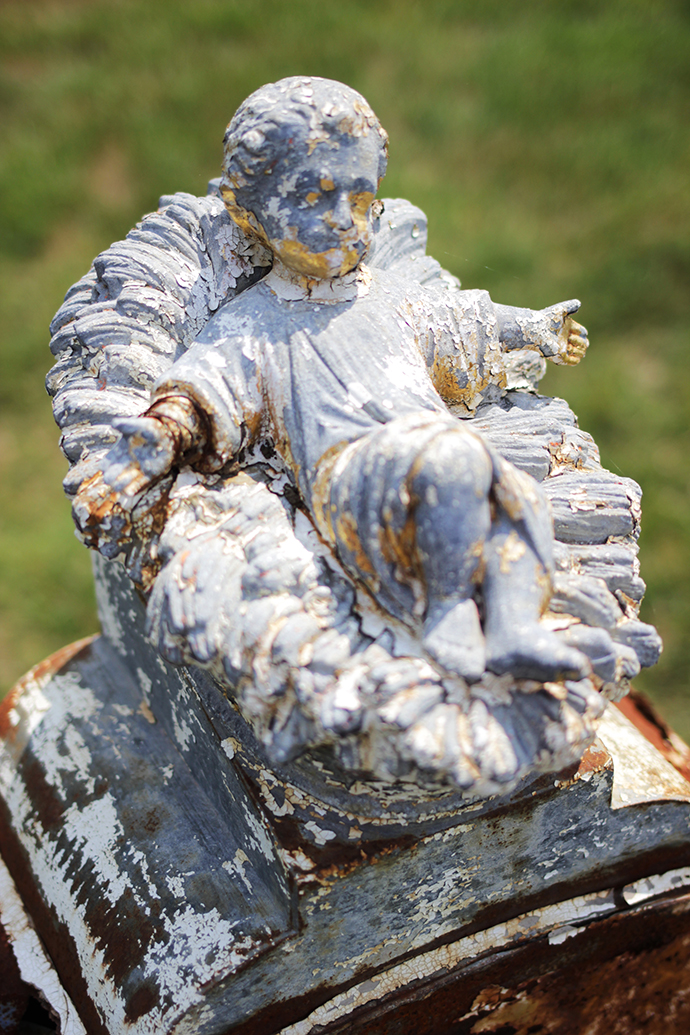
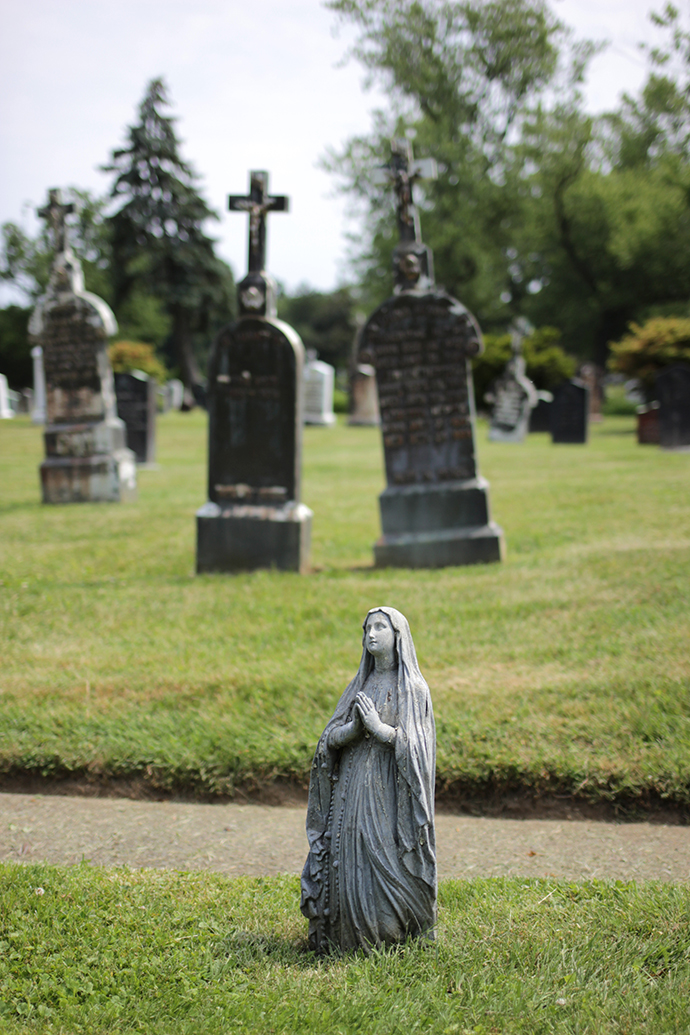
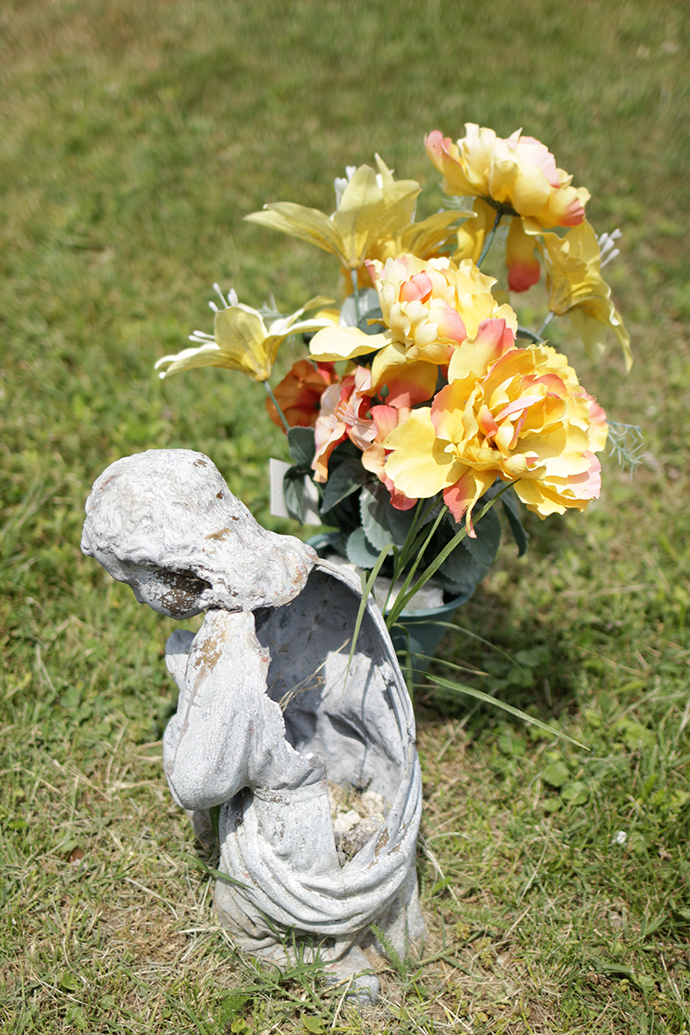
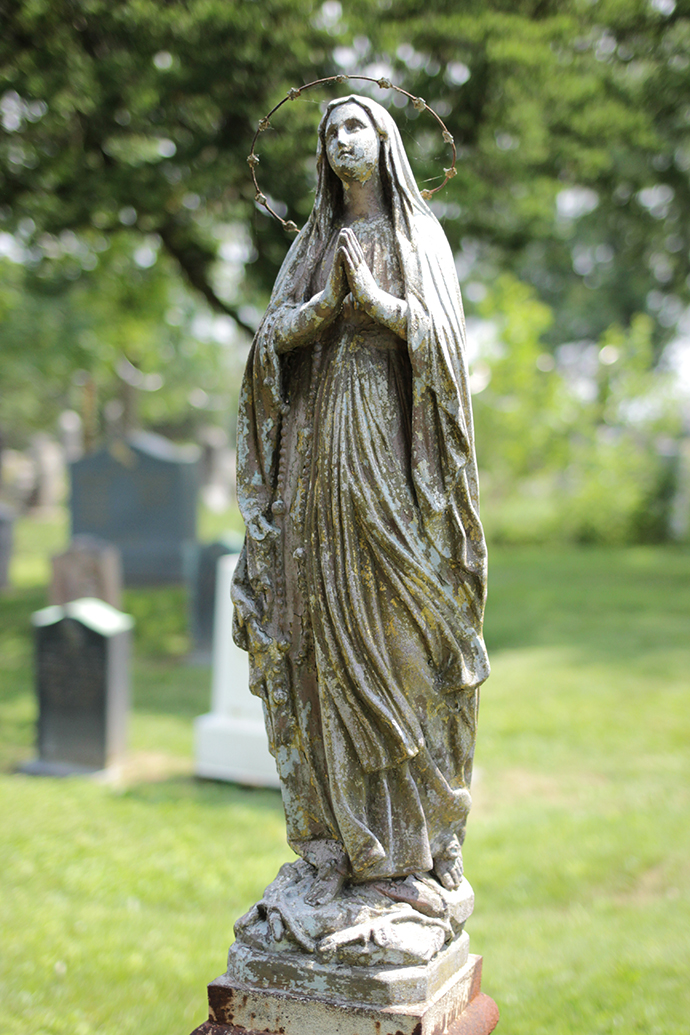
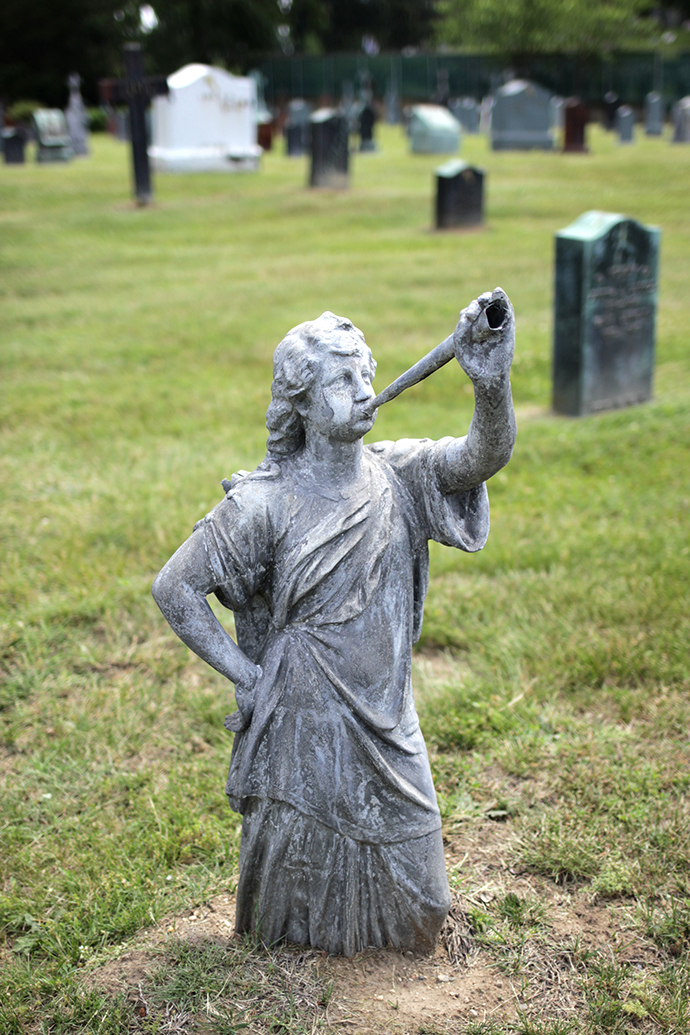
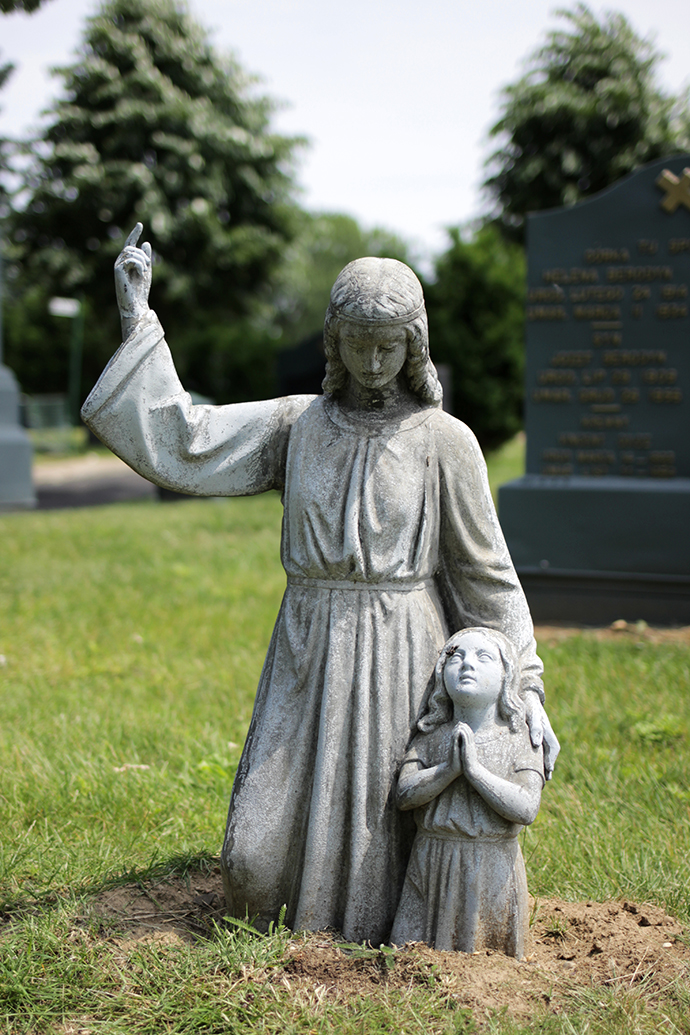
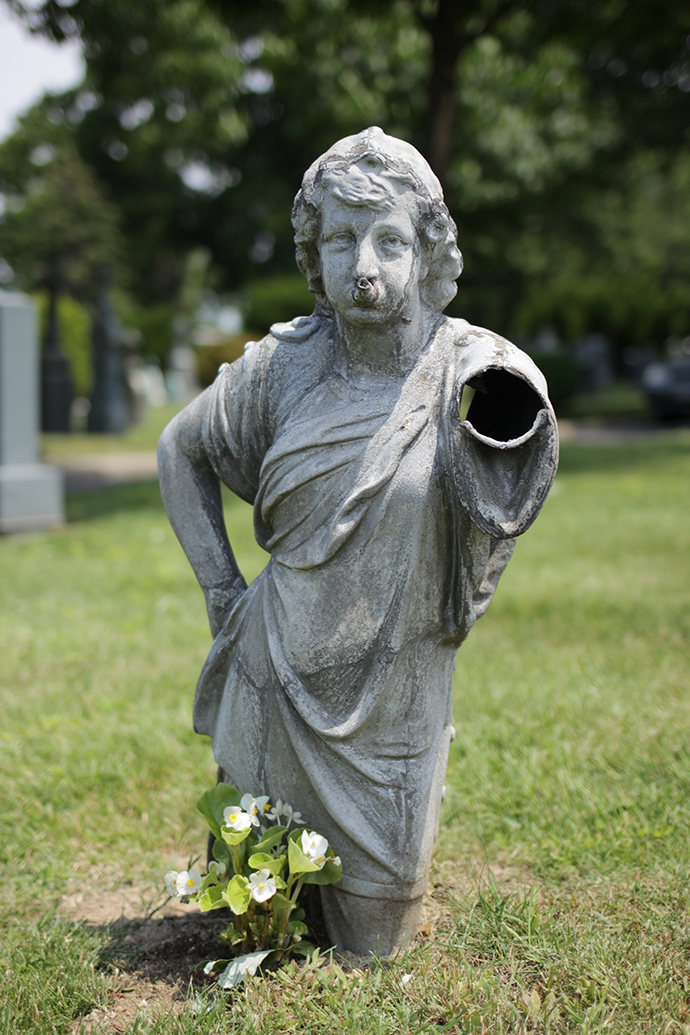
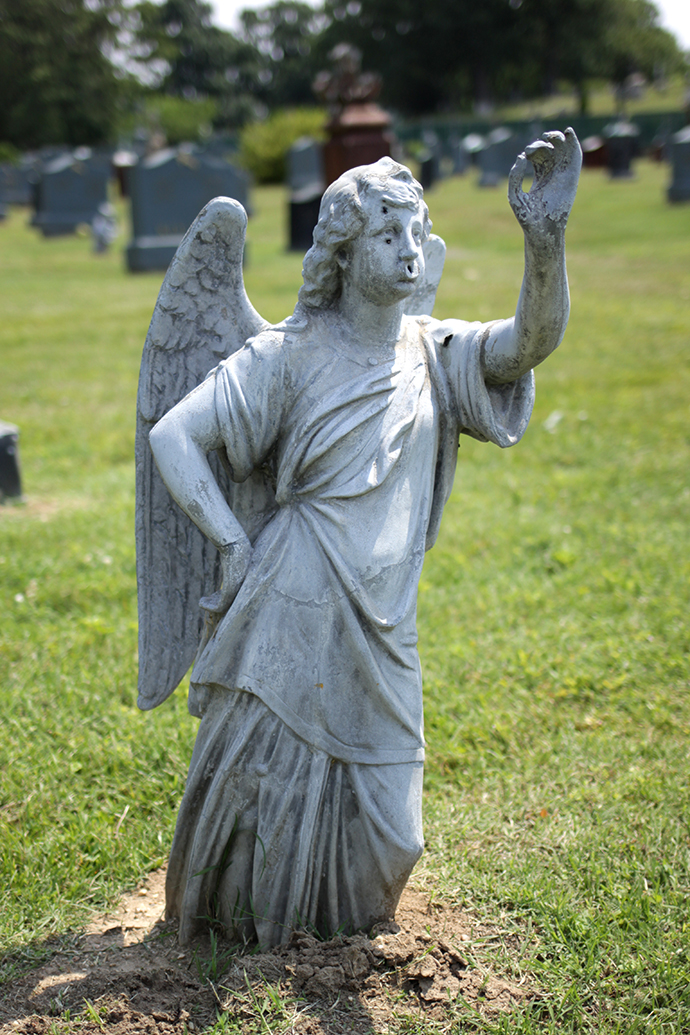
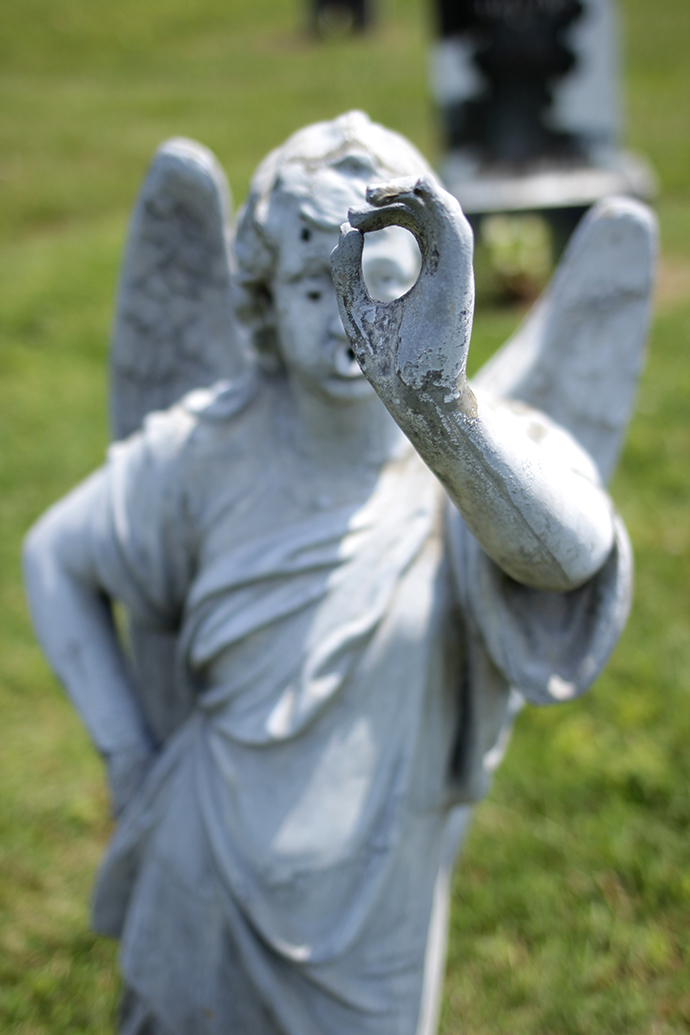
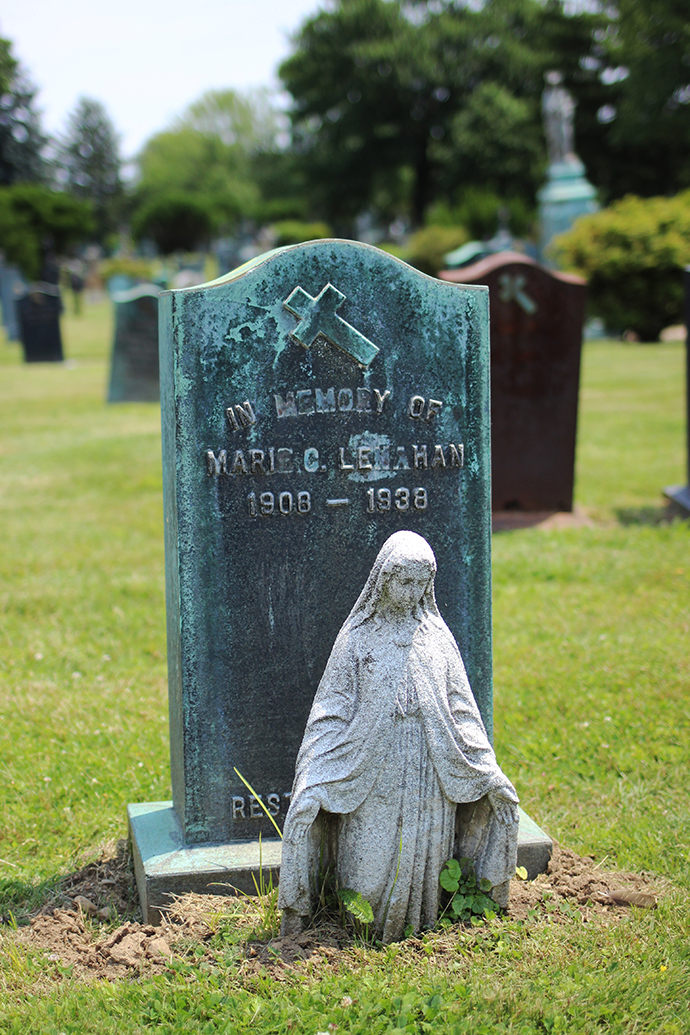

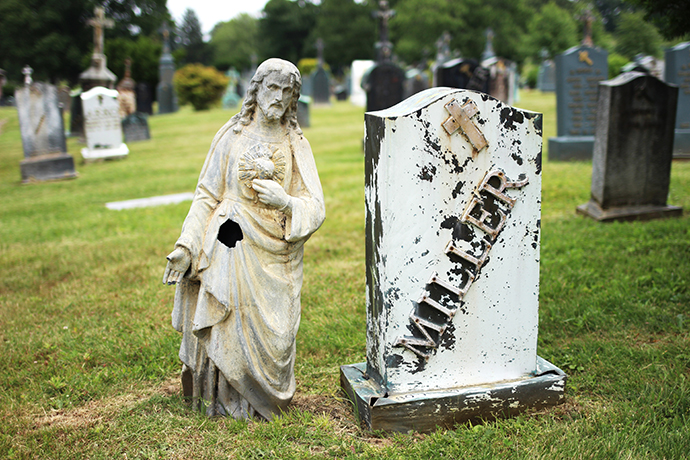
Because the statues are all made of metal, like most of the markers, they have weathered and become damaged in some very interesting ways. Instead of crumbling or being worn away by rain like stone statues, the metal figures developed holes or had entire limbs or accessories that appear to have fallen off at some point. I'm not exactly sure why most of the statues were unconnected with a marker of any kind—most were just sinking into the ground without any indication as to whom they belonged.
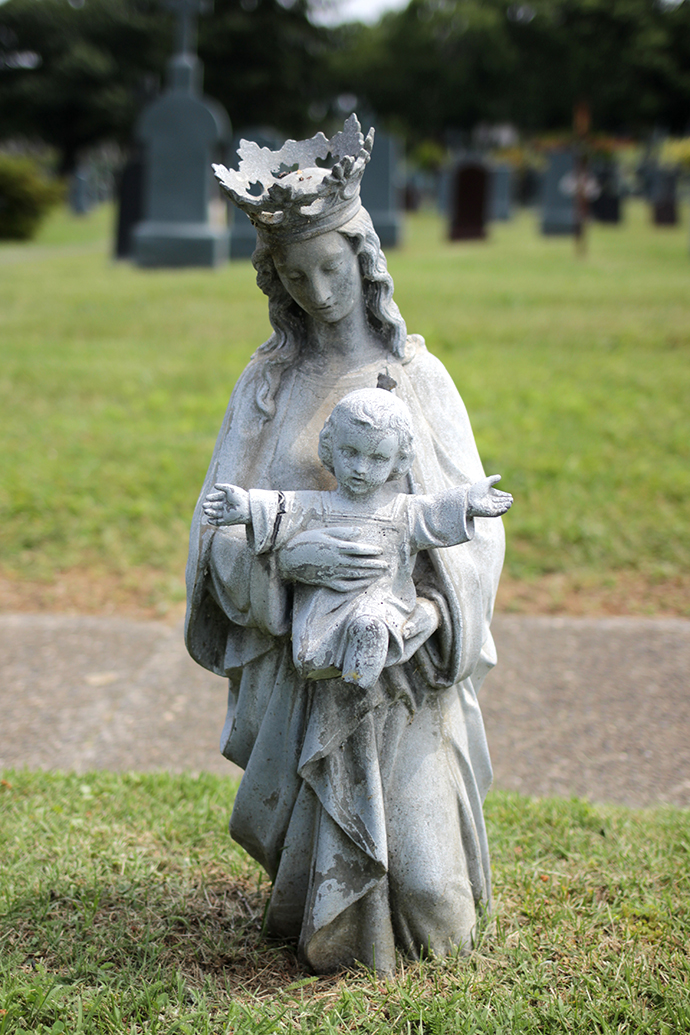
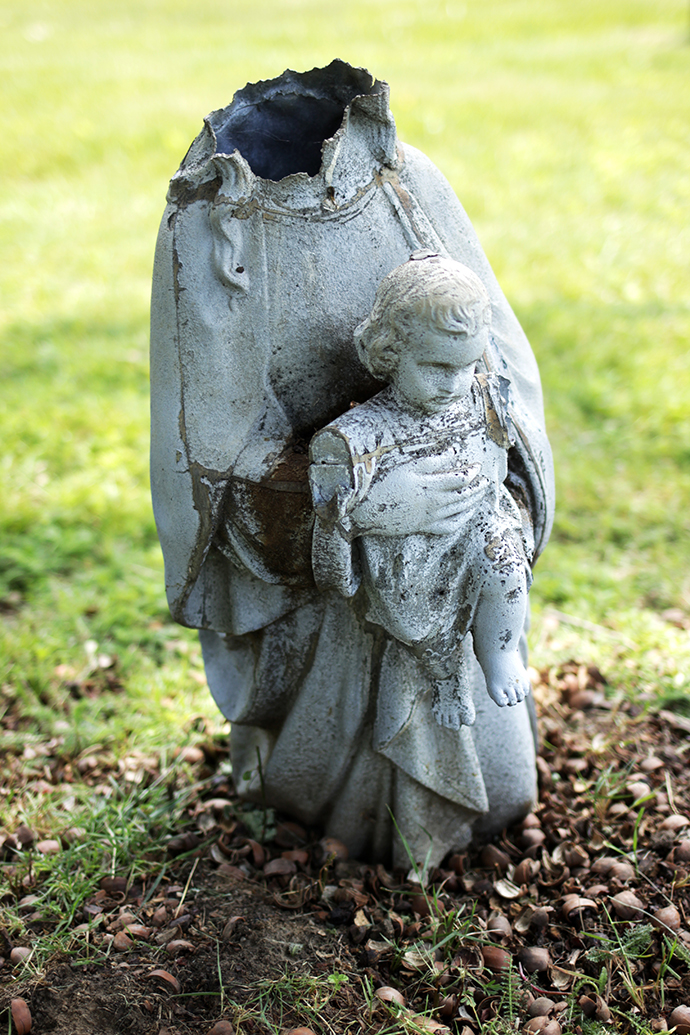
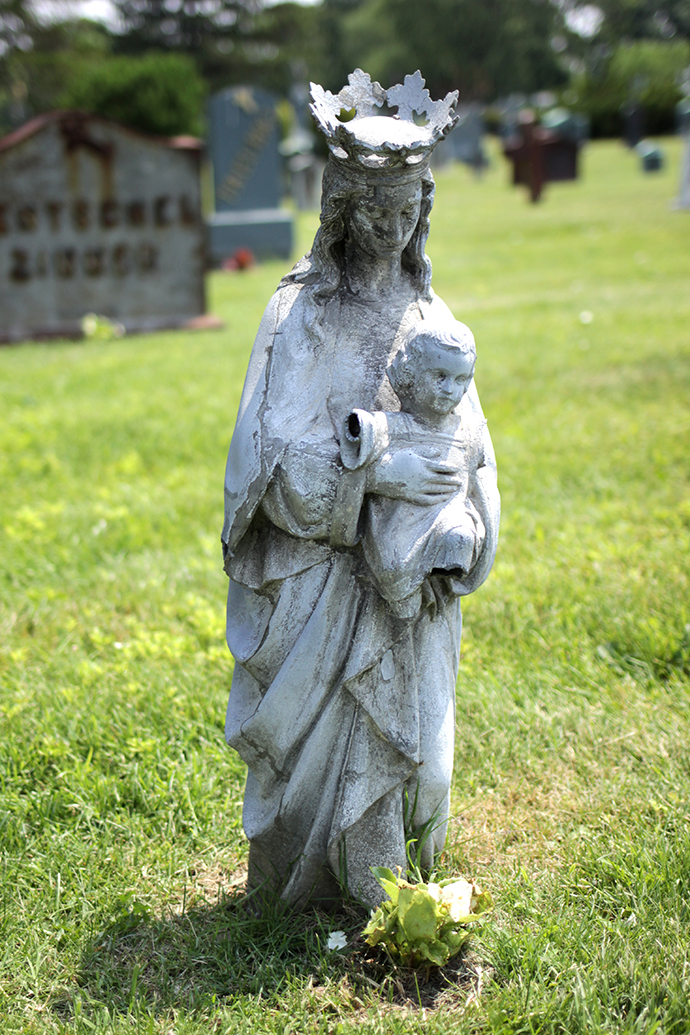
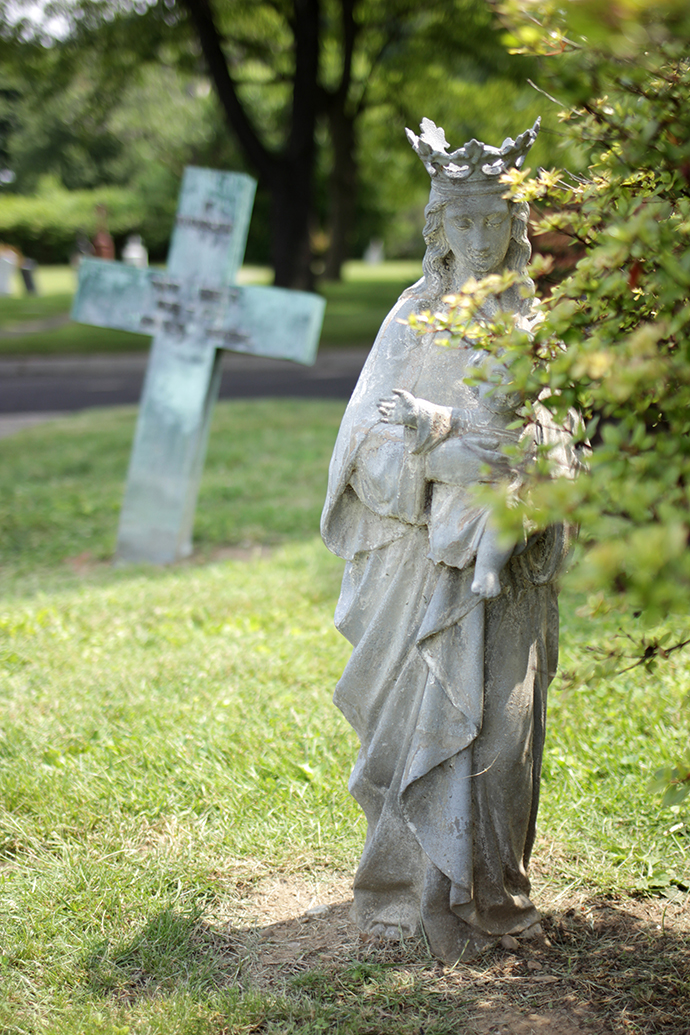
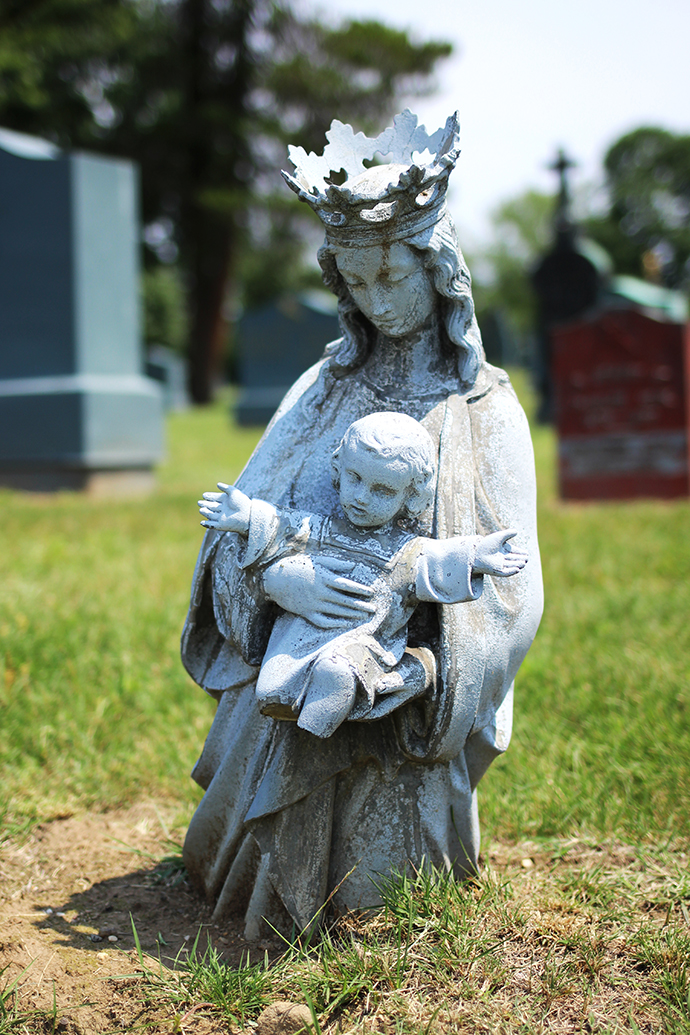
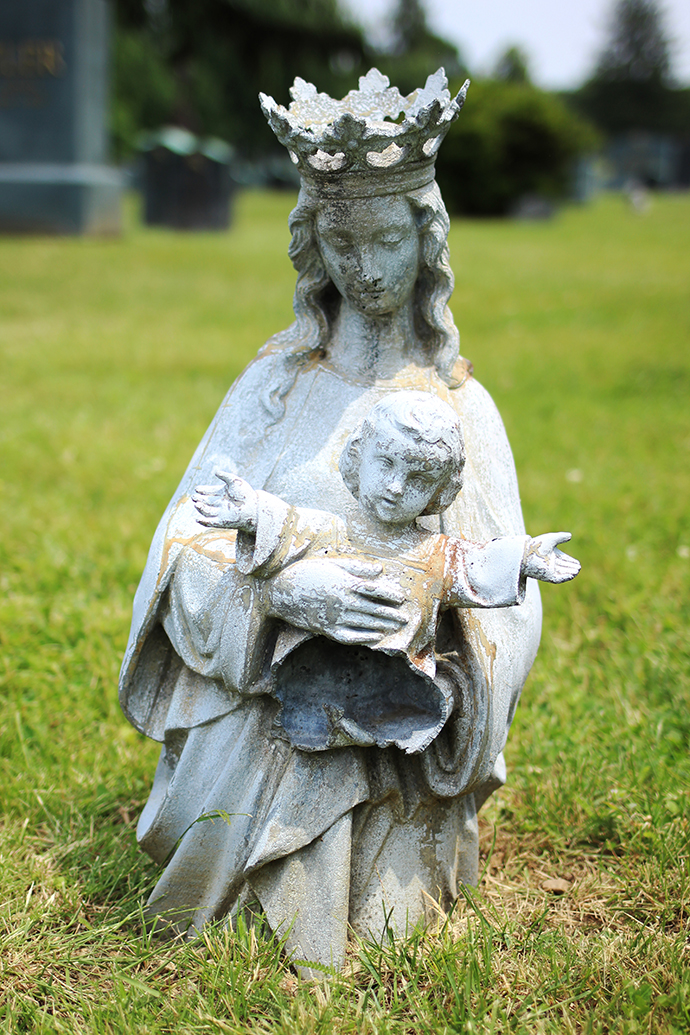
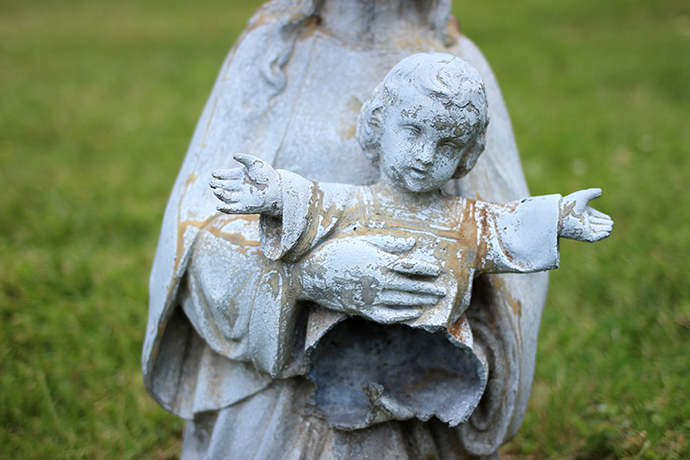
I love the intricate nature of metal casting vs. stone carving—from delicate crowns to feathery wings to the undulating folds of the cloth—everything is rendered in fine detail. There are various religious figures represented at Most Holy Trinity, but the most common one was the Madonna and Child—in fact I saw the exact same statue several different times, distinguishable only by their varying levels of decay.
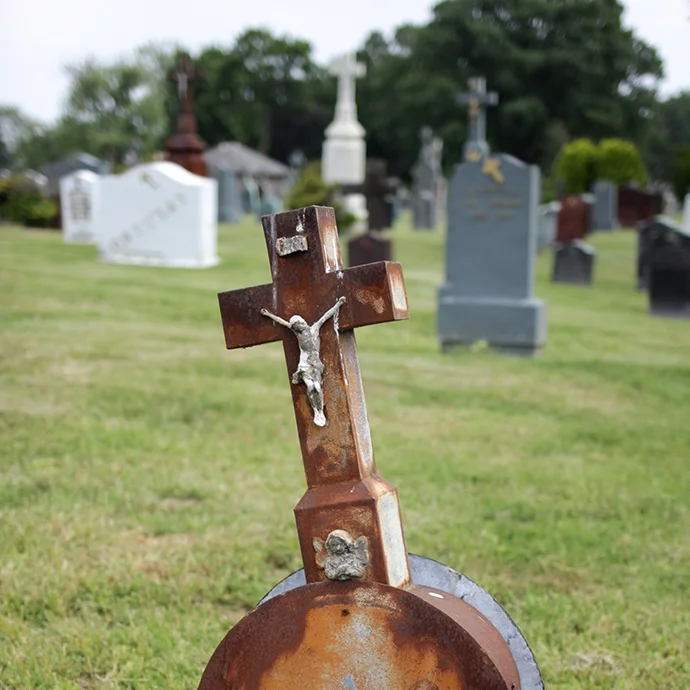
Most Holy Trinity Cemetery
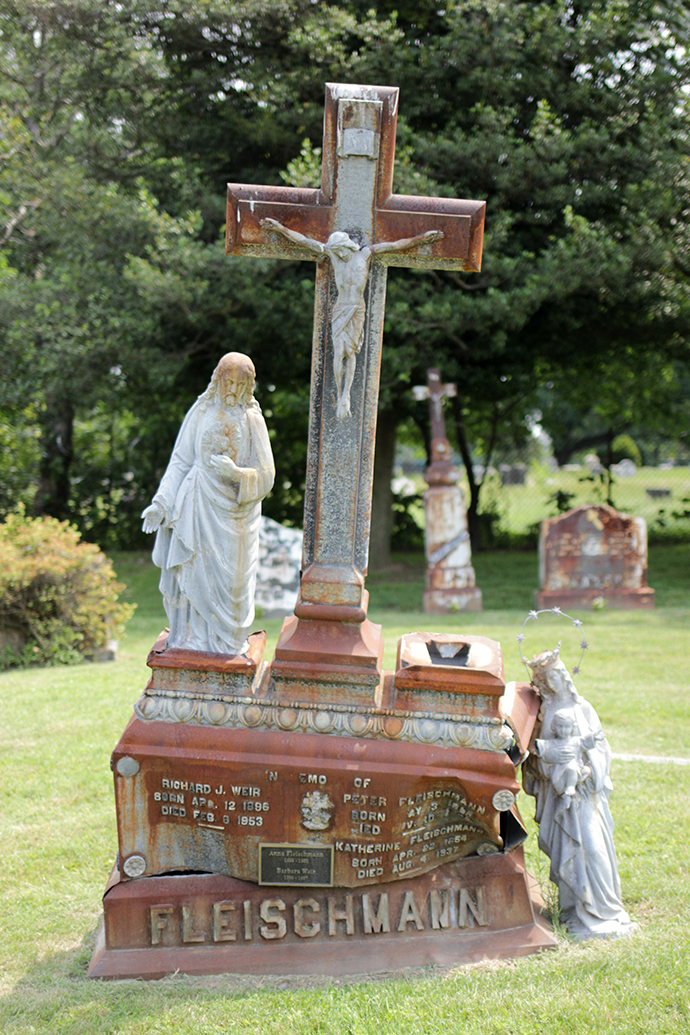
It's not so ridiculous to think that I'd still be finding new-to-me cemeteries in New York—a lot of people have lived, and died, here for ages and they all had to end up somewhere. It is surprising to me, however, that I'm still finding completely unique cemeteries that have somehow alluded me despite my immersion in all things funereal.
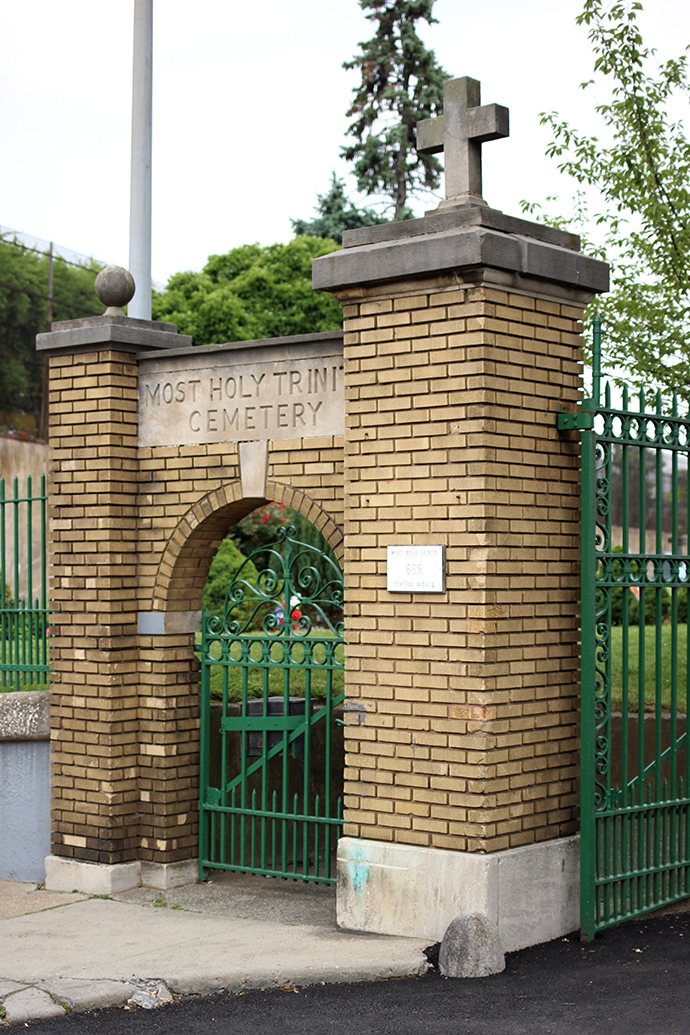
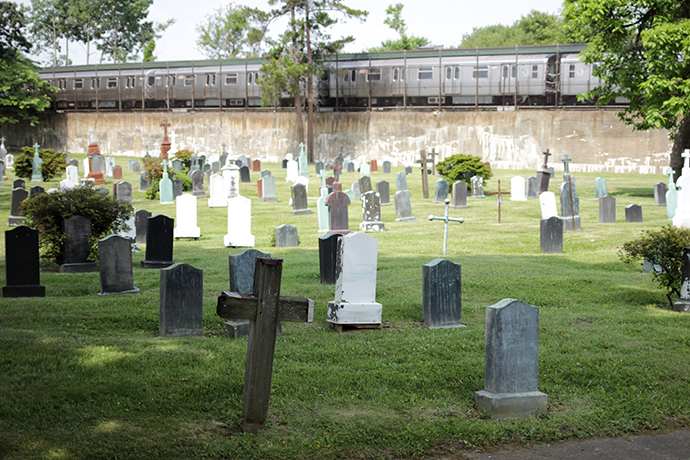
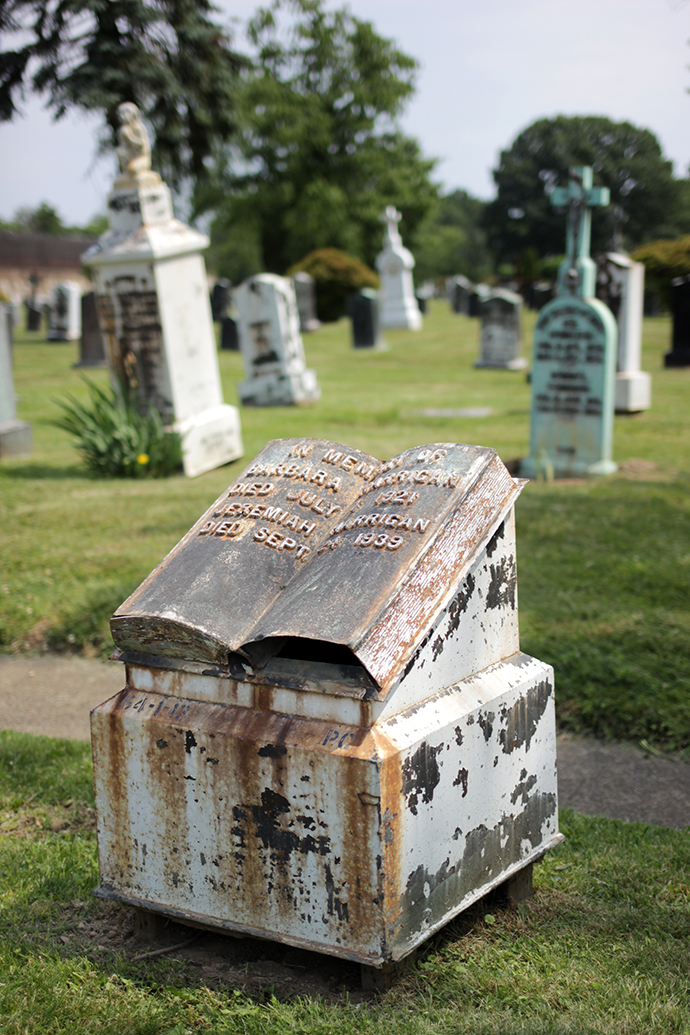
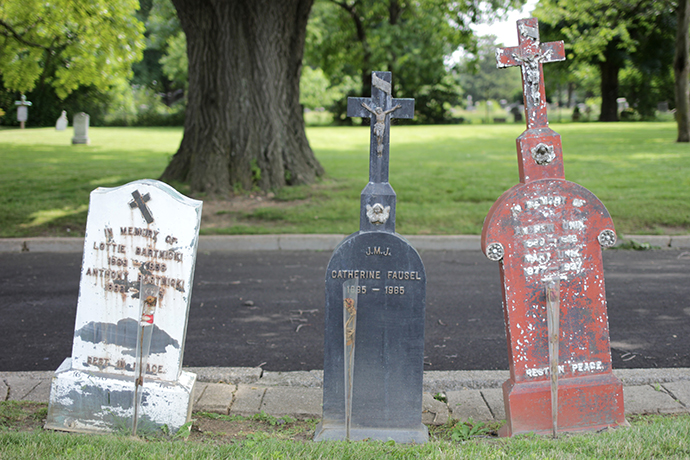
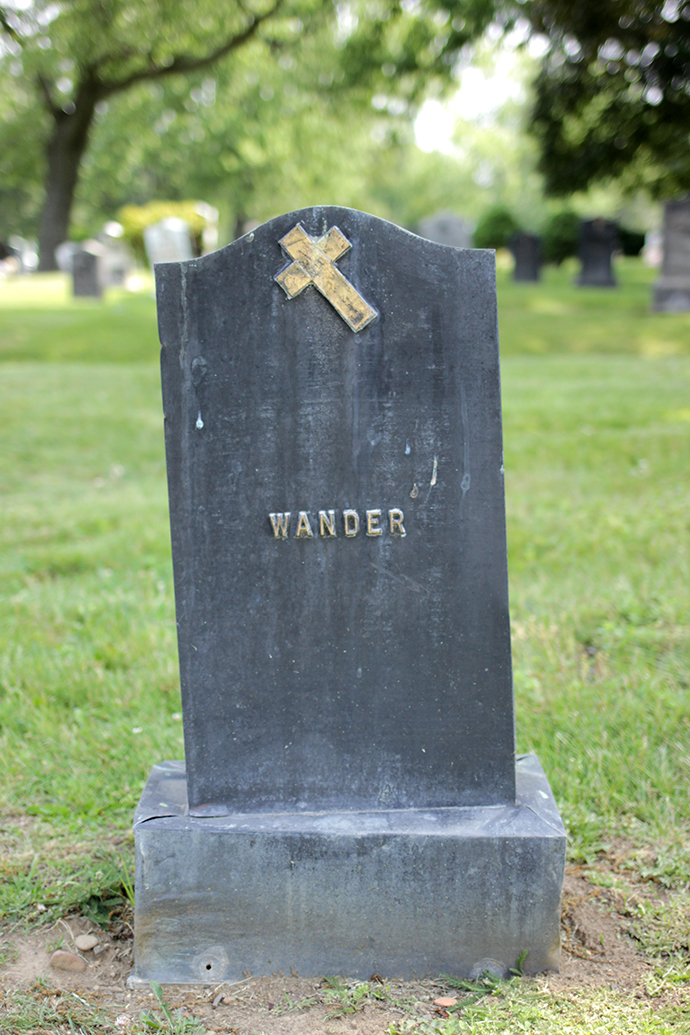
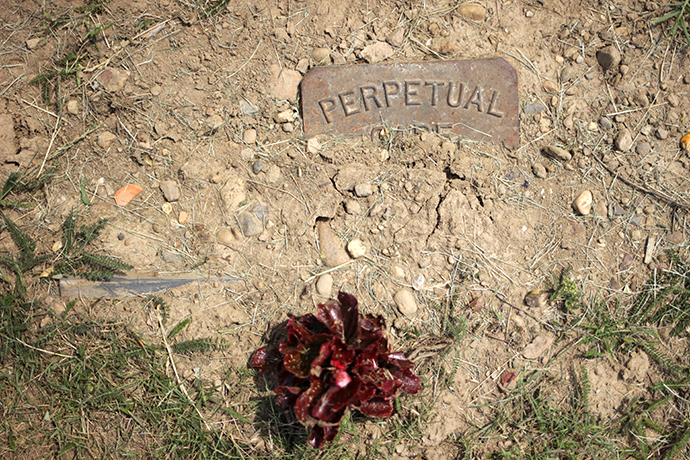
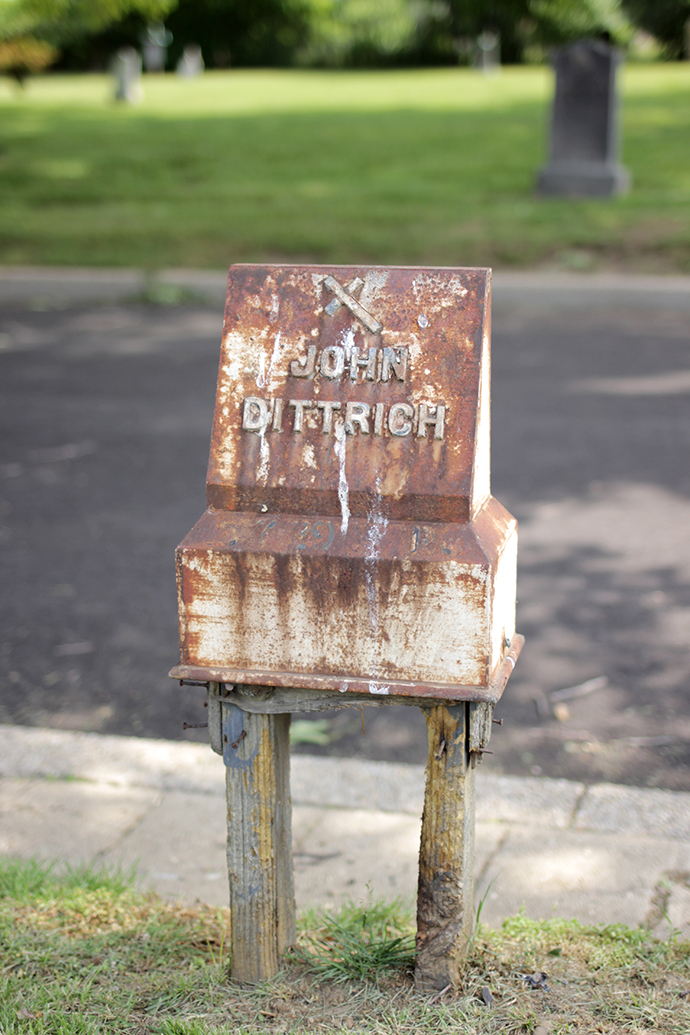
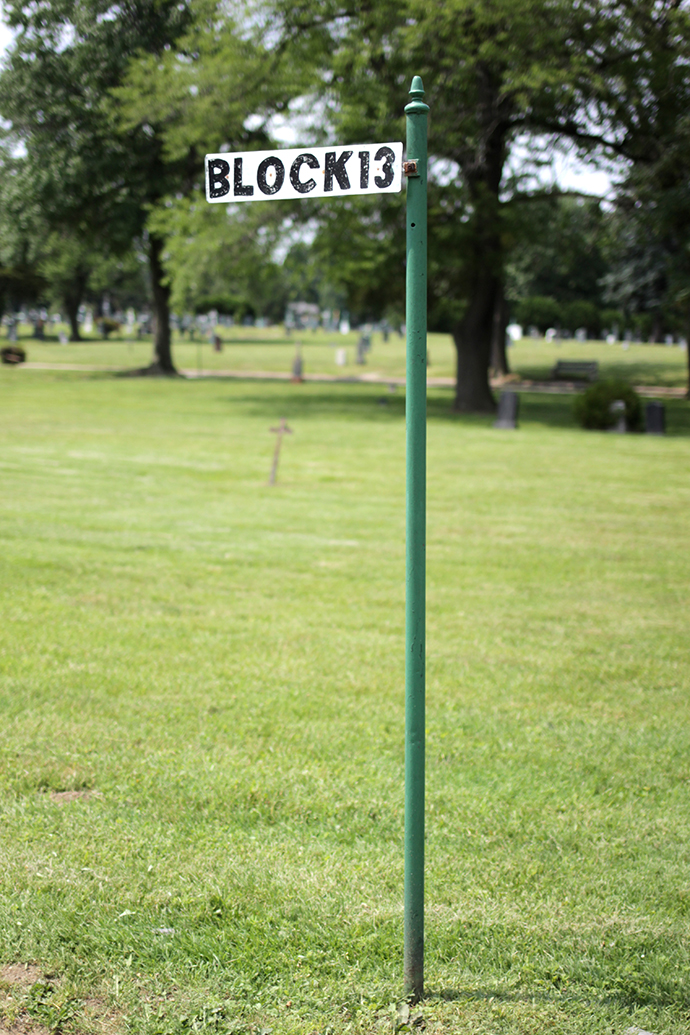
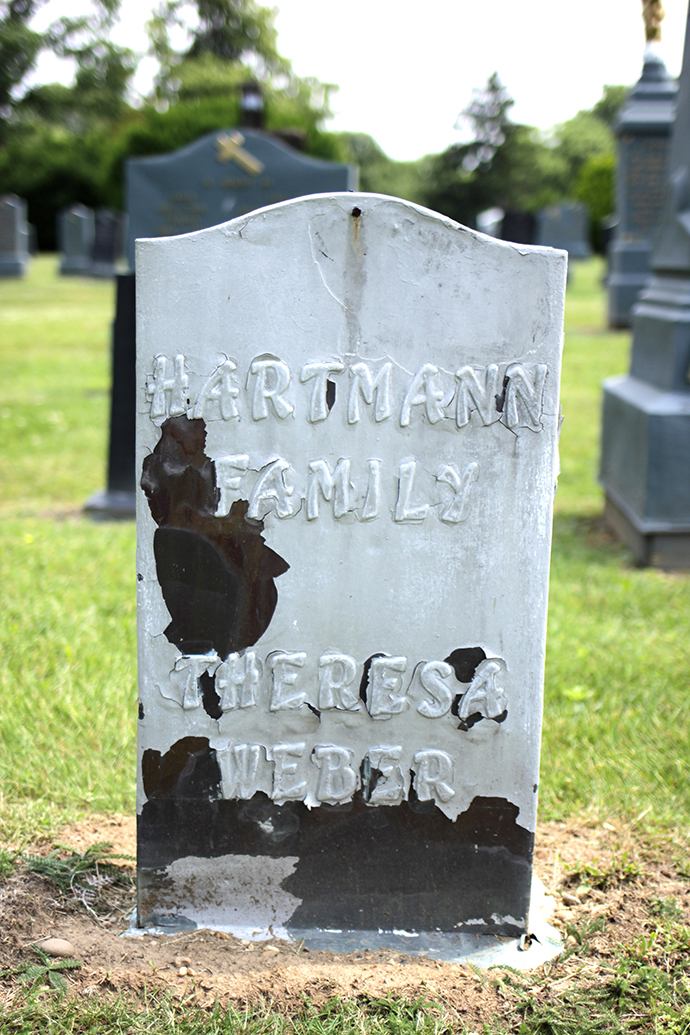
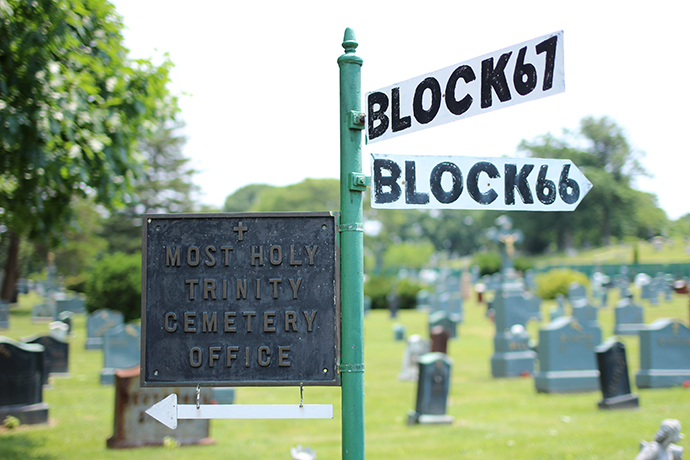
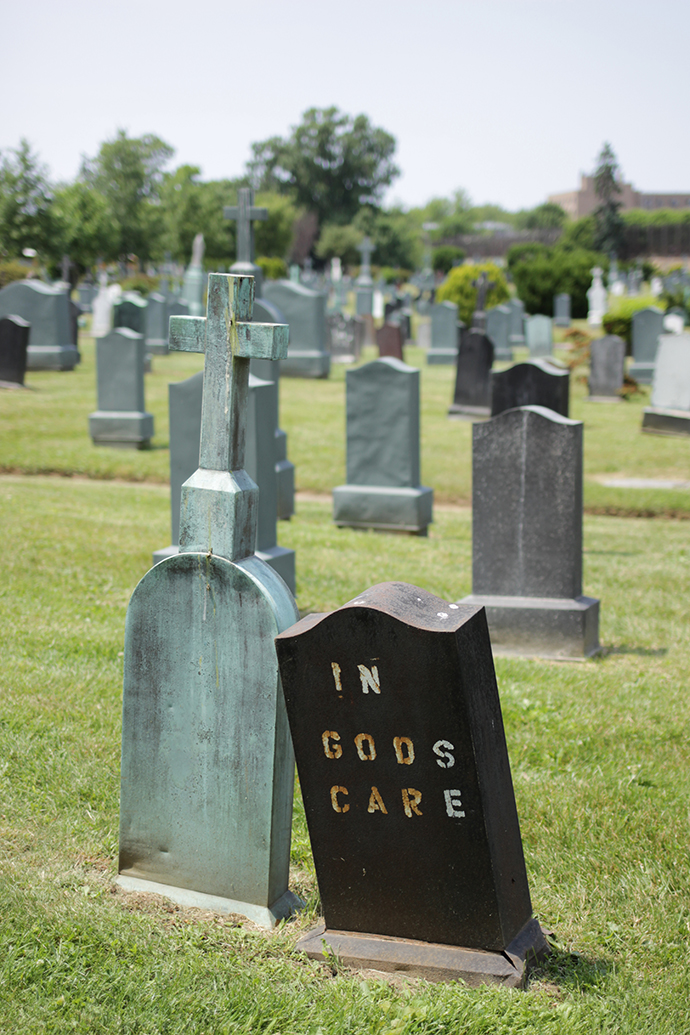
Most Holy Trinity Cemetery was founded in 1851 by the German Catholic Most Holy Trinity Church. It's located in Bushwick, Brooklyn and the L train runs right alongside (and looms over) the grounds. Almost all of the graves (except for a few modern ones) are marked with wood or metal markers to make no posthumous distinction between the rich and the poor. I knew this before I went to explore, but immediately upon entering the gates, I knew that I had found a cemetery unlike any I'd ever seen before.

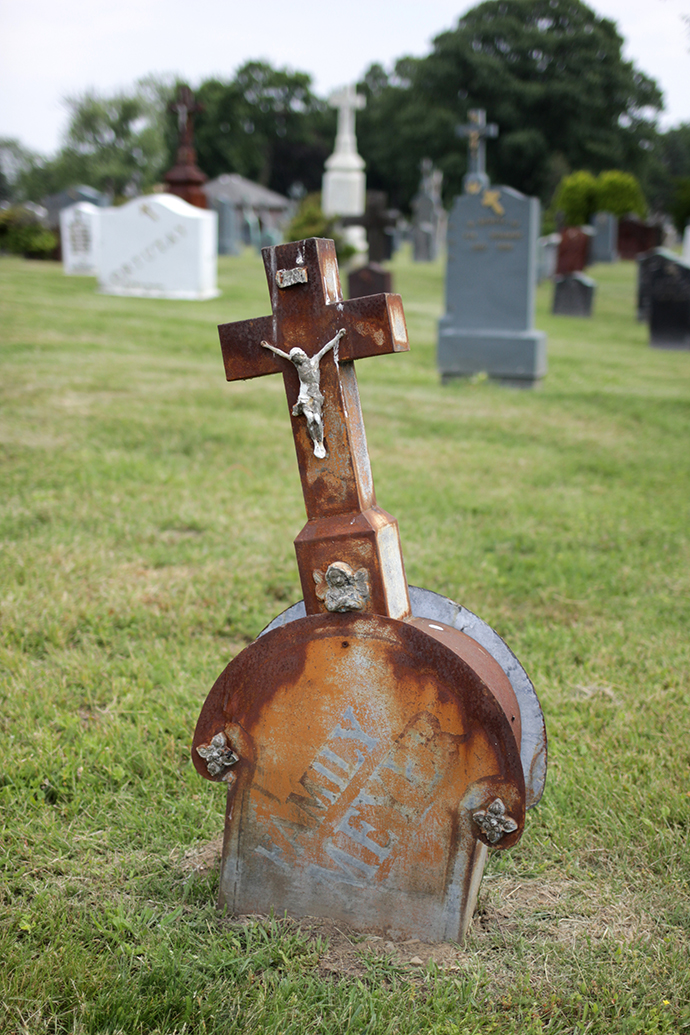
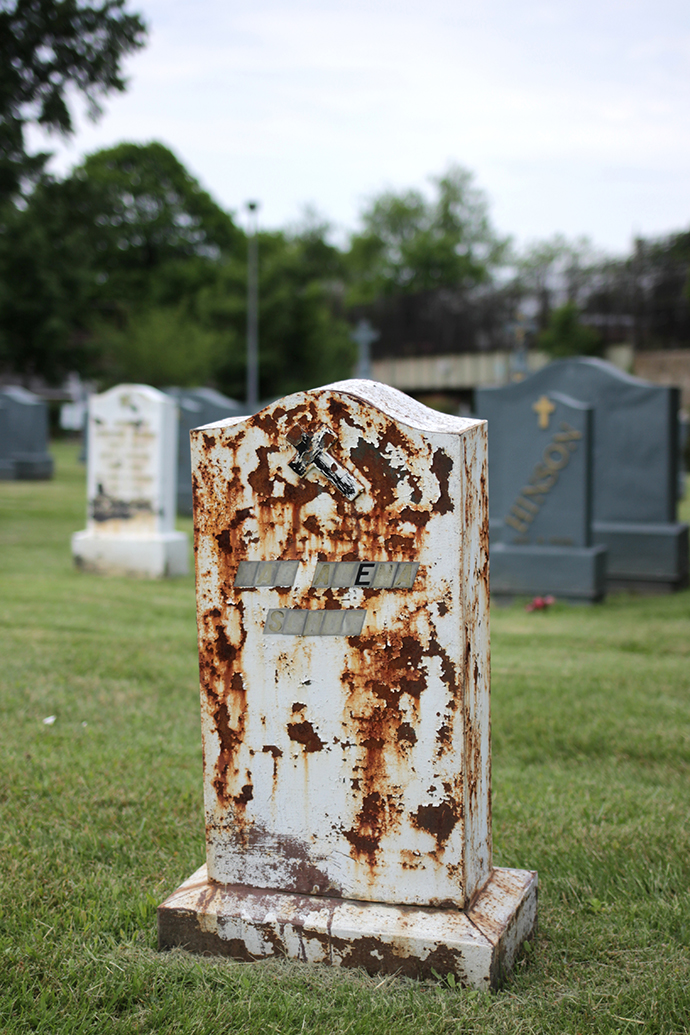
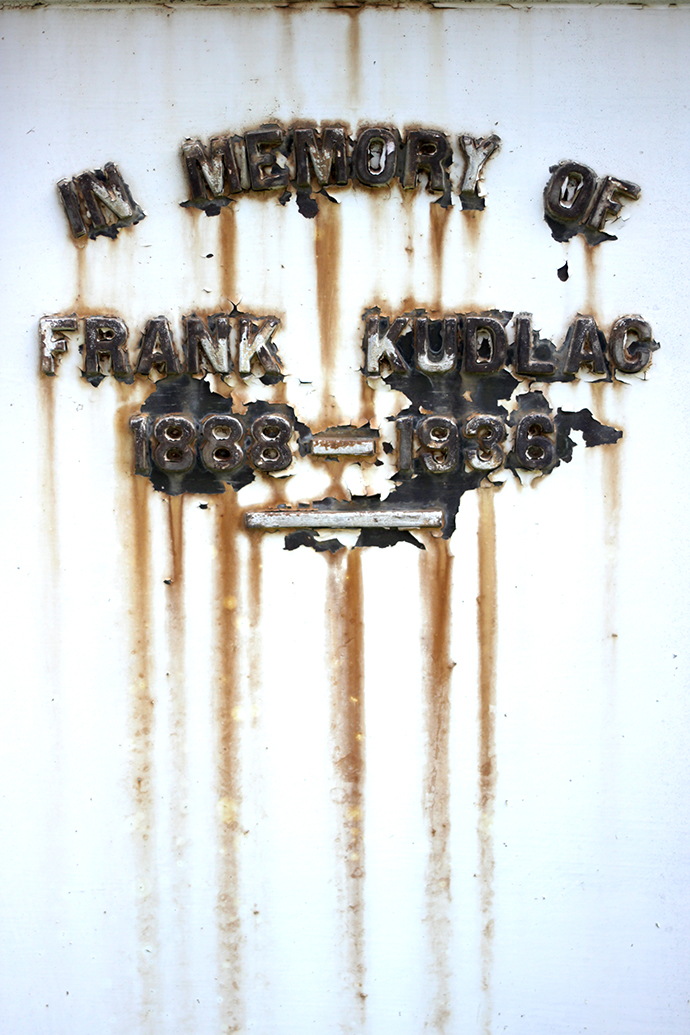
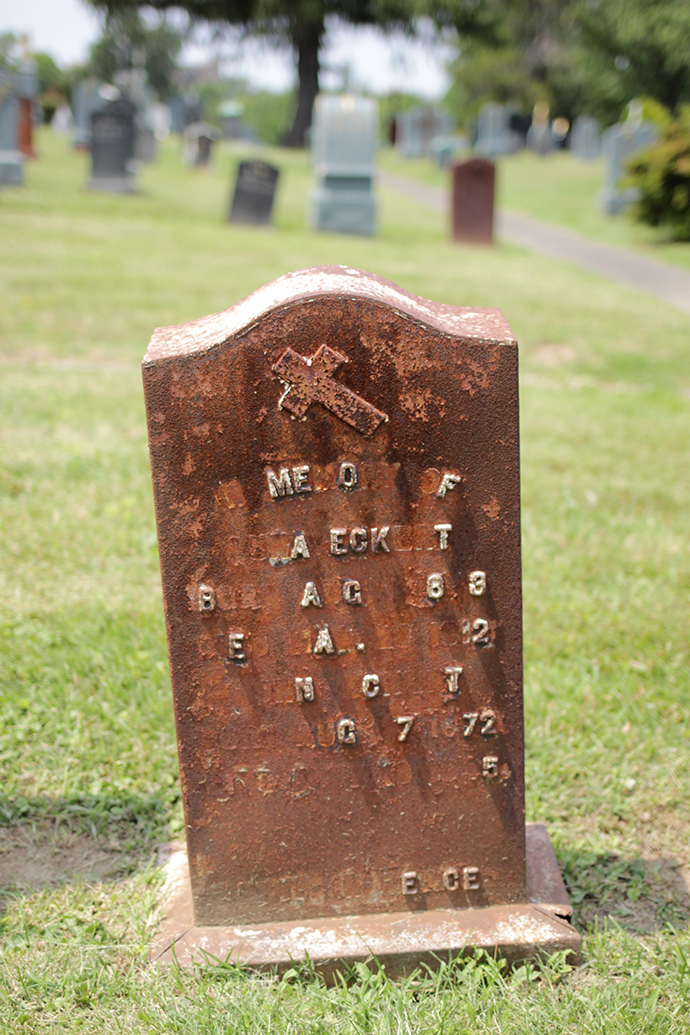
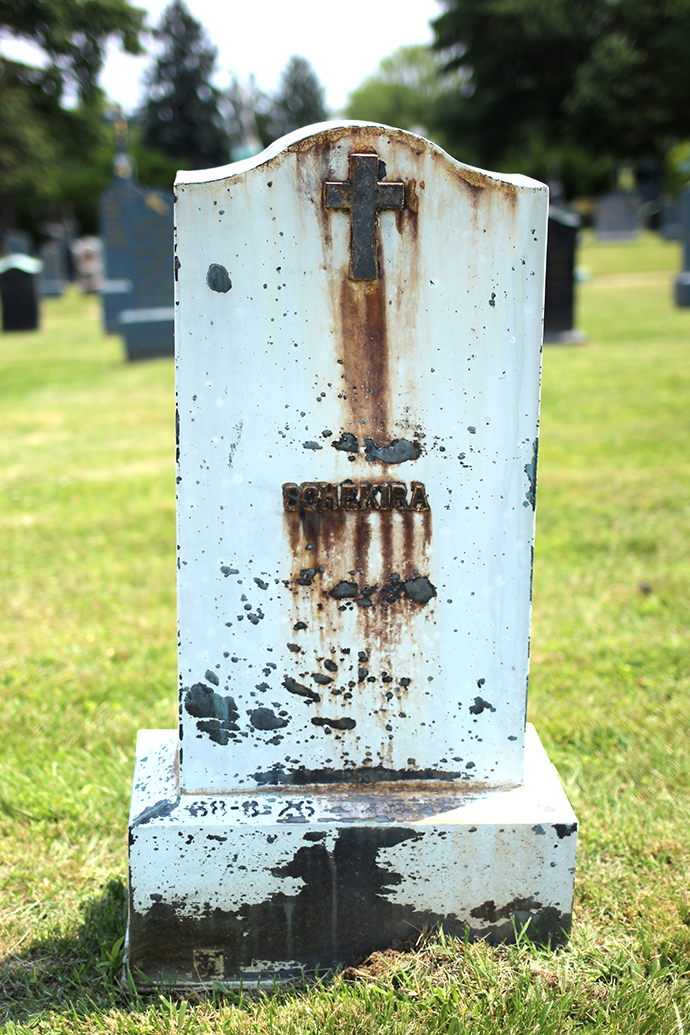
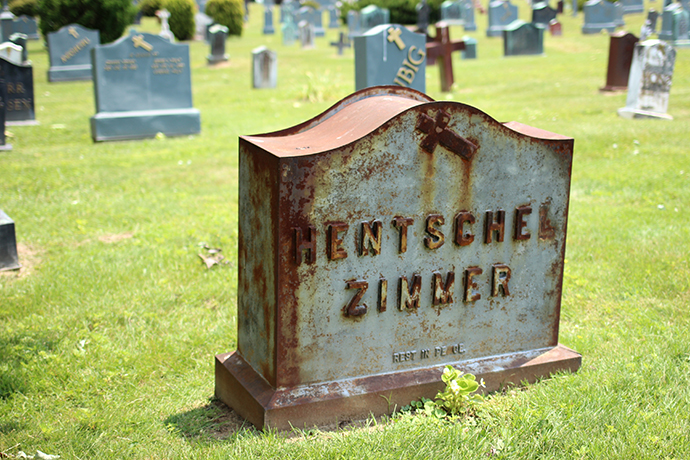
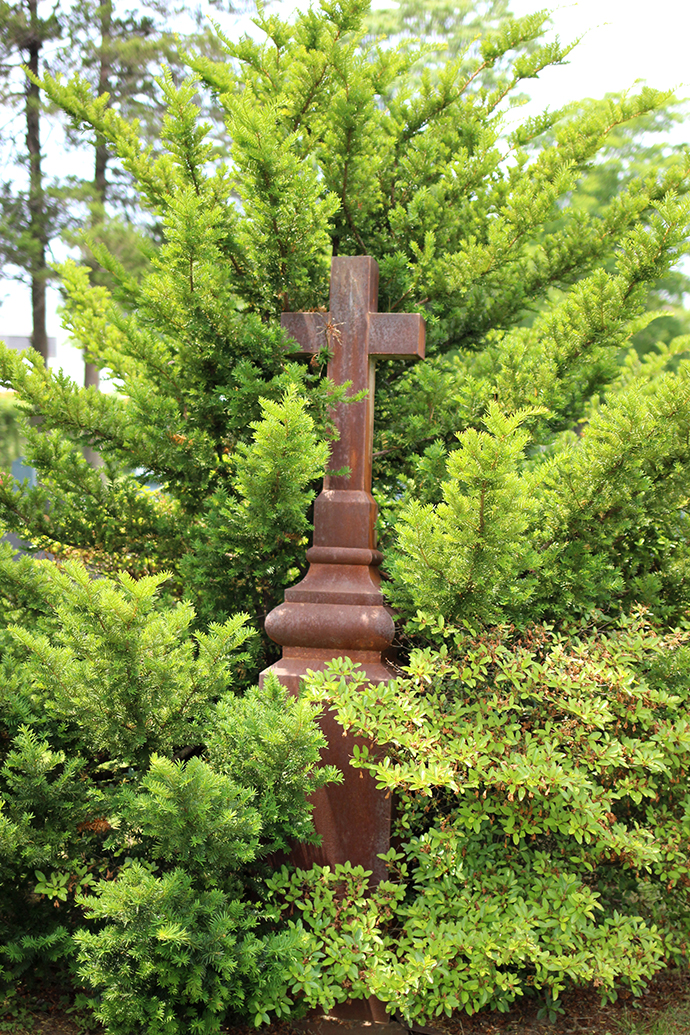
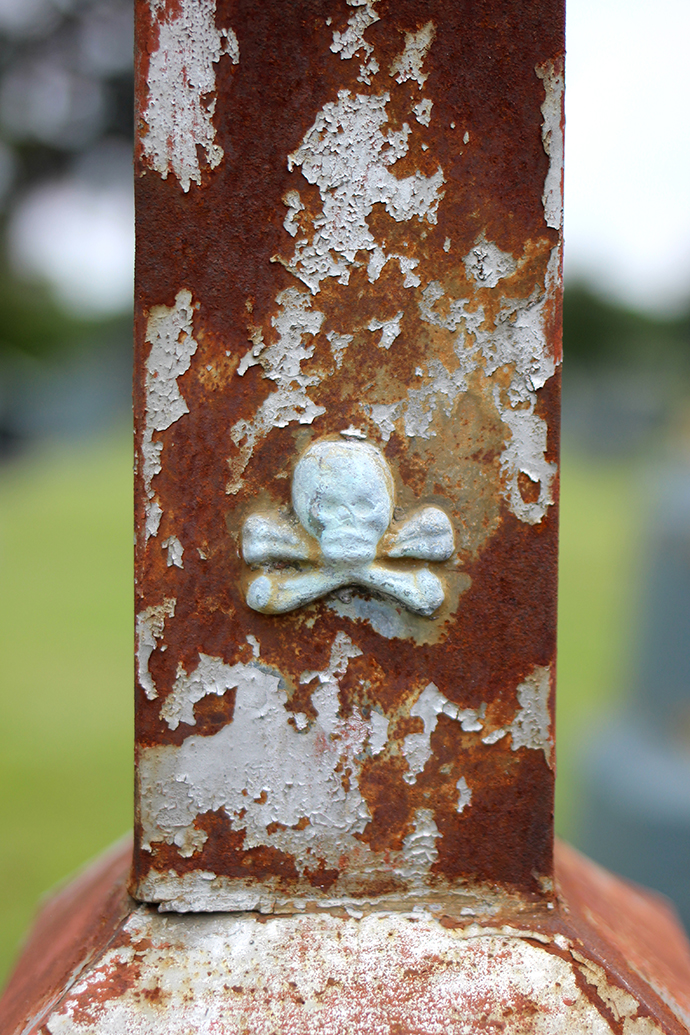
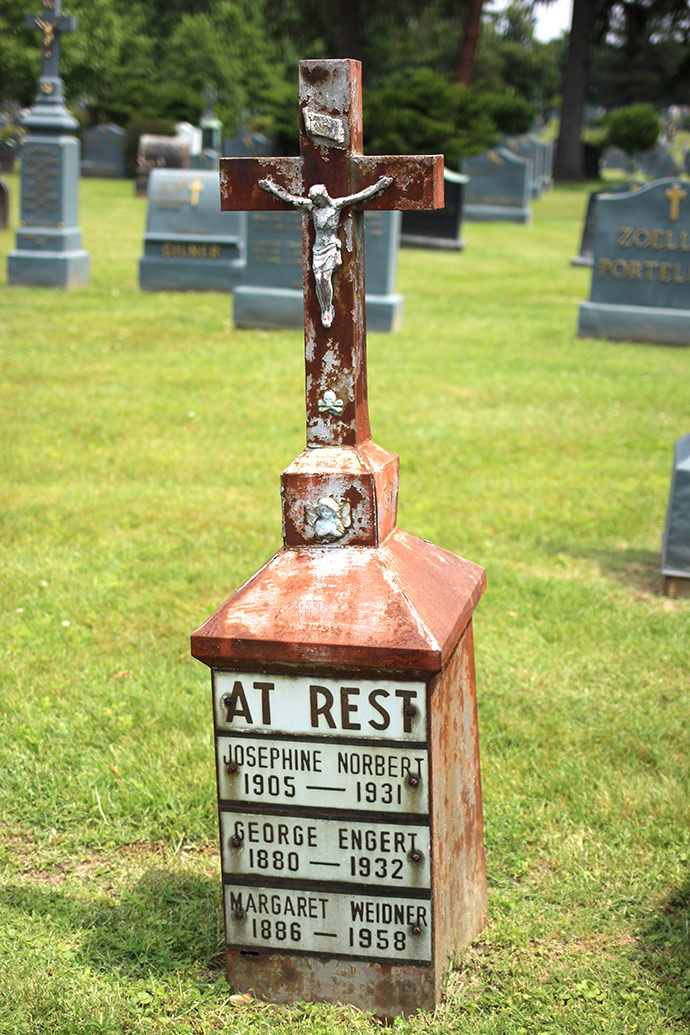
The hollow tin markers outnumber other materials such as wood, stainless steel or copper, and the effect is visually incredible. There are approximately 25,000 graves in Most Holy Trinity, and while some have been freshly painted and well-maintained, a majority are rusting in the most beautiful ways. Layers of peeling paint and dripping rust have always been my jam, but when combined with my love of tombstones and cemeteries the end result is perfect. I said (to myself) several times as I walked around "I am so,
so
happy."
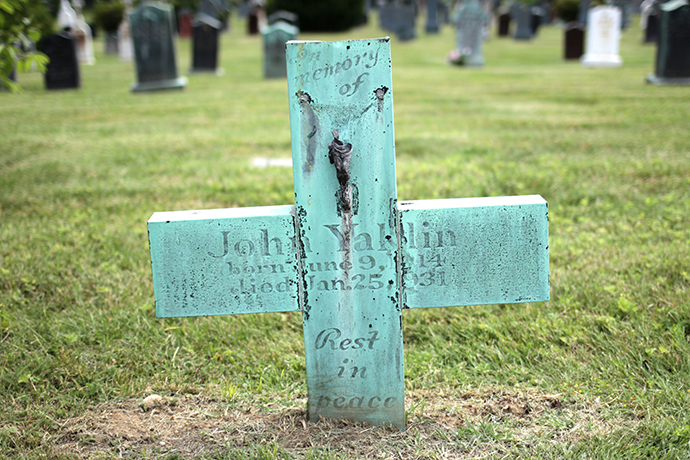
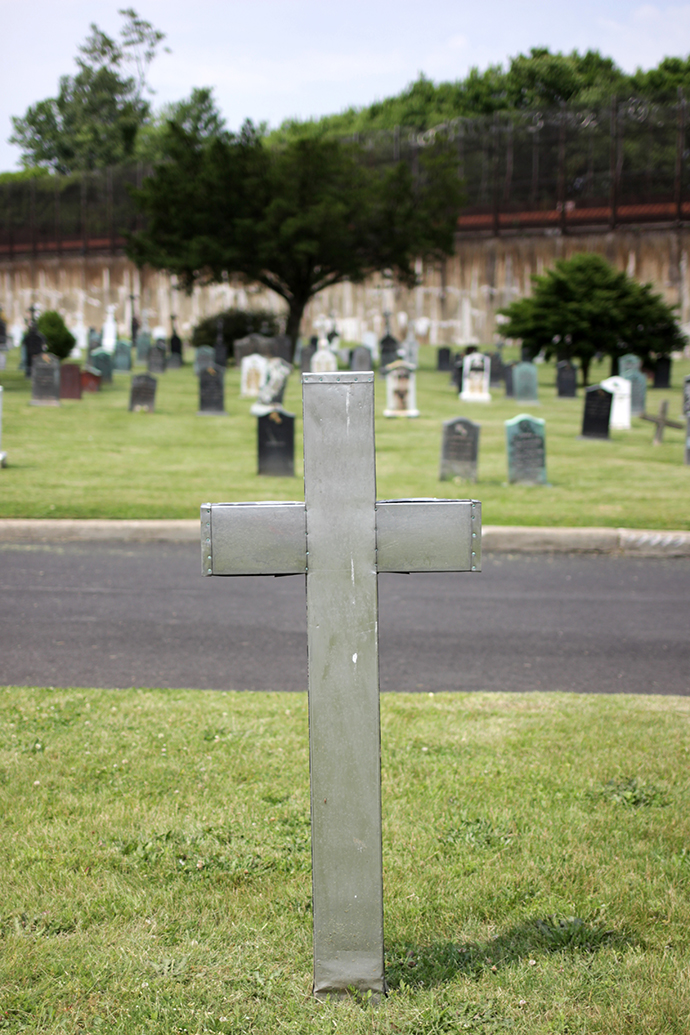
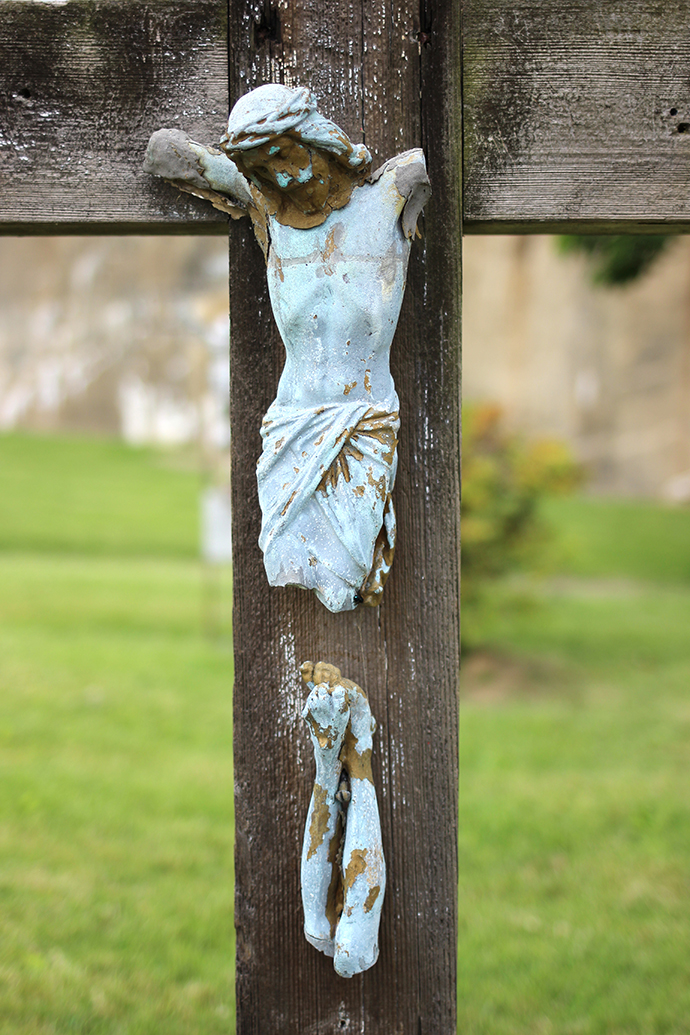
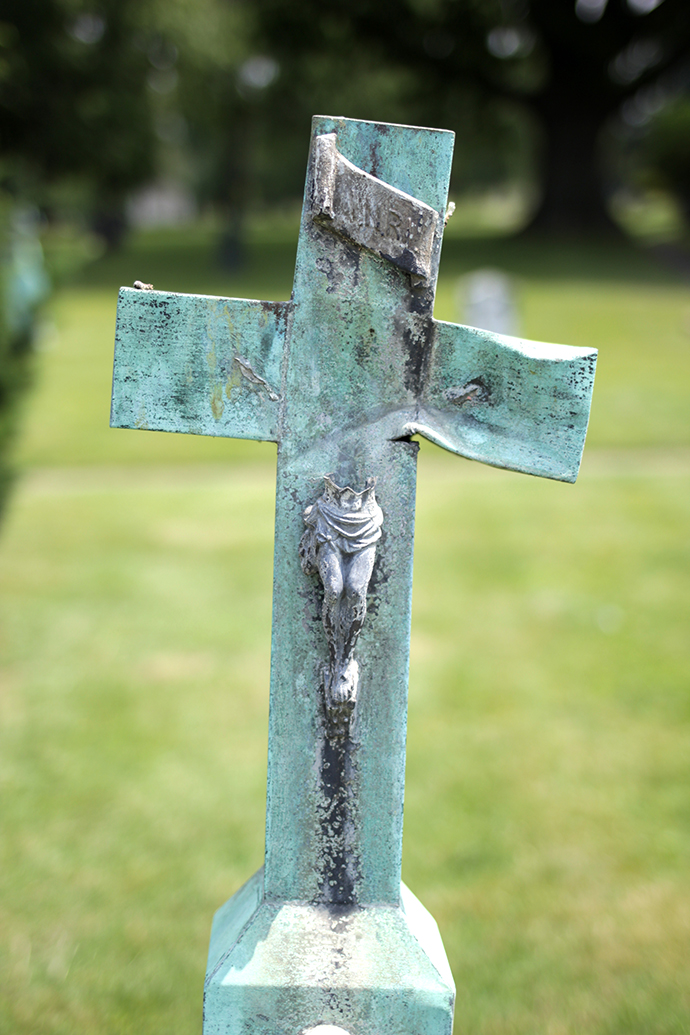
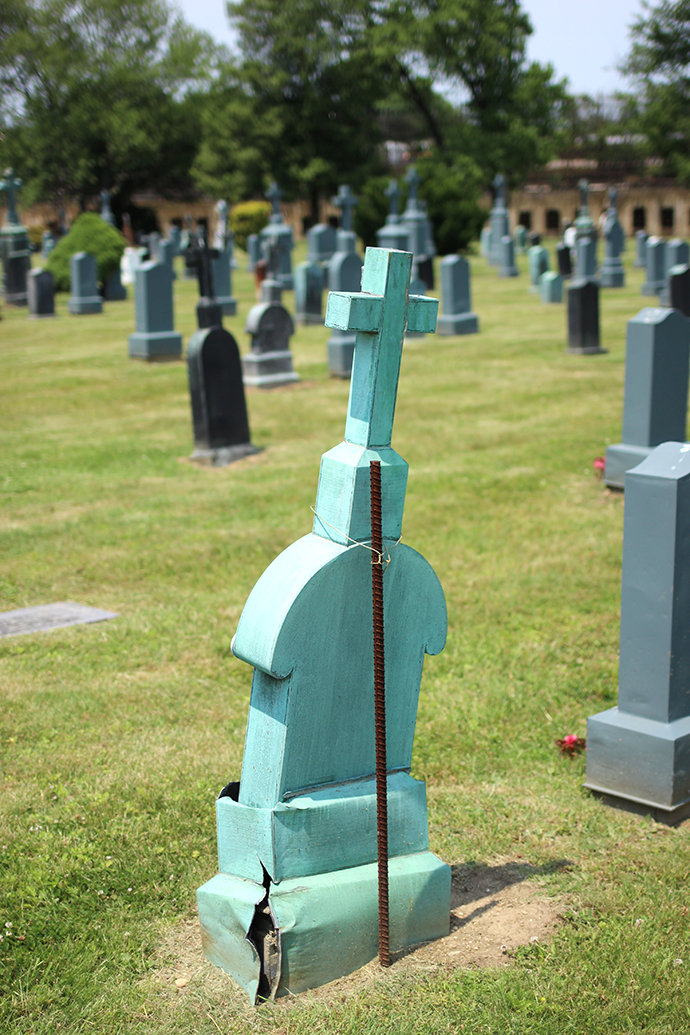
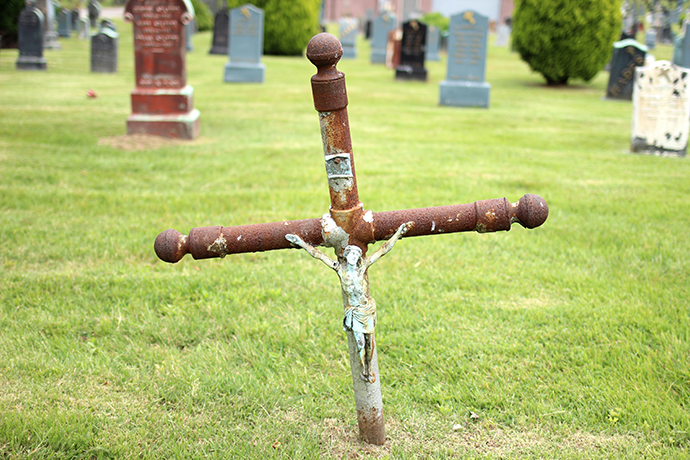
There used to be more copper monuments, but they've been stolen over the years for their scrap value. I did see a few remaining, all of which are sporting a beautiful Statue-of-Liberty green patina. There were crosses on almost everything, made from weathered wood, shiny steel and even what looked like plain (now rusty) pipe.
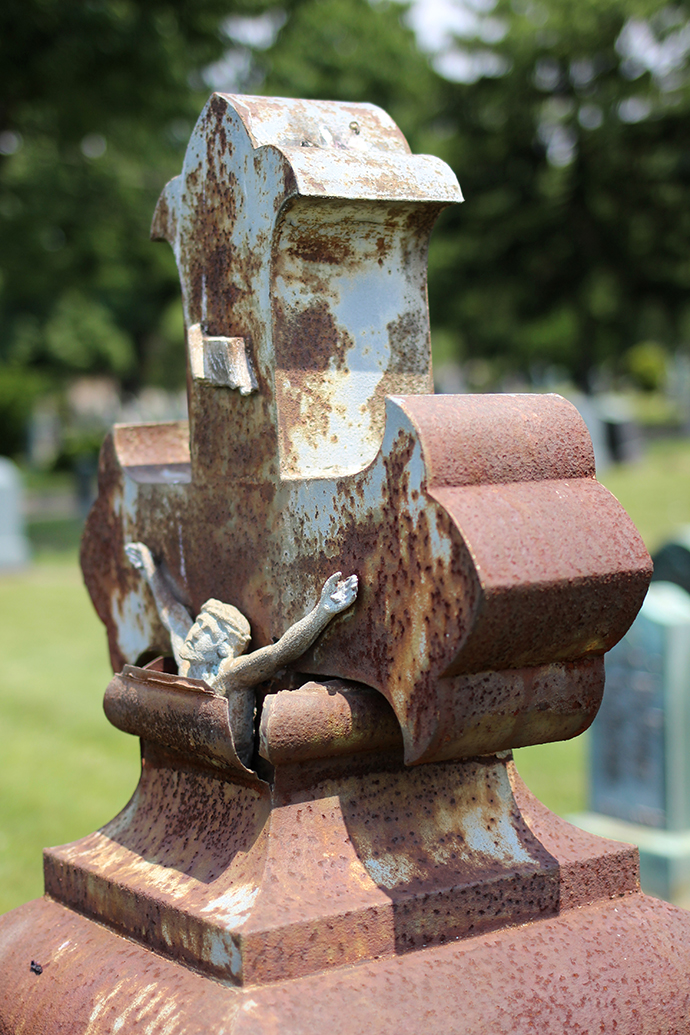
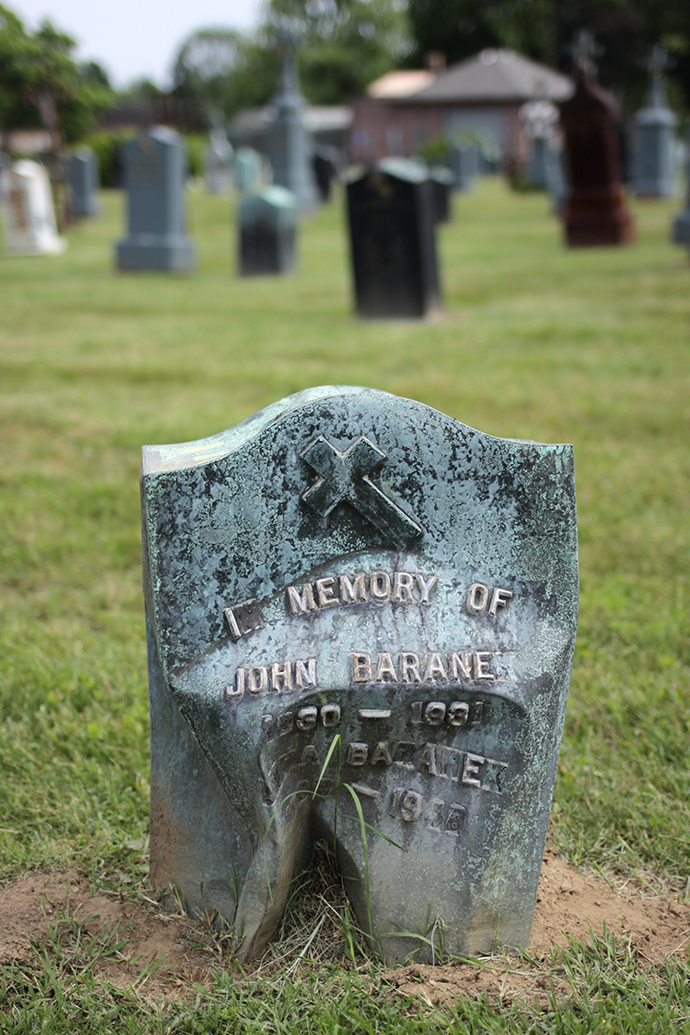
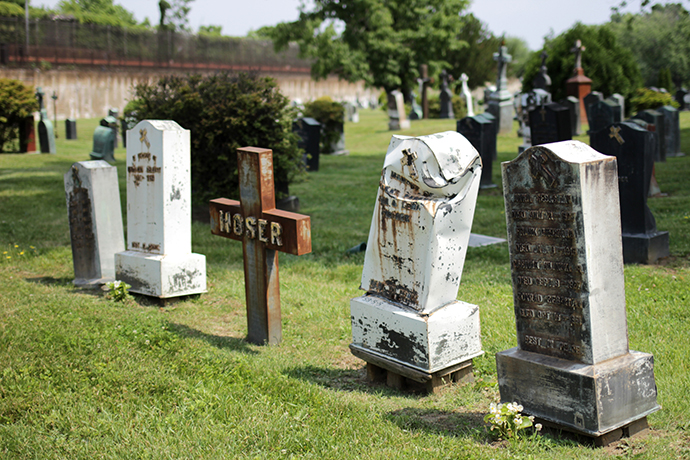
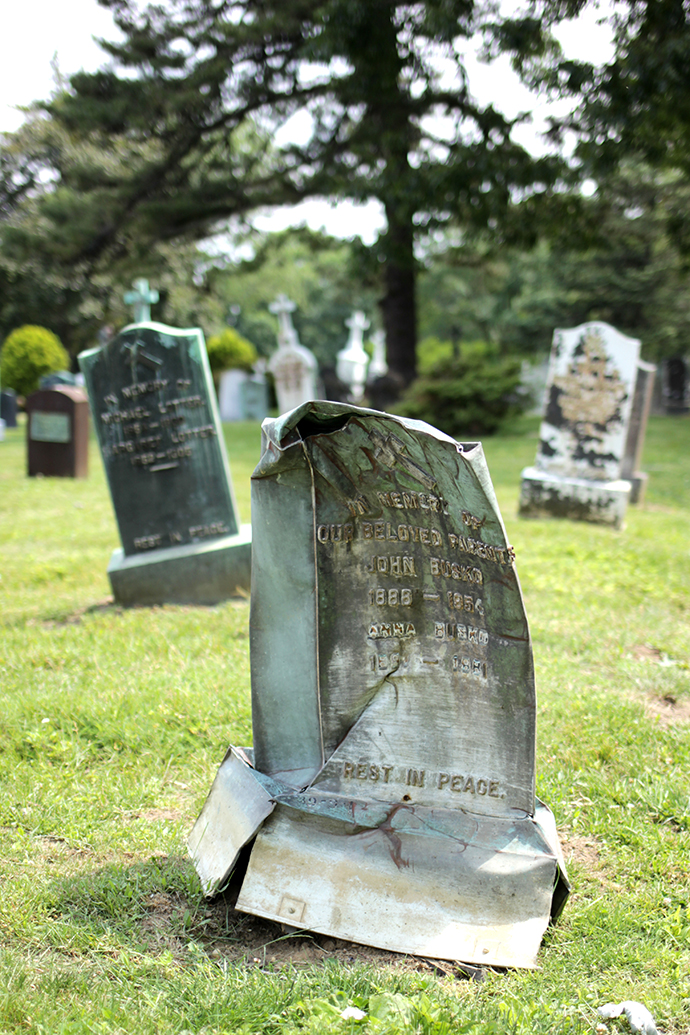
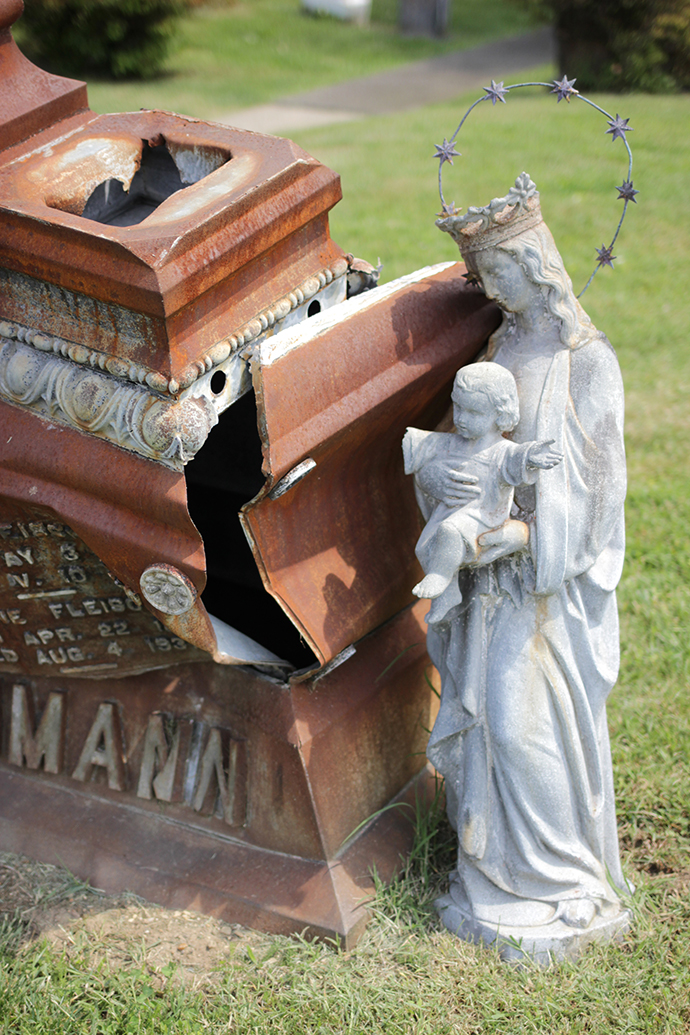
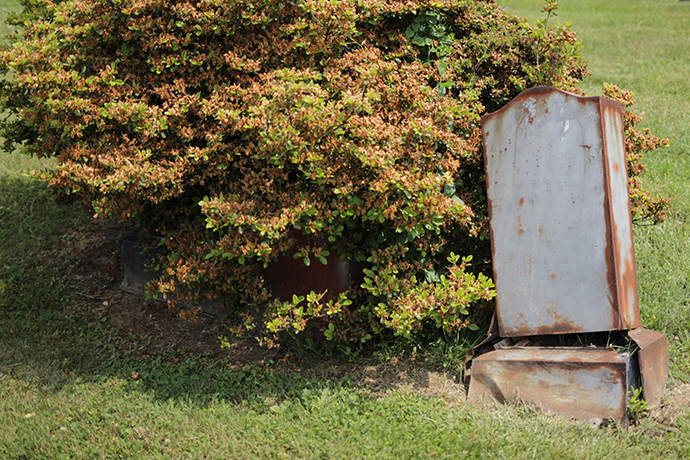
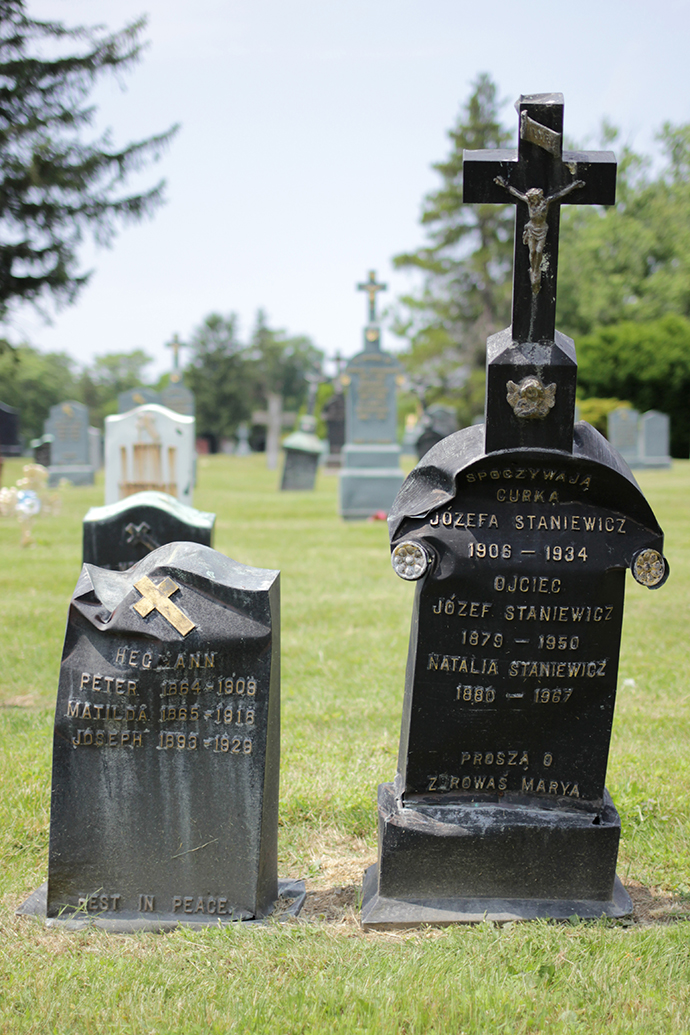
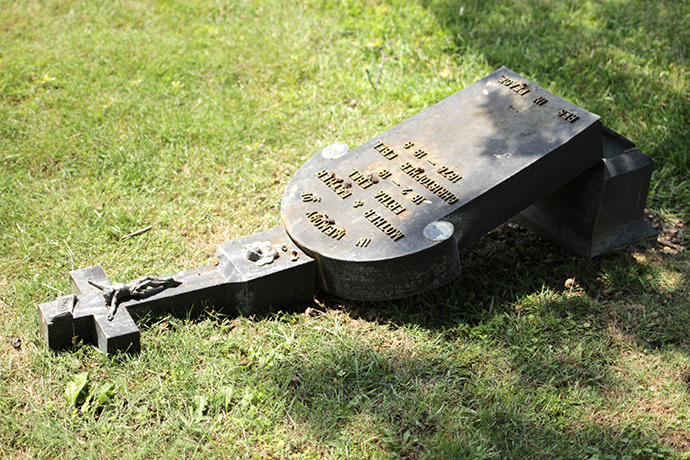

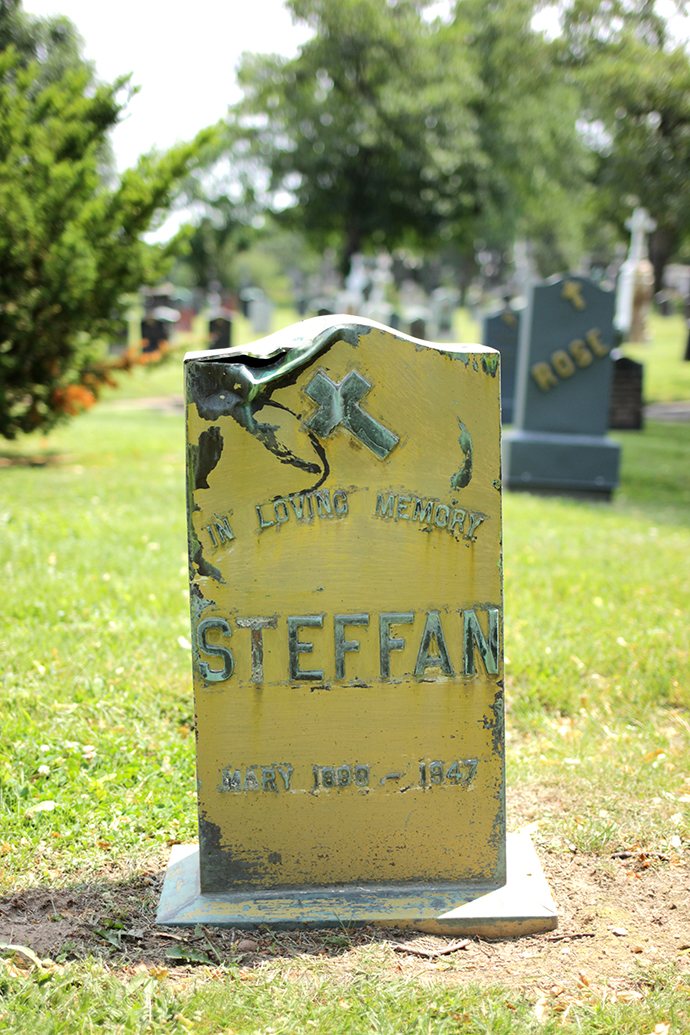
A lot of the hollow tin markers have become damaged in some way aside from the natural beating you'd expect from the elements. Some of them were so twisted and dented that it's hard to imagine what could have caused such intense damage. I'm used to crumbling stone or tree roots swallowing headstones over time, but I just couldn't get enough of the undulating folds and crumpled crosses. I've been arbitrarily giving "top five" status to a lot of places I've visited lately and it is a bit of a Sophie's Choice for me as far as cemeteries are concerned, but Most Holy Trinity has definitely earned a spot as one of my top-five favorite New York cemeteries.
New Orleans: Lafayette Cemetery No. 1

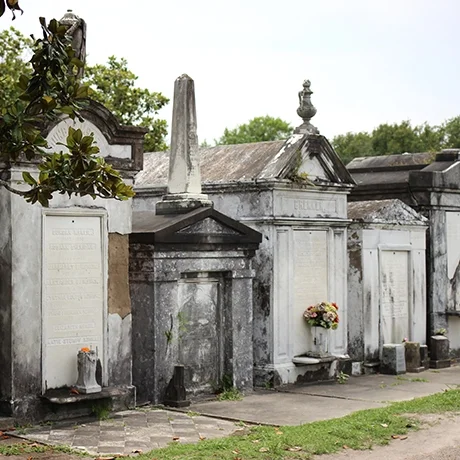
The day after we took a tour of Saint Louis Cemetery No. 1 in New Orleans, we were wandering around the Garden District somewhat aimlessly. When we came upon Lafayette Cemetery No. 1, I was thrilled to be able to explore a Nola cemetery without the time constraints and restrictions of a guided tour. I did see people on a tour, but unlike Saint Louis Cemetery, Lafayette is open to the public.


Lafayette Cemetery No. 1 was established in 1833 as a non-denominational cemetery and is home to more than 7,000 permanent residents, approximately 1,100 family tombs and at least one friendly lizard. I enjoyed our brief tour of Saint Louis Cemetery, but I fell in love with Lafayette. I have the tendency to get overwhelmed and forget about time constraints, especially in beautiful cemeteries. I easily could have spent all day at Lafayette, but I did have to meet up with the rest of our group eventually, which was probably for the best.


I feel as if we were cheated out of seeing Marie Laveau's tomb knee-deep in offerings, so I was pleased to finally get to see some proper cemetery decorations adorning many of the tombs, including fake flowers, beads (when in Nola) and various other offerings. A lot of the grave decorations that you find in modern cemeteries seem sort of cheap to me—plastic decorations, stuffed animals, resin statues—but there's something about just being in New Orleans that gives everything a voodoo / altar-like meaning that made me instantly a fan of sun-bleached flowers and beads draped over headstones.


Like Saint Louis, Lafayette is an above-ground cemetery and while it doesn't have the Nicholas Cage pedigree, it does have a tomb for the Society for the Relief of Destitute Orphan Sons from 1894. It was used as a filming location for Interview with a Vampire and you can even by an entire mausoleum—I'm assuming the purchase price also includes the acquisition of current residents Mildred and Bobbie?