

Archive
- Abandoned
- Alabama
- Arizona
- Bahamas
- Books
- California
- Cemetery
- Climate
- Colombia
- Connecticut
- Diner
- Egypt
- Feature
- Florida
- Friday Fun
- Georgia
- Holidays
- Illinois
- Iowa
- Italy
- Kentucky
- Louisiana
- Maryland
- Massachusetts
- Mississippi
- New Jersey
- New Mexico
- New York
- North Carolina
- Novelty Architecture
- Ohio
- Pennsylvania
- Personal
- Peru
- Project 365
- Protest
- Rhode Island
- Roadside Attraction
- South Carolina
- Tennessee
- Texas
- Travel Guide
- Virginia
- Walks
- Washington DC
- West Virginia
- Wisconsin

Cholera Cemetery

A cholera epidemic hit North America in the mid-1800s and it reached Sandusky, a town located in Northwest Ohio, in 1849, lasting into the early 1850s. Thousands of people fled the city in fear of the disease and half the population either left town or died. 357 people were buried over just 68 days from July to September of 1849, 60 of which are buried in a mass grave.
Cholera, an intestinal infection that usually comes from a tainted water supply, came to Ohio via unsanitary conditions on ships traveling the Erie Canal. During the 1849 epidemic, doctors and nurses traveled from all over Ohio—and some from as far as Philadelphia—to help out, sometimes working in makeshift hospitals. As the townspeople fled, the bodies piled up and according to local folklore, the town drunk (less susceptible to the disease because of his alcohol consumption, allegedly) volunteered to help bury the victims.

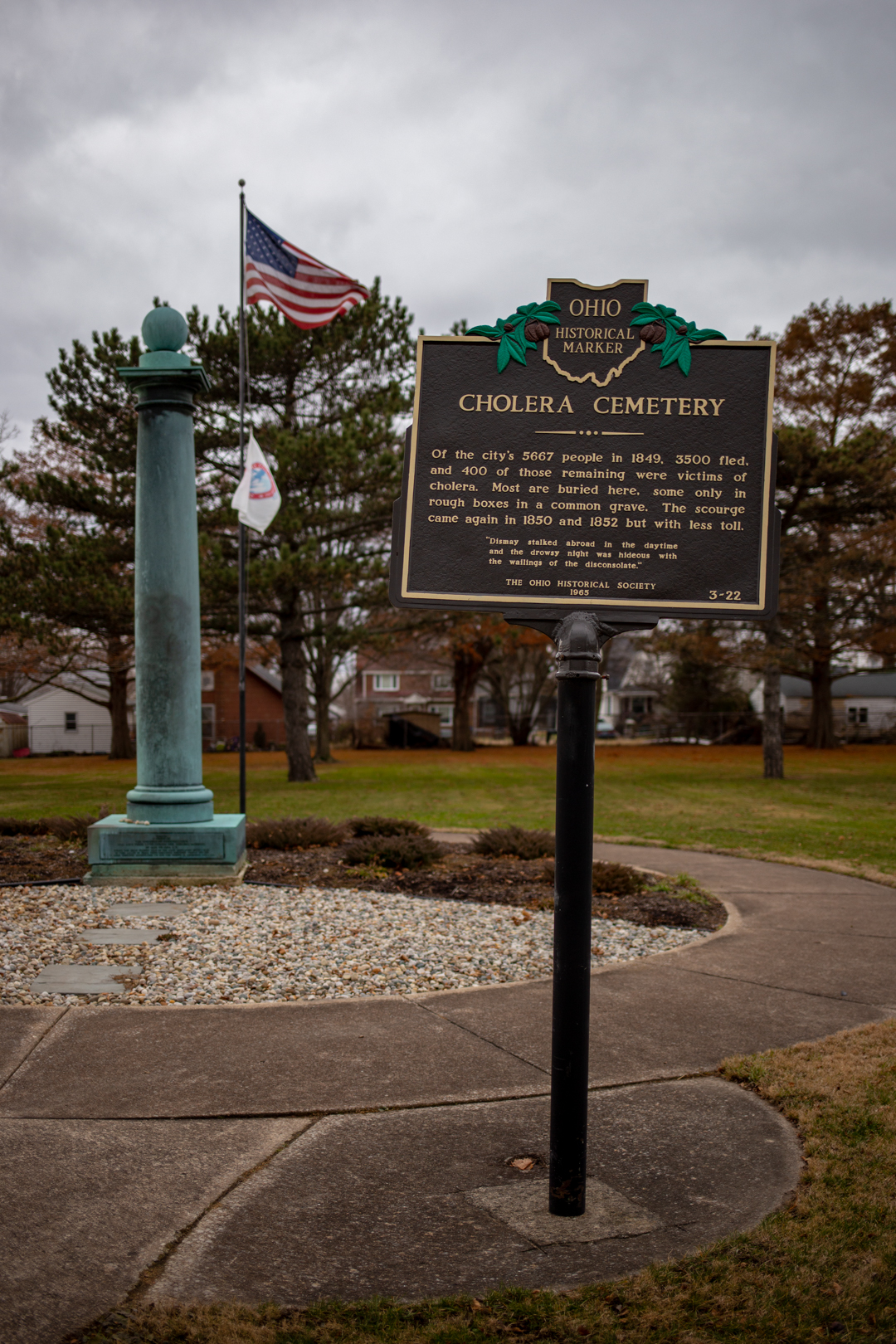

The Harrison Street Cemetery, now known officially as the Cholera Cemetery, was closed in 1850 when the much larger Oakland Cemetery opened three miles away. Over the years, the Harrison Street lot was neglected and most of the tombstones were lost. The only tombstones currently standing are three markers for Revolutionary War veterans who survived the war, but not the epidemic.
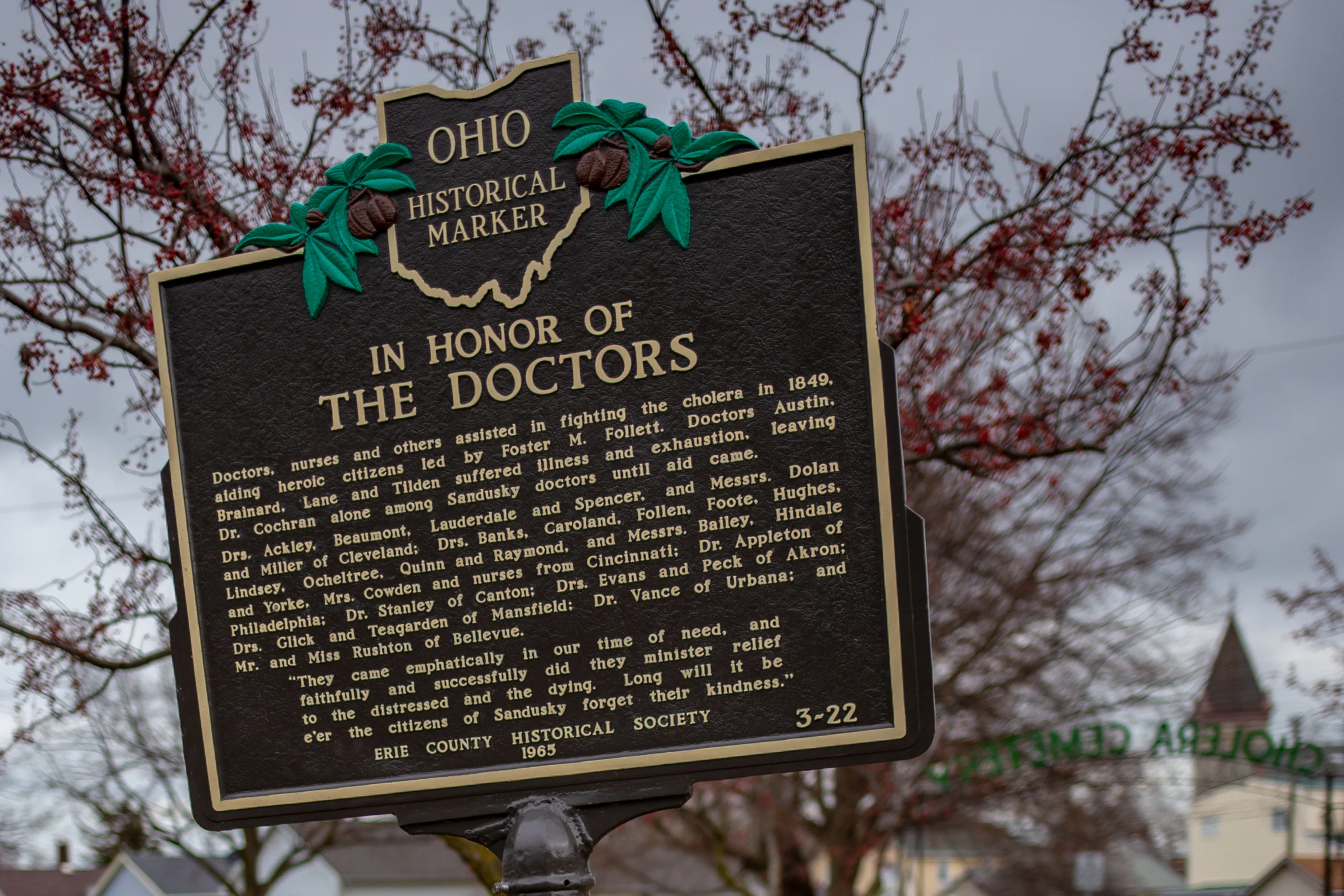


Today the site is designated as a memorial park with a central monument “erected in memory of the pioneers of Sandusky, Ohio who gave their lives during the cholera epidemic of 1849 to 1854 AD. During this great tragedy, half of the 4,000 population either fled or were called by death. Those remaining rendered worthy service—to their unselfish faithfulness we owe this tribute of reverence and love.”


The grounds were restored in 1924 and given a spruce last year to coincide with Sandusky’s bicentennial. There isn’t much to see in the small cemetery but it’s worth a stop just for the gate alone. I had seen photos before I visited, but the arching letters that spell out “Cholera Cemetery” look like something straight from a Tim Burton movie set.
Cholera Cemetery
445-487 Harrison Street
Sandusky, OH

Merchant Marine Cemetery

Down a gravel path in the woods behind Ocean View Cemetery in Staten Island, is a hidden cemetery sometimes referred to as the ‘forgotten acre.’ Nearly 1,000 men who served in the Merchant Marine were buried here after they died in quarantine at the U.S. Public Health Service Hospital in the Clifton neighborhood of SI (now Bayley Seton Hospital, part of which is also abandoned).
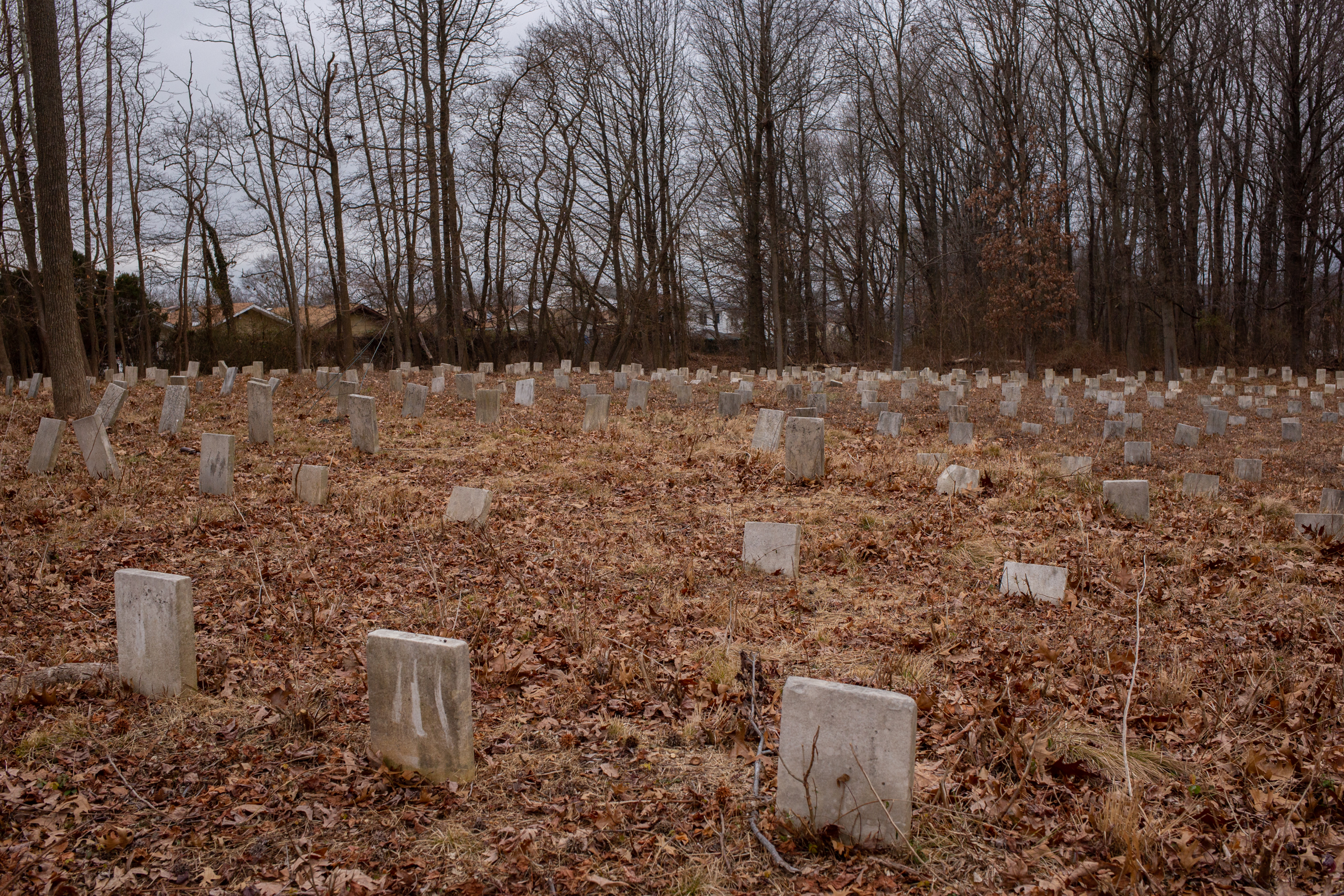


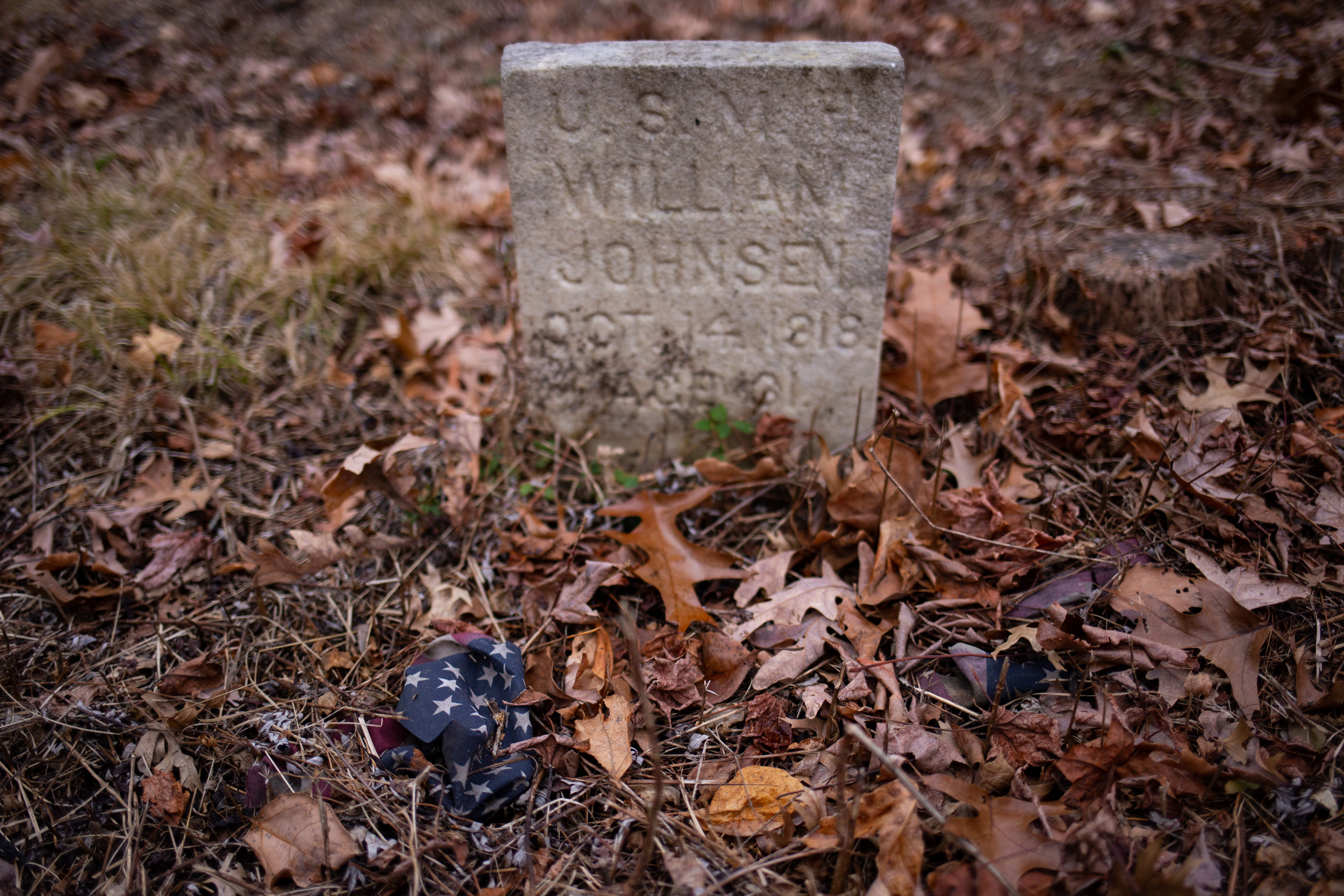

The Marine Hospital, dedicated to the care of sick and disabled seamen, was established in the 1880s. In the early 1900s, it became the U.S. Public Service Hospital and they would take in and quarantine sailors who fell ill as their ships passed Staten Island’s shores. A section of Ocean View Cemetery was purchased in 1901, after burial space became limited on the hospital grounds, and burials continued here until 1937.


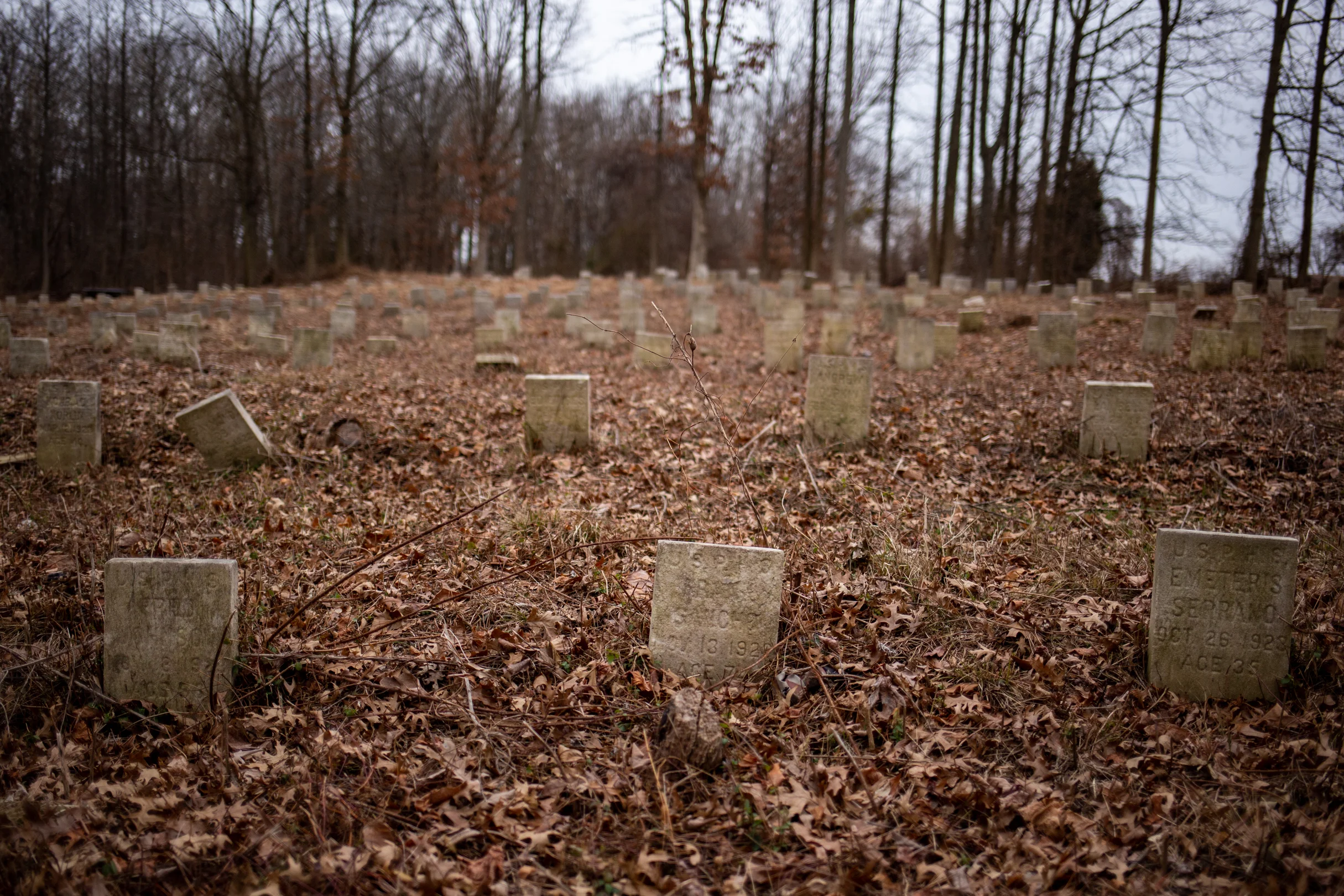
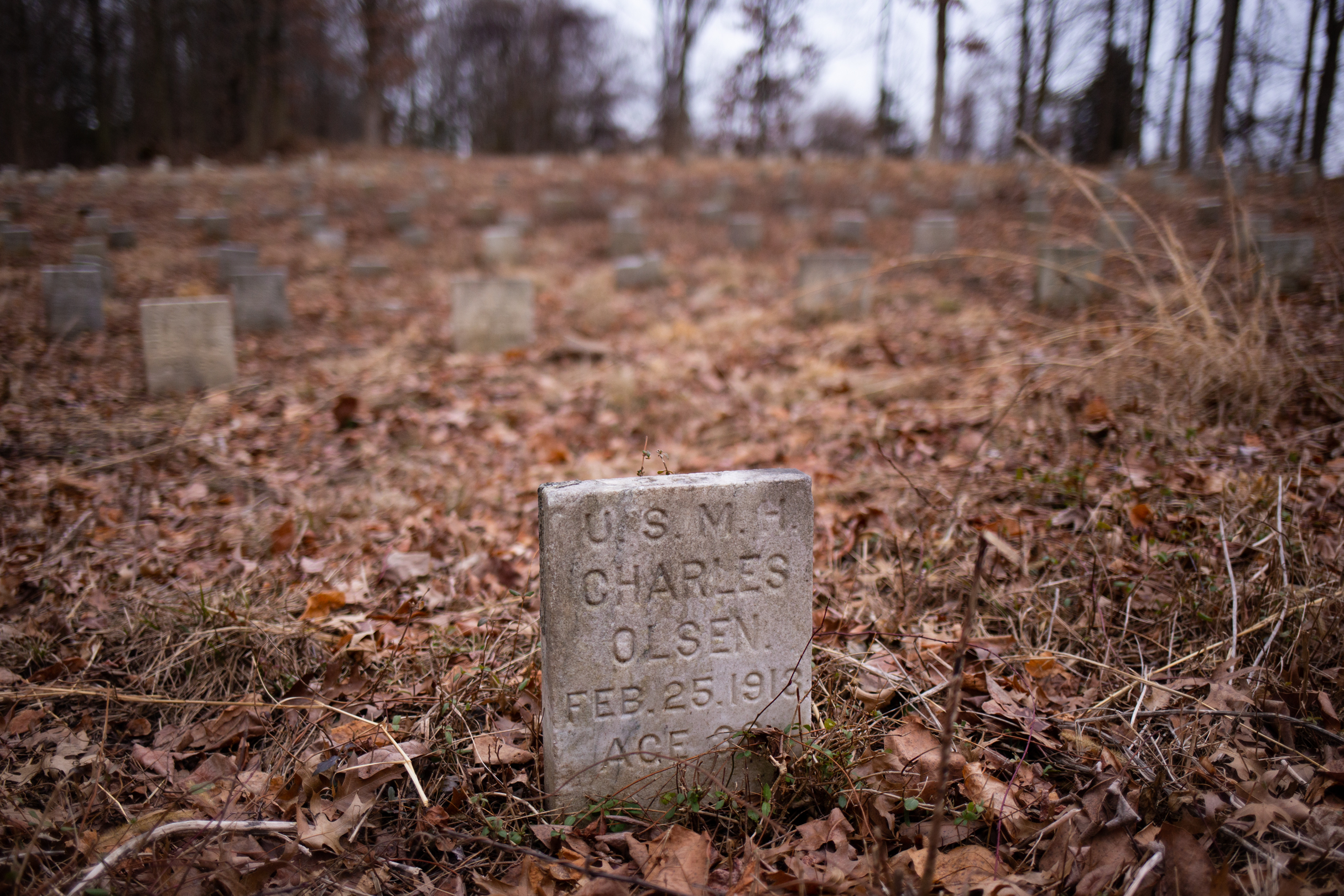

There are people from all over the world buried here, some who died in their teens or well into old age. The small cemetery is surrounded by houses and several other cemeteries, but judging by the “no trespassing” signs posted around the site isn’t technically open to the public. There is a gravel access road at the northwest corner of Ocean View, and on the path through the woods I passed several rusted cars, small ponds and a herd of white tail deer.
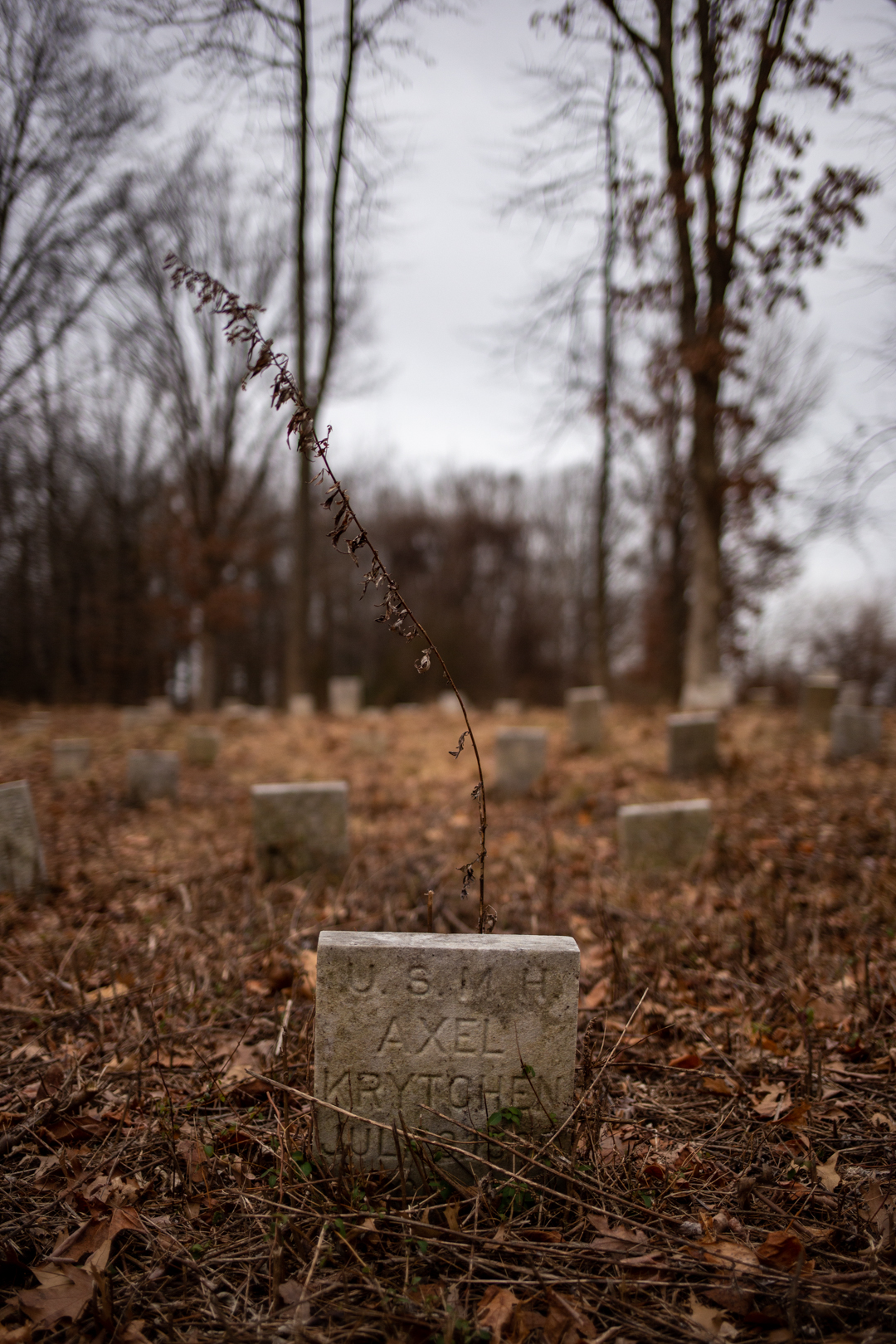


There has been some dispute over the years as to who exactly is responsible for this overgrown plot of land, and on Veterans Day in 2011, volunteers cleaned up the site and placed a flag on each of the graves. Today you can see remnants of the tattered flags beneath the brush and leaves, and it once again seems to be living up to its name as the ‘forgotten acre.’

Lake View Cemetery

I’ve mentioned it before, but I’m still ashamed of just how little of Ohio I explored while living there for 27 years. I do think that people take their hometowns for granted, but now that I have my distance I’m constantly finding places I want to check out when I’m back visiting friends and family. Lake View Cemetery has always been at the top of that list and I can’t believe it took me so long to finally visit Cleveland’s “Outdoor Museum.”

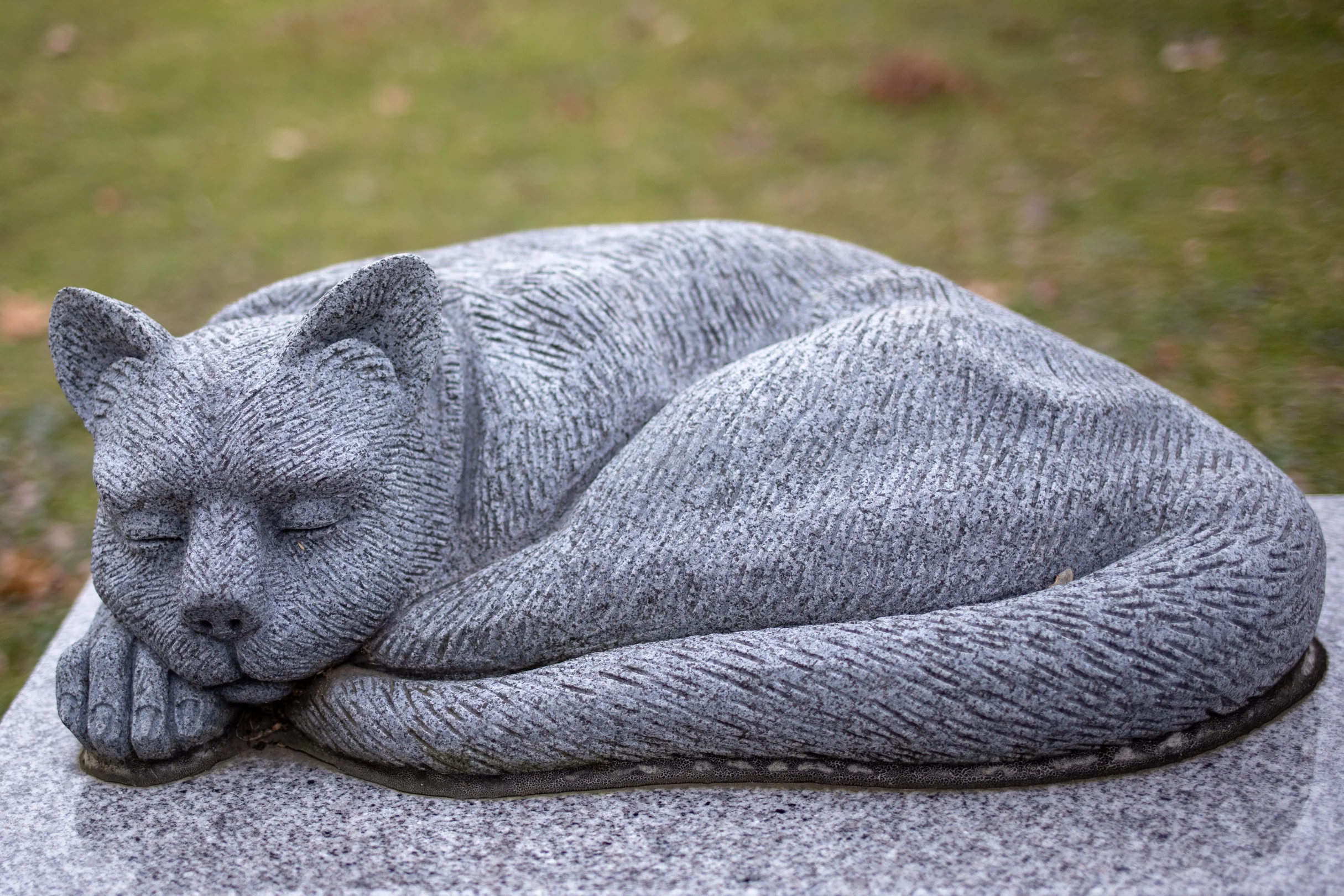
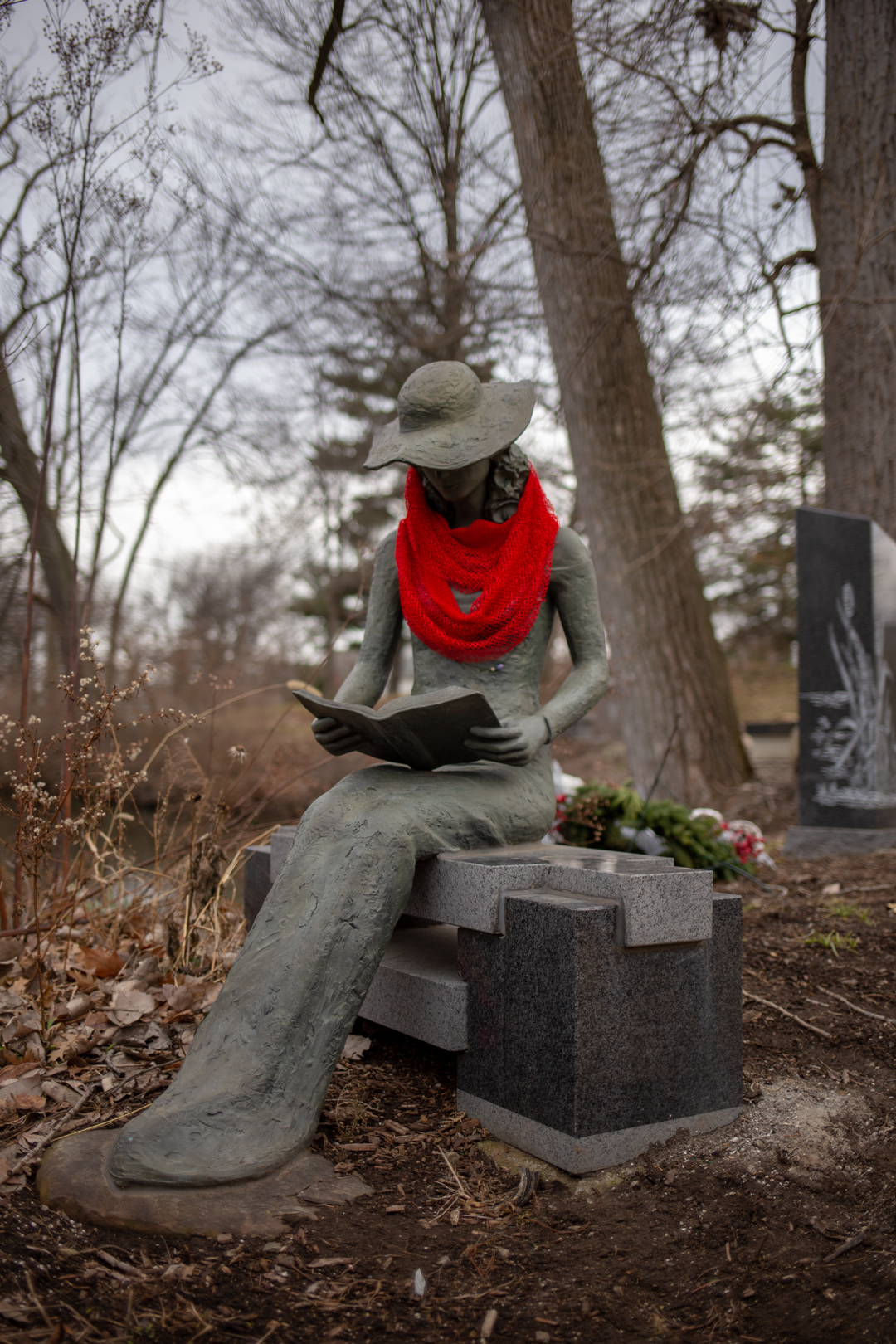


Founded in 1869, the 265-acre cemetery is home to more than 100,000 people (with more than 700 added each year and 70 acres remaining for future development). It’s Cleveland’s version of Green-Wood or Woodlawn, built at the tail-end of the rural cemetery movement. Located in the neighborhood of Cleveland Heights, a view of Lake Erie can be had when looking north from the cemetery.


20th President James A. Garfield is interred at Lake View inside of an exquisite mausoleum. The sandstone structure, dedicated in 1890, stands 180 feet tall and includes five, terra cotta panels comprising more than 110 life size figures depicting Garfield’s life and death. Garfield was shot by the disgruntled (and probably insane) Charles J. Guiteau at a train station in Washington, D.C. in 1881. After eleven weeks of poking and prodding by a team of well-meaning—but misinformed—doctors, Garfield died of infection, the second of four presidents to be assassinated (this is an excellent book about Garfield’s presidency and his gnarly death).

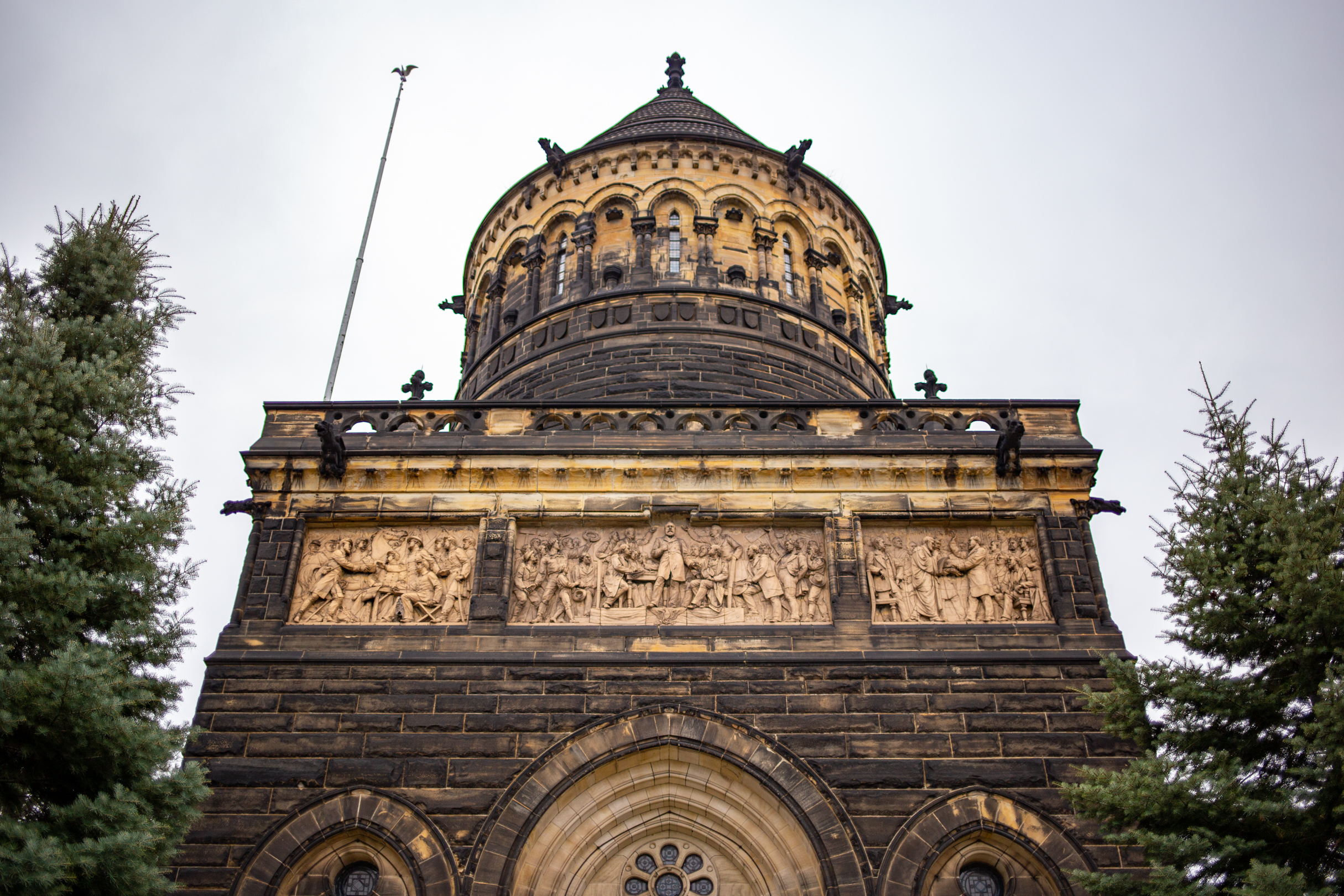
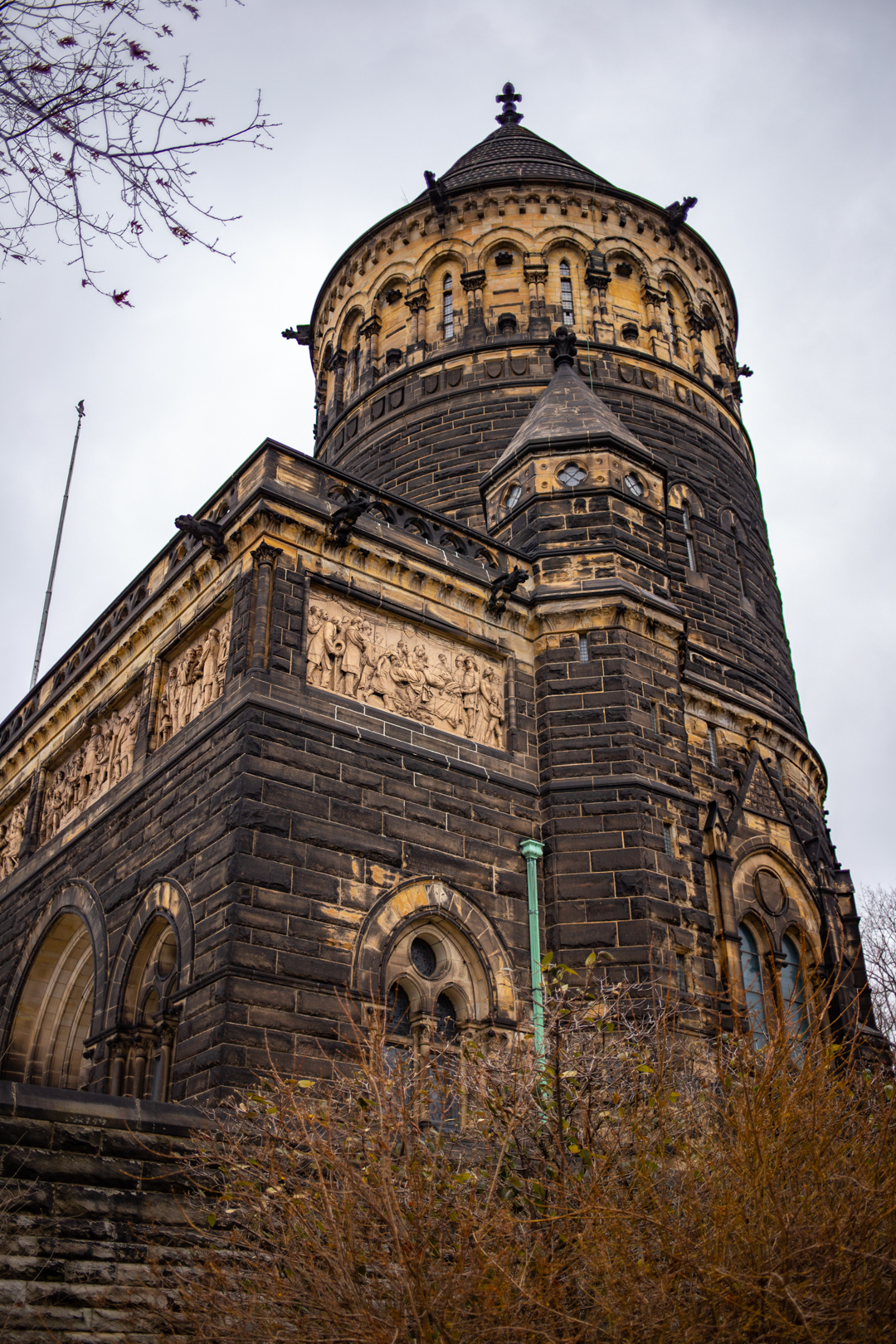
Unfortunately the monument was closed when we visited (a good excuse to come back in warmer weather!), but the Memorial Hall includes mosaics, marble, stained glass windows, a statue of the President and 64 steps leading to an outdoor balcony. Interred within the monument alongside President Garfield—the only Presidential casket currently on full display—are his wife Lucretia, their daughter and her husband.

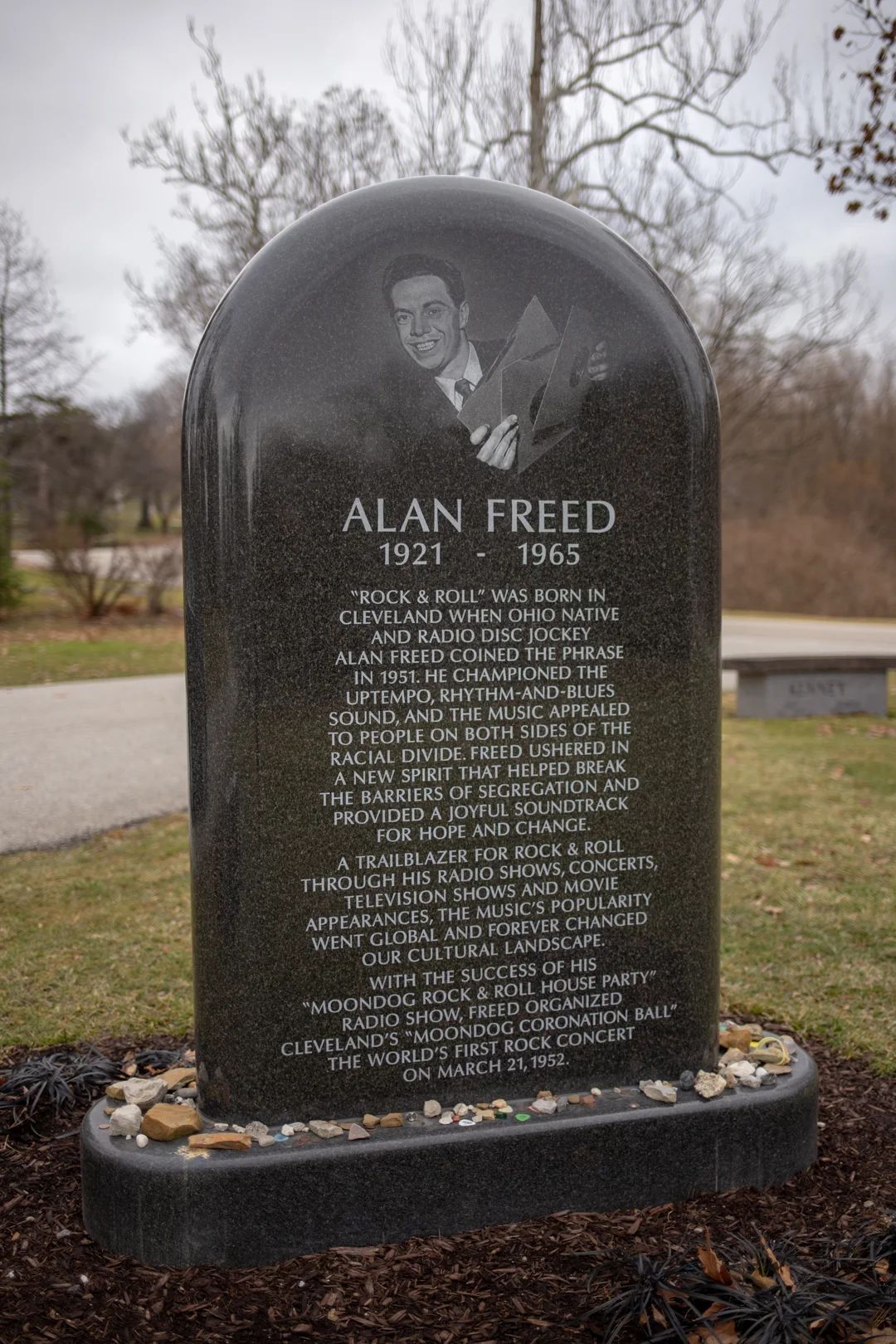
Lake View is home to several other famous residents, including John D. Rockefeller, Carl B. Stokes, the first African American mayor of a major US city (Cleveland) and Alan Freed, the radio DJ who popularized the term "rock and roll." Freed, who died of complications from alcoholism when he was just 43 years old, was initially interred at Ferncliff Cemetery in Hartsdale, New York. In 2002, his ashes were moved to the Rock and Roll Hall of Fame in Cleveland but in 2014, the Freed family re-interred his ashes at Lake View, beneath a headstone cut to look like a jukebox.
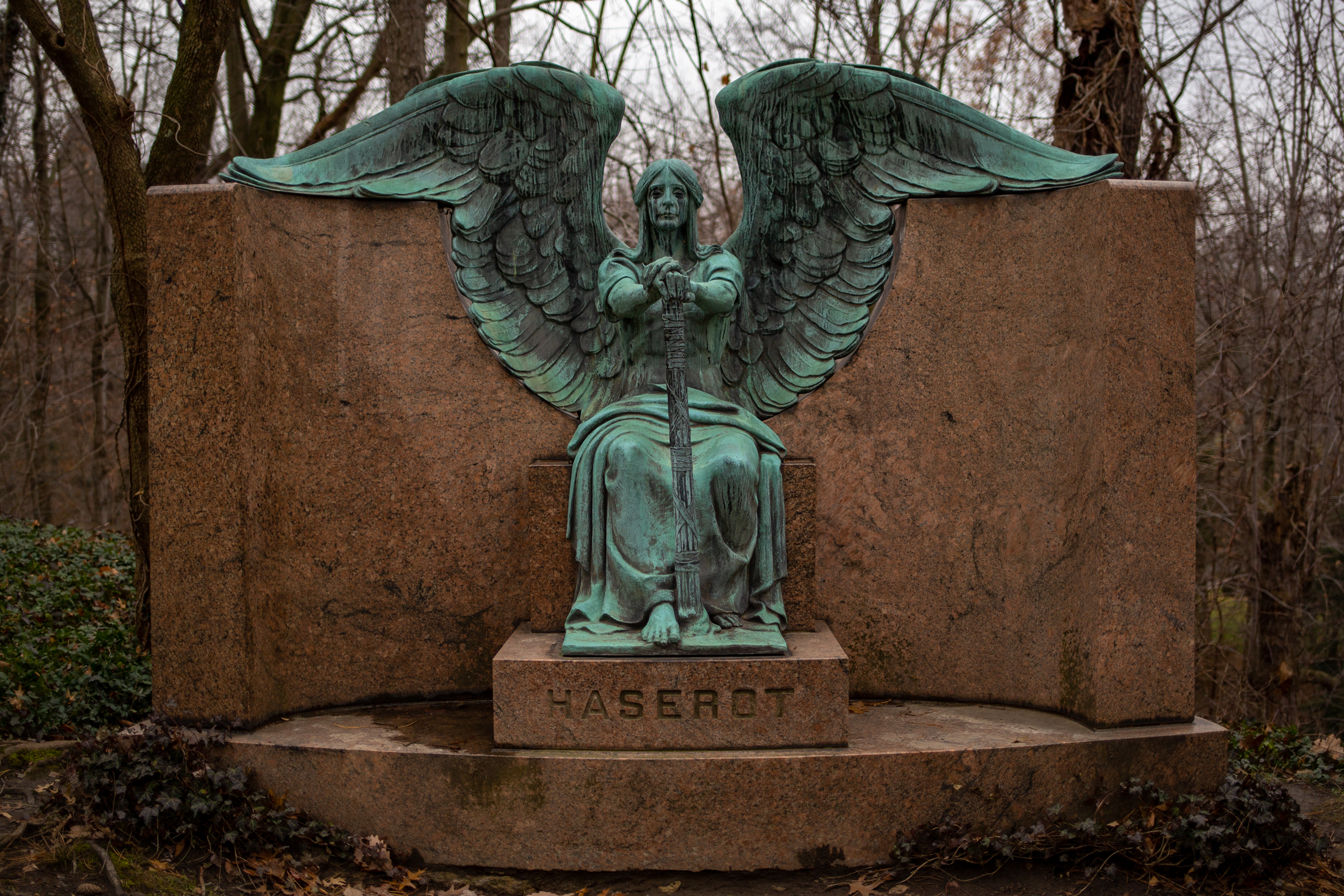


It was freezing on the day we visited and we didn’t have much time to poke around, but there was one statue I had to see before I left Lake View—The Haserot Angel. “The Angel of Death Victorious,” sits on a marble monument marking the graves of canning entrepreneur Francis Haserot and his family. The life-size bronze angel holds a torch upside-down, symbolizing a life that has been extinguished. Sometimes referred to as the “weeping angel” because of the black “tears” that have formed on her face over the years, the Haserot Angel is even more lovely—and haunting—in person than I expected.
Lake View Cemetery
12316 Euclid Avenue,
Cleveland, OH

Barkaloo Cemetery
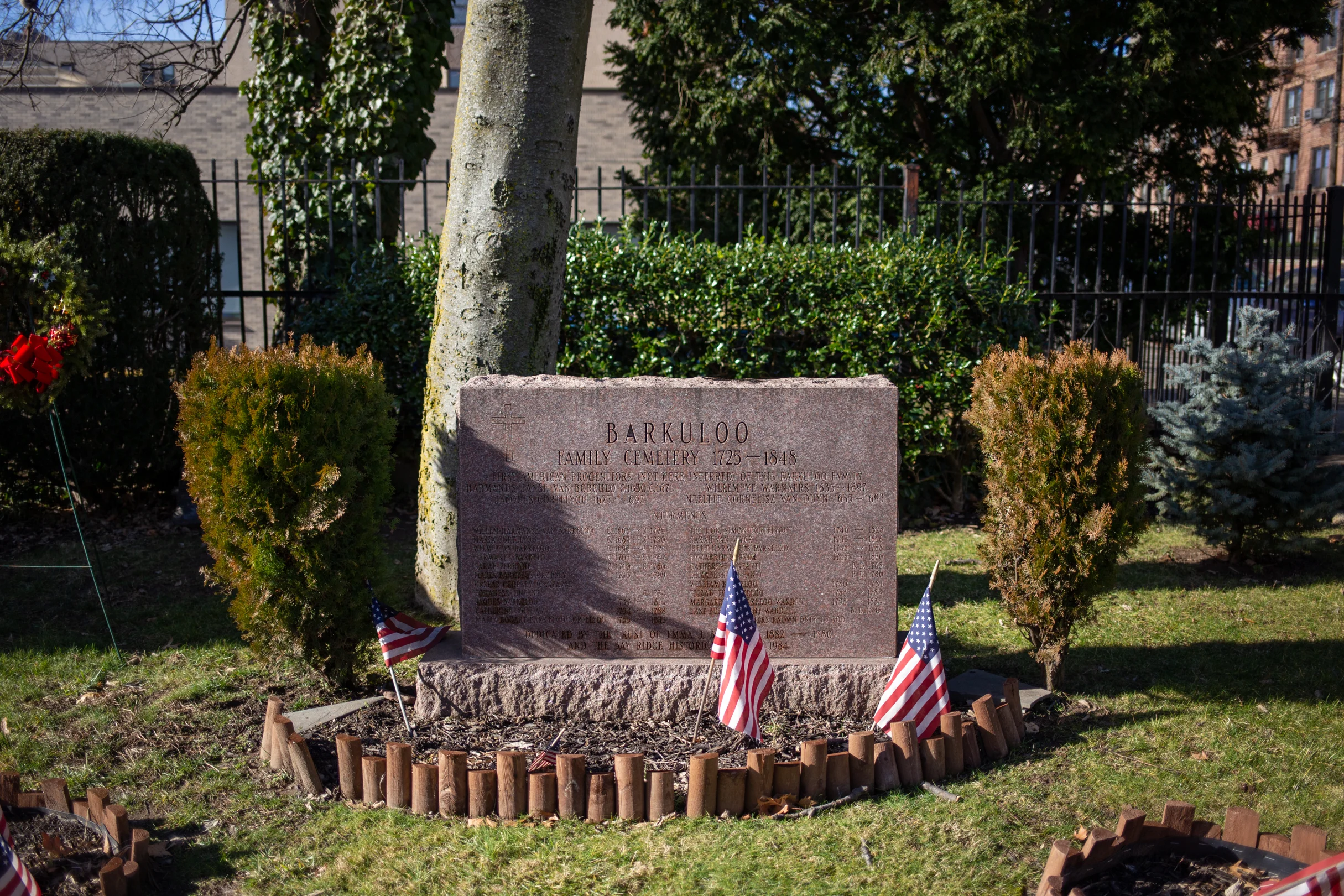
When I started my new Instagram account to track my progress as I attempt to visit every cemetery in the five boroughs (follow along here!), I received a tip from a fellow explorer, pointing me toward the Barkaloo Cemetery. The tiny family cemetery, located in Bay Ridge, Brooklyn is smaller than Manhattan’s smallest graveyard and contains just two tombstones and two commemorative markers. Not everyone interred here still has a marker—21 people were buried at the corner of Narrows Avenue and Mackay Place from the 1720s until the last burial, an unnamed infant, in 1848.


The current cemetery is what remains of the Barkaloos’ private family burial plot, once a part of their larger property. In 1984, the Bay Ridge Historical Society erected a granite marker which lists the names of the cemetery’s permanent residents along with their birth and death dates. There are Barkaloos, of course—I’ve seen it spelled several different ways—and others with notable New York names like Cortelyou, Cropsey and Van Wyck.


The boundaries of the cemetery have been redrawn many times and ownership of the cemetery has transferred hands many times throughout the years. Although it has lost most of its markers in the process—the two still standing were erected by the D. A. R. in the 1920s for Revolutionary War veterans Harms Barkulo and Simon Cortelyou—it’s still remarkable that the tiny Barkaloo Cemetery has survived at all when many similar family plots have been lost in the name of progress or property disputes.
Barkaloo Cemetery
34 MacKay Place
Brooklyn, NY
Woodland Cemetery

I love exploring abandoned or forgotten places, but they’re hard to come by in New York City. Land is such a premium that nothing sits empty for too long and almost nothing about the city feels like a secret. As I was watching the (excellent) documentary, The World Before Your Feet, I was surprised to see Matt Green—who is in the process of walking every single street, park, bridge and cemetery in the five boroughs—walking through what appeared to be an abandoned cemetery. Luckily, it was identified in the film and I made a note in my phone, knowing that I had to see it for myself as soon as I could.
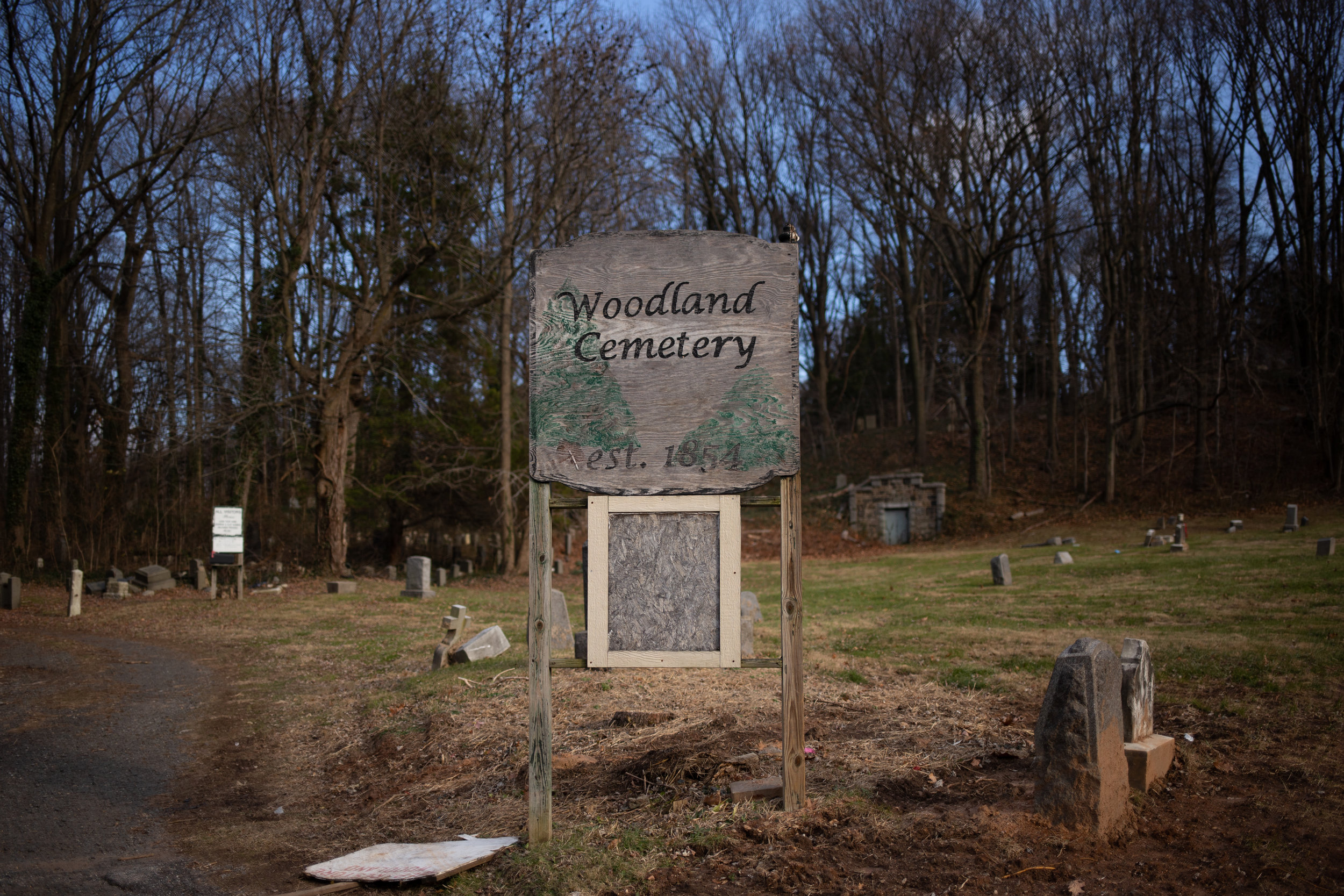


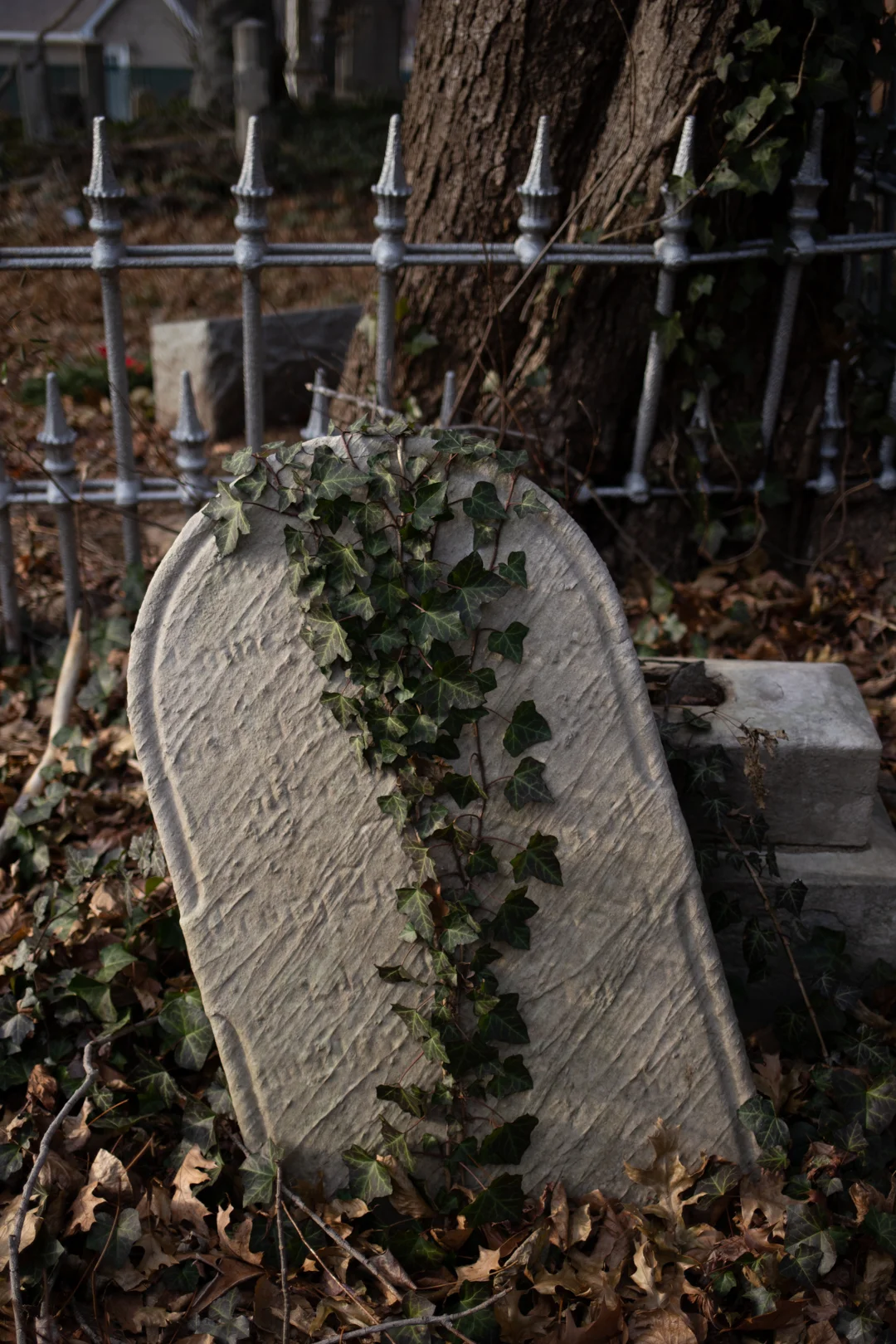
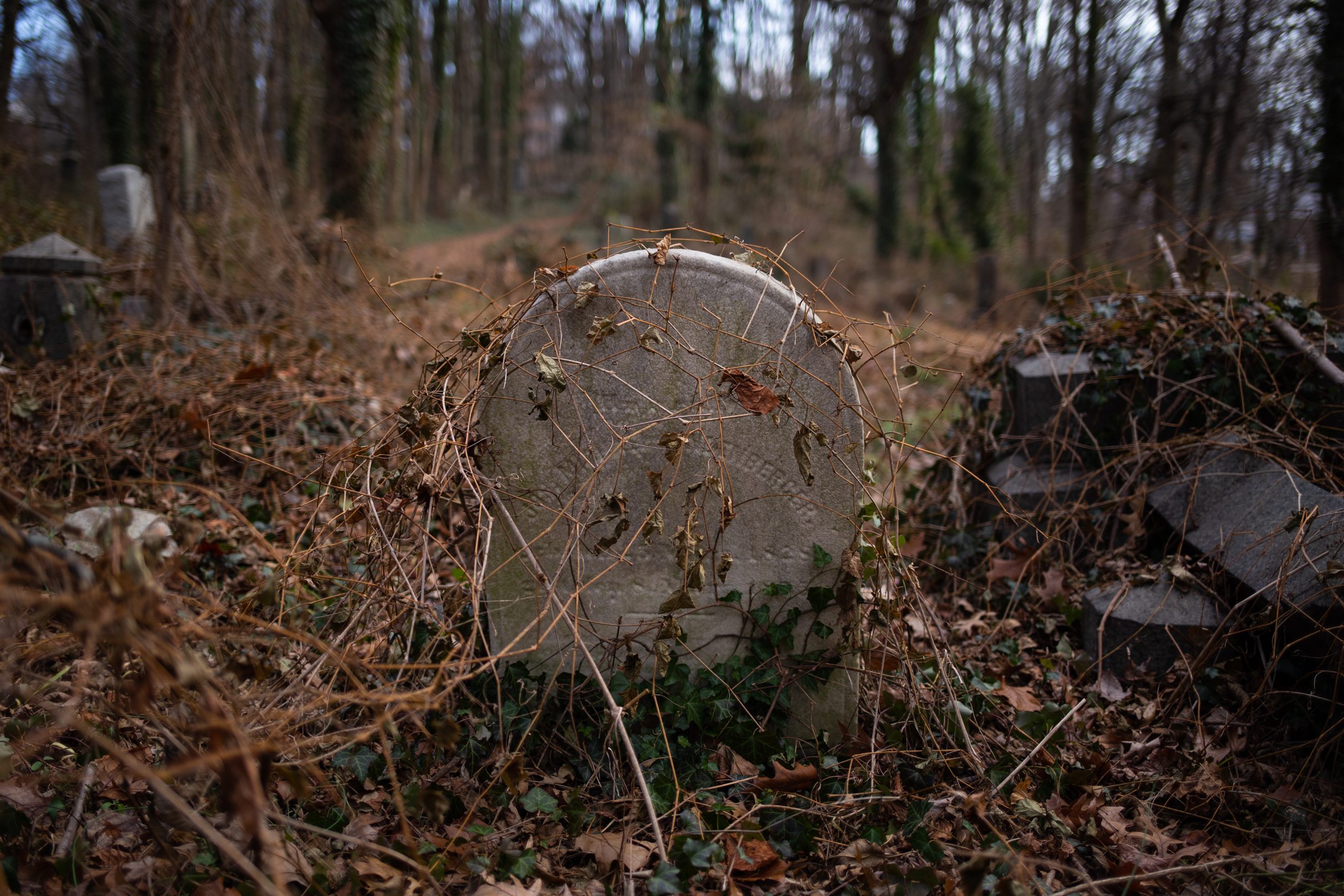
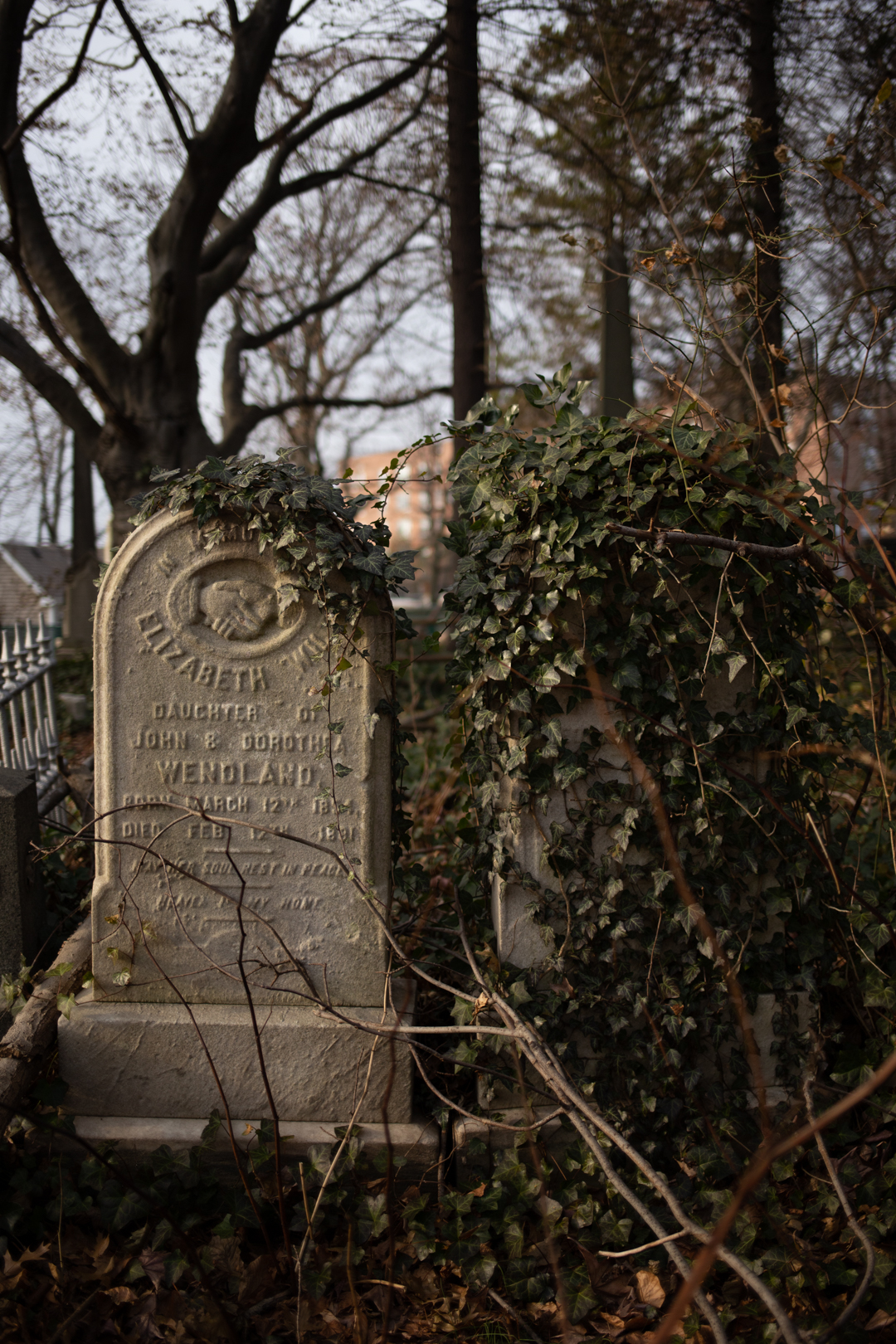


Woodland Cemetery is located just off of Victory Blvd in the Silver Lake neighborhood of Staten Island. It’s only a 20-minute bus ride from the St. George ferry terminal, but inspired by Green, I decided to walk. This turned out to be a mistake because—as I always seem to forget until it’s too late—Staten Island is very hilly. I’m not exaggerating when I say that almost all of the hour-long walk to the cemetery was uphill. I did take the bus back to the ferry terminal, but in the future I’ll do the opposite (bus there, walk back).


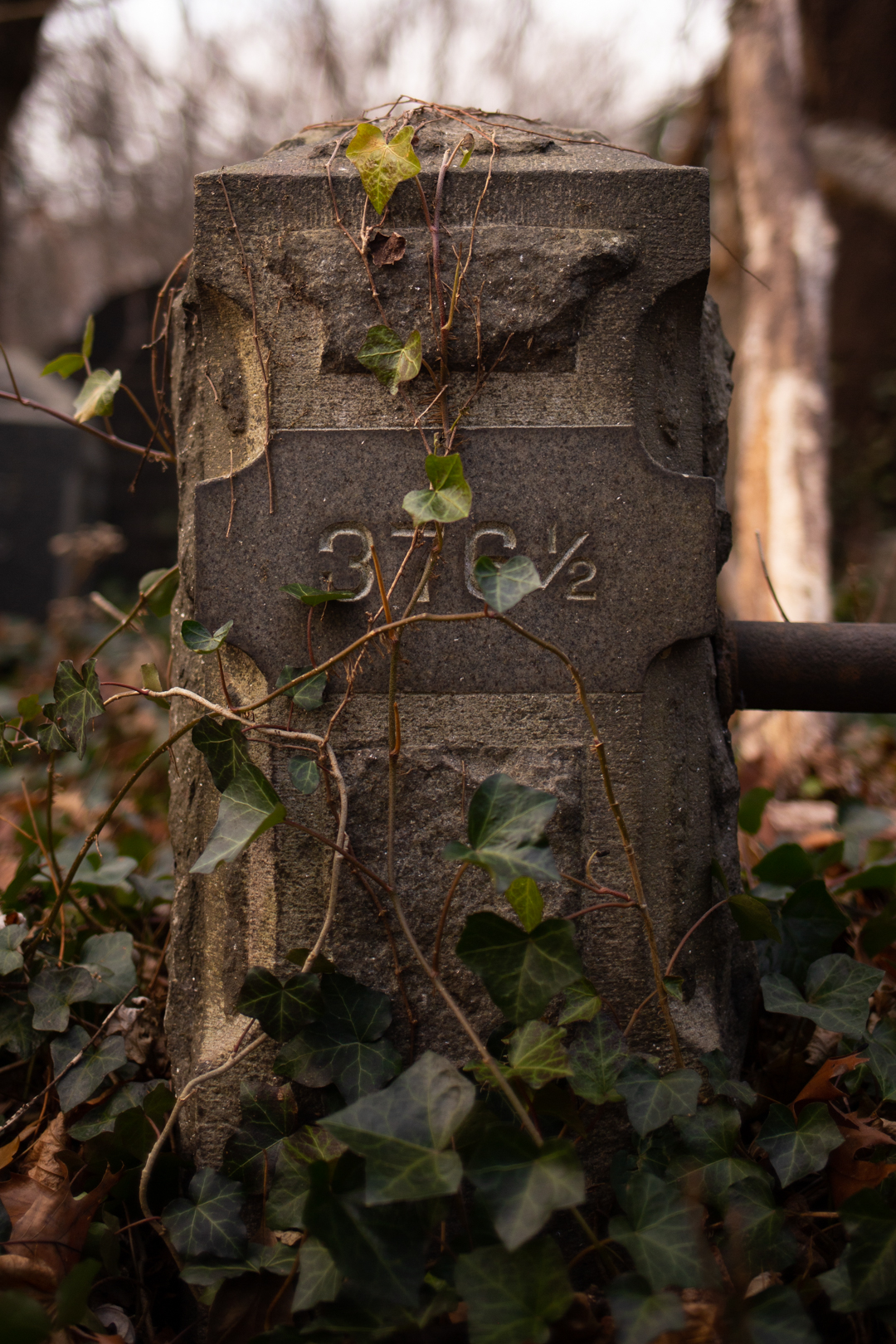


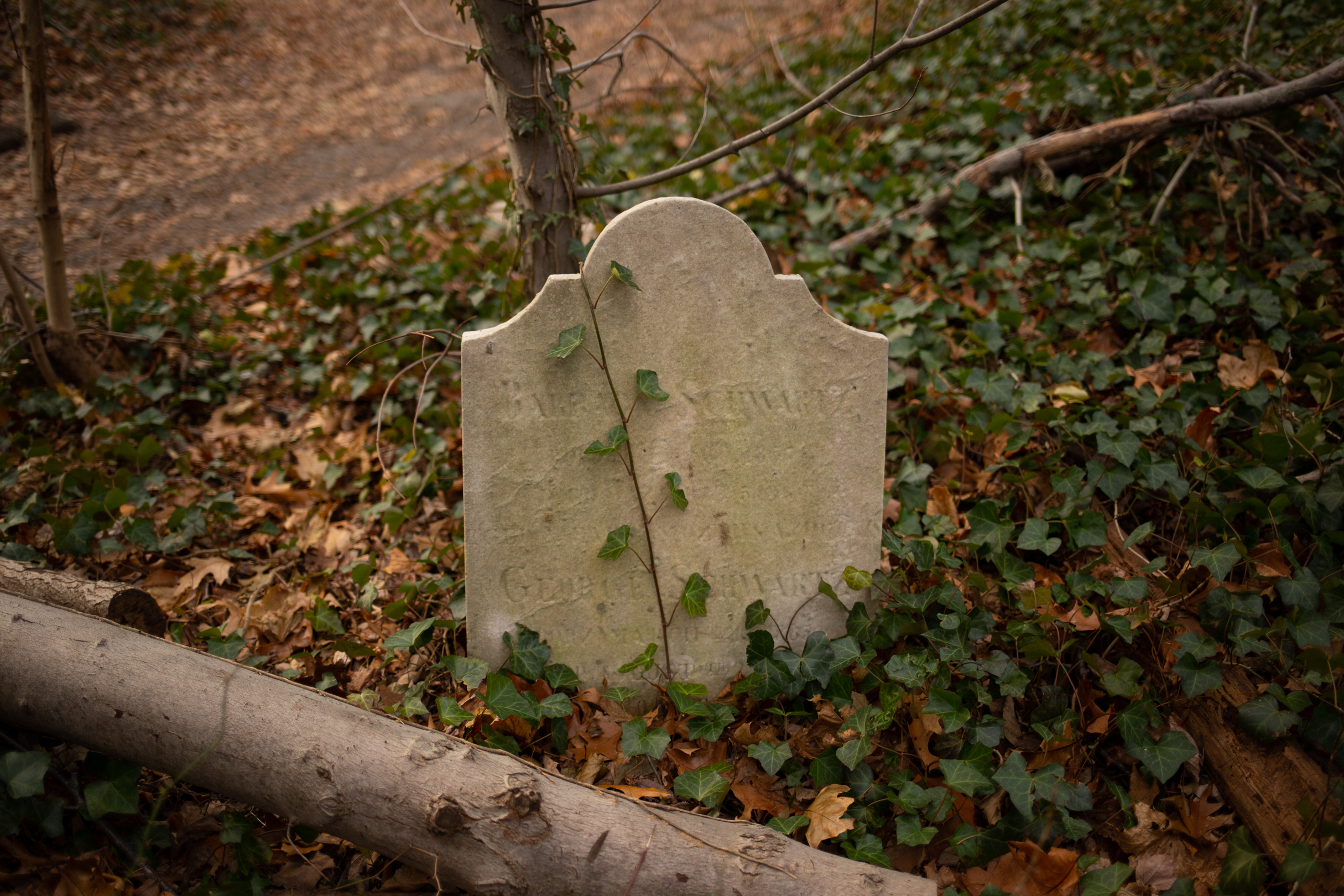
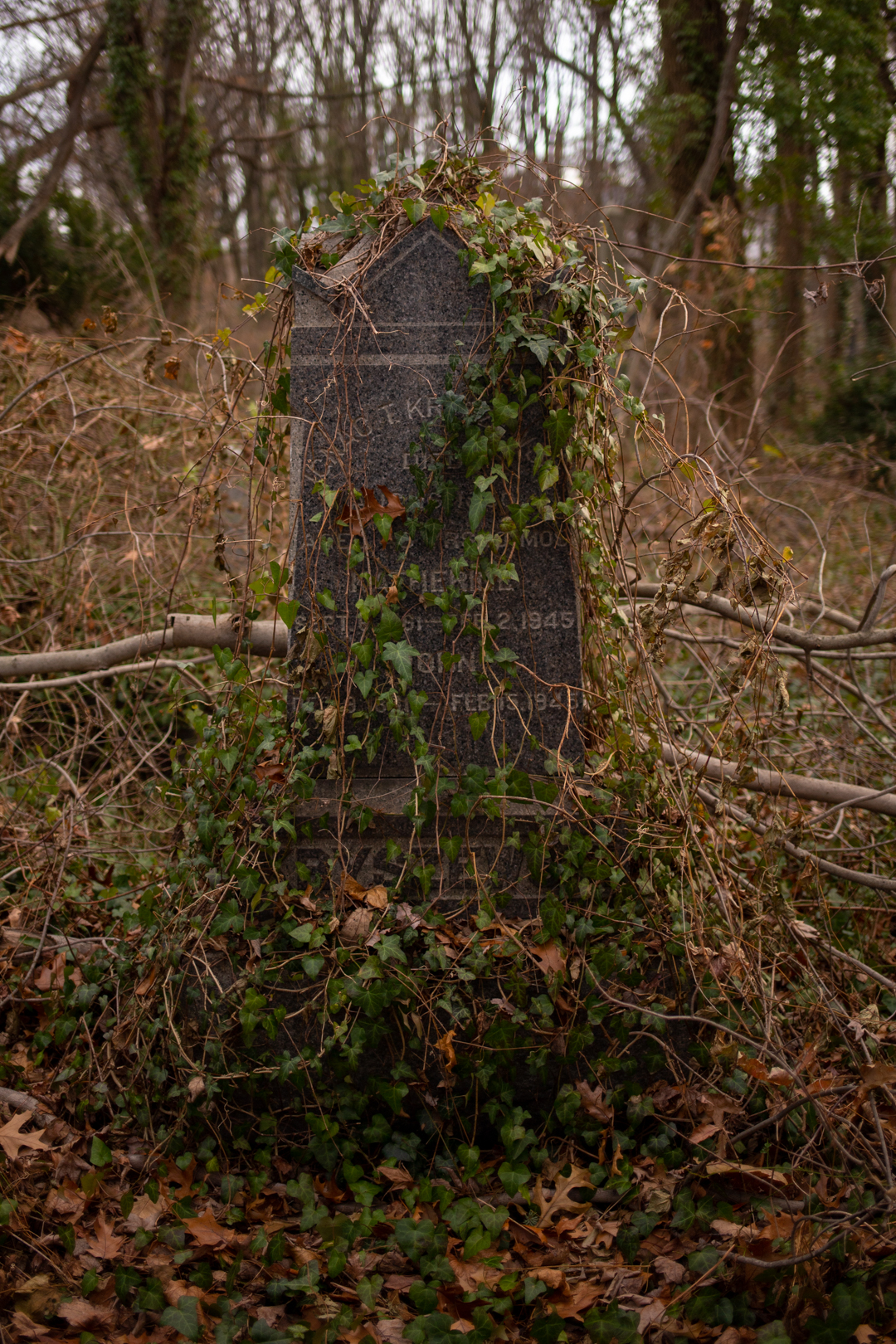

Woodland was established in 1854 by John King Vanderbilt, first cousin of Cornelius Vanderbilt. John King is buried at Woodland, while Cornelius is buried four miles away in the Vanderbilt Family Cemetery and Mausoleum, a private cemetery located within Moravian Cemetery and not regularly open to the public.
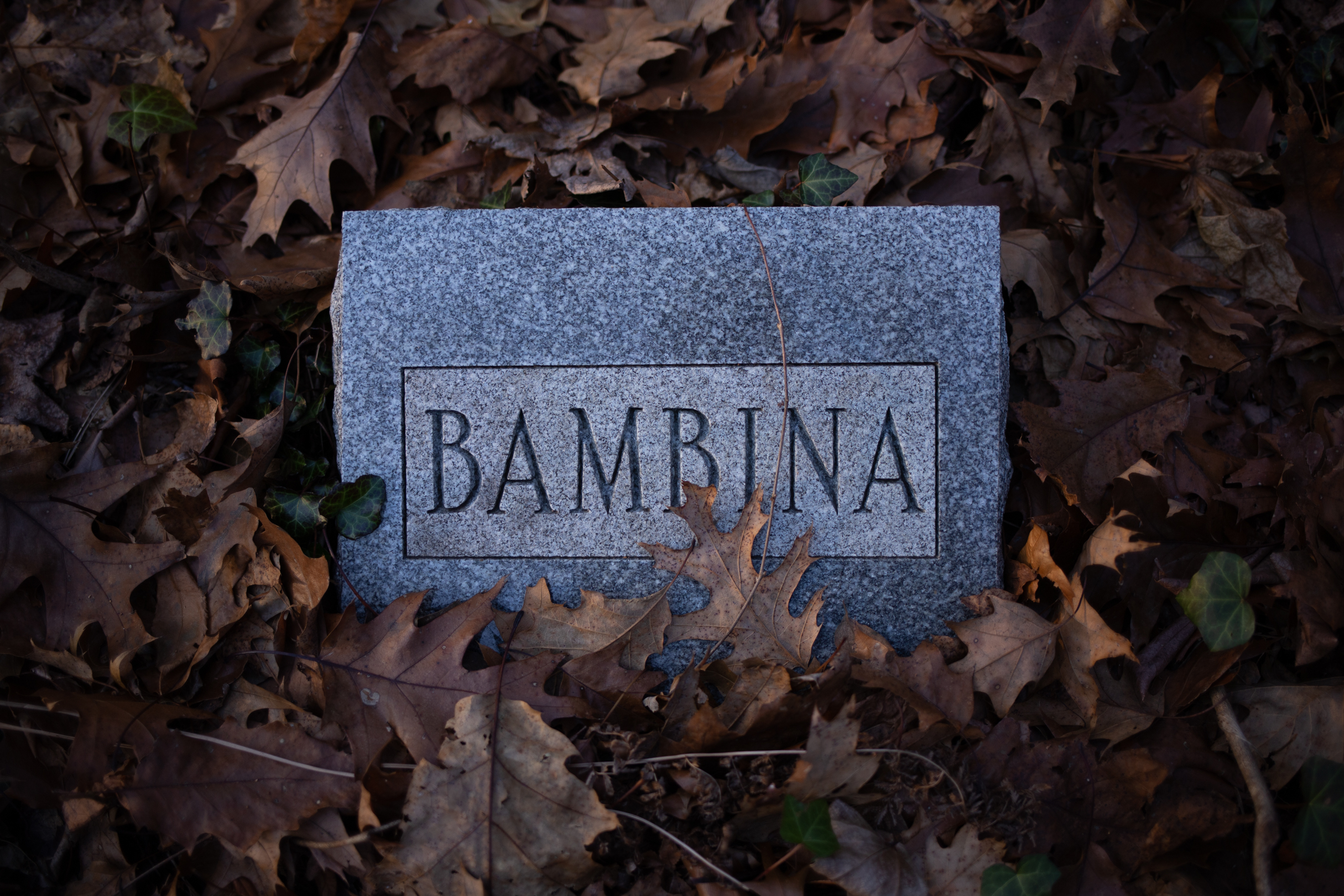
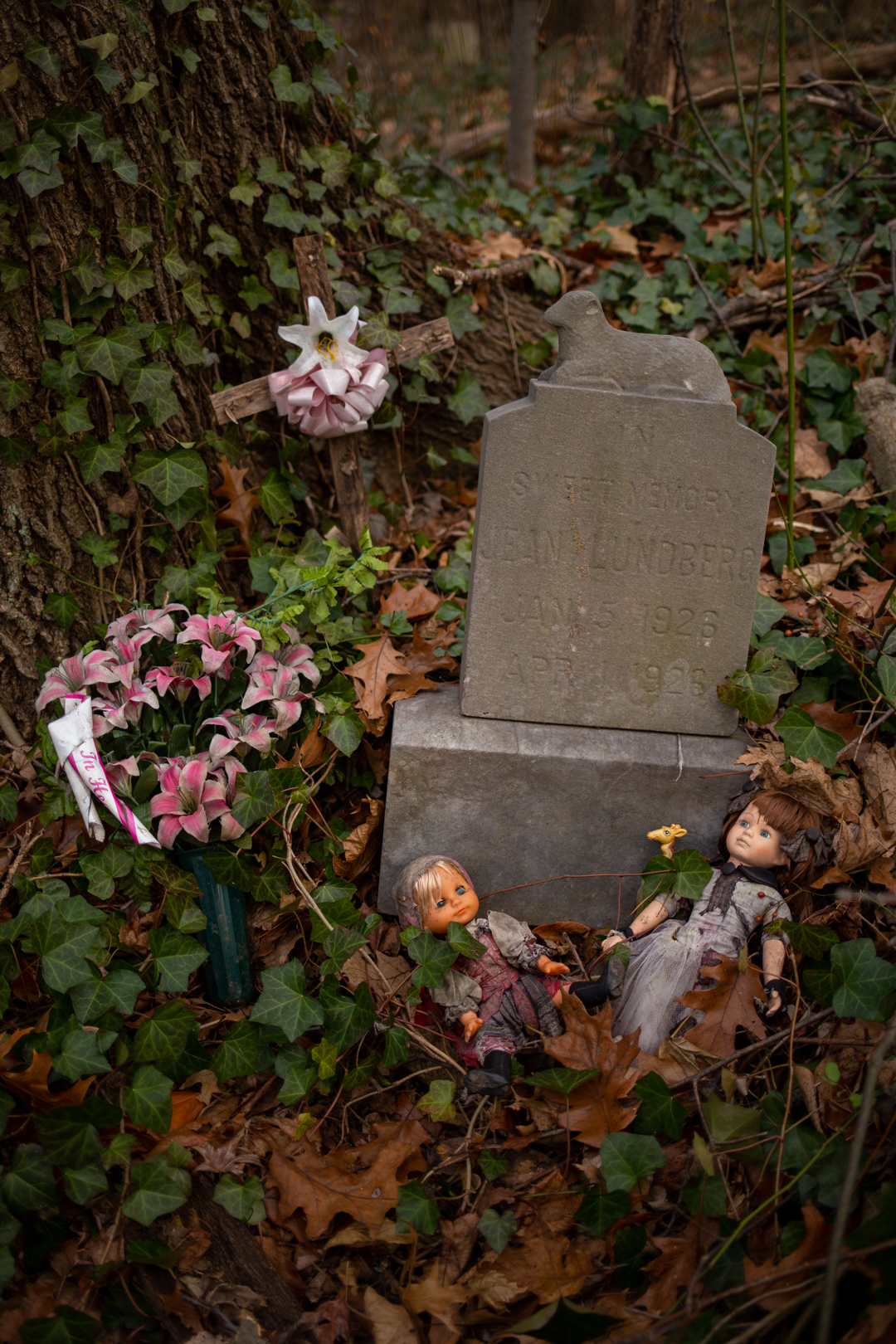


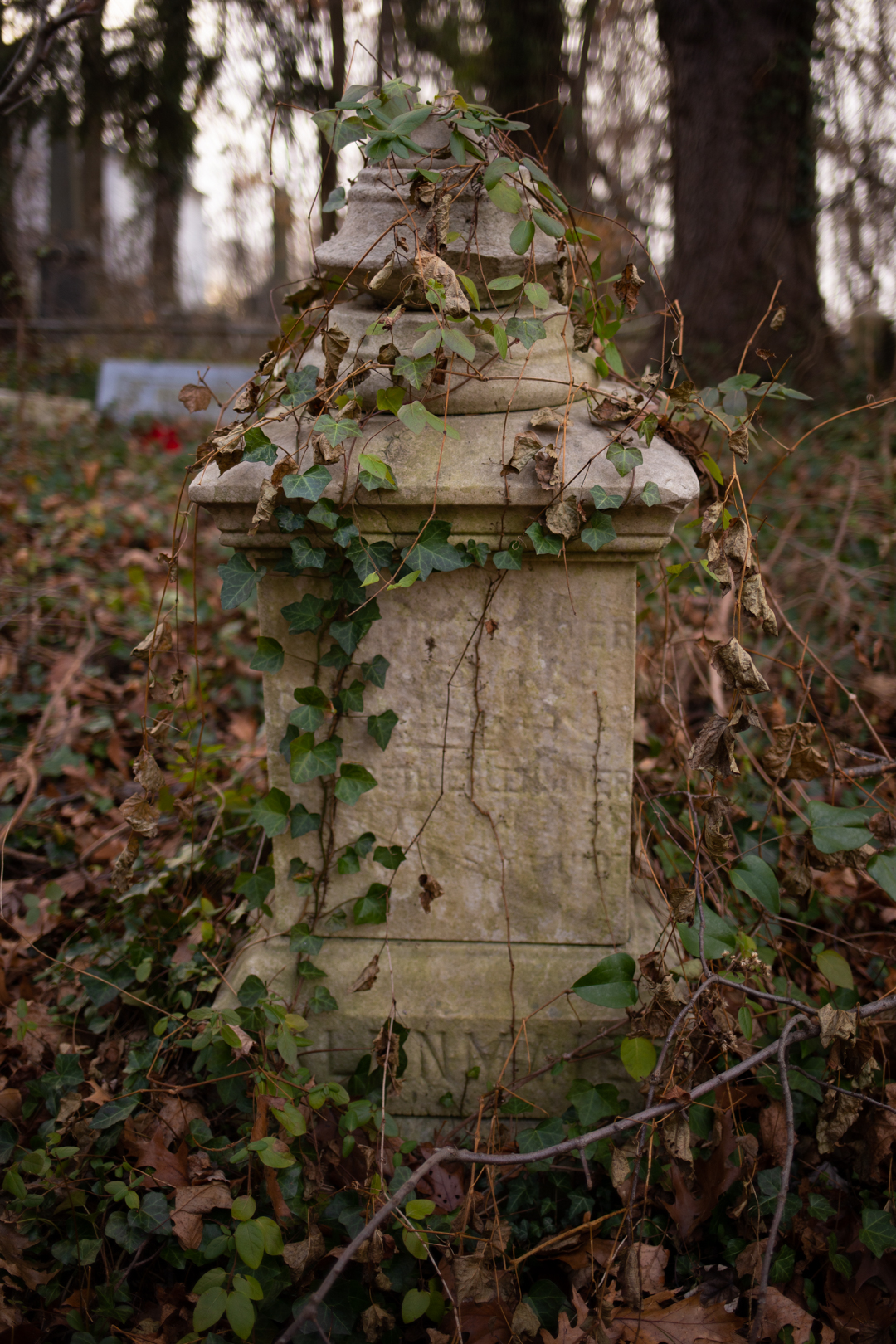


The ten-acre cemetery is still technically active, and there have been more than 22,000 recorded burials. While not considered abandoned, the grounds are definitely overgrown and in desperate need of attention. A group of volunteers is currently working to help preserve the historic cemetery but it’s a big, never-ending job.
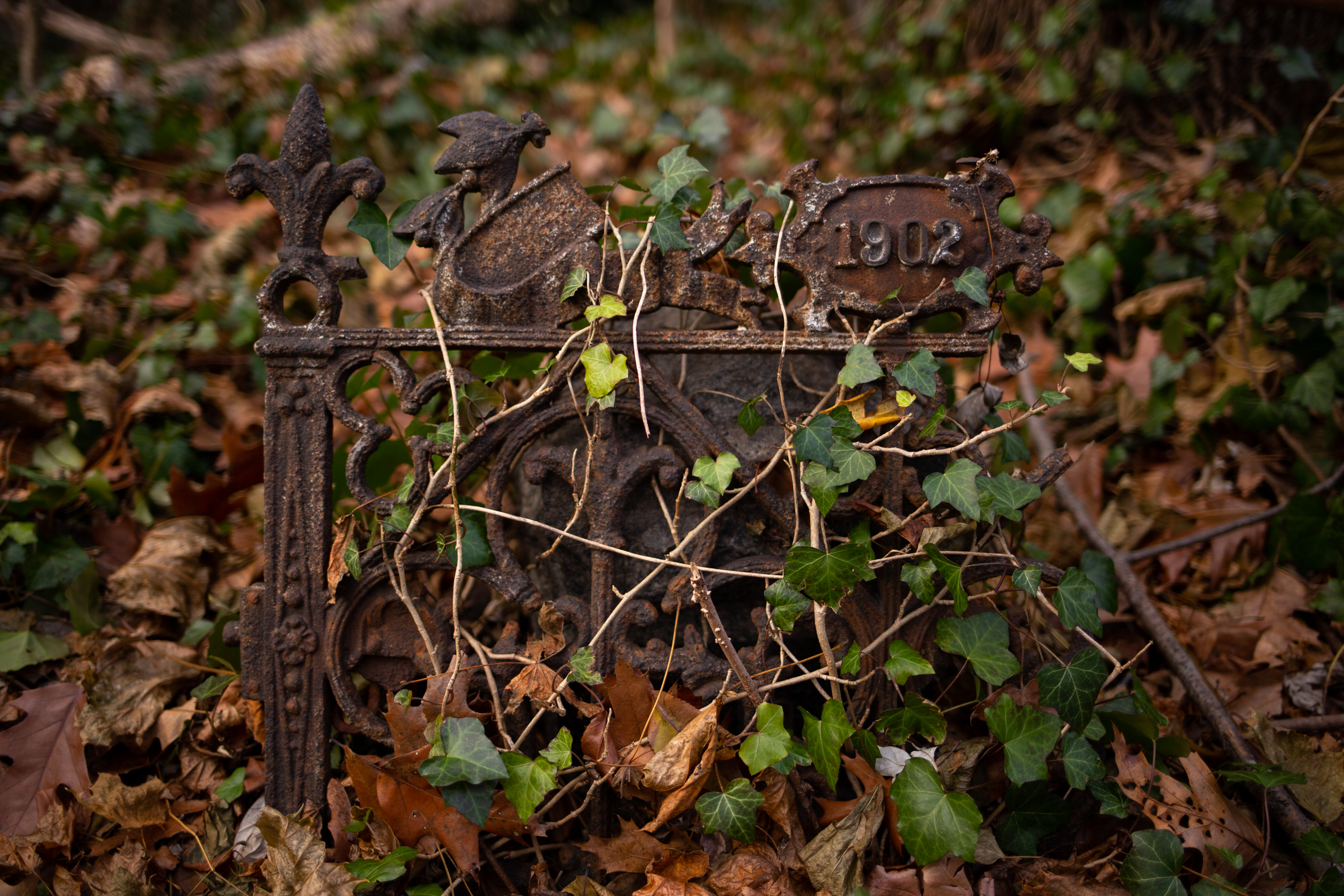


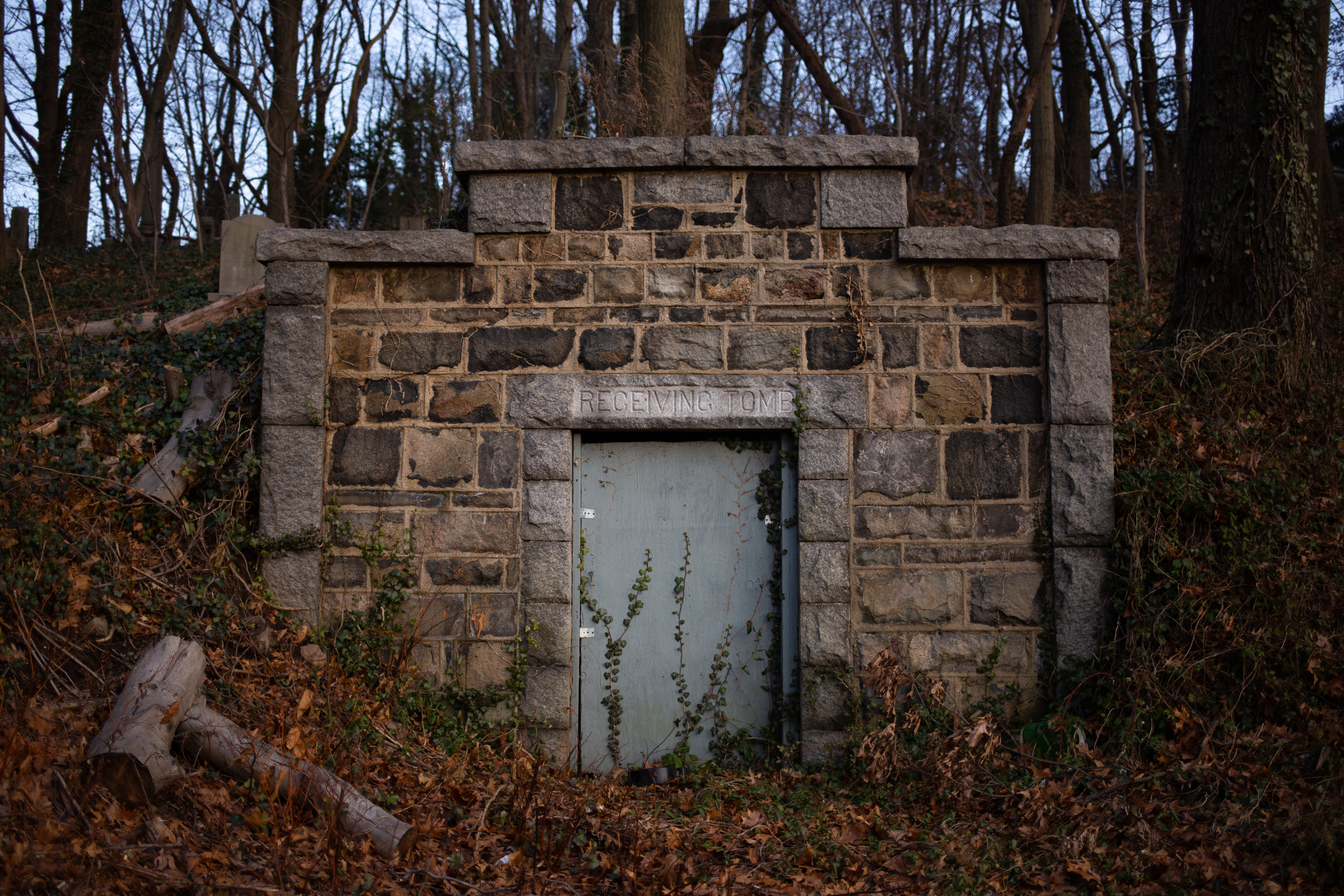


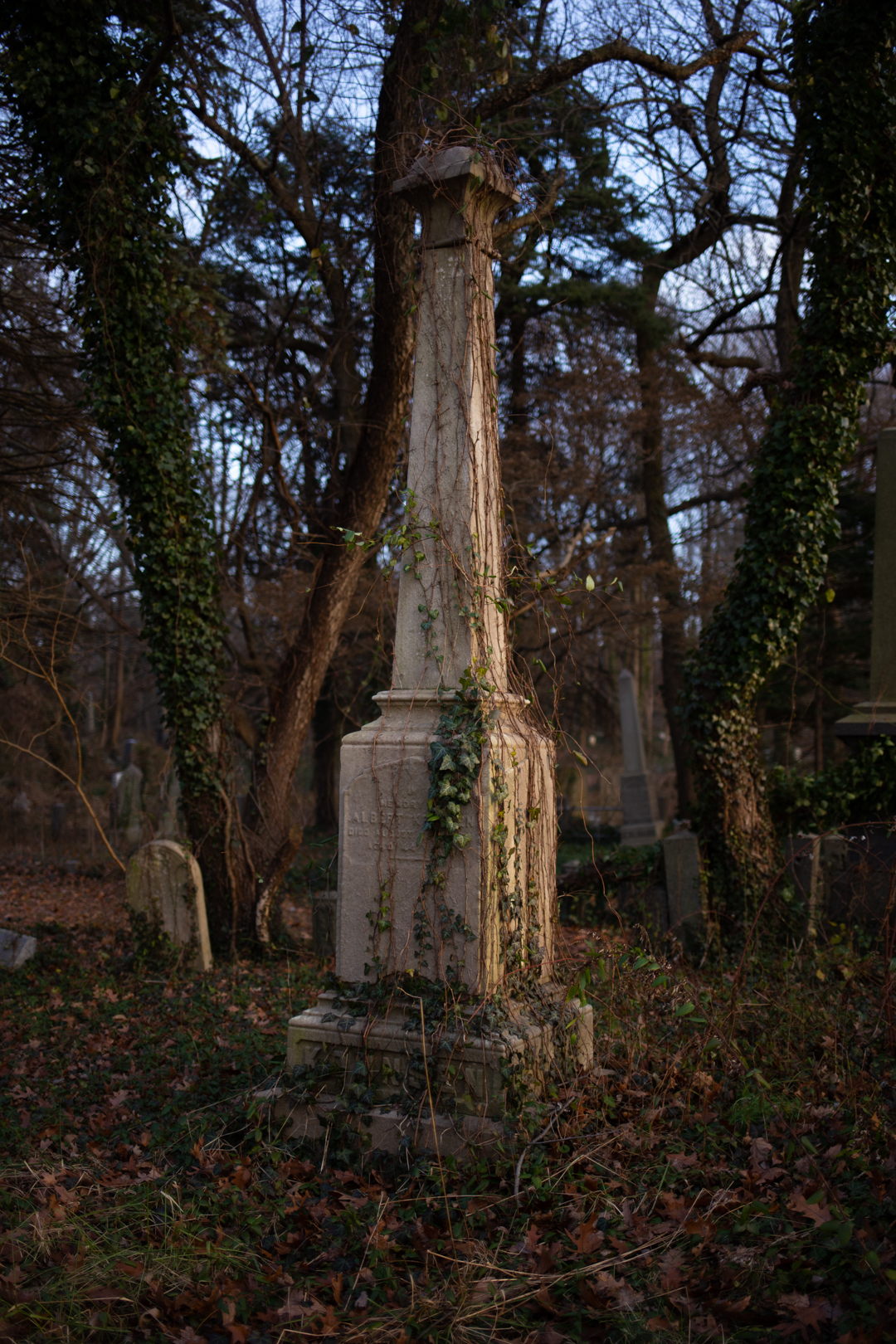
Bayside Cemetery is a more notorious abandoned cemetery within city limits but I think Woodland is even better than Bayside. You also get three cemeteries for the price of one—adjacent to Woodland is the similarly shabby Jewish burial ground, Silver Lake Cemetery (1893), and next to Silver Lake is the well-maintained Silver Mount Cemetery (1866).
Woodland Cemetery
24-32 Highland Avenue
Staten Island, NY
Join me as I attempt to visit every cemetery located within the five boroughs.
Gift Guide: Cemetery Lovers

I love wandering around cemeteries for many reasons—they’re quiet, peaceful, uncrowded (with the living, anyway) places full of beautiful imagery, typography and history. You can learn a lot about a city by visiting its cemeteries, and I try to seek them out whenever I can. Although cemetery tourism might seem like an oddball hobby, I’m not alone in my macabre interests. So grab some flowers or stones and browse this gift guide for the living who feel at home among the dead.
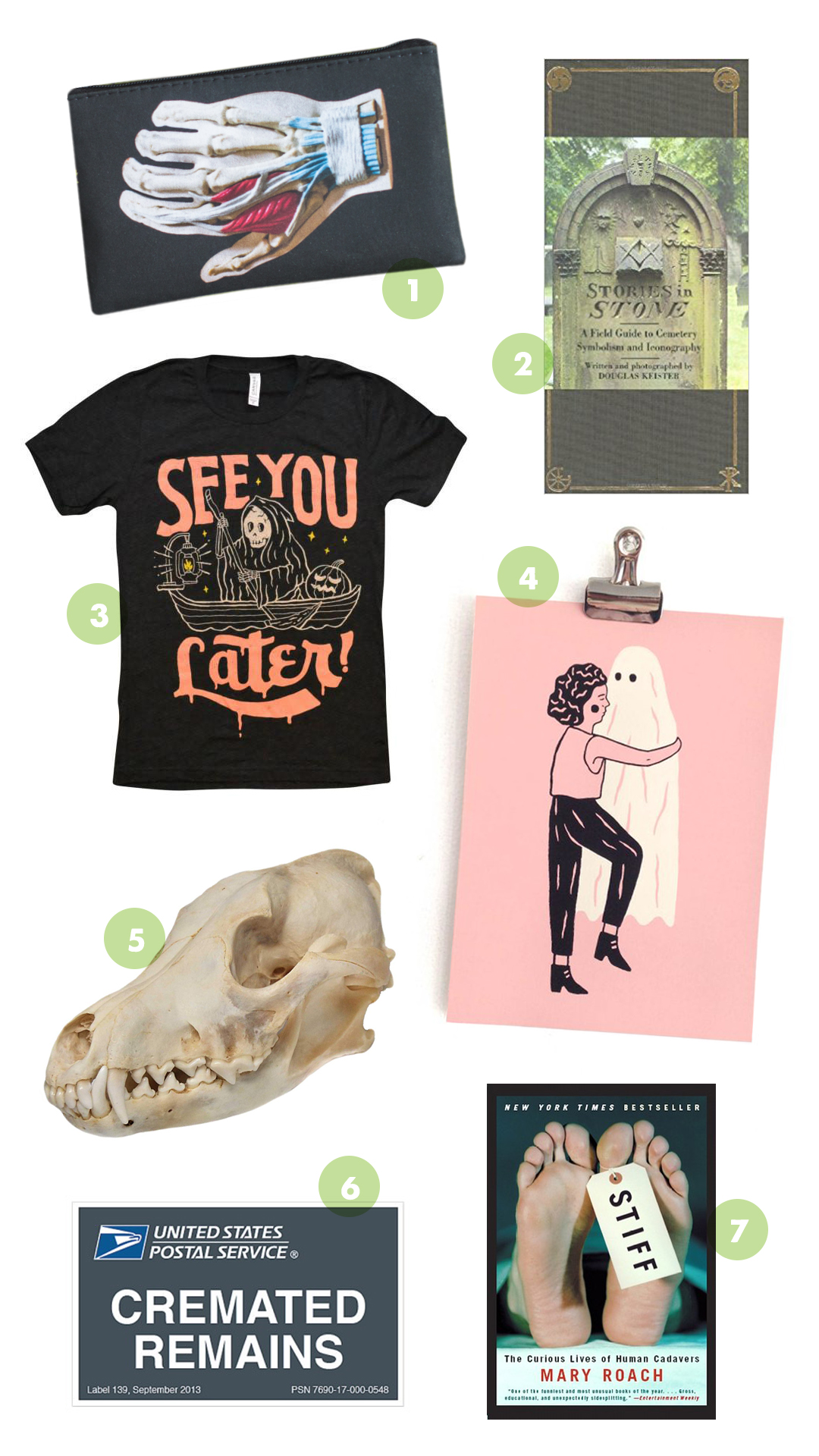
1 / Kaylah was nice enough to send me one of these pouches a few years ago, and I still use it every day as my makeup bag.
2 / Stories in Stone: A Field Guide to Cemetery Symbolism and Iconography is great little book to take with you on your cemetery strolls to help identify what you see along the way.
3 / Wicked Clothes has several t-shirt designs that I love, but this one is my current favorite.
4 / Show your love for the paranormal with this cute 5” x 7” screen print.
5 / BoneBox is the gift that keeps giving—each box includes various osteological specimens such as skulls, claws, teeth and baculum—all year long.
6 / These cremated remains labels are free from the USPS, but I’ve ordered them twice now and never received them. Maybe the third time will be the charm, or maybe they know that I’m not actually affiliated with a funeral home.
7 / Stiff: The Curious Lives of Human Cadavers was one of the first death-related books I ever read, and I loved it so much I read it twice.

1 / I’m always surprised that you can find cheap medical models on Amazon, and this numbered skull is under $30.
2 / I saw this pouch in person last weekend at the Oddities Flea Market, and I was delighted to find that it had a black-and-white striped interior and looked/felt even better in person.
3 / If you’ve ever wondered what happens to our some of our most famous dead, Dead Presidents: An American Adventure into the Strange Deaths and Surprising Afterlives of Our Nations Leaders is entertaining, informative and might make you want to plan a trip to visit the graves of our departed leaders.
4 / George Saunders’s Lincoln in the Bardo takes place mostly in a cemetery and is a moving and imaginative novel about grief and the meaning of a life.
5 / 6 / 7 / 8 / 9 / Creepy Co. has too many great pins to choose just one from their Macabre collection, including classic winged skulls, “Just Buried”, All Men Are Cremated Equal, Funeral No Parking and Yearn for the Urn.
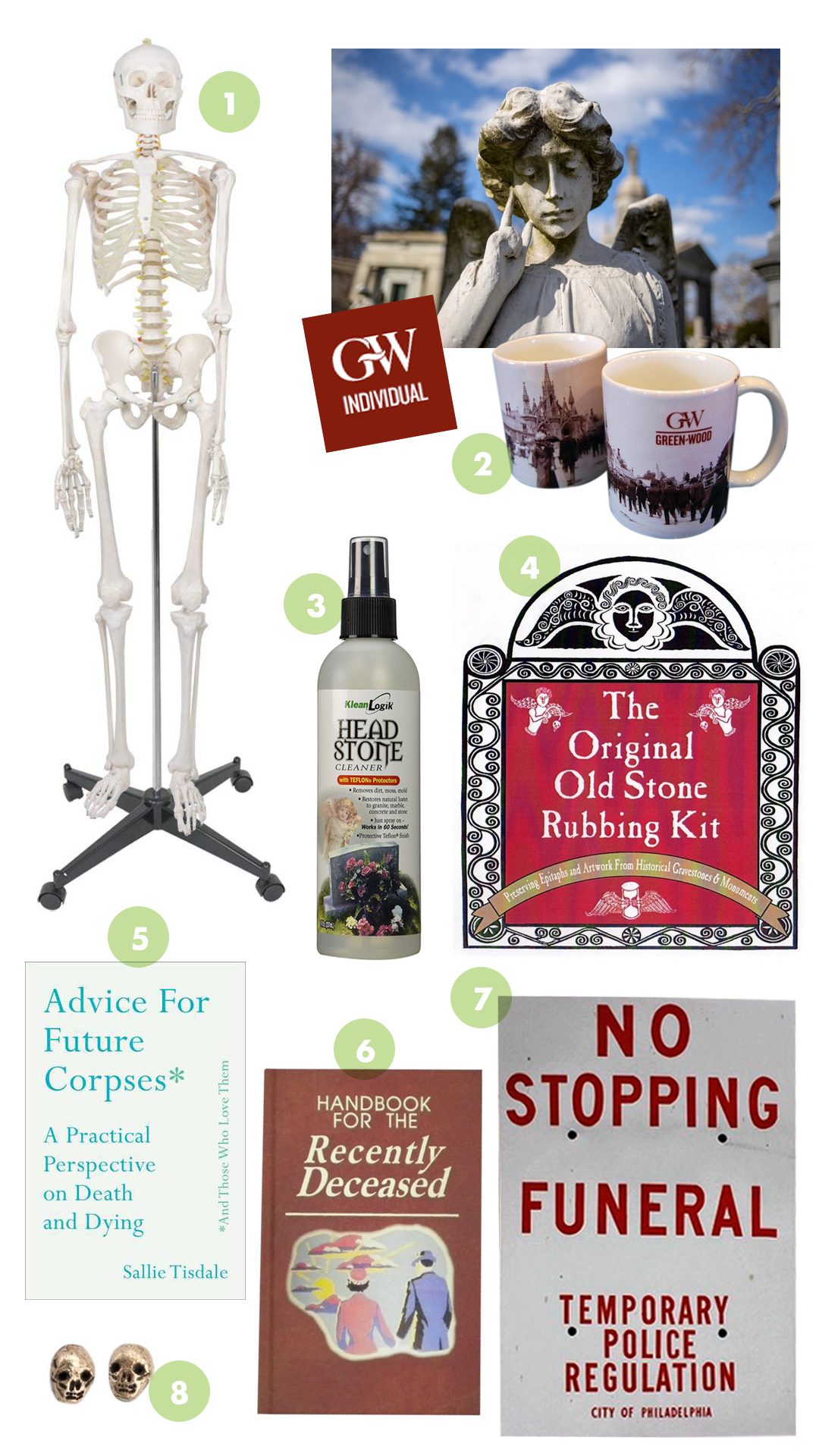
1 / I don’t have the space for a full-sized skeleton, but that hasn’t stopped me from putting it on my wishlist for the future.
2 / When I lived in Brooklyn, I was a member of Green-Wood Cemetery and it was great. Individual memberships are only $50 a year and include free tickets and discounts on talks and events. Also, nothing says Good Morning! like a cemetery mug.
3 / Carry around a bottle of this cleaner to tidy up some headstones while you’re exploring.
4 / I’ve never done gravestone rubbing, but this kit looks like it has everything you need to get started.
5 / Advice for Future Corpses (and Those Who Love Them): A Practical Perspective on Death and Dying is a great book to help you prepare for the inevitable death of you and everyone you love (Merry Christmas!)
6 / This Handbook for the Recently Deceased is actually a blank journal.
7 / I have one of these cardboard funeral signs and I love how simple (and cheap) it is.
8 / I’m always wondering if I should start wearing earrings again and these little skull studs are tempting me.

If you’re really in the giving mood, buy your cemetery-loving friend an actual burial plot! Space is limited in New York City cemeteries, but plots can still be had at Green-Wood starting at around $21,000 (holds three burials, what a deal!). Chances are, if you or someone you know enjoys wandering around cemeteries, they will also like this gift guide for your weird friend or be interested in following along as I attempt to visit every cemetery in the five boroughs.
Some of my favorite cemeteries: Valley of the Kings / Woodlawn / Rehoboth Mission / First Calvary / Old Burying Ground / Letchworth Village Cemetery / Cementerio De Santa Cruz
Manhattan Cemeteries

A few weeks ago I asked my mom if she wanted to go on a tour with me of some of the cemeteries in lower Manhattan and she replied, “I didn’t know there were any cemeteries in Manhattan.” Many people may know about the oldest cemeteries—or rather, graveyards—associated with Trinity Church near the World Trade Center, but even I didn’t know about all of the burial grounds tucked behind fences and in between buildings until I lived here.
The Cemeteries of the Spanish and Portuguese Synagogue
The Congregation Shearith Israel was America's first Jewish Congregation and was founded in 1654. There are three cemeteries associated with the congregation in Manhattan (a fourth, Beth Olam Cemetery in Ridgewood, has hosted burials for the congregation since 1851). The first is near Chinatown, the second is in Greenwich Village and the third is in Chelsea.


The first cemetery dates back to 1656 and is the first Jewish cemetery in the United States (the Congregation is the oldest in North America). Although the exact location of the original cemetery is not known, it was established at its current location in 1683. Over the years the land has been chiseled away by city expansion and erosion and sadly a lot of the bodies have been disinterred. It's larger than the second, gated (and locked) like the other two, and raised above sidewalk-level so you have to stand on your tip-toes to get a good look.
A special ceremony is held at the cemetery each year on the Sunday before Memorial Day, otherwise the cemetery is closed the public.
55 - 57 St James Place, near Oliver and Madison Streets


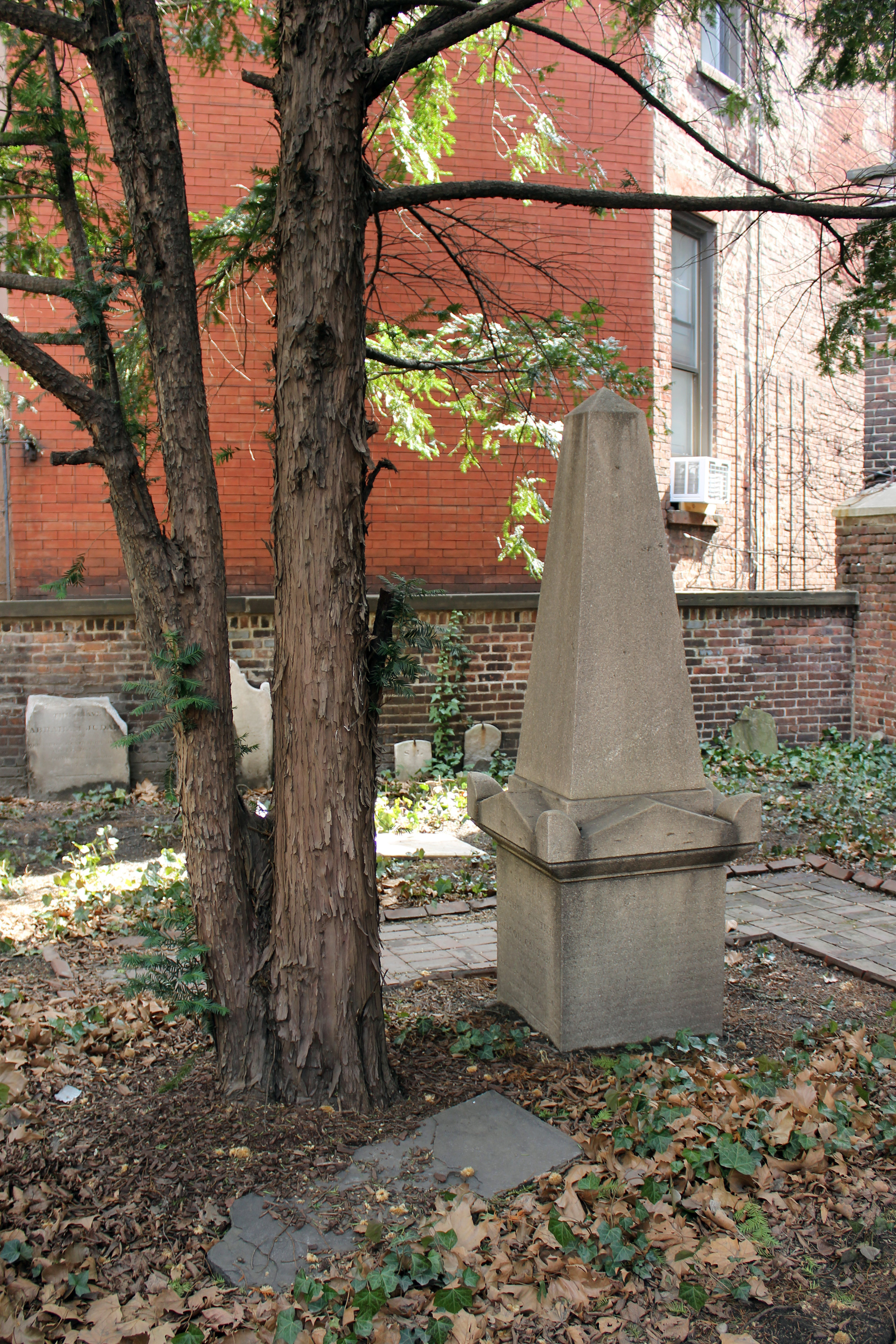
The second cemetery was active from 1805-1829 and was used primarily to bury victims of communicable diseases like yellow fever and malaria, as well as for Jews who passed away in New York but were not members of the Congregation. The expansion of the (very desirable) neighborhood has forced many of the remains to be re-interred elsewhere, but a few worn tombstones remain and it is now officially the smallest cemetery in Manhattan.
Closed to the public but it’s so small the entire cemetery can be seen from the sidewalk.
72 W 11th Street, near Sixth Avenue

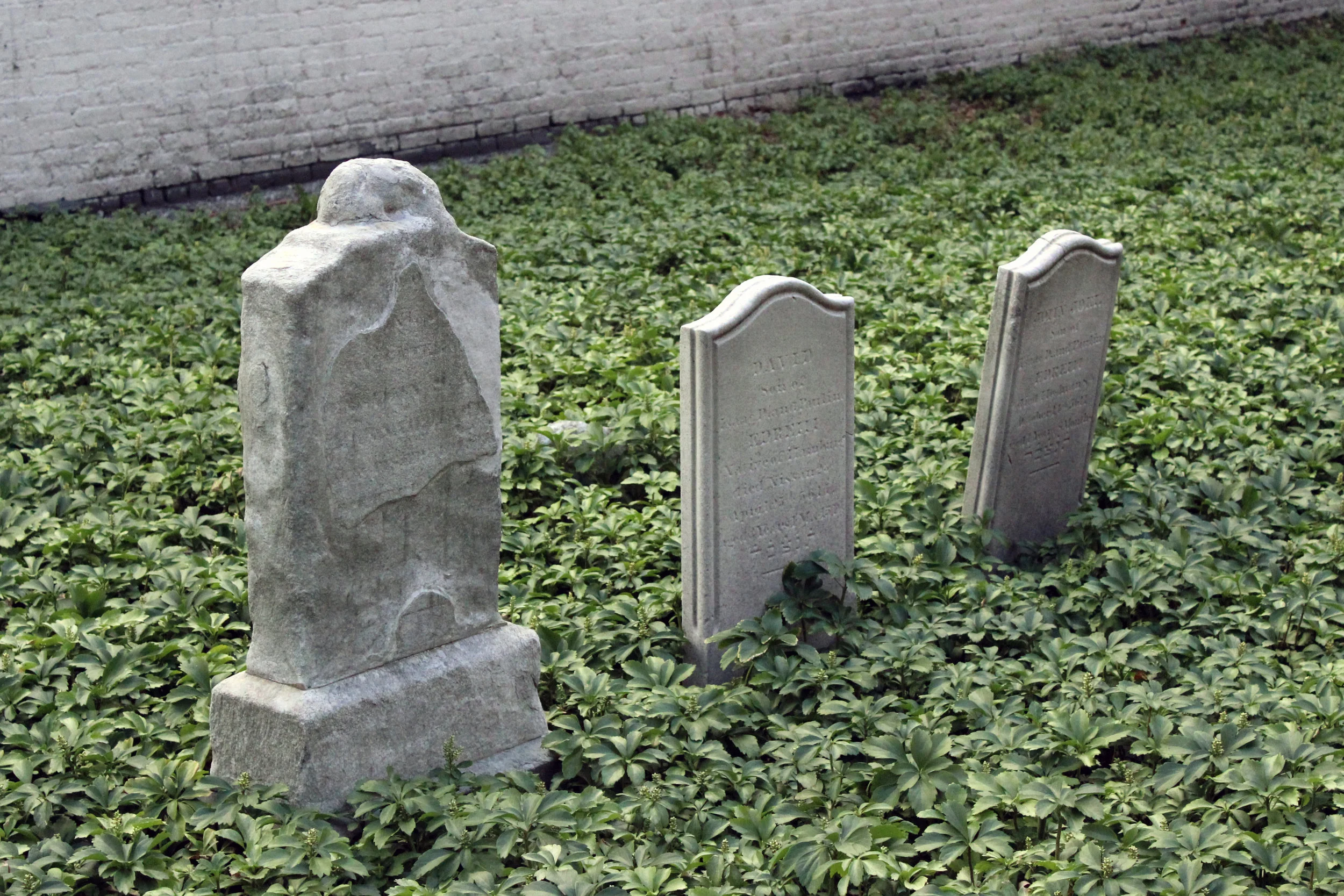

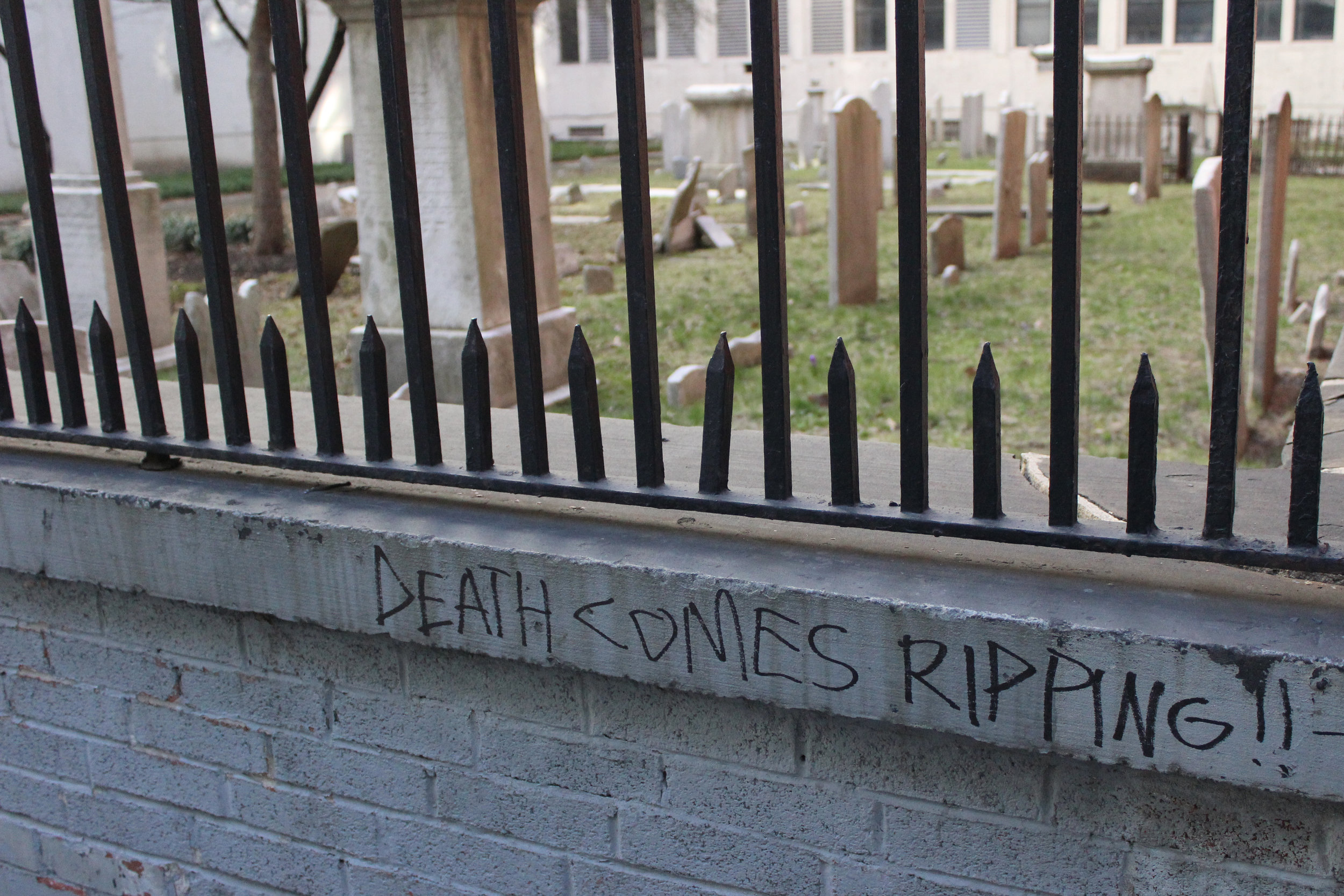
The third cemetery was in use from 1829-1851 and it’s currently located right across the street from a Trader Joe’s. It appears to be the largest of the three cemeteries, and is in the best condition (a plaque on the fence mentions a recent restoration). However, a lot of the stones are worn to the point of being unreadable from the street.
Closed to the public, but mostly visible from the sidewalk.
W 21st Street, near Sixth Avenue
Trinity Church


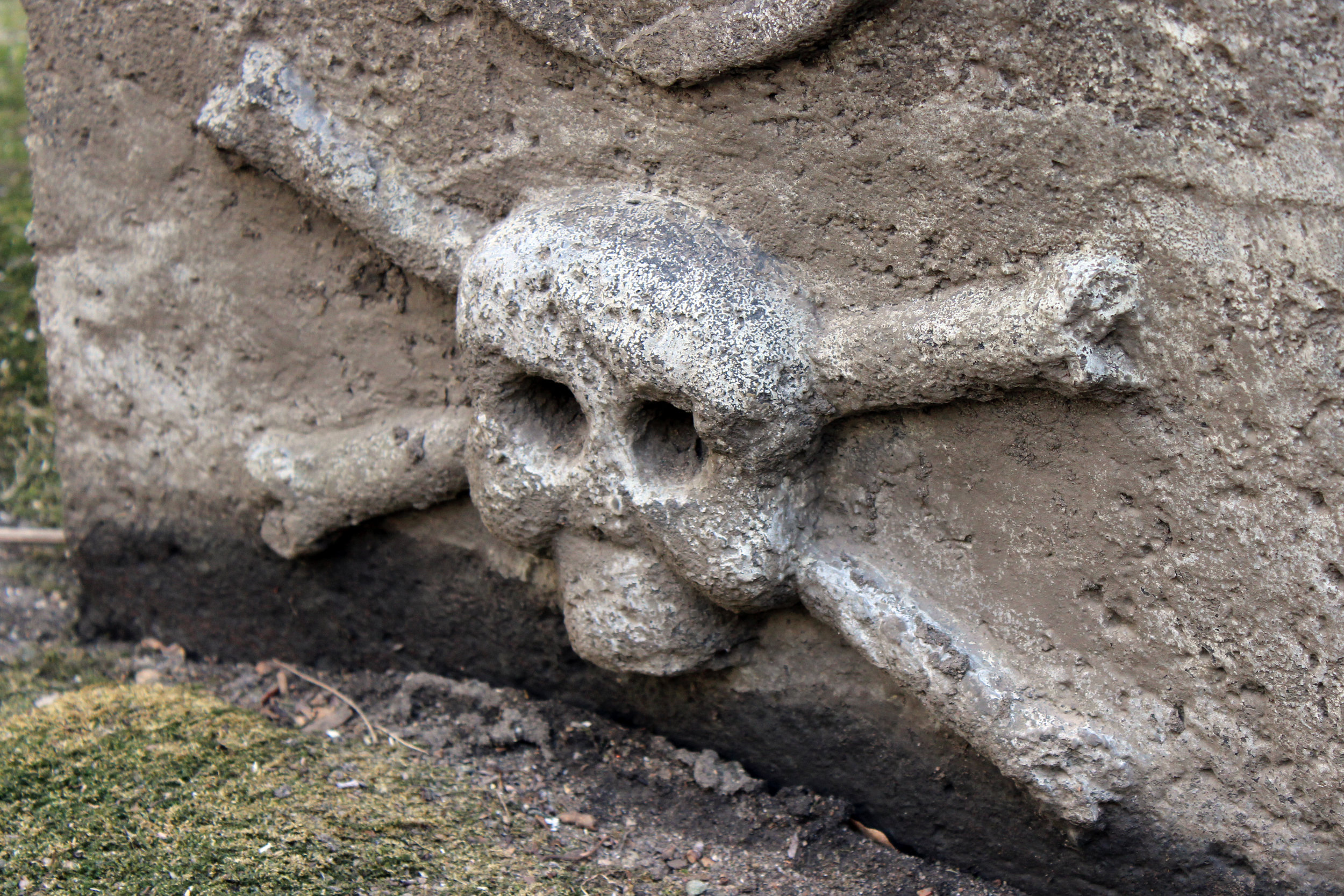


The original graveyard at Trinity Church in lower Manhattan, opened in 1697 and is one of three separate burial grounds associated with the church. The other two are located at the nearby St. Paul's Chapel and uptown at Trinity Church Cemetery and Mausoleum. This is probably the best place for finding classic skull and winged cherub stones in all five boroughs and most of the stones are remarkably well-preserved. Trinity’s most famous resident is Alexander Hamilton, but my favorite epitaph belongs to David Ogden, "who on the 27th of September 1798 in the 29th year of his age fell a victim to the prevailing epidemic."
Tours of Trinity churchyard are available by request, weather permitting, but self-guided tours are allowed during normal hours—just stay on the paths and be respectful of the historic stones.
Trinity Church: 75 Broadway, between Rector and Liberty Streets
St. Paul’s Chapel: 209 Broadway, between Vesey and Fulton Streets
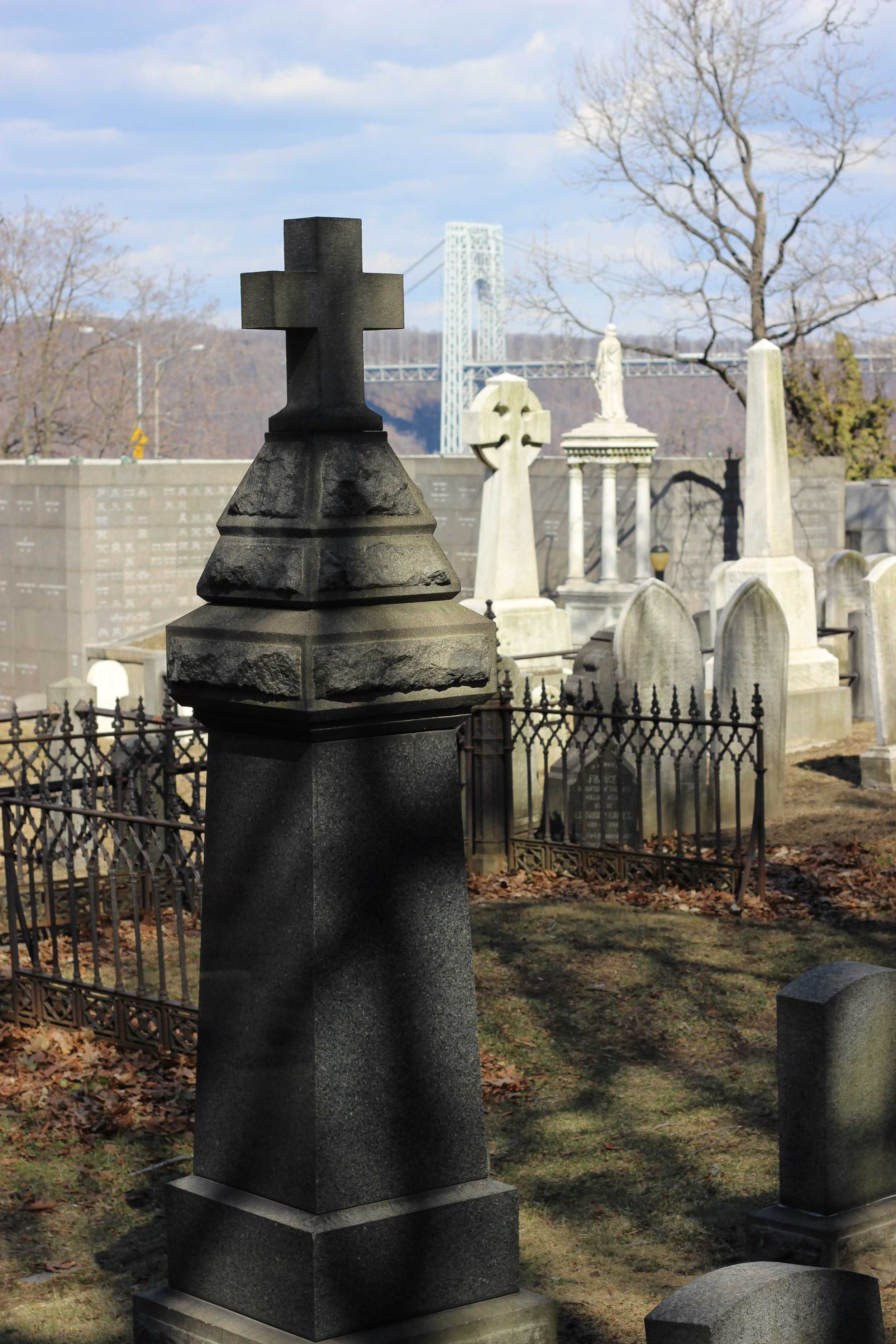
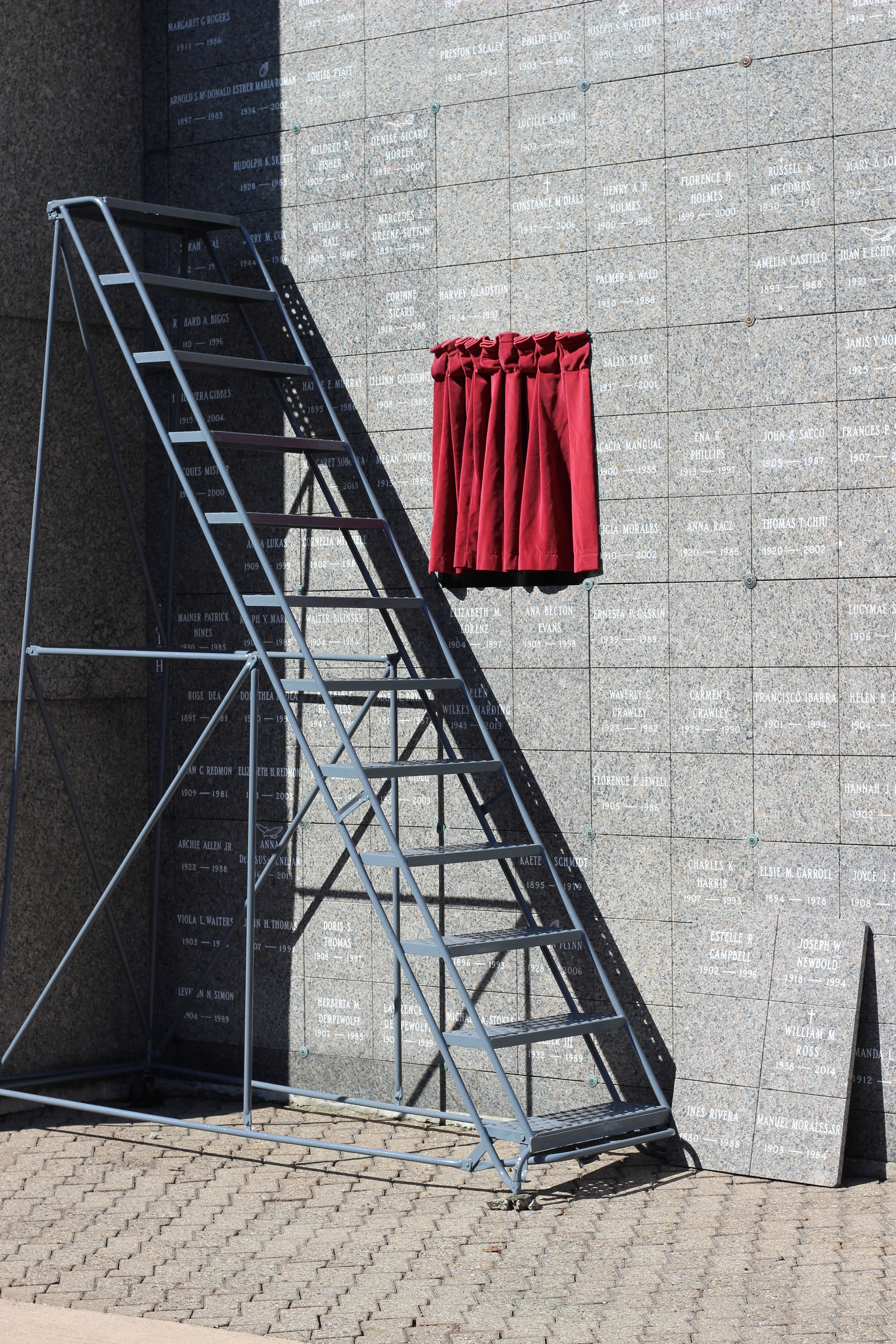


Trinity Church Cemetery and Mausoleum is the only active cemetery remaining on the island of Manhattan. It’s located between West 153rd and 155th streets with Broadway splitting the grounds into two sections. The west section is set on a hill with beautiful views of the Hudson River and the George Washington Bridge. This is the final resting place of the Astors, Ralph Waldo Ellison, John James Audubon and—more recently—Law & Order’s Jerry Orbach and former New York Mayor Ed Koch.
Gates are open 9am-4pm. The entrance to the east side of the cemetery is on 155th street.
Entrance to the west side is at 70 Riverside Drive, between W 153rd and W 155th Streets.

More than 15,000 enslaved and free Africans were buried here during the late 17th and 18th centuries. 419 skeletons were found in the ‘90s during construction of a federal building and in 1993 the site became the first underground New York City and national historic landmark. New York had the second-largest number of enslaved Africans in the nation after Charleston, South Carolina, and this site was designated as a National Monument in 2006. Although it doesn’t look like a traditional cemetery, in 2007, a memorial was dedicated and a visitor center opened in 2010.
Open 10am-4pm, Saturday-Friday.
290 Broadway, New York, NY 10007


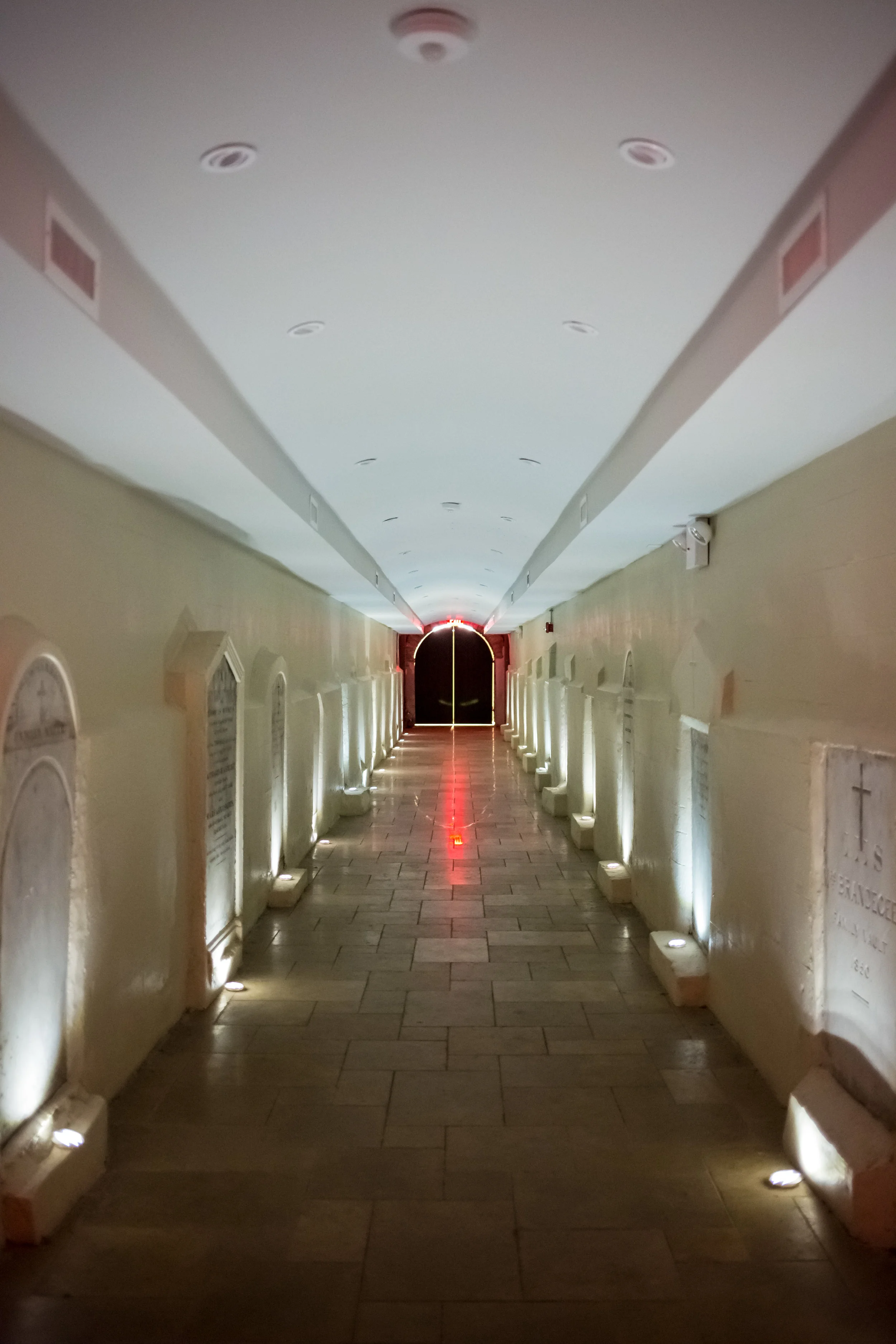
Most of the headstones and catacomb interments date from the 1800s at Old St. Patrick’s Cathedral. The catacombs aren't like the bone-filled niches of Europe, but more like the ones at Green-Wood Cemetery—underground tunnels lined with hermetically sealed crypts and marked with carved stones. There are 35 family crypts and five clerical vaults, in addition to newly-built columbaria.
Notable interments include: members of the Delmonico family, founders of Delmonico's, the first American restaurant to allow patrons to order from a menu; Countess Annie Leary, one of the only Catholics to be included in Mrs. Astor's "The 400," a list of fashionable socialites; and Tammany Hall boss and Congressman "Honest John" Kelly.
Access to the cemetery and catacombs is available only by taking a tour with Tommy’s New York.
263 Mulberry Street, between Houston and Prince Streets


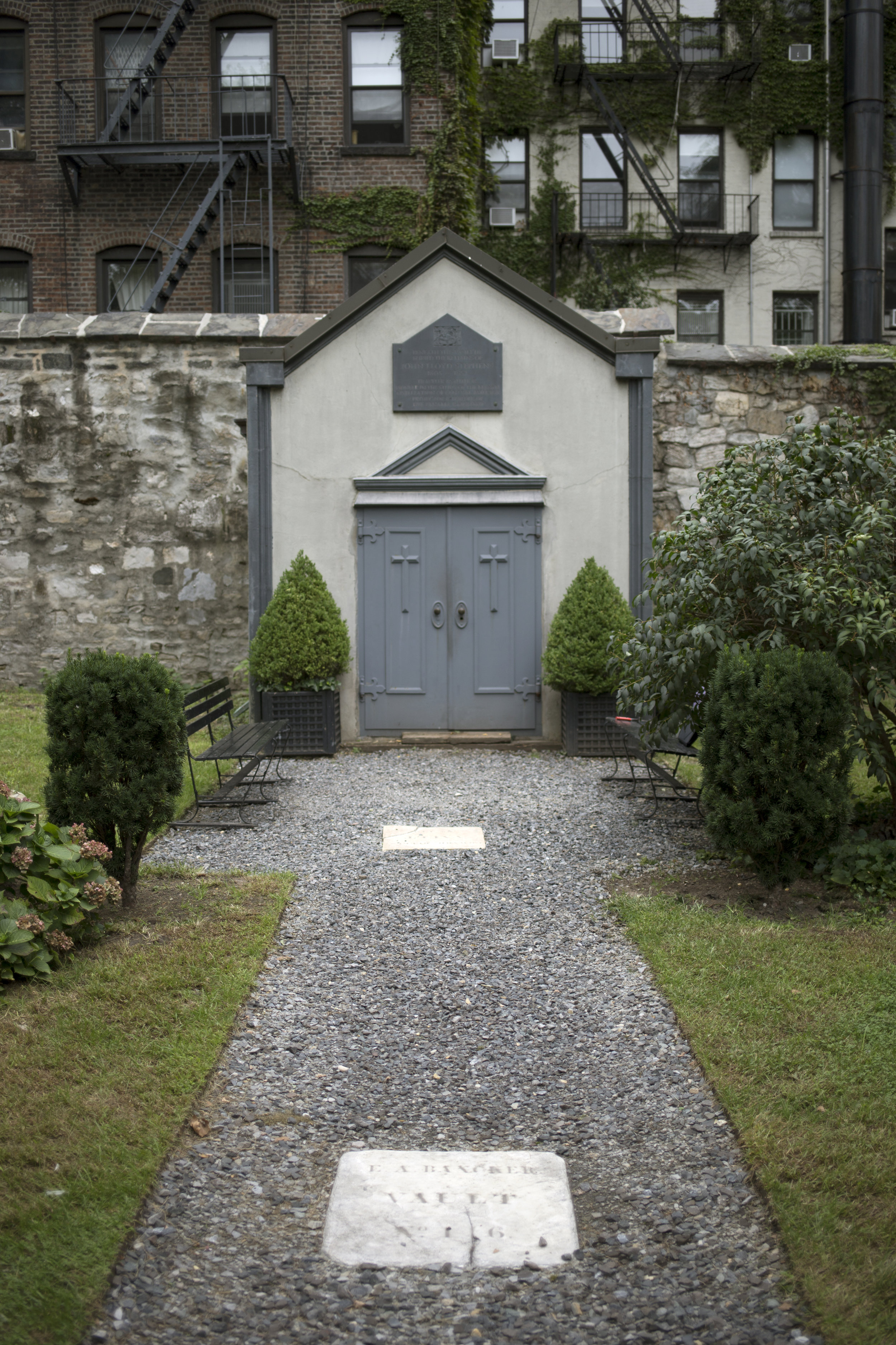
Founded in 1830, the oldest public non-sectarian cemetery in New York City—not to be confused with the nearby New York City Marble Cemetery—is open at least one day a month during warmer months. The grounds are hidden away down a little alleyway and marked by an arched gate. There are no traditional headstones here—instead, there are 156 below-ground burial vaults with the names of the interred carved in plaques embedded in the surrounding stone wall.
Underground vaults were popular at the time due to health concerns over the burials of people who had suffered from infectious diseases like tuberculosis. The New York Marble Cemetery is available to rent out for parties and weddings (get married and buried!) and still hosts the occasional burial—if your family vault still has space and you have proof of relation.
Open select weekends April-October.
41 1/2 2nd Avenue, between E 2nd and E 3rd Streets

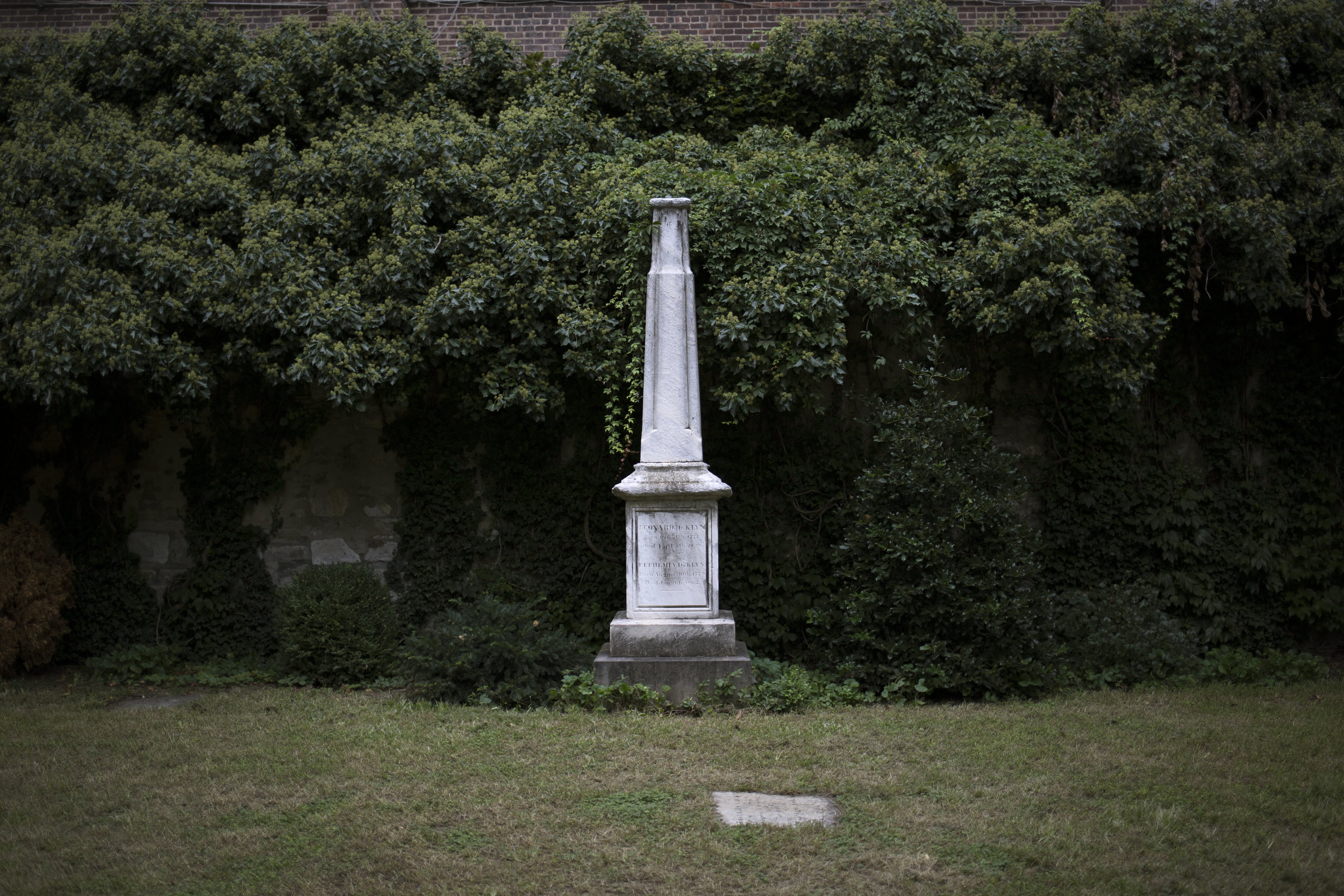

Just one block east is the New York City Marble Cemetery, established in 1831. The grounds are studded with headstones like a traditional cemetery, along with underground vaults designated with flat, marble markers. It also has a fantastic iron fence and gate, with a wonderful tombstone-shaped sign with arching letters. It's not as secluded as the New York Marble Cemetery, but it's a great place to spend the afternoon and have a picnic amongst hundreds of circa-1800s graves.
Open select weekends May-October.
52-74 E 2nd Street, between Second and First Avenues
💀 It’s Día de Muertos! Celebrate by browsing my cemetery posts here 💀

Valley of the Kings

Most people have heard of the Valley of the Kings in relation to its most famous resident, King Tutankhamun, whose nearly-intact tomb was discovered by Howard Carter on November 4, 1922. The valley contains 63 known tombs, and 18 are open to the public on a rotating basis.
The Valley, located on the west bank of the Nile across from Luxor, was used for burials from approximately 1539 to 1075 BCE. The name is a bit of a misnomer because in addition to Pharaohs, the valley is also the final resting place of nobles, wives and children—only about 20 of the tombs actually contained the remains of kings.


The Valley of the Kings was our first stop after flying to Luxor, and we arrived just after noon (yes, it was very, very hot). The Valley has been a popular tourism destination since antiquity and the tombs contain more than 2,000 instances of graffiti. Members of Napoleon’s expedition visited the Valley in 1799, and Belzoni—former circus strongman and my favorite Egyptian explorer—discovered several tombs in the early 1800s.
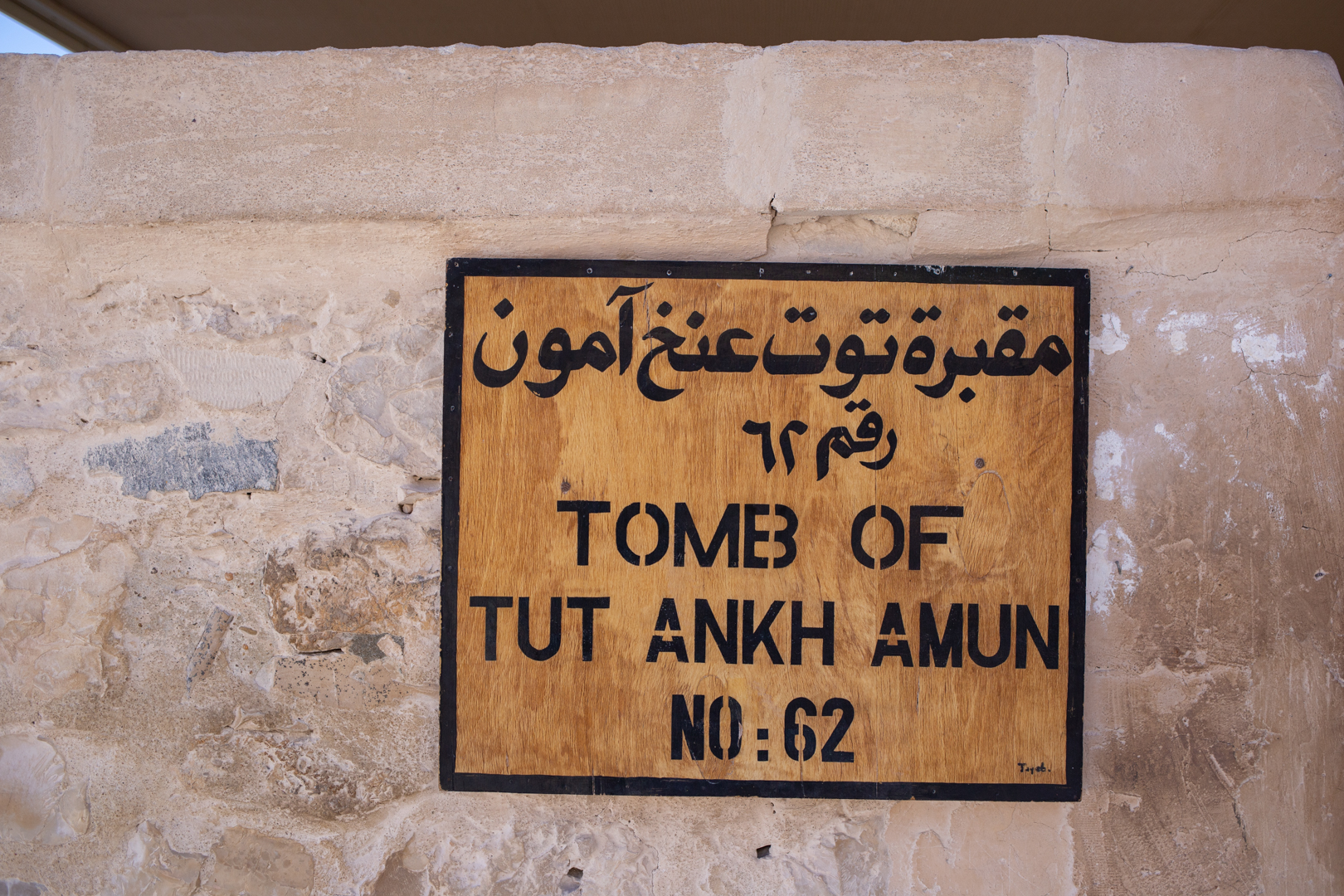
Tickets for the Valley of the Kings allow you to visit three tombs of your choice, but separate tickets must be purchased to enter the tomb of Tutankhamun. Purchasing yet another separate photo ticket will allow you take photos inside of some of the tombs, but photography is prohibited completely in others, like KV62 (Tut’s tomb). Carter’s discovery was such a big deal because it was the first time a royal tomb had been found that still contained an intact burial. The tomb had actually been robbed several times in antiquity, but a large amount of funerary treasures still remained in the tomb.
Thieves never discovered the young king’s mummy and it is now displayed in his tomb adjacent to his gilded wooden coffin which lays inside of his sandstone sarcophagus. Aside from a few paintings, there is nothing else to see inside of the small tomb—the rest of his treasures are on display at the Egyptian Museum in Cairo and the entire collection is in the process of being moved into the still under-construction Grand Egyptian Museum.


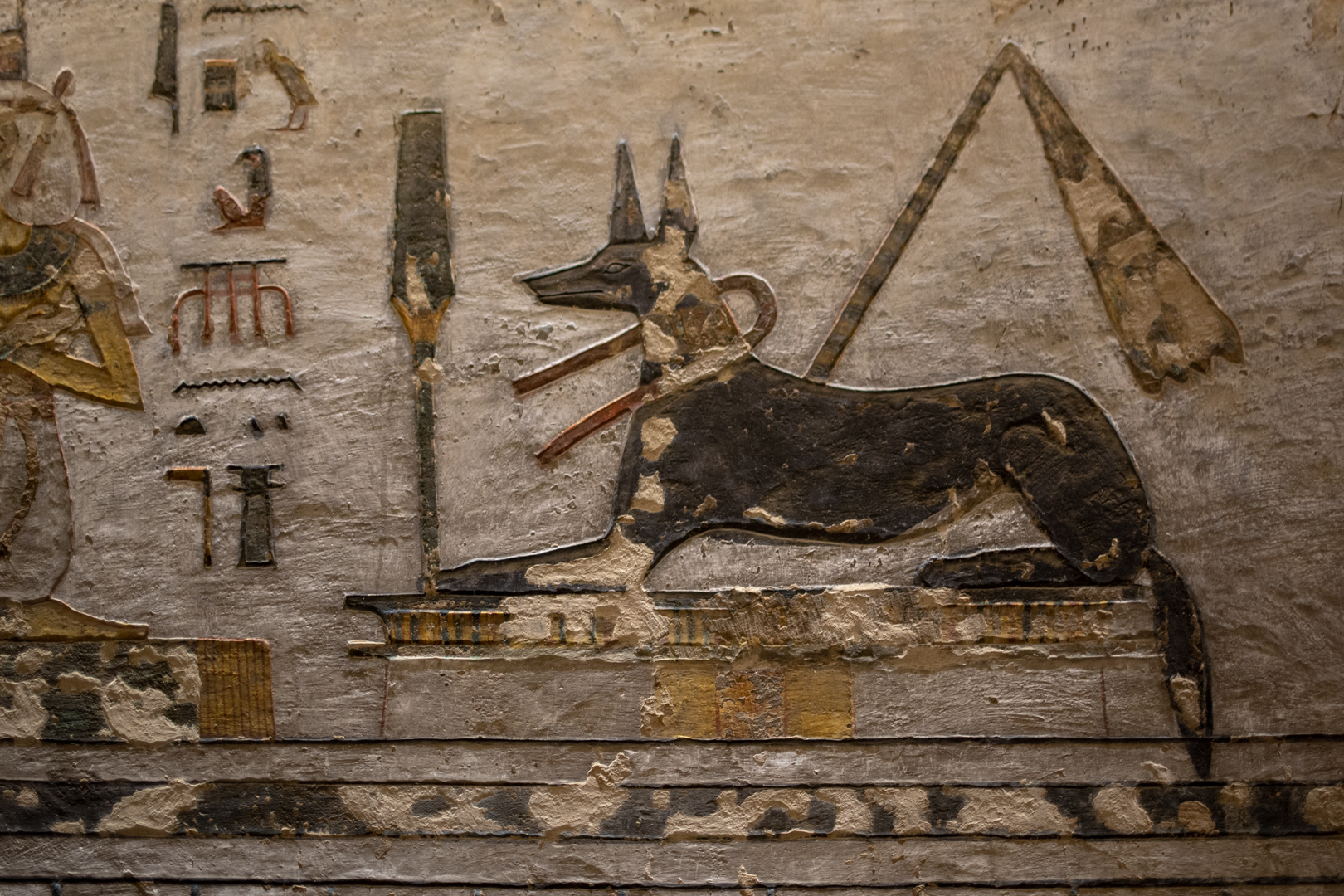
I don’t want to sound bratty and say that I was disappointed with King Tut’s tomb (I was), but I was also pleasantly surprised by the beauty of the other tombs that we toured. The Valley was our first experience with richly decorated tombs, and while they’re all different, they’re all spectacular in their own ways. It’s a shame that most were stripped of their treasures, but I’m glad that the beautiful interiors haven’t remained hidden forever, as originally intended.

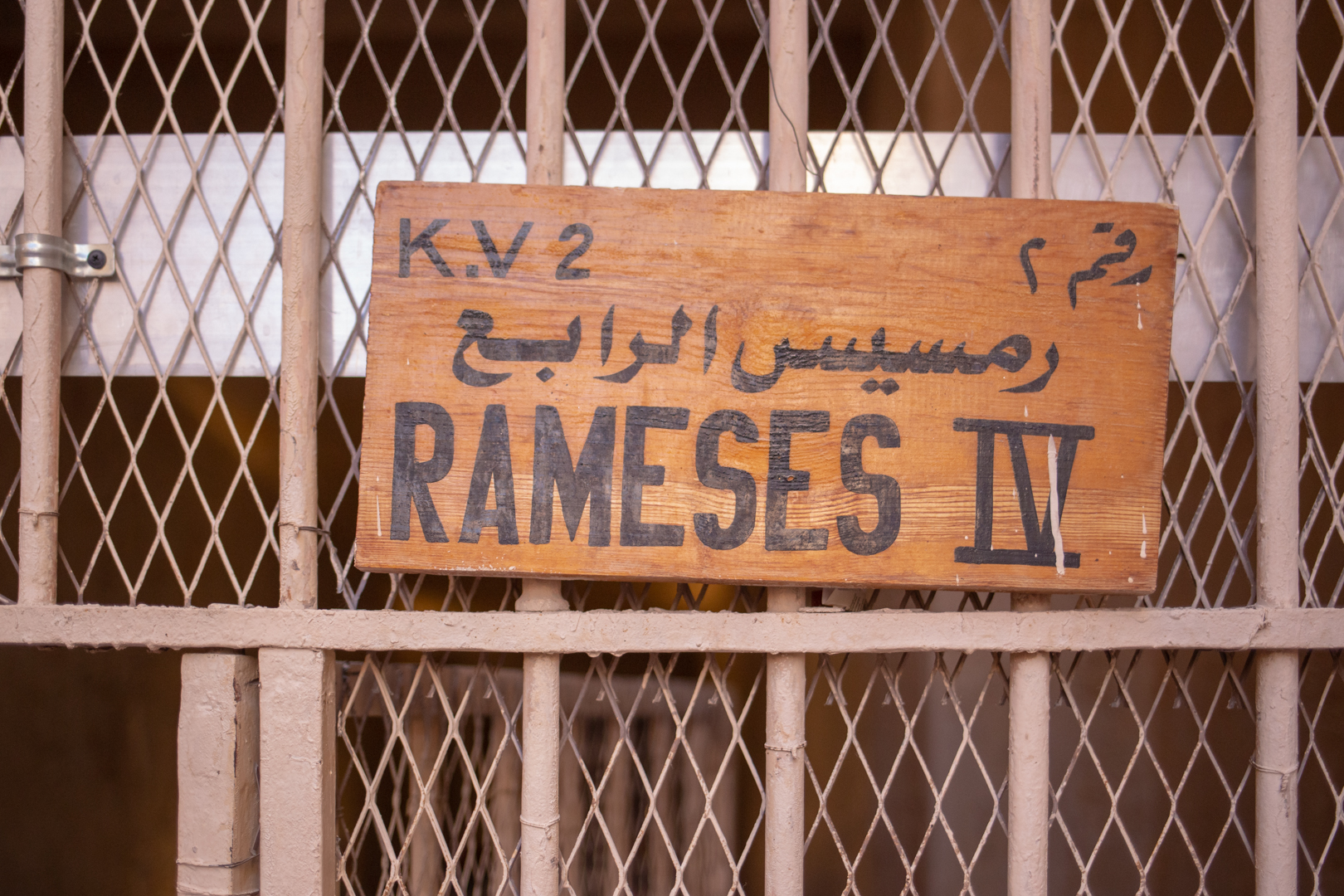


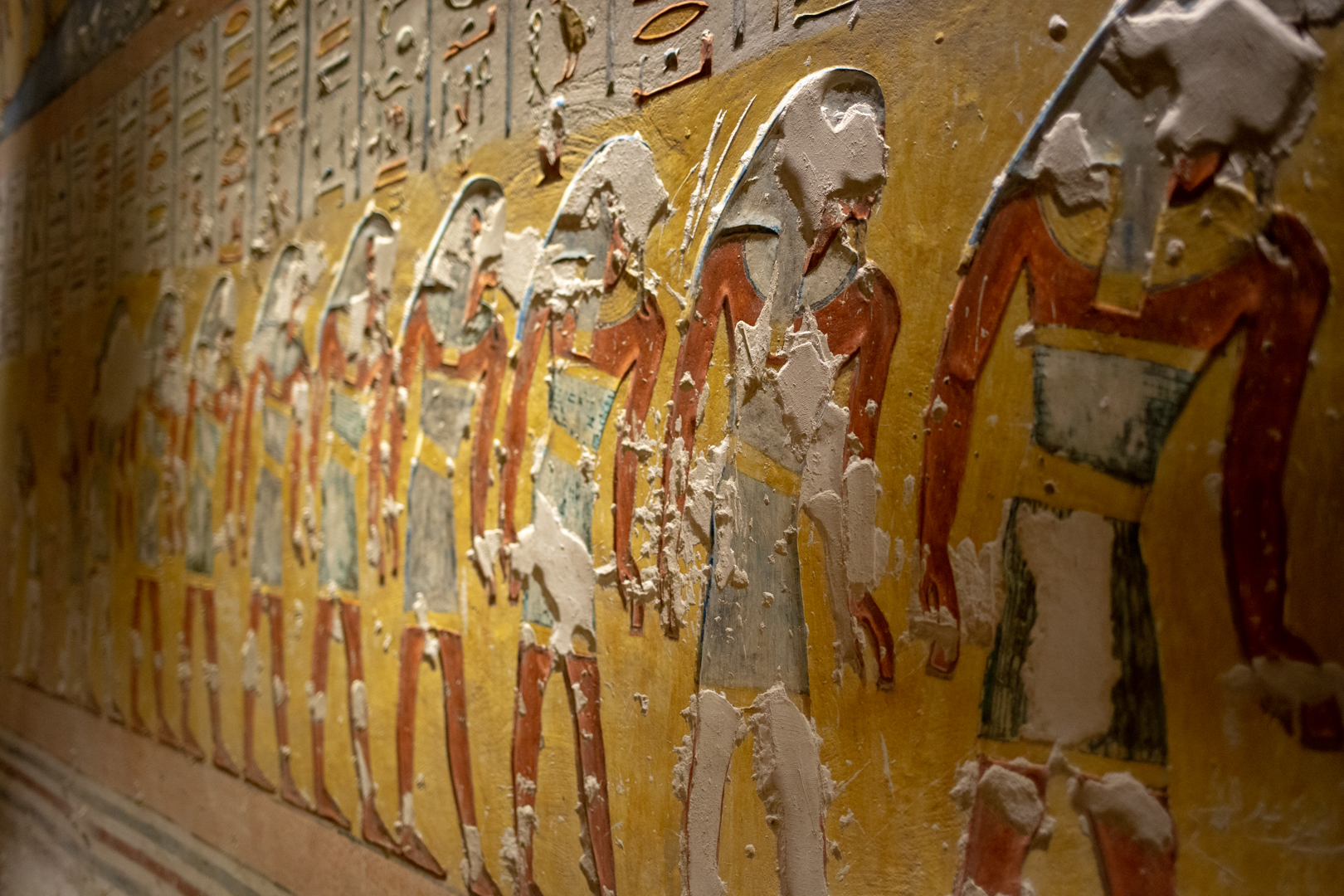
KV2, the tomb of Rameses IV, has been open since antiquity but is somehow still covered in colorful carvings and reliefs of scenes from the following funerary texts: Litany of Ra, Book of Caverns, Book of the Dead, Book of Amduat and the Book of the Heavens.
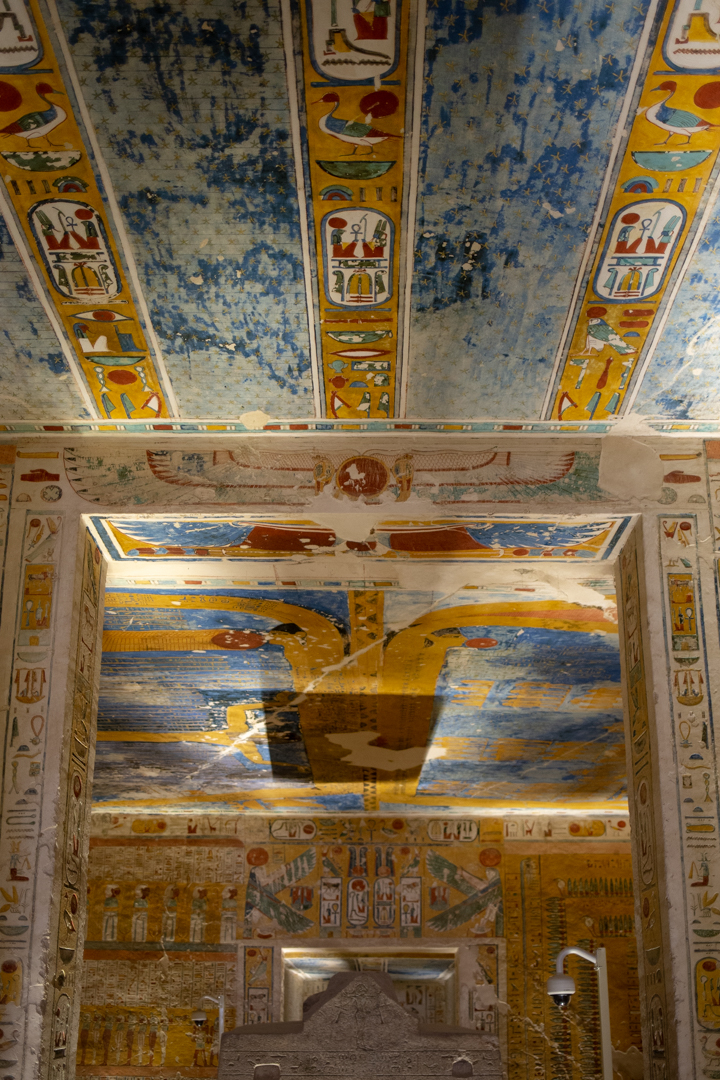


One of the things I was most blown away by in Egypt was the meticulous planning of the Ancient Egyptians, and there were two plans discovered for the layout of KV2—one on papyrus and one inscribed on a slab of limestone. The tomb has three corridors followed by a large chamber and the burial chamber. Past the burial chamber is a narrow corridor and three side chambers. The successors of Rameses III (there were at least eleven Pharaohs that took the name Rameses) constructed and decorated their tombs in a similar style.

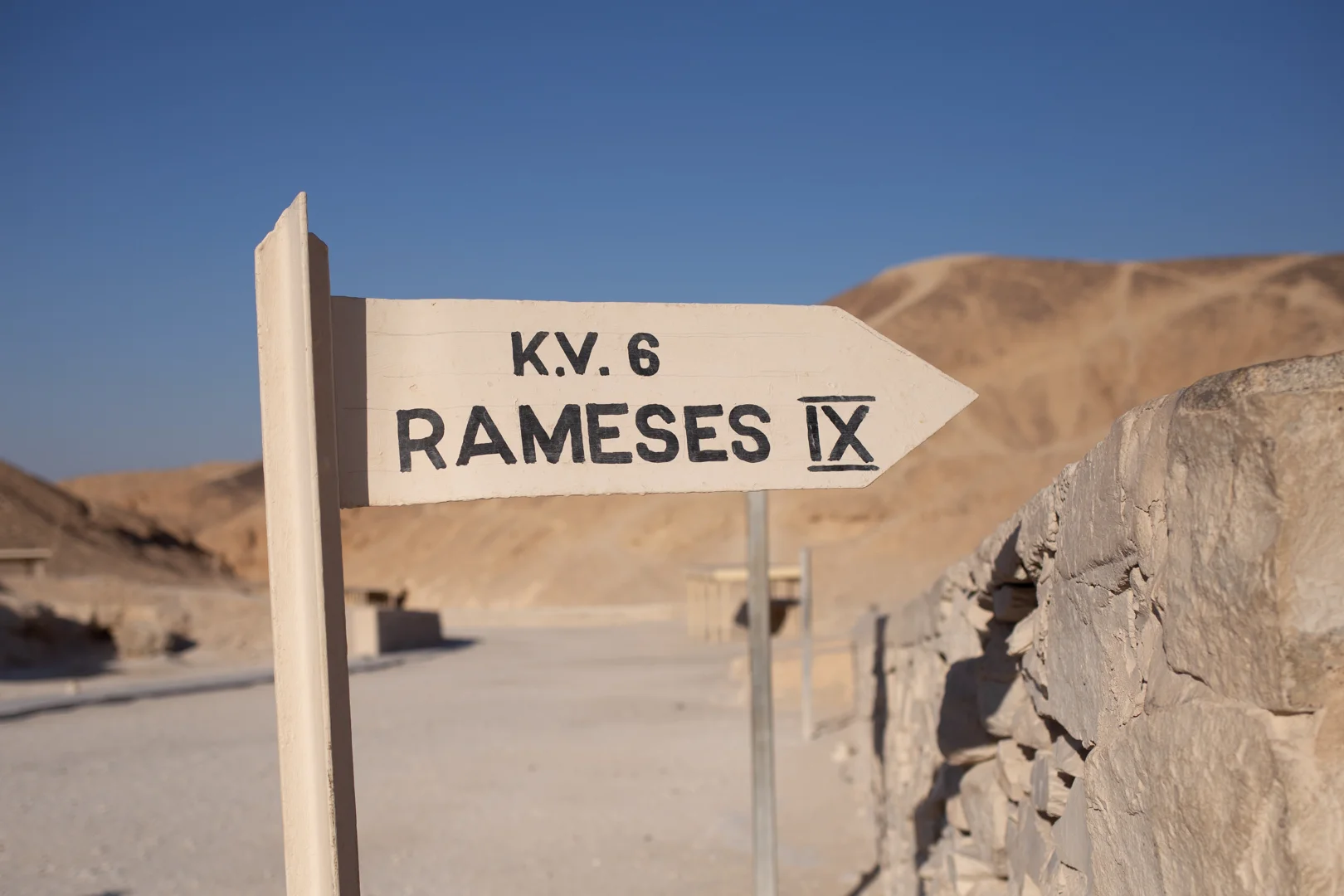


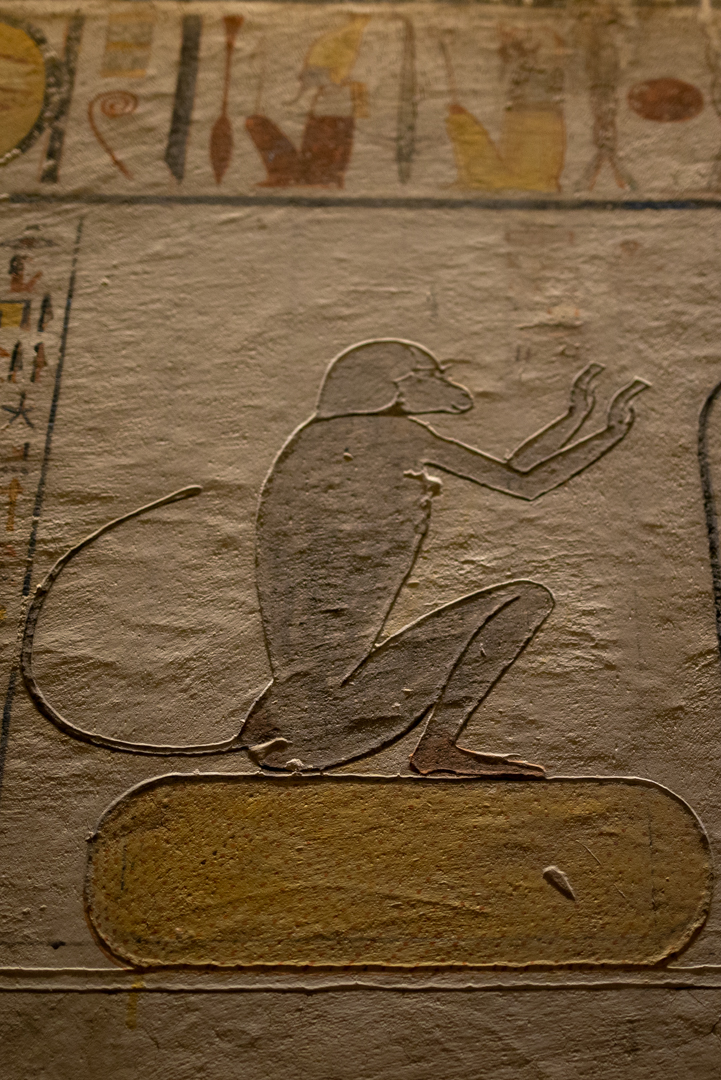


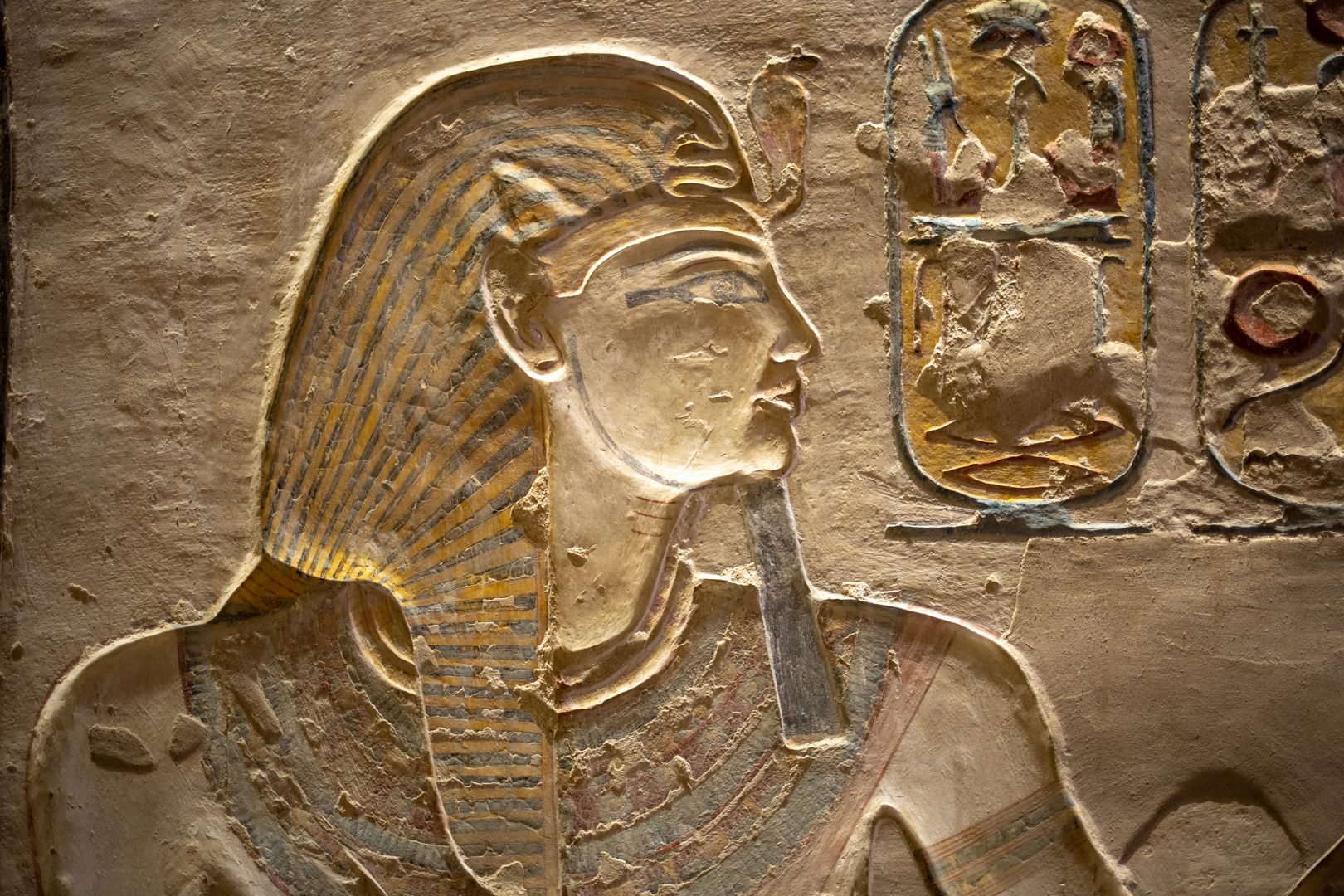
KV6 was the final resting place of the 20th-dynasty Pharaoh Rameses IX. There are indications that the tomb was not finished at the time of Rameses's death and that it was rushed to completion. Graffiti left by Roman and Coptic tourists can be seen on the tomb’s walls.


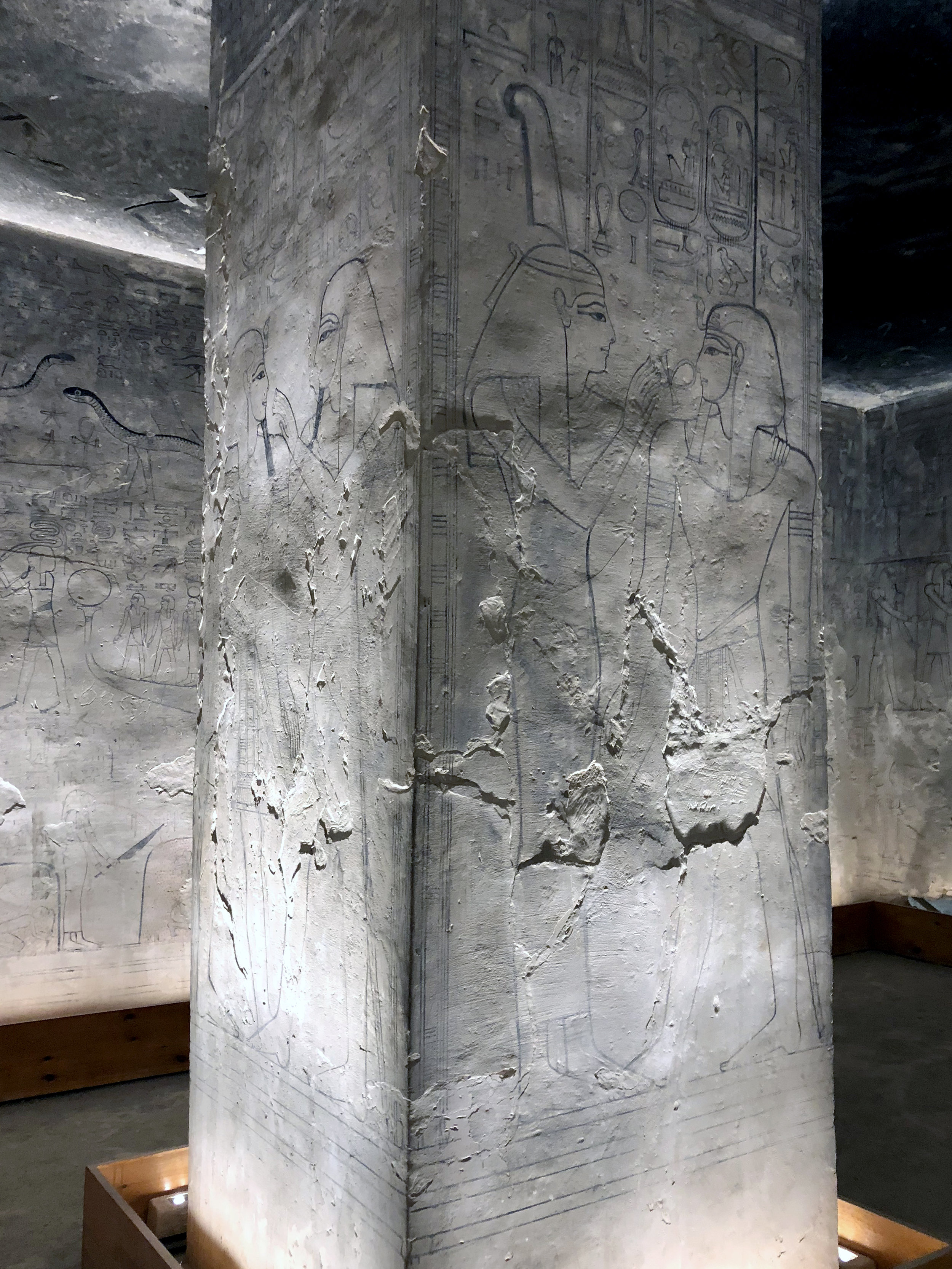

The most dazzling of all the tombs we saw in the Valley of the Kings, however, belonged to Seti I. KV17 was discovered in 1817 by Belzoni, and it also requires a separate ticket for entry. If you only have time to see one tomb in the Valley, I would direct you to this one, which contains beautifully preserved decorations in all but two of its eleven chambers and side rooms. Work on the tomb was abandoned upon the death of Seti, and although photography wasn’t allowed I couldn’t resist snapping a few photos of the unfinished drawings that offer a rare glimpse into the Ancient Egyptian’s artistic process.
Bonus Mummy Content:
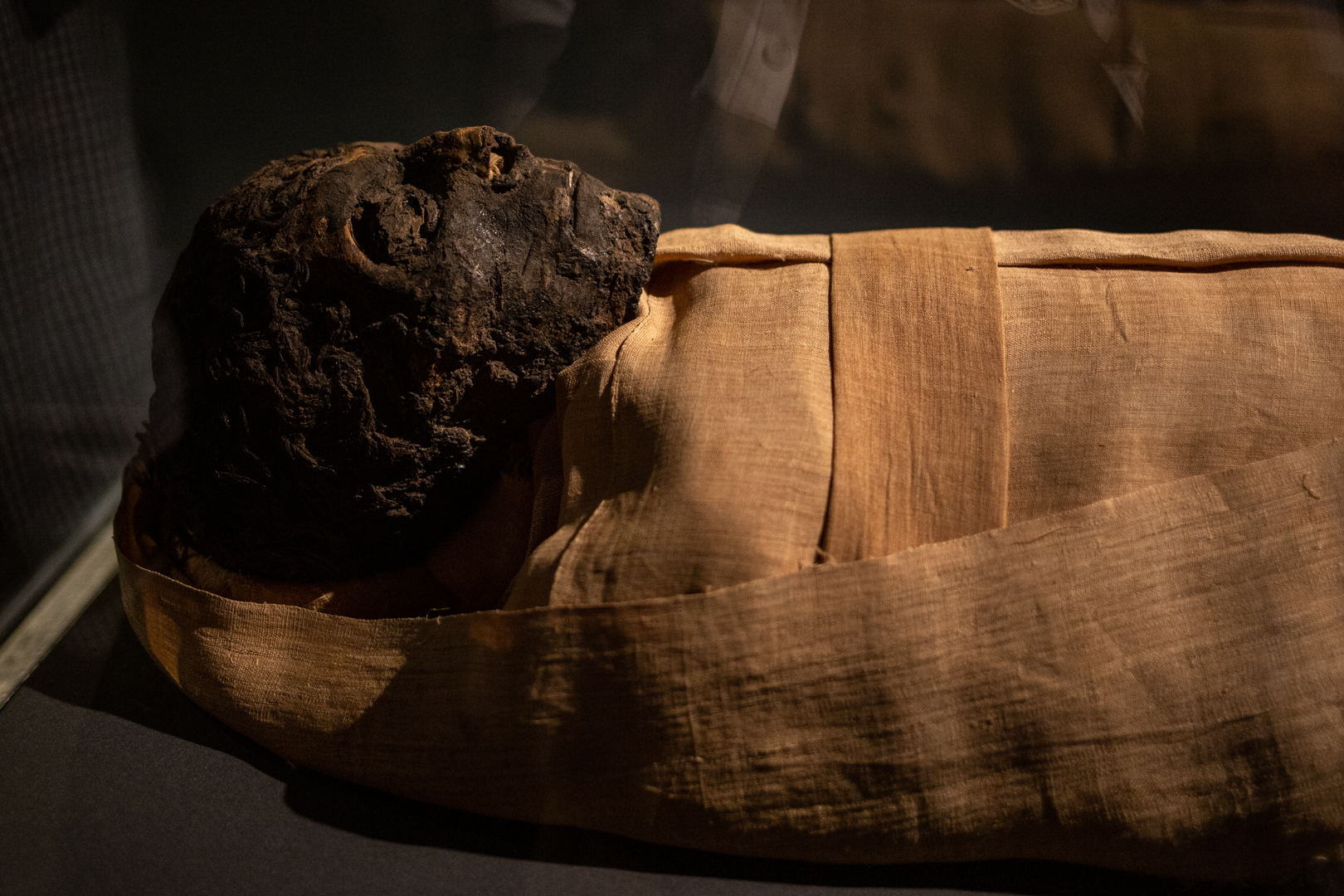


In 1881, a tomb-robber discovered a tomb at Deir el-Bahri containing the mummies and funeral equipment of more than 50 kings, queens, and other royalty, including mummies that have been identified as Rameses IX and Seti I. A separate cache was discovered in the Valley of the Kings, containing more than ten mummies, one of which was identified as Rameses IV. The only mummy still in his original tomb is King Tut’s, but the others can be viewed at the Egyptian Museum (no photos allowed in the Royal Mummy rooms) and in the Luxor Museum.


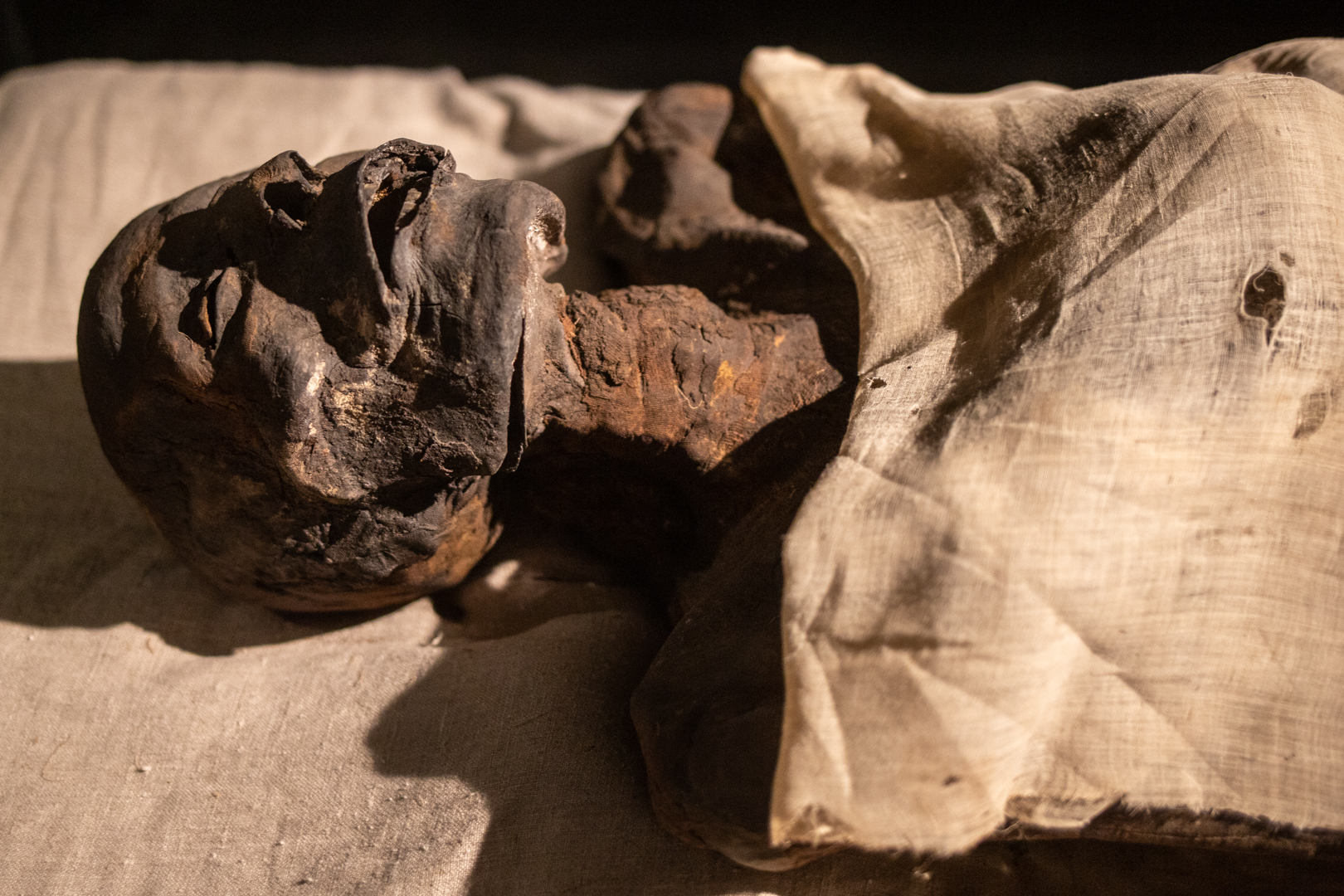
One of the mummies currently at the Luxor Museum took a rather circuitous path to get there. A Canadian doctor purchased one of the mummies from the Deir el-Bahri cache and it soon ended up at the Niagara Falls Museum. The museum exhibited curiosities (my kind of museum) and its collections traveled between Canada and New York before it closed in 1999.
In the 1980's, the mummy was tentatively identified by a German Egyptologist as Rameses I, and when the museum closed it was sold to the Michael C. Carlos Museum at Emory University in Atlanta. The mummy was studied and identified as royal—its arms were crossed right over left on its chest and radiocarbon dating placed the mummy from sometime between 1570 to 1070 BCE. In 2004, it was returned to Egypt and is now resting much closer to its original home, just across the Nile in the Luxor Museum. The Rameses I designation remains controversial, and the placard in Luxor simply identifies it as a Royal Mummy.
💀 Happy Halloween! 🎃

Woodlawn Mausoleums

I don’t have great luck getting into Woodlawn Cemetery. I was turned away at the gates on two separate occasions due to snowy conditions (the exact reason why I wanted to visit) and I had tickets to an evening illuminated mausoleum tour that was rescheduled three times due to rain (on the day that it finally did happen, I was unavailable).
Woodlawn is every bit as beautiful as its Brooklyn counterpart, Green-Wood, and much easier to get to now that I live back in northern Manhattan. My mom and I recently took a NY Adventure Club tour inside some of the mausoleums at Woodlawn that was thankfully still held, despite the rain.

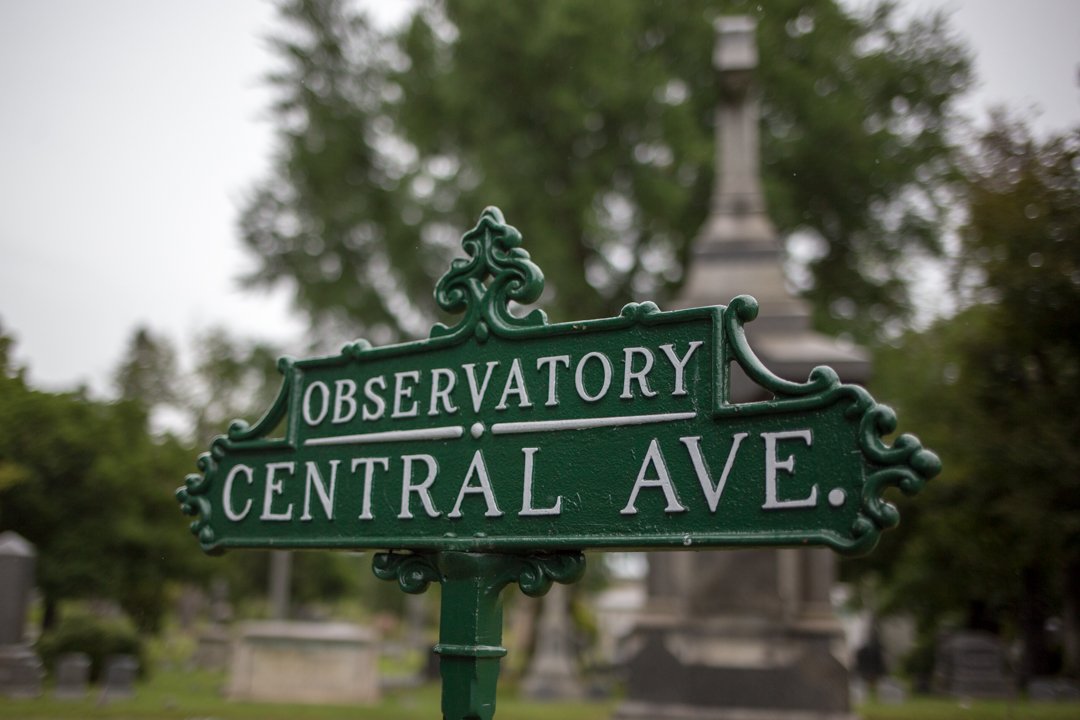

The first mausoleum that we got inside of belongs to Dr. Clark W. Dunlop. Dr. Dunlop made his fortune from the sale of medical manuals and several patent medicines including Dr. Dunlops King of Pain, and a laxative called Dr. Dunlop’s Cascara Compound. The granite mausoleum has several design elements that are bird-themed, and for good reason: Dr. Dunlop’s beloved pet parrot is also interred within the mausoleum.


Dr. Dunlop, most likely suffering from the end-stages of syphilis, was declared mentally incompetent in 1907 and—despite being treated by a dubious doctor and his pair of “magic mechanico-physiological” boots—died in 1908. The parrot joined Dunlop in 1921, and his wife came to rest in the mausoleum in 1932.
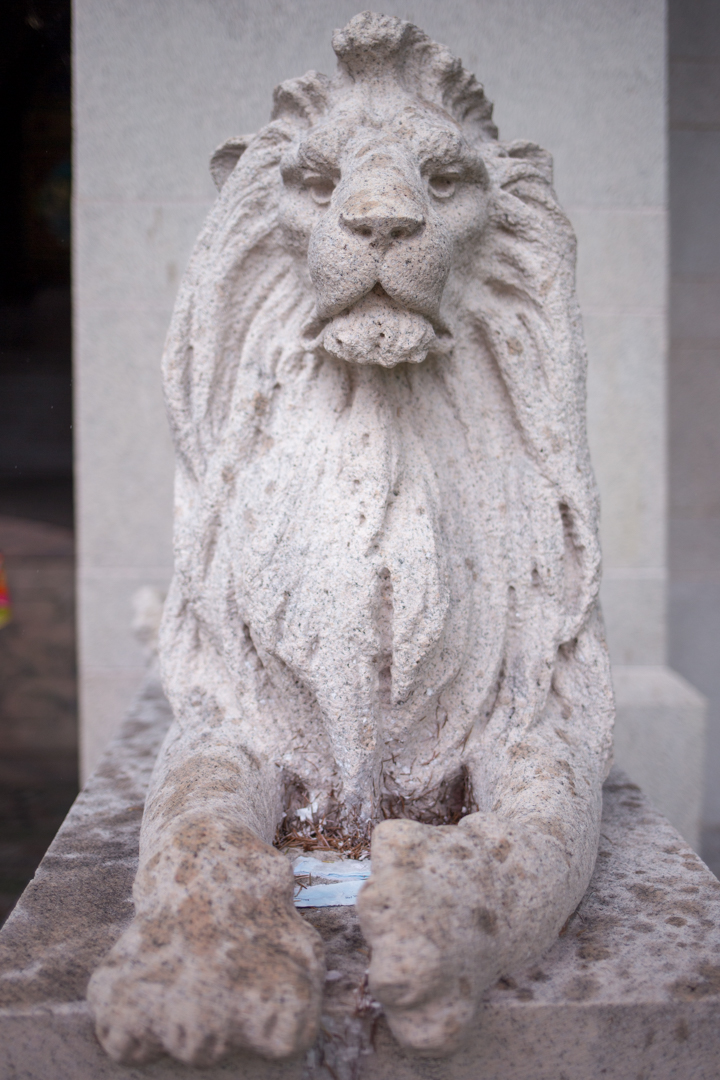


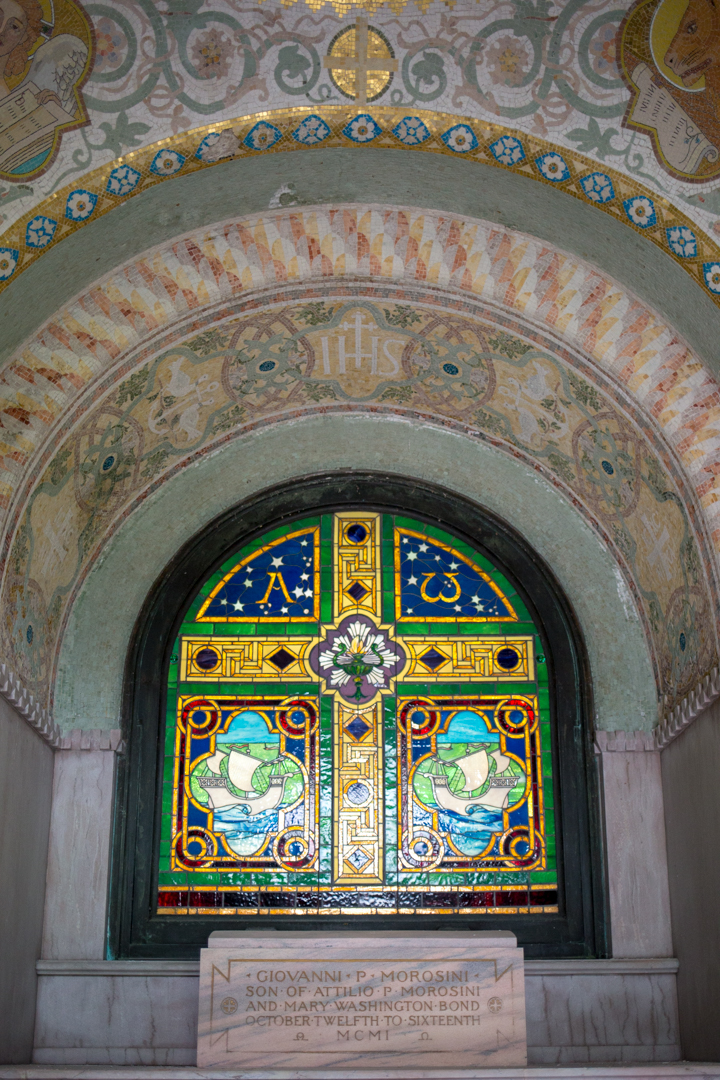

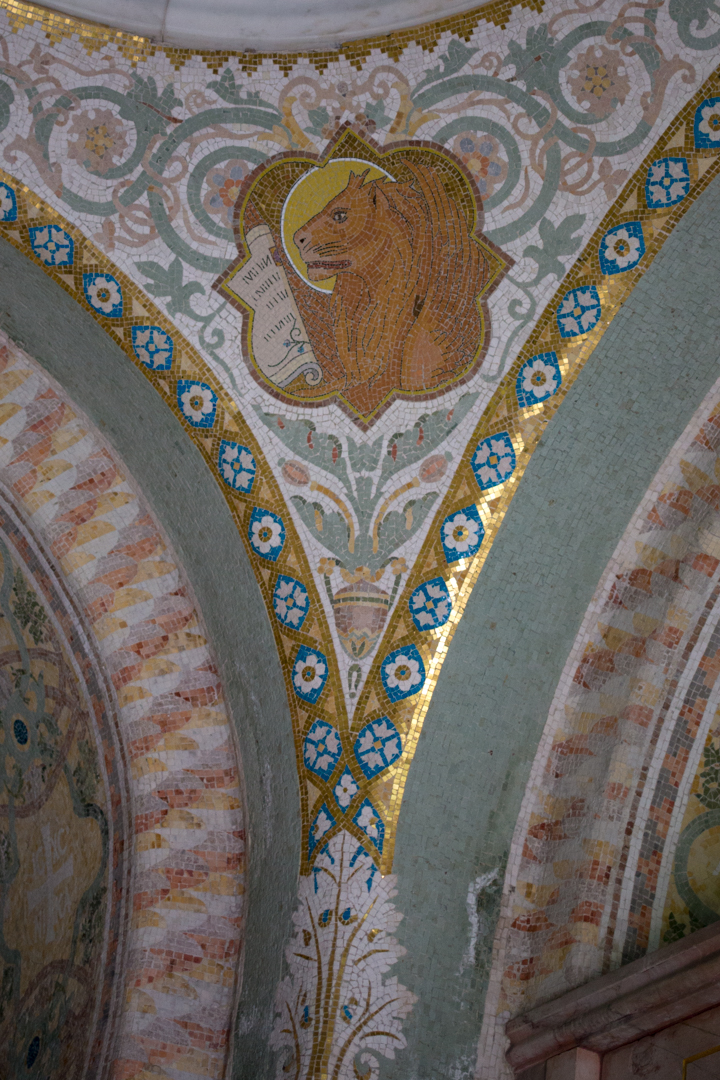
Giovanni P. Morosini, born in Venice, was the confidential secretary of railroad magnate Jay Gould. He amassed a fortune worth several millions of dollars, and there is a Giovanni P. Collection at the Metropolitan Museum of Art. Morosini and his family are interred in a Renaissance-style structure with stone lions flanking the door. There are stained glass windows and a vaulted ceiling with beautiful celestial tile-work reminiscent of the ceiling at Grand Central Terminal.

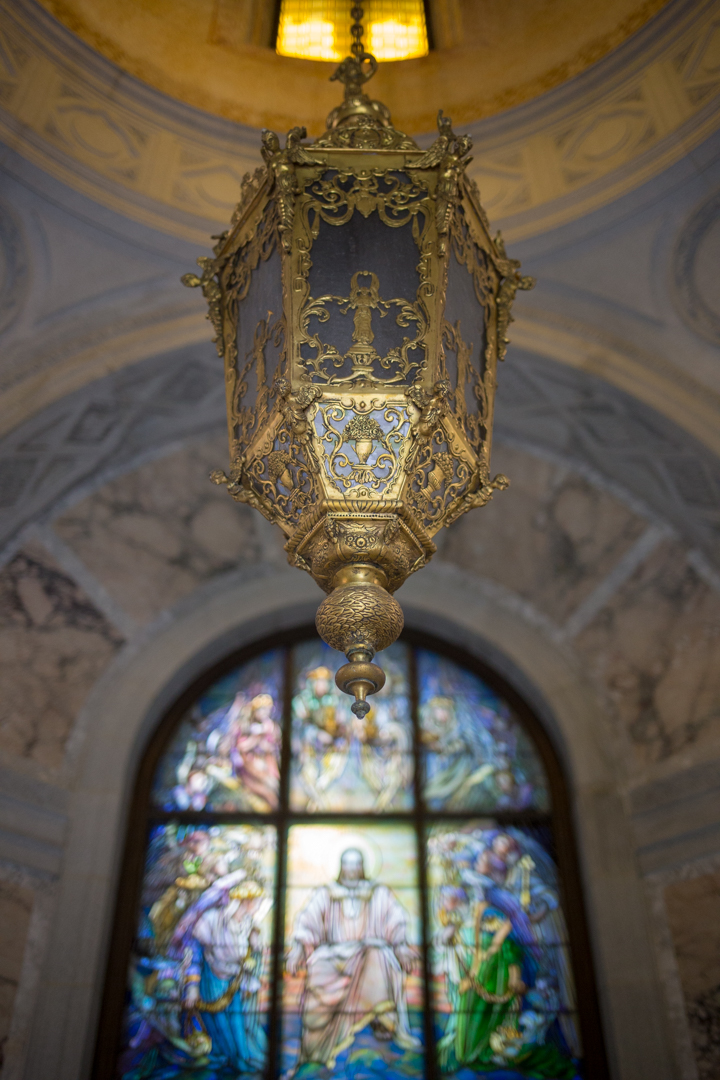


I joke about some grand mausoleums being more spacious than my studio apartment, but that might actually be true of John H. Harbeck’s final resting place. Harbeck inherited a fortune from his father, the founder of a substantial Brooklyn warehousing empire known as the Harbeck Stores.
His Renaissance Revival mausoleum was designed in 1918 by Theodore Blake, an architect with the firm of Carrere and Hastings. It sits alone in the middle of a traffic oval, and its double bronze doors are replicas of the north doors of the Baptistery in Florence. Intricate stone carvings flank the doors and the inside is full of beautiful stained glass, a tiled dome ceiling and was set up for electricity even though the plots were never actually wired for it.


George Ehret, born in Germany, started the Hell Gate Brewery and became one of the richest men in New York City. When he died in 1927, his estate was valued at $40 million. He is interred within a huge, 56-crypt mausoleum, flanked by granite lions. The interior includes a domed, Guastavino-tiled ceiling and Tiffany windows. In the ‘70s, most of the Tiffany glass was stolen from Woodlawn and they’ve been slowly recovering pieces ever since.
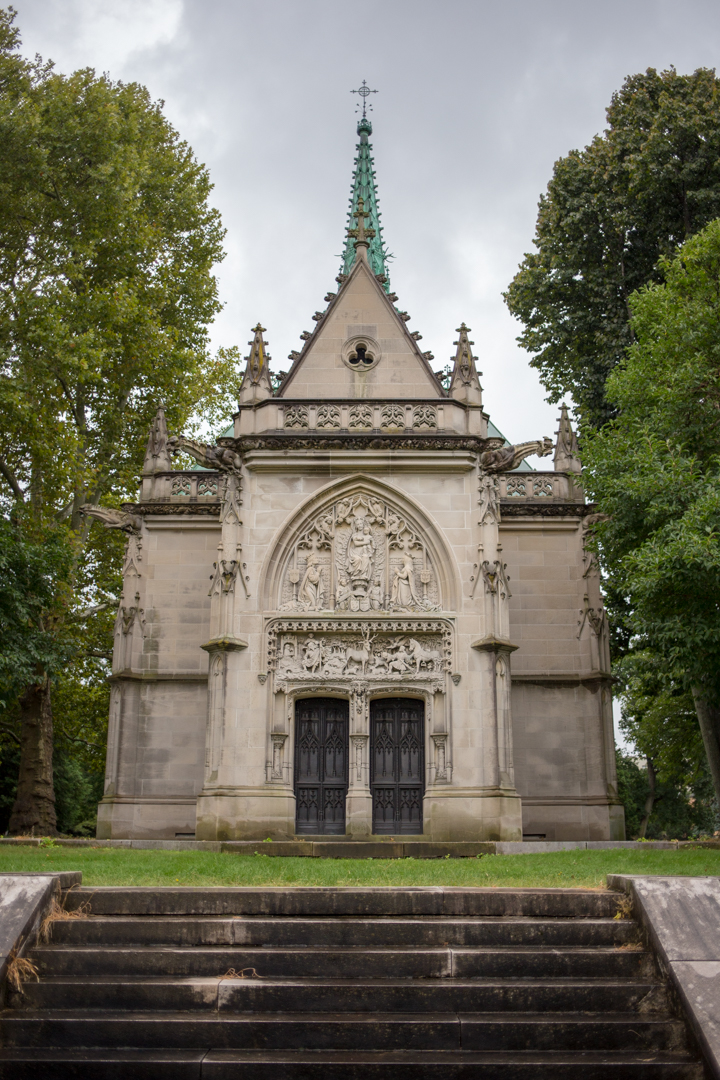


O. H. P. Belmont’s elaborately-carved mausoleum is an almost exact, full-scale replica of the Chapel of Saint-Hubert in France’s Loire Valley. Designed by the architecture firm of Hunt & Hunt, and fabricated in limestone, the mausoleum is the final resting place of Belmont—founder of the Belmont Raceway and a representative in Congress from New York—and his wife, Alva Vanderbilt Belmont. Alva, previously married into the famous Vanderbilt family, used her fortune to support the women’s suffragette movement. The mausoleum contains an original suffragette banner, inscribed with the words, “failure is impossible.”
Woodlawn Cemetery
4199 Webster Avenue
Bronx, NY 10470
8:30 am-4:30 pm every day (except, apparently, when it’s snowing)
Mausoleums aren’t usually open to the public, but Woodlawn and the NY Adventure Club frequently host tours.

Soldiers' National Cemetery

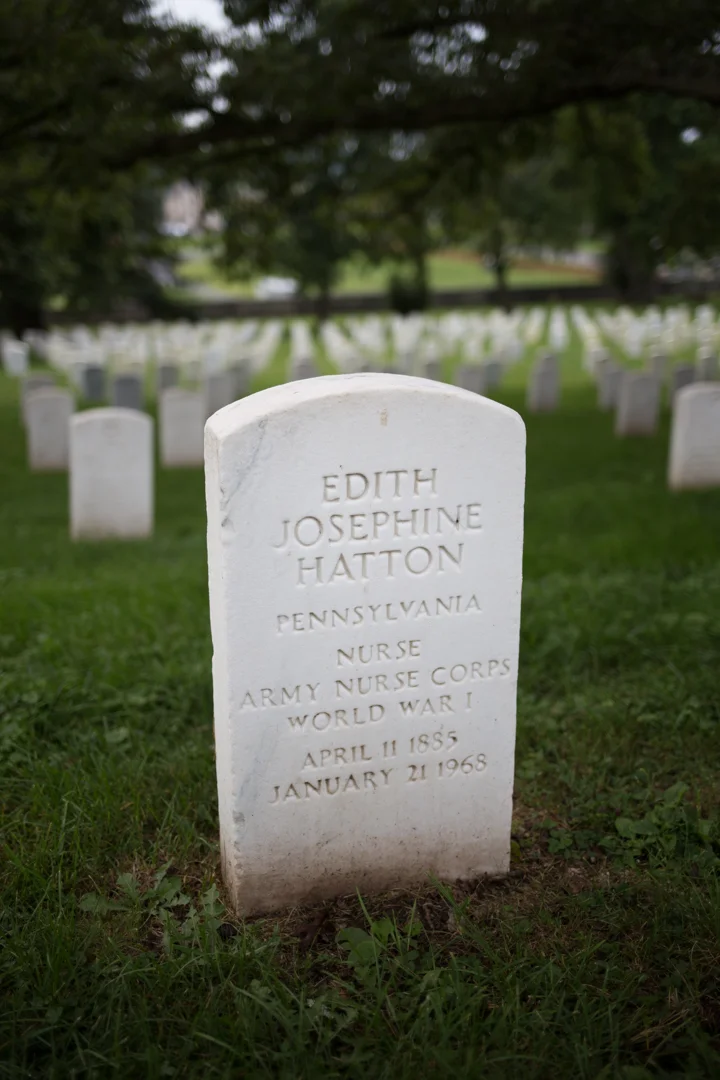
Soldiers' National Cemetery, in Gettysburg, is the final resting place of 3,512 Civil War casualties, 979 of which are unknown. It has sections for veterans of other wars, along with graves of the veterans' spouses and children. An annex was added in 1968 to accommodate servicemen killed in Vietnam, but soon filled to capacity and the cemetery officially closed to new burials in 1978.


Shortly after the battle ended, Pennsylvania Governor Andrew Curtin was horrified at what he saw: "ruined farms, homes filled with injured men, fresh graves of the fallen in every conceivable place on the field. Many of the Union dead lay in unmarked graves, only the fresh sod thrown over the remains identified the site as a burial. Heavy rains had washed away the earth from many of the shallow graves. Grotesquely blackened hands, arms and legs protruded from the earth like "the devil's own planting... a harvest of death" while the stench of death hung heavy in the air."


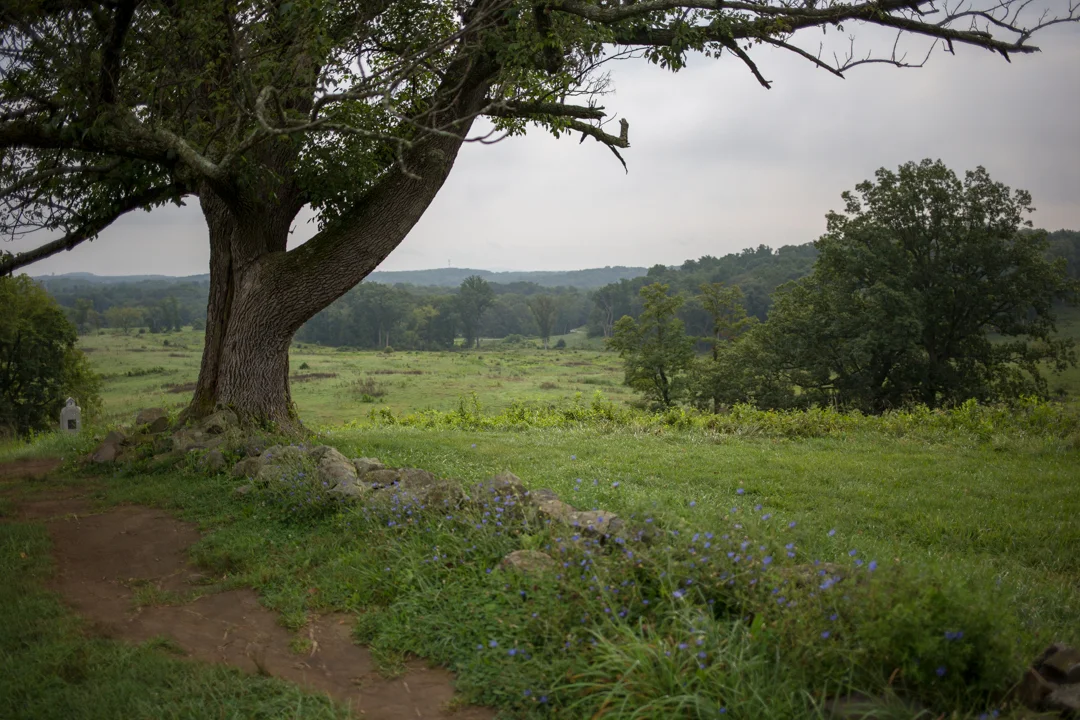
Several citizens approached the Governor with plans for a cemetery and he agreed that the commonwealth would provide funds and help transfer the remains of the Union dead from their initial burial plots. Soldiers' National Cemetery was established on the aptly named, Cemetery Hill, a portion of the nearly 4,000 acre-battlefield.



The cemetery is perhaps best known for its dedication ceremony, which took place on November 19, 1863. Edward Everett, who served as a US Senator, Governor of Massachusetts, Minister to Great Britain, Secretary of State and president of Harvard, delivered a two-hour keynote address. After a brief musical interlude, President Abraham Lincoln—invited to give a few remarks—rose and in just two minutes delivered his famous Gettysburg Address.


The cemetery has traditional, plain white tombstones set in rows like other national cemeteries, as well as flat numbered markers and several large sculptural monuments. Cemetery Hill has breathtaking views and it's hard to imagine that such a beautiful place could have been host to three days of such horror.
Soldiers' National Cemetery
1195 Baltimore Pike,
Gettysburg, PA 17325

Montoya Cemetery

As I was driving back to Albuquerque from my whirlwind tour of Tucumcari (and before I explored Santo Niño Cemetery), I stopped at Montoya Cemetery, another randomly selected stop found with the Find A Grave app. Montoya Cemetery was established in 1910 and it's located right along Route 66, about halfway in between Tucumcari and Santa Rosa.


Montoya Cemetery is literally a roadside cemetery, sandwiched between the highway and a smaller road. Not a single car drove by on the smaller road while I poked around, although it seemed like a nicely maintained burial ground. The town of Montoya was founded in 1902 as a loading point for the Southern Pacific Railroad. Not much remains of the town, except a few crumbling structures, but Richardson’s Store and Sinclair Station—open from 1925 until the '70s —was once a popular stopping point during Route 66's heyday.
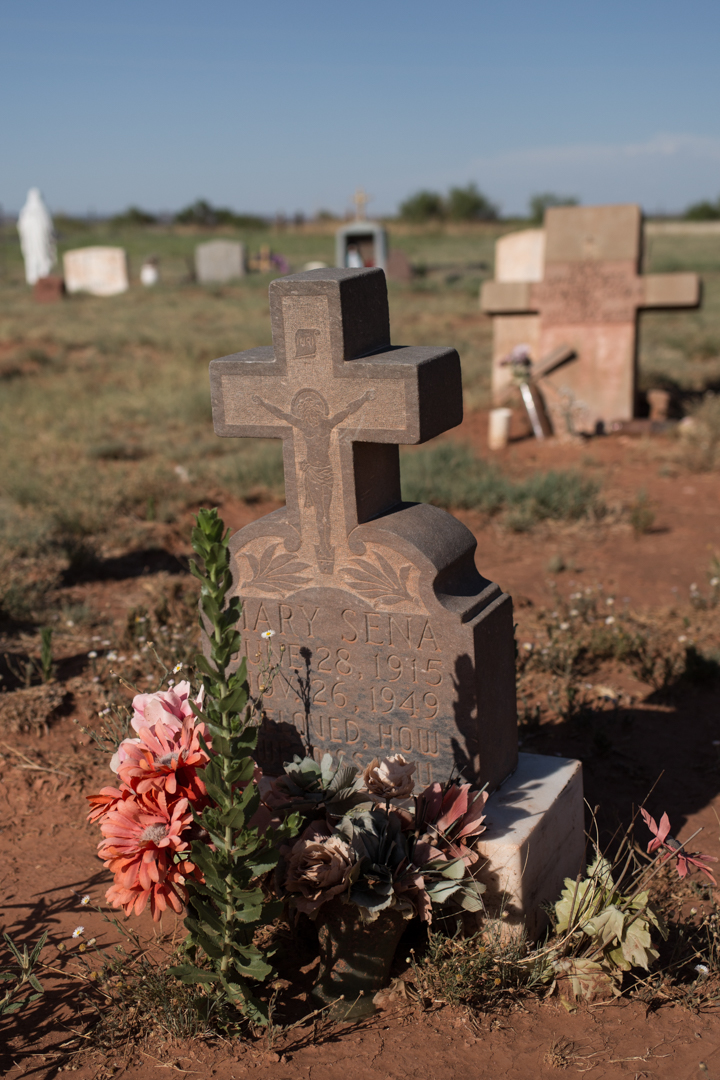


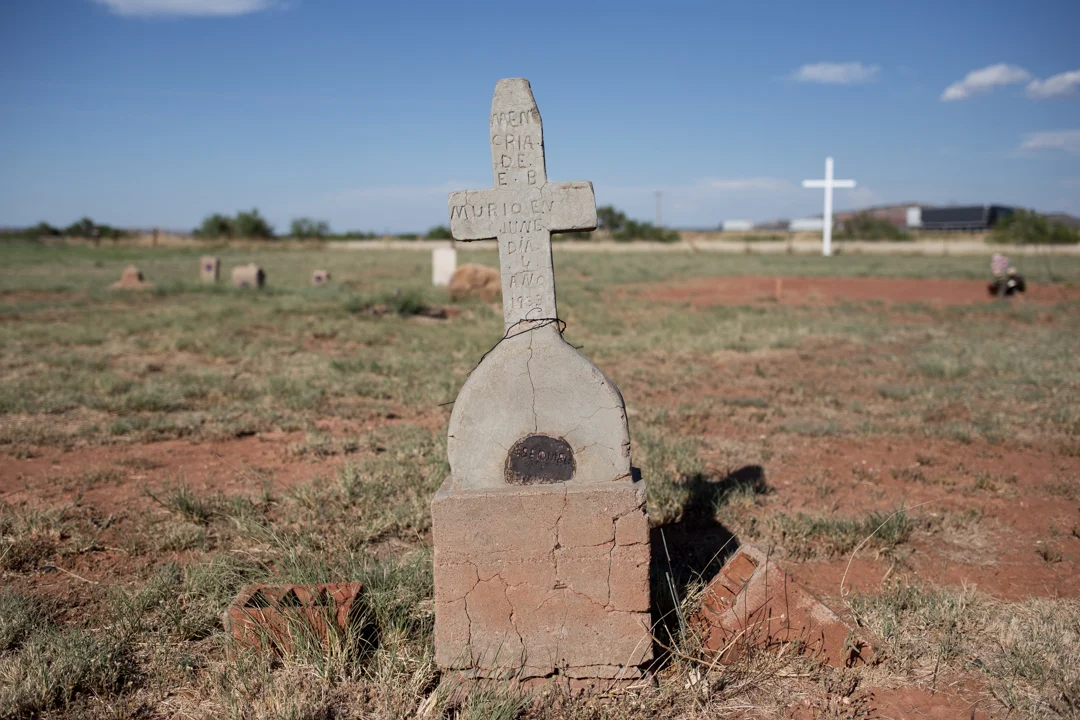


The most recent burial I could find occurred in 2015, but a lot of the birth dates are from the late 1800s. Like other desert cemeteries I visited on my trip, Montoya is full of unique markers—wooden crosses, crudely carved cement tombstones, picket fences and more contemporary granite stones are scattered around the dusty plot of land.

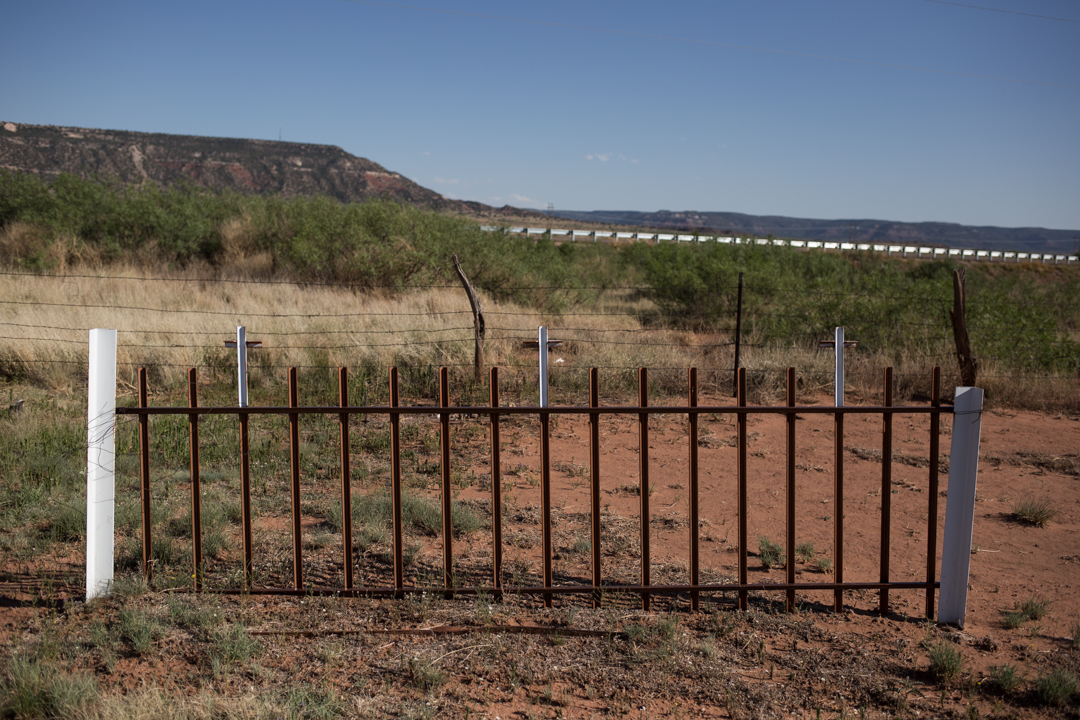


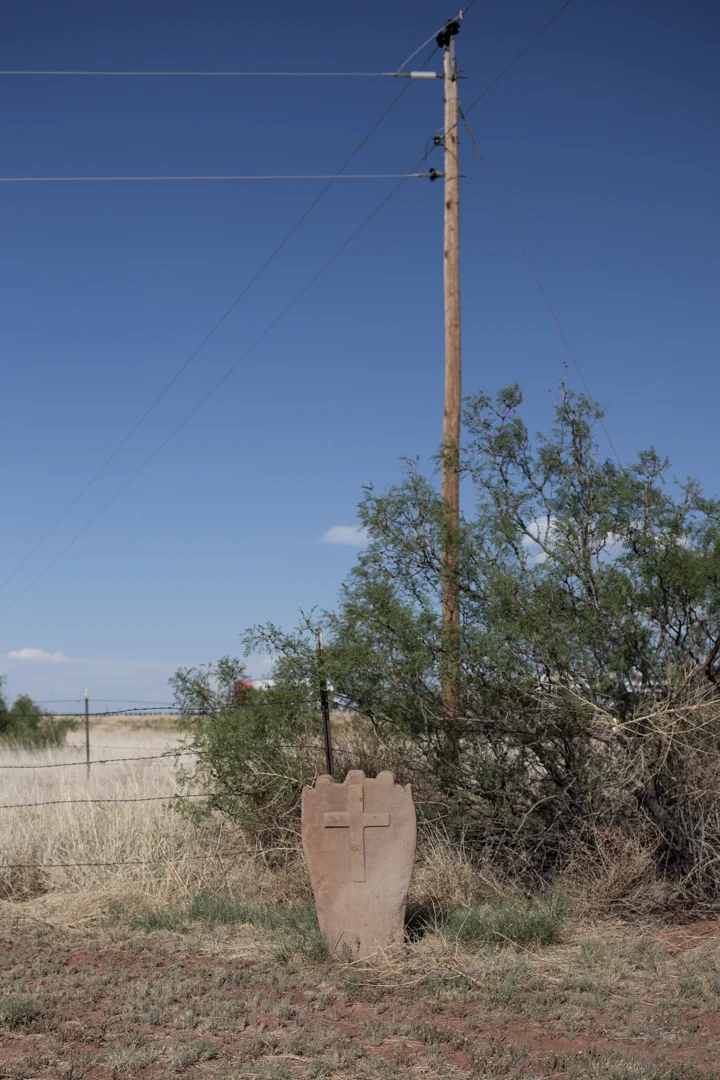

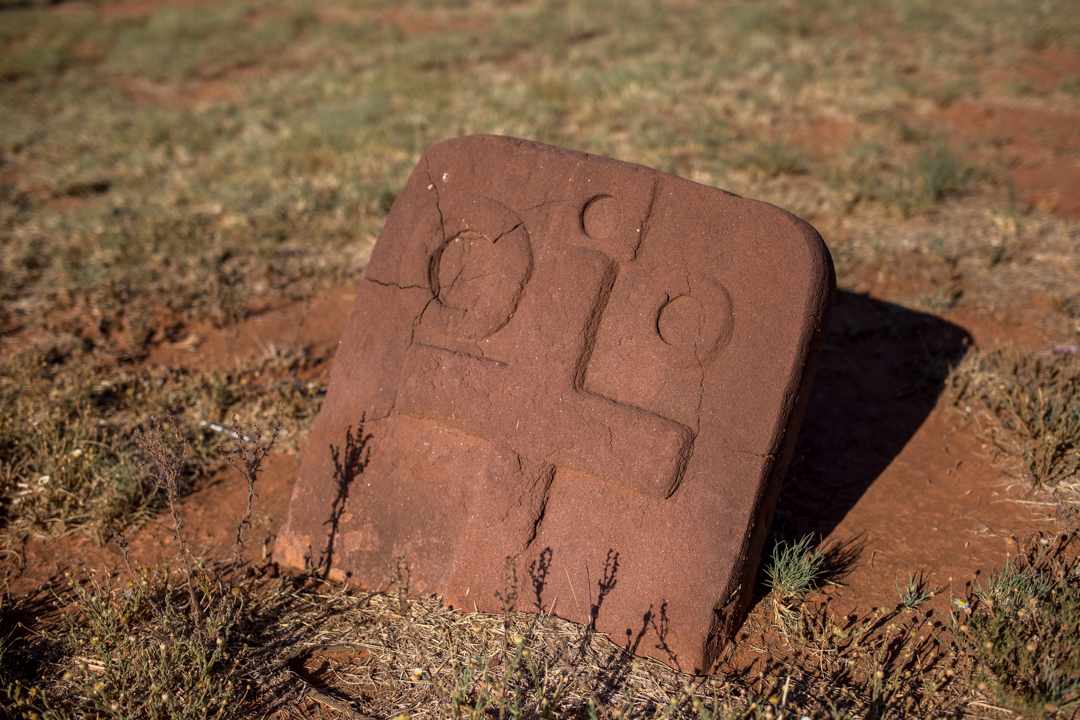


Montoya would be a peaceful spot if it weren't for the occasional rumble of a semi-truck speeding nearby, but it was the perfect place to pull off the road and stretch my legs for a few minutes. Although I didn't get photos, while I was trying to find out the history of the cemetery, I found the intriguing epitaphs of Eliseo (Lee) J. Sanchez and his wife, Gregorita Agapita Garcia Sanchez. His: "He Walked in Sunshine" / Hers: "And She Took Care of the Rain."

Old St. Mary Cemetery

I had been to a few of the well-known cemeteries in Philadelphia—Christ Church Burial Ground and Mount Moriah—but it wasn't until my recent trip that I realized I should check out the Find A Grave app to see if there were any other little city churchyards I was missing. I had some time after my City Hall tour and before we had to catch our train, so I searched the app and headed to the closest cemetery, Old St. Mary's.


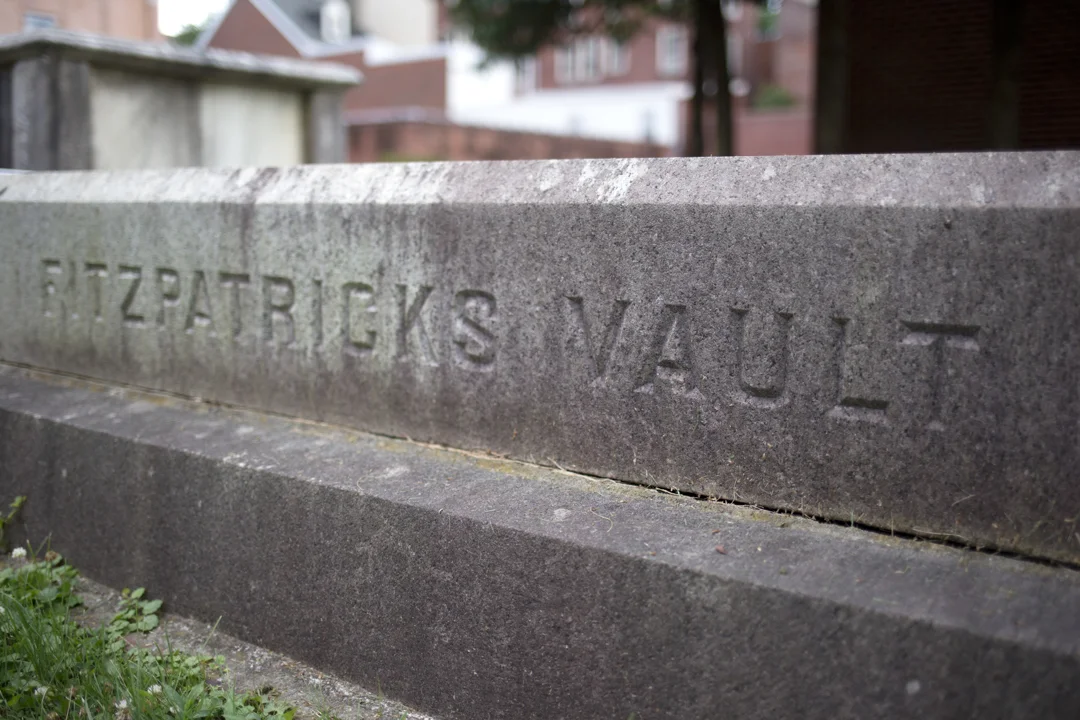

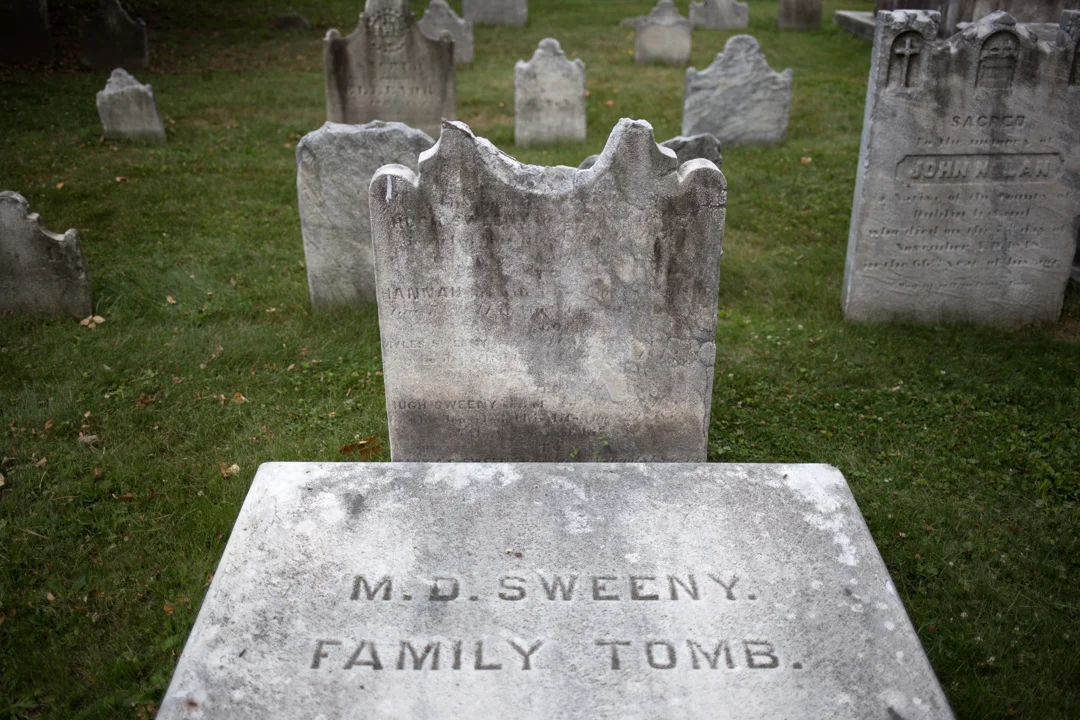
I've been frustrated in Philly (and other cities) before when I trekked to a cemetery only to encounter a locked gate, but I'm always cautiously optimistic. At first it appeared as if I had struck out at St. Mary's, but I circled the block and found an open gate near the parking lot.


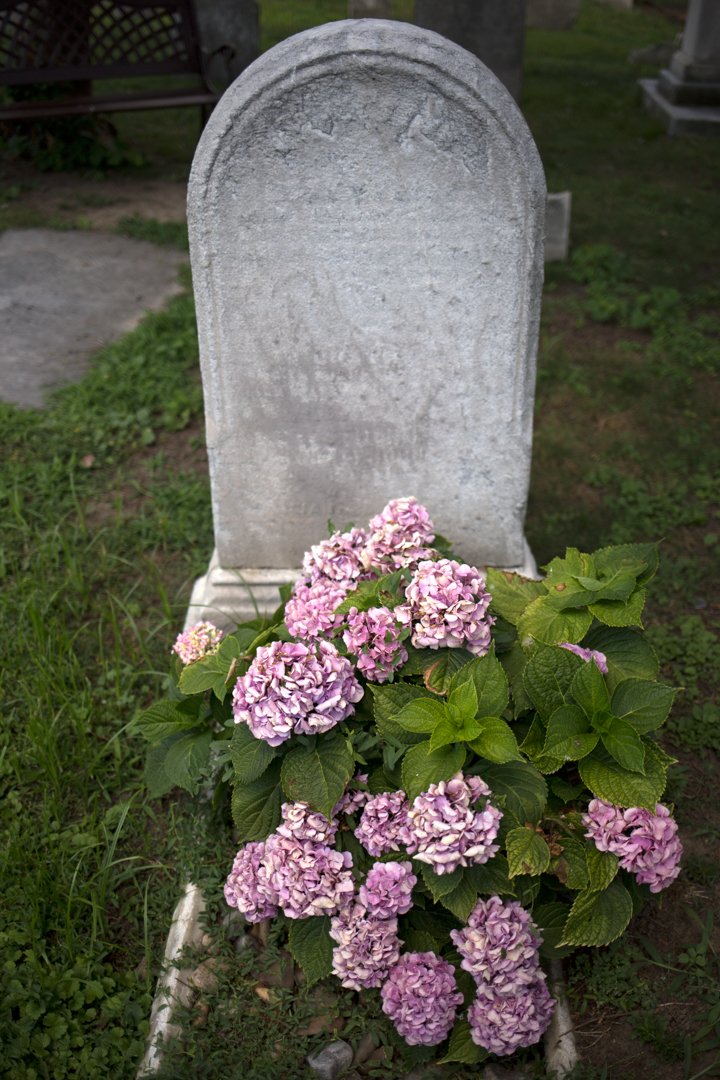
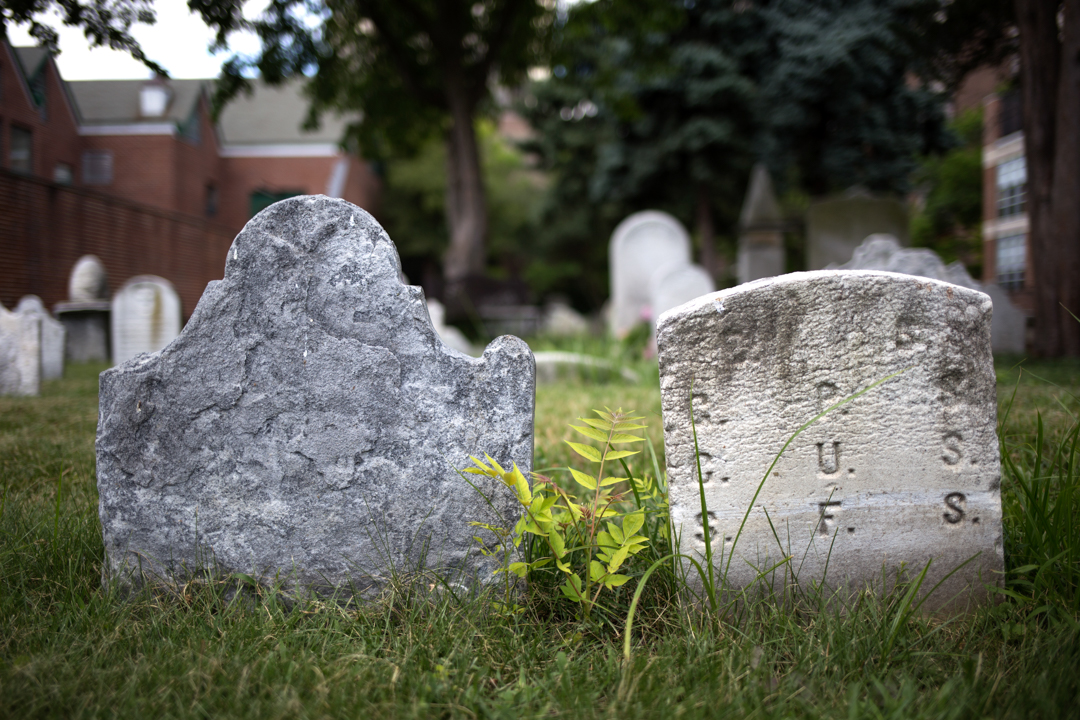

Old St. Mary's Church was established in 1763, and in 1782 a parish school—the first in America to be connected to a Catholic church—opened and remains in operation today. It was the first Roman Catholic cathedral in Philadelphia and worshippers included George Washington, John Adams and several members of the Continental Congress (they officially attended services here four times from 1777 to 1781). The church also hosted the first public religious commemoration of the Declaration of Independence.


The cemetery was established in 1759 and the oldest legible tombstone belongs to Arthur Cample, who died on June 11, 1769. After the Yellow Fever Epidemic of 1793, the cemetery was enlarged by adding an extra layer of soil to the ground level. As a result of the epidemic, an orphanage was established for children that had been found wandering the streets. The Roman Catholic Society for Educating and Maintaining Poor Orphan Children (phew) was run by the Sisters of St. Joseph of Charity, who assisted the city during another epidemic (cholera) in 1832. At least one of these orphans and several Sisters are buried beneath a worn stone with the words "orphan asylum" still visible.


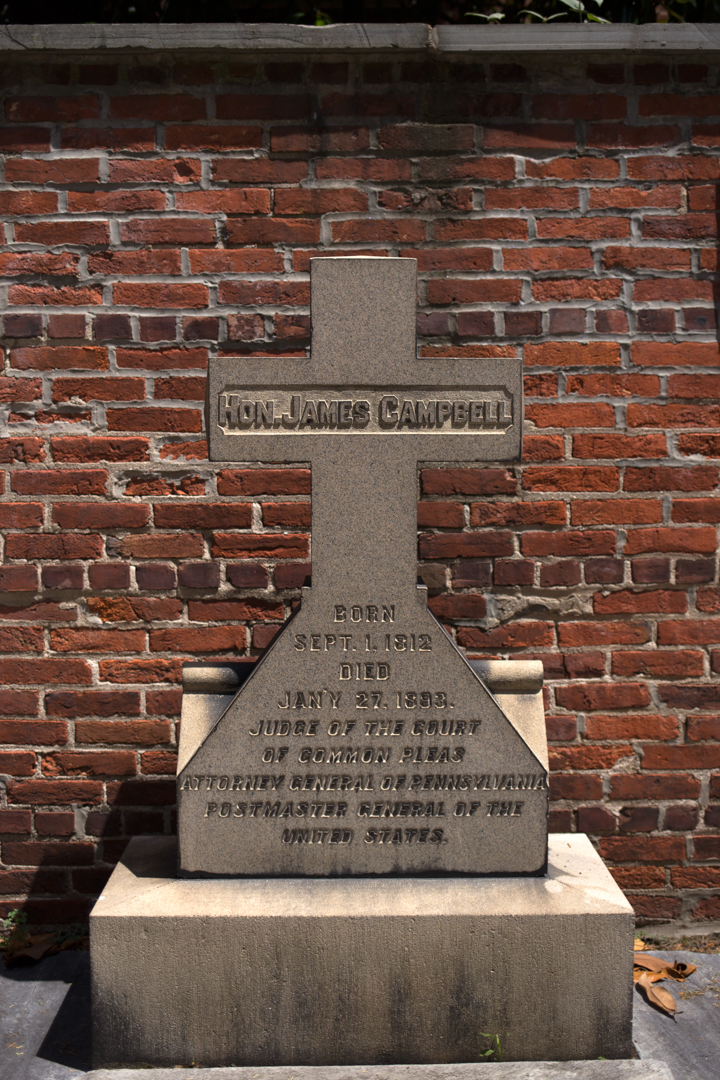
Other notable burials include Thomas Fitzsimons, a deputy from Pennsylvania to the Continental Congress and signer of the Constitution; Anthony Quervelle, a cabinetmaker chosen by Andrew Jackson to design tables for the East Room of the White House; Jacqueline Kennedy Onassis's great-great-grandfather Michael Bouvier; Commodore John Barry, father of the American Navy; and the Honorable James Campbell, who, in his 81 years of life, managed to be the Judge of the Court of Common Pleas, Attorney General of Pennsylvania and Postmaster General of the United States.
Old St. Mary's Cemetery
252 S. 4th Street
Philadelphia, PA 19106

Santo Niño Cemetery

On my last day in New Mexico, I had nearly a full day since my flight back to New York wasn't until after 11pm. I drove 2.5 hours east to Tucumcari, a place so perfect that I'm still too overwhelmed by it to even attempt to look at the obscene amount of photos I took in the short time I spent there. I can sometimes be obsessive about getting places on time—especially the airport—but I left enough time on the way back to squeeze in two cemeteries.

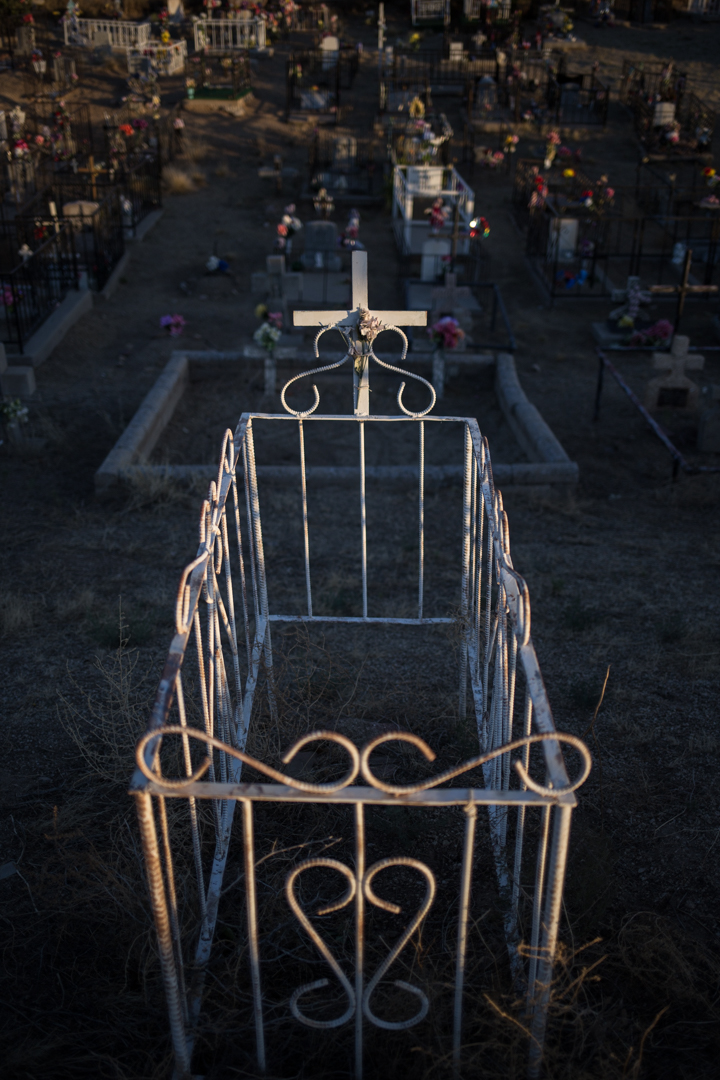


Santo Niño Cemetery is located just south of old Route 66, east of the Albuquerque city limit. It's located on a site that was once home to an Anasazi Pueblo village from A.D. 1100-1600 and a historic Hispanic settlement. It contains less than 300 interments and the oldest recorded burial dates from 1899.


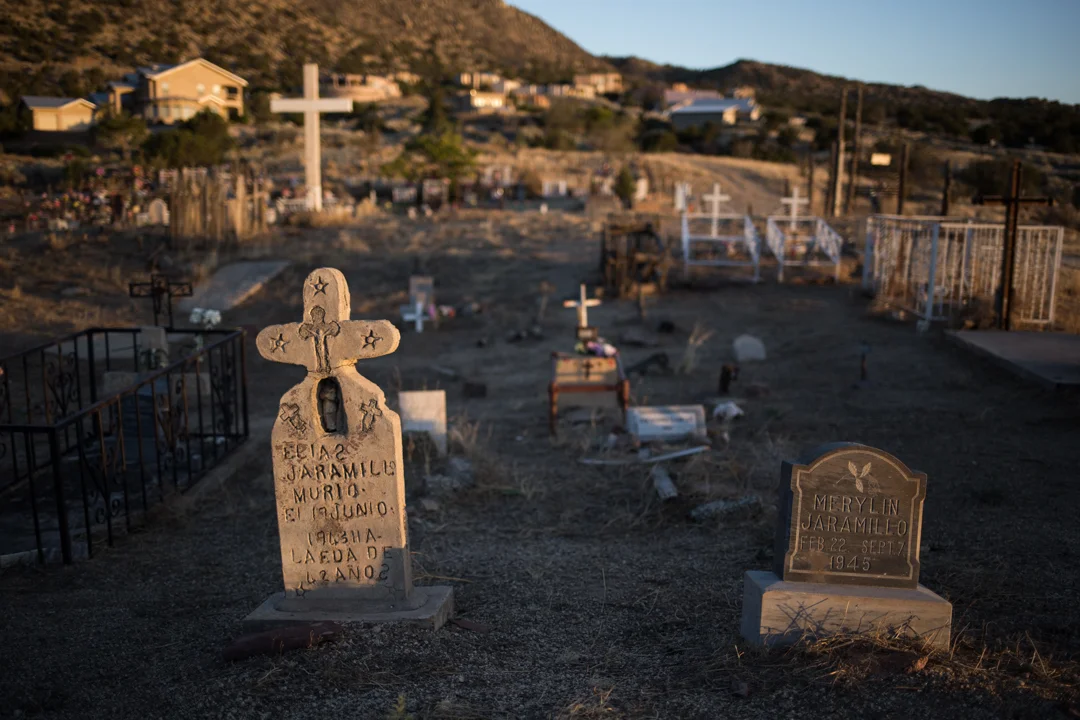

I found the Santo Niño Cemetery via the Find A Grave App, which I've mentioned before. Sometimes I find the lack of information (and especially photos) frustrating, but it really is invaluable when I'm visiting a new place and I want to make sure I don't miss an interesting cemetery nearby. Cemeteries are usually just off the beaten path and I never want to find out after the fact that I missed out on a great one.


This cemetery was considerably smaller than the Rehoboth Mission Cemetery, but it was similarly picturesque with the mountains in the background. In a souvenir shop in New Mexico we saw a postcard that referred to Albuquerque as the "other mile-high city," and at 5312 feet, its elevation is higher than Denver. Also like Rehoboth, this desert cemetery was full of tiny little lizards darting around the grave markers (and scaring the shit out of me in the waning dusk light).


The cemetery is surrounded by a fence and a sign on the gate says that it's private but I don't think any of the residents minded that I poked around for a few minutes. I love how personal and unique each grave marker feels, especially compared to the uniform granite subdivision-like cemeteries that are now common in the northeast. The flowers, trinkets and in some cases handwritten names, help to remind you that these markers represent actual people who in death are being lovingly cared for, and remembered, by the living.
Santo Niño Cemetery
GPS Coordinates: 35.5422, -105.5847

Blazing Star Cemetery

The Blazing Star Cemetery is located in the Rossville neighborhood of Staten Island. It's adjacent to the ship graveyard and I'm always happy to add a new cemetery onto the itinerary when I have a specific destination in mind. The earliest grave markers date to 1750, and it was one of the first community burial grounds on Staten Island. There are only a handful of stones on the small piece of land but they are beautifully carved and in remarkably good condition for their age.


Alternately called the Sleight Family Graveyard, or the Rossville Burial Ground, this cemetery contains the remains of several different prominent Staten Island families. I couldn't find much more information about the history of the cemetery or its residents, but Peter Winant was the son of one of the first permanent settlers to the island. A sign declares that it is currently maintained by the Friends of Abandoned Cemeteries, Inc. of Staten Island, which is a group that I would definitely consider joining.

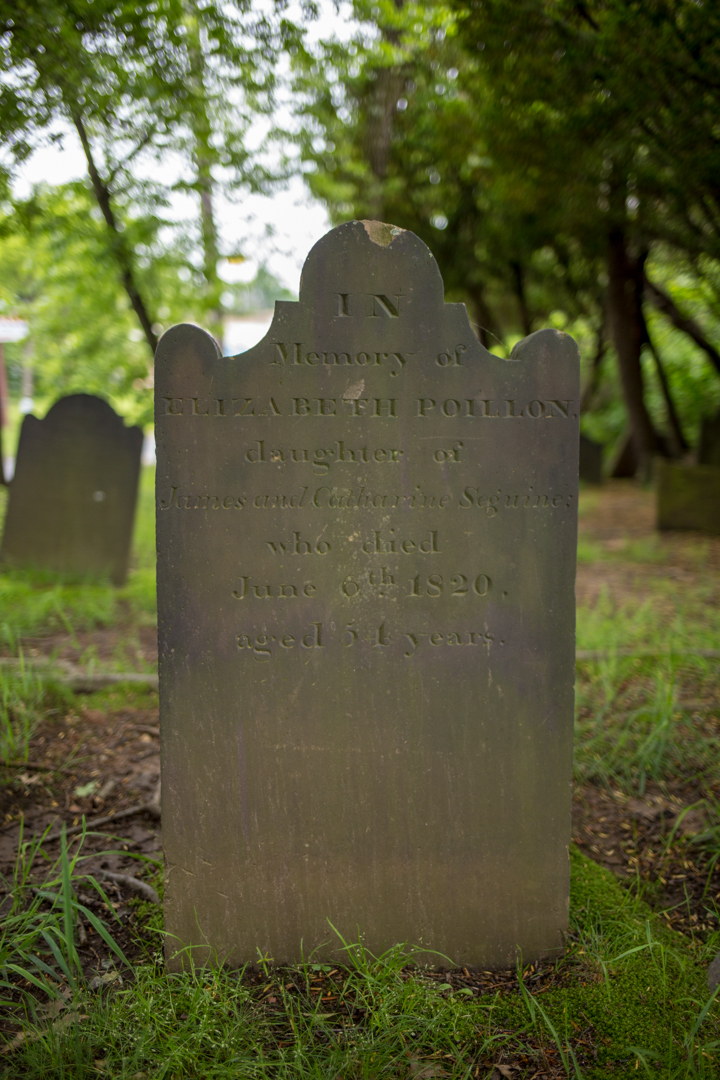
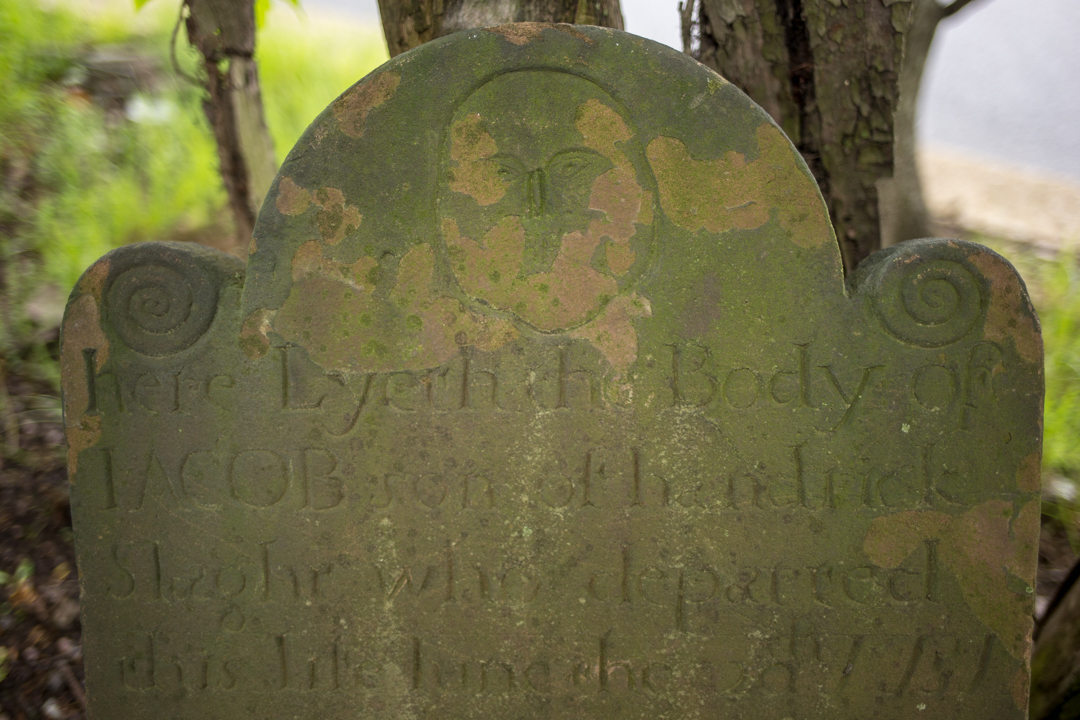


I found a document from the Landmarks Preservation Commission on January 17, 1968, proposing that the cemetery be designated a landmark. The Commission found that the graveyard "has a special character, special historical and aesthetic interest and value as part of the development, heritage, and cultural characteristics of New York City."


The cemetery sits near the former location of a mooring slip for the Blazing Star Ferry—which once ran between Staten Island and New Jersey—right on the side of Arthur Kill Road, where it intersects Rossville Avenue. We took the Staten Island Ferry and then the S74 bus, which if you're very lucky won't make all of the 72 stops between the ferry terminal and the graveyard.
Blazing Star Cemetery
Arthur Kill Rd & Rossville Ave,
Staten Island, NY 10309

Rehoboth Mission Cemetery

I couldn't go on a trip out West without checking Kaylah's blog for ideas—especially since the highlight of this trip was attending her ghost town wedding! I always plan a million stops before I start any road trip, but there's always time to squeeze in a few more places, and Rehoboth Mission Cemetery was one of these last-minute additions to our itinerary.

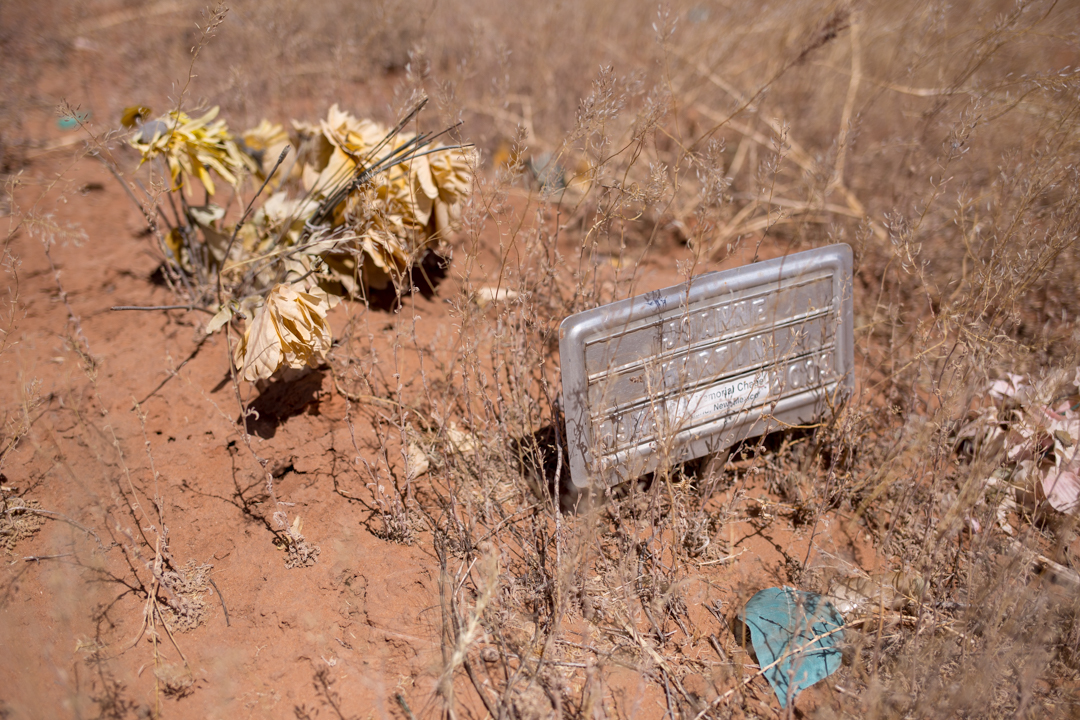


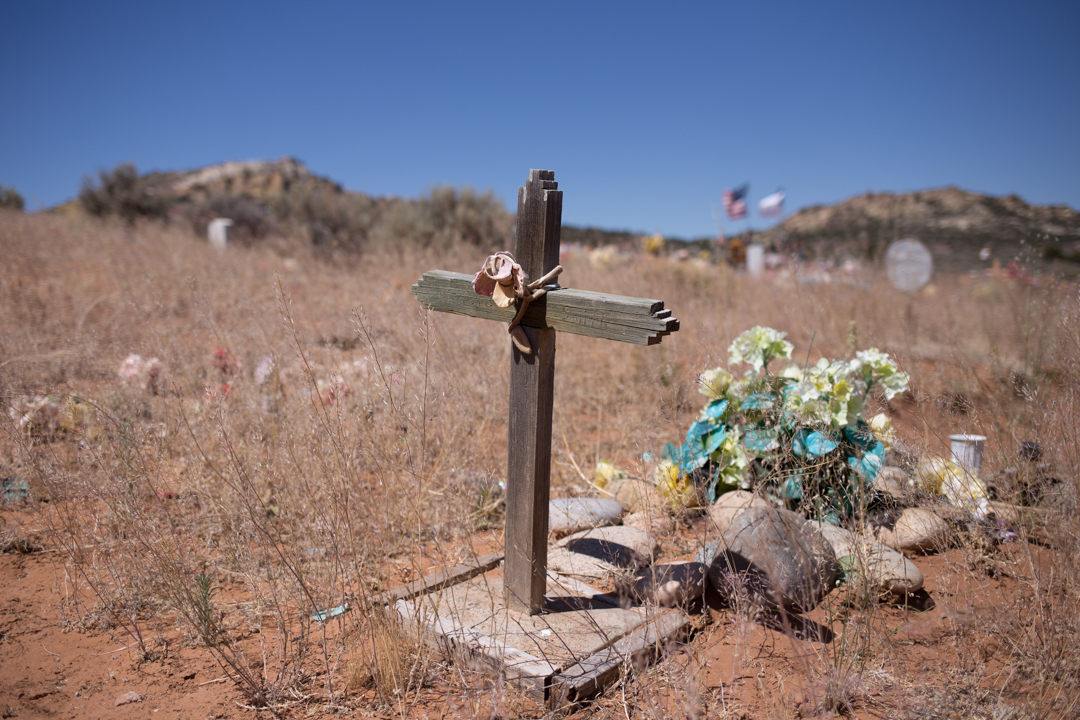
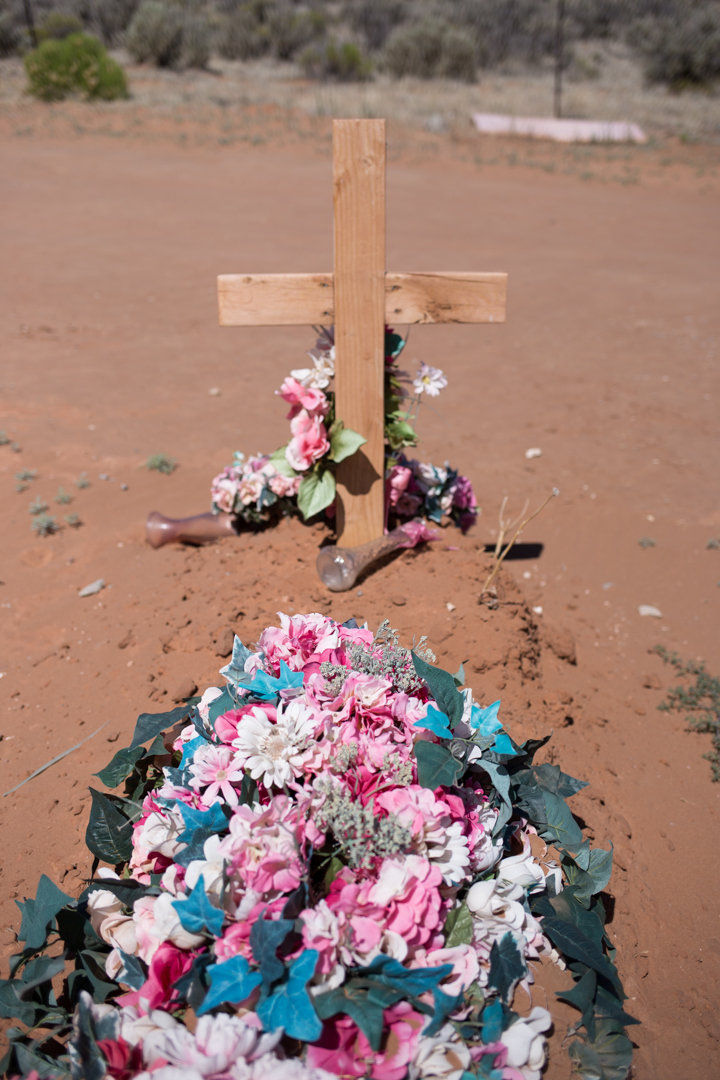
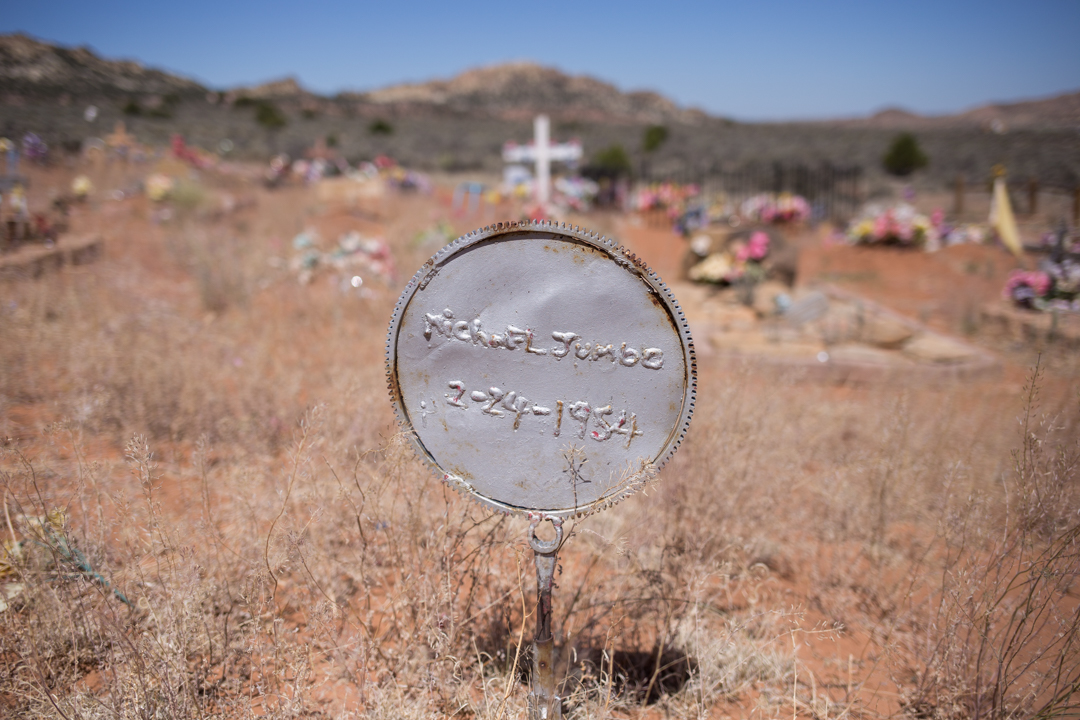
As much as I love exploring cemeteries, finding the right research source for locating good ones has of yet eluded me. The Find A Grave app is helpful, but I often get annoyed by the lack of information available. If it's not a well-documented cemetery, I'm not able to determine whether the cemetery is going to be interesting, or a total bust. I suppose the unknown is part of the fun of exploring, but I cram a lot into these trips and ain't nobody got time for that.


But thanks to Kaylah's post, I knew that the Rehoboth Mission Cemetery was worth a stop, and we were also prepared for the somewhat strange route we had to take to get there. To access the cemetery, you have to drive through the Rehoboth Christian School campus and it feels as if outsiders might not be welcome, despite a sign literally declaring "all are welcome." Past the parking lot is a winding dirt road that continues up a hillside, eventually ending at the cemetery. There was actually a moment when we wondered if we should park our car and walk but whatever you do, don't do that (just keep driving!).


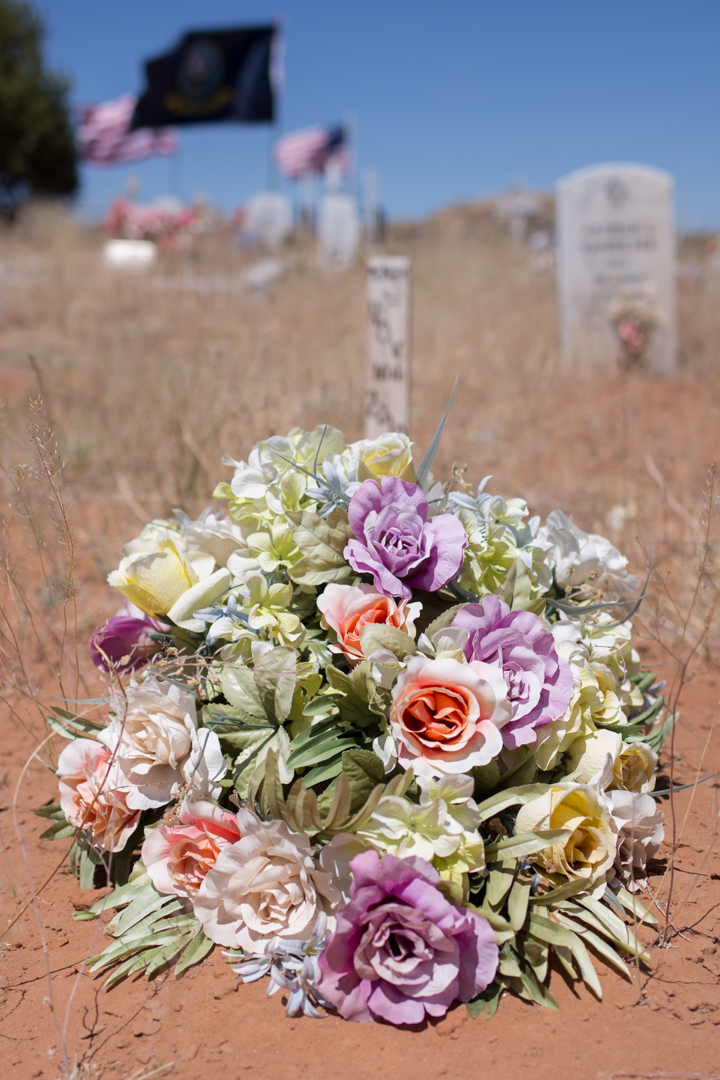
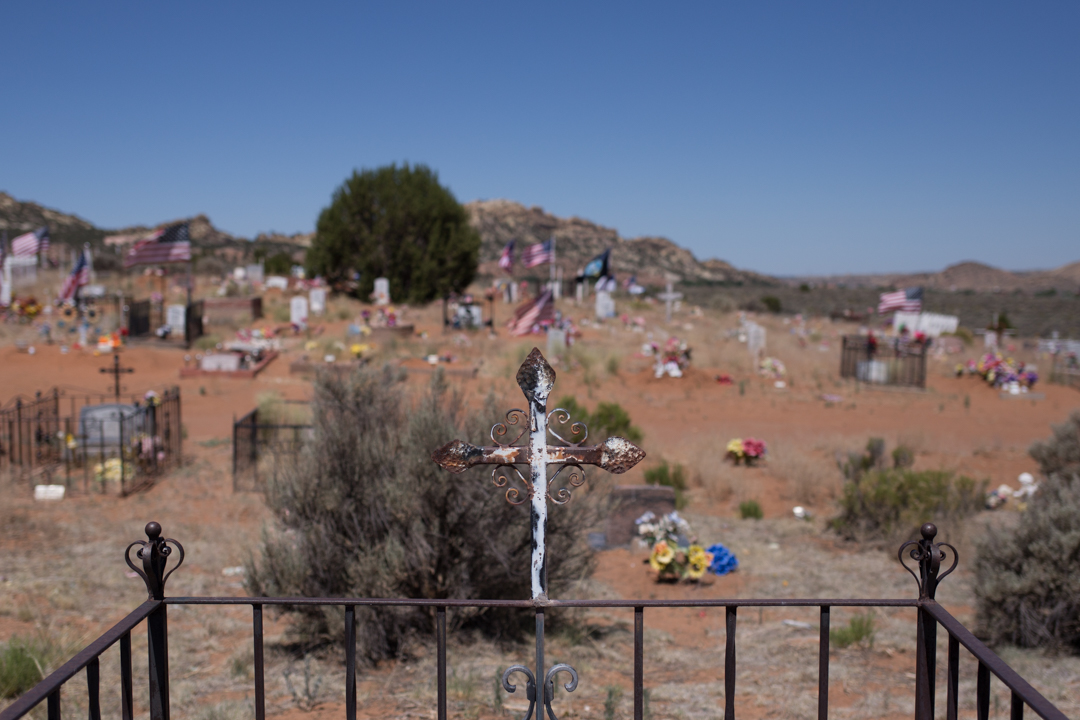


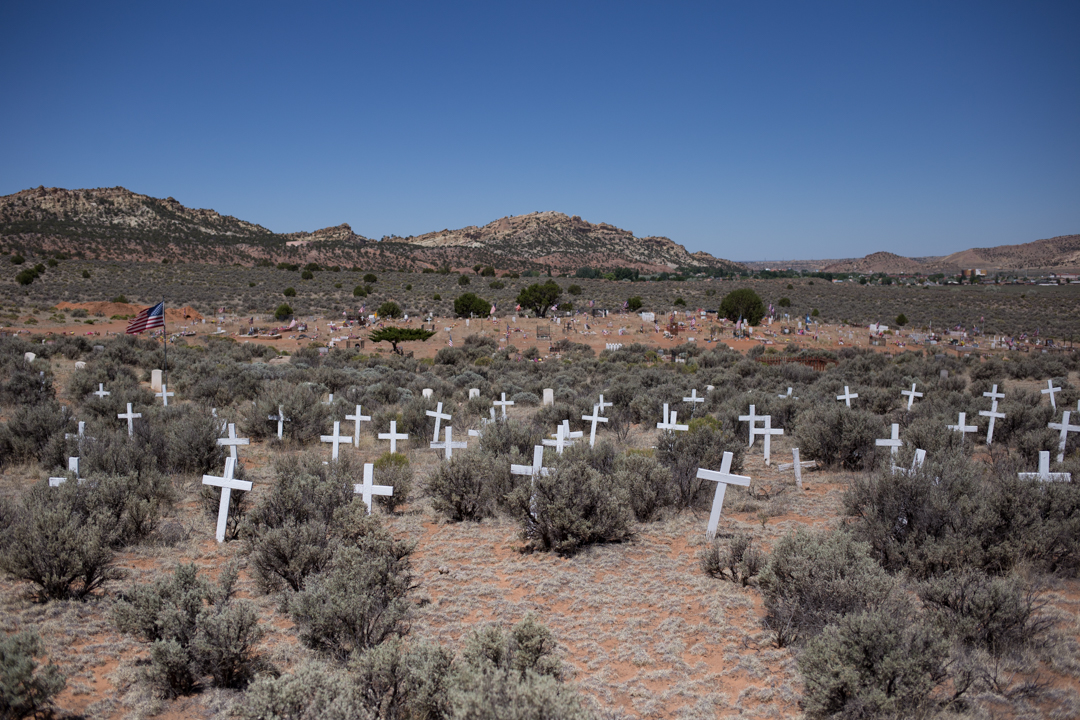
The Rehoboth Christian School was started in 1903 by Christian missionaries who came to New Mexico to spread the word of God to the Navajo and Zuni peoples (the white crosses mark missionary graves). In the 1940s, a high school was added and today the school has more than 500 preK-12th grade students, 68% of which are Native American. I couldn't find much information about the cemetery itself, but it's a beautiful place to visit and unlike most of the cemeteries that I frequent here on the East Coast.
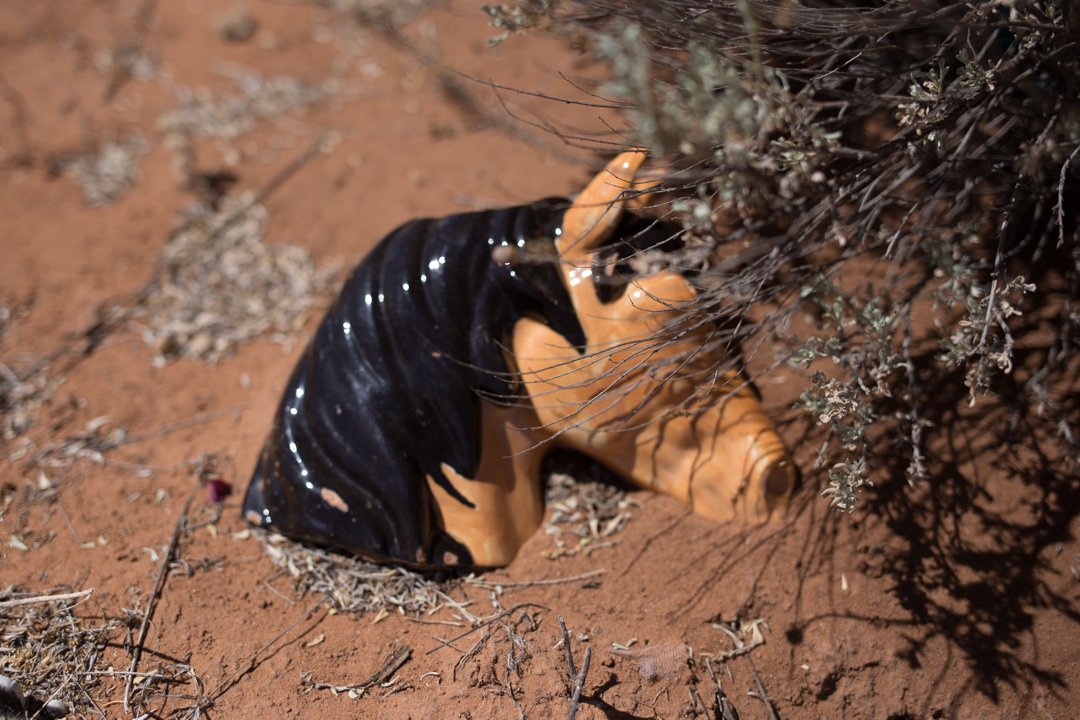


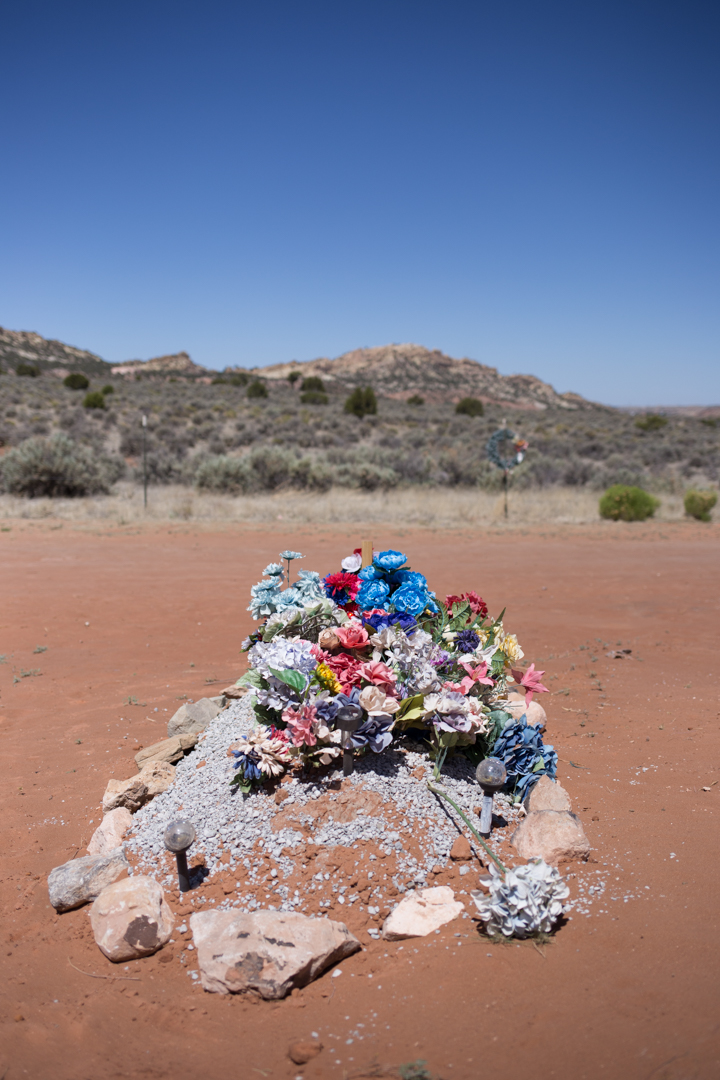


Most of the grave markers here are pretty simple, but the graves themselves are elaborately decorated and obviously maintained. This cemetery is exactly what I imagined a desert cemetery to look like—dusty but colorful, both dead and very much alive at the same time. The grounds may have literally felt alive, not because of spirits, but because of extremely fast little lizards that kept darting across my feet—each one startling me more than any spirit ever could.
Rehoboth Mission Cemetery
7 Tse Yaaniichii Lane
Rehoboth, NM 87322
Once you're on the school campus, follow the signs for "cemetery" and be prepared to drive for a while on a winding, dirt road—just go slow!

Sailors' Snug Harbor Cemetery

Sailors' Snug Harbor was established on Staten Island in 1831 as a retirement home for sailors. Noted sea captain Robert Richard Randall—in a will drafted by Alexander Hamilton—bequeathed his property for the creation of Snug Harbor, one of the first retirement homes in the country. The only requirement for the self-sustaining community was that residents have five years of maritime service for the US, or ten years for a foreign country.
Peak population of the community was more than 1,000 in the early 1900s. By the '70s the population had dwindled significantly—the home was moved to North Carolina and the property was transferred to the City of New York as a cultural center. I have been to Snug Harbor a few times in the past few years, but on my most recent visit I finally found the cemetery.


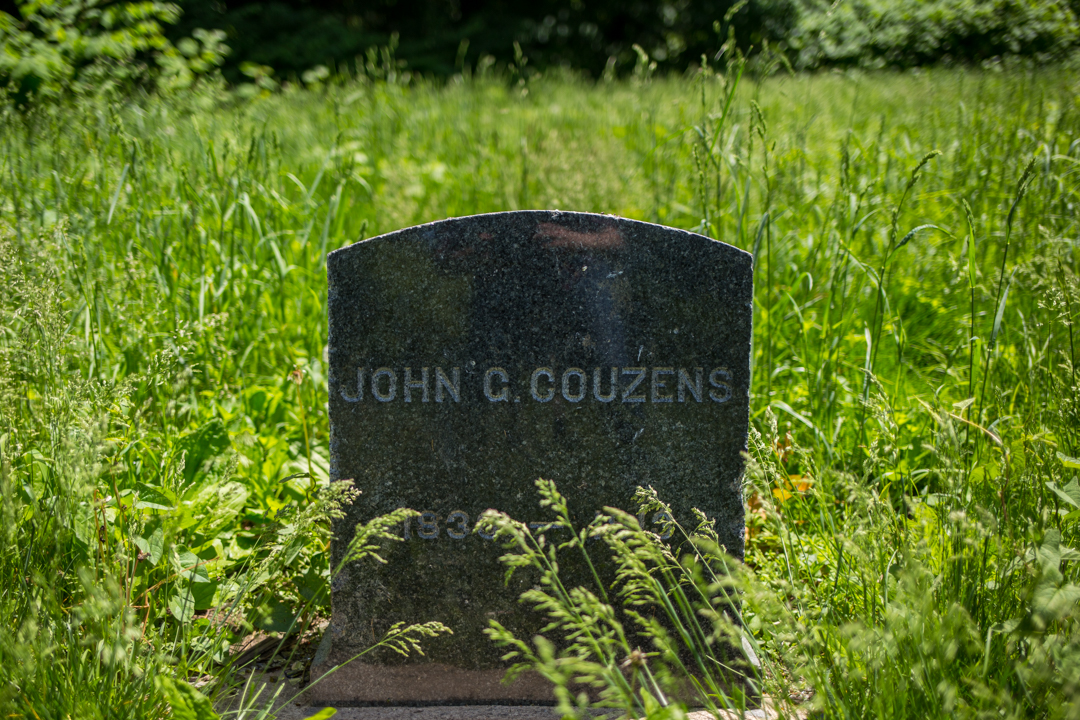

The cemetery appears on Google Maps, but on my last visits it had eluded me. The L-shaped graveyard is located beyond the south gate of Snug Harbor, off of Prospect Avenue, right next to Allison Pond Park. The cemetery itself is enclosed by a brick wall, and when you peek through the (locked) gate it just looks like a big open field. In fact, the six-acre site actually contains the graves of 7,000 mariners who died at the Snug Harbor between 1833 and 1975.
Each grave was once marked with gravestones bearing four-digit numbers, and then metal plates were used when the cemetery began to get crowded. These plates eventually deteriorated and other marble stones were removed and put in storage for their protection. You can see examples of the four-digit marker stones on display in the Noble Maritime Collection (housed on the grounds of Snug Harbor).


What I didn't know when I first tried to find the cemetery is that there are a handful of tombstones left on the property—they're in the back of the cemetery, in an area that the Snug Harbor residents referred to as "Monkey Hill." I'm not sure if this cemetery is ever "open" to the public, but I walked back into the woods of Allison Pond Park and easily found a way over the brick wall. The grass and weeds were nearly knee-high and I was skeptical that I would even be able to find the remaining stones, but I eventually located a few (and emerged with neither ticks, nor a poison ivy rash).
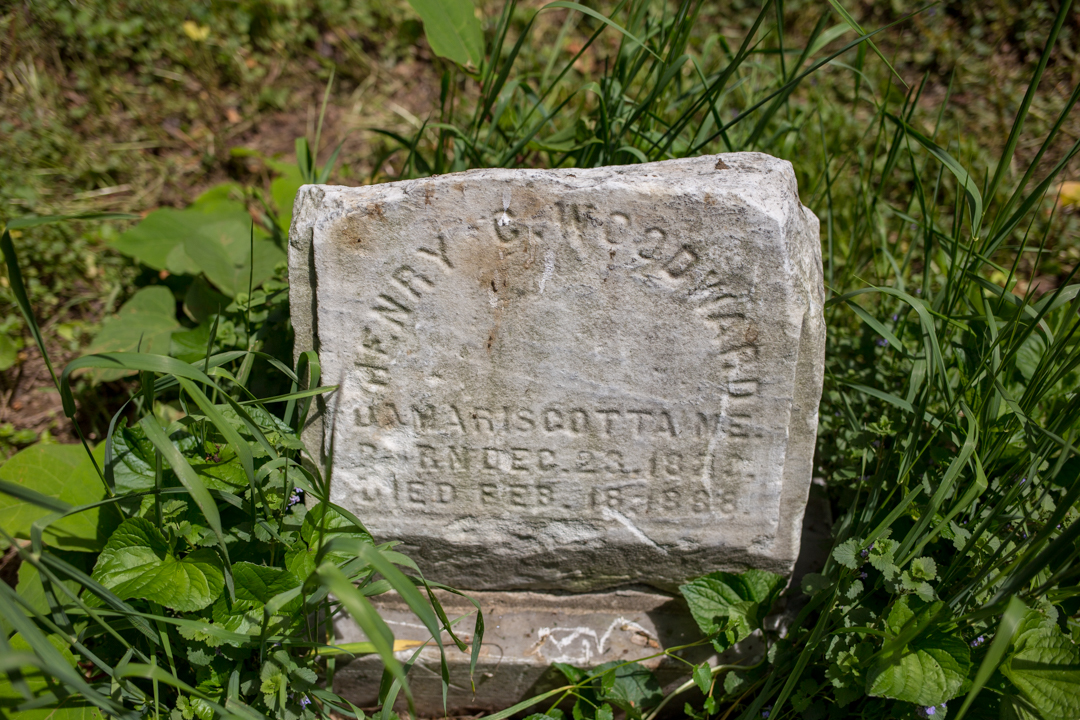


The Trustees' of Sailors' Snug Harbor retained ownership of the cemetery even after the retirement home was relocated, and as I was getting ready to hop back over the wall, I did see a man at the front gate beginning to mow the lawn. I hesitate to say that this cemetery is truly "abandoned" but it may as well have been for how hard it was to locate and how forgotten it feels.
Elmwood Cemetery

Elmwood Cemetery was established in 1852 when 50 Memphis gentlemen each contributed $500 to purchase land for a new cemetery 2.5 miles from town. It was expanded to 80 acres after the Civil War, and is now the final resting place for 75,000 people (with space for 15,000 more). Elmwood's design followed the rural cemetery movement, and it reminded me of other grand, beautiful cemeteries from that time period, including Green-Wood and Woodlawn here in New York.


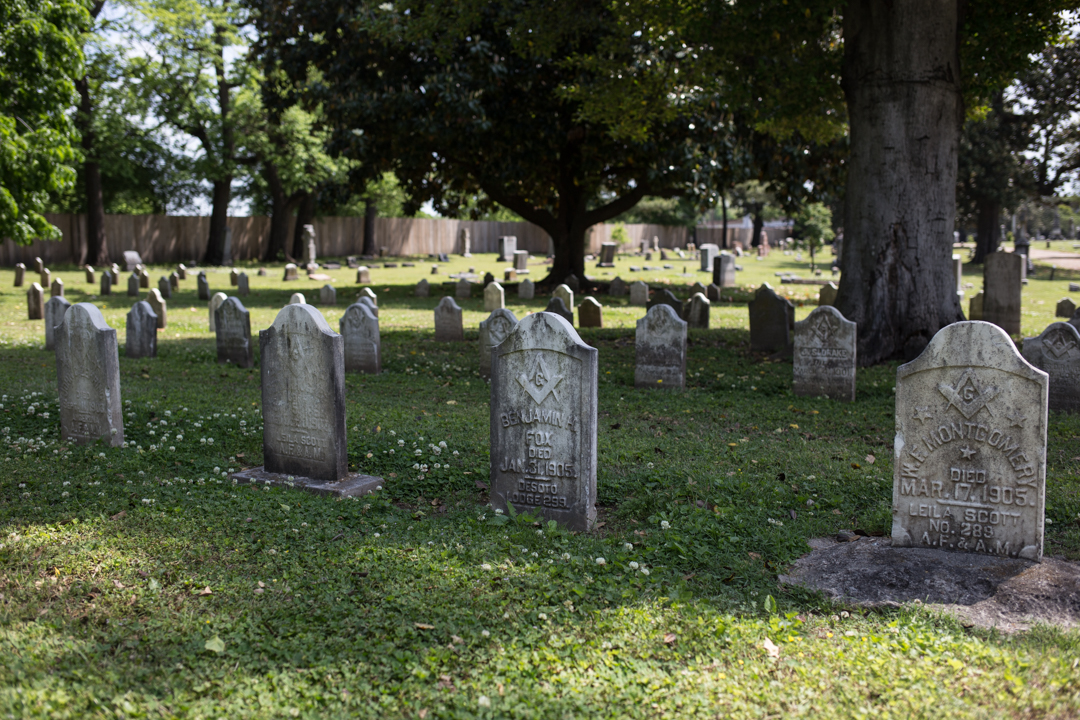
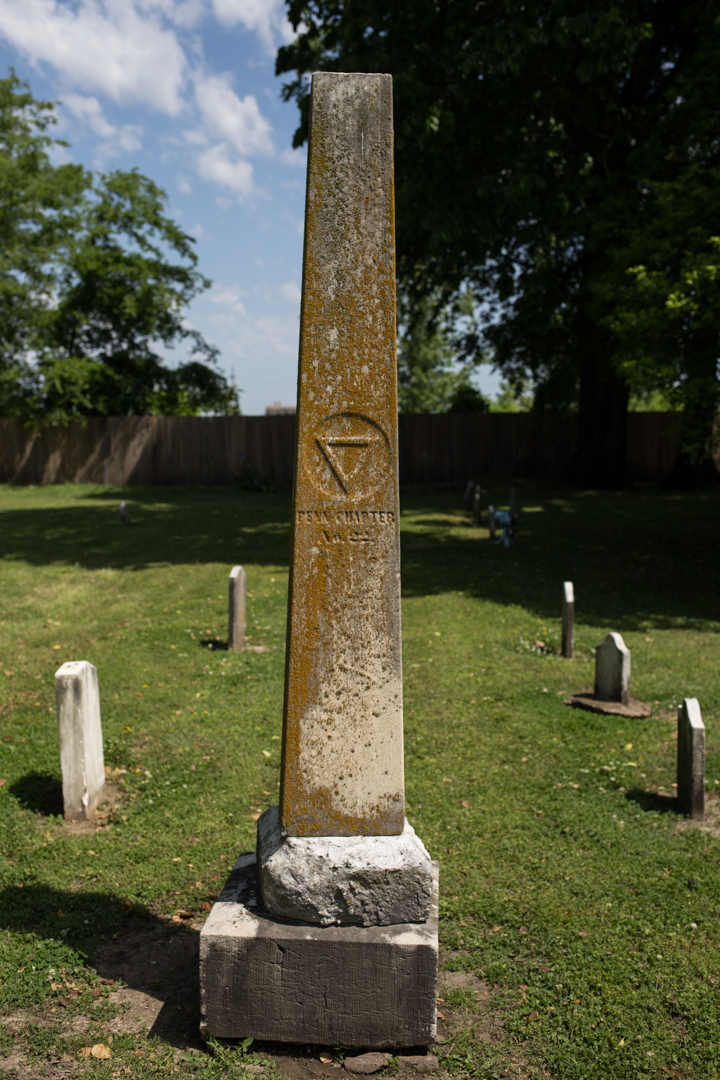

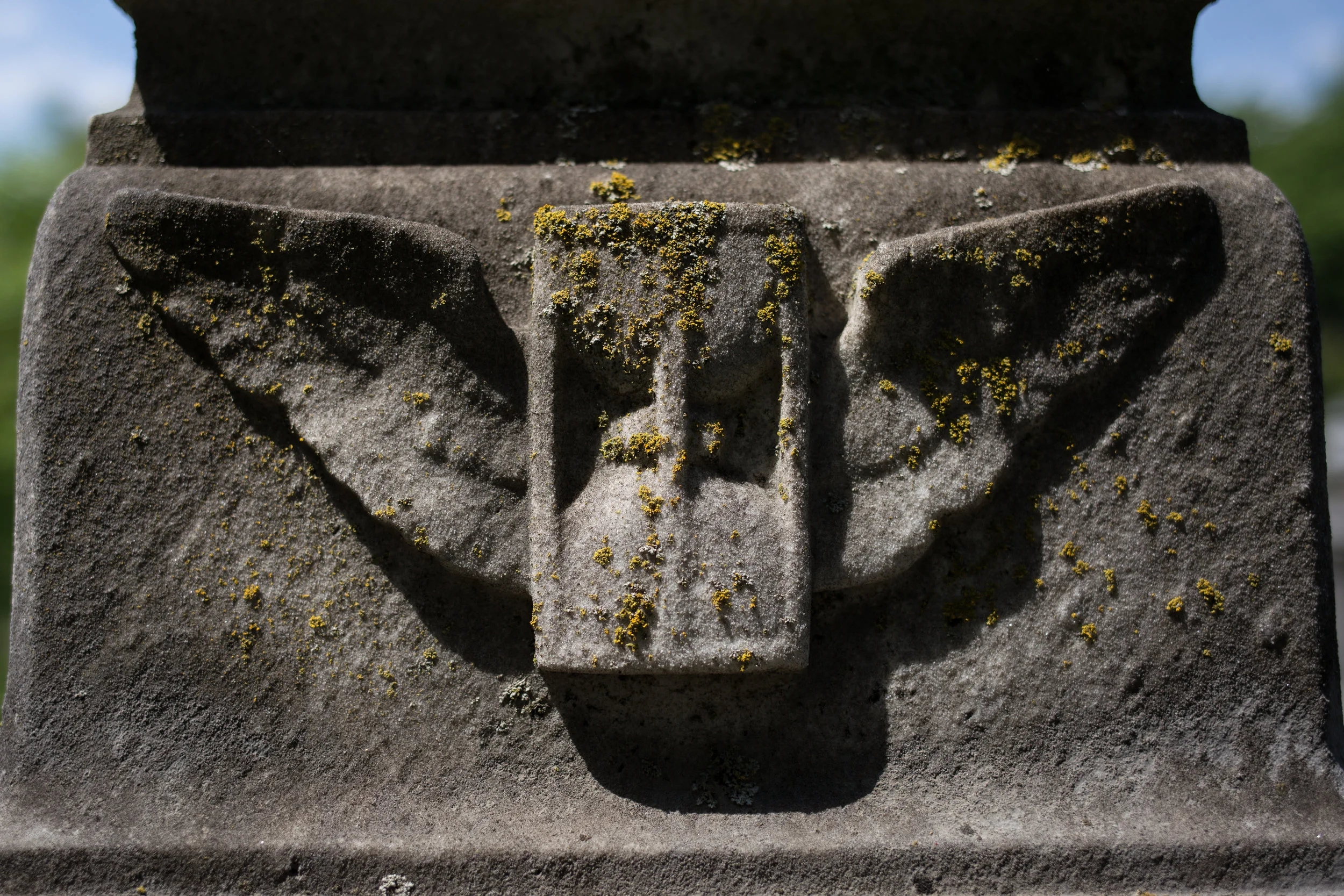
At the entrance to Elmwood is the Carpenter Gothic Cottage, built in 1866. It is topped by a bell that has rung for every funeral service since it was installed in 1870. It's free to roam the grounds of Elmwood, but like Hollywood Forever Cemetery, you can buy a map for $5. There's also an audio guide available, but I opted to just follow the map on my own, loosely following the audio guide markers. I enjoy exploring historic cemeteries from a purely visual standpoint, but knowing more about the people interred always adds to the experience.
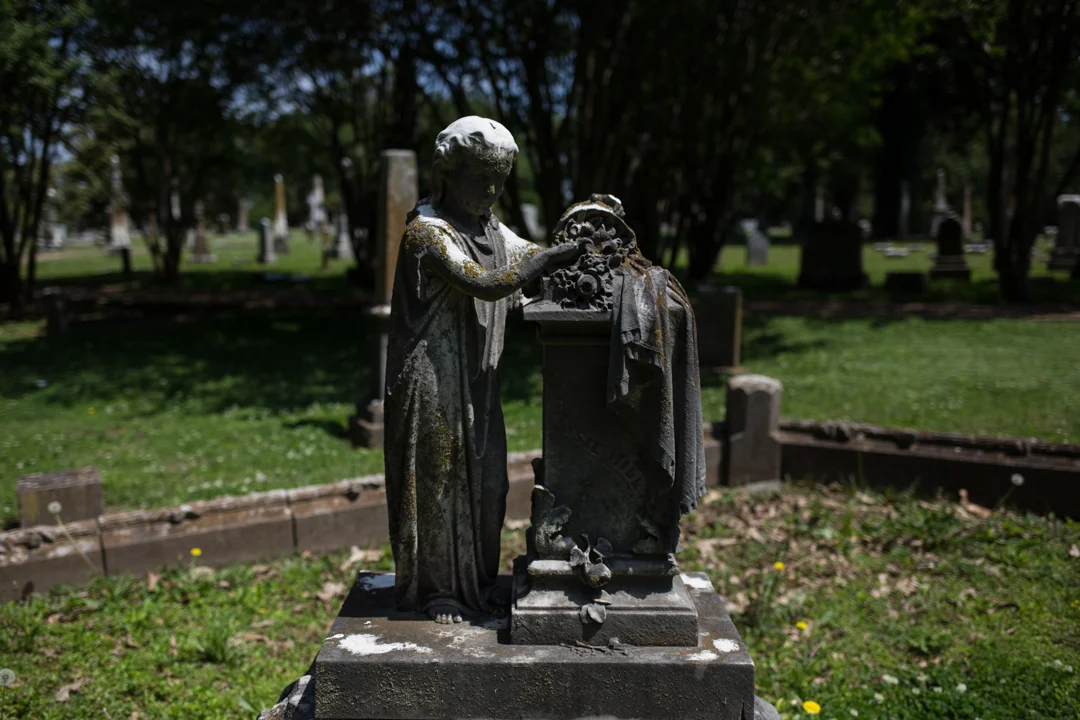

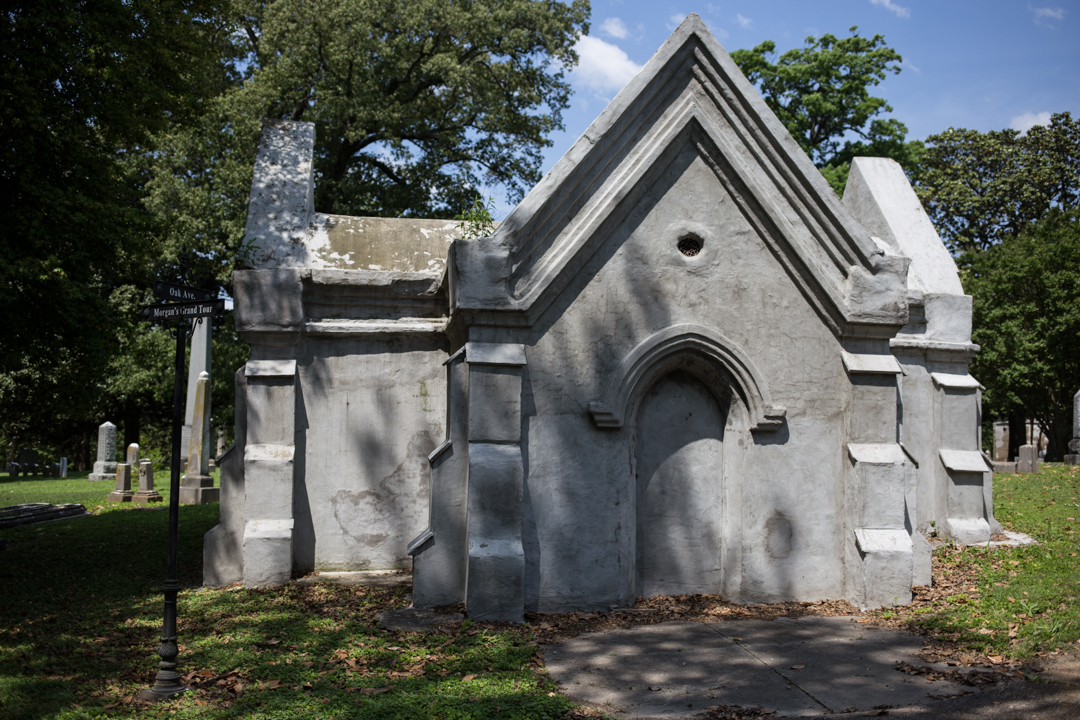
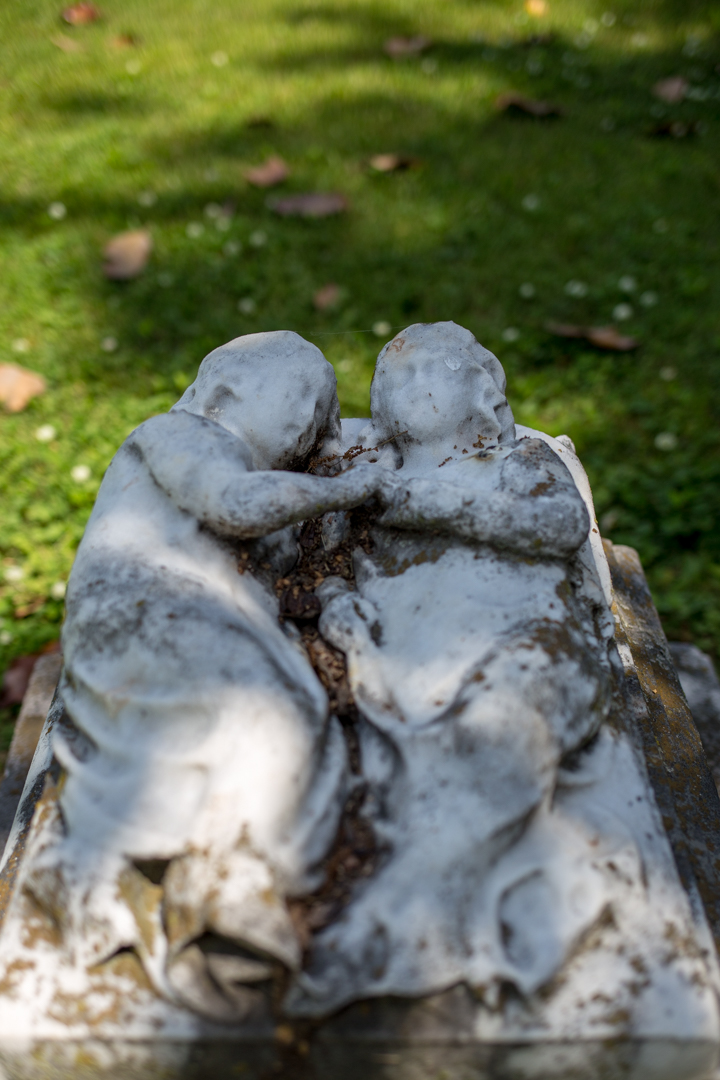

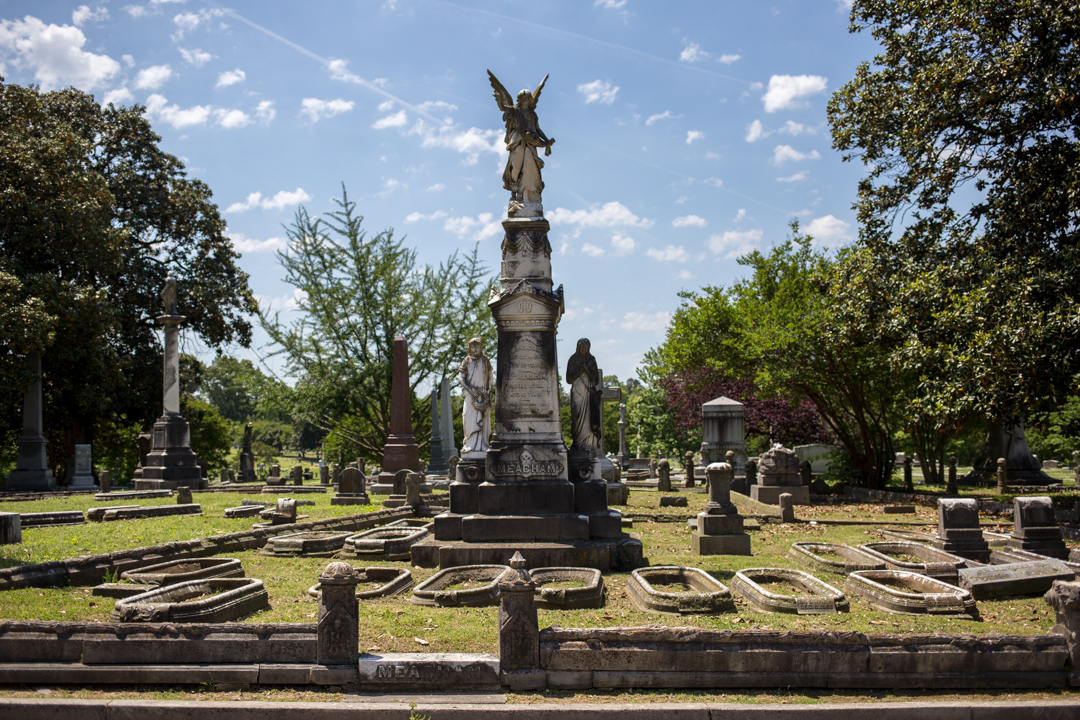


Beginning in 1831, cemeteries began to be relocated outside of city centers and church yards due to overcrowding and health concerns. This rural cemetery movement created expansive, manicured grounds with a focus on nature. It was not uncommon for people to use these new outdoor spaces as they use parks today—families would picnic in the cemetery on a Sunday or couples would meet up for a romantic walk of the grounds (sounds like the ideal date to me).



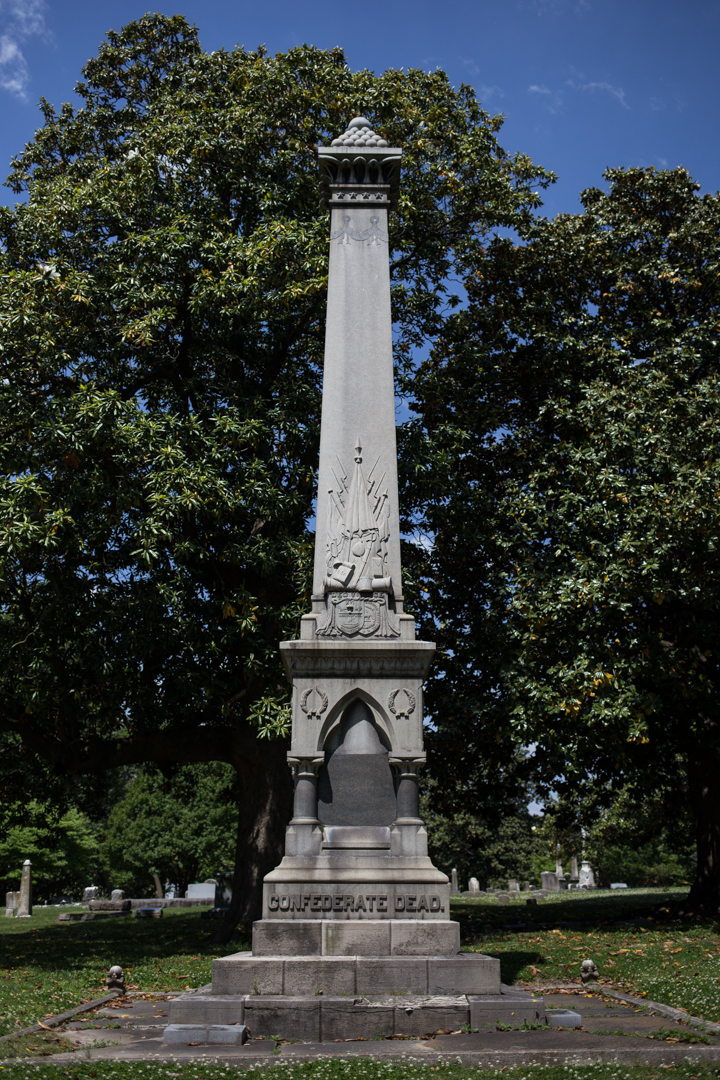

I'm always a bit surprised in Southern cemeteries to see so many monuments to the Confederate dead. It makes sense, of course, but I haven't spent enough time in the South to feel anything but uncomfortable when I see a Confederate flag. Elmwood contains the graves of veterans from all American conflicts, starting with the Revolutionary War, as well as a monument to the more than 300 enslaved Africans buried here between 1852 and 1865.
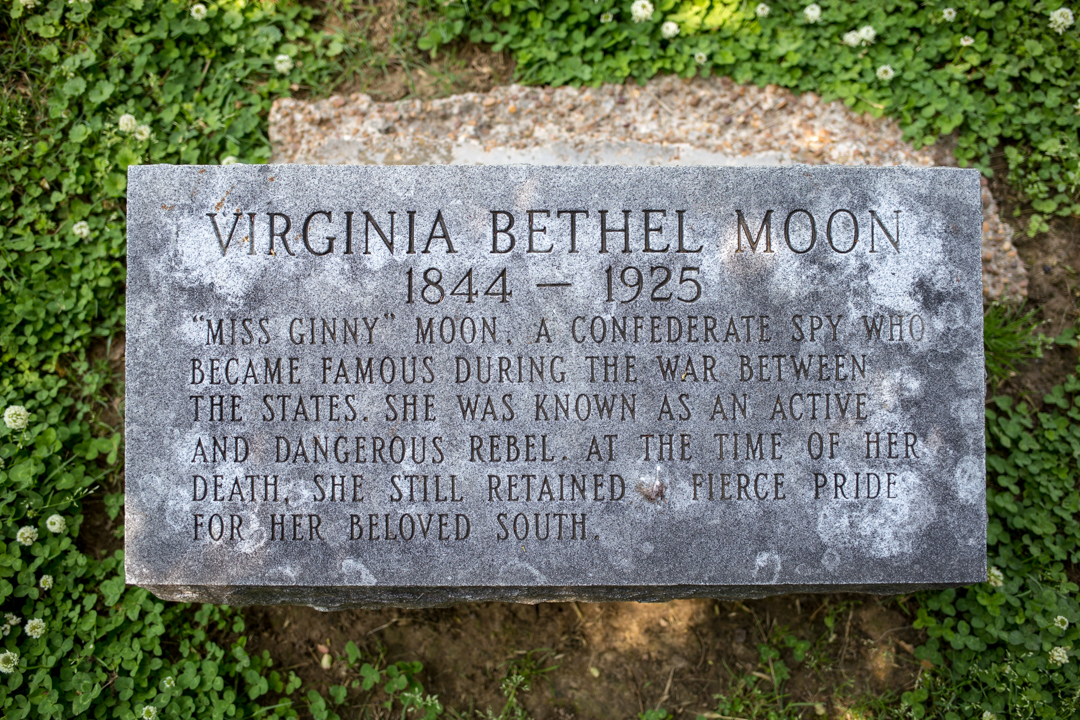
After Captain Kit Dalton fought for the Confederacy, he rode with Frank and Jesse James, resulting in the offer of $50,000 for his capture, dead or alive. He alluded capture for so long that he was eventually pardoned, promising that he would lead an exemplary life going forward, which, according to his headstone, he did. Virginia "Miss Ginny" Bethel Moon was a Confederate spy, known as an "active and dangerous rebel," who maintained her fierce (aka stubborn) allegiance to the South until her death in 1925.


Other famous inhabitants include politicians, local celebrities and notorious criminals. A marker labeled "No Man's Land," marks a public lot that contains the graves of 14,000 victims of several Yellow Fever epidemics. The Tennessee Children's Home Society has a marker at Elmwood to mark the unknown graves of 19 children, who died "under the cold hard hand" of the adoption agency that was also operating as a black market for babies.

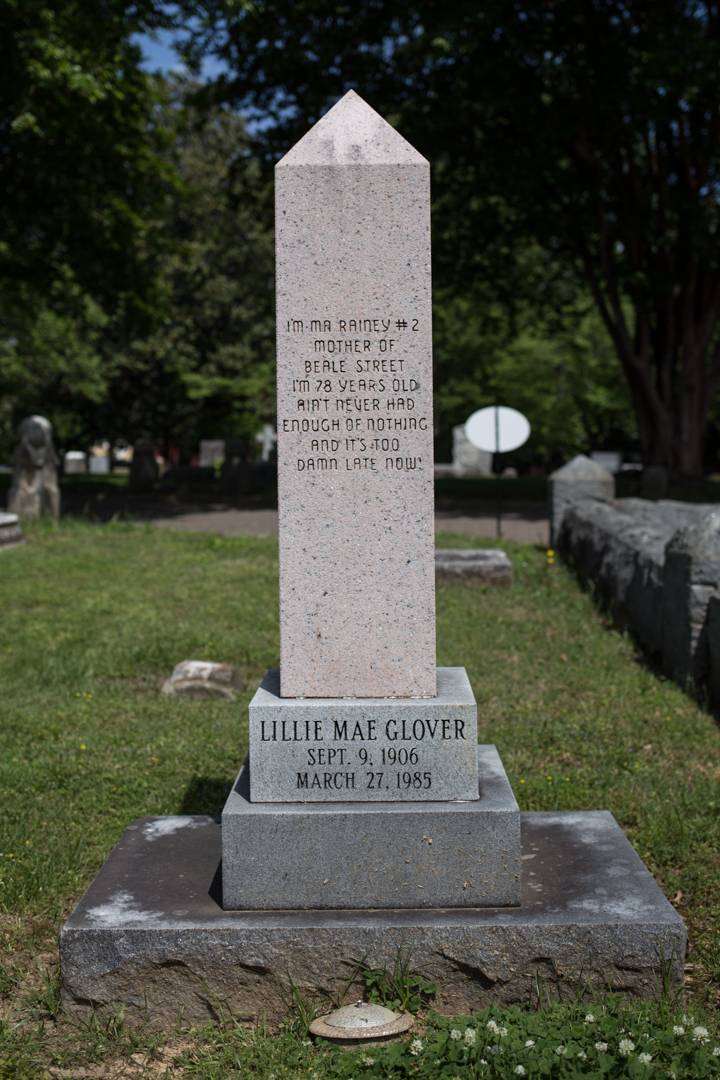
The two candidates for my favorite headstone at Elmwood are William Eastman Spandow's and Lillie Mae Glover's. Spandow's stone throws some major shade, explaining that he was "killed in chemical laboratory of Columbia University by an explosion due to the carelessness of others." Glover was known as the "Mother of Beale Street," but she referred to herself as Ma Rainey #2, after the blues singer she admired. Her obelisk headstone is inscribed with a very relatable epitaph, presumably said by Glover herself, "I'm 78 years old ain't never had enough of nothing and it's too damn late now."
Elmwood Cemetery
824 S. Dudley Street
Memphis, Tennessee 38104
Grounds: Mon-Sun, 8 AM-4:30 PM
Office: Mon– Fri, 8 AM–4:30 PM, Sat, 8 AM– noon, Closed Sun

Little Zion Missionary Baptist Church Cemetery
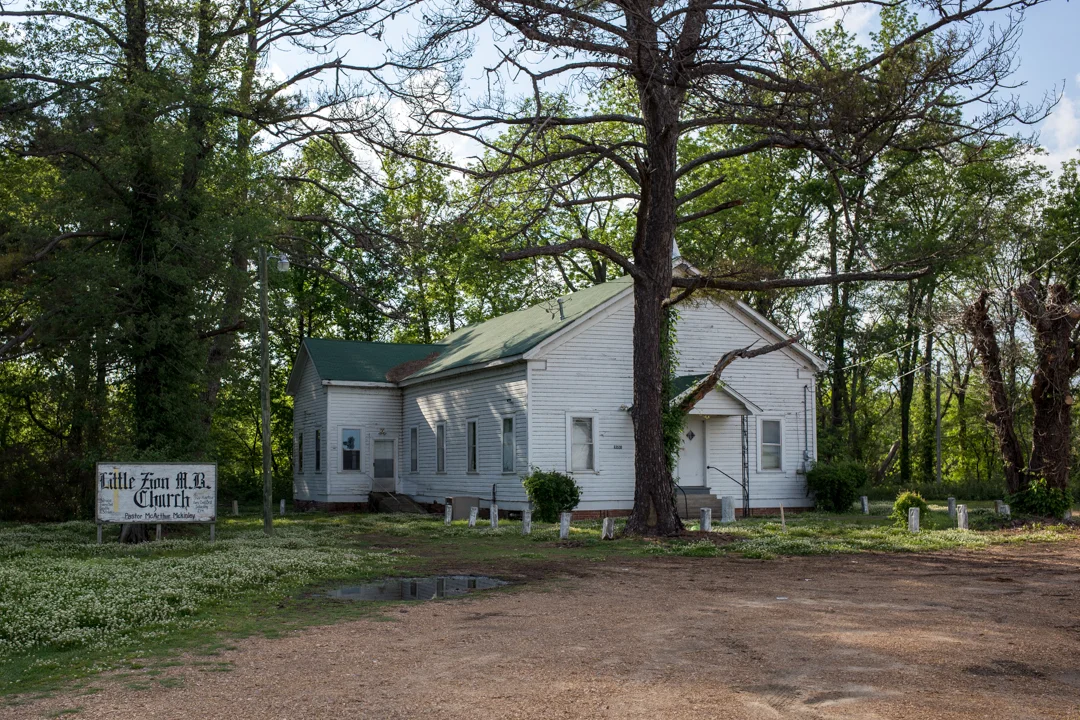
After visiting the Crossroads where Robert Johnson allegedly sold his soul to the devil in Clarksdale, Mississippi, we drove about an hour south to pay our respects to Johnson himself. Like a lot of things about Johnson's life, the location of his remains is still up for debate—in fact, three different spots in the same Mississippi county claim to be the blues legend's final resting place.

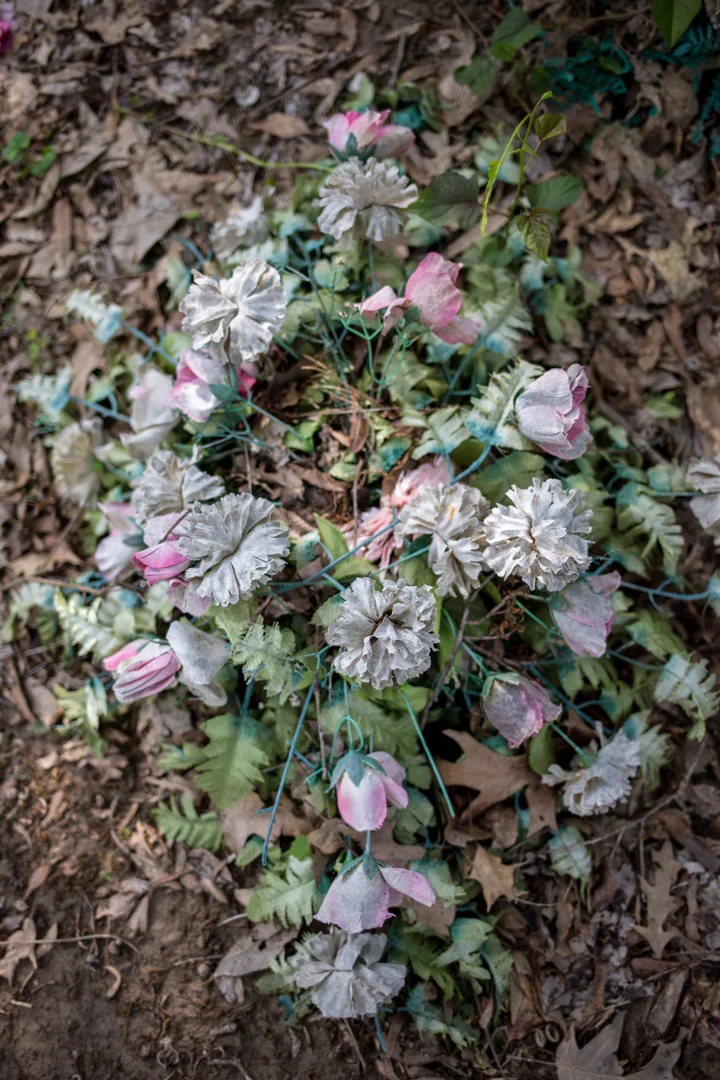
Even the cause of Johnson's death at the age of 27 is still somewhat of a mystery. The most popular theory says that Johnson, having flirted with a married woman, drank from a whiskey bottle poisoned by her jealous husband. His condition worsened and after three days of convulsions and severe pain, he died on August 16, 1938 in Greenwood, Mississippi. Because death from poison (such as strychnine, which has been suspected in this case) would have occurred within hours, not days, it has also been suggested that Johnson may have died of syphilis.
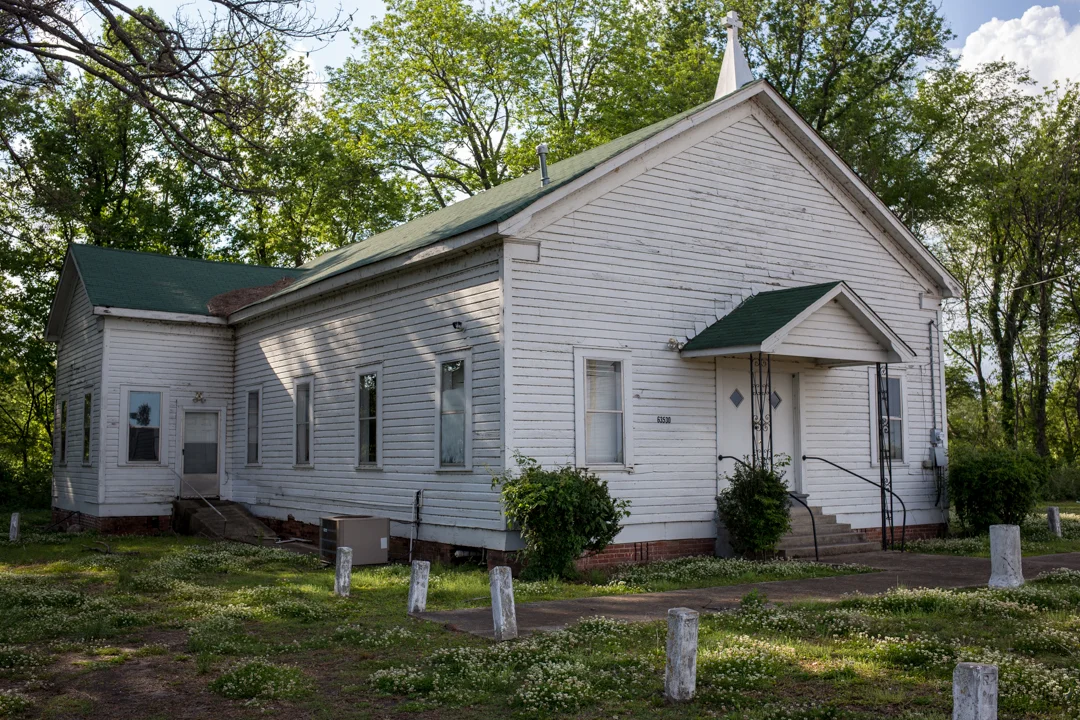
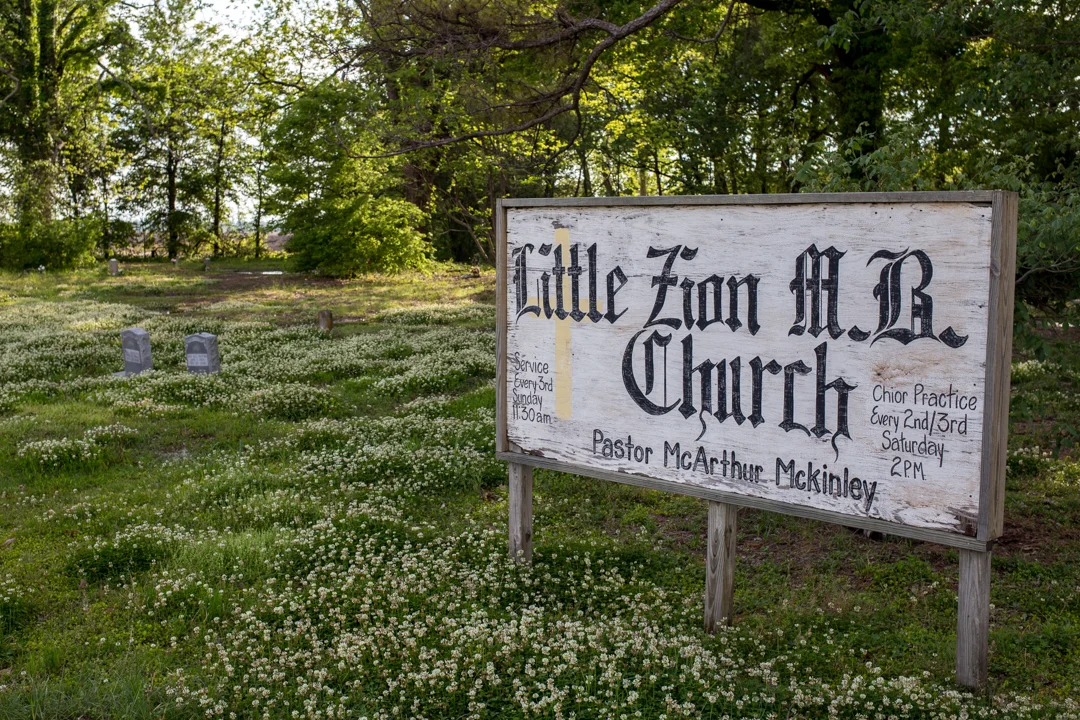
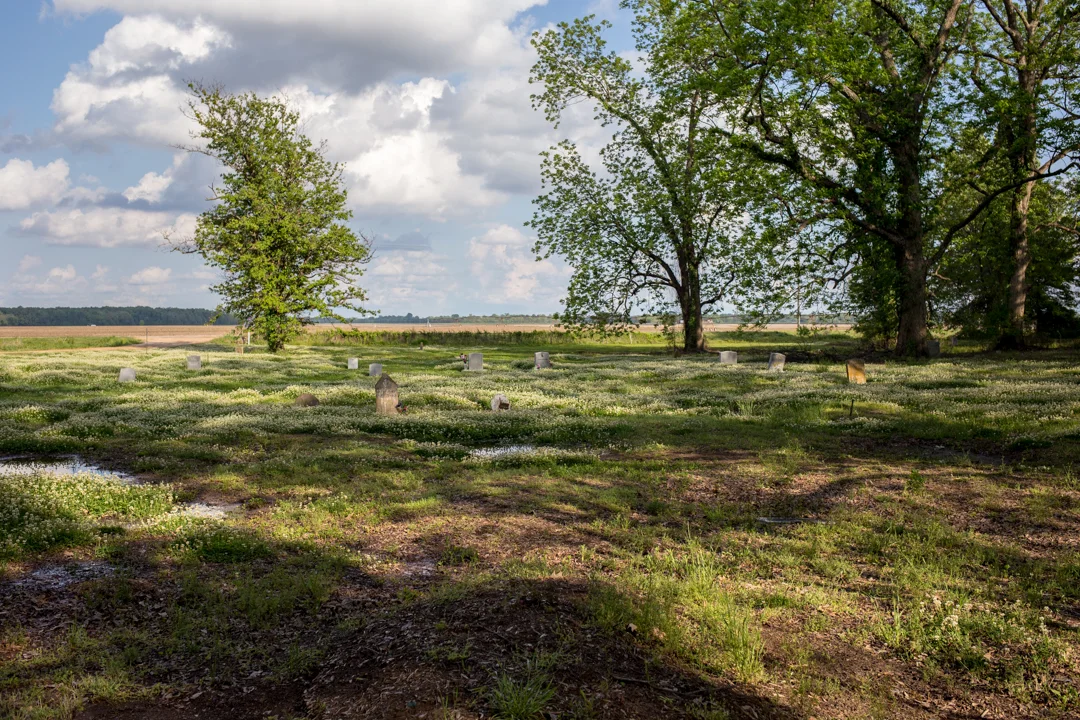
Three different churches around Greenwood have markers dedicated to Johnson, but we only had enough time to check out one of them. Based on its proximity to the plantation where Johnson died, the Little Zion Missionary Baptist Church cemetery is the most likely of the three locations to actually contain Johnson's remains.
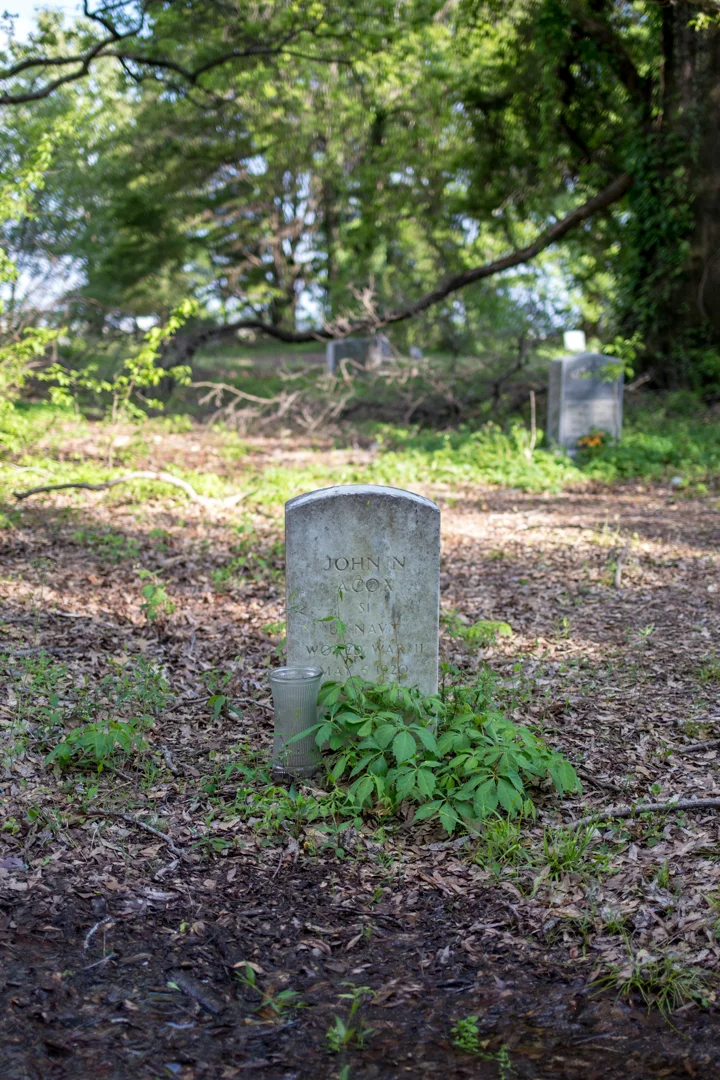
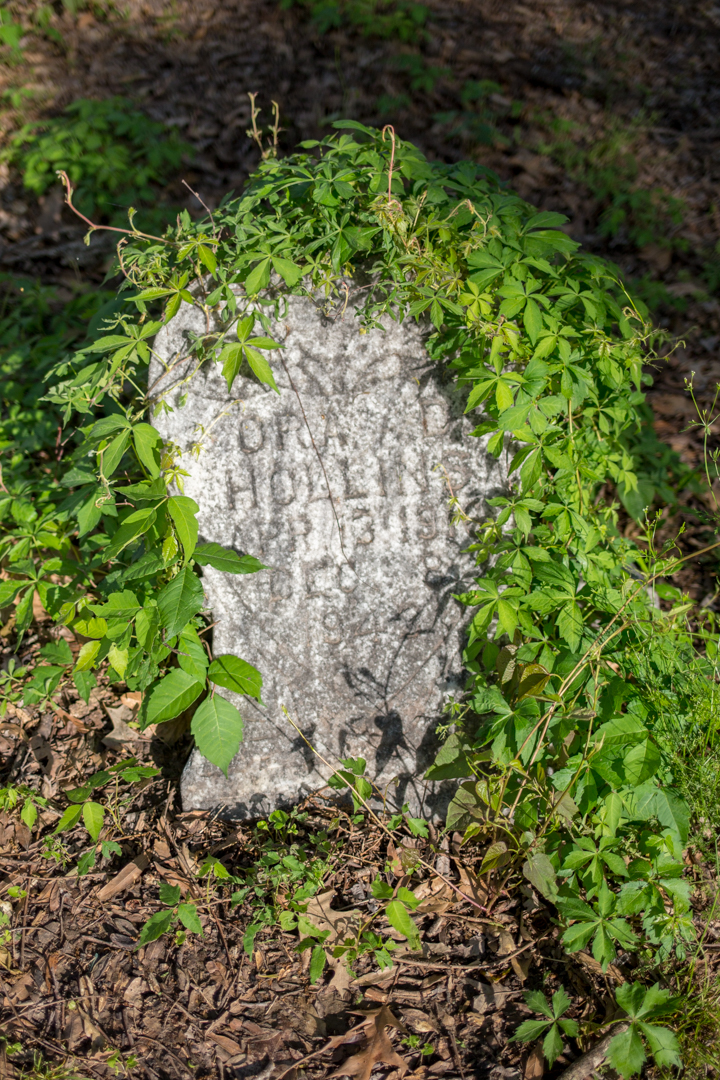
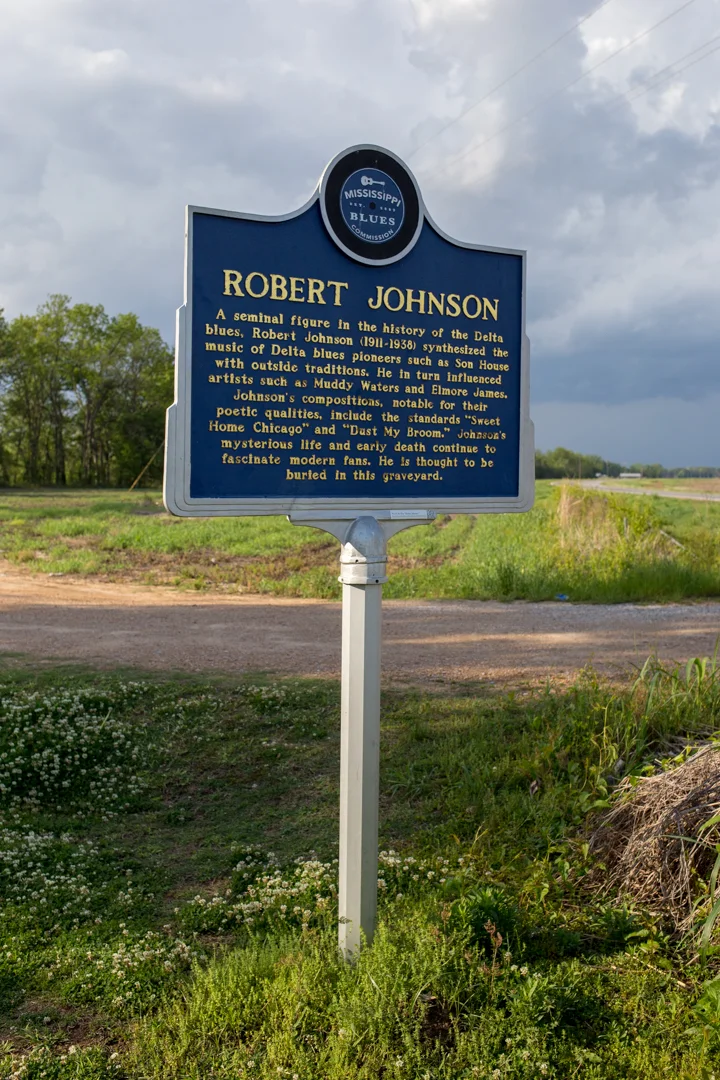
A Mississippi Blues Trail marker at the church reads: “ROBERT JOHNSON – A seminal figure in the history of the Delta blues, Robert Johnson (1911-1938) synthesized the music of Delta blues pioneers such as Son House with outside traditions. He in turn influenced such artists as Muddy Waters and Elmore James. Johnson’s compositions, notable for their poetic qualities, include the standards ‘Sweet Home Chicago’ and ‘Dust My Broom.’ Johnson’s mysterious life and early death continue to fascinate blues fans. He is thought to be buried in this graveyard.”
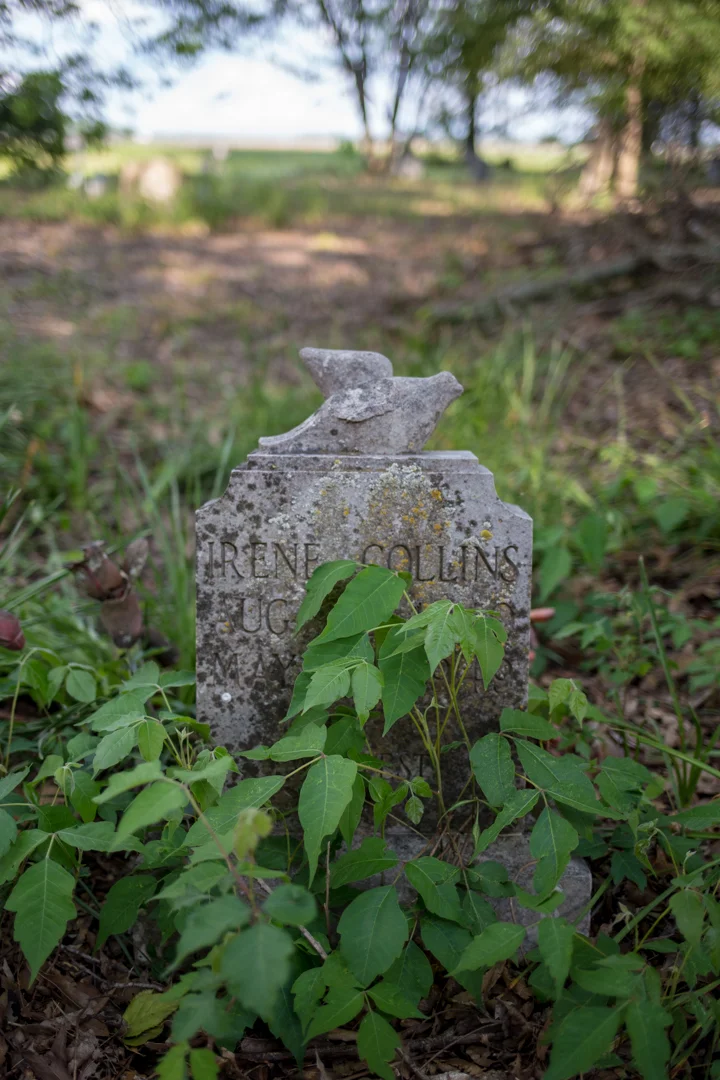
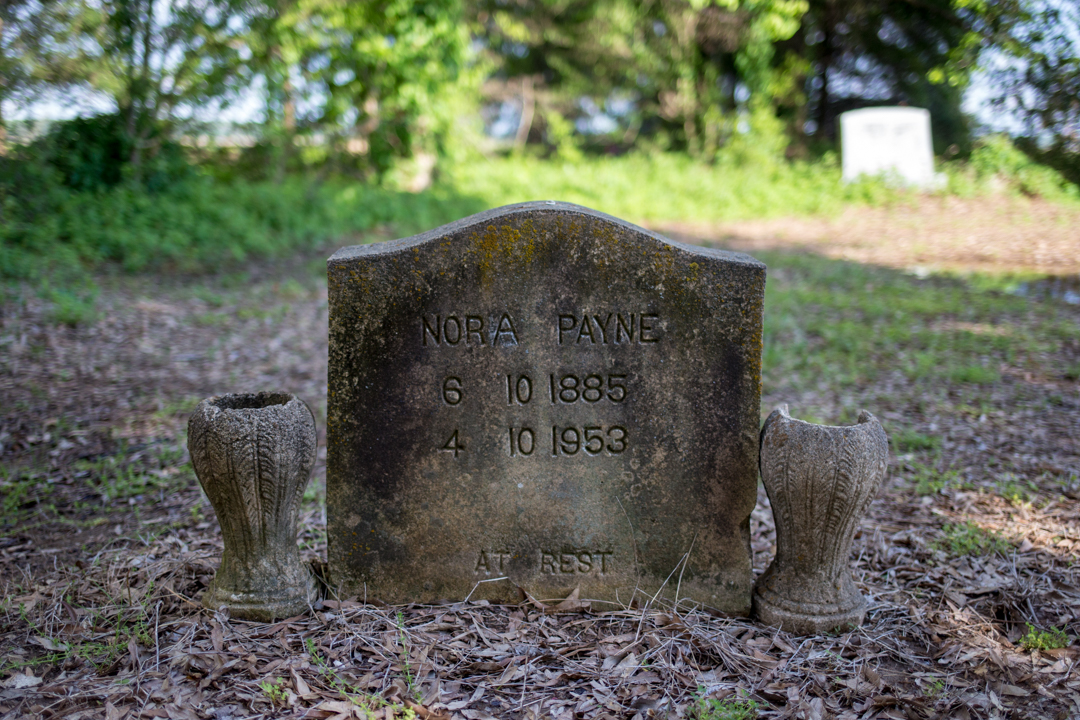
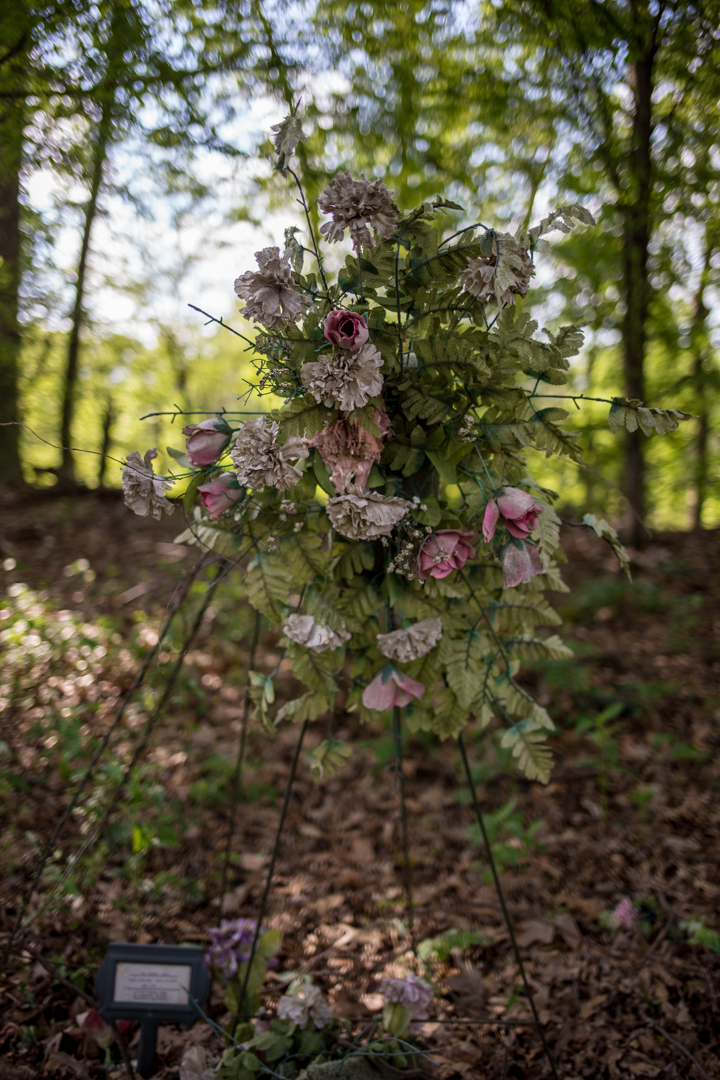
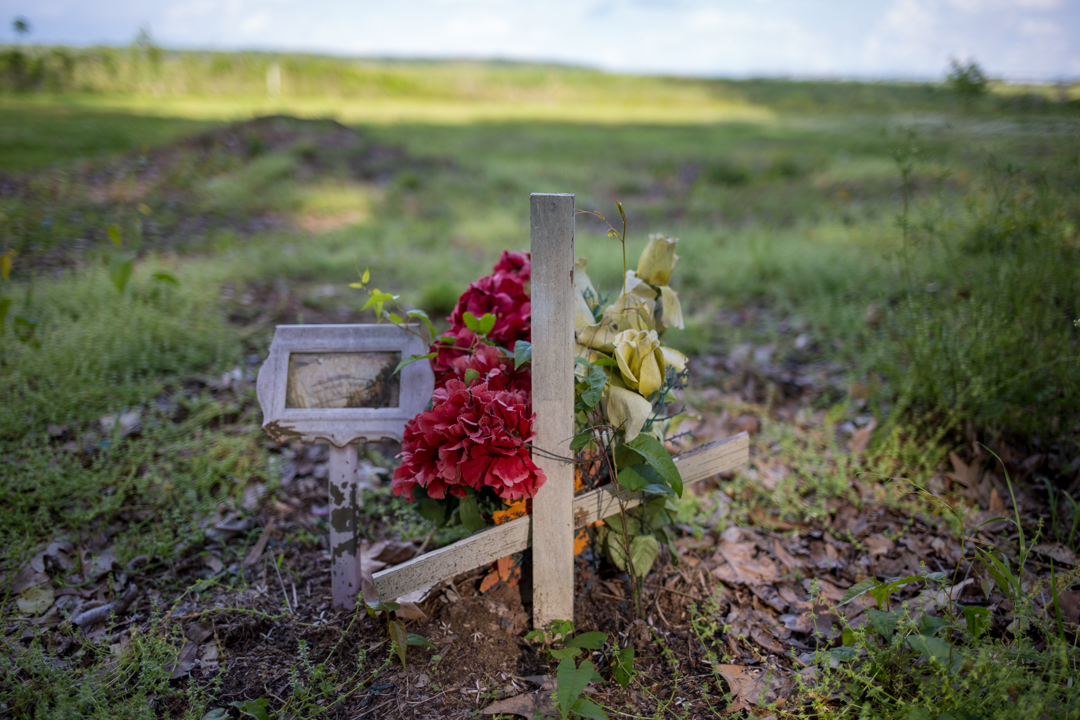
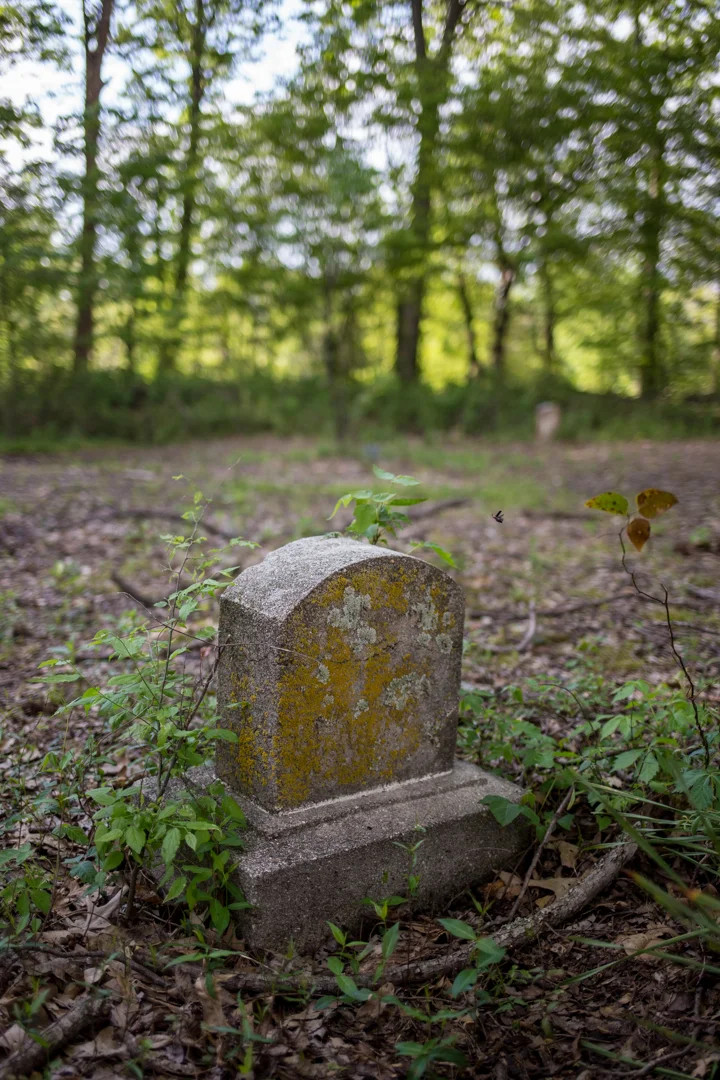
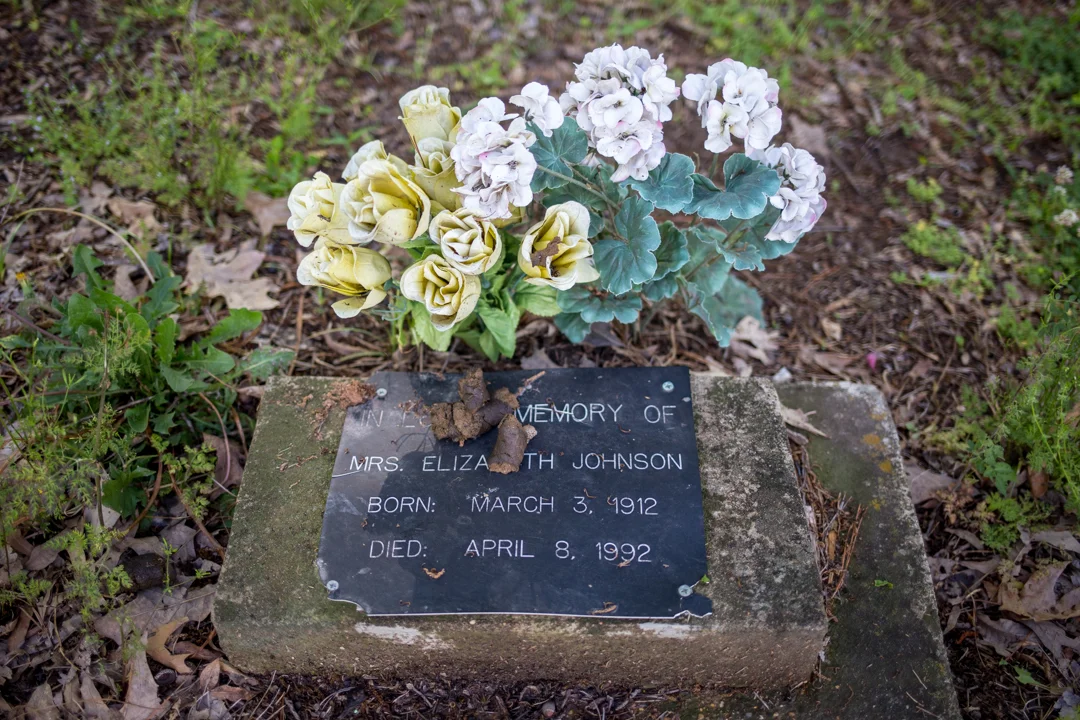
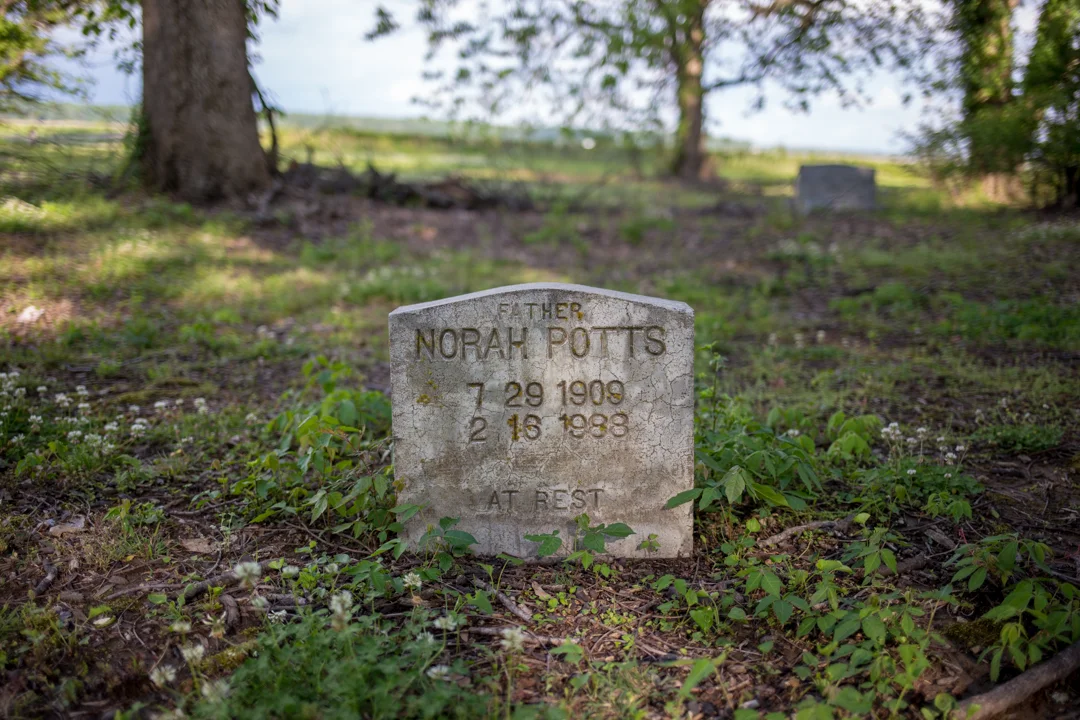
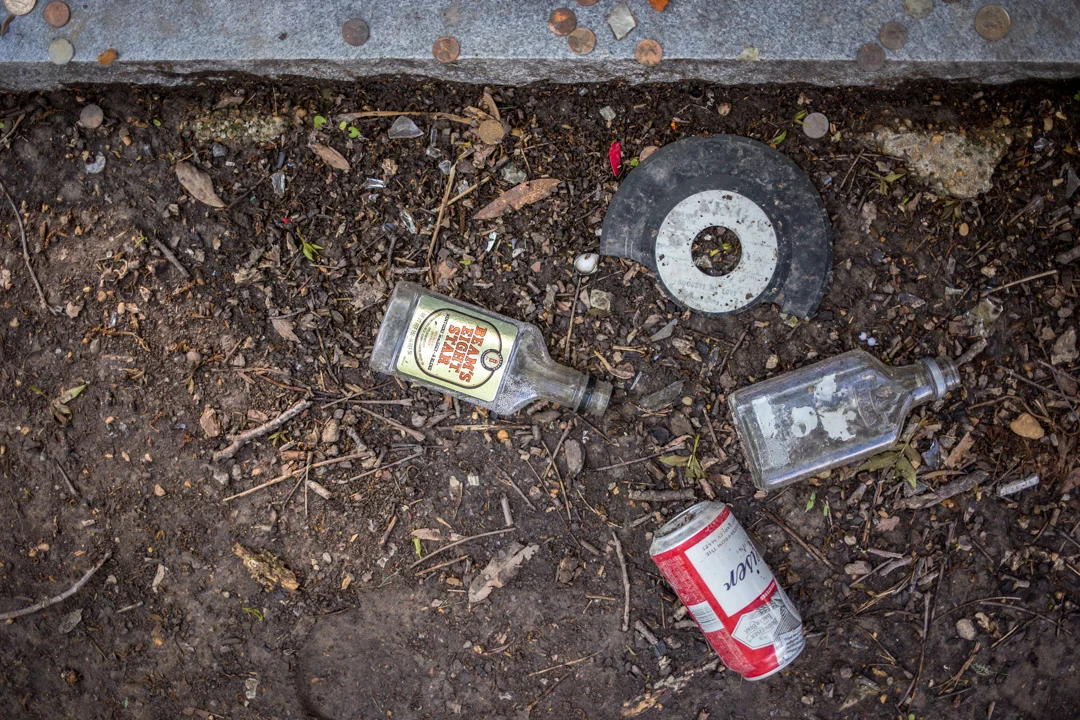
The church itself wasn't open when we visited, but it's exactly what I imagined a roadside baptist church in the middle of Mississippi would look like. The churchyard contains a handful of graves—including, coincidentally or not, several other Johnsons—and it was flooded and very muddy. If you're facing the church, Robert Johnson's grave is located in the back corner of the churchyard to the left, but it's hard to miss. His grave was covered in mementos—liquor bottles, beer cans, guitar picks, coins, a string of beads and other fan offerings like Divine's headstone in Maryland—and a donation box sits next to the headstone.
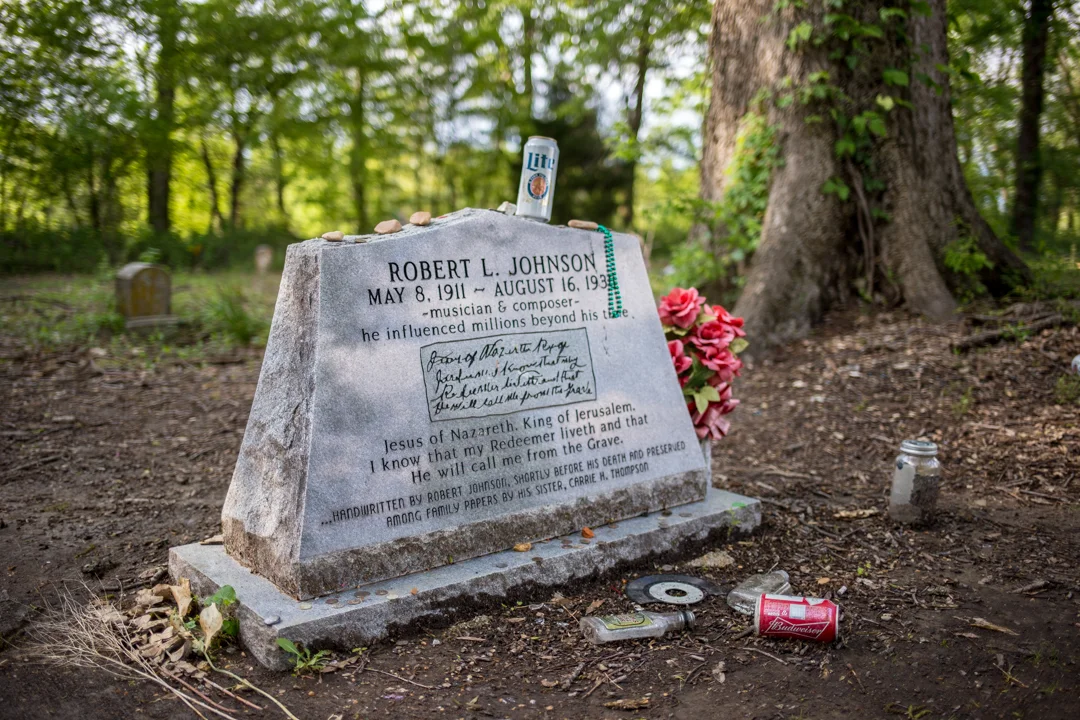
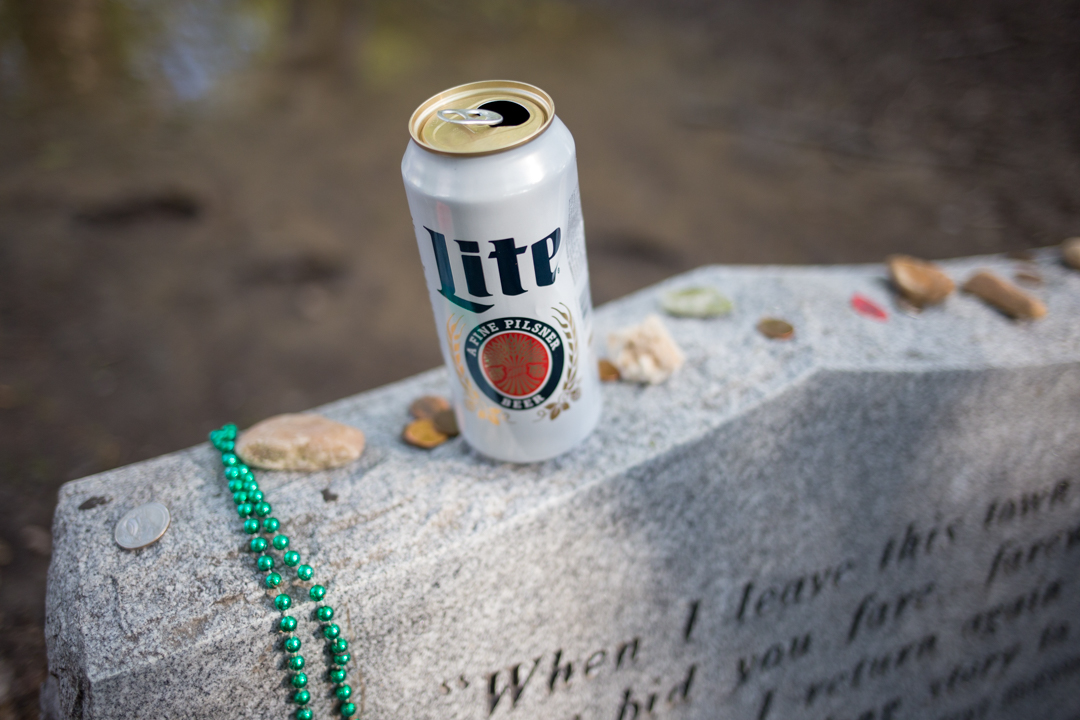
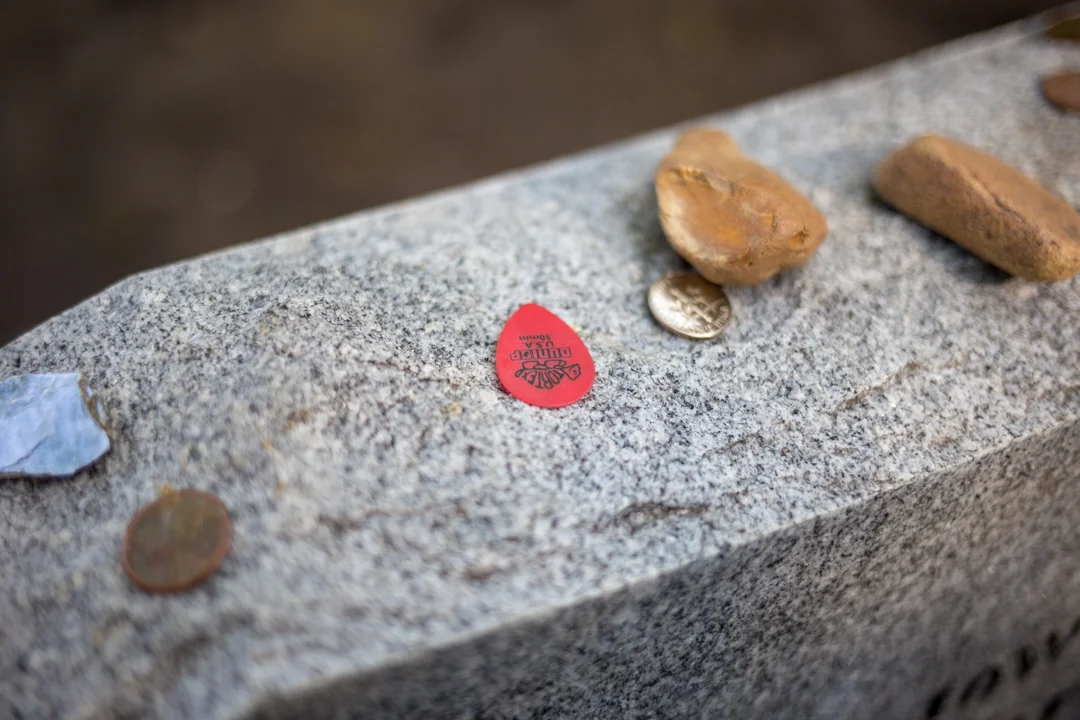
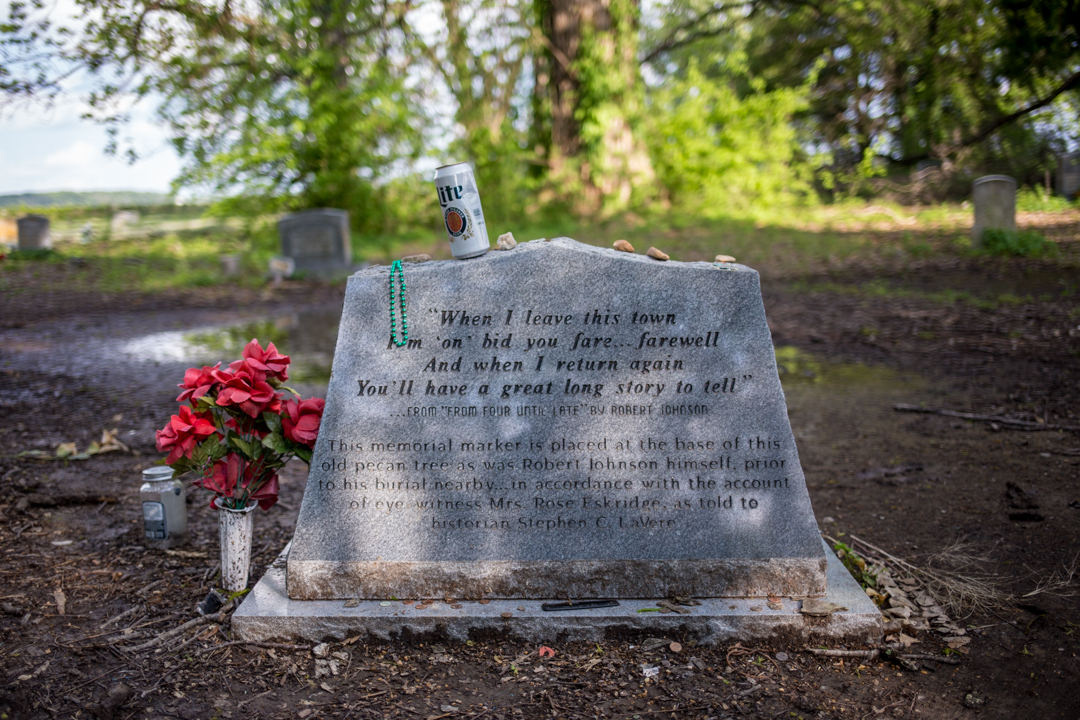
Part of the inscription on the front of the headstone is Johnson's own words, handwritten shortly before his death, "Jesus of Nazareth, King of Jerusalem / I know that my Redeemer liveth and that / He will call me from the Grave." The back of the headstone is inscribed with lyrics from Johnson's song "Four Until Late," “When I leave this town / I’m 'on bid you fare ... farewell / And when I return again / You’ll have a great long story to tell.”
Little Zion Missionary Baptist Church
63530 Money Road,
Leflore County, Mississippi.