

Archive
- Abandoned
- Alabama
- Arizona
- Bahamas
- Books
- California
- Cemetery
- Climate
- Colombia
- Connecticut
- Diner
- Egypt
- Feature
- Florida
- Friday Fun
- Georgia
- Holidays
- Illinois
- Iowa
- Italy
- Kentucky
- Louisiana
- Maryland
- Massachusetts
- Mississippi
- New Jersey
- New Mexico
- New York
- North Carolina
- Novelty Architecture
- Ohio
- Pennsylvania
- Personal
- Peru
- Project 365
- Protest
- Rhode Island
- Roadside Attraction
- South Carolina
- Tennessee
- Texas
- Travel Guide
- Virginia
- Walks
- Washington DC
- West Virginia
- Wisconsin
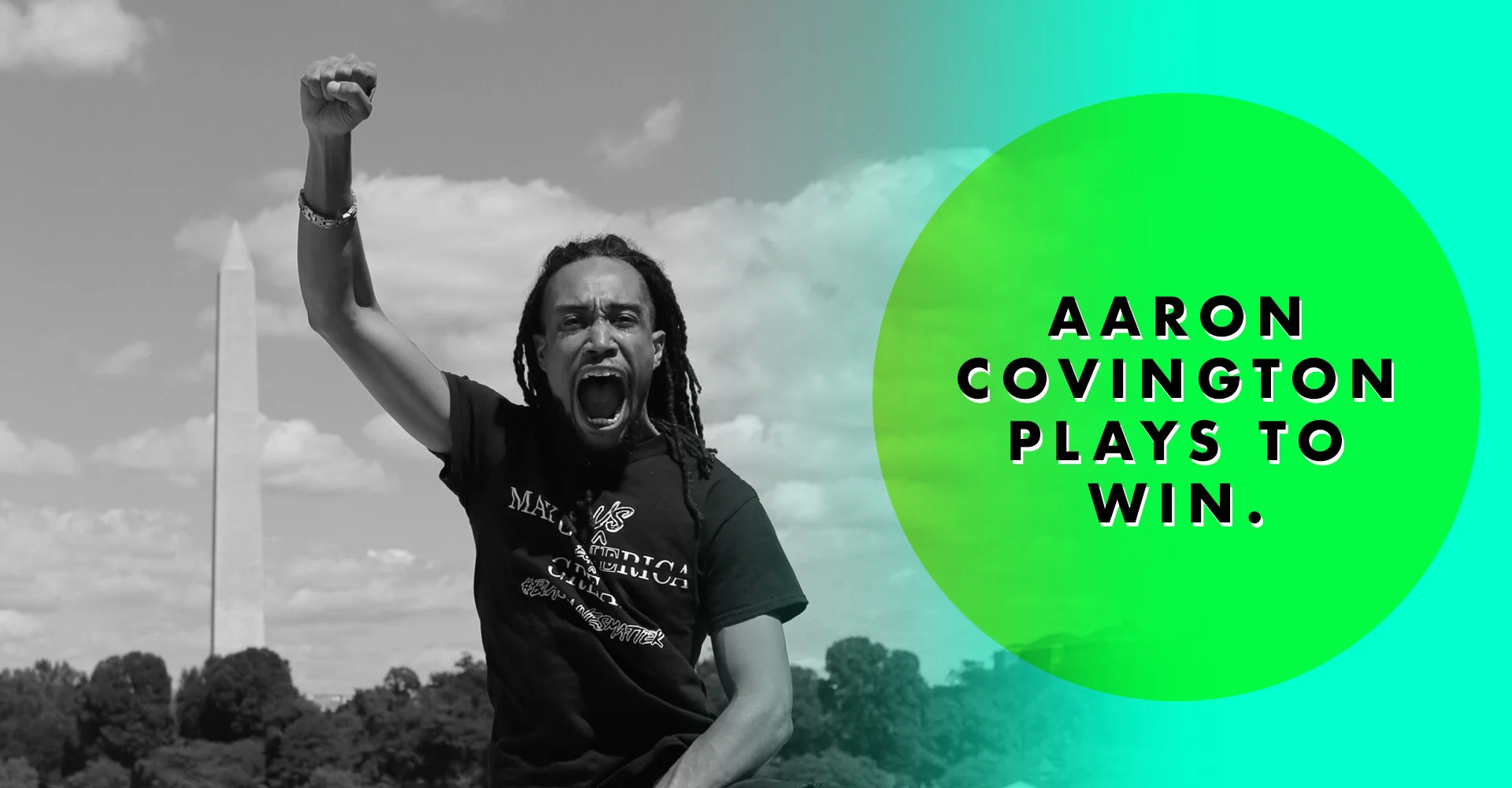
Aaron Covington plays to win

Covington at the MLK Memorial. | Photo: Kristine Jones
Aaron Covington is in it to win it. ‘It’ could refer to almost anything upon which the St. Louis native trains his technical mind, including building robots and computers, running the 400-meter dash in 45.5 seconds, or leading thousands into the streets as the co-founder of His Mission Organization. If protesting was a sport, Covington would no doubt qualify for the Olympics— something he was poised to do in track and field until he injured his leg. Covington’s injury may have ended his chances at going for the gold, but luckily it didn’t crush all of his Olympic-sized dreams.
Today, he may not be able to run as much, or as fast, as he used to, but you wouldn’t know it if you happen to catch a glimpse of him—with his fist raised and shirt off—in the streets or on the steps of the Lincoln Memorial. Covington has a runner’s physique and still looks fast, even if recently, it’s not his legs, but his mind and mouth that are running a mile a minute.
In 2015, Covington was attending Morgan State University in Baltimore on a track scholarship when Freddie Gray died of injuries sustained while in police custody. Covington says he and a friend “just wanted to find out what was going on,” and ended up joining their first-ever protest. Five years later, he took a similar approach when the streets of Washington, D.C. sprung to life in the days following George Floyd’s brutal death. On the night of May 30, Covington and four of his friends were looking for an established group to join, but found that as they marched, others began to fall in line behind them.

Covington speaking to a crowd. | Photo: Kristine Jones
“Our intentions were just to come out and be part of the crowd,” Covington says. “The five of us weren’t trying to do anything but join a march and we became a march.”
Covington admits that he was living a “party lifestyle” earlier this year, but Floyd’s death and the resulting demonstrations across the country jolted him back into fighting shape. “Everything is different now,” he says. “In the past two months my life has changed completely.”
But as any athlete knows, the road to victory is littered with both physical and spiritual hurdles—and the path to justice is much longer than the 400-meter dash. “The first time I went out and marched, I threw up 36 times,” Covington says. “I was purging my system of all the impurities. All the negativity inside me was literally coming out. But now every time I march, I can yell a little louder, I can go a little farther.”
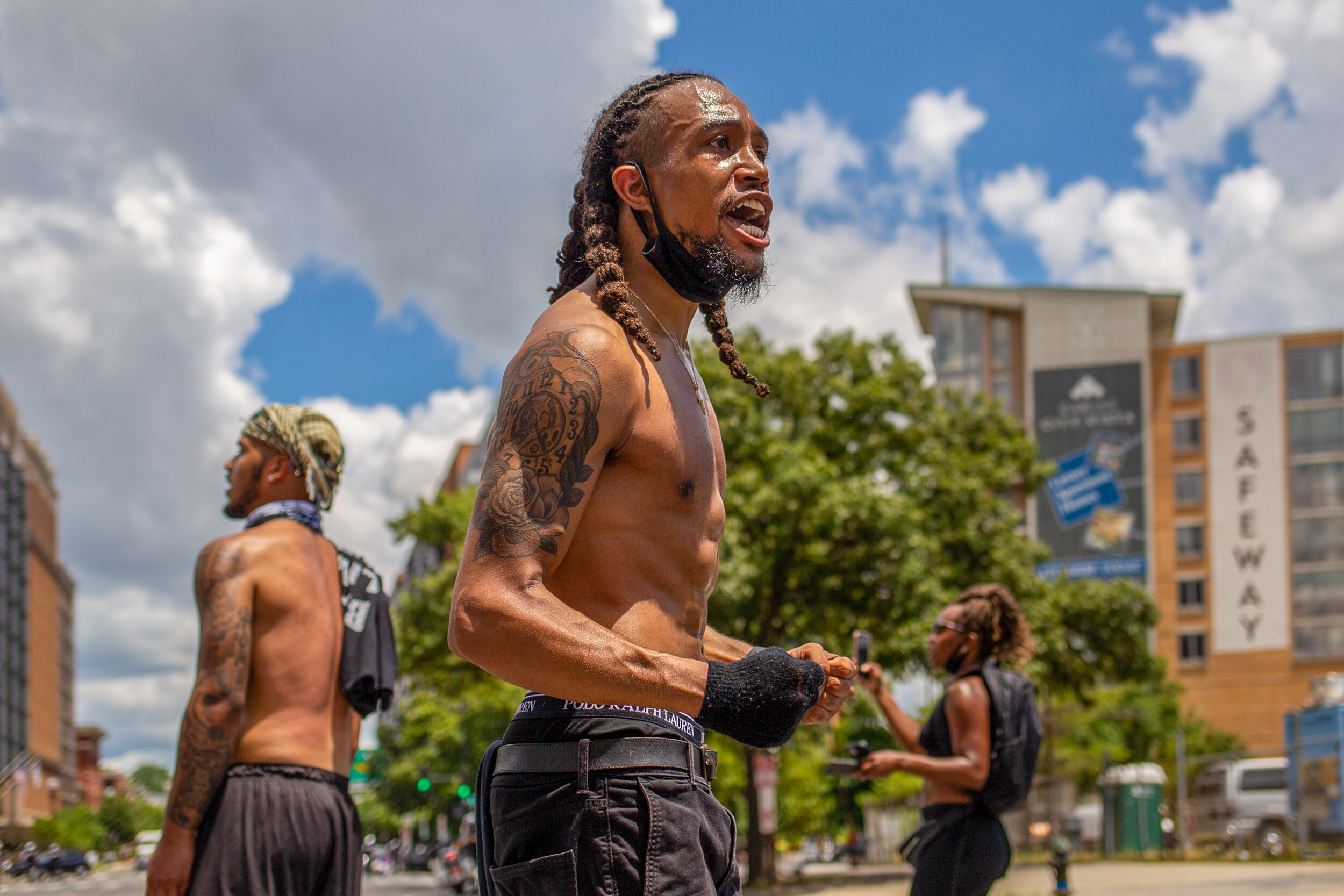
Covington leading a march.
MAKING IT WORK
Covington grew up in Missouri and North Carolina, but he just recently moved back to the D.C. area for a job, or rather he says, for three. He works in IT for an independent federal agency, is a lead commentator for all-black owned Combat Championship Wrestling (C3W), and leads protests. The last of which, despite what some may claim, is an unpaid passion project—but one that Covington takes as seriously as his full- and part-time jobs.
He recognizes that his unique CV might raise some eyebrows or appear to create a conflict of interest(s). “People say ‘You work for the government and you’re protesting?’” Covington says. “But I can do both. I’m going to fix your computer and become friends with you and then hopefully we can have a conversation.”
Covington has a way with words that goes against everything you might expect from a self-described “tech guy,” but his brain—both the creative right, and analytical left side—seems to have always fired on all cylinders. Growing up, he sang in the choir and played drums at his grandfather’s church. It was hard to hold his attention in school and he got kicked out of band after quickly mastering—and growing bored of—the three keys on his trumpet. He says he got into trouble until a prescient teacher encouraged him to learn about computers. “He said ‘If you can build a computer, I’ll let you take it home,’” Covington says. “I was sold from there. He changed my life.”

Covington wears knee pads so he can take a knee during marches. | Photo: Kristine Jones
Luckily, his hands are just as agile as his feet and Covington says he enjoys “troubleshooting and fixing things that other people don’t like to touch,” such as fragile LED screens or complicated battery swaps. “It makes me valuable,” he says. “And not many people that look like me get jobs in IT.”
Despite the contradictions, Covington slips effortlessly between his roles as both a professional and a protestor. He seems equally at ease in a collared shirt and oxfords as he does in a Black Lives Matter t-shirt and sneakers. One of his t-shirts features the phrase “Make America great” which has been altered to read “Make us equal.”
Covington may have a competitive streak, but he thinks the fight for equality is a team sport—more about the race than anyone’s particular race. “We’re all on the same team, we’re all fighting together,” he says. “I’m going to pass the baton because we have to beat these jokers to get to where we want to go. Do you want to build toward a common cause or do you want to be stuck in a rut? If you’re just thinking about yourself, you’re stuck. That’s the small picture. I tell people to look at the big picture.”

Yelling protest chants.
Although he acknowledges the importance of insisting that Black lives matter, Covington says it’s important that a lot of the people that march alongside and behind him are not Black. “We all want the same things,” Covington says. “If you ask someone who is racist ‘Why don’t you like Black people?’ They can’t even give you an answer anymore. They say, ‘We don’t even know why—it’s what we were told, it’s how we grew up.’”
Covington credits his own diverse family with showing him how equality is possible on a larger, global scale. His grandfather was Black and his grandmother is white. “If we can make it happen, everybody else can make it work,” Covington says. “We love each other equally so I know it can happen.”

Covington speaking to a crowd. | Photo: Kristine Jones
THE HEART OF THE COUNTRY
Like many Americans, Covington first came to D.C. on an eighth grade field trip. “It was the biggest deal ever,” he says. “I was the only person in my family who got a chance to go. I said ‘I’m moving to D.C. one day,’ but didn’t think I’d ever actually get a chance.”
Now that his chance has arrived, he doesn’t intend to waste it. Since the end of May, Covington, Antonio Mingo, and the other members of His Mission have led several marches through the District, drawing thousands of people—including Covington’s parents. He says his dad and stepmom had a rocky relationship but reconnected after participating in a recent protest.
“Anything can happen,” Covington says. “It’s hard to explain the feeling that you get in D.C. specifically. D.C. is the heart of our country. As soon as we stepped on the streets it was electric. With every step I took, I believed even more that we could really get change. If we change the heart, the rest of the country will follow.”

Covington bowing his head in prayer before a march.
Covington may be good at seeing the big picture, but he also recognizes the value in fostering small, individual connections. At every march, Covington and Mingo stop periodically to take a knee—both frequently wear knee pads—and Covington encourages people to exchange their name with the person to their left, and tell the person to their right that they love them. It’s a simple gesture—likely inspired by both men’s spiritual upbringings—but one that’s surprisingly effective.
“It’s one thing to hear ‘I love you’ come from a family member,” Covington says. “But if a stranger tells me and it’s genuine, that hits different. I say at the end of marches ‘Now, we’re family.’ That’s how we become brothers and sisters and protect each other.”
But after three non-stop months, Covington is looking to turn the momentum generated by marches into real, structural change. “We’re going to get away from marching,” he says. “There’s something that you’re going to get in marching that you’re not going to get in any other aspect of protesting. But we also need to be having conversations with people who are in positions of power. It might feel like you can’t access these people because of their title, but you can access these people because of their title. They’re working for you.”

President Covington. | Photo: Kristine Jones
WANTING CHANGE
If you sit anywhere near the National Mall for long enough, the conversation will inevitably turn to politics. It’s about two hours after he steps out of the reflecting pool before I ask Covington if he has aspirations to run for office in the future. His answer comes in less than two seconds: “Oh I'm going to run for president,” he says. “I don’t want to, but I’m going to run. I would seriously fight for change and want equality for everybody. I would handle things differently than any other president has. I want everybody to succeed. I would set the country up for success.”
Covington says his father never got a chance to say “I’m proud to be an American” until Barack Obama was elected in 2008—but he hopes by following his father’s advice to “keep a good name and lead by example,” that he’ll have the chance to similarly inspire other people.
“There is an American Dream that exists, it’s just not the same dream for everybody,” Covington says. “I’m not saying I’m going to be your MLK. I’m not saying I’m going to be your Malcolm X. I’m not going to say I’m an activist or a demonstrator—I’m just a person out here who wants change and I’m sick of talking about the same thing over and over again.”

Covington says he’s not trying to be the next MLK. | Photo: Kristine Jones
He may have struggled to find his footing in high school, but Covington has become a diligent student who repeatedly stresses the importance of “doing your own research.” Since assuming a leadership role, he has studied similar movements and leaders throughout history, intent to not repeat their mistakes.
While he strikes a pose under the granite gaze of MLK Jr.—whose extramarital affairs still cast a long shadow on his reputation—Covington says he’s “100% single,” and immediately produces photos of a Shiba Inu named Castiel, who he alternately calls “my handsome young man,” and “my son.”
On August 28, five days after he celebrated his 27th birthday, Covington got a chance to talk with MLK’s granddaughter Yolanda, his son, Martin Luther King III, and Reverend Al Sharpton at the Commitment March on Washington. Sharpton told Covington and his friends, “I’ve been watching you guys, keep up the good work.”

Covington and Mingo at the March on Washington. | Photo: Kristine Jones
FIST UP
I’ve joined several marches led by Covington and I can confirm that he is indeed doing good work—and it’s working. Everyone wants to join the winning team and Covington’s commitment is contagious. Although he’s used to pushing past them, Covington recognizes that there are limits to his influence.
“You can’t force someone to agree with you,” he says. “I’m going to tell you what I believe is right but I’ll never tell you what’s wrong. I want you to draw your own conclusions. I tell people ’I’m not trying to change you, I’m trying to change the way you think.’” Covington frequently shakes hands with receptive police officers and encourages them to join him in taking a knee. He understands the motivations behind so-called “riots” and “looting,” but tries to keep his protests civil. He likens aggressive, headline-grabbing moments to “bugs on a TV screen,” and once again says how important it is to focus on the big picture and remain open to new ideas.
“If you’re not teachable, you can’t teach anybody else,” Covington says. “You have to be able to sit down and learn from somebody else before you can give to anybody else. And don’t start chanting something if you can’t bring me a solution afterwards.”

Covington in the reflecting pool. | Photo: Kristine Jones
Although it was a physical setback that forced Covington to reevaluate his life goals, “It’s all about this up here,” he says, pointing to his head. “It’s a mental game. If you get this right, your legs will take you the rest of the way.” He’s talking about running track, of course, but I suspect he feels the same about protesting. When I ask him what he would say to those looking to get involved, it’s no surprise that his advice could apply to those looking for a physical transformation as well as a spiritual one.
“Just take that first step,” Covington says. “I walked outside, stuck my fist up, and started walking. And people fell in line. I didn’t come back the same way I left—I came back with power. I came back with people. I went down the street as an individual, but I came back with unity.”
This is a crucial moment in history; we have a real opportunity to rebuild and restructure our society to be more equal, more just, and more habitable for all. In an attempt to better understand what motivates and inspires fellow activists, I’m profiling people and how they’re trying (in ways both big and small) to make the world a better place. If you know someone I should profile, let me know (maybe it’s you!?). You can see all of the profiles here.

Women's March 2017
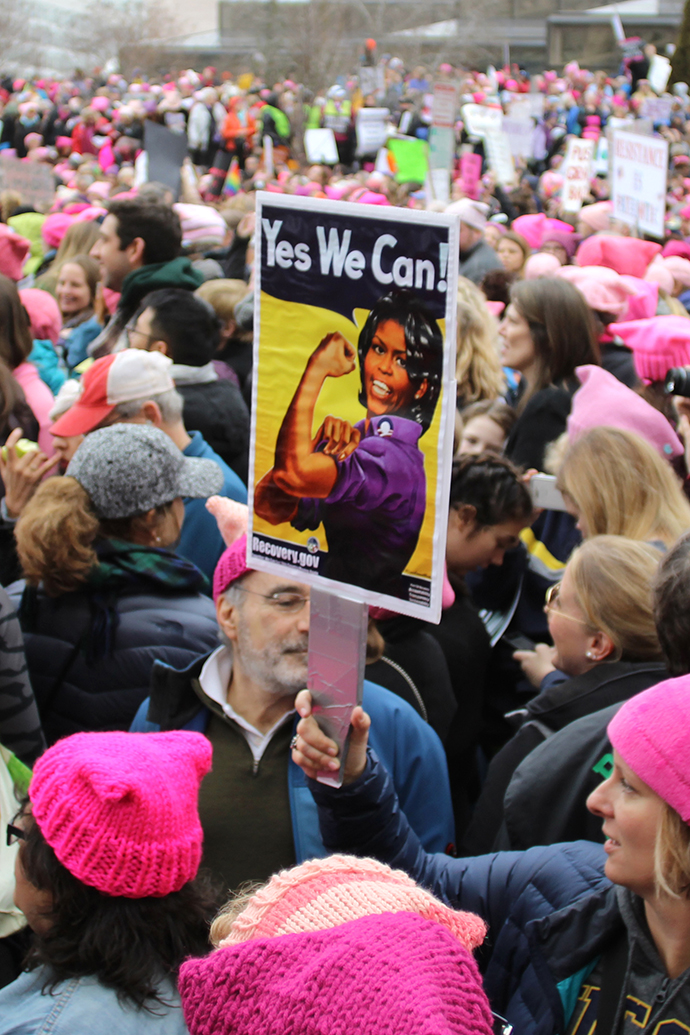
At 12:30 am on Saturday morning I boarded a bus in New York with my friend Carli, headed to Washington D.C. for the Women's March. The Women's March came about after the election, and while the main one occurred in Washington, there were sister marches all over the country and the world—in what will probably turn out to be the largest protest ever. The march's stated mission was that "We stand together in solidarity with our partners and children for the protection of our rights, our safety, our health, and our families—recognizing that our vibrant and diverse communities are the strength of our country."

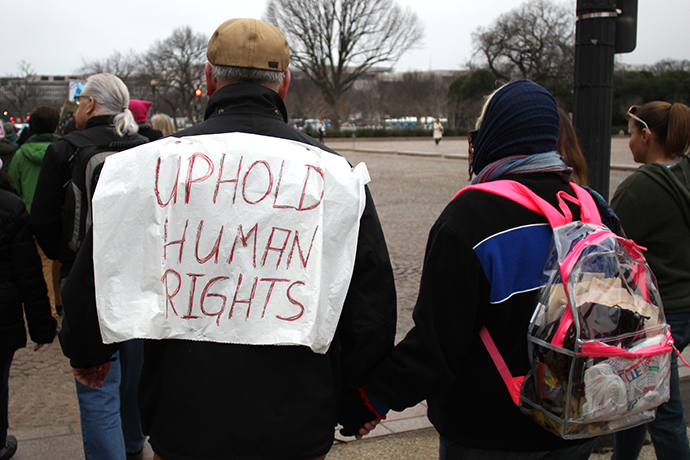

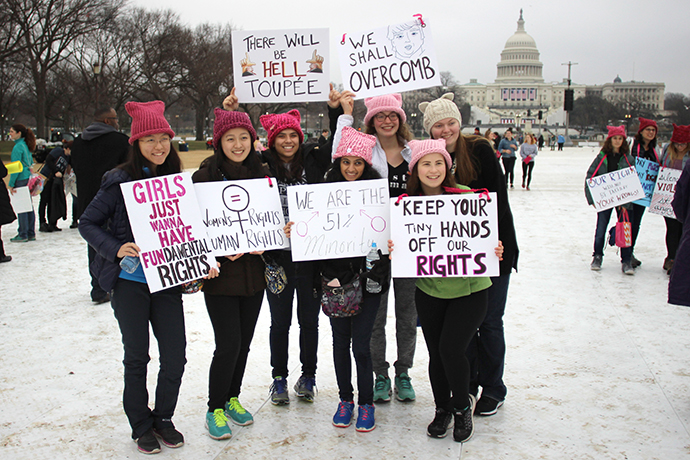

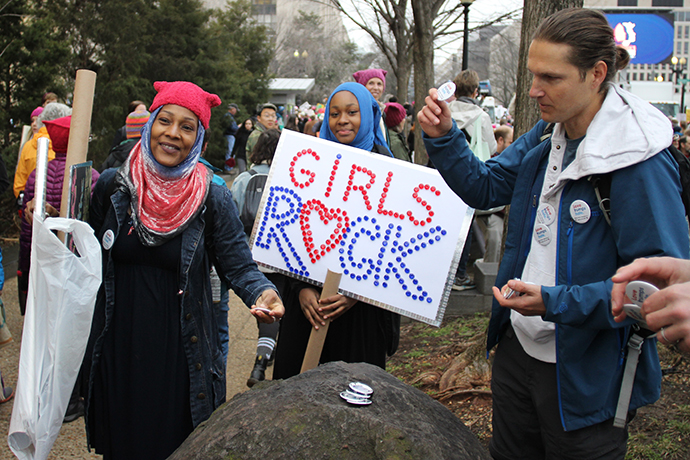


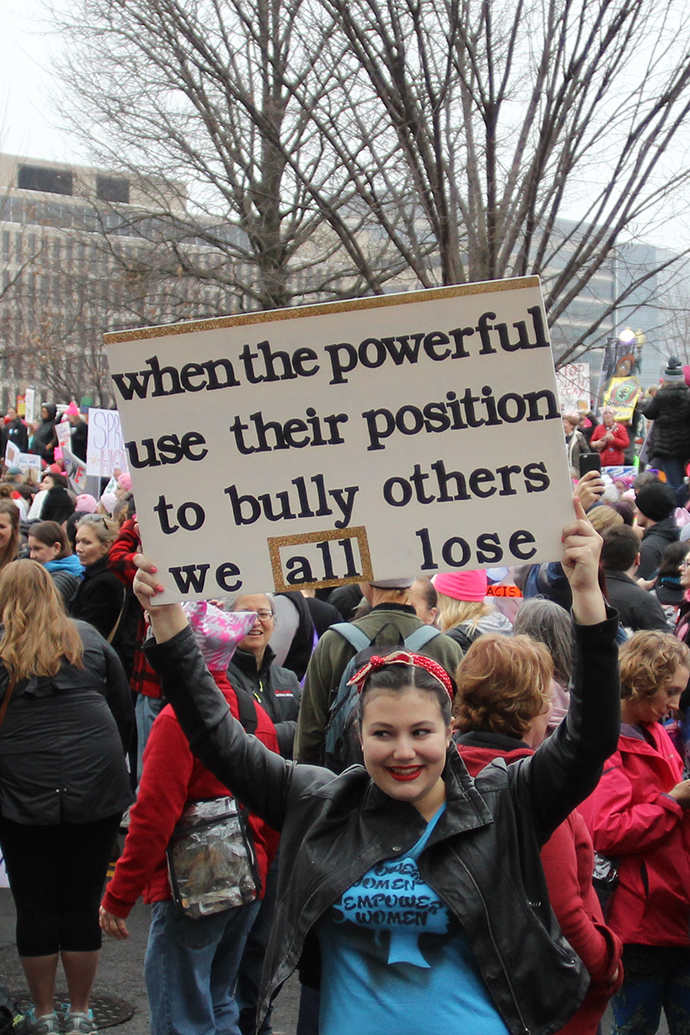

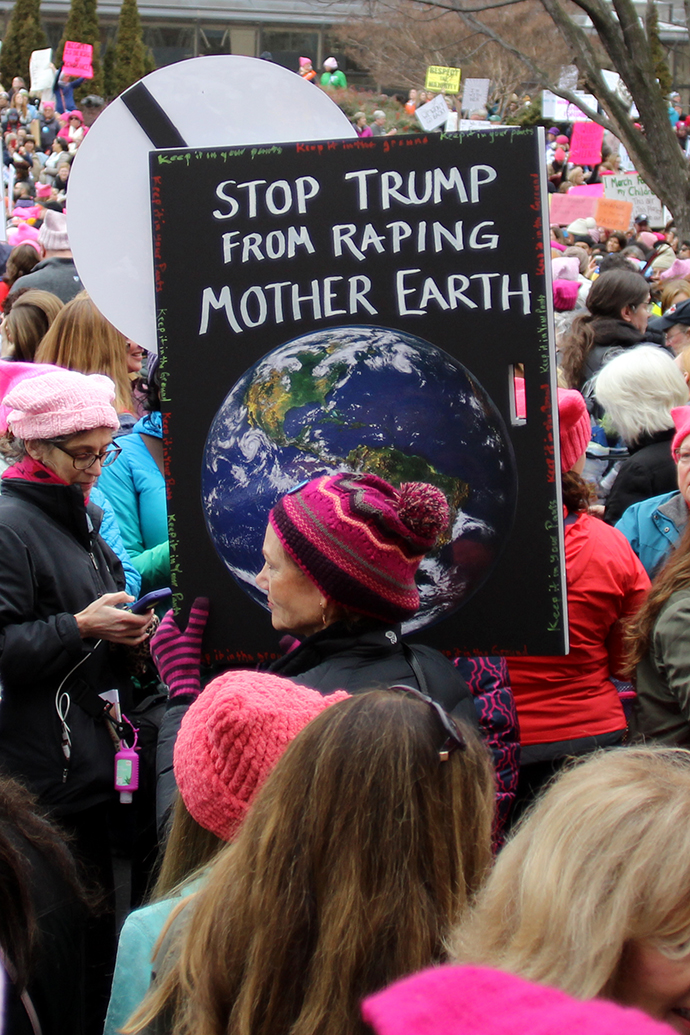
After the election I was depressed and terrified, but motivated to do something. When Carli gave me the bus information, it wasn't long before I had booked a ticket. Although I wasn't looking forward to the long hours and early departure time, I knew I wouldn't regret it and that it was the least I could do as a concerned and able-bodied citizen. I's difficult to put into words just how moving and incredible Saturday actually was—and the march far exceeded even my high expectations.
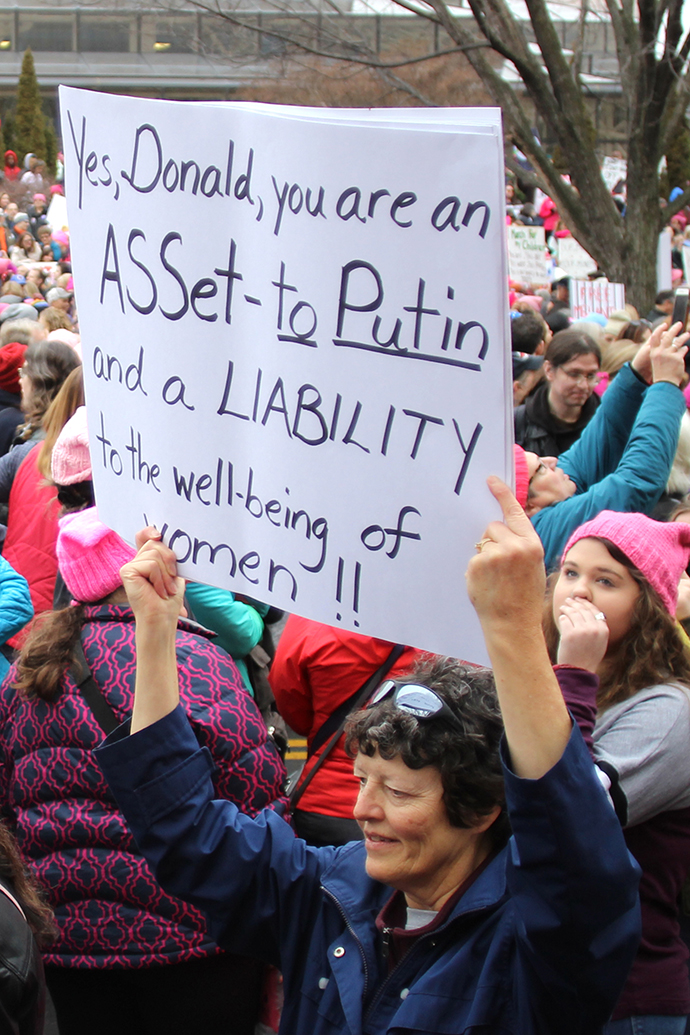
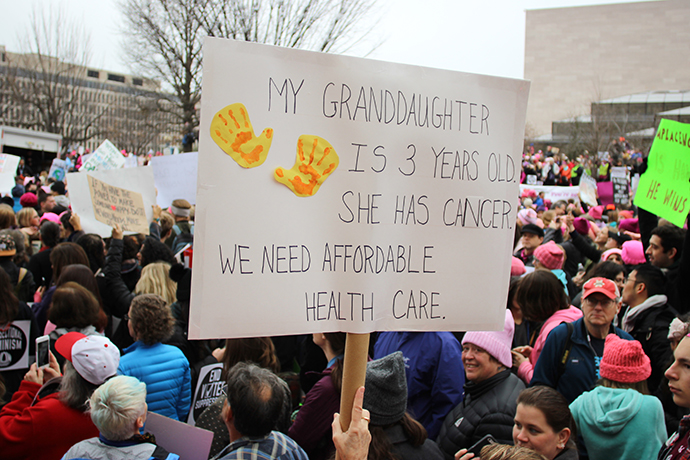

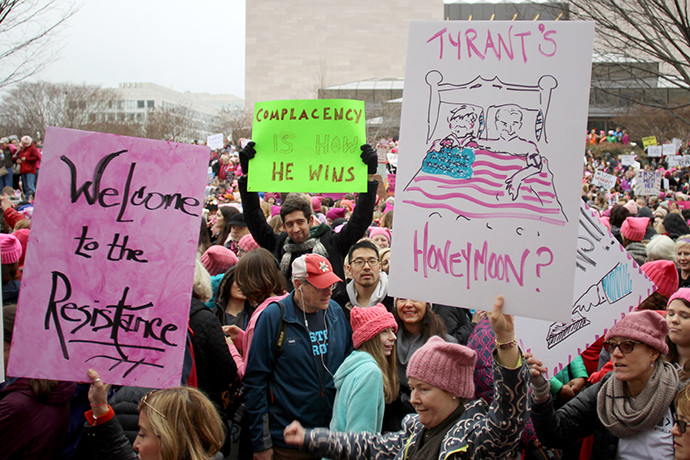
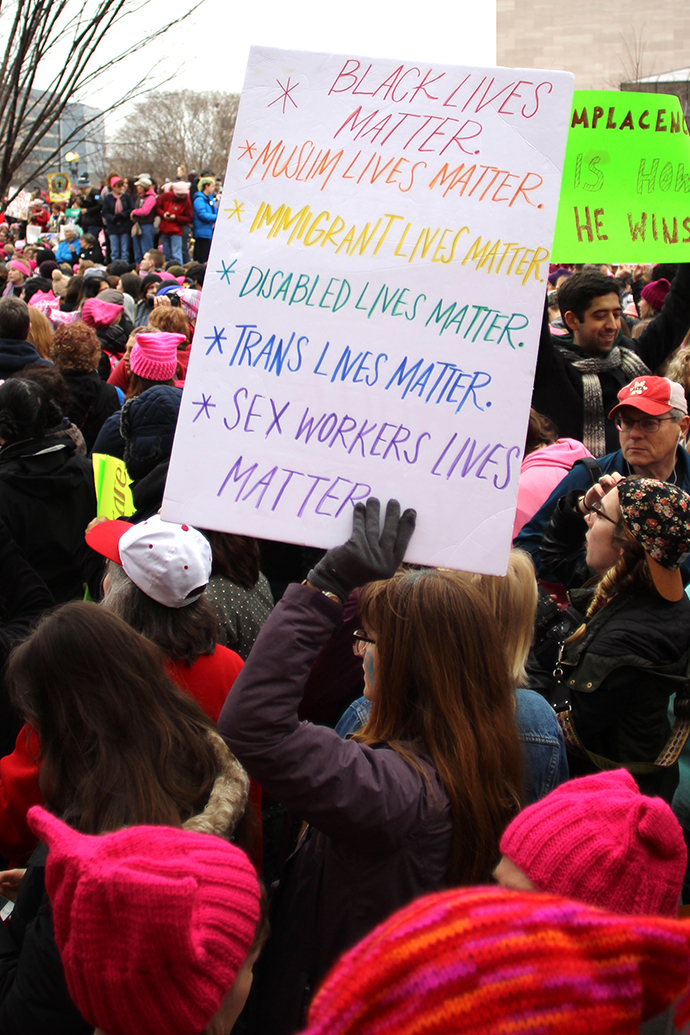
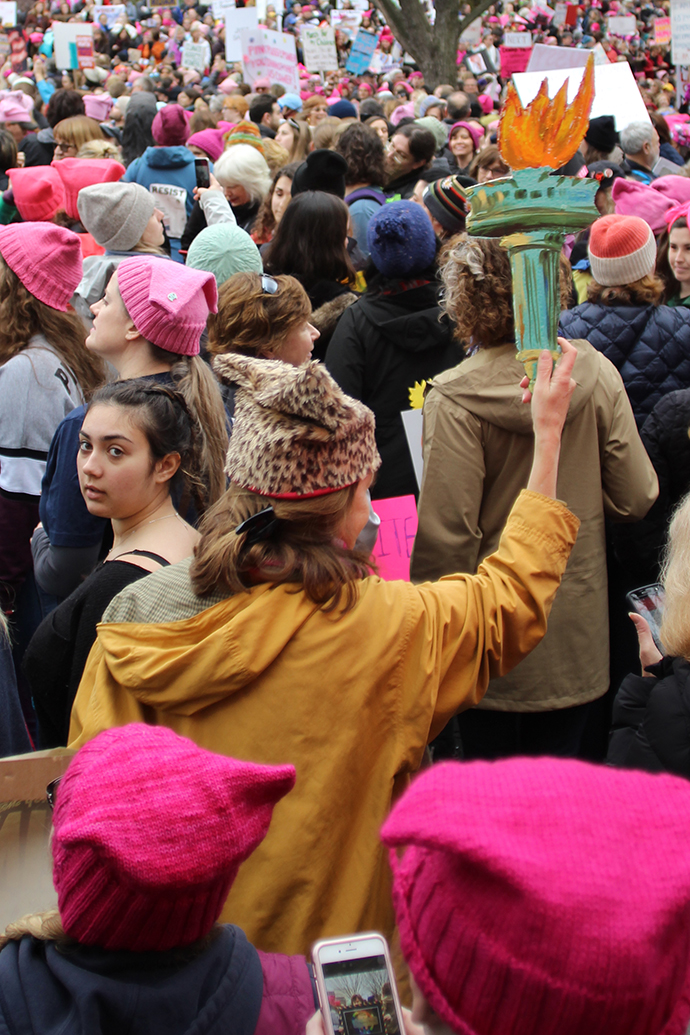
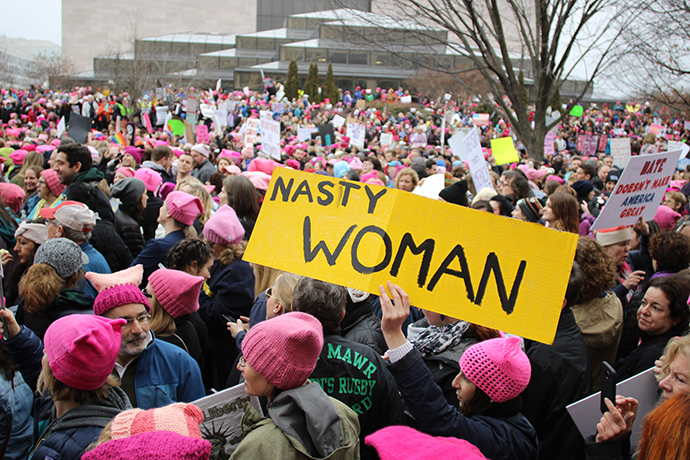
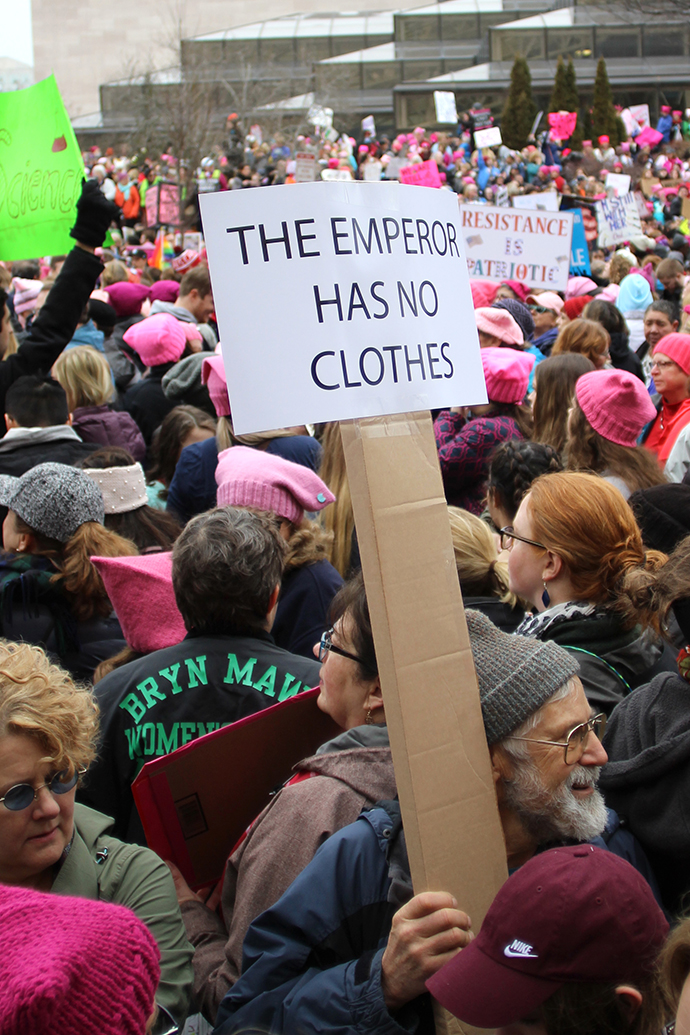
We'll probably never know exactly how many people descended upon Washington the day after Donald's Trump's inauguration (I've seen estimates from half a million to well over a million), but it was significant, historical and mind-boggling. As a participant, I never felt unsafe or wary of the large crowds, and the march was the very epitome of peaceful resistance. In D.C., there were zero women's march-related arrests—a remarkable fact that shouldn't actually be surprising, but should serve as an example of how smoothly things run when women (and responsible, caring men) are in charge.

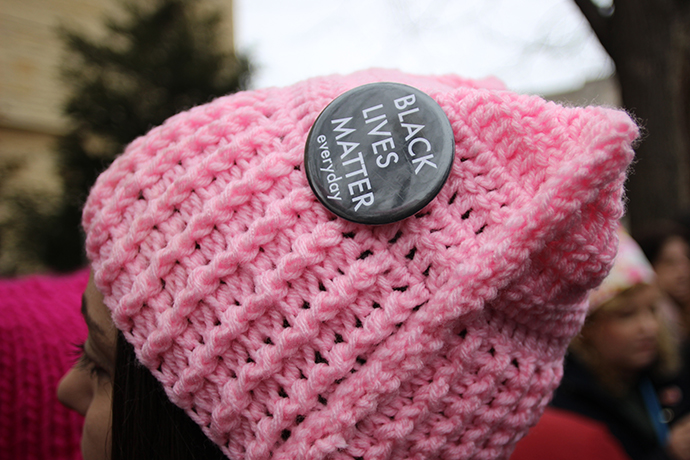
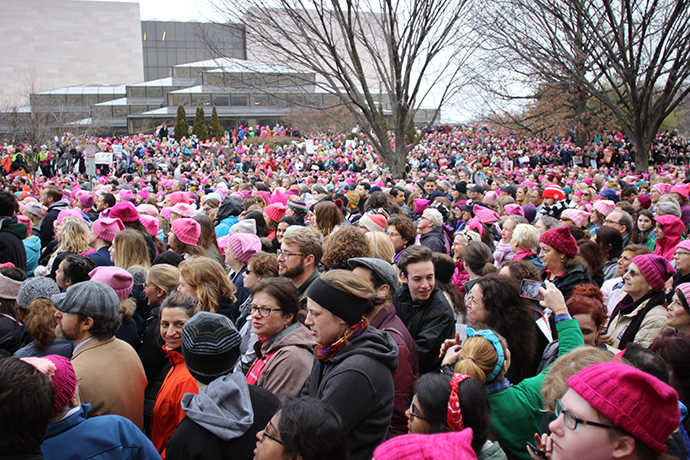

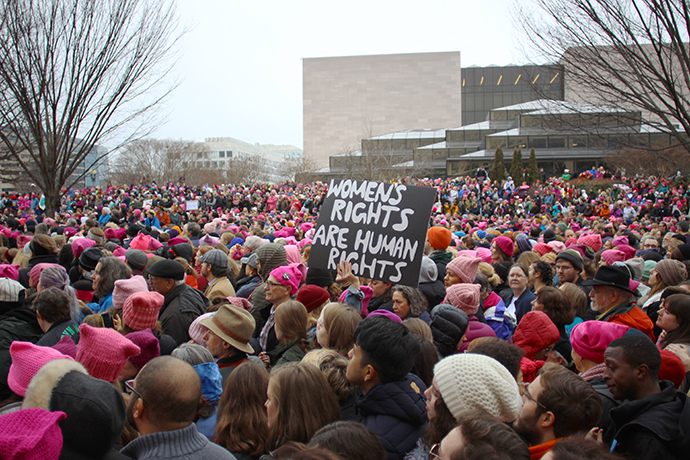


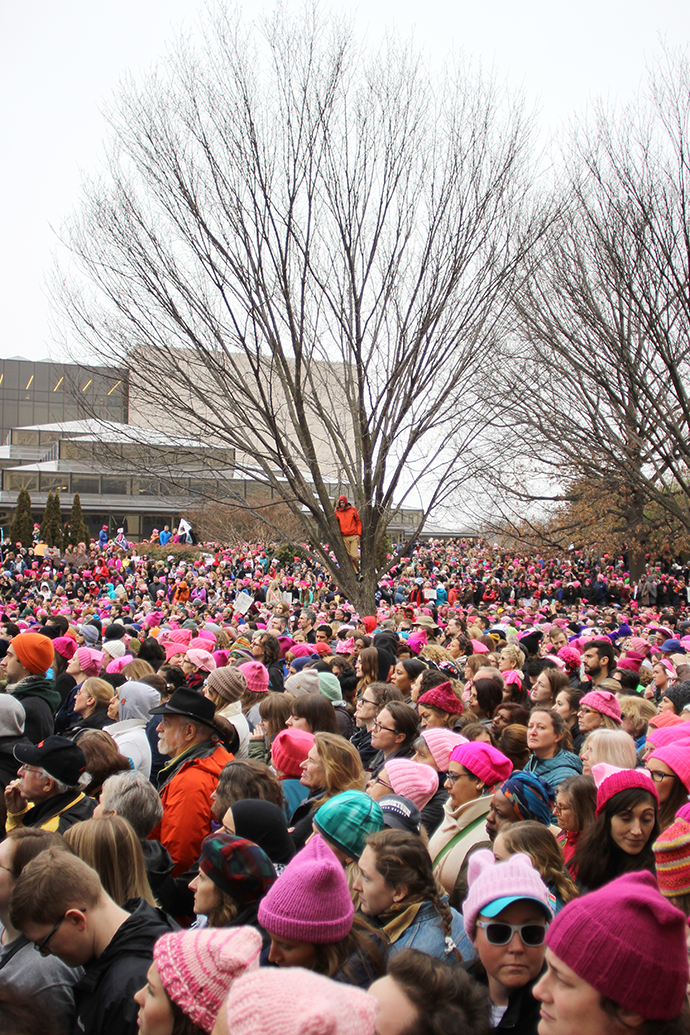
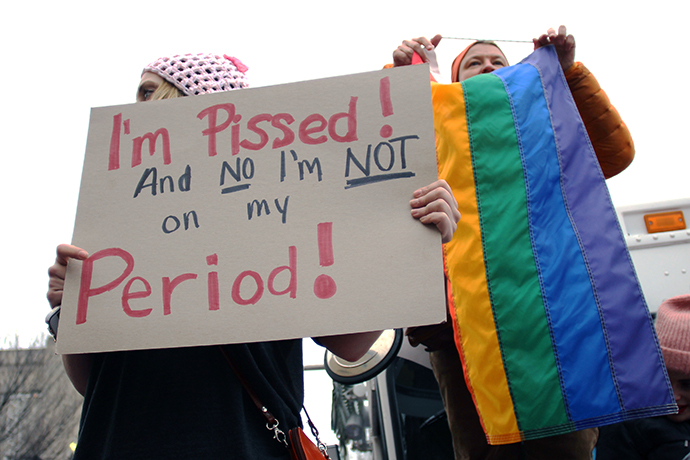

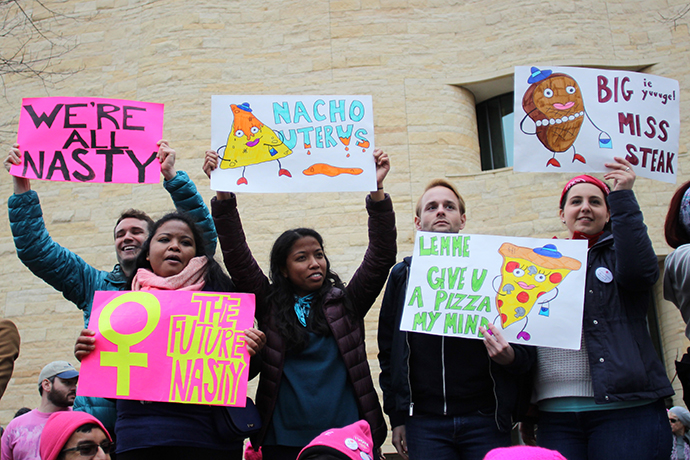
The rally was a bit long and marchers started getting antsy, but there were some incredible speakers—Gloria Steinem, Michael Moore, America Ferrara, Ashley Judd, Scarlett Johansson, government officials and so many inspiring women of all faiths, ethnicities and ages. Seeing Gloria Steinem was a particular highlight, and I can only hope to be a fraction as graceful, intelligent and inspiring as she is when I'm 82 (!).


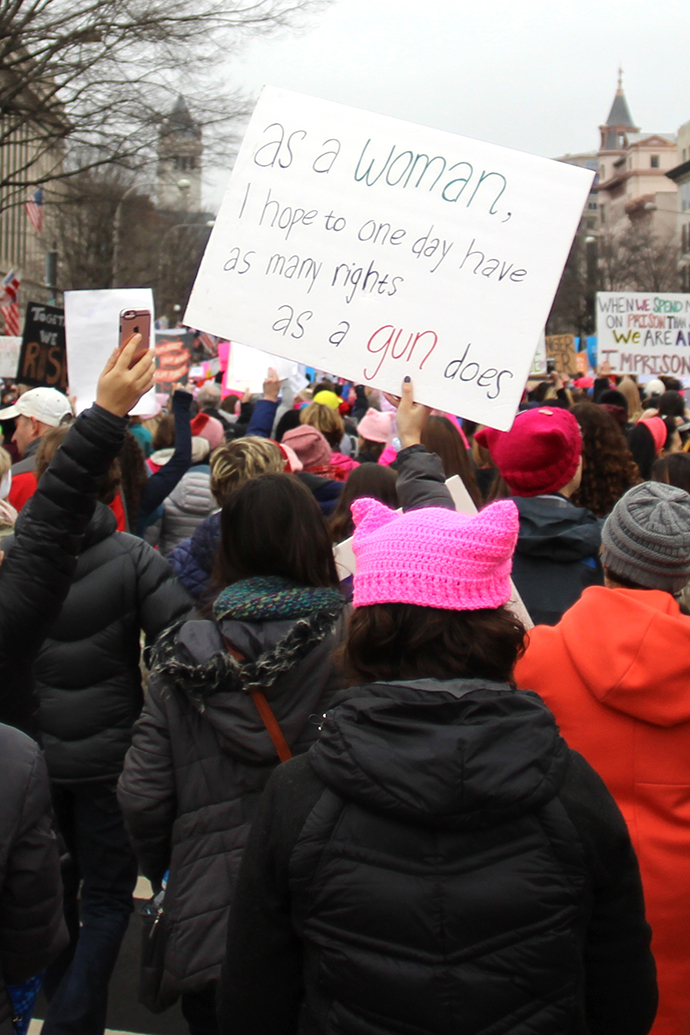

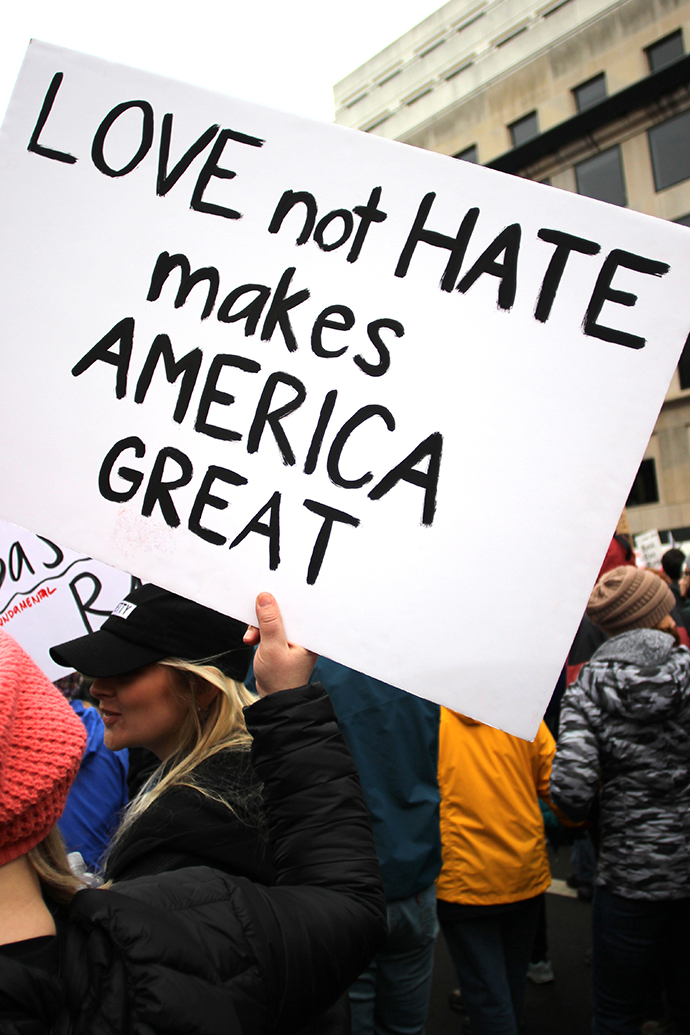



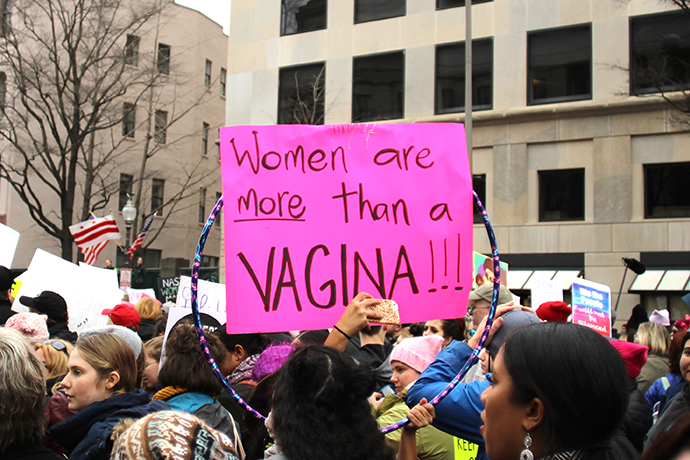
I didn't make a sign because I wanted to have my hands free to take photos, but the signs were undoubtably top-notch. There were so many inspiring (and hilarious) messages of hope, strength and solidarity—spoken, written and demonstrated. When we finally did march, past the Capitol and towards the White House, we chanted "We won't go away! Welcome to your first day," "This is what democracy looks like!" and "We need a leader. Not a creepy tweeter!" We booed as we marched past the monument to conflict-of-interests, Trump International Hotel (and one American Hero shouted "FREE MELANIA!" as she thrust her fist toward the sky).



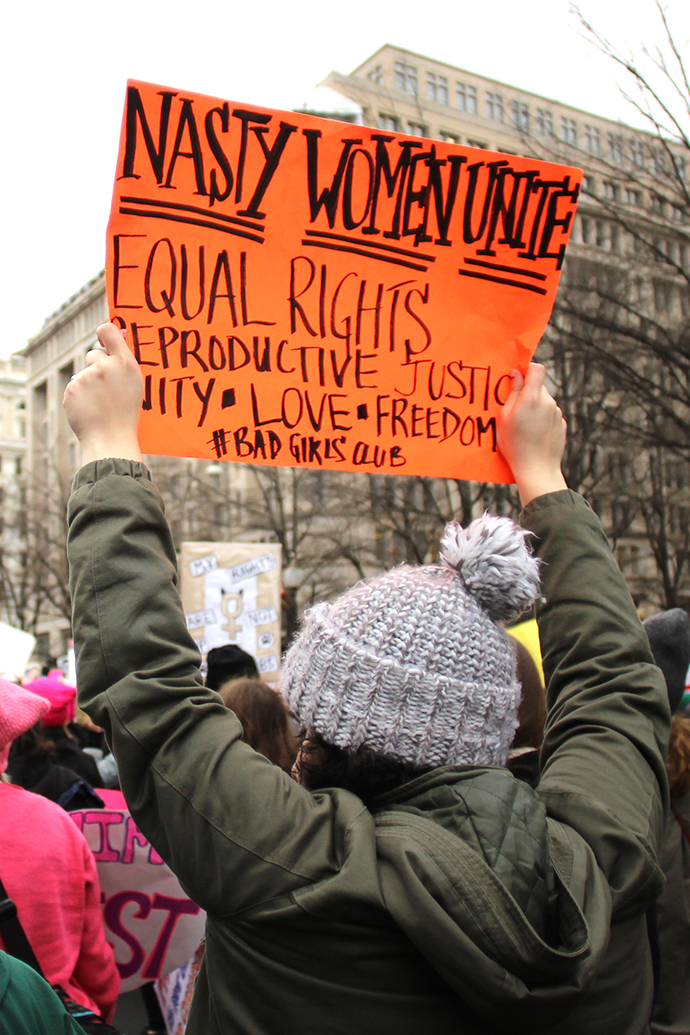




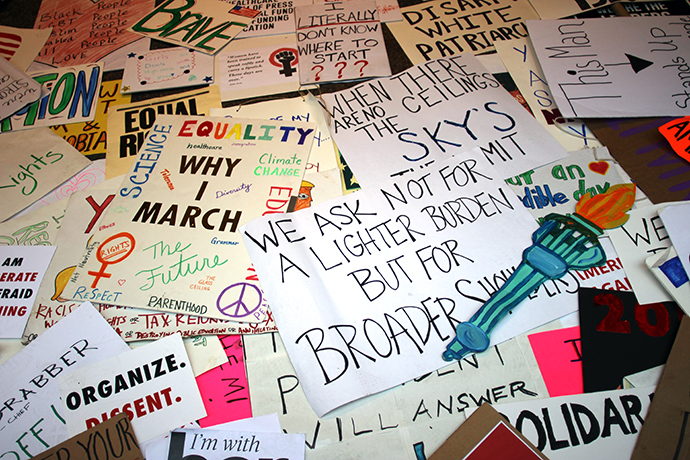
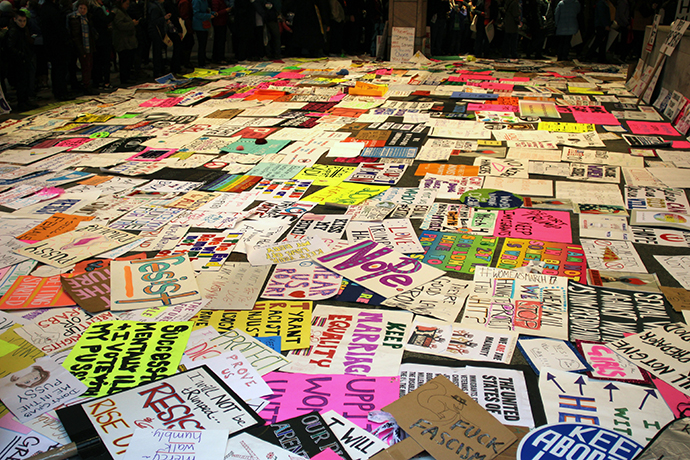

Trump may not have been in the White House as the people overwhelmed the streets outside of, and around it, but we did not go unheard. This is only the beginning of Trump's presidency and its assault on human decency, empathy and integrity, but the Women's March was only the beginning of the resistance.

MLK
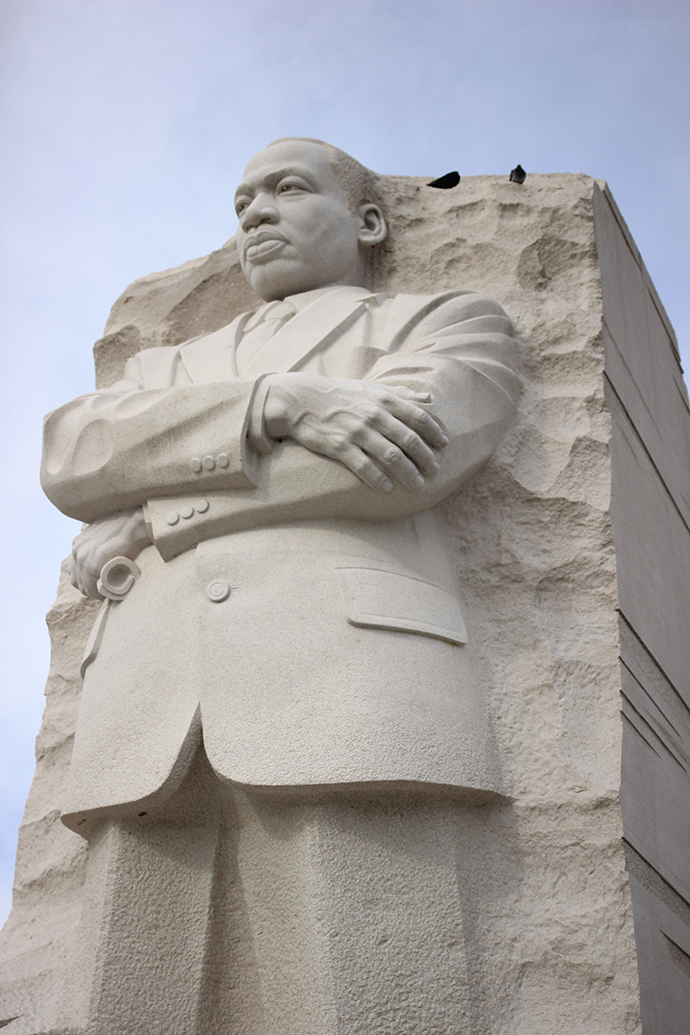
The words and actions of Martin Luther King Jr. are always relevant, but they seem even more vital today. Just two days ago, our President-elect attacked civil rights hero John Lewis, saying—about the man that had his skull fractured by the police after marching in Selma—that he's "all talk, talk, talk - no action or results."
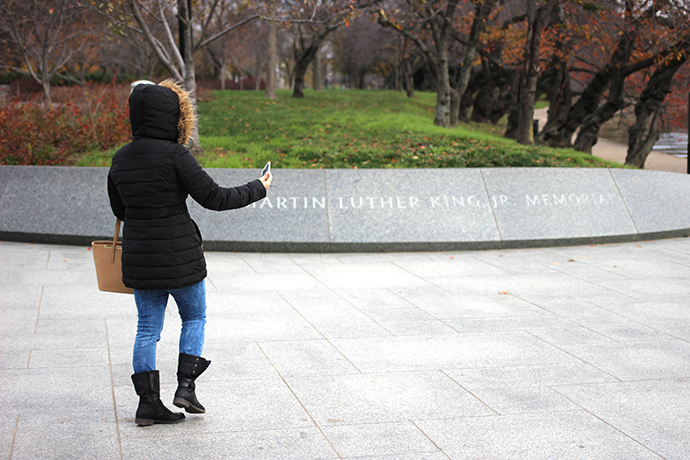
In November of 2015, I saw the MLK memorial in Washington DC for the first time and was awed by its scale, simplicity and the words of MLK himself. The memorial, dedicated in 2011 is the first on the National Mall to honor an African American and only the fourth to honor a non-president. The inscription on the monument proclaims "Out of the mountain of despair, a stone of hope," a reference to a line in one of King's speeches, “With this faith, we will be able to hew out of the mountain of despair a stone of hope.”
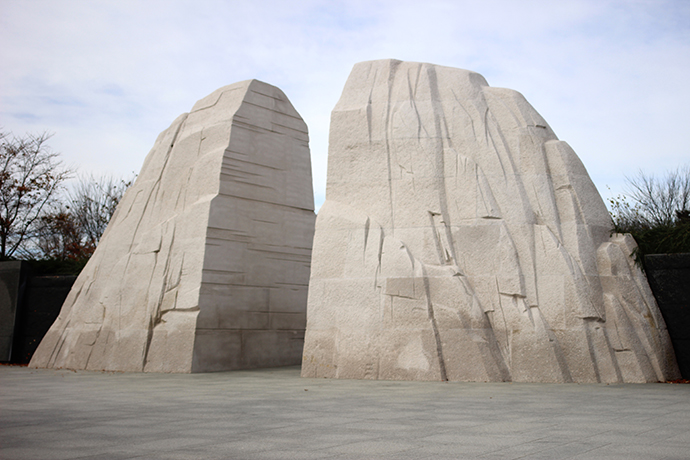
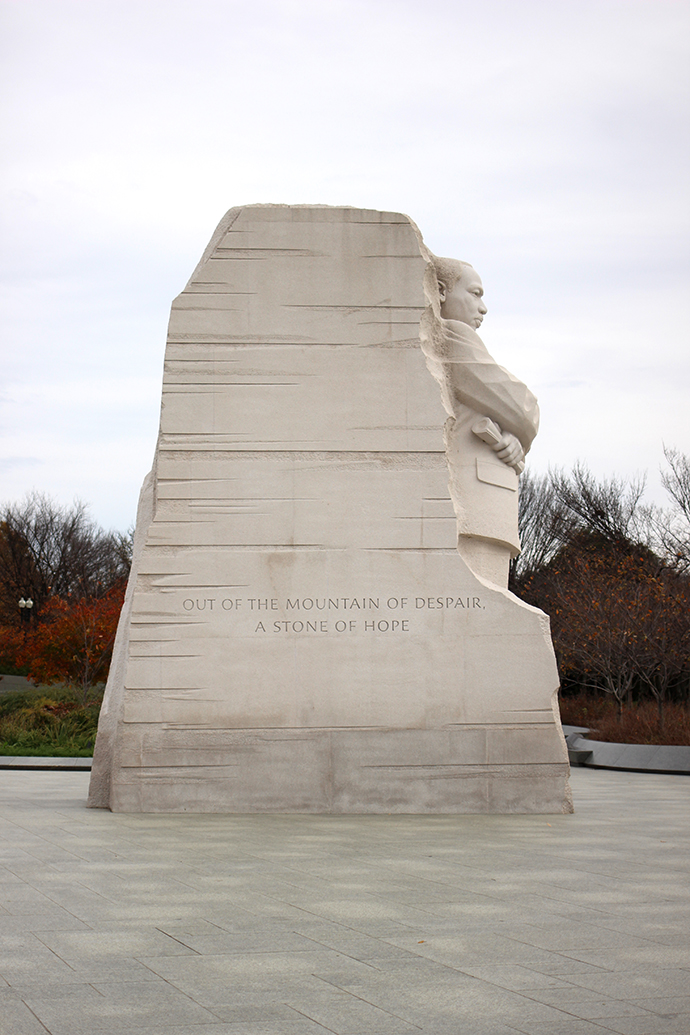
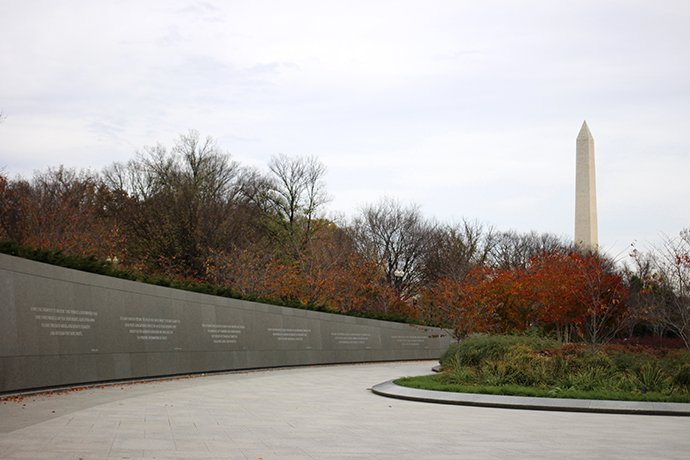

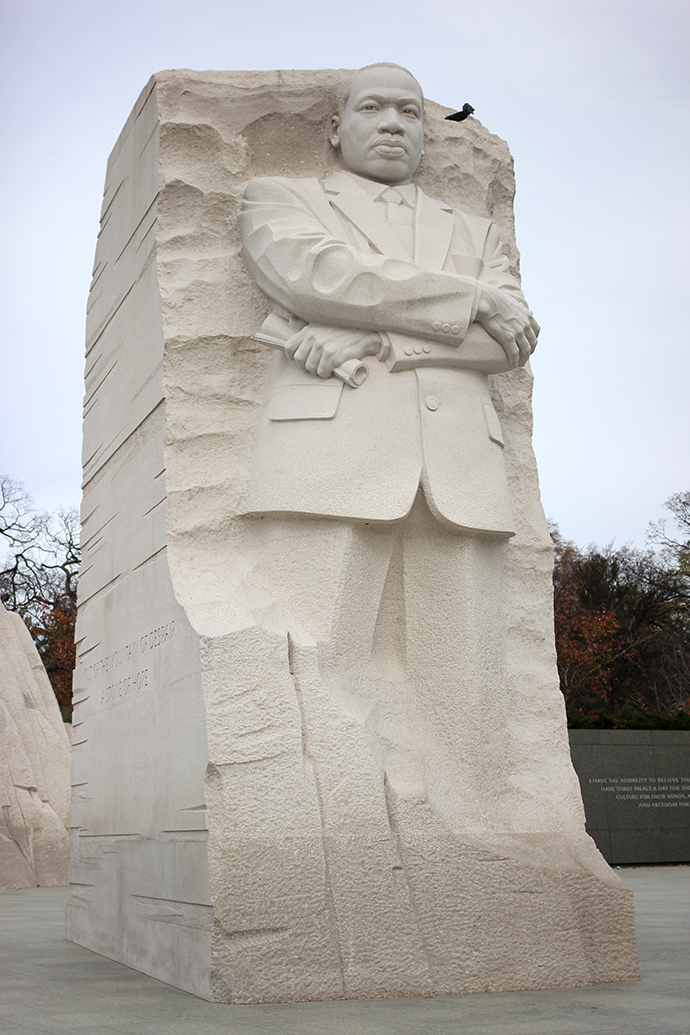
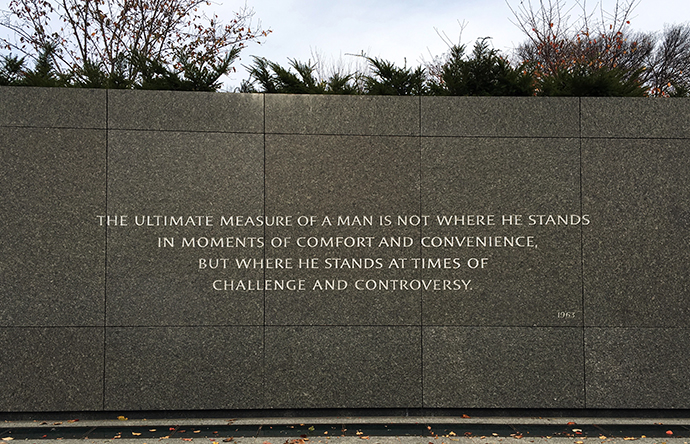
"The ultimate measure of a man is not where he stands in moments of comfort and convenience, but where he stands at time of challenge and controversy," has stuck with me since I visited the memorial, and seems especially important today. Next weekend, I will return to DC for the Women's March, searching for a stone of hope in these times of challenge and controversy.

Rock Creek Cemetery: Part Two

In addition to all of the wonderful bronze sculptures at Rock Creek Cemetery, there were many wonderful old headstones, mausoleums and other treasures. I love that no matter how famous or unknown a cemetery may be, I can always find interesting, historical or strange things to delight in.


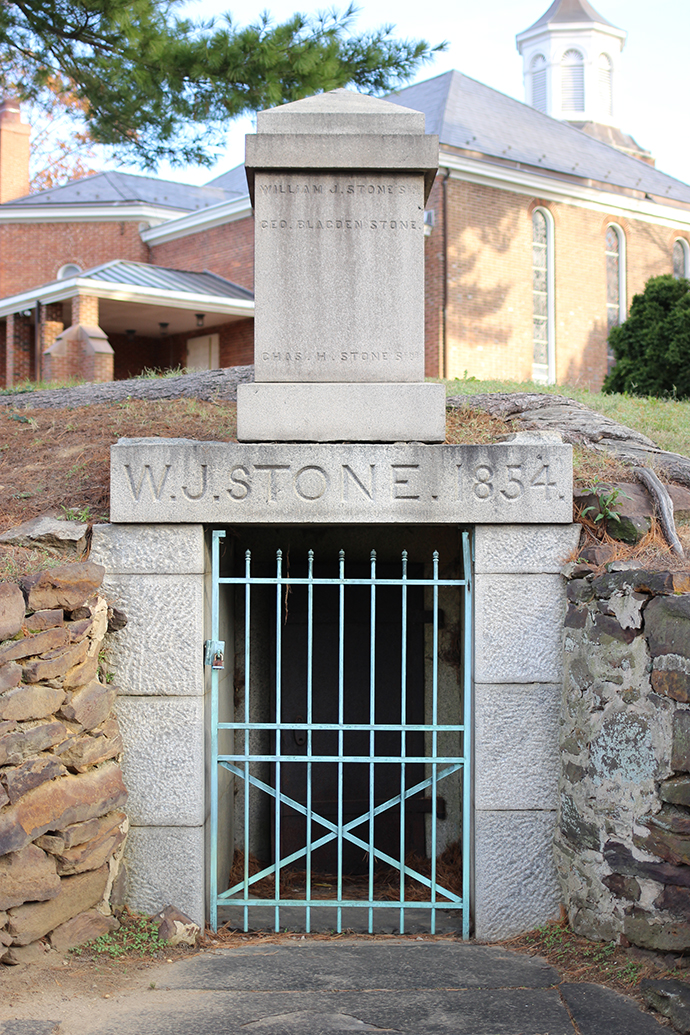

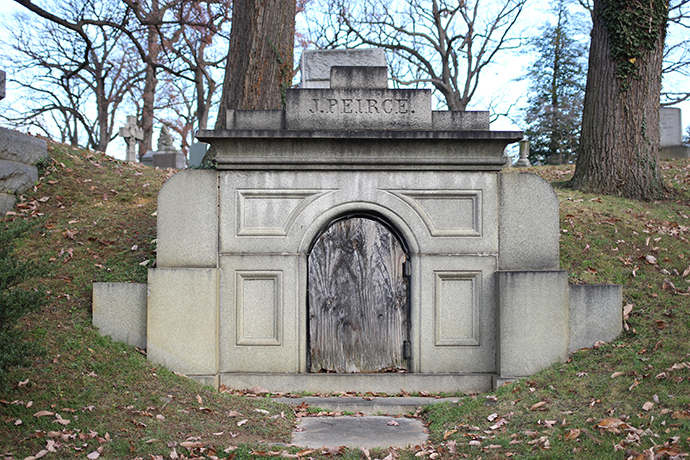
I'm always surprised when I come across mausoleums that only have gates, instead of heavy stone doors. Rock Creek is close to Washington DC, but not right in the city—I think I'm so used to places like Green-Wood, which are very well-kept and buttoned-up, that it throws me to be able to freely see inside of any mausoleum.


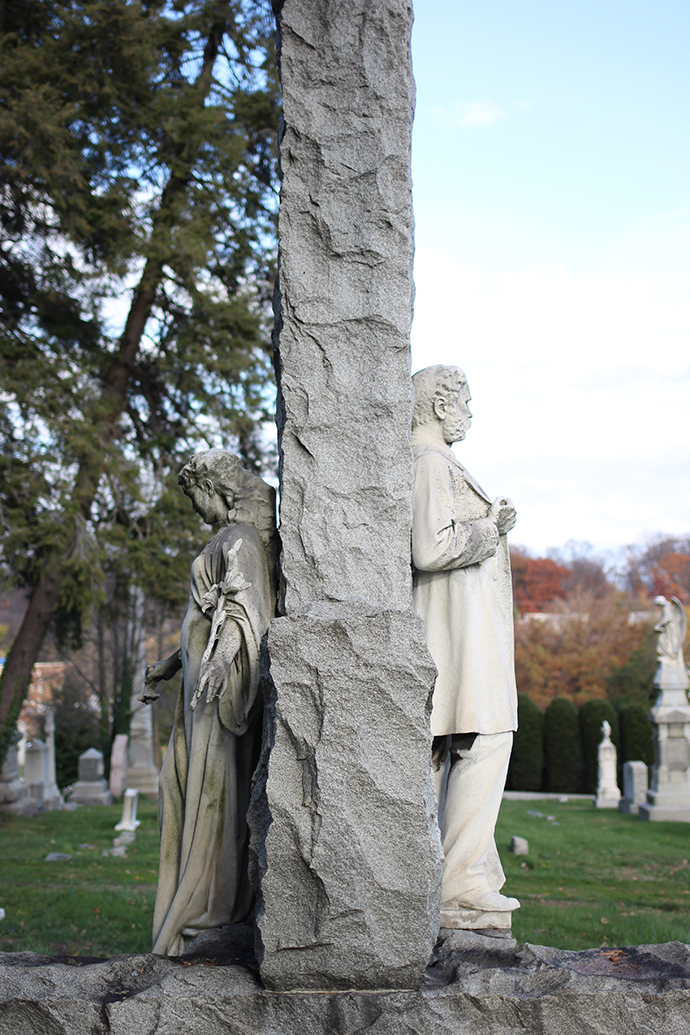



We found a lot of wonderful stone sculptures to complement the bronzes, including a few men and a lot of really unique representations of specific people. The creepy nun was definitely a favorite of ours, and we ended up circling back to her a few times.


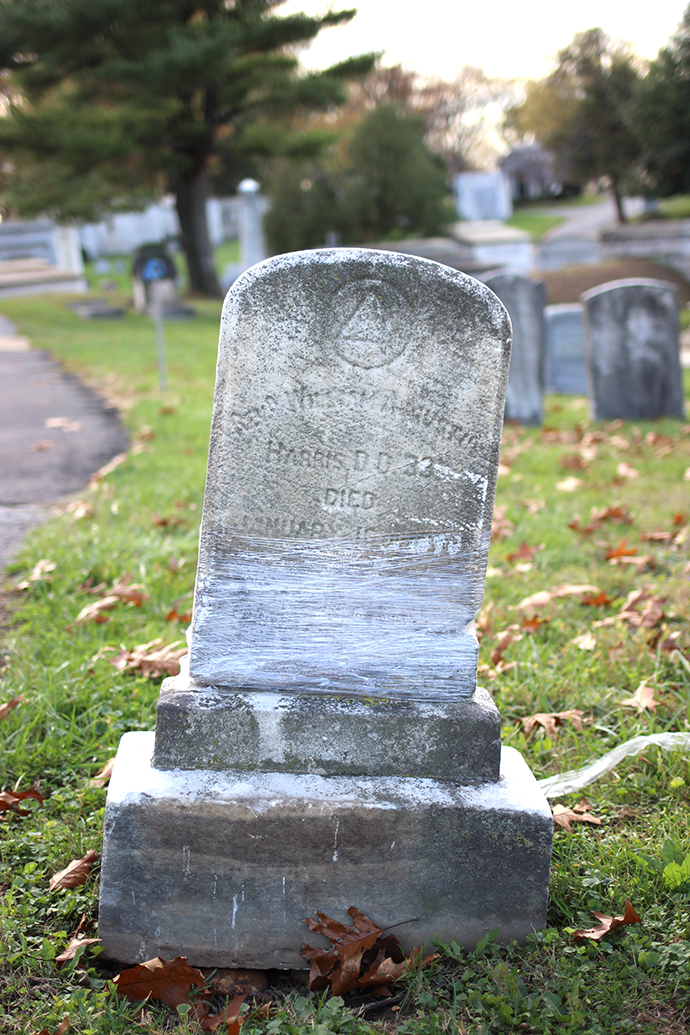

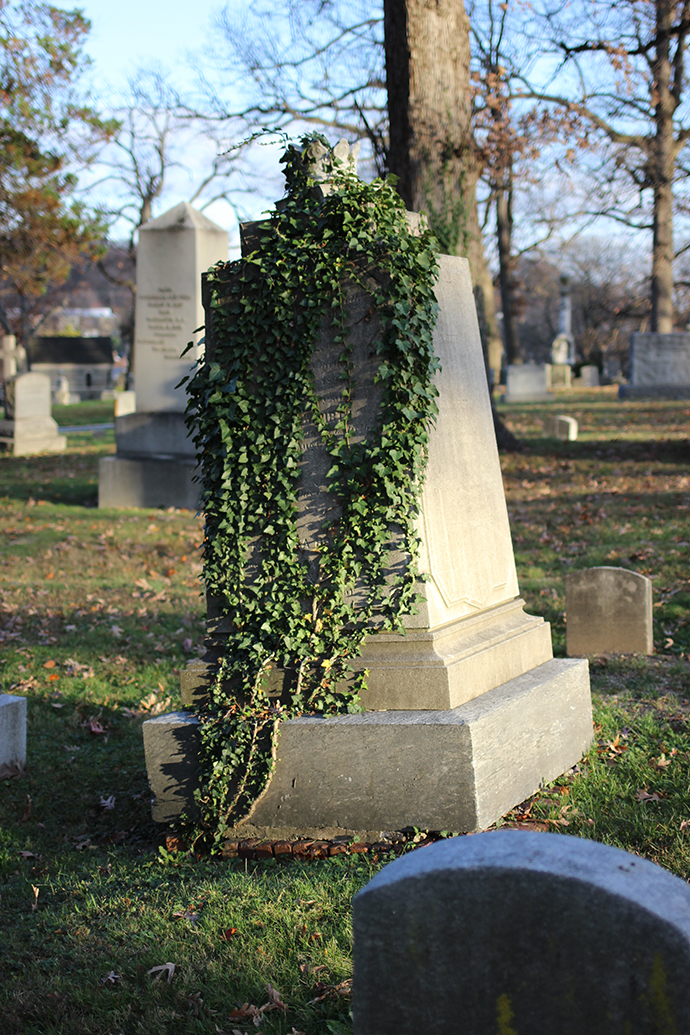


We visited Rock Creek in November, and luckily there were still a few leaves in their full fall glory. Of course I love cemeteries in all seasons, but nothing really beats the fall. The late afternoon light was just perfect, and I've never met an ivy-covered headstone that I didn't love.
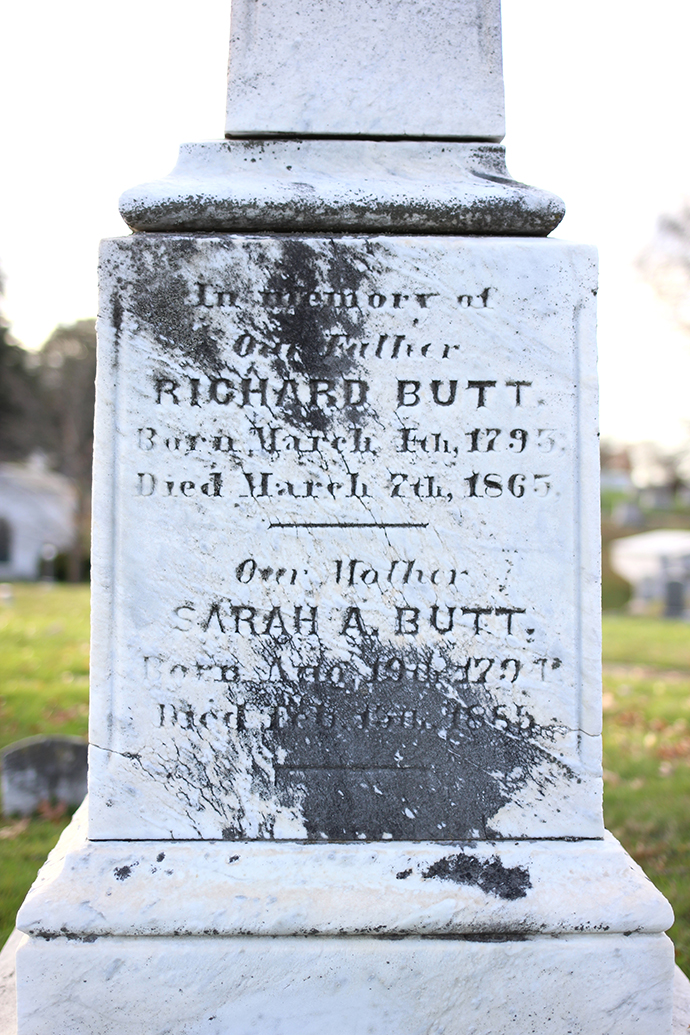
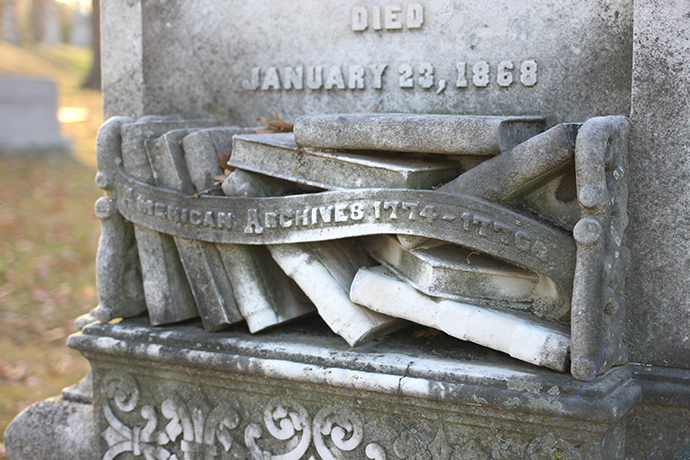
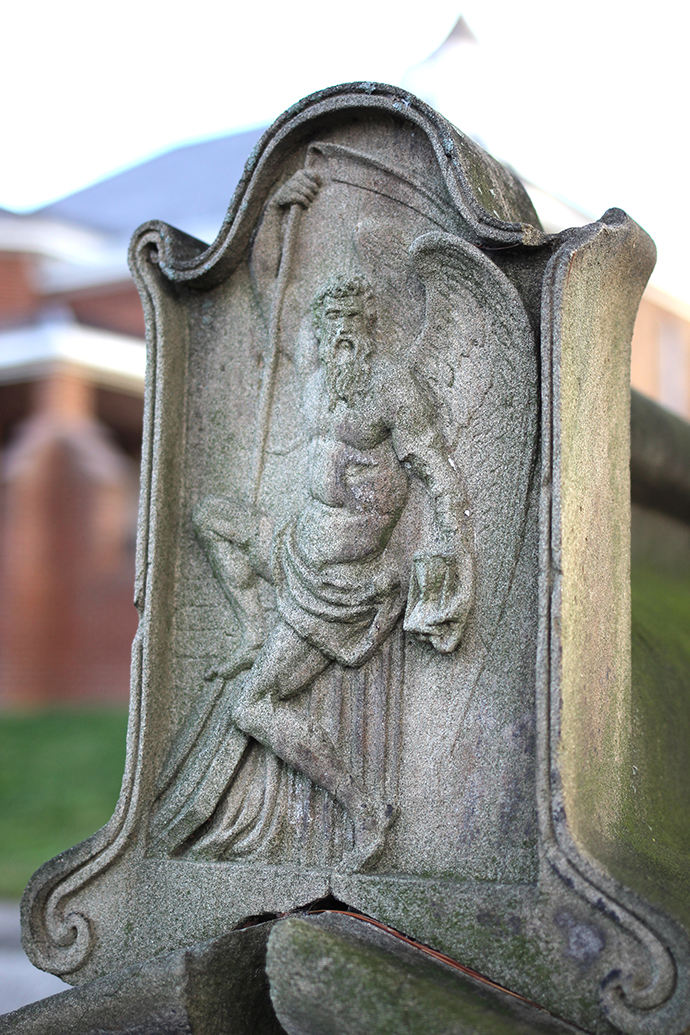
In every cemetery I visit, I usually find a few things that really stand out and stick with me long after I've gone. I hope we're forgiven, but we cannot be the first people to visit Rock Creek and laugh upon seeing Richard Butt's headstone. I very much identified with the bookshelf stone, and I loved the scythe-and-hourglass-carrying angel that managed to be both ominous and beautiful at the same time.
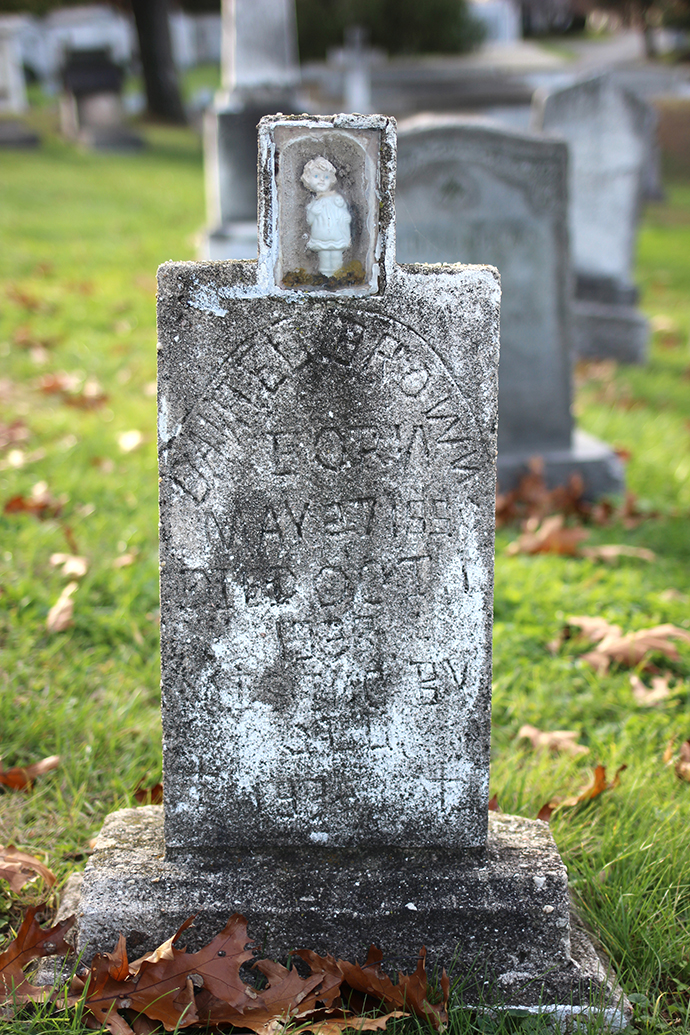
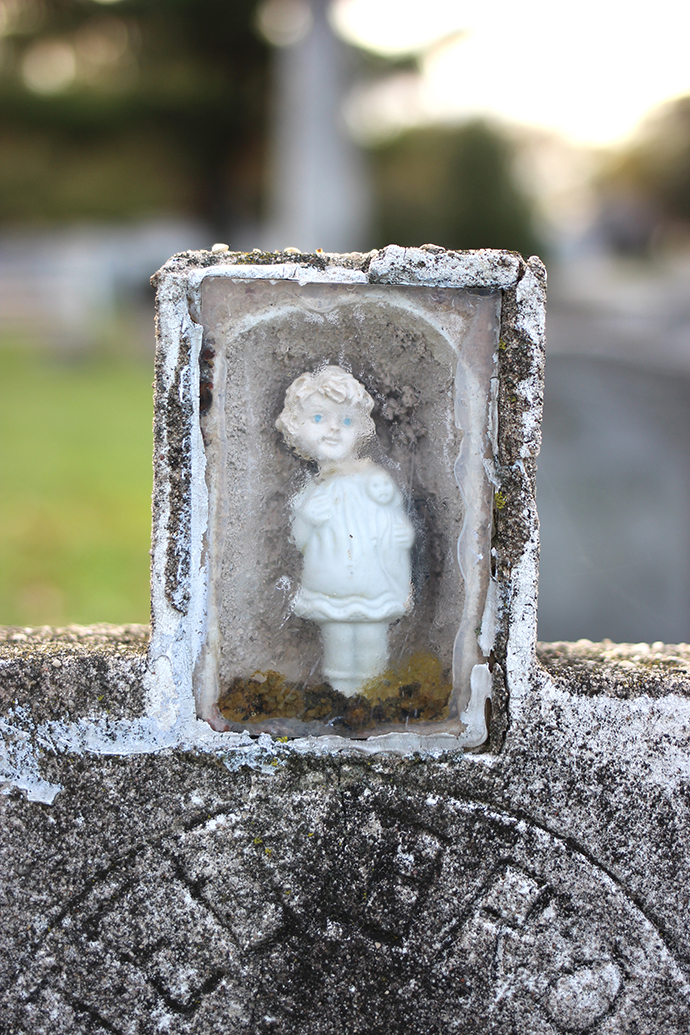
But in between all of the wonderful sculptures and symbolism we found in Rock Creek, nothing will stay with me quite as long as the blue-eyed, plastic doll entombed atop a crudely carved stone, and forever in my nightmares.

Rock Creek Cemetery: Part One, Bronzes
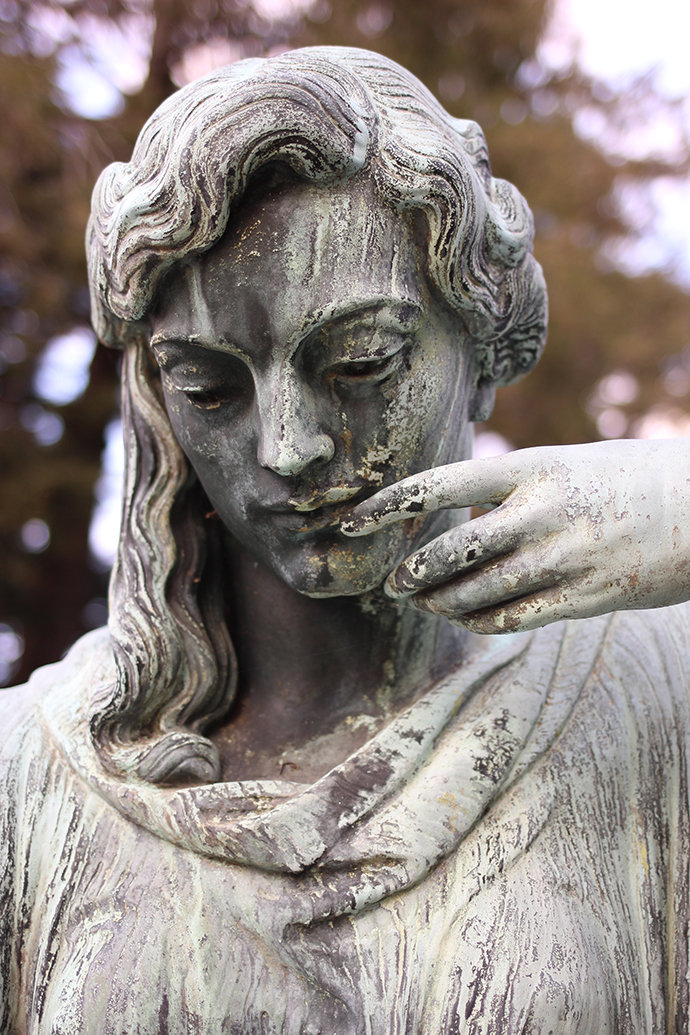
Back in November, I met my uncle in Washington DC for a long weekend of historical and operatic delights. He had a car, so he suggested a few things that lay outside of city limits, like Rock Creek Cemetery. I had never heard of Rock Creek before but it was first established in 1719 and has been listed on the National Register of Historic Places since 1977.


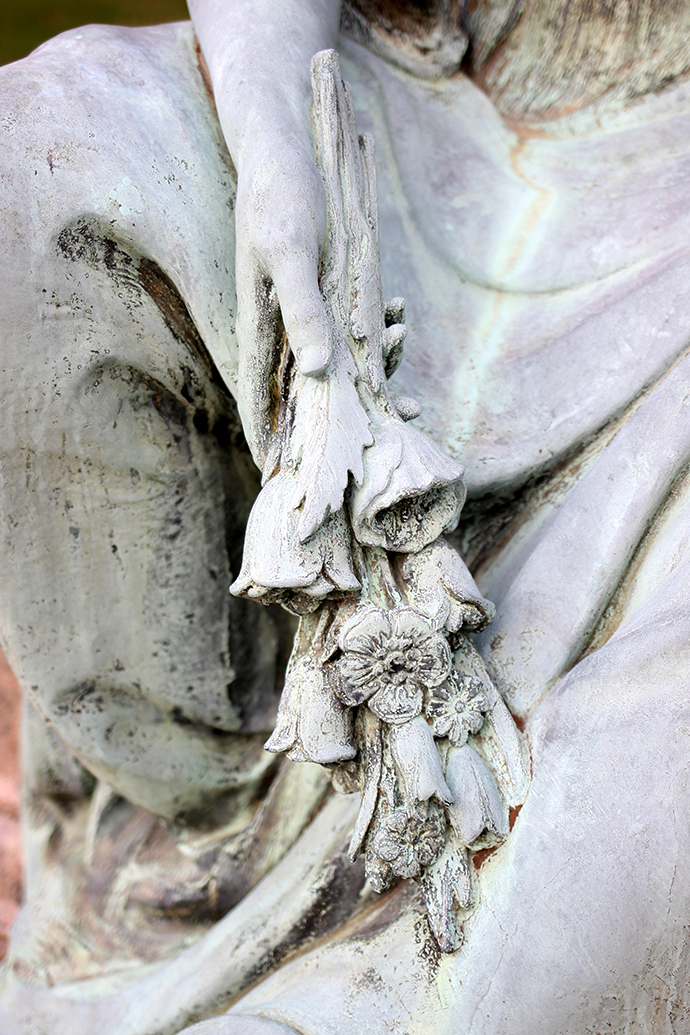
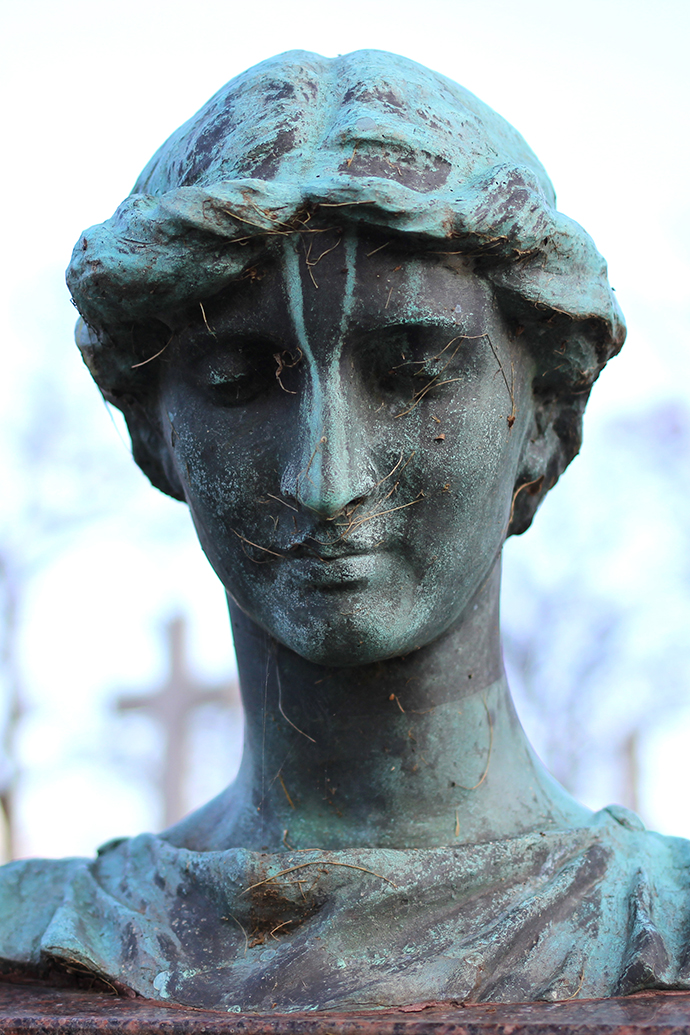
My uncle had printed out a list of notable sculptures at Rock Creek, of which there are many. We managed to find almost every one on his list, along with a few more along the way. I was surprised at how many large bronzes there were in the relatively small cemetery, including a few men which I don't see nearly as often as the mourning woman.
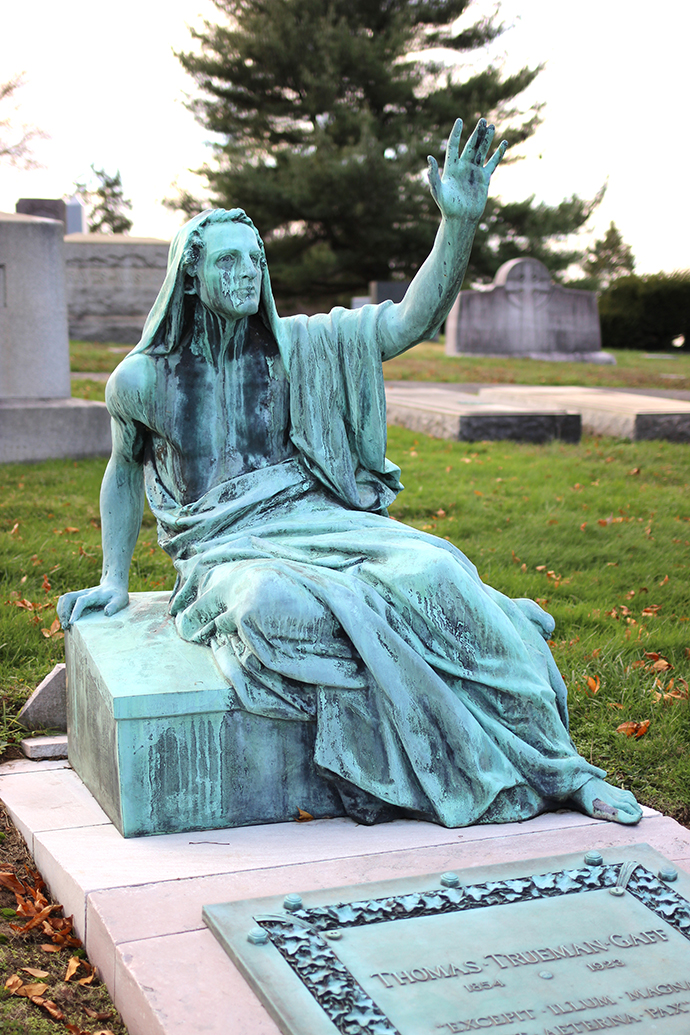


The Thomas Trueman Gaff monument was sculpted by Jules Dechin and caught our eye immediately. The figure's raised hand and haunting upward gaze is really unnerving. Like most of the sculptures we saw, rain had streaked the face so he looked as if he'd been crying.
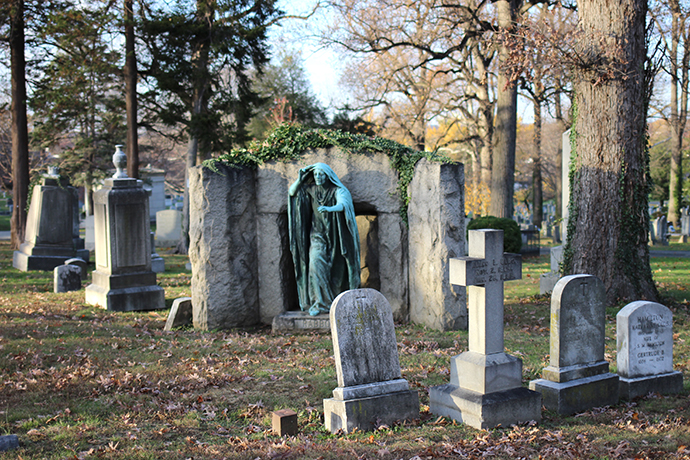
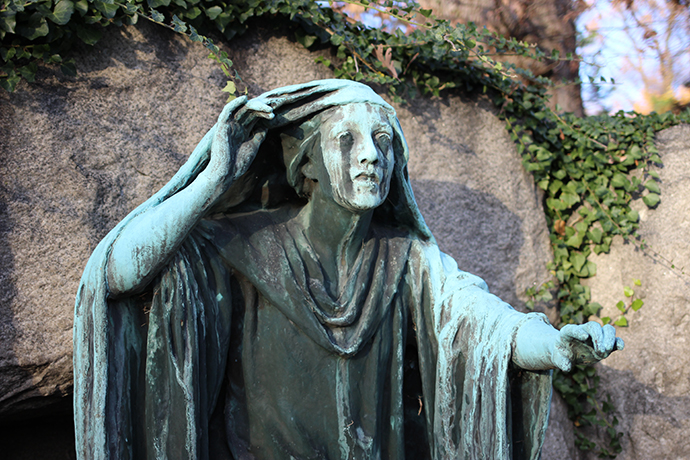
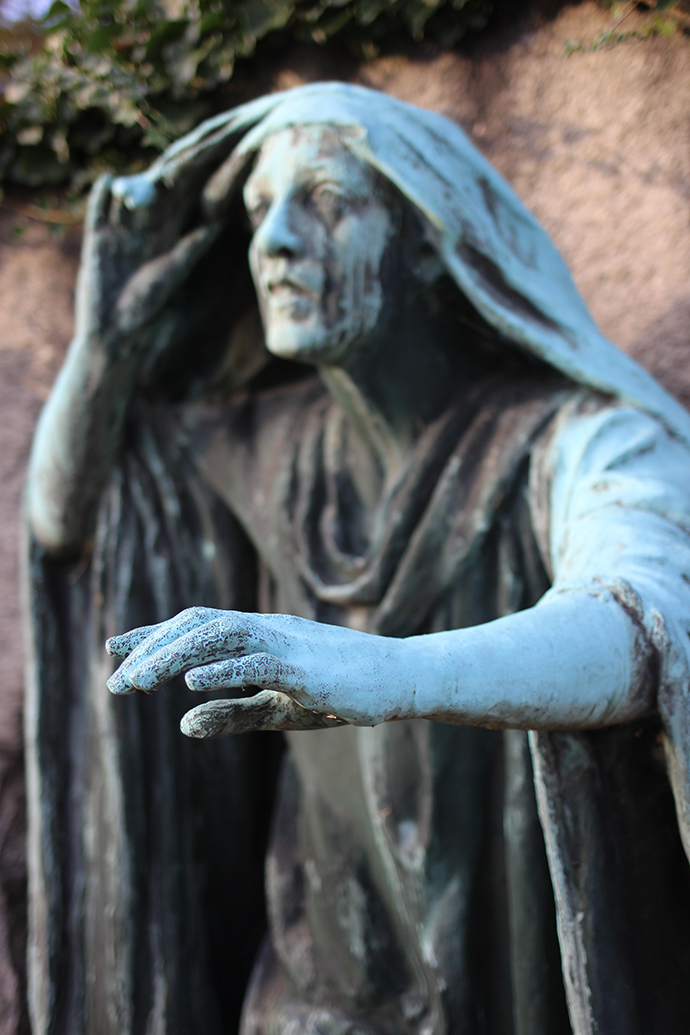

At first glance I assumed the Rabboni sculpture was a man, when it's actually a depiction of Mary Magdelene. It was sculpted in 1909 by Gutzon Borglum in tribute to a prominent Washington banker and tapestry collector.

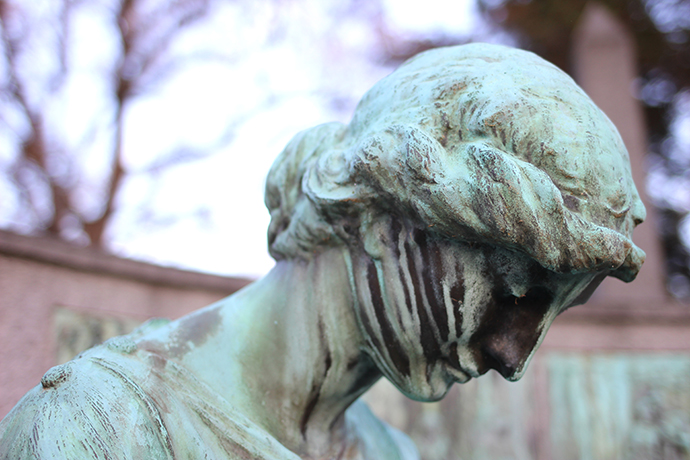
The Kauffmann Memorial is probably my favorite in the cemetery and features a "classically-draped" woman in the process of making a wreath. She is surrounded by bronze panels featuring scenes from Shakespeare's "Seven Ages of Men," from As You Like It. She has such a wonderful, rain-stained face and manages to be incredibly beautiful and haunting-yet-serene all at the same time.
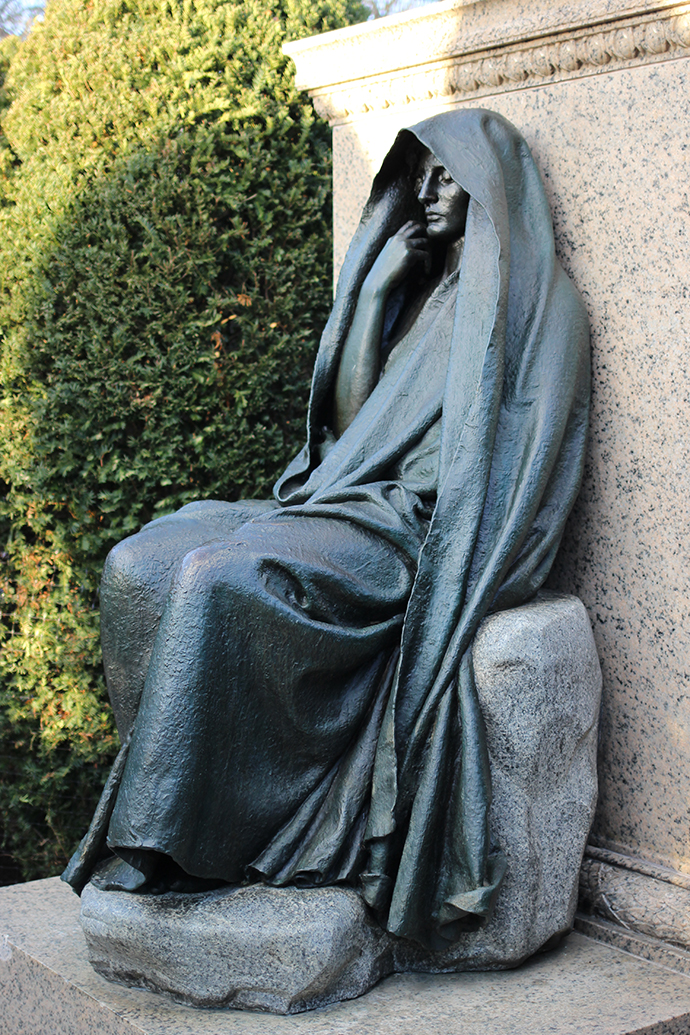
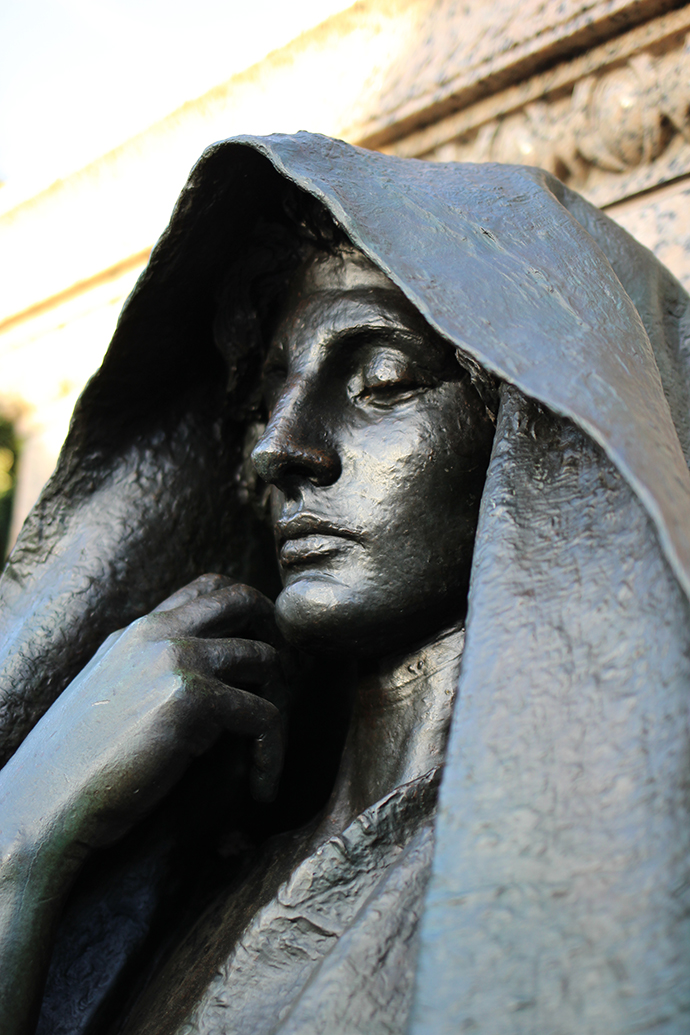
But the most famous of all of the Rock Creek sculptures is undoubtedly the Adams Memorial featuring a seated bronze by Augustus Saint-Gaudens anchoring a plot designed by notorious architect Stanford White. It was erected in 1891 by Henry Adams as a tribute to his wife, who had committed suicide. The plot is encircled by shrubs, keeping the sculpture hidden from view. There is a bench where you can sit, face the figure and contemplate Grief—which has been the title commonly given to the sculpture, apparently much to Henry's chagrin. He wrote to Saint-Gaudens's son, saying:
"Do not allow the world to tag my figure with a name! Every magazine writer wants to label it as some American patent medicine for popular consumption—Grief, Despair, Pear's Soap, or Macy's Mens' Suits Made to Measure. Your father meant it to ask a question, not to give an answer; and the man who answers will be damned to eternity like the men who answered the Sphinx."