

Archive
- Abandoned
- Alabama
- Arizona
- Bahamas
- Books
- California
- Cemetery
- Climate
- Colombia
- Connecticut
- Diner
- Egypt
- Feature
- Florida
- Friday Fun
- Georgia
- Holidays
- Illinois
- Iowa
- Italy
- Kentucky
- Louisiana
- Maryland
- Massachusetts
- Mississippi
- New Jersey
- New Mexico
- New York
- North Carolina
- Novelty Architecture
- Ohio
- Pennsylvania
- Personal
- Peru
- Project 365
- Protest
- Rhode Island
- Roadside Attraction
- South Carolina
- Tennessee
- Texas
- Travel Guide
- Virginia
- Walks
- Washington DC
- West Virginia
- Wisconsin

What I learned from getting arrested with Jane Fonda

Like so many women, I grew up internalizing other people’s perceptions and opinions of what it meant to be me. Whatever the world decided it thought of me quickly became what I thought of myself — Allie is shy, Allie is a bookworm, Allie does what she’s told and doesn’t rock the boat. And for a long time, that seemed true. I’m a textbook introvert and small talk has never come easily. I’m usually much more comfortable observing than I am participating. I don’t like surprises and I’m not impulsive so I move very slowly, preparing for a long time before I act on anything. I viewed these qualities as character flaws and described them as such — I carried around words such as shy, withdrawn, and quiet as burdens; further proof that I didn’t fit in, that I wasn’t trying hard enough, that I was inherently broken.
I spent so much of my life feeling constrained by the world and the persona it had assigned to me. Recently, while watching the documentary Jane Fonda in Five Acts, I was struck by Fonda’s own realization that “anyone can change and become fierce.” I wondered, “Could that possibly be true?” And then I thought, “Why not?”
For me, change happens slowly, germinating for seconds, minutes, days, or years before finally bubbling up to the surface — often when I least expect it. It’s only in looking in the rearview mirror do I see that it’s been there all along; nothing happens all at once. But after 34 years and two months with nary a parking ticket on my record (I was pulled over once because my car’s window tint was too dark and let go with a warning), something small but fierce finally surfaced. Last Friday, I got arrested for the first time — with Jane Fonda.
Fonda, a life-long activist, moved to Washington D.C. recently and pledged to get arrested every Friday while protesting the fossil fuel industry and advocating for the Green New Deal. She founded Fire Drill Fridays to help organize and mobilize others. Every Thursday she joins experts and other celebrities to discuss a topic related to climate change, live-streaming these ‘teach-ins’ on social media. On Fridays, following a rally on the Southeast lawn of the Capitol, Fonda and friends march to a predetermined location and engage in a bit of light civil disobedience (blocking a street, for example), for which Fonda has indeed been arrested — four times so far in as many weeks.
I’ve been fascinated by Fonda’s life recently and it’s not hard for me to see why. I’m 34, just a few years older than Fonda was when she began her very public — and sometimes painful — transformation from Barbarella to boots-on-the-ground activist. I’m not the first person to feel an existential need for meaning creep into my life in my 30s, and I’m certainly not the last. But recognizing the need is just the first step — lately I have begun to ask myself: but what can I actually do?
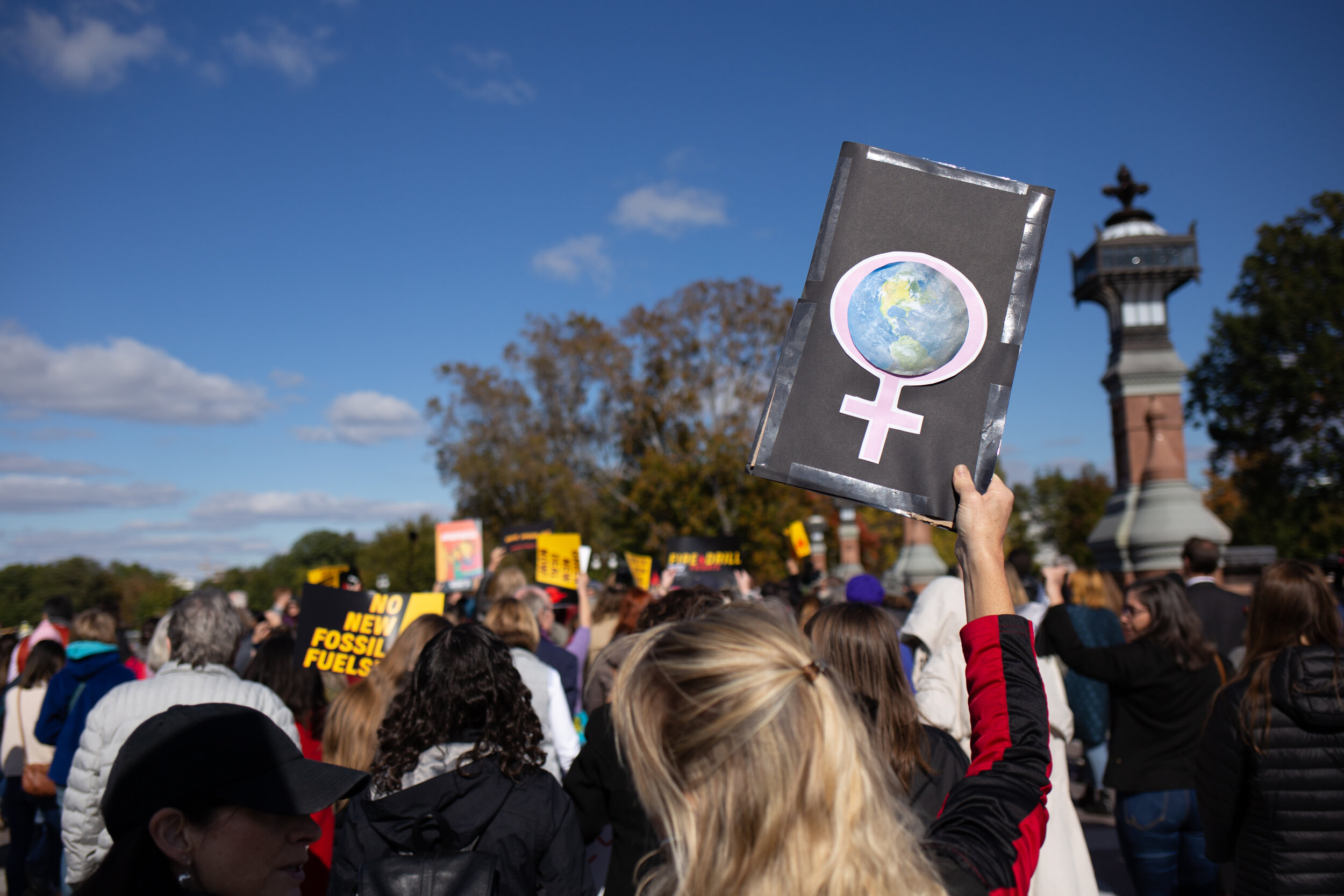
Inspired by Fonda’s refusal to live out her remaining years in the comfortable cocoon of celebrity (she will turn 82 in December, by the way), I booked a train ticket to D.C. for October 31. I had considered dressing up as “Jane Fonda getting arrested” for Halloween, but quickly realized that actually getting arrested with Jane Fonda would be a more constructive use of my time and resources. The focus of the November 1 Fire Drill Friday was “women,” a group that is poised to unfairly bear the brunt of climate-related catastrophes, so it was an easy choice. I recruited a friend to join me, and spent an afternoon painting my very first protest sign (this wasn’t my first protest, but I preferred to have my hands free in the past so I could take photos). On one side I wrote, “Destroy the patriarchy, not the planet,” and the other said “Respect your mother,” with a (poorly drawn) image of the Earth standing in for the ‘O’.
Before I left, my mom said to me, “Don’t get arrested!”

Although getting arrested is central to Fonda’s participation in Fire Drill Fridays, I arrived in D.C. with no clear idea of my own intentions. I figured I’d go to the rally and see how I felt. I’m a meticulous planner by nature, so the fact that I had left our itinerary on Friday completely open may have been the first clue that I was ready to do something out of character — for once in my highly-controlled life, I adopted an open-ended, come-what-may attitude, and it felt perfectly natural.
The rally, which began at 11 a.m., started small, but grew to a sizeable crowd. Fonda — looking resplendent and fierce in her now-iconic sweeping red coat — introduced the speakers, which included Eve Ensler, Rosanna Arquette, Catherine Keener, and Emira Woods. I was moved by Woods’s grace and Ensler’s emotional plea (a hard act to follow, Keener nailed it when it was her turn to speak and she looked back at Ensler and said, “Aw man, I was going to say the same thing”). I had come to D.C. to see Fonda, but in the end, it was the powerful words of two poets — Asali DeVan Ecclesiastes and Sunni Patterson — that shook me to my core.
I decided in the middle of Ecclesiastes’s stirring speech that I had no choice. I had to get arrested.
Around noon, a large crowd marched to the lobby of the nearby Hart Senate Building. While we waited in a long line to go through security, a man in a MAGA hat yelled “Hanoi Jane!” and I marveled at Fonda’s courage. It’s been nearly fifty years since Fonda was photographed on an anti-aircraft gun on a trip through North Vietnam — a momentary lapse of judgment that she says she will forever regret — and in spite of the backlash that followed, she’s still here. A lot of people would have retreated from the public eye, but while Mr. MAGA was yelling his outdated (and woefully) ignorant insults, Fonda was already inside giving an impromptu press conference. She was explaining once again exactly why she had moved to D.C., and revealed that her coat — which by now, belongs in the Smithsonian — was not only the last coat that she had pledged to buy (ever!), but the last piece of clothing, period.
We moved as a group to the building’s atrium and sat on the ground around two banners, one of which read, “Women demand no new fossil fuels.” The Capitol police wasted no time in issuing us warnings, and it wasn’t long before the women (and a few men) were arrested one by one. Because of my sign (seen as an instigating influence), I was arrested fairly early. A policeman leaned down and issued me a final warning: “Would you like to move?” he asked. “Otherwise, just so you know, you’ll be arrested.”
“I’m good,” I replied.
My hands were bound behind my back in plastic cuffs (I didn’t know that you can site a physical impairment and request to have them tied in front) and I was led into a plant-filled entryway. I was searched and all of my personal belongings were placed into a plastic bag labeled with my last name. I was photographed with my arresting officer — certain corners of the internet have been clamoring for an updated mugshot from Fonda (her 1970 one is so iconic that it also belongs in the Smithsonian), but I’m not sure where these photos end up. The only tangible proof of my arrest is an 8.5” x 11” arrest report, that plastic bag, and a temporarily black thumb.
We waited while the others were similarly processed; Catherine Keener and Rosanna Arquette asked my name and we chatted like old friends. Keener, a first-time arrestee who knew enough to request that her hands be tied in front, obliged when my friend asked her to scratch an eyebrow itch. We discussed the need for catchier protest chants (let’s be honest, some of them are duds), and then we were led outside into awaiting paddy wagons. Not much scares me, but I’m extremely claustrophobic and I wasn’t too thrilled to be shut into the back of a divided van. Luckily my seat mates were two incredibly kind women who chatted with me and encouraged me to breathe.
The ride was short, and when we arrived at the holding facility — more warehouse than prison — our plastic cuffs were replaced by black zip tie cuffs (everyone’s hands were tied in front and we were told the cuffs are reusable). We were again sorted by arresting officer and told to remain in our assigned seats. Fonda, one of the last to be arrested, was seated two rows and about ten feet away from me. Keener and my friend ended up right behind me.
My first experience with the criminal justice system was eye-opening in a lot of ways, and I’m embarrassed to admit how little I knew (and still don’t know) about my own rights as an American citizen. Getting arrested once by no means makes me an expert, but everyone needs to start somewhere. I was the second-youngest person in the group (the youngest was 30).

The biggest mistake I made was not having the required $50 in cash to pay my bail. Because it was my first offense, I was eligible for what is called a “post and forfeit.” After answering a few questions and paying $50, I would be free to go without any further charges. I had $20 and was assured by several women that it wouldn’t be difficult to crowdsource the remaining $30, but I was mortified. My friend told me later that Keener, who had $100 in cash, had offered to help — “Catherine Keener paid my bail” would have been a good headline — but before I could accept her offer, Codepink’s Jodie Evans generously offered to make up the difference. I vowed to pay it forward as soon as I could and felt embarrassed at both my ignorance and privilege.
Very seldom does one have the choice to be arrested in this country; I thought I knew what I was getting into and yet still didn’t have the requisite cash — what hope was there for the people less fortunate than I, less prepared, less, well, white? 45 people got arrested alongside me and I know that most of them (generous, caring, socially-conscious, middle-class women) would have gladly loaned me the remaining $30. I’m embarrassed and uncomfortable with the knowledge that I have a safety net that so many go through life without, but the first step to changing a mind — or a society — is admitting that there’s a problem. And the existence of cash bail is a huge problem. It’s not just a minor inconvenience — it’s inconceivably inhumane, and disproportionately affects the most vulnerable segments of our population.
This was Fonda’s fourth arrest in a month and she had been warned that she may have to spend the night in custody. She was processed and confirmed this was true by clasping her hands together and tilting her head, miming “sleep.” When it appeared as though she was being escorted out, we began to cheer. “Calm down, I’m just going to take a leak!” she said, laughing.
Fonda did, indeed, end up spending the night in a D.C. holding cell (among the cockroaches, eating a baloney-and-cheese sandwich for dinner and using her coat as a mattress), so she remained seated stoically as the other protestors — including her daughters Vanessa Vadim and Mary “Lulu” Williams — were all processed and released.
“I love you mom! Be good tonight!” Vadim yelled as she walked out the door.
Throughout the entire process, I was consistently surprised at how gently and respectfully we were treated — but I am also acutely aware that’s not always the case. Getting arrested on purpose might seem extreme, but it was an easy decision once it became obvious just how little risk was involved with an 81-year-old, white, celebrity at the helm. I may not be a celebrity or elderly, but I am very, very white and in America especially, that makes all the difference. I risk almost nothing putting my body on the line and with that realization came the urgent need to do just that — for our planet, for the people who cannot (for various reasons) do the same. What’s the point of privilege if you don’t at least try to use it for something constructive? The scales will never balance if those of us with weight — be it wealth, education, race, etc. — don’t actively try to redistribute our good fortune.
Fonda has been accused of “performative activism,” but she knows exactly what she’s doing. She can’t change the fact that she was born to a famous father, but she can (and does) use that fame to call attention to the injustices and inequalities from which she benefits. We may not all be rich or famous, but every single person that has any advantage also has choice. In fact, choice in itself is a privilege and going forward, I choose to at least try — and use whatever privilege I have going forward to amplify the voices of those who are not as fortunate.
The reasons that compelled me to buy that ticket to D.C. no longer matter. What matters is that I decided that only I have the authority to write my narrative. It is up to me from now on how I define myself and what I choose to do with the time and resources I have. Fonda said she realized that if she could change, anyone could and I now know that to be true. There’s nothing more powerful than choosing to be fierce, to stand up for those who can’t, to put your body on the line in whatever way you can. And if you think you might get arrested, don’t forget your bail money.
Women's March 2017
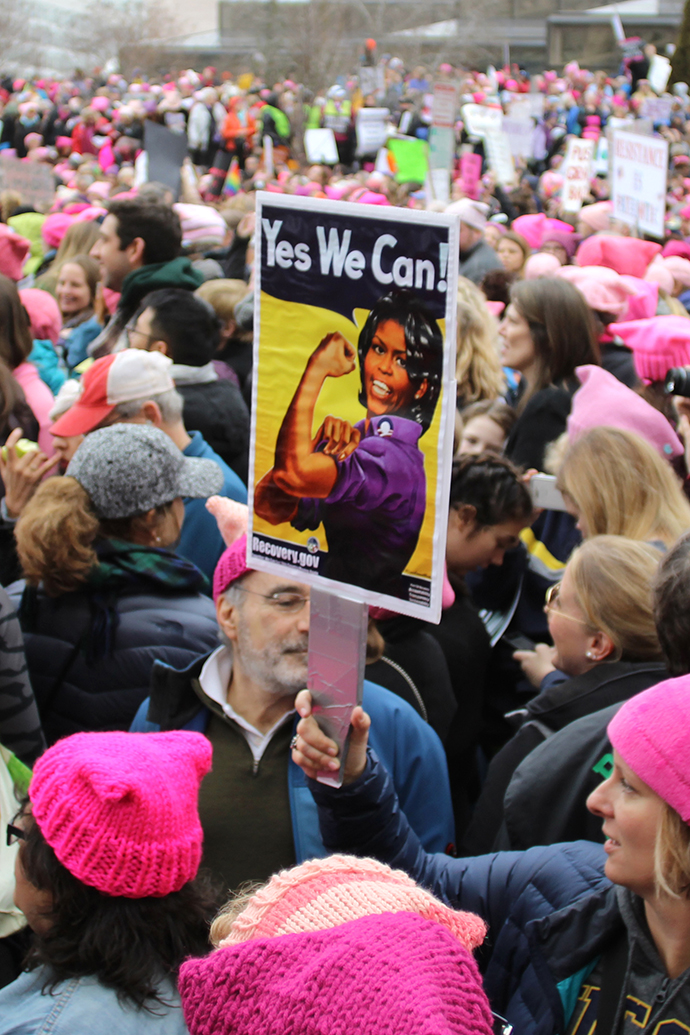
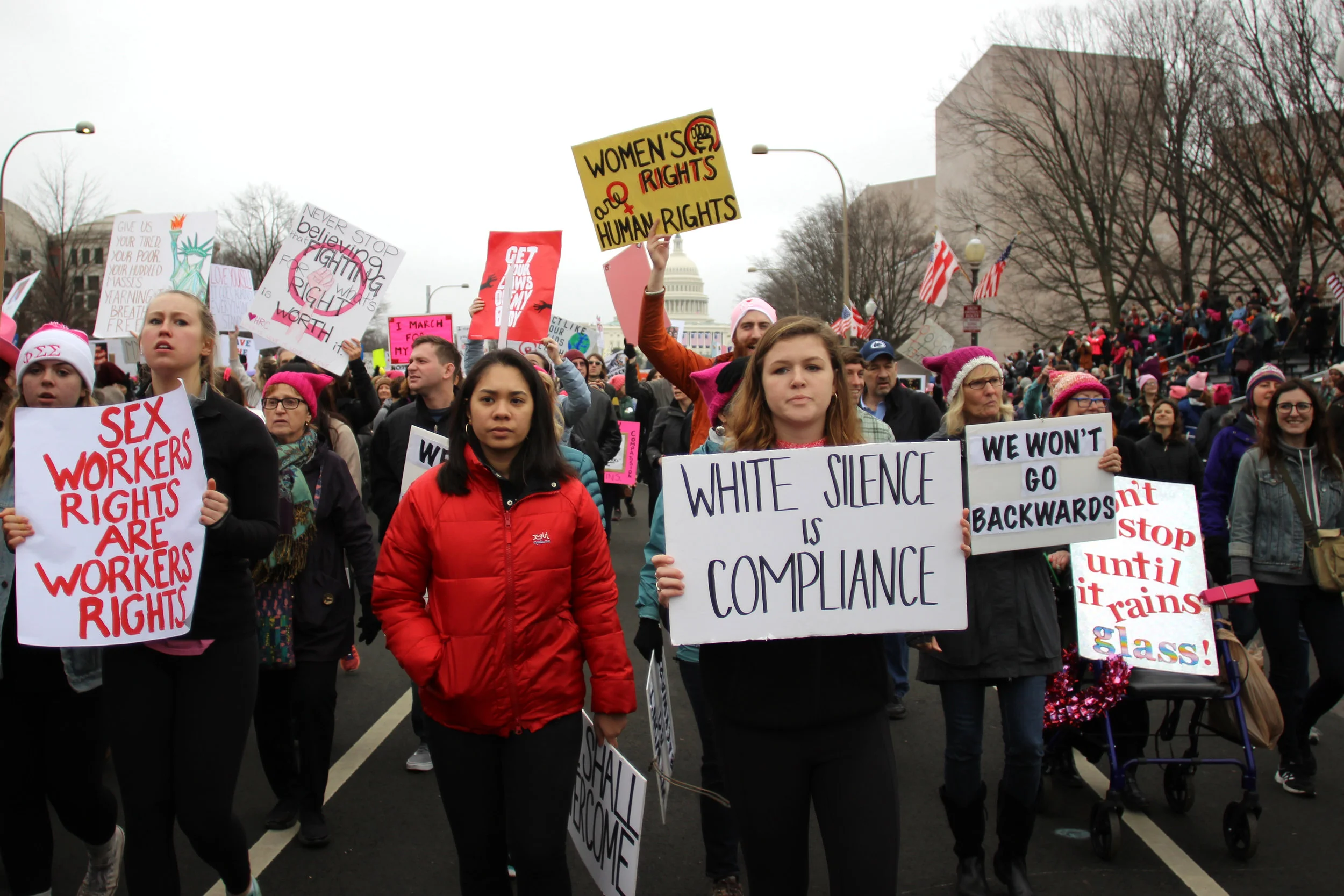
At 12:30 am on Saturday morning I boarded a bus in New York with my friend Carli, headed to Washington D.C. for the Women's March. The Women's March came about after the election, and while the main one occurred in Washington, there were sister marches all over the country and the world—in what will probably turn out to be the largest protest ever. The march's stated mission was that "We stand together in solidarity with our partners and children for the protection of our rights, our safety, our health, and our families—recognizing that our vibrant and diverse communities are the strength of our country."
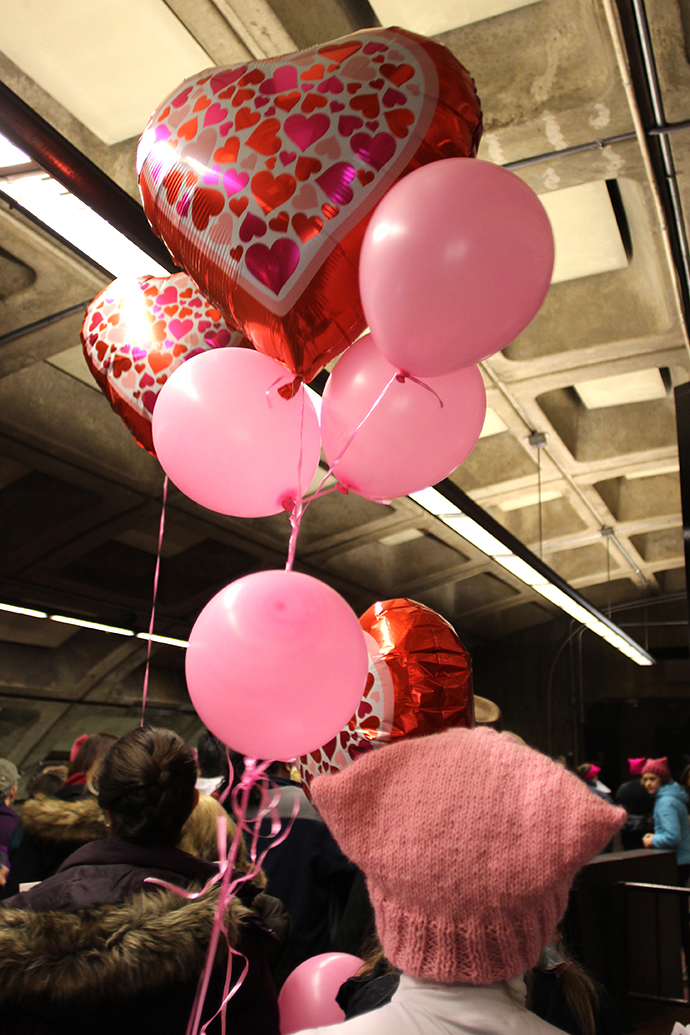
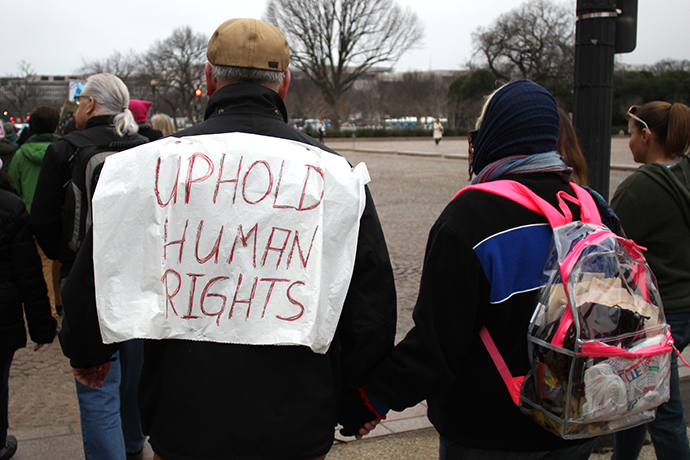

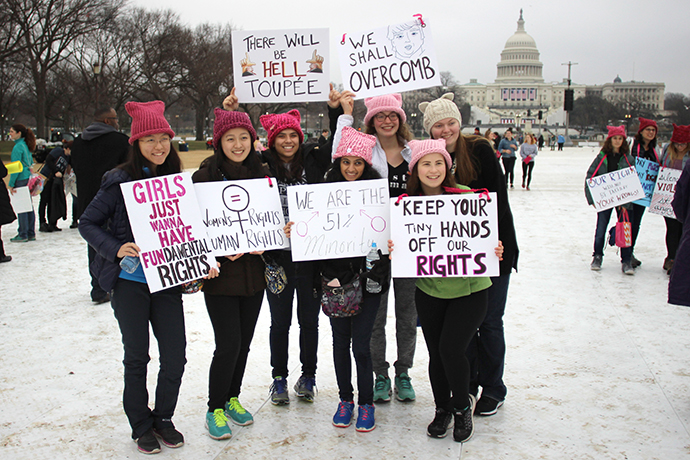

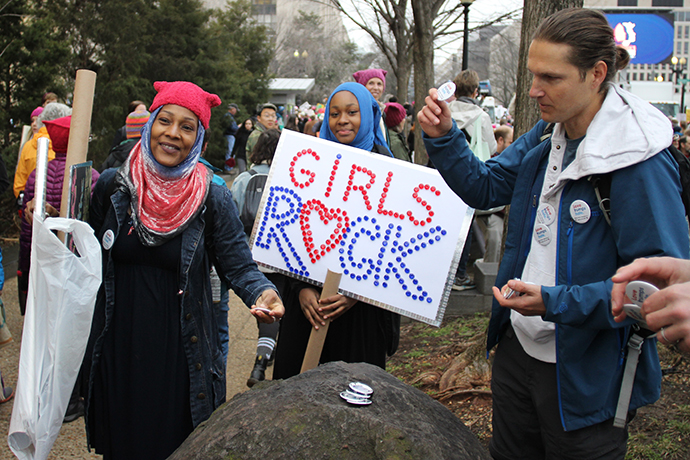


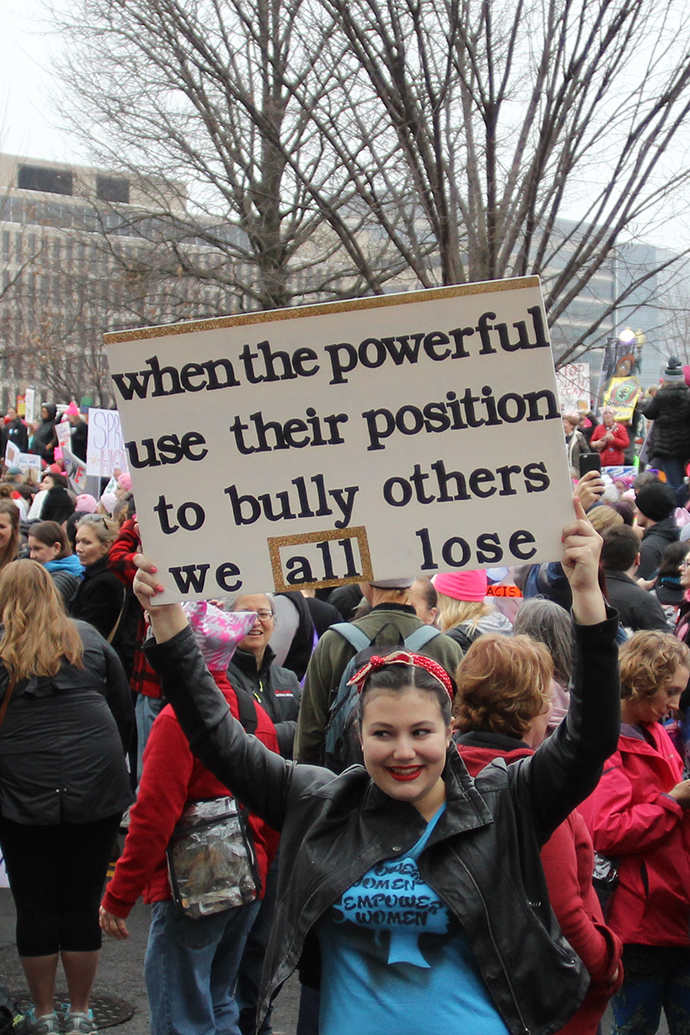
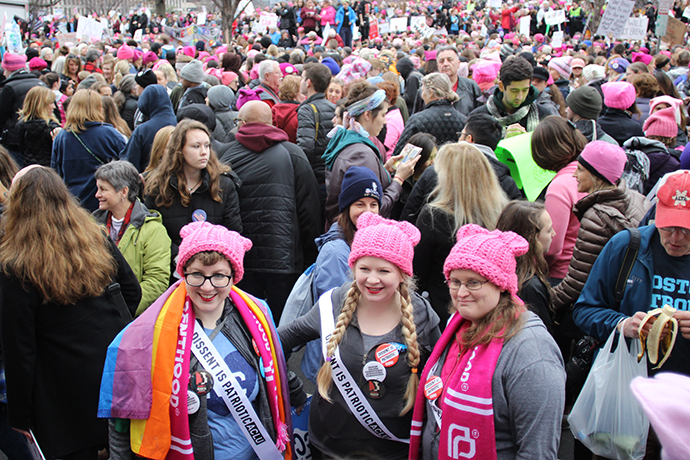
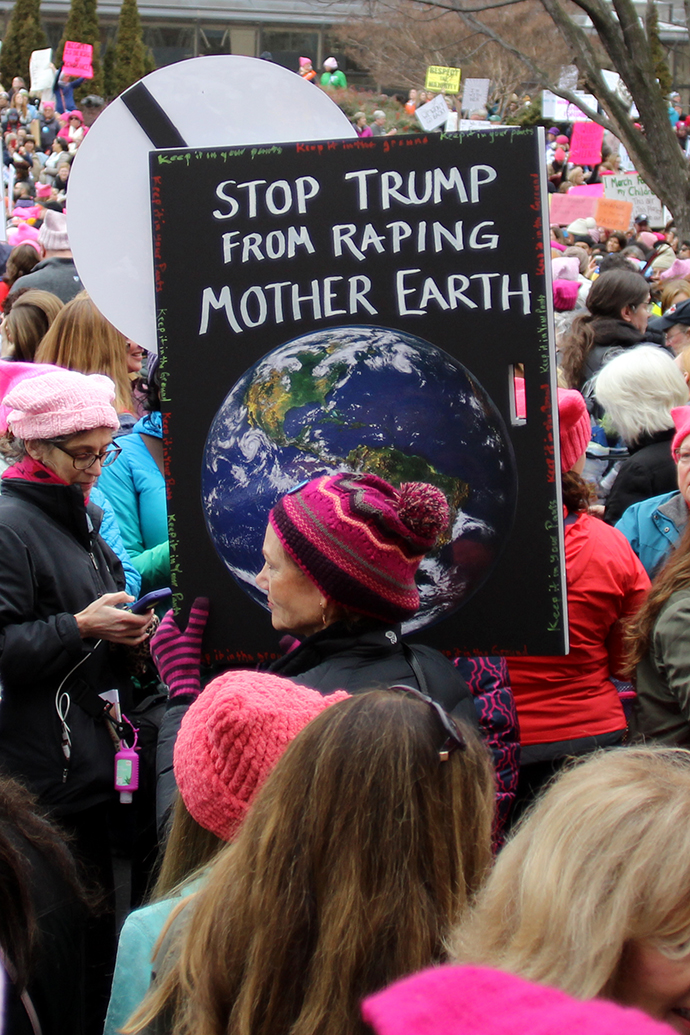
After the election I was depressed and terrified, but motivated to do something. When Carli gave me the bus information, it wasn't long before I had booked a ticket. Although I wasn't looking forward to the long hours and early departure time, I knew I wouldn't regret it and that it was the least I could do as a concerned and able-bodied citizen. I's difficult to put into words just how moving and incredible Saturday actually was—and the march far exceeded even my high expectations.
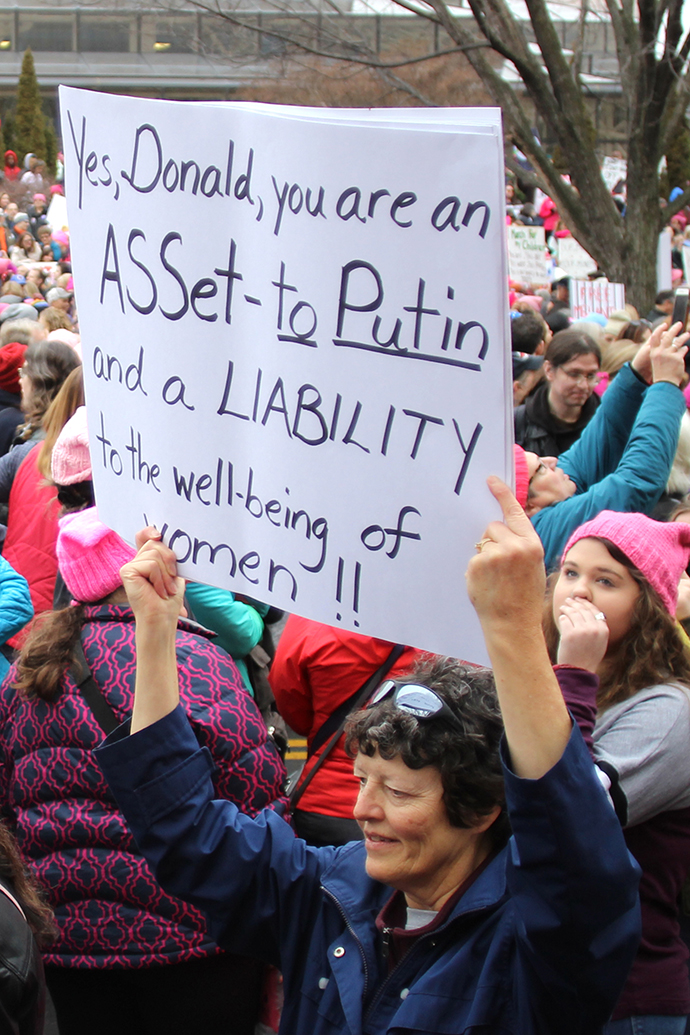
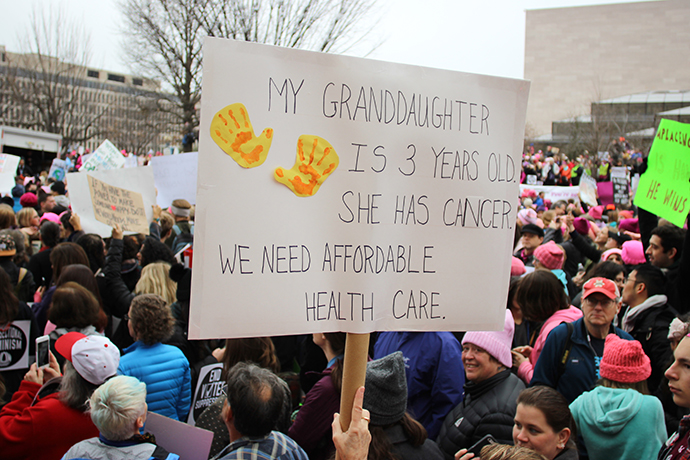
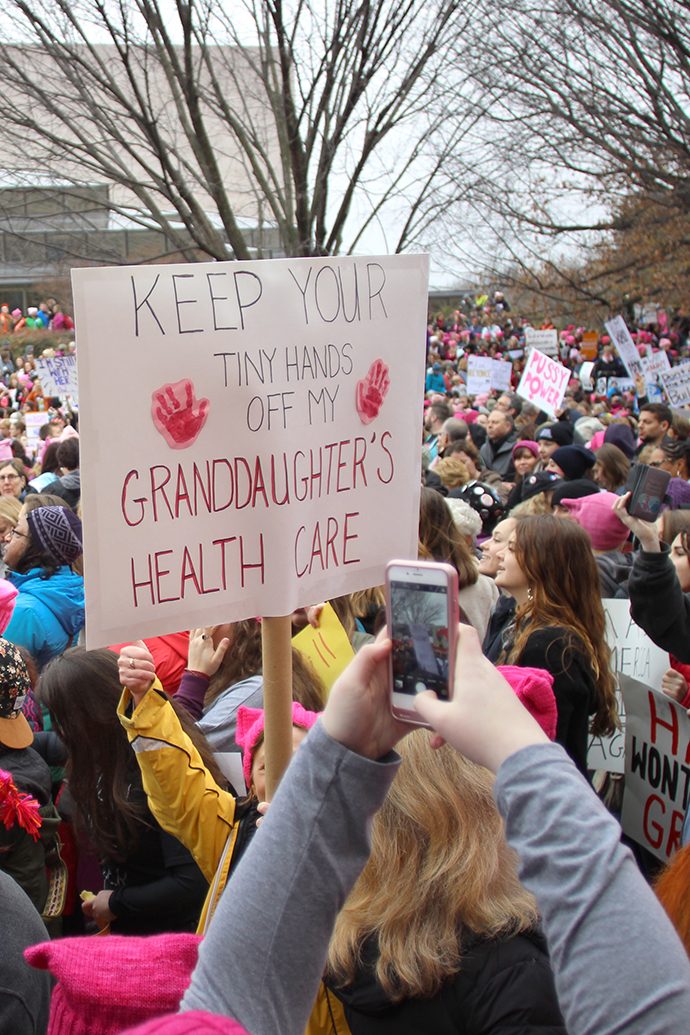
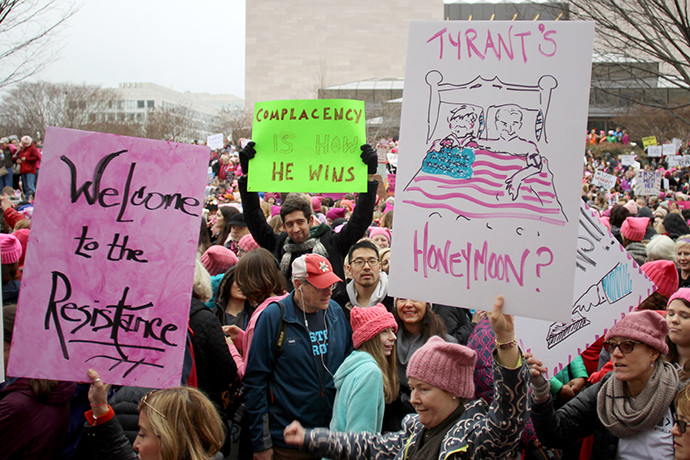
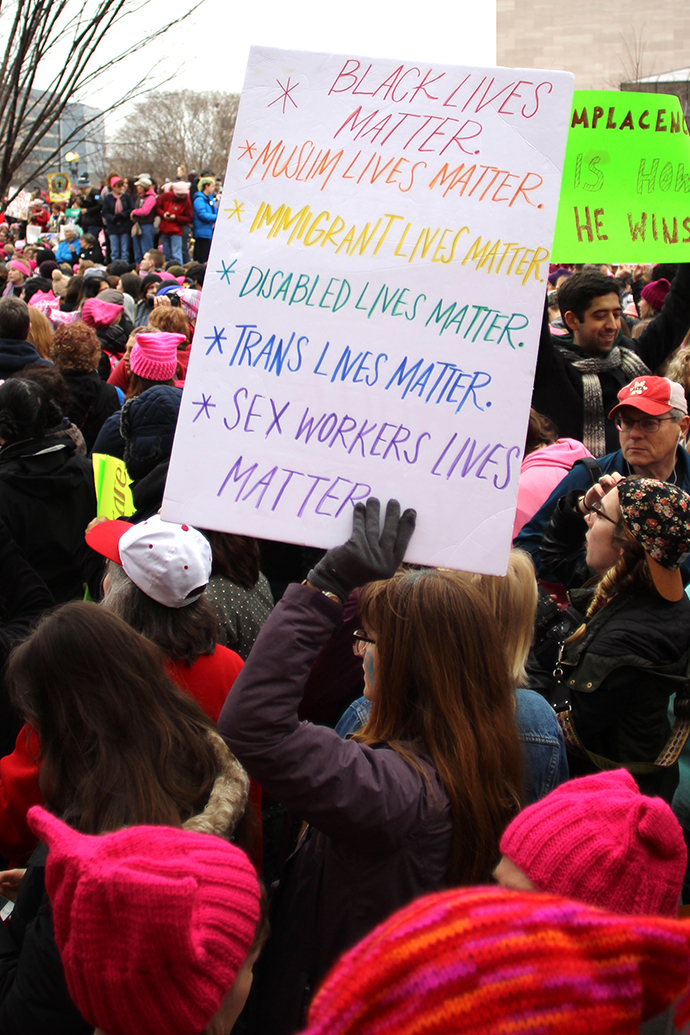
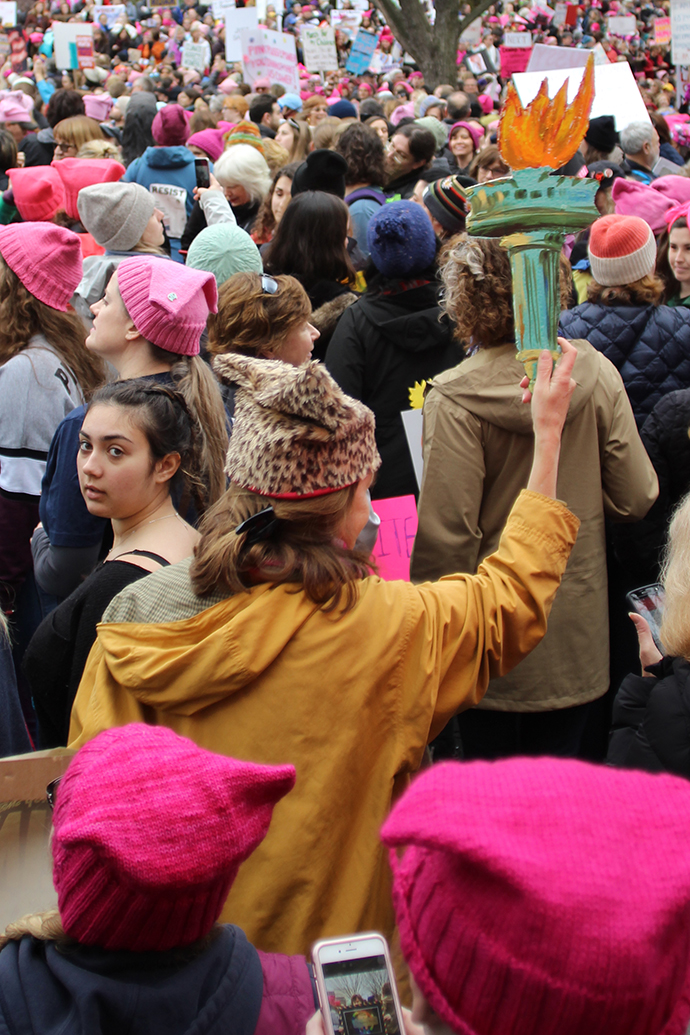
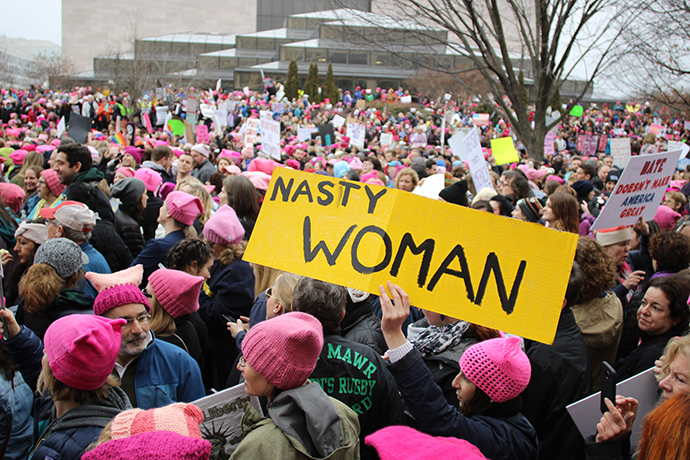
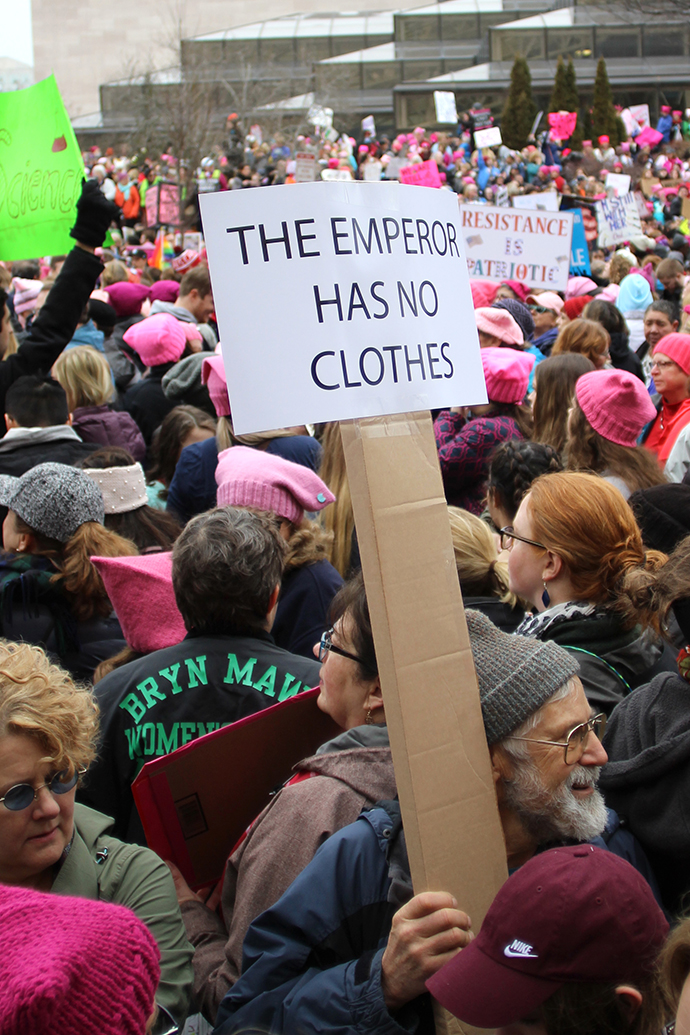
We'll probably never know exactly how many people descended upon Washington the day after Donald's Trump's inauguration (I've seen estimates from half a million to well over a million), but it was significant, historical and mind-boggling. As a participant, I never felt unsafe or wary of the large crowds, and the march was the very epitome of peaceful resistance. In D.C., there were zero women's march-related arrests—a remarkable fact that shouldn't actually be surprising, but should serve as an example of how smoothly things run when women (and responsible, caring men) are in charge.
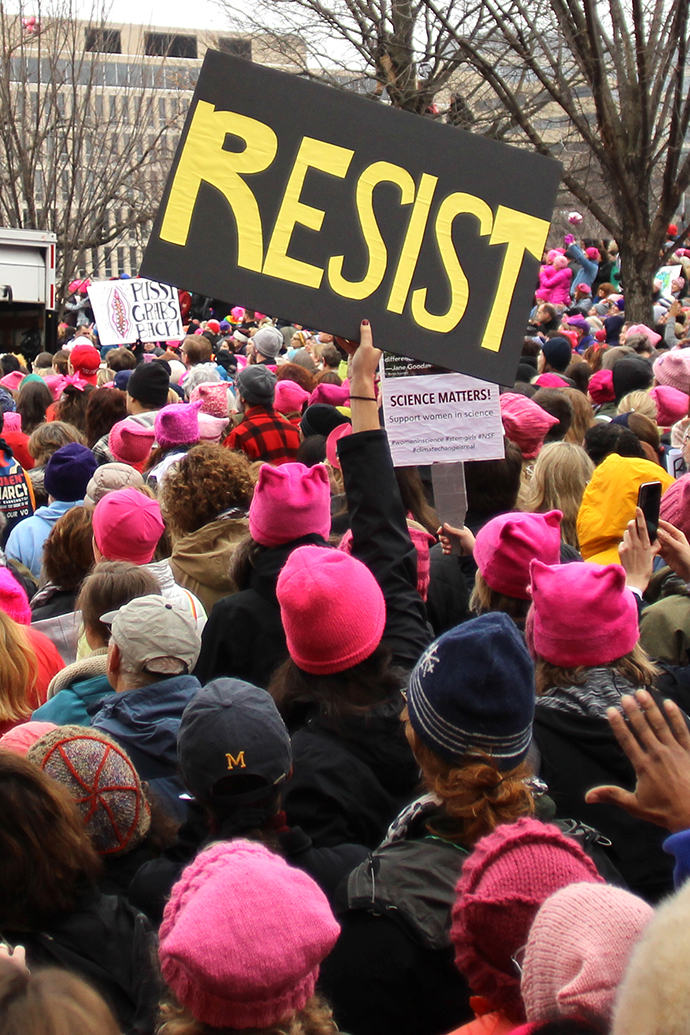
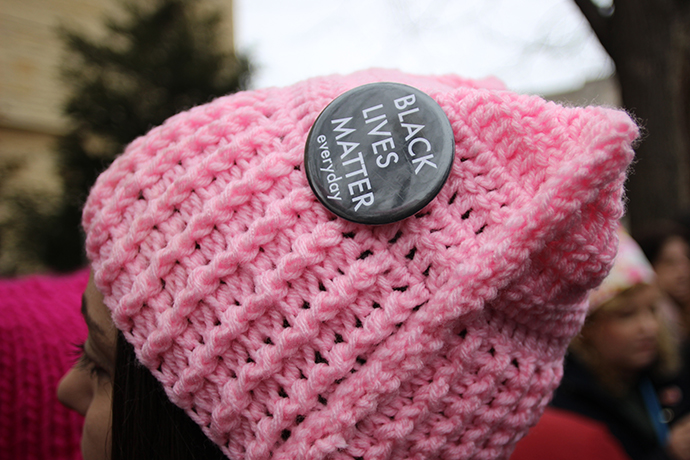
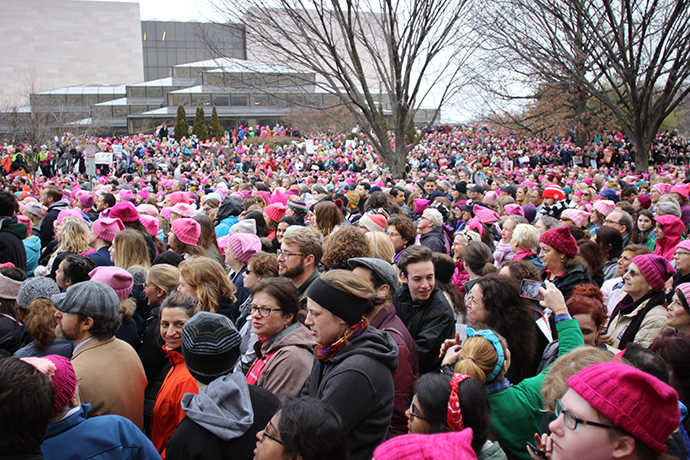
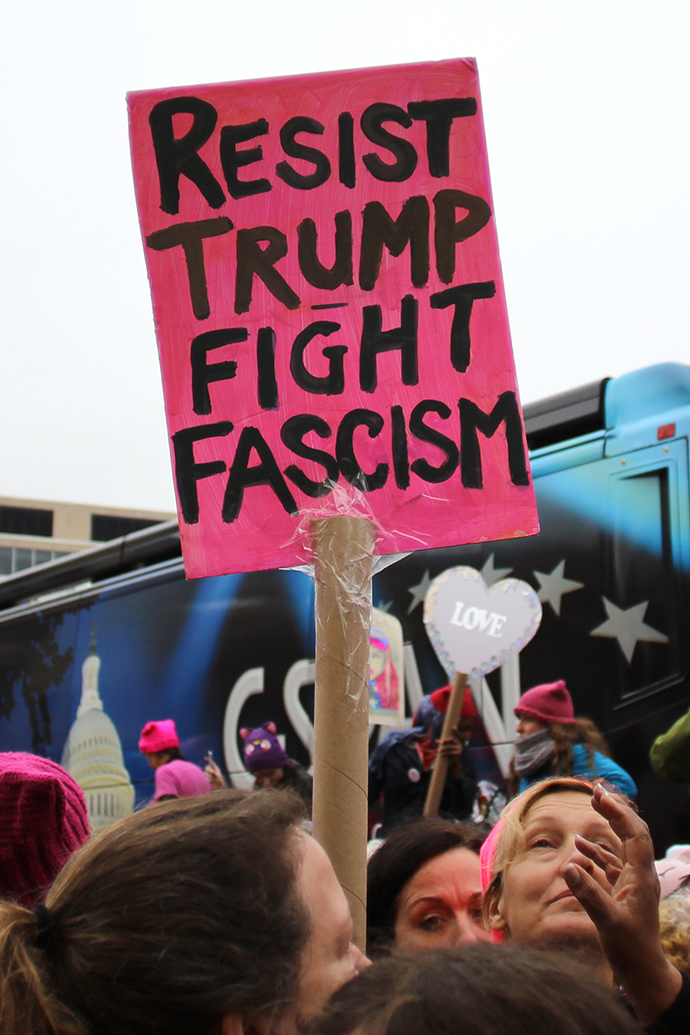
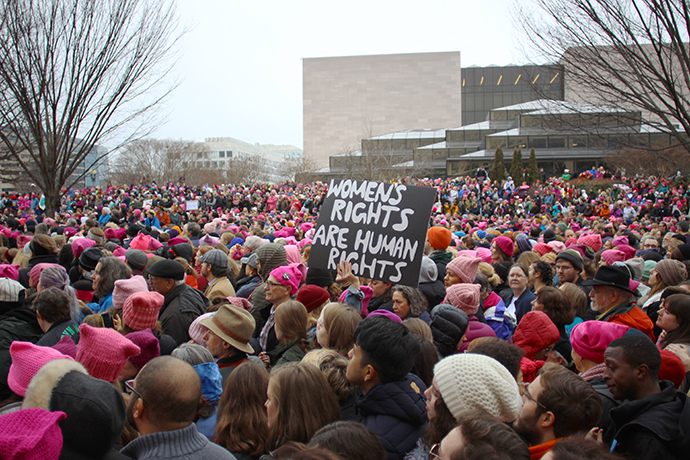

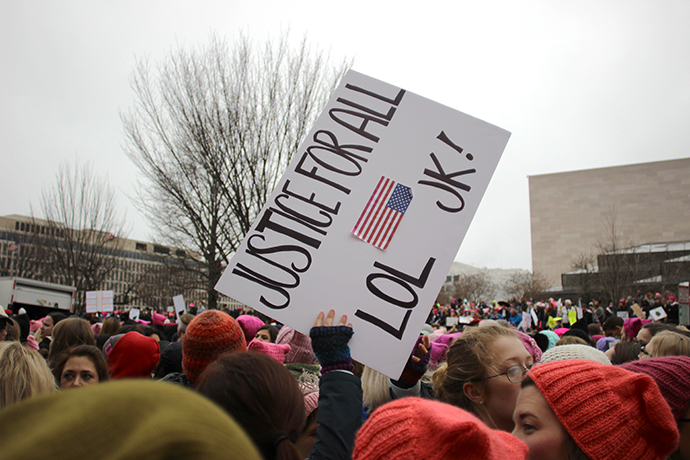
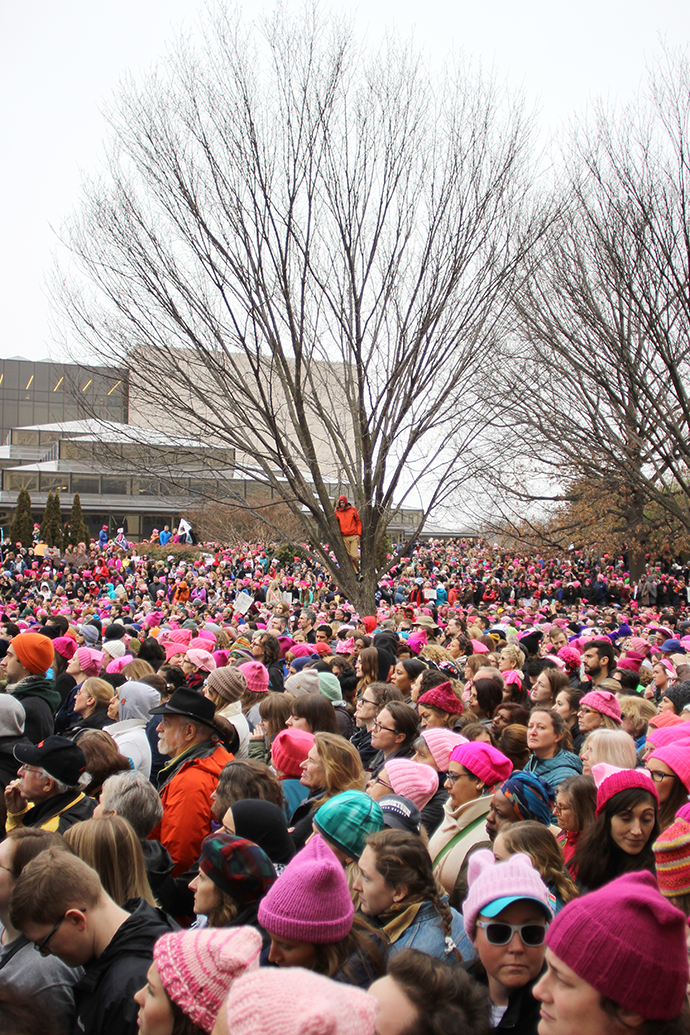
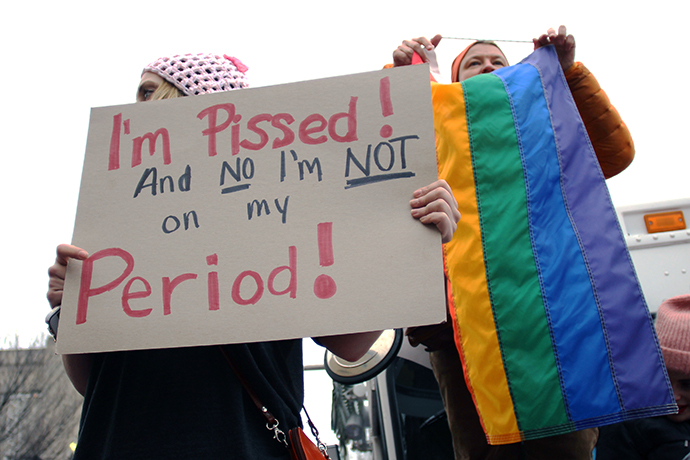

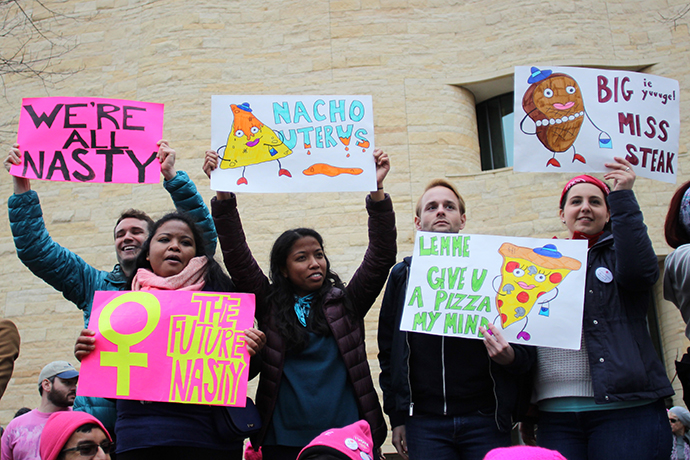
The rally was a bit long and marchers started getting antsy, but there were some incredible speakers—Gloria Steinem, Michael Moore, America Ferrara, Ashley Judd, Scarlett Johansson, government officials and so many inspiring women of all faiths, ethnicities and ages. Seeing Gloria Steinem was a particular highlight, and I can only hope to be a fraction as graceful, intelligent and inspiring as she is when I'm 82 (!).


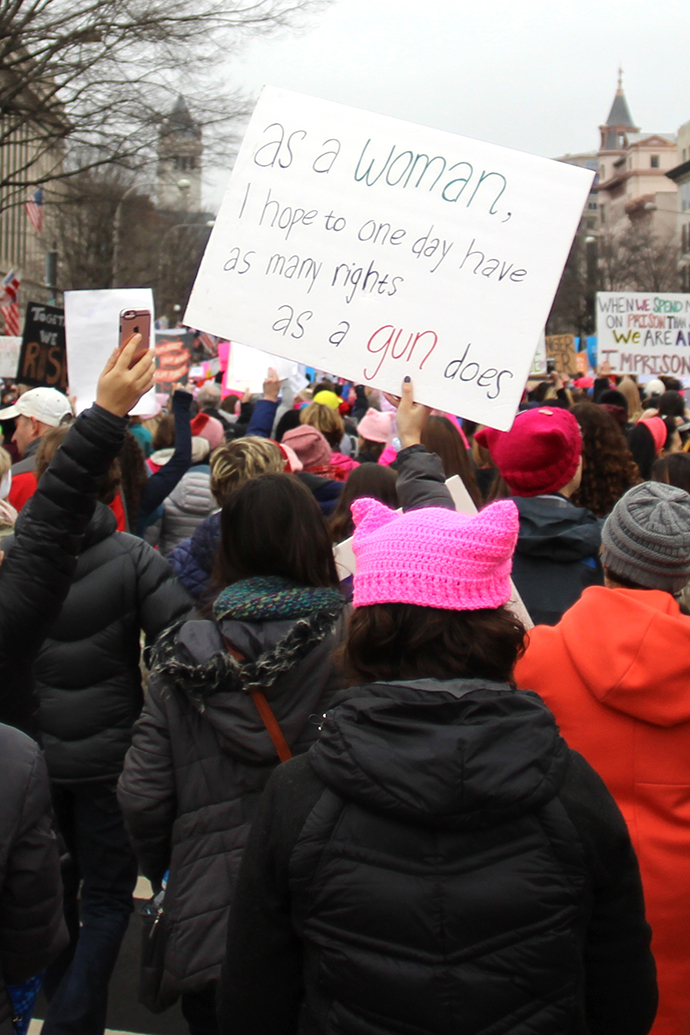
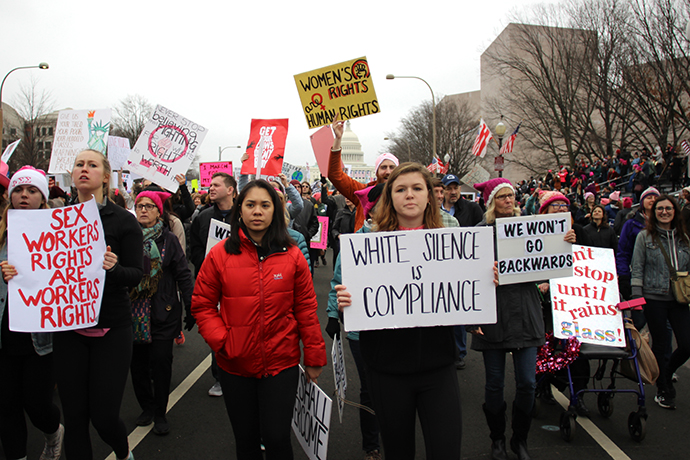
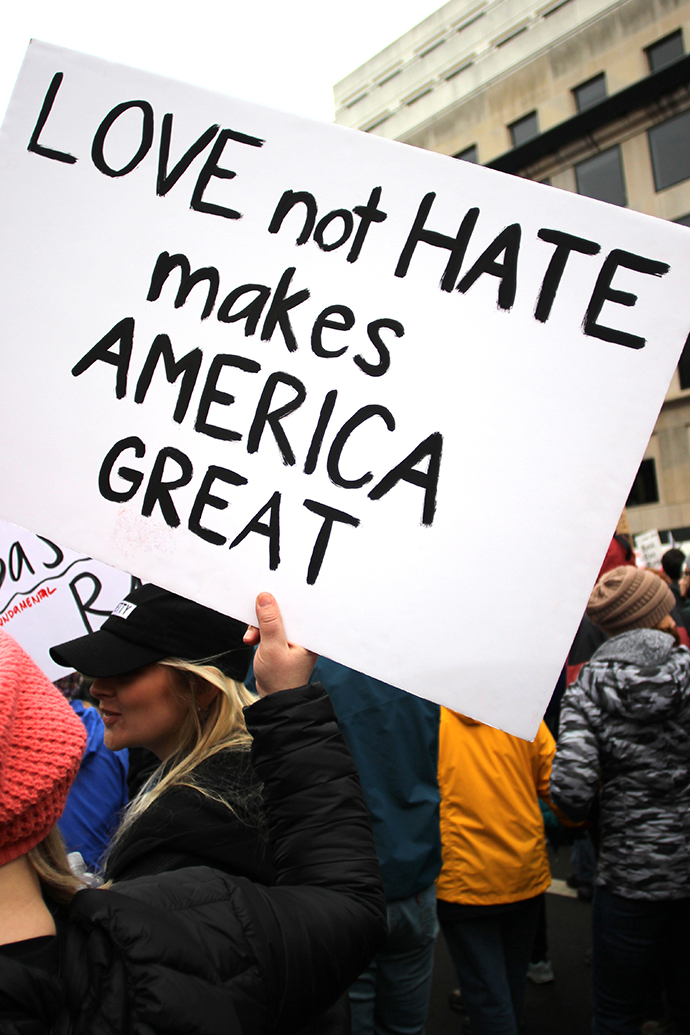

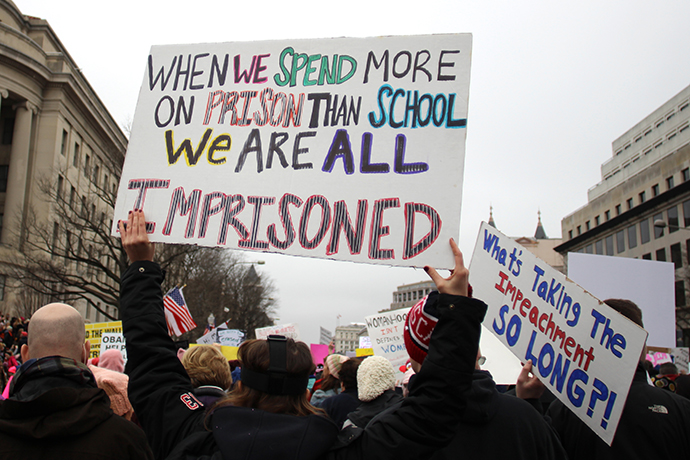
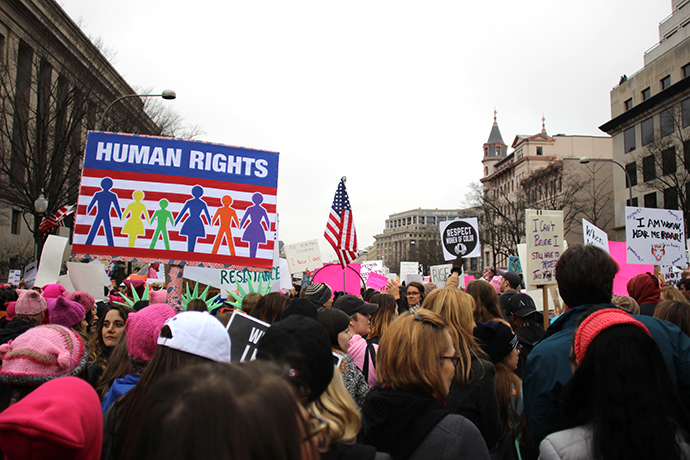
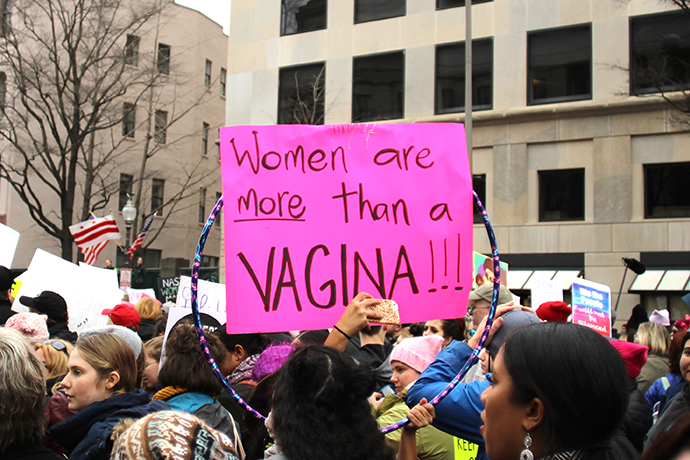
I didn't make a sign because I wanted to have my hands free to take photos, but the signs were undoubtably top-notch. There were so many inspiring (and hilarious) messages of hope, strength and solidarity—spoken, written and demonstrated. When we finally did march, past the Capitol and towards the White House, we chanted "We won't go away! Welcome to your first day," "This is what democracy looks like!" and "We need a leader. Not a creepy tweeter!" We booed as we marched past the monument to conflict-of-interests, Trump International Hotel (and one American Hero shouted "FREE MELANIA!" as she thrust her fist toward the sky).


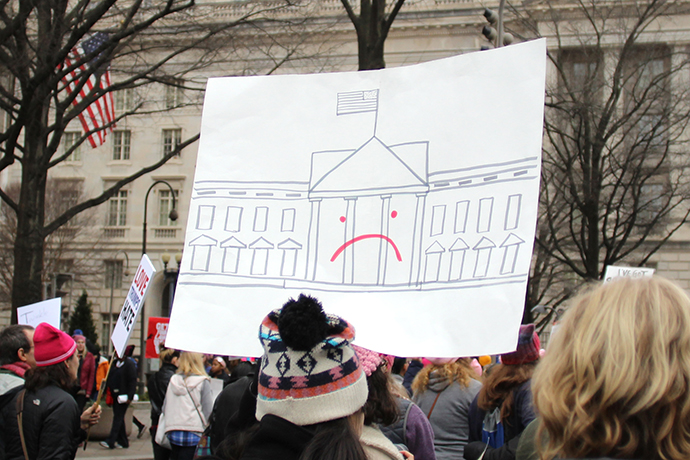
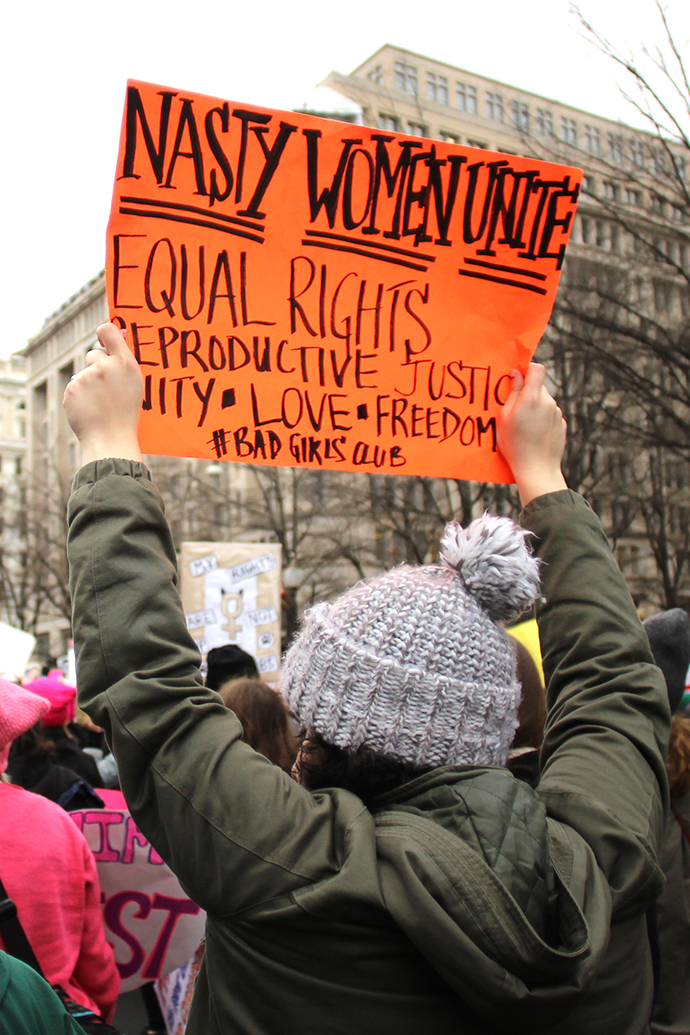


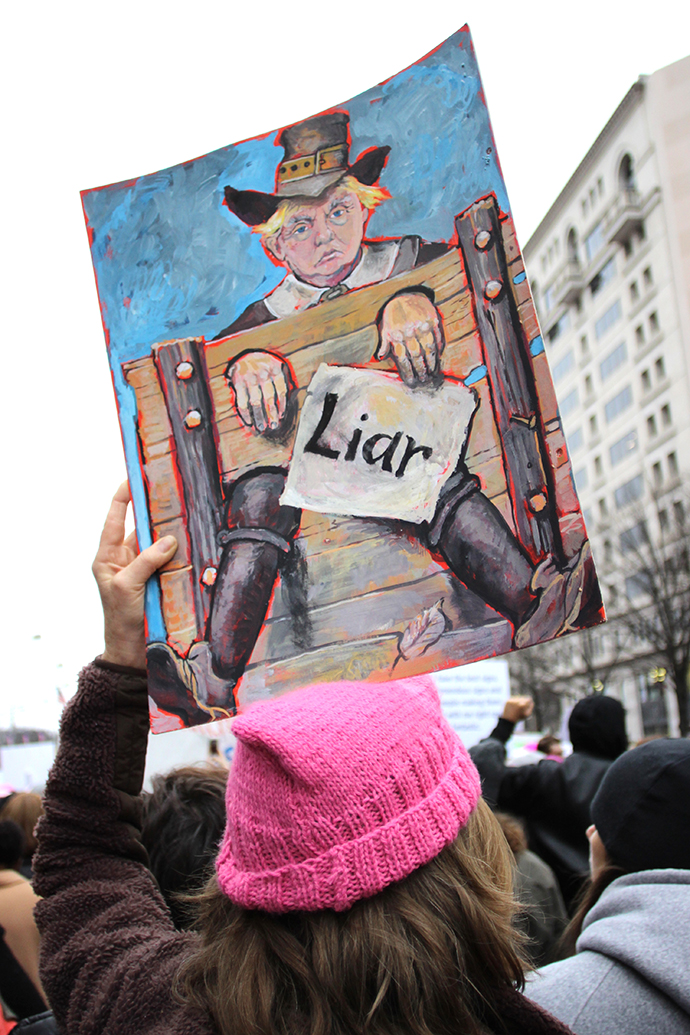

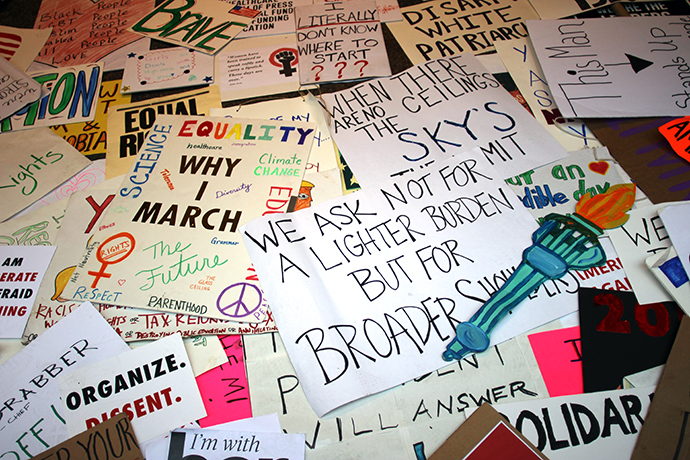
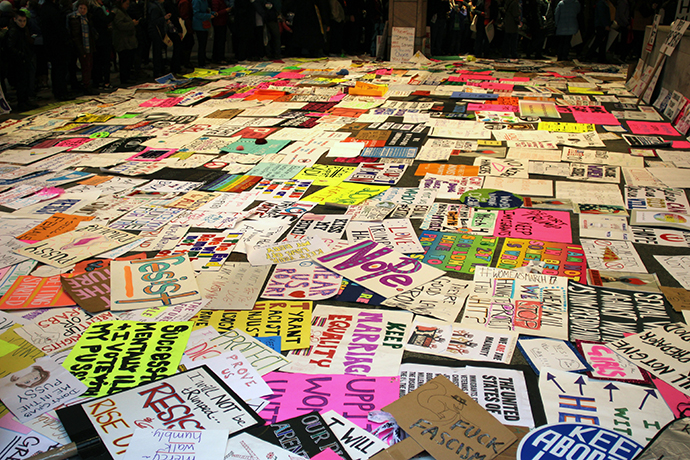

Trump may not have been in the White House as the people overwhelmed the streets outside of, and around it, but we did not go unheard. This is only the beginning of Trump's presidency and its assault on human decency, empathy and integrity, but the Women's March was only the beginning of the resistance.

MLK
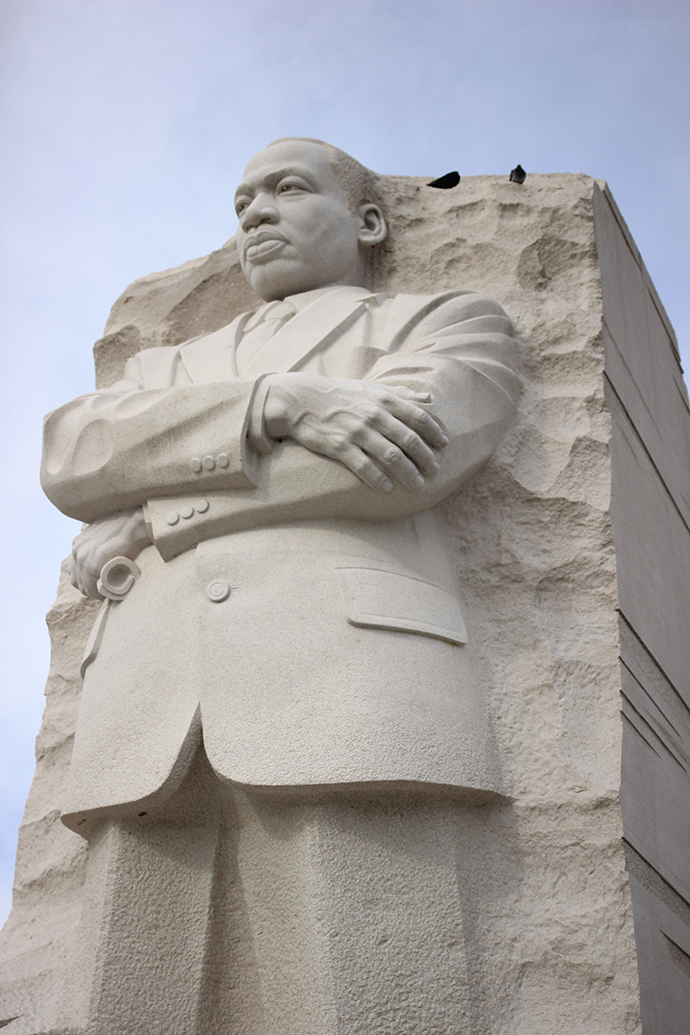
The words and actions of Martin Luther King Jr. are always relevant, but they seem even more vital today. Just two days ago, our President-elect attacked civil rights hero John Lewis, saying—about the man that had his skull fractured by the police after marching in Selma—that he's "all talk, talk, talk - no action or results."
In November of 2015, I saw the MLK memorial in Washington DC for the first time and was awed by its scale, simplicity and the words of MLK himself. The memorial, dedicated in 2011 is the first on the National Mall to honor an African American and only the fourth to honor a non-president. The inscription on the monument proclaims "Out of the mountain of despair, a stone of hope," a reference to a line in one of King's speeches, “With this faith, we will be able to hew out of the mountain of despair a stone of hope.”
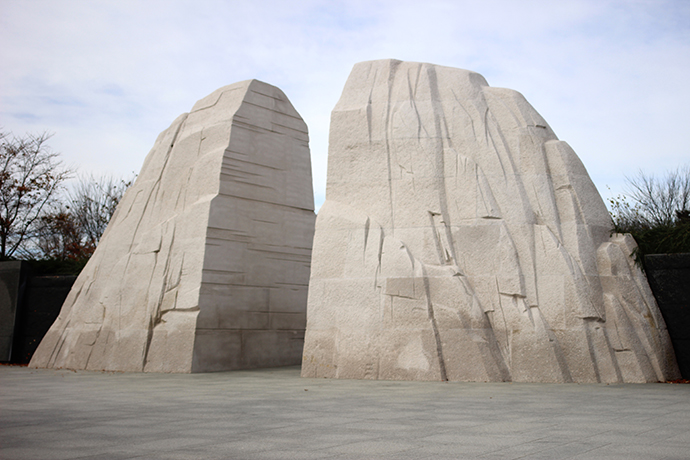
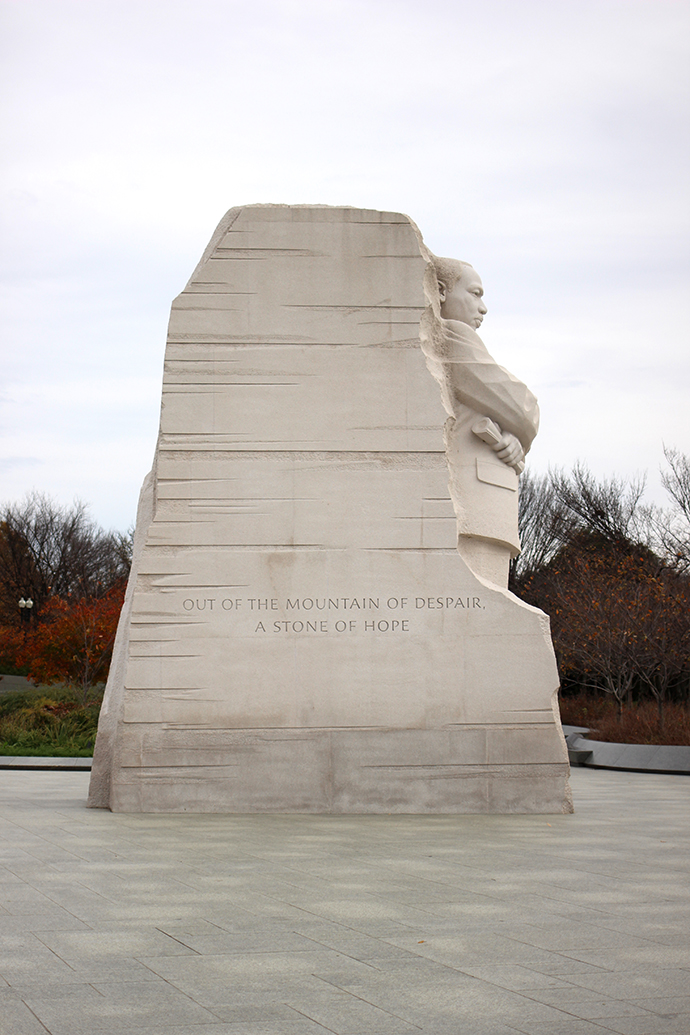
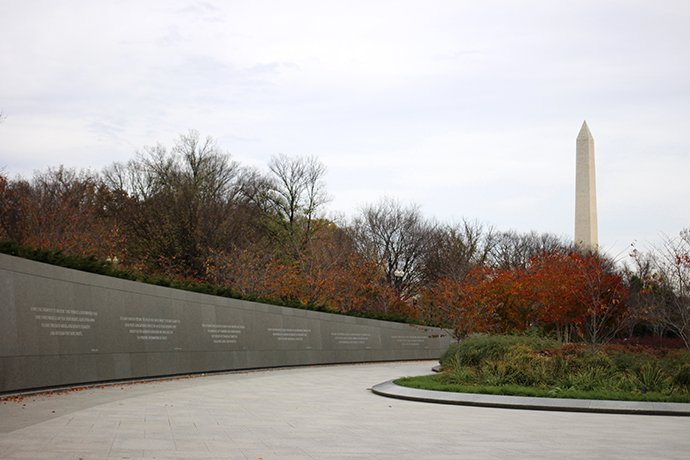

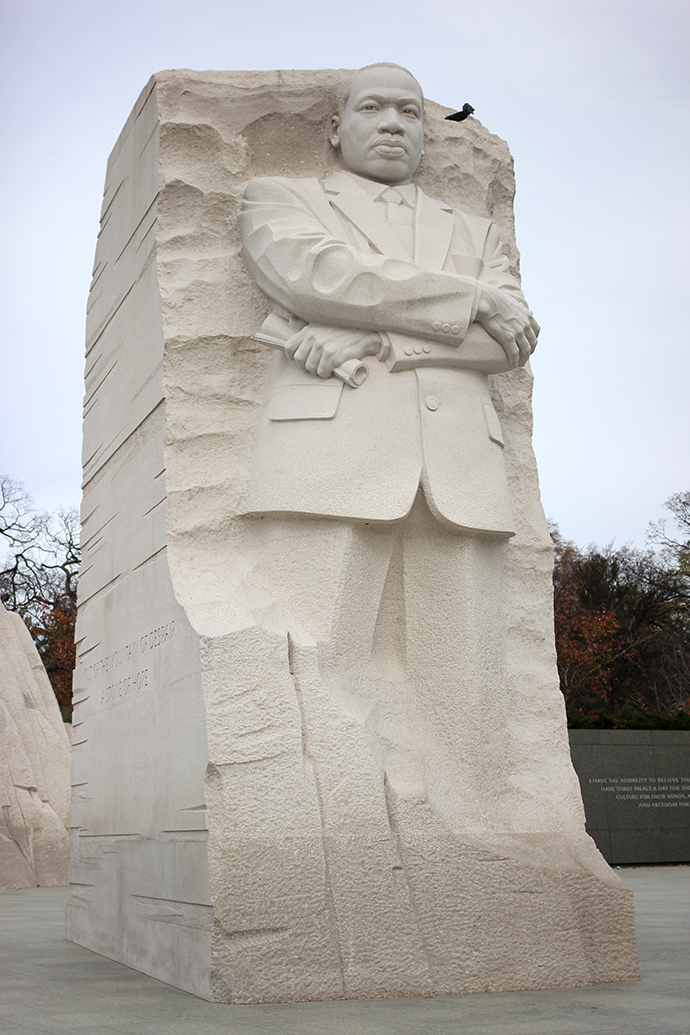
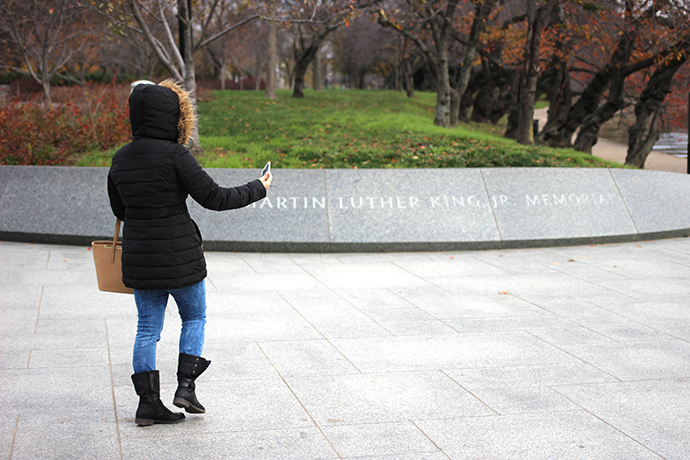
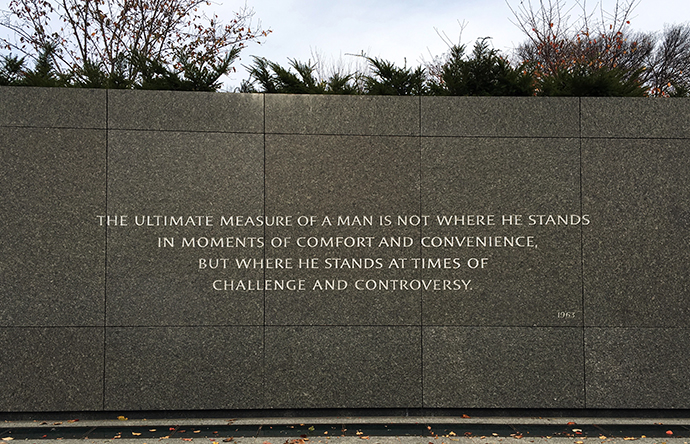
"The ultimate measure of a man is not where he stands in moments of comfort and convenience, but where he stands at time of challenge and controversy," has stuck with me since I visited the memorial, and seems especially important today. Next weekend, I will return to DC for the Women's March, searching for a stone of hope in these times of challenge and controversy.

Rock Creek Cemetery: Part Two

In addition to all of the wonderful bronze sculptures at Rock Creek Cemetery, there were many wonderful old headstones, mausoleums and other treasures. I love that no matter how famous or unknown a cemetery may be, I can always find interesting, historical or strange things to delight in.

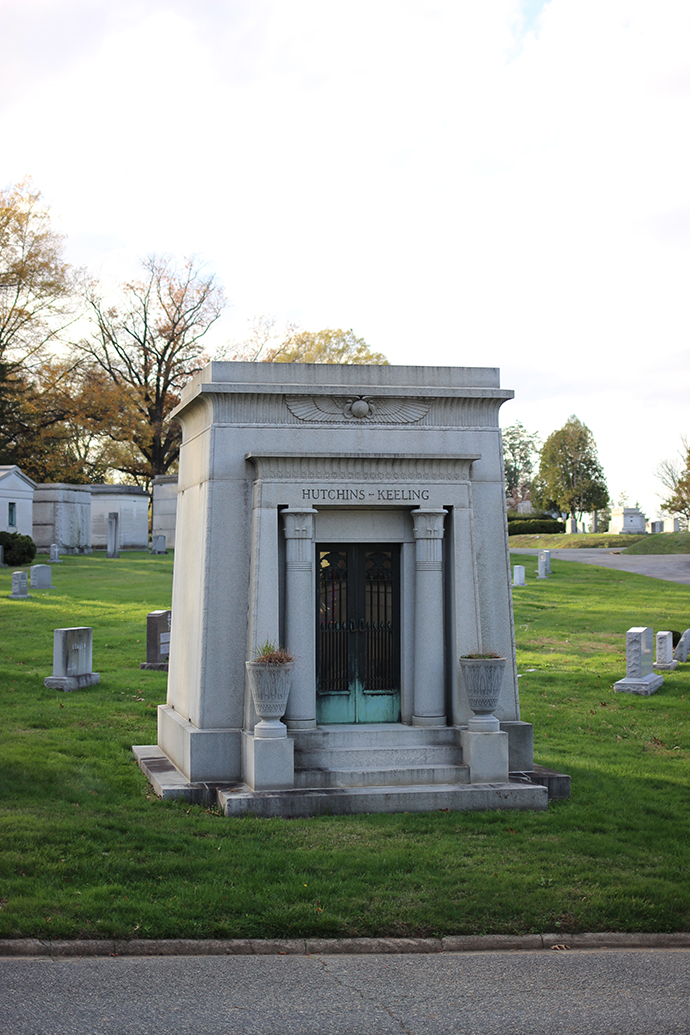
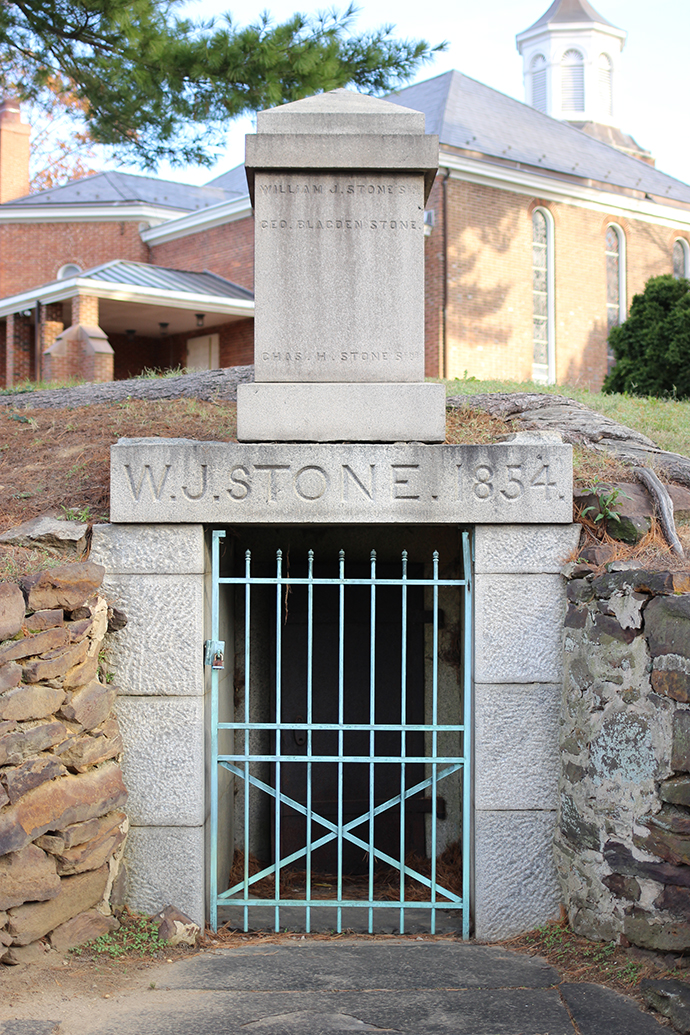

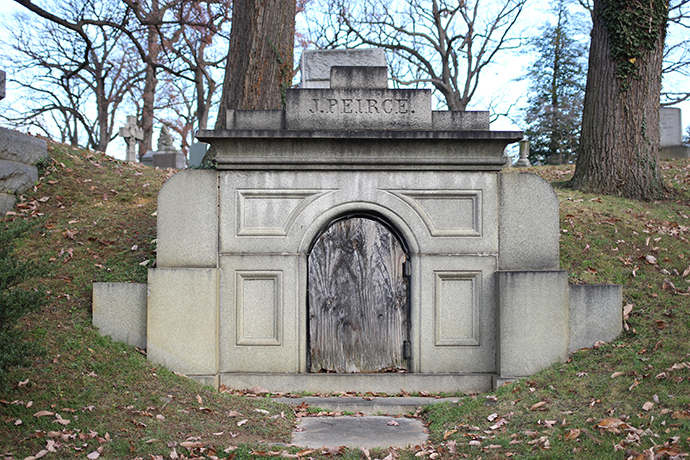
I'm always surprised when I come across mausoleums that only have gates, instead of heavy stone doors. Rock Creek is close to Washington DC, but not right in the city—I think I'm so used to places like Green-Wood, which are very well-kept and buttoned-up, that it throws me to be able to freely see inside of any mausoleum.


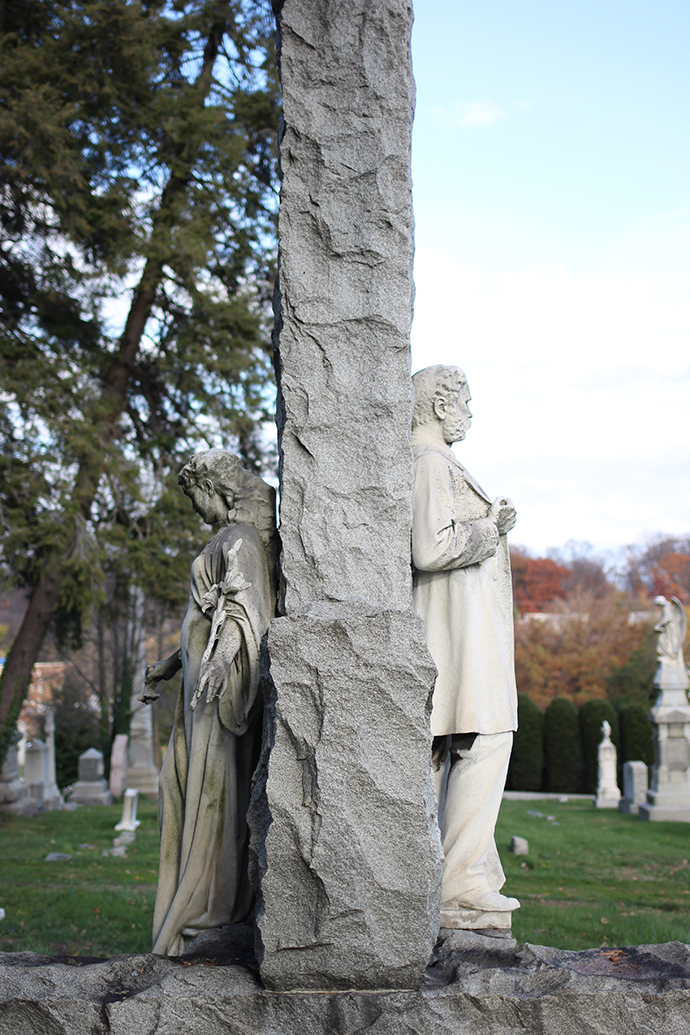

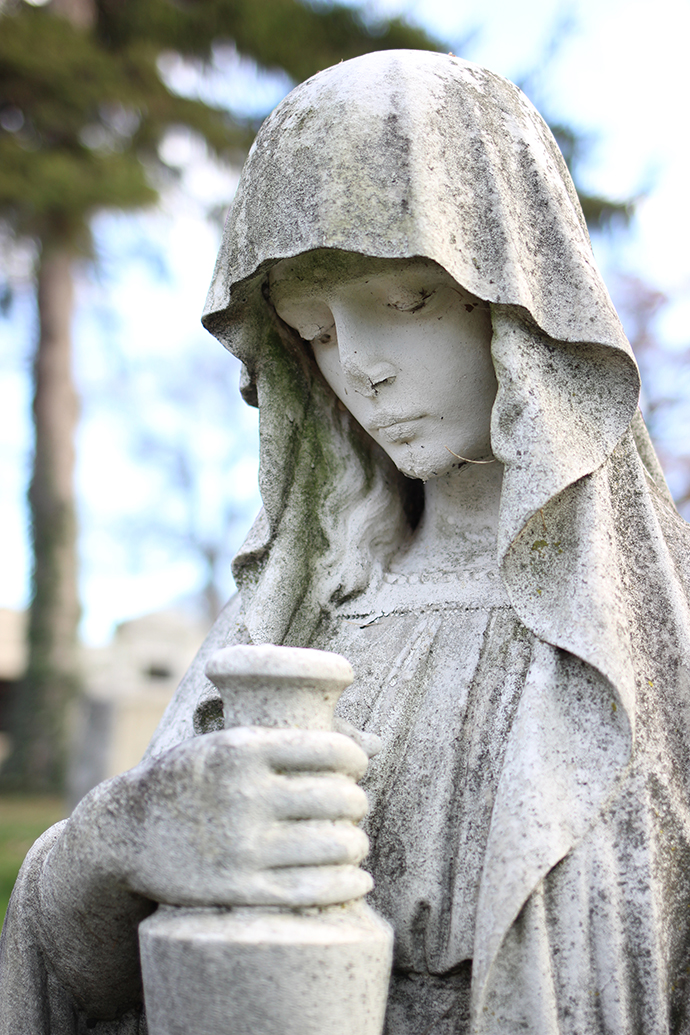

We found a lot of wonderful stone sculptures to complement the bronzes, including a few men and a lot of really unique representations of specific people. The creepy nun was definitely a favorite of ours, and we ended up circling back to her a few times.
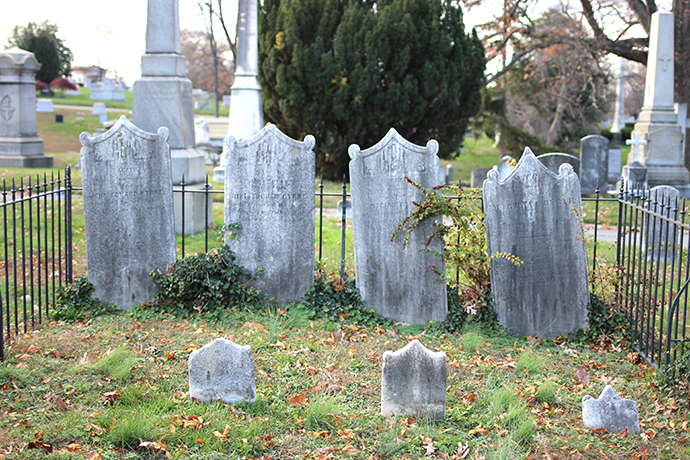

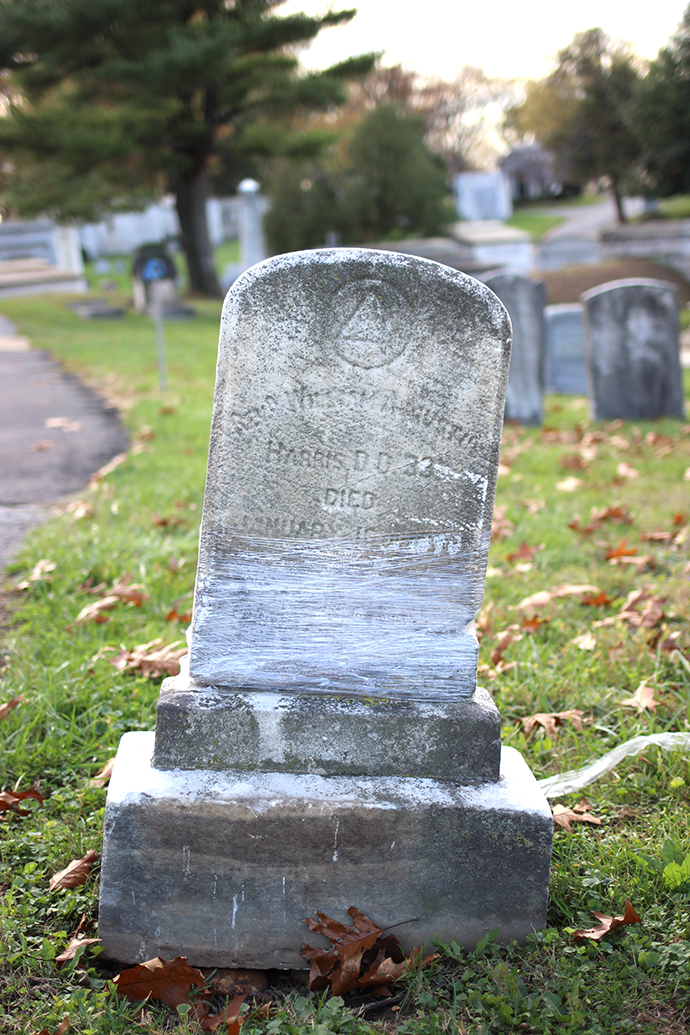

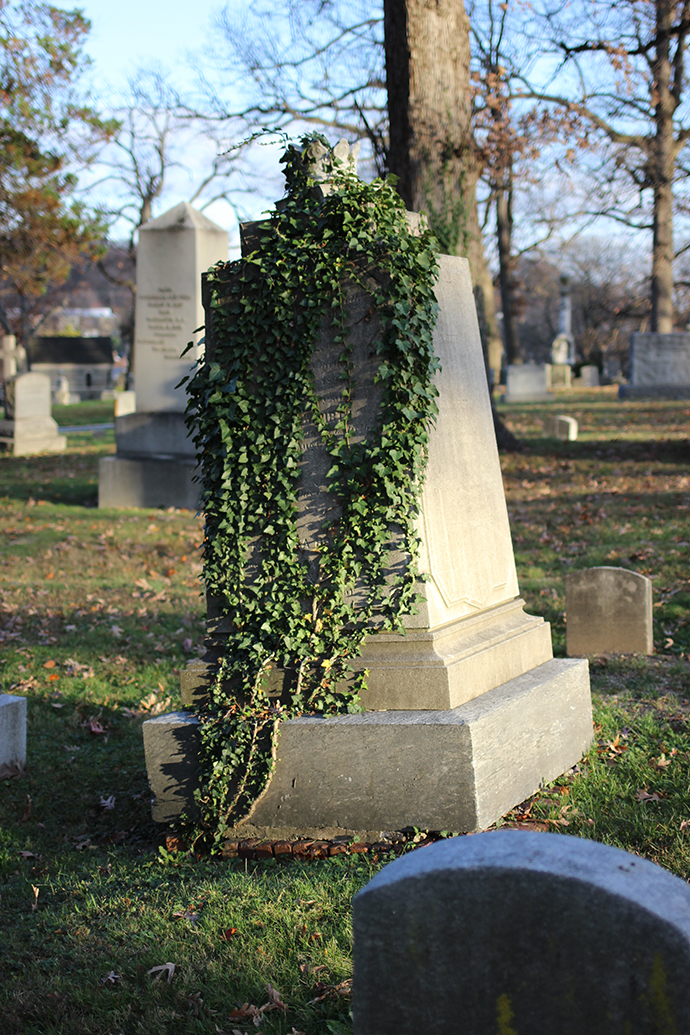


We visited Rock Creek in November, and luckily there were still a few leaves in their full fall glory. Of course I love cemeteries in all seasons, but nothing really beats the fall. The late afternoon light was just perfect, and I've never met an ivy-covered headstone that I didn't love.
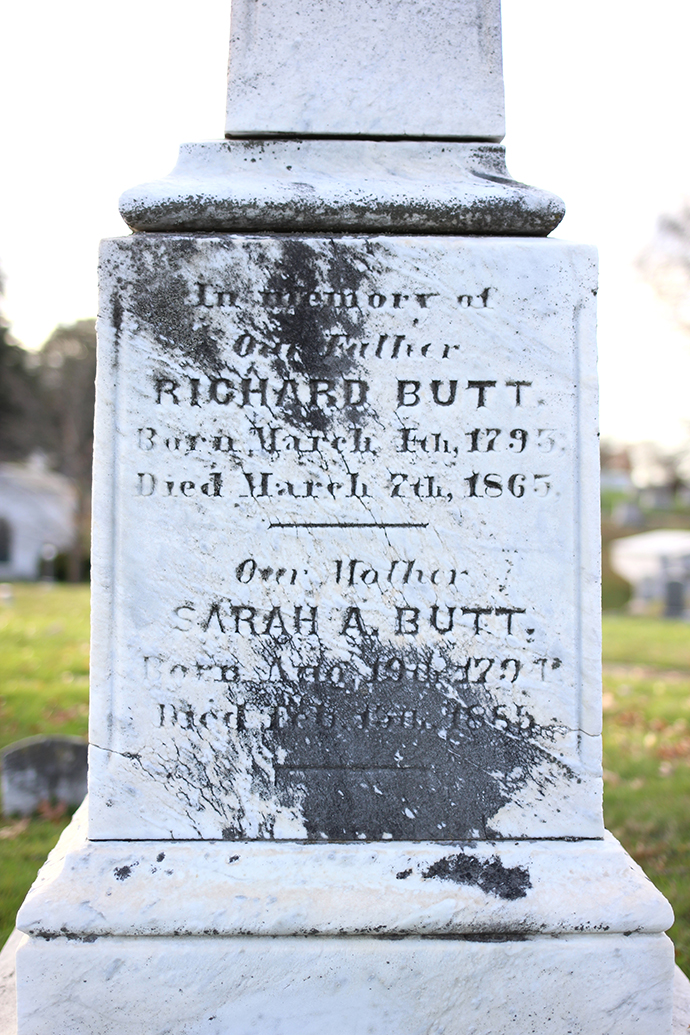
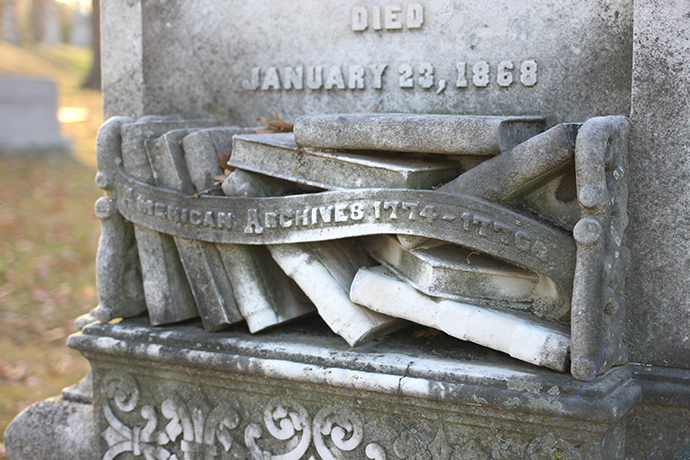
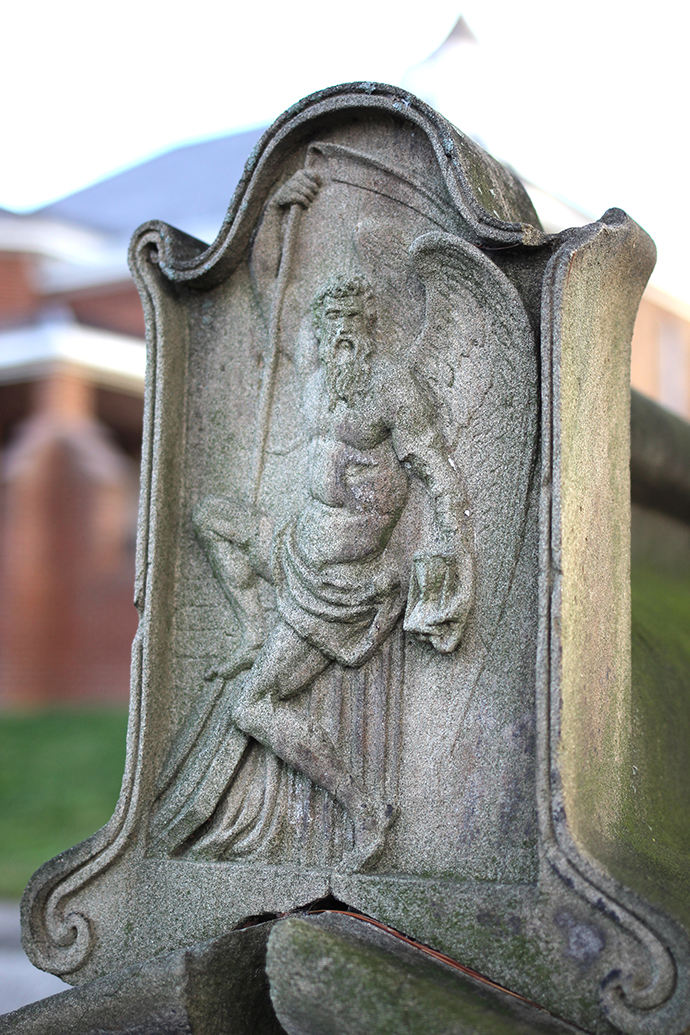
In every cemetery I visit, I usually find a few things that really stand out and stick with me long after I've gone. I hope we're forgiven, but we cannot be the first people to visit Rock Creek and laugh upon seeing Richard Butt's headstone. I very much identified with the bookshelf stone, and I loved the scythe-and-hourglass-carrying angel that managed to be both ominous and beautiful at the same time.
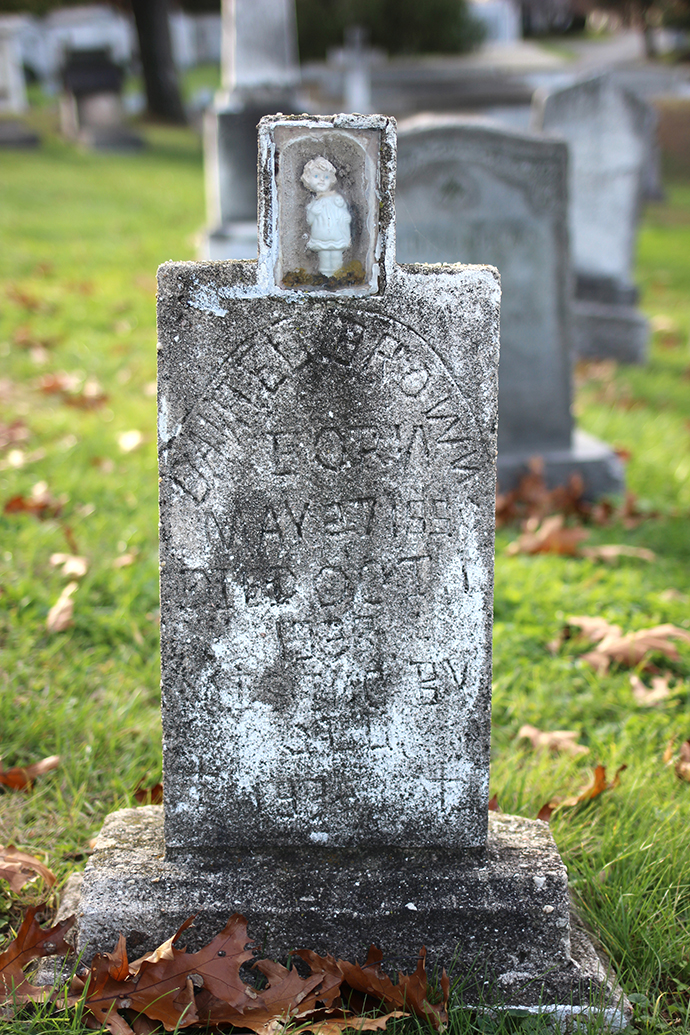
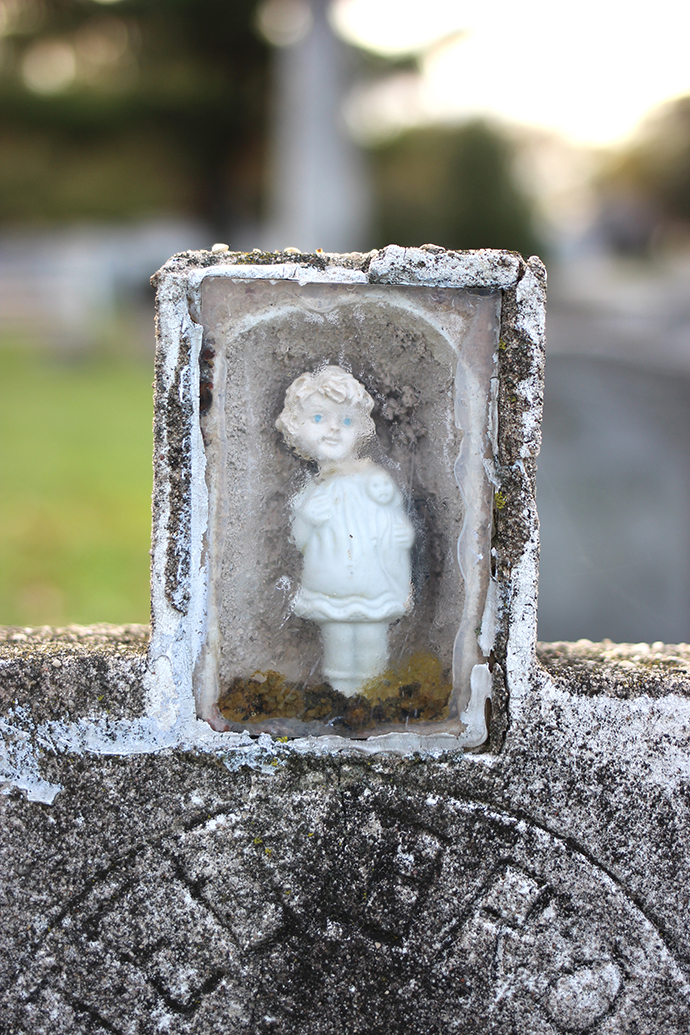
But in between all of the wonderful sculptures and symbolism we found in Rock Creek, nothing will stay with me quite as long as the blue-eyed, plastic doll entombed atop a crudely carved stone, and forever in my nightmares.

Rock Creek Cemetery: Part One, Bronzes
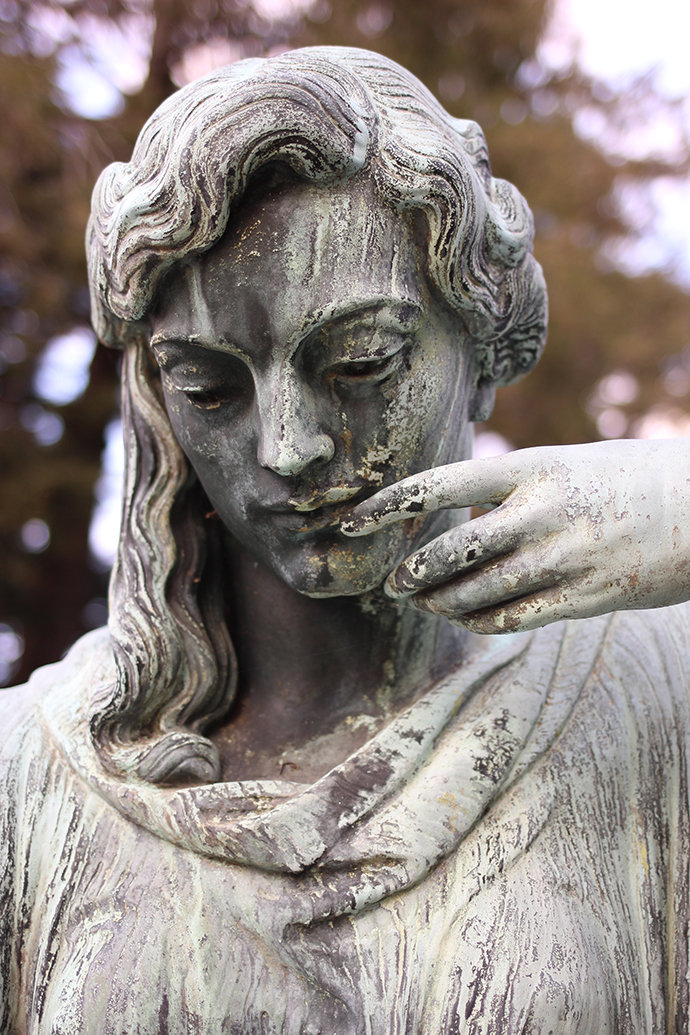
Back in November, I met my uncle in Washington DC for a long weekend of historical and operatic delights. He had a car, so he suggested a few things that lay outside of city limits, like Rock Creek Cemetery. I had never heard of Rock Creek before but it was first established in 1719 and has been listed on the National Register of Historic Places since 1977.


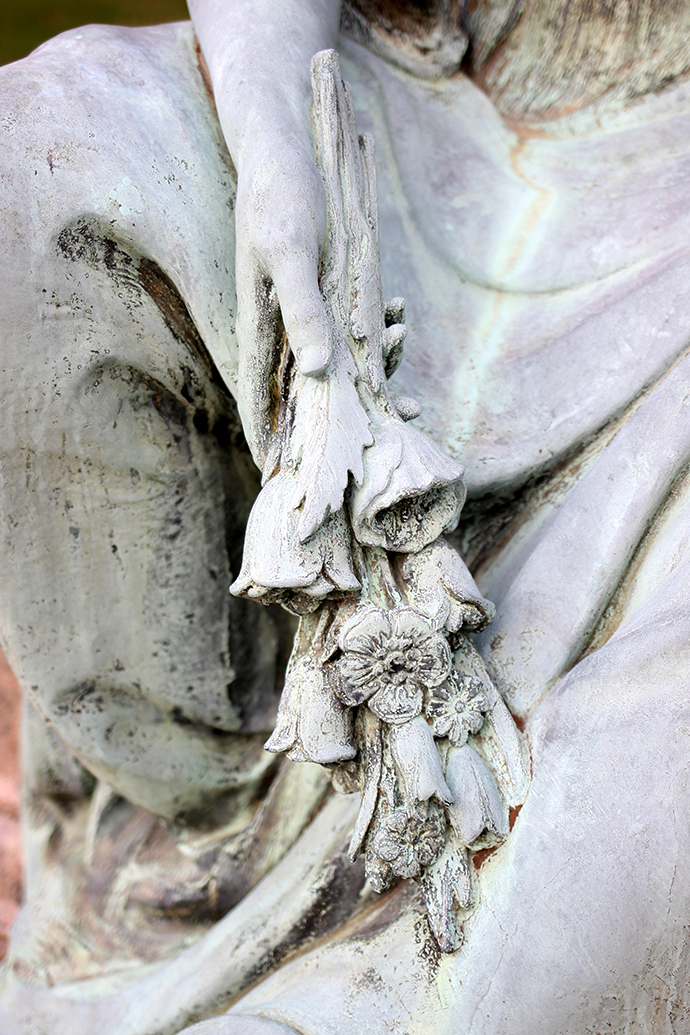
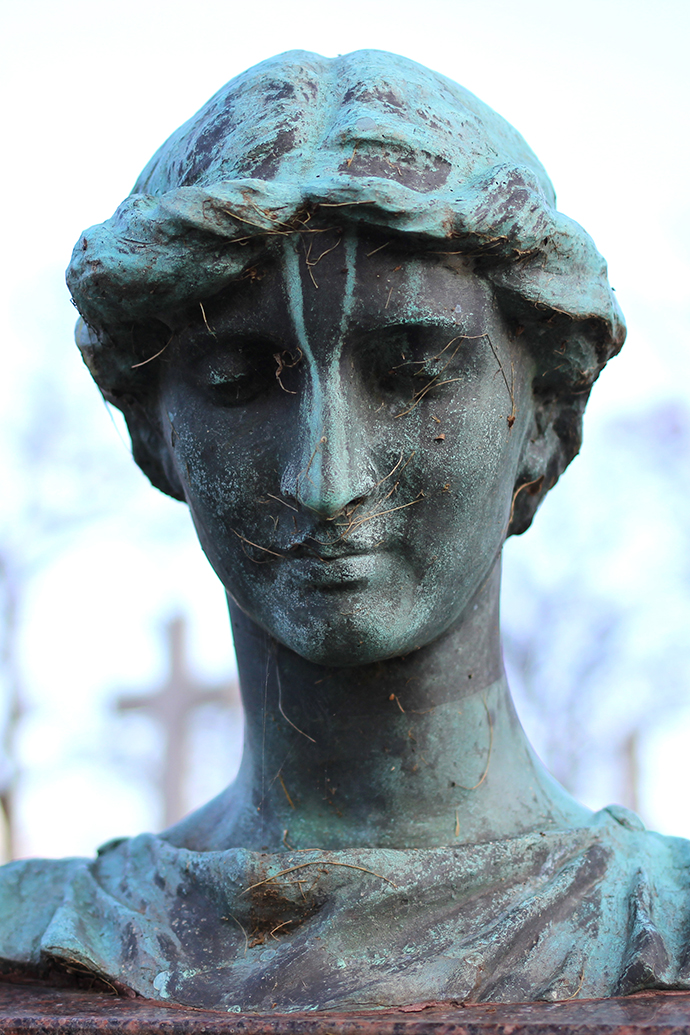
My uncle had printed out a list of notable sculptures at Rock Creek, of which there are many. We managed to find almost every one on his list, along with a few more along the way. I was surprised at how many large bronzes there were in the relatively small cemetery, including a few men which I don't see nearly as often as the mourning woman.
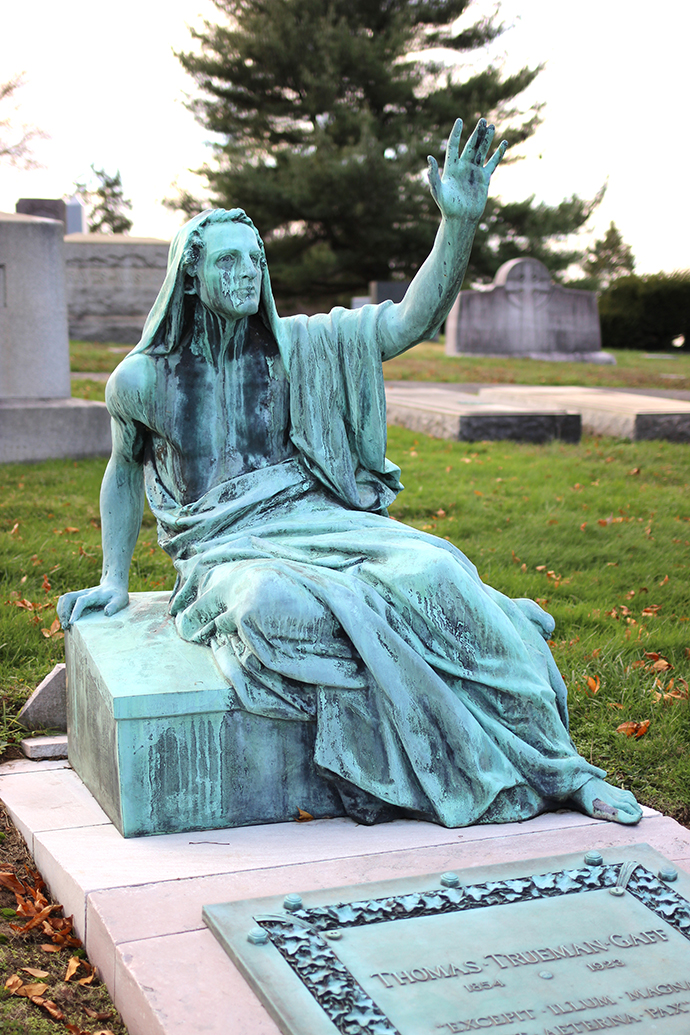


The Thomas Trueman Gaff monument was sculpted by Jules Dechin and caught our eye immediately. The figure's raised hand and haunting upward gaze is really unnerving. Like most of the sculptures we saw, rain had streaked the face so he looked as if he'd been crying.
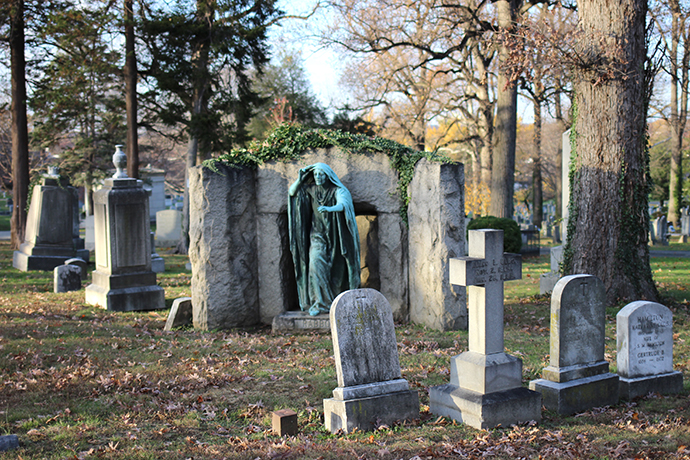
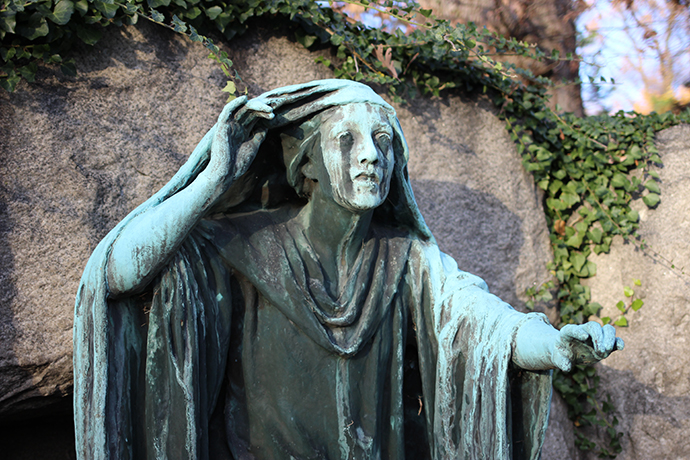
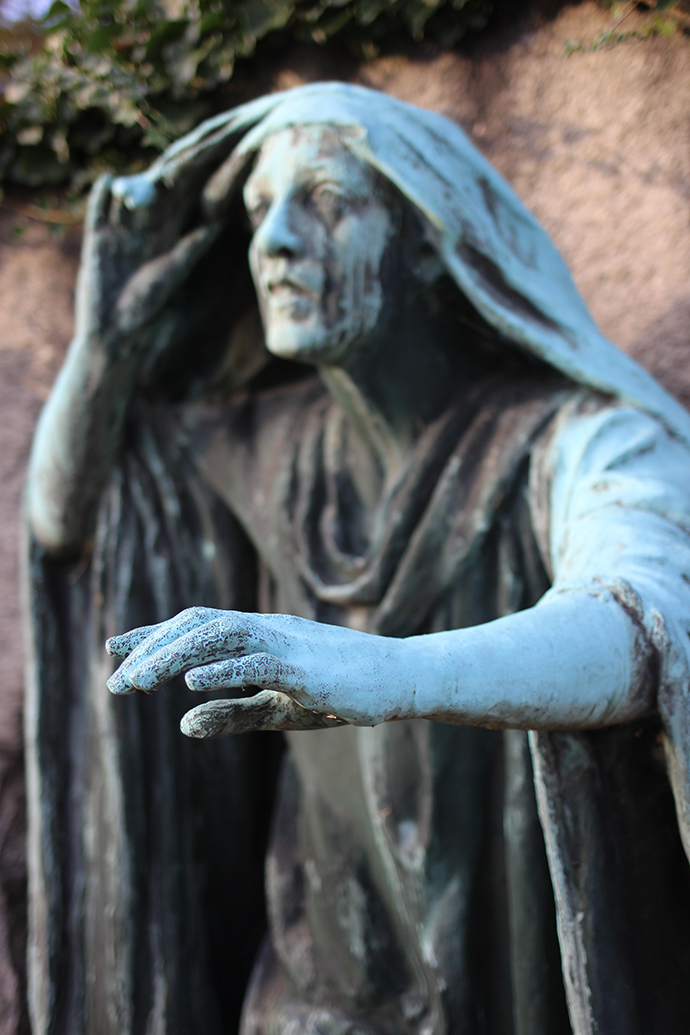

At first glance I assumed the Rabboni sculpture was a man, when it's actually a depiction of Mary Magdelene. It was sculpted in 1909 by Gutzon Borglum in tribute to a prominent Washington banker and tapestry collector.

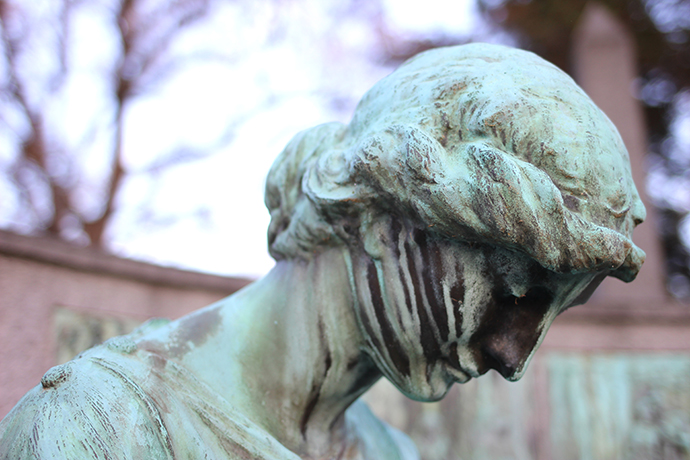
The Kauffmann Memorial is probably my favorite in the cemetery and features a "classically-draped" woman in the process of making a wreath. She is surrounded by bronze panels featuring scenes from Shakespeare's "Seven Ages of Men," from As You Like It. She has such a wonderful, rain-stained face and manages to be incredibly beautiful and haunting-yet-serene all at the same time.
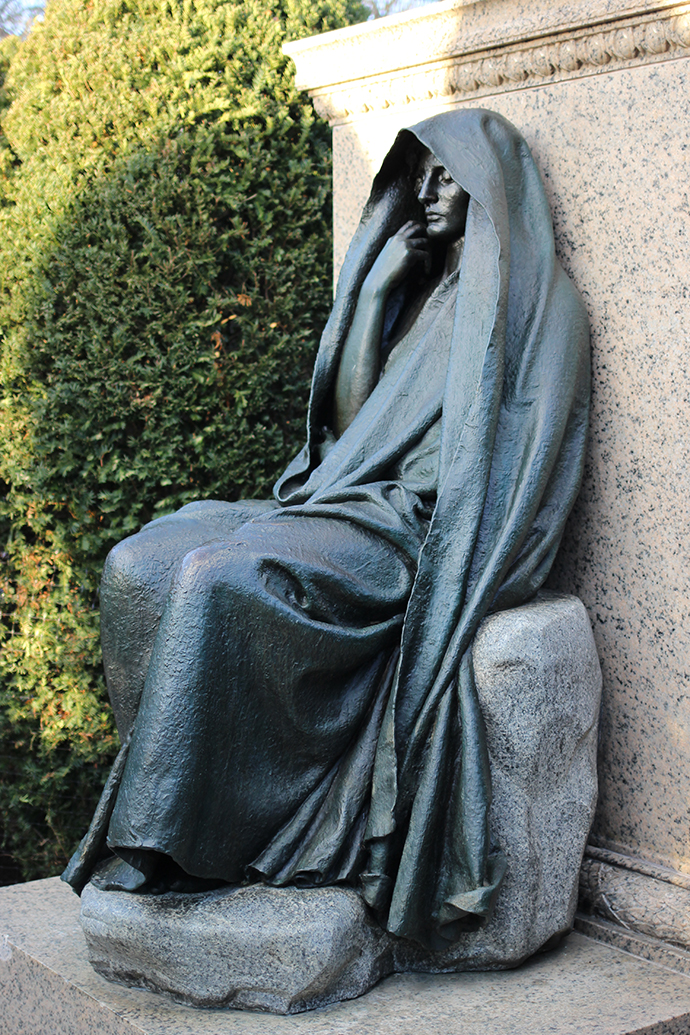
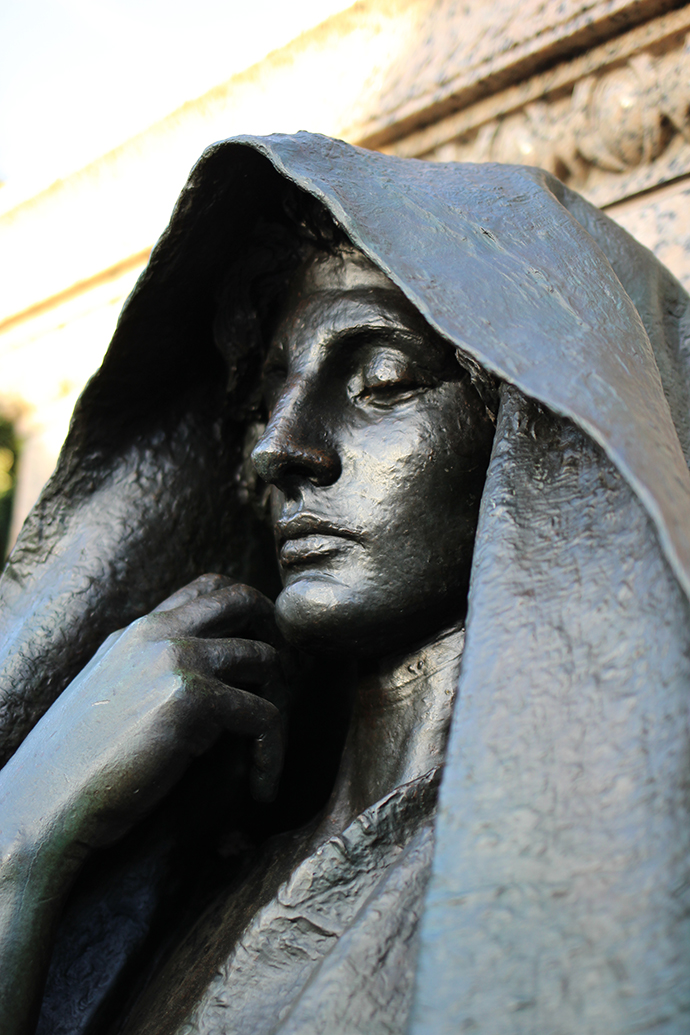
But the most famous of all of the Rock Creek sculptures is undoubtedly the Adams Memorial featuring a seated bronze by Augustus Saint-Gaudens anchoring a plot designed by notorious architect Stanford White. It was erected in 1891 by Henry Adams as a tribute to his wife, who had committed suicide. The plot is encircled by shrubs, keeping the sculpture hidden from view. There is a bench where you can sit, face the figure and contemplate Grief—which has been the title commonly given to the sculpture, apparently much to Henry's chagrin. He wrote to Saint-Gaudens's son, saying:
"Do not allow the world to tag my figure with a name! Every magazine writer wants to label it as some American patent medicine for popular consumption—Grief, Despair, Pear's Soap, or Macy's Mens' Suits Made to Measure. Your father meant it to ask a question, not to give an answer; and the man who answers will be damned to eternity like the men who answered the Sphinx."