

Archive
- Abandoned
- Alabama
- Arizona
- Bahamas
- Books
- California
- Cemetery
- Climate
- Colombia
- Connecticut
- Diner
- Egypt
- Feature
- Florida
- Friday Fun
- Georgia
- Holidays
- Illinois
- Iowa
- Italy
- Kentucky
- Louisiana
- Maryland
- Massachusetts
- Mississippi
- New Jersey
- New Mexico
- New York
- North Carolina
- Novelty Architecture
- Ohio
- Pennsylvania
- Personal
- Peru
- Project 365
- Protest
- Rhode Island
- Roadside Attraction
- South Carolina
- Tennessee
- Texas
- Travel Guide
- Virginia
- Walks
- Washington DC
- West Virginia
- Wisconsin

Tarpon Springs

Tarpon Springs is a city on the Gulf Coast of Florida, known for its sponges. Greek sponge divers started arriving in Tarpon Springs in the early 1900s, but In 1947, the sponge fields were wiped out by a red tide algae bloom. The Florida sponge industry rebounded in the '80s when a disease hit Mediterranean sponge fields, increasing the demand for Florida sponges and there's still a small, active sponge industry in Tarpon Springs.
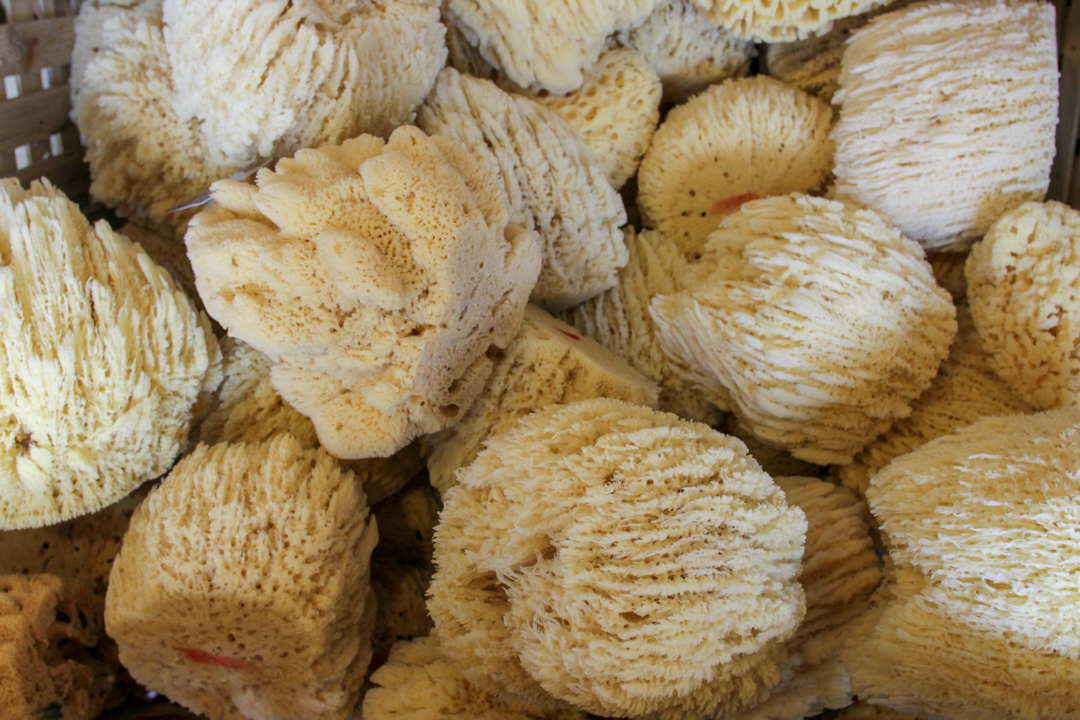


Tarpon Springs, population of around 20,000, has the highest concentration of Greek Americans of any city in the country. The town seems built for tourists, and it's made up mostly of restaurants, bakeries and souvenir shops. The two largest shops are The Sponge Factory and Spongeorama, the latter of which dubiously claims to have the world's largest collection of sponges.
Both shops show a different short, educational sponge diving movie and we watched both—never turn down a free movie about the history of sponges. The Sponge Factory has a better selection of sponges overall, but Spongeorama's vintage movie is definitely better. Both movies contain "secret" discount codes, although I don't know if it was worth saving 10% on the $4 finger sponge that I bought to suffer the indignity of awkwardly telling the clerk that I was a "sponge expert."


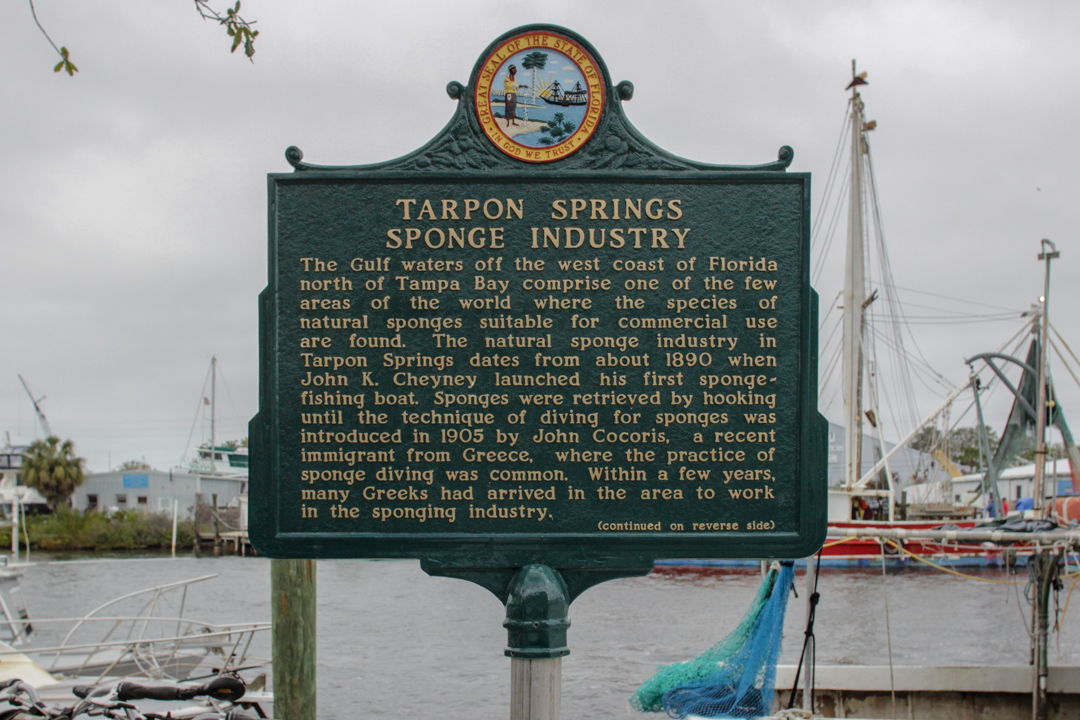
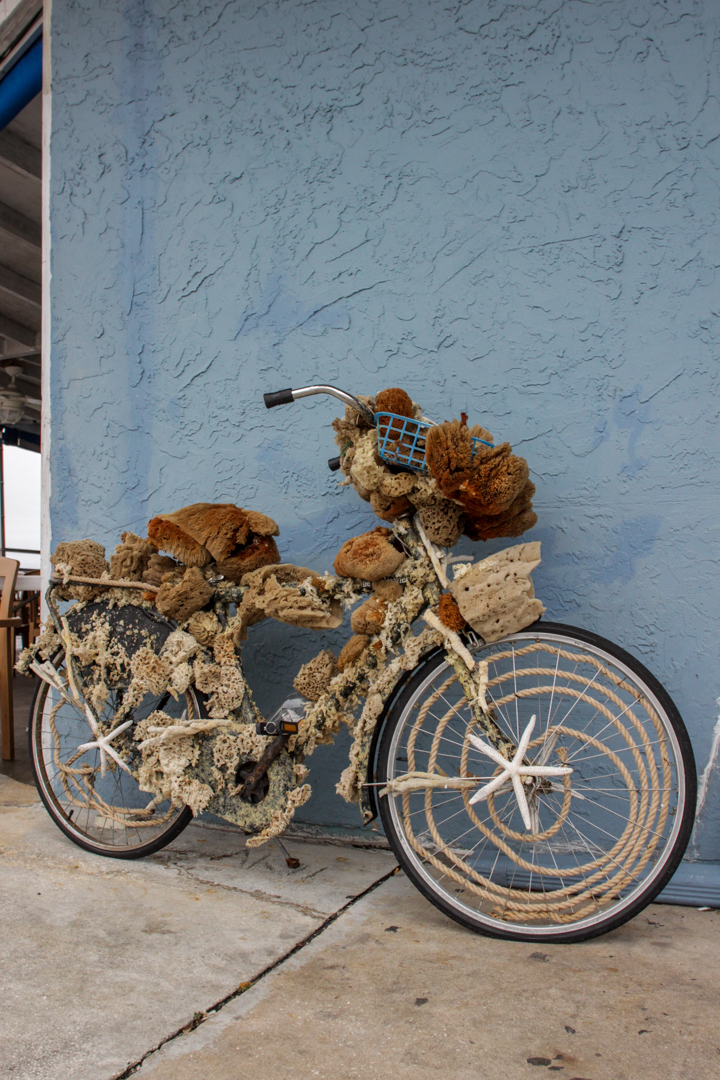

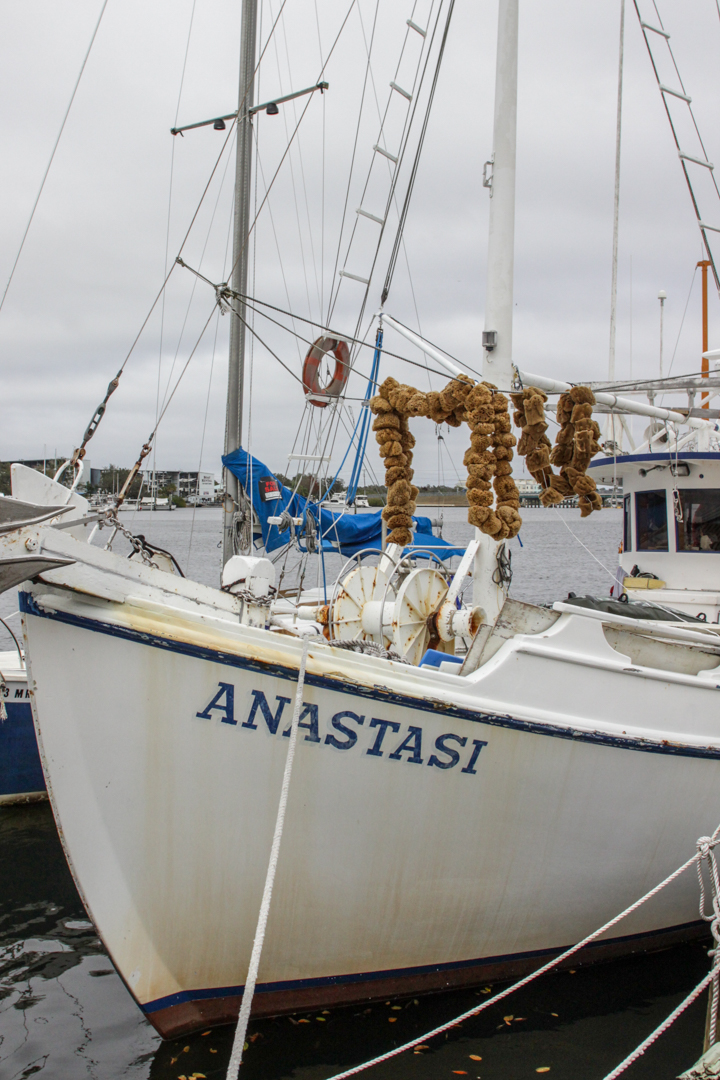

The harvesting of sponges is actually pretty brutal to watch—they hack them free from the sea floor with a giant hook—but the leftover fragments can regenerate. It's hard to reconcile the fact that the squishy, porous sponge was once a living creature, but what you think of as a natural sea sponge is in fact just a soft, fibrous skeleton. Over-fishing almost brought the animal to extinction in the mid 1900s, but today a lot of the sponge-like products are made synthetically.


The variety of sponges on display in Tarpon Springs is amazing. They come in all shapes, sizes, colors and density and have been used by humans for centuries. Some sponges even have medicinal purposes and have anti-cancer, anti-bacterial and anti-fungal properties. I love places like this that are built around hyper-specific themes, like Sleepy Hollow or Roswell, Sponges are everywhere you look—on boats and buildings and bikes—and I almost started to believe that I was a sponge expert after spending just a few hours in Tarpon Springs.
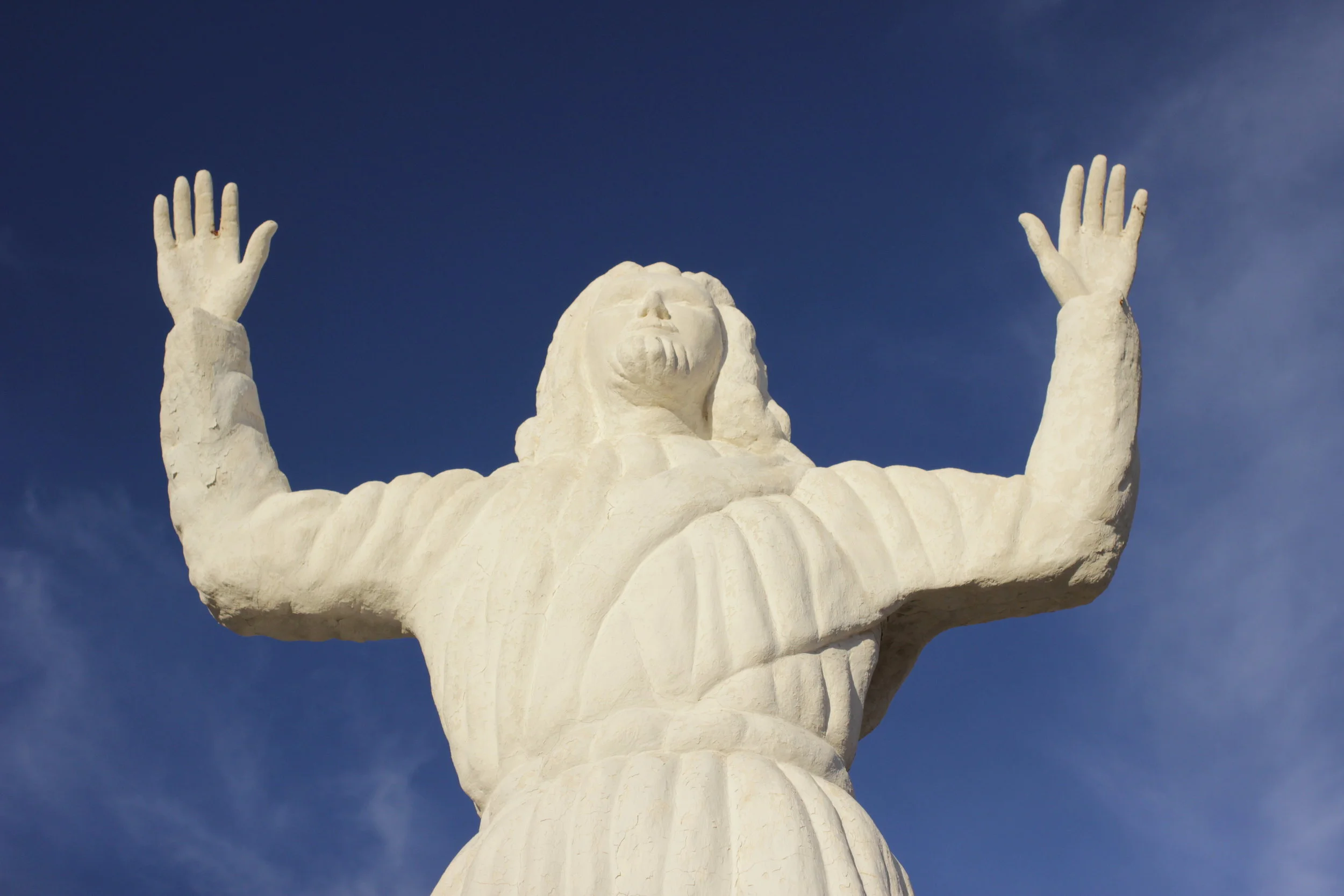
Desert Christ Park

Desert Christ Park, located in Yucca Valley, a high desert town near Joshua Tree in southeastern California, was the vision of one man. Eddie Garver, also known as the Desert Parson, conceived of Desert Christ Park with the help of sculptor Frank Antone Martin and the park was dedicated on Easter Sunday, 1951.
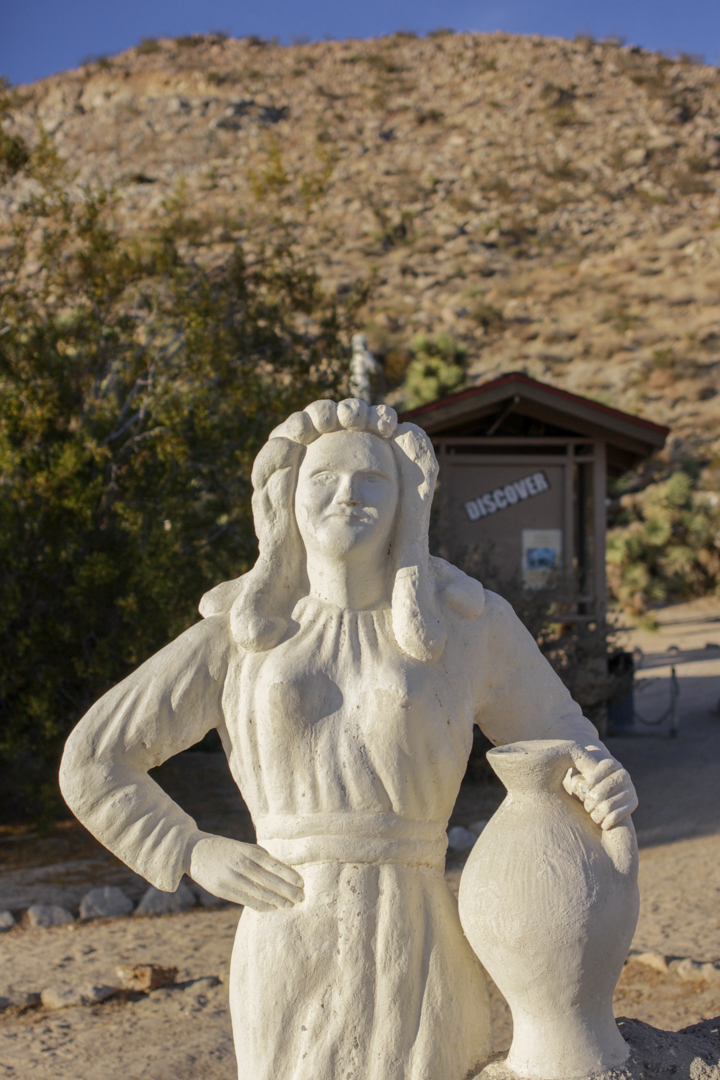


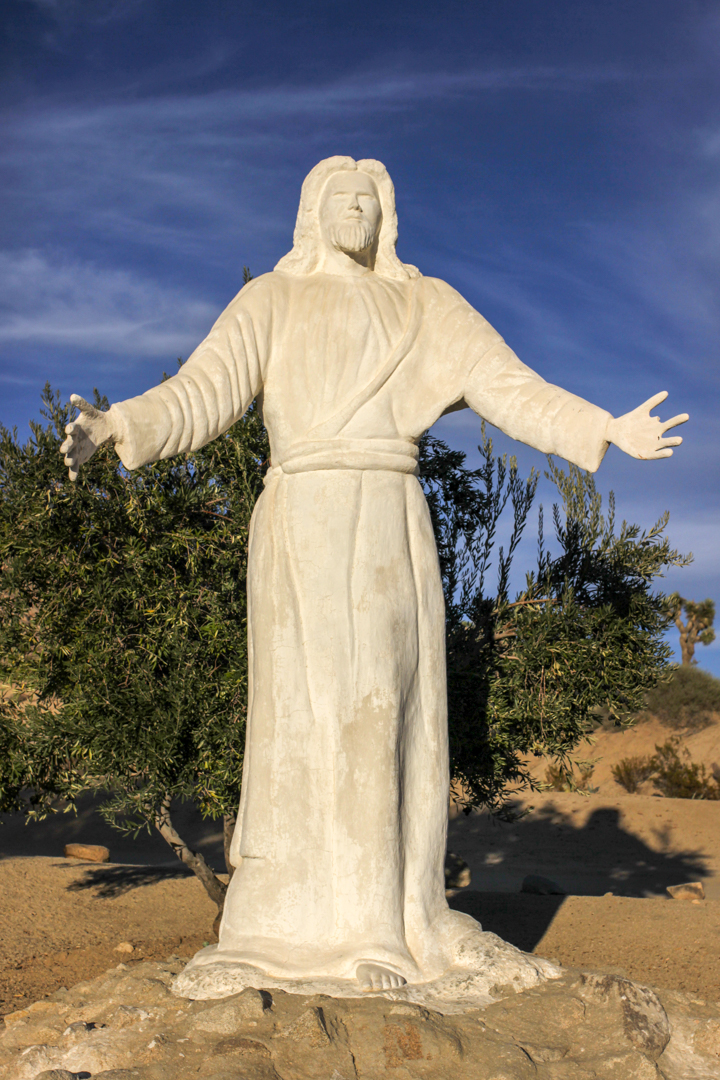

Garver was granted five acres of land by the US Government for his park, and offered up his land to Martin, who had just been denied permission to erect his Christ statue on the edge of the Grand Canyon. Martin died in 1961, but not before creating the more than forty white, steel-reinforced plaster and concrete statues that still dot the desert landscape.


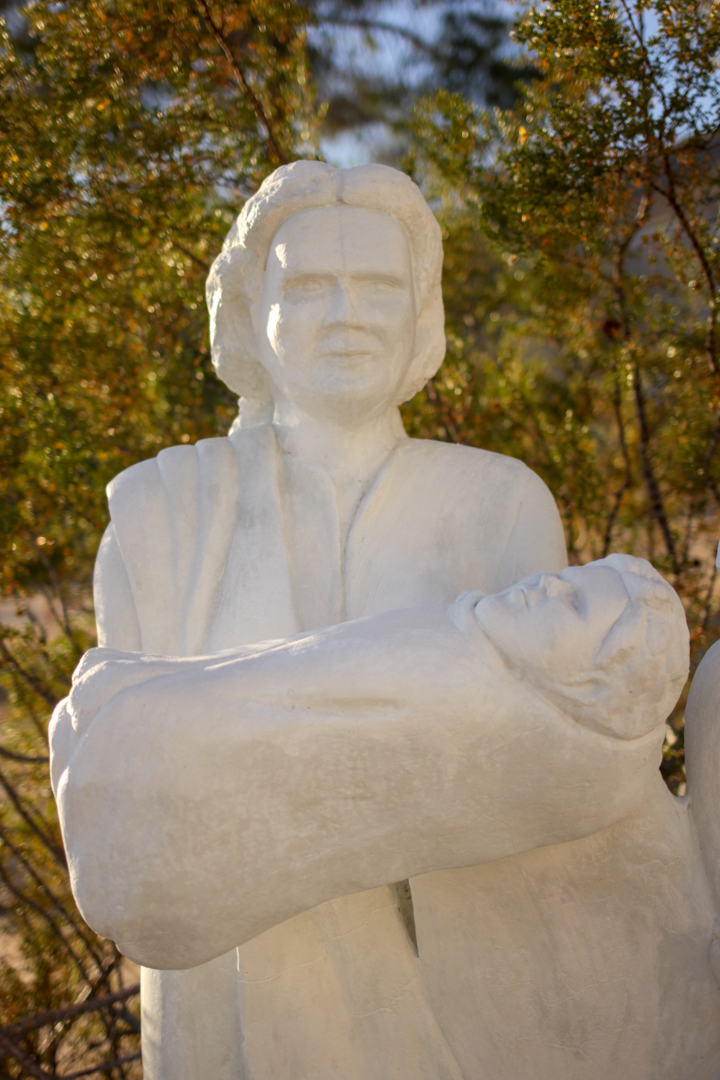


The statues portray Christ and other biblical figures, including a three-story, 125-ton bas-relief of The Last Supper. The website states that they "welcome all to remember and celebrate not only the visionary and the artist, but most importantly, the life and teachings of our Lord and Savior, Jesus Christ."


I'm not at all religious, and I'll admit that I originally planned to go to the park because I had read that a lot of the statues had fallen into disrepair. I love abandoned places and I expected to find a macabre scene of limbless, crumbling figures. While a few had indeed seen better days, a group of volunteers is currently working to restore the sculptures and their progress is obvious.


Desert Christ Park was one of three desert installations that we saw on this trip—including Salvation Mountain and Noah Purifoy's Outdoor Desert Art Museum. The desert is the perfect canvas for spiritual, artistic expressions like these and I will always appreciate the need that people have to just create.


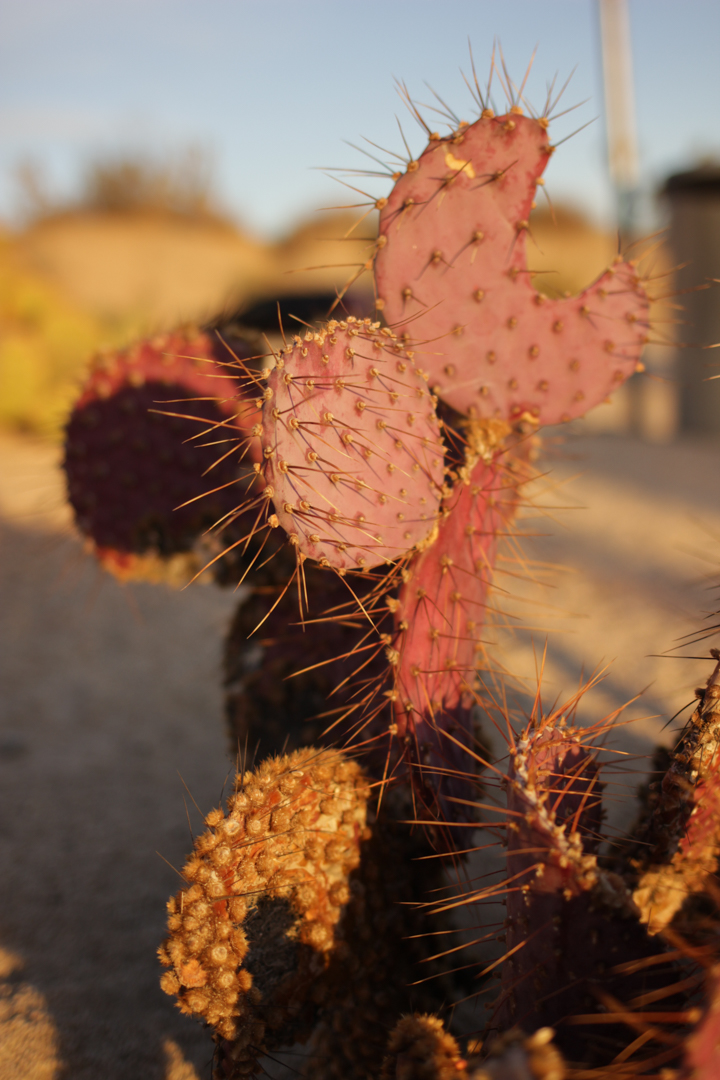
The park is open year-round, free of charge during daylight hours. It's maintained by the Desert Christ Park Foundation, and the restoration work is funded through donations and grants. We went at sunset and the light was incredible—I can't think of a better exhibition space for a man's life work.
Desert Christ Park
56200 Sunnyslope Drive
Yucca Valley, CA

Weeki Wachee Springs

The one attraction that I was most excited to see on our recent Florida trip was Weeki Wachee Springs. Open since 1947, Weeki Wachee is home of the famous live mermaid show. The Weeki Wachee spring is the deepest naturally-formed spring in the U.S. and the surrounding land is a Florida State Park. Guests watch the mermaid shows from 16 feet below the surface, inside of a 400-seat theater embedded in the side of the spring.

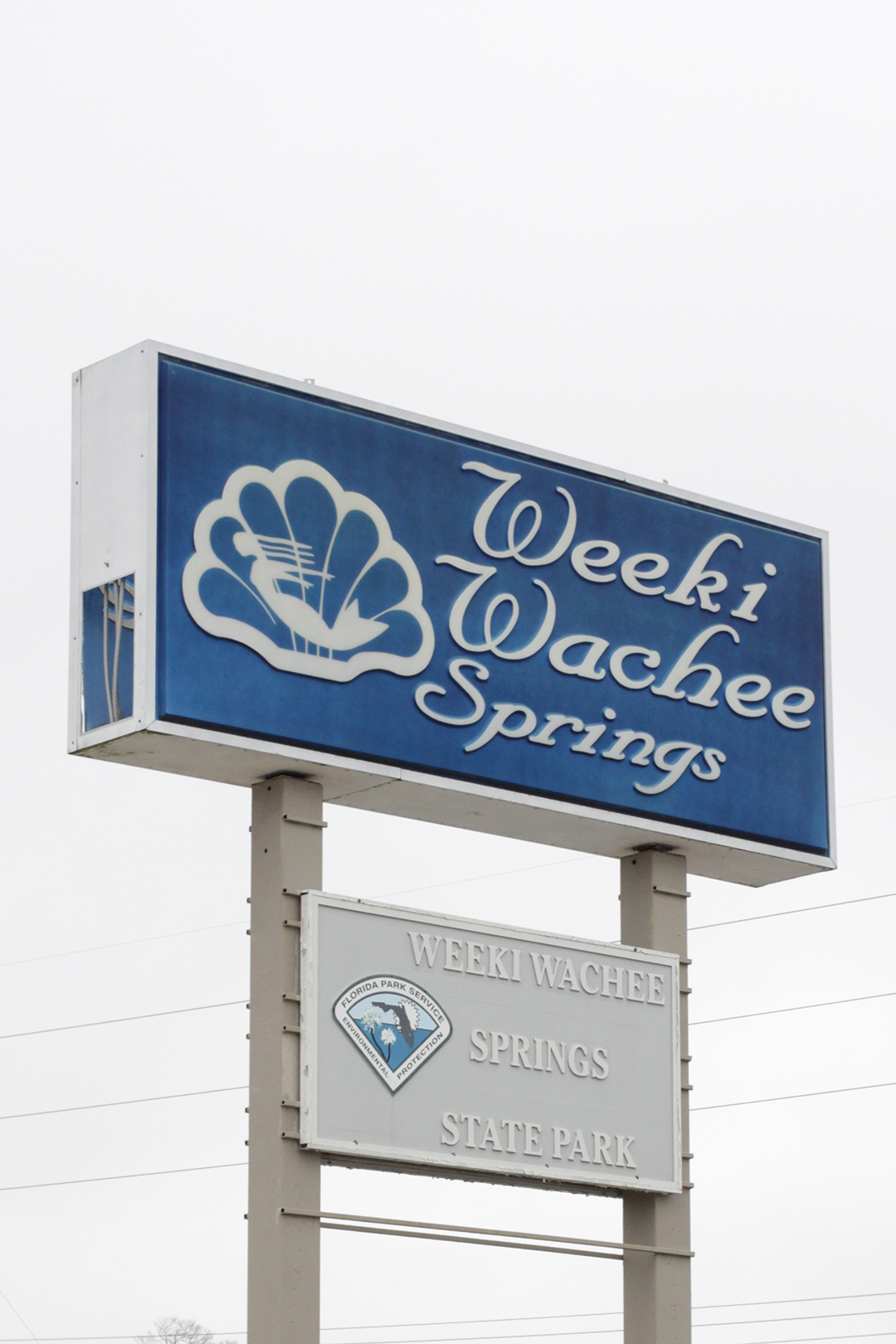


The mermaid show was dreamed up by former Navy man Newton Perry, who also invented the free-flowing air hose breathing apparatus that the mermaids still use today (it resembles a hookah). The mermaids are trained to eat, drink and do underwater ballet routines—three times a day, 365 days a year.


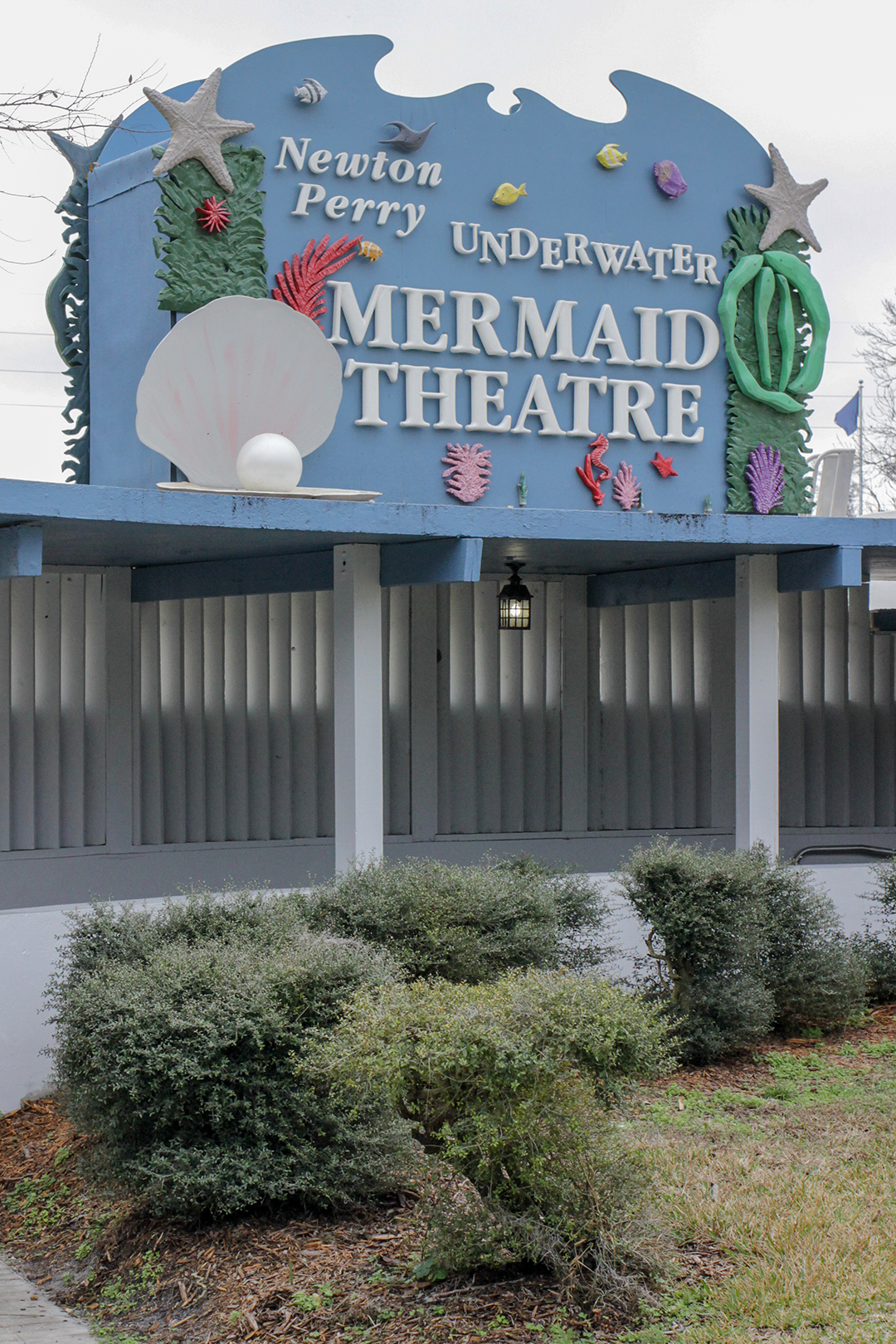

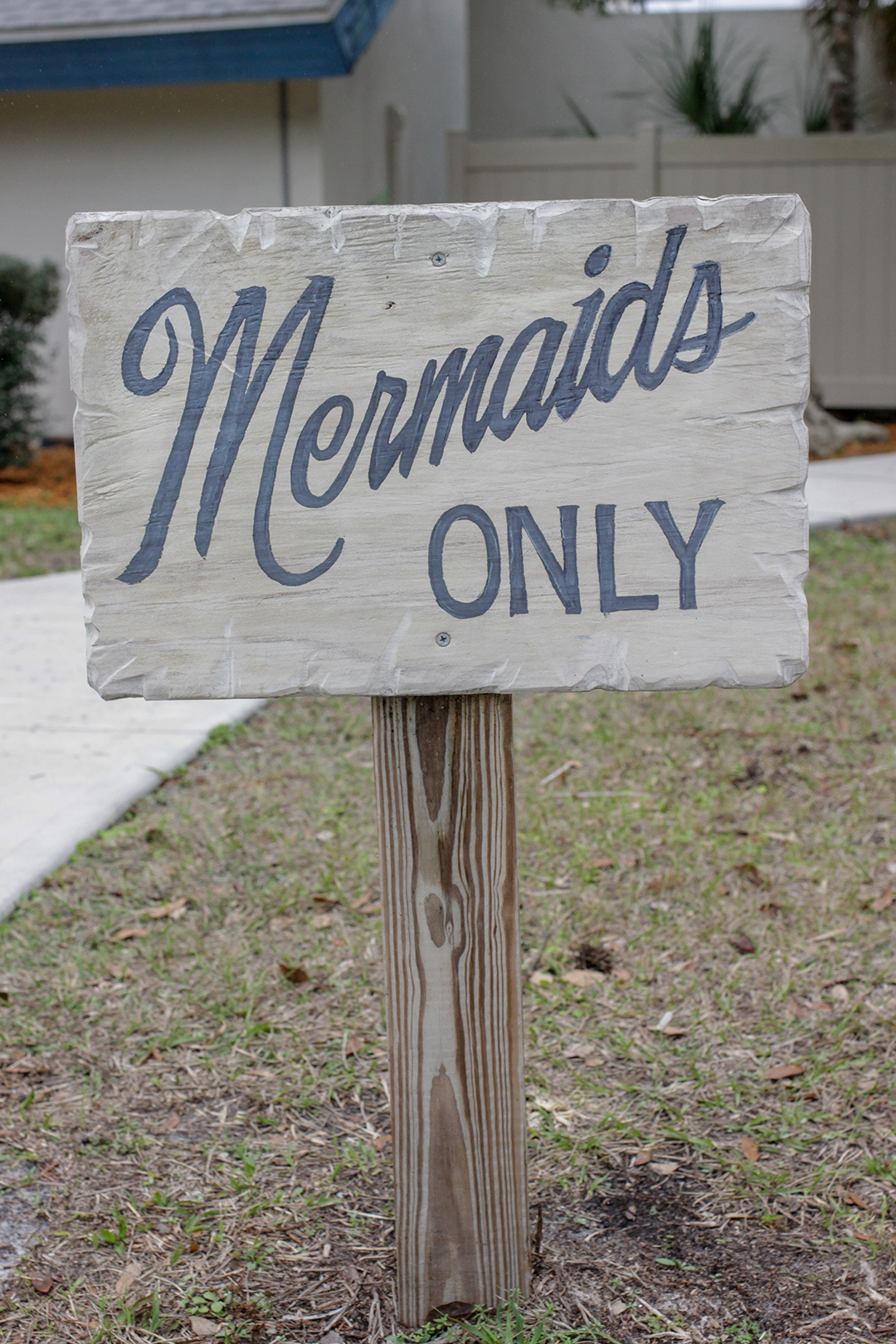


The mermaid show was just as cheesy as I wanted it to be, and deceptively simple—tryouts for new mermaids include a 120-foot dive into the spring, a 300-yard timed swim and a 10-minute water-treading exercise. The show ended with a performance of "Proud to be an American," lest you forget that this is old Florida. According to the 2016 census, the town of Weeki Wachee has just 13 residents and the mayor is a former mermaid.


In the early days of the attraction, mermaids would stand by the side of the road in their bathing costumes and wave motorists into the park. In the '50s and '60s, the mermaids were visited by Elvis, Don Knotts and Esther Williams, and performed eight shows a day to sold out crowds. Weeki Wachee is definitely past its heyday, but $13 not only buys you admission to the mermaid shows, but also to a wildlife show (featuring a three-legged tortoise named Tripod) and a river boat cruise.


I almost died with delight when we entered the park and I spotted a Mold-a-Matic machine—and then I almost died of sadness when I noticed the "out of order" sign. Later, we came upon yet another Mold-a-Matic machine ... and it was also broken. I first discovered these vintage souvenir machines in Florida last year and they're quite rare—I was heartbroken to be so close, yet so far from adding two new figures to my collection. David encouraged me to inquire at the gift shop if they had any pre-made figures and as luck would have it they did, sort of. One was broken in half and the other was beheaded, but David and his dad glued one together and I decided to leave the head separated from the second—my weird Florida version of the Headless (sea)Horse(wo)man.
Weeki Wachee Springs State Park
6131 Commercial Way
Spring Hill, FL 34606, United States
Located just down the road from the Spring Hill dinosaurs.
Pioneertown

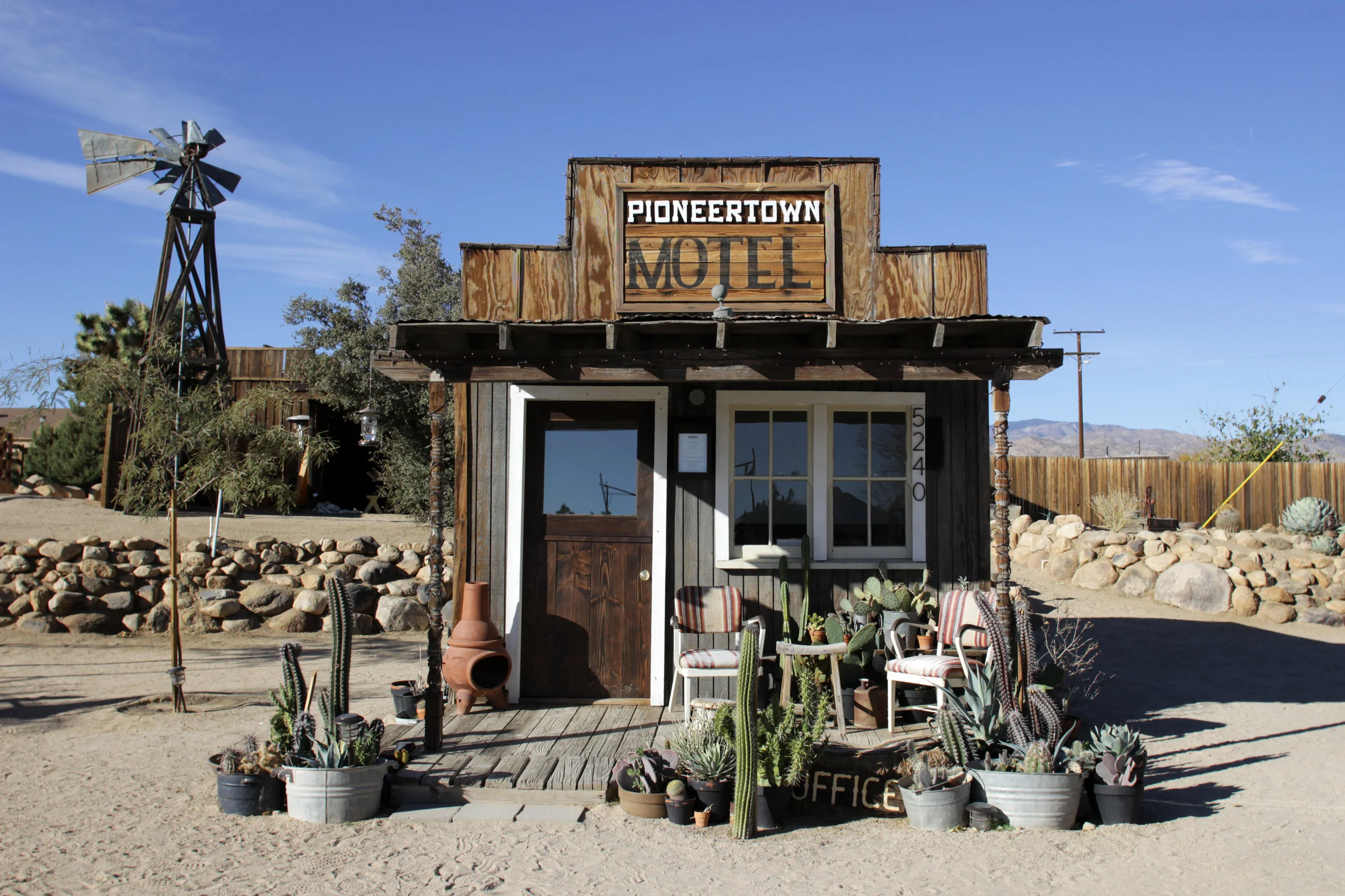
A few days before I left for my California trip in December, I decided that we should tack on an extra day to the mini road trip that we had planned. I wanted to see Noah Purifoy's art and spend some time in Joshua Tree, but it wasn't until I discovered the Pioneertown Motel that I knew that we were destined to stay an extra night in the desert.


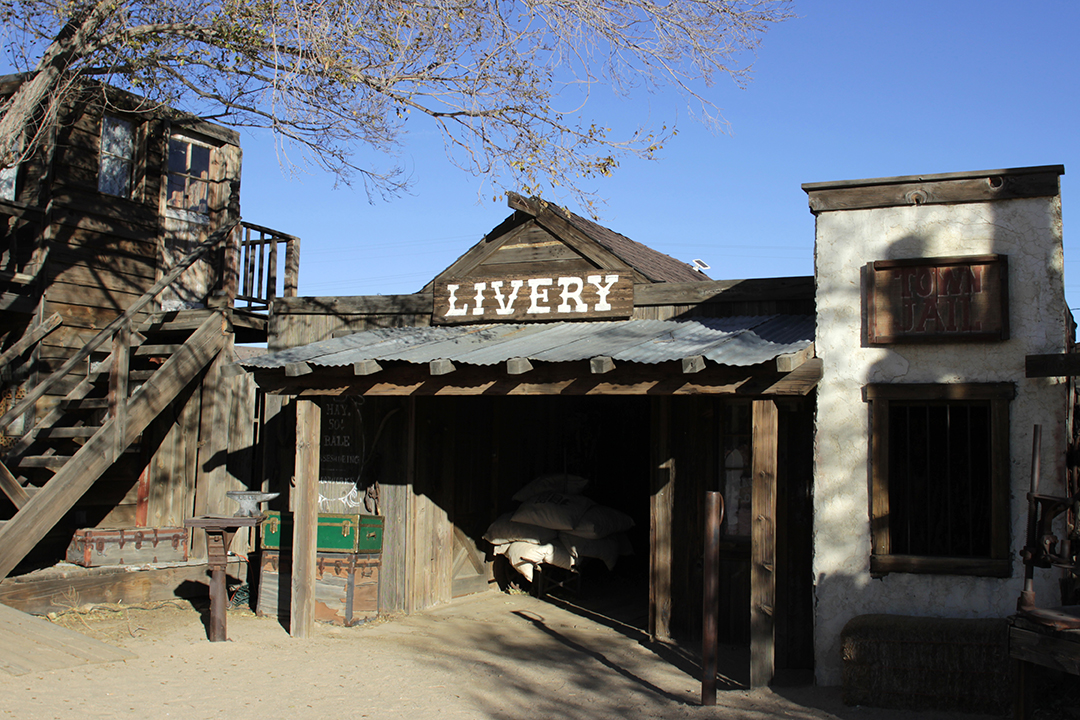

Pioneertown was founded in 1946 by a group of Hollywood investors, including Roy Rogers and Gene Autry. Their goal was to create an Old West town that served both as a movie set and a functional town—with a motel, restaurants and even a bowling alley hiding behind the Old West facades. Throughout the '40s and '50s, more than 200 television shows and movies were filmed in Pioneertown.


Pioneertown is technically an unincorporated community located within the town of Yucca Valley, about 30 minutes north of Joshua Tree. The population was 350 in 2006, but in 2016 the New York Times reported that Pioneertown was in the midst of a renaissance fueled by its proximity to Los Angeles and music festivals, like Coachella. There are private residences (and at least one teepee) scattered beyond Mane Street, but we barely saw another person when we explored the "town" on a Tuesday morning.


The Pioneertown Post Office is said to be (according to a plaque out front) the most photographed post office in the US—a questionable fact that has been unintentionally backed up by this Google Maps street view capture. The Pioneer Bowl bowling alley was built in 1947 and Roy Rogers himself rolled out the first ball. At one time it was considered to be one of the oldest continuously operating bowling alleys in California but unfortunately it now appears to be closed.


The Pioneertown Motel can best be described as an Ace Hotel in the high desert, although after our less-than ideal stay at the Ace in Palm Springs, I should clarify that the Pioneertown Motel was even better than an Ace in every way. We did have the misfortune of being placed (yet again!) next to a room full of people that thought it was ok to throw a very loud party on a Monday night (complete with their own sound system because the rooms don't even come with a TV), but one call to the front desk shut that down immediately.


When we checked in, Jim asked if there was a place to grab dinner, and we were directed to Pappy + Harriet's. In the '70s, the facade for an Old West cantina was transformed into an outlaw biker burrito bar called "The Cantina." It closed after ten years and reopened in 1982 as Pappy + Harriet's, known for its barbecue and live music.
Pappy + Harriet's was crazy crowded, even on a Monday night and for good reason—famous musicians like Robert Plant, Vampire Weekend, Leon Russell, Sean Lennon and even Paul McCartney have been known to drop by. Mondays are open mic nights, and although no one famous dropped in during our 2+ hour wait for a table, it was still one of the most enjoyable evenings I've ever had.
Lancaster County

I never thought this day would come, but I *think* this is the last post I can squeeze out of the four-day road trip that my mom and I took back in October. We made 30+ stops through eight states over four days—and I made sure that we were kept busy right up until the end. After touring the Haines Shoe House, we drove 30 minutes east through southern Pennsylvania to Amish country. Lancaster County has the largest Amish population in the world, followed closely by Holmes County in Ohio.


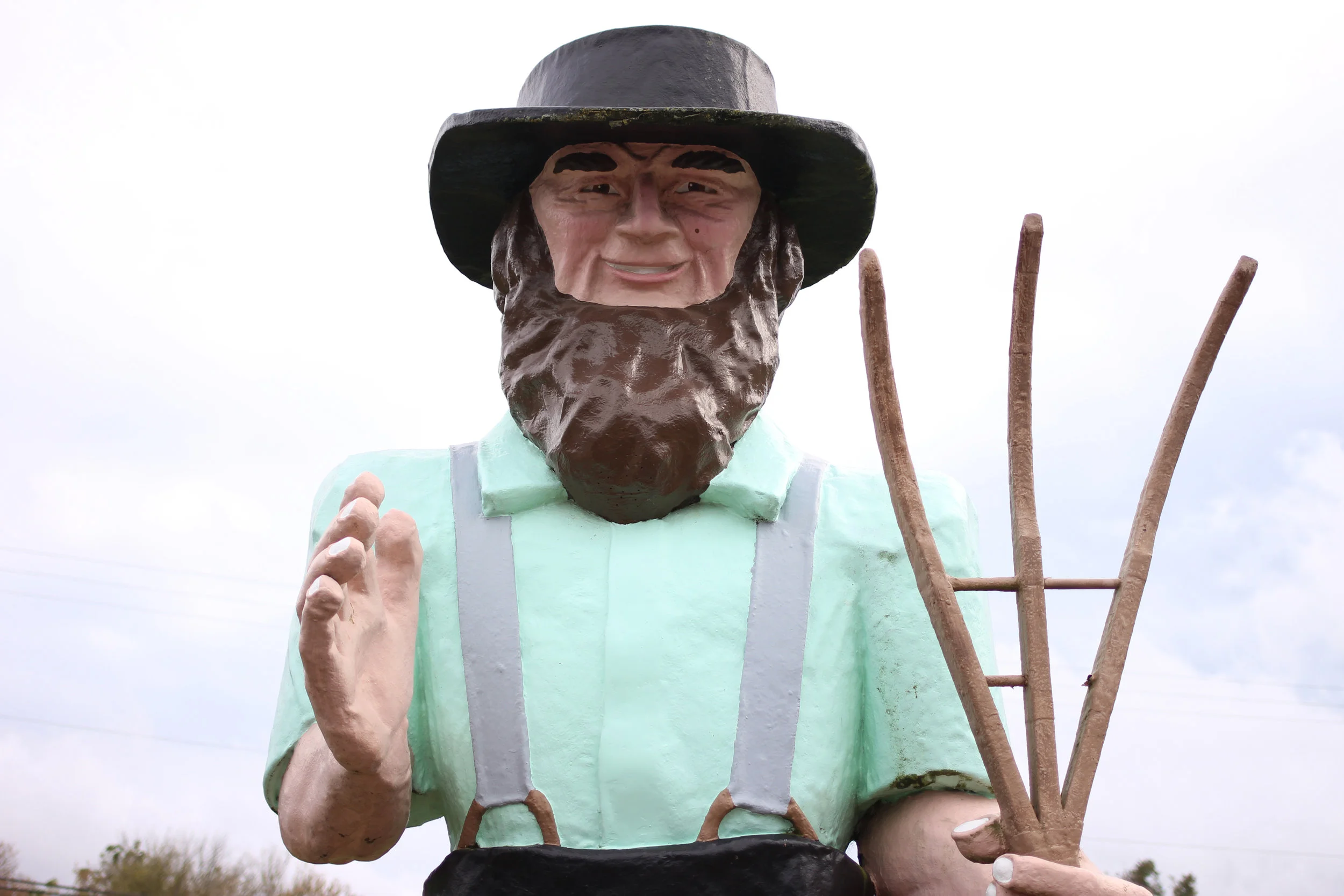
By this point in the trip I had mostly forgotten why I had put certain destinations on the map, so our stop at Hershey Farm Restaurant and Inn was just as much of a surprise for me as it was for my mom. When we pulled into the parking lot and spotted Amos—the barefoot Amish giant—I immediately remembered that he was the reason that I had put the Hersey Inn on my list. Amos, a 15-foot-tall fiberglass figure—similar to a Muffler Man—stood outside of Zinn's Diner in Denver, PA from 1969 until the diner was sold in 2003.
Amos ended up at the The Heritage Center of Lancaster County, but he was too big for them to display, so he is currently "on loan" to the Hershey Farm Restaurant. Apparently the loan period was scheduled to end in 2009, but as of October 2017 Big Amos was still standing in the parking lot, near a pair of Amish buggies.


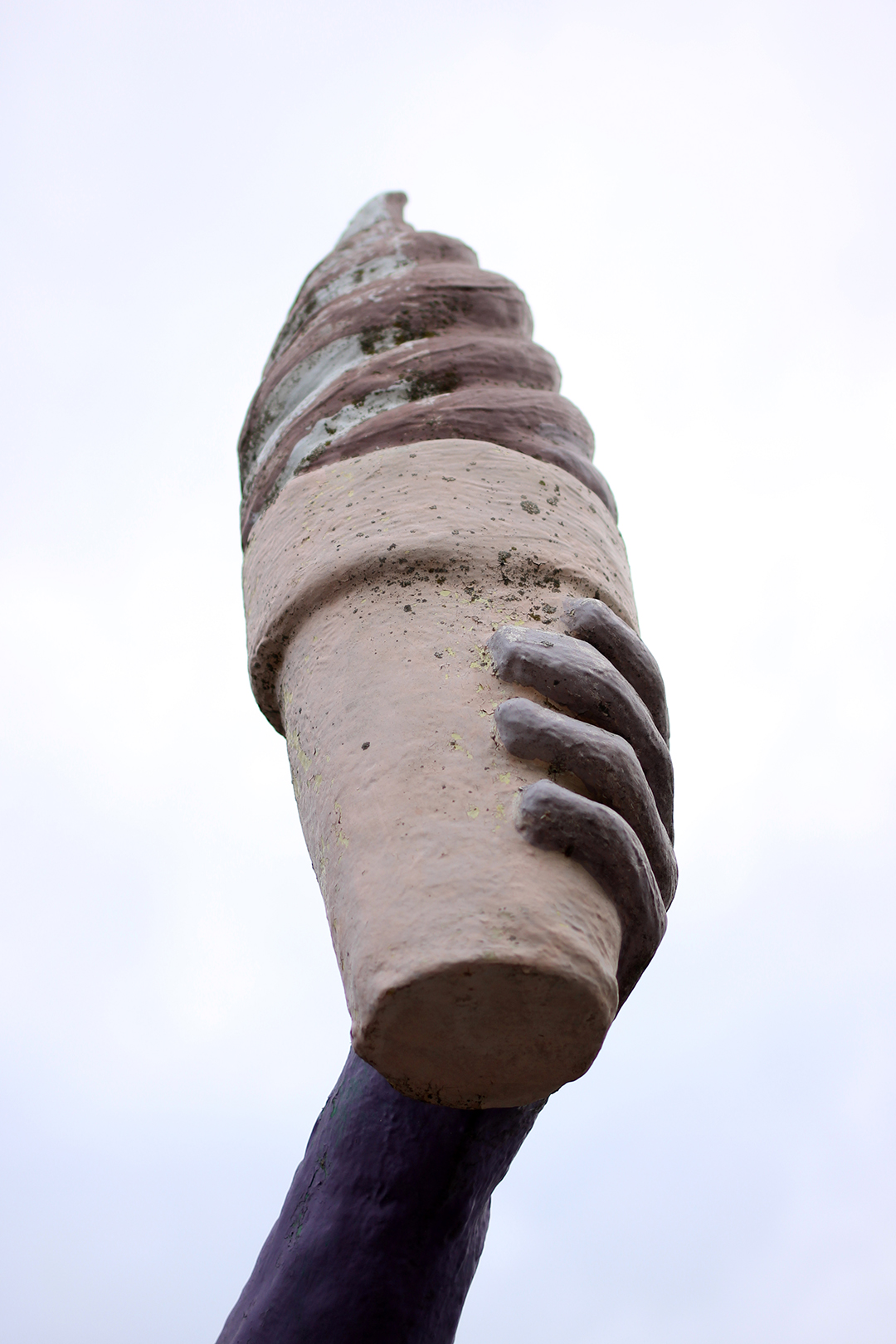

Less than half a mile from the Hershey Restaurant, we happened upon another statue outside of the former Freeze and Frizz—now Katie's Corner restaurant. This one features an Amish boy (also barefoot) and two pigs. The boy holds an enormous twist ice cream cone, one pig holds a hamburger, and the other has a banana split. The statue has obviously seen better days, with several layers of paint visible beneath the peeling top layer, but it's just strange enough (and surprisingly large) to warrant a quick stop.


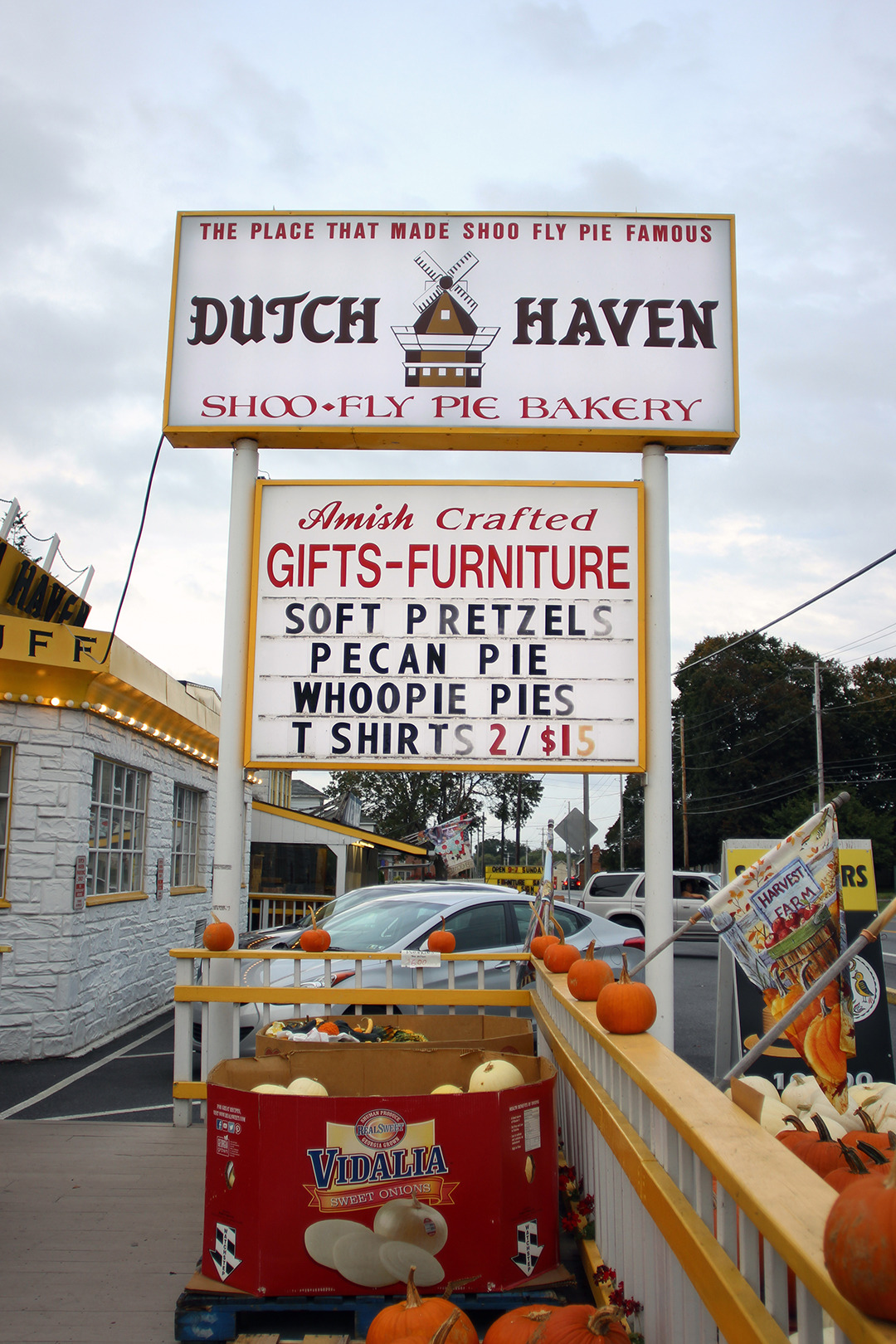


Located two miles from Katie's Kitchen is Dutch Haven, the official last stop on our epic road trip. Originally this windmill-topped building housed a Pennsylvania-Dutch style luncheonette. In 1946 it became Dutch Haven, which bills itself as the "largest Amish souvenir store in Lancaster County." In addition to selling furniture, t-shirts, candy, glassware and other "Amish stuff," Dutch Haven is also famous for their shoo-fly pie—they offer in-store samples and ship their pies anywhere in the country for a flat rate. I'm not crazy about shoo-fly pie (it tastes like a soggy brown sugar cinnamon Pop-Tart?) but it's my friend Jim's favorite, so I got my money's worth by shipping one to him in California.


Dutch Haven made my list because of its novelty building, but I didn't expect it to also be a treasure trove of hand-painted signage and lettering. When I was a kid, I used to go to Ohio's Amish country frequently with my mom to do a little antiquing and a whole lot of cheese sampling, so Lancaster County was a fitting end to our short but mighty road trip.
Hershey Farm Restaurant and Inn
240 Hartman Bridge Rd
Ronks, PA 17572
Katie's Kitchen
200 Hartman Bridge Rd
Ronks, PA 17572
Dutch Haven
2857 E Lincoln Hwy A
Ronks, PA 17572
Other stops on our road trip:
Muffler Man: Pink Pants // Muffler Man: Cowboy // Enchanted Forest // Hills of Snow // Muffler Man: Bunyan + Babe // Muffler Men: White's Tire // South of the Border: Night + Day // Dinosaur Land // Muffler Man: Homer // Divine // Chang and Eng // Main Street of Yesteryear // Shell Station // Haines Shoe House // World's Largest things // Grahamland // Aspin Hill Pet Cemetery
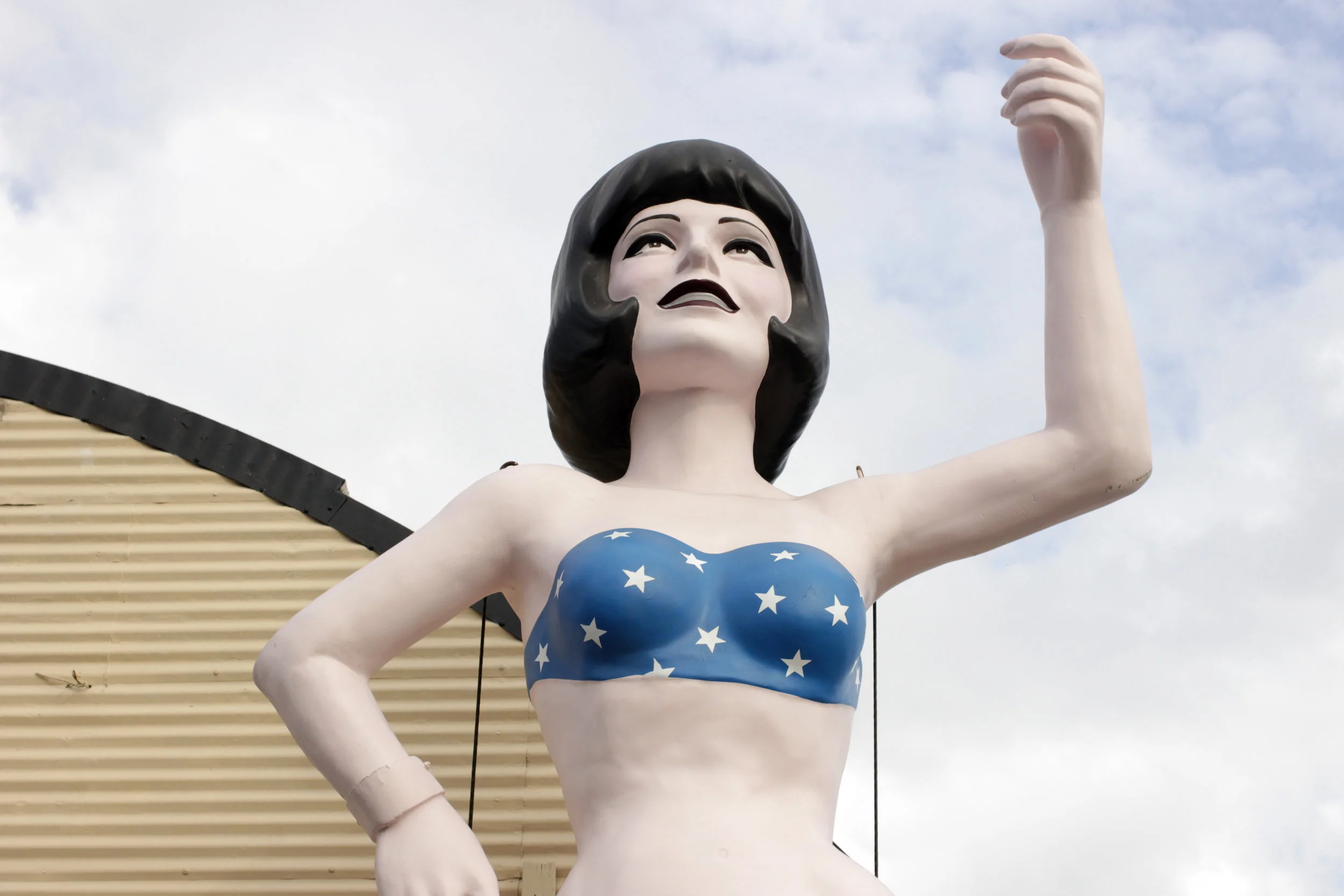
UniRoyal Gal: Tootsie 2018
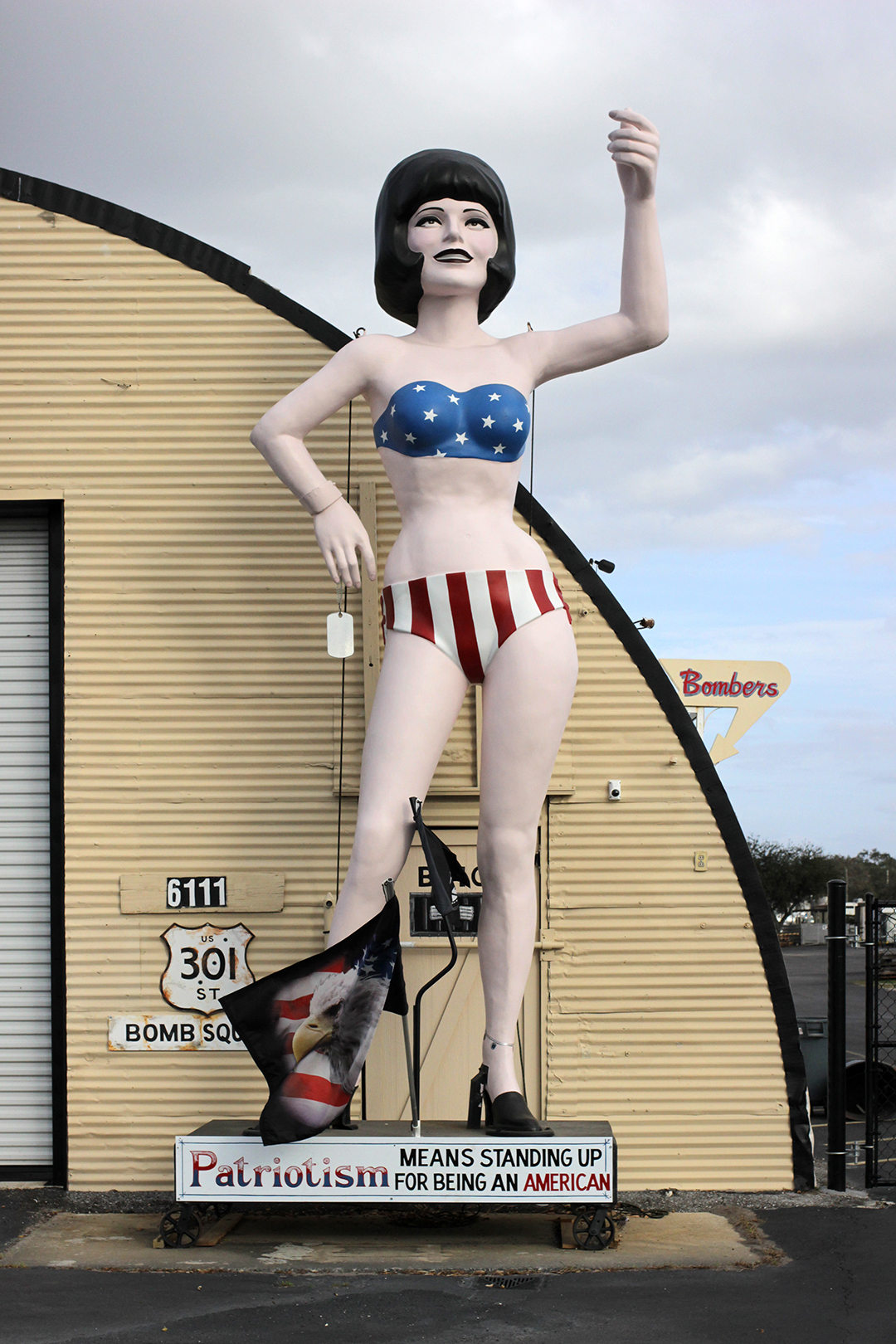
I was delighted when I first discovered that there was a UniRoyal Gal about fifteen minutes from David's parents house in Bradenton, Florida. Tootsie was one of our first stops on our trip to Florida last year, where we found her easily accessible but in desperate need of a new paint job. Through a bit of Instagram fate, I recently saw a photo of Tootsie, fresh from a patriotic makeover. Luckily, we had already planned a return trip to Florida, and of course couldn't resist revisiting the brand new Tootsie.
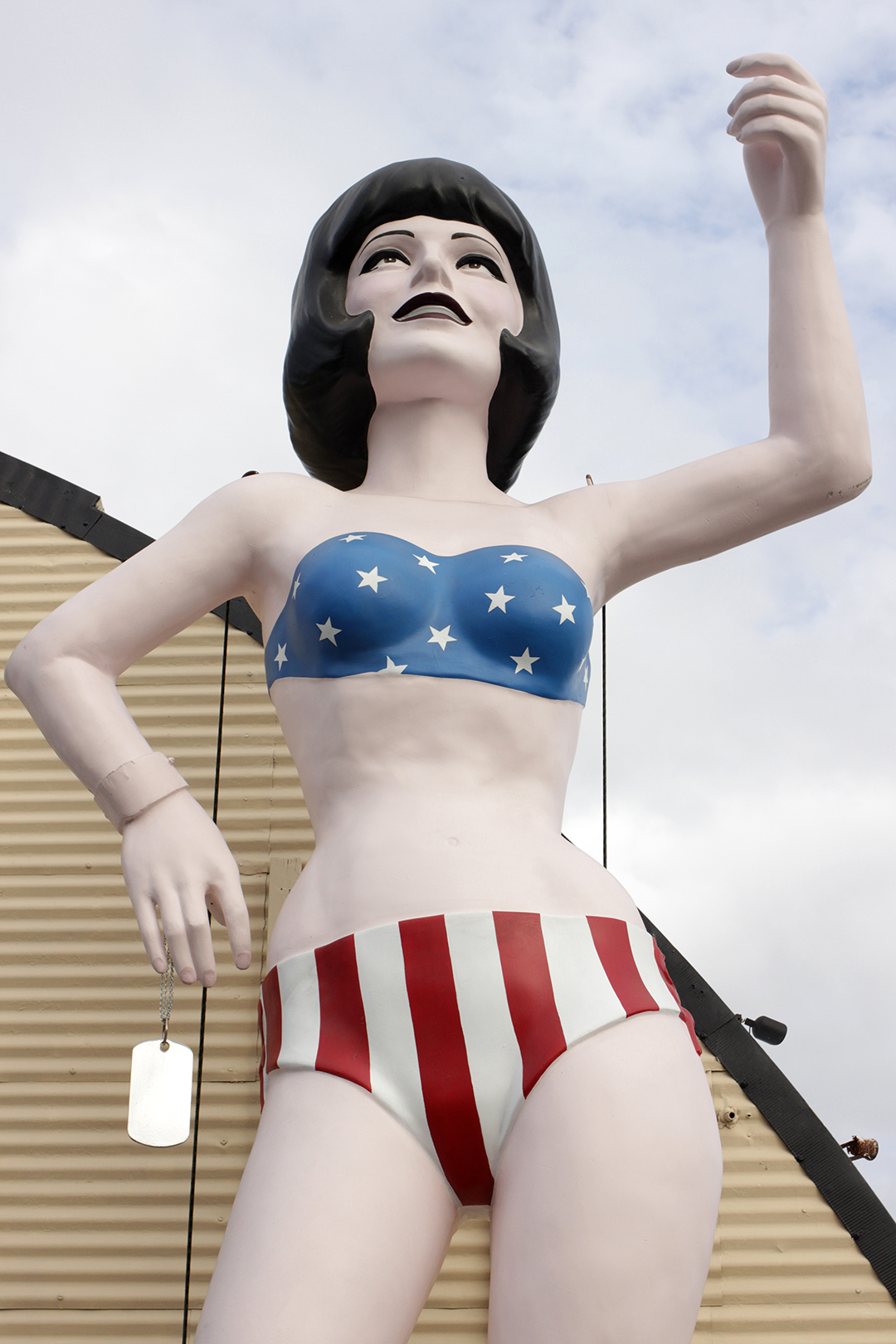
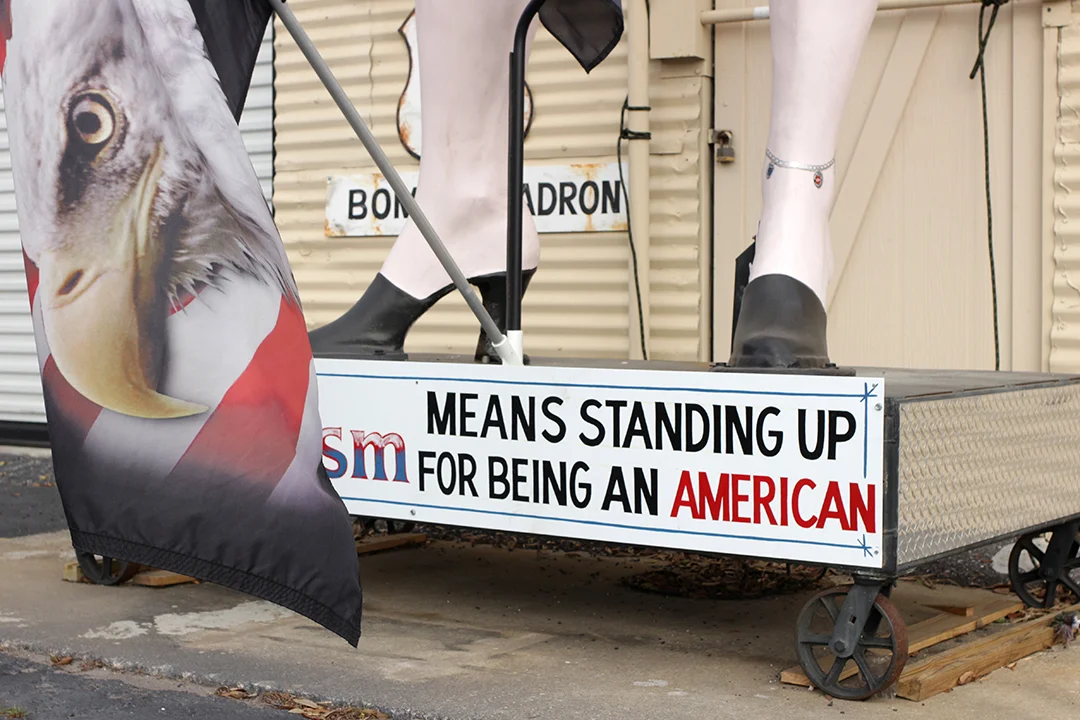
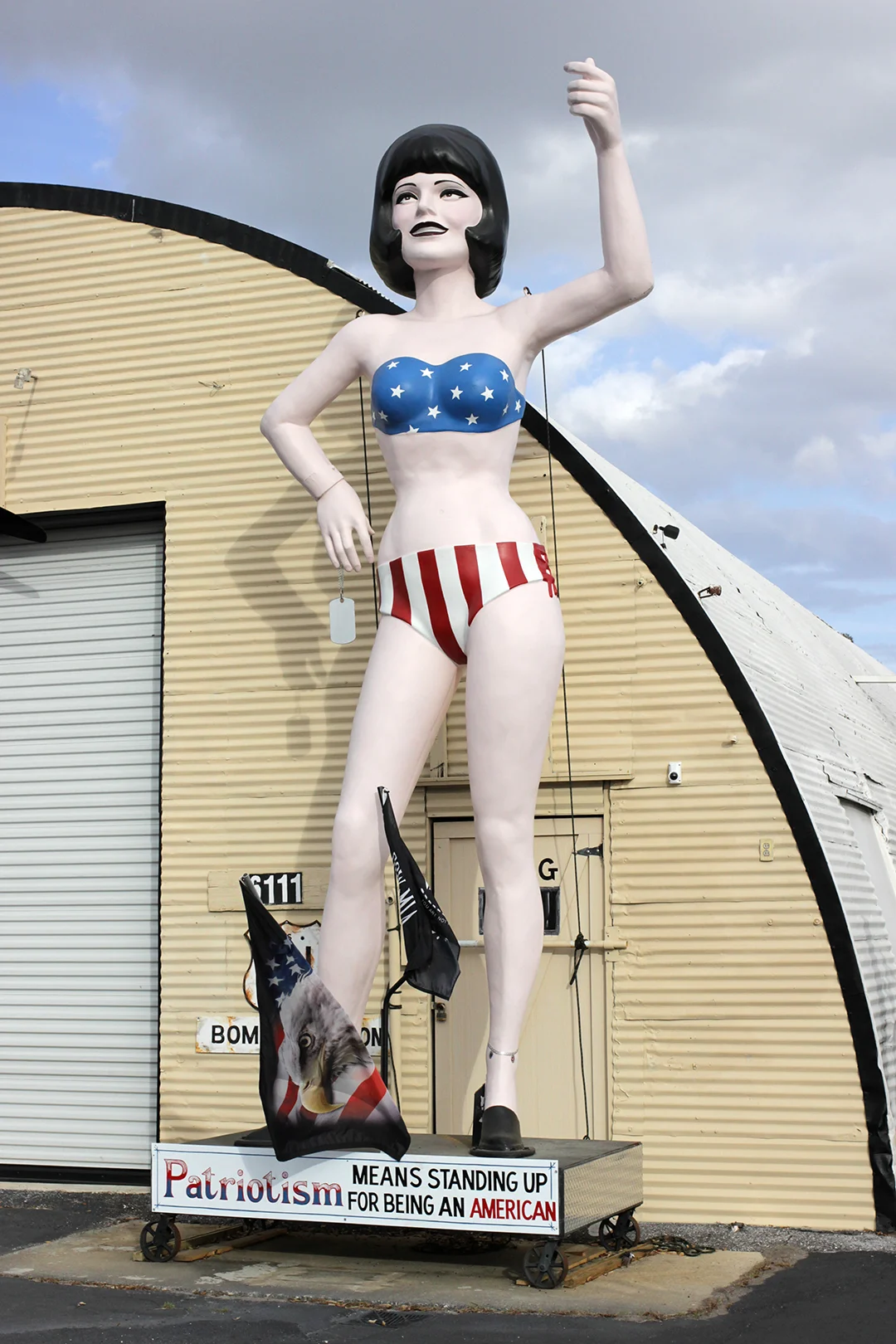
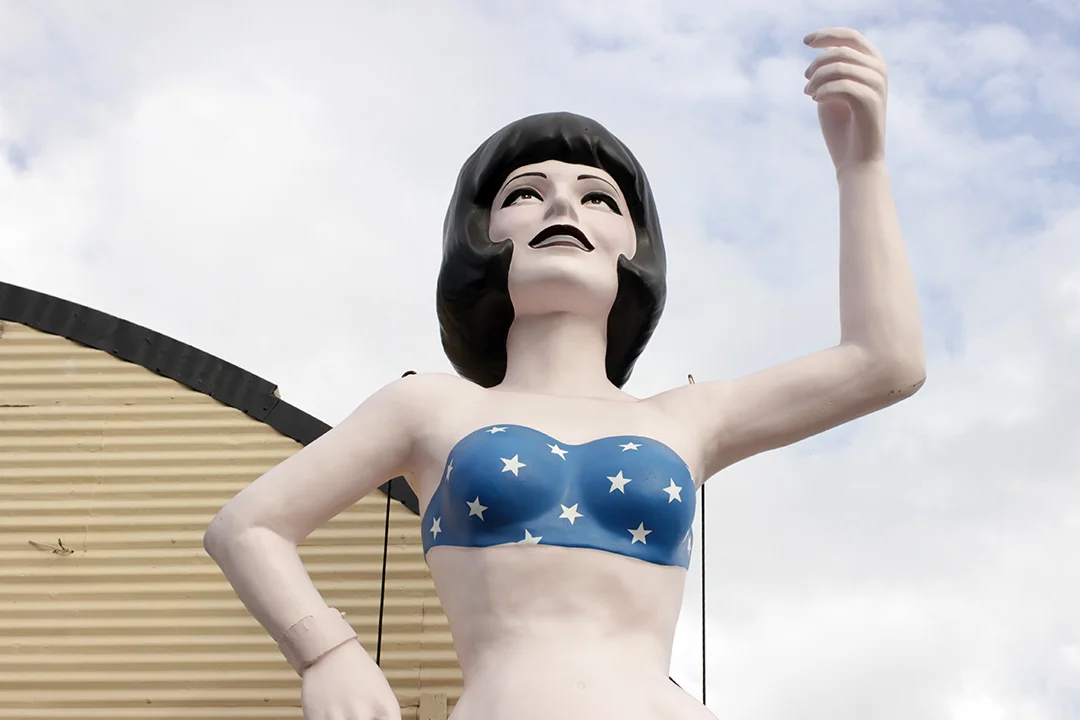
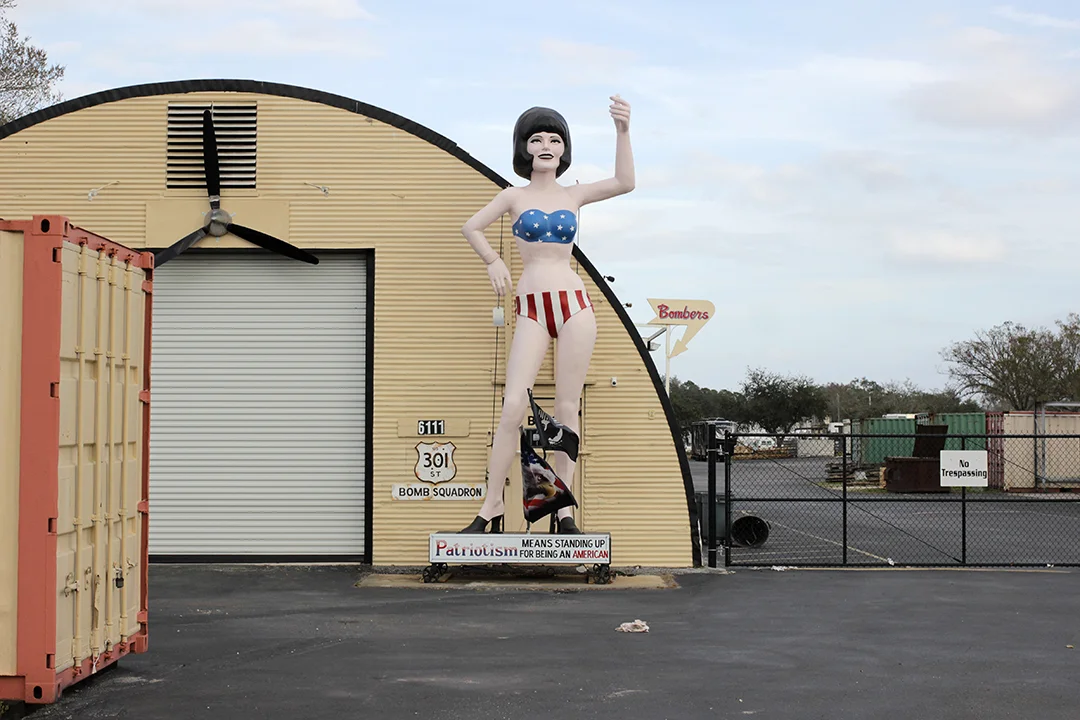
Tootsie, a 17-feet-tall, 300-pound fiberglass UniRoyal Gal was originally displayed in Illinois. She was brought to Florida upon her owner's retirement and Tom Edmunds, of Edmunds Metal Works bought her for $500. She's been standing outside of his shop in Bradenton since 2013. When we visited her last year, she wore a faded, yellow bikini with black polka dots still visible on her backside. She had matching yellow heels, a faded blonde bob and stood on a plain metal base.
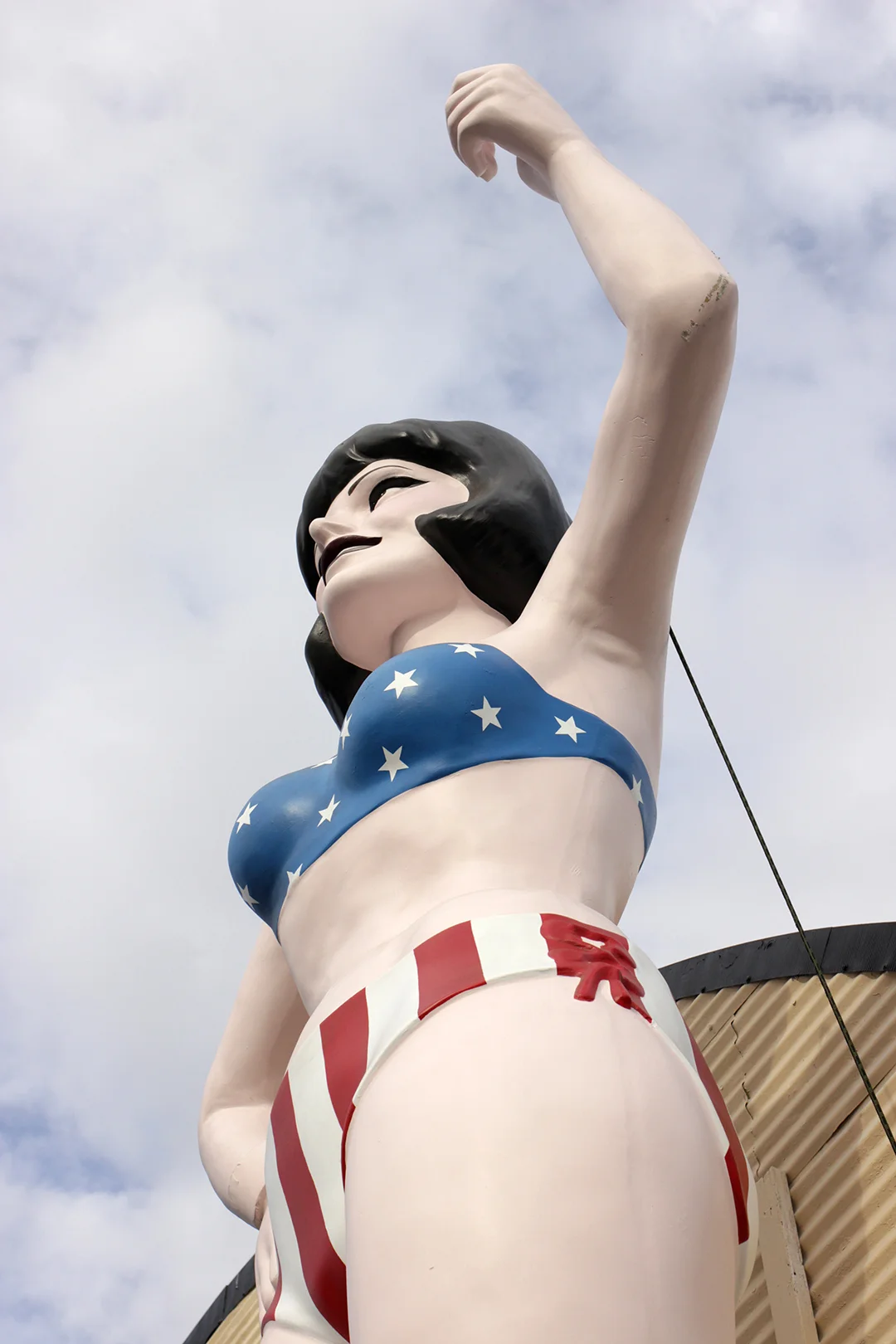
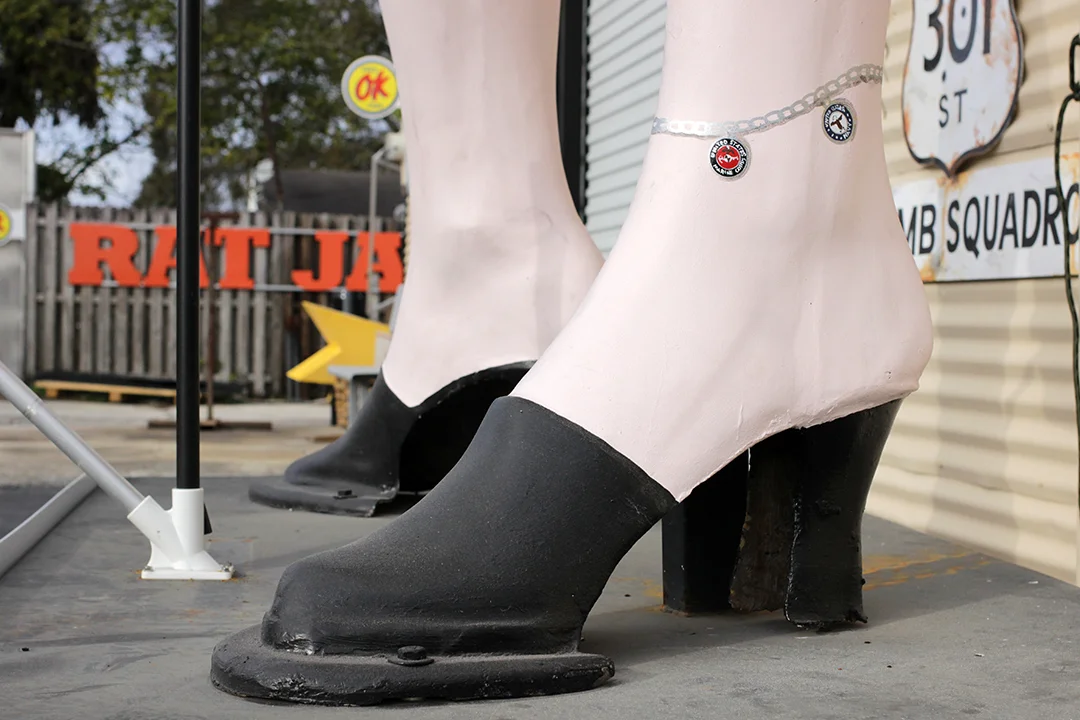
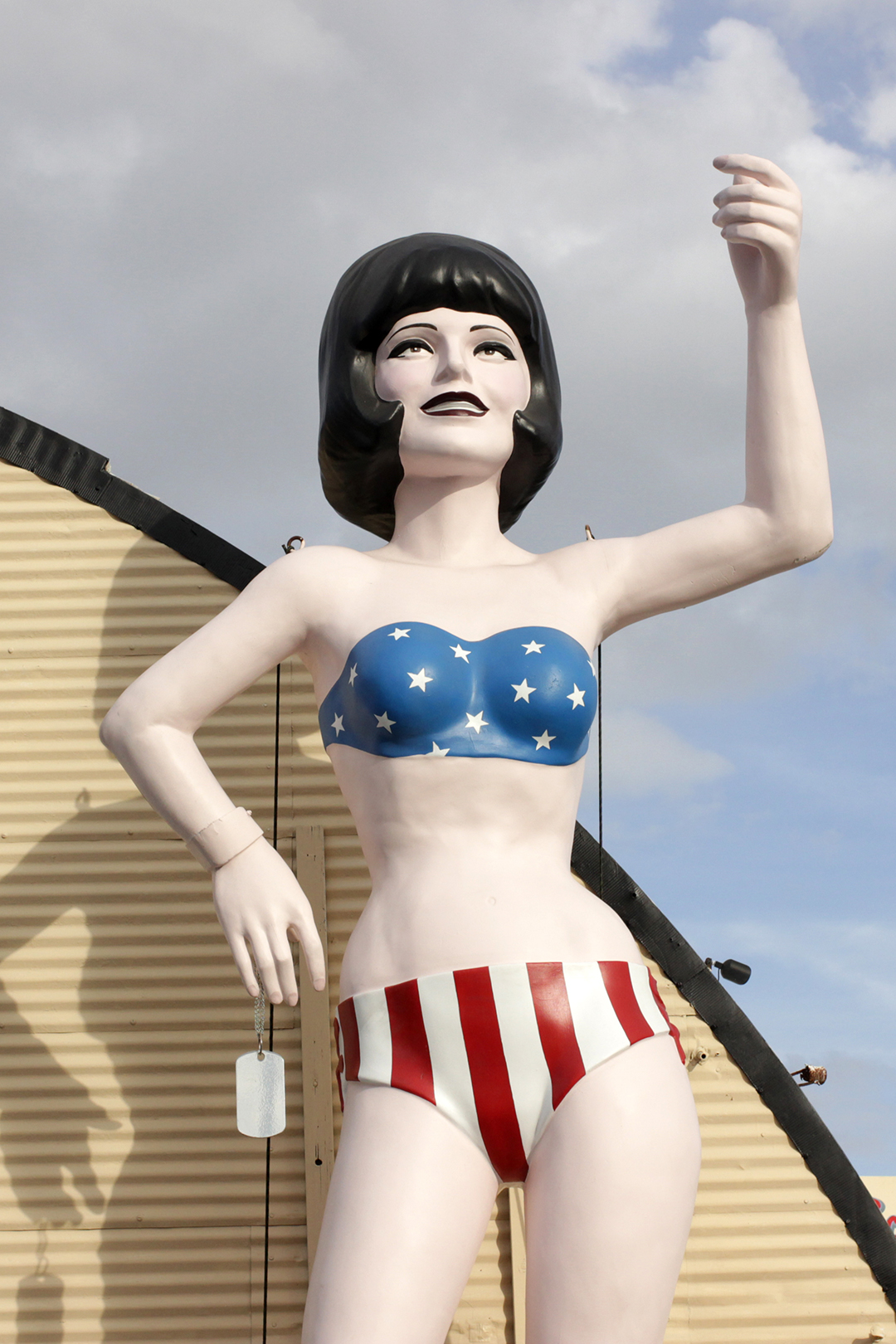
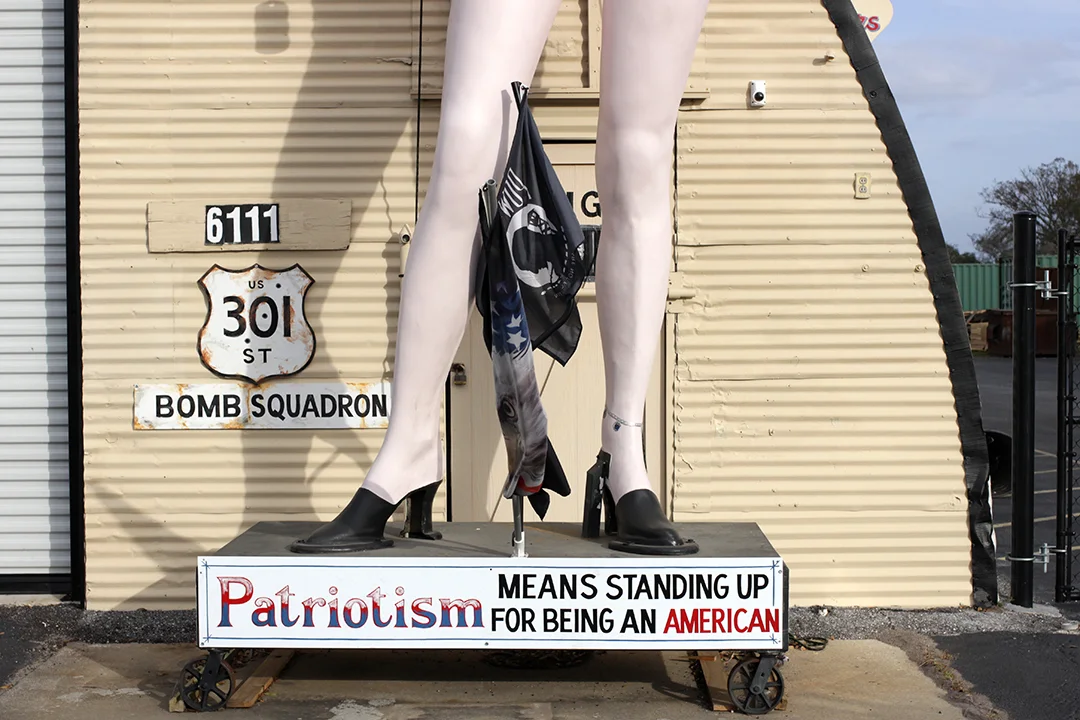

As you can see from the photos, Tootsie's makeover was dramatic. She's been repainted head to toe—stars and stripes on her bikini, a new black dye job and black heels to match. She even has a new anklet, with charms representing the different branches of the military. In fact, the new Tootsie is very overtly patriotic, and while there's nothing wrong with loving America and supporting our troops, the "Patriotism Means Standing Up For Being an American" sign feels a little too "Make America Great Again" for my tastes.
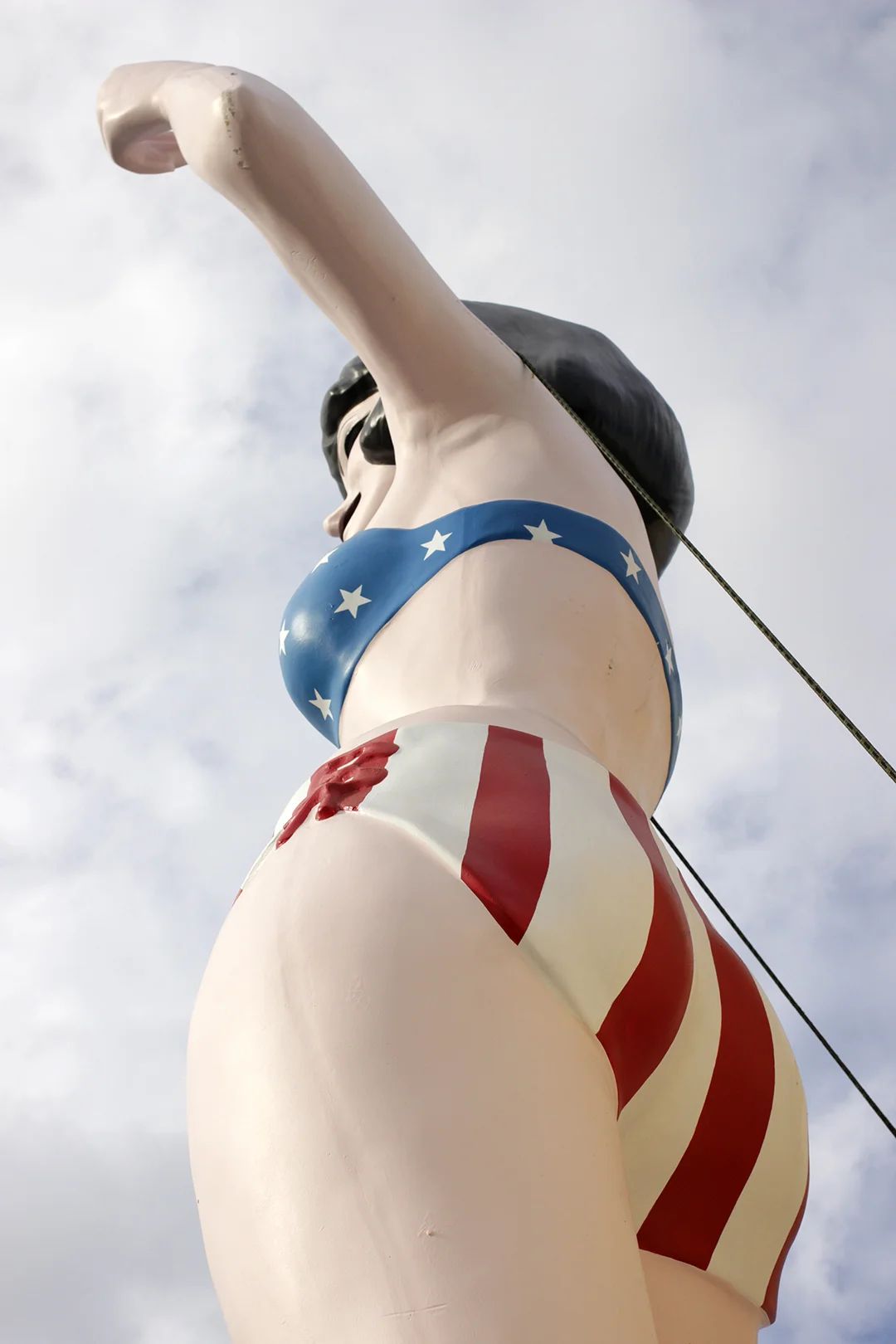
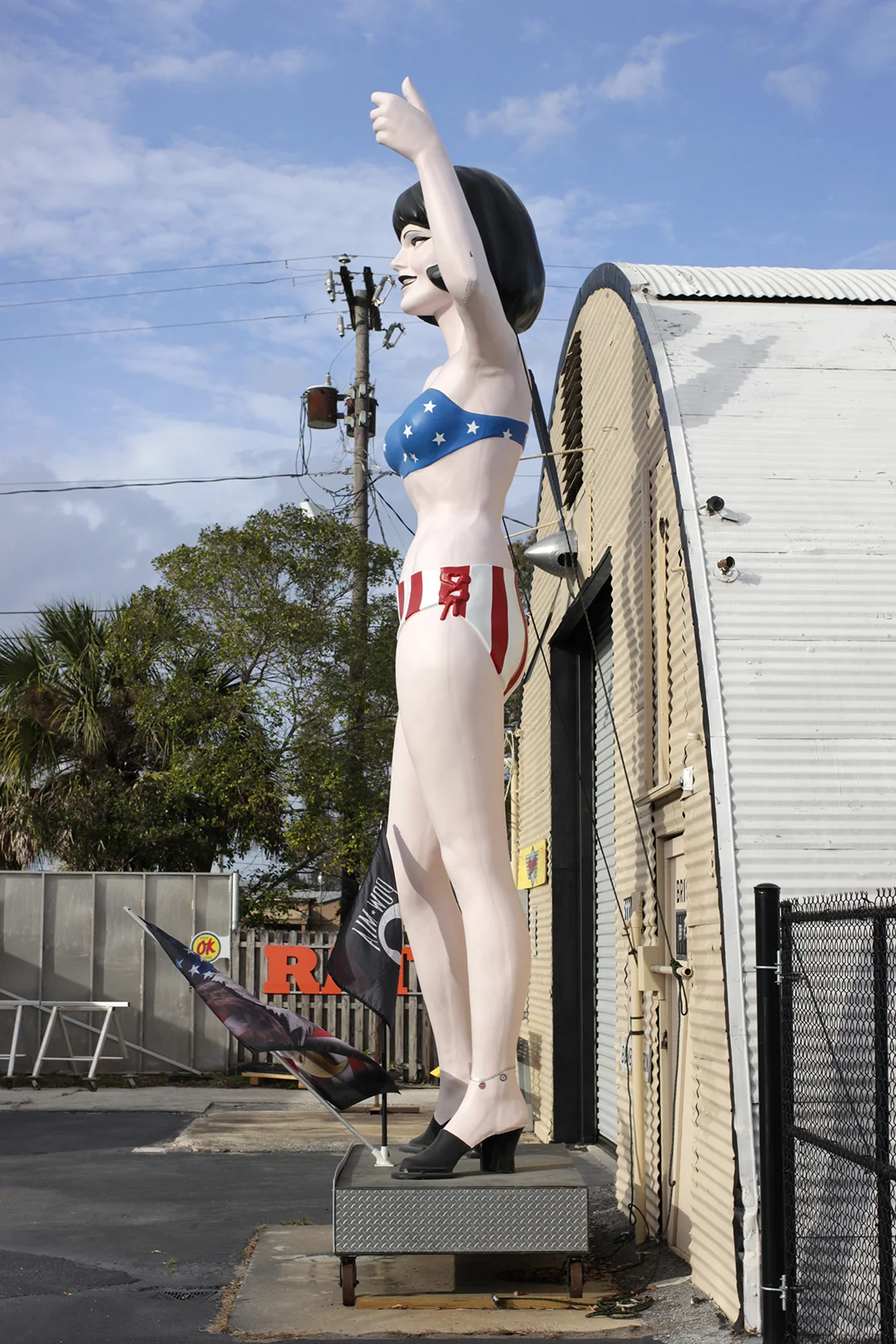
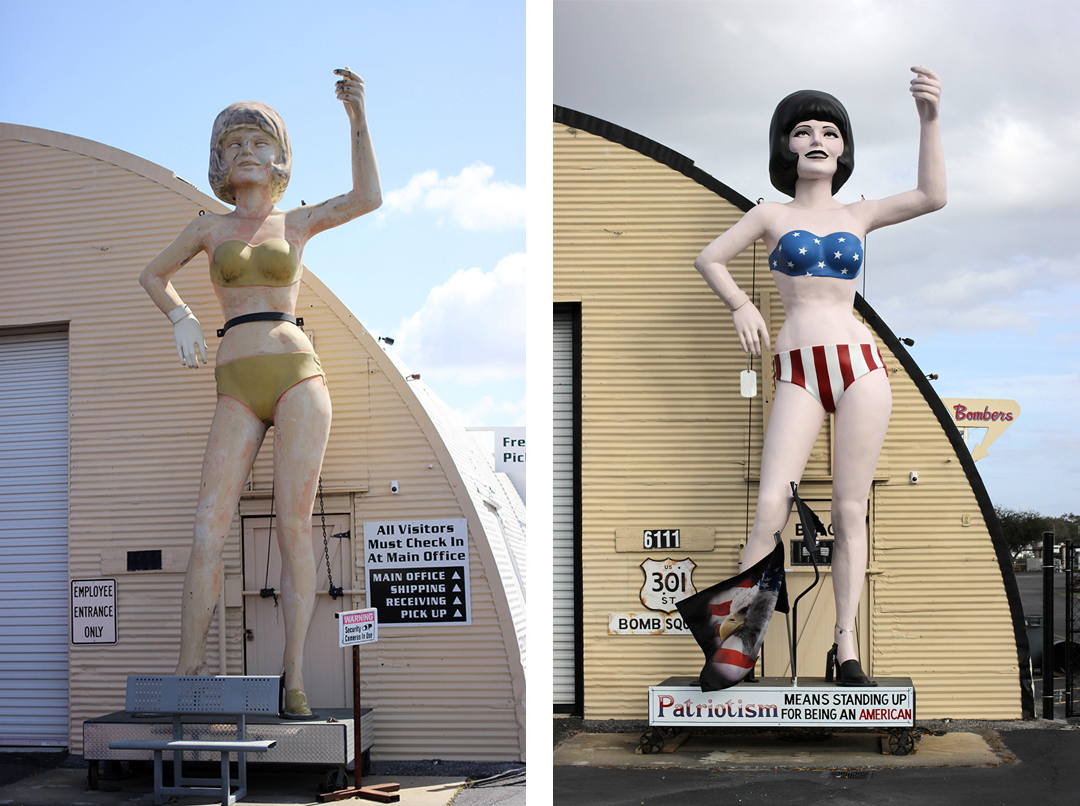

Of course I'm happy that Tootsie is being maintained and loved, but I do miss her original yellow polka dot bikini. I'm so glad that we got to see Tootsie last year in her original state, and then again so soon looking totally different. UniRoyal Gals are very rare, and with Tootsie I feel like we got a two-for-one deal.
Want prints of Tootsie or any of my other photos? Check out my Society6 shop and if you ever want a specific print of a photo you see on this blog, just let me know!
Edmund's Metal Works
6111 15th St E,
Bradenton, FL 34203
Easily accessible

Spring Hill Dinosaurs
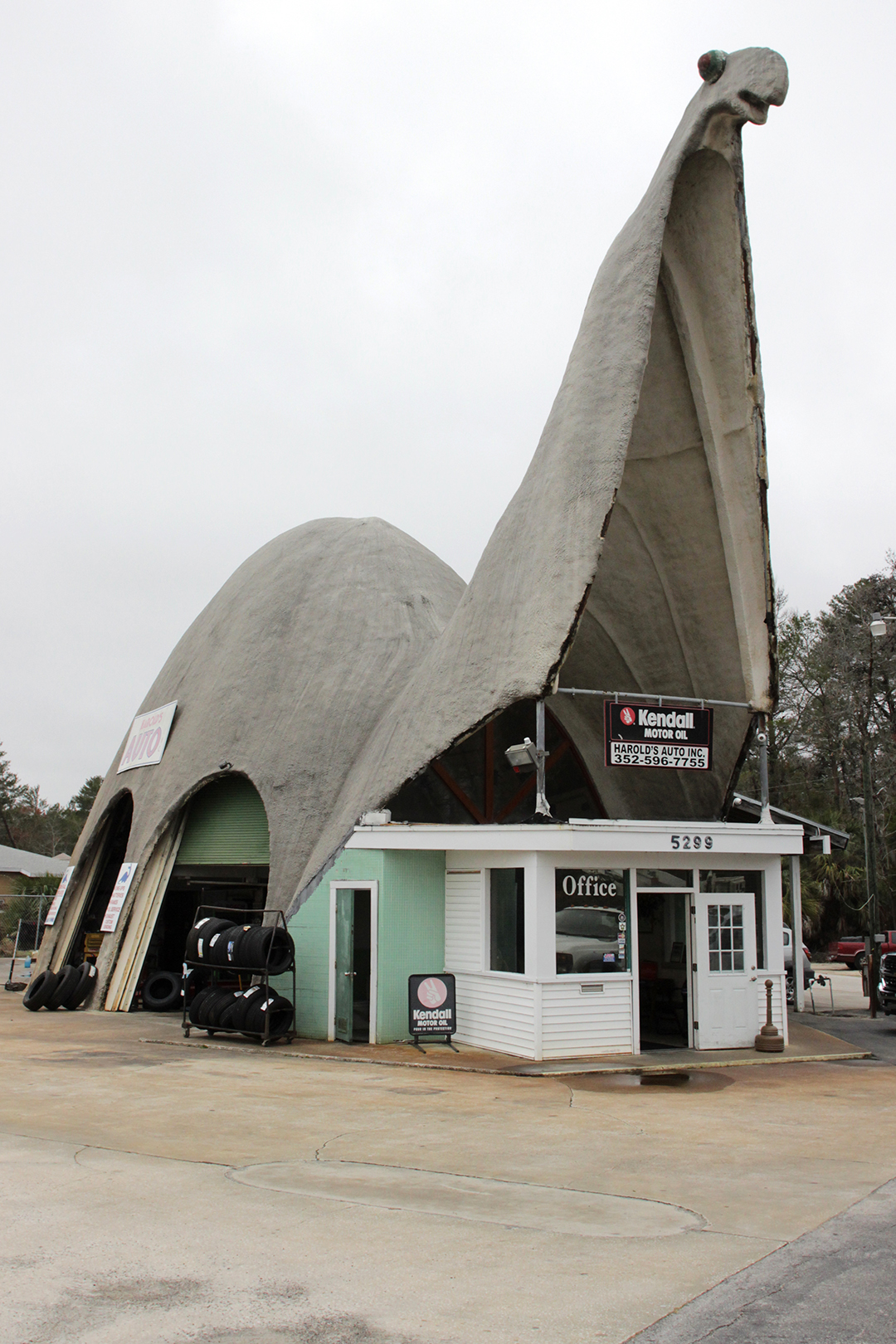
If you know anything about me, it shouldn't come as a surprise if we're ever driving somewhere and I gently suggest that I'd like to make a few quick stops along the way. While out for the day with David's parents on our recent trip to Florida, I told them that there were two dinosaurs on our route—actually directly on the way, which is sometimes a distinction I make rather loosely—and luckily they were more than happy to indulge my love of roadside novelties (thank you again, Jo Ann and Ken!).
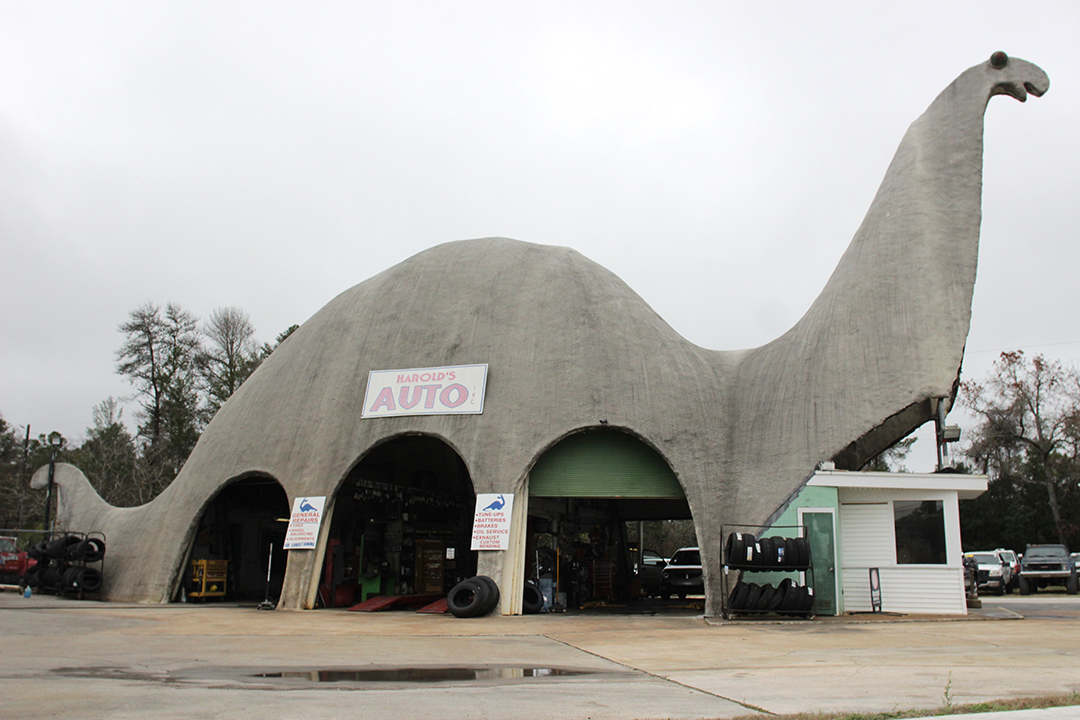


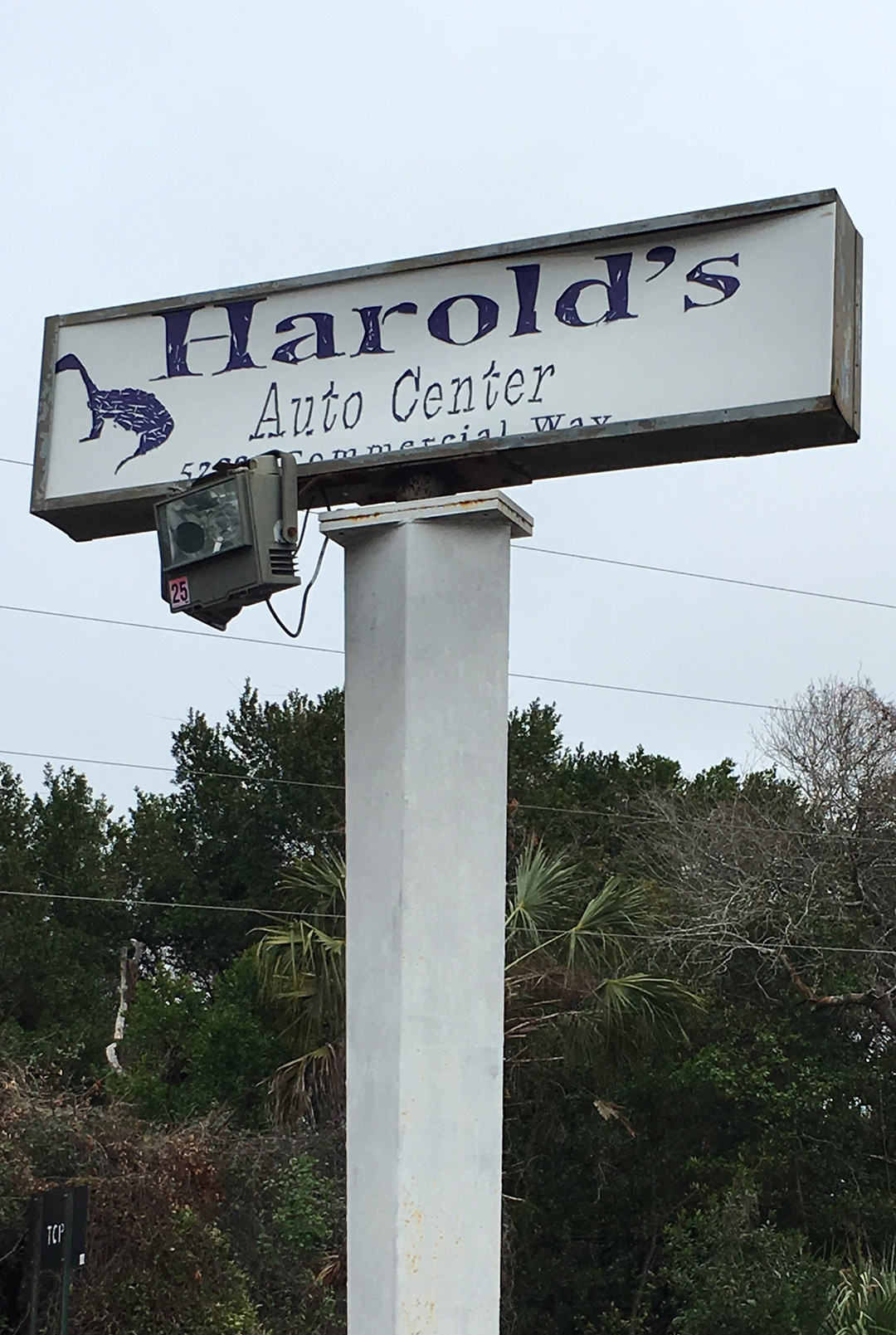

The first is actually a dinosaur-shaped building, and while we were lucky enough to be driving right past it, I would have made a special trip eventually just to see it because as I've said before, my love of novelty architecture knows no bounds. Harold's Auto Center, located on Commercial Way in Spring Hill, Florida, was built in 1964 as a Sinclair Oil gas station. Inspired by Sinclair's apatosaurus logo, the dinosaur-shaped structure is 47 feet tall and 110 feet long.


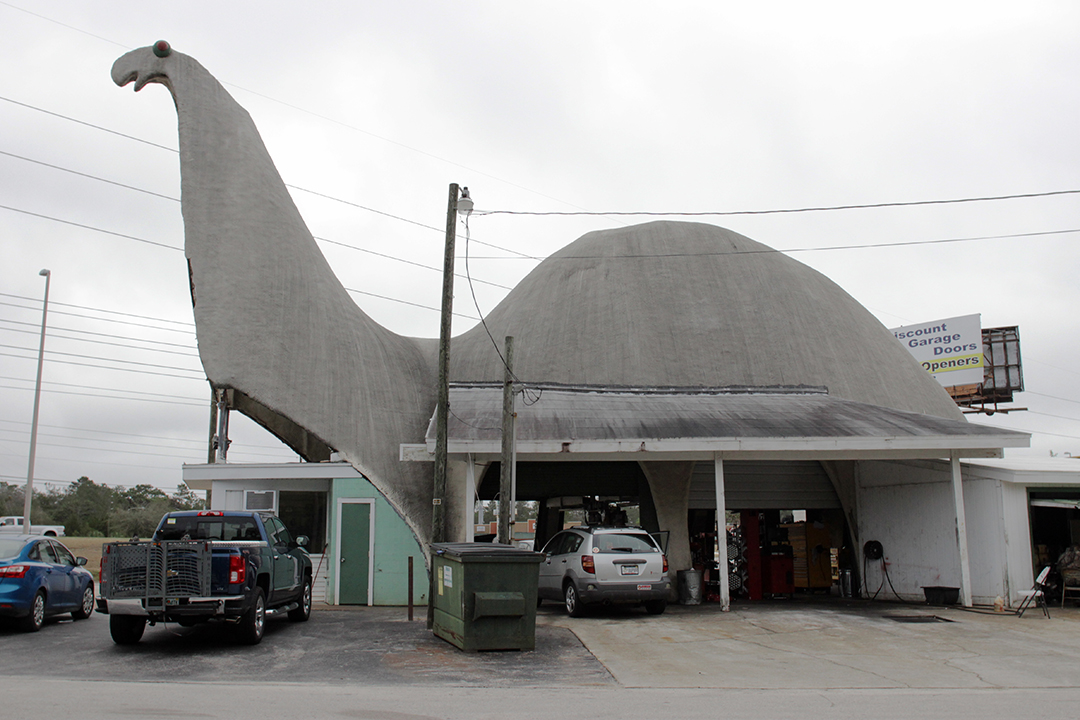


The dinosaur has been home to Harold's Auto Center, a family-owned auto maintenance shop, since 1977. Their website insists that "although we are inside a Dinosaur we stay up to date with what your vehicle needs." I do wish that—like the logo—the dinosaur was painted green, but I love his pimento-filled green olive eyes. I don't miss dealing with car maintenance, but if I did have a car, taking it to a shop shaped like a dinosaur would almost make the experience enjoyable.

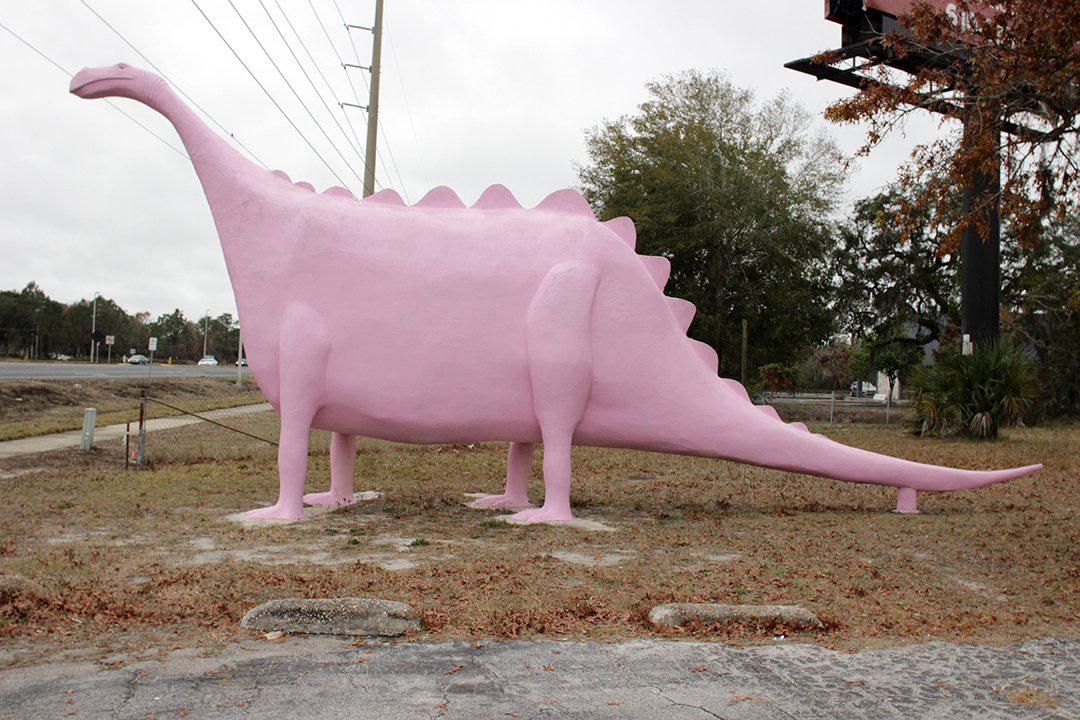

A little more than three miles down Commercial Way is a second, smaller dinosaur measuring 22 feet high and 58 feet long. Known simply as the Spring Hill Dinosaur, this one isn't quite identifiable as a single species, but he is much more colorful than his neighbor down the road.
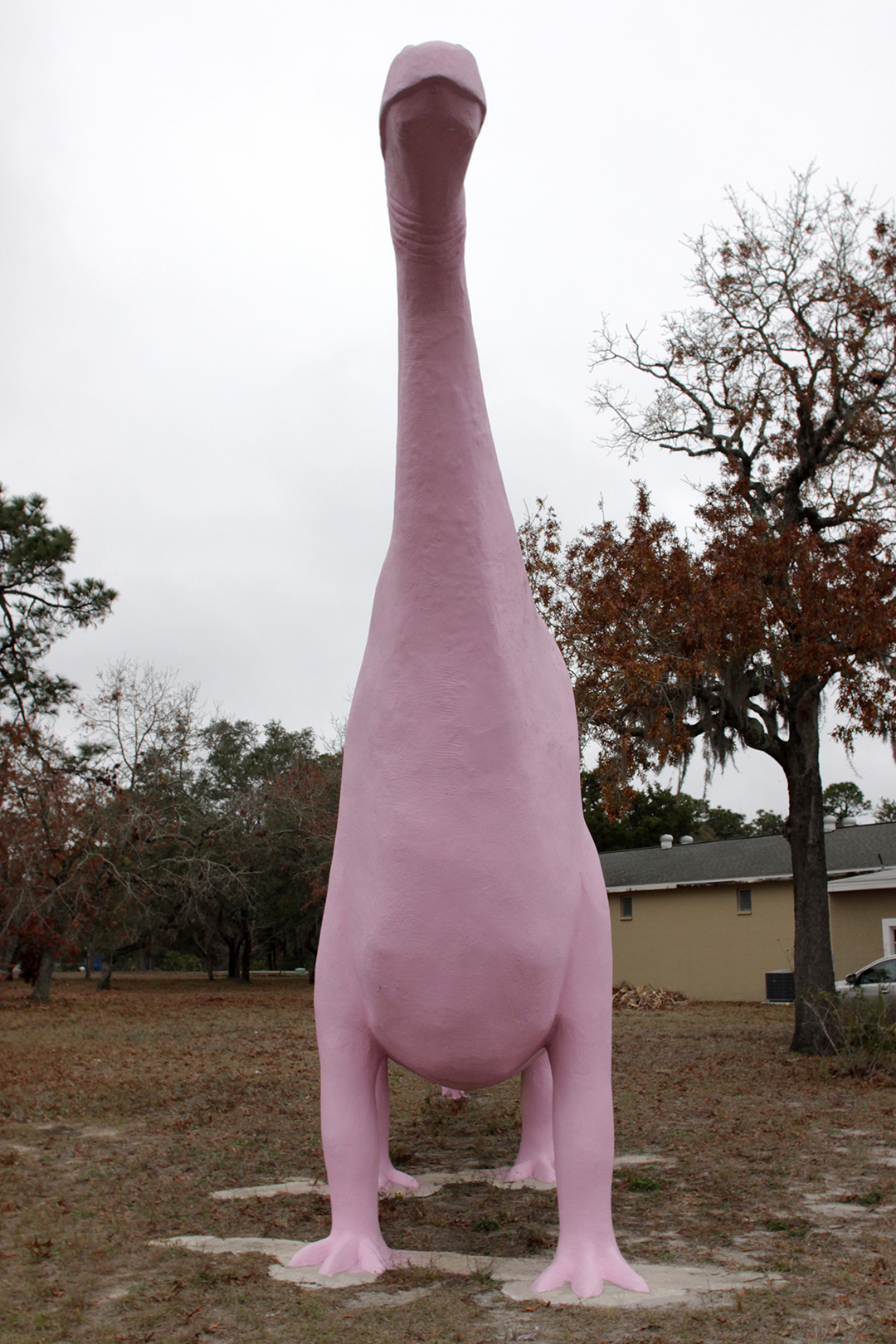


This roadside dinosaur was built in 1962 by taxidermist Jacob Foxbower to promote his family's wildlife museum, once located nearby. The museum closed in 1998, but the dinosaur remains, and this beloved local landmark looks as if it's just been refreshed with a new coat of Pepto-Bismol pink paint.
Harold's Auto Center
5299 Commercial Way
Spring Hill, FL 34606
Spring Hill Dinosaur
US-19 (3.3 miles south of Harold's on the west side of the street)
Spring Hill, FL 34606

Cabazon Dinosaurs
I can't remember the first time I saw Pee-Wee's Big Adventure (it came out the year I was born, 1985), but I do remember being a huge fan of Pee-Wee's Playhouse as a kid. It wasn't until a rewatch of the movie recently that I realized just how much of an influence Pee-Wee Herman must have had on my general aesthetic. In the opening sequence he has a skull hanging over his bed, he brushes his teeth with a novelty toothbrush, he has oversized utensils, his breakfast has a face and his yard is full of fiberglass statues. His house is literally my dream house.


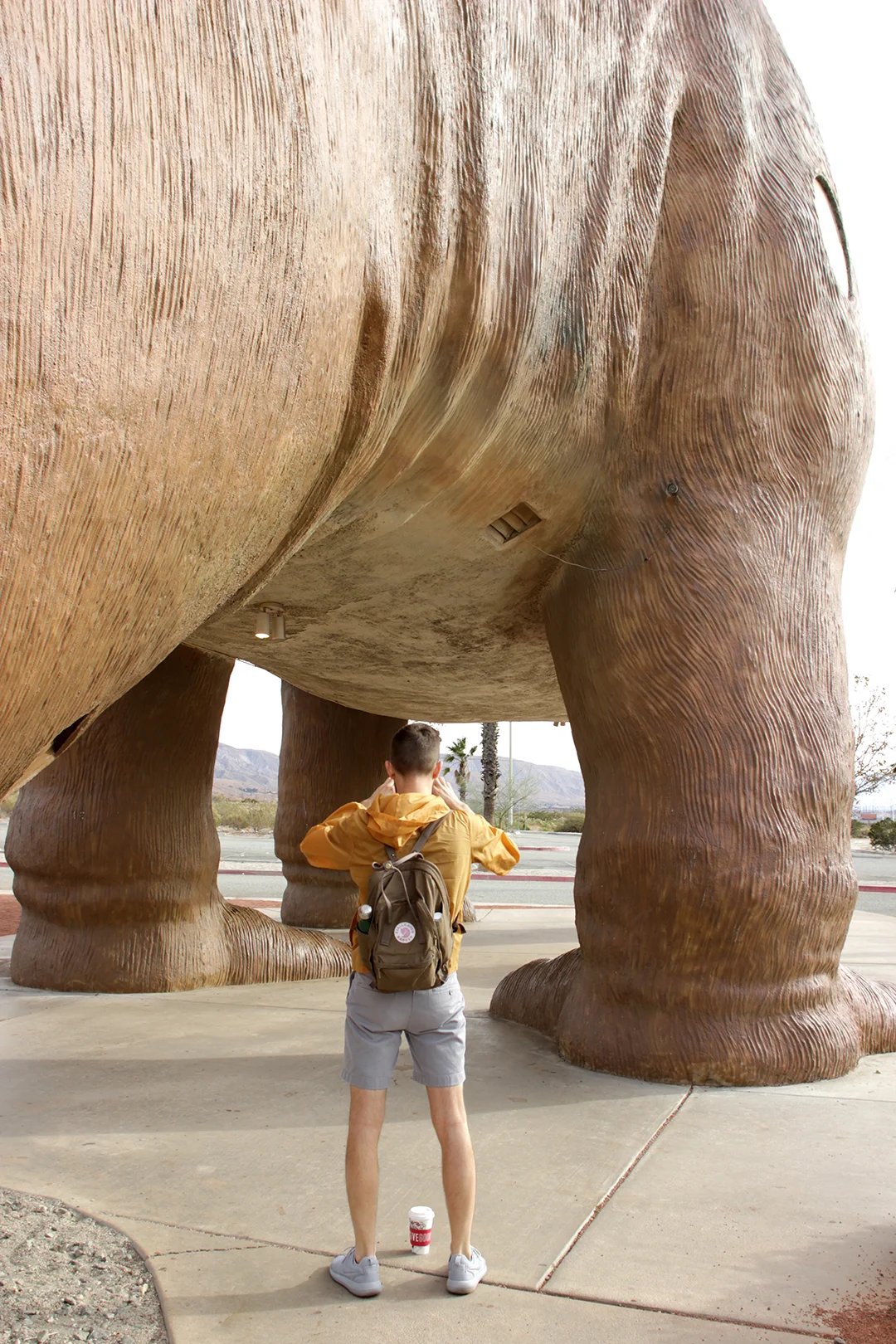
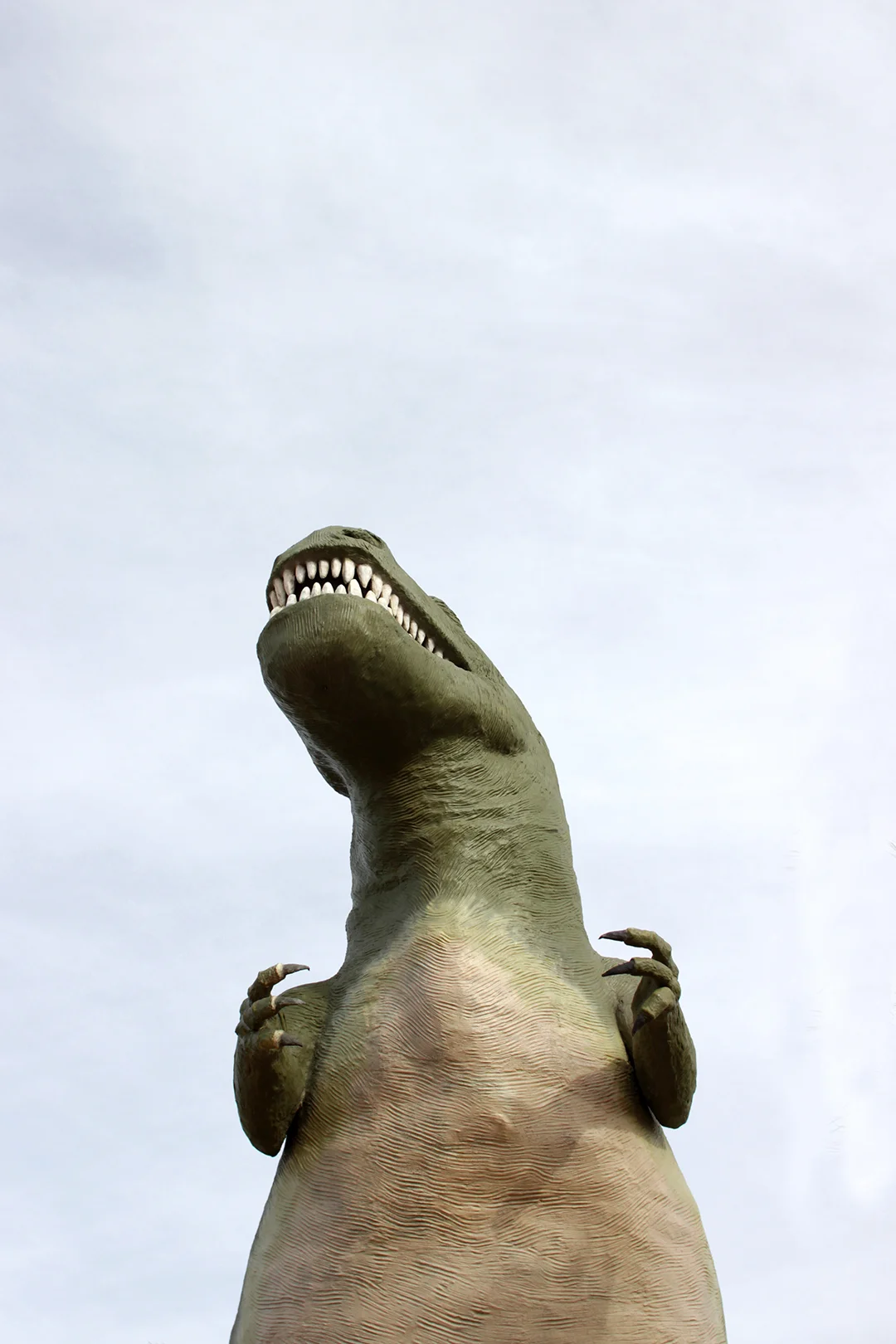
Second only to the Wigwam Motel, the top destination for my California trip with my friend Jim was the Cabazon Dinosaurs. I love dinosaur parks (I've been to Dinosaur World in KY and Dinosaur Land in VA) and the added Pee-Wee pedigree made the Cabazon Dinosaurs a must-see. Pee-Wee is dropped off by Large Marge in front of the dinosaurs and he and the waitress from a nearby diner share their dreams inside of Mr. Rex's mouth (the mouth in the movie was most definitely a set—it's much smaller in real life).


Dinny the Dinosaur and Mr. Rex are located west of Palm Springs, about two-and-a-half hours from Los Angeles. Claude Bell started constructing the dinosaurs in 1964, hoping to drive traffic to his nearby diner, The Wheel Inn. Dinny, the 150-foot-tall brontosaurus was completed first, in 1975 and Mr. Rex, a 65-foot-tall T-Rex was completed in 1985. Bell died in 1988 at age 91, and the property remained with his family until the mid '90s.


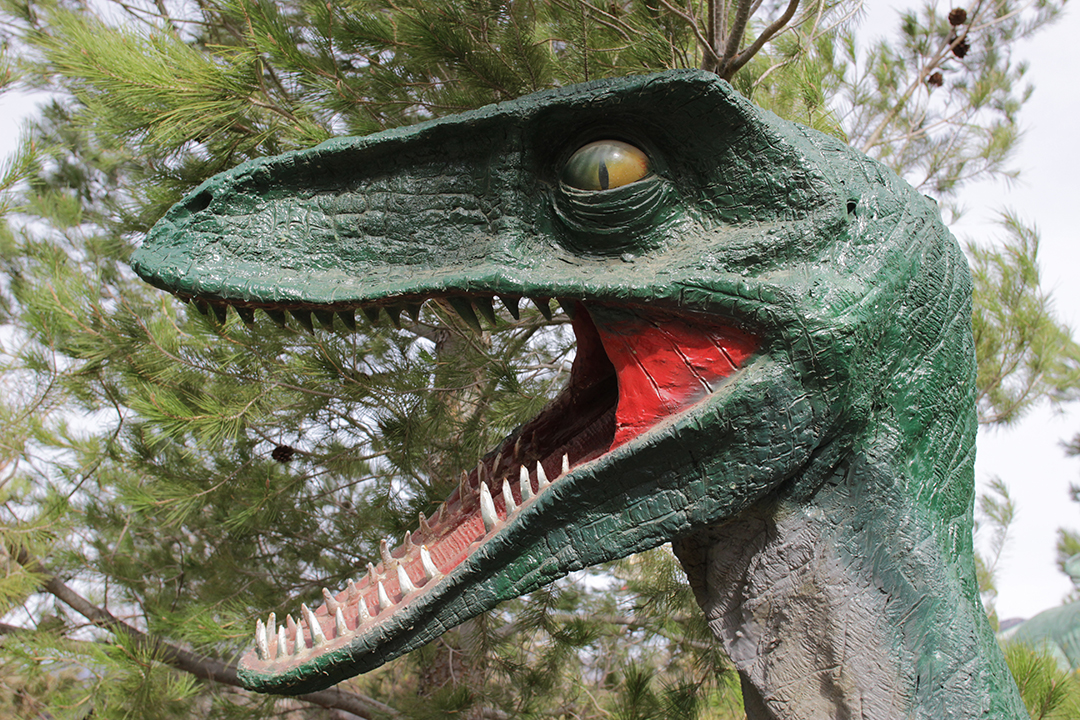
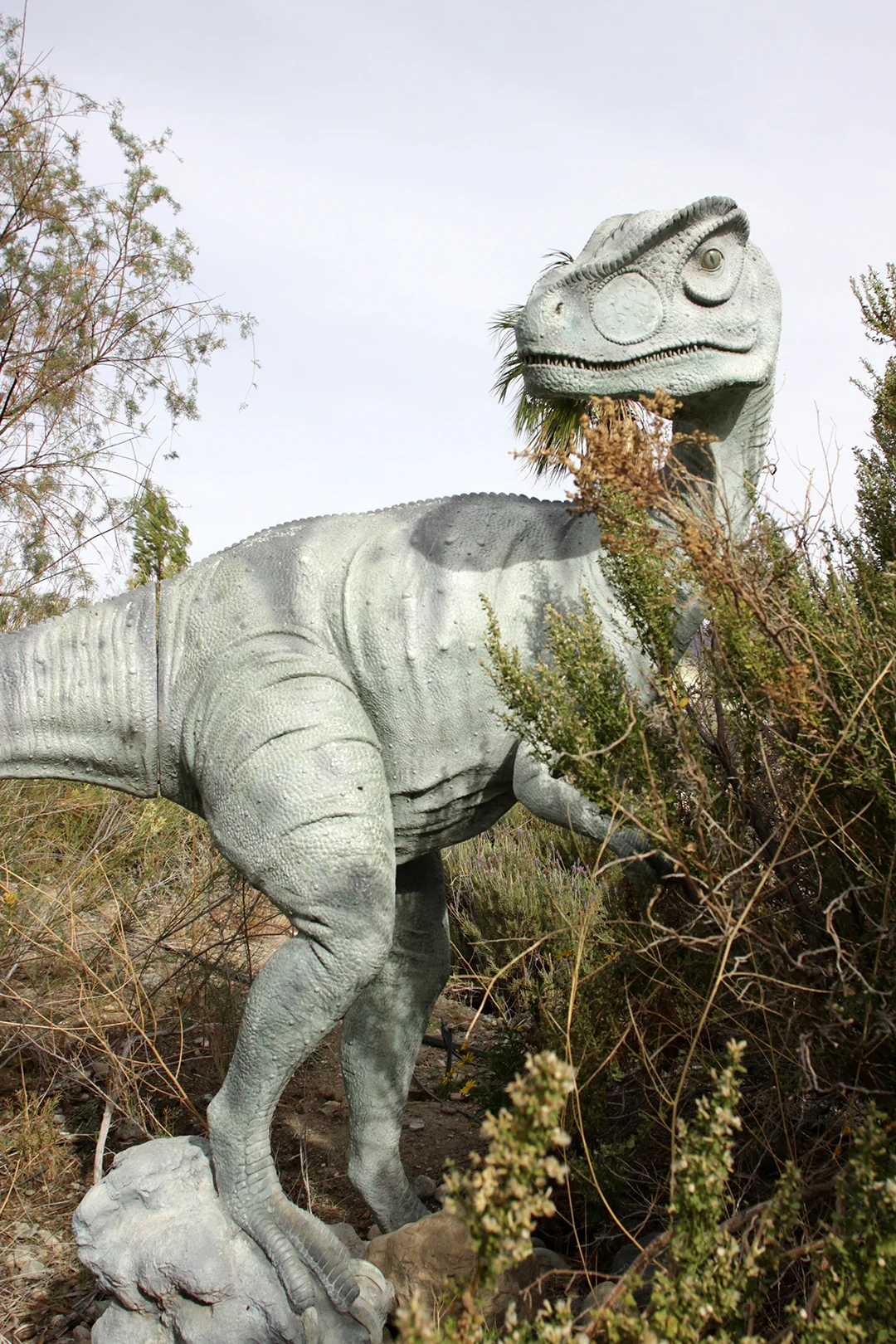
Inside of Dinny is a gift shop (the souvenirs were disappointing) and it's also where you purchase tickets to Mr. Rex’s Dinosaur Adventure, an add-on attraction featuring more than 50 dinosaur figures, a fossil dig and access to Mr. Rex. You can see the outside of both dinosaurs without paying admission, but it's definitely worth the $12 to survey the site from behind Mr. Rex's huge teeth (there is also a squished penny machine in a second gift shop located within the Dinosaur Adventure attraction).


Despite having seen photos of these dinosaurs for years on Instagram, seeing them in person was still so much better than I even expected it to be. We went early in the morning so it wasn't overrun with children, and later in our hotel room we watched Pee-Wee's Big Adventure and I had such a new appreciation for the Cabazon scenes. The one major disappointment, however is that The Wheel Inn closed in 2013. It sat abandoned for a few years before being recently demolished. When we went all that remained of the landmark diner was a pile of rubble and I'm sad that I'll never be able to walk in and say "Large Marge sent me."
Grahamland

Despite having occurred over just four days in October, I still haven't posted about everything my mom and I saw on our road trip to (and from) South of the Border. On the second day, before we reached South of the Border—and in between visiting the World's Largest Frying Pan and the World's Largest Tire—we made a slight detour around Delco, North Carolina. I had an address on my map with the note "UniRoyal Gal and fiberglass animals in yard."
It was getting dark and we were nearing the end of our route for the day. I was eager to get to South of the Border and debated internally whether or not this mystery address was worth the detour. My mom wanted each stop to be a surprise, and although I pre-planned most of our destinations, even I wasn't exactly sure what we'd find at some of them. My mom had actually been the one to point out my first UniRoyal Gal on a road trip in 2016 and they're very rare (I saw my second in Florida last year), so I ultimately decided that even the possibility of seeing one was worth the extra drive.
We were getting close to the address but I was confused because we were on a pretty busy road (Highway 74) and just as I was doubting my intel, we passed a house set back from the road with a yard full of fiberglass animals. It was very obviously a private residence and we debated if we should even pull into the driveway. We quickly decided to take a chance, figuring that the owner of such a whimsical collection couldn't be too upset with a mother and daughter who were on a road trip specifically to seek out such things.
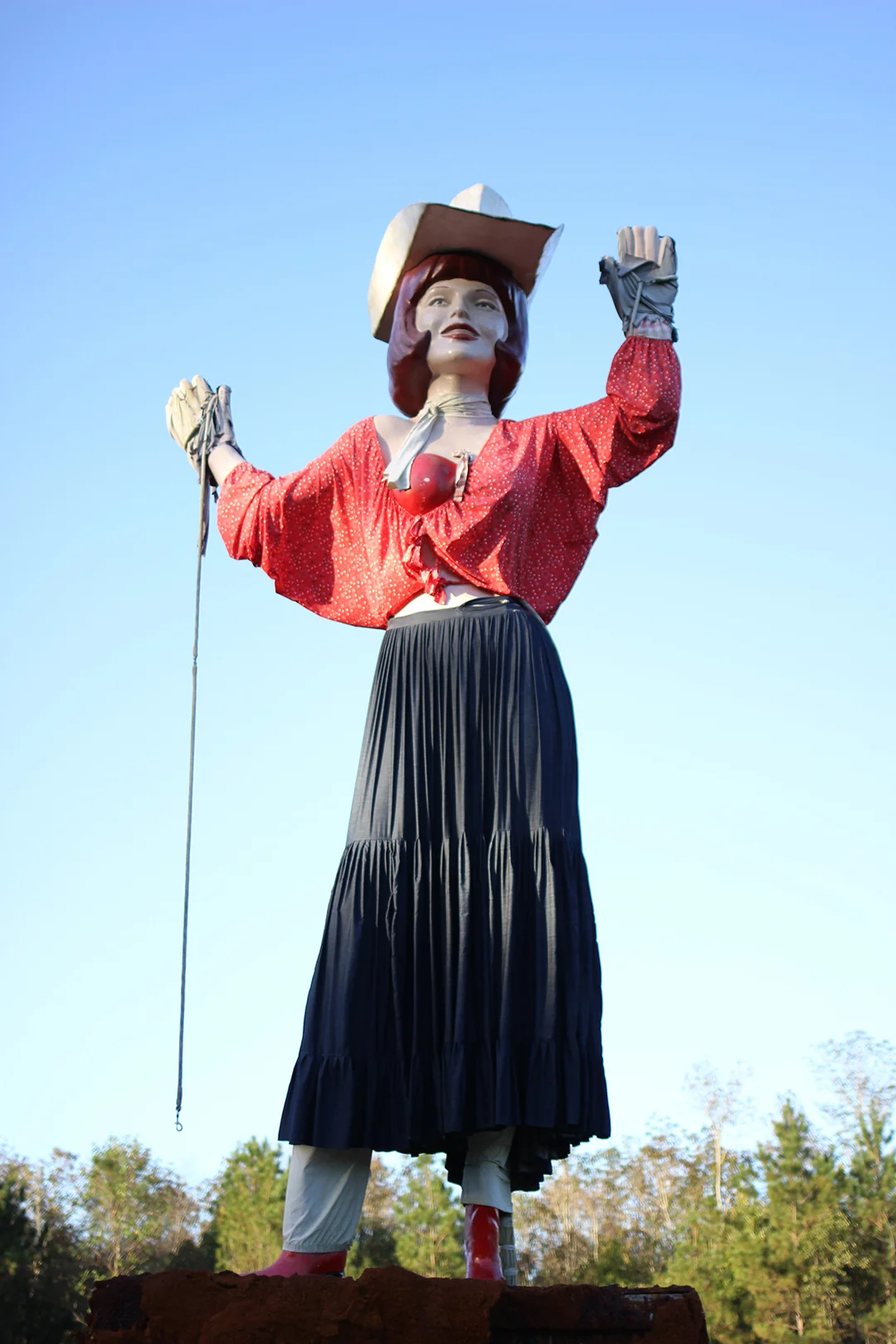
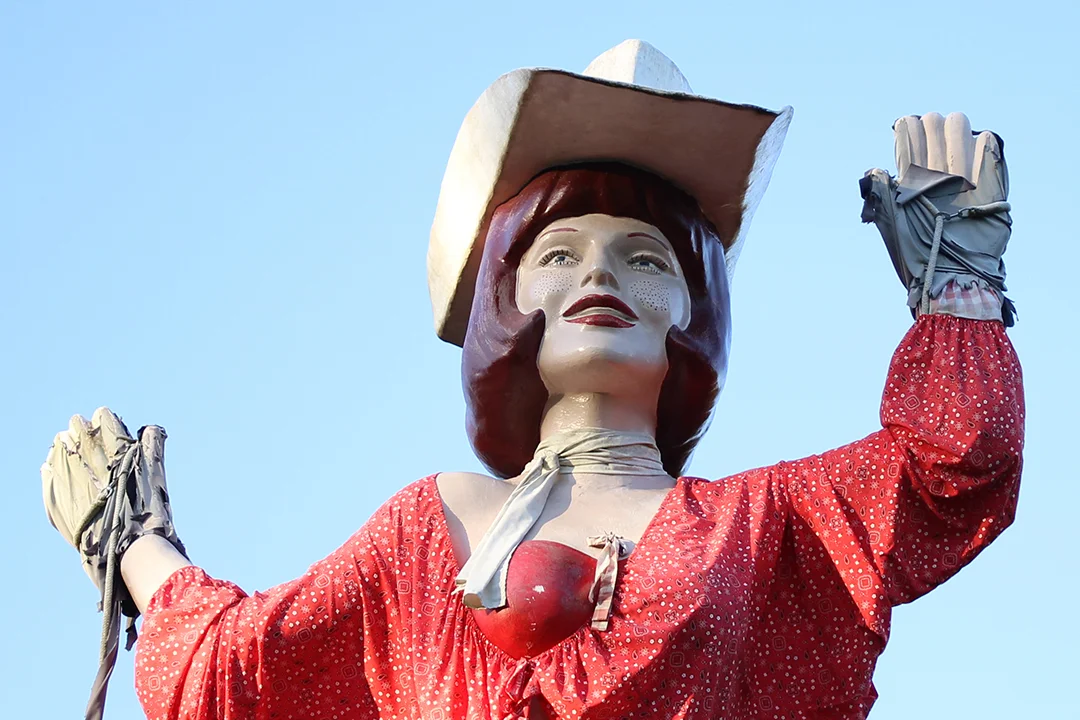

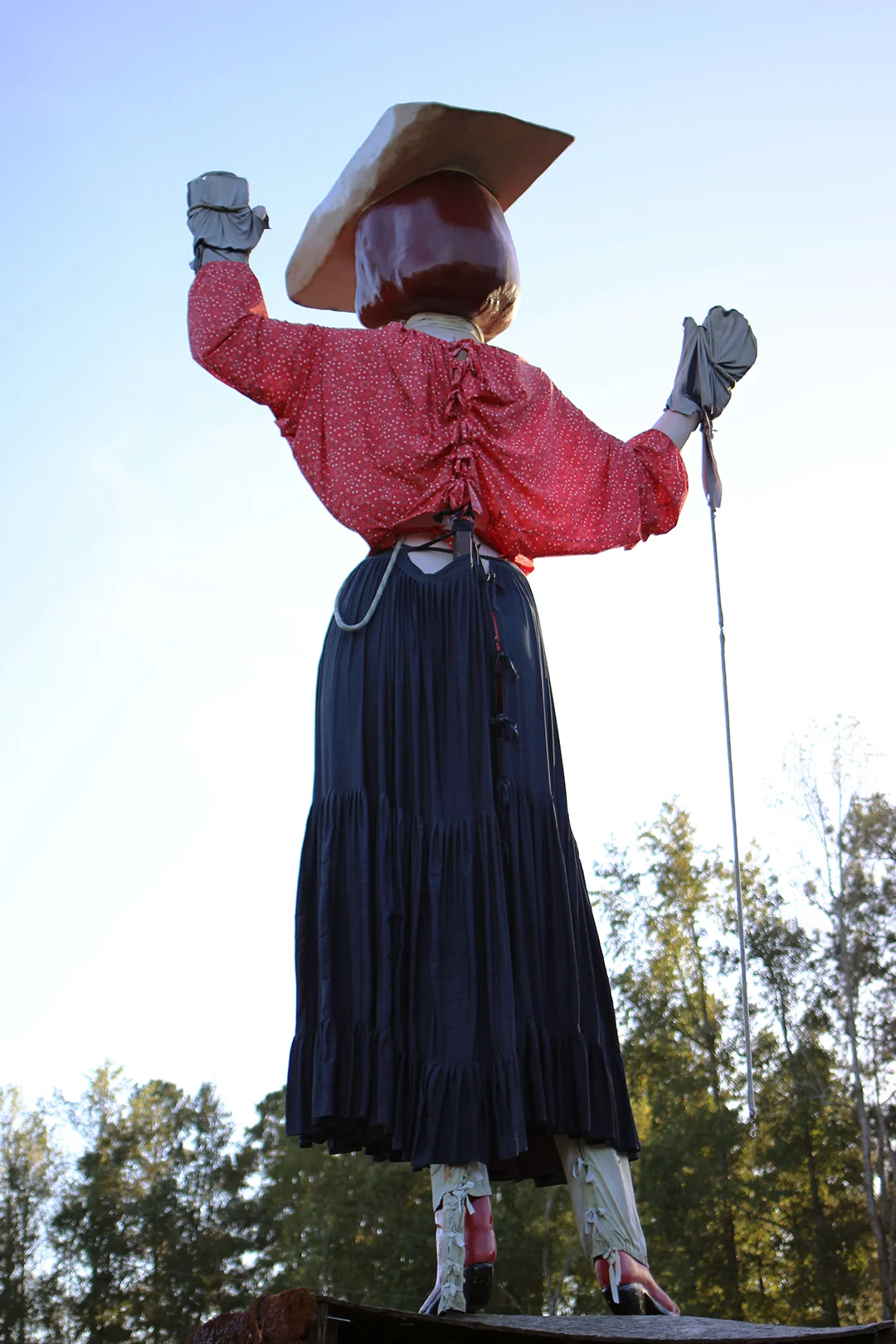
We didn't see anyone around, so we parked and got out to snap a few quick photos. I'm usually painfully shy and will avoid talking to strangers at any cost, but I was secretly hoping that the owner would see us and come out to chat about his enviable collection—one that we soon realized included not one, but two UniRoyal Gals. After a few minutes, I got my wish and we were greeted by one of the nicest men I've ever met, Hubert Graham.


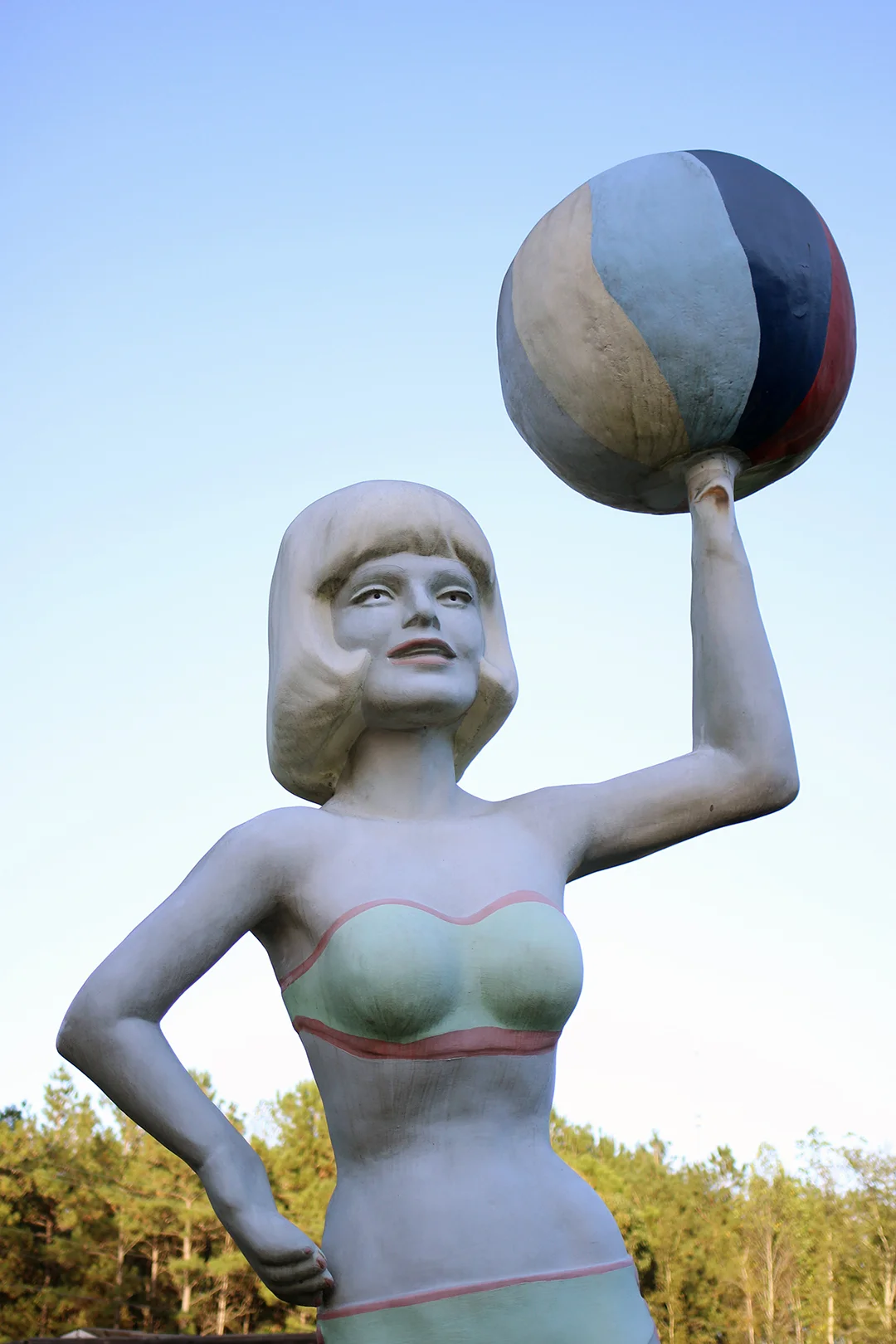
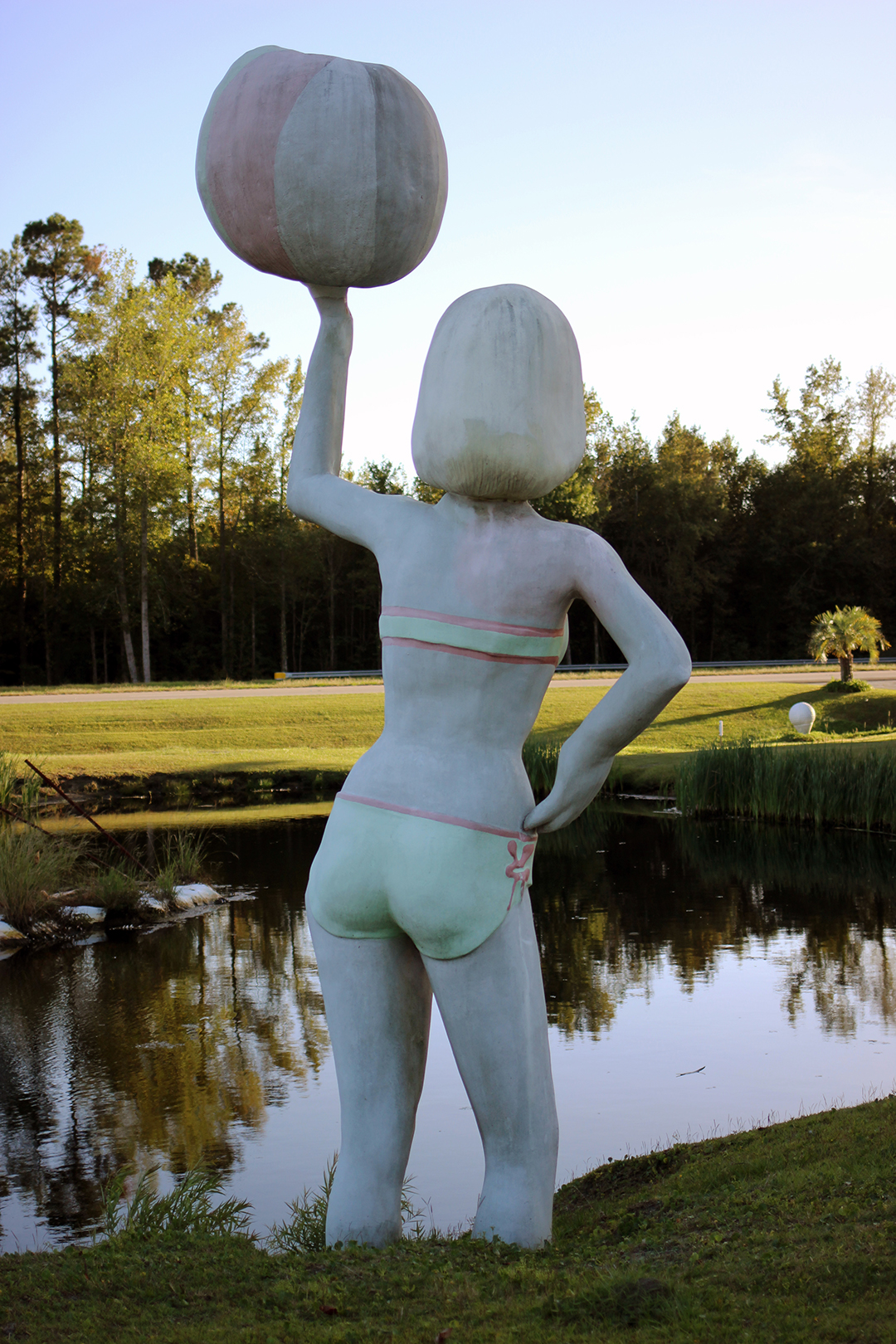
Graham introduced himself as the owner of the property, which we later learned he refers to as Grahamland. When my mom asked if he had restored the UniRoyal Gals himself, Graham said, "Oh, I made those. I have the original mold." Most of the UniRoyal Gals were made in the '60s by International Fiberglass (makers of most Muffler Men) and UniRoyal stopped using them as promotional tools in the '70s. American Giants says they know of 17 Gals, 12 of which are on display currently. The original mold somehow made its way from California to North Carolina, where Graham bought it from his mentor in the fiberglass business.
He has two completed—the beach gal and the cowgal—and has plans to make a Native American and a black woman. When the fiberglass company Graham once worked for went out of business, he bought all of their fiberglass, resin and molds. He makes every one of the fiberglass figures on his property and his girlfriend helps paint them.

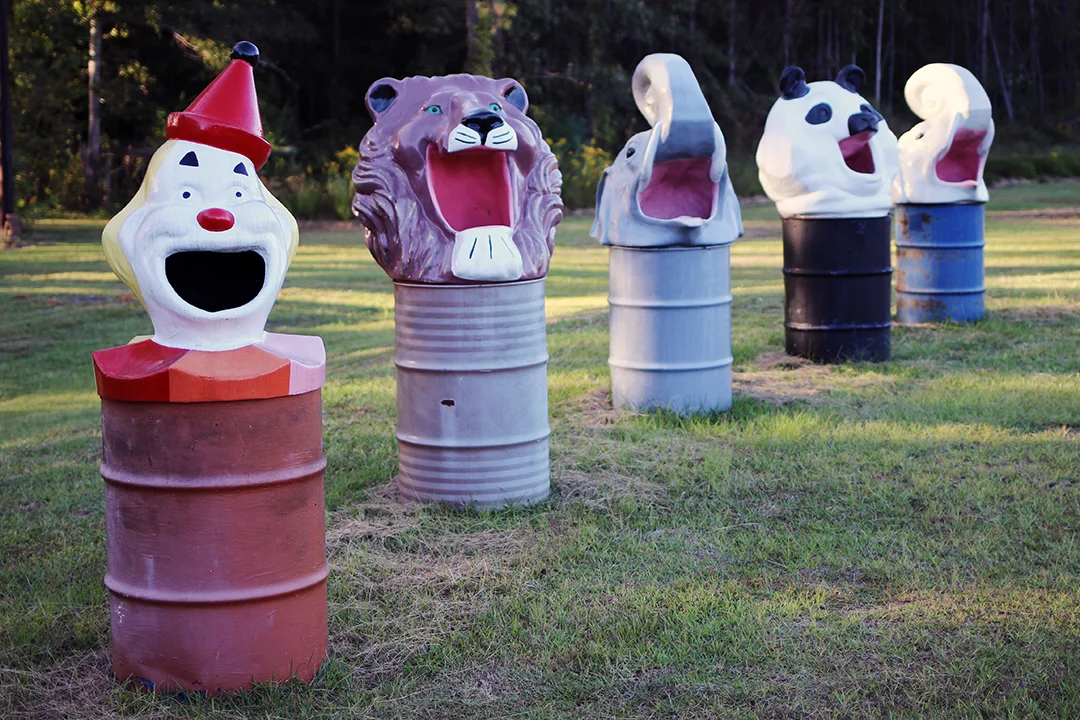

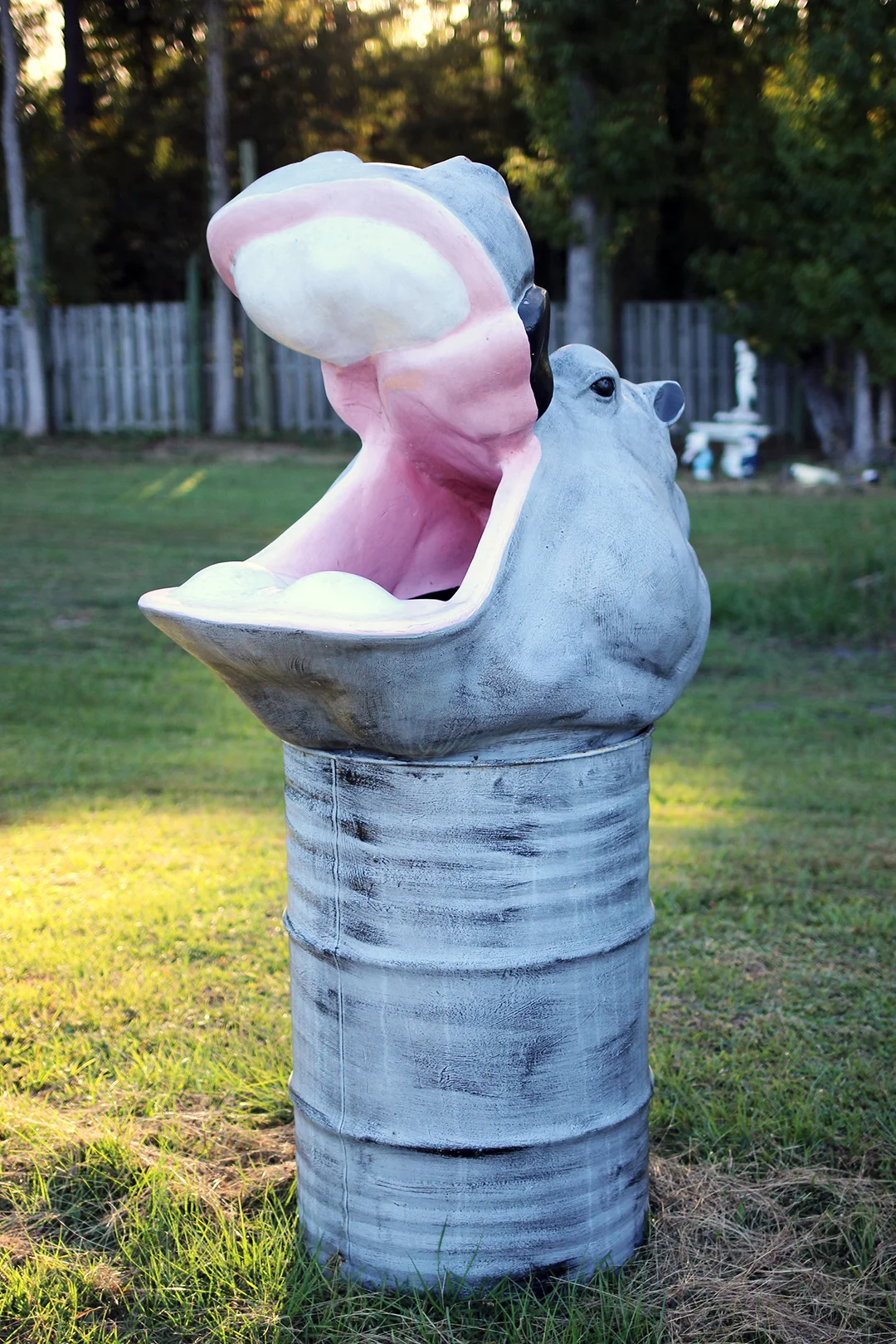
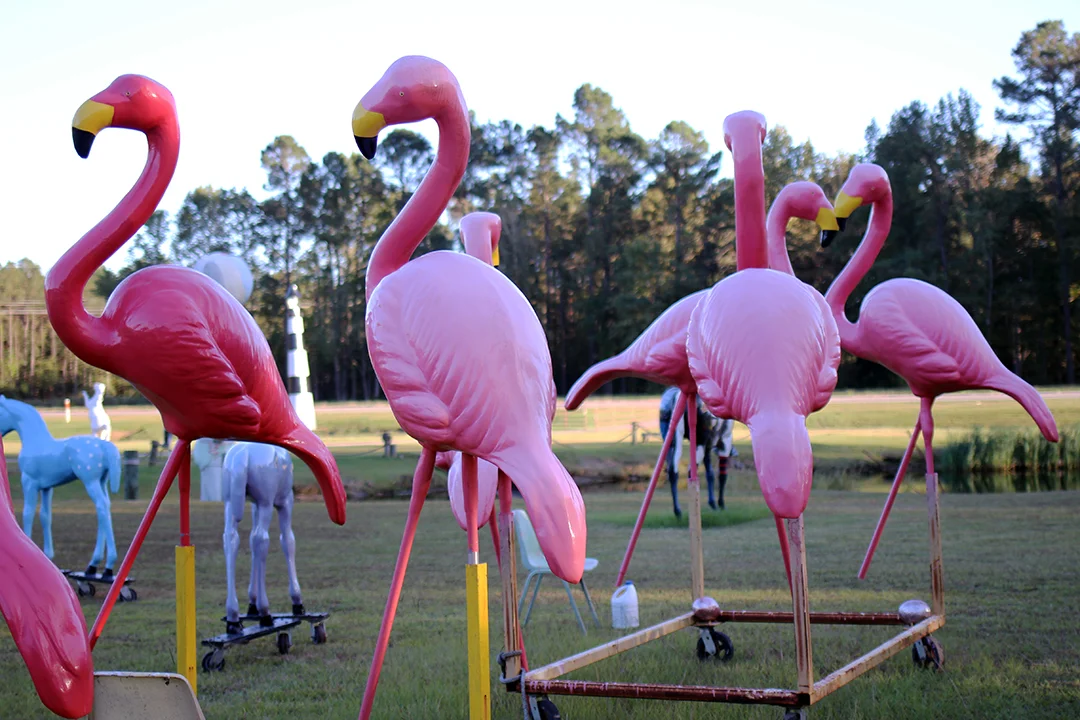
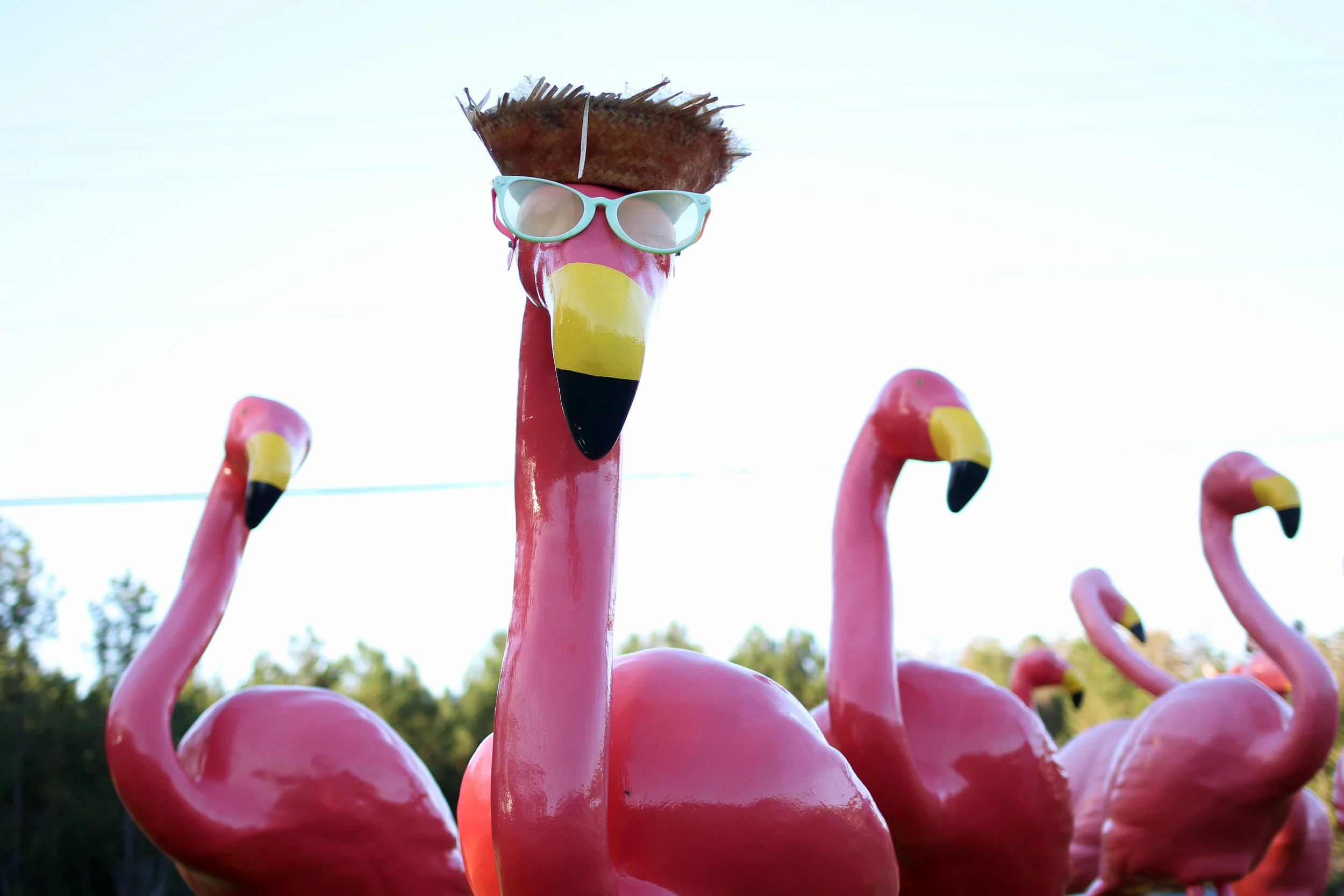
Grahamland is more than just a whimsical yard—Graham has dreams to turn it into an amusement park and mini golf course. He has plans to put some of the animals on motorized bases, and envisions a seafood restaurant topped with a lighthouse, talking cars and flying horses. When we mentioned that we were on our way to South of the Border, Graham told us to look out for a dozen of his pink flamingoes.
My mom and I were overwhelmed with the generosity and kindness of Graham, and luckily he said that he loves visitors. He even took our photo, which I later found on his Facebook page, and I instantly regretted not snapping one of him too. Unfortunately, Graham was on his way to work—he has a "real" job laying fiber optic cable—so we couldn't stay very long, but we were thankful that we caught him before the gate closed for the night.
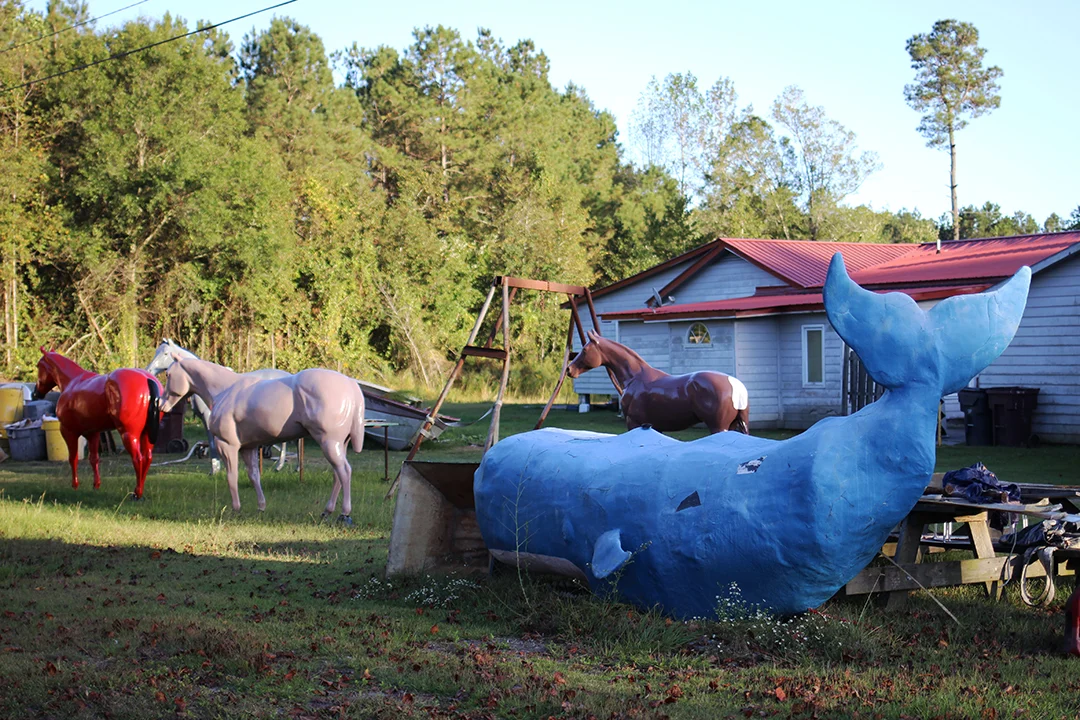
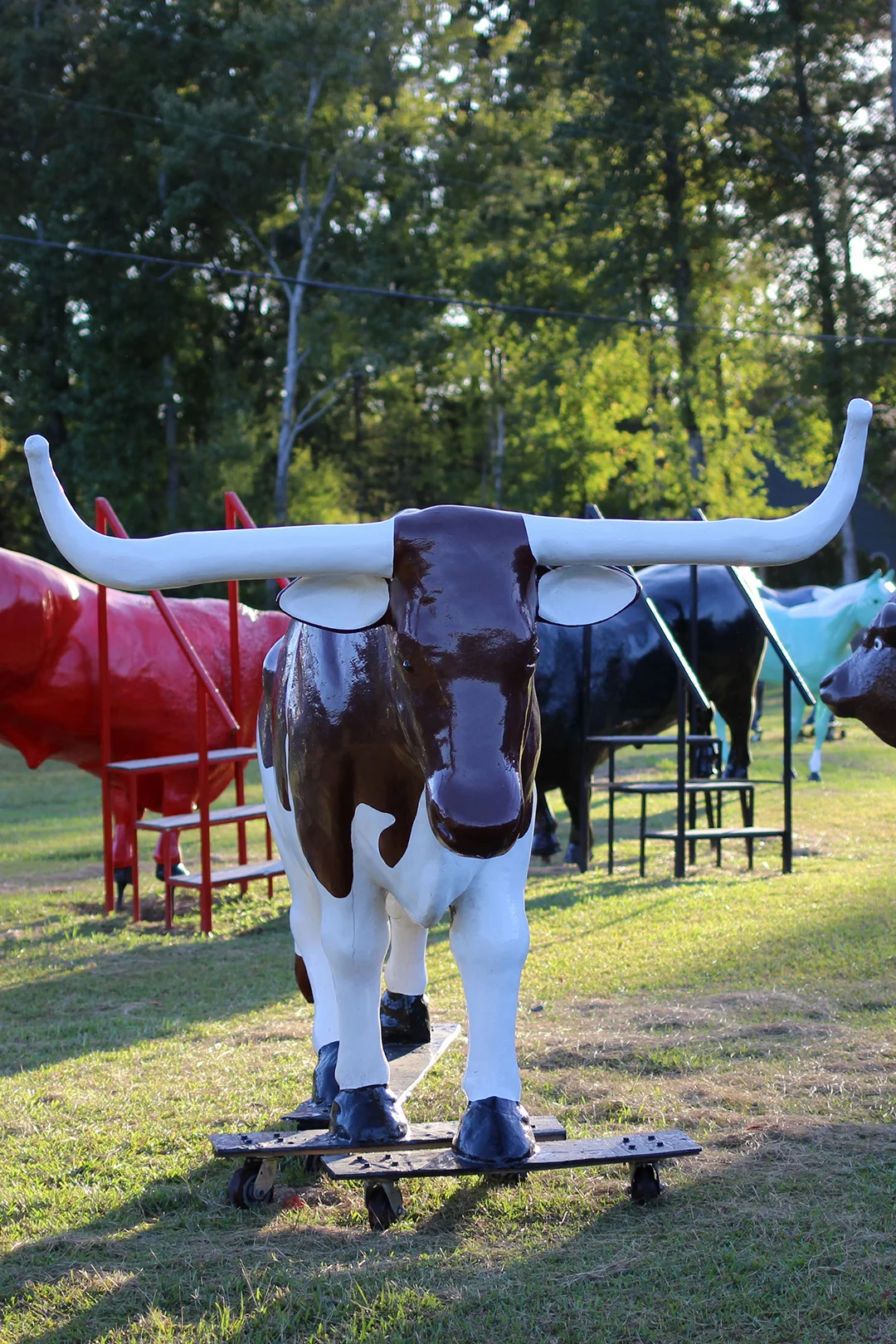
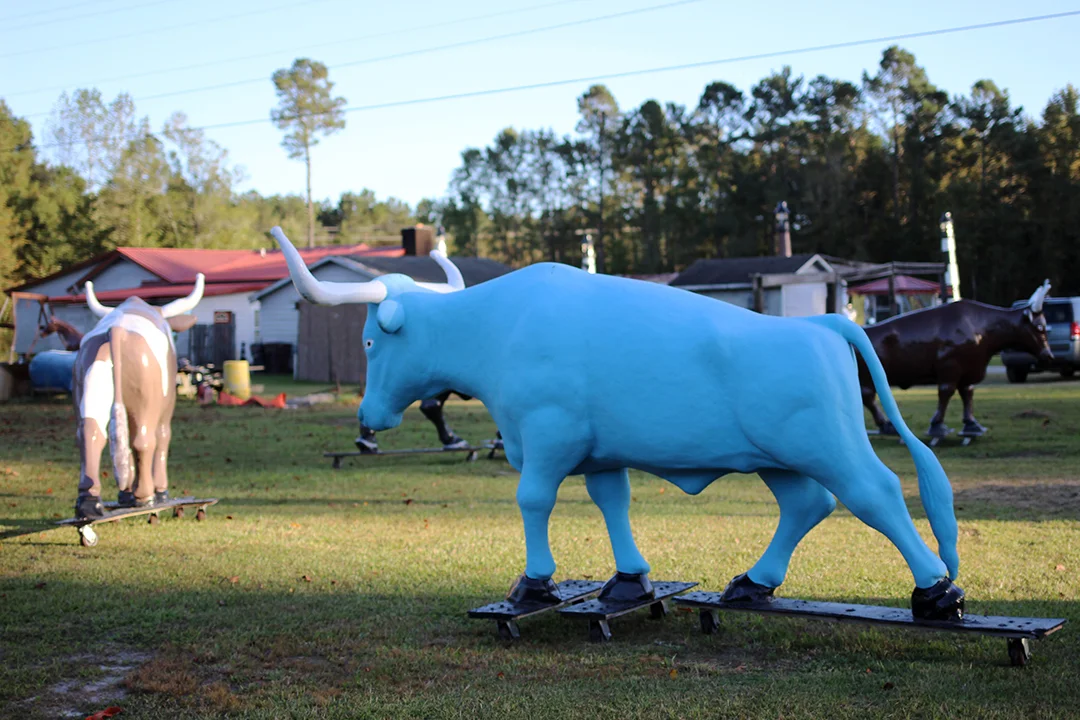
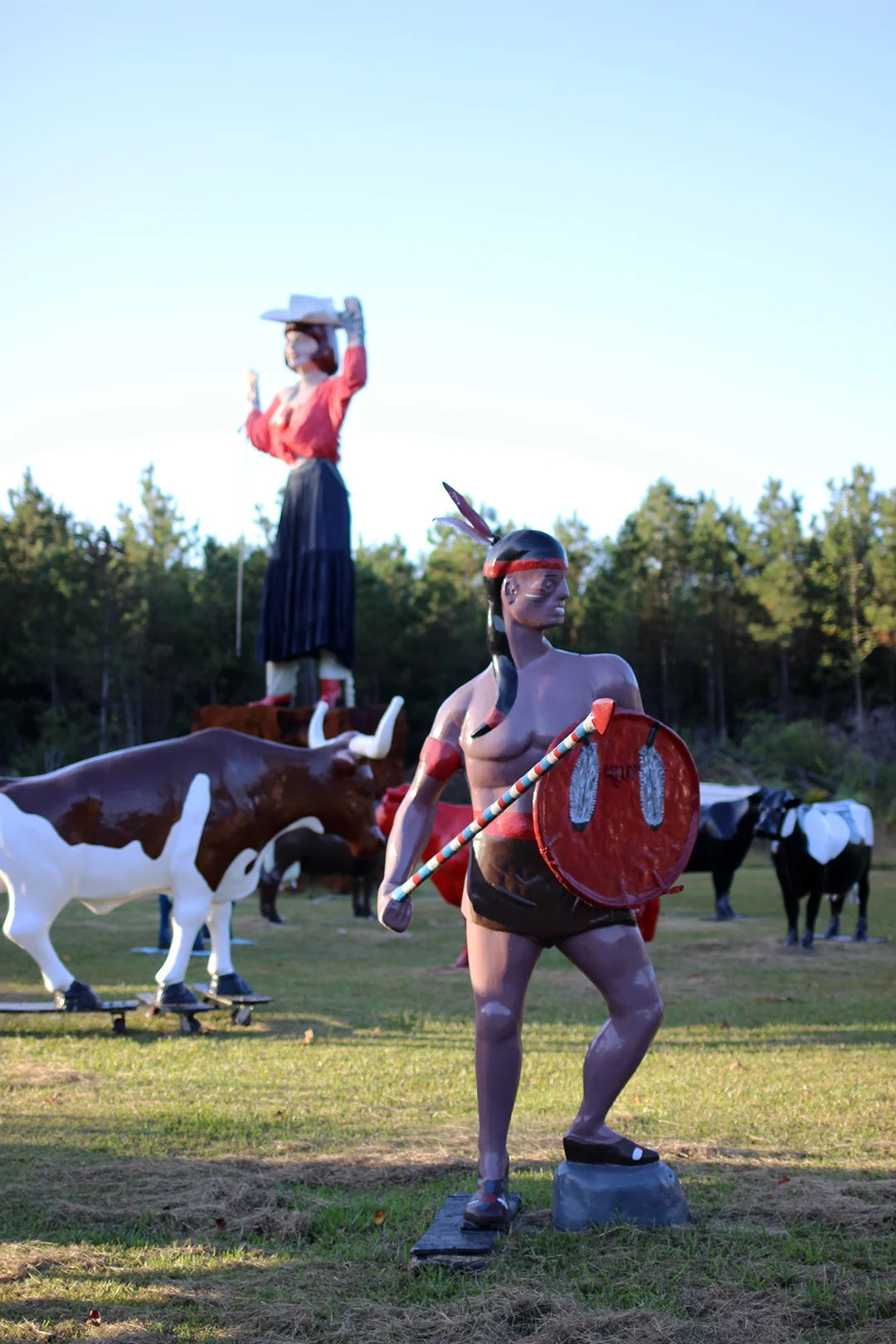
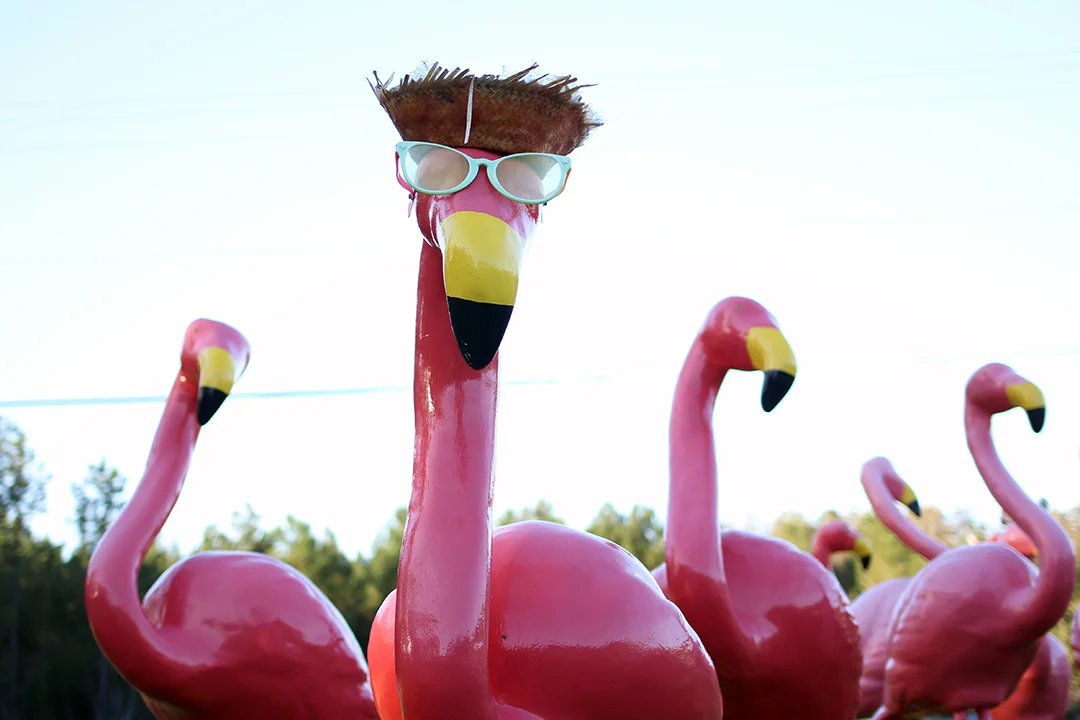
Later in our hotel, we read all about Graham's ambitions and fell even more in love with his vision. But even if Grahamland never fully comes to fruition, I have so much respect for people like Graham—hard-working, passionate, generous and slightly eccentric people who make the world around them a little brighter.
Wigwam Village No. 7

When I slept in my first Wigwam Motel in 2016, I didn't have concrete plans to visit the two remaining Wigwam Villages, but I knew I wanted to eventually "collect them all." Early in 2017, I was devastated when it became obvious that my friend Jim was going to move to LA, but I tried to look on the bright side and immediately began planning a trip to the west coast. It should come as no surprise that the very first thing on my list of California must-sees was Wigwam Village No. 7 on Route 66 in San Bernardino.


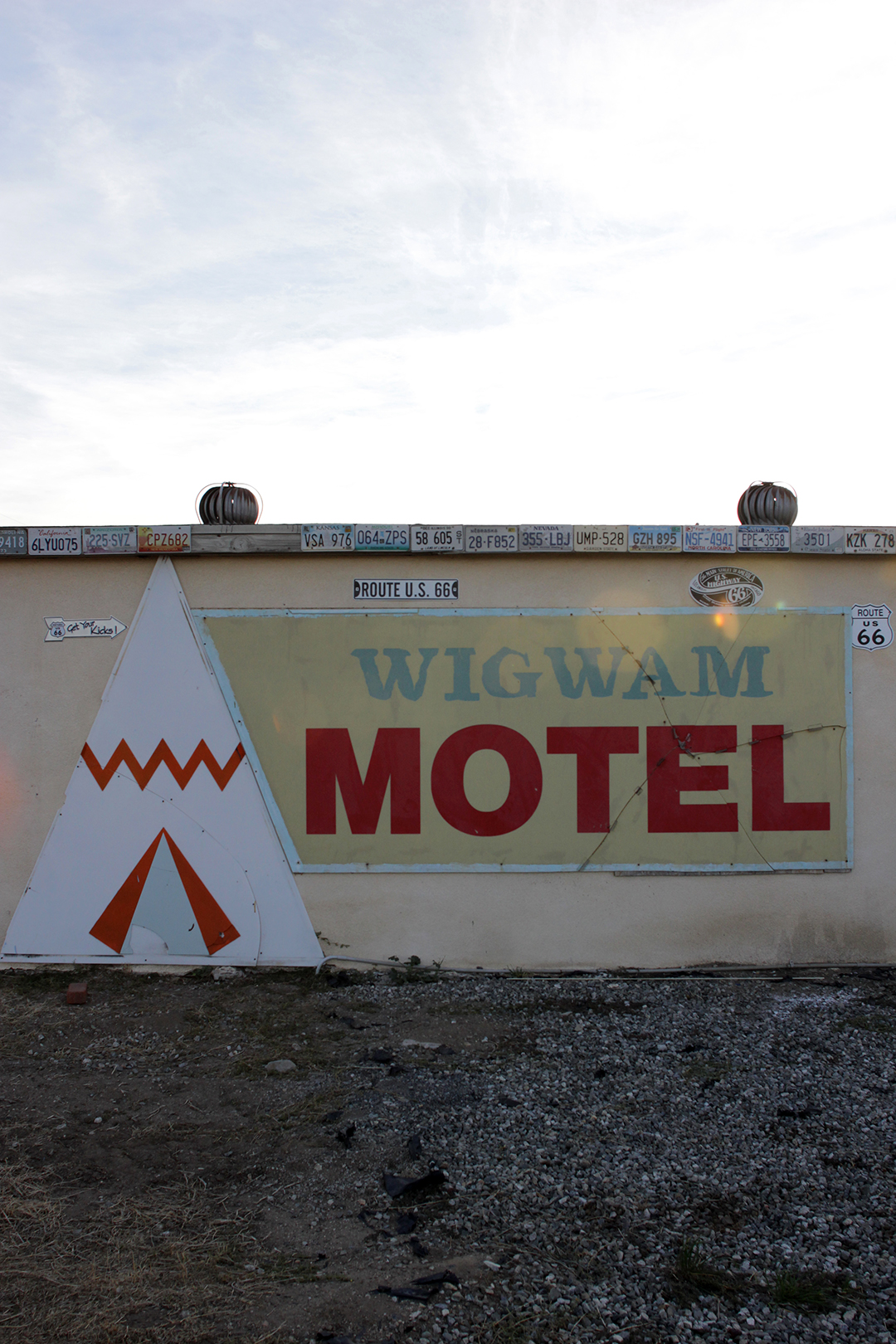


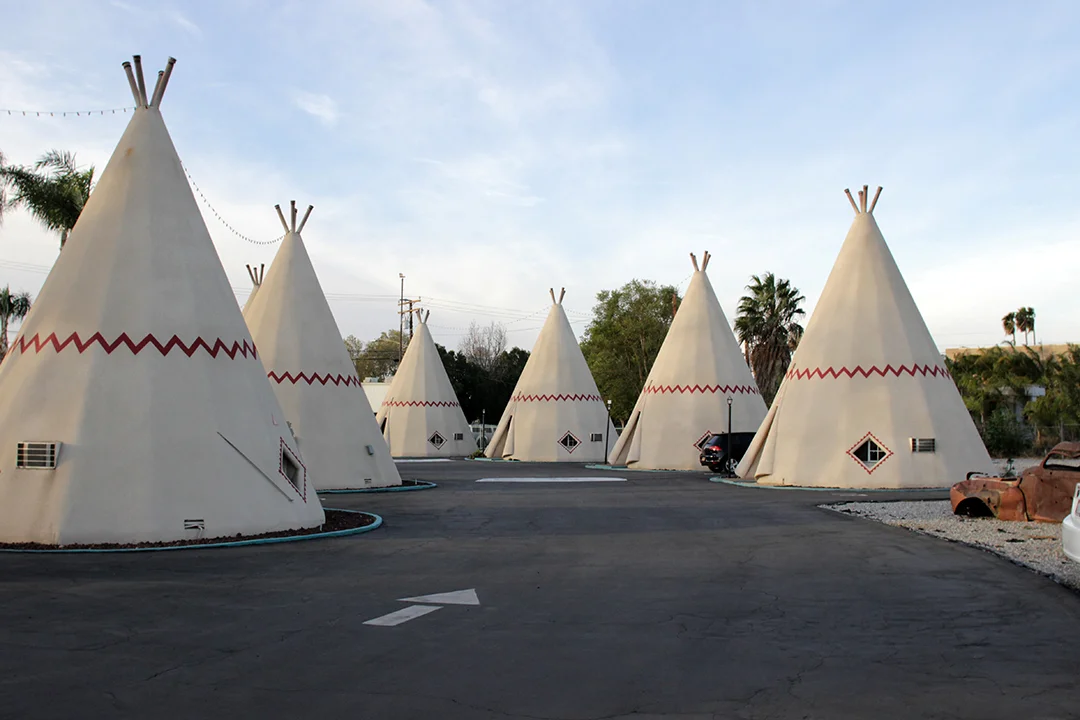
Originally there were seven Wigwam Village locations—two in Kentucky and one each in Alabama, Florida, Arizona, Louisiana and California—and only the ones in Kentucky, Arizona and California have survived. No. 7, constructed in 1949, is the last one to be built and it sits on the boundary between San Bernardino and Rialto, on Historic Route 66.

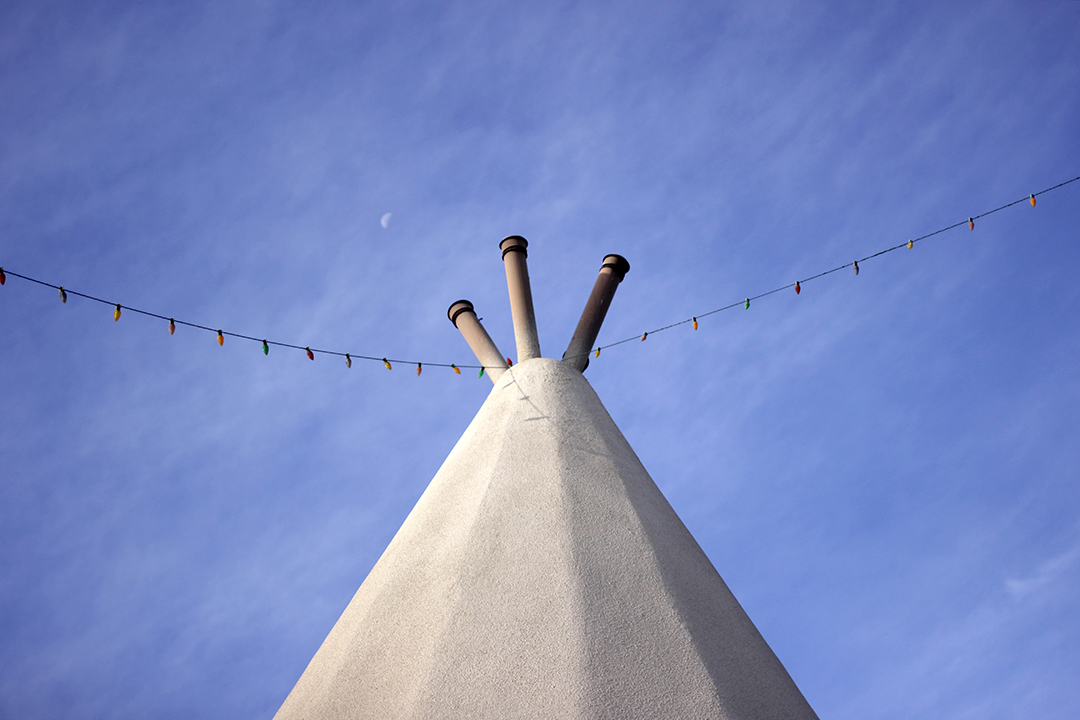


Although of course No. 2 will always be special to me as my first Wigwam experience, No. 7 was overall an even nicer experience. No. 7 has a double row of Wigwams—19 total—and it had once been in dire shape. Rooms could be rented by the hour, and a sign urging travelers to "Do it in a Teepee" hung out front (the fact that these structures are technically "tee pees" doesn't seem to have mattered to Frank A Redford, the builder of these villages). It has since undergone an extensive renovation, and in 2012 it was listed on the National Register of Historic Places.


No. 7 has a small, kidney-shaped pool and better souvenirs than No. 2—we bought postcards, patches, pins, ornaments and key tags. There are several vintage cars sitting on the property and a circular base in the back that looks like it may have been destined to be a 20th Wigwam, but it was never finished.
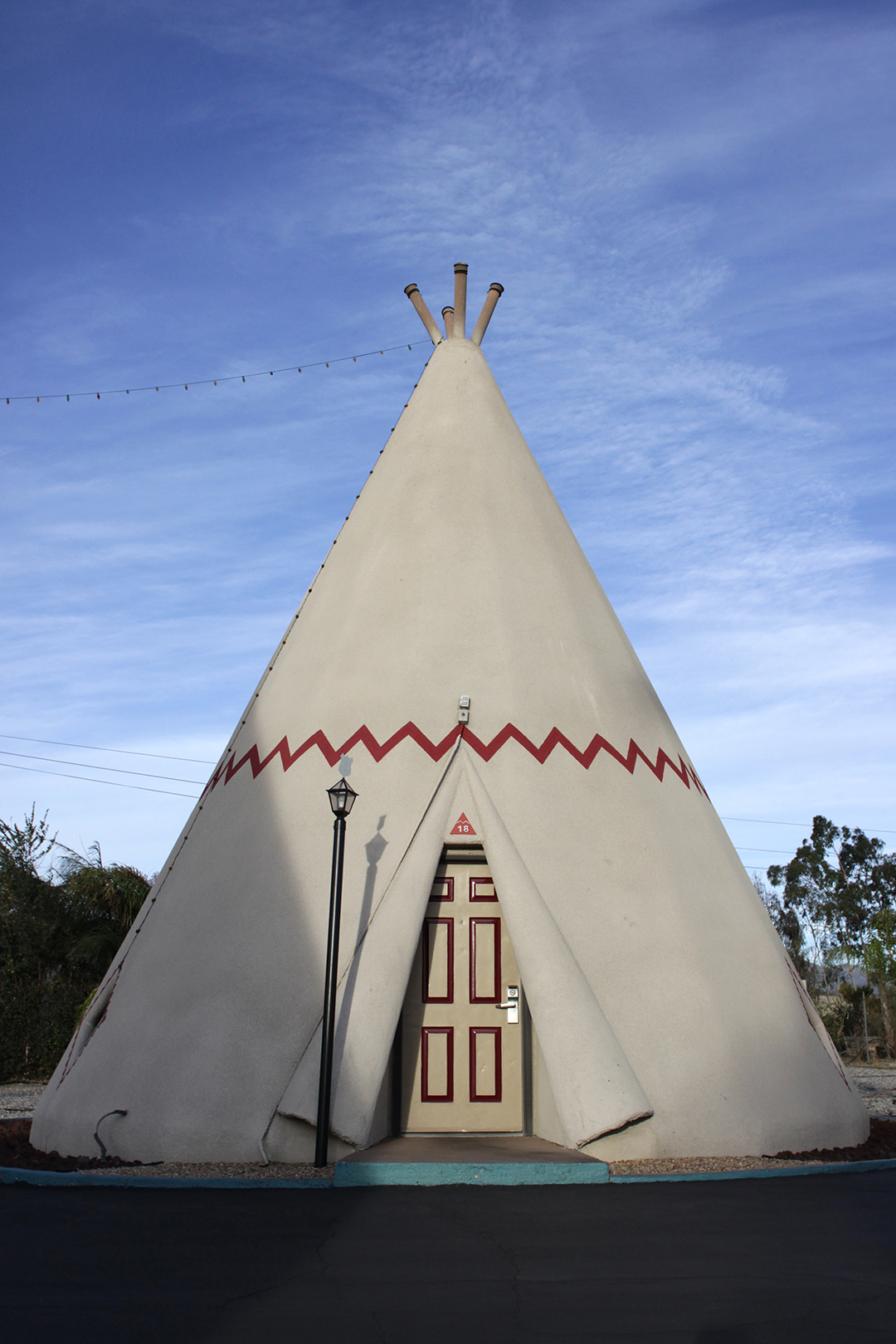


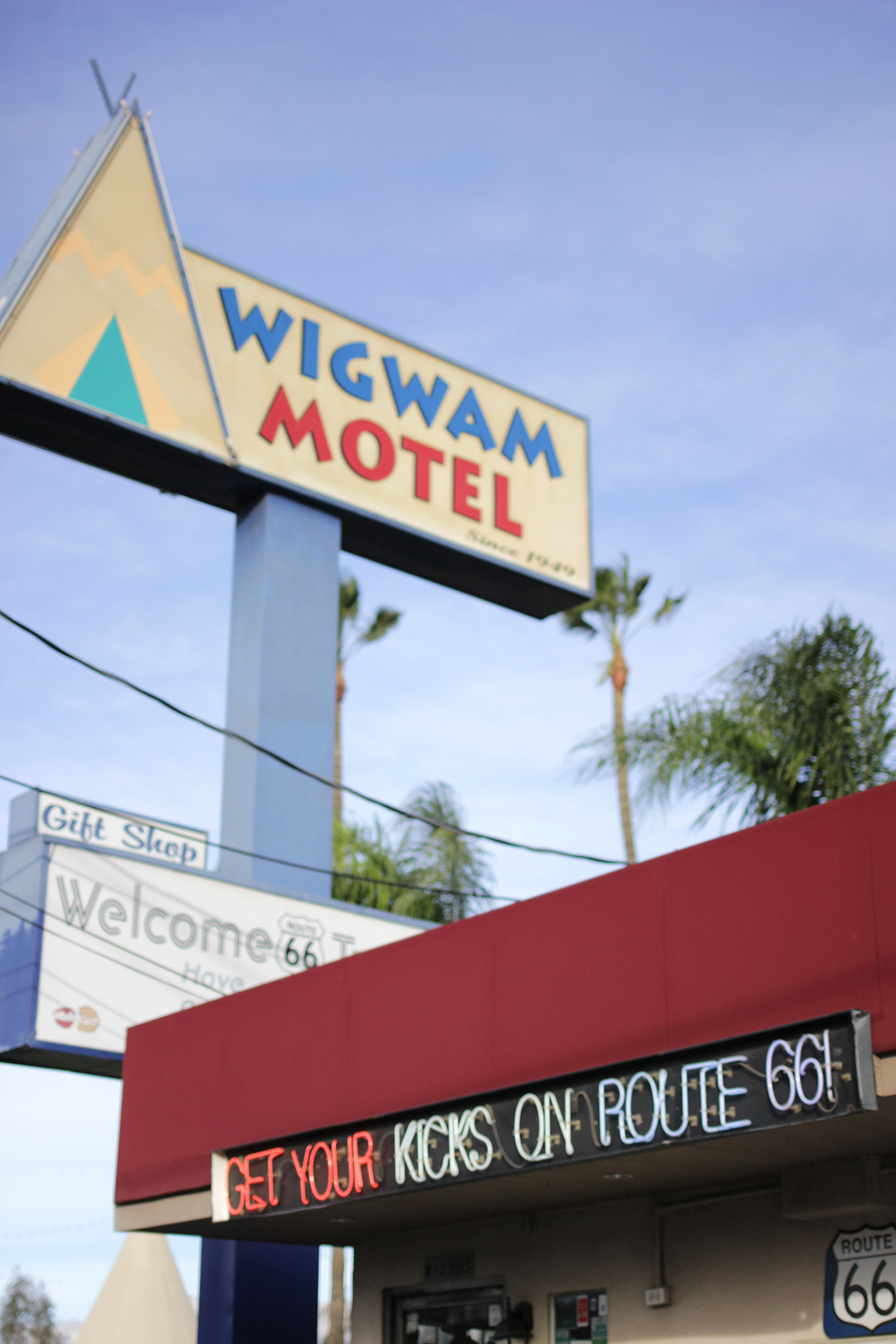

The inside of each Wigwam is surprisingly spacious, and ours had two beds, a tv and a desk. I did prefer the bathroom of No. 2—with its red zig-zag tiles—but the Wigwams at No. 7 looked freshly painted, and the iconic zig-zag on the exterior was brought back during the renovation. I also appreciated all of the little details, like the lights strung between Wigwams, the Route 66 markers on the lampposts and the Wigwam-shaped room numbers. In an area full of cheap and boring roadside motels, I don't know why anyone would choose not to "sleepee in a tee-pee."
Wigwam Village No. 7
2728 E Foothill Blvd
San Bernardino, CA 92410
Our 2/bed was $99 for a Saturday night in December
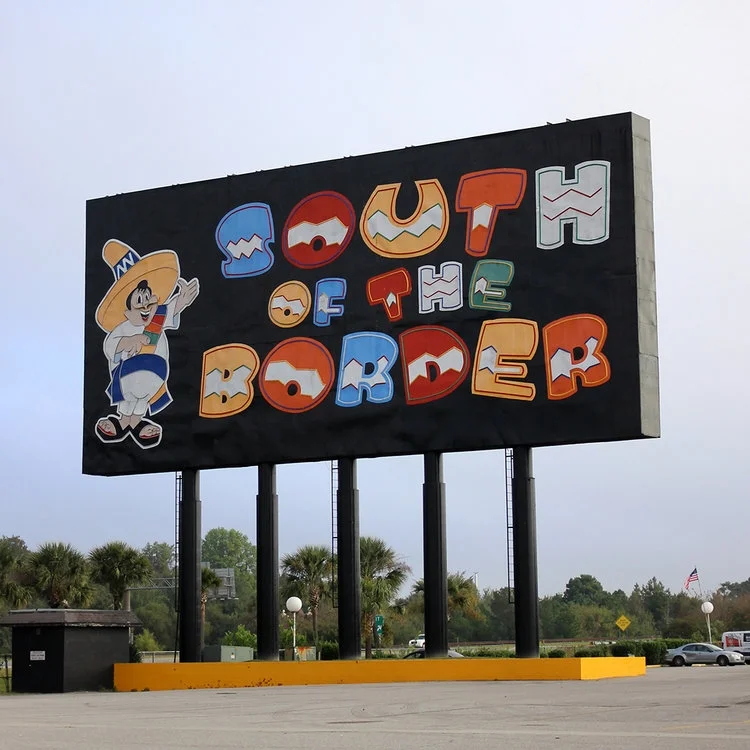
South of the Border: Day

Road trips are good metaphors for how I view life in general—it's less about the big picture and more about the little moments along the way—but finally making it to South of the Border was the highlight in a year filled with novelty architecture, muffler men and silly roadside attractions. I talked a little about how the trip came together in this post, but I'm still pleased that after talking about it and saying "I need to get there!" for so long, that I finally made it happen.


It turns out that all of the little things I thought were standing in my way—money, time, someone to come with me—weren't so hard to work out once I decided to really make a plan. I get asked sometimes how I do "so much," which is relative of course —and probably skewed by my online presence, trust me there are days when I do absolutely nothing—but I get derailed by my own silly misconceptions and anxieties just like anyone. I had been planning an epic South of the Border road trip for years, but once I decided that I had to get there in 2017, everything fell into place.
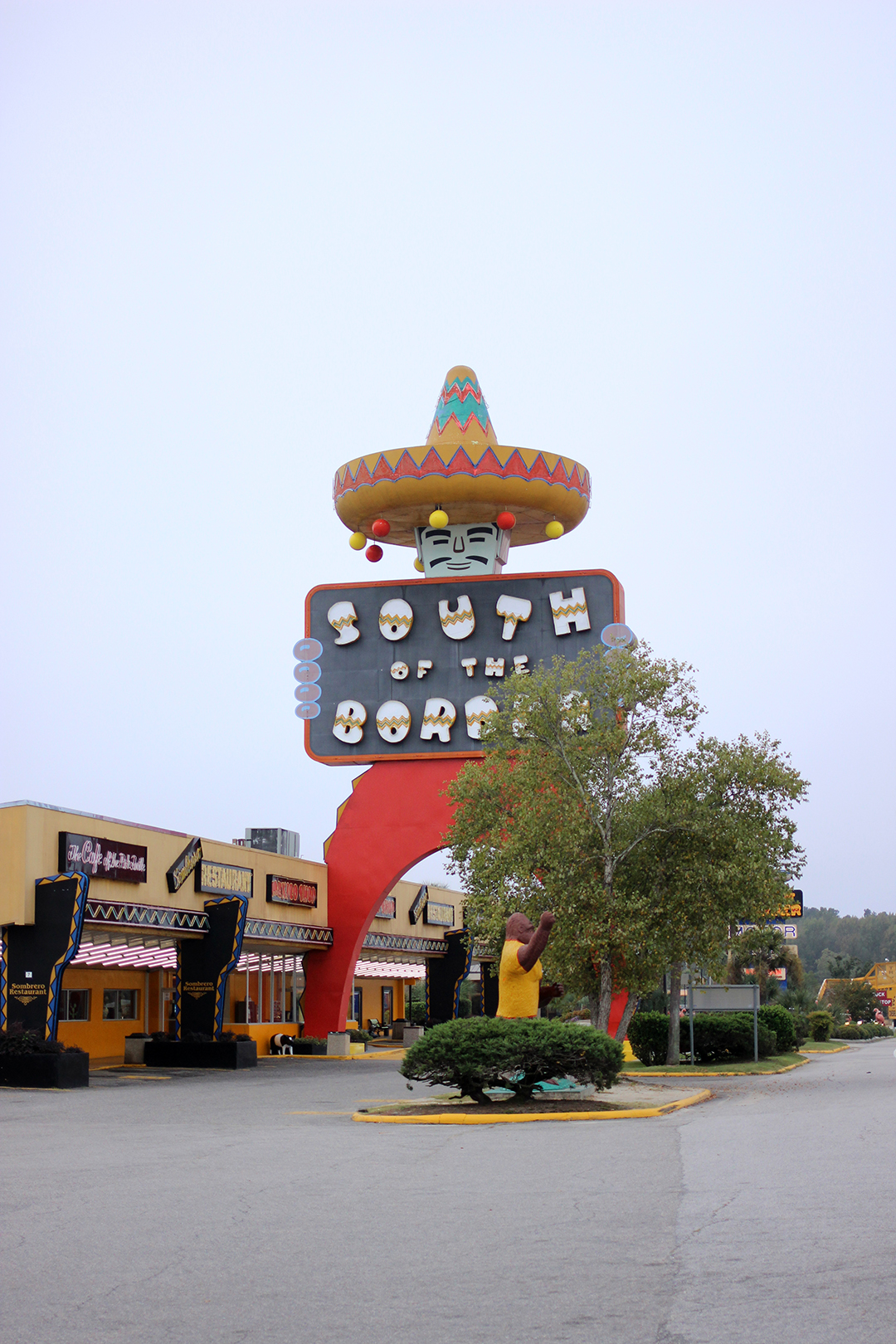
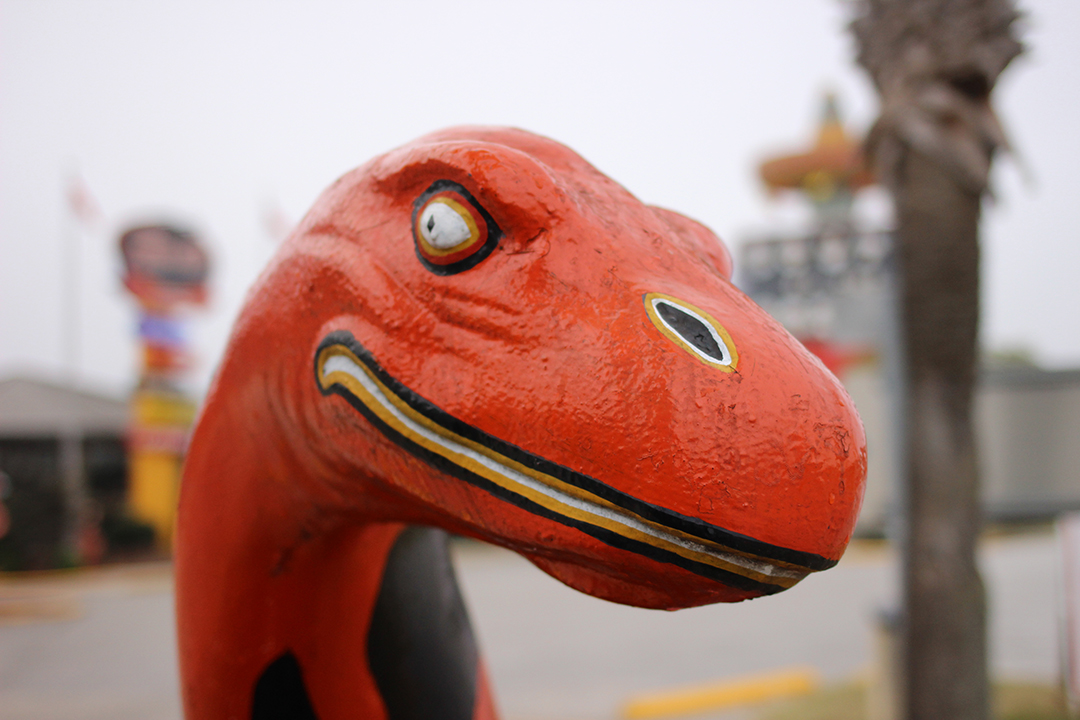
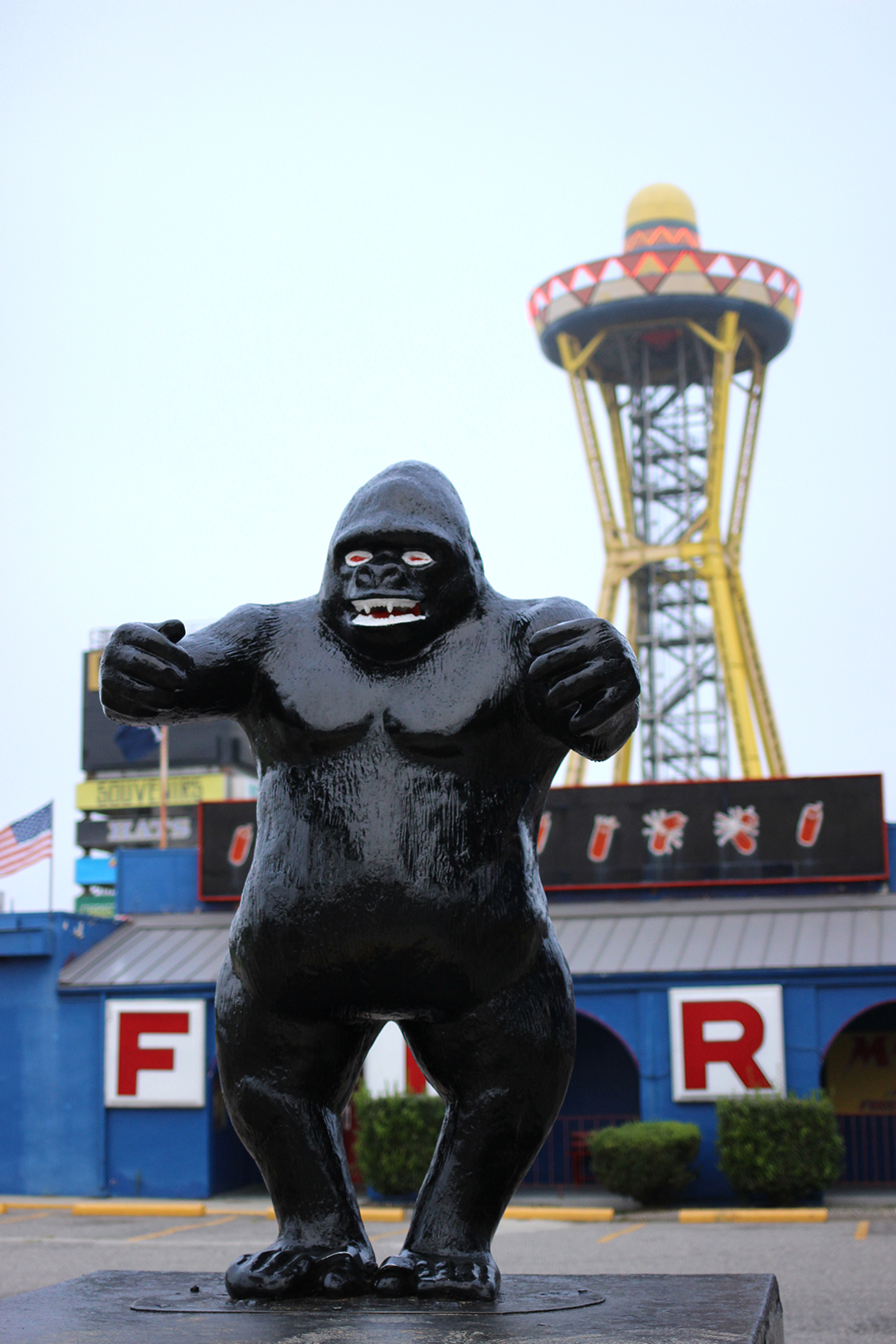
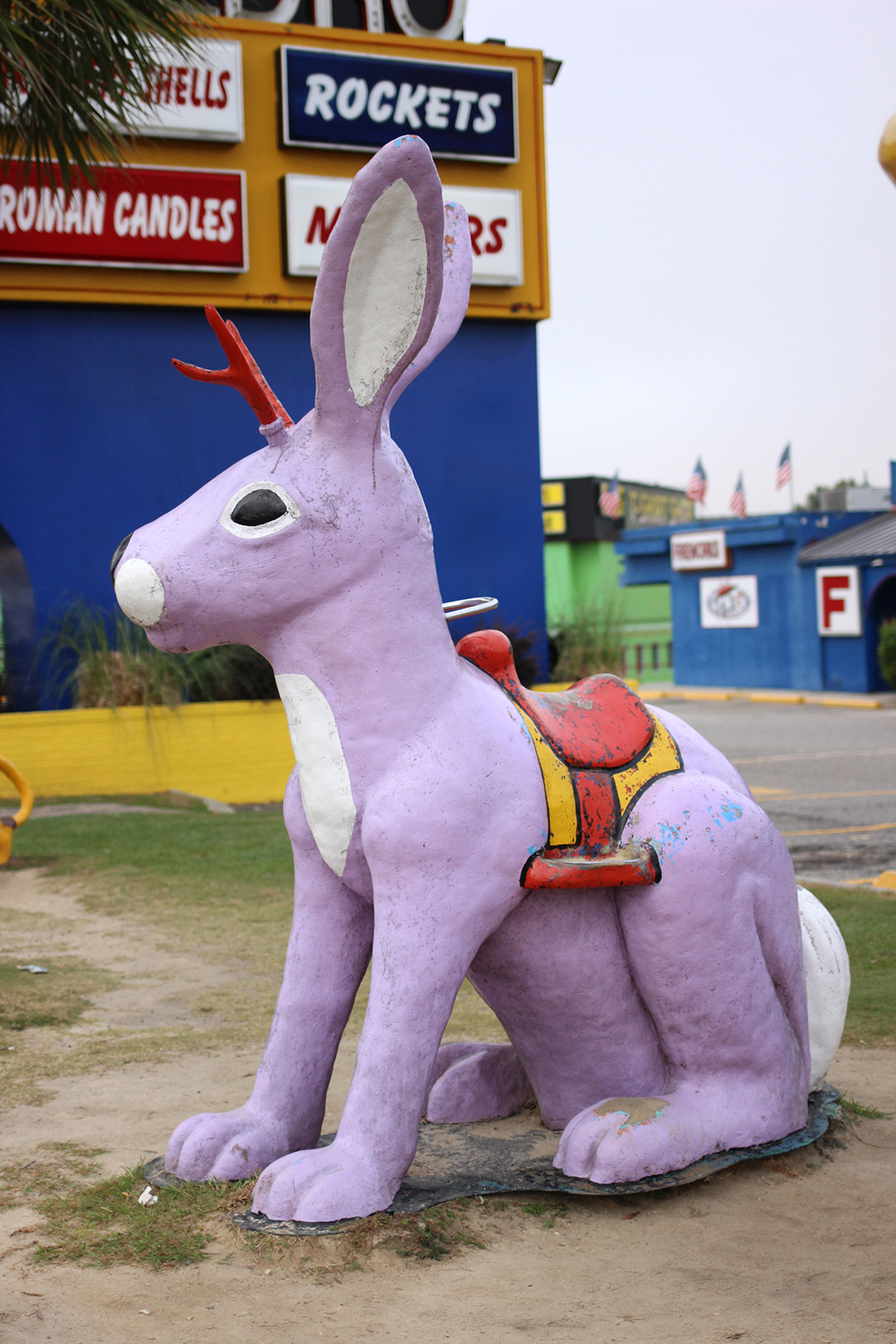

It might seem ridiculous to consider seeing South of the Border as my greatest accomplishment of 2017—a year in which I also hiked the Inca Trail, deliriously sick for half of it, nonetheless. But it's less about the destination and more about having the conviction, about having a plan and following through, about recognizing what is right for your own specific life, about finding things that make you happy and about really doing them, about taking control and not being sidetracked by outside input.


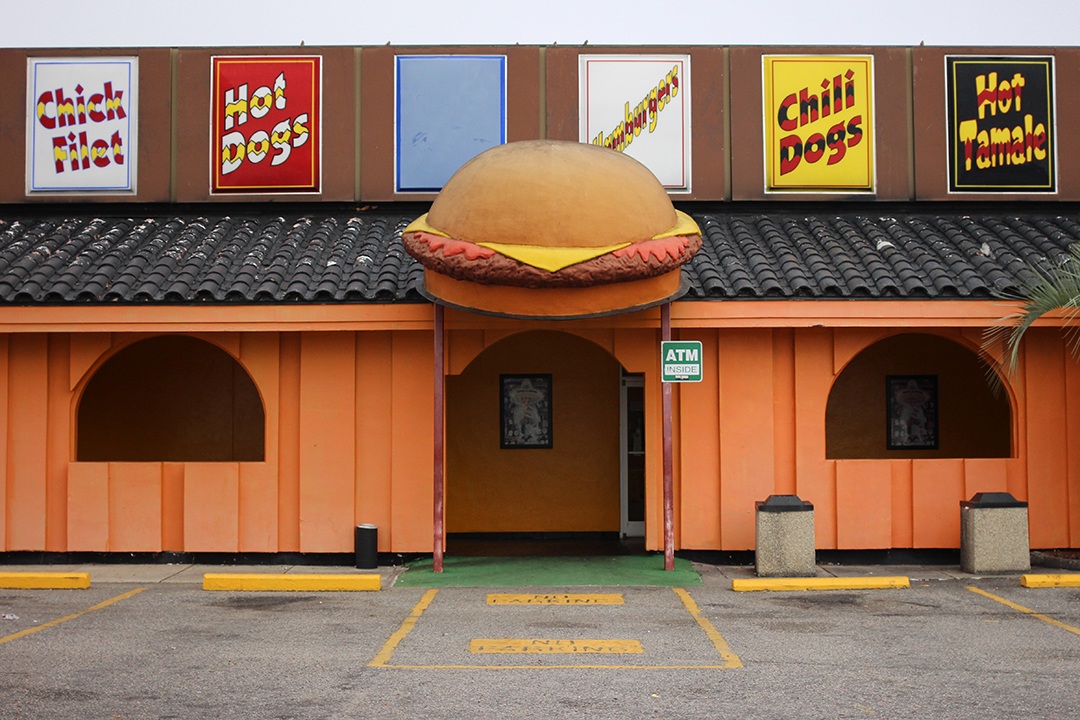


There was a large portion of my life where I didn't feel in control of much. I wasn't happy with where I lived and much of my day-to-day life revolved around others peoples' schedules and feelings. It's an easy trap to fall into—gradually, and then all at once—but it can seem impossible to take the reigns again once you feel you've lost them. Of course life is full of moments and circumstances that are out of our control, but having a firm idea of what you want out of the controllable variables can make those unavoidable bumps much less scary.


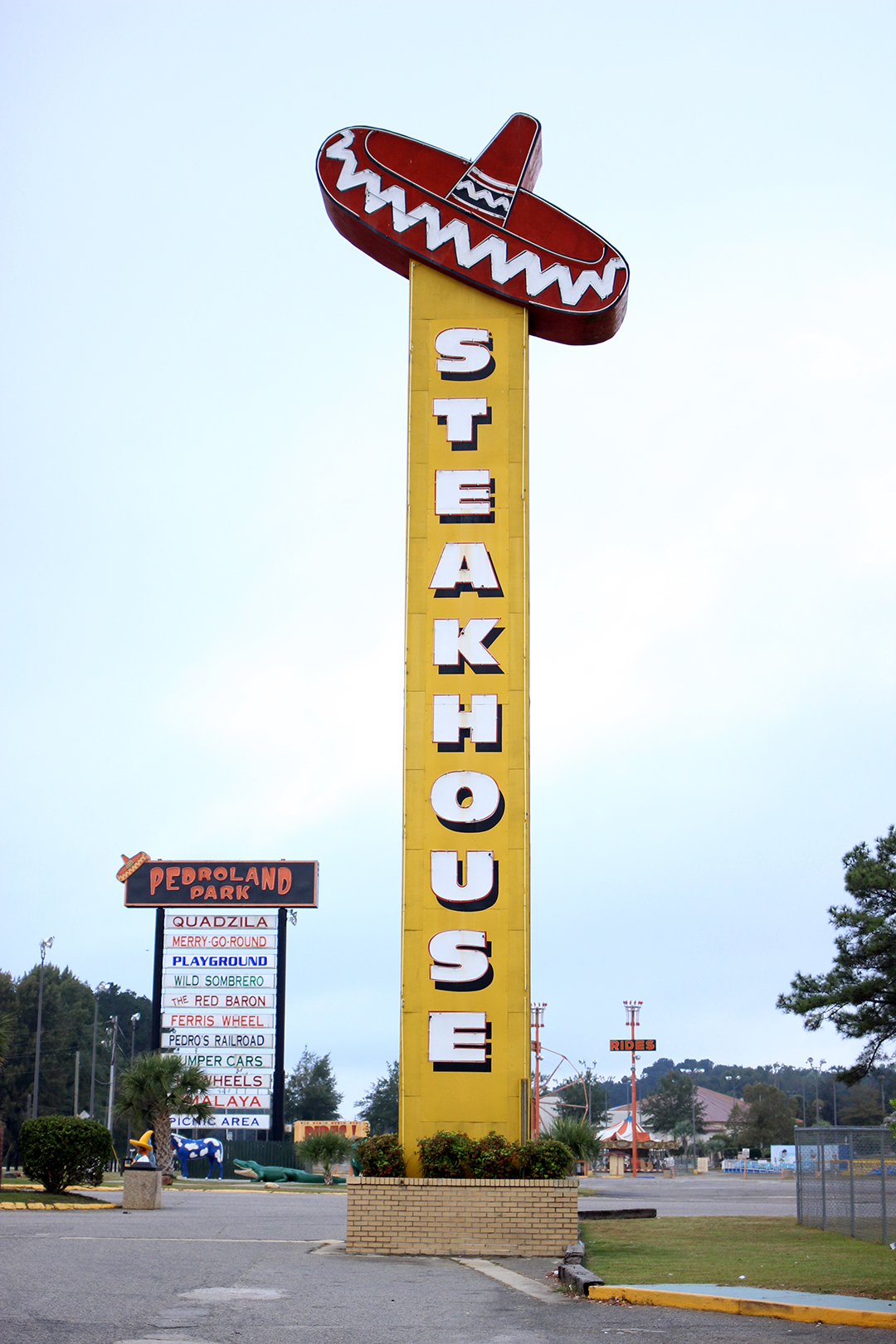

We stayed overnight in the motel and our room was clean and much bigger than I expected. In the morning, it was foggy and deserted which gave the entire place a sort of post-apocalyptic feel (that I loved). We had breakfast in the Sombrero Room (again, not to be confused with the steakhouse housed in an actual sombrero-shaped building) and wandered around trying to soak in all of its brightly-colored kitsch. South of the Border has definitely seen better days (to be fair, we were also there in October) but everything looked freshly painted and well-loved.


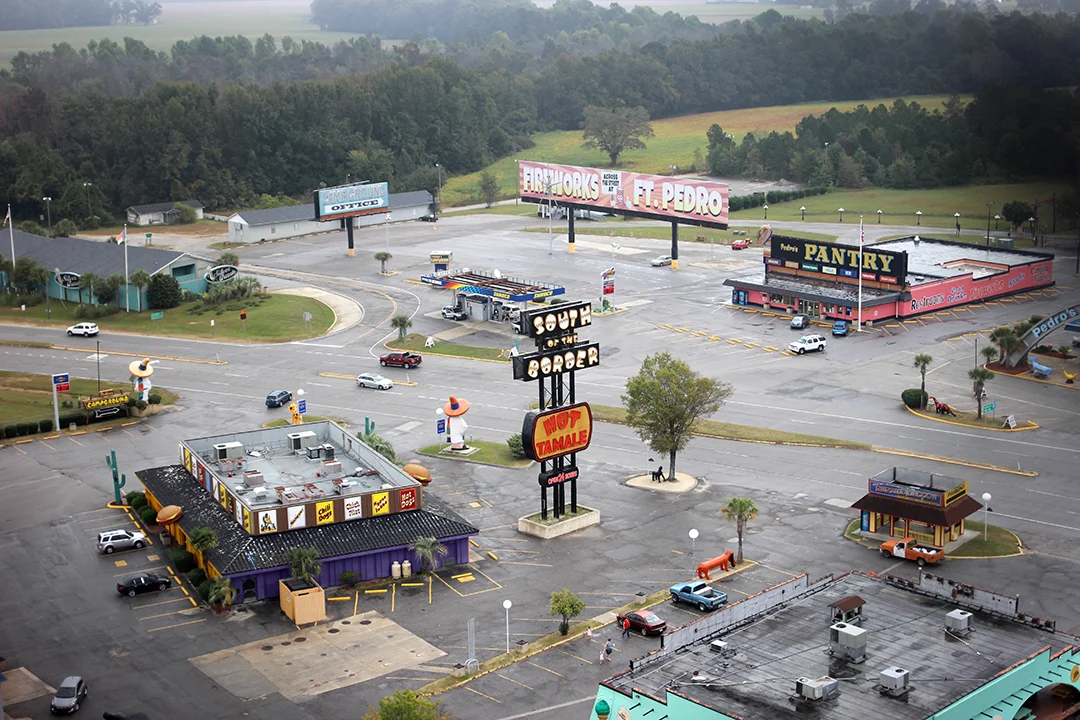


We were just about to leave when my mom suggested that we wait a few minutes until 10 am, when the (also sombrero-shaped) observation tower opened. I was concerned about our time frame for the day, and cautious about running out of daylight but in the end she was totally right. We'd driven too far to leave without seeing everything that South of the Border had to offer. Also, admission was only $2/person and we ended up having the observation deck all to ourselves, so always listen to your mom!
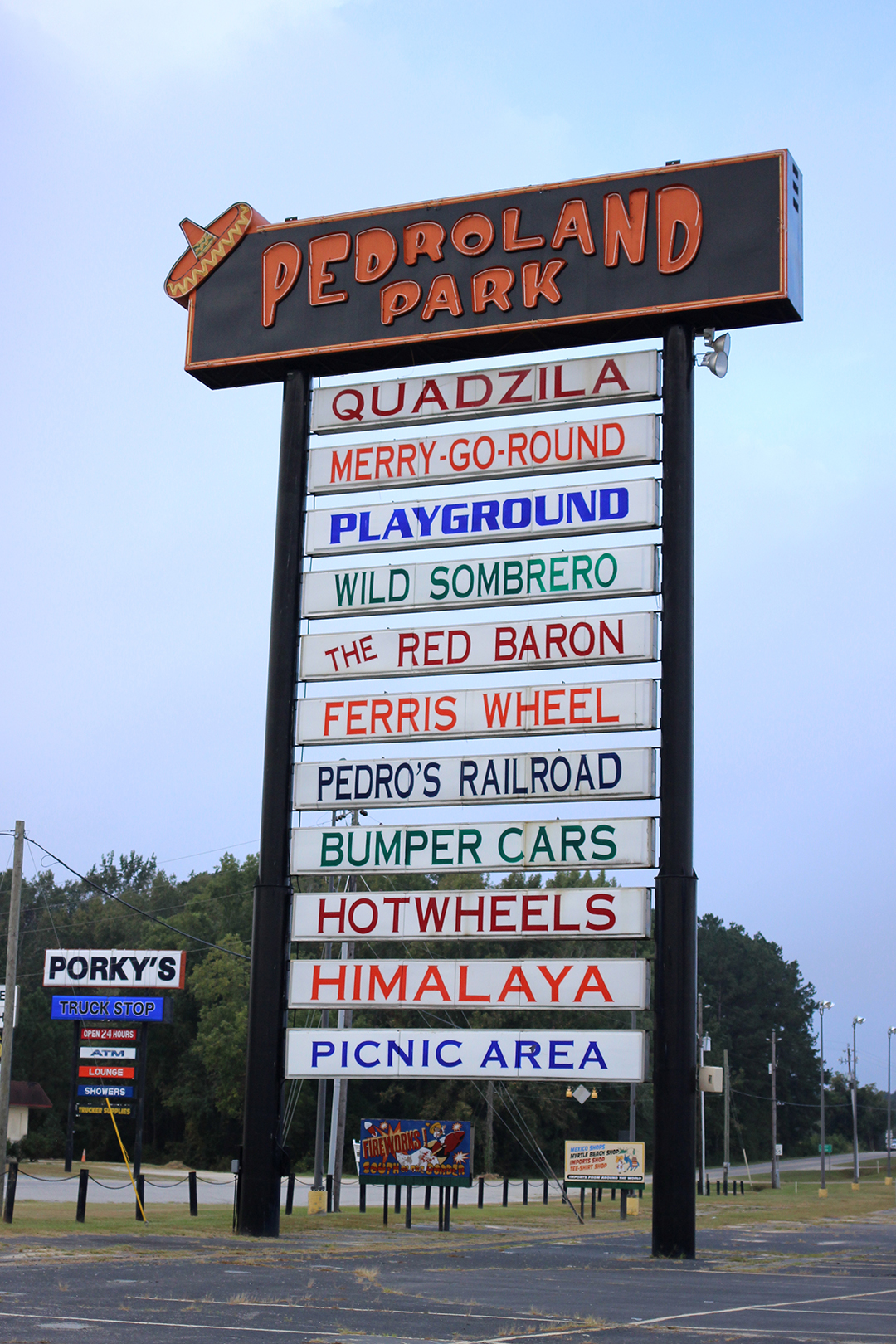


South of the Border might be a silly, outdated, culturally insensitive roadside attraction—useful to most people only for the bathrooms—but it will always mean more to me than anyone could know. This trip marked a sneaky turning point in my life—it wasn't the first road trip I planned, and it won't be the last, but it was the one that made me realize that my life truly is mine.
Salvation Mountain

I just got back from my second-ever trip to California, and while I'm still perplexed that anyone would willingly live in LA, I was completely charmed by the desert. We pretty much left LA as soon as I arrived—which I think is the best way to "visit" LA—and took a four-day road trip into southeastern California. I was very intrigued by the Salton Sea, but unfortunately a few of the spots I had wanted to stop at were kind of a bust.


We took a brief loop around Bombay Beach, but were put off by the fact that despite looking abandoned, it's very much still a town inhabited by real people, most of whom looked like they weren't too keen on welcoming sightseers. The International Banana Museum was closed (due to an unexpected death) but luckily, the Salton Sea was on our way to Salvation Mountain, a must-see on my itinerary.


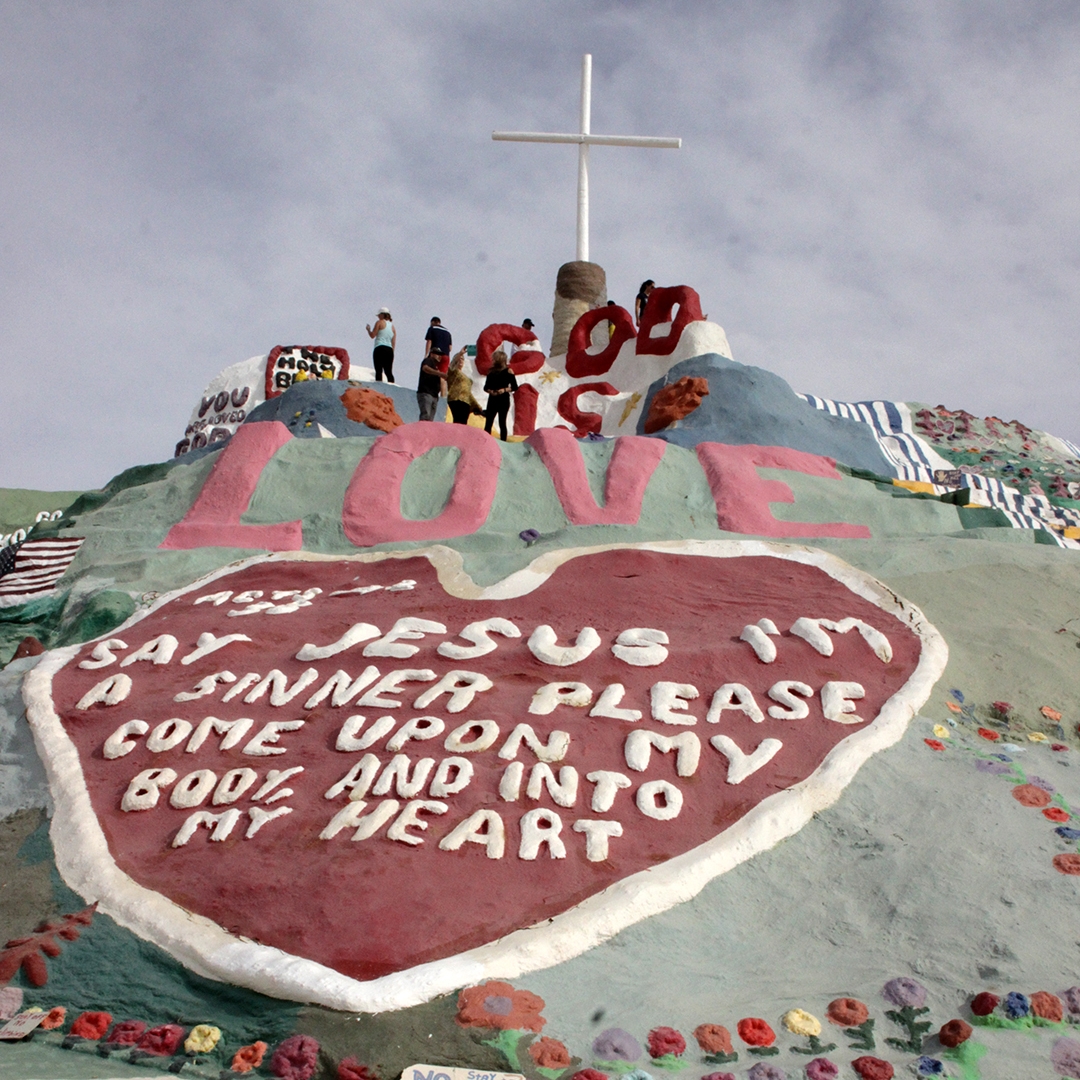
Located in Niland, California, about an hour-and-a-half south of Palm Springs, Salvation Mountain is a large-scale art installation by self-taught artist Leonard Knight. Salvation Mountain isn't a real mountain, but is constructed of hay bales covered in brightly painted stucco. It's fragile and sun-bleached and despite being Instagram-famous, it's definitely something that needs to be seen and experienced in person.


Knight arrived in Slab City in 1984, a neighboring community of off-the-grid nomads, and was compelled to create Salvation Mountain as an expression of his religious faith over the years from found materials. Knight didn't own the land, and built the mountain without permission from the state. He died in 2014 at the age of 82, and the site is currently maintained by a nonprofit group, although the land is still technically owned by the state.


I'm not at all religious, but I do appreciate people with passion and creativity, and Leonard Knight clearly had both qualities in spades. There's something about the desert that seems to attract people with singular visions to just create, and although we saw a few other installations by similarly moved men, Salvation Mountain is the most ambitious (and impressive) of them all.


Salvation Mountain's popularity has only grown exponentially since Knight's death, and in the last year-and-a-half the number of visitors to the site has doubled. The tour buses and crowds pose a threat to the already-fragile structure—one you're encouraged to climb on, within reason—and the extreme desert climate imposes additional maintenance issues. I definitely recommend visiting in the winter, when temperatures are in the '70s and please, please be respectful of the work, stay on the yellow brick road and for the love of Jesus if you must take a selfie, make it quick.
Salvation Mountain
Beal Road,
Niland CA, 92257
Open 6:30am-7pm daily
World's Largest
I've seen a few things claiming to be the "World's Largest _____" in the past few years—pistachio, teapot, cuckoo clock, orange, miniature circus— and the World's Third Largest garden gnome, but on our recent road trip we added several hyperbolic items to that list. I'm wary of anything claiming a "world's -est" title, but even if none of these things are actually record-holders in an official Guinness Book sense, they're still larger than they should be and make for interesting road trip stops.
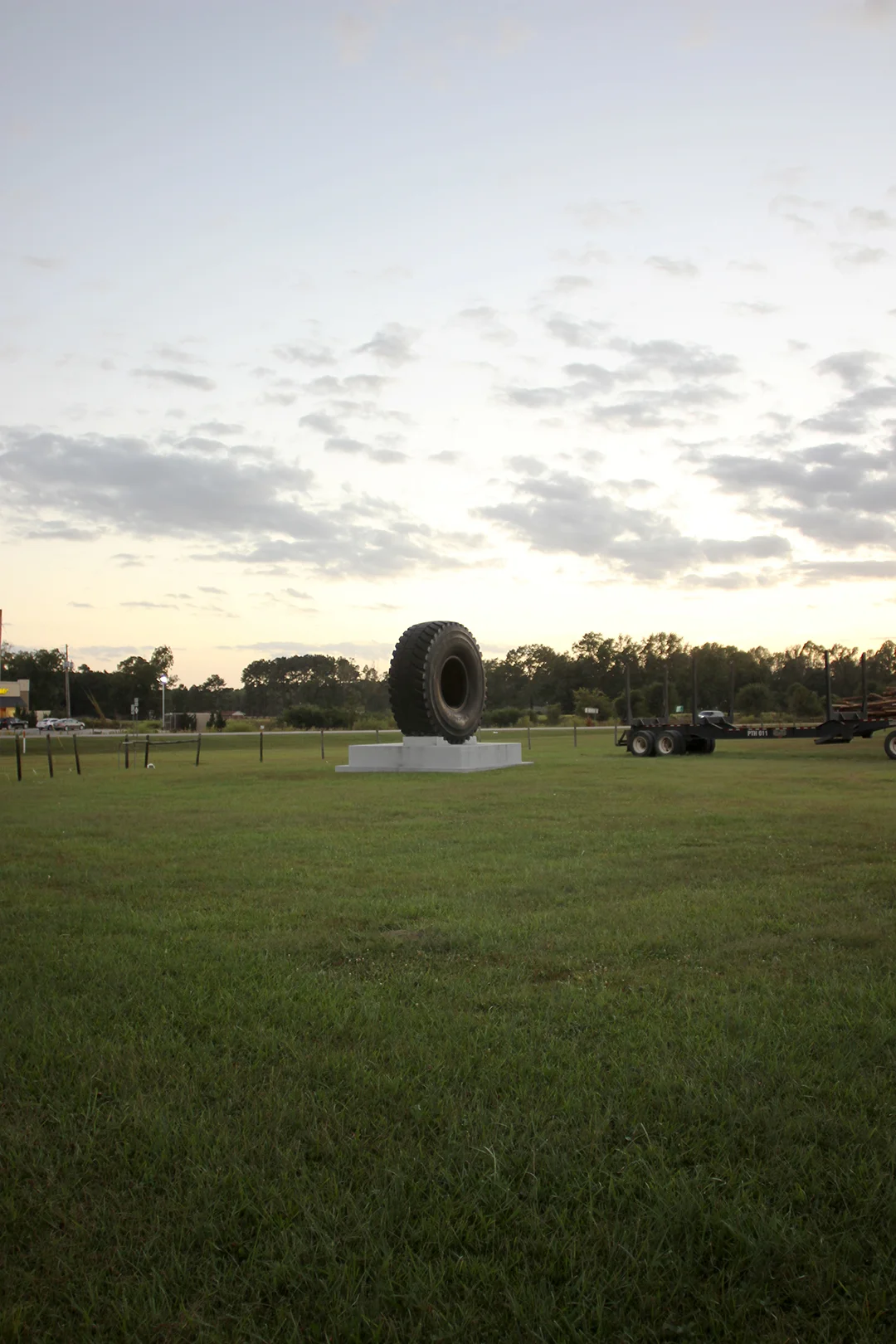

The World's Largest Real Tire
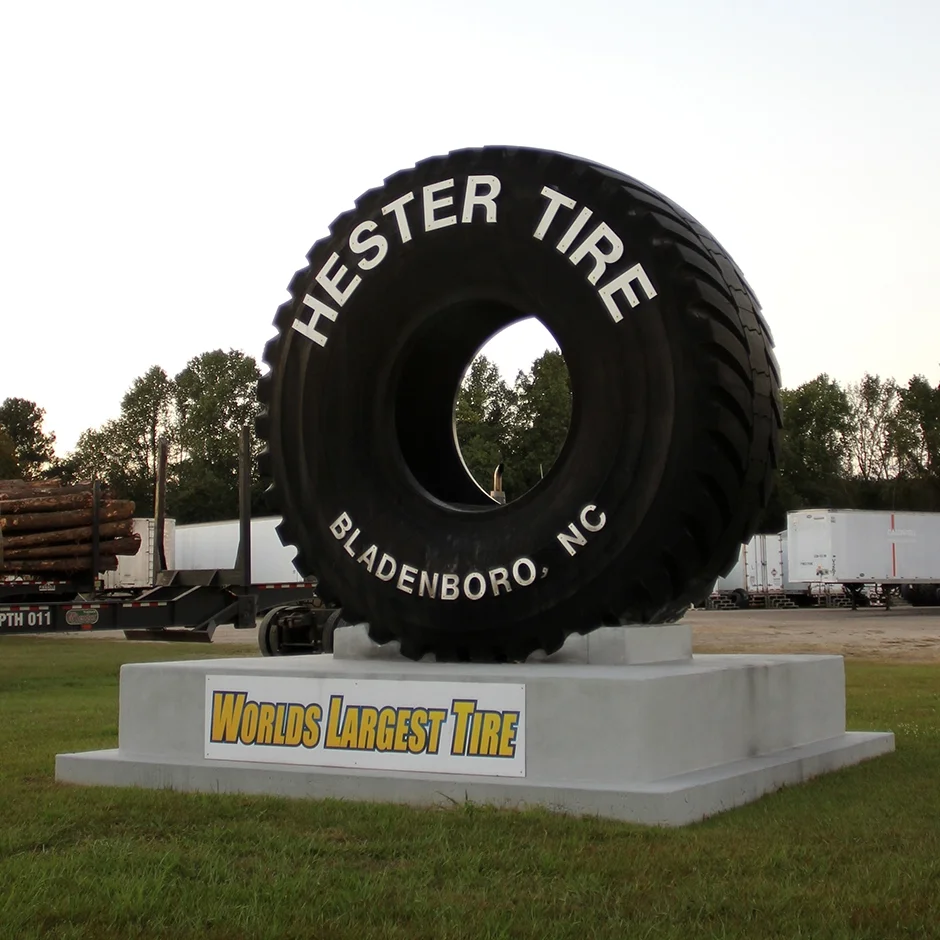
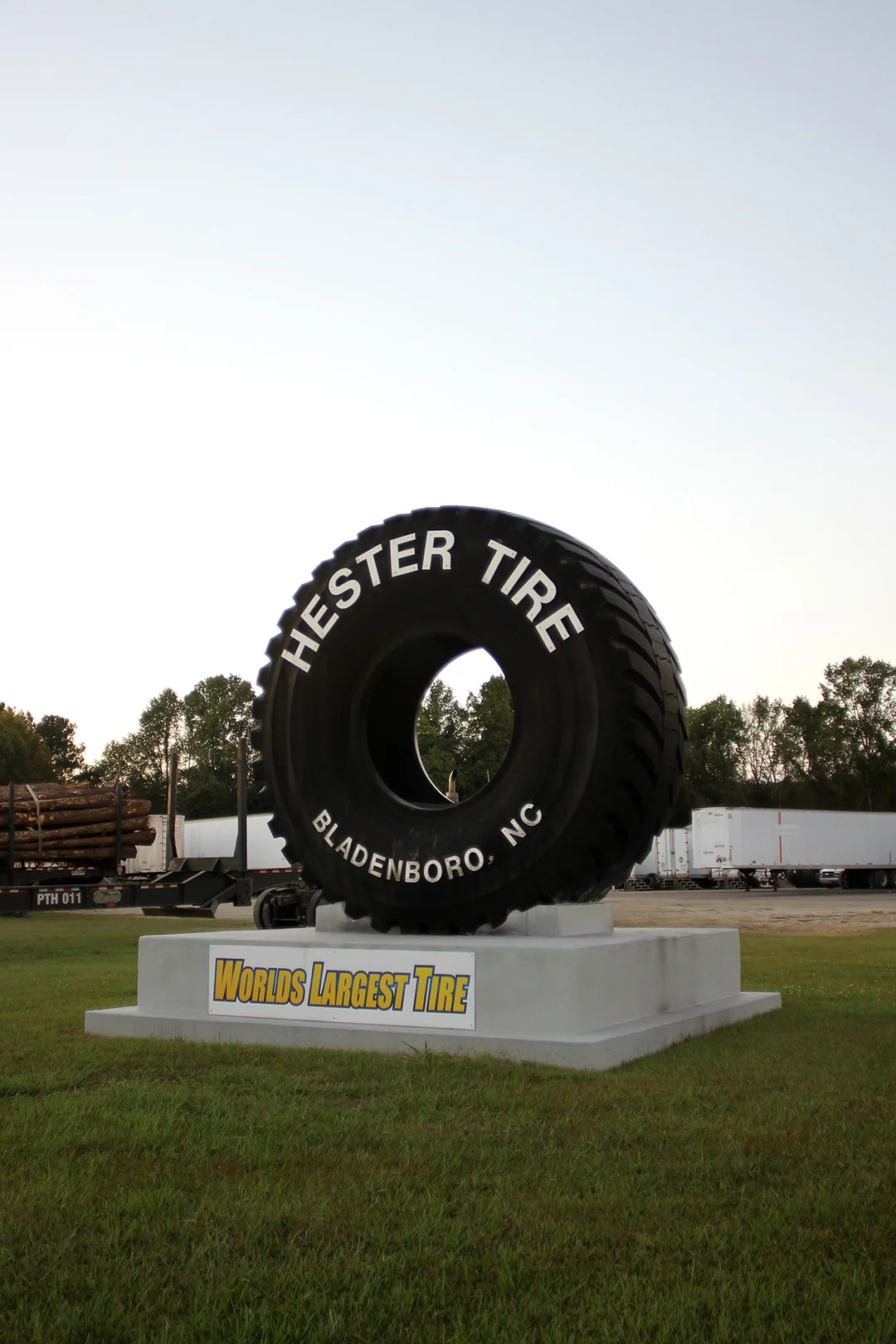
This particular largest thing comes with a qualifier (as a lot of them do) that it's the world's largest permanently displayed real tire. The giant tire sits outside of Hester Tire in Blandenboro, North Carolina, and fits the world's largest dump truck, according to its owner, Reynold Hester. It is 14 feet high, 5.5 feet wide and weighs 10,400 pounds. This one seems pretty legit, and in fact the only tire that is actually larger is the Uniroyal Giant Tire, which isn't a real tire at all but a Ferris wheel designed for the 1964-65 New York World's Fair. It's currently displayed off of a highway in Michigan and hopefully it'll be the next big tire that I get to cross off my list.

The World's Largest Beer Stein
I happened across this while browsing one of South of the Border's several gift shops, and I can't find much information as to its authenticity. I did, however find this company selling what they claim to be the world's largest stein for $6,205—they look very similar, but the one at South of the Border can be yours for the low price of $3,500. I don't care much about beer steins, but I love its wooden display case and the hand-painted script lettering.


The World's Largest Strawberry
This should probably be called the world's largest strawberry-shaped building. The world record for largest real strawberry was broken in 2015 (ew) and the world's largest sculptural strawberry is located, fittingly, in Strawberry Point, Iowa. The Berry Patch in Ellerbe, North Carolina is a small strawberry farm, and the strawberry-shaped ice cream stand is 24-feet-tall and took five months to complete. In 2011, the construction of a new highway forced the owners of the Berry Patch to load the strawberry onto a truck and drive it to its current location. We used their bathroom (which was a single restroom with, confusingly, two toilets) but ultimately found their selection of strawberry-themed items a bit disappointing for a place that has the domain name worldslargeststrawberry.com.


The World's Largest Bureau / Chest of Drawers
High Point, North Carolina, aka the "Home Furnishings Capital of the World," has not one, but two large chests of drawers. I had to make a Sophie's Choice and pick just one, and the one above was closer to our route (mom included for scale). In the 1920s, the original chest of drawers was built by the Chamber of Commerce. In 1996 it was renovated and turned into a 38-foot tall Goddard-Townsend block front chest. Two socks are stuck hanging out of the middle drawer, although they were partially covered when we visited by a sign proclaiming that the chest of drawers is ... for sale! For just $249,000 you can get three lots, including the chest, but the "have demo quote, can handle if needed" makes me nervous for the fate of this roadside gem.


The World's Largest Operational Frying Pan
Like the big tire, this is the world's largest operational frying pan—there are at least five other frying pans in the US vying for the title of largest, including largest nonstick frying pan. This one, located in Rose Hill, North Carolina (I just realized that all of these, with the exception of the beer stein, are in North Carolina) weighs two tons, has a circumference of 45 feet and a six-foot handle. It holds 200 gallons of cooking oil, sits on 40 gas burners and has a capacity of 365 chickens. It was built in 1963 by the Ramsey Feed Company and is used during the North Carolina poultry jubilee as well as community fundraising events. It's so large that it's actually constructed of several separate wedges, and it's covered when not in use—without the signage (including light pole banners all over town) I might have never guessed that the tarp was concealing a world-record holder.
Main Street of Yesteryear

I mentioned in the post about Dinosaur Land that we had a few rainy days on our recent road trip. We stayed the third night in Virginia, just west of the Shenandoah National Park. While scrambling to find indoor destinations, I found a museum of parade floats that looked just strange enough to add to our list, and it wasn't too far off our route.
The museum is part of Shenandoah Caverns, and we arrived before the parade float museum was supposed to open, so we had some time to kill in the gift shop. Luckily, in addition to the gift shop, there's an exhibit of antique department store window displays from the 40s and 50s occupying the entire second floor.


The former owner of Shenandoah Caverns, Earl Hargrove, Jr., also owned a decorating corporation that has, beginning with President Truman in 1949, decorated for every Presidential Inaugural since. The parade float museum includes floats from Inaugurals, the Tournament of Roses and other celebrations, but he was also a collector of holiday window displays, which are displayed in an exhibit called Main Street of Yesteryear.


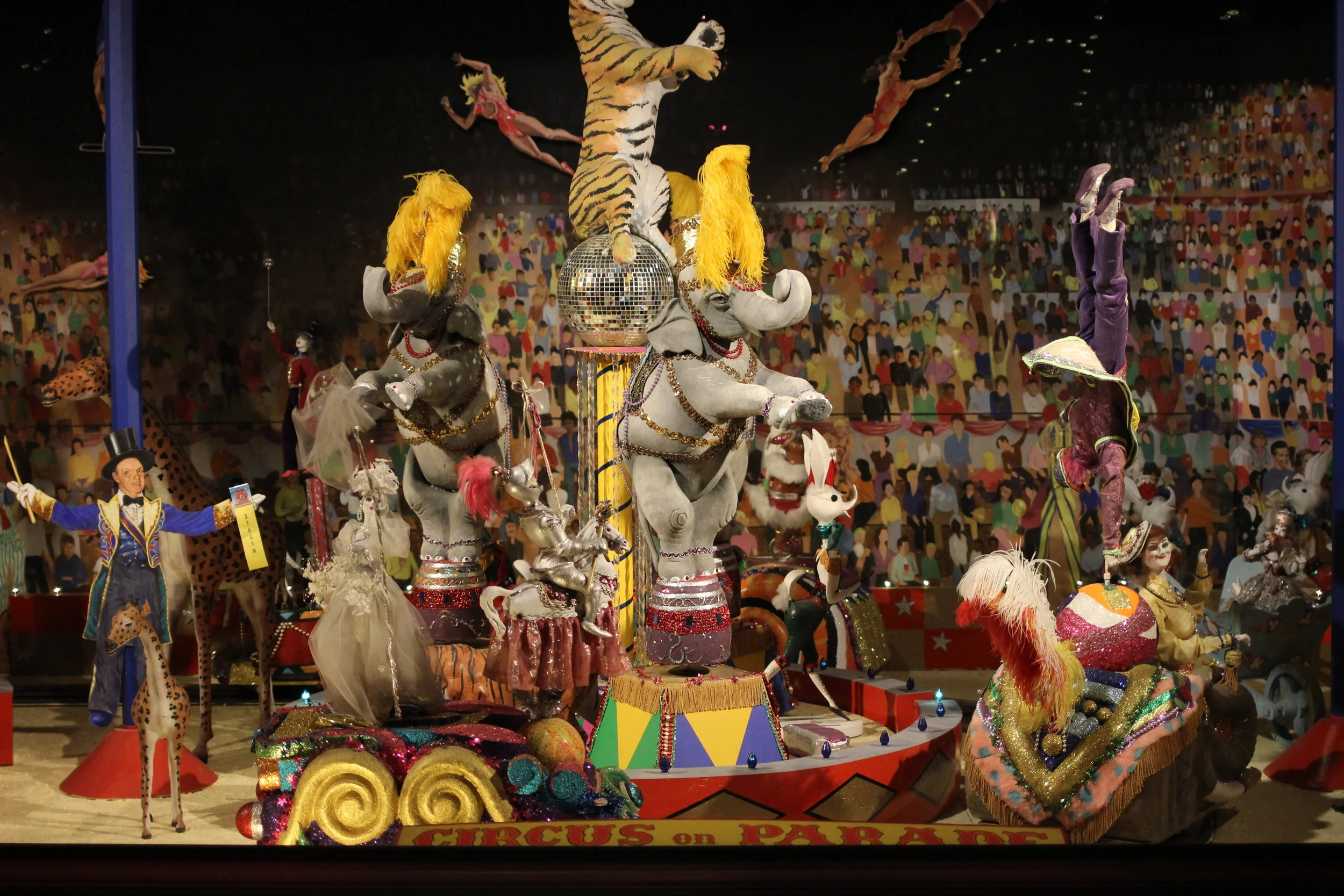
The displays vary widely in style and theme, but they all animate in some way (triggered by sensors on the floor). One of the displays (for Easter, I think) featured a talent show, with an organ-grinding poodle, a raccoon balancing a disco ball on his nose, creepy swinging bunnies and a judge that looks like he would be right at home in Halloweentown.

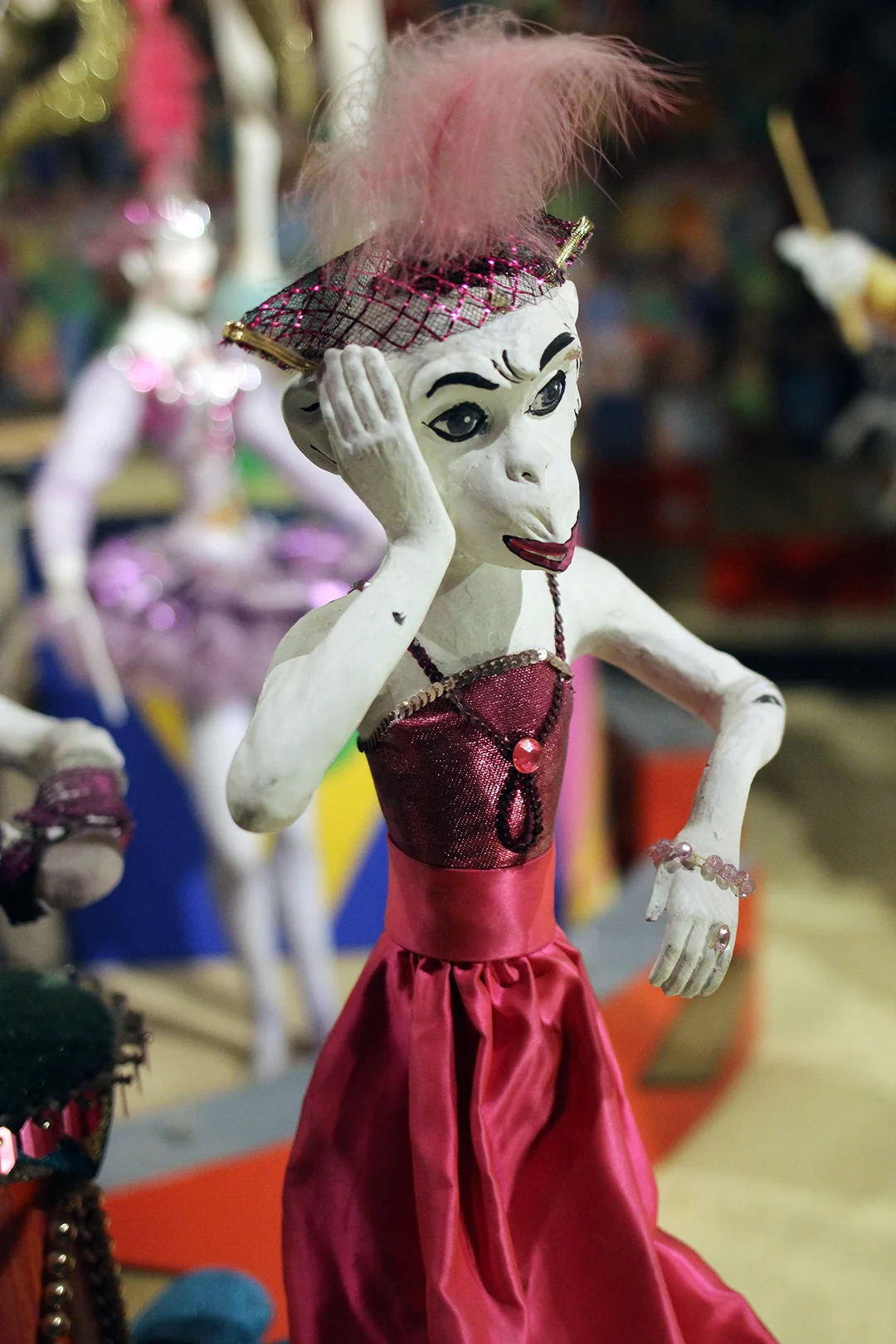


My favorite display was Circus on Parade, the oldest in the exhibit. The handcrafted figures have such wonderful detail and are still vibrant and beautiful after all of these years. Holiday window displays are always one of my favorite parts about this time of year in the city, and I'm so glad that someone like Earl Hargrove Jr. was passionate enough to save these works of art. It turns out that the parade float museum was closed for the season (never trust Google hours), but Main Street of Yesteryear (and the squished penny I got in the gift shop) was definitely worth the stop.
Shenandoah Caverns
261 Caverns Road,
Quicksburg, VA 22847
Main Street of Yesteryear is free, and can be viewed without caverns admission
March 15-June 15: 9 AM-5 PM
June 16-Labor Day: 9 AM-6 PM
Labor Day-Oct 31: 9 AM-5 PM
Nov 1-March 15: 9 AM-4 PM
Muffler Man: Homer

The third day of our recent road trip was a long one. It was getting dark and our route was taking us through some pretty scary, winding mountain roads in western Virginia. There were a few more stops on my list, but I especially hate driving in the dark so I had to make a Sophie's Choice and decide which of the three remaining spots was worth a stop. It's probably not surprising that I chose a Muffler Man, and Homer became our last stop of the day—and the last official Muffler Man of the trip.


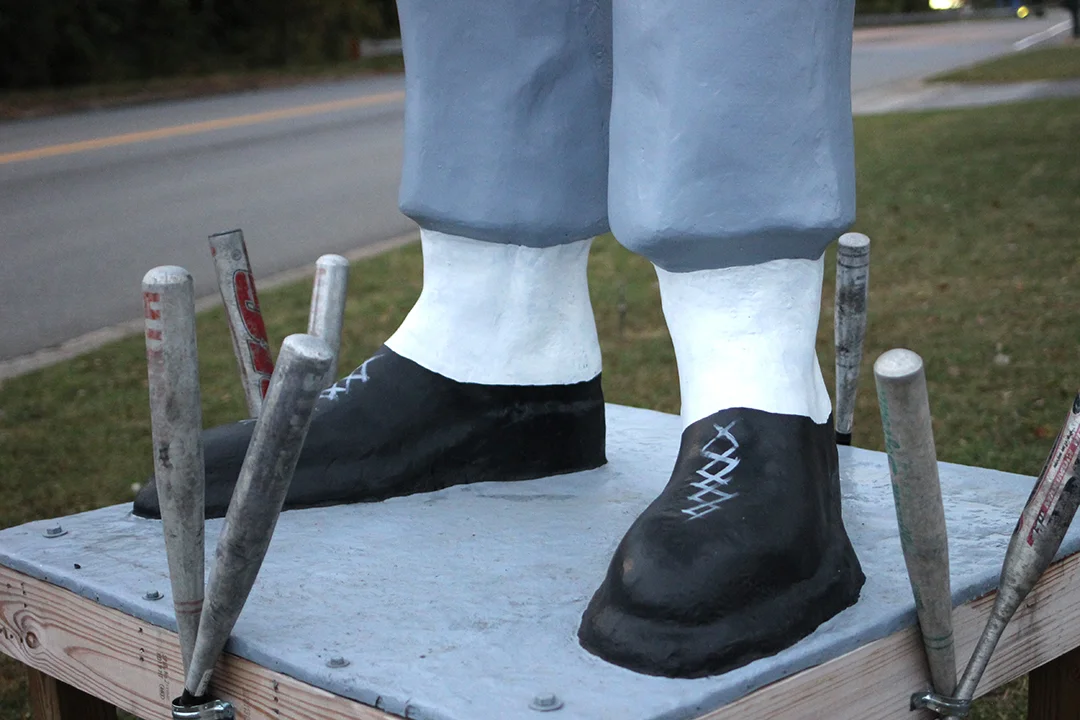
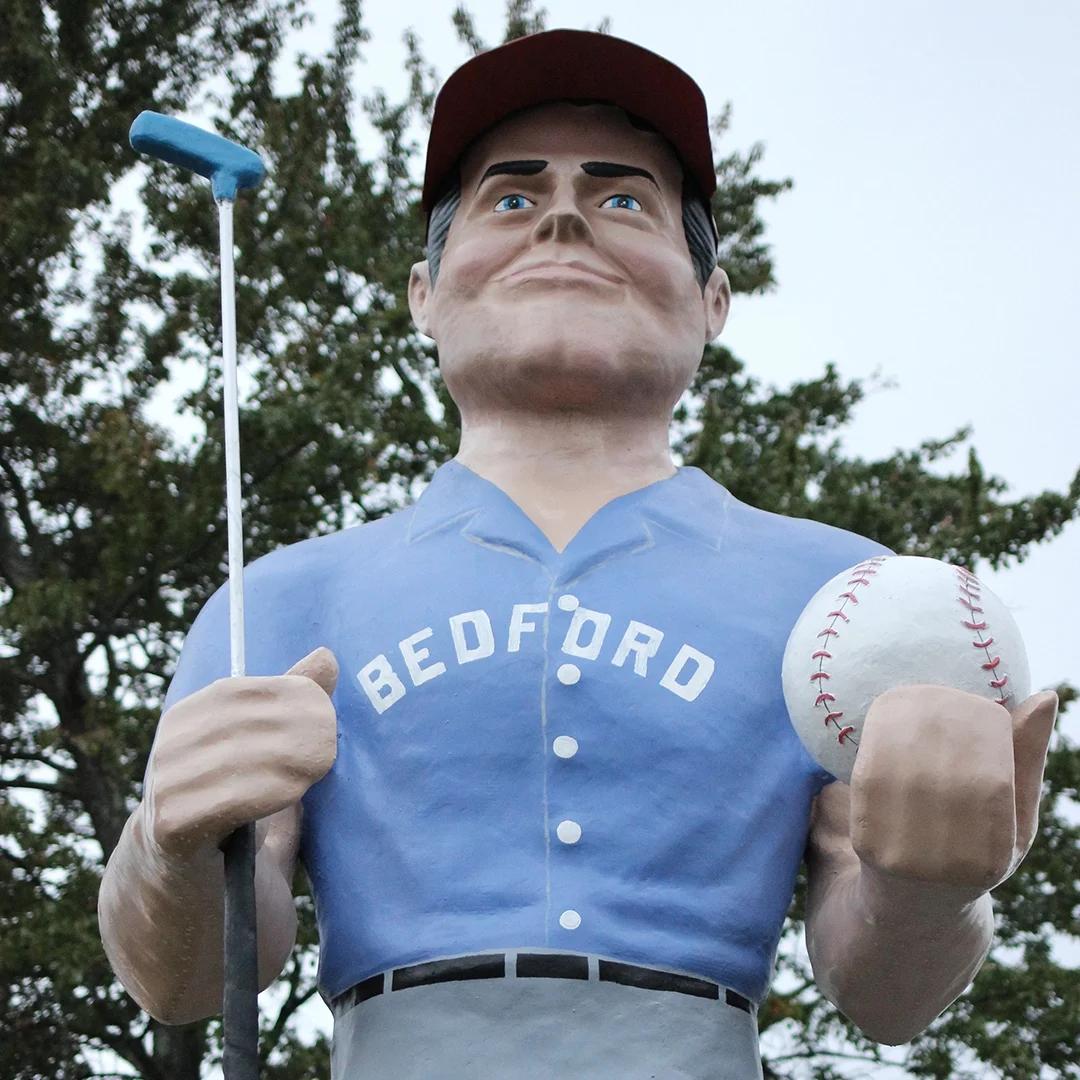
Homer resides in Bedford, Virginia, outside of the Bedford Mini Golf & Batting Zone. It was closed by the time we arrived—their sign said "open when dry and 50 degrees or by appt"—but luckily Homer is right out front and easily accessible. Bedford Mini Golf held a contest to name their Muffler Man, and Homer—a baseball reference, I assume—was the winner.


Homer was made by a local artist, Mark Cline, and he stands 14-feet tall. He has a baseball in one hand, a golf club in the other and stands on a base surrounded by tiny baseball bats. He's wearing a baseball hat, of course, and a Bedford button-up shirt. His socks and shoes are a little strange—is he supposed to be in a full baseball uniform?—but overall the paint job looks fresh. This was the first sports-themed Muffler Man that I've seen, but I feel like it's the perfect place for one of these manly giants.
Bedford Mini Golf & Batting Zone
958 Burks Hill Road
Bedford, VA 24523
Easily accessible even when closed

Dinosaur Land

We were lucky to have really lovely weather for the first two days of our recent road trip, but the last two days were grey and intermittently rainy. I had planned most of our stops in advance, knowing that we might not be able to hit them all and I tried to account for the possibility of unplanned stops. On the fourth day, we drove through some heavy, steady rain and I scrambled to find indoor things for us to do. I decided to swap the outdoor Dinosaur Land with an indoor parade float museum, but we arrived at Shenandoah caverns only to discover that the museum had already closed for the season (thanks for nothing, Google hours!). It was still raining, but I decided that we should at least give Dinosaur Land a chance, and it ended up being one of my very favorite stops of the entire trip (I will probably say that about every stop, but this one is in the top five for sure).


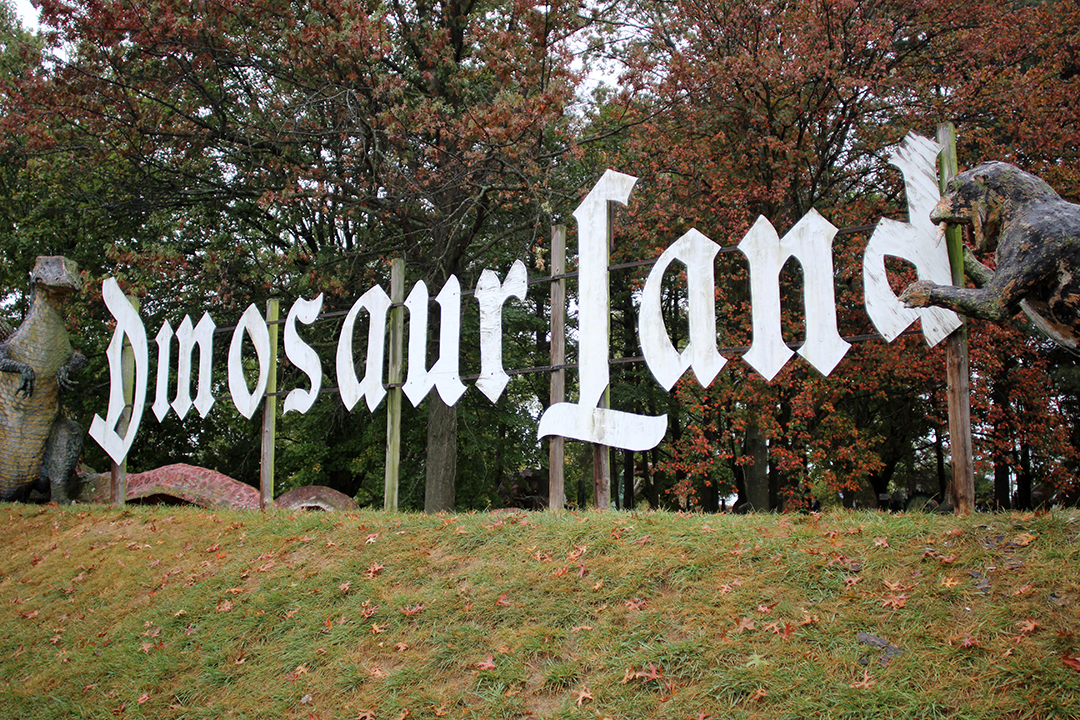
Dinosaur Land, located near Winchester, Virginia has been in operation (and in the same family) since the early '60s. It's not my first dinosaur park—we went to Dinosaur World in Cave City, KY—but I can't imagine there being a better one still in existence. Most everything about Dinosaur World feels stuck in the '60s, and that is the very best compliment I can pay to any roadside attraction.


It was still raining when we arrived, but the "prehistoric forest" offered some protection, and the pine needle-lined paths were far less soggy than I expected. Unfortunately we weren't the only visitors, but as much as I firmly believe that other people's children ruin everything, I'm always happy to see attractions like this making money.


Dinosaur Land feels as if it might be in someone's backyard, and I'm fairly certain that at least some of the family lives behind the gift shop. The experience is low-tech and self-guided—my favorite kind—and the artistry that went into the dinosaurs, hand painted signs and other creatures is apparent. It's clear that dinosaurs have been added throughout the years, and it's fascinating to watch how styles and features evolve over time.


Dinosaur Land has four T-Rexes, and none of them look remotely similar to one another—I overheard a little boy telling his dad while looking at the oldest one, "that doesn't look anything like a T-Rex." Although we'll probably never know which one is the most accurate, the oldest ones are definitely my favorite. You can spot them quite easily—they're textured like the walls of an Olive Garden—and I can't help but laugh when looking at their goofy expressions.


When Joseph Geraci started Dinosaur Land next to his already existing gift shop, he borrowed heavily from other parks—his sign is a nearly exact copy of the Disneyland sign, and the large mouth entrance is a nod to Gatorland. The gift shop alone is worth a stop, and it's filled with dusty souvenirs that feel as if they haven't been updated (or sold) since the park first opened.


I was slightly more restrained than I was at South of the Border, but I did leave with a mug, t-shirt, two squished pennies, several postcards and a program book that was legitimately printed in the '70s—the cashier said they had five boxes in the back and "when they're gone, they're gone."
Dinosaur Land
3848 Stonewall Jackson Highway
White Post, VA 22663
March 1st – Memorial Day: 9:30 a.m. – 5:30 p.m.
Memorial Day – Labor Day: 9:30 a.m. – 6:00 p.m.
Labor Day – December 31st: 9:30 a.m. – 5:00 p.m.
October 1st – December 31st: Closed on Thursdays
South of the Border: Night

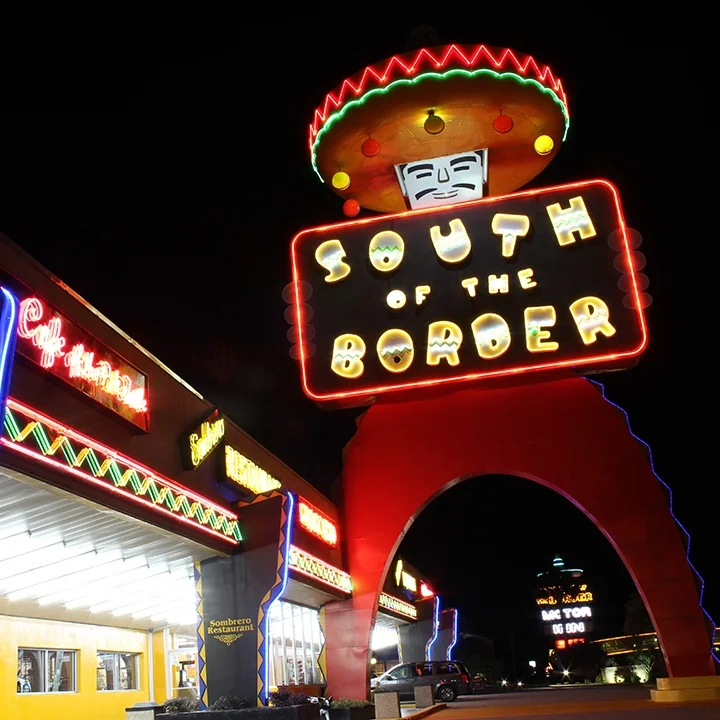
Back in June, when I was laying on the ground in a tent, dying of an undetermined illness two days into a four-day hike of the Inca Trail, all I could think of was South of the Border. Not actual Mexico, but the Mexican-themed roadside attraction just south of the North Carolina/South Carolina border in Dillon, South Carolina. That might seem like an odd thing to be thinking about after I just emptied my stomach and my bowels into a hole in the ground most generously referred to as a "toilet." But! I had been wanting to go to South of the Border for a while and despite the fact that I hadn't been able to find anyone willing to go with me, I vowed that I would make it there somehow before the end of 2017.
Our Peru/Colombia trip was 14 days, and was wonderful for a lot of reasons—and kind of awful for a few other reasons—but after I got back I knew that I was going to put a pause on international travel for a while and concentrate on the US destinations that I had been longing to see. South of the Border had ascended to the top of that list after I knocked off a few others—a Wigwam Motel, Lucy the Elephant, The Big Duck—and when my friend Jim went in May I was literally seething with jealousy (in a nice way, especially after he sent me the kindest souvenir package to hold me over until I could visit on my own).


Soon after returning to the states, I was having breakfast with my mom when I mentioned that wherever the rest of the year took me, I was going to make sure to get to South of the Border—even if I had to go alone. She immediately said, "I'll go with you!" followed by "What's that?" Once I explained, she was thankfully still on board and we decided to go in the beginning of October. Our road trip spanned four days—with us arriving and staying at South of the Border on the second night—and took us through nine states. We made around 30 stops and I hate to pick favorites but of course South of the Border was the standout.


We arrived after dark, and I had booked a room so that we could see it both at night, and during the day. Although both views have their charms, South of the Border really shines at night (literally) and I brought my tripod along in hopes that I would be able to capture at least a tiny bit of its neon magic. We were there in the off-season, so it was nearly deserted—just as I'd hoped. We ate dinner at the Sombrero Restaurant (confusingly not housed in the building shaped like a sombrero, which is a steakhouse) and our waitress was straight out of Central Casting (Hi Betsey!). The salad bar, however, is shaped like a sombrero, and we shared a BLT (meh) and jalapeño poppers (always a good decision).


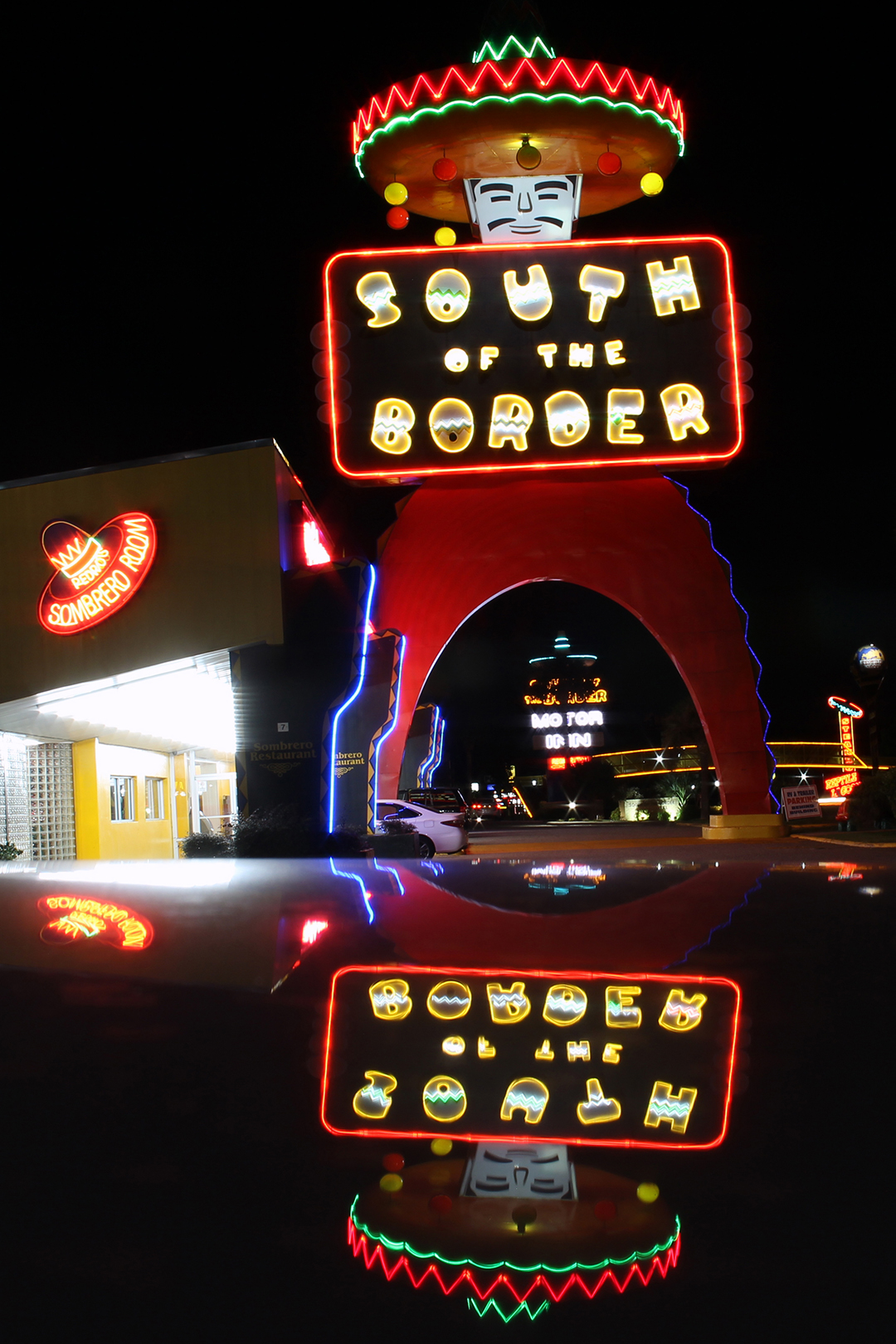
After dinner, we went into one of the several gift shops where I very quickly spent nearly $100 on entirely essential souvenirs—floaty pens, flip flops, a t-shirt, an ashtray, a notebook, magnets, coasters, a mug, a cup and a Christmas ornament—and then ventured out with my camera. Because it was late and nearly empty, I was able to really take my time and try my best to capture the bright neons that have been beckoning motorists to pull over since 1950.
Muffler Man: White's Tire

For this edition of Muffler Man Monday, you get two for the price of one! When my mom agreed to take this road trip with me, she knew that our main destination was South of the Border, but she asked that I keep all of the other stops a surprise. I personally hate surprises but I do love being in control, so it was really fun to be able to experience her anticipation without any of the anxiety of not knowing where we were headed. After seeing a few Muffler Men, that became her first guess for every stop, but even when she was right, she was always surprised by the different types (and to be honest, after planning so many stops, so was I).
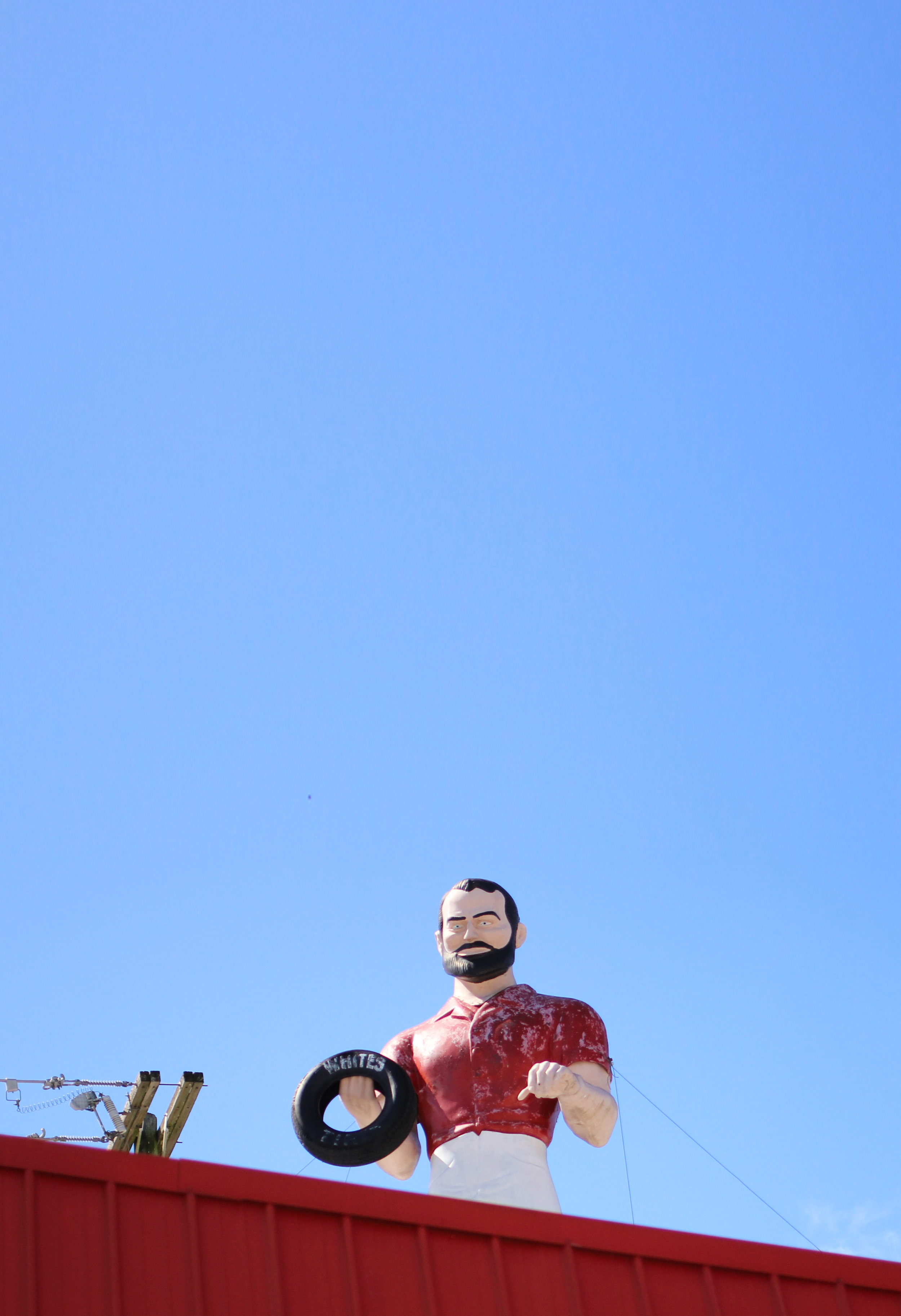

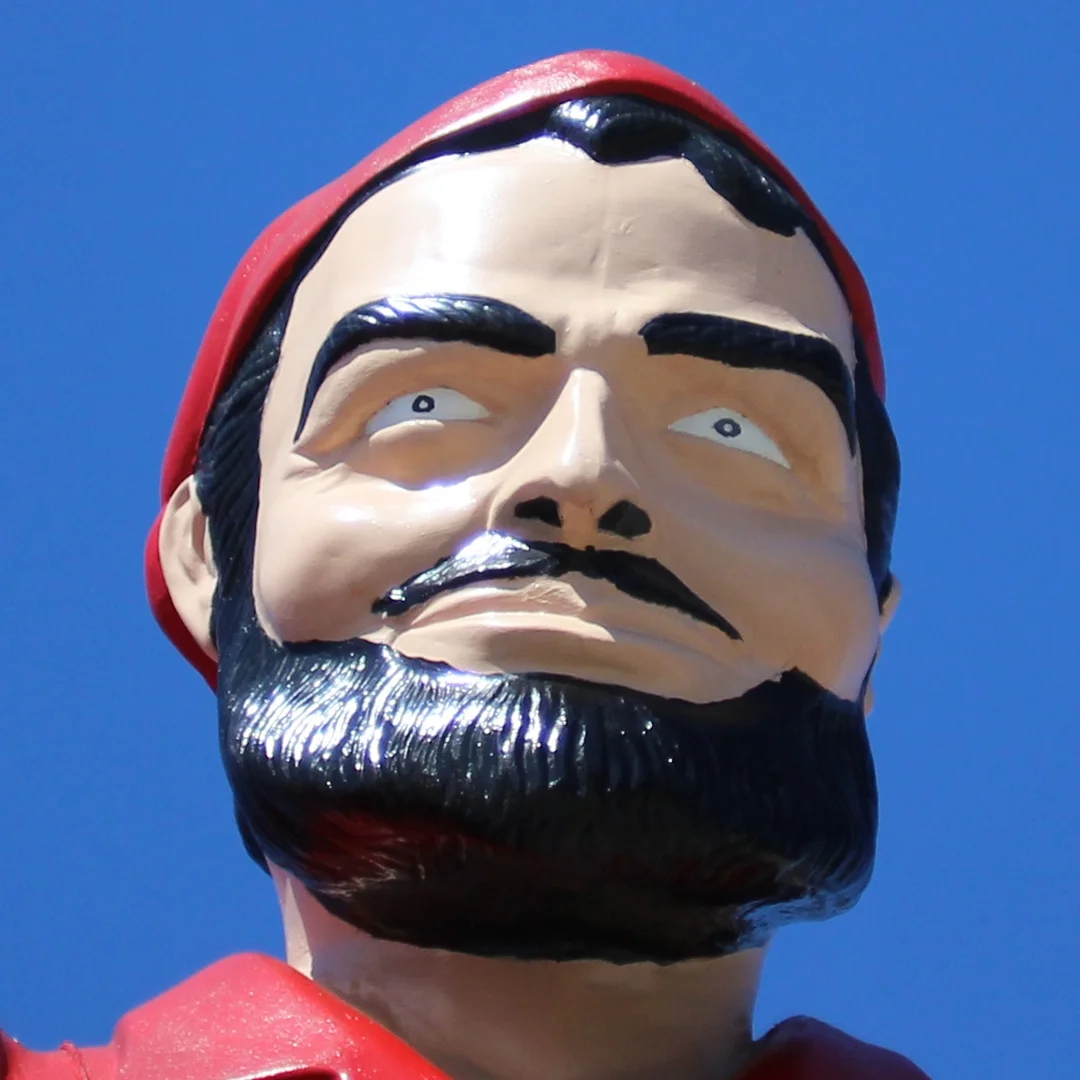
Both men are at White's Tire locations, exactly a mile apart in Wilson, North Carolina. The first Muffler Man stands on top of the roof, at a location that is currently closed and for sale. I'm glad that the Muffler Man is still standing so that we were able to see him, but I wonder if he will be sold along with the building or moved to one of White's other locations. He looks slightly different than other Muffler Men we've seen but I'm not sure if that's because of his paint job or his stubby legs.


The second Muffler Man is at a much larger location that is very much still in business. He is definitely more traditional than the first, and obviously well-maintained. He also holds a tire in his hand, and I think it's funny that the shear size of these giants make normal-sized tires appear as if they're almost miniature.


He's waving to traffic and potential customers, but my mom pointed out that he sort of also looks like he might be doing a Nazi salute? Maybe it's just the current (garbage) political climate or the pairing with "White's Tire" but now this arm style has been sort of tainted for me. I wish they could somehow be modified to look more like the Muffler Man at Trader's World, who is sporting a much friendlier wave.
White's Tire Muffler Man #1
740 Goldsboro Street SW
Wilson, North Carolina
Location closed and for sale, but Muffler Man still visible
White's Tire Muffler Man #2
701 Hines Street S
Wilson, North Carolina
Location is open and Muffler Man is easily accessible