

Archive
- Abandoned
- Alabama
- Arizona
- Bahamas
- Books
- California
- Cemetery
- Climate
- Colombia
- Connecticut
- Diner
- Egypt
- Feature
- Florida
- Friday Fun
- Georgia
- Holidays
- Illinois
- Iowa
- Italy
- Kentucky
- Louisiana
- Maryland
- Massachusetts
- Mississippi
- New Jersey
- New Mexico
- New York
- North Carolina
- Novelty Architecture
- Ohio
- Pennsylvania
- Personal
- Peru
- Project 365
- Protest
- Rhode Island
- Roadside Attraction
- South Carolina
- Tennessee
- Texas
- Travel Guide
- Virginia
- Walks
- Washington DC
- West Virginia
- Wisconsin

(It's Always Sunny in) Philadelphia
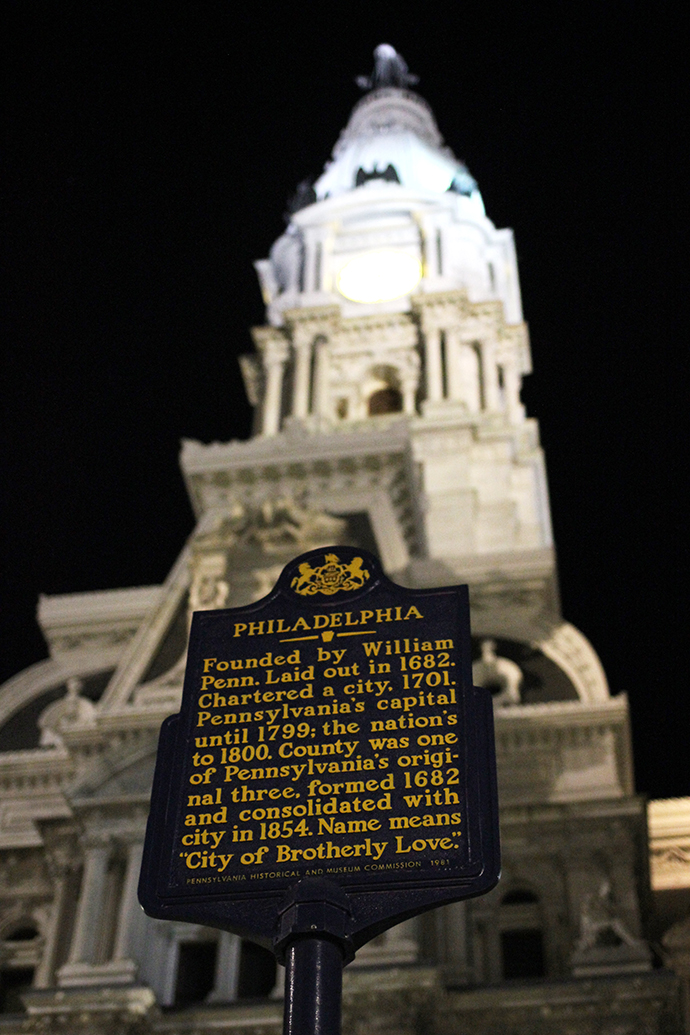
I briefly mentioned how much I loved Philly in this post of reflections photos, and I've since professed my love for Pat's Steaks and Reading Terminal Market. I've only been to Philly twice, but I'm already sold. A lot of the city reminds me of what I love most about New York—historical markers on every block, adorable streets lined with charming row houses, walkable streets and enough people and building density to feel as if you're really in a city. But Philly also seems to lack a few things that are not so desirable in New York—the maddening rents and crushing crowds. I'm sure Philly has its downsides, as all places do, but my two experiences there have been so delightful that I'm eager to discover what else the city has to offer.


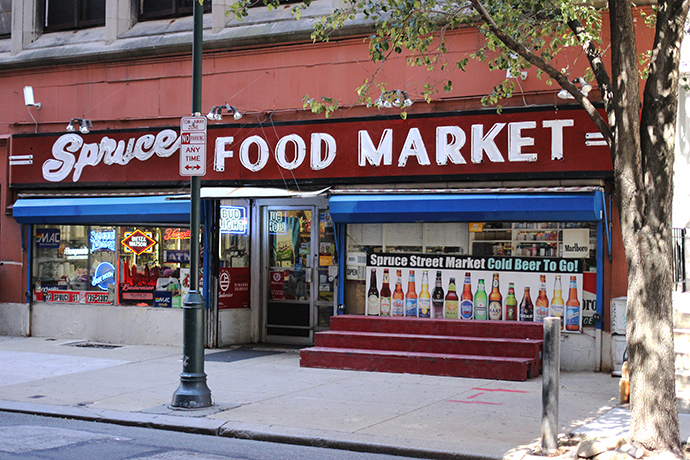


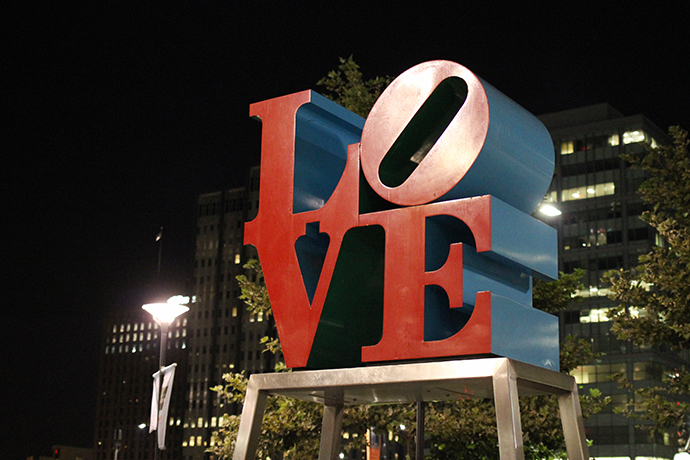
One of the first things that greeted us as we walked from the train station was a bridge flanked by four of the large stone eagles from the original Penn Station. I'm a bit obsessed with finding remnants of old New York, and I was delighted to find that at least some parts of Penn Station's former glory have not been lost. Philly also has its share of famous public artwork, including a huge, steel clothespin by Claes Oldenburg, and the iconic LOVE sculpture.
One thing I wanted to make sure we did was to ride Philly's subway. I am so intrigued by public transit in other cities, particularly subway systems, and we only rode a few stops but I was charmed. The Philly subway feels like a mix of New York's and the DC Metro, and it was clean, easy to navigate and you can still pay with a token (!).
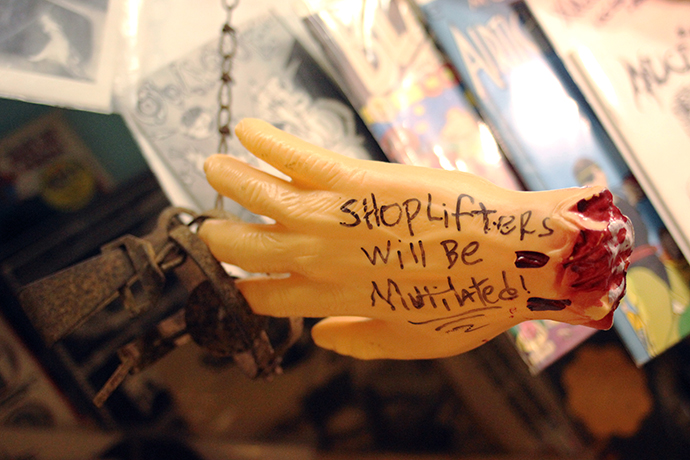




While attempting to walk off some of our cheesesteak calories, we stopped at Professor Ouch's Odditorium, which is basically my dream store. In addition to having a legitimate curiosity show in the back room, they have so many wonderful things for sale, including a large selection of sideshow memorabilia and medical oddities (I bought a particularly wonderful '60s eyeball model).
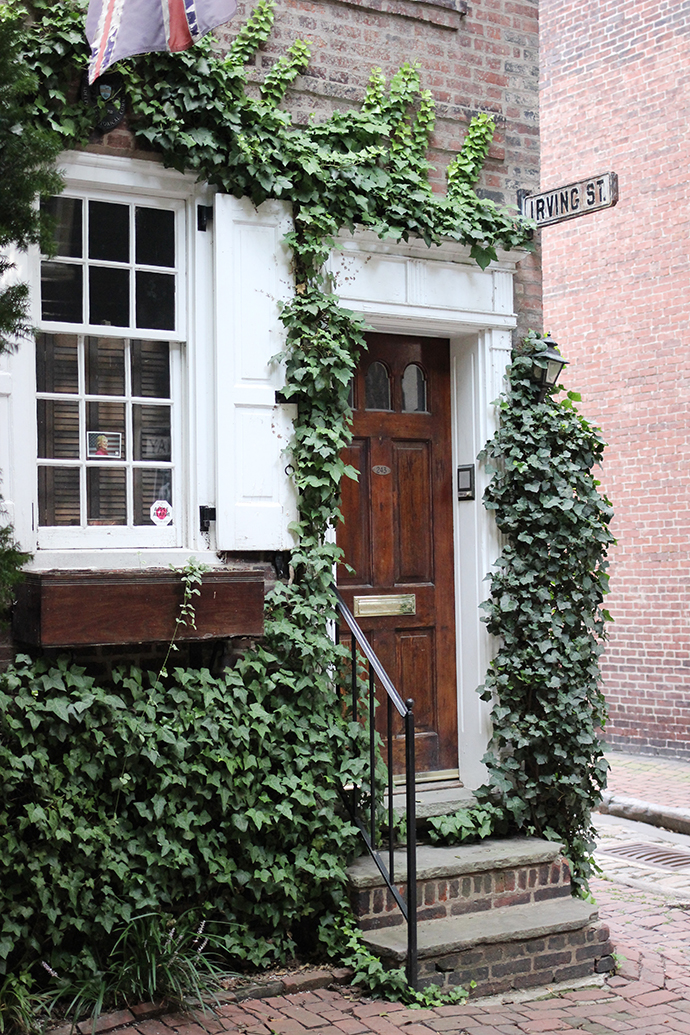
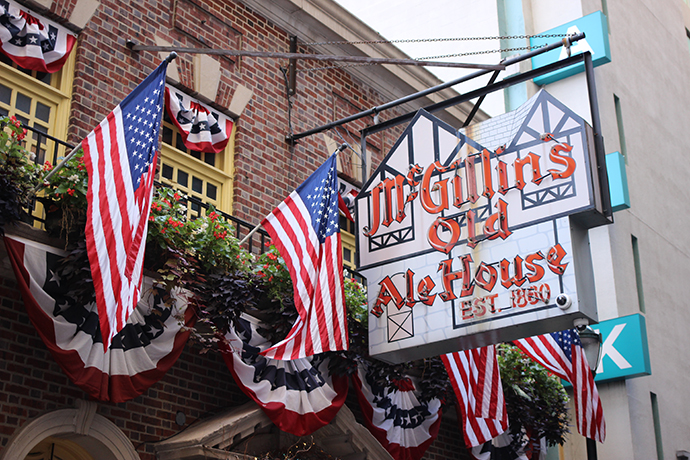
We mostly wandered around somewhat aimlessly, in awe of the adorable historical streets and ivy-covered homes. We had a drink at the oldest bar in Philly—McGillins Old Ale House—breakfast at the very cute diner, Little Pete's, and wondered out loud what our lives would be like if we defected to a place filled with cheesesteaks, tree-lined streets, wonderful art and excellent cemeteries. I'm not done with New York just yet, but it's nice to know that if I'm ever in need of a change—or when I'm priced out entirely—that Philadelphia exists just a short train ride away.
More Philly posts: Reflections | Pat's Steaks | Magic Gardens | Reading Terminal Market

Philly: Reading Terminal Market
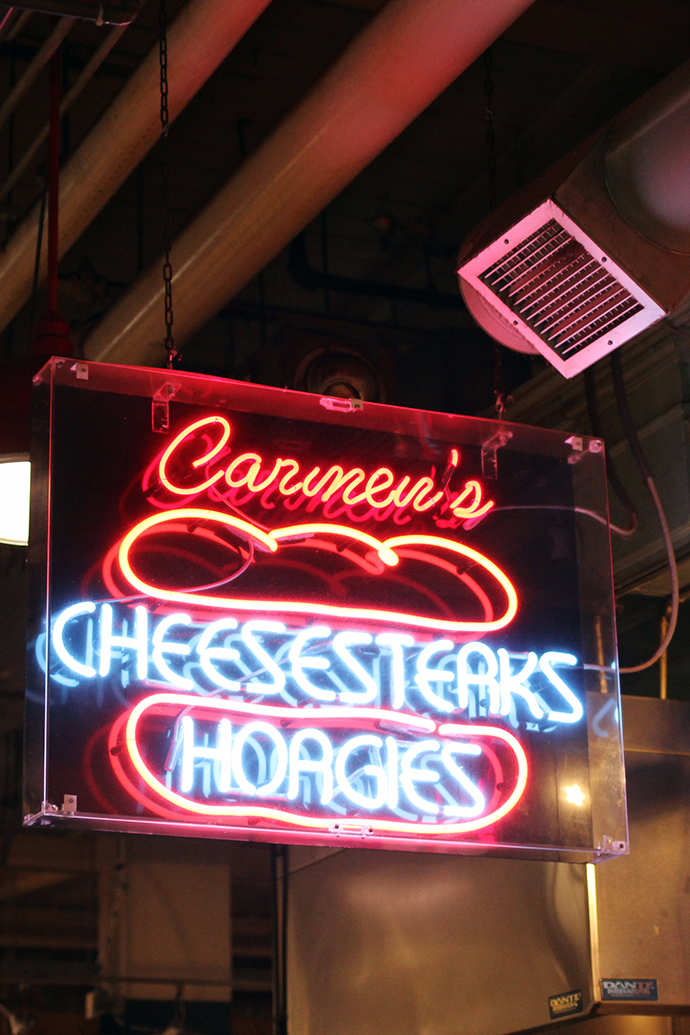
On my first visit to Philly, we briefly stopped in Reading Terminal Market to buy a pie (which turned out to be one of the best pies I've ever eaten). We didn't have much time to spend browsing and it was very crowded, but I'd seen enough to know that I should make an effort to come back the next time I was in town.

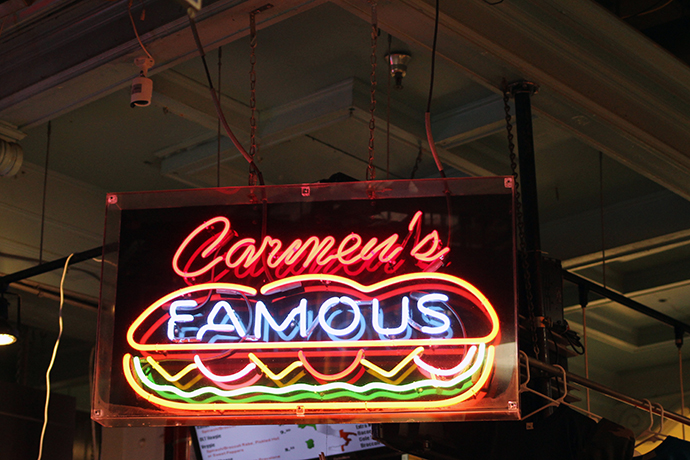
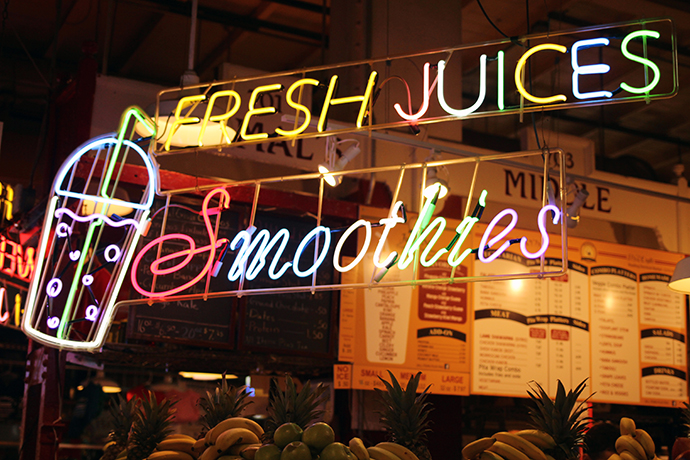
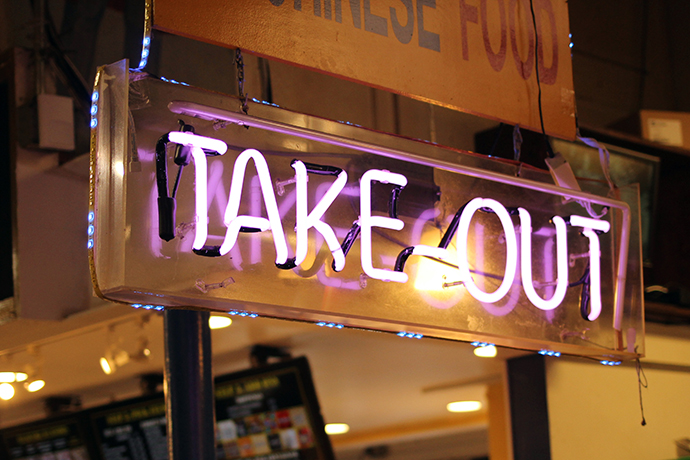

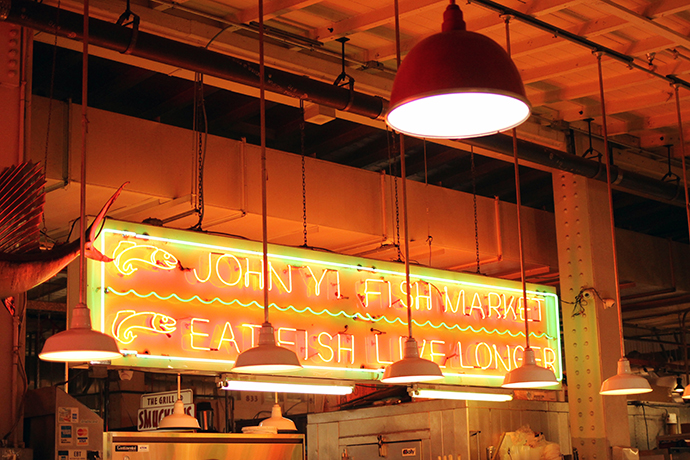
We managed to squeeze in a visit on our recent trip before we had to catch our train, and this time it was not crowded at all because it was a Sunday. I didn't realize that a lot of the vendors are Amish, and therefore closed on Sundays. This means I didn't get to buy another life-changing pie, but I was just as enamored by the neon signage and various offerings as I was on my first visit.
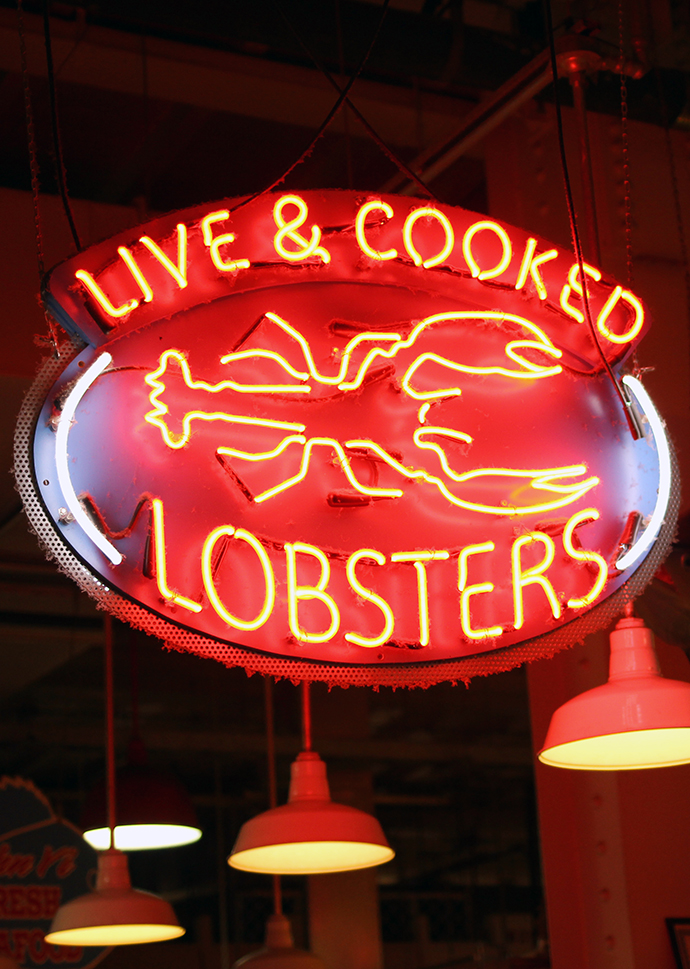
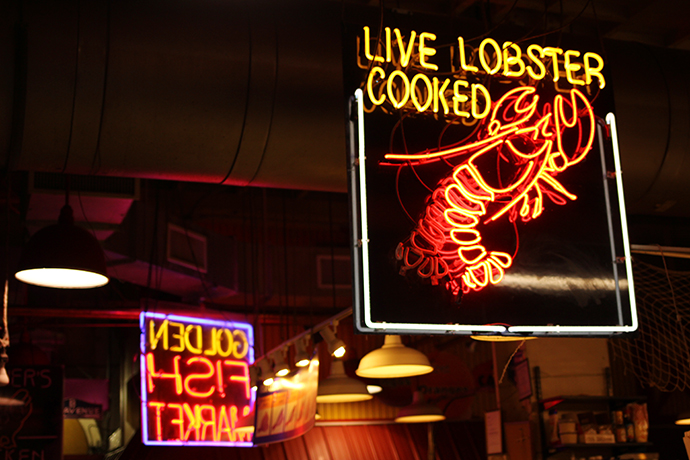
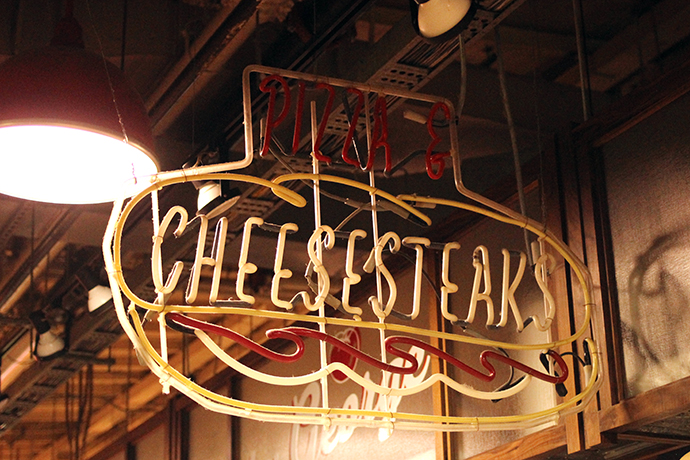

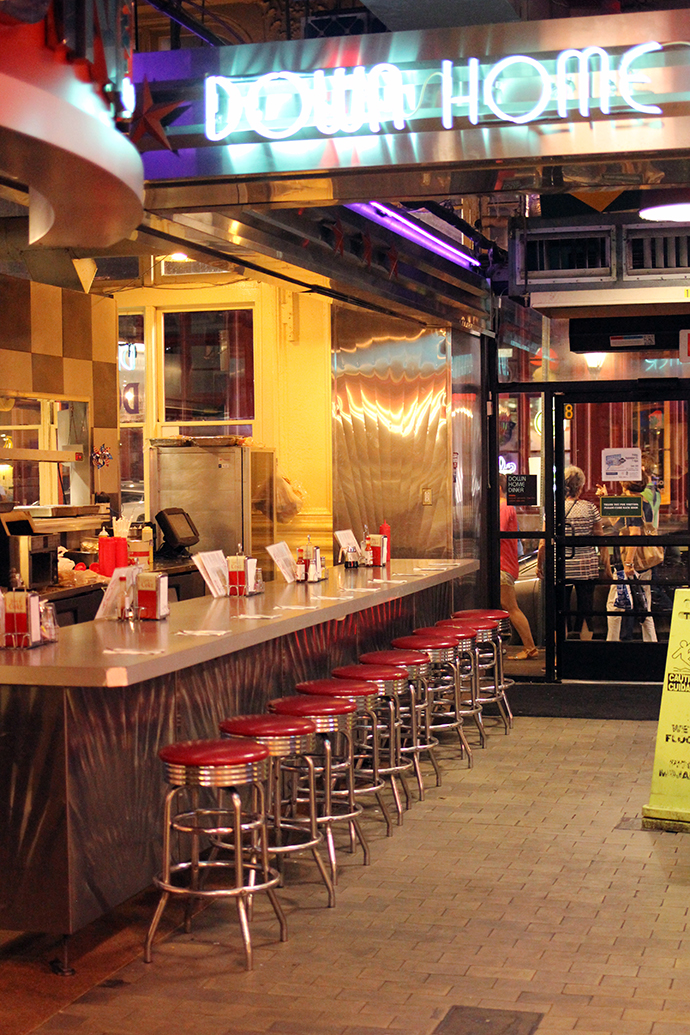

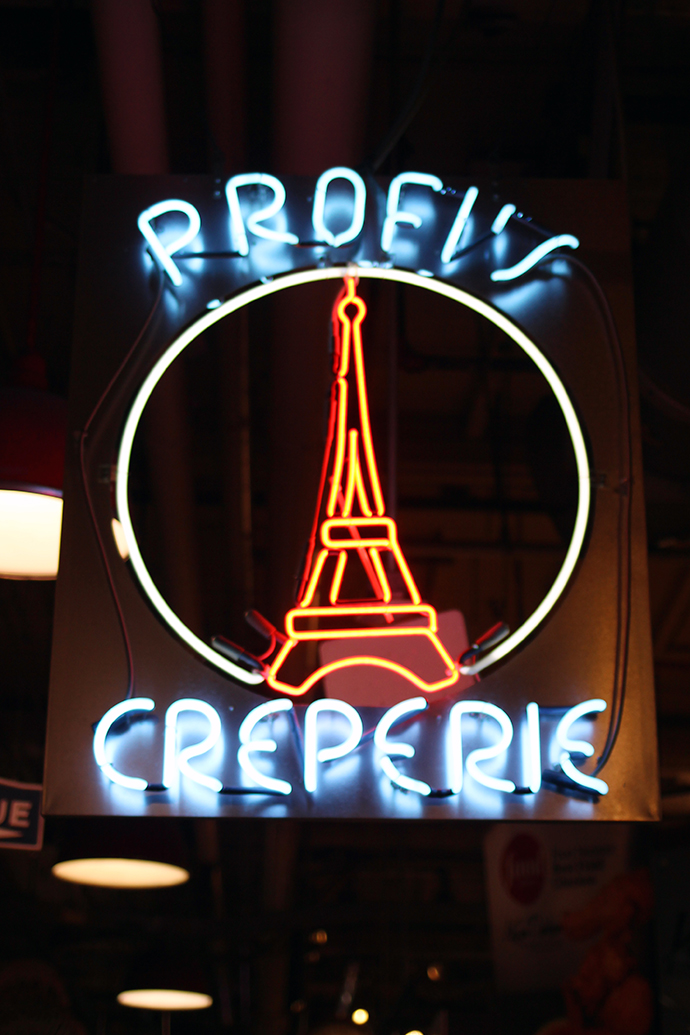
We weren't hungry at the time, which was a shame because the market is filled with so many delicious-looking (and smelling) things including cheesesteaks, ice cream, donuts, Chinese food, pretzels and a really cute diner counter. Almost every single booth has a neon sign better than the last, with swishing lobster tails, beautiful scripts and illustrations of various foods. I'm a huge fan of judging a book by its cover—or a store or restaurant by its signage—and Reading Terminal Market passes this test with flying (neon) colors.

Philly: Magic Gardens

I'm not sure how I heard about Philly's Magic Gardens, but all I knew was that it was an area of town filled with mosaics—and that's all I needed to know to want to check it out on our recent visit. We subsequently discovered that while Isaiah Zagar's mosaics are scattered around the city on walls and down alley ways, you need tickets to see the actual Magic Gardens site. It was already sold out for the day by the time we made it to South Street on Saturday (weighed down with cheesesteaks), but we came back early Sunday and got in right away.

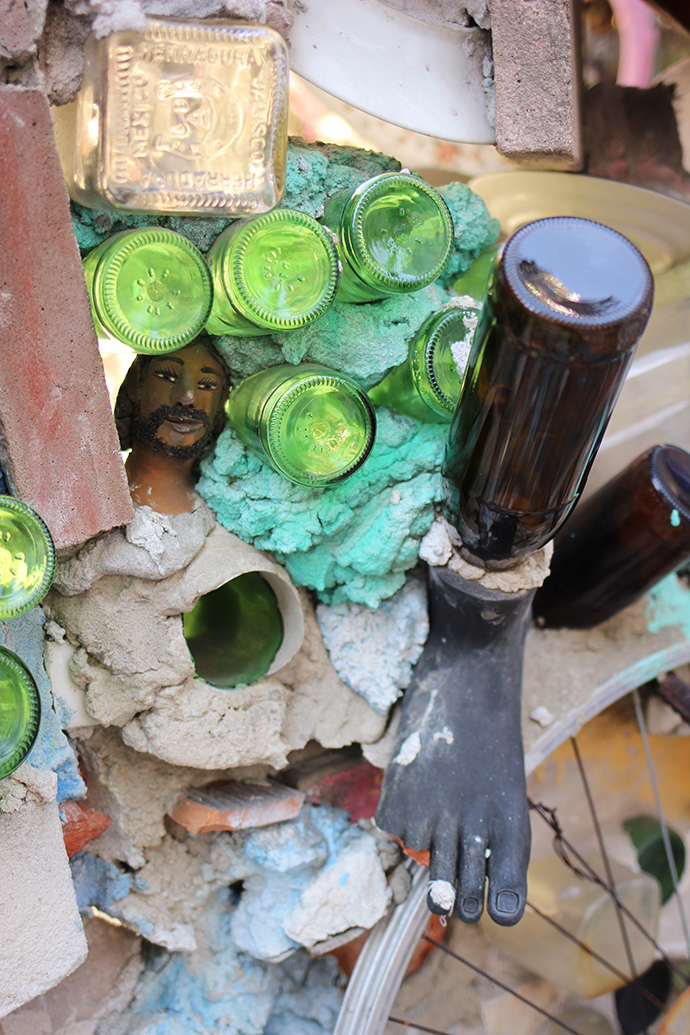

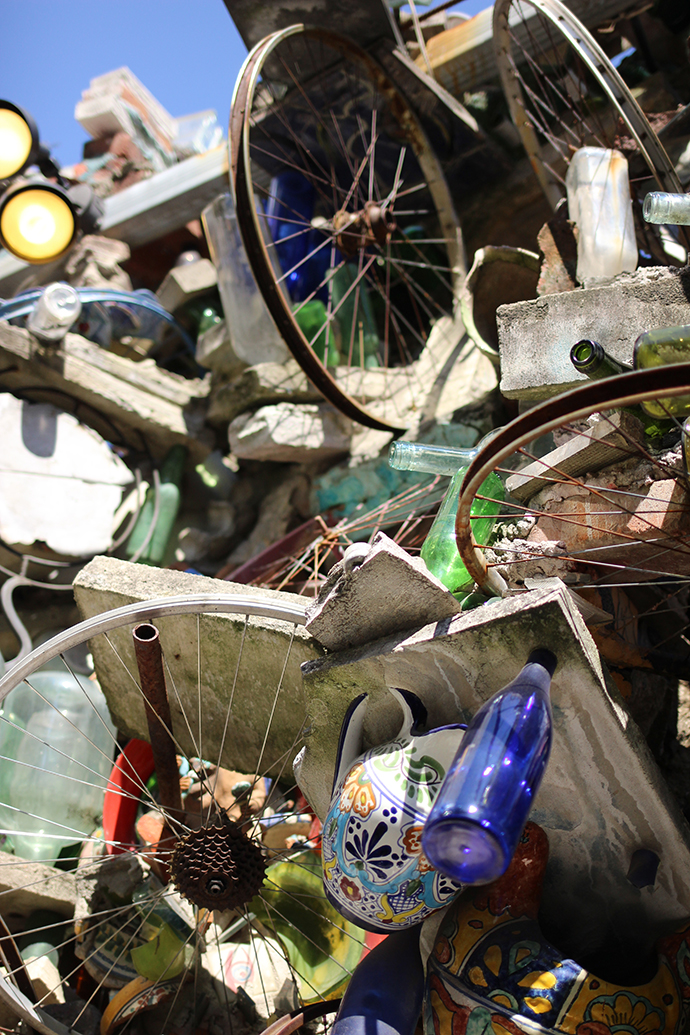


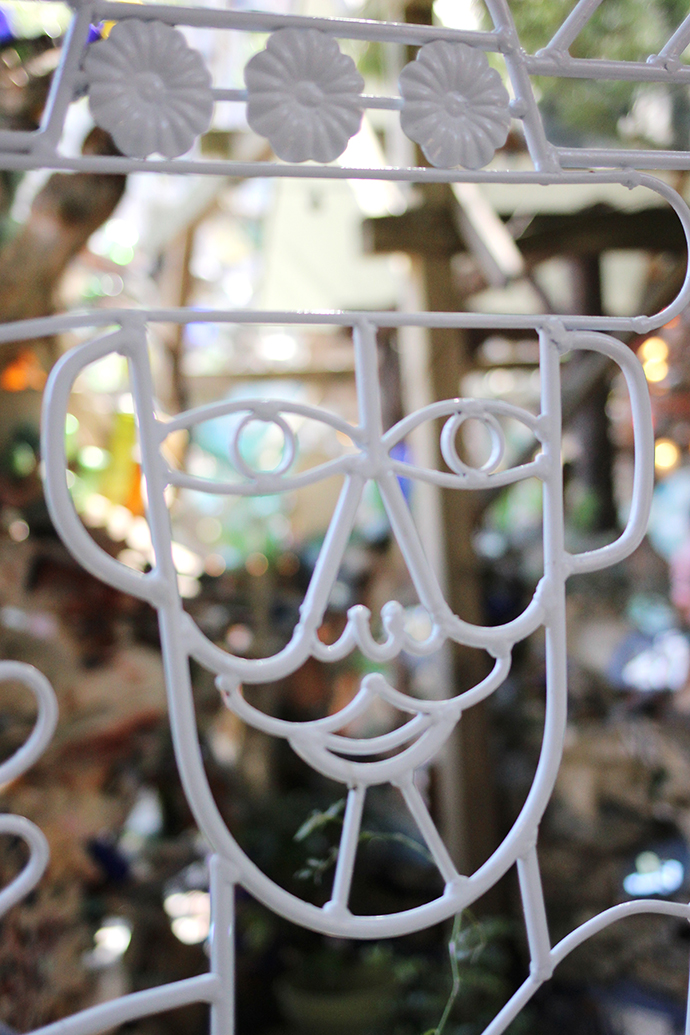

Isaiah Zagar began doing mosaic work in the area when he moved to Philly in the 60s. In 1994 he started to work on the vacant lot next to his studio, but the lot was almost sold and the installation dismantled in 2002. Unwilling to lose Zagar's work, the community rallied and after a two-year legal battle the newly titled "Magic Gardens" was incorporated as a non-profit organization.
It's always nice to hear stories like this when they have a positive outcome and I'm so glad that the community recognized the value of Zagar's work and continues to support him—in addition to the Magic Gardens, his mosaics can be found on more than 200 public walls.


In his creations, Zagar uses mostly found objects—bicycle wheels, glass bottles, doll pieces and mirrors—which he mixes with handpainted tiles and concrete (I have a feeling he'd LOVE Dead Horse Bay). The effect is so much more than just the sum of its parts. The mosaics are interesting to view up close and become another thing entirely when you step back to take in the whole. Curling lines of paint meet jagged mirror edges, meet a bicycle wheel window next to a bit of china and bottles that create a stained-glass effect when organized in a grid and viewed from the bottom up.


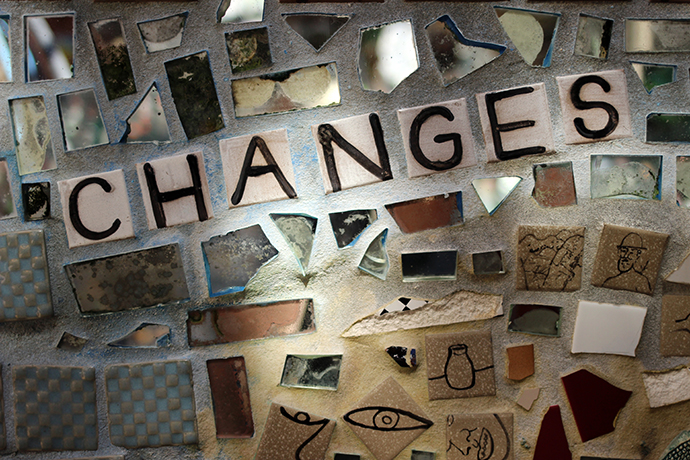
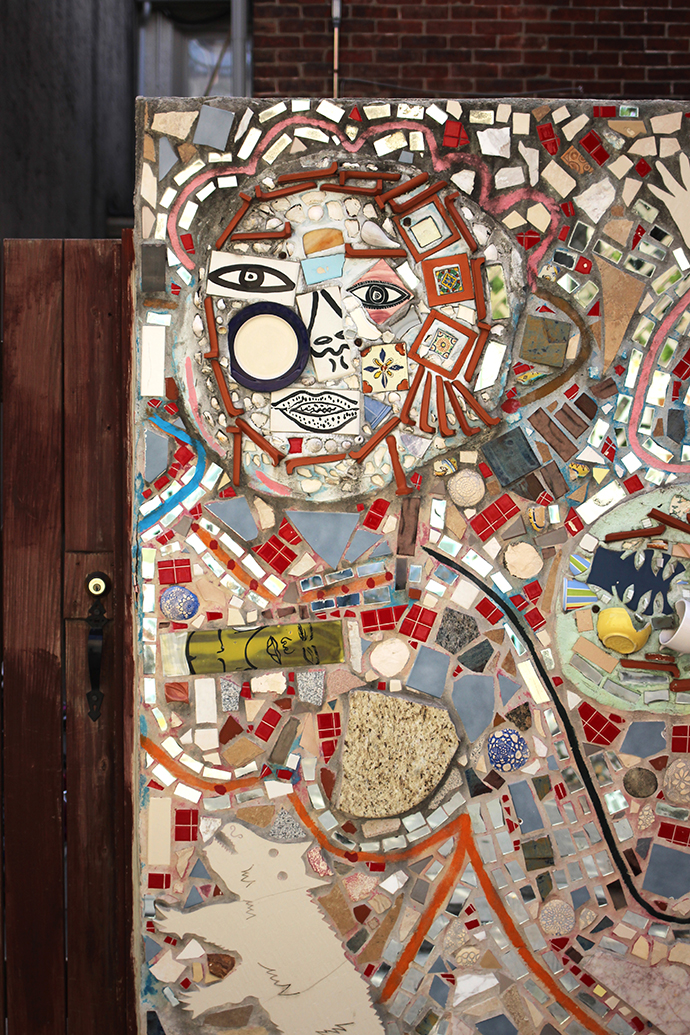

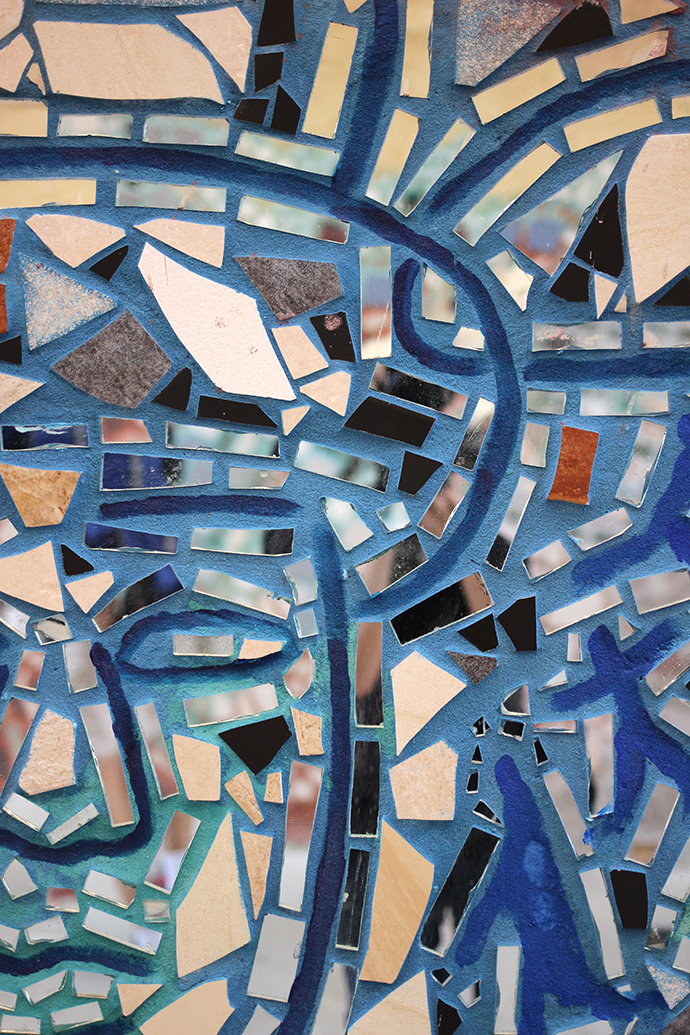

The Magic Gardens is pretty small, but there is so much packed into a relatively small space that you could spend hours investigating every corner. As much as I'm glad that we got to see the Magic Gardens, I think the real magic of Zagar's work is stumbling upon it in the wild. It's such a delight to turn a corner into what you expect to be another standard alleyway (Philly is FULL of alleys, by the way) only to encounter an otherwise-ordinary wall covered in a colorful, glittering mosaic.

Philly: Cheesesteaks

Number one on my list of things to do on our recent trip to Philly was to finally eat a Philly Cheesesteak in Philadelphia. The delicacy alluded me on my first visit, and I've been regretting not making more of an effort to procure one ever since. I've had cheesesteaks, of course, but I get a ridiculous thrill from trying a food in the town in which it was invented or became famous. I've tried chicken wings and beef on weck in Buffalo, deep dish in Chicago, drank a Hurricane in New Orleans and an egg cream in Brooklyn —I even have a dream of one day eating a Charleston Chew in Charleston while doing the Charleston and I have no idea if those were even invented there.

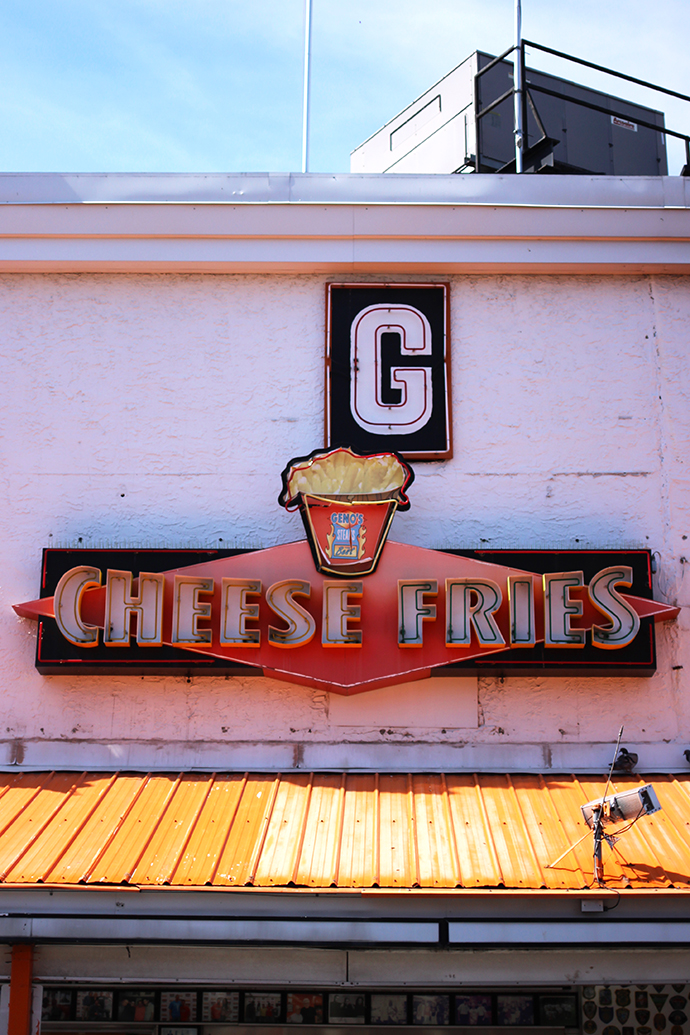
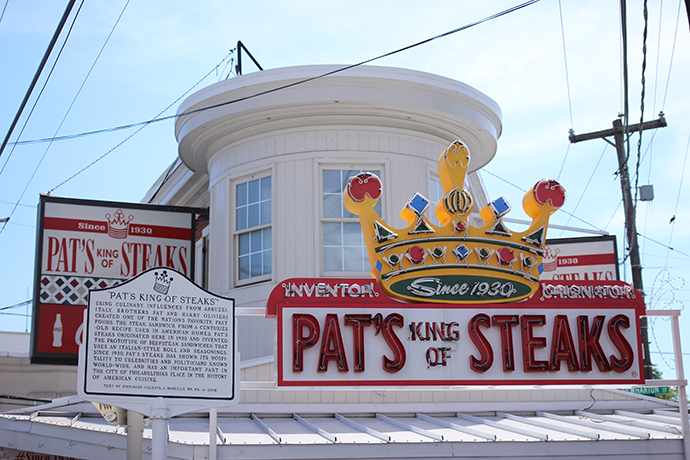
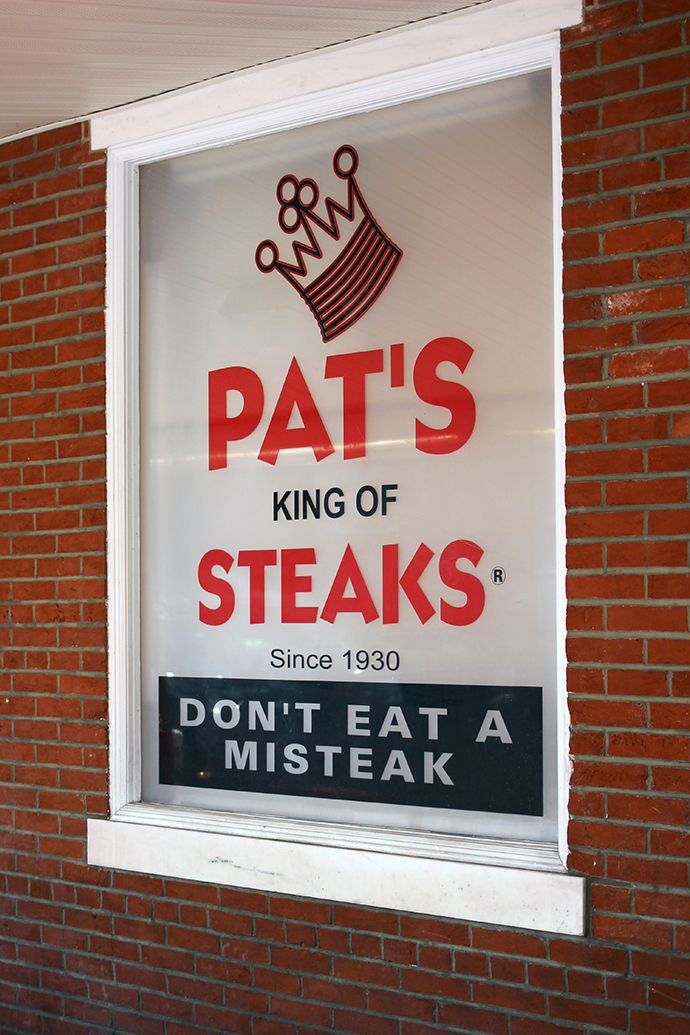
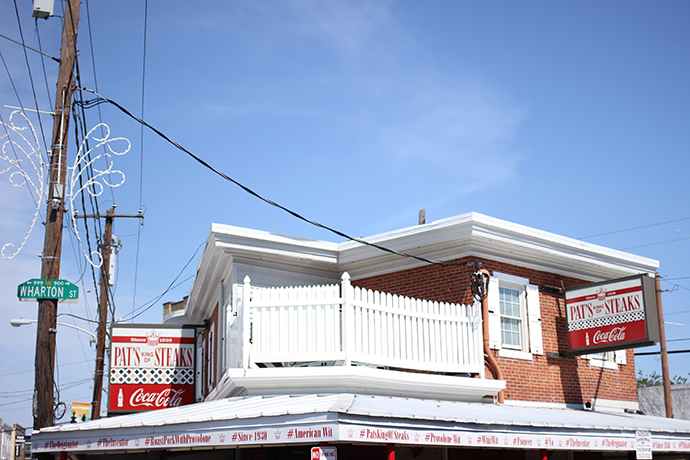
Pretty much as soon as we arrived in Philly we started making our way south to the land of the great cheesesteak wars. I had it on good authority to go to Pat's and to skip Geno's, and as soon as we saw both places it was clear why. Although I can't speak to the quality of Geno's cheesesteaks, their signage alone was way too aggressive for my tastes. It was funny to us how different the two were in ambience—when David so accurately suggested that Guy Fieri would feel right at home at Geno's, I added that Pat's felt more like an Anthony Bourdain pick (if you think in terms of celebrity chef comparisons, or maybe one's a Trump while the other's a Hillary).

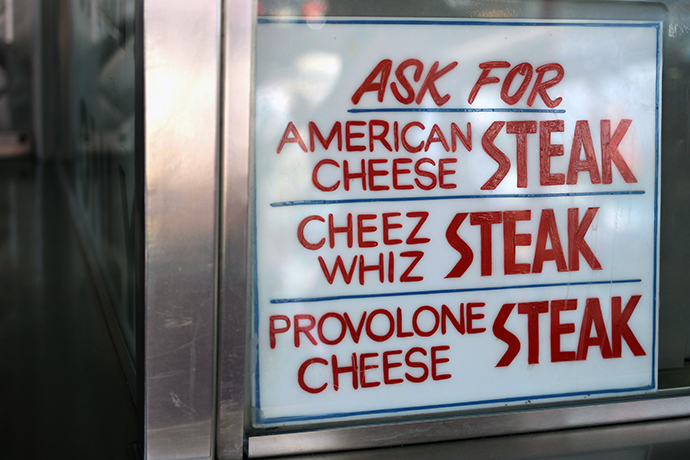
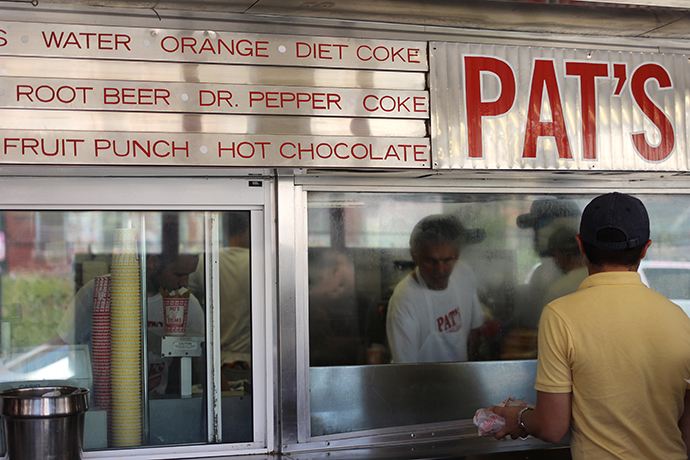
Pat's has been serving steaks wit and wit-out since 1930, while Geno's came later in 1966. The ordering process is quite simple a very quick—both of which I love—and before we could even think about it we had our steaks in hand (both wit, one provolone, one American cheese). Cheesesteaks are kind of like pizza or hot dogs in my opinion, in that the best one you'll ever have is not that far away in quality and taste from the worst one you'll ever eat.
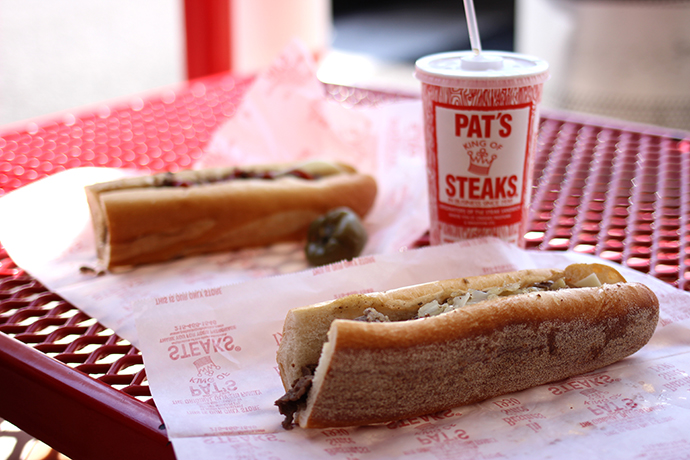

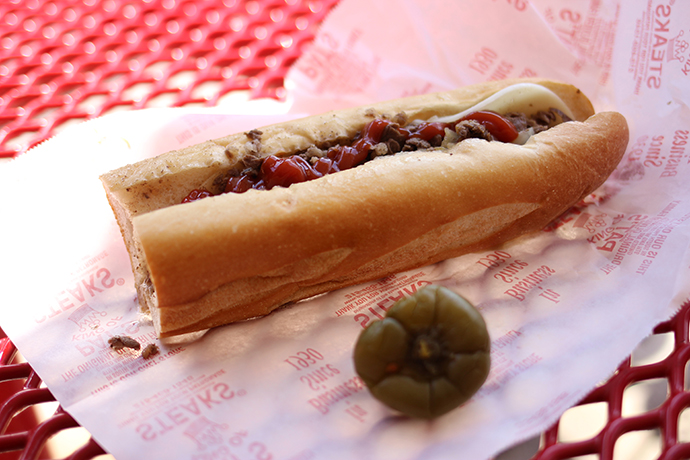
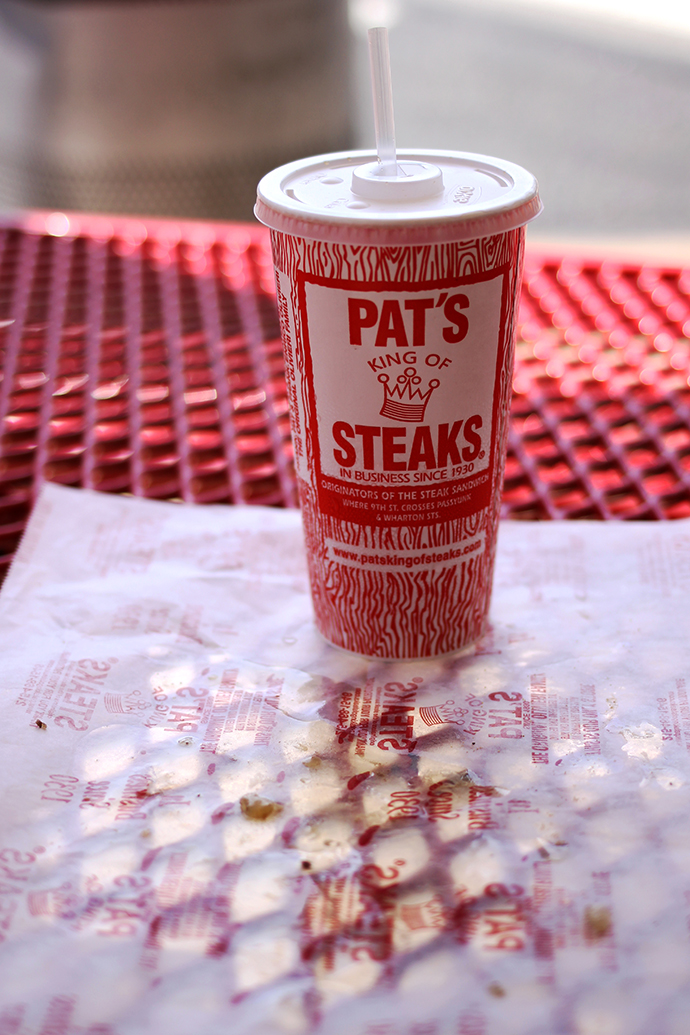
However, Pat's was definitely the best cheesesteak I've ever had and I think it comes down to the bread and the cheese. I was initially concerned that I should have ordered whiz, but the American cheese was melty and plentiful and I soon forgot that I ever regretted my choice. I definitely don't think we made a "misteak" choosing Pat's for their chrome siding, woodgrain-printed cups, handpainted signs or beautiful neon—but I do wish that the most delicious cheesesteak I've ever eaten wasn't an hour-and-a-half train ride away.

Philly: Reflections
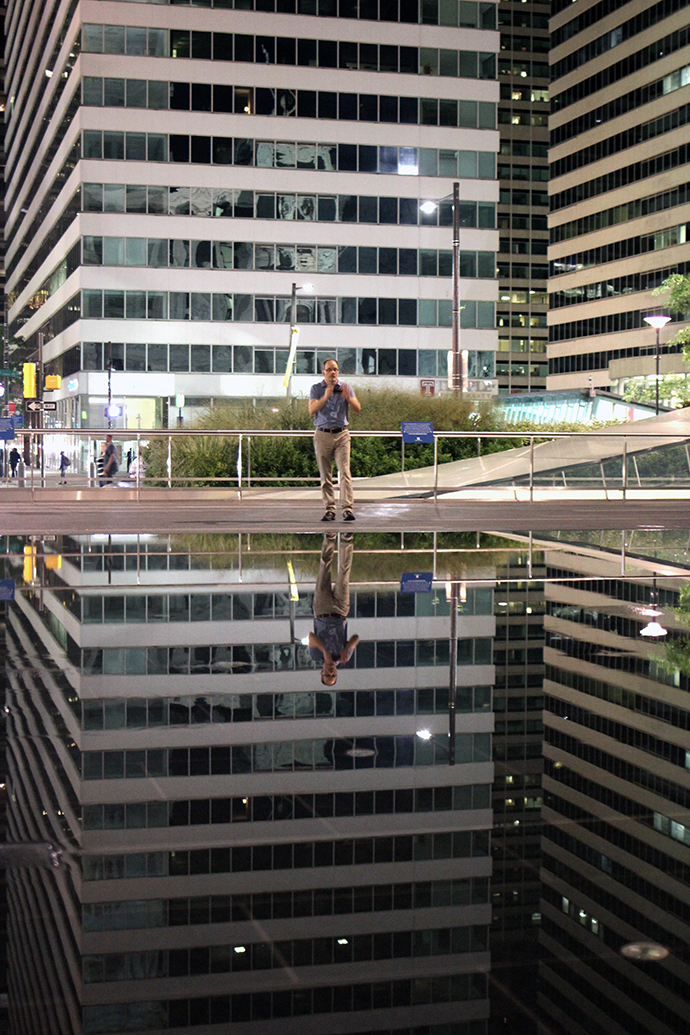
We spent last weekend in Philadelphia, a city that is clean, quiet but vibrant, cultured and historical, very walkable and all-around delightful. I had some general ideas for things we could do, but a lot of the time we were just walking around, exploring neighborhoods and drooling over the reasonably-priced real estate.
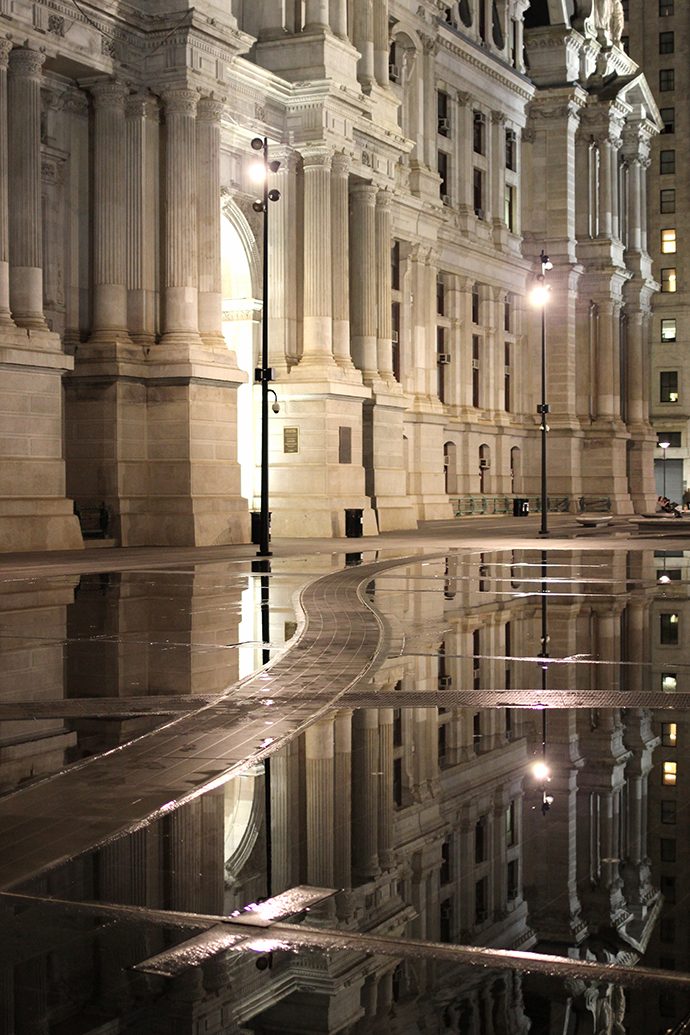
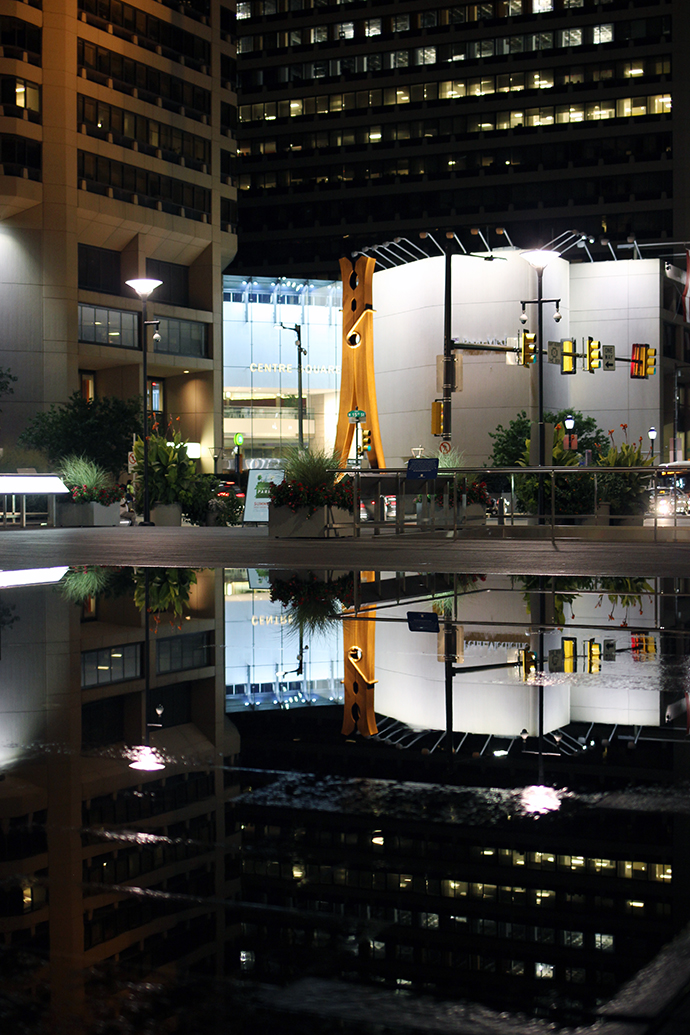

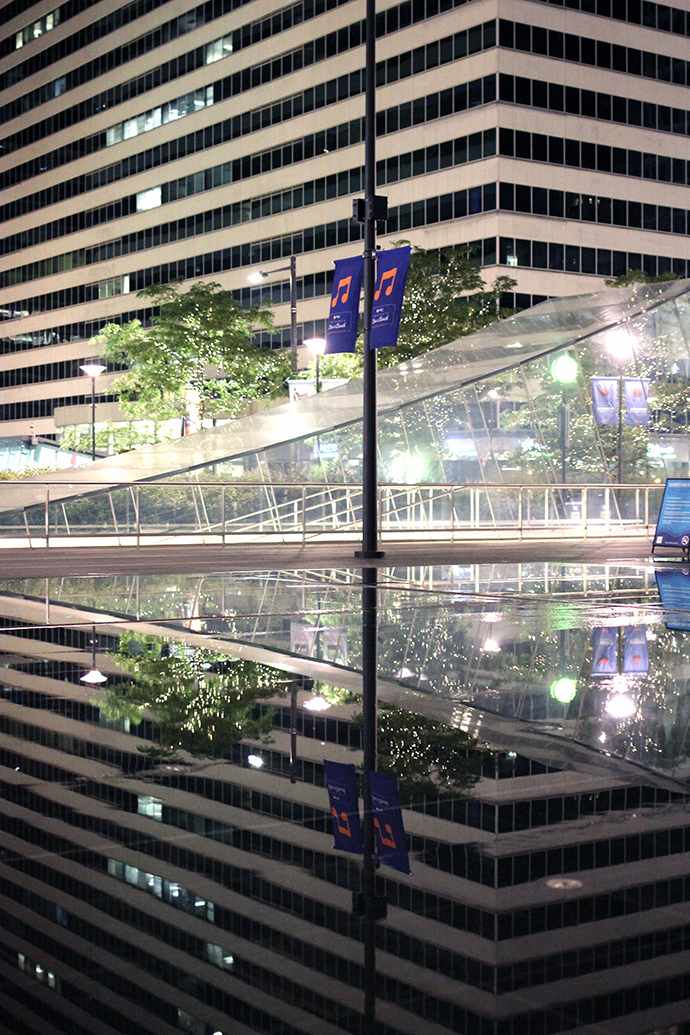

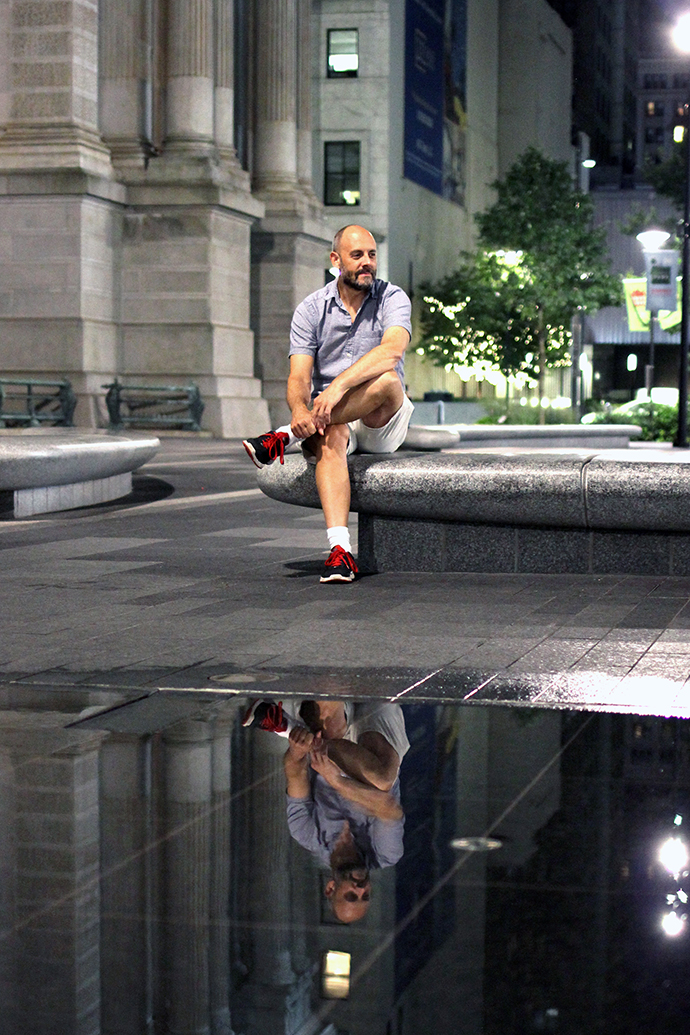
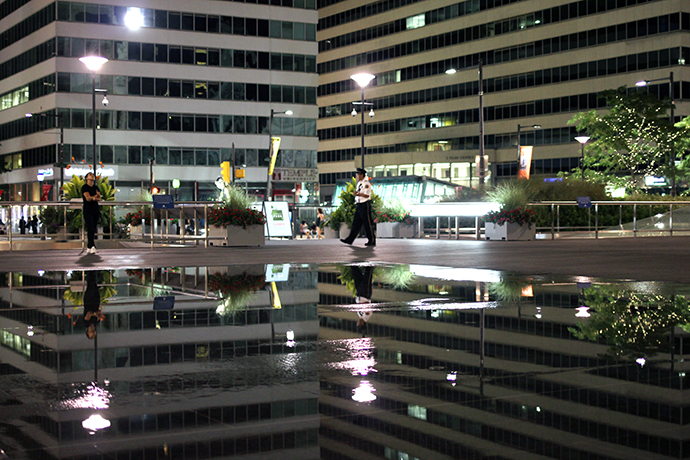
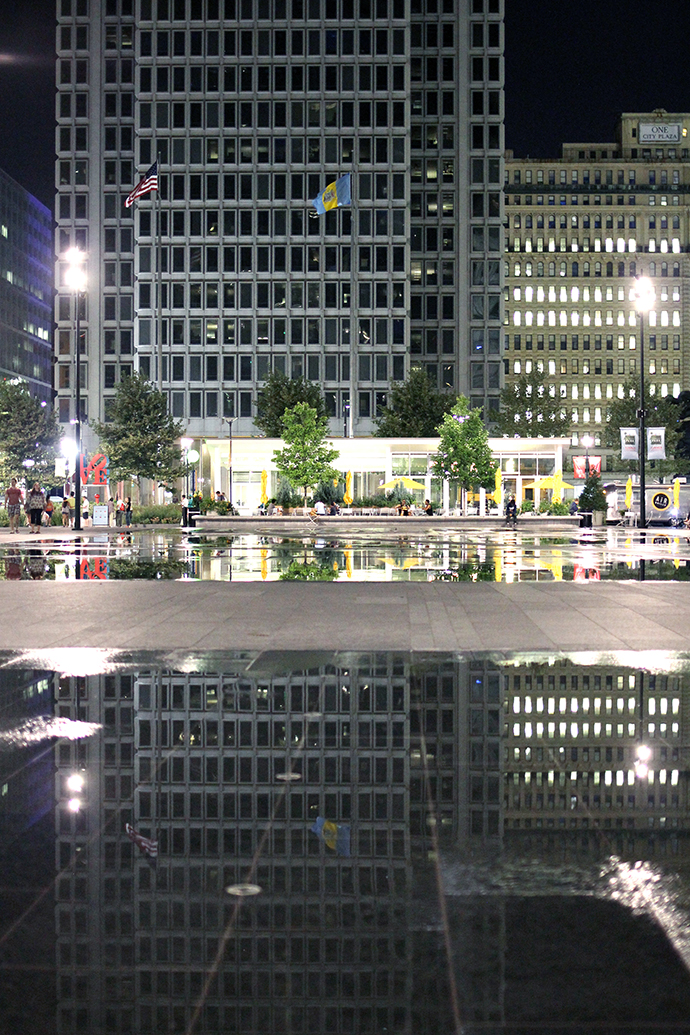
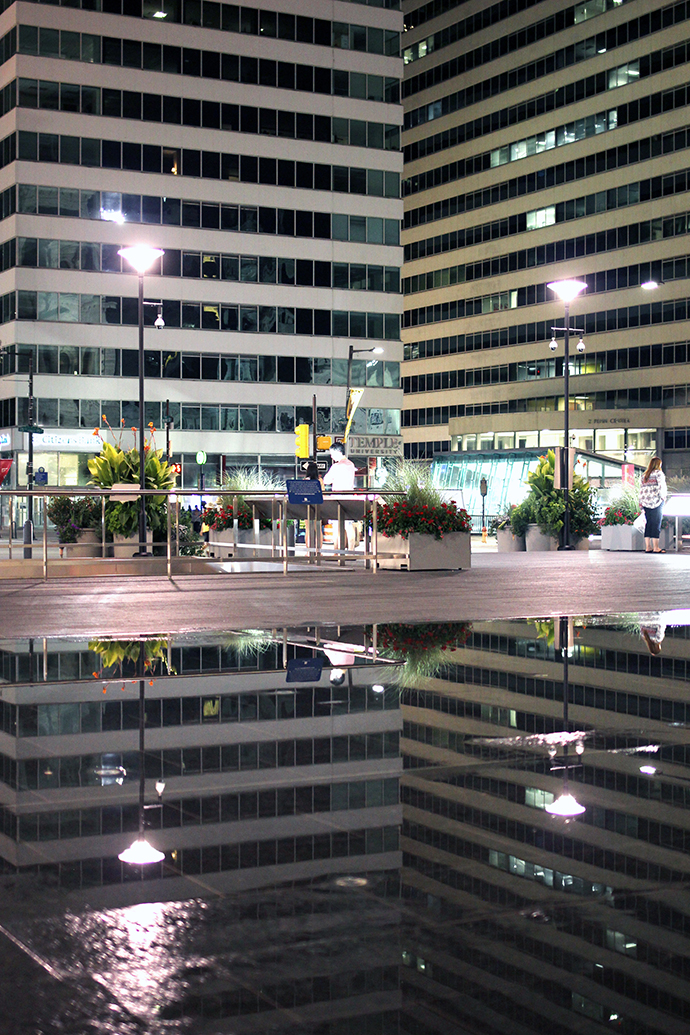
After dinner on Saturday, neither of us was quite ready to head back to the hotel and it was a beautiful night so we walked a bit and ended up outside of City Hall in Dillworth Plaza. The fountains had been turned off for the night, leaving shallow pools of still water on the ground. I immediately became obsessed with the reflections that were being formed of the surrounding buildings, and could have stayed there forever taking pictures if our early wake-up time hadn't eventually caught up with me.
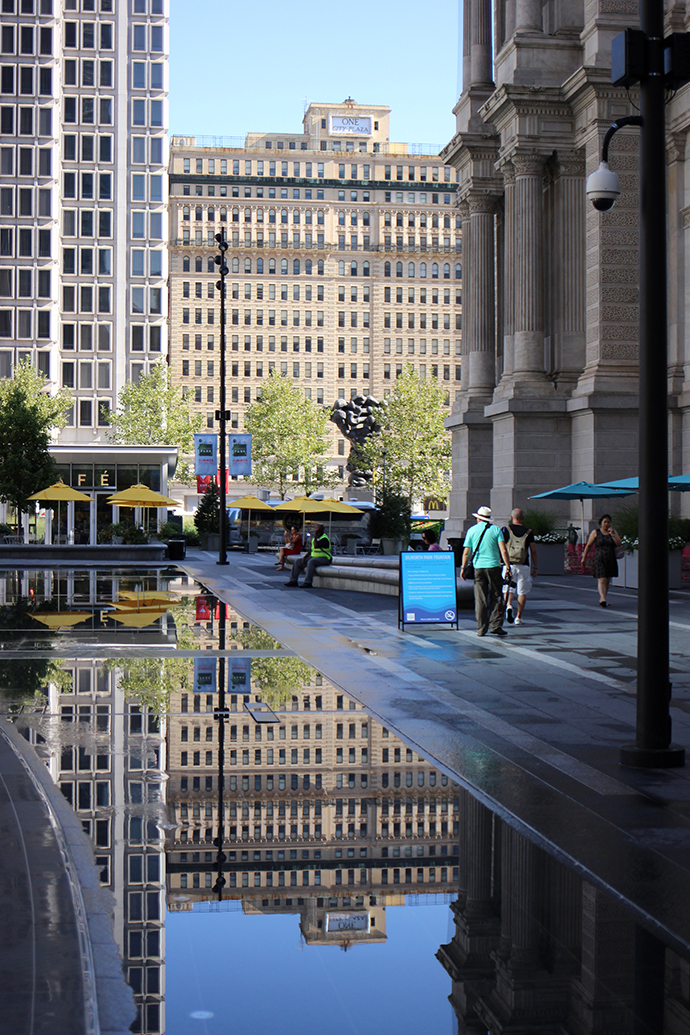
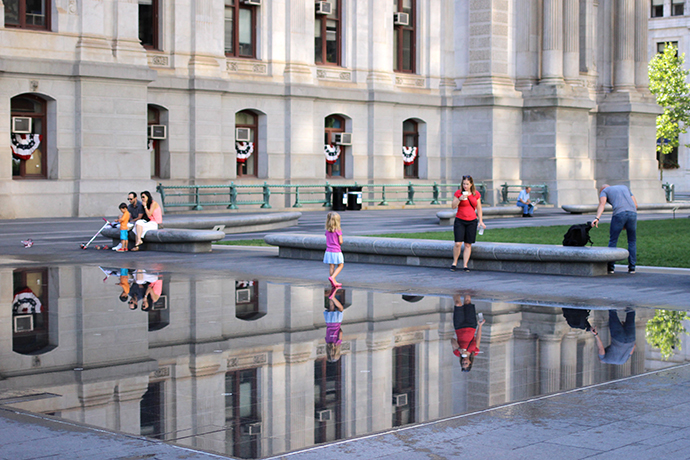
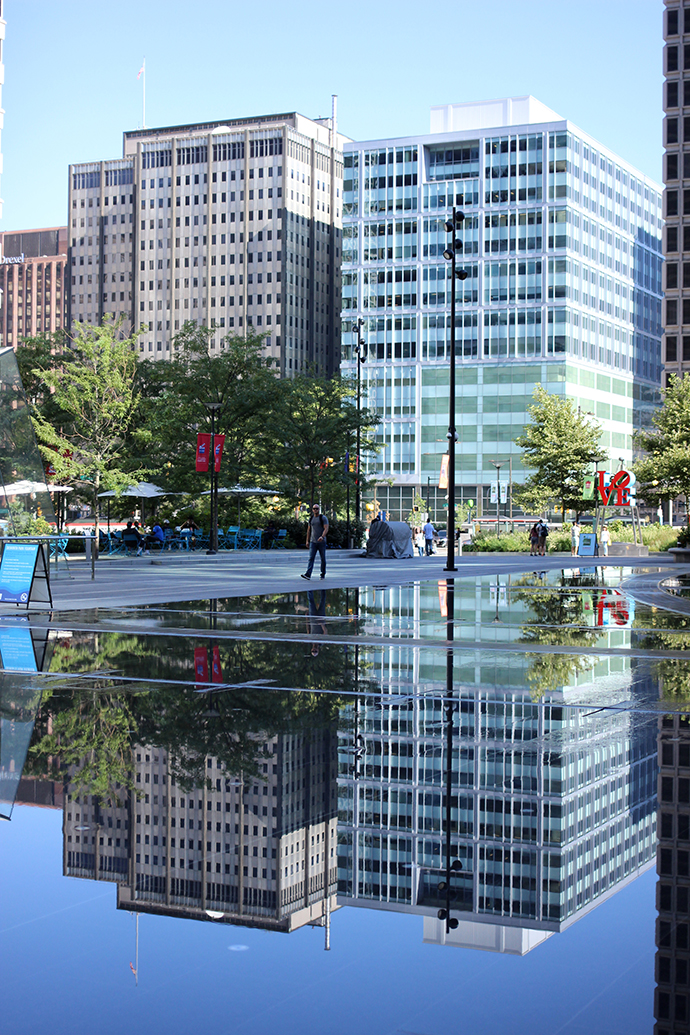
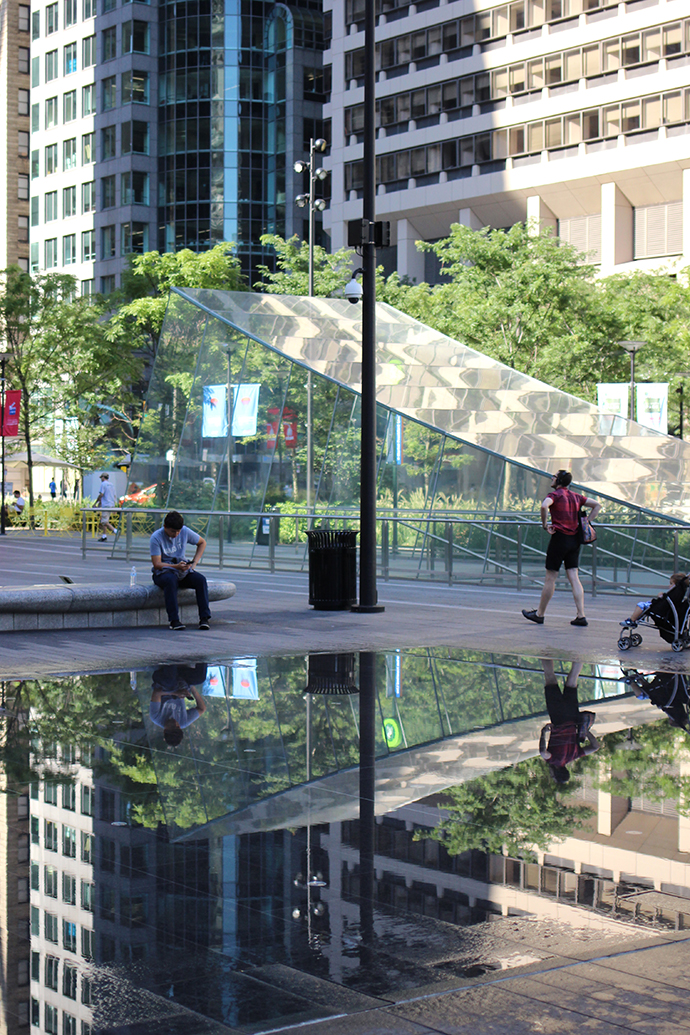
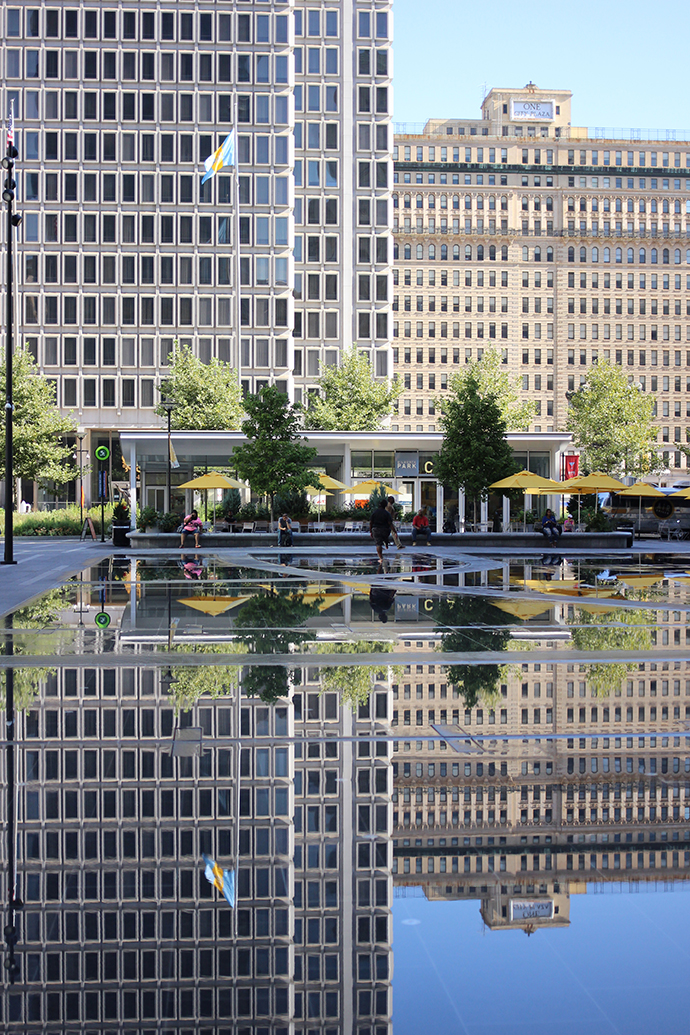
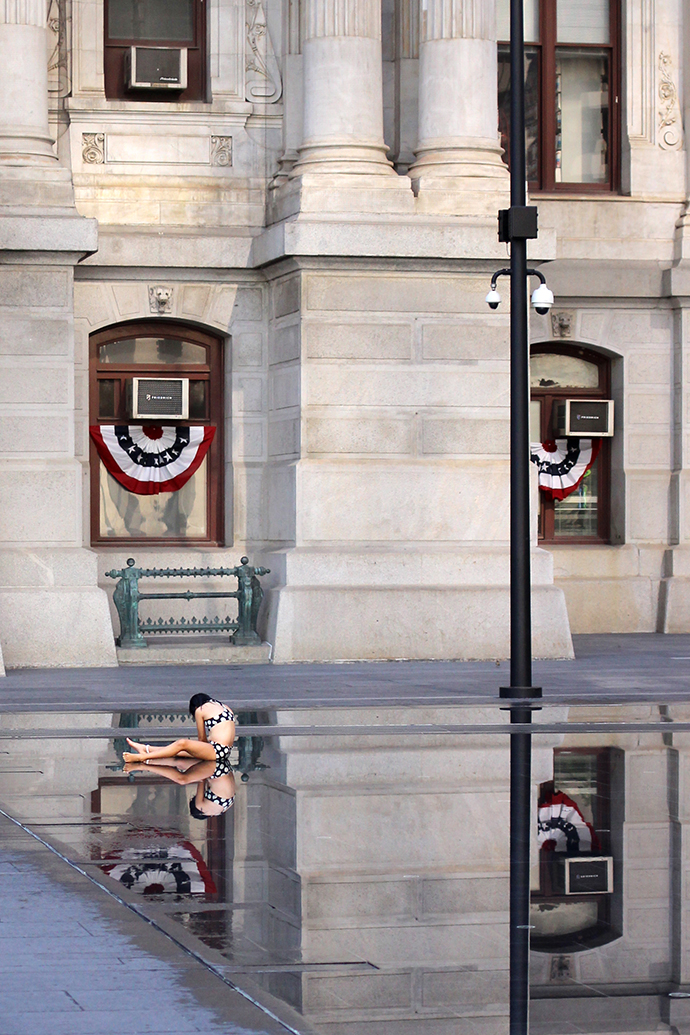
I was equally excited when we crossed the plaza again in the morning and discovered that the fountains were off again, making for a whole new round of necessary photos. The City Hall building itself is so incredibly beautiful (and huge!) that I could sit and stare at it for days, so having what seems like two identical City Halls will never be a bad thing. Don't tell New York, but Philly is quickly becoming one of my favorite cities.

Roadside America

I've had my eye on Roadside America, billed as the "World's Greatest Indoor Miniature Village," for a while. It's about two hours west of New York City in Shartlesville, PA and has been operating in its current site since 1953. The village is entirely the vision of one man, Laurence Gieringer, who started making miniature models when he was about five years old. As an adult, he became a carpenter and a painter, and started getting recognized for his miniature work, leading him to move his display to Carsonia amusement park in 1939. In 1941 he began to construct the current warehouse that houses his collection, which is remains how he left it when he passed away in 1963.


Roadside America is currently operated by Gieringer's great-granddaughter and her family and is open every day but Christmas. It is everything that a classic roadside attraction should be and I'm shocked but incredibly grateful that it's still alive after all these years. We arrived later in the day, but there were only a few other people viewing the attraction.


Saying that Roadside America is an indoor miniature village is technically correct, but it definitely doesn't capture the scope and scale of the whole thing accurately. If numbers mean anything to you, RA occupies 8,000 sq feet and includes more than 300 structures, 18 trains, 10,000 hand-made trees, 4,000 miniature people and 21,500 feet of electrical wiring. It has flowing water, 600 lightbulbs and nearly a hundred animations that are controlled by patrons pushing buttons around the display.


The hand-painted signs are wonderful and the entire room is painted to blend in with the scenes. Since the display hasn't been updated since the 60s, everything has a very idyllic, pro-America feel, from the large Statue of Liberty and American flag that loom over the towns, to the streets and shops of SmallTown USA. The level of detail is really mind-blowing—there are zoos, a circus, mountain-top ice skaters, working farms and even a few churchyard cemeteries, that of course I love.


Next door to Roadside America is the Pennsylvania Dutch Haus, which wins the distinction of being the oddest gift shop I've ever been in. It's definitely worth a stop just for the experience, although I was disappointed that neither gift shop had a squished penny machine. Everyone and everything at Roadside America feels stuck in time, which is exactly how I want my roadside attractions to stay. And if nothing else, definitely go to experience the "night scene," which I won't describe because they request that you not take photos because it's "an experience exclusively for our visitors," but just believe me when I say it's so worth it.

Kentuck Knob + Falling Water
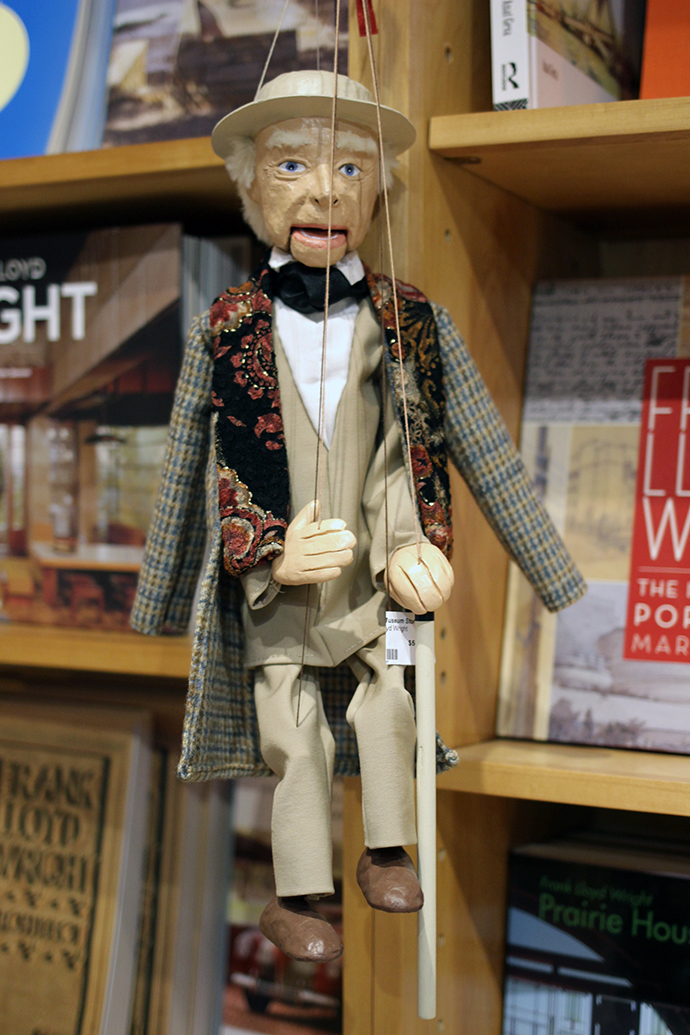
While the main reason for our recent Ohio-bound roadtrip was our friend Katie's wedding, Jim and I were both really looking forward to our tours of neighboring Frank Lloyd Wright houses, Kentuck Knob and Falling Water. Falling Water had been on my radar since college, and it's only a 3-hour drive from my hometown in Ohio. I'm not sure why I'd never made the trip, but I'm so glad that I finally did.
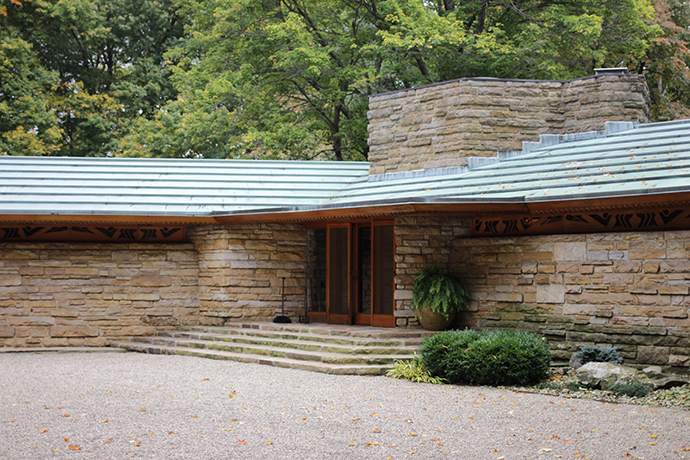
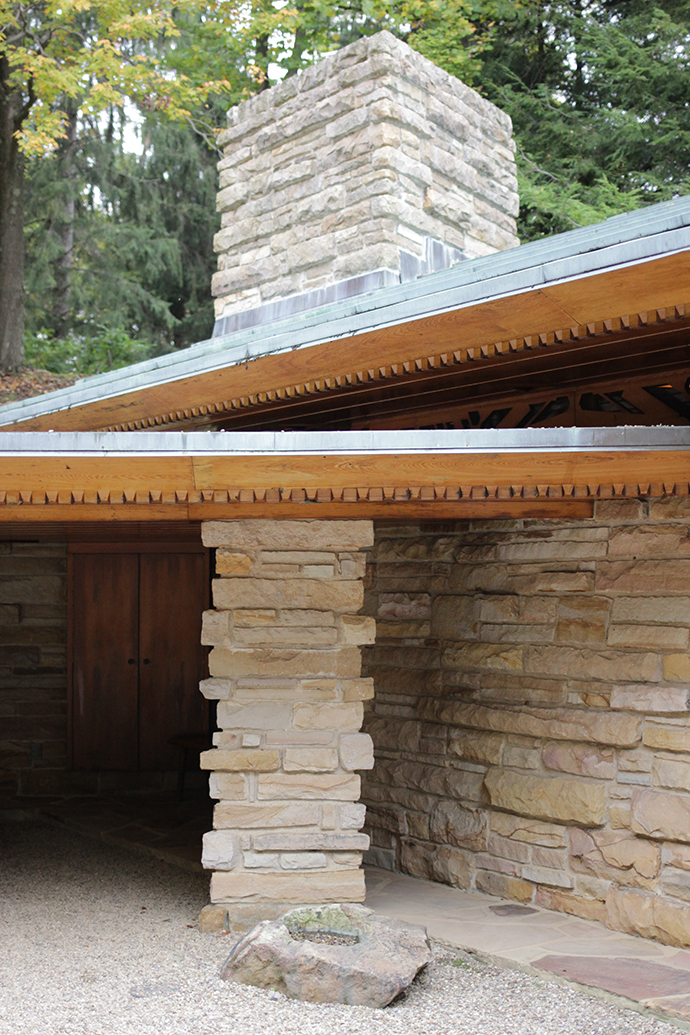
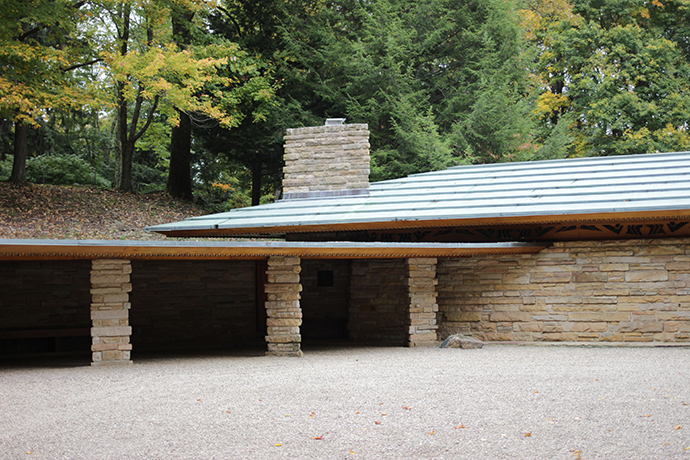
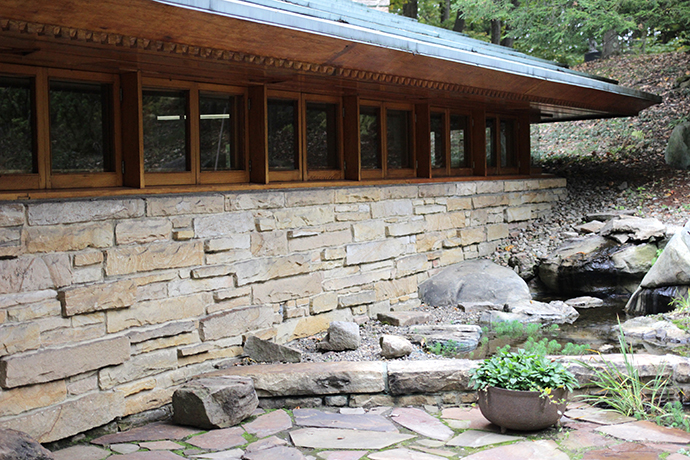
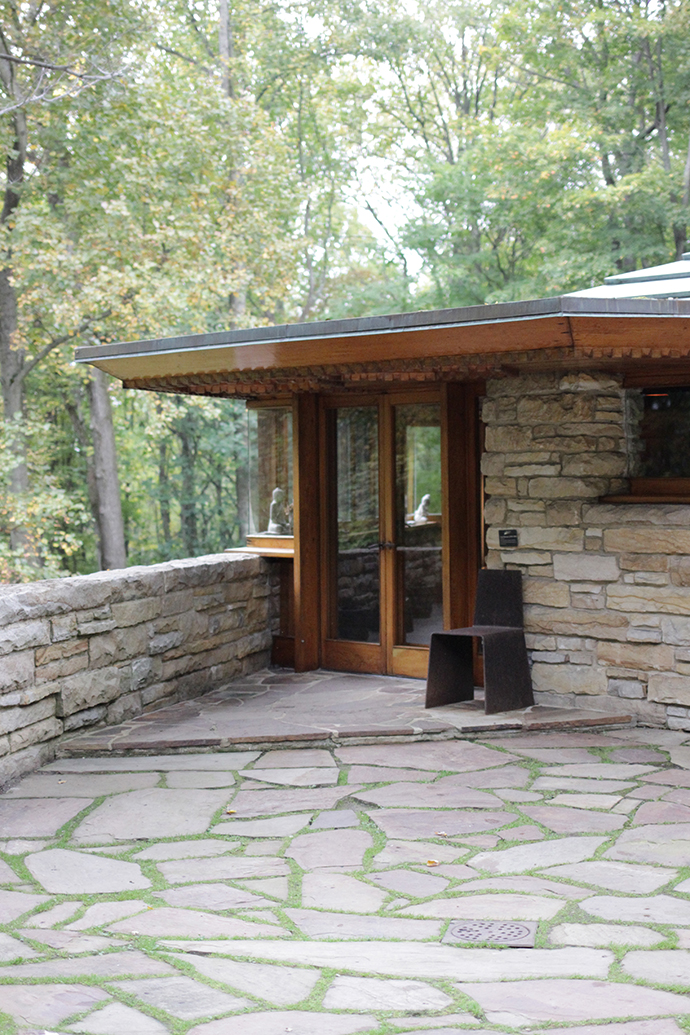
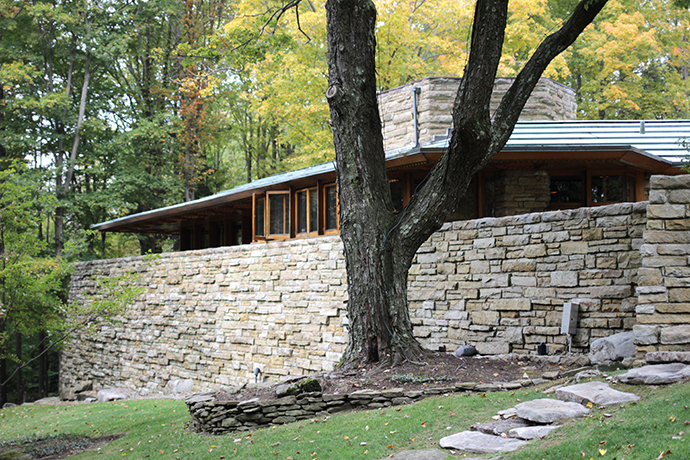
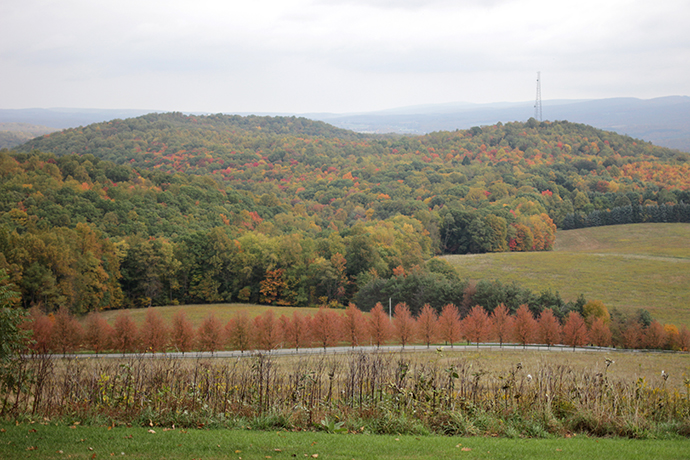
I hadn't heard of the lesser-known Kentuck Knob, but it's only 15 minutes from Falling Water and touring both made traveling a bit out of our way to the middle of nowhere totally worth it. Kentuck Knob was finished in 1956, designed by Wright after the Hagan family fell in love with their friends' house, Falling Water, and wanted a Wright creation of their own. The houses are very different in some ways, but similar in others. Both are built organically, honoring and integrating into their surroundings in interesting ways.
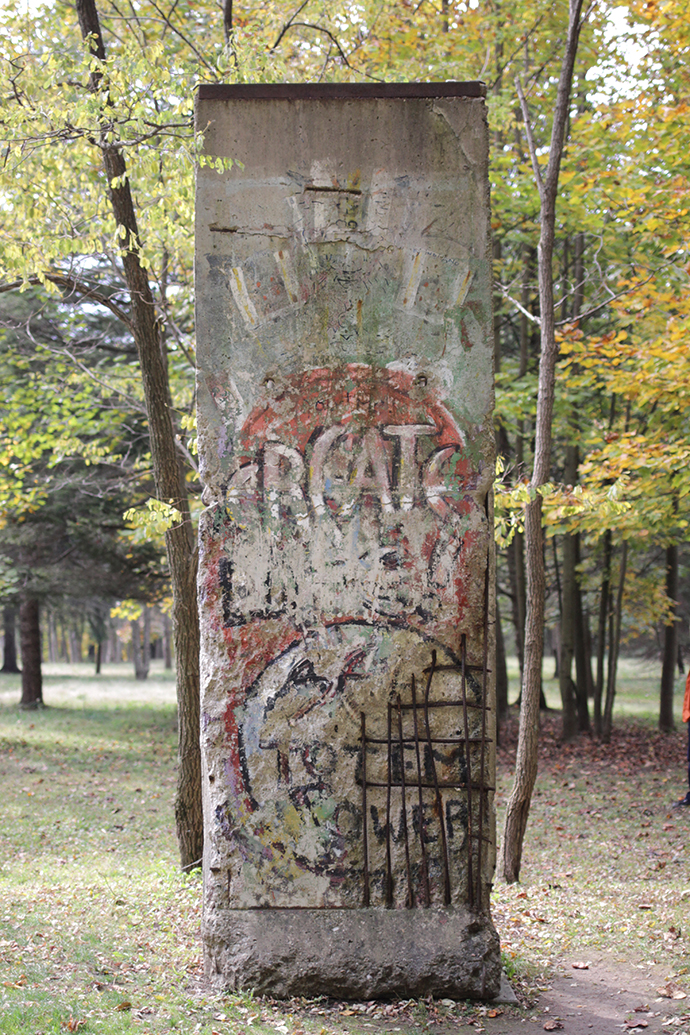
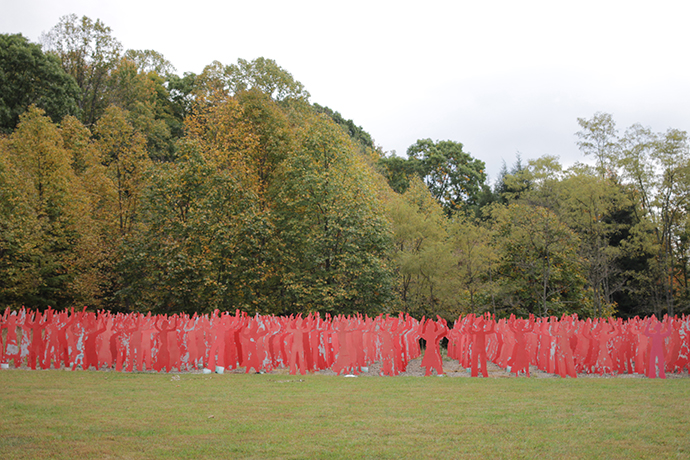
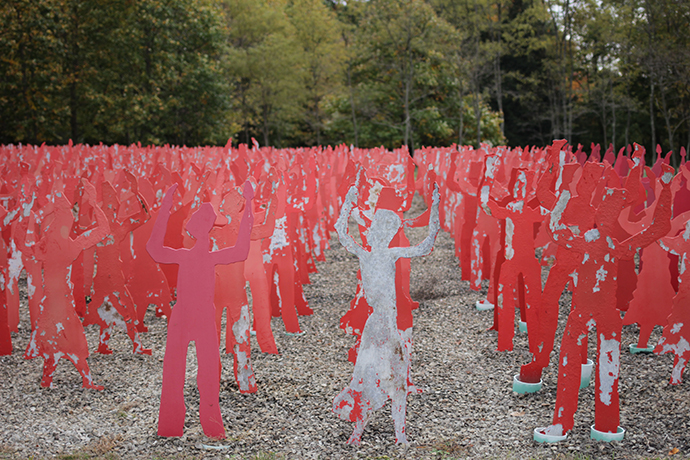
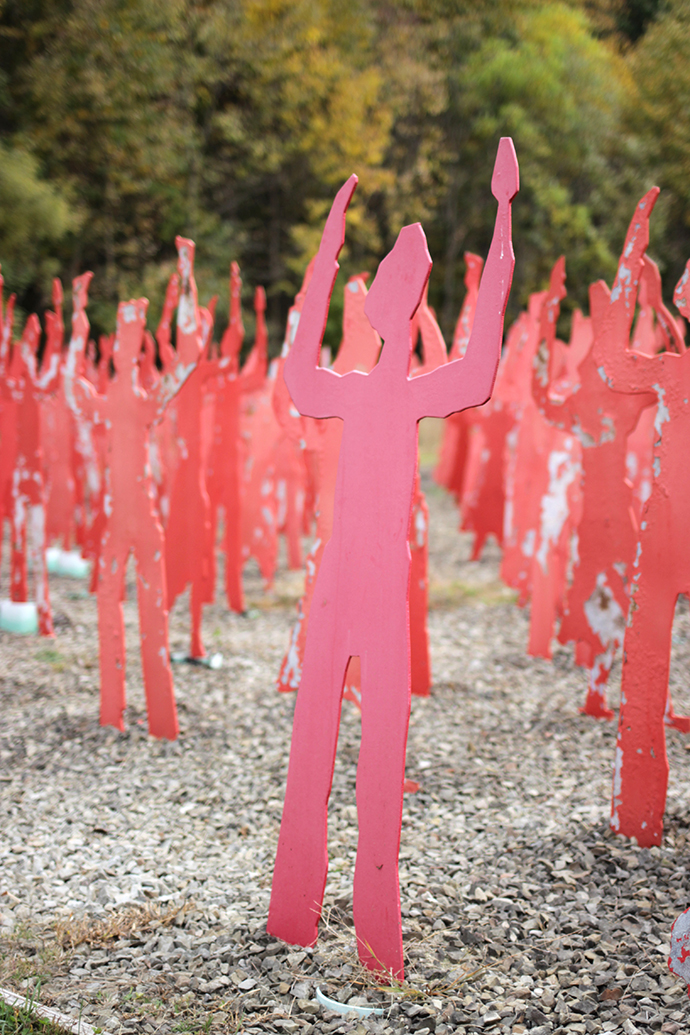
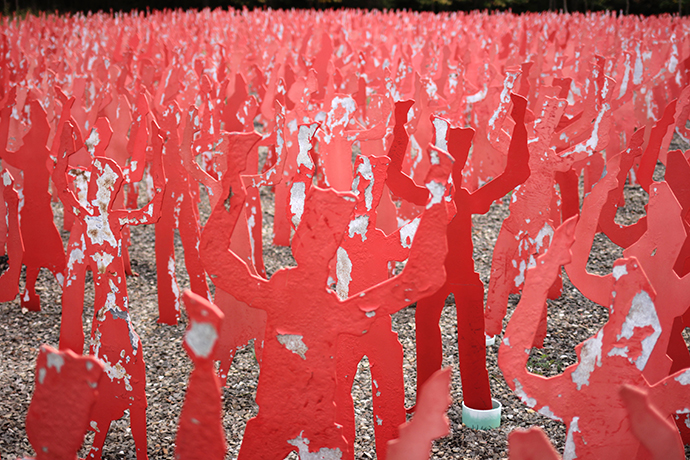
Kentuck Knob has only been sold once, from the Hagans to the current owner, Lord Palumbo in 1986. The house is currently filled with his various collections, including a few pieces of Wright-designed furniture from some of his other famous projects like the Imperial Hotel and Coonley Playhouse. The house sits on 80 acres above Uniontown in Western Pennsylvania, and Palumbo's sculpture collection is scattered about the grounds, which includes The Red Army installation and a piece of the Berlin Wall.
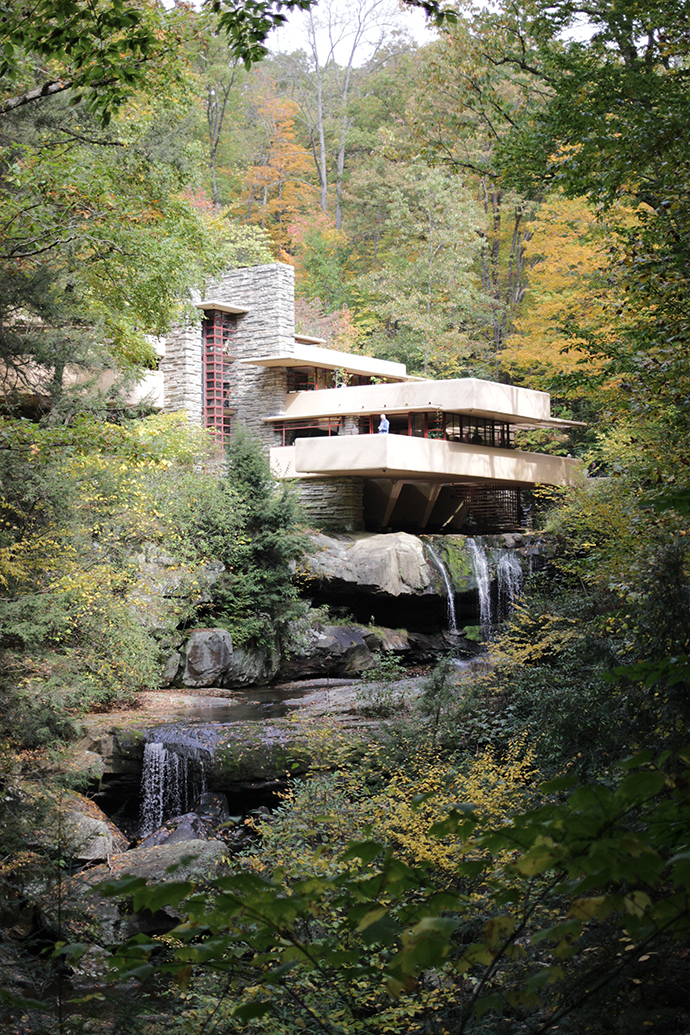
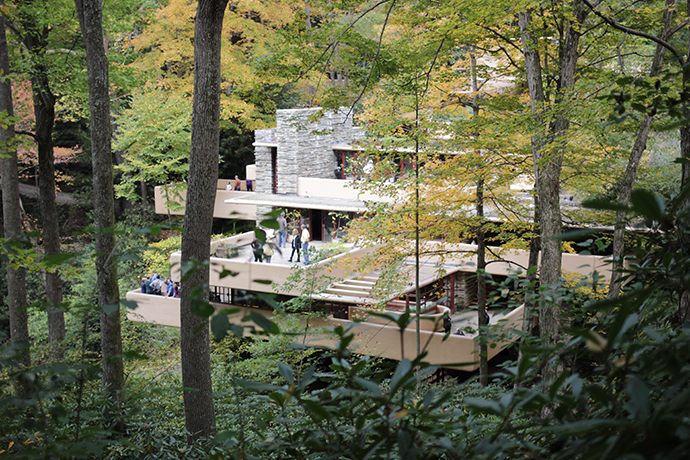
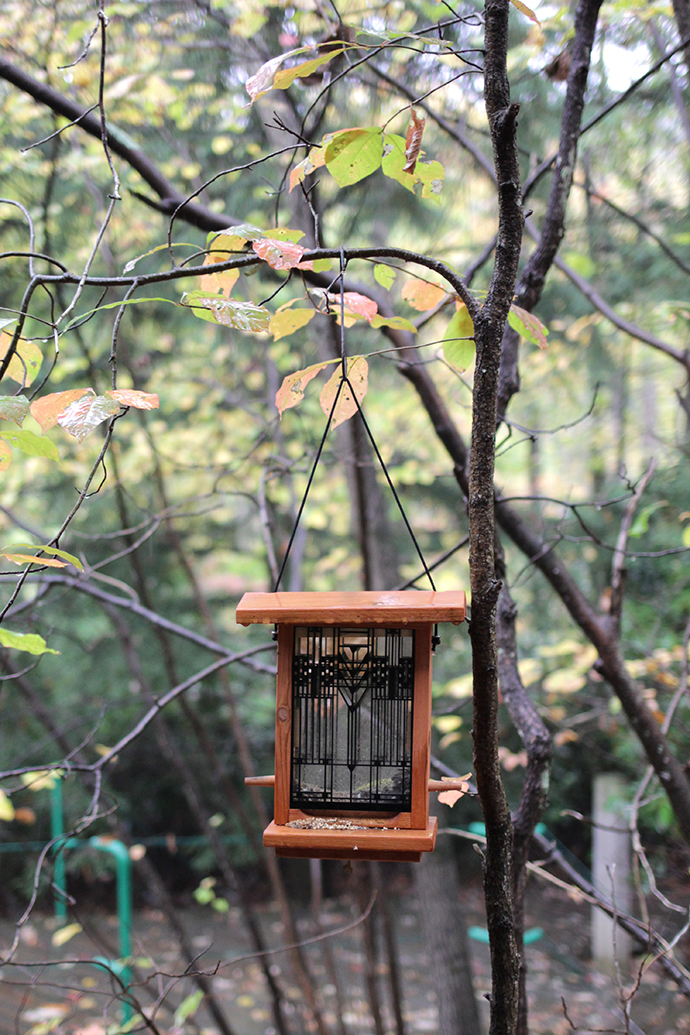
After Kentuck Knob, we headed to the star of the day: Falling Water. There were no photos allowed on our tour, but believe me when I say that it's breathtaking in ways I never thought a house could be. I had a basic knowledge of what to expect, but I was blown away by how emotional the house made me feel. It is just so incredibly beautiful and unlike anything I've ever seen. Our tour guide was really knowledgeable, and the tour is really thorough. Unlike Kentuck Knob, Falling Water is no longer privately owned—it was donated to the Western Pennsylvania Conservancy in 1963 by Edgar Kauffman Jr., the owners' son.
Although the forecast called for rain, the weather cooperated for most of the afternoon. It did, however start to pour down rain just as our Falling Water tour was ending, affording us the opportunity to see falling water on Falling Water. We didn't witness any of the leaks that the house is notorious for, although I suppose having to set out a few buckets would be a small price to pay to live somewhere so life-changing.

Duquesne Incline

When Jim and I were in Pittsburgh recently, we didn't have much on our to-do list since it was a short trip. But the one thing we both knew we wanted to do was to ride the Duquesne Incline. The incline was completed in 1877 to connect Pittsburgh's south side with the neighborhood of Mt. Washington.


The incline closed in 1962 but was reopened in 1964 by a non-profit organization. It has since been completely refurbished and is one of only two remaining inclines in Pittsburgh. The cars travel on 794 feet of track to an elevation of 400 ft at 6 miles an hour. Each car holds 18 people, although there was only one other passenger with Jim and me early on a Monday morning.


A roundtrip costs $5 and there's a cute little museum and observation deck when you reach the top. The museum consists mostly of photos, but for an extra 50 cents you can visit the "working museum," which is basically the underbelly of the incline. Seeing how the cars work is really neat—and really simple.


The views of Pittsburgh and all of its bridges from the observation deck are quite wonderful and more than worth the price of admission. The museum has a nice gift shop filled with classic souvenirs like big pencils, magnets, Christmas ornaments, floaty pens and various items emblazoned with the world's happiest mascot, Duke. They also have not one, but two penny squishing machines, so come prepared.

Wiltshire Motel

When Jim and I left for our destination-wedding roadtrip (if you can call Massillon, Ohio a destination) we planned to drive as far as we could after work and find a hotel along the way. We got tired around Breezewood, PA, which I recognized from my childhood family roadtrips as a popular stopping spot. We inquired at a few chain motels but were discouraged with the prices, so we consulted Google, which led us to the Wiltshire Motel. It had good reviews and the price was right so we drove to it not knowing what we would find.

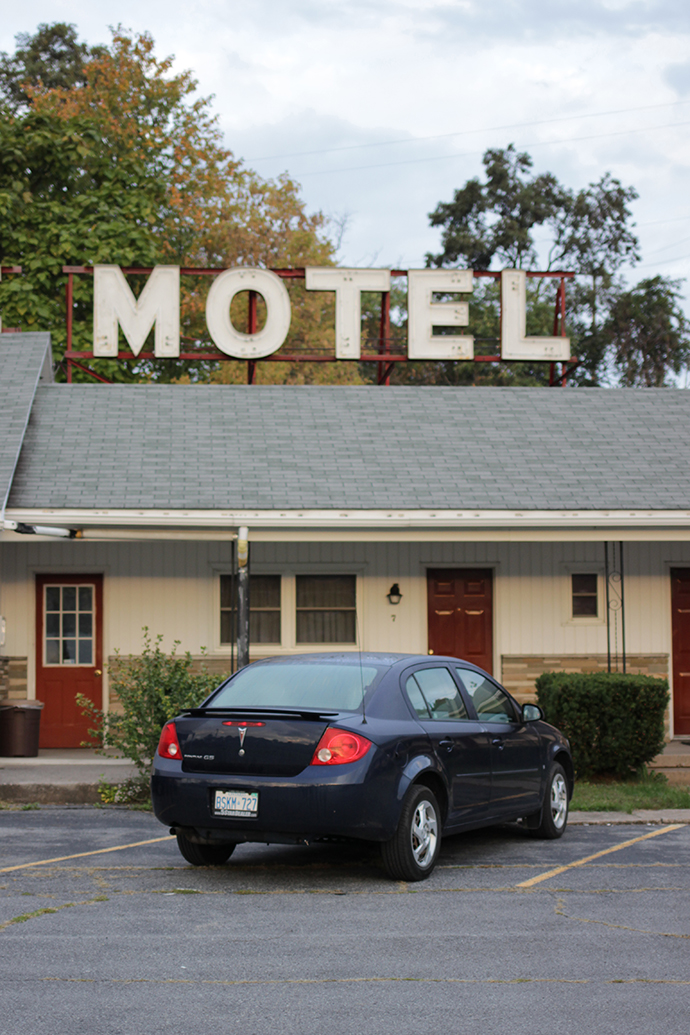


We were both immediately delighted when we pulled up and noticed the classic neon letter signage. The neon was, unfortunately not on, but there was enough ambient light to know that we were at the right place. In the morning, we realized that the place was basically lousy with wonderful signage, with a two-sided "Motel Entrance" arrow at one entrance and another classic sign (with arrow) at the other.


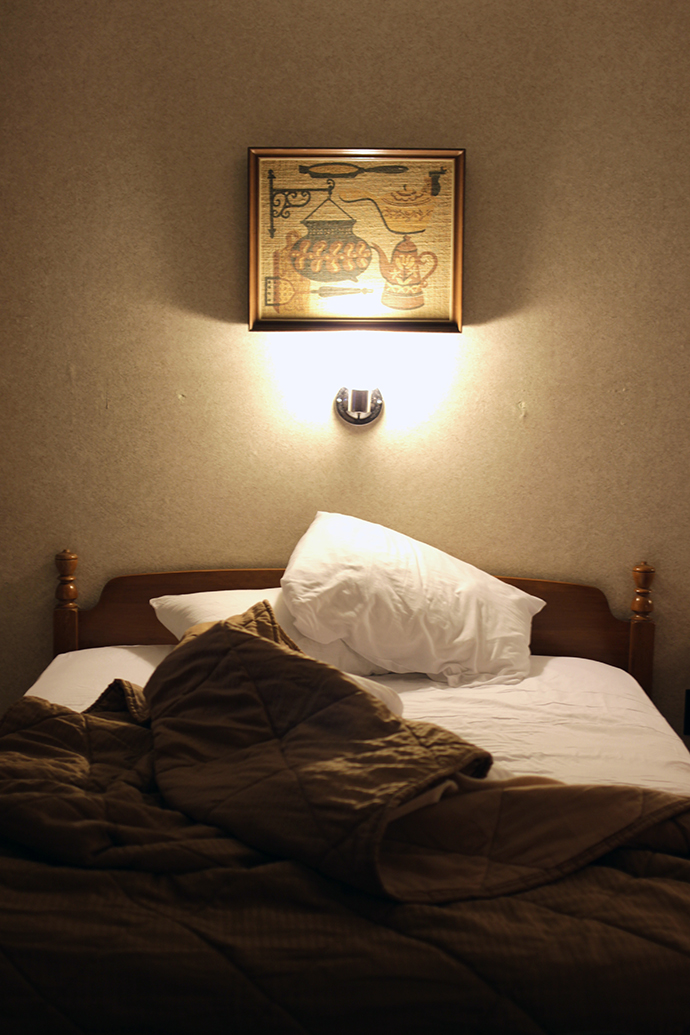


The delights continued when we were handed a classic motel keytag to our room, which looked as if it hadn't changed since the 1950s. The room was classic roadside motel through and through—everything looked like it was authentically vintage, but was also in inexplicably good condition. The pink and teal color scheme of the bathroom is perfect, and the wall art above our beds was something I would have definitely grabbed at an estate sale to sell on Blue Carrot.
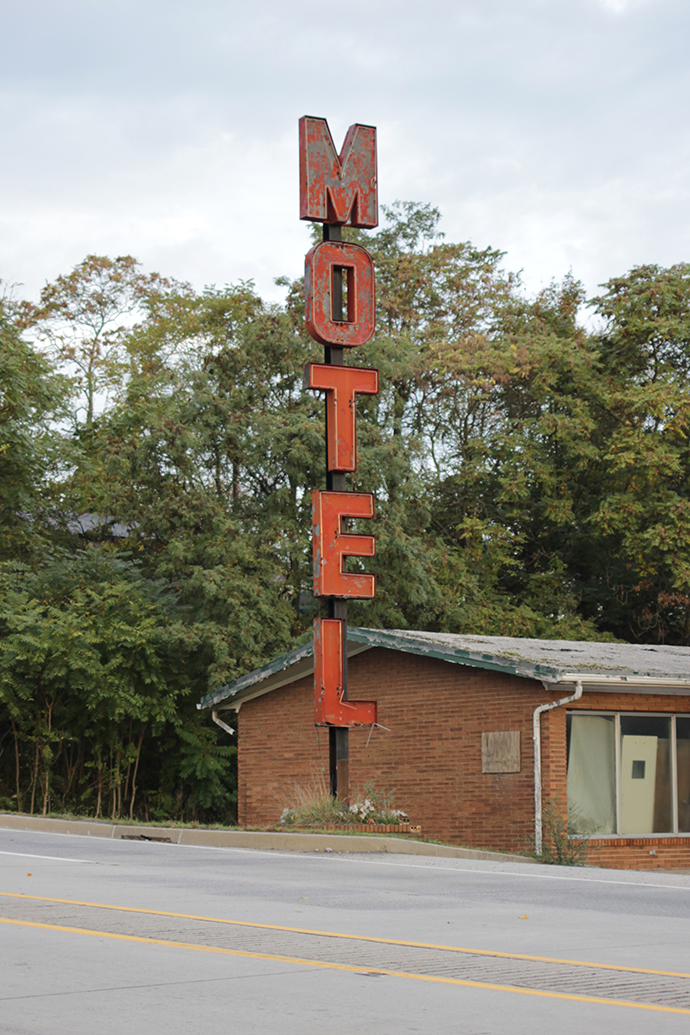

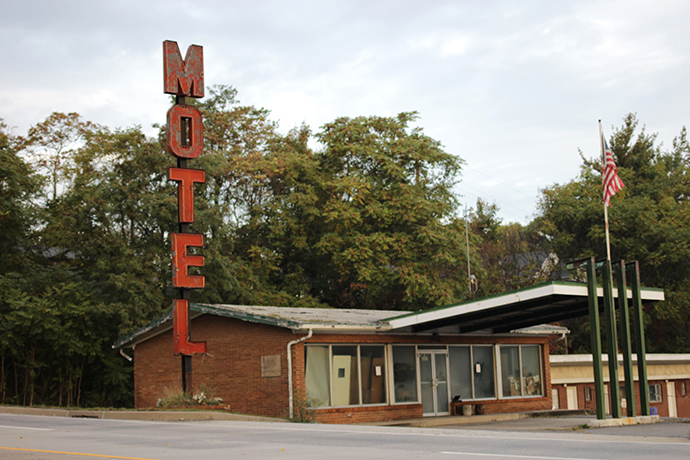
Bonus Motel: In the morning we also realized that we were across the street from a totally wonderful abandoned motel with the most perfect "MOTEL" sign out front. At first glance, Breezewood appears to be all chain hotels and gas stations, but I love that there are still signs of the old roadside life if you look hard enough.

Philadelphia: Christ Church Burial Ground

While Jim and I were walking around Philadelphia, we kept seeing signs for Benjamin Franklin's gravesite. It hadn't initially been on my list, but I'm never one to pass up the opportunity to see a historic cemetery, so we made sure to stop at the Christ Church Burial Ground to pay our respects.
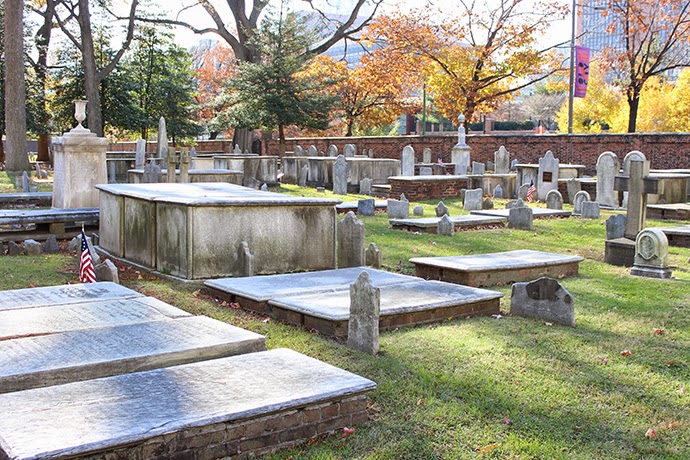


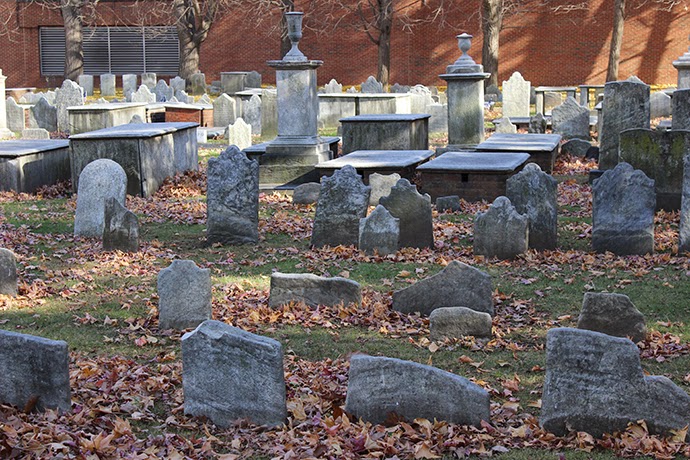
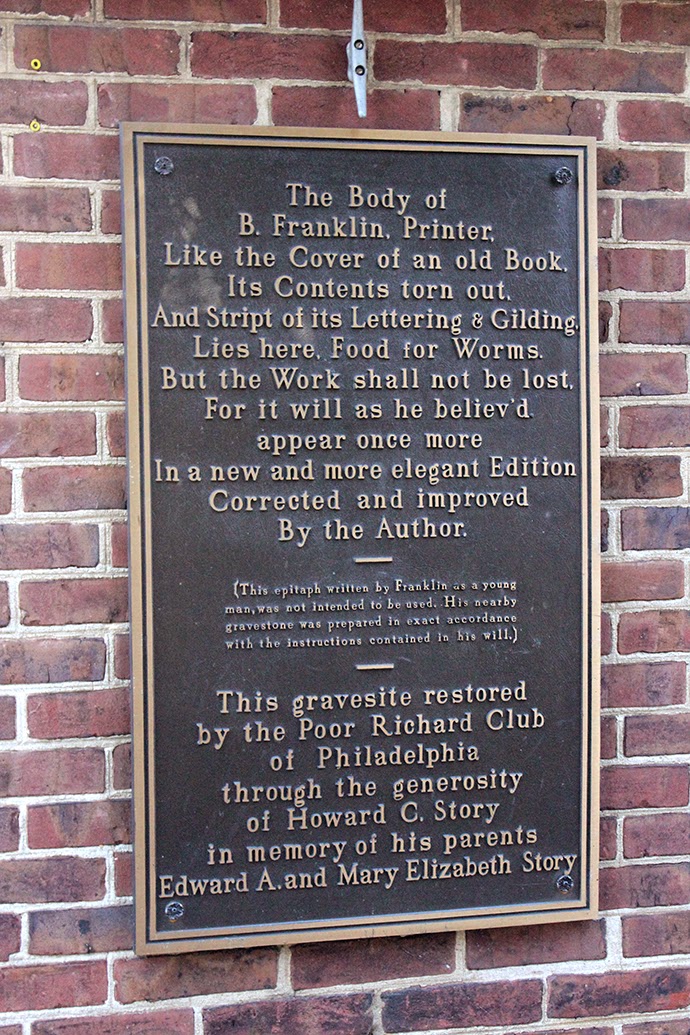
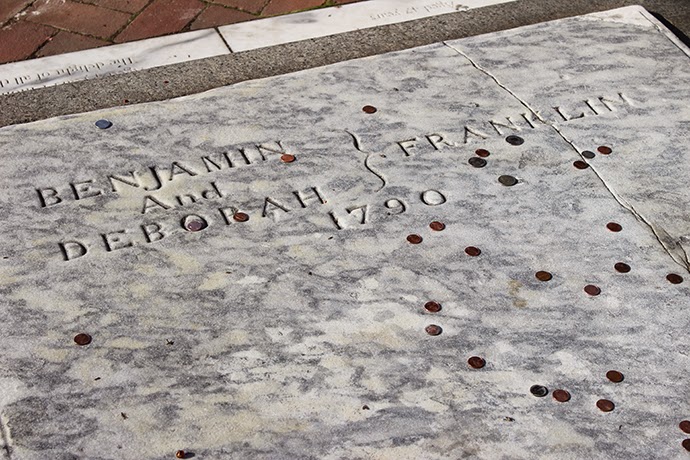
CCBG has the distinction of being the only cemetery that I've ever had to pay admission to enter, although that wasn't going to deter me from visiting. You can actually see Franklin's grave from the sidewalk if you're totally against paying the $2 fee, but the grounds are beautiful and contain some wonderfully old tombstones (the oldest known marker is from 1721).
The first thing you notice about Franklin's grave is how plain and simple it is, and a sign hanging close by states that it was prepared in exact accordance with the instructions contained within his will. I happen to prefer the epitaph that he wrote as a young man, with its literary references and the line "food for worms," which I think is pretty much perfect in every way.
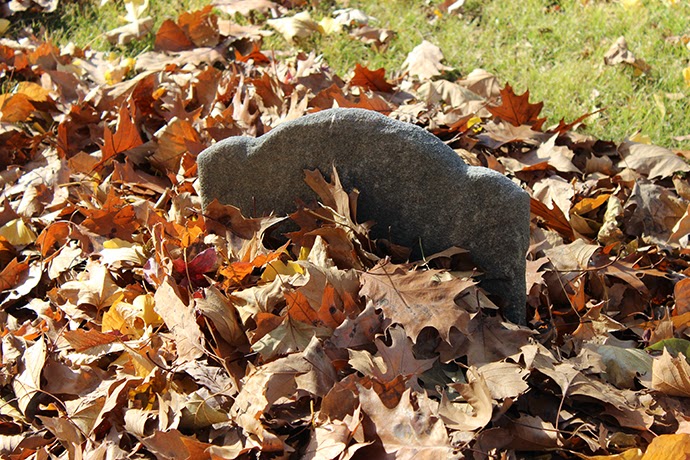
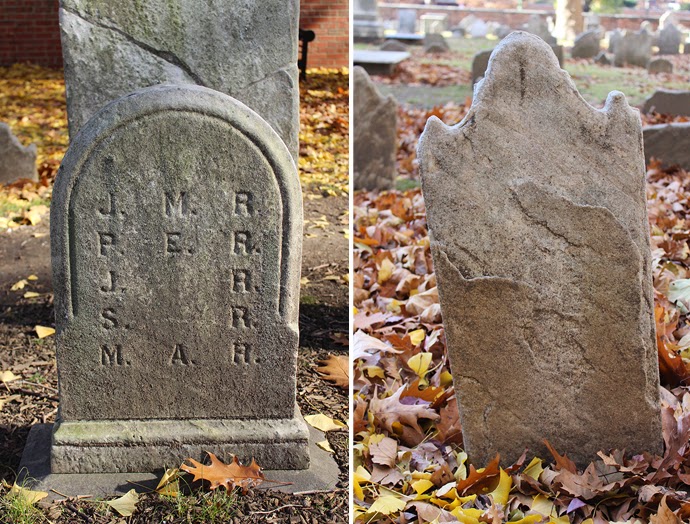
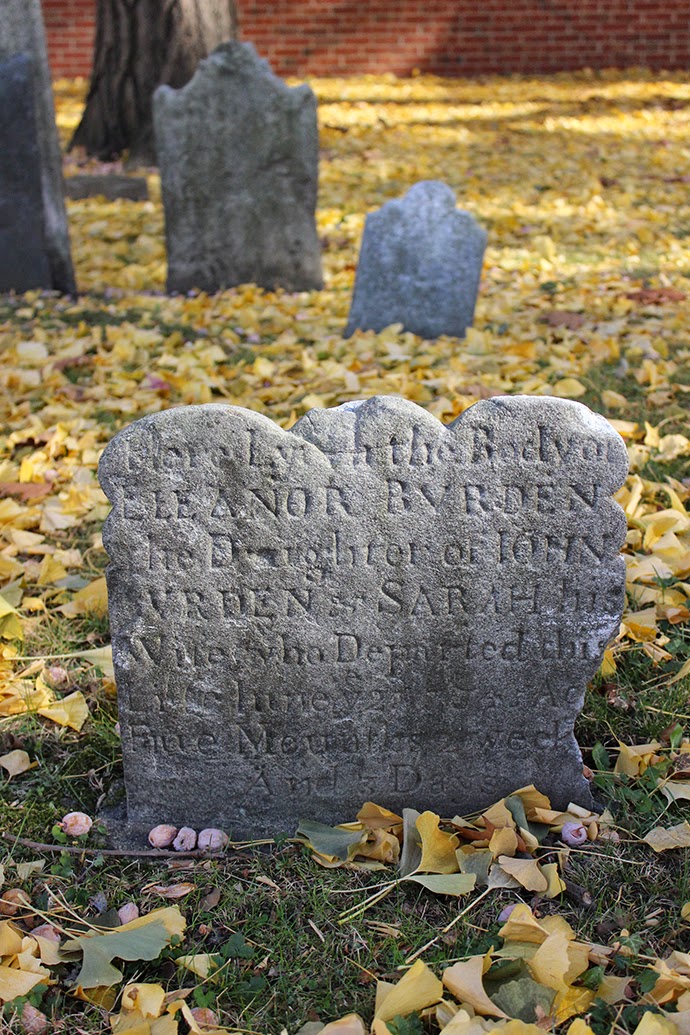
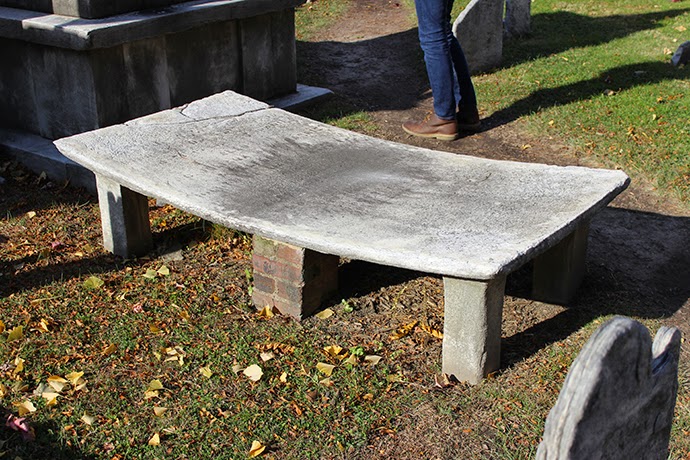

The fall leaves provided an excellent backdrop to the crumbling stones, and I've never met an arching, iron entrance gate that I haven't immediately fallen in love with. In addition to Franklin, the burial ground is the final resting place of four signers of the Declaration of Independence, the publisher of the first daily newspaper, Civil War generals, Pennsylvania governors, artists and several descendants of Franklin as well as his wife.
Philadelphia: Reading Terminal Market

When Jim and I went to Philadelphia in November, we stayed with his grandparents outside of the city. Before we headed back to their place for the night, Jim wanted to pick up a pie to take for dinner, so we stopped in Reading Terminal Market. I get really overwhelmed by indoor markets and Reading Terminal was crazy crowded, but full of amazing signage, delicious smells and beautiful food.


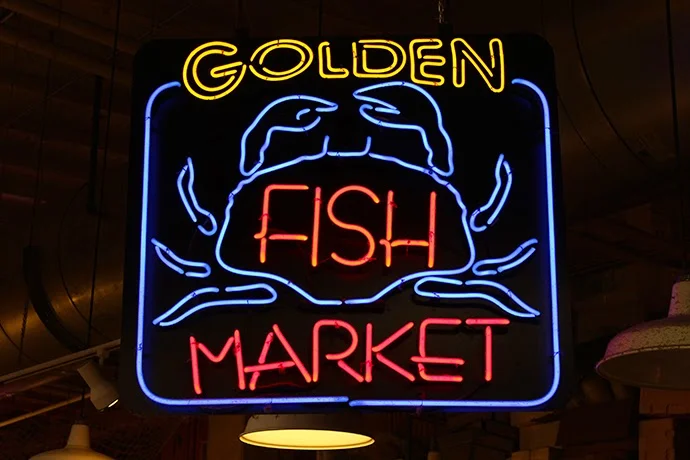
The first thing I noticed was all of the gorgeous neon signs hanging everywhere you looked. There were lobsters and pretzels and Liberty Bells, cheesesteaks, donuts, ice cream and tons of other things I would have gladly devoured if we had the time. Jim eventually interrupted my wide-eyed gawking to ask if I had seen the Chocolate by Mueller booth and when I saw their chocolate lungs, I immediately knew it would be my favorite shop in the market.


They make standard chocolates and candies, but they are known for their "weird" chocolate shapes—lungs, hands, faces, teeth, eyes, noses, ears, kidneys, brains and hearts—all completely edible and guaranteed to be the hit of any party (from their website: "'Oops, I thought you said a dozen noses' explains the chocolate bunch of nostrils"). They also sell a chocolate-covered onion, which is exactly what it sounds like and a popular seller, despite probably being totally disgusting.
I actually never ended up purchasing anything because I was overwhelmed with so many wonderful choices that I couldn't make a decision. Luckily they sell most of the shapes in their online store if I decide I just can't go on any longer without owning (and eating) a pair of chocolate kidneys.

Eastern State Penitentiary: Part 2
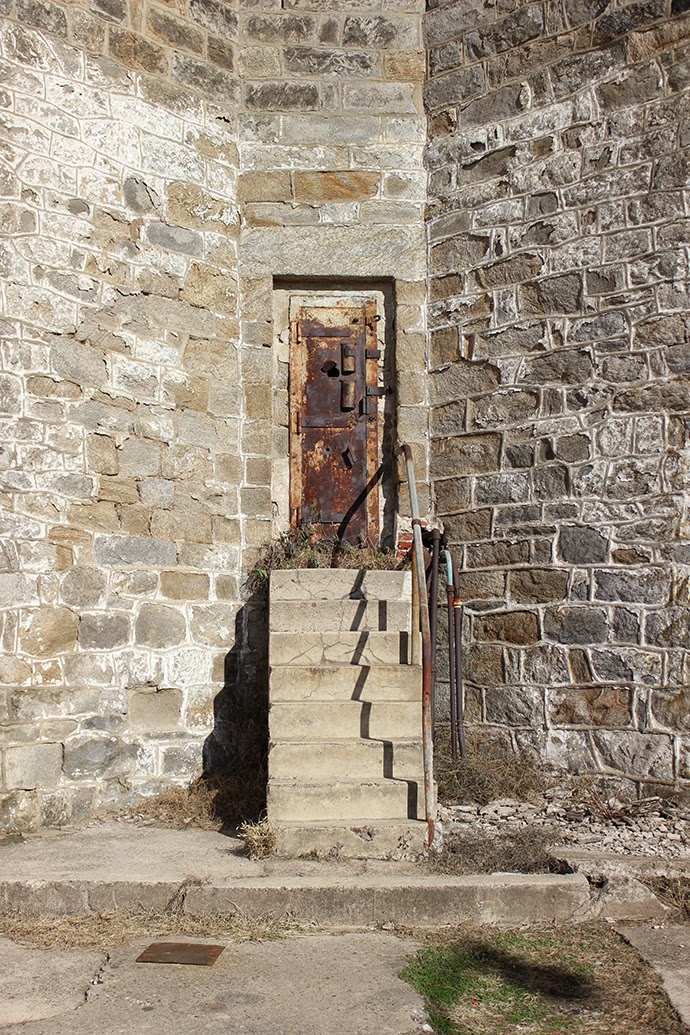
Last week I shared some of my photos from the crumbling interior of the Eastern State Penitentiary in Philadelphia. ESP was operational from 1829 until 1971, was designed by John Haviland and was the largest and most expensive public structure ever constructed.
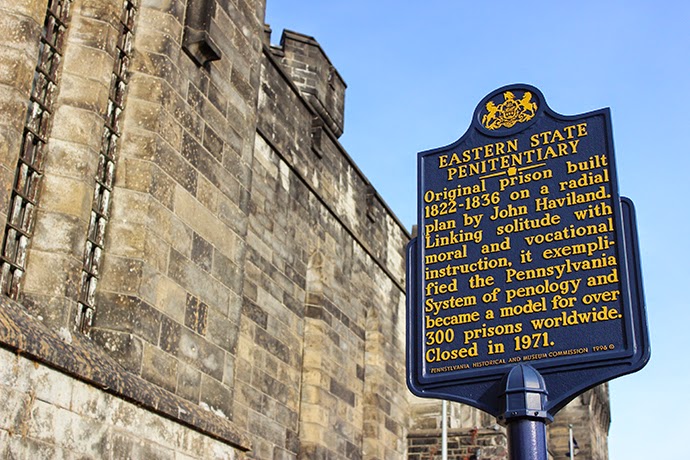
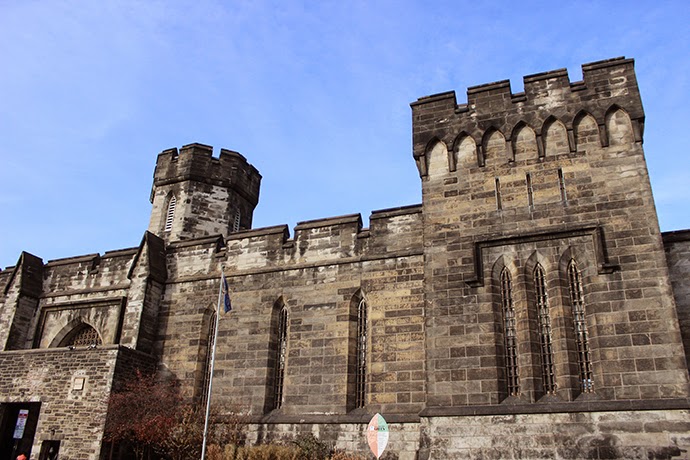
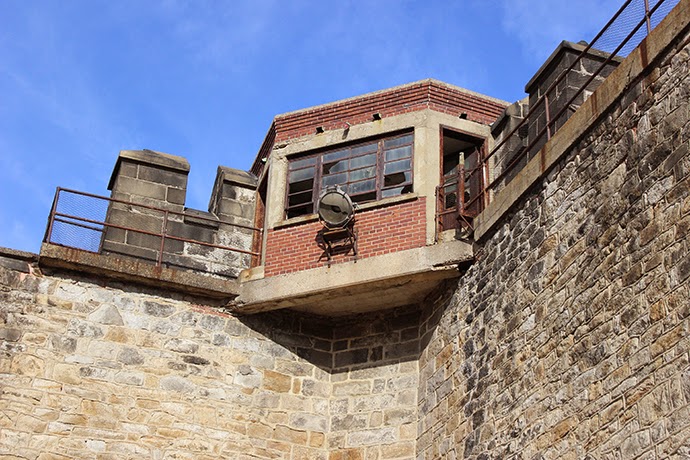
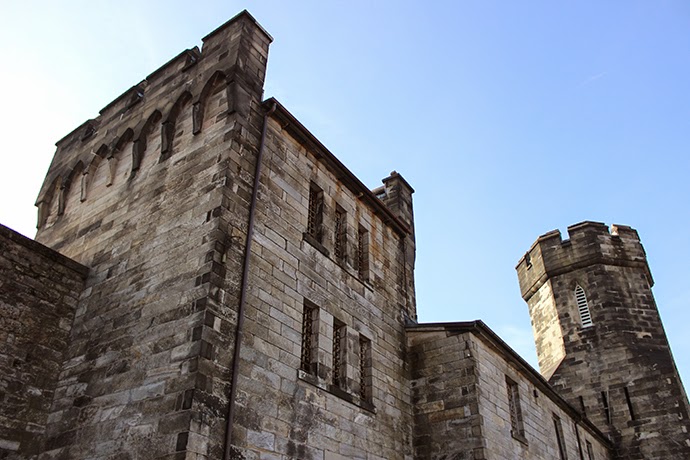
It sits in the Fairmount section of Philadelphia, and looks completely out of place nestled in a neighborhood of coffee shops and row houses. Some of the most interesting stories on the audio tour were about ESP's famous inmates, notably Al Capone and "Slick" Willie Sutton. Slick Willie was one of twelve inmates who escaped via a tunnel in April of 1945. Eleven of them were eventually recaptured and one—James Grace—even asked to be let back in.
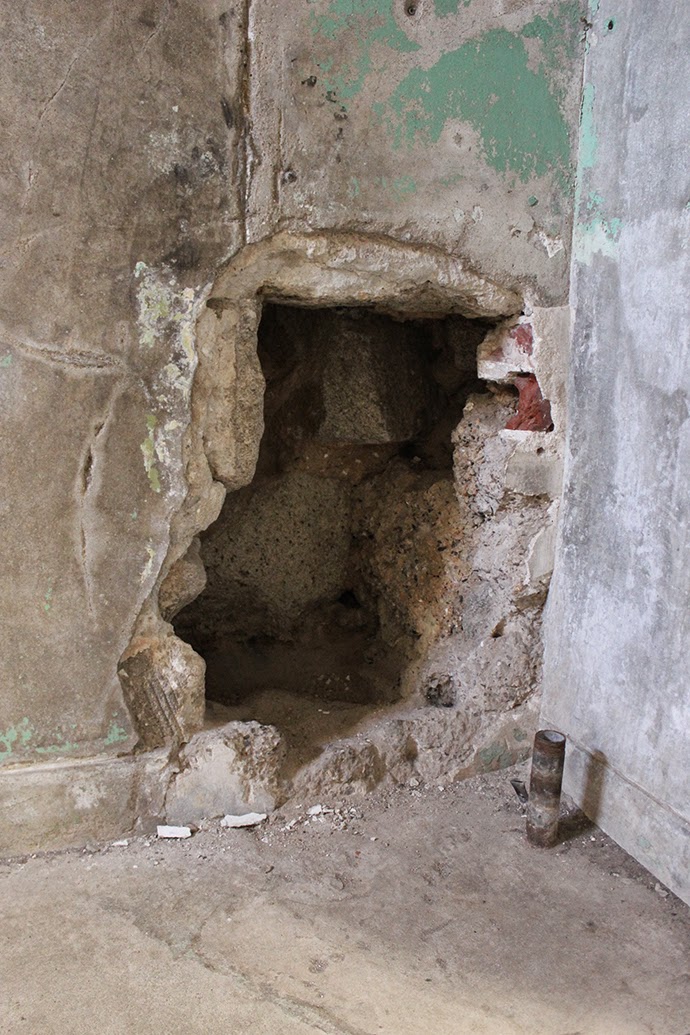
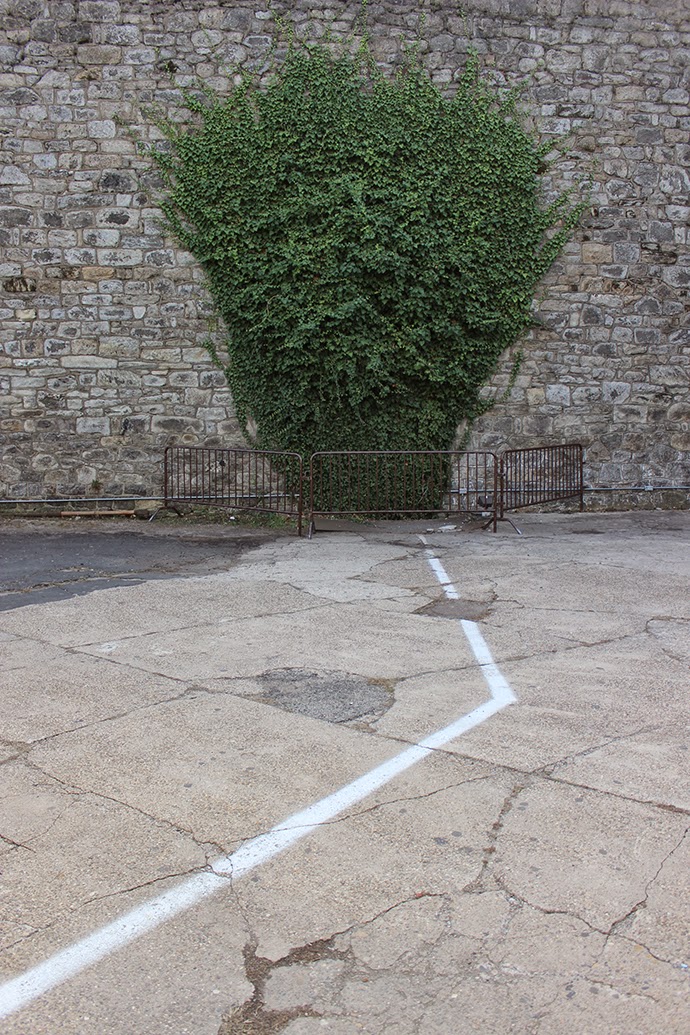
The tunnel has recently been excavated (after being filled in following the escape) and you can actually walk inside of the cell and see the opening. A line on the pavement outside traces the tunnel's route, under the ground and past the outside walls.
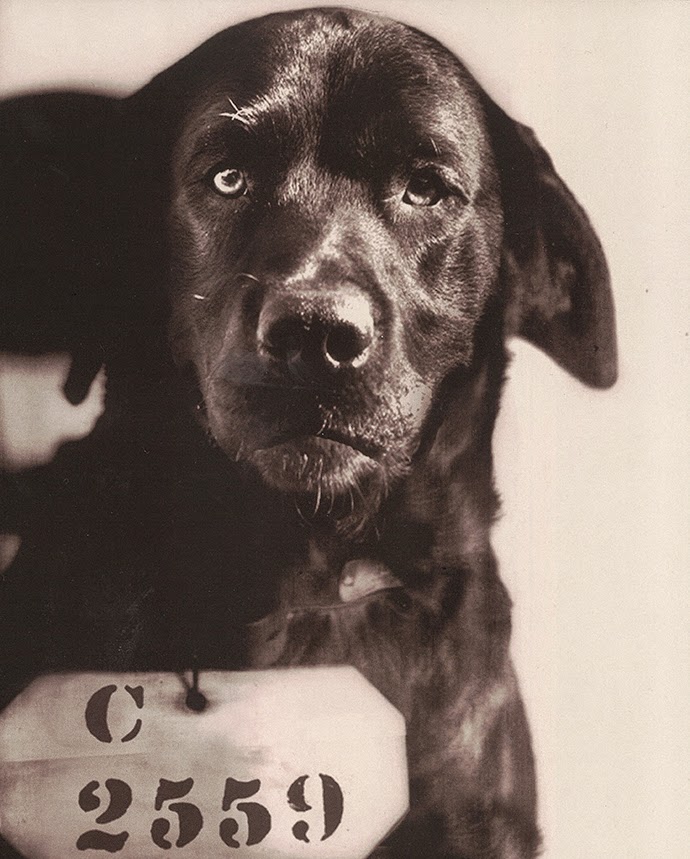
ESP is filled with fascinating stories like this, but my favorite inmate is definitely Pep the dog. In 1924, Pep was sentenced to life in prison for killing the Pennsylvania Governor's cat—or at least that's what a newspaper reporter wrote at the time. The real story is slightly less dramatic, and has Pep being sent to the prison to help rehabilitate prisoners (and because he was chewing on the Governor's couch cushions). Either way, there is a mugshot of Pep, which is pretty fantastic.
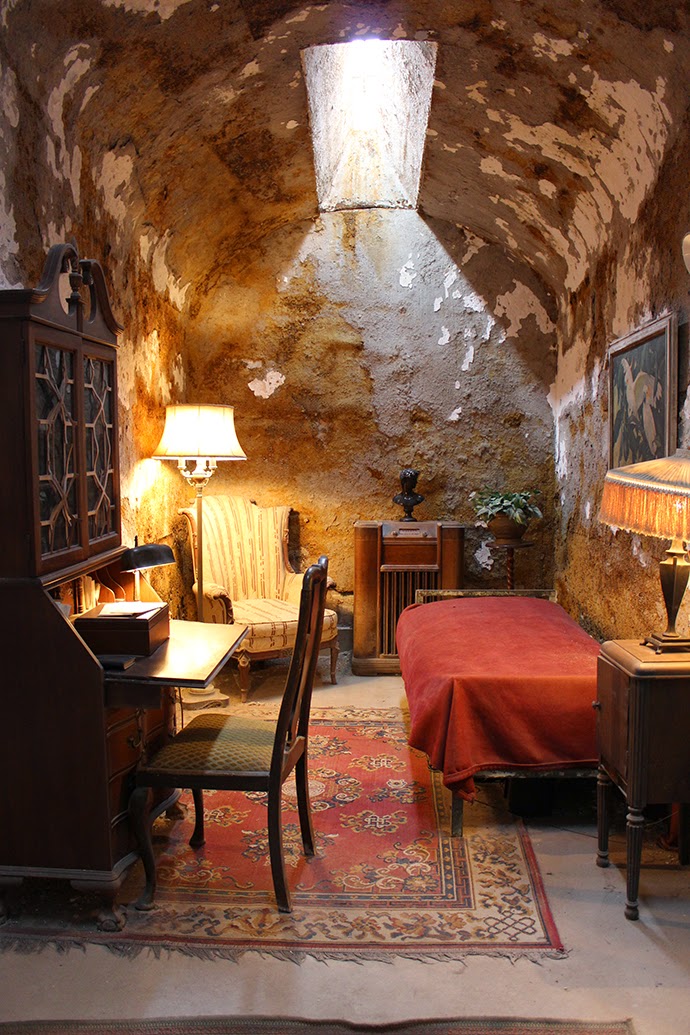
ESP's most famous prisoner, however, is probably Al Capone, who spent 8 months at Eastern State in 1929-1930. They've recreated his cell as it looked when he was there, complete with fancy furniture, an oriental rug, soft lighting, artwork and a radio.
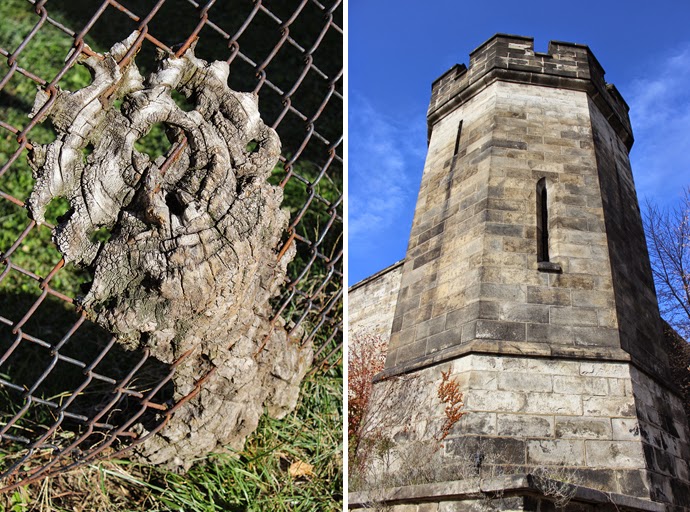
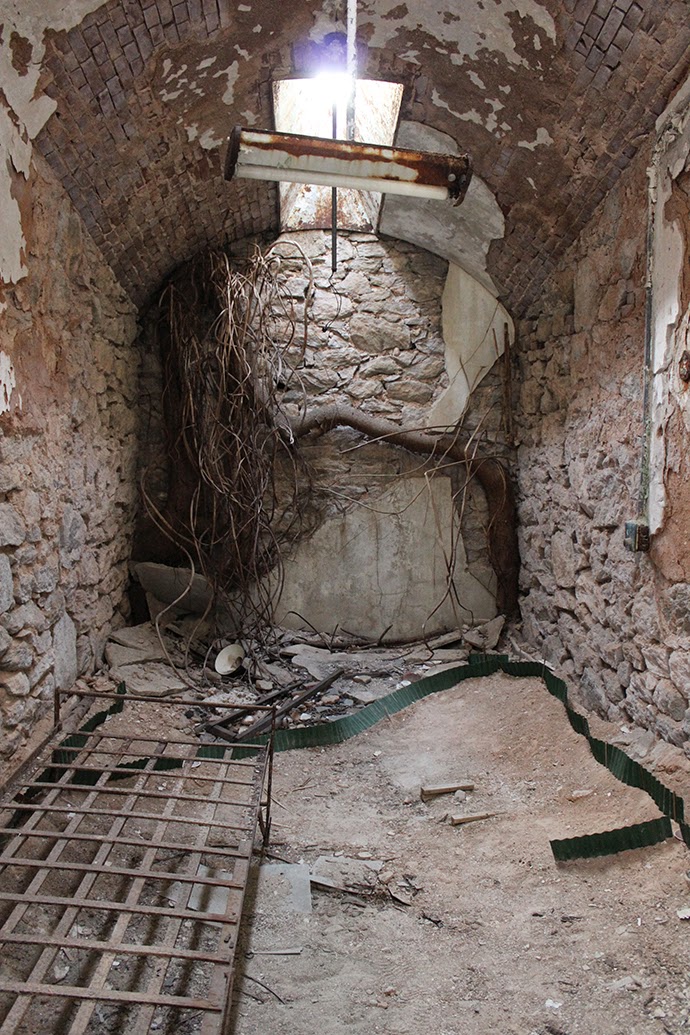
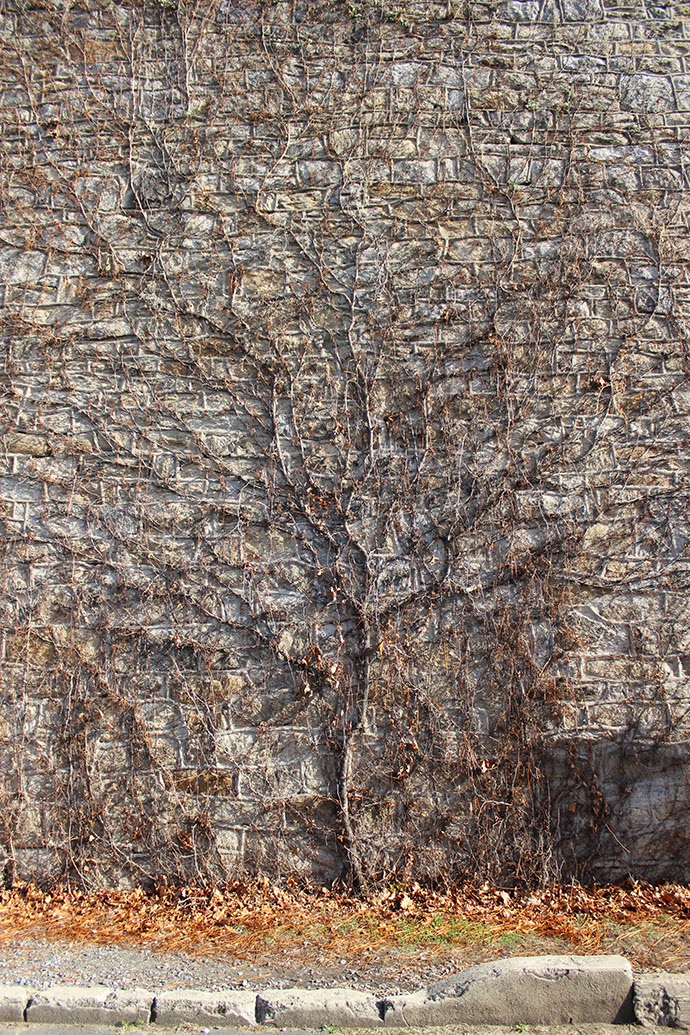
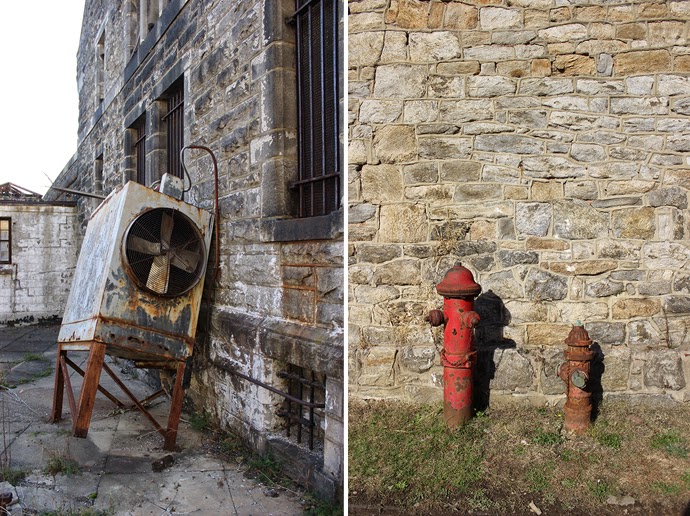
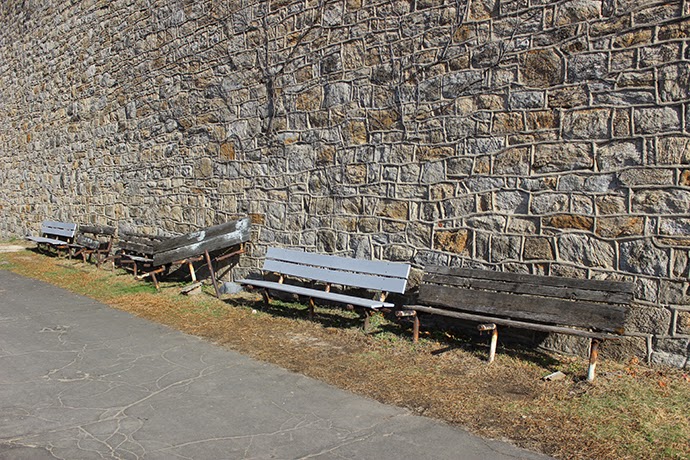
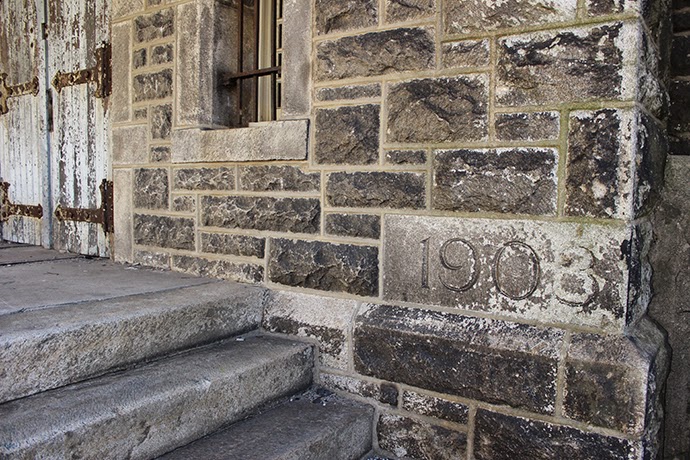
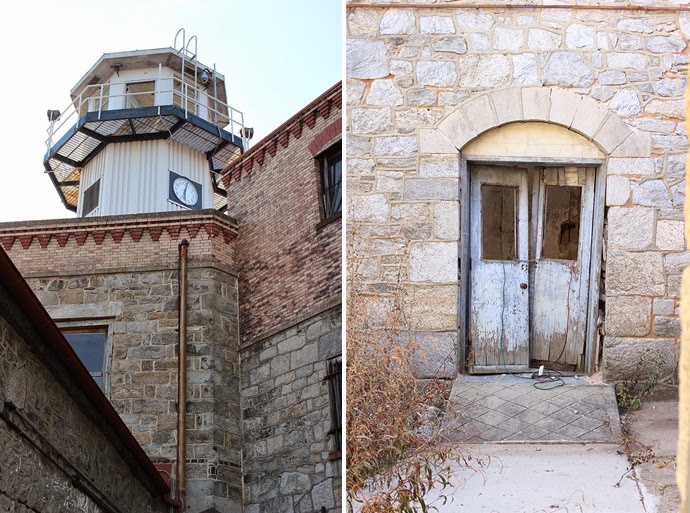
Another cell even has a full-sized tree growing through the wall, and it continues into the neighboring cell. There is so much history at Eastern State and there was something fascinating in every single corner I peeked into. The day I went was beautiful and sunny, and you get to wander the grounds as freely as you do the interior. I hesitate to say that I thoroughly enjoyed being inside of a prison, but even if I was sad to leave, I'm glad I at least had the option.

Eastern State Penitentiary: Part 1
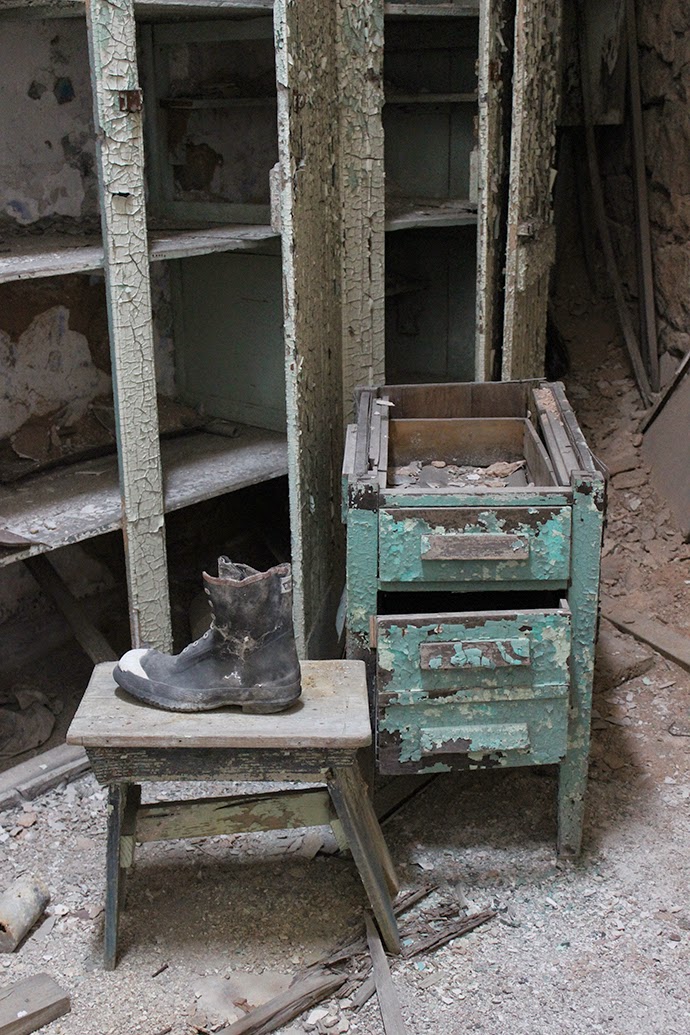
A few weeks ago my friend Jim and I went to Philadelphia for the weekend. I had never been before, but I had been planning a trip for many years so we had a very full agenda. Number one destination on my list was the Mütter Museum, followed closely by Eastern State Penitentiary. I had been to the Mansfield State Reformatory back when I lived in Ohio, and absolutely loved it. I always heard ESP described as similar to Mansfield but with even more historical significance. It would be very difficult to pick which one I liked more—since they were both amazing—but I will say that ESP managed to exceed even my high expectations.
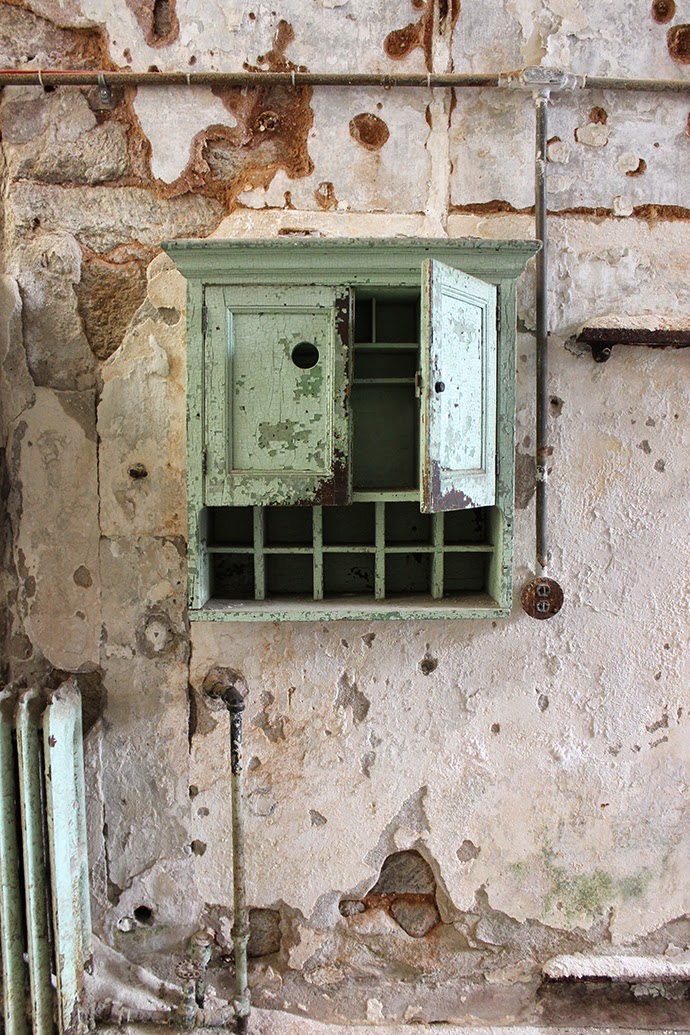
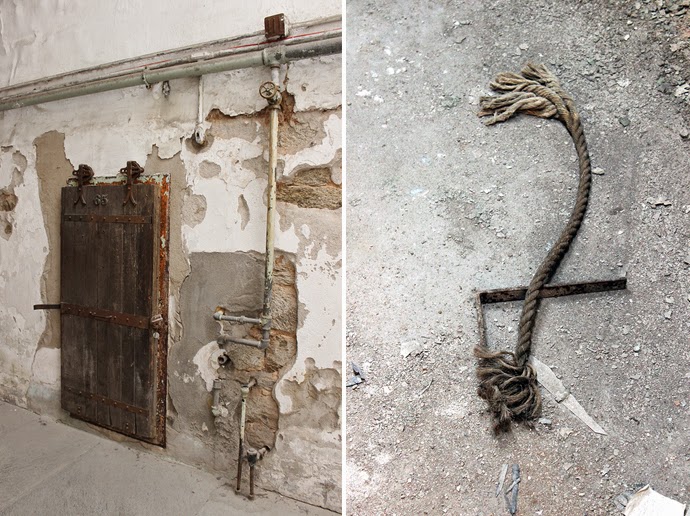


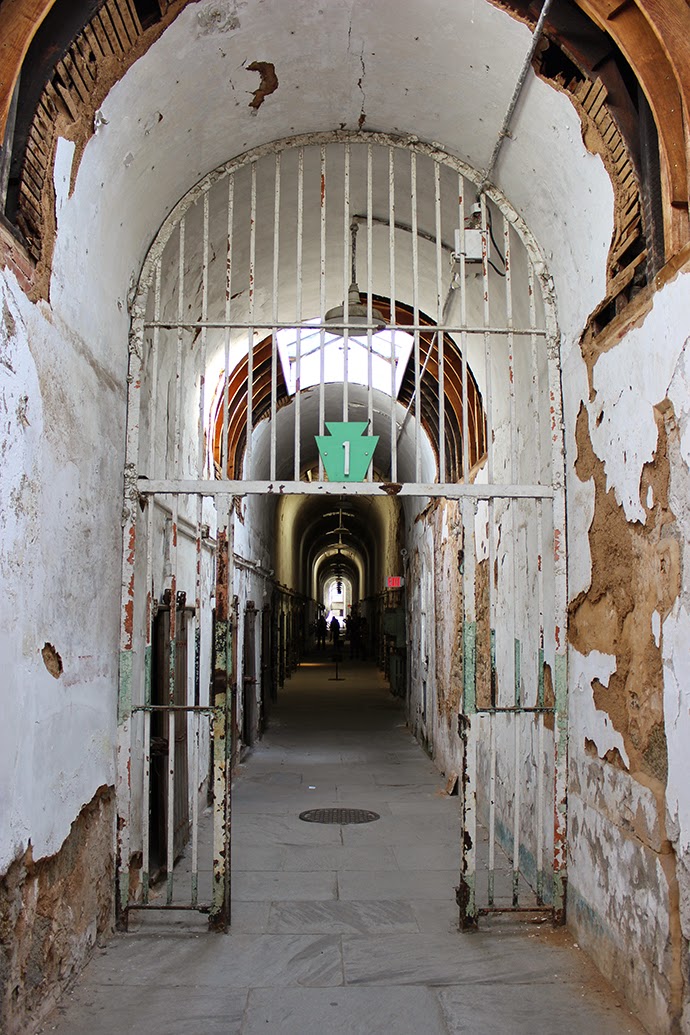
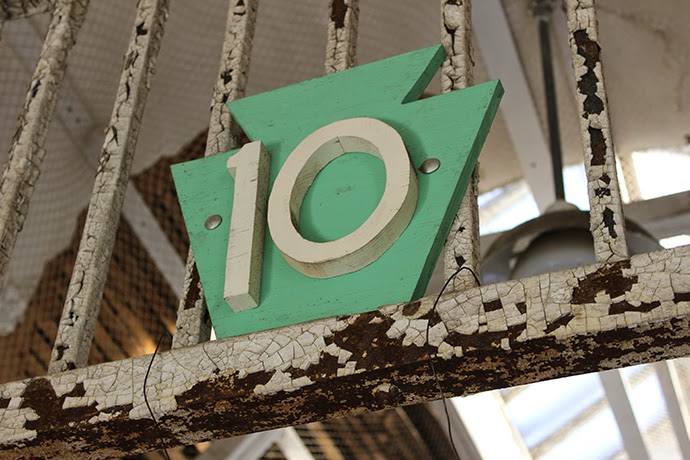
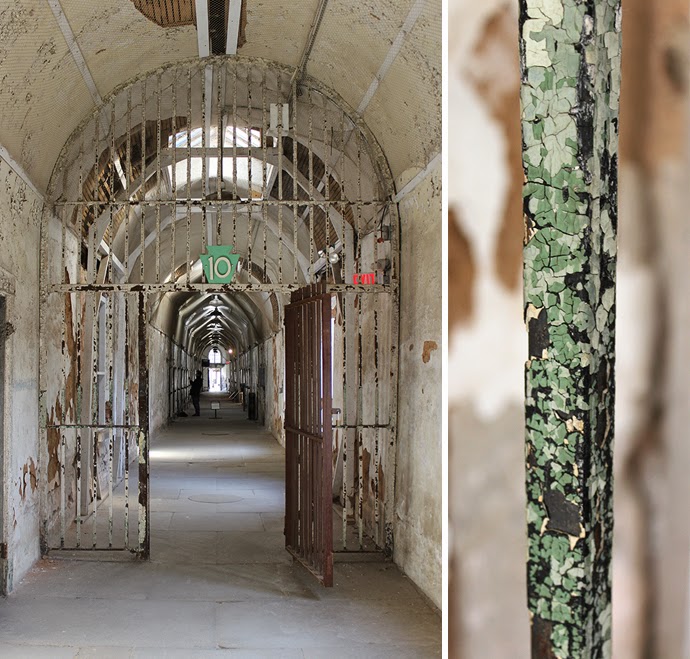
Jim was off visiting family, so I spent most of Sunday at ESP, which was very easy to do. I loved that there was no guided tour—I got to wander at my own pace, aka take a million photos while trying not to be overwhelmed by all of the incredible textures, colors and artifacts. About half of the penitentiary is currently off-limits, but there is still so much to see.
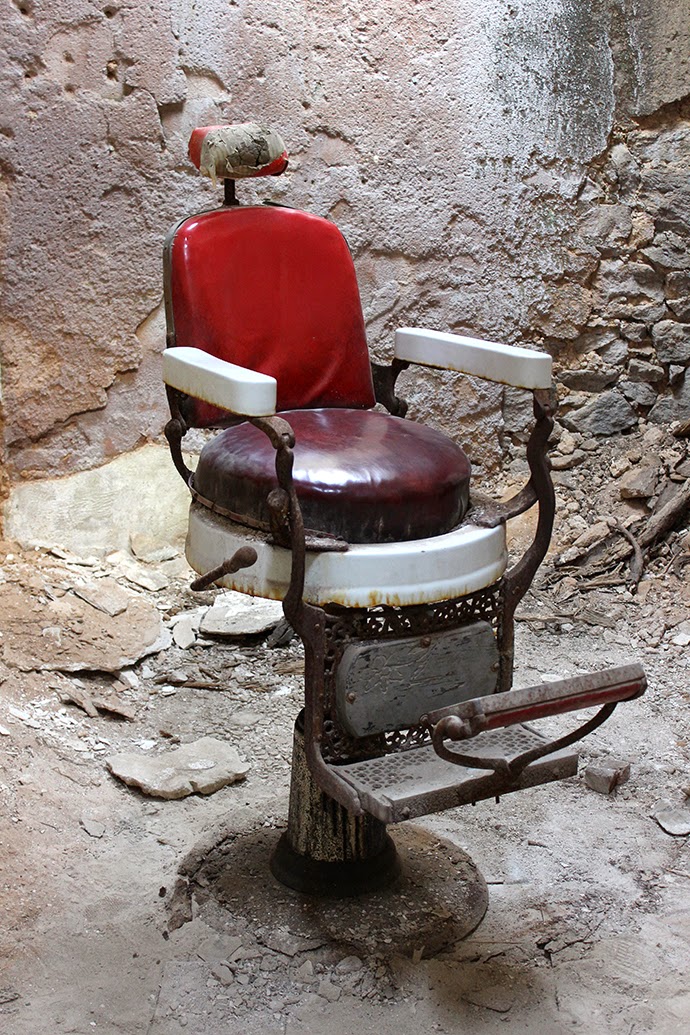
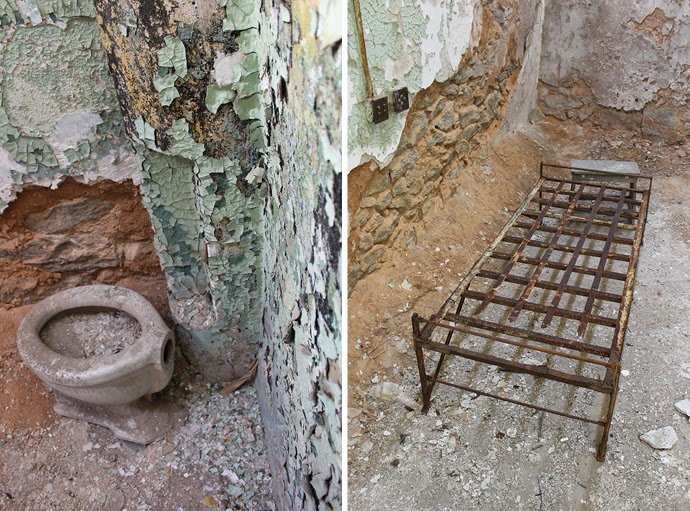
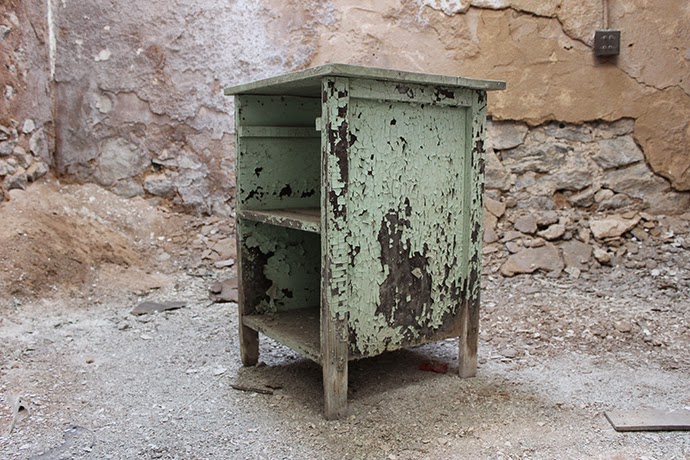
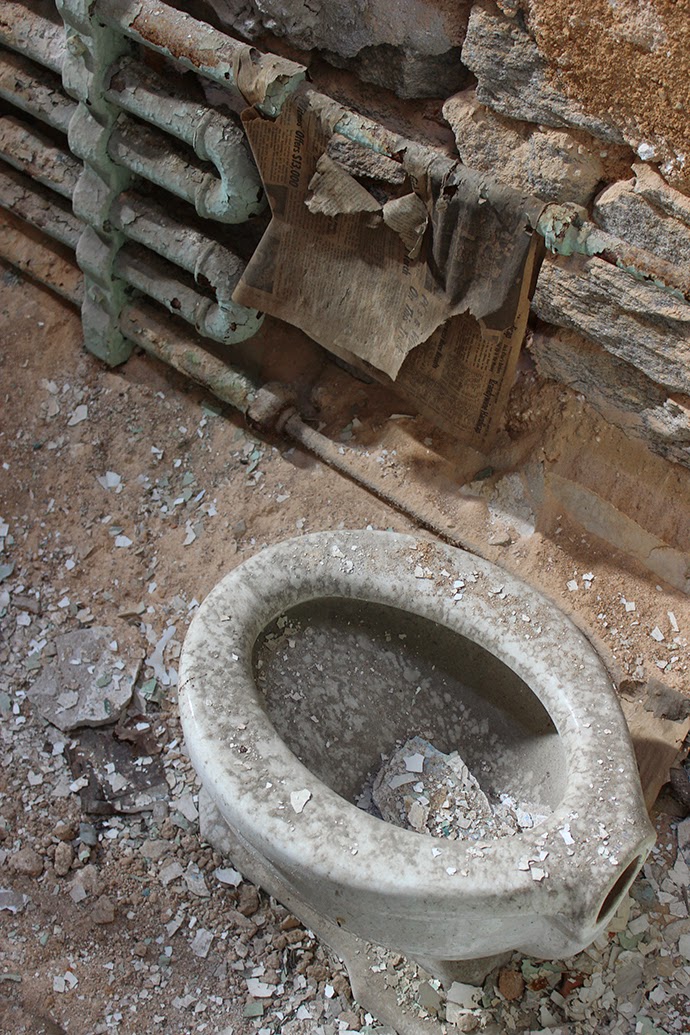
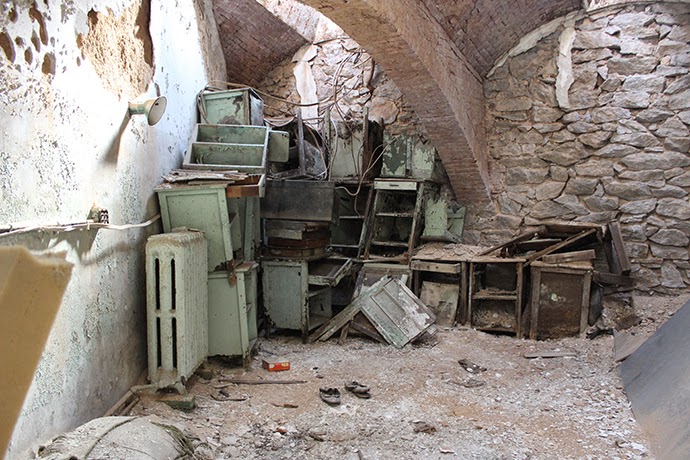
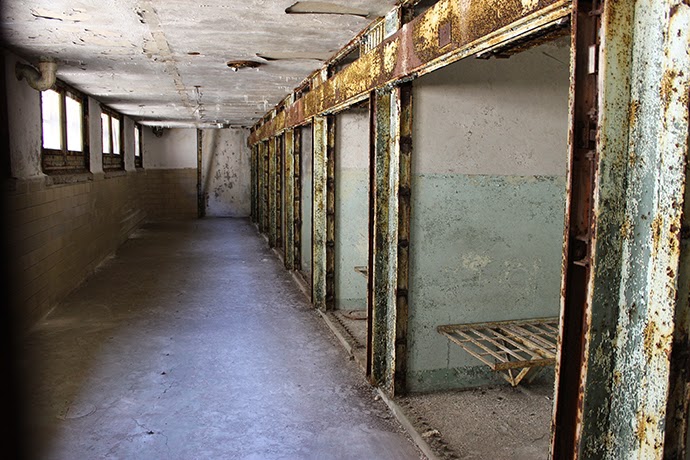
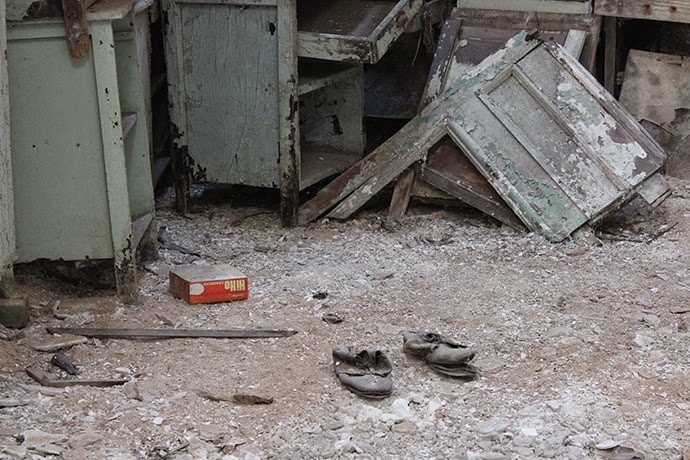
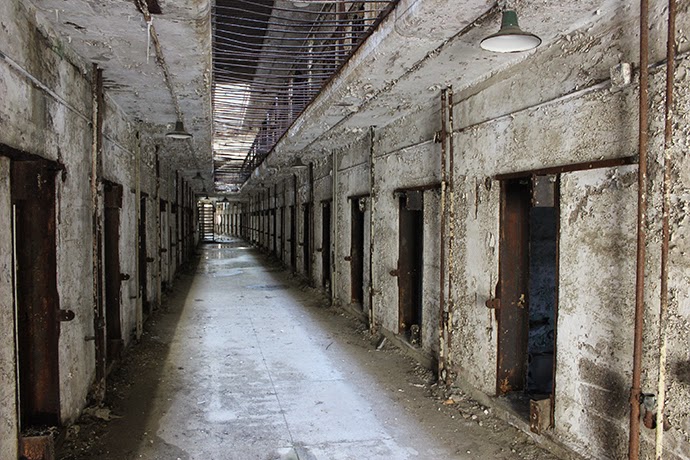
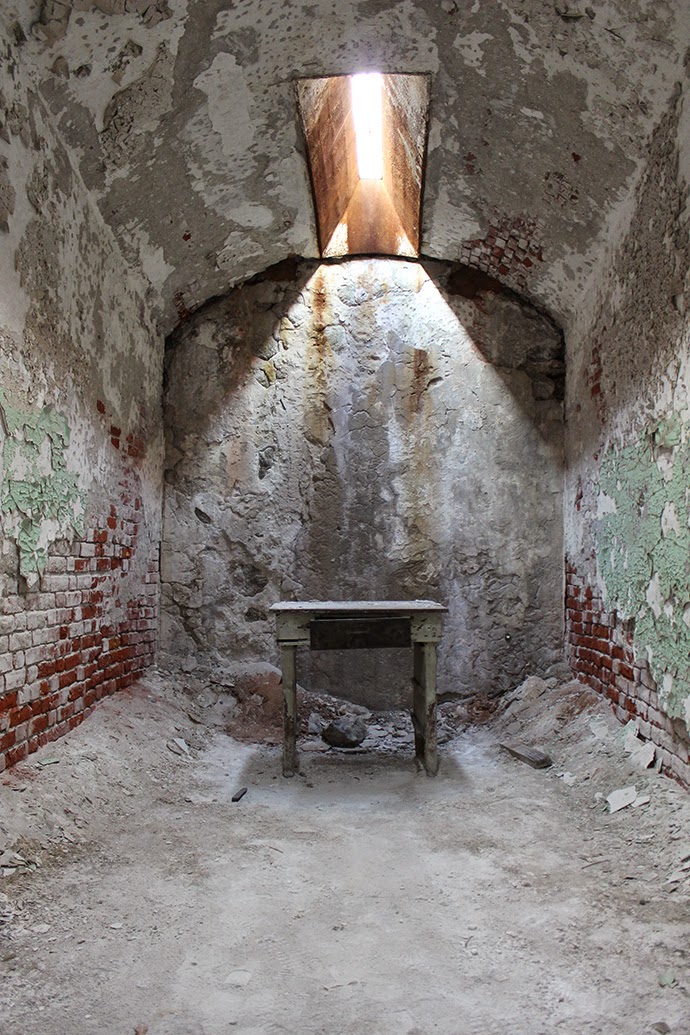
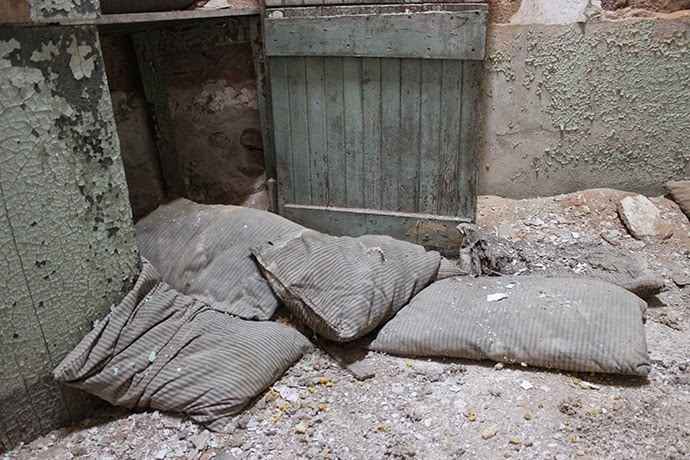
The peeling layers of paint, crumbling walls and cells in various stages of decay are all so incredibly photogenic and beautiful. An audio tour is included in the price of admission (only $10 for "students") and it was really interesting, not too long and mostly narrated by Steve Buscemi.
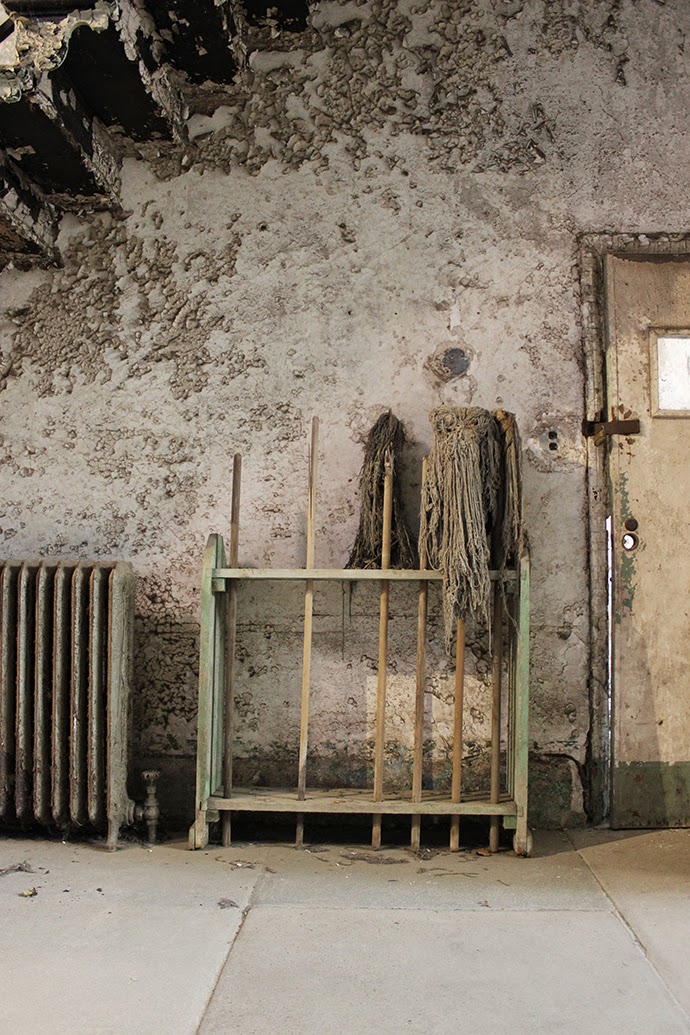
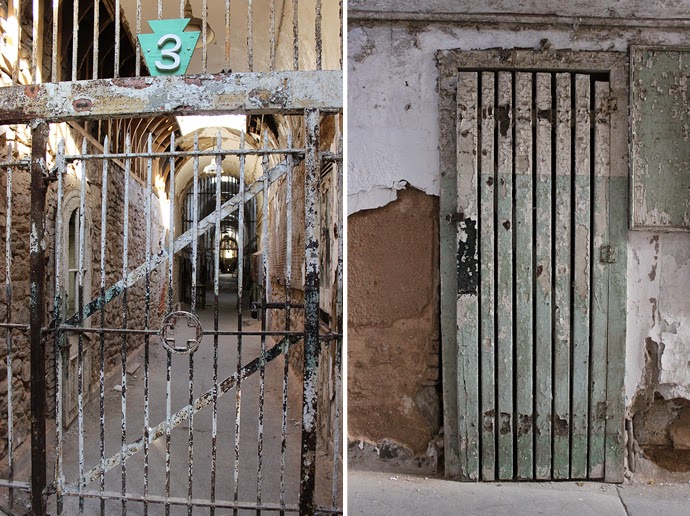
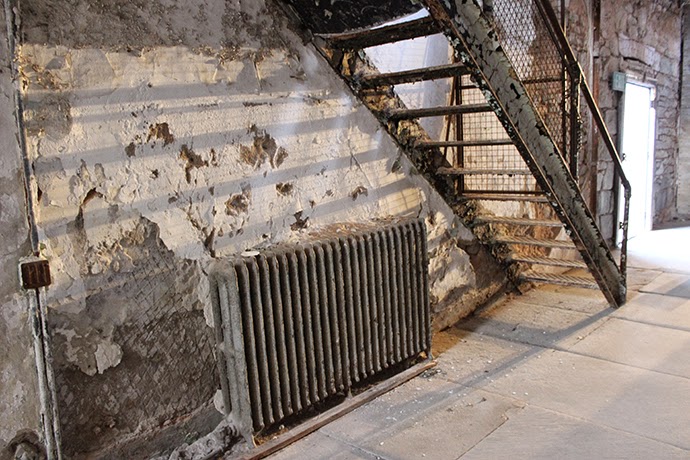

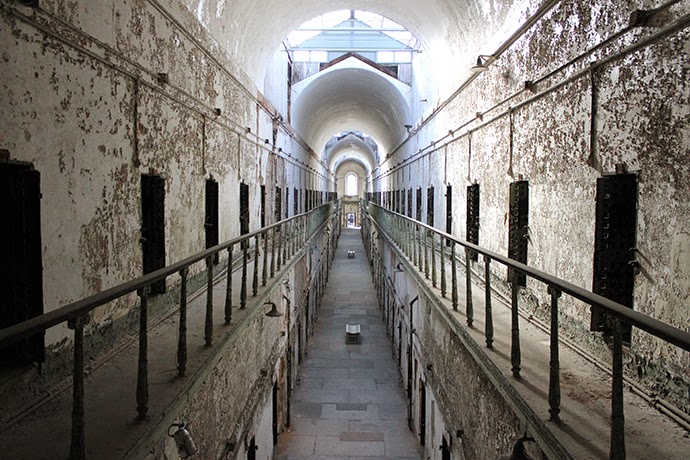
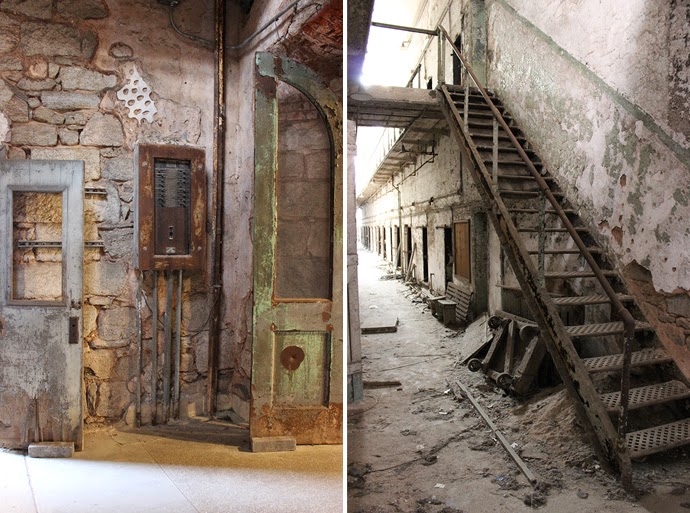
ESP does special tours around Halloween, which are probably really wonderful and completely terrifying. At one point during my visit, I was listening to a portion of the audio guide that discussed the various instances of paranormal activity that have been reported at ESP over the years. As I was leaning through a gate so I could get a closer look at a long, empty corridor, a droplet of water dropped on my head. I'm very grateful that I was alone (maybe I wasn't?) because I jumped backwards in terror like a total baby—a facet of my personality which is sometimes at odds with my love of all things creepy.


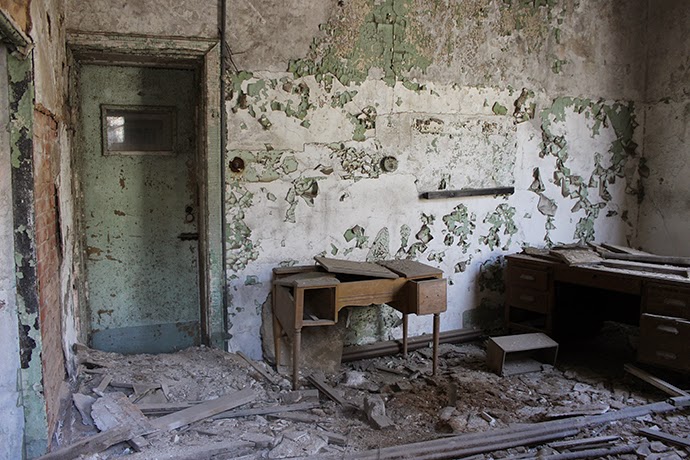
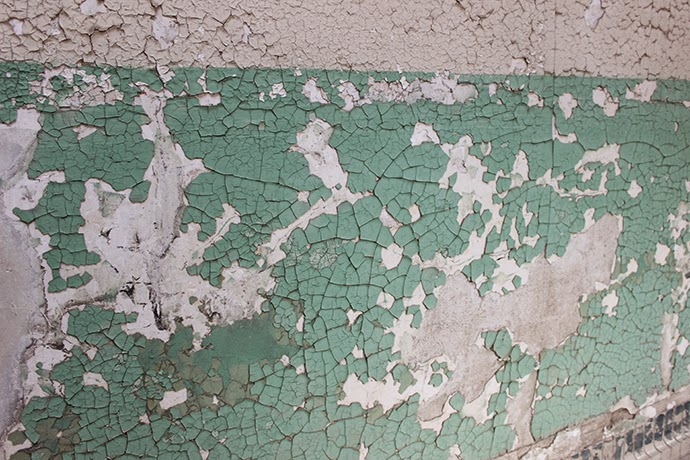


I could have spent so many more hours wandering inside and out, but I had to leave eventually to catch a train. The hospital wing (no. 3) is one of the areas not currently open to the public but a sign posted near the gate (the one with the amazing red cross) promised that it would be open in the future. I loved Philadelphia in general and there were a lot of things I didn't get to on my list, but a return visit to Eastern State Penitentiary is definitely a must.