
Archive
- Abandoned
- Alabama
- Arizona
- Bahamas
- Books
- California
- Cemetery
- Climate
- Colombia
- Connecticut
- Diner
- Egypt
- Feature
- Florida
- Friday Fun
- Georgia
- Holidays
- Illinois
- Iowa
- Italy
- Kentucky
- Louisiana
- Maryland
- Massachusetts
- Mississippi
- New Jersey
- New Mexico
- New York
- North Carolina
- Novelty Architecture
- Ohio
- Pennsylvania
- Personal
- Peru
- Project 365
- Protest
- Rhode Island
- Roadside Attraction
- South Carolina
- Tennessee
- Texas
- Travel Guide
- Virginia
- Walks
- Washington DC
- West Virginia
- Wisconsin

Muffler Man: Chief Running Fair
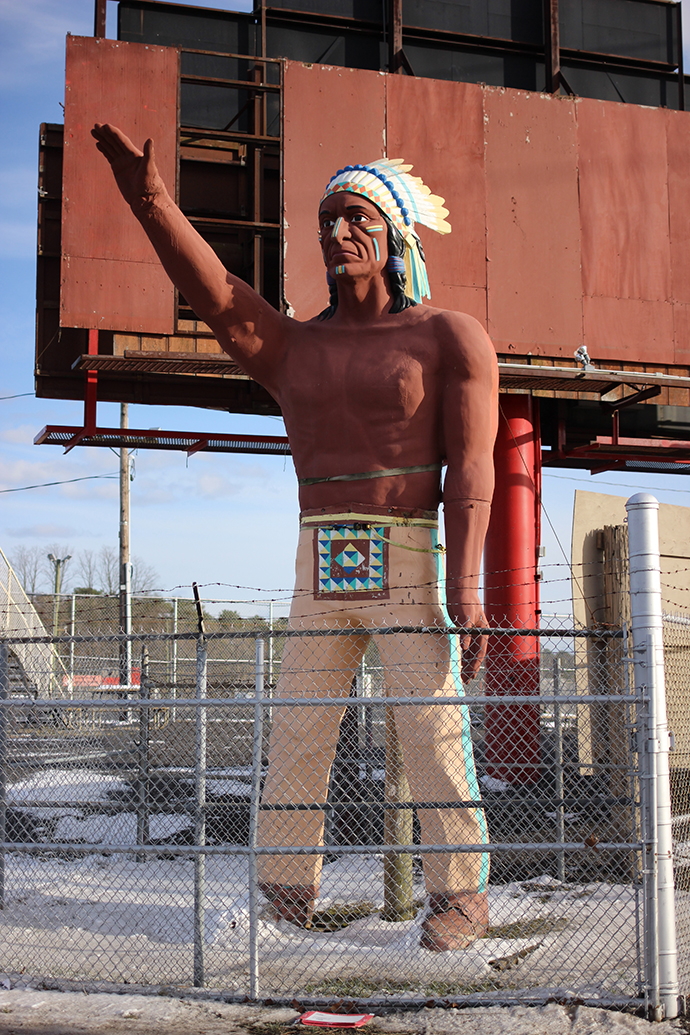
While I was planning our recent trip to see The Big Duck, I checked Roadside America's invaluable Muffler Man map and found that there was a Muffler Man nearby. I hadn't seen a Muffler Man since last October (the Happy Halfwit at Mr. Bill's in New Jersey), and I had never seen a proper example of the Native American variation—it was the cherry on top of a delightful mini-road trip through Long Island.
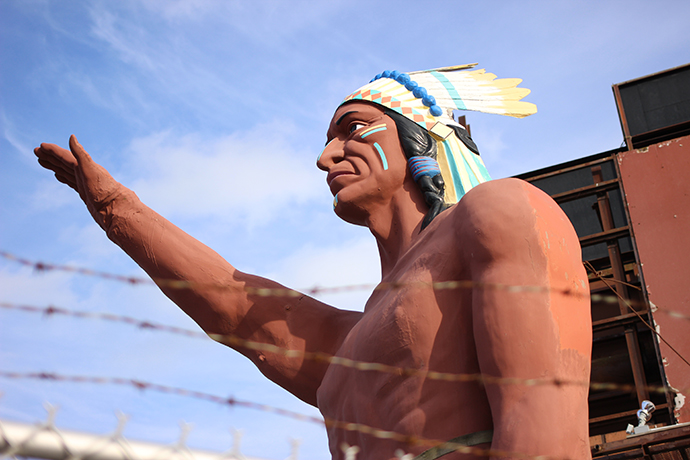
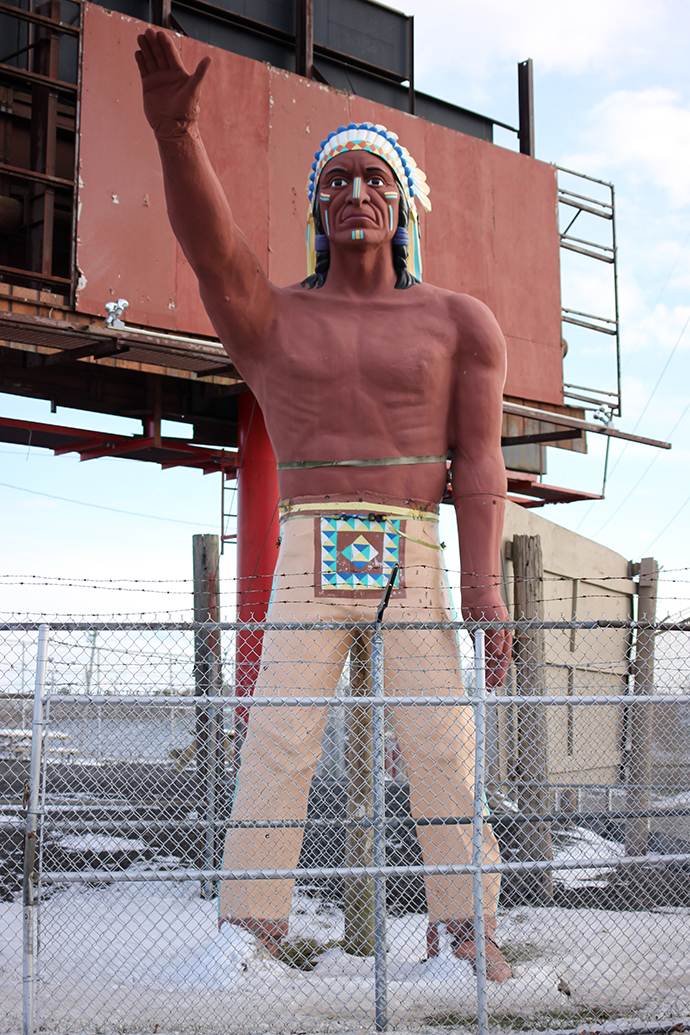

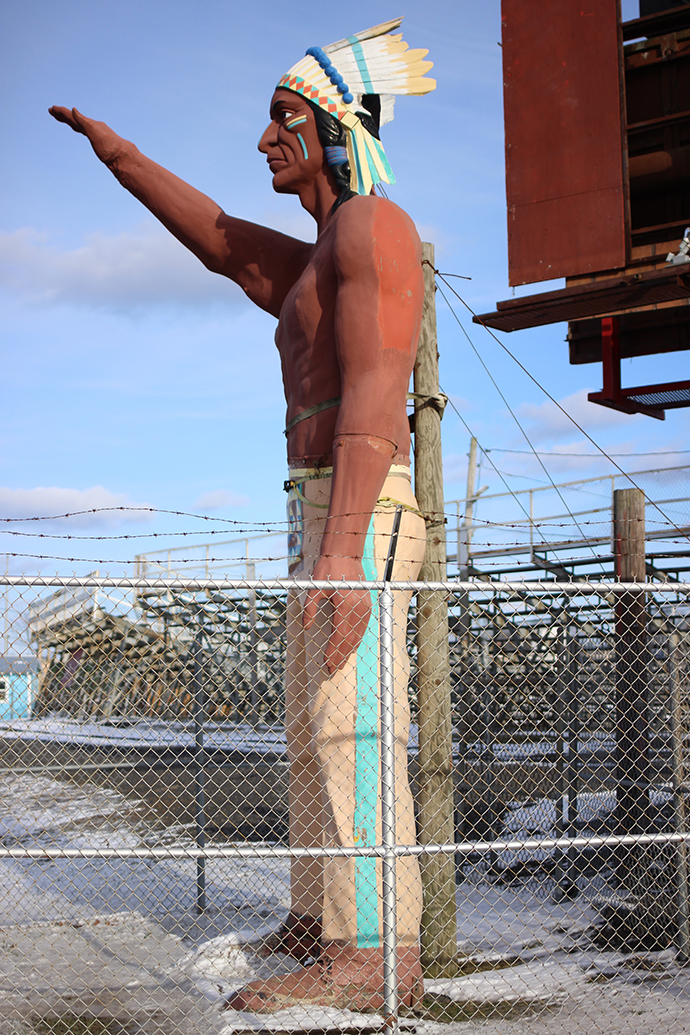
Chief Running Fair stands outside the Riverhead Raceway in Riverhead, NY in western Long Island. The race track bought him in 1982 when the Danbury Fair in Connecticut sold all of their statues. Apparently in October of 2012 Superstorm Sandy snapped him in two, but he was restored and back up by Christmas of that year. He's in sort of an odd place—behind a chain link, barbed-wire-topped fence and slightly hidden from the road, but he looks like he's well-cared for and has a vibrant paint job.
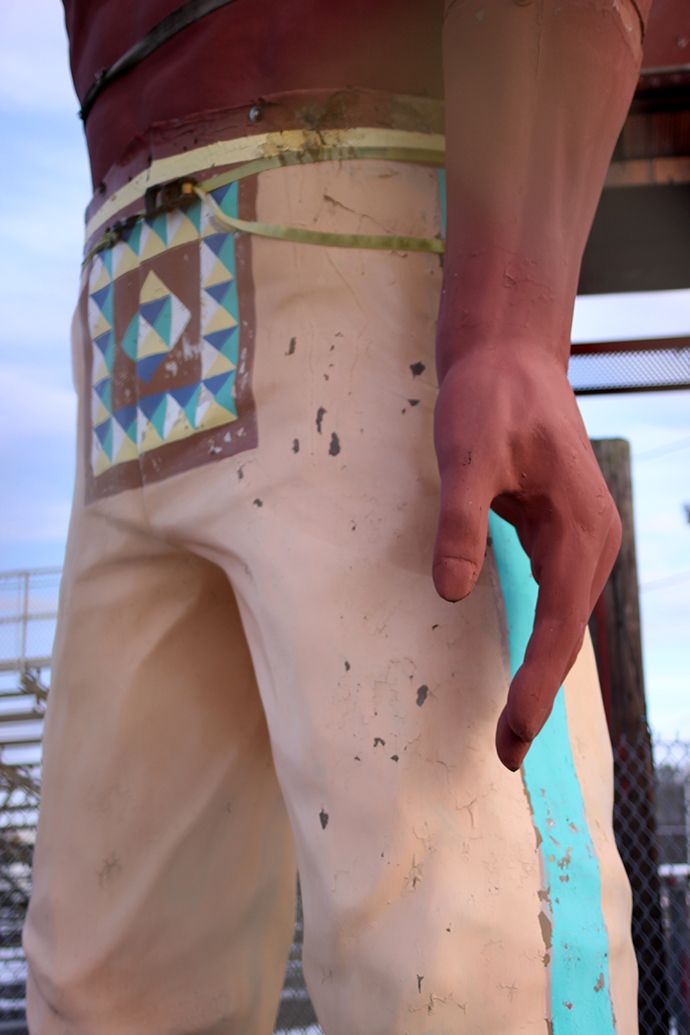
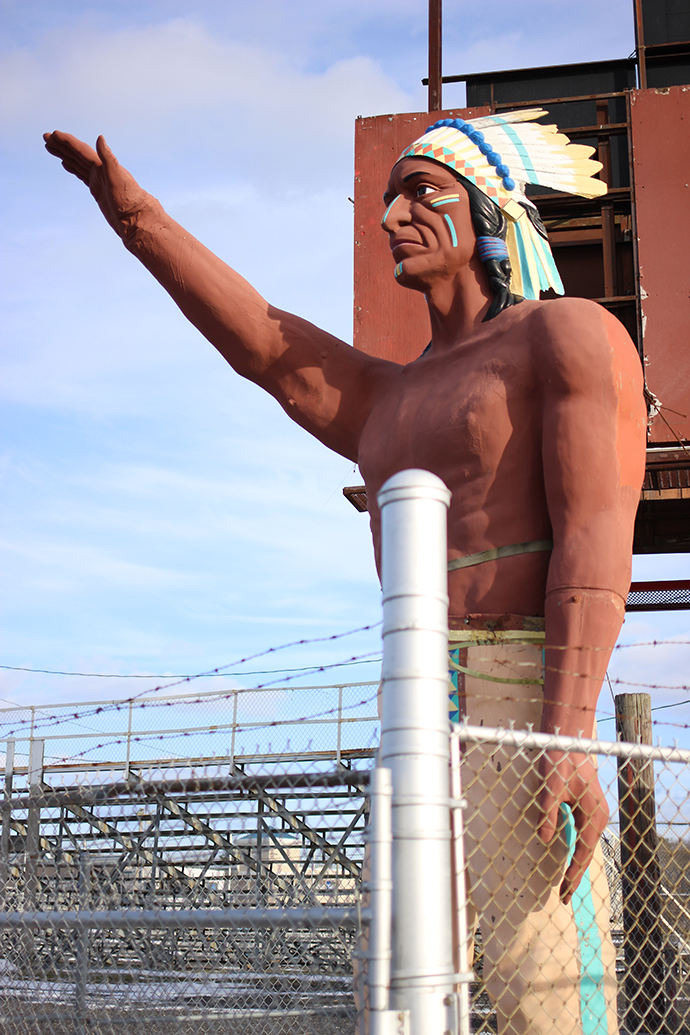
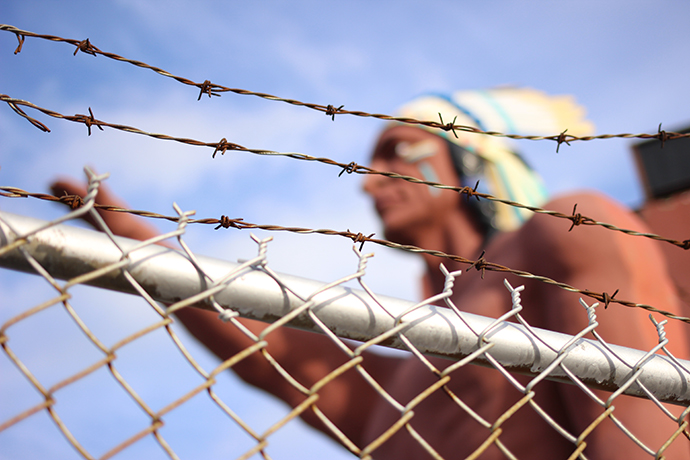
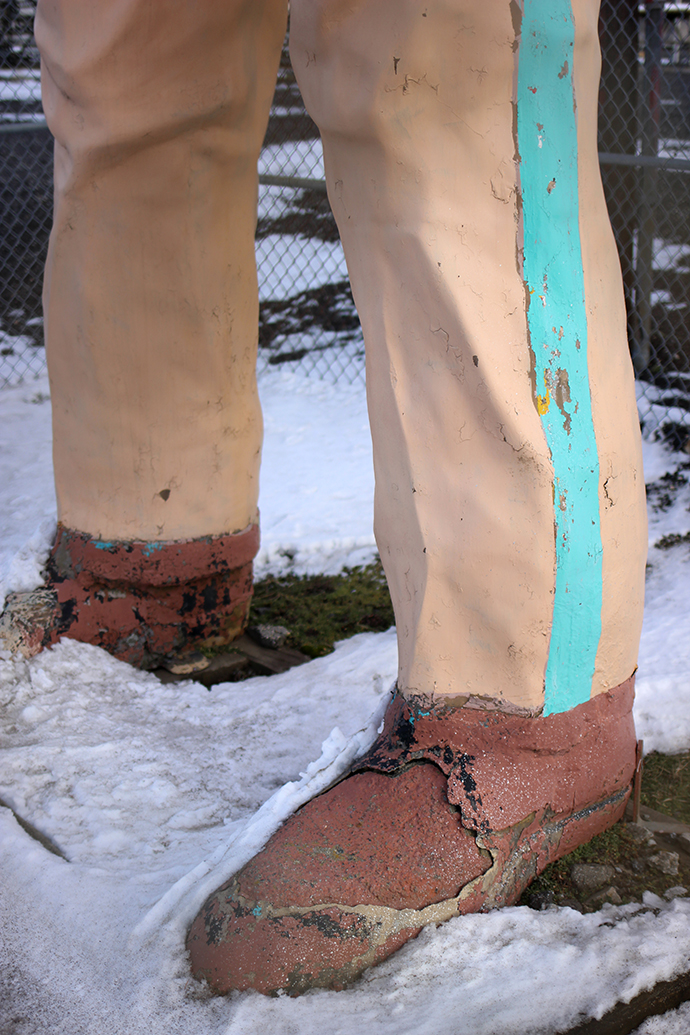
His lower half resembles most of the other Muffler Men I've seen—he counts as my eleventh!—but his head, torso and arm position appear to be unique. I love his colorful markings and the detail in his hair and headdress is really incredible. The way that musculature and fabric folds are so expertly reproduced in fiberglass will never cease to amaze me, and I'm so glad that I finally got to add another variation to my Muffler Man (photo) collection.

Kings Park Psychiatric Center: Doctor's Cottage

After we explored Building 93 at Kings Park Psychiatric Center—and after we defrosted ourselves in the car for a bit—we took a peek inside of two other abandoned buildings on the sprawling campus. There were several nearly-identical houses right across from Building 93 that were used as housing for doctors and the doors were wide open so we invited ourselves in.


This was my first time exploring an abandoned residence. It feels strangely intimate to be inside of what was once someone's home—there were hangers still in the closets, patterned wallpaper peeling off of the walls and even a toilet brush still in the toilet. While its human residents are long gone, these cottages must be very popular with animals—there was literally piles of poop everywhere.


The houses were built in the 1920s and although KPPC wasn't fully abandoned until 1996, judging by the decor the houses look as if they haven't been occupied since the 70s. I realized my tripod was broken when I tried to set it up in the cottage—it had fallen out of my bag in Building 93—so my photos are a little grainy, but seeing the inside of an abandoned home was a fascinating counterpoint to the enormity and impersonality of Building 93.

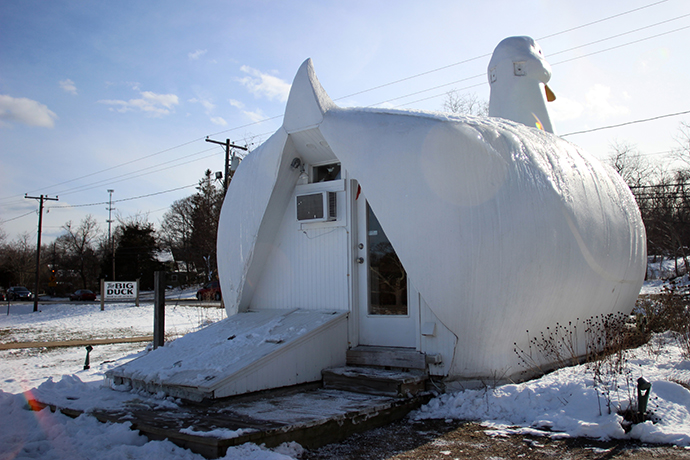
The Big Duck
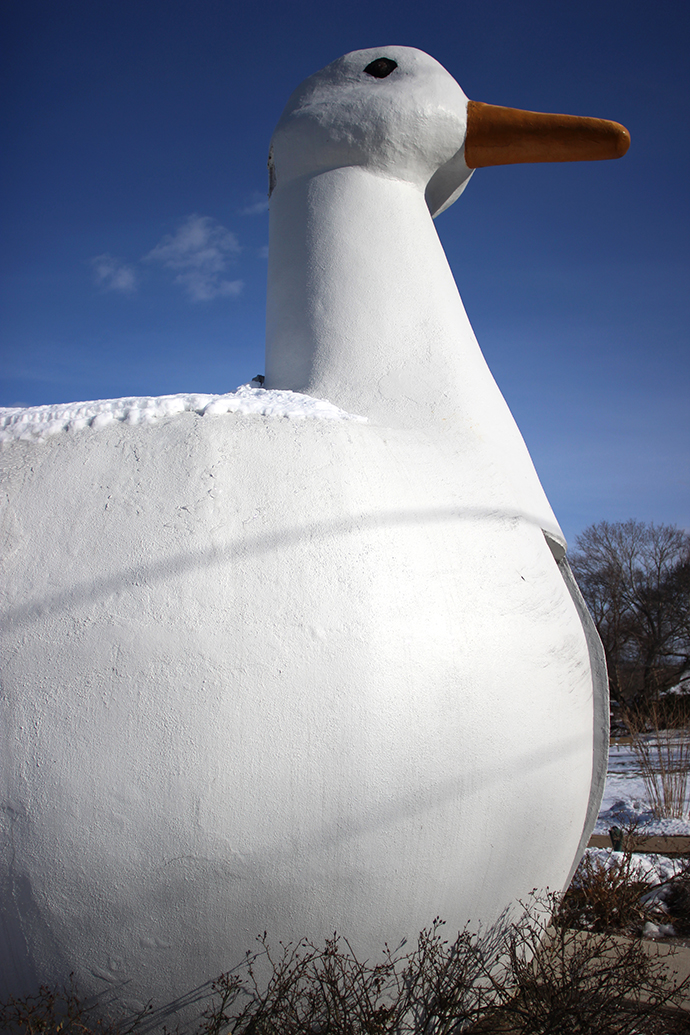
This past Sunday one of my dreams came true—we finally made it out to Flanders, Long Island to see The Big Duck. The Big Duck may not seem like an attraction worthy of being a road trip destination, but I planned an entire road trip last summer just to stay overnight in a concrete Wigwam—as my dude says, my love of novelty architecture knows no bounds.
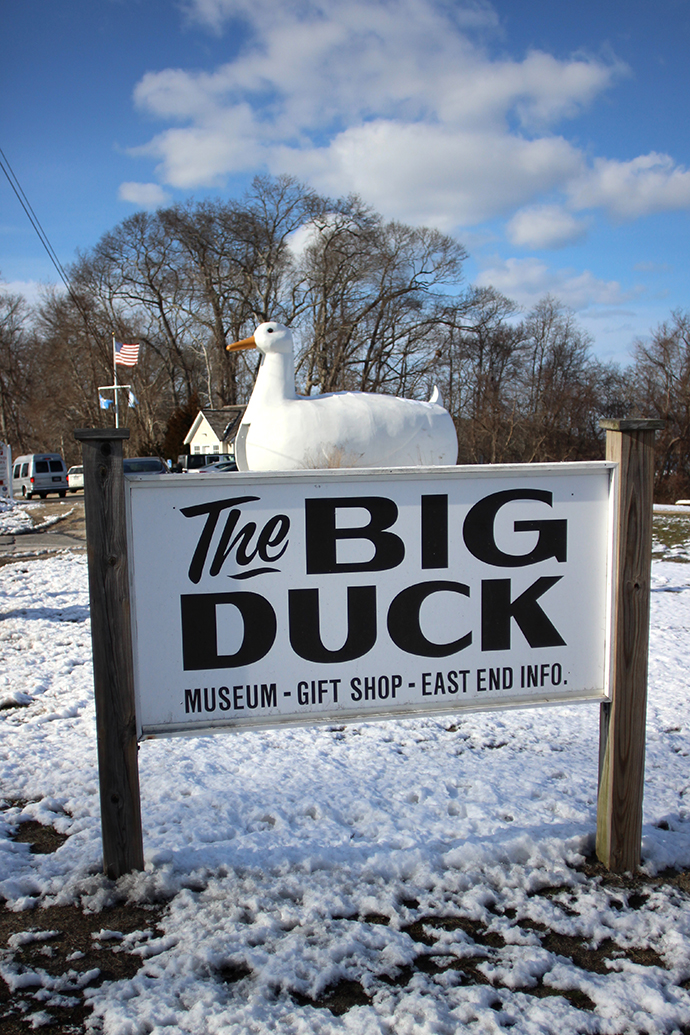
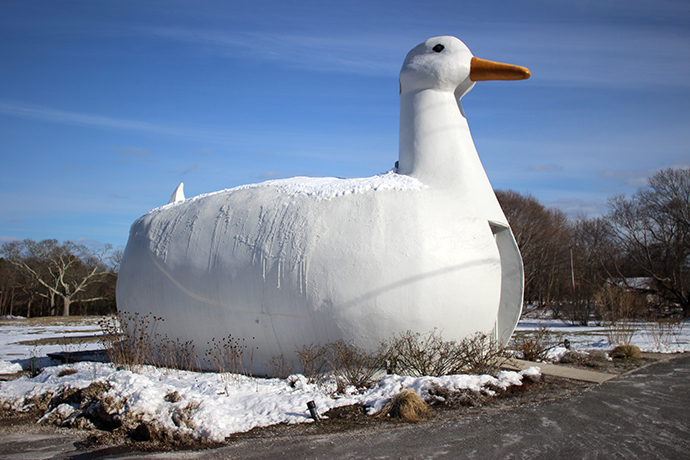
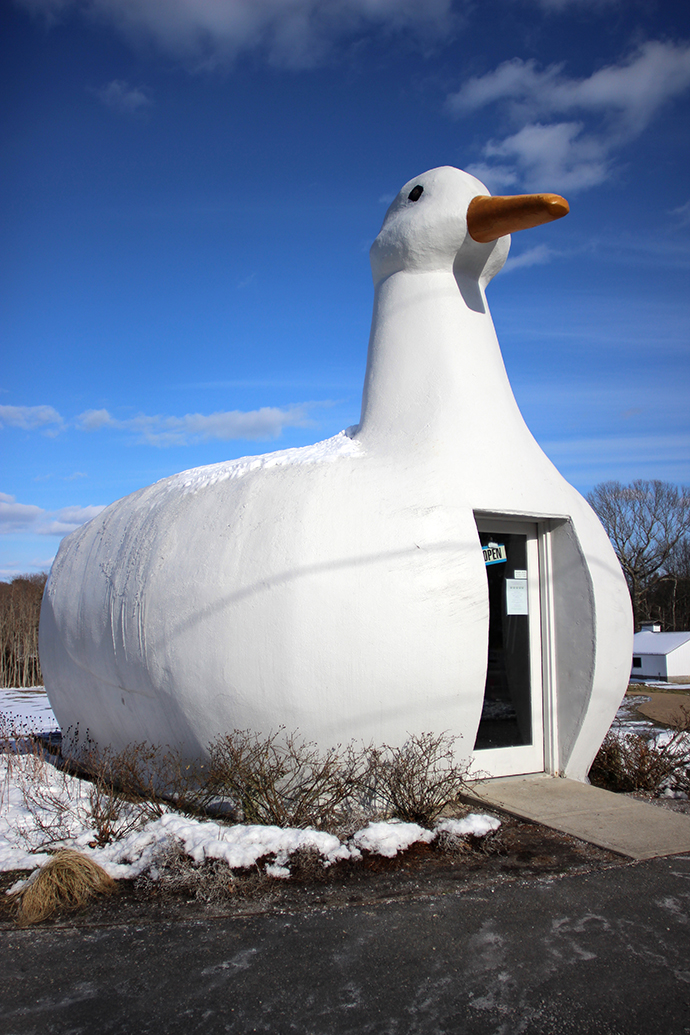
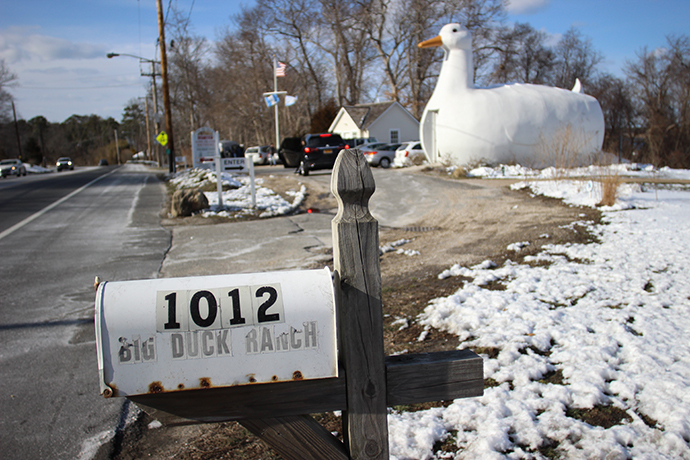
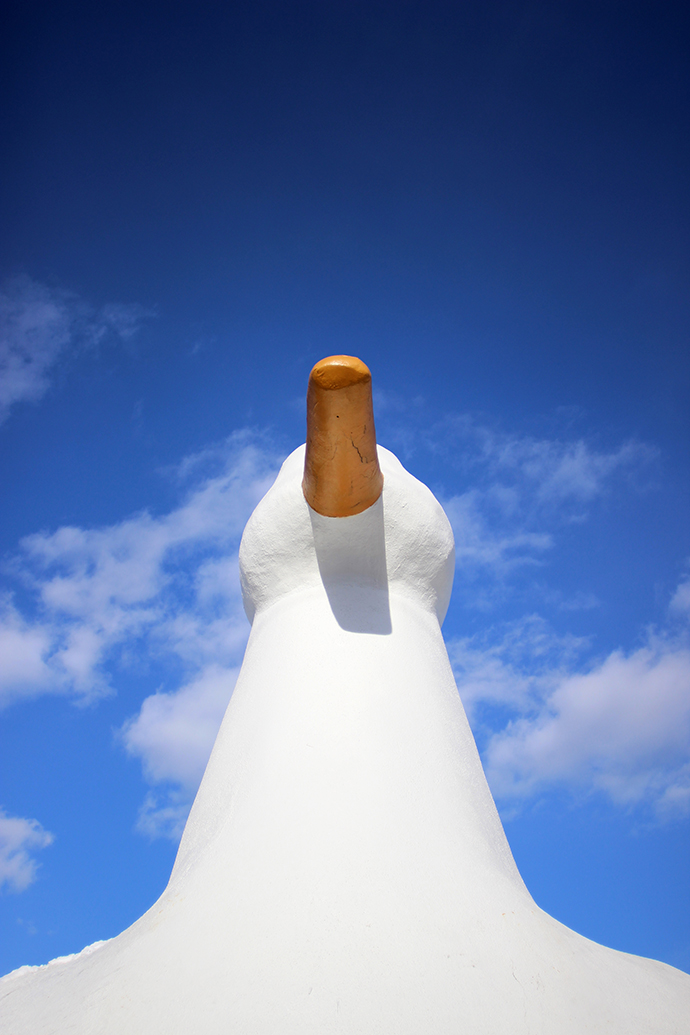
The Big Duck was completed in 1931 and is, by many accounts, the holy grail of novelty architecture. While not as large as the Longaberger Basket or as interactive as a drive-through Donut, The Big Duck inspired two architects to coin the term "duck" in 1968. "Ducks" are sculptural buildings representing the products or services they provide—they are structure and signage combined.
The Big Duck was built by a Riverhead duck farming couple to sell their Peking ducks back when 60% of the nation's ducks were raised on Long Island. They reportedly had the idea while visiting a coffee pot-shaped coffee shop in California (land of the novelty building), and hired a carpenter and two stage set designers to help execute their vision. The Big Duck has a wood and wire mesh frame which is covered in painted concrete. Its eyes are two Model-T taillights and they glow red at night (if my Instagram research is to be believed).
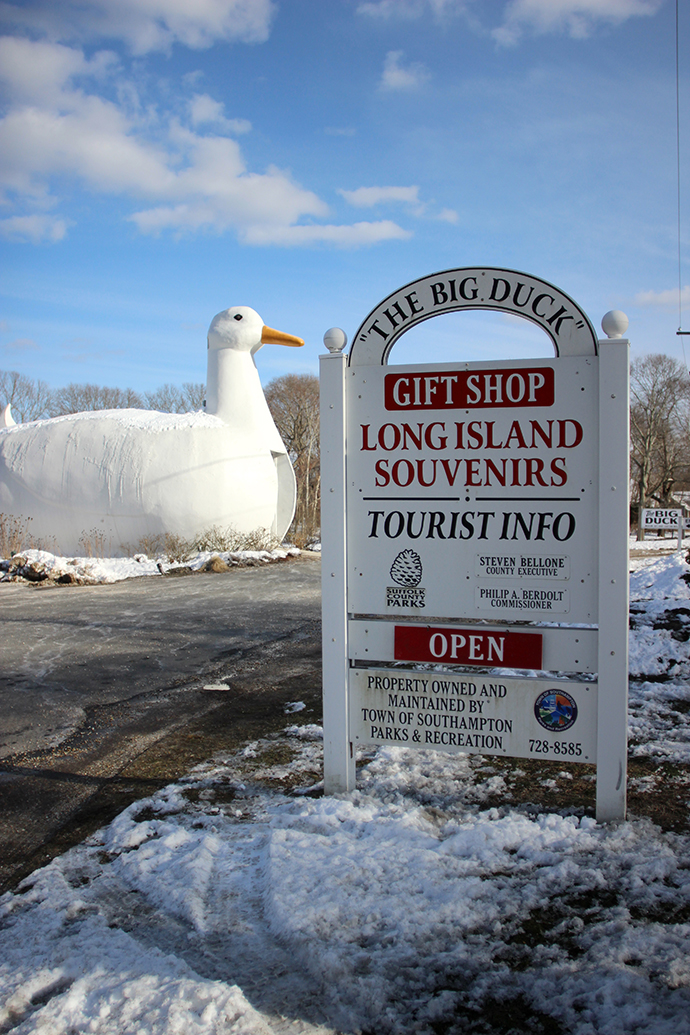
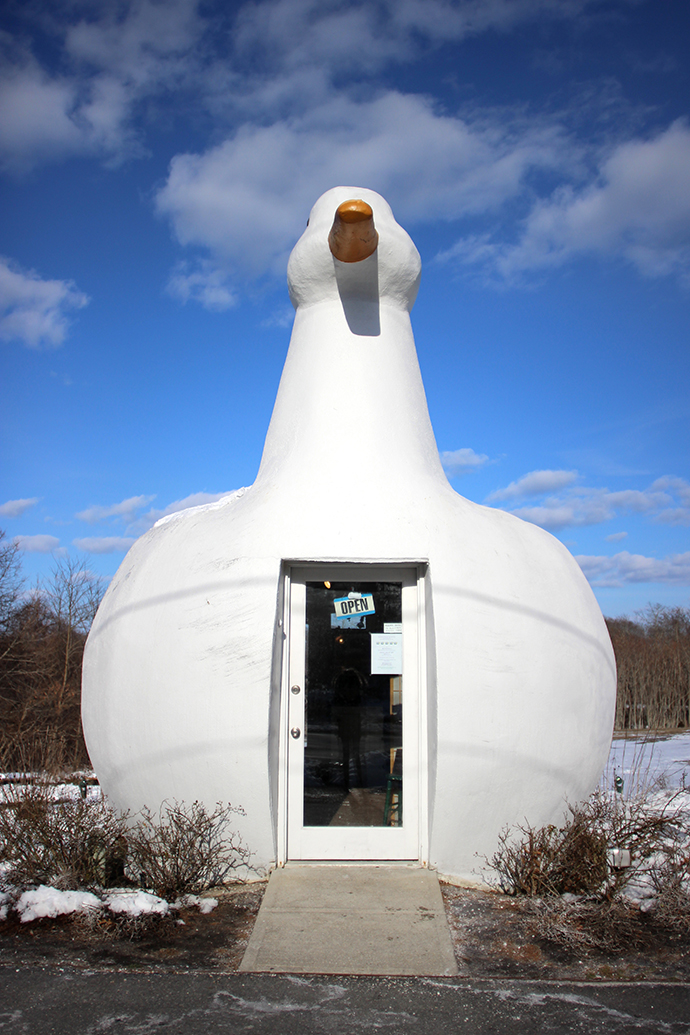
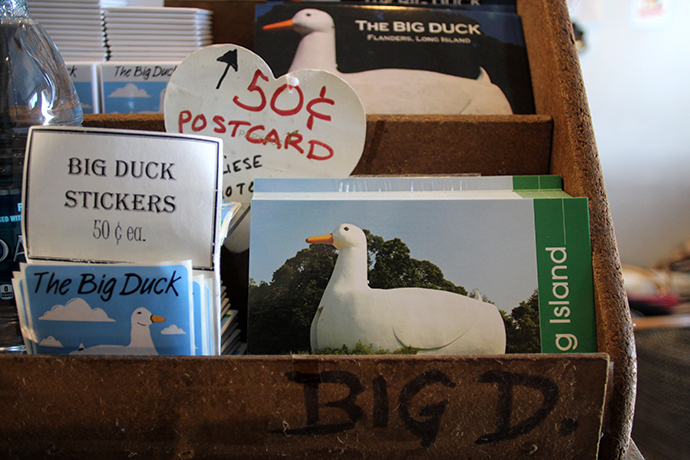
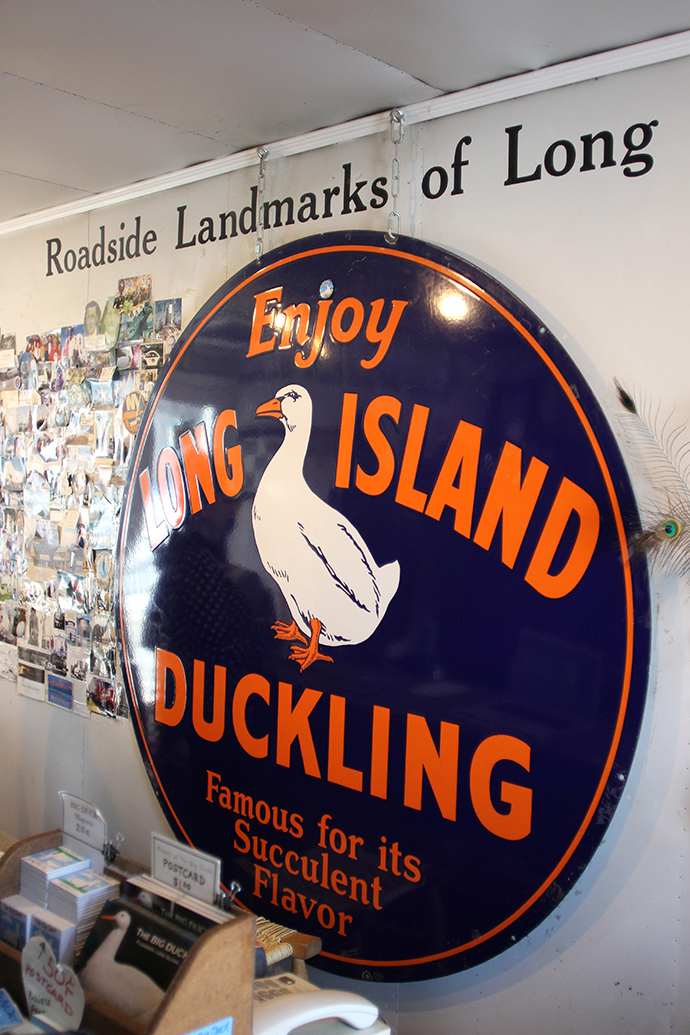
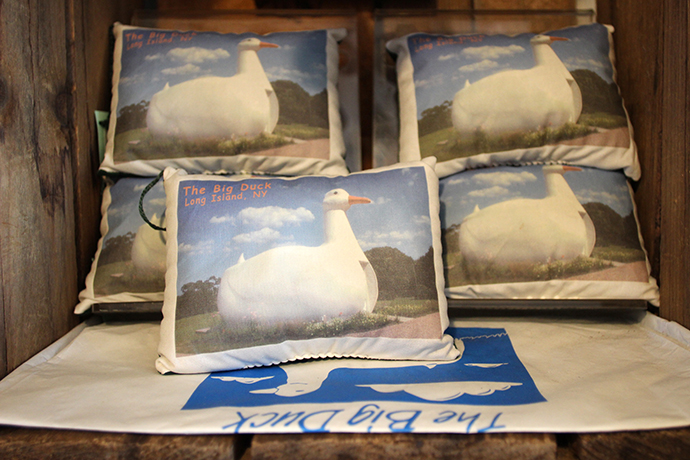
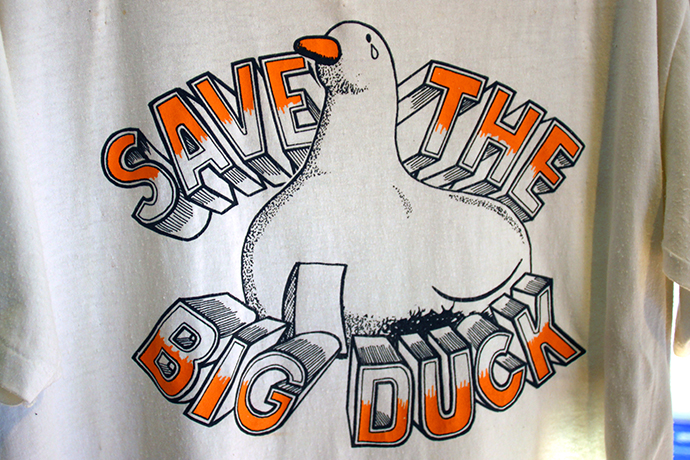
The Big Duck did seem a bit smaller than I expected—it's 30 feet from beak to tail, 15 feet from wing to wing and 20 feet from the top of its head to its base—but it's large enough to contain a gift shop with a counter and shelves of duck-themed souvenirs.
The number of duck farms on Long Island has dropped through the years due to escalating land values (i.e. The Hamptons) and environmental factors. The Big Duck has been relocated a few times and its fate hasn't always been secure. When the land that it occupied was threatened with development, it was donated to Suffolk County in 1987 and is now listed on the National Register of Historic Places. Aside from being historically significant to a novelty architecture enthusiast like myself, The Big Duck is just ridiculous and fun—it was impossible not to smile as we were driving and I saw its bright orange beak peeking out over the horizon.

Snowy Trees

Today we are expected to get anywhere up to 20" of snow, but last week I was excited when I woke up on Friday morning to a few flurries. It was snowing heavily by mid-morning, but by lunchtime it had stopped. I hurried out to Central Park, hoping to capture some of the snowy trees before it all melted away (it had been in the 60s the day before).
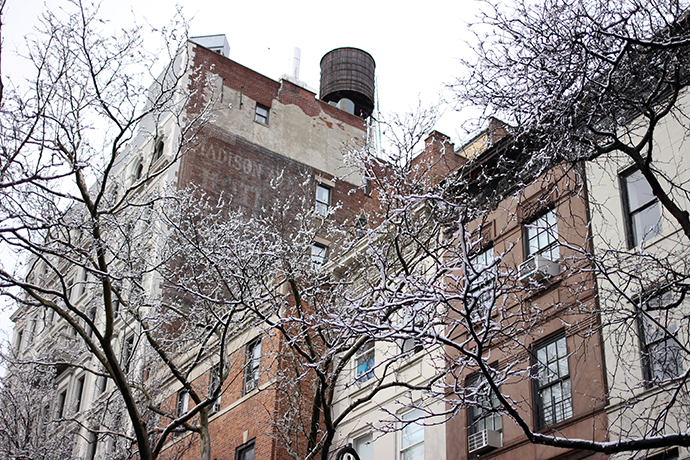

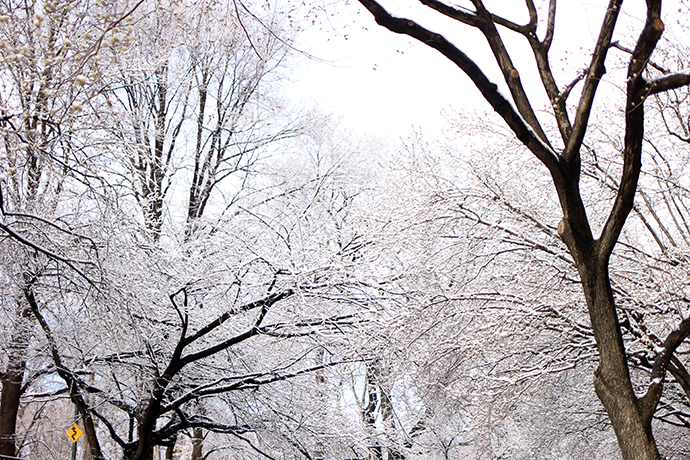
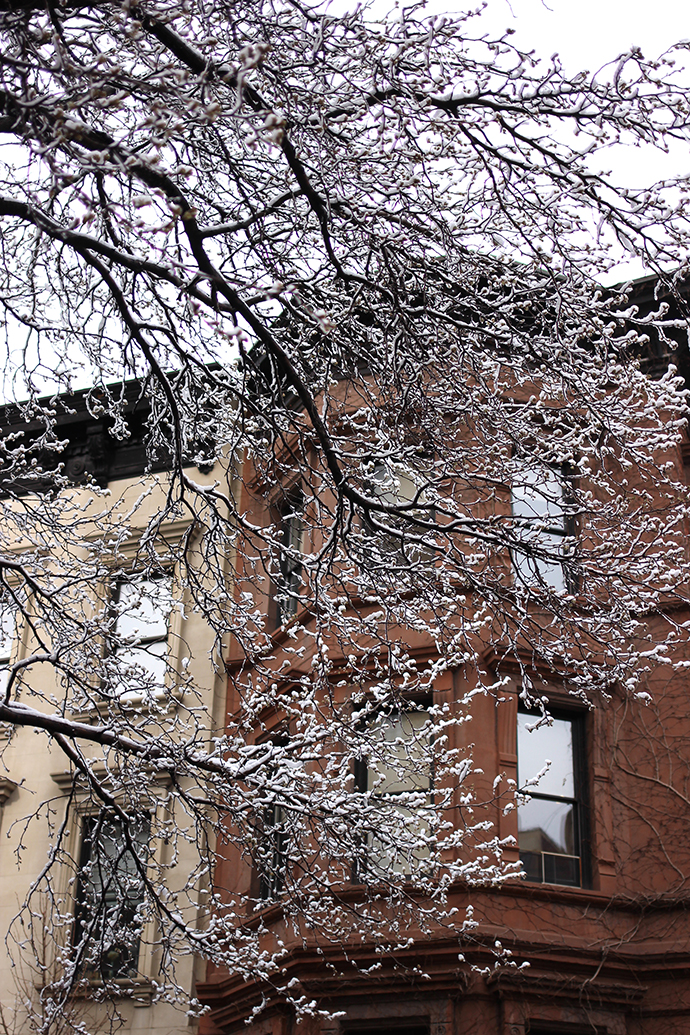

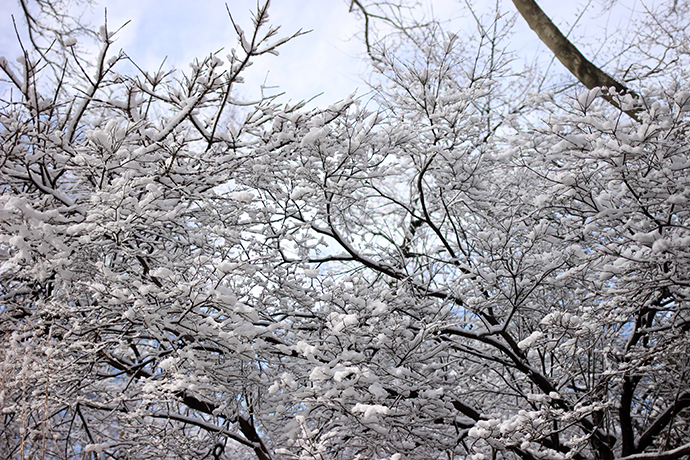
I headed straight to the North Woods, because I was having flashbacks of my beautiful snowy commutes through that part of the park during my first (very snowy) winter in New York. The North Woods is, as the name suggests, filled with trees, and it's an extra magical place in the snow.
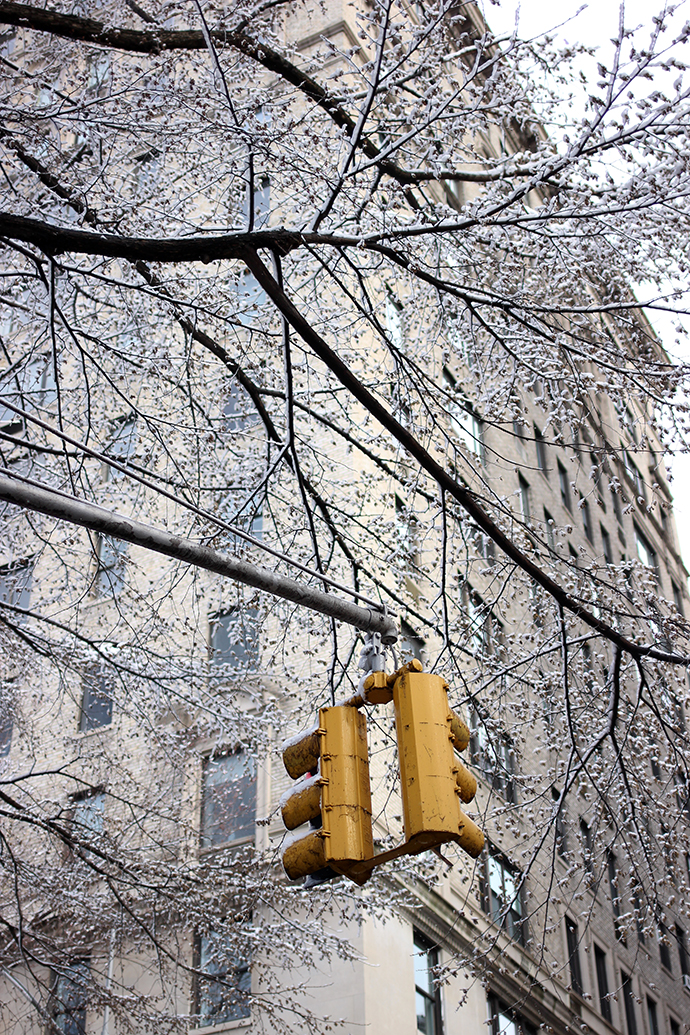
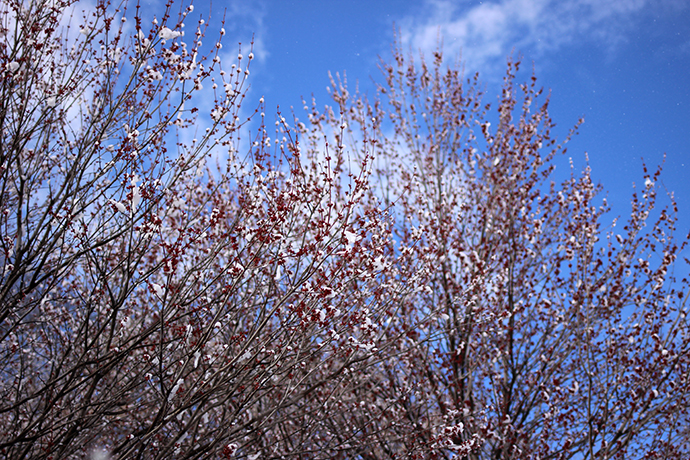

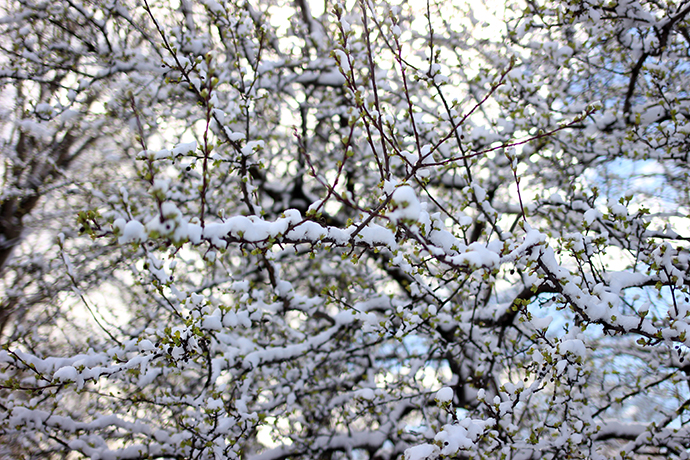

I recently posted photos of the early signs of spring that had begun to pop up in the park in February, but obviously winter has decided to hold on a bit longer. March snows are not common in the city, but they do happen—The Great Blizzard of 1888 (March 11 – March 14) was one of the most severe recorded blizzards in the history of the US, with snowfalls of 20-60 inches along the East Coast.
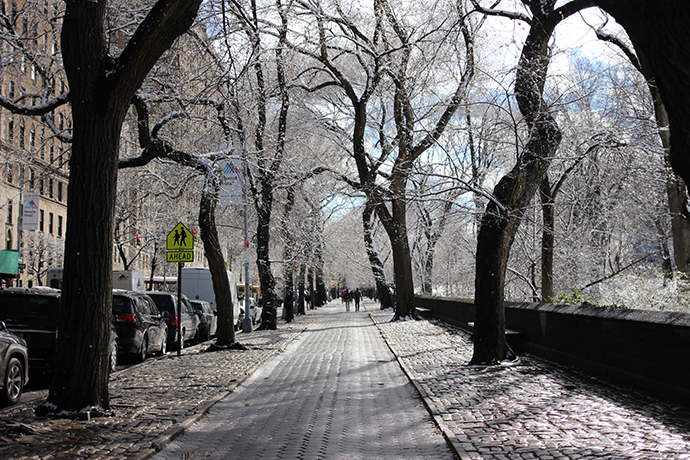
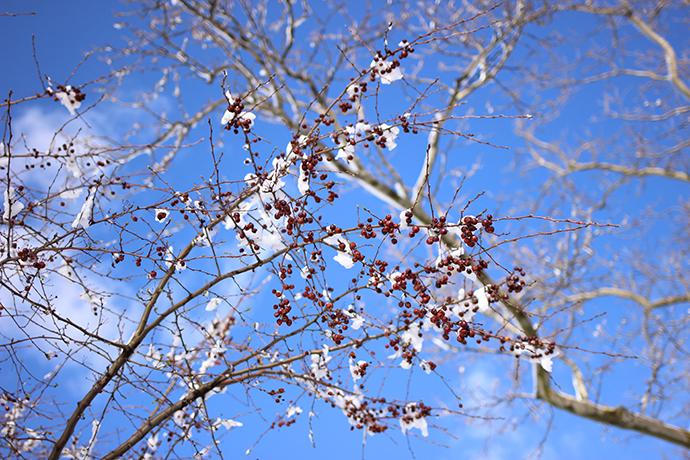

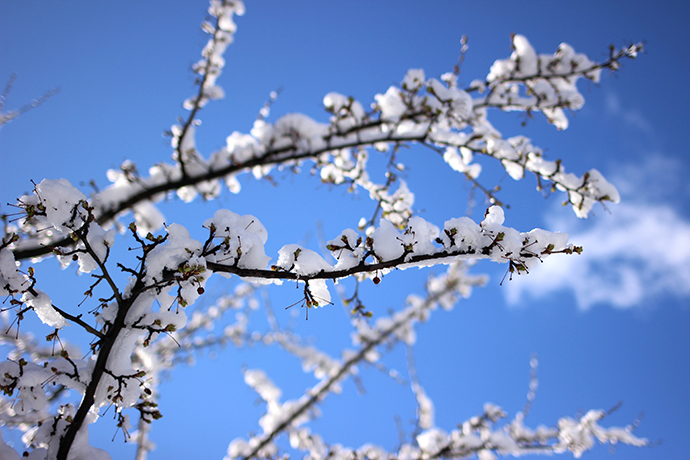
The snow was already melting by the time I got outside, and large chunks of it were falling everywhere, which was equal parts fun and treacherous. The little snow puffs left on the trees almost looked like blossoms—and as much as I love snow, I can't help but hope that spring eventually comes to stay for longer than a day or two.

Bideawee Pet Cemetery: Ceramics

I've posted about ceramic headstone portraits before, but the I never shared all of the ones we saw at Bideawee Pet Memorial Park. We began noticing the ceramics almost immediately, and for a strange reason—a majority of them had been damaged to the point where you could no longer make out the animal, and it looked intentional. Thankfully, some portraits managed to escape this seemingly random desecration, because they're truly wonderful.


I gave a brief history of human porcelain cemetery portraiture in this post, but it just makes sense that their popularity would spread to pet cemeteries as well. In fact, pet portraits almost seem more normal—even pre-Instagram, I would imagine that pet photography was widespread. The one thing that has been very clear in every pet cemetery that I've visited is just how much animals mean to their owners. Anyone that loves their pet enough to memorialize it with a burial and tombstone would likely have no shortage of photos of their beloved companion.


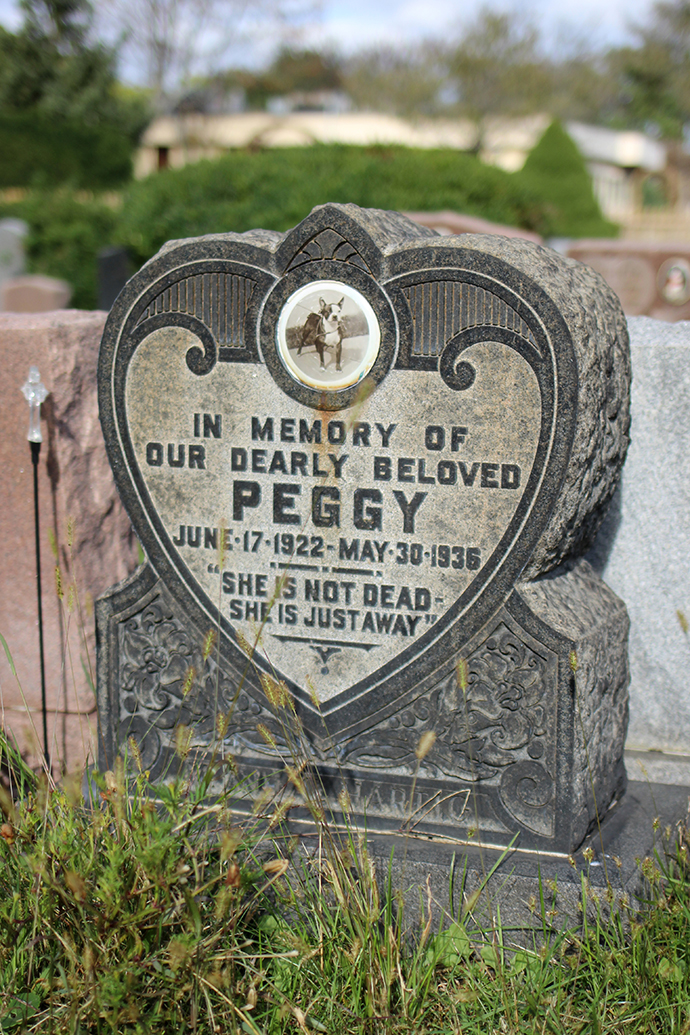
Some of the portraits feature pets in costumes—like my favorite, the dapper dachshund whose tombstone read "In Loving Memory, Mr. Nathan D. Friedman, My Son," Duchess in what appears to be a hand-knitted sweater (with a hood!) or Penny in her stylish plaid coat.


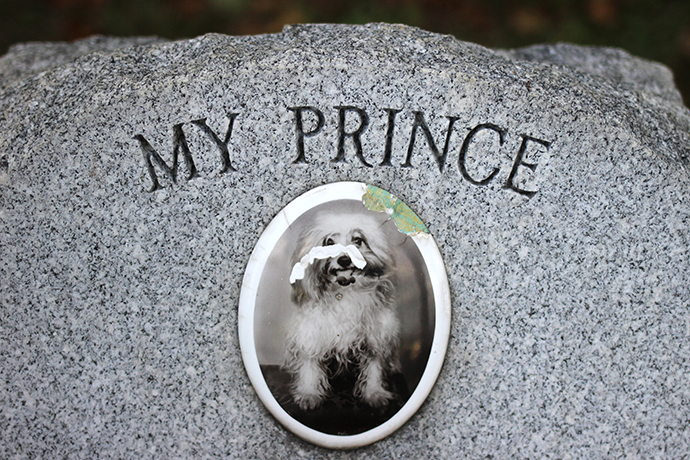
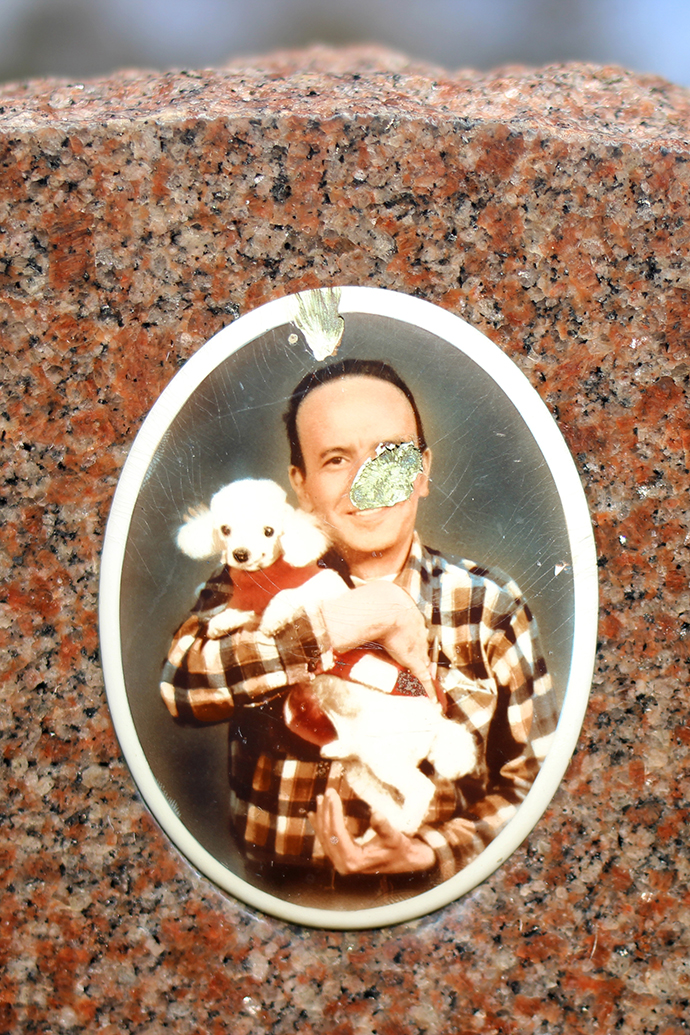
The portraits aren't reserved exclusively for dogs and cats or single pets—we saw at least a few bird photos as well as group shots. But portraits that really got to me were the ones that included their owners, most of which were from a pre-cellphone camera era. Again, if you loved your pet enough to buy them a granite tombstone, then a Sears portrait studio session probably didn't seem too extravagant either.

Kings Park Psychiatric Center
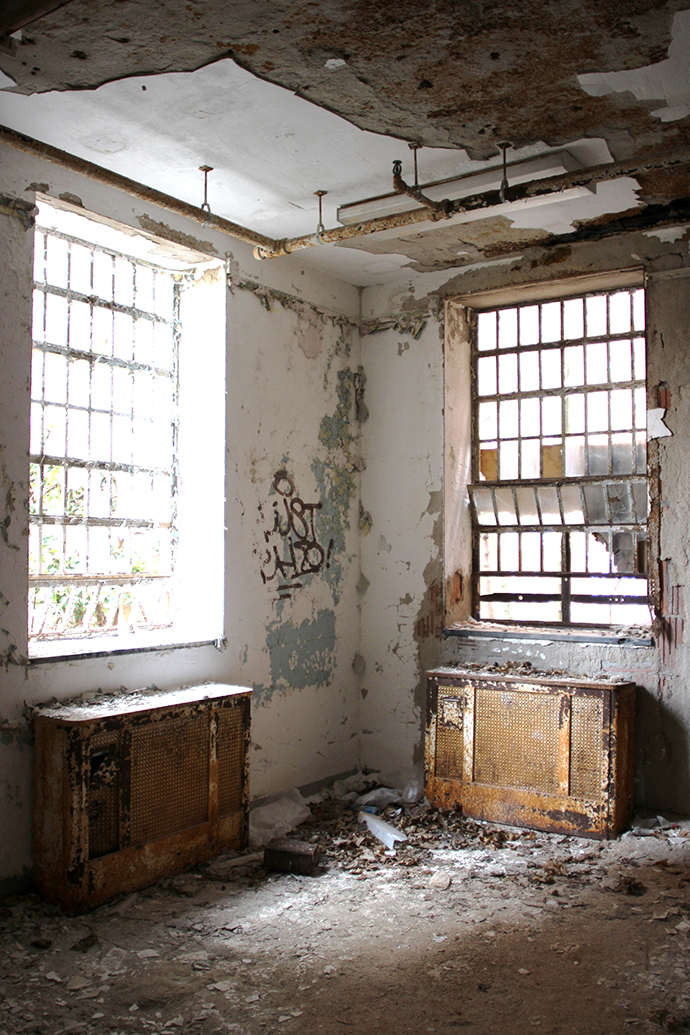
On Saturday we finally ventured out to Long Island in hopes that we'd be able to creep on a 57-room abandoned mansion that I learned about back in November. The mansion is literally surrounded by a golf course, and because our day was going to be spent doing things of questionable legality (aka trespassing), we thought a cold, windy day would keep prying eyes off of the golf course, and us. Well, unfortunately (for us) the mansion seems to be undergoing a renovation or is at least much more well-secured than we expected—video surveillance, a new fence, chains, locks and new plywood over broken windows—so we did a quick walk around and then moved onto Plan B.
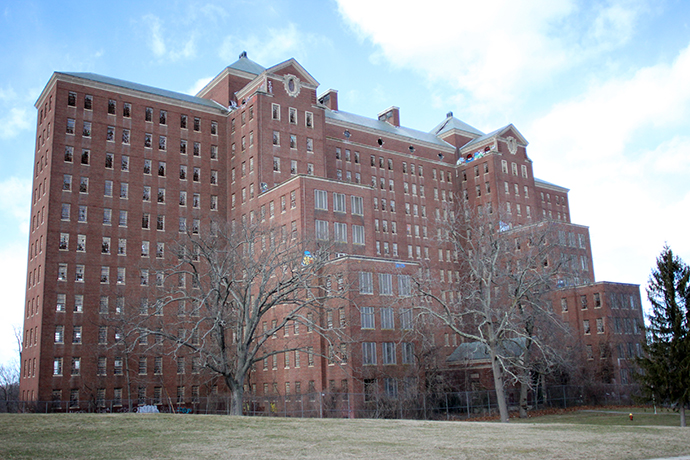
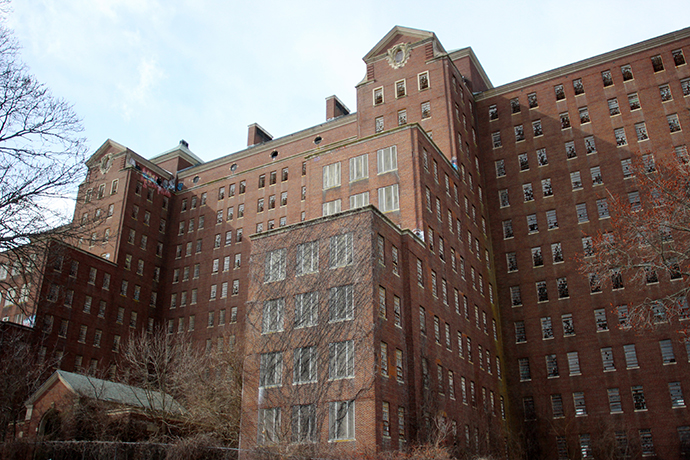
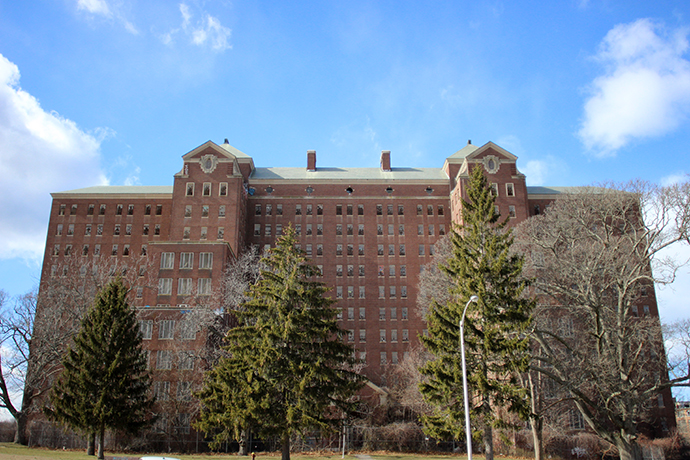
I had very little current information about the mansion, so I had drafted a Plan B before making the trip—to explore Kings Park Psychiatric Center in Kings Park, Long Island. KPPC was in operation from 1885 until 1996 when it was closed by the State of New York. The hospital campus has contained more than 100 buildings during its 111-year run, although I had only heard about one—Building 93. A 13-story, neoclassical building built in 1939, #93 was used for patient housing. Floors began to close in the '70s, and less than a third of the building was in use when it closed for good in 1996.
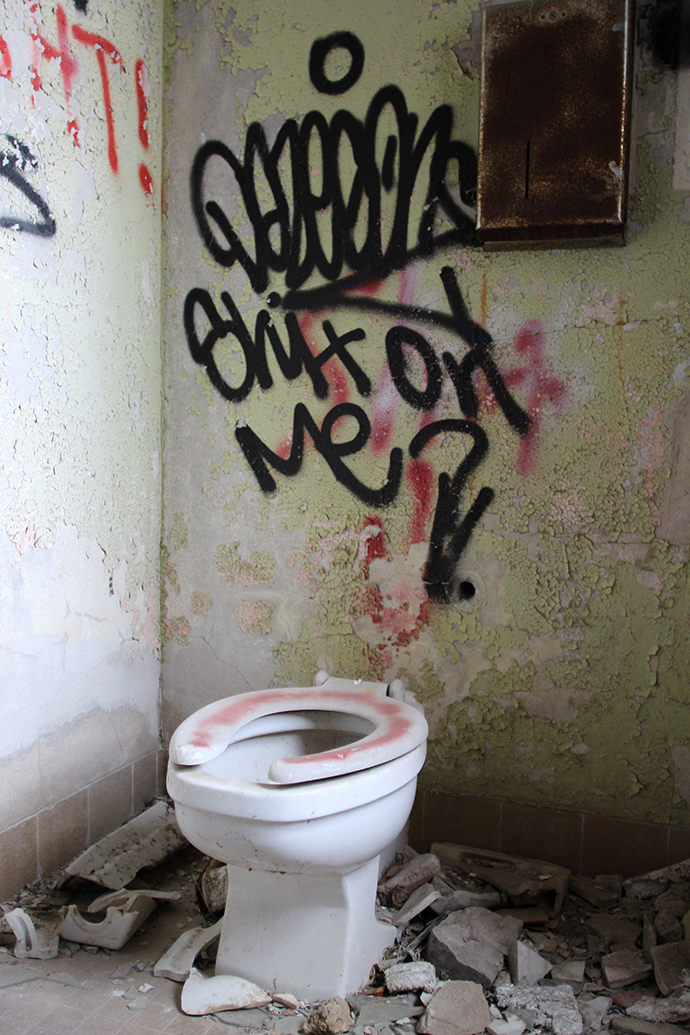
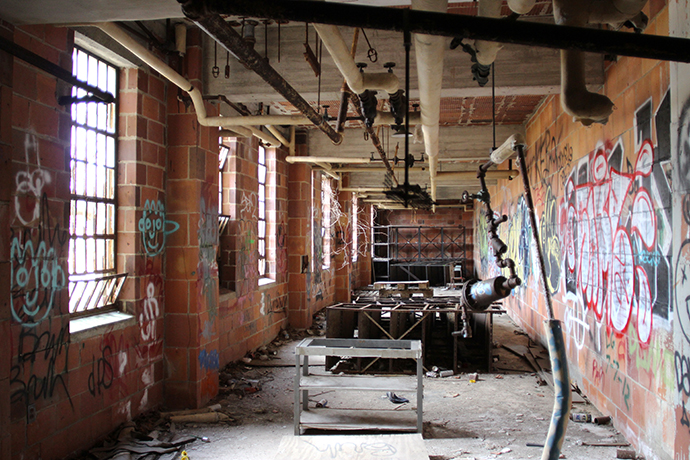
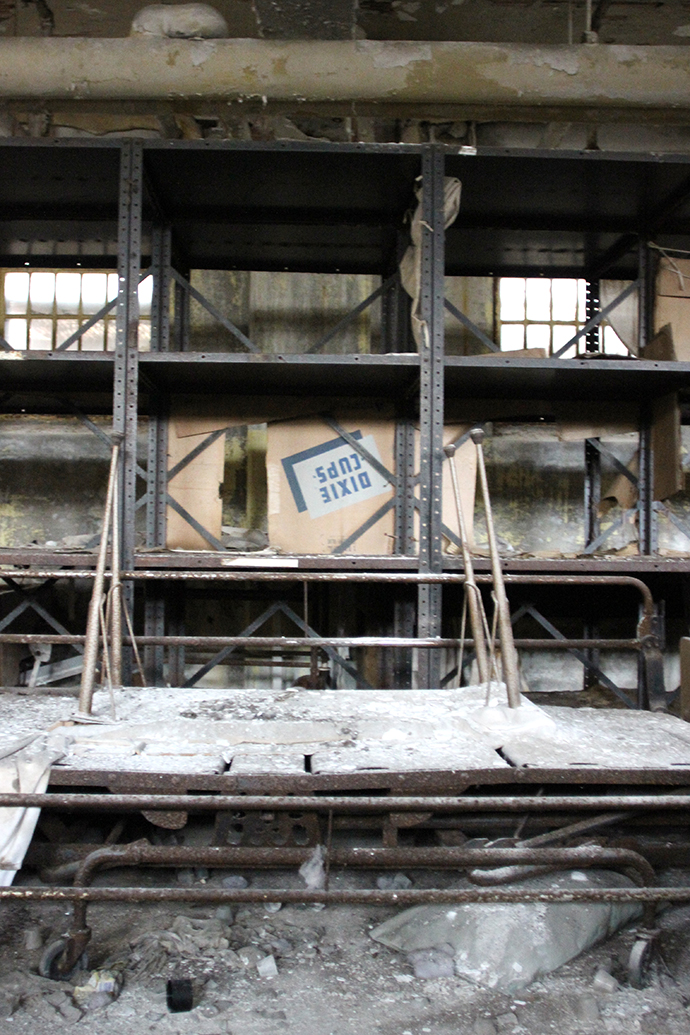
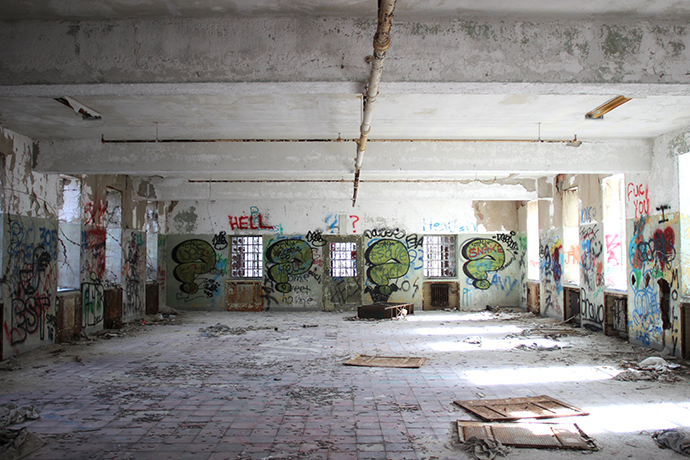
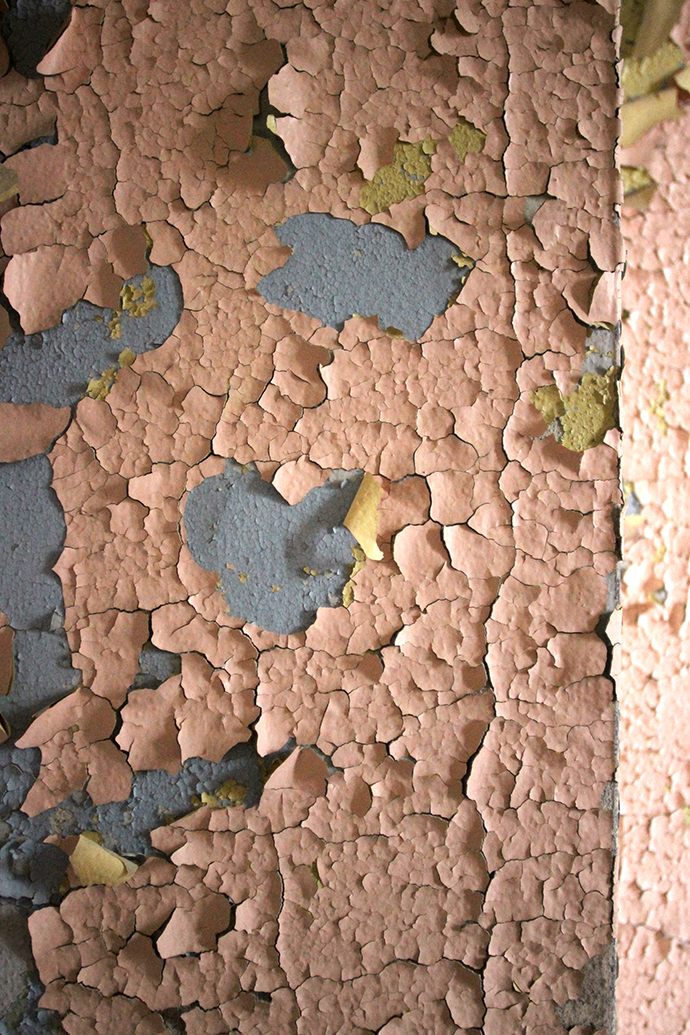
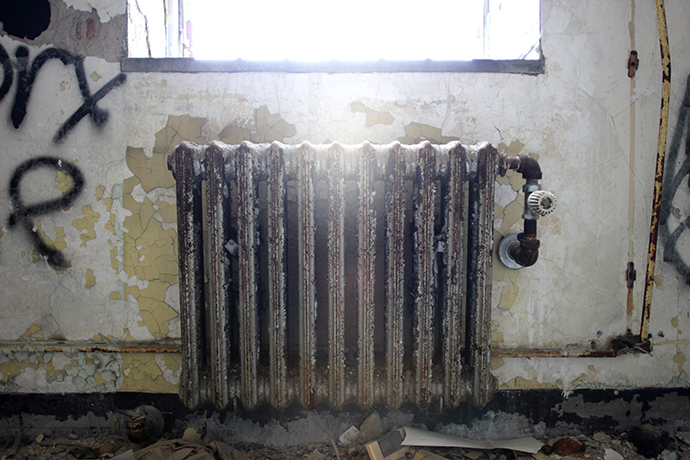
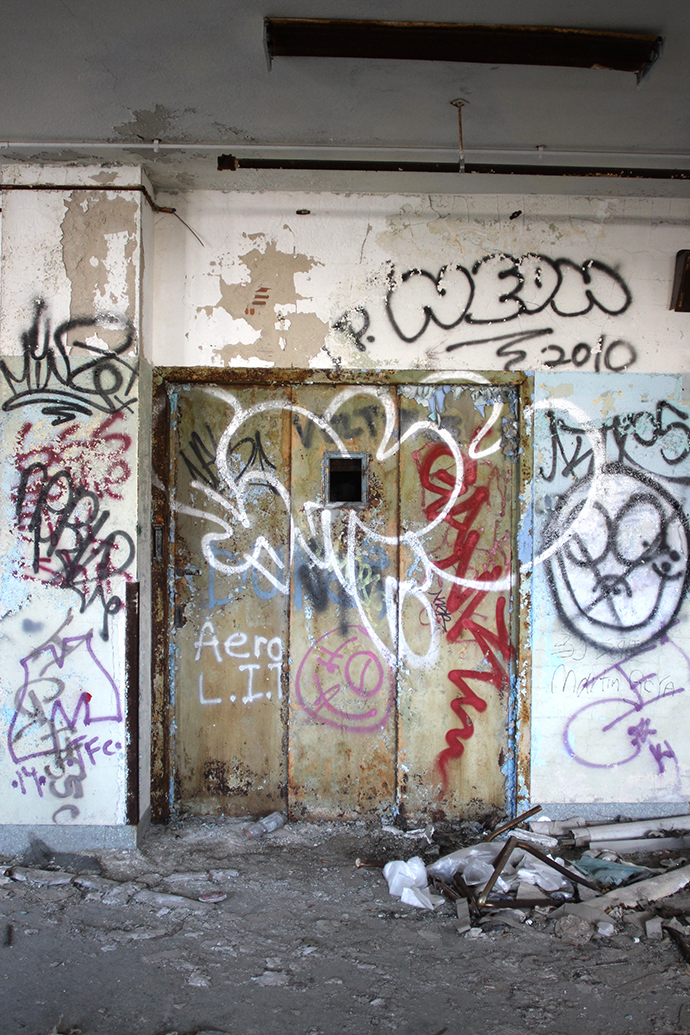
I was surprised to find several other buildings sitting abandoned, but I had my heart set on getting inside of #93. It wasn't as easy of a creep as the New York City Farm Colony (or anywhere near as nice of a day), I'm not entirely thrilled with the photos I got, and my tripod fell out of my backpack and broke (ghosts, probably ¯\_(ツ)_/¯ )—but it was easily my favorite abandoned building experience to date. Our very first creep was an abandoned hospital on Staten Island, but a psychiatric hospital has always been top of my wishlist.
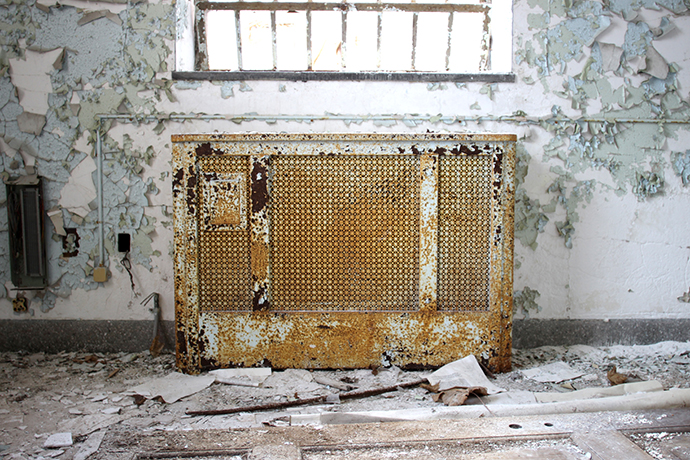
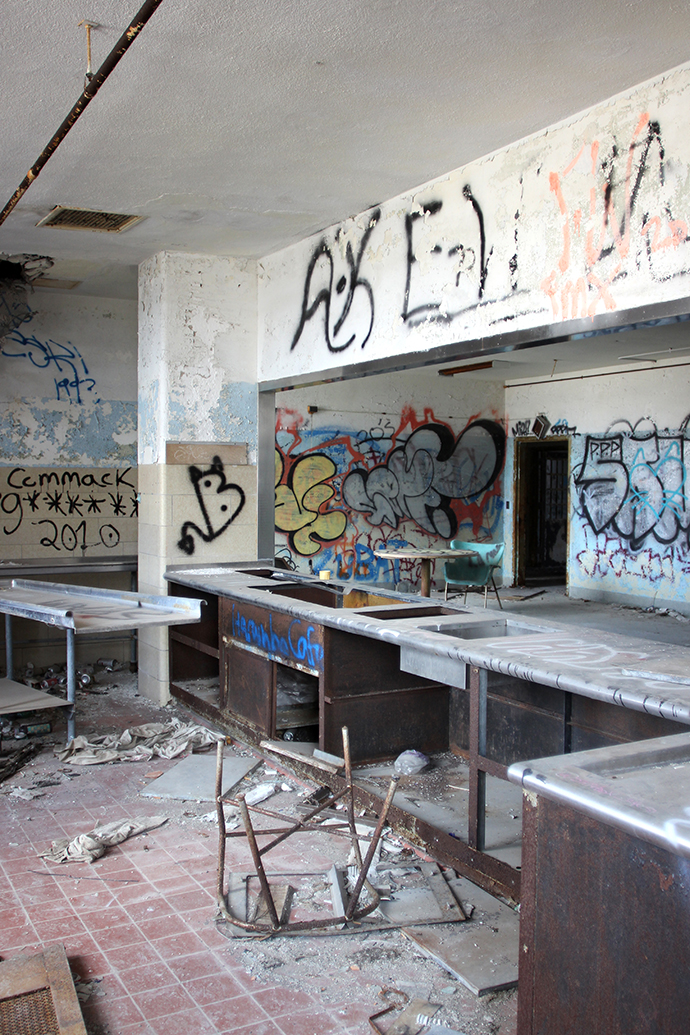
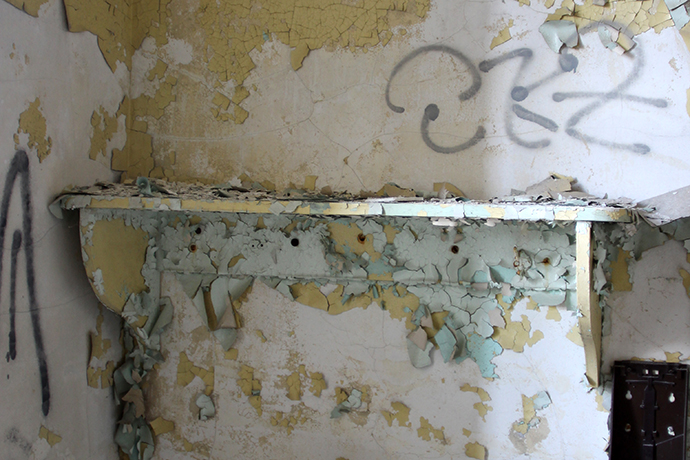
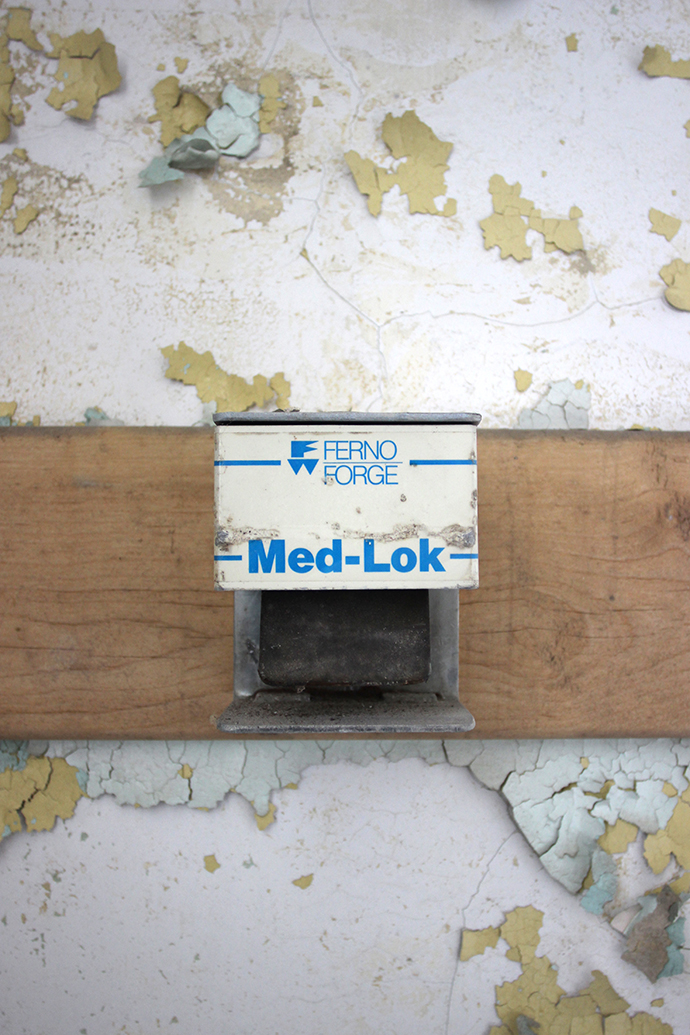
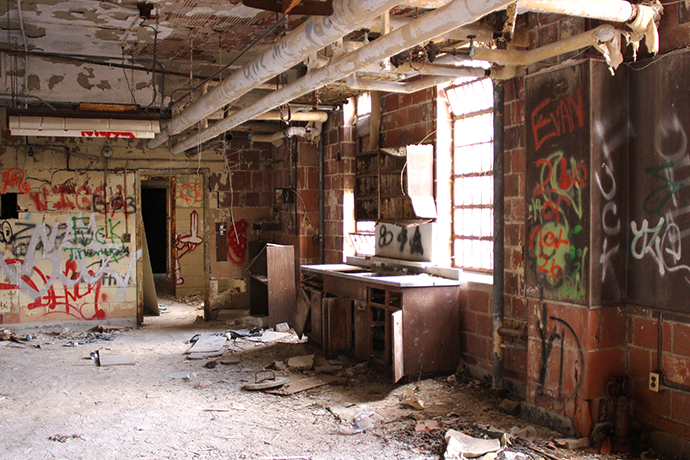
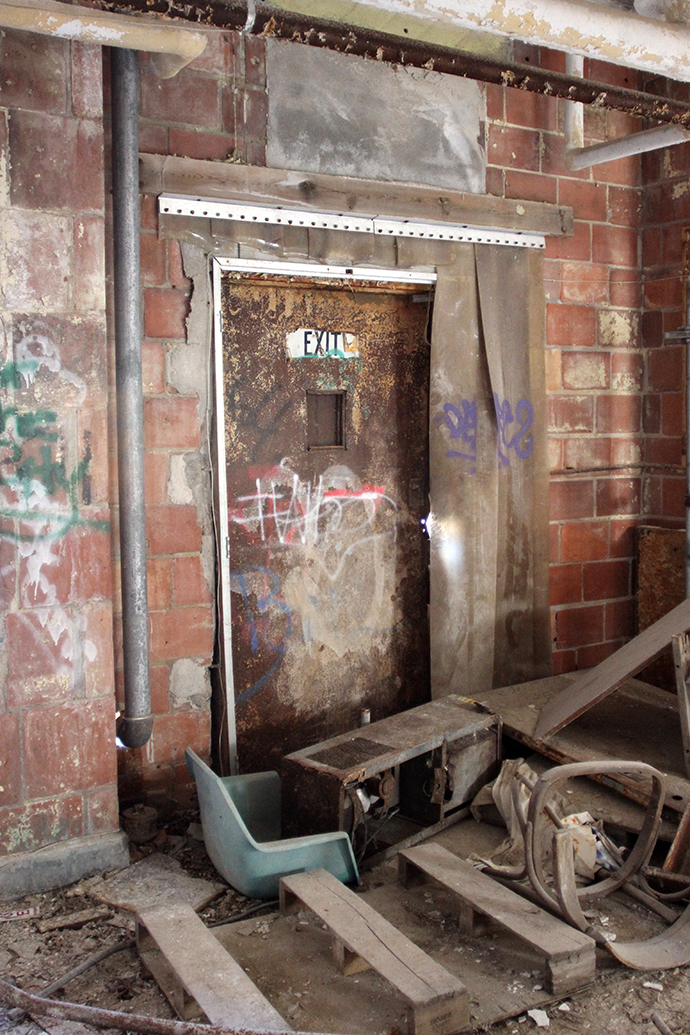
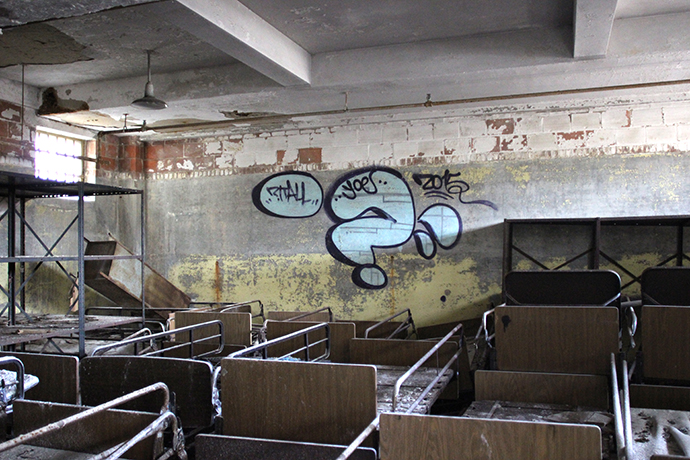
I'm not exaggerating when I say that I could have spent weeks exploring Building 93, but we only made it through two (of the 13) floors before deciding to leave because we were so cold. That cold and windy weather that I had sought for the mansion creep? Not so great for exploring a building whose windows had all long been broken out. We mistakenly assumed that being inside of a structure would at least shelter us somewhat from the gale-force winds, but it felt inexplicably windier and colder on the inside (ghosts, again ¯\_(ツ)_/¯ ). I was bummed that conditions were so miserable, but I was beginning to lose feeling in my hands (and my patient, understanding dude had just about run out of both of those qualities).
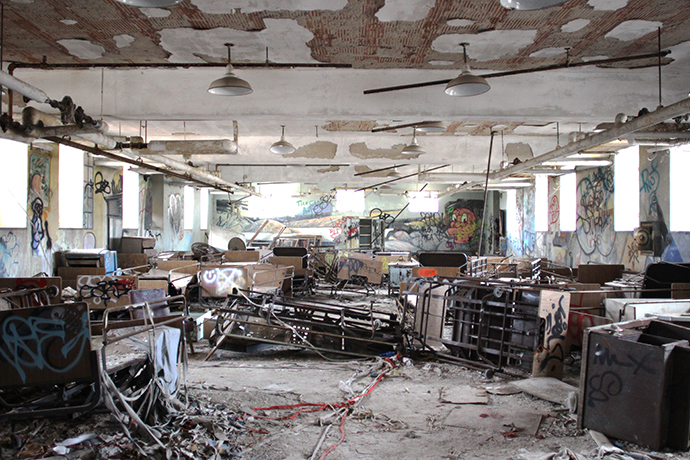
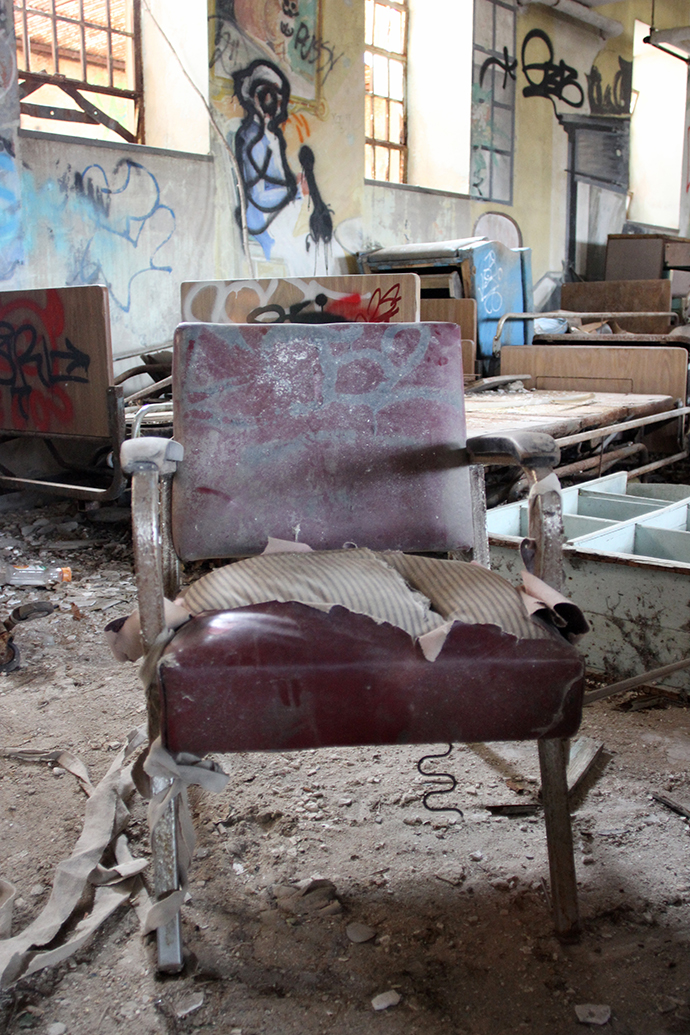
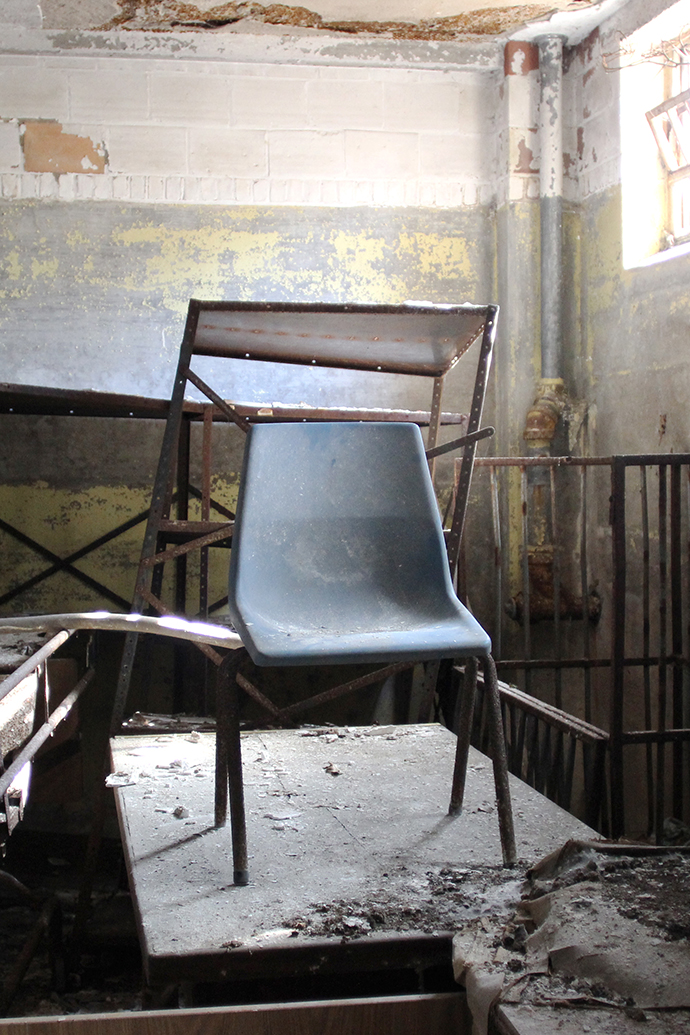
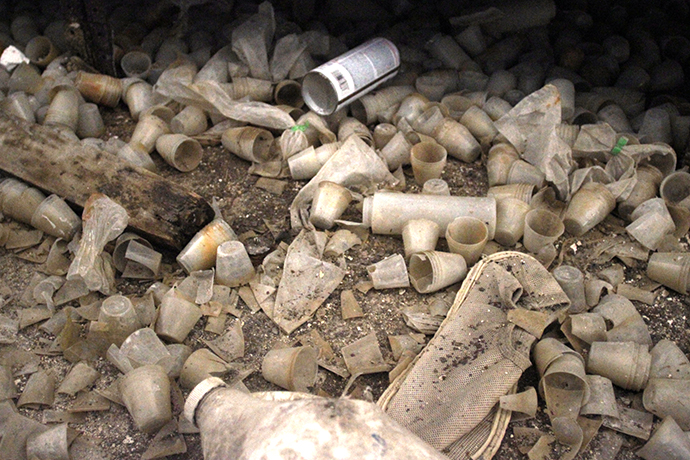
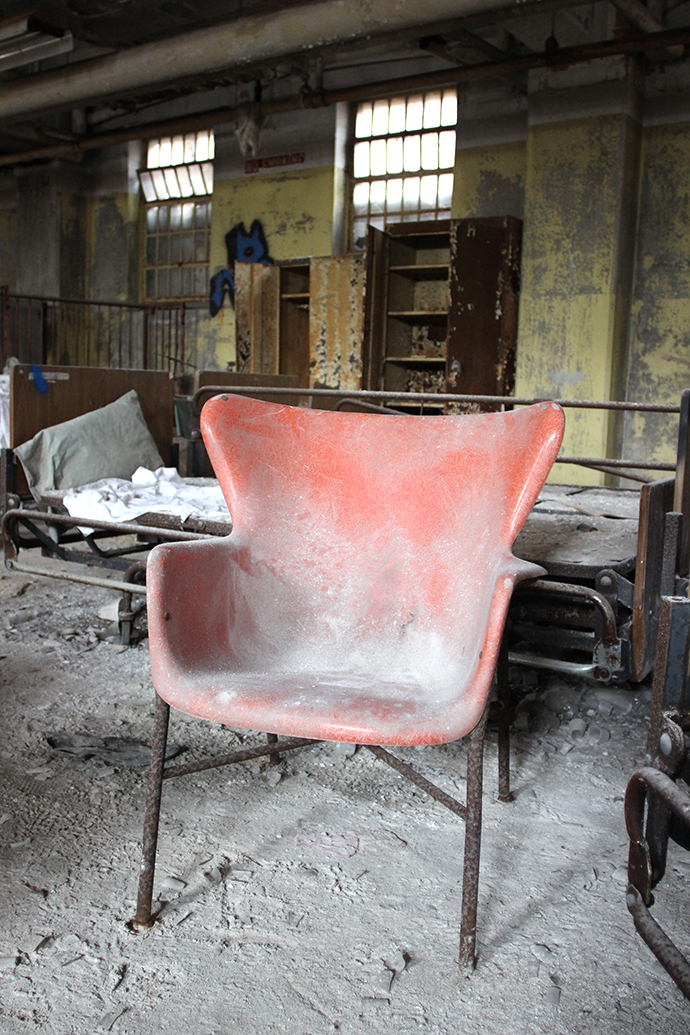
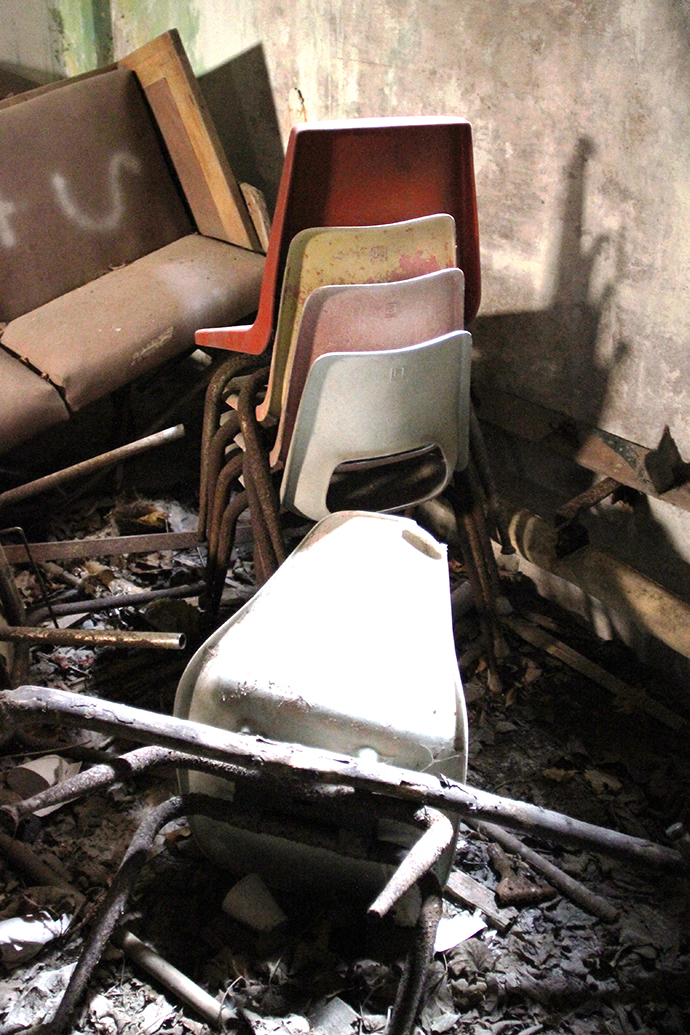
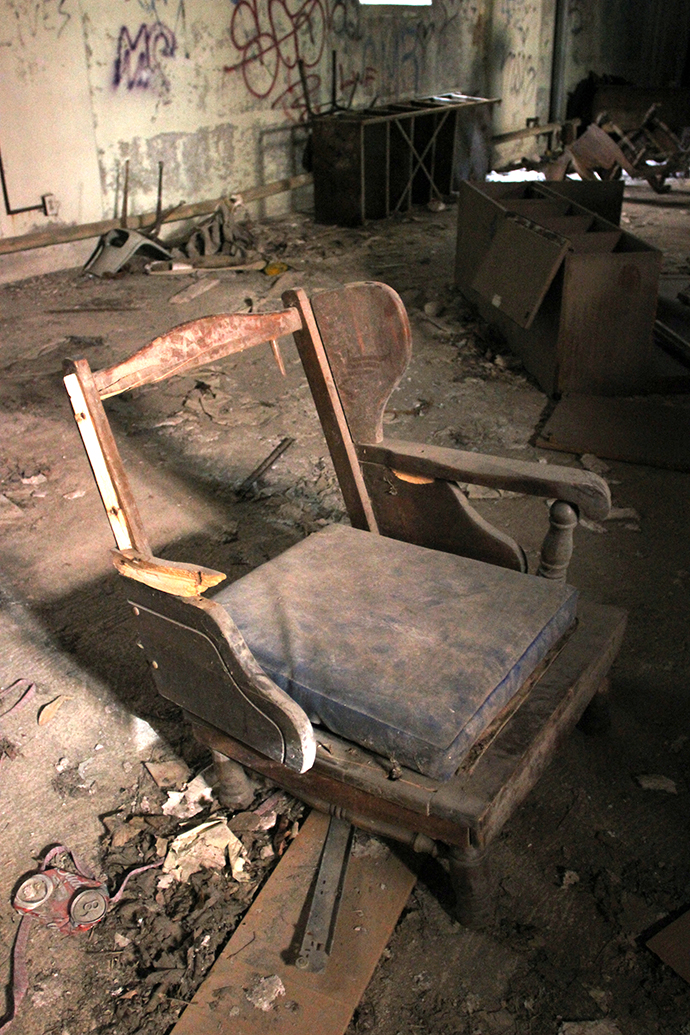
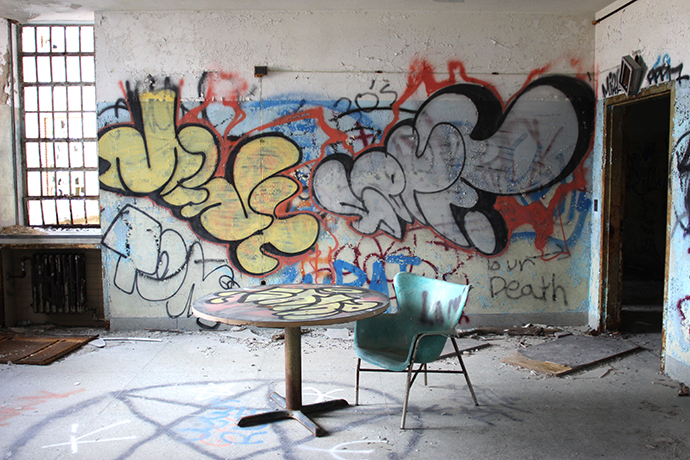
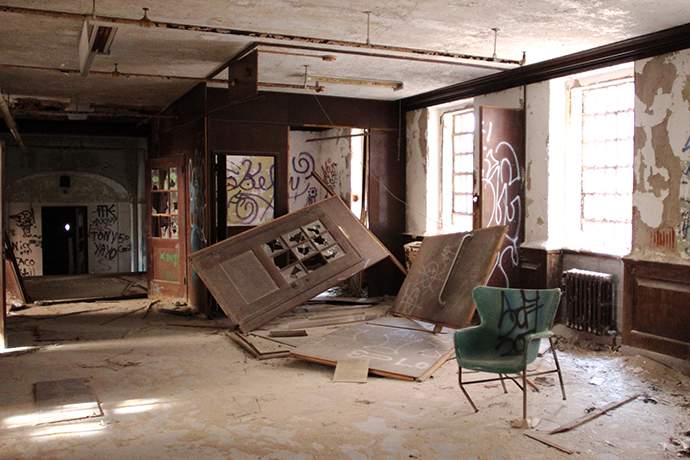
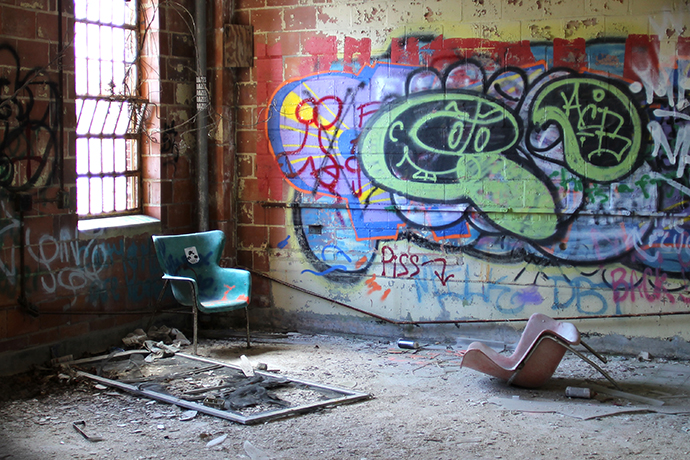
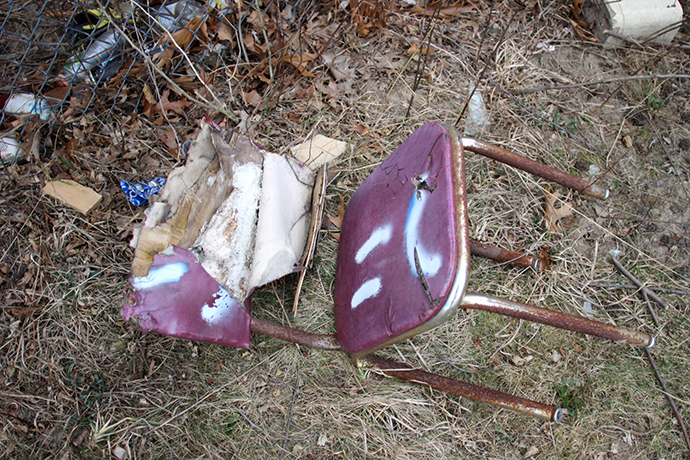
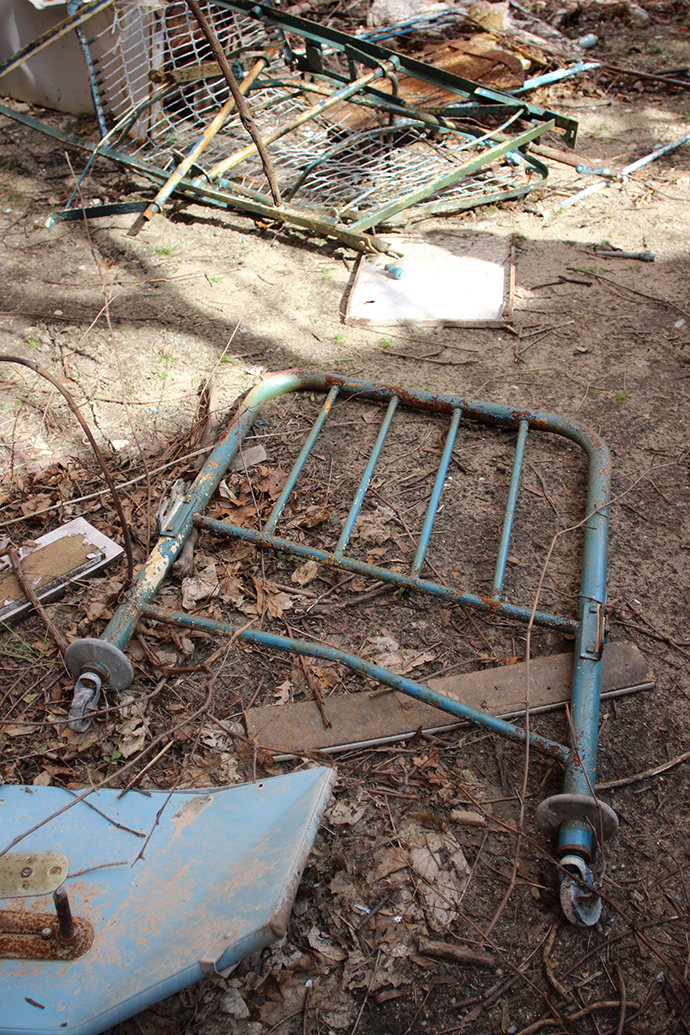
After nearly 20 years of sitting abandoned, I expected the place to be empty but it was full of stuff—chairs, hospital beds, clothing, medicine cups—and I felt like we hit the abandoned hospital jackpot. Psychiatric hospitals are by design labrythine and difficult to get out of, or in our case, into. Even if we had wanted to take something, there was physically no way to get it out of the building (getting ourselves out was harrowing enough)—but that didn't stop me from falling in love with all of the Charles Eames / Herman Miller-esque fiberglass, pastel-colored chairs scattered about.
After extracting ourselves and warming in the car for a minute, we briefly explored two more buildings on the campus—a doctor's cottage and more patient housing (deserving of their own post)—but it's a return to Building 93 that I'm already dreaming about.

Conservatory Garden: Signs of Spring

The weather in New York has been all over the place lately—in the 70s one day and snowing the next. Due to the unseasonably warm weather (hello, climate change!), plants began blooming while it was still February. While I know little to nothing about plants, I do know that it's fairly normal to see things like snow drops this time of year, but seeing cherry blossoms beginning to bloom months before their traditional appearance is just strange (or perhaps alarming).


I went to check in on one of my favorite places in Central Park—the Conservatory Garden—recently on my lunch break, and found several signs of an early spring. I first visited the Conservatory Garden in the spring, at a time when I was really solidifying my plans to finally move to New York, so it will always hold a special place in my heart. While it hasn't been a part of my daily commute for over a year, I'm lucky enough to work within walking distance and it's the perfect quiet space to spend my lunch break.


The Conservatory Garden always puts on a spectacular tulip display, some of which are already starting to make their way out of the ground. The colors usually vary from year to year, so the arrangements always feel new. There's a particular cherry blossom tree (I'm pretty sure that's what it is, although if I'm totally plant-clueless, please correct me) by the entrance to the garden that for the four years I've been here has always come to the spring party early, and it's already bursting with blooms. It's cold and windy again now and I want to go cover all of the fragile-looking buds with tiny snuggies, but I think spring will be here in full-force soon enough.

Cross-Country Skiing
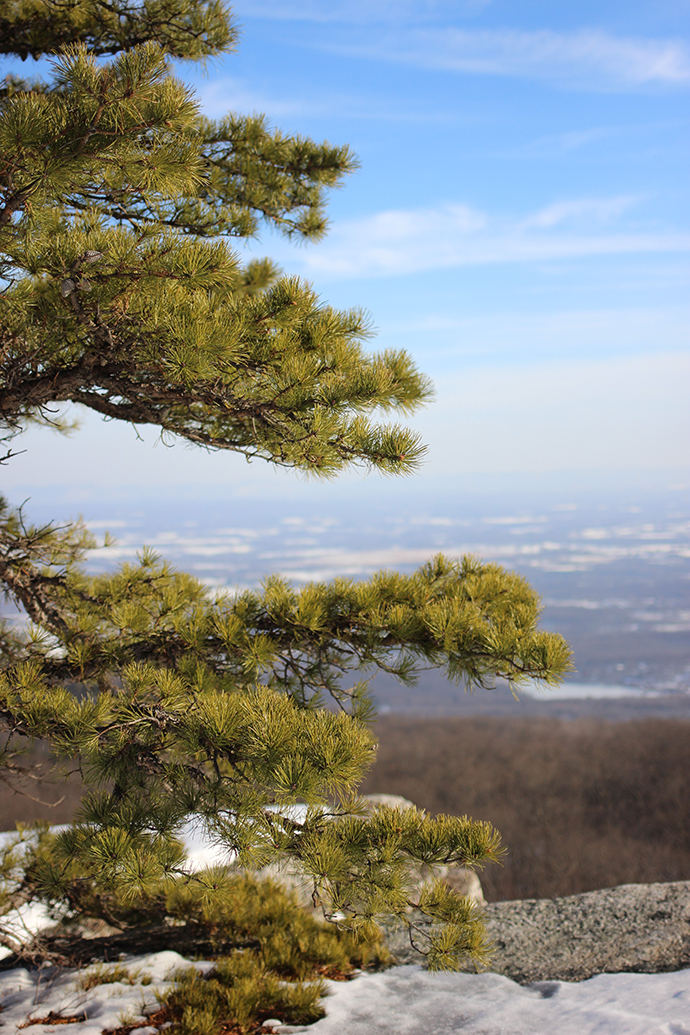
The weather this winter has been all over the place, and while I am happy that we've had two respectable snowfalls, I do wish we'd had more. Overall it's been pretty warm (but climate change is just fake news, huh?), and two weekends ago temps were in the 50s. It's been way snowier upstate than in the city, and they had a nice base of snow but we knew we had to act fast, so we rented a ZipCar for the day and headed to Lake Minnewaska.

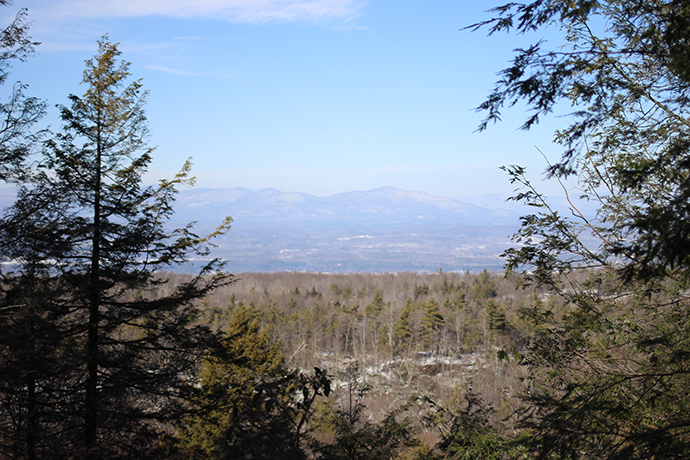
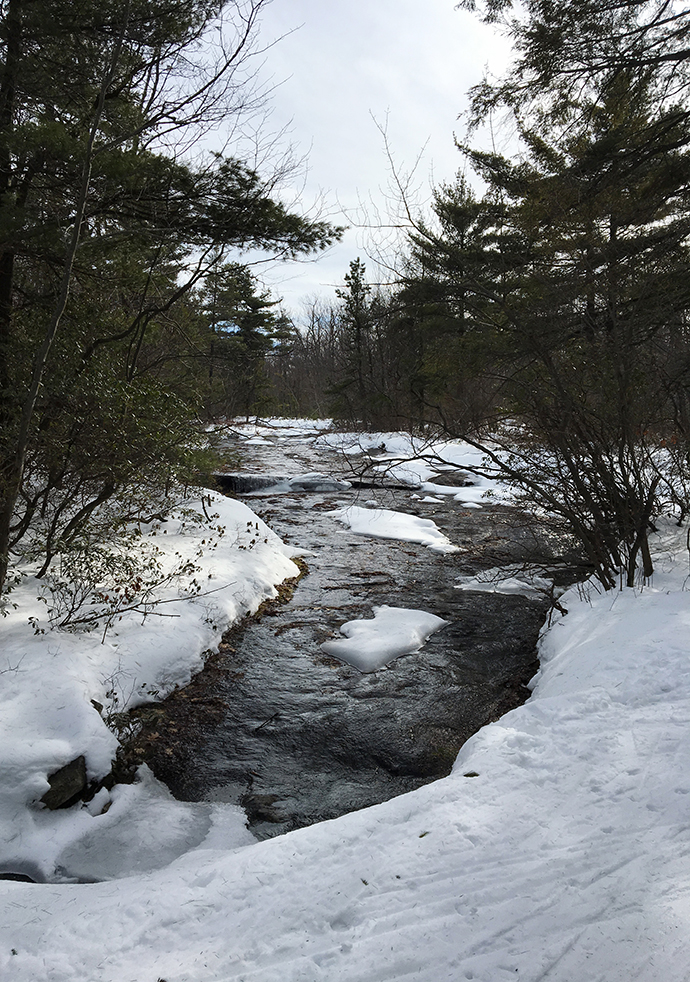
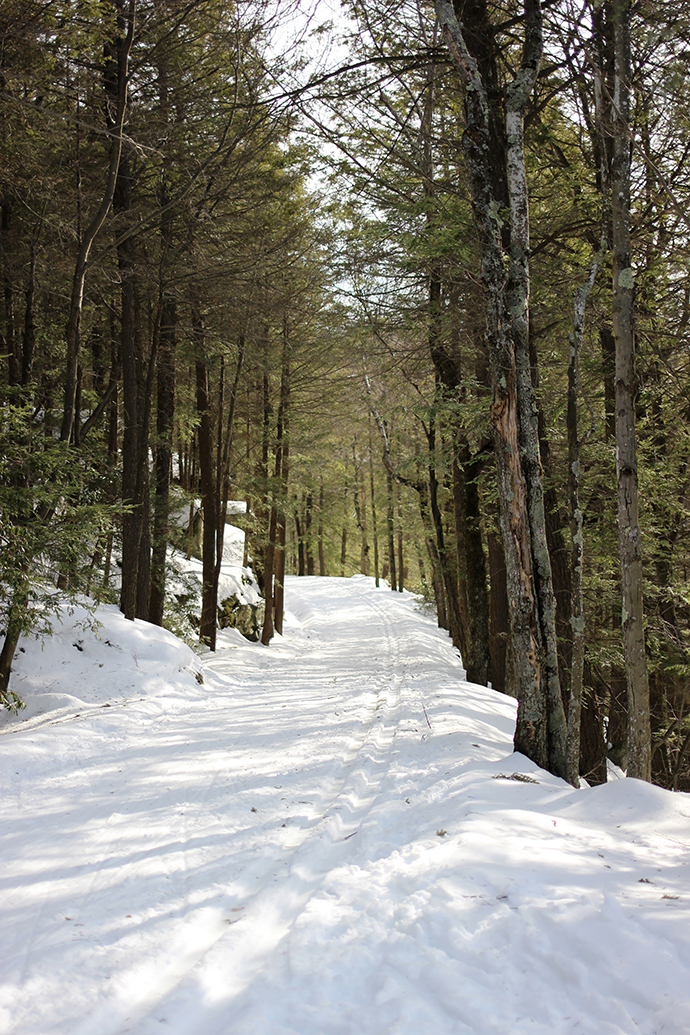
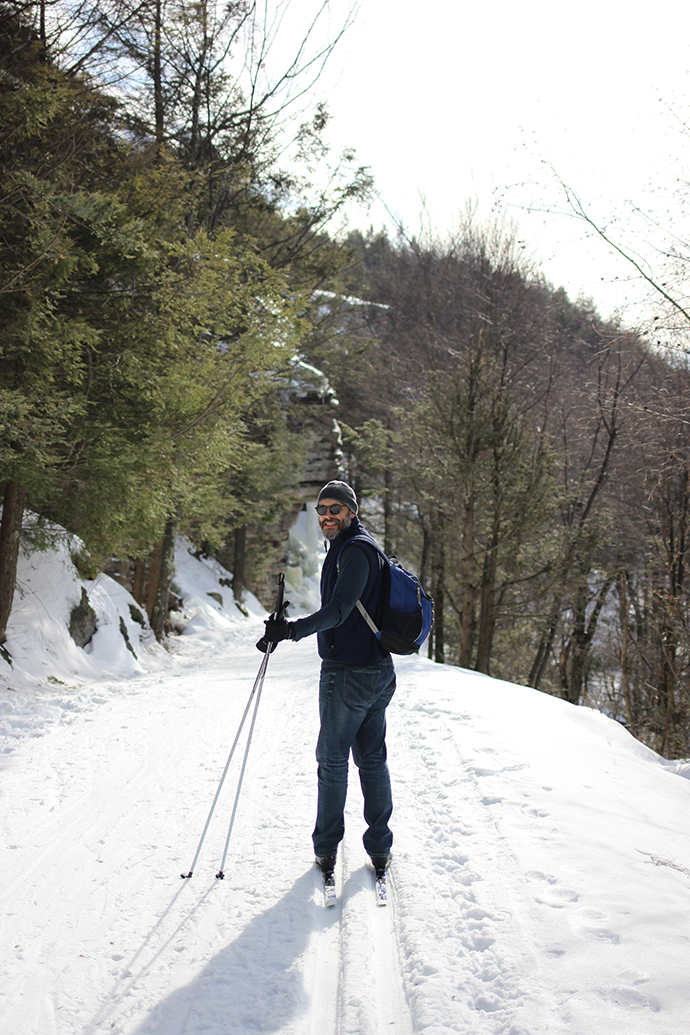
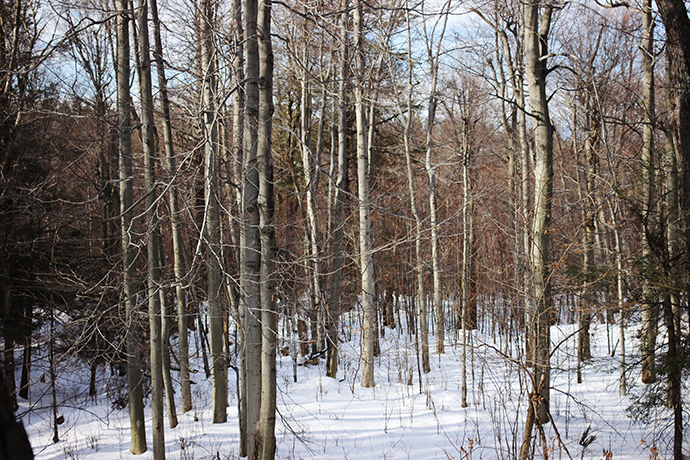
This was only my second time cross-country skiing, but it went much better than my first. I only fell once this time—in a scene akin to Bambi on ice—and I'm in much better physical shape than I was when we went two years ago. In fact, not only did I not feel basically paralyzed the next morning, but I hardly felt as we'd done anything strenuous at all, which is a definite triumph for me.
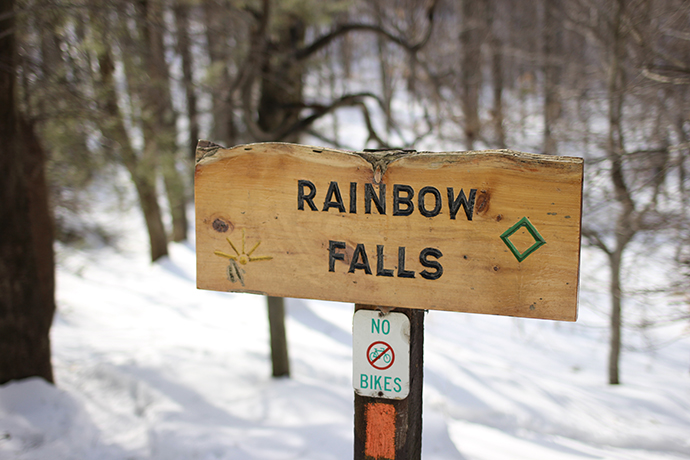
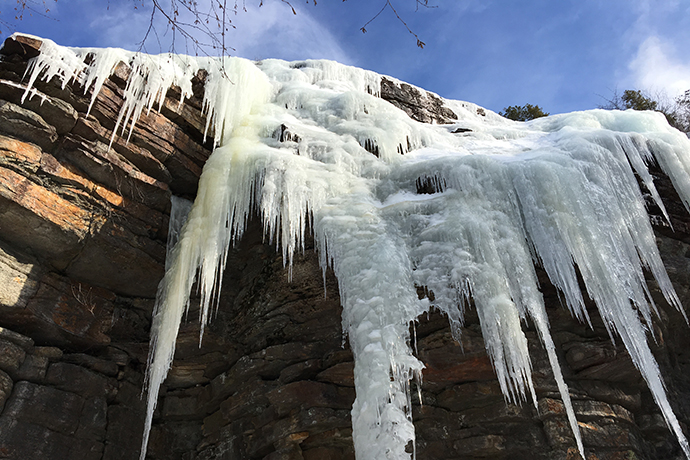


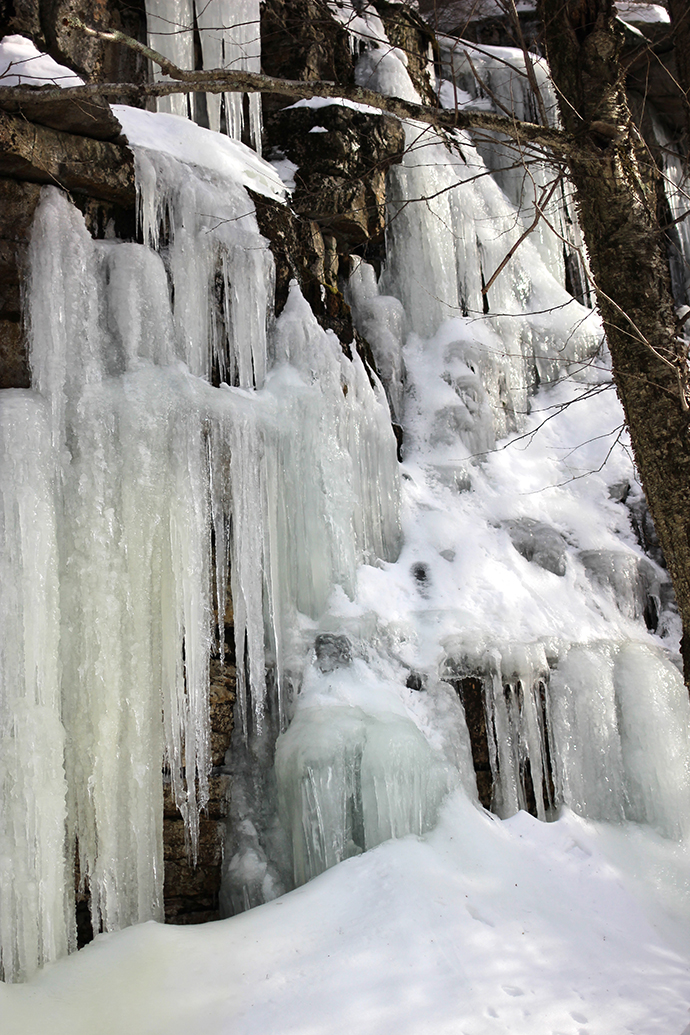

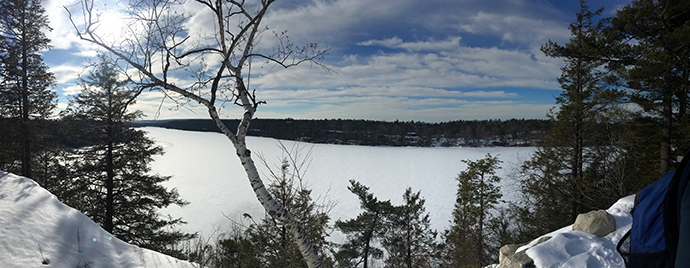


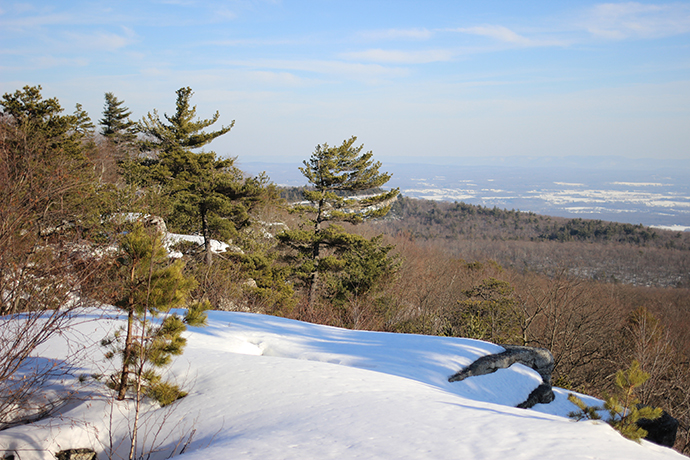
Lake Minnewaska is about two hours outside of the city, near the town of New Paltz. We rented skiis from a shop in town and I was amazed at how cheap they were—less than $20 for skiis, poles and boots. We did about a seven-mile loop, passing the frozen Rainbow Falls, snow-covered Lake Awosting and stopped for the incredible views around almost every turn. I kept remarking how irresponsible it is to allow people like me strap slippery skiis onto their uncoordinated feet on top of a mountain, but once the terror subsided it turned out to be a perfect day.

New York City Farm Colony
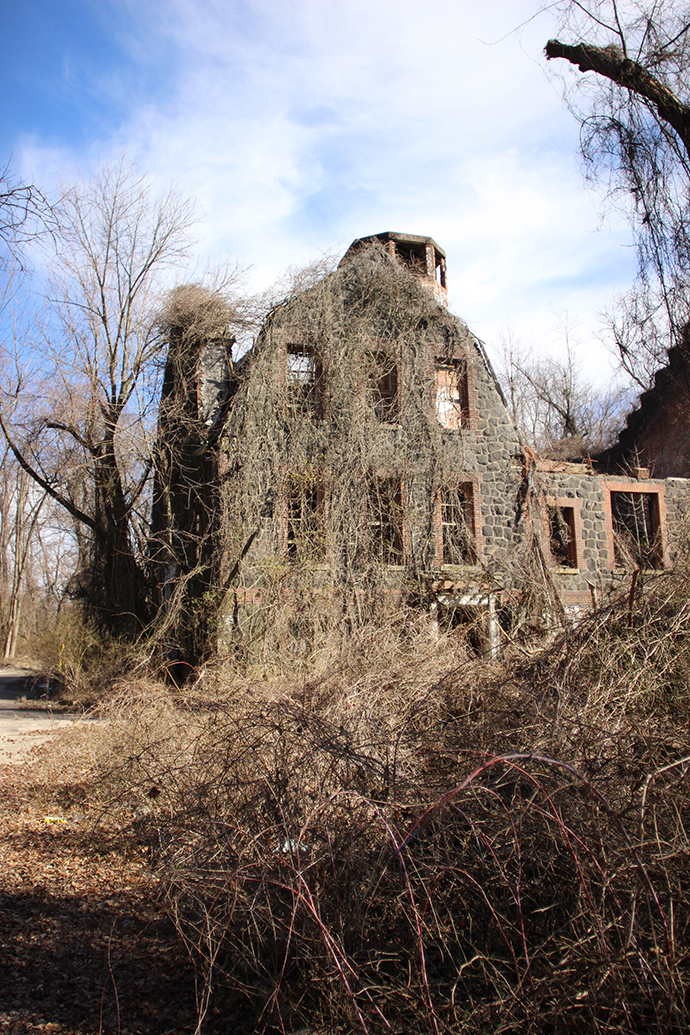
Sunday was unseasonably warm and sunny, and in the morning I met my mom for breakfast downtown at the Pearl Diner. She asked what I was up to, and I told her that I planned to go to Staten Island and creep on the ruins of the old farm colony. She asked if I'd like company, and I said "of course," which is how I found myself exploring creepy abandoned buildings with my mother on a 65-degree day in February. I already knew my mom was not like a regular mom—she's a cool mom!—but her willingness and enthusiasm for an urban exploration adventure of questionable legality just cemented that impression.
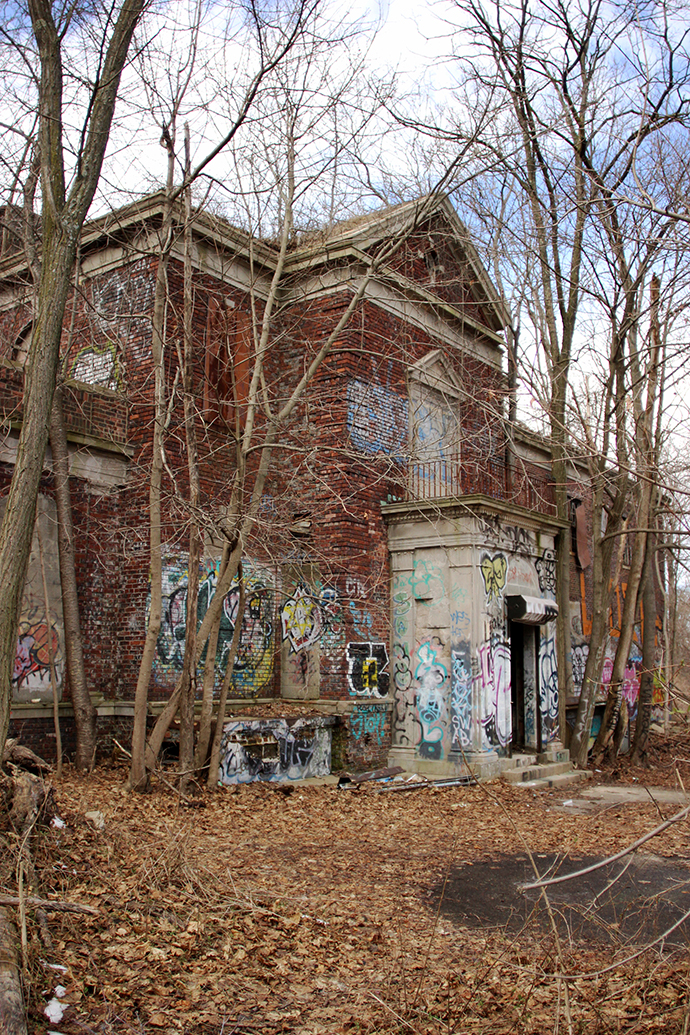
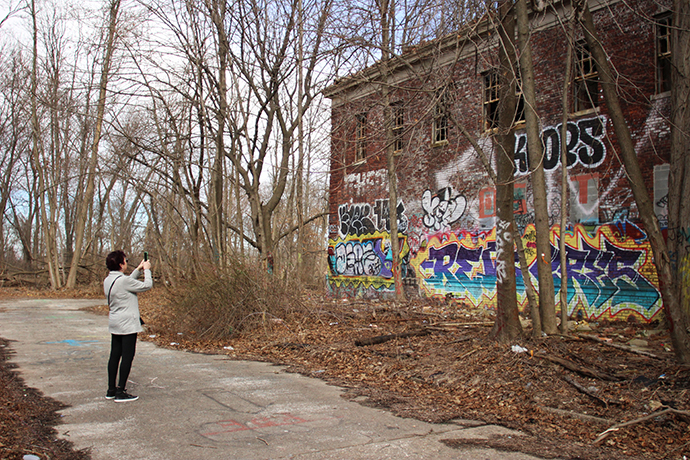
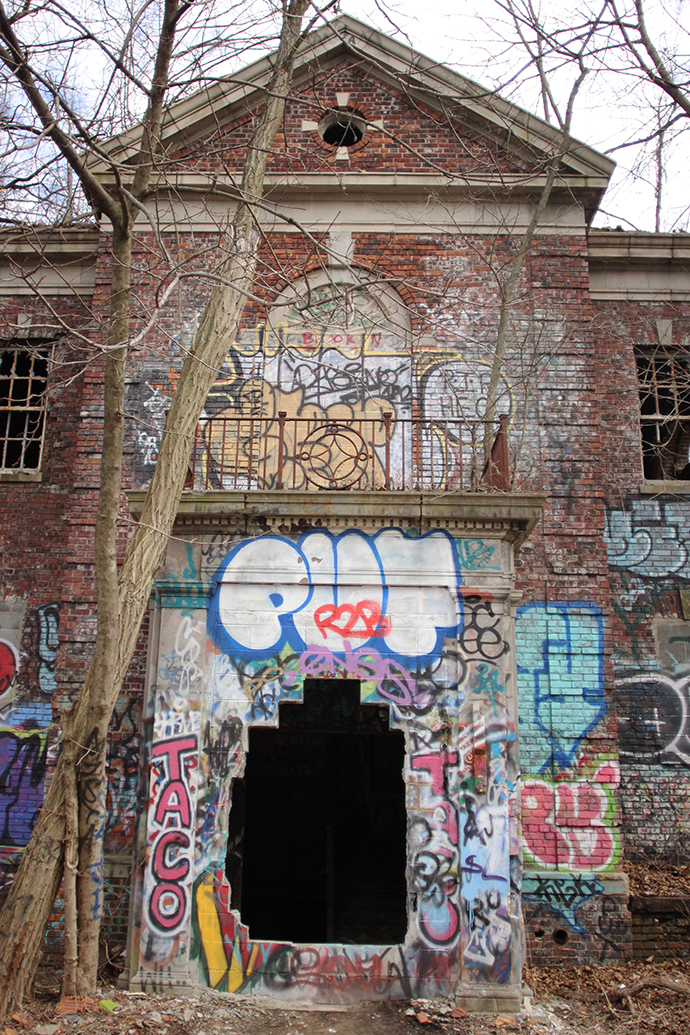
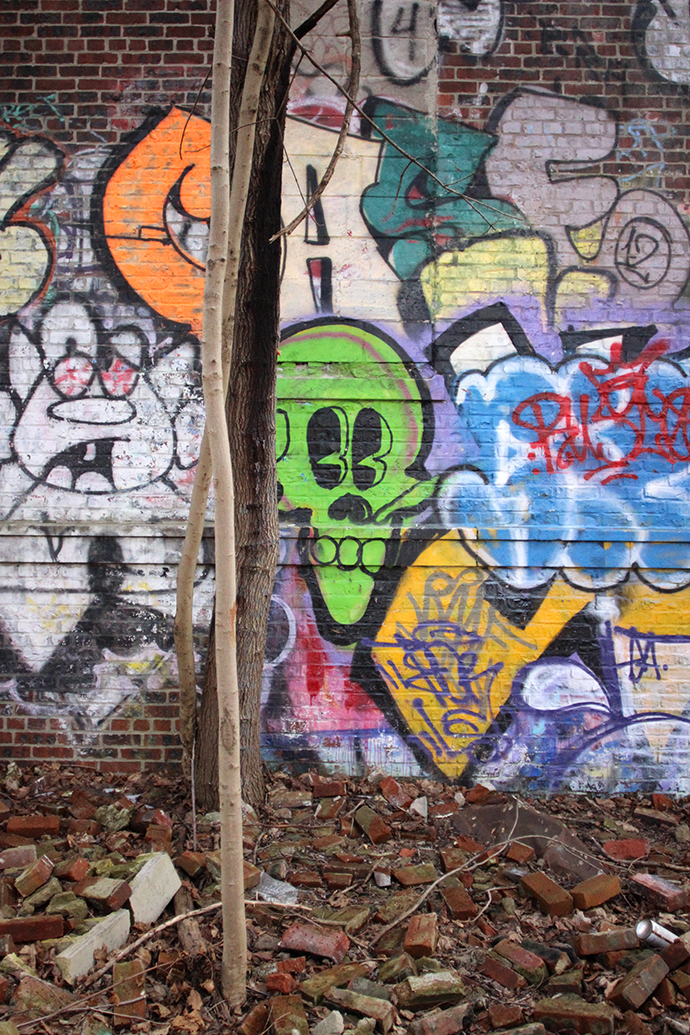
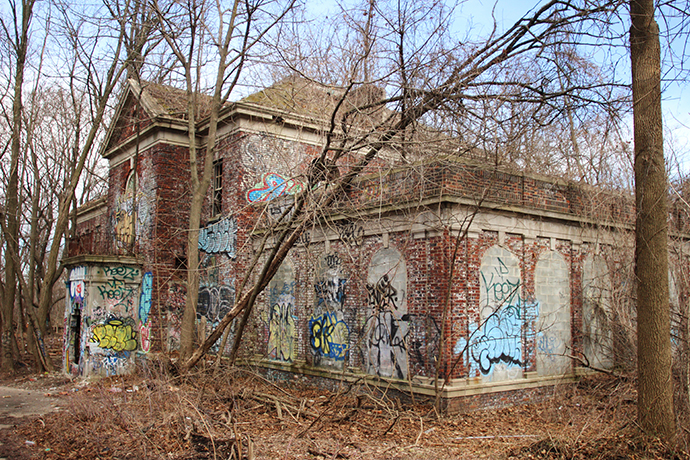
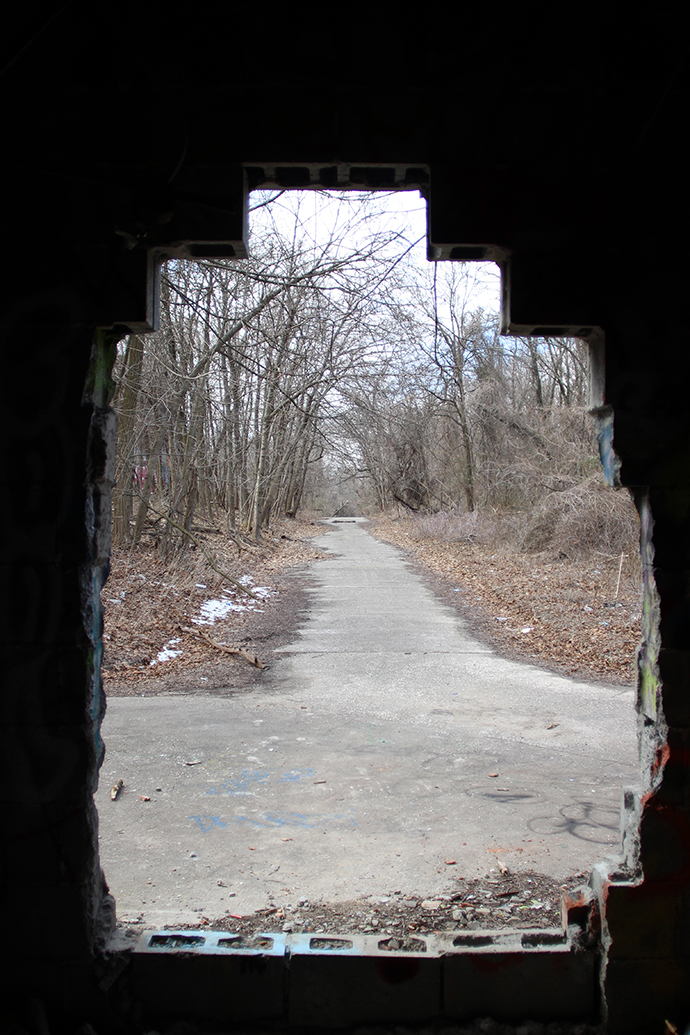
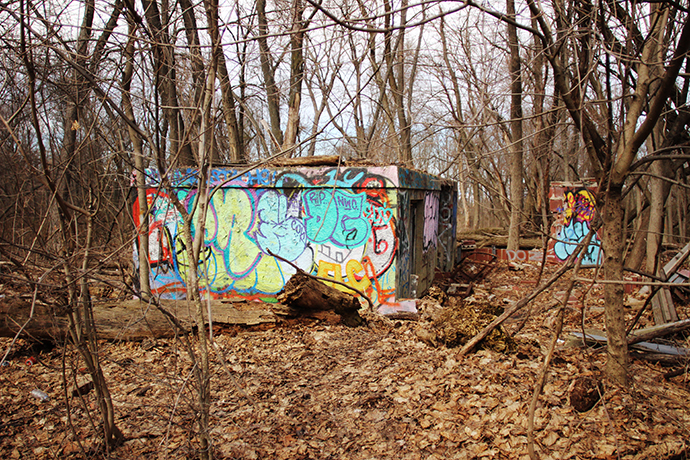
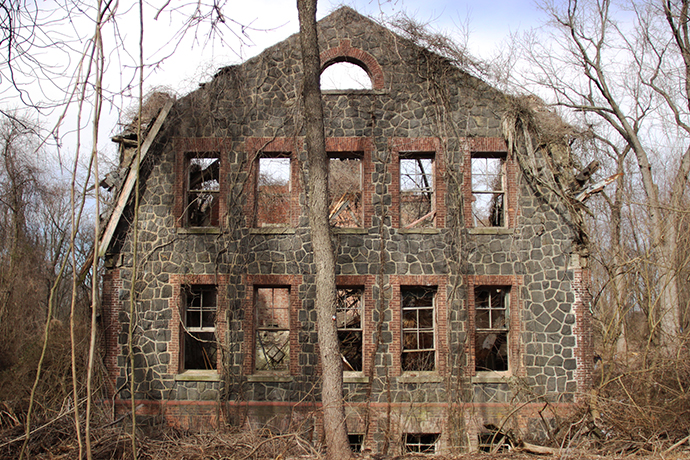
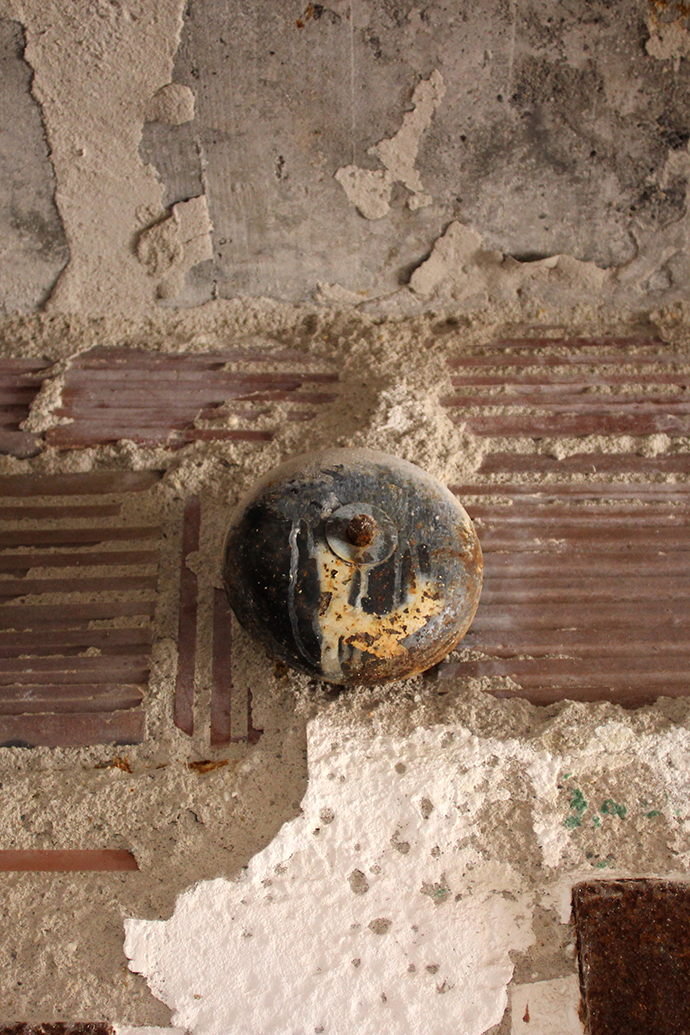
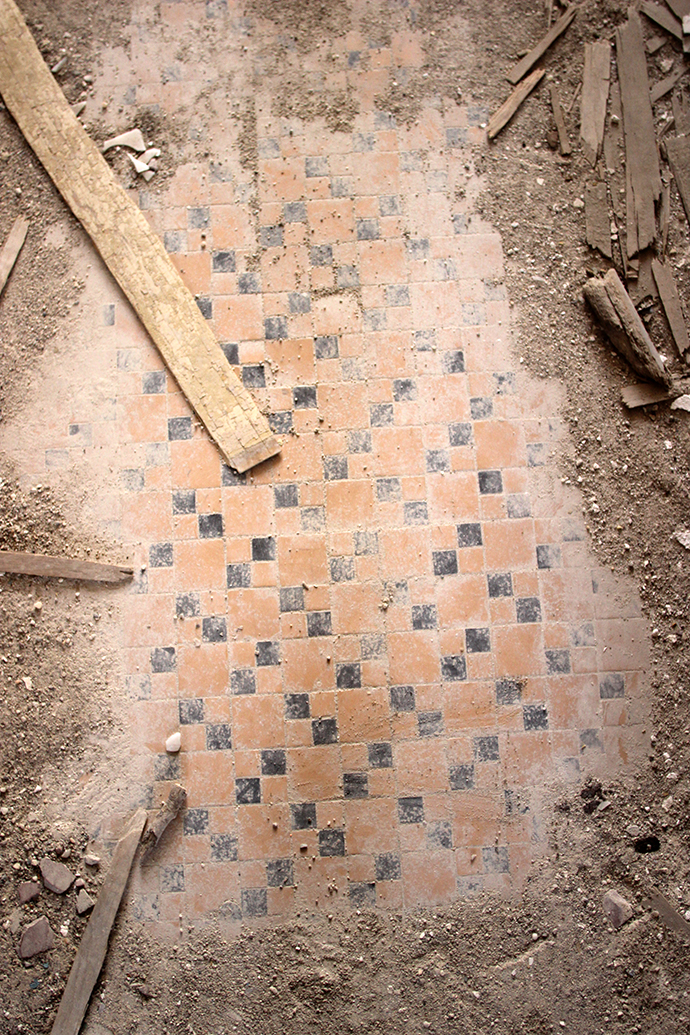
I had known about the New York City Farm Colony ever since I moved here, but for some reason it popped into my head recently that I had to go check it out immediately. I remembered reading about the city selling the property to a developer for $1, and I knew that I'd regret not seeing it while it existed as ruins.
It was actually sold over a year ago and according to a New York Times article from January, 2016:
At a cost of about $91 million, Mr. Masucci would rehabilitate five remaining buildings on the site, tear down five others and preserve a 112-year-old men’s dormitory as a stabilized ruin. He would also construct three six-story apartment buildings and 14 multiple-unit townhouses, some with built-in garages, for a total of 344 condominiums. They would start opening next year.
Obviously the timeline was a bit ambitious, because over a year later there is virtually no evidence of new development (or clean-up of any kind) on the property aside from a few new sections of fencing.
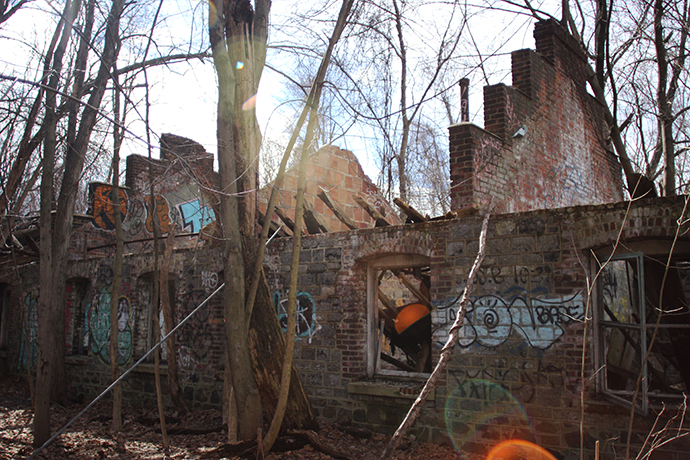
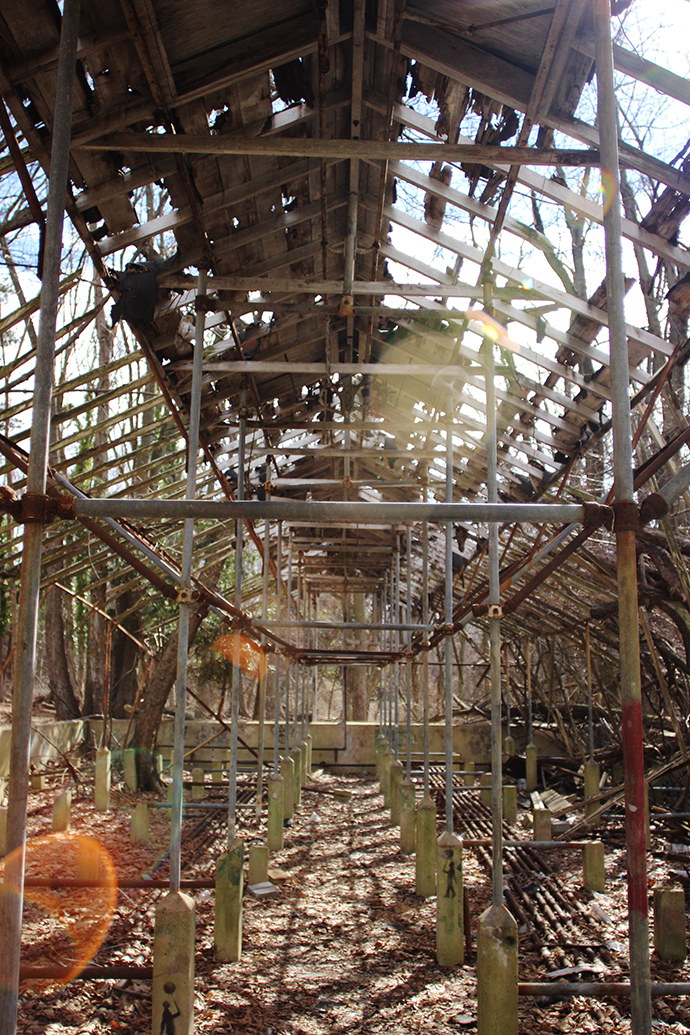
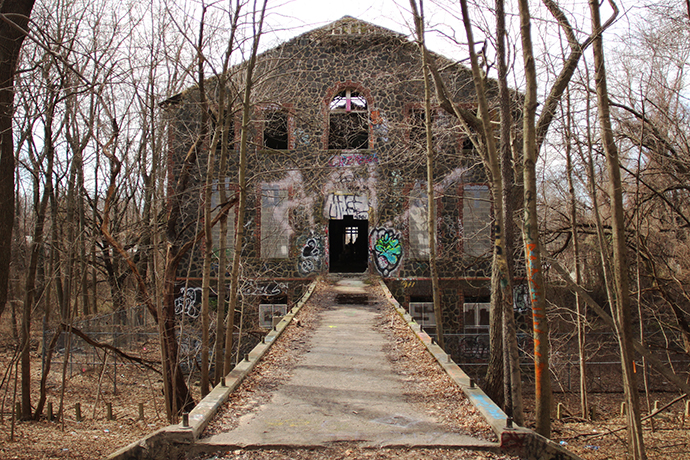
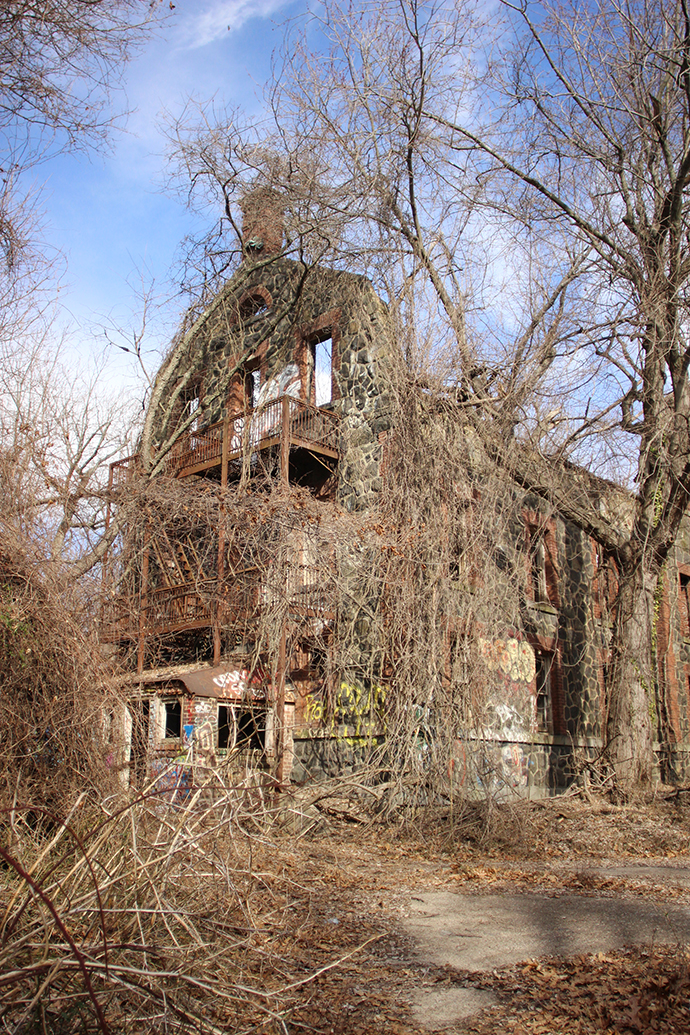
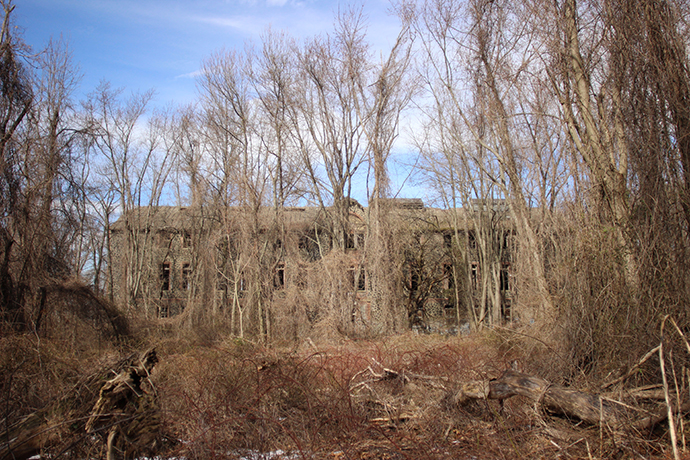
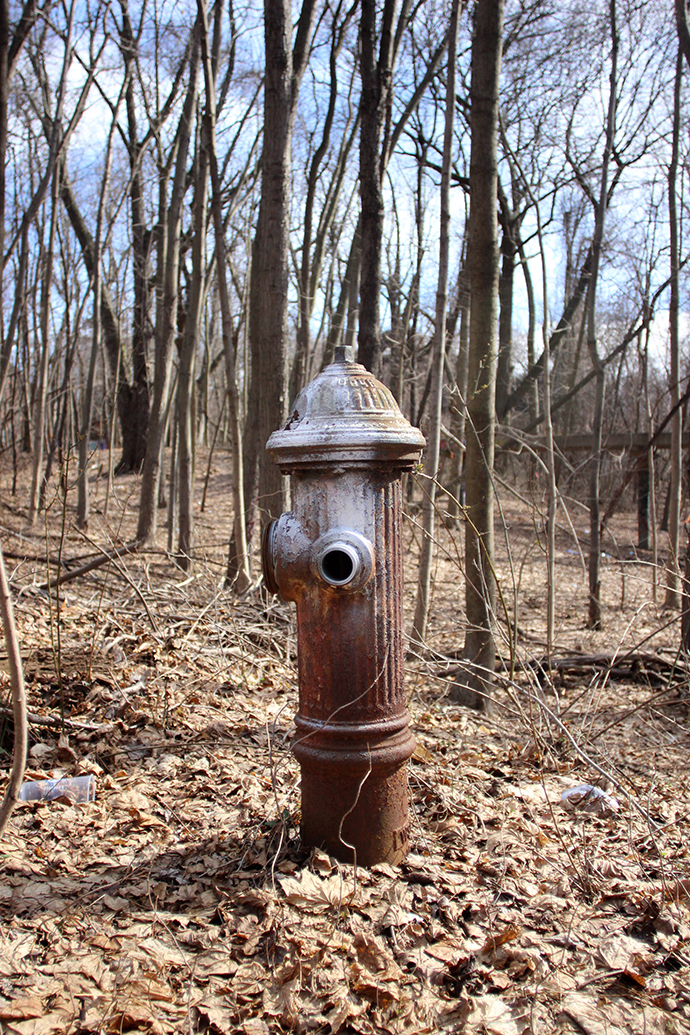
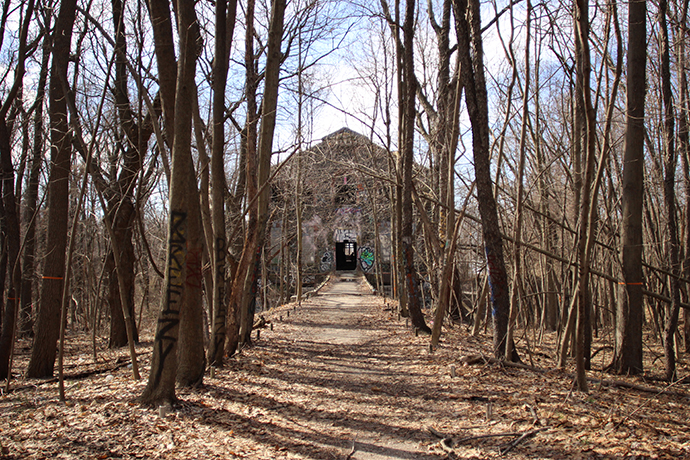
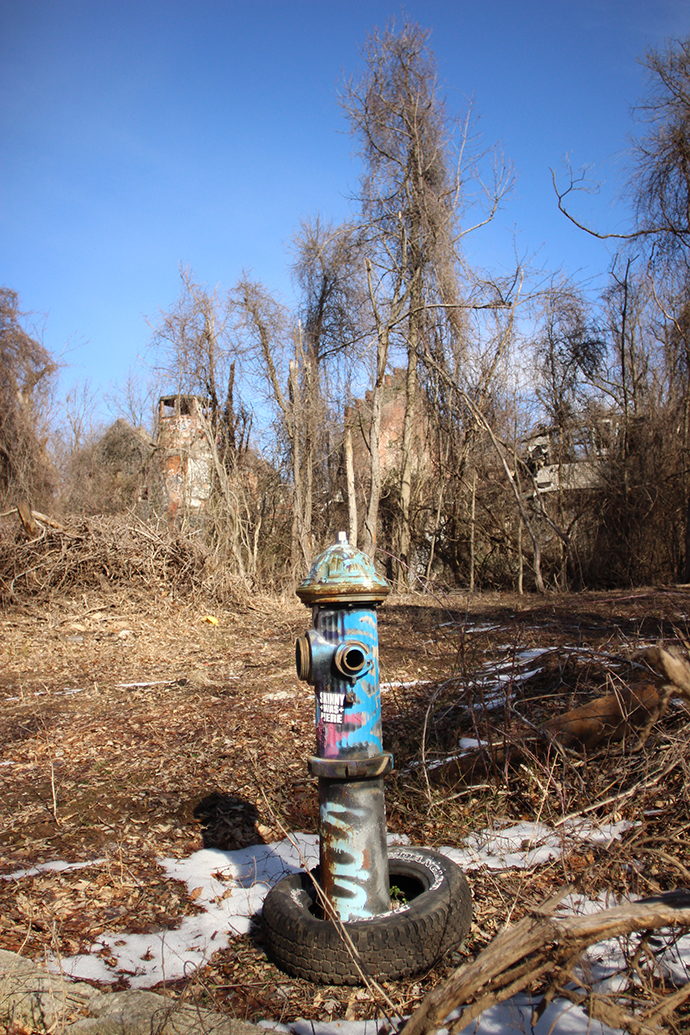
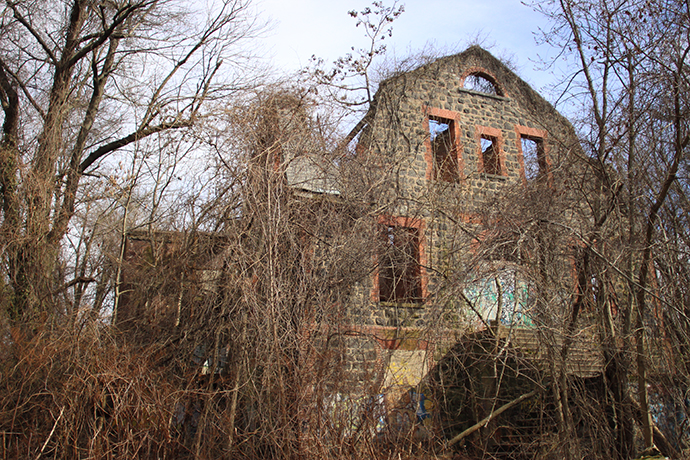
The Richmond County Poor Farm was established in 1829 and it was renamed the New York City Farm Colony when Staten Island officially became a borough in 1898. The (mostly elderly) residents were required to work, which included actual farming of fruits, vegetables, wheat and corn. Residency declined after the implementation of Social Security, and in 1975 the facility closed and has sat abandoned ever since.
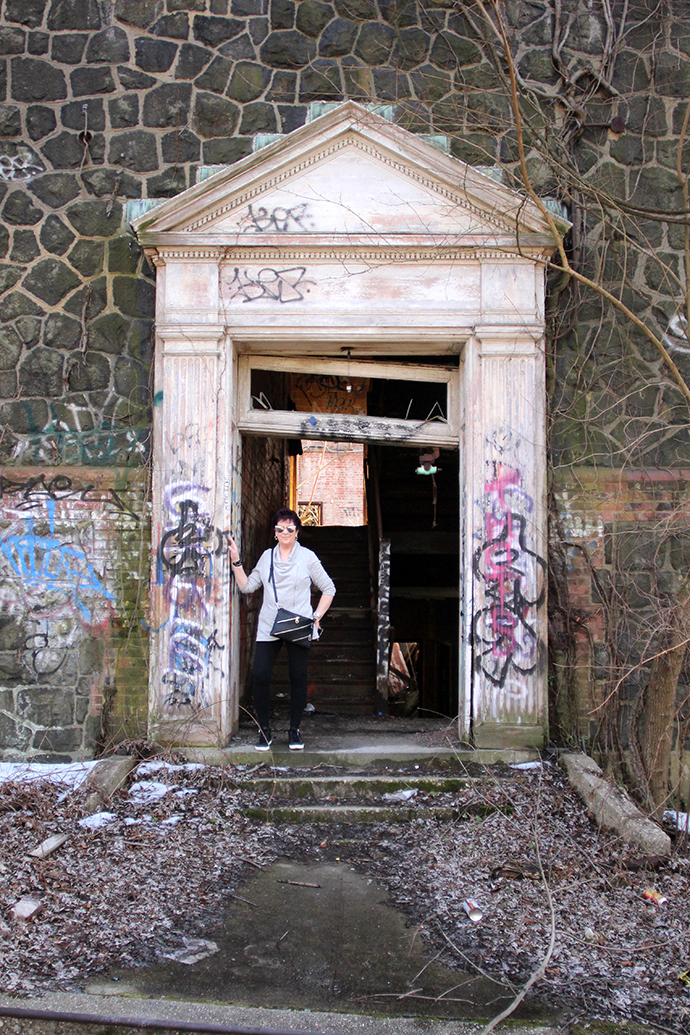
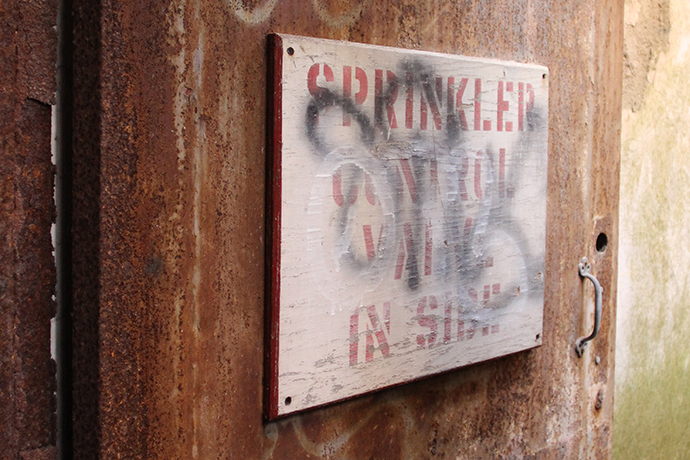
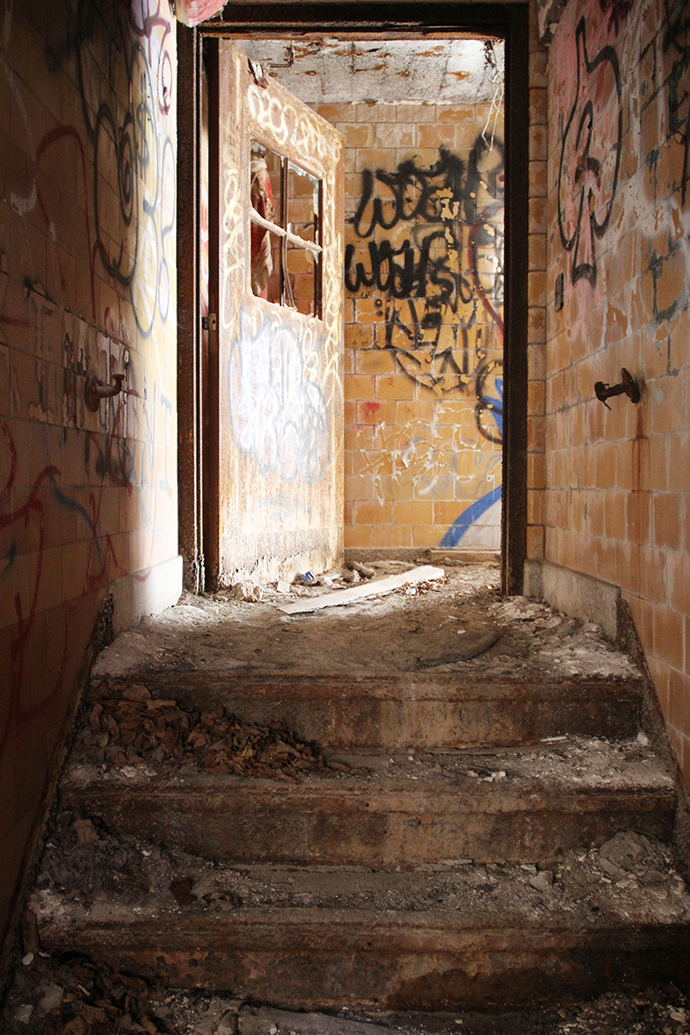
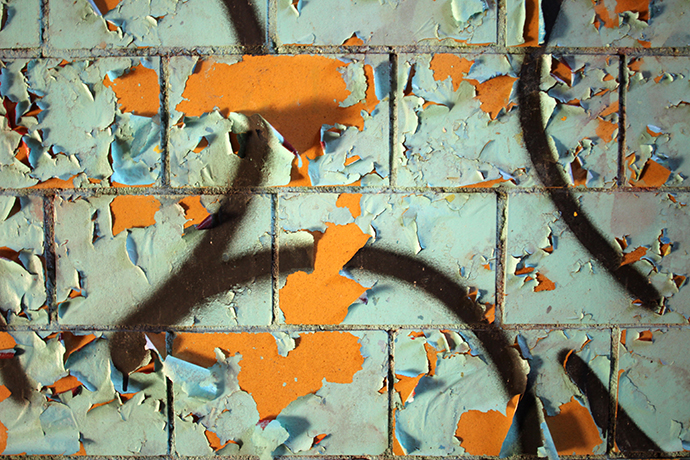
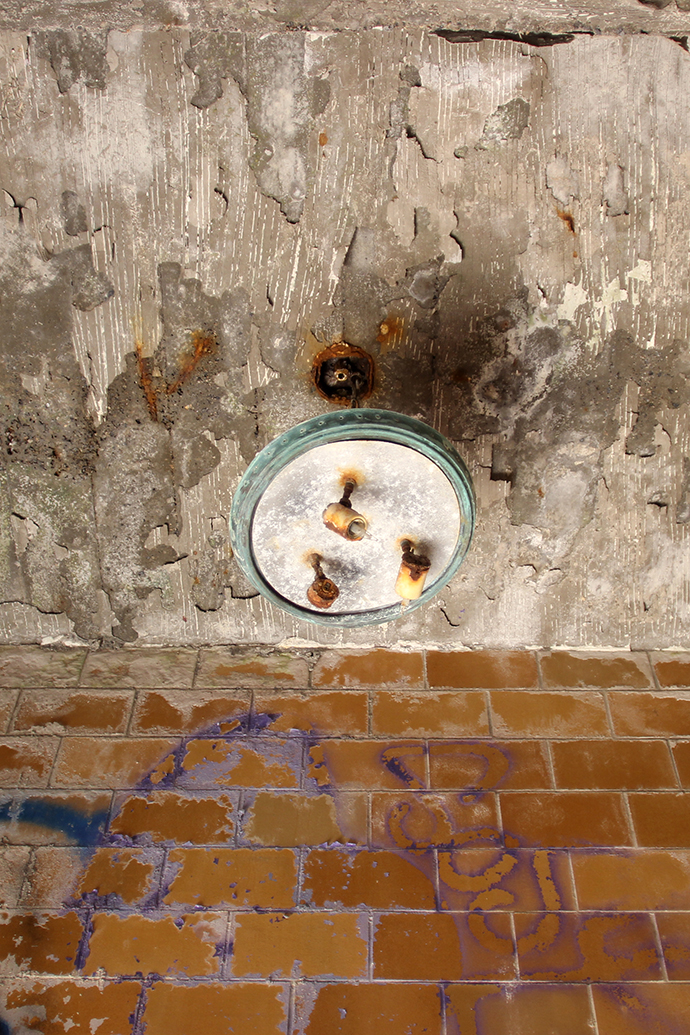
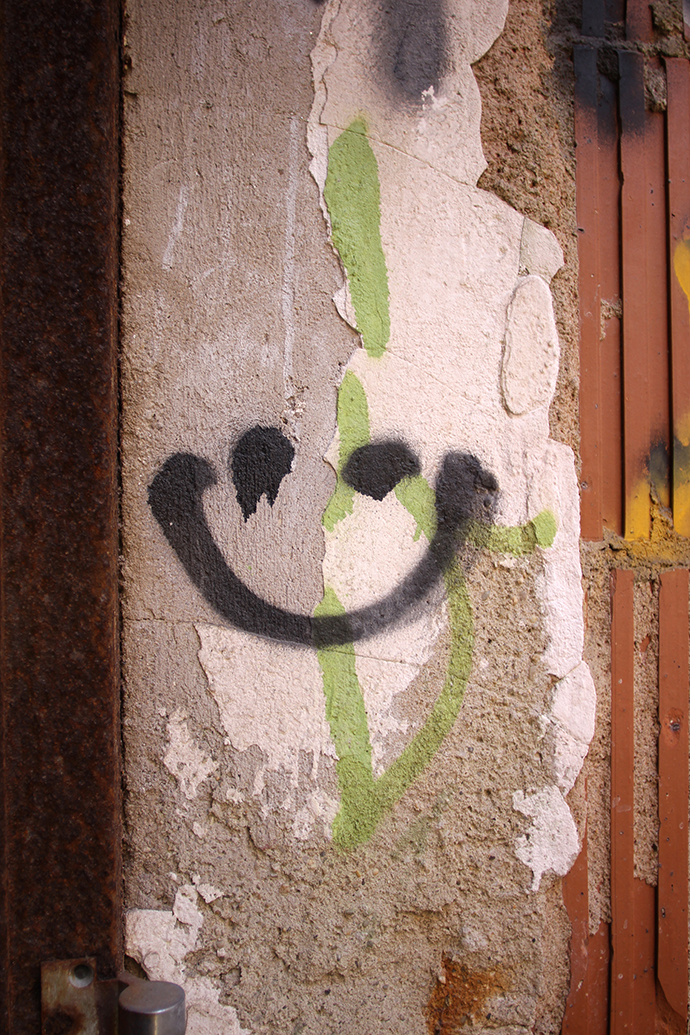
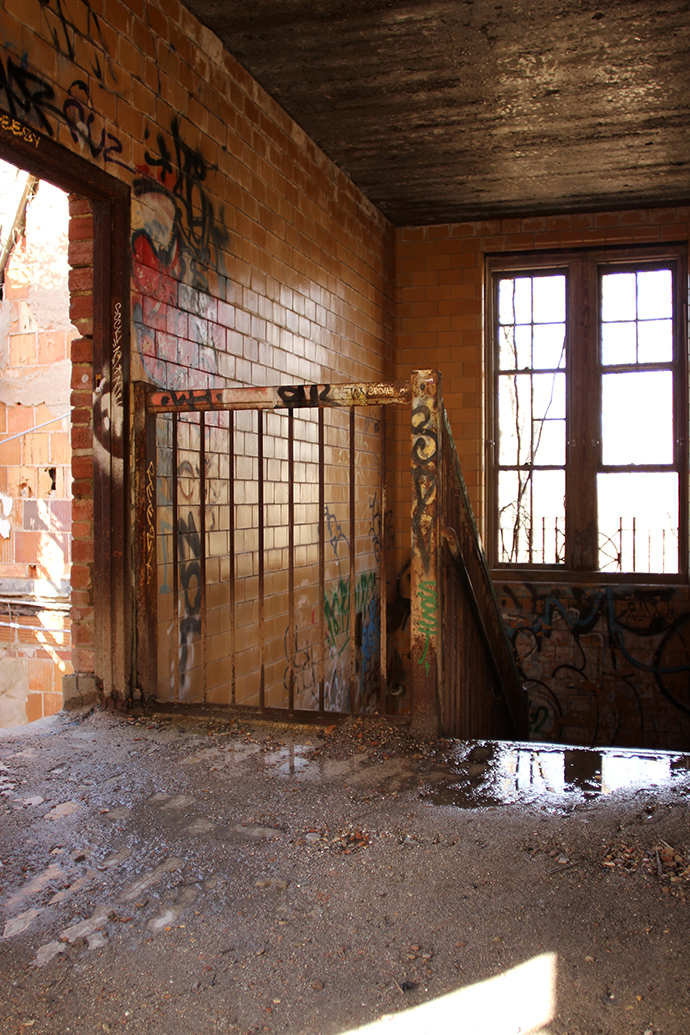
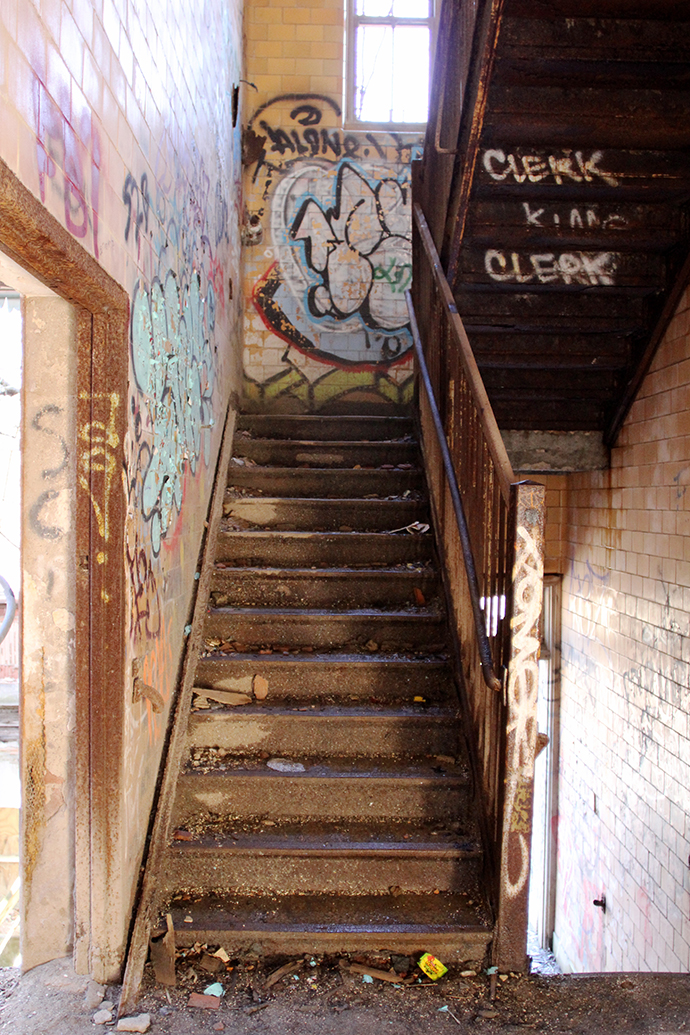
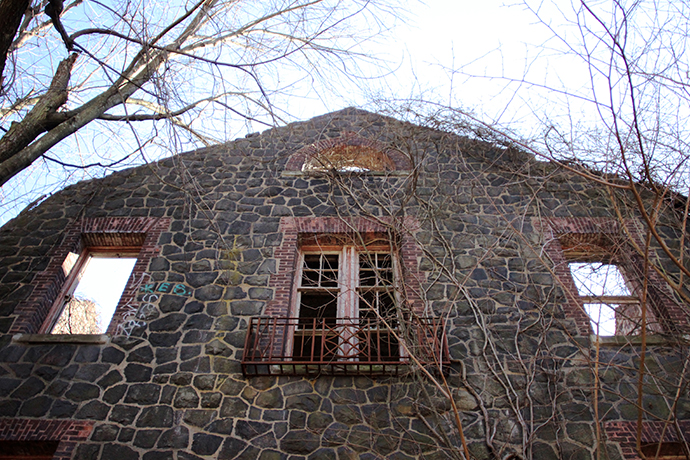
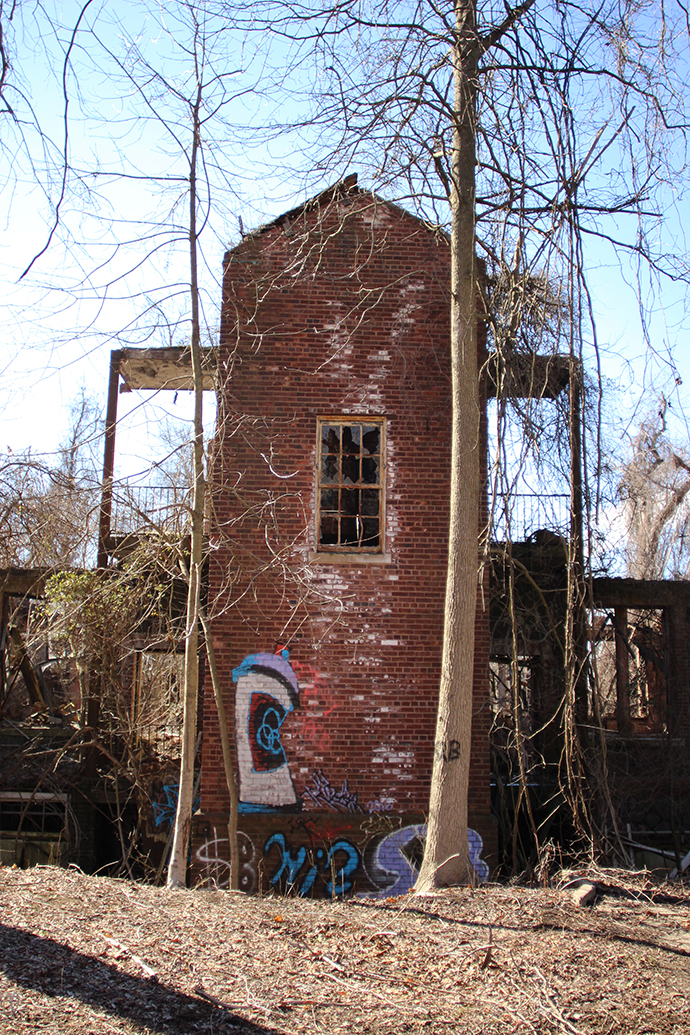
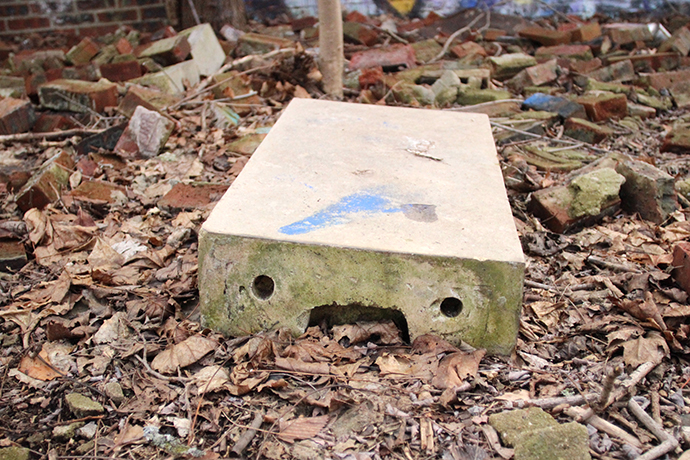
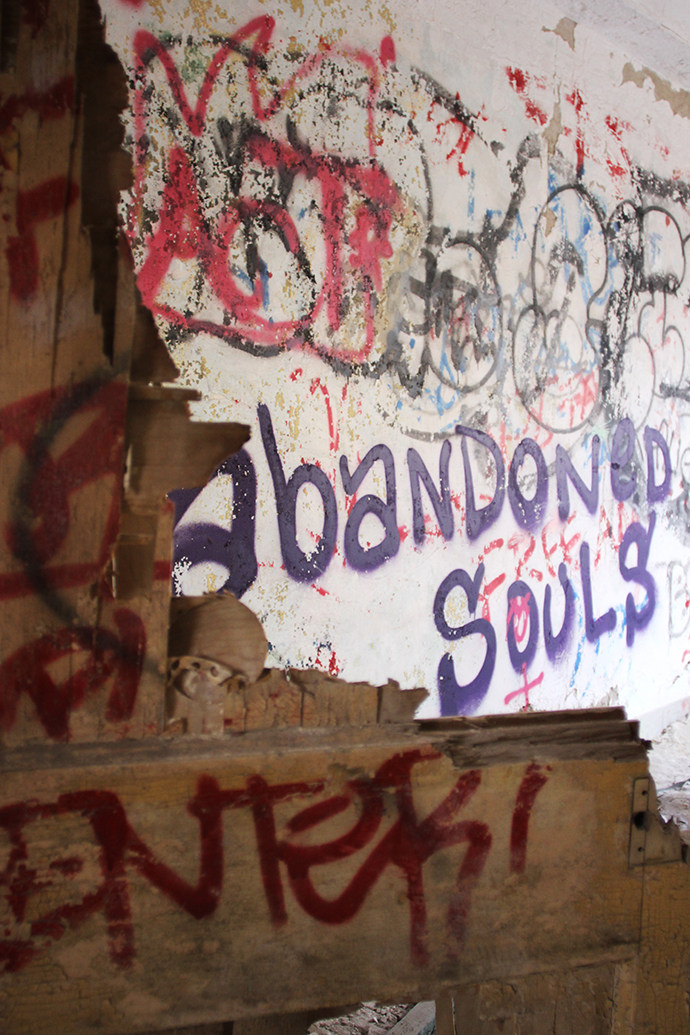
There are multiple buildings on the overgrown property, each in varying stages of decay. Some have collapsed, either partially or almost entirely, and some are more structurally sound. We went in a few of them, but they're mostly empty and covered in graffiti. Although the colony is not exactly a public park, we saw several other people walking around while we were there—groups of fellow explorers, at least one fashion photography session, and what appeared to be a movie being filmed (which featured a woman in a wheelchair that my mom and I both looked at each other and asked "do you see her too?").
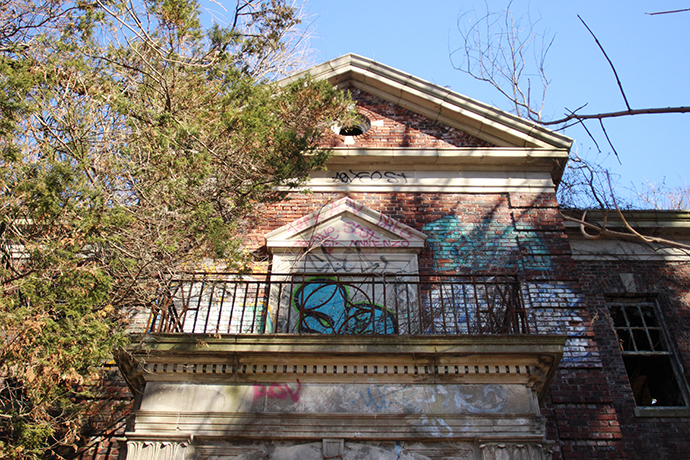
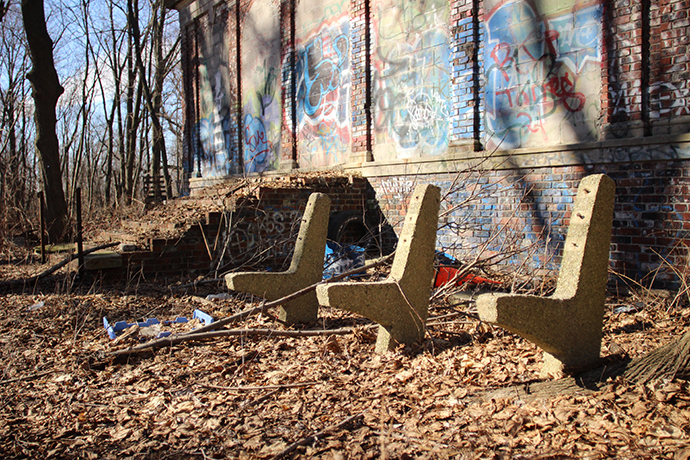
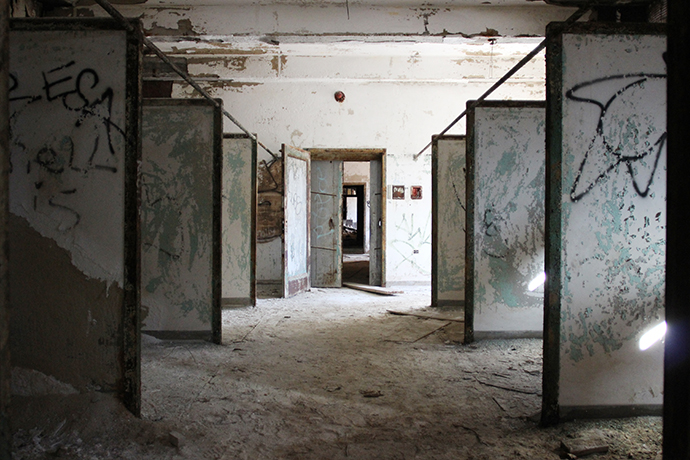
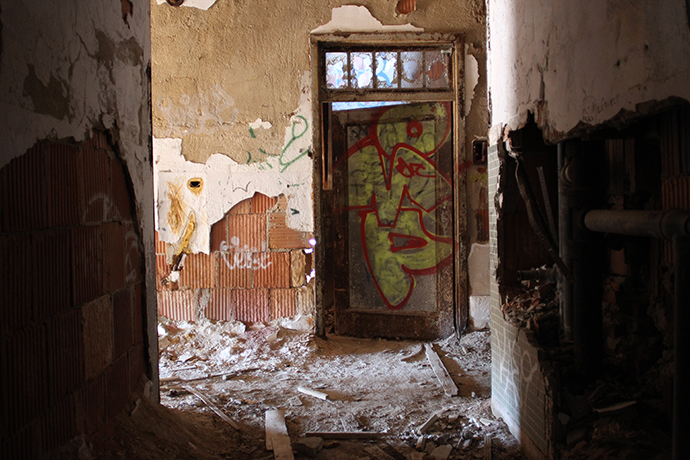
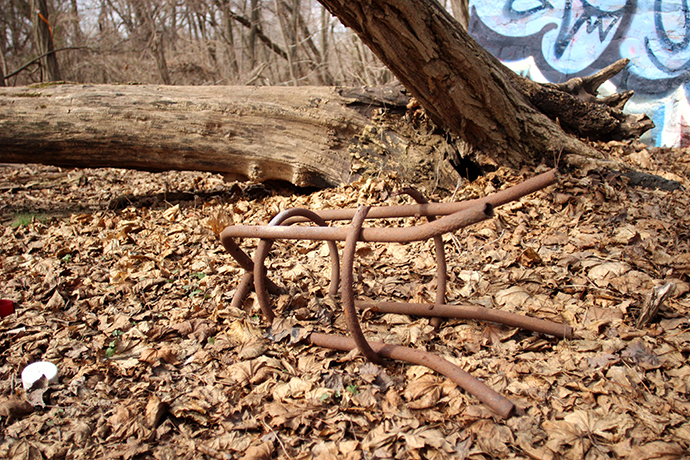
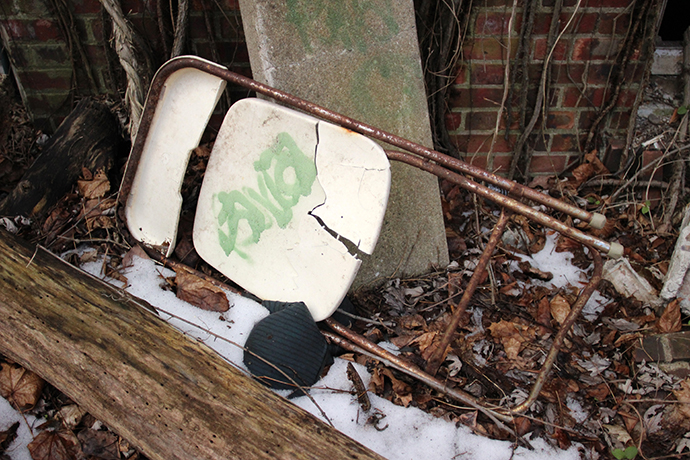
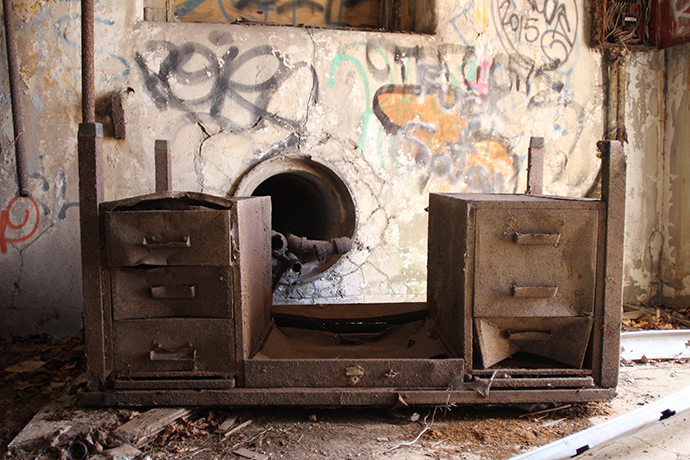
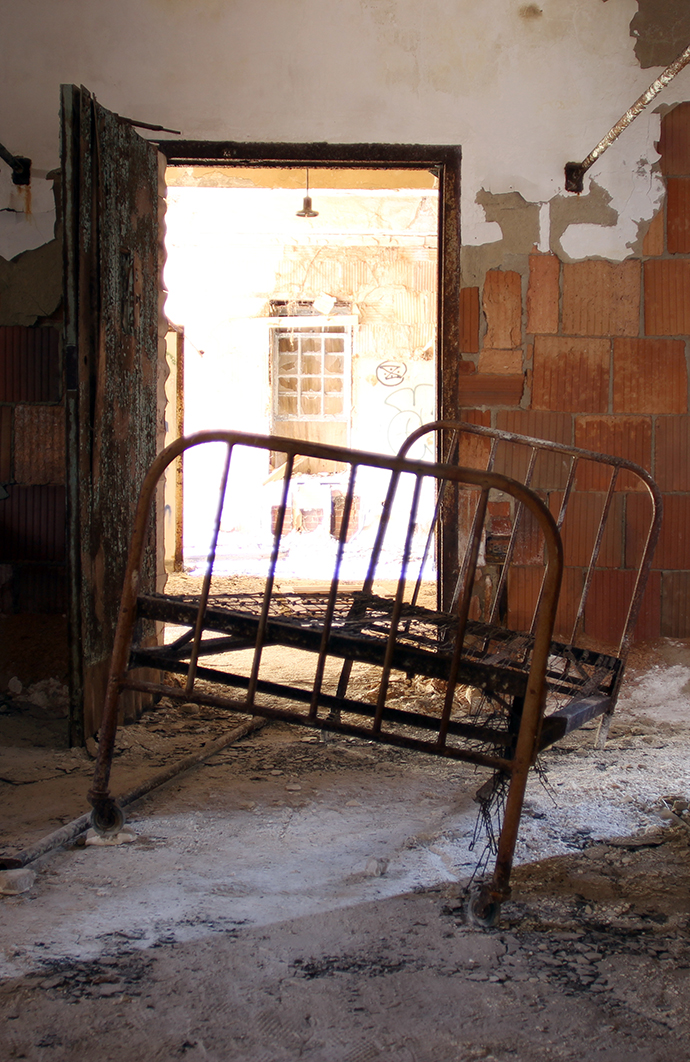
My mom lamented the barren nature of the buildings, and I agree—abandoned places feel much spookier (and make for better photo subjects) if they still have stuff in them. Objects like chairs, beds, desks, papers or other relics of human life make buildings feel abandoned as opposed to merely empty. We did see a few things—a bed frame, a few chairs, a rusted desk—but these buildings have obviously been frequented by people for decades. We still had an incredible time exploring and it couldn't have been a more perfect day—just a normal Sunday outing for a mother and daughter who share a love of all things creepy and a questionable regard for authority.

Park Slope / Sunset Park

I resisted moving to Brooklyn, at least mentally. When I moved to New York, I lived in Manhattan for two years, first on the upper, upper West Side and then in Harlem. I didn't want to become a millennial hipster cliche by settling in Brooklyn, although I realize now how dumb that sounds. But then a room opened up in a Prospect Heights apartment that I had coveted from the moment I saw it, and I haven't regretted the move east ever since.
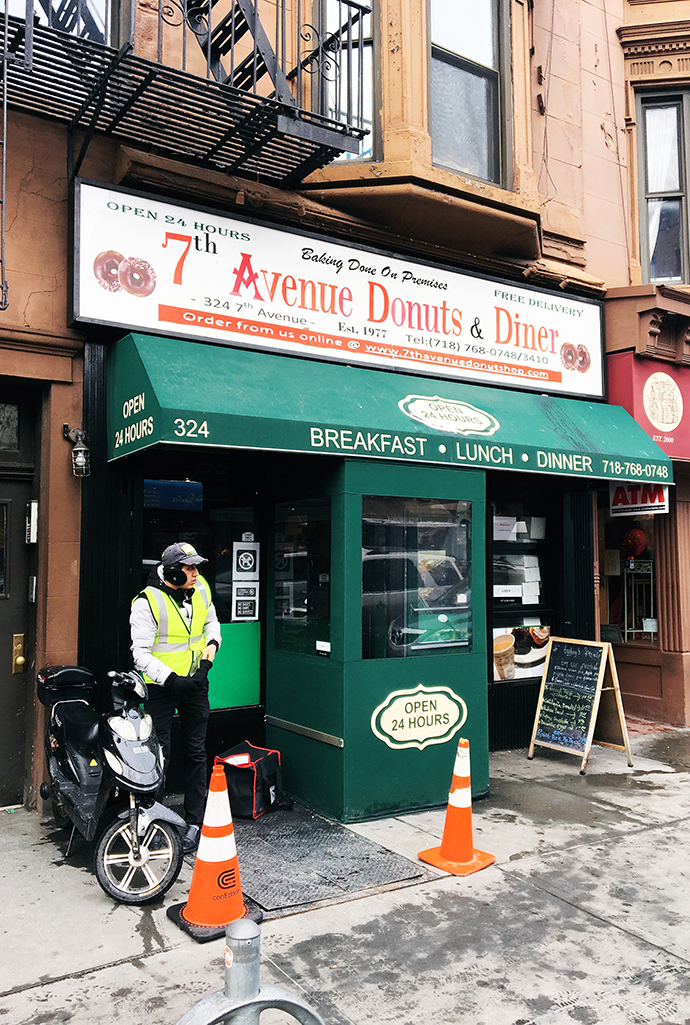


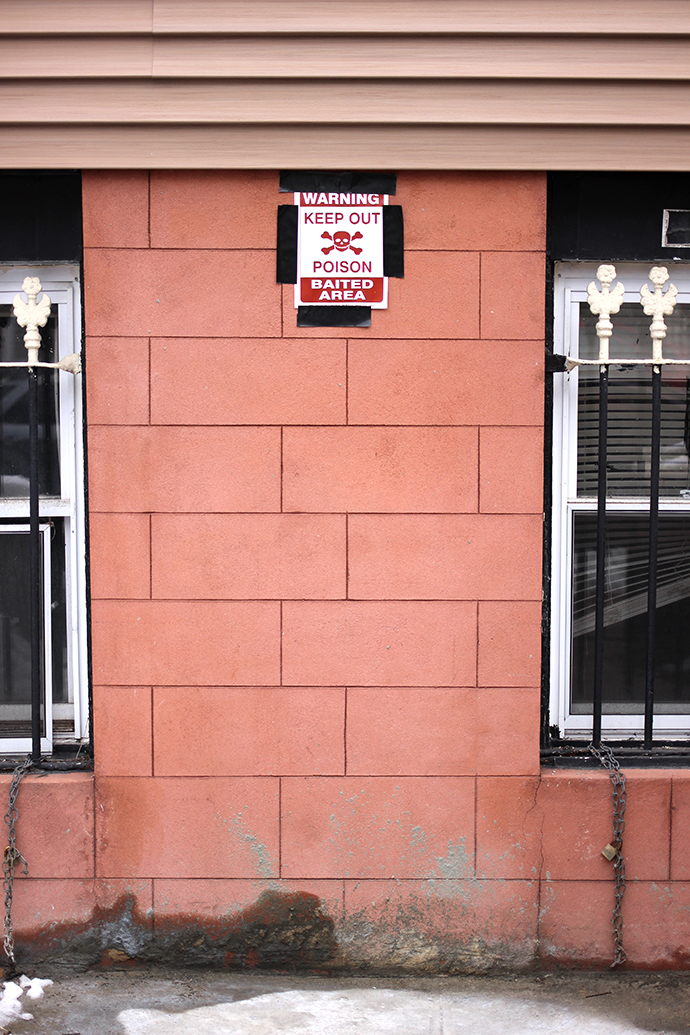

On Saturday, I walked from my apartment down 7th Avenue to a diner I had been meaning to try, 7th Avenue Donuts and Diner. I sat at the counter and had a delicious breakfast (with grits!) and thought about how much I love my New York life. To be within walking-distance of so many wonderful things is a dream-come-true, and I feel silly for not exploring my own neighborhood more.
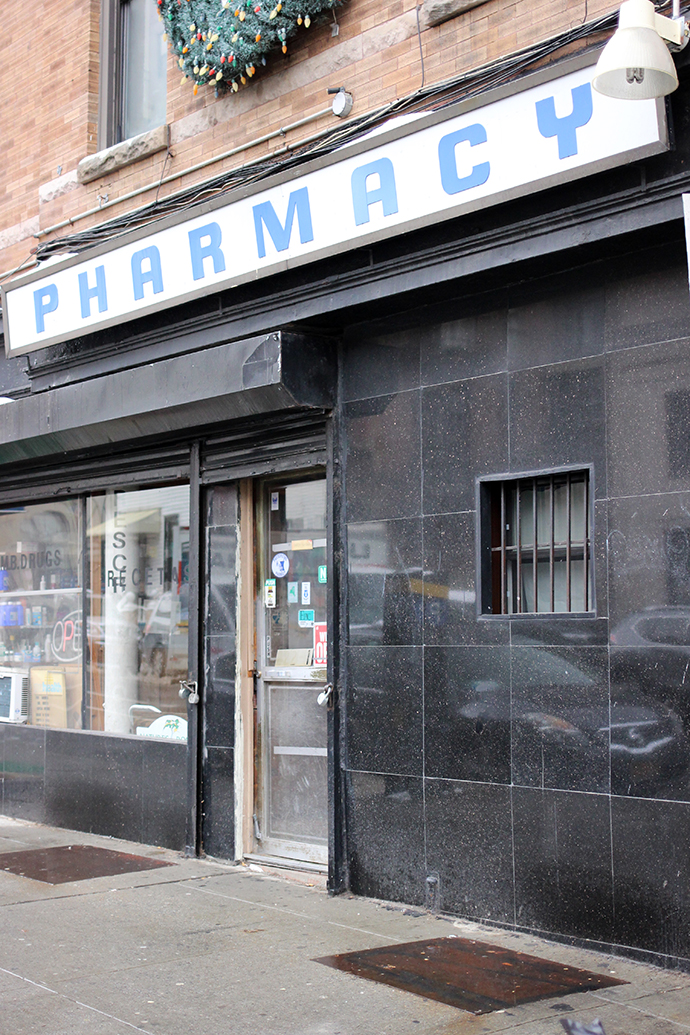


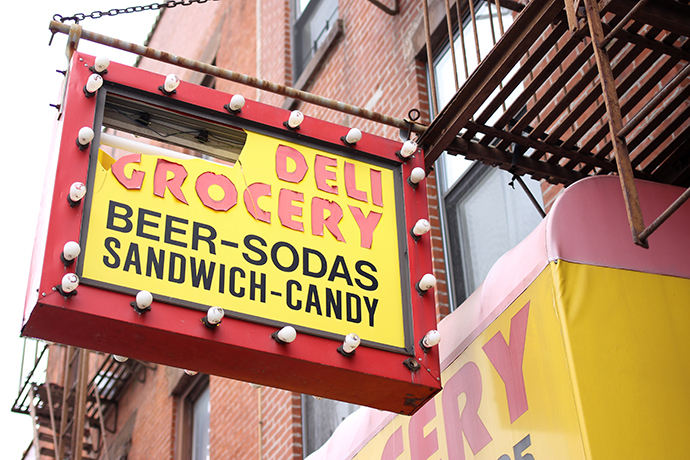

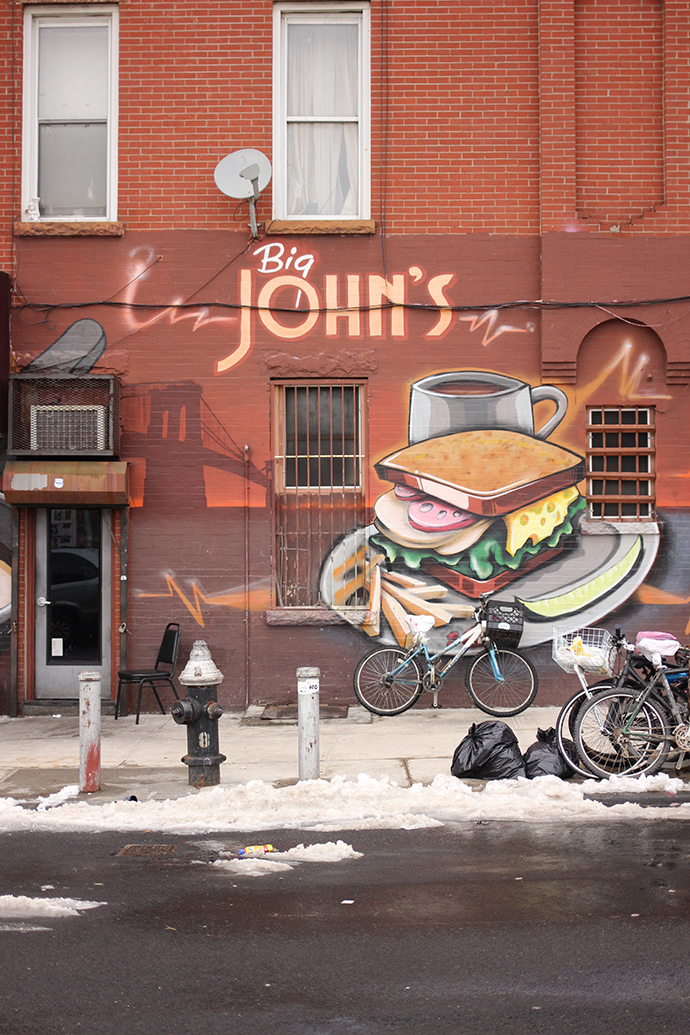
Public transportation is so convenient—and I love the particular kind of freedom that comes with not having to drive—that I sometimes forget that I should explore what's outside of my front door. After the diner I walked to Green-Wood Cemetery, which wouldn't be considered "my neighborhood," except for the fact that I probably spend more time there than almost anywhere else in the city. Despite being born and bred in Ohio I never felt comfortable there for any length of time. I'm not sure if I'll stay in New York forever, but it will always feel like my first real home.

Green-Wood: Snow

As much as I've visited Green-Wood Cemetery, I only just took my second snowy walk around the grounds on Saturday. My first snowy visit (here and here) was back in 2015, and I didn't have many chances during last year's virtually snow-less winter. When I realized that last week's snowfall would stick around for a few days, I knew that Green-Wood was my top priority.


Snowy cemeteries are a combination of two of my very favorite things in life, although in the city it has sometimes been a challenge to get into them. I was denied entry to Woodlawn on not one, but two snowy days, and Green-Wood closes its gates during most storms. I did manage to explore Trinity Cemetery in northern Manhattan after one of my failed Woodlawn treks, and the photos I took that day are still some of my favorites.


I was very excited to see Green-Wood again in the snow, but I was concerned that after countless visits I wasn't going to see much that I hadn't already seen or photographed before. I'm fond of saying that I could explore places like Green-Wood forever and still manage to see something new, but I definitely think I'll eventually test the limits of that theory. Almost immediately, though, I veered into a part of the cemetery that I hadn't explored—and even if I hadn't, everything looks a little bit different in the snow.


I made some questionable decisions veering off of cleared paths to investigate interesting things—the snow drifts were almost knee-deep in places—but it was definitely worth a little slipping and sliding. I walked to Green-Wood from my apartment (stopping for diner breakfast halfway) and to me there is no more perfect way to spend a Saturday.

Central Park: Snow

I love snow. I grew up in Northeast Ohio so I'm no stranger to the frozen white stuff, but I never experienced a New York City snowstorm until a few years ago. It was during my two-month "trial period," which took place January-March of 2013 that I finally saw the city blanketed in snow, and immediately fell in love. To see my favorite city in my favorite weather was almost too much to bear, and even four years later I'm still enamored with the winters here.

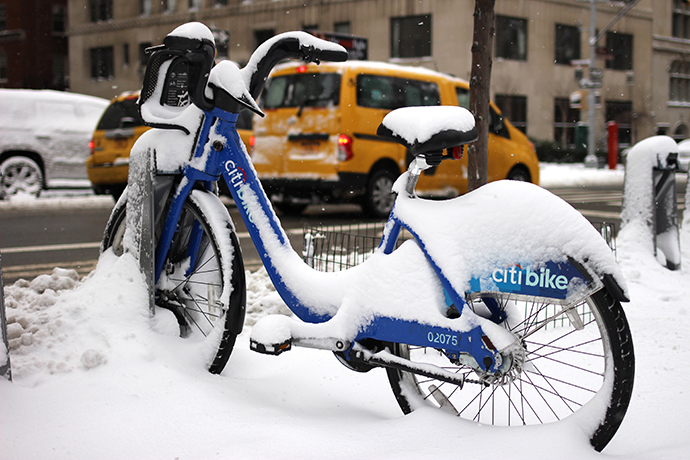
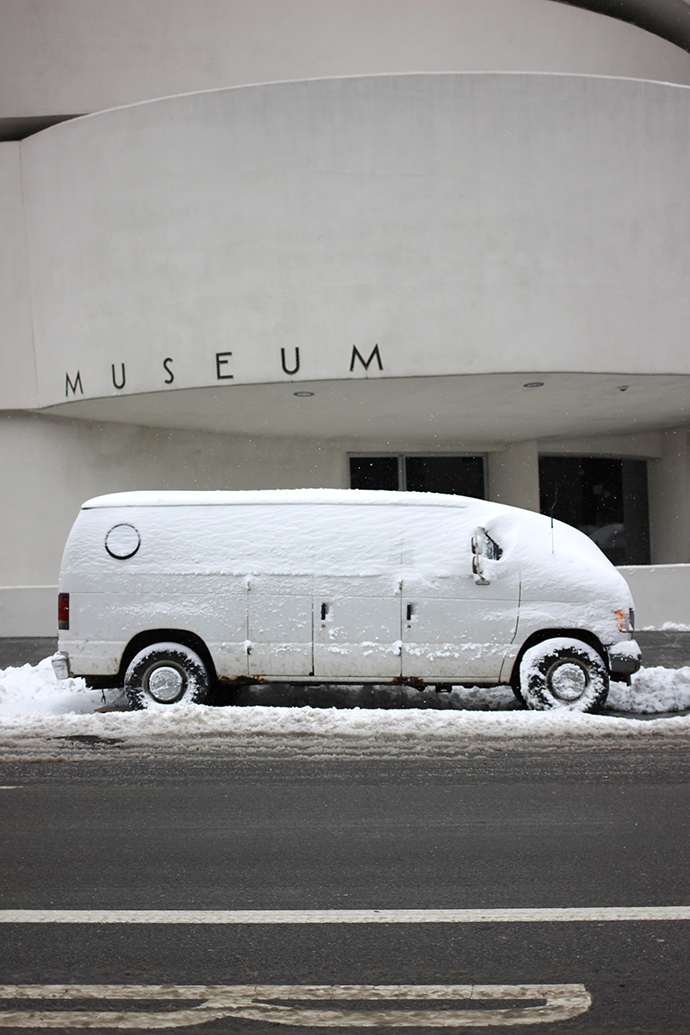
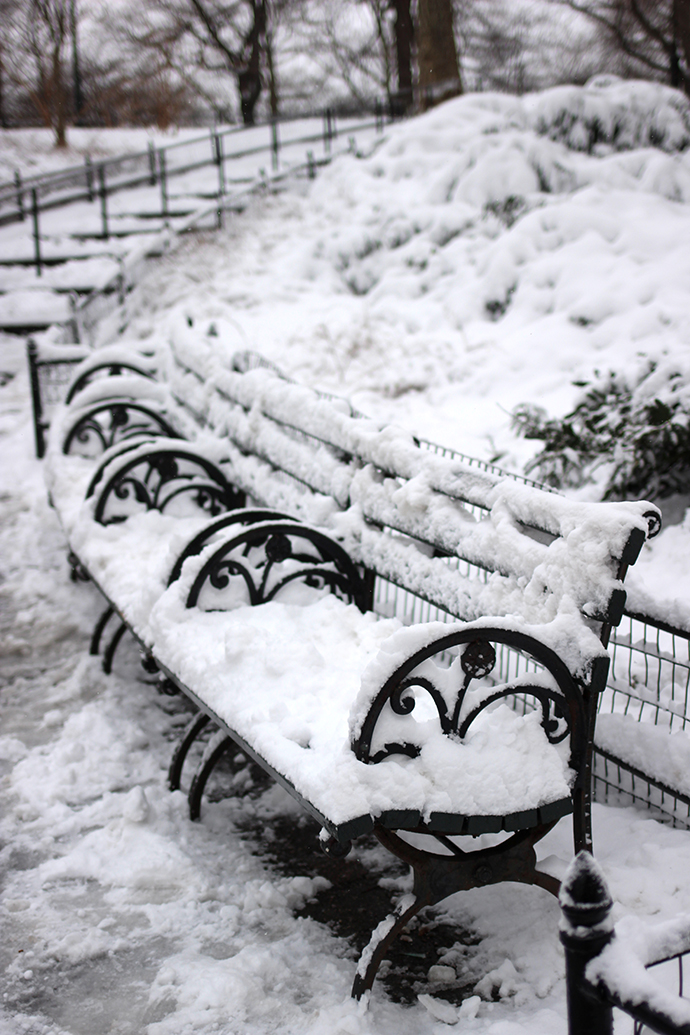

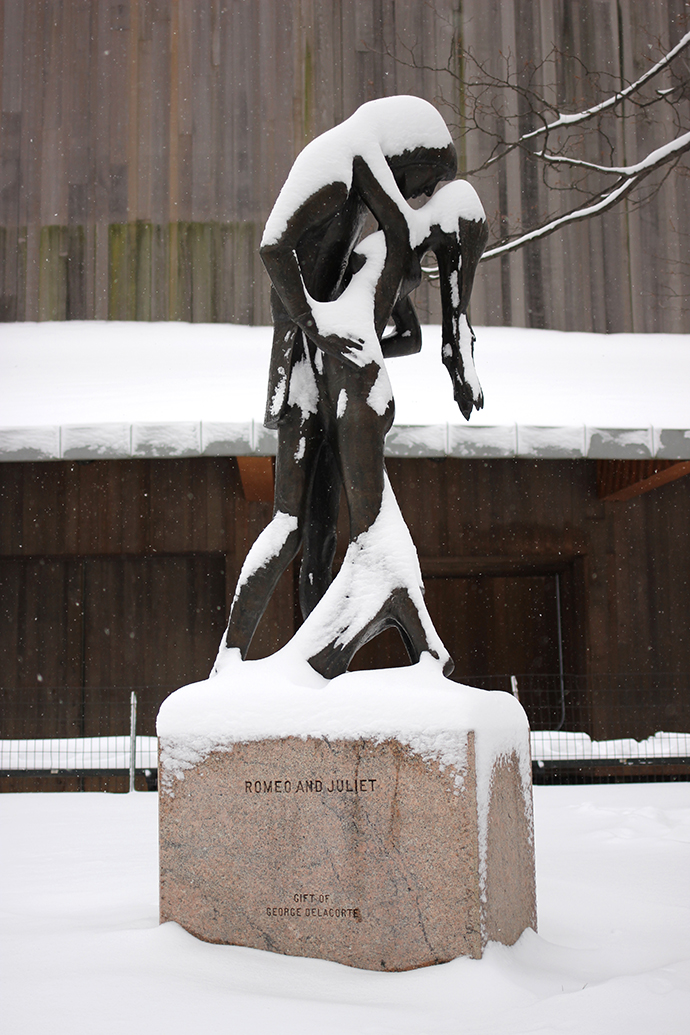


My first winter as a full-time resident just happened to include the second snowiest February on record. I was in heaven, but also—I realize now—spoiled. We've yet to have a similar winter in the three years since, and last year although we got 30-some inches of snow, 90% of it came in one day and melted by the next. This year has been slightly better, and even though I was denied entry to Green-Wood Cemetery, I still had a magical day back in January frolicking through a snowy Prospect Park.

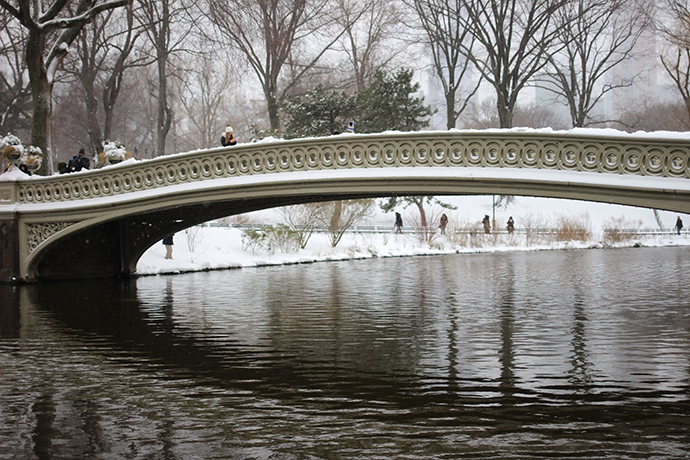

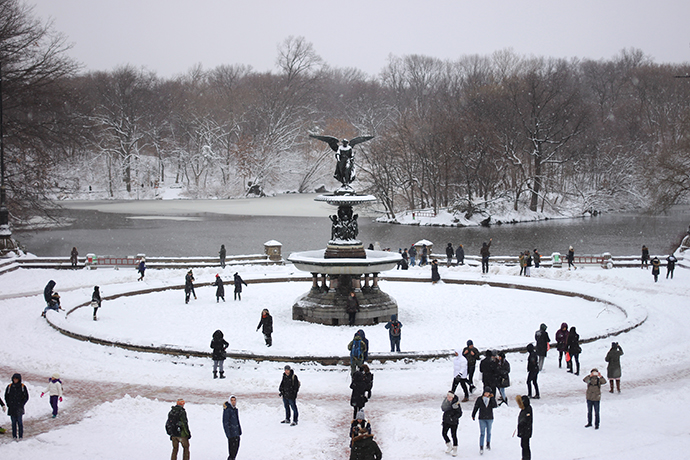



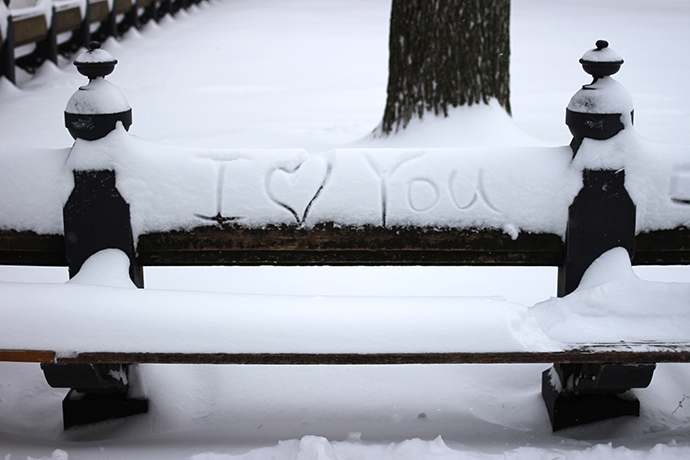
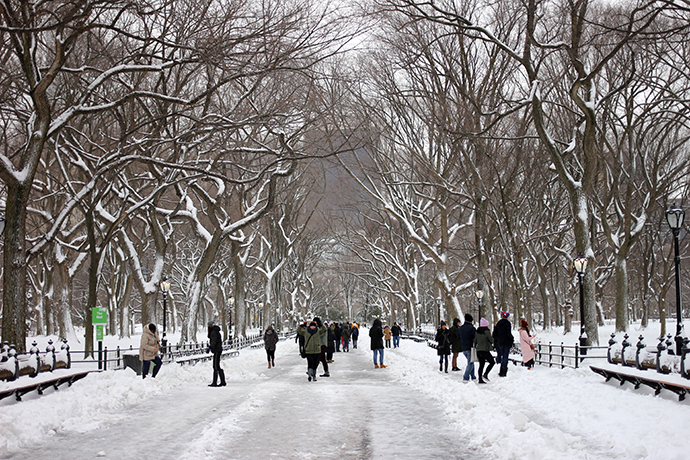
Luckily that wasn't our last storm of the season, and yesterday I was delighted to wake up to near-blizzard conditions outside my window. Although my commute was a bit harrowing (I almost got blown across Lexington Avenue), it was all worth it when we were released early and I was able to spend the rest of the afternoon in Central Park. I sadly don't get to the park as much now that I live in Brooklyn, so I was thrilled to be able to spend a few hours checking in on all of my favorite spots.
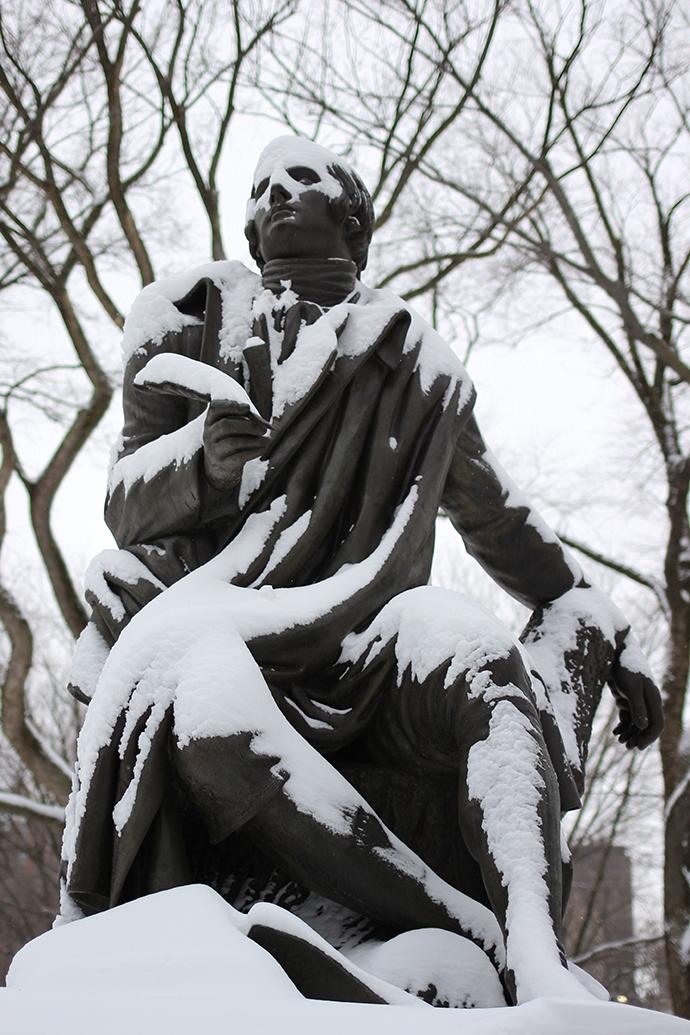


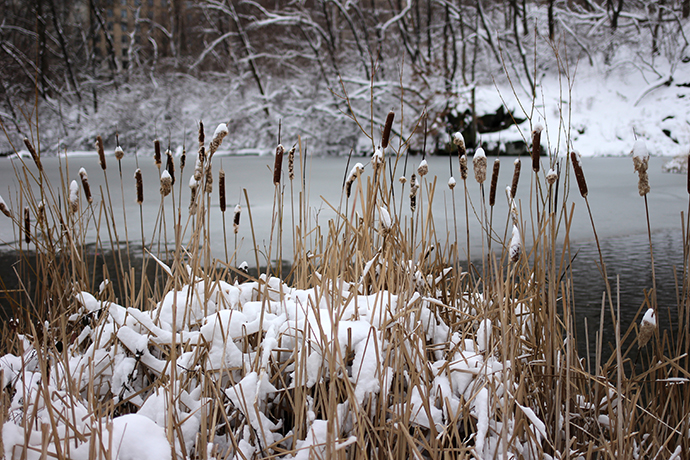

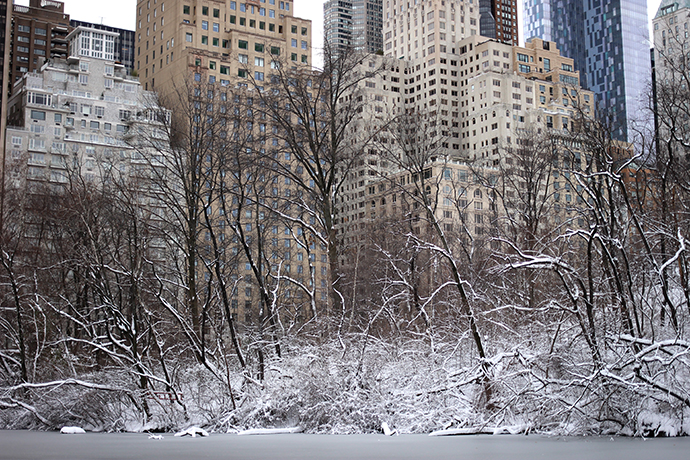
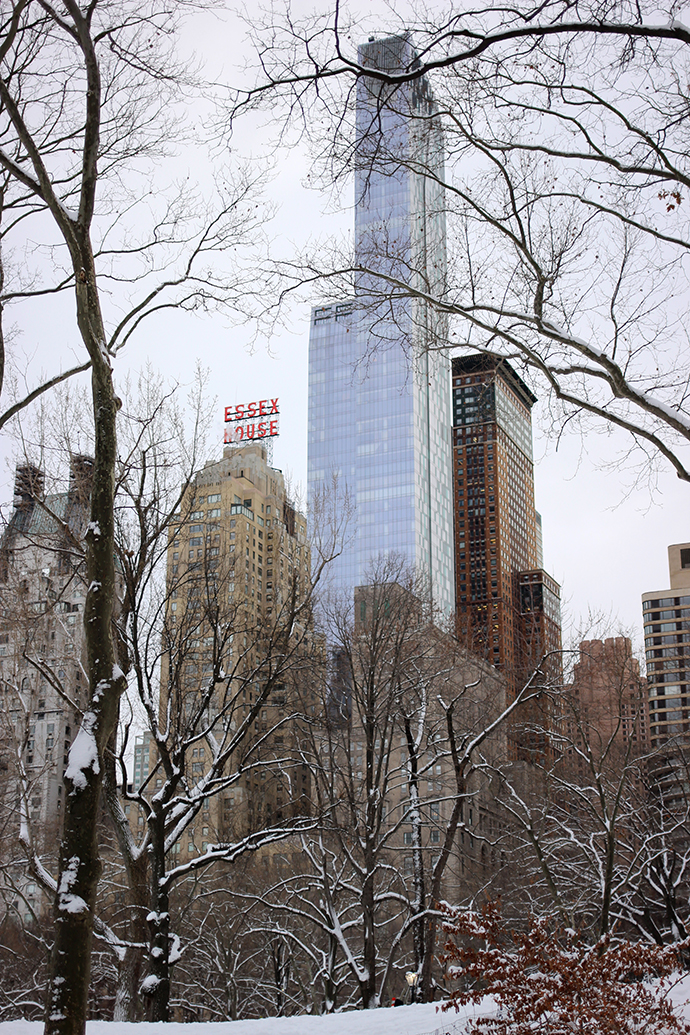


I walked from 92nd Street down Fifth Avenue and entered the park by the Met Museum. I walked past Belvedere Castle and the Delacorte Theater, through the Ramble and Bethesda Terrace. I love, love, love the Bethesda Fountain, and the angel looks even better with snowy highlights. I made my way down the Literary Walk—one of my very favorite places on Earth—around the pond and over the Gapstow Bridge.
I'm concerned that climate change may make snowy days like this increasingly rare (it was in the 60s on Wednesday) so I'm trying to appreciate them while they are still fairly common. I don't have to drive on icy roads, scrape a windshield or shovel a driveway and although city snow gets gross pretty quickly, it will always be magical to me.

Riverdale
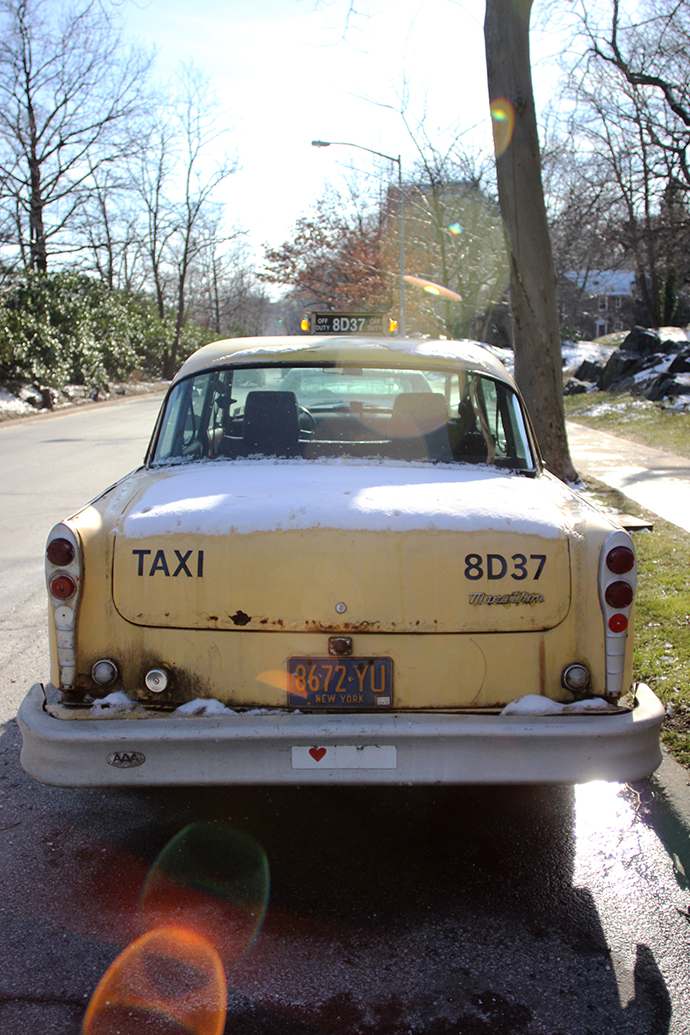
After we explored the Fieldston neighborhood of the Bronx recently, we ventured over into neighboring Riverdale. We were already having a perfect city adventure day, when we spotted an old Buick parked along the side of the street. As we were admiring it, a man walked by us and doubled back to let us know that an "old checkered cab was parked just down the block." My default when a stranger starts to talk to me unprompted is immediate suspicion and annoyance, but that quickly turned to gratitude when we realized that he'd just given us a hot tip.
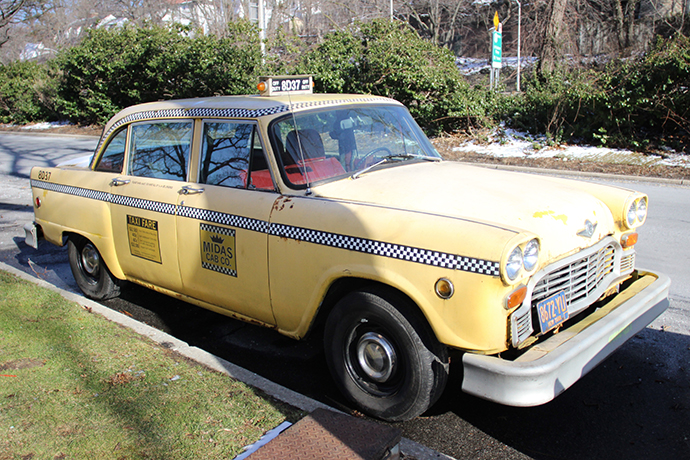
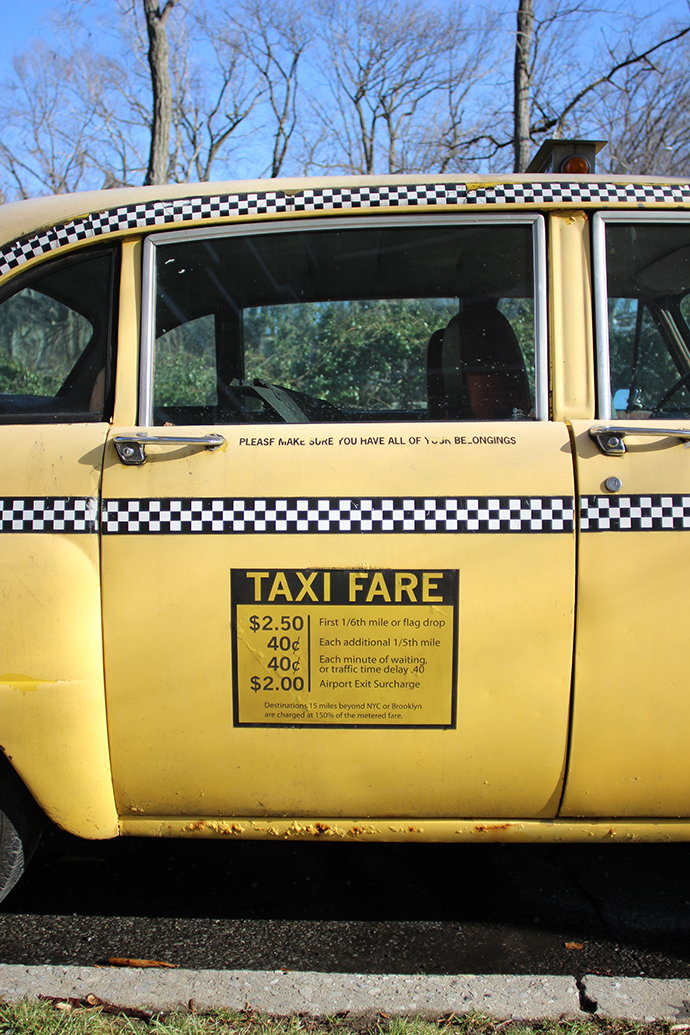
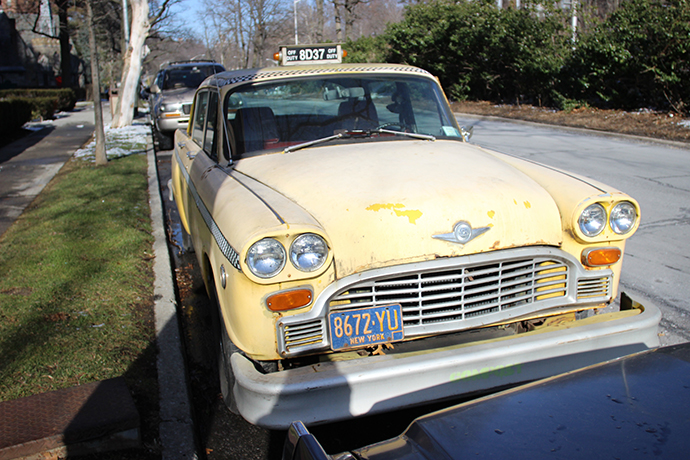
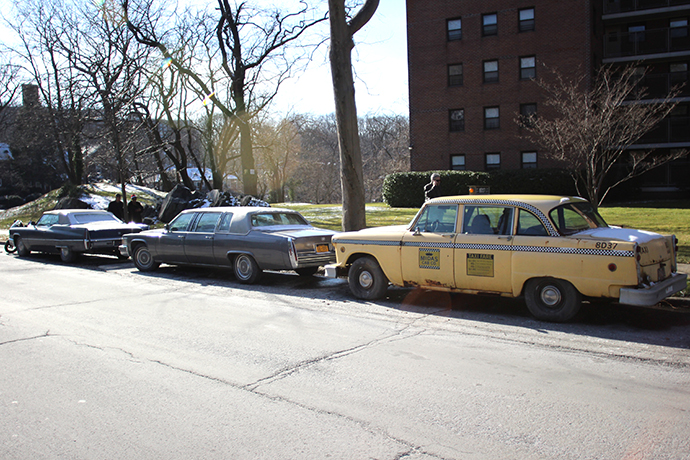


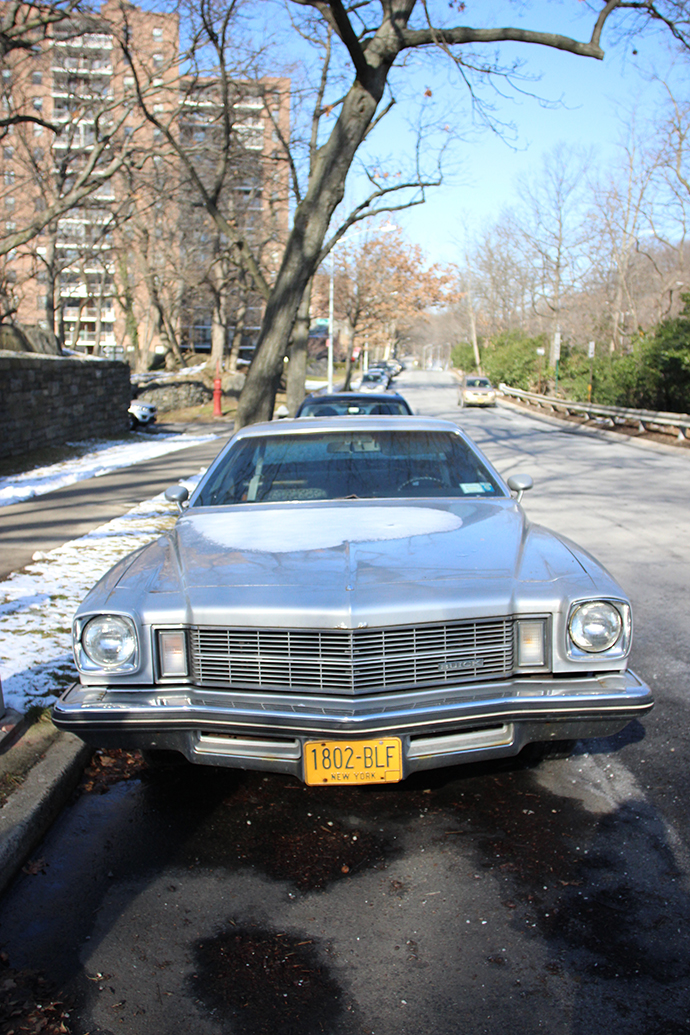
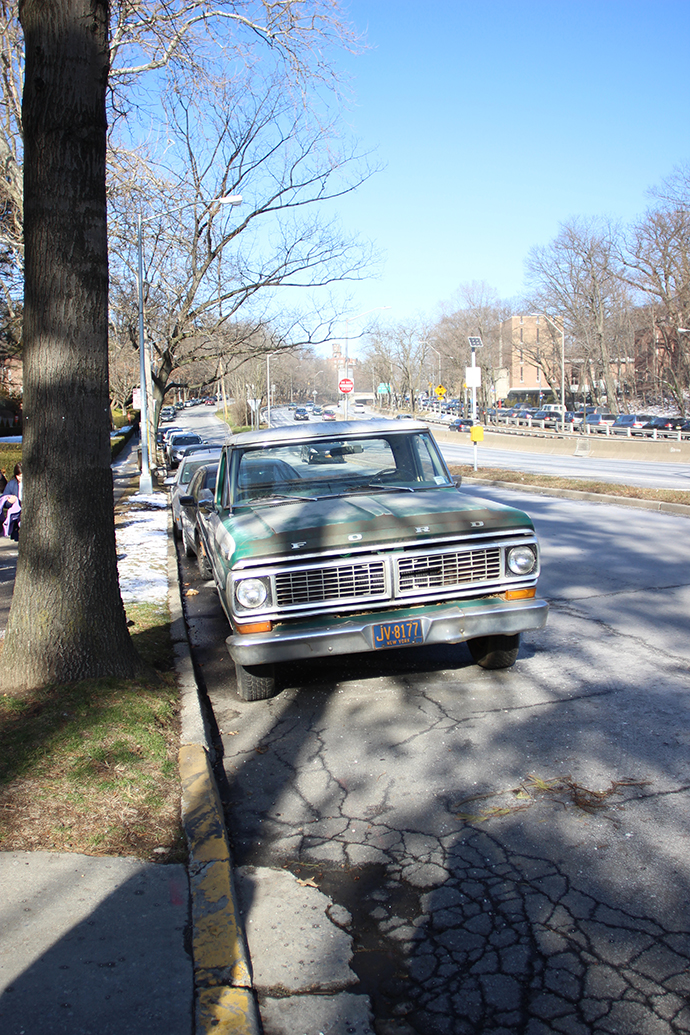
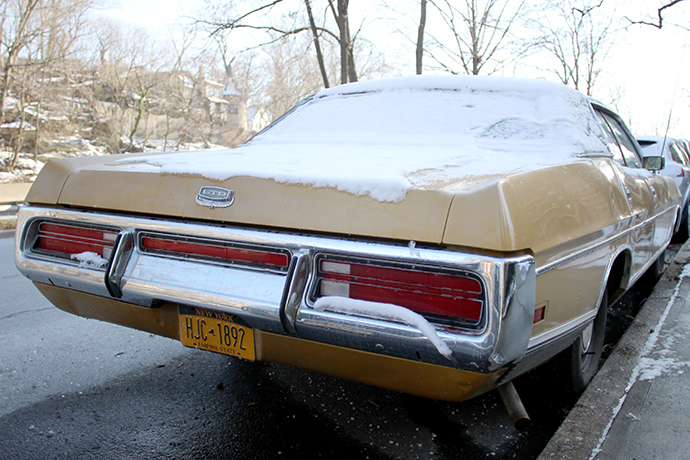
The checkered cab was just as wonderful as promised—what I wouldn't give to still have the New York streets filled with them—and the street kept offering vintage vehicles, one right after the other. We felt as if we had indeed stepped back in time, and even heard another passerby exclaim (somewhat hyperbolically) "this is the street of 87-year-old cars!"
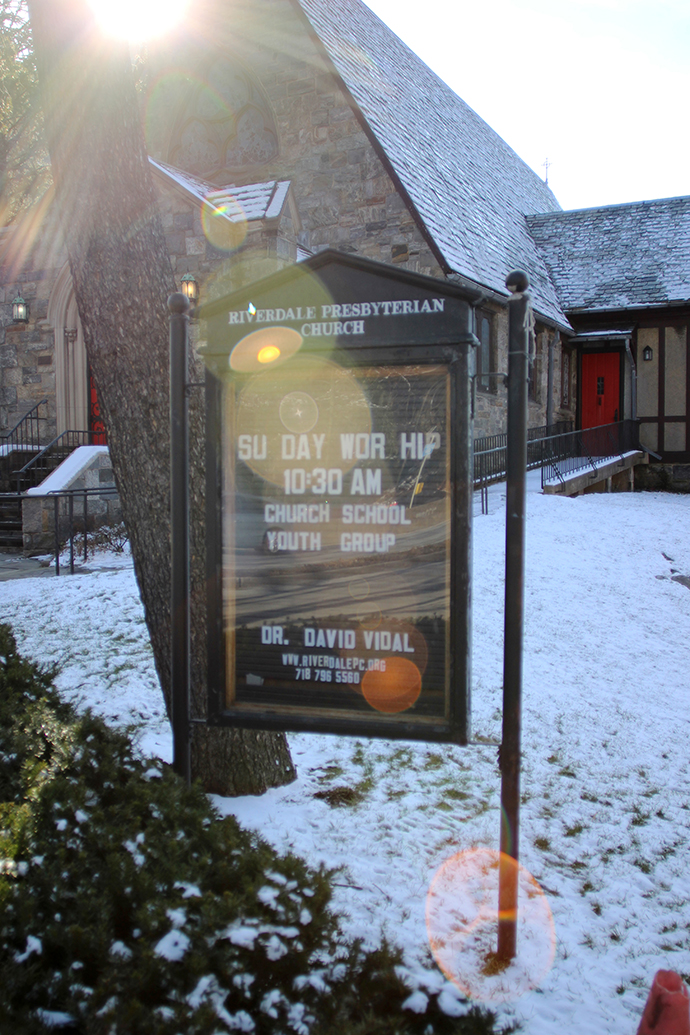
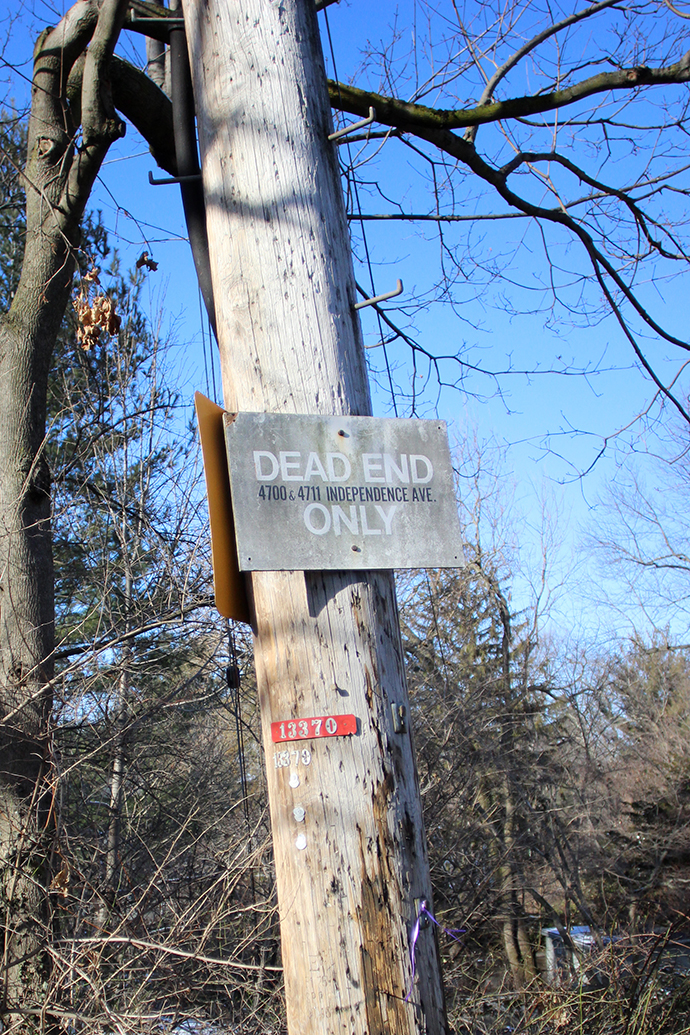
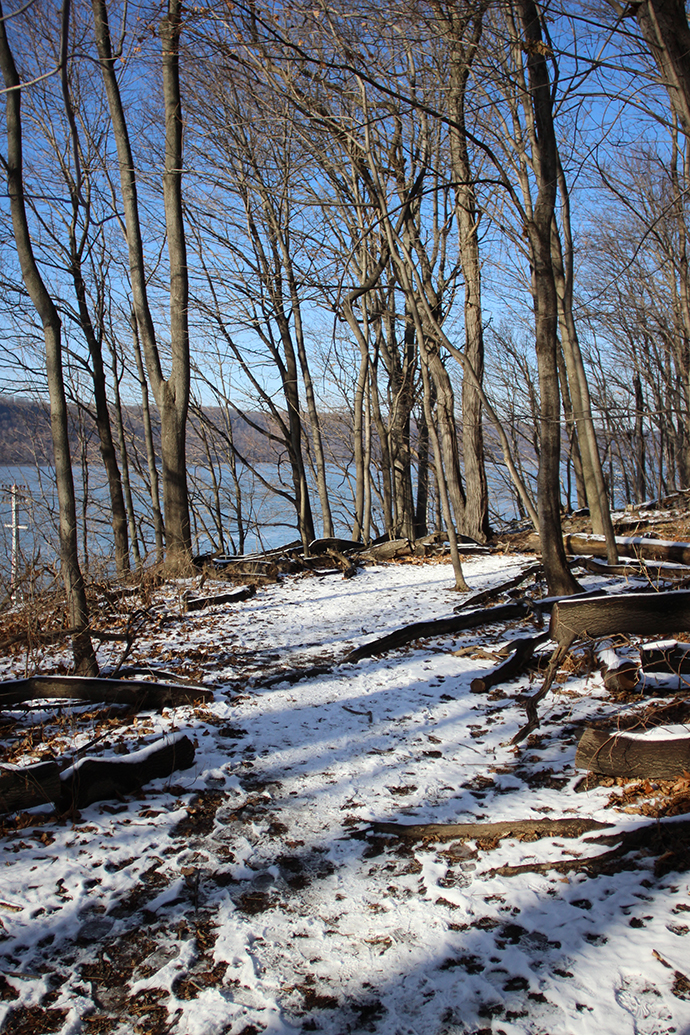
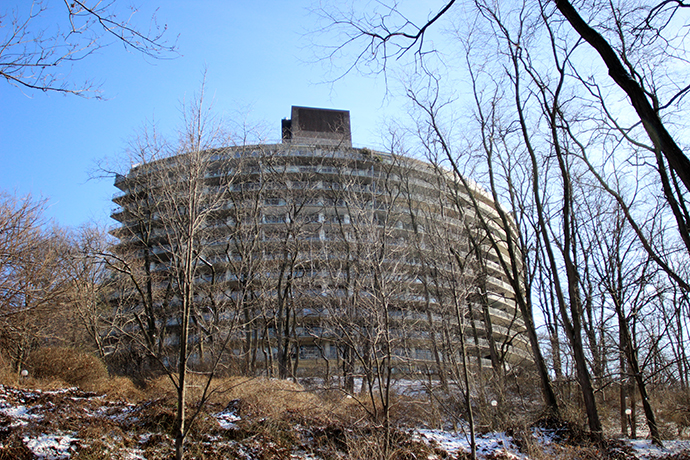
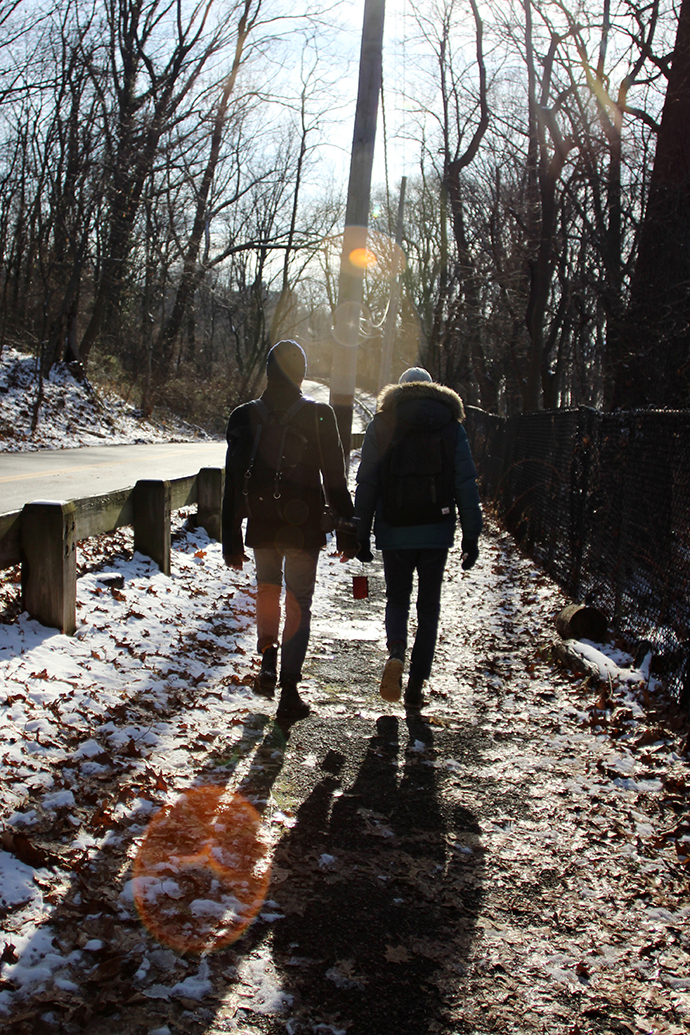
We walked along the Hudson River and barely saw another person for what seemed like miles, which is something to be cherished when you're still within city limits. The Bronx gets a bad rap, but there is so much more to the borough than most people know, myself included. Every time I've ventured north I've been rewarded with nothing but wonderful experiences—at the NYBG or the zoo, on City Island, in a cemetery, park or historical home.

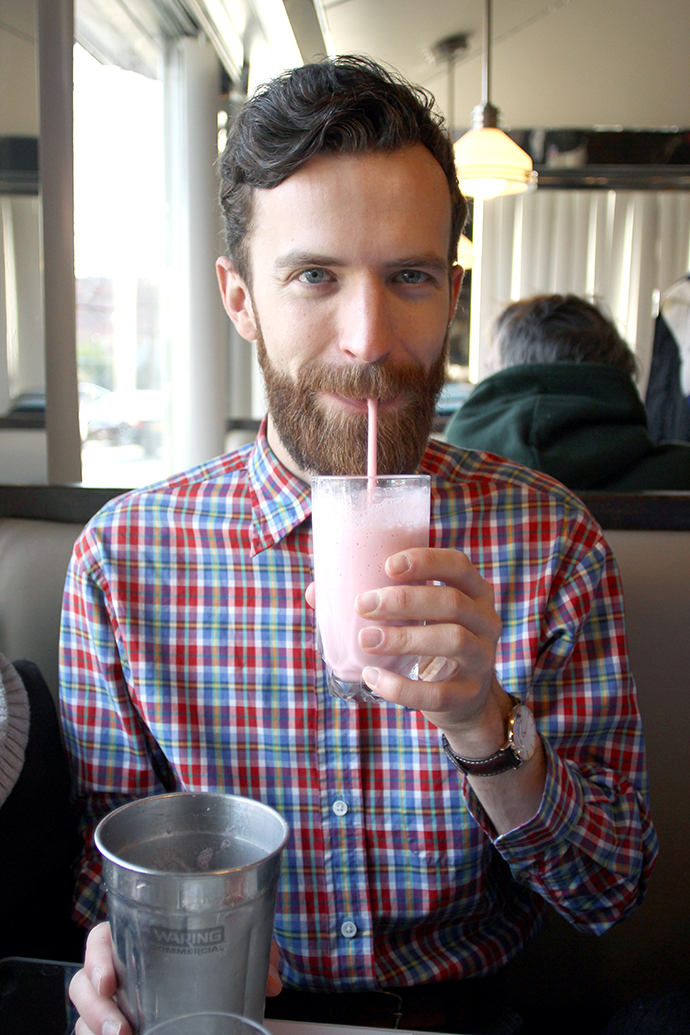
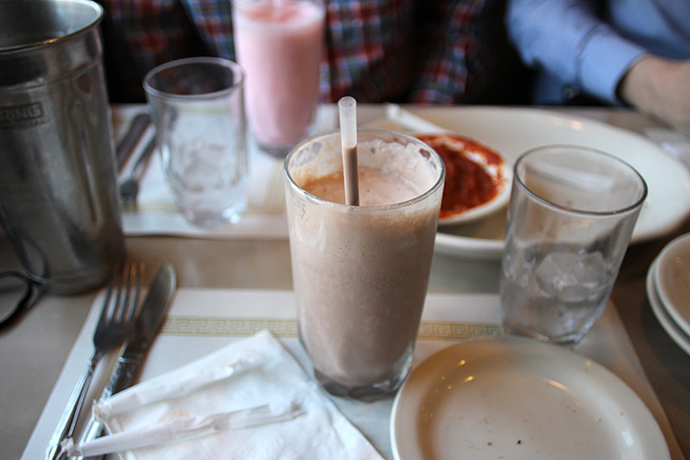

We ate at two diners—the Short Stop and Tibbett—and there is no more perfect way to start and end a day, if you ask me. We made our way back to the train through Marble Hill, which appears to be part of the Bronx but is actually still considered Manhattan, and therefore is the only Manhattan neighborhood on the mainland of North America. Sometimes I feel as if I've seen most of New York and then I have a day like this one, and realize that I could live here forever and still not see it all—a theory I'm all too happy to test.

No Hate, No Fear

Just one week after I joined the Women's March in Washington D.C., I found myself marching once again—this time in a different city, for a different cause, but with similar intentions. The first days of Donald Trump's presidency have brought a seemingly endless stream of gut-punches to core American values, and this particular protest was a reaction to Trump's executive order barring immigrants from majority-Muslim countries and Syrian refugees.


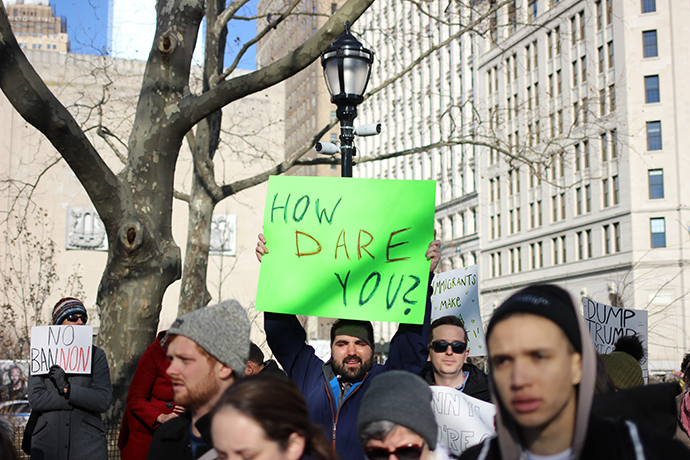


I know that I can't possibly join every protest, but I've been so outraged and dismayed since the election—and even more so since the inauguration—that I just have to do something. It's important to me that I stand up for injustices when I see them, and not just when an issue directly affects my life. I also believe that all citizens, Americans and humans should be outraged whenever basic human rights are in jeopardy, and I feel that it's my duty to use the privilege I've been afforded to help draw attention to those less fortunate.


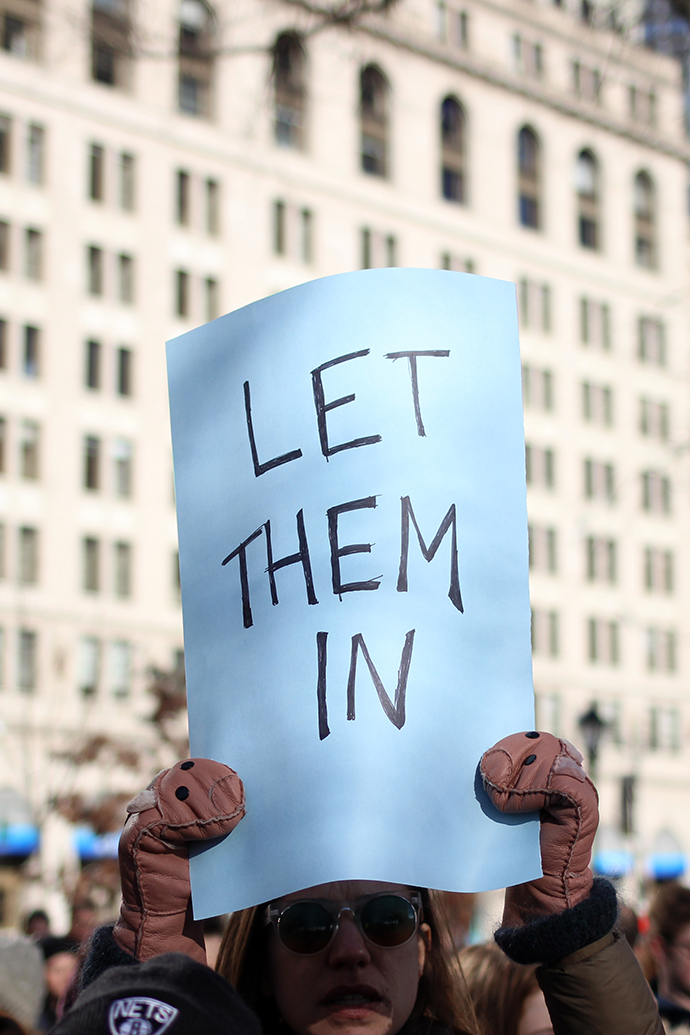


The protest took place on Sunday, two days after the executive order, and ran smoothly despite the quick turnaround. Because of the tight timeline, it did feel a bit more spontaneous than the Women's March, but I loved the last-minute nature of some of the signs and participants—time to polish is good, but scrappiness sometimes has more heart.
Thousands of people gathered in Battery Park, which has views of Ellis Island and the Statue of Liberty. The National Museum of the American Indian is nearby, as is the Museum of Jewish Heritage. After a rally featuring speeches by Chuck Schumer, Kirsten Gillibrand, Cory Booker, Linda Sarsour and others, we marched to the courthouses at Foley Square.


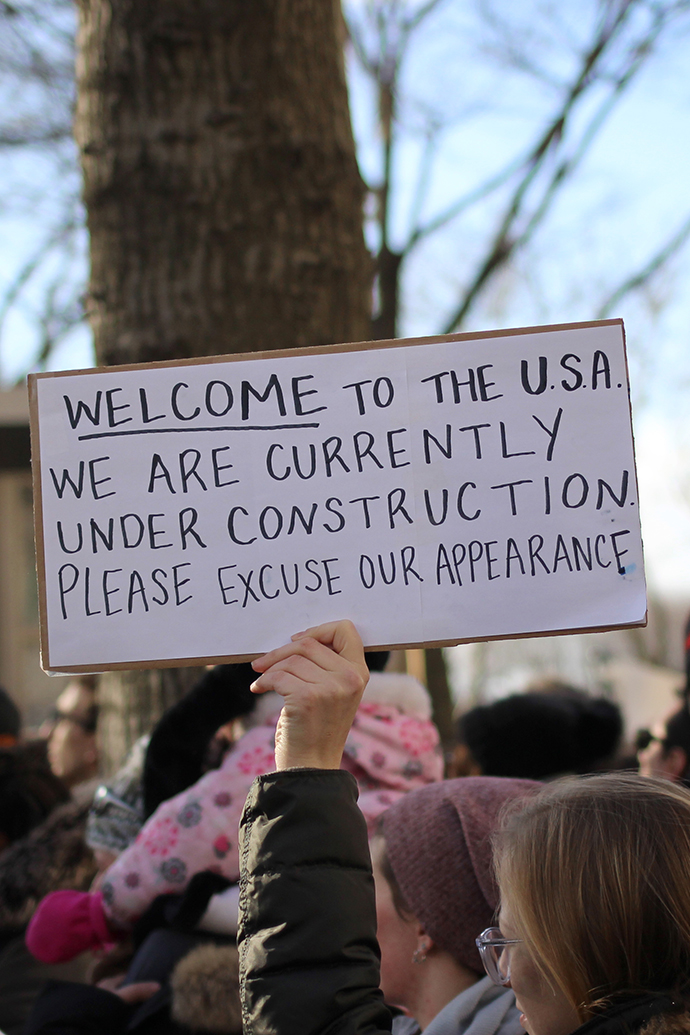
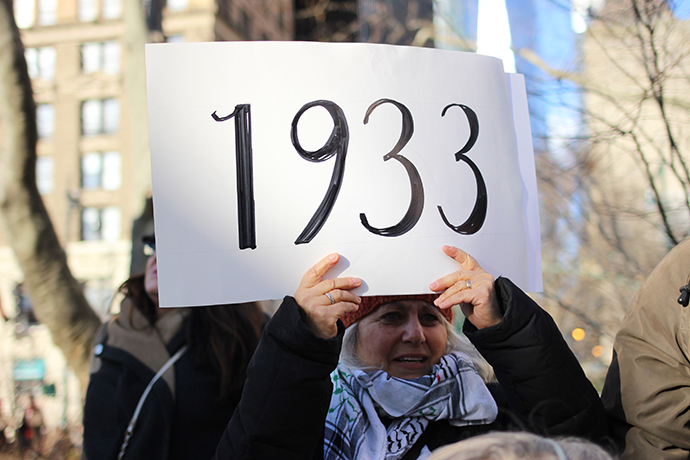

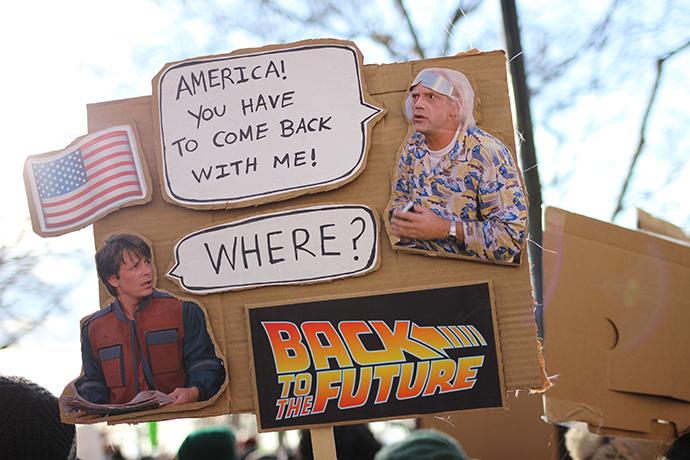
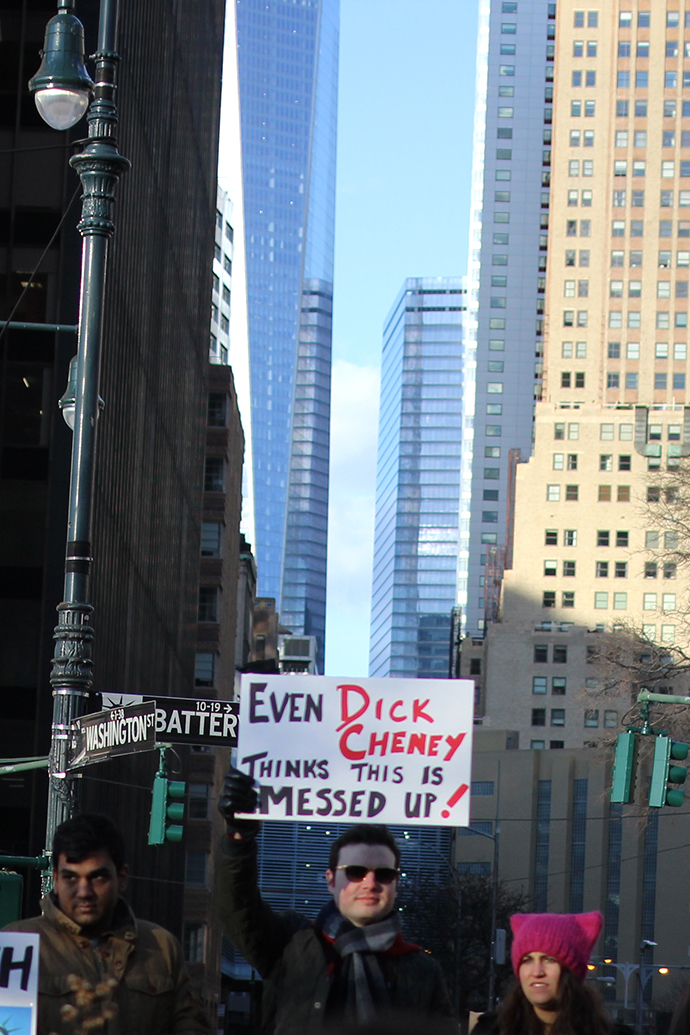


We marched past the World Trade Tower, and the site of the 9/11 attacks and it was very powerful to be protesting a muslim ban in a city that has lost the most lives to terrorist attacks on the US. New Yorkers aren't afraid of muslims or Syrians because we interact with them on a daily basis and know that they're just people—boring, mundane, annoying, wonderful, beautiful people.

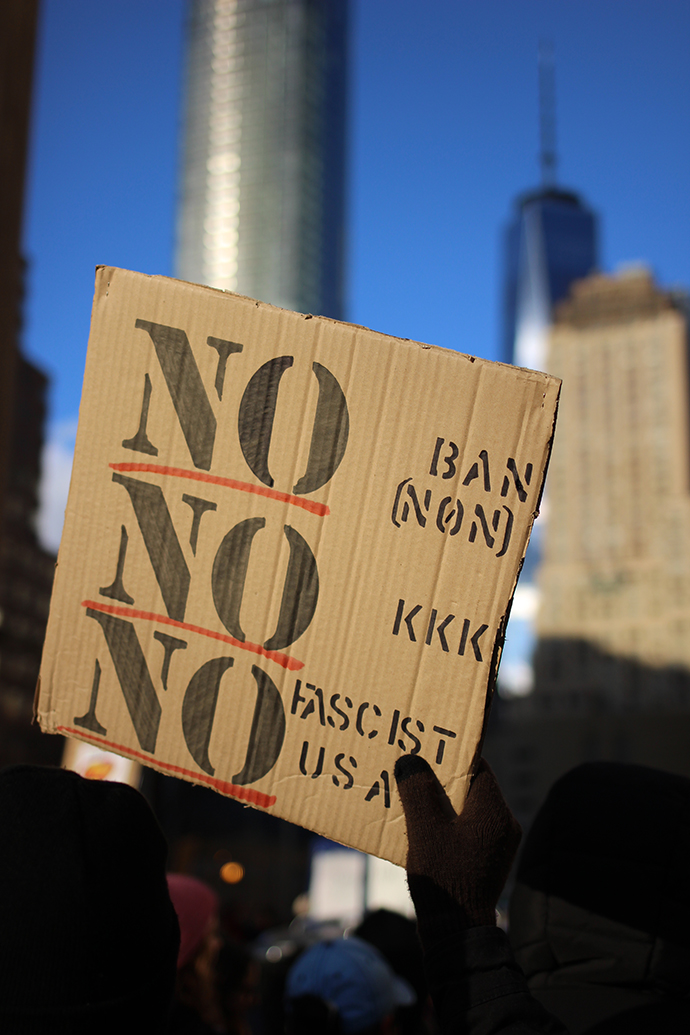


I know that marches will not change everything (or sometimes anything) but I do think it's important for people to pitch in when and where they can. Stand up, speak up and let your voice be heard. This is just the very beginning, and we must not lose momentum and we must not lose hope. Hope that America—a nation of immigrants—is better than our President thinks we are, hope that there are good people out there that are finally standing up for what is right, and hope that we don't go back because the only way out is forward.

Greenwich Locksmiths
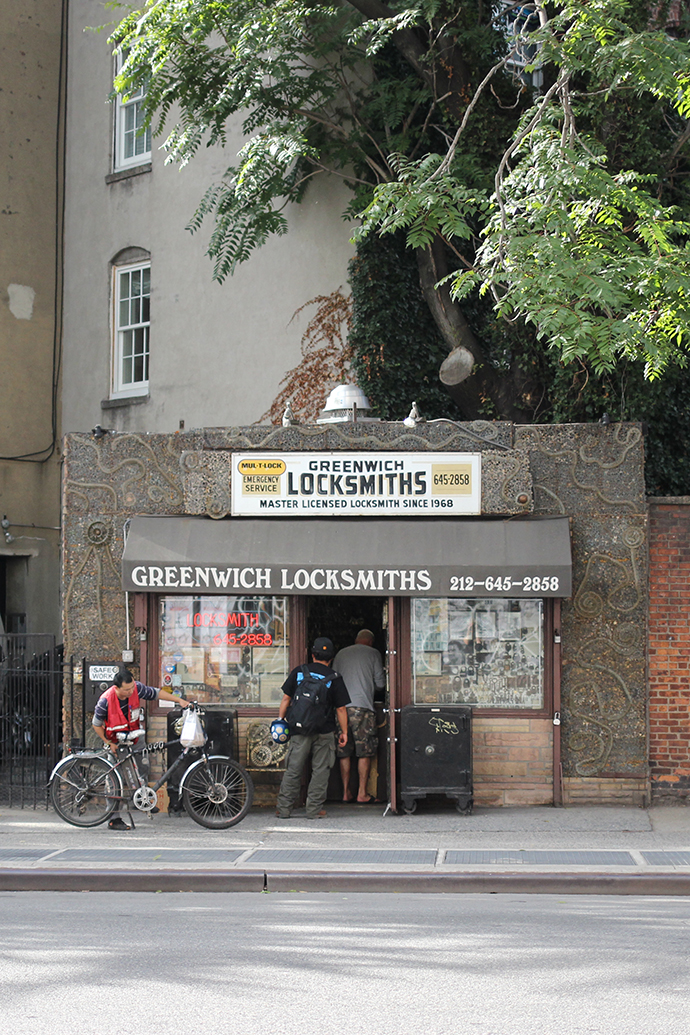
There are certain areas of New York that I know better than others, and 7th Ave South around Bleecker Street in the West Village is one of them. Before I ever moved here I found myself in this part of town often for various reasons, but mainly to eat. There seems to be an unusually high concentration of delicious restaurants on Bleecker in particular between 7th and 6th Avenues, including John's Pizzeria, my favorite New York pizza place. One day, however, I found myself walking just a bit further down 7th Avenue for some reason and was stopped dead in my tracks by Greenwich Locksmiths.
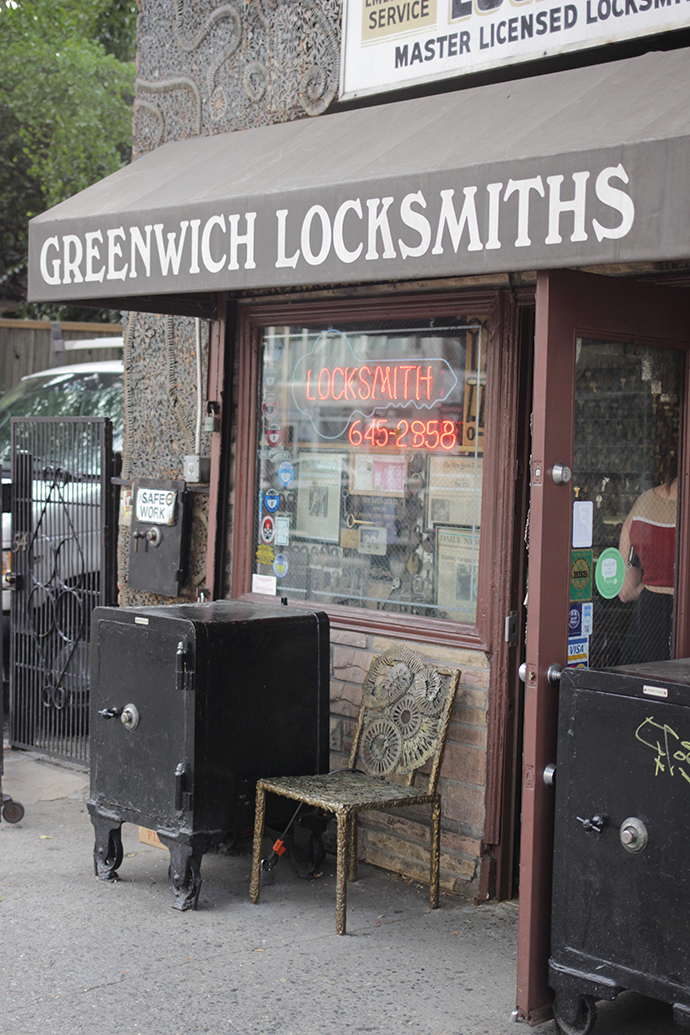
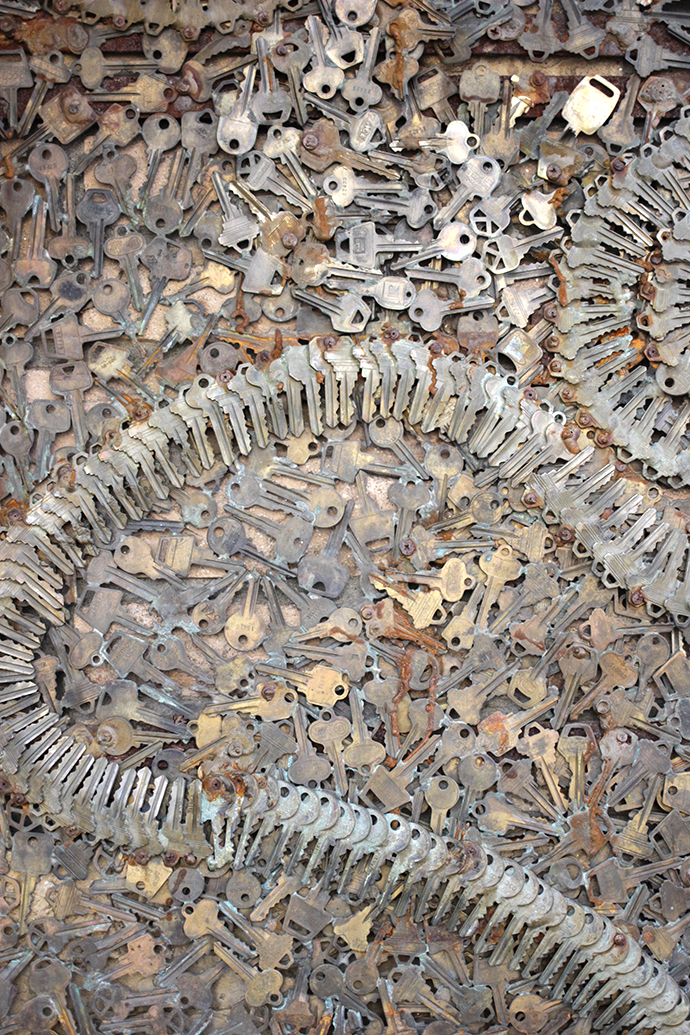
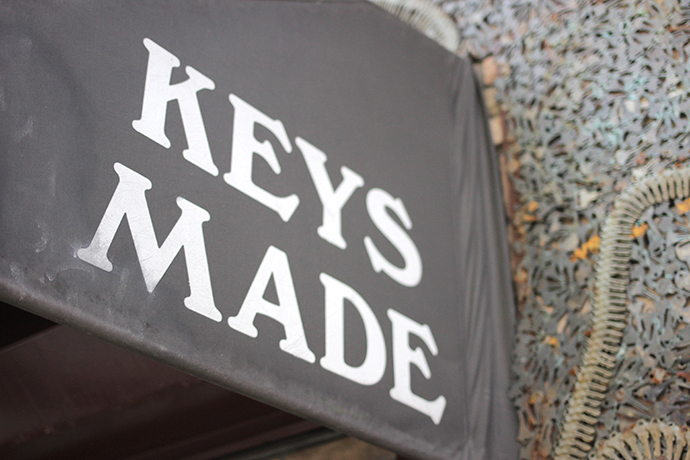
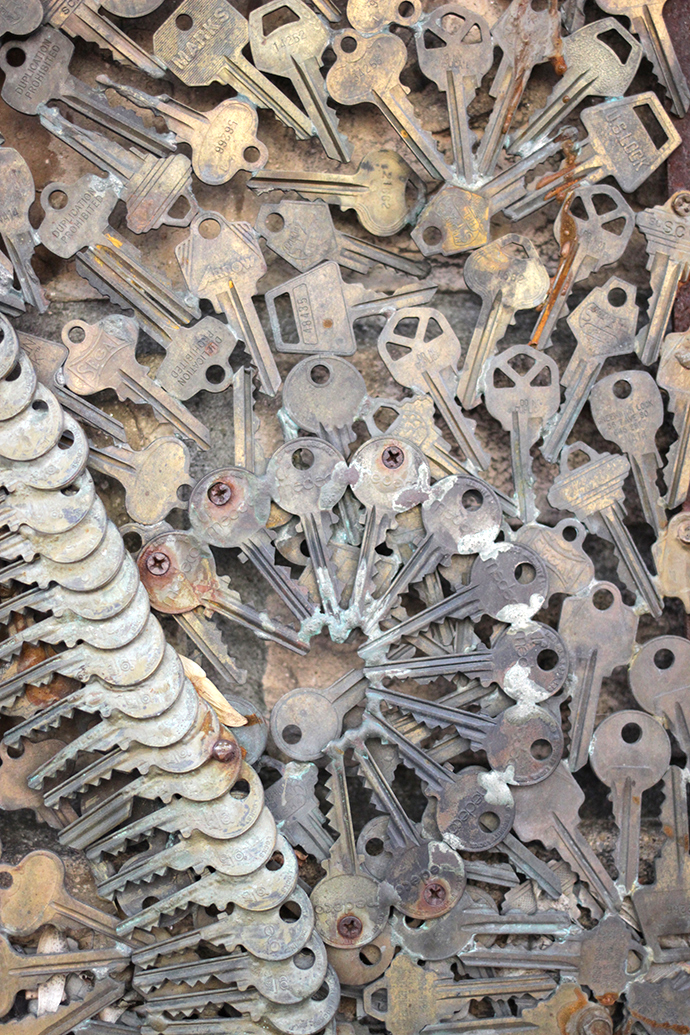
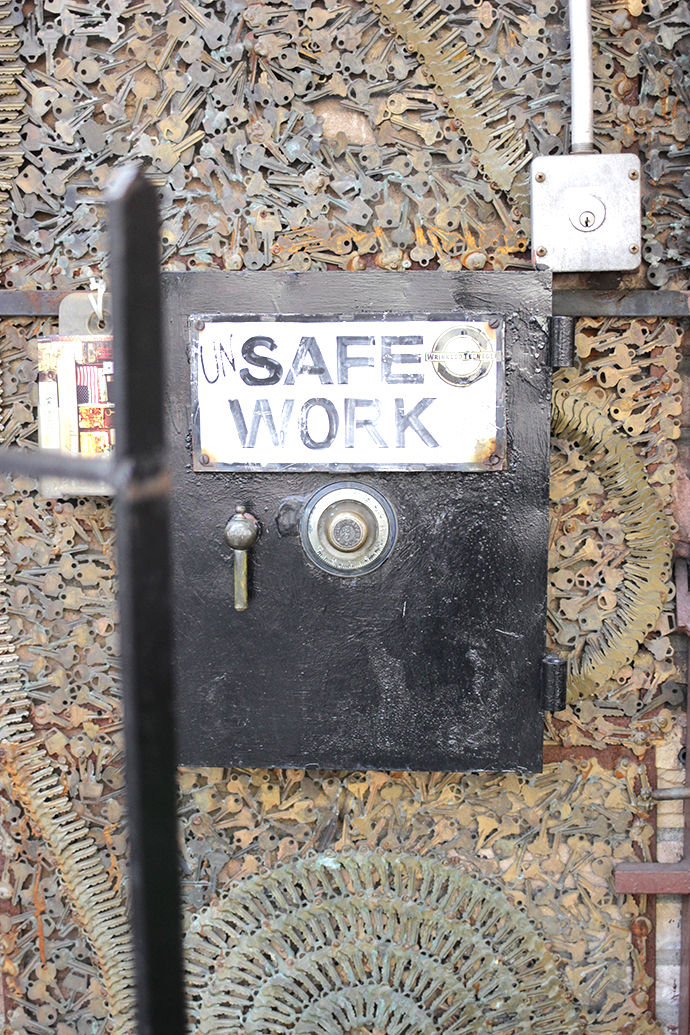
The 125-square-foot stand alone shop was opened in 1970, and has miraculously remained open and intact in an area that has experienced mind-boggling change and sky-rocketing property values in the last 47 years. But the most amazing thing about Greenwich Locksmiths isn't its staying power, but the fact that its facade is covered in the most wonderful art installation—made entirely of keys.
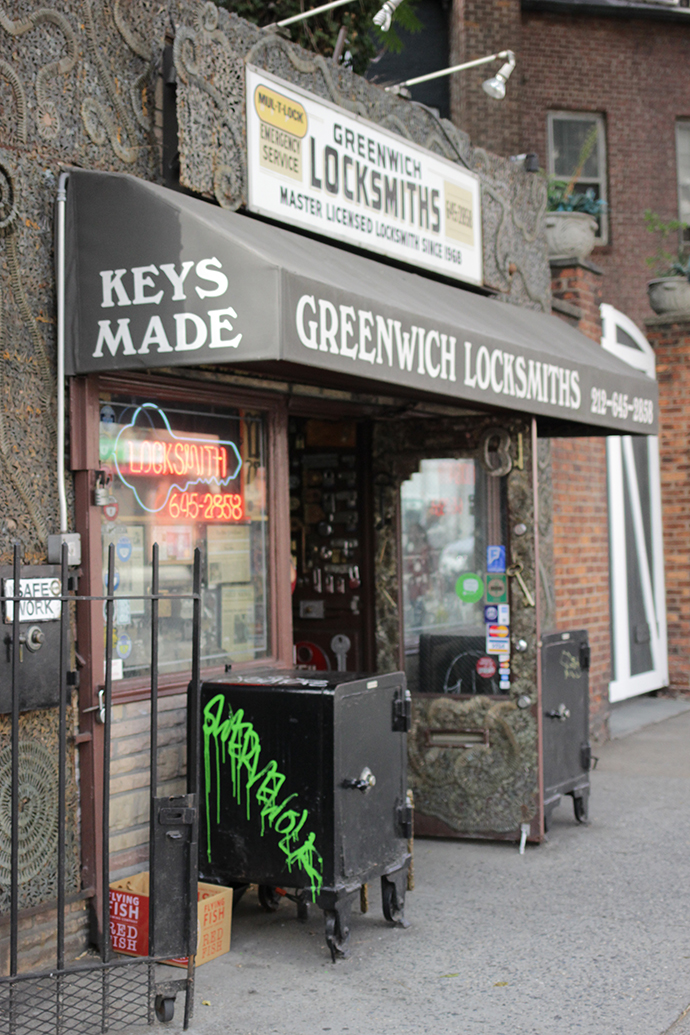
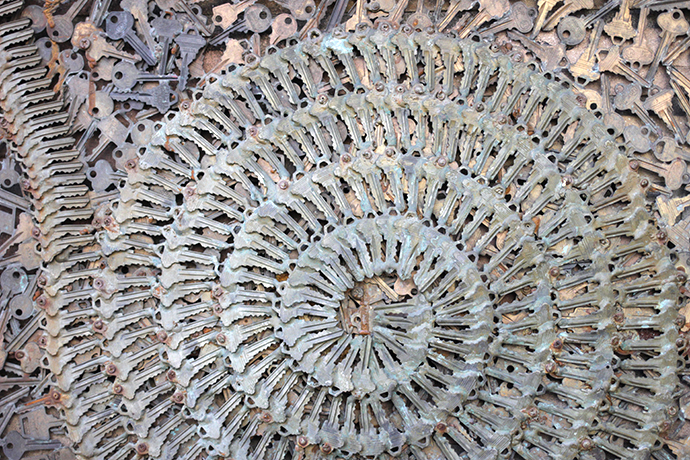

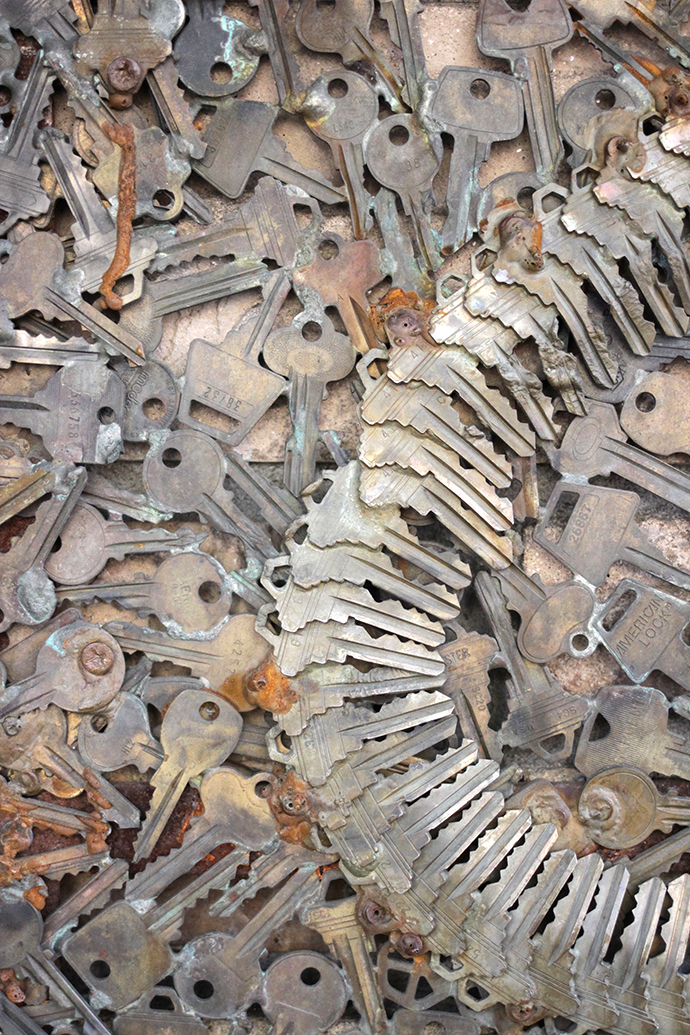
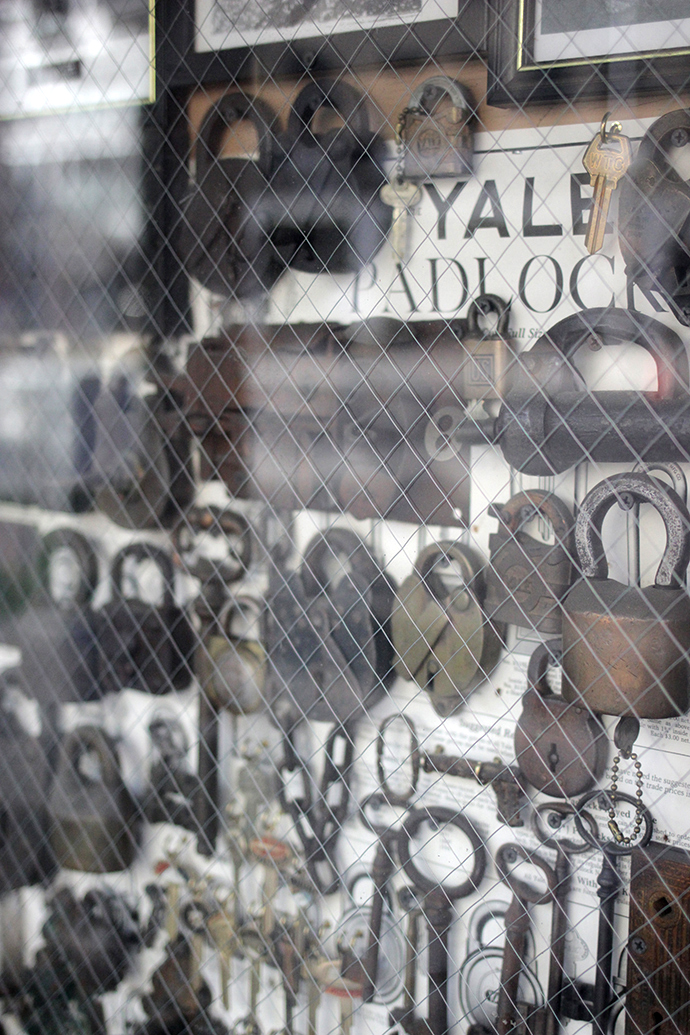
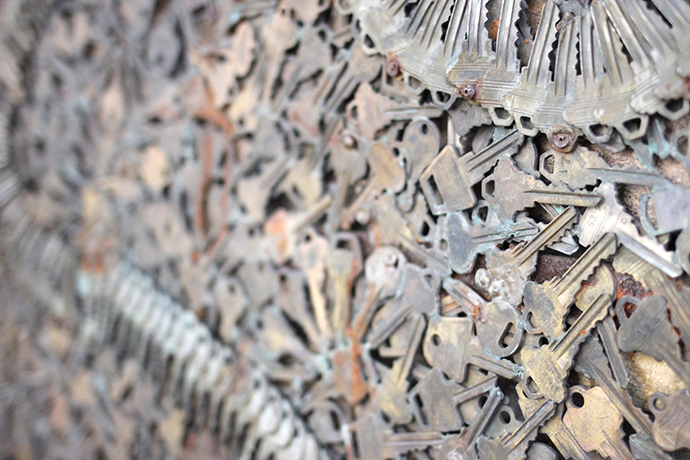

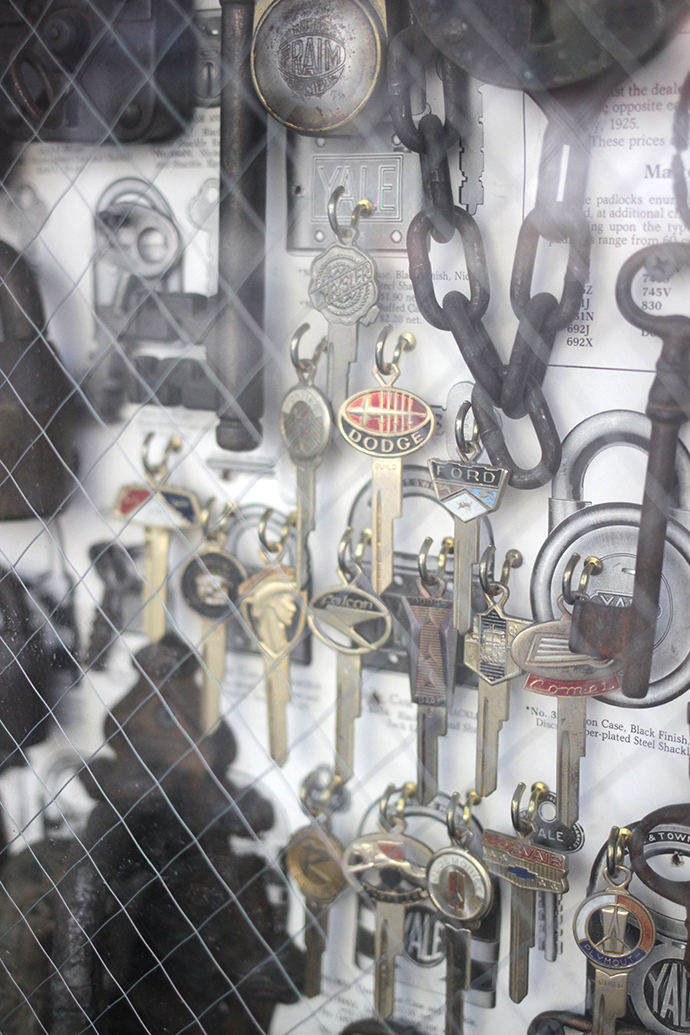
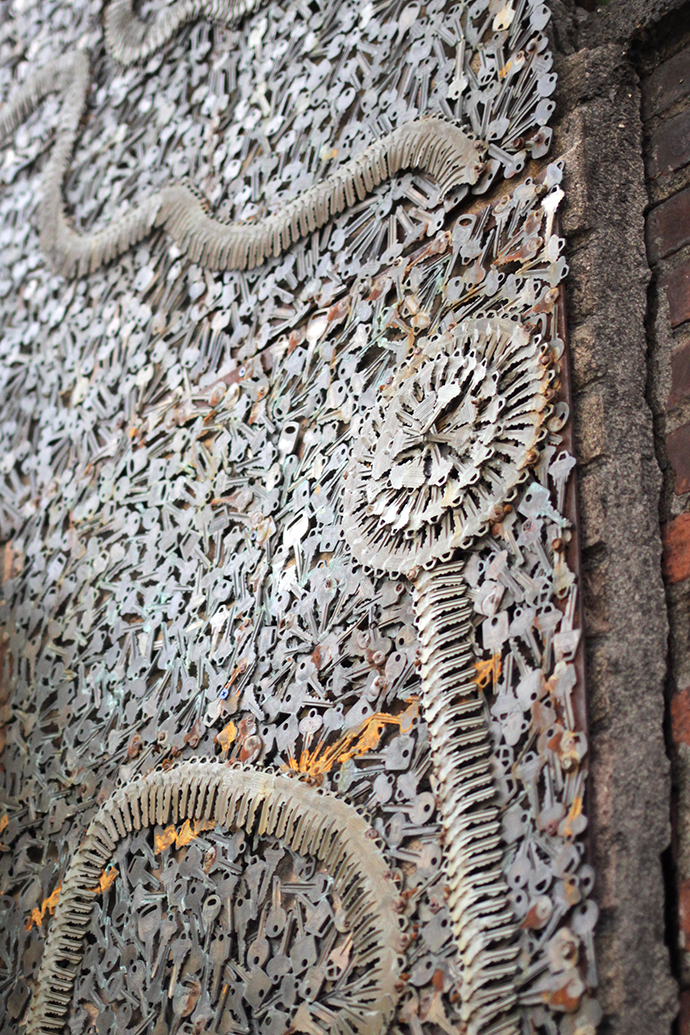
The amazing display is relatively new—created around 2010—but covers nearly every surface of the shop. There's even a chair made of keys, and a collection of old keys and padlocks in the window like a mini-key museum.
Philip Mortillaro, the owner and master locksmith, owns the building and despite lucrative offers to sell, he insists that he—and his tiny shop—will remain on 7th Avenue until he dies.

Bideawee Pet Cemetery

Bideawee Pet Memorial Park is the third pet cemetery I've been to, and I went only a week after visiting my second, the small but historic Clara Glen Pet Cemetery in New Jersey. Bideawee is a more than 100-year-old pet welfare organization serving the New York City area and Long Island. They have pet memorial parks in Wantagh and Westhampton on Long Island. I became interested in finding other pet cemeteries after visiting my (and America's) first, but the Bideawee memorial park had somehow eluded me until a co-worker who lives in Wantagh brought it to my attention.


The Wantagh location is enormous—larger than most human cemeteries I've been to—and we were there for hours without seeing everything. I've mentioned in my previous pet cemetery posts that they're the only cemeteries that make me tear up, and Bideawee was no exception. The epitaphs are so heart-wrenching, the portraits so endearing and the names reliably ridiculous.

The most famous resident of the memorial park is Checkers Nixon, "The Best-Known Presidential Dog to Never Have Lived in the White House." Checkers was Richard Nixon's cocker spaniel who became famous after Nixon (then a senator) mentioned him in a speech televised in 1952. Checkers was a campaign gift from a supporter in Texas, and he died at age 13, in 1964—four years before Nixon became President.


In addition to the large number of dogs and cats, Bideawee is the final resting place of a variety of other species including Speedbump, a tortoise who lived to 65; Buckaneer, the horse; an iguana named Godzilla; Mona the monkey; Pyewacket Quigley the duck; parakeets Sparky and Casey Hall; turtles Pretzel and Potato Chip; and pigeons Lindsey and Linde. They had an entire section for "smaller" animals like gerbils, birds and reptiles, proving that pets don't have to be cuddly or live long to make a big impact on their owner's lives.


While walking through a pet cemetery, it's impossible for me not to read most of the names aloud. They're all so wonderful—whimsical or complicated or traditional, most make me laugh through my misty eyes. We paid our respects to Admiral Alexander F. Mudge, Pinto Porkchops, Farnsworth, Jingles Smith, Lady Dodo, Tiny, Daisy Julian, Mustard, Woofie Von Hugel, Beethoven, Potato, Bagel and Pussy #1, among others.
Even if you're not a pet person, you can't deny the impact that these dumb creatures have on their owners and the people that love them. Human cemeteries feel stark and impersonal after you walk through a pet cemetery filled with epitaphs such as "our precious baby," "a piece of my heart lies here," "always remembered, always loved," "my best friend," or simply, "irreplaceable."

Fieldston, Bronx

Sometimes I think I may have already exhausted all of my adventure possibilities in New York City, or at least that I'm aware of all of the interesting things this city has to offer. But then I come across an article or hear about a place like the Fieldston neighborhood and I realize that I could live here forever and still not discover everything.


Fieldston is a privately-owned neighborhood just east of Riverdale in the Bronx. The majority of the neighborhood is a historical district and it's filled with enormous, single-family homes, huge trees and winding streets. The houses were built beginning in 1910 by a list of approved architects who designed homes in a few "strongly encouraged" styles. Many of the houses are built in the Tudor revival style and the neighborhood was painfully charming on the day we went—brilliantly sunny with light snow from the day before still dusting the sidewalks and roofs.


Fieldston is near the end of the 1 line (I recommend stopping for breakfast first at the Short Stop Coffee Shop first) but it feels like another world. New York can feel so small and squeezed for space, but there are a seemingly endless number of places that I've found where you can go to breathe a little easier, enjoy the quiet and fall in love with New York all over again.
Lower Manhattan
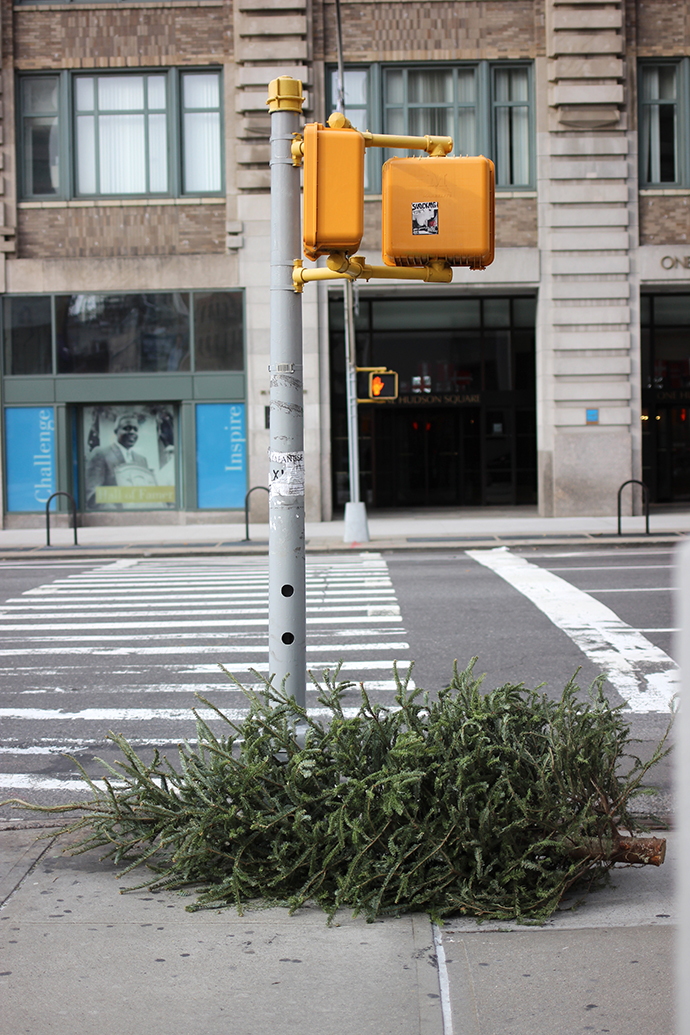
A few weekends ago, after diner breakfast at the Landmark Coffee Shop in Chinatown, I set off wandering. I had no destination and no plans, which is always how some of my favorite adventures come to be. I don't consider myself a "photographer" by any means, but I do love having the time and space to take photos without agenda. Photographing storefronts, signage and city life that catches my eye as I wander aimlessly is one of my most treasured activities.


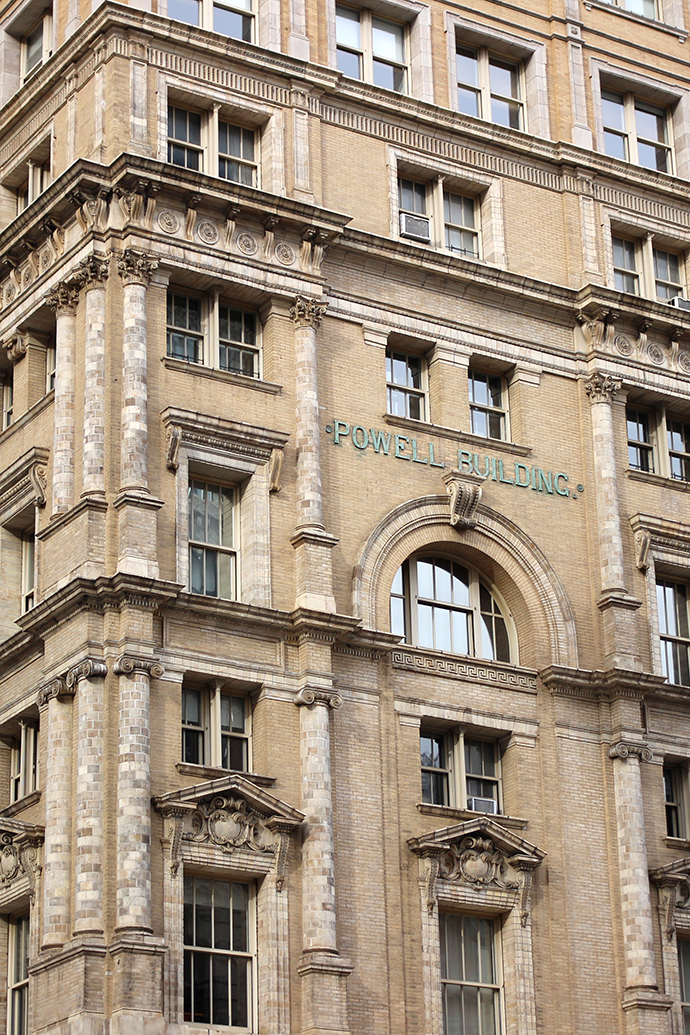
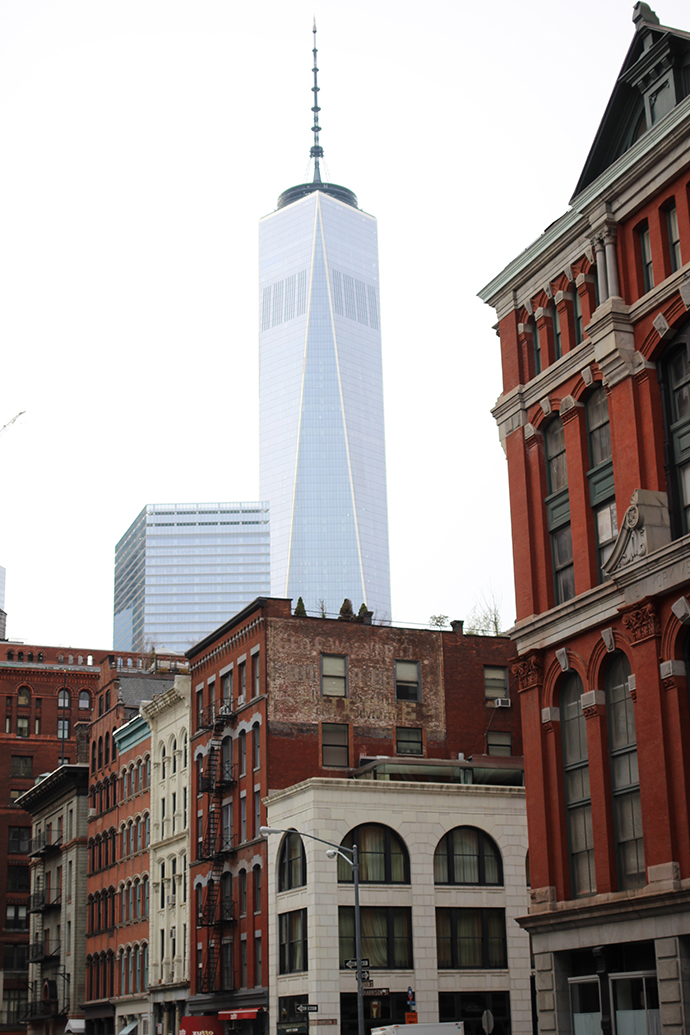
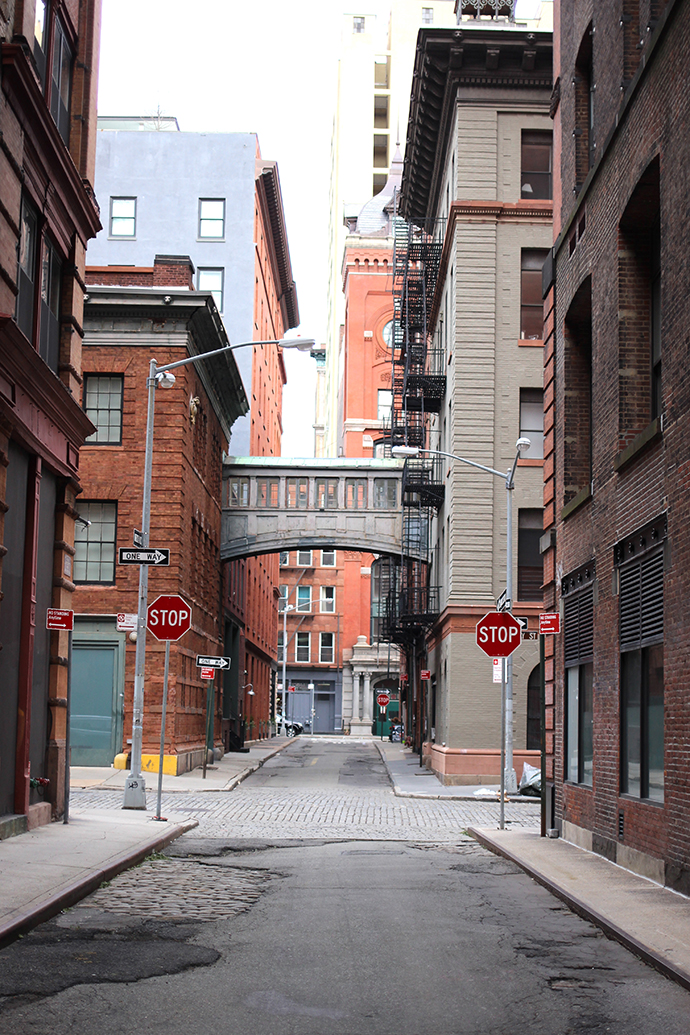
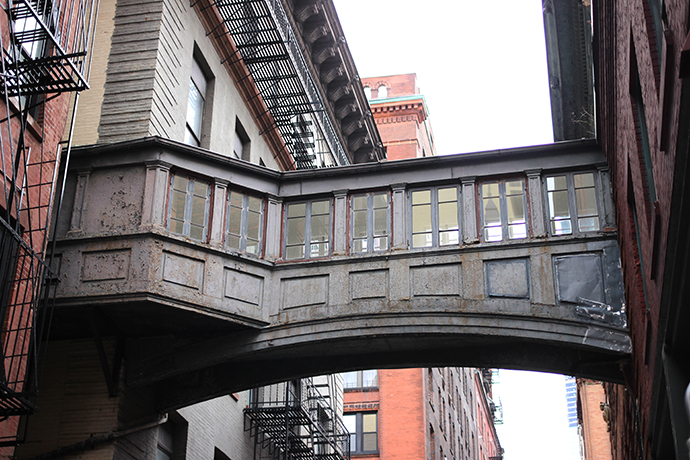
In addition to exploring Chinatown, I wandered the streets of Soho, TriBeCa and the Lower East Side. Our diner was right across from a hotel proclaiming that it was in "SoLita" which we laughed about—although a lot of neighborhood names begin as ridiculous branding experiments by real estate agents, that one seemed particularly forced.
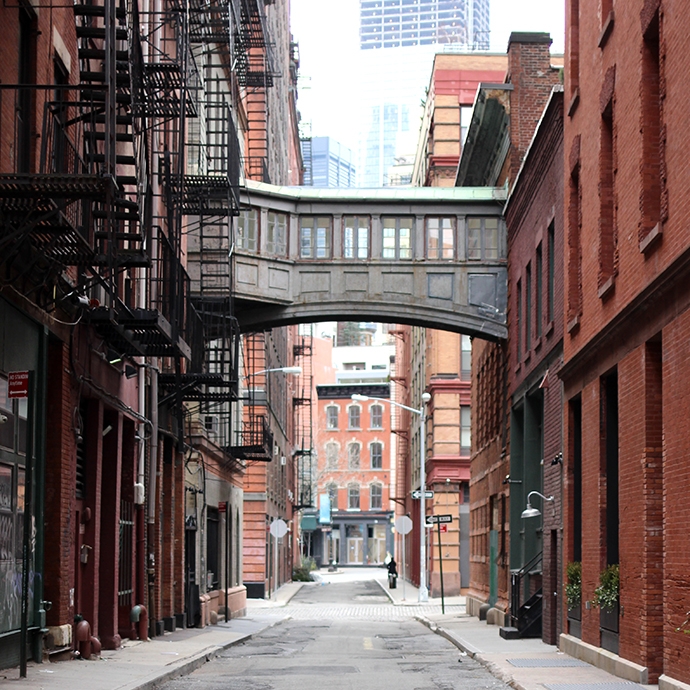
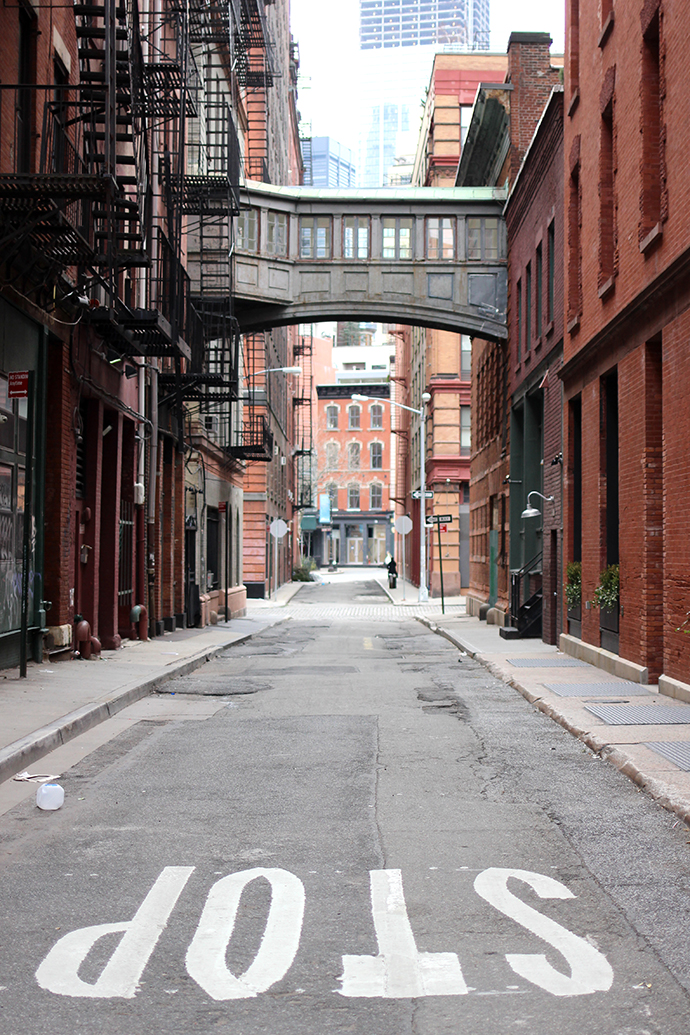
At one point I stumbled upon Staple Street, an approximately 476-foot-long mini street north of the World Trade Center. I'd been there once before looking for a Banksy piece, but I was still in awe of how much I could instantly love a single street. With no room for street parking and an intriguing skybridge, I immediately said outloud (to no one, because New York is making me crazy) "This is officially my favorite street in New York." If I hadn't been there myself, I would swear that Staple Street was on a Hollywood backlot—it's almost too cute.
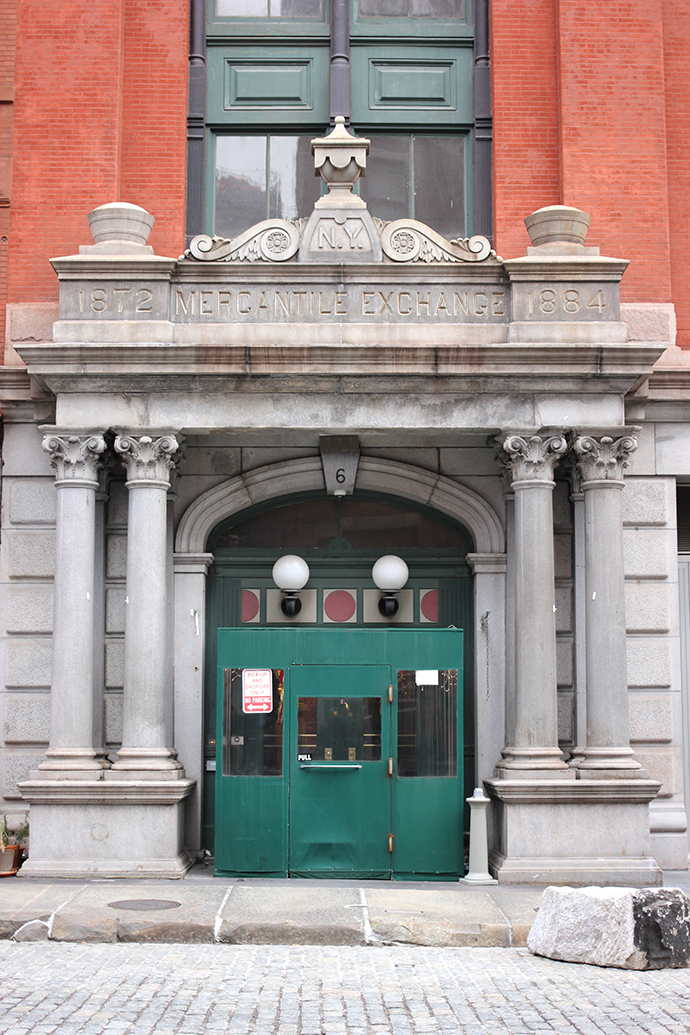
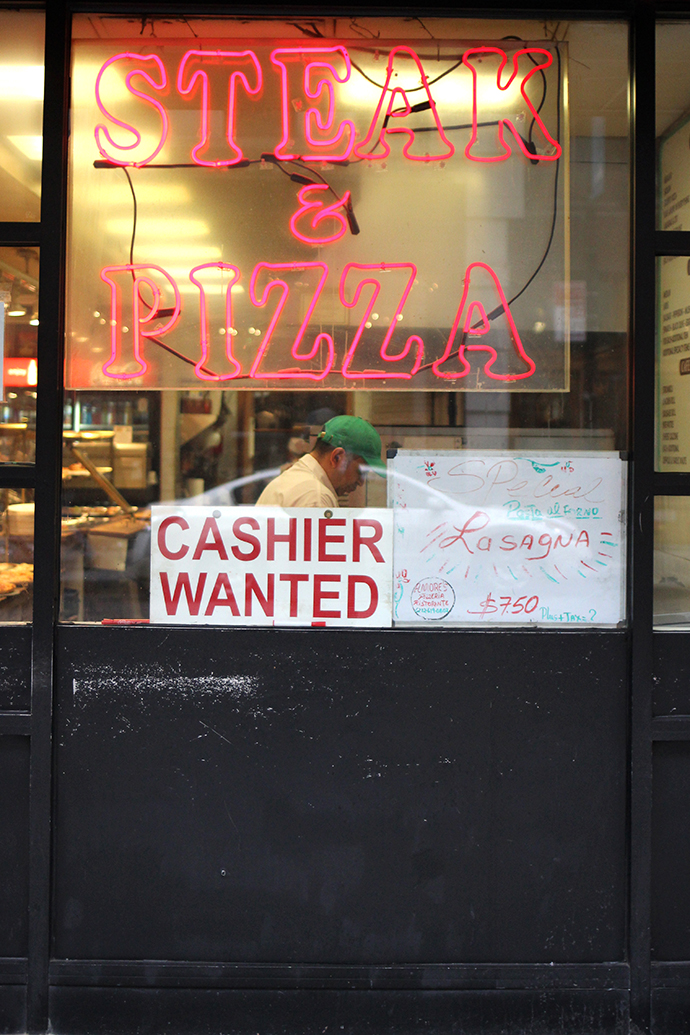
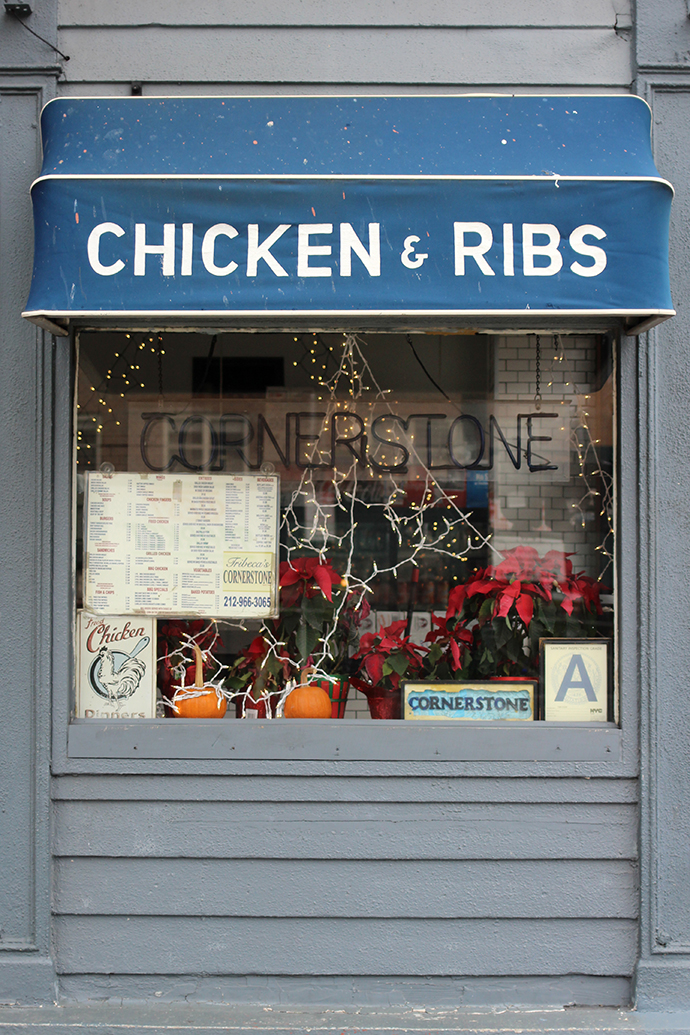
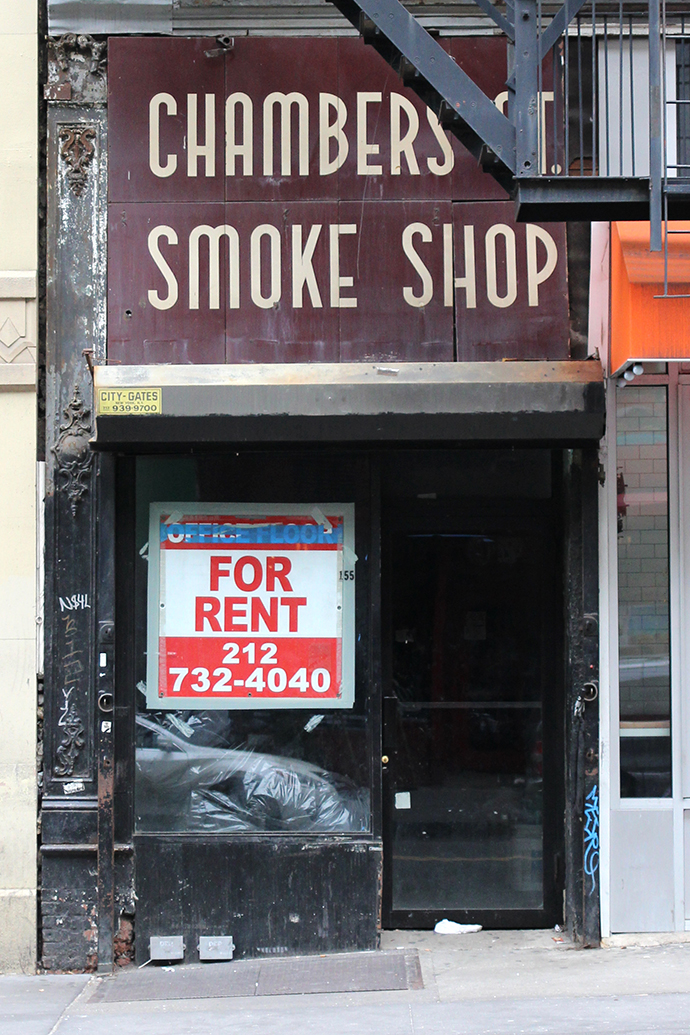
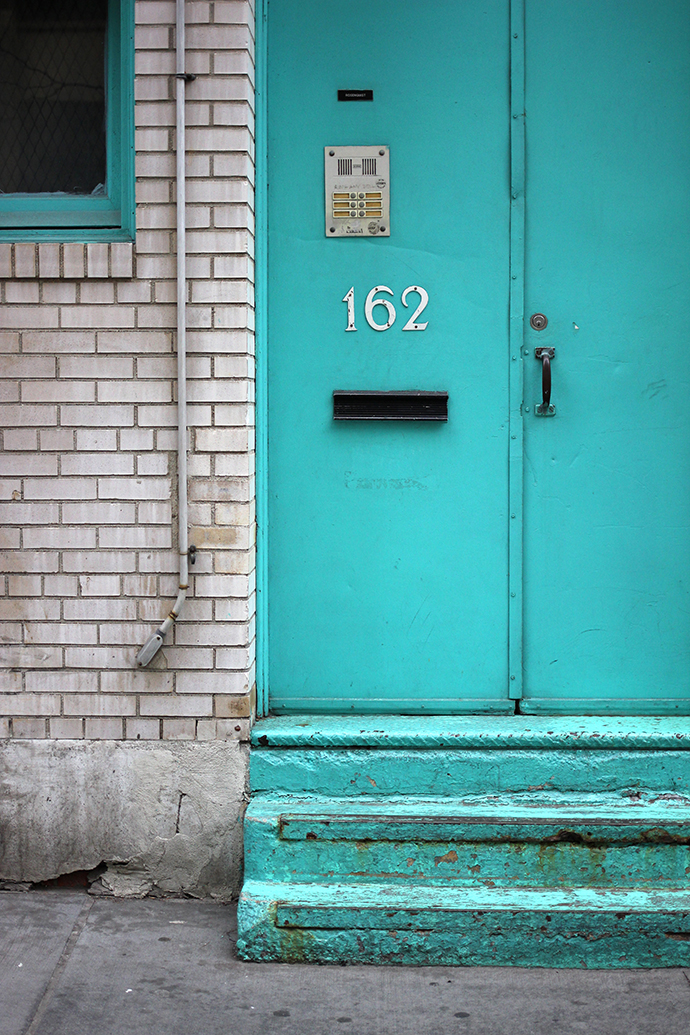


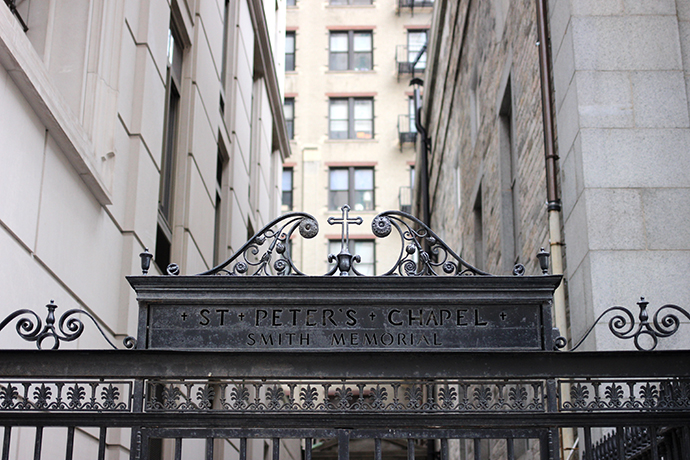

I passed so many lovely new-to-me storefronts with beautiful signs, awnings and neon. The Chambers St. Smoke Shop sign stopped me dead in my tracks—it looks as if it had been covered for years and just recently got revealed when the occupant left. The store is now vacant and for rent, and I can only hope that the new tenants don't destroy such a beautiful old sign.
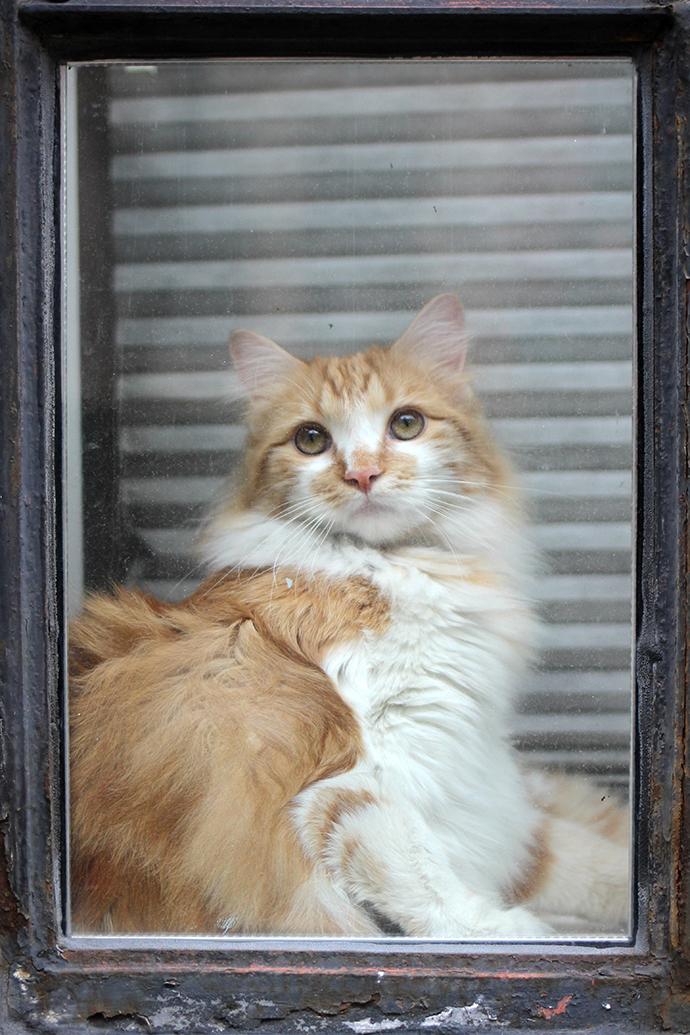
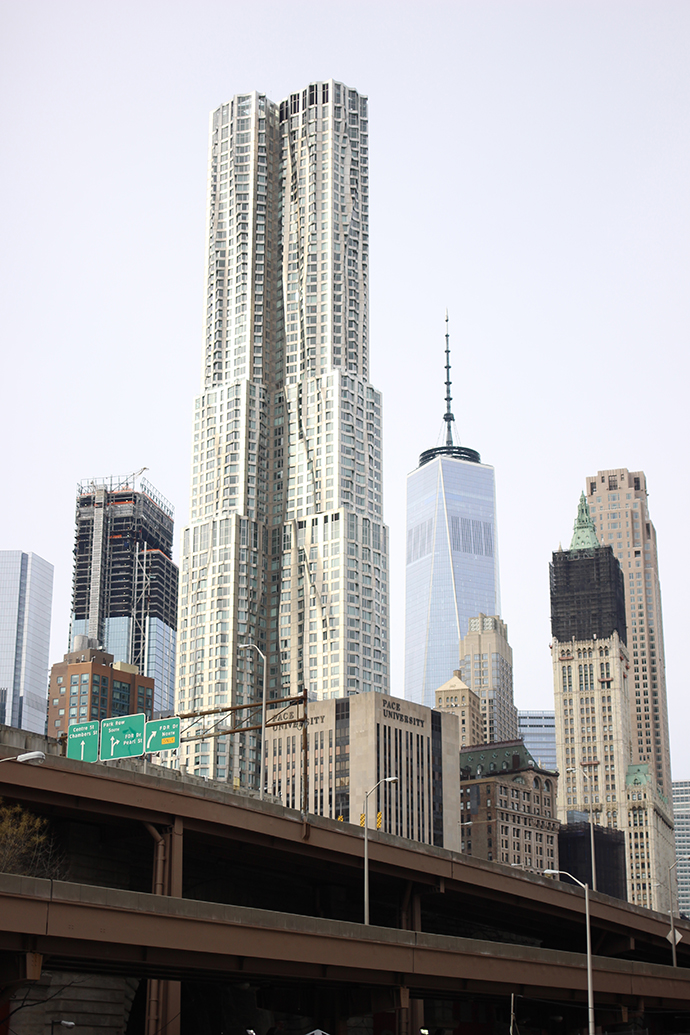
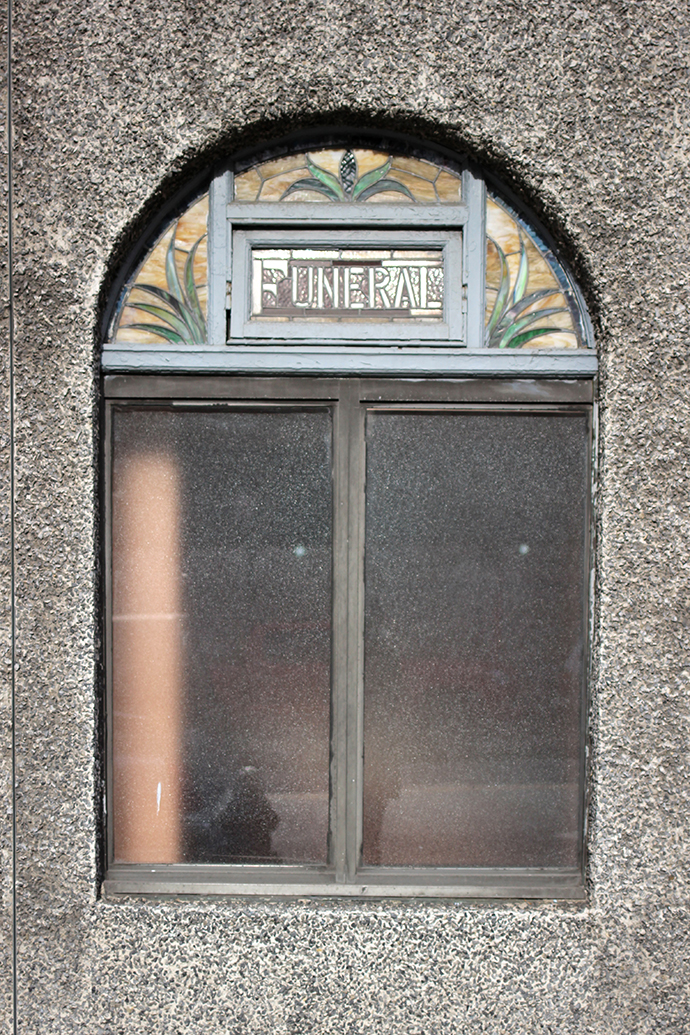
I made friends with a window cat, stared up at the skyline like a tourist and found a funeral home with the most wonderful stained glass windows. I've been thinking a lot lately about what makes me happiest, and trying to do more of those things—city walks like this are high on that list.
The most fantastic thing about the New York Botanical Garden’s annual Orchid Show is the orchids themselves