

Archive
- Abandoned
- Alabama
- Arizona
- Bahamas
- Books
- California
- Cemetery
- Climate
- Colombia
- Connecticut
- Diner
- Egypt
- Feature
- Florida
- Friday Fun
- Georgia
- Holidays
- Illinois
- Iowa
- Italy
- Kentucky
- Louisiana
- Maryland
- Massachusetts
- Mississippi
- New Jersey
- New Mexico
- New York
- North Carolina
- Novelty Architecture
- Ohio
- Pennsylvania
- Personal
- Peru
- Project 365
- Protest
- Rhode Island
- Roadside Attraction
- South Carolina
- Tennessee
- Texas
- Travel Guide
- Virginia
- Walks
- Washington DC
- West Virginia
- Wisconsin

Old Burying Ground

While planning our recent day trip to the North Fork of Long Island, I found the vineyard we were planning to visit on Google Maps and searched for cemeteries nearby. Anytime I'm traveling somewhere new, I try to search for nearby diners and cemeteries to maximize my time and ensure that I'm not missing out on something.
I was excited when I discovered a cemetery .3 miles from the train station (when I told my friends that I had found a cemetery for us to explore on our way to the vineyard, one replied "of course you did"). I was even more thrilled to find out after a few minutes of research, that the old buying ground in the First Presbyterian Church cemetery is the oldest surviving colonial-era cemetery in New York State.

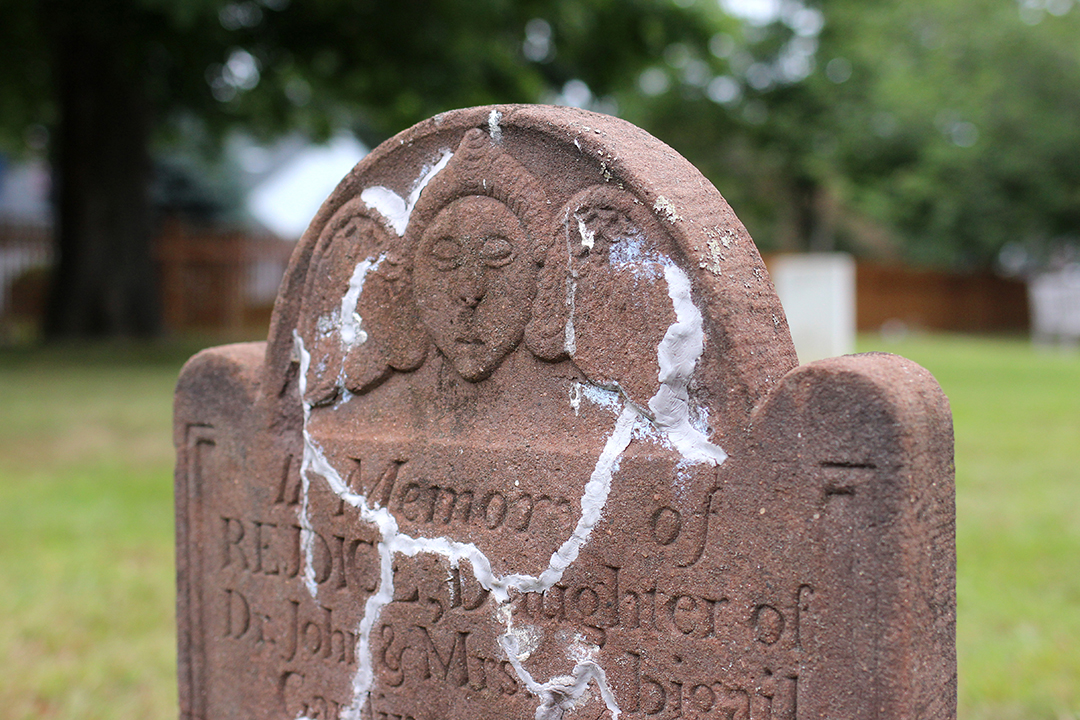


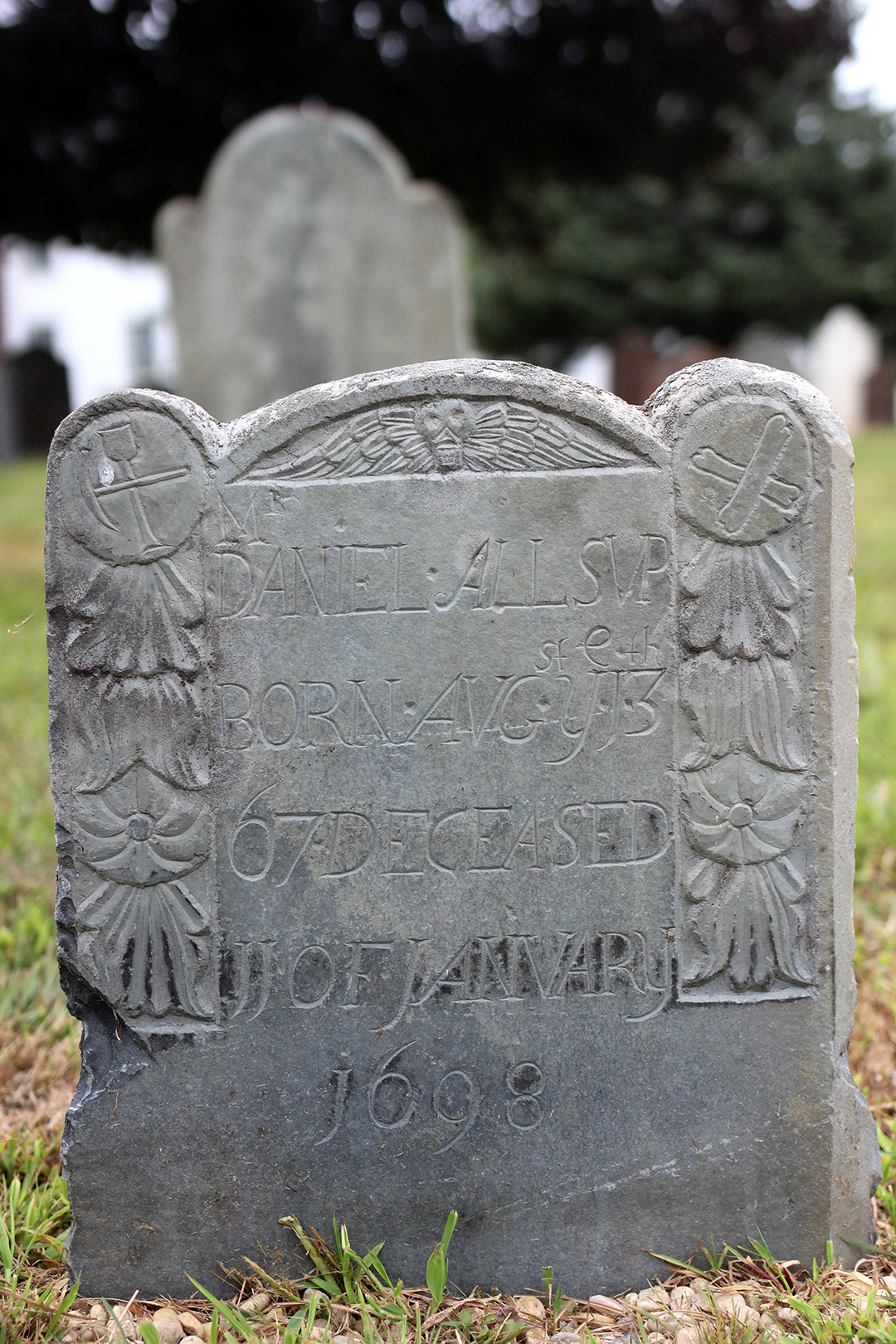
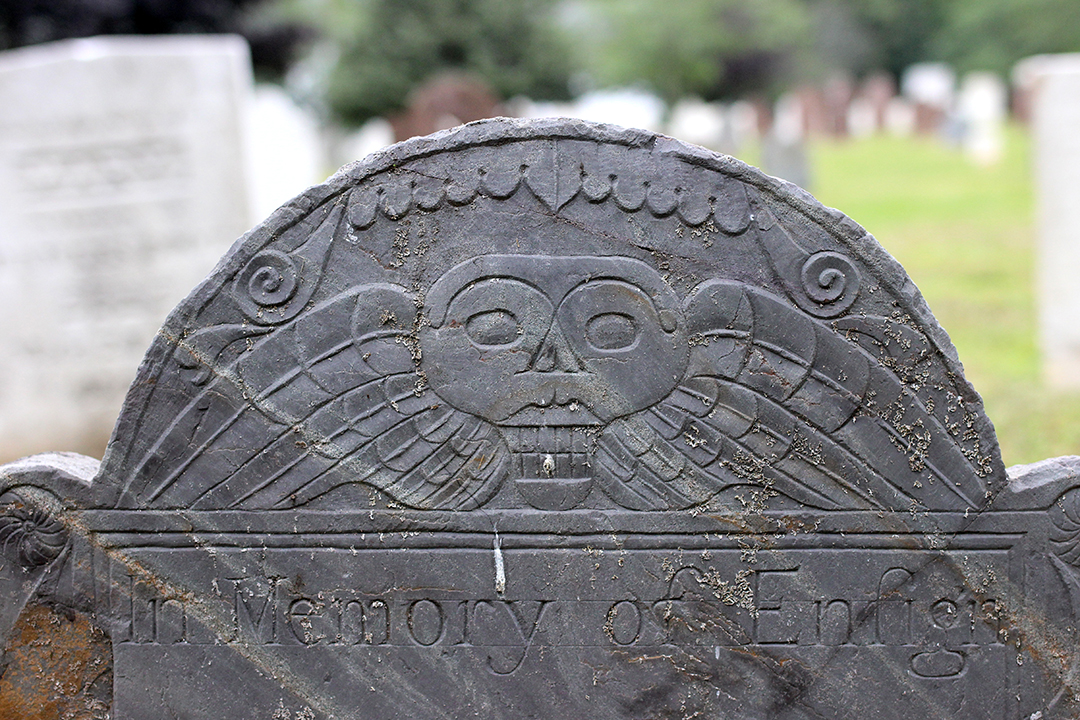


The OBG was established in 1640 by the Puritan settlers of Southold, and it's full of stones cut with Puritan memento mori images and motifs—winged skulls, chubby cherubs and even a few crossbones. According to the (very helpful) brochure we picked up upon entering the cemetery, "the Old Burying Ground showcases gravestones carved by the best of the early stonecutters, most from New England, the widest range of any Long Island cemetery."


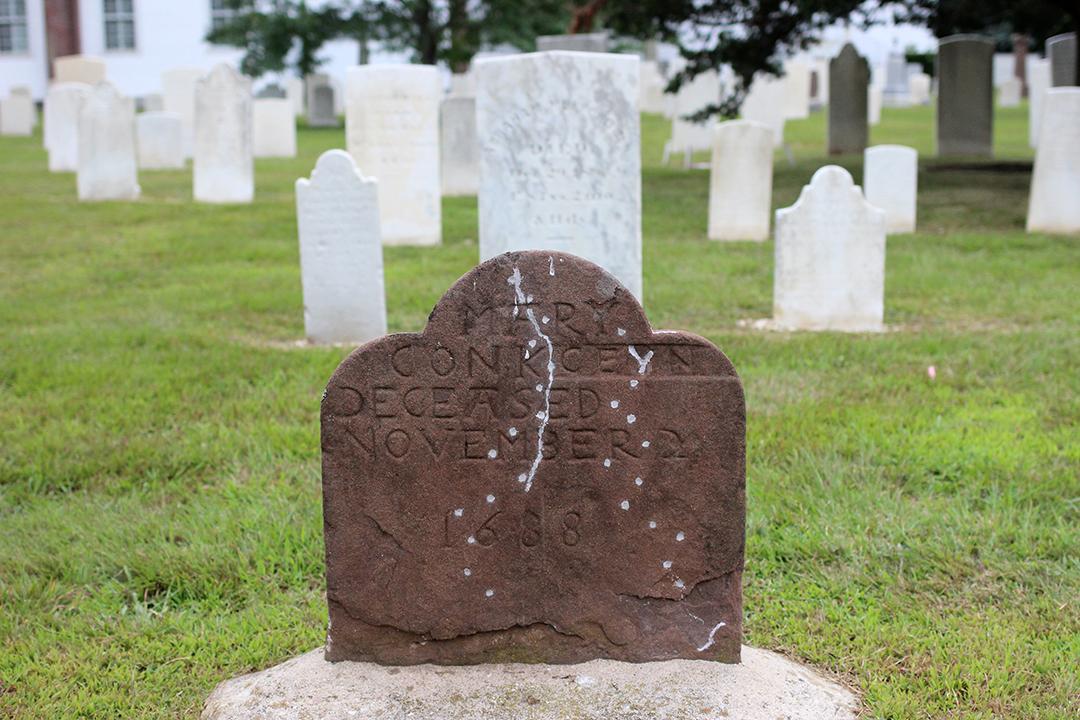
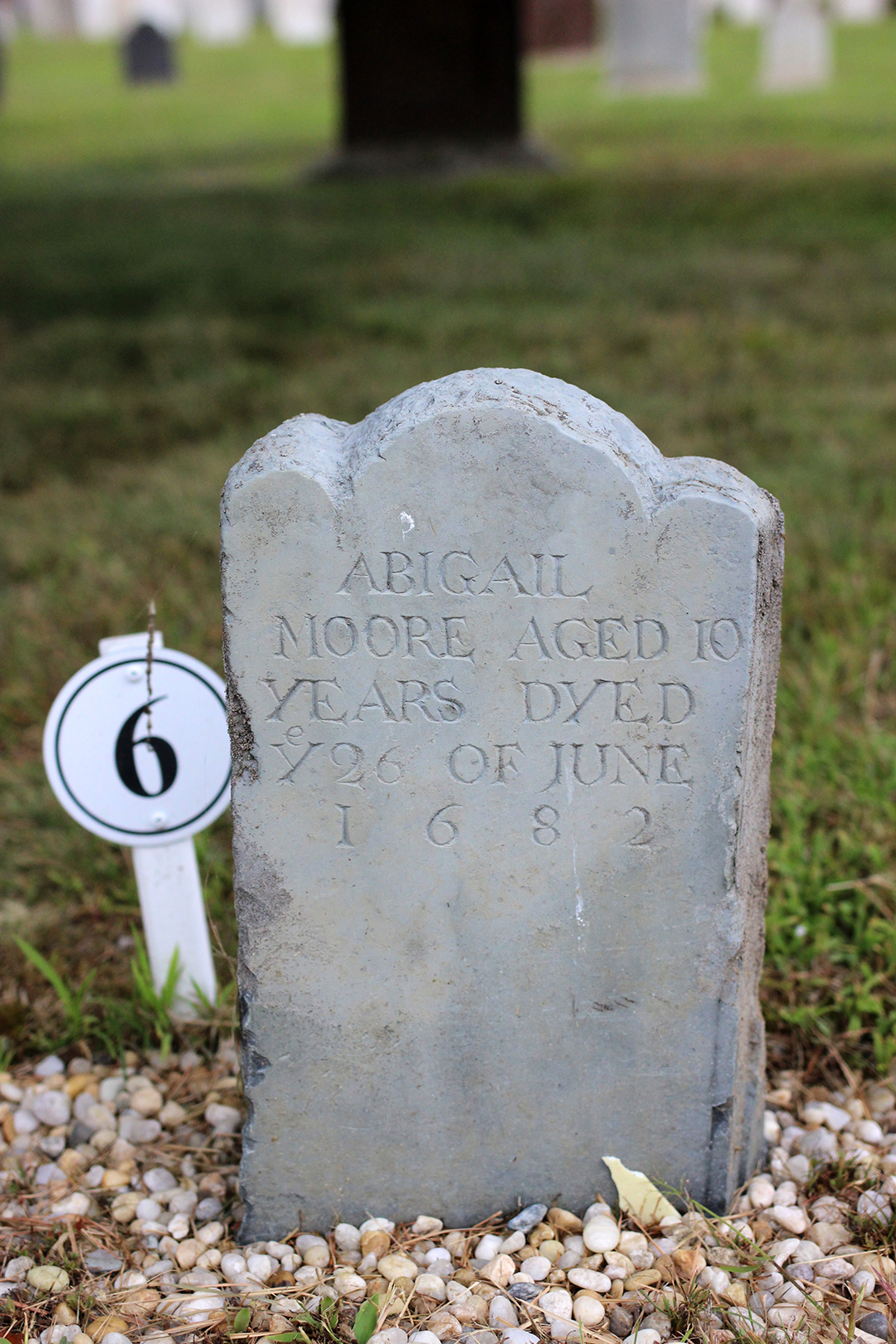


It's rare in this country to come across burial grounds that pre-date the formation of the United States, and the OBG has 20 gravesites that date back to the 1600s. The OBG is home to the oldest grave (the 1671 box tomb of Southold founding father William Wells) and the second oldest gravestone on Long Island (Abigail Moore, 1682).
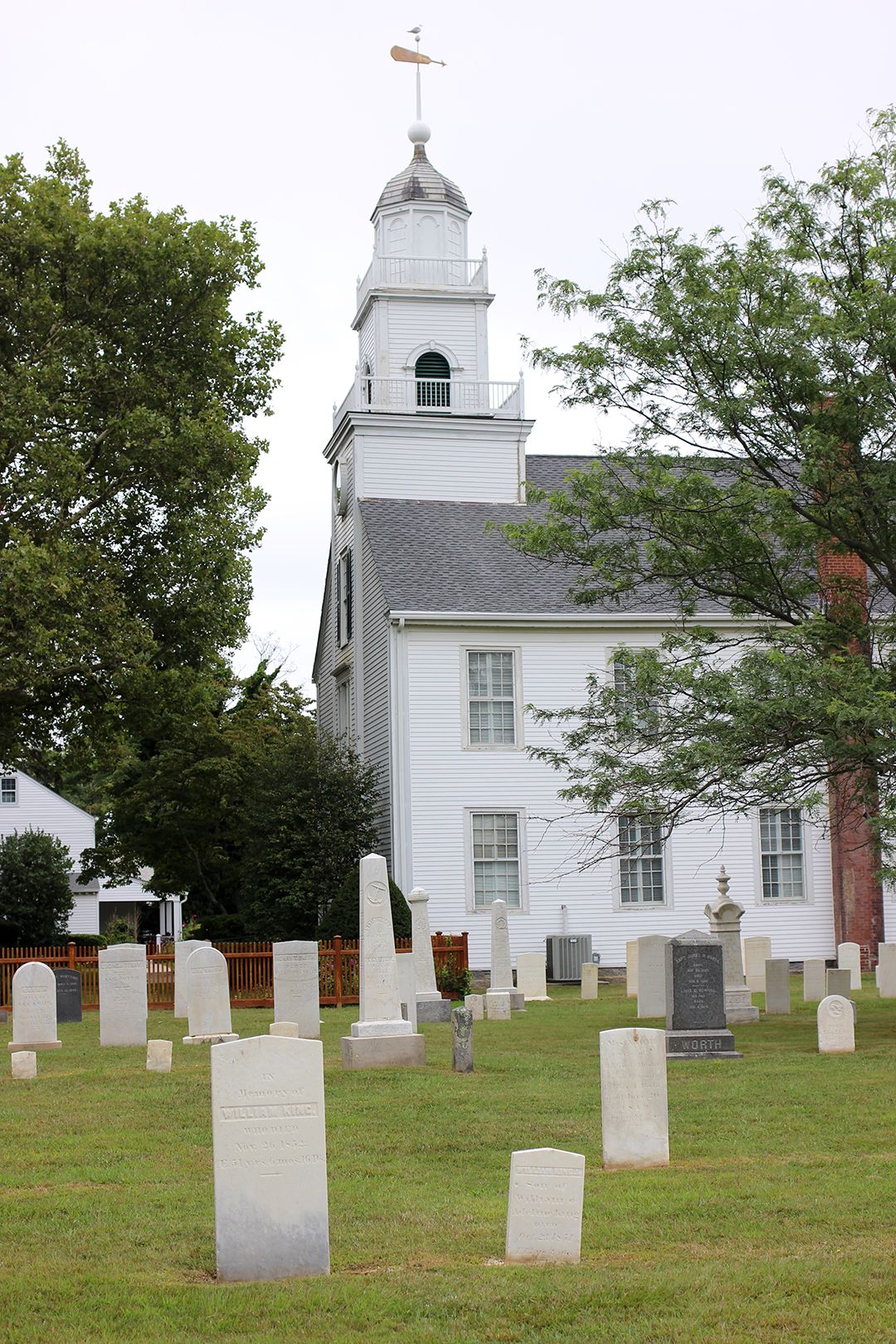


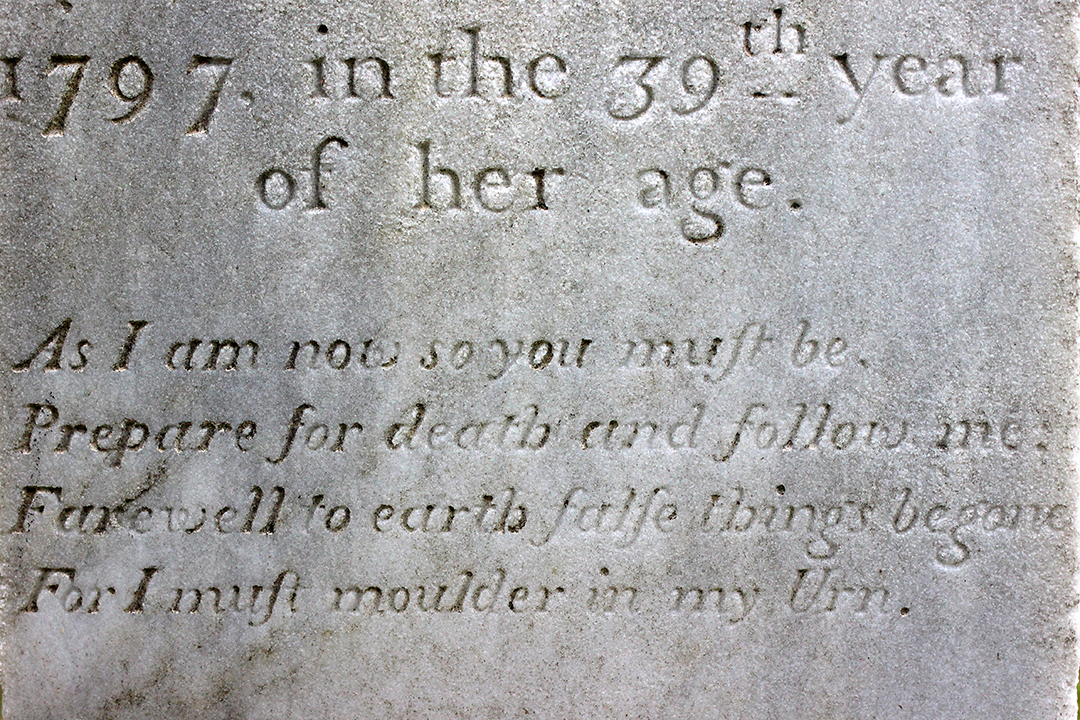


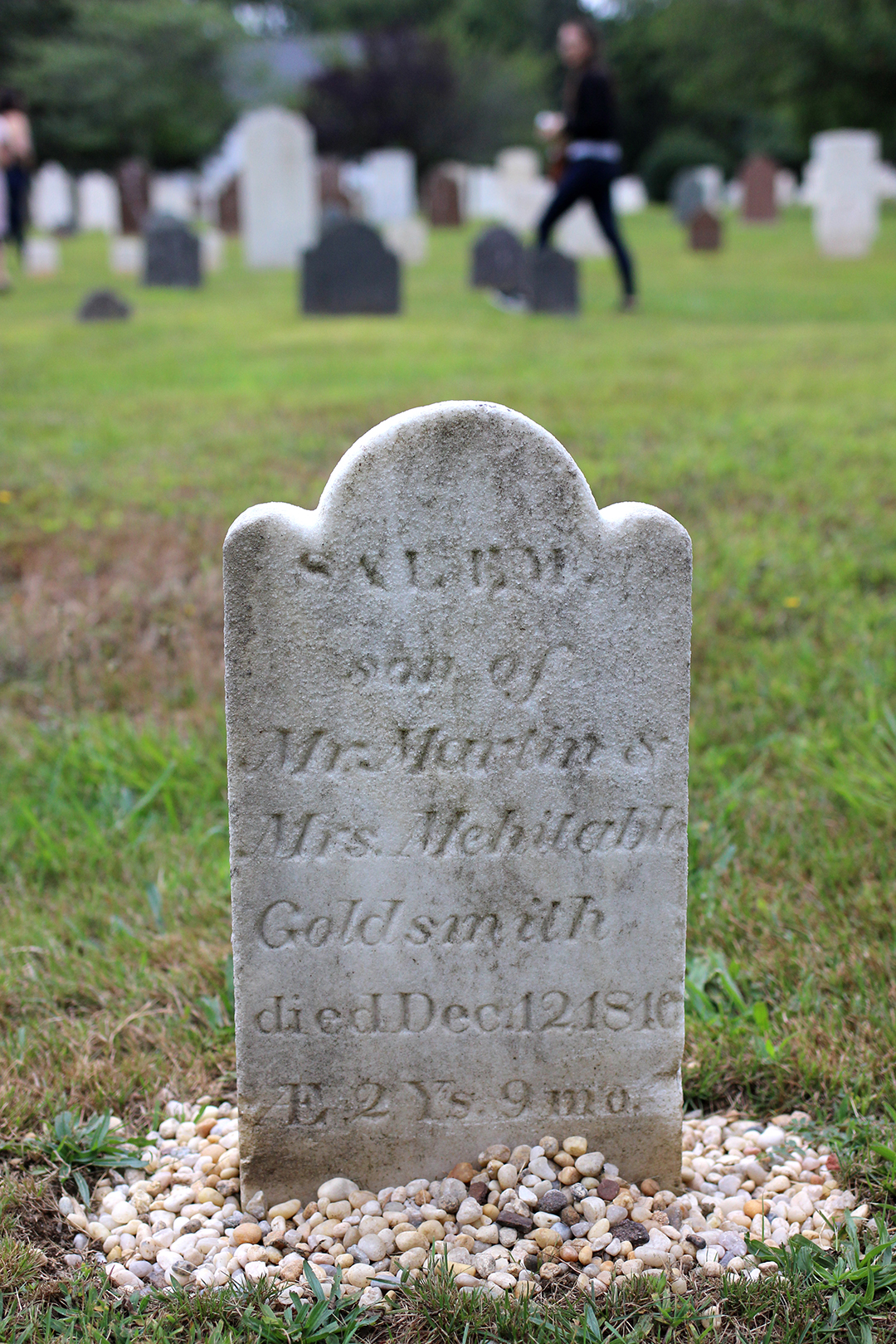
Like any old cemetery, some of the stones have sustained a lot of damage while others look as if they were just carved yesterday. The church has been making a costly and extensive effort to preserve the OBG, giving the stones a cleaning, piecing some back together and adding a protective bed of gravel at their base. We didn't explore the grounds beyond the Old Burying Ground, but the cemetery is huge and very well-maintained—I could have easily spent hours there, if only they served Rosé.
Letchworth Village Cemetery

After we explored a few buildings in Letchworth Village, we decided to call it quits despite barely making a dent because 1. we saw a cop, 2. I was getting hangry and 3. we needed to get our Zip Car back to the city by 9pm. We still had a bit of time before it was absolutely necessary that we start heading back, however, and I'm always angling to squeeze one last thing into a day spent exploring.
To remedy the hangry issue, we stopped at Hoyer's, a circa-1933 ice cream stand in the nearby town of Haverstraw. I used a $10 bill I found in one of the buildings (I'm still pumped about that find) to buy us soft serve and a root beer float which was exactly what we needed after creeping around for hours in hot, humid and probably asbestos-laden buildings. After Hoyer's, I suggested that we make just one more stop—technically on the way home!—and try our luck at finding the Letchworth Village Cemetery.
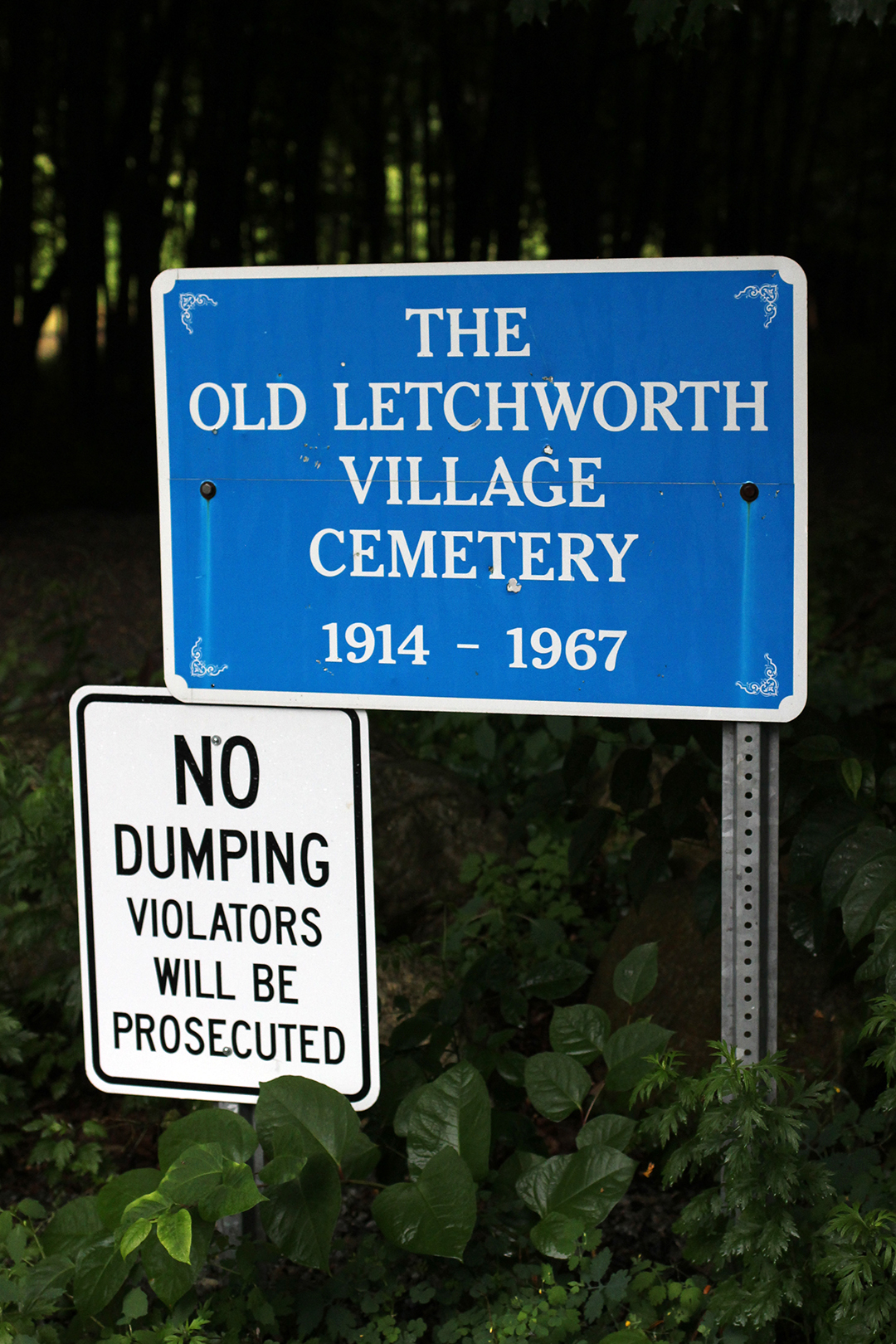

When I had initially googled "Letchworth Village," one of the auto-fill suggestions was "Letchworth Village Cemetery" and I I knew that finding it could be the cherry on top of an already perfect day. I'm eternally frustrated by the lack of location information available online sometimes—maybe I'm just a greedy millennial, but I feel that locations that are open to the public and amenable to visitors should not be so hard to pinpoint on a map.
The closest directions I could find were "drive down Call Hollow Road until you come to a path in the woods," which is what we ended up doing. Thankfully there's a bright blue sign for the cemetery and Call Hollow isn't a long road but I still took the time to figure out as close to the exact location as I could in hopes that it might help someone else one day be less frustrated that I was—405 Call Hollow Road, Stony Point, NY 10980 should get you there.
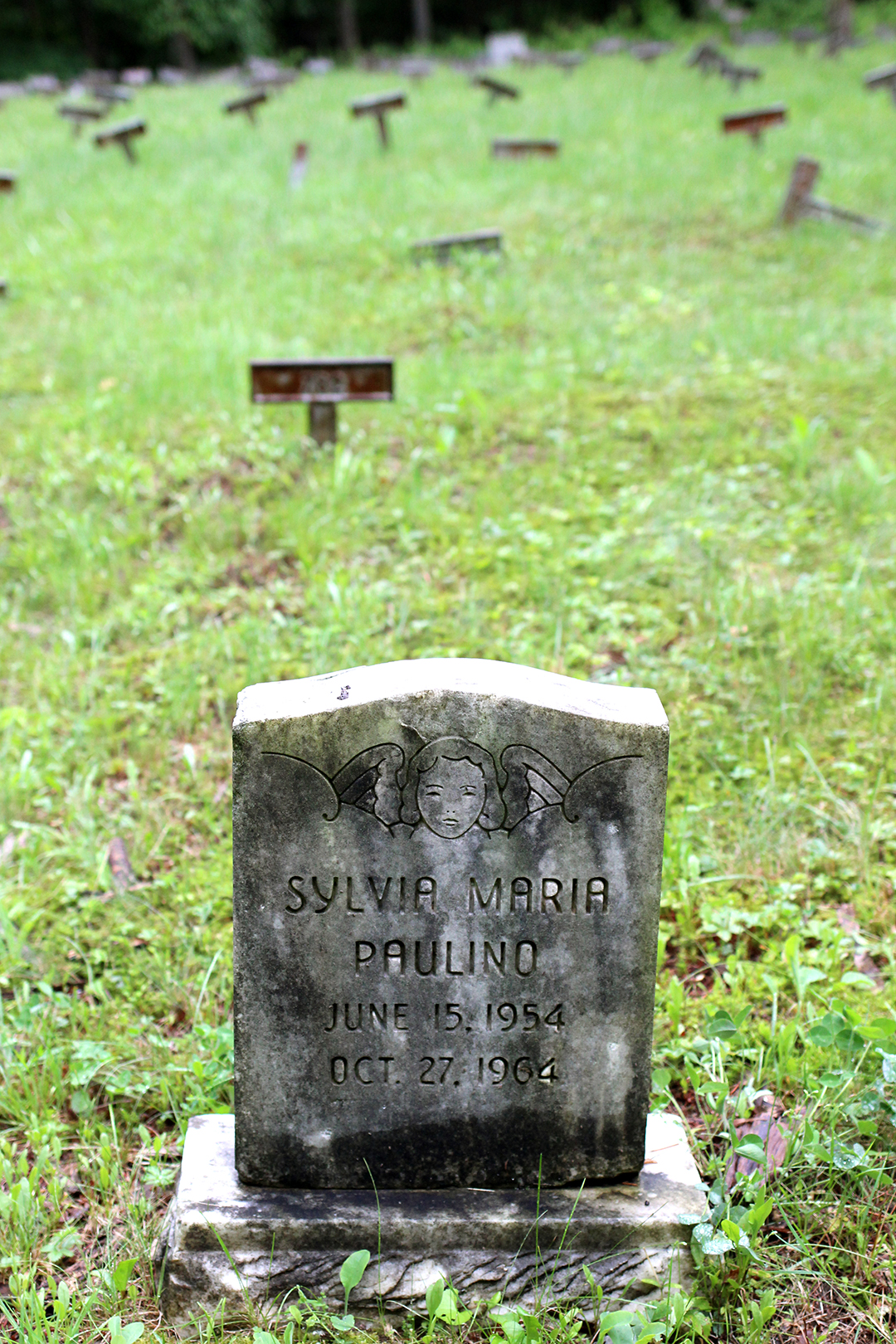

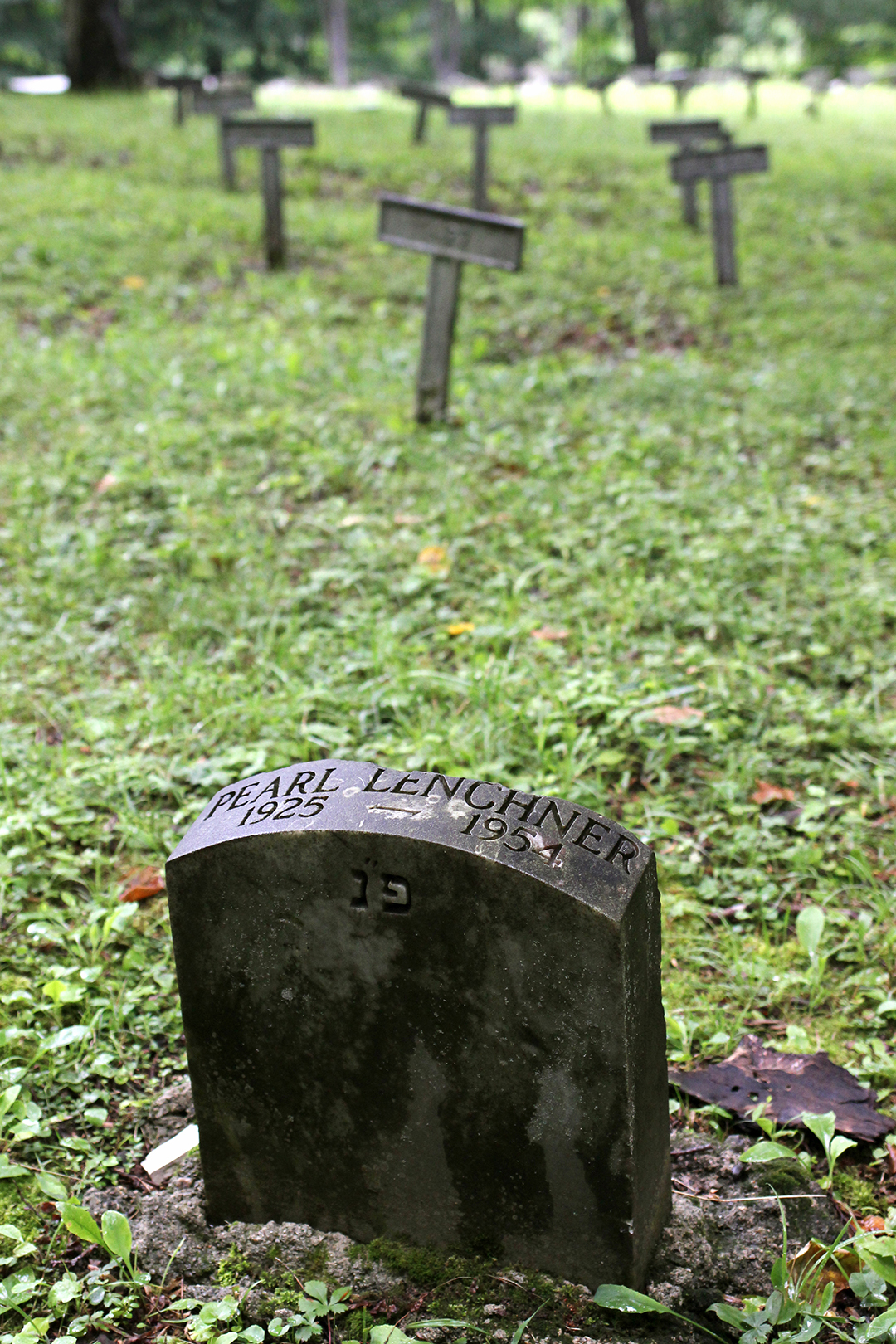
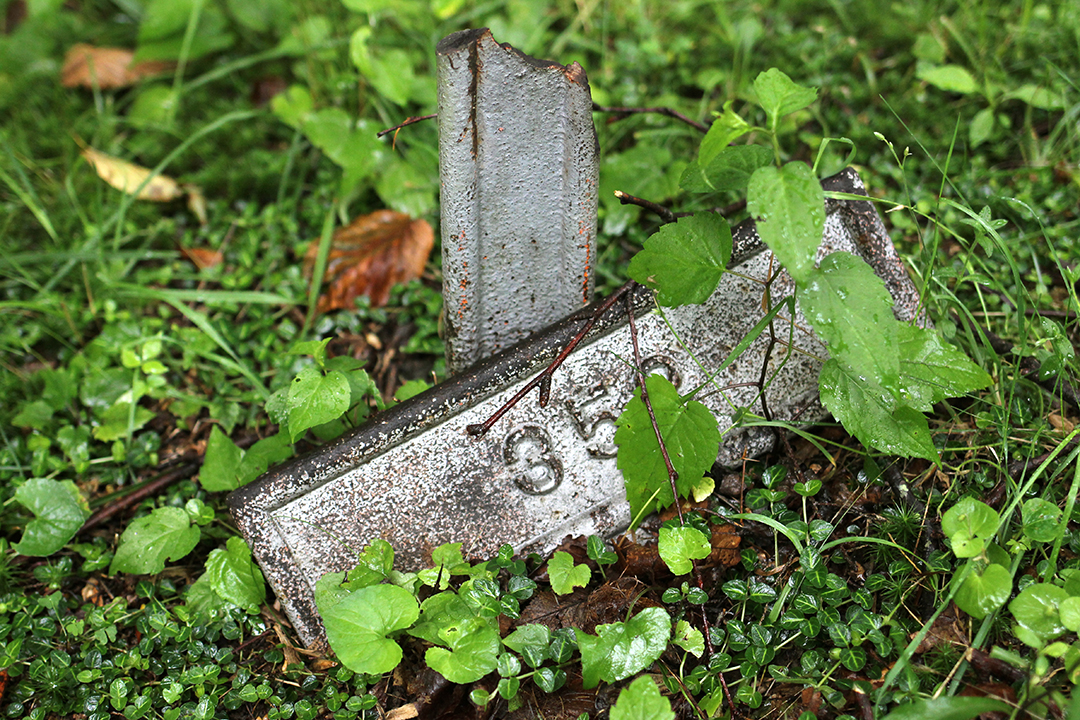

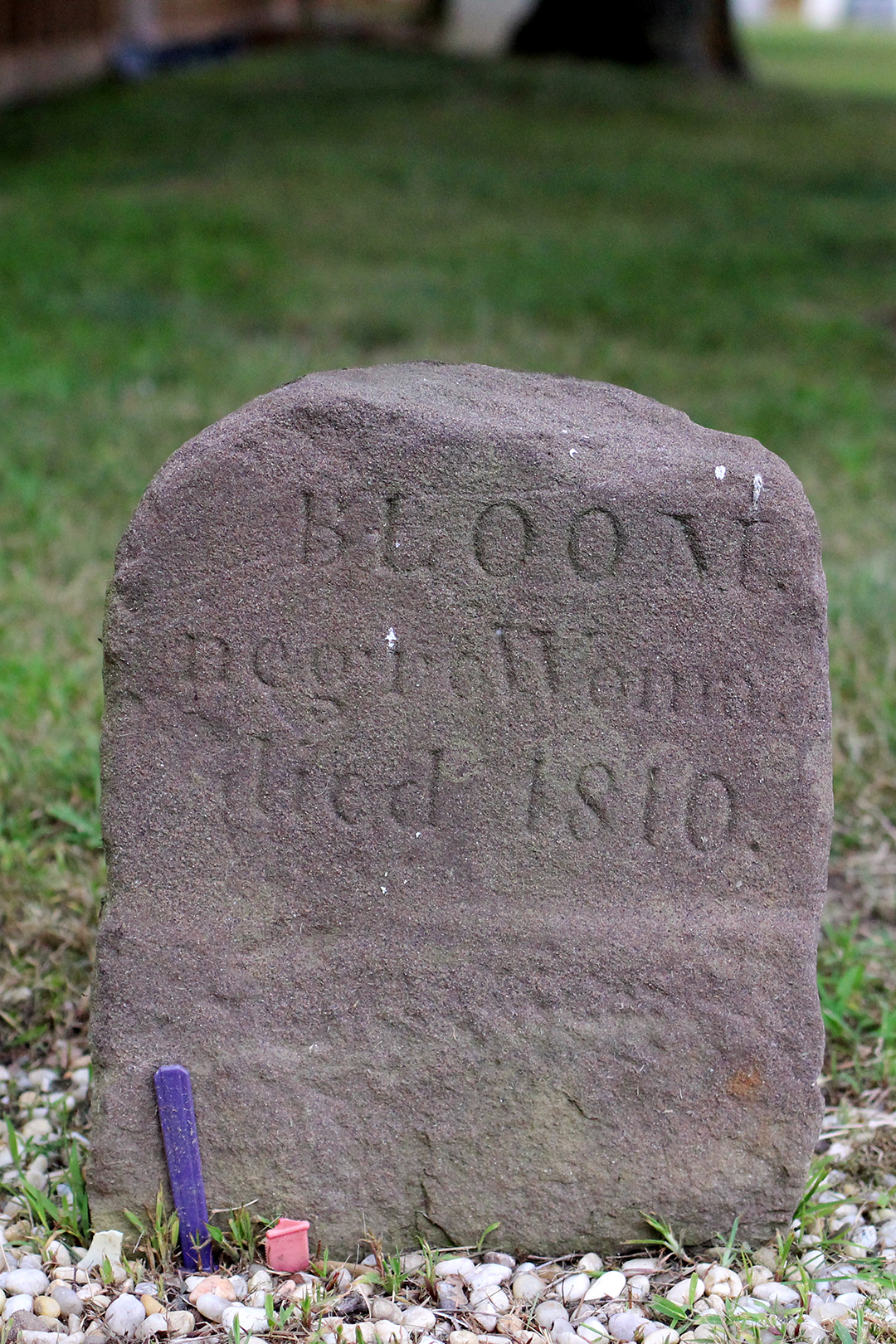
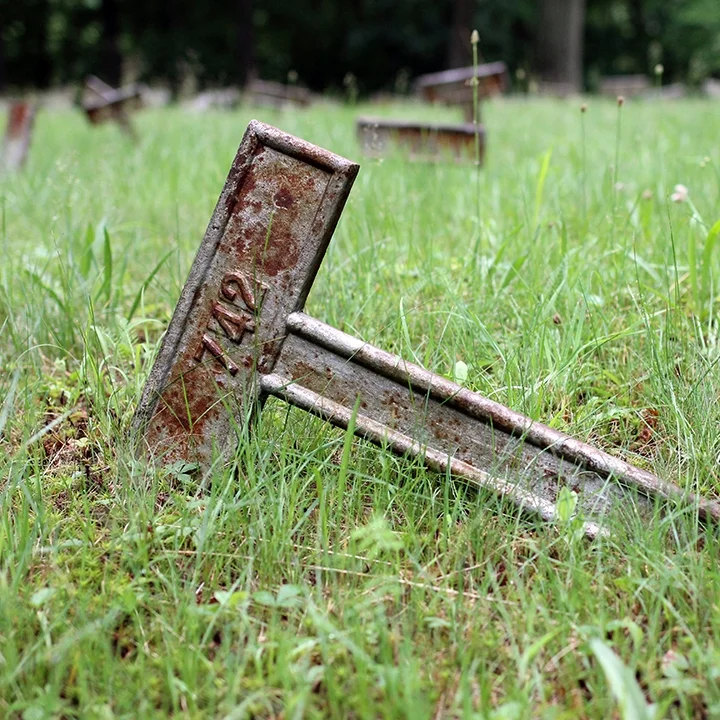
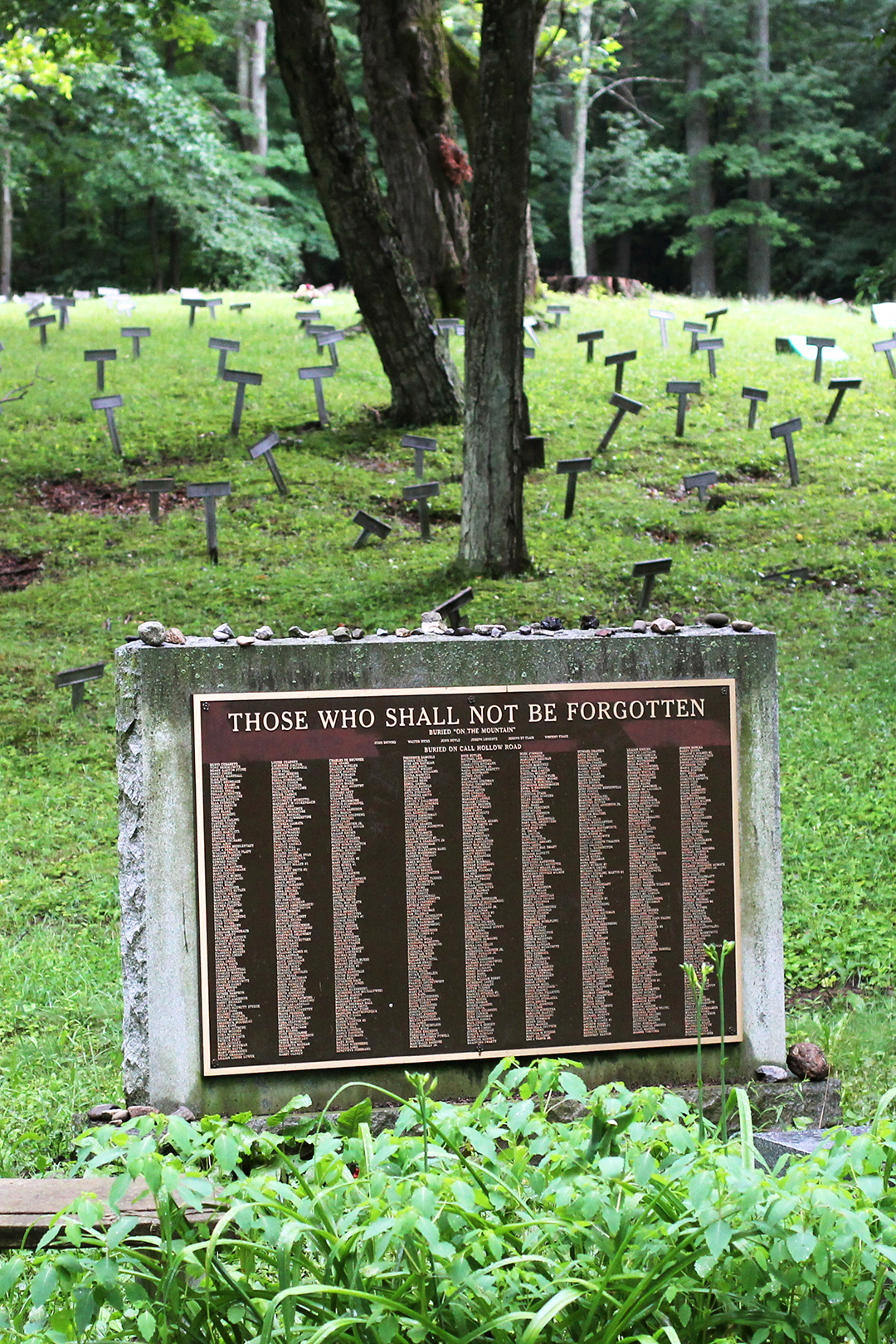
There's a small gravel clearing near the sign where you can park, and the cemetery is just a short walk through the path into the woods. This particular cemetery was used from 1914-1967 and while it contains a handful of traditional tombstones, most of the graves are marked with a simple, numbered metal marker. Names weren't used to assure the anonymity of the patients (or, in a lot of cases, their families), although a plaque has recently been added to include the names of those interred here—still not matched to their numbers but under the heading "Those Who Shall Not Be Forgotten."
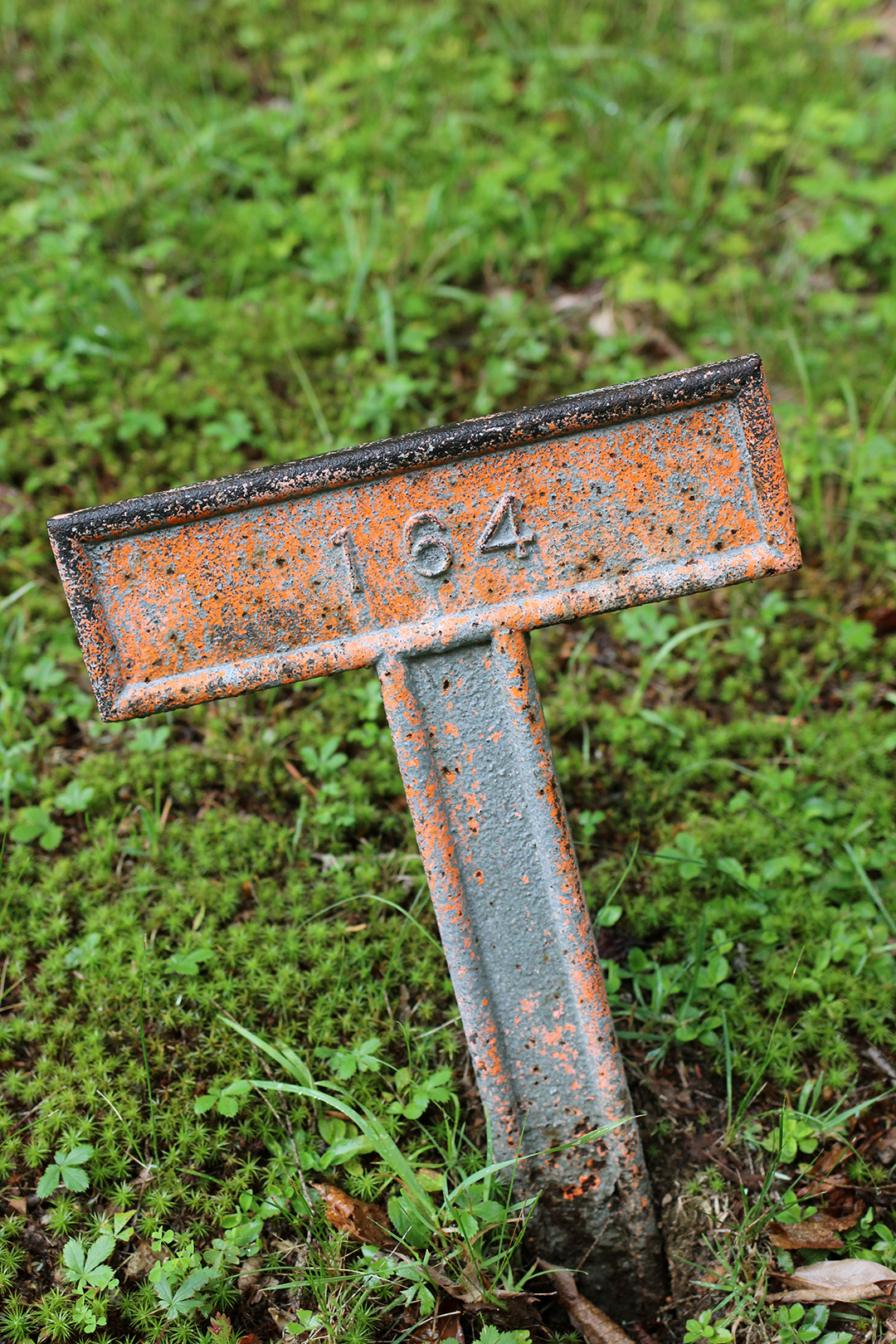
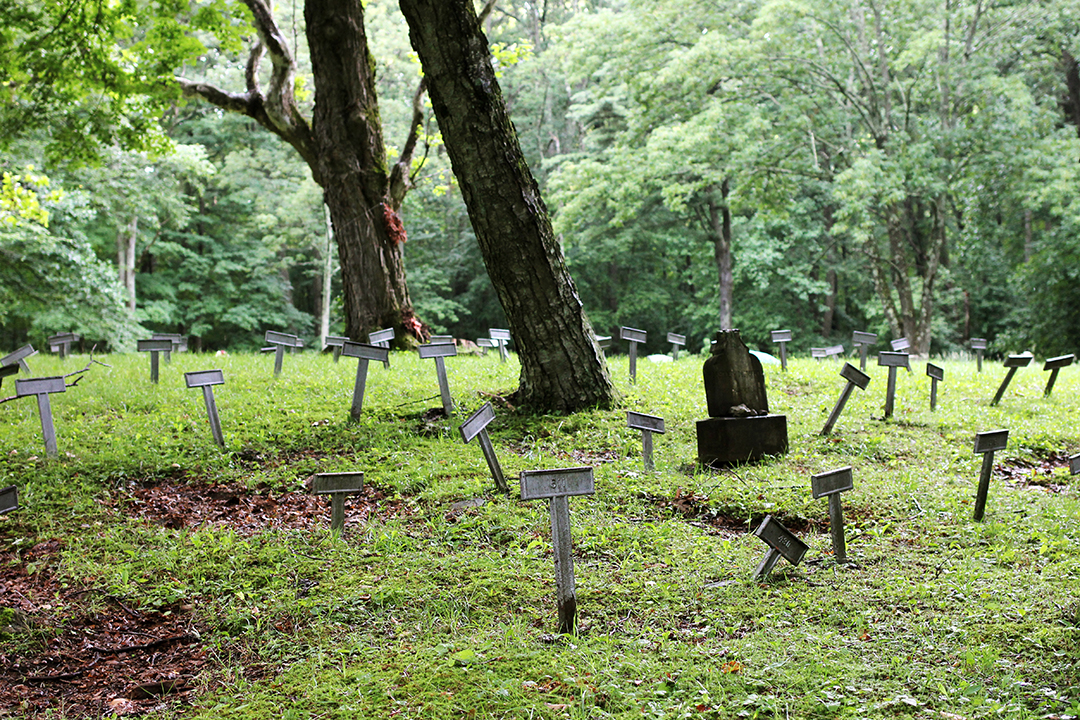

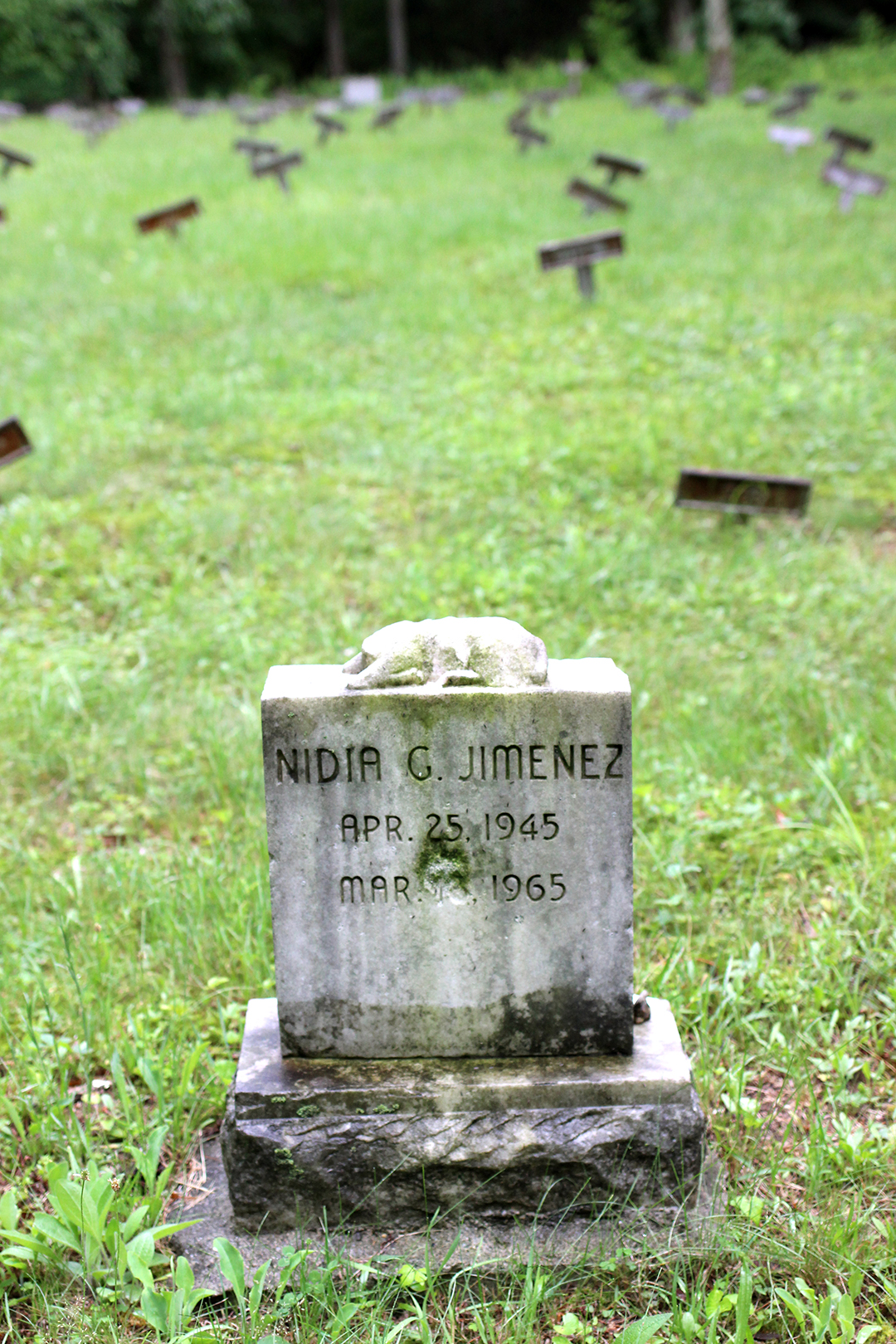

This was a cemetery unlike any I have visited before, which is a distinction I keep thinking I'll no longer be able to make—until I come across yet another unique way to handle a burial space. Seeing rows and rows of graves marked with nothing but a number is sad in a way that traditional cemeteries usually aren't and even the graves marked with tombstones are sobering when you realize that people didn't seem to live long lives at Letchworth.
Historic Jersey City & Harsimus Cemetery

After my first visit to the Historic Jersey City & Harsimus Cemetery, I'd been looking for a chance to go back. Not that I ever need a specific reason to visit a cemetery, but this particular one holds events quite frequently. Most recently they hosted the JC Oddities Flea Market and an oddities flea market in a historic, once-abandoned cemetery is pretty much my dream event so I was looking forward to it for weeks.
I was hoping that the oddities selection would be good, but most importantly cheaper than the over-priced Brooklyn events I've attended. Unfortunately that wasn't really the case—there were some interesting vendors with taxidermy, bones and vintage finds but I only ended up buying one thing (a milk glass bottle from the 1939 World's Fair).

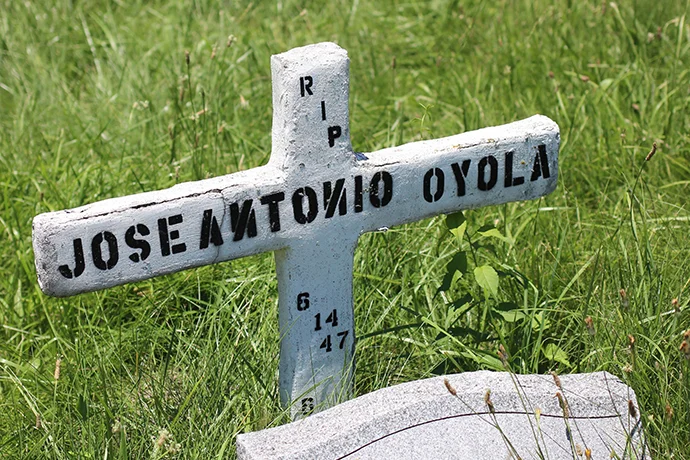
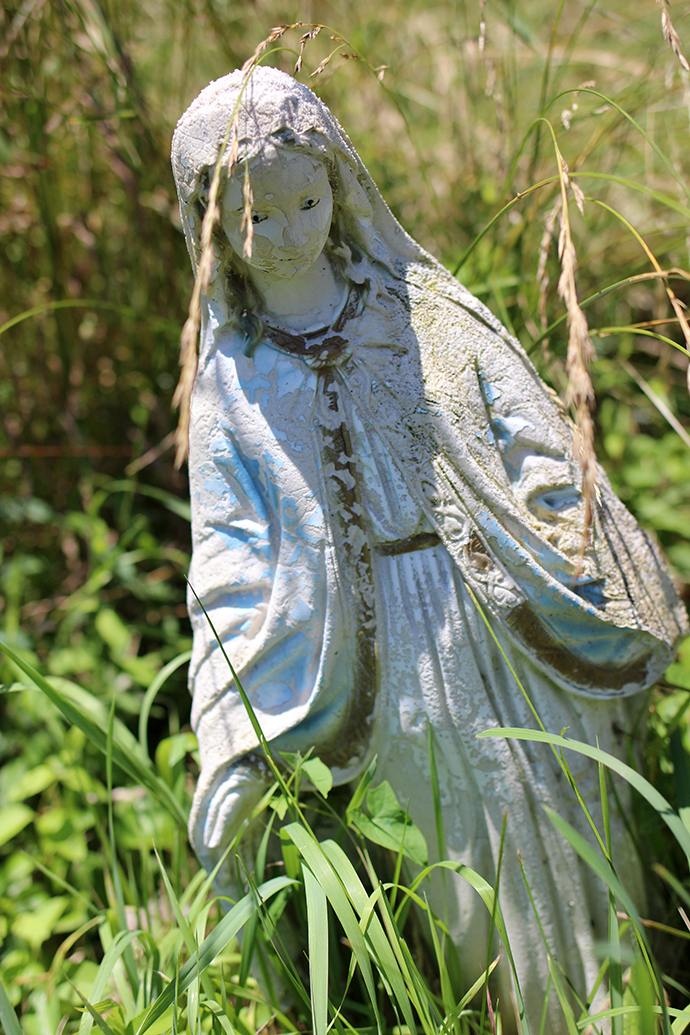
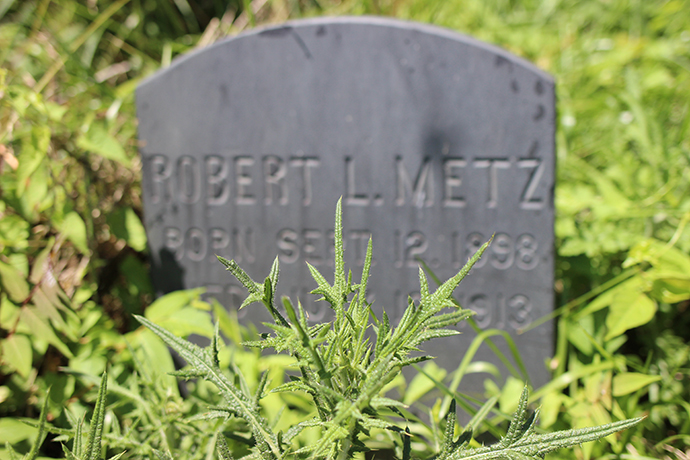
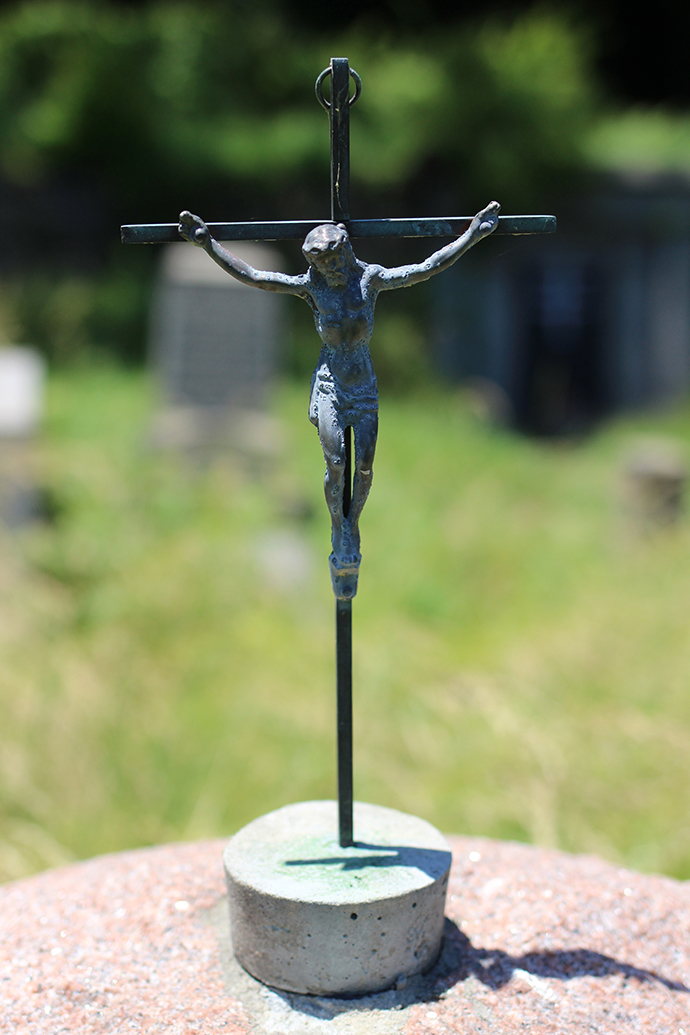

The main attraction ended up being the cemetery itself, and I was happy for the chance to explore its overgrown grounds again. The cemetery was established in 1829, but even before that it was the site of Revolutionary War skirmishes and a War of 1812 ammunition bunker. It was abandoned in 2008 but is now cared for by a group of volunteers, with proceeds from events going to the care and upkeep of the grounds.


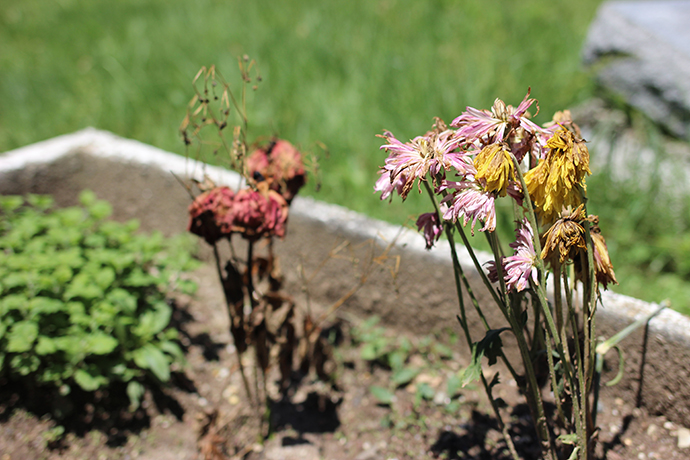
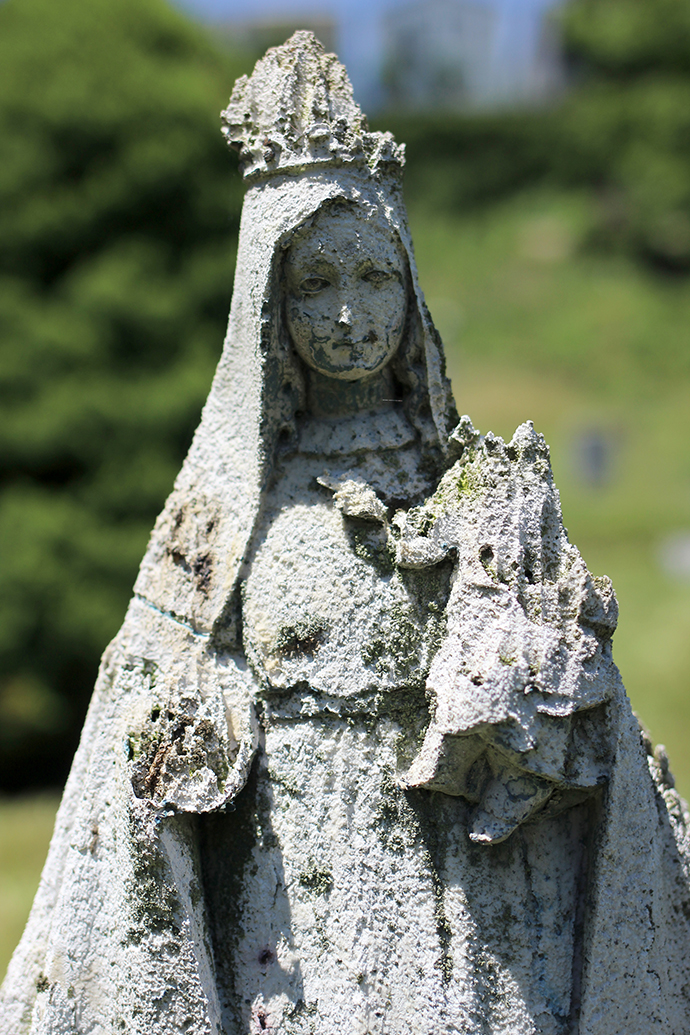
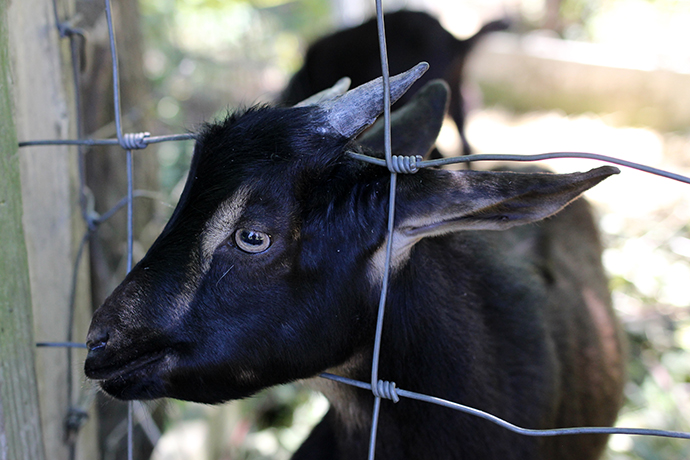
In addition to human volunteers, the cemetery is also home to several goats. When I first went they were roaming around, doing their part to keep the grass in check, but for events they're fenced in an area where you can pet and feed them (the dream life, if you ask me).


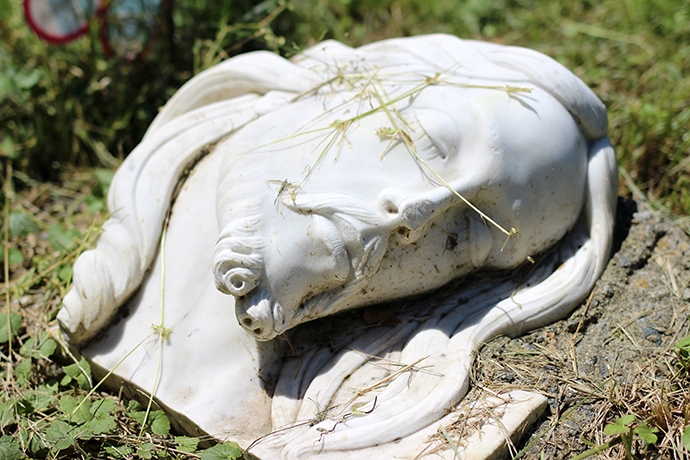
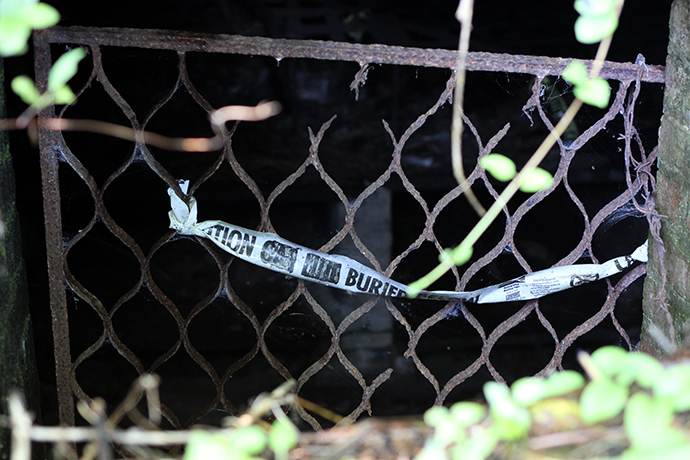
We had also been lured to this event with the promise of crypt tours, but unfortunately they were cancelled because it had rained heavily the night before and the crypt had flooded. Even still, for just $5 it was the perfect way to spend a sunny Saturday afternoon and support a worthy cause in the process.
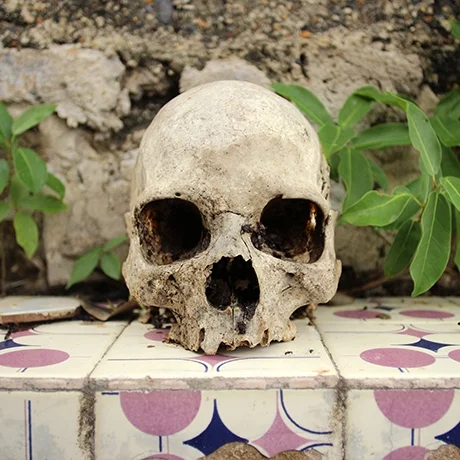
Cementerio de Santa Cruz

I don't know what was wrong with me, but I didn't research a single cemetery before we left for our recent South America trip. I didn't even realize my egregious error until we were already leaving Cusco. On our bus ride to the beginning of the Inca Trail, I was looking at all of the small towns passing by and it hit me—I bet the cemeteries are great here (a totally normal thought to strike me). Almost as soon as I said it out loud, we actually passed a cemetery and although our bus was speeding along the rickety road, I had just enough time to give it a quick, wistful glance. Later in the day, we passed a smaller cemetery at the beginning of the trail but I was still hoping that we'd find time in our trip to properly explore a burial ground.


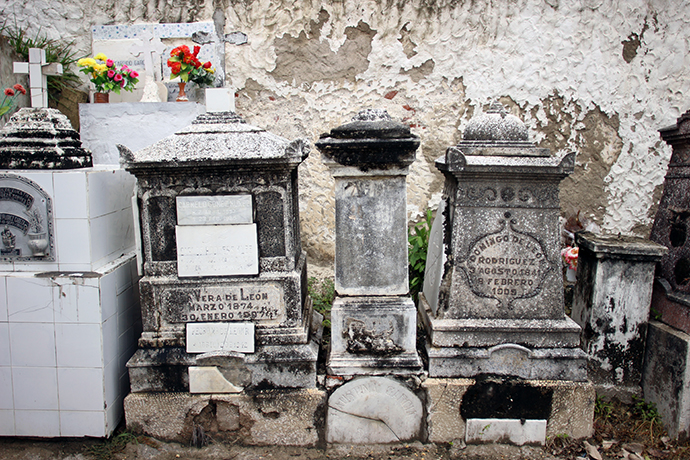
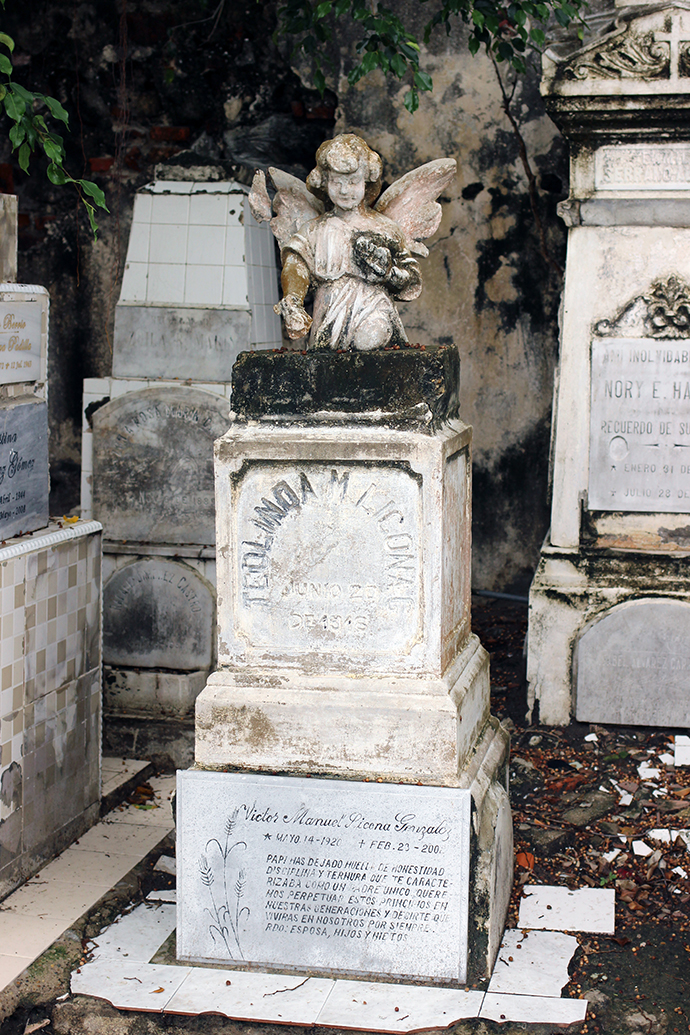
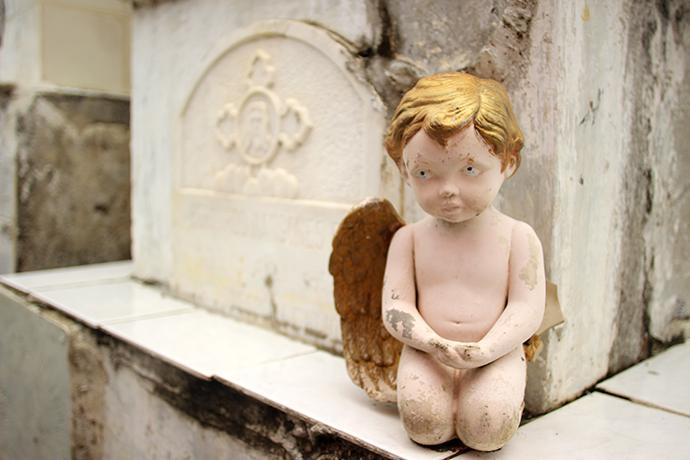
Determined to remedy my nearly cemetery-less vacation, finding one was first on my agenda when we arrived in Cartagena, Colombia. I had expected Cartagena to have a vibe similar to New Orleans, and I just instinctively knew that its cemeteries would be amazing. It didn't take me long to find one—an easy, ten-minute walk from our hotel—and on our first full day it was first on the agenda.
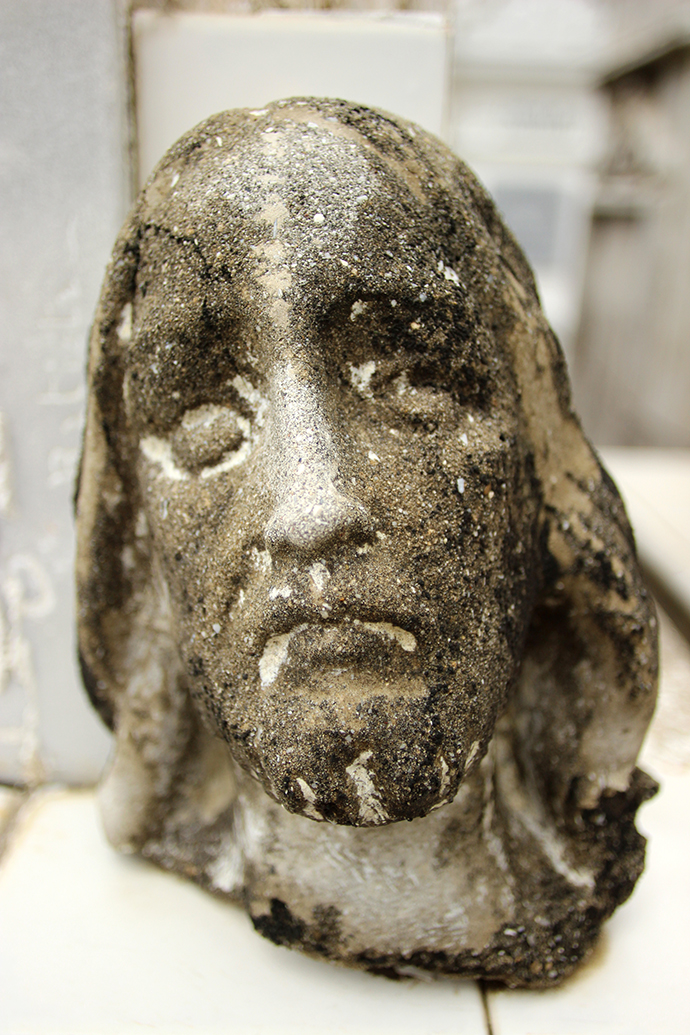
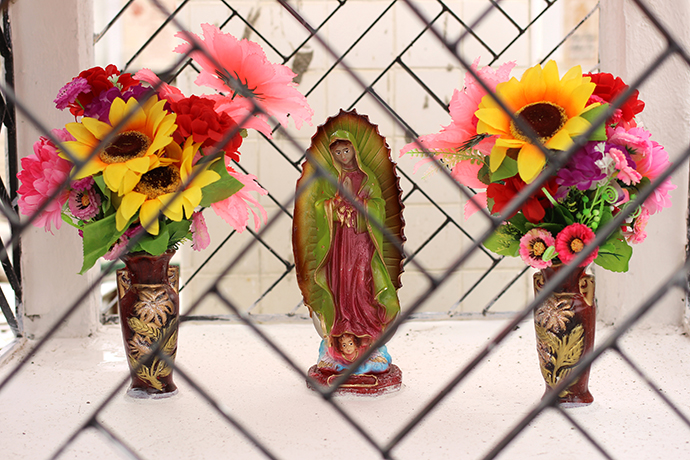
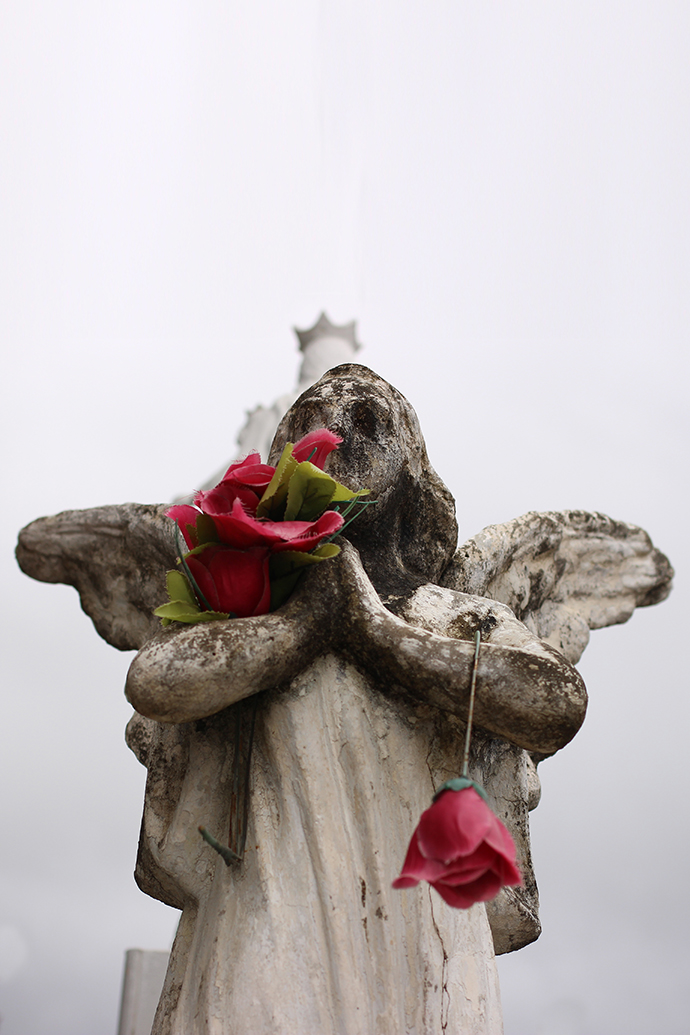
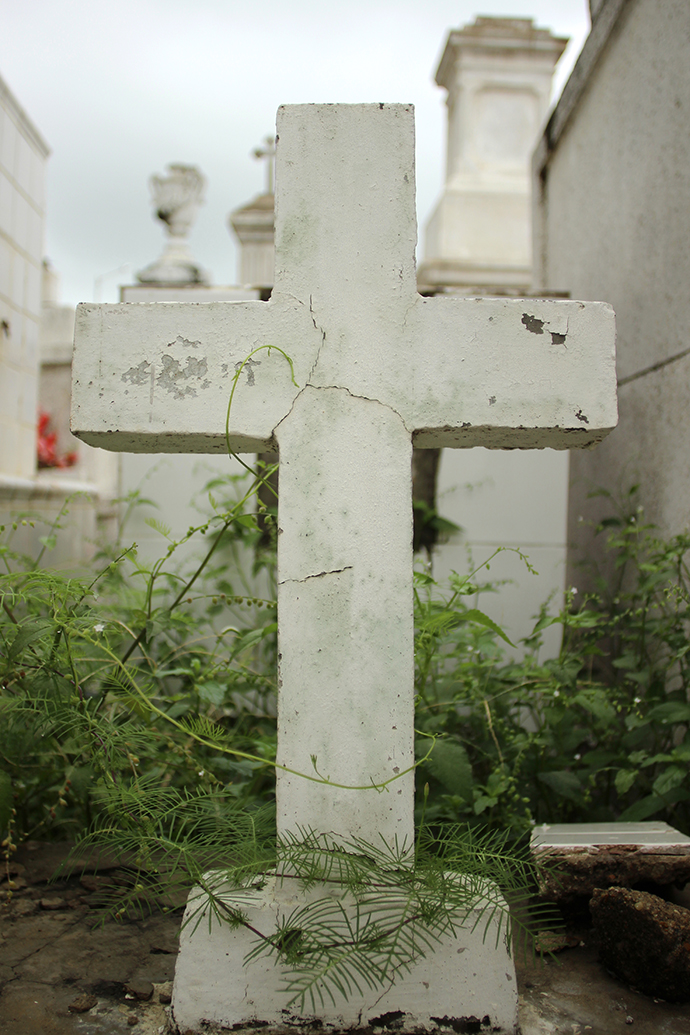

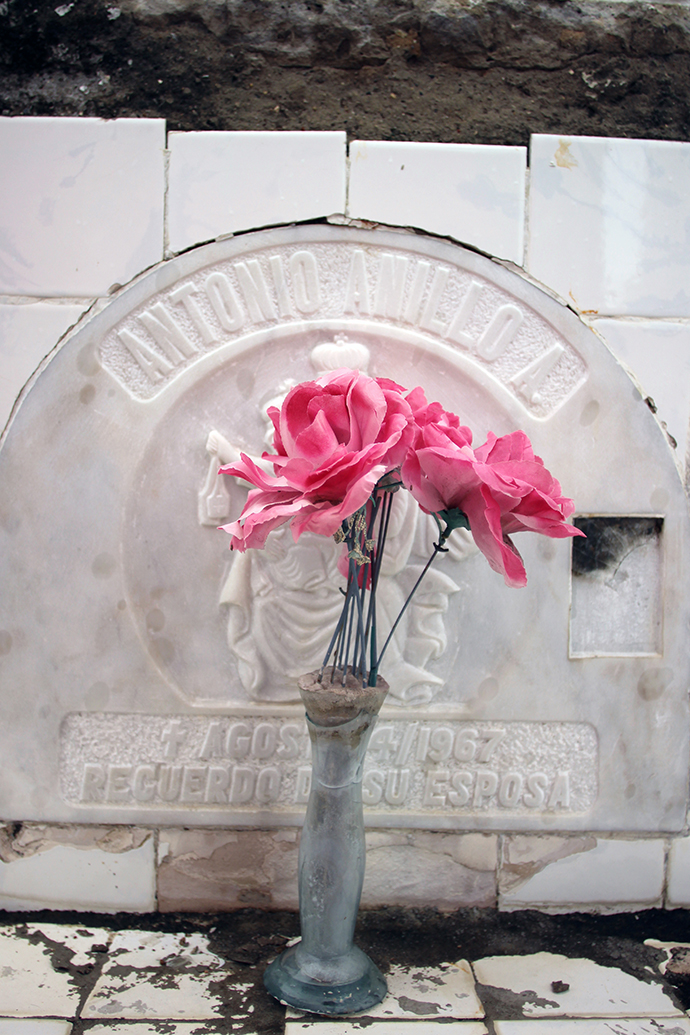
The Cementerio de Santa Cruz is located on Manga, an island just outside of the walled city. I can't find a ton of information on the cemetery, but it's definitely old—probably from around the 1700s—and in disrepair but still very much in use. I had read that it was abandoned, but on the day that we visited there was a security guard sitting just inside of the entrance and several people tending to gravesites.

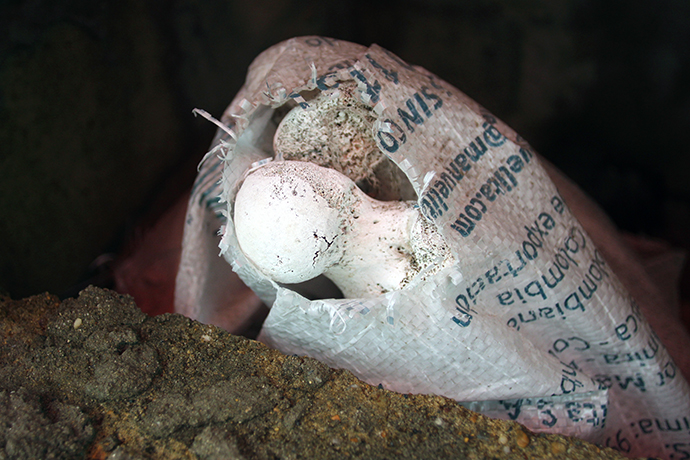
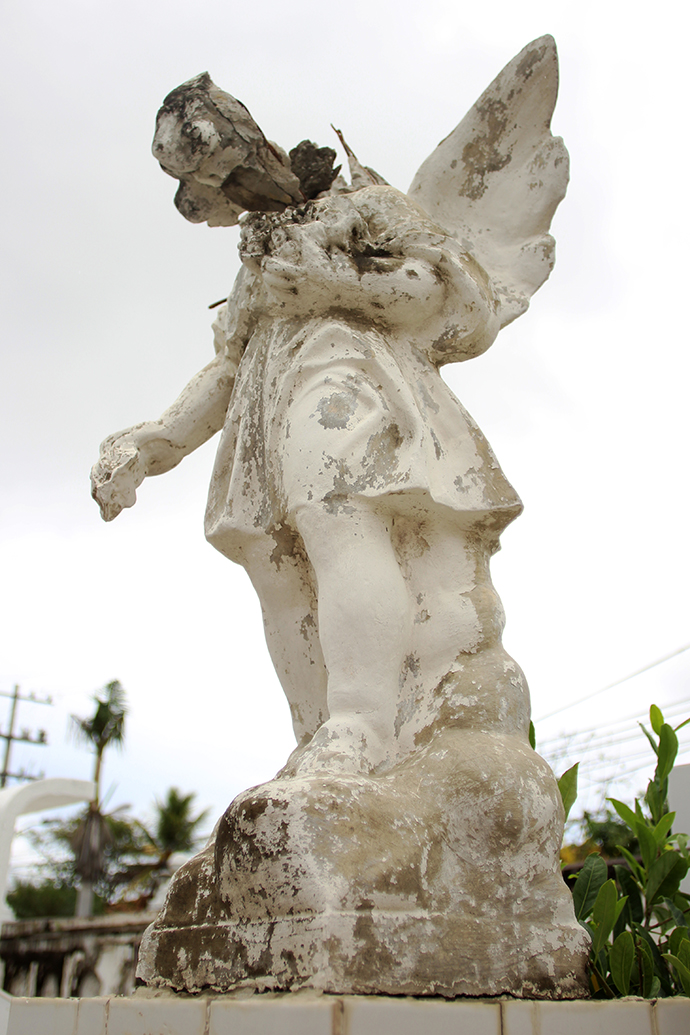
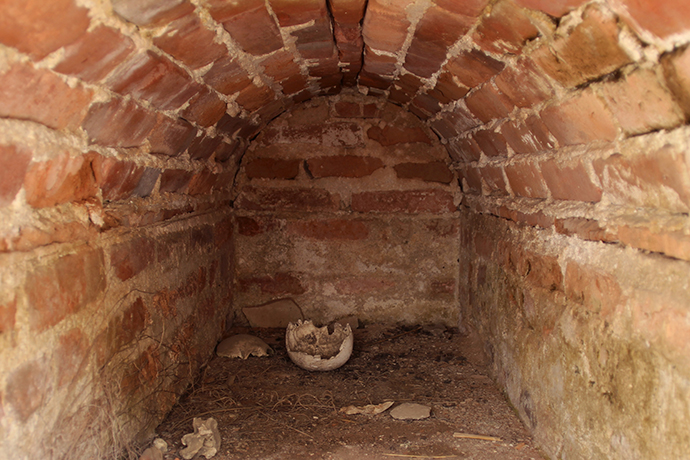
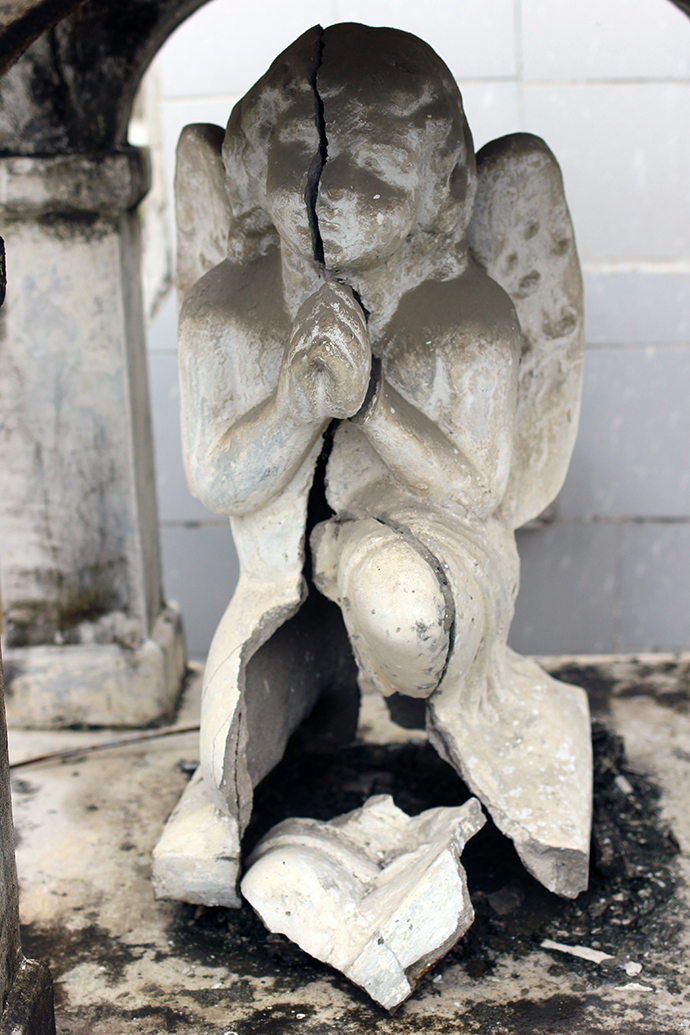
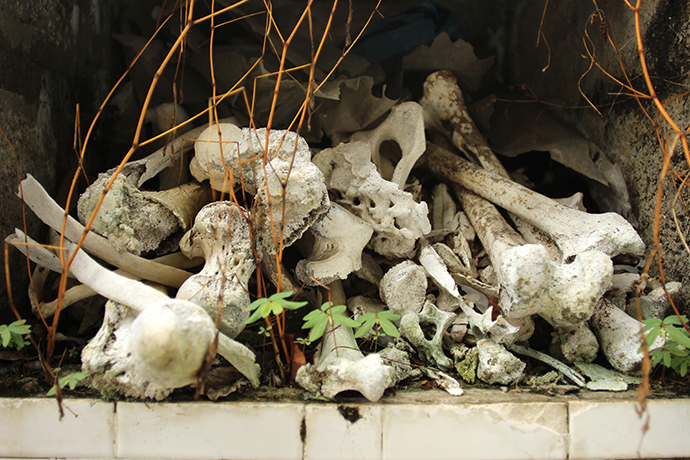


Most of the stones and vaults are damaged, and I'm not sure if it's a result of weather, time or vandalism (or all three), but the cemetery has definitely seen better days. I even got the sense that maybe older vaults are now being reused for new interments, and many of the niches are broken open and empty. I knew we would probably see some exposed human remains, but I was not prepared for just how many bones we saw. We even saw a few skulls—complete and partial—which was definitely a cemetery first for both of us.


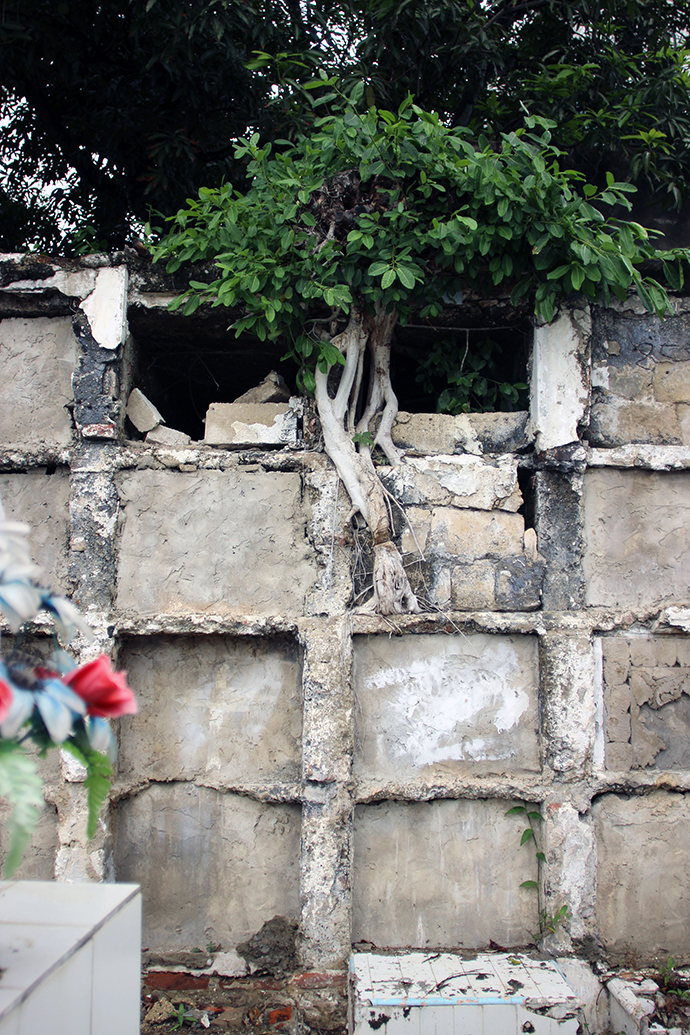
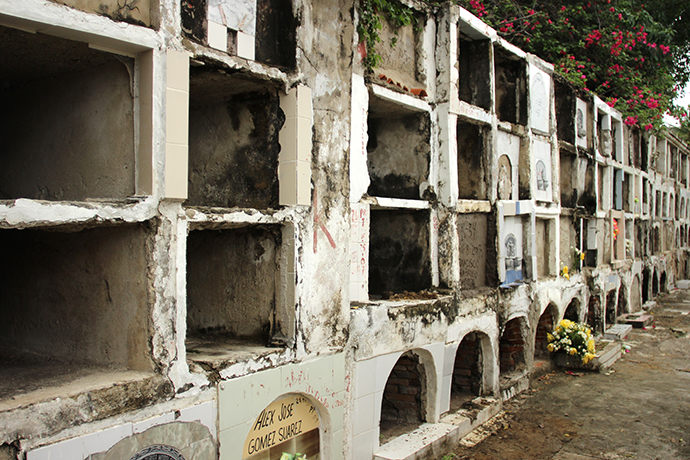
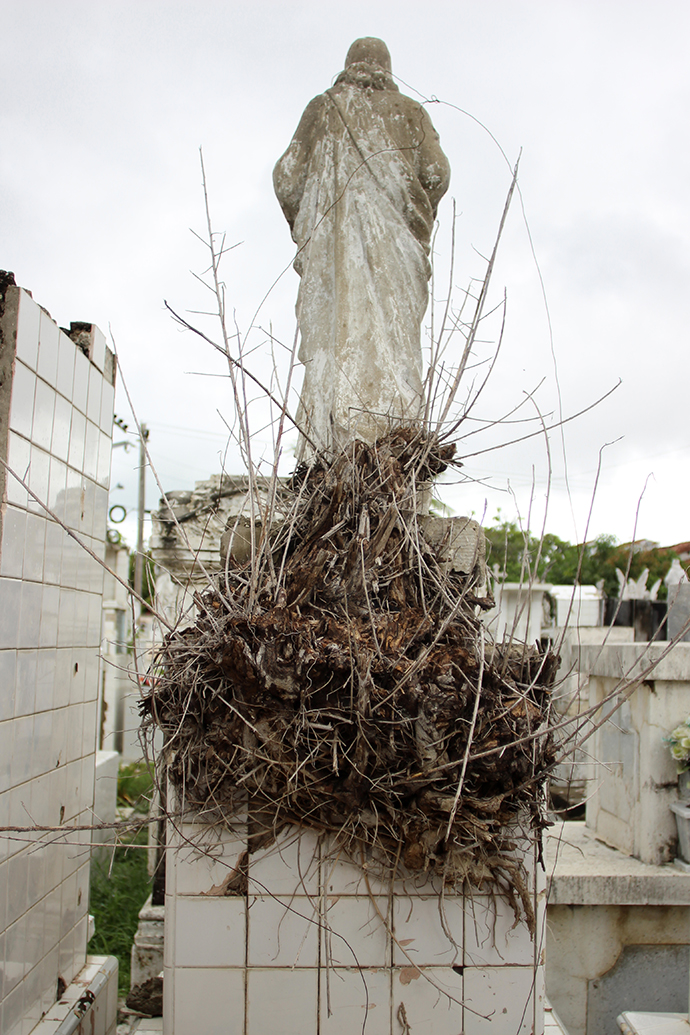
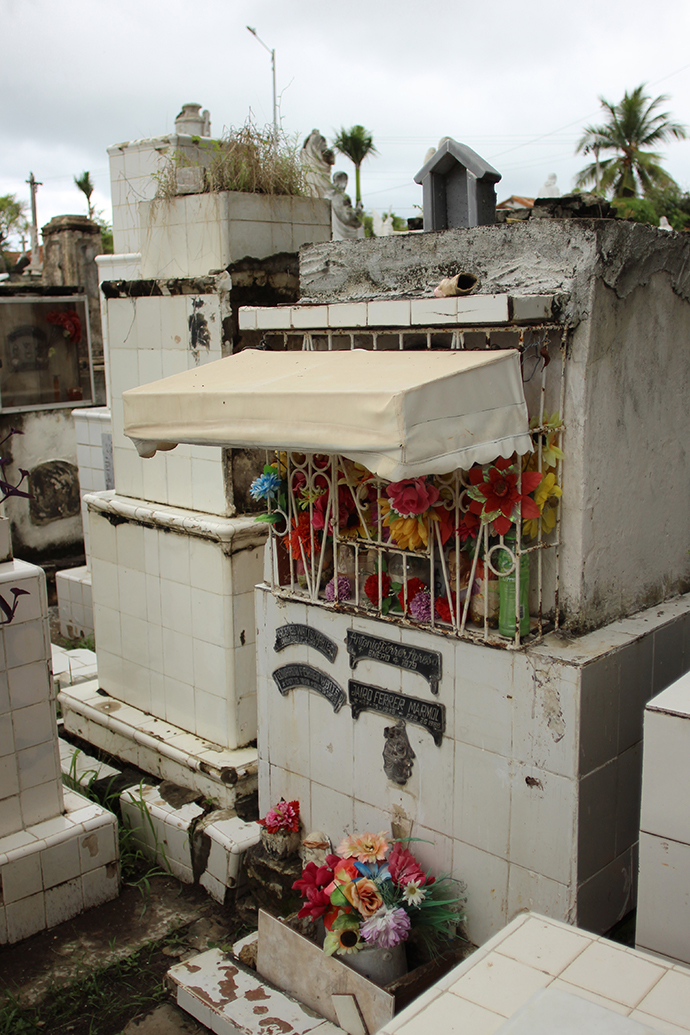
The above-ground tombs and the style of the stones in general definitely reminded me of the cemeteries we visited in New Orleans. There were statues and offerings and tons of brightly colored fake flowers. One stone even had a miniature awning on it to protect all of its flowers and trinkets. I probably say this a lot, but this was definitely one of the best cemeteries I've ever visited—it may not be on anyone's "wonders of the world" list, but it was a trip highlight for sure.
St. Raymond's Portraits

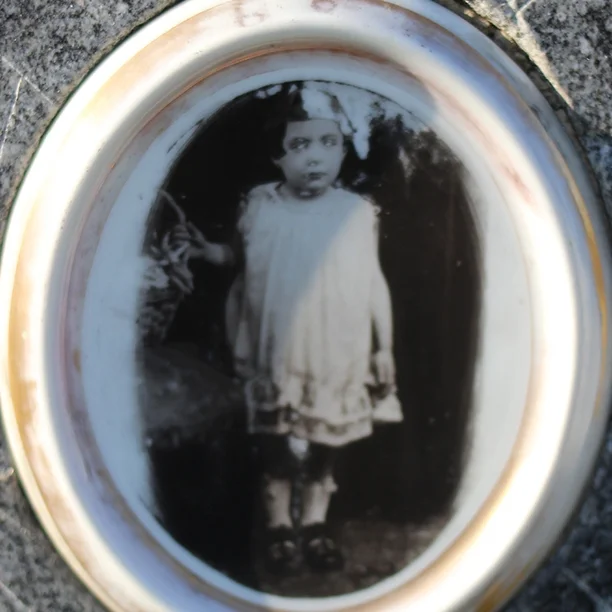
I've talked about ceramic cemetery portraiture before—at St. Michael's and Bideawee Pet Cemetery— and some of the best I've seen yet was at St. Raymond's cemetery in the Bronx. I went to St. Raymond's last October searching for the final resting place of Mary Mallon (aka Typhoid Mary), and because I had such a hard time finding her, I saw a lot along the way.
For the most part, I'm able to explore cemeteries without thinking too deeply about the actual people buried beneath my feet. I don't mean this to sound callous, but cemeteries can be intensely sad and dark places—I'd never make it though one if I stopped to mourn every individual life. I also tend to avoid newer graves since older ones interest me more, aesthetically and historically, and time helps to further sever any connection I would feel to the deceased. Ceramic portraits, however, make it impossible for me to view with detachment.


I noticed that St. Raymond's had a large number of ceramic portraits, and I wonder what it is about a cemetery that determines that—St. Raymond's is a Roman Catholic cemetery, while St. Michael's is open to all faiths. Most of these portraits date from the early 1900s—the height of their popularity—when photography was still expensive and labor intensive. A lot of the photos show people in their happiest moments, in the prime of their life or during a celebratory occasion. Wedding photos are pretty common, especially for women who are frequently referred to on their headstones by their relationship to the men in their lives (mother, sister, wife).


Something the graphic designer in me hadn't noticed until St. Raymond's, is the composite portrait. Before computers and photoshop, people still had a need to combine two or more photographs into one. Some of them are more convincing than others, but at the time it must have been a pretty neat trick. Maybe, in a prior life, I worked as a ceramic portraiture "photoshop" artist?


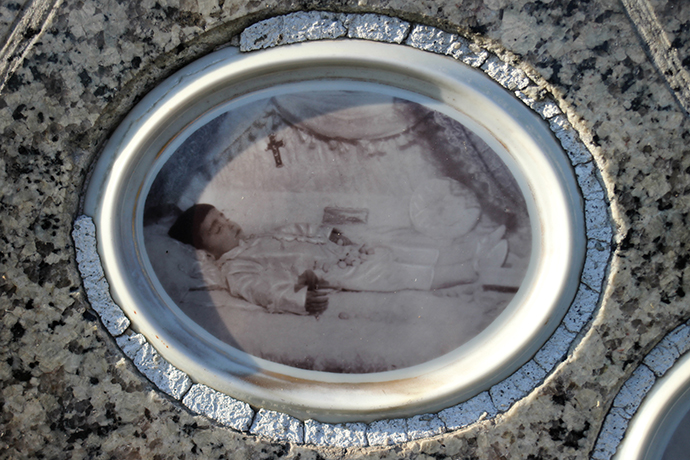
The most unnerving portraits are the ones of children. Everyone who has ever seen a horror movie (or met a real, live child) know that children are creepy. They seem to see and know things that we don't, and have senses that we lose as we grow and gain rational thought. Post-mortem photography was so popular, especially with children, in this era because sometimes that would be the only photograph a family had of a child. A lot of these photos show kids just being kids—in a soapbox car, holding a puppy, reading—but I did find at least one obviously taken post-mortem, and it's definitely one of the most memorable and objectively creepy things I've seen in my cemetery explorations thus far.
Green-Wood Cemetery: Spring
Last Saturday it rained all day here in New York. I'm not exaggerating when I say all day—it may have even rained continuously for more than 24 hours. I love seasons and I try not to get grumpy about the weather, but rain in the city is the absolute worst. I will take extreme dog-mouth heat and below-freezing blizzard conditions over a mild spring rain any day. Part of this disdain probably comes from my inability to find a proper rain shoe, but in a city where you're forced to walk outside, rain basically ruins everything. Since I did absolutely nothing on Saturday, I was up early on Sunday, eager to get outside and do something—anything—before the rain was supposed to start up again in the afternoon.
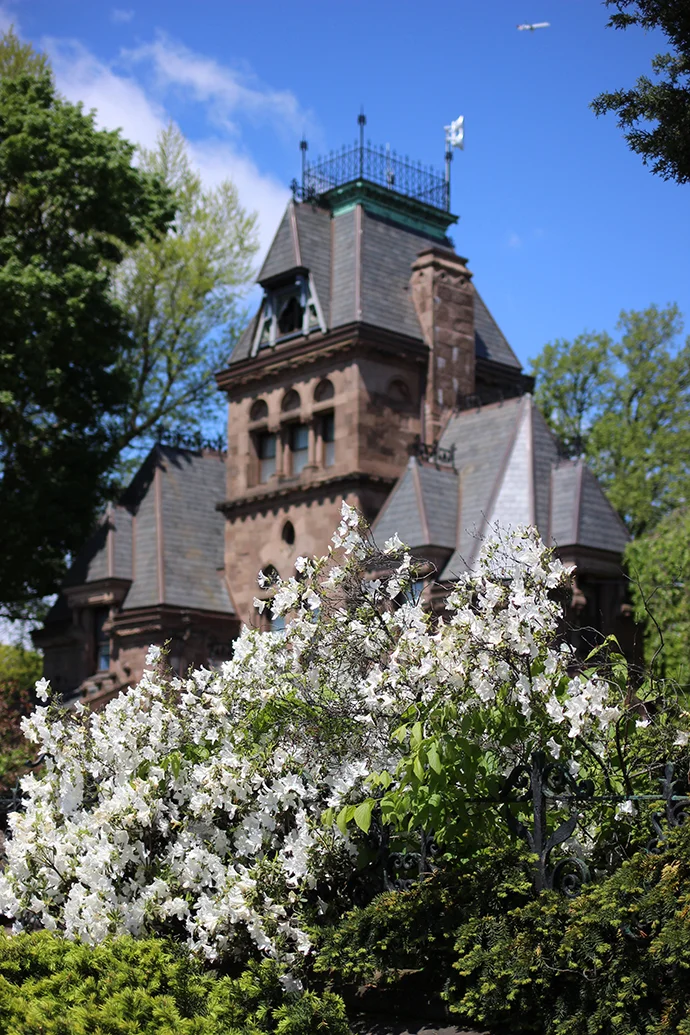
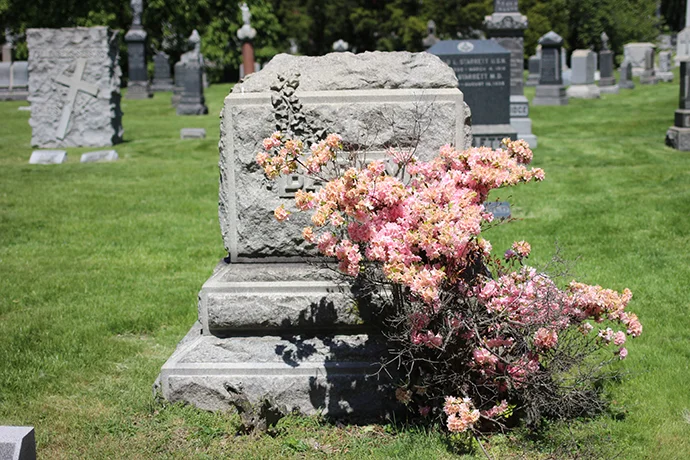
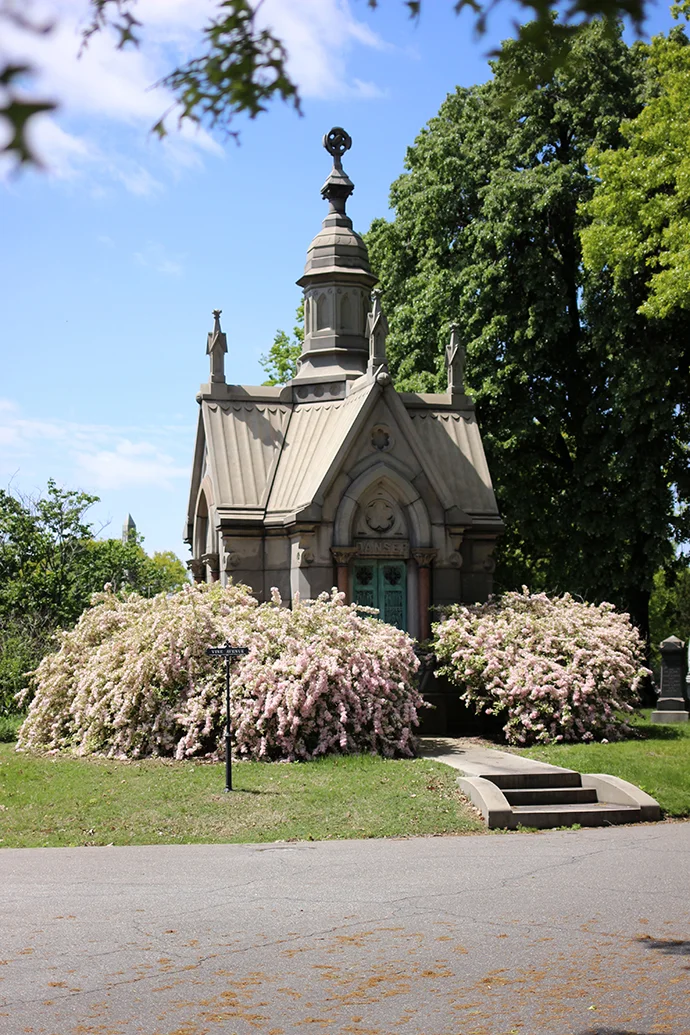
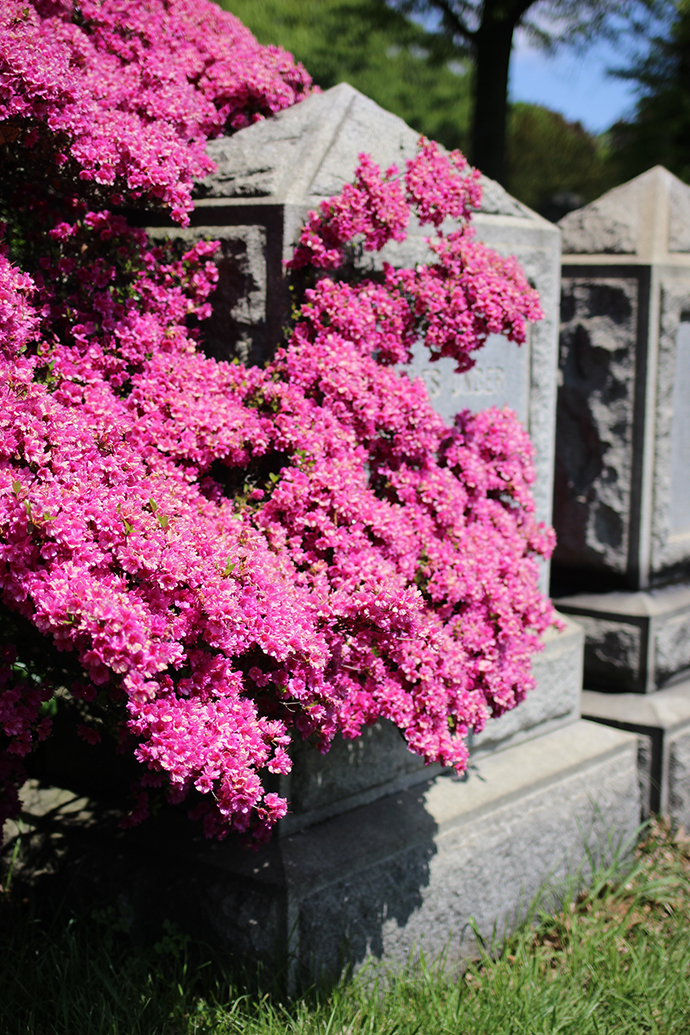
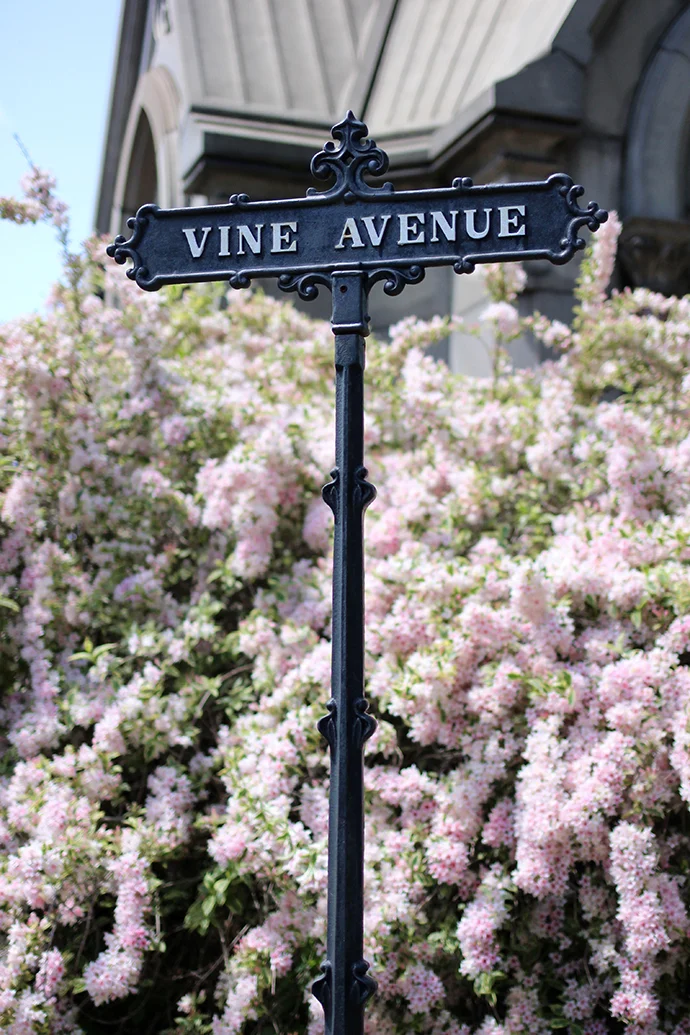
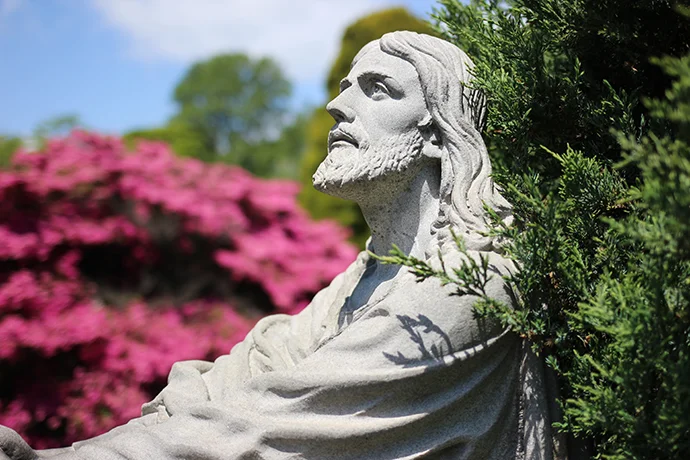
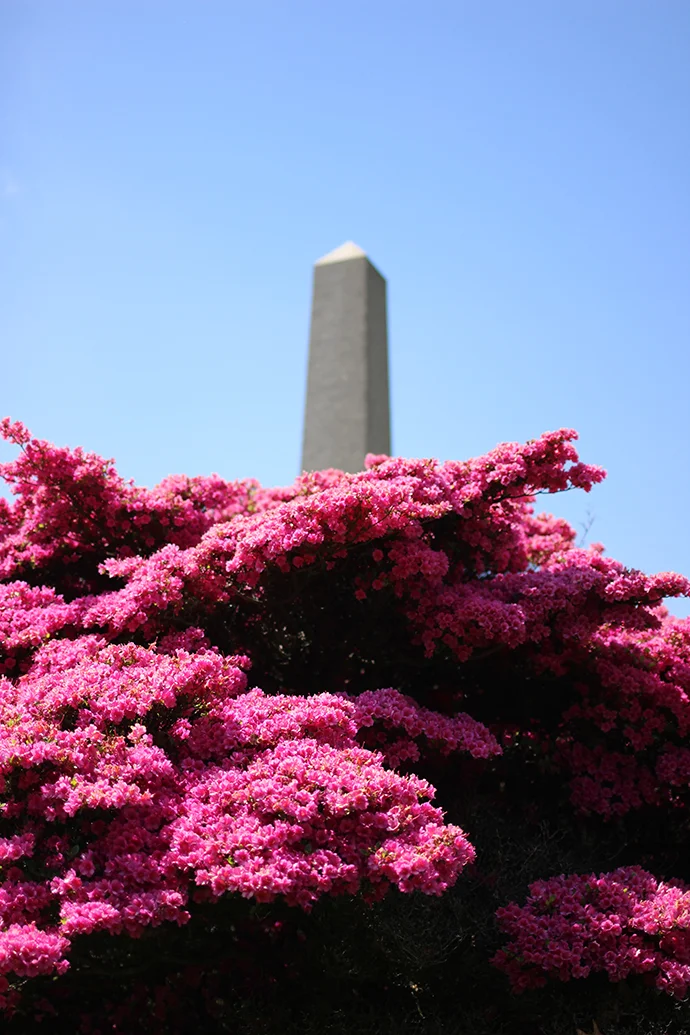
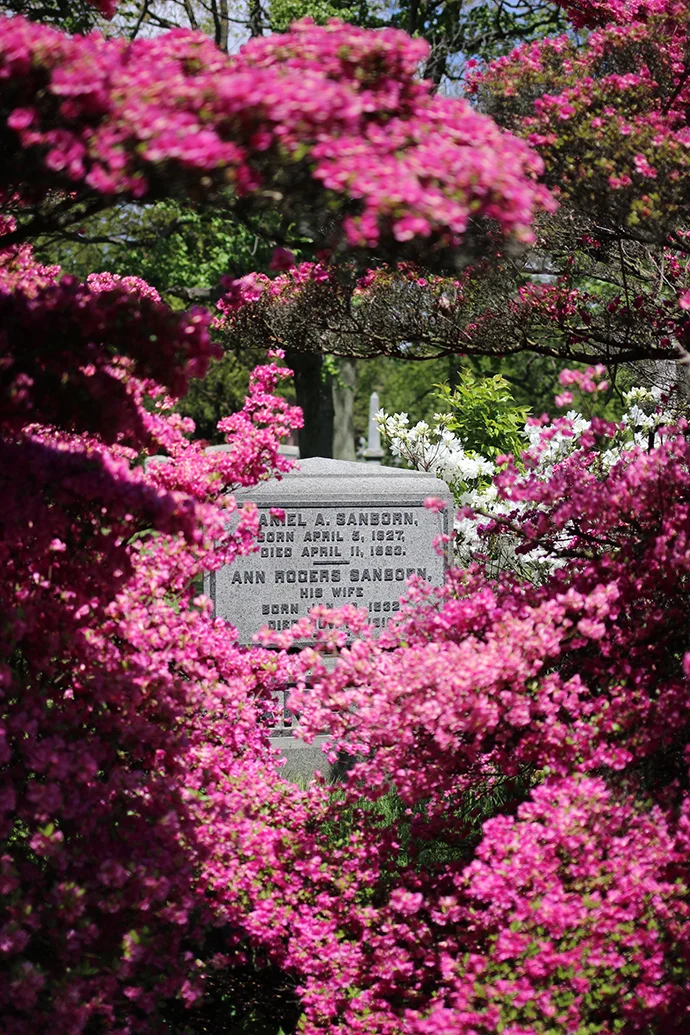
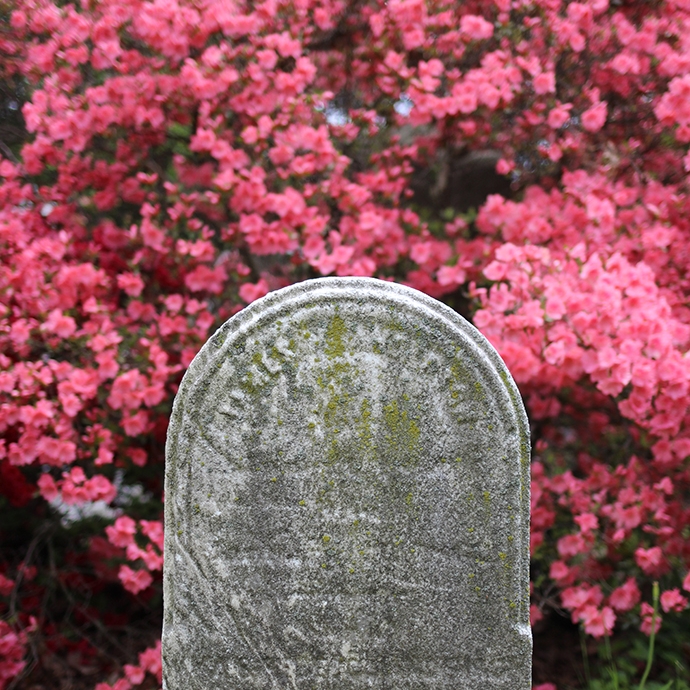
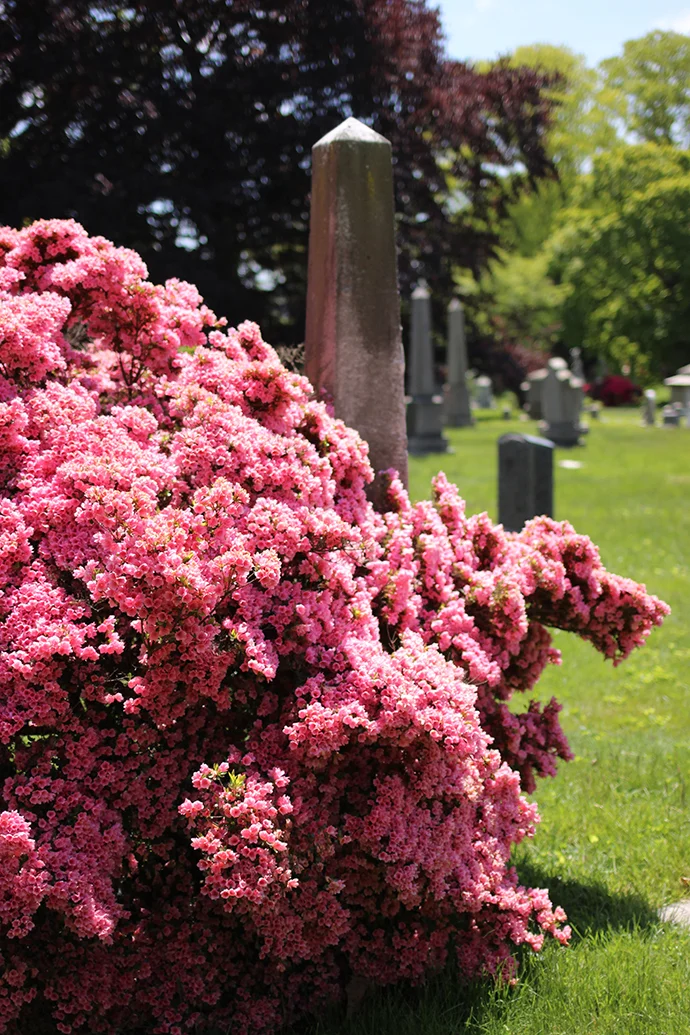
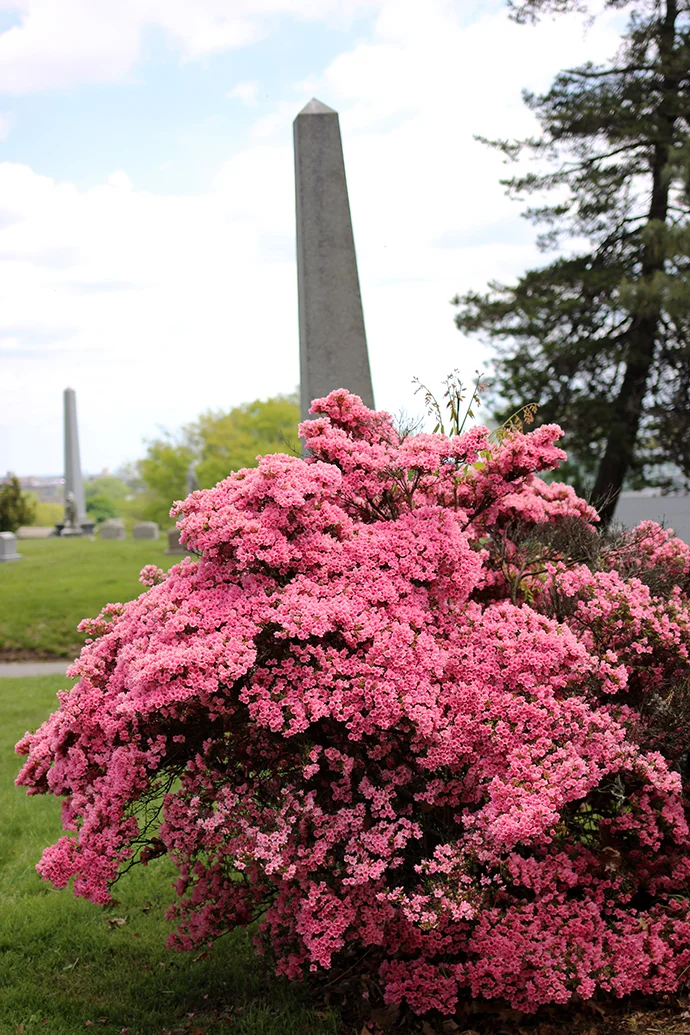
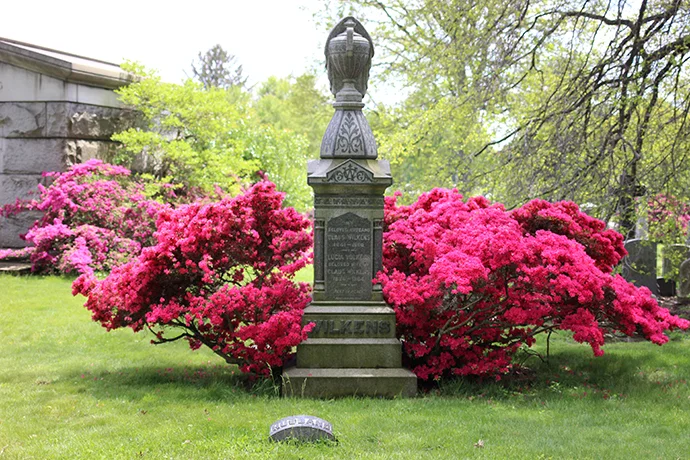
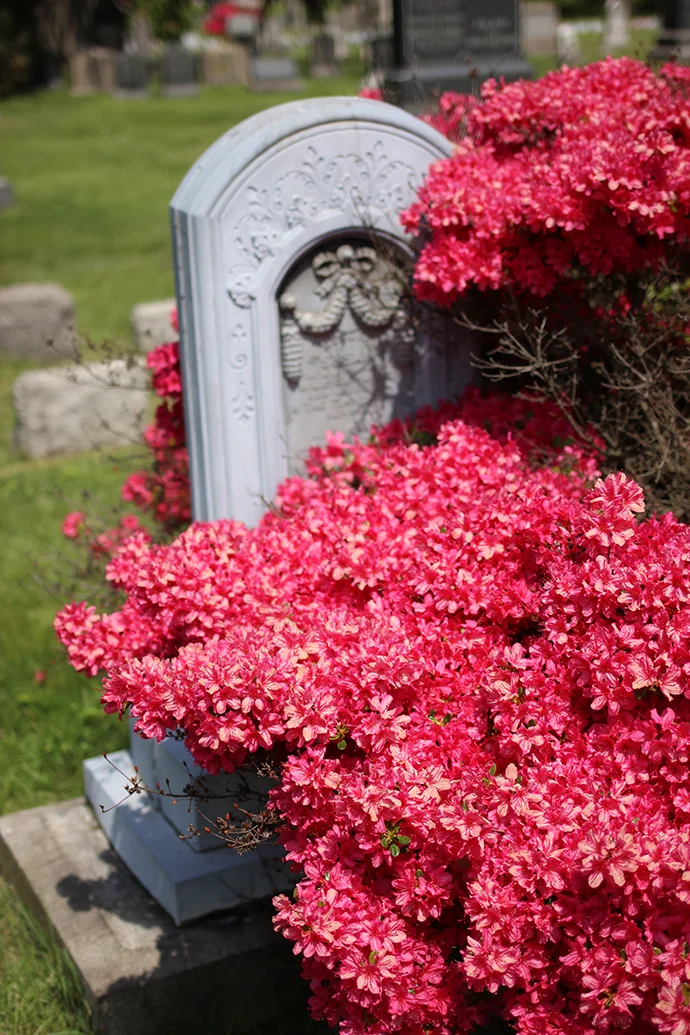
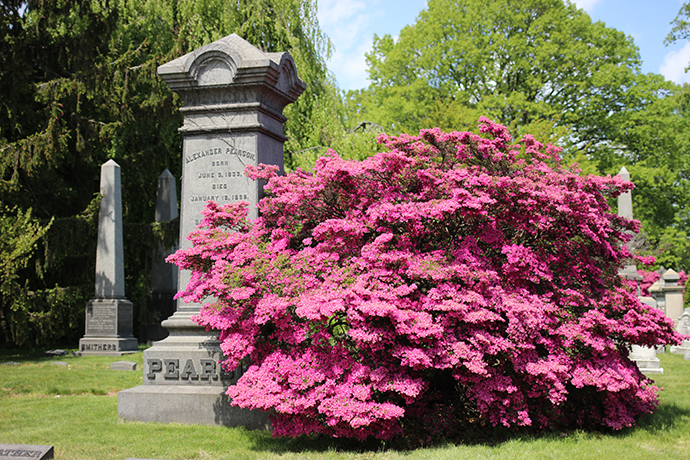
David lives two blocks from Green-Wood Cemetery, so we headed over there to check out the spring blooms. I became enamored with the bright, beautiful azaleas at Green-Wood last spring, and I was happy to be able to catch them again this year. A few of the bushes were already past their peak, but most were spectacularly full and the contrast of the bright flowers with the dark, heavy stones and statues was so fun to photograph.
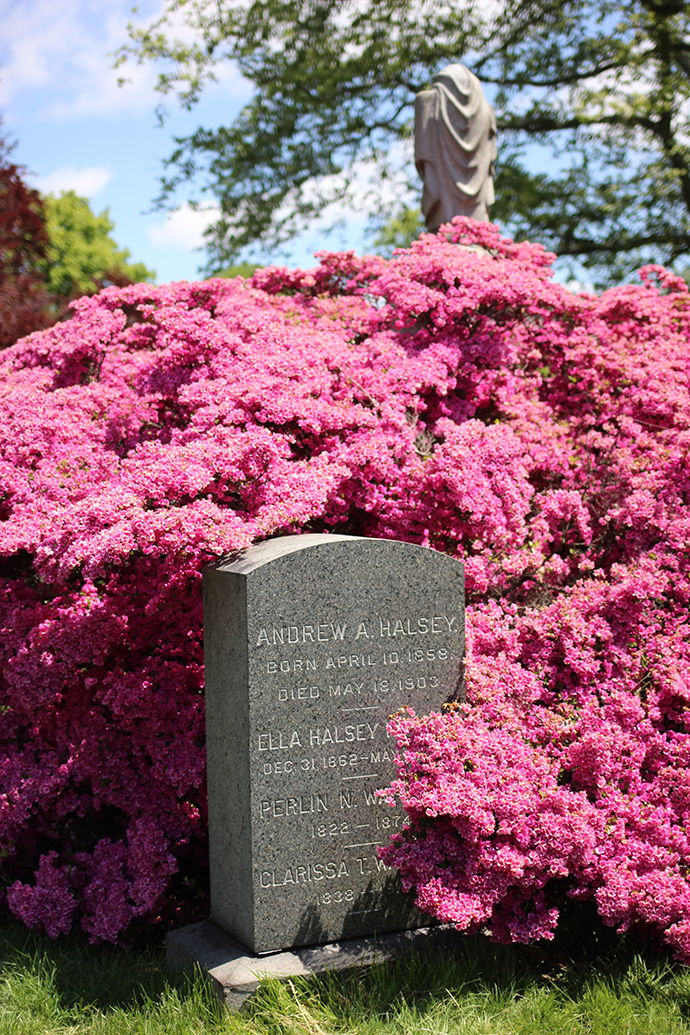
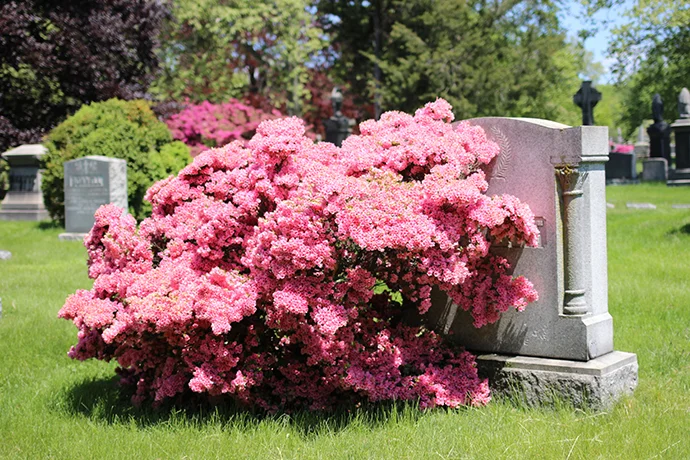
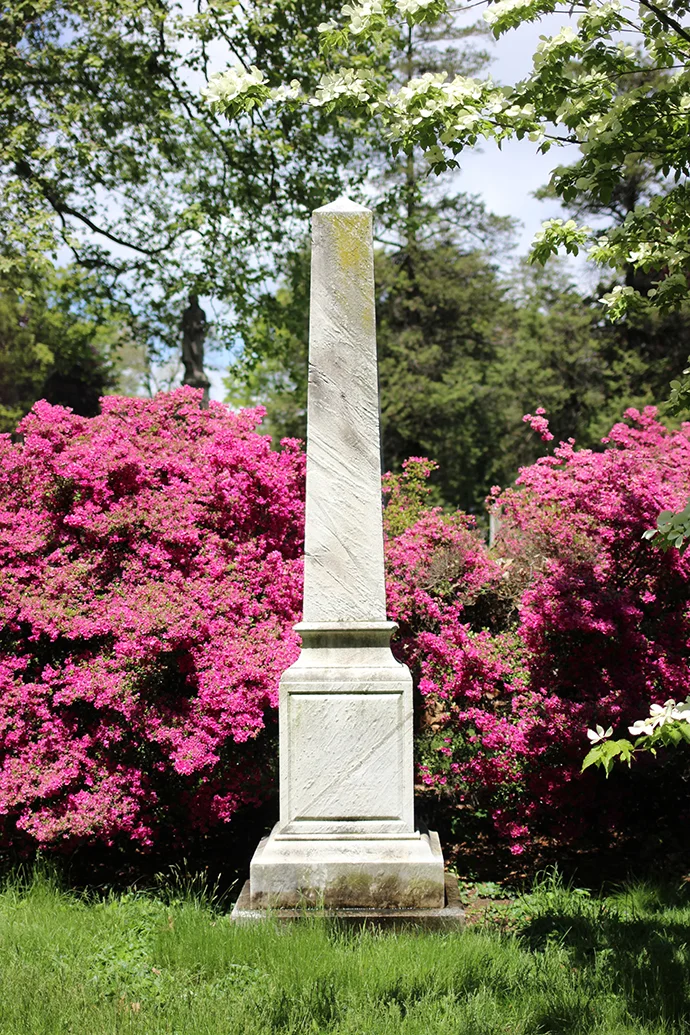
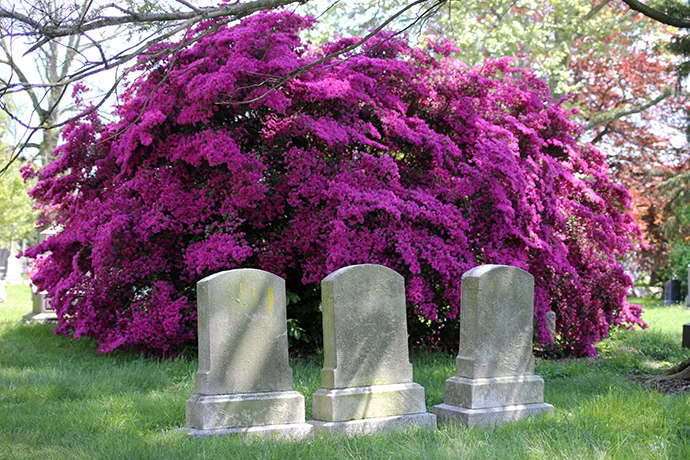
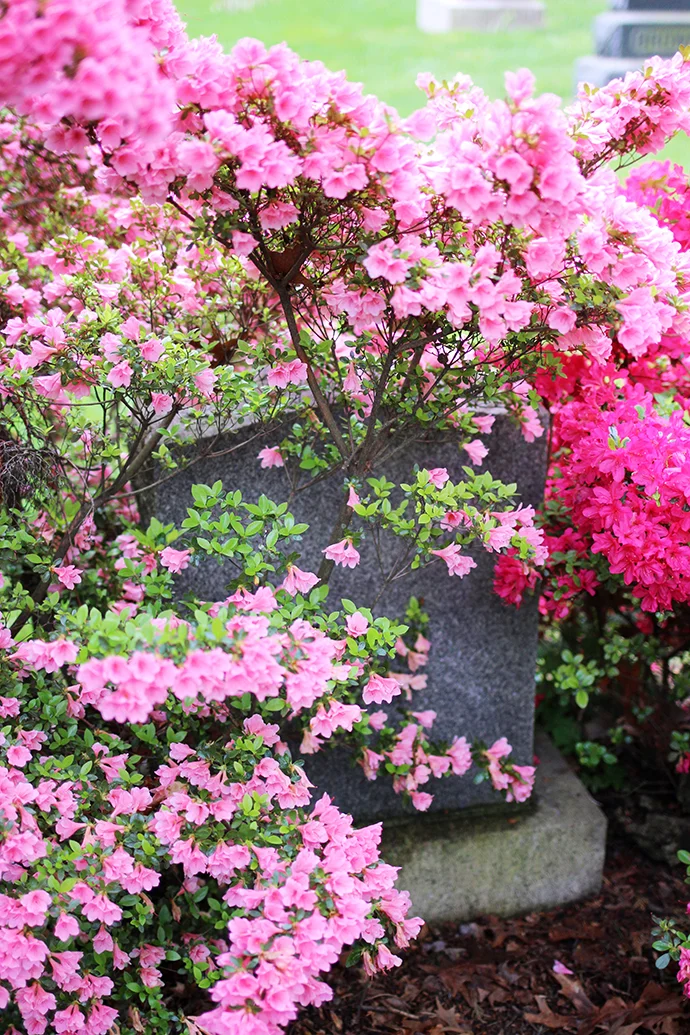
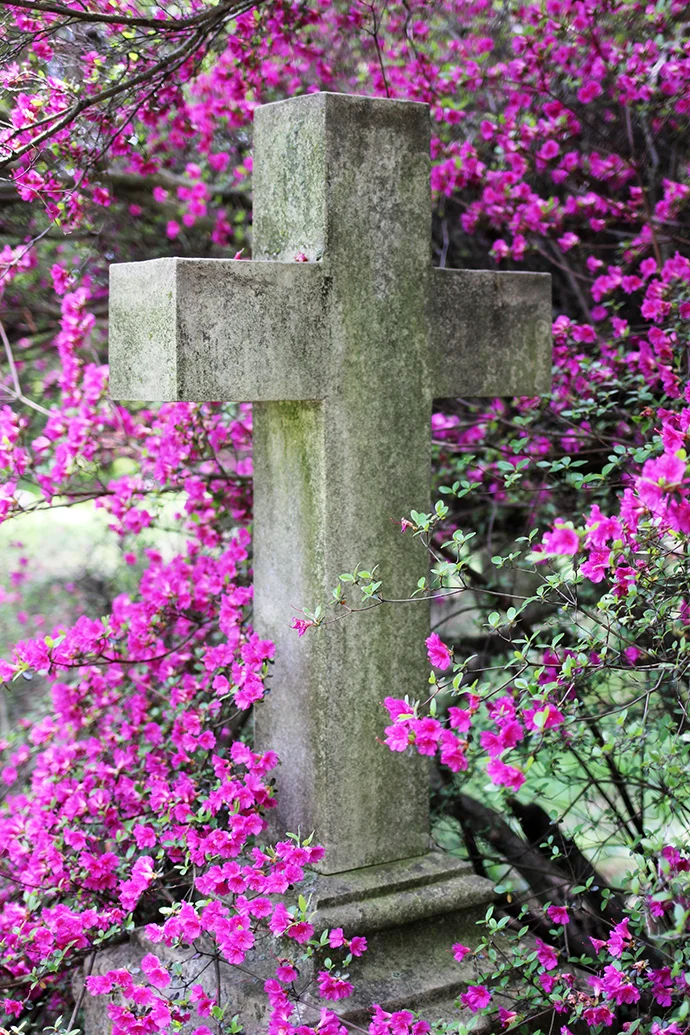
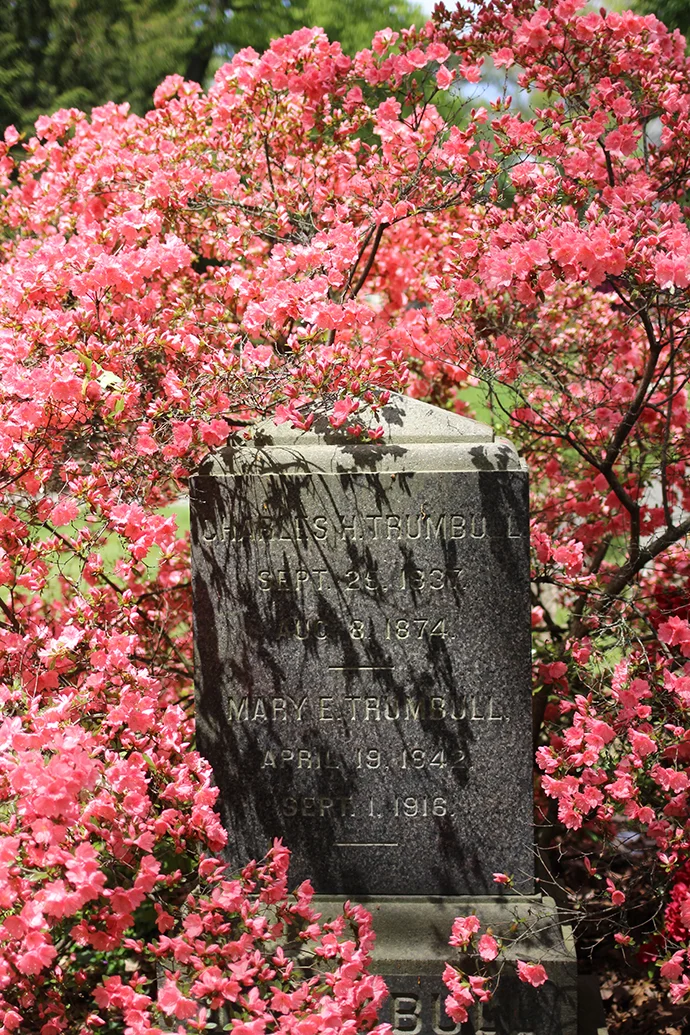
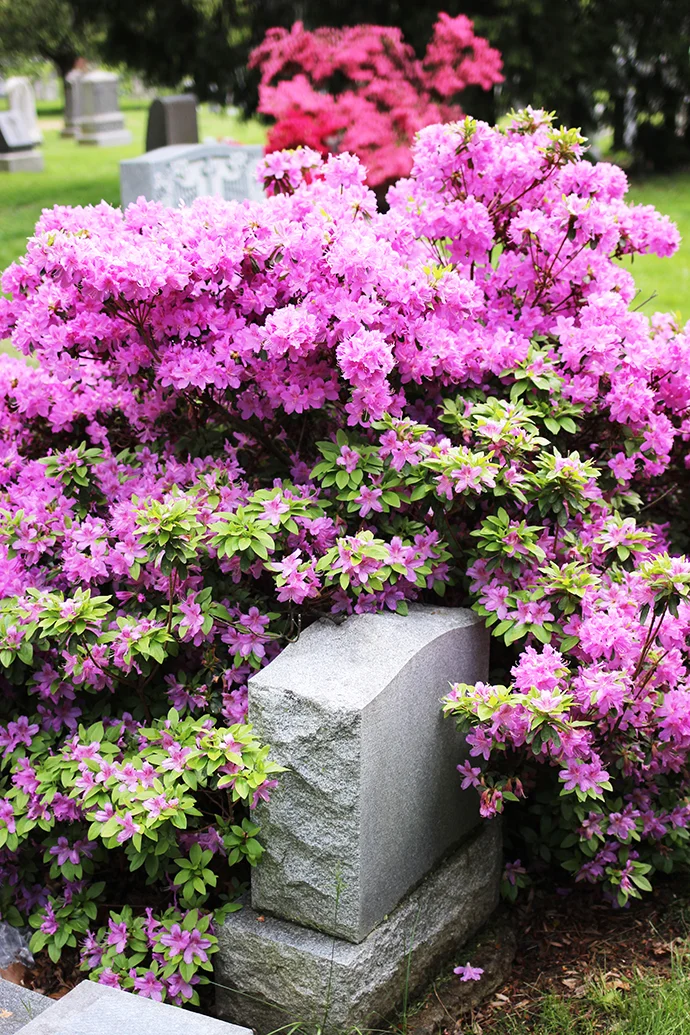
In addition to all of the beautiful flowers, Green-Wood is quite literally so green right now. The previous day's rain made everything feel so lush—I don't think that a shade of green exists that isn't currently represented in the cemetery. Ok, so maybe I just convinced myself that rain does indeed have a purpose, BUT I still contend that the perfect rain shoe does not exist.
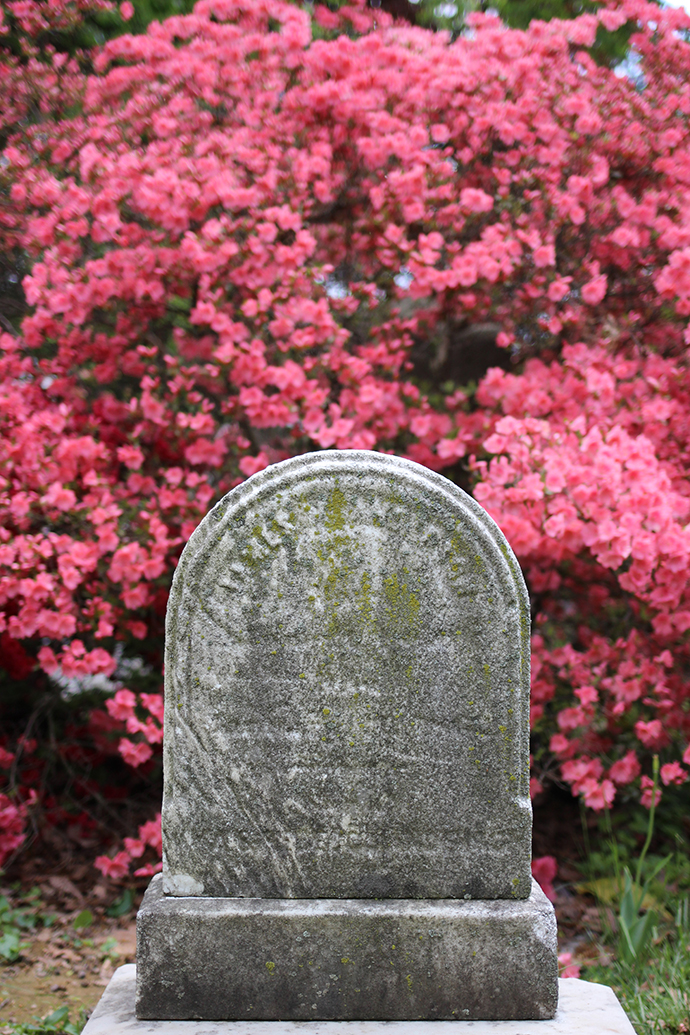
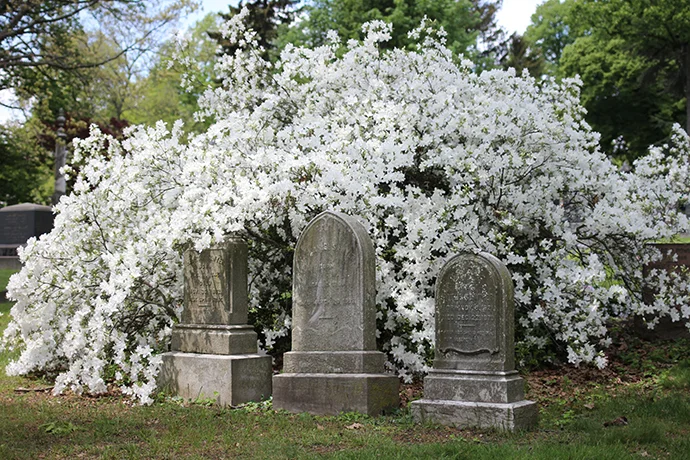
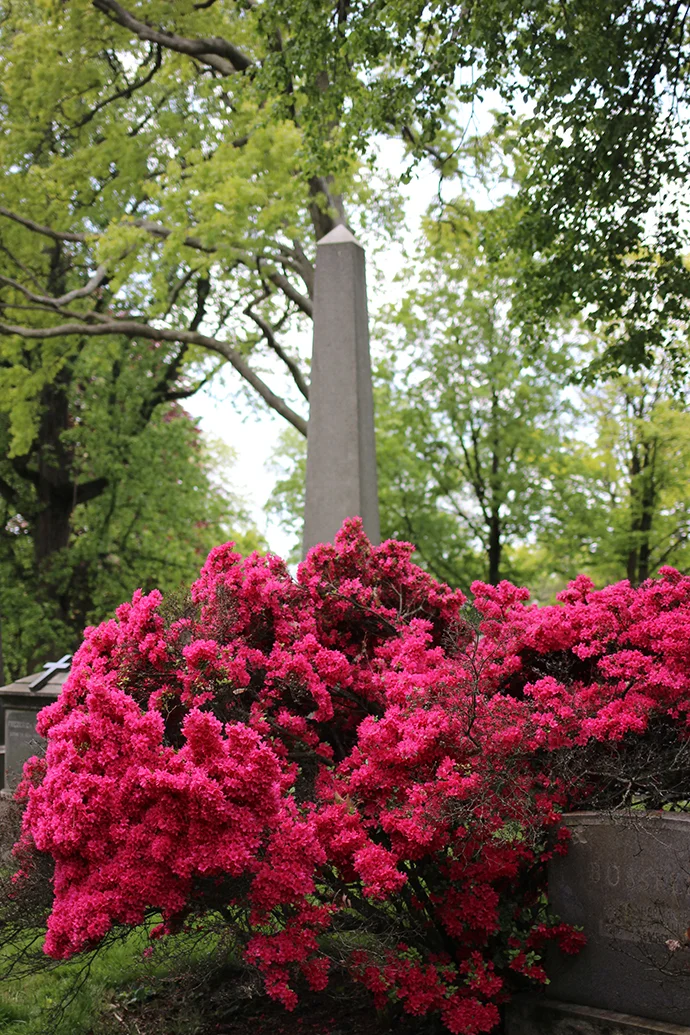
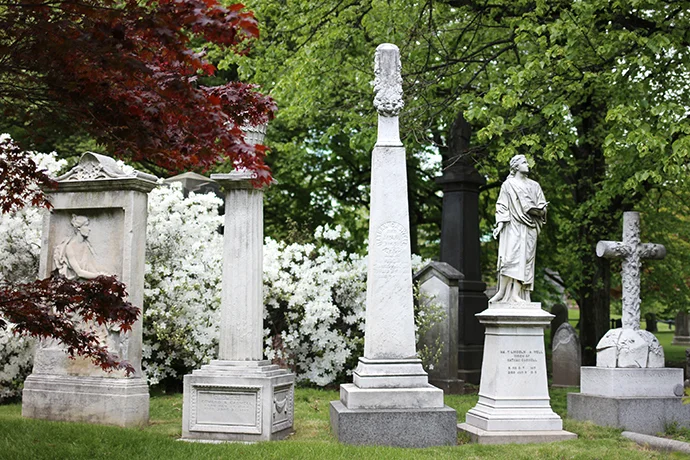
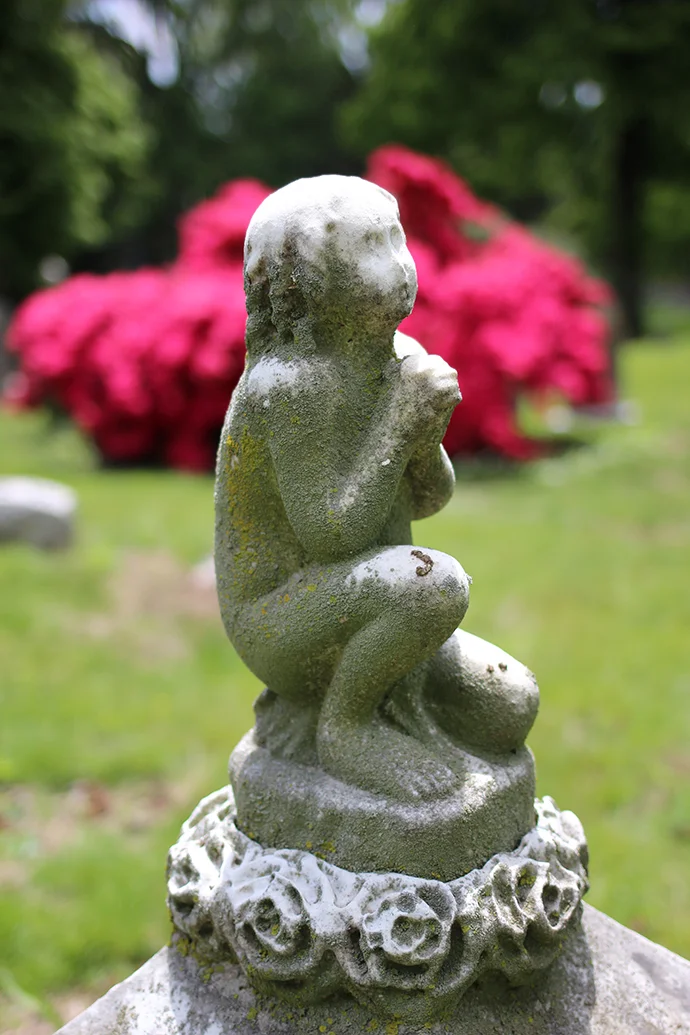
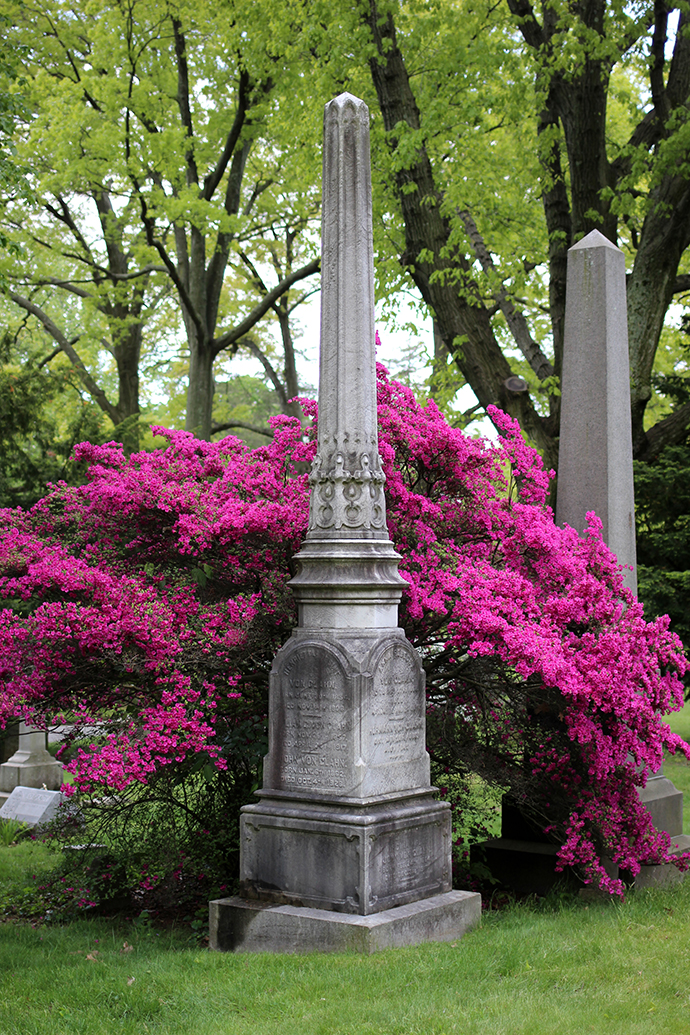
Being surprised at the passage of time is such a boring thing to talk about, but I was trying to think of the last time I was at Green-Wood and realized that it was back in February after a big snowfall—it barely looks as if it could be the same place. That variation is one of my favorite things about seasons. I understand how people could be intolerant of long winters or humid summers, but I think I'd die of boredom in a place with consistent weather and no seasons.
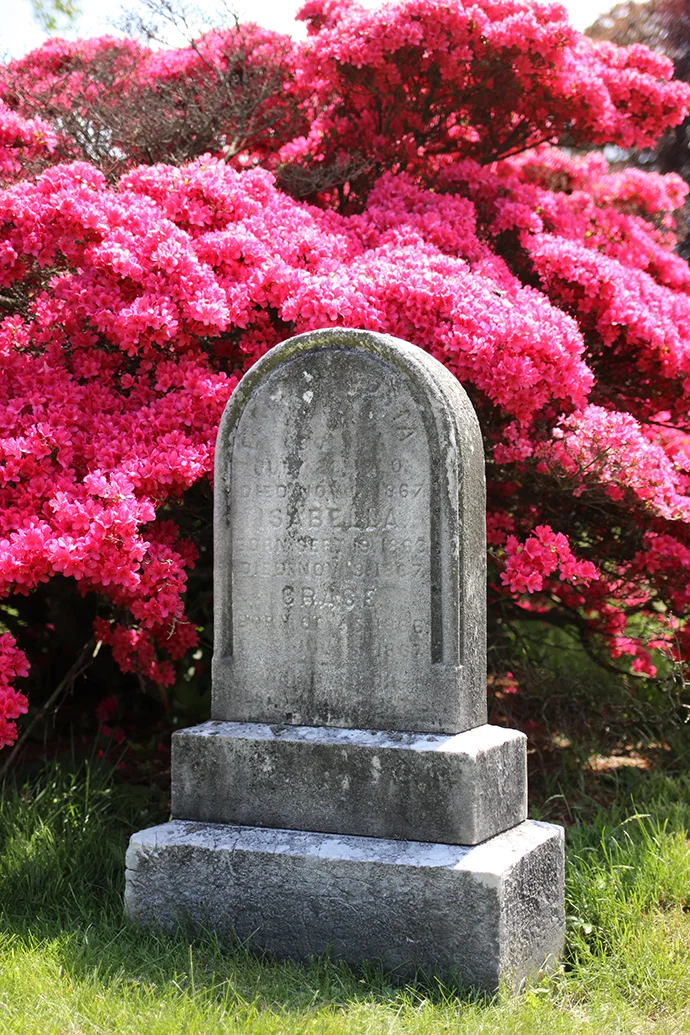
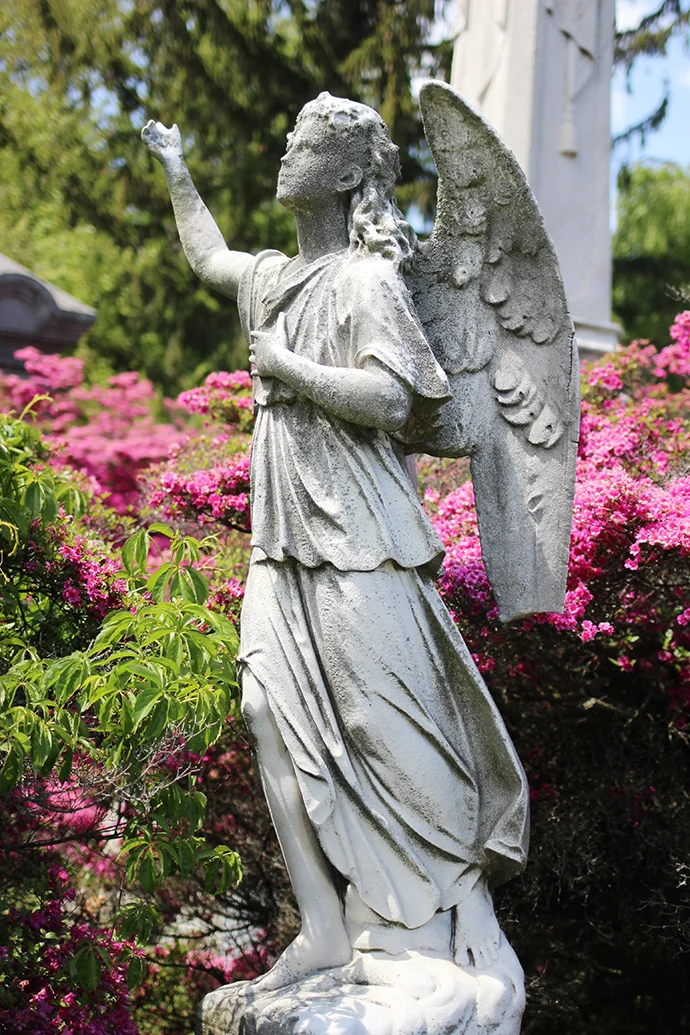
While we were walking around, we noticed that there were a lot more visitors than normal, and it took me a while to realize that it was because it was Mother's Day. I actually feel really strange when I run into other people in cemeteries, and it's not uncommon for me to be (or at least feel as if I'm) totally alone. Green-Wood is a popular place for tourists (although it feels weird calling cemetery visitors "tourists"), but with so many people actively visiting graves and mourning, I often felt as if I was intruding.
I visit cemeteries so frequently, focusing on the typography, design and history of the stones that it's easy to forget that each stone represents a person or persons. Someone who lived a life—however long, short, easy, hard, complicated, virtuous, painful or joyful—and it seems unfair that they don't get to enjoy the beautiful landscape beneath which they're interred.
Reformed Church Cemetery

On one of our days off from work for Passover, we decided to take a day trip up to Beacon, NY. I've been to a few Hudson Valley towns—Cold Spring, Tarrytown, Sleepy Hollow and Beacon once, but just for a hike—but the actual town of Beacon had been on my list for a while. It's easily accessible by Metro North, although we opted to take a Zipcar to have more flexibility.
Our first stop was Dia: Beacon, an art museum that, as we found out the hard way, is closed on Wednesdays (and Tuesdays). After quickly moving through the stages of bewilderment, disbelief, annoyance, light anger (mostly at ourselves for not checking the hours in advance) and then acceptance, we found a diner on Main Street to get lunch and discuss an alternate plan for the day. It was raining pretty heavily, but I was intent on checking out an abandoned cemetery nearby. Luckily I am the world's slowest eater, so the rain had pretty much stopped by the time we left the diner and the sun came out as we arrived at the Reformed Church of Beacon.
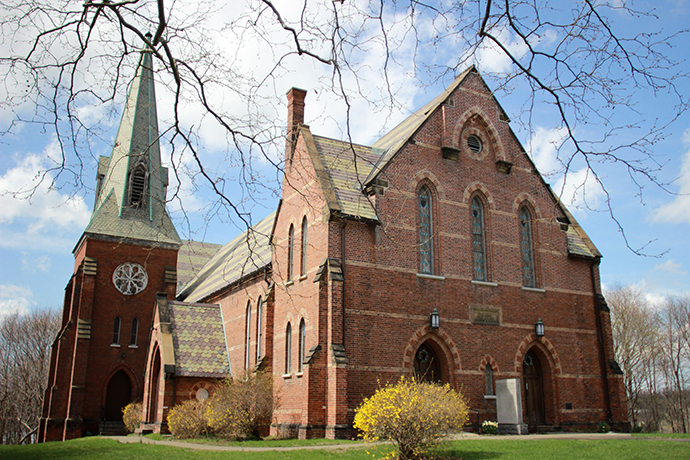


The Victorian Gothic church—the oldest in Beacon—was built in 1859 but graves in the cemetery date from 1813 into the 20th century. Both the cemetery and church were listed on the National Register of Historic Places in 1988, and while the church is still in use, the cemetery has definitely seen better days. In fact, everything that I read mentioned that the cemetery had exposed human remains in a few of the crumbling vaults, which turned out to be 100% true.


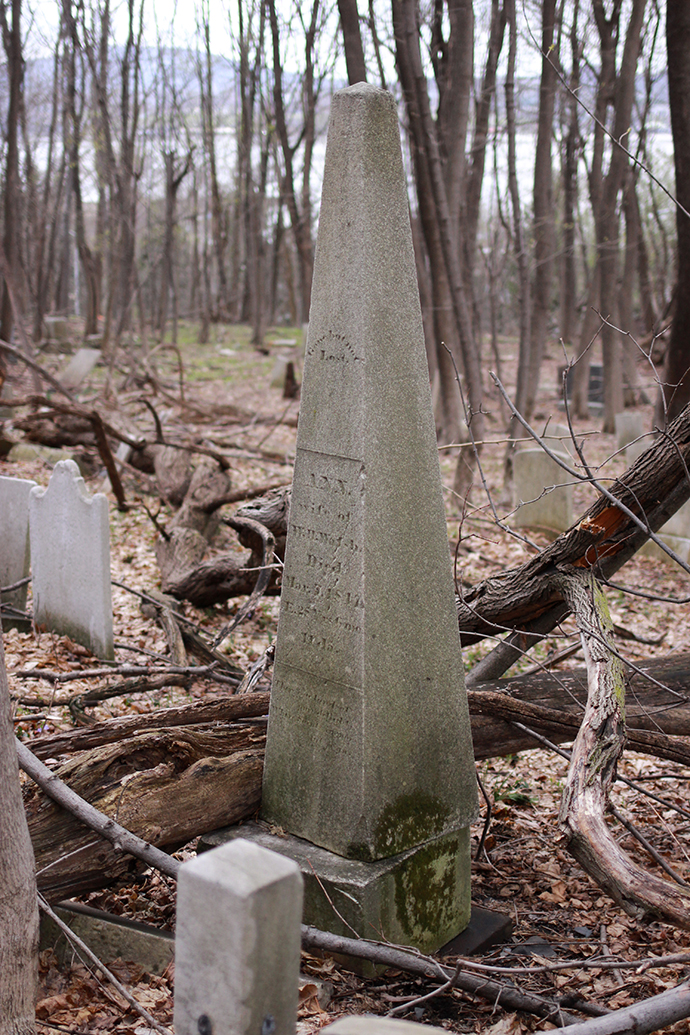
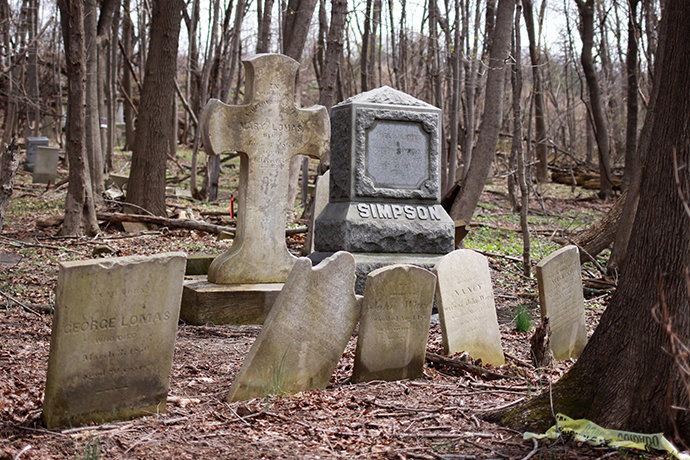
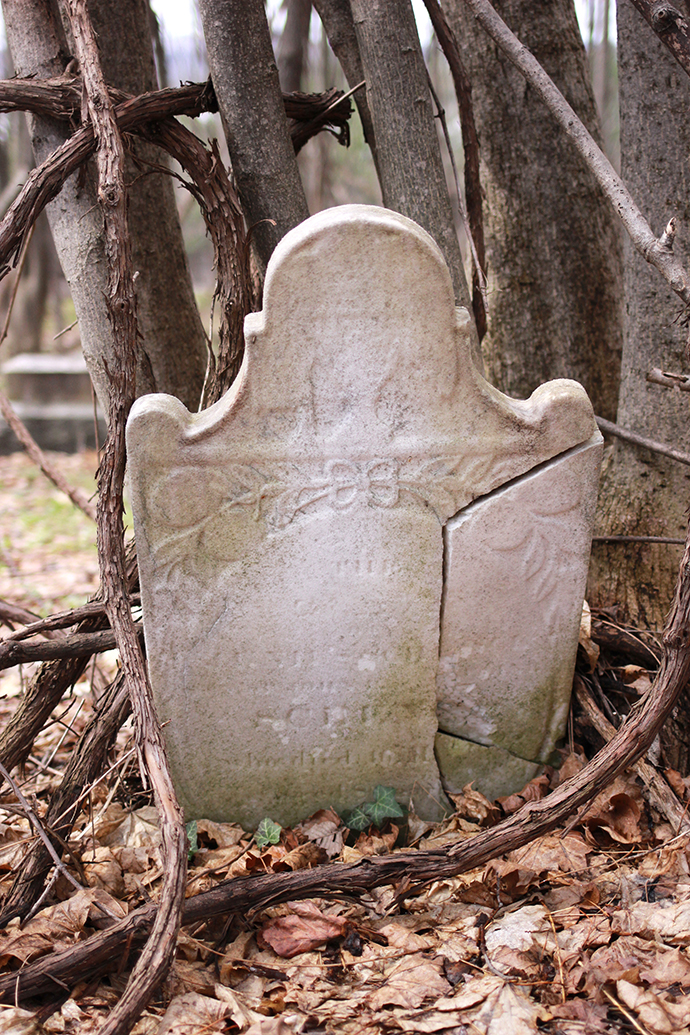
The cemetery doesn't look like it's been vandalized, so much as it has just been left to decay without proper maintenance and care. Several brick vaults are sitting wide open, as are the burial spaces inside of them. One article I read mentioned full skeletons, which were obviously there at some point, but now there are only a few bones in a few small piles scattered between the vaults. I was actually more scared of the tiny snake than I was of the bones, although the tiki idol that someone left behind added a nice extra layer of spookiness to the whole scene.


I always have mixed feelings about abandoned spots. I'm excited to explore weird and decaying places, but cemeteries—especially ones with mishandled remains—are often sad. The state of this cemetery is even more perplexing considering the location (Beacon is a nice, popular town) and the fact that the church is still in use. The property isn't overwhelmingly large or overgrown—like Mount Moriah—so a future restoration at least seems plausible, if not hopefully inevitable.
Mount Moriah Cemetery

I finally made it to Mount Moriah Cemetery recently, an "abandoned" cemetery located in southwest Philadelphia. I put abandoned in quotes, because like Eastern Cemetery in Kentucky and the Historic Jersey City Cemetery, Mount Moriah was once abandoned but is slowly being cleaned up and maintained by a group of volunteers.
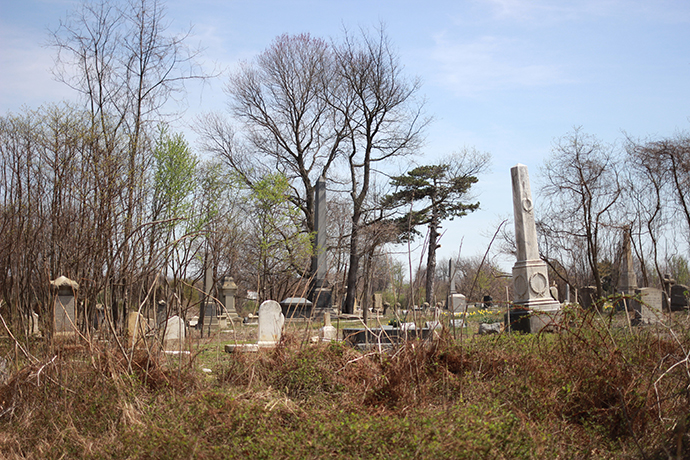


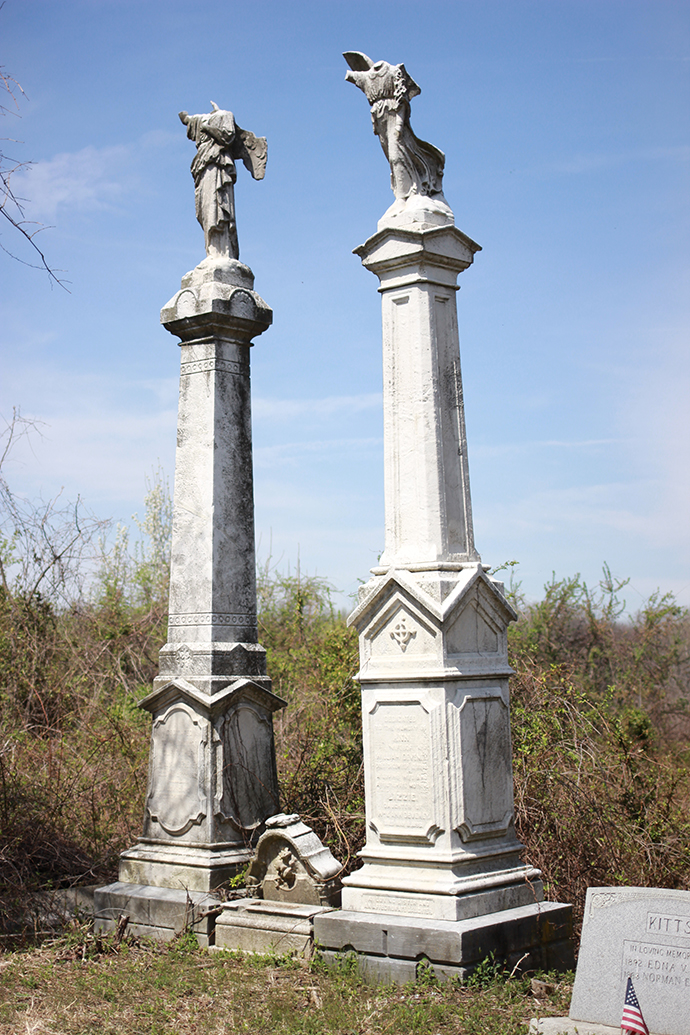

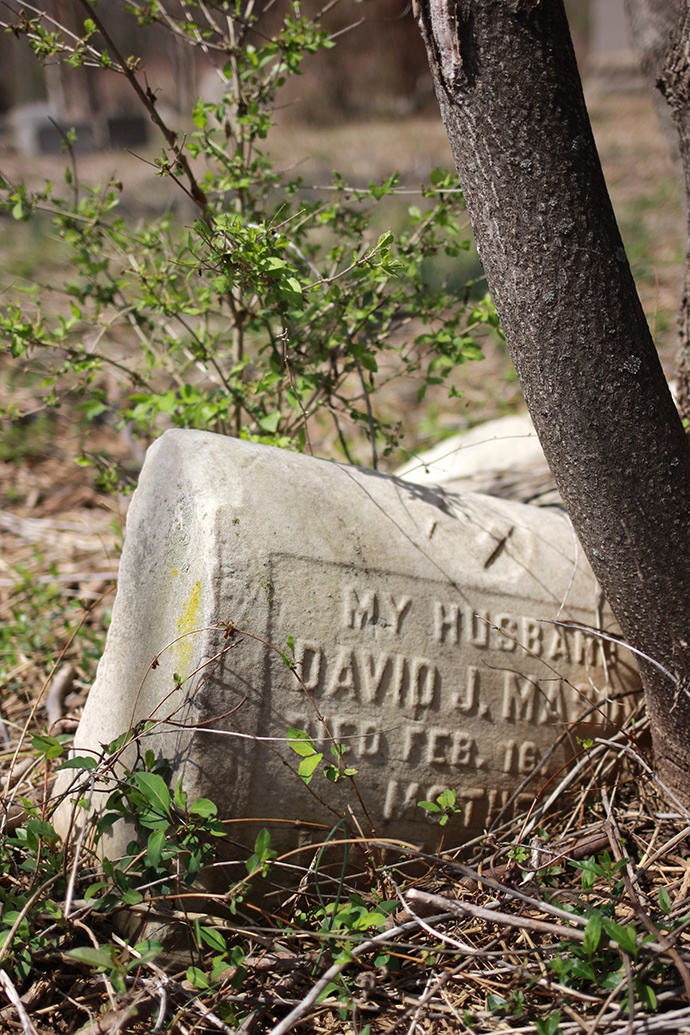

Mount Moriah was established in 1855 and encompasses 380 acres, making it the largest cemetery in Pennsylvania. The cemetery is separated into two sections by Cobbs Creek, and sits in two different counties. It was privately owned until the last known member of the Mount Moriah Cemetery Association died, and there has been confusion about who actually owns the cemetery since—it officially closed its gates in 2011.
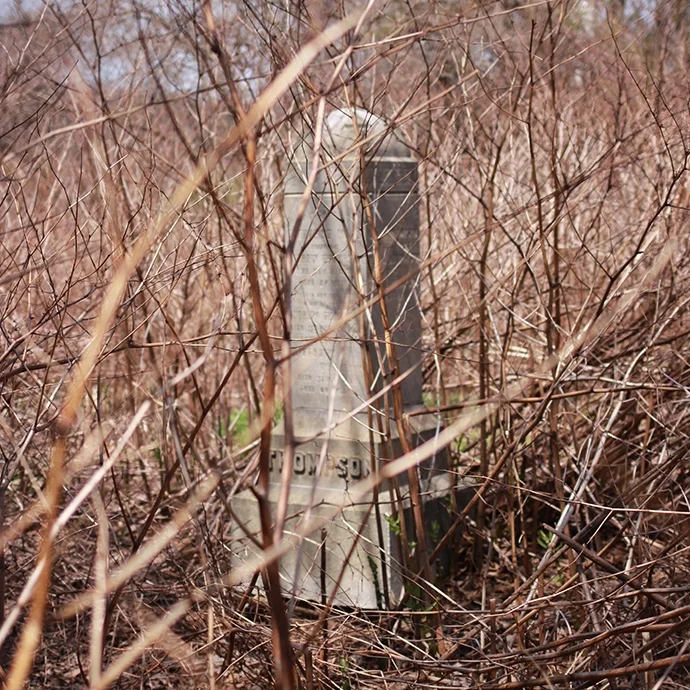
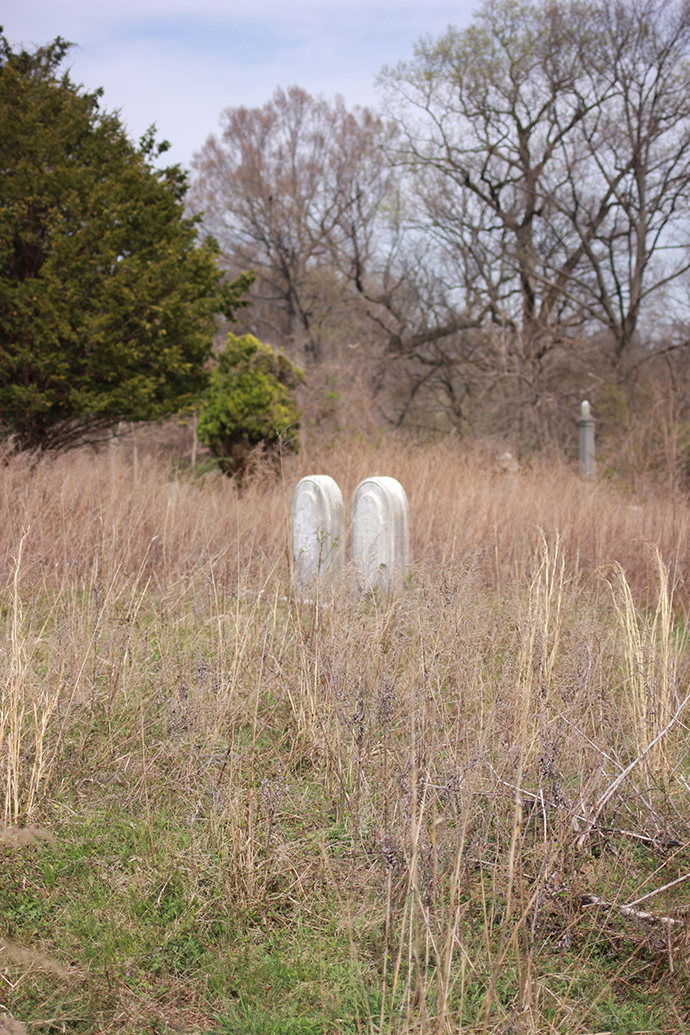
At first glance, Mount Moriah doesn't even appear abandoned. A large portion of it has been cleared and mowed, and it looks like any other sprawling cemetery. But bordering the cleared sections are pockets of overgrown brush and weeds, studded with headstones—I'm guessing the whole cemetery looked like this before the volunteers stepped in.


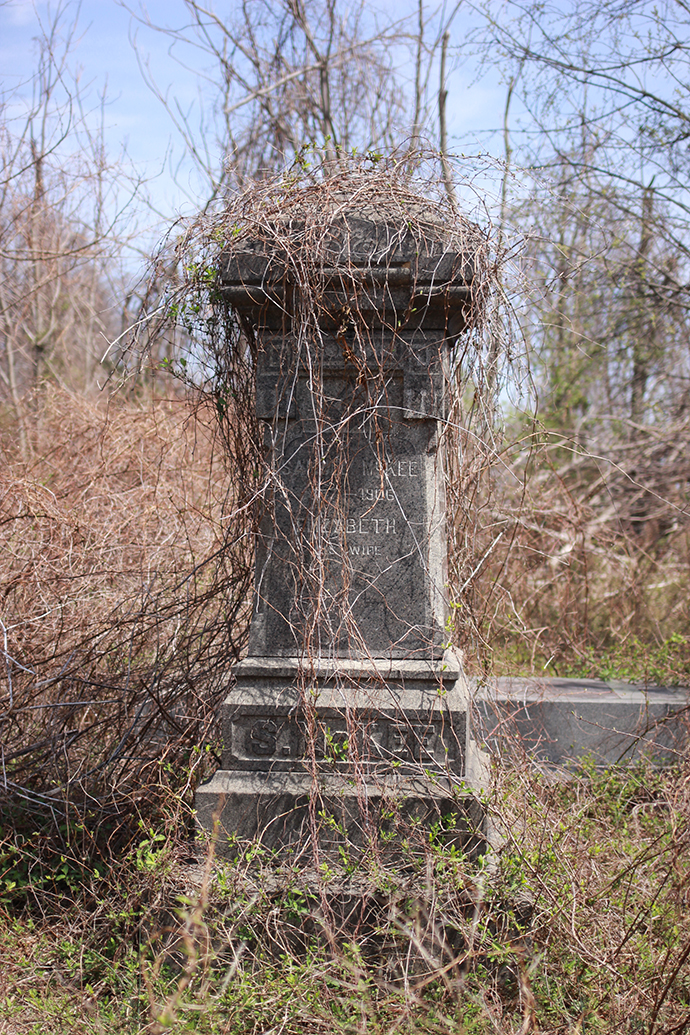
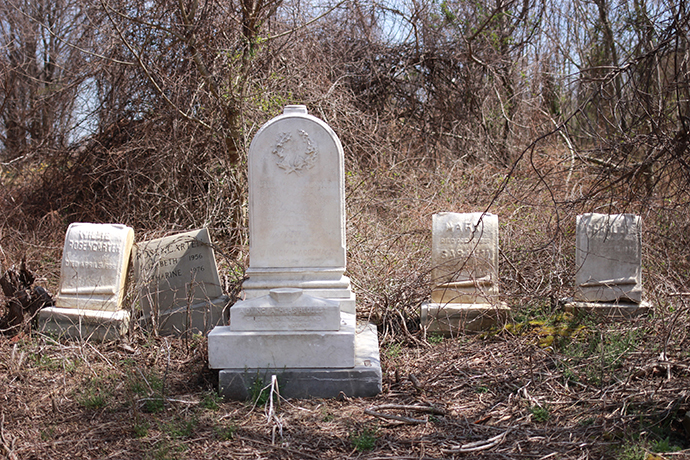

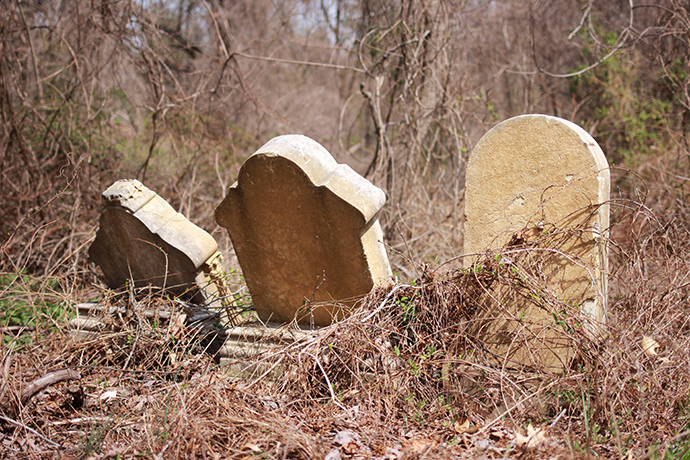
I have been trying to get to Mount Moriah ever since my soul-sister-in-creep, Kaylah of The Dainty Squid, posted about it, but I could never get someone to go with me. I had heard that it was in a not-so-great neighborhood (not uncommon for an abandoned place), and I wasn't thrilled to have to go alone. But I recently had a weekday off for Passover and the weather was beautiful, so I hopped on a train (and then another train) headed for Philadelphia. This is where I apologize to my dad, for assuring him recently that I never go into sketchy, abandoned places by myself—I amend that statement to almost never.
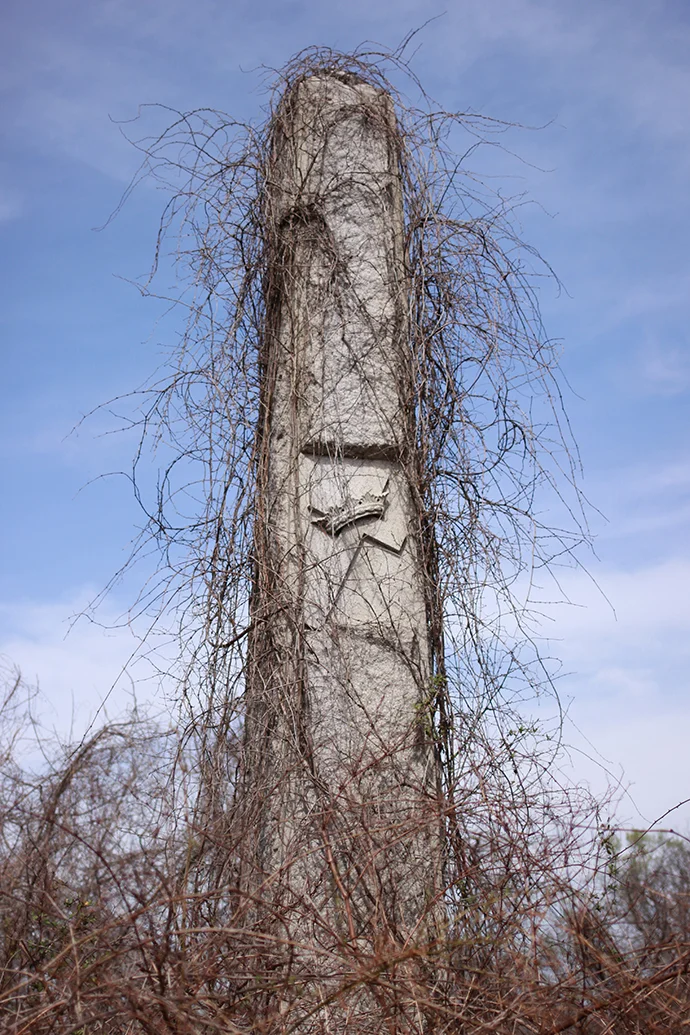



I opted to take regional trains (Penn Staion > Trenton, Trenton > Philly) instead of a more direct (and more expensive) Amtrak train. Mount Moriah is located about four miles from the 30th Street train station, and because I didn't have a car I had to figure out how to actually get to Mount Moriah after I arrived in Philly.
I generally have no problems taking solo adventures—and sometimes I actually prefer to be alone—but my anxieties and indecisive tendencies seem to flourish when left unchecked by another person. My first instinct was to take Uber to the cemetery, but then I began to worry about where to get dropped off and even the judgement of my driver when he/she realized that my destination was an abandoned cemetery (which feels so dumb to admit). Then I decided to take the light rail, but couldn't find the station. Then I thought I'd take the streetcar—which is sort of an underground bus?—but I couldn't figure out how to pay, and I knew I didn't have exact change. So, after way too much time sort of wandering in circles, arguing with myself and wondering why I was so strange, I ended up taking Uber.
I do want to mention that as we were driving, the neighborhood kept getting sketchier and sketchier, to the point where I considered asking my driver to take me back to Philly proper. As we approached the cemetery, I noticed that the front gates were unlocked and open, and asked my driver to drop me out front. I basically ran into the cemetery, and instantly felt better—I'm so glad that I didn't prematurely bail.


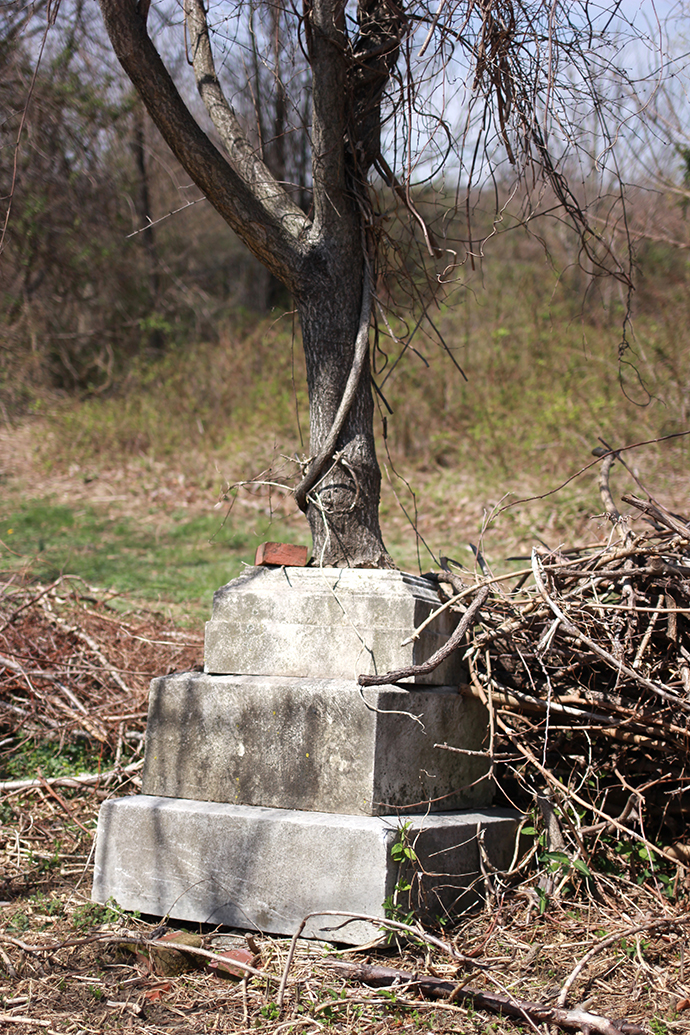

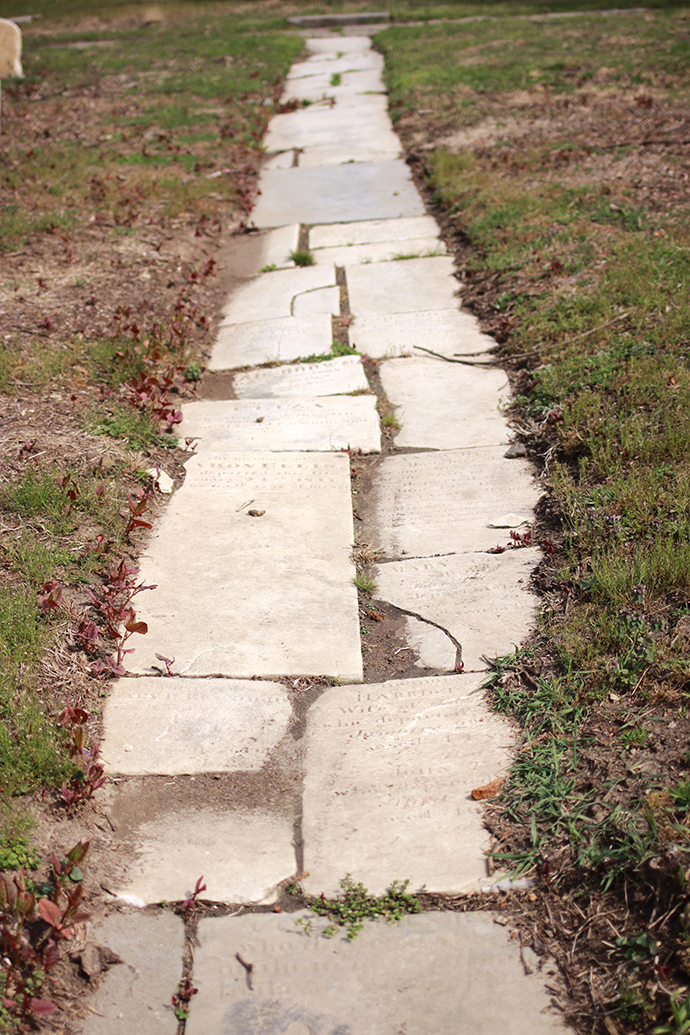
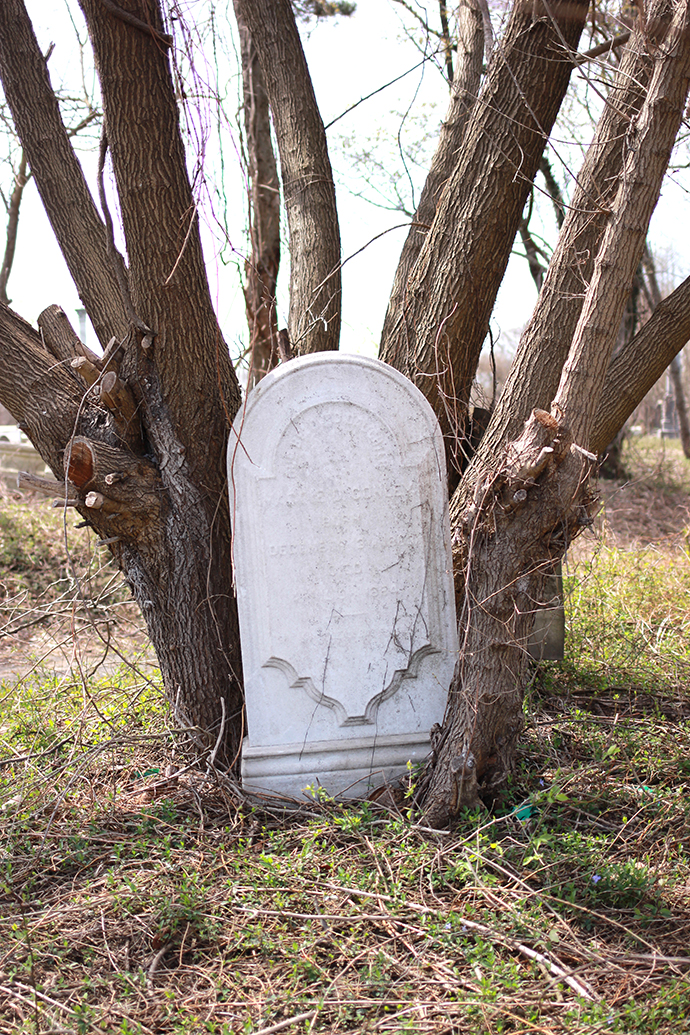
There are a few military sections that have been meticulously maintained, and seeing row after row of identical stones (including several just marked "Unknown") like a mini-Arlington is really sobering. Mount Moriah was unlike any other cemetery I've visited, but there were still a few things that stood out: a full-sized tree growing out of the base of a broken monument, the marker that just said "orphanage," and a path that was made entirely out of broken headstones.
Friends of Mount Moriah Cemetery is a "nonprofit organization dedicated to the preservation and promotion of Mount Moriah Cemetery by honoring the memory of those interred here through community engagement, education, historic research, and restoration." I'm definitely appreciative of these volunteer groups that have stepped in to care for their neglected neighborhood cemeteries—a largely thankless and monumental task—but I'm also glad that I got see Mount Moriah before it was entirely restored to its former glory.
Mount Moriah Cemetery
The main gate is at Kingsessing Ave and S 62nd Street.
No regular hours posted, but I visited at noon on a Tuesday and the gates were open.
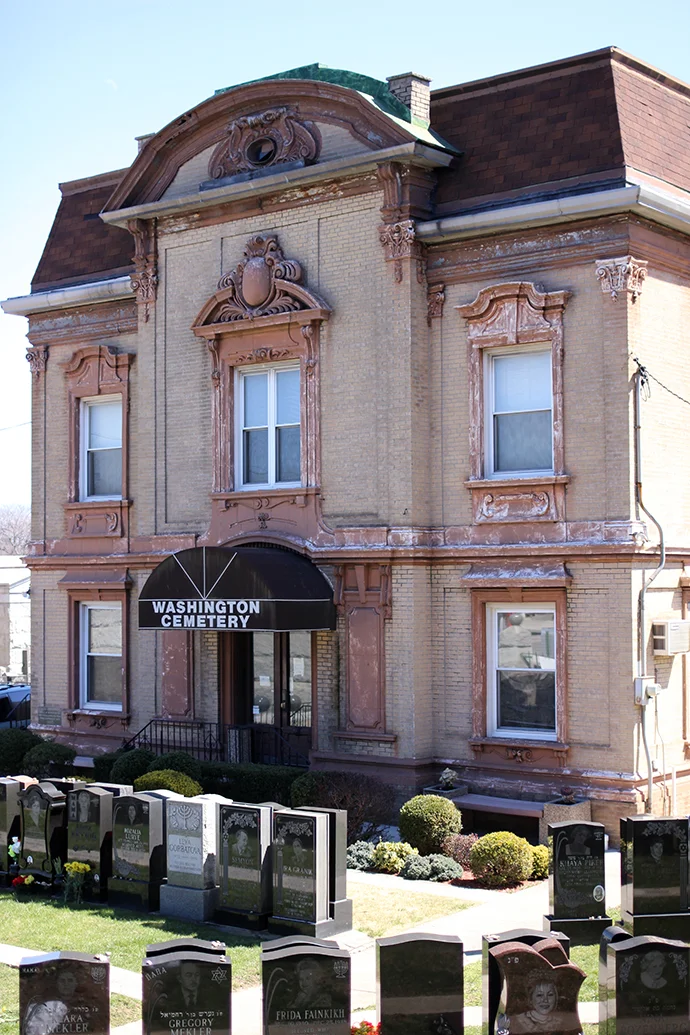
Washington Cemetery

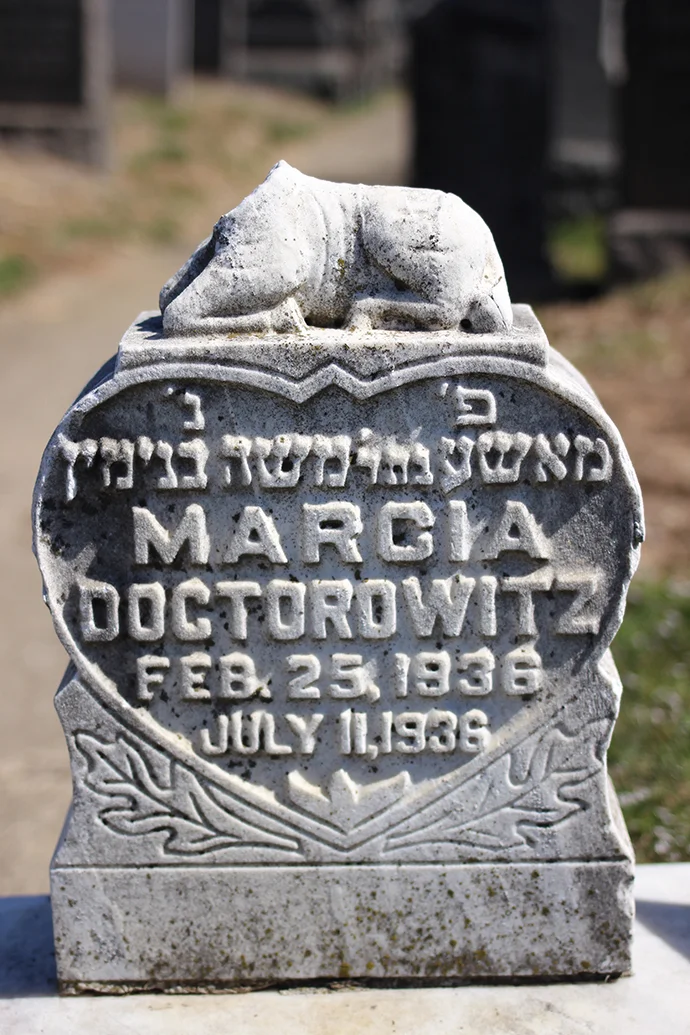
Washington Cemetery, located in South Brooklyn, was founded in 1850 and became a Jewish burial ground around 1857. It comprises five, gated cemeteries and it's huge—I spent hours there recently and only covered part of #1. Jewish cemeteries have been in the news lately after they've seen an uptick in vandalism. Washington Cemetery recently denied that vandals had tipped 42 fallen headstones, saying instead that the stones were just old and had fallen naturally.
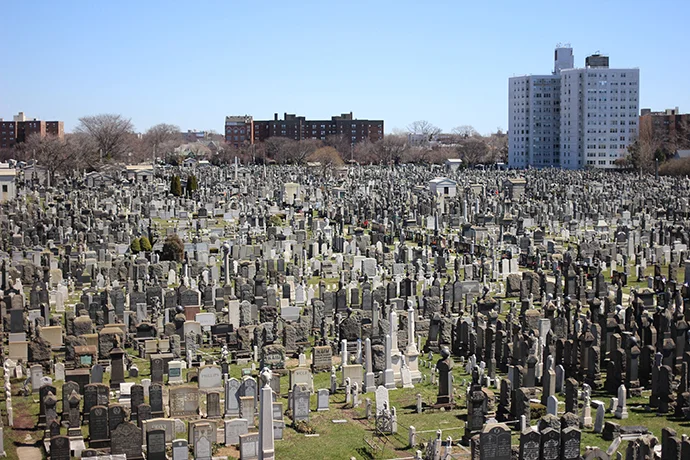
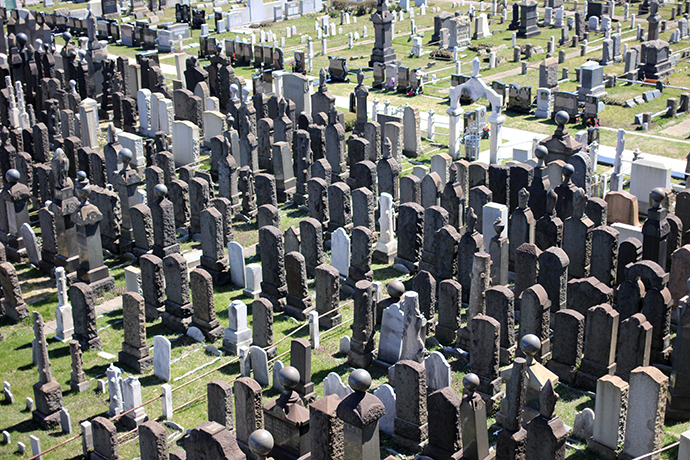

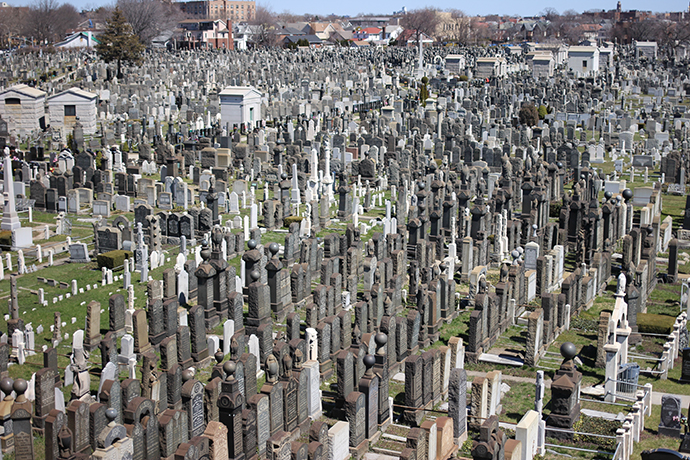
Washington Cemetery first came onto my radar as I was riding the F train to see another cemetery—Gravesend—years ago. The elevated train track runs right through the middle of the cemetery, and it's hard not to miss the tightly-packed rows of stones stretching far into the distance on either side. This bird's eye view is not something you get with every cemetery, and it's humbling to view thousands of headstones from above—like a miniature city of the dead.



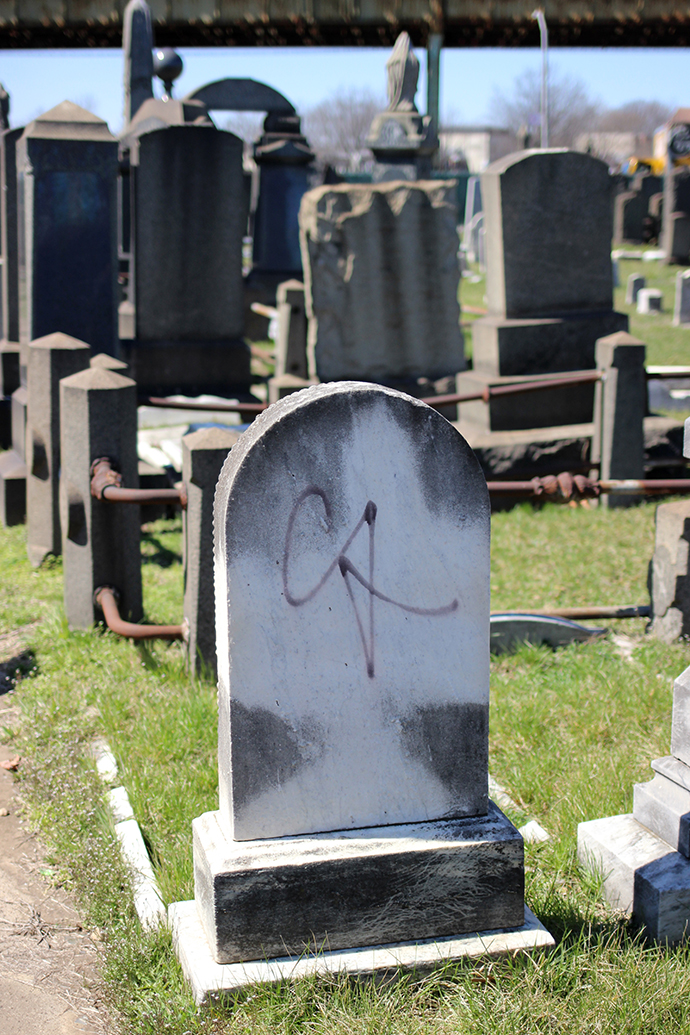
I did notice some fallen stones—and one headstone with graffiti—but nothing else out of the ordinary for a cemetery this old and crowded. Washington is clearly well-maintained, and I saw several people visiting and tending to graves while I was there. It took me years to finally make it to Washington due to F train changes, its early gate closures and the fact that it's closed entirely on Saturdays (for Shabbat).
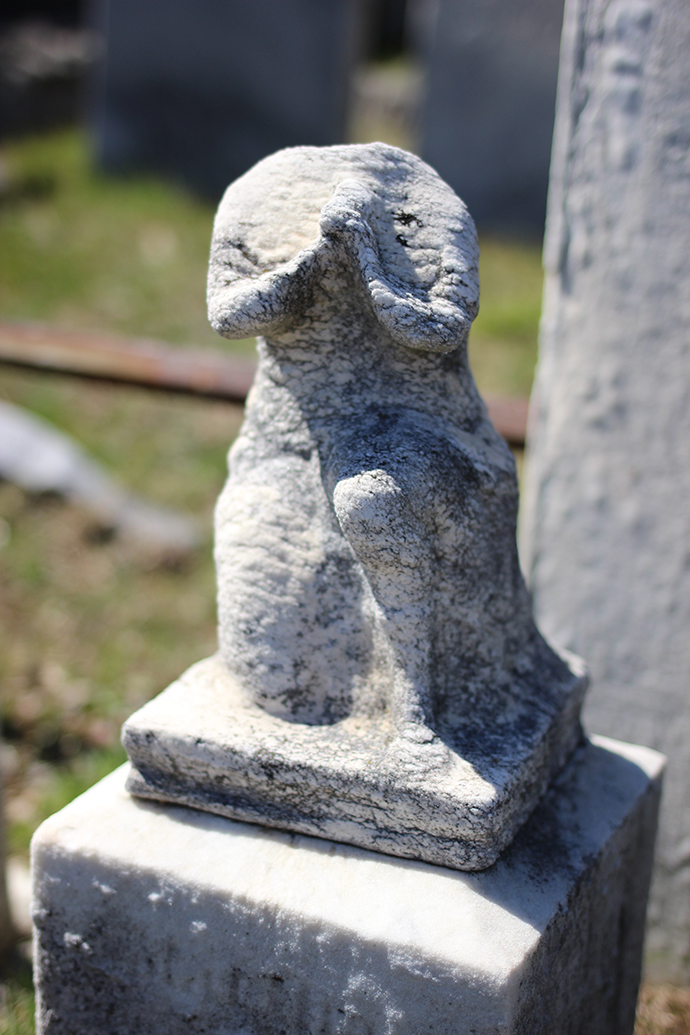
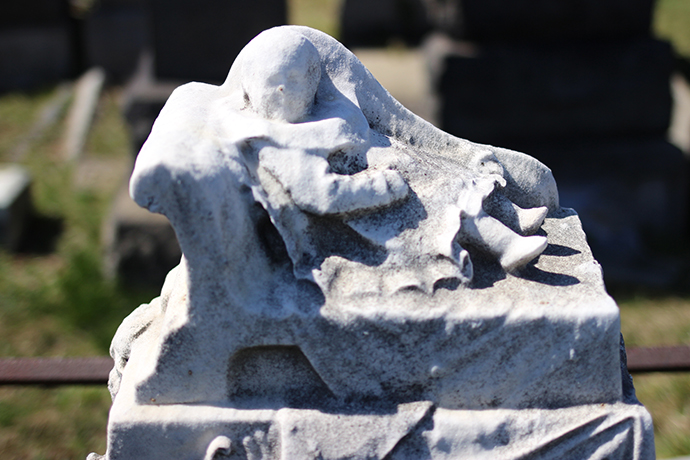


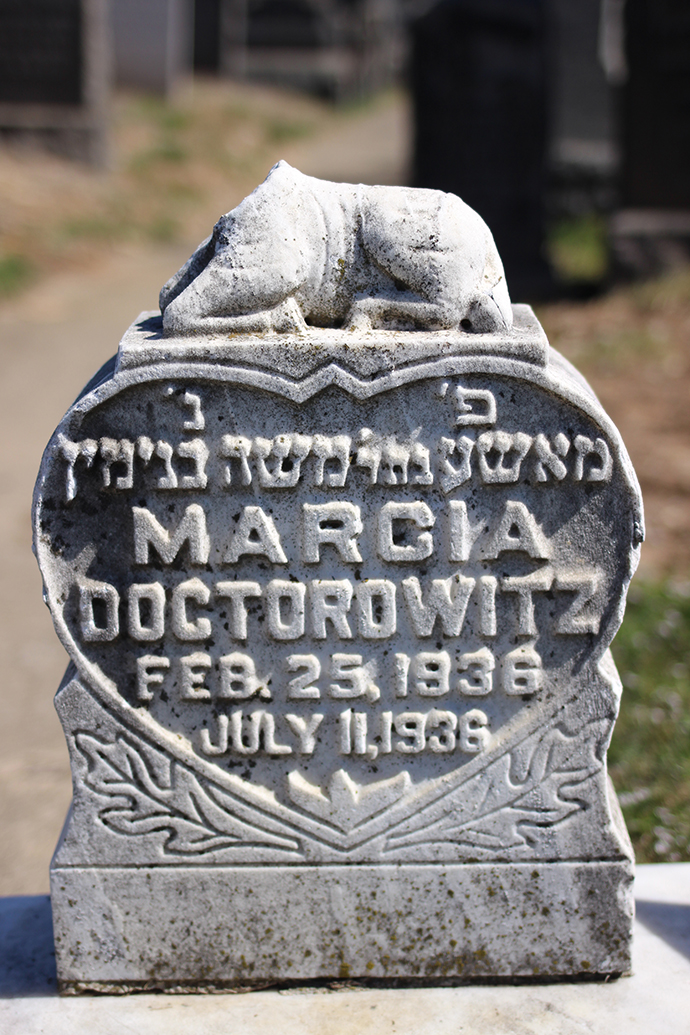

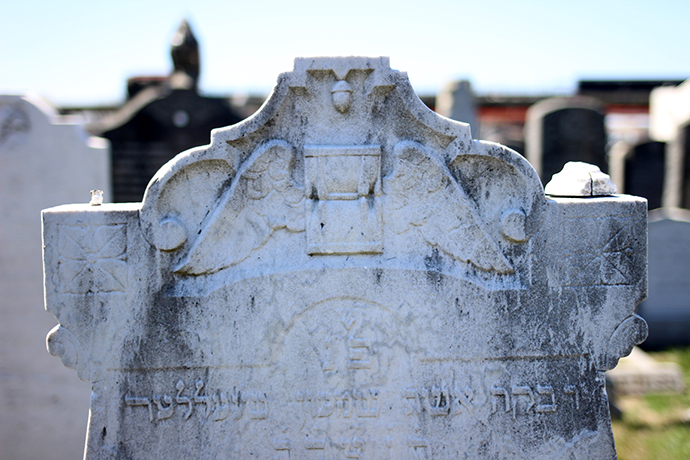
The thing I've noticed most about Jewish cemeteries here in New York is that they tend to be very tightly packed—in some sections there's barely room to squeeze past each stone. The headstones vary greatly in their design—some are very tall and ornate, some are squat and plain and the very oldest are indistinguishable from others of their time period. Some contain uniquely Jewish symbols, and others are written entirely in Hebrew or contain some combination of it and other languages.




Something else you'll notice is the absence of planted or even freshly-cut flowers, which is not a Jewish custom for a few reasons. What you will notice instead are stones or fake flowers, which serve a similar purpose—to commemorate the deceased and show that they have been visited and have not been forgotten. I have always liked this approach because it feels more permanent to me than flowers that will wilt and die—the last thing you need in a cemetery is yet another reminder of our fleeting time on Earth.

Charleston: Cemeteries

In addition to several church graveyards located in the historic district of Charleston, there is a large group of cemeteries just to the northeast of downtown. Magnolia Cemetery was dedicated in 1850; St. Lawrence Cemetery was the third Catholic cemetery in Charleston, and was established in 1851; and Bethany Cemetery was established in 1856 by St. Matthew's Evangelical Lutheran Church when its first cemetery reached capacity during a yellow fever outbreak. There may be other smaller cemeteries as part of this group (sort of like the "cemetery belt" in Queens), but these are the three main ones I remember visiting.


We took Uber to the cemeteries because they were a bit far from our hotel, but they were very close to Martha Lou's Kitchen where we (over) ate our weight in fried chicken, collard greens, mac n' cheese and several other sides before our flight back to New York. It was the warmest day of our trip—in the 70s—and the perfect end to a flawless trip.


We came across a section of St. Lawrence Cemetery (I think) devoted to the those killed in the Civil War. I noticed immediately that they were Confederate soldiers and civilians, which of course makes sense in South Carolina (the first state to succeed), but it's not something I'm used to seeing in my New York / New England cemeteries explorations. Anything referencing the Confederacy is always jarring—especially the flag—but stones like the "unknown child of the Confederacy" are universally sad.


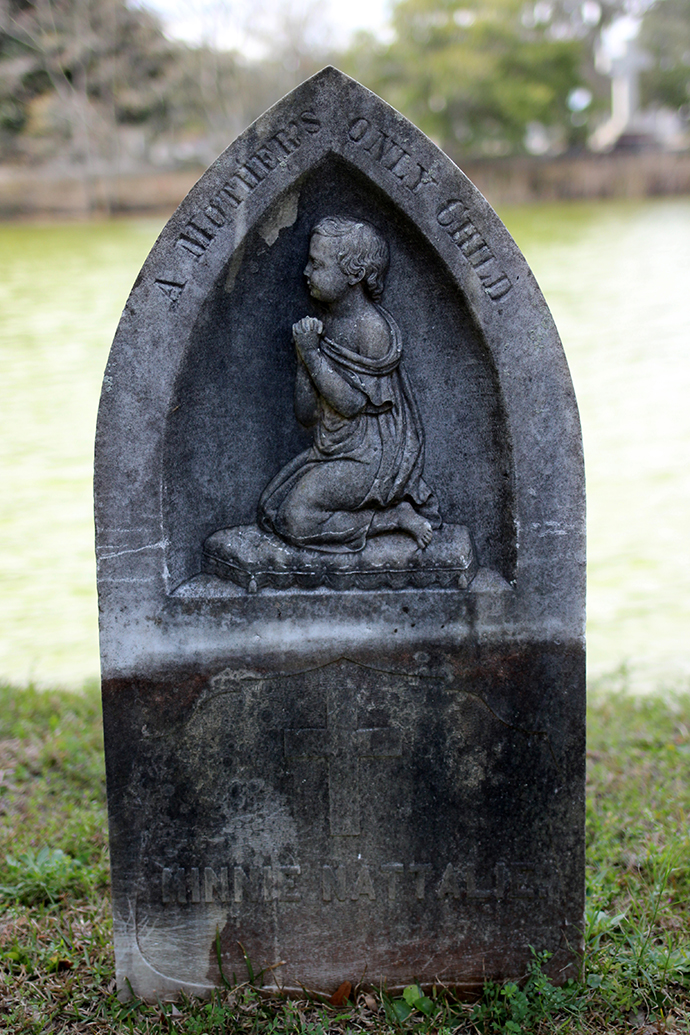
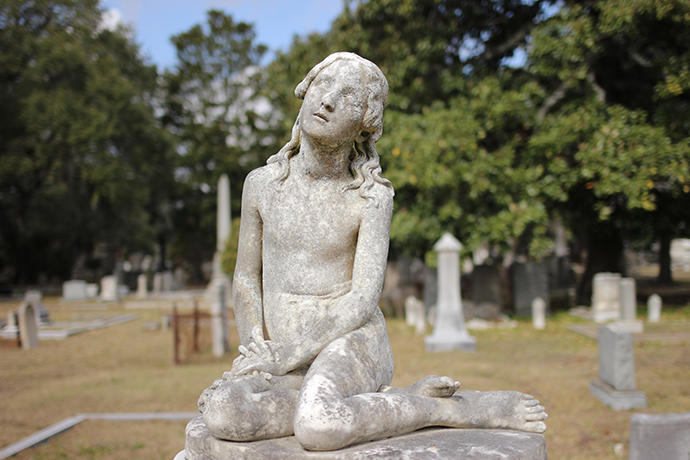


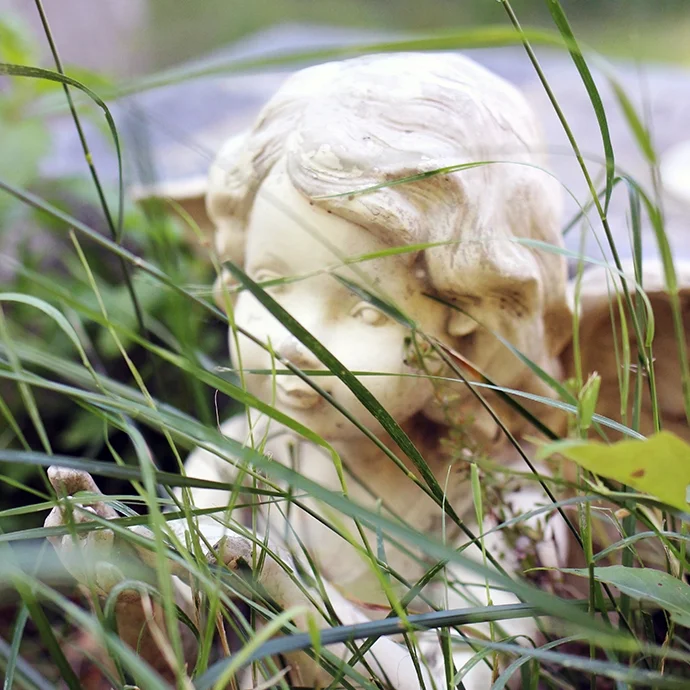
Speaking of children, it seemed like a lot of the stones that caught my eye were memorials that featured a child in some way. Two stones made note that they were the "only child," which makes the loss seem even more devastating, and several featured nearly life-sized babies peacefully asleep. The cradle-shaped stone was especially unique and had several toys—including a rubber duck—that looked as if they'd been left fairly recently, despite the grave dating to the 1880s.


While nothing could top the Unitarian Church graveyard, I'm glad we got to experience a different kind of Charleston cemetery. These large, sprawling cemeteries reminded me of Green-Wood or Bonaventure, though maybe not quite as picturesque. Francesca spotted the guy above from afar and she pointed out how much the lights and darks made him look like a skeleton, making him one of our favorite—and spookiest—finds to date.

Bideawee Pet Cemetery: Ceramics

I've posted about ceramic headstone portraits before, but the I never shared all of the ones we saw at Bideawee Pet Memorial Park. We began noticing the ceramics almost immediately, and for a strange reason—a majority of them had been damaged to the point where you could no longer make out the animal, and it looked intentional. Thankfully, some portraits managed to escape this seemingly random desecration, because they're truly wonderful.


I gave a brief history of human porcelain cemetery portraiture in this post, but it just makes sense that their popularity would spread to pet cemeteries as well. In fact, pet portraits almost seem more normal—even pre-Instagram, I would imagine that pet photography was widespread. The one thing that has been very clear in every pet cemetery that I've visited is just how much animals mean to their owners. Anyone that loves their pet enough to memorialize it with a burial and tombstone would likely have no shortage of photos of their beloved companion.


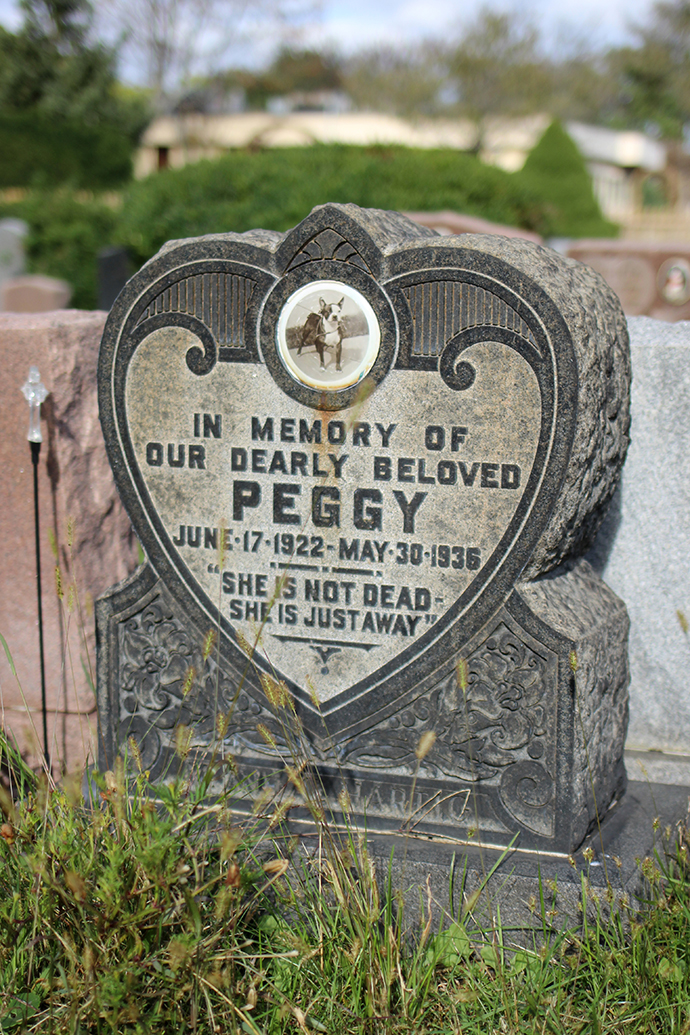
Some of the portraits feature pets in costumes—like my favorite, the dapper dachshund whose tombstone read "In Loving Memory, Mr. Nathan D. Friedman, My Son," Duchess in what appears to be a hand-knitted sweater (with a hood!) or Penny in her stylish plaid coat.


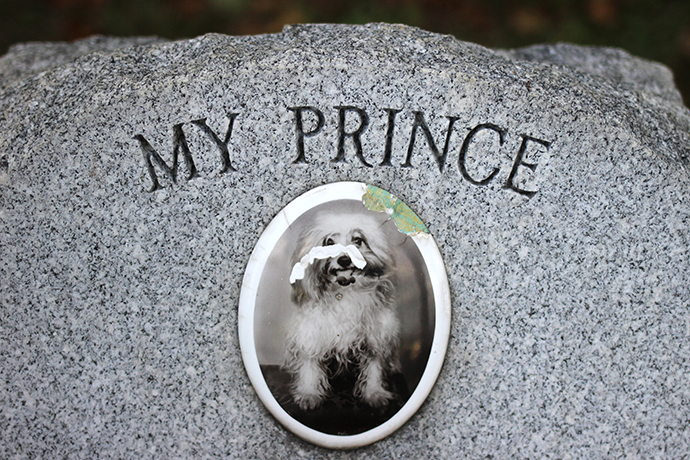
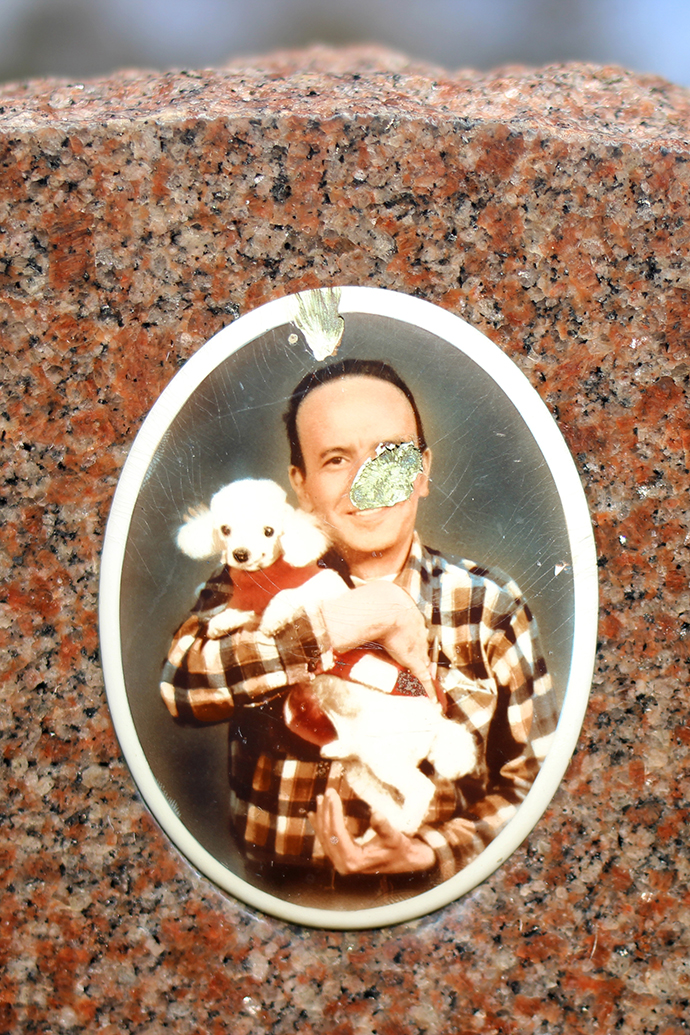
The portraits aren't reserved exclusively for dogs and cats or single pets—we saw at least a few bird photos as well as group shots. But portraits that really got to me were the ones that included their owners, most of which were from a pre-cellphone camera era. Again, if you loved your pet enough to buy them a granite tombstone, then a Sears portrait studio session probably didn't seem too extravagant either.

Old Sheldon Church Ruins

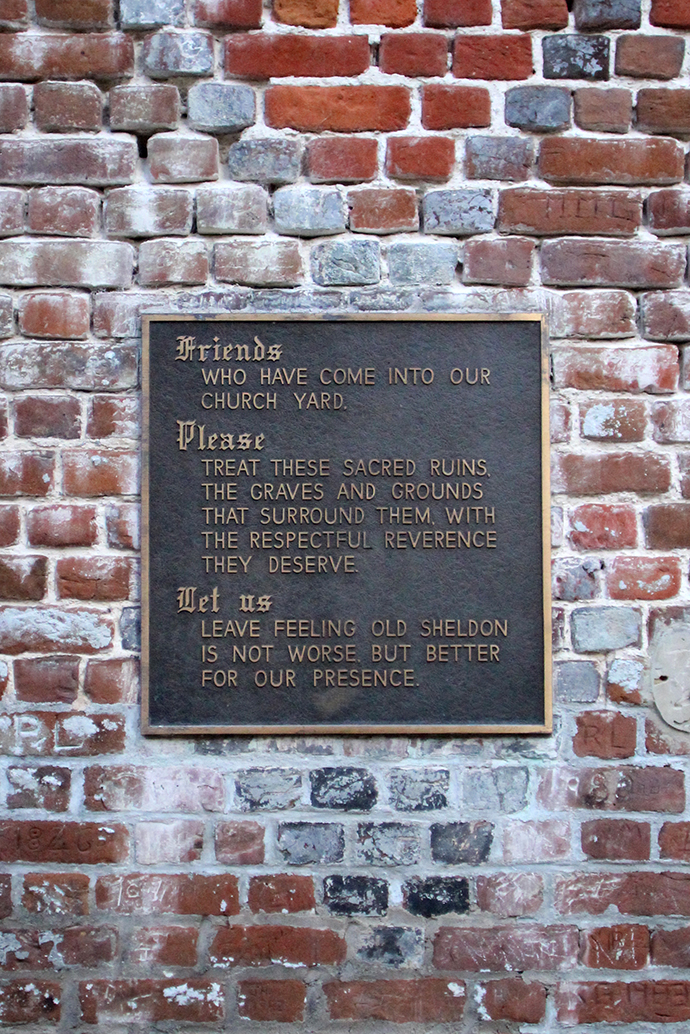
One of the main reasons I had for renting a car for a day on our recent trip to Charleston was to visit the Old Sheldon Church ruins in Beaufort County. After we visited Magnolia Plantation and the Angel Oak, we drove about an hour west to check out the ruins. I became aware of the ruins thanks to Kaylah of The Dainty Squid, who shares my love of all things creepy, and I couldn't pass up the chance to see Spanish moss-covered ruins surrounded by a graveyard.
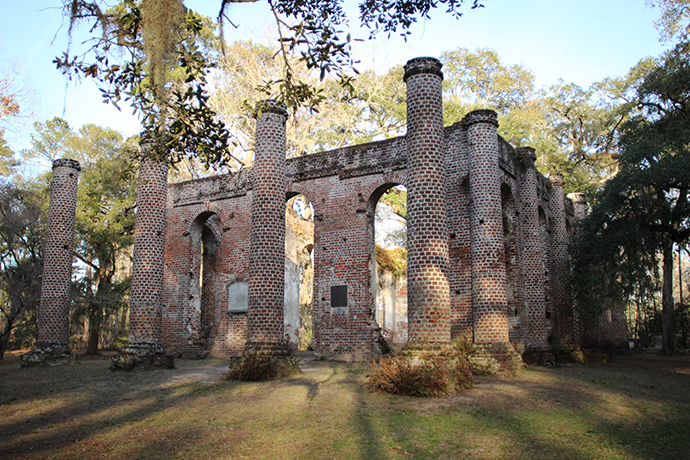
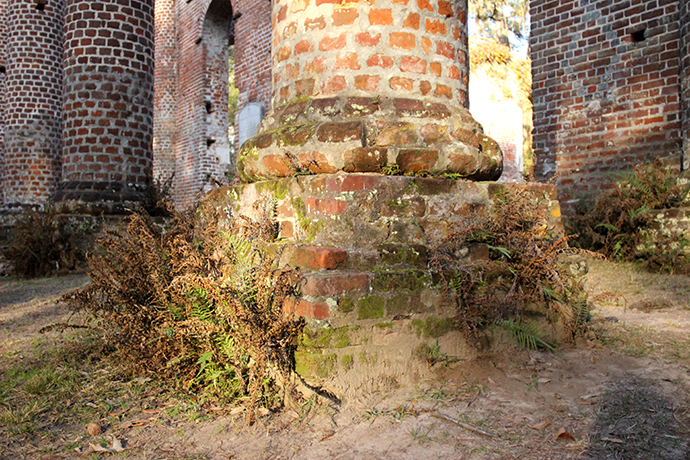


Built in the 1750s and originally known as Prince William's Parish Church, the church was burned by the British during the Revolutionary War. It was rebuilt, only to be burned again (or more likely just torn apart) during the Civil War as General Sherman cut a path of destruction from Savannah to South Carolina. There's enough left to get a general feel for the layout and size of the church—I can see why this is such a popular spot for weddings that they had to erect a sign stating that unauthorized events were prohibited on the property.


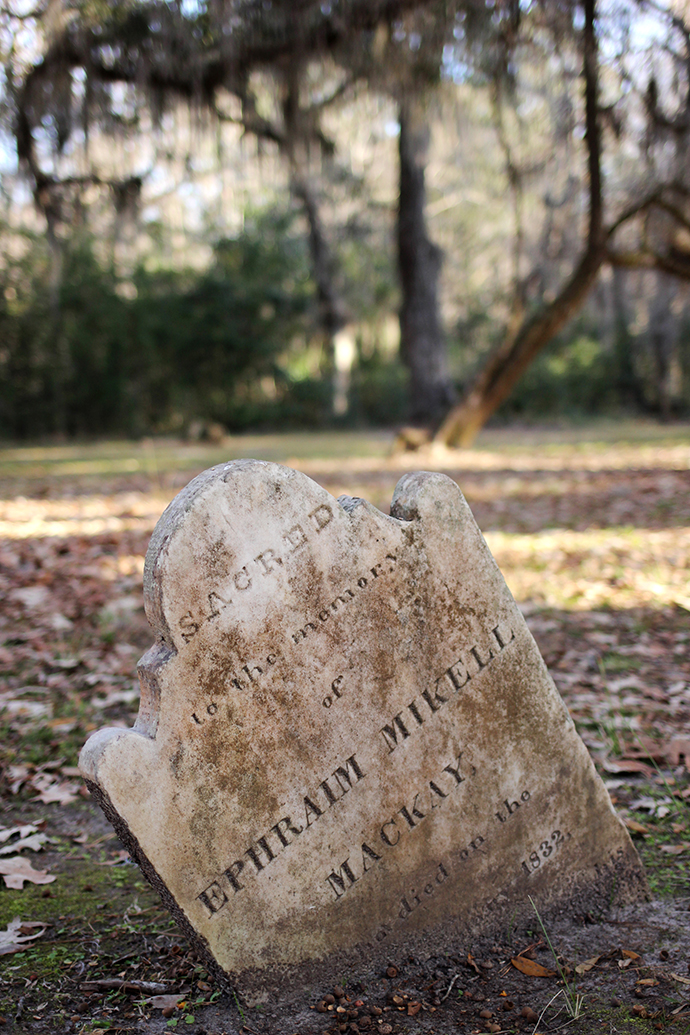


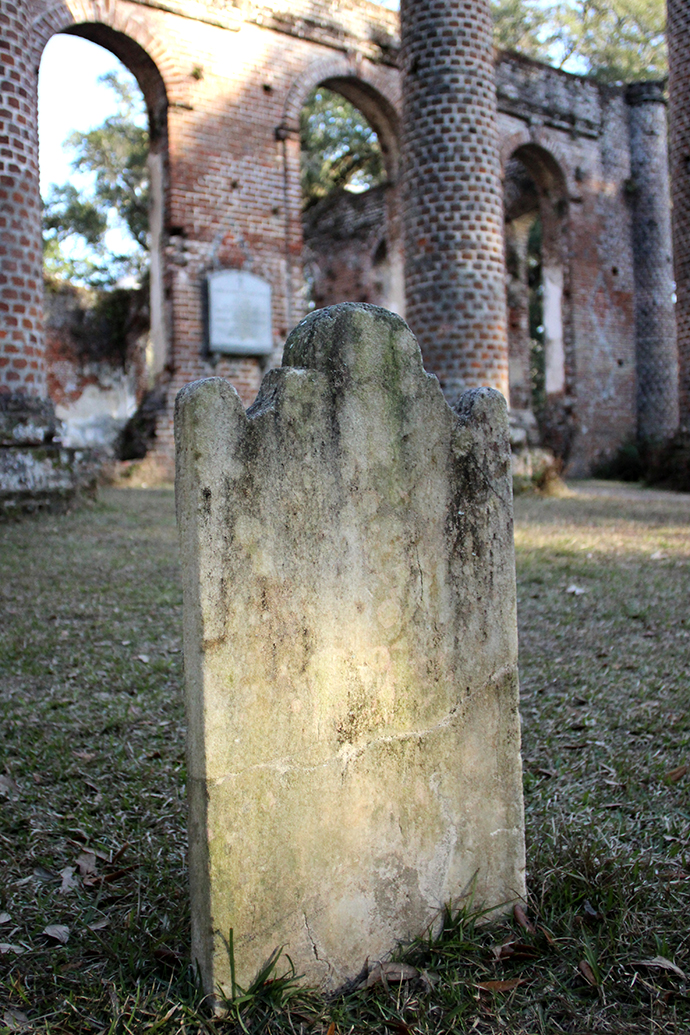
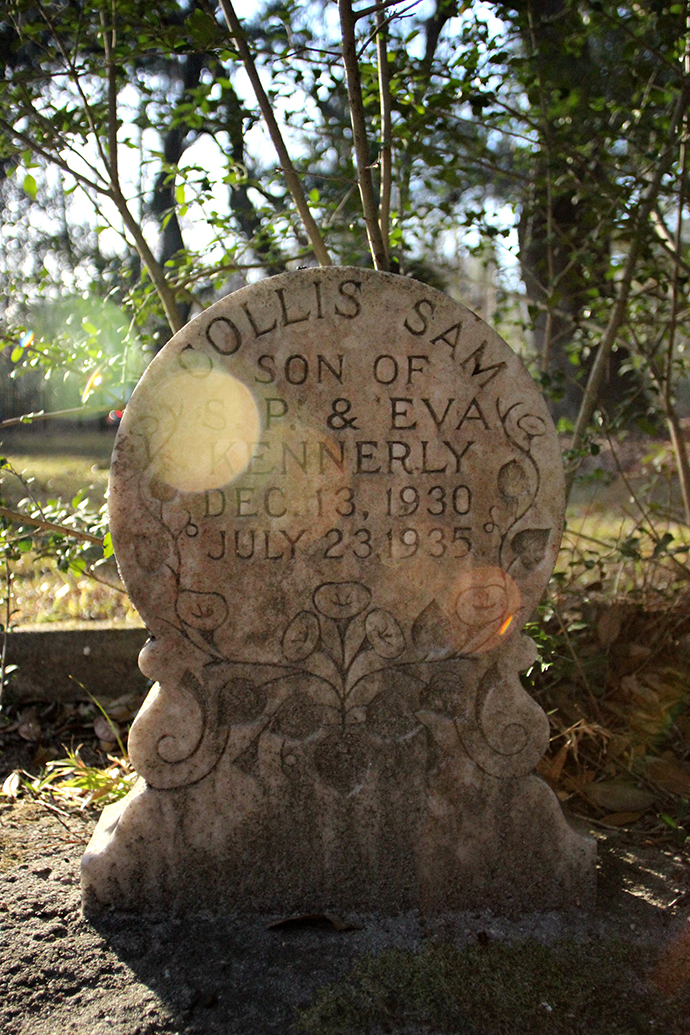
The churchyard also contains a handful of graves and tombstones, including that of Colonel William Bull, a prominent figure in the development and design of Savannah—he also funded the construction of the church and it was called "Sheldon," after his plantation. The tombstones vary widely in design and age and they're scattered kind of haphazardly around the property. There were several groups of people that visited the ruins while we were there so it doesn't exactly feel abandoned—but I'm glad that despite the many attempts at destruction, the Old Sheldon Church is still accepting visitors.

Charleston: Unitarian Church Cemetery

We went on a ghost tour on our first night in Charleston, which is one of my favorite ways to be introduced to a city. I've been on enough ghost tours now to realize that they're definitely lying to you, but the places they show you and most of the history is very real. I had the Unitarian Church Cemetery on my list already, but it was a stop on the tour as well—or rather the gate was, since the cemetery is closed and locked at night. Our guide told us that several people had inexplicably passed out while standing outside the gates—which can't possibly be true, right?—but his spooky stories made me even more eager to actually see the inside of the cemetery. We went back the next day, and were thrilled with what we found.


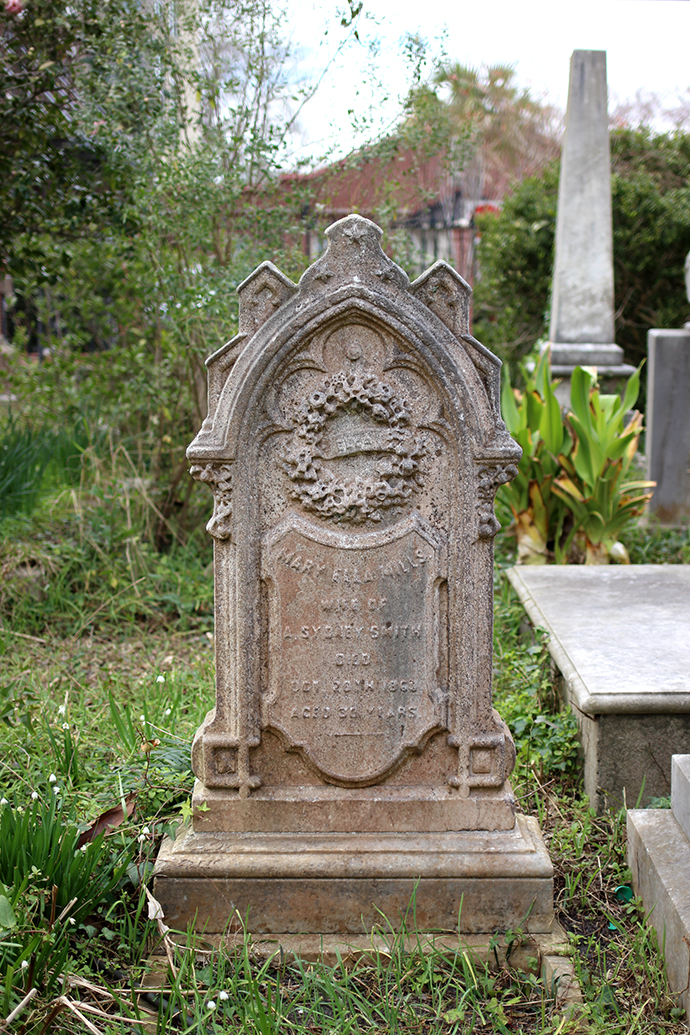
We walked by several churchyard cemeteries on our trip, but if you only go to one, Unitarian is the one to see. The Unitarian Church of Charleston was founded in 1787 and it's one of the oldest of its kind in the country. The graveyard is small, but it's packed with interesting headstones and a huge variety of plants. Upon first glance it might appear as if the cemetery is abandoned, but I overheard a woman explaining that "it actually takes a lot of maintenance to look this overgrown."


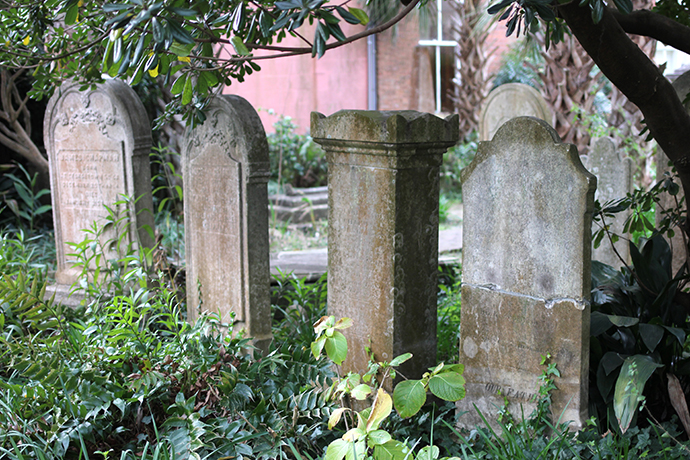


There is pretty much no better cemetery dressing than Spanish moss, and even though some of the trees had lost their leaves they were still dripping with the always-spooky moss. The graveyard has a Secret Garden-vibe that is so lovely—the entrance gate puts you in an alleyway so the cemetery is hidden from the street on three sides. I remarked immediately after entering that this was one of my favorite cemeteries, a distinction I don't make arbitrarily.
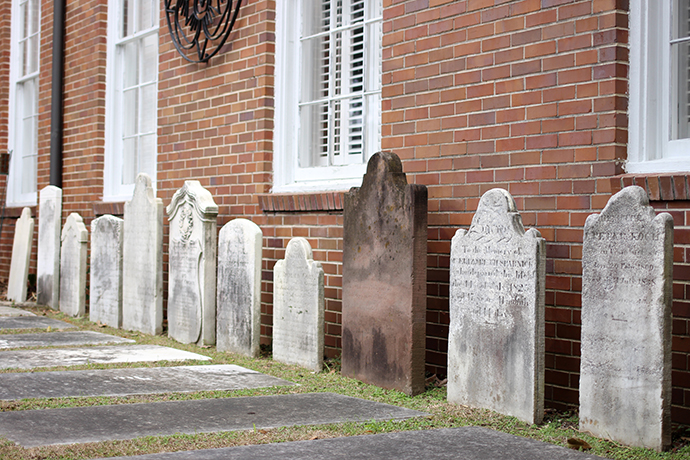


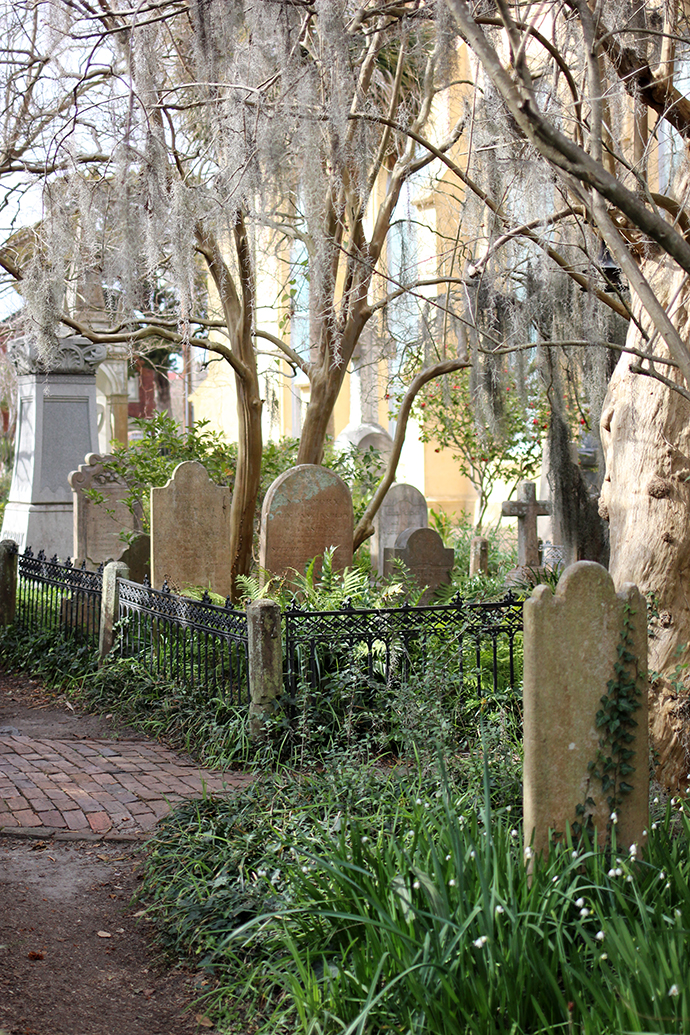


Neighboring St. John's Lutheran Church also has a graveyard, albeit not as picturesque as Unitarian's. They were once separated by a fence but now sort of bleed into one another so I'm counting them as pieces of a whole. That incredible "Memento Mori" skull stone is actually part of St. John's and is one of the best skull-and-crossbones renderings I've seen. The graveyard also had "DANGER DO NOT ENTER" tape wrapped around a few stones forming a scene straight out of my Halloween parties.
The Unitarian Church Cemetery is supposedly haunted by the ghost of Annabel Lee— subject of the famous Edgar Allan Poe poem—although we couldn't find evidence of her grave despite having a (poorly-drawn) map from our ghost tour guide. I don't need a famous ghost story to get me into a cemetery, but it doesn't hurt either.

Green-Wood: Snow

As much as I've visited Green-Wood Cemetery, I only just took my second snowy walk around the grounds on Saturday. My first snowy visit (here and here) was back in 2015, and I didn't have many chances during last year's virtually snow-less winter. When I realized that last week's snowfall would stick around for a few days, I knew that Green-Wood was my top priority.


Snowy cemeteries are a combination of two of my very favorite things in life, although in the city it has sometimes been a challenge to get into them. I was denied entry to Woodlawn on not one, but two snowy days, and Green-Wood closes its gates during most storms. I did manage to explore Trinity Cemetery in northern Manhattan after one of my failed Woodlawn treks, and the photos I took that day are still some of my favorites.


I was very excited to see Green-Wood again in the snow, but I was concerned that after countless visits I wasn't going to see much that I hadn't already seen or photographed before. I'm fond of saying that I could explore places like Green-Wood forever and still manage to see something new, but I definitely think I'll eventually test the limits of that theory. Almost immediately, though, I veered into a part of the cemetery that I hadn't explored—and even if I hadn't, everything looks a little bit different in the snow.


I made some questionable decisions veering off of cleared paths to investigate interesting things—the snow drifts were almost knee-deep in places—but it was definitely worth a little slipping and sliding. I walked to Green-Wood from my apartment (stopping for diner breakfast halfway) and to me there is no more perfect way to spend a Saturday.

Bideawee Pet Cemetery

Bideawee Pet Memorial Park is the third pet cemetery I've been to, and I went only a week after visiting my second, the small but historic Clara Glen Pet Cemetery in New Jersey. Bideawee is a more than 100-year-old pet welfare organization serving the New York City area and Long Island. They have pet memorial parks in Wantagh and Westhampton on Long Island. I became interested in finding other pet cemeteries after visiting my (and America's) first, but the Bideawee memorial park had somehow eluded me until a co-worker who lives in Wantagh brought it to my attention.


The Wantagh location is enormous—larger than most human cemeteries I've been to—and we were there for hours without seeing everything. I've mentioned in my previous pet cemetery posts that they're the only cemeteries that make me tear up, and Bideawee was no exception. The epitaphs are so heart-wrenching, the portraits so endearing and the names reliably ridiculous.

The most famous resident of the memorial park is Checkers Nixon, "The Best-Known Presidential Dog to Never Have Lived in the White House." Checkers was Richard Nixon's cocker spaniel who became famous after Nixon (then a senator) mentioned him in a speech televised in 1952. Checkers was a campaign gift from a supporter in Texas, and he died at age 13, in 1964—four years before Nixon became President.


In addition to the large number of dogs and cats, Bideawee is the final resting place of a variety of other species including Speedbump, a tortoise who lived to 65; Buckaneer, the horse; an iguana named Godzilla; Mona the monkey; Pyewacket Quigley the duck; parakeets Sparky and Casey Hall; turtles Pretzel and Potato Chip; and pigeons Lindsey and Linde. They had an entire section for "smaller" animals like gerbils, birds and reptiles, proving that pets don't have to be cuddly or live long to make a big impact on their owner's lives.


While walking through a pet cemetery, it's impossible for me not to read most of the names aloud. They're all so wonderful—whimsical or complicated or traditional, most make me laugh through my misty eyes. We paid our respects to Admiral Alexander F. Mudge, Pinto Porkchops, Farnsworth, Jingles Smith, Lady Dodo, Tiny, Daisy Julian, Mustard, Woofie Von Hugel, Beethoven, Potato, Bagel and Pussy #1, among others.
Even if you're not a pet person, you can't deny the impact that these dumb creatures have on their owners and the people that love them. Human cemeteries feel stark and impersonal after you walk through a pet cemetery filled with epitaphs such as "our precious baby," "a piece of my heart lies here," "always remembered, always loved," "my best friend," or simply, "irreplaceable."

Old Burial Hill
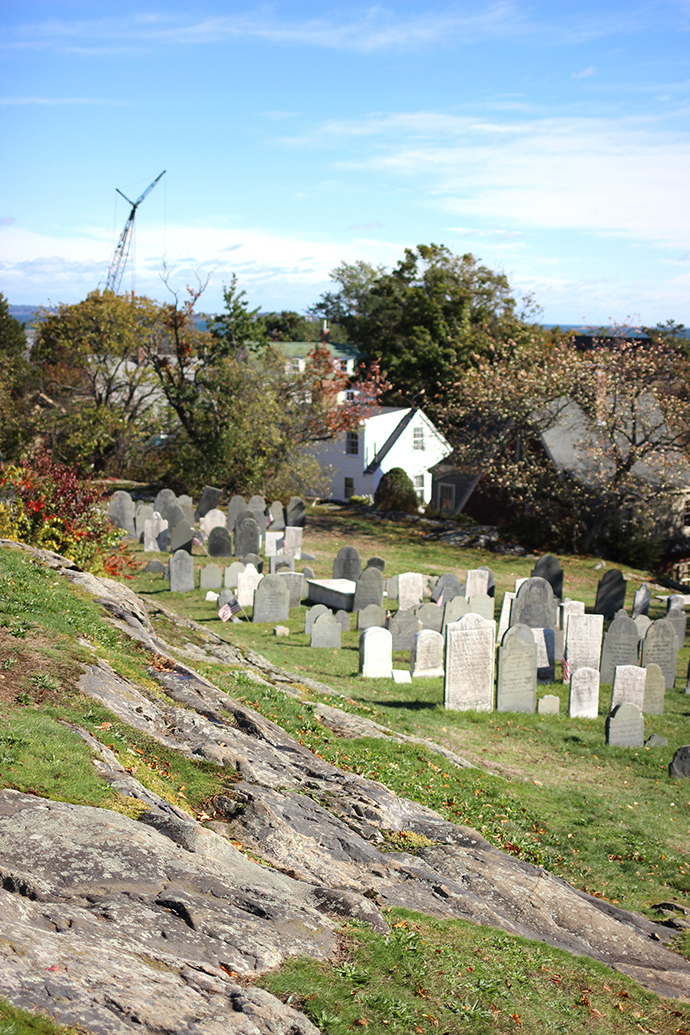
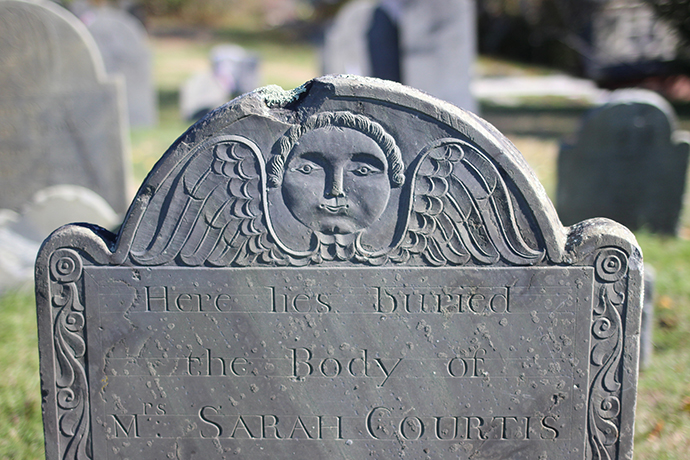
On Halloween I posted about the proliferation of skull- (and crossbones) adorned stones at Old Burial Hill Cemetery in Marblehead, Massachusetts. Despite being small and having the largest concentration of skull imagery I've seen in any cemetery, Old Burial Hill was also full of a wide variety of wonderful non-bone-related tombstones.
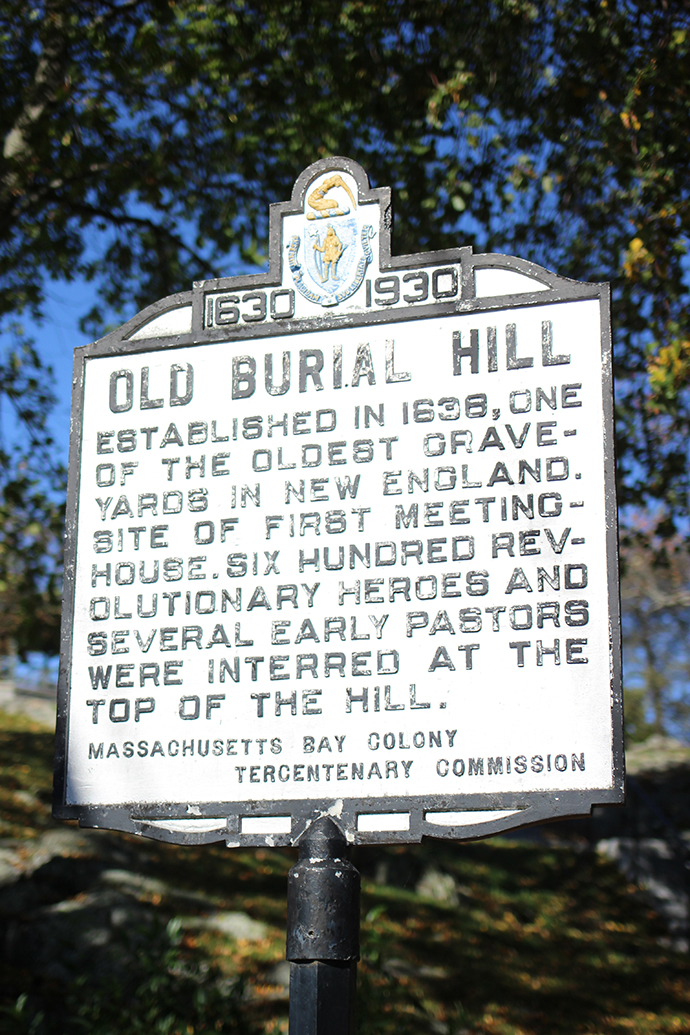
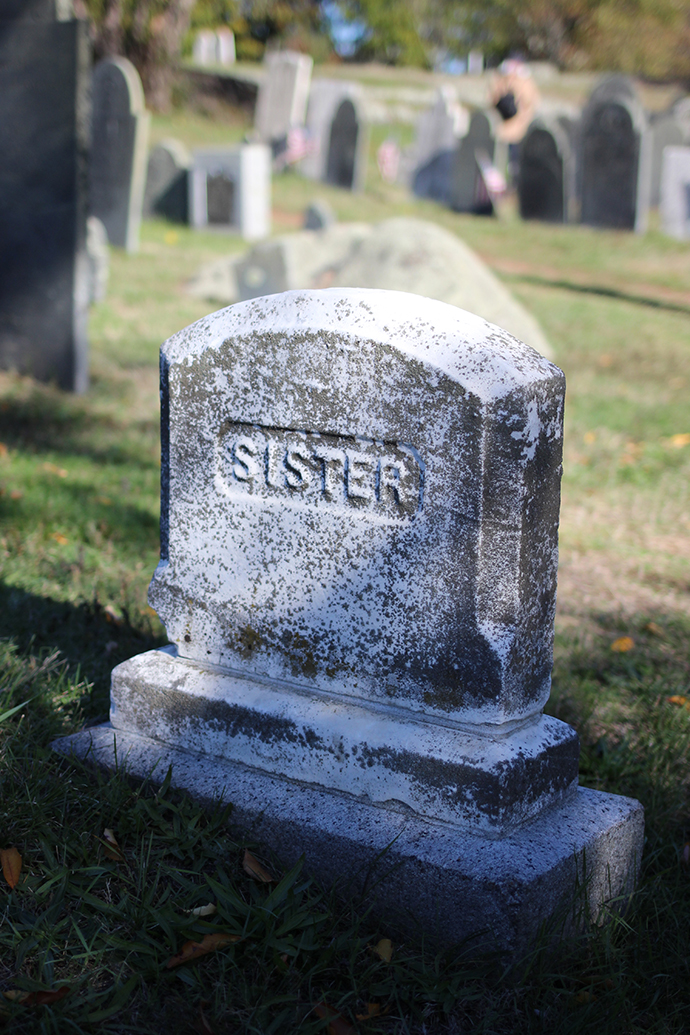
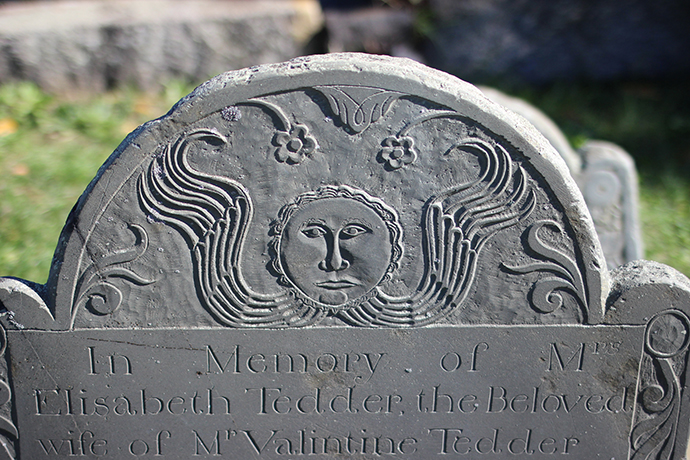
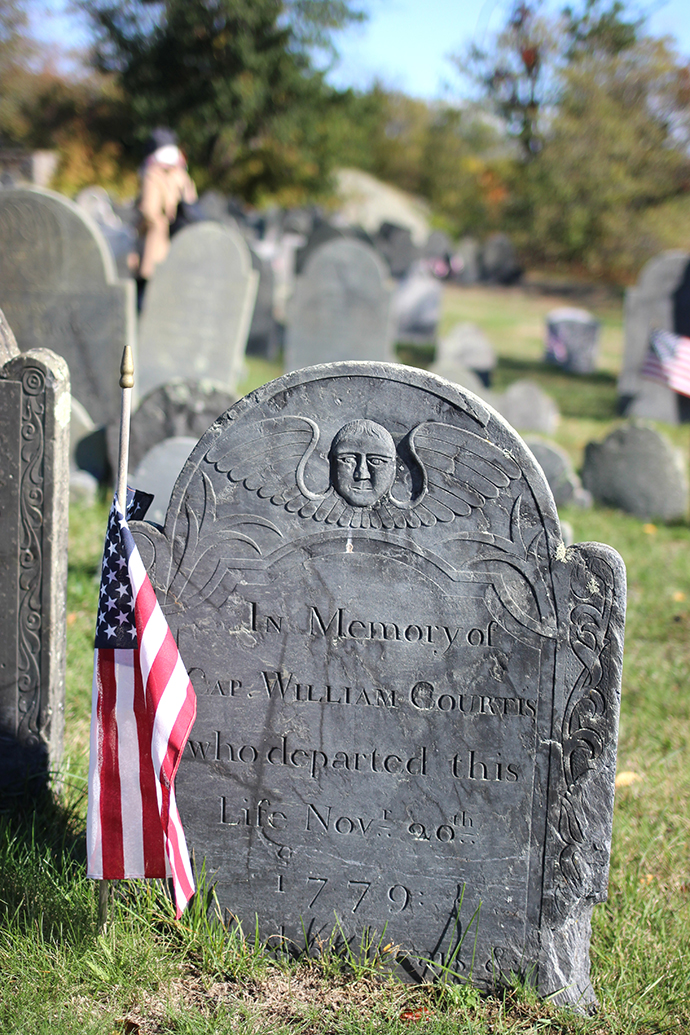
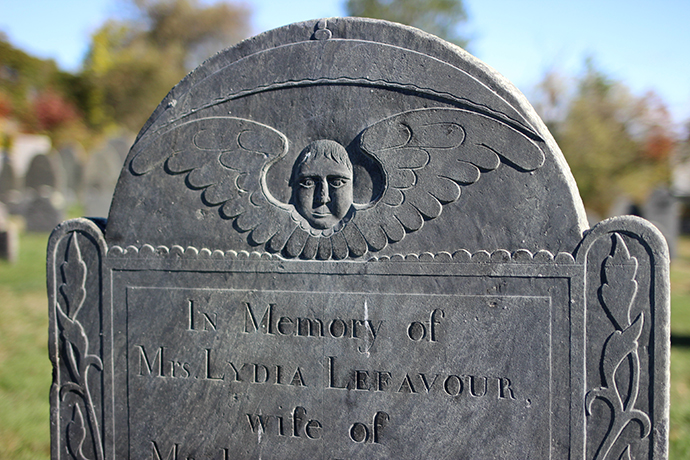
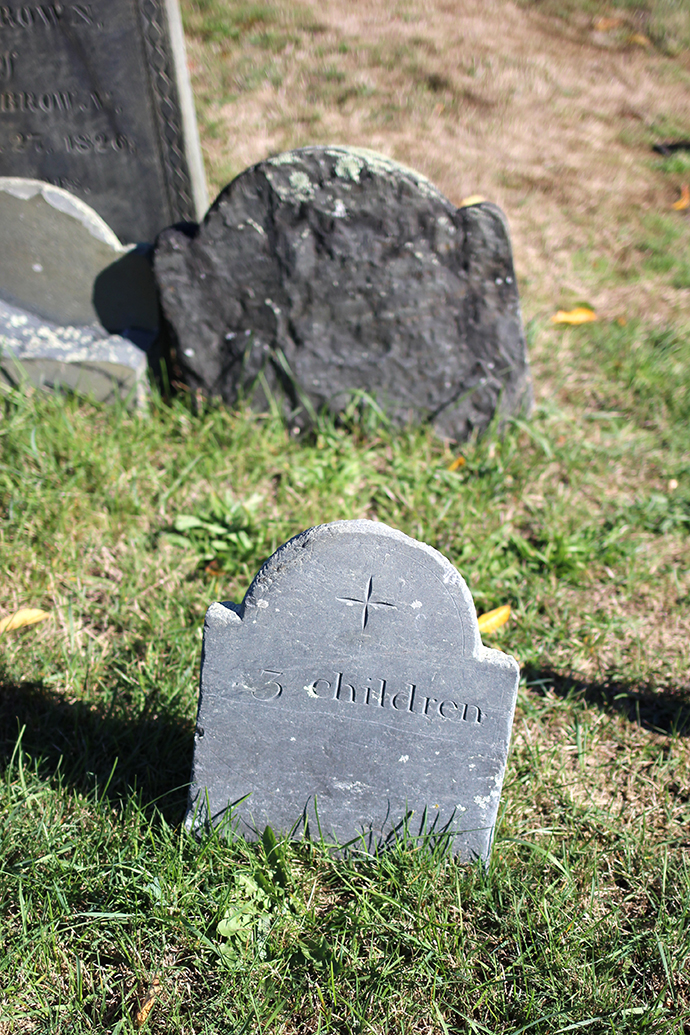


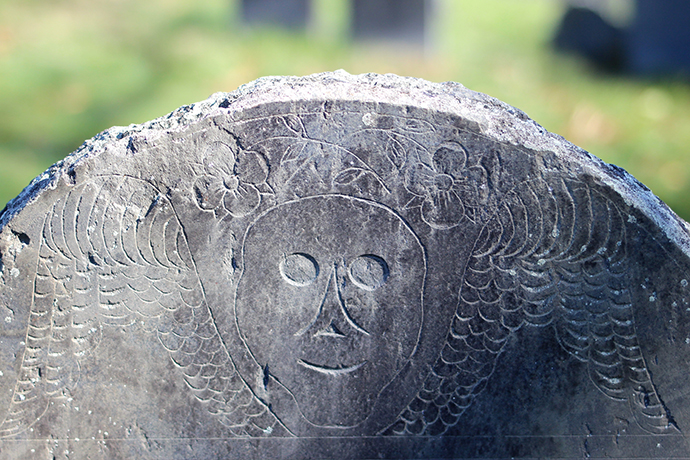
The cemetery was established on the site of a meeting-house and is, very literally, on top of a hill. The views of the harbor are breathtaking and there is a gazebo on the top of a rock outcropping that I could just sit in for days. In fact, the entire town of Marblehead was painfully cute—we drove through it on our way in and out of the cemetery, but its winding streets definitely deserve a closer look.
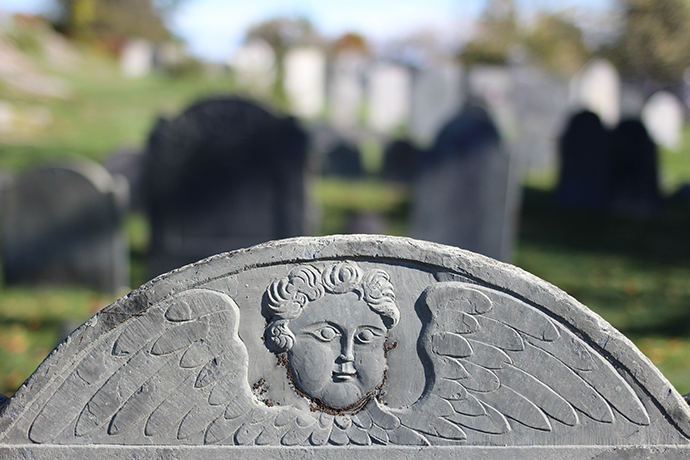
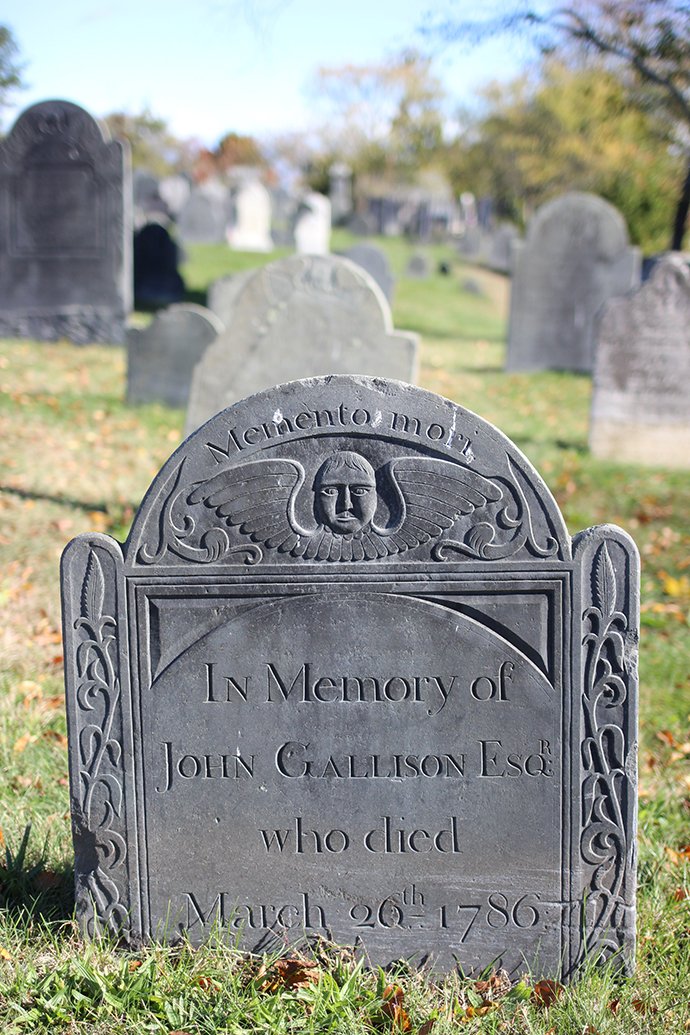
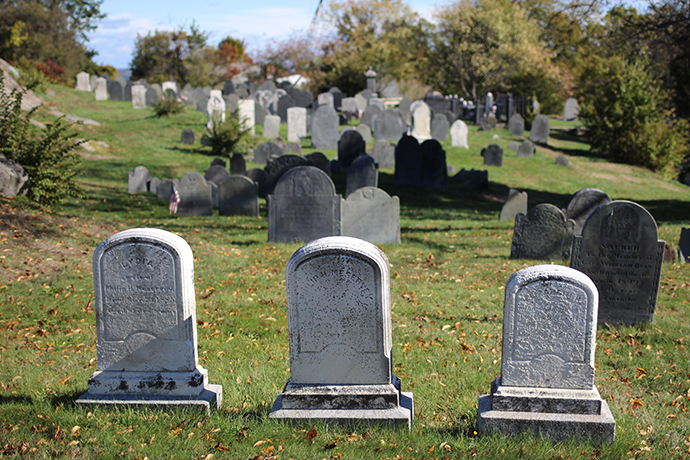
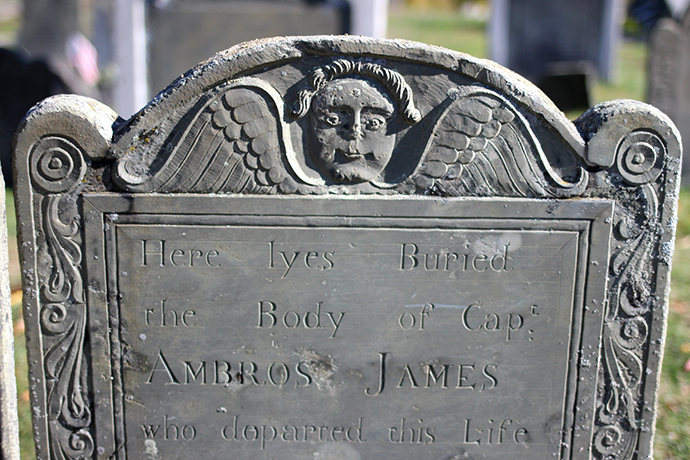

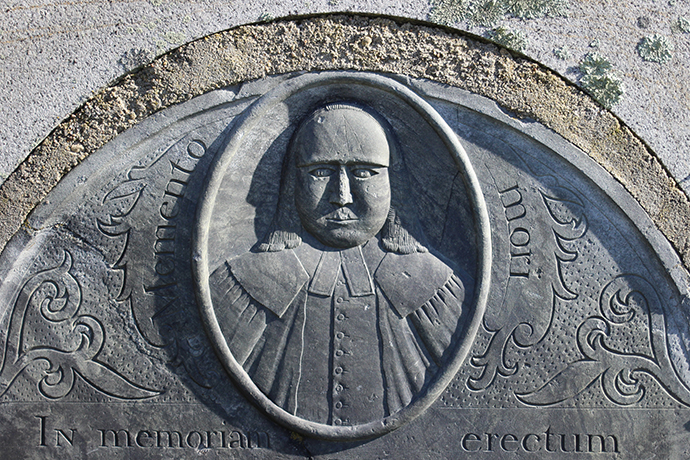

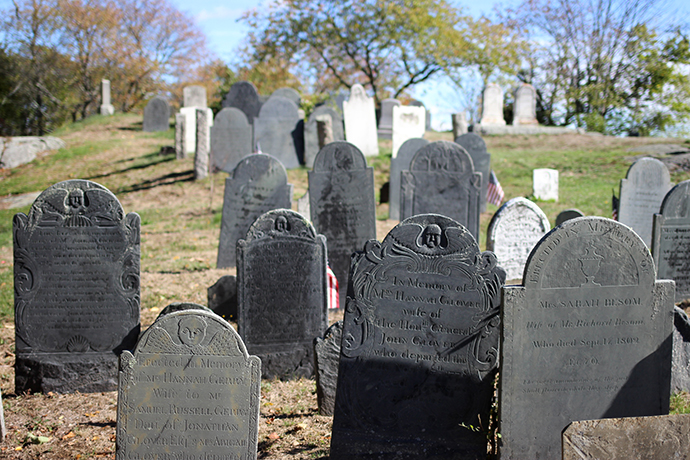
Although, in my opinion, there is nothing better than a skull motif, Old Burial Hill contains some really lovely winged cherubs, suns, portraits and tombstone lettering. It's the first place that I can recall seeing the words "Memento Mori" on an actual headstone (several, actually) and the carvings are all so remarkably preserved despite being hundreds of years old.

Best of 2016: Cemeteries
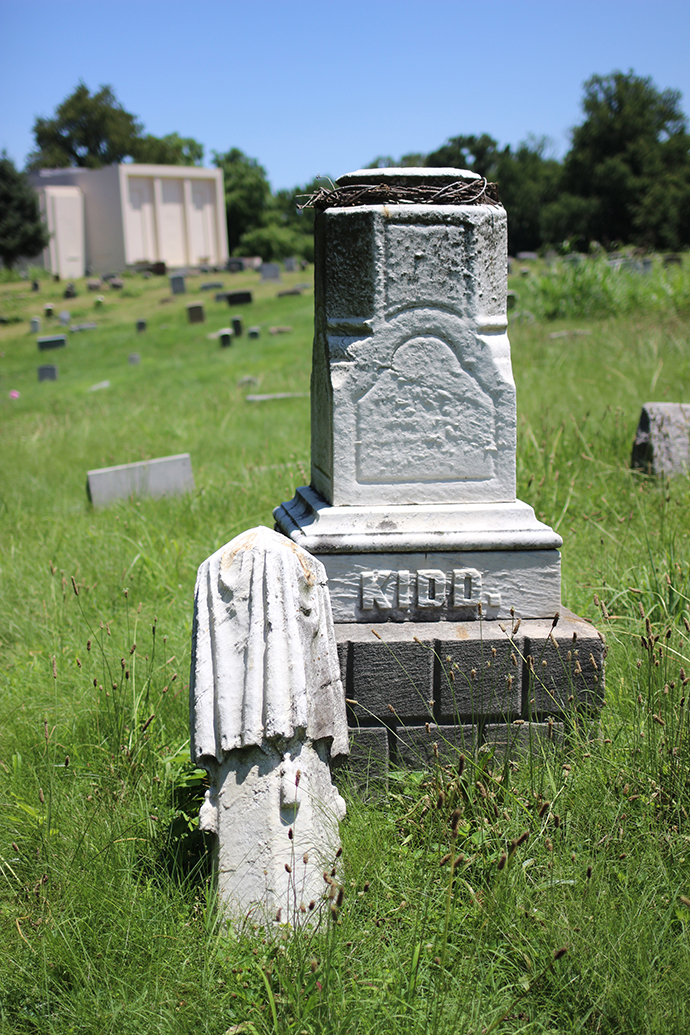
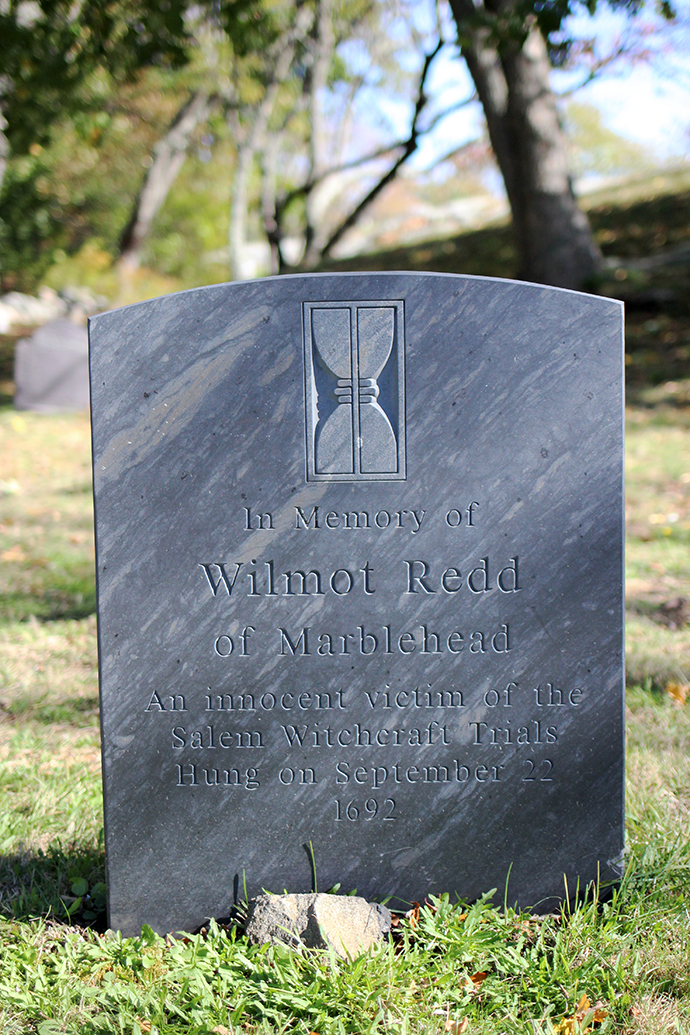
I think we can all agree that 2016 seemed like it was quite the garbage fire of a year—even if historically there have been objectively worse times to be alive. 2016, for all of its faults, did have some bright spots, and in an effort to not end this year in a pit of despair, I thought I'd do some "best of" lists because who doesn't love lists! First up: cemeteries!


2016 is the year I became obsessed with seeking out non-traditional cemeteries, or places with a little extra something to make them special. Abandoned places will always be interesting to me, and although Bayside is currently in better condition than it's been in the past, it's still a little rough around the edges. I loved it so much I visited it twice—once in the summer and again the fall—and I can't wait to see it covered in snow.

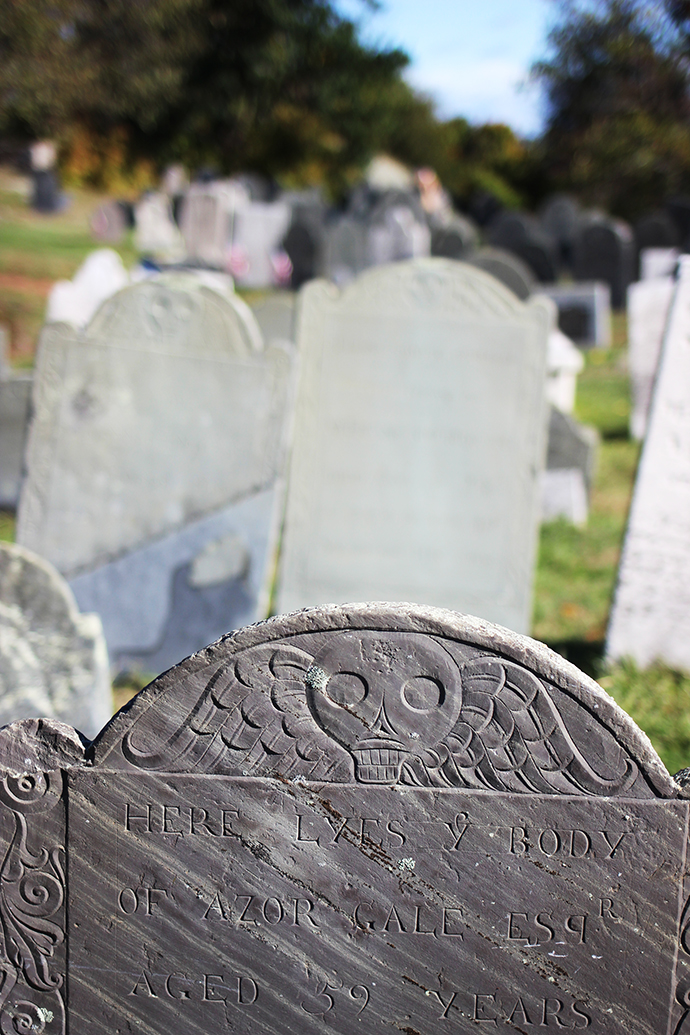

I planned a stop at Old Burial Hill on our way to Salem based solely on the fact that it was a filming location for the Halloween masterpiece, Hocus Pocus. The shear number of amazing skull-emblazoned tombstones may be what makes Old Burial Hill impressive, but the beautiful location, history and incredible condition of all the stones makes it unforgettable.
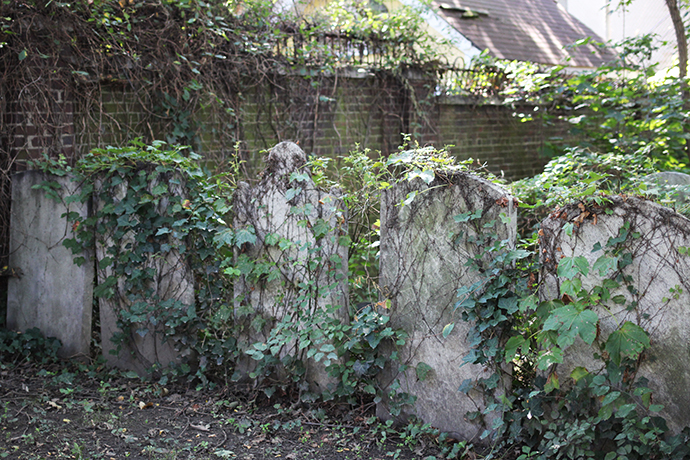


I never really considered it an attainable goal to wish for a house that comes with its own backyard cemetery until we toured the Lent-Riker-Smith Homestead. The family cemetery is small—with 131 residents—but historic, beautiful and fascinating.
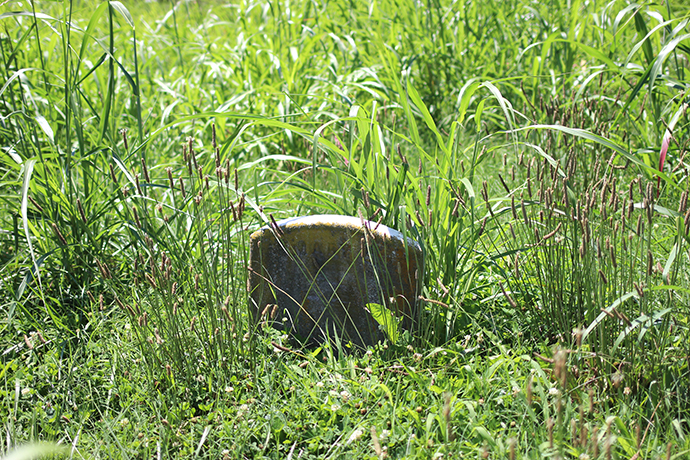
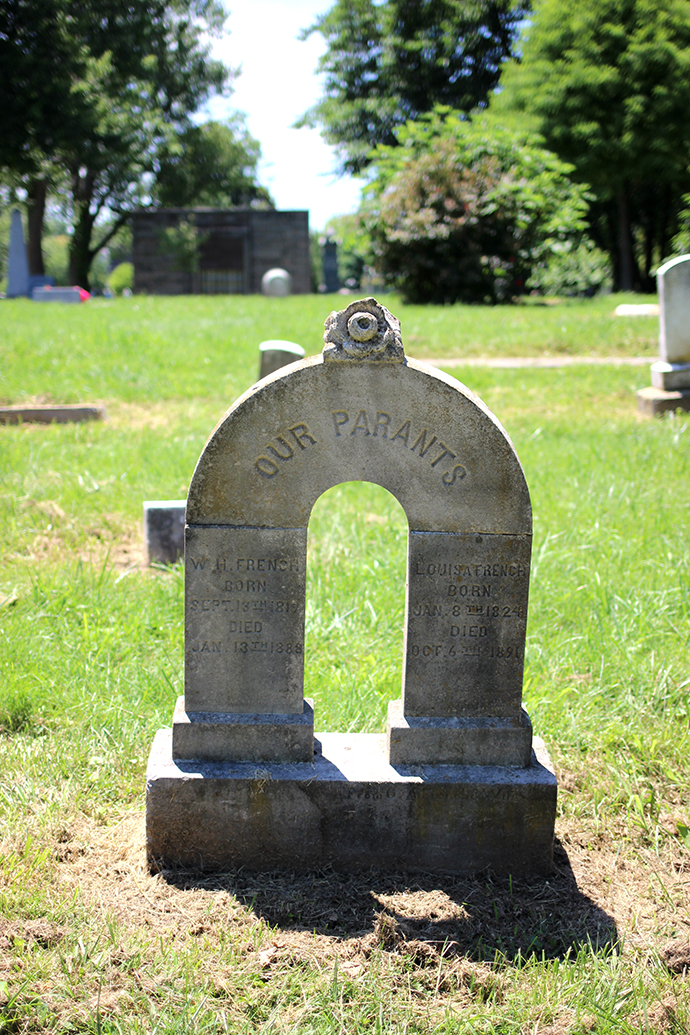
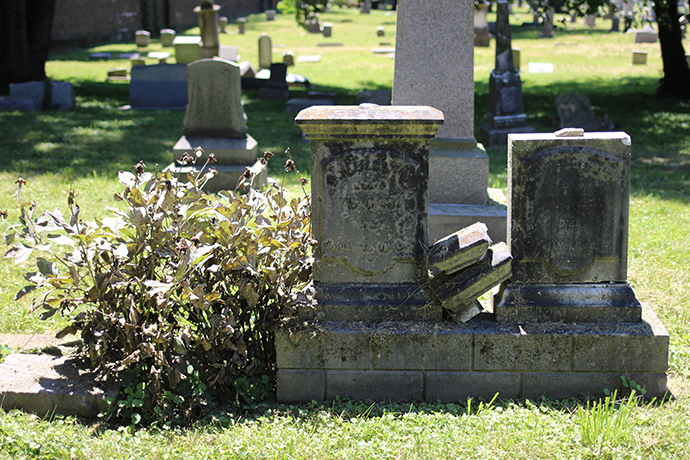
Eastern Cemetery was a highlight in a road trip full of highlights. Like Bayside, it was once abandoned and overgrown, but is now being tended to by a group of volunteers. Eastern also has one of the craziest backstories I've ever heard, and I'll be eternally grateful to the kind man who stopped us to share its sordid tale.
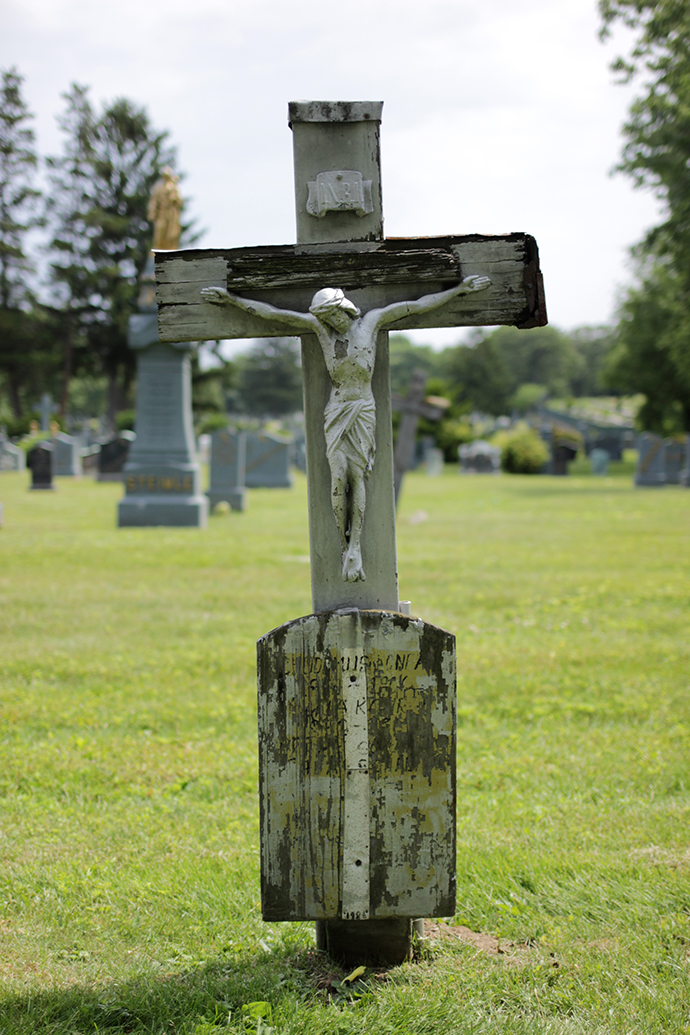


I'm still shocked a little bit embarrassed that it took me so long to explore Most Holy Trinity—especially when I discovered that it was just a few blocks from one of my best friend's new apartment. Fun fact: a body was dumped on the cemetery grounds and discovered only a few days after my visit (inspiring variations on this excellent headline: Body Found in Cemetery). I've only gone once this year, but like Bayside I suspect that Most Holy Trinity will be part of my regular cemetery visits in 2017.

St. Raymond's Cemetery + Typhoid Mary Grave

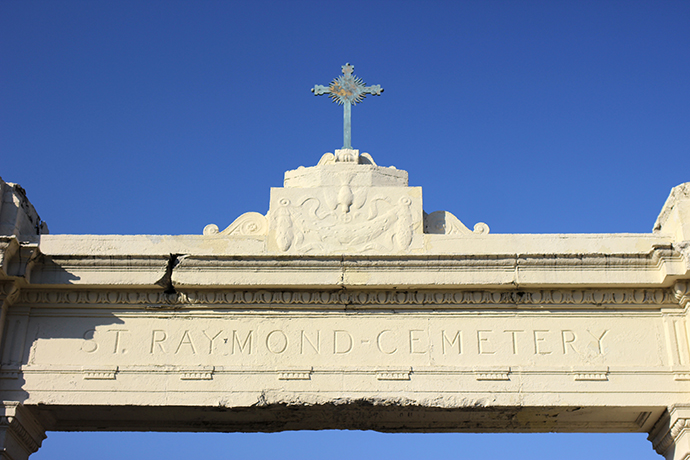
Back in October I decided to venture to St. Raymond's Cemetery in the Bronx to seek out the final resting place of Mary Mallon, aka Typhoid Mary. I researched the location of her grave and set out to find her—only to find myself wandering around St. Raymond's completely lost. Find A Grave notes the location as "St. Raymond's Cemetery (New)," but Mallon is actually buried in a newer section of the old cemetery. Sound confusing? Yes, it was. I was actually so frustrated that I nearly gave up the search, but after lunch decided to explore the old part of the cemetery so the day wasn't a complete loss (and then discovered that I didn't have a memory card in my camera so I had to buy one at Walgreens—I didn't have the best adventure luck that day).


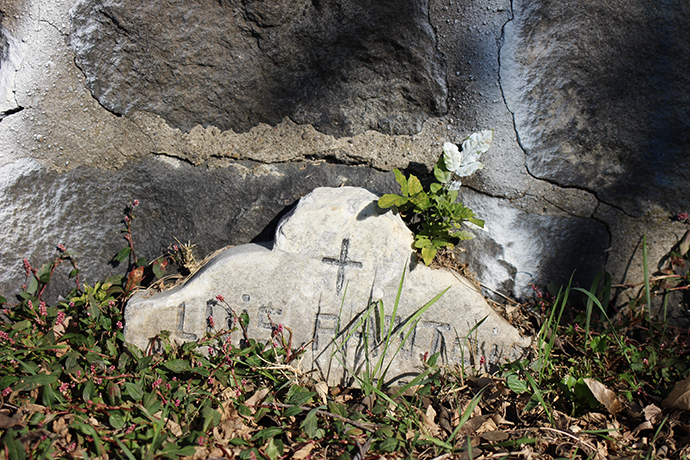
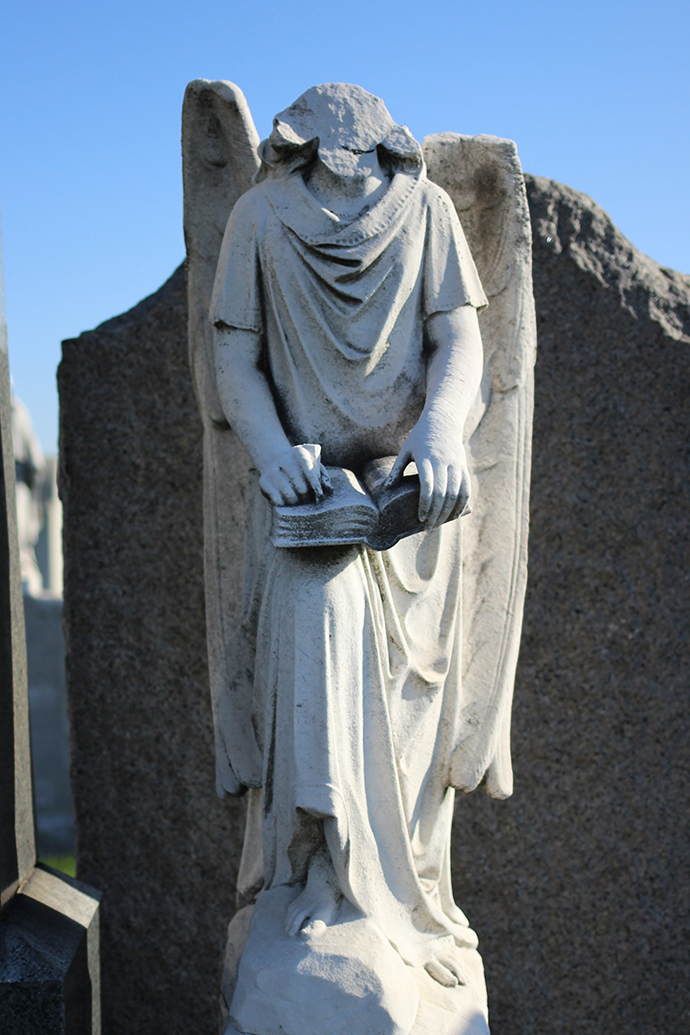
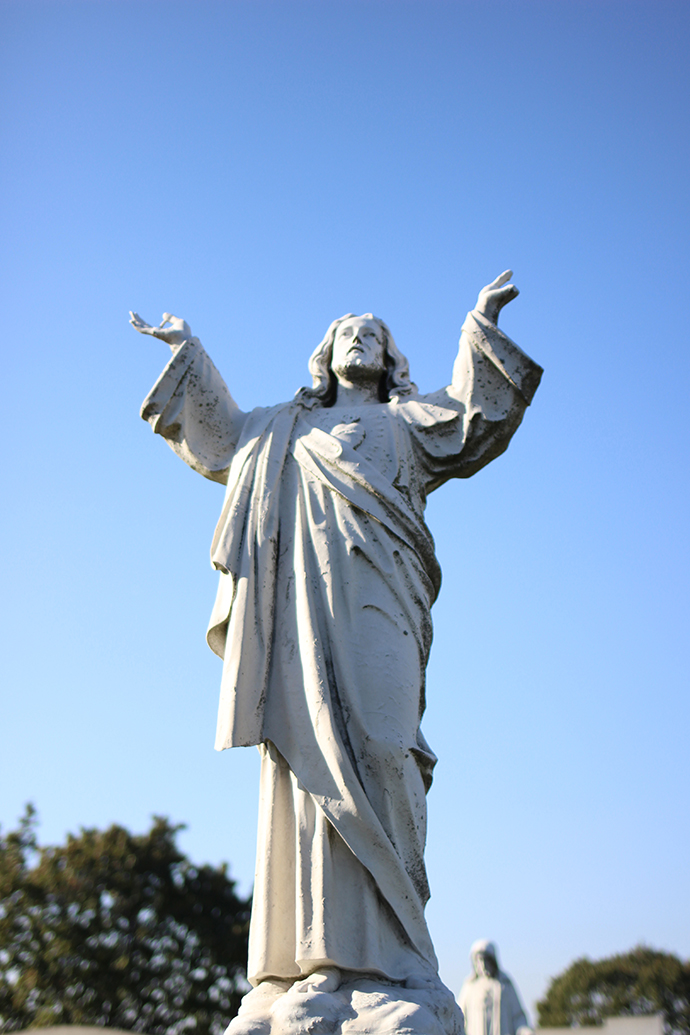
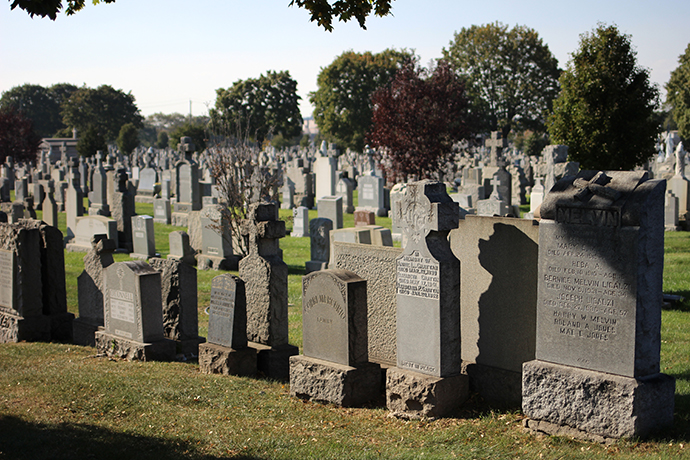
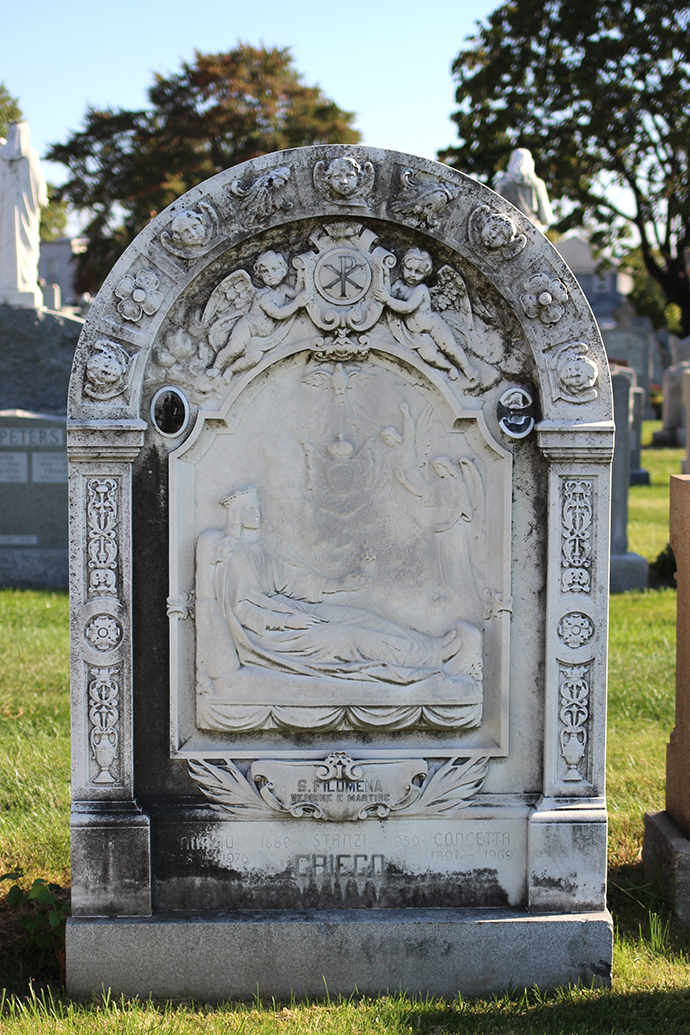
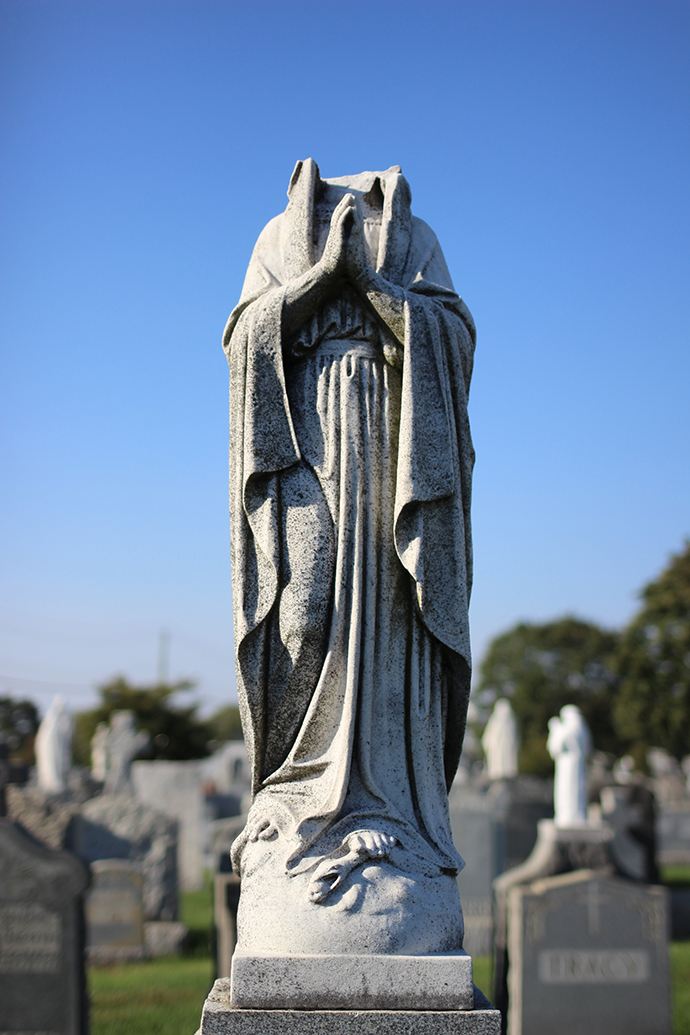
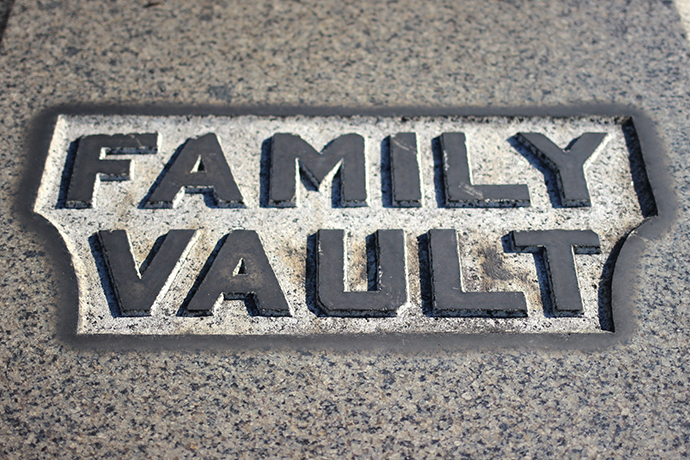
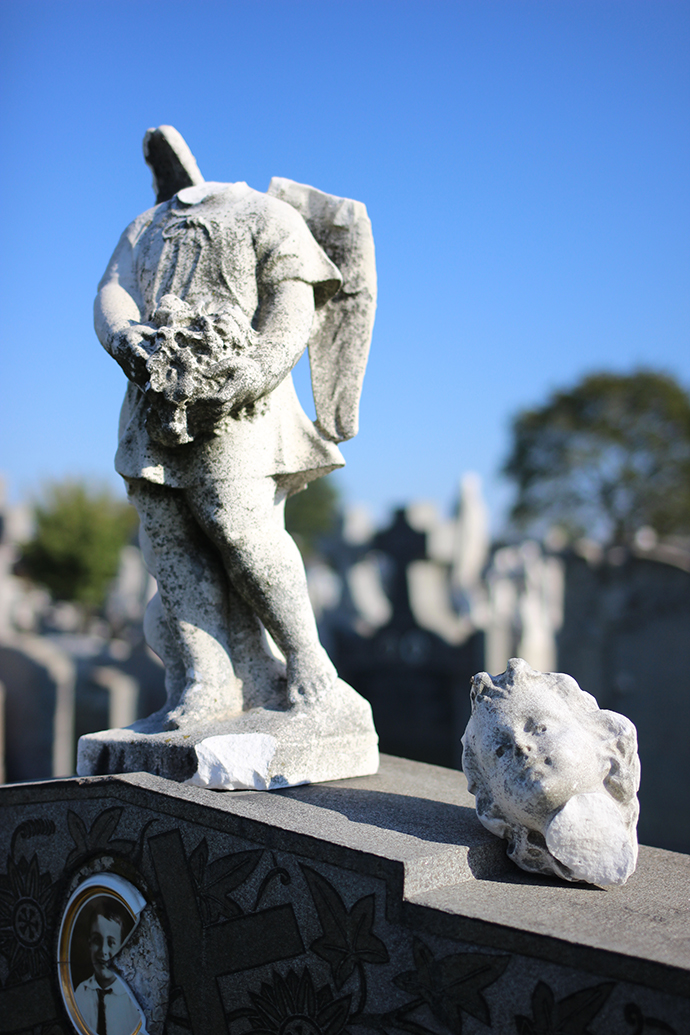

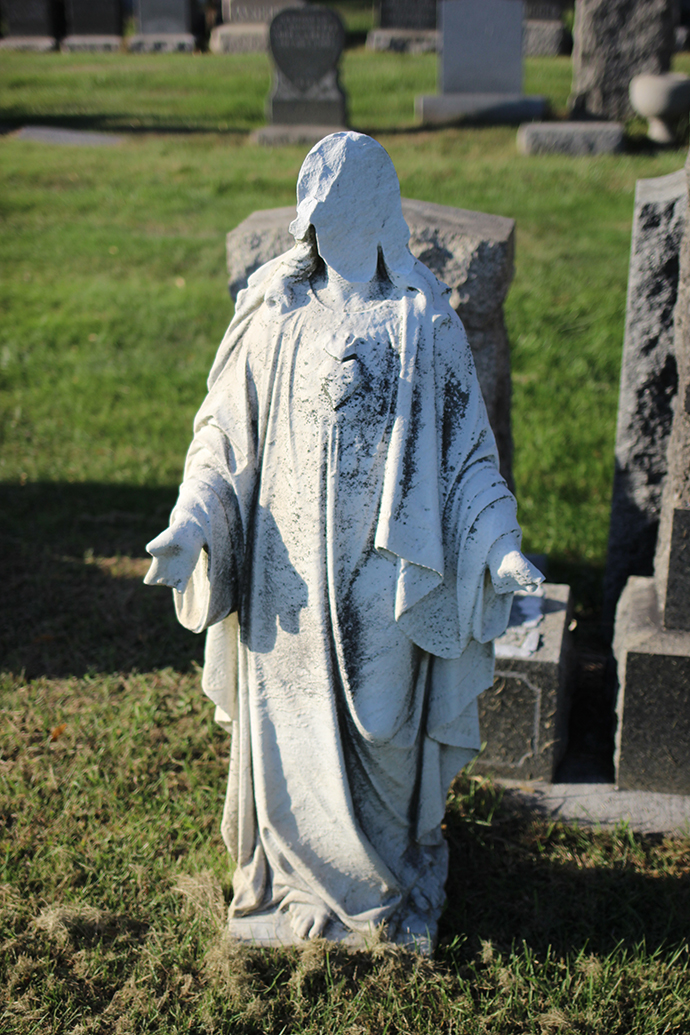
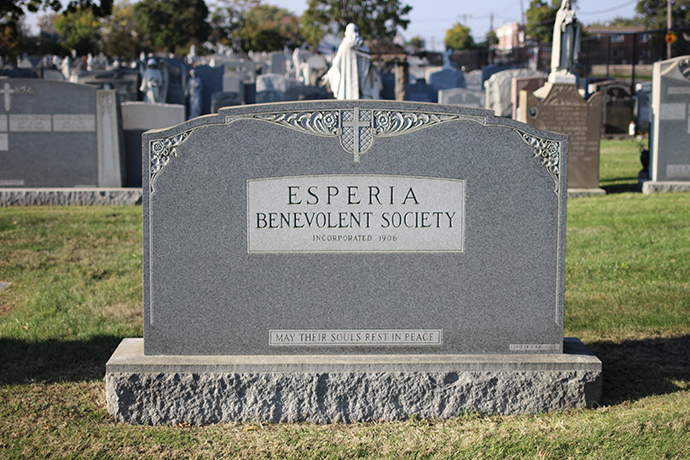
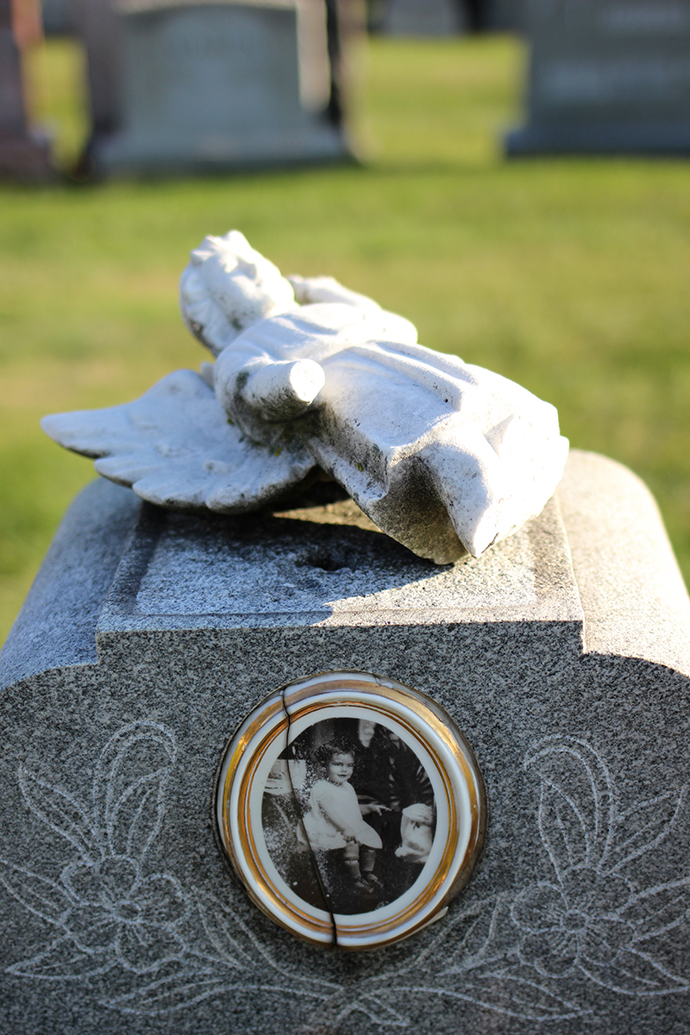
St. Raymond's is a Roman Catholic cemetery and is one of the busiest cemeteries in the US with approximately 4,000 new burials each year. The old section was opened in the 1870s and the new section was developed in the 1950s. The old St. Raymond's was full of wonderful things, including a lot of headless statues (like St. Michael's) and ceramic portraits (deserving of their own post). In 1932, Charles Lindbergh met with his son's alleged kidnapper at St. Raymond's to deliver $50,000 in ransom money.


Mary Mallon was born in Ireland, and immigrated to the US, where she notoriously worked as a cook for affluent families in New York City. When the families that she cooked for began contracting typhoid, she was quarantined twice on North Brother Island. She refused to adhere to proper hygiene practices (ew) and profusely denied that she was a carrier of the disease. She was, of course, and was in fact the first person identified in the US as an asymptomatic carrier of typhoid.

While exploring the old section, I realized that the section numbers started to match the naming convention of the directions I had for Mallon's grave—Division 15, Row 19, Grave 55—and although I had to cross a street into yet another section of the cemetery (St. Raymond's is huge), I finally found Typhoid Mary. I had been so frustrated and confused for most of the day that finding her felt like hitting the jackpot. I was also so mad at the lack of proper information that I took a screenshot of her grave's location on Google Maps—it's not exact coordinates, but if you're looking to pay your respects to Typhoid Mary, you at least have a head start.
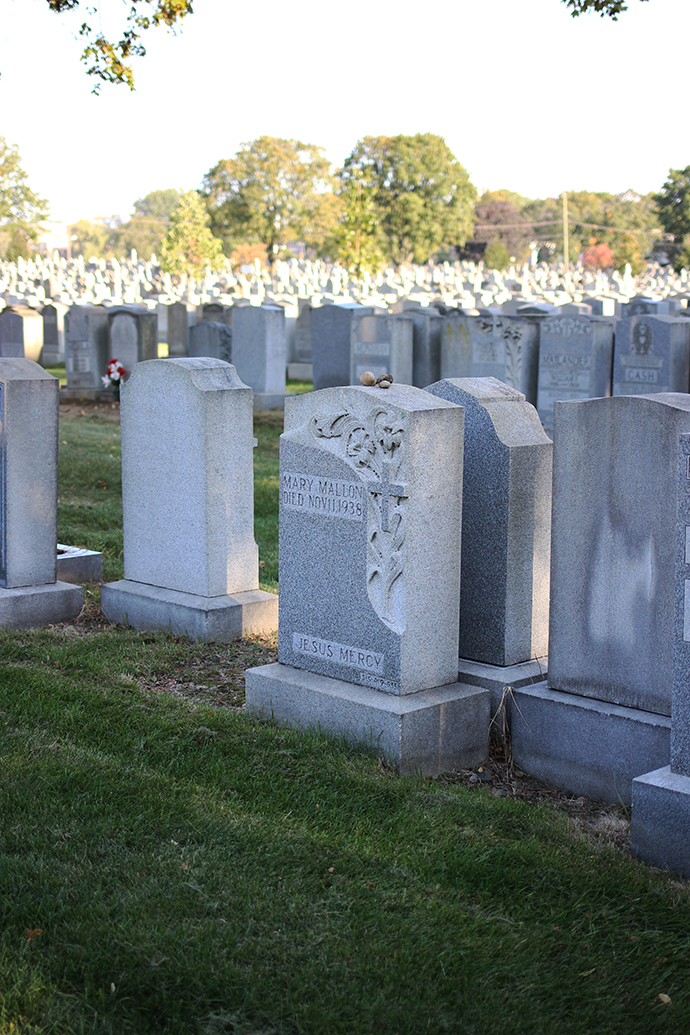
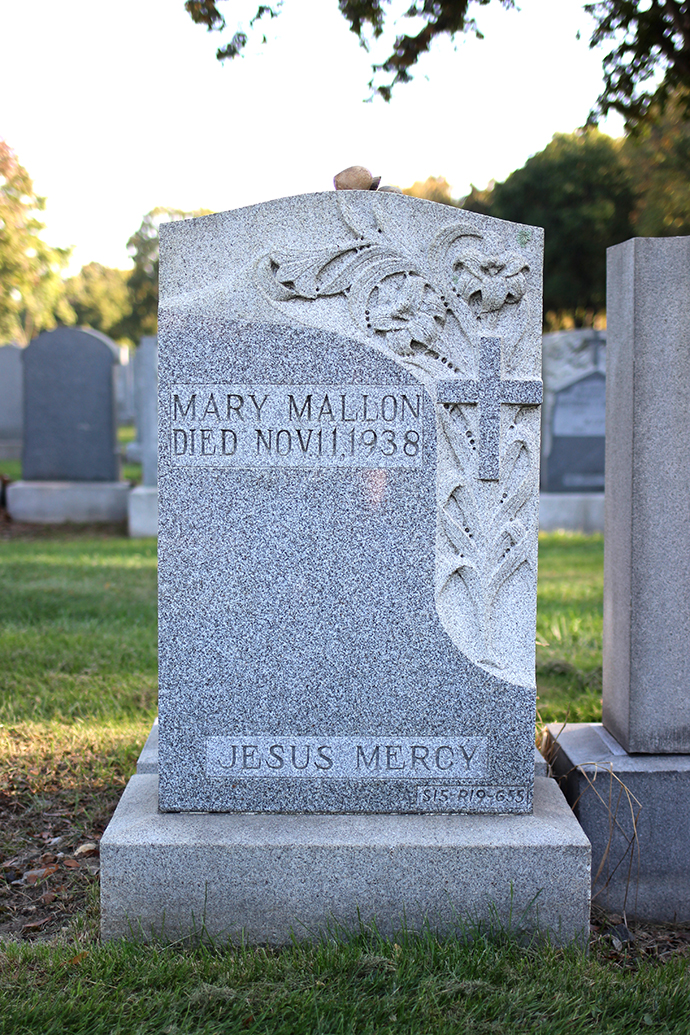
Mary Mallon died of pneumonia at age 69 in 1938, after living out her later years in quarantine at Riverside Hospital. At the time of her death, live typhoid was found in her gallbladder, and she was cremated and interred at St. Raymond's, beneath a headstone she paid for herself. No one is buried on either side of her—in a very crowded cemetery—which may be a coincidence, but still seems fitting.