

Archive
- Abandoned
- Alabama
- Arizona
- Bahamas
- Books
- California
- Cemetery
- Climate
- Colombia
- Connecticut
- Diner
- Egypt
- Feature
- Florida
- Friday Fun
- Georgia
- Holidays
- Illinois
- Iowa
- Italy
- Kentucky
- Louisiana
- Maryland
- Massachusetts
- Mississippi
- New Jersey
- New Mexico
- New York
- North Carolina
- Novelty Architecture
- Ohio
- Pennsylvania
- Personal
- Peru
- Project 365
- Protest
- Rhode Island
- Roadside Attraction
- South Carolina
- Tennessee
- Texas
- Travel Guide
- Virginia
- Walks
- Washington DC
- West Virginia
- Wisconsin

Cold Spring Cemetery
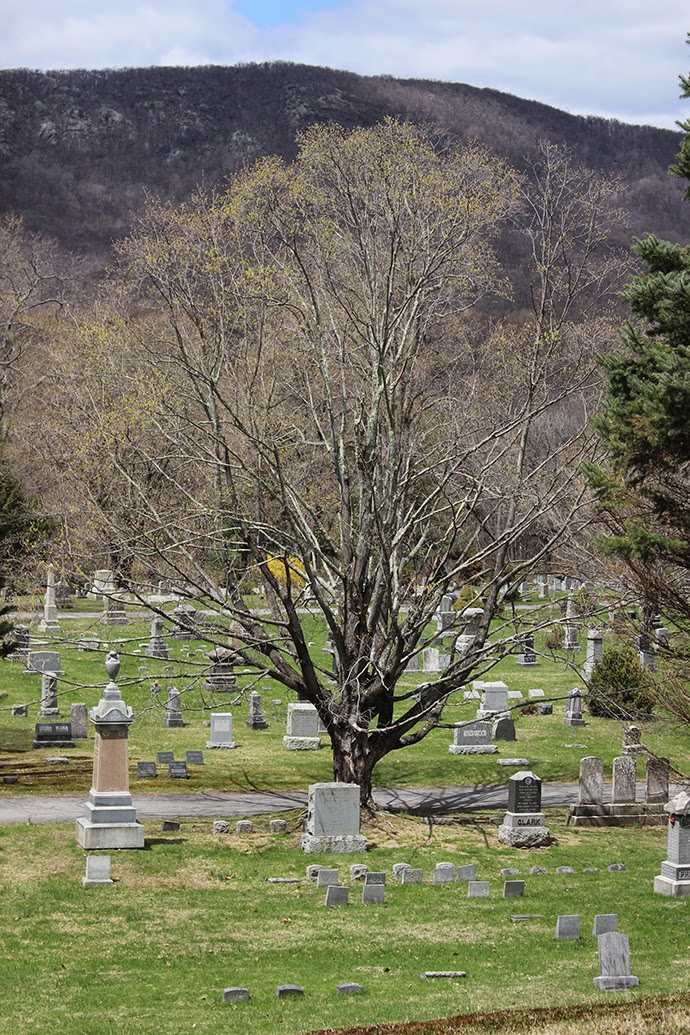
The weather has finally been appropriately spring-like and warm, so we've been trying to get outside every chance we can get. Two weekends ago my dude and I decided to go 1.5 hrs. upstate to Cold Spring, NY for a hike. Of course when I did a little bit of research, I found a cemetery about a mile from the Metro North station, so we added it to the itinerary.
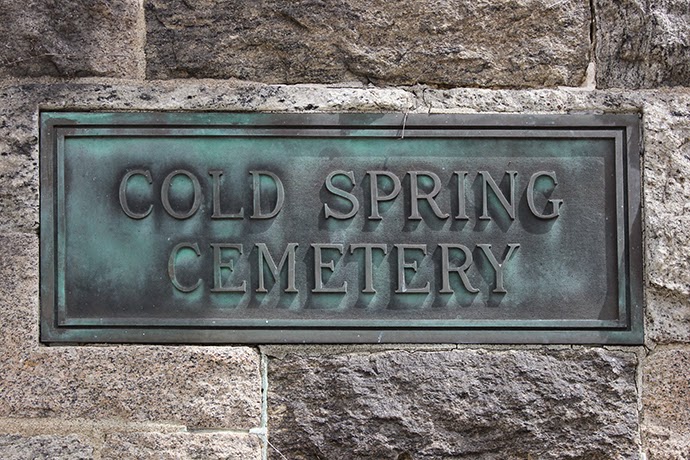
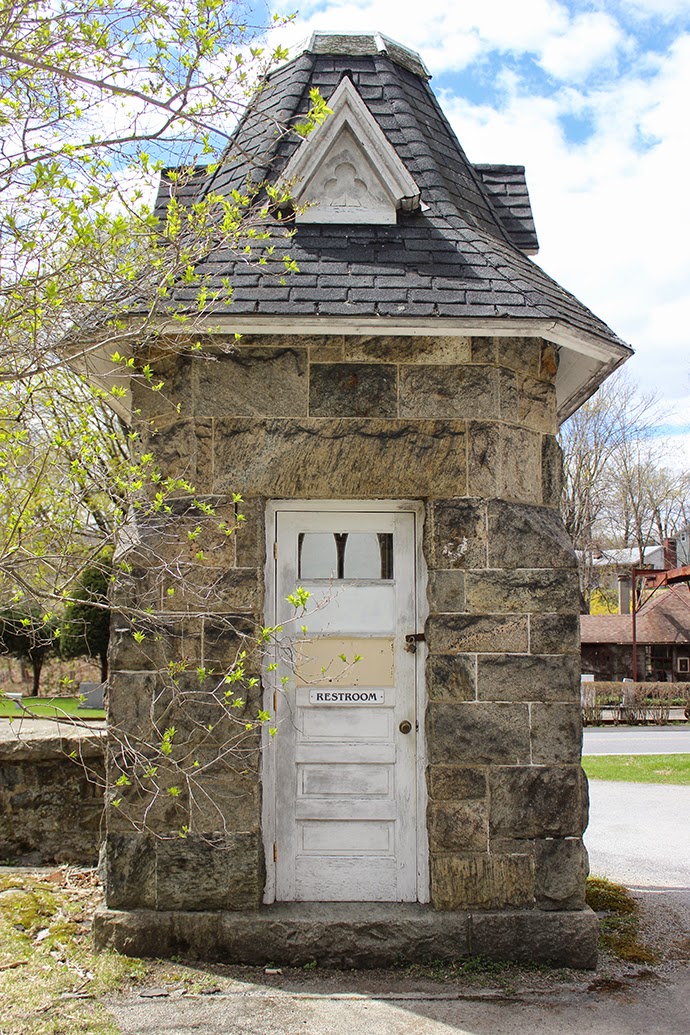
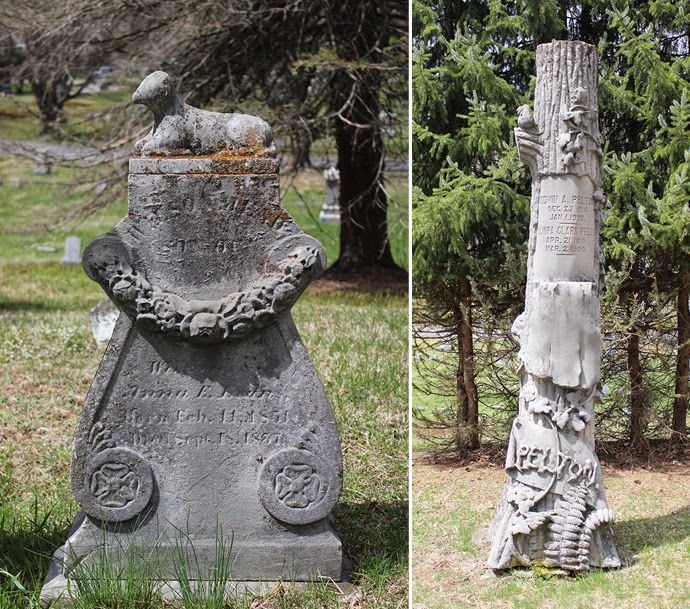
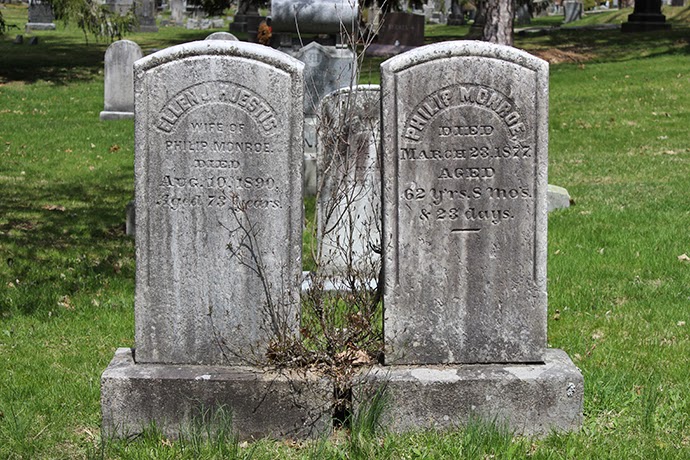
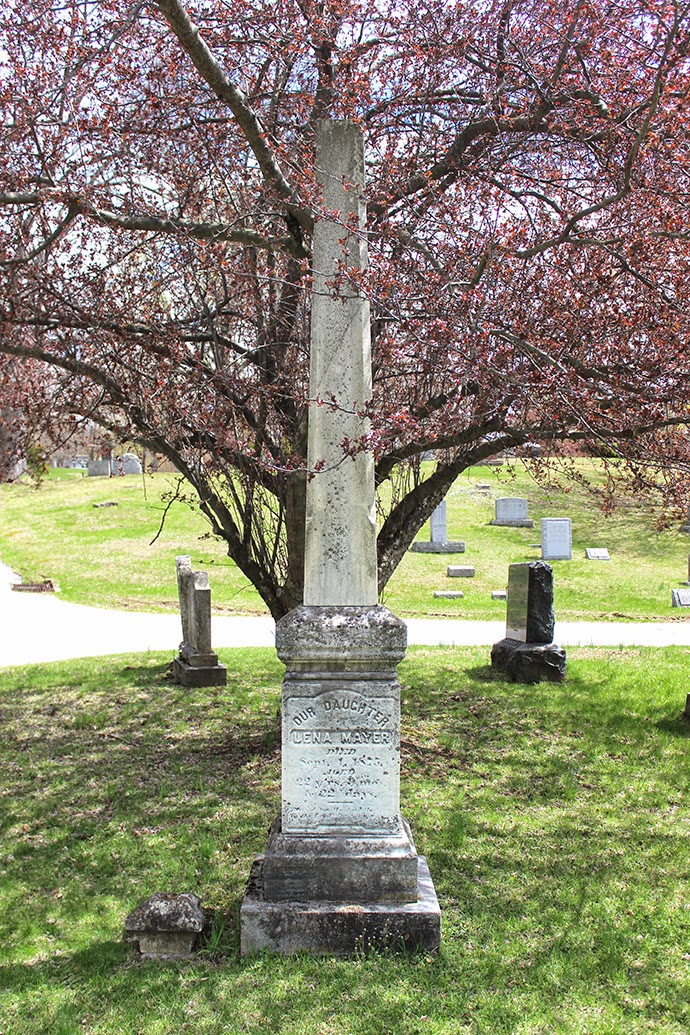
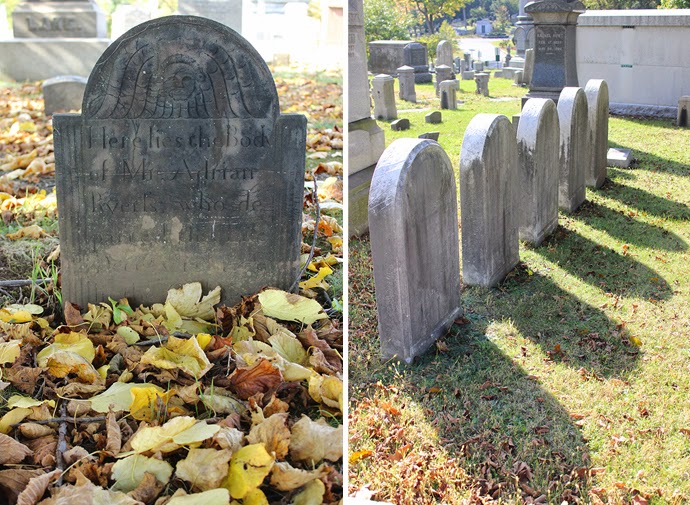
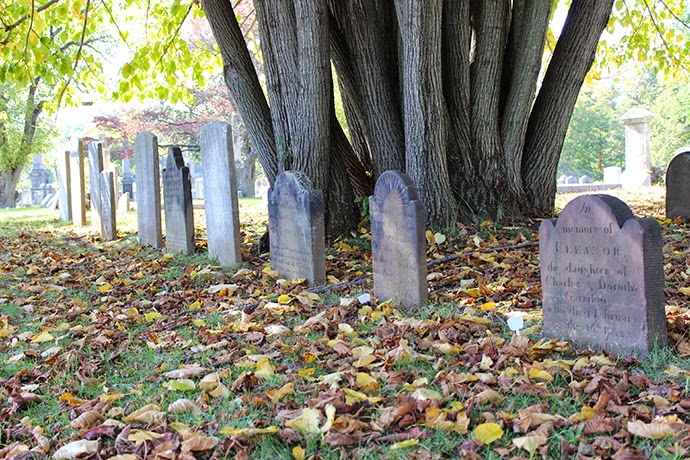
Cold Spring is an adorable town on the Hudson River, with a Main Street containing a few antique stores, a bar, a deli, and a coffee shop. The cemetery was established in 1862—it wasn't as historical or as crumbling as I prefer my cemeteries to be, but there were a few highlights that made it definitely worth seeking out if you're ever in the area.
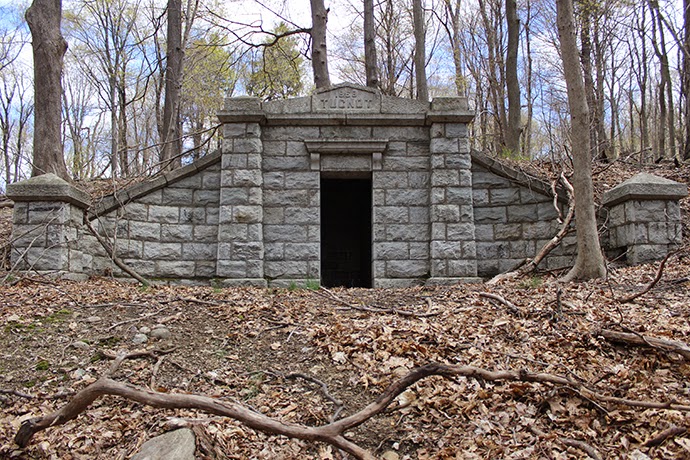
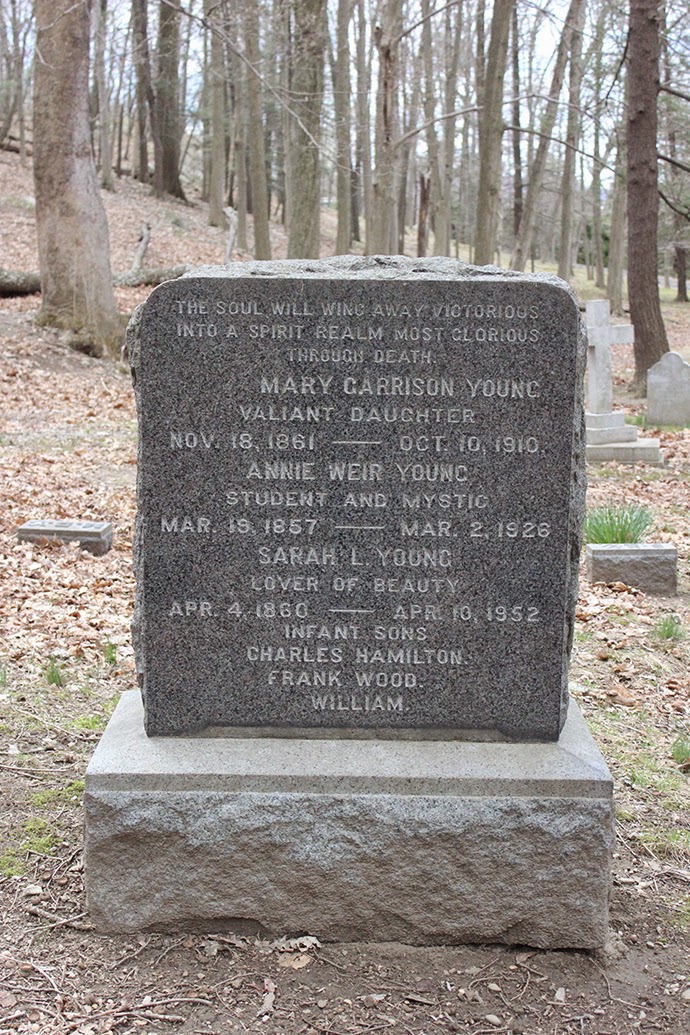
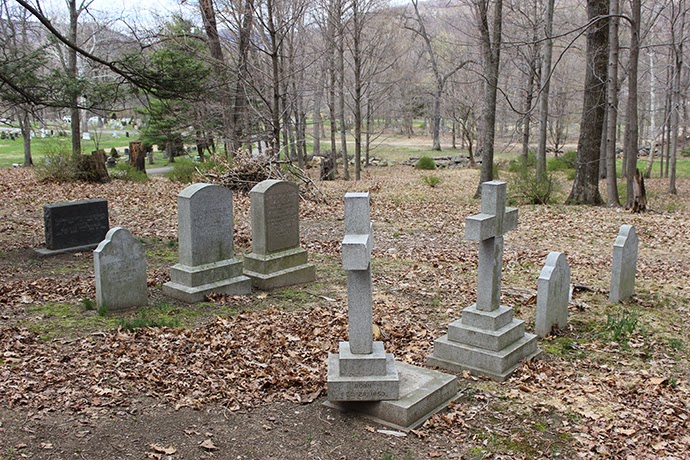
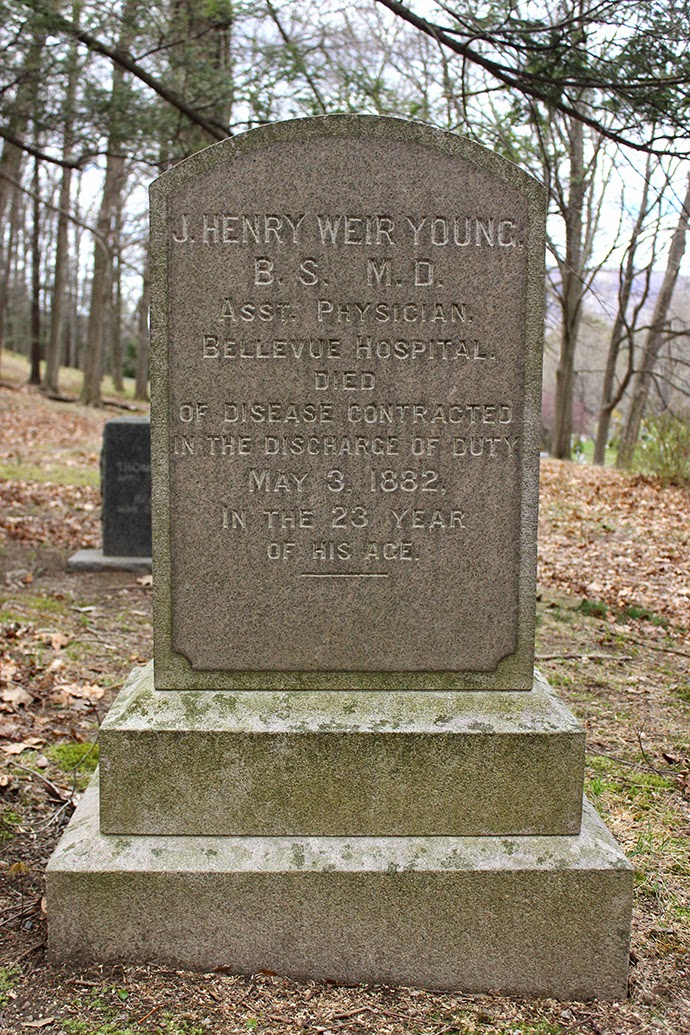
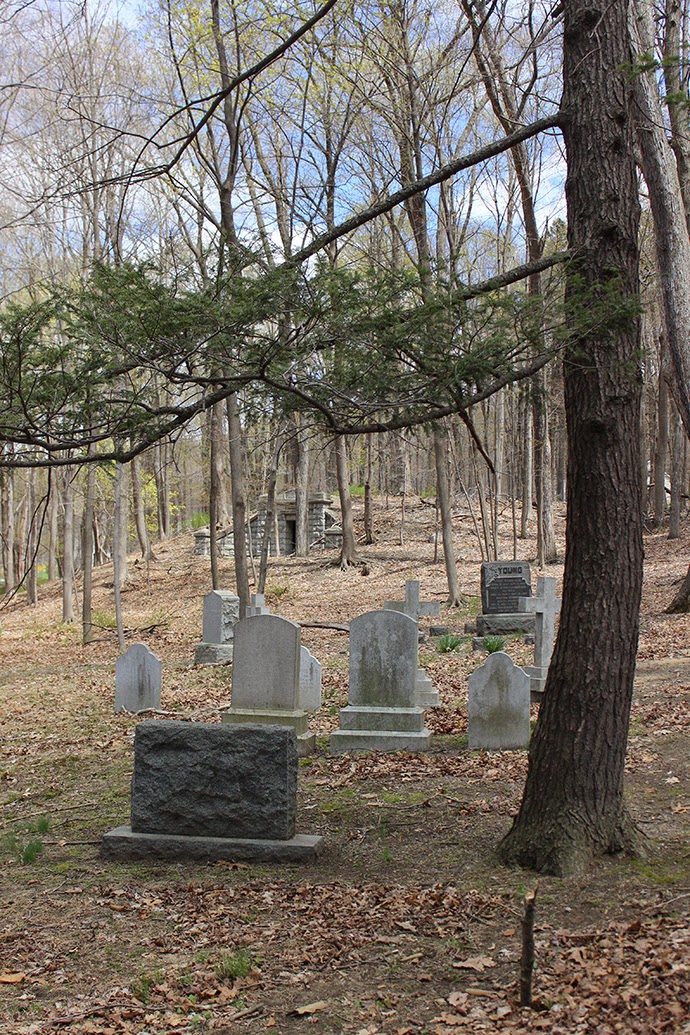
My favorite section of the cemetery was a seemingly-abandoned portion set off from the main area. The majority of the cemetery was very well-maintained, but there was a mausoleum and a handful of graves up a hill that looked strangely out of place. The first thing I noticed was the mausoleum because the door was wide open. This isn't something I'm used to seeing so I was super excited to check it out. Disappointingly there wasn't anything inside of the mausoleum, but it was still super creepy with its rusty door inexplicably propped open by a rock.
The oddly-placed graves were covered in leaves and mostly belonged to the Young family. Some of their headstones were quite intriguing, with my favorites being "Annie Weir Young, Student and Mystic," and "J. Henry Weir Young, Asst. Physician Bellevue Hospital, Died of Disease Contracted in the Discharge of Duty."
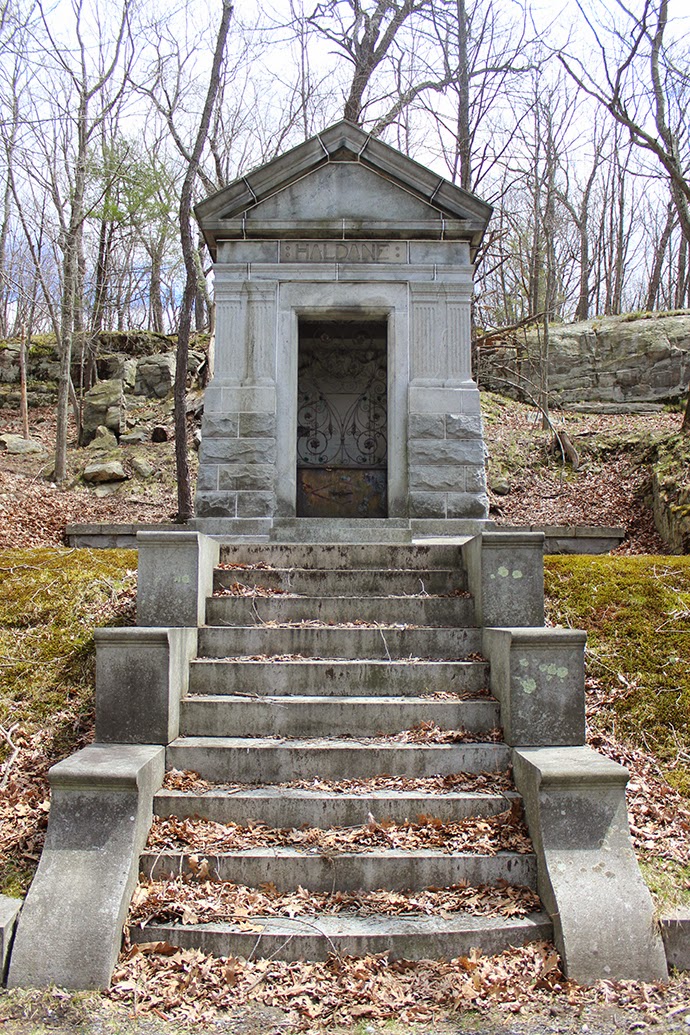
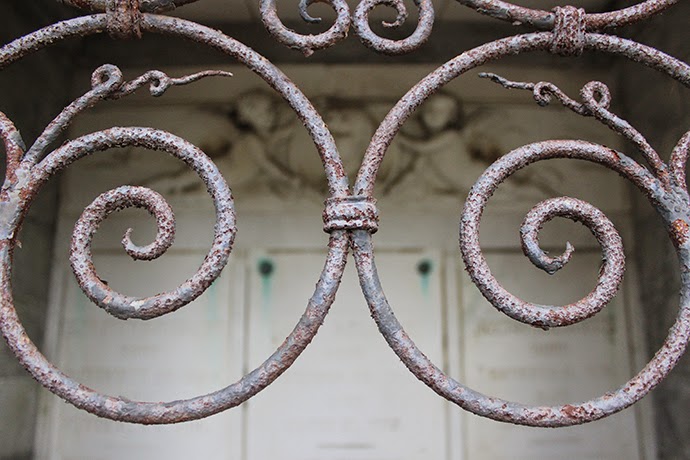
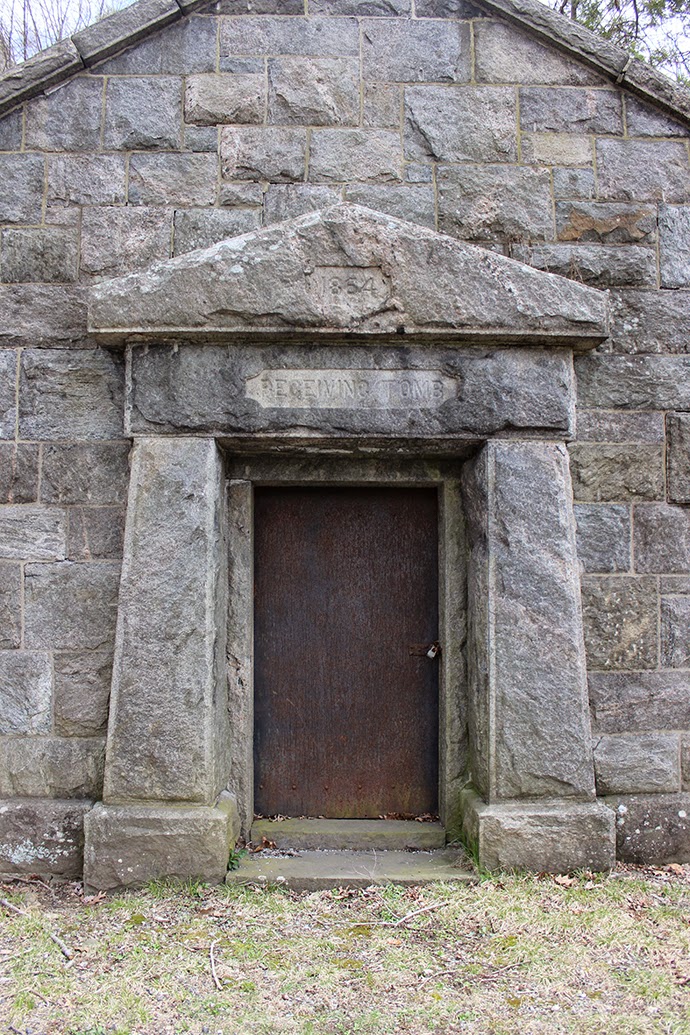
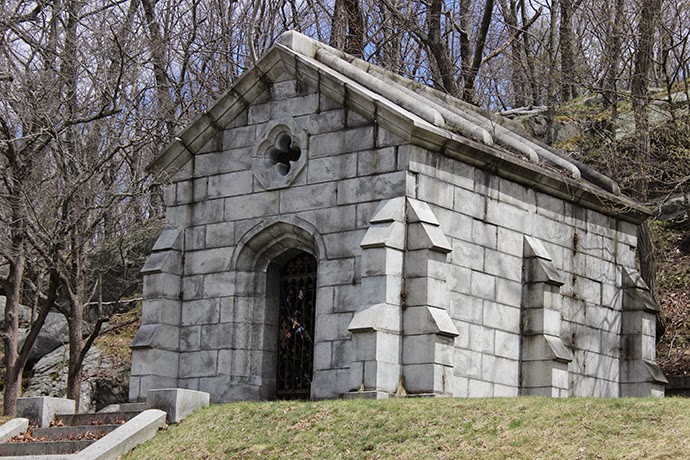
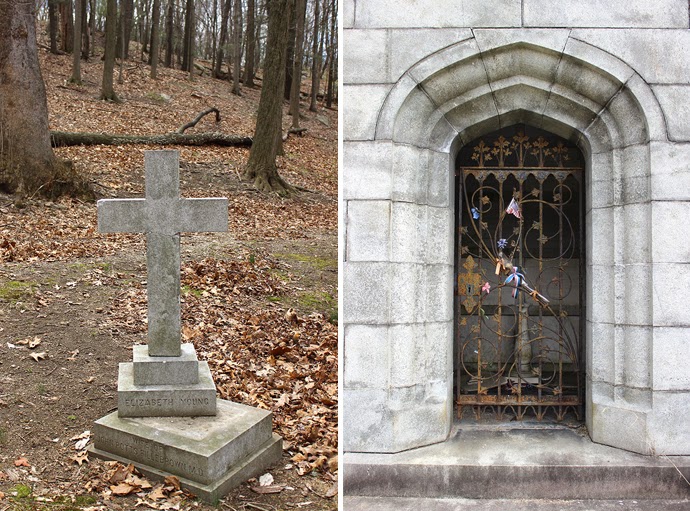
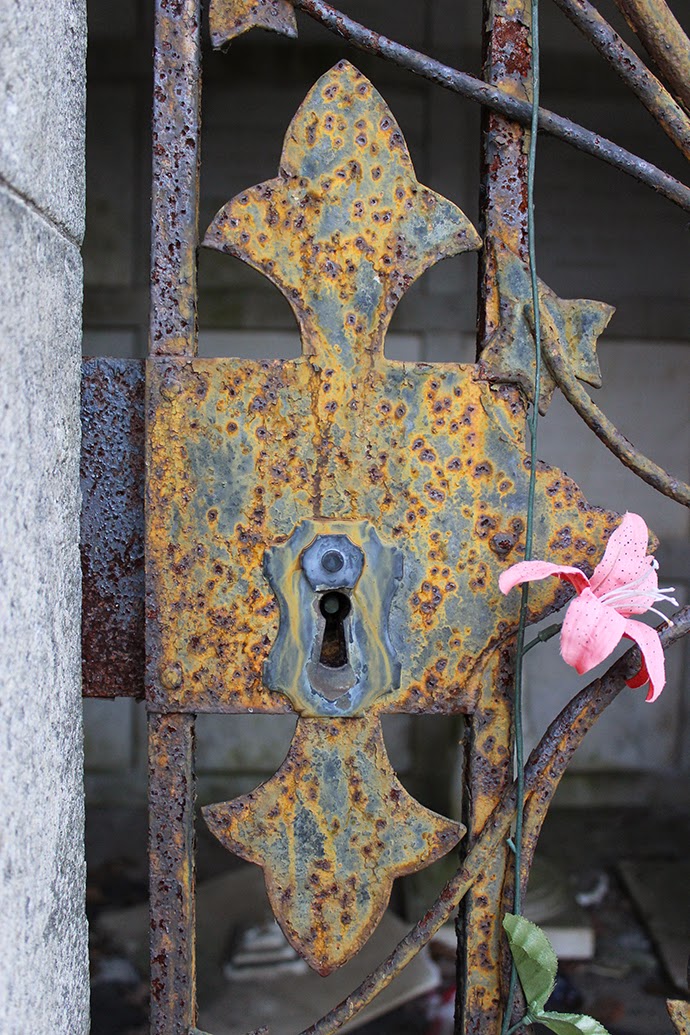
Another feature of the cemetery was a row of elaborate mausoleums (and an excellent receiving tomb), which I'm not really used to seeing in more rural, smaller cemeteries like Cold Spring. I noticed that while none of them were completely open like the one on the hill, a few of them had gates instead of full, solid doors. It was mentioned that it might have something to do with the fact that we weren't in the city anymore, so security was less of a concern, but whatever the reason it made spying inside that much easier, which I always appreciate.
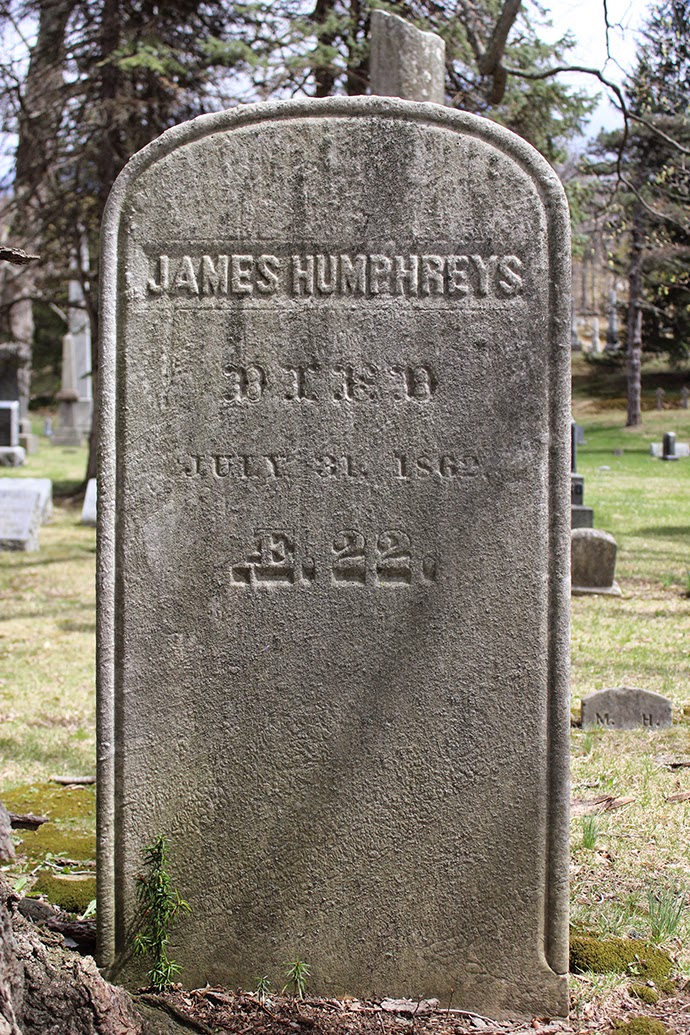
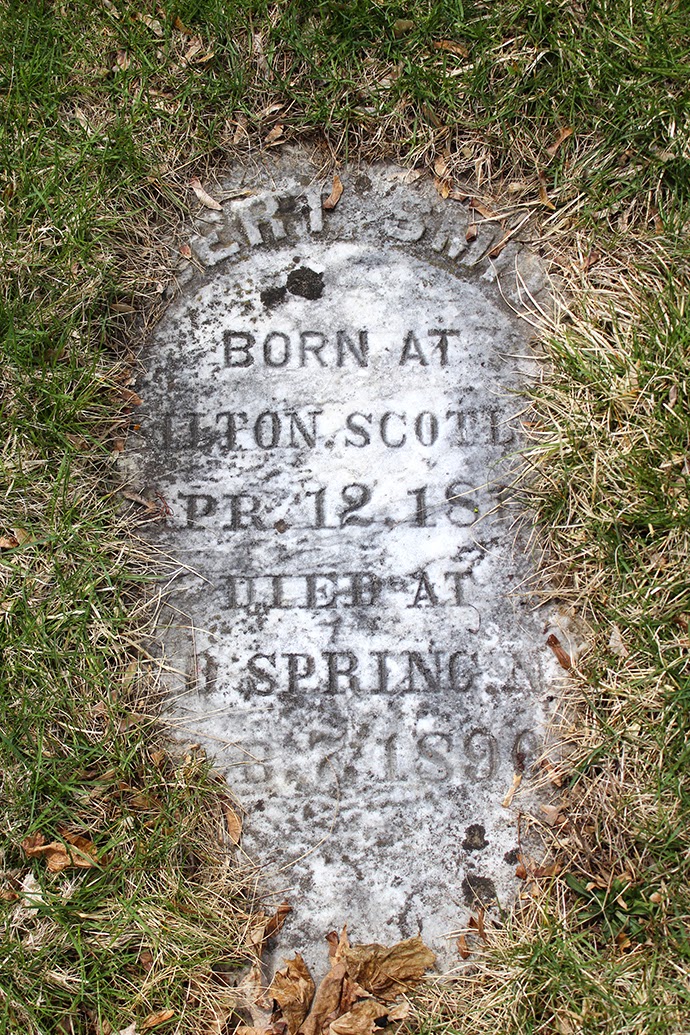
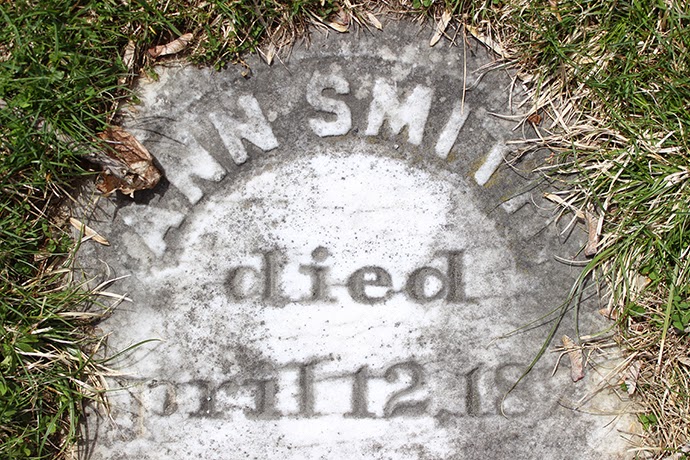
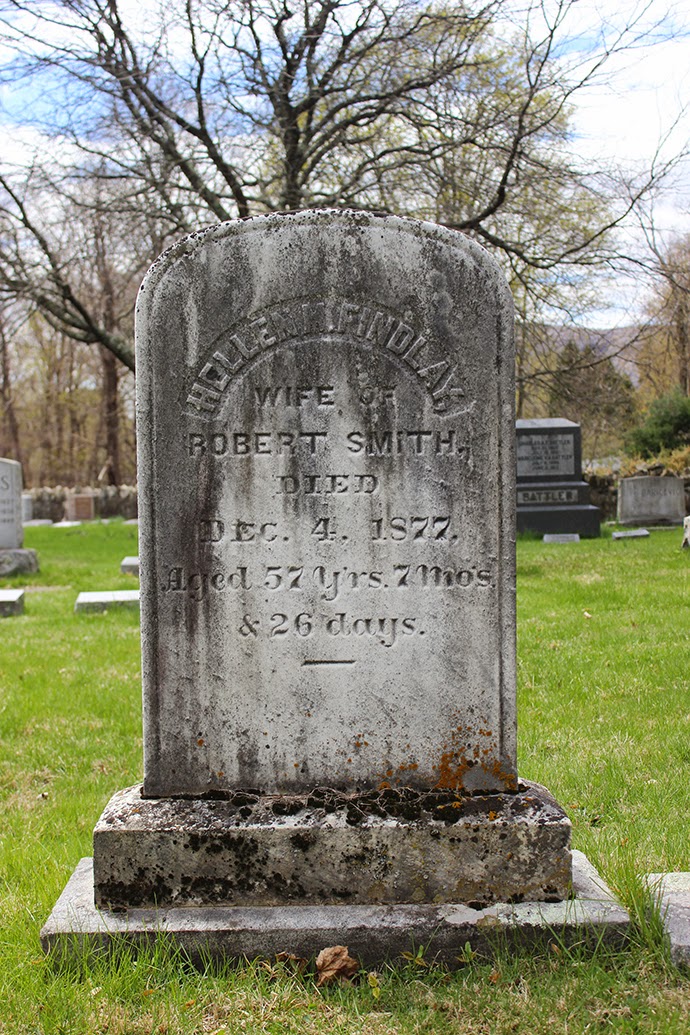
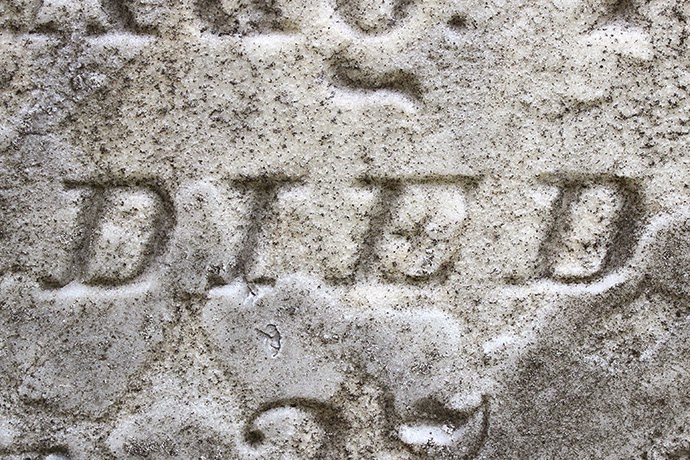
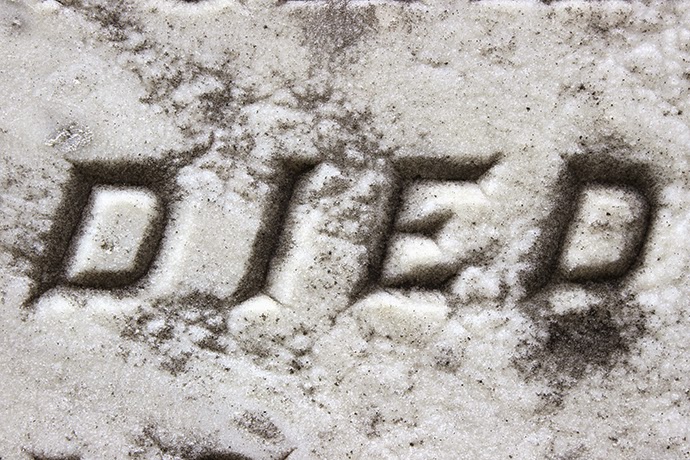
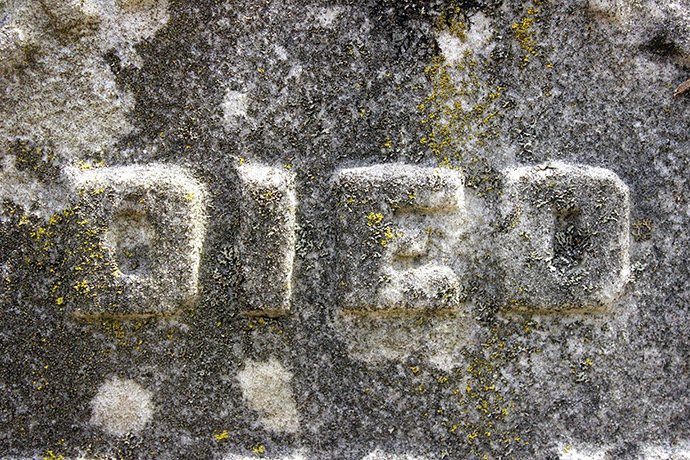
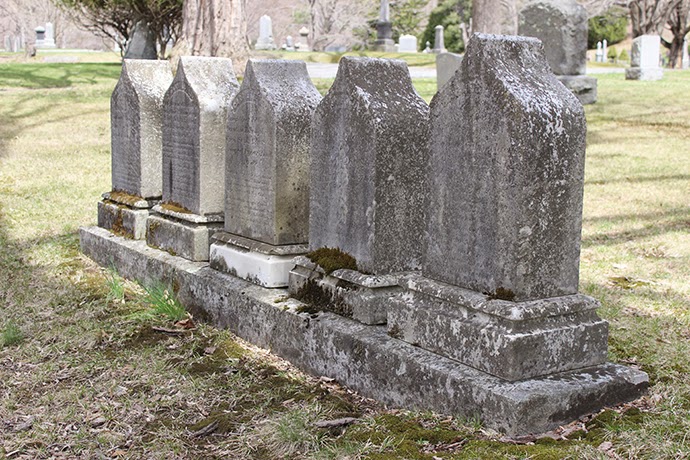
I really started to notice some great typography towards the end of our walk, which is always one of my favorite parts of any cemetery visit. There is a remarkable amount of variation from stone to stone in style, technique and materials which I find endlessly fascinating. I love sneaking cemetery visits into my trip itineraries—in East Hampton or Philadelphia or Sleepy Hollow—and I'm so grateful to have found someone who is game for a creepy little detour every now and then.
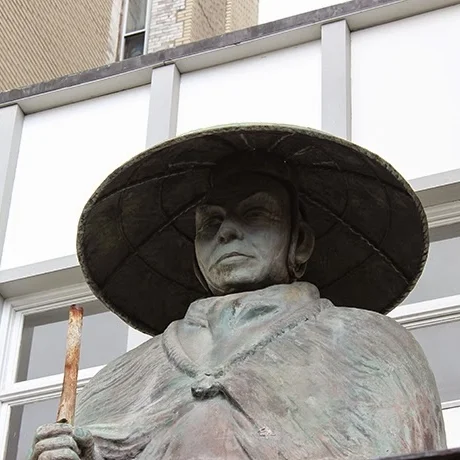
Shinran Statue / Amiable Child Monument
A few weekends ago I was walking around Riverside Drive and decided to consult my Roadside America app to see if there was anything interesting in the neighborhood I hadn't discovered yet. I found two things that were close to where I was, the Shinran Statue and the Amiable Child Monument.
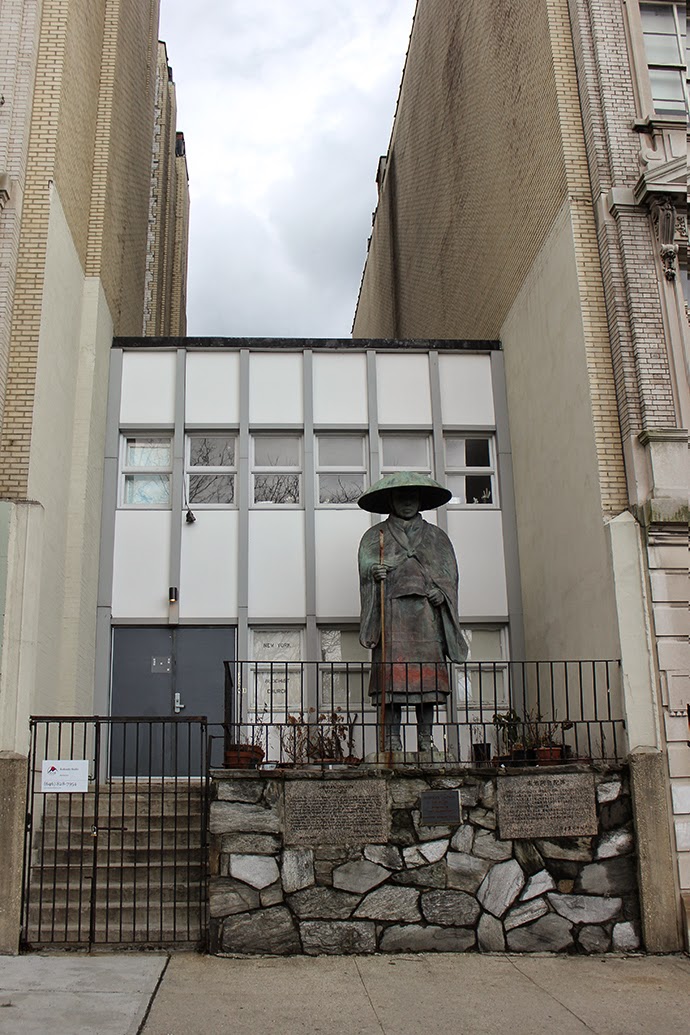
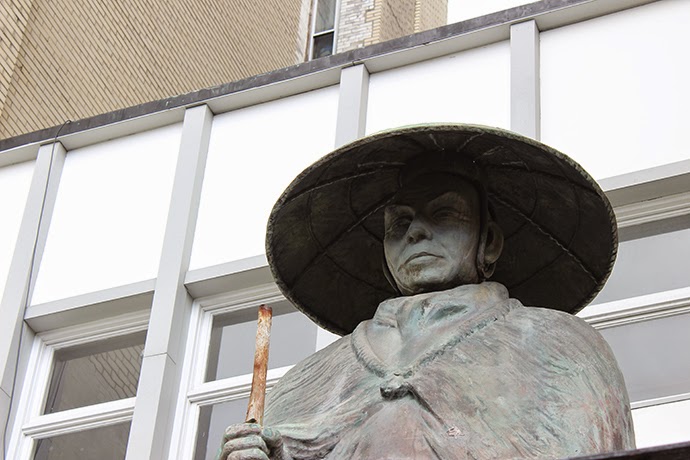
The Shinran Statue currently resides outside of a Buddhist church on Riverside Drive, but it once stood outside of a temple in Hiroshima, Japan. The statue managed to survive the atomic bombing of Hiroshima, despite being located 1.5 miles from the center of the blast and was shipped to New York in 1955. It is definitely a statue that I might not have looked twice at if I was just passing by, but there are plaques explaining its significance, if you don't happen to scour apps for odd roadside attractions like I do.
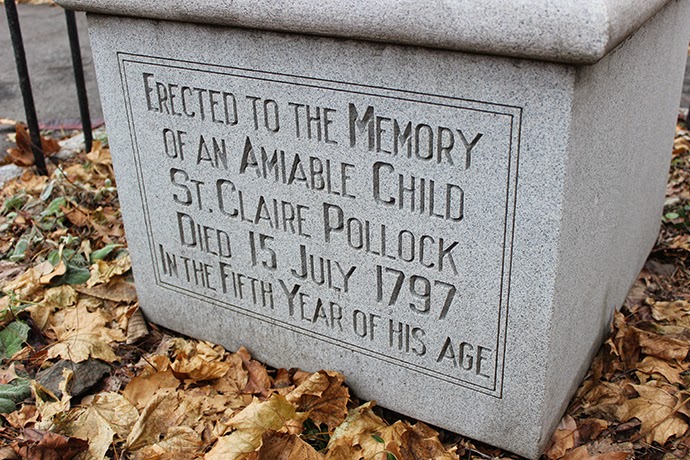
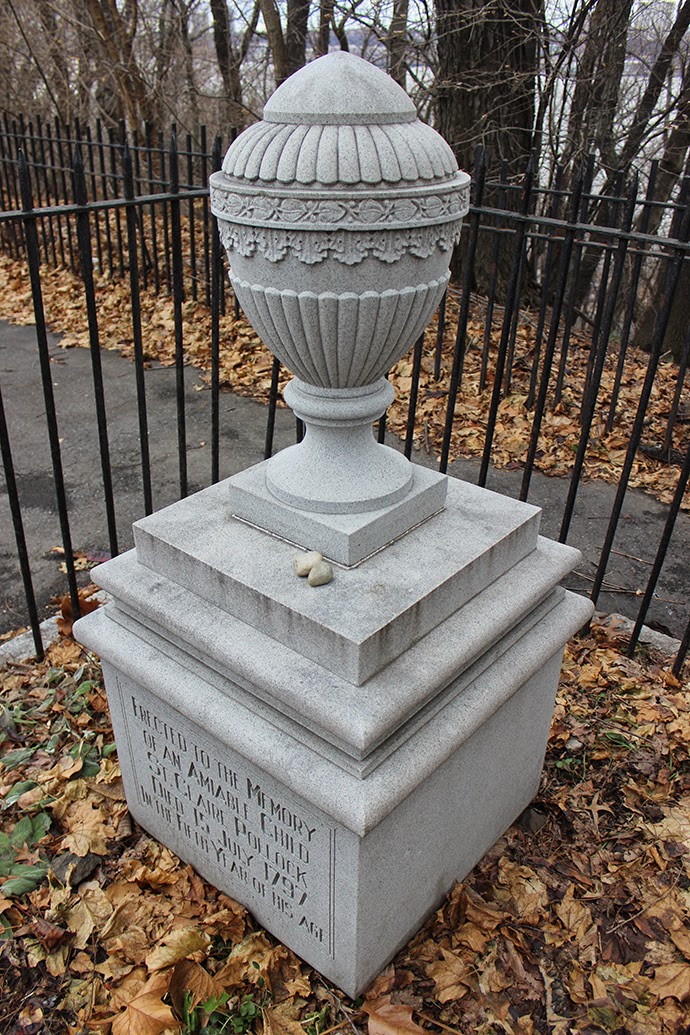
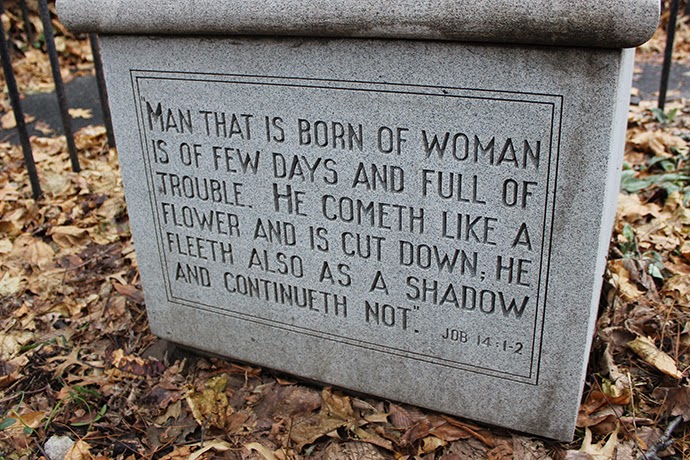
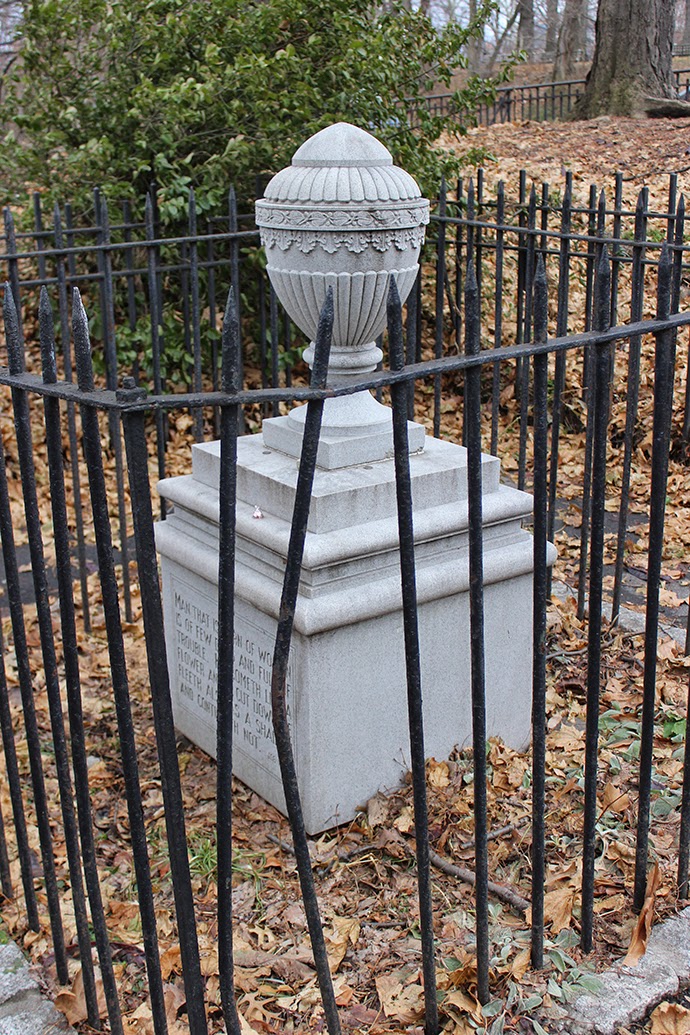
Next I walked a few blocks north on Riverside Drive, right across from Grant's Tomb to see the Amiable Child Monument. "Thought to be the only single-person private grave on city-owned land in New York City," the monument was erected to commemorate a small boy who died in 1797. It was threatened with the construction of Grant's Tomb, but saved after the public objected.
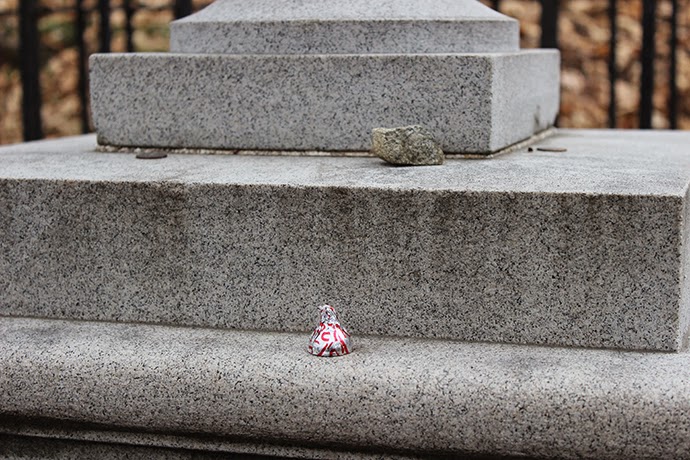
The monument is small and a little hidden—I walked right past it a few times—but it's fenced off and has a historical marker plaque next to it. It is really odd to see a headstone all alone in the middle of New York. Nothing seems to last for very long here and it's hard to fathom how it has remained all these years when so many great buildings in the city have been demolished in the name of progress. There was a few coins, a stone and even a Hershey Kiss on the top of the stone when I visited. One of the iron bars of the fence was bent in a way that is extra creepy whenever gravestones are involved.
I am eternally grateful to live in a city in which a leisurely weekend stroll can include things that are a little bit historical, a little bit weird and always worth a stop.

Trinity Cemetery and Mausoleum: Winter
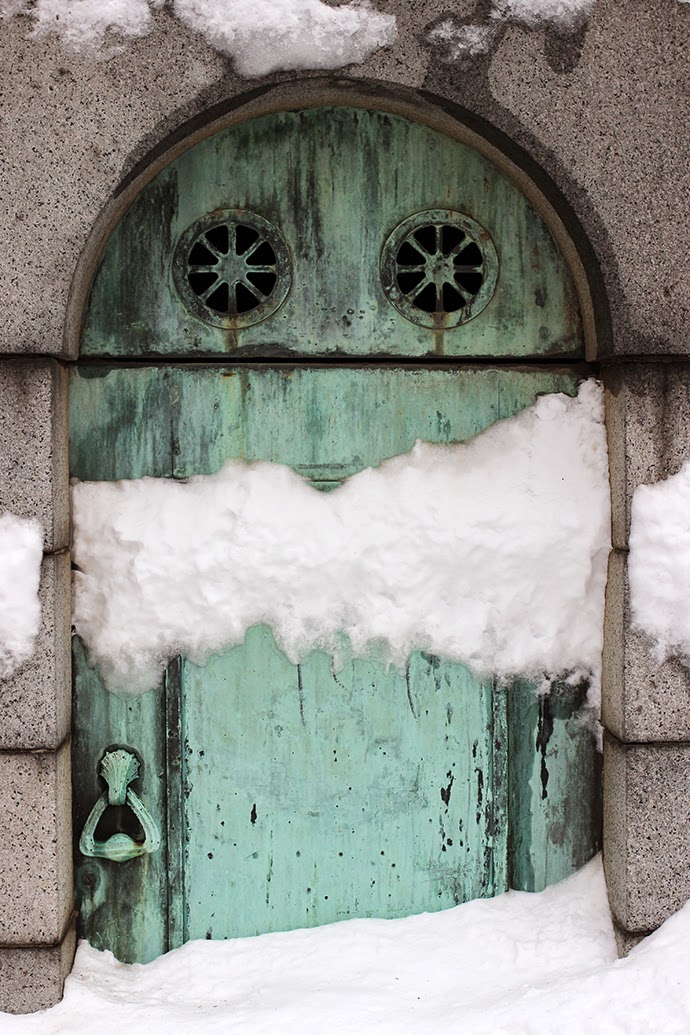
After being once again denied access to Woodlawn Cemetery the weekend because of "hazardous conditions,"—aka the beautiful, melting and not-at-all-hazardous snow—I headed to the next closest cemetery that I knew of to get my snowy tombstone fix.
I had been to Trinity Cemetery, Manhattan's only active cemetery, in March of last year for the first time and I hadn't been back since. Thankfully the gates were open, there was no obnoxious guard to stop me from walking in and more than enough snow to make me happy again. Some of the pathways were cleared and others were not, but I came prepared with boots and happily forged my own way through nearly a feet of snow.
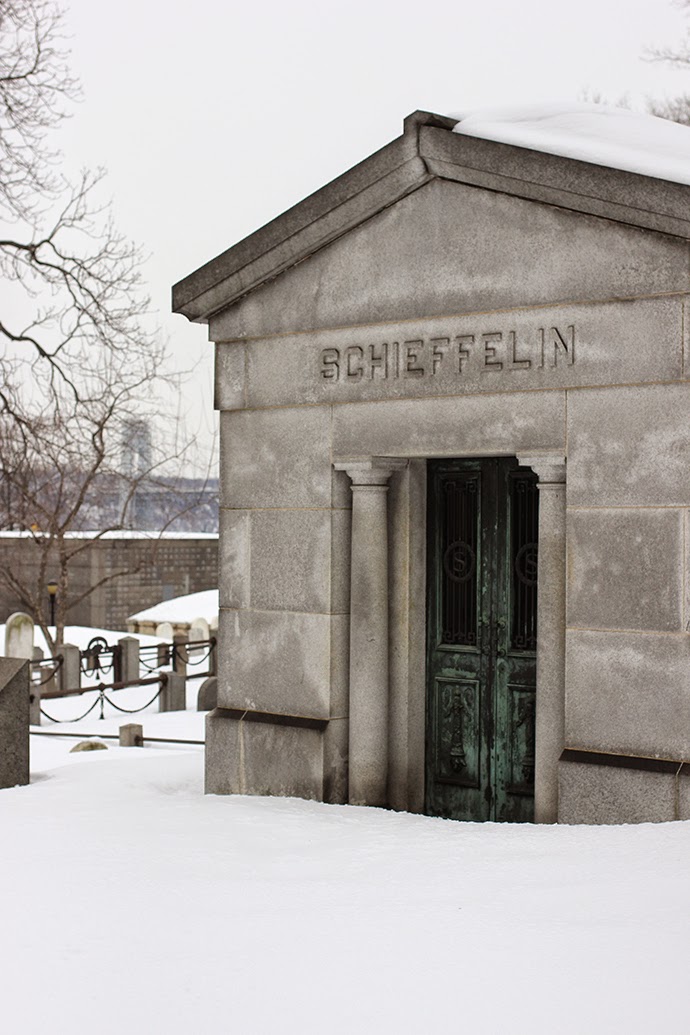
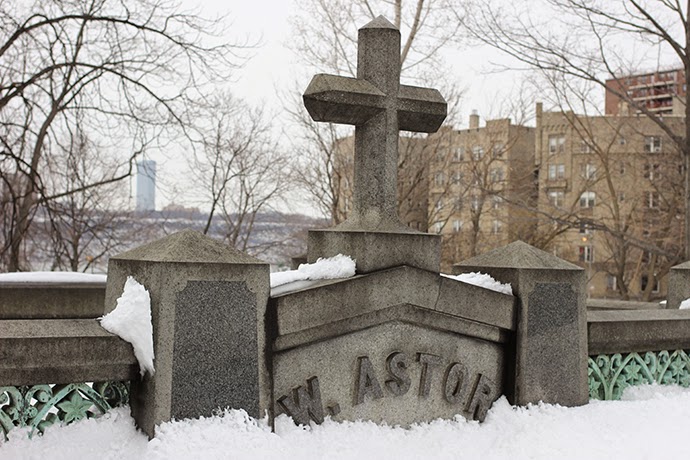
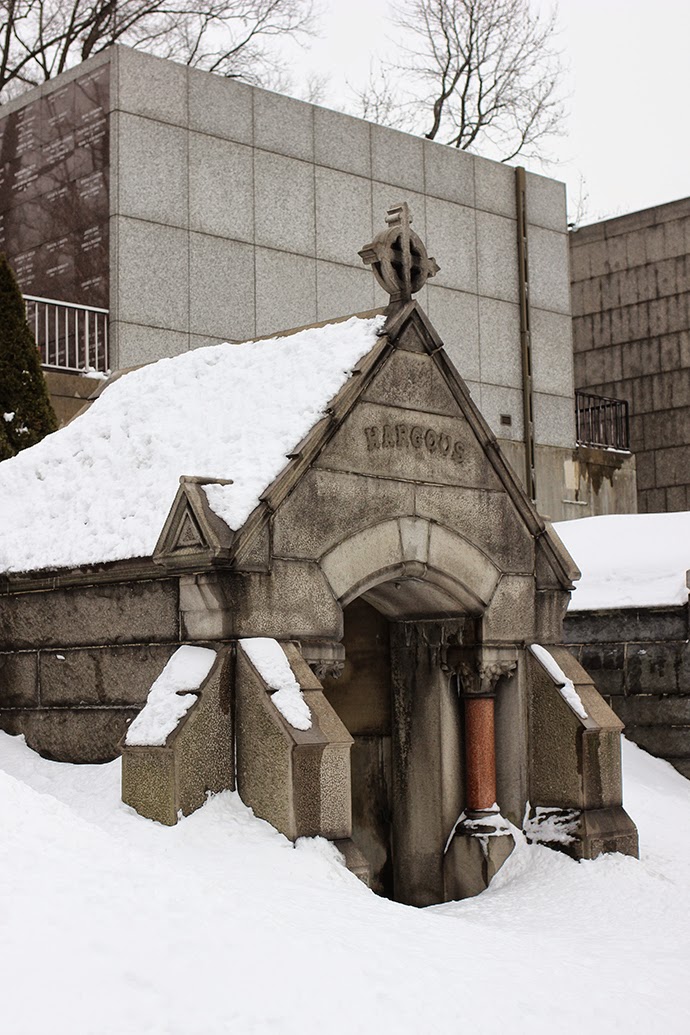

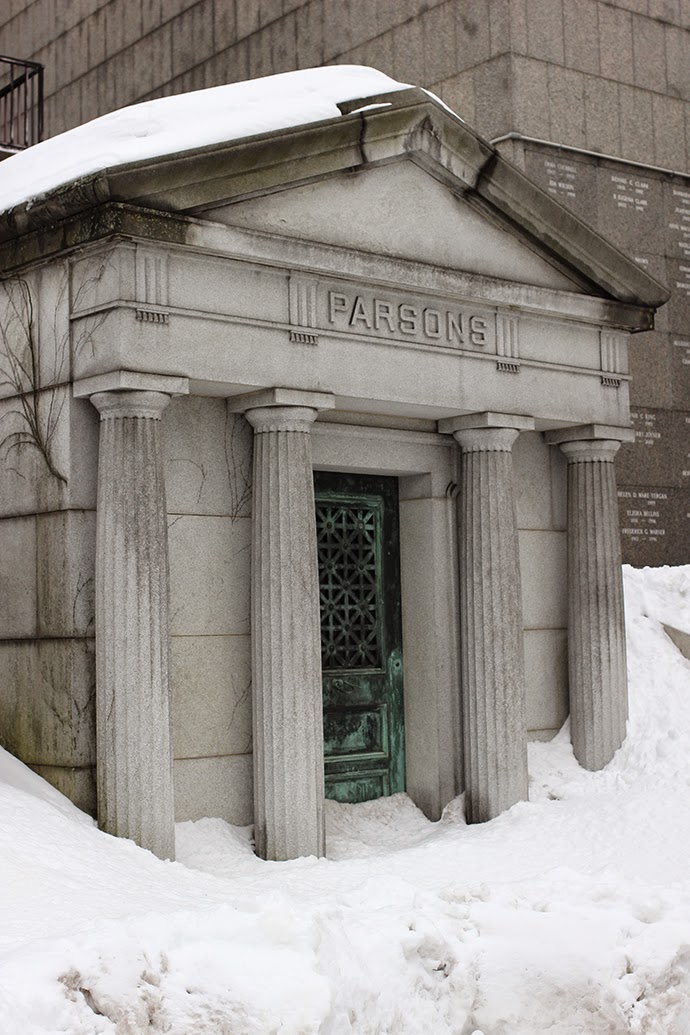
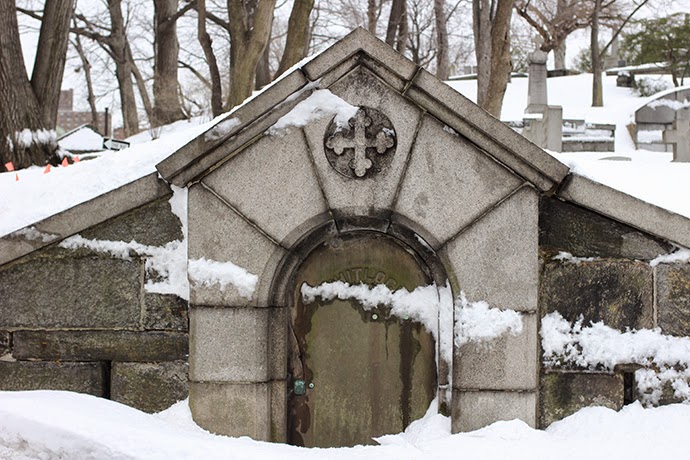

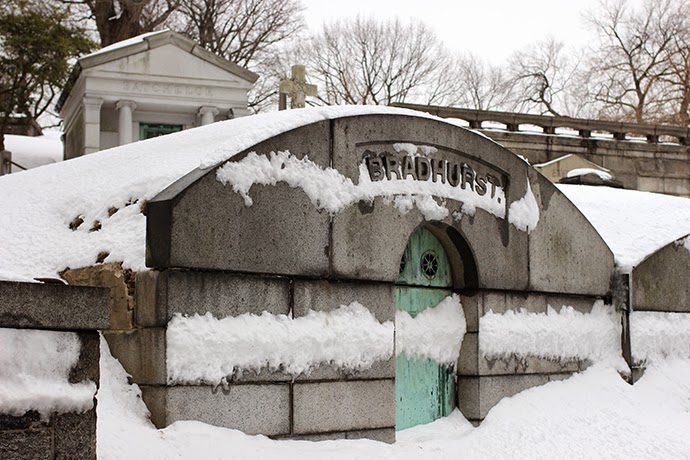

The snow was piled against the mausoleums and stuck in the recesses of letters in the most interesting ways. Trinity is a relatively small cemetery, especially when compared to Green-Wood or Woodlawn, but it has some really wonderful mausoleums. I was particularly loving how the snow was drifted and pushed against the doors, making them look like little mountain cottages.
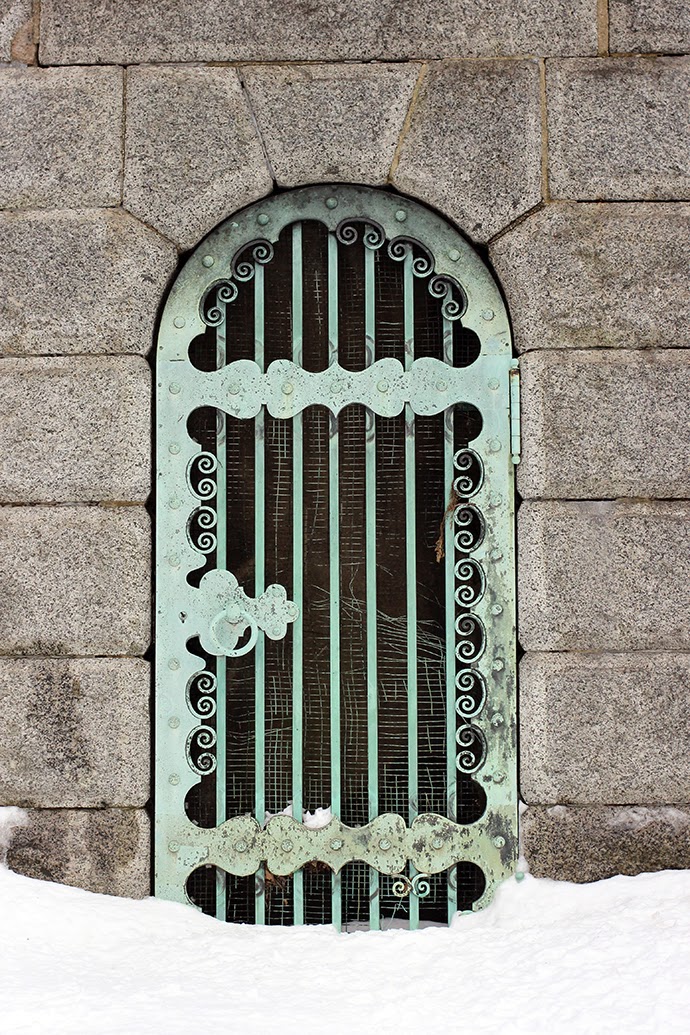
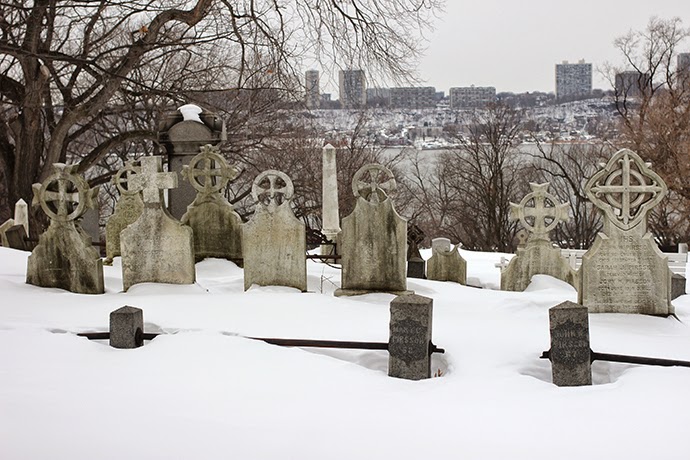
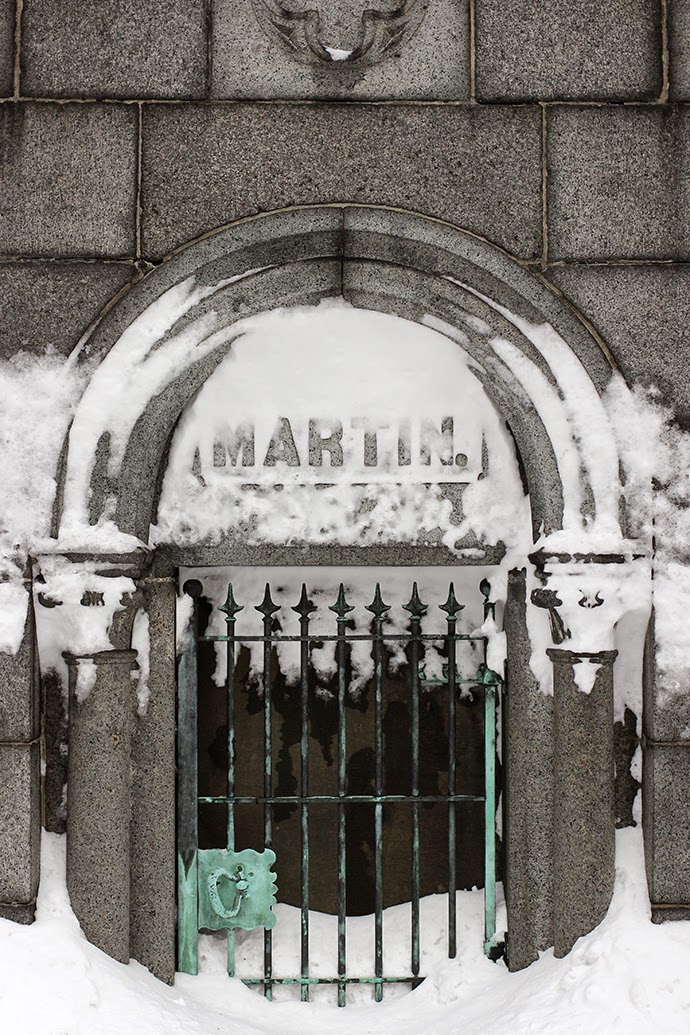

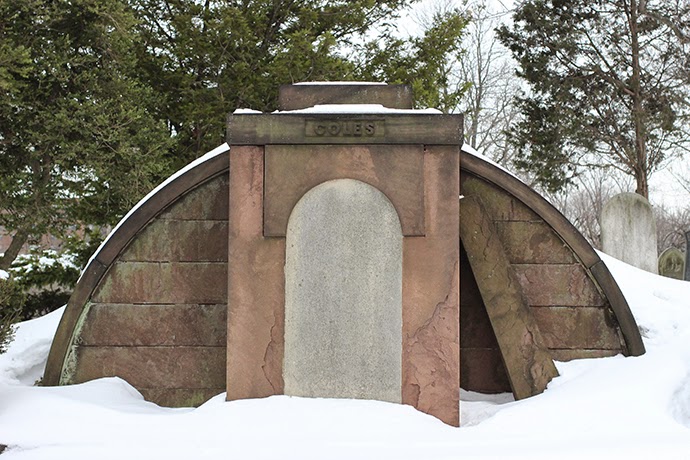


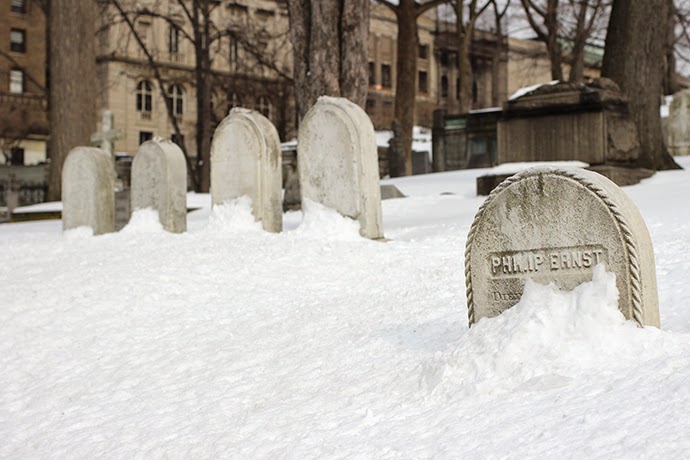

You never know, but I think we've probably seen the last of this winter's snow. I suppose I will never get to see Woodlawn in the winter, which is definitely a disappointment, but there are still plenty of other wonderful places that I haven't explored to keep me busy. While I still think that fall is the very best time for a cemetery walk, I have to say that winter is a close second—that is, as long as they let me in.

Snowy Green-Wood Cemetery: Part Two
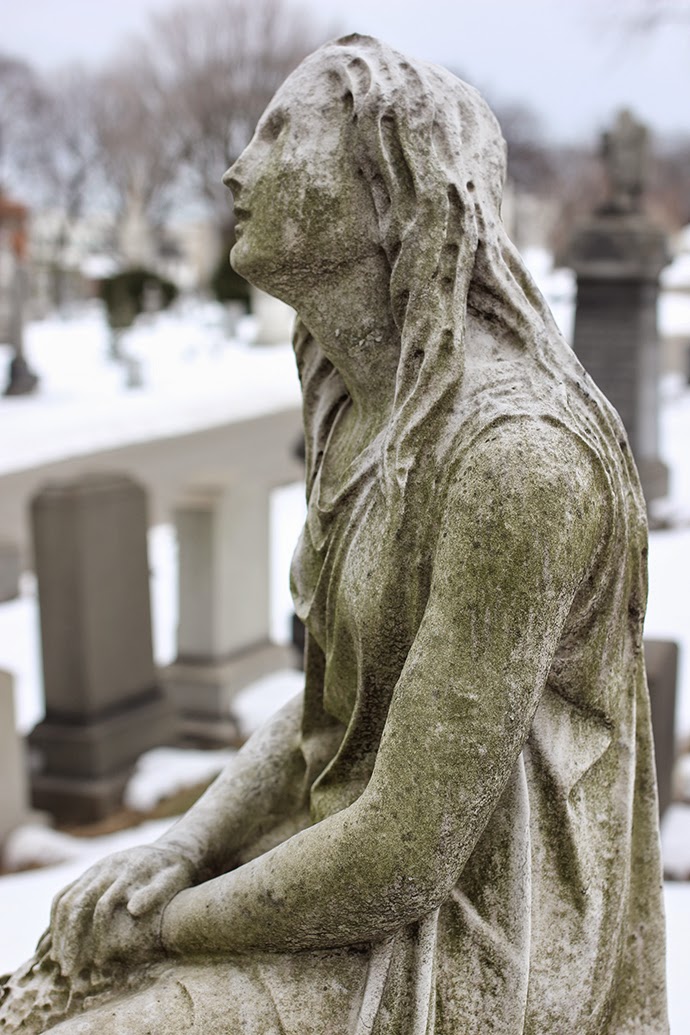
I took so many photos of Green-Wood in the snow, that I decided to break them up into two posts. As I was looking through them, I noticed that I was particularly interested in the statues, so here are my favorites from that snowy walk:
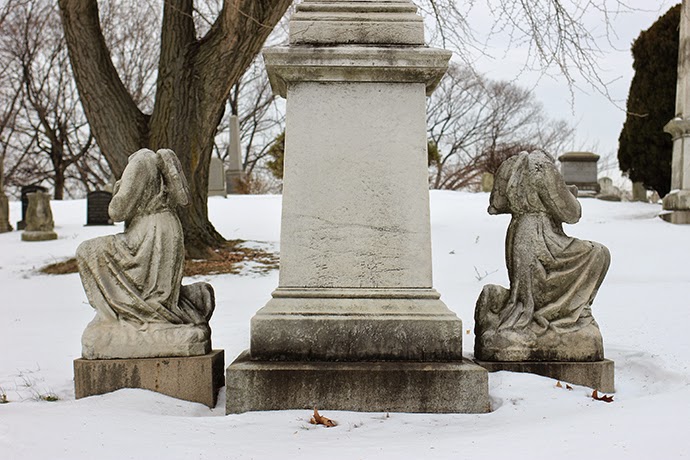
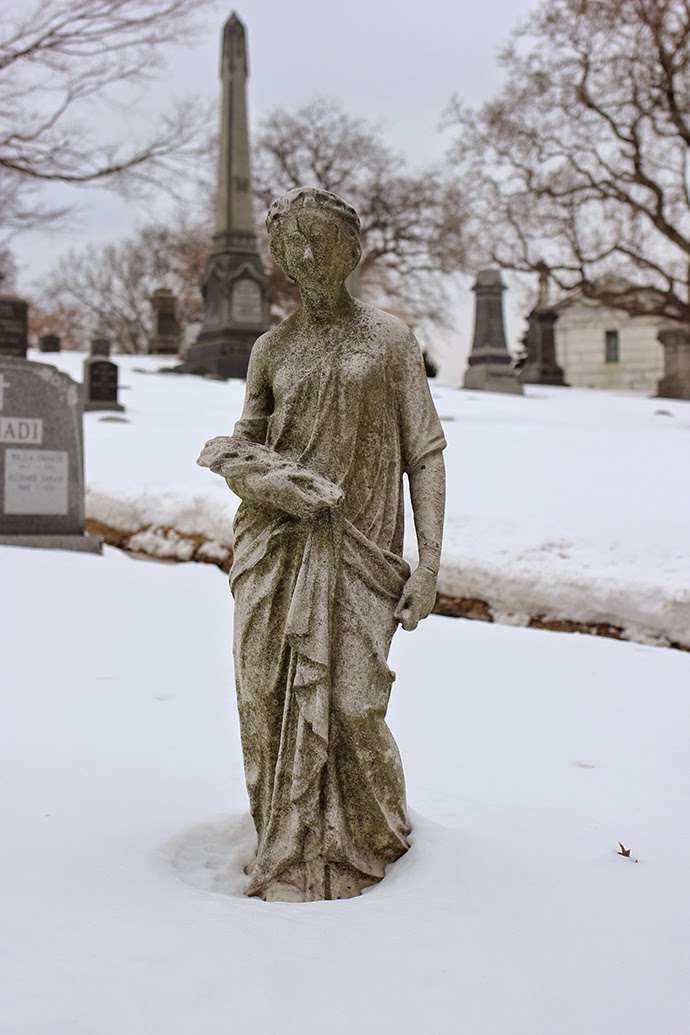
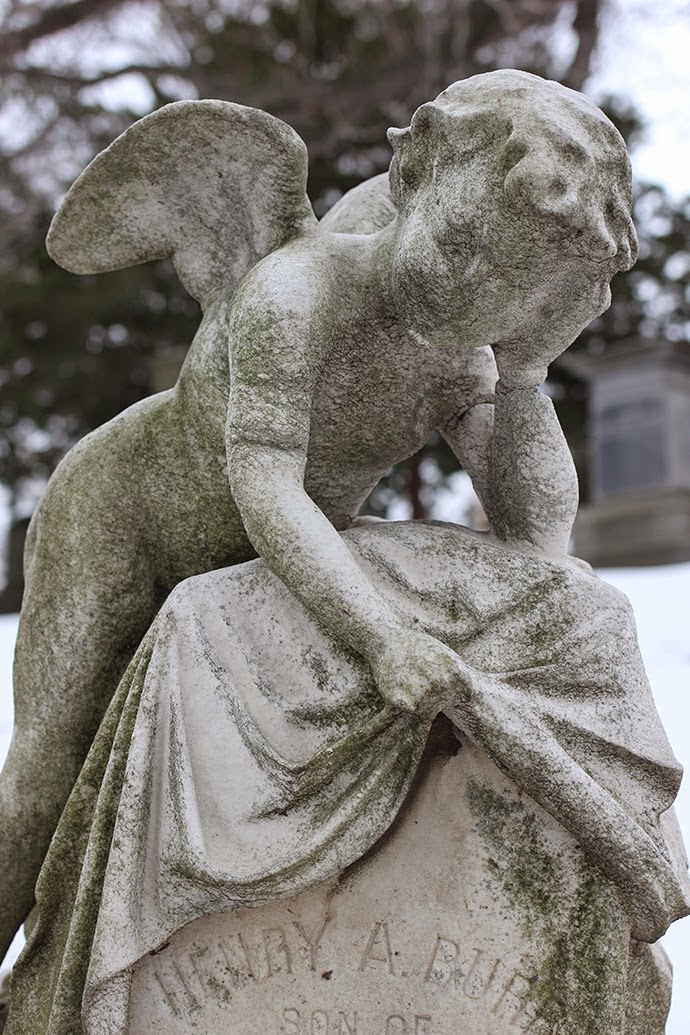

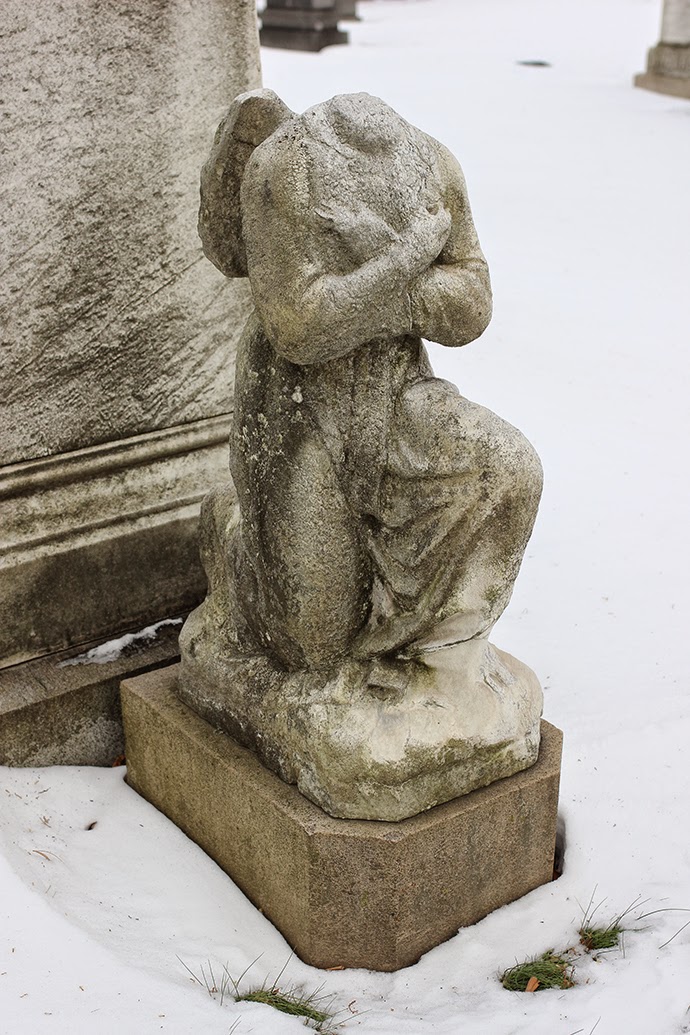

I'm still sad that our trip to Woodlawn was foiled by the snow and a grumpy security guard because I can't stop thinking about how beautiful it all looked covered in snow. I would love to go back to Green-Wood right after a snowstorm and catch some of these statues actually covered a bit more.
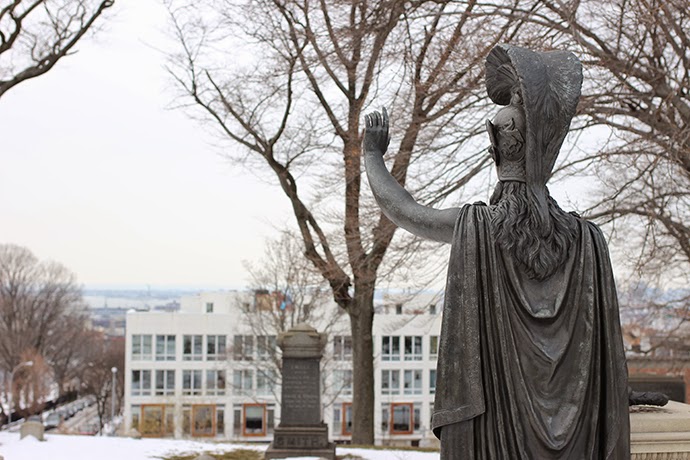

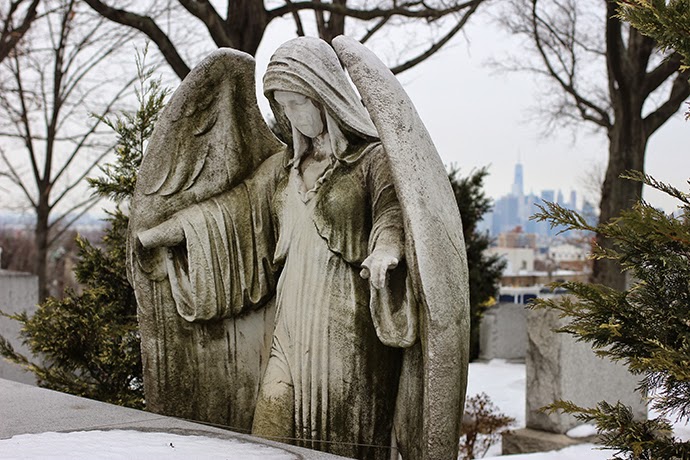

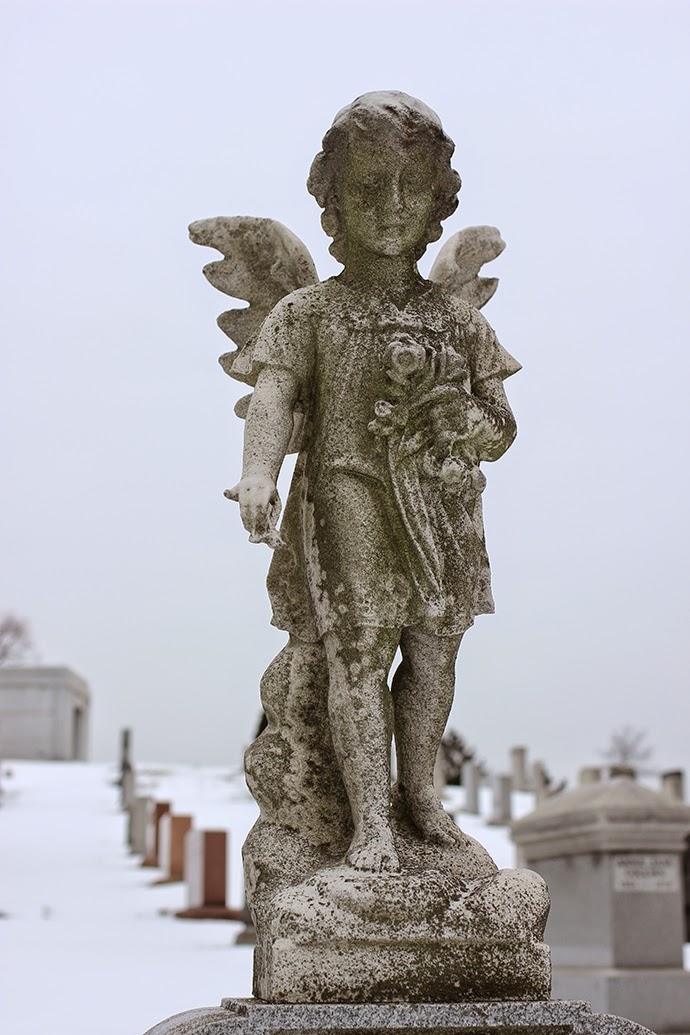
Angels are always my favorite cemetery statues but one gets bonus points if it's missing arms, or—my very favorite—its head. I love the way they weather and crumble, how they get covered in moss or lichen, and how desperately mournful they can look. It's one thing to read a kind inscription or see a name, but its another thing entirely to see a weeping angel, bent over a headstone in eternal despair.

Snowy Green-Wood Cemetery: Part One

One of the first things I thought of when I heard that we had a snow day last week was "I should go to Green-Wood Cemetery," (that's totally normal, right?). The cemetery was closed all day, unfortunately, although I did get to walk by it (after my walk through Prospect Park) and peek through the fence. It looked incredible in the snow, and Sunday I finally made my way inside.


The roads were plowed, and some of the snow had started to melt but it was just as beautiful as I had imagined. As much as I love cemeteries and snow, I had only ever been to Calvary Cemetery in the winter, and on a warm day when most of the snow had already melted. I knew I wanted to make a snowy cemetery visit a priority this winter, and this was the first significant snowfall we've had this year.


Sunday was a beautiful day and luckily not bitterly cold. I walked around for about two hours and didn't even have to keep my gloves on. Some of the snow drifts were pretty deep, but it was so peaceful and I barely saw anyone else on my walk. I hadn't been to Green-Wood since the open house tour this past fall, and it was great seeing some of my favorite mausoleums and statues against the beautiful snow.

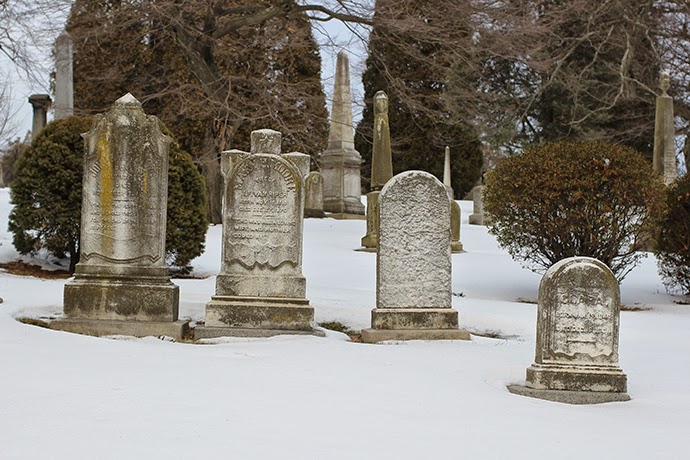


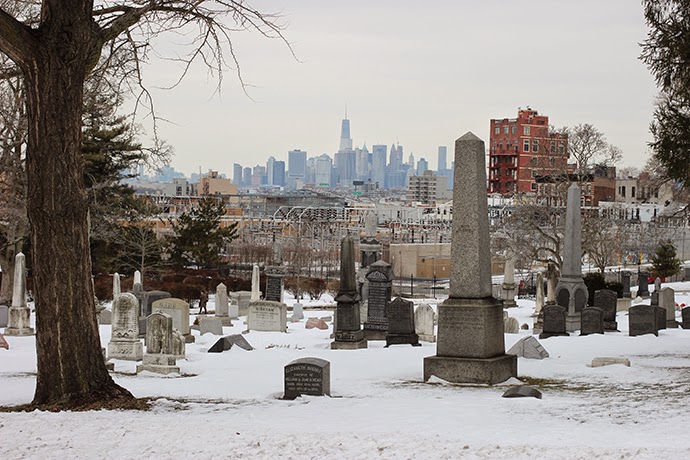
No matter how many times I go to Green-Wood, I always see something new and interesting. This time, the "transplanted children" headstone wins for strangest stone I saw, and I know I've said it before but it just doesn't get any better than a pyramid-shaped, Egyptian-themed mausoleum. Also, since the trees have lost their leaves, the view of Manhattan and the Statue of Liberty from Battle Hill is currently perfect—I can't think of a better place in the world to spend all of eternity.

Philadelphia: Christ Church Burial Ground

While Jim and I were walking around Philadelphia, we kept seeing signs for Benjamin Franklin's gravesite. It hadn't initially been on my list, but I'm never one to pass up the opportunity to see a historic cemetery, so we made sure to stop at the Christ Church Burial Ground to pay our respects.
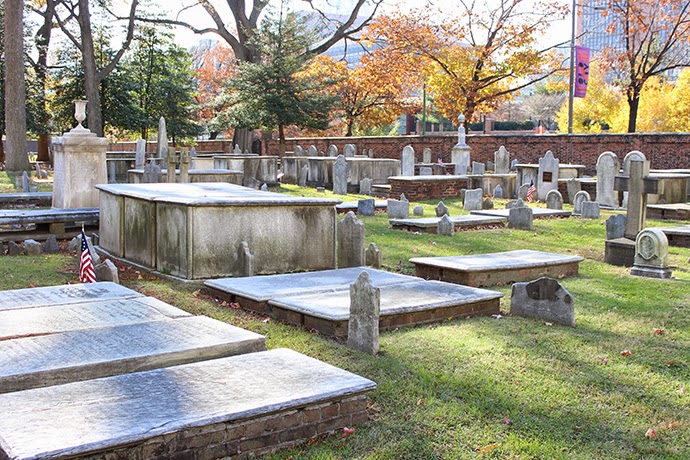


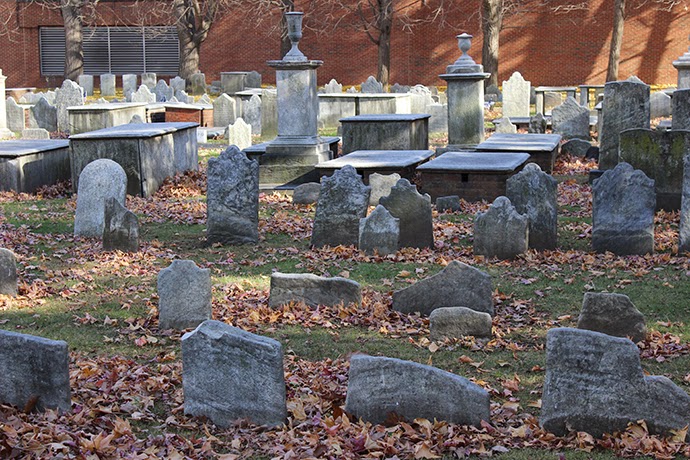
CCBG has the distinction of being the only cemetery that I've ever had to pay admission to enter, although that wasn't going to deter me from visiting. You can actually see Franklin's grave from the sidewalk if you're totally against paying the $2 fee, but the grounds are beautiful and contain some wonderfully old tombstones (the oldest known marker is from 1721).
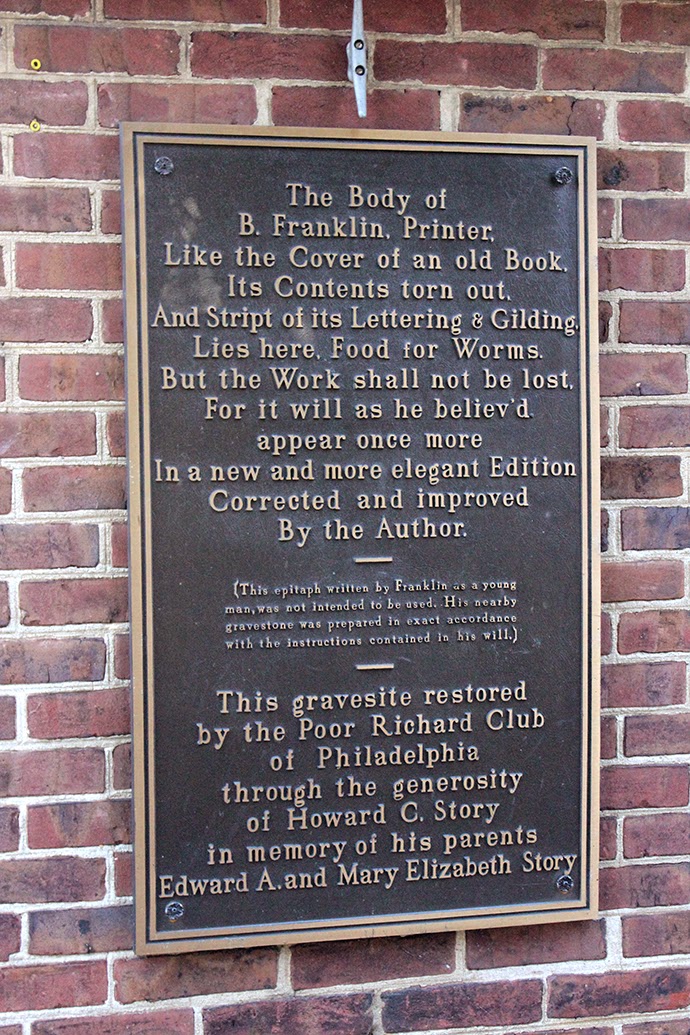
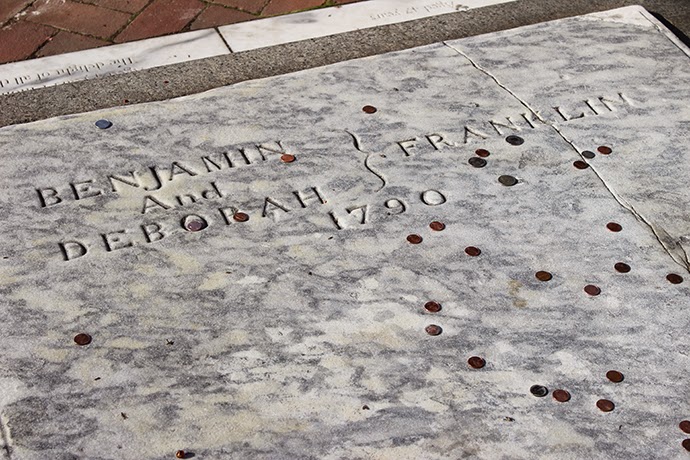
The first thing you notice about Franklin's grave is how plain and simple it is, and a sign hanging close by states that it was prepared in exact accordance with the instructions contained within his will. I happen to prefer the epitaph that he wrote as a young man, with its literary references and the line "food for worms," which I think is pretty much perfect in every way.
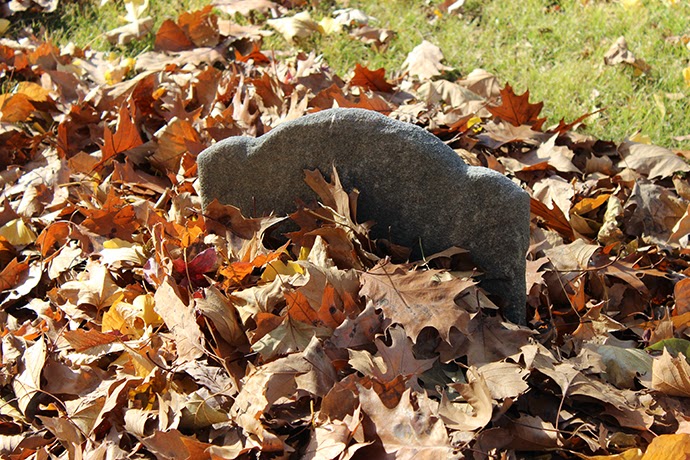
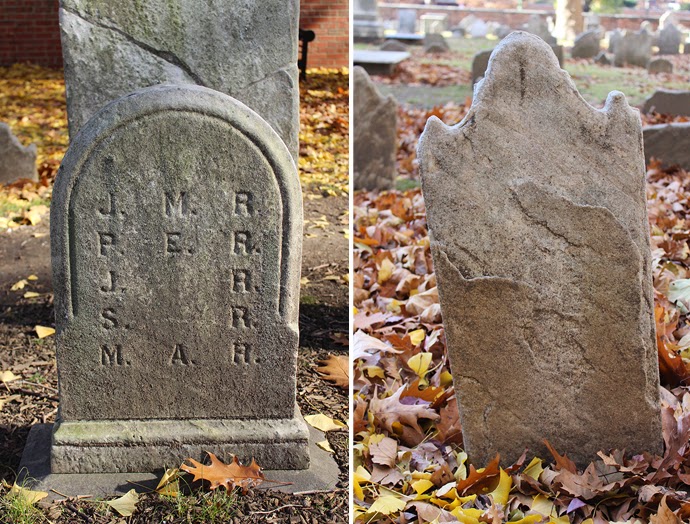
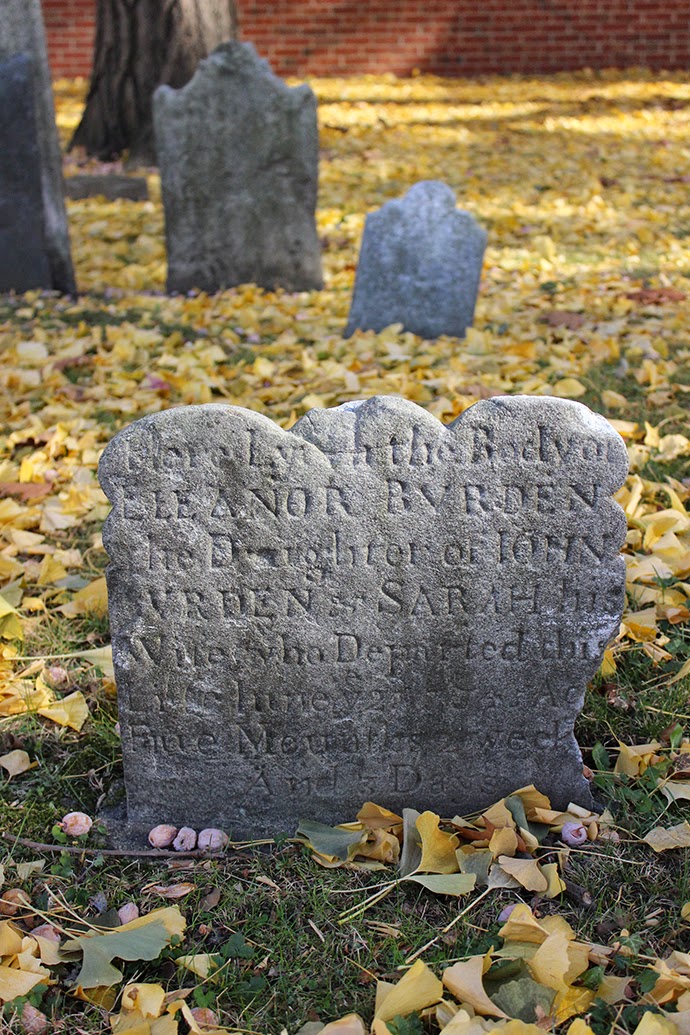
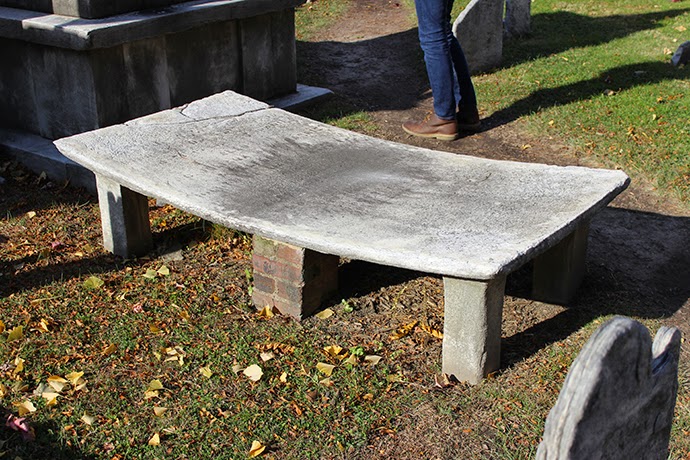

The fall leaves provided an excellent backdrop to the crumbling stones, and I've never met an arching, iron entrance gate that I haven't immediately fallen in love with. In addition to Franklin, the burial ground is the final resting place of four signers of the Declaration of Independence, the publisher of the first daily newspaper, Civil War generals, Pennsylvania governors, artists and several descendants of Franklin as well as his wife.

Grace Episcopal Church Cemetery

A few weeks ago after my somewhat successful, somewhat failed attempt to visit Prospect Cemetery, I searched nearby and realized I was right by another cemetery. Luckily, Grace Episcopal Church Cemetery was much more accessible so I spent a bit of time walking the grounds. Burials in the churchyard date back to 1734, but the oldest tombstone I saw (or could read) was from 1740—still making it the oldest I can recall seeing in my exploration of New York cemeteries thus far.


The cemetery is small, but has a great collection of old brownstones (my favorite). There were some wonderful winged skulls, beautiful lichen-covered stones, and incredible script lettering. The winged cherubs are also wonderful, and although it makes me sad, I am continually fascinated by the decay process of crumbling stones.


I came across a plump squirrel who looked quite content hopping from stone to stone and I spent a great deal of time crunching through piles of freshly fallen leaves. Fall is the prime time to visit cemeteries, in my opinion, although that certainly doesn't stop me from visiting them all year round. I've only been to one cemetery when there was snow on the ground and it was really beautiful—I'll definitely have to make that a priority this winter.


Grace Church is in the middle of Jamaica Queens, which is a very busy commercial and residential area. In addition to being a major transportation hub, there are tons of restaurants, shops and other businesses bordering the cemetery on all sides. I doubt Elizabeth Ogden or any of the other permanent residents of the cemetery has much use for anything sold at the neighboring Hair Factory, but if you like to get your nails done and have your weave fixed after a leisurely stroll through a historic cemetery, Grace Episcopal Church cemetery has it all.
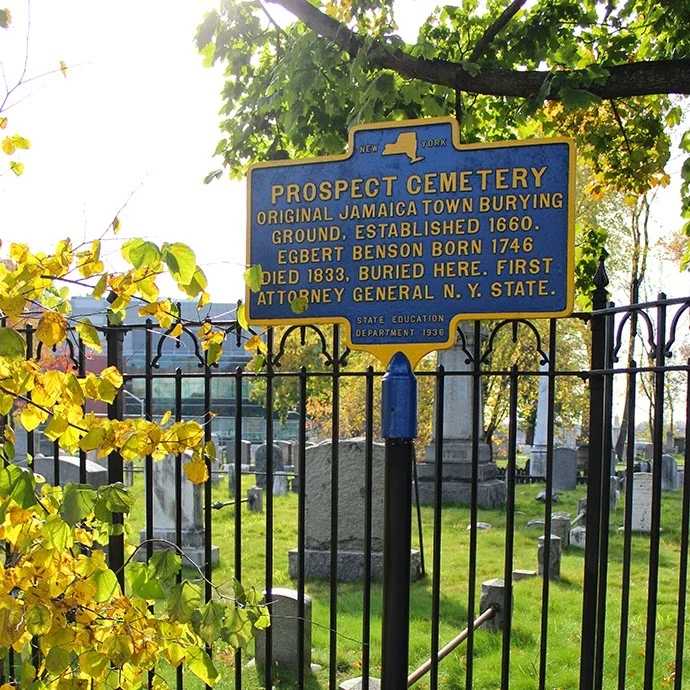
Prospect Cemetery

Last weekend I was in the mood to visit a cemetery, so I decided to visit Prospect Cemetery in Queens. It had been on my list ever since I heard it mentioned at a lecture I attended last summer about urban cemeteries (I was the only one in attendance under the age of 85).
Located in Jamaica, Queens, Prospect Cemetery was established in 1660, making it one of the few remaining colonial cemeteries in the city. It was designated a landmark in 1977, and The City Landmark Commission stated it was the oldest cemetery in New York. It was listed on the National Register of Historic Places in 2002 and today it sits in the middle of the York College-CUNY campus.
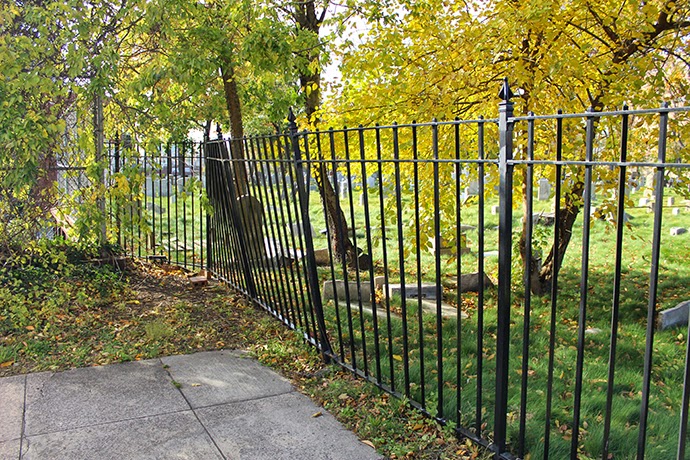
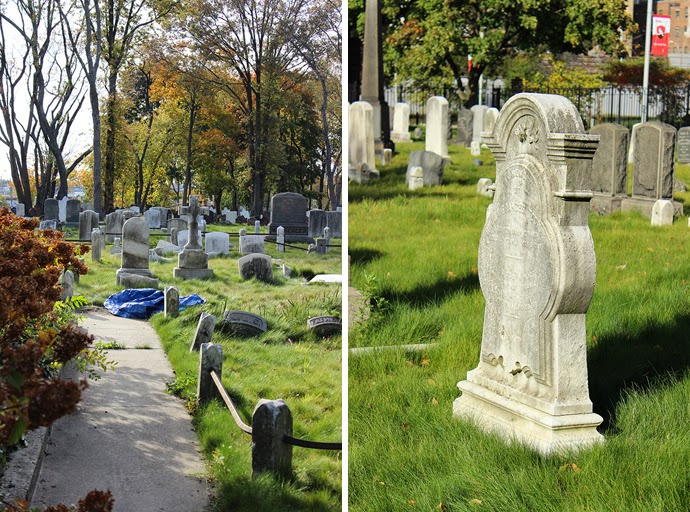

I couldn't find much information about actually visiting the cemetery, but I decided to take my chances. Turns out, Prospect Cemetery is not very easy to get close to and it's definitely not open to the public—the cemetery association's website does have tours listed but the dates haven't been updated since 2012.
After exhausting all other options, I walked into a York College building (everything was surrounded by fences and locked gates) which led to the following exchange with a very confused security guard: Me: "How do you get to the cemetery?" Guard: "WHO ARE YOU." Me: "I was just interested in... seeing the cemetery?" Guard: "... You can't go inside of it." Me: "Well, can I just, like, go look at it?" Guard: *points to the door*


Through the door was a courtyard fenced in on all sides, one of which butted up to the cemetery. I was annoyed that I didn't have an easier time accessing the cemetery, but I was also kind of proud of myself for actually having the courage to speak to an actual human, which—as awkward as it was—paid off.
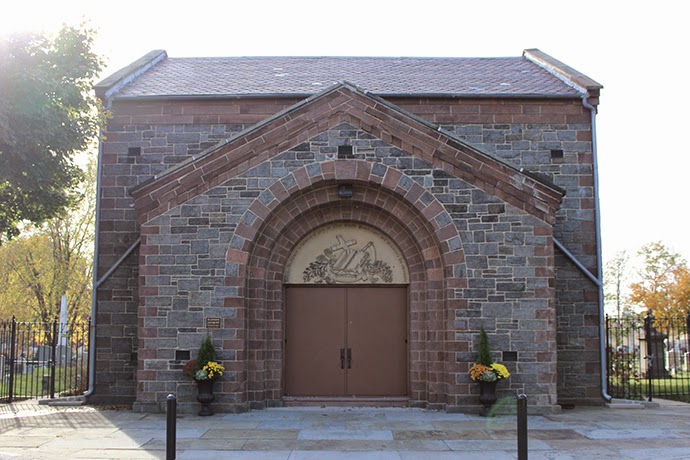
I still couldn't get inside of the actual cemetery grounds, but it is small enough that I could see quite a lot of it from just walking the perimeter. Also on the grounds is the Chapel of the Sisters, built in 1857 by Nicholas Ludlum to honor his three deceased daughters. Apparently the cemetery had been in really bad condition for a long time until preservation efforts began in the early 2000s, but aside from some overgrown grass and a few broken stones it was in no worse shape that any other city cemetery I've seen.
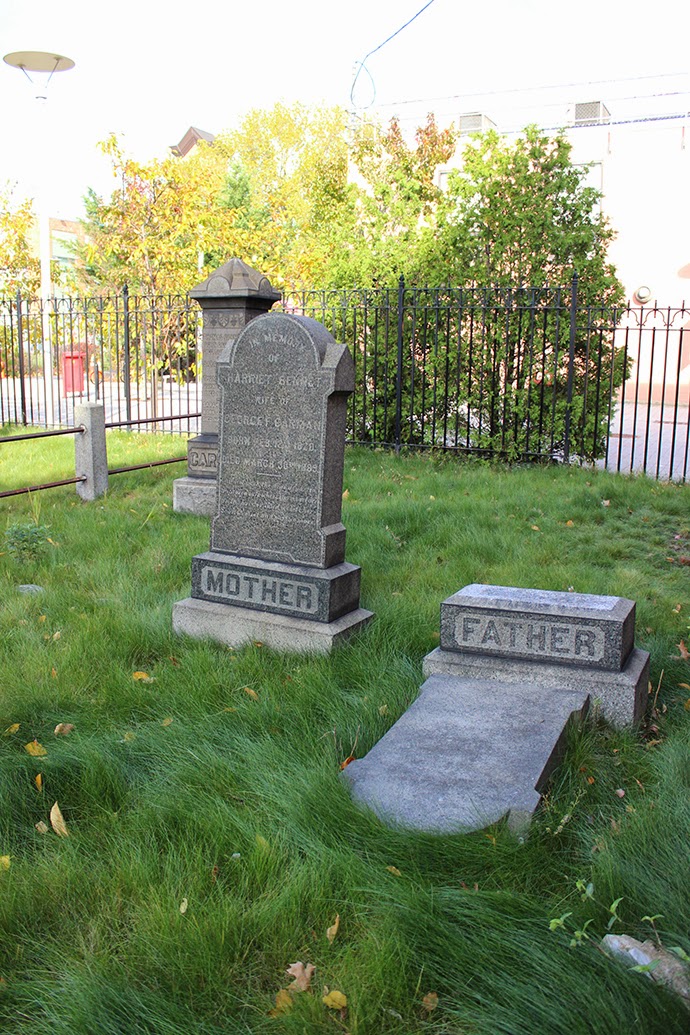
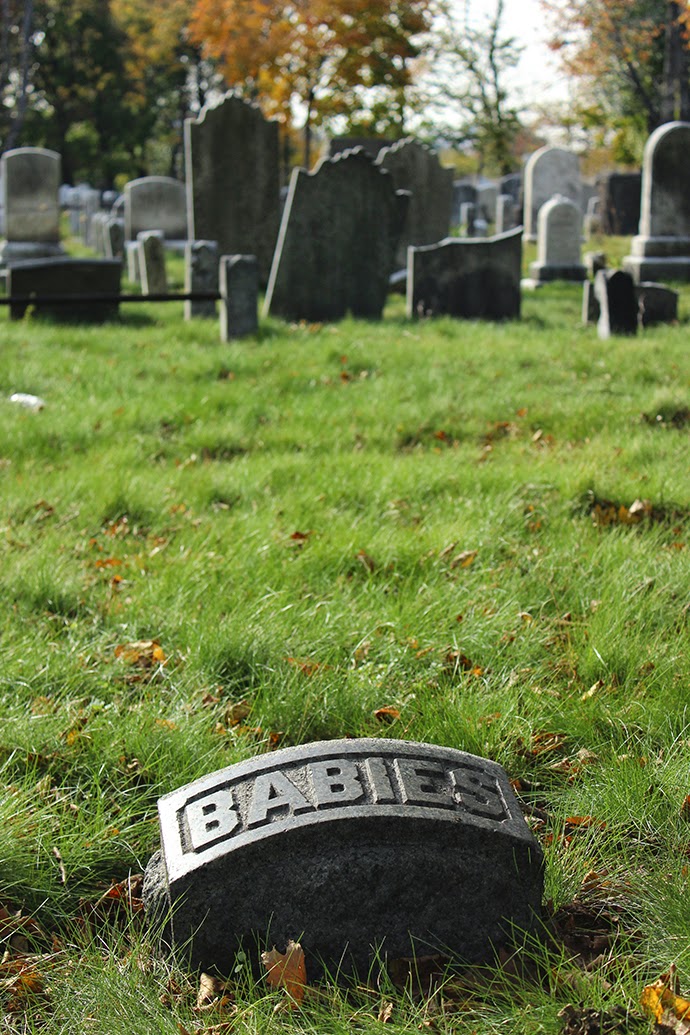
Although I wasn't able to see the majority of the headstones up close, I did see a stone that just said "babies," which is in close competition for the creepiest thing I've ever had the pleasure/displeasure of seeing in a cemetery.

Staten Island: Moravian Cemetery

One of JMP's requirements when she was in town was that we explore a cemetery. OH OK, IF WE MUST I said, and got to work trying to find a suitable cemetery that I hadn't been to before. She also wanted to ride the Staten Island Ferry, so I started my search in New York's most overlooked borough. I'd been to Staten Island a few times to explore Sailor's Snug Harbor, but never to a cemetery (unless you count Snug Harbor's tombstone-less potter's field).
Moravian Cemetery, the largest on Staten Island, was the ultimate winner. It's 274 years old, "often heralded as New York's most beautiful memorial site," and fairly close to the Grant City stop on the SIR. Moravian ended up completely exceeding all of my expectations and definitely shot straight to the top of my favorites list.
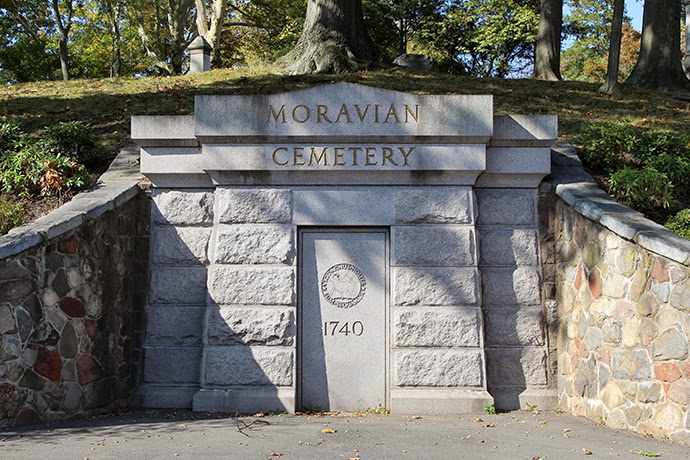
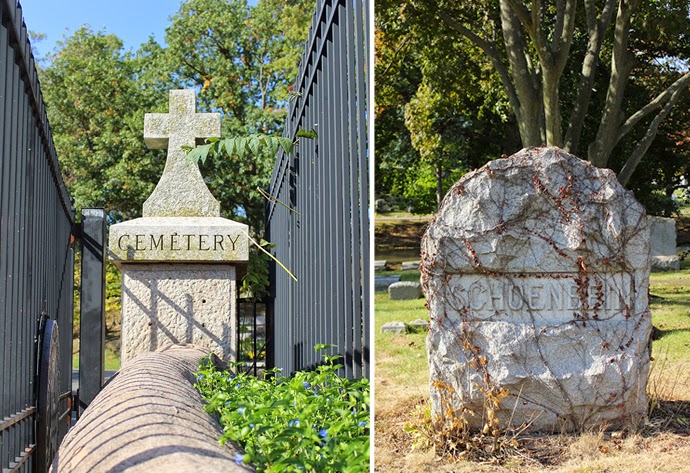

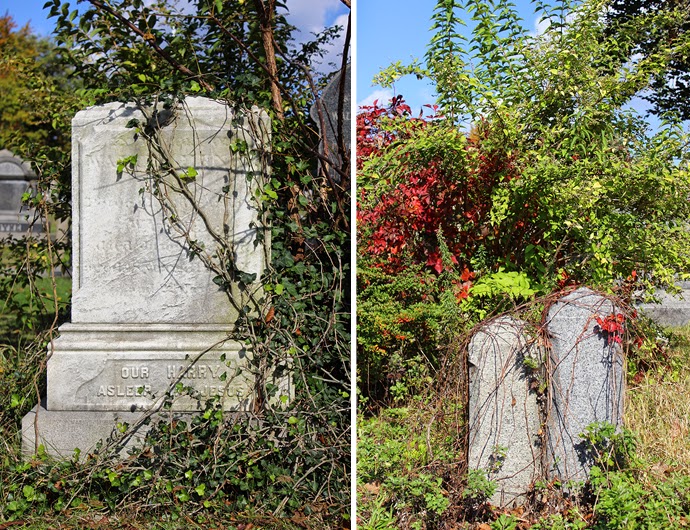

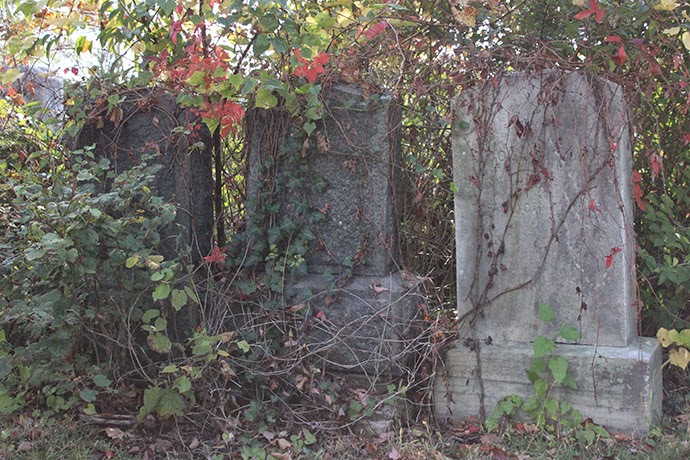
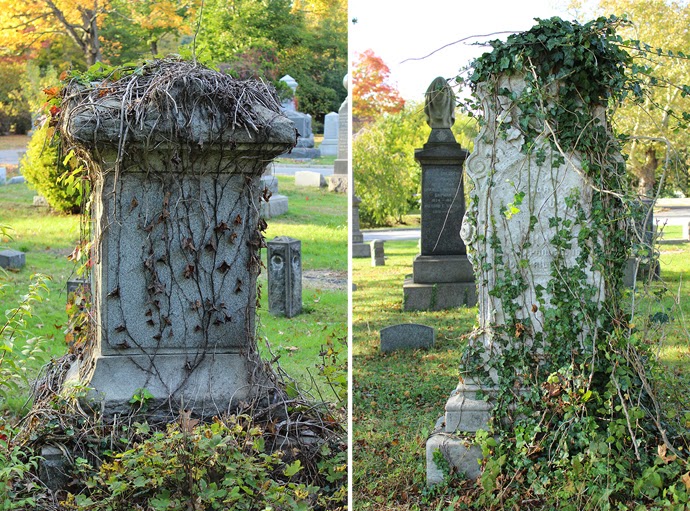
We spent about four hours walking through almost the entire cemetery and more than once I found myself saying "this cemetery has everything!" They had clean, convenient bathrooms when we needed them most, some of the oldest tombstones I've seen in the city (1770s), fascinating new (and incredibly gaudy) mausoleums and the largest concentration of ivy-covered tombstones I've ever seen in one place. I love, love, love a good ivy-covered anything but it adds a creep-factor to tombstones and cemeteries that is almost too much for me to handle.
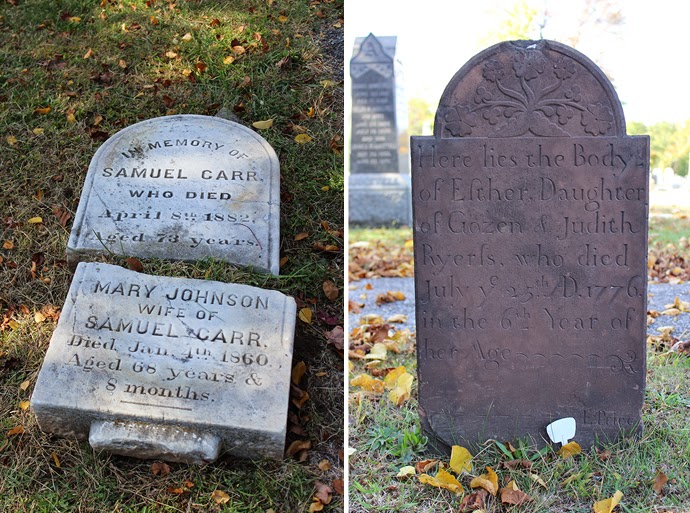
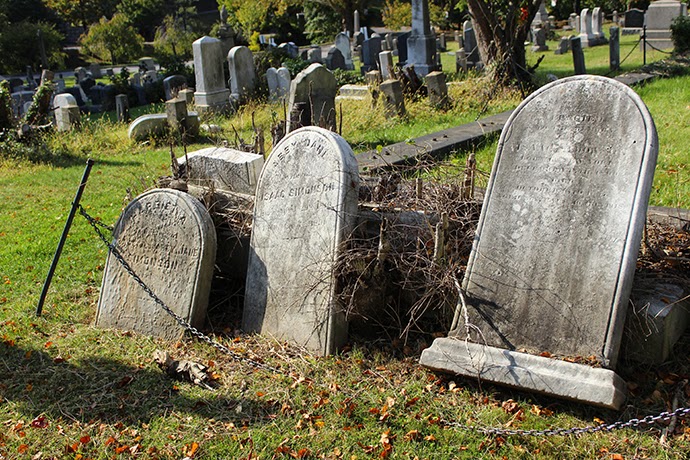
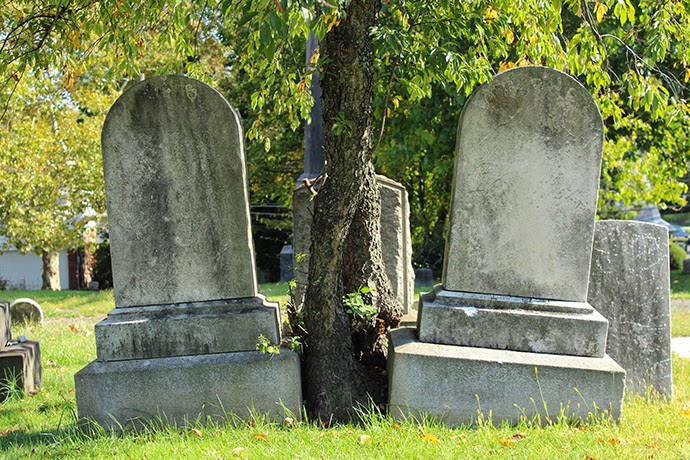
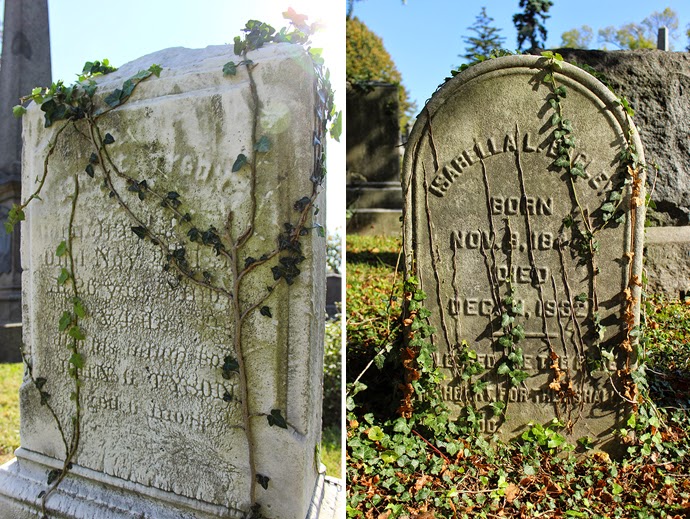
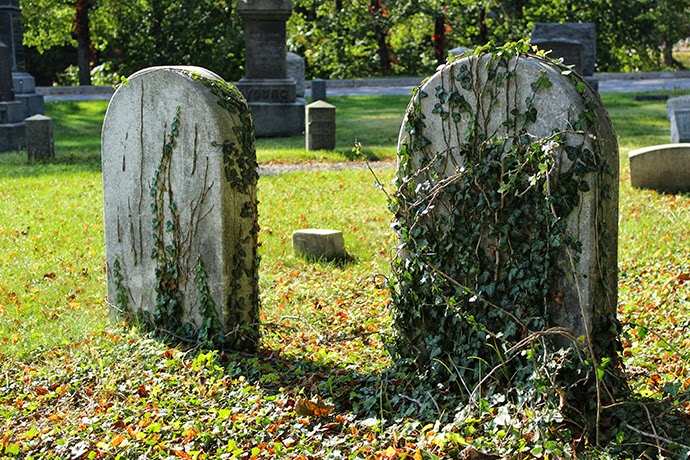
A section of the cemetery houses the Vanderbilt family mausoleum, constructed by Cornelius Vanderbilt and landscaped by Frederick Law Olmstead. Unfortunately the Vanderbilt section is private—I was hoping that we could at least sneak a peek at the (supposedly haunted) mausoleum, but the area is heavily wooded and guarded by a barbed-wire fence. They do offer tours that often include the Vanderbilt section so I'll definitely be coming back to test out that haunted theory for myself.
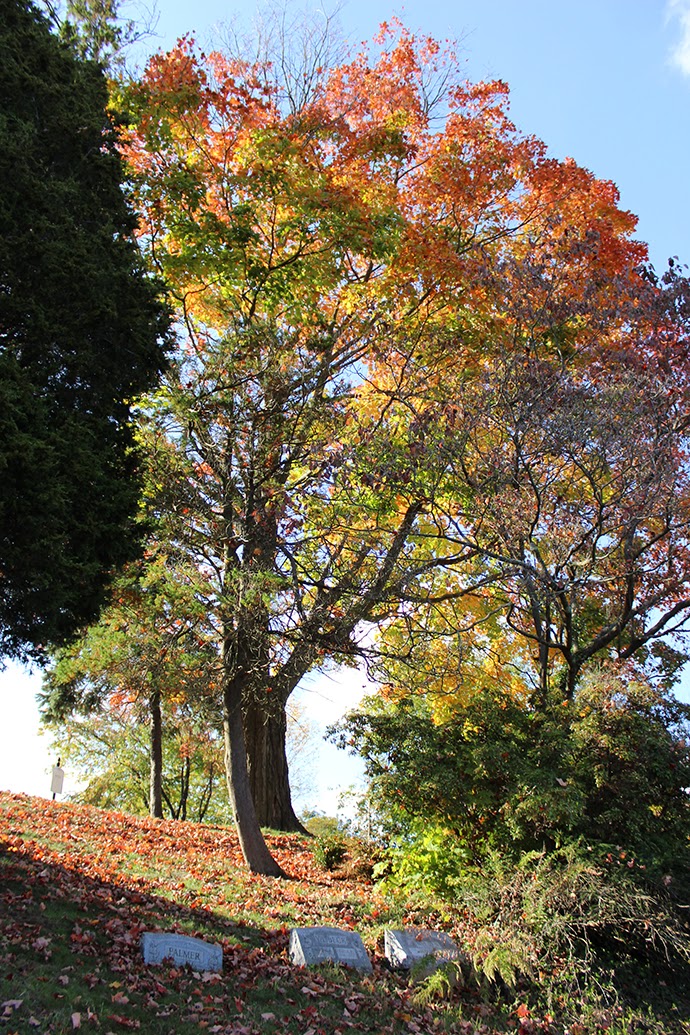
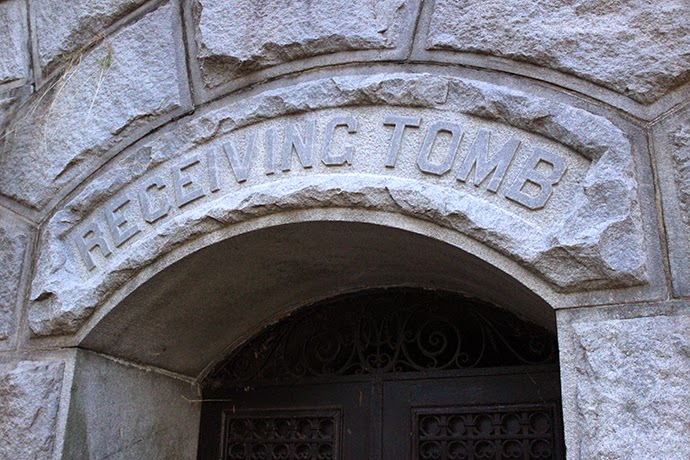
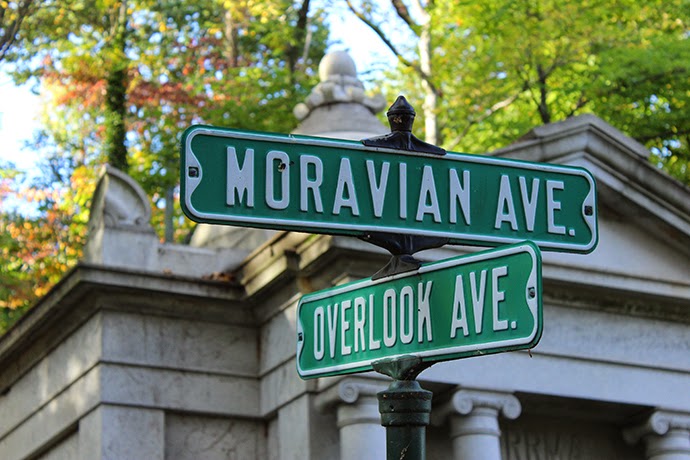

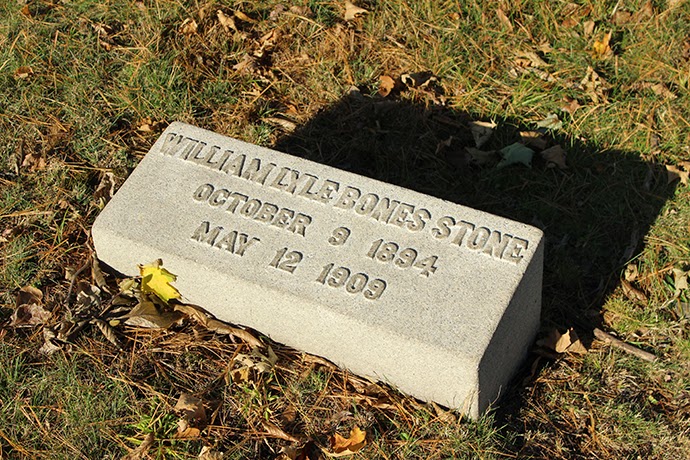
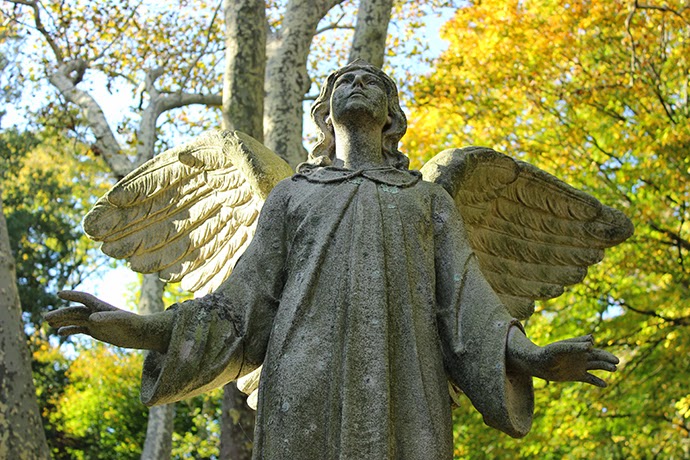
Moravian has an amazing receiving tomb (beautifully labeled as such), a hillside mausoleum with incredible views of the water, the only headstone I've ever seen with the word "bones" on it, and some of the most beautiful fall foliage I've seen all year. East coast Octobers were positively made for afternoon cemetery strolls, and the day we went was perfect fall weather—sunny, yet chilly at the same time.

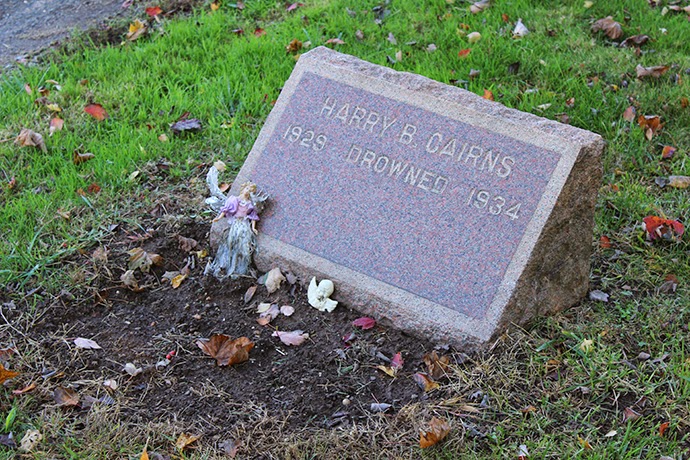
Moravian also gets the distinction of having the single most disturbing gravesite I've stumbled upon in my cemetery travels thus far. JMP pointed it out to me, and I don't think I'll ever be able to forget about five-year-old Harry B. Cairns—or stop wondering how he drowned, why someone felt the need to permanently etch that grisly fact on his headstone, why the 80-year-old grave looks so fresh, or who left that super creepy and tattered fairy doll behind.
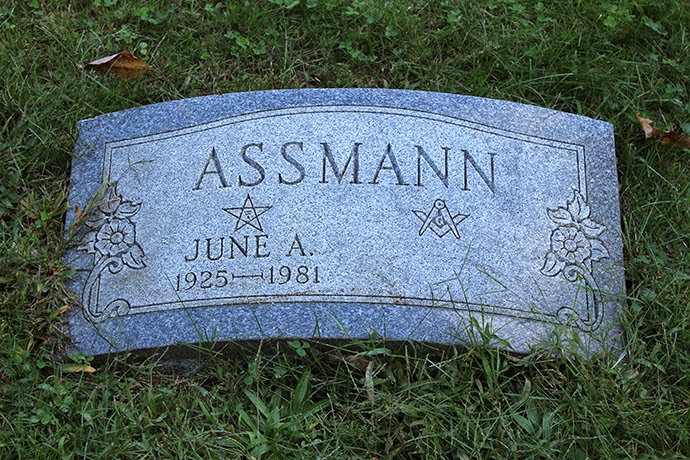
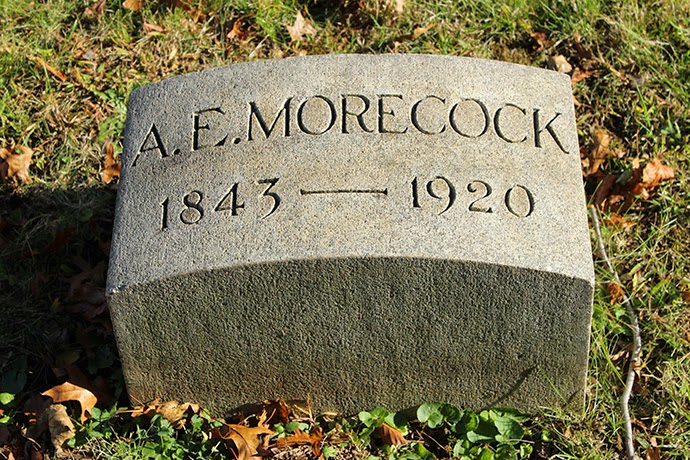
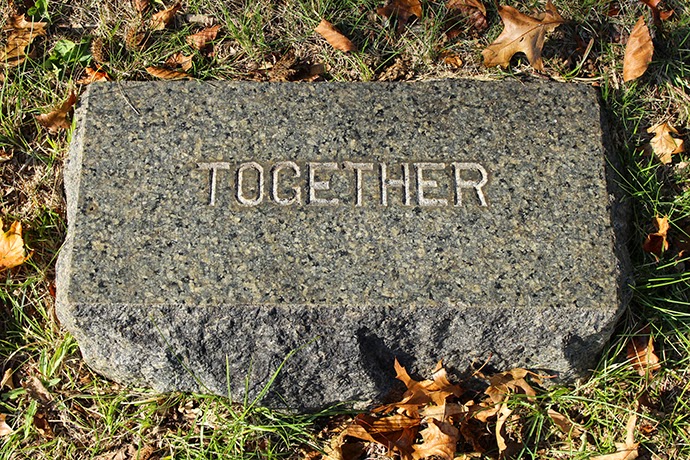
And because I don't wish to leave you on that distressing note, I give you some of the other headstones that we came across at Moravian (although, unfortunately, not right next to each other):

Harry Houdini's Grave
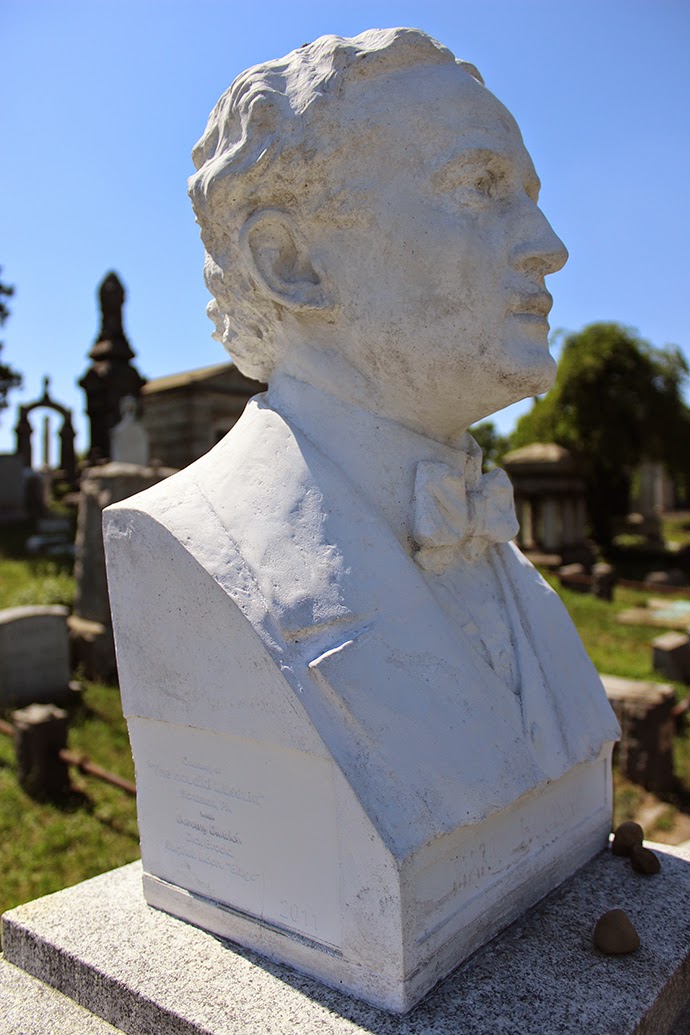
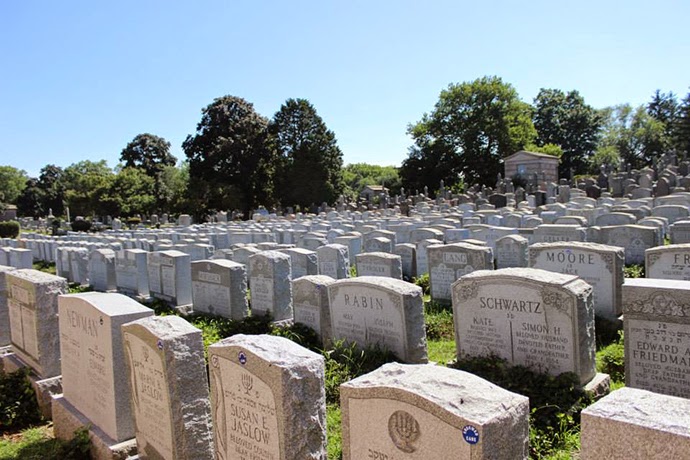
At the beginning of July, my friend Jess took me on a Sunday adventure to see Harry Houdini's grave. She had been there once, many years ago, and currently lives close to the cemetery belt, a two-and-a-half-mile stretch of cemeteries between Ridgewood and Glendale in Queens. Houdini is buried in Machpelah, a Jewish cemetery that apparently used to be in much rougher shape than it is today. When we went, however, it looked tidy and well-cared for, and Houdini's grave is relatively easy to find.
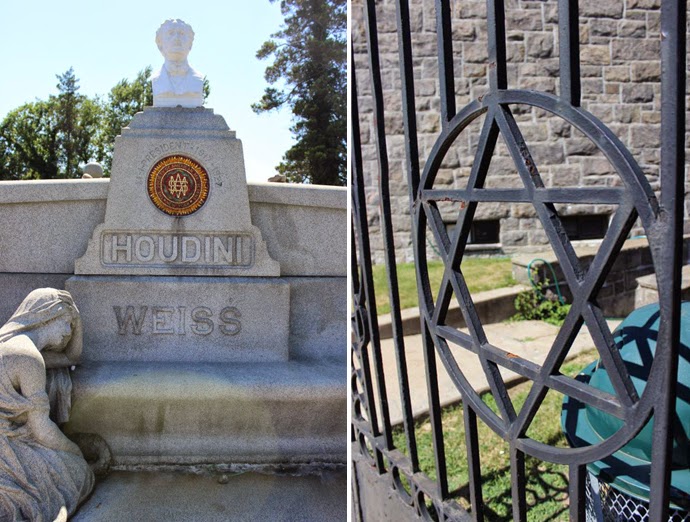
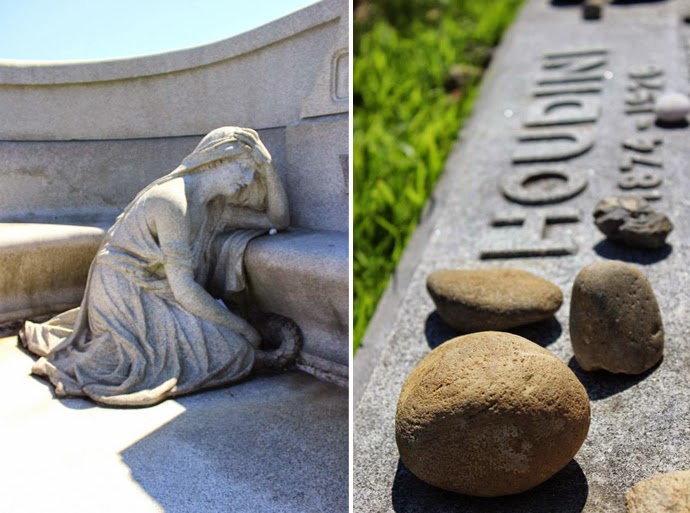
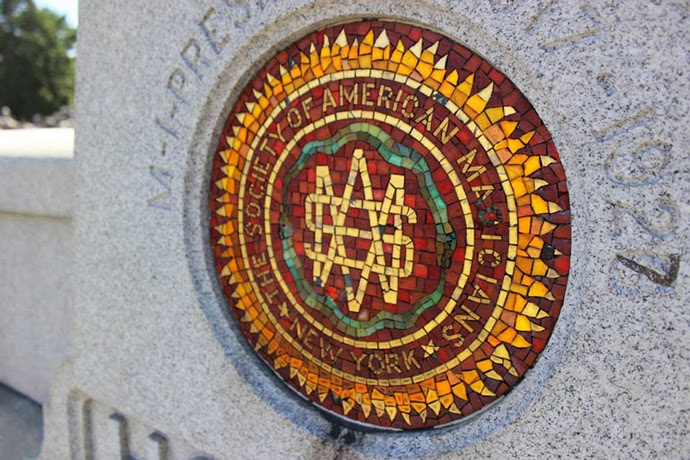
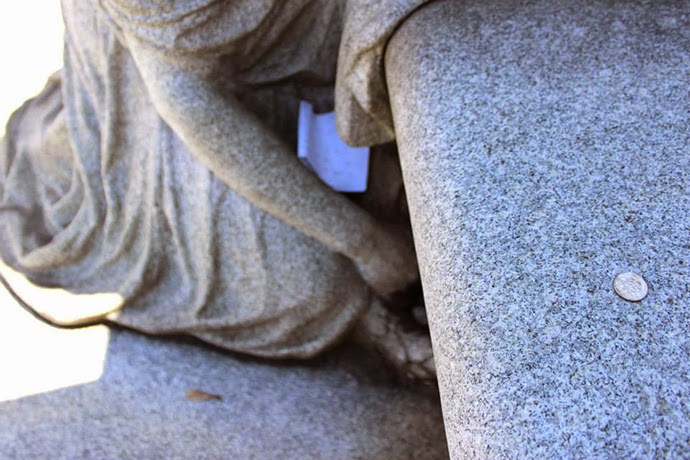
It's a large, family plot containing Houdini's mother, father, grandfather and siblings along with the famous magician himself. Following years of vandalism (and frequent unsanctioned séances) the site was restored in 1996 with the help of donations from fellow magicians. It's a lovely space with a wide curving bench, a gorgeous mosaic featuring the crest of the Society of American Magicians and a beautiful stone mourner—all watched over by a recently restored bust of Houdini.
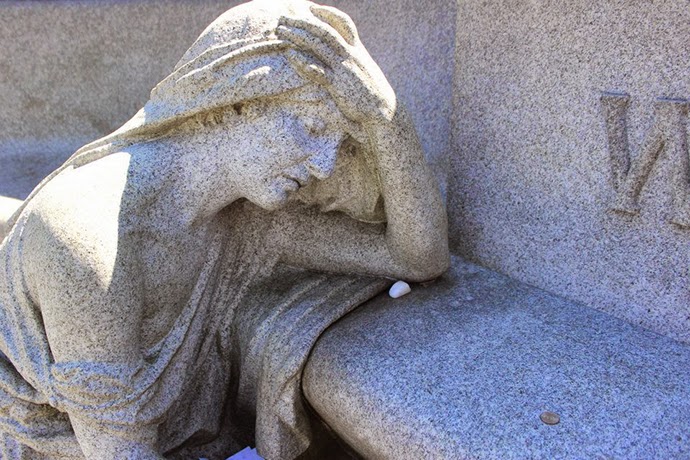

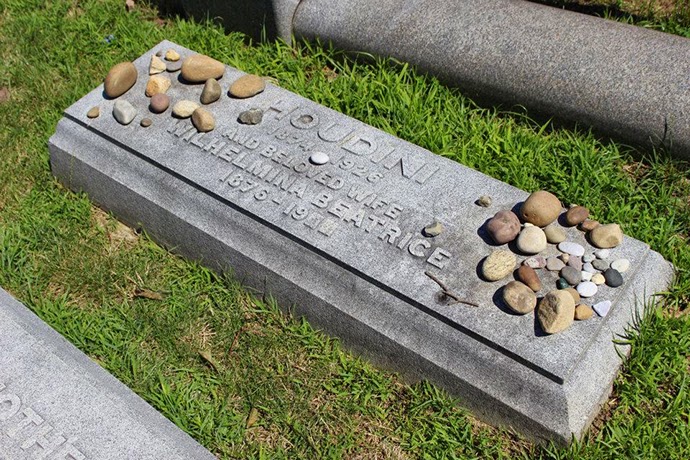
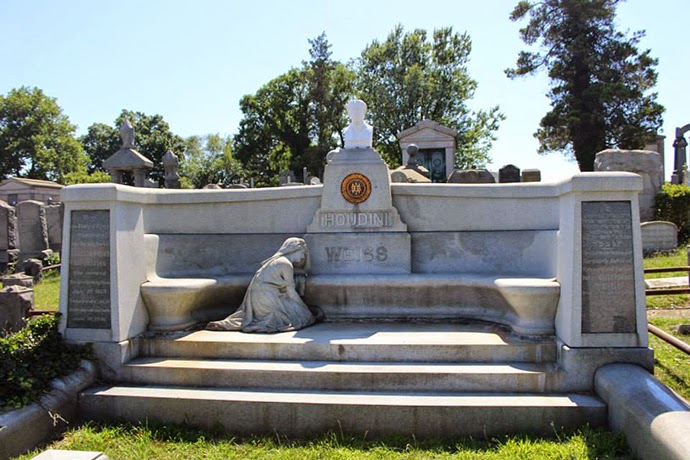
I've read that people have been known to leave playing cards or other magic props, but the only things we found were a dime, a rosary (I wonder if they knew Houdini—née Erik Weisz—was Jewish) and a handwritten note. The dime was odd to me because I seem to find them everywhere I go and I'd love to know what the Houdini connection is, if there is one. There were also a lot of stones on Houdini's ground marker, which is a Jewish tradition—flowers are thought to be a pagan custom and you will rarely see them in predominately Jewish cemeteries.
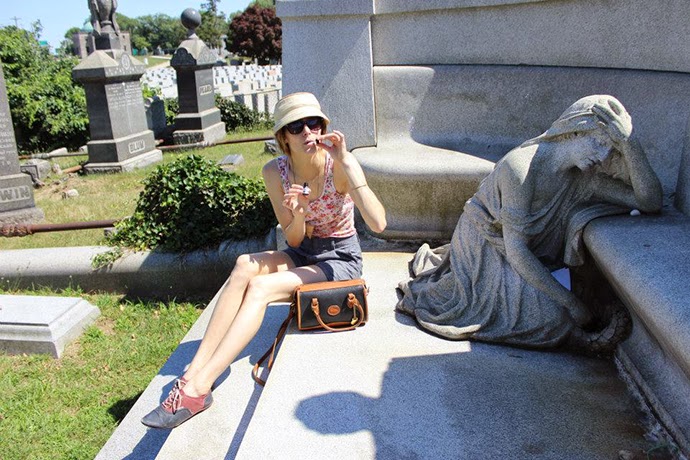
I'm always intrigued to see the gravesites of historical or famous figures—more times than not I find them to be kind of humble in scale and decoration. Houdini's is one of the more elaborate sites I've seen, but it still could be easily overlooked if you're not specifically on the hunt for it.
Fun fact: Houdini actually died on Halloween and every November the Society of American Magicians performs a broken wand ceremony at his gravesite. It just might be time to return to Machpelah and pay my respects once more to the entire Weisz clan.
Green-Wood Cemetery Open House

Last Saturday Jim and I had tickets to the annual Open House at Green-Wood Cemetery in Brooklyn. We had been looking for a ghost or cemetery tour to take during October, and when I read that they would be opening the doors to some of the mausoleums and the catacombs I knew that we had found our tour.
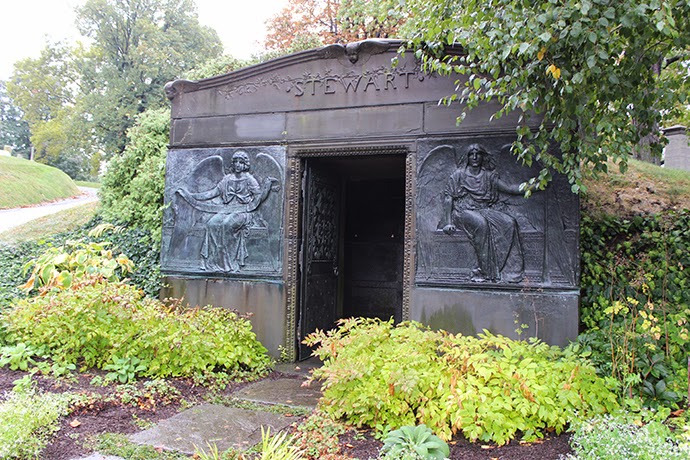


The day ended up being so awesome, and Green-Wood is just so magical and beautiful that I went back for Sunday's tour as well. By the end of the weekend I had seen inside 15 mausoleums in addition to every room contained within the catacombs and I couldn't have been happier.
Most of the mausoleums were more ornate on the outside than on the inside, but it was so exciting to actually get to step inside of the iron gates and granite doors that are always closed so tightly. There was a volunteer or two stationed at each mausoleum in period costume, ready to recite the story of the family contained within. We learned about John Anderson, the tobacco shop owner who employed (and was later suspected of murdering) the "beautiful cigar girl," Mary Rogers; John LaFarge, a stained glass maker and Tiffany rival; Valentine Mott the ambidextrous surgeon; Henry Steinway, the original piano man; and Albert Ross Parsons, pianist and Egyptologist (guess which mausoleum is his).


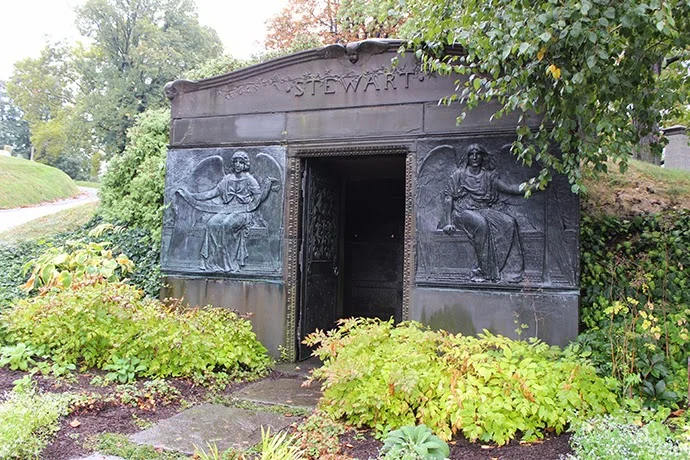
The stories were all so fascinating and uniquely New York, featuring famous families such as the Schermerhorns, Whitneys, Durants and Niblos. There was even one mausoleum designed by Stanford White himself and built using steps from the original New York Public Library (Stewart's, at the beginning of this post).
One of the coolest things about each of the mausoleums was the keys. Most of the ones we saw had their original keys dangling from the door—huge, heavy and incredibly beautiful old keys that are kept in the front office and available to families any time they wish to have access to their respective mausoleums.


I've spent countless hours wandering around cemeteries, standing on my tip toes, trying to peek inside the gates of mausoleums just hoping to catch a glimpse inside. I never imagined that I would one day be welcomed and even encouraged to snoop around such iconic tombs. Some of the interiors were in less-than ideal condition, which was kind of sad—a majority of them had water damage, some contained broken bits of statues and headstones and there was even one with a cardboard box sitting in the corner filled with broken pieces of what was once its stained glass window.
The creepiest thing I saw, however, was the marker on a wall inside of the catacombs that had tiny little handprints all over it. While I realize that they are probably raccoon pawprints, it was still super weird to see them and made me wonder how the critter(s) managed to get inside the sealed doors (maybe they were on the tour?) and why they were only on Henry C. Hadley's marker and not anywhere else within the catacombs?


It was a wonderful kick-off to October and all of its impending fall delights. This is my favorite month and time of year (if that wasn't already obvious) and I'm so excited that, at least for a little while, it will be perfectly acceptable to take cemetery tours, talk about dead things and wear my skull-and-crossbones socks.

Hartsdale Pet Cemetery: Part Two
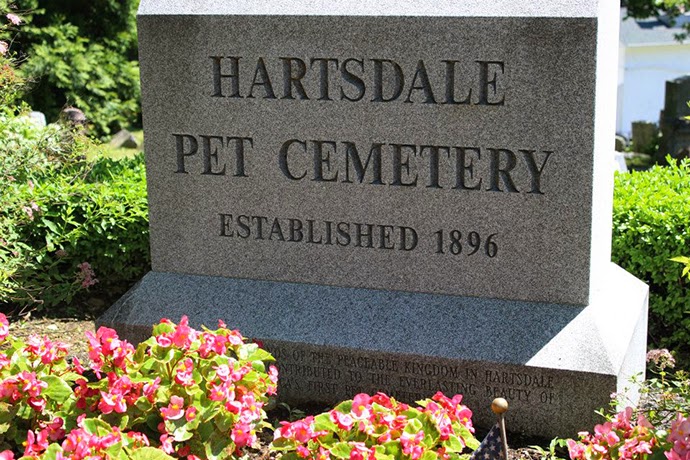
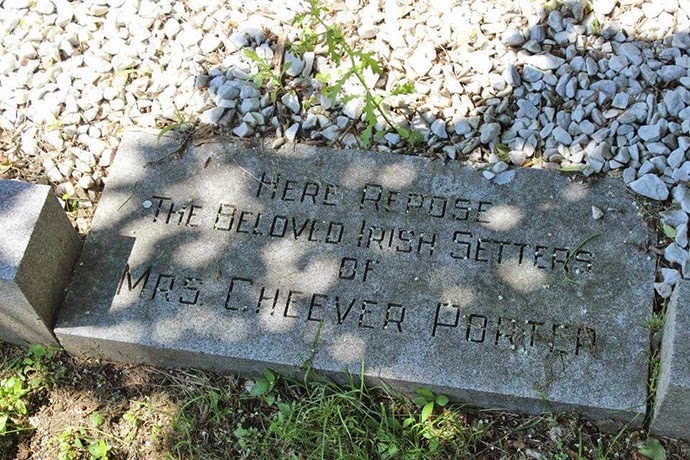
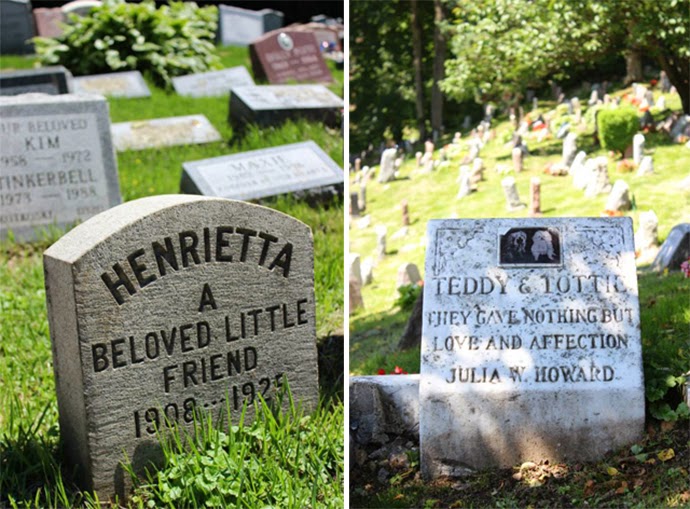
Aside from all of the ridiculous names (I'm still laughing at Freckles Rutherford) to be found at the Hartsdale Pet Cemetery, what really got to me were all of the heartfelt epitaphs from grief-striken owners to their dearly departed pets. Every "human" cemetery I've been to includes the usual sentiments, from "Rest in Peace," and "Dear Mother," to more heartfelt declarations such as "Friend to All," or "Never Forgotten."
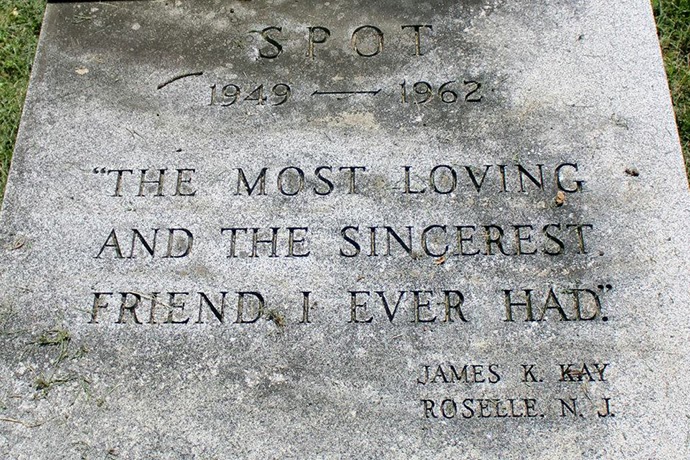
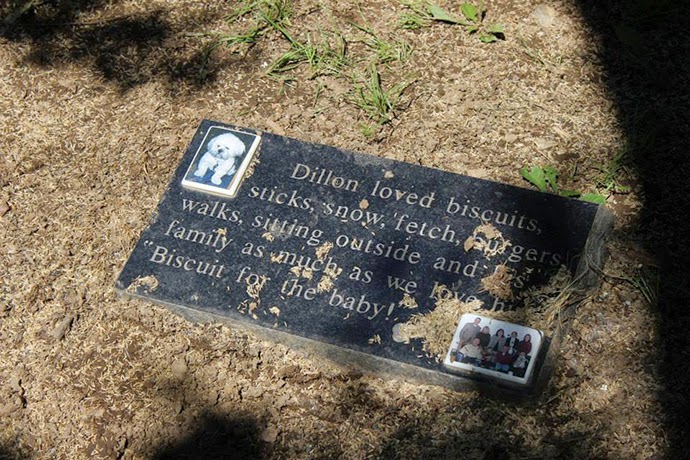
But at Hartsdale it seemed as if almost every single stone had an achingly sad and personal inscription, from "My One and Only," or "The Love of My Life," to thoughtful eulogies such as "They Gave Nothing But Love and Affection," and "Dillon loved biscuits, sticks, snow, fetch, burgers, walks, sitting outside, and his family as much as we love him" (Dillon and I have a lot in common).
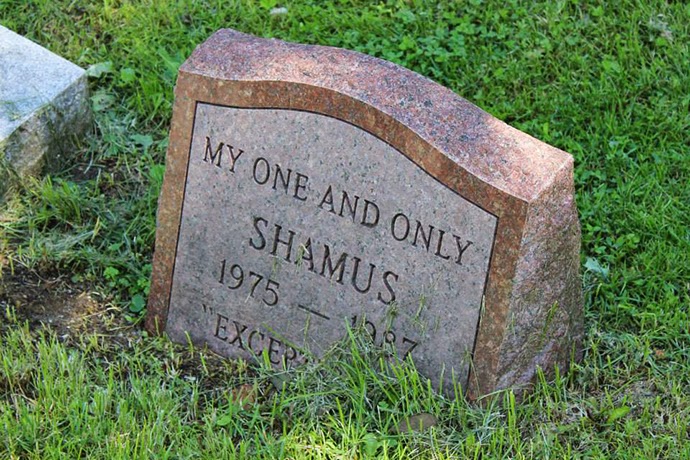
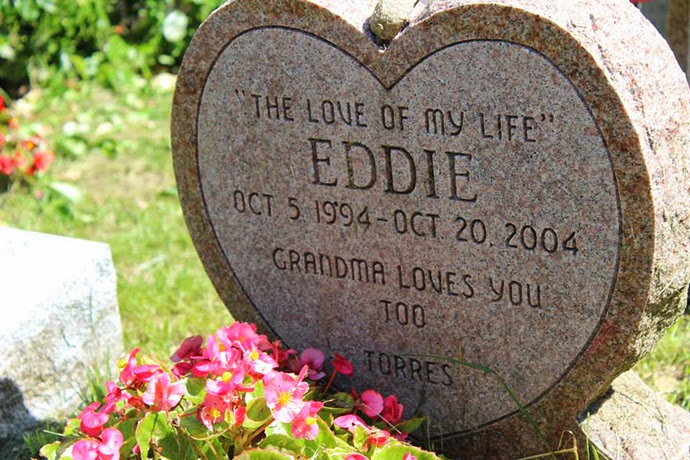
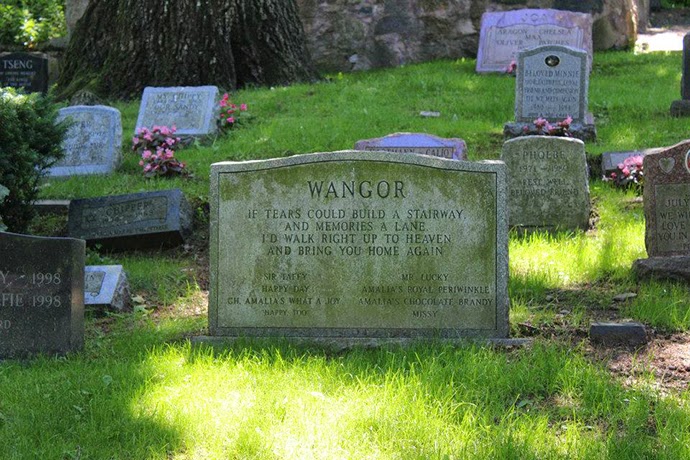
These deeply personal and heartwrenching words really tugged at my pet-loving soul and caused me to tear up almost immediately. I've never been surrounded by so many loving words and the affection that each owner felt toward their pet was incredibly moving.
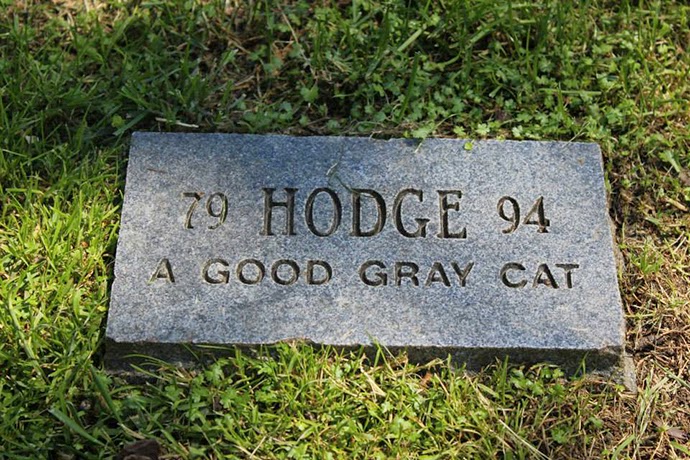
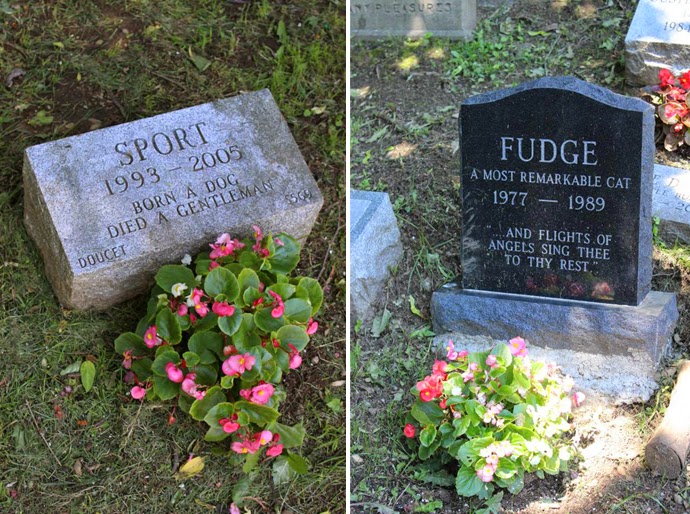
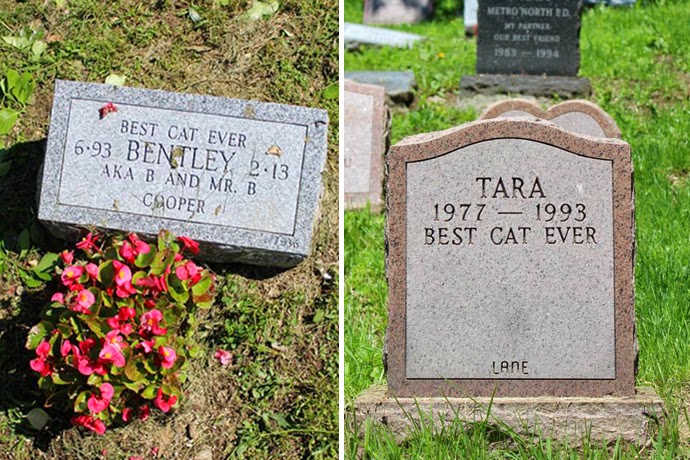
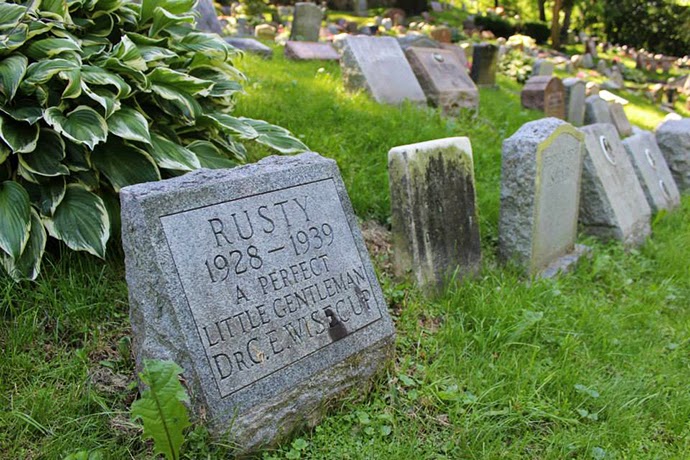
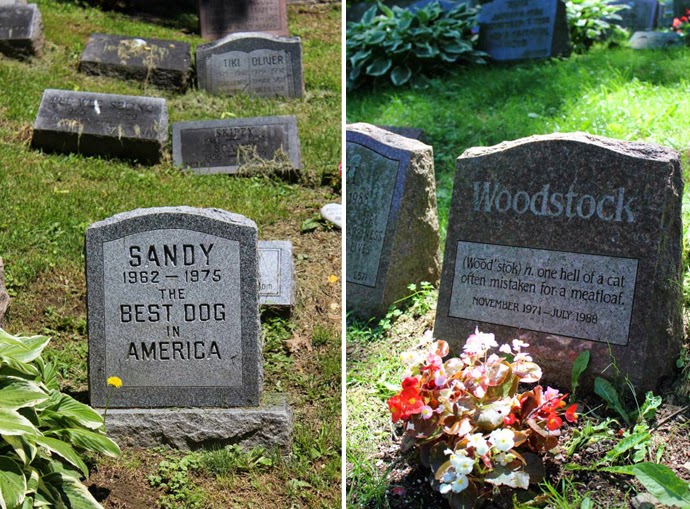
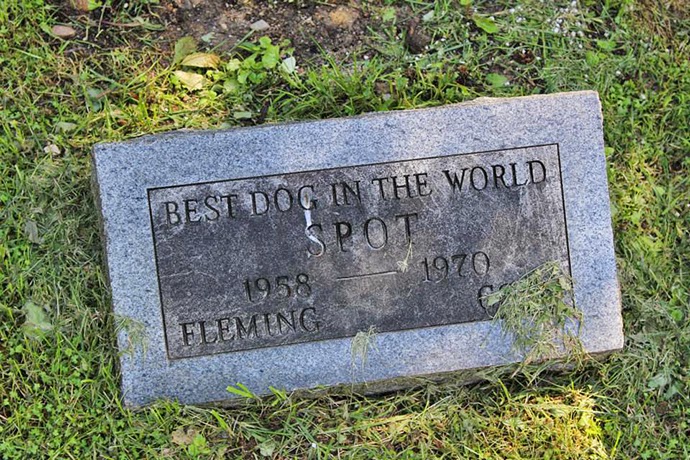
I walked by the graves of at least two cats dueling it out for all of eternity for the title of "Best Cat Ever" — Tara and Bentley — Hodge the "Good Gray Cat," Fudge who was "A Most Remarkable Cat," Sport, who "Was Born a Dog and Died a Gentleman," and Rusty, who was a "Perfect Little Gentleman." I wonder if Sandy, who was apparently the "Best Dog in America," knew that it was actually Spot who was "Best Dog in the World."
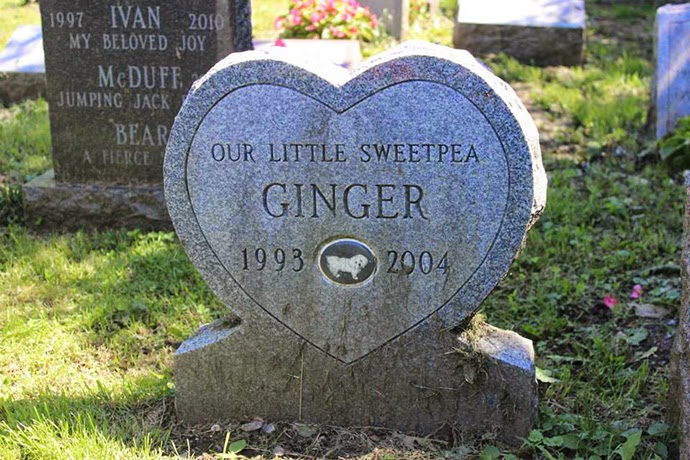
"Our Little Sweetpea" choked me up because that's what I call Mozart on the days where I'm not annoyed with her for screaming in my face, and I totally think I would have loved Woodstock, who by definition was "one hell of a cat" and, inexplicably, "often mistaken for a meatloaf."
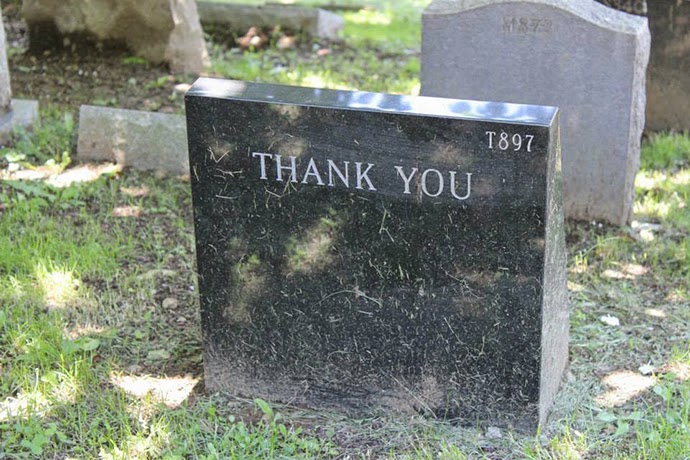
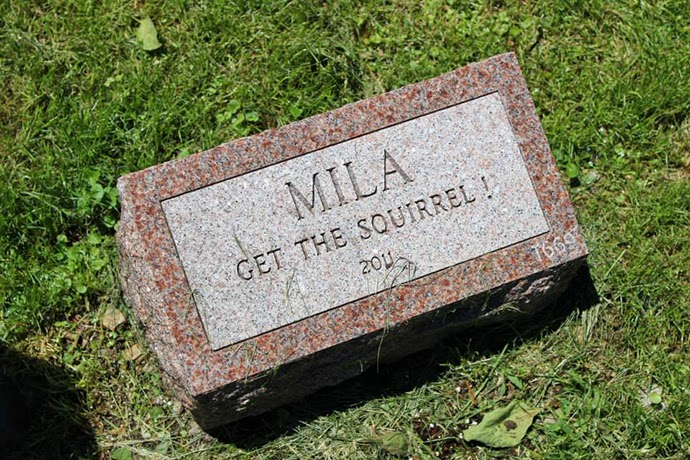
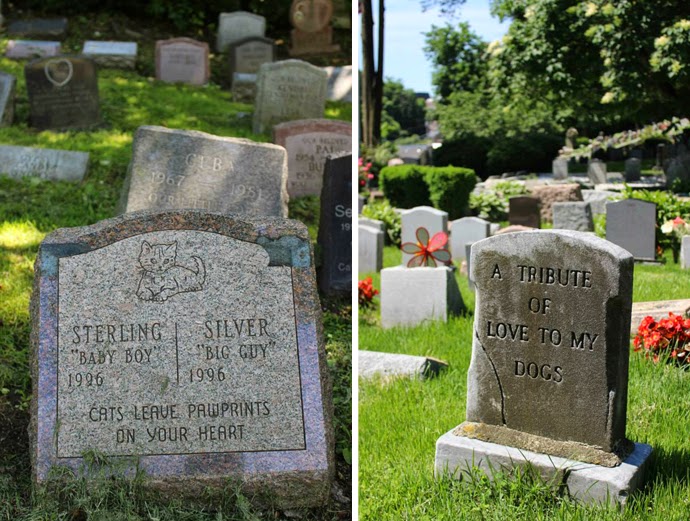
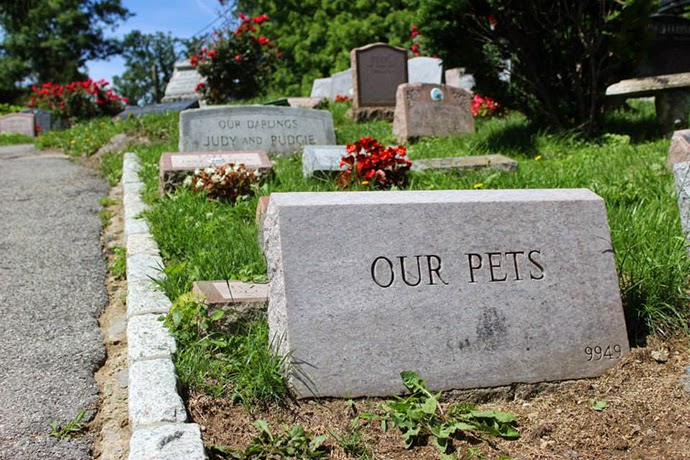
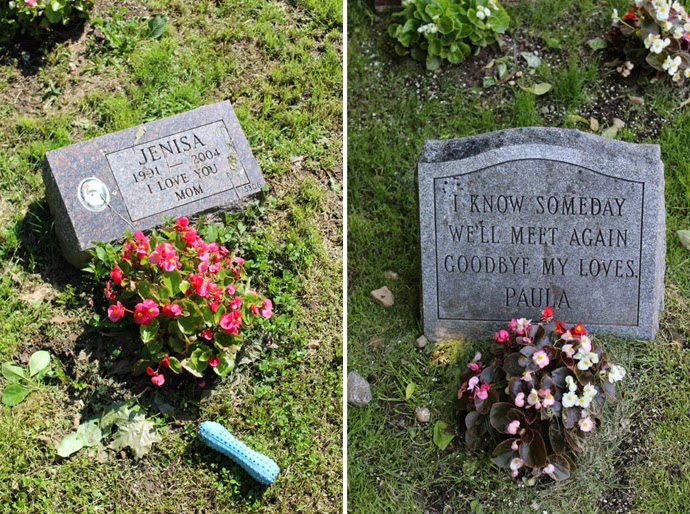
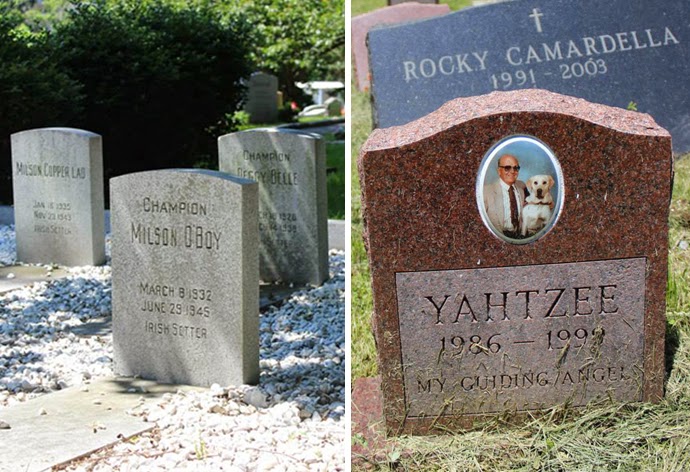
The countless "I Love Yous" and "Thank Yous" were undeniably sweet, but it was Yahtzee's stone with its "My Guiding Angel" inscription and photo of him with his blind master that finally broke me and caused me to shed actual tears after trying my best to hold back all day.
Hartsdale Pet Cemetery:
Hartsdale Pet Cemetery: Part One

Two weekends ago I travelled by Metro North for the first time a little ways upstate to visit America's first pet cemetery, in Hartsdale, NY. None of my friends are as interested in cemeteries as I am (unbelievable), so it was a solo adventure but I didn't mind at all. In fact, as much as I adore all of my friends and explorer companions, there are a few adventures that are better done as solo endeavors and cemeteries just happen to be at the very top of that list. Cemeteries are so peaceful and contemplative, and I don't ever expect anyone to be as fascinated or as willing to spend hours poring over old tombstones as I am.


Harstdale Canine Cemetery and Crematorium was established in 1896, when a New York City veterinarian offered to let a friend bury his dog in his apple orchard. There are more than 80,000 pets buried at Hartsdale, and not just dogs — I also saw headstones for cats, horses, rabbits, birds, and monkeys. I somehow missed the lion cub, who lived at the Plaza Hotel before coming to rest at Hartsdale, and I'm sure there are other species that aren't easily identified by their headstones.
It is the oldest operating pet cemetery in the world, and the only pet cemetery listed on the National Register of Historic Places. It's also the weirdest, saddest, funniest and most surreal place I've ever been. It was somehow exactly what I expected, yet so much more — it's kind of difficult to find words to describe how walking the grounds packed with stone after stone bearing names like "Jingles" or "Mr. Whiskers" made me feel, so it's probably just best to let the photos speak for themselves. Speaking of photos, I took so many (of course) that I will be splitting them into a few posts.


The first thing that hits you upon entering Hartsdale (besides how well-manicured the grounds are) are the names. If you missed the iron gate spelling out "Canine Cemetery," you will know as soon as you read the first tombstone that you're not in a regular "human" cemetery, but instead in a place where "Muffins" and "Buttons" are the norm. I didn't see any Mozarts (thankfully) but I did see a few "Sweet Peas," which is what I call Mozart most days, so those immediately caused me to tear up.


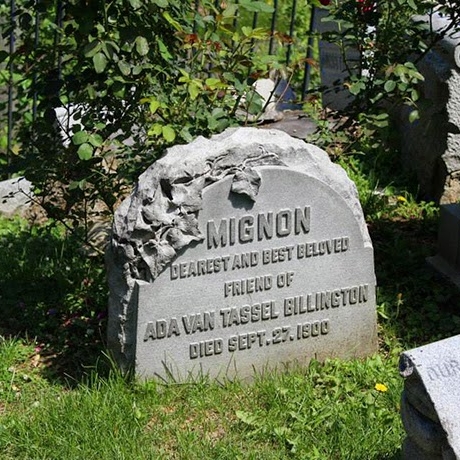
I noticed a lot of the classics — Fluffy, Rags, Spot, Sport, Rusty, Lucky, Sparky, Jingles, Princess and Pal, as well as a Grumpy, Lumpy, Souffle, Mignon, Fajita, Fudge, Winkie Barrymore, Mr. Thomas and (my favorite) Freckles Rutherford.


There was at least one Whiskers and one Mr. Whiskers, along with Snoopy, Woodstock, Lassie, Scooby, Petey, Morris, Bambi, Charlie (and Charlotte) Brown, Tweety, Toto, Lady AND the Tramp.


Gilmore Girls fans might understand my sadness at the Cinnamons and the Chin-Chin (no Paw Paw), and there were more than a few sequels including Muggsy I and II and Little Tinker and Tinker Too. I also paid my respects to Sam the Siamese, Jellicle Cat, Skimbleshanks, Buttons, Bows, Patches, Tinky, Toodles, Spuds, Sprouts and Fat Willie.

I even came across a simple stone with "Allie, My Love, Our Girl," which was the first time I'd ever seen my name carved into a tombstone before, so that was weird for me. I say Harstdale was a weird place because I've never been somewhere before that made me feel such conflicting emotions, and the names were a big part of that. I would be on the verge of tears, reading a super sweet epitaph and then immediately start laughing because how can you not when you pass by anything that bears the name Freckles Rutherford? It was completely disorienting in a way, but I was also grateful for the comic relief.
I have been to probably hundreds of "human" cemeteries and not once has any of them made me sad. I'm always fascinated by the history, the typography, the stories and the decay but I've never been the least bit sad or depressed being surrounded by the dead. Hartsdale was different though, in nearly every way, from any place I've ever been and it really hit me hard to be bombarded with row after row of departed animals.

Maybe it's because animals are so helpless and unconditionally lovable, or because I love Mozart like the kid I don't (or may never) have, but Hartsdale wins the distinction of being the first cemetery to actually make me cry. And then, of course, laugh because I am a human who will never not laugh at a name like Winkie Barrymore — may he rest in peace.
Gravesend Cemetery
I had two days off a few weeks ago for Shavuot (I love my job) and after spending most of the first day securing tickets for Shakespeare in the Park, I wanted to squeeze in an adventure before the normal workweek resumed. Like most things I stumble upon, I'm not sure how I even found out about Gravesend Cemetery, but once I did I knew I needed to see it as soon as possible.
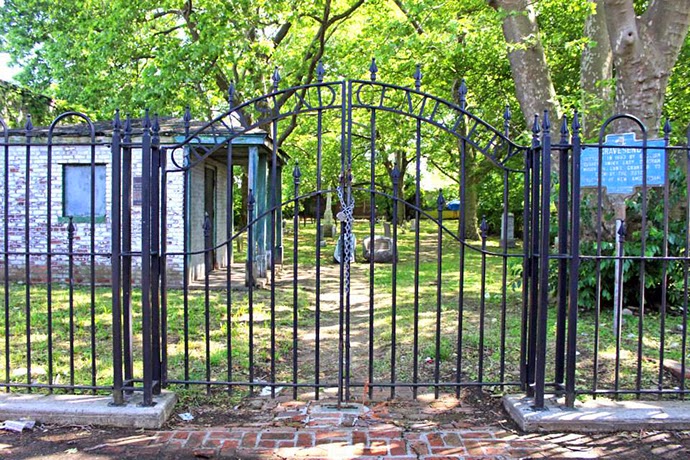

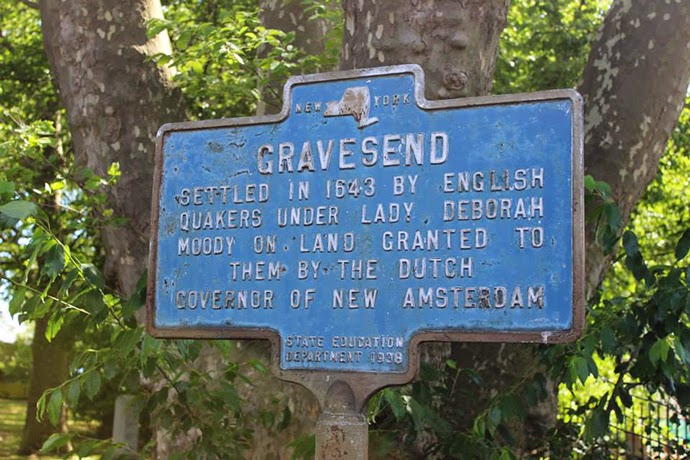
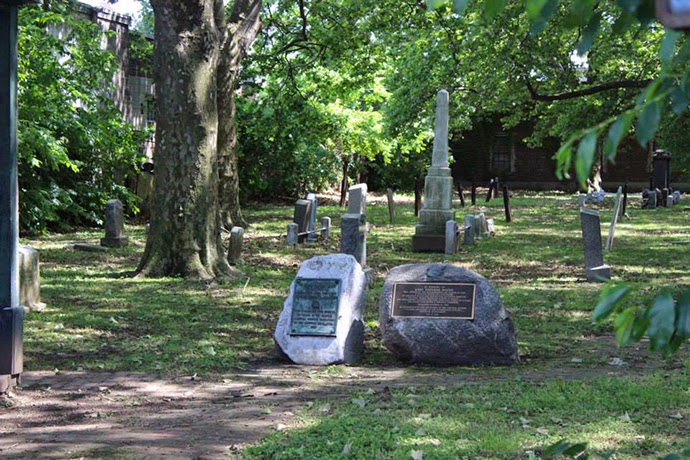
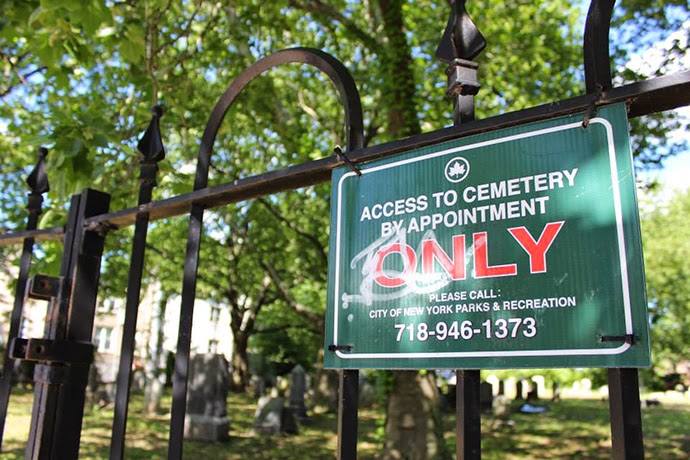

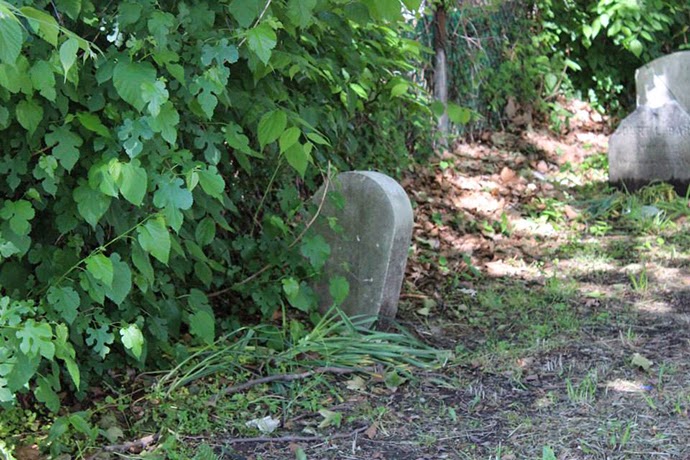
Gravesend was one of the six original towns in Kings County in colonial New York, and is located in south-central Brooklyn, just north of Coney Island. It's a bit of a trek by subway, but a majority of the ride is on an elevated track which is always more interesting than staying underground. At one point we passed by another enormous cemetery that I hadn't known about (Washington Cemetery), so I added that to my list — I actually tried to visit it on the way back, but it was already closed for the day.
The good thing about living somewhere that has always been as densely populated as New York City has is that all of those people eventually die and have to go somewhere, which means an abundance of cemeteries for me to explore. I'm still stumbling upon graveyards in Manhattan that I didn't know about, and it's a tiny, 13-mile long island. Add in the four other (much) larger boroughs and I doubt I'll ever see them all, no matter how long I live here.
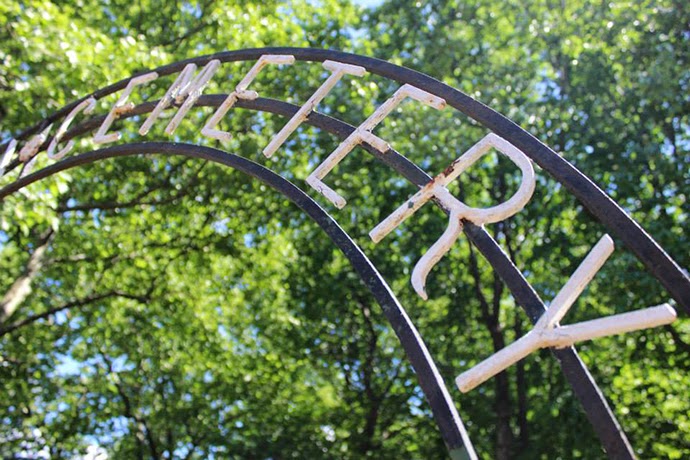

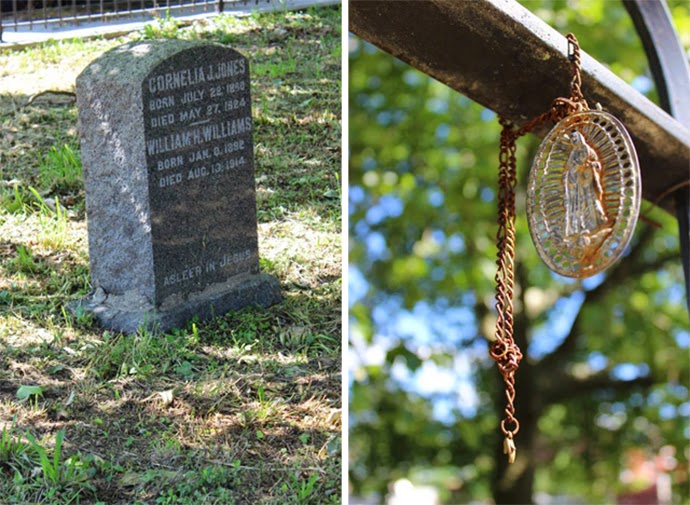
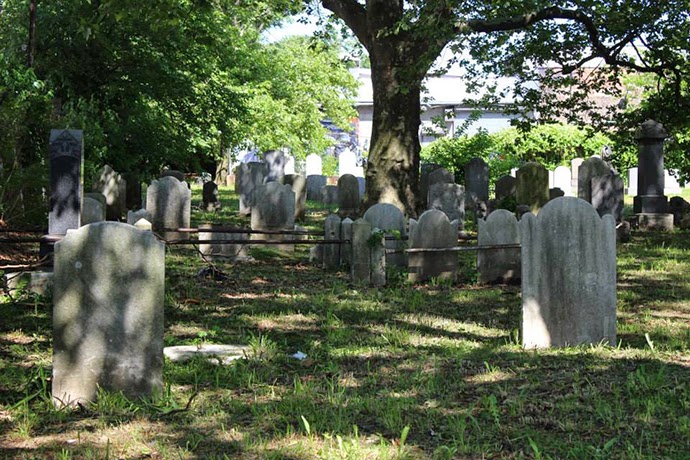

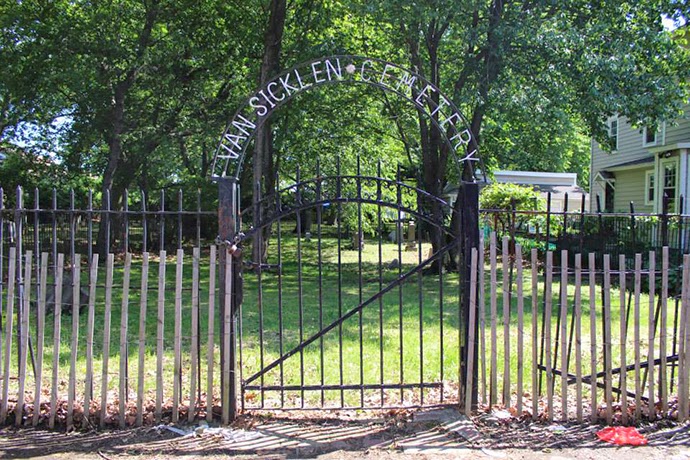
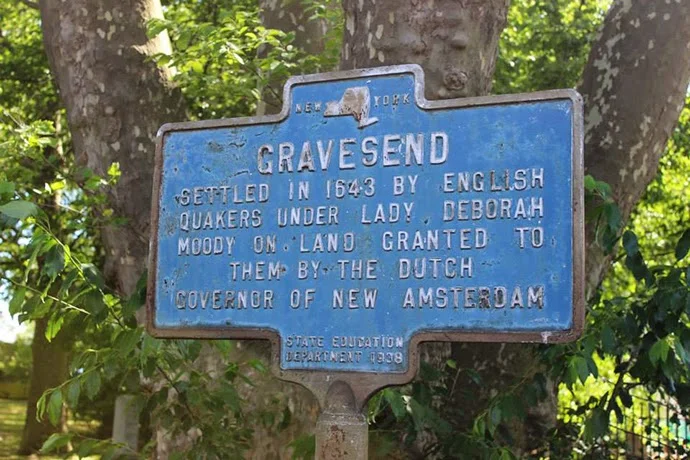
Dating back to 1643, Gravesend Cemetery has been labeled the "oldest cemetery owned by New York City," by some but I can't find substantial evidence to entirely back that claim. Either way, it's a very old cemetery by US standards and certainly one of the best-named that I've ever seen.
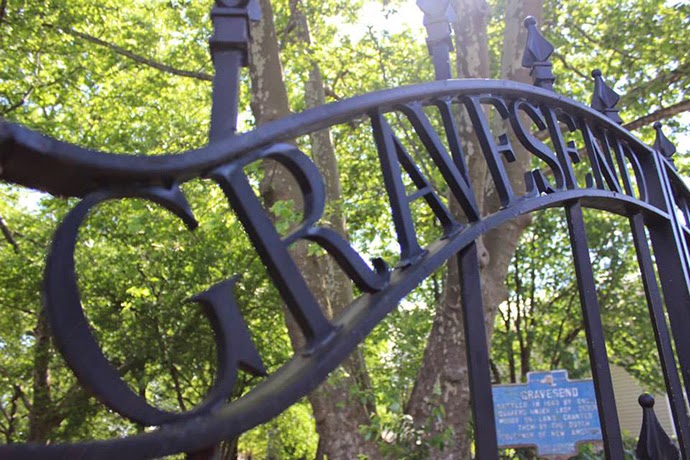
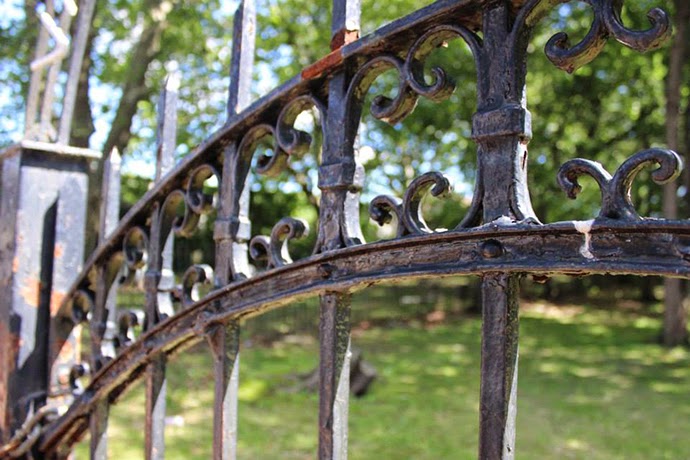
The cemetery is tiny, and open "by appointment only," but I was pleased to discover that the surrounding fence has openings large enough to easily stick a camera through or your head, if you're into that. The arching, iron gate spelling out "Gravesend Cemetery" is worth the trip alone, and an adjoining cemetery maintained by the Van Sicklen family also has a beautiful arched entryway.
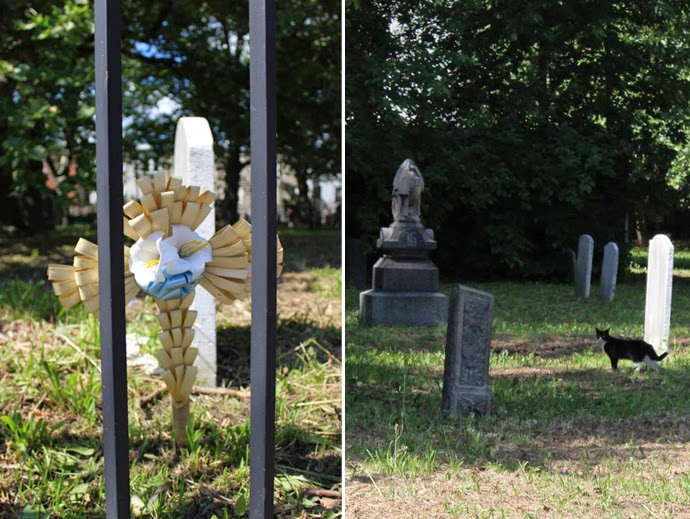
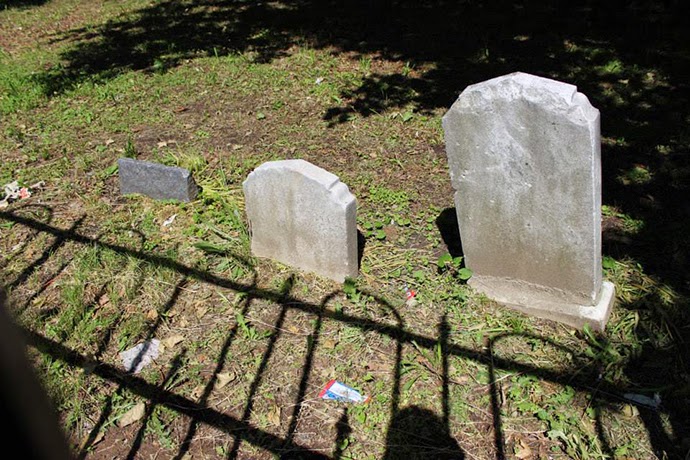

There is nothing too remarkable in the tombstone department, as far as I could see, and it's not nearly as densely packed or as crumbling as some city cemeteries I've been to. One of the creepier/better moments of my trip was spotting a (partially) black cat weaving in and out of the headstones — at one point he/she noticed me, stopped and stared for an uncomfortable amount of time, and then went on his/her way. I seem to have a knack lately for seeing black cats in especially creepy and abandoned places, which would probably worry some people — but I'm the girl that delights in using her days off to explore centuries-old graveyards, so my creep-barometer might just be skewed a bit differently than most.
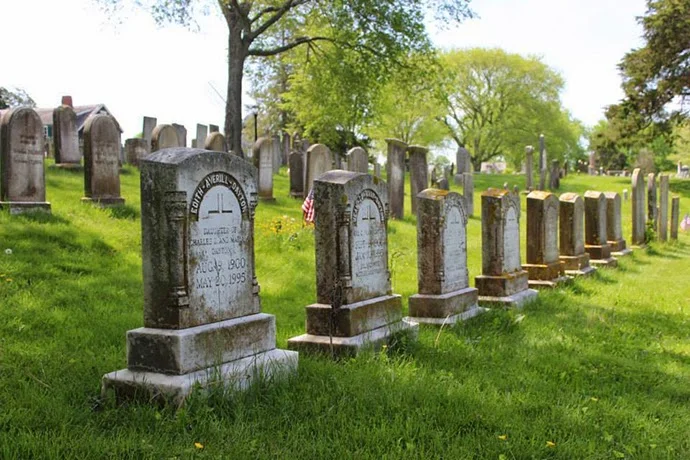
East Hampton: Part 2 - South End Cemetery
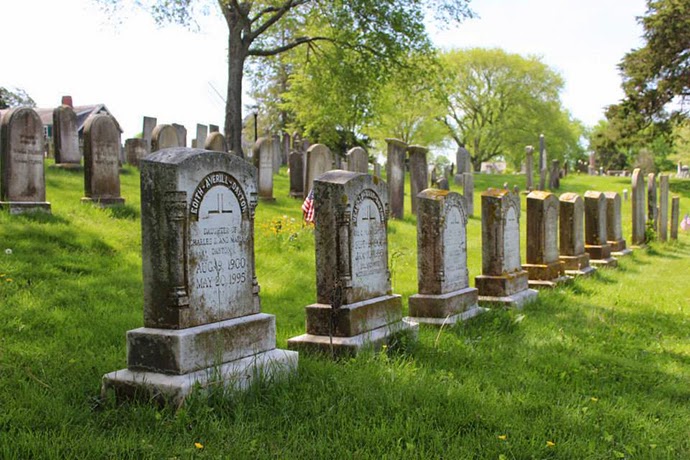
One of the first places that Jim and I visited while we were exploring East Hampton was the South End Cemetery. I guess I sort of lied when I said that we didn't have any plans for the day, because I did know that there was a cemetery in between the train station and the beach, so of course it was always part of the non-plan plan. It was also Memorial Day, making it an appropriate (but really, when is it ever not appropriate?) and even more necessary stop along the way.
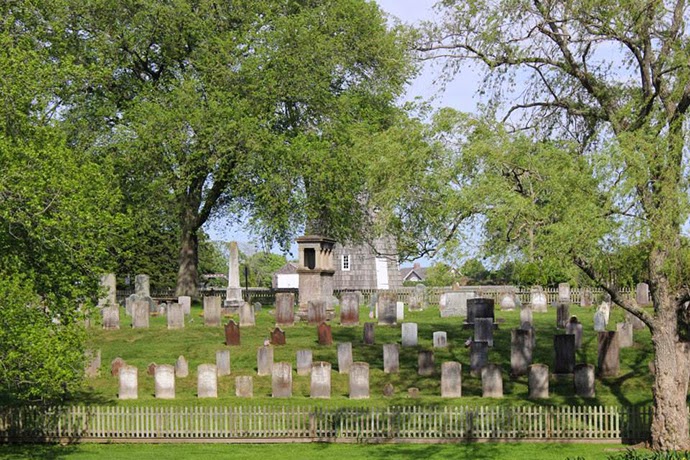
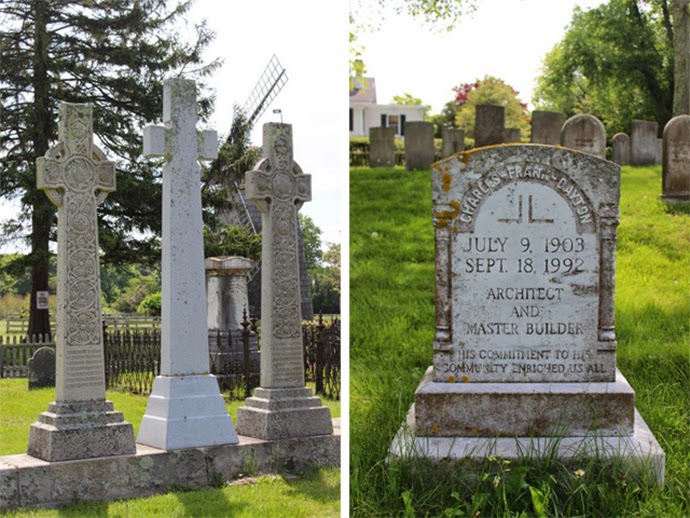

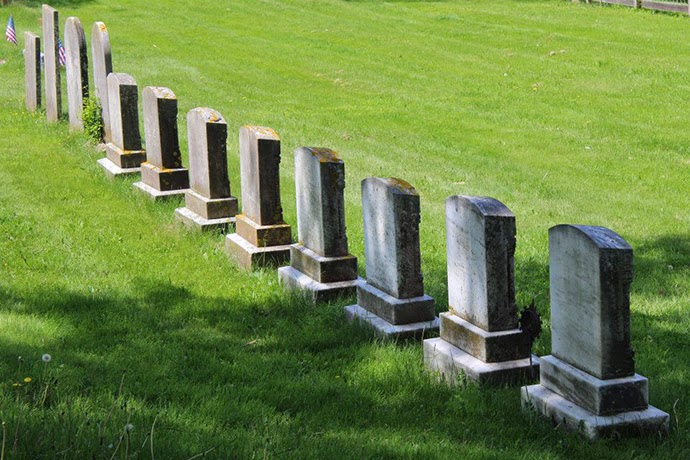
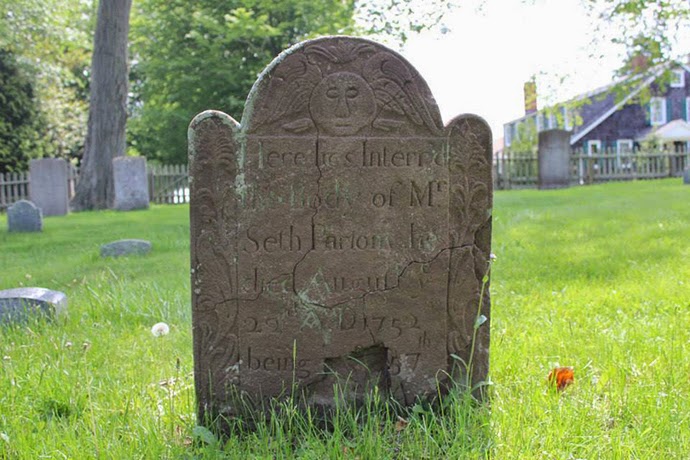
South End is the oldest cemetery in East Hampton, with tombstones dating back to the 17th century. The entire town of East Hampton was peaceful, beautiful and picturesque, and the cemetery was no exception. At one point, Jim said "this is one of the nicest cemeteries I've ever been to," and I totally agree. It was well-manicured, but still had a decaying, crumbling quality that is essential to a good, old cemetery.
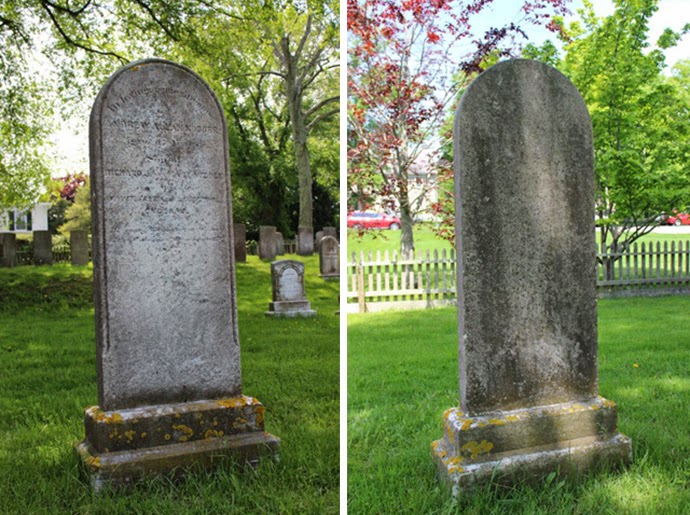
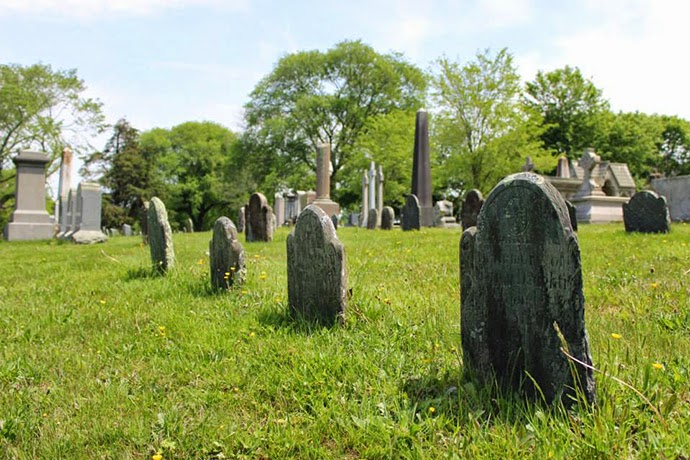

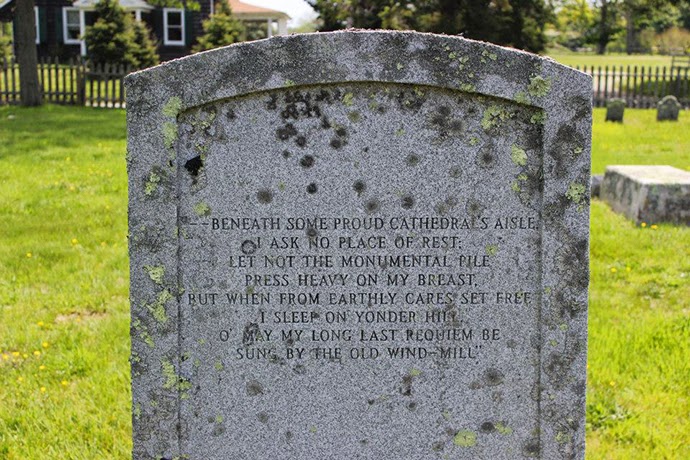
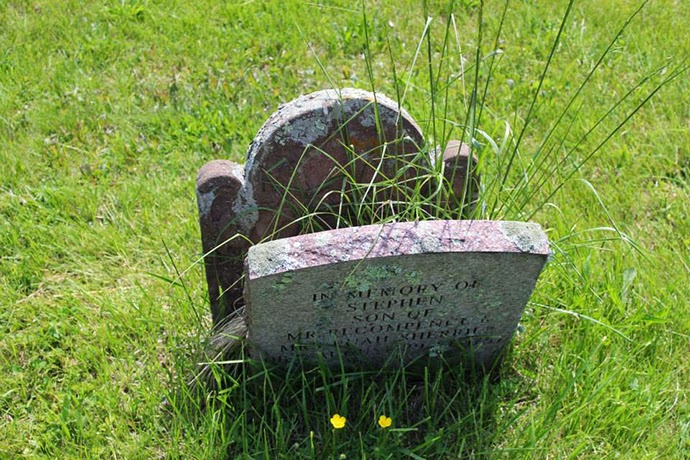


The stones were mostly in great condition, but a lot of them had a few different types of lichen (moss? algae? mold?) growing all over that I'd never really seen in a cemetery before — maybe it's their proximity to the ocean and the moist, salty air? This, of course, only makes them creepier and more amazing to look at, and I could have spent hours staring at and photographing each and every one.
Even the stones that had broken or crumbled looked like they had been replaced at some point, with the newer stone sitting directly in front of the older stone. It took me a while to realize that the two stones weren't meant to mark to separate graves, and I appreciate the fact that they at least tried to keep the old stones, instead of just swapping them out for the newer models.


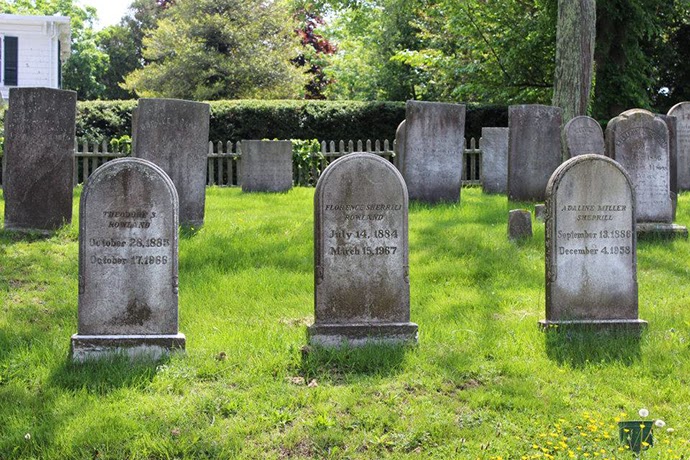
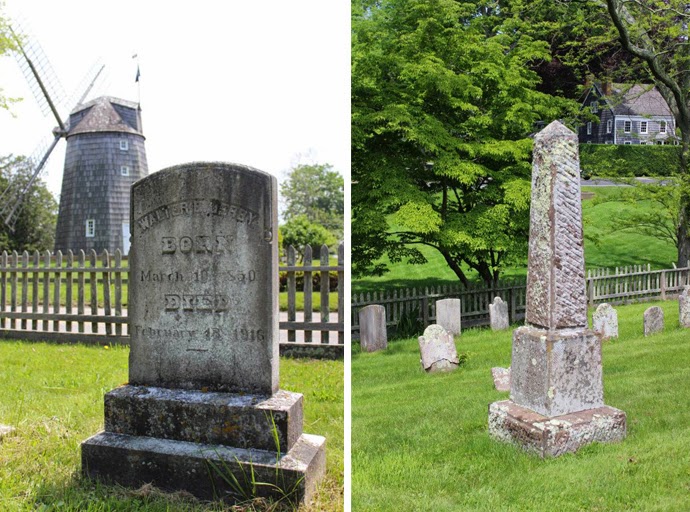
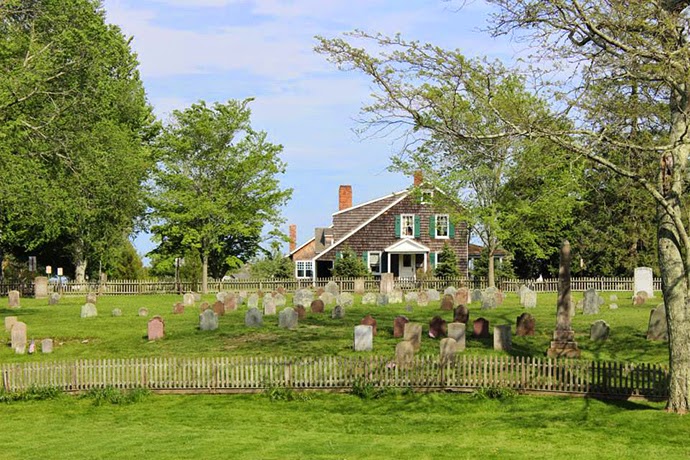

The cemetery is sandwiched in between Town Pond and the historical center of town, and is located across the street from the old Hook Mill, Home Sweet Home and the Mulford Farm museum. As if the historical homes, windmills, picket fences and peaceful waters weren't enough, I looked up from my camera at one point to see actual white swans floating in the pond. There were even children nearby catching frogs in nets and squealing with delight — the whole scene felt straight out of central casting.
There is also a North End cemetery about a mile up the road, but we didn't make it there on this trip — I guess I'll just have to go back so as far as East Hampton cemeteries are concerned, I can say I "collected them all."
First and Third Cemeteries of the Spanish and Portuguese Synagogue

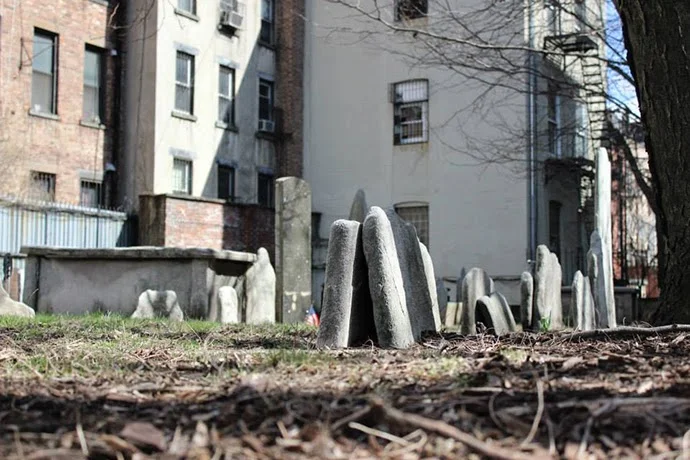
After I visited the smallest cemetery in Manhattan and noticed that it was called the "second" cemetery of the Spanish and Portuguese Synagogue, I did some investigating Googling and discovered that there are actually three separate burial grounds associated with the Congregation of Shearith Israel. Once I also learned that both the first and the third cemeteries were still in existence, I knew I had to "collect all three," and this past weekend I did just that.


All three cemeteries are in Manhattan — the first is at 55 St. James Place near Chinatown, the second is on West 11th in Greenwich Village and the third is on 21st Street between 6th and 7th Avenues in Chelsea. The first cemetery dates back to 1656 and is the first Jewish cemetery in the United States (the Congregation is the oldest in North America). It's larger than the second, gated (and locked) like the other two, and raised above sidewalk-level so I had to stand on my tip-toes to get a good look.


The first cemetery is definitely one of the oldest burial grounds that I've ever visited. Although the exact location of the original cemetery is not known, it was established at its current location in 1683 which is still about 200 years older than most of the cemeteries that I've seen. It actually holds the distinction of being the second oldest cemetery in Manhattan, after Trinity Churchyard on Wall Street (and only certain parts of that cemetery are older). Over the years the land has been chiseled away by city expansion and erosion and sadly a lot of the bodies have been disinterred.


The third cemetery was in use from 1829-1851 and is in such a modern/trendy area of town that it definitely looks out of place. There is a Trader Joe's directly across the street, which I'm sure is not what the initial residents had in mind, but being so close to such delicious (and cheap!) food isn't a bad way to spend eternity, if you ask me. It also appears to be the largest of the three, and is the one in the best condition (a plaque on the fence mentions a recent restoration).
The grounds look well-kept, although a lot of the stones are falling or have fallen over and some are in multiple pieces. It was a little hard to see from far away, but it even looks as though one of the pathways in the back is actually just fallen tombstones, lined up one right after the other.


I was kind of annoyed that all three were locked, and I wonder if they're ever really open to the public (from what I have read it seems as if at least the first one is open for a prayer ceremony around Memorial Day). Part of me is thankful that the gates/locks help to preserve the historical sites, but part of me just really loves wandering around cemeteries and looking at the headstones up close. A lot of the stones are worn to the point of being unreadable, some have Hebrew inscriptions and some are separated from the others by miniature fences of their own.
It's still hard for me to believe that I had no idea these three cemeteries even existed until a few weeks ago. I'm constantly surprised by how often I discover something new (to me at least) in this city, especially within the less-than-thirty square miles of Manhattan, alone. I like having a project or a list to complete, so the completionist in me totally loved the thrill of discovering a "set" of cemeteries, and being able to visit them all so easily. Of course just as soon as they had gone on my list I checked them off, but that's the fun of a city like New York — I'm sure there are plenty of other interesting places waiting to be (re)discovered right around the corner.
The Smallest Cemetery in New York

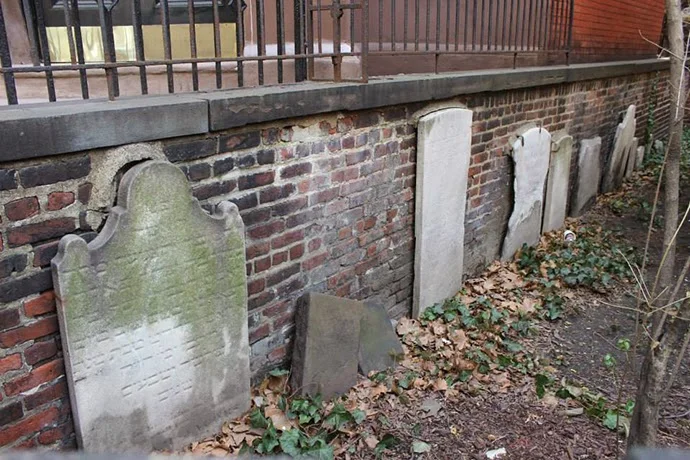
Two weekends ago I spent a wonderfully beautiful Saturday wandering around Manhattan. I've mentioned before that these ambling days usually turn out to be some of my favorites, and this was no exception. After starting off my day at the Square Diner, in TriBeCa, I made my way to Greenwich Village to see the smallest cemetery in Manhattan.


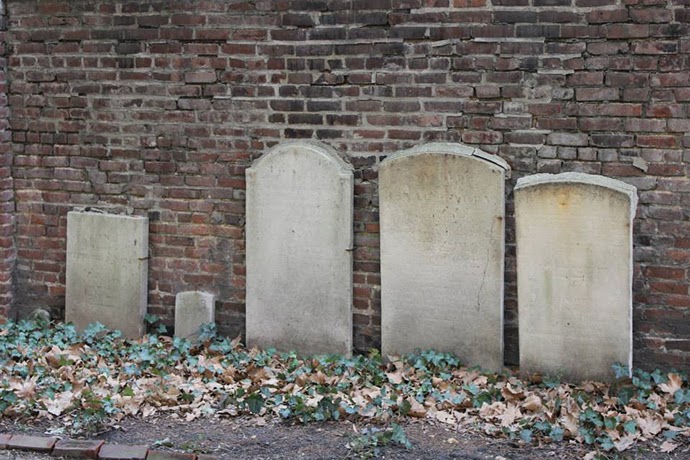
In case you haven't noticed, I've been on a cemetery kick lately, so it was only a matter of time before I made it to the tiny, triangular cemetery on West 11th Street. Unfortunately, the gates were closed, but it's such a tiny piece of land that you can pretty much see it all just from peeking through the fence.


The Congregation Shearith Israel was America's first Jewish Congregation and was founded in 1654. The 11th Street Cemetery is actually its second, and was active from 1805-1829. It was used "primarily to bury victims of communicable diseases like yellow fever and malaria, as well as for those Jews who passed away in New York but were not members of the Congregation [source]"
Over the years, the expansion of the neighborhood has forced many of the remains to be re-interred elsewhere, but a few worn tombstones remain. Most of the stones have been fastened to the brick wall surrounding the cemetery — notable residents include the painter Joshua Cantor (that's his obelisk in the middle) and Revolutionary War hero Ephraim Hart.
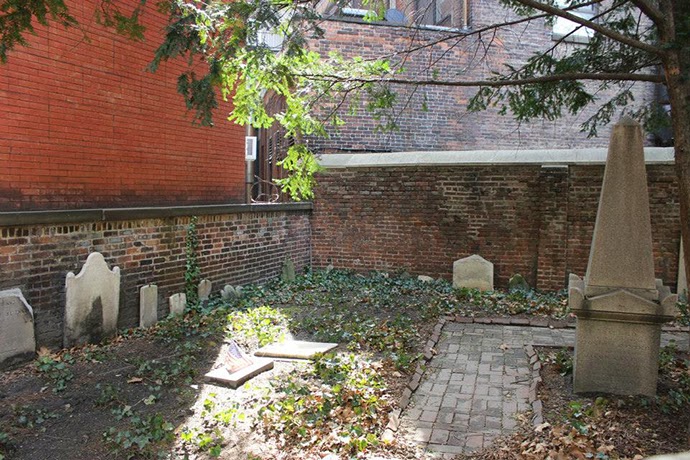

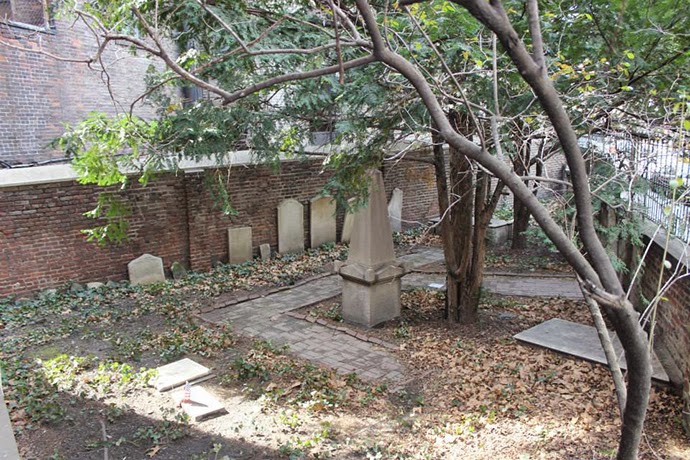
It's probably quite easy to walk right by the cemetery without even noticing it, which I'm sure I've actually done a few times in the past. I am very familiar with the area, and I have no idea why I didn't visit it sooner. A co-worker of mine said she took a ghost tour that started in this cemetery, so I'm wondering if I'll ever be able to get inside of the gates — I would love to take a closer look at some of the headstones and feel what it's like to be in such a tiny oasis in the middle of the city.
As I was walking away I noticed that I could get an overhead view of the entire cemetery by climbing a few steps up to the stoop of a neighboring apartment building. While I was standing there, I noticed a flyer posted on the door of the building advertising an available apartment: a two-bedroom, two-bath apartment (cemetery adjacent!) could be yours for the "low" price of nearly $7k/month, if you want to be neighbors with the quiet residents of the smallest cemetery in New York.
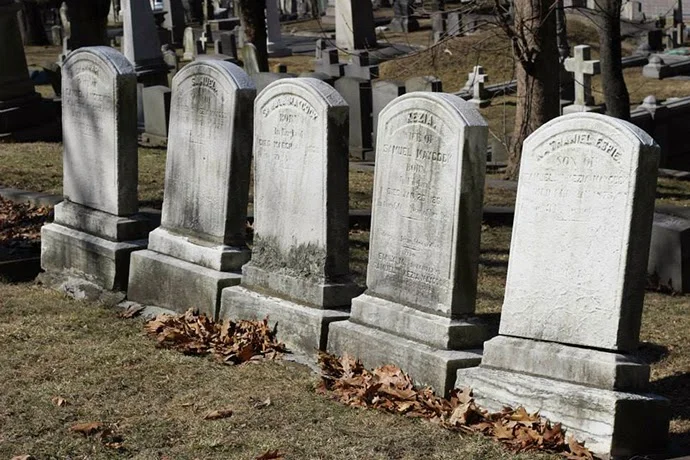
Trinity Cemetery and Mausoleum

Last week I went to the original Trinity Church and burial ground in Lower Manhattan, and when I did some research, I found out that there were actually two other cemeteries affiliated with Trinity. I had been to the one at St. Paul's Chapel (not far from Trinity Church), but I never knew that the one in Hamilton Heights/Washington Heights even existed. It turns out that it's actually the only remaining active cemetery in Manhattan, and only a few stops on the 1 train away from where I live.


Trinity Cemetery and Mausoleum spans between West 153rd and 155th streets, from Riverside Drive to Amsterdam Avenue, with Broadway splitting it into two halves. I feel sort of stupid that I wasn't aware of its existence until recently, but I'm so glad I went exploring on Saturday. It was a warm day, although it was very, very windy and the dead leaves swirling around the headstones added an extra level of creepiness.
The western half of the cemetery sits atop a steep hill, which slopes down toward the Hudson and provides great views of the river and the George Washington Bridge. As usual, I basically had the entire cemetery to myself, and I only saw three other people the whole time I was there. The western half is more tightly packed, and I'm assuming older, than the eastern half and has more of the old, crumbling tombstones that I love so much.

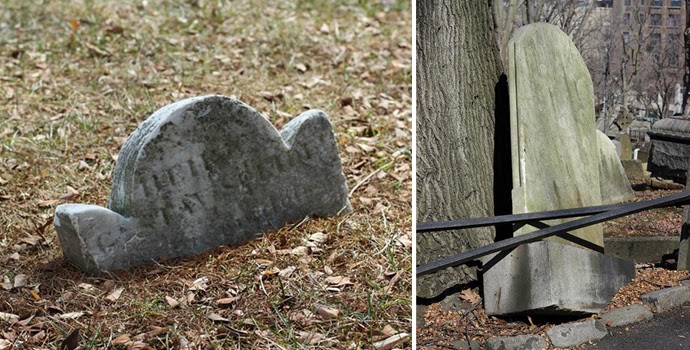


While the grounds seemed well-maintained in general, I saw more knocked over or broken tombstones than I have at any of the other New York cemeteries I've been to. There were others that were being pushed over by growing trees, some that had almost sunk into the ground entirely and some that I couldn't possibly figure out how they had even broken in the first place.
I recently attended a lecture about urban cemeteries (because I'm 100-years-old) and learned all about the weathering patterns of various headstone materials. The older stones made from brownstones, limestone and even marble fair much worse than the newer ones made from granite, which will pretty much last forever. I really dislike the way modern headstones look, and while I understand the appeal of longevity, there should be a way to maintain a classic aesthetic while still using heartier materials. The rounded shapes and simple typography and engravings will always be preferable, to me at least, to the photographic etchings and tacky clipart that adorns most modern stones.

Because I'm also sometimes five-years-old, I couldn't help but be delighted when I found a plot for the Ham family and, shortly after, one for the Burger family — is it too much to hope that they were friends in real life, or at least the afterlife? Unfortunately they weren't located next to each other, but they were still in the same cemetery, so that was enough to at least make me laugh.


Of course this is prime real estate, so Trinity has its share of famous residents, including the Astors, Jerry Orbach (whom I couldn't find) and former New York Mayor Ed Koch, who was only buried early last year. Ralph Waldo Ellison and John James Audubon are also buried here, although I wasn't able to find their plots and the office was closed so I didn't have access to a map. I did recognize a few other famous New York names like Schermerhorn (a subway stop) and Jumel (of the Morris-Jumel mansion) and there are a lot of important congressmen, mayors and businessmen buried at Trinity.


There were a lot of family plots, designated by decorative cast iron gates and fences, which I love. The saddest tombstone I saw, however, was definitely the double one for Henry Coulter, who died in 1882 and seemingly never found anyone willing or worthy enough to be buried next to him. The sight of a blank half of a tombstone so clearly made for two breaks my heart every time I think about Henry spending eternity completely alone, when he so obviously — and perhaps too optimistically — had hoped not to be.

On the eastern side is a plaque marking the spot of some of the "fiercest fighting of the Battle of Washington Heights," which occurred in 1776. I love stumbling on these little bits of history sprinkled in every corner of the city, and I never know when I'm going to be surprised by one.

There must have been a very recent addition to the mausoleum because a panel had been removed and there was super creepy red velvet curtain hung over the opening. This isn't something I've ever seen in the old, out-of-commission cemeteries that I'm used to visiting. It made me wonder just how hard it is to actually get a spot in Trinity Cemetery — New York is the most expensive place to live in the US, and I would expect that final resting places, especially as beautiful as this one, are no exception.