
Archive
- Abandoned
- Alabama
- Arizona
- Bahamas
- Books
- California
- Cemetery
- Climate
- Colombia
- Connecticut
- Diner
- Egypt
- Feature
- Florida
- Friday Fun
- Georgia
- Holidays
- Illinois
- Iowa
- Italy
- Kentucky
- Louisiana
- Maryland
- Massachusetts
- Mississippi
- New Jersey
- New Mexico
- New York
- North Carolina
- Novelty Architecture
- Ohio
- Pennsylvania
- Personal
- Peru
- Project 365
- Protest
- Rhode Island
- Roadside Attraction
- South Carolina
- Tennessee
- Texas
- Travel Guide
- Virginia
- Walks
- Washington DC
- West Virginia
- Wisconsin

Recent Reads

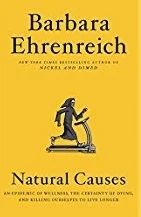
Natural Causes: An Epidemic of Wellness, the Certainty of Dying, and Killing Ourselves to Live Longer, by Barbara Ehrenreich
Every once in a while I read a book that challenges my perspective on life and forever changes me. Natural Causes was one of those books, and I think it should be required reading for anyone living in a body that will eventually die (aka, everyone). Ehrenreich, who holds a PhD in cellular immunology, begins by explaining that now that she's in her 70s, she's come to the realization that she is "old enough to die," meaning that she has chosen to forgo any unnecessary medical treatment and preventative screenings. This shouldn't be a revolutionary idea, but it seems so in our culture that has evolved to fear and delay death at seemingly any cost. Ehrenreich's views on medical interventions and the facts on screenings such as mammograms and colonoscopies—which are costly and probably do more harm than good—were fascinating, and the chapter on what it means to die was nothing short of life-changing for me.
Inconvenient People: Lunacy, Liberty and the Mad-Doctors in England, by Sarah Wise
I wanted so badly to like this book, but to be honest by the end I was just skimming over the long passages to pick out the (increasingly scarce) interesting tidbits. Inconvenient People has an interesting premise—stories of people falsely accused of being mentally ill, committed to asylums against their will and the legal issues surrounding such commitments—but the book could have probably been half as long. Wise is overly wordy and the stories started to get redundant, but her descriptions of the horrible conditions and treatment in poorly-run English asylums made wading through the rest of the unnecessary details almost worth it.
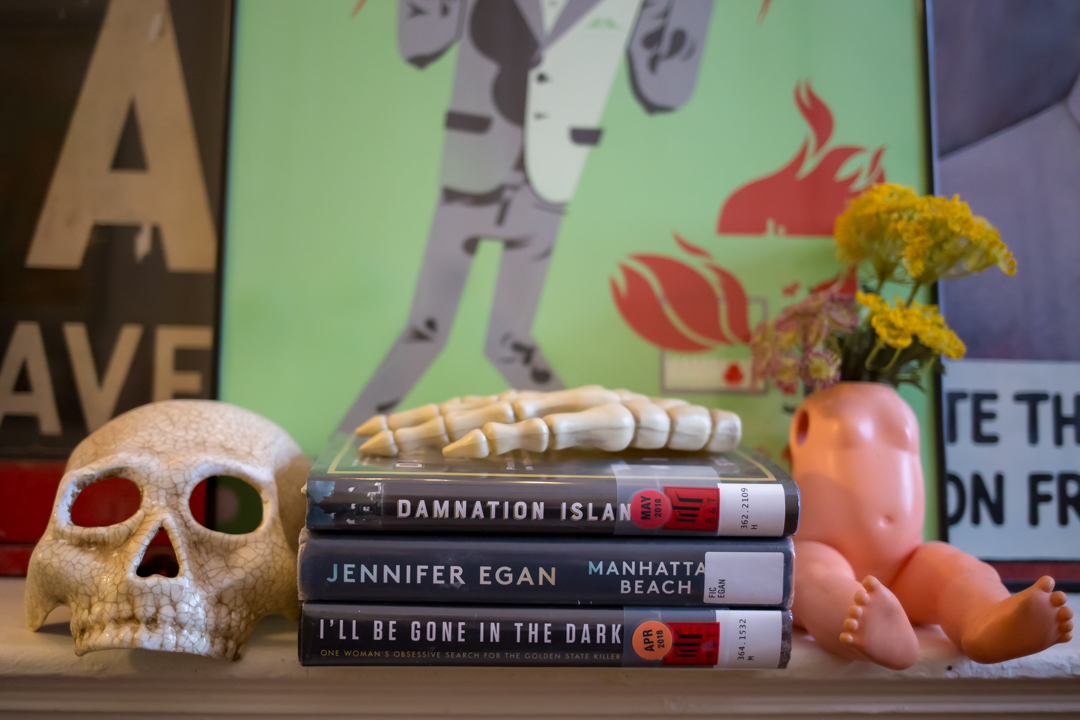
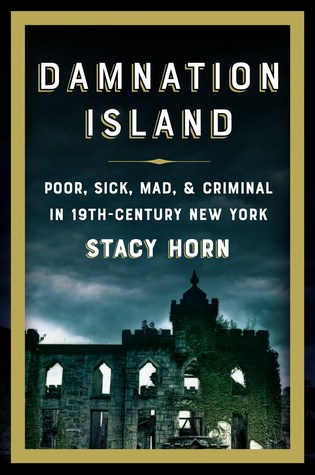
Damnation Island: Poor, Sick, Mad and Criminal in 19th-Century New York, by Stacy Horn
This was one of those books that was so obviously perfect for me that it was recommended to me by several people after I had already put it on my library hold list. I'm forever fascinated by Roosevelt Island and the horrors that occurred there when it was Blackwell's Island, a home for the city's most derided residents—the poor, sick, mad and criminal. Horn's writing reads like a book report at times, but colorful composition isn't really necessary when the real facts are as horrifying and sordid as what happened in the island's lunatic asylum, charity hospital, workhouse and penitentiary.
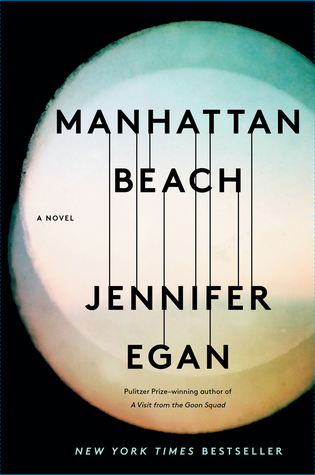
Manhattan Beach: A Novel, by Jennifer Egan
After David and I took a bike ride to the actual Manhattan Beach, I put this book on hold at the library. Before it was available, I started seeing it everywhere and it was chosen as 2018's One Book, One New York, so I was expecting to be blown away. This was my first book by Egan, and it started off good but eventually I lost interest and by the time I finished I was actively annoyed. I felt like I had been duped by the hype and I genuinely don't understand why this book received so much acclaim. The premise of a daughter haunted by the sudden disappearance of her father was interesting enough, but I just didn't really care at all about any of the characters. Egan's old-timey dialogue was distracting and the details felt overly researched. New York readers don't need a book to unite us in our collective annoyance—the subway does a great job of that on its own.
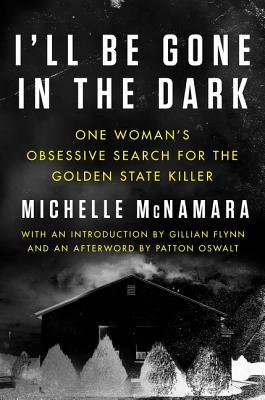
I'll Be Gone in the Dark: One Woman's Obsessive Search for the Golden State Killer, by Michelle McNamara
I put this on hold before they caught the Golden State Killer, but having a real suspect in mind made it even more of an interesting read (remember, I love spoilers). It also made it even more heartbreaking that Michelle McNamara died tragically before the publication and subsequent arrest, especially because she was so right about so many things. Her passion and obsession with tracking down the GSK—and the fact that her rebrand of the killer formerly known as the East Area Rapist most definitely helped generate buzz and keep people on the case—made this book even better than if it had been just a straight report of the facts (which on their own are the stuff of nightmares).

Recent Reads
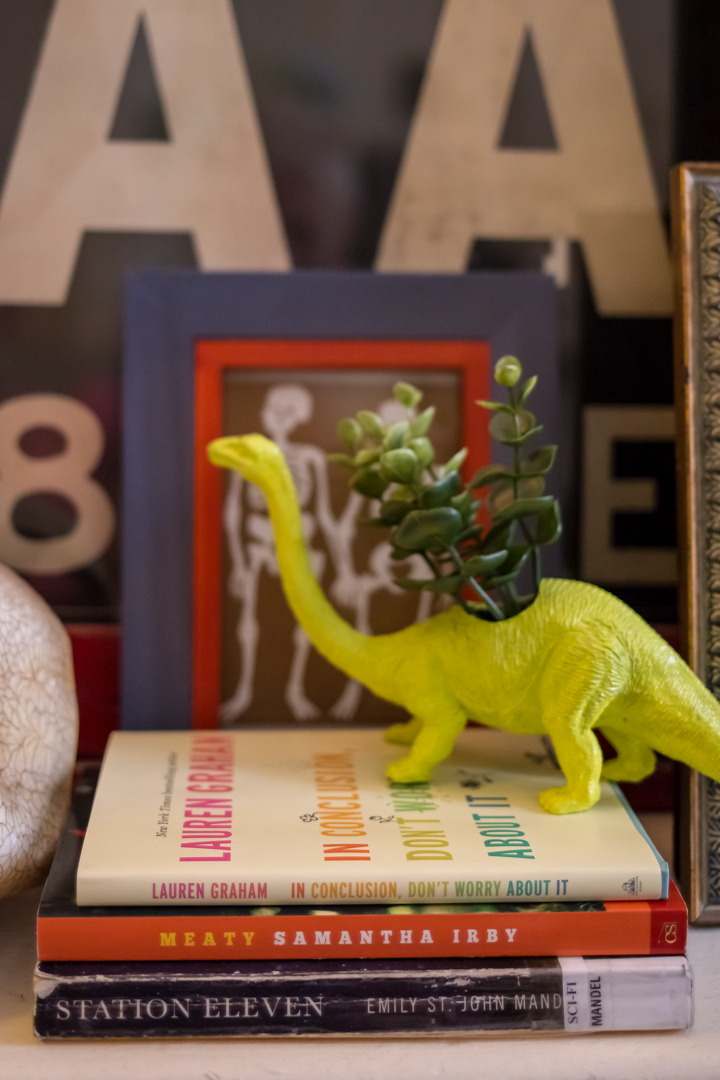
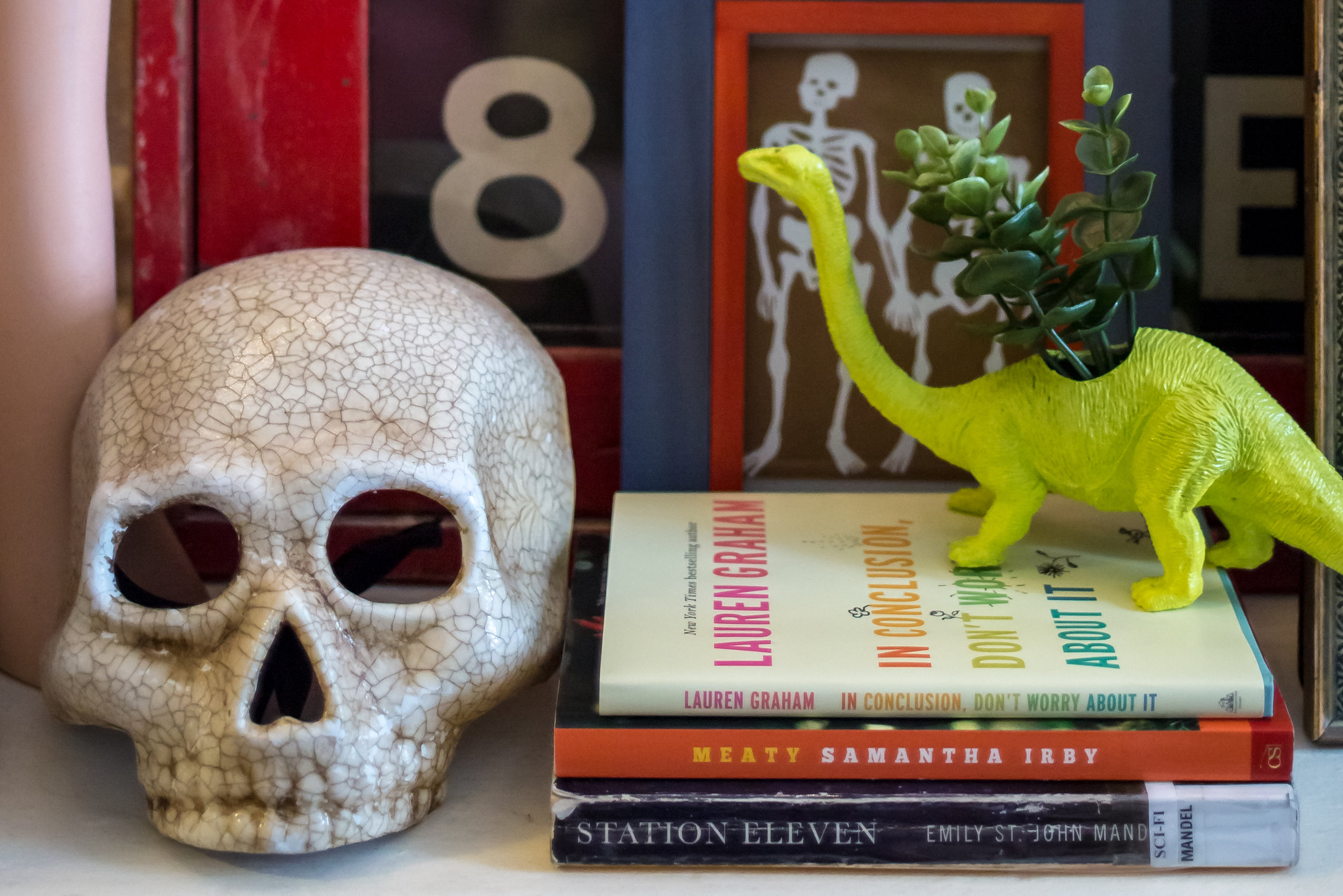
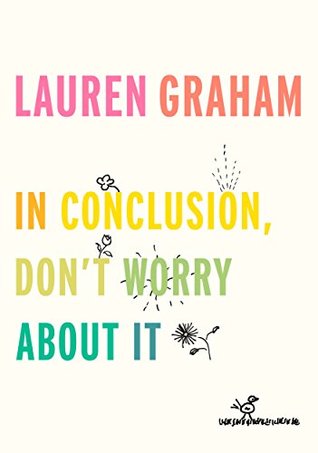
In Conclusion, Don't Worry About it, by Lauren Graham
I received this book with my ticket to this 92Y talk with my fantasy best friends Lauren Graham and Mae Whitman. I love Graham and her first two books—Someday, Someday Maybe and Talking As Fast As I Can—but I don't know if I would have intentionally paid money for this teeny tiny book. It's basically an expanded version of a commencement speech that she gave at her alma mater and I read it in fifteen minutes one night before bed. She does pack a lot of worthwhile advice into this tiny package and it would be a good "stocking stuffer" for a new graduate or anyone who is currently feeling stuck in their life.
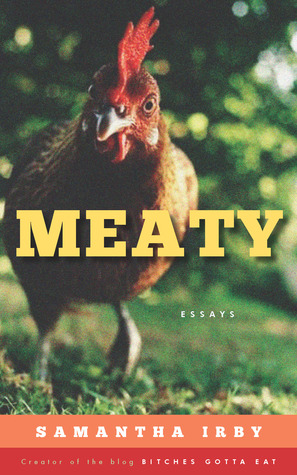
Meaty: Essays, by Samantha Irby
I love, love, loved We Are Never Meeting in Real Life, so I was excited to find a copy of Irby's first book of essays, Meaty, at Goodwill for a dollar. She's currently promoting its re-release so I've been seeing it everywhere—the cover is new, but I think the insides are essentially the same. I think I may have even liked it more than her second collection, if that's possible, and I laughed out loud while reading it on the bus more times that I'd like to admit. Her candor on everything from sex to periods to dating to eating habits is so incredibly refreshing and addicting. I will be passing this book along to my friends and referring to my body as a pre-corpse forever thanks to Irby.
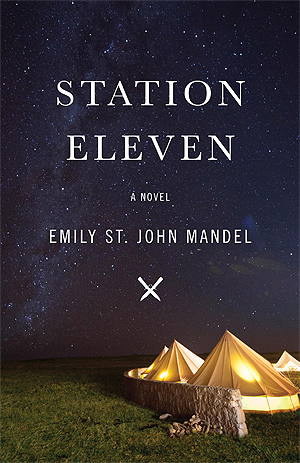
Station Eleven, by Emily St. John Mandel
This book was recommended to me, and I reserved it at the library despite having no interest in post-apocalyptic stories. It's a good thing that I ignored my bias, however, because I loved this book so much. Mandel's story is post-apocalyptic—detailing what happens both before and after most of civilization is quickly wiped out by the Georgian Flu—but it's not soul-crushingly bleak like The Road. Station Eleven follows several different characters and their lives all intersect in some way or another. Once I reached the halfway point I raced to the finish, and I appreciate that the story didn't wrap up nicely or end with a bang. Station Eleven is one of those novels that creeps up on you with its profundity and I can't wait to see what Mandel writes next.
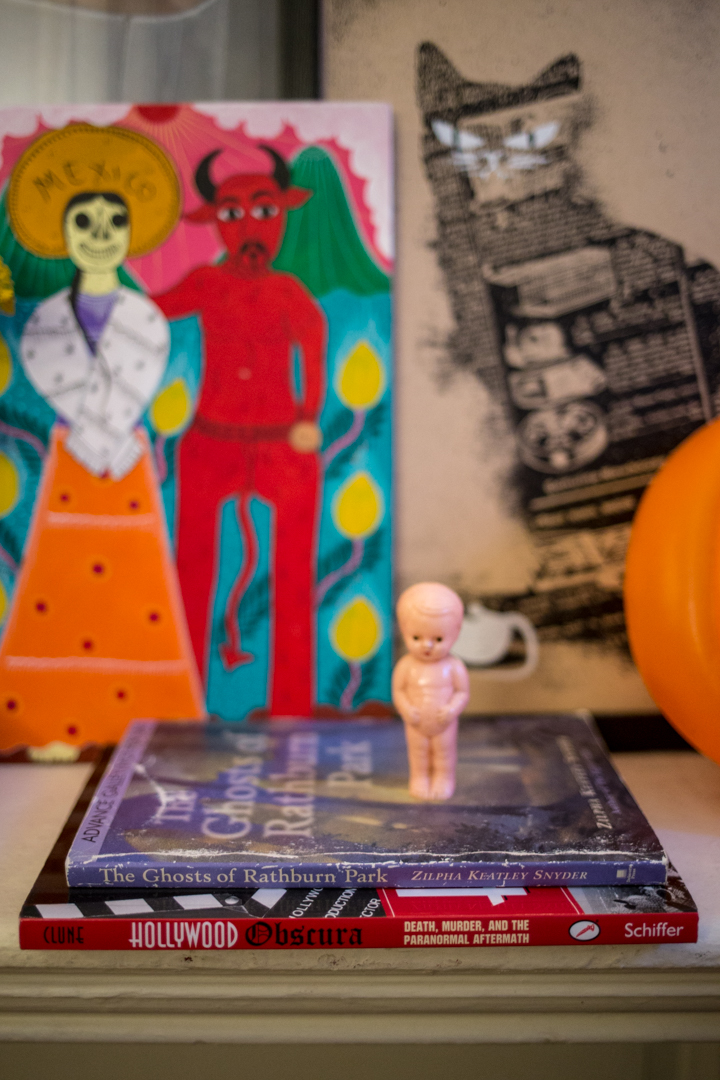
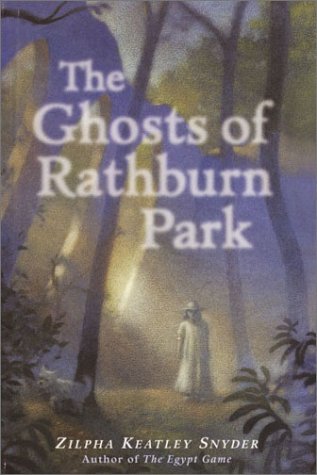
The Ghosts of Rathburn Park, by Zilpha Keatley Snyder
Zilpha Keatley Snyder was my favorite author when I was a kid, and I devoured The Headless Cupid, The Egypt Game and The Witches of Worm. I picked up this book at the Strand for a dollar hoping to recapture some of that magic I felt for reading Snyder's books, but either I'm too old or The Ghosts of Rathburn Park just wasn't that magical. It was a quick, mostly enjoyable read, and I did get brief jolts of the feelings I used to have while reading similar stories.
The "ghosts" of Rathburn Park may or may not be real, but Matthew Hamilton's taste for freedom and exploration was definitely something with which I will always identify. I was actually asked by a person on the train about the location of Rathburn Park—I felt bad telling him that it was fiction, and I realized that a part of me also wished that I could visit the park's crumbling, (supposedly) haunted ruins in real life.
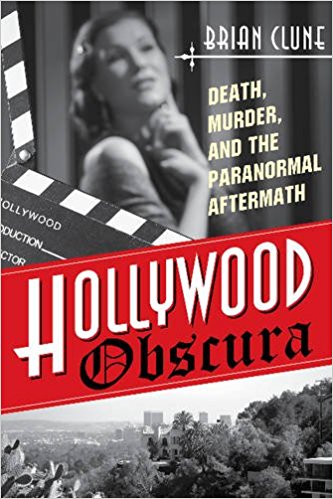
Hollywood Obscura: Death, Murder and the Paranormal Aftermath, by Brian Clune
My friend Jim, who moved to LA last year, gave me this book for Christmas. I suspect that it was a ploy to make visiting the West Coast more attractive to me, and it totally worked. Clune writes about 12 notorious California murder (and suicide) cases, including The Black Dahlia, The Los Feliz murders, Natalie Wood, George Reeves and the Manson murders. Some of the cases I knew about, and some were new to me but the short vignettes contained enough backstory and description to pique my interest.
I could have done without the sections on paranormal activity but some of the sightings were interesting even if I don't really believe in spirits (but I want to!). I will definitely be enlisting Jim to take me to some of the sites mentioned—including the Chateau Marmont, where John Belushi met his untimely end and El Coyote where Sharon Tate ate her last meal—but I'll forever be upset that I didn't make it to the abandoned Los Feliz mansion, preserved inside since the night of the murders, before it was cleaned out and put up for sale.
Recent Reads

Nine Stories, by J. D. Salinger
I liked this collection of short stories better than Franny and Zooey, and I enjoyed learning more about members of the Glass family. Some of the stories are better than others, but it's hard to beat the bombshell opening story, A Perfect Day for Bananafish (that ending will stick with me forever). I've read very few short stories in my life, but this book really made me appreciate the short story as a deceptively simple art form. It has to be harder to be concise than verbose, but Salinger is a master at establishing and drawing you into a story immediately. I still didn't really get about half of what I read but I've come to accept this with Salinger—and the other half that I did get, I loved, which is more than worth the effort.
Another Kind of Madness: A Journey Through the Stigma and Hope of Mental Illness, by Stephen Hinshaw
I really wanted to love this book more than I did, but it was still a worthwhile read. Hinshaw's father disappeared for long periods during his childhood, and it wasn't until he was older that he found out that his father had been committed to various mental hospitals. What was initially diagnosed as schizophrenia is later re-diagnosed as bipolar disorder, thanks in part to Hinshaw's advocacy on his father's behalf. The parts concerning family stigma were the most interesting to me and it's a little-discussed facet of mental illness that is definitely worth exploring.
Show Dog: The Charmed Life and Trying Times of a Near-Perfect Purebred, by Josh Dean
This book was recommended to me after my post about the Westminster Dog Show, and my only regret is that I didn't read it before I went. I was skeptical that I would be interested in a long book about an Australian Shepard—a breed I don't have any connection to, or affinity for—but I was immediately hooked. The world of dog shows is so fascinating to me and I learned so much about the inner workings that will be very helpful if I ever get to another show. I still think dog show people are a little nutty, but now I appreciate the passion and obsession for detail that exists behind the scenes so much more.

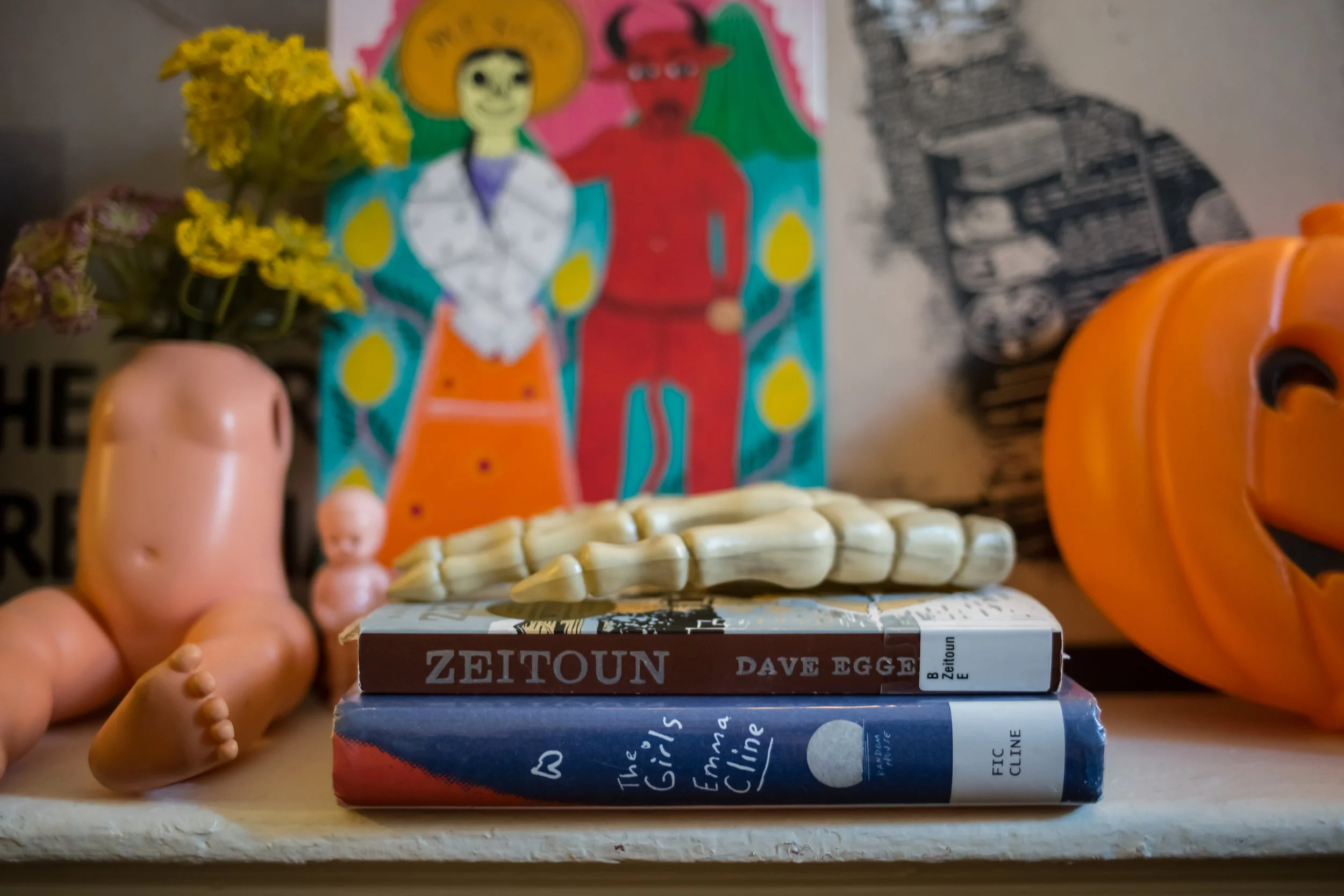
Zeitoun, by Dave Eggers
I reserved this book based on a recommendation from a co-worker, only knowing that it was about Hurricane Katrina. I've been interested in Katrina stories since I read Five Days at Memorial, and this book turned out to be just as gripping. I was hooked immediately by the Zeitoun (pronounced Zay-toon) family and I continually shook my head in disbelief at the events that unfolded in New Orleans, post-Katrina. I knew it was bad down there but I didn't realize how bad until I read about Zeitoun's wrongful imprisonment and my mind is blown at just how quickly an otherwise civilized society can fall off the rails. This book should be required reading for anyone in the US and my heart breaks for the Zeitouns and the thousands of others who went or will go through similar—or even worse—experiences at the mercy of a broken and xenophobic system.
The Girls: A Novel, by Emma Cline
This much-lauded book was on my radar for a while, but I finally pulled the trigger and reserved a copy from the library when it was recommended to me based on my interest in cults and the macabre. The Girls is the story of Evie Boyd, a fictionalized Manson girl that managed to narrowly avoid participating in the murders during the summer of 1969. Names and details have been changed (Charles Manson is "Russell," and Dennis Wilson is "Mitch"), but the perspective of 14-year-old Evie is an interesting lens through which to view the notorious ranch and other family members.
As interested as I am in all things Manson-related, I almost think that the book would have been stronger if it hadn't drawn its inspiration from the real-life cult. I grew a bit weary of Cline's wordy and sometimes pretentious prose by the end of the book, but her insights on what it's like to be a teenage girl are the real standout in this debut novel.


Recent Reads

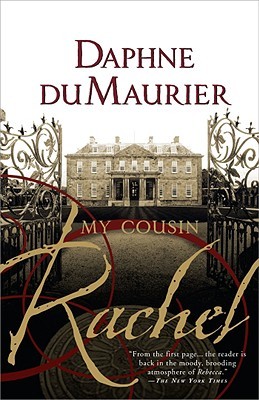
My Cousin Rachel, by Daphne du Maurier
I had to read Rebecca in my high school English class, and although I resented being forced to read anything, I immediately fell in love with du Maurier's gothic storytelling. I've since re-read Rebecca several times (and seen the movie), but I have no excuse why it's taken me so long to pick up another of her books. My Cousin Rachel has many similarities to Rebecca—in setting and character—and I was hooked from the very first line, "They used to hang men at Four Turnings in the old days." I sped through the book, racing to the conclusion and hoping to find a definitive answer to the question of "did she or didn't she??" but alas, du Maurier leaves it ambiguous— which was as frustrating an end to Rachel's story as it was, in hindsight, a fitting one.
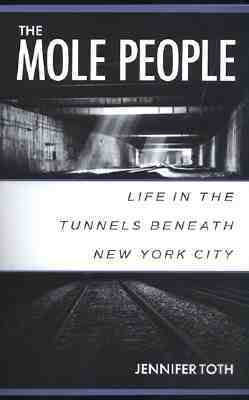
The Mole People: Life in the Tunnels Beneath New York City, by Jennifer Toth
This book had been sitting on my shelf for years, but once I finally picked it up, I couldn't put it down. Published in 1995, The Mole People is a fascinating first-hand account of Toth's travels through the maze of tunnels underground the New York City streets, and the people she met along the way that call the tunnels home. I can't believe that Toth, a 20-something year-old reporter, was brave enough to explore underground in the early '90s, but I'm so glad she did.
Some reviewers have issues with Toth's first-hand account, but I thought she was very thoughtful and respectful of the people she met. I'm glad that through her, I was able to experience this fascinating slice of '90s New York, and I found that her experience added to, rather than detracted from the overall story. After I finished the book, I watched this documentary—it was shot in the '90s but not released until 2000 and serves as a great companion piece to the book— although I'm still hungry for an update on what the tunnels are like today.
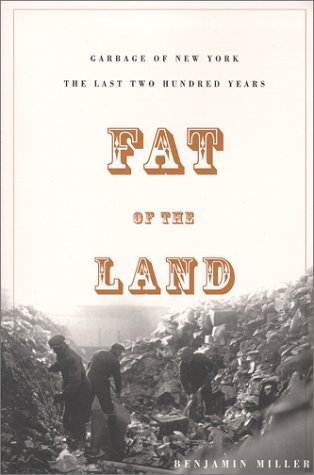
Fat of the Land: Garbage of New York—The Last Two Hundred Years, by Benjamin Miller
David passed on a New Yorker article to me recently about Barren Island, an island in Brooklyn that once housed rendering plants and a landfill—it was eventually enlarged with refuse and joined to the mainland, forming the land that then became home to Floyd Bennet field. Fat of the Land was credited as a source in the article, and I immediately tried to find a copy. It’s no longer in print and the library didn’t have a lending copy but I was able to find it used on Amazon.
Maybe there isn’t a huge demand for a book with the subtitle “Garbage of New York—the Last Two Hundred Years,” but I’ve long been fascinated by the way cities work, especially sanitation infrastructure (I even attended a Brooklyn Brainery lecture about garbage). This book bounces around quite a bit and often strays far from the central topic of garbage, but I’m a New York history nerd so I appreciated the detours involving Robert Moses and Frederick Law Olmsted. It might be helpful to have some background knowledge of New York before you dive into such a niche subject—and I might not ever fully comprehend all of the intricacies of city politics and infrastructure—but Fat of the Land was a great place to start.

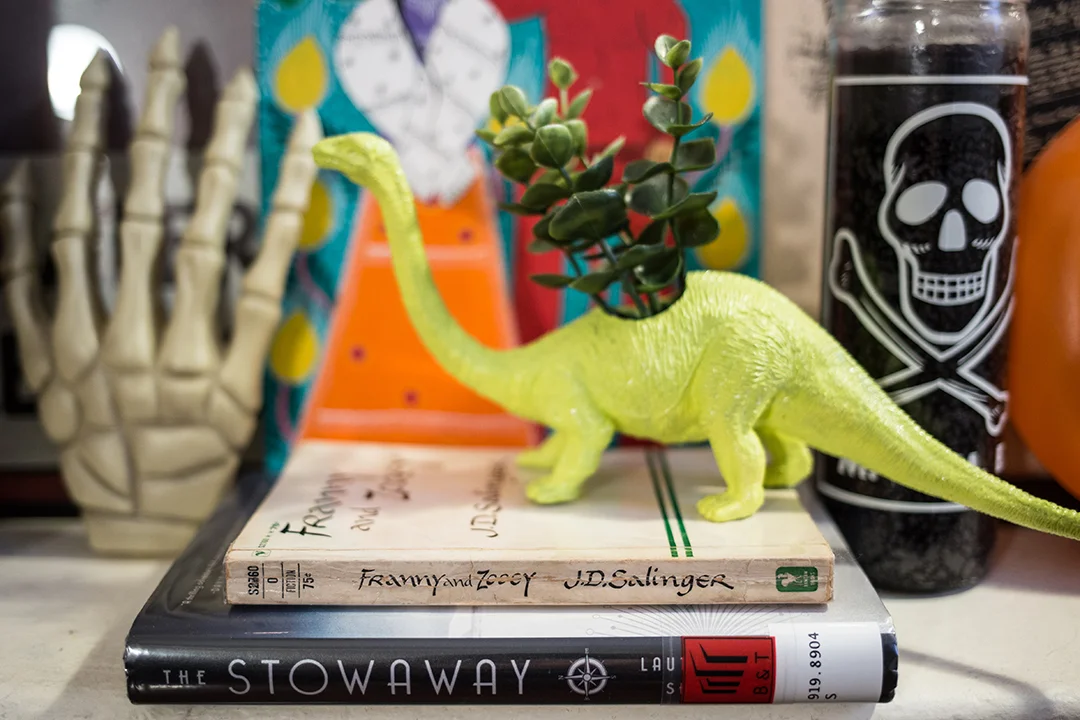
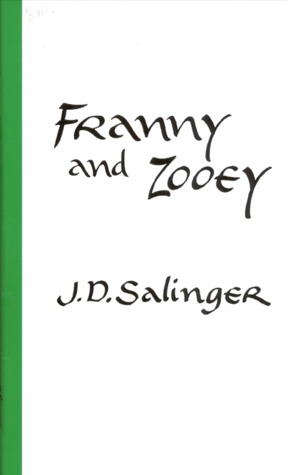
Franny and Zooey, by J.D. Salinger
Like, du Maurier, Salinger is an author that I was first exposed to high school, when I read (and subsequently re-read) The Catcher in the Rye. Franny and Zooey is a collection of two short stories about the fictional Glass family, both of which originally appeared in The New Yorker. I liked the shorter "Franny" more than I liked "Zooey," but they both take place within a few days of each other, and both parts fit together as one coherent story.
I'm a bit conflicted about Salinger—I am absolutely bowled over by some of his passages and his disillusioned, angsty views on society really strike a chord with me. But some parts of Franny and Zooey (like some parts of The Catcher in the Rye) are just a slog to get through and the language can feel a bit foreign or old-timey to me. I'm still intrigued by the Glass family, and although Salinger didn't publish much, there are a few more Glass stories out there that I look forward to reading with a mixture of adoration and frustration.
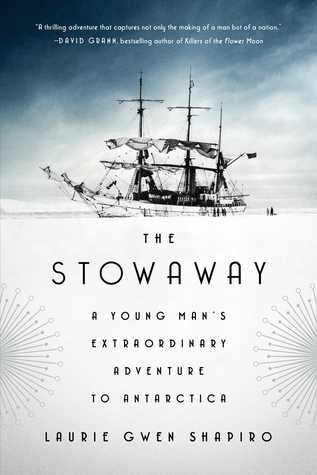
The Stowaway: A Young Man's Extraordinary Adventure to Antarctica, by Laurie Gwen Shapiro
I picked up this book while I was browsing at the library, thinking that it was about the stowaway on Shackleton's journey (detailed in one of my favorite books, Endurance). But The Stowaway is actually about a different stowaway on a different polar expedition with a different explorer at the helm.
Billy Gawronski was just shy of 18 years old when he jumped into the Hudson River and snuck aboard a boat destined for Antarctica as part of Richard Byrd's 1928 expedition. He was discovered and sent home, only to stowaway on a different ship—twice!—before Byrd decided to let him stay. Gawronski made it to Antarctica and although he wasn't picked to overwinter with Byrd (whose expedition was the first to reach the South Pole by air), his story is still an interesting one. Billy grew up on the Lower East side and in Bayside, Queens and I liked the descriptions of 1920s New York City just as much as the more exotic locales. The Stowaway may be scraping the bottom of the barrel of polar expedition stories, but it was an enjoyable, short read and it only solidified my dream of one day making it to Antarctica (on a warm, safe boat, preferably).
So far I've read 15/60 books for my 2018 reading challenge — follow along on Goodreads — and you can check out all of my book reviews by clicking on the books tag.
Recent Reads

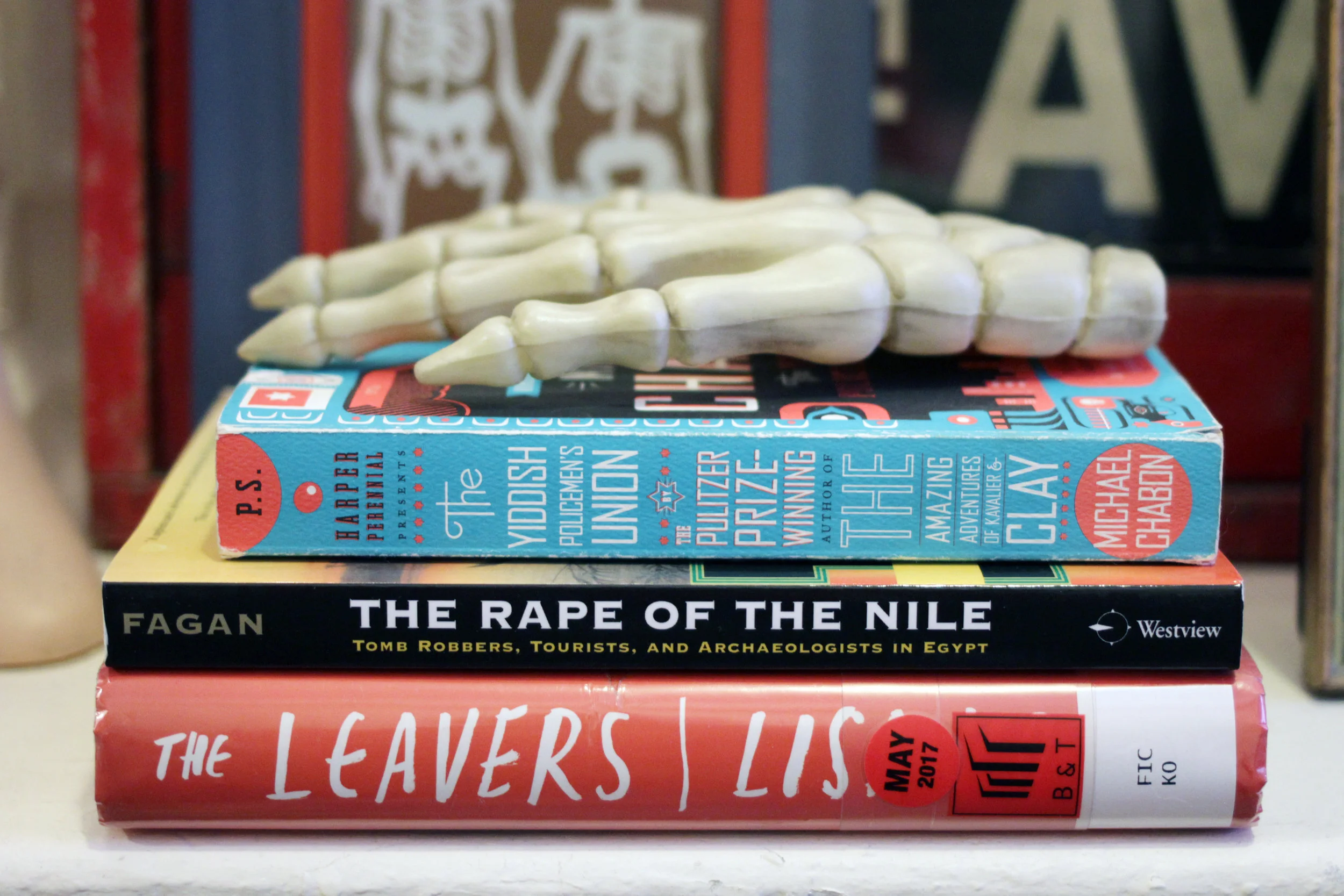
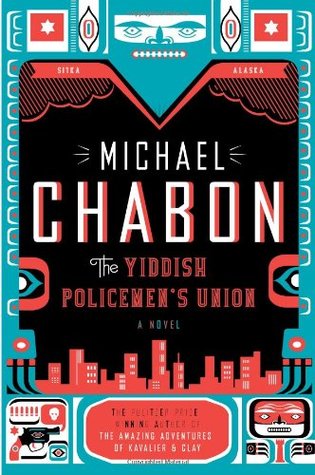
The Yiddish Policeman's Union, by Michael Chabon
If I had rated this book when I first started it, or even halfway through, I would have given it an enthusiastic five stars. I was immediately engrossed in the story, the characters and the rich world that Chabon created and I would stop every so often to re-read and savor a particularly delicious sentence. When details of the central mystery started to become more clear, however, the book lost me a bit. I don't want to spoil anything, but the story took a mystical, religious turn that in the end was anti-climactic for me.
Speaking of the religious element, Chabon liberally uses Yiddish words throughout the book, so much so that I frequently became confused. It wasn't until I was nearly finished that I realized that he included a glossary in the back, which I recommend consulting as you read. Despite its faults, I still loved this book, and would defy you to find another author who can write a description of literally anything the way Chabon can.
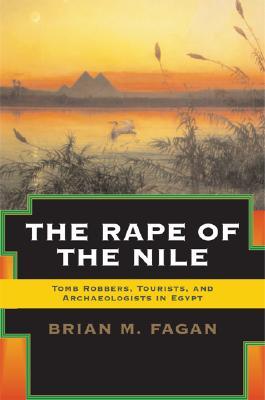
The Rape of the Nile: Tomb Robbers, Tourists, and Archaeologists in Egypt, by Brian Fagan
My uncle sent me this book to prepare me for our upcoming Egypt trip (nothing is booked yet, but we've both been crazy about Egypt our whole lives, so we're making it happen in 2018). I've been obsessed with Egypt since I can remember—probably thanks to my history-loving uncle—but I'd never really read much outside of museum placards and those mostly sensational History channel "documentaries" about the "curse" of the Pharaohs.
The Rape of the Nile is a classic, and rightfully so—this edition has been updated since its original publication, but most of the history still holds up. It's a bit dry at times, and like any scientific or historical account, there are a lot of names, dates and facts to juggle, but overall this history of excavations and antiquity dealing in Egypt is a fascinating story. My uncle also recommended the BBC series, Egypt (currently on Netflix), and I watched it as I read which was helpful in bringing some of the characters to life—like the Great Belzoni, a former circus strongman!—and helped me make sense of the complicated timelines.
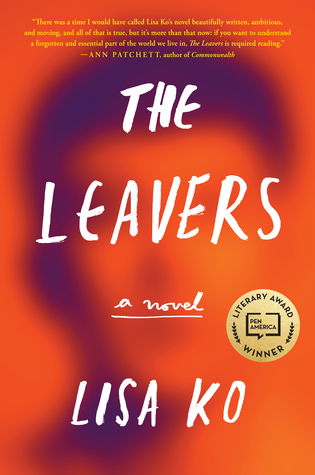
The Leavers: A Novel, by Lisa Ko
I would have never picked this book up on my own, but at the suggestion of my friend Lindsey, I put it on hold at the library without having any idea what it was about. After I'd already started it, I read the cover blurb and honestly didn't expect to love it as much as I did. The Leavers is about a mother and her son and follows them throughout different periods of their (often separate) lives.
Polly Guo is an illegal Chinese immigrant, and for a while she works in a nail salon while living with her son Deming in the Bronx. One day Polly disappears, and shortly after Deming is adopted by a white couple upstate. The book weaves together both of their stories, and takes you from the Bronx, to Chinatown, to upstate New York, to China and back again. I won't spoil a few of the major plot twists, but I will say that I learned a lot about the immigrant experience in this country about which I was unforgivably ignorant before picking up this book. Like I said, I didn't expect to be so absorbed in these character's lives, but The Leavers snuck up on me and I'm glad I didn't trust my instincts on this one.

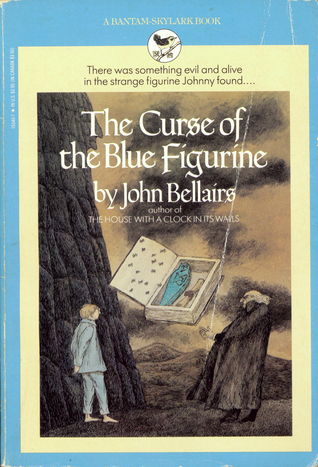
The Curse of the Blue Figurine (Johnny Dixon), by John Bellairs
This was a dollar Strand find that I bought based entirely on the nostalgia I often feel for books I read as a kid. I would have devoured this book—and others by Bellairs—when I was younger, and although I didn't feel the need to immediately seek out others in the series like I did after finishing The Mysterious Benedict Society, I did enjoy this brief journey into the world of 13-year-old Johnny Dixon.
I started reading The Curse of the Blue Figurine right after finishing The Rape of the Nile because the titular blue figurine is an ancient Egyptian ushabti, funerary figurines that were thought to accompany the deceased to the after-life (spoiler alert: the one Johnny finds in the basement of a church is cursed—or is it?). This book, the first of twelve in the Johnny Dixon series, was written in 1984 but takes place in 1948. Even if the writing and story feel a bit quaint and a touch outdated today, it's always nice to read a book that reminds me of the joy that reading brought me as a kid.
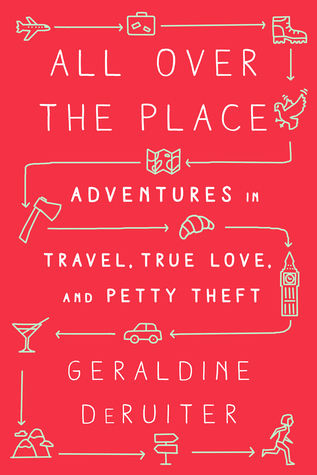
All Over the Place: Adventures in Travel, True Love and Petty Theft, by Geraldine DeRuiter
I just recently discovered The Everywhereist, aka Geraldine DeRuiter, when Lindsey alerted me to her viral (and hilarious) Mario Batali cinnamon roll post. I quickly became enamored with her writing and reserved her recent "travel" memoir at the library. It was a super quick, funny and insightful read and I was reminded how much I love smart, snappy books like this. I'll always be interested in medical nonfiction and books about death and dying, but taking a break from my regularly scheduled programming to read a book like this feels like a breath of fresh air. DeRuiter is not an expert on anything, really (and doesn't claim to be), but I love books like this that allow me to step inside of another person's life for a few days—especially when it's one that's as funny, interesting and thoughtful as DeRuiter's.
Recent Reads

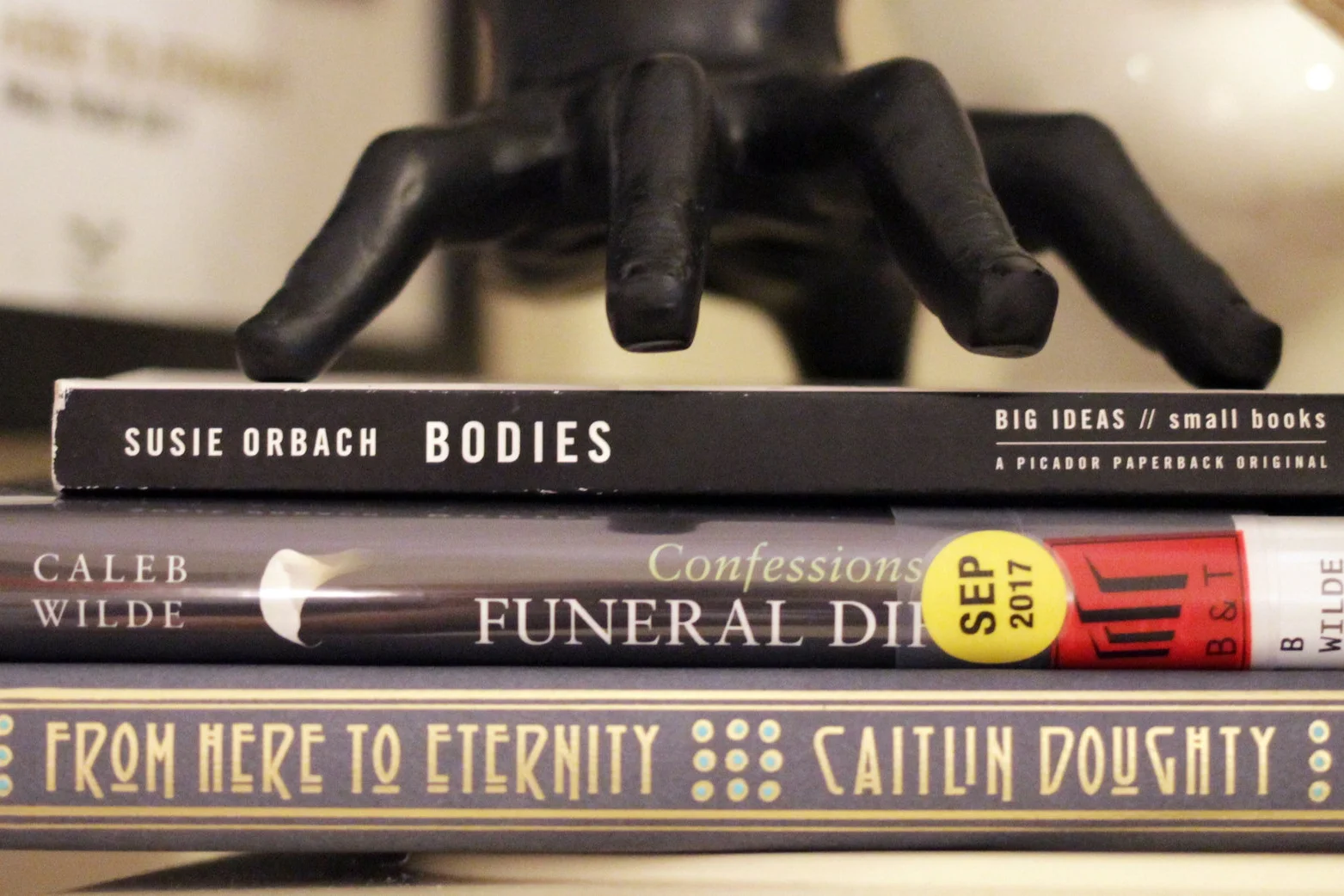
Bodies, by Susie Orbach
I picked up this book at the Strand, thinking it would be like Mary Roach's Stiff, but maybe I should be concerned that my first thought upon seeing a book titled, "Bodies" was that it was about dead ones. The bodies she discusses in this short book are very much alive, however, and this is a somewhat dry account of what it means to have a body (and all of the cultural and emotional issues that come with it). There wasn't too much new information here for me—the bits about infant attachment and mothering were interesting—but she never got too deep into any of the subjects to really hold my interest.
Confessions of a Funeral Director: How the Business of Death Saved My Life, by Caleb Wilde
I can't get enough of memoirs from people who work in the death industry (funeral homes, crematoriums, morgues, etc.) but this one was a bit underwhelming. I was not familiar with his blog, but the perspective of a 5th (on his father's side) and 6th (on his mother's side) generation funeral director seemed promising. I did like his positive outlook, but about half of this (short) book is about God and spirituality. I'm personally not religious at all, but I'm also not against those who are—this book was just a bit too heavy on preaching and too light on real world anecdotes for me.
From Here to Eternity: Traveling the World to Find the Good Death, by Caitlin Doughty
Back in October, I attended a book launch event for this book at Green-Wood Cemetery, where Doughty read some excerpts and then signed books ("to my future corpse," she wrote in mine). But then I took a break from reading about the death industry because—shocker—it was bumming me out. I also assumed that there wouldn't be much new information in this book for me after having read so much about death practices around the world (I was reading Death's Summer Coat when I attended the signing), but thankfully I was wrong.
I loved Doughty's first book, Smoke Gets in Your Eyes about her time working in a crematory, and since then she's opened up her own non-profit funeral home in LA, founded The Order of the Good Death and became an outspoken advocate of the death positive movement. This is a quick read, but Doughty manages to be hilarious while maintaining an obvious respect for death rituals around the world and the people challenging our own death industry here in the US.

Get Well Soon: History's Worst Plagues and the Heroes that Fought Them, by Jennifer Wright
I just want to say right away that I loved this book. I was reluctant to start it because I worried that a long book about plagues would be a slog to get through (even for me, a person who regularly reads long books about similar subjects), but from the first page I was hooked. It's interesting to me that this book seems to either have five-star or one-star reviews—people either loved and related to Wright's humor and first-person interjections, or they hated them and wished she was more scholarly and dry.
Maybe it's the millennial in me, but I laughed out loud several times and never once found myself thinking, "boy I wish this book was more boring!" I've read a lot about diseases and the history of medicine (including entire books on the Spanish flu, lobotomies, Typhoid Mary and the Incas), and while there was a lot overlap, there was also a lot of new-to-me information. I don't think Wright's writing style or voice gets in the way of the facts, but instead got me so involved in a book about plagues that I actually missed my bus stop one night by several blocks because I was so enthralled.
The Bielski Brothers: The True Story of Three Men Who Defied the Nazis, Built a Village in the Forest, and Saved 1,200 Jews, by Peter Duffy
I was vaguely familiar with the story of the Bielski brothers from seeing the movie Defiance ten years ago, but it was definitely something I wanted to know more about. The subtitle of the book does a good job of summarizing the story, but it was the smaller details that I found the most interesting—day to day life in the forest camps, the differences between the brothers' personalities and what happened to everyone after the war ended.
This is definitely a case of true life being just as interesting and every bit as epic as any work of fiction and the Bielski brothers are so heroic that at times it's hard to think of them as real, flesh and blood humans. But they were real, and after the war they (and some of the people they saved) ended up in Brooklyn—driving a truck, owning a gas station, opening a luncheonette. It broke my heart to learn that they struggled in their later years, anonymous in a sea of immigrants, and it boggles my mind the arc that one human life can traverse. The brothers may not be as famous as Oskar Schindler, or have received as many accolades, but there are countless descendants of the Bielski group alive today because of the brothers' bravery and convictions and that is nothing short of epic.


Recent Reads

Cannibalism: A Perfectly Natural History, by Bill Schutt
This was one of those books that I'm sure got me flagged on some government list somewhere when I checked it out at the library. If anyone close to me ever gets suspiciously murdered, I'm definitely a goner when they submit my library checkout history into evidence. But, despite this book having a macabre title, it's actually more about science than sensationalism.
It took a little time for me to really get into this book—I know there are frogs on the cover, but I didn't expect to be reading so much about tadpoles and snails—but when the discussion turned to humans I was hooked. Schutt even mentions that he deliberately doesn't give much space to criminal cannibalism since it's been overplayed, and in hindsight of course he's right. Understanding all of the factors—both environmental and evolutionary—that drive a species to consume their own kind isn't necessarily as riveting as reading about Ed Gein and his human nipple belt, but now I'll have the necessary background when I do.
The Poisoner: The Life and Crimes of Victorian England's Most Notorious Doctor, by Stephen Bates
I really wanted to love this book, but maybe it was a bad omen that I renewed it four times at the library before finally starting it. It was also just, not that great of a book. The story of William Palmer is mildly interesting, but pretty standard as far as Victorian-era poisonings go (and I've read about quite a few of them). Bates is also not a great writer, and one reviewer pointed out that it seemed as if he was being paid by the word, which I know was a joke but also, I hope that's true—otherwise this book is about 150 pages too long for absolutely no reason.
Where other writers might think it was their job to summarize primary sources, Bates just excerpts them in the text—over and over and over again. By the end of this book I was just skimming for new information, which was increasingly sparse. I'm not sorry I finished it, but now I understand why twelve weeks went by without anyone else in the New York City library system requesting a copy.
Manson: The Life and Times of Charles Manson, by Jeff Guinn
As soon as I heard that Charles Manson had died, I realized I knew very little about his life and immediately reserved this biography at the library. I have always wanted to read Helter Skelter, but after reading Jeff Guinn's book about Jim Jones, I knew this biography would be a good read. It exceeded even my high expectations, and is easily one of the best biographies I've ever read.
Manson is notorious of course, for orchestrating a series of nine murders in the summer of 1969, but I discovered that there was so much more to him and his followers than just the highlights. The facts of Manson's life are fascinating on their own, but Guinn is such a good writer that I want him to write about every cult leader and serial killer that he possibly can and I wish I could pre-order all of them.
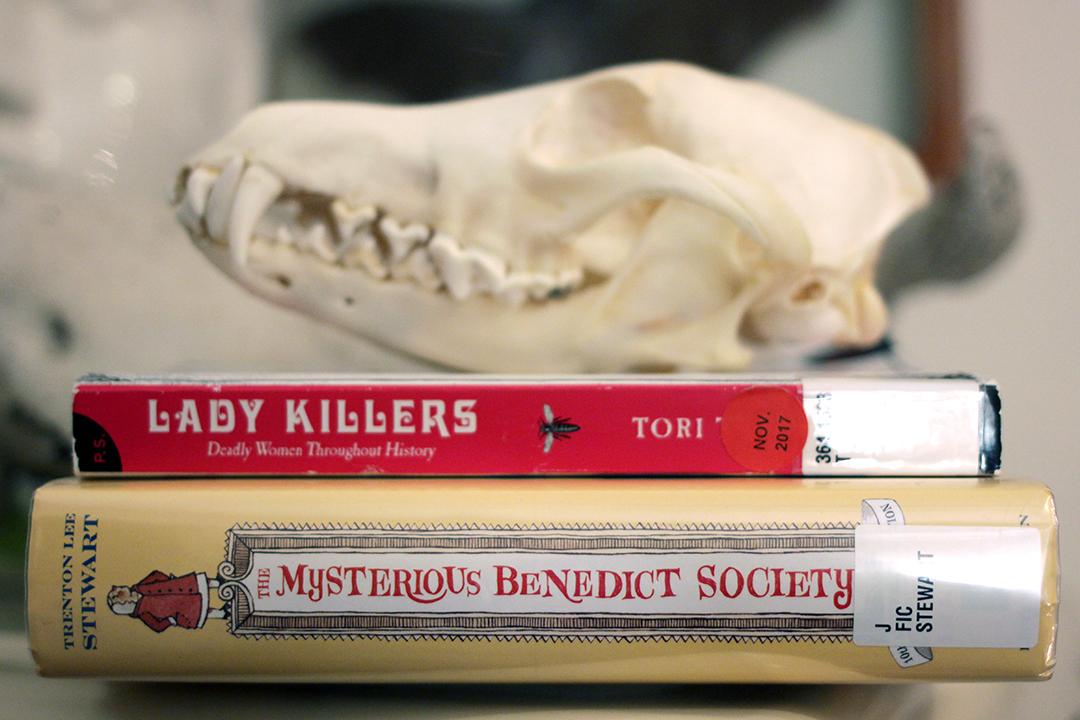
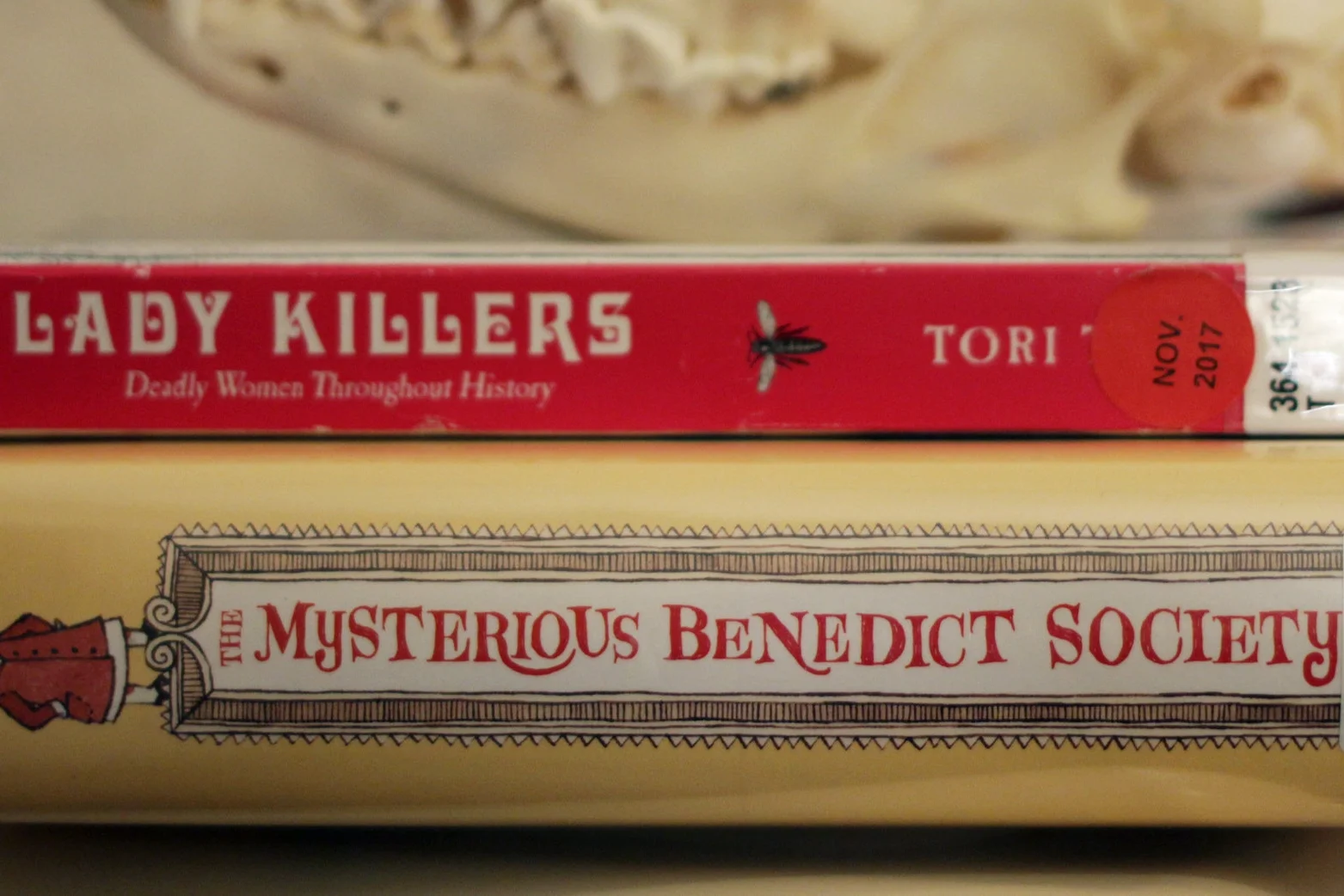
Lady Killers: Deadly Women Throughout History, by Tori Telfer
I enjoyed the premise and the tone of this book, but the actual stories themselves were all a little too repetitive by the end. Telfer explains in the conclusion why she didn't include any modern serial killers—the most recent story is from the 1950s—but I eventually tired of reading about yet another woman accused of poisoning several of her husbands, hundreds of years ago. Maybe my reception of this book just signals that I should take a break from the murder/poison genre for a while, but after finishing one of the stories about a woman and her delicious meals full of "white granules," I will never look at a sea-salt caramel the same way again.
The Mysterious Benedict Society, by Trenton Lee Stewart
I can't count how many times I'd seen this book in the ten years since it was first published and thought "I know I'm going to love this book." It was partially the title, and partially the excellent cover illustration (and typography), but my intuition was spot on: I loved this book. I was wary of the length when I picked it up from the library, but I shouldn't have worried—I tore through it and finished it in five days. I've seen comparisons drawn from Stewart to Roald Dahl and Lemony Snicket, which are both accurate but TMBS also reminded me a lot of my all-time favorite YA mystery book, The Westing Game.
I've always been a voracious reader, and exclusively read fiction as a kid. Young me would have been obsessed with this book, but turns out 32-year-old me was just as obsessed. I somehow got into a non-fiction rut as an adult, and almost forgot how transporting a really good novel can be. This book is technically young adult fiction, but it never feels childish. I loved the characters and the puzzles and I really couldn't (or at least didn't want to) put this book down until I knew how it ended. There are two others in the series (and two more supplemental books) that I will definitely be reading soon, because like any truly great book, I raced to the finish and then felt inexplicably sad that it was over.
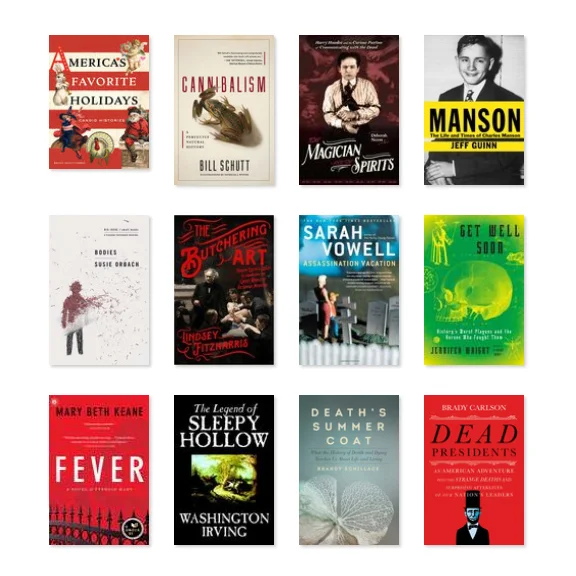
Best of 2017: Books

I recently completed my reading challenge for this year—52 books!—and I think this may have been the most books I've ever read in a single year. I've always loved reading, but there was a portion of my adult life where I barely read at all. I've realized now that reading is such a huge part of who I am that I don't really feel like myself if I'm not excited about what I'm reading or what's next in the queue.
I've set a new challenge for 2018—60 books!—and I'm mostly confident that I can reach that number. 52 felt challenging, but not impossible and I work well under deadlines, even if they're basically imaginary. As much as I love the library, part of my reading goal this year is to read books that I actually own. I have a tendency to buy books and then forget about them once they're on my bookshelf. I love the act of browsing for used books at the Strand and I feel comforted by a bookcase full of possibility—but I also live in a tiny studio and clearing out some of that clutter (by reading and then selling the books back to the Strand) feels like a reasonable goal for the new year.
You can see past book reviews here and I still have a few to catch up on of the 52, but here were the standouts from the year:
🏆 BEST OVERALL 🏆

The Road to Jonestown: Jim Jones and the Peoples Temple, by Jeff Guinn
It's been a few months since I finished this book, but I can't stop thinking or talking about Jim Jones. He is one of the most (maybe the most?) fascinating people I've ever read about, and Jeff Guinn has quickly become my new favorite biographer.
✏️ BEST NON-FICTION ✏️

Five Days at Memorial: Life and Death in a Storm-Ravaged Hospital, by Sheri Fink
This was one of the first books I finished early in the year, and no other true story that I've read since has quite come close to being as thought-provoking. I went into this book knowing very little about the true devastation of hurricane Katrina, and I never before considered what a hospital would do with their sickest patients in times of crisis—this story isn't an easy one, but I'm still thinking about it nearly a year later.
📚 BEST FICTION 📚
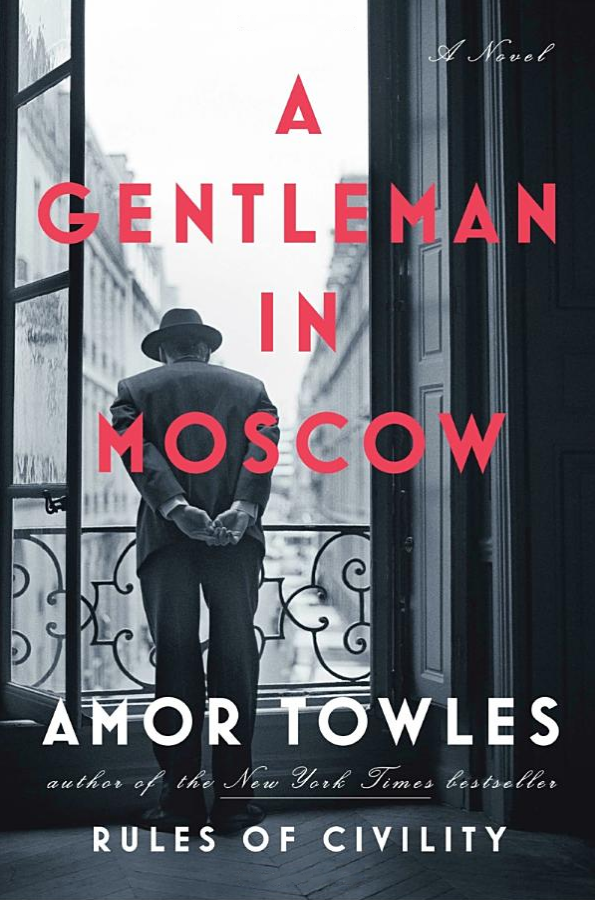
A Gentleman in Moscow: A Novel, by Amor Towles
I read both of Towles's novels this year, and as much as I loved The Rules of Civility, his second book is even better. I don't read much fiction, but this book was so richly rendered that it made me appreciate the way that a really good novel can immerse you in a world so different from your own like nothing else can.
🔬 BEST SCIENCE 🔬

The Butchering Art: Joseph Lister's Quest to Transform the Grisly World of Victorian Medicine, by Lindsey Fitzharris
I think I dreamed this book into existence after wanting to read about Joseph Lister and his antiseptic germ theory for so long, but it was better than I could have even imagined. If you devour books about antiquated medical practices and the pioneers of medicine like I do, you'll love this book.
👨🏻 BEST BIOGRAPHY 👨🏻
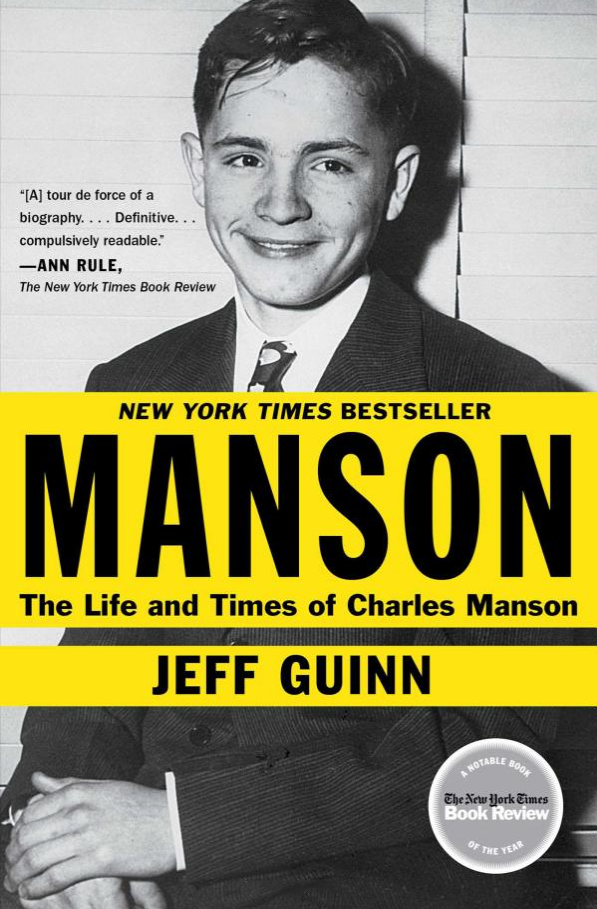
Manson: The Life and Times of Charles Manson, by Jeff Guinn
This was my second book by Guinn, and I knew that he would handle Manson's life with the same expertise and natural flow that he used to tell the story of Jim Jones. Everyone has heard of Charles Manson, but there was so much to his fascinating life (and the lives of the other "family" members) than just the sordid headlines.
Full review to come.
😂 BEST HUMOR 😂

We are Never Meeting in Real Life: Essays, by Samantha Irby
Based on cover art alone, I knew this book would be funny but I didn't expect to forcibly laugh out loud quite as much as I did. Irby's essays aren't about funny topics, but her storytelling and perspective is so hilarious that I'd want to read her thoughts on pretty much anything.
You can see all of my book reviews by clicking on the "books" tag.
Also my favorite books of 2016 can be found here.
Recent Reads

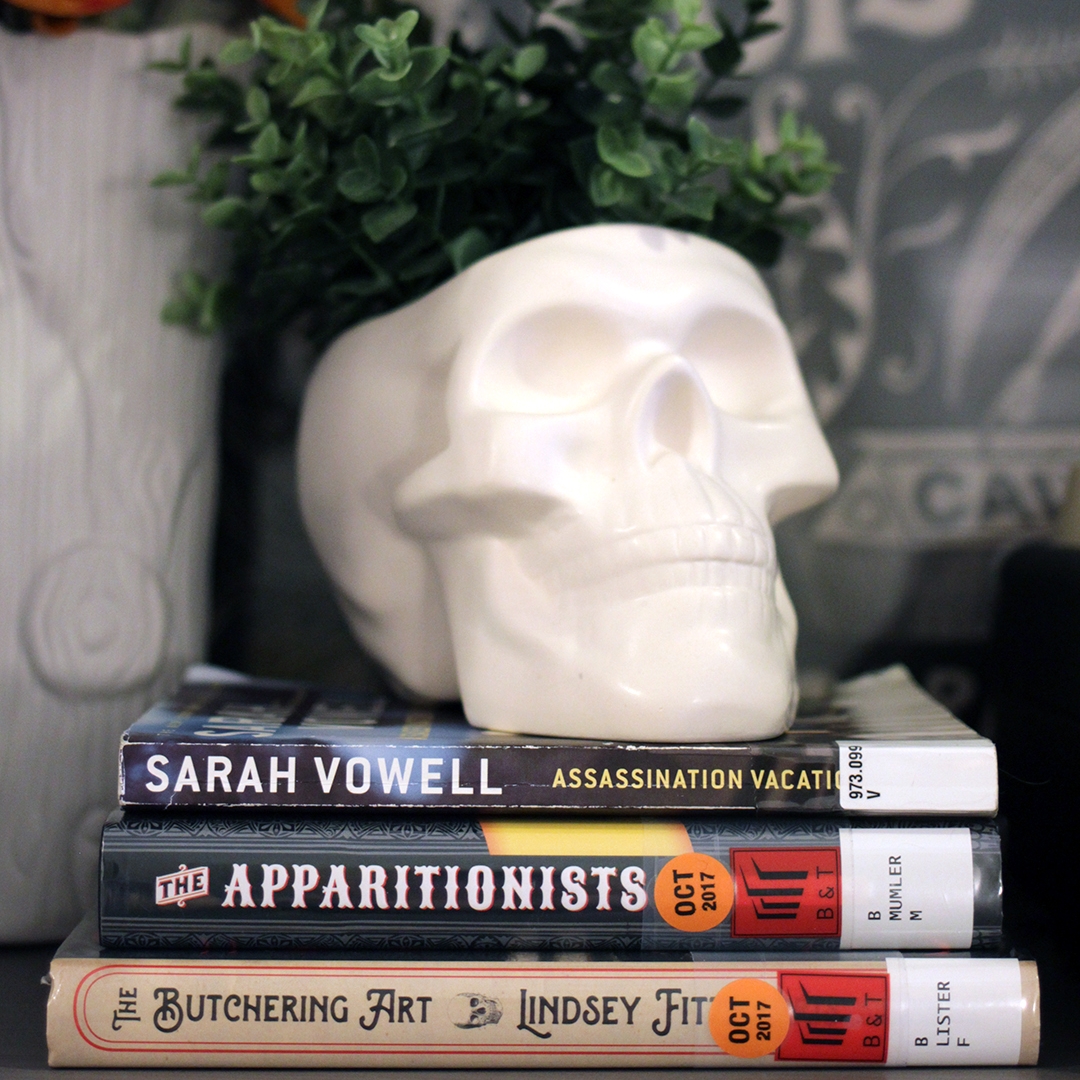
Assassination Vacation, by Sarah Vowell
This book was mentioned several times in the reviews of Dead Presidents—a book I recently read, and loved. Maybe it's just a case of 'dead president' fatigue, but I didn't love Assassination Vacation as much as I expected I would. Both books are similar in topic, but very different in tone and if you have to choose just one I'd go with Dead Presidents. I wasn't familiar with Sarah Vowell, a contributor to NPR's This American Life before picking up this book, but I did enjoy her personal asides and think that we'd probably be great friends if we ever met in real life. Sometimes Vowell's "historical tourism" pursuits were too obscure and light on historical significance for even me to care much about—although it's always nice to discover other people who are passionate about their interests, no matter how strange they may seem.
The Apparitionists: A Tale of Phantoms, Fraud, Photography and the Man Who Captured Lincoln's Ghost, by Peter Manseau
This was a no-brainer for me as soon as I saw it—a book on the history of photography with a particular focus on spirit photography? Sold. I generally loved this book (and all of the photos were a nice addition), but I had one major problem with it—it's never stated exactly how William Mumler made his famous spirit photographs. Mumler was eventually put on trial for fraud and photography experts presented seven possible methods for obtaining similar results, but Mumler was acquitted and it's never explained exactly how his photographs were made (or who the "spirits" actually were). This is the one question I was dying to know when I started this, and 300 pages later I'm still left wondering.
The Butchering Art: Joseph Lister's Quest to Transform the Grisly World of Victorian Medicine, by Lindsey Fitzharris
I remember recently searching for a book on Joseph Lister and his revolutionary discoveries in antiseptic surgery, and coming up short. When I saw a listing for The Butchering Art on Amazon months before its release date, I checked on it frequently and impatiently awaited its arrival at my local library. It was definitely worth the wait, and I tore through this enjoyable account of Lister's fascinating life in less than a week. I read a lot about medical history, and Lister comes up frequently, so it was nice to finally fill in the gaps with more of his story. Lister wasn't working in a vacuum—he had several mentors, a very supportive father and drew heavily on Louis Pasteur's revolutionary germ theory (maybe my next biography subject!).
The subtitle "grisly world of Victorian medicine" sold me alone, and if you love reading about bone saws, gangrene and other gruesome bits of history like me than you'll love this book. Lister's lifelong passion for research and improvement is as admirable as his skills as a surgeon, and I actually teared up at the end of this book—not because of Lister's death, but because of his inspiring life and the countless lives that were saved because of it.

America's Favorite Holidays: Candid Histories, by Bruce David Forbes
I love holidays and reading origin stories for cultural phenomena, and this book delves into why and how five holidays (Christmas, Valentine's Day, Easter, Halloween and Thanksgiving) became what they are today. Forbes presents a three-layer-cake theory that these holidays have been shaped by modern popular culture, a religious or national overlay and seasonal celebrations. Forbes is a Professor of Religious studies and might devote a little too much time to the intricacies of religions for my taste and he can be a bit dry (and corny, ending chapters with phrases like, "stay tuned!"). But this is one of those books that I came away from with an endless list of fun facts that I can't wait to trot out during each holiday season.
The Magician and the Spirits, by Deborah Noyes
I picked up this book on a whim while at the library, because I couldn't pass up a book about Houdini and spiritualism (or great cover typography). It's a YA book, so it was an easy read, but as a result it didn't really provide me with any new insights into either subject. I already knew a lot about spiritualism from my interest in the Fox Sisters and from reading The Apparitionists, but this book just left me wanting to read a proper biography about Houdini and his fascinating life.
Recent Reads

Heads in Beds: A Reckless Memoir of Hotels, Hustles and So-Called Hospitality, by Jacob Tomsky
I got this book at a Goodwill for $1, and started reading it as my weekend book because it's a small paperback. There were some humorous anecdotes and helpful hints about Tomsky’s time working in luxury hotels, but the most eye-opening information was the fact that in most cases, you can steal robes or empty out the mini bar without consequence—a theory I’ll hopefully be brave enough to test in the future.
We are Never Meeting in Real Life: Essays, by Samantha Irby
There were hundreds of holds on this collection of essays at the library, but I managed to get my copy fairly quickly (even the librarian that checked me out said she was something like 400th in line). I blew through this in two days and found myself laughing out loud on the bus more times than I usually allow myself. Irby is hilarious, and despite the title (and the hatred toward human interaction of any kind that we both share) I found myself wishing that we were best friends.
Her essays cover some pretty heavy subjects—the death of both of her parents, her sickly, demon cat Helen Keller (!!) and her aversion to almost everything—but I can't remember reading something so smart, so deftly worded and so damn funny in a very long time.
Fever: A Novel, by Mary Beth Keane
I hesitate to say that I’m “obsessed with Typhoid Mary,” although if you’ve spent any time at all on this blog, that shouldn’t really come as a surprise. A few years ago I read a biography of Mary Mallon, written by Anthony Bourdain (she was a cook, after all) and last year I finally tracked down Mary’s final resting place in the Bronx.
Fever is a novel, but it is based on a very real person and covers the pursuit of Mallon—one of the first asymptomatic carriers of Typhoid to be discovered—by New York City sanitation engineer, George Soper, the resulting trial and her two separate stints in quarantine on North Brother Island. Keane fills in the gaps in the history with details of her own creation—Mallon’s on-again, off-again boyfriend Alfred is entirely fictitious—but those are the parts of the story I found myself enjoying the least. Mary Mallon was such an interesting character and the parts of her story that we know are fascinating enough without the addition of relationship drama and other domestic woes.
I’ve read that Elizabeth Moss is adapting Keane’s novel into a TV series, with Moss taking on the role of Mallon and I’ll definitely be watching for that. Hopefully it will satiate me while I patiently await a miracle that would allow me explore the now notoriously off-limits North Brother Island.

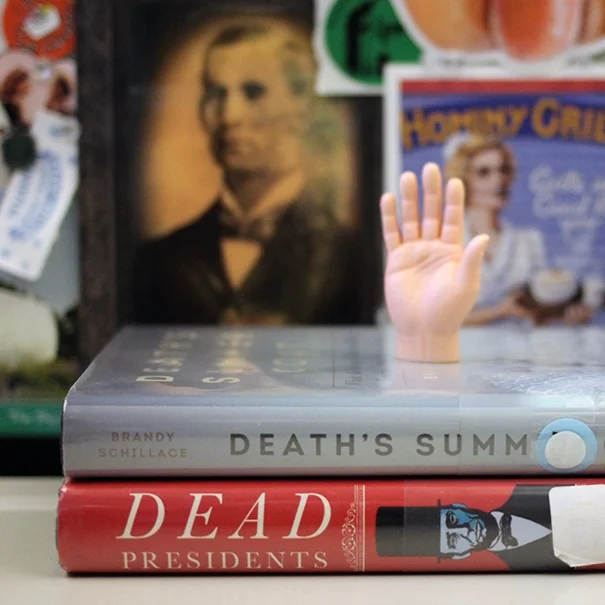
Death's Summer Coat: What the History of Death and Dying Teaches Us About Life and Living, by Brandy Shillace
This book would be a good overview if you're interested in death rituals and the ways death culture in America has evolved through the years, but if you've read quite a lot in the death/dying genre (*raises hand*) you could probably skip this book. It wasn't all repeat information—I learned a few new things—and sometimes it is nice to read something that nicely ties together a lot of different threads throughout history.
The parts about the Resurrection Men (grave robbing / body snatching) were my favorite, and led me to put a few more books on my to-read list, which is always exciting. Coincidentally, I finished this book on my way to a lecture/book signing by Caitlin Doughty for her new book, From Here to Eternity, but I think I need to read a few books not about death before I dive into that one.
Dead Presidents: An American Adventure in the Strange Deaths and Surprising Afterlives of Our Nation's Leaders, by Brady Carlson
This book showed up in my Goodreads feed and I immediately put it on hold at the library. I've been getting most of my holds very quickly—which means I'm reading things that literally no one else in the New York City library system cares about—but the instant gratification is a nice side effect of having strange tastes. There's almost no way I wasn't going to like a book like Dead Presidents—I'm fascinated by all things related to death and mourning practices and I also love history and seemingly superfluous facts about famous people.
It was an easy, fun read and I couldn't help but think about how the current President will one day be memorialized (the idea of a Trump "library" is laughable, at best). Thanks to this book, I've added a bunch of Presidential graves to my list for future Ohio trips and a return trip to Grant's Tomb (the largest mausoleum in North America!) is also imminent now that I live just a few blocks away again.
Recent Reads
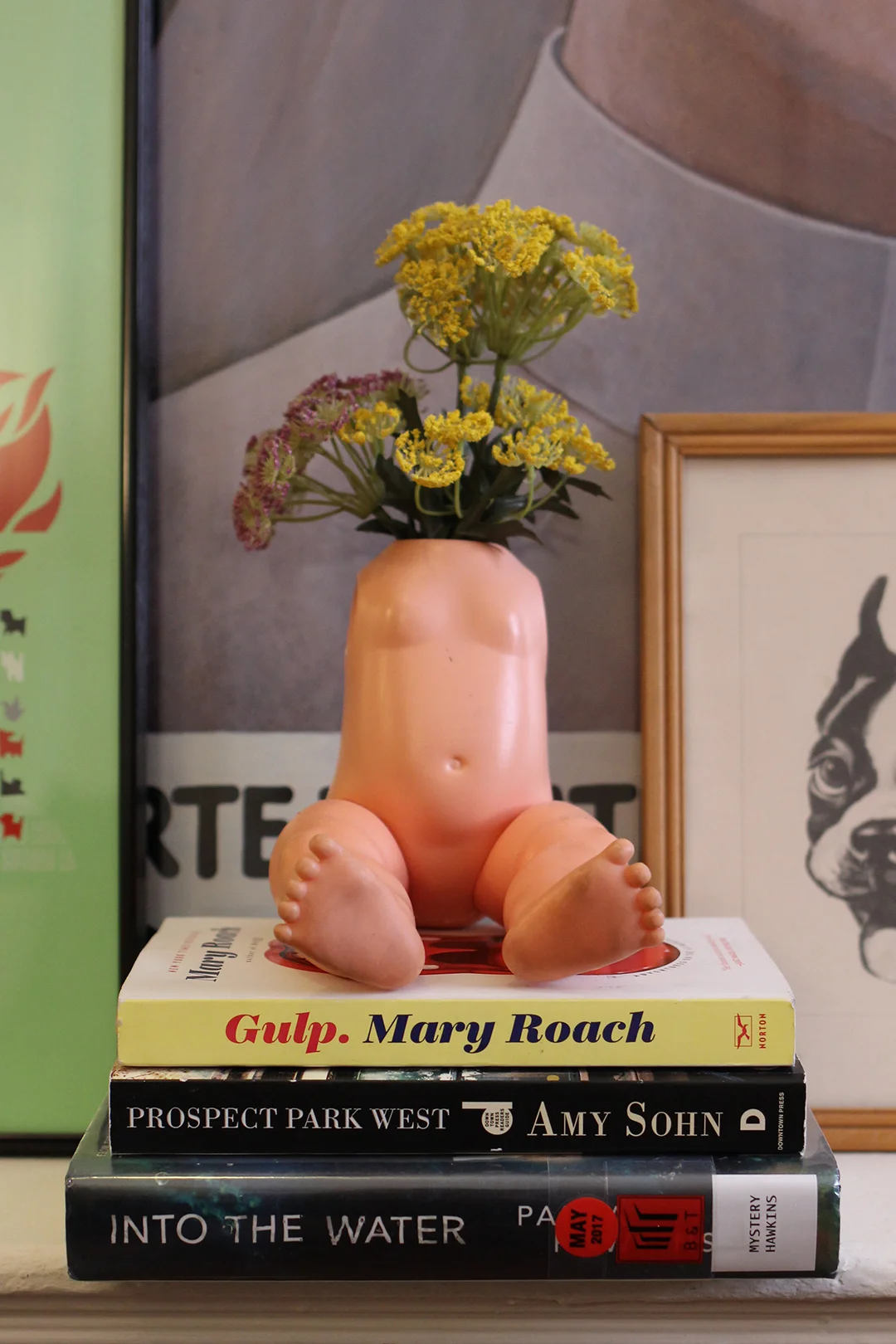
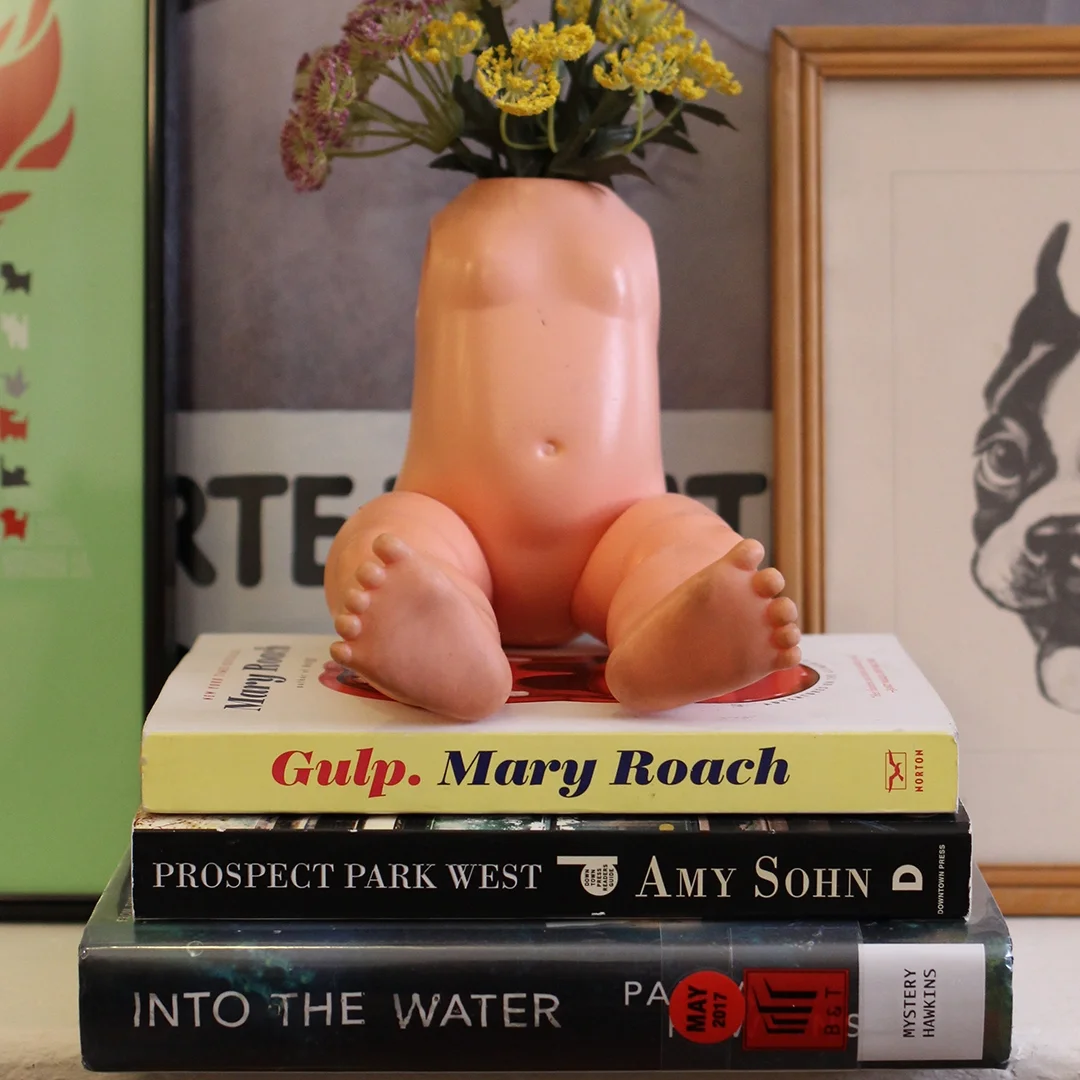
Gulp: Adventures on the Alimentary Canal, by Mary Roach
Stiff is one of my all-time favorite books (I've read it twice, and will probably read it again someday), but somehow this is only the second Mary Roach book I've read. I've owned Spook ever since I worked at W. W. Norton and made use of my 70% discount (Roach is a Norton author), and Gulp sat on my shelf for a few years before I finally started it. Roach is famous for her ability to write about science and strange topics with wit and a million humorous footnotes and I'm sure she could make almost anything seem interesting. Gulp is about the wonders of the digestive system (a subject I already find fascinating) and I was a little grossed out, a little surprised and realized that I'm probably wasting my sensitive nose not being a professional taste-tester.
Into the Water by Paula Hawkins
I devoured The Girl on the Train (the movie was just ok), so I had high hopes for Paula Hawkins's second thriller. Into the Water, about a small England town plagued with suicides (or are they murders??) and shady, unreliable narrators, kept me just as interested (and in the dark) as The Girl on the Train. Although I did eventually figure it out, surprise-averse me simultaneously loves and hates books that keep me guessing—I was so frustrated by Gone Girl that I flipped forward just so I could spoil the twist and relax while I kept reading (I'm a monster, I know). I read so many borderline-dry medical and nonfiction books that a novel like this feels like a palate cleanser for my brain and I eagerly await her next book (and the inevitable Into the Water movie).
Prospect Park West, by Amy Sohn
I found this book in the dollar section of the Strand, and bought it based solely on its title. I still lived in Brooklyn at the time, and Prospect Park West was my regular running route. I didn't expect this novel to be high brow classic literature, and I love the occasional gossipy fluff book (especially ones about New York). Unfortunately this book was just mostly trash, and not the entertaining kind. I enjoyed the neighborhood references, and it did make me miss living so close to Prospect Park, but the characters are reprehensible and mostly uninteresting despite Sohn's attempts at writing provocatively (the opening chapter has a mother masturbating while her young daughter is napping).
I can't remember the last book I disliked as viscerally as this one, and I slogged through it hoping for some conclusion, which unfortunately never came. I was tempted to leave the book on the subway platform where I finished it or donate it to one of those little free libraries in Park Slope, but it seemed mean to thrust this garbage book onto another unsuspecting Brooklynite.

The Lonely City: Adventures in the Art of Being Alone, by Olivia Laing
I saw this book on Goodreads and reserved it at the library based only on the title. I've always been a lonely person—even when I'm in a relationship and surrounded by good friends—but I've never really thought much about lonliness as a state of being. This book was different than I expected, and it took a while before I was fully invested, but the different artists that she presents as case studies in loneliness—Andy Warhol, Henry Darger, David Wojnarowicz and others—were so fascinating that I'm glad it wasn't a dry, scientific explanation of the mechanics of loneliness, but something much deeper.
Morgue: A Life in Death, by Vincent Di Maio and Ron Franscell
Vincent Di Maio, MD is the son of a famous New York City medical examiner and a forensics expert himself, who consulted on some fascinating and famous cases including the Trayvon Martin shooting, the exhumation of Lee Harvey Oswald and an investigation into the possibility that Vincent Van Gogh didn't commit suicide, but was accidentally murdered. I flew through this book, and I've read lot of similar collections but this was definitely one of the best (up there with Working Stiff). Di Maio does sound a bit full of himself and self righteous at times, but he has the credentials to back him up. The cases themselves—the infamous as well as the ones I'd never heard of before—are all fantastic mysteries, and he retells them with such detail that you almost forget these are real people and real crimes.
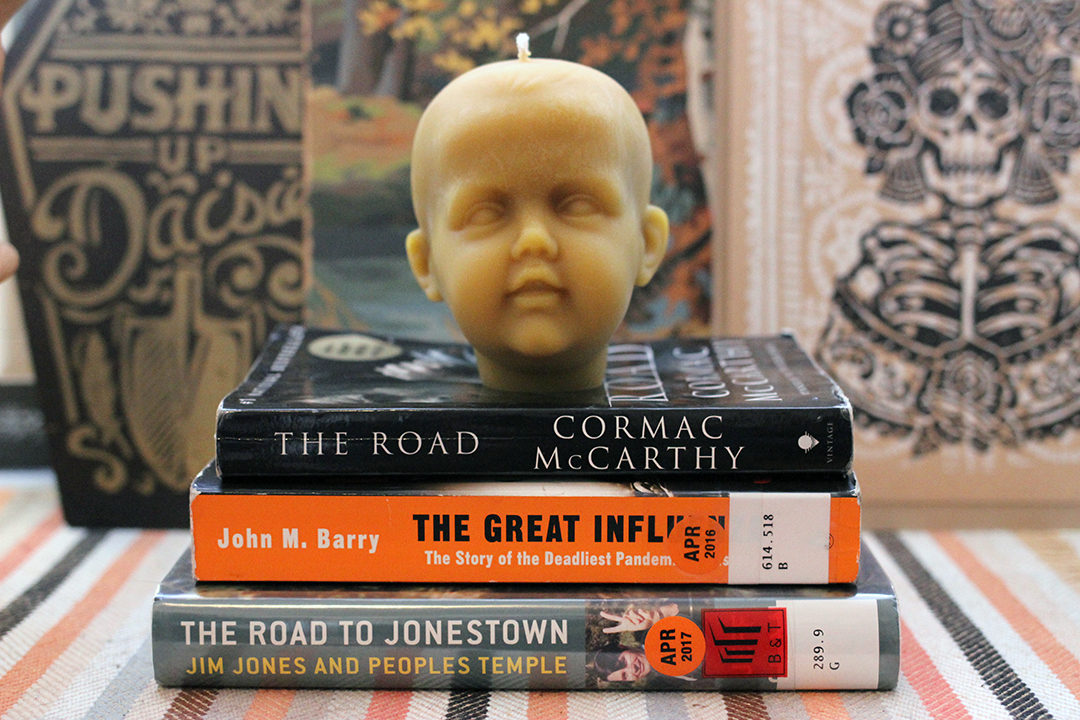
Recent Reads
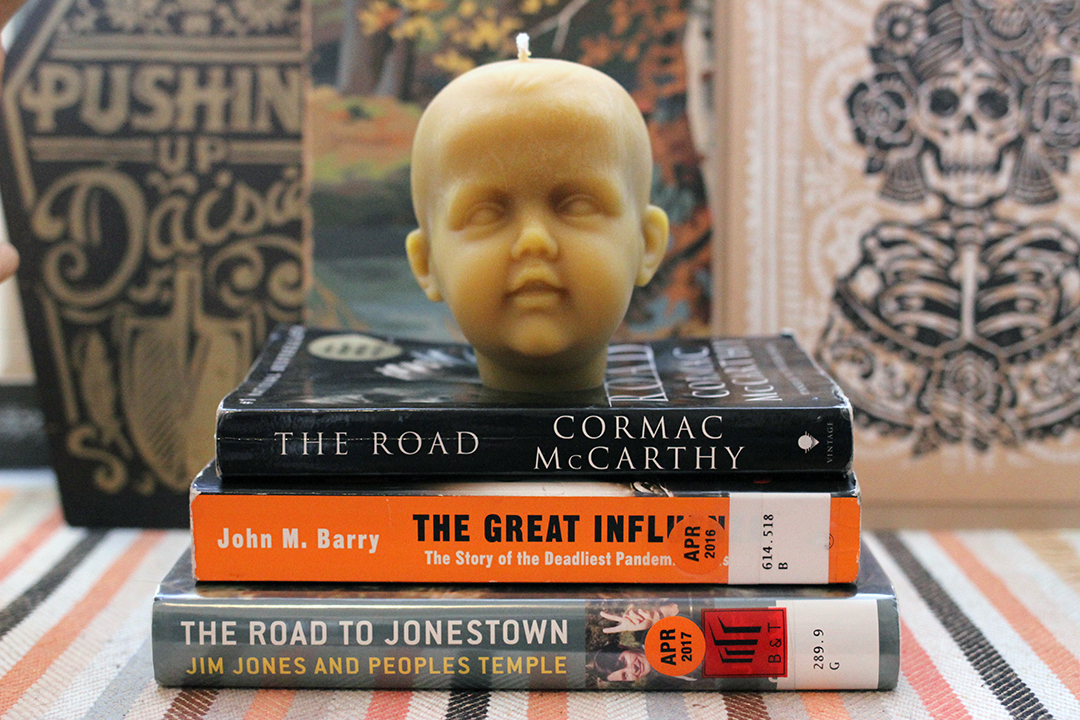
The Road to Jonestown: Jim Jones and Peoples Temple, by Jeff Guinn
I'm going to try to not be dramatic about how much I loved this book, but I also want everyone I've ever met to read it so we can discuss. Almost everyone has heard of Jonestown and its infamous demise, but this incredibly well-written and thoroughly-researched book goes deep into the origin of Jim Jones and the Peoples Temple. There are so many crazy stories that I don't want to spoil them here, but the one thing I found most fascinating was that the Peoples Temple (and Jones) actually did a lot of good for people before it all went wrong.
I became majorly obsessed with Jones while reading this book and cults fascinate me so much that I'm always afraid that I'm going to accidentally end up joining one—good thing Jonestown is no longer an option because I might have booked a ticket to Guyana even in spite of all of the warning signs.
The Great Influenza: The Story of the Deadliest Pandemic in History, by John M. Barry
I had high hopes for this book, but unfortunately it wasn't great. The parts of the book that actually cover the great influenza pandemic of 1918 were very interesting, but the other half was a meandering and dry history of medical research. Maybe I was just burnt out on medical books by the time I got to this one, but there were so many names to keep track of that even I eventually lost interest. It's also anti-climactic because—spoiler alert!—there is still no cure for the flu, and vaccinations aren't 100% effective. This book could've been half as long and would've benefited from stringent editing—I don't regret reading it, but by the end I was only skimming.
The Road, by Cormac McCarthy
I read about some pretty dry / gross / strange topics, but this may have been the most depressing streak of books I've put together yet. It feels wrong labeling any book as more of a downer than the diary of Anne Frank (see below), but The Road is definitely a contender. This story about a father and son traveling across a post-apocalyptic, burned out America is Bleak with a capital B. Even though I knew that going in, I was still bummed out by just how ugh this book made me feel. McCarthy's writing style might not be for everyone, but there was insight hidden within all of the darkness, and The Road will stick with me for a long time (hopefully it isn't too accurate of a preview of things to come).

The Knife Man: Blood, Body Snatching, and the Birth of Modern Surgery, by Wendy Moore
I had never heard of John Hunter before picking up this book, but afterwards I want to tell everyone about him. The book calls him the father of modern surgery, but he was so much more—a prolific collector of medical curiosities and specimens, a believer in evolution and a passionate naturalist. He held opinions and made discoveries that were hundreds of years before their time.
His collection of anatomical, pathological and zoological specimens—housed at the Hunterian Musueum inside of the Royal College of Surgeons in London—is one of the largest and oldest in the UK, comprising "more than 3,500 anatomical and pathological preparations, fossils, paintings and drawings." It's currently closed until 2020 for renovations, but after reading about Hunter I think a visit to his prized collection would be the best way for me to honor his memory.
Anne Frank: The Diary of a Young Girl, by Anne Frank
I'm not going to presume to write a review of one of the most famous books of the 20th century, but I don't think there's ever a bad time to revisit this classic. I'm sure I read this at some point in school, but I picked it up recently as a weekend book because it's a small, lightweight paperback. I was struck by how prescient and thoughtful Frank is—which of course makes her story all the more tragic.
I was a teenage girl once—although obviously under drastically different circumstances—but I was surprised by how much I could relate to her musings about both her inner and outer lives ("Who would ever think that so much can go on in the soul of a young girl?"). It will never cease to be unfair or desperately sad that Frank's life was cut short, but at the very least her incredible spirit lives on through her writing.
Recent Reads
I've officially hit the halfway point of my reading challenge for the year (which I keep track of on Goodreads—let's be friends!). I just finished my 26th book and I've pretty much consistently been one book ahead of schedule because I'm great at deadlines and being behind on anything makes me nervous. I don't always finish a book a week, but I did read three of the below books in less than a week so it averages out.
I've cherished books my entire life, but this year I've been more excited to read than ever before. Maybe it's the cheesy congratulatory emails I get from Goodreads every time I finish a book or maybe I've just lucked out with some wonderful books, but almost nothing makes me happier than settling into my commute twice a day and not looking up from my book until I reach my destination. Here's what I've been reading lately:
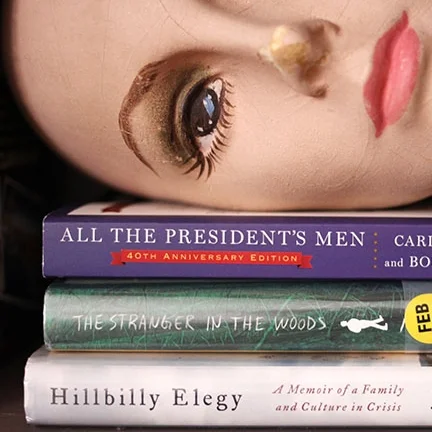
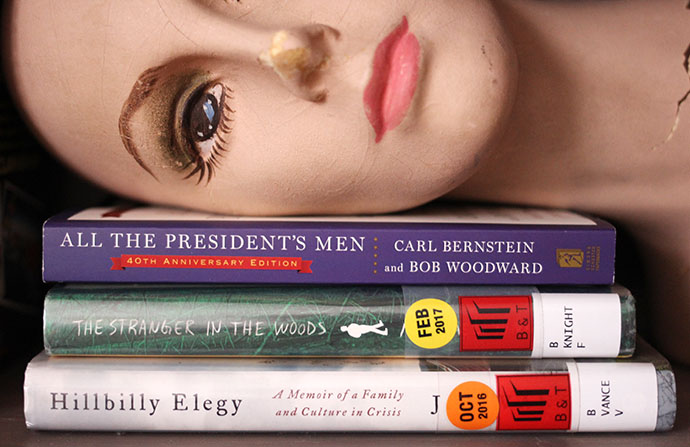
Hillbilly Elegy: A Memoir of a Family and Culture in Crisis, by J. D. Vance
I don't know if this memoir is as important as it's been made out to be, but I do understand why people have sought it out, especially after Trump got elected. Vance grew up splitting his time between southern Ohio and Kentucky, and while I grew up about four hours away in Northeastern Ohio, a lot of what Vance describes as "hillbilly culture" still felt familiar to me. At times his recollections are humorous, and at times they're deeply sad, but he has a valid and unique point of view. His story might ultimately veer from the norm (he eventually attended Yale Law and now lives in San Francisco), but his commentary on what it means to grow up as part of a crazy, erratic, sometimes abusive but always loving family is worth reading—even if it mirrors your own experience, but especially if it does not.
The Stranger in the Woods: The Extraordinary Story of the Last True Hermit, by Michael Finkel
In 1986, Christopher Knight abandoned his car and disappeared into the woods of Maine. For 27 years he lived a completely solitary existence, carefully (and by his account, reluctantly) breaking into nearby vacation cabins only when he needed supplies. He was finally caught in 2013, and his story is fascinating. This account—a compilation of Finkel's uninvited visits and reluctant interviews with Knight while he was being held in jail—does feel a bit exploitative, and I found myself feeling bad for Knight more than anything else. He had always been uncomfortable with human contact and was content to have removed himself from society forever. Sure, stealing from others was undeniably wrong, but otherwise I identified with Knight's antisocial tendencies more than I even expected to. I couldn't survive alone in the wilderness for a few hours, but not having to deal with other people for 27 years sounds pretty darn appealing.
All the President's Men, by Carl Bernstein and Bob Woodward
This was the very wrong book to take with me on our two-week South American trip. I think I read a total of nine pages, and I was immediately confused by the introduction of so many players and a complex story. I picked it up again when I got back to New York, and while it took me a while to (mostly) keep everyone straight, I was engrossed until the very end. This is as much a story about journalism as it is about Watergate and politics and it reads like a true crime thriller (and I guess it technically is).
I had watched a great hour-long documentary about Watergate on Netflix (part of CNN's 70s series), wanted to know more, and figured it was about time that I read this classic. I'm still not entirely sure who everyone is and what their role was (I'm sure there's a Watergate cast of characters flow chart somewhere) but this book should be required reading for anyone at all interested in the current Trump/Russia mess. Aside from the absence of the Internet and the constant smoking, this feels like it could've been written a few years from now about current events.
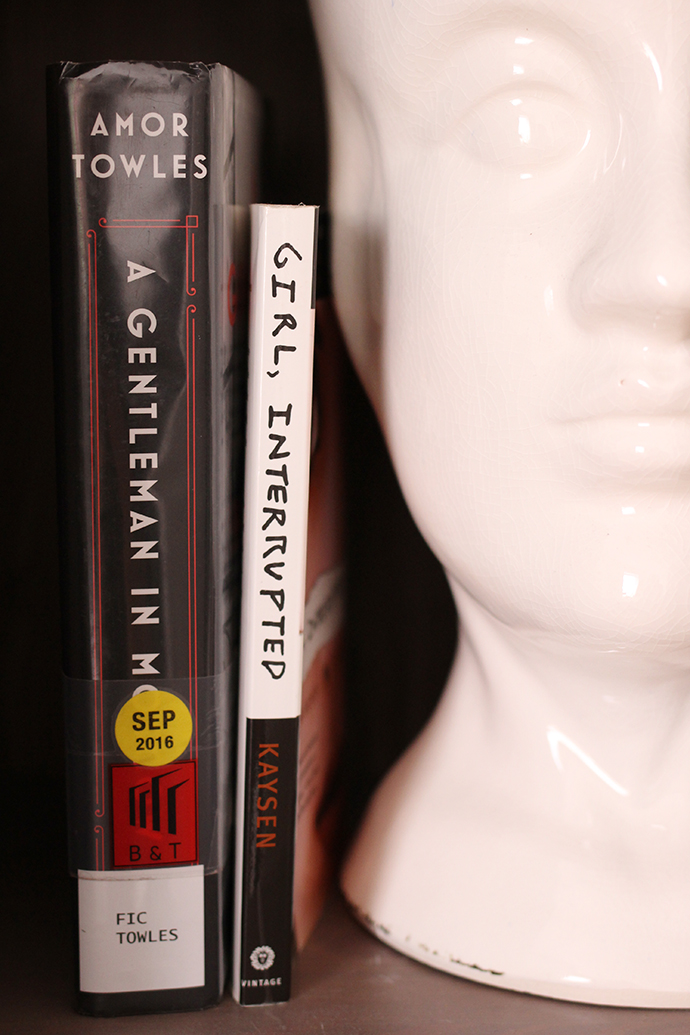
Girl Interrupted, by Susanna Kaysen
I recently got the urge to re-watch the movie version of Susanna Kaysen's famous memoir of her two years spent in a mental institution in the 60s, and it made me realize that I had never properly read the source material. It's one of my favorite movies, and it follows the book very closely. Kaysen writes with great clarity and insight on her struggles and paints a vivid picture of what her day to day life was like at McClean, a psychiatric hospital in Massachusetts whose famous past residents included Ray Charles, Sylvia Plath, Anne Sexton and David Foster Wallace.
A Gentleman in Moscow, by Amor Towles
After I finished The Rules of Civility, Towles's excellent first novel, I wanted more. Luckily, A Gentleman in Moscow, his second novel, had just been published but I thought I could wait until the paperback edition came out. Turns out I couldn't, and so I recently caved and put the 400+ page hardcover on hold at the library. This book has been very popular so it took a while for me to get it, but now I understand the interest.
Set in a Moscow hotel, where Count Alexander Rostov has been sentenced to house arrest after the Russian Revolution, A Gentlemen in Moscow is one of the best novels I've read in recent years. I'm already interested in everything Russian so it wasn't a hard sell, but Towles has a way with words, characters and environments that just begs to be savored. The story spans several decades of the Count's life which, despite the confines of the hotel, manages to be full and fascinating. There are dramatic moments and important events of course, but Towles expertly makes the case that life mostly unfolds quietly and unassumingly, but that's where the real magic lies.
Recent Reads

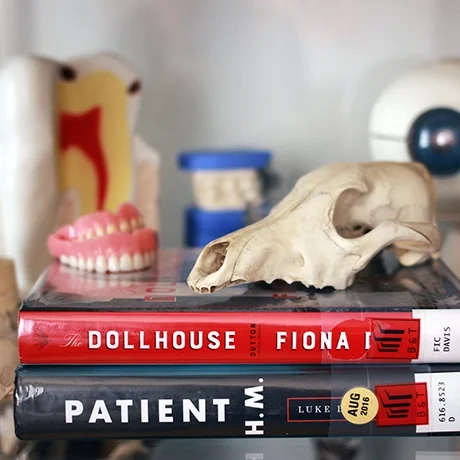
Patient H.M.: A Story of Memory, Madness, and Family Secrets, by Luke Dittrich
Over the course of his career in neurosurgery, Dittrich's grandfather performed the second highest amount of lobotomies, bested only by the notorious pioneer of the so-called "ice pick" lobotomy, Walter Freeman (you can read more about him and the procedure in The Lobotomist, which is excellent). One of his patients, a severe amnesic referred to clinically by his initials, H.M., became one of the most famous research subjects in the history of neuroscience. Dittrich's personal connection adds another layer to this fascinating story, and he seamlessly weaves family anecdotes with H.M.'s unique journey.
The Dollhouse: A Novel, by Fiona Davis
This debut novel alternates between the present and the past, and the stories of two women connected through the years by their time spent living at the infamous Barbizon Hotel For Women (now luxury apartments). This was an easy, breezy read and I love anything that conjures up "old New York"—although The Rules of Civility does so even more vividly. The Dollhouse did pique my interest about the history of the Barbizon but I think that a historical, non-fiction account of the building and its occupants would've been just as—if not more—interesting than this fictionalized version.

Turn Right at Machu Picchu: Rediscovering the Lost City One Step at a Time, by Mark Adams
We booked our upcoming trip to Peru and Colombia (including a four-day hike of the Inca Trail) months ago, and until I read this book I literally knew nothing about South America or its famous ruins. This travelogue was written by a journalist who had edited travel journals but never really had an adventure of his own—until he decided to follow in Hiram Bigham III's footsteps to all of the important Inca sites. There isn't as much history here as in The Last Days of the Incas (see below), but Adams's observations are entertaining and this was just the thing I needed to jumpstart my trip excitement (we leave next week!).
Silent Witnesses: The Often Gruesome but Always Fascinating History of Forensic Science, by Nigel McCrery
This was a quick read covering the basics of forensic science, organized chronologically by innovation—finger-printing, blood-typing, DNA analysis, ballistics, etc. Scientific explanations are mixed in with anecdotes and historical accounts of crimes, whose conclusions and convictions were influenced by the forensic techniques of the time. I love true crime stories and I'm forever intrigued by detective work—sometimes I dream of making a total career change and going back to school for forensics, but for now I'm content to spend my days just reading about other people's gruesome discoveries and contributions to the field.
The Last Days of the Incas, by Kim MacQuarrie
I set myself on a schedule to finish this 460-page book before we left for Peru, and I finished it with a week to spare. My friend Katherine lent it to me (along with Turn Right at Machu Picchu), and she insisted that I read both books—even when I complained that I wouldn't possibly be able to finish The Last Days in time. I'm so glad she was persistent though, because although Turn Right was a more objectively enjoyable read, The Last Days taught me so much more about Inca history than I expected. It drags a bit in the middle (basically a small group of Spaniards conquer the Incas, the Incas fight back and this is repeated countless times), but immersing myself in the Inca world was the exact thing I needed to really get excited about our trip.
I couldn't feel much except contempt for the Spaniards, who conquered a native people in the most brutal and brutish ways possible. They were so dismissive and completely uninterested in discovering or learning about the fascinating Incas, which is a huge shame. I'm by no means an expert now after reading just two books, but at I'm glad to be headed south with a new-found respect and understanding for all that we're about to see (thanks again, Katherine!).
Recent Reads


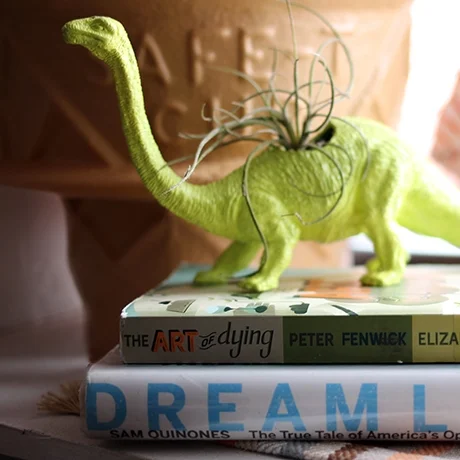
I picked out this book somewhat randomly at the library—I say "somewhat" because I had never heard of it, but I immediately gravitate towards anything that addresses death, dying or funeral practices. This book was a bit different from others I've read in the "death" genre, but it was a fascinating look at what happens right before and as someone is dying.
The book comprises mostly first-hand accounts by family members, caretakers and people who have had near-death or actual death experiences (people who have experienced clinical death, usually during a heart attack). I'm not at all a religious person, but I don't rule out some sort of afterlife mostly because I try to keep an open mind about things that can't really be proven. Despite reading many books on the subject, I haven't yet really experienced death very closely, and I had no idea that so many people have similar end-of-life experiences, including visions of loved ones, sudden clarity and an overwhelming sense of peace and purpose. I definitely don't want to die, but after reading this book I am slightly more comforted that when the time comes—for me, as well as for the people I love—that it won't necessarily be the end, but just the next step in a larger journey.

This was another somewhat impulsive library pick, but I was immediately engrossed in this true story of America's opiate epidemic (and corresponding heroin boom). I grew up in Ohio, where a large portion of this story takes place, so it hit close to home—but even if you've been oblivious to the rise in opiate and heroin addiction (and resulting overdose deaths) this is an essential read.
Quinones switches quickly between telling the stories of addicts, doctors, heroin dealers and the pharmaceutical industry and weaves all of the pieces together seamlessly. It's an extremely complicated problem with no obvious solution, but it's a riveting story that is crucial to understanding the current state of our country.
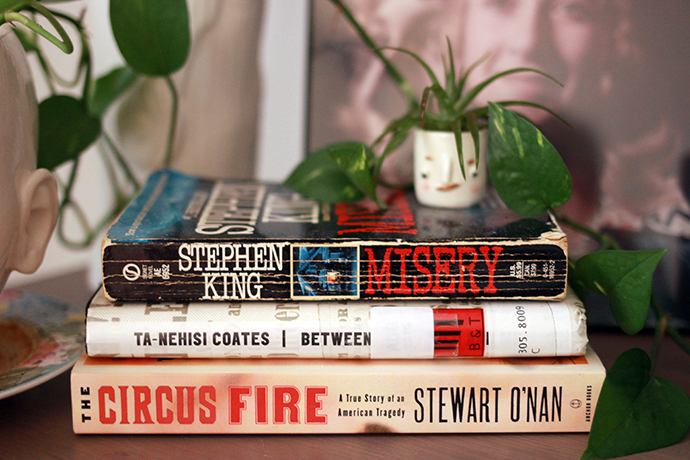

This was my first time really getting into a Stephen King novel—if you don't count abandoned attempts at both It and Pet Semetary when I was younger—and it didn't take me long to realize why he's so popular. I'd seen Misery the movie a long time ago, so I knew the basic plot points, but that didn't prevent me from feeling all of the suspense, stress—and misery—that accompanies Paul Sheldon's imprisonment by his "number one fan," Annie Wilkes. It was impossible for me to not have Kathy Bates and James Caan in mind while I read the book, and it's a testament to casting that they fit so seamlessly with how King describes them. It's a gripping novel that is gruesome, clever and suspenseful—probably the perfect introduction to King as a writer, and I won't wait years again before reading another of his books.

I picked up this book in the gift shop of The Ringling in Sarasota, right after we saw The World's Largest Miniature Circus. I have always been interested in all things circus-related, but I especially love reading about a place or subject after seeing it—kind of like reading the reviews after I've seen the movie. The Circus Fire is the true account of a horrific fire that tore through the Big Top during the July 6th, 1944 matinee performance in Hartford Connecticut, killing 167 people and injuring hundreds more. There were thousands of people in attendance—mostly women and children—and people died in all sorts of horrific ways. Some reviews I read criticized this book for being too graphic in describing their injuries, but I mostly found it to be a fascinating and well-researched account of a truly tragic event. The canvas Big Top had been waterproofed with a mixture of paraffin and gasoline, and ultimately Ringling Bros. / Barnum and Bailey were found liable, although the source of the fire (and the identity of some of its victims) remains a mystery.
Interesting fact: The first place that the circus played after the fire was The Rubber Bowl in Akron!

There's a quote on the cover of Between the World and Me by Toni Morrison, declaring this book to be "required reading," and I don't think that's an overstatement. Ta-Nehisi Coates framed this book as a letter to his teenage son, and it's a short read but a devastating one. Much like I think that Being Mortal should be read by everyone who ever plans to grow old and die (or knows someone who will), Between the World and Me should be read by anyone and everyone who ever plans to have contact with another human being outside of themselves.
It wasn't an uplifting read, but the world is not a perfect place (and some people are forced to learn this faster than others). This isn't the book to read if you'd like to feel great about the world, but perhaps those that struggle the least need to start listening to someone like Coates the most. As James Baldwin famously said, "Not everything that is faced can be changed, but nothing can be changed until it is faced."

Recent Reads

The Last Tsar: The Life and Death of Nicholas II
I've been fascinated by Russia long before the country was BFF with the entire Trump administration—maybe it has something to do with my Ukranian heritage or the fact that my name is Alexandra. I still haven't actually traveled to Russia yet, but seeing the too-beautiful-to-be-real St. Basil's Cathedral (preferably in the snow!) is at the very top of my life to-do list. My uncle also shares a love of all things Eastern European, and after our visit to Marjorie Merriweather Post's home (with its jaw-dropping collection of Russian treasures), he bought me two must-read books about the Romanovs: The Last Tsar, and The Rasputin File.
I finally dove into The Last Tsar, and truth be told it was a difficult, but ultimately fascinating read. The book is long and filled with Russian names (and nicknames) that I found incredibly hard to keep straight, and I was frequently confused by the timeline, relationships and politics. However, the story of the Romanovs—Nicholas and Alexandra and their children—is a fascinating one, and their letters to one another painted a vivid picture of their complicated (and tragic) lives together.
After spending weeks immersed in dreary pre-Soviet Russia, Shrill was the perfect palette cleanser. I wasn't familiar with Lindy West, but I'd seen Shrill mentioned by many people whose taste in books I trust, so I knew it was a safe bet. West is 34 years old, so she felt like a friend of mine—one that made me laugh out loud forcefully and often. I devoured this book in less than two days—not only to offset the weeks I spent on The Last Tsar or my arbitrary GoodReads challenge, but because I just couldn't, and didn't want to, stop reading.
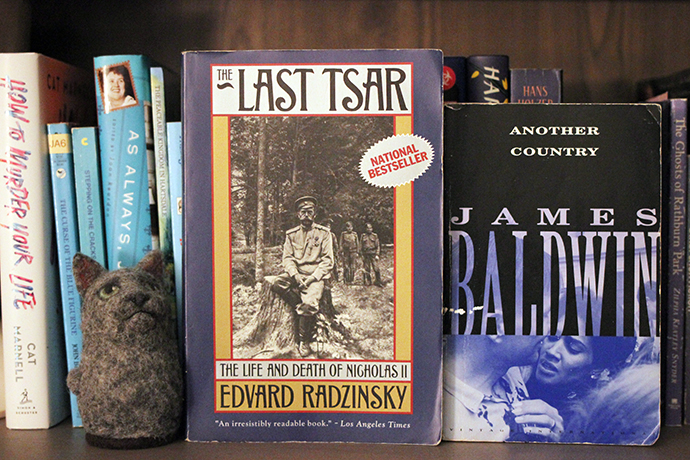
After seeing the life-altering James Baldwin documentary, I Am Not Your Negro, I wanted to remedy the fact that I had never read anything by Baldwin. My dude had a copy of Another Country, so it seemed like a good place to start. The beginning and end are superior to what comes in the middle, and I found myself pretty much hating every character—but I ultimately loved the book. It's no secret that Baldwin had a way with words and an important and unique perspective on the world. It's not an easy or feel-good book by any means, but I won't soon forget Baldwin's musings on love, race and what it means to be a living, feeling human.
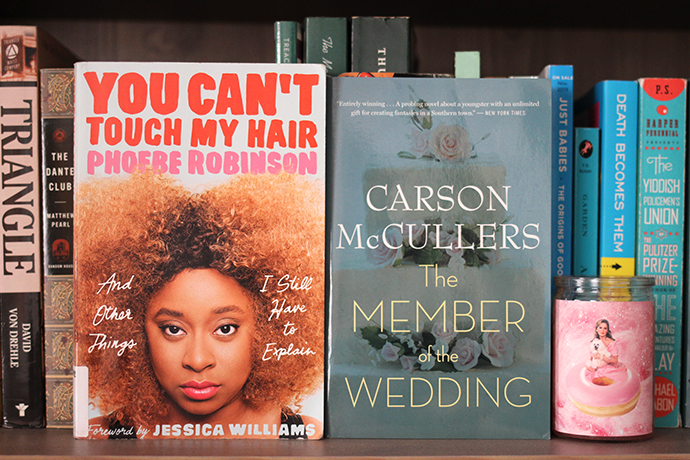
You Can't Touch My Hair: And Other Things I Still Have to Explain
I seem to be in a pattern of following up a heavy book with a more light-hearted memoir, and after Another Country, I definitely needed a laugh. I got more than a few while reading You Can't Touch My Hair, and like Shrill, I found myself laughing out loud on the train more than once. I was vaguely aware of Phoebe Robinson's podcast Two Dope Queens, but I was surprised to learn that Robinson is 32-years-old and grew up in Cleveland (31-year-old Akron native here). Where Shrill dealt mostly with West's experience as a fat woman (her words), Robinson talks mostly about what it means to grow up black in the Midwest. You wouldn't think that a book as serious as Another Country would actually complement the hilarious You Can't Touch My Hair, but in hindsight they're the perfect pair. I don't know if I would have connected with Robinson as well if she didn't sound like a contemporary of mine (or if we hadn't grown up with such similar cultural experiences), but after reading her book I wished that we were real-life friends.
I'm going to be 100% honest: I bought this book a while ago after reading somewhere that it was Lauren Graham's all-time favorite book (I am queen of the tenuous connection). This was my first book by McCullers, who lived a life fraught with illness and died when she was just 50 years old. The Member of the Wedding is about 12-year-old Frankie Addams, who is struggling to find her place in the world. Although every year I grow further and further from being an angsty teen, the memories of how uniquely hard it is to be a young girl will never go away. McCullers captures this existential crises so perfectly—one that transcends place and time (Memberis set in Georgia during the summer of 1944). McCullers stopped me in my tracks several time with Frankie's observations on what a strange experience it is to just be alive.
"But there's this. I wonder if you have ever thought about this. Here we are—right now. This very minute. Now. But while we're talking right now, this minute is passing. And it will never come again. Never in all the world. When it is gone it is gone. No power on earth could bring it back again. It is gone. Have you ever thought about that?"
- or -
“She was afraid of these things that made her suddenly wonder who she was, and what she was going to be in the world, and why she was standing at that minute, seeing a light, or listening, or staring up into the sky: alone.”

Recent Reads

In 2016 I read 44 books, which was a lot for me, but one of my goals for 2017 is to read even more. Even though the city just brought wi-fi to all of the subway stations, I try to exclusively read on my commute instead of mindlessly scrolling through social media (like I do basically the entire rest of the day). Goodreads has a "book challenge" feature, and I set mine at 52 books in 2017, and with six already completed the little widget tells me I'm already three books ahead of schedule. I'm heavily motivated by deadlines and gratuitous praise, so I'm feeling good about this goal (and hope to exceed it).
I've also been trying to read books that I actually own instead of filling up my library queue—I'm nothing if not a book hoarder and impulsive book-buyer, and my shelves are filled mostly with books I've never read. Reading a library book is good for that deadline-oriented part of me, but I own so many good ones that deserve a chance, and the more I read and sell back to the Strand the more books I can continue to buy (totally rational). So, not only have I read six books already in 2017, but they were (almost) all great—here's a bit more about what I've been reading lately:
Five Days at Memorial: Life and Death in a Storm-Ravaged Hospital
This book was referenced in the excellent history of Bellevue I sped through at the end of 2016, and I picked it up immediately. It was long but with a book this good that hardly mattered (apart from me giving up on the huge library copy and purchasing the paperback version).
Five Days is about the harrowing time leading up to, and directly after Hurricane Katrina hit New Orleans. Memorial hospital lost power and was ravaged by floods and misinformation. Half of the book describes what it was like inside the hospital, and half of the book is devoted to the legal battle that followed after claims that patients were intentionally euthanized rather than evacuated—both are equally fascinating.
Dead Distillers: A History of the Upstarts and Outlaws Who Made American Spirits
This was the least memorable of the group, but it was a quick, easy read. The book comprises short stories of various people—names you've heard of, like Jim Beam, and names history forgot—vital to the history of distilling spirits in America. Some of the stories were great, some were a little meh but I did learn that distilling is a tricky business and I continue to marvel at the fact that Prohibition actually happened in our not-so-distant past.
Being Mortal: Medicine and What Matters in the End
I put this book on my library list because it was so highly rated on Amazon, and now I understand why. This is an essential book—I thought multiple times while reading it that I should buy this book for everyone I know. Everyone will die, and most of us will grow old, and every one that plans to do so (or help someone else do so) so go out and buy (or rent) this book immediately. Gawande's writing is infinitely readable and empathetic, and I cried several times while reading his thoughtful stories. This book wasn't enjoyable, but it was thought-provoking and no doubt life-changing.
This was a Christmas gift from a friend who knows me very well, so I knew I would love it. The novel begins in New York in the late 1930s, and follows Katey Kontent, whose life is shaped by a series of choices and unavoidable events. I've been trying to read more fiction (or ideally, alternate it with non-fiction) but it's always easier for me to pick non-fiction. Luckily, this one was chosen for me and it matched up with my interests perfectly, mainly in its vivid descriptions of old New York. While the high society scenes are fun to imagine, I found myself wanting nothing more than to go back in time and eat at the Wall Street diner she frequents.
I was skeptical going into this book (lent to me by a dear friend who actually met with the Voyeur recently and snapped his portrait). I'd followed the backlash after the New Yorker article came out and was wary of the validity of the story, but was too curious to skip the book. It was a quick read—mostly journal entries from Gerald Foos, who owned motels in Colorado from the 60s through the 80s and spied on his guests via specially-crafted ceiling vents. Foos claims he was watching guests have sex "for the sake of science," but he mostly comes across as a fractured creep with delusions of grandeur. This is also my first introduction to the writing of Gay Talese and I came away from this book feeling almost as turned off by Talese's narcissism as I was by Foos's.
This book was first recommended by Kaylah (whose book recommendations I almost always find to be spot-on) and it had been sitting on my shelf for a while before I finally plucked it off recently. It wasn't at all what I expected (the title and cover photograph had me expecting more of a carnival-vibe) but it was a fascinating story. Told mostly in flashbacks and scattered fragments, the writing style felt really unique. The book is relatively short, but the insights into Daniel Fletcher's (and Johnny Vincent's, and Steven Edward's, etc.) mind and crazy life are fascinating.
Let's become friends on Goodreads and let me know what you're reading—book recommendations are always welcome!

Best of 2016: Books

Goodreads tells me that I read 44 books in 2016 and although falling short of my somewhat arbitrary goal of 52 books, 44 still feels like an accomplishment. There is almost nothing that makes me happier than getting out of work, scoring a seat on the train and tucking into a great book for my hour-ish commute home. The subway will always be one of my favorite perks of living in New York, and the ability to spend 2+ hours a day reading instead of driving feels like the ultimate luxury to me.
2016 marks another year in which I resisted the inevitable e-reader purchase, but I just can't quite make the leap yet. However, I did just start reading Five Days at Memorial: Life and Death in a Storm-Ravaged Hospital—a 558-pg hardcover library copy—and when I compare how I look holding a massive book next to Kindle readers, I do feel like a silly luddite. Regardless, books are wonderful things—even when they're boring or needlessly wordy or disappointing—and here are some notable reads from my 2016 stack:
Overall best:

Endurance: Shackleton's Incredible Voyage
First published in 1959, Alfred Lansing's book about the Shackleton voyage to Antarctica may be one of the very best books I've read—not only this year, but in my entire life. The true story is riddled with moments that will make you think "no. way." or "holy shit" and—unlike the actual voyage—the book just flew by. Any time I'm cold or remotely uncomfortable I think of Shackleton's crew and the trials they endured and I try to conjure up even a fraction of the humor and grace that they were able to find while enduring some of the worst conditions imaginable.
Best non-fiction:

Nothing to Envy: Ordinary Lives in North Korea
I stumbled upon a series of photographs taken in modern-day North Korea and immediately became obsessed with knowing everything I could about the bizzaro conditions there. The country is notoriously sealed off from most of the world and its public-facing side is mostly propaganda and farce. To get information about the "real North Korea," author Barbara Demick spoke with six North Koreans (spoiler alert: all of which left the country at some point) covering a span of fifteen years. The idea that truth is stranger than fiction definitely applies to the story of North Korea, and even after reading so much straight from the source, it's still hard for me to comprehend that this place exists.
Best Fiction:

Based only on my interest in Carter the Great's incredible show posters, I picked up this novel in the dollar section of the Strand a few years ago. I try to alternate fiction and non-fiction and my fiction stockpile is always dreadfully low, but it's a shame that this sat on my shelf as long as it did. This was another book that inched me closer to e-reader land—although my copy is a paperback, it was long and unnecessarily large. But I was instantly drawn into the story—part mystery, part historical-fiction—and by the end of it I was grateful that it wasn't beholden to Carter's biography because in this case, I would bet that fiction is better than the facts.
Best in Science / Medicine:
Months later I'm still thinking about this book, and I doubt I'll forget it anytime soon. Sherwin Nuland managed to write a book about the scientific mechanisms of death that is neither morbid nor confusing. I found his explanations and case studies to be hopeful, enlightening and entirely fascinating. Death is the one thing that unifies us all—it's also terrifying, mystifying and completely unavoidable. I hate surprises, so while it's good practice to try to live in the present, it's oddly comforting to me to be a bit more knowledgeable about what's ahead.
Honorable Mentions:
Most Joyful:

The French Chef in America: Julia Child's Second Act
A follow-up to one of my all-time favorites, My Life in France, The French Chef isn't quite as iconic (and was written without Child, after her death) but Julia Child's life is admirable and her joyful attitude—especially in the face of difficulty—is endlessly inspirational.
Funniest:
How To Be a Woman by Moran, Caitlin (2012)
I've seen this advertised as "the British Bossypants" and that's a great way to describe Moran's musings on everything from underwear to childbirth. I actually left this in the seat pocket of a plane (I was so annoyed with myself) and bought it again just to finish it—it's that good.
Tailor Made for Me:

Bellevue: Three Centuries of Medicine and Mayhem at America's Most Storied Hospital
I've been searching for a history of Bellevue (ever since I creeped on the hospital a few years ago during my lunch break), and this one was published recently and was better than I could have even imagined. New York history? Check. Body snatching? Check. The evolution of medical practices including bloodletting, leeches and antiseptic germ theory? Check, check and check. Every single chapter had me thinking, "man, I love this book," and I was sad when it ended, which is the true mark of a great read.
I'm aiming to increase my book total in 2017 and spend even more time reading and less time aimlessly browsing social media (me to me: good luck with that). I never tire of chatting about books so let's be friends on Goodreads or leave a comment if you have any good suggestions!