

Archive
- Abandoned
- Alabama
- Arizona
- Bahamas
- Books
- California
- Cemetery
- Climate
- Colombia
- Connecticut
- Diner
- Egypt
- Feature
- Florida
- Friday Fun
- Georgia
- Holidays
- Illinois
- Iowa
- Italy
- Kentucky
- Louisiana
- Maryland
- Massachusetts
- Mississippi
- New Jersey
- New Mexico
- New York
- North Carolina
- Novelty Architecture
- Ohio
- Pennsylvania
- Personal
- Peru
- Project 365
- Protest
- Rhode Island
- Roadside Attraction
- South Carolina
- Tennessee
- Texas
- Travel Guide
- Virginia
- Walks
- Washington DC
- West Virginia
- Wisconsin

Floyd Bennett Field: Abandoned
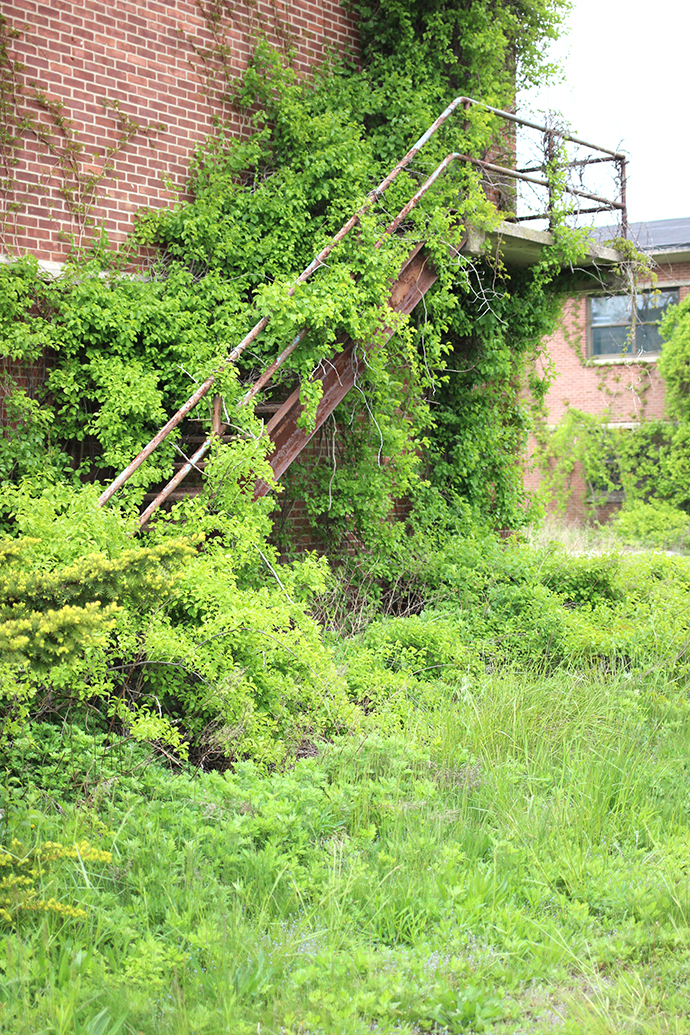
My dude and I recently biked out to Floyd Bennett Field in Brooklyn. I had visited FBF once before, but we were walking and exhausted after exploring Dead Horse Bay, so we didn't get too far. Floyd Bennett was New York City's first municipal airport. Before JFK and third-world-country LaGuardia came into existence, Amelia Earhart and Howard Hughes were using Floyd Bennett's runways to break records.
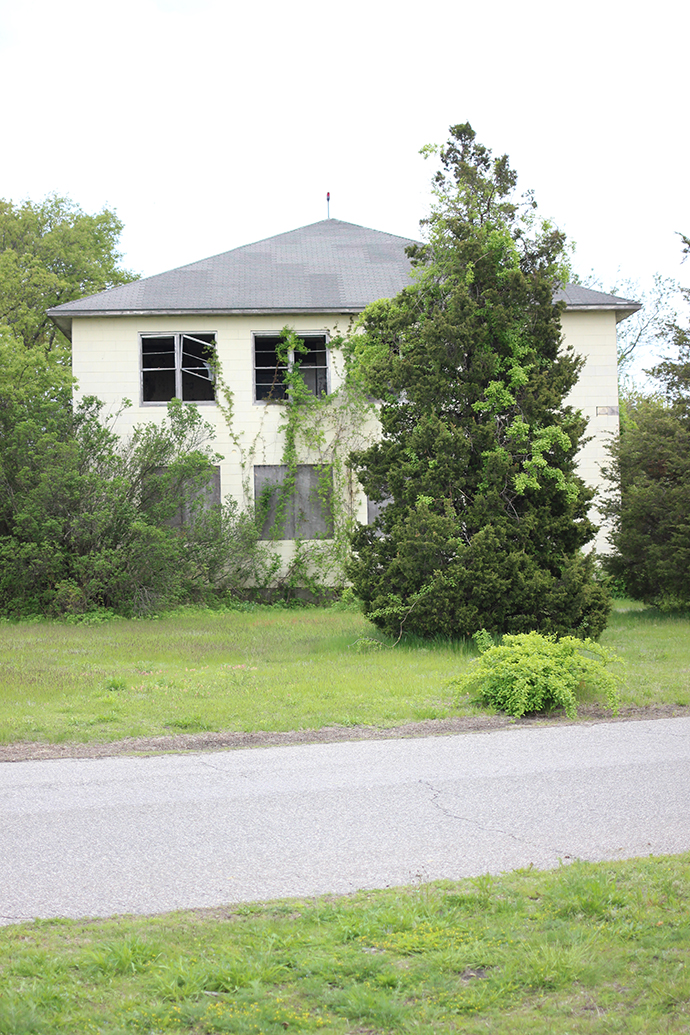
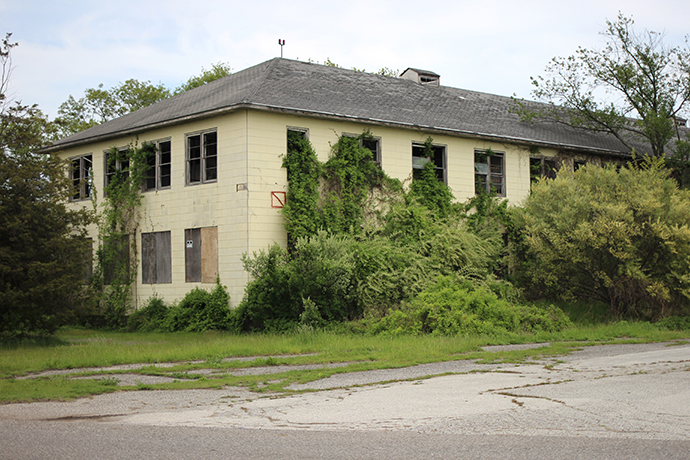

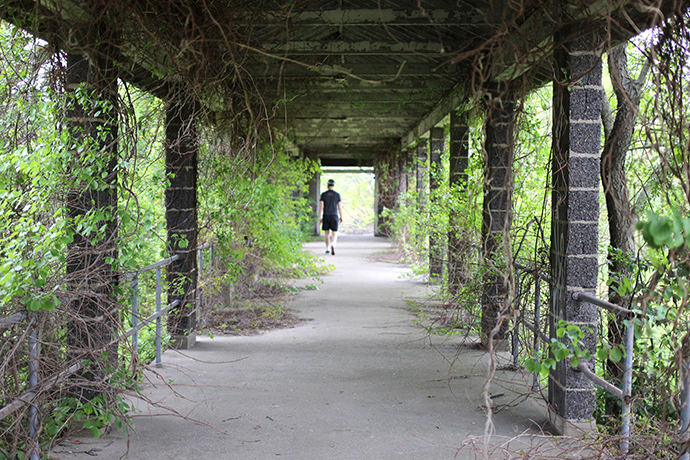
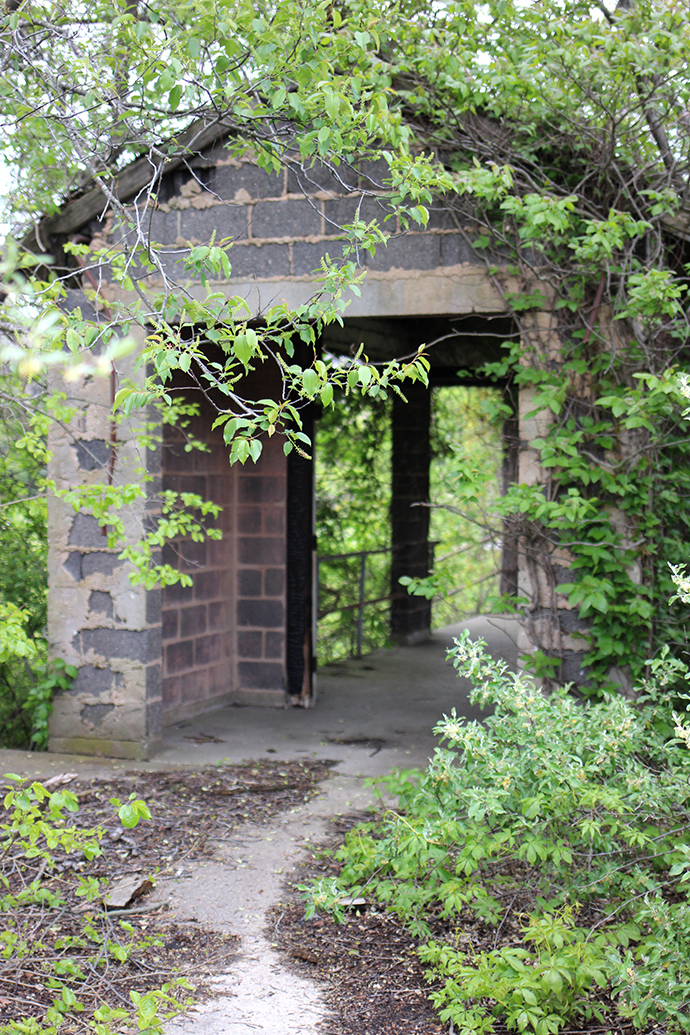

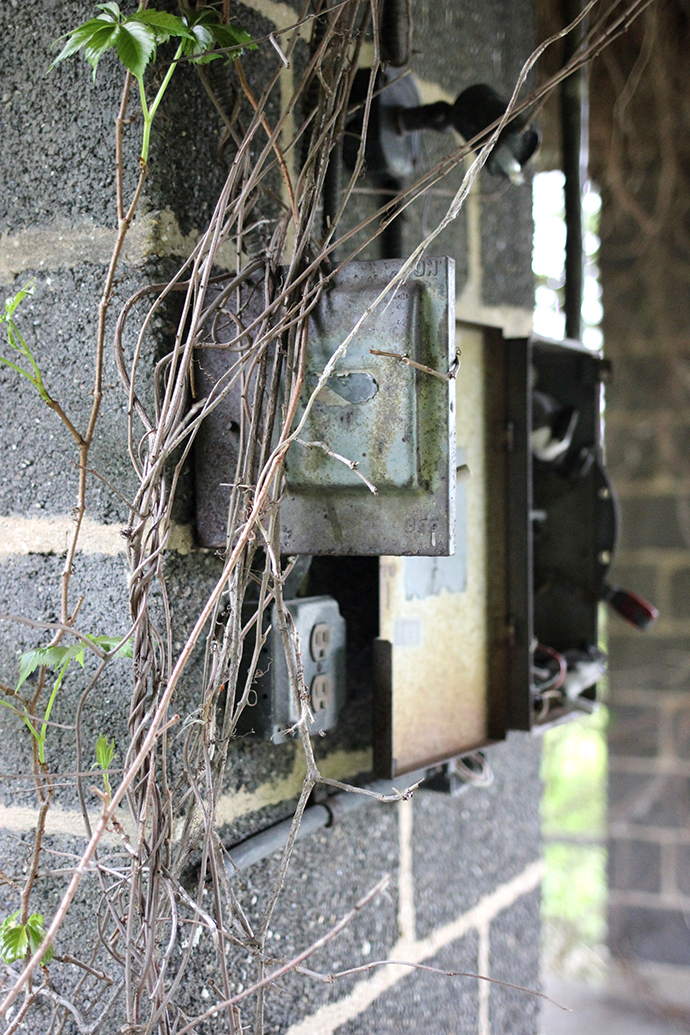
FBF is sprawling, as you'd expect an airport to be, and is much better suited to biking than it is to walking. I was already tired and grumpy from our 12-mile ride by the time we arrived, but nothing gives me life like a good abandoned building—luckily, Floyd Bennett has its fair share of good ones. In addition to its life as a airfield, FBF has been home to the Coast Guard and a naval station—today it's controlled by the National Parks Service, as part of the Gateway National Recreation Area.
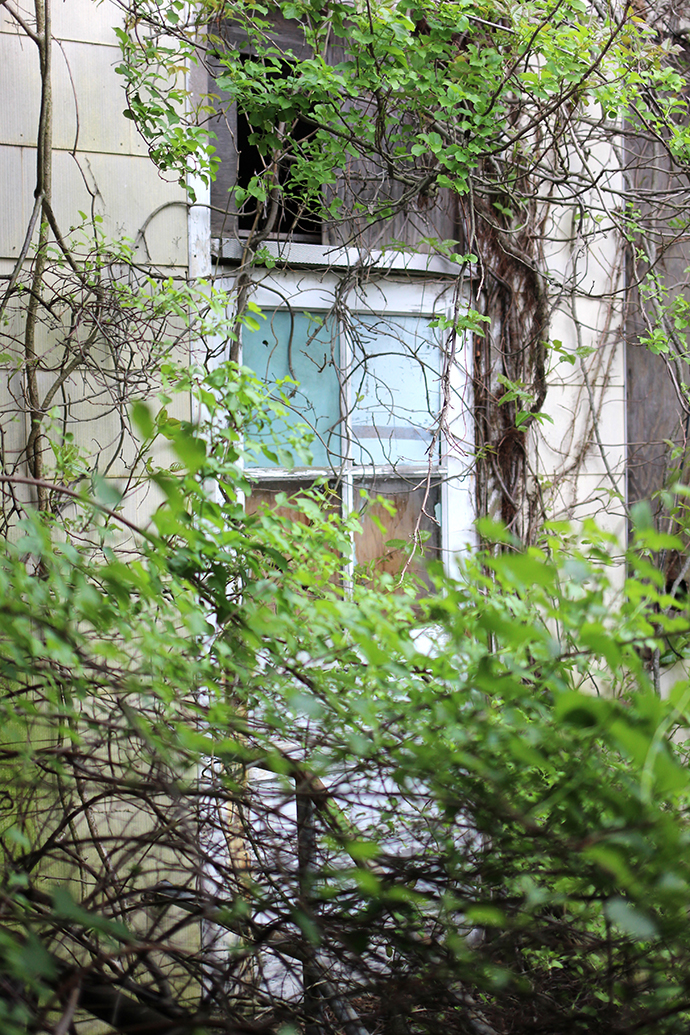


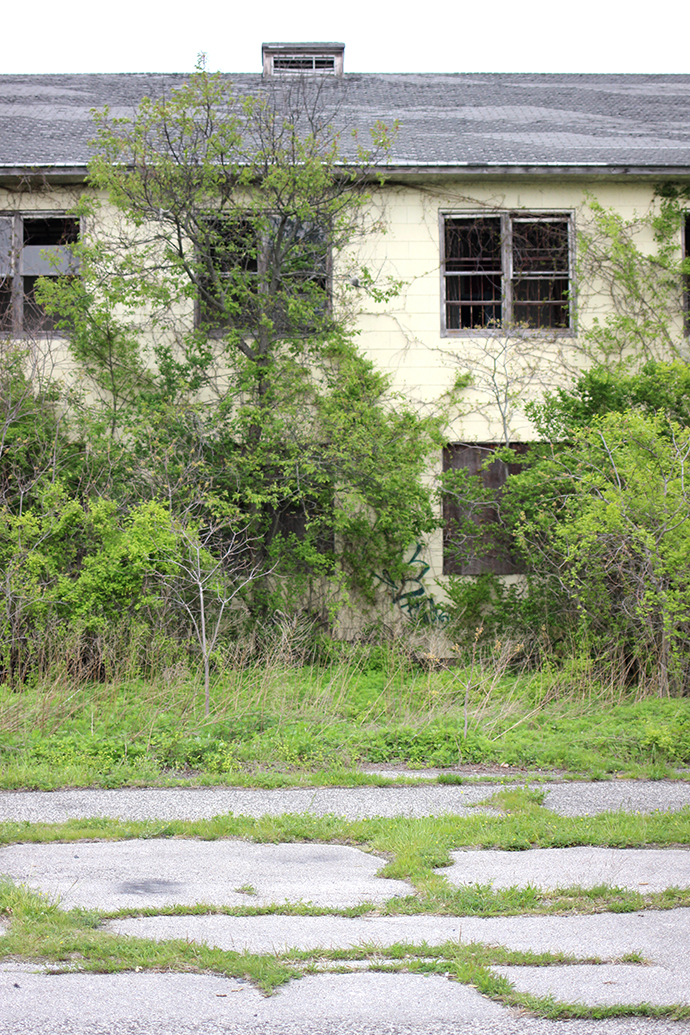
We came across several abandoned buildings as we rode further into the complex, but I only had the energy to really creep on a few. We didn't go inside of any, and some looked structurally unsafe, but just seeing all of these crumbling structures being overtaken by crawling vines and trees was a thrill. The fact that we couldn't exactly figure out what the buildings had been used for—military dorm housing maybe?—only added to the mystery.

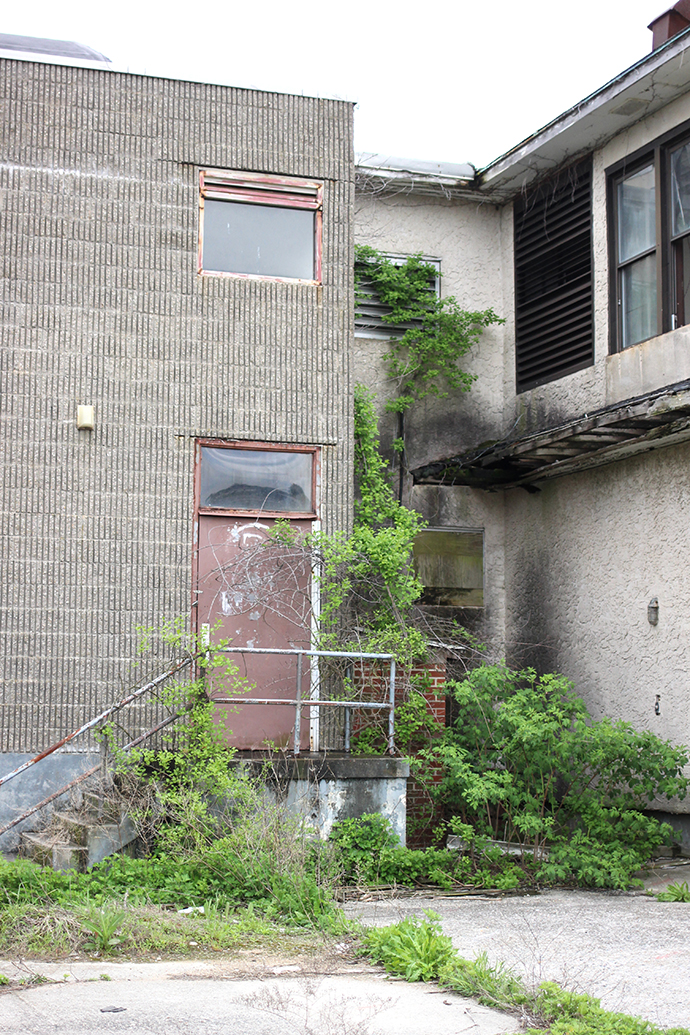
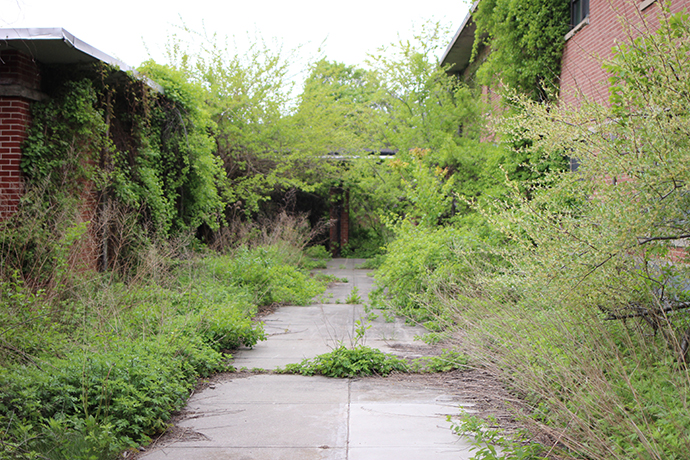
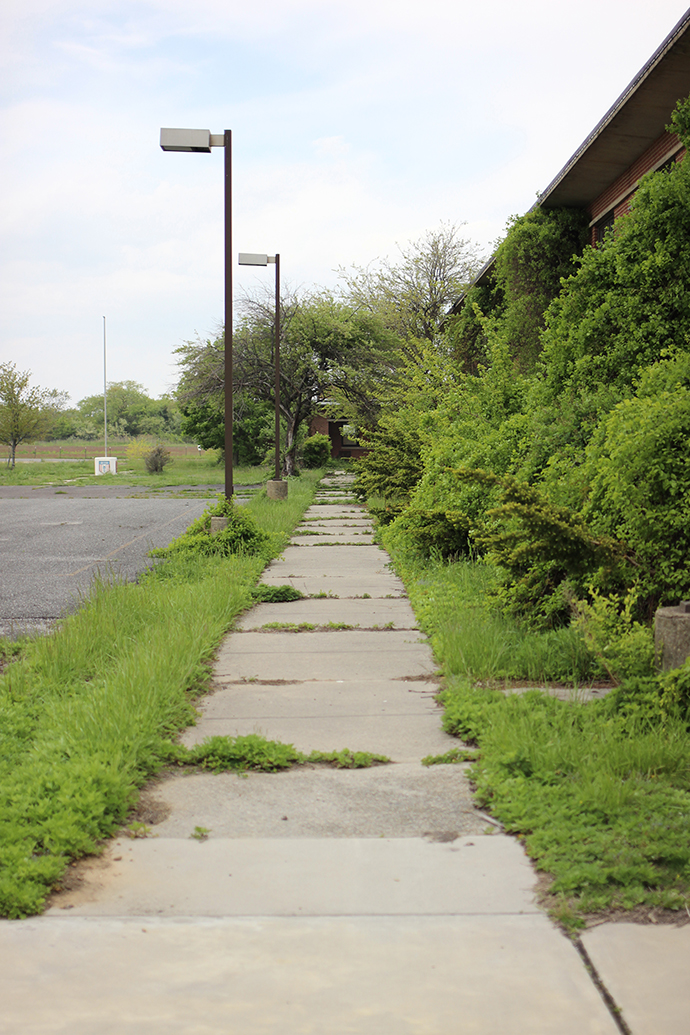

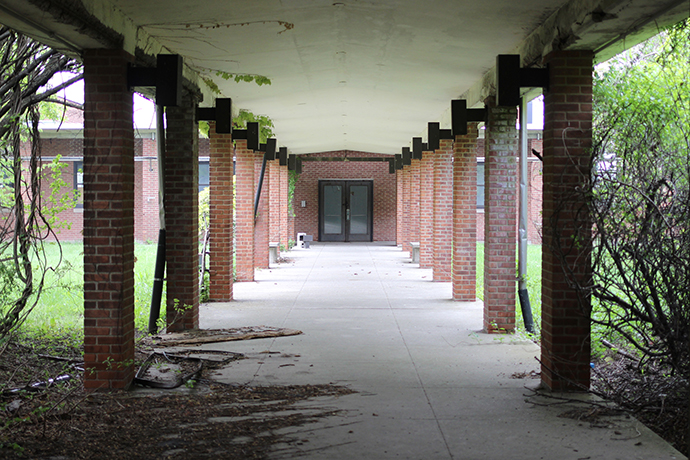

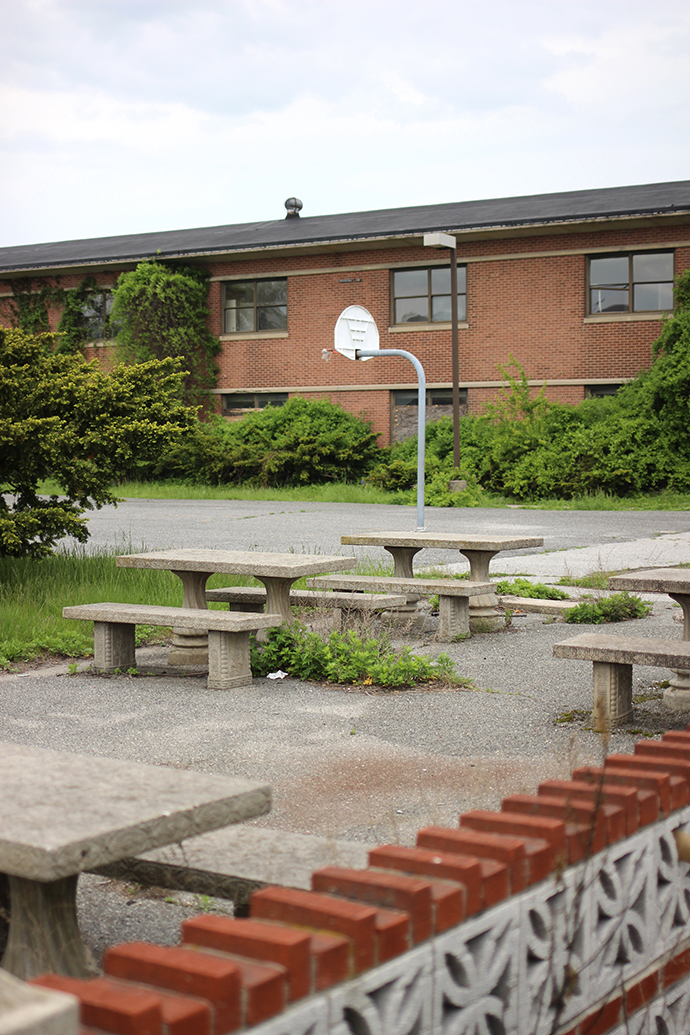
One of the complexes included a picnic area and basketball courts, which made it seem as if we'd wandered into a post-apocalyptic neighborhood where all the inhabitants have suddenly and mysteriously disappeared. Sidewalks were cracked, windows were shattered, doors boarded up, stairs led to nowhere and it was hard to believe that we were still in present-day Brooklyn.

Bayside Cemetery

I came across Bayside Cemetery recently in some corner of the Internet, where it was mentioned that the Queens cemetery had fallen into disrepair to the point where people were complaining about exposed human remains. This information was somewhat outdated, and the cemetery has since been cleaned up a bit, but I still thought it was worth visiting so my friend Tag and I went to check it out recently on a partly gloomy Sunday morning.

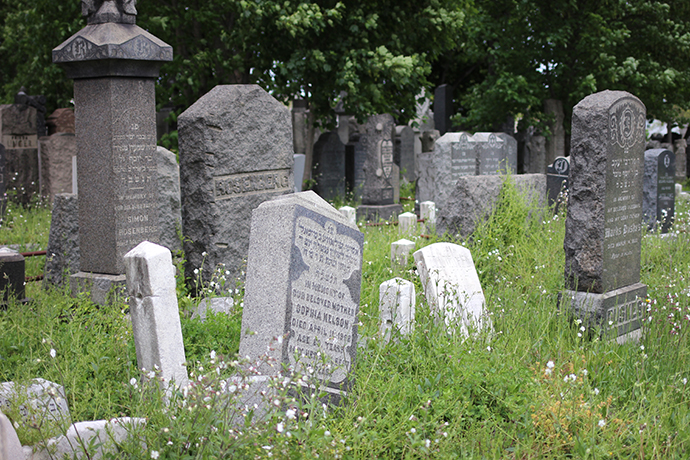
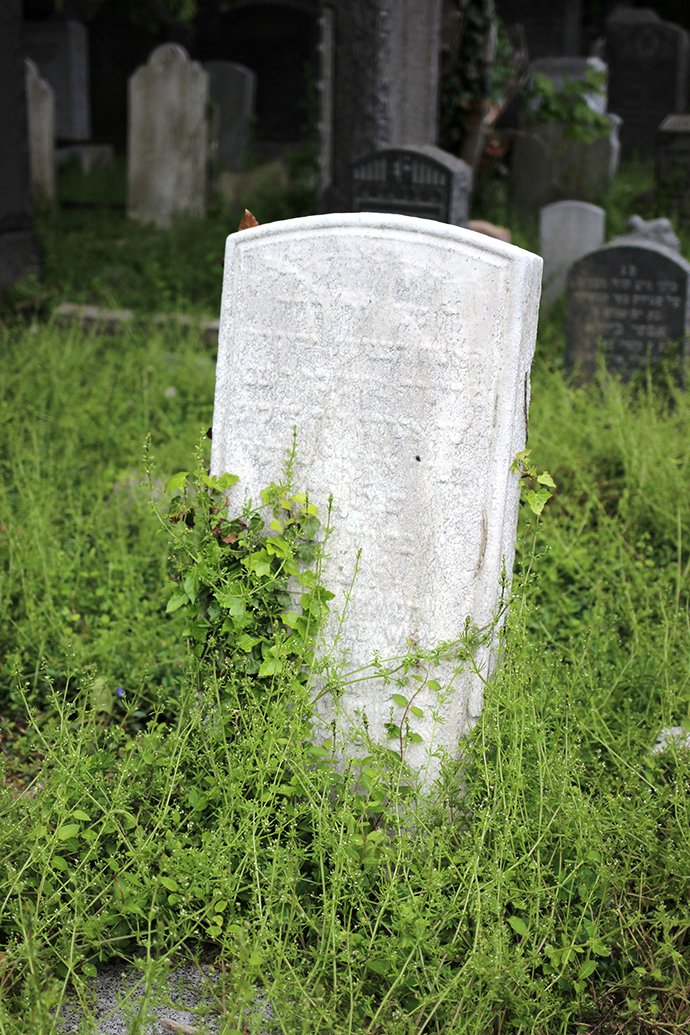
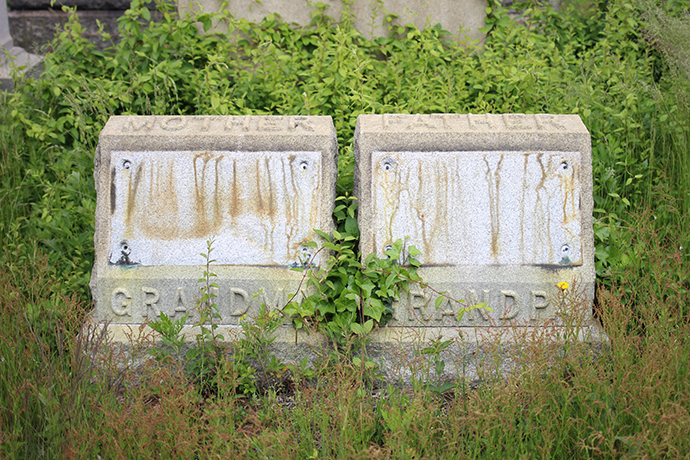
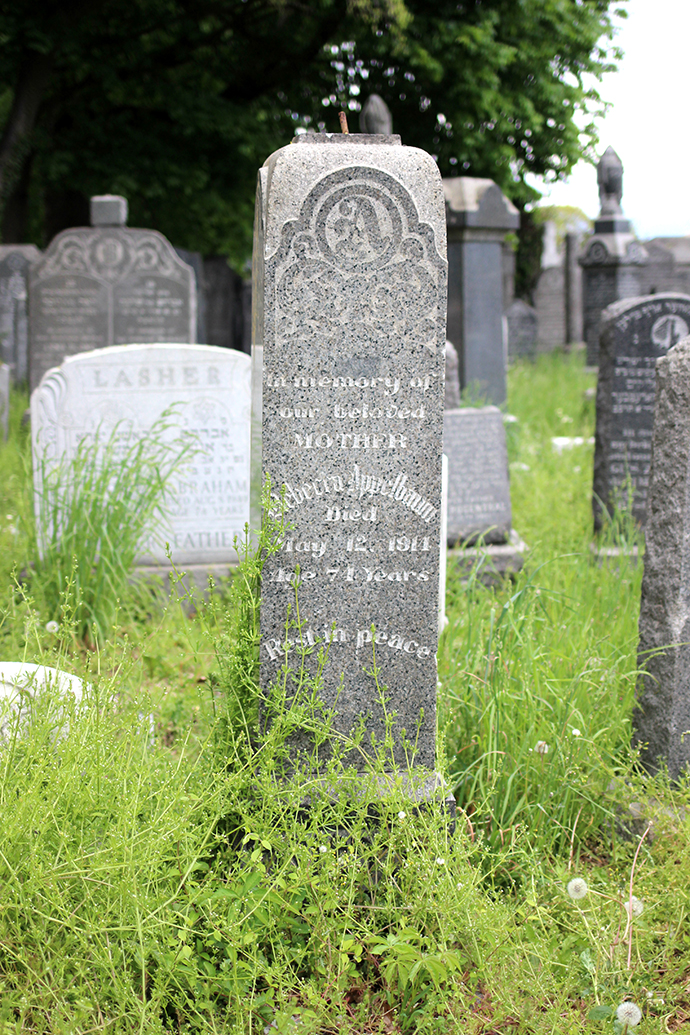
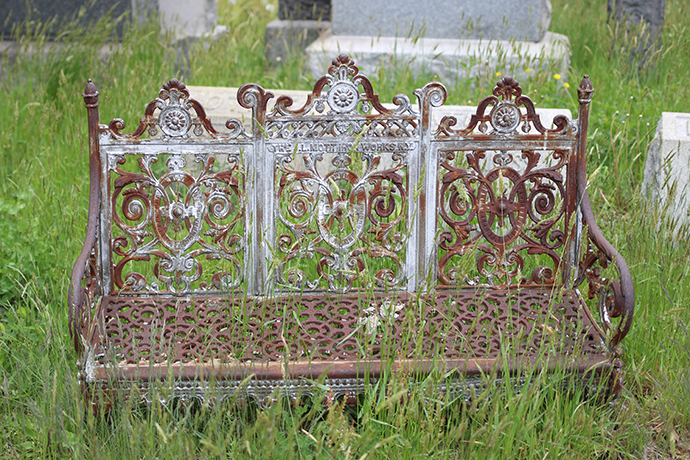
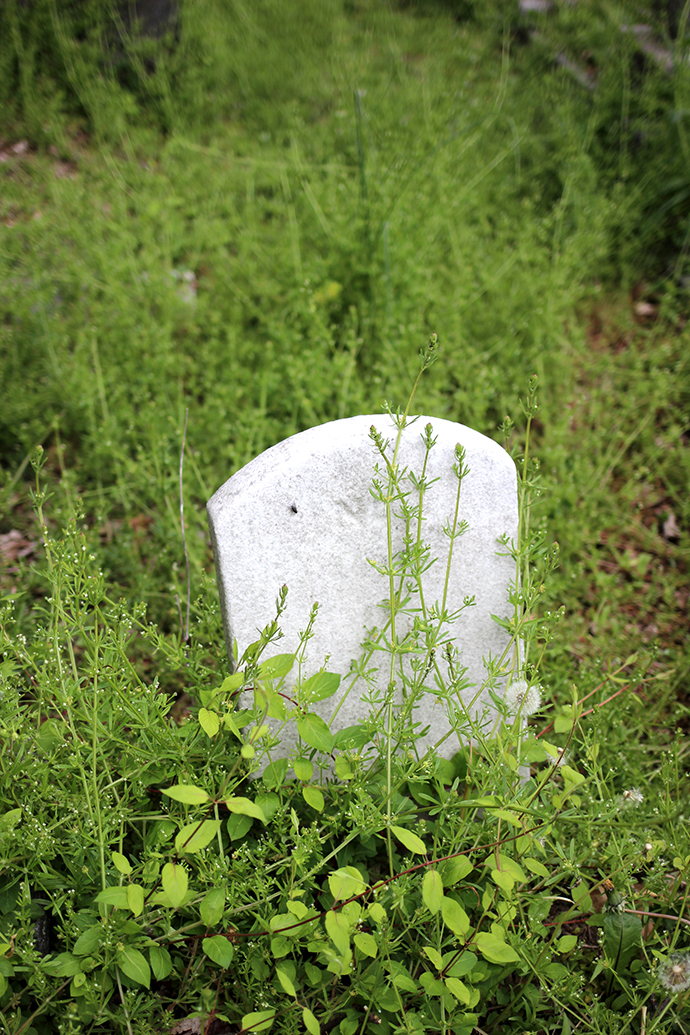

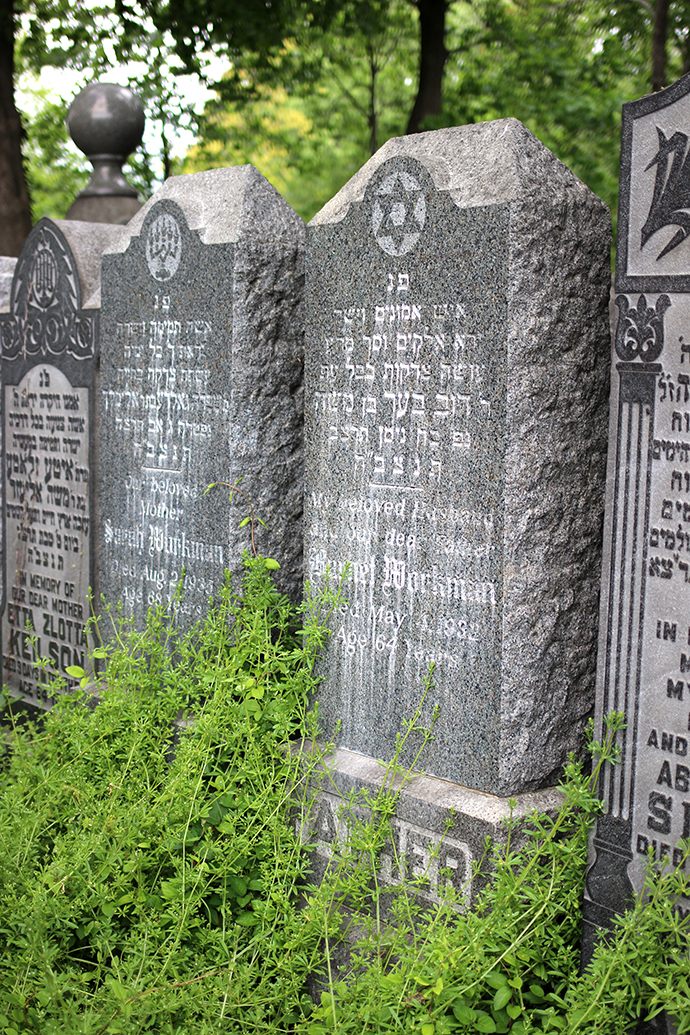
Abandoned (or abandoned-ish) cemeteries are touchy things—on the one hand, I love anything creepy, crumbling and overgrown, but on the other hand I can understand why family members would be upset to see the final resting places of their loved ones fall into disrepair. I think everyone deserves a dignified end (and eternal resting place, if that's your thing), but I haven't come across many cemeteries that aren't very well tended to, so the minute we stepped into Bayside it felt special.
Bayside—along with neighboring Acacia and Mokom Sholom cemeteries—was founded in Queens in 1865, and is one of the oldest still-active Jewish cemeteries in the city. Cemetery residents include multiple Civil War veterans and one victim from the Titanic. Most of the graves are quite old, but we did eventually find some from the 90s and 2000s.
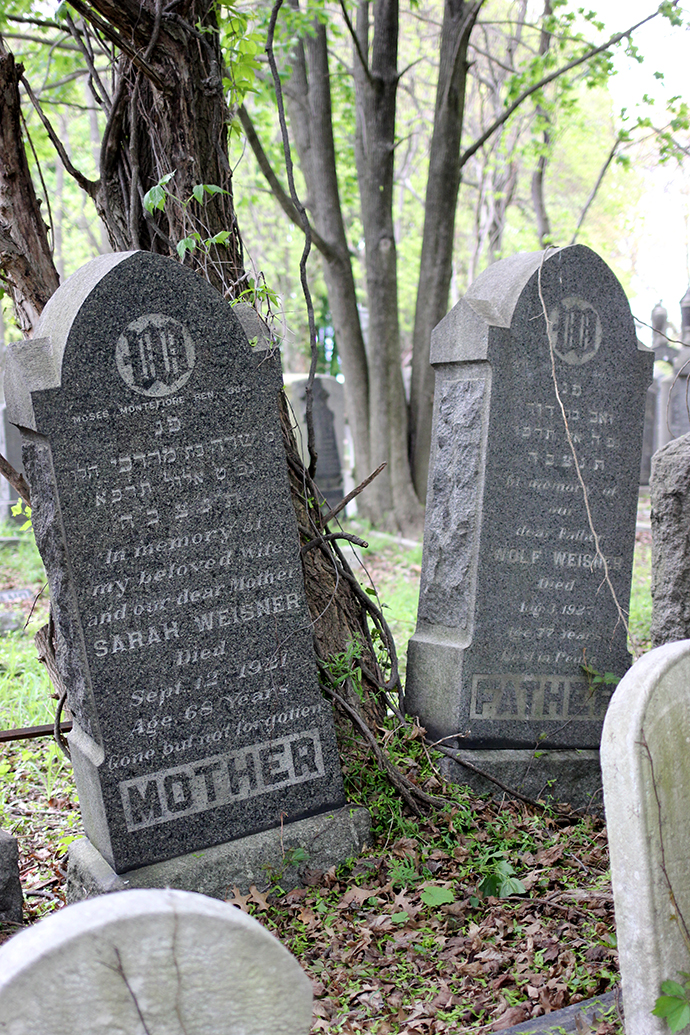
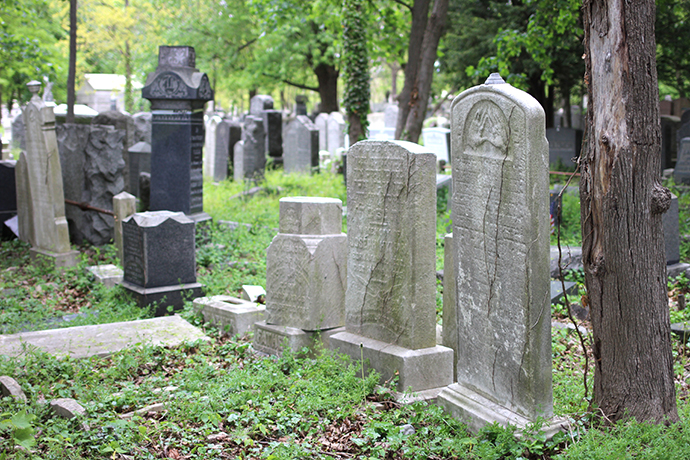
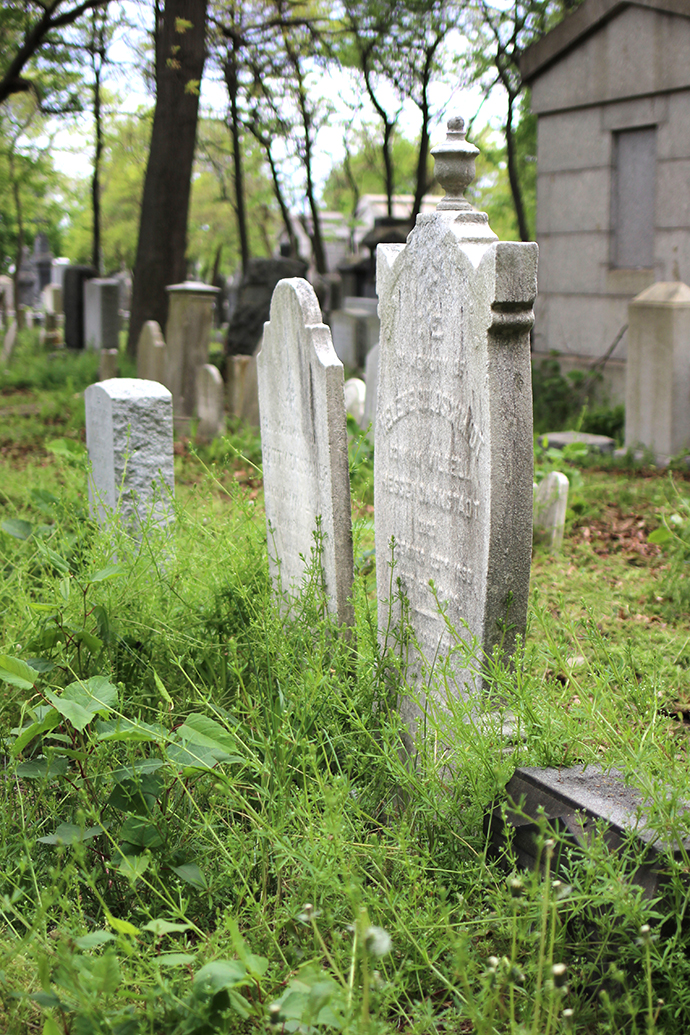


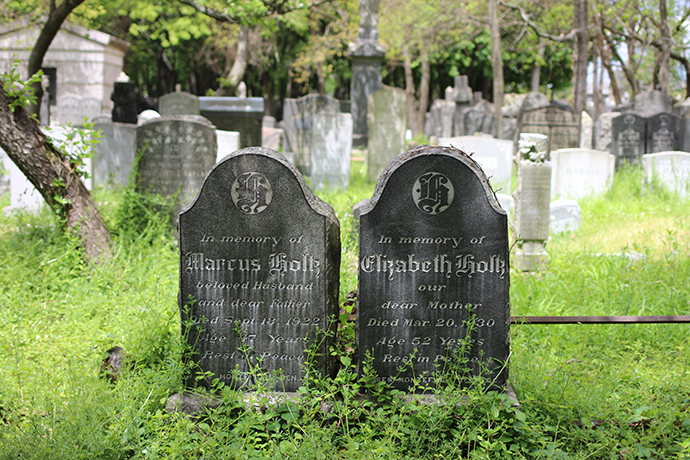
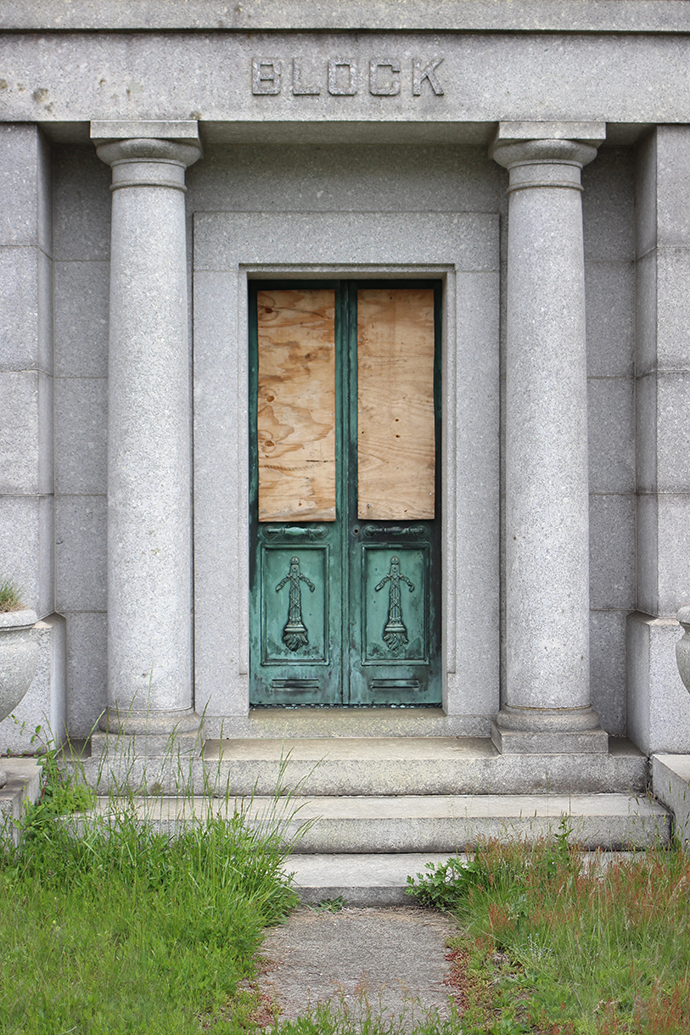
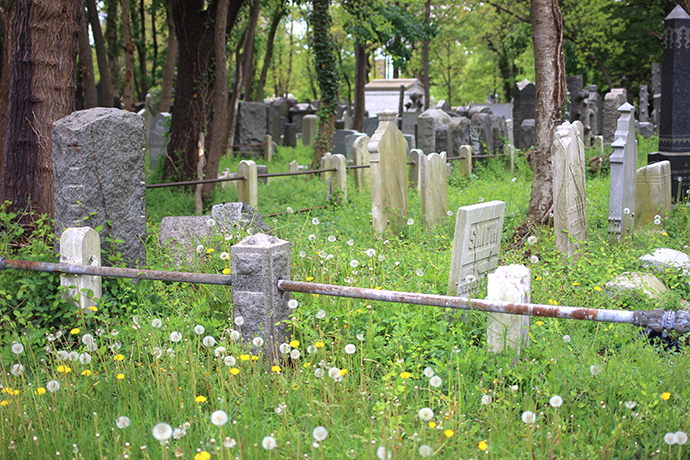
Some areas of the cemetery were more tended to than others, and I can see how it probably used to be a lot worse. A lot of the mausoleums were boarded, bricked or cemented shut, while some had doors that swung open freely. We didn't come across any graffiti or noticeable vandalism, but a lot of stones had fallen off their pedestals or had been broken by trees and covered with leaves, fallen branches and ivy. The main office was boarded up and obviously hadn't been in use for a while, but we did see two men tending to the grounds as we were leaving, and the gate was open for visitors.
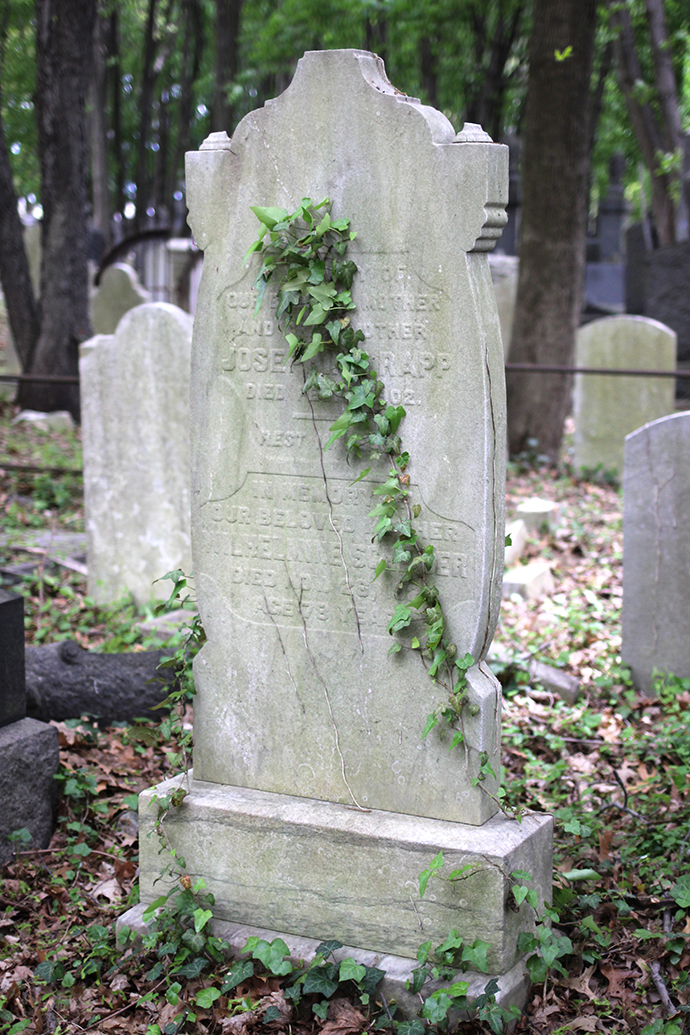

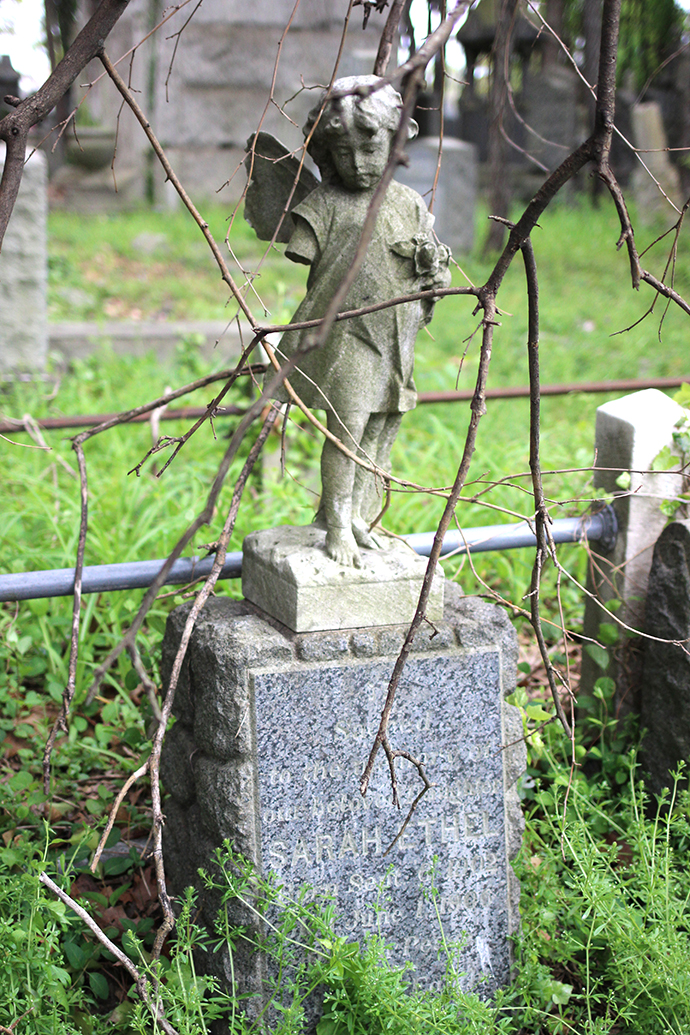
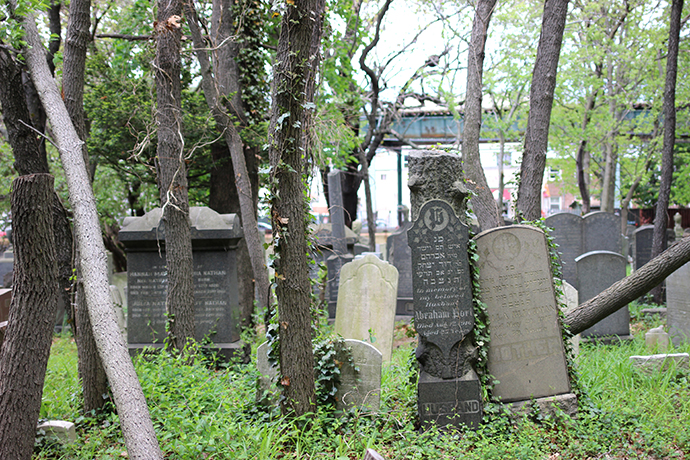
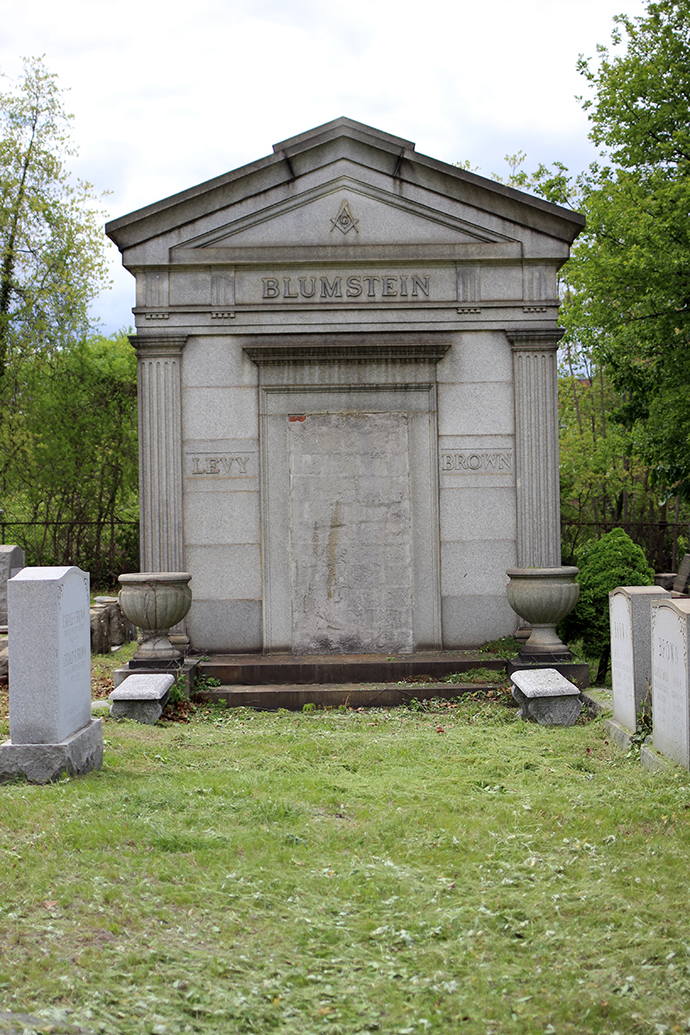


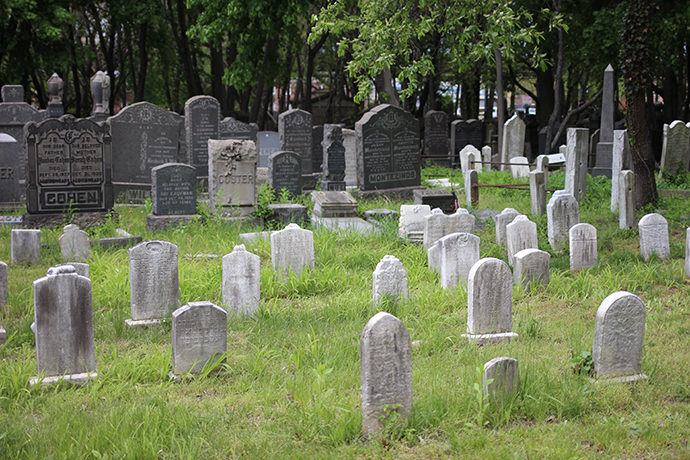
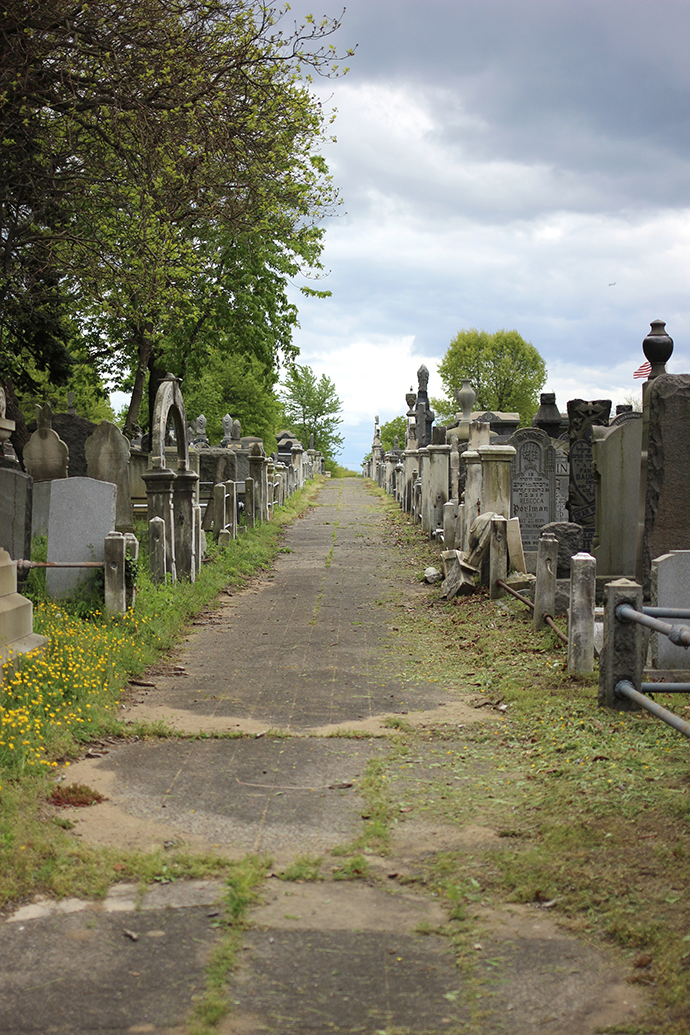

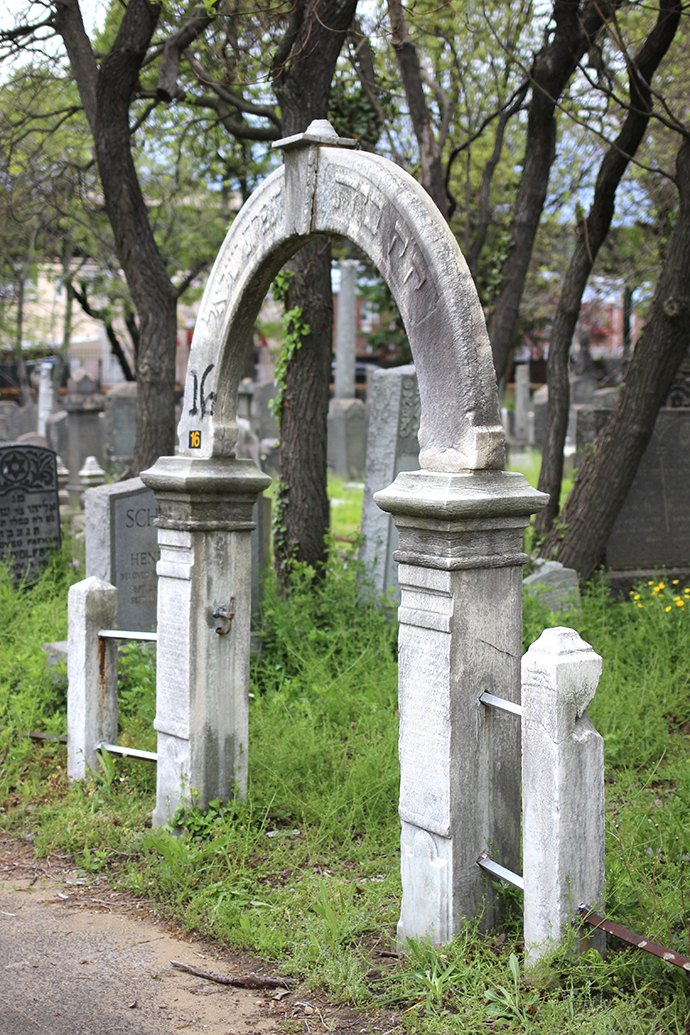
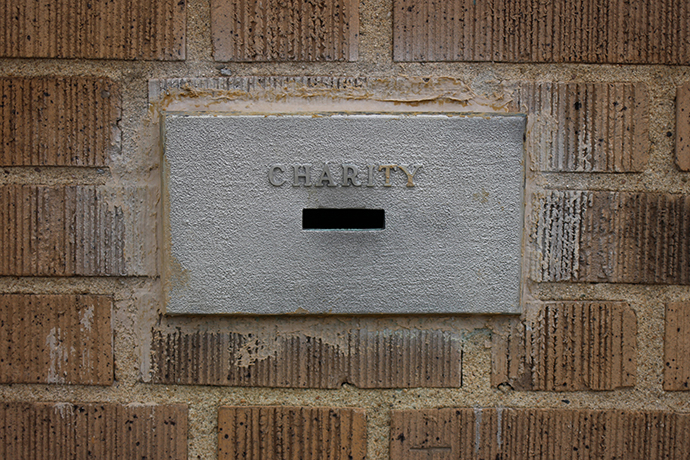

I lost count of how many times I exclaimed how much I loved Bayside during our time walking through the overgrown weeds, and I wouldn't hesitate to declare it one of my very favorite places in the city. I bet it's incredible in the snow or in the fall and I already started dreaming about my return before we had even left.

Abandoned Rockaway Beach Branch
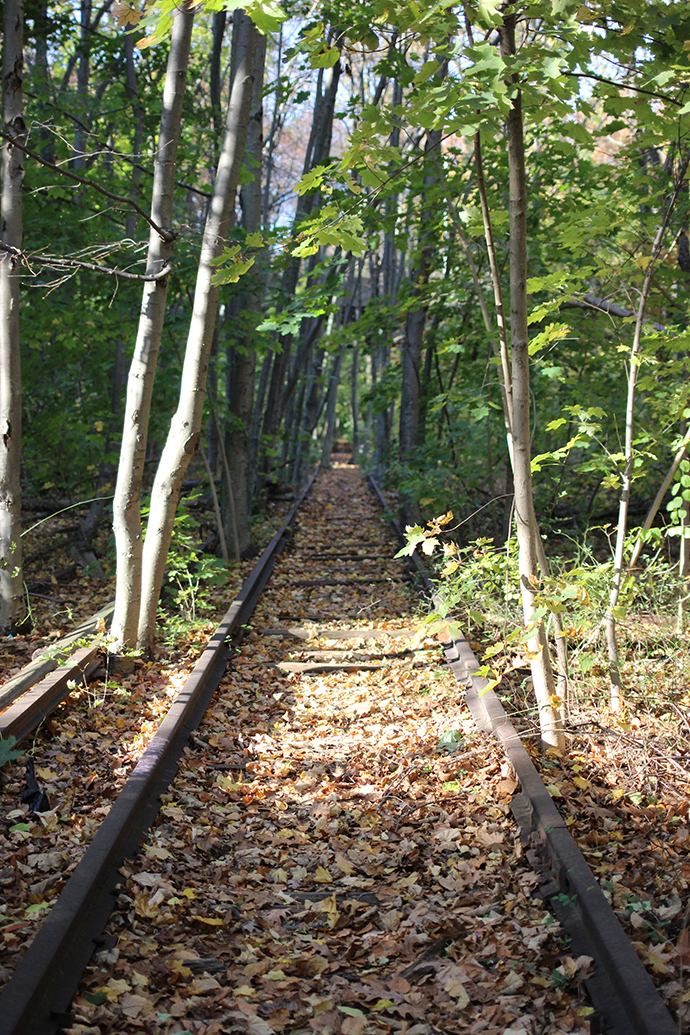
On Sunday my dude and I made the trek out to Queens to take advantage of the beautiful weather and hike through Forest Park. Neither of us had been through the park before, but I had heard that it was a great place to see the fall leaves. The leaves are definitely past their peak—one that wasn't great this year anyway—but we had an excellent day and the park did not disappoint.
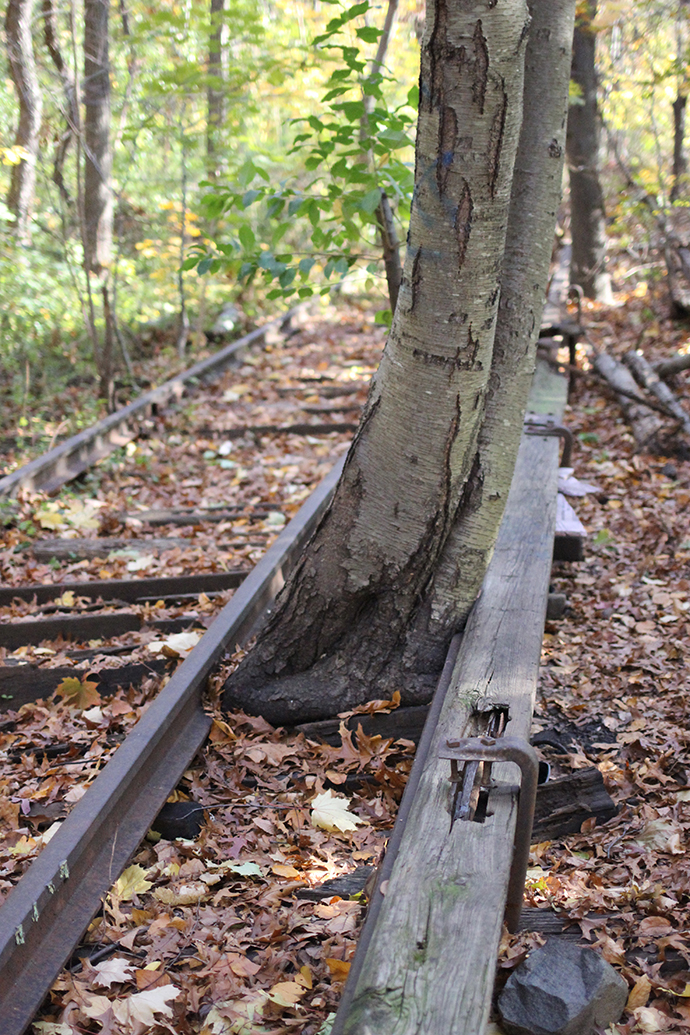
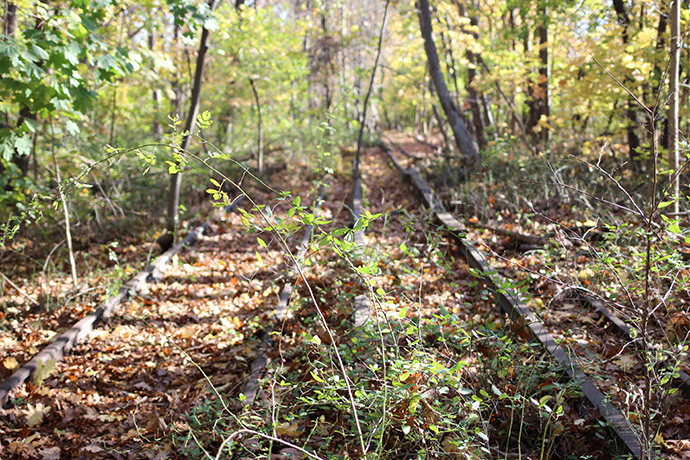
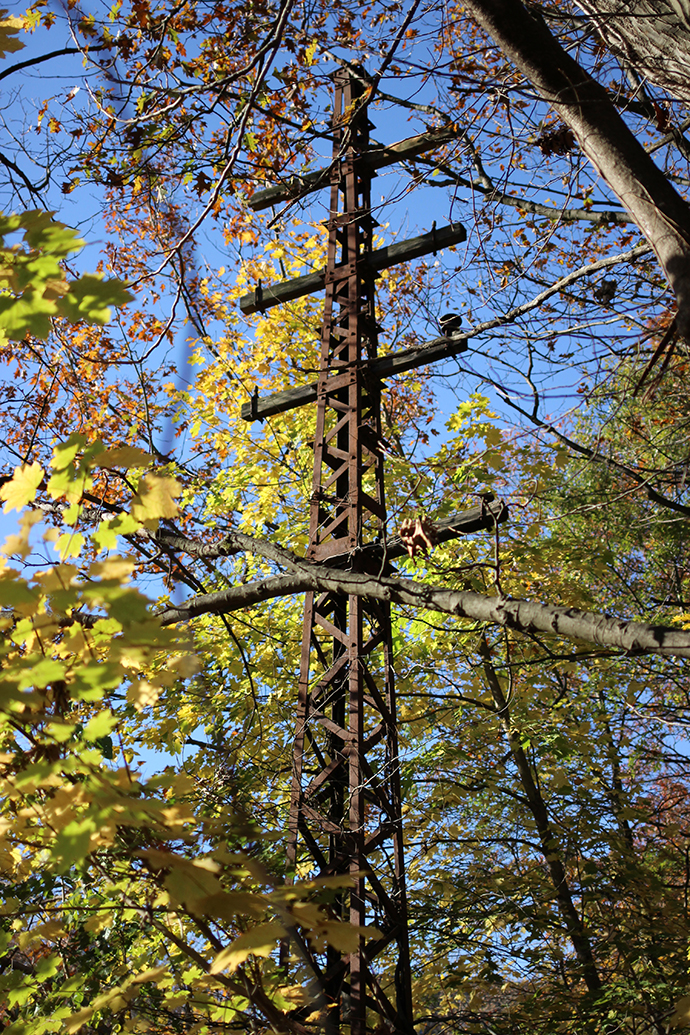
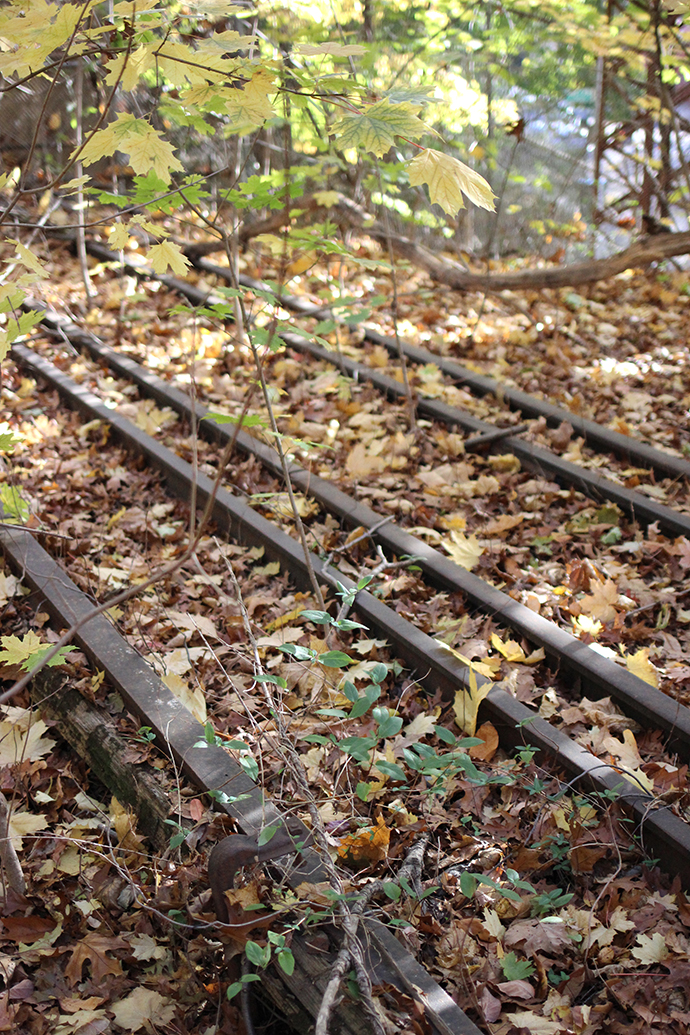
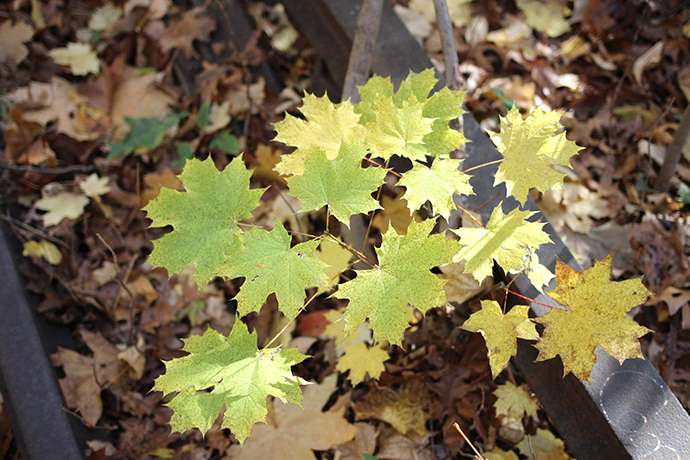
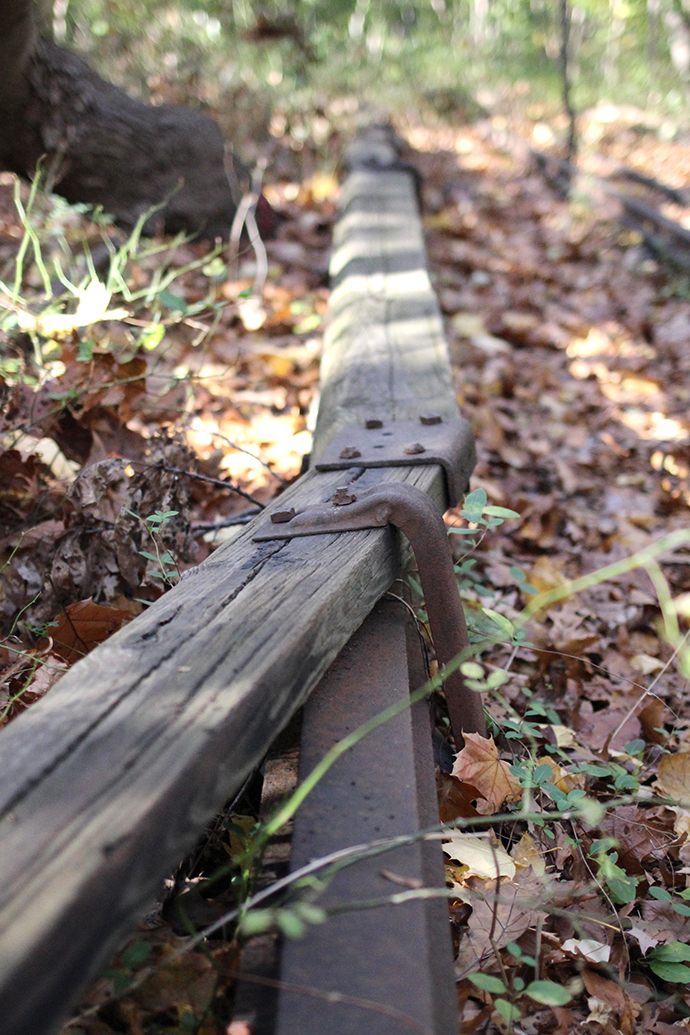
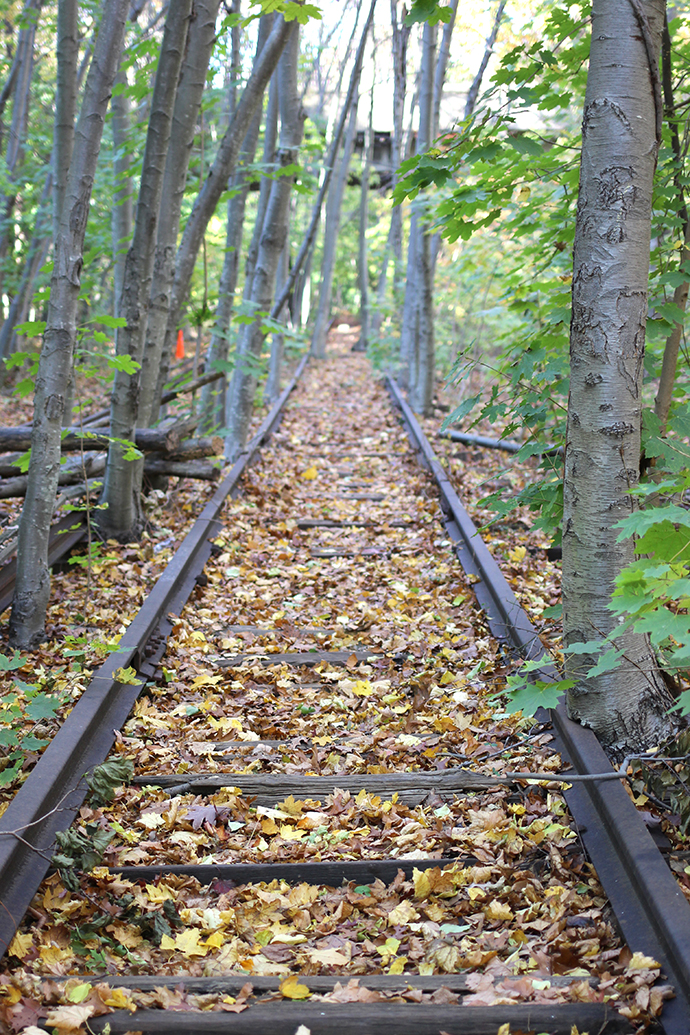
Almost immediately upon entering the park we quite unexpectedly stumbled upon abandoned tracks running through the woods, and I was beside myself with joy. I thought they were subway tracks due to the configuration (they have a covered third rail), but they belonged to the Rockaway Beach Branch of the Long Island Railroad, and were abandoned when the LIRR went bankrupt in 1962.
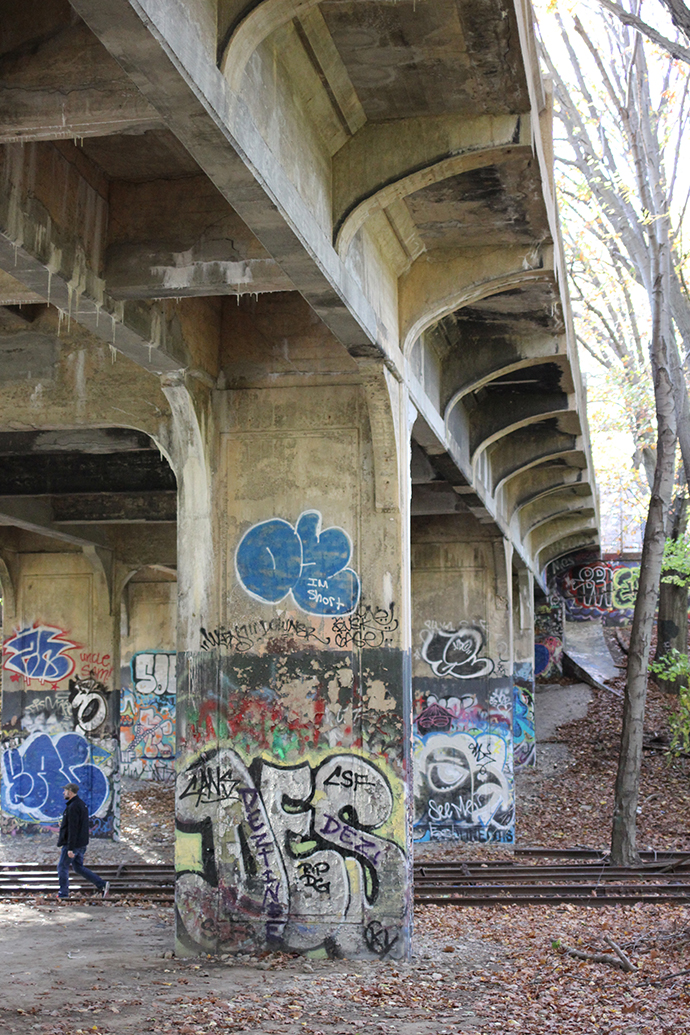
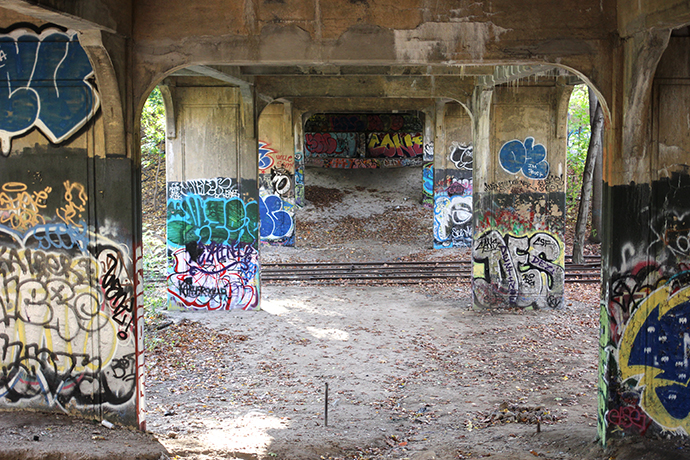
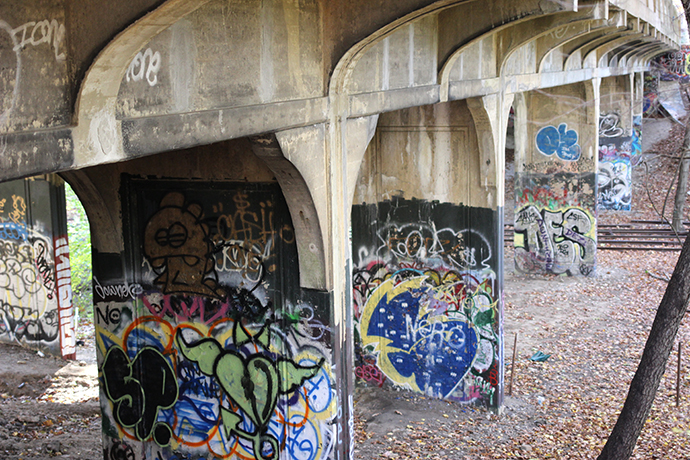
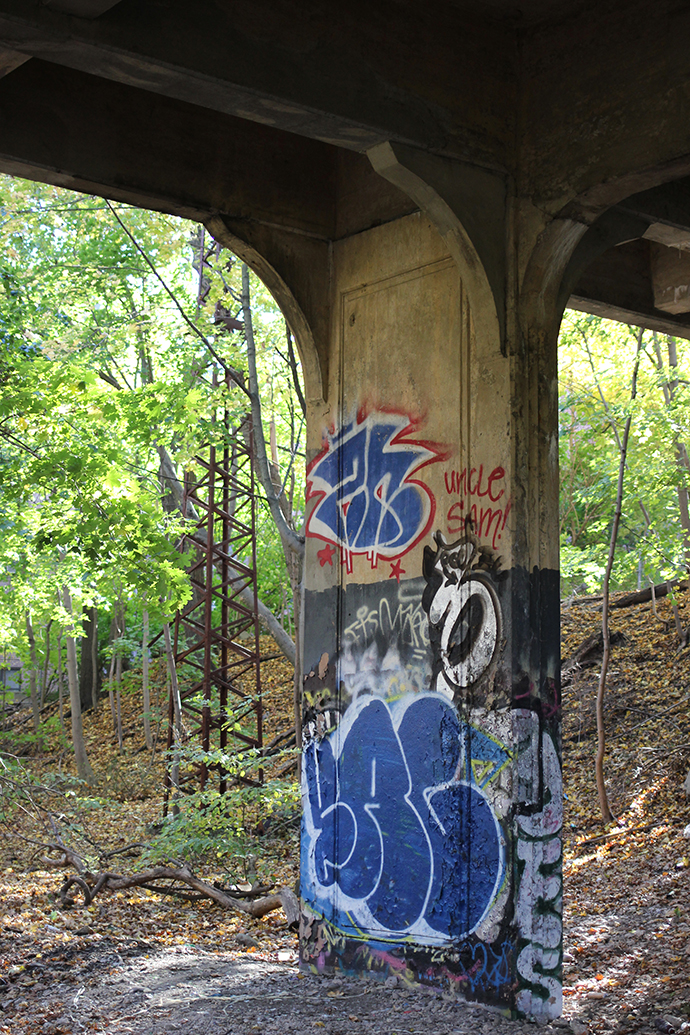
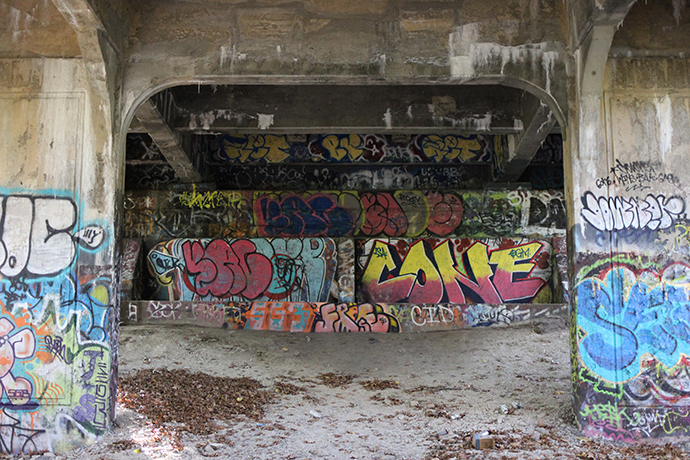
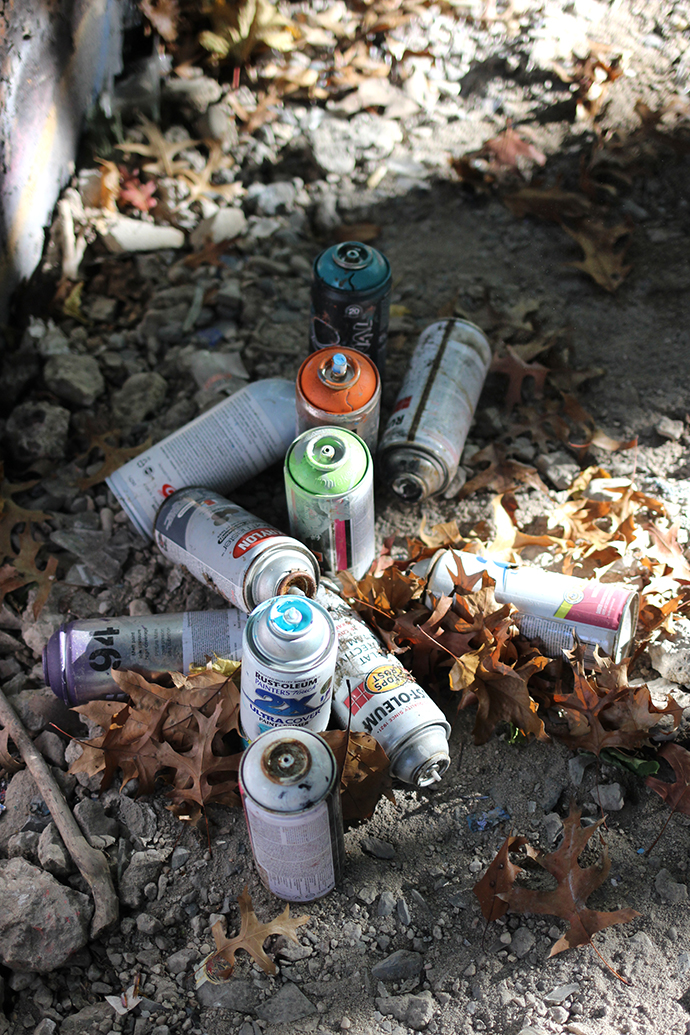
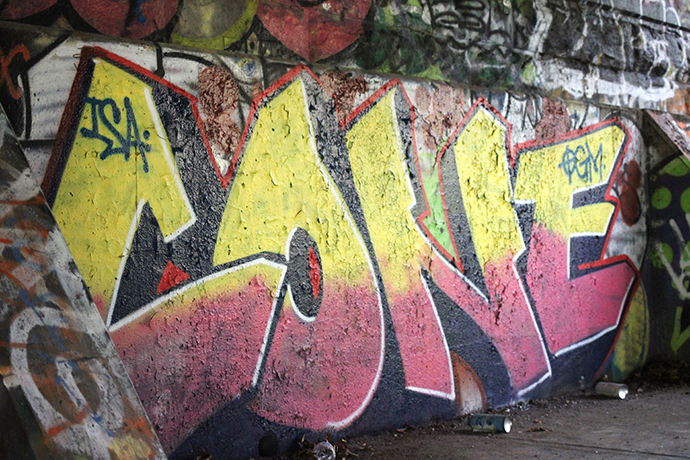
The tracks are visible from a main park trail, and accessible by climbing down a slight embankment. We climbed down near an overpass that is covered in colorful graffiti and the ground was littered with spray paint cans. It didn't necessarily feel as if we shouldn't be walking around the tracks, but we did eventually come to the edge of the park and were stopped by a fence and some gnarly-looking razor wire.
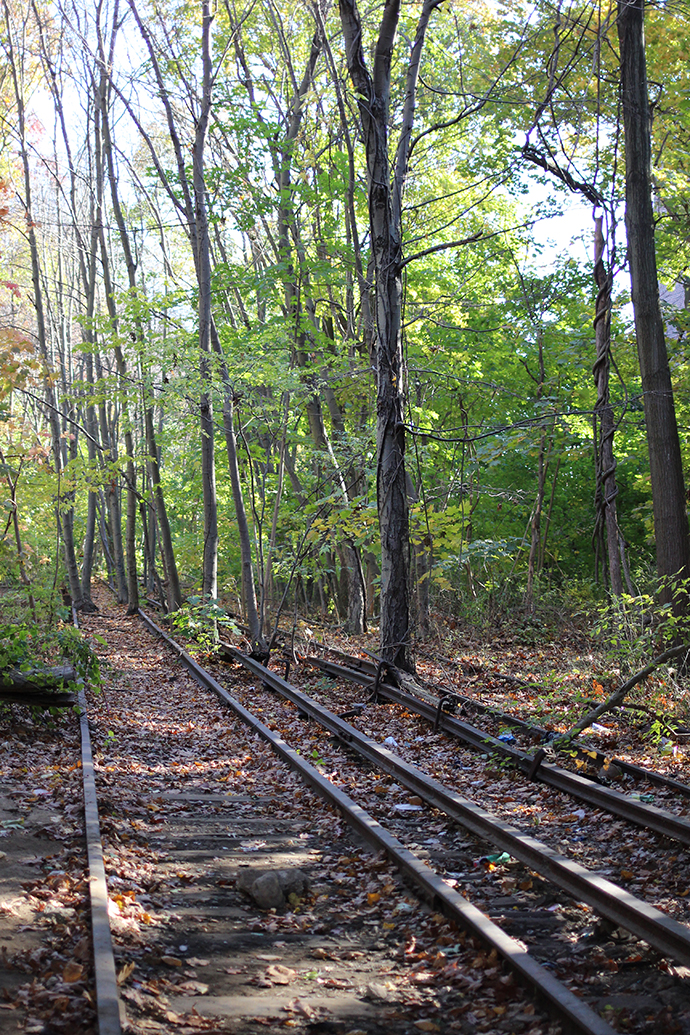
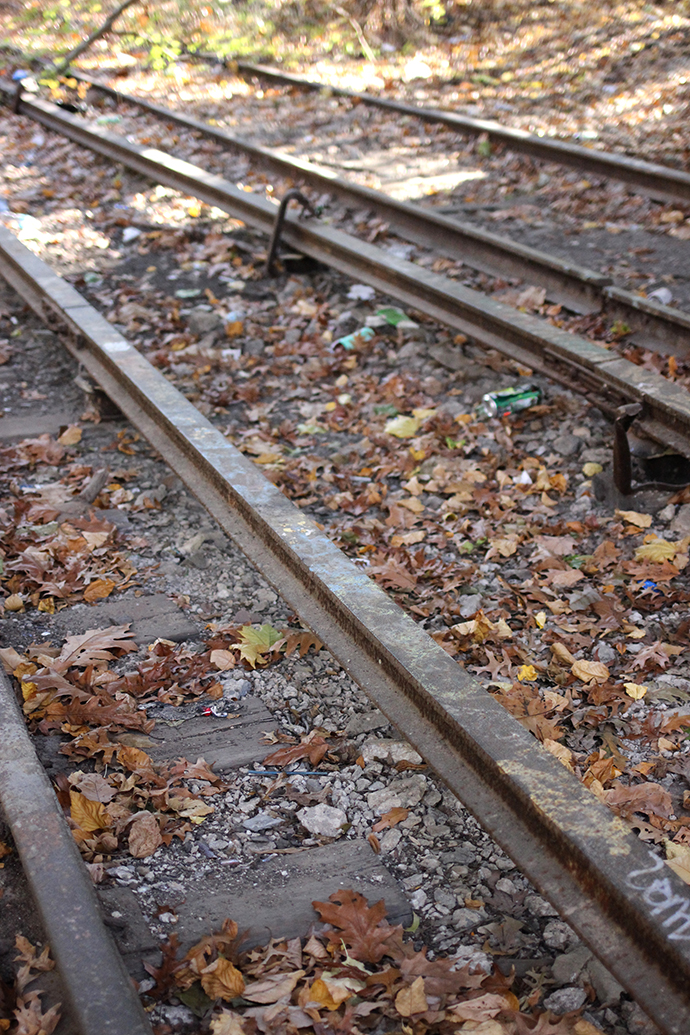
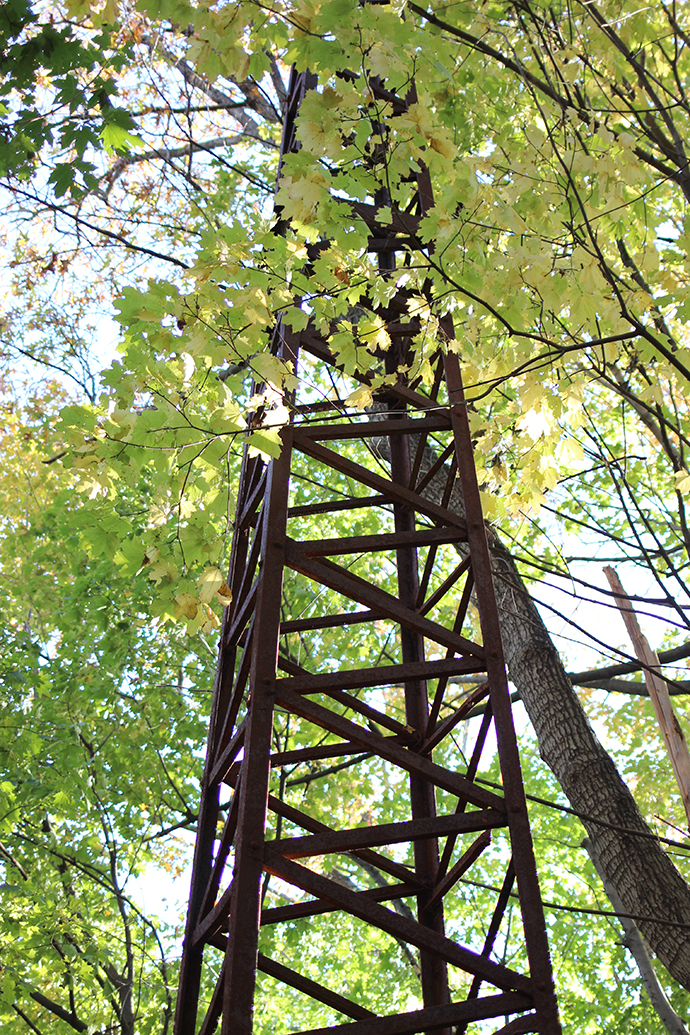
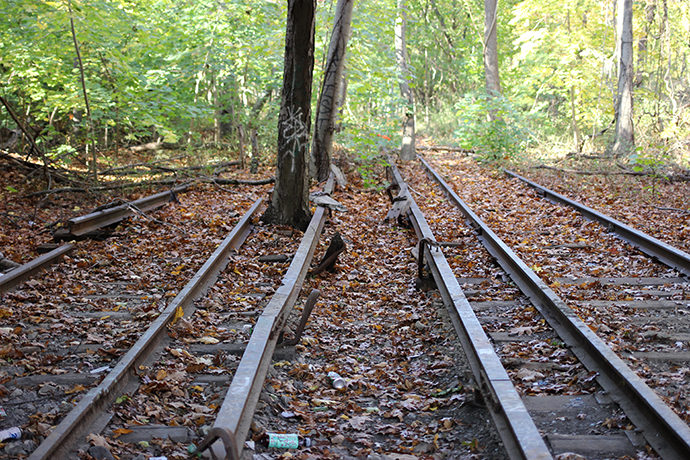
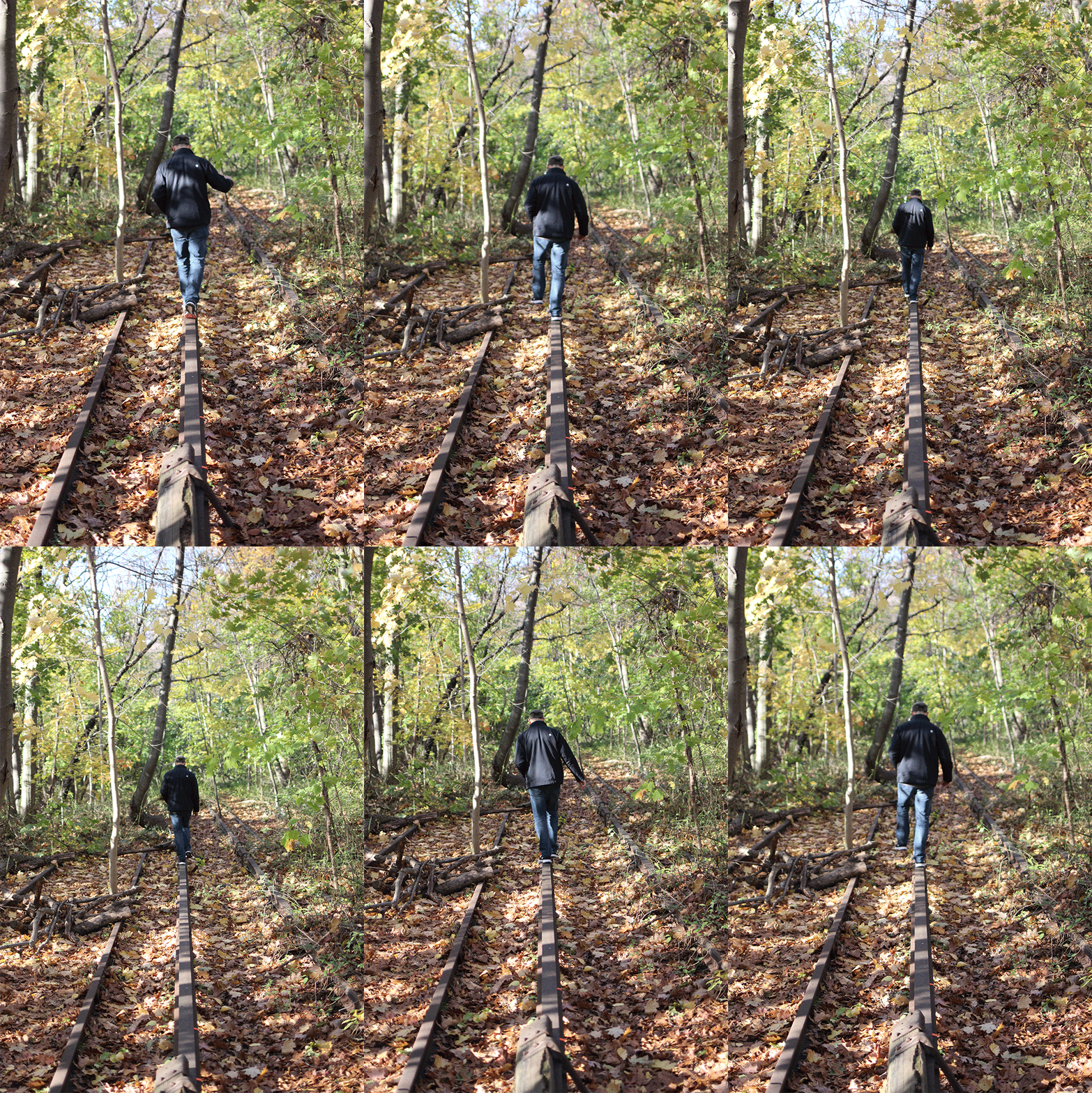
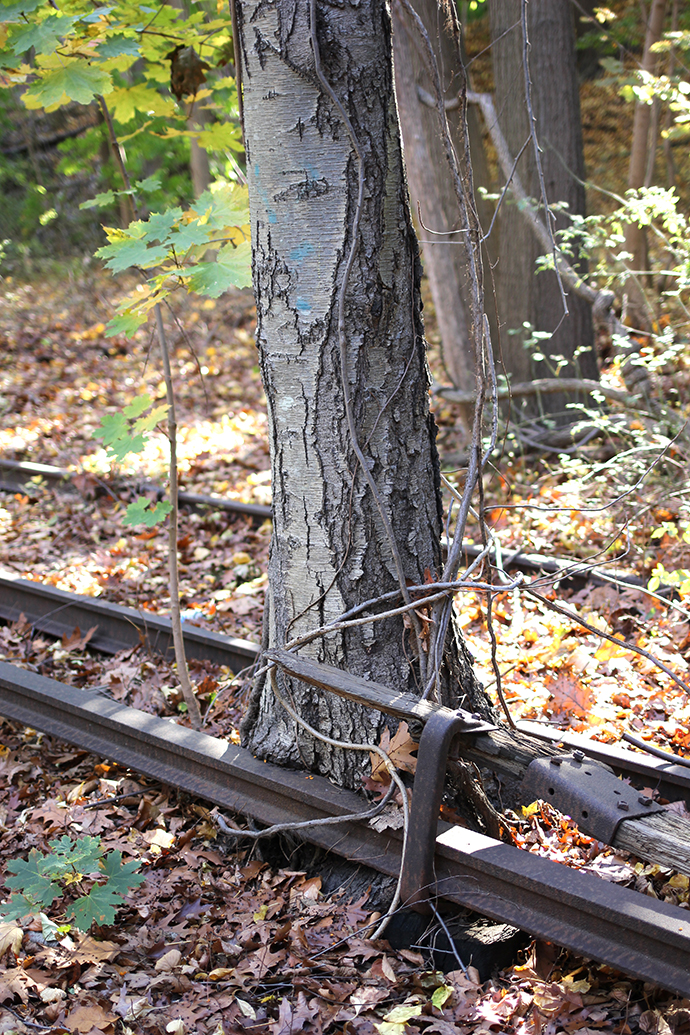
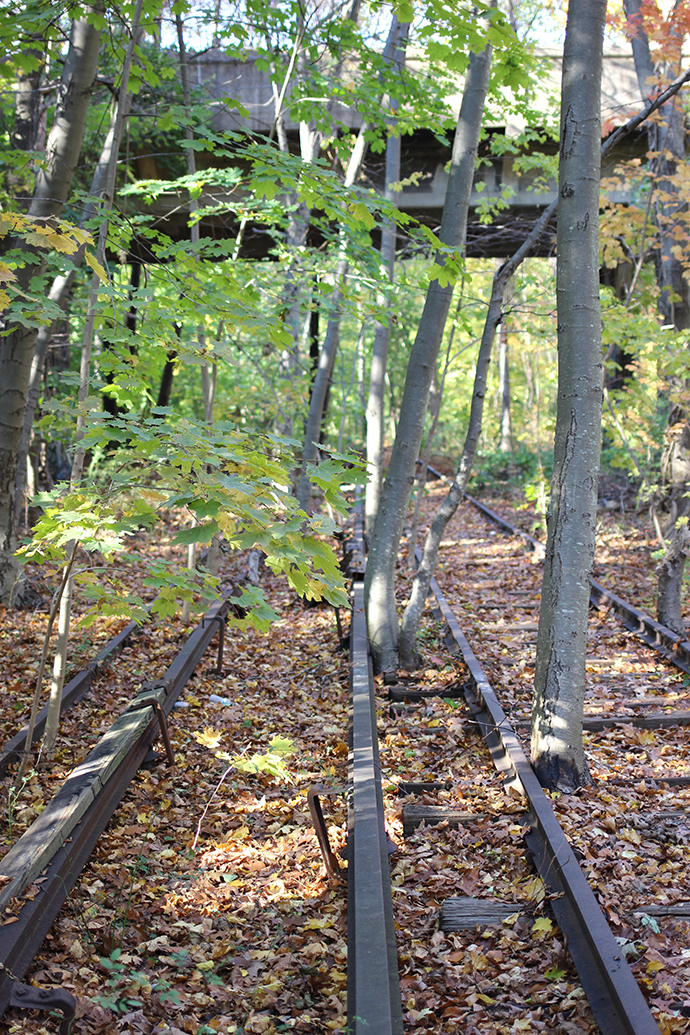
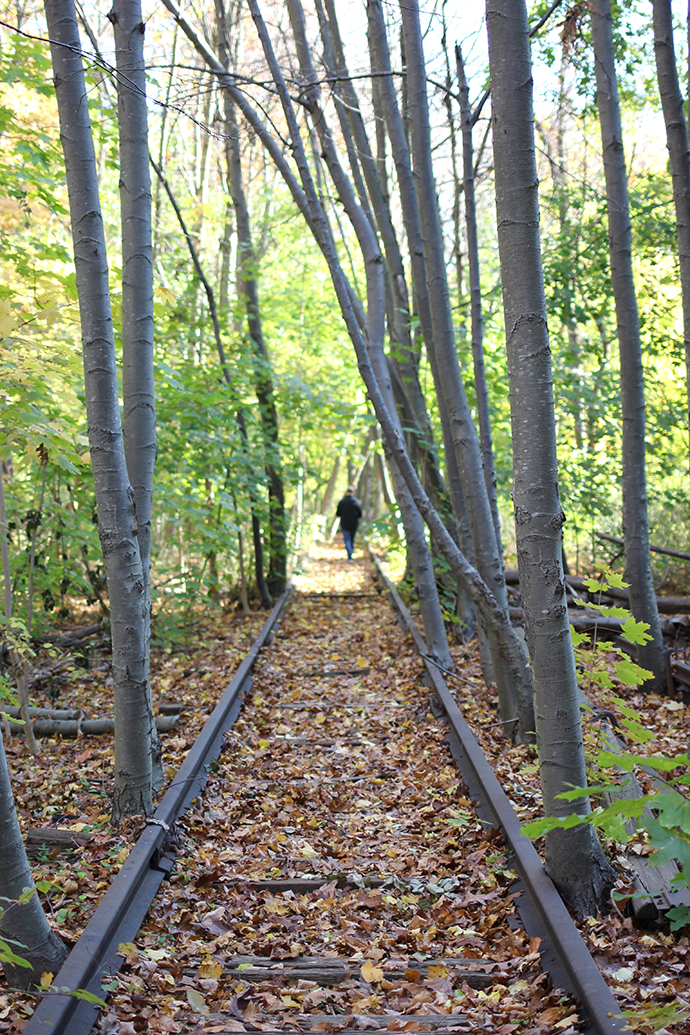
The tracks actually look to be in pretty good shape for being exposed to the elements for more than 50 years. Some stretches seem as if a train could pass by any moment until you realize that there are very large trees sprouting up from in between the rails. Apparently there have been plans to turn this abandoned line into a park à la the High Line, which neighboring communities don't seem to be too into. I'm all for revitalization and preservation, but I don't think that every single thing in this city needs to be shiny and new. I love that these tracks are abandoned, but accessible, decaying but not excessively dangerous, a glimpse into the past—or our dystopian future—and a really great place to take a Sunday stroll.

209 Diner

On the first day that we got to Kerhonkson, we drove past this incredible abandoned diner a few times and I couldn't resist stopping to creep on it a little bit. While definitely not currently in use, the 209 Diner looked like it hadn't been closed for too long and there was a "permit granted" notice on the front door which makes me think it might open again soon. That being said, it was definitely over-grown and just abandoned enough to be a totally worthy stop.


I couldn't resist peeking inside and was surprised to find the interior in such good shape. The decor is classic diner, from the swivel stools to the turquoise-and-black color scheme and pedestal candy dispensers. My very favorite part, however, is the incredible neon sign—and clock!—that I hope remains no matter what the new owners have in mind for the 209.

Governors Island

When it looked as if this past weekend's weather was going to be very pleasant and summery, I knew I wanted to do something worthy of the sunshine. We decided to go to Governors Island, which is just about the most summery thing you can do in New York that doesn't include laying on a beach.


I feel as if I say this about everything—but it's true about most places—no matter how many times I go to Governors Island, I see something new. I love laying on the lawn, checking out the new art pieces and soaking in the view of lower Manhattan that somehow never gets old.


My very favorite part of the island, however, is the history. Once used for military and defense purposes, the island is littered with remnants of its past, all in various states of decay or restoration. We spent a great deal of time walking the perimeter of the island, peeking into any window we could. Most of the buildings are closed to the public and most windows and doors are locked, but you can see a lot just by snooping a bit.


From what we could see, the interiors reminded me a lot of the Ellis Island hospital complex, and even Eastern State Penitentiary. I love the multiple layers of peeling paint, institutional paint colors, exit signs, old radiators, elaborate moldings and decorative fixtures. One of the buildings even had a few large trees growing entirely indoors—the leaves pressed up against the window, struggling to get light but yet so green they barely looked real.

Dead Horse Bay: Shoes + Bones

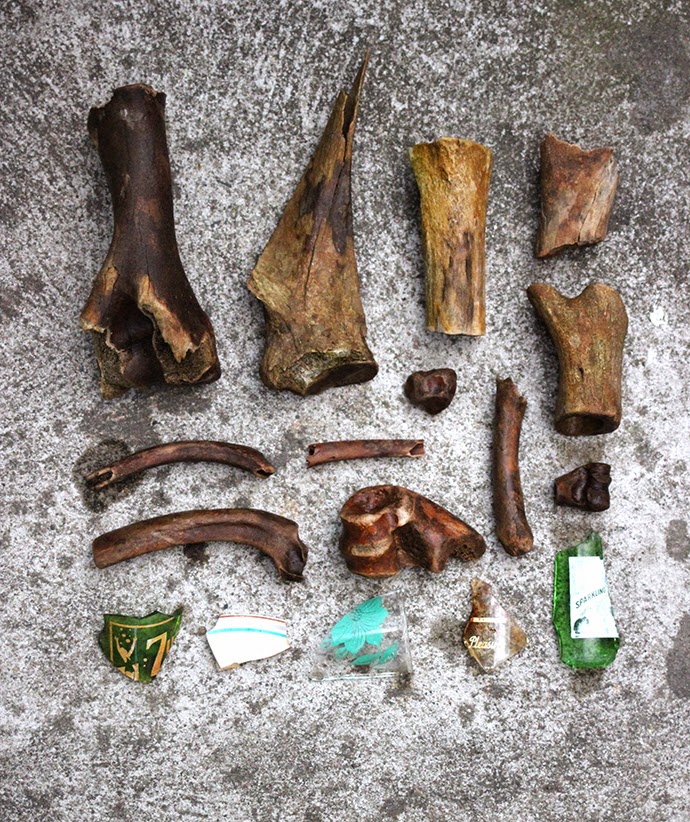
Like my first-ever visit to Dead Horse Bay, I returned home from my most recent trip with a backpack full of horse bones. Because I collect bones, I now consider this the mark of a very successful day. I mentioned in my first post that we found a lot of pieces that we considered keeping, but in the end we came back with only a few things. It's just as rewarding for me to take photographs of the treasures without needing to keep every cool thing we find, which my small apartment definitely appreciates.
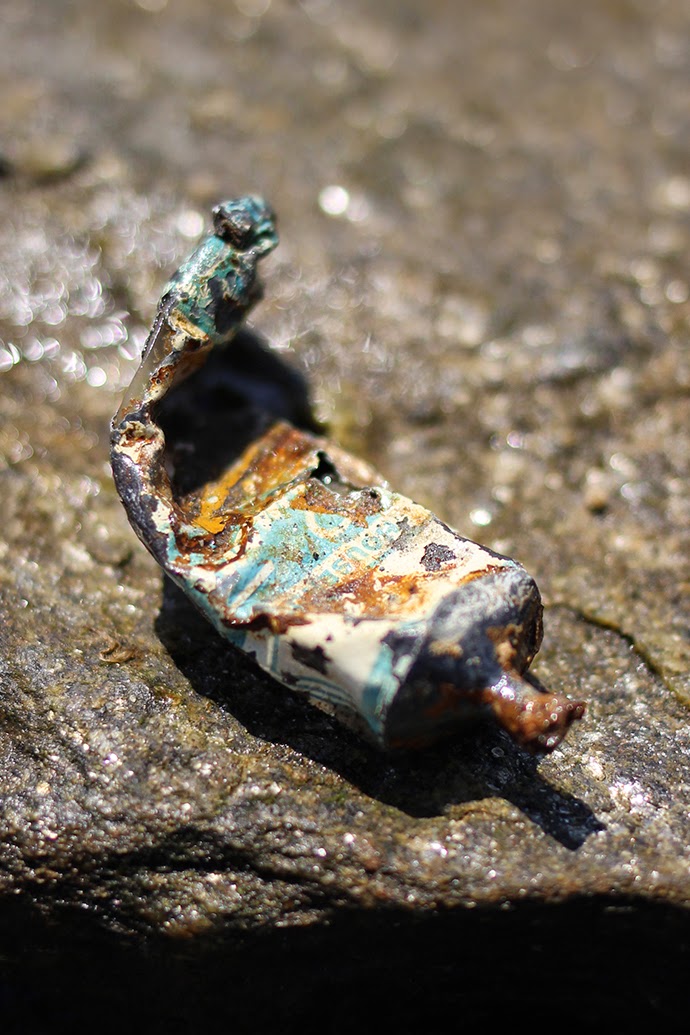


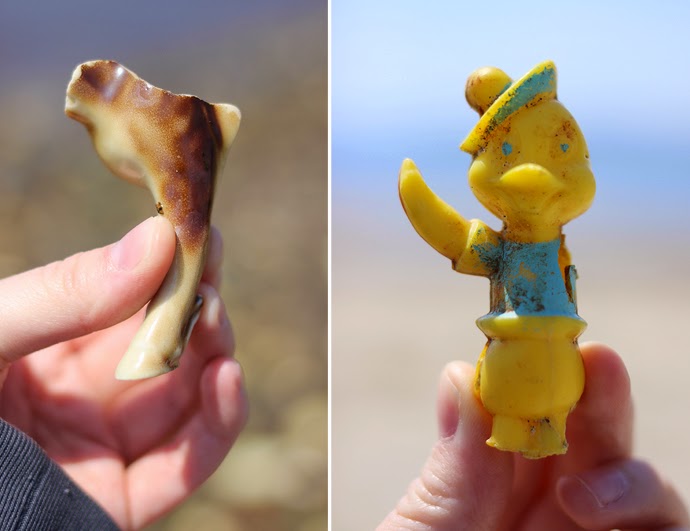


My favorite part about Dead Horse Bay is the variety of things that you find. Everything is constantly getting churned up and spit out in different places, so it's a new experience every time you visit. In addition to the bottles, we saw tubes of paint, an iron, a record, bits of printed china, tires, a ceramic cow foot, a plastic duck toy, a bathroom scale, a tube of toothpaste, rusty keys (inside of a wallet), a cash register, roll of film, can opener, toilet seat and of course, a kitchen (or bathroom) sink.


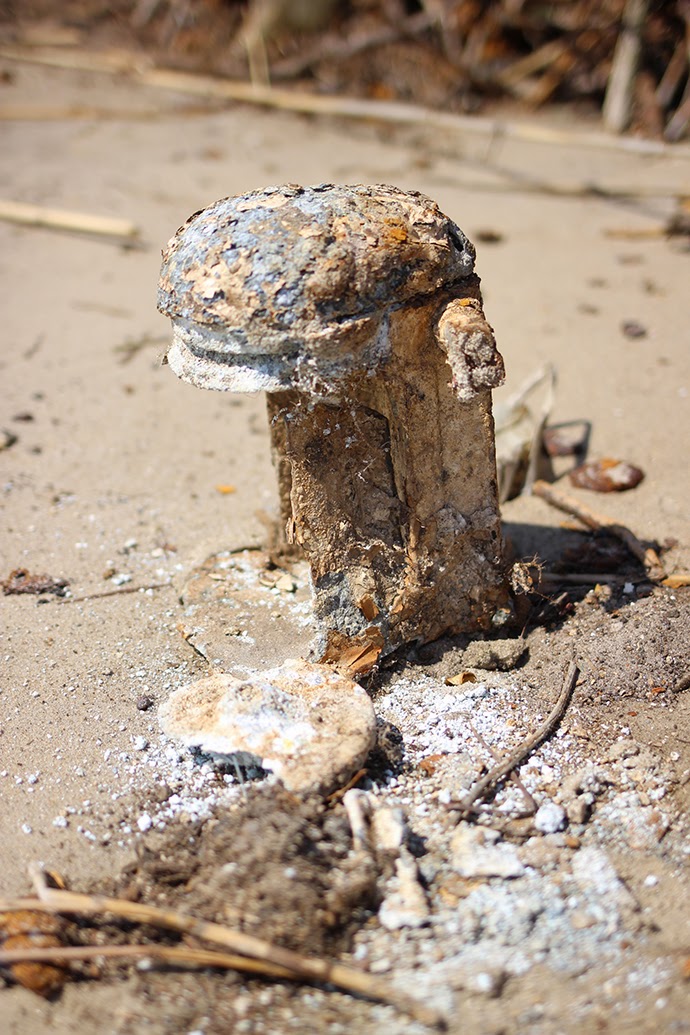

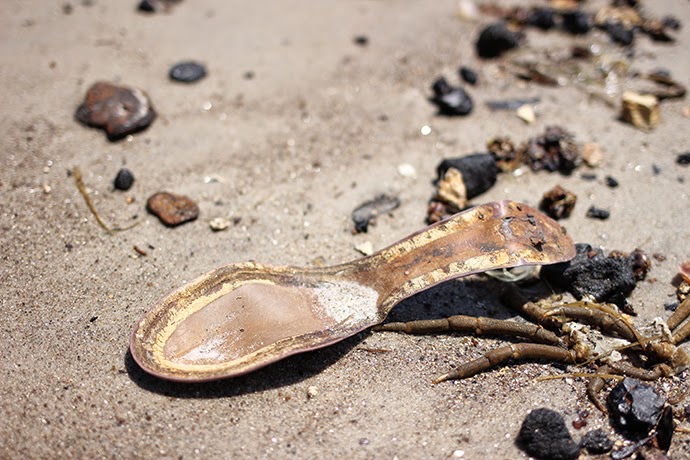
At a place like DHB you start to notice similar types of items when you start seeing them over and over, and this time it was forks. I guess I didn't really see that many of them, in comparison to bottles, bones or shoes, but for some reason they really stuck out to me.



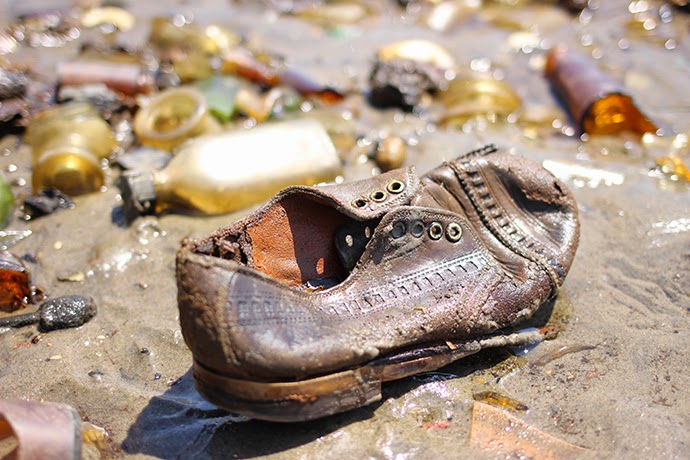
The second most prevalent type of trash at DHB (after bottles, before bones) is shoes. I haven't been able to find a good explanation as to why there are so many—maybe shoes take a particularly long time to decompose? There's something so sad about the shoes—the "old soles"—strewn about without their mates. They make me obsessively wonder who once wore them and what stories they would tell if they could.




The only things that came home with me (in addition to the bones and one jar) was the plastic duck toy and a few broken bottle bits. We talked about the duck ("Look at his jaunty little hat") while we ate our picnic lunch and I couldn't bear to throw him back. Now he sits in my pencil cup at work, where I can look at him daily and daydream about my next trip to Dead Horse Bay.

The Northgate Ruins

When we went on our hike through the Hudson Highlands upstate in Cold Spring, New York, it was mentioned that there were ruins scattered throughout the trails. I wasn't really sure what to expect, but as soon as we came upon the site of Northgate (aka the Cornish Estate) I was entirely delighted.


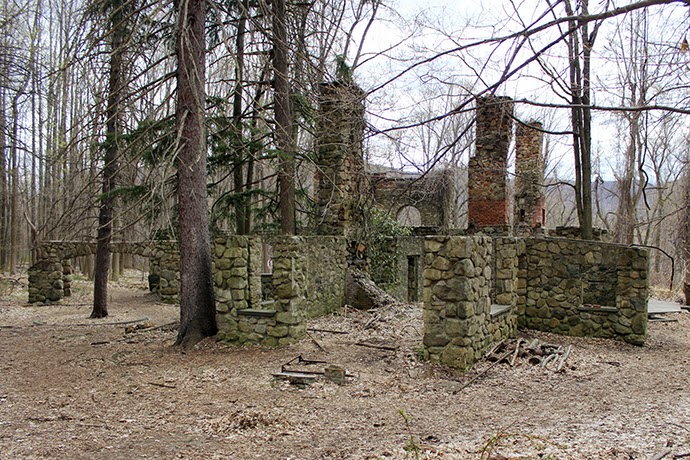


A fire destroyed most of the mansion that stood on the site in 1956 and the property later became a part of the park in the 1960s. Although a majority of the house is gone, you can still get a feel for how it used to look—there are fireplaces, doorways, windows, tiles, a porch and a few outbuildings including what looks like it used to be a greenhouse. It's especially creepy seeing so many fireplaces, knowing that the place eventually burned down, and it's disorienting to see them stacked on one another without discernible floors in between.


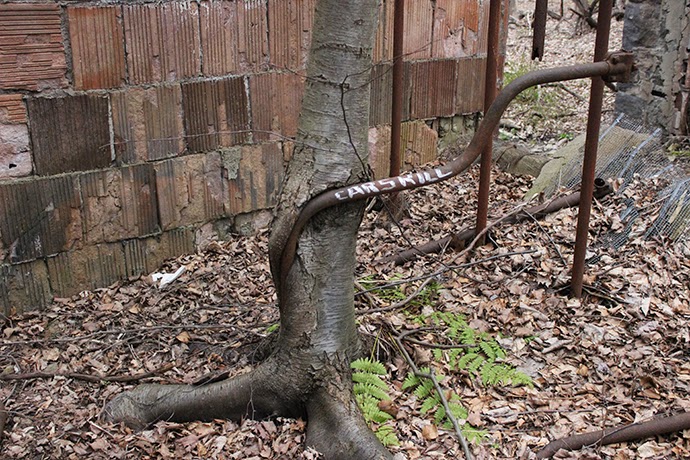
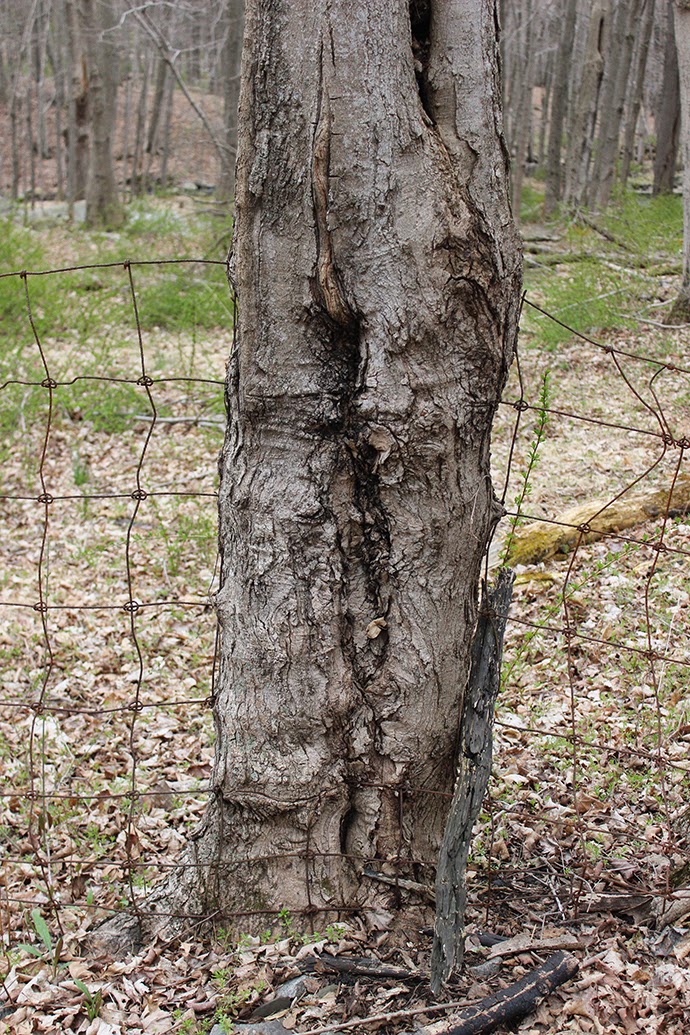


After a few more miles, we came across the Dairy—also part of the Cornish Estate—which includes a few buildings that used to house prize-winning Jersey cows. Now the buildings are crumbling, with trees growing through things that trees don't normally grow through. There's a rusty fence, some old pipe and an iron gate, all in various stages of being swallowed up by tree trunks.


We saw a particularly busted raccoon shuffling around the ruins which only added to the creep factor, and some NSFW graffiti. There was an old wood-paneled silo, some rusted antique farm machinery, a milk bucket and a lot of unidentifiable rusty pieces of metal strewn about.
It was fascinating to walk through the open, arched doorways and to squint and imagine the dairy in operation. The hike was pretty long and strenuous, but there were enough things along the way to keep me interested and looking for more. I love how open and accessible the ruins are and I would love to go back and explore them even more.

Dead Horse Bay: Bottles + Boats
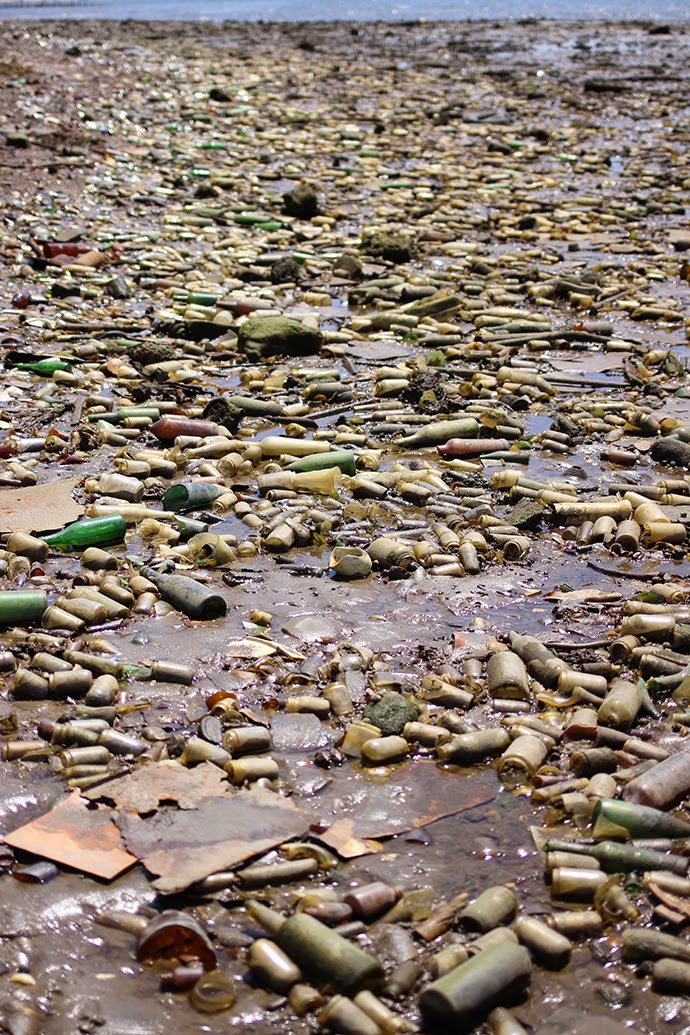
Last weekend my dude and I biked 24 miles—my first time on a bike in a looooong time, and my first-ever experience with city biking. We had planned to go to Fort Tilden, but when he mentioned that we could stop at Dead Horse Bay on the way I immediately agreed.
Trent and I had gone to DHB last year for the first time (read about that visit here and here) and I haven't stopped thinking about how amazing it was and wondering when I would get to go back. This time we spent nearly four hours combing through trash, treasure and everything in between, during which I said "this place is SO cool" so many times that I lost count.


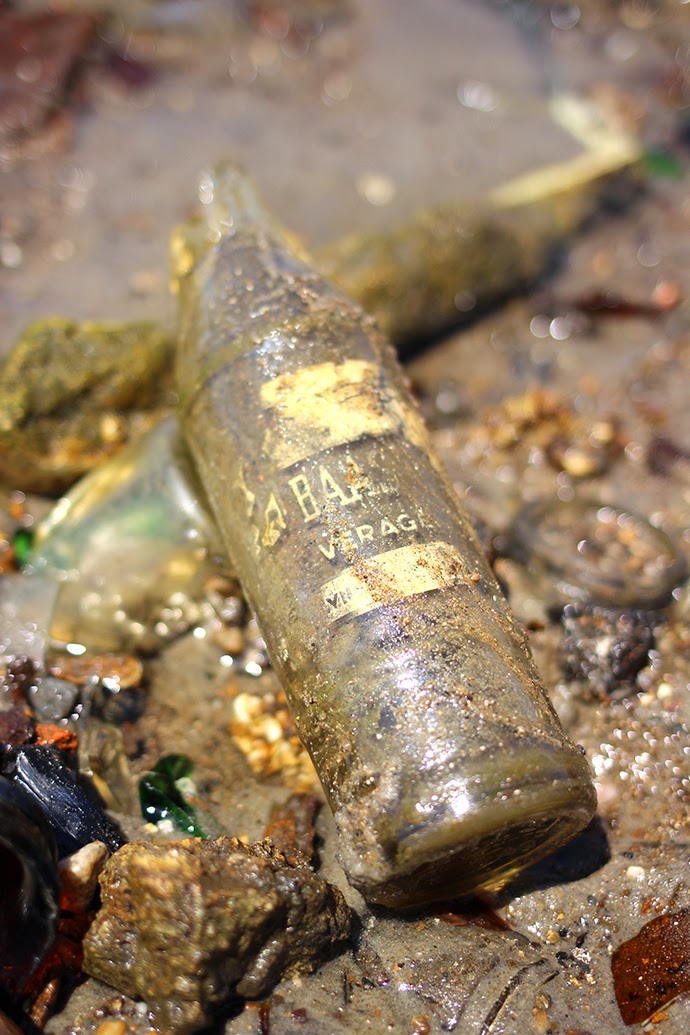


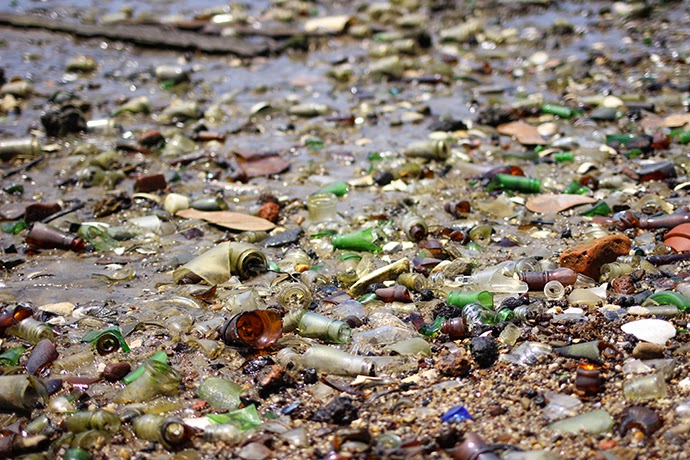
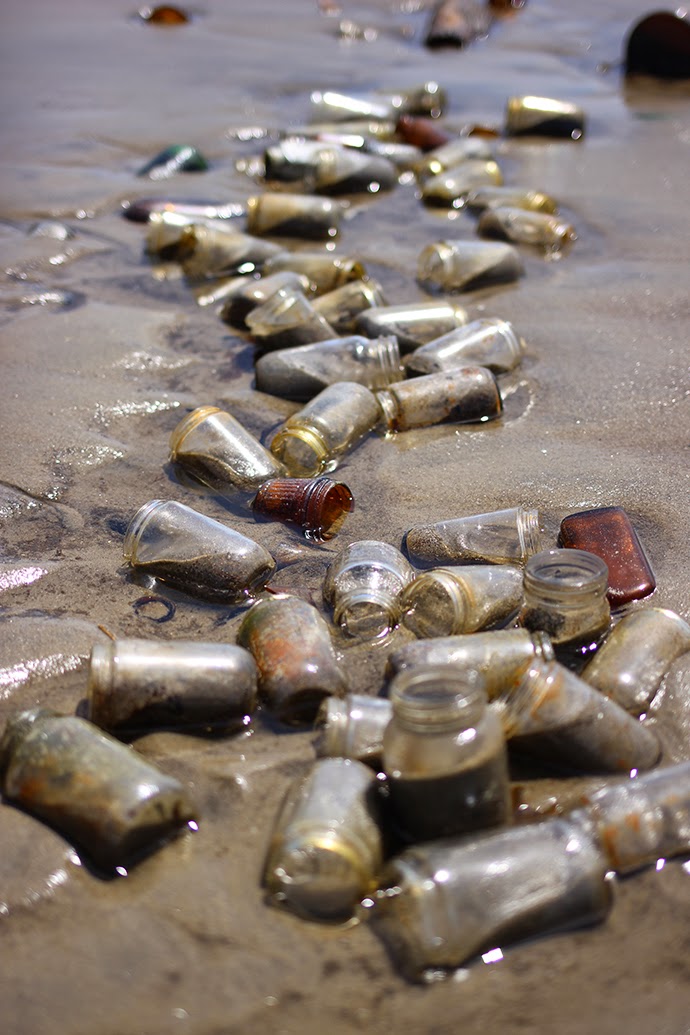
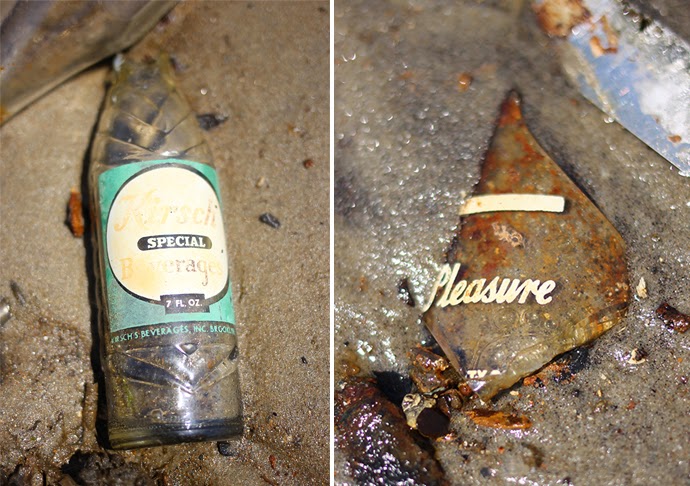
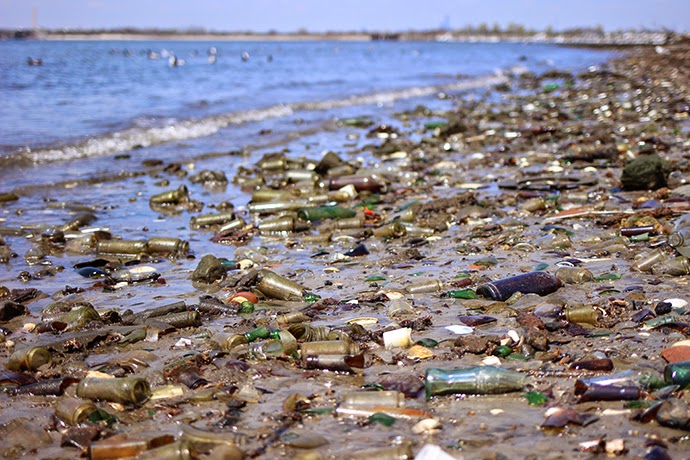
With places like DHB—places so amazing that I wonder how they even exist at all—I'm constantly terrified that they'll disappear, and wary of them becoming too "popular." A major appeal of DHB is its abandoned, other-worldly feel, which is always a precarious thing to maintain—especially in a city as crowded and visible as New York. Luckily, DHB hasn't seemed to change much in the year since I first went, although we did see a lot more people this time.
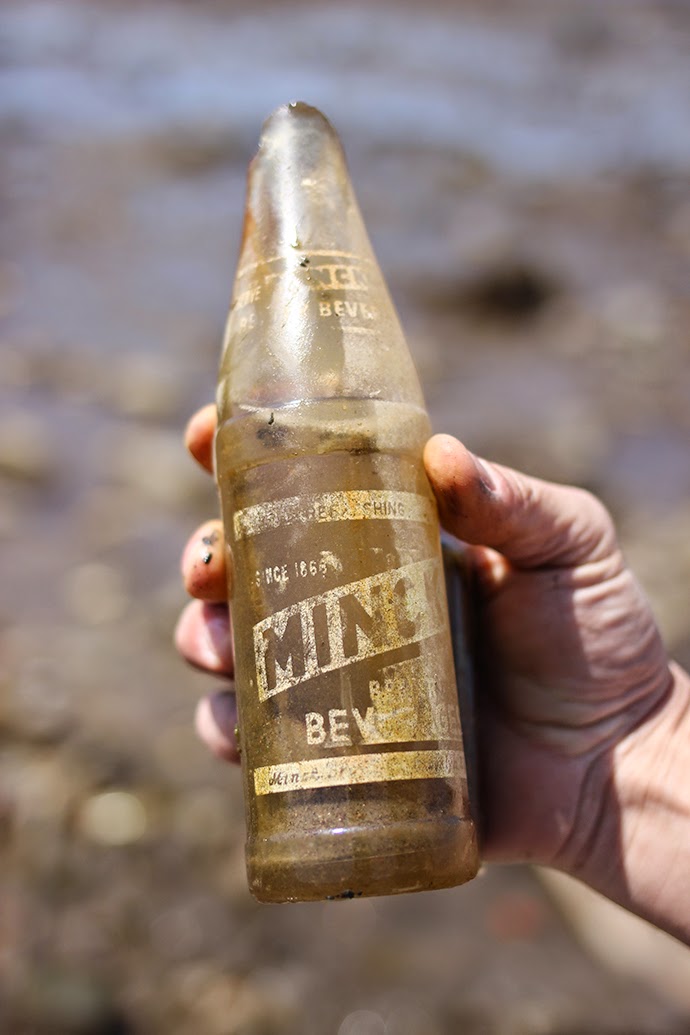
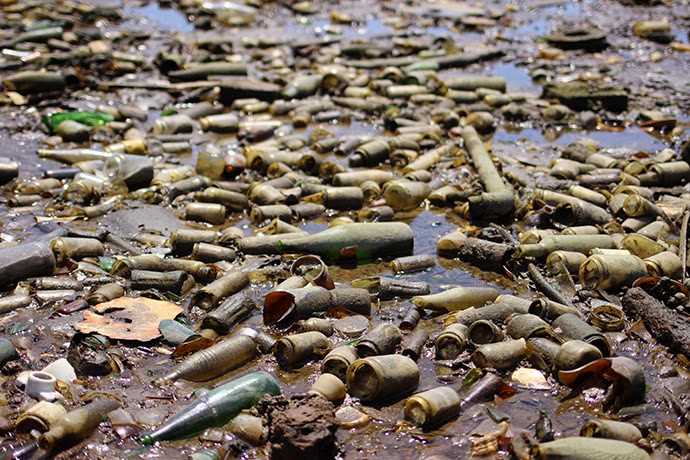
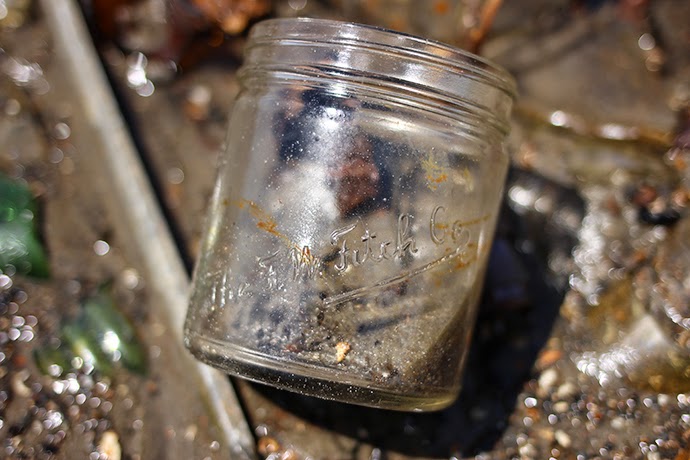
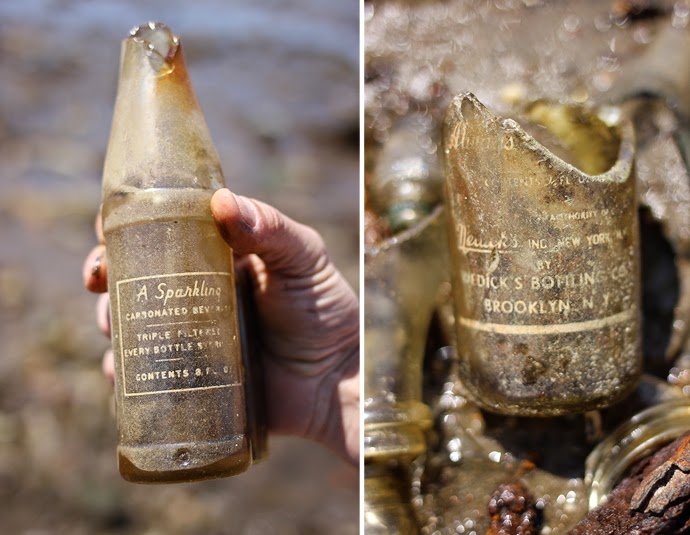
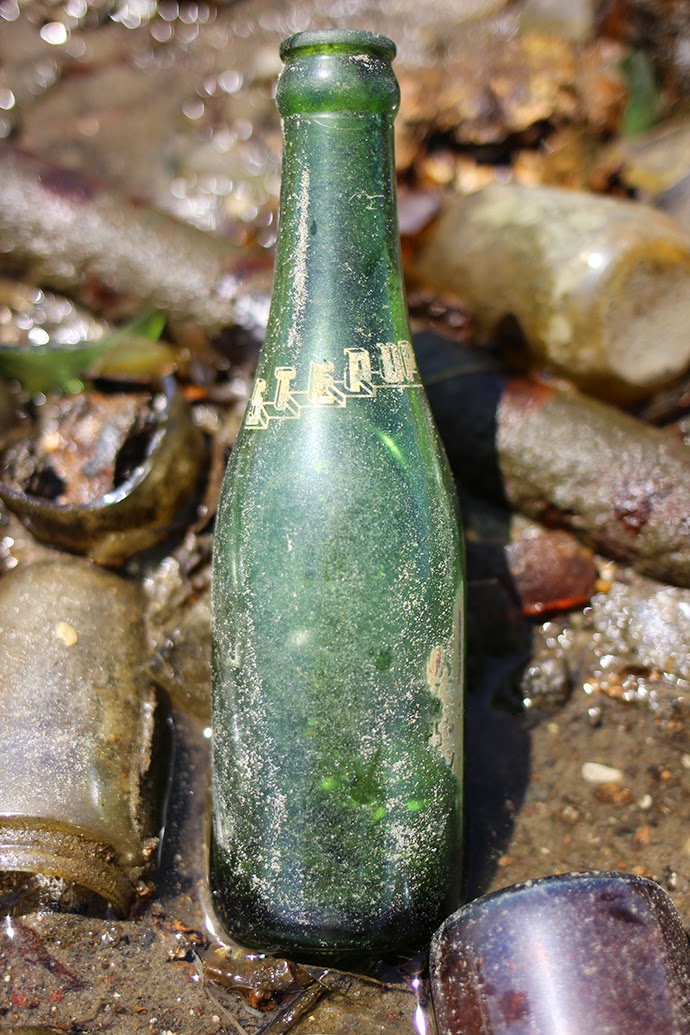
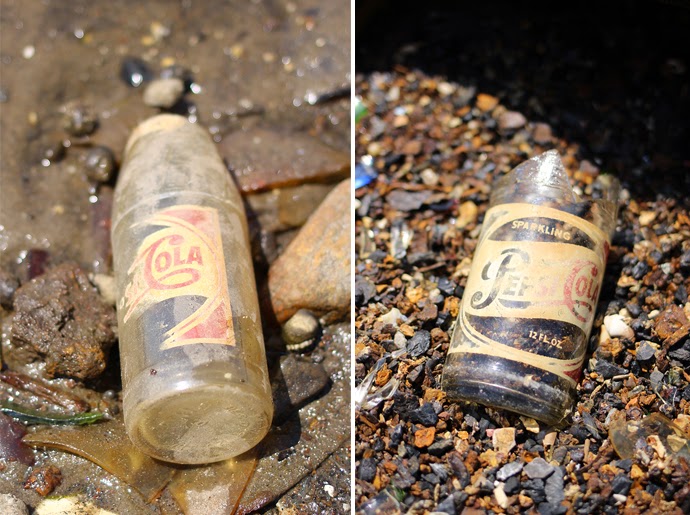

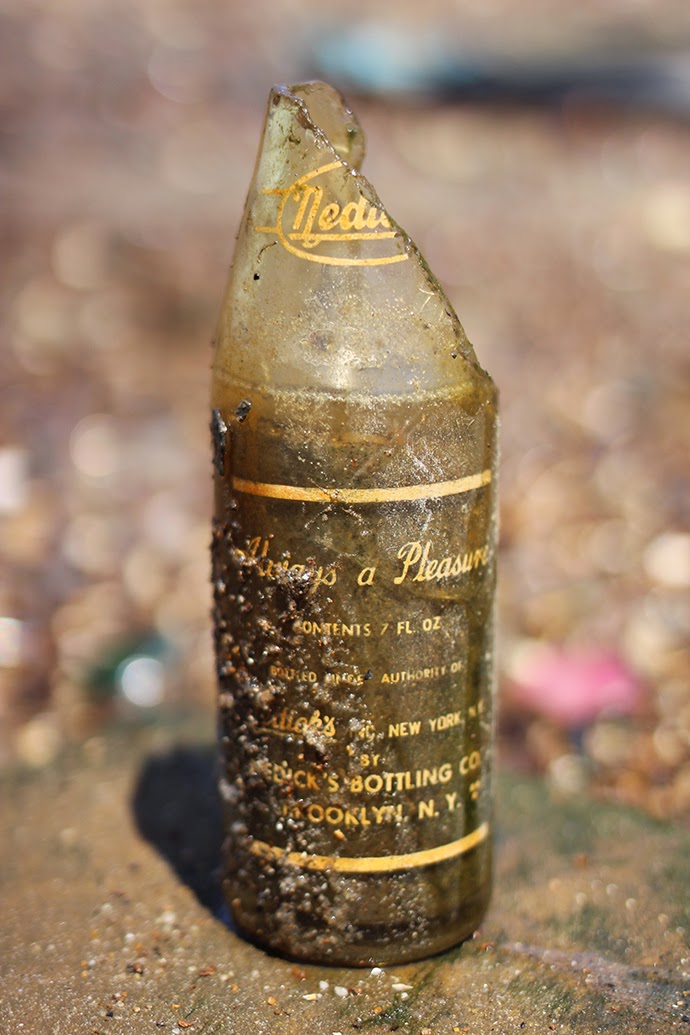
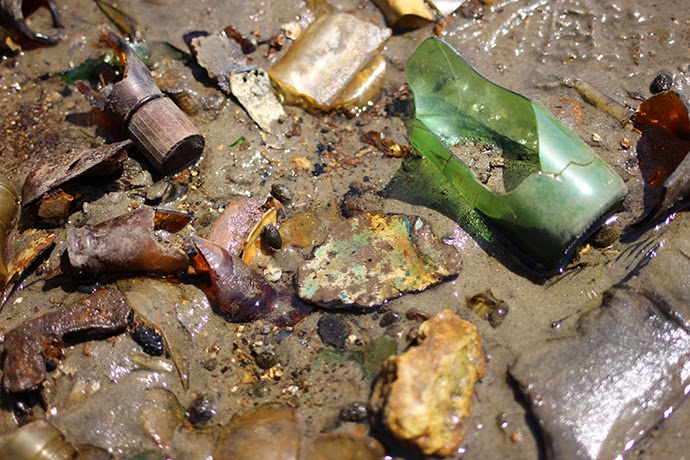
Dead Horse Bay is alternatively referred to as "Bottle Beach," and it should be immediately obvious why. It's so fun sifting through the bottles to find remnants of sodas I've never heard of, pieces of beautiful typography and colorful graphics. Not wishing to go full-on Collyer Brothers, we did end up sifting through what we had picked up and made some Sophie's Choices before we left—unfortunately none of the bottles made the cut, but I did keep the jar from The F.W. Fitch Co.
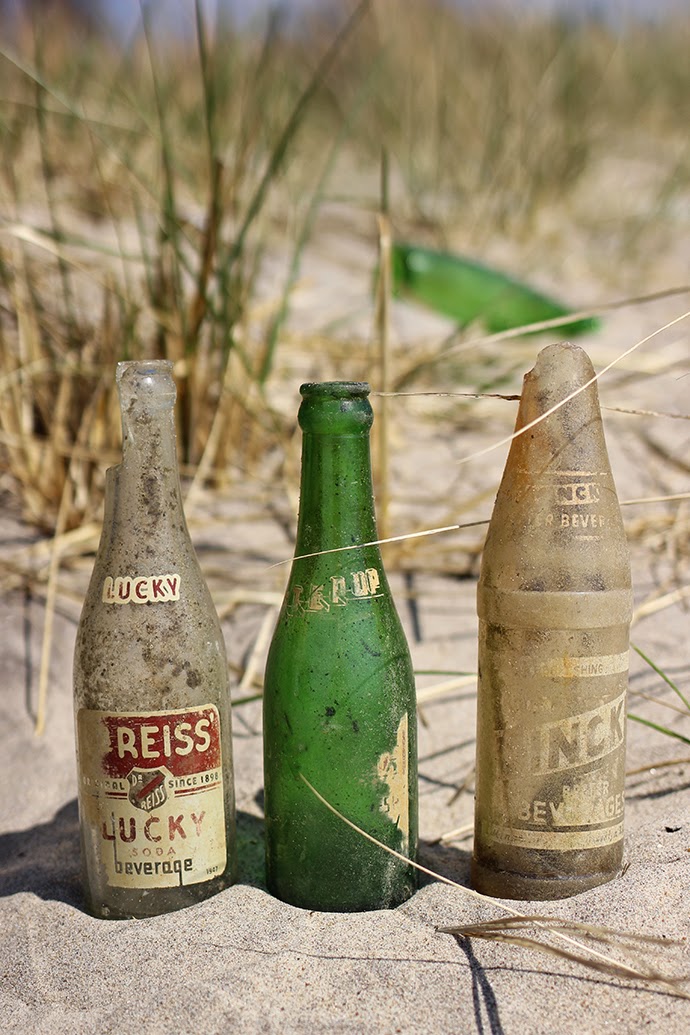
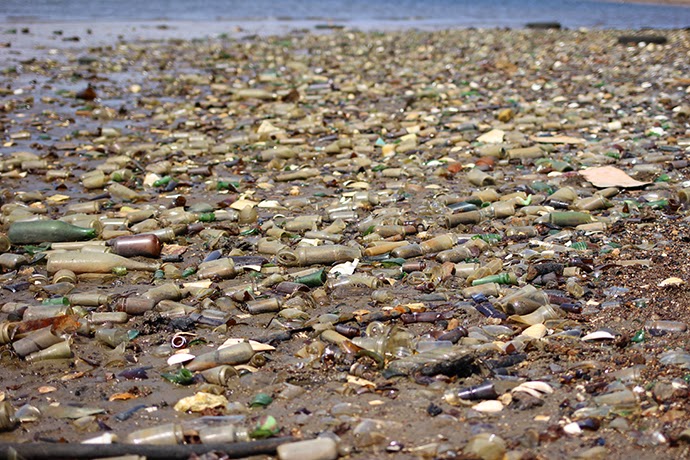
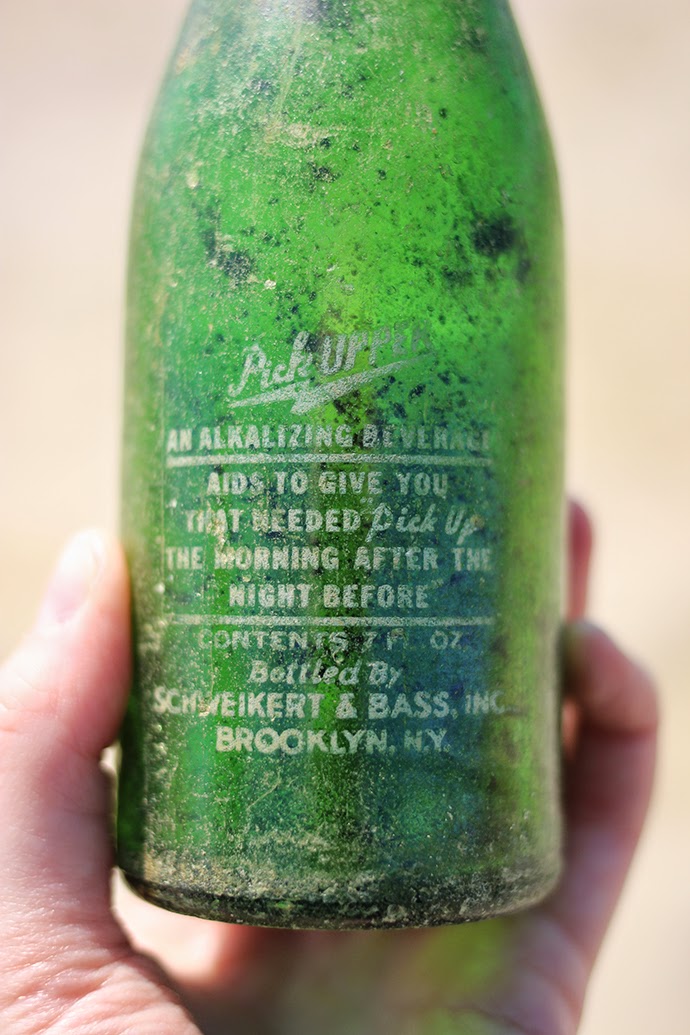


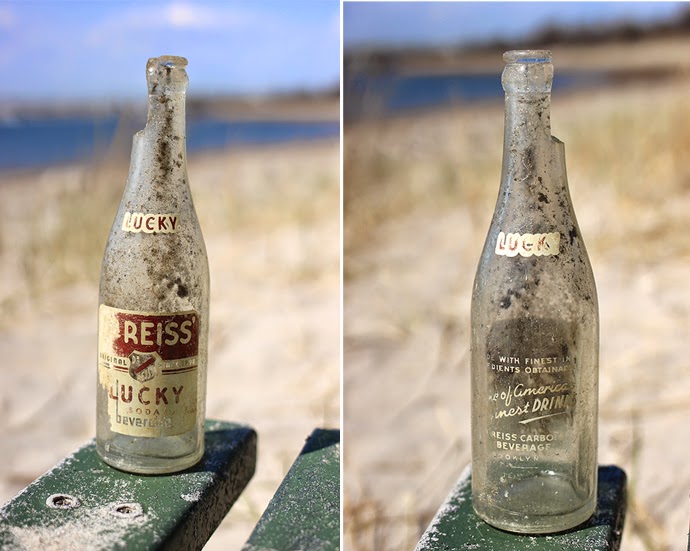
One difference that I did take note of was the amount of beached boats we saw—there were at least four new ones from the last time I was at DHB. It's kind of a mystery to me how or why the boats get abandoned, but they are fascinating to look at and really add to the abandoned, post-apocalyptic beach feel.

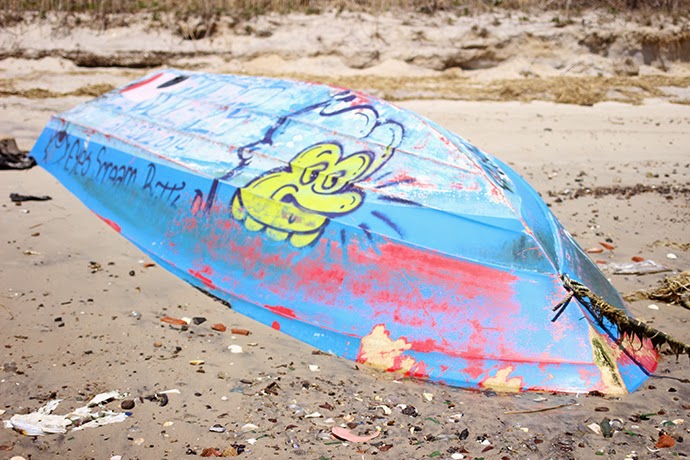
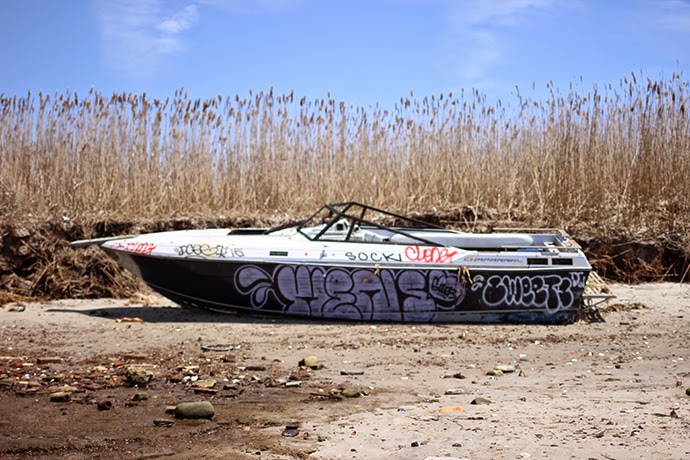

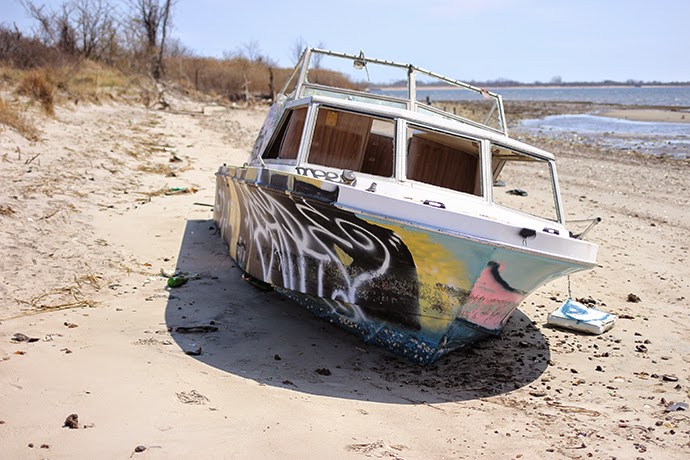
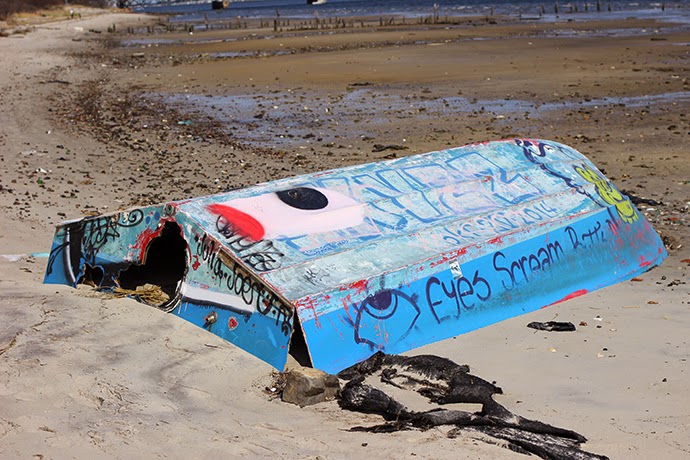
Dead Horse Bay is definitely in my top five favorite New York places and I still can't believe that it is so accessible and consistently awesome. Knowing how easily (and quickly) I can bike there just makes me want to go more frequently—I'm sure I could go to DHB once a day for the rest of my life and still find something new every time.

Ellis Island Hospital: Part 4

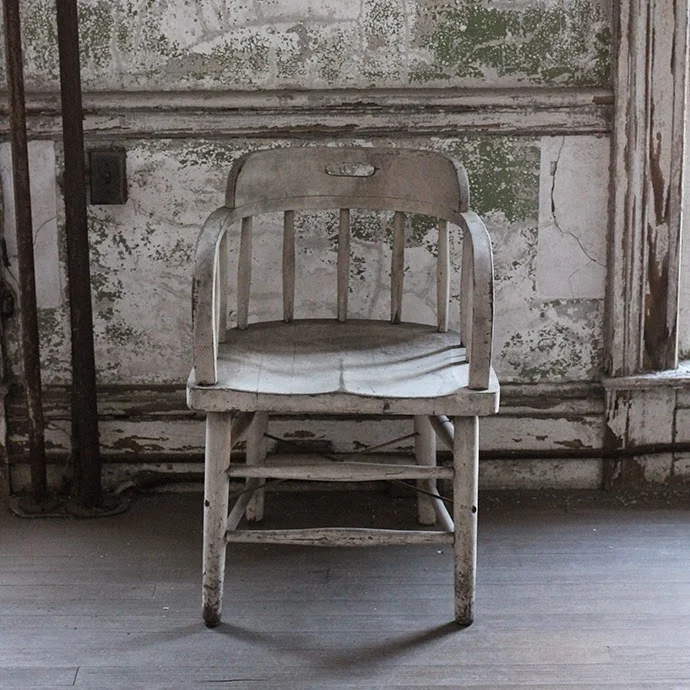
I have thought about the incredible Ellis Island hospital tour many, many times since we took it in January. I don't imagine any tour topping it for a very long time—it was just so, so good. I've already shared my photos from inside of the abandoned hospital complex, the lonely chairs that I fell in love with and the beautiful JR art installation, but I never shared my photos from the hospital grounds.


The south side of the island isn't very large but it packs a lot into a relatively limited space. The main building, which houses the immigration museum, was restored in the 90s but the south side buildings remain in various states of decay and have never been open to visitors until now (and only as part of the hard hat tour that we took). It's kind of awesome to be able to see the unrestored buildings in the same view as the restored main hall—it's like a real-life before-and-after show.
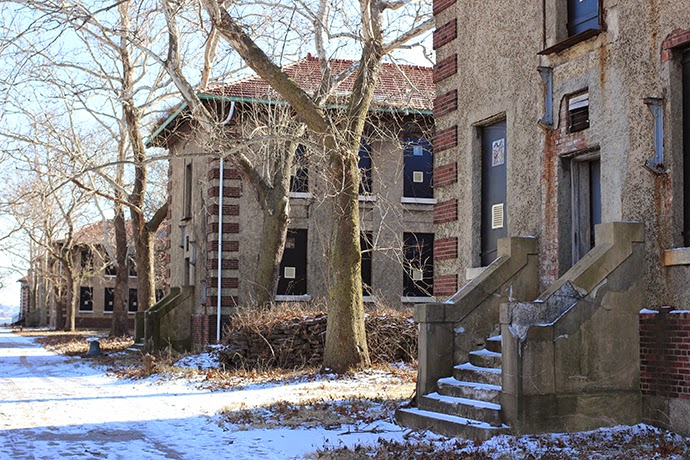


The broken and boarded up windows, piles of forgotten construction materials, ivy-covered brick and even the lonely bird house all added to the eerie feeling of the complex. As much as I loved the buildings themselves, it's really the views from the grounds—of the Statue of Liberty, the Verrazano-Narrows Bridge and Lower Manhattan—that make the trip to Ellis Island a must-do.

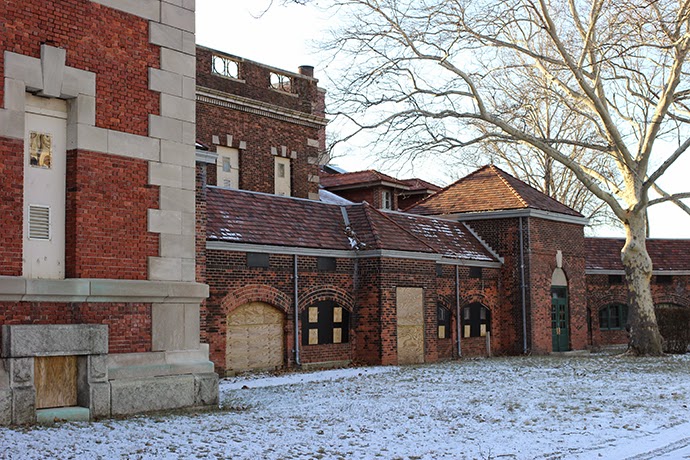


I don't think I'll be able to stop thinking about this tour for a very long time (like, probably never) and I keep wondering if I should just pull the trigger and book another ticket. As cold as our tour was, I loved that we got to see it in the snow and bright winter light but I'm already dreaming of getting the chance to explore these buildings in the spring.

West Side Highway

On Saturday, after meeting friends at a diner in Chelsea and walking a portion of the High Line, I decided to check out an abandoned stand-alone diner that I had read about. I walked about a mile down the West Side Highway, which I don't do very often but I really love the desolate and gritty feeling of the far west side.


Of course every neighborhood in New York has become impossibly cool and expensive and the west side is no exception (probably especially the west side), but the West Side Highway still feels a bit abandoned, especially on a cold, winter weekend. I only passed a few people—mostly walking dogs—and I didn't cover much ground, but saw so many wonderful things. There are some really great old hotels, abandoned and for-sale buildings, auto-body shops and so much amazing signage and vintage typography that I couldn't have been happier.


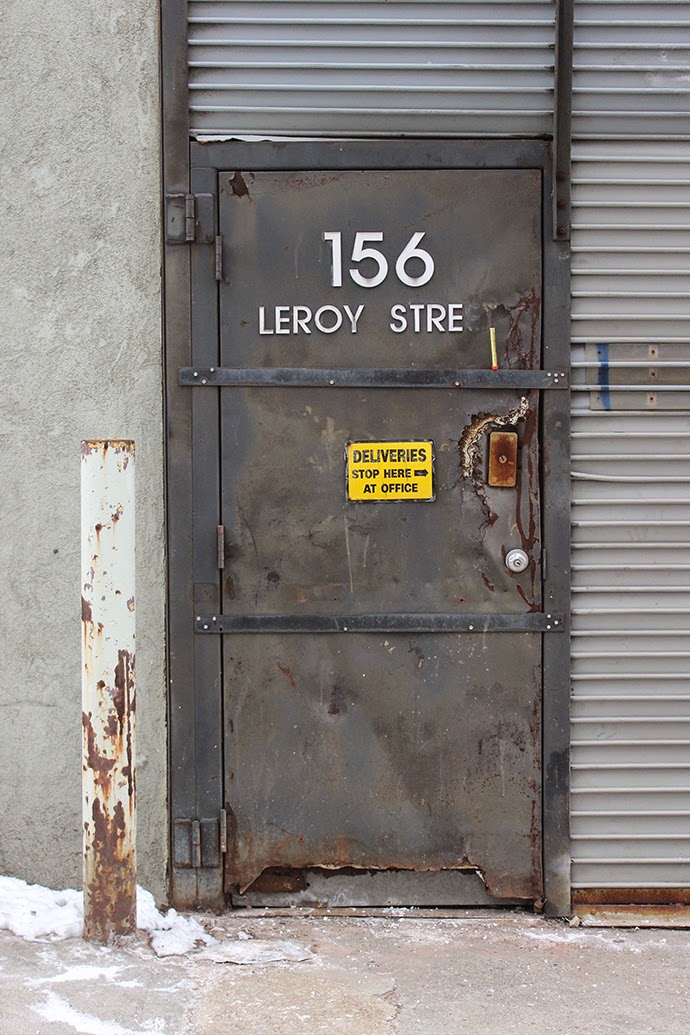


I only went as far south as the abandoned diner and then turned around. It was hard to take photos through the tiny openings in the chain link fence, but the inside of the diner is falling apart, filled with debris and is still totally amazing. All of the windows are out of the old dining car and it's in really bad shape, but you can still imagine how it must have looked in its glory days. I hope someone resurrects the diner instead of just tearing it down—what a dream it would be to be able to bring it back to life—but its pretty incredible in its current state of decay.

Ellis Island Hospital: Part 3
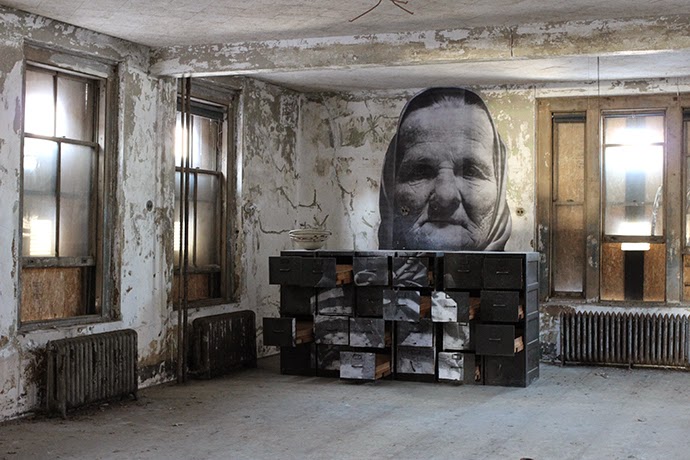
During our tour of the abandoned hospital complex on the South Side of Ellis Island we were also lucky enough to be able to see the art exhibit "Unframed—Ellis Island" by JR scattered throughout the buildings. Life-size photographs of Ellis Island immigrants are pasted all around the complex—on broken windows, rusty lockers, walls—all interacting with their environments in interesting and surprising ways.
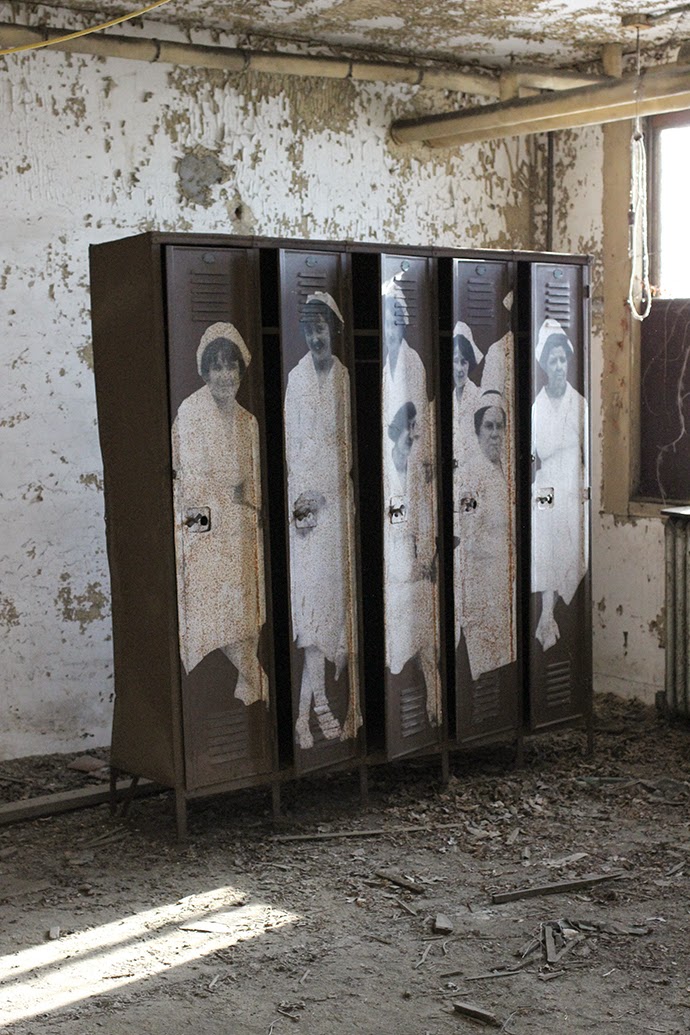
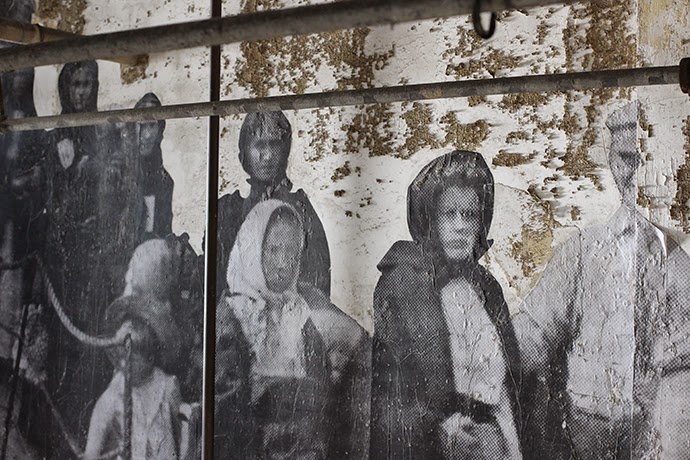

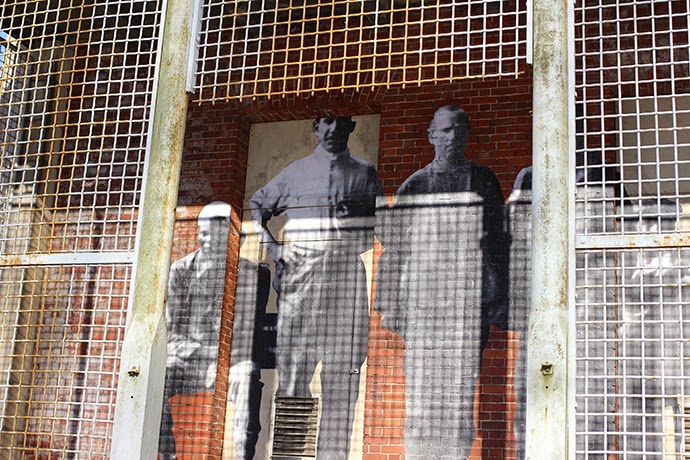
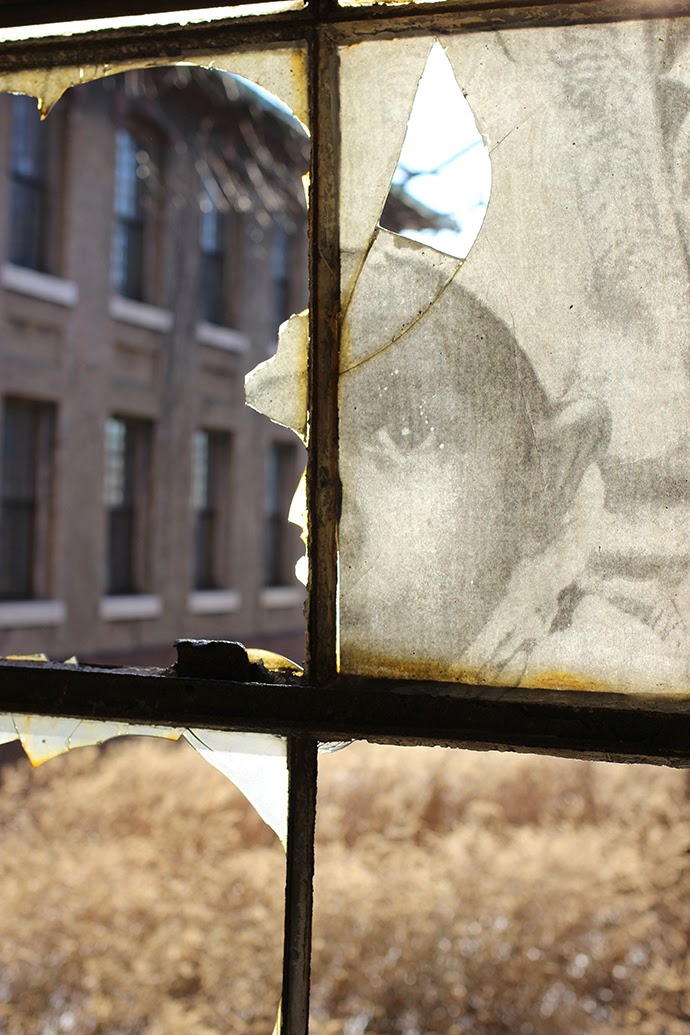
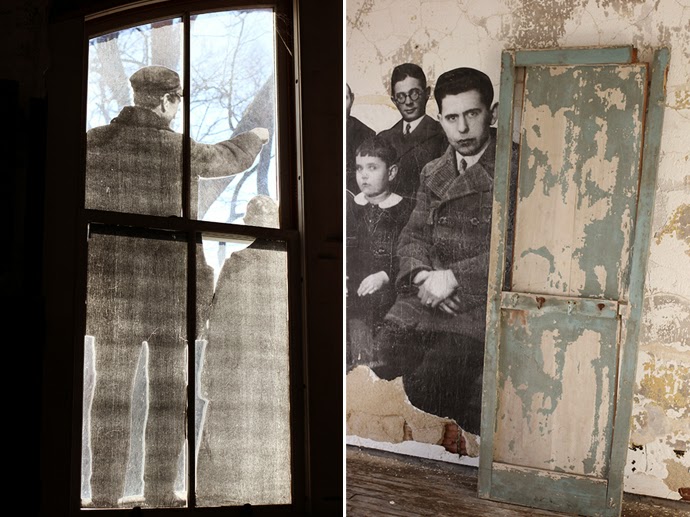
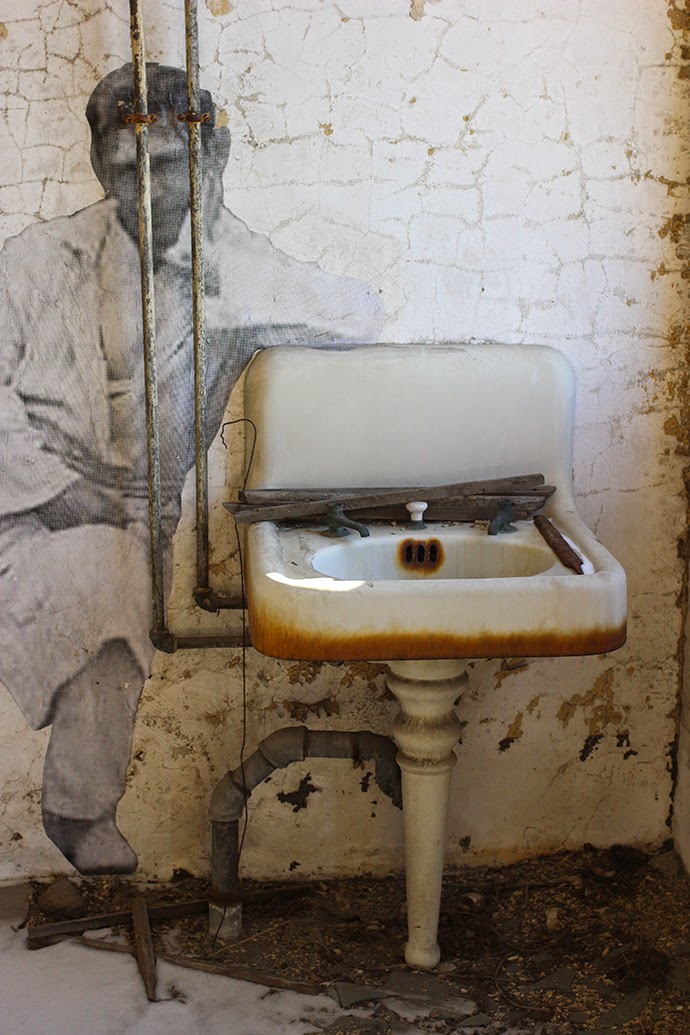
Usually I'm wary about installation pieces, especially if the building is something so extraordinary that it doesn't need any further embellishment, but this exhibit was spot-on. There were just enough of the pieces to keep you hunting for them, and to make them compelling when you did catch a glimpse as you turned the corner. Part of this has to do with the actual immigrants themselves—it's hard to beat the impact of seeing the people in situations and rooms in which they may have actually been.
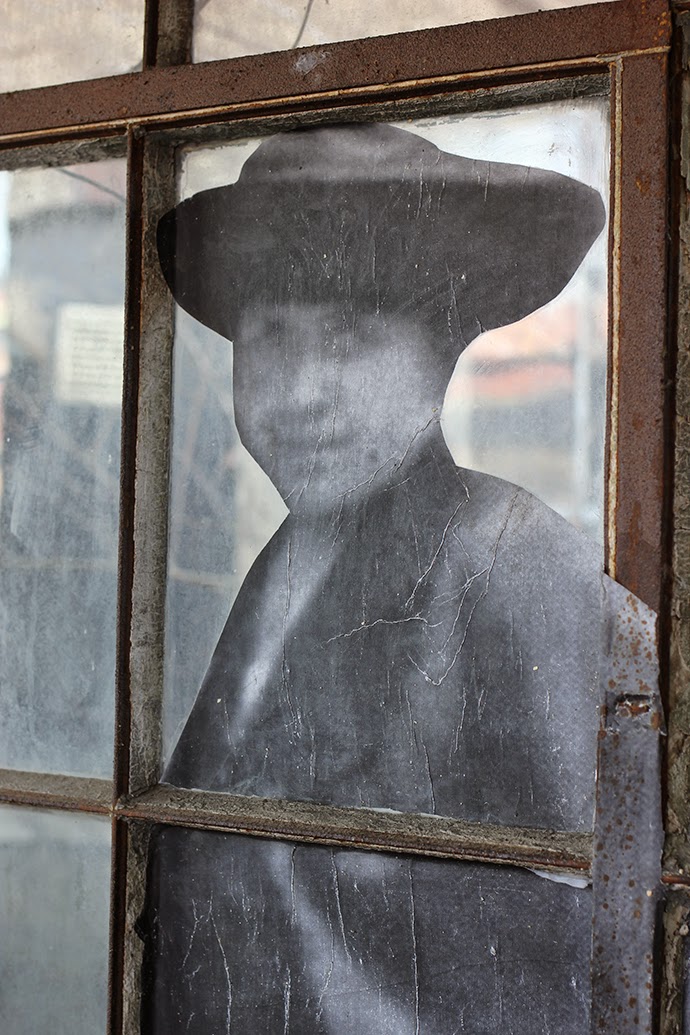
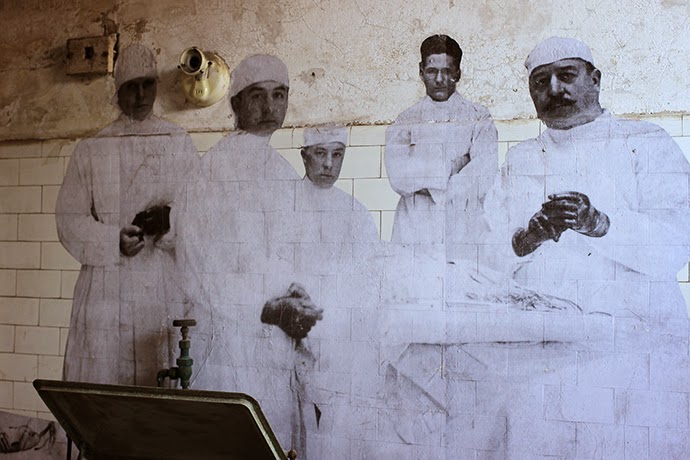
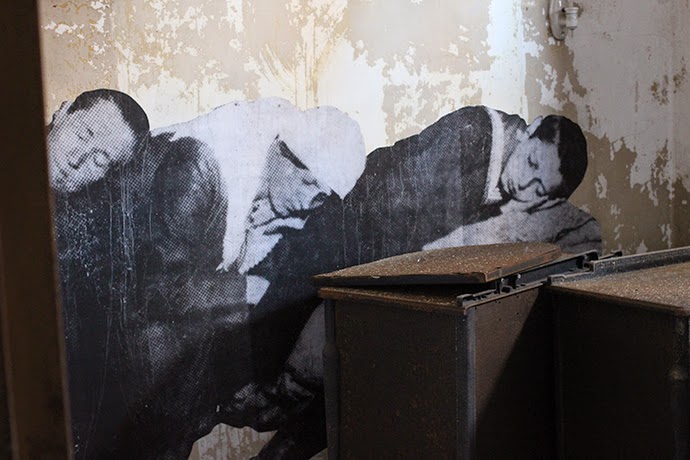
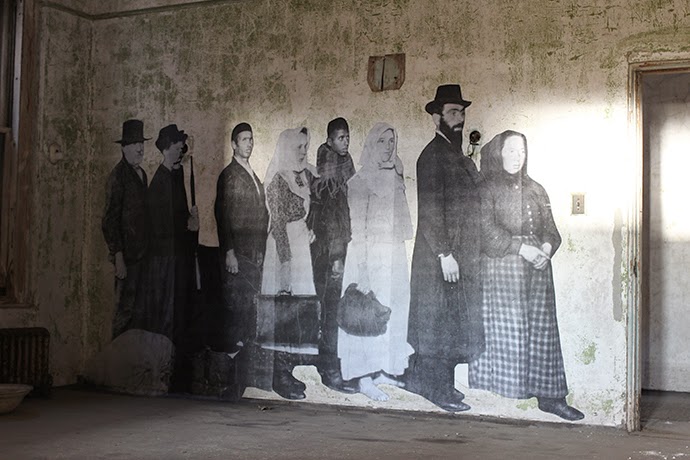
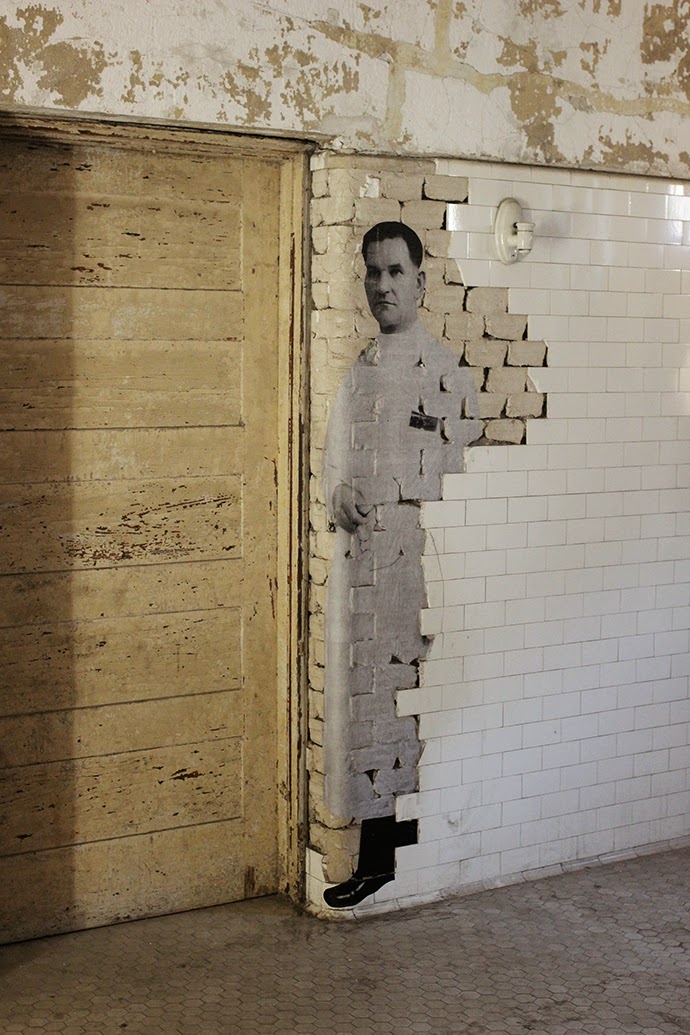
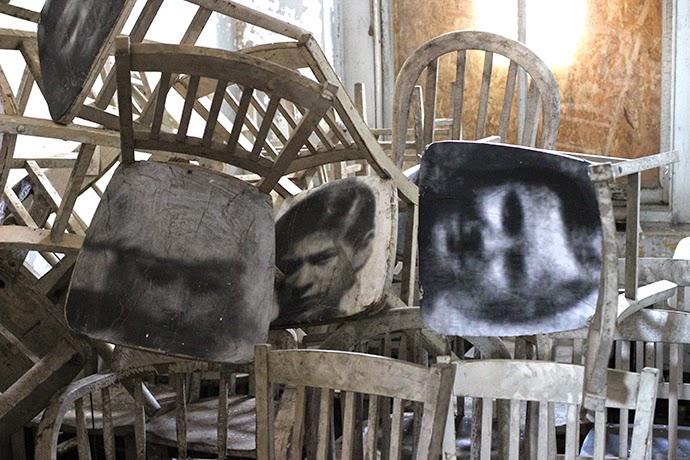
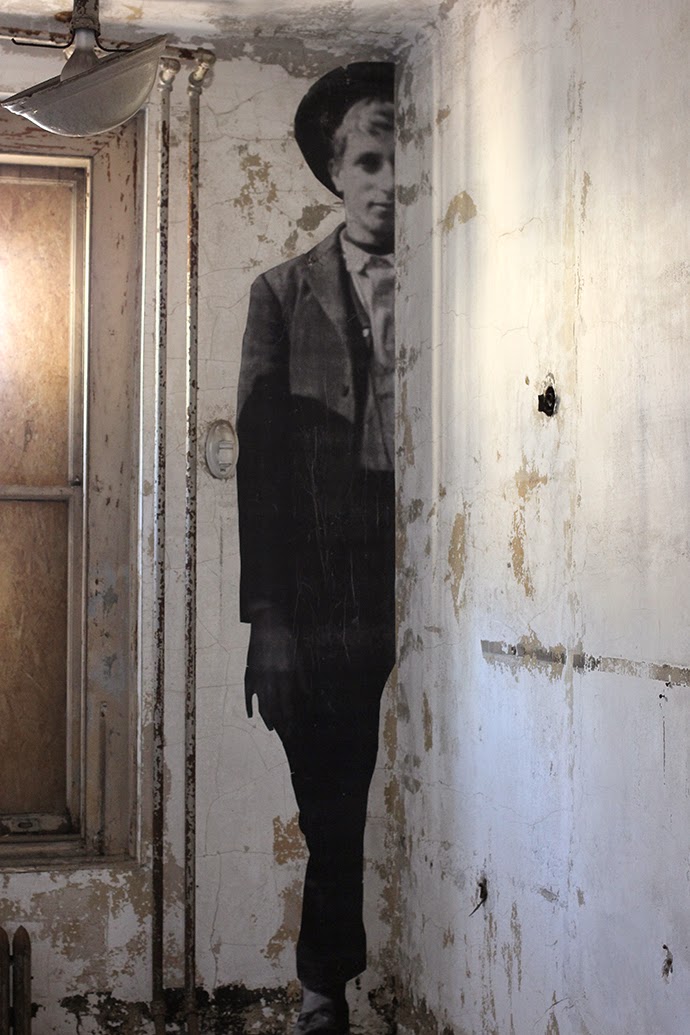
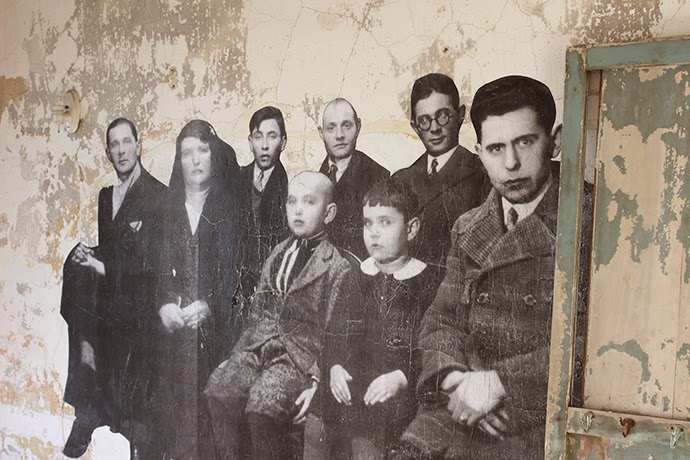
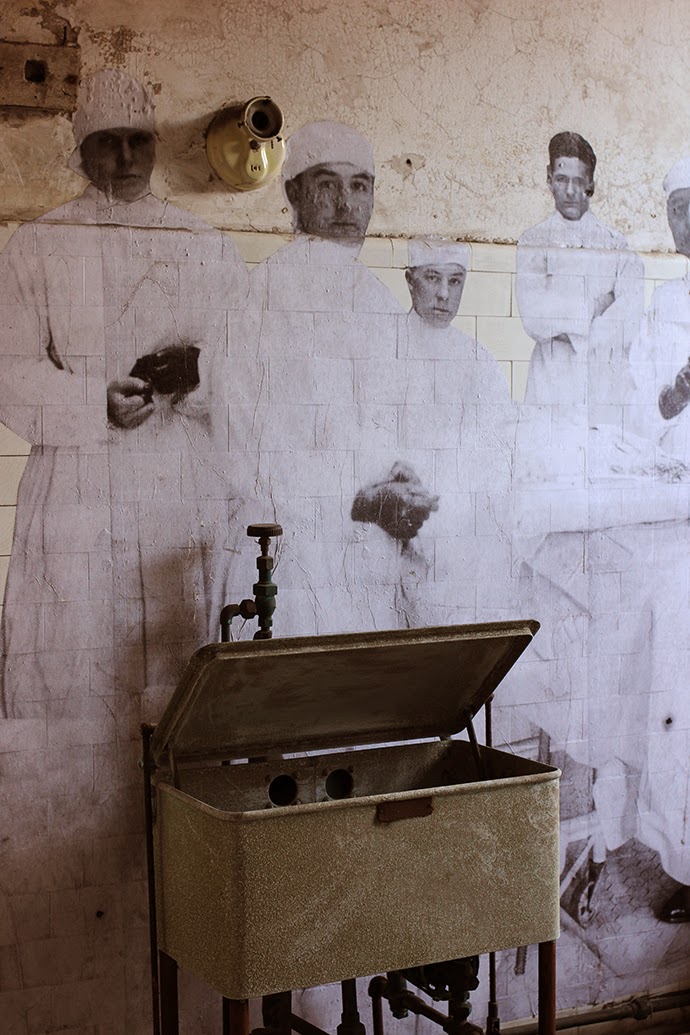
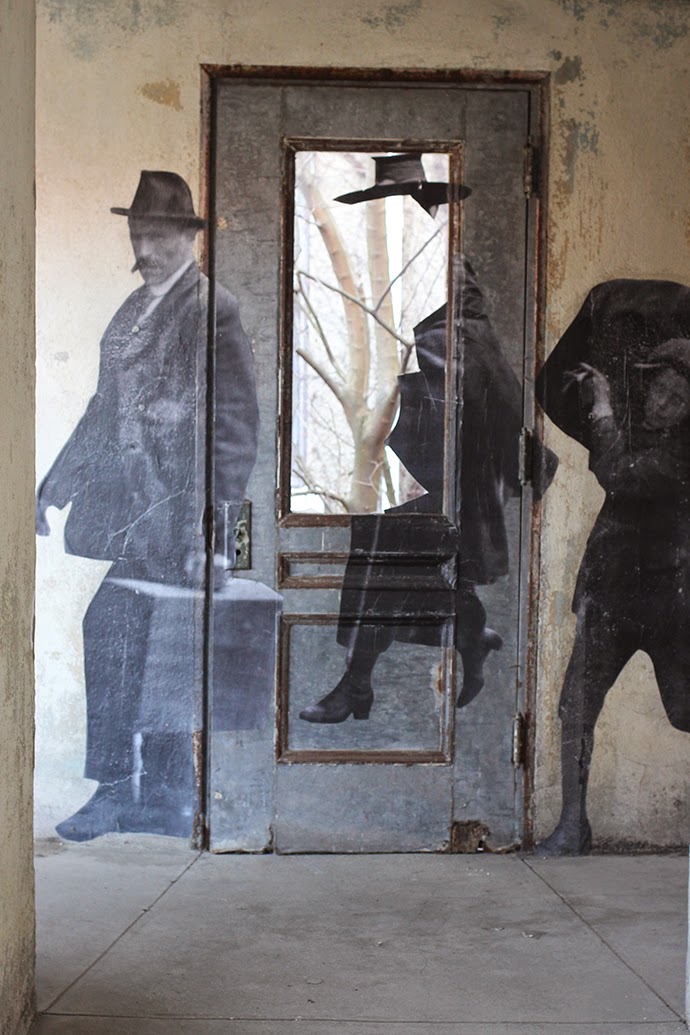
Like all of the abandoned chairs, seeing the photographs really helped to humanize the spaces and allow us to better imagine what life must have been like when the buildings were operational. Our tour guide said that she had had descendants of some of the people in the photographs on her tours, which is pretty awesome. I've read quite a bit about Ellis Island, but this tour and exhibit left me wanting to know even more about the millions of people who passed through here and all of their fascinating stories.
Ellis Island Hospital: Part 2
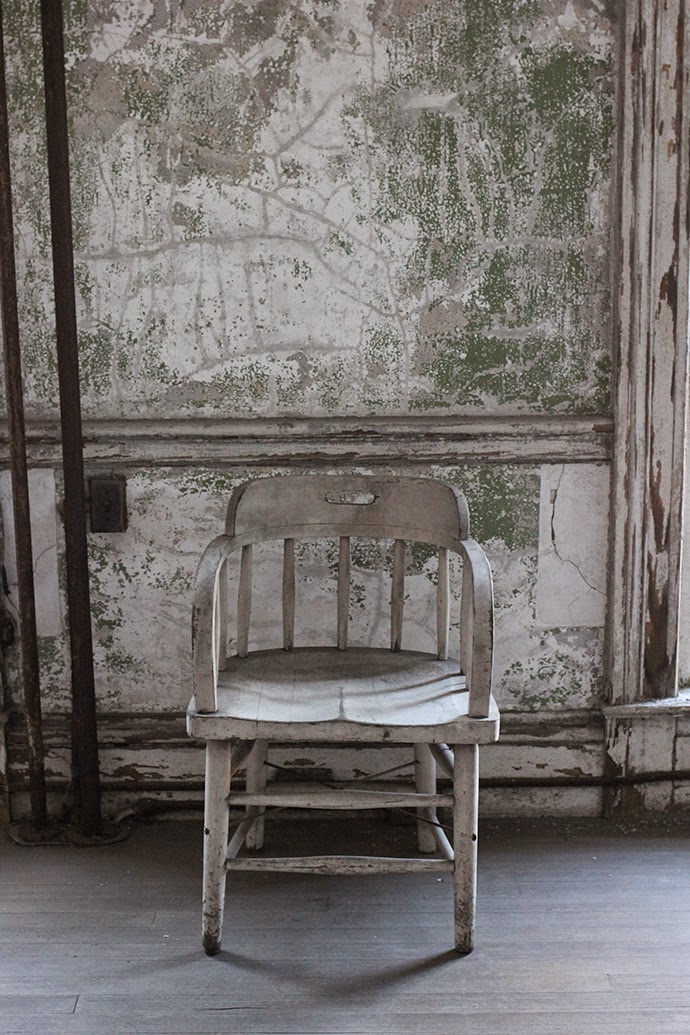
As I was looking through my (massive amount of) photos from the incredible Ellis Island hospital tour that I took recently, I kept noticing chairs. Sometimes alone, sometimes in piles, sometimes neatly arranged, sometimes missing legs or splintered or covered in peeling paint—there were chairs everywhere.

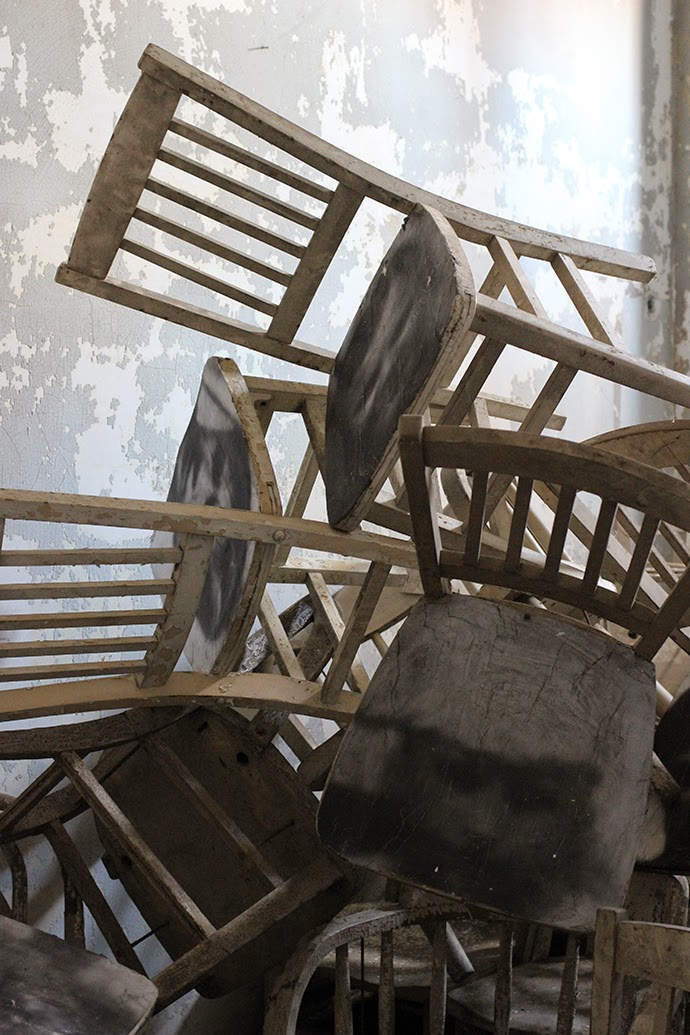

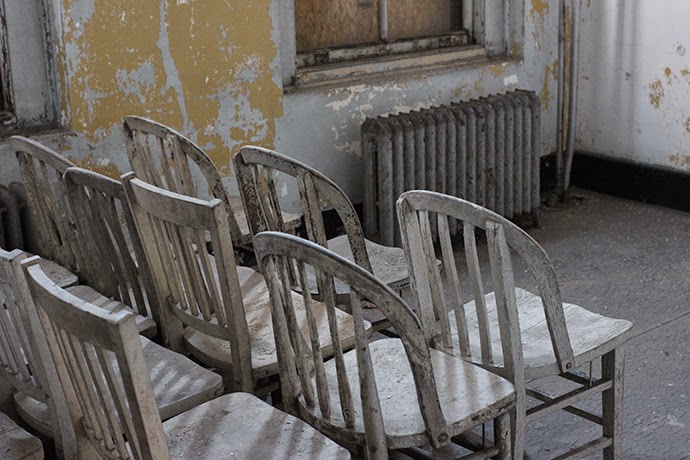
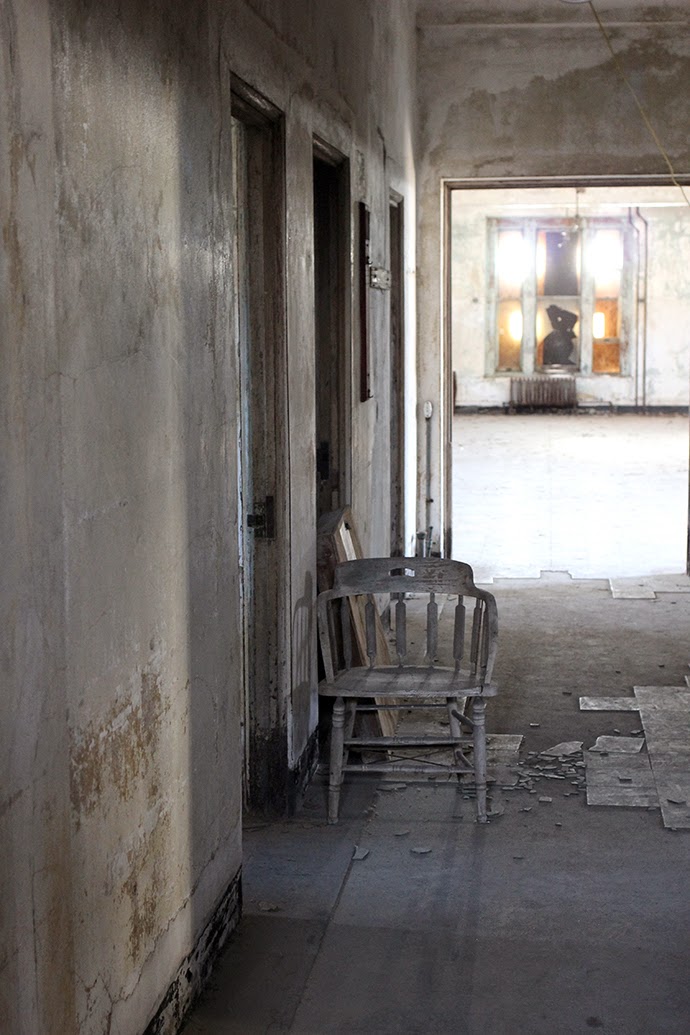
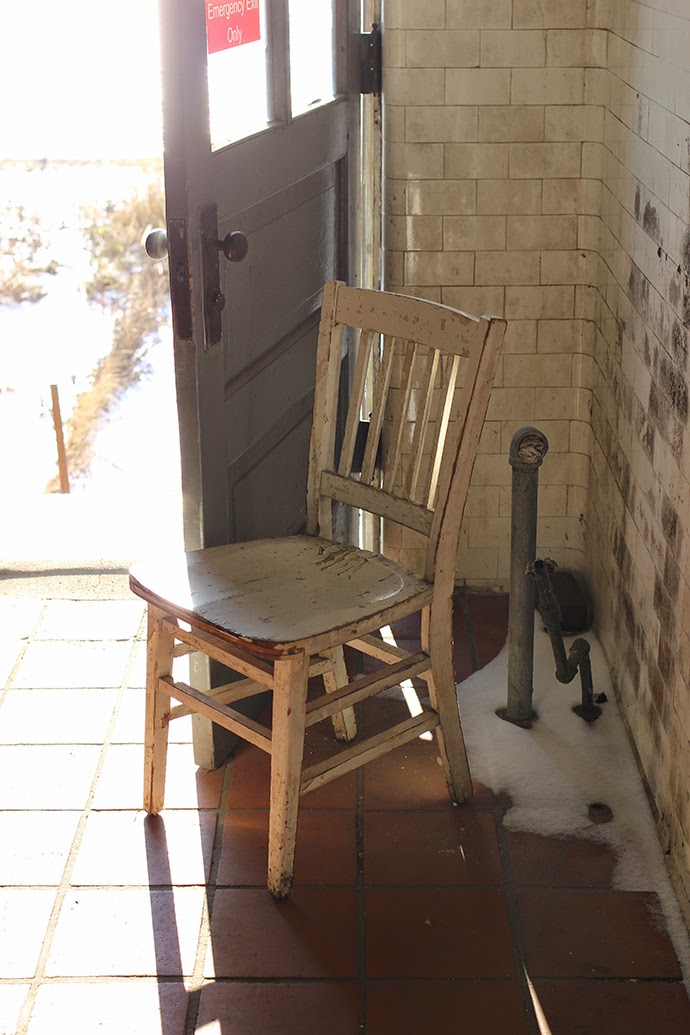
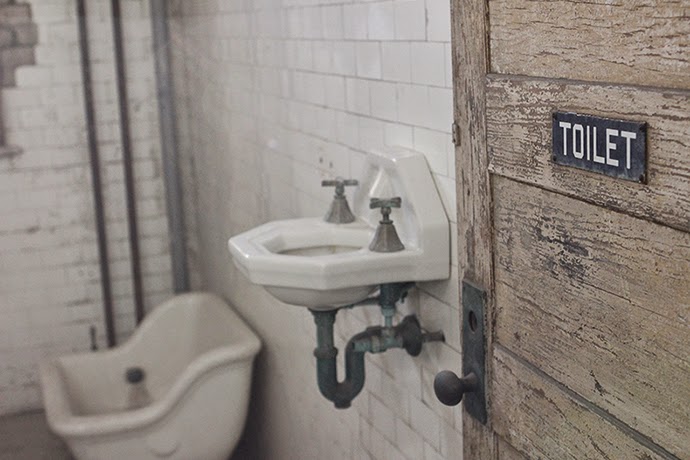
There wasn't much in the way of actual objects in any of the buildings, apart from toilets, sinks, cabinets and other fixtures that were still attached in some way but there's something about an empty chair in an abandoned space that strikes me as especially creepy. Furnishings of any kind help make a space feel lived in and make it easier to imagine what the place was like when it was operational.
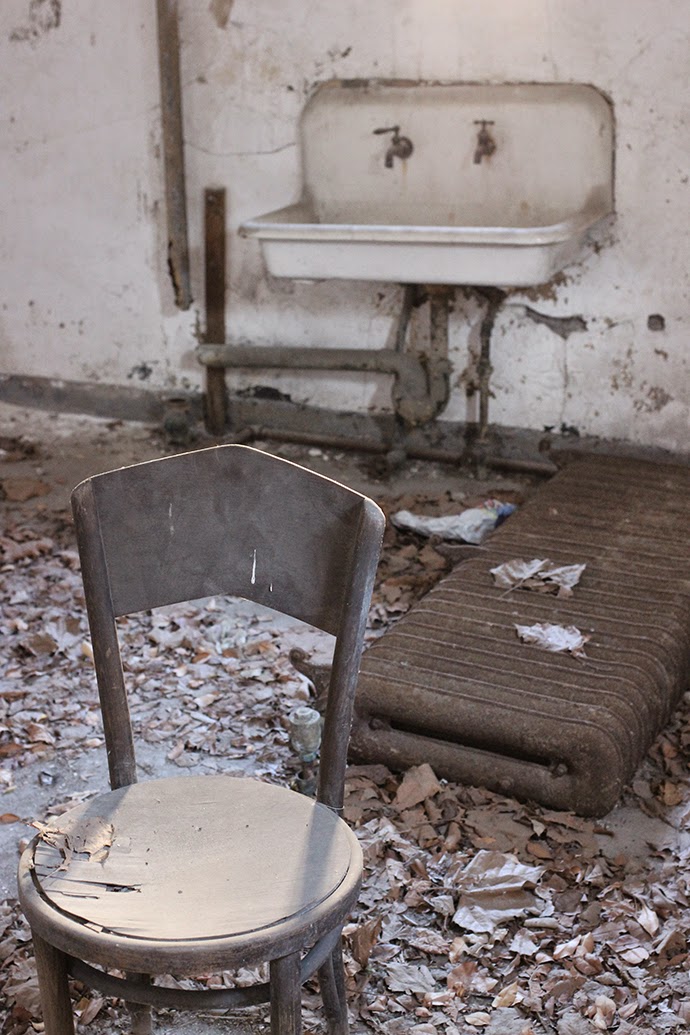
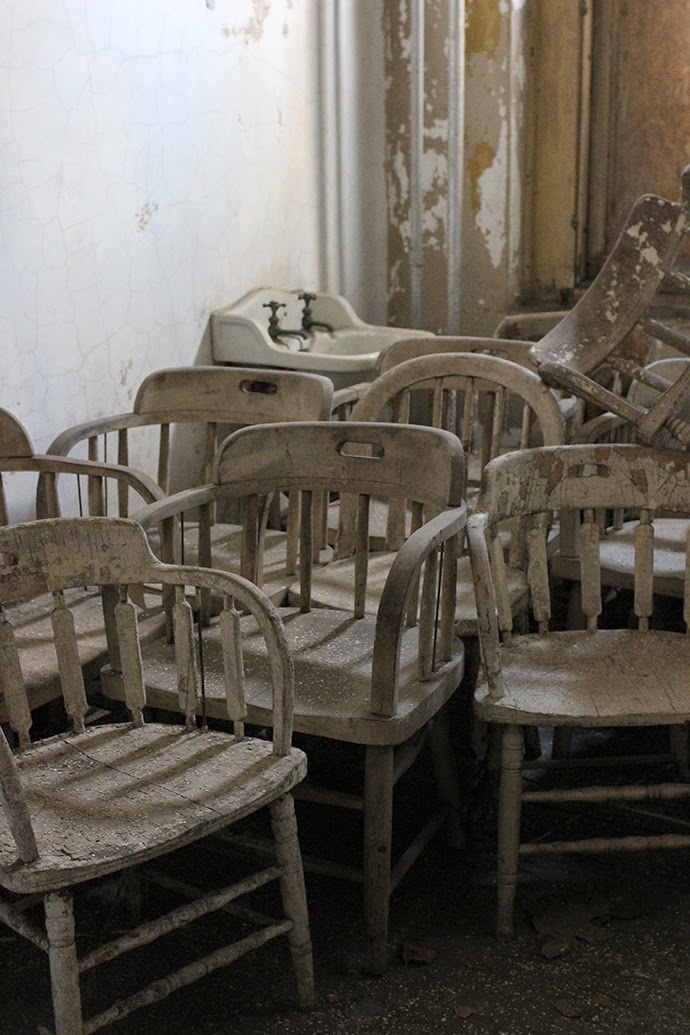
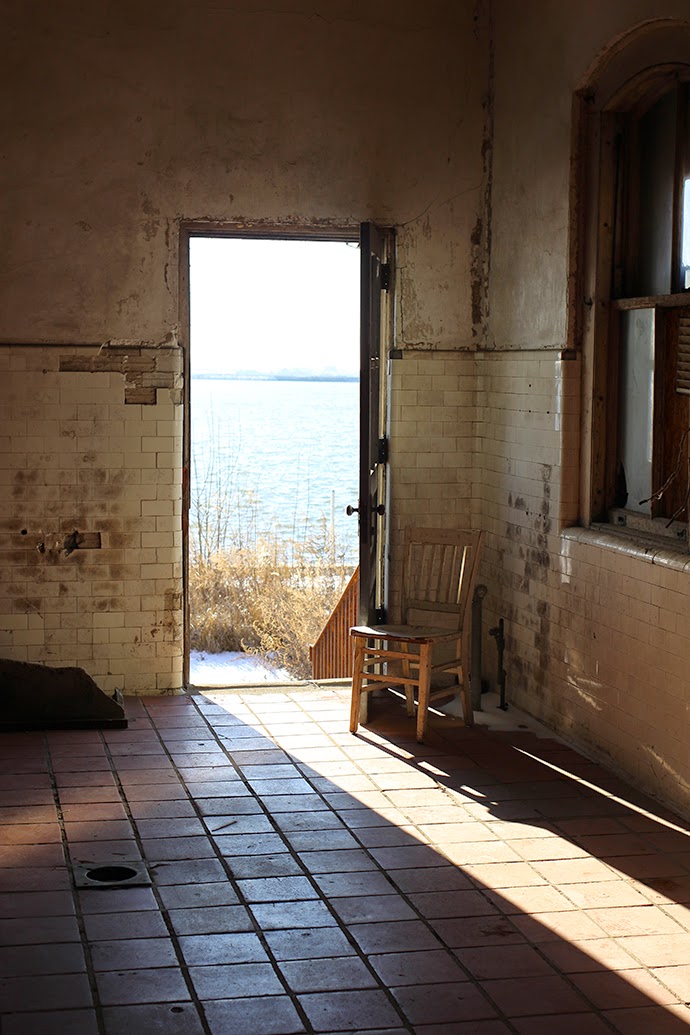
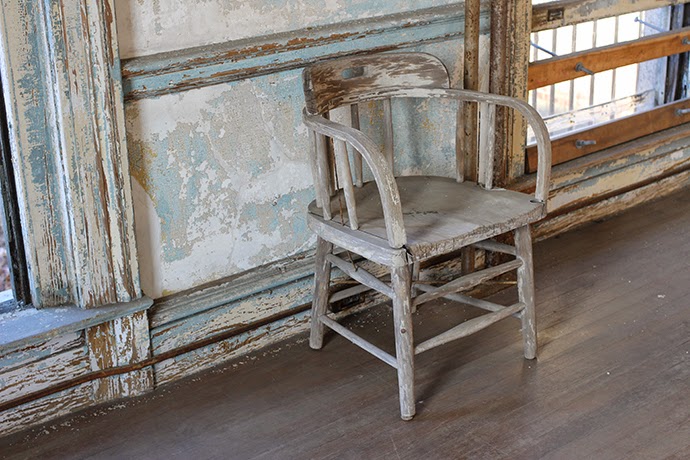
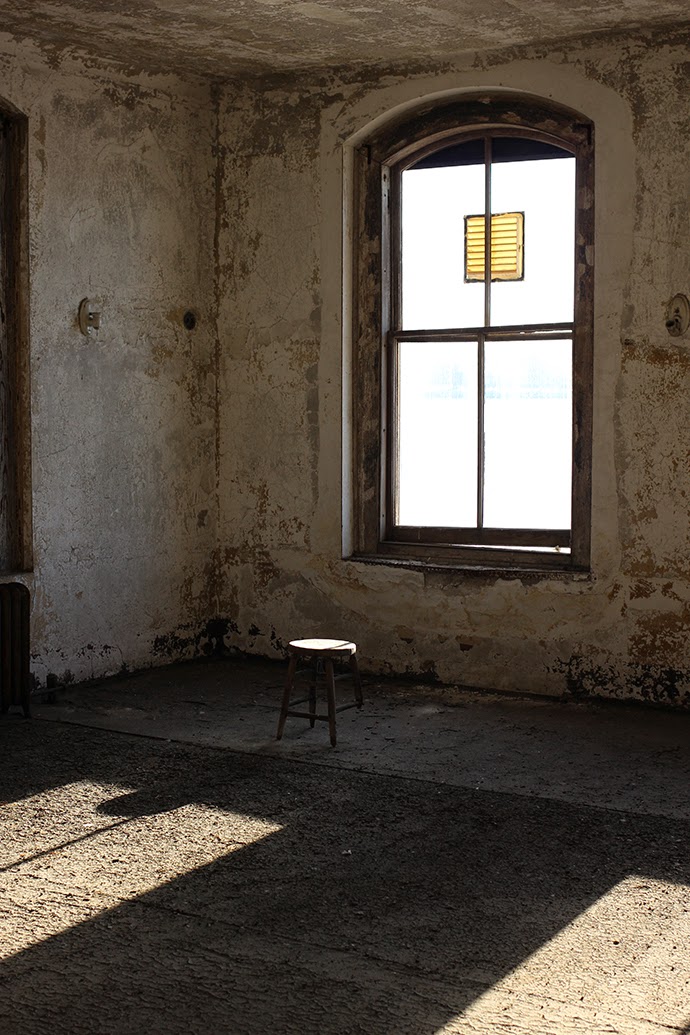

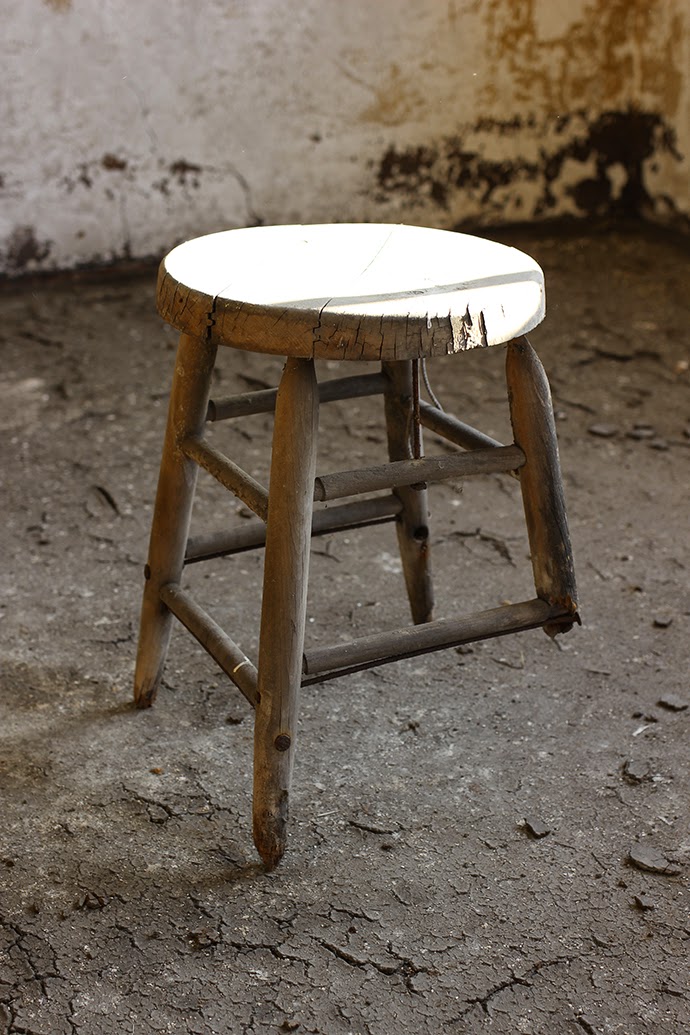
Some of the chairs felt purposeful, others felt tossed aside, but they always made me stop and look a little longer and a little differently than I might have in a completely empty space. Some even looked like they were just patiently waiting for their former occupants to return at any minute.
My favorite was actually a little stool—worn, cracked, covered in dust and missing half of one leg but still standing somewhat impossibly upright, basking in the bright sunlight.

Ellis Island Hospital: Part 1
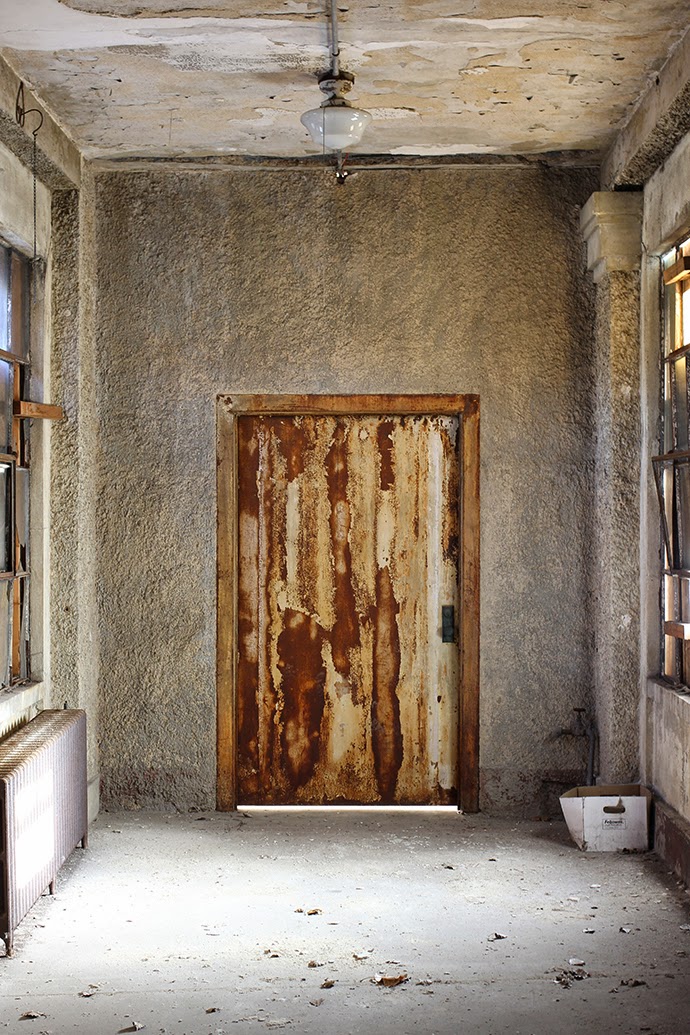
On Saturday Jim, Katie, Grace and I took a tour of the abandoned hospital complex on the south side of Ellis Island. I had booked our tickets the day they became available—back on balmy October 1st. Saturday was very cold, but brilliantly sunny, and I'm not exaggerating when I say that the tour was the best tour I've ever taken in my entire life.
This was due partly to us lucking into a private tour when the other people scheduled for our time never showed up, partly due to our incredibly knowledgable, friendly and all-around awesome tour-guide, and partly due to the fact that the buildings are in such a beautiful state of decay.
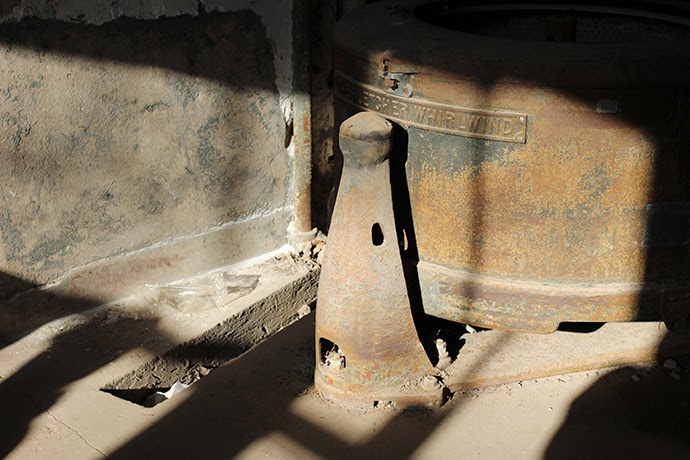
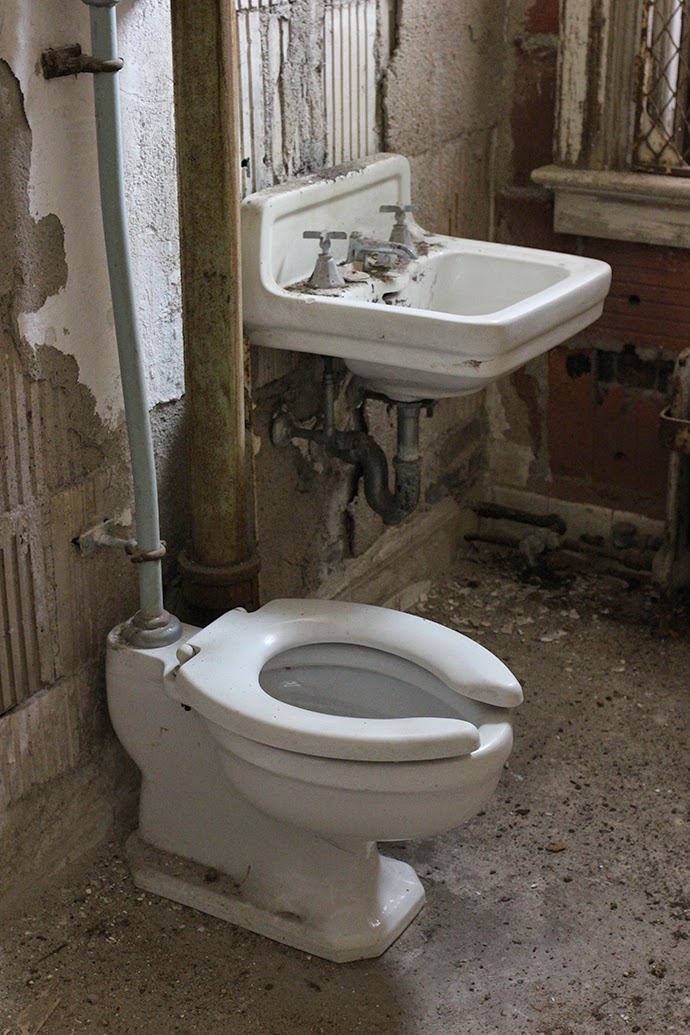

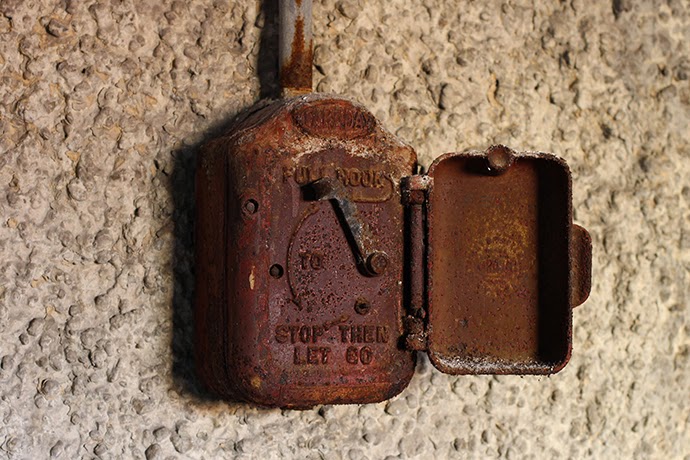
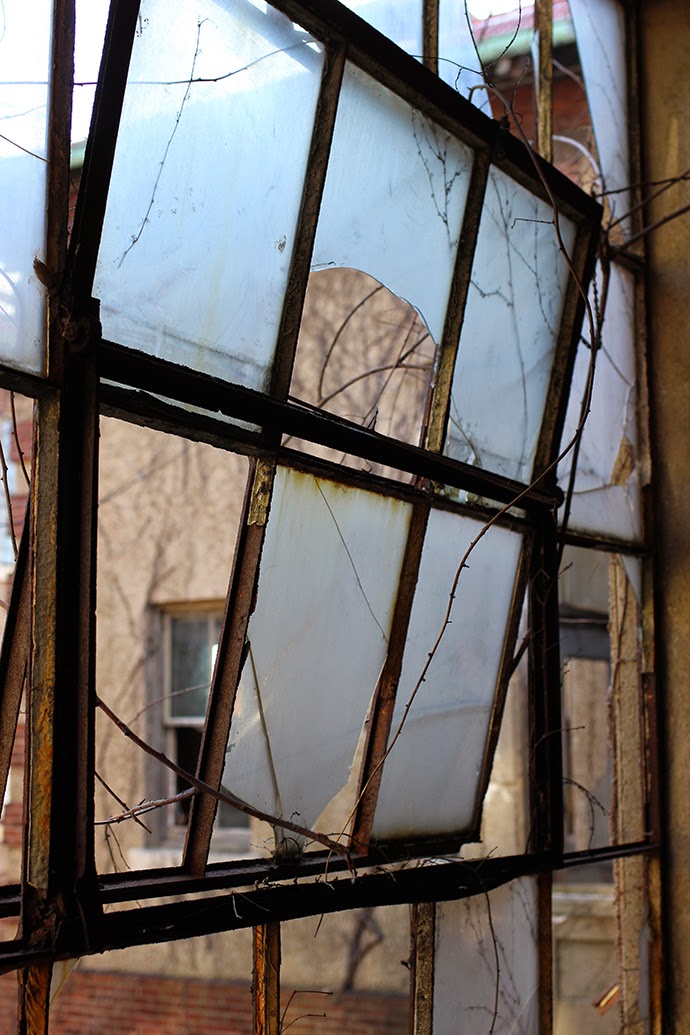
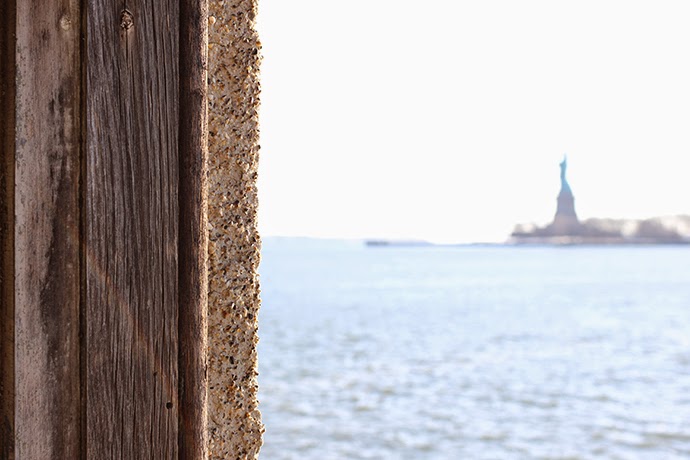
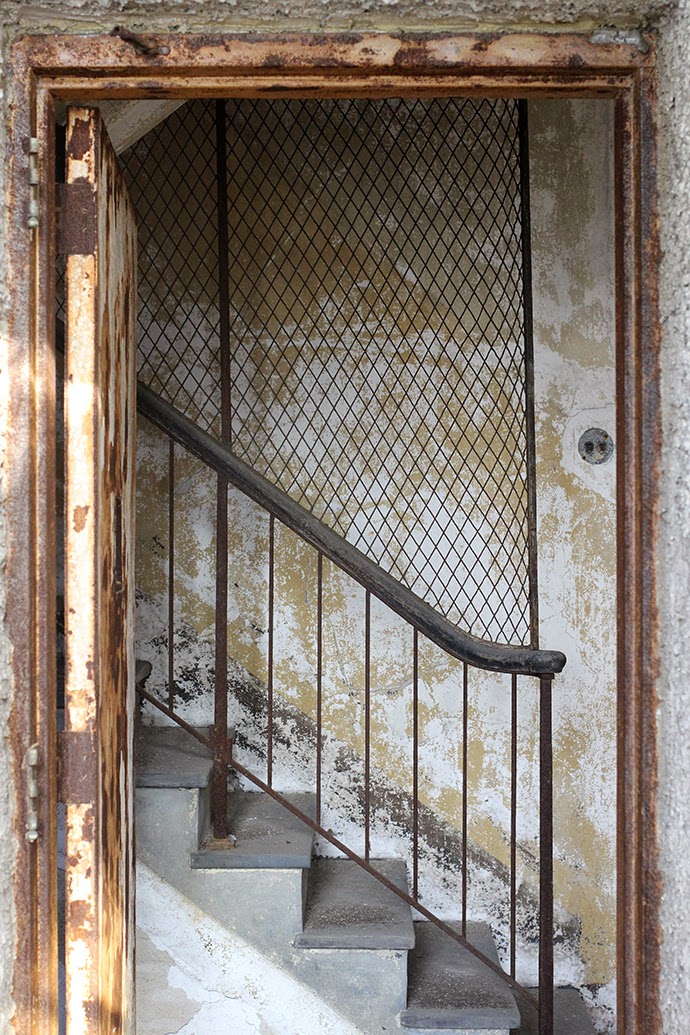
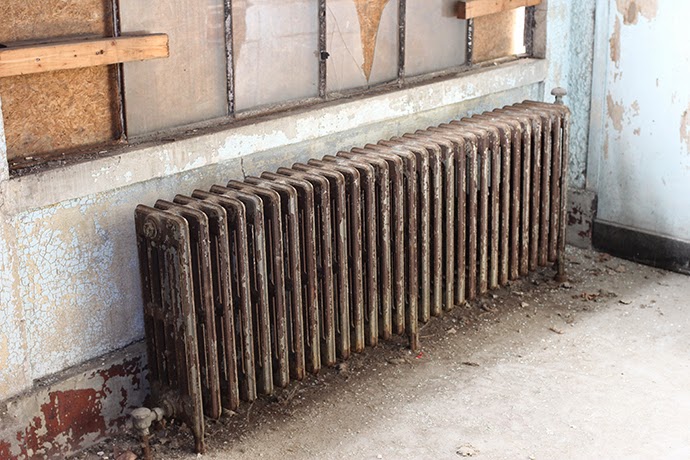
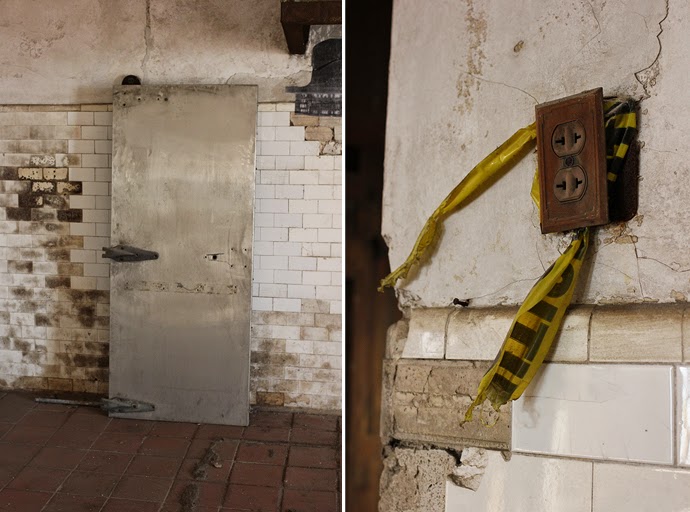
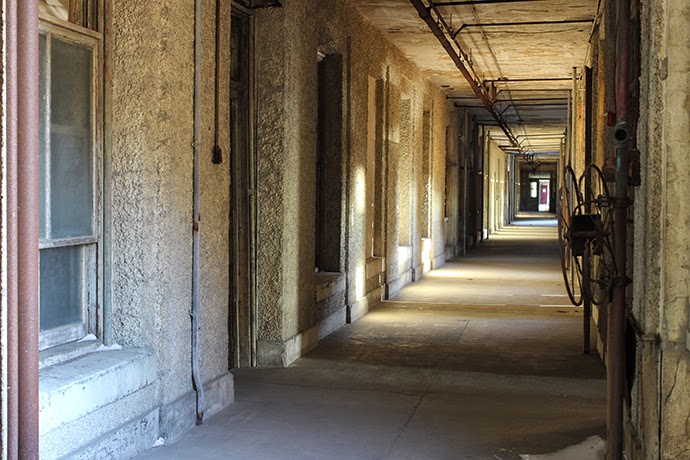
The sunlight streaming in from open doors, broken windows and holes in the ceilings made every single angle more interesting than the last and as usual I took more photos than I thought humanly possible. I have a few more posts planned for the grounds and a wonderful art installation that was sprinkled around the buildings, but these are my favorites from the interior spaces.
The complex reminded me so much of Eastern State Penitentiary, and as much as I adored our tour-guide, I do wish I had had free reign and more time to spend taking photos. It's probably better that I had some parameters, however, because I most definitely would have just never left.
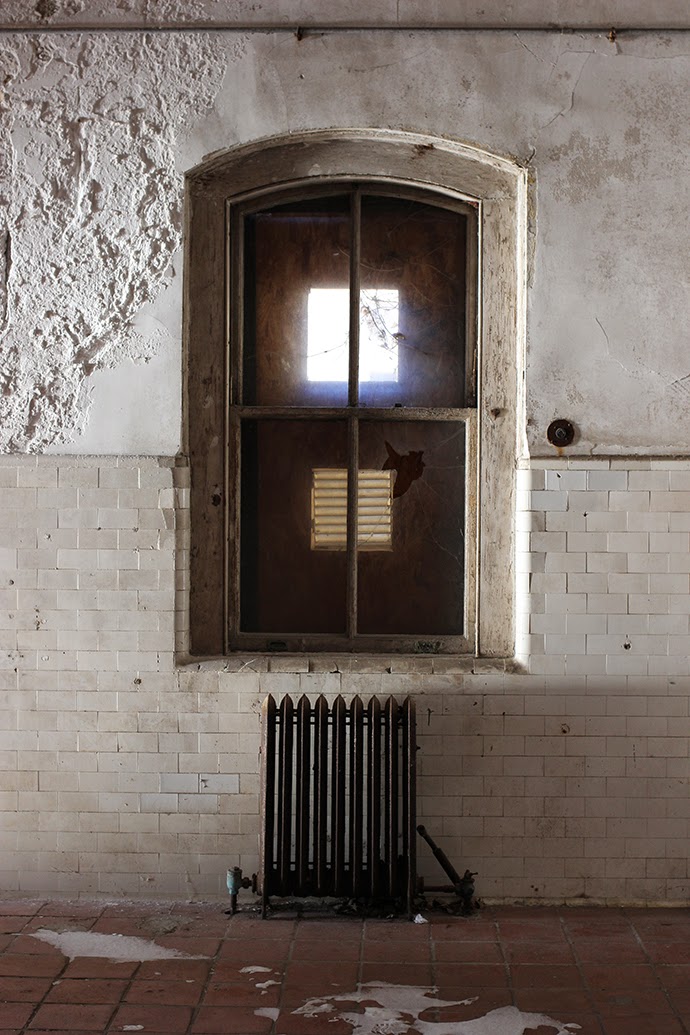
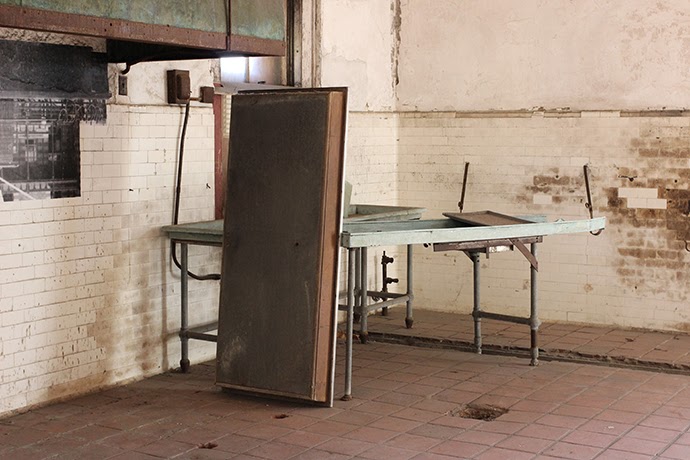
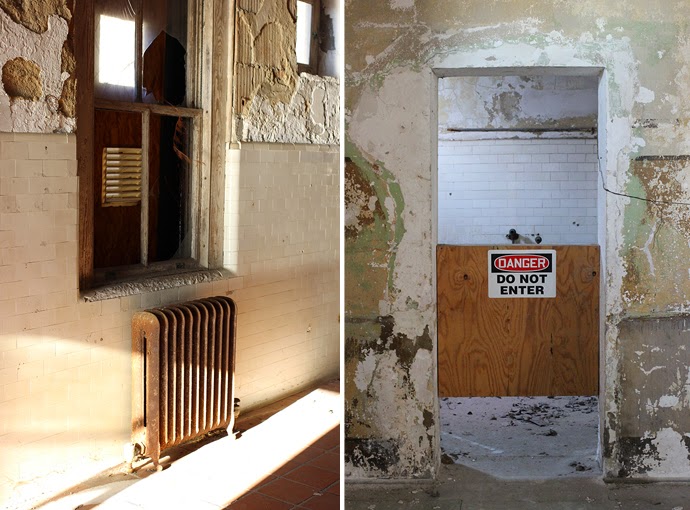
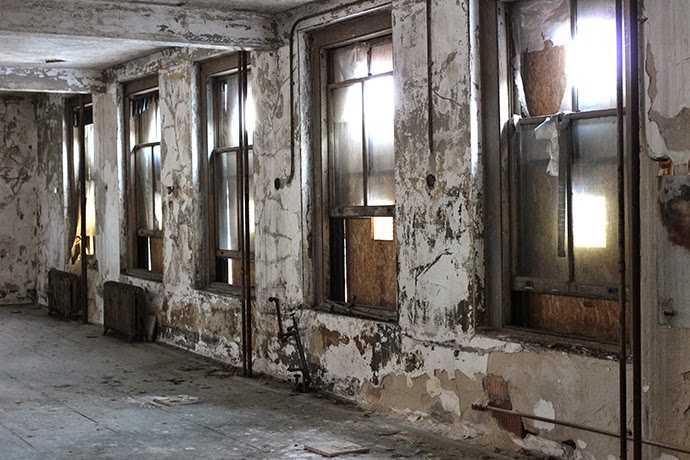
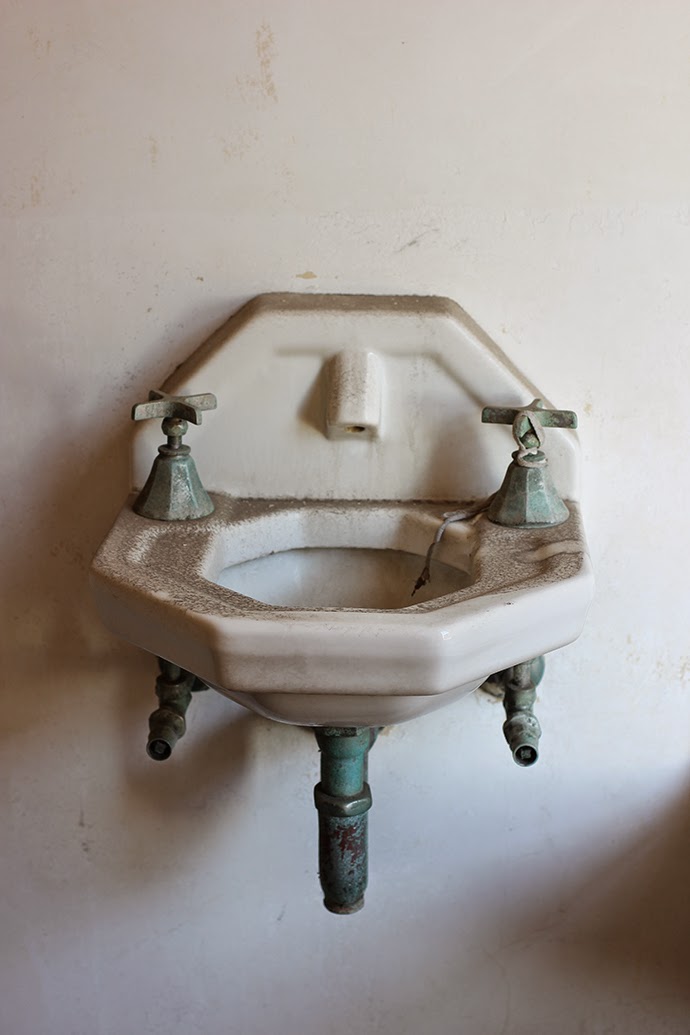
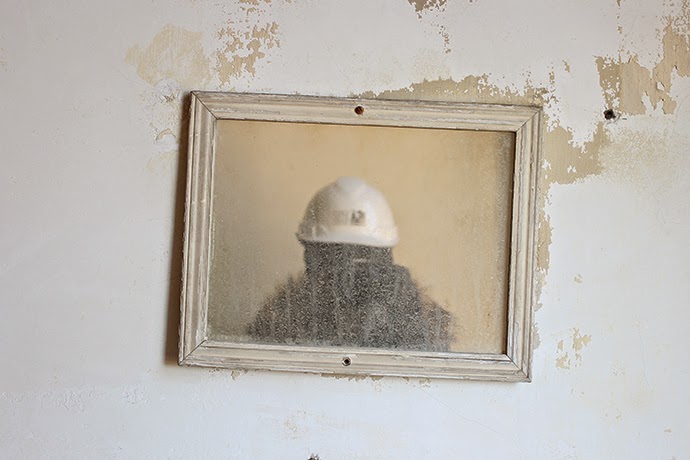
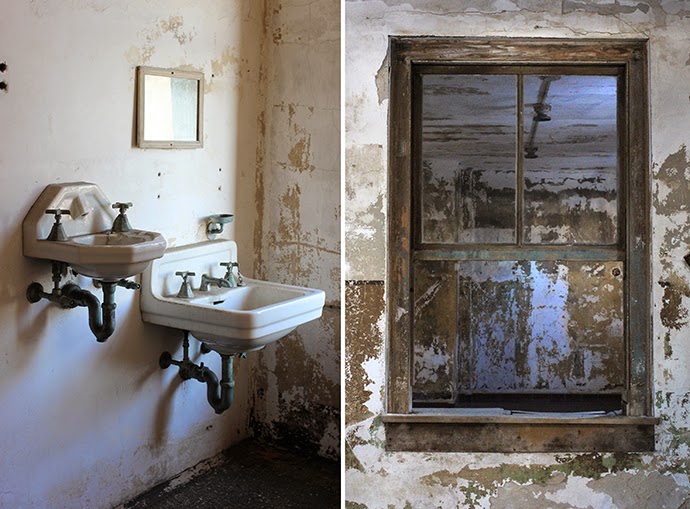
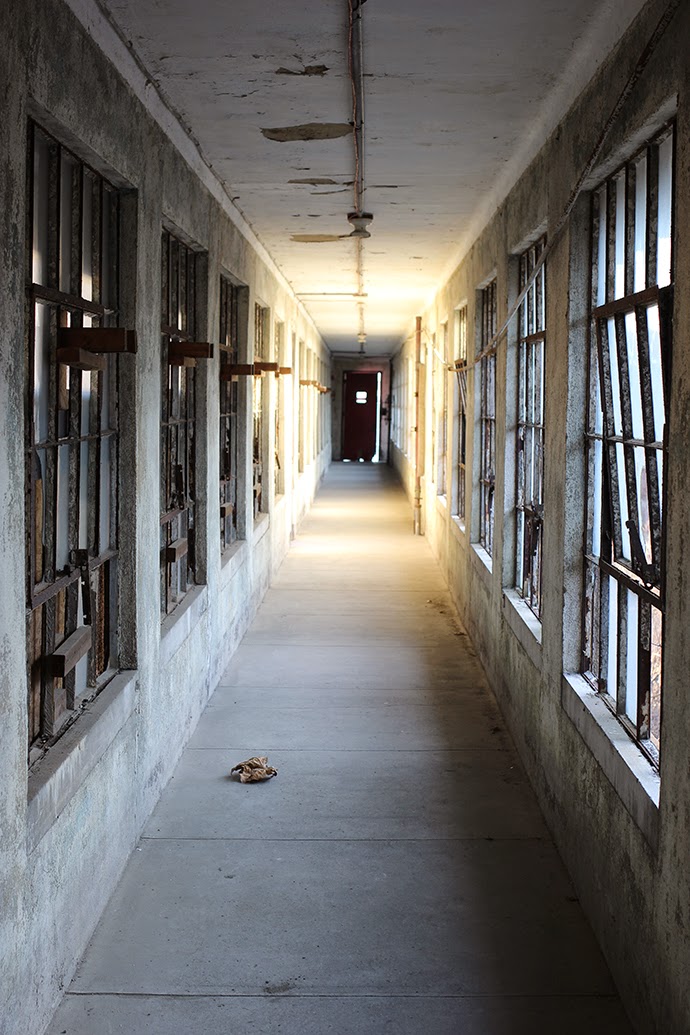
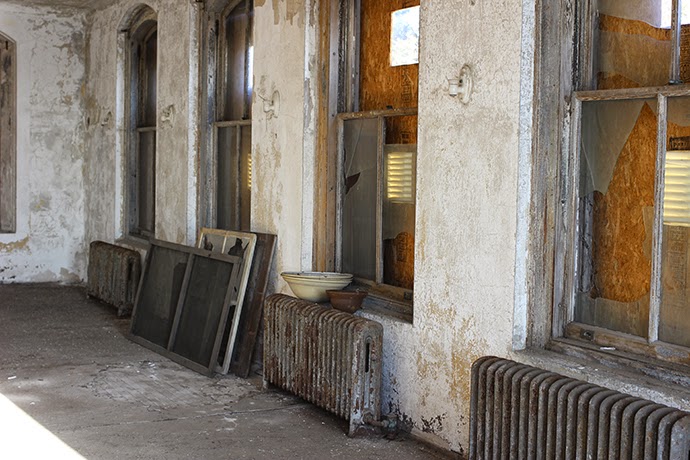
Our tour was long—even longer than the allotted 90 mins because our guide was that awesome—but I could have spent days inside of the crumbling autopsy room, mortuary, doctors' quarters, laundry, infectious disease wards and all of the other fascinating corridors winding around the island.
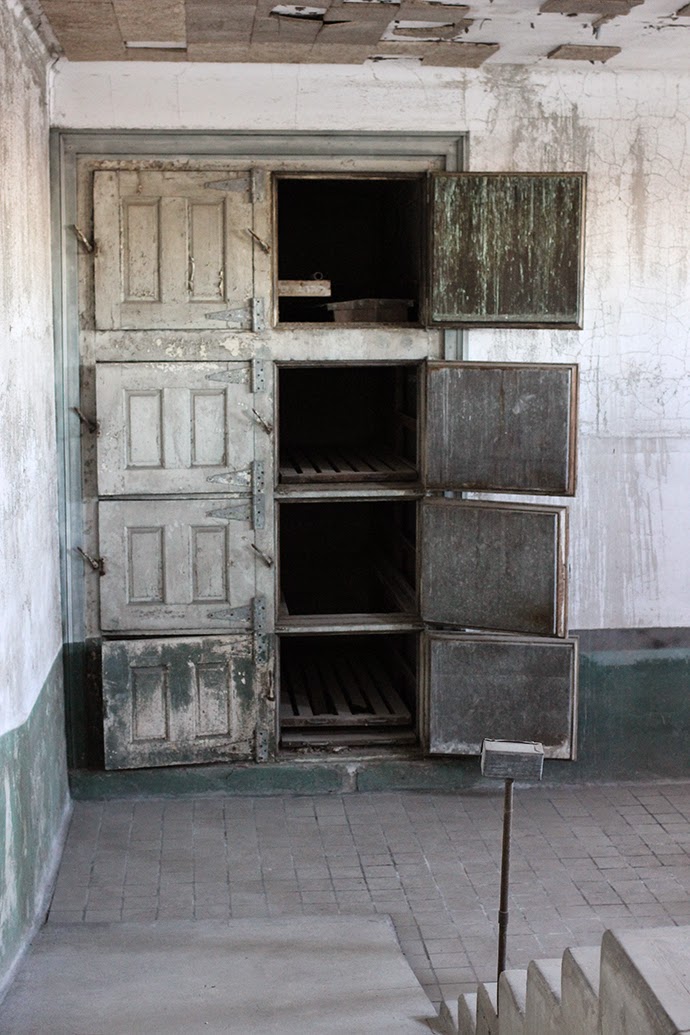
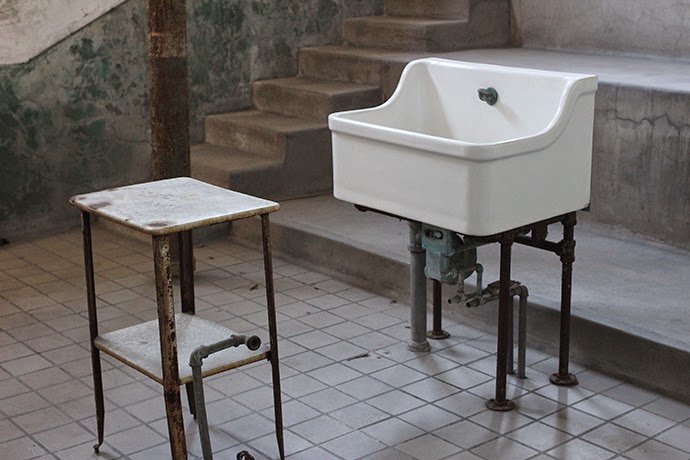
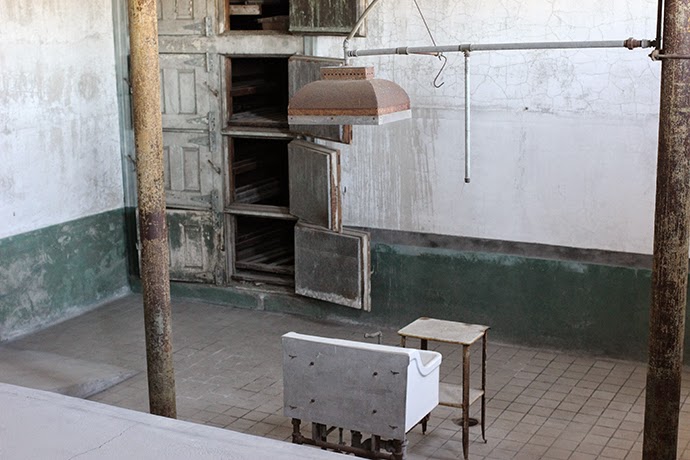
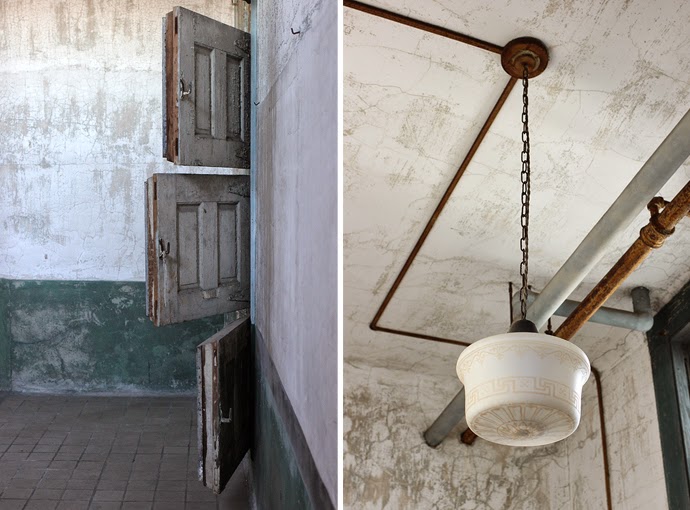
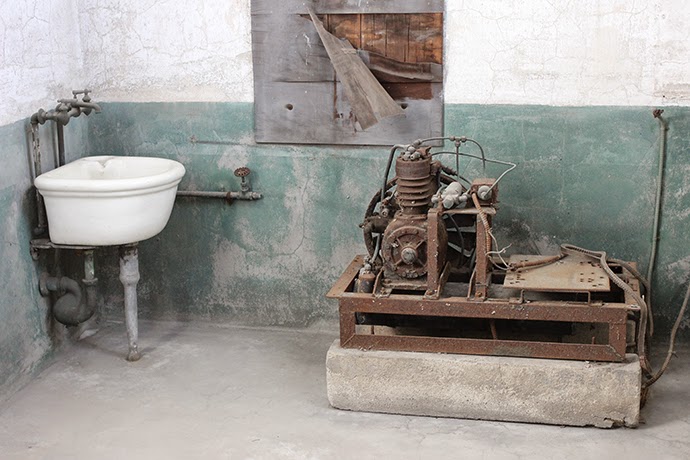
Surprising no one, my favorite room was the autopsy room with its four huge body freezers, sinks, lights and theater-like set-up. Ellis Island was a state-of-the-art medical facility and teaching hospital in its heyday and was one of the largest public health hospitals in the US.
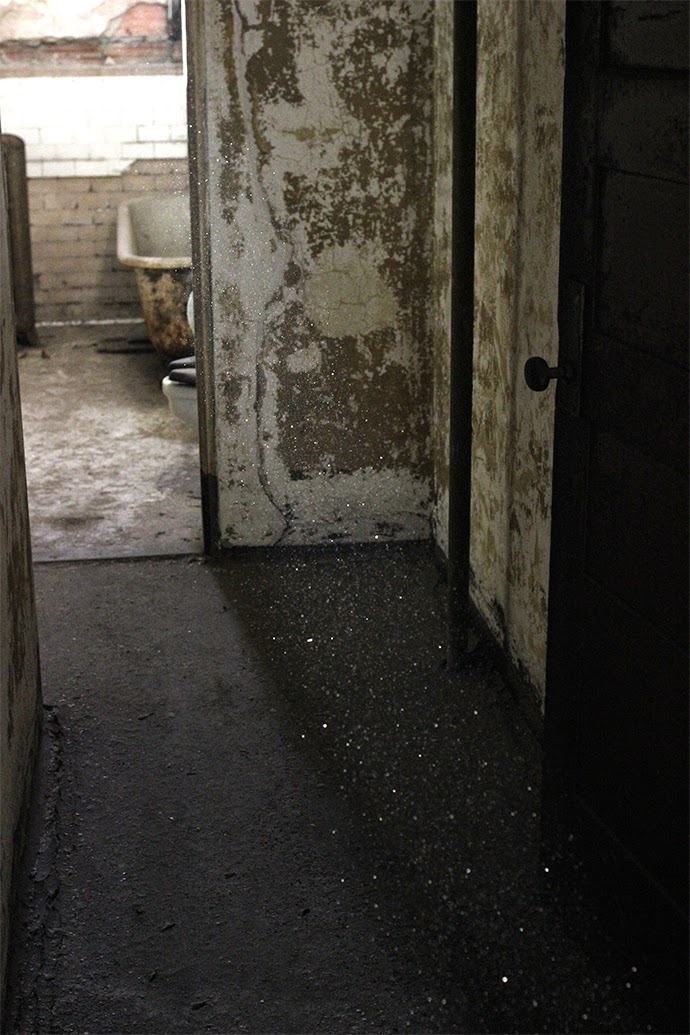
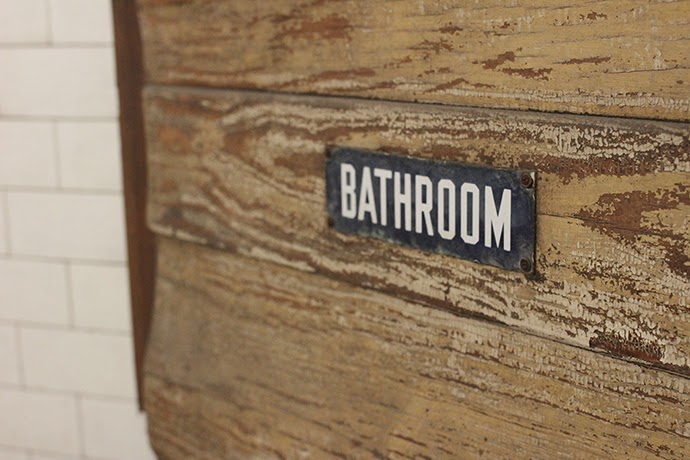
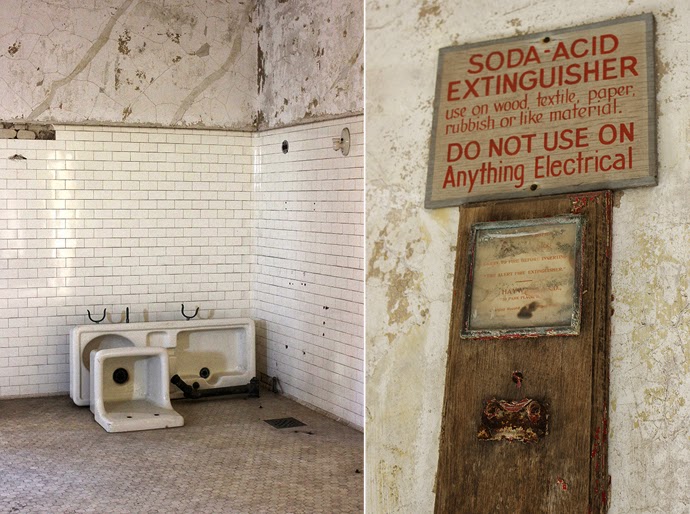
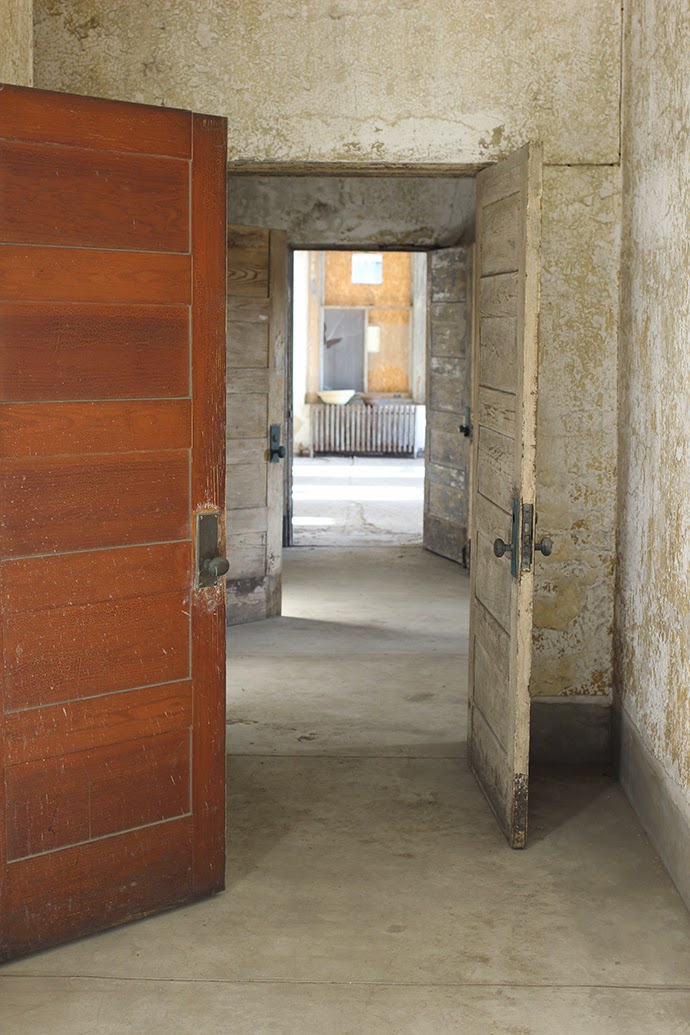
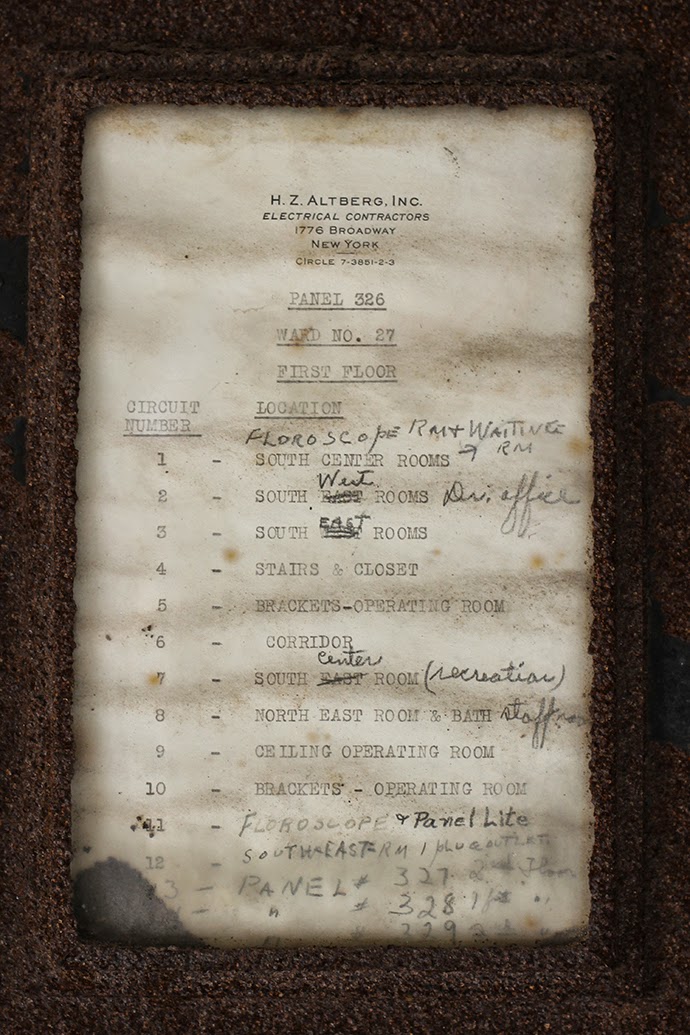
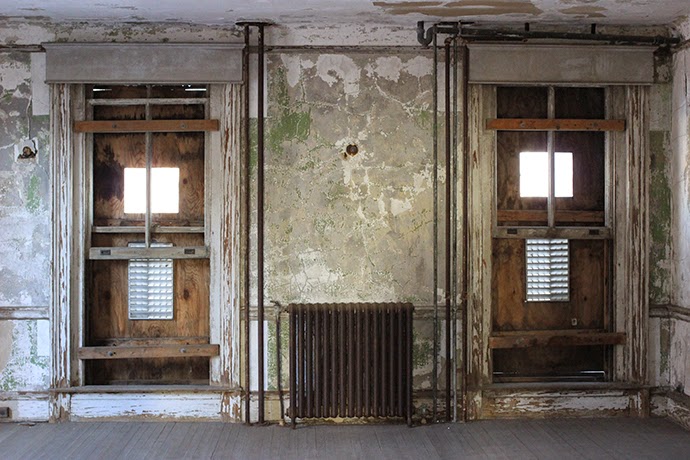
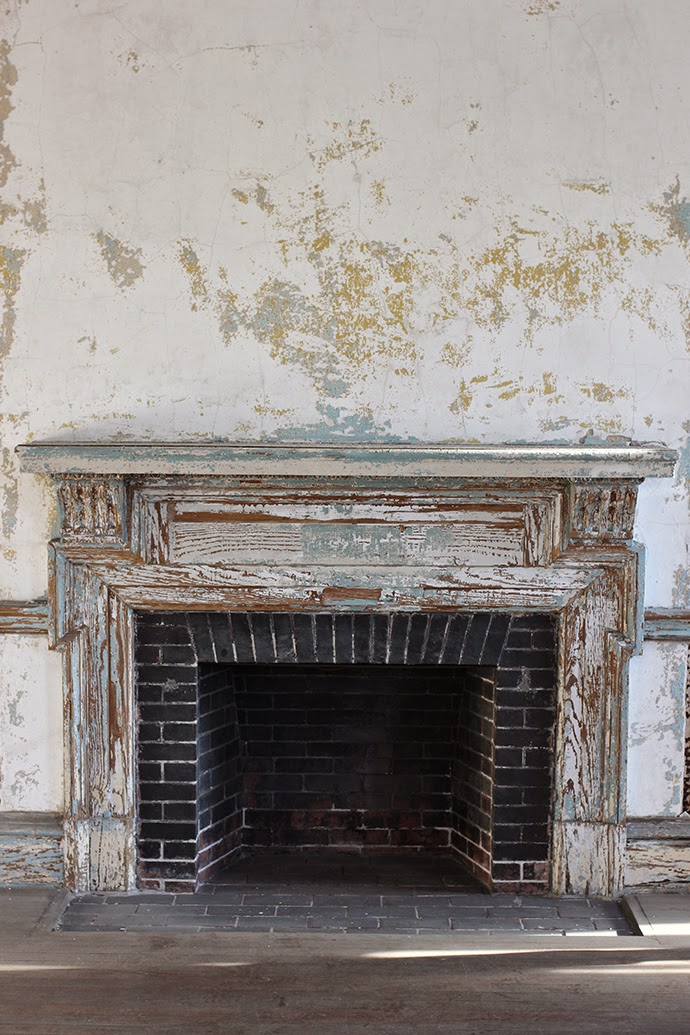
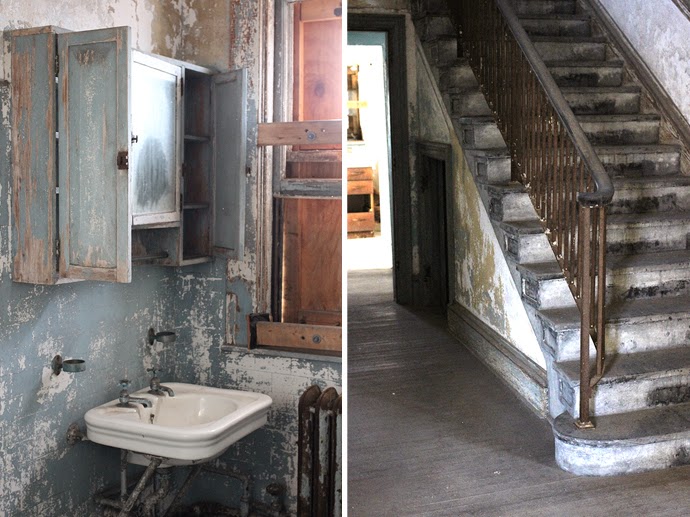
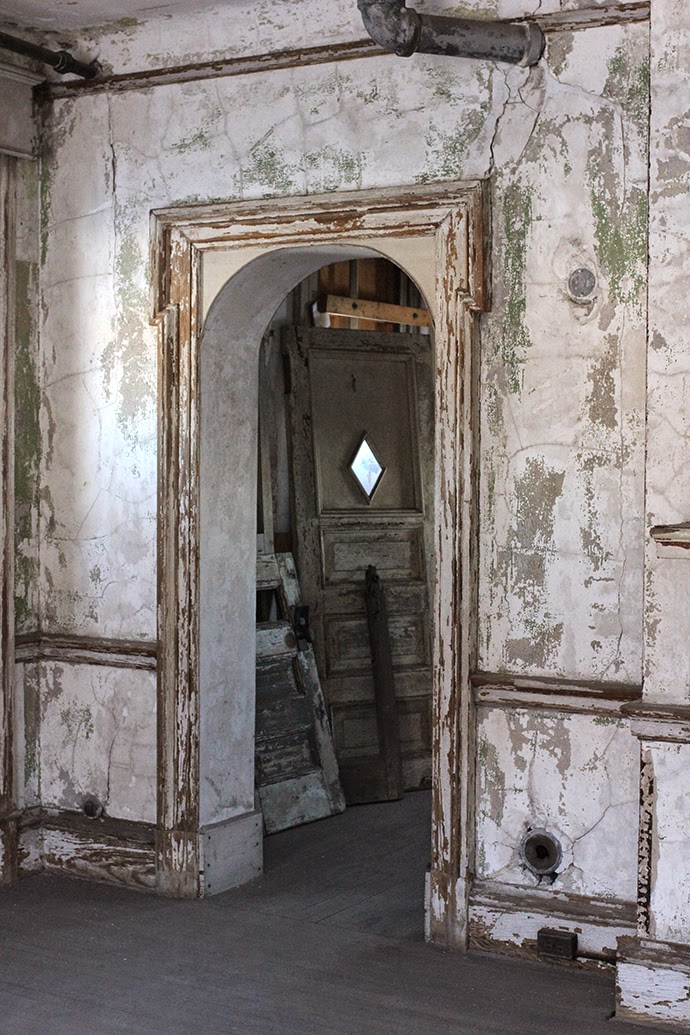
In 1930 the hospital closed, and the entire complex was abandoned in 1954—this is the first time that the public has ever been allowed to tour the buildings. Some of the complex is still far too unstable to allow visitors and everyone must sign a waiver and wear a hardhat before beginning the tour.
I would absolutely take the tour again in a heartbeat. Even if the ticket price might seem pricey ($43), all of that money goes to Save Ellis Island, a group whose mission it is to help protect and preserve the historic hospital complex.

Eastern State Penitentiary: Part 2
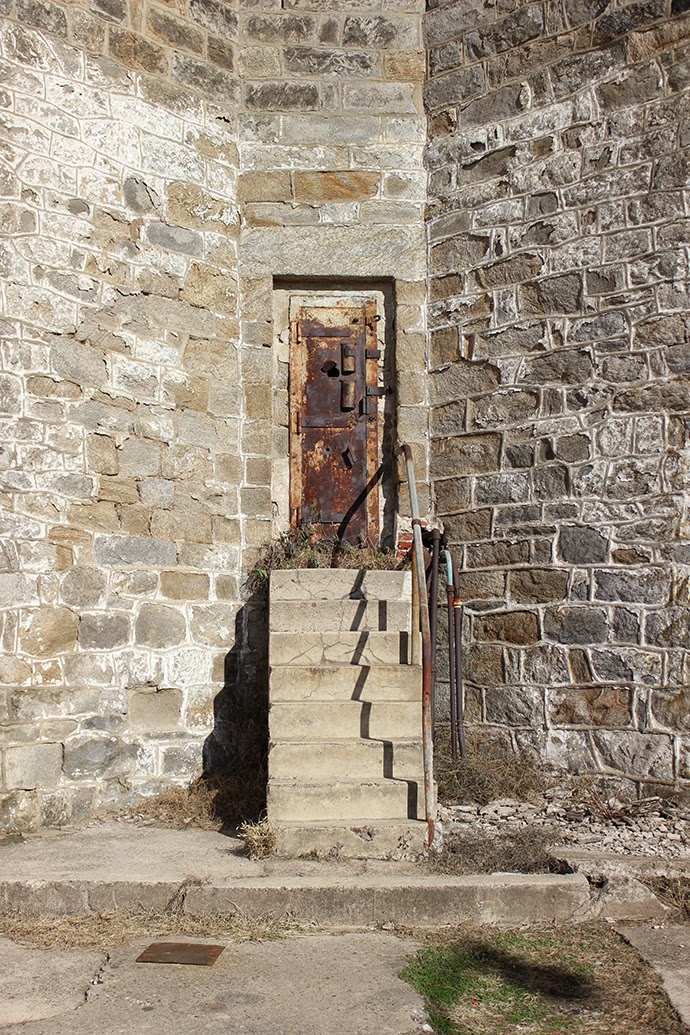
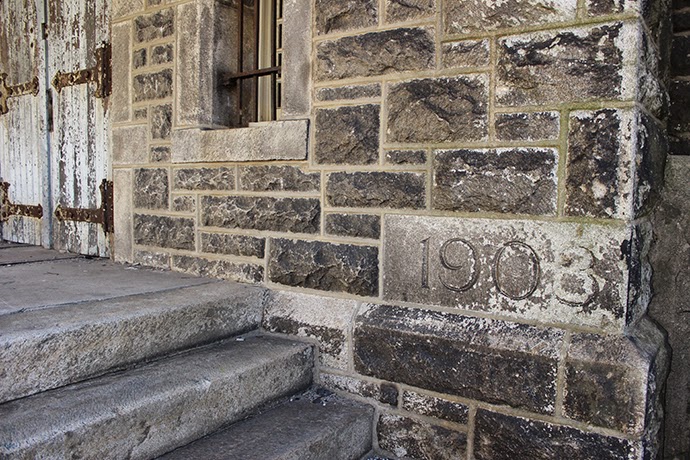
Last week I shared some of my photos from the crumbling interior of the Eastern State Penitentiary in Philadelphia. ESP was operational from 1829 until 1971, was designed by John Haviland and was the largest and most expensive public structure ever constructed.
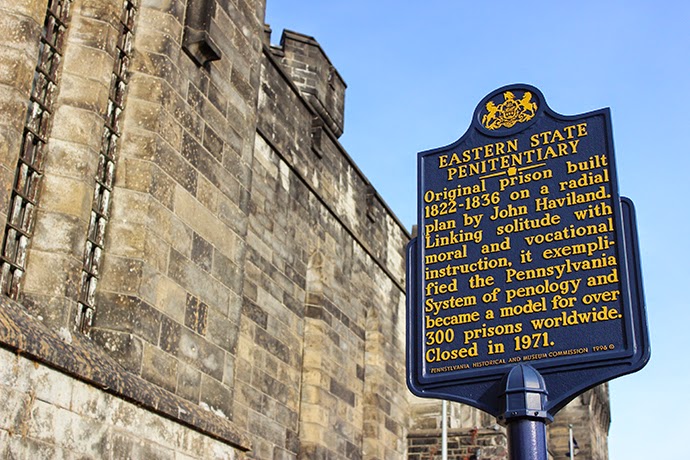
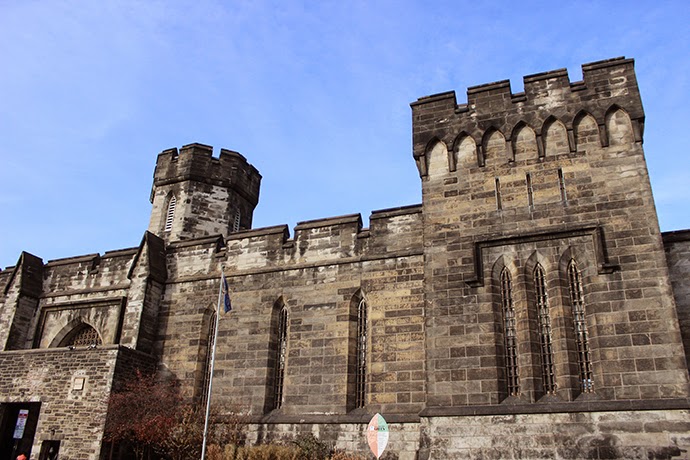
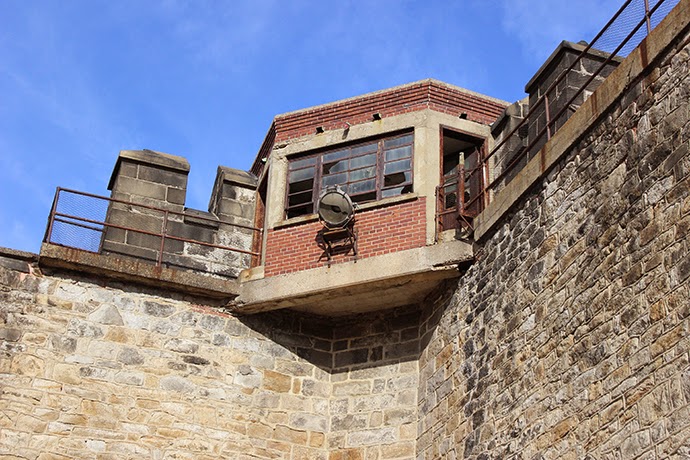
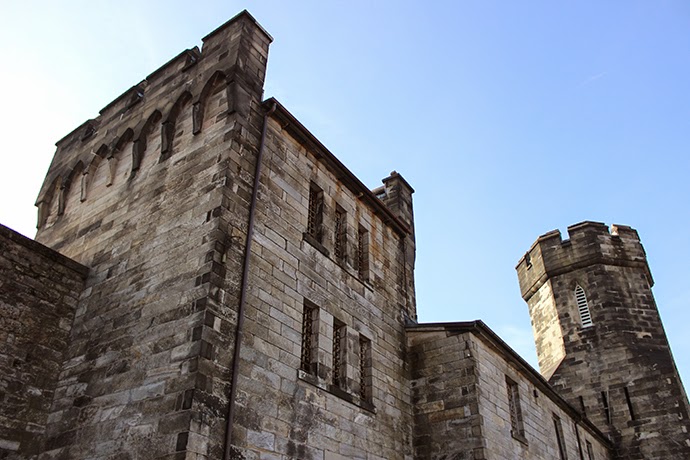
It sits in the Fairmount section of Philadelphia, and looks completely out of place nestled in a neighborhood of coffee shops and row houses. Some of the most interesting stories on the audio tour were about ESP's famous inmates, notably Al Capone and "Slick" Willie Sutton. Slick Willie was one of twelve inmates who escaped via a tunnel in April of 1945. Eleven of them were eventually recaptured and one—James Grace—even asked to be let back in.
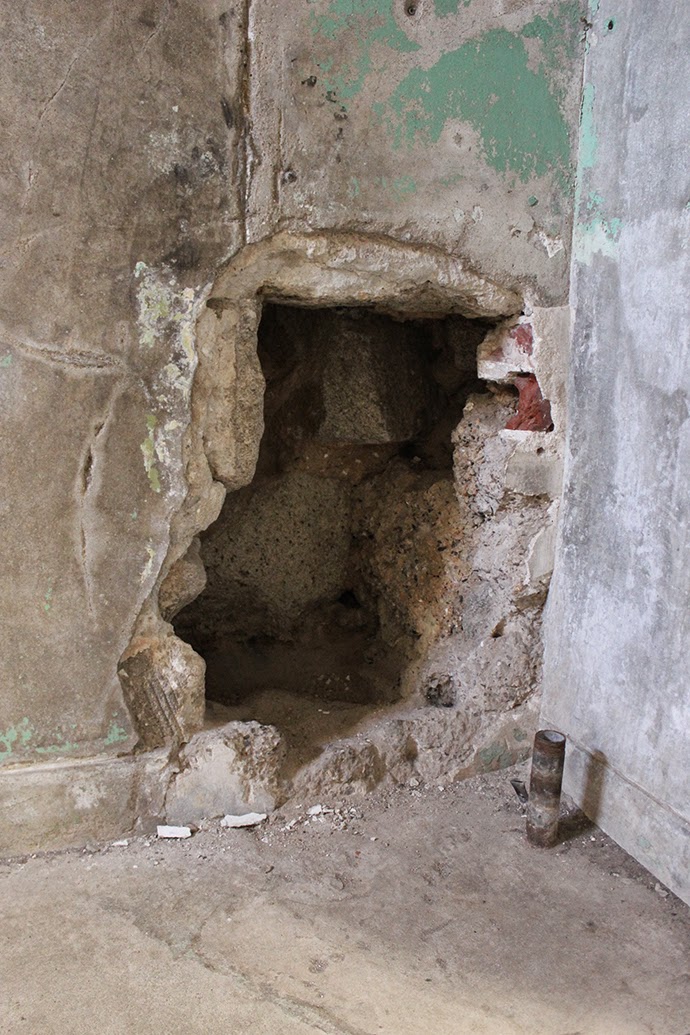
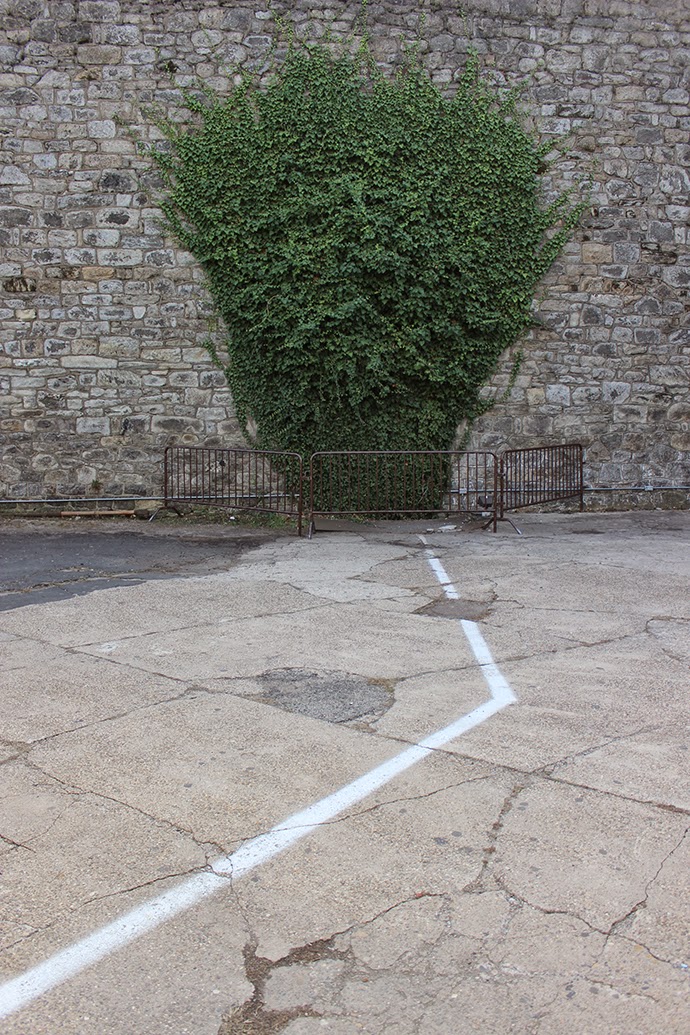
The tunnel has recently been excavated (after being filled in following the escape) and you can actually walk inside of the cell and see the opening. A line on the pavement outside traces the tunnel's route, under the ground and past the outside walls.
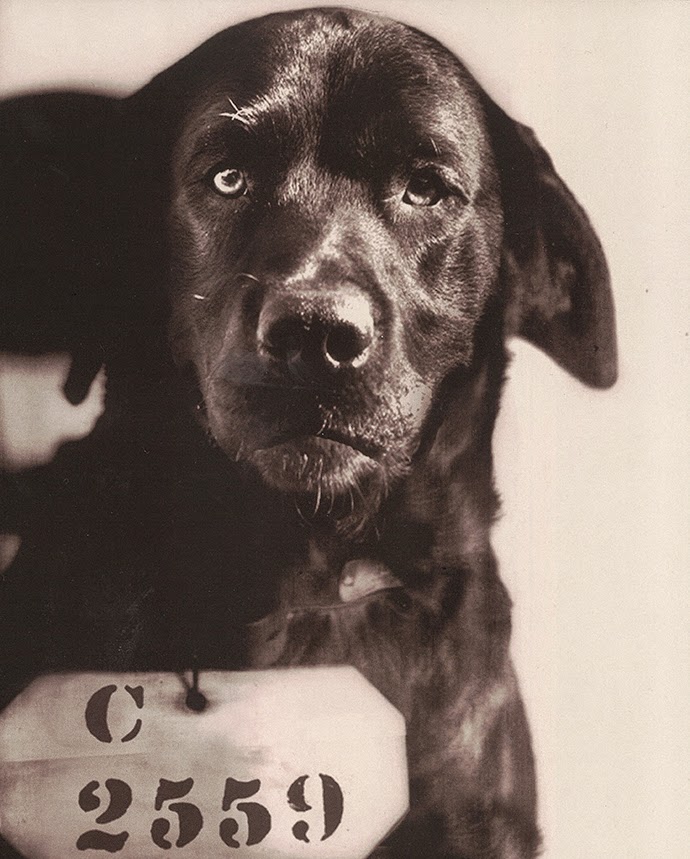
ESP is filled with fascinating stories like this, but my favorite inmate is definitely Pep the dog. In 1924, Pep was sentenced to life in prison for killing the Pennsylvania Governor's cat—or at least that's what a newspaper reporter wrote at the time. The real story is slightly less dramatic, and has Pep being sent to the prison to help rehabilitate prisoners (and because he was chewing on the Governor's couch cushions). Either way, there is a mugshot of Pep, which is pretty fantastic.
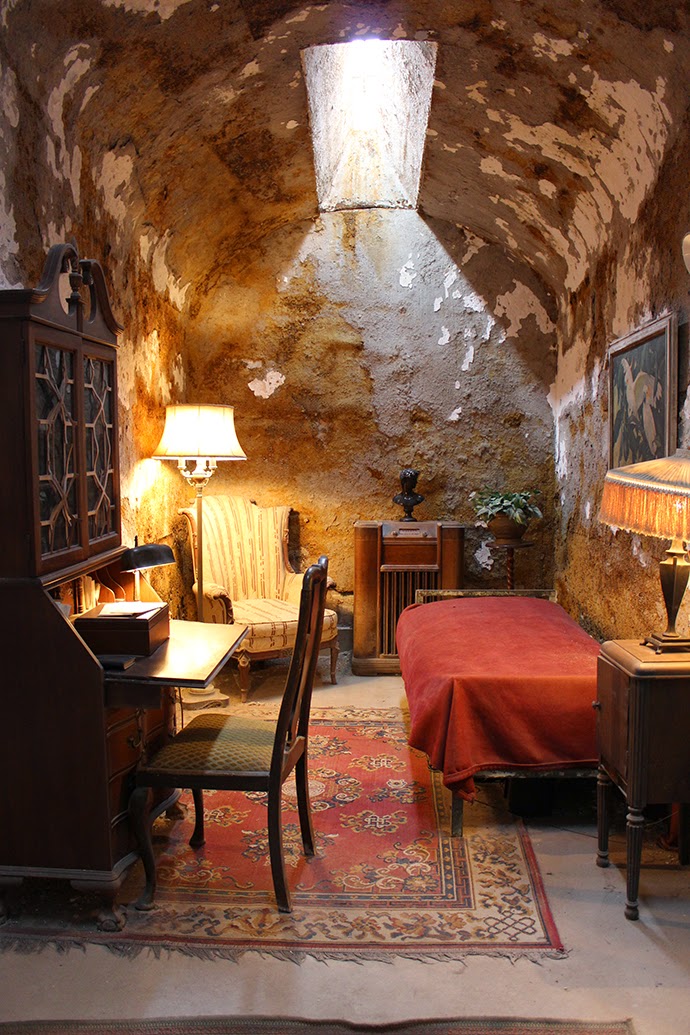
ESP's most famous prisoner, however, is probably Al Capone, who spent 8 months at Eastern State in 1929-1930. They've recreated his cell as it looked when he was there, complete with fancy furniture, an oriental rug, soft lighting, artwork and a radio.
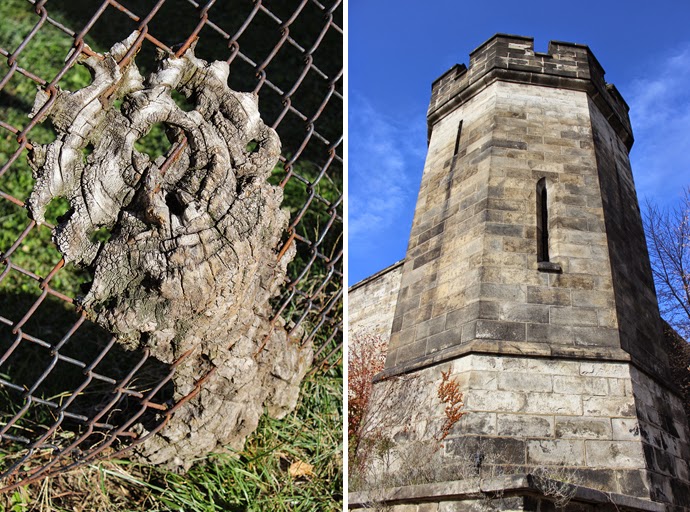
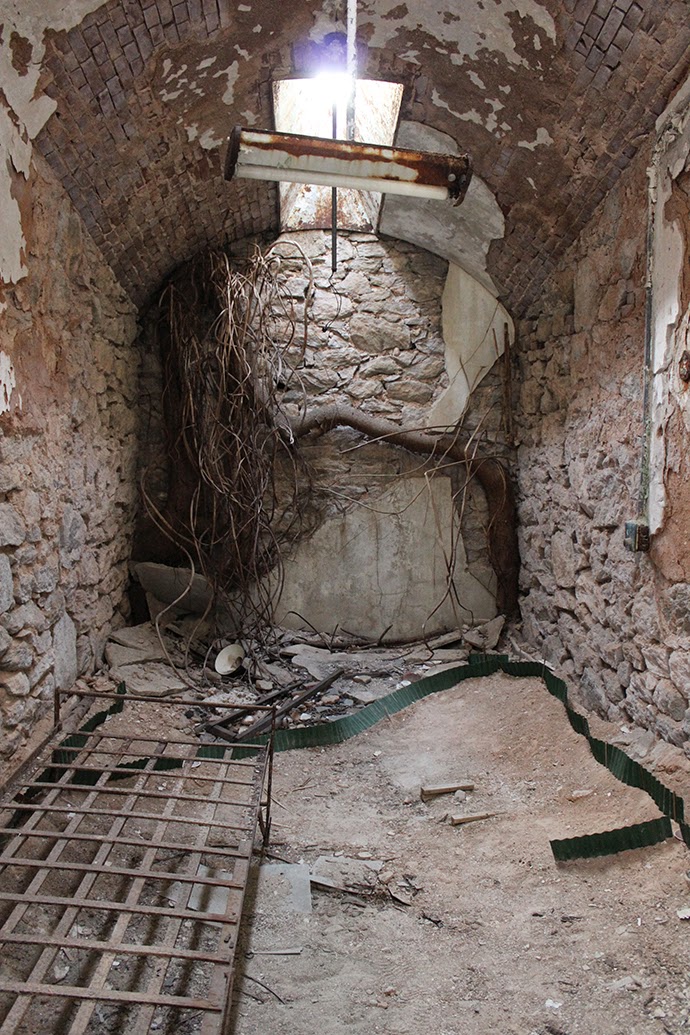
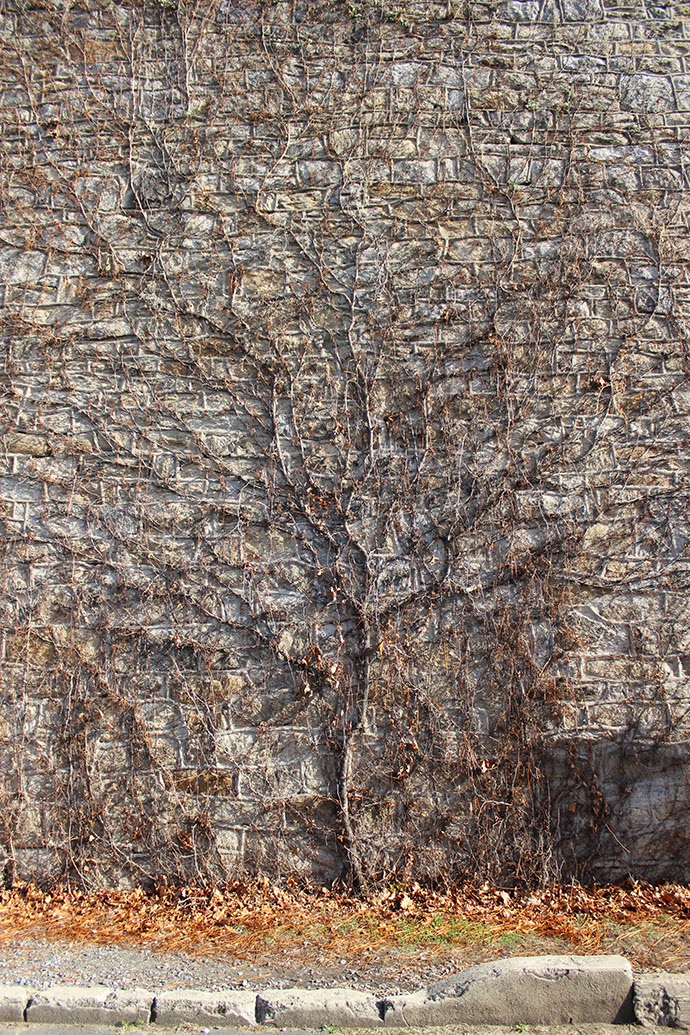
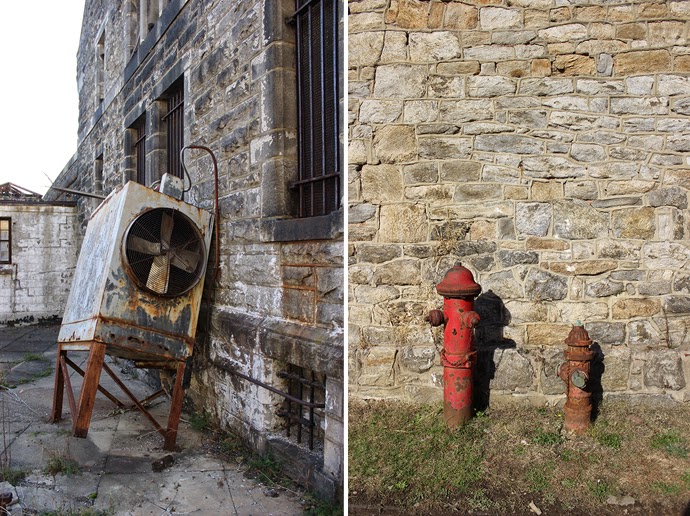
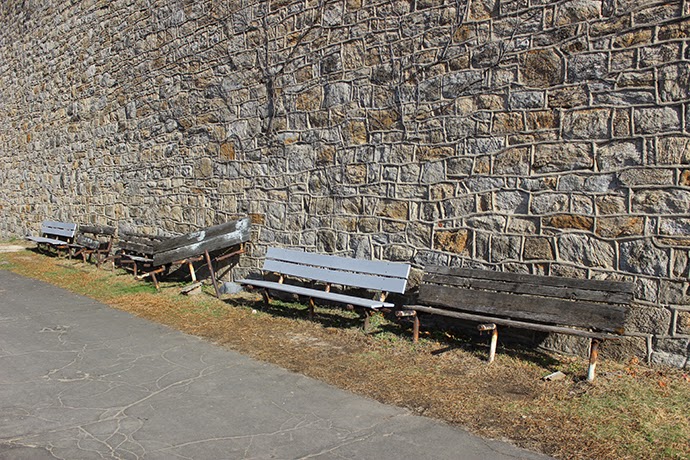
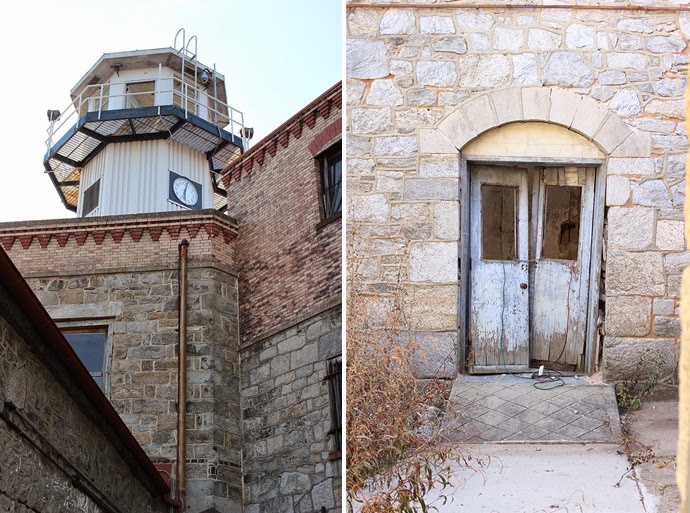
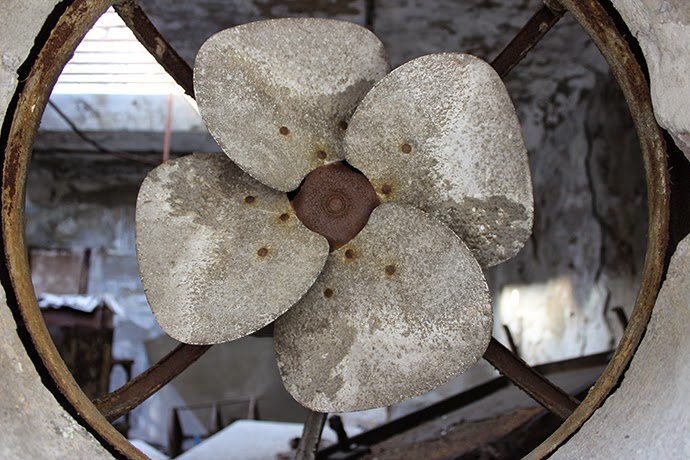
Another cell even has a full-sized tree growing through the wall, and it continues into the neighboring cell. There is so much history at Eastern State and there was something fascinating in every single corner I peeked into. The day I went was beautiful and sunny, and you get to wander the grounds as freely as you do the interior. I hesitate to say that I thoroughly enjoyed being inside of a prison, but even if I was sad to leave, I'm glad I at least had the option.

Eastern State Penitentiary: Part 1
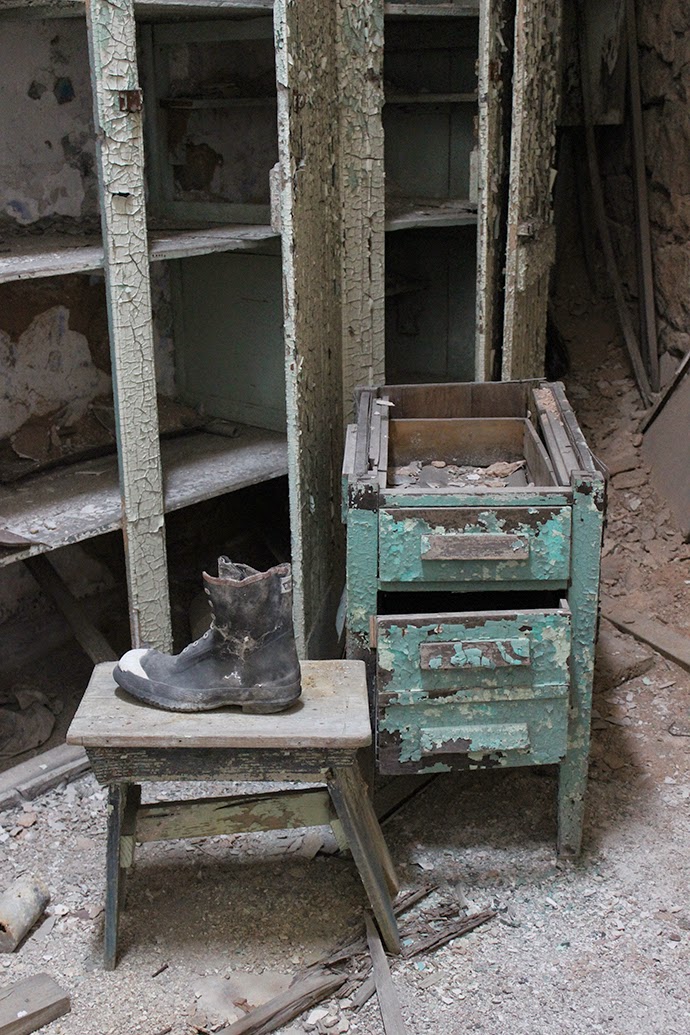
A few weeks ago my friend Jim and I went to Philadelphia for the weekend. I had never been before, but I had been planning a trip for many years so we had a very full agenda. Number one destination on my list was the Mütter Museum, followed closely by Eastern State Penitentiary. I had been to the Mansfield State Reformatory back when I lived in Ohio, and absolutely loved it. I always heard ESP described as similar to Mansfield but with even more historical significance. It would be very difficult to pick which one I liked more—since they were both amazing—but I will say that ESP managed to exceed even my high expectations.
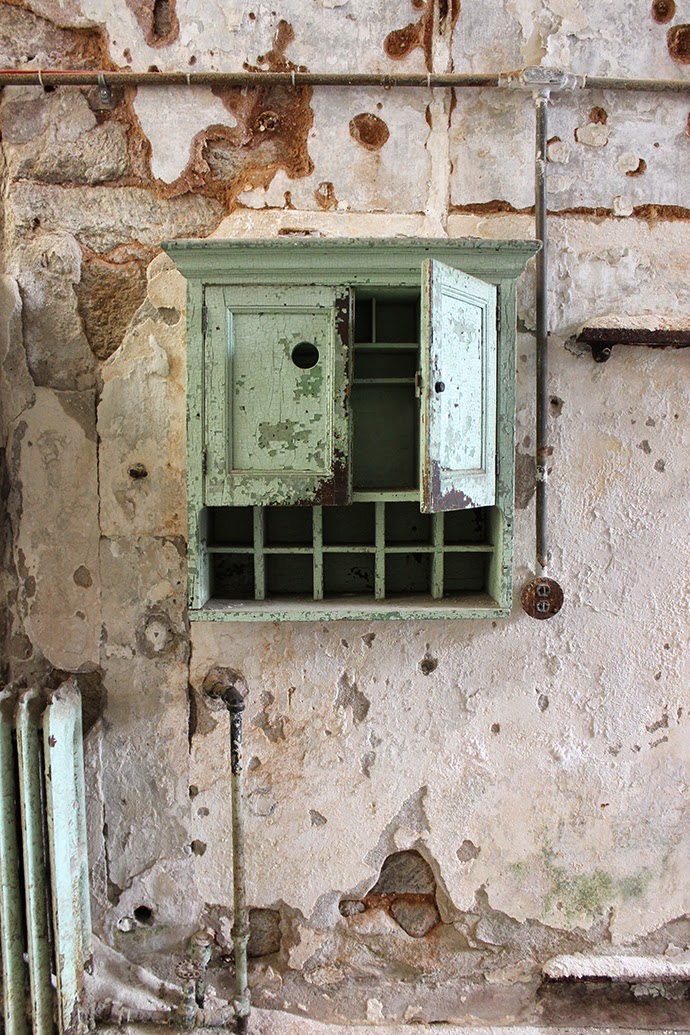
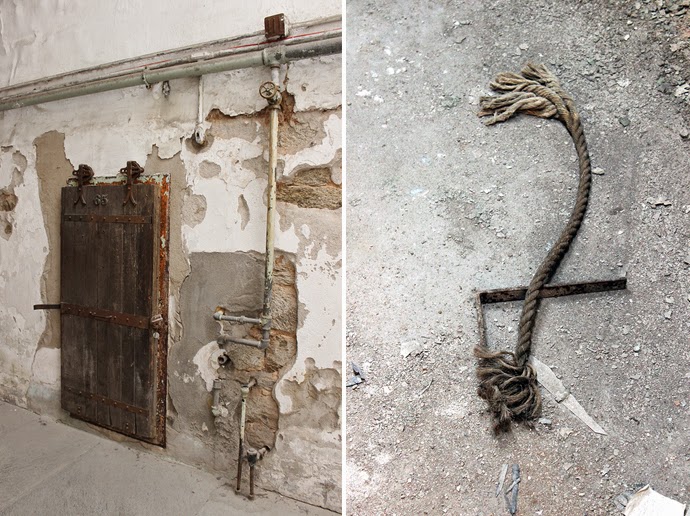


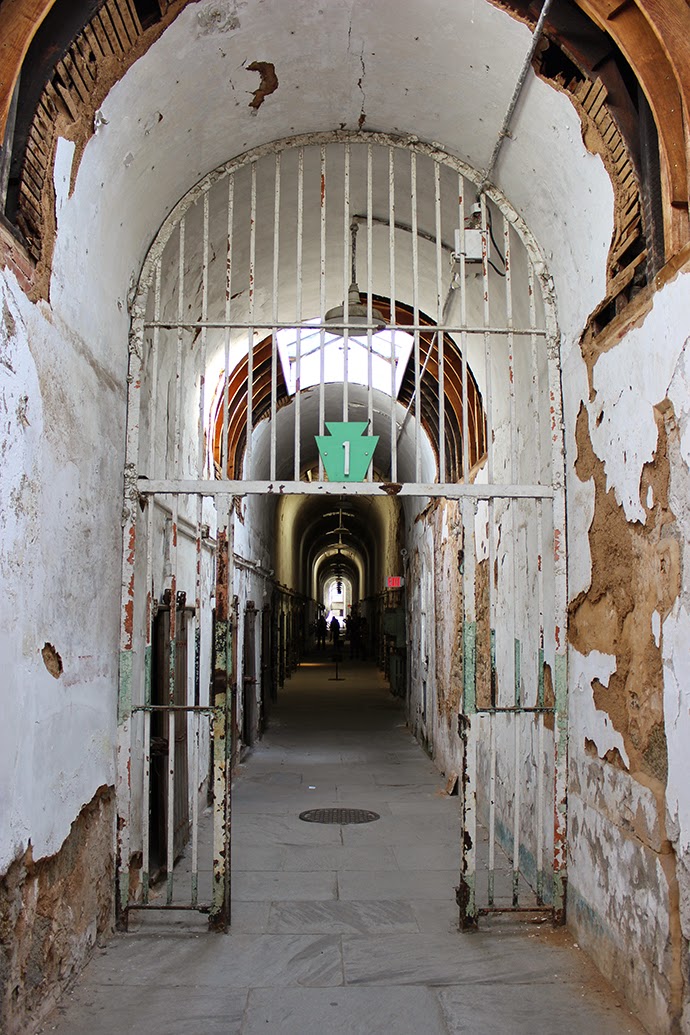
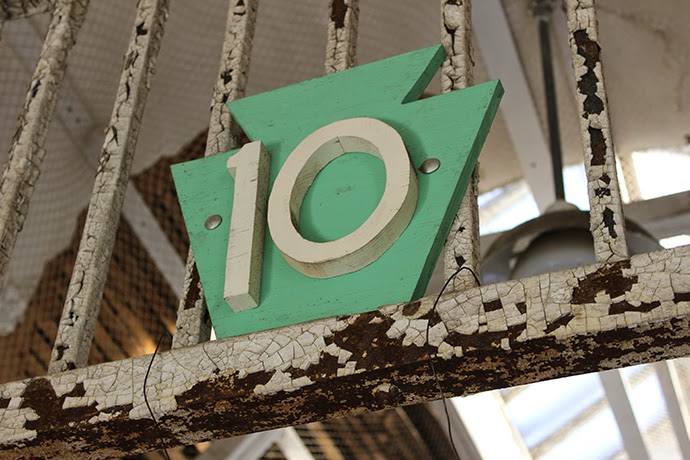
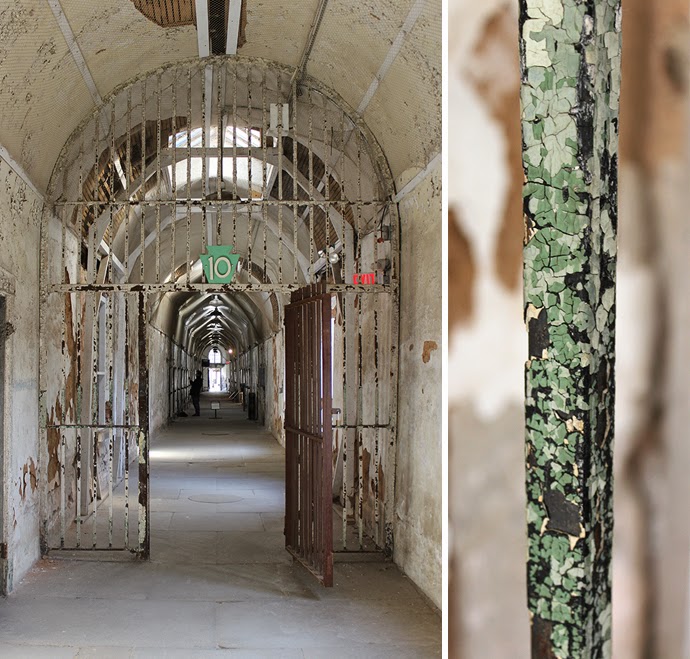
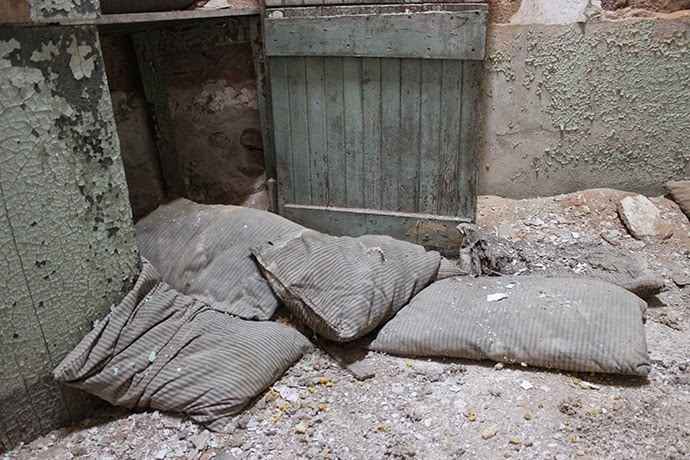
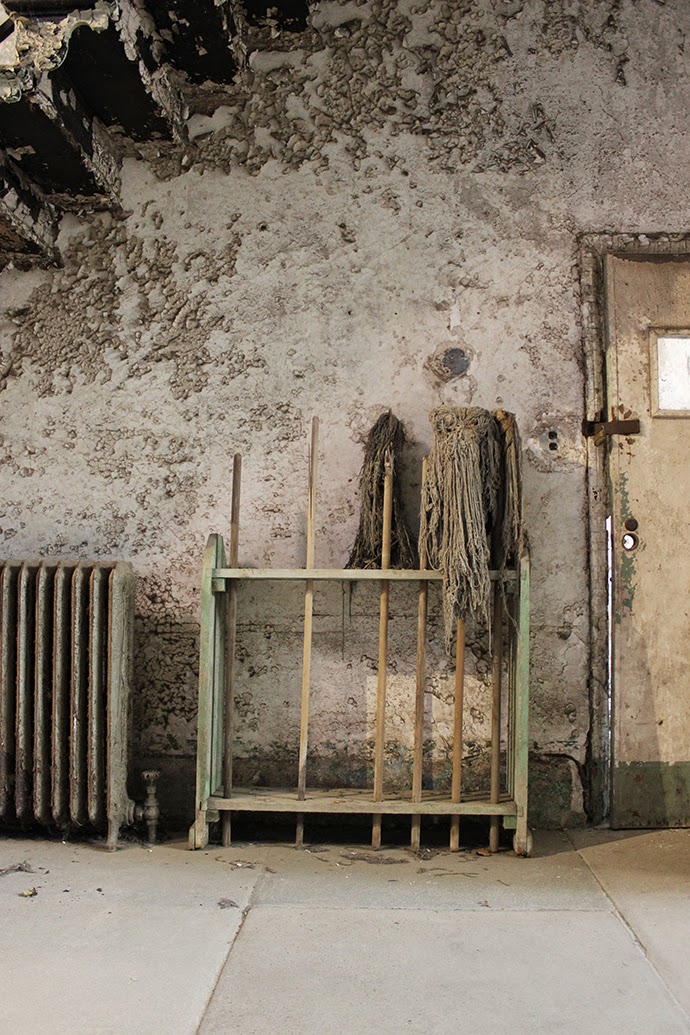
Jim was off visiting family, so I spent most of Sunday at ESP, which was very easy to do. I loved that there was no guided tour—I got to wander at my own pace, aka take a million photos while trying not to be overwhelmed by all of the incredible textures, colors and artifacts. About half of the penitentiary is currently off-limits, but there is still so much to see.
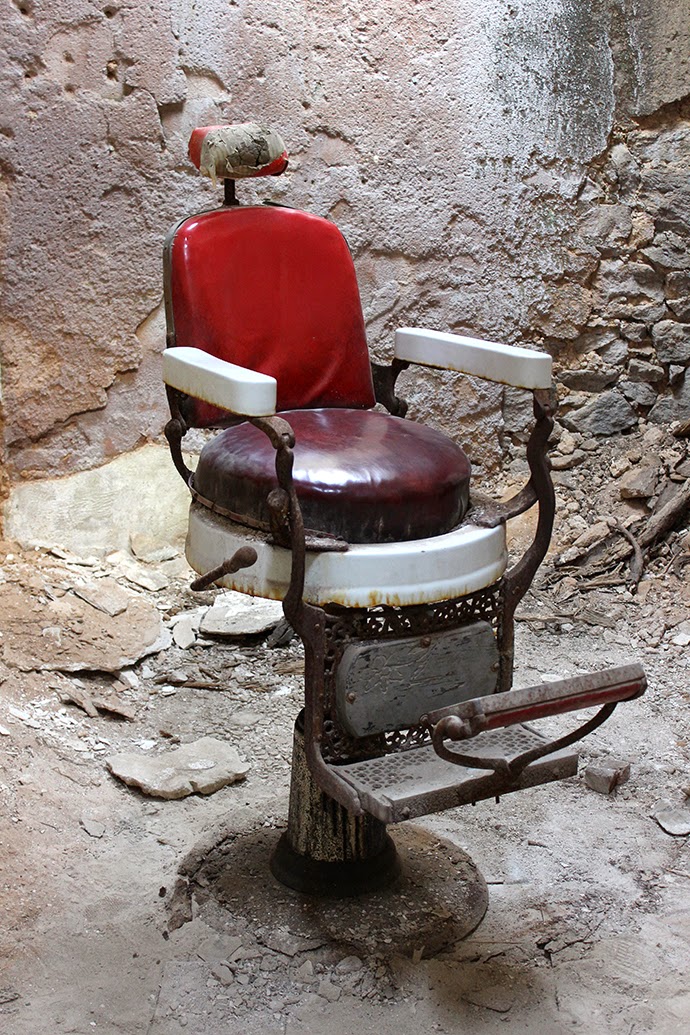
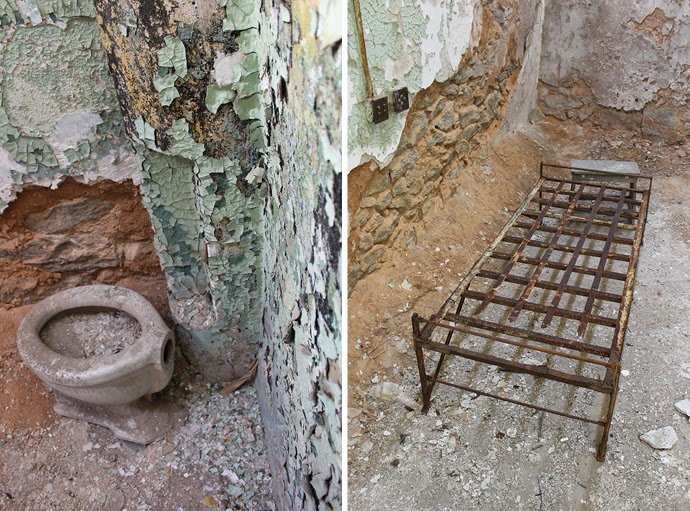
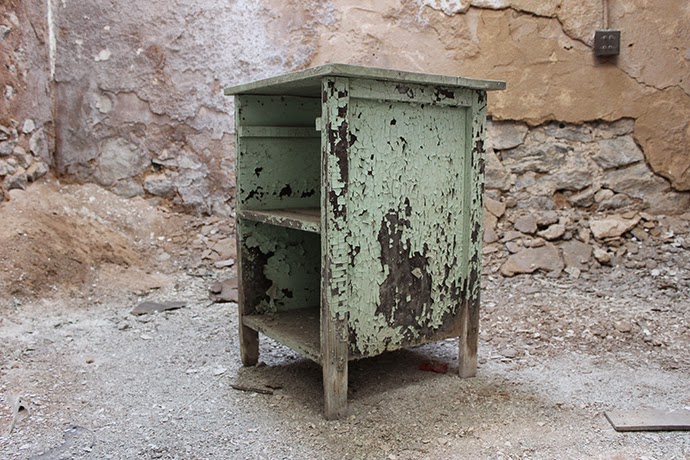
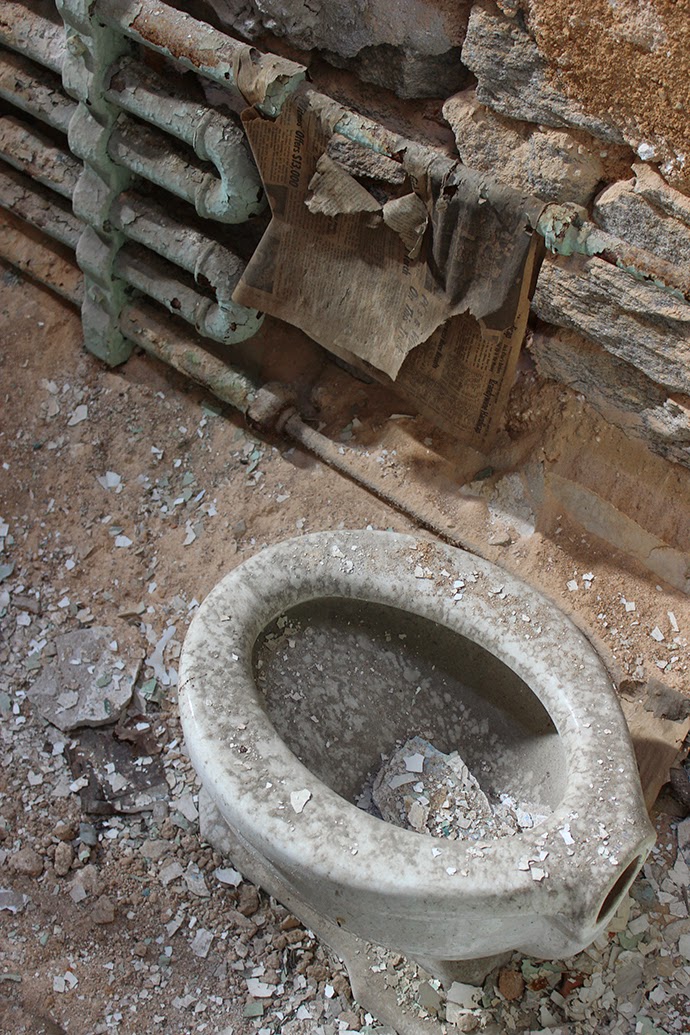
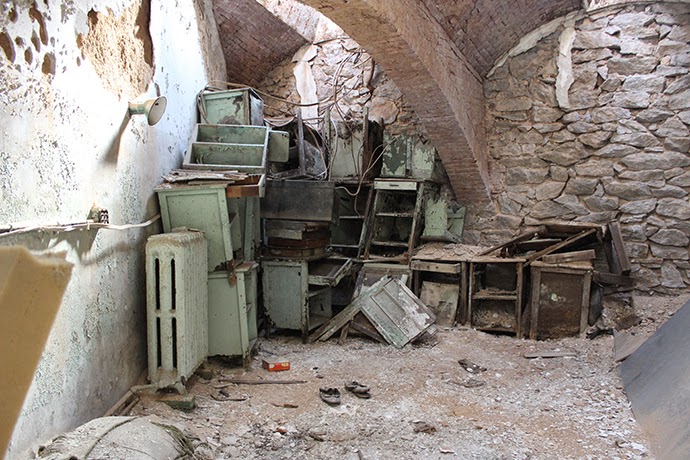
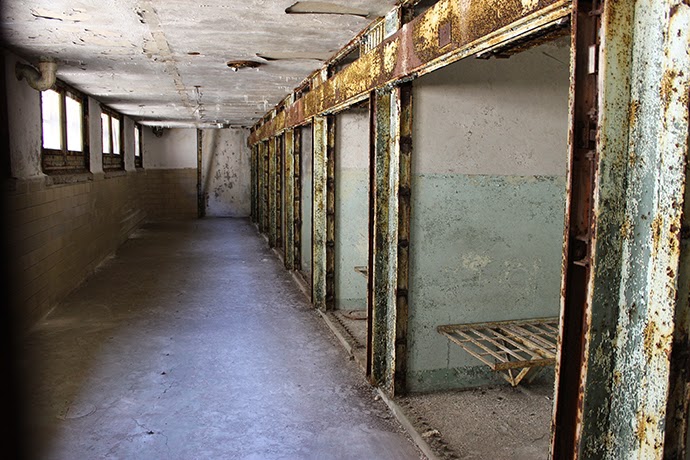
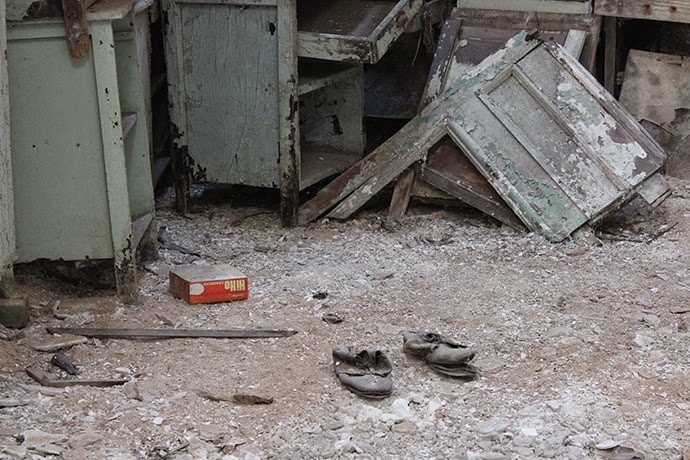
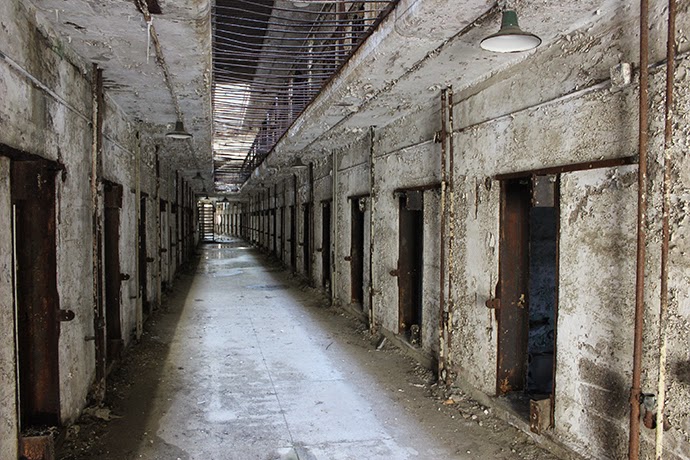
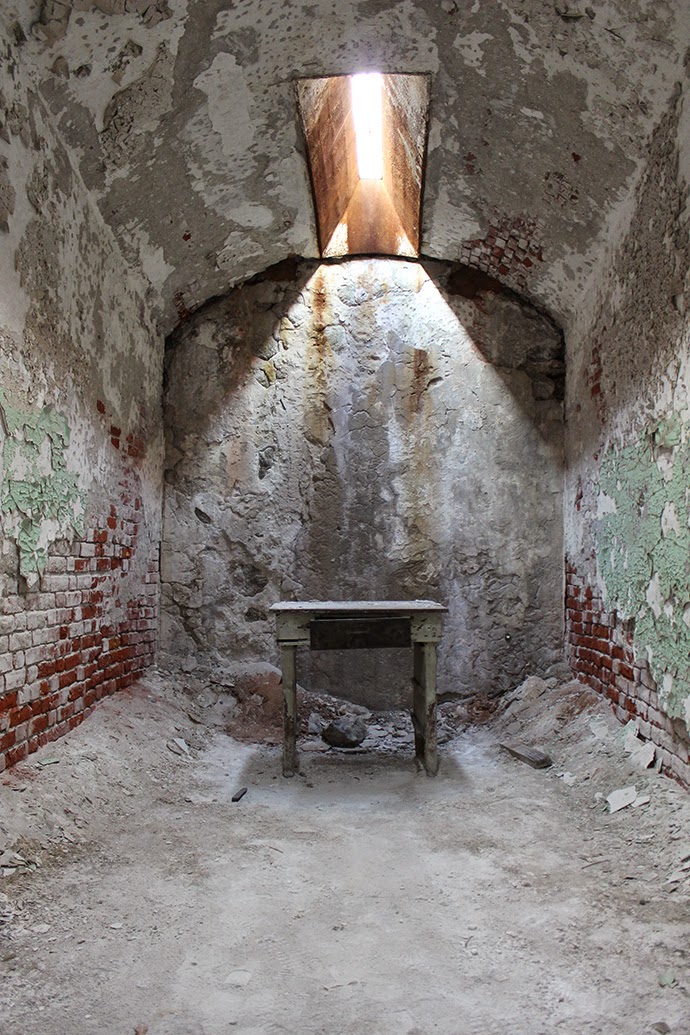
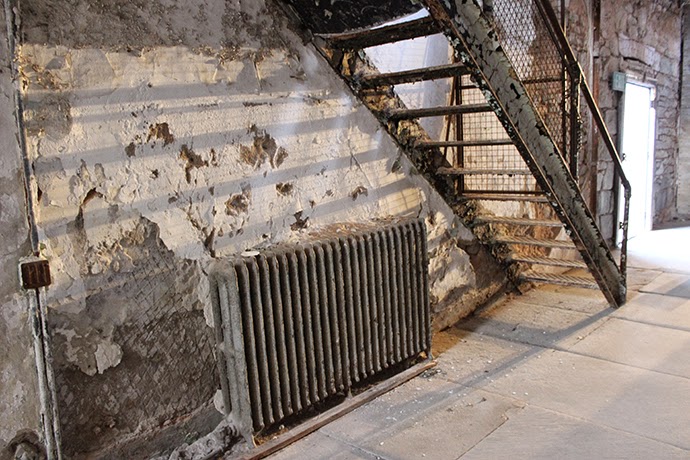
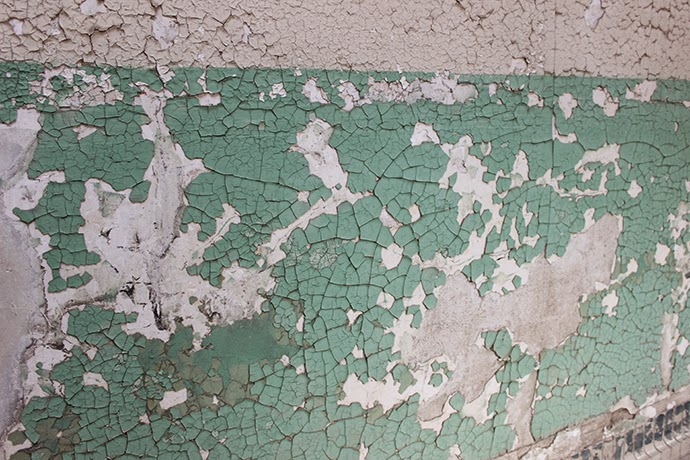
The peeling layers of paint, crumbling walls and cells in various stages of decay are all so incredibly photogenic and beautiful. An audio tour is included in the price of admission (only $10 for "students") and it was really interesting, not too long and mostly narrated by Steve Buscemi.
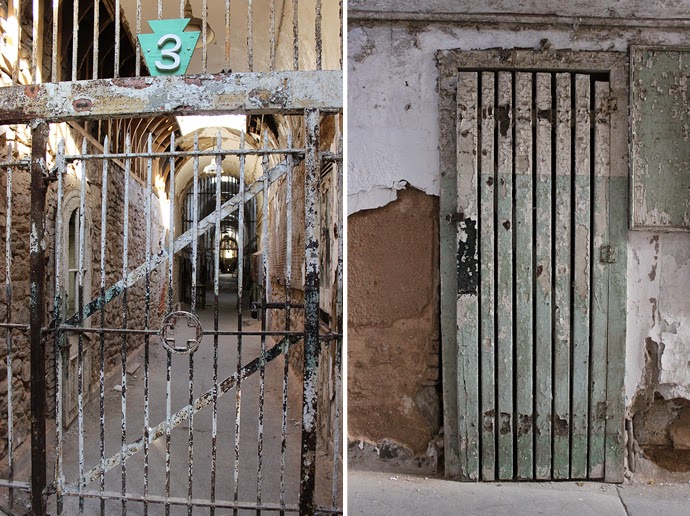

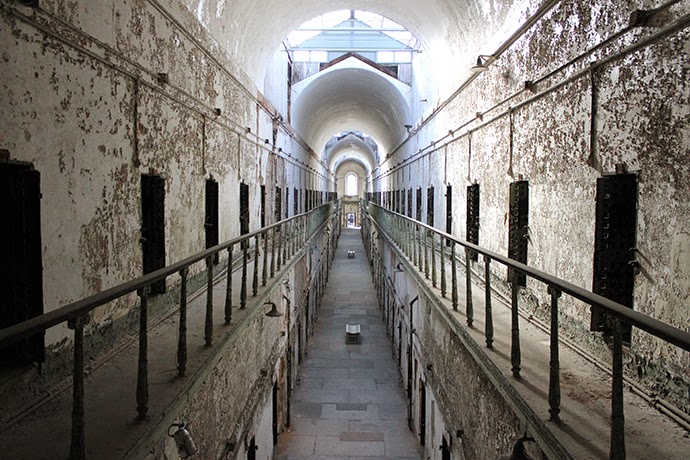
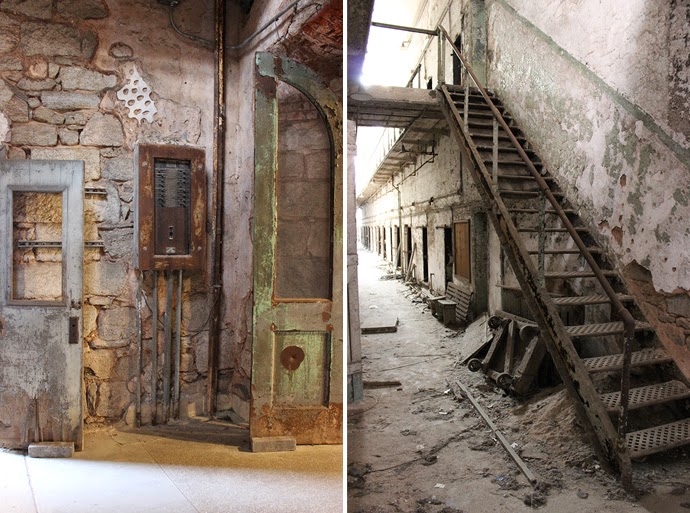
ESP does special tours around Halloween, which are probably really wonderful and completely terrifying. At one point during my visit, I was listening to a portion of the audio guide that discussed the various instances of paranormal activity that have been reported at ESP over the years. As I was leaning through a gate so I could get a closer look at a long, empty corridor, a droplet of water dropped on my head. I'm very grateful that I was alone (maybe I wasn't?) because I jumped backwards in terror like a total baby—a facet of my personality which is sometimes at odds with my love of all things creepy.


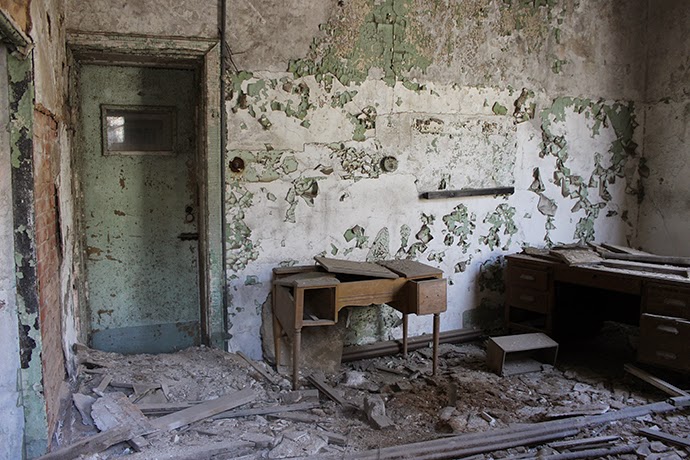


I could have spent so many more hours wandering inside and out, but I had to leave eventually to catch a train. The hospital wing (no. 3) is one of the areas not currently open to the public but a sign posted near the gate (the one with the amazing red cross) promised that it would be open in the future. I loved Philadelphia in general and there were a lot of things I didn't get to on my list, but a return visit to Eastern State Penitentiary is definitely a must.
Roosevelt Island: Smallpox Hospital Ruin
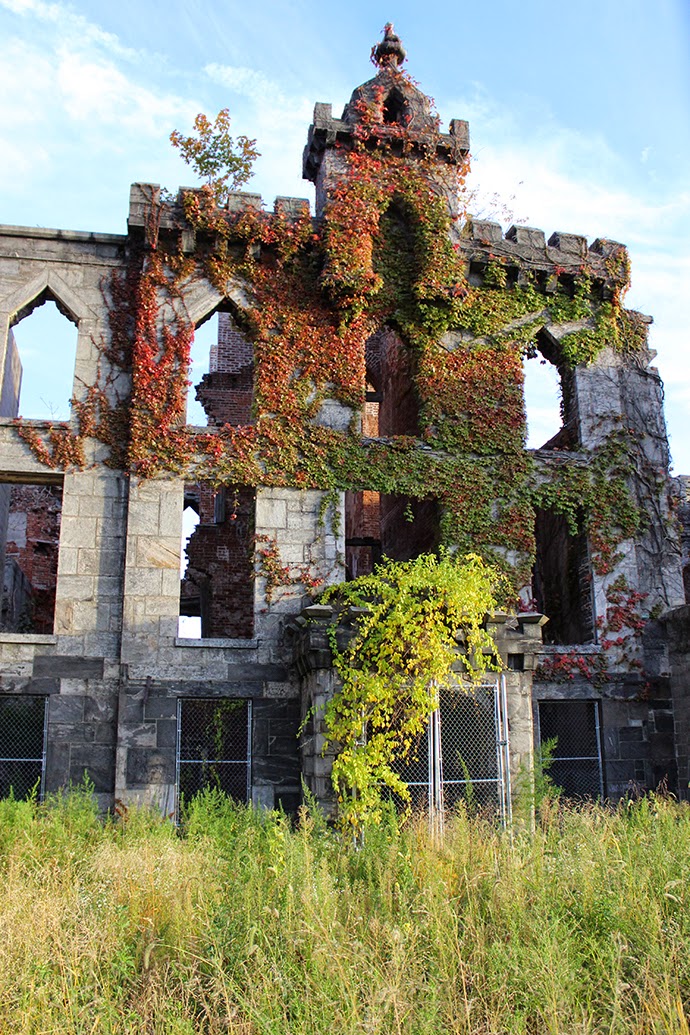
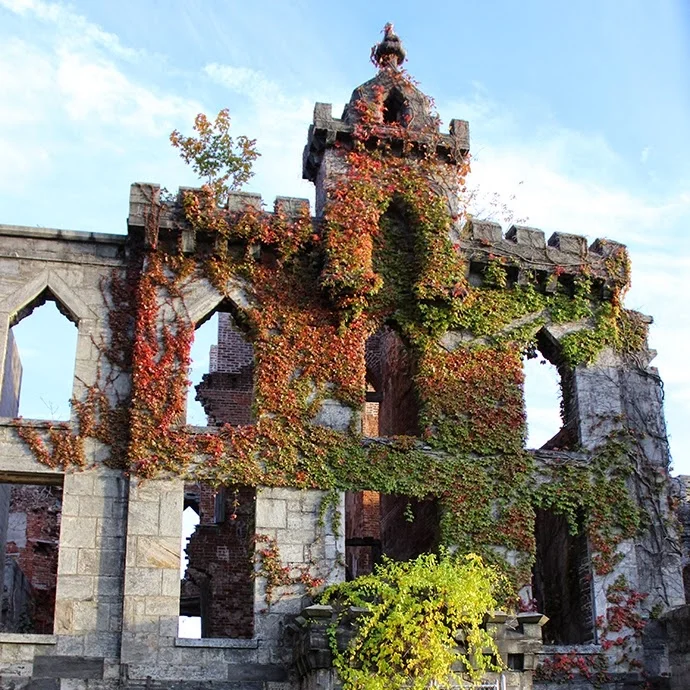
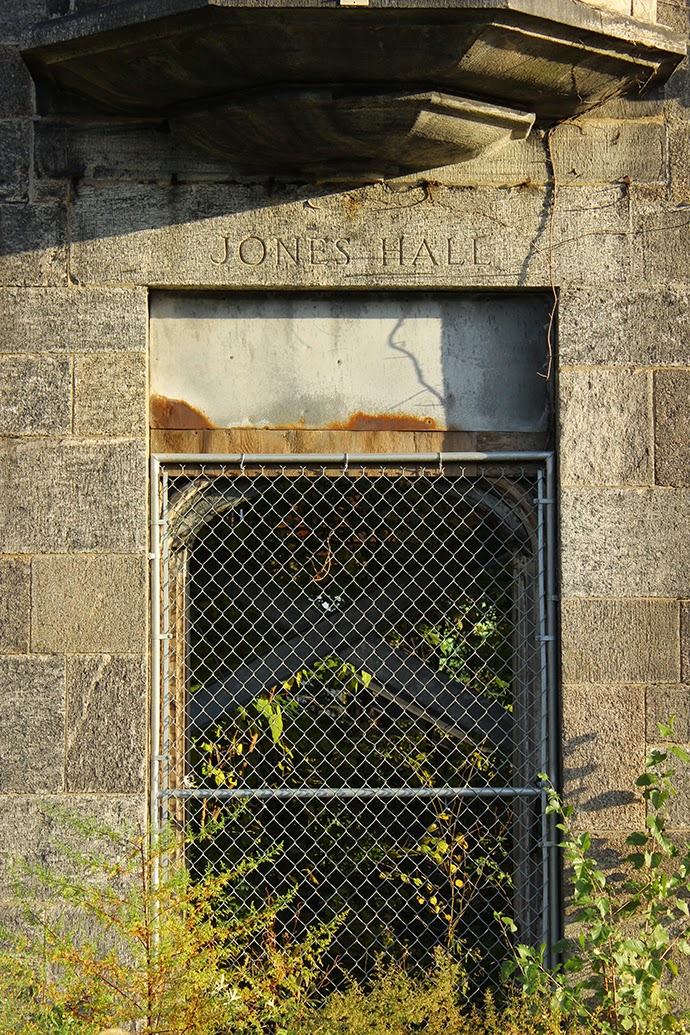
I've mentioned the smallpox hospital ruin on Roosevelt Island before, but I saw it again this weekend and realized that it definitely deserved its own post. Designed by James Renwick and opened in 1856, the hospital is currently the only ruin within city limits to have been designated a New York City Landmark (it's also on the National Register of Historic Places).
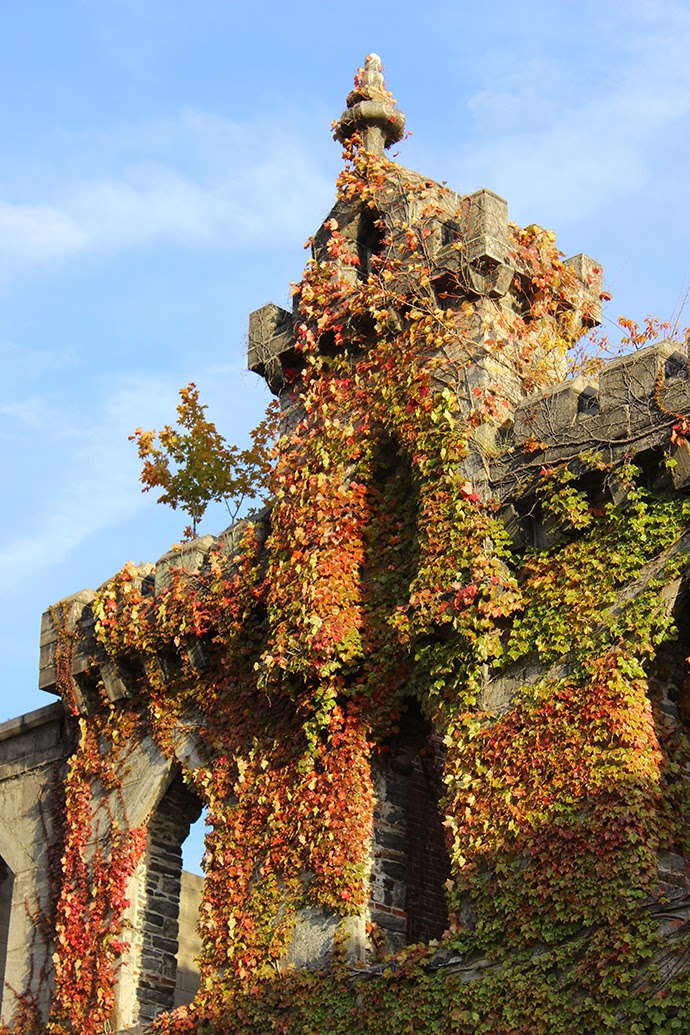
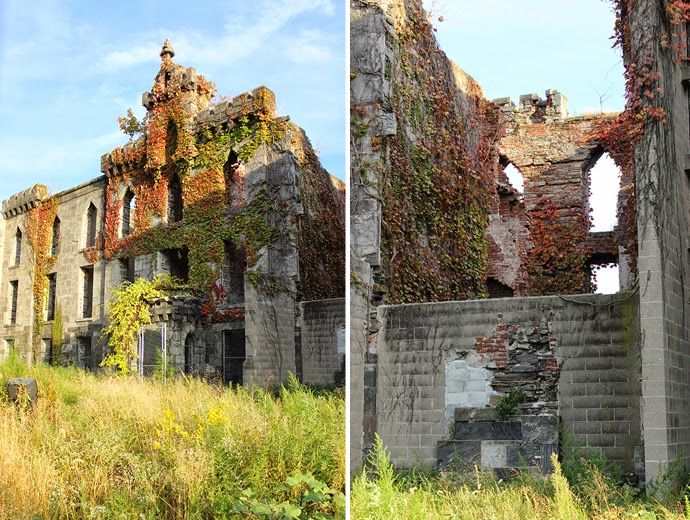
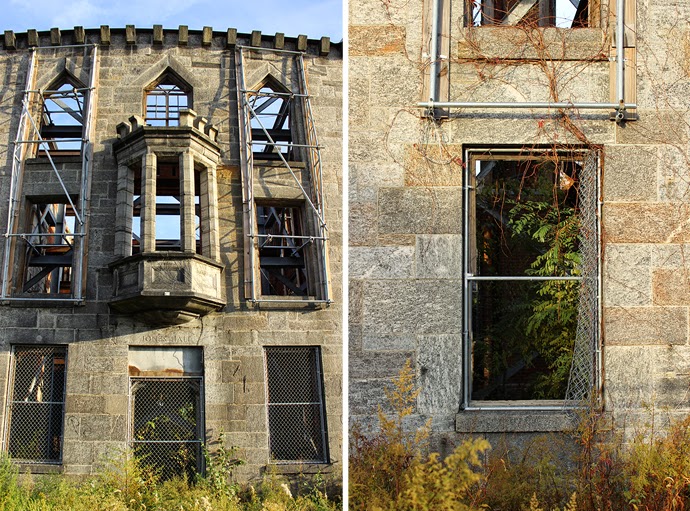

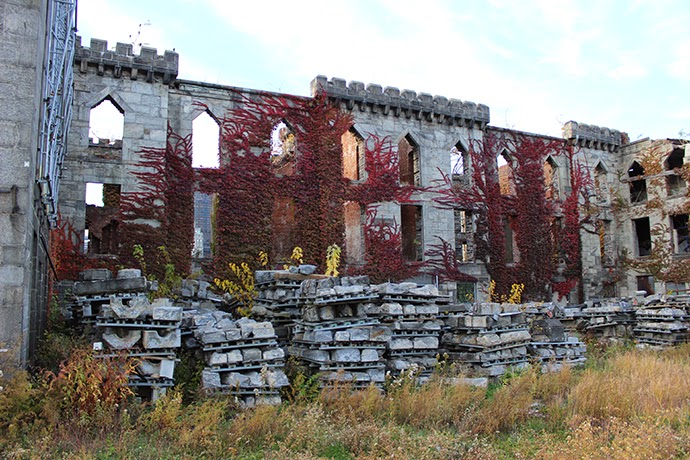
It definitely is a ruin—portions of the exterior walls have collapsed over the years and there is not much interior to speak of (trees appear to be growing inside), but there is enough of the original Gothic Revival structure to make a huge impact. There is ivy climbing over the crumbling walls and when I went on Sunday I was pleased to discover that it had turned bright red, upping the creep factor even more. There is a fence around the entire ruin, and stabilizing structures throughout, but I love that something like this still exists in any form.
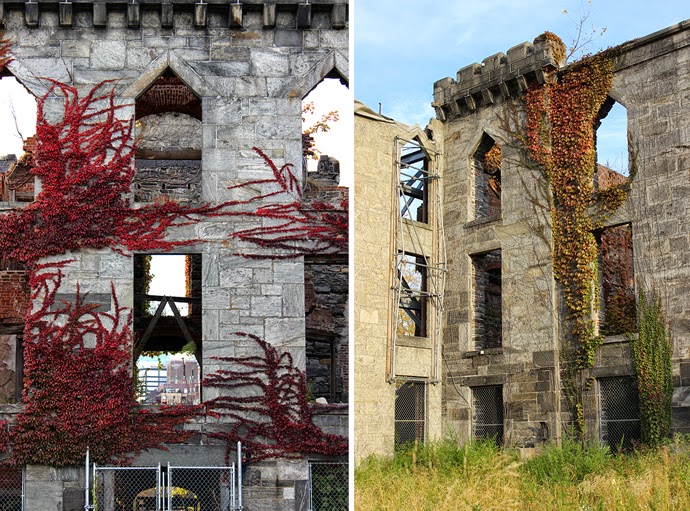

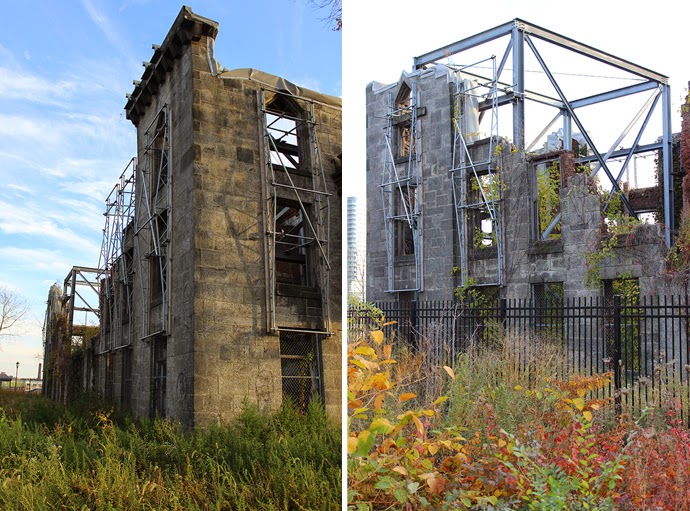
Roosevelt Island—formerly known as Blackwell's Island or Welfare Island—once housed several hospitals, a prison and the New York City Lunatic Asylum (now luxury condos, groan) and was basically a receptacle for all of the city's undesirables. Today, there are still a few medical facilities but it is mostly residential, with a few city staples like a Starbucks, a pizza place and a Duane Reade.
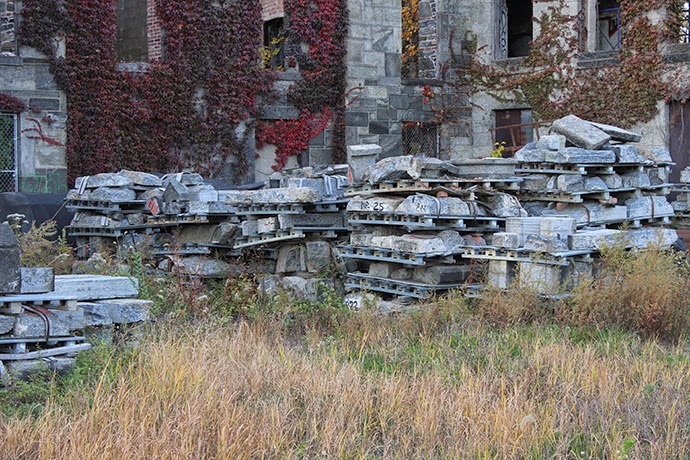
There have been plans to further stabilize the Smallpox Hospital and open it to the public, which would be amazing, but from the looks of things that's still a long way off. In the back of the hospital, there are pallets of organized and numbered pieces—it always fascinates me how anyone begins to make sense of a building that has been reduced (at least in some parts) to rubble.
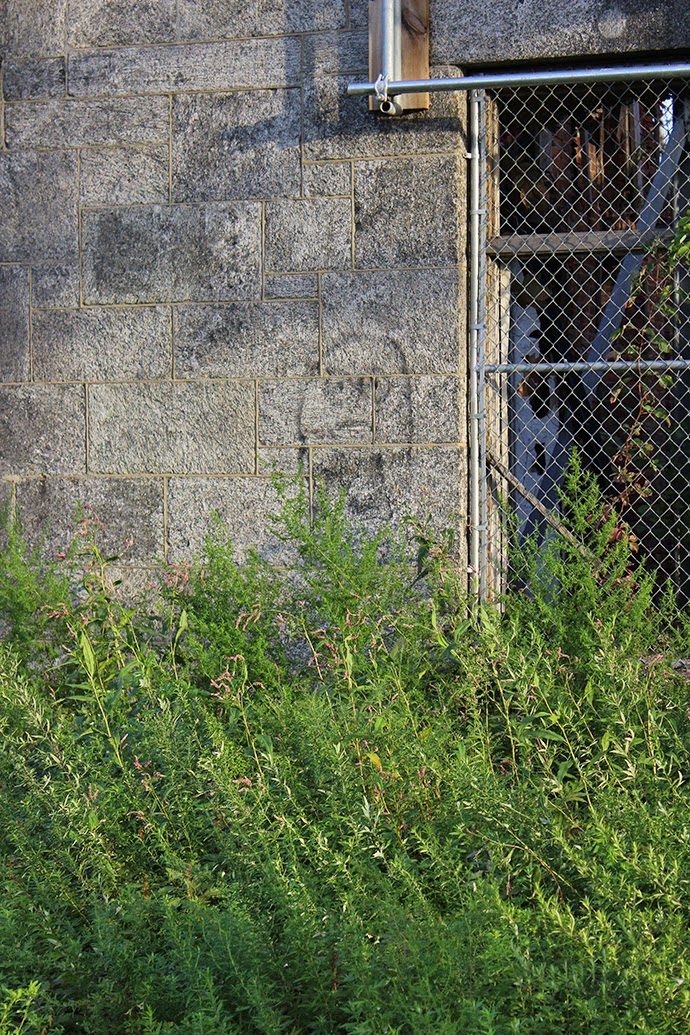
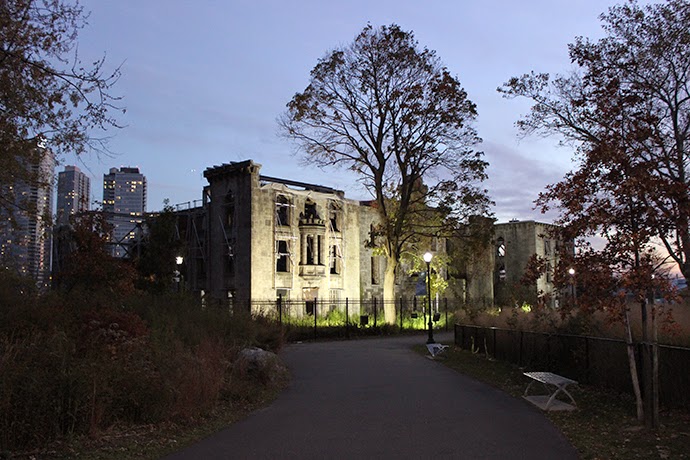
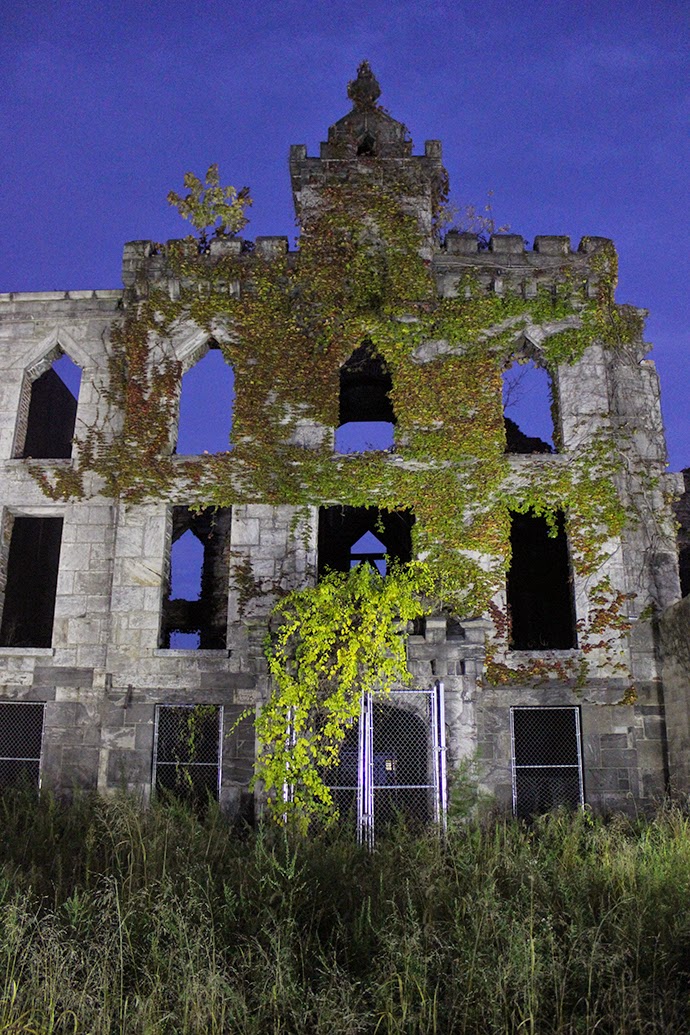
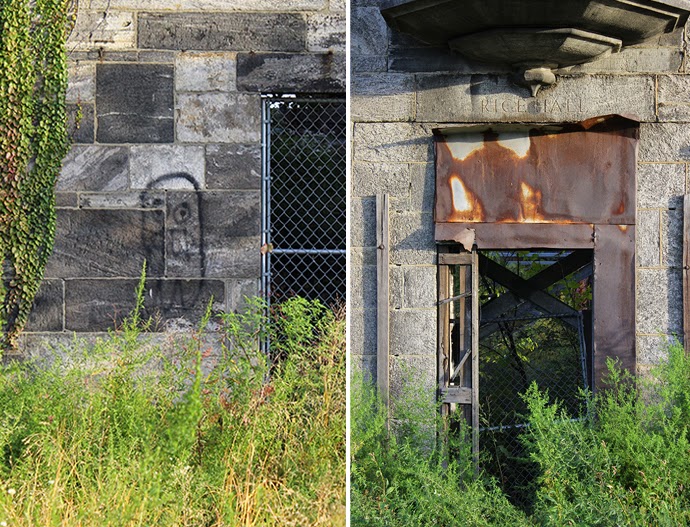
There is a little bit of graffiti on the walls, which normally I would be annoyed with, but it's kind of hard to be mad at the cute little ghosts that have been there since I first visited (also, the "RIP Smallpox Victims" is wonderful). I actually love this ruin so much that I decided to stay on Roosevelt Island long enough for the sun to set so I could see the Smallpox Hospital lit up and I was not only rewarded with a beautiful sunset but the ruin was just as creepy as I imagined it would be in the dark.

Dead Horse Bay: Part Two
I finally had some time this weekend to clean and sort through the treasures that I brought home from Dead Horse Bay, one of my very favorite New York adventures to date. I tried not to go crazy grabbing bottles and trinkets to take back with me, both because I didn't want to carry a ton with me all day, and because living in a teeny tiny city apartment has made me super picky about any new non-essential acquisitions.


When I read about the abundance of horse bone pieces leftover from the bay's history playing host to horse-rendering plants, I half-joked that I wouldn't be happy if my backpack wasn't overflowing with skeletal remains by the end of the trip. I say half-joked because that's basically what ended up happening, minus the "overflowing" part.
When we arrived at the beach and started poking around, I was initially worried that I wouldn't be able to find any horse bones at all, but once I found the first one they became much easier to spot. I was actually so excited when I plucked that first bone out of the water that I yelled to Trent, who had gotten ahead of me, and did a crazy dance as I waved the bone over my head — which I assume is a totally normal reaction to have when finding 19th-century equine remains. I set the bone on a rock with the intention of coming back for it before we left, but I failed to account for the rising tides, which eventually swept the bone back into the ocean before I could grab it. Luckily we found more and more bones the further down the beach we got — so many, in fact, that I was able to sort out the better ones to keep, and leave the rest behind.
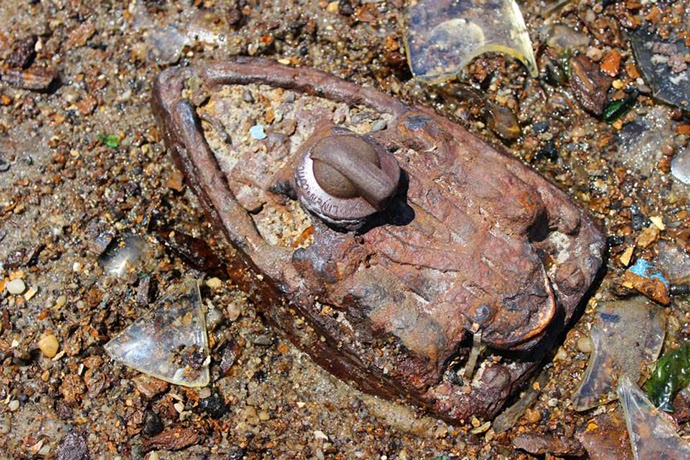


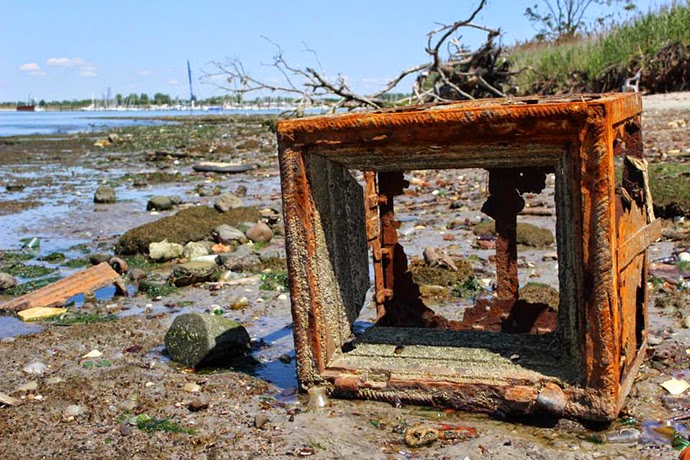

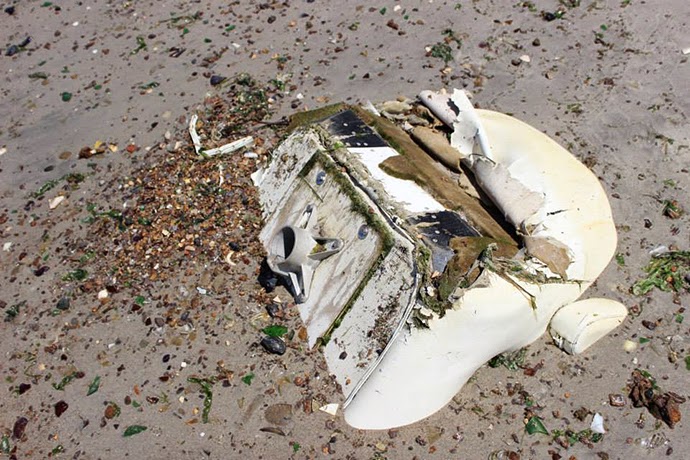


While Dead Horse Bay is most known for its bottles and bones, there were plenty of other interesting tidbits to keep us fascinated — irons, tires, basketballs, floor tiles, chairs and heaps of unidentifiable rusty parts, including what looked like it may have been a safe at some point. I lost count of how many different items I spotted and Trent and I had fun trying to identify some of the more puzzling pieces. Spark plugs, enamelware pots, railroad spikes, old metal signs, lawn chairs, bottle caps — there's probably no end to the different types of things you'd be able to find, depending on the day.

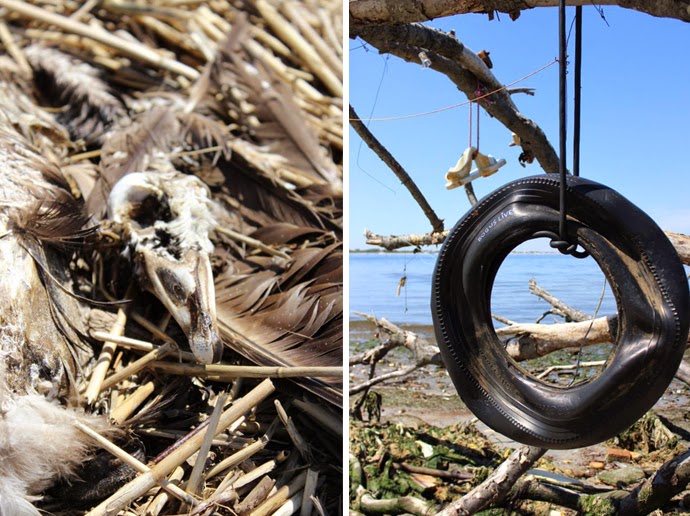

Horses weren't the only animals to meet their end at DHB either — we found plenty of carcasses in varying states of decay, including totally creepy/prehistoric horseshoe crabs, a seagull and a few very pungent fish. Horseshoe crabs don't just look prehistoric, they actually are prehistoric — they originated 450 million years ago and are thus considered to be 'living fossils.' None of the ones we saw were currently living (unless the one above was just sleeping off a Doritos binge), which was probably a good thing because look at that thing.


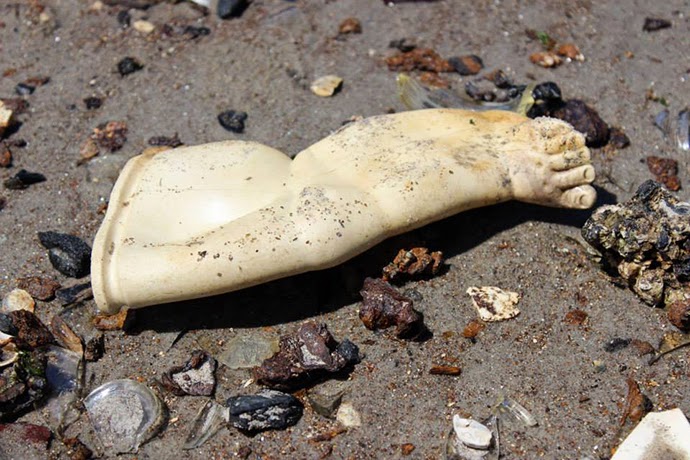
Even though the trash on the beach comes from an actual landfill, I was annoyed that people seem to think this gives them a free pass to leave their current-day trash behind. Maybe it's just a matter of perspective, but I feel bad for the people of the future if all they get to scavenge for is our left behind Doritos bags and plastic Gatorade bottles, while we get intricate glass soda bottles and beautifully patterned bits of china. Aside from the bones, my favorite beach discovery of the day was definitely the baby doll leg that I photographed, but didn't disturb, in hopes that it will continue to creep out visitors to Dead Horse Bay for many more years to come.

Dead Horse Bay: Part One

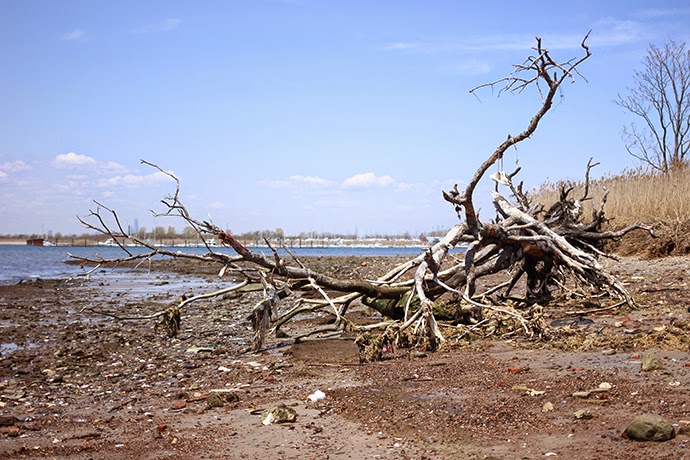
On Saturday Trent and I made the trek to Dead Horse Bay in Brooklyn, a place we both just recently found out about but were very excited to check out. Dead Horse Bay is so named for the horse-rendering plants that lined the coastline from the 1850s to the 1930s. Around the turn of the century, the marsh was used for a landfill, and the beach flooded with trash when a cap on the landfill burst in the 1950s.


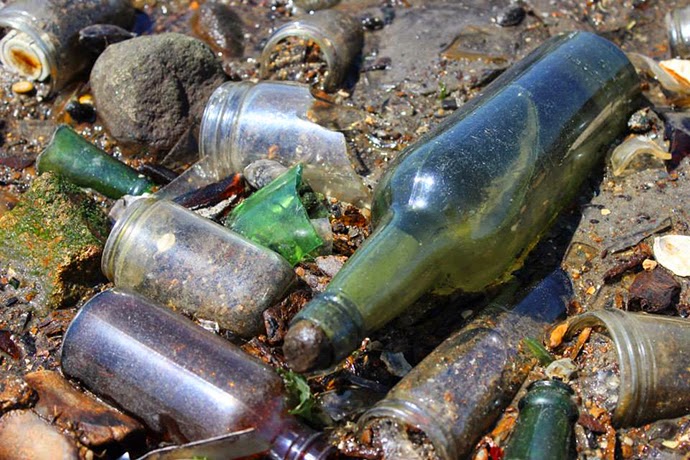

From everything we read about the beach, it sounded like a treasure-hunter's paradise and it definitely is — there are glass bottles, rusty car parts, chairs, irons, shoe soles, dead animals, horse bones, broken pieces of patterned china and endlessly fascinating bits of most anything else you can imagine. As usual, I took so many photos that I'm breaking them up into a few different posts.
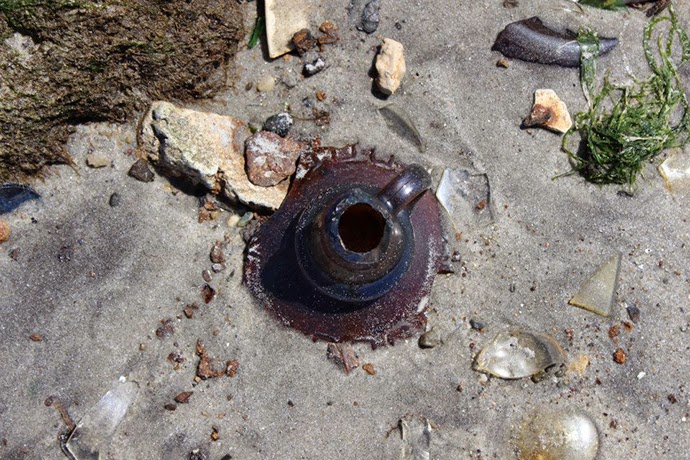


The majority of the treasure is old glass bottles in every shape, size and state of intactness. I was fascinated by all of the different varieties, some I was familiar with — Coke, Pepsi, 7up — and some I had never heard of before. The pieces were sometimes even cooler than the intact bottles and I saved a few of the ones that had graphics or type that caught my eye. We even discovered a full wine bottle that still had its cork — it's probably still there if you want to take your chances. As the waves washed over the glass on the shore the bottles tinkled in a way that sounded like wind chimes. It was peaceful and wonderful in a strange, almost post-apocalyptic way, and I loved every minute of it.